WO2012128008A1 - 移動通信システムにおける基地局及びスケジューリング方法 - Google Patents
移動通信システムにおける基地局及びスケジューリング方法 Download PDFInfo
- Publication number
- WO2012128008A1 WO2012128008A1 PCT/JP2012/055103 JP2012055103W WO2012128008A1 WO 2012128008 A1 WO2012128008 A1 WO 2012128008A1 JP 2012055103 W JP2012055103 W JP 2012055103W WO 2012128008 A1 WO2012128008 A1 WO 2012128008A1
- Authority
- WO
- WIPO (PCT)
- Prior art keywords
- quality information
- weighting function
- value
- user
- function
- Prior art date
- Legal status (The legal status is an assumption and is not a legal conclusion. Google has not performed a legal analysis and makes no representation as to the accuracy of the status listed.)
- Ceased
Links
Images



Classifications
-
- H—ELECTRICITY
- H04—ELECTRIC COMMUNICATION TECHNIQUE
- H04W—WIRELESS COMMUNICATION NETWORKS
- H04W72/00—Local resource management
- H04W72/50—Allocation or scheduling criteria for wireless resources
- H04W72/54—Allocation or scheduling criteria for wireless resources based on quality criteria
- H04W72/542—Allocation or scheduling criteria for wireless resources based on quality criteria using measured or perceived quality
Definitions
- the present invention relates to a base station and a scheduling method in a mobile communication system.
- frequency scheduling is employed in mobile communication systems such as the Long Term Evolution (LTE) method.
- LTE Long Term Evolution
- HSPA High Speed Packet Access
- W-CDMA Wideband-Code Division Multiple Access
- the LTE specifications are created by the 3GPP (3rd Generation Partnership Project), a W-CDMA standardization organization.
- 3GPP 3rd Generation Partnership Project
- W-CDMA Wideband-Code Division Multiple Access
- the frequency scheduling is roughly classified into a dynamic scheduling method (Dynamic Scheduling) and a semi-persistent scheduling method (SPS).
- Dynamic Scheduling Dynamic Scheduling
- SPS semi-persistent scheduling method
- radio resources are dynamically allocated to users according to the priority according to the data type and the quality of the radio channel state. For example, which radio resource is allocated to which user is determined for each 1 ms subframe (TTI). Since how to allocate radio resources to users changes frequently, radio resources can be used flexibly.
- voice packets VoIP
- voice packets data with a small amount of data is periodically generated. If such a voice packet is scheduled by the above-described dynamic scheduling method, it is necessary to designate a radio resource for each voice packet having a small data amount that is periodically generated. In this case, there is a concern that the proportion of signaling overhead (PDCCH) required for notification of radio resources becomes large with respect to the entire data to be communicated, and the utilization efficiency of radio resources deteriorates.
- PDCCH signaling overhead
- the semi-persistent scheduling method is a method that can cope with such concerns.
- one radio resource allocation is applied not only to one subframe but also to many subsequent subframes. That is, by periodically allocating a certain radio resource, overhead required for radio resource signaling is reduced. Therefore, if all user apparatuses in the mobile communication system support the semi-persistent scheduling method (SPS), the above-mentioned concerns can be solved by using SPS for voice packets.
- SPS semi-persistent scheduling method
- One technique for increasing the voice capacity is a delay packing method.
- the delay packing is described in Non-Patent Document 1.
- the delay packing method improves the voice capacity by setting the voice packet transmission period longer than the voice packet generation period. In this case, while the voice capacity is improved, the amount of voice packets transmitted at a time is also increased. For example, when a voice packet generated every 20 ms is transmitted every 20 ms, one voice packet is transmitted at a time. However, when transmitted every 60 ms, three voice packets are transmitted at a time. In other words, the longer the cycle for transmitting voice packets, the greater the number of voice packets (data amount) transmitted at one time. A large amount of data transmitted and received at one time is advantageous for users with good radio channel conditions, but is disadvantageous for users with poor radio channel conditions.
- the conventional delay packing method does not consider the communication status of each user.
- An object of the present invention is to improve the voice capacity while considering the communication status of individual users.
- a base station is: A quality information acquisition unit for acquiring quality information indicating a radio channel state of the user apparatus; A function selection unit that selects a weighting function corresponding to the quality information of each user device from a plurality of different weighting functions corresponding to the plurality of quality information; A scheduling unit that calculates a scheduling coefficient that varies according to a weighting function for each of one or more user apparatuses, and that allocates radio resources to the user apparatus according to at least the size of the scheduling coefficient; A notification unit that notifies the user device that radio resources have been allocated, and the weighting function is a function of data residence time of the user device, and a value of the weighting function corresponding to relatively good quality information Is a base station in the mobile communication system in which the data residence time until the value reaches a predetermined value is longer than the data residence time until the weighting function value corresponding to the relatively bad quality information reaches the predetermined value.
- the voice capacity can be improved while considering the communication status of each user.
- the functional block diagram of the base station used in an Example The figure which shows the table of correspondence of quality information and a weighting function.
- the figure which shows an example of a weighting function The flowchart of the scheduling method used in an Example.
- the figure which shows the other example of a weighting function The figure which shows the other example of a weighting function.
- the figure which shows the other example of a weighting function The figure which shows the other example of a weighting function.
- the embodiment described below delays the transmission timing of, for example, a downlink voice packet by devising a calculation method of a scheduling coefficient calculated for each user. Furthermore, by selecting a weighting function according to the user quality information and changing the scheduling coefficient according to the weighting function, it is possible to control the delay amount of the transmission timing according to the user communication status. it can. Thereby, the downlink data of the user whose quality information is good as in the center of the cell is delayed by a long time, and the voice capacity can be increased accordingly. Conversely, downlink data of a user whose quality information is not good, such as at the cell edge, is delayed for a short time, effectively preventing a large amount of data from being transmitted to such a user at one time.
- FIG. 1 shows a functional block diagram of a base station used in the embodiment.
- FIG. 1 shows a processing unit particularly related to the embodiment among processing units that realize various functions provided in a base station of a mobile communication system.
- the illustrated base station is a base station in a long-term evolution (LTE) mobile communication system, but may be a base station in another mobile communication system.
- FIG. 1 shows a UL signal reception unit 101, a quality information acquisition unit 103, a storage unit 105, a function selection unit 107, a scheduling unit 109, a control channel generation unit 111, a data channel generation unit 113, and a DL signal transmission unit 115. ing.
- LTE long-term evolution
- the UL signal receiving unit 101 receives an uplink signal (UL signal) from a user apparatus and converts it into a baseband signal. Therefore, the UL signal receiving unit 101 has a function of filtering a received radio signal, a function of converting an analog signal into a digital signal, a function of demodulating the received signal, a function of channel decoding the received signal, and the like.
- the uplink signal generally includes a control channel, a pilot channel, a data channel, and the like.
- the quality information acquisition unit 103 acquires quality information indicating the quality of the radio channel state from the uplink signal (UL signal). Quality information is included in the control channel.
- the quality information may be information indicating a downlink radio channel state, information indicating an uplink radio channel state, or information including both of them.
- the downlink radio channel state may be expressed by, for example, a channel state indicator (CQI) derived from the reception level of the pilot signal received by the user apparatus.
- the uplink radio channel state may be derived from the reception level of the pilot signal received by the base station.
- the reception level of the pilot signal received by the base station and the user apparatus may be expressed by any appropriate amount known to those skilled in the art.
- the reception level is broadly defined as an amount representing the quality of the radio channel state regardless of whether it is an instantaneous value or an average value.
- reception power field strength RSSI, desired wave reception power RSCP, It may be expressed by path loss, SNR, SIR, Ec / N 0 or the like.
- the storage unit 105 stores correspondences between a plurality of quality information and a plurality of weighting functions.
- FIG. 2 shows such a correspondence relationship expressed in a table format.
- the quality information is expressed by CQI.
- the quality information may be expressed by another amount.
- CQI is worse in the order of CQI1, CQI2, CQI3,.
- Each quality information is associated with a weighting function.
- CQI1 is associated with F 1 (t)
- CQI2 is associated with F 2 (t)
- CQI3 is associated with F 3 (t)
- CQIi is associated with F i ( t) is associated.
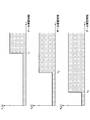
- FIG. 3 shows an example of the weighting functions F 1 (t), F 2 (t), and F 3 (t).
- the weighting function is for weighting the scheduling coefficient in order to achieve fairness among users from the viewpoint of data residence time.
- the weighting function is preferably a monotonically increasing function related to the user's data residence time.
- F (x) of x is a monotonically increasing function, it is assumed that F (x1) ⁇ F (x2) holds for any x1 ⁇ x2.
- the weighting function is expressed by a step function.
- the data retention time means a period during which downlink or uplink data waiting for transmission remains in the buffer. As described in “3.
- the function form of the weighting function may be any appropriate one, but is preferably a monotonically increasing function.
- the weighting function F i corresponding to the quality information CQIi (t) is up to t i (e.g., 0) takes the data retention time is reached t i After that, it takes a high value (eg 1).
- i 1, 2, and 3.
- the data retention time t i until the weighting function value corresponding to the good quality information reaches a predetermined value (for example, 1) is the weighting function value corresponding to the relatively bad quality information. Is longer than the data retention time until it reaches a predetermined value (for example, 1) (t1>t2> t3).
- the data residence time ti in which the value of the function changes is referred to as “critical data residence time”.
- one quality information CQIi corresponds to one weighting function F i (t), but such a one-to-one correspondence is not essential.
- One or more arbitrary numbers of weighting functions may be associated with one or more arbitrary numbers of quality information CQIi. Further, a plurality of critical data residence times may exist in one weighting function.
- the function selection unit 107 in FIG. 1 selects the weighting function corresponding to the quality information of each user by referring to the correspondence relationship between the quality information stored in the storage unit 105 and the weighting function. For example, when the quality information of a certain user is CQI2, the weighting function corresponding to the user is F 2 (t) (assuming the correspondence as shown in FIG. 2).
- the quality information is repeatedly obtained from the user device, changing the weighting function every time different quality information is obtained from the user device is not preferable from the viewpoint of operational stability. Therefore, some quality information obtained from the user apparatus may be averaged, and a weighting function corresponding to the average quality information may be selected.
- the averaging may be an arithmetic average, an average using a forgetting factor, or the like.
- the weighting function may be updated to one corresponding to the quality information only when the quality information obtained a plurality of times shows the same value.
- Scheduling section 109 calculates a scheduling coefficient that varies according to the weighting function for each of one or more users, and the value of the scheduling coefficient is relatively large (or it is determined that the priority is hard-decisionally high).
- a user is selected and radio resources are preferentially allocated to the user.
- the scheduling factor may be calculated by any suitable method.
- the scheduling coefficient may be calculated by a MaxC / I method or a proportional fairness method.
- the scheduling coefficient is proportional to the following factor C.
- A represents a priority coefficient corresponding to the type of data communicated by the target user.
- the priority coefficient is determined in advance for each type of data. For example, the priority for voice packets and real-time data is set higher than the priority for data communication and e-mail. Moreover, the priority of the emergency communication and the communication that is not so may be different.
- R n represents an instantaneous transmission rate that can be transmitted by the target user.
- Rave represents the average transmission rate of the target user.
- R target represents a target transmission rate for the target user.
- F (t) represents the above weighting function.
- t represents the data residence time of the target user.
- the weighting function takes a value between 0 and 1.
- the above-described scheduling coefficient format is merely an example, and may be calculated by any appropriate mathematical formula. However, the scheduling coefficient needs to change according to the weighting function F (t).
- the control channel generation unit 111 generates a control channel indicating how radio resources are allocated to users.
- this control channel corresponds to a physical downlink control channel (PDCCH).
- the control channel includes information such as an identifier of a user to which radio resources are allocated, a resource block allocated in the downlink and / or uplink, a data format (data modulation scheme and channel coding rate), and the like.
- the data channel generation unit 113 generates a data channel for transmitting user data in the downlink.
- the user data is generally voice packet (VoIP), real-time data, data for data communication, and the like.
- VoIP voice packet
- this data channel corresponds to a physical downlink shared channel (PDSCH).
- PDSCH physical downlink shared channel
- the DL signal transmission unit 115 transmits a downlink signal (DL signal) to the user apparatus. Therefore, the DL signal transmission unit 119 has a function of channel-coding transmitted data, a function of modulating data to be transmitted, a function of converting a digital signal into an analog signal, a function of filtering a signal to be transmitted, and amplifying the signal to be transmitted. It has a function to do.
- DL signal downlink signal
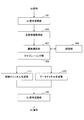
- FIG. 4 shows a flowchart of the scheduling method used in the embodiment.
- This scheduling method can be used by a base station as shown in FIG. Prior to the start of the flow, the base station acquires the quality information of the radio channel state from the users residing in the cell. The flow starts from step S401 and proceeds to step S403.
- the user index parameter n is set to 1 which is an initial value.
- the parameter n takes a value between 1 and N.
- N represents the total number of users who have already established bearers in the mobile communication system.
- the number of users having data to be actually transmitted and received is N or less.
- step S405 the base station determines whether there is data to be transmitted on the downlink for the user corresponding to the parameter n.
- the base station performs downlink scheduling, but this is not essential to the present embodiment. It is possible to perform scheduling for the uplink in the same manner. In that case, in step S405, it is determined whether the user has data to transmit on the uplink. If there is data to be transmitted to the user corresponding to the parameter n, the flow proceeds to step S407.
- step S407 the base station selects a weighting function F (t) corresponding to the user quality information (CQI in the case of downlink) corresponding to the parameter n.
- the base station calculates a scheduling coefficient for the user corresponding to the parameter n.
- the scheduling factor may be calculated in any suitable manner, but it needs to change at least according to the weighting function.
- the scheduling coefficient may be calculated by a MaxC / I method or a proportional fairness method.
- step S411 the value of parameter n is incremented. Even if there is no data to be transmitted to the user in step S405, the flow reaches step S411, and the value of the parameter n is incremented. Therefore, for users who do not have data to communicate, the scheduling coefficient is not calculated in step S409, and those users are excluded from radio resource allocation candidates.
- step S413 it is determined whether or not the value of the parameter n of the user index is equal to or less than the total number N of users who have already established bearers.
- the flow returns to step S405, and the described processing is performed. If the value of the parameter n is larger than the total number N of users who have already established bearers, the flow proceeds to step S415.
- step S415 the base station selects a user whose scheduling coefficient is relatively large (or determined to be hard-decisionally high priority), and preferentially allocates radio resources to the user.
- the base station notifies the user that radio resources have been allocated.
- step S417 the flow of the scheduling method ends. Thereby, the allocation of radio resources in the scheduling target subframe (TTI) is completed. Scheduling for the next subframe starts from step S401.
- a weighting function F (t) corresponding to the user quality information CQI is selected in step S407.
- the weighting function F 1 (t) corresponding to the quality information CQI1 of the user # 1 is selected.
- the scheduling coefficient of user # 1 becomes a smaller value due to the weighting function F 1 (t) before t1 (the scheduling coefficient is only the weighting coefficient).
- the scheduling coefficient of user # 1 becomes small due to the small weighting function F 1 (t), and it becomes difficult for radio resources to be assigned to user # 1.
- the weighting function F 1 (t) takes a large value. Therefore, when the data residence time reaches t1, the radio resource is easily assigned to the user # 1. Therefore, by using a weighting function that takes a low value for a long period of time such as F 1 (t) for users with good radio channel conditions (for example, users near the center of the cell), the radio resource allocation period Can be increased and the voice capacity can be increased.
- the weighting function F 3 (t) corresponding to the quality information CQI3 of the user # 3 is selected.
- the critical data residence time t3 is shorter than the critical data residence time t1.
- the weighting function F 3 (t) takes a low value. Even if there is data to be transmitted to the user # 3 within this period, the scheduling coefficient of the user # 3 becomes a small value due to the weighting function F 3 (t) before t3. Therefore, when the data retention time does not reach t3, it is difficult to allocate radio resources to user # 3.
- the weighting function F 3 (t) takes a large value.
- the function form of the weighting function is not limited to the step function. Any suitable function that implements a monotonically increasing function may be used. However, from the standpoint that the function can be expressed easily by setting a plurality of function values, the weighting function is preferably expressed by a step function.
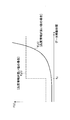
- FIG. 5 exemplarily shows a weighting function F 1 (t) when the value of quality information, for example, CQI is good, and a weighting function F 2 (t) when the value of quality information is bad.
- F 2 (t) is a step function similar to that shown in FIG. However, F 1 (t) takes a low value (eg, 0) until reaching t1, and increases linearly after t1.
- FIG. 6 also exemplarily shows the weighting function F 1 (t) when the quality information value is good and the weighting function F 2 (t) when the quality information value is bad.
- F 2 (t) is a step function similar to that shown in FIG. However, F 1 (t) increases exponentially as, for example, exp (t).
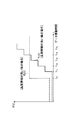
- FIG. 7 also illustrates the weighting function F 1 (t) when the quality information value is good and the weighting function F 2 (t) when the quality information value is bad.
- F 2 (t) is a step function similar to that shown in FIG. However, F 1 (t) is a multi-step function having a plurality of critical data residence times and changing stepwise at t11, t12, t3, t14, and T15.
- Each of F 1 (t) in FIG. 5 to FIG. 7 can take not only a binary value of high and low but also various values, and from the viewpoint of calculating a scheduling coefficient according to the data residence time of the user. preferable.
- F 2 (t) is shown as a common step function, but the function form of F 2 (t) is also arbitrary.
- the examples shown in FIGS. 5 to 7 show only two states of weighting functions, for example, whether the quality information, which is CQI, is a good value. Is not required. More than two weighting functions may be represented by any functional form.
- the base station selects a weighting function F (t) that varies depending on the data residence time for each mobile device based on quality information (for example, CQI) reported from the mobile device, To calculate the scheduling factor.
- F (t) a weighting function that varies depending on the data residence time for each mobile device based on quality information (for example, CQI) reported from the mobile device.
- the present invention may be applied to any appropriate mobile communication system that performs scheduling.
- the present invention includes W-CDMA system, HSDPA / HSUPA W-CDMA system, LTE system, LTE-Advanced system, IMT-Advanced system, WiMAX, Wi-Fi system, etc. May be applied.
Landscapes
- Engineering & Computer Science (AREA)
- Quality & Reliability (AREA)
- Computer Networks & Wireless Communication (AREA)
- Signal Processing (AREA)
- Mobile Radio Communication Systems (AREA)
Abstract
基地局は、ユーザ装置の無線チャネル状態を示す品質情報を取得する品質情報取得部と、複数の品質情報に対応する異なる複数の重み付け関数の中から、個々のユーザ装置の品質情報に対応する重み付け関数をそれぞれ選択する関数選択部と、重み付け関数にしたがって変化するスケジューリング係数を、1人以上のユーザ装置各々について算出し、少なくともスケジューリング係数の大きさにしたがってユーザ装置に無線リソースを割り当てるスケジューリング部と、無線リソースが割り当てられたことをユーザ装置に通知する通知部とを有し、重み付け関数はユーザ装置のデータ滞留時間の関数であり、相対的に良い値の品質情報に対応する重み付け関数の値が所定値に達するまでのデータ滞留時間は、相対的に悪い値の品質情報に対応する重み付け関数の値がその所定値に達するまでのデータ滞留時間よりも長い。
Description
本発明は、移動通信システムにおける基地局及びスケジューリング方法に関する。
移動通信システムにおける周波数利用効率を向上させる技術の1つとして、周波数スケジューリングがある。例えば、周波数スケジューリングは、ロングタームエボリューション(Long Term Evolution:LTE)方式等の移動通信システムにおいて採用されている。LTE方式は、W-CDMA(Wideband-Code Division Multiple Access)の拡張技術であるHSPA(High Speed Packet Access)から更に発展した標準規格である。LTE方式の仕様については、W-CDMAの標準化団体3GPP(3rd Generation Partnership Project)により作成されている。LTE方式の移動通信システムでは、下りリンクにおいて100Mbps以上、上りリンクにおいて50Mbps以上の高速通信が実現され、遅延の改善や周波数の利用効率の向上等が図られている。上記の周波数スケジューリングは、ダイナミックスケジューリング方式(Dynamic Scheduling)とセミパーシステントスケジューリング方式(Semi-Persistent Scheduling:SPS)に大別される。
ダイナミックスケジューリング方式の場合、データ種別に応じた優先度及び無線チャネル状態の良否に応じて、無線リソースがユーザに動的に割り当てられる。例えば、どのユーザにどの無線リソースを割り当てるかが、1msのサブフレーム(TTI)毎に決定される。ユーザに対する無線リソースの割り当て方が頻繁に変わるので、無線リソースを柔軟に活用できる。
一方、ユーザがやり取りするデータ種別は様々であり、音声パケット(VoIP)等のようにデータ量は少ないが遅延が短く制限されるものや、データ通信等のようにデータ量は多いが遅延はそれほど短くは制限されないものがある。音声パケットの場合、データ量の少ないデータが周期的に発生する。このような音声パケットについて、上記のダイナミックスケジューリング方式によりスケジューリングを行うと、周期的に発生する少ないデータ量の音声パケット各々について、無線リソースを一々指定しなければならなくなる。この場合、通信するデータ全体に対して、無線リソースの通知に要するシグナリングのオーバーヘッド(PDCCH)の占める割合が大きくなり、無線リソースの利用効率が悪化してしまうことが懸念される。
セミパーシステントスケジューリング方式(SPS)は、このような懸念に対応できる方式である。セミパーシステントスケジューリング方式の場合、1回の無線リソースの割り当てが、1サブフレームだけでなく、以後の多数のサブフレームにも適用されるようにする。すなわち、ある一定の無線リソースを周期的に割り当てることで、無線リソースのシグナリングに要するオーバーヘッドを削減する。したがって、移動通信システムにおける全てのユーザ装置が、セミパーシステントスケジューリング方式(SPS)に対応していれば、音声パケットについてSPSを使用することで、上記の懸念を解消できる。
しかしながら、移動通信システムにおける全てのユーザ装置が、セミパーシステントスケジューリング方式(SPS)に対応していない状況も考えられる。この場合、無線リソースの割り当てはダイナミックスケジューリング方式によることとなるが、そうすると、周期的に発生する少ないデータ量の音声パケット各々について無線リソースを一々指定しなければならず、オーバーヘッドが大きくなってしまうという上記の問題が懸念される。
さらに、オーバーヘッドが大きくなることに起因して、音声サービスを利用できるユーザ数が少なく制限されてしまうという問題も懸念される。1msのサブフレーム(TTI)毎にスケジューリングが行われ、1サブフレームにおいて無線リソースを指定できるユーザ数がNであったとする。音声パケットは、周期的に発生するので、その周期をTとすると、同時に音声サービスを利用できるユーザ数(すなわち、音声容量)は、N×Tとなる。例えば、N=3人及びT=20msの場合、音声容量は、3×20=60人となる。この音声容量を増やす技術の1つに、ディレイパッキング方式(delay packing)がある。ディレイパッキング方式の場合、人間が耳にする音声パケットは、発生周期20msより長い周期で送信しても品質に影響はない、という事実に基づいて、発生周期より長い周期で音声パケットを送信する。例えば、あるユーザの音声パケットがT=20ms毎に音声パケットが発生したとしても、そのユーザには3T=60ms毎にしか音声パケットを送信しないようにする。このようにすることで、音声容量を3倍に増やすことができる。ディレイパッキングについては、非特許文献1に記載されている。
Oscar Fresan, et al., "Dynamic Packet Bundling for VoIP Transmission Over Rel'7 HSUPA with 10ms TTI Length,"IEEE ISWCS 2007, pp.5008-512
ディレイパッキング方式は、音声パケットを送信する周期を、音声パケットの発生周期よりも長くすることで、音声容量を向上させている。この場合、音声容量が向上する一方、一度に送信する音声パケットの量も増える。例えば、20ms毎に発生する音声パケットを20ms毎に送信する場合、一度に送信する音声パケットは1つであるが、60ms毎に送信する場合、一度に送信する音声パケットは3つである。すなわち、音声パケットを送信する周期を長くするほど、一度に送信する音声パケット(データ量)は多くなる。一度に送受信するデータ量が多いことは、無線チャネル状態が良いユーザにとっては有利であるが、無線チャネル状態が良くないユーザにとっては不利である。このため、例えば、無線チャネル状態が悪いユーザに対して一度に多くの音声パケットを送信した結果、多くの再送が必要となり、却ってスループットが下がってしまうことが懸念される。このように、従来のディレイパッキング方式は、ユーザ各々の通信状況を考慮していない。
本発明の課題は、個々のユーザの通信状況を考慮しつつ音声容量を向上させることである。
一実施例による基地局は、
ユーザ装置の無線チャネル状態を示す品質情報を取得する品質情報取得部と、
複数の品質情報に対応する異なる複数の重み付け関数の中から、個々のユーザ装置の品質情報に対応する重み付け関数をそれぞれ選択する関数選択部と、
重み付け関数にしたがって変化するスケジューリング係数を、1人以上のユーザ装置各々について算出し、少なくともスケジューリング係数の大きさにしたがってユーザ装置に無線リソースを割り当てるスケジューリング部と、
無線リソースが割り当てられたことをユーザ装置に通知する通知部と
を有し、前記重み付け関数はユーザ装置のデータ滞留時間の関数であり、相対的に良い値の品質情報に対応する重み付け関数の値が所定値に達するまでのデータ滞留時間は、相対的に悪い値の品質情報に対応する重み付け関数の値が該所定値に達するまでのデータ滞留時間よりも長い、移動通信システムにおける基地局である。
ユーザ装置の無線チャネル状態を示す品質情報を取得する品質情報取得部と、
複数の品質情報に対応する異なる複数の重み付け関数の中から、個々のユーザ装置の品質情報に対応する重み付け関数をそれぞれ選択する関数選択部と、
重み付け関数にしたがって変化するスケジューリング係数を、1人以上のユーザ装置各々について算出し、少なくともスケジューリング係数の大きさにしたがってユーザ装置に無線リソースを割り当てるスケジューリング部と、
無線リソースが割り当てられたことをユーザ装置に通知する通知部と
を有し、前記重み付け関数はユーザ装置のデータ滞留時間の関数であり、相対的に良い値の品質情報に対応する重み付け関数の値が所定値に達するまでのデータ滞留時間は、相対的に悪い値の品質情報に対応する重み付け関数の値が該所定値に達するまでのデータ滞留時間よりも長い、移動通信システムにおける基地局である。
一実施例によれば、個々のユーザの通信状況を考慮しつつ音声容量を向上させることができる。
以下に説明する実施例は、ユーザ毎に算出するスケジューリング係数の算出法を工夫することで、例えば下り音声パケットの送信タイミングを遅延させる。さらに、ユーザの品質情報に応じた重み付け関数を選択し、その重み付け関数に応じてスケジューリング係数が変化するようにすることで、ユーザの通信状況に応じて、送信タイミングの遅延量を制御することができる。これにより、セル中央のように品質情報が良い値のユーザの下りデータは、長い時間だけ遅延させられ、その分だけ音声容量を増やすことができる。逆に、セル端のように品質情報が良くないユーザの下りデータは、短い時間だけ遅延させ、そのようなユーザに一度に多くのデータが送信されてしまうことを効果的に防ぐ。
以下の観点から実施例を説明する。
1.基地局
2.動作例
3.変形例
2.動作例
3.変形例
<1.基地局>
図1は、実施例において使用される基地局の機能ブロック図を示す。図1には、移動通信システムの基地局に備わる様々な機能を実現する処理部の内、実施例に特に関連する処理部が示されている。図示の基地局は、説明の便宜上、例えばロングタームエボリューション(LTE)方式の移動通信システムにおける基地局であるとするが、他の移動通信システムの基地局でもよい。図1には、UL信号受信部101、品質情報取得部103、記憶部105、関数選択部107、スケジューリング部109、制御チャネル生成部111、データチャネル生成部113及びDL信号送信部115が示されている。
図1は、実施例において使用される基地局の機能ブロック図を示す。図1には、移動通信システムの基地局に備わる様々な機能を実現する処理部の内、実施例に特に関連する処理部が示されている。図示の基地局は、説明の便宜上、例えばロングタームエボリューション(LTE)方式の移動通信システムにおける基地局であるとするが、他の移動通信システムの基地局でもよい。図1には、UL信号受信部101、品質情報取得部103、記憶部105、関数選択部107、スケジューリング部109、制御チャネル生成部111、データチャネル生成部113及びDL信号送信部115が示されている。
UL信号受信部101は、ユーザ装置からの上り信号(UL信号)を受信し、ベースバンド信号に変換する。したがって、UL信号受信部101は、受信した無線信号をフィルタリングする機能、アナログ信号をディジタル信号に変換する機能、受信した信号をデータ復調する機能、受信した信号をチャネル復号化する機能等を有する。上り信号は、一般的には制御チャネル、パイロットチャネル及びデータチャネル等を含む。
品質情報取得部103は、上り信号(UL信号)から、無線チャネル状態の良否を示す品質情報を取得する。品質情報は制御チャネルに含まれている。品質情報は、下りリンクの無線チャネル状態を示す情報でもよいし、上りリンクの無線チャネル状態を示す情報でもよいし、それら双方を含む情報でもよい。下りリンクの無線チャネル状態は、例えば、ユーザ装置が受信したパイロット信号の受信レベルから導出されたチャネル状態インジケータ(CQI)により表現されてもよい。上りリンクの無線チャネル状態は、基地局が受信したパイロット信号の受信レベルから導出されてもよい。基地局及びユーザ装置が受信したパイロット信号の受信レベルは、当業者に既知の適切な如何なる量で表現されてもよい。一例として、受信レベルは、瞬時値であるか平均値であるかを問わず、広く、無線チャネル状態の良否を表す量として定義され、例えば、受信電力、電界強度RSSI、希望波受信電力RSCP、パスロス、SNR、SIR、Ec/N0等により表現されてもよい。
記憶部105は、複数の品質情報と複数の重み付け関数との対応関係を記憶する。
図2は、そのような対応関係をテーブル形式で表現したものを示す。一例として、品質情報が、CQIにより表現されているが、上述したように品質情報は別の量により表現されてもよい。説明の便宜上、CQIは、CQI1、CQI2、CQI3、...の順に悪くなっているものとする。これらの品質情報各々に重み付け関数が対応付けられている。図示の例の場合、CQI1にF1(t)が対応付けられ、CQI2にF2(t)が対応付けられ、CQI3にF3(t)が対応付けられ、以下同様にCQIiにFi(t)が対応付けられている。
図3は、重み付け関数F1(t)、F2(t)、F3(t)の一例を示す。概して、重み付け関数は、データ滞留時間の観点からユーザ間の公平性を図るために、スケジューリング係数に重み付けを行うためのものである。重み付け関数は、ユーザのデータ滞留時間に関する単調増加関数であることが好ましい。本願において、xの関数F(x)が単調増加関数であるならば、任意のx1<x2に対して、F(x1)≦F(x2)が成立するものとする。図示の例の場合、重み付け関数は、階段関数により表現されている。データの滞留時間とは、送信を待機している下り又は上りのデータが、バッファに留まっている期間を意味する。「3.変形例」において説明するように、重み付け関数の関数形は適切な如何なるものでもよいが、単調増加関数であることが好ましい。図示されているように、品質情報CQIiに対応する重み付け関数Fi(t)は、データ滞留時間がtiに至るまでは低い値(例えば、0)をとり、データ滞留時間がtiに至った後は高い値(例えば、1)をとる。ただし、i=1、2、3である。このように、良い値の品質情報に対応する重み付け関数の値が所定値(例えば、1)に達するまでのデータ滞留時間tiは、相対的に悪い値の品質情報に対応する重み付け関数の値がその所定値(例えば、1)に達するまでのデータ滞留時間よりも長い(t1>t2>t3)。便宜上、関数の値が変化するデータ滞留時間tiを「臨界データ滞留時間」と呼ぶことにする。
図示の簡明化のため、3つの重み付け関数しか示していないが、より多い数の重み付け関数も、品質情報CQIの良否に応じて同様に考えることができる。一般に、品質情報が良い値をとるほど臨界データ滞留時間は長い値をとる。あるいは、品質情報が悪い値をとるほど臨界データ滞留時間は短い値をとる。説明の便宜上、1つの品質情報CQIiについて、1つの重み付け関数Fi(t)が対応しているが、このような1対1の対応関係は必須ではない。1つ以上の任意の数の品質情報CQIiについて、1つ以上の任意の数の重み付け関数が対応付けられてもよい。さらに、1つの重み付け関数において臨界データ滞留時間が複数個存在してもよい。
図1の関数選択部107は、記憶部105に記憶されている品質情報と重み付け関数の対応関係を参照することで、個々のユーザの品質情報に対応する重み付け関数をそれぞれ選択する。例えば、あるユーザの品質情報がCQI2であった場合、そのユーザに対応する重み付け関数はF2(t)である(図2に示されているような対応関係を想定している)。
なお、品質情報はユーザ装置から反復的に得られるが、ユーザ装置から異なる品質情報が得られる度に重み付け関数を変更することは、動作の安定性等の観点からは好ましくない。そこで、ユーザ装置から得られたいくつかの品質情報を平均化し、その平均的な品質情報に対応する重み付け関数が選択されてもよい。平均化は、算術平均でもよいし、忘却係数を用いた平均等でもよい。あるいは、複数回得られた品質情報が同じ値を示した場合に限って、重み付け関数をその品質情報に対応するものに更新してもよい。
スケジューリング部109は、重み付け関数にしたがって変化するスケジューリング係数を、1人以上のユーザ各々について算出し、スケジューリング係数の値が相対的に大きい(または、硬判定的に優先度が高いと判定された)ユーザを選択し、そのユーザに優先的に無線リソースを割り当てる。スケジューリング係数は、適切な如何なる方法で計算されてもよい。一例として、MaxC/I法やプロポーショナルフェアネス法(Proportional Fairness)により、スケジューリング係数が計算されてもよい。一例として、スケジューリング係数は以下の因子Cに比例するものである。

制御チャネル生成部111は、無線リソースがユーザにどのように割り当てられているかを示す制御チャネルを生成する。LTE方式の移動通信システムの場合、この制御チャネルは、物理下りリンク制御チャネル(PDCCH)に対応する。制御チャネルは、無線リソースが割り当てられているユーザの識別子、下りリンク及び/又は上りリンクにおいて割り当てられたリソースブロック、データフォーマット(データ変調方式及びチャネル符号化率)等の情報を含む。
データチャネル生成部113は、下りリンクにおいてユーザのデータを送信するデータチャネルを生成する。ユーザのデータは、一般的には、音声パケット(VoIP)、リアルタイムデータ、データ通信用のデータ等である。LTE方式の移動通信システムの場合、このデータチャネルは、物理下りリンク共有チャネル(PDSCH)に対応する。
DL信号送信部115は、ユーザ装置に対する下り信号(DL信号)を送信する。したがって、DL信号送信部119は、送信するデータをチャネル符号化する機能、送信するデータをデータ変調する機能、ディジタル信号をアナログ信号に変換する機能 送信する信号をフィルタリングする機能、送信する信号を増幅する機能等を有する。
<2.動作例>
図4は、実施例において使用されるスケジューリング方法のフローチャートを示す。このスケジューリング方法は、図1に示されているような基地局により使用可能である。フローの開始前に、基地局は、セルに在圏しているユーザから、無線チャネル状態の品質情報を取得している。フローはステップS401から始まり、ステップS403に進む。
図4は、実施例において使用されるスケジューリング方法のフローチャートを示す。このスケジューリング方法は、図1に示されているような基地局により使用可能である。フローの開始前に、基地局は、セルに在圏しているユーザから、無線チャネル状態の品質情報を取得している。フローはステップS401から始まり、ステップS403に進む。
ステップS403において、ユーザインデックスのパラメータnを初期値である1に設定する。パラメータnは、1以上N以下の値をとる。Nは、移動通信システムにおいて既にベアラを確立しているユーザの総数を表す。実際に送受信するデータを有するユーザの数は、N以下である。
ステップS405において、基地局は、パラメータnに対応するユーザに下りリンクで送信するデータが有るか否かを判定する。説明の簡明化のため、基地局が下りリンクのスケジューリングを行う場合を想定しているが、このことは本実施例に必須ではない。上りリンクに対するスケジューリングを同様に行うことが可能である。その場合、ステップS405において、ユーザがアップリンクにおいて送信するデータを有するか否かが判定される。パラメータnに対応するユーザに送信するデータが有った場合、フローはステップS407に進む。
ステップS407において、基地局は、パラメータnに対応するユーザの品質情報(下りリンクの場合は、CQI)に対応する重み付け関数F(t)を選択する。
ステップS409において、基地局は、パラメータnに対応するユーザのスケジューリング係数を計算する。スケジューリング係数は、適切な如何なる方法で計算されてもよいが、少なくとも重み付け関数にしたがって変化することを要する。一例として、MaxC/I法やプロポーショナルフェアネス法(Proportional Fairness)により、スケジューリング係数が計算されてもよい。
ステップS411において、パラメータnの値がインクリメントされる。ステップS405において、ユーザに送信するデータが無かった場合も、フローはステップS411に至り、パラメータnの値がインクリメントされる。したがって、通信すべきデータが無いユーザについては、ステップS409におけるスケジューリング係数の計算は行われず、それらのユーザは無線リソースの割り当て候補から除外される。
ステップS413において、ユーザインデックスのパラメータnの値が、既にベアラを確立しているユーザの総数N以下であるか否かが判定される。パラメータnの値が、既にベアラを確立しているユーザの総数N以下であった場合、フローはステップS405に戻り、説明済みの処理が行われる。パラメータnの値が、既にベアラを確立しているユーザの総数Nより大きかった場合、フローはステップS415に進む。
ステップS415において、基地局は、スケジューリング係数の値が相対的に大きい(または、硬判定的に優先度が高いと判定された)ユーザを選択し、そのユーザに優先的に無線リソースを割り当てる。基地局は、無線リソースが割り当てられたことをユーザに通知する。
以後フローはステップS417に進み、スケジューリング方法のフローは終了する。これにより、スケジューリング対象のサブフレーム(TTI)における無線リソースの割り当てが終了する。次のサブフレームについてのスケジューリングは、ステップS401から始まる。
図3及び図4を参照しながら、本実施例による動作をさらに説明する。図4に示すスケジューリング方法を実行する際、ステップS407において、ユーザの品質情報CQIに対応する重み付け関数F(t)が選択される。例えば、ユーザ#1の品質情報CQI1に対応する重み付け関数F1(t)が選択される。このユーザ#1の場合、図3に示されているように、データ滞留時間がt1以前ならば重み付け関数F1(t)は低い値をとる。したがって、この期間内にユーザ#1に送信するデータがあったとしても、ユーザ#1のスケジューリング係数は、t1以前の重み付け関数F1(t)により小さな値になる(スケジューリング係数は重み係数だけでなく、他の様々な量(瞬時データレート等)からの影響も受けるが、重み付け係数の観点から説明する)。したがって、データ滞留時間がt1に達していない場合、小さな値の重み付け関数F1(t)により、ユーザ#1のスケジューリング係数は小さくなり、ユーザ#1に無線リソースが割り当てられにくくなる。データ滞留時間がt1に達すると、重み付け関数F1(t)は大きな値をとるので、データ滞留時間がt1に達すると、ユーザ#1に無線リソースが割り当てられやすくなる。したがって、無線チャネル状態が良好なユーザ(例えば、セル中央付近にいるユーザ)に対して、F1(t)のように長い期間低い値をとる重み付け関数を使用することで、無線リソースの割り当て周期を長くし、音声容量を増やすことができる。
別の例として、例えば、ユーザ#3の品質情報CQI3に対応する重み付け関数F3(t)が選択されたとする。図3に示されているように、臨界データ滞留時間t3は、臨界データ滞留時間t1よりも短い。このユーザ#3の場合、データ滞留時間がt3以前ならば重み付け関数F3(t)は低い値をとる。この期間内にユーザ#3に送信するデータがあったとしても、ユーザ#3のスケジューリング係数は、t3以前の重み付け関数F3(t)により小さな値になる。したがって、データ滞留時間がt3に達していない場合、ユーザ#3に無線リソースは割り当てられにくくなる。データ滞留時間がt3に達すると、重み付け関数F3(t)は大きな値をとるので、データ滞留時間がt3に達すると、ユーザ#3に無線リソースが割り当てられやすくなる。したがって、無線チャネル状態が良好でないユーザ(例えば、セル端付近にいるユーザ)に対して、F3(t)のように短い期間しか低い値をとらない重み付け関数を使用することで、そのようなユーザに一度に多くのデータを送信しないようにすることができる。
<3.変形例>
上述したように、重み付け関数の関数形は、階段関数に限定されない。単調増加関数を実現する適切な如何なる関数が使用されてもよい。ただし、複数の関数値を設定することで関数を簡易に表現できる等の観点からは、重み付け関数を階段関数で表現することが好ましい。
上述したように、重み付け関数の関数形は、階段関数に限定されない。単調増加関数を実現する適切な如何なる関数が使用されてもよい。ただし、複数の関数値を設定することで関数を簡易に表現できる等の観点からは、重み付け関数を階段関数で表現することが好ましい。
図5は、例えばCQIである品質情報の値が良い場合の重み付け関数F1(t)と、品質情報の値が悪い場合の重み付け関数F2(t)とを例示的に示す。F2(t)は図3に示す場合と同様な階段関数である。しかしながら、F1(t)はt1に至るまでは低い値(例えば、0)をとり、t1以降は線形に増加している。
図6も、品質情報の値が良い場合の重み付け関数F1(t)と、品質情報の値が悪い場合の重み付け関数F2(t)とを例示的に示す。F2(t)は図3に示す場合と同様な階段関数である。しかしながら、F1(t)は、例えばexp(t)のように指数関数的に増加している。
図7も、品質情報の値が良い場合の重み付け関数F1(t)と、品質情報の値が悪い場合の重み付け関数F2(t)とを例示的に示す。F2(t)は図3に示す場合と同様な階段関数である。しかしながら、F1(t)は複数の臨界データ滞留時間を有し、t11、t12、t3、t14、T15 において段階的に変化する多段の階段関数である。
図5ないし図7の何れのF1(t)も、高低の単なる2値だけでなく、様々な値をとることができ、ユーザのデータ滞留時間に応じたスケジューリング係数を算出する等の観点から好ましい。各図の比較を容易にするため、F2(t)が共通の階段関数として示されているが、F2(t)の関数形も任意である。さらに、図示及び説明の簡明化のため、図5ないし図7に示す例は、例えばCQIである品質情報が良い値であるか否かの2つの状態の重み付け関数しか示していないが、このとは必須でない。2つより多い数の重み付け関数が、任意の関数形により表現されてもよい。
本実施例によれば、基地局は、移動機から報告される品質情報(例えば、CQI)に基づいて、移動機毎にデータ滞留時間により変化する重み付け関数F(t)を選択し、それを用いてスケジューリング係数を計算する。その結果、セル中央のように無線品質が良好な移動機の音声データの送信タイミングの遅延量を、セル端のように無線品質が良好でない移動機よりも長くすることができる。これにより、セル中央のユーザに対しては音声容量を増やすことができる一方、セル端のユーザに対しては一度に多数の音声パケットが送信されないようにすることができる。
以上本発明は特定の実施例を参照しながら説明されてきたが、それらは単なる例示に過ぎず、当業者は様々な変形例、修正例、代替例、置換例等を理解するであろう。例えば、本発明は、スケジューリングを行う適切な如何なる移動通信システムに適用されてもよい。例えば本発明は、W-CDMA方式のシステム、HSDPA/HSUPA方式のW-CDMAシステム、LTE方式のシステム、LTE-Advanced方式のシステム、IMT-Advanced方式のシステム、WiMAX、Wi-Fi方式のシステム等に適用されてもよい。発明の理解を促すため具体的な数値例を用いて説明がなされたが、特に断りのない限り、それらの数値は単なる一例に過ぎず適切な如何なる値が使用されてもよい。発明の理解を促すため具体的な数式を用いて説明がなされたが、特に断りのない限り、それらの数式は単なる一例に過ぎず適切な如何なる数式が使用されてもよい。実施例又は項目の区分けは本発明に本質的ではなく、2以上の項目に記載された事項が必要に応じて組み合わせて使用されてよいし、ある項目に記載された事項が、別の項目に記載された事項に(矛盾しない限り)適用されてよい。説明の便宜上、本発明の実施例に係る装置は機能的なブロック図を用いて説明されたが、そのような装置はハードウェアで、ソフトウェアで又はそれらの組み合わせで実現されてもよい。ソフトウェアは、ランダムアクセスメモリ(RAM)、フラッシュメモリ、読み取り専用メモリ(ROM)、EPROM、EEPROM、レジスタ、ハードディスク(HDD)、リムーバブルディスク、CD-ROM、データベース、サーバその他の適切な如何なる記憶媒体に用意されてもよい。本発明は上記実施例に限定されず、本発明の精神から逸脱することなく、様々な変形例、修正例、代替例、置換例等が本発明に包含される。
本願は2011年3月18日に出願した日本国特許出願第2011-061200号に基づきその優先権を主張するものであり、同日本国出願の全内容を本願に援用する。
101 UL信号受信部
103 品質情報取得部
105 記憶部
107 関数選択部
109 スケジューリング部
111 制御チャネル生成部
113 データチャネル生成部
115 DL信号送信部
103 品質情報取得部
105 記憶部
107 関数選択部
109 スケジューリング部
111 制御チャネル生成部
113 データチャネル生成部
115 DL信号送信部
Claims (9)
- ユーザ装置の無線チャネル状態を示す品質情報を取得する品質情報取得部と、
複数の品質情報に対応する異なる複数の重み付け関数の中から、個々のユーザ装置の品質情報に対応する重み付け関数をそれぞれ選択する関数選択部と、
重み付け関数にしたがって変化するスケジューリング係数を、1人以上のユーザ装置各々について算出し、少なくともスケジューリング係数の大きさにしたがってユーザ装置に無線リソースを割り当てるスケジューリング部と、
無線リソースが割り当てられたことをユーザ装置に通知する通知部と
を有し、前記重み付け関数はユーザ装置のデータ滞留時間の関数であり、相対的に良い値の品質情報に対応する重み付け関数の値が所定値に達するまでのデータ滞留時間は、相対的に悪い値の品質情報に対応する重み付け関数の値が該所定値に達するまでのデータ滞留時間よりも長い、移動通信システムにおける基地局。 - 前記関数選択部が、個々のユーザ装置の品質情報の平均値に対応する重み付け関数をそれぞれ選択する、請求項1記載の基地局。
- 前記重み付け関数がデータ滞留時間に関する単調増加関数である、請求項2に記載の基地局。
- 前記重み付け関数が階段関数である、請求項3記載の基地局。
- 前記重み付け関数が指数関数である、請求項3記載の基地局。
- 前記複数の品質情報と前記複数の重み付け関数との対応関係を記憶する記憶部をさらに有する請求項2に記載の基地局。
- 前記品質情報取得部により取得される前記品質情報が、下りリンクの無線チャネル状態を示すチャネル品質インジケータにより表現されている、請求項6に記載の基地局。
- 前記品質情報取得部により取得される前記品質情報が、上りリンクの無線チャネル状態の良否を示す、請求項6に記載の基地局。
- ユーザ装置の無線チャネル状態を示す品質情報を取得し、
複数の品質情報に対応する異なる複数の重み付け関数の中から、個々のユーザ装置の品質情報に対応する重み付け関数をそれぞれ選択し、
重み付け関数にしたがって変化するスケジューリング係数を、1人以上のユーザ装置各々について算出し、少なくともスケジューリング係数の大きさにしたがってユーザ装置に無線リソースを割り当て、
無線リソースが割り当てられたことをユーザ装置に通知するステップ
を有し、前記重み付け関数はユーザ装置のデータ滞留時間の関数であり、相対的に良い値の品質情報に対応する重み付け関数の値が所定値に達するまでのデータ滞留時間は、相対的に悪い値の品質情報に対応する重み付け関数の値が該所定値に達するまでのデータ滞留時間よりも長い、移動通信システムにおけるスケジューリング方法。
Applications Claiming Priority (2)
| Application Number | Priority Date | Filing Date | Title |
|---|---|---|---|
| JP2011-061200 | 2011-03-18 | ||
| JP2011061200A JP5345168B2 (ja) | 2011-03-18 | 2011-03-18 | 移動通信システムにおける基地局及びスケジューリング方法 |
Publications (1)
| Publication Number | Publication Date |
|---|---|
| WO2012128008A1 true WO2012128008A1 (ja) | 2012-09-27 |
Family
ID=46879166
Family Applications (1)
| Application Number | Title | Priority Date | Filing Date |
|---|---|---|---|
| PCT/JP2012/055103 Ceased WO2012128008A1 (ja) | 2011-03-18 | 2012-02-29 | 移動通信システムにおける基地局及びスケジューリング方法 |
Country Status (2)
| Country | Link |
|---|---|
| JP (1) | JP5345168B2 (ja) |
| WO (1) | WO2012128008A1 (ja) |
Cited By (1)
| Publication number | Priority date | Publication date | Assignee | Title |
|---|---|---|---|---|
| CN115002923A (zh) * | 2022-05-24 | 2022-09-02 | 上海飞机制造有限公司 | 基于工业专网的资源调度方法、装置、设备以及存储介质 |
Citations (3)
| Publication number | Priority date | Publication date | Assignee | Title |
|---|---|---|---|---|
| JPH11178049A (ja) * | 1997-12-09 | 1999-07-02 | Mitsubishi Electric Corp | 無線回線割当装置及び無線回線割当方法 |
| JP2004312190A (ja) * | 2003-04-03 | 2004-11-04 | Ntt Docomo Inc | パケット送信制御装置及びパケット送信制御方法 |
| WO2005088917A1 (ja) * | 2004-03-11 | 2005-09-22 | Matsushita Electric Industrial Co., Ltd. | 制御局装置、基地局装置、端末装置、パケット通信システム及びパケット通信方法 |
Family Cites Families (2)
| Publication number | Priority date | Publication date | Assignee | Title |
|---|---|---|---|---|
| JP3898965B2 (ja) * | 2002-03-06 | 2007-03-28 | 株式会社エヌ・ティ・ティ・ドコモ | 無線リソース割り当て方法及び基地局 |
| JP4840099B2 (ja) * | 2006-11-20 | 2011-12-21 | 富士通株式会社 | 通話サーバ、通話システム、転送処理装置および転送処理プログラム |
-
2011
- 2011-03-18 JP JP2011061200A patent/JP5345168B2/ja not_active Expired - Fee Related
-
2012
- 2012-02-29 WO PCT/JP2012/055103 patent/WO2012128008A1/ja not_active Ceased
Patent Citations (3)
| Publication number | Priority date | Publication date | Assignee | Title |
|---|---|---|---|---|
| JPH11178049A (ja) * | 1997-12-09 | 1999-07-02 | Mitsubishi Electric Corp | 無線回線割当装置及び無線回線割当方法 |
| JP2004312190A (ja) * | 2003-04-03 | 2004-11-04 | Ntt Docomo Inc | パケット送信制御装置及びパケット送信制御方法 |
| WO2005088917A1 (ja) * | 2004-03-11 | 2005-09-22 | Matsushita Electric Industrial Co., Ltd. | 制御局装置、基地局装置、端末装置、パケット通信システム及びパケット通信方法 |
Cited By (1)
| Publication number | Priority date | Publication date | Assignee | Title |
|---|---|---|---|---|
| CN115002923A (zh) * | 2022-05-24 | 2022-09-02 | 上海飞机制造有限公司 | 基于工业专网的资源调度方法、装置、设备以及存储介质 |
Also Published As
| Publication number | Publication date |
|---|---|
| JP2012199662A (ja) | 2012-10-18 |
| JP5345168B2 (ja) | 2013-11-20 |
Similar Documents
| Publication | Publication Date | Title |
|---|---|---|
| US11076364B2 (en) | Power determining method, user equipment, and base station | |
| CN104938008B (zh) | 用于无线通信网络中的资源分配的方法和设备 | |
| KR101554620B1 (ko) | 참조신호 송신방법, 이동국장치 및 기지국장치 | |
| JP5237468B2 (ja) | 無線通信システムにおける方法および構成 | |
| JP2016534615A (ja) | Csi報告を処理するための方法及び無線ノード | |
| JP5138724B2 (ja) | 移動通信システムにおける基地局及び方法 | |
| US11284390B2 (en) | Data communication method, terminal device, and network device | |
| US20160278111A1 (en) | Service scheduling method and device | |
| WO2012147739A1 (ja) | 移動通信システムにおける基地局及びリソース割当方法 | |
| CN103416099B (zh) | 用于调度无线电资源的无线电基站及其方法 | |
| CN115190596A (zh) | 一种uci在pusch上传输的方法、终端及设备 | |
| JP7250128B2 (ja) | 通信方法および装置 | |
| KR101145489B1 (ko) | 무선통신 시스템에서의 하향 링크 패킷 스케쥴링 방법 및 그 장치 | |
| JP2019532591A (ja) | アップリンクデータの送信順序の設定 | |
| JP5179613B2 (ja) | 移動通信システムにおける基地局及びスケジューリング方法 | |
| US10278202B2 (en) | Coordinated scheduling in a cellular network | |
| WO2013172106A1 (ja) | 移動通信システムにおける基地局及び制御方法 | |
| US20120202513A1 (en) | Method and Arrangement in a Wireless Communication System | |
| JP5297548B1 (ja) | 移動通信システムにおける基地局及び制御方法 | |
| JP5345168B2 (ja) | 移動通信システムにおける基地局及びスケジューリング方法 | |
| JP5848924B2 (ja) | 基地局及び通信制御方法 | |
| CN120456294A (zh) | 上行数据传输方法、装置及存储介质 | |
| CN102172092A (zh) | 用户关系处理方法及设备 | |
| JP2014160940A (ja) | 無線通信システムにおける無線通信装置および無線リソース割り当て方法 |
Legal Events
| Date | Code | Title | Description |
|---|---|---|---|
| 121 | Ep: the epo has been informed by wipo that ep was designated in this application |
Ref document number: 12760287 Country of ref document: EP Kind code of ref document: A1 |
|
| NENP | Non-entry into the national phase |
Ref country code: DE |
|
| 122 | Ep: pct application non-entry in european phase |
Ref document number: 12760287 Country of ref document: EP Kind code of ref document: A1 |