WO2012108419A1 - 植物の病害抵抗性及び/又は分枝を増強する組成物 - Google Patents
植物の病害抵抗性及び/又は分枝を増強する組成物 Download PDFInfo
- Publication number
- WO2012108419A1 WO2012108419A1 PCT/JP2012/052720 JP2012052720W WO2012108419A1 WO 2012108419 A1 WO2012108419 A1 WO 2012108419A1 JP 2012052720 W JP2012052720 W JP 2012052720W WO 2012108419 A1 WO2012108419 A1 WO 2012108419A1
- Authority
- WO
- WIPO (PCT)
- Prior art keywords
- amino acid
- residue
- plant
- peptide
- nucleic acid
- Prior art date
- Legal status (The legal status is an assumption and is not a legal conclusion. Google has not performed a legal analysis and makes no representation as to the accuracy of the status listed.)
- Ceased
Links
Images



Classifications
-
- A—HUMAN NECESSITIES
- A01—AGRICULTURE; FORESTRY; ANIMAL HUSBANDRY; HUNTING; TRAPPING; FISHING
- A01N—PRESERVATION OF BODIES OF HUMANS OR ANIMALS OR PLANTS OR PARTS THEREOF; BIOCIDES, e.g. AS DISINFECTANTS, AS PESTICIDES OR AS HERBICIDES; PEST REPELLANTS OR ATTRACTANTS; PLANT GROWTH REGULATORS
- A01N43/00—Biocides, pest repellants or attractants, or plant growth regulators containing heterocyclic compounds
- A01N43/34—Biocides, pest repellants or attractants, or plant growth regulators containing heterocyclic compounds having rings with one nitrogen atom as the only ring hetero atom
- A01N43/36—Biocides, pest repellants or attractants, or plant growth regulators containing heterocyclic compounds having rings with one nitrogen atom as the only ring hetero atom five-membered rings
-
- A—HUMAN NECESSITIES
- A01—AGRICULTURE; FORESTRY; ANIMAL HUSBANDRY; HUNTING; TRAPPING; FISHING
- A01N—PRESERVATION OF BODIES OF HUMANS OR ANIMALS OR PLANTS OR PARTS THEREOF; BIOCIDES, e.g. AS DISINFECTANTS, AS PESTICIDES OR AS HERBICIDES; PEST REPELLANTS OR ATTRACTANTS; PLANT GROWTH REGULATORS
- A01N37/00—Biocides, pest repellants or attractants, or plant growth regulators containing organic compounds containing a carbon atom having three bonds to hetero atoms with at the most two bonds to halogen, e.g. carboxylic acids
- A01N37/44—Biocides, pest repellants or attractants, or plant growth regulators containing organic compounds containing a carbon atom having three bonds to hetero atoms with at the most two bonds to halogen, e.g. carboxylic acids containing at least one carboxylic group or a thio analogue, or a derivative thereof, and a nitrogen atom attached to the same carbon skeleton by a single or double bond, this nitrogen atom not being a member of a derivative or of a thio analogue of a carboxylic group, e.g. amino-carboxylic acids
- A01N37/46—N-acyl derivatives
-
- A—HUMAN NECESSITIES
- A01—AGRICULTURE; FORESTRY; ANIMAL HUSBANDRY; HUNTING; TRAPPING; FISHING
- A01N—PRESERVATION OF BODIES OF HUMANS OR ANIMALS OR PLANTS OR PARTS THEREOF; BIOCIDES, e.g. AS DISINFECTANTS, AS PESTICIDES OR AS HERBICIDES; PEST REPELLANTS OR ATTRACTANTS; PLANT GROWTH REGULATORS
- A01N65/00—Biocides, pest repellants or attractants, or plant growth regulators containing material from algae, lichens, bryophyta, multi-cellular fungi or plants, or extracts thereof
-
- C—CHEMISTRY; METALLURGY
- C07—ORGANIC CHEMISTRY
- C07K—PEPTIDES
- C07K14/00—Peptides having more than 20 amino acids; Gastrins; Somatostatins; Melanotropins; Derivatives thereof
- C07K14/415—Peptides having more than 20 amino acids; Gastrins; Somatostatins; Melanotropins; Derivatives thereof from plants
-
- C—CHEMISTRY; METALLURGY
- C12—BIOCHEMISTRY; BEER; SPIRITS; WINE; VINEGAR; MICROBIOLOGY; ENZYMOLOGY; MUTATION OR GENETIC ENGINEERING
- C12N—MICROORGANISMS OR ENZYMES; COMPOSITIONS THEREOF; PROPAGATING, PRESERVING, OR MAINTAINING MICROORGANISMS; MUTATION OR GENETIC ENGINEERING; CULTURE MEDIA
- C12N15/00—Mutation or genetic engineering; DNA or RNA concerning genetic engineering, vectors, e.g. plasmids, or their isolation, preparation or purification; Use of hosts therefor
- C12N15/09—Recombinant DNA-technology
- C12N15/63—Introduction of foreign genetic material using vectors; Vectors; Use of hosts therefor; Regulation of expression
- C12N15/79—Vectors or expression systems specially adapted for eukaryotic hosts
- C12N15/82—Vectors or expression systems specially adapted for eukaryotic hosts for plant cells, e.g. plant artificial chromosomes (PACs)
- C12N15/8241—Phenotypically and genetically modified plants via recombinant DNA technology
- C12N15/8261—Phenotypically and genetically modified plants via recombinant DNA technology with agronomic (input) traits, e.g. crop yield
-
- C—CHEMISTRY; METALLURGY
- C12—BIOCHEMISTRY; BEER; SPIRITS; WINE; VINEGAR; MICROBIOLOGY; ENZYMOLOGY; MUTATION OR GENETIC ENGINEERING
- C12N—MICROORGANISMS OR ENZYMES; COMPOSITIONS THEREOF; PROPAGATING, PRESERVING, OR MAINTAINING MICROORGANISMS; MUTATION OR GENETIC ENGINEERING; CULTURE MEDIA
- C12N15/00—Mutation or genetic engineering; DNA or RNA concerning genetic engineering, vectors, e.g. plasmids, or their isolation, preparation or purification; Use of hosts therefor
- C12N15/09—Recombinant DNA-technology
- C12N15/63—Introduction of foreign genetic material using vectors; Vectors; Use of hosts therefor; Regulation of expression
- C12N15/79—Vectors or expression systems specially adapted for eukaryotic hosts
- C12N15/82—Vectors or expression systems specially adapted for eukaryotic hosts for plant cells, e.g. plant artificial chromosomes (PACs)
- C12N15/8241—Phenotypically and genetically modified plants via recombinant DNA technology
- C12N15/8261—Phenotypically and genetically modified plants via recombinant DNA technology with agronomic (input) traits, e.g. crop yield
- C12N15/8271—Phenotypically and genetically modified plants via recombinant DNA technology with agronomic (input) traits, e.g. crop yield for stress resistance, e.g. heavy metal resistance
- C12N15/8279—Phenotypically and genetically modified plants via recombinant DNA technology with agronomic (input) traits, e.g. crop yield for stress resistance, e.g. heavy metal resistance for biotic stress resistance, pathogen resistance, disease resistance
-
- C—CHEMISTRY; METALLURGY
- C12—BIOCHEMISTRY; BEER; SPIRITS; WINE; VINEGAR; MICROBIOLOGY; ENZYMOLOGY; MUTATION OR GENETIC ENGINEERING
- C12N—MICROORGANISMS OR ENZYMES; COMPOSITIONS THEREOF; PROPAGATING, PRESERVING, OR MAINTAINING MICROORGANISMS; MUTATION OR GENETIC ENGINEERING; CULTURE MEDIA
- C12N15/00—Mutation or genetic engineering; DNA or RNA concerning genetic engineering, vectors, e.g. plasmids, or their isolation, preparation or purification; Use of hosts therefor
- C12N15/09—Recombinant DNA-technology
- C12N15/63—Introduction of foreign genetic material using vectors; Vectors; Use of hosts therefor; Regulation of expression
- C12N15/79—Vectors or expression systems specially adapted for eukaryotic hosts
- C12N15/82—Vectors or expression systems specially adapted for eukaryotic hosts for plant cells, e.g. plant artificial chromosomes (PACs)
- C12N15/8241—Phenotypically and genetically modified plants via recombinant DNA technology
- C12N15/8261—Phenotypically and genetically modified plants via recombinant DNA technology with agronomic (input) traits, e.g. crop yield
- C12N15/8291—Hormone-influenced development
- C12N15/8298—Brassinosteroids
-
- Y—GENERAL TAGGING OF NEW TECHNOLOGICAL DEVELOPMENTS; GENERAL TAGGING OF CROSS-SECTIONAL TECHNOLOGIES SPANNING OVER SEVERAL SECTIONS OF THE IPC; TECHNICAL SUBJECTS COVERED BY FORMER USPC CROSS-REFERENCE ART COLLECTIONS [XRACs] AND DIGESTS
- Y02—TECHNOLOGIES OR APPLICATIONS FOR MITIGATION OR ADAPTATION AGAINST CLIMATE CHANGE
- Y02A—TECHNOLOGIES FOR ADAPTATION TO CLIMATE CHANGE
- Y02A40/00—Adaptation technologies in agriculture, forestry, livestock or agroalimentary production
- Y02A40/10—Adaptation technologies in agriculture, forestry, livestock or agroalimentary production in agriculture
- Y02A40/146—Genetically Modified [GMO] plants, e.g. transgenic plants
Definitions
- the present invention relates to a composition for enhancing plant disease resistance and / or plant branching against microbial infection and the like, and a method for inhibiting plant disease infection and a method for enhancing branching using the same.
- microbial infection In plants, microbial infection is unavoidable, and plants usually cause severe stress due to the infection.
- plants In addition to morphological adaptation, plants have developed their own protective defense systems against such microbial infections, especially pathogen infections. That is, the plant specifically recognizes the pathogen as the first response to infection with the pathogen, induces rapid cell death (hypersensitive cell death) of the infected cells, and eliminates the infected cells together (non-patent literature). 1). As a subsequent response, plants induce pathogenic resistance called systemicquireacquired resistance (SAR) triggered by hypersensitive cell death to protect the plant from further attack by pathogens (non-patent literature) 2, 3).
- SAR systemicquireacquired resistance
- Non-patent Documents 4 and 5 SAR has been confirmed in many plants and imparts resistance to various plant pathogens to uninfected parts of plants.
- As one of the signal transduction factors for inducing this SAR salicylic acid has been identified in dicotyledonous plants such as Arabidopsis thaliana and tobacco (Non-patent Documents 6 and 7). If other signal transduction factors that induce SAR can be identified and the signal in the plant cell can be controlled, disease resistance can be imparted to the plant body without via hypersensitive cell death.
- the SAR-induced signal transduction mechanism via salicylic acid still has many unexplained points, and the whole picture has not been clarified.
- Brassinosteroids can induce plant disease resistance through a pathway different from the above-described salicylic acid-mediated SAR-induced signaling mechanism (NakashitashitH. Et al, 2003, “The The Plant” Jour., 33: 887-898).
- Brassinosteroids (hereinafter referred to as “BR”) are involved in plant growth regulation, photomorphogenesis, vascularization control, chloroplast function regulation, etc., and play a major role in various fields of the plant growth cycle. (AzpirozpR. Et al., 1988, Plan Cell, 10: 219-230; Clouse S. & Sasse J., 1998, Annu. Rev. Plant Physiol. Plan Mol.
- BDR Brain-mediated disease resistance
- the present invention provides a novel plant disease resistance enhancer that can induce BDR instead of BR and can enhance plant disease resistance at a lower cost, and a plant disease infection prevention and treatment method using the same. Its purpose is to develop and provide.
- BR cell a signaling factor that functions in an intracellular signaling pathway activated by BR
- BR intracellular signaling pathway an intracellular signaling pathway activated by BR
- BR intracellular signaling pathway a signaling factor that functions in an intracellular signaling pathway activated by BR
- BR intracellular signaling pathway a signaling factor that functions in an intracellular signaling pathway activated by BR
- bil3 mutant strain one of the brassinosteroid signaling pathway mutant bil (Brz-Insensitive-Longhypocoty) resistant to BR biosynthesis inhibitor Brassinazole (Brz) was analyzed.
- the BIL3 gene encodes a novel peptide hormone that is secreted extracellularly, and its overexpression increases not only the induction of BDR but also the number of branches of the plant body. Plant branching control is important in controlling the production of agricultural and horticultural crops.
- the present invention is based on the novel findings and provides the following.
- a peptide or a salt thereof having the following amino acid sequence having activity for enhancing plant disease resistance and / or branching.
- amino acid sequence represented by SEQ ID NO: 1 (b) an amino acid residue having 4 or more amino acid identity to the amino acid sequence represented by SEQ ID NO: 1 and corresponding to position 2 of the amino acid sequence
- Alanine residue or serine residue amino acid residues corresponding to positions 3, 5, 7, and 8 are nonpolar amino acid residues
- amino acid residues corresponding to positions 4 and 6 are proline residues
- An amino acid sequence in which the amino acid residue corresponding to position 9 is a glycine residue
- the amino acid residue corresponding to position 3 of the amino acid sequence shown in SEQ ID NO: 1 A group an isoleucine residue or a proline residue
- an amino acid residue corresponding to position 5 is an isoleucine residue or a valine residue
- an amino acid residue corresponding to position 7 is a leucine residue or a phenylalanine residue
- the amino acid residue corresponding to position 2 of the amino acid sequence shown in SEQ ID NO: 1 is an alanine residue
- the amino acid residue corresponding to position 3 is a valine residue
- the position 5 The peptide or salt thereof according to (1) or (2), wherein the corresponding amino acid residue is an isoleucine residue and / or the amino acid residue corresponding to position 7 is a leucine residue.
- a plant comprising as an active ingredient at least one of the peptide according to any one of (1) to (5), a peptide to which an additional amino acid is added to the N-terminal side and / or the C-terminal side thereof, or a salt thereof.
- a method for suppressing microbial infection of a plant comprising a step of causing the peptide according to any one of (1) to (5) or a salt thereof and / or the composition according to (6) to act on a plant.
- a method for enhancing branching of a plant comprising the step of causing the peptide according to any one of (1) to (5) or a salt thereof and / or the composition according to (6) to act on the plant.
- Plant disease resistance and / or disease resistance including at least one exogenous nucleic acid expression system including a nucleic acid encoding the following peptide having an activity of enhancing branching is provided. Plants with enhanced branching and / or branching.
- A a peptide comprising the amino acid sequence shown in SEQ ID NO: 1
- an amino acid residue having 4 or more amino acid identity to the amino acid sequence shown in SEQ ID NO: 1 and corresponding to position 2 of the amino acid sequence Is an alanine residue or a serine residue
- amino acid residues corresponding to positions 3, 5, 7, and 8 are nonpolar amino acid residues
- amino acid residues corresponding to positions 4 and 6 are proline
- a peptide comprising an amino acid sequence wherein the amino acid residue corresponding to position 9 is a glycine residue (10)
- the amino acid residue corresponding to position 3 of the amino acid sequence shown in SEQ ID NO: 1 The group is a valine residue, isoleucine residue or proline residue
- the amino acid residue corresponding to position 5 is an isoleucine residue or valine residue
- the amino acid residue corresponding to position 7 is a leucine residue or phenylalanine A group
- / or amino acid residue corresponding to position 8 is valine residue residue
- the amino acid residue corresponding to position 2 of the amino acid sequence shown in SEQ ID NO: 1 is an alanine residue
- the amino acid residue corresponding to position 3 is a valine residue
- the position 5 The plant according to (9) or (10), wherein the corresponding amino acid residue is an isoleucine residue and / or the amino acid residue corresponding to position 7 is a leucine residue.
- the disease resistance and / or the activity of enhancing branching can be imparted to the plant by application to the plant.
- composition of the present invention an inexpensive plant disease resistance enhancer and a plant disease infection prevention and treatment method using the same can be provided by chemically synthesizing an active peptide as an active ingredient.
- the number of branches of a plant can be controlled, and the production amount of agricultural and horticultural crops can be increased.
- BIL3 is secreted extracellularly on the N-terminal side, extracellularly as a peptide hormone on the C-terminal side, and functions as an active domain (shown in italic letters), and between them, the cell after secretion It has a cleavage site for cleaving the outer signal.
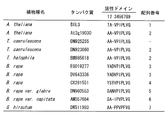
- the alignment of the amino acid sequence of BIL3 and its paralog and ortholog, and the active domain (peptide hormone) cut out from each protein after processing is shown.
- “-” indicates a gap
- X indicates an undetermined amino acid residue.
- the number of the active domain indicates the position of each amino acid residue when the threonine residue located on the N-terminal side in the BIL3 active domain of Arabidopsis thaliana is defined as the 1st position.
- the active domain of each paralog and ortholog shows the maximum degree of coincidence of the alignment shown in this figure with the amino acid of the active domain of Arabidopsis BIL3. Therefore, the position of the active domain in each paralog and ortholog corresponds to the position of the amino acid residue shown in this figure defined by the active domain of BIL3.
- the above-ground form of wild strain and bil3 mutant is shown. It can be seen that the number of flower stems and branches increased in the bil3 mutant.
- FIG. 1 It is the figure which showed statistically the number of flower stems (A) and the number of branches (B) in the wild strain and bil3 mutant shown in FIG.
- the expression level of BIL3 gene in the wild strain and bil3 mutant is shown.
- the expression of the BIL3 gene is shown as a relative value when the expression level of the BIL3 gene in the wild strain detected by the real-time RT-PCR method is 1.
- the expression level of the BIL3 gene in the wild type and 35S :: BIL3 transformants is shown.
- the expression of the BIL3 gene is shown as a relative value when the expression level of the BIL3 gene in the wild strain detected by the real-time RT-PCR method is 1.
- the expression level of PR1 gene in the wild strain and the bil3 mutant is shown.
- the expression of the BIL3 gene is shown as a relative value when the expression level of the PR1 gene in the wild strain detected by the real-time RT-PCR method is 1.
- the first embodiment of the present invention is a peptide or a salt thereof.
- the peptide of the present embodiment or a salt thereof has an activity of enhancing plant disease resistance and / or branching.
- plants correspond to mosses, ferns, angiosperms and gymnosperms.
- Angiosperms include both dicotyledonous and monocotyledonous plants.
- herbaceous and woody are included.
- particularly suitable plants include agriculturally or commercially important plants, for example, crop plants such as cereals, vegetables, fruits and horticultural flowers.
- Gramineae including rice, wheat, barley, rye, oats, wheat, millet, millet, millet, millet, corn, sorghum, sorghum, sorghum, sugar cane, bamboo, and sugar
- dicotyledonous plants include solanaceae (including tobacco, tomato, eggplant, cucumber, pepper, pepper, petunia), legume (soybean, peanut, azuki) , Green peas, kidney beans, lentils, peas, broad beans, kudzu, sweet peas, tamarind), rose family (including strawberry, rose, ume, cherry, apple, pear, peach, loquat, almond, plum, bokeh, yamabuki) , Cucurbitaceae (cucumber, picklefish, cucumber, pumpkin, melon, watermelon, f Mam, including gourd), l
- disease or “plant disease” refers to a plant disease caused by a pathogen.
- pathogen means infectivity to plants such as viroids, viruses, phytoplasma, bacteria, fungi (including yeast, filamentous fungi, basidiomycetes), slime molds, protozoa or nematodes. And what causes some pathological symptoms to the plant by the infection.
- viroid, virus, phytoplasma and bacteria are particularly suitable. Examples include Bacillus, Aspergillus, Penicillium, Schizosaccharomyces, Paenibacillus, and Trichoderma.
- disease resistance refers to an action of preventing or suppressing the infection of the pathogen or the onset of a pathological condition caused thereby. This action is controlled by the plant's innate immune system. Therefore, “enhancement of disease resistance” means that the innate immune system of a plant is further strengthened to prevent or suppress the onset of pathogens or pathological symptoms caused thereby.
- branch or “plant branch” means that side buds or side buds that become the tips of new growth from a plant stem (including flower stems), trunk, and branch are generated and elongated. .
- the “branch” in which new side buds are generated from the roots found in monocotyledonous plants and the like is elongated is also included in the branches of the present invention.
- the number of branches and stems (including flower stems) generated by “branching” is referred to as “the number of branches” in this specification.
- “enhancement of branching” refers to activating a branch of a plant during the growth process of the plant.
- the number of branches is increased, and the weight ratio is also increased compared to normal homologous plants.
- peptide simply means a molecule in which two or more amino acids are linked by an amide bond.
- peptide encompasses both oligopeptides or polypeptides.
- oligopeptide means a peptide consisting of 20 or less amino acid residues
- polypeptide means a peptide consisting of 21 or more amino acid residues. Means.
- the amino acid constituting the peptide of the present invention may be any of D-form, L-form and DL-form (racemic form), but L-form is particularly preferred.
- the peptide of the present invention is derived from a natural protein, all constituent amino acids are in L form.
- the constituent amino acid may be any of L-amino acids only, D-amino acids only, or a peptide composed of a combination of L-amino acids and D-amino acids.
- active peptide is a cell as a peptide hormone in BIL3 protein or a paralog or ortholog thereof. It refers to only an active domain (corresponding to positions 53 to 61 of SEQ ID NO: 8), which is a region secreted outside, or a peptide containing the active domain.
- active peptide any number of amino acids may be added to the N-terminal side and / or the C-terminal side of the active domain.
- Such amino acids may be amino acids that are naturally adjacent to the active domain, or may be amino acids that are not naturally adjacent to the active domain.
- BIL3 (Brz-Insensitive-Long Hypocoty 3) is a protein encoded by the BIL3 gene of Arabidopsis thaliana.
- BIL3 consists of a total of 63 amino acids as shown in SEQ ID NO: 8 (NCBI-ID No.At1g49500), and an extracellular signal (secretion signal, positions 1 to 32 in SEQ ID NO: 8) on the N-terminal side and a species on the C-terminal side.
- BIL3 after translation, the extracellular signal peptide is excised at the cleavage site, and the active domain processed from the N-terminal side and the C-terminal side is secreted out of the cell as a peptide hormone. Processing to similar active peptides has been reported, for example, for Arabidopsis PSY1 (Amano Y. et al., (2007) Proc. Natl. Acad. Sci. USA, 46: 18333-18338). Therefore, the active domain of BIL3 is considered to be composed of a sequence of 9 amino acids shown in SEQ ID NO: 1.
- BIL3 there are three paralogs (NCBI-ID No.At3g19030, NCBI-ID No.At4g33960, NCBI-ID No.At2g15830, respectively) consisting of the amino acid sequences shown in SEQ ID NOs: 9, 34, and 37 in Arabidopsis thaliana, There are also BIL3 orthologs in other plant species.
- BIL3 ortholog in Thlaspi caerulescens of Brassicaceae, a protein consisting of an amino acid sequence represented by SEQ ID NO: 10 (NCBI-ID No.DN925255) and SEQ ID NO: 11 (NCBI-ID No.DN923660), Thellungiella halophila
- SEQ ID NO: 12 NCBI-ID No.BM985618
- SEQ ID NO: 36 NCBI-ID No.DN779022
- SEQ ID NO: 13 Brassica rapa
- SEQ ID NO: 14 NCBI-ID No.DV643336
- SEQ ID NO: 15 NCBI-ID No.CX281551
- SEQ ID NO: 35 NCBI-ID No.CN727308
- Capi consisting of the amino acid sequence shown in SEQ ID NO: 16 (NCBI-ID No.DN960533) in Brassica rapa var. Glabra A protein consisting of the amino acid sequence shown in SEQ ID NO: 17 (NCBI-ID No.AM057684) in tata (cabbage) and SEQ ID NO: 18 (NCBI-ID No.DW511993) in Gossypium hirsutum (American cotton) of the mallow family Examples include proteins consisting of amino acid sequences. Each of these BIL3 paralogs and orthologs has an extracellular signal on the N-terminal side, an active domain on the C-terminal side, and a cleavage site therebetween.
- the above-mentioned “activity for enhancing plant disease resistance and / or activity for enhancing branching of a plant” is an activity possessed by an active domain of BIL3 or an active domain of BIL3 paralog or ortholog.
- A an active domain of BIL3 consisting of the amino acid sequence shown in SEQ ID NO: 1, or (B) four or more amino acid identities to the amino acid sequence shown in SEQ ID NO: 1, and the amino acid
- the amino acid residue corresponding to position 2 of the sequence is an alanine residue or serine residue, the amino acid residues corresponding to positions 3, 5, 7, and 8 are nonpolar amino acid residues, and position 4 and Examples include an active domain of BIL3 paralog or ortholog consisting of an amino acid sequence in which the amino acid residue corresponding to position 6 is a proline residue and the amino acid residue corresponding to position 9 is a glycine residue.
- amino acid identity means that a gap is introduced in the amino acid sequence of one or both of the active domain of BIL3 and the active domain of paralog or ortholog of BIL3 to be compared with it, as necessary.
- Amino acid identity is preferably 4 or more (44% or more), more preferably 5 or more (55% or more), and even more preferably 6 out of 9, based on the amino acid sequence of the BIL3 active domain More than that (66% or more) is sufficient.
- % refers to the ratio (%) of the same amino acid residue at the maximum coincidence of the other amino acid sequence with respect to the total number of amino acid residues of the BIL3 amino acid sequence.
- The% identity can be easily determined using a known program such as a homology search program BLAST search (http://www.ncbi.nlm.nih.gov/blast/Blast.cgi).
- the “gap” refers to one or several amino acid residues.
- “several” corresponds to 2 to 5, 2 to 4, or 2 to 3 amino acids. That is, when aligned with the active domain of BIL3, the active domain of (B) may have one or several amino acid residues deleted or added as compared to the active domain of BIL3. May be.
- the position of amino acid residues in the active domain of BIL3 shown in SEQ ID NO: 1 is numbered 1 to 9 from the N-terminal side, and then the active domain of BIL3 and the active domain of (B) are both amino acids
- the “corresponding amino acid residue” does not necessarily have to be “the same amino acid residue as the active domain of BIL3. Preferably, it is the same amino acid residue or a similar amino acid residue.
- amino acids refers to amino acids belonging to the same group when the amino acids are classified based on properties such as charge, side chain, polarity, and aromaticity.
- groups include, for example, basic amino acid groups (arginine, lysine, histidine), acidic amino acid groups (aspartic acid, glutamic acid), nonpolar amino acid groups (glycine, alanine, phenylalanine, valine, leucine, isoleucine, proline, Methionine, tryptophan) Polar uncharged amino acid group (serine, threonine, asparagine, glutamine, tyrosine, cysteine), branched chain amino acid group (leucine, isoleucine, valine), aromatic amino acid group (phenylalanine, tyrosine), allocyclic amino acid Group (histidine, tryptophan, proline), aliphatic amino acid group (glycine, alanine, leucine, isoleucine, va
- the amino acid residue corresponding to position 3 of the amino acid sequence shown in SEQ ID NO: 1 is a valine residue
- the amino acid residue corresponding to position 5 is an isoleucine residue
- the position 7 It is preferred that the corresponding amino acid residue is a leucine residue and / or the amino acid residue corresponding to position 8 is a valine residue.
- active domains consisting of amino acid sequences represented by SEQ ID NOs: 2 to 7 can be mentioned.
- the active domain may also consist of an amino acid sequence represented by any of SEQ ID NOs: 30 to 33.
- the peptide of this embodiment consists of an active peptide containing the active domain described in (A) and / or (B) above.
- the length of the active peptide is not particularly limited as long as it retains the activity. However, in view of the fact that the active domain to be included is a peptide hormone or the case where the active peptide is chemically synthesized, the active peptide is a short peptide. It is desirable that Preferred active peptides have a length of 100 amino acids or less, more preferably 70 or less, even more preferably 50 or less, even more preferably 30 or less, and even more preferably 20 or less.
- an active peptide in which several additional amino acids are added to the N-terminal side and / or the C-terminal side of the active domain is applicable.
- the most preferred active peptide is the active domain itself, which is the smallest unit that can function as a peptide hormone, and therefore the most preferred active peptide length is the number of amino acid residues of the active domain, eg, SEQ ID NOs: 1-7. In the case of the active domain shown, there are 9-10.
- the peptide containing the active domain described in the above (A) and / or (B) may be modified as long as it has plant disease resistance and / or activity to enhance plant branching. Modifications include glycosylation, acetylation, formylation, amidation, phosphorylation, or PEGylation in addition to modification with a label.
- the same indicator as that described in the first embodiment can be used as the indicator.
- the modification with the labeling is useful for detecting the anti-marker antibody of the present embodiment and the antigen-binding fragment thereof described later.
- the modification relating to glycosylation may be natural glycosylation, or may be a modified glycosylation site obtained by altering the natural glycosylation site by recombinant DNA technology or chemical treatment.
- the glycosylation site can be modified by any method known to those skilled in the art. For example, a method by genetic manipulation as described above, a method using a glycosylation mutant, a method by co-expression with one or more enzymes such as DI N-acetylglucosamine transferase III (GnTIII), various organisms or various organisms Examples include a method of modifying the sugar chain after expressing and purifying the peptide in a cell line derived therefrom. For example, Umana et al., 1999, Nat.
- the modification by PEGylation is obtained by binding a water-soluble polymer molecule such as polyethylene glycol (PEG) to the peptide which is the active ingredient.
- PEGylation can be achieved by chemically coupling PEG to an N-terminal amino group such as an antibody, a C-terminal carboxyl group, or the ⁇ -amino group of a lysine (Lys) residue.
- PEGylation can increase the in vivo vivo half-life of the modified peptide.
- the active peptide of the present embodiment can be synthesized, for example, according to a chemical synthesis method such as Fmoc method (fluorenylmethyloxycarbonyl method), tBoc method (t-butyloxycarbonyl method) (edited by the Japanese Biochemical Society, Biochemistry Experiment Course 1, Protein Chemistry IV, Chemical Modification and Peptide Synthesis, Tokyo Chemical Doujin (Japan), 1981).
- Fmoc method fluorenylmethyloxycarbonyl method
- tBoc method t-butyloxycarbonyl method
- synthesize
- using known genetic engineering techniques see Sambrook, J. et.
- nucleic acid After preparing a nucleic acid encoding the above active peptide, the nucleic acid is incorporated into an expression vector and introduced into a host cell to produce the desired active peptide in the host cell.
- a nucleic acid encoding an extracellular signal can be linked to a nucleic acid encoding the peptide so that the target active peptide is expressed in the host cell after protein expression. It is convenient because it is secreted outside and can be easily recovered from the culture supernatant. Alternatively, without recovering and purifying the active peptide, the culture solution itself including the culture supernatant or host cells may be used as the composition of the second embodiment described later.
- the peptide salt of the present embodiment refers to a peptide salt described in the section “1-1-1. Peptide” above.
- the “salt” here is not particularly limited as long as it is an agriculturally acceptable salt.
- Examples include acid addition salts and base addition salts.
- Examples of the acid addition salt include salts with inorganic acids such as hydrochloric acid, sulfuric acid, nitric acid and phosphoric acid, and salts with organic acids such as acetic acid, malic acid, succinic acid, tartaric acid and citric acid.
- Base addition salts include salts with alkali metals such as sodium and potassium, salts with alkaline earth metals such as calcium and magnesium, and salts with amines such as ammonium and triethylamine.
- the activity to enhance disease resistance and / or branching can be imparted to the plant by application to the plant.
- the peptide of the present invention or a salt thereof is rapidly degraded in nature, it does not remain in soil, water or plants for a long period of time even when used as an agrochemical. There is an advantage of low impact.
- the active domain responsible for the activity of the peptide of the present invention or a salt thereof is not a special substance such as an alkaloid that is expressed only in a specific plant species, but is also present in daily vegetables such as cabbage and Chinese cabbage. Since it is a novel plant peptide hormone, its safety is very high.
- the peptide of the present invention or a salt thereof has activity even around 10 amino acids, it can be synthesized inexpensively and in large quantities by a chemical synthesis method. Therefore, it can be an active ingredient of a plant disease resistance enhancer that replaces expensive BR and a plant disease resistance composition.
- the peptide of the present invention or a salt thereof it is possible to control the branching of the plant. For example, it is possible to increase the production amount of agricultural and horticultural crops by increasing the number of branches, particularly the number of flower stems, by increasing the number of branches. Furthermore, since the weight ratio of the plant body increases compared to the wild strain grown in the same environment for the same period, plant biomass can be increased, and productivity of forestry, bioethanol and the like can be improved.
- composition 2-1 Overview and Configuration
- the second embodiment of the present invention is a composition.
- the composition of the present embodiment contains, as an active ingredient, at least one peptide having an activity to enhance plant disease resistance and / or an activity to enhance plant branching. It has the activity of enhancing branches.
- composition of this embodiment contains at least one active peptide as described in the first embodiment as an active ingredient.
- the type of each peptide may be derived from the same species or a combination derived from different species.
- the length of each peptide may be the same and may differ.
- the amount of the active peptide contained in the composition of the present embodiment is the kind of active peptide, the strength of the activity, the kind of carrier to be contained, the kind of plant to be applied, the purpose of application, the application method, and the case of containing. It depends on various conditions such as the type of drugs having other pharmacological effects. The content may be appropriately determined in consideration of conditions that can enhance disease resistance and / or branching on the target plant after application of the composition.
- composition of the present invention may also comprise an agriculturally acceptable carrier, if desired.
- agriculturally acceptable carrier is a substance that facilitates application of the composition to plants, suppresses the degradation of active peptides as active ingredients, and / or controls the rate of action thereof, such as solvents and An adjuvant is mentioned.
- solvent includes water, aromatic compound solvents (eg, benzene, toluene, xylene, tetrahydronaphthalene, alkylated naphthalene or derivatives thereof), paraffins (eg, mineral oil fraction), chloroform, carbon tetrachloride, ketones (For example, acetone, cyclohexanone), pyrrolidones (for example, NMP or NOP), acetate (glycol diacetate), glycols, fatty acid dimethylamides, fatty acids, fatty acid esters, or a mixed solvent thereof.
- aromatic compound solvents eg, benzene, toluene, xylene, tetrahydronaphthalene, alkylated naphthalene or derivatives thereof
- paraffins eg, mineral oil fraction
- chloroform eg, carbon tetrachloride
- ketones for example, acetone, cyclohexanone
- Suitable adjuvants include pulverized natural minerals, pulverized synthetic minerals, emulsifiers, dispersants and surfactants.
- crushed natural minerals include, for example, kaolin, clay, talc and chalk.
- crushed synthetic mineral includes, for example, highly dispersed silica and silicate.
- Emmulsifiers include nonionic emulsifiers and anionic emulsifiers (for example, polyoxyethylene fatty alcohol ethers, alkyl sulfonates and aryl sulfonates).
- Examples of the “dispersant” include lignosulfite waste liquor and methylcellulose.
- “Surfactants” include, for example, lignosulfonic acid, naphthalenesulfonic acid, phenolsulfonic acid, alkali metal salts, alkaline earth metal salts and ammonium salts of dibutylnaphthalenesulfonic acid, alkylaryl sulfonates, alkyl sulfates, alkyl sulfonates.
- the carrier is preferably one that has no or little adverse effects on the environment such as soil and water quality and harm to animals, particularly humans, by application to the target plant. .
- composition of the present embodiment can include one or more agriculturally acceptable carriers.
- other disease resistance enhancers and / or other branch enhancers, and active ingredients having other pharmacological actions as long as they do not affect the effects of the branch inhibitor of the present invention, , Insecticides, insecticides, herbicides, fungicides, fertilizers (eg urea, ammonium nitrate, superphosphate).
- the dosage form of the composition of the present embodiment may be liquid, solid (including semi-solid), or a combination thereof.
- Conventional formulation forms such as direct spraying, application and / or dipping solutions, oil dispersions, emulsions, suspensions, powders, powders, pastes, gels, pellets, tablets and granules be able to.
- the third embodiment of the present invention relates to a microbial infection suppression method.
- the microorganism infection suppression method of this embodiment is characterized by activating disease resistance of a target plant and preventing or suppressing infection from the plant infectious microorganism.
- plant-infecting microorganism refers to a microorganism that is infectious to plants and causes some pathological condition to the host plant by the infection.
- the method for suppressing microbial infection according to this embodiment includes an action step.
- the process will be specifically described.
- Action Step is a step of causing the peptide of the first embodiment (that is, active peptide) and / or the composition of the second embodiment to act on the plant to be applied.
- the term “acting on a plant” as used herein refers to bringing the active peptide and / or composition into contact with an application target plant and incorporating the active peptide as an active ingredient into the plant body.
- the method for contacting the active peptide of the first embodiment and / or the composition of the second embodiment is not particularly limited. What is necessary is just to consider suitably according to the contact part to an application object plant body.
- the active peptide of the first embodiment and / or the composition of the second embodiment when brought into contact with the above-ground part of the target plant body, the active peptide and / or the composition is sprayed or sprayed as a contact method.
- Methods such as coating, pouring, dipping or wounding (including needle inoculation). Since the active peptide which is an active ingredient is based on a peptide hormone, the active peptide and / or composition can be easily absorbed from the plant surface by these contact methods.
- the dosage form of the active peptide of the first embodiment and / or the composition of the second embodiment is preferably a liquid or a powder or gel solid.
- part of a ground part should just go to desired places, such as a stem part and a petiole base, and is not specifically limited. Although it may be a part or the whole of the plant body, a site that is most frequently seen in a route in which a plant-infectious microorganism infects an application target plant is preferable. Examples include leaves and stems.
- the active peptide of the first embodiment and / or the composition of the second embodiment may be brought into contact with the root of the plant to be applied.
- the active peptide of 1st Embodiment and / or the composition of 2nd Embodiment are absorbed from a root part, spread over the whole plant body, and can exhibit the effect of this invention.
- a specific contact method for example, if it is hydroponics, it can be applied by adding the active peptide of the first embodiment and / or the composition of the second embodiment to the hydroponic liquid.
- there are advantages such that the concentration of the active peptide as an active ingredient in the hydroponic liquid can be controlled, and the decomposition of the active peptide can be suppressed by making the hydroponic liquid sterile.
- the plant disease resistance enhancer can be applied directly or indirectly in the soil or on the soil.
- This application method is a convenient method when applied over a wide area such as a farm field.
- the active peptide which is an active ingredient of the present invention is easily degraded in the soil in a relatively short time by the action of microorganisms and the like.
- the active peptide of the first embodiment and / or the composition of the second embodiment is allowed to act transiently and a short-term effect is desired, it may be applied directly to the soil.
- the composition of 2nd Embodiment which enclosed the active peptide of 1st Embodiment in the sustained release inclusion body can also be indirectly applied to the target plant.
- the active peptide in the composition escapes decomposition in the soil, is absorbed from the root of the target plant and spreads throughout the plant body, and then exhibits the effect of the present invention in each cell. It is convenient because it can.
- the application amount of the active peptide of the first embodiment and / or the composition of the second embodiment is the type of active peptide (in the case of the composition of the second embodiment, the active peptide included therein) or the type of plant to be applied. It depends on. Moreover, even if it is a case where it applies to the application object plant of the same kind, the quantity changes with hydroponics and soil cultivation. This is because, in general, the degradation rate of active peptides, which are active ingredients, is faster in soil than in hydroponic liquid due to the degradation action of microorganisms. Therefore, the application rate may be appropriately determined by those skilled in the art according to the situation, purpose and necessity.
- disease resistance is imparted to the plant of the plant by applying the peptide of the first embodiment and / or the composition of the second embodiment to a desired plant. can do.
- the active peptide of the first embodiment and / or the active ingredient of the composition of the second embodiment can act as a peptide hormone, so that the effect is obtained by contact with the plant body. . Therefore, it is not necessary to make a desired plant a transgenic plant in order to impart disease resistance, and it can also be applied to food crops (vegetables, cereals, fruits).
- Plant Branch Enhancing Method The fourth embodiment of the present invention relates to a plant branch enhancing method.
- the plant branch enhancing method of the present embodiment includes an action step.
- the process will be specifically described.
- Action Step is a step of allowing the active peptide of the first embodiment and / or the composition of the second embodiment to act on the plant to be applied.
- This step is basically the same as the operation step of the method for suppressing microbial infection of the third embodiment, and the specific method is basically the same as that step. Therefore, only the points different from the operation steps of the microorganism infection suppression method of the third embodiment will be described here.
- the plant branch enhancing method of the present embodiment causes the active peptide of the first embodiment and / or the composition of the second embodiment to act on the plant to be applied, thereby activating the branch of the plant, and the result.
- the embodiment is different from the above embodiment in that it aims to increase the number of branches.
- the peptide of the first embodiment and / or the active peptide which is the active ingredient of the composition described in Example 2 can impart disease resistance to the applied plant with enhanced branching, The effect can be achieved simultaneously by applying the active peptide of the first embodiment and / or the composition of the second embodiment.
- the site of contact of the active peptide and / or composition on the plant body is not particularly limited, but the result is that the BIL3 gene is expressed in the shoot apex, the entire root and the leaf vein.
- the plant branch is generally generated at the shoot apex and the petiole base, it is preferable to directly contact the site where cell differentiation and cell proliferation are active.
- the plant branch enhancement method of the present embodiment by applying the active peptide of the first embodiment and / or the composition of the second embodiment to a desired plant, branching of the plant of the plant is achieved. It can be activated to increase the number of molecules. Since this method can also increase the number of flower stems, it can provide a method for increasing the production of horticultural crops by increasing the number of flower buds.
- the active peptide used and / or the active ingredient of the composition is present in a general plant and is a peptide having high natural degradability, Safety is high, and the effect on the natural environment by application is low.
- a fifth embodiment of the present invention is a transgenic plant with enhanced plant disease resistance and / or branching activity.
- Transgenic plant refers to a transformed plant into which exogenous genes have been introduced so that the same and / or different genes can be expressed.
- the “transgenic plant” of the present specification includes an exogenous nucleic acid expression system containing a nucleic acid encoding the active peptide described in the first embodiment in a state capable of being expressed, thereby causing plant disease resistance. It refers to a transformed plant having enhanced sex and / or branching activity compared to the wild type.
- nucleic acid A nucleic acid encoding a peptide which is an active ingredient described in the first embodiment will be described.
- nucleic acid encoding the peptide as the active ingredient described in the first embodiment refers to a nucleic acid encoding the active peptide described in the first embodiment.
- nucleic acid mainly refers to a natural nucleic acid such as DNA and / or RNA, but can also include a nucleic acid or nucleic acid analog that has been artificially chemically modified or constructed.
- the nucleic acid may have a phosphate group, sugar and / or base labeled with a nucleic acid labeling substance, if necessary.
- the active peptide contains an active domain as a central active site as an active ingredient, and this active domain corresponds to a BIL3 protein of Arabidopsis thaliana or a peptide hormone that is a mature form of paralog or ortholog thereof.
- a nucleic acid containing a base sequence encoding an active domain of BIL3 consisting of the amino acid sequence shown in SEQ ID NO: 1 can be mentioned.
- nucleic acid encoding an active domain in the paralog and ortholog of BIL3 that is, an amino acid residue having 4 or more amino acid identity to the amino acid sequence shown in SEQ ID NO: 1 and corresponding to position 2 of the amino acid sequence Is an alanine residue or a serine residue, amino acid residues corresponding to positions 3, 5, 7, and 8 are nonpolar amino acid residues, and amino acid residues corresponding to positions 4 and 6 are proline
- the amino acid residue corresponding to position 3 of the amino acid sequence shown in SEQ ID NO: 1 is a valine residue, isoleucine residue or proline residue
- the amino acid residue corresponding to position 5 is An amino acid sequence that is an isoleucine residue or a valine residue
- an amino acid residue corresponding to position 7 is a leucine residue or a phenylalanine residue
- / or an amino acid residue corresponding to position 8 is a valine residue
- the amino acid residue corresponding to position 2 of the amino acid sequence shown in SEQ ID NO: 1 is an alanine residue
- the amino acid residue corresponding to position 3 is a valine residue
- nucleic acid containing a base sequence encoding an active domain in the BIL3 paralog and ortholog consisting of the amino acid sequences shown in SEQ ID NOs: 2 to 7 can be mentioned. Further, it may be a nucleic acid comprising a base sequence encoding an active domain consisting of the amino acid sequence represented by any of SEQ ID NOs: 30 to 33.
- the active domain included in the expressed active peptide functions as a peptide hormone and is expressed in order to impart plant disease resistance and / or branching activity to the plant.
- the active peptides at least the active domain contained therein needs to be transported out of the cell. Therefore, the active peptide preferably includes an extracellular signal and a cleavage site for cleaving the signal peptide after extracellular migration.
- the full-length protein of BIL3 (FIG. 1) and its full-length protein of paralogs or orthologs are preferred as active peptides to be expressed in the transgenic plant of this embodiment because they contain an extracellular signal and a cleavage site.
- the nucleic acid in the present embodiment is preferably a BIL3 gene having the base sequence represented by SEQ ID NO: 19, or a BIL3 paralog gene or an ortholog gene having the base sequences represented by SEQ ID NOs: 20 to 29 and 38 to 41.
- the base sequences represented by SEQ ID NOs: 19 to 29 encode the amino acid sequences represented by SEQ ID NOs: 8 to 18, respectively.
- the nucleic acid is a nucleic acid that hybridizes with a nucleic acid comprising the base sequence under a stringent condition and encodes a peptide having the activity. Stringent hybridization conditions are described in, for example, Sambrook, J.
- the transgenic plant of the present embodiment is characterized by including at least one exogenous nucleic acid expression system that contains the nucleic acid encoding the active peptide of the first embodiment in a state capable of being expressed.
- Exogenous nucleic acid expression system refers to an exogenous nucleic acid expression system introduced from the outside through human manipulation. Therefore, the endogenous nucleic acid expression system originally present at a predetermined locus on the plant genome is not applicable. However, even in such endogenous nucleic acid expression systems, the origin is exogenous, such as those in which mutations are introduced from the outside through artificial manipulation such as a sudden induction process or the progenies of transgenic plants. Endogenous nucleic acid expression systems derived from these nucleic acid expression systems are included in the exogenous nucleic acid expression system of the present invention.
- Nucleic acid expression system refers to one expression system unit capable of expressing a nucleic acid (mainly a gene or a fragment thereof) contained in the system. Therefore, the nucleic acid expression system in the present embodiment can include the base sequence of the nucleic acid encoding the active peptide that is the active ingredient described in the first embodiment, and can express it in the cells of the transgenic plant. .
- the nucleic acid expression system has an expression regulatory region essential for gene expression in addition to the nucleic acid region.
- the essential expression regulatory region includes, for example, a promoter and a terminator.
- an enhancer in addition, an enhancer, a poly A addition signal, a 5′-UTR (untranslated region) sequence, a label or selection marker gene, a multicloning site, a replication origin, and the like can also be included.
- a single expression system unit necessary for expressing a specific gene or the like is extracted from the genome, and combined with expression control regions derived from various organisms, etc. Any nucleic acid expression system may be used in the present invention.
- the nucleic acid expression system expresses the BIL3 gene or the like normally. Need to express beyond the level. Accordingly, the nucleic acid expression system used in the present embodiment may have, for example, the property of overexpressing and / or constitutively expressing or inducing expression of the nucleic acid encoding the active peptide to be included. desirable. Furthermore, the exogenous nucleic acid expression system itself may have a property capable of maintaining a plurality of copies (multiple copies) in plant cells.
- the nucleic acid expression system that can overexpress the nucleic acid encoding the active peptide to be included is more than 2 times, preferably more than 5 times, more preferably more than the expression level of endogenous BIL3 gene per nucleic acid expression system. Can express 10 times or more or 20 times or more.
- a nucleic acid expression system capable of constitutive expression can always express an active peptide regardless of the time or expression site. Therefore, the nucleic acid expression system having this property can provide an active peptide or the like independent of the control when the expression of the endogenous BIL3 gene or the like is subjected to timing control or positional control. It is effective for.
- the nucleic acid expression system capable of inducing expression can express the active peptide in a time-specific or site-specific manner. Therefore, it is very effective when the endogenous BIL3 gene or the like is subjected to timely and / or site-specific expression control, or when an active peptide is desired to be expressed at a desired site at a desired time.
- Multi-copy nucleic acid expression systems increase the expression level per cell as a whole by increasing the number of nucleic acid expression systems themselves even when the expression level of BIL3 gene, etc., from each nucleic acid expression system is low There are advantages that can be made.
- the multi-copy nucleic acid expression system is used in combination with the above-described overexpression nucleic acid expression system, the constitutive expression nucleic acid expression system or the inducible expression nucleic acid expression system.
- the branching activity can be imparted to the plant more effectively.
- the configuration of the exogenous nucleic acid expression system having the above properties is not particularly limited as long as it has components essential for expression and includes a nucleic acid encoding an active peptide in an expressible state.
- “included in an expressible state” means that the nucleic acid encoding the active peptide is inserted into the nucleic acid expression system so that it can be expressed. Specifically, it means being placed under the control of a promoter and terminator in the nucleic acid expression system.
- a specific example of the nucleic acid expression system having such a configuration is an expression vector.
- an “expression vector” is a nucleic acid expression system capable of transporting a nucleic acid encoding an encapsulated active peptide into a target plant cell and expressing the active peptide.
- Specific examples include expression vectors using plasmids or viruses.
- the plasmid portion is, for example, pPZP system, pSMA system, pUC system, pBR system, pBluescript system (stratagene), pTriEXTM system (TaKaRa)
- pBI pRI
- pGW binary vectors can be used.
- the virus part may use cauliflower mosaic virus (CaMV), kidney bean golden mosaic virus (BGMV), tobacco mosaic virus (TMV), etc. it can.
- CaMV cauliflower mosaic virus
- BGMV kidney bean golden mosaic virus
- TMV tobacco mosaic virus
- the expression vector includes a promoter and a terminator expression control region as described above.
- an enhancer a poly A addition signal, a 5′-UTR (untranslated region) sequence, a label or selection marker gene, a multicloning site, a replication origin, and the like can also be included.
- Each type is not particularly limited as long as it can exhibit its function in plant cells. What is known in the art may be appropriately selected according to the plant to be introduced or according to the purpose (for example, expression pattern) in the plant.
- an overexpression promoter for example, an overexpression promoter, a constitutive promoter, a site-specific promoter, a stage-specific promoter, and / or an inducible promoter can be used according to a desired expression pattern.
- overexpressed and constitutive promoters include 35S promoter derived from cauliflower mosaic virus (CaMV), promoter Pnos from nopaline synthase gene derived from Ti plasmid, ubiquitin promoter derived from corn, actin promoter derived from rice, tobacco derived PR protein promoter and the like.
- the ribulose diphosphate carboxylase small subunit (Rubisco ssu) promoter or histone promoter of various plant species can also be used.
- site-specific promoters include root-specific promoters described in JP 2007-77677 A.
- Terminators include, for example, terminator of nopaline synthase (NOS) gene, terminator of octopine synthase (OCS) gene, CaMV 35S terminator, 3 'terminator of E. coli lipopolyprotein lpp, trp operon terminator, amyB terminator, terminator of ADH1 gene Etc. There is no particular limitation as long as it can terminate the transcription of the gene transcribed by the promoter.
- NOS nopaline synthase
- OCS octopine synthase
- CaMV 35S terminator 3 'terminator of E. coli lipopolyprotein lpp
- trp operon terminator 3 'terminator of E. coli lipopolyprotein lpp
- amyB terminator terminator of ADH1 gene Etc.
- an enhancer region containing an upstream sequence in the CaMV 35S promoter can be mentioned.
- an enhancer region containing an upstream sequence in the CaMV 35S promoter can be mentioned.
- the marker or selection marker gene is, for example, a drug resistance gene (eg, tetracycline resistance gene, ampicillin resistance gene, kanamycin resistance gene, hygromycin resistance gene, spectinomycin resistance gene, chloramphenicol resistance gene, or neomycin resistance gene).
- Fluorescent or luminescent reporter genes eg, luciferase, ⁇ -galactosidase, ⁇ -glucuronidase (GUS), or green fluorescence protein (GFP)
- GUS ⁇ -galactosidase
- GUS green fluorescence protein
- NPTNII neomycin phosphotransferase II
- blasticidin S examples include enzyme genes such as resistance genes.
- the marker or selectable marker gene may be linked to another expression vector in addition to the one linked to the same expression vector as that containing the nucleic acid encoding the active peptide. In the latter case, by co-introducing each expression vector into the target plant, the same effect as that obtained by ligation to the same expression vector can be obtained.
- nucleic acid expression system is prepared by a method known in the art, for example, Sambrook, J. et.al., (1989) Molecular Cloning: a Laboratory Manual Second Ed., Cold Spring Harbor Laboratory Press, Cold What is necessary is just to follow the method described in Spring Harbor, New York.
- a desired nucleic acid among the nucleic acids described in 5-1-1 is cloned.
- an appropriate region is selected from the base sequence represented by SEQ ID NO: 19, and an oligonucleotide having the base sequence is chemically synthesized.
- a contract synthesis service of a life science manufacturer may be used.
- the BIL3 gene is isolated from an Arabidopsis thaliana cDNA library using the oligonucleotide as a probe based on a method known in the art, such as a plaque hybridization method.
- a method known in the art such as a plaque hybridization method.
- Arabidopsis cDNA libraries are commercially available from life science manufacturers such as Stratagene, and can also be used.
- an oligonucleotide as a primer pair is chemically synthesized based on the base sequence represented by SEQ ID NO: 19, and the primer pair is used to obtain a nucleic acid amplification method such as PCR from an Arabidopsis genomic DNA or cDNA library.
- the target BIL3 gene may be amplified.
- a DNA polymerase with high fidelity (accuracy) having 3'-5 'exonuclease activity such as pfu polymerase.
- the isolated BIL3 gene is inserted into an appropriate plasmid as necessary, and cloned in a host microorganism such as Escherichia coli, and then the full-length base sequence is confirmed based on a known technique.
- the BIL3 gene is incorporated into a predetermined site of the mother nucleus of the desired nucleic acid expression system (skeleton part of the nucleic acid expression system).
- the BIL3 gene is cleaved with an appropriate restriction enzyme based on the determined nucleotide sequence.
- the nucleic acid expression system is cleaved at the corresponding restriction enzyme site. It is convenient to use a nucleic acid expression system having a multiple cloning site.
- the ends of both nucleic acids are ligated using ligase or the like, and the BIL3 gene is inserted into the nucleic acid expression system to complete the target nucleic acid expression system for the BIL3 gene.
- the basic operation may be in accordance with the method of plasmid expression vector.
- a plant virus genome is prepared by a method known in the art, and then inserted into an appropriate cloning vector (for example, pBI system derived from E. coli, pPZP system, pSMA system, pUC system, pBR system, pBluescript system).
- an appropriate cloning vector for example, pBI system derived from E. coli, pPZP system, pSMA system, pUC system, pBR system, pBluescript system.
- a nucleic acid encoding an active peptide is inserted into a predetermined site in the viral genome contained in the recombinant and cloned.
- a plant virus genome region may be excised from the recombinant with a restriction enzyme. Thereby, the target viral expression vector can be obtained.
- Plant cell introduction method of nucleic acid expression system As a method for introducing a nucleic acid expression system including a nucleic acid encoding an active peptide into a plant cell, that is, a method for transforming a plant cell, any appropriate method known in the art may be used.
- a suitable transformation method when the nucleic acid expression system is a plasmid expression vector, a protoplast method, a particle gun method, an Agrobacterium method, or the like can be used.
- the protoplast method is a method of introducing a target gene into a plant cell using a plant cell (protoplast) from which a cell wall has been removed by enzymatic treatment such as cellulase.
- This method can be further classified into an electroporation method, a microinjection method, a polyethylene glycol method, or the like, depending on the gene introduction method.
- the electroporation method is a method for introducing a gene into a protoplast by applying an electric pulse to a mixture of the protoplast and a target gene.
- the microinjection method is a method for directly introducing a target gene into a protoplast under a microscope using a fine needle.
- the polyethylene glycol method is a method in which a target gene is introduced into protoplasts by the action of polyethylene glycol.
- the particle gun method is a method in which a target gene is attached to fine particles such as gold or tungsten, and the target gene is driven into a plant tissue cell with a high-pressure gas to introduce the target gene into the cell.
- a transformed cell in which the gene of interest is incorporated into the genomic DNA of the plant cell to be applied can be obtained.
- Transformed cells are usually selected based on the marker gene product in the nucleic acid expression system.
- the Agrobacterium method uses bacteria belonging to the genus Agrobacterium (for example, A. tumefaciens, A. rhizogenes, etc.) and a Ti plasmid derived therefrom as a transforming factor.
- a plant cell transformation method in which a gene of interest can be introduced into the genomic DNA of an applicable plant cell.
- the target plant cell is infected with a viral expression vector incorporating a nucleic acid encoding an active peptide.
- a viral expression vector for example, CaMV, BGMV, TMV described above
- the target plant cell is infected with a viral expression vector incorporating a nucleic acid encoding an active peptide.
- a transformed cell can be obtained.
- the gene introduction method using such a viral vector refer to the method of Hohn et al. (Molecular Biology of Plant Tumors (Academic Press, New York) 1982, pp549), U.S. Pat. No. 4,407,956, etc. Good.
- nucleic acid expression system including the Arabidopsis thaliana BIL3 gene may be introduced into a cell of Nicotiana tabacum. This is because the BR signaling pathway involving BIL3 is widely present in plants, and the conservation of individual BIL3 peptide hormones (active domains) is high across species, as shown in Fig. 2. This is because even if a nucleic acid expression system including a nucleic acid encoding a peptide is introduced, the same function as when introduced into the same plant species can be exhibited in the plant species into which the system is introduced.
- the plant into which the nucleic acid expression system is introduced has at least a gene group involved in the BR signal transduction pathway and a gene group involved in the innate immunity induction signal transduction pathway via salicylic acid.
- the enhancement of the plant disease resistance performance of the present invention is based on the signal enhancement of these pathways, and even when the signal is enhanced by increasing the expression level of the polypeptide located upstream of the signal transduction pathway, This is because if the downstream factor has a function-deficient mutation or the like, the subsequent signal is not transmitted and a disease-resistant plant cannot be obtained.
- nucleic acid expression systems including nucleic acids encoding different active peptides can be introduced into one plant cell as long as they can coexist with each other.
- a nucleic acid expression system including a rice BIL3 ortholog gene and two nucleic acid expression systems each including an Arabidopsis BIL3 gene may be introduced into one plant cell (for example, a rice cell).
- the transformed plant cell can be regenerated into a transgenic plant based on a known method.
- a known method for example, there is an in vitro regeneration method in which a plant body is regenerated through callus formation composed of undifferentiated proliferating cells.
- This method is known in the art, and see the above-mentioned plant metabolism engineering handbook (2002, NTS) or the experimental protocol for new model plants: from genetic techniques to genome analysis (2001 Shujunsha) can do.
- the in planta method can be used in which a nucleic acid expression system is directly introduced into cells of a target plant individual without passing through callus and cell culture steps. Plant hormones such as auxin, gibberellin and / or cytokinin may be used to promote the growth and / or division of transformed cells.
- the transgenic plant first generation obtained by the above method becomes a disease resistant and / or branching active plant.
- the first generation of the transgenic plant also includes a clone having the same genetic information. For example, a part of a plant collected from the first generation of a transgenic plant is cut, grafted or cut, a cell cultured, and then regenerated into a plant through callus formation, or a transgenic plant first New nutritional bodies newly generated from vegetative reproduction organs (eg, rhizome, tuberous root, corm, runner, etc.) obtained by asexual reproduction from generations fall under this category.
- vegetative reproduction organs eg, rhizome, tuberous root, corm, runner, etc.
- the active peptide is expressed from the nucleic acid expression system introduced into this transgenic plant.
- the expression level of the active peptide per cell is higher than that of wild type individuals of the same species.
- the innate immune system is enhanced, disease resistance is improved, and branching activity is enhanced. The number increases.
- Progeny of transgenic plant The sixth embodiment of the present invention is a progeny of a transgenic plant.
- the “progeny of the transgenic plant” is a progeny through sexual reproduction of the first generation of the transgenic plant of the fifth embodiment, and the nucleic acid expression system according to the fifth embodiment is the progeny thereof. The one held in the cell. For example, a seedling of the first generation of a transgenic plant is applicable.
- the method for obtaining a progeny from the transgenic plant of the fifth embodiment can be obtained by a known method.
- the first generation of the transgenic plant may be ripened to obtain seeds of the first generation of the progeny and the second generation of the transgenic plant.
- the seeds are rooted on a suitable medium, and the rooted body is transplanted into a pot containing soil.
- Progeny second generation can be obtained by growing under suitable cultivation conditions.
- the generations of this embodiment are not limited as long as they hold the nucleic acid expression system described in the second embodiment. Therefore, after the third generation generation, the same method as that for obtaining the second generation generation may be repeated.
- Example 1 Phenotypic analysis of bil3 mutant> Semi-dominant bil3 selected from the activation tagging line (Nakazawa M. et al., (2003) Plant J., 34: 741-750) to be resistant to Brz in the dark and to show hypocotyl length Mutant phenotype and functional analysis were performed.
- FIG. 3 shows the above-ground form of the wild strain and the bil3 mutant
- FIG. 4 shows the numbers of flower stems (A) and branches (B) in the wild strain and the bil3 mutant.
- the bil3 mutant showed a significant increase of about twice as many flower stems and 1.6 times as many branches compared to the wild type.
- Example 2 BIL3 gene expression level analysis in bil3 mutant> Since the bil3 mutant is a semi-dominant mutant, the cause of the phenotype of the bil3 mutant confirmed in Example 1 was presumed to be due to overexpression of the BIL3 gene by tag insertion. Thus, the expression level of BIL3 gene in bil3 mutant was analyzed using real-time PCR.
- cDNA was synthesized from the extracted total RNA using TaKaRa PrimeScript RT RT Kit (Perfect Realtime). For the detailed method, the protocol was attached to the kit. The synthesized cDNA was diluted 10-fold and used as cDNA for real-time PCR. At1g49500-RT-F (SEQ ID NO: 42) and At1g49500-RT-R (SEQ ID NO: 43) that specifically amplify the BIL3 gene were used as primers.
- PCR reaction conditions were prepared in a total volume of 30 ⁇ L of reaction solution (SYBRSYPremix Ex TaqTM II 12.5 ⁇ L; 100 ⁇ M At1g49500-RT-F / -R primer 0.1 ⁇ L each; cDNA 5 ⁇ L; water) at 95 ° C. for 30 seconds After treatment, 40 cycles of 95 ° C. for 5 seconds and 60 ° C. for 30 seconds were performed. For the preparation of the calibration curve, the dilution series of the cDNA for real-time PCR was used.
- Example 3 Production of BIL3 overexpression type transgenic plant and phenotype analysis thereof> From the results of Example 2, it was suggested that the phenotype of the bil3 mutant was induced by overexpression of the BIL3 gene. In order to confirm this, an overexpressing transgenic Arabidopsis thaliana in which the BIL3 gene was linked downstream of the 35S CaMV promoter was prepared, and its phenotype was confirmed.
- a PCR reaction was performed with KOD-plus-DNA polymerase (Toyobo) using the prepared cDNA library.
- KOD-plus-DNA polymerase Toyobo
- As the BIL3 primer bil3-GW-F (SEQ ID NO: 44) and bil3-GW-R (SEQ ID NO: 45) designed for the N-terminus and C-terminus of the BIL3 gene, respectively, were used.
- Cloning of the BIL3 gene was performed using pENTR / D TOPO cloning kit (Invitrogen). The specific method followed the protocol attached to the kit.
- the base sequence of the subcloned BIL3 gene was confirmed by the Cycle Sequencing method using BigDye Terminater Cycle Sequencing Kit (Applicated Biosystems). As a result, an entry clone pENTR-BIL3 of the BIL3 gene was obtained.
- pGWB5-BIL3 An expression vector (Gateway Vector) pGWB5-BIL3 was prepared. Prepare a mixed solution of pENTR-BIL3, pGWB2 vector, 5 ⁇ LR Reaction Buffer, Topoisomerase I, and LR clonase TM , let stand at 25 ° C. for 1 hour, add 1 ⁇ L of proteinase K, and leave at 37 ° C. for 10 minutes. .
- the mixture was mixed with DH5 ⁇ competent cell, allowed to stand on ice for 30 minutes, then subjected to heat shock at 2 ° C. for 30 seconds, immediately transferred to ice, and allowed to stand for 2 minutes.
- Each kanamycin and hygromycin was applied to an LB medium containing 50 ⁇ L / mL and cultured overnight.
- a plasmid was extracted from the transformant to obtain the target pGWB5-BIL3 vector.
- the colonies into which the vector had been introduced were precultured overnight at 28 ° C. in a YEP liquid medium.
- YEP medium was added and the culture was scaled up to 500 mL and cultured overnight. The culture solution was centrifuged at 5000 rpm for 10 minutes, and the supernatant was discarded. 400 mL of Infiltration medium (MS medium, 1000 ⁇ Gamborg's Vitamin, sucrose, Benzylamino Purin, silwet, pH 5.7) was added and suspended at 28 ° C. at 177 rpm / min for about 20 minutes.
- MS medium 1000 ⁇ Gamborg's Vitamin, sucrose, Benzylamino Purin, silwet, pH 5.7
- the expression of BIL3 gene was analyzed using a real-time PCR method.
- the real-time PCR method was in accordance with the method of Example 2.
- 35S :: BIL3 transformants which are BIL3 overexpression type transgenic strains.
- the BIL3 gene was expressed to the same extent as the bil3 mutant, and it was confirmed that the amount was significantly higher than that of the wild strain.
- 35S :: BIL3 transformants an increase in the number of flower stalks and the number of branches, similar to the bil3 mutant, was observed.
- PR1 pathogenic resistance marker
- PR1 is an antibacterial protein whose expression is induced by infecting a plant with a pathogenic bacterium, and is known to function downstream of a pathogenic resistance signal transduction pathway usually mediated by salicylic acid. Therefore, the disease resistance of plants can be demonstrated even under non-infection of pathogenic bacteria by using PR1 gene as a marker and using the increased expression as an index.
- PR1 is an antibacterial protein whose expression is induced by infecting a plant with a pathogenic bacterium, and is known to function downstream of a pathogenic resistance signal transduction pathway usually mediated by salicylic acid. Therefore, the disease resistance of plants can be demonstrated even under non-infection of pathogenic bacteria by using PR1 gene as a marker and using the increased expression as an index.
- PR1-RT-F represented by SEQ ID NO: 46
- PR1-RT-R represented by SEQ ID NO: 47
- SYBR PremixEX taq kit Takara Bio Inc.
- Real Time The expression analysis of PR1 gene was performed by real-time PCR method using PCR instrument Thermal Cycler Dice (Takara Bio Inc.).
- the expression level of the PR1 gene is shown as a relative value when the value in the wild-type strain not treated with BL (BL-) is 1.
- the expression level of PR1 was about 3 times that of the untreated BL and about 40 times that of the bil3 mutant that was treated with BL. This suggests that the bil3 mutant has acquired disease resistance.
- the bil3 mutant is an overexpression mutant of the BIL3 gene. Therefore, this result indicates that BIL3 is also involved in the BR intracellular signal transduction pathway, and that the expression induction of PR1 gene in the bil3 mutant, that is, the induction of disease resistance is caused by BIL3.
Landscapes
- Life Sciences & Earth Sciences (AREA)
- Health & Medical Sciences (AREA)
- Genetics & Genomics (AREA)
- Engineering & Computer Science (AREA)
- Wood Science & Technology (AREA)
- Zoology (AREA)
- Chemical & Material Sciences (AREA)
- General Health & Medical Sciences (AREA)
- Organic Chemistry (AREA)
- Biotechnology (AREA)
- Molecular Biology (AREA)
- Biomedical Technology (AREA)
- Plant Pathology (AREA)
- General Engineering & Computer Science (AREA)
- Bioinformatics & Cheminformatics (AREA)
- Microbiology (AREA)
- Biochemistry (AREA)
- Biophysics (AREA)
- Physics & Mathematics (AREA)
- Dentistry (AREA)
- Agronomy & Crop Science (AREA)
- Environmental Sciences (AREA)
- Cell Biology (AREA)
- Pest Control & Pesticides (AREA)
- Medicinal Chemistry (AREA)
- Proteomics, Peptides & Aminoacids (AREA)
- Gastroenterology & Hepatology (AREA)
- Botany (AREA)
- Endocrinology (AREA)
- Mycology (AREA)
- Peptides Or Proteins (AREA)
- Breeding Of Plants And Reproduction By Means Of Culturing (AREA)
Abstract
Description
(b)配列番号1に示すアミノ酸配列に対して4個以上のアミノ酸同一性を有し、かつ
該アミノ酸配列の2位に対応するアミノ酸残基がアラニン残基又はセリン残基であり、3位、5位、7位及び8位に対応するアミノ酸残基が非極性アミノ酸残基であり、4位及び6位に対応するアミノ酸残基がプロリン残基であり、及び9位に対応するアミノ酸残基がグリシン残基であるアミノ酸配列
(2)前記(b)において、さらに配列番号1に示すアミノ酸配列の3位に対応するアミノ酸残基がバリン残基、イソロイシン残基又はプロリン残基であり、5位に対応するアミノ酸残基がイソロイシン残基又はバリン残基であり、7位に対応するアミノ酸残基がロイシン残基又はフェニルアラニン残基であり、及び/又は8位に対応するアミノ酸残基がバリン残基である、(1)に記載のペプチド又はその塩。
(b)配列番号1に示すアミノ酸配列に対して4個以上のアミノ酸同一性を有し、かつ該アミノ酸配列の2位に対応するアミノ酸残基がアラニン残基又はセリン残基であり、3位、5位、7位及び8位に対応するアミノ酸残基が非極性アミノ酸残基であり、4位及び6位に対応するアミノ酸残基がプロリン残基であり、及び9位に対応するアミノ酸残基がグリシン残基であるアミノ酸配列を含むペプチド
(10)前記(b)において、さらに配列番号1に示すアミノ酸配列の3位に対応するアミノ酸残基がバリン残基、イソロイシン残基又はプロリン残基であり、5位に対応するアミノ酸残基がイソロイシン残基又はバリン残基であり、7位に対応するアミノ酸残基がロイシン残基又はフェニルアラニン残基であり、及び/又は8位に対応するアミノ酸残基がバリン残基である、(9)に記載の植物。
1-1.概要及び構成
本発明の第1の実施形態はペプチド又はその塩である。本実施形態のペプチド又はその塩は、植物の病害抵抗性及び/又は分枝を増強する活性を有することを特徴とする。
本明細書において単に「ペプチド」と表記する場合には、2個以上のアミノ酸がアミド結合によって連結した分子を意味する。したがって、用語「ペプチド」は、オリゴペプチド又はポリペプチドのいずれをも包含する。また、「オリゴペプチド」と表記した場合には、20個以下のアミノ酸残基からなるペプチドを意味するものとし、「ポリペプチド」と表記した場合には、21個以上のアミノ酸残基からなるペプチドを意味するものとする。
本実施形態のペプチドの塩とは、上記「1-1-1.ペプチド」の項に記載したペプチドの塩をいう。ここでいう「塩」は、農学上許容可能な塩であれば特に制限されない。例えば、酸付加塩及び塩基付加塩が挙げられる。酸付加塩としては、塩酸、硫酸、硝酸及びリン酸等の無機酸との塩、酢酸、リンゴ酸、コハク酸、酒石酸及びクエン酸等の有機酸との塩が挙げられる。塩基付加塩としては、ナトリウム及びカリウム等のアルカリ金属との塩、カルシウム及びマグネシウム等のアルカリ土類金属との塩、アンモニウム及びトリエチルアミン等のアミン類との塩が挙げられる。
本発明のペプチド又はその塩によれば、植物への適用によりその植物に病害抵抗性及び/又は分枝を増強する活性を付与することができる。
2-1.概要及び構成
本発明の第2の実施形態は組成物である。本実施形態の組成物は、その有効成分として、植物病害抵抗性を増強する活性及び/又は植物の分枝を増強する活性を有するペプチドを少なくとも一つ含み、植物の病害抵抗性及び/又は分枝を増強する活性を有することを特徴とする。
本実施形態の組成物は、第1実施形態に記載の活性ペプチドを有効成分として少なくとも一つ含有する。組成物が二以上のペプチドを包含する場合、それぞれのペプチドの種類は、同一生物種由来のものであってもよいし、異なる生物種由来の組み合わせであってもよい。また、組成物が二以上のペプチドを包含する場合、それぞれのペプチドの長さは同じであってもよいし、異なっていてもよい。
本発明の組成物は、必要に応じて農学上許容可能な担体を含むこともできる。「農学上許容可能な担体」とは、組成物の植物への施用を容易にし、有効成分である活性ペプチドの分解を抑制し又は/及びその作用速度を制御する物質であり、例えば、溶剤及び補助剤が挙げられる。
本発明の第3の実施形態は、微生物感染抑制方法に関する。本実施形態の微生物感染抑制方法は、目的とする植物の病害抵抗性を活性化させ、植物感染性微生物からの感染を防止又は抑制することを特徴とする。ここでいう、「植物感染性微生物」とは、植物に対して感染性を有し、その感染によって宿主植物に何らかの病的症状をもたらす微生物をいう。
本実施形態の「作用工程」とは、前記第1実施形態のペプチド(すなわち、活性ペプチド)及び/又は第2実施形態の組成物を適用対象となる植物に作用させる工程である。ここでいう「植物に作用させる」とは、前記活性ペプチド及び/又は組成物を適用対象植物に接触させて、その植物体内に有効成分である活性ペプチドを取り込ませることをいう。第1実施形態の活性ペプチド及び/又は第2実施形態の組成物の接触方法は、特に制限はしない。適用対象植物体への接触部位に応じて、適宜勘案すればよい。
本実施形態の微生物感染抑制方法によれば、第1実施形態のペプチド及び/又は第2実施形態の組成物を所望の植物に施用することによって、その植物のその植物に病害抵抗性を付与することができる。
本発明の第4の実施形態は、植物分枝増強方法に関する。本実施形態の植物分枝増強方法は、作用工程を含む。以下、当該工程について具体的に説明をする。
本実施形態の「作用工程」とは、前記第1実施形態の活性ペプチド及び/又は第2実施形態の組成物を適用対象となる植物に作用させる工程である。本工程は、基本的には前記第3実施形態の微生物感染抑制方法の作用工程と同様であり、その具体的な方法も原則として該工程に準ずる。それ故、ここでは、前記第3実施形態の微生物感染抑制方法の作用工程と異なる点についてのみ説明する。
本実施形態の植物分枝増強方法によれば、第1実施形態の活性ペプチド及び/又は第2実施形態の組成物を所望の植物に施用することによって、その植物のその植物の分枝を活性化させ、分子数を増加させることができる。本方法は、花茎数も増加させることができるため、花芽数増加による園芸農作物の生産量を増大させる方法を提供することができる。
5-1.概要及び構成
本発明の第5の実施形態は、植物病害抵抗性及び/又は分枝活性を増強したトランスジェニック植物である。
第1実施形態に記載の有効成分であるペプチドをコードする核酸について説明する。
本実施形態のトランスジェニック植物は、第1実施形態の活性ペプチドをコードする核酸を発現可能な状態で含む外因性の核酸発現システムを少なくとも一つ含むことを特徴とする。
5-2-1.核酸発現システムの調製
前記核酸発現システムの調製は、当該分野で公知の方法、例えば、Sambrook, J. et. al., (1989) Molecular Cloning: a Laboratory Manual Second Ed., Cold SpringHarbor Laboratory Press, Cold Spring Harbor, New Yorkに記載の方法に従って行えばよい。
まず、前記5-1-1に記載の核酸のうち所望の核酸をクローニングする。例えば、シロイヌナズナBIL3遺伝子をクローニングする場合、配列番号19で示される塩基配列から適当な領域を選択し、その塩基配列を有するオリゴヌクレオチドを化学合成する。化学合成は、ライフサイエンスメーカーの受託合成サービスを利用すればよい。
基本操作は、前記プラスミド発現ベクターの方法に準ずればよい。まず、植物ウイルスゲノムを当該分野で公知の方法により調製した後、それを適当なクローニングベクター(例えば、大腸菌由来のpBI系、pPZP系、pSMA系、pUC系、pBR系、pBluescript系)に挿入して組換え体を得る。次に、組換え体に含まれるウイルスゲノム内の所定の部位に活性ペプチドをコードする核酸を挿入し、クローニングする。続いて、制限酵素によって前記組換え体から植物ウイルスゲノム領域を切り出せばよい。それによって、目的のウイルス発現ベクターが得ることができる。
活性ペプチドをコードする核酸を包含する核酸発現システムを植物細胞内に導入する方法、すなわち植物細胞の形質転換方法は、当該分野で公知の任意の適当な方法を用いればよい。好適な形質転換方法として、核酸発現システムがプラスミド発現ベクターの場合、プロトプラスト法、パーティクルガン法又はアグロバクテリウム(Agrobacterium)法等を用いることができる。
本発明の第6の実施形態は、トランスジェニック植物の後代である。本明細書において「トランスジェニック植物の後代」とは、前記第5実施形態のトランスジェニック植物第1世代の有性生殖を介した子孫であって、第5実施形態に記載の核酸発現システムをその細胞内に保持しているものをいう。例えば、トランスジェニック植物第1世代の実生が該当する。
アクティベーションタギングライン(Nakazawa M. et al., (2003) Plant J., 34:741-750)から暗所下においてBrzに耐性を示し胚軸の徒長が見られるとして選抜された半優性型bil3変異株の表現型及び機能解析を行った。
シロイヌナズナの野生株とbil3変異株の種子を複数個、1/2MS寒天培地(1/2×Murashige & Skoog Medium Including Vitamins(DUDHEFA社)/1.5% Sucrose, pH 5.6)上に播種し、暗箱に入れて4℃に2日以上静置した。その後、22℃で100μmoL/m2s white lightの連続光を4時間照射し、再び暗所で22℃にて7日間生育させた。再度、明所で2日間光照射を行った後、土へ移植した。1鉢あたり6個体とし、胚軸及び根が全て土に埋まるように移植した。土は、園芸用の土1袋に対し、バーミキュライト約2Lを加えたものをオートクレーブ滅菌して、使用した。22℃にて長日条件(16時間明所/8時間暗所)で生育させた。土へ移植して4週間後に、野生株とbil3変異株のそれぞれ10個体について、植物体の形態、花茎及び枝の本数について測定した。
図3に野生株とbil3変異株の地上部の形態を、また図4に野生株とbil3変異株における花茎(A)及び枝(B)の本数を、それぞれ示す。bil3変異株は、野生株と比較して花茎数で約2倍、枝の本数で約1.6倍の有意な増加を示した。
bil3変異株は、半優性変異体であることから、実施例1で確認されたbil3変異株の表現型の原因は、タグ挿入によるBIL3遺伝子の過剰発現によるものと推測された。そこで、リアルタイムPCR法を用いて、bil3変異株におけるBIL3遺伝子の発現量解析を行った。
RNeasy Plant Mini Kit(QIAGEN)を用いて、bil3変異株及び野生株のそれぞれから総RNAを抽出した。まず、ロゼット葉を0.1mg(fresh weight)未満となるように採取し、液体窒素で凍結後、乳鉢で破砕した。破砕した試料にβ-Mercaptoethanol 10μL/buffer RLT 1μL混合液を450μL加えて、ボルテックスをした。具体的な方法は、キット添付のプロトコルに従った。最後にエタノール沈殿を行った後、得られた総RNAをRNase free water 50μLに溶解させた。
図5に結果を示す。この図で示すように、bil3変異株では、野生株と比較してBIL3遺伝子が過剰に発現していることが明らかとなった。したがって、実施例1で確認されたbil3変異株の表現型は、BIL3遺伝子の過剰発現によって誘導された形質であることが示唆された。
実施例2の結果から、bil3変異株の表現型は、BIL3遺伝子の過剰発現によって誘導されたことが示唆された。そこで、これを確認するために、35S CaMVプロモーターの下流にBIL3遺伝子を連結した過剰発現型トランスジェニックシロイヌナズナを作製し、その表現型を確認した。
(1)野生型BIL3遺伝子のクローニング
まず、cDNAライブラリー調製のための総RNAの抽出とcDNA合成は、実施例2の方法に従った。
アグロバクテリウムコンピテントセル(C58)200μLに対し、1μLのpGWB2-BIL3を加え、よく混和して、氷中に30分静置した。続いて、液体窒素中で1分間静置した後、37℃のブロックインキュベーターで融解した。YEP培地を1mL加え、200rpmで浸透しながら28℃で2~4時間培養した。カナマイシン及びハイグロマイシンをそれぞれ50μg/mL、リファンピシン100μg/mLを含むYEP培地に広げ、28℃で2~3日培養した。ベクター導入の有無は、コロニーPCRを用いて確認した。
BIL3過剰発現型トランスジェニック株である35S::BIL3形質転換体を50個体得た。図6に示すように、35S::BIL3形質転換体では、BIL3遺伝子がbil3変異株と同程度発現されており、その量は野生株と比較して有意に高いことが確認された。また、35S::BIL3形質転換体では、いずれもbil3変異株に類似した、花茎数及び枝数の増加が観察された。
bil3変異株における病原抵抗性マーカーPR1(Pathogen Relate1D)の遺伝子発現を検証した。PR1は、病原菌の植物への感染によって、その発現が誘導される抗菌性タンパク質であり、通常はサリチル酸を介した病原抵抗性シグナル伝達経路の下流で機能することが知られている。それ故、植物の病害抵抗性は、PR1遺伝子をマーカーとして、その発現上昇を指標にすることで、病原菌の非感染下であっても病原抵抗性を示すことができる。一方、Nakashitaら(The Plant Jour., 2003, 33:887-898)により、BRがPR1遺伝子の発現を増加させることが見出され、サリチル酸を介した誘導型病害抵抗性とは異なるBDRの誘導経路の存在が明らかとなった。したがって、bil3変異株において、病原菌の非感染下でPR1遺伝子の発現が上昇していれば、bil3株は、病害抵抗性を獲得していることが示唆される。
実施例1と同様の方法で生育させた野生株とbil3変異株に対してBRの一種であるブラシノライド(BL)で処理した個体と未処理の個体をそれぞれ調製した。各株のロゼッタ葉からRNeasy Plant Mini Kit (QIAGEN社)を用いて総RNAを抽出した。次に、Prime Script First-Strand cDNA Synthesis Kit(タカラバイオ社)を用いて、抽出した総RNAからcDNA合成をした。総RNA抽出及びcDNA合成の具体的な方法については、各キットに添付のプロトコルに従った。続いて、合成したcDNAを鋳型にして、配列番号46で示すPR1-RT-F及び配列番号47で示すPR1-RT-Rをプライマーに用いて、SYBR PremixEX taqキット(タカラバイオ社)及びReal Time PCR機器Thermal Cycler Dice(タカラバイオ社)により、PR1遺伝子の発現解析をリアルタイムPCR法により行った。
図7に結果を示す。この図では、PR1遺伝子の発現量をBL未処理(BL-)の野生株における値を1としたときの相対値で示している。bil3変異株は野生株に比べてPR1の発現量がBL未処理でも約3倍、BL処理を行ったものでは約40倍も増加していた。これは、bil3変異株が、病害抵抗性を獲得していることを示唆している。実施例2で示したようにbil3変異株は、BIL3遺伝子の過剰発現型変異株である。したがって、この結果は、BIL3もBR細胞内シグナル伝達経路に関与し、bil3変異株におけるPR1遺伝子の発現誘導、すなわち病害抵抗性の誘導がBIL3に起因することを示している。
Claims (18)
- 植物の病害抵抗性及び/又は分枝を増強する活性を有する以下のアミノ酸配列からなるペプチド又はその塩。
(a)配列番号1に示すアミノ酸配列、又は
(b)配列番号1に示すアミノ酸配列に対して4個以上のアミノ酸同一性を有し、かつ
該アミノ酸配列の
2位に対応するアミノ酸残基がアラニン残基又はセリン残基であり、
3位、5位、7位及び8位に対応するアミノ酸残基が非極性アミノ酸残基であり、
4位及び6位に対応するアミノ酸残基がプロリン残基であり、及び
9位に対応するアミノ酸残基がグリシン残基である
アミノ酸配列 - 前記(b)において、さらに配列番号1に示すアミノ酸配列の
3位に対応するアミノ酸残基がバリン残基、イソロイシン残基又はプロリン残基であり、
5位に対応するアミノ酸残基がイソロイシン残基又はバリン残基であり、
7位に対応するアミノ酸残基がロイシン残基又はフェニルアラニン残基であり、及び/又は
8位に対応するアミノ酸残基がバリン残基である、
請求項1に記載のペプチド又はその塩。 - 前記(b)において、配列番号1に示すアミノ酸配列の
2位に対応するアミノ酸残基がアラニン残基であり、
3位に対応するアミノ酸残基がバリン残基であり、
5位に対応するアミノ酸残基がイソロイシン残基であり、及び/又は
7位に対応するアミノ酸残基がロイシン残基である、
請求項1又は2に記載のペプチド又はその塩。 - 前記(b)に記載のペプチドが配列番号2~7に示すアミノ酸配列のいずれかからなる、請求項1に記載のペプチド又はその塩。
- 配列番号8~18に示すアミノ酸配列のいずれかからなる、請求項1に記載のペプチド又はその塩。
- 請求項1~5のいずれか一項に記載のペプチド若しくはそのN末端側及び/又はC末端側にさらなるアミノ酸が付加されたペプチド又はその塩の少なくとも一つを有効成分として含む植物に病害抵抗性を付与するための及び/又は植物の分枝を増強するための組成物。
- 請求項1~5のいずれか一項に記載のペプチド又はその塩、及び/又は請求項6に記載の組成物を植物に作用させる工程を含む、植物の微生物感染抑制方法。
- 請求項1~5のいずれか一項に記載のペプチド又はその塩、及び/又は請求項6に記載の組成物を植物に作用させる工程を含む、植物の分枝増強方法。
- 植物の病害抵抗性及び/又は分枝を増強する活性を有する以下のペプチドをコードする核酸を発現可能な状態で含む外因性の核酸発現システムを少なくとも一つ含む病害抵抗性が付与された及び/又は分枝が増強された植物。
(a)配列番号1に示すアミノ酸配列を含むペプチド
(b)配列番号1に示すアミノ酸配列に対して4個以上のアミノ酸同一性を有し、かつ
該アミノ酸配列の
2位に対応するアミノ酸残基がアラニン残基又はセリン残基であり、
3位、5位、7位及び8位に対応するアミノ酸残基が非極性アミノ酸残基であり、
4位及び6位に対応するアミノ酸残基がプロリン残基であり、及び
9位に対応するアミノ酸残基がグリシン残基である
アミノ酸配列を含むペプチド - 前記(b)において、さらに配列番号1に示すアミノ酸配列の
3位に対応するアミノ酸残基がバリン残基、イソロイシン残基又はプロリン残基であり、
5位に対応するアミノ酸残基がイソロイシン残基又はバリン残基であり、
7位に対応するアミノ酸残基がロイシン残基又はフェニルアラニン残基であり、及び/又は
8位に対応するアミノ酸残基がバリン残基である、
請求項9に記載の植物。 - 前記(b)において、配列番号1に示すアミノ酸配列の
2位に対応するアミノ酸残基がアラニン残基であり、
3位に対応するアミノ酸残基がバリン残基であり、
5位に対応するアミノ酸残基がイソロイシン残基であり、及び/又は
7位に対応するアミノ酸残基がロイシン残基である、
請求項9又は10に記載の植物。 - 前記(b)に記載のペプチドが配列番号2~7に示すアミノ酸配列のいずれかからなる、請求項9に記載の植物。
- 前記(b)に記載のペプチドが配列番号8~18に示すアミノ酸配列のいずれかからなる、請求項9に記載の植物。
- 前記核酸発現システムが、包含する前記核酸を過剰発現する、請求項9~13のいずれか一項に記載の植物。
- 前記核酸発現システムが、包含する前記核酸を構成的に発現する、請求項9~14のいずれか一項に記載の植物。
- 前記核酸発現システムが、包含する前記核酸の発現を誘導できる、請求項9~14のいずれか一項に記載の植物。
- 前記核酸発現システムが発現ベクターである、請求項9~16のいずれか一項に記載の植物。
- 請求項9~17のいずれか一項に記載の植物の後代。
Priority Applications (2)
| Application Number | Priority Date | Filing Date | Title |
|---|---|---|---|
| JP2012556894A JP6229967B2 (ja) | 2011-02-07 | 2012-02-07 | 植物の病害抵抗性及び/又は分枝を増強する組成物 |
| US13/983,960 US20140143910A1 (en) | 2011-02-07 | 2012-02-07 | Composition that augments plant disease resistance and/or branching |
Applications Claiming Priority (2)
| Application Number | Priority Date | Filing Date | Title |
|---|---|---|---|
| JP2011024394 | 2011-02-07 | ||
| JP2011-024394 | 2011-02-07 |
Publications (1)
| Publication Number | Publication Date |
|---|---|
| WO2012108419A1 true WO2012108419A1 (ja) | 2012-08-16 |
Family
ID=46638632
Family Applications (1)
| Application Number | Title | Priority Date | Filing Date |
|---|---|---|---|
| PCT/JP2012/052720 Ceased WO2012108419A1 (ja) | 2011-02-07 | 2012-02-07 | 植物の病害抵抗性及び/又は分枝を増強する組成物 |
Country Status (3)
| Country | Link |
|---|---|
| US (1) | US20140143910A1 (ja) |
| JP (1) | JP6229967B2 (ja) |
| WO (1) | WO2012108419A1 (ja) |
Families Citing this family (2)
| Publication number | Priority date | Publication date | Assignee | Title |
|---|---|---|---|---|
| KR102649348B1 (ko) | 2018-10-29 | 2024-03-20 | 삼성전자주식회사 | 가스 감지 장치, 이를 포함하는 전자 장치 및 가스 감시 시스템 |
| CN117587157B (zh) * | 2023-10-30 | 2025-05-30 | 湖北省农业科学院经济作物研究所 | 基于kasp技术开发的果桑抗菌核病snp分子标记及其应用 |
Family Cites Families (1)
| Publication number | Priority date | Publication date | Assignee | Title |
|---|---|---|---|---|
| EP1033405A3 (en) * | 1999-02-25 | 2001-08-01 | Ceres Incorporated | Sequence-determined DNA fragments and corresponding polypeptides encoded thereby |
-
2012
- 2012-02-07 US US13/983,960 patent/US20140143910A1/en not_active Abandoned
- 2012-02-07 JP JP2012556894A patent/JP6229967B2/ja not_active Expired - Fee Related
- 2012-02-07 WO PCT/JP2012/052720 patent/WO2012108419A1/ja not_active Ceased
Non-Patent Citations (4)
| Title |
|---|
| AYUMI YAMAGAMI ET AL.: "Brasssinosteroid Gosei Sogaizai Brz ni Taisei o Shimesu Totsuzen Hen'itai bil3, bil4 no Kaiseki", JAPAN SOCIETY FOR BIOSCIENCE, BIOTECHNOLOGY, AND AGROCHEMISTRY 2009 NENDO TAIKAI KOEN YOSHISHU, 5 March 2009 (2009-03-05), pages 310 - 3P1152B * |
| AYUMI YAMAGAMI ET AL.: "Brasssinosteroid Joho Dentatsukei Totsuzen Hen'itai bil4 no Gen'in Idenshi no Kyokuzai Oyobi bil3 no Kino Kaiseki", JAPANESE SOCIETY FOR CHEMICAL REGULATION OF PLANTS KENKYU HAPPYO KIROKUSHU, vol. 43, 6 October 2008 (2008-10-06), pages 49 * |
| AYUMI YAMAGAMI ET AL.: "Brasssinosteroid signaling mutants bil3 and bil4", JAPANESE SOCIETY FOR CHEMICAL REGULATION OF PLANTS KENKYU HAPPYO KIROKUSHU, vol. 40, 13 October 2005 (2005-10-13), pages 83 * |
| ERIKO YOSHIZAWA ET AL.: "Brassinosteroid signaling mutants bil3", JAPANESE SOCIETY FOR CHEMICAL REGULATION OF PLANTS KENKYU HAPPYO KIROKUSHU, vol. 44, 6 October 2009 (2009-10-06), pages 67 * |
Also Published As
| Publication number | Publication date |
|---|---|
| JPWO2012108419A1 (ja) | 2014-07-03 |
| JP6229967B2 (ja) | 2017-11-15 |
| US20140143910A1 (en) | 2014-05-22 |
Similar Documents
| Publication | Publication Date | Title |
|---|---|---|
| US10900052B2 (en) | Compositions and methods for increasing nematode resistance in plants | |
| EP1366168B1 (en) | Plant-derived molecules and genetic sequences encoding same and uses therefor | |
| AU2002229407A1 (en) | Plant-derived molecules and genetic sequences encoding same and uses therefor | |
| JPWO2008020645A1 (ja) | 早生化形質転換植物 | |
| CN107012167A (zh) | 能够提供热耐受性的转录调节因子的表达 | |
| AU655277B2 (en) | Novel antipathogenic peptides and compositions containing same | |
| CA2865677C (en) | Hahb11 provides improved plant yield and tolerance to abiotic stress | |
| JP6229967B2 (ja) | 植物の病害抵抗性及び/又は分枝を増強する組成物 | |
| CN101139385B (zh) | 一种植物抗逆性相关蛋白及其编码基因与应用 | |
| AU2018224065A1 (en) | Transgenic land plants comprising enhanced levels of mitochondrial transporter protein | |
| KR102000465B1 (ko) | 식물의 키다리병 저항성을 증진시키는 방법 | |
| KR100861717B1 (ko) | AtCPL5유전자와 AtCPL5유전자가 과발현되는형질전환 식물체 | |
| KR102674984B1 (ko) | CaSIRF1 유전자 및 이를 이용한 식물체의 건조 스트레스 저항성 증진 방법 | |
| WO2012077786A1 (ja) | 病害抵抗性植物及びその作出方法 | |
| KR101028113B1 (ko) | 생장 증진, 내염성 및 노화 조절에 관여하는 고추의 CaHB1 유전자 및 그의 용도 | |
| KR102072276B1 (ko) | 식물의 저온 스트레스 저항성을 증진시키는 신규 유전자 및 이의 용도 | |
| CN111378021A (zh) | 蛋白质IbEGF及其相关生物材料和应用 | |
| JP4776216B2 (ja) | 新規な植物細胞死誘導因子NbCD1 | |
| Heikal et al. | Tfg-Mi, a root-knot nematode resistance gene from fenugreek (Trigonella foenum-graecum) confers nematode resistance in tomato | |
| KR101438738B1 (ko) | 비생물학적 스트레스 내성 및 생장 촉진 관련 유전자 및 그의 용도 | |
| KR101446253B1 (ko) | 비생물학적 스트레스 내성 및 생장 촉진 관련 유전자 및 그의 용도 | |
| CA2966100C (en) | Methods for monocot plant improvement | |
| KR20260045080A (ko) | CaJAZ1-06 유전자 및 이를 이용한 식물체의 건조 스트레스 저항성 증진방법 | |
| KR101257000B1 (ko) | 비생물학적 스트레스에 대한 식물 저항성을 증가시키는 BrCPI 유전자 및 이의 용도 | |
| WO2013095125A1 (en) | Method for producing a plant having enhanced disease resistance to nematodes |
Legal Events
| Date | Code | Title | Description |
|---|---|---|---|
| 121 | Ep: the epo has been informed by wipo that ep was designated in this application |
Ref document number: 12745347 Country of ref document: EP Kind code of ref document: A1 |
|
| ENP | Entry into the national phase |
Ref document number: 2012556894 Country of ref document: JP Kind code of ref document: A |
|
| NENP | Non-entry into the national phase |
Ref country code: DE |
|
| WWE | Wipo information: entry into national phase |
Ref document number: 13983960 Country of ref document: US |
|
| 122 | Ep: pct application non-entry in european phase |
Ref document number: 12745347 Country of ref document: EP Kind code of ref document: A1 |