WO2012015014A1 - 吸汁害虫の交尾行動かく乱剤 - Google Patents
吸汁害虫の交尾行動かく乱剤 Download PDFInfo
- Publication number
- WO2012015014A1 WO2012015014A1 PCT/JP2011/067369 JP2011067369W WO2012015014A1 WO 2012015014 A1 WO2012015014 A1 WO 2012015014A1 JP 2011067369 W JP2011067369 W JP 2011067369W WO 2012015014 A1 WO2012015014 A1 WO 2012015014A1
- Authority
- WO
- WIPO (PCT)
- Prior art keywords
- flonicamid
- composition
- pest
- rice
- pests
- Prior art date
- Legal status (The legal status is an assumption and is not a legal conclusion. Google has not performed a legal analysis and makes no representation as to the accuracy of the status listed.)
- Ceased
Links
Images
Classifications
-
- A—HUMAN NECESSITIES
- A01—AGRICULTURE; FORESTRY; ANIMAL HUSBANDRY; HUNTING; TRAPPING; FISHING
- A01N—PRESERVATION OF BODIES OF HUMANS OR ANIMALS OR PLANTS OR PARTS THEREOF; BIOCIDES, e.g. AS DISINFECTANTS, AS PESTICIDES OR AS HERBICIDES; PEST REPELLANTS OR ATTRACTANTS; PLANT GROWTH REGULATORS
- A01N43/00—Biocides, pest repellants or attractants, or plant growth regulators containing heterocyclic compounds
- A01N43/34—Biocides, pest repellants or attractants, or plant growth regulators containing heterocyclic compounds having rings with one nitrogen atom as the only ring hetero atom
- A01N43/40—Biocides, pest repellants or attractants, or plant growth regulators containing heterocyclic compounds having rings with one nitrogen atom as the only ring hetero atom six-membered rings
-
- A—HUMAN NECESSITIES
- A01—AGRICULTURE; FORESTRY; ANIMAL HUSBANDRY; HUNTING; TRAPPING; FISHING
- A01N—PRESERVATION OF BODIES OF HUMANS OR ANIMALS OR PLANTS OR PARTS THEREOF; BIOCIDES, e.g. AS DISINFECTANTS, AS PESTICIDES OR AS HERBICIDES; PEST REPELLANTS OR ATTRACTANTS; PLANT GROWTH REGULATORS
- A01N25/00—Biocides, pest repellants or attractants, or plant growth regulators, characterised by their forms, or by their non-active ingredients or by their methods of application, e.g. seed treatment or sequential application; Substances for reducing the noxious effect of the active ingredients to organisms other than pests
- A01N25/08—Biocides, pest repellants or attractants, or plant growth regulators, characterised by their forms, or by their non-active ingredients or by their methods of application, e.g. seed treatment or sequential application; Substances for reducing the noxious effect of the active ingredients to organisms other than pests containing solids as carriers or diluents
- A01N25/10—Macromolecular compounds
-
- A—HUMAN NECESSITIES
- A01—AGRICULTURE; FORESTRY; ANIMAL HUSBANDRY; HUNTING; TRAPPING; FISHING
- A01N—PRESERVATION OF BODIES OF HUMANS OR ANIMALS OR PLANTS OR PARTS THEREOF; BIOCIDES, e.g. AS DISINFECTANTS, AS PESTICIDES OR AS HERBICIDES; PEST REPELLANTS OR ATTRACTANTS; PLANT GROWTH REGULATORS
- A01N25/00—Biocides, pest repellants or attractants, or plant growth regulators, characterised by their forms, or by their non-active ingredients or by their methods of application, e.g. seed treatment or sequential application; Substances for reducing the noxious effect of the active ingredients to organisms other than pests
- A01N25/12—Powders or granules
-
- A—HUMAN NECESSITIES
- A01—AGRICULTURE; FORESTRY; ANIMAL HUSBANDRY; HUNTING; TRAPPING; FISHING
- A01N—PRESERVATION OF BODIES OF HUMANS OR ANIMALS OR PLANTS OR PARTS THEREOF; BIOCIDES, e.g. AS DISINFECTANTS, AS PESTICIDES OR AS HERBICIDES; PEST REPELLANTS OR ATTRACTANTS; PLANT GROWTH REGULATORS
- A01N43/00—Biocides, pest repellants or attractants, or plant growth regulators containing heterocyclic compounds
- A01N43/72—Biocides, pest repellants or attractants, or plant growth regulators containing heterocyclic compounds having rings with nitrogen atoms and oxygen or sulfur atoms as ring hetero atoms
- A01N43/80—Biocides, pest repellants or attractants, or plant growth regulators containing heterocyclic compounds having rings with nitrogen atoms and oxygen or sulfur atoms as ring hetero atoms five-membered rings with one nitrogen atom and either one oxygen atom or one sulfur atom in positions 1,2
Definitions
- the present invention relates to a copulation disruption agent for sucking pests.
- N-cyanomethyl-4-trifluoromethyl-3-pyridinecarboxamide (generic name flonicamid) is a compound described as Patent No. 1 in Patent Document 1.
- Patent Document 2 describes a pesticidal composition containing a pyridine-based compound containing flonicamid and various efficacy enhancing components.
- Root beetles which are sucking pests that are regarded as the main pests in the field of rice cultivation, have a high growth potential and cause enormous damage to rice.
- the brown planthopper repeatedly grows over a number of generations until the harvest season, and the main damage is caused by the dryness of rice. “Tsubo withering” refers to the damage that rice dies and / or surrenders due to the sucking damage of the brown planthopper.
- neonicotinoid insecticides are the mainstream as a control agent for planthoppers, but recently, planthoppers with reduced susceptibility to neonicotinoid insecticides have been seen.
- a control agent or control method that can replace neonicotinoid insecticides and become a new mainstream.
- the ecology of the green planthopper is characteristic, and the present inventors conducted research in connection with the characteristic ecology in the control of planthoppers including the green planthopper.
- Tobiro planta cannot overwinter in areas north of Vietnam.
- Japan the long-winged adult worms that fly from the lower part of the jet stream from overseas during the rainy season from late June to July are the source.
- the flying density is considerably lower than that of the overseas flying white smelt, and the parasitic density at the time of flying does not cause a big problem.
- the copulation behavior disturbing action in the present invention refers to an action of suppressing a series of mating actions in which a female searches for a female by suppressing the action of calling the male by vibration of the abdomen.
- the present invention relates to a method for controlling sucking pests by causing flonicamid to act on sucking pests, a method for reducing the next generation population of sucking pests, and a method for disturbing the mating behavior of sucking pests.
- the mating behavior disrupting agent and control method for sucking pests according to the present invention can exhibit a stable and high control effect over a long period of time.
- the present invention is completely different from the use of flonicamid as a simple pesticide, and has an unexpected effect of reducing the next-generation population of pests.
- a conventionally used control agent cannot be expected to have a long-lasting residual effect, and therefore it is necessary to treat the spray agent a plurality of times. It is possible to reduce the number of times of agent treatment.
- Applying the completely unexpected effect of “reducing the next generation of pests” disclosed by the present invention for example, when applied to a seedling box treatment, it is usually desired to control sucking pests over a sufficiently long period of time. The effect is demonstrated.
- the active ingredient for agricultural chemicals in the present invention is flonicamid.
- Flonicamid is a common name and its chemical name is N-cyanomethyl-4-trifluoromethyl-3-pyridinecarboxamide. Flonicamid may form a salt.
- examples of the rice parasitic sucking insects include planthoppers, leafhoppers, and stink bugs.
- the planthoppers include brown planthoppers, white-spotted planthoppers, and leafhoppers.
- the leafhoppers include leafhopper leafhoppers and the like, and the stink bugs include akazikakasomika and akahigehosomidorikamikameka.
- the soup pests preferably include planthoppers and leafhoppers. More preferably, a planthopper is mentioned. More preferred is a brown planthopper.
- Examples of the sucking pests to be controlled according to the present invention include sucking pests having reduced sensitivity to neonicotinoid insecticides.
- flonicamid is selected from the group consisting of nonionic surfactants, anionic surfactants, cationic surfactants, amphoteric surfactants, animal and vegetable oils, mineral oils, water-soluble polymers, resins and waxes.
- at least one efficacy enhancing component can be used in combination.
- flonicamid can be formulated in various forms such as emulsions, powders, wettable powders, liquids, granules, suspensions and the like by blending with various adjuvants as in the case of conventional agricultural chemical preparations.
- auxiliary agent include a carrier, a suspending agent, a thickening agent, a stabilizer, a dispersing agent, a wetting agent, a penetrating agent, an antifreezing agent, an antifoaming agent, and the like.
- Carriers are divided into solid carriers and liquid carriers, and solid carriers include starch, sugar, cellulose powder, cyclodextrin, activated carbon, soybean powder, wheat flour, rice bran powder, wood powder, fish powder, milk powder, and other animal and vegetable powders.
- Talc kaolin, bentonite, organic bentonite, calcium carbonate, calcium sulfate, sodium bicarbonate, zeolite, diatomaceous earth, white carbon, clay, alumina, silica, sulfur powder, mineral powder such as slaked lime, etc., liquid carrier
- liquid carrier As: water; alcohols such as ethyl alcohol and ethylene glycol; ketones such as acetone, methyl ethyl ketone, methyl isobutyl ketone, and isophorone; ethers such as dioxane and tetrahydrofuran; and aliphatic hydrocarbons such as kerosene, kerosene, and liquid paraffin Toluene, xylene, tri Aromatic hydrocarbons such as tilbenzene, tetramethylbenzene, cyclohexane and solvent naphtha; Halogenated hydrocarbons such as chloroform and chlorobenzene; Acid amides such as
- nitriles such as acetonitrile; sulfur-containing compounds such as dimethyl sulfoxide; N-methyl-2-pyrrolidone and the like.
- the dispersant include polycarboxylic acid or a salt thereof, lignin sulfonic acid or a salt thereof, and the like.
- flonicamid can be treated in a nursery box or treated in a paddy field.
- a seedling box treatment is desirable because a particularly significant effect can be achieved by sucking the soup pest. This is because flonicamid which is an active ingredient of agricultural chemicals having high water solubility can be efficiently taken into the plant body by the action of sucking up the drug from the root of rice by the seedling box treatment.
- flonicamid can be formulated into various forms as described above, but from the viewpoint that the seedling box treatment is desirable, it is desirable to use a granule for the seedling box treatment.
- a composition containing flonicamid and a poorly water-soluble resin is used as a granule for treatment of a seedling box suitable for exerting the effects of the present invention.
- flonicamid and the poorly water-soluble resin are difficult to form a matrix, that is, flonicamid is difficult.
- the composition characterized by forming the composition taken in by water-soluble resin is mentioned, It mentions in full detail below.
- the active ingredient flonicamid used in the present invention is known to be a compound having a very high water solubility (water solubility at 20 ° C .: 5200 mg / L). Since chemicals for nursery box treatment need to maintain their efficacy over a long period of time, it is required to control the elution of active ingredients of agricultural chemicals, while a compound with extremely high water solubility such as flonicamid is applied to this usage mode. It has been difficult to do.
- the composition is an effective embodiment for solving the problems caused by the aqueous solubility of flonicamid.
- the blending amount is 0.1 to 30% by weight, preferably 0.5 to 25% by weight.
- the average particle size of flonicamid used in the present invention is 1 to 500 ⁇ m, preferably 1 to 100 ⁇ m, and more preferably 5 to 50 ⁇ m.
- the poorly water-soluble resin that can be used in the present invention ethylene / vinyl acetate copolymer, ethylene / acrylic acid copolymer, ethylene / veova copolymer, styrene / acrylic acid copolymer, acrylic ester, Acrylic / silicone copolymer, polyethylene oxide, urethane resin, petroleum resin and the like can be mentioned.
- the poorly water-soluble resin is desirably used as an emulsion, and in particular, an ethylene / acrylic acid copolymer emulsion is desirable.
- ethylene / acrylic acid copolymer emulsion examples include HYTEC S-3111, HYTEC S-3121, and HYTEC S-3127 (manufactured by Toho Chemical Industry Co., Ltd.). These resin emulsions can be used alone or in combination.
- the blending amount is 0.1 to 30% by weight, preferably 1 to 15% by weight in terms of solid content.
- the carrier used in the present invention is not particularly limited, and for example, a carrier such as clay, bentonite, talc, calcium carbonate, gericite, sericite, acid clay, diatomaceous earth, zeolite, perlite, attapulgite and the like can be used. .
- the blending amount is not particularly limited, but is in the range of 40 to 99.8% by weight, preferably 60 to 98.5% by weight. Since the composition uses a poorly water-soluble resin, it does not fit well with water, and the drug may float after transplantation into Nissan. Therefore, it is desirable to add a wetting agent.
- the wetting agent include sodium dioctyl sulfosuccinate, sodium alkylbenzene sulfonate, higher alcohol sulfate ester, sodium alkyl naphthalene sulfonate, polyoxyethylene phenyl ether sulfate, polyoxyethylene styryl phenyl ether sulfate, polyoxyethylene alkyl ether, and the like.
- polyoxyethylene styryl phenyl ether sulfate is used.
- wetting agents can be used alone or in combination.
- the blending amount is not particularly limited, but is 0.01 to 10% by weight, preferably 0.1 to 5% by weight.
- the composition is a granulation method usually used in the production of agricultural chemicals, for example, extrusion granulation method, tumbling granulation method, tumbling fluidized granulation method, fluidized bed granulation method, compression granulation method, stirring and granulation method. It can be prepared by a granulation method, a coating granulation method, a tableting method or the like.
- an elution control agent such as paraffin can be added to the composition to further control the elution rate as desired.
- composition in addition to the components described above, as an optional component, for example, the purpose of stably maintaining the pesticidal active ingredient in the pesticidal formulation of the present invention and / or the purpose of improving the granulation property when granulating
- a surfactant, an auxiliary agent and the like can be contained as necessary.
- agrochemical components other than flonicamid such as fungicides, insecticides, acaricides, nematicides, antiviral agents, attractants, herbicides, plant growth regulators, etc. Can be used in combination, and in this case, a more excellent effect may be exhibited. For example, it is possible to improve the application range, the timing of chemical treatment, the control activity, and the like in a preferable direction.
- Flonicamid and the other active ingredient compounds of other agricultural chemicals may be prepared separately and mixed at the time of spraying, or both may be used together. For example, when preparing the composition, it can be formulated together with flonicamid and other agrochemical ingredients.
- the present invention includes a case where the active ingredients are mixed and applied in this way.
- an insecticidal compound that is, an insecticidal compound (generic name; including some pending applications or test codes)
- an insecticidal compound for example, profenofos, dichlorvos, fenamiphos, fenitrothion, EPN, diazinon, chlorpyrifos, chlorpyrifos-methyl, acephatethio, prothiophos , Fosthiazate, cadusafos, dislufoton, isoxathion, isofenphos, ethion, etrimfos, quinalphos, dimethylvinphos, dimethoate (dimethoate) dimethoate), sulprofos, Thiometon, bamidothion, pyraclofos, pyridaphenthion, pirimiphos-methyl, propaphos, phosalone,
- Bacillus thuringienses aizawai, Bacillus thuringienses kurstaki, Bacillus thuringienses israelensis, Bacillus thuringienses japonensis, Bacillus thuringienses tenebrionis, crystalline protein toxins produced by Bacillus thuringienses, entomopathogenic fungi, nematopathogenic fungi, etc.
- Microbial pesticides such as avermectin, emamectin benzoate, milbemectin, milbemycin, spinosad, ivermectin, lepimectin, DE-175, abamectin ), Antibiotics such as emamectin, spinetoram and semi-synthetic antibiotics; natural products such as azadirachtin and rotenone; repellents such as deet; etc. And mixed use It is also possible to.
- a bactericidal agent that is, a bactericidal compound (generic name; including partial application, or Japan Plant Protection Association test code), for example, mepanipyrim, pyrimethanil (pyrimethanil) ), Anilinopyrimidine compounds such as cyprodinil, ferimzone; Tria such as 5-chloro-7- (4-methylpiperidin-1-yl) -6- (2,4,6-trifluorophenyl) [1,2,4] triazolo [1,5-a] pyrimidine Zolopyrimidine compounds; Pyridinamine compounds such as fluazinam; Triadimefon, bitertanol, triflumizole, etaconazole, propiconazole, penconazole, flusilazole, microbutanil, cyproconazole cyproconazole), tebuconazole, hexaconazole
- a bactericidal compound generator name; including partial application, or
- the amount of flonicamid treated varies depending on the conditions of the target crop, treatment method, formulation form, etc., and is generally difficult to define, but is usually 0.1 to 24,000 g / ha.
- the treatment amount of flonicamid is usually 0.1 to 10,000 g / ha, preferably 1 to 1,000 g / ha, more preferably 10 to 500 g / ha, and further The preferred range is 25 to 500 g / ha.
- the treatment amount of flonicamid is usually 5 to 1,000 g / ha, desirably 10 to 1,000 g / ha, and more desirably 50 to 600 g / ha.
- the treatment amount of flonicamid is usually 0.001 to 100 g / box, preferably 0.01 to 10 g / box, and more preferably 0.1 to 5 g / box.
- the effective concentration of flonicamid is 0.05 to 7,000 ppm, desirably 0.5 to 700 ppm, more desirably 0.5 to 350 ppm, and still more desirably 0.8 to 200 ppm.
- a mating behavior disturbing agent for a parasitic parasitic insect of rice containing flonicamid as an active ingredient (2) The mating behavior disruptor according to (1), wherein the pest is at least one selected from the group consisting of planthoppers and leafhoppers. (3) The mating behavior disruptor according to (1), wherein the pest is a planthopper. (4) A method for controlling a copulation behavior disruptor of a rice parasitic sucking pest containing flonicamid as an active ingredient to control the pest. (5) A method for disturbing the mating behavior of a pest of rice parasitic juice pests containing flonicamid as an active ingredient by treating the agent.
- a pest control composition comprising flonicamid and a poorly water-soluble resin.
- a composition for controlling pests, wherein the composition according to (25) to (27) or (29) is a granule.
- Formulation Example 1 After mixing 1 part by weight of flonicamid, 20 parts by weight of bentonite (manufactured by Toyoshun Kogyo Co., Ltd.) and 76 parts by weight of powdered calcium carbonate (manufactured by Shimizu Kogyo Co., Ltd.), Toxanone GR-31A (polycarboxylate aqueous solution, manufactured by Sanyo Chemical Industries, Ltd.) ) 3 parts by weight, 3 parts by weight of Sun Extract C (calcium lignin sulfonate, manufactured by Nippon Paper Chemical Co., Ltd.) and the required amount of water are kneaded, granulated by an extrusion granulator, dried and sized. A pesticide granule was obtained.
- bentonite manufactured by Toyoshun Kogyo Co., Ltd.
- powdered calcium carbonate manufactured by Shimizu Kogyo Co., Ltd.
- Toxanone GR-31A polycarbox
- Formulation Example 2 After mixing 2 parts by weight of flonicamid, 92.3 parts by weight of powdered calcium carbonate, and 3 parts by weight of polyoxyethylene styryl phenyl ether sulfate (Solpol 5096, manufactured by Toho Chemical Industry Co., Ltd.), an ethylene / acrylic acid copolymer was mixed with 27 w / w. % Aqueous emulsion (trade name: HYTEC S-3111 (manufactured by Toho Chemical Industry Co., Ltd.)), add the required amount, knead, granulate with an extruder, dry and sizing to obtain agrochemical granules It was.
- HYTEC S-3111 manufactured by Toho Chemical Industry Co., Ltd.
- Formulation Example 3 After mixing 2 parts by weight of flonicamid, 92.3 parts by weight of clay and 3 parts by weight of polyoxyethylene styryl phenyl ether sulfate (Solpol 5096, manufactured by Toho Chemical Industry Co., Ltd.), 27% w / w ethylene / acrylic acid copolymer is contained. Add 10 parts by weight of an aqueous emulsion (trade name: HYTEC S-3121 (manufactured by Toho Chemical Industry Co., Ltd.)), add the necessary amount, knead, granulate with an extruder, dry and sizing to obtain agrochemical granules.
- HYTEC S-3121 manufactured by Toho Chemical Industry Co., Ltd.
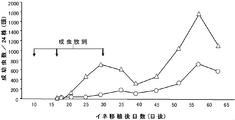
- Test Example 1 Control effect against brown planthopper by treatment with flonicamid seedling box 1.2 mg ⁇ 1.2 cm cell seedlings (3 / strain) at a ratio of 1.5 mg ai / strain, prepared according to Formulation Example 1
- the agent was processed in a nursery box.
- One day after the flonicamid treatment the rice was extracted from the cell together with the soil, transplanted one strain per pot, and the water depth was maintained at 3 cm.
- Two small greenhouses were prepared, and 24 pots for flonicamid treatment and no treatment were installed in each small greenhouse. Ten , 17 and 30 days after transplanting, 100 adults of Nilaparvata lugens / greenhouse were released.
- Test Example 2 Mating behavior disturbing action against a brown planthopper 10 seeds of rice were sown on 40 mm ⁇ 40 mm absorbent cotton to prepare a rice seedling having a height of about 5 cm. Rice seedlings were immersed in an aqueous solution containing 200 ppm of the active ingredient flonicamid, air-dried, and placed in a glass vial (inner diameter 40 mm ⁇ height 75 mm; capacity 50 ml). An adult non-mating leafhopper ( Nilaparvata lugens ) raised from the age of the old larvae was bred with drug-untreated rice seedlings. From the 6th day after emergence, the animals were bred on immersion-treated rice for 24 hours.
- next-generation larvae was measured by comparing the number of newly born next-generation larvae in immersion-treated rice seedlings (flonicamide treated group) and drug-untreated rice seedlings (untreated group). Moreover, when one male and one female were put together, they were observed for 2 hours to confirm the presence or absence of mating behavior. In order to confirm that no next-generation larvae were generated in an unmated state, an unmated female was bred alone in an untreated group, and the number of next-generation larvae was measured (unmated group). The results are shown in Table 2.
- Test Example 3 Mating behavior disruptive effect on a brown planthopper line that is less sensitive to neonicotinoid insecticides
- the testimony of the planthopper of Test Example 2 is less sensitive to the common name imidacloprid, a typical neonicotinoid insecticide
- the same test was conducted in place of the brown planthopper, and the number of next-generation larvae was measured in comparison with the flonicamid treated group and the untreated group. The results are shown in Table 3.
- Test example 4 Disrupting effect of mating behavior on white- spotted plant
- the white- spotted planthopper in Test example 2 was replaced with a white- spotted planthopper ( Sogatella furcifera ), and the same test was conducted. Was measured. The results are shown in Table 4.
- Test Example 5 Mating behavior disruption effect on Japanese brown planthopper
- the Japanese brown planthopper of Test Example 2 was replaced with Japanese brown planthopper ( Laodelphax striatella ), and the same test was carried out.
- the number of next-generation larvae compared with the flonicamid treated group and the untreated group was measured. The results are shown in Table 5.
- Test Example 6 Disturbance of mating behavior against brown planthopper A rice seedling was tested according to Test Example 2 except that it was treated with an aqueous solution containing the active ingredients flonicamid 50, 12.5, 3.1 and 0.8 ppm. It was. Table 6 shows the results of measuring the number of generations of next-generation larvae in comparison with the flonicamid-treated group and the non-treated group.
- Test Example 7 Mating Action Disturbing Action on White-Spotted Plant A rice seedling was tested according to Test Example 4 except that it was treated with an aqueous solution containing the active ingredients flonicamid 50, 12.5 and 3.1 ppm. Table 7 shows the results of measuring the number of generations of next-generation larvae in comparison with the flonicamid-treated group and the untreated group.
- Test Example 8 Mating Behavior Disturbing Action for Brown Bean Spike A test was conducted according to Test Example 5 except that rice seedlings were treated with an aqueous solution containing the active ingredients flonicamid 50, 12.5, and 3.1 ppm. Table 8 shows the results of measuring the number of generations of next-generation larvae in comparison with the flonicamid-treated group and the non-treated group.
- Test Example 9 Mating behavior disturbing action against a brown planthopper line that is less sensitive to neonicotinoid insecticides Tested according to Test Example 3 except that rice seedlings were treated with an aqueous solution containing 0.8 ppm of the active ingredient flonicamid Went. Table 9 shows the results of measuring the number of generations of next-generation larvae in comparison with the flonicamid-treated group and the non-treated group.
- Test Example 10 Mating behavior disturbing action against leafhopper leafhopper
- leafhopper leafhopper Nephotettix cincticeps
- rice seedlings were treated with flonicamid treated with an aqueous solution containing the active ingredient flonicamid 200, 50 ppm.
- the number of next-generation larvae was measured in comparison with the ward and the untreated ward. The results are shown in Table 10.
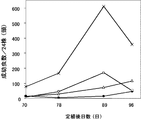
- Test Example 11 Control effect against brown planthopper by treatment with flonicamid nursery box A pest control composition prepared according to Formulation Example 2 in a ratio of 6, 12, 24 and 36 g ai / box in a 30 cm ⁇ 60 cm nursery box Processed. Untreated zone and dinotefuran granule (trade name: Starkle box granule, manufactured by Mitsui Chemicals Agro) Treatment zone (24 g ai / box) and imidacloprid granule (trade name: Admeier box granule, manufactured by Bayer CropScience) A treatment zone (24 g ai / box) was installed.
- FIG. 2 shows a graph of the flonicamid-treated section as a representative example of the 24 g ai / 10a flonicamid-treated section.
- ⁇ - ⁇ black circle
- ⁇ - ⁇ white square mark
- xx x mark
- the present invention is particularly useful in the situation of controlling rice parasitic sap pests where there is a demand to suppress the increase in the number of insect pests as long as possible after the chemical treatment.
- Test Example 12 Control effect against brown planthopper by treatment with flonicamid stalks and leaves The plant was transplanted to a field of 32 m 2 in 1 ward by a rice planting machine. 36, 43, 51, 57, and 65 days after transplantation, 500 adults of brown planthopper and 12,000 eggs were released on 100 m 2 of the field. 70 days after transplantation, flonicamid was treated with foliacamide at a heading period with a spraying amount of 150 L / 10a.
- the present invention can be used for controlling planthoppers that are sucking pests that are regarded as major pests in the field of rice cultivation. It should be noted that the entire contents of the specification, claims, drawings and abstract of Japanese Patent Application 2010-170936 filed on July 29, 2010 are cited herein as disclosure of the specification of the present invention. Incorporated.
Landscapes
- Life Sciences & Earth Sciences (AREA)
- Health & Medical Sciences (AREA)
- General Health & Medical Sciences (AREA)
- Dentistry (AREA)
- Plant Pathology (AREA)
- Engineering & Computer Science (AREA)
- Pest Control & Pesticides (AREA)
- Agronomy & Crop Science (AREA)
- Wood Science & Technology (AREA)
- Zoology (AREA)
- Environmental Sciences (AREA)
- Toxicology (AREA)
- Agricultural Chemicals And Associated Chemicals (AREA)
Priority Applications (3)
| Application Number | Priority Date | Filing Date | Title |
|---|---|---|---|
| PH1/2013/500318A PH12013500318B1 (en) | 2010-07-29 | 2011-07-28 | Copulation disruption agent for sap-sucking pests |
| KR1020137005007A KR101801427B1 (ko) | 2010-07-29 | 2011-07-28 | 흡즙 해충의 교미 행동 교란제 |
| CN201180046967.8A CN103140135B (zh) | 2010-07-29 | 2011-07-28 | 吸汁害虫的交尾行动干扰剂 |
Applications Claiming Priority (2)
| Application Number | Priority Date | Filing Date | Title |
|---|---|---|---|
| JP2010170936 | 2010-07-29 | ||
| JP2010-170936 | 2010-07-29 |
Publications (1)
| Publication Number | Publication Date |
|---|---|
| WO2012015014A1 true WO2012015014A1 (ja) | 2012-02-02 |
Family
ID=45530214
Family Applications (1)
| Application Number | Title | Priority Date | Filing Date |
|---|---|---|---|
| PCT/JP2011/067369 Ceased WO2012015014A1 (ja) | 2010-07-29 | 2011-07-28 | 吸汁害虫の交尾行動かく乱剤 |
Country Status (7)
| Country | Link |
|---|---|
| JP (1) | JP5860626B2 (enExample) |
| KR (1) | KR101801427B1 (enExample) |
| CN (1) | CN103140135B (enExample) |
| MY (1) | MY165281A (enExample) |
| PH (1) | PH12013500318B1 (enExample) |
| TW (1) | TWI501725B (enExample) |
| WO (1) | WO2012015014A1 (enExample) |
Cited By (2)
| Publication number | Priority date | Publication date | Assignee | Title |
|---|---|---|---|---|
| CN112239383A (zh) * | 2020-10-28 | 2021-01-19 | 中诚国联(河南)生物科技有限公司 | 一种含有呋虫胺和杀虫单的药肥颗粒剂在水稻上的应用 |
| CN118791439A (zh) * | 2024-09-14 | 2024-10-18 | 美信佳中维药业股份有限公司 | 改性甜菜碱的制备方法及包含改性甜菜碱的抗菌纤维素醚 |
Families Citing this family (2)
| Publication number | Priority date | Publication date | Assignee | Title |
|---|---|---|---|---|
| CN113812411A (zh) * | 2020-06-18 | 2021-12-21 | 江苏功成生物科技有限公司 | 一种含有氟啶虫酰胺的卫生杀虫组合物及其应用 |
| JP7858449B2 (ja) * | 2021-07-12 | 2026-05-14 | バイエルクロップサイエンス株式会社 | 昆虫に対する行動抑制効果評価方法 |
Citations (5)
| Publication number | Priority date | Publication date | Assignee | Title |
|---|---|---|---|---|
| WO2008075453A1 (ja) * | 2006-12-19 | 2008-06-26 | Mitsui Chemicals, Inc. | 有害生物防除組成物 |
| WO2008075454A1 (ja) * | 2006-12-19 | 2008-06-26 | Mitsui Chemicals, Inc. | 有害生物防除組成物 |
| CN101692817A (zh) * | 2009-07-21 | 2010-04-14 | 深圳诺普信农化股份有限公司 | 一种杀虫组合物及其应用 |
| CN101700024A (zh) * | 2009-08-01 | 2010-05-05 | 深圳诺普信农化股份有限公司 | 一种增效农药组合物及其应用 |
| JP2011126837A (ja) * | 2009-12-21 | 2011-06-30 | Nippon Nohyaku Co Ltd | 農園芸用有害生物防除剤組成物及びその使用方法 |
Family Cites Families (3)
| Publication number | Priority date | Publication date | Assignee | Title |
|---|---|---|---|---|
| EP1734822A4 (en) * | 2004-04-14 | 2010-03-31 | Fmc Corp | DISPERSIBLE PESTICIDE COMPOSITIONS |
| JP5611535B2 (ja) * | 2008-04-17 | 2014-10-22 | 石原産業株式会社 | 有害生物防除剤組成物及び有害生物の防除方法 |
| CN101647460A (zh) * | 2009-07-21 | 2010-02-17 | 深圳诺普信农化股份有限公司 | 一种具有增效作用的农药组合物 |
-
2011
- 2011-07-28 CN CN201180046967.8A patent/CN103140135B/zh active Active
- 2011-07-28 JP JP2011164896A patent/JP5860626B2/ja active Active
- 2011-07-28 PH PH1/2013/500318A patent/PH12013500318B1/en unknown
- 2011-07-28 KR KR1020137005007A patent/KR101801427B1/ko active Active
- 2011-07-28 MY MYPI2013700164A patent/MY165281A/en unknown
- 2011-07-28 WO PCT/JP2011/067369 patent/WO2012015014A1/ja not_active Ceased
- 2011-07-29 TW TW100127004A patent/TWI501725B/zh active
Patent Citations (5)
| Publication number | Priority date | Publication date | Assignee | Title |
|---|---|---|---|---|
| WO2008075453A1 (ja) * | 2006-12-19 | 2008-06-26 | Mitsui Chemicals, Inc. | 有害生物防除組成物 |
| WO2008075454A1 (ja) * | 2006-12-19 | 2008-06-26 | Mitsui Chemicals, Inc. | 有害生物防除組成物 |
| CN101692817A (zh) * | 2009-07-21 | 2010-04-14 | 深圳诺普信农化股份有限公司 | 一种杀虫组合物及其应用 |
| CN101700024A (zh) * | 2009-08-01 | 2010-05-05 | 深圳诺普信农化股份有限公司 | 一种增效农药组合物及其应用 |
| JP2011126837A (ja) * | 2009-12-21 | 2011-06-30 | Nippon Nohyaku Co Ltd | 農園芸用有害生物防除剤組成物及びその使用方法 |
Cited By (2)
| Publication number | Priority date | Publication date | Assignee | Title |
|---|---|---|---|---|
| CN112239383A (zh) * | 2020-10-28 | 2021-01-19 | 中诚国联(河南)生物科技有限公司 | 一种含有呋虫胺和杀虫单的药肥颗粒剂在水稻上的应用 |
| CN118791439A (zh) * | 2024-09-14 | 2024-10-18 | 美信佳中维药业股份有限公司 | 改性甜菜碱的制备方法及包含改性甜菜碱的抗菌纤维素醚 |
Also Published As
| Publication number | Publication date |
|---|---|
| KR20130141451A (ko) | 2013-12-26 |
| TW201216848A (en) | 2012-05-01 |
| CN103140135A (zh) | 2013-06-05 |
| JP5860626B2 (ja) | 2016-02-16 |
| CN103140135B (zh) | 2014-07-23 |
| KR101801427B1 (ko) | 2017-11-24 |
| PH12013500318B1 (en) | 2018-10-12 |
| JP2012046504A (ja) | 2012-03-08 |
| PH12013500318A1 (enExample) | 2013-03-25 |
| MY165281A (en) | 2018-03-21 |
| TWI501725B (zh) | 2015-10-01 |
Similar Documents
| Publication | Publication Date | Title |
|---|---|---|
| JP5611535B2 (ja) | 有害生物防除剤組成物及び有害生物の防除方法 | |
| JP6013032B2 (ja) | 殺菌剤組成物及び植物病害の防除方法 | |
| AU2009283423B2 (en) | Method for controlling degradation of agricultural chemical active ingredient | |
| EP2928298B1 (en) | Oil-based pesticidal suspension | |
| JP5829061B2 (ja) | 水性懸濁状有害生物防除用組成物 | |
| KR20100120215A (ko) | 식물 병해 방제제 | |
| JP5502354B2 (ja) | 農園芸用殺菌剤組成物及び植物病害の防除方法 | |
| JP5860626B2 (ja) | 吸汁害虫の交尾行動かく乱剤 | |
| WO2018123971A1 (ja) | シクラニリプロール又はその塩を含有する有害生物防除用固形組成物 | |
| JP5173591B2 (ja) | 農園芸用殺菌剤組成物及び植物病害の防除方法 | |
| JP2014015449A (ja) | 殺菌剤組成物及び植物病害の防除方法 | |
| EP2451275B2 (en) | Agricultural or horticultural fungicide composition and its use for controlling plant pathogens | |
| JP5940368B2 (ja) | 殺菌剤組成物及び植物病害の防除方法 | |
| JP2018104362A (ja) | シクラニリプロール又はその塩を含有する植物繁殖体処理用組成物 | |
| JP2021035912A (ja) | 有害生物防除用組成物及び有害生物の防除方法 |
Legal Events
| Date | Code | Title | Description |
|---|---|---|---|
| WWE | Wipo information: entry into national phase |
Ref document number: 201180046967.8 Country of ref document: CN |
|
| 121 | Ep: the epo has been informed by wipo that ep was designated in this application |
Ref document number: 11812603 Country of ref document: EP Kind code of ref document: A1 |
|
| NENP | Non-entry into the national phase |
Ref country code: DE |
|
| WWE | Wipo information: entry into national phase |
Ref document number: 12013500318 Country of ref document: PH |
|
| ENP | Entry into the national phase |
Ref document number: 20137005007 Country of ref document: KR Kind code of ref document: A |
|
| 122 | Ep: pct application non-entry in european phase |
Ref document number: 11812603 Country of ref document: EP Kind code of ref document: A1 |
|
| NENP | Non-entry into the national phase |
Ref country code: JP |