WO2011155463A1 - 使い捨ておむつの快適性定量評価方法 - Google Patents
使い捨ておむつの快適性定量評価方法 Download PDFInfo
- Publication number
- WO2011155463A1 WO2011155463A1 PCT/JP2011/062975 JP2011062975W WO2011155463A1 WO 2011155463 A1 WO2011155463 A1 WO 2011155463A1 JP 2011062975 W JP2011062975 W JP 2011062975W WO 2011155463 A1 WO2011155463 A1 WO 2011155463A1
- Authority
- WO
- WIPO (PCT)
- Prior art keywords
- information
- disposable diaper
- comfort
- diaper
- value
- Prior art date
- Legal status (The legal status is an assumption and is not a legal conclusion. Google has not performed a legal analysis and makes no representation as to the accuracy of the status listed.)
- Ceased
Links
Images



Classifications
-
- A—HUMAN NECESSITIES
- A61—MEDICAL OR VETERINARY SCIENCE; HYGIENE
- A61F—FILTERS IMPLANTABLE INTO BLOOD VESSELS; PROSTHESES; DEVICES PROVIDING PATENCY TO, OR PREVENTING COLLAPSING OF, TUBULAR STRUCTURES OF THE BODY, e.g. STENTS; ORTHOPAEDIC, NURSING OR CONTRACEPTIVE DEVICES; FOMENTATION; TREATMENT OR PROTECTION OF EYES OR EARS; BANDAGES, DRESSINGS OR ABSORBENT PADS; FIRST-AID KITS
- A61F13/00—Bandages or dressings; Absorbent pads
- A61F13/15—Absorbent pads, e.g. sanitary towels, swabs or tampons for external or internal application to the body; Supporting or fastening means therefor; Tampon applicators
- A61F13/84—Accessories, not otherwise provided for, for absorbent pads
Definitions
- the present invention relates to a comfort quantification method for disposable diapers, a comfort display for disposable diapers determined by the method, and a disposable diaper provided with the comfort display.
- salivary amylase monitor is also commercially available as a measuring instrument for the salivary amylase activity.
- Non-Patent Document 1 attempts have been made to measure the stress of infants by applying this salivary amylase activity to infants who cannot express emotions and stress accurately in language. According to this result, since there is a correlation between the infant's mood by the mother's facial expression stimulation and the salivary amylase activity, the infant's stress level can be evaluated by examining the salivary amylase activity.
- the KES method is known as an index for physically measuring the texture of disposable diapers and the like.
- the details of the KES method are explained in “Standardization and Analysis of Texture Evaluation” 2nd edition (Japan Textile Machinery Society, Texture Measurement and Standardization Research Committee, issued on July 10, 1980). It is a technique used to evaluate the suitability of textile materials such as clothes and clothes, and is also known to be applied to texture measurement of disposable diapers and the like.
- the measured value by the KES method simply indicates the degree of texture as an absolute value, and it has not been possible to correlate this value with the comfort of disposable diapers. For this reason, the actual comfort when an infant wears and the relationship between the KES value are also unknown, and a means of quantitatively measuring “comfort at wearing” as an index of a disposable diaper alone Is required.
- the present invention has been made in view of the above circumstances, and provides an index for quantifying the comfort when wearing a disposable diaper, displays the index, and provides a disposable diaper defined by the index.
- the purpose is to provide.
- the present inventors have obtained from physical characteristics linked to a feeling of wearing brought about by disposable diapers such as KES and salivary amylase activity of infants when wearing the disposable diapers.
- the present inventors have found that an index for quantifying the comfort when wearing a disposable diaper can be provided by associating the information with the comfort information obtained, and the present invention has been completed. More specifically, the present invention provides the following.
- a method for quantitatively evaluating the degree of comfort of a disposable diaper the first step of obtaining first information obtained from the saliva amylase activity of the wearer when the disposable diaper is worn, and the disposable
- an index for quantifying the comfort when wearing a disposable diaper display the index, and provide a disposable diaper defined by the index.
- the comfort quantitative evaluation method of the disposable diaper according to the present invention includes a first step of obtaining first information obtained from a saliva amylase activity of a wearer when wearing a disposable diaper, and a physics linked to a feeling of wearing brought about by the disposable diaper. A second step of obtaining second information obtained from the physical characteristics, and a third step of obtaining comfort as disposable third diaper as the third information by relating the first information and the second information; Is provided.
- the first step is a step of obtaining first information obtained from the saliva amylase activity of the wearer when the infant or the like wears the disposable diaper.
- the wearer generally refers to an infant.
- the wearer's salivary amylase activity which is the first information, is a value that serves as an index of stress as described in the above prior art.
- the stress excites the excitatory signal of the sympathetic nervous system, It is believed that salivary amylase activity is increased. This value is obtained as sAMY (kU / l). A higher value indicates higher stress (excitement), and a lower value indicates lower stress (relaxation).
- the salivary amylase activity measuring instrument can be measured using, for example, a commercially available enzyme analyzer “saliva amylase monitor” (manufactured by Nipro Corporation).
- the salivary amylase activity after 3 minutes is measured with 3 minutes before wearing a disposable diaper as naked without diapers. Then, after measuring the salivary amylase activity of the infant after wearing the disposable diaper for 3 minutes, the salivary amylase activity by wearing the disposable diaper can be obtained from the difference between the saliva amylase activity when wearing the disposable diaper and when naked .
- a 2nd process is a process of obtaining the 2nd information obtained from the physical characteristic interlock
- the physical characteristics that are linked to the wearing feeling include KES information and tightening stress information, among which KES information is preferable.
- the following method is used for measurement conditions related to this measurement.
- Tensile properties were measured using a KES-FB1 manufactured by Kato Tech Co., Ltd., by applying a unidirectional stretching force of a maximum load of 100 gf / cm to the 10 cm width (initial length is 2.5 cm) of each laminated sheet. The strain rate was set to 0.4% / sec. From the tensile characteristic curve obtained by the measurement, the tensile elongation EMT [%], the linearity LT of the tensile characteristic curve, the tensile work WT [gf / cm 2 ], and the tensile recovery rate RT [%] were determined. In addition, since a diaper is normally extended
- Bending characteristics were measured using a KES-FB2 manufactured by Kato Tech Co., Ltd., fixing a 5 cm width of each sample area between chucks with a 1 cm spacing, and bending the sample to the maximum curvature +2.5 cm ⁇ 1 Next, it was performed by bending back to the maximum curvature of ⁇ 2.5 cm ⁇ 1 and then returning it to its original position.
- the bending stiffness B [gf ⁇ cm 2 / cm] is calculated from the inclination when the inclination of the bending moment with respect to the curvature becomes almost constant after bending to the front side, and the bending recovery property 2HB [gf ⁇ cm / cm] is It was determined from the hysteresis width.
- the shear characteristics were measured by using KES-FB1 manufactured by Kato Tech Co., Ltd., clamping a 10 cm width of a predetermined region of each sample, and shearing rigidity G [gf in one direction (lateral direction of the diaper) at a forced load of 10 gf / cm. / Cm ⁇ deg], shear hysteresis 2HG [gf / cm] at a shear angle of 0.5 °, and shear hysteresis 2HG5 [gf / cm] at a shear angle of 5 °.
- the shear characteristics were measured only in the lateral direction.
- the compression characteristic is a circular flat terminal having an area of 200 mm 2 in a predetermined area in a state where each sample is stretched 1.2 times in the lateral direction of the diaper using KES-FB3 manufactured by Kato Tech Co., Ltd. Compression was performed between steel plates, and the measurement was performed at a compression rate of 150 sec / mm and a maximum compression load of 10 gf / cm 3 . The recovery process was also measured at the same speed, and the linearity LC of the compression characteristic curve obtained from the measurement, the compression work WC [gf ⁇ cm / cm 2 ], and the compression recovery rate RC [%] were determined.
- the surface properties were measured using a KES-FB4 manufactured by Kato Tech Co., Ltd. A 10 ⁇ 20 cm area of each sample was applied with a tension of 20 g / cm in the lateral direction and wound with a 0.05 cm diameter piano wire. The test was performed by applying a load of 50 g to a terminal of 0.5 ⁇ 0.5 cm and sliding it at a speed of 0.1 cm / sec. From the measurement results, the average friction coefficient MIU, the standard deviation thereof was MMD (however, only in the lateral direction of the diaper), and the average deviation SMD [ ⁇ m] of the surface roughness was obtained. In addition, in order to contrast the touch of each diaper, it measured using the inner surface of a diaper, ie, the surface which contact
- the thickness [mm] of each sample was measured under a pressure of 0.5 fg / cm 2 as in the KES-F standard measurement conditions.
- the KES method is known as an index for physically measuring the texture of a disposable diaper or the like, and its application to the texture measurement of a disposable diaper or the like is also known.
- the values obtained by the KES method include bending characteristics, compression characteristics, surface characteristics, thickness, contact thermal sensation, etc.
- the basic texture value obtained from these is preferably used as the first information.
- the basic texture values include “koshi”, “bulge”, and “smoothness”. “Koshi” is associated with softness and suppleness, and “bulge” is associated with a soft feeling. “Slimming” is associated with smoothness.
- strainer, slime and bulge can be calculated from the following equations using 16 parameter characteristic values including 12 parameters in Table 1 described later obtained from the measurement of each mechanical property described above.
- this formula is Sakaguchi et al., “Development of objective evaluation method for knitted fabric underwear, 1st report, measurement of fabric characteristic value, 2nd report, conversion formula to derive quality from fabric characteristic value”, Journal of Textile Machinery Society, vol39 No. 3 (1986).
- a 3rd process is a process of obtaining the 3rd information about the comfort at the time of wearing of a disposable diaper by associating said 1st information and the 2nd information. That is, conventionally, the first information obtained from the salivary amylase activity and the second information such as the basic texture value of “Koshi” of KES are independent indexes, and the relationship between the two is not clear. However, according to the present invention, by combining the first information and the second information, the comfort information when wearing the disposable diaper can be superimposed on the second information such as KES which is merely a physical characteristic. . In other words, the third information is a comfort display supported by the second information such as KES. Moreover, this 2nd information is set to the predetermined range by the 1st information regarding comfort.
- the relationship between the first information and the second information means that each information has some kind of correlation, for example, a case where there is a predetermined positive correlation.
- Specific examples include, but are not limited to, salivary amylase activity when wearing disposable diapers as the first information and the basic texture value of “koshi” in KES as the second information.
- the texture of the disposable diaper is not only evaluated by an objective numerical value (KES value) used for evaluating the knitted fabric underwear and the like, but is also evaluated by adding a comfort index obtained from the first information. For this reason, the comfort of a disposable diaper can also be displayed by displaying the 3rd information about various disposable diapers.
- KAS value objective numerical value
- the correlation between the first information and the second information is obtained for various disposable diapers.
- the second information in a predetermined range that satisfies the maximum value of the first information (for example, the basic texture value of the KES “koshi” is a predetermined value or more) as the third information
- the KES value of the third information is It can be determined that the disposable diaper provided is low stress (high comfort).
- the disposable diaper actually provided with the second information in the predetermined range as a physical characteristic linked to the wearing feeling is also within the scope of the present invention.
- This comfort indication can be used as an absolute value of comfort that can be applied to all disposable diapers, so it is possible to give new information on comfort as absolute values to existing and new disposable diapers. Become. Of course, this comfort indication may be used alone or as a disposable diaper and / or its packaging.
- the disposable diaper provided with the display in this manner is extremely useful for the purchase consumer because the index of comfort is obvious and has a quality display function.
- the disposable diaper provided with the comfort display includes not only providing the comfort display on the diaper itself but also attaching the display to the package, the enclosed flyer or the pamphlet.
- Test Example 1 The diapers worn by the subject in this test are the following test product A and test product B.
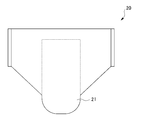
- the commercially available paper diaper 20 was used as the test product B (FIG. 2).
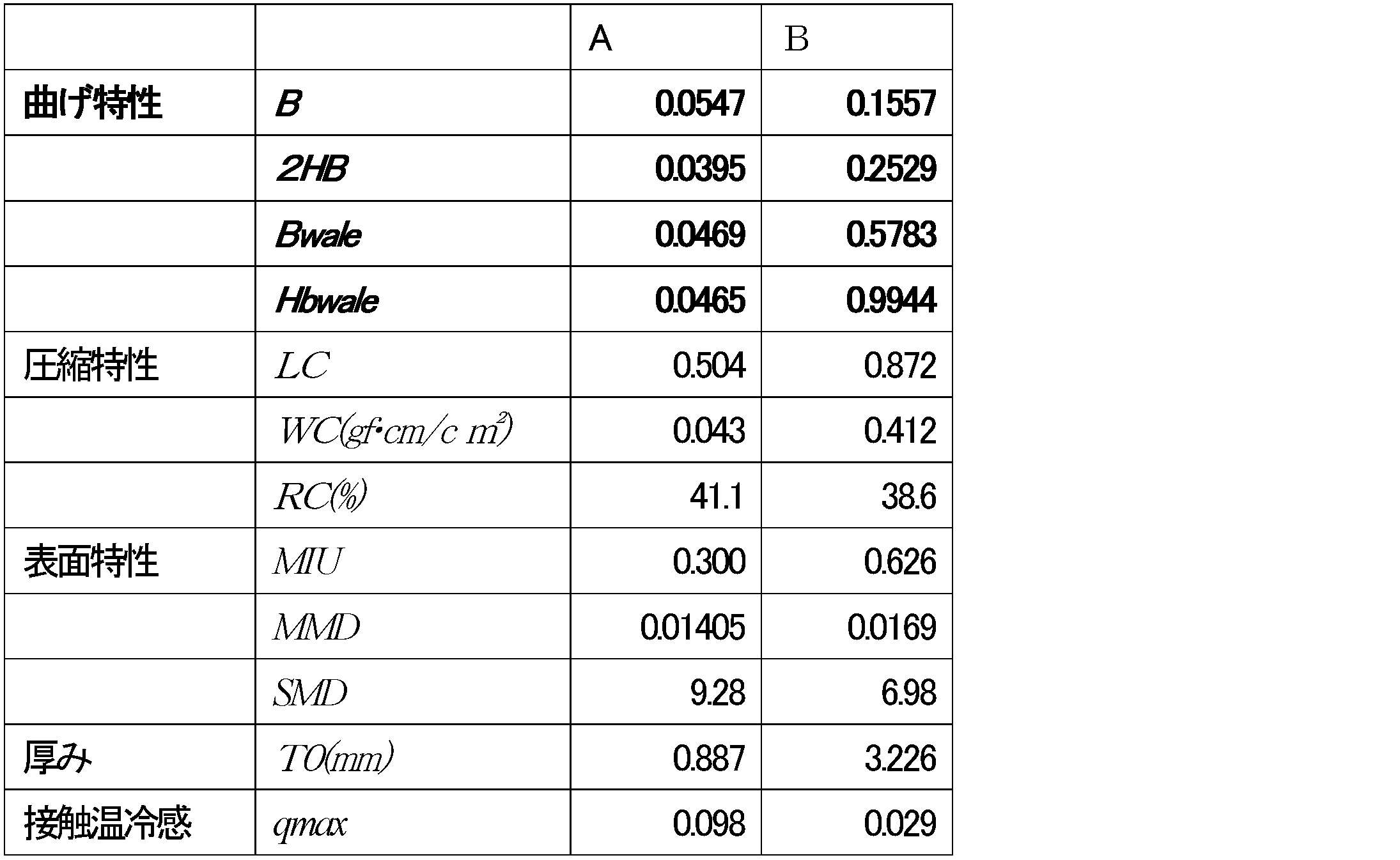
- the KES value was measured in advance for two types of diapers of the test products A and B.
- the KES value was measured by the method described above for each characteristic.
- ⁇ KES measurement result> The KES measurement results of each test product are as shown in Table 1 above.
- the action values of strain, bulge, and slime are calculated from the above formula 1 using the characteristic values of 16 parameters including 12 parameters of Table 1 obtained from the measurement. Can do.
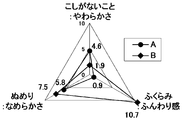
- FIG. 3 is a triangular graph showing only the action value calculated by the above formula as a value obtained by subtracting the full count value (10), and taking a larger value as there is no distortion (soft). .
- the value of the test product A greatly exceeds the value of the test product B.
- test was conducted under the following conditions. 1) The subjects were 6 boys and 8 girls, a total of 14 children, and the infants were 8 to 11 months old with an average age of 9.1 months. 2) The test place was a test room where the temperature and humidity were constant, and visual and sound stimuli were reduced as much as possible. 3) As a method for measuring amylase in saliva, each test subject's mother performed measurement using an enzyme analyzer “saliva amylase monitor” (manufactured by Nipro Corporation).
- test flow was as follows. 1) Subjects will spend 20 minutes as usual after entering the test room. 2) Then take off the diaper and spend 3 minutes. 3) Collect saliva after 3 minutes and measure amylase in saliva. 4) Put on the test article diaper for 3 minutes. 5) Collect saliva after 3 minutes and measure amylase in saliva.
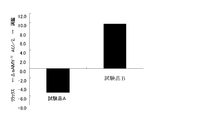
- the measurement results are represented by the difference between the sAMY value after each diaper was mounted as shown in FIG. 4 and the sAMY value in the naked state before the diaper was mounted.
- the sAMY value of the subject wearing the test product A was lower than the sAMY value when naked, and the sAMY value of the test product B was increased.
- the value of sAMY after mounting differs depending on the material used for the outer circumference of the trunk, and the test product A composed of a soft cloth obtained by KES measurement is a test product B which is a commercial product having the same absorber structure. Compared to the significant decrease.
- Test Example 2 The diapers worn by the subjects in this test were the following test items C and D.
- Test article C a so-called pants-type paper diaper in which a separate liquid-absorbing structure is disposed on the inner surface of the exterior sheet.
- the outer sheet (laminate sheet) forming the outer shape of the entire diaper is an inner sheet made of a stretchable nonwoven fabric with a mass of 30 g / m 2 located on the skin contact surface side and a mass of 27 g / m located on the non-skin contact side. It formed from an outer sheet made of spunbonded fibrous nonwoven fabric of m 2.
- Test article D a commercially available so-called pants-type disposable diaper (L size).
- the outer sheet (laminated sheet) forming the outer shape of the entire diaper is an inner sheet made of SMS fiber nonwoven fabric having a mass of 15 g / m 2 located on the skin contact surface side and a mass of 17 g / m located on the non-skin contact side. And an outer surface sheet made of two spunbond fiber nonwoven fabrics.
- KES values were measured in advance for two types of diapers, a test product C and a test product D.
- the KES value was measured by the method described above.
- measurements other than tensile properties and shear properties are intended for the predetermined area of the front and back waist area located between the side edges of the diaper.
- the absorbent structure is removed from the diaper.
- the measurement was performed separately for the front waist region 31 and the rear waist region 32 (shown in FIG. 5).
- the tensile properties and the shear properties are measured in the state including the waist elastic element and the leg elastic element of the diaper, and the waist elastic element and the leg elastic element are arranged for the other characteristics. A predetermined area that was not used was targeted.
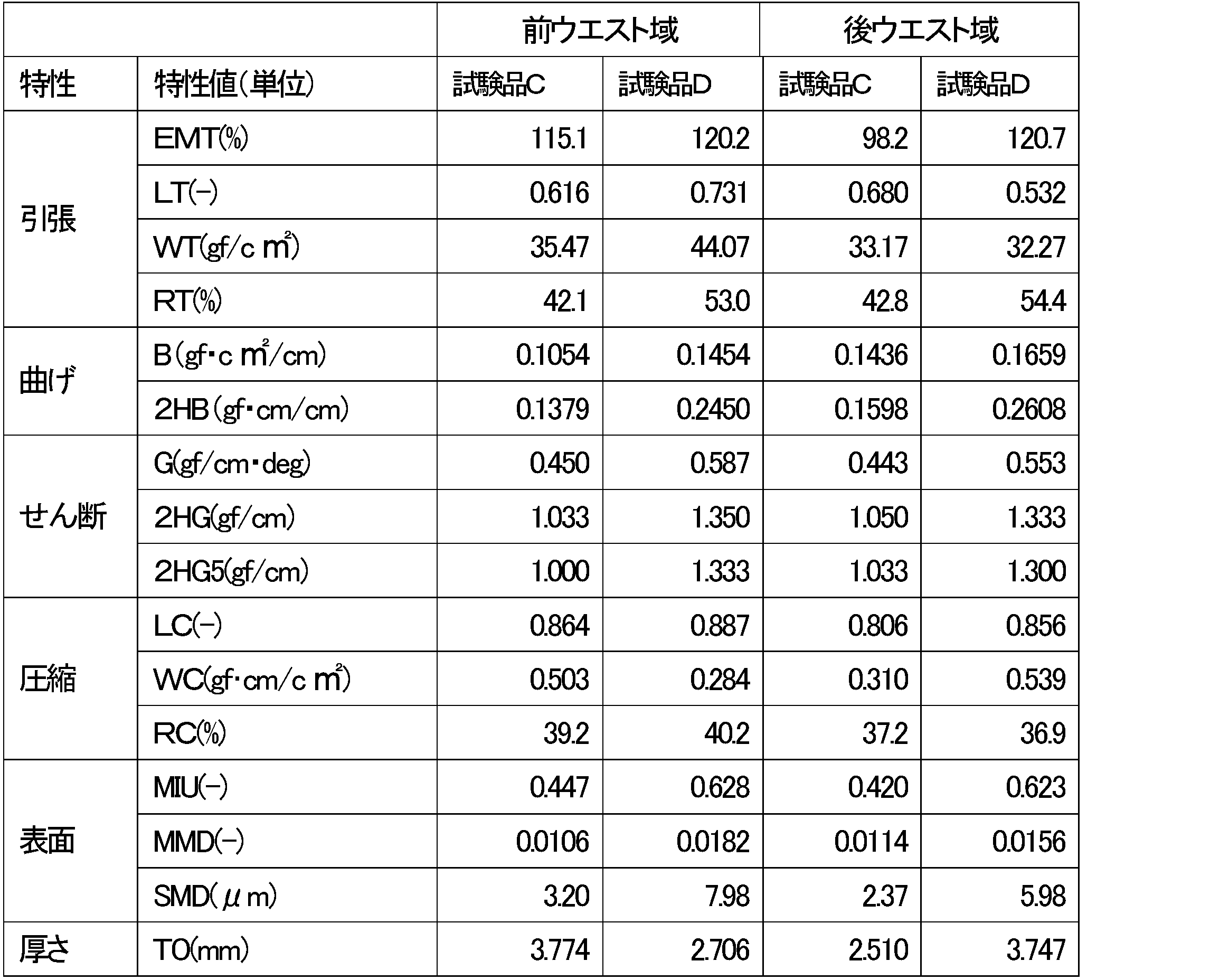
- Table 2 above shows the mechanical properties (tensile strength) of the test piece C in order to express the softness, the smoothness of the surface, the touch like an underwear with cushioning properties, and the good texture on the appearance by objective data.
- (Characteristics, shear properties, compression properties, bending properties, surface properties, weight and thickness) are measured by the KES method and compared with the mechanical properties of the diaper of the test product D.
- the action values of strain, bulge, and slime can be calculated from Equation 1 using the 16 parameter characteristic values obtained from the measurement.
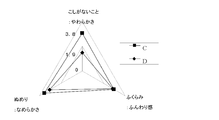
- FIG. 6 is a triangular graph showing only the action value calculated by the above calculation formula by subtracting it from the full count value (10), and taking a larger value as there is no distortion (soft). .
- the numerical value of the test product C is 3.8
- the numerical value of the test product D is It is 1.9, and there is an opening of nearly twice.
- test was conducted under the following conditions. 1) The subjects were 14 boys and 15 girls, a total of 29 children, and the infants were 13 to 19 months old with an average age of 16.4 months. 2) Other test conditions and test flows were tested under the same conditions as in Test Example 1.
- the measurement result is represented by the difference between the sAMY value after wearing the diaper of the test product and the sAMY value in the naked state before wearing the diaper as shown in FIG.
- the sAMY value of the subject wearing the test product C was lower than the sAMY value when naked, and the sAMY value of the test product D was increased.
- the diaper used by the baby was evaluated using the amylase activity level in the saliva that can easily and objectively evaluate the baby's stress level.
- the stress level on the baby's diaper can be reduced by using a soft material whose softness is objectively measured by KES measurement for the outer part. From this result, it can be understood that there is a positive correlation between the salivary amylase activity at the time of wearing the diaper and the basic texture value of “koshi” of KES.
Landscapes
- Health & Medical Sciences (AREA)
- Epidemiology (AREA)
- Engineering & Computer Science (AREA)
- Biomedical Technology (AREA)
- Heart & Thoracic Surgery (AREA)
- Vascular Medicine (AREA)
- Life Sciences & Earth Sciences (AREA)
- Animal Behavior & Ethology (AREA)
- General Health & Medical Sciences (AREA)
- Public Health (AREA)
- Veterinary Medicine (AREA)
- Absorbent Articles And Supports Therefor (AREA)
Abstract
使い捨ておむつの着用時の快適性を定量化する指標を提供し、その指標を表示し、その指標によって規定される使い捨ておむつを提供すること。 使い捨ておむつの快適性の程度を定量的に評価する方法であって、使い捨ておむつを着用した際の着用者の唾液アミラーゼ活性から得られる第1情報を得る第1工程と、使い捨ておむつが有する着用感に連動する物理的特性から得られる第2情報を得る第2工程と、第1情報と第2情報とを関係付けることで、使い捨ておむつの着用時の快適性を第3情報として得る第3工程とを備える。第2情報は例えば前記使い捨ておむつのKES情報である。
Description
本発明は、使い捨ておむつの快適性定量評価方法、当該方法によって決定された使い捨ておむつの快適性表示、及び、当該快適性表示が付与された使い捨ておむつに関する。
近年、人間のストレスを定量的に評価する試みが行なわれており、その一手段として、唾液中のアミラーゼ活性を測定することが試みられている。これは、ストレスが交感神経系の興奮信号を励起し、体内の自己防衛反応として唾液アミラーゼ活性が高まるものと考えられている。この唾液アミラーゼ活性の測定器としていわゆる唾液アミラーゼモニターも市販されている。
一方、この唾液アミラーゼ活性を、感情やストレスを言語で正確に表現できない乳幼児に適用して乳幼児のストレスを測定する試みも行なわれている(非特許文献1参照)。この結果によれば、母親の表情刺激による乳幼児の機嫌と、唾液アミラーゼ活性との間に相関性があることから、唾液アミラーゼ活性を調べることにより、乳幼児のストレスレベルを評価できる。
丹下他、「唾液中アミラーゼによる幼児の情動評価」、日本赤ちゃん学会第9回学術集会、プログラム・抄録集、p57、2009年5月発行
使い捨ておむつ等の風合いを物理的に測定する指標としては、KES法が知られている。KES法に関しては、「風合い評価の標準化と解析」第2版、(社団法人日本繊維機械学会 風合い計量と規格化研究委員会 昭和55年7月10日発行)に詳細が説明されており、下着や洋服等テキスタイル素材の適性評価に用いられている手法であり、使い捨ておむつ等の風合い測定への適用も知られている。
しかし、KES法による測定値は単に風合いの程度を絶対値で示すものであり、この数値と、使い捨ておむつの快適性との相関付けを行なうことはできていなかった。このため、乳幼児が着用した際の実際の快適性と、KES値との関係性も不明であるのが現状であり、使い捨ておむつ単独の指標として「着用時の快適性」を定量的に測る手段が求められている。
本発明は、以上の状況に鑑みてなされたものであり、使い捨ておむつの着用時の快適性を定量化する指標を提供し、また、その指標を表示し、その指標によって規定される使い捨ておむつを提供することを目的とする。
本発明者らは、上記の課題を解決すべく鋭意検討したところ、KES等の使い捨ておむつがもたらす着用感に連動する物理的特性と、その使い捨ておむつを着用した際の乳幼児の唾液アミラーゼ活性から得られる快適性の情報とを関係付けることで、使い捨ておむつの有する着用時の快適性を定量化する指標を提供できることを見出し、本発明を完成するに至った。より具体的には、本発明は以下のものを提供する。
(1) 使い捨ておむつの快適性の程度を定量的に評価する方法であって、前記使い捨ておむつを着用した際の着用者の唾液アミラーゼ活性から得られる第1情報を得る第1工程と、前記使い捨ておむつが着用された際の着用感に連動する物理的特性から得られる第2情報を得る第2工程と、前記第1情報と第2情報とを関係付けることで、使い捨ておむつの着用時の快適性に関する第3情報を得る第3工程と、を備える使い捨ておむつの快適性定量評価方法。
(2) 前記第2工程における前記第2情報が、前記使い捨ておむつのKES情報である(1)記載の使い捨ておむつの快適性定量評価方法。
(3) 前記第3工程が、所定範囲の前記第2情報を快適なおむつとして決定する工程である(1)又は(2)記載の使い捨ておむつの快適性定量評価方法。
(4) (1)から(3)いずれか記載の快適性定量評価方法によって得られた、前記第3情報を用いた使い捨ておむつの快適性表示。
(5) (4)記載の快適性表示が付与された使い捨ておむつ。
(6) (3)記載の快適性定量評価方法によって得られた前記所定範囲の第2情報を備える使い捨ておむつ。
本発明によれば、使い捨ておむつの着用時の快適性を定量化する指標を提供し、また、その指標を表示し、その指標によって規定される使い捨ておむつを提供できる。
<快適性定量評価方法>
本発明の使い捨ておむつの快適性定量評価方法は、使い捨ておむつを着用した際の着用者の唾液アミラーゼ活性から得られる第1情報を得る第1工程と、当該使い捨ておむつがもたらす着用感に連動する物理的特性から得られる第2情報を得る第2工程と、前記第1情報と第2情報とを関係付けることで、使い捨ておむつの着用時の快適性を前記第3情報として得る第3工程と、を備える。
本発明の使い捨ておむつの快適性定量評価方法は、使い捨ておむつを着用した際の着用者の唾液アミラーゼ活性から得られる第1情報を得る第1工程と、当該使い捨ておむつがもたらす着用感に連動する物理的特性から得られる第2情報を得る第2工程と、前記第1情報と第2情報とを関係付けることで、使い捨ておむつの着用時の快適性を前記第3情報として得る第3工程と、を備える。
<第1工程>
第1工程は、乳幼児等が使い捨ておむつを着用した際の着用者の唾液アミラーゼ活性から得られる第1情報を得る工程である。ここで、着用者とは一般に乳幼児を指す。第1情報である着用者の唾液アミラーゼ活性とは、上記の従来技術で述べたようにストレスの指標となる値であり、ストレスが交感神経系の興奮信号を励起し、体内の自己防衛反応として唾液アミラーゼ活性が高まるものと考えられている。この値はsAMY(kU/l)として得られ、この値が高いほうが高ストレス(興奮)であることを示し、値が低いほうが低ストレス(リラックス)であることを示している。この唾液アミラーゼ活性の測定器は、例えば、酵素分析装置「唾液アミラーゼモニター」(ニプロ(株)製)として市販されているものを用いて測定できる。
第1工程は、乳幼児等が使い捨ておむつを着用した際の着用者の唾液アミラーゼ活性から得られる第1情報を得る工程である。ここで、着用者とは一般に乳幼児を指す。第1情報である着用者の唾液アミラーゼ活性とは、上記の従来技術で述べたようにストレスの指標となる値であり、ストレスが交感神経系の興奮信号を励起し、体内の自己防衛反応として唾液アミラーゼ活性が高まるものと考えられている。この値はsAMY(kU/l)として得られ、この値が高いほうが高ストレス(興奮)であることを示し、値が低いほうが低ストレス(リラックス)であることを示している。この唾液アミラーゼ活性の測定器は、例えば、酵素分析装置「唾液アミラーゼモニター」(ニプロ(株)製)として市販されているものを用いて測定できる。
着用者の唾液アミラーゼ活性の測定方法は後述の実施例にて詳述するが、一例としては、使い捨ておむつを着用する前3分間をおむつなしの裸として、3分後の唾液アミラーゼ活性を測定し、その後、使い捨ておむつを3分間着用した後の乳幼児の唾液アミラーゼ活性を計測し、使い捨ておむつ着用時と裸時の唾液アミラーゼ活性の差から、当該使い捨ておむつの着用による唾液アミラーゼ活性を求めることができる。
<第2工程>
第2工程は、上記第一工程で着用した使い捨ておむつによりもたらされる着用感に連動する物理的特性から得られる第2情報を得る工程である。着用感に連動する物理的特性とは、例えばKES情報、締め付け応力情報等が例示できるが、なかでもKES情報が好ましい。
第2工程は、上記第一工程で着用した使い捨ておむつによりもたらされる着用感に連動する物理的特性から得られる第2情報を得る工程である。着用感に連動する物理的特性とは、例えばKES情報、締め付け応力情報等が例示できるが、なかでもKES情報が好ましい。
KES法の各力学的性質の測定方法に関し、本測定に関連した計測条件について以下の方法を用いている。
引張り特性は、カトーテック(株)製KES-FB1を用いて、各積層シートの10cm幅(初期の長さは2.5cm)に最大荷重100gf/cmの一方向延伸力を加え、変形速度(ひずみ速度)を0.4%/secに設定して測定した。測定によって得られた引張特性曲線から、引張伸度EMT[%]、引張特性曲線の直線性LT、引張仕事量WT[gf/cm2]及び引張回復率RT[%]を求めた。なお、おむつは、通常、その着用状態において横方向に伸張されるので、横方向についてのみ引張特性を測定した。
曲げ特性の測定は、カトーテック(株)製KES-FB2を用いて、各サンプルの所定領域の5cm幅を1cm間隔のチャック間に固定し、サンプルを最大曲率+2.5cm-1まで表側に曲げ、次に、最大曲率-2.5cm-1まで裏側に曲げた後に元に戻すことによって行った。曲げ剛性B[gf・cm2/cm]は、表側に曲げはじめて曲率に対する曲モーメントの傾きがほぼ一定になったときの傾きから算出し、曲げ回復性2HB[gf・cm/cm]は、そのヒステリシス幅から求めた。
せん断特性は、カトーテック(株)製のKES-FB1を用いて、各サンプルの所定領域の10cm幅をクランプし、強制荷重10gf/cmにおける一方向(おむつの横方向)のせん断剛性G[gf/cm・deg]と、せん断角0.5°におけるせん断ヒステリシス2HG[gf/cm]、せん断角5°におけるせん断ヒステリシス2HG5[gf/cm]を測定した。なお、おむつは、着用状態において、その縦方向に伸張されることはないので、横方向についてのみせん断特性を測定した。
圧縮特性は、カトーテック(株)製KES-FB3を用いて、各サンプルをおむつの横方向に1.2倍に伸張させた状態において、所定領域を面積200mm2の円形平面状の端子を有する鋼板間で圧縮し、圧縮速度150sec/mm、圧縮最大荷重を10gf/cm3として測定をした。回復過程も同一速度で測定し、測定から得られた圧縮特性曲線の直線性LCと、圧縮仕事量WC[gf・cm/cm2]、圧縮回復率RC[%]とを求めた。
表面特性の測定は、カトーテック(株)製KES-FB4を用いて、各サンプルの10×20cmの範囲を横方向に20g/cmの張力を与え0.05cm径のピアノ線で巻かれた0.5×0.5cmの端子に50gの荷重をかけ、0.1cm/secの速さで滑らせることによって行った。測定結果により、平均摩擦係数MIU、その標準偏差をMMD(ただし、おむつの横方向のみ)、表面粗さの平均偏差SMD[μm]を求めた。なお、各おむつの肌触りを対比するために、おむつの内面、すなわち、着用者の肌に当接する面を表面として測定をした。
各サンプルの厚さ[mm]は、KES-F標準計測条件と同じく0.5fg/cm2の圧力下での厚さを測定した。
上記のように、使い捨ておむつ等の風合いを物理的に測定する指標としてKES法が知られており、使い捨ておむつ等の風合い測定への適用も知られている。KES法により得られる値には、曲げ特性、圧縮特性、表面特性、厚み、接触温冷感等があるが、本発明においては、これらから得られる基本風合い値を第1情報とすることが好ましい。この基本風合い値(作用値)には「こし」「ふくらみ」「ぬめり」があり、それぞれ、「こし」は、やわらかさ、しなやかさに関連付けられ、「ふくらみ」は、ふんわり感に関連付けられ、「ぬめり」は、なめらかさに関連付けられる。
こし、ぬめり、ふくらみの作用値は、上記の各力学的性質の測定から得られた後述の表1の12のパラメータを含む16パラメータの特性値を使用して、次式から算出することができる。なお、この式は、坂口他、「編布肌着の客観的評価法の開発 第1報 布特性値の測定、第2報 布特性値から品質を導く変換式」、繊維機械学会誌、vol39、No.3(1986)として知られている公知の手法である。

<第3工程>
第3工程は、上記の第1情報と第2情報とを関係付けることで、使い捨ておむつの着用時の快適性に関する第3情報を得る工程である。すなわち、従来、唾液アミラーゼ活性から得られる第1情報と、KESの「こし」の基本風合い値等の第2情報とは独立の指標であり、両者の関係は明らかではなかった。しかし、本発明によれば、この第1情報と第2情報を組み合わせることで、単なる物理特性であったKES等の第2情報に、使い捨ておむつの着用時の快適性の指標を重ねることができる。言い換えれば、この第3情報はKES等の第2情報に裏付けられた快適性表示である。また、この第2情報は、快適性に関する第一情報により所定の範囲に設定されている。
第3工程は、上記の第1情報と第2情報とを関係付けることで、使い捨ておむつの着用時の快適性に関する第3情報を得る工程である。すなわち、従来、唾液アミラーゼ活性から得られる第1情報と、KESの「こし」の基本風合い値等の第2情報とは独立の指標であり、両者の関係は明らかではなかった。しかし、本発明によれば、この第1情報と第2情報を組み合わせることで、単なる物理特性であったKES等の第2情報に、使い捨ておむつの着用時の快適性の指標を重ねることができる。言い換えれば、この第3情報はKES等の第2情報に裏付けられた快適性表示である。また、この第2情報は、快適性に関する第一情報により所定の範囲に設定されている。
第1情報と第2情報とを関係付けるとは、それぞれの情報にある種の相関性があることを意味し、例えば所定の正の相関がある場合が例示できる。具体的には実施例に示すように、第1情報たる使い捨ておむつ着用時の唾液アミラーゼ活性と、第2情報たるKESの「こし」の基本風合い値等が挙げられるがこれに限られない。
<快適性表示及び当該表示を付した使い捨ておむつ>
使い捨ておむつの風合いは、編布肌着等の評価に使用される客観的数値(KES値)によって評価するだけでなく、第1情報から得られる快適性の指標も加えて評価される。このため、各種の使い捨ておむつについて第3情報を表示することで、使い捨ておむつの快適性も表示することができる。
使い捨ておむつの風合いは、編布肌着等の評価に使用される客観的数値(KES値)によって評価するだけでなく、第1情報から得られる快適性の指標も加えて評価される。このため、各種の使い捨ておむつについて第3情報を表示することで、使い捨ておむつの快適性も表示することができる。
具体的には、例えば、種々の使い捨ておむつについて第1情報と第2情報との相関を求める。その結果、第1情報のsAMY(kU/l)が最大値以下であると、低ストレスの使い捨ておむつであると判定できる。その第1情報の最大値以下を満たす所定の範囲の第2情報(例えばKESの「こし」の基本風合い値が所定値以上)を第3情報とすることで、この第3情報のKES値を備える使い捨ておむつが低ストレス(快適性大)であると判定できる。具体的には、下記実施例の結果から、例えばKESの「こし」の基本風合い値が、7以下であると快適なおむつであるといえる。なお、この所定の範囲の第2情報を、着用感に連動する物理的特性として実際に備える使い捨ておむつも本発明の範囲内である。
この快適性表示(指標)は、使い捨ておむつ全般に適用できる快適性の絶対値として使用できるので、既存や新規の使い捨ておむつに対して快適性という新規な情報を絶対値として付与することが可能となる。この快適性表示は、もちろんそれ単独で用いてもよく、使い捨ておむつ及び/又はその包装体として表示付与してもよい。このように表示付与された使い捨ておむつであれば、快適性という指標が一目瞭然であり品質表示機能を有することになるので、購入消費者にとって極めて有益である。なお、本発明において、快適性表示が付与された使い捨ておむつとは、おむつ自体に快適性表示を付すことのみならず、その包装体や同封のちらしやパンフレットにその表示を付すことを含むものである。
以下において本発明の実施例を説明するが、本発明は以下の実施例に限定されない。
[試験例1]
本試験において被験者が着用するおむつは以下の試験品A及び試験品Bとする。市販品の紙おむつ20(Mサイズ)(図2)の吸収体21と布製のアウター11とで構成したおむつ10を試験品A(図1)とした。また、市販品の紙おむつ20を試験品B(図2)とした。
本試験において被験者が着用するおむつは以下の試験品A及び試験品Bとする。市販品の紙おむつ20(Mサイズ)(図2)の吸収体21と布製のアウター11とで構成したおむつ10を試験品A(図1)とした。また、市販品の紙おむつ20を試験品B(図2)とした。
まず、試験品A及びBの2種のおむつについて、あらかじめKES値を測定した。KES値の測定はそれぞれの特性について前述した方法で行った。
<KES測定結果>
各試験品のKES測定結果は上記表1の通りである。各試験品の基本風合い値として、こし、ふくらみ、ぬめり、の作用値が、測定から得られた表1の12のパラメータを含む16パラメータの特性値を使用して、前記数1から算出することができる。
各試験品のKES測定結果は上記表1の通りである。各試験品の基本風合い値として、こし、ふくらみ、ぬめり、の作用値が、測定から得られた表1の12のパラメータを含む16パラメータの特性値を使用して、前記数1から算出することができる。
図3は、上記計算式によって算出された、こしの作用値のみを、フルカウントの値(10)から差し引いた数値で示し、こしがない(やわらかい)ほど大きな値をとるように示した三角グラフである。図3に示すように、こしがないことにおいて、試験品Aの値が、試験品Bの値を大きく上回っている。
次に以下の試験によって、赤ちゃんが日常使用するおむつの赤ちゃん自身へのストレスへの影響を評価するために、唾液中アミラーゼの値と乳幼児のストレスとの相関性を検証した。
上記目的のために以下の条件の下に試験を行った。
1)被検者は、男児6人、女児8人、合計14人で、平均の月齢を9.1ヶ月とする月齢が8から11か月の乳幼児とした。
2)試験場所は、温湿度を一定とし、また視覚・音刺激を極力低減し一定とした試験室とした。
3)唾液中アミラーゼの測定方法としては、酵素分析装置「唾液アミラーゼモニター」(ニプロ(株)製)を用いて各被験者の母親が測定を行うようにした。
1)被検者は、男児6人、女児8人、合計14人で、平均の月齢を9.1ヶ月とする月齢が8から11か月の乳幼児とした。
2)試験場所は、温湿度を一定とし、また視覚・音刺激を極力低減し一定とした試験室とした。
3)唾液中アミラーゼの測定方法としては、酵素分析装置「唾液アミラーゼモニター」(ニプロ(株)製)を用いて各被験者の母親が測定を行うようにした。
試験のフローは以下の通りとした。
1)被験者は試験室に入室後20分間は普段通り過ごしてもらう。
2)その後、おむつを脱いで3分間過ごす。
3)3分経過時に唾液を採取し唾液中アミラーゼを測定する。
4)試験品おむつを3分間履く。
5)3分経過時に唾液を採取し唾液中アミラーゼを測定する。
1)被験者は試験室に入室後20分間は普段通り過ごしてもらう。
2)その後、おむつを脱いで3分間過ごす。
3)3分経過時に唾液を採取し唾液中アミラーゼを測定する。
4)試験品おむつを3分間履く。
5)3分経過時に唾液を採取し唾液中アミラーゼを測定する。
測定結果は、図4の通り、各試験品のおむつ装着後のsAMY値とおむつ装着前の裸の状態でのsAMY値との差で表した。その結果、試験品Aを履いた被験者のsAMY値は裸のときのsAMY値に比べて低下し、試験品BではsAMY値は上昇を示した。胴周りのアウターに用いる素材の違いにより装着後のsAMYの値は異なり、KES測定で得られた柔らかい布で構成した試験品Aは、同様の吸収体構造を有する市販品である試験品Bに比較して有意に低下した。
すなわち、KES測定値によって柔らかいと示される値を有する布で、おむつの胴周りを包み込むアウターの素材を構成することで、乳幼児のおむつの着用のストレスが低下したと推定できる。以上の結果より、唾液アミラーゼで自律神経活性を測定することで副交感神経が優位になっていることが確認され、すなわち赤ちゃんの体はリラックスした状態であることが分かった。
本試験例により、赤ちゃんのストレスレベルを簡便に且つ客観的に評価できる唾液中のアミラーゼ活性レベルを用いて、おむつの評価を実施した。その結果、アウター部にKES測定により柔らかさを客観的に測定した柔らかい素材を使用することにより、赤ちゃんのおむつに対するストレスレベルを低減できることが分かった。この結果より、おむつ着用時の唾液アミラーゼ活性と、KESの「こし」の基本風合い値の間に正の相関があることが理解できる。
[試験例2]
本試験において被験者が着用するおむつは以下の試験品C、Dとした。
本試験において被験者が着用するおむつは以下の試験品C、Dとした。
試験品C:外装シートの内面に別体の吸液性構造体が配置されて構成されたいわゆるパンツ型タイプの紙おむつである。おむつ全体の外形を形成する外装シート(積層シート)が、肌当接面側に位置する質量30g/m2の伸縮性繊維不織布からなる内面シートと、非肌当接側に位置する質量27g/m2のスパンボンド繊維不織布からなる外面シートとから形成されている。
試験品D:市販品のいわゆるパンツ型タイプの紙おむつ(Lサイズ)である。おむつ全体の外形を形成する外装シート(積層シート)が、肌当接面側に位置する質量15g/m2のSMS繊維不織布からなる内面シートと、非肌当接側に位置する質量17g/m2のスパンボンド繊維不織布からなる外面シートとから形成されている。
試験品D:市販品のいわゆるパンツ型タイプの紙おむつ(Lサイズ)である。おむつ全体の外形を形成する外装シート(積層シート)が、肌当接面側に位置する質量15g/m2のSMS繊維不織布からなる内面シートと、非肌当接側に位置する質量17g/m2のスパンボンド繊維不織布からなる外面シートとから形成されている。
まず、試験品C、試験品Dの2種のおむつについて、あらかじめKES値を測定した。KES値の測定は、前述の方法で行った。ただし、引張特性とせん断特性以外の各測定は、おむつの両側縁部の間に位置する前後ウエスト域の所定領域を対象とし、引張特性とせん断特性については、おむつから吸液性構造体を取り外し、外装シートの側縁部を剥離した状態で、前ウエスト域31と後ウエスト域32(図5において図示)とに分けて測定をした。また、本実施例において、引張特性とせん断特性については、おむつのウエスト弾性要素、レッグ弾性要素を含んだ状態で測定をし、それ以外の特性については、ウエスト弾性要素とレッグ弾性要素とが配置されていない所定領域を対象とした。
<KES測定結果>
上記の表2は、柔軟性、表面の滑らかさ、クッション性を具備した下着のような触感、外観上の良好な風合いを客観的データによって表わすために、試験品Cの各力学的性質(引張特性、せん断特性、圧縮特性、曲げ特性、表面特性、重量と厚さ)をKES法によって測定し、試験品Dのおむつの力学的性質との比較をした結果を示すものである。
上記の表2は、柔軟性、表面の滑らかさ、クッション性を具備した下着のような触感、外観上の良好な風合いを客観的データによって表わすために、試験品Cの各力学的性質(引張特性、せん断特性、圧縮特性、曲げ特性、表面特性、重量と厚さ)をKES法によって測定し、試験品Dのおむつの力学的性質との比較をした結果を示すものである。
各試験品の基本風合い値として、こし、ふくらみ、ぬめり、の作用値が、測定から得られた16パラメータの特性値を使用して、前記数1から算出することができる。
図6は、上記計算式によって算出された、こしの作用値のみを、フルカウントの値(10)から差し引いた数値でしめし、こしがない(やわらかい)ほど大きな値をとるように示した三角グラフである。図6に示すように、ぬめりとふくらみにおいては、各おむつの数値に大きな差異はないが、こしがないことにおいて、試験品Cの数値が3.8であるのに対し、試験品Dの数値が1.9であり、2倍近くの開きがある。
次に以下の試験によって、赤ちゃんが日常使用するおむつの赤ちゃん自身へのストレスへの影響を評価するためについて、唾液中アミラーゼの値と乳幼児のストレスとの相関性を検証した。
上記目的のために以下の条件の下に試験を行った。
1)被検者は、男児14人、女児15人、合計29人で、平均の月齢を16.4か月とする月齢が13から19か月の乳幼児とした。
2)他の実施条件、試験のフローについては試験例1と同じ条件で試験を行った。
1)被検者は、男児14人、女児15人、合計29人で、平均の月齢を16.4か月とする月齢が13から19か月の乳幼児とした。
2)他の実施条件、試験のフローについては試験例1と同じ条件で試験を行った。
測定結果は、図7の通り、試験品のおむつ装着後のsAMY値とおむつ装着前の裸の状態でのsAMY値との差で表した。その結果、試験品Cを履いた被験者のsAMY値は裸のときのsAMY値に比べて低下し、試験品DではsAMY値は上昇を示した。
すなわち、使い捨て紙おむつどうしの比較においても、KES測定値によって柔らかいと示される数値を有する素材でおむつを構成することで、乳幼児のおむつの着用のストレスが低下したと推定できる。以上の結果より、唾液アミラーゼで自律神経活性を測定することで副交感神経が優位になっていることが確認され、すなわち赤ちゃんの体はリラックスした状態であることが分かった。
本試験例により、赤ちゃんのストレスレベルを簡便に且つ客観的に評価できる唾液中のアミラーゼ活性レベルを用いて、赤ちゃんの使用するおむつ評価を実施した。その結果、アウター部にKES測定により柔らかさを客観的に測定した柔らかい素材を使用することにより、赤ちゃんのおむつに対するストレスレベルを低減できることが分かった。この結果より、おむつ着用時の唾液アミラーゼ活性と、KESの「こし」の基本風合い値の間に正の相関があることが理解できる。
Claims (6)
- 使い捨ておむつの快適性の程度を定量的に評価する方法であって、
前記使い捨ておむつを着用した際の着用者の唾液アミラーゼ活性から得られる第1情報を得る第1工程と、
前記使い捨ておむつが着用された際の着用感に連動する物理的特性から得られる第2情報を得る第2工程と、
前記第1情報と第2情報とを関係付けることで、使い捨ておむつの着用時の快適性に関する第3情報を得る第3工程と、を備える使い捨ておむつの快適性定量評価方法。 - 前記第2工程における前記第2情報が、前記使い捨ておむつのKES情報である請求項1記載の使い捨ておむつの快適性定量評価方法。
- 前記第3工程が、所定範囲の前記第2情報を快適なおむつとして決定する工程である請求項1又は2記載の使い捨ておむつの快適性定量評価方法。
- 請求項1から3いずれか記載の快適性定量評価方法によって得られた、前記第3情報を用いた使い捨ておむつの快適性表示。
- 請求項4記載の快適性表示が付与された使い捨ておむつ。
- 請求項3記載の快適性定量評価方法によって得られた前記所定範囲の第2情報を備える使い捨ておむつ。
Applications Claiming Priority (2)
| Application Number | Priority Date | Filing Date | Title |
|---|---|---|---|
| JP2010-134587 | 2010-06-11 | ||
| JP2010134587A JP5709409B2 (ja) | 2010-06-11 | 2010-06-11 | 使い捨ておむつの快適性定量評価方法 |
Publications (1)
| Publication Number | Publication Date |
|---|---|
| WO2011155463A1 true WO2011155463A1 (ja) | 2011-12-15 |
Family
ID=45098069
Family Applications (1)
| Application Number | Title | Priority Date | Filing Date |
|---|---|---|---|
| PCT/JP2011/062975 Ceased WO2011155463A1 (ja) | 2010-06-11 | 2011-06-06 | 使い捨ておむつの快適性定量評価方法 |
Country Status (3)
| Country | Link |
|---|---|
| JP (1) | JP5709409B2 (ja) |
| AR (1) | AR081633A1 (ja) |
| WO (1) | WO2011155463A1 (ja) |
Cited By (4)
| Publication number | Priority date | Publication date | Assignee | Title |
|---|---|---|---|---|
| JP2017222970A (ja) * | 2016-06-14 | 2017-12-21 | 王子ホールディングス株式会社 | 不織布および吸収性物品 |
| JP2017222971A (ja) * | 2016-06-14 | 2017-12-21 | 王子ホールディングス株式会社 | 不織布および吸収性物品 |
| CN108956959A (zh) * | 2018-07-23 | 2018-12-07 | 浙江艾莱依羽绒制品有限公司 | 被类产品舒适性评价方法及装置 |
| US20210215660A1 (en) * | 2018-05-29 | 2021-07-15 | Kao Corporation | Method for evaluating comfort evoking performance of sheet and comfort evoking sheet |
Families Citing this family (5)
| Publication number | Priority date | Publication date | Assignee | Title |
|---|---|---|---|---|
| WO2016152670A1 (ja) * | 2015-03-25 | 2016-09-29 | 東レ株式会社 | 触感、及びせん断変形性に優れたフィルム |
| JP6747099B2 (ja) * | 2016-04-25 | 2020-08-26 | 東レ株式会社 | 凹部を有するフィルム |
| JP2018034406A (ja) * | 2016-08-31 | 2018-03-08 | 東レ株式会社 | 凹部を有するフィルム |
| JP6755757B2 (ja) * | 2016-09-08 | 2020-09-16 | ユニ・チャーム株式会社 | 使い捨ておむつの評価方法 |
| JP2018153632A (ja) * | 2017-03-15 | 2018-10-04 | 旭化成株式会社 | 薬液含浸用シート |
Citations (4)
| Publication number | Priority date | Publication date | Assignee | Title |
|---|---|---|---|---|
| JP2002148263A (ja) * | 2000-09-01 | 2002-05-22 | Uni Charm Corp | 吸収性物品の評価及び選択方法 |
| JP2002339229A (ja) * | 2001-05-09 | 2002-11-27 | Toyobo Co Ltd | 繊維製品の選定方法 |
| JP3707773B2 (ja) * | 2001-06-27 | 2005-10-19 | ユニ・チャーム株式会社 | 吸収性物品の評価及び選択方法 |
| JP3837034B2 (ja) * | 2001-05-09 | 2006-10-25 | ユニ・チャーム株式会社 | 吸収性物品の評価及び選択方法 |
-
2010
- 2010-06-11 JP JP2010134587A patent/JP5709409B2/ja not_active Expired - Fee Related
-
2011
- 2011-06-03 AR ARP110101936 patent/AR081633A1/es unknown
- 2011-06-06 WO PCT/JP2011/062975 patent/WO2011155463A1/ja not_active Ceased
Patent Citations (4)
| Publication number | Priority date | Publication date | Assignee | Title |
|---|---|---|---|---|
| JP2002148263A (ja) * | 2000-09-01 | 2002-05-22 | Uni Charm Corp | 吸収性物品の評価及び選択方法 |
| JP2002339229A (ja) * | 2001-05-09 | 2002-11-27 | Toyobo Co Ltd | 繊維製品の選定方法 |
| JP3837034B2 (ja) * | 2001-05-09 | 2006-10-25 | ユニ・チャーム株式会社 | 吸収性物品の評価及び選択方法 |
| JP3707773B2 (ja) * | 2001-06-27 | 2005-10-19 | ユニ・チャーム株式会社 | 吸収性物品の評価及び選択方法 |
Non-Patent Citations (4)
| Title |
|---|
| ATSUKO GOTO ET AL.: "Kodomo no Stress Hantei no Shihyo to shite no Daeki Amylase Sokutei", THE JOURNAL OF AMBULATORY AND GENERAL PEDIATRICS, vol. 11, no. 2, 20 July 2008 (2008-07-20), pages 202 - 205 * |
| JUNKO NAKAZATO ET AL.: "Shoni Daekichu Amylase- chi no Nenreiteki Hendo to Stress ni yoru Henka", THE JOURNAL OF THE JAPAN PEDIATRIC SOCIETY, vol. 113, no. 2, 1 February 2009 (2009-02-01), pages 355 * |
| MARI INOUE ET AL.: "A study on wearing comfort of pants type diapers for elderly people", JOURNAL OF THE JAPAN RESEARCH ASSOCIATION FOR TEXTILE END-USES, vol. 51, no. 4, 25 April 2010 (2010-04-25), pages 327 - 332 * |
| TOSHIHIRO ENDO ET AL.: "An assessment of wearing comfort of diapers utilizing EEG measurement", THE JAPANESE JOURNAL OF ERGONOMICS, vol. 37, 4 September 2001 (2001-09-04), pages 536 - 537 * |
Cited By (4)
| Publication number | Priority date | Publication date | Assignee | Title |
|---|---|---|---|---|
| JP2017222970A (ja) * | 2016-06-14 | 2017-12-21 | 王子ホールディングス株式会社 | 不織布および吸収性物品 |
| JP2017222971A (ja) * | 2016-06-14 | 2017-12-21 | 王子ホールディングス株式会社 | 不織布および吸収性物品 |
| US20210215660A1 (en) * | 2018-05-29 | 2021-07-15 | Kao Corporation | Method for evaluating comfort evoking performance of sheet and comfort evoking sheet |
| CN108956959A (zh) * | 2018-07-23 | 2018-12-07 | 浙江艾莱依羽绒制品有限公司 | 被类产品舒适性评价方法及装置 |
Also Published As
| Publication number | Publication date |
|---|---|
| AR081633A1 (es) | 2012-10-10 |
| JP5709409B2 (ja) | 2015-04-30 |
| JP2011255122A (ja) | 2011-12-22 |
Similar Documents
| Publication | Publication Date | Title |
|---|---|---|
| JP5709409B2 (ja) | 使い捨ておむつの快適性定量評価方法 | |
| RU2665448C1 (ru) | Впитывающее изделие | |
| EP3078948B1 (en) | Acoustic and vibration information accumulation mechanism, acoustic and vibration sensing system, and computer program | |
| JP6315870B2 (ja) | 弾性ベルトを有する着用可能物品 | |
| BE1022196B1 (nl) | Verbeterd uitrekbaar laminaat | |
| Elbaz et al. | Utility of actigraphy in the diagnosis of obstructive sleep apnea | |
| JP5859862B2 (ja) | 使い捨ておむつ | |
| JP2020508141A (ja) | 弾性ベルトを有する着用可能物品 | |
| Yu et al. | Effects of mattress firmness on infant body pressure distribution | |
| Wong et al. | Influence of fabric mechanical property on clothing dynamic pressure distribution and pressure comfort on tight-fit sportswear | |
| Lankveld et al. | Marital and sexual satisfaction in patients with RA and their spouses | |
| Kim et al. | Consumer-grade sleep trackers are still not up to par compared to polysomnography | |
| CN107121226A (zh) | 一种基于光纤光栅传感技术的服装压力舒适性的评价方法 | |
| Hojan et al. | Can the weight of an external breast prosthesis influence trunk biomechanics during functional movement in postmastectomy women? | |
| Law et al. | Evaluation of the HIV lipodystrophy case definition in a placebo-controlled, 144-week study in antiretroviral-naive adults | |
| JP2011026733A (ja) | 触刺激測定装置 | |
| Santos et al. | Mechanomyography signals in spastic muscle and the correlation with the modified Ashworth scale | |
| Jin et al. | Effect of frictional sound of combat uniform fabrics on Autonomic Nervous System (ANS) responses | |
| JP2005000428A (ja) | 紙おむつ | |
| Toyota et al. | Scratch Scoring by a Sheet-shaped Body Vibrometer in Nocturnal Sleep: A Pilot Study Compared with Infrared Video Recording | |
| Cho et al. | Psychological and physiological responses to the rustling sounds of Korean traditional silk fabrics | |
| CN102509008A (zh) | 一种苎麻织物刺痒感的客观评价方法 | |
| JP7054643B2 (ja) | 吸収性物品 | |
| RU2402250C1 (ru) | Способ оценки комфортности адаптационной одежды | |
| Lee et al. | Type and wearing method-dependent COP and muscle fatigue measurement of baby carriers for the development of smart baby carriers |
Legal Events
| Date | Code | Title | Description |
|---|---|---|---|
| 121 | Ep: the epo has been informed by wipo that ep was designated in this application |
Ref document number: 11792420 Country of ref document: EP Kind code of ref document: A1 |
|
| NENP | Non-entry into the national phase |
Ref country code: DE |
|
| 122 | Ep: pct application non-entry in european phase |
Ref document number: 11792420 Country of ref document: EP Kind code of ref document: A1 |