WO2011042957A1 - 通信端末装置、ハンドオーバー制御方法及びハンドオーバー制御プログラム - Google Patents
通信端末装置、ハンドオーバー制御方法及びハンドオーバー制御プログラム Download PDFInfo
- Publication number
- WO2011042957A1 WO2011042957A1 PCT/JP2009/067433 JP2009067433W WO2011042957A1 WO 2011042957 A1 WO2011042957 A1 WO 2011042957A1 JP 2009067433 W JP2009067433 W JP 2009067433W WO 2011042957 A1 WO2011042957 A1 WO 2011042957A1
- Authority
- WO
- WIPO (PCT)
- Prior art keywords
- handover
- fluctuation
- access point
- rtp
- factor
- Prior art date
- Legal status (The legal status is an assumption and is not a legal conclusion. Google has not performed a legal analysis and makes no representation as to the accuracy of the status listed.)
- Ceased
Links
Images








Classifications
-
- H—ELECTRICITY
- H04—ELECTRIC COMMUNICATION TECHNIQUE
- H04W—WIRELESS COMMUNICATION NETWORKS
- H04W36/00—Hand-off or reselection arrangements
- H04W36/24—Reselection being triggered by specific parameters
- H04W36/26—Reselection being triggered by specific parameters by agreed or negotiated communication parameters
-
- H—ELECTRICITY
- H04—ELECTRIC COMMUNICATION TECHNIQUE
- H04W—WIRELESS COMMUNICATION NETWORKS
- H04W36/00—Hand-off or reselection arrangements
- H04W36/24—Reselection being triggered by specific parameters
- H04W36/30—Reselection being triggered by specific parameters by measured or perceived connection quality data
- H04W36/304—Reselection being triggered by specific parameters by measured or perceived connection quality data due to measured or perceived resources with higher communication quality
-
- H—ELECTRICITY
- H04—ELECTRIC COMMUNICATION TECHNIQUE
- H04W—WIRELESS COMMUNICATION NETWORKS
- H04W36/00—Hand-off or reselection arrangements
- H04W36/08—Reselecting an access point
Definitions
- the present invention relates to a handover of an access point that is wirelessly connected to a wireless terminal device, for example, a communication terminal device, a handover that generates a handover factor on the wireless terminal device side in accordance with the frequency of fluctuation of voice data packets
- a wireless terminal device for example, a communication terminal device
- the present invention relates to a control method and a handover control program.
- VoIP Voice over Internet Internet Protocol
- a wireless LAN Local Area Network
- APs access points
- RTP Real-time Transport Protocol
- VoIP communication if a packet arrives from an AP (access point), necessary information can be exchanged, and the delay and retransmission do not become a problem.
- delay and retransmission of voice data packets affect voice quality.
- the AP access point prioritizes transmission packets by QoS (Quality of Service: BER communication quality, BER is Bit of Error Rate) control, and the VoIP environment below, the voice data packet is categorized into AC3 (AC_VO) and has a high priority. Therefore, when transmission packets are accumulated in an AP (access point), not only the delay but also the accumulated packets may be transmitted all at once. This causes fluctuations in the voice data packet.
- QoS Quality of Service: BER communication quality, BER is Bit of Error Rate
- CAC call admission control
- the receiver-side de-jitter buffer which delays the received packet with respect to the fluctuation of the received packet, adjusts its size based on the area link characteristics, and is appropriate for the data packet predicted by the subscriber station before reception. It is known to be sized (for example, Patent Document 1).
- Patent Document 2 It is also known to execute a handover between network entities (for example, Patent Document 2).
- the handover is executed based on the strength of the radio wave transmitted from the AP (access point) (electric field strength: RSSI value), and does not consider fluctuations in the voice data packet.
- RSSI value the strength of radio waves
- the deterioration of sound quality have been proportional to each other. However, these are not completely proportional. For this reason, when the RSSI value is used as a reference, even if a sufficient voice quality is ensured, if the RSSI value is deteriorated, a handover is performed. If the RSSI value is good, the handover is not performed even if the voice quality is degraded.
- the radio wave strength of each AP (access point) with respect to the communication terminal apparatus is near the threshold value for starting the handover process, the radio wave strength fluctuates. In this case, although the sound quality is not deteriorated, the handover process is repeatedly performed, which causes a decrease in sound quality.
- an object of the communication terminal device, the handover control method, or the handover control program of the present disclosure is to improve the call quality of voice communication using voice data packets.
- a communication terminal apparatus is a communication terminal apparatus that is wirelessly connected to an access point and performs a call using a voice data packet, and includes a fluctuation monitoring unit and a handover factor generation unit. .
- the fluctuation monitoring unit monitors fluctuation of voice data packets received from the connected access point.
- the handover factor generation unit generates a handover factor for switching the connection from the connected access point to another access point according to the frequency of fluctuation exceeding the allowable value within a predetermined period.
- the handover control method of the present disclosure is a handover control method for the communication terminal apparatus, and includes a fluctuation monitoring step and a handover factor generation step.
- the fluctuation monitoring step fluctuation of the voice data packet received from the connected access point is monitored.
- the handover factor generation step a handover factor for switching the connection from the connected access point to another access point is generated according to the frequency of fluctuation exceeding the allowable value within a predetermined period.
- a handover control program is a handover control program to be executed by a computer mounted on the communication terminal apparatus, and includes a fluctuation monitoring function and a handover factor generation function.
- the fluctuation monitoring function monitors fluctuation of voice data packets received from the connected access point.
- the handover factor generation function generates a handover factor for switching the connection from the connected access point to another access point in accordance with the fluctuation frequency exceeding the allowable value within a predetermined period.
- the handover control method According to the communication terminal device, the handover control method, or the handover control program of the present disclosure, the following effects can be obtained.
- ⁇ ⁇ ⁇ ⁇ ⁇ ⁇ ⁇ Handover between access points can be executed in response to fluctuations in voice data packets, and voice quality of voice communication can be improved or its deterioration can be prevented.
- the first embodiment is configured to monitor fluctuation of a voice data packet and generate a handover factor according to the frequency of the fluctuation.
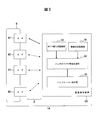
- FIG. 1 is a diagram illustrating an example of a communication terminal apparatus according to the first embodiment
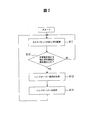
- FIG. 2 is a flowchart illustrating a processing procedure for handover factor generation.
- the configurations shown in FIGS. 1 and 2 are examples, and the present invention is not limited to such configurations.
- the communication terminal device 2A is an example of the communication terminal device, the handover control method, or the handover control program of the present disclosure.
- the communication terminal device 2A is an access point (hereinafter simply referred to as “AP”) 41, 42, 43.
- AP access point
- a mobile phone device, a personal digital assistant (PDA: Personal Digital Assistant), or the like that is wirelessly connected to any of 4N and performs a call using a voice data packet [RTP (Real-time Transport Protocol) packet].
- RTP Real-time Transport Protocol
- Each of the APs 41, 42, 43... 4N is an example of a relay unit that is linked by the network 6 and performs transmission and reception of packets between the communication terminal device 2A and a communication device (not shown).
- a wireless LAN (Local Area Network) 8 for wireless connection using radio waves is configured as a communication medium between the communication terminal device 2A and the plurality of APs 41, 42, 43... 4N.
- VoIP Voice over Internet Protocol
- the communication terminal device 2A includes an RTP fluctuation monitoring unit (hereinafter simply referred to as “fluctuation monitoring unit”) 10, a handover factor generation unit, as shown in FIG. 12 are provided.
- the wireless LAN system 14 is configured.
- the fluctuation monitoring unit 10 is an example of means for monitoring fluctuation of an RTP packet received from a connected AP 4x (that is, any one of the above-described APs 41, 42, 43... 4N). Output to the handover factor generator 12.
- a communication terminal device other than the communication terminal device 2A is connected to the AP 42, and other APs 41, 43,.
- a terminal device is connected.
- the communication terminal device 2A can send and receive RTP packets through the network 6 between the communication terminal device (not shown) and the AP 42 and other APs. Therefore, the fluctuation monitoring unit 10 can monitor fluctuations in the RTP packet notified by the radio wave transmitted from the AP 42.
- the handover factor generation unit 12 receives the fluctuation monitoring output from the fluctuation monitoring unit 10 and generates a handover factor according to the frequency of fluctuation exceeding the allowable value within a predetermined period.
- This handover factor generation processing procedure is an example of the handover control method or handover control program of the present disclosure, and as shown in FIG. 2, a fluctuation monitoring function (step S11), a fluctuation frequency determination function, (Step S12), a handover factor generation function (Step S13), and a handover instruction function (Step S14) are included.
- the fluctuation monitoring function monitors fluctuations of the received RTP packet and measures the fluctuations (step S11).
- the fluctuation frequency determination function receives the measured fluctuation measurement result, and determines whether or not the fluctuation frequency exceeding the allowable value is greater than or equal to a predetermined value (step S12).
- the handover factor generation function generates a handover factor (step S13) if the frequency of fluctuation exceeding the allowable value is equal to or higher than a predetermined value (YES in step S12).
- the communication terminal apparatus 2A issues a handover instruction to the connected AP (step S14).
- the fluctuation monitoring unit 10 of the communication terminal apparatus 2A monitors the fluctuation of the RTP packet received by the communication terminal apparatus 2A from the connected AP 42, and the fluctuation monitoring output is the handover factor generation unit 12 Is output.
- the handover factor generation unit 12 generates a handover factor from the frequency of fluctuation exceeding the allowable value. Due to this handover factor, the connection is switched from the currently connected AP 42 to any of the other APs 41, 43... 4N.
- the fluctuation of the RTP packet transmitted from the AP is caused by the load of the AP being connected, resulting in voice deterioration of VoIP communication. Therefore, if the handover is performed according to the frequency of fluctuation exceeding the allowable value, the load on the AP can be reduced, and the load on each AP can be distributed. And voice deterioration of VoIP communication can be prevented and voice quality can be improved. As a result, it is possible to realize a voice call with high voice quality while contributing to the reliability of connection with the AP.
- This handover can be executed from the communication terminal apparatus 2A side to the connected AP.
- the conventional RSSI value is used as a reference, if the RSSI value is good, it is possible to avoid the inconvenience that the handover is not performed even if the voice quality is deteriorated. In addition, it is possible to improve a decrease in voice quality due to repeated handover processing between APs.
- the second embodiment is a configuration in which handover is performed by using both a handover factor due to a decrease in radio quality such as degradation of an RSSI value and a handover factor corresponding to the frequency of fluctuation of an RTP packet.
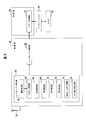
- FIG. 3 is a diagram illustrating an example of a communication terminal apparatus according to the second embodiment
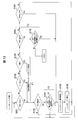
- FIG. 4 is a flowchart illustrating a processing procedure for handover factor generation.
- the configurations shown in FIGS. 3 and 4 are examples, and the present invention is not limited to such configurations.
- the communication terminal apparatus 2B includes the above-described fluctuation monitoring unit 10, the radio quality monitoring unit 16, the handover factor generation unit 18, and the handover instruction unit 20. Yes.
- the radio quality monitoring unit 16 monitors any one of the degradation of the RSSI value, the retransmission rate of the transmission RTP, the degradation of the SNR (Signal-to-noise ratio: SN ratio: signal noise ratio) or other radio quality. This monitoring output is applied to the handover factor generation unit 18.
- the handover factor generation unit 18 receives these monitoring outputs, and uses the monitoring output on the wireless quality monitoring unit 16 side and the monitoring output of the fluctuation monitoring unit 10 together to generate a handover factor. In this case, even if the monitoring output on the radio quality monitoring unit 16 side indicates a failure, it is not necessary to generate a handover factor if the monitoring output of the fluctuation monitoring unit 10 is good. On the other hand, even if the monitoring output on the wireless quality monitoring unit 16 side is good, if the monitoring output of the fluctuation monitoring unit 10 indicates a failure, a handover factor is generated.
- the handover instruction unit 20 receives an output indicating a handover factor and generates an output indicating a handover instruction. Based on this output, for example, a handover for switching the connection from the AP 41 to another AP, for example, the AP 42 is executed as the connected AP.
- This handover factor generation processing procedure is an example of the handover control method or handover control program of the present disclosure.
- the radio quality monitoring function step S21
- the radio quality degradation determination Function step S22
- handover factor generation function due to radio quality degradation step S23
- RTP packet fluctuation monitoring function step S24
- fluctuation frequency determination function step S25
- fluctuation cause handover factor Generation function step S26
- a handover factor determination function step S27
- a handover instruction function step S28
- the radio quality monitoring function monitors any one of the RSSI value degradation, the transmission RTP retransmission rate, the SNR degradation, or other radio quality (step S21).
- the wireless quality degradation determination function receives the wireless quality monitoring result and determines whether or not the degradation exceeds an allowable value (step S22). If the deterioration exceeds the allowable value (YES in step S22), the process proceeds to the handover factor generation function (step S23).
- the handover factor generation function generates a handover factor due to degradation of radio quality (step S23).
- the fluctuation monitoring function monitors fluctuation of the received RTP packet and measures the fluctuation (step S24).
- the fluctuation frequency determination function receives the measured fluctuation measurement result and determines whether or not the fluctuation frequency exceeding the allowable value is equal to or higher than a predetermined value (step S25).
- the handover factor generation function if the frequency of fluctuation exceeding the allowable value is equal to or higher than a predetermined value (YES in step S25), the process proceeds to the handover factor generation function (step S26).
- a handover factor due to fluctuation of the RTP packet is generated (step S26), and the process proceeds to the handover factor determination function (step S27).
- the handover factor determination function the handover factor is determined and the process proceeds to the handover instruction function (step S28).
- the communication terminal apparatus 2B issues a handover instruction to the connected AP (step S28). Thereby, the handover is executed, and the process returns to step S21.
- the fluctuation monitoring of the RTP packet is performed after the monitoring of the deterioration of the radio quality.
- the fluctuation of the RTP packet is performed in parallel with the monitoring of the deterioration of the radio quality. Monitoring may be performed, and a handover factor may be generated when the logical sum condition is satisfied instead of the logical condition being satisfied.
- a handover factor is generated according to the frequency of fluctuation of the RTP packet while monitoring a decrease in radio quality such as degradation of an RSSI value, and a handover is executed. That is, the handover factor is generated by the logical product of the deterioration of the radio quality and the frequency of fluctuation of the RTP packet.
- FIG. 5 is a diagram illustrating a wireless LAN system
- FIG. 6 is a diagram illustrating a handover in the vicinity of a handover threshold value of an RSSI value.
- the configurations shown in FIGS. 5 and 6 are examples, and the present invention is not limited to such configurations.
- APs 41, 42, 43... 4N are provided as a plurality of APs, and each AP 41, 42, 43. , Mobile phones (HS) 201, 202, 203... 20N are wirelessly connected.
- Each of the APs 41, 42, 43,... 4N is connected to a LAN cable to form a wired LAN 24, to which a SIP (Session Initiation Protocol) server 26 and a controller 28 are connected.
- the SIP server 26 is an example of a control unit that uses a protocol called SIP and associates a telephone number with an IP address, performs call control for calling a destination, and the like.
- the controller 28 is an example of a control unit that performs various controls such as maintaining the connection between the APs 41, 42, 43... 4N and the mobile phones 201, 202, 203. .
- a plurality of APs 41, 42, 43... 4N are installed.
- A1 is the handover threshold Rth 1 of the RSSI value of the AP 41
- A2 is the handover threshold Rth 2 of the RSSI value of the AP 42.
- the handover threshold of the RSSI value is a limit value of the strength of radio waves that can be connected to the corresponding AP.
- the cellular phone 201 located between the handover thresholds Rth 1 and Rth 2 of the RSSI values of the APs 41 and 42 frequently generates handover factors based on the RSSI values.
- an unstable connection state is established between the AP 41 and the AP 42, such as switching the connection from the currently connected AP 41 to the AP 42 and switching the connection from the connected AP 42 to the AP 41 again.
- the connection between the mobile phone 201 and the AP 41 or AP 42 is switched, the voice quality is affected in the VoIP communication. This is because the load changes momentarily from the AP41 or AP42 side, and the mobile phone 201 causes fluctuations in the received RTP packet, resulting in an unstable connection state or abnormal sound due to connection switching. There are inconveniences.
- FIG. 7 is a diagram illustrating an example of a mobile phone
- FIG. 8 is a diagram illustrating an example of a functional unit of a wireless unit
- FIG. 9 is a diagram illustrating an external configuration example of the mobile phone.
- the configurations shown in FIGS. 7 to 9 are examples, and the present invention is not limited to such configurations. 7 to 9, the same parts as those in FIG. 1 are denoted by the same reference numerals.
- Each mobile phone 201, 202, 203... 20N is an example of a communication terminal device, a handover control method, and a handover control program of the present disclosure, and is capable of VoIP communication using a wireless LAN.
- 20N includes a control unit 30, a radio unit 32, a storage unit 34, a DSP (Digital Signal Processor) 36, an audio processing unit 38, and a display unit 50.
- the operation unit 51 and the timer unit 52 are provided.
- the control unit 30 is an example of a control unit that controls execution of a program in the storage unit 34 and the like and control of various functional units, and may be configured by, for example, a CPU (Central Processing Unit).
- a CPU Central Processing Unit
- the wireless unit 32 is an example of a communication unit that includes the antenna 53 and performs VoIP communication using the above-described wireless LAN based on the control of the control unit 30.
- the storage unit 34 includes a program storage unit 54, a data storage unit 55, and a RAM (Random-Access Memory) 56.
- the program storage unit 54 is composed of a recording medium, and stores programs such as an OS (Operating System) and a handover control program.
- the data storage unit 55 is an example of a data storage unit, and stores various data in addition to handover factor data such as radio quality data such as RSSI values, data such as beacon loss, RTP fluctuation data, and the like.
- the RAM 56 constitutes a work area.
- the DSP 36 is an example of a digital signal processing unit controlled by the control unit 30, and executes various signal processing such as reproduction of an audio signal from packet data of VoIP communication, and processing such as jitter (RTP fluctuation).
- various signal processing such as reproduction of an audio signal from packet data of VoIP communication, and processing such as jitter (RTP fluctuation).
- the audio processing unit 38 is an example of an audio signal processing unit controlled by the control unit 30 and includes a receiver 57 and a microphone 58.
- the sound processing unit 38 generates sound output from the receiver 57 and captures sound added to the microphone 58 as a sound signal.
- the display unit 50 is an example of display means controlled by the control unit 30 and includes, for example, an LCD (Liquid Crystal Display) display, and displays character information and image information.
- LCD Liquid Crystal Display
- the operation unit 51 is an example of an operation input unit that is controlled by the control unit 30 and inputs information by operation, and includes, for example, a keyboard and a mouse.
- the timer unit 52 is an example of a time measuring unit, and performs time measurement such as setting a predetermined period in order to monitor the frequency of fluctuation of the RTP packet.
- the radio unit 32 includes a handover generation unit 60 and a handover control unit 62 as shown in FIG.
- the handover generation unit 60 corresponds to the above-described handover factor generation unit 18 (FIG. 3).
- the handover control unit 62 is control means for instructing and executing a handover based on a handover factor generated in the handover generating unit 60.
- the handover generating unit 60 includes an RSSI monitoring unit 64, a retransmission monitoring unit 66, an SNR measurement unit 68, a BER (BitBError Rate) measurement unit 70, a PER (Packet Error Rate) measurement unit 72, and a beacon loss. (Beacon Loss) A measurement unit 74 and an RTP fluctuation measurement unit 76 are provided.
- the RSSI monitoring unit 64 monitors the strength of the radio wave (RSSI value) measured by the radio wave measuring unit 78, that is, degradation of the RSSI value, and generates a monitoring output. This monitoring output is input to the handover control unit 62.
- the retransmission monitoring unit 66 monitors the transmission RTP retransmission and inputs the retransmission rate to the handover control unit 62 as a monitoring output.
- the SNR measuring unit 68 measures the signal-to-noise ratio (SNR) of the received radio wave and inputs the measured value to the handover control unit 62.
- SNR signal-to-noise ratio
- the BER measurement unit 70 measures RTP Bit Error Rate and inputs the measured value to the handover control unit 62.
- the PER measuring unit 72 measures the RTP packet “Error” rate and inputs the measured value to the handover control unit 62.
- the beacon loss measuring unit 74 measures the beacon loss and inputs the measured value to the handover control unit 62.
- the RTP fluctuation measurement unit 76 is an example of the RTP fluctuation monitoring unit 10 described above that monitors RTP fluctuations, and inputs the fluctuation measurement result to the handover control unit 62.
- the wireless unit 32 including such a functional unit is controlled by the control unit 30, and the control unit 30 includes a media control unit 79.
- the media control unit 79 is means for controlling reading or writing of jitter data in the jitter buffer 80.
- the jitter is the RTP fluctuation described above
- the jitter buffer 80 stores the jitter representing the RTP fluctuation.
- the jitter buffer 80 is set in the data storage unit 55 (FIG. 7) described above.
- the cellular phones 201, 202, 203... 20N include an operation side casing 82 as a first casing and a display side casing as a second casing.
- the portion 84 is connected to the hinge portion 86 so as to be opened and closed.
- the operation side casing 82 is provided with the above-described operation unit 51 and a microphone 58.
- the display-side housing unit 84 is provided with a display unit 50 and a receiver 57.
- a speaker may be provided as an audio output means.
- FIG. 10 is a diagram illustrating prioritization of transmission packets.
- AC_VO, AC_VI, AC_BE, and AC_BK are set as access categories, and various data are categorized.
- the data type AC_VO is voice, 802.11 management frame (high-speed wireless LAN), AC_VI is video, etc., and AC_BE is a data packet (HTTP) excluding data such as voice, management frame, video, etc. , FTP, etc.), and AC_BK is unused because there is no data assignment.
- the priority of these access categories is highest for AC_VO and lowest for AC_BK.
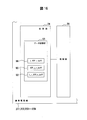
- FIG. 11 is a diagram showing the relationship between fluctuation measurement of RTP packets and handover control.
- the vertical axis represents the interval time of the received RTP packet
- the horizontal axis represents the elapsed time.
- its upper limit is Ir + M [ms]
- its lower limit is Ir-M [ms]
- This allowable width ⁇ Ir indicates the fluctuation width ⁇ M [ms] allowable from the reference interval Ir.
- Each T on the horizontal axis is a constant fluctuation measurement period and is set to the same time. That begins fluctuation measurement period T at time t a, with fluctuation measurement period T of the previous ends at time t b, is started following fluctuation measurement period T, the fluctuation measurement period T is ended when t c To do. j represents fluctuation.
- the fluctuation j is within the allowable width ⁇ Ir, the fluctuation is allowable, but if it is not within the allowable width ⁇ Ir, the fluctuation is not allowable. In this case, all fluctuations j exist within the allowable width ⁇ Ir in the period T from the time point t a to t b , but there are many fluctuations j outside the allowable width ⁇ Ir in the period T from the time point t b to t c. The ratio is often fluctuated outside the allowable range. When the number of occurrences of fluctuation j outside the allowable width ⁇ Ir exceeds n times as a reference value within the fluctuation measurement period T, handover is executed.
- the handover factor is established in the period T between the time points t b and t c , the handover is started at the time point t 1 in the middle of the period T, and the handover is completed at the time point t 2 . That is, the period from time t 1 to time t 2 Tho is the execution period of the handover.
- the handover is started when the AND condition that the frequency of fluctuation exceeding the allowable value exceeds a predetermined value is satisfied. Or not.
- FIG. 12 is a diagram illustrating the RTP packet interval when the load increases.
- This RTP packet interval at the time of load increase is a simulation of the increase in load appearing as sound quality disturbance.
- the horizontal axis represents the elapsed time
- the vertical axis represents the RTP packet interval time
- the rectangular dots in the figure represent the RTP packet interval P, and the frequency is represented.
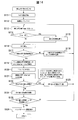
- FIG. 13 is a flowchart illustrating a processing procedure for handover control.
- the configuration shown in FIG. 13 is an example, and the present invention is not limited to such a configuration.
- This handover process is an example of a handover control method, i.e., an example of a main routine of handover.
- a handover factor due to a decrease in radio quality and a handover factor due to the number of RTP fluctuations are considered. ing.
- This processing procedure includes a handover factor monitoring process F1 due to radio quality degradation and RTP packet fluctuation monitoring processes F2 and F3.
- the handover factor is determined using the AND condition of both. ing.
- the monitoring process F1 includes RSSI value monitoring (step S101), Tx Retry (retransmission) monitoring (step S102), and SNR monitoring (step S103). That is, in the RSSI value monitoring (step S101), it is determined whether or not the fluctuation of the RSSI value has reached a level to be handed over. In retransmission monitoring (step S102), it is determined whether or not the number of retransmissions has reached the number of times to be handed over. In SNR monitoring (step S103), it is determined whether or not the ratio level of noise to the signal has reached the level to be handed over.
- the RSSI value is monitored (step S101). If there is no problem with the RSSI value (NO in step S101), the process proceeds to Tx Retry (retransmission) monitoring (step S102). If the number of retransmissions has not reached the number to be handed over (NO in step S102), the process proceeds to SNR monitoring (step S103), and if the ratio level of noise to the signal has not reached the level to be handed over. (NO in step S103), the process proceeds to determination of whether or not a VoIP call is in progress (step S104). If not in VoIP call (NO in step S104), the process proceeds to determination of beacon loss (Beacon Loss) (step S105). To do.
- the RSSI value is equal to or lower than a predetermined level (YES in step S101)
- the number of retransmissions reaches the number of times to be handed over (YES in step S102), or the noise level reaches a predetermined level (YES in step S103).
- a handover factor due to radio quality degradation is generated.
- step S106 it is determined whether or not a VoIP call is in progress. If not in a VoIP call (NO in step S106), this process is terminated. If the VoIP call is in progress (YES in step S106), it is determined whether or not the number of times of RTP fluctuation (x) is equal to or greater than a predetermined value as the frequency of fluctuation exceeding the allowable value of the RTP packet (step S107).
- step S107 cannot be passed unless the number of RTP fluctuations (x) is equal to or greater than a predetermined value. If the number of RTP fluctuations (x) is equal to or greater than a predetermined value, a handover factor is determined (step S108), and a handover process is executed (step S109). That is, connection switching is performed from the currently connected AP to another AP.
- step S104 if the VoIP call is in progress (YES in step S104), it is determined whether or not the number of RTP fluctuations (x) is equal to or greater than a predetermined value (step S110). If the number of RTP fluctuations (x) is not equal to or greater than the predetermined value (NO in step S110), the process returns to step S101 and the same process is executed.
- step S110 If the number of RTP fluctuations (x) is equal to or greater than a predetermined value (YES in step S110), a handover factor due to only RTP fluctuations is determined (step S108), and a handover process is executed (step S109). That is, on the condition that a VoIP call is in progress (YES in step S104), even if there is no deterioration in radio quality, if the number of RTP fluctuations (x) is equal to or greater than a predetermined value (YES in step S110), the handover is performed. Executed.
- step S105 If a beacon loss has occurred (YES in step S105), this beacon loss is one of the handover factors, so this handover factor is determined (step S108) and the handover process is executed (step S108). Step S109).
- FIG. 14 is a flowchart showing a processing procedure for fluctuation measurement of a received RTP packet.
- This processing procedure corresponds to the processing procedure described above (steps S107 and S110 in FIG. 13).
- a VoIP call is started (step S111)
- initialization buffer
- step S112 initialization
- step S112 a fluctuation measurement timer is started (step S113).
- the time measurement of the fluctuation measurement timer is monitored (step S114), and it is determined whether or not the time is up. If the fluctuation measurement timer is up (YES in step S114), the number of fluctuations is initialized (step S115).
- step S114 If the fluctuation timer has not expired (NO in step S114), RTP (audio data packet) is received (step S116), and it is determined whether there is a previous RTP reception record ( If there is no reception record (NO in step S117), the previous RTP reception time is set as T1, the time T1 is recorded (step S118), and the process returns to step S113.
- RTP audio data packet
- the interval time is calculated from the RTP reception time T1 and the latest RTP reception time T2 (step S119).
- the time T2 is substituted for the time T1 (step S120) and compared with a reference RTP interval that is a reference value (step S121). In this comparison, it is determined whether or not the fluctuation width is acceptable (step S122). In this determination, an allowable fluctuation width is specified for the parameter, and another parameter is dynamically specified for the fluctuation width when QoS is valid and when QoS is invalid.
- step S122 If the fluctuation width is acceptable (YES in step S122), the number of RTP fluctuations is not added (step S123), and the process returns to step S113. If the allowable fluctuation width is exceeded (NO in step S122), the number of RTP fluctuations is added (step S124).
- step S125 It is determined whether or not the number of RTP fluctuations (x) is equal to or greater than a predetermined value (step S125). If the number of RTP fluctuations (x) is less than the predetermined value (NO in step S125), the process returns to step S113. If the number of RTP fluctuations (x) is equal to or greater than the predetermined value (YES in step S125), a handover factor is generated (step S126), the process returns to step S111, and the same processing is executed.
- step S126 Based on the occurrence of the handover factor (step S126), the process returns to the main routine (FIG. 13). As a result, handover is executed, that is, connection switching is performed from the currently connected AP to the AP having high electric field strength.
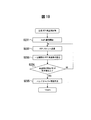
- FIG. 15 is a flowchart illustrating a processing procedure for executing handover.
- the configuration illustrated in FIG. 15 is an example, and the present invention is not limited to such a configuration.
- This processing procedure corresponds to the processing procedure described above (step S109 in FIG. 13).
- AP scanning is started (step S131), and a search for APs that are handover candidates is executed (step S132). . If there is no handover candidate AP (NO in step S132), the current AP membership is maintained, that is, the connection with the connected AP is maintained (step S133).
- step S132 If there is a handover candidate AP (YES in step S132), a handover process with the candidate AP is executed (step S134), and it is determined whether the handover is successful (step S135). If the handover is successful (YES in step S135), the connection with the new AP is maintained and the handover is completed (step S136). Further, if the handover is not successful (NO in step S135), the service is out of service due to connection failure (step S137). That is, it becomes an unconnected state.
- the handover factor is determined. That is, priority is given to the number of RTP fluctuations for the handover (process F2).
- the handover factor cannot be determined unless the number of RTP fluctuations is greater than or equal to a predetermined value. That is, the condition for determining the handover factor is that the number of RTP fluctuations is not less than a predetermined value (processing F3).
- the handover factor is generated on the mobile phone 201, 202... 20N side without depending on the AP, and the handover is executed on the AP side.
- Embodiment measures the fluctuation
- a handover factor is generated from an AND condition of RSSI value deterioration and fluctuation.
- FIG. 16 is a diagram showing a mobile phone
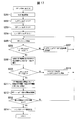
- FIG. 17 is a flowchart showing a fluctuation measurement processing procedure
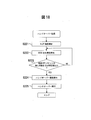
- FIG. 18 is a flowchart showing a handover process.
- the configurations shown in FIGS. 16 to 18 are examples, and the present invention is not limited to such configurations.
- RTP_j_r_buff RTP jitter rate buffer
- L_r_RTP_t_buff L_r received RTP time buffer
- L_RTP_i_buff 88 stores the previous RTP interval.
- RTP_j_r_buff 90 stores the fluctuation rate [%] of the RTP interval, and the fluctuation rate [%] of the RTP interval is obtained by (previous RTP interval / current RTP interval) ⁇ 100 [%].
- L_r_RTP_t_buff 92 stores the previous RTP reception time. Other configurations are the same as those of the third embodiment.
- step S201 when the VoIP call is started (step S201), L_RTP_i_buff 88 is cleared (step S202), RTP_j_r_buff 90 is cleared (step S203), and L_r_RTP_t_buff 92 is cleared (step S201).
- step S204 the storage data is initialized.
- the RTP packet is received (step S205), it is determined whether or not there is data in L_r_RTP_t_buff 92 (step S206), and if there is no data (NO in step S206), the RTP reception time is stored in L_RTP_i_buff 88 (step S207). If there is data in L_r_RTP_t_buff 92 (YES in step S206), the interval time is calculated from the previous RTP reception time and the current RTP reception time (step S208).
- step S209 It is determined whether or not there is data in L_RTP_i_buff 88 (step S209). If there is no data (NO in step S209), the interval time is stored in L_r_RTP_t_buff 92 (step S210). If there is data in L_RTP_i_buff 88 (YES in step S209), the previous RTP interval / current RTP interval ⁇ 100 (fluctuation ratio (%) of RTP interval) is calculated (step S211). The fluctuation ratio is stored in RTP_j_r_buff 90 (step S212).
- step S213 it is determined whether or not the calculated fluctuation ratio is greater than or equal to a predetermined value. Return to S205. If the calculated fluctuation ratio is equal to or greater than the predetermined value (YES in step S213), a handover factor is generated (step S214), and the process returns to step S201.
- a VoIP call is started (step S221), and based on the occurrence of a handover factor due to degradation of the RSSI value (step S222), It is determined whether or not the fluctuation ratio of the received RTP packet is equal to or greater than a predetermined value (step S223).
- the determination as to whether or not the fluctuation ratio of the received RTP packet is equal to or greater than a predetermined value is as described in the processing procedure described above (FIG. 17).
- a handover factor is generated based on a handover factor due to degradation of the RSSI value and a handover factor when the fluctuation ratio of the received RTP packet is equal to or greater than a predetermined value (step S224), and based on this handover factor A handover process is executed (step S225), and the handover process is terminated.
- the fluctuation of the RTP packet categorized as AC3 (AC_VO) is measured, the fluctuation of an arbitrary ratio is measured from the interval of the RTP packet, and the handover factor is generated. Yes.
- a handover factor is generated by satisfying an AND condition of a handover factor due to RSSI degradation and a handover factor due to an arbitrary rate of fluctuation of RTP packets.
- the ratio of fluctuation with respect to the interval of the RTP packet is measured, and the AND condition of the fluctuation of the RTP packet, the degradation of the RSSI value, and the retransmission rate of the transmission RTP causess a handover factor.
- FIG. 19 is a flowchart showing a processing procedure for measuring a transmission RTP retransmission rate
- FIG. 20 is a flowchart showing a handover process.
- the configurations illustrated in FIGS. 19 and 20 are examples, and the present invention is not limited to such configurations.
- the received RTP packet fluctuation measurement processing procedure (FIG. 17) is used, the buffer configuration in the data storage unit 55 is the same as in the fourth embodiment, and the other configurations are the same as in the third embodiment. This is the same as the embodiment.
- a VoIP call is started (step S231), and an RTP packet is transmitted (step S232).
- an RTP retransmission rate for a certain period is calculated (step S233), and it is determined whether the ratio of the retransmission rate is equal to or greater than a predetermined value (step S234). If the rate of the retransmission rate is less than the predetermined value (NO in step S234), the process returns to step S232 and the same process is performed. If the calculated ratio of the RTP retransmission rate is equal to or greater than a predetermined value (YES in step S234), a handover factor is generated (step S235).
- the VoIP call is started (step S241), and the handover factor due to the degradation of the RSSI value is determined. Based on the occurrence (step S242), it is determined whether the fluctuation ratio of the received RTP packet is equal to or greater than a predetermined value (step S243). If the fluctuation ratio of the received RTP packet is equal to or greater than a predetermined value (YES in step S243), a handover factor is generated (step S244). The determination as to whether or not the fluctuation ratio of the received RTP packet is equal to or greater than a predetermined value is as described in the processing procedure described above (FIG. 17).
- step S245 It is determined whether or not the rate of the retransmission rate of the received RTP packet is equal to or greater than a predetermined value (step S245). If the ratio of the retransmission rate of the received RTP packet is equal to or greater than a predetermined value (YES in step S245), a handover factor is generated (step S246), and a handover process is executed based on this handover factor (step S247). This handover process is terminated.
- the RTP packet fluctuation categorized as AC3 (AC_VO) is also measured, and by detecting that the fluctuation of an arbitrary ratio has occurred in the interval of the RTP packet, the handover factor is determined. Is generated.
- handover is performed based on the AND condition of the handover factor based on the fluctuation of the RTP packet and the handover factor based on the retransmission rate of the RTP packet. It is running.
- step S244 if the fluctuation ratio of the received RTP packet is equal to or greater than a predetermined value (YES in step S243), a handover factor is generated (step S244), and then the process proceeds to step S245.
- a handover factor is generated (step S244), and then the process proceeds to step S245.
- the process proceeds to step S245 without causing a handover factor, and the ratio of the retransmission rate of the received RTP packet is equal to or greater than the predetermined value. If there is (YES in step S245), a configuration may be adopted in which a handover factor is generated when both AND conditions are satisfied.
- step S29 when the wireless quality is not deteriorated (NO in step S22), the function for determining the fluctuation frequency (step S29) is performed as in step S25. May be executed. That is, when handover is performed by monitoring radio quality such as degradation of RSSI value, if the radio quality is good (NO in step S22), whether or not the frequency of fluctuation exceeding the allowable value is equal to or higher than a predetermined value. Is determined (step S29). If the frequency of fluctuation exceeding the allowable value is equal to or higher than the predetermined value (YES in step S29), the process proceeds to a handover factor generation function (step S26).
- radio quality such as degradation of RSSI value
- step S29 If the fluctuation frequency exceeding the allowable value is not equal to or higher than the predetermined value (NO in step S29), the process returns to step S21. According to such processing, it is possible to avoid the inconvenience that the handover is not performed even if the voice quality is deteriorated. In addition, when radio quality is used as a reference, it is possible to improve voice quality degradation due to repeated handover processing between AP handover thresholds.
- the handover generating unit 60 is installed in the radio unit 32, and the RSS monitoring unit 64, the RTP fluctuation measuring unit 76, etc. are installed in the handover generating unit 60 (FIG. 8). ).
- the communication terminal device of the present disclosure is not limited to such a configuration.
- a monitoring unit 94 and a handover generation unit 95 may be installed in the radio unit 320, and an RSSI monitoring unit 64, an RTP fluctuation measurement unit 76, and the like may be installed in the monitoring unit 94.
- the monitoring output of the monitoring unit 94 may be added to the handover generating unit 95, and a handover factor may be generated according to the monitoring result.
- the RTP fluctuation measuring unit 76 is configured to receive the SIP protocol 96 and measure the RTP fluctuation.
- RTP packet fluctuation monitoring processes F2 and F3 are used in combination (FIG. 13). Therefore, as shown in FIG. 23, the RTP packet fluctuation monitoring process F2 may be deleted and the process may be omitted, or as shown in FIG. 24, the RTP packet fluctuation monitoring process F3 is deleted, That process may be omitted.
- the handover is executed when the AND condition of the handover factor due to the deterioration of the radio wave quality and the handover factor due to the fluctuation of the RTP packet is satisfied. It becomes a condition.
- the monitoring process F3 for fluctuation of RTP packets is deleted (FIG. 24)
- the execution of the handover is performed according to the OR condition of the handover factor due to the deterioration of radio wave quality and the handover factor due to fluctuation of the RTP packet. Establishment is a condition.
- the communication terminal device, the handover control method, and the handover control program of the present disclosure are not limited to this. That is, the fluctuation ratio [%] of the RTP interval is obtained by the following relational expression, and any of them may be used.
- RTP interval fluctuation ratio (current RTP interval ⁇ previous RTP interval) ⁇ 100 [%] (1)
- RTP interval fluctuation rate ⁇ (Current RTP interval-Previous RTP interval) ⁇ Current RTP interval) ⁇ x 100 [%] (2)
- RTP interval fluctuation rate ⁇ (Current RTP interval-Previous RTP interval) / Previous RTP interval) ⁇ x 100 [%] (3)
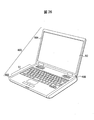
- the communication terminal device of the present disclosure may be any device that can use a wireless LAN, such as a personal digital assistant (PDA: Personal Digital Assistant) 300 (FIG. 25) or a personal computer (PC) 400 (FIG. 26).
- PDA Personal Digital Assistant
- PC personal computer
- the PC 400 is configured to be openable and closable by connecting a keyboard-side casing 402 and a display-side casing 404 with a hinge 406.
- the same reference numerals are given to the same parts as those in the above embodiment, and the description thereof is omitted.
- the communication terminal device, the handover control method, and the handover control program of the present disclosure are used in a wireless LAN system and can be widely used for devices capable of voice communication by VoIP communication. It is useful because it can prevent deterioration.
Landscapes
- Engineering & Computer Science (AREA)
- Computer Networks & Wireless Communication (AREA)
- Signal Processing (AREA)
- Mobile Radio Communication Systems (AREA)
Abstract
Description
41、42、43・・・4N アクセスポイント(AP)
6 ネットワーク
8 無線LAN
10 RTP揺らぎ監視部
12、18 ハンドオーバー要因生成部
20 ハンドオーバー指示部
52 タイマー部
60、95 ハンドオーバー発生部
62 ハンドオーバー制御部
94 監視部
95 ハンドオーバー発生部
Claims (10)
- アクセスポイントに無線接続されて音声用データパケットにより通話を行う通信端末装置であって、
接続中のアクセスポイントから受けた音声用データパケットの揺らぎを監視する揺らぎ監視部と、
所定期間内における許容値を超える揺らぎの頻度に応じ、接続中のアクセスポイントから他のアクセスポイントに接続を切り替えるためのハンドオーバー要因を生成するハンドオーバー要因生成部と、
を備えることを特徴とする通信端末装置。 - 前記揺らぎ監視部は、
接続中のアクセスポイントから受けた音声用データパケットの揺らぎを検出する揺らぎ検出部と、
前記揺らぎの計数期間を計時する計時手段と、
前記揺らぎ検出部で所定期間中に検出される許容値を超える揺らぎの回数を計数する計数部と、
を備えることを特徴とする、請求項1に記載の通信端末装置。 - 前記ハンドオーバー要因生成部が生成するハンドオーバー要因に基づき、ハンドオーバーを実行する制御手段を備え、該制御手段によって接続中のアクセスポイントから他のアクセスポイントに接続を切り替えるハンドオーバーを実行することを特徴とする、請求項1に記載の通信端末装置。
- 更に、前記ハンドオーバー要因生成部で生成される前記ハンドオーバー要因と、 接続中のアクセスポイントからの電波の強さ、送信音声パケットの再送率又は信号対ノイズの比率から求められるハンドオーバー要因とを併用してハンドオーバーを実行するか否かを判定するハンドオーバー判定部と、
を備えることを特徴とする、請求項1に記載の通信端末装置。 - 前記ハンドオーバー判定部は、前記ハンドオーバー要因生成部で生成される前記ハンドオーバー要因と、接続中のアクセスポイントからの電波の強さ、送信音声パケットの再送率又は信号対ノイズの比率から求められるハンドオーバー要因との論理積によりハンドオーバーを実行するか否かを判定することを特徴とする、請求項4に記載の通信端末装置。
- アクセスポイントに無線接続されて音声用データパケットにより通話を行う通信端末装置のハンドオーバー制御方法であって、
接続中のアクセスポイントから受けた音声用データパケットの揺らぎを監視する工程と、
所定期間内における許容値を超える揺らぎの頻度に応じ、接続中のアクセスポイントから他のアクセスポイントに接続を切り替えるためのハンドオーバー要因を生成する工程と、
を含むことを特徴とするハンドオーバー制御方法。 - 前記揺らぎを監視する前記工程は、
接続中のアクセスポイントから受けた音声用データパケットの揺らぎを検出する工程と、
所定期間中に検出される許容値を超える揺らぎの回数を計数する工程と、
を含むことを特徴とする、請求項6に記載のハンドオーバー制御方法。 - 更に、前記ハンドオーバー要因の生成に基づき、接続中のアクセスポイントから他のアクセスポイントに接続を切り替えるハンドオーバーを実行する工程と、
を含むことを特徴とする、請求項6に記載のハンドオーバー制御方法。 - 更に、前記ハンドオーバー要因と、接続中のアクセスポイントからの電波の強さ、送信音声パケットの再送率又は信号対ノイズの比率から求められるハンドオーバー要因とを併用し、ハンドオーバーを実行するか否かを判定する工程と、
を含むことを特徴とする、請求項6に記載のハンドオーバー制御方法。 - アクセスポイントに無線接続されて音声用データパケットにより通話を行う通信端末装置に搭載されたコンピュータに実行させるハンドオーバー制御プログラムであって、
接続中のアクセスポイントから受けた音声用データパケットの揺らぎを監視する機能と、
所定期間内における許容値を超える揺らぎの頻度に応じ、接続中のアクセスポイントから他のアクセスポイントに接続を切り替えるためのハンドオーバー要因を生成する機能と、
をコンピュータに実行させることを特徴とするハンドオーバー制御プログラム。
Priority Applications (4)
| Application Number | Priority Date | Filing Date | Title |
|---|---|---|---|
| JP2011535231A JP5387683B2 (ja) | 2009-10-06 | 2009-10-06 | 通信端末装置、ハンドオーバー制御方法及びハンドオーバー制御プログラム |
| PCT/JP2009/067433 WO2011042957A1 (ja) | 2009-10-06 | 2009-10-06 | 通信端末装置、ハンドオーバー制御方法及びハンドオーバー制御プログラム |
| CN2009801617699A CN102550081A (zh) | 2009-10-06 | 2009-10-06 | 通信终端装置、切换控制方法以及切换控制程序 |
| US13/433,807 US20120236825A1 (en) | 2009-10-06 | 2012-03-29 | Communication terminal device, handover control method, and recording medium for handover control program |
Applications Claiming Priority (1)
| Application Number | Priority Date | Filing Date | Title |
|---|---|---|---|
| PCT/JP2009/067433 WO2011042957A1 (ja) | 2009-10-06 | 2009-10-06 | 通信端末装置、ハンドオーバー制御方法及びハンドオーバー制御プログラム |
Related Child Applications (1)
| Application Number | Title | Priority Date | Filing Date |
|---|---|---|---|
| US13/433,807 Continuation US20120236825A1 (en) | 2009-10-06 | 2012-03-29 | Communication terminal device, handover control method, and recording medium for handover control program |
Publications (1)
| Publication Number | Publication Date |
|---|---|
| WO2011042957A1 true WO2011042957A1 (ja) | 2011-04-14 |
Family
ID=43856455
Family Applications (1)
| Application Number | Title | Priority Date | Filing Date |
|---|---|---|---|
| PCT/JP2009/067433 Ceased WO2011042957A1 (ja) | 2009-10-06 | 2009-10-06 | 通信端末装置、ハンドオーバー制御方法及びハンドオーバー制御プログラム |
Country Status (4)
| Country | Link |
|---|---|
| US (1) | US20120236825A1 (ja) |
| JP (1) | JP5387683B2 (ja) |
| CN (1) | CN102550081A (ja) |
| WO (1) | WO2011042957A1 (ja) |
Cited By (3)
| Publication number | Priority date | Publication date | Assignee | Title |
|---|---|---|---|---|
| JP2013183264A (ja) * | 2012-03-01 | 2013-09-12 | Nec Infrontia Corp | 移動局及び通信システム、送信電波出力強度制御方法並びに送信電波強度制御プログラム |
| JP2015509332A (ja) * | 2012-02-03 | 2015-03-26 | 聯發科技股▲ふん▼有限公司Mediatek Inc. | セルラーネットワークにおける多様なトラフィック情報を収集および提供する方法と装置 |
| JP2021190720A (ja) * | 2020-05-25 | 2021-12-13 | 沖電気工業株式会社 | 無線通信端末、通信システム、無線通信方法、通信方法及び無線通信制御プログラム |
Families Citing this family (3)
| Publication number | Priority date | Publication date | Assignee | Title |
|---|---|---|---|---|
| JP5868147B2 (ja) * | 2011-12-01 | 2016-02-24 | キヤノン株式会社 | 通信装置、通信装置の制御方法、プログラム |
| US20140118160A1 (en) * | 2012-10-30 | 2014-05-01 | Quantitative Sampling Technologies, LLC | Controller for supervising data acquisition devices |
| US10868841B1 (en) * | 2020-05-29 | 2020-12-15 | Ringcentral, Inc. | Voice over internet protocol (VoIP) call quality |
Citations (2)
| Publication number | Priority date | Publication date | Assignee | Title |
|---|---|---|---|---|
| JP2003134149A (ja) * | 2001-05-11 | 2003-05-09 | Docomo Communications Laboratories Usa Inc | レイヤ3信号方式のための統合点での予測一致及び高速なipモビリティトリガリング |
| JP2009528722A (ja) * | 2006-02-27 | 2009-08-06 | 京セラ株式会社 | 無線ネットワーク間においてアクティブ通話を転送する装置、システムおよび方法 |
Family Cites Families (5)
| Publication number | Priority date | Publication date | Assignee | Title |
|---|---|---|---|---|
| US7444149B2 (en) * | 2002-06-13 | 2008-10-28 | Ntt Docomo, Inc. | Proactive deployment of decision mechanisms for optimal handover |
| US7940724B2 (en) * | 2002-11-18 | 2011-05-10 | Motorola Mobility, Inc. | Network assisted cell reselection in wireless communications systems and methods |
| US7515909B2 (en) * | 2005-04-21 | 2009-04-07 | Qualcomm Incorporated | Wireless handoffs between multiple networks |
| US8233433B2 (en) * | 2008-02-26 | 2012-07-31 | Kyocera Corporation | Apparatus, system and method for initiating WLAN service using beacon signals |
| JP2009213081A (ja) * | 2008-03-06 | 2009-09-17 | Kyocera Corp | 通信方法およびそれを利用した無線装置 |
-
2009
- 2009-10-06 JP JP2011535231A patent/JP5387683B2/ja not_active Expired - Fee Related
- 2009-10-06 WO PCT/JP2009/067433 patent/WO2011042957A1/ja not_active Ceased
- 2009-10-06 CN CN2009801617699A patent/CN102550081A/zh active Pending
-
2012
- 2012-03-29 US US13/433,807 patent/US20120236825A1/en not_active Abandoned
Patent Citations (2)
| Publication number | Priority date | Publication date | Assignee | Title |
|---|---|---|---|---|
| JP2003134149A (ja) * | 2001-05-11 | 2003-05-09 | Docomo Communications Laboratories Usa Inc | レイヤ3信号方式のための統合点での予測一致及び高速なipモビリティトリガリング |
| JP2009528722A (ja) * | 2006-02-27 | 2009-08-06 | 京セラ株式会社 | 無線ネットワーク間においてアクティブ通話を転送する装置、システムおよび方法 |
Cited By (4)
| Publication number | Priority date | Publication date | Assignee | Title |
|---|---|---|---|---|
| JP2015509332A (ja) * | 2012-02-03 | 2015-03-26 | 聯發科技股▲ふん▼有限公司Mediatek Inc. | セルラーネットワークにおける多様なトラフィック情報を収集および提供する方法と装置 |
| US9282562B2 (en) | 2012-02-03 | 2016-03-08 | Mediatek Inc. | Method and apparatus for collecting and providing diverse traffic information in cellular networks |
| JP2013183264A (ja) * | 2012-03-01 | 2013-09-12 | Nec Infrontia Corp | 移動局及び通信システム、送信電波出力強度制御方法並びに送信電波強度制御プログラム |
| JP2021190720A (ja) * | 2020-05-25 | 2021-12-13 | 沖電気工業株式会社 | 無線通信端末、通信システム、無線通信方法、通信方法及び無線通信制御プログラム |
Also Published As
| Publication number | Publication date |
|---|---|
| CN102550081A (zh) | 2012-07-04 |
| US20120236825A1 (en) | 2012-09-20 |
| JPWO2011042957A1 (ja) | 2013-02-28 |
| JP5387683B2 (ja) | 2014-01-15 |
Similar Documents
| Publication | Publication Date | Title |
|---|---|---|
| JP5387683B2 (ja) | 通信端末装置、ハンドオーバー制御方法及びハンドオーバー制御プログラム | |
| CN110099421B (zh) | 一种信号处理方法、装置和终端设备 | |
| US7242920B2 (en) | Methods, systems, and computer program products for controlling data transmission based on power cost | |
| US8723913B2 (en) | Rate adaptation for video calling | |
| EP2137883B1 (en) | Method of transmitting data in a communication system | |
| KR101734556B1 (ko) | 통신 관리 방법 | |
| US10433223B2 (en) | Facilitation of adaptive dejitter buffer between mobile devices | |
| US10743222B2 (en) | Facilitation of handover coordination based on voice activity data | |
| US10439948B2 (en) | Facilitation of adaptive dejitter buffer | |
| JP2005101930A (ja) | 携帯通信端末 | |
| JP5300088B2 (ja) | 情報処理装置および通信方法 | |
| JP5625353B2 (ja) | 通信端末、表示画像制御方法、プログラムおよび記録媒体 | |
| US7228106B2 (en) | Method and apparatus for adjusting usage of DSP of handheld terminal | |
| EP1502426A1 (en) | Method and system for processing tones to reduce false detection of fax and modem communications | |
| KR101435013B1 (ko) | 멀티 홉 네트워크에서 음성패킷망 서비스를 위한 패킷 결합 방법 및 그 단말 장치 | |
| JP4449823B2 (ja) | 無線lanip電話 | |
| RU2364025C2 (ru) | Способ и устройство для виртуального однонаправленного канала | |
| JP2008160711A (ja) | 通信装置及び通信制御方法 | |
| JP5565348B2 (ja) | 無線通信装置及びプログラム、並びに、無線通信システム |
Legal Events
| Date | Code | Title | Description |
|---|---|---|---|
| WWE | Wipo information: entry into national phase |
Ref document number: 200980161769.9 Country of ref document: CN |
|
| 121 | Ep: the epo has been informed by wipo that ep was designated in this application |
Ref document number: 09850228 Country of ref document: EP Kind code of ref document: A1 |
|
| WWE | Wipo information: entry into national phase |
Ref document number: 2011535231 Country of ref document: JP |
|
| NENP | Non-entry into the national phase |
Ref country code: DE |
|
| 122 | Ep: pct application non-entry in european phase |
Ref document number: 09850228 Country of ref document: EP Kind code of ref document: A1 |