WO2011030601A1 - 無線通信システム、基地局装置、移動局装置および通信方法 - Google Patents
無線通信システム、基地局装置、移動局装置および通信方法 Download PDFInfo
- Publication number
- WO2011030601A1 WO2011030601A1 PCT/JP2010/060816 JP2010060816W WO2011030601A1 WO 2011030601 A1 WO2011030601 A1 WO 2011030601A1 JP 2010060816 W JP2010060816 W JP 2010060816W WO 2011030601 A1 WO2011030601 A1 WO 2011030601A1
- Authority
- WO
- WIPO (PCT)
- Prior art keywords
- mobile station
- mbms
- cell
- station apparatus
- message
- Prior art date
- Legal status (The legal status is an assumption and is not a legal conclusion. Google has not performed a legal analysis and makes no representation as to the accuracy of the status listed.)
- Ceased
Links
Images




Classifications
-
- H—ELECTRICITY
- H04—ELECTRIC COMMUNICATION TECHNIQUE
- H04W—WIRELESS COMMUNICATION NETWORKS
- H04W4/00—Services specially adapted for wireless communication networks; Facilities therefor
- H04W4/02—Services making use of location information
- H04W4/021—Services related to particular areas, e.g. point of interest [POI] services, venue services or geofences
-
- H—ELECTRICITY
- H04—ELECTRIC COMMUNICATION TECHNIQUE
- H04W—WIRELESS COMMUNICATION NETWORKS
- H04W72/00—Local resource management
- H04W72/30—Resource management for broadcast services
-
- H—ELECTRICITY
- H04—ELECTRIC COMMUNICATION TECHNIQUE
- H04N—PICTORIAL COMMUNICATION, e.g. TELEVISION
- H04N21/00—Selective content distribution, e.g. interactive television or video on demand [VOD]
- H04N21/60—Network structure or processes for video distribution between server and client or between remote clients; Control signalling between clients, server and network components; Transmission of management data between server and client, e.g. sending from server to client commands for recording incoming content stream; Communication details between server and client
- H04N21/61—Network physical structure; Signal processing
- H04N21/6106—Network physical structure; Signal processing specially adapted to the downstream path of the transmission network
- H04N21/6131—Network physical structure; Signal processing specially adapted to the downstream path of the transmission network involving transmission via a mobile phone network
-
- H—ELECTRICITY
- H04—ELECTRIC COMMUNICATION TECHNIQUE
- H04N—PICTORIAL COMMUNICATION, e.g. TELEVISION
- H04N21/00—Selective content distribution, e.g. interactive television or video on demand [VOD]
- H04N21/60—Network structure or processes for video distribution between server and client or between remote clients; Control signalling between clients, server and network components; Transmission of management data between server and client, e.g. sending from server to client commands for recording incoming content stream; Communication details between server and client
- H04N21/63—Control signaling related to video distribution between client, server and network components; Network processes for video distribution between server and clients or between remote clients, e.g. transmitting basic layer and enhancement layers over different transmission paths, setting up a peer-to-peer communication via Internet between remote STB's; Communication protocols; Addressing
- H04N21/64—Addressing
- H04N21/6405—Multicasting
-
- H—ELECTRICITY
- H04—ELECTRIC COMMUNICATION TECHNIQUE
- H04W—WIRELESS COMMUNICATION NETWORKS
- H04W4/00—Services specially adapted for wireless communication networks; Facilities therefor
- H04W4/06—Selective distribution of broadcast services, e.g. multimedia broadcast multicast service [MBMS]; Services to user groups; One-way selective calling services
-
- H—ELECTRICITY
- H04—ELECTRIC COMMUNICATION TECHNIQUE
- H04W—WIRELESS COMMUNICATION NETWORKS
- H04W52/00—Power management, e.g. Transmission Power Control [TPC] or power classes
- H04W52/02—Power saving arrangements
- H04W52/0209—Power saving arrangements in terminal devices
- H04W52/0225—Power saving arrangements in terminal devices using monitoring of external events, e.g. the presence of a signal
- H04W52/0241—Power saving arrangements in terminal devices using monitoring of external events, e.g. the presence of a signal where no transmission is received, e.g. out of range of the transmitter
-
- H—ELECTRICITY
- H04—ELECTRIC COMMUNICATION TECHNIQUE
- H04L—TRANSMISSION OF DIGITAL INFORMATION, e.g. TELEGRAPHIC COMMUNICATION
- H04L12/00—Data switching networks
- H04L12/02—Details
- H04L12/16—Arrangements for providing special services to substations
- H04L12/18—Arrangements for providing special services to substations for broadcast or conference, e.g. multicast
- H04L12/189—Arrangements for providing special services to substations for broadcast or conference, e.g. multicast in combination with wireless systems
-
- Y—GENERAL TAGGING OF NEW TECHNOLOGICAL DEVELOPMENTS; GENERAL TAGGING OF CROSS-SECTIONAL TECHNOLOGIES SPANNING OVER SEVERAL SECTIONS OF THE IPC; TECHNICAL SUBJECTS COVERED BY FORMER USPC CROSS-REFERENCE ART COLLECTIONS [XRACs] AND DIGESTS
- Y02—TECHNOLOGIES OR APPLICATIONS FOR MITIGATION OR ADAPTATION AGAINST CLIMATE CHANGE
- Y02D—CLIMATE CHANGE MITIGATION TECHNOLOGIES IN INFORMATION AND COMMUNICATION TECHNOLOGIES [ICT], I.E. INFORMATION AND COMMUNICATION TECHNOLOGIES AIMING AT THE REDUCTION OF THEIR OWN ENERGY USE
- Y02D30/00—Reducing energy consumption in communication networks
- Y02D30/70—Reducing energy consumption in communication networks in wireless communication networks
Definitions
- the present invention relates to a wireless communication system, a base station apparatus, a mobile station apparatus, and a communication method that perform communication using a plurality of subcarriers, and more particularly to a communication method of MBMS (Multimedia Broadcast Multicast Service).
- MBMS Multimedia Broadcast Multicast Service
- EUTRA Evolved Universal Terrestrial Radio Access
- 3GPP 3rd Generation Partnership Project
- A-EUTRA Advanced EUTRA
- FIG. 12 is a diagram illustrating an example of a configuration of a downlink radio frame in EUTRA.
- the radio frame is shown with the time axis on the horizontal axis and the frequency axis on the vertical axis.
- a radio frame is configured with a frequency axis as 12 subcarriers (sc) and a time axis as a unit of a slot which is a set of a plurality of OFDM symbols, and a region divided by 12 subcarriers and 1 slot length is called a resource block.
- a group of two slots is called a subframe, and a group of ten subframes is called a frame.
- the primary synchronization channel P-SCH
- secondary synchronization channel S-SCH
- primary broadcast information channel P -BCH
- the mobile station apparatus establishes frame synchronization using P-SCH and S-SCH, and specifies a physical cell ID (PCI: Physical Cell Identification) for identifying a base station apparatus. Further, the mobile station apparatus acquires main parameters such as the number of transmission antenna ports by demodulating broadcast information (MIB (Master Information Block)) included in the P-BCH, and transmits other broadcast information to the downlink shared channel ( It is acquired from the dynamic broadcast channel (D-BCH) arranged in (DL-SCH).
- the broadcast information included in the D-BCH is divided into a plurality of blocks according to the type of information, and is broadcast in individual cycles in units called SIB (System Information Block).
- each resource block includes a reference signal (downlink reference signal, DL-RS) necessary for demodulation and reception quality measurement.
- the mobile station apparatus performs reception quality measurement and PDCCH propagation path compensation using the reference signal, and when data addressed to the local station is allocated to the PDCCH, the mobile station apparatus demodulates the PDSCH included in the OFDM symbol after the PDCCH. Get data addressed to the station.
- MBMS that provides the same data to a plurality of mobile station apparatuses existing in a specific area in the communication system.
- MBMS has a multicast service and a broadcast service.
- the former is a service provided for users who have registered / subscribed to a specific service, and the latter is for all users in the specific area. It is a service to be provided.
- MBSFN Multicast / BroadcastMultiover Single Frequency Network
- SC-PTP Single Cell-Point To Multipoint
- SC-PTM Single Cell-Point To Multipoint
- MC-PTM Multi-Cell-Point-To-Multipoint
- MBSFN is one in which a plurality of adjacent base station apparatuses broadcast the same signal using the same subframe.
- SC-PTP is used when there are few mobile station devices receiving MBMS or when it is desired to continue the service when leaving an area broadcast by MBSFN
- PDSCH is used as data addressed to the user for each mobile station device. Sent. This is effective when there are few mobile station apparatuses that receive service provision or when there is a large difference in reception quality among a plurality of mobile station apparatuses that receive service provision.
- PTM point-to-multipoint
- PDSCH is used as data addressed to the group.
- PTM includes SC-PTM in which only one cell transmits, and MC-PTM in which transmission is performed from a plurality of cells.
- EUTRA will provide MBMS using MBSFN in Release 9. Furthermore, in Release 10 (A-EUTRA), the use of PTM and SC-PTP is also being studied. PTM has been introduced in Release 6 and later of the current UMTS (Universal Mobile Telecommunications System), and the operation overview in Release 8 is described in Non-Patent Document 3 and the detailed operation of RRC (Radio Resource Control) is described in Non-Patent Document. 4 respectively. A-EUTRA is also studying based on this mechanism.
- the channels used when MBMS is provided by PTM in UMTS are logical channels (Logical Channel), MBMS point-to-multipoint Traffic Channel (MTCH), MBMS point-to-multipoint Control Channel (MCCH), Three points-to-multipoint Scheduling Channel (MSCH) are defined for MBMS.
- MTCH is a channel for transmitting MBMS data and is a data channel.
- MCCH is a channel including control information for providing MBMS, and is a control channel.
- the MSCH is a channel for transmitting MTCH scheduling information and is a control channel.
- the transport channel is used by Forward Access Channel (FACH) to transmit the three logical channels.
- FACH Forward Access Channel
- S-CCPCH Secondary Common Control Physical Channel
- the MCCH message includes the MBMS Access Information used for counting, which will be described later, the MBMS Common PTM RB Information that is common setting information among cells, and the MBMS Current Cell PTM RB Information that is the setting information in its own cell.
- MBMS Neighboring Cell PTM RB Information that is configuration information of neighboring cells
- MBMS General Information that includes general MBMS configuration information
- MBMS Modified Services Information that includes information about the service that has changed, and changes Information about services that did not occur There is a Murrell MBMS Unmodified Services Information.
- the mobile station apparatus When the mobile station apparatus receives and sets the MCCH message described above, the MTCH that actually transmits data or the MSCH that transmits MTCH scheduling information can be received.
- MBMS is not always provided, but is provided regularly or irregularly. In order to cope with such a service, it is necessary to notify the mobile station apparatus that the network starts providing the service that the user is interested in. This operation is Notification.
- the mobile station device confirms whether the service requested by the mobile station device is provided by directly confirming the MBMS Modified Services Information and MBMS Unmodified Services Information defined in the above MCCH, By checking the MBMS Indicator Channel (MICH), it may be determined whether or not it is necessary to check the above MBMS Modified Services Information, etc., and there may be a check only when necessary.
- MICH MBMS Indicator Channel
- the network can determine whether or not to provide the service provided as MBMS and how to provide the service by performing the following counting.
- the network includes a parameter called “Probability factor” in the MBMS ACCESS INFORMATION that is periodically transmitted to the mobile station apparatus as information for counting the service to be provided.
- the value for the mobile station apparatus in the idle state and the value for the mobile station apparatus in the connected state may be set individually, or a single value may be used in both states.
- a signal Acquire Counting Info
- the mobile station device is prompted to obtain the MBMS ACCESS INFORMATION.
- message transmission for performing the above counting is generally referred to as a counting signal.
- the Probability factor is a parameter for preventing line congestion caused by a response from all mobile station devices that request a specific service. Specifically, among the mobile station devices that request a specific service, only the mobile station device in which the generated random number has a value equal to or less than the above Probability factor responds. Among the mobile station devices that request a specific service, the network needs to provide the service to this cell by recognizing the mobile station device that has responded based on the Probability factor acquired from MBMS ACCESS INFORMATION. I understand that. If there is no response from the mobile station device, the network changes the Probability factor to a larger value so that more mobile station devices can respond.
- the network decides how to provide the service. For example, since Multicast transmits the same information to a plurality of mobile station apparatuses, it is necessary to transmit with high power in consideration of mobile station apparatuses that exist at the cell edge (cell edge). However, when there are few mobile station devices that request a specific service, it may be better to transmit the same information to each mobile station device. For example, when there are four or more mobile station apparatuses, the network is provided by PTM using the FACH mapped to S-CCPCH, and when there are less than four mobile station apparatuses, DL-DPDCH (Down Link-Dedicated Provided individually by PTP using DCH (Dedicated Channel) mapped to Physical Data Channel. That is, in UMTS, the network confirms the number of mobile station apparatuses that request service provision by counting and switches the MBMS provision method.
- Patent Document 1 when MBMS is provided by PTM, if there is a mobile station apparatus having a poor reception state, the provision of the PTM is continued, and for each mobile station apparatus having a poor reception state, an SC is individually provided. -It is proposed to provide with PTP. Furthermore, when the number of mobile station apparatuses provided by SC-PTP exceeds a certain number, it has been proposed to increase the transmission power of PTM to reduce the number of mobile stations that need to be provided by SC-PTP. . That is, a method has been proposed in which two providing methods (PTM and SC-PTP) are appropriately set based on the reception state of the PTM in the receiving mobile station apparatus.
- PTM and SC-PTP two providing methods
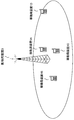
- FIG. 13 is a diagram illustrating a schematic configuration of a wireless communication system.
- MBMS can switch the provision method depending on the number of mobile station apparatuses requesting service.
- mobile station devices (1A to 1D) when there are mobile station devices 1A, 1B, 1C near the center of the cell and mobile station device 1D at the cell edge (hereinafter referred to as mobile station devices (1A to 1D)) 1), the number of mobile station devices 1 will be provided by PTM, but it must be transmitted with a noise-resistant modulation / coding scheme and high power so that the mobile station device 1D at the cell edge can receive, Wireless resources and power are wasted.
- the number of mobile station apparatuses 1 that desire to receive MBMS in a service cell and the arrangement of mobile station apparatuses 1 that desire to receive MBMS in a service cell are first determined by the base station apparatus 3. Performs MBMS transmission by PTM to the mobile station apparatus 1 in the service cell that wishes to receive MBMS, and based on the MBMS reception state information transmitted from the mobile station apparatus 1 to the base station apparatus 3 Done.
- an object of the present invention is to provide a radio communication system, a base station apparatus, a mobile station apparatus, and a communication method that avoid the problems of deterioration in communication resource utilization efficiency and an increase in processing in a mobile station apparatus.
- the radio communication system of the present invention includes a base station apparatus and a mobile station apparatus, and is a radio communication system that provides MBMS (Multimedia Broadcast Multicast Service), wherein the base station device requests an MBMS.
- MBMS Multimedia Broadcast Multicast Service
- a message that counts the number of devices is transmitted to the subordinate mobile station device, and the mobile station device that requests the MBMS among the mobile station devices adds its own location information in the cell to the response message for the message. Then, the response message to which the in-cell location information is added is transmitted to the base station apparatus.
- MBMS Multimedia Broadcast Multicast Service
- the mobile station apparatus that requests MBMS adds the in-cell position information of the own station to the response message for the message, and transmits the response message with the in-cell position information added to the base station apparatus.
- Appropriate MBMS can be provided based on the location of the device in the cell, and radio resources can be used effectively.
- the processing required in the mobile station apparatus is only complicated by adding a signal based on the received power of the downlink reference signal that has always been measured to the counting response and using it for selecting the Notification providing method. Therefore, an increase in power consumption can be suppressed. Furthermore, even when there are many mobile station apparatuses requesting services near the cell center, it is possible to provide optimal transmission parameters.
- a wireless communication system includes a base station device and a mobile station device, and provides an MBMS (Multimedia Broadcast Multicast Service), wherein the base station device requests MBMS. Adding the threshold information of the position in the cell of the mobile station device to the message for counting the number of mobile station devices to be transmitted, and transmitting the message to which the threshold information is added to the subordinate mobile station device, The mobile station apparatus that requests MBMS judges whether or not to respond to the message based on the threshold information of the intra-cell position and the intra-cell position of the own station.
- MBMS Multimedia Broadcast Multicast Service
- the mobile station apparatus requesting MBMS determines whether to respond to the message based on the threshold information of the in-cell position and the in-cell position of the own station, the amount of information necessary for the counting response It is possible to obtain NumE and NumC used for determining the MBMS provision method. In addition, it becomes possible to divide the mobile station devices to respond to, and even when the Probability factor value is set high, the congestion of the line at the time of response can be reduced. In addition, it is possible to provide an appropriate MBMS based on the position of the mobile station device in the cell, and it is possible to effectively use radio resources.
- the processing required in the mobile station apparatus is only complicated by adding a signal based on the received power of the downlink reference signal that has always been measured to the counting response and using it for selecting the Notification providing method. Therefore, an increase in power consumption can be suppressed. Furthermore, even when there are many mobile station apparatuses requesting services near the cell center, it is possible to provide optimal transmission parameters.
- the base station device receives the response message from the mobile station device, and totals the number of mobile station devices that request MBMS for each position in the cell.
- MBMS is provided to the mobile station apparatus based on an MBMS providing method determined for each intra-cell position.
- the base station apparatus counts the number of mobile station apparatuses that request MBMS for each intra-cell position, and assigns MBMS to the mobile station apparatus based on the MBMS providing method determined for each intra-cell position. Since it is provided, wireless resources can be used effectively. In addition, even when there are many mobile station apparatuses that request service near the cell center, it is possible to provide optimal transmission parameters.
- the base station device transmits a message for notifying the MBMS providing method to the mobile station device requesting MBMS, and the mobile station device
- the MBMS providing method is selected based on the location information of the own station in the cell.
- the mobile station apparatus selects the MBMS providing method based on the in-cell location information of the own station.
- the base station apparatus does not transmit to the mobile station apparatus near the cell center using the same PTM as the cell station mobile station apparatus. , Wireless resources and power are not wasted.
- the mobile station apparatus provided by SC-PTP switches to the provision by PTM, it is not necessary to measure the reception quality of PTM, and it is possible to prevent an increase in processing in the mobile station apparatus. .
- the MBMS providing method includes MBSFN (Multicast / Broadcast over Single Frequency Network), SC-PTP (Single Cell-Point To Point), and SC-PTM (Single Cell-Point). To-Multipoint) or MC-PTM (Multi-Cell-Point-To-Multipoint).
- MBSFN Multicast / Broadcast over Single Frequency Network
- SC-PTP Single Cell-Point To Point
- SC-PTM Single Cell-Point
- To-Multipoint To-Multipoint
- MC-PTM Multi-Cell-Point-To-Multipoint
- the MBMS provision method is MBSFN (Multicast / Broadcast Over Single Frequency Network), SC-PTP (Single Cell-Point To Point), SC-PTM (Single Cell-Point To Multipoint), MC-PTM (Multi Cell-Cell- Therefore, it is possible to provide an optimal MBMS according to the number and location of mobile station apparatuses, a difference in reception quality, and the like.
- MBSFN Multicast / Broadcast Over Single Frequency Network
- SC-PTP Single Cell-Point To Point
- SC-PTM Single Cell-Point To Multipoint
- MC-PTM Multi Cell-Cell- Therefore, it is possible to provide an optimal MBMS according to the number and location of mobile station apparatuses, a difference in reception quality, and the like.
- the in-cell position information is binary information representing the vicinity of the cell center and the vicinity of the cell edge.
- the in-cell position information is binary information indicating the vicinity of the cell center and the vicinity of the cell edge. Therefore, for example, the in-cell position information is 1-bit data and the vicinity of the cell center is set to 1. Complex processing such as 0 is not necessary.
- the in-cell location information is either RSRP (Reference Signal Received Power) or a path loss value.
- the mobile station apparatus can suppress an increase in power consumption without requiring complicated processing.
- a base station apparatus includes a base station apparatus and a mobile station apparatus, and is a base station apparatus applied to a wireless communication system that provides MBMS (Multimedia Broadcast Multicast Service).
- MBMS Multimedia Broadcast Multicast Service
- a message for counting the number of requested mobile station devices is transmitted to a subordinate mobile station device, a response message corresponding to the message is received from the mobile station device, and an MBMS is received for each in-cell position of the mobile station device.
- the number of mobile station apparatuses requesting the mobile station apparatus is totaled, and MBMS is provided to the mobile station apparatus based on the MBMS providing method determined for each position in the cell.
- the base station apparatus provides MBMS to the mobile station apparatus based on the MBMS providing method determined for each in-cell position of the mobile station apparatus, it is appropriate based on the in-cell position of the mobile station apparatus.
- MBMS can be provided, and wireless resources can be used effectively.
- the processing required in the mobile station apparatus is only complicated by adding a signal based on the received power of the downlink reference signal that has always been measured to the counting response and using it for selecting the Notification providing method. Therefore, an increase in power consumption can be suppressed. Furthermore, even when there are many mobile station apparatuses requesting services near the cell center, it is possible to provide optimal transmission parameters.
- a transmission signal processing unit that generates a transmission signal including a message for notifying at least one MBMS providing method associated with the in-cell position information of the mobile station apparatus; And a transmission unit that transmits the generated transmission signal to the mobile station apparatus.
- the base station apparatus since the base station apparatus generates a transmission signal including a message for notifying at least one MBMS providing method associated with the in-cell position information of the mobile station apparatus, the in-cell position of the mobile station apparatus Therefore, it is possible to provide an appropriate MBMS based on the above, and it is possible to effectively use radio resources.
- the mobile station apparatus of the present invention includes a base station apparatus and a mobile station apparatus, and is a mobile station apparatus applied to a radio communication system that provides MBMS (Multimedia Broadcast Multicast ⁇ Service).
- MBMS Multimedia Broadcast Multicast ⁇ Service
- the mobile station apparatus when the mobile station apparatus requests MBMS, the mobile station apparatus adds the in-cell position information of the own station to the response message to the message, so that the base station apparatus can select an appropriate MBM based on the in-cell position of the mobile station apparatus.
- S can be provided, and wireless resources can be used effectively.
- a response message corresponding to the message includes a cell of the local station.
- a counting response signal generation unit for adding internal position information is provided.
- the mobile station device when receiving a message for counting the number of mobile station devices requesting MBMS from the base station device, the mobile station device adds its own location information in the cell to the response message corresponding to the message.
- the base station apparatus it is possible to perform the provision of appropriate MBM S based on cell location of the mobile station apparatus, it is possible to effectively utilize radio resources.
- a counting response signal generation unit for determining whether or not to transmit a response message corresponding to the message is provided.
- the mobile station device when a message for counting the number of mobile station devices requesting MBMS is received from the base station device, the mobile station device responds to the message based on the in-cell location information of the own station. Since the mobile station apparatus reduces the amount of information necessary for the counting response, the base station apparatus can acquire Num E and NumC used for determining the MBMS providing method. It becomes.
- the base station apparatus receives a transmission signal including a message for notifying at least one MBMS providing method associated with the in-cell position information of the mobile station apparatus.
- the MBMS providing method is selected based on the in-cell location information of the own station.
- the in-cell position information of the own station Therefore, when there is a mobile station apparatus near the center of the cell and at the cell edge, the base station apparatus connects the mobile station apparatus at the cell edge to the mobile station apparatus near the center of the cell.
- the transmission by the same PTM is not performed, and the radio resources and power are not wasted.
- the mobile station apparatus provided by SC-PTP switches to the provision by PTM, it is not necessary to measure the reception quality of PTM, and it is possible to prevent an increase in processing in the mobile station apparatus. .
- a communication method of the present invention is a communication method of a wireless communication system that includes a base station device and a mobile station device and provides MBMS (Multimedia Broadcast Multicast Service). Transmitting a message for counting the number of mobile station apparatuses requesting the mobile station apparatus to the subordinate mobile station apparatus, and, in the mobile station apparatus requesting MBMS among the mobile station apparatuses, And a step of transmitting a response message to which the in-cell position information is added to the base station apparatus.
- MBMS Multimedia Broadcast Multicast Service
- the in-cell position information of the own station is added to the response message to the message, so that it is possible to provide an appropriate MBMS based on the in-cell position of the mobile station apparatus.
- Wireless resources can be used effectively.
- a communication method of the present invention is a communication method of a wireless communication system that includes a base station device and a mobile station device and provides MBMS (Multimedia Broadcast Multicast Service). Adding threshold information on the position of the mobile station device in the cell to a message that counts the number of mobile station devices requesting, and transmitting the message with the threshold information added thereto to a subordinate mobile station device; A step of determining whether to respond to the message based on the threshold information of the intra-cell position and the intra-cell position of the mobile station apparatus that requests MBMS among the mobile station apparatuses; It is characterized by including at least.
- MBMS Multimedia Broadcast Multicast Service
- the base station apparatus can acquire NumE and NumC used for determining the MBMS providing method while reducing the amount of information required.
- the mobile station device requesting MBMS adds its own location information in the cell to the response message for the message, and transmits the response message with the location information in the cell added to the base station device.
- Appropriate MBMS can be provided based on the position of the mobile station device in the cell, and radio resources can be effectively used.
- the processing required in the mobile station apparatus is only complicated by adding a signal based on the received power of the downlink reference signal that has always been measured to the counting response and using it for selecting the Notification providing method. Therefore, an increase in power consumption can be suppressed. Furthermore, even when there are many mobile station apparatuses requesting services near the cell center, it is possible to provide optimal transmission parameters.
- FIG. 2 is a schematic block diagram illustrating an overall user plane architecture of MBMS provisioning including UE1 and eNB3 according to an embodiment of the present invention.
- FIG. 3 is a sequence chart provided by MBMS based on a user plane architecture according to an embodiment of the present invention; It is the flowchart which showed an example of the processing procedure of the counting response in UE1 which concerns on the 1st Embodiment of this invention. It is the flowchart which showed an example of the process sequence of MBMS provision method determination in NW which concerns on the 1st Embodiment of this invention. It is the flowchart which showed an example of the reception setting process procedure in UE1 which concerns on the 1st Embodiment of this invention. It is the flowchart which showed an example of the processing procedure of the counting response in UE1 which concerns on the 2nd Embodiment of this invention.
- FIG. 13 is a diagram illustrating a schematic configuration of a wireless communication system.
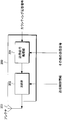
- FIG. 1 is a block diagram illustrating an example of a receiving device of a mobile station device (hereinafter referred to as UE) 1 according to an embodiment of the present invention.
- the receiving apparatus 100 includes a receiving unit 101, a received signal processing unit 102, a measurement information holding unit 103, a counting response signal generating unit 104, and an antenna 105.
- a reception signal (a transmission signal from the base station apparatus (hereinafter referred to as eNB) 3) is received by the reception unit 101 via the antenna 105.
- eNB base station apparatus
- the received signal is demodulated based on the reception control information indicating the channel schedule.
- the reception control information includes information regarding demodulation such as reception timing regarding each channel, multiplexing method, resource allocation information, and descrambling code.
- the reception unit 101 demodulates and decodes the reception signal for each channel and outputs it to the reception signal processing unit 102.
- the reception unit 101 measures the physical cell ID detected from the synchronization channel included in the received signal, the reception quality of the downlink reference signal, the area information obtained from the broadcast information, the base station transmission power information, and the like as measurement information.
- the information is output to the information holding unit 103.
- the measurement information holding unit 103 outputs measurement information held to an upper layer (not shown) and the counting response signal generation unit 104.
- the received signal processing unit 102 processes the input signal from the receiving unit 101 for each channel, and outputs an MBMS counting signal to the counting response signal generating unit 104 when an MBMS counting signal is included.
- Other users' traffic data, downlink control data, and the like are output as other information to individual processing blocks, but these are not related to the present invention, and will not be described.
- the counting response signal generation unit 104 detects the counting signal, the counting response signal 104 is counted based on the Probability factor, the service request signal acquired from the upper layer, the base station transmission power information, and the measurement information acquired from the measurement information holding unit 103. A determination is made as to whether or not to generate a signal, and if so, a counting response signal is generated and output to the transmitting apparatus 200 described later.
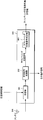
- FIG. 2 is a block diagram illustrating an example of the transmission device of the UE 1 according to the embodiment of the present invention.
- the transmission apparatus 200 includes a transmission signal processing unit 201, a transmission unit 202, and an antenna 203.
- a counting response signal is input to the transmission signal processing unit 201 at an appropriate timing in accordance with an instruction from an upper layer.
- the transmission signal processing unit 201 performs appropriate scheduling for the counting response signal and other transmission signals.
- Other transmission signals include uplink user traffic data, uplink control data, uplink reference signals, and the like.
- a signal output from the transmission signal processing unit 201 based on scheduling is output as a transmission signal via the antenna 203 in the transmission unit 202 according to transmission control information.
- the transmission control information includes transmission timing, multiplexing method, resource allocation information, and modulation information regarding each channel.
- the other components of the UE 1 are not related to the present embodiment, and thus the description thereof is omitted.
- FIG. 3 is a block diagram illustrating an example of a receiving device of the eNB 3 according to the embodiment of the present invention.
- the receiving apparatus 300 includes a receiving unit 301, a received signal processing unit 302, a counting response signal totaling unit 303, and an antenna 304.
- the reception signal (transmission signal from UE1) is received by the reception unit 301 via the antenna 304.
- the reception signal is demodulated based on reception control information indicating a channel schedule.
- the reception control information includes reception timing, multiplexing method, resource arrangement information and information regarding demodulation for each channel for each UE1.
- the reception unit 301 demodulates and decodes the reception signal for each channel and outputs it to the reception signal processing unit 302.
- the received signal processing unit 302 divides the input signal for each UE 1 and further appropriately processes for each channel.
- the counting response signal is output to the counting response signal totaling unit 303.
- Signals other than the counting response signal processed by the received signal processing unit 302, for example, user traffic data, uplink control data, and other control messages are input to individual processing blocks as other information. The description is omitted because it is not related to the present invention.
- the counting response signal totaling unit 303 totals the counting response signals for each user and notifies the upper layer of the totaling result.
- FIG. 4 is a block diagram illustrating an example of a transmission device of the eNB 3 according to the embodiment of the present invention.
- the transmission apparatus 400 includes a transmission signal processing unit 401, a transmission unit 402, and an antenna 403.
- the transmission signal processing unit 401 receives an MBMS provision method setting signal, MBMS data, and other transmission signals from an upper layer. Based on the MBMS provision method setting signal, the transmission signal processing unit 401 generates an MBMS data transmission signal using any one of the MBSFN, PTM, and SC-PTP providing methods or a combination of the above methods, and includes other transmission signals. To schedule.
- the other transmission signals are downlink user traffic data, downlink control data, downlink reference signals, etc. of each UE1.
- Data output from the transmission signal processing unit 401 based on the scheduling is output as a transmission signal via the antenna 403 in the transmission unit 402 according to the transmission control information.
- the transmission control information includes transmission timing, multiplexing method, resource allocation information, and modulation information regarding each channel.
- other components of the eNB 3 are omitted because they are not related to the present invention.
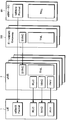
- FIG. 5 is a schematic block diagram showing an overall user plane architecture provided by MBMS including UE1 and eNB3 according to an embodiment of the present invention.
- UE1 is a mobile station device
- eNB3 is a base station device
- eBM-SC evolvedvolveBroadcast / Multicast-Service Center
- 501 is a source of MBMS traffic
- E-MBMS GW E-MBMS Gateway
- the E-MBMS GW 502 may be provided in a device on another network.
- the MBMS packet generated by the eBM-SC 501 is sent to each eNB 3 through the E-MBMS GW 502, and each eNB 3 has a timing (radio frame) for transmitting the MBMS packet by the SYNC protocol sent from the E-MBMS GW 502.
- the MBMS packet is held until it is transmitted to UE1 by MBSFN or MC-PTM according to the transmission timing.
- MCE MBMS Coordination Entity
- MME Mobility Management Entity
- the E-MBMS GW 502 may generate a packet for each UE1 and transmit it to each UE1 as a normal packet, or the eNB3 may wirelessly It is also possible to perform resource scheduling and transmit the MBMS packet to UE1 as a packet addressed to UE1.
- MBMS is provided to users by the above architecture.
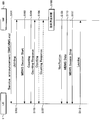
- FIG. 6 is a sequence chart provided by MBMS based on the user plane architecture according to the embodiment of the present invention.
- UE1 is a mobile station device
- NW601 is a network composed of a plurality of eNBs 3 (comprising MCE), MME, S-GW (ServingwayGateway), P-GW (PDN Gateway), and the like.
- the E-MBMS GW 502 may exist in the NW 601 described above, and when belonging to another network, the E-MBMS GW 502 provides MBMS to the UE 1 through the MME and P-GW of the NW 601.
- the MBMS provider sends a service notification to UE1 using SMS (Short Message Service) or MMS (Multimedia Message Service) (step S101).
- the UE 1 may need to make a subscription in advance in order to receive the service notification from the MBMS provider.
- the Service announcement includes information such as MBMS service contents and provision time composed of a plurality of sessions, and includes schedules for several hours or days.
- UE1 which received Service announcement performs Joining which shows receiving one or some MBMS Bearer service, when requesting a service (step S102).
- the UE 1 transmits to the NW 601 by including at least an IP multicast address that can identify the MBMS Bearer service to be received as a Joining message in the Join message.
- UE1 may perform Joining before Session start mentioned later, and may perform it during Session.
- the NW 601 performs MBMS session start when MBMS data can be transmitted, and establishes an MBMS Bearer for receiving the MBMS data of the session started for the UE 1 (step S103).
- the NW 601 transmits a counting signal to the UE 1 (Step S104) and receives a counting response (Counting Response) from the UE 1 (Step S105).
- the Probability Factor is changed and the counting process is performed again (steps S106 and S107).
- the NW 601 determines the MBMS provision method (step S108), and performs Notification for the UE1.
- Notification Bearer resources for MBMS transmission are allocated to UE1 (step S109).
- the NW 601 can determine the bearer resource allocation information for MBMS transmission to be notified by Notification based on the counting response.
- UE1 which received Notification starts reception of one or more MBMS Bearer services in order to receive MBMS data.
- the NW 601 transmits MBMS data using the resources allocated to the UE 1 (Step S110).
- the NW 601 transmits a Session Stop to the UE 1, and the session of the UE 1
- the MBMS Bearer resource is released (step S111).
- UE1 which wants to stop reception of MBMS performs Leaving to NW601 (step S112).
- the UE 1 transmits to the NW 601 by including at least an IP multicast address that can identify the MBMS Bearer service that it is desired to stop receiving as a Leaving message.
- MBMS is provided to UE1 by the above sequence.
- the in-cell position information is information indicating at least whether the UE 1 is near the cell center or the cell edge, and is calculated from, for example, position information calculated by the GPS and position information of the eNB 3 included in the broadcast information. It is possible to determine whether it is near the cell center or near the cell edge by comparing the distance between the two points and a predetermined threshold, and not only the physical location information but also the reception of the downlink reference signal received by the UE1 Comparison of path loss value calculated from power (RSRP) and transmission power information (base station transmission power information) included in broadcast information, RSRP itself, reception quality of reference signal (RSRQ), etc., and predetermined threshold It may be determined whether near the cell center or near the cell edge.
- RSRP path loss value calculated from power
- base station transmission power information base station transmission power information
- RSS reception quality of reference signal
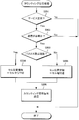
- FIG. 7 is a flowchart showing an example of a counting response processing procedure in the UE 1 according to the first embodiment of the present invention.
- NW601 typically eNB3
- the service it is determined whether or not the own station transmits a counting response signal based on the Probability factor included in the MBMS ACCESS INFORMATION (Step S202).
- UE1 When transmitting a counting response signal, UE1 calculates a path loss value from base station transmission power information input from an upper layer and a received power measurement result of a downlink reference signal held in the measurement information holding unit 103 Then, the path loss value is compared with a predetermined threshold value (step S203).
- the predetermined threshold value may be included in advance in the broadcast information from the eNB 3 or may be included in the counting signal. Further, the base station transmission power information is notified in advance from the eNB 3 by broadcast information.
- a code indicating the vicinity of the cell center is set as the in-cell position information (step S204). If the path loss value is greater than or equal to the threshold value, a code indicating the vicinity of the cell edge is set as the intra-cell position information (step S205).
- the code of the position information in the cell may be a code determined in advance by the eNB 3 and the UE 1.
- 1-bit data may be 1 near the cell center, 0 near the cell edge, or a counting response signal.
- Two types of preambles for random access to be used when transmitting the message may be set and expressed as to which type of preamble is used.
- only the UE 1 near the cell edge may be transmitted by adding data representing the vicinity of the cell edge to the counting response signal.
- the code set in step S204 or step S205 is included in the counting response signal and input to the transmission signal processing unit of the transmission apparatus in FIG. 2 (step S206). The above is the processing procedure of the counting response in UE1.
- a procedure for determining an MBMS providing method in the NW 601 that receives a counting response will be described.
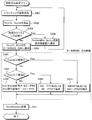
- FIG. 8 is a flowchart showing an example of the processing procedure for determining the MBMS providing method in the NW 601 according to the first embodiment of the present invention.
- the eNB 3 in the NW 601 first transmits a counting signal to the subordinate UE 1.
- the eNB 3 collects the counting response signals transmitted by the UE 1 in the counting response signal totaling unit 303, and returns the number of UEs (NumC) that returned the vicinity of the cell center and the number of UEs that returned the vicinity of the cell edge as in-cell position information.
- NumE is counted (step S302).
- it is determined whether counting is necessary again step S303).
- ENB3 updates the value of Probability factor if counting is necessary (step S304), returns to step S301, and performs counting again.
- a case where the counting is necessary again includes a case where either one or both of NumC and NumE counted in step S302 are 0. If the re-counting is unnecessary, the NumC and NumE information collected by the eNB 3 is notified to the E-MBMS GW 502 (step S305).
- Steps S306 to S310 are processes in the E-MBMS GW 502.
- the E-MBMS GW 502 aggregates the NumC and NumE notified from each eNB3, compares the size with a predetermined threshold value, and performs cell comparison based on the comparison result.
- An MBMS providing method for UE1 near the center and an MBMS providing method for UE1 near the cell edge are set.
- step S306 when NumE ⁇ threshold B (step S306), that is, when the number of UEs 1 requesting service is greater than a certain number near the cell edge, not SC-PTP or SC-PTM but MBSFN or MC- By transmitting by PTM, UE1 near the cell center can be received while ensuring the reception quality at the cell edge (step S310).
- step S306 and S307 that is, when the number of UE1s requesting service is less than a certain number in the cell, the use of resources by transmitting by MBSFN or MC-PTM
- transmission is performed by setting optimal transmission parameters (modulation scheme and coding rate) for each UE1 or UE group near the cell center and UE group near the cell edge in SC-PTP or SC-PTM. By doing so, resource efficiency can be improved (step S309).
- Step S306 and S307 that is, when there are many UE1s requesting service near the cell center, MBSFN in which transmission parameters are set so that reception is possible near the cell edge.
- transmission is performed by SC-PTM with a high transmission rate for UE groups near the cell center, and UE1 or UE groups near the cell edge are transmitted.
- SC-PTP or SC-PTM which has a low transmission rate, resource efficiency is improved, and UE1 power saving is achieved by shortening the reception processing time of UE1 near the cell center by setting appropriate transmission parameters.
- Step S311 Notification is performed from the eNB 3 to the UE 1 based on the MBMS providing method set in Steps S306 to S310 (Step S311).
- the providing method notified by Notification is different for the cell center vicinity UE1 and the cell edge vicinity UE1, two types are included. That is, conventionally, either the PTM information acquisition request signal (acquirePTM-RBInfo) or the PTP connection instruction signal (requestPTPRB) has been notified to the UE 1 from the eNB 3, but in this embodiment, for the UE 1 near the cell center.
- a method for individually sending the above signals to the cell edge near UE1 and a type of the above signal, and a signal indicating instructions for both the cell center near UE1 and the cell edge near UE1 with one signal (for example, acquirePTM-RBInfoForCellCenter-requestPTPRBForCellEdge etc.) is introduced.
- the MBMS providing method is determined by the flow, and the Bearer resource for MBMS transmission is notified to UE1 by Notification.
- UE 1 selects a providing method based on the in-cell location information of its own station, and performs reception settings according to the selected providing method.
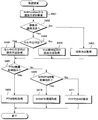
- FIG. 9 is a flowchart showing an example of a reception setting process procedure in the UE 1 according to the first embodiment of the present invention.
- UE1 requesting a service obtains a message including a providing method by Notification from eNB3 (step S401).
- UE1 determines whether a several provision method is contained in a message (step S402). If a single providing method is included, the providing method is acquired (step S403). When a plurality of providing methods are included, it is determined whether or not the own station is near the cell center (step S404). The determination method is the same as the processing in the counting response. If the own station is near the cell center, the providing method for the cell center is obtained (step S405). If it is near the cell edge, a providing method for the vicinity of the cell edge is acquired (step S406).
- step S407 it is determined whether the providing method acquired in any of steps S404 to S406 is a PTM information acquisition instruction (step S407). If it is a PTM information acquisition instruction, information necessary for receiving the service is acquired from each PTM RB INFORMATION included in the MCCH (step S408). If it is not a PTM information acquisition instruction, it is determined whether it is an MBSFN information acquisition instruction (step S409). In the case of the MBSFN information acquisition instruction, information related to the MBSFN setting included in the MCCH or broadcast information is acquired, and information necessary for service reception is acquired (step S410).
- the UE1 sets a Bearer for receiving service by SC-PTP to the eNB3, an UL-CCCH RRCConnectionRequest message, or an UL-DCCH message. And so on (step S411).
- the eNB 3 that has received the request provides the UE 1 with information necessary for receiving the service using the DL-CCCH RRC Connection Setup message, the DL-DCCH message, and the like.
- UE1 which received the message from eNB3 performs reception setting based on information, and transmits a Complete message by UL-DCCH. The above is the reception setting process procedure in UE1.
- the present embodiment it is possible to provide an appropriate MBMS based on the position of the UE 1 in the cell, and it is possible to effectively use radio resources.
- the processing required in UE1 is only to add a signal based on the received power of the downlink reference signal that has always been measured to the counting response and use it for selecting the Notification providing method, it is a complicated processing. Therefore, increase in power consumption can be suppressed.
- Patent Document 1 when there are a plurality of UE1s with poor MBMS reception quality, transmission to UE1 near the cell center is performed in order to control the UE1 with poor reception quality to be kept below a certain number by increasing the transmission power of eNB3.
- the parameters cannot be optimized, the control according to the present embodiment can provide optimal transmission parameters even when there are many UE1s that request service near the cell center.
- the description is made using a specific RRC message.
- the present invention is not limited to the use of only the message described above.
- the RB request is made by PTP from UE1 in step S411 in FIG. 9, the request from UE1 is not made, and the PTP reception setting is initiated by the base station by a message such as RRCConnectionReconfiguration from eNB3. May be performed.
- the case has been described in which the signal indicating the position in the cell is included in the counting response from the UE1.
- the NW 601 includes threshold information related to the intra-cell position of the UE 1 in the counting in order to request a counting response from the UE 1.
- the eNB 3 and the UE 1 of the present embodiment have the same configuration as that of the first embodiment shown in FIGS. 1, 2, 3, and 4, respectively.
- the threshold information of the in-cell position for determining whether or not the UE 1 newly makes a counting response is added to the conventional counting.
- the threshold information is, for example, information indicating “report when path loss value is greater than or equal to a certain threshold” and “report when path loss value is less than a certain threshold” (the threshold to be compared with “greater than or less than” ]).
- RSRP reference signal received power
- RSRQ reference signal received quality
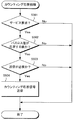
- FIG. 10 is a flowchart illustrating an example of a counting response processing procedure in the UE 1 according to the second embodiment of the present invention.
- UE1 determines whether or not a service is requested based on a service request signal input from an upper layer in counting response signal generation section 104 in FIG. Step S501). If no service is requested, the flow ends.
- the path loss value is calculated from the base station transmission power information input from the higher layer and the received power measurement result of the downlink reference signal held in the measurement information holding unit 103, and counted.
- the threshold information included in the signal it is determined whether or not the own station is a target for counting response (step S502). If it is not a target for counting response, the flow is terminated.
- step S503 If it is a target for counting response, it is determined whether or not the own station transmits a counting response signal based on the Probability factor included in the MBMS ACCESS INFORMATION (step S503). When not transmitting, the flow ends.
- the counting response signal When transmitting the counting response signal, the counting response signal is input to the transmission signal processing unit of the transmission device of FIG. 2 (step S504).
- the NW 601 may notify the threshold information using broadcast information instead of the counting signal. Further, the NW 601 may notify the threshold information using individual signaling instead of the counting signal.
- the procedure for determining the MBMS providing method in the present embodiment is the same as that in the first embodiment, but only the processing related to the acquisition of NumE and NumC is different.
- NumE and NumC are calculated based on the intra-cell location information included in the response from UE1, but in this embodiment, threshold information is first added to the counting signal, and the path loss value is Only UE1 that is less than a certain threshold value is allowed to respond. Thereby, NumE can be calculated, and the process of step S306 in FIG. 8 can be performed.
- step S307 When the process of step S307 is necessary, only the UE1 whose path loss value is equal to or greater than a certain threshold value is caused to respond, NumC is calculated, and the process of step S307 is performed. Since Notification and UE1 reception settings based on the above determination are the same as those in the first embodiment, description thereof is omitted.
- This embodiment makes it possible to acquire NumE and NumC used for determining the MBMS provision method while reducing the amount of information necessary for the counting response, and the same effects as those of the first embodiment can be obtained. Moreover, it becomes possible to divide UE1 which is a response object, and even when Probability factor value is set high, the congestion of the line
- the case has been described in which the NW 601 includes threshold value information of an in-cell position for requesting a counting response to the UE1.
- the NW 601 includes a plurality of different Probability Factors with respect to the intra-cell position of UE1.
- the eNB 3 and the UE 1 of the present embodiment have the same configuration as that of the first embodiment shown in FIGS. 1, 2, 3, and 4, respectively.
- the types of Probability factor included in MBMS ACCESS INFORMATION are increased.
- One is a Probability factor used when the path loss value is greater than or equal to a certain threshold, and the other is a Probability factor used when the path loss value is less than a certain threshold.
- the threshold may be included in the MBMS ACCESS INFORMATION, or may be notified in advance as another message. That is, when two types of Probability Factors are used for the idle state UE1 and the connected state UE1, different Probability Factors are set based on the path loss value for each, for a total of four. Also, reference signal received power (RSRP) can be used instead of the path loss value.
- RSRP reference signal received power
- FIG. 11 is a flowchart showing an example of a processing procedure of a counting response in the UE 1 according to the third embodiment of the present invention.
- UE1 determines whether or not a service is requested based on a service request signal input from an upper layer in counting response signal generation section 104 in FIG. Step S601). If no service is requested, the flow ends.
- a service as a result of the comparison between the path loss value and a predetermined threshold (step S602), if the path loss value is a value less than the threshold, a code indicating the vicinity of the cell center is set as in-cell position information, The value of Probability factor is also set near the cell center (step S603). If the path loss value is equal to or greater than the threshold, a code indicating the vicinity of the cell edge is set as the in-cell position information, and the value for the proximity factor is also set for the Probability factor (step S604).
- Step S605 it is determined whether or not the own station transmits a counting response signal based on the Probability factor selected from the path loss value selected in Step S603 or Step S604 (Step S605).
- the flow ends.
- the code set in step S603 or step S604 is included in the counting response signal and input to the transmission signal processing unit 201 of the transmission apparatus in FIG. 2 (step S606).
- the above is the processing procedure of the counting response in the UE 1 in the present embodiment.
- the procedure for determining the MBMS providing method in the NW 601 that receives the counting response will be described. Since the procedure for determining the MBMS providing method in this embodiment differs from that in the second embodiment only in the processing related to the acquisition of NumE and NumC, description will be given regarding acquisition of NumE and NumC.
- the two Probability factors in this embodiment are set to the same value, the same result as in the first embodiment is obtained, and NumE and NumC can be acquired. Further, when one of the two Probability factors is set to 0, that is, when the responding UE1 does not exist near the cell center or near the cell edge, the same result as in the second embodiment is obtained. .
- this embodiment is different from the first embodiment in that a code indicating cell position information is included in the counting response signal and transmitted.
- the frequency of the Probability factor is gradually increased to calculate NumE, and the frequency of repeated recounting is reduced.
- the congestion of the line at the time of response can be reduced.
- the number of UEs can be efficiently calculated by lowering the response probability for the vicinity of the cell edge and increasing the response probability for the vicinity of the center. According to the present embodiment, it is possible to reduce the number of counting required for calculating NumC and NumE, and to reduce the congestion of the line at the time of response.
- the embodiment described above is merely an example, and can be realized by using various modifications and replacement examples.
- the mobile station and the base station of the embodiment have been described using functional block diagrams.
- the functions of each part of the eNB 3 and the UE 1 or a program for realizing a part of these functions can be read by a computer.
- the UE 1 and the eNB 3 may be controlled by recording the program on the recording medium, reading the program recorded on the recording medium into the computer system, and executing the program.
- the “computer system” includes an OS and hardware such as peripheral devices.
- the “computer-readable recording medium” refers to a storage device such as a flexible medium, a magneto-optical disk, a portable medium such as a ROM or a CD-ROM, and a hard disk incorporated in a computer system. Further, the “computer-readable recording medium” is a medium that dynamically holds a program for a short time, such as a communication line when transmitting a program via a network such as the Internet or a communication line such as a telephone line, such as a volatile memory inside a computer system serving as a server or a client in that case, and also includes those which retain a certain time during the program.
- the program may be a program for realizing a part of the functions described above, and may be a program capable of realizing the functions described above in combination with a program already recorded in a computer system.
- each functional block used in each of the above embodiments may be realized as an LSI that is typically an integrated circuit.
- Each functional block may be individually formed into chips, or a part or all of them may be integrated into a chip.
- the method of circuit integration is not limited to LSI, and may be realized by a dedicated circuit or a general-purpose processor.
- an integrated circuit based on the technology can also be used.
Landscapes
- Engineering & Computer Science (AREA)
- Signal Processing (AREA)
- Computer Networks & Wireless Communication (AREA)
- Multimedia (AREA)
- Mobile Radio Communication Systems (AREA)
Priority Applications (3)
| Application Number | Priority Date | Filing Date | Title |
|---|---|---|---|
| CN2010800398841A CN102577447A (zh) | 2009-09-11 | 2010-06-25 | 无线通信系统、基站装置、移动站装置以及通信方法 |
| US13/395,392 US20120182921A1 (en) | 2009-09-11 | 2010-06-25 | Wireless communication system, base station apparatus, mobile station apparatus, and communication method |
| EP10815199A EP2477423A1 (en) | 2009-09-11 | 2010-06-25 | Wireless communication system, base station apparatus, mobile station apparatus, and communication method |
Applications Claiming Priority (2)
| Application Number | Priority Date | Filing Date | Title |
|---|---|---|---|
| JP2009-210348 | 2009-09-11 | ||
| JP2009210348A JP5159735B2 (ja) | 2009-09-11 | 2009-09-11 | 無線通信システム、基地局装置、移動局装置および通信方法 |
Publications (1)
| Publication Number | Publication Date |
|---|---|
| WO2011030601A1 true WO2011030601A1 (ja) | 2011-03-17 |
Family
ID=43732278
Family Applications (1)
| Application Number | Title | Priority Date | Filing Date |
|---|---|---|---|
| PCT/JP2010/060816 Ceased WO2011030601A1 (ja) | 2009-09-11 | 2010-06-25 | 無線通信システム、基地局装置、移動局装置および通信方法 |
Country Status (5)
| Country | Link |
|---|---|
| US (1) | US20120182921A1 (enExample) |
| EP (1) | EP2477423A1 (enExample) |
| JP (1) | JP5159735B2 (enExample) |
| CN (1) | CN102577447A (enExample) |
| WO (1) | WO2011030601A1 (enExample) |
Cited By (5)
| Publication number | Priority date | Publication date | Assignee | Title |
|---|---|---|---|---|
| WO2012151915A1 (zh) * | 2011-08-19 | 2012-11-15 | 中兴通讯股份有限公司 | 启动多个mbms计数过程的方法及系统、mce和基站 |
| CN102802123A (zh) * | 2011-05-26 | 2012-11-28 | 中兴通讯股份有限公司 | 一种实现多媒体广播多播业务计数的方法和系统 |
| EP2801226A4 (en) * | 2012-01-05 | 2015-12-09 | Ericsson Telefon Ab L M | METHOD FOR SELECTING A TRANSMISSION MODE OF A CELL IN AN E_UTRAN SYSTEM |
| WO2016163549A1 (ja) * | 2015-04-10 | 2016-10-13 | 京セラ株式会社 | ネットワーク装置、ユーザ端末、及び基地局 |
| JP2025510810A (ja) * | 2022-03-31 | 2025-04-15 | 日本電気株式会社 | 方法、ユーザ機器、及びアクセスネットワークノード |
Families Citing this family (24)
| Publication number | Priority date | Publication date | Assignee | Title |
|---|---|---|---|---|
| GB0711833D0 (en) * | 2007-06-18 | 2007-07-25 | Nokia Siemens Networks Oy | A method for providing a plurality of services |
| CN108055681B (zh) * | 2011-04-13 | 2021-05-28 | Hmd全球公司 | 在蜂窝系统中的移动性管理的方法及其设备 |
| US9826502B2 (en) | 2011-07-25 | 2017-11-21 | Qualcomm Incorporated | Managing handoff triggering between unicast and multicast services |
| WO2013111888A1 (ja) * | 2012-01-27 | 2013-08-01 | 京セラ株式会社 | 通信制御方法、基地局、及びユーザ端末 |
| JP6197372B2 (ja) * | 2012-10-12 | 2017-09-20 | 株式会社リコー | 情報処理装置、情報処理方法及び情報処理プログラム |
| US10009819B2 (en) * | 2012-11-02 | 2018-06-26 | Apple Inc. | Network cell transitions for VoLTE devices at call initiation |
| US9231776B2 (en) * | 2012-11-07 | 2016-01-05 | Motorola Solutions, Inc. | System and method for MBMS support |
| TWI505730B (zh) * | 2013-01-17 | 2015-10-21 | Ind Tech Res Inst | 經由點對多點傳輸服務的資料傳輸方法 |
| US9591587B2 (en) | 2014-05-07 | 2017-03-07 | Qualcomm Incorporated | Maximum pathloss measurement for broadcast communication |
| CN105577321A (zh) * | 2014-10-17 | 2016-05-11 | 中兴通讯股份有限公司 | 一种组播下行码率编码方法、装置和基站 |
| US9756483B2 (en) * | 2015-01-29 | 2017-09-05 | Acer Incorporated | Method of single-cell point-to-multipoint transmission |
| WO2016123547A1 (en) * | 2015-01-30 | 2016-08-04 | Kyocera Corporation | Transmission mechanism selection for point to multipoint (ptm) compatible services using serving cell information |
| CN105992376B (zh) * | 2015-02-13 | 2019-01-22 | 中兴通讯股份有限公司 | 一种实现业务调度的方法、系统、基站及用户设备 |
| EP3393151B1 (en) * | 2015-04-10 | 2020-07-01 | Kyocera Corporation | Base station and user terminal in mobile communication system |
| CN106982455B (zh) * | 2016-01-18 | 2021-09-14 | 中兴通讯股份有限公司 | 业务数据包的选择性发送方法、核心网元、接入网元 |
| US9894458B2 (en) * | 2016-04-25 | 2018-02-13 | Verizon Patent And Licensing Inc. | Optimizing MTC updates using MBMS |
| CN107454573B (zh) * | 2016-06-01 | 2020-12-01 | 成都鼎桥通信技术有限公司 | 基于sc-ptm的同播方法和装置 |
| WO2018012811A1 (ko) * | 2016-07-10 | 2018-01-18 | 엘지전자 주식회사 | 단말이 mbms 서비스를 수신하는 방법 및 이를 지원하는 장치 |
| US11032673B2 (en) * | 2016-08-30 | 2021-06-08 | Kyocera Corporation | Radio terminal and base station |
| RU2735325C1 (ru) | 2016-11-03 | 2020-10-30 | Гуандун Оппо Мобайл Телекоммьюникейшнс Корп., Лтд. | Способ осуществления связи, терминальное устройство и сетевое устройство |
| US10142913B2 (en) * | 2017-04-06 | 2018-11-27 | Verizon Patent And Licensing Inc. | Refining multicast service area based on location |
| EP4128927A4 (en) * | 2020-04-24 | 2024-01-24 | ZTE Corporation | Access network signaling and resource allocation for multicast/broadcast sessions |
| KR102713754B1 (ko) * | 2020-05-22 | 2024-10-04 | 텔레폰악티에볼라겟엘엠에릭슨(펍) | 멀티캐스트 브로드캐스트 서비스를 처리하기 위한 방법 및 장치 |
| CN114363796A (zh) * | 2020-09-30 | 2022-04-15 | 中移(成都)信息通信科技有限公司 | 牲畜离群判断方法、装置、电子设备及计算机存储介质 |
Citations (3)
| Publication number | Priority date | Publication date | Assignee | Title |
|---|---|---|---|---|
| WO2005078959A1 (ja) * | 2004-02-11 | 2005-08-25 | Nec Corporation | Mbmsサービスに割当てられる無線リソースの最適化方法及びmbmsサービスを受信するための移動端末 |
| JP2006135956A (ja) | 2004-10-21 | 2006-05-25 | Alcatel | 無線通信システムにおいてmbmsサービスを提供するための方法 |
| JP2009177593A (ja) * | 2008-01-25 | 2009-08-06 | Nec Saitama Ltd | 無線通信システム、基地局制御装置、無線基地局及び物理チャネルの割り当て方法 |
Family Cites Families (11)
| Publication number | Priority date | Publication date | Assignee | Title |
|---|---|---|---|---|
| US20030233540A1 (en) * | 2002-06-13 | 2003-12-18 | International Business Machines Corporation | System and method for secured delivery of content stream across multiple channels |
| JP4170929B2 (ja) * | 2003-03-28 | 2008-10-22 | 株式会社エヌ・ティ・ティ・ドコモ | 移動通信システム、移動端末、及び移動通信方法 |
| JP2007235201A (ja) * | 2006-02-27 | 2007-09-13 | Toshiba Corp | 基地局および無線通信方法 |
| EP2034731A4 (en) * | 2006-06-09 | 2010-03-03 | Huawei Tech Co Ltd | MULTICAST SERVICE PROCESSES AND ACCESSORIES |
| US20070297406A1 (en) * | 2006-06-22 | 2007-12-27 | Mo Rooholamini | Managing multicast groups |
| WO2008023792A1 (en) * | 2006-08-25 | 2008-02-28 | Panasonic Corporation | Core network device, radio communication base station device, and radio communication method |
| CN101507303A (zh) * | 2006-08-25 | 2009-08-12 | 松下电器产业株式会社 | 核心网络装置、无线通信基站装置和无线通信方法 |
| WO2008038336A1 (fr) * | 2006-09-26 | 2008-04-03 | Mitsubishi Electric Corporation | Procédé et système de communication de données |
| JP2008278339A (ja) * | 2007-05-01 | 2008-11-13 | Ntt Docomo Inc | 基地局装置及び通信制御方法 |
| EP2161862A1 (en) * | 2007-06-19 | 2010-03-10 | Panasonic Corporation | Radio transmission method, radio reception method, radio transmission/reception method, radio transmission device, radio reception device, radio transmission/reception system, base station device, and communication terminal device |
| US8422448B2 (en) * | 2010-08-09 | 2013-04-16 | Alcatel Lucent | Group call control in a wireless broadband communication network |
-
2009
- 2009-09-11 JP JP2009210348A patent/JP5159735B2/ja not_active Expired - Fee Related
-
2010
- 2010-06-25 CN CN2010800398841A patent/CN102577447A/zh active Pending
- 2010-06-25 EP EP10815199A patent/EP2477423A1/en not_active Withdrawn
- 2010-06-25 WO PCT/JP2010/060816 patent/WO2011030601A1/ja not_active Ceased
- 2010-06-25 US US13/395,392 patent/US20120182921A1/en not_active Abandoned
Patent Citations (3)
| Publication number | Priority date | Publication date | Assignee | Title |
|---|---|---|---|---|
| WO2005078959A1 (ja) * | 2004-02-11 | 2005-08-25 | Nec Corporation | Mbmsサービスに割当てられる無線リソースの最適化方法及びmbmsサービスを受信するための移動端末 |
| JP2006135956A (ja) | 2004-10-21 | 2006-05-25 | Alcatel | 無線通信システムにおいてmbmsサービスを提供するための方法 |
| JP2009177593A (ja) * | 2008-01-25 | 2009-08-06 | Nec Saitama Ltd | 無線通信システム、基地局制御装置、無線基地局及び物理チャネルの割り当て方法 |
Non-Patent Citations (4)
| Title |
|---|
| 3GPP TR36.913, Retrieved from the Internet <URL:www.3gpp.org/ftp/Specs/html-info/36913.ht m> |
| 3GPP TS25.331,V8.7, Retrieved from the Internet <URL:Ohttp://www.3gpp.org/ftp/Specs/html-info/25331> |
| 3GPP TS25.346,V8.3, Retrieved from the Internet <URL:Ohttp://www.3gpp.org/ftp/Specs/html-info/25346. htm> |
| 3GPP TSG-RAN2, 11 February 2008 (2008-02-11) |
Cited By (8)
| Publication number | Priority date | Publication date | Assignee | Title |
|---|---|---|---|---|
| CN102802123A (zh) * | 2011-05-26 | 2012-11-28 | 中兴通讯股份有限公司 | 一种实现多媒体广播多播业务计数的方法和系统 |
| WO2012159384A1 (zh) * | 2011-05-26 | 2012-11-29 | 中兴通讯股份有限公司 | 一种实现多媒体广播多播业务计数的方法和系统 |
| WO2012151915A1 (zh) * | 2011-08-19 | 2012-11-15 | 中兴通讯股份有限公司 | 启动多个mbms计数过程的方法及系统、mce和基站 |
| CN102957999A (zh) * | 2011-08-19 | 2013-03-06 | 中兴通讯股份有限公司 | 启动多个mbms计数过程的方法及系统、mce和基站 |
| EP2801226A4 (en) * | 2012-01-05 | 2015-12-09 | Ericsson Telefon Ab L M | METHOD FOR SELECTING A TRANSMISSION MODE OF A CELL IN AN E_UTRAN SYSTEM |
| US9642117B2 (en) | 2012-01-05 | 2017-05-02 | Telefonaktiebolaget Lm Ericsson (Publ) | Method of selecting a transmission mode of a cell in an E—UTRAN system |
| WO2016163549A1 (ja) * | 2015-04-10 | 2016-10-13 | 京セラ株式会社 | ネットワーク装置、ユーザ端末、及び基地局 |
| JP2025510810A (ja) * | 2022-03-31 | 2025-04-15 | 日本電気株式会社 | 方法、ユーザ機器、及びアクセスネットワークノード |
Also Published As
| Publication number | Publication date |
|---|---|
| EP2477423A1 (en) | 2012-07-18 |
| JP2011061591A (ja) | 2011-03-24 |
| CN102577447A (zh) | 2012-07-11 |
| US20120182921A1 (en) | 2012-07-19 |
| JP5159735B2 (ja) | 2013-03-13 |
Similar Documents
| Publication | Publication Date | Title |
|---|---|---|
| JP5159735B2 (ja) | 無線通信システム、基地局装置、移動局装置および通信方法 | |
| US10638454B2 (en) | Wireless communication system, communication control method, radio base station, radio terminal, and storage medium | |
| EP3409035B1 (en) | Dynamic switching of streaming service between broadcast and unicast delivery | |
| TWI445420B (zh) | 支持多媒體廣播多點服務接收連續性的方法及用戶設備 | |
| US9686770B2 (en) | Methods to support MBMS service continuity and counting and localized MBMS service | |
| KR101542147B1 (ko) | 진보된 방송 및 멀티캐스트 서비스 데이터의 연속 수신 지원 방법 | |
| US10045328B2 (en) | Apparatus enabling multicast to a specific terminal group | |
| CN106162565B (zh) | 传输组通信业务数据的方法、系统及装置 | |
| US20130039250A1 (en) | Method to Indicate MBMS Reception Status to Enable Service Continuity | |
| US20140161020A1 (en) | Device and method for supporting continuity of mbms | |
| US9642117B2 (en) | Method of selecting a transmission mode of a cell in an E—UTRAN system | |
| EP3487193A1 (en) | Service transmission method and wireless communication device | |
| CN107027103A (zh) | 一种建立单播承载的方法、终端及基站 | |
| US20170325076A1 (en) | Base station, user terminal and apparatus | |
| CN116250308B (zh) | 一种通信方法及装置 | |
| CN108781479B (zh) | 多播传输方法、基站和用户设备 | |
| US11026126B2 (en) | Method and apparatus for facilitating MBMS reception | |
| KR102362973B1 (ko) | 그룹 통신 서비스 데이터를 송신하기 위한 방법, 시스템 및 장치 | |
| US10517008B2 (en) | Apparatus | |
| US10057801B2 (en) | Apparatus for deciding a multimedia broadcast multicast service over single frequency network area | |
| KR20170072323A (ko) | 그룹 통신 방법 및 장치 | |
| KR20140082071A (ko) | 멀티캐스트 서비스 영역을 가변하는 방법, 그리고 이를 수행하는 디지털 신호 처리장치 |
Legal Events
| Date | Code | Title | Description |
|---|---|---|---|
| WWE | Wipo information: entry into national phase |
Ref document number: 201080039884.1 Country of ref document: CN |
|
| 121 | Ep: the epo has been informed by wipo that ep was designated in this application |
Ref document number: 10815199 Country of ref document: EP Kind code of ref document: A1 |
|
| NENP | Non-entry into the national phase |
Ref country code: DE |
|
| WWE | Wipo information: entry into national phase |
Ref document number: 2010815199 Country of ref document: EP |
|
| WWE | Wipo information: entry into national phase |
Ref document number: 13395392 Country of ref document: US |