WO2011007630A1 - 防汚塗料及びガラス層をもつ製品 - Google Patents
防汚塗料及びガラス層をもつ製品 Download PDFInfo
- Publication number
- WO2011007630A1 WO2011007630A1 PCT/JP2010/059622 JP2010059622W WO2011007630A1 WO 2011007630 A1 WO2011007630 A1 WO 2011007630A1 JP 2010059622 W JP2010059622 W JP 2010059622W WO 2011007630 A1 WO2011007630 A1 WO 2011007630A1
- Authority
- WO
- WIPO (PCT)
- Prior art keywords
- antifouling
- solvent
- test
- antifouling paint
- butanol
- Prior art date
- Legal status (The legal status is an assumption and is not a legal conclusion. Google has not performed a legal analysis and makes no representation as to the accuracy of the status listed.)
- Ceased
Links
Images
Classifications
-
- C—CHEMISTRY; METALLURGY
- C03—GLASS; MINERAL OR SLAG WOOL
- C03C—CHEMICAL COMPOSITION OF GLASSES, GLAZES OR VITREOUS ENAMELS; SURFACE TREATMENT OF GLASS; SURFACE TREATMENT OF FIBRES OR FILAMENTS MADE FROM GLASS, MINERALS OR SLAGS; JOINING GLASS TO GLASS OR OTHER MATERIALS
- C03C17/00—Surface treatment of glass, not in the form of fibres or filaments, by coating
- C03C17/28—Surface treatment of glass, not in the form of fibres or filaments, by coating with organic material
- C03C17/30—Surface treatment of glass, not in the form of fibres or filaments, by coating with organic material with silicon-containing compounds
-
- C—CHEMISTRY; METALLURGY
- C04—CEMENTS; CONCRETE; ARTIFICIAL STONE; CERAMICS; REFRACTORIES
- C04B—LIME, MAGNESIA; SLAG; CEMENTS; COMPOSITIONS THEREOF, e.g. MORTARS, CONCRETE OR LIKE BUILDING MATERIALS; ARTIFICIAL STONE; CERAMICS; REFRACTORIES; TREATMENT OF NATURAL STONE
- C04B41/00—After-treatment of mortars, concrete, artificial stone or ceramics; Treatment of natural stone
- C04B41/009—After-treatment of mortars, concrete, artificial stone or ceramics; Treatment of natural stone characterised by the material treated
-
- C—CHEMISTRY; METALLURGY
- C04—CEMENTS; CONCRETE; ARTIFICIAL STONE; CERAMICS; REFRACTORIES
- C04B—LIME, MAGNESIA; SLAG; CEMENTS; COMPOSITIONS THEREOF, e.g. MORTARS, CONCRETE OR LIKE BUILDING MATERIALS; ARTIFICIAL STONE; CERAMICS; REFRACTORIES; TREATMENT OF NATURAL STONE
- C04B41/00—After-treatment of mortars, concrete, artificial stone or ceramics; Treatment of natural stone
- C04B41/45—Coating or impregnating, e.g. injection in masonry, partial coating of green or fired ceramics, organic coating compositions for adhering together two concrete elements
- C04B41/46—Coating or impregnating, e.g. injection in masonry, partial coating of green or fired ceramics, organic coating compositions for adhering together two concrete elements with organic materials
- C04B41/48—Macromolecular compounds
- C04B41/4838—Halogenated polymers
- C04B41/4842—Fluorine-containing polymers
- C04B41/4846—Perfluoro-compounds
-
- C—CHEMISTRY; METALLURGY
- C04—CEMENTS; CONCRETE; ARTIFICIAL STONE; CERAMICS; REFRACTORIES
- C04B—LIME, MAGNESIA; SLAG; CEMENTS; COMPOSITIONS THEREOF, e.g. MORTARS, CONCRETE OR LIKE BUILDING MATERIALS; ARTIFICIAL STONE; CERAMICS; REFRACTORIES; TREATMENT OF NATURAL STONE
- C04B41/00—After-treatment of mortars, concrete, artificial stone or ceramics; Treatment of natural stone
- C04B41/80—After-treatment of mortars, concrete, artificial stone or ceramics; Treatment of natural stone of only ceramics
- C04B41/81—Coating or impregnation
- C04B41/82—Coating or impregnation with organic materials
- C04B41/83—Macromolecular compounds
-
- C—CHEMISTRY; METALLURGY
- C09—DYES; PAINTS; POLISHES; NATURAL RESINS; ADHESIVES; COMPOSITIONS NOT OTHERWISE PROVIDED FOR; APPLICATIONS OF MATERIALS NOT OTHERWISE PROVIDED FOR
- C09D—COATING COMPOSITIONS, e.g. PAINTS, VARNISHES OR LACQUERS; FILLING PASTES; CHEMICAL PAINT OR INK REMOVERS; INKS; CORRECTING FLUIDS; WOODSTAINS; PASTES OR SOLIDS FOR COLOURING OR PRINTING; USE OF MATERIALS THEREFOR
- C09D129/00—Coating compositions based on homopolymers or copolymers of compounds having one or more unsaturated aliphatic radicals, each having only one carbon-to-carbon double bond, and at least one being terminated by an alcohol, ether, aldehydo, ketonic, acetal, or ketal radical; Coating compositions based on hydrolysed polymers of esters of unsaturated alcohols with saturated carboxylic acids; Coating compositions based on derivatives of such polymers
- C09D129/10—Homopolymers or copolymers of unsaturated ethers
-
- C—CHEMISTRY; METALLURGY
- C09—DYES; PAINTS; POLISHES; NATURAL RESINS; ADHESIVES; COMPOSITIONS NOT OTHERWISE PROVIDED FOR; APPLICATIONS OF MATERIALS NOT OTHERWISE PROVIDED FOR
- C09D—COATING COMPOSITIONS, e.g. PAINTS, VARNISHES OR LACQUERS; FILLING PASTES; CHEMICAL PAINT OR INK REMOVERS; INKS; CORRECTING FLUIDS; WOODSTAINS; PASTES OR SOLIDS FOR COLOURING OR PRINTING; USE OF MATERIALS THEREFOR
- C09D5/00—Coating compositions, e.g. paints, varnishes or lacquers, characterised by their physical nature or the effects produced; Filling pastes
- C09D5/16—Antifouling paints; Underwater paints
-
- C—CHEMISTRY; METALLURGY
- C09—DYES; PAINTS; POLISHES; NATURAL RESINS; ADHESIVES; COMPOSITIONS NOT OTHERWISE PROVIDED FOR; APPLICATIONS OF MATERIALS NOT OTHERWISE PROVIDED FOR
- C09D—COATING COMPOSITIONS, e.g. PAINTS, VARNISHES OR LACQUERS; FILLING PASTES; CHEMICAL PAINT OR INK REMOVERS; INKS; CORRECTING FLUIDS; WOODSTAINS; PASTES OR SOLIDS FOR COLOURING OR PRINTING; USE OF MATERIALS THEREFOR
- C09D5/00—Coating compositions, e.g. paints, varnishes or lacquers, characterised by their physical nature or the effects produced; Filling pastes
- C09D5/16—Antifouling paints; Underwater paints
- C09D5/1656—Antifouling paints; Underwater paints characterised by the film-forming substance
- C09D5/1662—Synthetic film-forming substance
-
- C—CHEMISTRY; METALLURGY
- C09—DYES; PAINTS; POLISHES; NATURAL RESINS; ADHESIVES; COMPOSITIONS NOT OTHERWISE PROVIDED FOR; APPLICATIONS OF MATERIALS NOT OTHERWISE PROVIDED FOR
- C09D—COATING COMPOSITIONS, e.g. PAINTS, VARNISHES OR LACQUERS; FILLING PASTES; CHEMICAL PAINT OR INK REMOVERS; INKS; CORRECTING FLUIDS; WOODSTAINS; PASTES OR SOLIDS FOR COLOURING OR PRINTING; USE OF MATERIALS THEREFOR
- C09D7/00—Features of coating compositions, not provided for in group C09D5/00; Processes for incorporating ingredients in coating compositions
- C09D7/20—Diluents or solvents
-
- C—CHEMISTRY; METALLURGY
- C04—CEMENTS; CONCRETE; ARTIFICIAL STONE; CERAMICS; REFRACTORIES
- C04B—LIME, MAGNESIA; SLAG; CEMENTS; COMPOSITIONS THEREOF, e.g. MORTARS, CONCRETE OR LIKE BUILDING MATERIALS; ARTIFICIAL STONE; CERAMICS; REFRACTORIES; TREATMENT OF NATURAL STONE
- C04B2111/00—Mortars, concrete or artificial stone or mixtures to prepare them, characterised by specific function, property or use
- C04B2111/20—Resistance against chemical, physical or biological attack
- C04B2111/2092—Resistance against biological degradation
Definitions
- the present invention relates to an antifouling paint and a product having a glass layer such as sanitary ware and glass products.
- Sanitary ware or the like has a glass layer, and this glass layer can come into contact with water containing soluble silica.
- the antifouling paint according to the present invention can impart antifouling property to the glass layer of a product having such a glass layer.
- the antifouling paint disclosed in Patent Document 1 is known.
- This antifouling paint is a mixture of the first agent and the second agent.
- the first agent a perfluoroalkyl group-containing organosilicon compound and a hydrolyzable group-containing methylpolysiloxane compound are prepared, and these are co-polymerized in a hydrophilic solvent composed of 0.1N hydrochloric acid water, t-butanol and hexane. It has been hydrolyzed.
- the second agent is a mixture of organopolysiloxane and methanesulfonic acid as a strong acid.
- This antifouling paint is considered to be constituted as an addition compound, a kind of polymer, in which a plurality of molecules are intertwined in a complex manner. If this antifouling paint is applied to the glaze layer of sanitary ware or the surface of glass products, it becomes an antifouling layer by drying. The antifouling layer bonds with the hydroxyl groups present on the surface of the glaze layer or glass and shields the hydroxyl groups to disable them. For this reason, even if sanitary ware or glass products come into contact with water containing soluble silica, it is possible to prevent the soluble silica from adhering to the hydroxyl groups, and to prevent the adhesion of water due to the soluble silica. Thus, it is possible to effectively prevent the accumulation of dirt components in water.
- the conventional antifouling paint tends to allow the oil component to become familiar with the antifouling layer.
- the oil in the stool may become familiar with the antifouling layer, and dirt components may accumulate in the oil.
- glass products that come into contact with oil together with water containing soluble silica. For this reason, in these sanitary ware and glass products, further improvement in antifouling properties is desired.
- the present invention has been made in view of the above-described conventional situation, and in sanitary ware that comes into contact with oil together with water containing soluble silica, both antifouling properties based on water stains and antifouling properties based on oil are provided. Making it easier to improve is an issue to be solved.
- the antifouling paint of the present invention comprises a main agent composed of perfluoropolyether and a solvent having an alkane and an alcohol, and the average molecular weight of the alkane is 138 to 180 g / mol (Claim 1). .
- the antifouling layer shields the hydroxyl groups present on the surface of the glaze layer and disables it, and the antifouling layer is also less likely to become familiar with oil.
- the antifouling paint of the present invention it is possible to easily improve both the antifouling property based on water and the antifouling property based on oil in sanitary ware that comes into contact with oil together with water containing soluble silica. Is possible.
- the antifouling paint of the present invention contains a main agent and a solvent.
- the main agent consists of perfluoropolyether, and the solvent has alkane and alcohol.
- the antifouling paint may contain hydrochloric acid as a catalyst (reaction accelerator) (Claim 2). According to the test results of the inventors, if hydrochloric acid is used as the catalyst, the reactivity and workability of the antifouling paint of the present invention are excellent. According to the test results of the inventors, the antifouling paint preferably contains hydrochloric acid at a concentration of 0.1 to 1.0 g / L.
- the antifouling paint may have a fluorinated solvent as a solvent (Claim 3). According to the test results of the inventors, if the solvent has a fluorinated solvent, a uniform and stable antifouling paint can be obtained. Hydrofluoroether etc. are employable as a fluorine-type solvent.
- perfluoropolyether for example, one having the following chemical formula disclosed in JP-A-11-29585 can be employed.
- alkane various types can be adopted as long as they are chain-type or cyclic saturated hydrocarbons represented by the general formula CnH2n + 2.
- paraffin is employed as the alkane
- isoparaffin isoparaffin and / or cycloparaffin can be employed.
- the effect of the present invention can be exhibited when the average molecular weight of the alkane is 138 to 180 g / mol. If the average molecular weight of the alkane is less than 138 g / mol, the vapor pressure after applying the antifouling paint is high, so the water retention effect is low and it is difficult to form a stable antifouling layer. If the average molecular weight of the alkane exceeds 180 g / mol, the viscosity of the antifouling coating becomes too high, and intermolecular steric hindrance is likely to occur in the antifouling layer, making it difficult to form an antifouling layer having excellent smoothness.
- the alkane is preferably isoparaffin (Claim 4). In this case, the effect of the present invention is confirmed.
- the alcohol various substances can be adopted as long as they are substances in which a hydrogen atom of a hydrocarbon is replaced with a hydroxy group.
- butanol is employed as the alcohol, 1-butanol (n-butanol), 2-methyl-1-propanol (isobutanol), 2-butanol (sec-butanol), 2-methyl-2-propanol (tert- Butanol (t-butanol)) and the like can be employed.
- the alcohol is preferably t-butanol (Claim 5). In this case, the effect of the present invention is confirmed.
- the product having a glass layer of the present invention has a glass layer that can come into contact with water containing soluble silica, and the antifouling paint is applied to the surface of the glass layer (Claim 7). Since this product can exhibit antifouling properties without producing water stains for a long time as sanitary ware such as flush toilets and washbasins and glass products, it can maintain aesthetics for a long time.
- Test 1 A silane coupling agent (“X-71-107B (3)” manufactured by Shin-Etsu Chemical Co., Ltd.) is prepared as the main agent. This silane coupling agent has perfluoropolyether (PFPE) as the main chain.
- PFPE perfluoropolyether
- t-butanol manufactured by Wako Pure Chemical Industries, Ltd.
- Isopar E to M manufactured by ExxonMobil Co., Ltd.
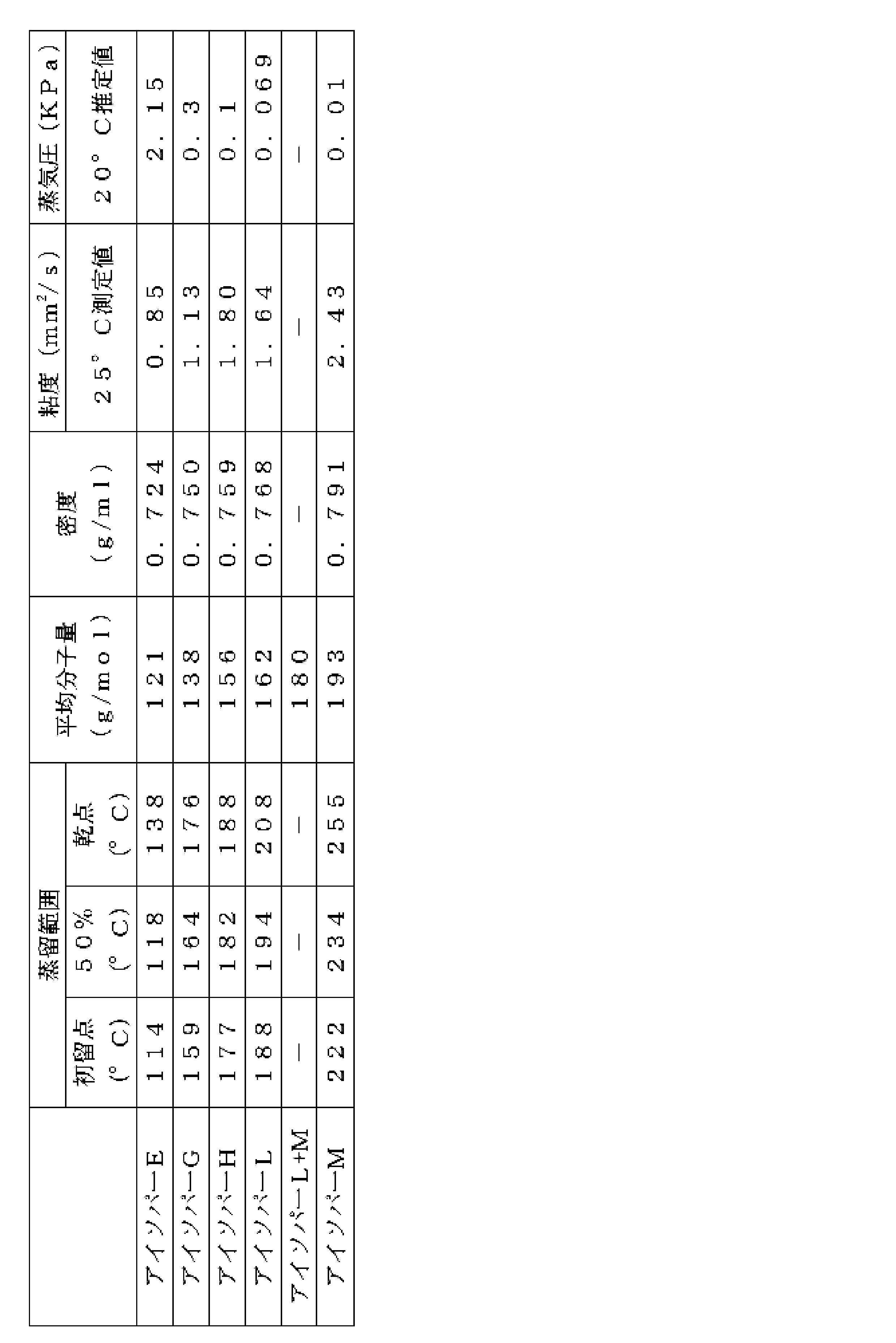
- Table 1 the isopars E to M differ in average molecular weight, density, viscosity and vapor pressure depending on the distillation temperature range. Note that Isopar L + M is a mixture of Isopar L and Isopar M so that the average molecular weight is 180 g / mol.
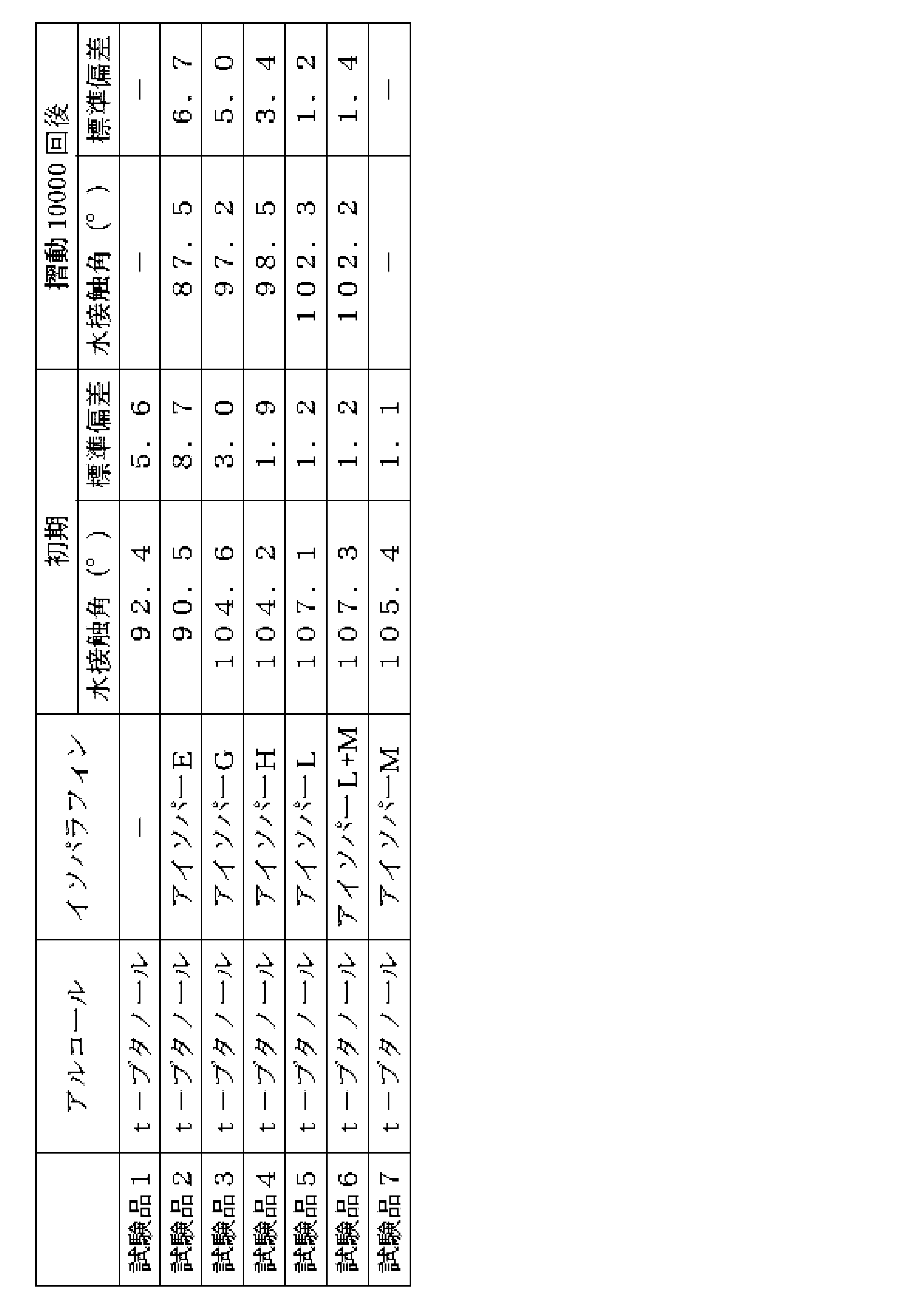
- the water contact angle is large and the standard deviation is small for the antifouling paints of test products 3 to 6 using isoper G, H, and L having an average molecular weight of 138 to 180 g / mol.
- the antifouling layer shields the hydroxyl groups present on the surface of the glaze layer and disables them.
- sanitary ware or the like that comes into contact with water containing soluble silica can exhibit antifouling properties without generating water stains over a long period of time, and thus can maintain aesthetics over a long period of time.
- Test 2 In addition to the silane coupling agent in Test 1, a coupling agent having a fluoroalkyl group (FA) in the main chain is prepared as the main agent.
- the solvent is t-butanol or t-butanol and Isopar L.
- the concentration of the main agent was 0.60% by mass or 0.15% by mass, and antifouling paints for test products 8 to 11 were obtained.
- the test product 10 and the test product 11 contain less than 5% hydrofluoroether (HRE-7200, manufactured by 3M Co., Ltd.) as a fluorinated solvent in order to ensure the stability of the antifouling paint.
- HRE-7200 hydrofluoroether
- the water contact angle (°), the water sliding angle (°), the oil sliding angle (°), and the oil sliding angle (°) were measured for the samples prepared with each antifouling paint.
- the water sliding angle is an inclination angle when the surface of the sample is inclined with respect to the horizontal plane and a 20 ⁇ l water droplet on the surface slides down. A smaller water sliding angle is more preferable.
- the oil sliding angle is an inclination angle when the surface of the sample is inclined with respect to the horizontal plane and a 20 ⁇ l oil droplet on the surface slides down. The smaller the oil sliding angle, the better.
- Table 3 The results are also shown in Table 3.
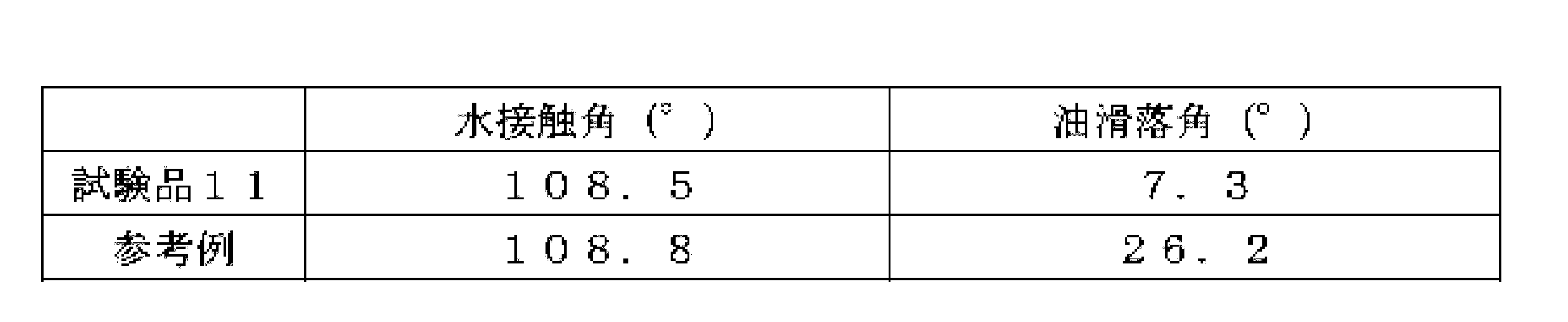
- Test 3 Using the antifouling paint of the test article 11 and the antifouling paint of the reference example employed in Example 1 of Japanese Patent No. 4226136, the water contact angle (°) and the oil sliding angle (°) were set in the same manner as in Test 2. It was measured.
- the antifouling paint of the reference example has a silane coupling agent concentration of 2.5% by mass. The results are shown in Table 4.
- the antifouling layer shields the hydroxyl group present on the surface of the glaze layer and disables it, and the antifouling layer is also less likely to be familiar with oil.
- the antifouling coating material of the test article 11 both the antifouling property based on water stain and the antifouling property based on oil content are easily improved in sanitary ware and the like that come into contact with oil together with water containing soluble silica. It can be seen that it is possible.
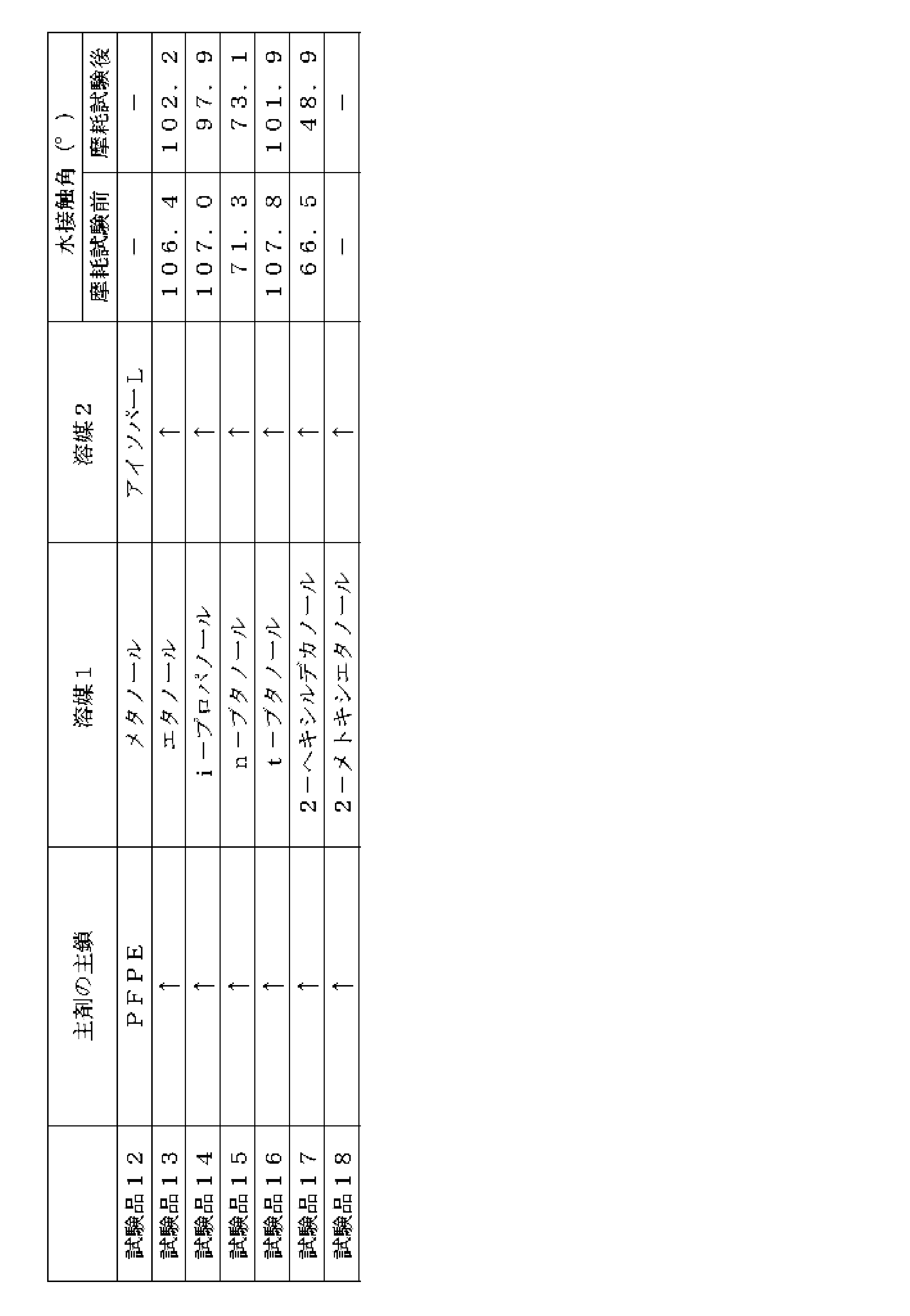
- Test 4 The performance of antifouling paints was compared by adopting Isopar L and various types of alcohol solvents for the silane coupling agent of Test 1.
- alcohol solvents methanol, ethanol, i-propanol, n-butanol, t-butanol, 2-hexyldecanol and 2-methoxyethanol were prepared.
- the antifouling paints having a large water contact angle were the test products 13 and 16 using ethanol or t-butanol as the solvent 1. Note that the antifouling paint of the test sample 15 using n-butanol as the solvent 1 had extremely large variation between samples, and the contact angle differed depending on the measurement point (position). It is considered that the contact angle became larger after the wear because of the difference in measurement points.
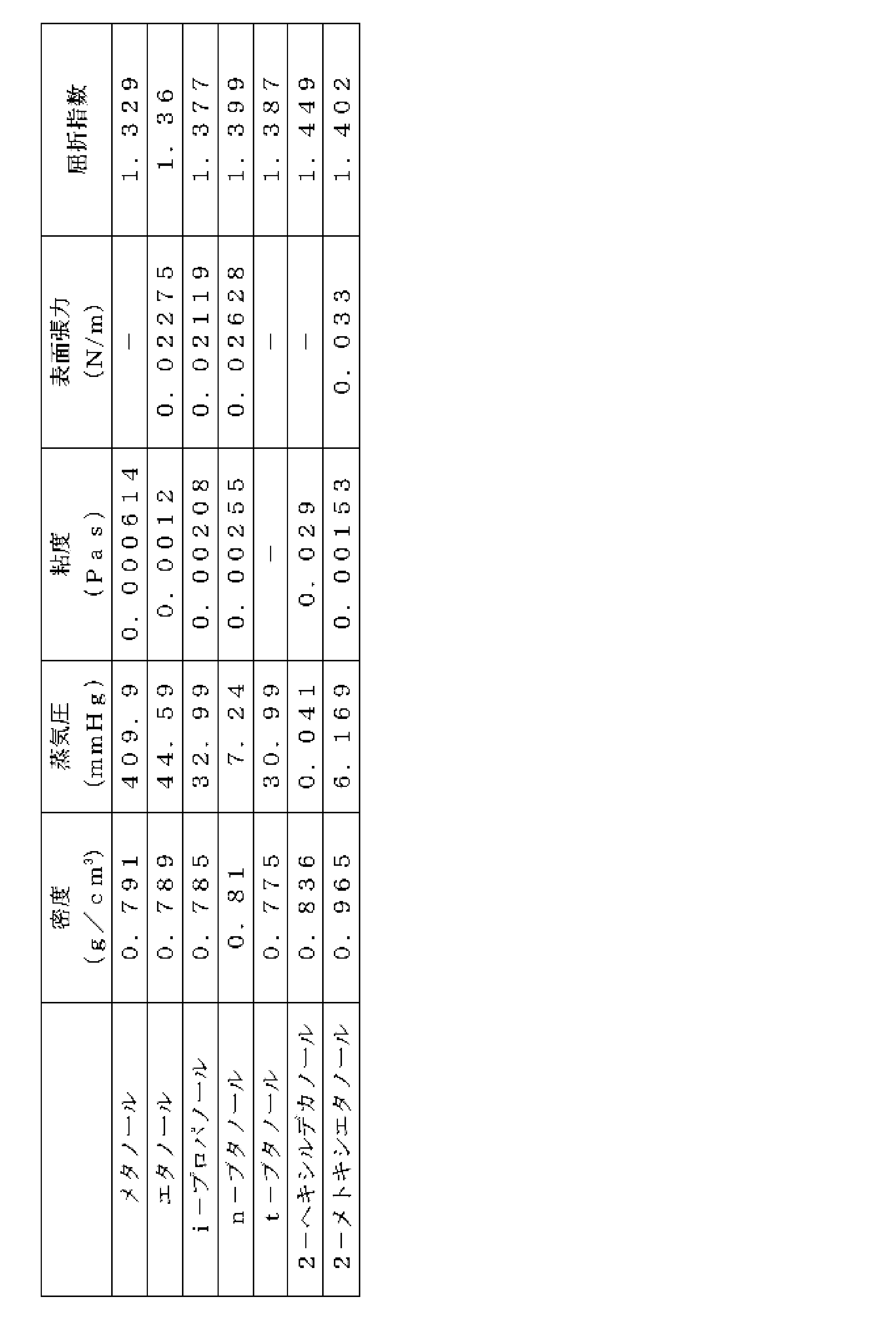
- the characteristic values of each alcohol are shown in Table 6 below.
- T-butanol and various types of alkane solvents were employed for the silane coupling agent of Test 1, and the performance of the antifouling paint was compared.
- alkane solvent n-hexane, n-heptane, n-decane, n-dodecane, n-pentadecane, n-hexadecane, toluene and Isopar L were prepared.
- the present invention can be used for sanitary ware such as flush toilets and washbasins and glass products.
Landscapes
- Chemical & Material Sciences (AREA)
- Engineering & Computer Science (AREA)
- Organic Chemistry (AREA)
- Materials Engineering (AREA)
- Ceramic Engineering (AREA)
- Life Sciences & Earth Sciences (AREA)
- Wood Science & Technology (AREA)
- Structural Engineering (AREA)
- Chemical Kinetics & Catalysis (AREA)
- General Chemical & Material Sciences (AREA)
- Geochemistry & Mineralogy (AREA)
- Paints Or Removers (AREA)
- Surface Treatment Of Glass (AREA)
- Dispersion Chemistry (AREA)
Abstract
Description

主剤として、シランカップリング剤(信越化学(株)製「X-71-107B(3)」)を用意する。このシランカップリング剤はパーフルオロポリエーテル(PFPE)を主鎖にもっている。また、t-ブタノール(和光純薬(株)製)と、5種のイソパラフィン(アイソパーE~M(エクソンモービル(株)製))とを用意する。アイソパーE~Mは、表1に示すように、蒸留温度範囲によって、平均分子量、密度、粘度及び蒸気圧が異なっている。なお、アイソパーL+Mは、平均分子量が180g/molになるようにアイソパーLとアイソパーMとを混合したものである。
主剤として、試験1のシランカップリング剤の他、フルオロアルキル基(FA)を主鎖にもつカップリング剤を用意する。溶媒は、t-ブタノール又はt-ブタノール及びアイソパーLである。表3に示すように、主剤の濃度を0.60質量%又は0.15質量%とし、試験品8~11の防汚塗料を得た。なお、試験品10及び試験品11には、防汚塗料の安定性確保のため、5%弱のハイドロフルオロエーテル(HRE-7200、3M(株)製)がフッ素系溶媒として含まれている。

試験品11の防汚塗料と、特許第4226136号公報の実施例1で採用した参考例の防汚塗料とを用い、試験2と同様に水接触角(°)及び油滑落角(°)を測定した。なお、参考例の防汚塗料はシランカップリング剤の濃度が2.5質量%である。結果を表4に示す。
試験1のシランカップリング剤に対してアイソパーL及び様々な種類のアルコール系溶媒を採用し、防汚塗料の性能を比較した。アルコール系溶媒としては、メタノール、エタノール、i-プロパノール、n-ブタノール、t-ブタノール、2-ヘキシルデカノール及び2-メトキシエタノールを用意した。
試験1のシランカップリング剤に対してt-ブタノール及び様々な種類のアルカン系溶媒を採用し、防汚塗料の性能を比較した。アルカン系溶媒としては、n-ヘキサン、n-ヘプタン、n-デカン、n-ドデカン、n-ペンタデカン、n-ヘキサデカン、トルエン及びアイソパーLを用意した。

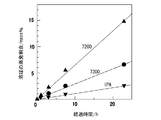
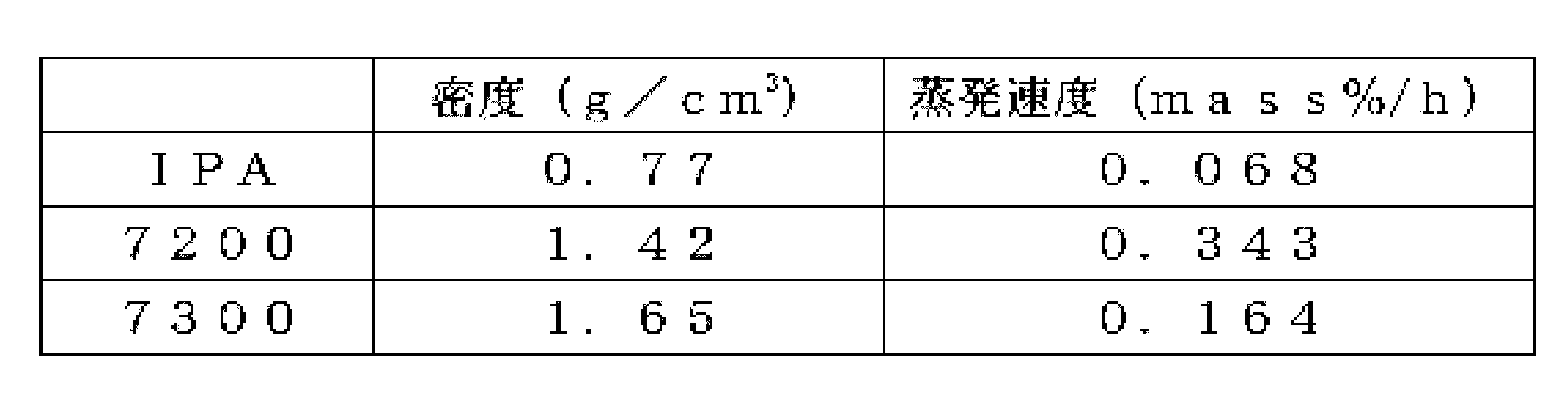
主剤であるシランカップリング剤(信越化学(株)製「X-71-107B(3)」)をフッ素系溶媒で希釈する場合の問題点及び注意点を確認した。2-プロパノール(IPA、和光純薬(株)製)の他、フッ素系溶媒として、ハイドロフルオロエーテル(HFE-7200、3M(株)製)及びハイドロフルオロエーテル(NOVEC7300、3M(株)製)を用意した。
Claims (7)
- パーフルオロポリエーテルからなる主剤と、アルカン及びアルコールを有する溶媒とを含み、該アルカンの平均分子量が138~180g/molであることを特徴とする防汚塗料。
- 塩酸を含む請求項1記載の防汚塗料。
- 前記溶媒がフッ素系溶媒を有する請求項1又は2記載の防汚塗料。
- 前記アルカンがイソパラフィンである請求項1乃至3のいずれか1項記載の防汚塗料。
- 前記アルコールがt-ブタノールである請求項1乃至4のいずれか1項記載の防汚塗料。
- 前記アルコールがエタノールである請求項1乃至4のいずれか1項記載の防汚塗料。
- 溶性シリカを含む水と接触し得るガラス層をもち、請求項1乃至6のいずれか1項記載の防汚塗料が該ガラス層の表面に塗布されていることを特徴とするガラス層をもつ製品。
Priority Applications (3)
| Application Number | Priority Date | Filing Date | Title |
|---|---|---|---|
| CA2766243A CA2766243A1 (en) | 2009-07-15 | 2010-06-07 | Stain-resistant coating material and product having glass layer |
| CN201080031641.3A CN102575125B (zh) | 2009-07-15 | 2010-06-07 | 防污涂料以及具有玻璃层的制品 |
| US13/382,632 US8865815B2 (en) | 2009-07-15 | 2010-06-07 | Stain-resistant coating material and product having glass layer |
Applications Claiming Priority (2)
| Application Number | Priority Date | Filing Date | Title |
|---|---|---|---|
| JP2009-166471 | 2009-07-15 | ||
| JP2009166471A JP5404225B2 (ja) | 2009-07-15 | 2009-07-15 | 防汚塗料及びガラス層をもつ製品 |
Publications (1)
| Publication Number | Publication Date |
|---|---|
| WO2011007630A1 true WO2011007630A1 (ja) | 2011-01-20 |
Family
ID=43449239
Family Applications (1)
| Application Number | Title | Priority Date | Filing Date |
|---|---|---|---|
| PCT/JP2010/059622 Ceased WO2011007630A1 (ja) | 2009-07-15 | 2010-06-07 | 防汚塗料及びガラス層をもつ製品 |
Country Status (7)
| Country | Link |
|---|---|
| US (1) | US8865815B2 (ja) |
| JP (1) | JP5404225B2 (ja) |
| KR (1) | KR20120062694A (ja) |
| CN (1) | CN102575125B (ja) |
| CA (1) | CA2766243A1 (ja) |
| TW (1) | TW201114859A (ja) |
| WO (1) | WO2011007630A1 (ja) |
Families Citing this family (7)
| Publication number | Priority date | Publication date | Assignee | Title |
|---|---|---|---|---|
| KR102001403B1 (ko) | 2012-02-09 | 2019-07-18 | 다우 코닝 도레이 캄파니 리미티드 | 구배 중합체 구조물 및 방법 |
| JP6808913B2 (ja) * | 2015-08-04 | 2021-01-06 | Dic株式会社 | コーティング組成物及び物品 |
| JP2017222165A (ja) * | 2016-06-10 | 2017-12-21 | 清水建設株式会社 | 型材およびコンクリート成形用型枠 |
| US20190300717A1 (en) | 2016-07-15 | 2019-10-03 | Nissan Motor Co., Ltd. | Antifouling structure precursor, antifouling structure, surface modification composition and surface modification method |
| CN113072866A (zh) * | 2021-03-10 | 2021-07-06 | 宁波威霖住宅设施有限公司 | 一种玻璃电子屏用表面自清洁涂料及其使用方法 |
| JP7743843B2 (ja) * | 2022-01-17 | 2025-09-25 | Toto株式会社 | 衛生陶器 |
| JP7743842B2 (ja) * | 2022-01-17 | 2025-09-25 | Toto株式会社 | 衛生陶器 |
Citations (3)
| Publication number | Priority date | Publication date | Assignee | Title |
|---|---|---|---|---|
| JPH1129585A (ja) * | 1997-07-04 | 1999-02-02 | Shin Etsu Chem Co Ltd | パーフルオロポリエーテル変性アミノシラン及び表面処理剤 |
| JPH1184103A (ja) * | 1997-09-12 | 1999-03-26 | Sony Corp | 反射防止フィルター及びその製造方法 |
| JP2000290089A (ja) * | 1999-04-02 | 2000-10-17 | Inax Corp | 水廻り窯業製品の防汚処理方法 |
Family Cites Families (2)
| Publication number | Priority date | Publication date | Assignee | Title |
|---|---|---|---|---|
| US7294731B1 (en) * | 2006-08-28 | 2007-11-13 | 3M Innovative Properties Company | Perfluoropolyether silanes and use thereof |
| KR100940086B1 (ko) * | 2007-12-13 | 2010-02-02 | 한국화학연구원 | 과불소 폴리에테르 변성 실란 화합물과 이를 함유한 방오성 코팅제 조성물 및 이를 적용한 막 |
-
2009
- 2009-07-15 JP JP2009166471A patent/JP5404225B2/ja active Active
-
2010
- 2010-06-07 US US13/382,632 patent/US8865815B2/en active Active
- 2010-06-07 WO PCT/JP2010/059622 patent/WO2011007630A1/ja not_active Ceased
- 2010-06-07 KR KR1020127002910A patent/KR20120062694A/ko not_active Withdrawn
- 2010-06-07 CA CA2766243A patent/CA2766243A1/en not_active Abandoned
- 2010-06-07 CN CN201080031641.3A patent/CN102575125B/zh not_active Expired - Fee Related
- 2010-07-01 TW TW099121641A patent/TW201114859A/zh unknown
Patent Citations (3)
| Publication number | Priority date | Publication date | Assignee | Title |
|---|---|---|---|---|
| JPH1129585A (ja) * | 1997-07-04 | 1999-02-02 | Shin Etsu Chem Co Ltd | パーフルオロポリエーテル変性アミノシラン及び表面処理剤 |
| JPH1184103A (ja) * | 1997-09-12 | 1999-03-26 | Sony Corp | 反射防止フィルター及びその製造方法 |
| JP2000290089A (ja) * | 1999-04-02 | 2000-10-17 | Inax Corp | 水廻り窯業製品の防汚処理方法 |
Also Published As
| Publication number | Publication date |
|---|---|
| KR20120062694A (ko) | 2012-06-14 |
| TW201114859A (en) | 2011-05-01 |
| CN102575125B (zh) | 2015-06-24 |
| US20120107623A1 (en) | 2012-05-03 |
| CA2766243A1 (en) | 2011-01-20 |
| JP2011021088A (ja) | 2011-02-03 |
| CN102575125A (zh) | 2012-07-11 |
| JP5404225B2 (ja) | 2014-01-29 |
| US8865815B2 (en) | 2014-10-21 |
Similar Documents
| Publication | Publication Date | Title |
|---|---|---|
| JP5404225B2 (ja) | 防汚塗料及びガラス層をもつ製品 | |
| CN105814139B (zh) | 含氟醚组合物、其制造方法、涂布液、具有表面处理层的基材及其制造方法 | |
| US11066517B2 (en) | Processes for producing fluorinated ether compounds | |
| US10865312B2 (en) | Surface treatment agent | |
| KR101801421B1 (ko) | 차량의 도장 표면용 코팅제 | |
| KR102526826B1 (ko) | 함불소 에테르 조성물, 코팅액 및 물품 | |
| TWI643914B (zh) | Fluorine-containing coating agent and articles treated by the coating agent | |
| JP6652203B2 (ja) | 含フッ素エーテル組成物、コーティング液および物品 | |
| US20190233587A1 (en) | Fluoroether composition, coating fluid and article | |
| US20230064344A1 (en) | Fluorosilicone surfactant, preparation method therefor and application thereof | |
| KR102587594B1 (ko) | 플루오로옥시알킬렌기 함유 중합체 변성 포스폰산 유도체, 해당 유도체를 포함하는 표면 처리제, 해당 표면 처리제로 처리된 물품 및 광학 물품 | |
| JP6758725B1 (ja) | 含フッ素シラン化合物、表面処理剤、及び該表面処理剤を用いた物品 | |
| CN106883441A (zh) | 一种氟化物改性聚乙烯醇薄膜 | |
| JP6635229B2 (ja) | 含フッ素エーテル化合物の製造方法、および物品の製造方法 | |
| KR20240095305A (ko) | 조성물, 표면 처리제, 코팅액, 물품, 및 물품의 제조 방법 | |
| JPWO2019087831A1 (ja) | 含フッ素エーテル化合物の製造方法、物品の製造方法 |
Legal Events
| Date | Code | Title | Description |
|---|---|---|---|
| WWE | Wipo information: entry into national phase |
Ref document number: 201080031641.3 Country of ref document: CN |
|
| 121 | Ep: the epo has been informed by wipo that ep was designated in this application |
Ref document number: 10799692 Country of ref document: EP Kind code of ref document: A1 |
|
| WWE | Wipo information: entry into national phase |
Ref document number: 2766243 Country of ref document: CA |
|
| WWE | Wipo information: entry into national phase |
Ref document number: 13382632 Country of ref document: US |
|
| NENP | Non-entry into the national phase |
Ref country code: DE |
|
| ENP | Entry into the national phase |
Ref document number: 20127002910 Country of ref document: KR Kind code of ref document: A |
|
| 122 | Ep: pct application non-entry in european phase |
Ref document number: 10799692 Country of ref document: EP Kind code of ref document: A1 |