WO2011004632A1 - 連携システム及び情報端末 - Google Patents
連携システム及び情報端末 Download PDFInfo
- Publication number
- WO2011004632A1 WO2011004632A1 PCT/JP2010/053192 JP2010053192W WO2011004632A1 WO 2011004632 A1 WO2011004632 A1 WO 2011004632A1 JP 2010053192 W JP2010053192 W JP 2010053192W WO 2011004632 A1 WO2011004632 A1 WO 2011004632A1
- Authority
- WO
- WIPO (PCT)
- Prior art keywords
- information
- modality
- patient
- cooperation
- information terminal
- Prior art date
- Legal status (The legal status is an assumption and is not a legal conclusion. Google has not performed a legal analysis and makes no representation as to the accuracy of the status listed.)
- Ceased
Links
Images





Classifications
-
- G—PHYSICS
- G06—COMPUTING OR CALCULATING; COUNTING
- G06Q—INFORMATION AND COMMUNICATION TECHNOLOGY [ICT] SPECIALLY ADAPTED FOR ADMINISTRATIVE, COMMERCIAL, FINANCIAL, MANAGERIAL OR SUPERVISORY PURPOSES; SYSTEMS OR METHODS SPECIALLY ADAPTED FOR ADMINISTRATIVE, COMMERCIAL, FINANCIAL, MANAGERIAL OR SUPERVISORY PURPOSES, NOT OTHERWISE PROVIDED FOR
- G06Q10/00—Administration; Management
- G06Q10/10—Office automation; Time management
-
- G—PHYSICS
- G16—INFORMATION AND COMMUNICATION TECHNOLOGY [ICT] SPECIALLY ADAPTED FOR SPECIFIC APPLICATION FIELDS
- G16H—HEALTHCARE INFORMATICS, i.e. INFORMATION AND COMMUNICATION TECHNOLOGY [ICT] SPECIALLY ADAPTED FOR THE HANDLING OR PROCESSING OF MEDICAL OR HEALTHCARE DATA
- G16H10/00—ICT specially adapted for the handling or processing of patient-related medical or healthcare data
- G16H10/60—ICT specially adapted for the handling or processing of patient-related medical or healthcare data for patient-specific data, e.g. for electronic patient records
-
- G—PHYSICS
- G16—INFORMATION AND COMMUNICATION TECHNOLOGY [ICT] SPECIALLY ADAPTED FOR SPECIFIC APPLICATION FIELDS
- G16H—HEALTHCARE INFORMATICS, i.e. INFORMATION AND COMMUNICATION TECHNOLOGY [ICT] SPECIALLY ADAPTED FOR THE HANDLING OR PROCESSING OF MEDICAL OR HEALTHCARE DATA
- G16H30/00—ICT specially adapted for the handling or processing of medical images
- G16H30/20—ICT specially adapted for the handling or processing of medical images for handling medical images, e.g. DICOM, HL7 or PACS
-
- G—PHYSICS
- G16—INFORMATION AND COMMUNICATION TECHNOLOGY [ICT] SPECIALLY ADAPTED FOR SPECIFIC APPLICATION FIELDS
- G16H—HEALTHCARE INFORMATICS, i.e. INFORMATION AND COMMUNICATION TECHNOLOGY [ICT] SPECIALLY ADAPTED FOR THE HANDLING OR PROCESSING OF MEDICAL OR HEALTHCARE DATA
- G16H40/00—ICT specially adapted for the management or administration of healthcare resources or facilities; ICT specially adapted for the management or operation of medical equipment or devices
- G16H40/60—ICT specially adapted for the management or administration of healthcare resources or facilities; ICT specially adapted for the management or operation of medical equipment or devices for the operation of medical equipment or devices
- G16H40/67—ICT specially adapted for the management or administration of healthcare resources or facilities; ICT specially adapted for the management or operation of medical equipment or devices for the operation of medical equipment or devices for remote operation
-
- G—PHYSICS
- G16—INFORMATION AND COMMUNICATION TECHNOLOGY [ICT] SPECIALLY ADAPTED FOR SPECIFIC APPLICATION FIELDS
- G16H—HEALTHCARE INFORMATICS, i.e. INFORMATION AND COMMUNICATION TECHNOLOGY [ICT] SPECIALLY ADAPTED FOR THE HANDLING OR PROCESSING OF MEDICAL OR HEALTHCARE DATA
- G16H80/00—ICT specially adapted for facilitating communication between medical practitioners or patients, e.g. for collaborative diagnosis, therapy or health monitoring
Definitions
- the present invention relates to a linkage system and an information terminal.
- Japanese Patent Application Laid-Open No. 2008-188329 discloses a technique for recording medical information such as medical images obtained at one medical institution on the medium so that it can be easily viewed at other medical institutions. Has been. According to this technology, medical information can be linked between different medical institutions.
- Japanese Patent Laid-Open No. 2008-188329 does not describe any cooperation until a medical image is generated. Until a medical image is generated, the following series of steps are performed.
- Patient information is registered at a terminal (receipt computer) installed in the reception room. Registration of patient information is performed by a receptionist.
- Patient information is registered by a modality installed in the examination room, and a medical image of the patient is generated. Registration of patient information is performed by a person in charge of examination.
- the generated medical image is browsed by an information terminal installed in the examination room. Browsing of medical images is performed by a doctor or a specialized interpretation doctor.
- each of the steps (1) to (3) is processed by one doctor or a small number of doctors. Since each process is processed by a unique terminal / device, there is no cooperation, and the doctor needs a complicated work to input the same patient information and examination information many times for each process. Further, in order to save power, the power of terminals / devices that are not used is turned off. However, if the power is turned on each time the device is used and the terminal / device is started up, work efficiency decreases.
- An object of the present invention is to provide a linkage system including an information terminal that generates linkage information and a modality that registers patient information or examination information based on the linkage information.
- a cooperative system including an information terminal and a modality connected to the information terminal,
- the information terminal generates linkage information including patient information or examination information
- the modality acquires the generated linkage information, registers patient information or examination information of a patient to be imaged based on the acquired linkage information, displays a display screen at the start of imaging, and waits.
- a linkage system is provided.
- An image capture button for obtaining a medical image of a patient to be imaged;
- a communication unit connected to the modality;
- the image capture button is pressed, it is checked whether the power of the modality is on. If the power is not on, the power is turned on by a power interlock command and patient information or examination information of the patient to be imaged
- a control unit that stores linkage information including Is provided.
- the information terminal can generate linkage information, and the modality can automatically register patient information or examination information based on the linkage information to display a display screen at the start of imaging. . That is, imaging can be started immediately without the need to re-enter patient information or the like input / confirmed with a receipt computer or an information terminal. It is possible to reduce complicated operations and prevent input errors.
- FIG. 1 shows a configuration of the cooperation system 100.
- the cooperation system 100 includes a receipt computer 10, an information terminal 20, a modality 30, and the like.
- Each device (10 to 30) is communicably connected via a LAN.
- As the communication standard for example, HL7 or DICOM MWM (Modality Worklist Management) is used.
- the receipt computer 10 is a general PC (Personal Computer).
- the receipt computer 10 is installed in the reception room, registers patient information, and transmits the registered patient information to the information terminal 20 or the modality 30.
- Patient information is information including patient ID, name, date of birth, sex, etc., and refers to information that identifies a patient.
- the information terminal 20 is a terminal having a function as a general PC and a function of acquiring / managing medical images.
- the information terminal 20 receives or registers patient information and receives or registers examination information.
- Inspection information is information including an inspection ID, an inspection mode, a probe type (only when performing ultrasonic diagnosis), an image processing parameter, and the like, and is information that specifies an inspection.
- the information terminal 20 is installed in the examination room, and outputs patient information or examination information (hereinafter referred to as “cooperation information”) to a shared folder.
- the shared folder may be provided in the information terminal 20, or may be provided in a storage medium that is connected to the LAN and installed outside.
- one information terminal 20 is installed in the examination room.
- the present invention is not limited to this.
- two information terminals 20 may be installed in the examination room, or one of the two terminals may be installed. It may be installed in an examination room.
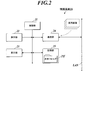
- FIG. 2 shows a functional configuration of the information terminal 20.
- the information terminal 20 includes a control unit 21, an operation unit 22, a display unit 23, a communication unit 24, a storage unit 25, and the like.
- the control unit 21 includes a CPU (Central Processing Unit), a RAM (Random Access Memory), and the like.
- the control unit 21 performs various calculations in cooperation with a program stored in the storage unit 25, and centrally controls the operations of the units (22 to 25).
- the operation unit 22 includes a keyboard, a mouse, and the like.
- the operation unit 22 generates an operation signal by a user operation, and outputs the generated operation signal to the control unit 21.
- the display unit 23 includes a display and the like, and displays various operation screens and medical images according to display control from the control unit 21.
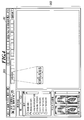
- a screen D ⁇ b> 1 in FIG. 3 is a list screen that displays patient information registered by the receipt computer 10. A similar screen is also displayed on the receipt computer 10.
- a list of patient information transmitted from the receipt computer 10 is displayed in a lower area D11 of the screen D1.
- a lower area D11 of the screen D1 In the upper area D12 of the screen D1, detailed patient information of one patient selected in the area D11 is displayed.
- a screen D2 in FIG. 4 is a viewer screen of the patient selected on the screen D1.
- a button indicating the type of modality is displayed in an area D21 at the top of the screen D2.
- the button in the area D21 functions as an image capture button.
- any button (for example, US) in the area D21 is pressed, a medical image captured by the ultrasonic diagnostic apparatus (US apparatus) is displayed in the area D22.
- the screen D3 in FIG. 5 is a patient viewer screen when the medical image is captured by pressing the image capture button in the region D21.
- the communication unit 24 includes a communication interface and the like.
- the communication unit 24 receives patient information from the receipt computer 10 installed on the same network. Further, the communication unit 24 receives a medical image from the modality 30.
- the storage unit 25 includes a nonvolatile semiconductor memory such as a ROM (Read Only Memory).
- the storage unit 25 stores system programs and various processing programs, and stores data obtained by various processes.
- the storage unit 25 stores the medical image received by the communication unit 24.
- the storage unit 25 includes a shared folder 25f.
- the shared folder 25f stores the cooperation information generated by the control unit 21.
- the modality 30 is an apparatus that captures medical images, such as a general imaging apparatus (CR apparatus) 31, an ultrasonic diagnostic apparatus (US apparatus) 32, and an endoscope imaging apparatus (ES apparatus) 33.
- the modality 30 is installed in the examination room 1 or the examination room 2.
- the modality 30 Based on the cooperation information stored in the shared folder 25f by the information terminal 20, the modality 30 displays a display screen at the start of shooting on a display unit (not shown) and stands by. Normally, a display screen at the start of imaging is displayed after patient information and examination information are input by a user operation.
- the modality 30 images the patient on the imaging screen and transmits the obtained medical image to the information terminal 20.
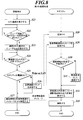
- the first linkage process will be described with reference to FIG. First, processing on the information terminal 20 side will be described.
- the control unit 21 displays a list screen (FIG. 3; D1) on the display unit 23 (step S1).
- the control unit 21 determines whether one patient to be displayed on the viewer screen (FIG. 4; D2) has been selected (step S2).
- step S2; N If not selected (step S2; N), the control unit 21 maintains the display of the list screen. When selected (step S2; Y), the control unit 21 displays a viewer screen of the selected patient (step S3).
- the medical image of the patient is not yet displayed on the viewer screen displayed in step S3.
- the image capture button (FIG. 4; D21) is pressed, a medical image of the patient is displayed on the viewer screen.
- the control unit 21 determines whether or not the image capture button has been pressed (step S4). When not pressed (step S4; N), the control unit 21 maintains the display of the viewer screen. When pressed (step S4; Y), the control unit 21 determines whether or not the power of the modality 30 is ON (step S5).
- a command such as ping or ACK is used to determine whether the power of the modality 30 is ON.
- a special protocol determined in advance between the information terminal 20 and the modality 30 may be used.
- step S5 When the power of the modality 30 is not ON (step S5; N), the control unit 21 transmits a power supply interlock command (Wake on LAN) to the modality 30 (step S6). After the transmission, the process proceeds to step S7.
- a power supply interlock command (Wake on LAN)
- the control unit 21 stores the cooperation information in the shared folder 25f (step S7), and ends the processing on the information terminal side.
- the linkage information is information including patient information or examination information as described above.
- the modality 30 receives the power supply interlocking command and turns on the power (step S8).
- the modality 30 always executes the linkage information monitoring process when the power is on (step S9).
- the modality 30 acquires predetermined linkage information stored in the folder according to the path of the shared folder 25f.
- the modality 30 determines whether or not the patient registered as the imaging target in the cooperation information is also registered in the modality 30 (step S10).
- step S10 the modality 30 registers the patient specified in the cooperation information as a new patient (step S11). After registration, the process proceeds to step S12.
- step S10 When there is a registered patient (step S10; Y), the modality 30 displays a display screen at the start of imaging for the registered patient on a display unit (not shown) (step S12).
- the display screen at the start of imaging is usually a screen that is displayed after patient information or examination information is input and registered by the user in the modality 30.
- the modality 30 automatically inputs patient information or examination information based on the linkage information and displays an imaging screen.
- the modality 30 maintains the display on the display screen at the start of photographing, performs photographing when a predetermined photographing button or the like is pressed (step S13), and ends the processing on the modality 30 side.
- the cooperation system 100 ends the first cooperation processing.
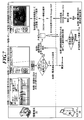
- FIG. 7 shows a conceptual diagram of the first linkage processing. First, processing (1 to 6) on the information terminal 20 side will be described.
- a list screen is displayed (process 1), and when one patient is selected, the display is switched to the viewer screen (process 2).
- processing (7, 8) on the modality 30 side will be described.
- the power interlock command is received and the power is turned on.
- the linkage information monitoring process is executed, and linkage information is acquired (processing 7).
- a display screen at the start of imaging is displayed for the patient to be imaged (process 8). Thereafter, the medical image that is captured and confirmed is transmitted to the information terminal 20.
- the information terminal 20 receives a medical image or confirms patient information, and finally displays the medical image on the viewer screen (process 9).
- the second linkage process will be described with reference to FIG.
- the second cooperation process is different from the first cooperation process in that the information terminal 20 transmits the cooperation information to the modality 30 using the patient information notification message. Specific processing will be described below.
- Steps S21 to S26 are the same as steps S1 to S6 of the first linkage process, so description here is omitted.
- the control unit 21 transmits the cooperation information to the modality 30 through a patient information notification message (step S27).
- the patient information notification message is, for example, an HL7 ADT message.
- HL7 is a standard format used when electronic data of healthcare related information is exchanged between different systems.
- linkage information can be exchanged between different systems (here, between the information terminal 20 and the modality 30).
- the modality 30 receives the power link command and turns on the power (step S28), and then receives the patient information notification message (step S29). Note that the modality 30 transmits an HL7 ACK message (patient information notification response message) to the information terminal 20 when receiving the HL7 ADT message.
- Steps S30 to S33 are the same as steps S10 to S13 of the first linkage process, and thus description thereof is omitted here.
- the cooperation system 100 ends the second cooperation processing.
- the third linkage process is similar to the first linkage process in that the information terminal 20 outputs the linkage information to the shared folder 25f, and the modality 30 makes an inquiry about examination reservation information by DICOMMWM. Different. Specific processing will be described below.
- Steps S41 to S49 are the same as steps S1 to S9 of the first linkage process, and thus description thereof is omitted here.
- the modality 30 makes an inquiry using DICOM MWM, and acquires examination reservation information from the information terminal 20 (step S50).
- the modality 30 determines whether the patient registered in the acquired examination reservation information is also registered in the modality 30 (step S51).
- Steps S52 to S54 are the same as steps S11 to S13 of the first linkage process, and thus description thereof is omitted here. As described above, the cooperation system 100 ends the third cooperation processing.
- the information terminal 20 can generate linkage information.
- the modality 30 can automatically register the patient information or examination information of the patient to be imaged based on the cooperation information, and can display and display a display screen at the time of imaging start.
- the information terminal 20 can turn on the power of the modality 30 when taking a medical image.
- the information terminal 20 can store the cooperation information in the shared folder 25f when taking the medical image.
- the modality 30 can acquire cooperation information from the shared folder 25f.
- the information terminal 20 can cause the modality 30 to acquire examination reservation information in response to an inquiry from the modality 30.
- the modality 30 can automatically register patient information or examination information of a patient to be imaged based on examination reservation information and linkage information, and can display and display a display screen at the start of imaging.
- the information terminal 20 can cause the modality to acquire cooperation information by a patient notification message (HL7 ADT message) when taking a medical image.
- the modality 30 can acquire cooperation information by a patient notification message.
- the patient information is information including any or all of the patient ID, name, date of birth, or gender, and the examination information is any or all of the examination ID, examination mode, probe type, or image processing parameter. It is information including. Information other than this may be included.
- the present invention can be used in the medical field and can be applied to an information terminal having a function of acquiring / managing medical images. Further, the present invention can be applied to a cooperation system in which this information terminal and modality are connected.
Landscapes
- Engineering & Computer Science (AREA)
- Health & Medical Sciences (AREA)
- Business, Economics & Management (AREA)
- General Health & Medical Sciences (AREA)
- Epidemiology (AREA)
- Medical Informatics (AREA)
- Primary Health Care (AREA)
- Public Health (AREA)
- General Business, Economics & Management (AREA)
- Entrepreneurship & Innovation (AREA)
- Strategic Management (AREA)
- Human Resources & Organizations (AREA)
- Biomedical Technology (AREA)
- Data Mining & Analysis (AREA)
- Radiology & Medical Imaging (AREA)
- Nuclear Medicine, Radiotherapy & Molecular Imaging (AREA)
- Economics (AREA)
- Marketing (AREA)
- Operations Research (AREA)
- Quality & Reliability (AREA)
- Tourism & Hospitality (AREA)
- Physics & Mathematics (AREA)
- General Physics & Mathematics (AREA)
- Theoretical Computer Science (AREA)
- Measuring And Recording Apparatus For Diagnosis (AREA)
- Medical Treatment And Welfare Office Work (AREA)
Abstract
Description
特開2008-188329号公報には、一の医療機関で得られた医用画像等の医療情報をメディアに記録する際、他の医療機関でも容易に閲覧し得るようにメディアに記録する技術が開示されている。この技術によれば、異なる医療機関同士で医療情報の連携を図ることができる。
(2)検査室に設置されたモダリティにて、患者情報が登録され、該患者の医用画像が生成される。患者情報の登録は検査担当者により行われる。
(3)診察室に設置された情報端末にて、生成された医用画像が閲覧される。医用画像の閲覧は医師又は専門の読影医により行われる。
また、節電のため、使用していない端末/装置の電源はOFFにされるが、使用する度に電源をONにし、端末/装置が立ち上がるまで待つとなると作業効率が低下する。
情報端末と、当該情報端末に接続されるモダリティと、を含む連携システムであって、
前記情報端末は、患者情報又は検査情報を含む連携情報を生成し、
前記モダリティは、前記生成された連携情報を取得し、当該取得された連携情報に基づいて撮影対象の患者の患者情報又は検査情報について登録を行い、撮影開始時の表示画面を表示して待機する連携システムが提供される。
撮影対象の患者の医用画像を取得するための画像取り込みボタンと、
モダリティに接続される通信部と、
前記画像取り込みボタンの押下時に、前記モダリティの電源がONであるか否かを確認し、電源がONでない場合は電源連動コマンドにより電源をONにするとともに前記撮影対象の患者の患者情報又は検査情報を含む連携情報を共有フォルダに格納する制御部と、
を備えた情報端末が提供される。
連携システム100は、レセプトコンピュータ10、情報端末20、モダリティ30等を備えて構成される。
各装置(10~30)は、LANにより通信可能に接続されている。通信規格は、例えばHL7又はDICOM MWM(Modality Worklist Management)等が用いられる。
レセプトコンピュータ10は受付室に設置され、患者情報を登録し、登録された患者情報を情報端末20又はモダリティ30に送信する。
情報端末20は、患者情報を受信又は登録し、検査情報を受信又は登録する。
共有フォルダは情報端末20が備えることとしてもよいし、LAN接続されて外部に設置される記憶媒体が備えることとしてもよい。
情報端末20は、制御部21、操作部22、表示部23、通信部24、記憶部25等を備えて構成される。
制御部21は、記憶部25に記憶されているプログラムとの協働により各種演算を行い、各部(22~25)の動作を集中制御する。
操作部22は、ユーザの操作により操作信号を生成し、生成された操作信号を制御部21に出力する。
図3の画面D1は、レセプトコンピュータ10により登録された患者情報を表示するリスト画面である。なお、レセプトコンピュータ10においても同様の画面が表示される。
画面D1の上段の領域D12には、領域D11において選択された一の患者の詳細な患者情報が表示される。
画面D2の上部にある領域D21には、モダリティの種類を示すボタンが表示される。領域D21のボタンは、画像取り込みボタンとして機能する。
領域D21の何れかのボタン(例えば、US)が押下されると、領域D22に超音波診断装置(US装置)により撮影された医用画像が表示される。
通信部24は、同一ネットワーク上に設置されているレセプトコンピュータ10から患者情報を受信する。また、通信部24はモダリティ30から医用画像を受信する。
記憶部25は、システムプログラムや各種処理プログラムを記憶し、各種処理により得られたデータ等を記憶する。また、記憶部25は、通信部24により受信された医用画像を記憶する。
共有フォルダ25fは、制御部21により生成された連携情報を格納する。
モダリティ30は検査室1又は検査室2に設置される。
なお、通常であれば、撮影開始時の表示画面は患者情報及び検査情報がユーザの操作により入力された後に表示される。
まず、情報端末20側の処理について説明する。
制御部21は、ビューア画面(図4;D2)で表示する一の患者が選択されたか否か判断する(ステップS2)。
選択された場合(ステップS2;Y)、制御部21は、選択された患者のビューア画面を表示する(ステップS3)。
押下されていない場合(ステップS4;N)、制御部21は、ビューア画面の表示を維持する。
押下された場合(ステップS4;Y)、制御部21は、モダリティ30の電源がONであるか否か判断する(ステップS5)。
送信後はステップS7に移行する。
なお、連携情報とは既述したように、患者情報又は検査情報を含む情報である。
ここでは、処理開始前のモダリティ30の電源がOFFである場合について述べる。
モダリティ30は、電源ONの状態では常時、連携情報監視プロセスを実行する(ステップS9)。
登録後はステップS12に移行する。
ここでは、モダリティ30は連携情報に基づいて患者情報又は検査情報を自動的に入力して撮影画面を表示する。
以上により、連携システム100は、第1の連携処理を終了する。
まず、情報端末20側での処理(1~6)について説明する。
モダリティ30側では、電源OFF時の場合には電源連動コマンドが受信されて電源がONになる。
連携情報監視プロセスが実行され、連携情報が取得される(処理7)。
その後撮影され、確定された医用画像が情報端末20に送信される。
第2の連携処理は、第1の連携処理と比較して、情報端末20が患者情報通知メッセージを用いてモダリティ30に連携情報を送信する点で異なる。以下、具体的な処理について説明する。
HL7 ADTメッセージによれば、連携情報を異なるシステム間(ここでは情報端末20とモダリティ30間)で交換することができる。
なお、モダリティ30は、HL7 ADTメッセージを受信した場合、HL7 ACKメッセージ(患者情報通知応答メッセージ)を情報端末20に送信する。
以上により、連携システム100は第2の連携処理を終了する。
第3の連携処理は、第1の連携処理と比較して、情報端末20が連携情報を共有フォルダ25fに出力する点で同様であり、モダリティ30がDICOMMWMにより検査予約情報の問合せを行う点で異なる。以下、具体的な処理について説明する。
モダリティ30は、取得された検査予約情報で登録されている患者がモダリティ30でも登録されているか否か判断する(ステップS51)。
以上により、連携システム100は第3の連携処理を終了する。
10 レセプトコンピュータ
20 情報端末
21 制御部
22 操作部
23 表示部
24 通信部
25 記憶部
25f 共有フォルダ
30 モダリティ
Claims (10)
- 情報端末と、当該情報端末に接続されるモダリティと、を含む連携システムであって、
前記情報端末は、患者情報又は検査情報を含む連携情報を生成し、
前記モダリティは、前記生成された連携情報を取得し、当該取得された連携情報に基づいて撮影対象の患者の患者情報又は検査情報について登録を行い、撮影開始時の表示画面を表示して待機する連携システム。 - 前記情報端末は、医用画像の取り込み時に、前記モダリティの電源がONであるか否かを確認し、電源がONでない場合は電源連動コマンドにより電源をONにする請求の範囲第1項に記載の連携システム。
- 前記情報端末は、医用画像の取り込み時に、共有フォルダに前記連携情報を格納し、
前記モダリティは、電源ON時において前記共有フォルダを常時監視し、前記連携情報が前記共有フォルダに格納された際には当該格納された連携情報を取得し、当該取得された連携情報に基づいて前記撮影対象の患者の患者情報又は検査情報について登録を行い、撮影開始時の表示画面を表示して待機する請求の範囲第1項又は第2項に記載の連携システム。 - 前記情報端末は、前記モダリティからの問合せに応じて検査予約情報を前記モダリティに取得させ、
前記モダリティは、前記検査予約情報を取得し、当該取得された検査予約情報及び前記連携情報に基づいて前記撮影対象の患者の患者情報又は検査情報について登録を行い、撮影開始時の表示画面を表示して待機する請求の範囲第1項~第3項の何れか一項に記載の連携システム。 - 前記情報端末は、医用画像の取り込み時に、患者情報通知メッセージによって前記連携情報を前記モダリティに取得させ、
前記モダリティは、前記連携情報を取得し、当該取得された連携情報に基づいて前記撮影対象の患者の患者情報又は検査情報について登録を行い、撮影開始時の表示画面を表示して待機する請求の範囲第1項~第4項の何れか一項に記載の連携システム。 - 前記患者情報は、前記モダリティにより撮影される患者の患者ID、氏名、生年月日、又は性別のうち、何れか又は全てを含み、
前記検査情報は、前記モダリティにより撮影される際の検査ID、検査モード、プローブ種別又は画像処理パラメータのうち、何れか又は全てを含む請求の範囲第1項~第5項の何れか一項に記載の連携システム。 - 撮影対象の患者の医用画像を取得するための画像取り込みボタンと、
モダリティに接続される通信部と、
前記画像取り込みボタンの押下時に、前記モダリティの電源がONであるか否かを確認し、電源がONでない場合は電源連動コマンドにより電源をONにするとともに前記撮影対象の患者の患者情報又は検査情報を含む連携情報を共有フォルダに格納する制御部と、
を備えた情報端末。 - 前記制御部は、前記モダリティからの問合せに応じて検査予約情報を前記モダリティに取得させる請求の範囲第7項に記載の情報端末。
- 前記制御部は、前記画像取り込みボタンの押下時に、患者情報通知メッセージによって前記連携情報を前記モダリティに取得させる請求の範囲第7項又は第8項に記載の情報端末。
- 前記患者情報は、前記モダリティにより撮影される患者の患者ID、氏名、生年月日、又は性別のうち、何れか又は全てを含み、
前記検査情報は、前記モダリティにより撮影される際の検査ID、検査モード、プローブ種別又は画像処理パラメータのうち、何れか又は全てを含む請求の範囲第7項~第9項の何れか一項に記載の情報端末。
Priority Applications (2)
| Application Number | Priority Date | Filing Date | Title |
|---|---|---|---|
| US13/382,408 US20120116818A1 (en) | 2009-07-06 | 2010-03-01 | Cooperation system and information terminal |
| JP2011521842A JPWO2011004632A1 (ja) | 2009-07-06 | 2010-03-01 | 連携システム及び情報端末 |
Applications Claiming Priority (2)
| Application Number | Priority Date | Filing Date | Title |
|---|---|---|---|
| JP2009159465 | 2009-07-06 | ||
| JP2009-159465 | 2009-07-06 |
Publications (1)
| Publication Number | Publication Date |
|---|---|
| WO2011004632A1 true WO2011004632A1 (ja) | 2011-01-13 |
Family
ID=43429058
Family Applications (1)
| Application Number | Title | Priority Date | Filing Date |
|---|---|---|---|
| PCT/JP2010/053192 Ceased WO2011004632A1 (ja) | 2009-07-06 | 2010-03-01 | 連携システム及び情報端末 |
Country Status (3)
| Country | Link |
|---|---|
| US (1) | US20120116818A1 (ja) |
| JP (1) | JPWO2011004632A1 (ja) |
| WO (1) | WO2011004632A1 (ja) |
Cited By (1)
| Publication number | Priority date | Publication date | Assignee | Title |
|---|---|---|---|---|
| JP2015156069A (ja) * | 2014-02-20 | 2015-08-27 | 株式会社東芝 | 医用情報処理装置および自動起動装置 |
Families Citing this family (1)
| Publication number | Priority date | Publication date | Assignee | Title |
|---|---|---|---|---|
| JP2024033139A (ja) * | 2022-08-30 | 2024-03-13 | キヤノンメディカルシステムズ株式会社 | 医用情報システム及び医用画像診断装置 |
Citations (6)
| Publication number | Priority date | Publication date | Assignee | Title |
|---|---|---|---|---|
| JP2000148894A (ja) * | 1998-11-17 | 2000-05-30 | Toshiba Corp | 医用画像情報管理機構 |
| JP2000308631A (ja) * | 1999-04-27 | 2000-11-07 | Canon Inc | 画像処理装置およびその方法、画像処理システム、記憶媒体 |
| JP2004147907A (ja) * | 2002-10-31 | 2004-05-27 | Konica Minolta Holdings Inc | 医用画像撮影システム、医用画像撮影装置、医用画像撮影方法及びプログラム |
| JP2006085521A (ja) * | 2004-09-17 | 2006-03-30 | Hitachi Ltd | 情報伝達方法及びホスト装置 |
| JP2008006001A (ja) * | 2006-06-28 | 2008-01-17 | Sharp Corp | 制御装置、そのプログラムおよび該プログラムを記録したコンピュータ読取り可能な記録媒体、診断システムならびに制御装置における制御方法 |
| JP2009512367A (ja) * | 2005-10-21 | 2009-03-19 | アンドリュー チェウン | デジタル信号をコンピュータに遠隔的に送信するためのシステム、方法、及びコンピュータプログラム |
Family Cites Families (6)
| Publication number | Priority date | Publication date | Assignee | Title |
|---|---|---|---|---|
| JPH10164437A (ja) * | 1996-11-26 | 1998-06-19 | Canon Inc | 放射線撮像装置及び放射線撮像素子の駆動方法 |
| US5867561A (en) * | 1997-07-30 | 1999-02-02 | General Electric Company | Medical diagnostic imaging system with power conserving control apparatus |
| US7558440B2 (en) * | 1998-09-30 | 2009-07-07 | Canon Kabushiki Kaisha | Image processing apparatus and method, photographing system, controlling method for the system, and computer-readable memory |
| JP3854766B2 (ja) * | 1999-12-06 | 2006-12-06 | キヤノン株式会社 | 画像処理装置、画像処理システム、画像配置方法及びコンピュータ読み取り可能な記録媒体 |
| JP4479315B2 (ja) * | 2003-06-19 | 2010-06-09 | コニカミノルタエムジー株式会社 | 画像処理方法および画像処理装置ならびに画像処理プログラム |
| JP5042887B2 (ja) * | 2008-03-06 | 2012-10-03 | 富士フイルム株式会社 | 放射線画像撮影装置 |
-
2010
- 2010-03-01 WO PCT/JP2010/053192 patent/WO2011004632A1/ja not_active Ceased
- 2010-03-01 US US13/382,408 patent/US20120116818A1/en not_active Abandoned
- 2010-03-01 JP JP2011521842A patent/JPWO2011004632A1/ja active Pending
Patent Citations (6)
| Publication number | Priority date | Publication date | Assignee | Title |
|---|---|---|---|---|
| JP2000148894A (ja) * | 1998-11-17 | 2000-05-30 | Toshiba Corp | 医用画像情報管理機構 |
| JP2000308631A (ja) * | 1999-04-27 | 2000-11-07 | Canon Inc | 画像処理装置およびその方法、画像処理システム、記憶媒体 |
| JP2004147907A (ja) * | 2002-10-31 | 2004-05-27 | Konica Minolta Holdings Inc | 医用画像撮影システム、医用画像撮影装置、医用画像撮影方法及びプログラム |
| JP2006085521A (ja) * | 2004-09-17 | 2006-03-30 | Hitachi Ltd | 情報伝達方法及びホスト装置 |
| JP2009512367A (ja) * | 2005-10-21 | 2009-03-19 | アンドリュー チェウン | デジタル信号をコンピュータに遠隔的に送信するためのシステム、方法、及びコンピュータプログラム |
| JP2008006001A (ja) * | 2006-06-28 | 2008-01-17 | Sharp Corp | 制御装置、そのプログラムおよび該プログラムを記録したコンピュータ読取り可能な記録媒体、診断システムならびに制御装置における制御方法 |
Cited By (1)
| Publication number | Priority date | Publication date | Assignee | Title |
|---|---|---|---|---|
| JP2015156069A (ja) * | 2014-02-20 | 2015-08-27 | 株式会社東芝 | 医用情報処理装置および自動起動装置 |
Also Published As
| Publication number | Publication date |
|---|---|
| JPWO2011004632A1 (ja) | 2012-12-20 |
| US20120116818A1 (en) | 2012-05-10 |
Similar Documents
| Publication | Publication Date | Title |
|---|---|---|
| US9152762B2 (en) | System, method, and software for positive patient identification | |
| JP5478929B2 (ja) | 医用画像処理装置 | |
| US20090028402A1 (en) | Medical Image System | |
| CN107292120A (zh) | 一种自助获取电子胶片的系统和方法 | |
| JP2009045131A (ja) | 医用情報処理システム、医用情報処理方法、及びプログラム | |
| JP2013109474A (ja) | 情報処理装置、情報処理方法及びプログラム | |
| JP2010039900A (ja) | 診断依頼支援装置、医師検索装置、診断依頼方法および画像診断管理方法 | |
| WO2011004632A1 (ja) | 連携システム及び情報端末 | |
| JP6662317B2 (ja) | 医療連携システム | |
| JP2011128661A (ja) | 地域医療連携システム、登録端末及びプログラム | |
| JP2008245742A (ja) | 医用情報処理装置 | |
| JP2017151584A (ja) | 医療情報処理装置、プログラム及び医療情報管理システム | |
| JP5854616B2 (ja) | 撮影制御装置、x線撮影装置、撮影制御方法および撮影制御処理をコンピュータに実行させるためのプログラム | |
| WO2024179176A1 (zh) | 一种医疗影像显示模式的调节方法和装置 | |
| JP6169038B2 (ja) | 医療行為支援システム | |
| JP2010029284A (ja) | プログラム、可搬型記憶媒体及び情報処理装置 | |
| JP2005063080A (ja) | 医用画像処理装置 | |
| JP2010131034A (ja) | 医用画像システム | |
| JP2008293189A (ja) | 医用画像管理装置及びプログラム | |
| JP7679612B2 (ja) | プログラム、画像管理装置及びオンライン診療システム | |
| JP7600606B2 (ja) | プログラム、画像管理装置及びオンライン診療システム | |
| JP2014064910A (ja) | 装置間接続確認支援システム、ウエブサーバ装置及び装置間接続確認方法 | |
| JP2009146340A (ja) | 医用画像システム、検査オーダ発生装置及びプログラム | |
| JP6318039B2 (ja) | 画像表示装置および画像保存装置 | |
| WO2009107649A1 (ja) | 医用画像管理システム |
Legal Events
| Date | Code | Title | Description |
|---|---|---|---|
| 121 | Ep: the epo has been informed by wipo that ep was designated in this application |
Ref document number: 10796943 Country of ref document: EP Kind code of ref document: A1 |
|
| WWE | Wipo information: entry into national phase |
Ref document number: 2011521842 Country of ref document: JP |
|
| WWE | Wipo information: entry into national phase |
Ref document number: 13382408 Country of ref document: US |
|
| NENP | Non-entry into the national phase |
Ref country code: DE |
|
| 122 | Ep: pct application non-entry in european phase |
Ref document number: 10796943 Country of ref document: EP Kind code of ref document: A1 |