WO2010126034A1 - 新規化合物、ヒストンアセチル化酵素阻害剤、核内受容体転写活性化阻害剤、及びペニシリウム属不完全菌類、並びに、製造方法 - Google Patents
新規化合物、ヒストンアセチル化酵素阻害剤、核内受容体転写活性化阻害剤、及びペニシリウム属不完全菌類、並びに、製造方法 Download PDFInfo
- Publication number
- WO2010126034A1 WO2010126034A1 PCT/JP2010/057440 JP2010057440W WO2010126034A1 WO 2010126034 A1 WO2010126034 A1 WO 2010126034A1 JP 2010057440 W JP2010057440 W JP 2010057440W WO 2010126034 A1 WO2010126034 A1 WO 2010126034A1
- Authority
- WO
- WIPO (PCT)
- Prior art keywords
- fy13650b
- penicillium
- inhibitor
- structural formula
- nk13650p3
- Prior art date
- Legal status (The legal status is an assumption and is not a legal conclusion. Google has not performed a legal analysis and makes no representation as to the accuracy of the status listed.)
- Ceased
Links
Images






Classifications
-
- C—CHEMISTRY; METALLURGY
- C07—ORGANIC CHEMISTRY
- C07D—HETEROCYCLIC COMPOUNDS
- C07D241/00—Heterocyclic compounds containing 1,4-diazine or hydrogenated 1,4-diazine rings
- C07D241/02—Heterocyclic compounds containing 1,4-diazine or hydrogenated 1,4-diazine rings not condensed with other rings
- C07D241/10—Heterocyclic compounds containing 1,4-diazine or hydrogenated 1,4-diazine rings not condensed with other rings having three double bonds between ring members or between ring members and non-ring members
- C07D241/14—Heterocyclic compounds containing 1,4-diazine or hydrogenated 1,4-diazine rings not condensed with other rings having three double bonds between ring members or between ring members and non-ring members with hetero atoms or with carbon atoms having three bonds to hetero atoms with at the most one bond to halogen, e.g. ester or nitrile radicals, directly attached to ring carbon atoms
- C07D241/18—Oxygen or sulfur atoms
-
- A—HUMAN NECESSITIES
- A61—MEDICAL OR VETERINARY SCIENCE; HYGIENE
- A61P—SPECIFIC THERAPEUTIC ACTIVITY OF CHEMICAL COMPOUNDS OR MEDICINAL PREPARATIONS
- A61P11/00—Drugs for disorders of the respiratory system
-
- A—HUMAN NECESSITIES
- A61—MEDICAL OR VETERINARY SCIENCE; HYGIENE
- A61P—SPECIFIC THERAPEUTIC ACTIVITY OF CHEMICAL COMPOUNDS OR MEDICINAL PREPARATIONS
- A61P17/00—Drugs for dermatological disorders
- A61P17/06—Antipsoriatics
-
- A—HUMAN NECESSITIES
- A61—MEDICAL OR VETERINARY SCIENCE; HYGIENE
- A61P—SPECIFIC THERAPEUTIC ACTIVITY OF CHEMICAL COMPOUNDS OR MEDICINAL PREPARATIONS
- A61P19/00—Drugs for skeletal disorders
- A61P19/02—Drugs for skeletal disorders for joint disorders, e.g. arthritis, arthrosis
-
- A—HUMAN NECESSITIES
- A61—MEDICAL OR VETERINARY SCIENCE; HYGIENE
- A61P—SPECIFIC THERAPEUTIC ACTIVITY OF CHEMICAL COMPOUNDS OR MEDICINAL PREPARATIONS
- A61P27/00—Drugs for disorders of the senses
- A61P27/02—Ophthalmic agents
-
- A—HUMAN NECESSITIES
- A61—MEDICAL OR VETERINARY SCIENCE; HYGIENE
- A61P—SPECIFIC THERAPEUTIC ACTIVITY OF CHEMICAL COMPOUNDS OR MEDICINAL PREPARATIONS
- A61P35/00—Antineoplastic agents
-
- A—HUMAN NECESSITIES
- A61—MEDICAL OR VETERINARY SCIENCE; HYGIENE
- A61P—SPECIFIC THERAPEUTIC ACTIVITY OF CHEMICAL COMPOUNDS OR MEDICINAL PREPARATIONS
- A61P43/00—Drugs for specific purposes, not provided for in groups A61P1/00-A61P41/00
-
- A—HUMAN NECESSITIES
- A61—MEDICAL OR VETERINARY SCIENCE; HYGIENE
- A61P—SPECIFIC THERAPEUTIC ACTIVITY OF CHEMICAL COMPOUNDS OR MEDICINAL PREPARATIONS
- A61P9/00—Drugs for disorders of the cardiovascular system
-
- C—CHEMISTRY; METALLURGY
- C12—BIOCHEMISTRY; BEER; SPIRITS; WINE; VINEGAR; MICROBIOLOGY; ENZYMOLOGY; MUTATION OR GENETIC ENGINEERING
- C12N—MICROORGANISMS OR ENZYMES; COMPOSITIONS THEREOF; PROPAGATING, PRESERVING, OR MAINTAINING MICROORGANISMS; MUTATION OR GENETIC ENGINEERING; CULTURE MEDIA
- C12N1/00—Microorganisms; Compositions thereof; Processes of propagating, maintaining or preserving microorganisms or compositions thereof; Processes of preparing or isolating a composition containing a microorganism; Culture media therefor
- C12N1/14—Fungi; Culture media therefor
- C12N1/145—Fungi isolates
-
- C—CHEMISTRY; METALLURGY
- C12—BIOCHEMISTRY; BEER; SPIRITS; WINE; VINEGAR; MICROBIOLOGY; ENZYMOLOGY; MUTATION OR GENETIC ENGINEERING
- C12P—FERMENTATION OR ENZYME-USING PROCESSES TO SYNTHESISE A DESIRED CHEMICAL COMPOUND OR COMPOSITION OR TO SEPARATE OPTICAL ISOMERS FROM A RACEMIC MIXTURE
- C12P17/00—Preparation of heterocyclic carbon compounds with only O, N, S, Se or Te as ring hetero atoms
- C12P17/10—Nitrogen as only ring hetero atom
- C12P17/12—Nitrogen as only ring hetero atom containing a six-membered hetero ring
-
- C—CHEMISTRY; METALLURGY
- C12—BIOCHEMISTRY; BEER; SPIRITS; WINE; VINEGAR; MICROBIOLOGY; ENZYMOLOGY; MUTATION OR GENETIC ENGINEERING
- C12R—INDEXING SCHEME ASSOCIATED WITH SUBCLASSES C12C - C12Q, RELATING TO MICROORGANISMS
- C12R2001/00—Microorganisms ; Processes using microorganisms
- C12R2001/645—Fungi ; Processes using fungi
- C12R2001/80—Penicillium
Definitions
- the present invention relates to a novel compound, a histone acetylase inhibitor, a nuclear receptor transcription activation inhibitor, a Penicillium incomplete fungus that is a bacterium producing the novel compound, and a method for producing the compound.
- Negatively charged DNA binds to basic histones, forms a chromatin structure, and is regularly folded and stored in the nucleus.
- the structural unit of chromatin is called a nucleosome, and is a structure in which 146-base DNA is wrapped around a histone octamer composed of two molecules of histones H2A, H2B, H3, and H4.
- gene transcription is controlled in such a chromatin environment, but in order for basic transcription factors and RNA polymerase to bind to the promoter and initiate the transcription reaction, the chromatin structure is localized. Conversion (chromatin remodeling) is required (see Non-Patent Document 1).
- Dynamic conversion of the chromatin structure is caused by histone N-terminal post-translational modifications and ATP-dependent chromatin remodeling.
- the N-terminus of histone is called histone tail and undergoes various modifications such as acetylation, phosphorylation, methylation, ubiquitination, SUMO (small ubiquitin-related (like) modifier), and ATP ribosylation in cells
- histone tail The N-terminus of histone is called histone tail and undergoes various modifications such as acetylation, phosphorylation, methylation, ubiquitination, SUMO (small ubiquitin-related (like) modifier), and ATP ribosylation in cells
- HAT histone acetyltransferase
- HDAC histone deacetylase
- the histone acetylase is an enzyme that transfers the acetyl group of acetyl CoA to the ⁇ -amino group of a lysine residue at the N-terminus of histone.
- Histone acetylase is classified into five families based on structural similarity and functional aspects. The families classified by structural similarity include the GNAT family and MYST family.
- the p300 / CBP CREB-binding protein
- TAFII250 which is a transcription factor
- SRC / ACTR which is a nuclear receptor coactivator.
- Histone acetylase exists mainly in the body as a complex and functions in various processes such as transcriptional activation, gene repression, DNA repair, and cell cycle progression, and cell proliferation and development. Plays a central role in. Therefore, failure of the acetylation control mechanism is accompanied by abnormal gene expression and can cause all diseases.
- histone acetylase acts as a signal transduction factor like kinases in the phosphorylation cascade by acetylating other histone acetylases (HAT) (non-patented). Reference 7).
- acetylation of histone tail changes the higher order structure of chromatin and promotes transcription by RNA polymerase III (see Non-Patent Document 8).
- acetylation of a lysine residue at the histone N-terminal serves as a marker for recruiting proteins, and acetylated lysine is easily recognized by other proteins such as transcription activators. There is a way of thinking.
- TAFII250 a subunit of the basic transcription factor complex TFIID, itself has histone acetylase (HAT) activity and specifically recognizes histone H4 acetylation with a motif called a bromodomain, Is activated (see Non-Patent Document 9).
- HAT histone acetylase
- HAT histone acetylase
- HAT histone acetylase
- HAT histone acetylase
- HAT histone acetylase
- psoriasis diabetic retinopathy
- arthritis arthritis
- chronic obstructive pulmonary disease It is associated with various diseases. Among them, the progression of chronic obstructive pulmonary disease is related to smoking, and it has been shown that acetylation of histone H4 is increased by smoking (see Non-Patent Document 10). It is also known that emphysema is associated with an increase in histone acetylation due to insufficient histone deacetylase (HDAC) activity (see Non-Patent Document 11).
- HDAC histone deacetylase
- the p300 / CBP is a transcription coactivator that plays an important role in various intracellular phenomena such as cell cycle regulation, differentiation, and apoptosis.
- p300 / CBP is widely present in the living body and interacts with nuclear receptors (androgen receptor (AR), estrogen receptor (ER), etc.) to form a transcription complex and form a hormone.
- AR nuclear receptor
- ER estrogen receptor
- other transcription factors p53, E2F, MITF, RB, HIF-1 ⁇ , etc. are acetylated and their activities are regulated.
- male hormones are hormones that are involved in the development of the male internal genitalia during the male embryonic period.
- male hormone (androgen) is a proliferative signal and is known to be the main cause of promoting cancer. Therefore, a treatment method (endocrine therapy) for suppressing the action of androgen is performed.
- an anti-androgen agent flutamide, Casodex
- AR androgen receptor
- LH-RH agonist leupurin
- IL-6 is involved in the progression of hormone-resistant prostate cancer as a growth signal other than androgen.
- the transcriptional activation of the androgen receptor (AR) requires histone acetylase (HAT) activity of p300.
- the androgen receptor (AR) is activated by transcription of the C-terminal region K632 and K633 of the DNA binding site of the androgen receptor (AR) by the p300 histone acetylase (HAT). It becomes. It is known that when p300 gene expression is suppressed using p300 siRNA, transcriptional activation of androgen receptor (AR) by IL-6 is suppressed (see Non-Patent Documents 12 to 13).
- P300 histone acetylase (HAT) activity
- HAT histone acetylase
- AR androgen receptor
- P300 is a coactivator of hypoxia-inducible transcription factor (HIF-1) and contributes to angiogenesis in hypoxic conditions such as cancer tissues. Since a mutation of p300 has been found in colorectal cancer, gastric cancer, and the like, and a chromosomal translocation of p300 has been found in acute myeloid leukemia (AML), the relationship between p300 and cancer has become clear. In addition, the relationship between p300 mutations and other diseases has been clarified.
- HIF-1 hypoxia-inducible transcription factor
- p300 is involved in the growth of cancer cells and hormone resistance, it is considered that the growth of cancer cells can be suppressed by finding these inhibitors.
- HAT histone acetylase
- the present invention relates to a histone acetylase (HAT) inhibitor, a compound having an excellent inhibitory activity for activation of nuclear receptor transcription, and histone acetylase (HAT) inhibitor, nuclear receptor transcription activation
- HAT histone acetylase
- An object is to provide an inhibitor, a microorganism that is a bacterium producing the compound, and a method for producing the compound.
- the present inventors focused on histone acetylation, and as a result of intensive studies on microbial metabolites, the compound produced by one strain belonging to Penicillium incomplete fungi has a novel skeleton.
- the novel compound or a pharmacologically acceptable salt thereof has histone acetylase (HAT) inhibitory activity, and is dependent on the ligand of androgen receptor (AR), which is one of nuclear receptors It was found to have an inhibitory activity on transcription.
- HAT histone acetylase
- AR ligand of androgen receptor
- physiologically active substance NK13650P3 which is a compound represented by the following structural formula (2) of the pamphlet.
- the physiologically active substance NK13650P3 also inhibits histone acetylase (HAT) inhibitory activity and inhibits ligand-dependent transcription of nuclear receptors such as the androgen receptor (AR) and estrogen receptor (ER).
- HAT histone acetylase
- AR androgen receptor
- ER estrogen receptor
- the present invention is based on the above findings by the present inventors, and means for solving the above problems are as follows. That is, ⁇ 1> A histone acetylase inhibitor characterized by containing a physiologically active substance produced by an incomplete fungus of the genus Penicillium. ⁇ 2> The histone acetylase inhibition according to ⁇ 1> above, wherein the Penicillium incomplete fungus is any of Penicillium sp. NF 13650 (Accession No .: FERM BP-10600) and mutants thereof. It is an agent.
- ⁇ 3> A compound in which the physiologically active substance is represented by the following structural formula (1) or a pharmacologically acceptable salt thereof, and a compound represented by the following structural formula (2) or a pharmacologically acceptable salt thereof.
- the histone acetylase inhibitor according to any one of ⁇ 1> to ⁇ 2>.
- ⁇ 4> A nuclear receptor transcription activation inhibitor characterized by containing a physiologically active substance produced by Penicillium incomplete fungi.
- ⁇ 5> The nuclear receptor transcription activity according to ⁇ 4>, wherein the Penicillium incomplete bacterium is Penicillium sp. NF 13650 (Accession number: FERM BP-10600) or a mutant thereof It is a chemical inhibitor.
- ⁇ 6> A compound represented by the following structural formula (1) or a pharmacologically acceptable salt thereof and a compound represented by the following structural formula (2) or a pharmacologically acceptable salt thereof.
- ⁇ 7> The nuclear receptor transcription activation inhibitor according to any one of ⁇ 4> to ⁇ 6>, wherein the nuclear receptor is at least one of an androgen receptor and an estrogen receptor.
- ⁇ 8> A compound represented by the following structural formula (1) or a pharmacologically acceptable salt thereof.
- ⁇ 9> A Penicillium genus imperfect fungus having an ability to produce a compound represented by the following structural formula (1).
- a histone acetylase (HAT) inhibitor containing a histone acetylase (HAT) and a compound having excellent inhibitory activity for nuclear receptor transcription activation, nuclear receptor transcription activation It is possible to provide an inhibitor, a microorganism that is a bacterium that produces the compound, and a method for producing the compound.
- HAT histone acetylase
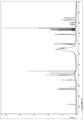
- FIG. 1 is a chart of an infrared absorption spectrum measured by the KBr tablet method of FY13650B.
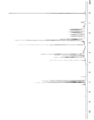
- FIG. 2 is a chart of an ultraviolet absorption spectrum in an aqueous solution of FY13650B.
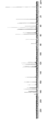
- FIG. 3 is a chart of proton nuclear magnetic resonance spectrum at 600 MHz measured at room temperature in FY13650B in heavy dimethyl sulfoxide containing 0.05 mass% trifluoroacetic acid.
- FIG. 4 is a chart of a carbon-13 nuclear magnetic resonance spectrum at 150 MHz measured in room temperature in a heavy dimethyl sulfoxide containing 0.05 mass% trifluoroacetic acid of FY13650B.
- FIG. 5 is a chart of an ultraviolet absorption spectrum in a methanol solution of NK13650P3.
- FIG. 1 is a chart of an infrared absorption spectrum measured by the KBr tablet method of FY13650B.
- FIG. 2 is a chart of an ultraviolet absorption spectrum in an aqueous solution of FY13650B
- FIG. 6 is a chart of proton nuclear magnetic resonance spectrum at 600 MHz measured at room temperature in heavy water of NK13650P3.
- FIG. 7 is a chart of carbon-13 nuclear magnetic resonance spectrum at 150 MHz measured at room temperature in heavy water of NK13650P3.
- FIG. 8 is a graph showing the relationship between the concentrations of NK13650P3 and FY13650B and the histone acetylase (HAT) inhibition rate (%).
- FIG. 9 is a graph showing the relationship between the concentrations of NK13650P3 and FY13650B and the androgen receptor (AR) transcription activation inhibition rate (%).
- FIG. 10 is a graph showing the relationship between the concentration of NK13650P3 and the estrogen receptor (ER) transcription activation inhibition rate (%).
- the novel compound of the present invention is represented by the following structural formula (1).
- the compound represented by the following structural formula (1) is a peptide-based substance and is a novel compound separated by the present inventors.
- the novel compound may be referred to as “FY 13650B” in the present specification.
- UV absorption spectrum The peak of ultraviolet absorption in the aqueous solution of FY13650B is as follows. ⁇ max (H 2 O); nm ( ⁇ ): 219.5 (sh, 16, 779), 237.5 (sh, 13, 452), 308.5 (sh, 11, 878), 324.5 (13, 559) The spectrum is shown in FIG. (7)
- Proton nuclear magnetic resonance spectrum The peak of proton nuclear magnetic resonance spectrum at 600 MHz, measured at room temperature in 0.05% by mass trifluoroacetic acid-containing heavy dimethyl sulfoxide of FY13650B, is as follows. The spectrum is shown in FIG.
- FY13650B has the structure represented by the structural formula (1) can be confirmed by various analysis methods selected as appropriate. For example, mass spectrum, infrared absorption spectrum, proton nuclear magnetic resonance This can be confirmed by analyzing the spectrum, carbon-13 nuclear magnetic resonance spectrum, and the like.
- the FY13650B may be in a salt state.
- the salt is not particularly limited and may be appropriately selected depending on the intended purpose. Examples thereof include hydrochloric acid, sulfuric acid, trifluoroacetate, alkaline earth metal salts (sodium, potassium, etc.), organic amine salts (methylamine) , Ethylamine, diethanolamine, etc.).
- the method for obtaining FY13650B is not particularly limited and may be appropriately selected depending on the intended purpose. Examples thereof include a method obtained from the producing strain of FY13650B and a method obtained by chemical synthesis. Especially, it is preferable that said FY13650B is obtained by the manufacturing method of novel compound FY13650B of this invention mentioned later.
- the production method of the novel compound of the present invention is a culturing step of culturing a microorganism having at least the ability to produce a compound (FY13650B) represented by the following structural formula (1) in a nutrient medium. And a collection step of collecting and collecting the compound (FY13650B) represented by the following structural formula (1) in the culture, and collecting this, and if necessary, further steps Including.
- the culturing step is a step of culturing a microorganism having the ability to produce FY13650B.
- Penicillium incomplete fungi having the ability to produce FY13650B are preferable.
- Penicillium sp. NF 13650 (Accession No .: FERM BP-10600) isolated by the present inventors is preferable.
- the production ability of FY13650B can be enhanced by subjecting the producing bacteria producing FY13650B, including Penicillium sp. NF 13650, to irradiation and other mutation treatments.
- FY13650B can be produced by genetic engineering techniques.
- the culturing is performed by inoculating a production medium that produces FY13650B (hereinafter sometimes simply referred to as “FY13650B-producing bacteria”) in a nutrient medium and culturing at a temperature suitable for the production of FY13650B.
- FY13650B-producing bacteria a production medium that produces FY13650B
- a nutrient medium there is no restriction
- a nutrient source added to the said nutrient medium According to the objective, it can select suitably, For example, a nitrogen source, a carbon source, etc. are mentioned.
- the nitrogen source is not particularly limited and may be appropriately selected depending on the intended purpose. Examples thereof include commercially available soybean flour, peptone, yeast extract, meat extract, corn steep liquor, and ammonium sulfate. .
- limiting in particular as said carbon source According to the objective, it can select suitably, For example, carbohydrates, fats, etc., such as tomato paste, glycerol, starch, glucose, galactose, dextrin, etc. are mentioned.
- inorganic salts such as sodium chloride and calcium carbonate can be added to the medium, and trace amounts of metal salts can be added to the medium as necessary. Any of these materials may be used as long as they are used by the FY13650B-producing bacteria and are useful for the production of FY13650B, and all known culture materials can be used.
- the seed medium for production of FY13650B is not particularly limited and may be appropriately selected depending on the intended purpose.
- a growth obtained from slant culture of FY13650B-producing bacteria on an agar medium may be used. it can.
- the culture method is not particularly limited and may be appropriately selected depending on the intended purpose.
- the liquid culture method is preferable, and the deep stirring culture method is more preferable.
- the culture temperature is not particularly limited as long as the growth of FY13650B can be produced without substantially inhibiting the growth of FY13650B-producing bacteria, and can be appropriately selected according to the producing bacteria used. However, 15 ° C. to 37 ° C. is preferable, and 25 ° C. to 30 ° C. is more preferable.
- the culture period is not particularly limited and may be appropriately selected depending on the medium and culture conditions to be used. In shake culture and tank culture, 1 to 16 days is preferable, and 6 to 10 days is preferable. Days are more preferred. By culturing for the preferable period, the accumulation of FY13650B reaches the maximum. When the accumulation of FY13650B in the culture reaches a maximum, the culture is stopped and the culture is used for the next collection step.
- the collecting step is a step of collecting FY13650B from the culture obtained in the culturing step. Since FY13650B has the physicochemical properties described above, it can be collected from the culture according to the properties.
- the collection method is not particularly limited, and a method used for collecting a metabolite produced by a microorganism can be appropriately selected. For example, extraction with a solvent that is not mixed with water, method using differences in adsorption affinity for various adsorbents, gel filtration, chromatography using countercurrent distribution, method using single layer chromatography, etc. And methods that are used repeatedly, and methods that are used repeatedly. Further, from the separated cells, the FY13650B is extracted from the cells by an extraction method using an appropriate organic solvent or an elution method by disrupting the cells, and is isolated and purified in the same manner as above and collected. Can do.
- the microorganism of the present invention is characterized by having the ability to produce the above-described compound of the present invention, that is, FY13650B.
- the microorganism has the ability to produce the FY13650B. Therefore, the microorganism is not particularly limited as long as it can be used as a microorganism producing FY13650B in the above-described method for producing a compound of the present invention. It can be selected appropriately.
- Penicillium sp. NF 13650 strain number which is an incomplete fungus of the genus Penicillium isolated from soil.
- the mycological properties of Penicillium sp. NF 13650 are as follows.
- the Penicillium sp. NF 13650 is subcultured at 25 ° C. and observed one week later. When observed after 1 week, the mycelium is formed on the surface of the agar or in the agar, and is colorless and has a septal mycelium.
- the conidia pattern does not branch or rarely branches regularly, and a cylindrical metre is formed from the tip of the conidia pattern.
- a two-wheeled penicillus is formed in which a phialide, a conidia-forming cell, is formed.
- the phialide has a needle shape.
- the conidia are fiaro-type conidia, which are formed in a chain from phialide, have an oval to elliptical shape, consist of one cell, and have a smooth to wart surface. There is no formation of teleomorphs from long-term culture specimens.
- NF 13650 The strain was founded in the Patent Deposit Deposit Center of the National Institute of Advanced Industrial Science and Technology, which is an international depositary authority (Chuo 6th, 1-1-1 Higashi 1-chome, Tsukuba, Ibaraki, Japan) Deposited domestically under the accession number: FERM P-20505 on the 14th of March, and deposited internationally under the Budapest Treaty under the accession number: FERM BP-10600 on April 27, 2006.
- the Penicillium sp. NF 13650 is easily changed in properties as seen in other Penicillium sp. Strains, for example, derived from the Penicillium sp. NF 13650.
- the histone acetylase inhibitor of the present invention is characterized by containing a physiologically active substance produced by Penicillium incomplete fungi, and further contains other components as necessary.
- the kind of histone acetylase targeted by the histone acetylase inhibitor of the present invention is not particularly limited and can be appropriately selected according to the purpose.
- GNAT, MYST, p300, CBP, TAFII250, SRC, ACTR and the like can be mentioned, among which p300 and CBP are preferable.
- the p300 is advantageous in that it has cancer cell growth inhibition and hormone resistance.
- the CBP is a protein very similar to p300.
- the physiologically active substance is not particularly limited as long as it is produced by Penicillium incomplete fungi, and can be appropriately selected according to the purpose.
- the compound represented by the structural formula (1) described above ( FY13650B) and at least one of the compounds represented by the following structural formula (2) (hereinafter sometimes referred to as “NK13650P3”) are preferable in terms of high histone acetylase (HAT) inhibitory activity.
- the Penicillium imperfect fungi as long as capable of producing a physiologically active substance that inhibits histone acetylation enzyme is not particularly limited and may be appropriately selected depending on the intended purpose, the above-mentioned Penicillium sp (Penicillium sp.) NF 13650 is preferred because of its high ability to produce the physiologically active substance.
- the Penicillium genus incomplete fungus may be a Penicillium sp. NF 13650 mutant.
- FY13650B and NK13650P3 may be in the form of a pharmacologically acceptable salt.
- the salt is not particularly limited and may be appropriately selected depending on the intended purpose. Examples thereof include hydrochloric acid, sulfuric acid, trifluoroacetate, alkaline earth metal salts (sodium, potassium, etc.), organic amine salts (methylamine) , Ethylamine, diethanolamine, etc.).
- NK13650P3 Compound represented by structural formula (2) (NK13650P3)-
- the NK13650P3 is a compound of the invention of the prior application by the present inventors (International Publication No. 2007/000978 pamphlet), and is a microbial metabolite produced by one strain belonging to an incomplete fungus, like the novel compound FY13650B of the present invention. is there.
- the structure of the NK13650P3 is a peptide substance represented by the following structural formula (2).
- the novel compound FY13650B of the present invention and the NK13650P3 are related compounds, and these compounds are expected to have the same physiological activity.
- the physicochemical properties of the compound represented by the structural formula (2), that is, the NK13650P3 are as follows. That is, (1) Appearance: Pale yellow powder (2) Molecular formula: C 29 H 37 N 7 O 15 (3) Molecular weight: 723 (4) UV absorption spectrum: The peak of ultraviolet absorption in a methanol solution of NK13650P3 is as follows. ⁇ max (MeOH): 196.5 nm, 224.5 nm, 322.5 nm The spectrum is shown in FIG. (5) Proton nuclear magnetic resonance spectrum: Peaks of proton nuclear magnetic resonance spectrum at 600 MHz, measured at room temperature in heavy water of NK13650P3, are as follows. The spectrum is shown in FIG.
- the content of the physiologically active substance or pharmacologically acceptable salt thereof contained in the histone acetylase (HAT) inhibitor is not particularly limited, and is within the range not impairing the effects of the present invention. It can be selected as appropriate according to the conditions.
- the histone acetylase (HAT) inhibitor may be the physiologically active substance or a pharmacologically acceptable salt thereof.
- the content ratio of FY13650B and NK13650P3 contained in the histone acetylase (HAT) inhibitor is not particularly limited and can be appropriately selected depending on the purpose. Further, all of the physiologically active substance may be the FY13650B, or all of the physiologically active substance may be the NK13650P3.
- the nuclear receptor transcriptional activation inhibitor of the present invention is characterized by containing a physiologically active substance produced by Penicillium incomplete fungi, and further contains other components as necessary.
- a physiologically active substance produced by Penicillium incomplete fungi There is no restriction
- the physiologically active substance is not particularly limited as long as it is produced by Penicillium incomplete fungi, and can be appropriately selected according to the purpose.
- the compound represented by the structural formula (1) described above ( FY13650B) and at least one of the compounds represented by the structural formula (2) (NK13650P3) are preferable in terms of high inhibitory activity on nuclear receptor transcription activation.
- the Penicillium incomplete fungus is not particularly limited as long as it has the ability to produce a physiologically active substance that inhibits nuclear receptor transcriptional activation, and can be appropriately selected according to the purpose.
- -SP ( Penicillium sp.) NF 13650 is preferable in that the production ability of the physiologically active substance is high.
- the Penicillium genus incomplete fungus may be a Penicillium sp. NF 13650 mutant.
- FY13650B and NK13650P3 may be in the form of a pharmacologically acceptable salt.
- the salt is not particularly limited and may be appropriately selected depending on the intended purpose. Examples thereof include hydrochloric acid, sulfuric acid, trifluoroacetate, alkaline earth metal salts (sodium, potassium, etc.), organic amine salts (methylamine) , Ethylamine, diethanolamine, etc.).
- the content of the physiologically active substance or a pharmacologically acceptable salt thereof contained in the nuclear receptor transcription activation inhibitor is not particularly limited, and is within the range not impairing the effects of the present invention. It can be selected as appropriate according to the conditions.
- the nuclear receptor transcription activation inhibitor may be the physiologically active substance or a pharmacologically acceptable salt thereof contained in the nuclear receptor transcription activation inhibitor.
- the content ratio of FY13650B and NK13650P3 contained in the nuclear receptor transcription activation inhibitor is not particularly limited and can be appropriately selected according to the purpose. Further, all of the physiologically active substance may be the FY13650B, or all of the physiologically active substance may be the NK13650P3.
- the histone acetylase (HAT) inhibitor and the nuclear receptor transcription activation inhibitor may be used singly or in combination of two, and the other components are active ingredients. It may be used in conjunction with the pharmaceuticals described above. In addition, the histone acetylase (HAT) inhibitor and the nuclear receptor transcription activation inhibitor may be used in a state of being incorporated in a medicine containing other components as active ingredients.
- the dosage form of the histone acetylase (HAT) inhibitor and the nuclear receptor transcription activation inhibitor is not particularly limited and may be appropriately selected depending on the purpose. Oral solutions, injections, inhaled powders and the like can be mentioned.
- oral solid preparation There is no restriction
- the method for producing the oral solid preparation is not particularly limited, and a conventional method can be used.
- the physiologically active substance or a pharmacologically acceptable salt thereof, an excipient, and if necessary can be produced by adding the above-mentioned other components and various additives.
- the excipient is not particularly limited and may be appropriately selected depending on the intended purpose.
- a binder for example, lactose, sucrose, sodium chloride, glucose, starch, calcium carbonate, kaolin, microcrystalline cellulose, silicic acid, etc.
- a disintegrating agent for example, a lubricant for lubricating a coloring agent for a flavoring / flavoring agent etc.
- the binder is not particularly limited and may be appropriately selected depending on the intended purpose.
- examples include propyl starch, methyl cellulose, ethyl cellulose, shellac, calcium phosphate, and polyvinyl pyrrolidone.
- the disintegrant is not particularly limited and may be appropriately selected depending on the intended purpose. Is mentioned.
- the lubricant is not particularly limited and may be appropriately selected depending on the intended purpose. Examples thereof include purified talc, stearate, borax, and polyethylene glycol.
- the flavoring / flavoring agent is not particularly limited and may be appropriately selected depending on the intended purpose. Examples thereof include sucrose, orange peel, citric acid, and tartaric acid.
- an oral liquid agent for example, an internal use liquid agent, a syrup agent, an elixir etc. are mentioned.
- the method for producing the oral solution is not particularly limited, and a conventional method can be used.
- the physiologically active substance or a pharmacologically acceptable salt thereof, if necessary, the other components, It can manufacture by adding an additive.
- a flavoring / flavoring agent, a buffering agent, a stabilizer, etc. are mentioned.
- the flavoring / flavoring agent is not particularly limited and may be appropriately selected depending on the intended purpose. Examples thereof include sucrose, orange peel, citric acid, and tartaric acid. There is no restriction
- the objective it can select suitably, For example, a solution, a suspension, the solid agent for a business dissolution, etc. are mentioned.
- the method for producing the injection is not particularly limited, and conventional methods can be used.
- the physiologically active substance or a pharmacologically acceptable salt thereof, if necessary, the other components, It can be produced by adding a pH adjuster, buffer, stabilizer, isotonic agent, local anesthetic, and the like.
- limiting in particular as said pH regulator and said buffer According to the objective, it can select suitably, For example, sodium citrate, sodium acetate, sodium phosphate etc. are mentioned.
- the stabilizer there is no restriction
- the tonicity agent is not particularly limited and may be appropriately selected depending on the intended purpose. Examples thereof include sodium chloride and glucose.
- the local anesthetic agent is not particularly limited and may be appropriately selected depending on the intended purpose. Examples thereof include procaine hydrochloride and lidocaine hydrochloride.
- administering There are no particular restrictions on the administration method, dose, administration time, and administration target of the histone acetylase (HAT) inhibitor and the nuclear receptor transcription activation inhibitor, and it is appropriately selected according to the purpose. be able to.
- limiting in particular as said administration method According to the objective, it can select suitably, For example, the method of oral administration, the method by injection, the method by inhalation, etc. are mentioned.
- the dosage is not particularly limited and may be appropriately selected in consideration of various factors such as the age, weight, constitution, symptom, and presence / absence of administration of a drug containing other ingredients as active ingredients. it can.
- the animal species to be administered is not particularly limited and can be appropriately selected according to the purpose. For example, human, monkey, pig, cow, sheep, goat, dog, cat, mouse, rat, bird, etc. Among them, it is preferably used for humans.
- Penicillium NF 13650 (Accession No .: FERM BP-10600) cultured on an agar slant medium, glucose 2 mass%, soluble starch 2 mass%, soy bean meal 1 mass%, gluten meal 1 mass%, yeast extract (Difco) 0.2% by mass, potassium dihydrogen phosphate 0.05% by mass, potassium chloride 0.1% by mass, magnesium sulfate 0.05% by mass, cobalt (II) chloride 0.0001% by mass, copper sulfate ( II) A liquid medium (adjusted to pH 6.7) containing 0.00064 mass%, iron sulfate (II) 0.00011 mass%, man chloride cancer (II) 0.00079 mass%, and zinc sulfate 0.00015 mass%.
- the culture solution thus obtained was centrifuged to separate it into a culture filtrate and cells.
- the culture filtrate (5 L, pH 7.2) was adjusted to pH 2.0 with 6N hydrochloric acid, and then passed through 800 mL of MIC GEL CHP20P (manufactured by Mitsubishi Chemical Corporation), and physiologically active substances NK13650P3 and FY13650B were passed through. Adsorbed.
- MIC GEL CHP20P was washed with water (2.4 L) and then 10% by mass methanol water (2.4 L), and then the bioactive substances NK13650P3 and FY13650B were eluted with 20% by mass methanol water (2.4 L). .
- the obtained 20% by mass methanol water (2.4 L) was concentrated to dryness under reduced pressure.
- the dried product containing the physiologically active substances NK13650P3 and FY13650B was placed on a column (250 mL) packed with Sephadex LH-20 (inner diameter 25 mm ⁇ 500 mm, manufactured by GE Healthcare) and developed with 50% by mass methanol water. Elution chromatography was performed.
- the physiologically active substances NK13650P3 and FY13650B are eluted in fractions 36 to 54, collected and concentrated to dryness under reduced pressure, whereby the brownish physiologically active substance NK13650P3, And 46 mg of a crude product containing FY13650B.
- NK13650P3 and FY13650B were separated into two, FY13650B was eluted for 43 minutes to 47 minutes, and NK13650P3 was eluted for 56 minutes to 64 minutes. .
- the eluted NK13650P3 and FY13650B were collected to obtain 2.5 mg of FY13650B and 8.0 mg of NK13650P3.
- FY13650B is a novel compound having a structure represented by the following structural formula (1).
- Appearance white powder form
- Molecular formula C 25 H 32 N 6 O 12
- High resolution mass spectrometry HRESIMS: positive ion mode
- Calculated m / z 609.2151 (as C 25 H 33 N 6 O 12 )
- Experimental value m / z 609.2154 (M + H) +
- Specific rotation: [ ⁇ ] D 40 ⁇ 111 ° (c0.1, acetic acid)
- Infrared absorption spectrum ⁇ max (KBr) cm ⁇ 1 : 3415, 1668, 1635, 1519, 1475, 1427, 1394, 1344, 1278, 1182, 1130, 1043
- the spectrum is shown in FIG.
- UV absorption spectrum The peak of ultraviolet absorption in the aqueous solution of FY13650B is as follows. ⁇ max (H 2 O); nm ( ⁇ ): 219.5 (sh, 16, 779), 237.5 (sh, 13, 452), 308.5 (sh, 11, 878), 324.5 (13, 559) The spectrum is shown in FIG. (7)
- Proton nuclear magnetic resonance spectrum The peak of proton nuclear magnetic resonance spectrum at 600 MHz, measured at room temperature in FY13650B in 0.05% by mass trifluoroacetic acid-containing heavy dimethyl sulfoxide, is as follows. The spectrum is shown in FIG.
- NK13650P3 is a compound having a structure represented by the following structural formula (2).
- Appearance Pale yellow powder
- Molecular formula C 29 H 37 N 7 O 15
- Molecular weight 723
- UV absorption spectrum The peak of ultraviolet absorption in a methanol solution of NK13650P3 is as follows. ⁇ max (MeOH): 196.5 nm, 224.5 nm, 322.5 nm
- the spectrum is shown in FIG.
- Proton nuclear magnetic resonance spectrum Peaks of proton nuclear magnetic resonance spectrum at 600 MHz, measured at room temperature in heavy water of NK13650P3, are as follows.
- Example 1 Evaluation of histone acetylase (HAT) inhibitory activity
- HAT histone acetylase
- a human p300 gene sequence (GenBank # NM_001429.2) was prepared from human breast cancer cell line MDA-MB231 (manufactured by American Type Culture Collection (ATCC)), and amplified by RT-PCR using the cDNA as a template DNA. did. After confirming the base sequence of the amplified DNA by electrophoresis, the amplified DNA was incorporated into an expression vector pGEX6P-1 (manufactured by Amersham Biosciences) designed to add a GST tag. The pGEX6P-1 was introduced into Escherichia coli DH5 ⁇ (manufactured by TOYOBO) to express the recombinant GST-p300 fusion protein. Subsequently, the recombinant GST-p300 fusion protein was purified using a column for GST fusion protein purification (GSTrap FF: manufactured by Amersham Biosciences).
- HAT histone acetylase activity
- the reaction was carried out for 30 minutes to carry out acetylation.
- a sample to which neither NK13650P3 nor FY13650B was added was used (see Table 2).
- the reaction was stopped by adding 100 ⁇ L of washing buffer (50 mM sodium carbonate (pH 9.2)).
- B / F (Binding / Free) separation was performed using Hybond N + membrane (manufactured by Amersham), washed with 200 ⁇ L of washing buffer, and the amount of acetylated histone was measured with TopCount (manufactured by Perkin Elmer).
- HAT enzyme activity inhibition rate (%) ((BA) / B) ⁇ 100: Formula (1) (In the above calculation formula (1), “A” represents the radioactivity (dpm) of the sample added with NK13650P3 or FY13650B, and “B” represents the radioactivity (dpm) of the sample not added with NK13650P3 and FY13650B (control). .)
- FIG. 8 shows the HAT enzyme inhibition rate (%) of the NK13650P3 and the FY13650B.
- the IC 50 value of NK13650P3 was 0.0108 ⁇ M
- the IC 50 value of FY13650B was 0.0190 ⁇ M.
- the IC 50 value of Lys-CoA which is a p300 inhibitor
- ARE Reporter Vector pGL3neo-MMTV Containing Androgen Response Element
- AR Androgen Receptor
- NK13650P3 was added at a final concentration of 0.069 ⁇ M to 69 ⁇ M or FY13650B at a final concentration of 0.082 ⁇ M to 82 ⁇ M, androgen (dihydrotestosterone (DHT), manufactured by Tokyo Chemical Industry Co., Ltd.) at a final concentration of 1 nM / well, Furthermore, the luminescence activity of luciferase was detected after 1 day. Here, the luciferase activity is an index of AR transcriptional activation by the addition of androgen (1 nM DHT). In addition, as a control, neither NK13650P3 nor FY13650B was added, and a sample with only DHT stimulation was used (see Table 3).
- FIG. 9 shows the AR transcription activation inhibition rate (%) of NK13650P3 and FY13650B. NK13650P3 and FY13650B suppressed AR transcriptional activity by 60% or more at 69 ⁇ M and 82 ⁇ M, respectively.
- ER gene sequence (Gene ID: 2099) cDNA was prepared from the human breast cancer cell line T47D, and amplified by RT-PCR using the cDNA as a template DNA. After confirming the base sequence of the amplified DNA by electrophoresis, it was incorporated into a mammalian cell expression vector pcDNA3.1.
- ER transcription activation inhibition rate The estrogen receptor (ER) transcription activation inhibition rate (%) was calculated from the attenuation of the luciferase luminescence with respect to the control value.
- FIG. 10 shows the ER transcription activation inhibition rate (%) of NK13650P3. NK13650P3 inhibited ER transcriptional activity by 50% or more at 28 ⁇ M.
- the compound of the present invention or a pharmacologically acceptable salt thereof has excellent histone acetylase inhibitory activity and nuclear receptor transcription activation inhibitory activity
- the compound or the pharmacologically acceptable salt thereof is used. It can be suitably used as a histone acetylase inhibitor and a nuclear receptor transcription activation inhibitor, containing cancer treatment, cardiovascular disease, proliferative eye disease, psoriasis, diabetic retinopathy, arthritis, chronic obstruction It can be used as a therapeutic agent for various diseases such as congenital lung disease.
Landscapes
- Health & Medical Sciences (AREA)
- Chemical & Material Sciences (AREA)
- Organic Chemistry (AREA)
- Life Sciences & Earth Sciences (AREA)
- Engineering & Computer Science (AREA)
- Bioinformatics & Cheminformatics (AREA)
- General Health & Medical Sciences (AREA)
- Medicinal Chemistry (AREA)
- General Chemical & Material Sciences (AREA)
- Chemical Kinetics & Catalysis (AREA)
- Pharmacology & Pharmacy (AREA)
- Animal Behavior & Ethology (AREA)
- Nuclear Medicine, Radiotherapy & Molecular Imaging (AREA)
- Public Health (AREA)
- Veterinary Medicine (AREA)
- Zoology (AREA)
- Wood Science & Technology (AREA)
- Biotechnology (AREA)
- Genetics & Genomics (AREA)
- Biochemistry (AREA)
- General Engineering & Computer Science (AREA)
- Microbiology (AREA)
- Orthopedic Medicine & Surgery (AREA)
- Botany (AREA)
- Heart & Thoracic Surgery (AREA)
- Ophthalmology & Optometry (AREA)
- Pulmonology (AREA)
- Immunology (AREA)
- Dermatology (AREA)
- Rheumatology (AREA)
- Physical Education & Sports Medicine (AREA)
- Cardiology (AREA)
- Mycology (AREA)
- Tropical Medicine & Parasitology (AREA)
- Virology (AREA)
- Biomedical Technology (AREA)
- Pharmaceuticals Containing Other Organic And Inorganic Compounds (AREA)
- Medicines Containing Material From Animals Or Micro-Organisms (AREA)
- Micro-Organisms Or Cultivation Processes Thereof (AREA)
- Preparation Of Compounds By Using Micro-Organisms (AREA)
Abstract
下記構造式(1)で表される化合物乃至その薬理学上許容される塩、ヒストンアセチル化酵素阻害剤、核内受容体転写活性化阻害剤、及び前記化合物を産生するペニシリウム属不完全菌類、並びに、前記微生物を培養する培養工程と、前記培養工程で得られた培養物から前記化合物を採取する採取工程とを含む前記化合物の製造方法などである。
Description
本発明は、新規化合物、ヒストンアセチル化酵素阻害剤、核内受容体転写活性化阻害剤、及び該新規化合物の生産菌であるペニシリウム属不完全菌類、並びに、該化合物の製造方法に関する。
負の電荷を持ったDNAは、塩基性のヒストンと結合し、クロマチン構造を形成することにより規則的に折りたたまれ、核内に収められている。クロマチンの構成単位はヌクレオソームと呼ばれ、ヒストンH2A、H2B、H3、及びH4各2分子から構成されるヒストンオクタマーに、146塩基のDNAが巻きついた構造である。
真核生物における遺伝子の転写制御は、このようなクロマチン環境下で行われているが、基本転写因子やRNAポリメラーゼがプロモーター上に結合して転写反応を開始させるためには、クロマチン構造の局所的な変換(クロマチンリモデリング)が必要となる(非特許文献1参照)。クロマチン構造のダイナミックな変換は、ヒストンN末端の翻訳後修飾、及びATP依存的なクロマチンリモデリングによって引き起こされる。ヒストンのN末端はヒストンテールと呼ばれており、細胞内でアセチル化、リン酸化、メチル化、ユビキチン化、SUMO(Small ubiquitin-related(like) modifier)化、ATPリボシル化といったさまざまな修飾を受けることにより、クロマチンの多様な機能発現を制御していると考えられている(非特許文献2参照)。
真核生物における遺伝子の転写制御は、このようなクロマチン環境下で行われているが、基本転写因子やRNAポリメラーゼがプロモーター上に結合して転写反応を開始させるためには、クロマチン構造の局所的な変換(クロマチンリモデリング)が必要となる(非特許文献1参照)。クロマチン構造のダイナミックな変換は、ヒストンN末端の翻訳後修飾、及びATP依存的なクロマチンリモデリングによって引き起こされる。ヒストンのN末端はヒストンテールと呼ばれており、細胞内でアセチル化、リン酸化、メチル化、ユビキチン化、SUMO(Small ubiquitin-related(like) modifier)化、ATPリボシル化といったさまざまな修飾を受けることにより、クロマチンの多様な機能発現を制御していると考えられている(非特許文献2参照)。
とりわけ、前記アセチル化は、ヒストンアセチル化酵素(Histone acetyltransferase,HAT)が転写のコアクチベーターであることや、遺伝子発現の活発な領域のヒストンが高度にアセチル化されているといった事実が示すように、主として転写の活性化に重要な意義を持つ修飾である(非特許文献3参照)。ヒストンのアセチル化は、ヒストンアセチル化酵素(HAT)、及びヒストン脱アセチル化酵素(Histone deacetylase,HDAC)によって可逆的に制御されている。
前記ヒストンアセチル化酵素(HAT)は、アセチルCoAのアセチル基をヒストンN末端にあるリジン残基のε-アミノ基に転移する酵素である。ヒストンアセチル化酵素(HAT)は構造上の類似性、及び機能面から5つのファミリーに分類され、構造上の類似性により分類されるファミリーとしては、GNATファミリー、及びMYSTファミリーが存在し、機能面により分類されるファミリーとしては、転写のコアクチベーターであるp300/CBP(CREB-binding protein)ファミリー、転写因子であるTAFII250、及び核内受容体コアクチベーターであるSRC/ACTRが存在する。ヒストンアセチル化酵素(HAT)は、生体内において主に複合体として存在し、転写の活性化、遺伝子抑制、DNA修復、及び細胞周期の進行のようなさまざまな過程で機能し、細胞増殖や発生における中心的な役割を担っている。それゆえに、アセチル化の制御機構の破綻は遺伝子発現の異常を伴い、あらゆる疾患の原因と成りうる。
前記転写の活性化とヒストンアセチル化との関係は、1996年のBrownellらの報告以来、転写複合体に含まれるコアクチベーターの中にヒストンアセチル化酵素(HAT)活性を有するものが次々と報告され、明らかになった(非特許文献4~5参照)。また、p53がヒストン以外の基質としてp300によりアセチル化され、その結果、p53のDNA結合能が上昇することを、1997年にRoederらがはじめて報告した(非特許文献6参照)。更に、ヒストンアセチル化酵素(HAT)は、他のヒストンアセチル化酵素(HAT)をアセチル化することで、リン酸化カスケードにおけるキナーゼと同様に、シグナル伝達因子として働くことが知られている(非特許文献7参照)。
ヒストンのアセチル化による転写活性化の分子機構として、ヒストンテールのアセチル化によりクロマチンの高次構造が変化して、RNAポリメラーゼIIIによる転写が促進されることが知られている(非特許文献8参照)。また、別の説明として、ヒストンN末端のリジン残基のアセチル化がタンパクをリクルートするための目印として働いており、アセチル化されたリジンが別の転写活性化因子などのタンパクに認識されやすくなるという考え方がある。例えば、基本転写因子複合体TFIIDのサブユニットであるTAFII250は、それ自身もヒストンアセチル化酵素(HAT)活性を有するとともに、ブロモドメインと呼ばれるモチーフで特異的にヒストンH4のアセチル化を認識し、転写を活性化する(非特許文献9参照)。
アセチル化の制御機構が破綻し、ヒストンアセチル化酵素(HAT)活性が高まると、細胞が高アセチル化状態となる。このようなヒストンアセチル化酵素(HAT)による細胞の高アセチル化状態は、癌、循環器系疾患、増殖性の眼疾患、乾癬、糖尿病性網膜症、関節炎、及び慢性閉塞性肺疾患のようなさまざまな疾患と関係している。中でも、慢性閉塞性肺疾患の進行は喫煙と関連があり、また、喫煙によりヒストンH4のアセチル化が増加することが示された(非特許文献10参照)。肺気腫は、ヒストン脱アセチル化酵素(HDAC)活性が不十分であることによるヒストンのアセチル化の増加が関係していることも知られている(非特許文献11参照)。
前記p300/CBPは、細胞周期調節、分化、アポトーシスなどのさまざまな細胞内の現象において、重要な役割を担う転写コアクチベーターである。p300/CBPは生体内に広く存在し、核内受容体(アンドロゲン受容体(Androgen receptor,AR)、エストロゲン受容体(Estrogen receptor,ER)など)と相互作用して転写複合体を形成し、ホルモン依存的な転写の調節を行っている。また、他の転写因子(p53、E2F、MITF、RB、HIF-1αなど)もアセチル化し、その活性調節を行っている。更に、G1-S期(DNA複製準備期(G1期)の細胞がDNA複製期(S期)に入る境界の時期)への移行にも必要であり、細胞の増殖、分化、アポトーシス、血管新生などにも関与している(非特許文献5参照)。
男性ホルモン(アンドロゲン)は、男性の胎生期において、男性内生殖器の発達に関係しているホルモンである。前立腺癌においては、男性ホルモン(アンドロゲン)が増殖シグナルであり、癌を促進する主な原因であることが知られている。
そこで、アンドロゲンの作用を抑えるための治療法(内分泌療法)が行われている。例えば、アンドロゲン受容体(AR)に結合することでアンドロゲンと拮抗的に作用する抗アンドロゲン剤(フルタミド、カソデックス)や、アンドロゲンの産生を抑えるLH-RHアゴニスト(リュープリン)、リアーゼ阻害剤などが、前立腺癌の治療薬として臨床応用・開発されている。しかし、これらの治療を繰り返すことにより、アンドロゲンに依存しなくなったホルモン抵抗性癌が出現している。したがって、ホルモン抵抗性前立腺癌の治療薬として、アンドロゲン作用の抑制以外の作用機序を有する新たな治療薬の開発が望まれているのが現状である。
そこで、アンドロゲンの作用を抑えるための治療法(内分泌療法)が行われている。例えば、アンドロゲン受容体(AR)に結合することでアンドロゲンと拮抗的に作用する抗アンドロゲン剤(フルタミド、カソデックス)や、アンドロゲンの産生を抑えるLH-RHアゴニスト(リュープリン)、リアーゼ阻害剤などが、前立腺癌の治療薬として臨床応用・開発されている。しかし、これらの治療を繰り返すことにより、アンドロゲンに依存しなくなったホルモン抵抗性癌が出現している。したがって、ホルモン抵抗性前立腺癌の治療薬として、アンドロゲン作用の抑制以外の作用機序を有する新たな治療薬の開発が望まれているのが現状である。
近年、アンドロゲンとは別の増殖シグナルとして、IL-6がホルモン抵抗性前立腺癌の進行に関与しているとの報告が多数ある。前記アンドロゲン受容体(AR)の転写活性化にはp300のヒストンアセチル化酵素(HAT)活性が必要である。アンドロゲン受容体(AR)は、前記p300のヒストンアセチル化酵素(HAT)により、アンドロゲン受容体(AR)のDNA結合部位のC末側領域K632、及びK633がアセチル化されることにより、転写が活性化される。p300のsiRNAを用いてp300遺伝子の発現抑制を行うと、IL-6によるアンドロゲン受容体(AR)の転写活性化は抑制されることが知られている(非特許文献12~13参照)。このことから、p300のヒストンアセチル化酵素(HAT)活性を阻害することで、ホルモン抵抗性前立腺癌細胞の増殖も抑制されることが期待されるが、このようなアンドロゲン受容体(AR)転写活性化を阻害することによるホルモン抵抗性前立腺癌に対する薬剤は未だ開発されていない。
また、p300は低酸素誘導転写因子(HIF-1)のコアクチベーターであり、癌組織などの低酸素状態における血管新生にも寄与している。大腸癌、胃癌などではp300の変異が見つかっており、また、急性骨髄性白血病(AML)ではp300の染色体転座が見つかっていることから、p300と癌との関係が明らかになってきている。また、p300の変異は他の疾病との関係も明らかになってきている。
また、p300は低酸素誘導転写因子(HIF-1)のコアクチベーターであり、癌組織などの低酸素状態における血管新生にも寄与している。大腸癌、胃癌などではp300の変異が見つかっており、また、急性骨髄性白血病(AML)ではp300の染色体転座が見つかっていることから、p300と癌との関係が明らかになってきている。また、p300の変異は他の疾病との関係も明らかになってきている。
このように、p300は癌細胞の増殖やホルモン抵抗性に関与するので、これらの阻害剤を見出すことによって、癌細胞の増殖を抑制できると考えられており、ホルモン依存性の耐性癌に対する新たな薬剤に使用可能な優れたp300のヒストンアセチル化酵素(HAT)阻害剤、及び核内受容体転写活性化阻害剤の開発が望まれているのが現状である。
癌細胞の増殖阻害作用を示す化合物としては、不完全菌類に属する1菌株が産生する微生物の代謝産物である生理活性物質NK13650P3が報告されている(特許文献1参照)が、その機構については未だ解明がなされていない。
また、これまでに、p300の阻害剤としては、天然物であるガルシノール、アラカルジン酸、クルクミン、シンナモイル化合物、合成化合物であるイソチアゾロン誘導体、及びヒストンアセチル化酵素(HAT)の基質であるアセチルCoAのリジンアナログである合成誘導体のLys-CoAなどが報告されている(非特許文献14参照)が、医薬として求められる安定性や効果を十分に発揮するものは得られておらず、これらの従来の阻害剤とは異なる化学構造骨格を有し、より優れた阻害活性を有する、医薬として使用可能なヒストンアセチル化酵素(HAT)阻害剤が望まれているのが現状である。
また、これまでに、p300の阻害剤としては、天然物であるガルシノール、アラカルジン酸、クルクミン、シンナモイル化合物、合成化合物であるイソチアゾロン誘導体、及びヒストンアセチル化酵素(HAT)の基質であるアセチルCoAのリジンアナログである合成誘導体のLys-CoAなどが報告されている(非特許文献14参照)が、医薬として求められる安定性や効果を十分に発揮するものは得られておらず、これらの従来の阻害剤とは異なる化学構造骨格を有し、より優れた阻害活性を有する、医薬として使用可能なヒストンアセチル化酵素(HAT)阻害剤が望まれているのが現状である。
Kornberg R.D, Lorch Y, Cell, 1999, 98:3, p.285-294
Strahl B.D, Allis C.D, Nature, 2000, 403:6765, p.41-45
Sterner D.E, Berger S.L, Microbiology and Molecular Biology Reviews, 2000, 64:2, p.435-459
Brownell et al, Cell, 84:6, p.843-851
Borrow J, Stanton VP Jr et al, Nat Genet, 1996, 14:1, p.33-41
Gu W, Roeder RG, Cell, 1997, Aug 22;90(4):595-606.
Chen H, Lin RJ, Xie W, Wilpitz D, Evans RM. Cell, 1999, Sep 3;98(5), p.675-86
Tse C, Sera T, Wolffe A.P, Hansen J.C, Mol Cell Biol, 1998, 18:8, p.4629-4638
Dunphy EL, Johnson T et al, Mol Cell Biol, 2000, 20:4, p.1134-1139
Marwick J.A, Kirkham P.A. et al, Am. J. Resp. Cell Mol.Biol, 2004, 31:6 ,p.633-642
Ito K et al, N. Engl. J. Med, 2005, 352, p.1967-1976
Debes JD, Schmidt LJ, Huang H, Tindall DJ, Cancer Res, 2002, 62:20, p.5632-5636
Culig Z, Comuzzi B et al, J Steroid Biochem Mol Biol, 2004, 92:4, p.265-271
Thompson P.R, Kurooka H. et al, J.Biol.Chem, 2001, 276:36, p.33721-33729
本発明は、従来における前記諸問題を解決し、以下の目的を達成することを課題とする。即ち、本発明は、ヒストンアセチル化酵素(HAT)、及び核内受容体転写活性化に対する優れた阻害活性を有する化合物を含有するヒストンアセチル化酵素(HAT)阻害剤、核内受容体転写活性化阻害剤、及び前記化合物の生産菌である微生物、並びに、前記化合物の製造方法を提供することを目的とする。
前記課題を解決するため、本発明者らは、ヒストンのアセチル化に着目し、微生物の代謝産物について鋭意検討した結果、ペニシリウム属不完全菌類に属する1菌株が産生している化合物が新規骨格を有し、この新規化合物乃至その薬理学上許容される塩がヒストンアセチル化酵素(HAT)阻害活性を有すること、また、核内受容体の1つであるアンドロゲン受容体(AR)のリガンド依存的な転写の阻害活性を有することを見出した。本発明者らは、前記化合物の化学構造を分析することで、これらが新規化合物であることを確認し、更に、前記新規化合物が、本発明者らによる先願発明(国際公開2007/000978号パンフレット)の下記構造式(2)で表される化合物である生理活性物質NK13650P3の類縁化合物であることを知見した。
また、前記生理活性物質NK13650P3も、ヒストンアセチル化酵素(HAT)阻害活性、並びに、前記アンドロゲン受容体(AR)、及びエストロゲン受容体(ER)といった核内受容体のリガンド依存的な転写の阻害活性を有することを新たに知見し、本発明の完成に至った。なお、本発明者らは、この新規化合物を「FY13650B」と命名した。

また、前記生理活性物質NK13650P3も、ヒストンアセチル化酵素(HAT)阻害活性、並びに、前記アンドロゲン受容体(AR)、及びエストロゲン受容体(ER)といった核内受容体のリガンド依存的な転写の阻害活性を有することを新たに知見し、本発明の完成に至った。なお、本発明者らは、この新規化合物を「FY13650B」と命名した。
本発明は、本発明者らによる前記知見に基づくものであり、前記課題を解決するための手段としては、以下の通りである。即ち、
<1> ペニシリウム属不完全菌類が産生する生理活性物質を含有することを特徴とするヒストンアセチル化酵素阻害剤である。
<2> ペニシリウム属不完全菌類がペニシリウム・エスピー(Penicillium sp.)NF 13650(受託番号:FERM BP-10600)、及びその変異株のいずれかである前記<1>に記載のヒストンアセチル化酵素阻害剤である。
<3> 生理活性物質が下記構造式(1)で表される化合物乃至その薬理学上許容される塩、及び下記構造式(2)で表される化合物乃至その薬理学上許容される塩のいずれかである前記<1>から<2>のいずれかに記載のヒストンアセチル化酵素阻害剤である。


<4> ペニシリウム属不完全菌類が産生する生理活性物質を含有することを特徴とする核内受容体転写活性化阻害剤である。
<5> ペニシリウム属不完全菌類がペニシリウム・エスピー(Penicillium sp.)NF 13650(受託番号:FERM BP-10600)及びその変異株のいずれかである前記<4>に記載の核内受容体転写活性化阻害剤である。
<6> 生理活性物質が下記構造式(1)で表される化合物乃至その薬理学上許容される塩、及び下記構造式(2)で表される化合物乃至その薬理学上許容される塩のいずれかである前記<4>から<5>のいずれかに記載の核内受容体転写活性化阻害剤である。


<7> 核内受容体が、アンドロゲン受容体、及びエストロゲン受容体の少なくともいずれかである前記<4>から<6>のいずれかに記載の核内受容体転写活性化阻害剤である。
<8> 下記構造式(1)で表されることを特徴とする化合物乃至その薬理学上許容される塩である。
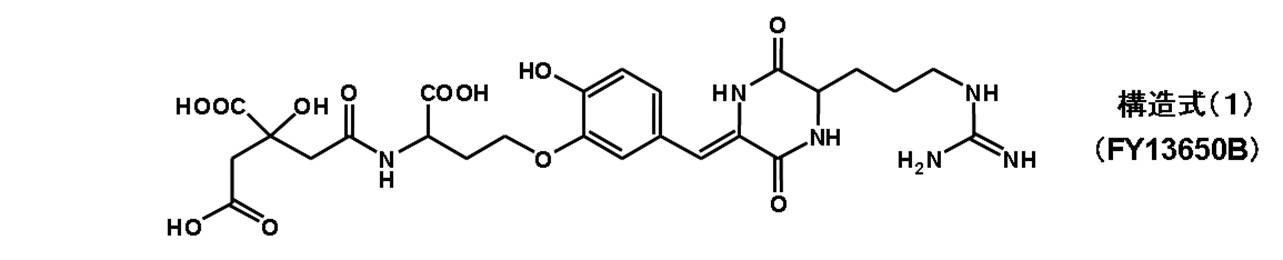
<9> 下記構造式(1)で表される化合物を生産する能力を有することを特徴とするペニシリウム属不完全菌類である。

<10> 少なくともペニシリウム属に属し、下記構造式(1)で表される化合物を生産する能力を有する微生物を、栄養培地にて培養する培養工程と、
培養物中に下記構造式(1)で表される化合物を生成蓄積させ、これを採取する採取工程と、
を含むことを特徴とする下記構造式(1)で表される化合物の製造方法である。

<1> ペニシリウム属不完全菌類が産生する生理活性物質を含有することを特徴とするヒストンアセチル化酵素阻害剤である。
<2> ペニシリウム属不完全菌類がペニシリウム・エスピー(Penicillium sp.)NF 13650(受託番号:FERM BP-10600)、及びその変異株のいずれかである前記<1>に記載のヒストンアセチル化酵素阻害剤である。
<3> 生理活性物質が下記構造式(1)で表される化合物乃至その薬理学上許容される塩、及び下記構造式(2)で表される化合物乃至その薬理学上許容される塩のいずれかである前記<1>から<2>のいずれかに記載のヒストンアセチル化酵素阻害剤である。
<5> ペニシリウム属不完全菌類がペニシリウム・エスピー(Penicillium sp.)NF 13650(受託番号:FERM BP-10600)及びその変異株のいずれかである前記<4>に記載の核内受容体転写活性化阻害剤である。
<6> 生理活性物質が下記構造式(1)で表される化合物乃至その薬理学上許容される塩、及び下記構造式(2)で表される化合物乃至その薬理学上許容される塩のいずれかである前記<4>から<5>のいずれかに記載の核内受容体転写活性化阻害剤である。
<8> 下記構造式(1)で表されることを特徴とする化合物乃至その薬理学上許容される塩である。
培養物中に下記構造式(1)で表される化合物を生成蓄積させ、これを採取する採取工程と、
を含むことを特徴とする下記構造式(1)で表される化合物の製造方法である。
本発明によれば、ヒストンアセチル化酵素(HAT)、及び核内受容体転写活性化に対する優れた阻害活性を有する化合物を含有するヒストンアセチル化酵素(HAT)阻害剤、核内受容体転写活性化阻害剤、及び前記化合物の生産菌である微生物、並びに、前記化合物の製造方法を提供することができる。
(新規化合物乃至その薬理学上許容される塩)
<構造式(1)で表される化合物>
本発明の新規化合物は、下記構造式(1)で表されることを特徴とする。
下記構造式(1)で表される化合物はペプチド系物質であり、本発明者らが分離した新規化合物である。前記新規化合物を、以下、本明細書では、「FY13650B」と称することがある。
<構造式(1)で表される化合物>
本発明の新規化合物は、下記構造式(1)で表されることを特徴とする。
下記構造式(1)で表される化合物はペプチド系物質であり、本発明者らが分離した新規化合物である。前記新規化合物を、以下、本明細書では、「FY13650B」と称することがある。
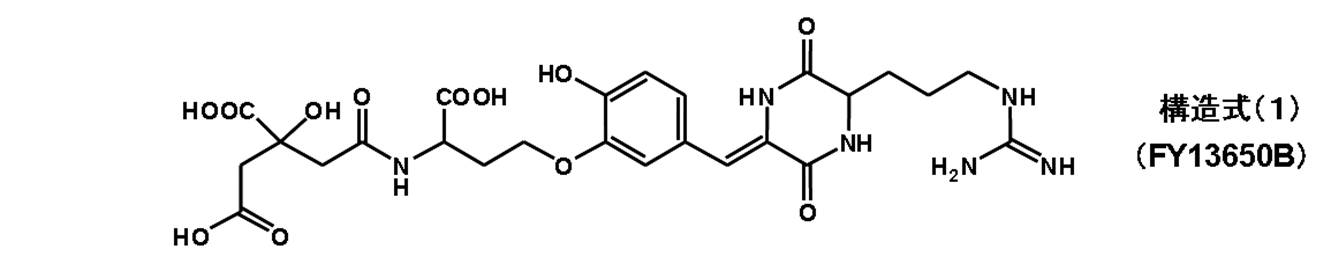
-物理化学的性状-
前記構造式(1)で表される化合物、即ち前記FY13650Bの物理化学的性状としては、次の通りである。即ち、
(1)外観:白色パウダー状
(2)分子式:C25H32N6O12
(3)高分解能質量分析(HRESIMS:正イオンモード):
計算値 m/z 609.2151(C25H33N6O12として)
実験値 m/z 609.2154(M+H)+
(4)比旋光度:[α]D 40=-111°(c0.1、酢酸)
(5)赤外線吸収スペクトル:
νmax(KBr)cm-1:
3415,1668,1635,1519,1475,1427,1394,1344,1278,1182,1130,1043
スペクトルは、図1に示す。
(6)紫外線吸収スペクトル:
FY13650Bの水溶液中での紫外線吸収のピークは、以下の通りである。
λmax(H2O);nm(ε):
219.5(sh,16,779),237.5(sh,13,452),308.5(sh,11,878),324.5(13,559)
スペクトルは、図2に示す。
(7)プロトン核磁気共鳴スペクトル:
FY13650Bの0.05質量%トリフルオロ酢酸含有重ジメチルスルフォキシド中で室温にて測定した、600MHzにおけるプロトン核磁気共鳴スペクトルのピークは、以下の通りである。スペクトルは、図3に示す。
化学シフト値 δpm:
7.01(1H,ddd),6.99(1H,dd),6.81(1H,d),6.62(1H,s),4.42(1H,ddd),4.05(1H,m),4.01(1H,d)、4.00(1H,m),3.11(2H,q),2.74(1H,d),2.68(1H,d),2.62(1H,d),2.58(1H,d),2.19(1H,m),2.00(1H,m),1.72(2H,m),1.53(2H,m)
(8)炭素13核磁気共鳴スペクトル:
FY13650Bの0.05質量%トリフルオロ酢酸含有重ジメチルスルフォキシド中で室温にて測定した、150MHzにおける炭素13核磁気共鳴スペクトルピークは以下の通りである。スペクトルは、図4に示す。
化学シフト値 δppm:
174.6(s),173.2(s),171.3(s),169.5(s),166.7(s),160.7(s),156.6(s),147.4(s),146.4(s),124.5(s),124.4(s),122.9(d),115.8(d),115.5(d),115.3(d),72.8(s),65.3(t),54.5(d),49.3(d),43.1(t),42.9(t),40.4(t),31.1(t),30.7(t),24.0(t)
前記構造式(1)で表される化合物、即ち前記FY13650Bの物理化学的性状としては、次の通りである。即ち、
(1)外観:白色パウダー状
(2)分子式:C25H32N6O12
(3)高分解能質量分析(HRESIMS:正イオンモード):
計算値 m/z 609.2151(C25H33N6O12として)
実験値 m/z 609.2154(M+H)+
(4)比旋光度:[α]D 40=-111°(c0.1、酢酸)
(5)赤外線吸収スペクトル:
νmax(KBr)cm-1:
3415,1668,1635,1519,1475,1427,1394,1344,1278,1182,1130,1043
スペクトルは、図1に示す。
(6)紫外線吸収スペクトル:
FY13650Bの水溶液中での紫外線吸収のピークは、以下の通りである。
λmax(H2O);nm(ε):
219.5(sh,16,779),237.5(sh,13,452),308.5(sh,11,878),324.5(13,559)
スペクトルは、図2に示す。
(7)プロトン核磁気共鳴スペクトル:
FY13650Bの0.05質量%トリフルオロ酢酸含有重ジメチルスルフォキシド中で室温にて測定した、600MHzにおけるプロトン核磁気共鳴スペクトルのピークは、以下の通りである。スペクトルは、図3に示す。
化学シフト値 δpm:
7.01(1H,ddd),6.99(1H,dd),6.81(1H,d),6.62(1H,s),4.42(1H,ddd),4.05(1H,m),4.01(1H,d)、4.00(1H,m),3.11(2H,q),2.74(1H,d),2.68(1H,d),2.62(1H,d),2.58(1H,d),2.19(1H,m),2.00(1H,m),1.72(2H,m),1.53(2H,m)
(8)炭素13核磁気共鳴スペクトル:
FY13650Bの0.05質量%トリフルオロ酢酸含有重ジメチルスルフォキシド中で室温にて測定した、150MHzにおける炭素13核磁気共鳴スペクトルピークは以下の通りである。スペクトルは、図4に示す。
化学シフト値 δppm:
174.6(s),173.2(s),171.3(s),169.5(s),166.7(s),160.7(s),156.6(s),147.4(s),146.4(s),124.5(s),124.4(s),122.9(d),115.8(d),115.5(d),115.3(d),72.8(s),65.3(t),54.5(d),49.3(d),43.1(t),42.9(t),40.4(t),31.1(t),30.7(t),24.0(t)
前記FY13650Bが、前記構造式(1)で表される構造を有するか否かは、適宜選択した各種の分析方法により確認することができ、例えば、マススペクトル、赤外部吸収スペクトル、プロトン核磁気共鳴スペクトル、炭素13核磁気共鳴スペクトルなどの分析を行うことにより、確認することができる。
また、前記FY13650Bは、塩の状態であってもよい。前記塩としては、特に制限はなく、目的に応じて適宜選択することができ、例えば、塩酸、硫酸、トリフルオロ酢酸塩、アルカリ土類金属塩(ナトリウム、カリウムなど)、有機アミン塩(メチルアミン、エチルアミン、ジエタノールアミンなど)などが挙げられる。
<入手方法>
前記FY13650Bの入手方法としては、特に制限はなく、目的に応じて適宜選択することができ、例えば、前記FY13650Bの生産菌から得る方法、化学合成により得る方法などが挙げられる。中でも、前記FY13650Bは、後述する本発明の新規化合物FY13650Bの製造方法により得られることが好ましい。
前記FY13650Bの入手方法としては、特に制限はなく、目的に応じて適宜選択することができ、例えば、前記FY13650Bの生産菌から得る方法、化学合成により得る方法などが挙げられる。中でも、前記FY13650Bは、後述する本発明の新規化合物FY13650Bの製造方法により得られることが好ましい。
<新規化合物FY13650Bの製造方法>
本発明の新規化合物、即ちFY13650Bの製造方法は、少なくともペニシリウム属に属し、下記構造式(1)で表される化合物(FY13650B)を生産する能力を有する微生物を、栄養培地にて培養する培養工程と、培養物中に下記構造式(1)で表される化合物(FY13650B)を生成蓄積させ、これを採取する採取工程と、を含むことを特徴とし、必要に応じて、更にその他の工程を含む。
本発明の新規化合物、即ちFY13650Bの製造方法は、少なくともペニシリウム属に属し、下記構造式(1)で表される化合物(FY13650B)を生産する能力を有する微生物を、栄養培地にて培養する培養工程と、培養物中に下記構造式(1)で表される化合物(FY13650B)を生成蓄積させ、これを採取する採取工程と、を含むことを特徴とし、必要に応じて、更にその他の工程を含む。

-培養工程-
前記培養工程は、前記FY13650Bを生産する能力を有する微生物を培養する工程である。
前記培養工程は、前記FY13650Bを生産する能力を有する微生物を培養する工程である。
前記微生物としては、前記FY13650Bを生産する能力を有するペニシリウム属不完全菌類が好ましく、中でも、本発明者らの分離したペニシリウム・エスピー(Penicillium sp.)NF 13650(受託番号:FERM BP-10600)が、前記FY13650Bを生産する能力が高い点でより好ましい。なお、前記ペニシリウム・エスピー(Penicillium sp.)NF 13650を含め、前記FY13650Bを生産する生産菌を、放射線照射やその他の変異処理に供することにより、前記FY13650Bの生産能を高めることも可能である。更に、遺伝子工学的手法による前記FY13650Bの生産も可能である。
前記培養は、前記FY13650Bを生産する生産菌(以下、単に「FY13650B生産菌」と称することがある。)を栄養培地中に接種し、前記FY13650Bの生産に良好な温度で培養することによって行われる。
前記栄養培地としては、特に制限はなく、目的に応じて適宜選択することができ、例えば、従来ペニシリウム属不完全菌類の培養に利用されている公知のものを使用することができる。
前記栄養培地に添加する栄養源としては、特に制限はなく、目的に応じて適宜選択することができ、例えば、窒素源、炭素源などが挙げられる。
前記窒素源としては、特に制限はなく、目的に応じて適宜選択することができ、例えば、市販されている大豆粉、ペプトン、酵母エキス、肉エキス、コーン・スティープ・リカー、硫酸アンモニウムなどが挙げられる。
前記炭素源としては、特に制限はなく、目的に応じて適宜選択することができ、例えば、トマトペースト、グリセリン、でん粉、グルコース、ガラクトース、デキストリンなどの炭水化物、脂肪などが挙げられる。
更に、前記窒素源、前記炭素源以外にも、食塩、炭酸カルシウムなどの無機塩を培地に添加することもでき、その他必要に応じて微量の金属塩を培地に添加することもできる。
これらの材料は、前記FY13650B生産菌が利用し、前記FY13650Bの生産に役立つものであればよく、公知の培養材料は全て用いることができる。
前記栄養培地としては、特に制限はなく、目的に応じて適宜選択することができ、例えば、従来ペニシリウム属不完全菌類の培養に利用されている公知のものを使用することができる。
前記栄養培地に添加する栄養源としては、特に制限はなく、目的に応じて適宜選択することができ、例えば、窒素源、炭素源などが挙げられる。
前記窒素源としては、特に制限はなく、目的に応じて適宜選択することができ、例えば、市販されている大豆粉、ペプトン、酵母エキス、肉エキス、コーン・スティープ・リカー、硫酸アンモニウムなどが挙げられる。
前記炭素源としては、特に制限はなく、目的に応じて適宜選択することができ、例えば、トマトペースト、グリセリン、でん粉、グルコース、ガラクトース、デキストリンなどの炭水化物、脂肪などが挙げられる。
更に、前記窒素源、前記炭素源以外にも、食塩、炭酸カルシウムなどの無機塩を培地に添加することもでき、その他必要に応じて微量の金属塩を培地に添加することもできる。
これらの材料は、前記FY13650B生産菌が利用し、前記FY13650Bの生産に役立つものであればよく、公知の培養材料は全て用いることができる。
前記FY13650Bの生産の種母培地としては、特に制限はなく、目的に応じて適宜選択することができ、例えば、寒天培地上、前記FY13650B生産菌の斜面培養から得た生育物を使用することができる。
前記培養の方法としては、特に制限はなく、目的に応じて適宜選択することができるが、液体培養法が好ましく、深部攪拌培養法がより好ましい。
前記培養の温度としては、前記FY13650B生産菌の発育が実質的に阻害されずに前記FY13650Bを生産し得る範囲であれば、特に制限はなく、使用する生産菌に応じて適宜選択することができるが、15℃~37℃が好ましく、25℃~30℃がより好ましい。
前記培養の期間としては、特に制限はなく、使用する培地や培養条件により適宜選択することができるが、振盪培養においても、タンク培養においても、1日間~16日間が、好ましく、6日間~10日間がより好ましい。前記好ましい期間培養することで、前記FY13650Bの蓄積が最高に達する。
培養物中の前記FY13650Bの蓄積が最高に達したときに、培養を停止し、前記培養物を次の採取工程に用いる。
前記培養の温度としては、前記FY13650B生産菌の発育が実質的に阻害されずに前記FY13650Bを生産し得る範囲であれば、特に制限はなく、使用する生産菌に応じて適宜選択することができるが、15℃~37℃が好ましく、25℃~30℃がより好ましい。
前記培養の期間としては、特に制限はなく、使用する培地や培養条件により適宜選択することができるが、振盪培養においても、タンク培養においても、1日間~16日間が、好ましく、6日間~10日間がより好ましい。前記好ましい期間培養することで、前記FY13650Bの蓄積が最高に達する。
培養物中の前記FY13650Bの蓄積が最高に達したときに、培養を停止し、前記培養物を次の採取工程に用いる。
-採取工程-
前記採取工程は、前記培養工程で得られた培養物からFY13650Bを採取する工程である。
前記FY13650Bは、上述した物理化学的性状を有するので、その性状に従って培養物から採取することができる。
前記採取工程は、前記培養工程で得られた培養物からFY13650Bを採取する工程である。
前記FY13650Bは、上述した物理化学的性状を有するので、その性状に従って培養物から採取することができる。
前記採取の方法としては、特に制限はなく、微生物の生産する代謝物の採取に用いられる方法を適宜選択することができる。例えば、水と混ざらない溶媒により抽出する方法、各種吸着剤に対する吸着親和性の差を利用する方法、ゲルろ過、向流分配を利用したクロマトグラフィー、薄層クロマトグラフィーなどを単独で用いる方法、組み合わせて用いる方法、繰り返して用いる方法などが挙げられる。
また、分離した菌体からは、適当な有機溶媒を用いた抽出方法や、菌体破砕による溶出方法などにより、前記FY13650Bを菌体から抽出し、上記と同様に単離精製して採取することができる。
また、分離した菌体からは、適当な有機溶媒を用いた抽出方法や、菌体破砕による溶出方法などにより、前記FY13650Bを菌体から抽出し、上記と同様に単離精製して採取することができる。
以上のようにして前記製造方法を行うことができ、これにより、FY13650B乃至その薬理学上許容される塩を得ることができる。
-その他の工程-
前記その他の工程としては、特に制限はなく、目的に応じて適宜選択することができ、例えば、前記微生物に対して変異処理を行うことにより、前記FY13650Bの産生能を高める突然変異処理工程などが挙げられる。
前記変異処理としては、特に制限はなく、目的に応じて適宜選択することができ、例えば、突然変異誘発剤、紫外線照射、放射線照射などが挙げられる。
前記その他の工程としては、特に制限はなく、目的に応じて適宜選択することができ、例えば、前記微生物に対して変異処理を行うことにより、前記FY13650Bの産生能を高める突然変異処理工程などが挙げられる。
前記変異処理としては、特に制限はなく、目的に応じて適宜選択することができ、例えば、突然変異誘発剤、紫外線照射、放射線照射などが挙げられる。
(微生物)
本発明の微生物は、上述した本発明の化合物、即ちFY13650Bを生産する能力を有することを特徴とする。前記微生物は、前記FY13650Bを生産する能力を有し、そのために、上述した本発明の化合物の製造方法において、FY13650Bの生産菌として使用され得る微生物であれば、特に制限はなく、目的に応じて適宜選択することができる。
本発明の微生物は、上述した本発明の化合物、即ちFY13650Bを生産する能力を有することを特徴とする。前記微生物は、前記FY13650Bを生産する能力を有し、そのために、上述した本発明の化合物の製造方法において、FY13650Bの生産菌として使用され得る微生物であれば、特に制限はなく、目的に応じて適宜選択することができる。
このような微生物の中でも、特に、土壌より分離されたペニシリウム属不完全菌類で、ペニシリウム・エスピー(Penicillium sp.)NF 13650の菌株番号が付された微生物を使用することが好ましい。前記ペニシリウム・エスピー(Penicillium sp.)NF 13650の菌学的性状は、以下の通りである。
<形態的特徴>
前記ペニシリウム・エスピー(Penicillium sp.)NF 13650は、25℃で継代培養を行い、1週間後に観察すると、菌糸は寒天表面又は寒天内に形成され、無色であり、有隔壁菌糸が認められる。分生子柄は、分岐しないか又はまれに規則的に分岐し、分生子柄の先端部から円筒形のメトレが形成される。前記分生子柄の先に、分生子形成細胞であるフィアライドが形成される二輪生のペニシルスが観察される。前記フィアライドは、針状を示す。分生子はフィアロ型分生子で、フィアライドから鎖状に連なって形成され、形状は卵形~楕円形で、1細胞からなり、表面は平滑からいぼ状である。長期培養検体からはテレオモルフの形成は認められない。
前記ペニシリウム・エスピー(Penicillium sp.)NF 13650は、25℃で継代培養を行い、1週間後に観察すると、菌糸は寒天表面又は寒天内に形成され、無色であり、有隔壁菌糸が認められる。分生子柄は、分岐しないか又はまれに規則的に分岐し、分生子柄の先端部から円筒形のメトレが形成される。前記分生子柄の先に、分生子形成細胞であるフィアライドが形成される二輪生のペニシルスが観察される。前記フィアライドは、針状を示す。分生子はフィアロ型分生子で、フィアライドから鎖状に連なって形成され、形状は卵形~楕円形で、1細胞からなり、表面は平滑からいぼ状である。長期培養検体からはテレオモルフの形成は認められない。
<各種培地における生育状態>
各種培地上にて25℃で継代培養を行い、1週間後の育成状態を下記表1に示す。
各種培地上にて25℃で継代培養を行い、1週間後の育成状態を下記表1に示す。

本菌株について観察された前記形態的形状を踏まえて、Arx(1981)、Barron(1968)、Domsch et al.(1993a、b)、及びKiffer and Morelet(2000)に記載されている菌株の検索表を用いて、本菌株の属までの帰属分類群を推定した。その結果、本菌株は有隔壁菌糸を作ること、有性生殖器官の形成が認められないことから不完全菌類の1種であると判断される。更に、本菌株は緑色系のコロニーを形成し、ほうき状のペニシルスを形成し、無色で単細胞性のフィアロ型分生子を形成するなどの形態的特徴から、不完全菌類の中のペニシリウム属に帰属されることが判明した。よって、本菌をペニシリウム・エスピー(Penicillium sp.)NF 13650と命名した。
該菌株は、国際寄託当局である独立行政法人産業技術総合研究所 特許生物寄託センター(日本国茨城県つくば市東1丁目1番地1号 中央第6(郵便番号305-8566))に、2005年4月14日に受託番号:FERM P-20505として国内寄託され、2006年4月27日に受託番号:FERM BP-10600としてブタペスト条約に基づいて国際寄託されている。
なお、前記ペニシリウム・エスピー(Penicillium sp.)NF 13650は、他のペニシリウム属の菌株にも見られるように、性状が変化し易いが、例えば、前記ペニシリウム・エスピー(Penicillium sp.)NF 13650に由来する突然変異(自然発生又は誘発性)、形質接合、遺伝子組換、紫外線、放射線、薬品などによる変異体であっても、前記FY13650Bを生産する能力を有するものは、全て本発明の微生物に含まれる。
該菌株は、国際寄託当局である独立行政法人産業技術総合研究所 特許生物寄託センター(日本国茨城県つくば市東1丁目1番地1号 中央第6(郵便番号305-8566))に、2005年4月14日に受託番号:FERM P-20505として国内寄託され、2006年4月27日に受託番号:FERM BP-10600としてブタペスト条約に基づいて国際寄託されている。
なお、前記ペニシリウム・エスピー(Penicillium sp.)NF 13650は、他のペニシリウム属の菌株にも見られるように、性状が変化し易いが、例えば、前記ペニシリウム・エスピー(Penicillium sp.)NF 13650に由来する突然変異(自然発生又は誘発性)、形質接合、遺伝子組換、紫外線、放射線、薬品などによる変異体であっても、前記FY13650Bを生産する能力を有するものは、全て本発明の微生物に含まれる。
(ヒストンアセチル化酵素阻害剤、及び核内受容体転写活性化阻害剤)
<ヒストンアセチル化酵素阻害剤>
本発明のヒストンアセチル化酵素阻害剤は、ペニシリウム属不完全菌類が産生する生理活性物質を含有することを特徴とし、必要に応じて、更にその他の成分を含有する。
本発明のヒストンアセチル化酵素阻害剤が標的とするヒストンアセチル化酵素の種類としては、特に制限はなく、目的に応じて適宜選択することができ、例えば、GNAT、MYST、p300、CBP、TAFII250、SRC、ACTRなどが挙げられるが、中でもp300、CBPが好ましい。前記p300は、癌細胞の増殖抑制や、ホルモン抵抗性を有する点で有利である。また、前記CBPは、p300と非常に類似したタンパク質である。
<ヒストンアセチル化酵素阻害剤>
本発明のヒストンアセチル化酵素阻害剤は、ペニシリウム属不完全菌類が産生する生理活性物質を含有することを特徴とし、必要に応じて、更にその他の成分を含有する。
本発明のヒストンアセチル化酵素阻害剤が標的とするヒストンアセチル化酵素の種類としては、特に制限はなく、目的に応じて適宜選択することができ、例えば、GNAT、MYST、p300、CBP、TAFII250、SRC、ACTRなどが挙げられるが、中でもp300、CBPが好ましい。前記p300は、癌細胞の増殖抑制や、ホルモン抵抗性を有する点で有利である。また、前記CBPは、p300と非常に類似したタンパク質である。
-生理活性物質-
前記生理活性物質としては、ペニシリウム属不完全菌類が産生するものであれば、特に制限はなく、目的に応じて適宜選択することができるが、上述した構造式(1)で表される化合物(FY13650B)、及び下記構造式(2)で表される化合物(以下、「NK13650P3」と称することがある。)の少なくともいずれかが、ヒストンアセチル化酵素(HAT)の阻害活性が高い点で好ましい。
前記ペニシリウム属不完全菌類は、ヒストンアセチル化酵素を阻害する生理活性物質を産生する能力を有する限り、特に制限はなく、目的に応じて適宜選択することができるが、上述したペニシリウム・エスピー(Penicillium sp.)NF 13650が前記生理活性物質の産生能が高い点で好ましい。また、前記ペニシリウム属不完全菌類は、前記ペニシリウム・エスピー(Penicillium sp.)NF 13650の変異株であってもよい。
前記生理活性物質としては、ペニシリウム属不完全菌類が産生するものであれば、特に制限はなく、目的に応じて適宜選択することができるが、上述した構造式(1)で表される化合物(FY13650B)、及び下記構造式(2)で表される化合物(以下、「NK13650P3」と称することがある。)の少なくともいずれかが、ヒストンアセチル化酵素(HAT)の阻害活性が高い点で好ましい。
前記ペニシリウム属不完全菌類は、ヒストンアセチル化酵素を阻害する生理活性物質を産生する能力を有する限り、特に制限はなく、目的に応じて適宜選択することができるが、上述したペニシリウム・エスピー(Penicillium sp.)NF 13650が前記生理活性物質の産生能が高い点で好ましい。また、前記ペニシリウム属不完全菌類は、前記ペニシリウム・エスピー(Penicillium sp.)NF 13650の変異株であってもよい。

また、前記FY13650B、及び前記NK13650P3は、薬理学上許容される塩の状態であってもよい。前記塩としては、特に制限はなく、目的に応じて適宜選択することができ、例えば、塩酸、硫酸、トリフルオロ酢酸塩、アルカリ土類金属塩(ナトリウム、カリウムなど)、有機アミン塩(メチルアミン、エチルアミン、ジエタノールアミンなど)などが挙げられる。
--構造式(2)で表される化合物(NK13650P3)--
前記NK13650P3は、本発明者らによる先願発明(国際公開2007/000978号パンフレット)の化合物であり、本発明の新規化合物FY13650Bと同様に不完全菌類に属する1菌株が産生する微生物の代謝産物である。前記NK13650P3の構造は、下記構造式(2)で表されるペプチド系物質である。後述するNK13650P3の物理化学的性状が示すように、本発明の新規化合物FY13650Bと、前記NK13650P3とは類縁化合物であり、これらの化合物は同様の生理活性を有することが期待される。
前記NK13650P3は、本発明者らによる先願発明(国際公開2007/000978号パンフレット)の化合物であり、本発明の新規化合物FY13650Bと同様に不完全菌類に属する1菌株が産生する微生物の代謝産物である。前記NK13650P3の構造は、下記構造式(2)で表されるペプチド系物質である。後述するNK13650P3の物理化学的性状が示すように、本発明の新規化合物FY13650Bと、前記NK13650P3とは類縁化合物であり、これらの化合物は同様の生理活性を有することが期待される。

前記構造式(2)で表される化合物、即ち前記NK13650P3の物理化学的性状としては、次の通りである。即ち、
(1)外観:淡黄色粉末
(2)分子式:C29H37N7O15
(3)分子量:723
(4)紫外線吸収スペクトル:
NK13650P3のメタノール溶液中での紫外線吸収のピークは、以下の通りである。
λmax (MeOH):196.5nm,224.5nm,322.5nm
スペクトルは、図5に示す。
(5)プロトン核磁気共鳴スペクトル:
NK13650P3の重水中で室温にて測定した、600MHzにおけるプロトン核磁気共鳴スペクトルのピークは、以下の通りである。
スペクトルは、図6に示す。
化学シフト値 δpm:
7.05(1H,s),7.00(1H,d),6.96(1H,d),6.83(1H,s),4.43-4.48(2H,m),4.28(1H,m),4.15(2H,m),3.21(2H,m),2.58-2.78(6H,m),2.34(1H,m),2.18(1H,m),1.99(1H,m),1.88(1H,m),1.71(1H,m),1.63(1H,m)
(6)炭素13核磁気共鳴スペクトル:
NK13650P3の重水中で室温にて測定した、150MHzにおける炭素13核磁気共鳴スペクトルのピークは、以下の通りである。
スペクトルは、図7に示す。
化学シフト値 δppm:
181.5(s),181.4(s),179.9(s),179.2(s),174.5(s),174.3(s),171.5(s),165.4(s),159.7(s),149.5(s),149.2(s),127.8(s),126.2(d),126.1(s),122.0(d),119.0(d),117.1(d),77.7(s),68.8(t),57,8(d),55.1(d),54.2(d),47.4(t),47.0(t),43.4(t),40.7(t),34.2(t),33.9(t),25.9(t)
(7)溶解性:
水:易溶
メタノール、アセトン、酢酸エチル、クロロホルム、ジメチルスルフォキシド:不溶
(8)呈色反応:リンモリブデン-硫酸、ライドンスミス:陽性
(1)外観:淡黄色粉末
(2)分子式:C29H37N7O15
(3)分子量:723
(4)紫外線吸収スペクトル:
NK13650P3のメタノール溶液中での紫外線吸収のピークは、以下の通りである。
λmax (MeOH):196.5nm,224.5nm,322.5nm
スペクトルは、図5に示す。
(5)プロトン核磁気共鳴スペクトル:
NK13650P3の重水中で室温にて測定した、600MHzにおけるプロトン核磁気共鳴スペクトルのピークは、以下の通りである。
スペクトルは、図6に示す。
化学シフト値 δpm:
7.05(1H,s),7.00(1H,d),6.96(1H,d),6.83(1H,s),4.43-4.48(2H,m),4.28(1H,m),4.15(2H,m),3.21(2H,m),2.58-2.78(6H,m),2.34(1H,m),2.18(1H,m),1.99(1H,m),1.88(1H,m),1.71(1H,m),1.63(1H,m)
(6)炭素13核磁気共鳴スペクトル:
NK13650P3の重水中で室温にて測定した、150MHzにおける炭素13核磁気共鳴スペクトルのピークは、以下の通りである。
スペクトルは、図7に示す。
化学シフト値 δppm:
181.5(s),181.4(s),179.9(s),179.2(s),174.5(s),174.3(s),171.5(s),165.4(s),159.7(s),149.5(s),149.2(s),127.8(s),126.2(d),126.1(s),122.0(d),119.0(d),117.1(d),77.7(s),68.8(t),57,8(d),55.1(d),54.2(d),47.4(t),47.0(t),43.4(t),40.7(t),34.2(t),33.9(t),25.9(t)
(7)溶解性:
水:易溶
メタノール、アセトン、酢酸エチル、クロロホルム、ジメチルスルフォキシド:不溶
(8)呈色反応:リンモリブデン-硫酸、ライドンスミス:陽性
--含有量--
前記ヒストンアセチル化酵素(HAT)阻害剤に含まれる、前記生理活性物質乃至その薬理学上許容される塩の含有量としては、特に制限はなく、本発明の効果を損なわない範囲内で、目的に応じて適宜選択することができる。また、前記ヒストンアセチル化酵素(HAT)阻害剤は、前記生理活性物質乃至その薬理学上許容される塩そのものであってもよい。
前記ヒストンアセチル化酵素(HAT)阻害剤に含まれる、前記FY13650Bと、前記NK13650P3との含有比率としても、特に制限はなく、目的に応じて適宜選択することができる。また、生理活性物質の全てが前記FY13650Bであってもよいし、生理活性物質の全てが前記NK13650P3であってもよい。
前記ヒストンアセチル化酵素(HAT)阻害剤に含まれる、前記生理活性物質乃至その薬理学上許容される塩の含有量としては、特に制限はなく、本発明の効果を損なわない範囲内で、目的に応じて適宜選択することができる。また、前記ヒストンアセチル化酵素(HAT)阻害剤は、前記生理活性物質乃至その薬理学上許容される塩そのものであってもよい。
前記ヒストンアセチル化酵素(HAT)阻害剤に含まれる、前記FY13650Bと、前記NK13650P3との含有比率としても、特に制限はなく、目的に応じて適宜選択することができる。また、生理活性物質の全てが前記FY13650Bであってもよいし、生理活性物質の全てが前記NK13650P3であってもよい。
-その他の成分-
前記その他の成分としては、特に制限はなく、薬理学上許容される担体の中から目的に応じて適宜選択することができ、例えば、エタノール、水、デンプンなどが挙げられる。
前記ヒストンアセチル化酵素(HAT)阻害剤中に含まれる、その他の成分の含有量としては、特に制限はなく、目的に応じて適宜選択することができる。
前記その他の成分としては、特に制限はなく、薬理学上許容される担体の中から目的に応じて適宜選択することができ、例えば、エタノール、水、デンプンなどが挙げられる。
前記ヒストンアセチル化酵素(HAT)阻害剤中に含まれる、その他の成分の含有量としては、特に制限はなく、目的に応じて適宜選択することができる。
<核内受容体転写活性化阻害剤>
本発明の核内受容体転写活性化阻害剤は、ペニシリウム属不完全菌類が産生する生理活性物質を含有することを特徴とし、必要に応じて、更にその他の成分を含有する。
前記核内受容体としては、特に制限はなく、目的に応じて適宜選択することができ、例えば、アンドロゲン受容体(AR)、エストロゲン受容体(ER)などが挙げられる。
本発明の核内受容体転写活性化阻害剤は、ペニシリウム属不完全菌類が産生する生理活性物質を含有することを特徴とし、必要に応じて、更にその他の成分を含有する。
前記核内受容体としては、特に制限はなく、目的に応じて適宜選択することができ、例えば、アンドロゲン受容体(AR)、エストロゲン受容体(ER)などが挙げられる。
-生理活性物質-
前記生理活性物質としては、ペニシリウム属不完全菌類が産生するものであれば、特に制限はなく、目的に応じて適宜選択することができるが、上述した構造式(1)で表される化合物(FY13650B)、及び上述した構造式(2)で表される化合物(NK13650P3)の少なくともいずれかが、核内受容体転写活性化の阻害活性が高い点で好ましい。
前記ペニシリウム属不完全菌類としては、核内受容体転写活性化を阻害する生理活性物質を産生する能力を有する限り、特に制限はなく、目的に応じて適宜選択することができるが、上述したペニシリウム・エスピー(Penicillium sp.)NF 13650が前記生理活性物質の産生能が高い点で好ましい。また、前記ペニシリウム属不完全菌類は、前記ペニシリウム・エスピー(Penicillium sp.)NF 13650の変異株であってもよい。
前記生理活性物質としては、ペニシリウム属不完全菌類が産生するものであれば、特に制限はなく、目的に応じて適宜選択することができるが、上述した構造式(1)で表される化合物(FY13650B)、及び上述した構造式(2)で表される化合物(NK13650P3)の少なくともいずれかが、核内受容体転写活性化の阻害活性が高い点で好ましい。
前記ペニシリウム属不完全菌類としては、核内受容体転写活性化を阻害する生理活性物質を産生する能力を有する限り、特に制限はなく、目的に応じて適宜選択することができるが、上述したペニシリウム・エスピー(Penicillium sp.)NF 13650が前記生理活性物質の産生能が高い点で好ましい。また、前記ペニシリウム属不完全菌類は、前記ペニシリウム・エスピー(Penicillium sp.)NF 13650の変異株であってもよい。
また、前記FY13650B、及び前記NK13650P3は、薬理学上許容される塩の状態であってもよい。前記塩としては、特に制限はなく、目的に応じて適宜選択することができ、例えば、塩酸、硫酸、トリフルオロ酢酸塩、アルカリ土類金属塩(ナトリウム、カリウムなど)、有機アミン塩(メチルアミン、エチルアミン、ジエタノールアミンなど)などが挙げられる。
--含有量--
前記核内受容体転写活性化阻害剤に含まれる、前記生理活性物質乃至その薬理学上許容される塩の含有量としては、特に制限はなく、本発明の効果を損なわない範囲内で、目的に応じて適宜選択することができる。また、前記核内受容体転写活性化阻害剤は、前記核内受容体転写活性化阻害剤中に含まれる、前記生理活性物質乃至その薬理学上許容される塩そのものであってもよい。
前記核内受容体転写活性化阻害剤に含まれる、前記FY13650B、及び前記NK13650P3の含有比率としても、特に制限はなく、目的に応じて適宜選択することができる。また、生理活性物質の全てが前記FY13650Bであってもよいし、生理活性物質の全てが前記NK13650P3であってもよい。
前記核内受容体転写活性化阻害剤に含まれる、前記生理活性物質乃至その薬理学上許容される塩の含有量としては、特に制限はなく、本発明の効果を損なわない範囲内で、目的に応じて適宜選択することができる。また、前記核内受容体転写活性化阻害剤は、前記核内受容体転写活性化阻害剤中に含まれる、前記生理活性物質乃至その薬理学上許容される塩そのものであってもよい。
前記核内受容体転写活性化阻害剤に含まれる、前記FY13650B、及び前記NK13650P3の含有比率としても、特に制限はなく、目的に応じて適宜選択することができる。また、生理活性物質の全てが前記FY13650Bであってもよいし、生理活性物質の全てが前記NK13650P3であってもよい。
-その他の成分-
前記その他の成分としては、特に制限はなく、薬理学上許容される担体の中から目的に応じて適宜選択することができ、例えば、エタノール、水、デンプンなどが挙げられる。
前記核内受容体転写活性化阻害剤中に含まれる、その他の成分の含有量としては、特に制限はなく、目的に応じて適宜選択することができる。
前記その他の成分としては、特に制限はなく、薬理学上許容される担体の中から目的に応じて適宜選択することができ、例えば、エタノール、水、デンプンなどが挙げられる。
前記核内受容体転写活性化阻害剤中に含まれる、その他の成分の含有量としては、特に制限はなく、目的に応じて適宜選択することができる。
<使用>
前記ヒストンアセチル化酵素(HAT)阻害剤、及び前記核内受容体転写活性化阻害剤は、1種単独で使用されてもよいし、2種を併用してもよく、他の成分を有効成分とする医薬と併せて使用されてもよい。また、前記ヒストンアセチル化酵素(HAT)阻害剤、及び前記核内受容体転写活性化阻害剤は、他の成分を有効成分とする医薬中に配合された状態で使用されてもよい。
前記ヒストンアセチル化酵素(HAT)阻害剤、及び前記核内受容体転写活性化阻害剤は、1種単独で使用されてもよいし、2種を併用してもよく、他の成分を有効成分とする医薬と併せて使用されてもよい。また、前記ヒストンアセチル化酵素(HAT)阻害剤、及び前記核内受容体転写活性化阻害剤は、他の成分を有効成分とする医薬中に配合された状態で使用されてもよい。
<剤型>
前記ヒストンアセチル化酵素(HAT)阻害剤、及び前記核内受容体転写活性化阻害剤の剤型としては、特に制限はなく、目的に応じて適宜選択することができ、例えば、経口固形剤、経口液剤、注射剤、吸入散剤などが挙げられる。
前記ヒストンアセチル化酵素(HAT)阻害剤、及び前記核内受容体転写活性化阻害剤の剤型としては、特に制限はなく、目的に応じて適宜選択することができ、例えば、経口固形剤、経口液剤、注射剤、吸入散剤などが挙げられる。
-経口固形剤-
前記経口固形剤としては、特に制限はなく、目的に応じて適宜選択することができ、例えば、錠剤、被覆錠剤、顆粒剤、散剤、カプセル剤などが挙げられる。
前記経口固形剤の製造方法としては、特に制限はなく、常法を使用することができ、例えば、前記生理活性物質乃至その薬理学上許容される塩に、賦形剤、及び必要に応じて、前記その他の成分、各種添加剤を加えることにより、製造することができる。ここで、前記賦形剤としては、特に制限はなく、目的に応じて適宜選択することができ、例えば、乳糖、白糖、塩化ナトリウム、ブドウ糖、デンプン、炭酸カルシウム、カオリン、微結晶セルロース、珪酸などが挙げられる。また、前記添加剤としても、特に制限はなく、目的に応じて適宜選択することができ、例えば、結合剤、崩壊剤、滑沢剤、着色剤、矯味/矯臭剤などが挙げられる。
前記結合剤としては、特に制限はなく、目的に応じて適宜選択することができ、例えば、水、エタノール、プロパノール、単シロップ、ブドウ糖液、デンプン液、ゼラチン液、カルボキシメチルセルロース、ヒドロキシプロピルセルロース、ヒドロキシプロピルスターチ、メチルセルロース、エチルセルロース、シェラック、リン酸カルシウム、ポリビニルピロリドンなどが挙げられる。
前記崩壊剤としては、特に制限はなく、目的に応じて適宜選択することができ、例えば、乾燥デンプン、アルギン酸ナトリウム、カンテン末、炭酸水素ナトリウム、炭酸カルシウム、ラウリル硫酸ナトリウム、ステアリン酸モノグリセリド、乳糖などが挙げられる。
前記滑沢剤としては、特に制限はなく、目的に応じて適宜選択することができ、例えば、精製タルク、ステアリン酸塩、ホウ砂、ポリエチレングリコールなどが挙げられる。
前記着色剤としては、特に制限はなく、目的に応じて適宜選択することができ、例えば、酸化チタン、酸化鉄などが挙げられる。
前記矯味/矯臭剤としては、特に制限はなく、目的に応じて適宜選択することができ、例えば、白糖、橙皮、クエン酸、酒石酸などが挙げられる。
前記経口固形剤としては、特に制限はなく、目的に応じて適宜選択することができ、例えば、錠剤、被覆錠剤、顆粒剤、散剤、カプセル剤などが挙げられる。
前記経口固形剤の製造方法としては、特に制限はなく、常法を使用することができ、例えば、前記生理活性物質乃至その薬理学上許容される塩に、賦形剤、及び必要に応じて、前記その他の成分、各種添加剤を加えることにより、製造することができる。ここで、前記賦形剤としては、特に制限はなく、目的に応じて適宜選択することができ、例えば、乳糖、白糖、塩化ナトリウム、ブドウ糖、デンプン、炭酸カルシウム、カオリン、微結晶セルロース、珪酸などが挙げられる。また、前記添加剤としても、特に制限はなく、目的に応じて適宜選択することができ、例えば、結合剤、崩壊剤、滑沢剤、着色剤、矯味/矯臭剤などが挙げられる。
前記結合剤としては、特に制限はなく、目的に応じて適宜選択することができ、例えば、水、エタノール、プロパノール、単シロップ、ブドウ糖液、デンプン液、ゼラチン液、カルボキシメチルセルロース、ヒドロキシプロピルセルロース、ヒドロキシプロピルスターチ、メチルセルロース、エチルセルロース、シェラック、リン酸カルシウム、ポリビニルピロリドンなどが挙げられる。
前記崩壊剤としては、特に制限はなく、目的に応じて適宜選択することができ、例えば、乾燥デンプン、アルギン酸ナトリウム、カンテン末、炭酸水素ナトリウム、炭酸カルシウム、ラウリル硫酸ナトリウム、ステアリン酸モノグリセリド、乳糖などが挙げられる。
前記滑沢剤としては、特に制限はなく、目的に応じて適宜選択することができ、例えば、精製タルク、ステアリン酸塩、ホウ砂、ポリエチレングリコールなどが挙げられる。
前記着色剤としては、特に制限はなく、目的に応じて適宜選択することができ、例えば、酸化チタン、酸化鉄などが挙げられる。
前記矯味/矯臭剤としては、特に制限はなく、目的に応じて適宜選択することができ、例えば、白糖、橙皮、クエン酸、酒石酸などが挙げられる。
-経口液剤-
前記経口液剤としては、特に制限はなく、目的に応じて適宜選択することができ、例えば、内服液剤、シロップ剤、エリキシル剤などが挙げられる。
前記経口液剤の製造方法としては、特に制限はなく、常法を使用することができ、例えば、前記生理活性物質乃至その薬理学上許容される塩に、必要に応じて、前記その他の成分、添加剤を加えることにより、製造することができる。ここで、前記添加剤としては、特に制限はなく、目的に応じて適宜選択することができ、例えば、矯味/矯臭剤、緩衝剤、安定化剤などが挙げられる。
前記経口液剤としては、特に制限はなく、目的に応じて適宜選択することができ、例えば、内服液剤、シロップ剤、エリキシル剤などが挙げられる。
前記経口液剤の製造方法としては、特に制限はなく、常法を使用することができ、例えば、前記生理活性物質乃至その薬理学上許容される塩に、必要に応じて、前記その他の成分、添加剤を加えることにより、製造することができる。ここで、前記添加剤としては、特に制限はなく、目的に応じて適宜選択することができ、例えば、矯味/矯臭剤、緩衝剤、安定化剤などが挙げられる。
前記矯味/矯臭剤としては、特に制限はなく、目的に応じて適宜選択することができ、例えば、白糖、橙皮、クエン酸、酒石酸などが挙げられる。
前記緩衝剤としては、特に制限はなく、目的に応じて適宜選択することができ、例えば、クエン酸ナトリウムなどが挙げられる。
前記安定化剤としては、特に制限はなく、目的に応じて適宜選択することができ、例えば、トラガント、アラビアゴム、ゼラチンなどが挙げられる。
前記緩衝剤としては、特に制限はなく、目的に応じて適宜選択することができ、例えば、クエン酸ナトリウムなどが挙げられる。
前記安定化剤としては、特に制限はなく、目的に応じて適宜選択することができ、例えば、トラガント、アラビアゴム、ゼラチンなどが挙げられる。
-注射剤-
前記注射剤としては、特に制限はなく、目的に応じて適宜選択することができ、例えば、溶液、懸濁液、用事溶解用固形剤などが挙げられる。
前記注射剤の製造方法としては、特に制限はなく、常法を使用することができ、例えば、前記生理活性物質乃至その薬理学上許容される塩に、必要に応じて、前記その他の成分、pH調節剤、緩衝剤、安定化剤、等張化剤、局所麻酔剤などを添加することにより、製造することができる。ここで、前記pH調節剤及び前記緩衝剤としては、特に制限はなく、目的に応じて適宜選択することができ、例えば、クエン酸ナトリウム、酢酸ナトリウム、リン酸ナトリウムなどが挙げられる。また、前記安定化剤としても、特に制限はなく、目的に応じて適宜選択することができ、例えば、ピロ亜硫酸ナトリウム、EDTA、チオグリコール酸、チオ乳酸などが挙げられる。前記等張化剤としても、特に制限はなく、目的に応じて適宜選択することができ、例えば、塩化ナトリウム、ブドウ糖などが挙げられる。前記局所麻酔剤としても、特に制限はなく、目的に応じて適宜選択することができ、例えば、塩酸プロカイン、塩酸リドカインなどが挙げられる。
前記注射剤としては、特に制限はなく、目的に応じて適宜選択することができ、例えば、溶液、懸濁液、用事溶解用固形剤などが挙げられる。
前記注射剤の製造方法としては、特に制限はなく、常法を使用することができ、例えば、前記生理活性物質乃至その薬理学上許容される塩に、必要に応じて、前記その他の成分、pH調節剤、緩衝剤、安定化剤、等張化剤、局所麻酔剤などを添加することにより、製造することができる。ここで、前記pH調節剤及び前記緩衝剤としては、特に制限はなく、目的に応じて適宜選択することができ、例えば、クエン酸ナトリウム、酢酸ナトリウム、リン酸ナトリウムなどが挙げられる。また、前記安定化剤としても、特に制限はなく、目的に応じて適宜選択することができ、例えば、ピロ亜硫酸ナトリウム、EDTA、チオグリコール酸、チオ乳酸などが挙げられる。前記等張化剤としても、特に制限はなく、目的に応じて適宜選択することができ、例えば、塩化ナトリウム、ブドウ糖などが挙げられる。前記局所麻酔剤としても、特に制限はなく、目的に応じて適宜選択することができ、例えば、塩酸プロカイン、塩酸リドカインなどが挙げられる。
<投与>
前記ヒストンアセチル化酵素(HAT)阻害剤、及び前記核内受容体転写活性化阻害剤の投与方法、投与量、投与時期、及び投与対象としては、特に制限はなく、目的に応じて適宜選択することができる。
前記投与方法としては、特に制限はなく、目的に応じて適宜選択することができ、例えば、経口投与法、注射による方法、吸入による方法などが挙げられる。
前記投与量としては、特に制限はなく、投与対象個体の年齢、体重、体質、症状、他の成分を有効成分とする医薬の投与の有無など、様々な要因を考慮して適宜選択することができる。
前記投与対象となる動物種としては、特に制限はなく、目的に応じて適宜選択することができ、例えば、ヒト、サル、ブタ、ウシ、ヒツジ、ヤギ、イヌ、ネコ、マウス、ラット、トリなどが挙げられるが、中でもヒトに好適に用いられる。
前記ヒストンアセチル化酵素(HAT)阻害剤、及び前記核内受容体転写活性化阻害剤の投与方法、投与量、投与時期、及び投与対象としては、特に制限はなく、目的に応じて適宜選択することができる。
前記投与方法としては、特に制限はなく、目的に応じて適宜選択することができ、例えば、経口投与法、注射による方法、吸入による方法などが挙げられる。
前記投与量としては、特に制限はなく、投与対象個体の年齢、体重、体質、症状、他の成分を有効成分とする医薬の投与の有無など、様々な要因を考慮して適宜選択することができる。
前記投与対象となる動物種としては、特に制限はなく、目的に応じて適宜選択することができ、例えば、ヒト、サル、ブタ、ウシ、ヒツジ、ヤギ、イヌ、ネコ、マウス、ラット、トリなどが挙げられるが、中でもヒトに好適に用いられる。
以下に本発明の実施例、及び試験例を挙げて本発明を具体的に説明するが、本発明はこれらの実施例に何ら限定されるものではない。
(実施例1:NK13650P3、及びFY13650Bの製造)
<培養工程>
寒天斜面培地に培養したペニシリウム(Penicillium)NF 13650(受託番号:FERM BP-10600)を、グルコース2質量%、可溶性デンプン2質量%、ソイビーンミール1質量%、グルテンミール1質量%、酵母エキス(Difco社製)0.2質量%、リン酸2水素カリウム0.05質量%、塩化カリウム0.1質量%、硫酸マグネシウム0.05質量%、塩化コバルト(II)0.0001質量%、硫酸銅(II)0.00064質量%、硫酸鉄(II)0.00011質量%、塩化マン癌(II)0.00079質量%、硫酸亜鉛0.00015質量%を含む液体培地(pH6.7に調整)を三角フラスコ(500mL容)に50mLずつ分注し、常法により120℃で20分間滅菌したものに1エーゼを接種した。その後、30℃で2日間回転振とう培養し、種母培養液を得た。
<培養工程>
寒天斜面培地に培養したペニシリウム(Penicillium)NF 13650(受託番号:FERM BP-10600)を、グルコース2質量%、可溶性デンプン2質量%、ソイビーンミール1質量%、グルテンミール1質量%、酵母エキス(Difco社製)0.2質量%、リン酸2水素カリウム0.05質量%、塩化カリウム0.1質量%、硫酸マグネシウム0.05質量%、塩化コバルト(II)0.0001質量%、硫酸銅(II)0.00064質量%、硫酸鉄(II)0.00011質量%、塩化マン癌(II)0.00079質量%、硫酸亜鉛0.00015質量%を含む液体培地(pH6.7に調整)を三角フラスコ(500mL容)に50mLずつ分注し、常法により120℃で20分間滅菌したものに1エーゼを接種した。その後、30℃で2日間回転振とう培養し、種母培養液を得た。
スクロース8質量%、トーストソーヤ0.5質量%、グルテンミール1.5質量%、酵母エキス(Difco社製)0.2質量%、リン酸2水素カリウム0.05質量%、塩化カリウム0.1質量%、硫酸マグネシウム0.05質量%、塩化コバルト(II)0.0001質量%、硫酸銅(II)0.00064質量%、硫酸鉄(II)0.00011質量%、塩化マン癌(II)0.00079質量%、硫酸亜鉛0.00015質量%を含む液体培地(pH6.7に調整)を三角フラスコ(500mL容)に50mLずつ分注して、常法により120℃にて20分間滅菌し、生産培地とした。この生産培地5Lに、上記種母培養液の2体積%量を接種し、25℃で7日間回転振とう培養した。
<採取工程>
このようにして得られた培養液を遠心分離して、培養ろ液と菌体とに分離した。この培養ろ液(5L、pH7.2)は、6N塩酸でpH2.0に調整した後、これをMIC GEL CHP20P(三菱化学(株)製)800mLに通過させ、生理活性物質NK13650P3、及びFY13650Bを吸着させた。MIC GEL CHP20Pを、水(2.4L)、次いで10質量%メタノール水(2.4L)で洗浄した後、20質量%メタノール水(2.4L)で生理活性物質NK13650P3、及びFY13650Bを溶出させた。得られた20質量%メタノール水(2.4L)は、減圧下で濃縮乾固した。
次いで、前記生理活性物質NK13650P3、及びFY13650Bを含む乾固を、セファデックスLH-20(内径25mm×500mm、GE Healthcare社製)を充填させたカラム(250mL)に乗せ、50質量%メタノール水で展開溶出するクロマトグラフィーを行った。フラクションコレクターで3gずつ分画すると、前記生理活性物質NK13650P3、及びFY13650Bは、フラクション36~54に溶出され、これを集めて減圧下で濃縮乾固することにより、褐色状の前記生理活性物質NK13650P3、及びFY13650Bを含む粗精製物46mgを得た。
前記粗精製物46mgを少量のメタノールに溶かした後、HPLC(Shiseido Capcel Pak UG、内径20mm×250mm、(株)資生堂製)を用いてメタノール:0.1質量%蟻酸水(15:85(V/V))で流速8mL/分間、室温で展開すると、前記生理活性物質NK13650P3、及びFY13650Bは2つに分かれ、FY13650Bは43分間~47分間、及びNK13650P3は、56分間~64分間に溶出された。溶出したNK13650P3、及びFY13650Bをそれぞれ集め、FY13650Bを2.5mg、NK13650P3を8.0mg得た。
このようにして得られた培養液を遠心分離して、培養ろ液と菌体とに分離した。この培養ろ液(5L、pH7.2)は、6N塩酸でpH2.0に調整した後、これをMIC GEL CHP20P(三菱化学(株)製)800mLに通過させ、生理活性物質NK13650P3、及びFY13650Bを吸着させた。MIC GEL CHP20Pを、水(2.4L)、次いで10質量%メタノール水(2.4L)で洗浄した後、20質量%メタノール水(2.4L)で生理活性物質NK13650P3、及びFY13650Bを溶出させた。得られた20質量%メタノール水(2.4L)は、減圧下で濃縮乾固した。
次いで、前記生理活性物質NK13650P3、及びFY13650Bを含む乾固を、セファデックスLH-20(内径25mm×500mm、GE Healthcare社製)を充填させたカラム(250mL)に乗せ、50質量%メタノール水で展開溶出するクロマトグラフィーを行った。フラクションコレクターで3gずつ分画すると、前記生理活性物質NK13650P3、及びFY13650Bは、フラクション36~54に溶出され、これを集めて減圧下で濃縮乾固することにより、褐色状の前記生理活性物質NK13650P3、及びFY13650Bを含む粗精製物46mgを得た。
前記粗精製物46mgを少量のメタノールに溶かした後、HPLC(Shiseido Capcel Pak UG、内径20mm×250mm、(株)資生堂製)を用いてメタノール:0.1質量%蟻酸水(15:85(V/V))で流速8mL/分間、室温で展開すると、前記生理活性物質NK13650P3、及びFY13650Bは2つに分かれ、FY13650Bは43分間~47分間、及びNK13650P3は、56分間~64分間に溶出された。溶出したNK13650P3、及びFY13650Bをそれぞれ集め、FY13650Bを2.5mg、NK13650P3を8.0mg得た。
得られたFY13650Bの物理化学的性状を測定したところ、以下の通りであり、これらのことから、FY13650Bが、下記構造式(1)で表される構造を有する新規化合物であることが確認された。
(1)外観:白色パウダー状
(2)分子式:C25H32N6O12
(3)高分解能質量分析(HRESIMS:正イオンモード):
計算値 m/z 609.2151(C25H33N6O12として)
実験値 m/z 609.2154(M+H)+
(4)比旋光度:[α]D 40=-111°(c0.1、酢酸)
(5)赤外線吸収スペクトル:
νmax(KBr)cm-1:
3415,1668,1635,1519,1475,1427,1394,1344,1278,1182,1130,1043
スペクトルは、図1に示す。
(6)紫外線吸収スペクトル:
FY13650Bの水溶液中での紫外線吸収のピークは、以下の通りである。
λmax(H2O);nm(ε):
219.5(sh,16,779),237.5(sh,13,452),308.5(sh,11,878),324.5(13,559)
スペクトルは、図2に示す。
(7)プロトン核磁気共鳴スペクトル:
FY13650Bの0.05質量%トリフルオロ酢酸含有重ジメチルスルフォキシド中で室温にて測定した、600MHzにおけるプロトン核磁気共鳴スペクトルのピークは、以下の通りである。スペクトルは、図3に示す。
化学シフト値 δpm:
7.01(1H,ddd),6.99(1H,dd),6.81(1H,d),6.62(1H,s),4.42(1H,ddd),4.05(1H,m),4.01(1H,d)、4.00(1H,m),3.11(2H,q),2.74(1H,d),2.68(1H,d),2.62(1H,d),2.58(1H,d),2.19(1H,m),2.00(1H,m),1.72(2H,m),1.53
(2H,m)
(8)炭素13核磁気共鳴スペクトル:
FY13650Bの0.05質量%トリフルオロ酢酸含有重ジメチルスルフォキシド中で室温にて測定した、150MHzにおける炭素13核磁気共鳴スペクトルピークは以下の通りである。スペクトルは、図4に示す。
化学シフト値 δppm:
174.6(s),173.2(s),171.3(s),169.5(s),166.7(s),160.7(s),156.6(s),147.4(s),146.4(s),124.5(s),124.4(s),122.9(d),115.8(d),115.5(d),115.3(d),72.8(s),65.3(t),54.5(d),49.3(d),43.1(t),42.9(t),40.4(t),31.1(t),30.7(t),24.0(t)
(1)外観:白色パウダー状
(2)分子式:C25H32N6O12
(3)高分解能質量分析(HRESIMS:正イオンモード):
計算値 m/z 609.2151(C25H33N6O12として)
実験値 m/z 609.2154(M+H)+
(4)比旋光度:[α]D 40=-111°(c0.1、酢酸)
(5)赤外線吸収スペクトル:
νmax(KBr)cm-1:
3415,1668,1635,1519,1475,1427,1394,1344,1278,1182,1130,1043
スペクトルは、図1に示す。
(6)紫外線吸収スペクトル:
FY13650Bの水溶液中での紫外線吸収のピークは、以下の通りである。
λmax(H2O);nm(ε):
219.5(sh,16,779),237.5(sh,13,452),308.5(sh,11,878),324.5(13,559)
スペクトルは、図2に示す。
(7)プロトン核磁気共鳴スペクトル:
FY13650Bの0.05質量%トリフルオロ酢酸含有重ジメチルスルフォキシド中で室温にて測定した、600MHzにおけるプロトン核磁気共鳴スペクトルのピークは、以下の通りである。スペクトルは、図3に示す。
化学シフト値 δpm:
7.01(1H,ddd),6.99(1H,dd),6.81(1H,d),6.62(1H,s),4.42(1H,ddd),4.05(1H,m),4.01(1H,d)、4.00(1H,m),3.11(2H,q),2.74(1H,d),2.68(1H,d),2.62(1H,d),2.58(1H,d),2.19(1H,m),2.00(1H,m),1.72(2H,m),1.53
(2H,m)
(8)炭素13核磁気共鳴スペクトル:
FY13650Bの0.05質量%トリフルオロ酢酸含有重ジメチルスルフォキシド中で室温にて測定した、150MHzにおける炭素13核磁気共鳴スペクトルピークは以下の通りである。スペクトルは、図4に示す。
化学シフト値 δppm:
174.6(s),173.2(s),171.3(s),169.5(s),166.7(s),160.7(s),156.6(s),147.4(s),146.4(s),124.5(s),124.4(s),122.9(d),115.8(d),115.5(d),115.3(d),72.8(s),65.3(t),54.5(d),49.3(d),43.1(t),42.9(t),40.4(t),31.1(t),30.7(t),24.0(t)

また、得られた生理活性物質NK13650P3の物理化学的性状を測定したところ、以下の通りであり、これらのことから、NK13650P3が、下記構造式(2)で表される構造を有する化合物であることが確認された。
(1)外観:淡黄色粉末
(2)分子式:C29H37N7O15
(3)分子量:723
(4)紫外線吸収スペクトル:
NK13650P3のメタノール溶液中での紫外線吸収のピークは、以下の通りである。
λmax (MeOH):196.5nm,224.5nm,322.5nm
スペクトルは、図5に示す。
(5)プロトン核磁気共鳴スペクトル:
NK13650P3の重水中で室温にて測定した、600MHzにおけるプロトン核磁気共鳴スペクトルのピークは、以下の通りである。
スペクトルは、図6に示す。
化学シフト値 δpm:
7.05(1H,s),7.00(1H,d),6.96(1H,d),6.83(1H,s),4.43-4.48(2H,m),4.28(1H,m),4.15(2H,m),3.21(2H,m),2.58-2.78(6H,m),2.34(1H,m),2.18(1H,m),1.99(1H,m),1.88(1H,m),1.71(1H,m),1.63(1H,m)
(6)炭素13核磁気共鳴スペクトル:
NK13650P3の重水中で室温にて測定した、150MHzにおける炭素13核磁気共鳴スペクトルのピークは、以下の通りである。
スペクトルは、図7に示す。
化学シフト値 δppm:
181.5(s),181.4(s),179.9(s),179.2(s),174.5(s),174.3(s),171.5(s),165.4(s),159.7(s),149.5(s),149.2(s),127.8(s),126.2(d),126.1(s),122.0(d),119.0(d),117.1(d),77.7(s),68.8(t),57,8(d),55.1(d),54.2(d),47.4(t),47.0(t),43.4(t),40.7(t),34.2(t),33.9(t),25.9(t)
(7)溶解性:
水:易溶
メタノール、アセトン、酢酸エチル、クロロホルム、ジメチルスルフォキシド:不溶
(8)呈色反応:リンモリブデン-硫酸、ライドンスミス:陽性
(1)外観:淡黄色粉末
(2)分子式:C29H37N7O15
(3)分子量:723
(4)紫外線吸収スペクトル:
NK13650P3のメタノール溶液中での紫外線吸収のピークは、以下の通りである。
λmax (MeOH):196.5nm,224.5nm,322.5nm
スペクトルは、図5に示す。
(5)プロトン核磁気共鳴スペクトル:
NK13650P3の重水中で室温にて測定した、600MHzにおけるプロトン核磁気共鳴スペクトルのピークは、以下の通りである。
スペクトルは、図6に示す。
化学シフト値 δpm:
7.05(1H,s),7.00(1H,d),6.96(1H,d),6.83(1H,s),4.43-4.48(2H,m),4.28(1H,m),4.15(2H,m),3.21(2H,m),2.58-2.78(6H,m),2.34(1H,m),2.18(1H,m),1.99(1H,m),1.88(1H,m),1.71(1H,m),1.63(1H,m)
(6)炭素13核磁気共鳴スペクトル:
NK13650P3の重水中で室温にて測定した、150MHzにおける炭素13核磁気共鳴スペクトルのピークは、以下の通りである。
スペクトルは、図7に示す。
化学シフト値 δppm:
181.5(s),181.4(s),179.9(s),179.2(s),174.5(s),174.3(s),171.5(s),165.4(s),159.7(s),149.5(s),149.2(s),127.8(s),126.2(d),126.1(s),122.0(d),119.0(d),117.1(d),77.7(s),68.8(t),57,8(d),55.1(d),54.2(d),47.4(t),47.0(t),43.4(t),40.7(t),34.2(t),33.9(t),25.9(t)
(7)溶解性:
水:易溶
メタノール、アセトン、酢酸エチル、クロロホルム、ジメチルスルフォキシド:不溶
(8)呈色反応:リンモリブデン-硫酸、ライドンスミス:陽性

また、得られた生理活性物質NK13650P3、及びFY13650Bのヒストンアセチル化酵素阻害活性、及びアンドロゲン受容体(AR)転写活性化阻害活性を、以下の試験例1~2で確認した。
(試験例1:ヒストンアセチル化酵素(HAT)阻害活性の評価)
前記実施例1で得られたNK13650P3、及びFY13650Bが、p300のヒストンアセチル化酵素(HAT)活性を阻害することを確認するために、以下のヒストンアセチル化酵素(HAT)活性評価系を構築し、ヒストンアセチル化酵素(HAT)阻害活性を評価した。
前記実施例1で得られたNK13650P3、及びFY13650Bが、p300のヒストンアセチル化酵素(HAT)活性を阻害することを確認するために、以下のヒストンアセチル化酵素(HAT)活性評価系を構築し、ヒストンアセチル化酵素(HAT)阻害活性を評価した。
<p300蛋白質の調製>
ヒト乳癌細胞株MDA-MB231(American Type Culture Collection(ATCC)社製)から、ヒトp300遺伝子配列(GenBank # NM_001429.2)のcDNAを調製し、前記cDNAを鋳型DNAとして、RT-PCR法により増幅した。前記増幅されたDNAの塩基配列を電気泳動にて確認した後、GSTタグが付加されるようデザインされた大腸菌用発現ベクターpGEX6P-1(Amersham Biosciences社製)に前記増幅したDNAを組み込んだ。前記pGEX6P-1を大腸菌DH5α(TOYOBO社製)に導入し、リコンビナントGST-p300融合蛋白質を発現させた。次いで、GST融合タンパク質精製用カラム(GSTrap FF:Amersham Biosciences社製)を用いて、前記リコンビナントGST-p300融合蛋白質を精製した。
ヒト乳癌細胞株MDA-MB231(American Type Culture Collection(ATCC)社製)から、ヒトp300遺伝子配列(GenBank # NM_001429.2)のcDNAを調製し、前記cDNAを鋳型DNAとして、RT-PCR法により増幅した。前記増幅されたDNAの塩基配列を電気泳動にて確認した後、GSTタグが付加されるようデザインされた大腸菌用発現ベクターpGEX6P-1(Amersham Biosciences社製)に前記増幅したDNAを組み込んだ。前記pGEX6P-1を大腸菌DH5α(TOYOBO社製)に導入し、リコンビナントGST-p300融合蛋白質を発現させた。次いで、GST融合タンパク質精製用カラム(GSTrap FF:Amersham Biosciences社製)を用いて、前記リコンビナントGST-p300融合蛋白質を精製した。
<ヒストンアセチル化酵素(HAT)活性の評価>
前記発現精製したリコンビナントGST-p300融合蛋白質最終濃度3.0μM(1.5μg/ウエル)、ヒストン(Sigma社製)最終濃度0.018μM(0.05μg/ウエル)、[14C]標識アセチルCoA(Amersham社製)最終濃度0.57μM(0.015μg/ウエル)、及びNK13650P3最終濃度0.00035μM~27.7μM(最終濃度0.0003μg/mL~20μg/mL)又はFY13650B最終濃度0.00042μM~32.8μM(最終濃度0.0003μg/mL~20μg/mL)を、100μLの反応バッファー系(50mM トリス(pH7.5)、0.5mM EDTA、10質量% グリセロール、0.1mM PMSF、1mM DTT、0.1質量%BSA)に懸濁し、30℃にて30分間反応させ、アセチル化を行った。なお、コントロールとしては、NK13650P3、及びFY13650Bのいずれも添加していないサンプルを用いた(表2参照)。
前記反応の停止は、洗浄バッファー(50mM 炭酸ナトリウム(pH9.2))を100μL加えることにより行った。次いで、Hybond N+メンブラン(Amersham社製)を用いてB/F(Binding/Free)分離し、200μLの洗浄バッファーで洗浄し、アセチル化ヒストン量をTopCount(Perkin Elmer社製)にて測定した。
前記発現精製したリコンビナントGST-p300融合蛋白質最終濃度3.0μM(1.5μg/ウエル)、ヒストン(Sigma社製)最終濃度0.018μM(0.05μg/ウエル)、[14C]標識アセチルCoA(Amersham社製)最終濃度0.57μM(0.015μg/ウエル)、及びNK13650P3最終濃度0.00035μM~27.7μM(最終濃度0.0003μg/mL~20μg/mL)又はFY13650B最終濃度0.00042μM~32.8μM(最終濃度0.0003μg/mL~20μg/mL)を、100μLの反応バッファー系(50mM トリス(pH7.5)、0.5mM EDTA、10質量% グリセロール、0.1mM PMSF、1mM DTT、0.1質量%BSA)に懸濁し、30℃にて30分間反応させ、アセチル化を行った。なお、コントロールとしては、NK13650P3、及びFY13650Bのいずれも添加していないサンプルを用いた(表2参照)。
前記反応の停止は、洗浄バッファー(50mM 炭酸ナトリウム(pH9.2))を100μL加えることにより行った。次いで、Hybond N+メンブラン(Amersham社製)を用いてB/F(Binding/Free)分離し、200μLの洗浄バッファーで洗浄し、アセチル化ヒストン量をTopCount(Perkin Elmer社製)にて測定した。

<ヒストンアセチル化酵素(HAT)阻害活性率>
下記の計算式(1)を用いて、ヒストンアセチル化酵素(HAT)酵素活性阻害率(%)を求めた。
HAT酵素活性阻害率(%)=((B-A)/B)×100 :計算式(1)
(上記計算式(1)において、「A」はNK13650P3、若しくは、FY13650B添加サンプルの放射活性(dpm)を示し、「B」はNK13650P3及びFY13650B非添加サンプル(コントロール)の放射活性(dpm)を示す。)
下記の計算式(1)を用いて、ヒストンアセチル化酵素(HAT)酵素活性阻害率(%)を求めた。
HAT酵素活性阻害率(%)=((B-A)/B)×100 :計算式(1)
(上記計算式(1)において、「A」はNK13650P3、若しくは、FY13650B添加サンプルの放射活性(dpm)を示し、「B」はNK13650P3及びFY13650B非添加サンプル(コントロール)の放射活性(dpm)を示す。)
前記NK13650P3、若しくは、FY13650Bの濃度とHAT酵素活性阻害率とから、コントロールと比較してHAT酵素活性を50%阻害する濃度を求め、IC50値とした。
前記NK13650P3、及び前記FY13650BのHAT酵素阻害率(%)を図8に示す。NK13650P3のIC50値は0.0108μM、FY13650BのIC50値は0.0190μMであった。
従来技術(Molecular Cell, 2000, 5, p.589-595)では、p300阻害剤であるLys-CoAのIC50値は0.5μMであったことから、前記NK13650P3、及び前記FY13650Bはp300に対して強い阻害活性を有することが認められた。
前記NK13650P3、及び前記FY13650BのHAT酵素阻害率(%)を図8に示す。NK13650P3のIC50値は0.0108μM、FY13650BのIC50値は0.0190μMであった。
従来技術(Molecular Cell, 2000, 5, p.589-595)では、p300阻害剤であるLys-CoAのIC50値は0.5μMであったことから、前記NK13650P3、及び前記FY13650Bはp300に対して強い阻害活性を有することが認められた。
(試験例2:アンドロゲン受容体転写活性化阻害活性の評価)
核内受容体の1つであるアンドロゲン受容体(AR)転写活性化に対する、前記NK13650P3、及び前記FY13650Bの影響を検討するため、アンドロゲン受容体(AR)転写活性化阻害活性評価系を構築し、アンドロゲン受容体(AR)転写活性化阻害活性を評価した。
即ち、ルシフェラーゼ遺伝子の上流に、MMTV(マウス乳房腫瘍ウイルス)由来のアンドロゲン応答配列(Androgen Responsible Element,ARE)を含むレポーターベクターpGL3neo-MMTV、及びアンドロゲン受容体(AR)発現ベクターを作製し、ルシフェラーゼ活性によりARの転写活性化を評価した。
核内受容体の1つであるアンドロゲン受容体(AR)転写活性化に対する、前記NK13650P3、及び前記FY13650Bの影響を検討するため、アンドロゲン受容体(AR)転写活性化阻害活性評価系を構築し、アンドロゲン受容体(AR)転写活性化阻害活性を評価した。
即ち、ルシフェラーゼ遺伝子の上流に、MMTV(マウス乳房腫瘍ウイルス)由来のアンドロゲン応答配列(Androgen Responsible Element,ARE)を含むレポーターベクターpGL3neo-MMTV、及びアンドロゲン受容体(AR)発現ベクターを作製し、ルシフェラーゼ活性によりARの転写活性化を評価した。
<アンドロゲン応答配列(ARE)を含むレポーターベクターpGL3neo-MMTVの作製>
アンドロゲン応答配列(ARE)を含む遺伝子配列をpMAM neo(Clontech社製)ベクターより、pGL3neo(promega社製)ベクターに組み込み、アンドロゲン応答性のルシフェラーゼの発現が可能なレポーターベクターを構築した。
アンドロゲン応答配列(ARE)を含む遺伝子配列をpMAM neo(Clontech社製)ベクターより、pGL3neo(promega社製)ベクターに組み込み、アンドロゲン応答性のルシフェラーゼの発現が可能なレポーターベクターを構築した。
<アンドロゲン受容体(AR)発現ベクターの作製>
ヒト乳癌細胞株T47Dから、ヒトAR遺伝子配列(Gene ID: 367)のcDNAを調製し、前記cDNAを鋳型DNAとして、RT-PCR法により増幅した。前記増幅されたDNAの塩基配列を電気泳動にて確認した後、哺乳類細胞発現ベクターpcDNA3.1(Invitrogen社製)に組み込んだ。
ヒト乳癌細胞株T47Dから、ヒトAR遺伝子配列(Gene ID: 367)のcDNAを調製し、前記cDNAを鋳型DNAとして、RT-PCR法により増幅した。前記増幅されたDNAの塩基配列を電気泳動にて確認した後、哺乳類細胞発現ベクターpcDNA3.1(Invitrogen社製)に組み込んだ。
<アンドロゲン受容体(AR)転写活性の評価>
GIT培地(和光純薬(株)製)に懸濁した293細胞を96ウエルプレートへ2×10⁴細胞/ウエル播種し、1日間培養した後、前記レポーターベクターpGL3neo-MMTV、及び前記AR発現ベクターを、Lipofectamine2000(Invitrogen社製)を用いて導入した。4時間後にNK13650P3を最終濃度0.069μM~69μM又はFY13650Bを最終濃度0.082μM~82μMと、アンドロゲン(ジヒドロテストステロン(DHT)、東京化成工業(株)製)最終濃度1nM/ウエルとを添加し、更に1日間後にルシフェラーゼの発光活性を検出した。ここで、前記ルシフェラーゼ活性は、アンドロゲン(1nM DHT)添加によるARの転写活性化の指標である。なお、コントロールとしては、NK13650P3、及びFY13650Bのいずれも添加せず、DHT刺激のみのサンプルを用いた(表3参照)。
GIT培地(和光純薬(株)製)に懸濁した293細胞を96ウエルプレートへ2×10⁴細胞/ウエル播種し、1日間培養した後、前記レポーターベクターpGL3neo-MMTV、及び前記AR発現ベクターを、Lipofectamine2000(Invitrogen社製)を用いて導入した。4時間後にNK13650P3を最終濃度0.069μM~69μM又はFY13650Bを最終濃度0.082μM~82μMと、アンドロゲン(ジヒドロテストステロン(DHT)、東京化成工業(株)製)最終濃度1nM/ウエルとを添加し、更に1日間後にルシフェラーゼの発光活性を検出した。ここで、前記ルシフェラーゼ活性は、アンドロゲン(1nM DHT)添加によるARの転写活性化の指標である。なお、コントロールとしては、NK13650P3、及びFY13650Bのいずれも添加せず、DHT刺激のみのサンプルを用いた(表3参照)。

<アンドロゲン受容体(AR)転写活性化阻害率>
アンドロゲン受容体(AR)転写活性化阻害率(%)は、コントロールの値に対する前記ルシフェラーゼの発光の減弱より算出した。
NK13650P3、及びFY13650BのAR転写活性化阻害率(%)を図9に示す。NK13650P3、及びFY13650Bは、それぞれ69μM、及び82μMでARの転写活性を60%以上抑制した。
アンドロゲン受容体(AR)転写活性化阻害率(%)は、コントロールの値に対する前記ルシフェラーゼの発光の減弱より算出した。
NK13650P3、及びFY13650BのAR転写活性化阻害率(%)を図9に示す。NK13650P3、及びFY13650Bは、それぞれ69μM、及び82μMでARの転写活性を60%以上抑制した。
(試験例3:エストロゲン受容体転写活性化阻害活性の評価)
核内受容体の1つであるエストロゲン受容体(ER)転写活性化に対する、前記NK13650P3の影響を検討するため、エストロゲン受容体(ER)転写活性化阻害活性評価系を構築し、エストロゲン受容体(ER)転写活性化阻害活性を評価した。
即ち、ルシフェラーゼ遺伝子の上流に、エストロゲン応答配列(Estrogen Responsible Element,ERE)を含むレポーターベクターER Luciferase Reporter Vector(pERE-Luc,PANOMICS社)、及びエストロゲン受容体(ER)発現ベクターを用いて、ルシフェラーゼ活性によりERの転写活性化を評価した。
核内受容体の1つであるエストロゲン受容体(ER)転写活性化に対する、前記NK13650P3の影響を検討するため、エストロゲン受容体(ER)転写活性化阻害活性評価系を構築し、エストロゲン受容体(ER)転写活性化阻害活性を評価した。
即ち、ルシフェラーゼ遺伝子の上流に、エストロゲン応答配列(Estrogen Responsible Element,ERE)を含むレポーターベクターER Luciferase Reporter Vector(pERE-Luc,PANOMICS社)、及びエストロゲン受容体(ER)発現ベクターを用いて、ルシフェラーゼ活性によりERの転写活性化を評価した。
<エストロゲン受容体(ER)発現ベクターの作製>
ヒト乳癌細胞株T47Dから、ヒトER遺伝子配列(Gene ID: 2099)のcDNAを調製し、前記cDNAを鋳型DNAとして、RT-PCR法により増幅した。前記増幅されたDNAの塩基配列を電気泳動にて確認した後、哺乳類細胞発現ベクターpcDNA3.1に組み込んだ。
ヒト乳癌細胞株T47Dから、ヒトER遺伝子配列(Gene ID: 2099)のcDNAを調製し、前記cDNAを鋳型DNAとして、RT-PCR法により増幅した。前記増幅されたDNAの塩基配列を電気泳動にて確認した後、哺乳類細胞発現ベクターpcDNA3.1に組み込んだ。
<エストロゲン受容体(ER)転写活性の評価>
GIT培地に懸濁した293細胞を96ウエルプレートへ2×10⁴細胞/ウエル播種し、1日間培養した後、前記レポーターベクターpERE-Luc、及び前記ER発現ベクターを、Lipofectamine2000を用いて導入した。4時間後にNK13650P3最終濃度0.087μM~28μMと、エストロゲン(E2,Sigma社製)最終濃度1nM/ウエルとを添加し、更に1日間後にルシフェラーゼの発光活性を検出した。ここで、前記ルシフェラーゼ活性は、エストロゲン(1nM E2)添加によるERの転写活性化の指標である。なお、コントロールとしては、NK13650P3を添加せず、E2刺激のみのサンプルを用いた。
GIT培地に懸濁した293細胞を96ウエルプレートへ2×10⁴細胞/ウエル播種し、1日間培養した後、前記レポーターベクターpERE-Luc、及び前記ER発現ベクターを、Lipofectamine2000を用いて導入した。4時間後にNK13650P3最終濃度0.087μM~28μMと、エストロゲン(E2,Sigma社製)最終濃度1nM/ウエルとを添加し、更に1日間後にルシフェラーゼの発光活性を検出した。ここで、前記ルシフェラーゼ活性は、エストロゲン(1nM E2)添加によるERの転写活性化の指標である。なお、コントロールとしては、NK13650P3を添加せず、E2刺激のみのサンプルを用いた。
<エストロゲン受容体(ER)転写活性化阻害率>
エストロゲン受容体(ER)転写活性化阻害率(%)は、コントロールの値に対する前記ルシフェラーゼの発光の減弱より算出した。
NK13650P3のER転写活性化阻害率(%)を図10に示す。NK13650P3は、28μMでERの転写活性を50%以上抑制した。
エストロゲン受容体(ER)転写活性化阻害率(%)は、コントロールの値に対する前記ルシフェラーゼの発光の減弱より算出した。
NK13650P3のER転写活性化阻害率(%)を図10に示す。NK13650P3は、28μMでERの転写活性を50%以上抑制した。
FERM BP-10600
本発明の化合物乃至その薬理学上許容される塩は、優れたヒストンアセチル化酵素阻害活性、及び核内受容体転写活性化阻害活性を有するため、前記化合物乃至その薬理学上許容される塩を含有するヒストンアセチル化酵素阻害剤、及び核内受容体転写活性化阻害剤として好適に利用でき、癌治療、循環器系疾患、増殖性の眼疾患、乾癬、糖尿病性網膜症、関節炎、慢性閉塞性肺疾患などのさまざまな疾患の治療剤として利用可能である。
Claims (10)
- ペニシリウム属不完全菌類が産生する生理活性物質を含有することを特徴とするヒストンアセチル化酵素阻害剤。
- ペニシリウム属不完全菌類がペニシリウム・エスピー(Penicillium sp.)NF 13650(受託番号:FERM BP-10600)、及びその変異株のいずれかである請求項1に記載のヒストンアセチル化酵素阻害剤。
- 生理活性物質が下記構造式(1)で表される化合物乃至その薬理学上許容される塩、及び下記構造式(2)で表される化合物乃至その薬理学上許容される塩のいずれかである請求項1から2のいずれかに記載のヒストンアセチル化酵素阻害剤。


- ペニシリウム属不完全菌類が産生する生理活性物質を含有することを特徴とする核内受容体転写活性化阻害剤。
- ペニシリウム属不完全菌類がペニシリウム・エスピー(Penicillium sp.)NF 13650(受託番号:FERM BP-10600)及びその変異株のいずれかである請求項4に記載の核内受容体転写活性化阻害剤。
- 生理活性物質が下記構造式(1)で表される化合物乃至その薬理学上許容される塩、及び下記構造式(2)で表される化合物乃至その薬理学上許容される塩のいずれかである請求項4から5のいずれかに記載の核内受容体転写活性化阻害剤。
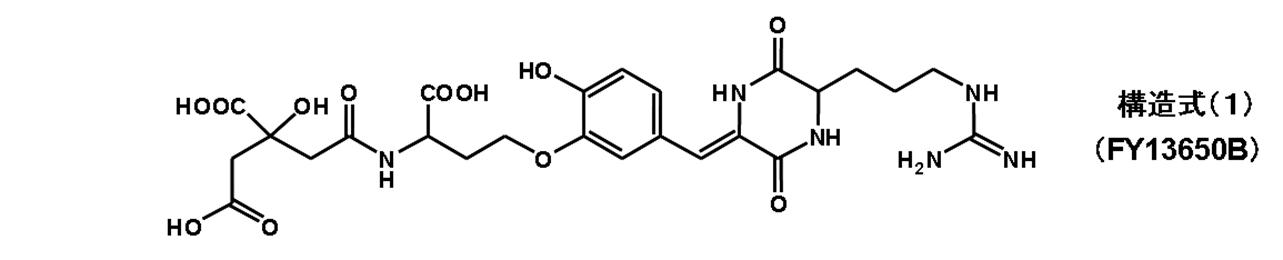

- 核内受容体が、アンドロゲン受容体、及びエストロゲン受容体の少なくともいずれかである請求項4から6のいずれかに記載の核内受容体転写活性化阻害剤。
- 下記構造式(1)で表されることを特徴とする化合物乃至その薬理学上許容される塩。
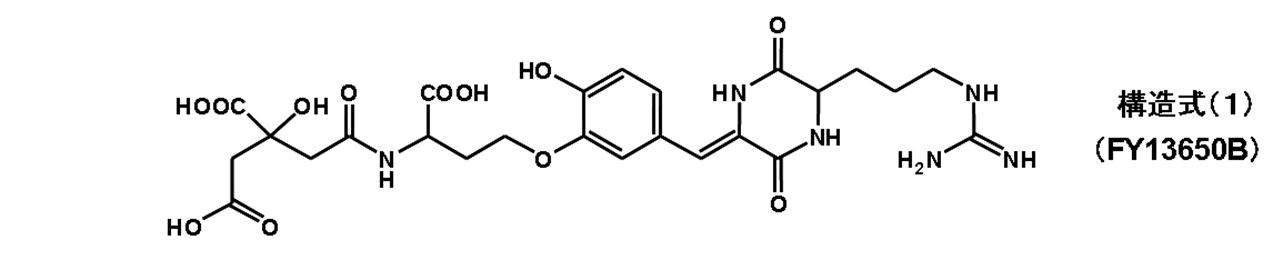
- 下記構造式(1)で表される化合物を生産する能力を有することを特徴とするペニシリウム属不完全菌類。
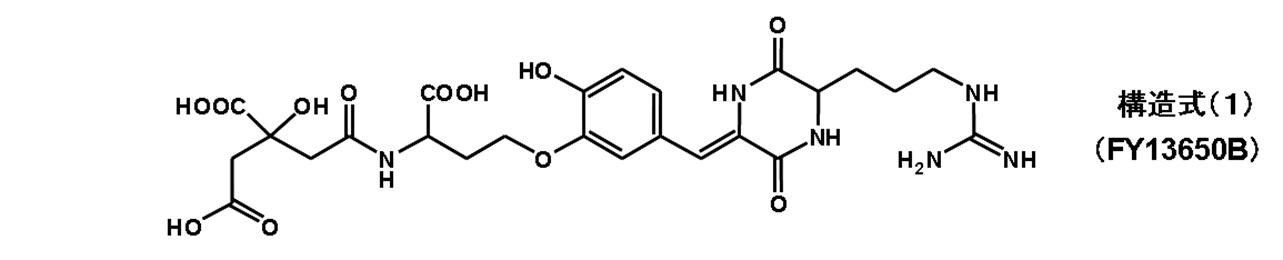
- 少なくともペニシリウム属に属し、下記構造式(1)で表される化合物を生産する能力を有する微生物を、栄養培地にて培養する培養工程と、
培養物中に下記構造式(1)で表される化合物を生成蓄積させ、これを採取する採取工程と、
を含むことを特徴とする下記構造式(1)で表される化合物の製造方法。
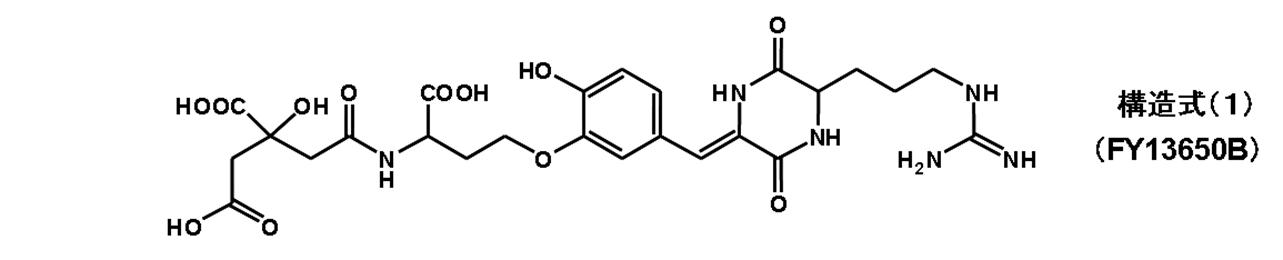
Priority Applications (1)
| Application Number | Priority Date | Filing Date | Title |
|---|---|---|---|
| JP2011511408A JP5669731B2 (ja) | 2009-04-28 | 2010-04-27 | 新規化合物、ヒストンアセチル化酵素阻害剤、核内受容体転写活性化阻害剤、及び製造方法 |
Applications Claiming Priority (2)
| Application Number | Priority Date | Filing Date | Title |
|---|---|---|---|
| JP2009-109991 | 2009-04-28 | ||
| JP2009109991 | 2009-04-28 |
Publications (1)
| Publication Number | Publication Date |
|---|---|
| WO2010126034A1 true WO2010126034A1 (ja) | 2010-11-04 |
Family
ID=43032178
Family Applications (1)
| Application Number | Title | Priority Date | Filing Date |
|---|---|---|---|
| PCT/JP2010/057440 Ceased WO2010126034A1 (ja) | 2009-04-28 | 2010-04-27 | 新規化合物、ヒストンアセチル化酵素阻害剤、核内受容体転写活性化阻害剤、及びペニシリウム属不完全菌類、並びに、製造方法 |
Country Status (2)
| Country | Link |
|---|---|
| JP (1) | JP5669731B2 (ja) |
| WO (1) | WO2010126034A1 (ja) |
Citations (1)
| Publication number | Priority date | Publication date | Assignee | Title |
|---|---|---|---|---|
| WO2007000978A1 (ja) * | 2005-06-27 | 2007-01-04 | Nippon Kayaku Kabushiki Kaisha | 生理活性物質nk13650p3、その製造法及び用途 |
-
2010
- 2010-04-27 WO PCT/JP2010/057440 patent/WO2010126034A1/ja not_active Ceased
- 2010-04-27 JP JP2011511408A patent/JP5669731B2/ja not_active Expired - Fee Related
Patent Citations (1)
| Publication number | Priority date | Publication date | Assignee | Title |
|---|---|---|---|---|
| WO2007000978A1 (ja) * | 2005-06-27 | 2007-01-04 | Nippon Kayaku Kabushiki Kaisha | 生理活性物質nk13650p3、その製造法及び用途 |
Also Published As
| Publication number | Publication date |
|---|---|
| JP5669731B2 (ja) | 2015-02-12 |
| JPWO2010126034A1 (ja) | 2012-11-01 |
Similar Documents
| Publication | Publication Date | Title |
|---|---|---|
| Xu et al. | Antifungal quinazolinones from marine-derived Bacillus cereus and their preparation | |
| Saravanakumar et al. | Molecular identification, volatile metabolites profiling, and bioactivities of an indigenous endophytic fungus (Diaporthe sp.) | |
| Kim et al. | Cellular stress upregulates indole signaling metabolites in Escherichia coli | |
| CN102993275B (zh) | 一种博来霉素族衍生物及其抗癌活性 | |
| JP5669731B2 (ja) | 新規化合物、ヒストンアセチル化酵素阻害剤、核内受容体転写活性化阻害剤、及び製造方法 | |
| WO2016159021A1 (ja) | 化合物 | |
| CN111499649B (zh) | 一种具有抗肿瘤活性的苯并二呋喃酮类化合物、制备方法及其用途 | |
| Cui et al. | Engineering hormonal crosstalk to enhance serotonin/melatonin levels in rice | |
| JP2014129341A (ja) | マルチキナーゼ阻害剤、抗癌剤、抗転移剤、薬剤耐性抑制剤、疼痛抑制剤及び止痒薬 | |
| TWI601822B (zh) | Uk-2生合成基因和使用彼以改善uk-2生產率之方法 | |
| JP6130248B2 (ja) | 新規化合物キノフラシン類、その製造方法、及びその用途、並びに新規微生物 | |
| CN107652305B (zh) | 一种吲哚氰基生物碱类化合物及其制备和应用 | |
| CN102846588A (zh) | 一种鸟巢烷类二萜化合物在制备抗肿瘤药物中的应用 | |
| US8952140B2 (en) | Compound amycolose derivative, method for producing the same, and use of the same | |
| CN104774239B (zh) | 多节孢绿胶霉素类化合物及其用途 | |
| CN104844544B (zh) | 裂环多节孢绿胶霉素类化合物及其用途 | |
| JP7026185B2 (ja) | 新規化合物コッコキノン類、その製造方法、及びその用途、並びに新規微生物 | |
| CN109762046B (zh) | 环肽类抗生素及其制备方法和在制备抗结核分枝杆菌药物中的应用 | |
| JP4836783B2 (ja) | 抗腫瘍剤、抗腫瘍剤の製造方法、抗腫瘍剤を含む医薬組成物、及び抗腫瘍剤産生菌 | |
| Lee et al. | Production of natural indirubin from indican using non-recombinant Escherichia coli | |
| CN104693267A (zh) | 多节孢绿胶霉素e及其用途 | |
| WO2003044209A1 (en) | Novel tetronic acid derivative | |
| JPWO2016052656A1 (ja) | 新規化合物、その製造方法、及びその用途 | |
| Sun | Investigation of the Chromatin Regulator SET4 in Hypoxic Stress in Saccharomyces cerevisiae | |
| JP2009173599A (ja) | 新規細菌情報伝達阻害剤アスコキタシン |
Legal Events
| Date | Code | Title | Description |
|---|---|---|---|
| 121 | Ep: the epo has been informed by wipo that ep was designated in this application |
Ref document number: 10769732 Country of ref document: EP Kind code of ref document: A1 |
|
| ENP | Entry into the national phase |
Ref document number: 2011511408 Country of ref document: JP Kind code of ref document: A |
|
| NENP | Non-entry into the national phase |
Ref country code: DE |
|
| 122 | Ep: pct application non-entry in european phase |
Ref document number: 10769732 Country of ref document: EP Kind code of ref document: A1 |