WO2010107112A1 - 酵素乾燥時における活性低下の抑制方法 - Google Patents
酵素乾燥時における活性低下の抑制方法 Download PDFInfo
- Publication number
- WO2010107112A1 WO2010107112A1 PCT/JP2010/054794 JP2010054794W WO2010107112A1 WO 2010107112 A1 WO2010107112 A1 WO 2010107112A1 JP 2010054794 W JP2010054794 W JP 2010054794W WO 2010107112 A1 WO2010107112 A1 WO 2010107112A1
- Authority
- WO
- WIPO (PCT)
- Prior art keywords
- enzyme
- suppression method
- activity
- drying
- solution
- Prior art date
- Legal status (The legal status is an assumption and is not a legal conclusion. Google has not performed a legal analysis and makes no representation as to the accuracy of the status listed.)
- Ceased
Links
Images



Classifications
-
- C—CHEMISTRY; METALLURGY
- C12—BIOCHEMISTRY; BEER; SPIRITS; WINE; VINEGAR; MICROBIOLOGY; ENZYMOLOGY; MUTATION OR GENETIC ENGINEERING
- C12N—MICROORGANISMS OR ENZYMES; COMPOSITIONS THEREOF; PROPAGATING, PRESERVING, OR MAINTAINING MICROORGANISMS; MUTATION OR GENETIC ENGINEERING; CULTURE MEDIA
- C12N9/00—Enzymes; Proenzymes; Compositions thereof; Processes for preparing, activating, inhibiting, separating or purifying enzymes
- C12N9/96—Stabilising an enzyme by forming an adduct or a composition; Forming enzyme conjugates
-
- C—CHEMISTRY; METALLURGY
- C12—BIOCHEMISTRY; BEER; SPIRITS; WINE; VINEGAR; MICROBIOLOGY; ENZYMOLOGY; MUTATION OR GENETIC ENGINEERING
- C12N—MICROORGANISMS OR ENZYMES; COMPOSITIONS THEREOF; PROPAGATING, PRESERVING, OR MAINTAINING MICROORGANISMS; MUTATION OR GENETIC ENGINEERING; CULTURE MEDIA
- C12N9/00—Enzymes; Proenzymes; Compositions thereof; Processes for preparing, activating, inhibiting, separating or purifying enzymes
- C12N9/14—Hydrolases (3)
- C12N9/24—Hydrolases (3) acting on glycosyl compounds (3.2)
- C12N9/2402—Hydrolases (3) acting on glycosyl compounds (3.2) hydrolysing O- and S- glycosyl compounds (3.2.1)
-
- C—CHEMISTRY; METALLURGY
- C12—BIOCHEMISTRY; BEER; SPIRITS; WINE; VINEGAR; MICROBIOLOGY; ENZYMOLOGY; MUTATION OR GENETIC ENGINEERING
- C12Y—ENZYMES
- C12Y302/00—Hydrolases acting on glycosyl compounds, i.e. glycosylases (3.2)
- C12Y302/02—Hydrolases acting on glycosyl compounds, i.e. glycosylases (3.2) hydrolysing N-glycosyl compounds (3.2.2)
- C12Y302/02027—Uracil-DNA glycosylase (3.2.2.27)
Definitions
- the present invention relates to a method for suppressing a decrease in activity during enzyme drying.
- Enzymatic reactions are used in various fields such as medicine and clinical chemistry, and various enzymes are distributed as enzyme reagents.
- the enzyme reagent is desired to be maintained without deactivation until the time of use. However, if a liquid enzyme reagent is stored at room temperature for a long period of time, the enzyme activity decreases, so glycerol or the like, which is an antifreeze solution (freezing agent), is added and distributed under low temperature conditions of -20 ° C or lower. Generally stored.
- the antifreeze as described above can maintain the activity after storage
- the antifreeze contained in the enzyme reagent may affect the enzyme reaction.
- the reaction efficiency is significantly reduced as compared with before storage.
- a measure is taken to ensure enzyme activity that is not affected by the antifreeze by increasing the enzyme concentration relative to the antifreeze concentration (Patent Document 1).
- Patent Document 1 a measure is taken to ensure enzyme activity that is not affected by the antifreeze by increasing the enzyme concentration relative to the antifreeze concentration.
- Patent Document 1 a measure is taken to ensure enzyme activity that is not affected by the antifreeze by increasing the enzyme concentration relative to the antifreeze concentration
- Patent Document 1 a measure is taken to ensure enzyme activity that is not affected by the antifreeze by increasing the enzyme concentration relative to the antifreeze concentration
- a slight error in the collected amount of the enzyme reagent may affect the enzyme reaction, resulting in a measurement error.
- the cost of capital investment and enzyme raw material costs increase.
- liquid enzyme reagent containing the above-mentioned antifreeze is dried and used as a dry reagent, there is a problem that a significant decrease in activity is observed compared to before drying. For this reason, for example, when producing a dry enzyme reaction chip or the like using the liquid enzyme reagent containing the antifreeze solution, an amount of the enzyme that expects a decrease in activity must be used in advance. Therefore, even in this case, there is a problem of an increase in cost.
- an object of the present invention is to provide a suppression method that suppresses a decrease in enzyme activity that occurs when an enzyme-containing solution is dried.
- the suppression method of the present invention is a method for suppressing a decrease in enzyme activity during drying of an enzyme-containing solution, wherein the antifreeze content in the enzyme-containing solution is set to less than 50 w / v%. It is characterized by doing.
- the concentration of the antifreeze solution in the enzyme-containing solution is reduced to less than 50 w / v%, which is lower than a conventionally required concentration (for example, 50 w / v% or more), so that it can be reduced during the drying process.
- the decrease in activity can be suppressed.
- use of the enzyme amount which anticipated activity fall can be avoided, for example.
- it since it is in a dry state, it can be stored at room temperature, and thus a low-temperature storage facility is not essential. For this reason, the cost can be reduced as compared with the conventional method.
- the content ratio of the antifreeze liquid is low, the influence on the enzyme reaction can be sufficiently avoided at the time of use, and the enzyme concentration at the time of use can be set within a desired range depending on the solvent to be added. The problem of measurement error can also be avoided.
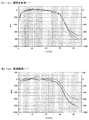
- Example 1 of this invention it is a figure which shows the result of real-time PCR performed using the enzyme which performed the drying process in the absence of glycerol.
- Comparative Example 1 it is a figure which shows the result of real-time PCR performed using the enzyme which performed the drying process in presence of glycerol.
- Comparative Example 1 it is a figure which shows the result of real-time PCR performed using the enzyme which performed the drying process in presence of glycerol.
- Example 2 of this invention it is a figure which shows the result of the real-time PCR performed using the enzyme which performed the drying process in the absence of glycerol.
- Comparative Example 2 it is a figure which shows the result of real-time PCR performed using the enzyme which performed the drying process in presence of glycerol.
- the suppression method of the present invention is a method for suppressing a decrease in enzyme activity during drying of the enzyme-containing solution, and the antifreeze content in the enzyme-containing solution is set to less than 50 w / v%.
- the antifreeze content in the enzyme-containing solution is not particularly limited as long as it is less than 50 w / v%.
- it is 25 w / v% or less, preferably 10 w / v% or less, more preferably the detection limit or less, and still more preferably 1 w / v% or less, particularly preferably 0.1 w / v% or less, particularly preferably substantially 0 w / v%, most preferably 0 w / v%.
- Substantially 0 w / v% means that, for example, it contains a very small amount of antifreeze, but it is extremely small and hardly affects the enzyme activity after the drying treatment.
- the amount of the antifreeze that hardly affects the enzyme activity after drying is, for example, an amount that does not reduce the enzyme activity after drying by more than 25% with respect to the enzyme activity before drying.
- enzyme activity after drying means an activity measured under the same conditions as the enzyme activity before drying.
- the “enzyme activity before drying” can be based on, for example, the activity of the enzyme under the optimum conditions depending on the type of the enzyme.
- the unit of enzyme activity can be defined according to the kind of enzyme, for example, and can generally be defined by the basic mass converted into a product by a fixed amount of enzyme per unit time.
- the enzyme after drying is prevented from being reduced in enzyme activity due to drying treatment.
- the enzyme activity after drying (residual activity%) is, for example, 75% or more, preferably 90% or more, more preferably 90% or more of the enzyme activity before drying, with the enzyme activity before drying being 100%. 95% or more, more preferably substantially 100%.
- the enzyme dried by the drying method of the present invention can be stored stably at room temperature, for example. For example, when the dry reagent is stored at room temperature, sufficient activity during use can be maintained for about 1 month to 3 months, preferably at least about 3 months, and enzyme activity at the end of drying can be maintained.
- the remaining activity of 60% or more, preferably 70% or more, more preferably 95% or more can be maintained.
- the enzyme activity (residual activity) after drying is, for example, at least less than 80%, usually 75% compared to before drying. Or less than 50%, and it is difficult to stably store the dried enzyme.
- the antifreeze is not particularly limited, and examples thereof include glycerol, ethylene glycol, propylene glycol, diethylene glycol and the like.
- the method for drying the enzyme-containing liquid is not particularly limited, and may be, for example, lyophilization in which the enzyme-containing solution is dried in a frozen state, but is preferably dried in a non-frozen state for ease of operation.
- the temperature condition is not particularly limited, and can be appropriately set according to, for example, the heat resistance of the enzyme, and is preferably 25 to 50 ° C., more preferably 25 to 40, for example. ° C, more preferably 25-30 ° C.
- it can be carried out by so-called air drying, which is carried out by standing at room temperature and normal pressure.
- the humidity condition during drying is not particularly limited, and is preferably, for example, 30% or less, more preferably 10% or less, and further preferably 5% or less.
- the time for the drying treatment is not particularly limited.
- the enzyme is substantially free of water as evaluated by visual observation to the extent that the enzyme does not contain water at all or visually. It can be done to the extent. “To the extent that water is not substantially contained in the enzyme” means that the enzyme contains water, but its amount is extremely small, for example, the ratio of water contained in the weight of the enzyme It means less than 1% by weight.
- the type of enzyme to which the present invention is applied is not particularly limited, and examples thereof include transferase, oxidoreductase, hydrolase, lyase, isomerase, and ligase. Specific examples include restriction enzymes, peptidases, catalases, amylases, oxidases, kinases and the like.
- Examples of the transferase include polymerases, and examples of the polymerase include DNA polymerases such as DNA-dependent DNA polymerase and RNA-dependent DNA polymerase, RNA polymerases such as DNA-dependent RNA polymerase and RNA-dependent RNA polymerase. Is given.
- the hydrolase examples include DNA glycosylase, and examples of the DNA glycosylase include thymine DNA glycosylase, uracil DNA glycosylase (UNG), oxoguanine glycosylase, and alkylguanine glycosylase.
- the enzyme may be a thermostable enzyme, and examples thereof include a thermostable transferase including a polymerase, oxidoreductase, hydrolase, lyase, isomerase, ligase, and the like. Examples thereof include Taq polymerase, which is a heat-resistant DNA polymerase.
- the composition of the enzyme-containing solution to be dried is not particularly limited, but it is preferable that the target enzyme is dissolved or suspended in a solvent.
- the solvent is not particularly limited, and examples thereof include water and a buffer solution.
- the type of the buffer is not particularly limited and can be appropriately selected depending on the enzyme to be treated. Specific examples include buffer solutions such as Tris buffer solution, phosphate buffer solution, acetate buffer solution, citrate buffer solution, and borate buffer solution.
- the content of the enzyme in the enzyme-containing solution is not particularly limited.
- the amount of protein is preferably 0.001 mg / L to 100 g / L, more preferably 0.01 mg / L to 10 g / L. More preferably, it is 0.01 mg / L to 100 mg / L.
- the present invention provides the enzyme-containing liquid, for example, regardless of the antifreeze concentration, for example, per 0.0001 mg to 10 g of protein amount of the enzyme, 0.001 mg to 1 g, or 0.001 mg to 10 mg.
- the amount of the antifreeze liquid may be, for example, less than 50 g, preferably 25 mg or less, 10 g or less, 1 g or less, or 0.1 g or less, particularly preferably 0 g.
- the enzyme-containing liquid may further contain an adsorption inhibitor, for example.
- an adsorption inhibitor for example, when the enzyme-containing liquid is accommodated in a container and subjected to a drying treatment, or when the enzyme-containing liquid is moved by a pipette or the like, adsorption of the enzyme to the container and the pipette can be sufficiently prevented.
- the adsorption inhibitor is not particularly limited, and examples thereof include bovine serum albumin (BSA), methyl cellulose, polyoxyethylene (POE) -cured castor oil, lecithin, hydroxypropyl cellulose, ethylene oxide-propylene oxide copolymer, POE.
- the polyoxyethylene-hardened castor oil derivative is not particularly limited, and examples thereof include HCO-60.
- the POE-sorbitan alkyl esters are not particularly limited, and examples thereof include POE-sorbitan monooleate, Tween (registered trademark) 80, and POE-sorbitan monolaurate.
- the glycyrrhizins are not particularly limited, and examples thereof include glycyrrhizic acid and the salts thereof.
- the adsorption inhibitor can be used in an amount as long as it does not affect the activity of the enzyme to which the present invention is applied.
- the content of the adsorption inhibitor in the enzyme-containing liquid is not particularly limited, but is preferably, for example, 0.005 to 80 w / v%, more preferably 0.005 to 40 w / v%, Preferably, it is 0.005 to 10 w / v%.
- the addition ratio of the adsorption inhibitor to the enzyme is not particularly limited.
- the adsorption inhibitor is preferably 0.01 to 10 mg per 1 mg of enzyme protein, more preferably 0.00. 1-5 mg.
- the adsorption inhibitor may be added to the enzyme-containing liquid before the drying treatment, or may be added to the enzyme-containing liquid in the drying treatment step.
- the enzyme-containing liquid may contain other additives than the adsorption inhibitor as long as the activity of the enzyme is not affected, for example.
- the other additives include saccharides, surfactants, and buffer solutions.
- the saccharide is not particularly limited, and examples thereof include trehalose and glucose.
- the surfactant is not particularly limited, and examples thereof include Triton (registered trademark) X-100.
- the buffer solution is not particularly limited, and examples thereof include Tris buffer solution, phosphate buffer solution, acetate buffer solution, citrate buffer solution, and borate buffer solution.
- the enzyme dried under the above conditions can be stored at room temperature as well as at low temperature. Specifically, for example, it is preferably stored at 25 to 50 ° C., more preferably 25 to 40 ° C., and further preferably 25 to 30 ° C.
- the present invention can suppress a decrease in the activity of the enzyme during drying as described above, it can also be referred to as a method for stabilizing the activity of the enzyme during drying. Further, according to the present invention, for example, when the dried enzyme is stored, it is also possible to suppress a decrease in activity due to storage. Therefore, the present invention can also be referred to as, for example, a method for suppressing or stabilizing a decrease in activity during storage as well as during drying.
- the present invention is a method for producing an enzyme reagent in a dry state, comprising a drying treatment step of drying the enzyme-containing solution, wherein the antifreeze content in the enzyme-containing solution is set to less than 50 w / v%.
- a drying treatment step of drying the enzyme-containing solution wherein the antifreeze content in the enzyme-containing solution is set to less than 50 w / v%.
- the present invention is a method for producing a chip for enzyme reaction comprising an enzyme reagent in a dry state, comprising a drying treatment step of adding an enzyme-containing liquid to a substrate and drying the enzyme-containing liquid, the enzyme-containing chip
- the antifreeze content in the liquid is set to less than 50 w / v%.
- the present invention is characterized in that the drying treatment is performed using the enzyme-containing solution under the conditions as described above, and other configurations and conditions are not limited at all.
- the type of the substrate is not limited at all, and any conventionally known form such as a tube or a plate-like body can be employed.
- Example 1 As Example 1, Taq polymerase dried in the absence of glycerol, which is an antifreeze solution, and Taq polymerase dried in the presence of glycerol as Comparative Example 1, were prepared, and fluctuations in activity before and after the drying treatment were confirmed. A specific method is shown below.
- Example 1 The dried enzyme ( ⁇ ) obtained by drying the enzyme-containing solution ( ⁇ ) without glycerol was used as Example 1, and the dried enzyme (+) obtained by drying the enzyme-containing solution (+) with glycerol added was used as a comparative example. It was set to 1.
- the F primer is a forward primer for the template nucleic acid
- the R primer is a reverse primer for the template nucleic acid.
- the detection probe is a probe having a fluorescent substance BODIPY-FL at the 3 ′ end and capable of hybridizing to a base sequence amplified by the F primer and the R primer.
- the detection probe has a property of emitting fluorescence alone and extinguishing fluorescence by hybridization with a complementary strand. For this reason, when an amplification product is generated by real-time PCR, the detection probe hybridizes to the amplification product, and the fluorescence of the detection probe disappears. Therefore, in real-time PCR, amplification of the template nucleic acid can be measured by measuring a change in fluorescence intensity, that is, a decrease in fluorescence intensity.
- the sequence of each primer and probe is as shown below.
- F primer (SEQ ID NO: 1) 5'-GTTTTCCCAGTCCAGACGTT-3 ' R primer (SEQ ID NO: 2) 5'-GGAAACAGCTATGACCATGA-3 ' Probe for detection (SEQ ID NO: 3) 5'-GTCGACTCTAGAGGATCC- (BODIPY-FL) -3 '
- FIG. 1 shows the result of the enzyme without glycerol
- FIG. 1A shows the result of the enzyme-containing solution ( ⁇ ) using 1 ⁇ L of diluted enzyme solution without glycerol, that is, the result before drying.
- B shows the result of dry enzyme ( ⁇ ) using 1 ⁇ L of diluted enzyme solution without glycerol.
- FIG. 2 shows the result of the glycerol-added enzyme
- FIG. 2A shows the result of the enzyme-containing solution (+) using 1.4 ⁇ L of the diluted enzyme solution added with glycerol, that is, the result before drying.
- Fig. (B) shows the result of dry enzyme (+) using 1.4 ⁇ L of diluted enzyme solution containing glycerol
- Fig. 3 shows the result of glycerol-added enzyme
- Fig. (A) shows the result of glycerol.
- the result of the enzyme-containing solution (+) using 1 ⁇ L of the diluted enzyme solution added that is, the result before drying.
- FIG. (B) shows the result of the dried enzyme (+) using 1 ⁇ L of the diluted enzyme solution added with glycerol. It is a result.
- the horizontal axis represents the number of cycles
- the vertical axis represents relative fluorescence units (RFU) excluding background.
- Example 2 As Example 1, UNG (uracil DNA glycosylase) dried in the absence of glycerol, which is an antifreeze solution, and UNG dried in the presence of glycerol as Comparative Example 1, were prepared, and fluctuations in activity before and after the drying treatment were prepared. confirmed. A specific method is shown below.
- Example 2 After standing, the dried enzyme ( ⁇ ) obtained by drying the enzyme-containing solution ( ⁇ ) containing no glycerol was defined as Example 2, and the dried enzyme (+) obtained by drying the enzyme-containing solution (+) containing glycerol was added. ) As Comparative Example 2.
- the enzyme-containing solution ( ⁇ ) and the enzyme-containing solution (+) before the drying treatment were stored at 4 ° C. for one week and then subjected to activity measurement.
- the enzyme-containing solution ( ⁇ ) and the enzyme-containing solution (+) before the drying treatment are diluted enzyme solutions having a UNG concentration of 100 mU / ⁇ L after adding the 0.05 w / v% BSA solution after the storage.
- the reaction solution was subjected to real-time PCR using a thermal cycler (trade name i-cycler, Bio-Rad Laboratories). PCR reaction conditions were as follows.
- the PCR was set at 4 ° C., then treated at 50 ° C. for 2 minutes, further treated at 95 ° C. for 1 minute, and then 95 ° C. for 15 seconds and 56 ° C. for 45 seconds as one cycle. 34 cycles were repeated. In parallel for 34 cycles, a change in fluorescence intensity over time was measured for the reaction solution (wavelength 548 nm).
- Real-time PCR was performed in the same manner as described above except that these PCR reaction solutions were used.
- a PCR reaction solution prepared by mixing 1 ⁇ L of 0.05 w / v% BSA solution and 24 ⁇ L of the following PCR reagent was used as a control.
- amplification product obtained by PCR of a purified genome of Arabidopsis thaliana was used as a template nucleic acid for PCR reaction.
- PCR of the purified genome was performed using the F primer, R primer, and dNTP (dATP, dUTP, dGTP, dCTP).
- the F primer is a forward primer for the template nucleic acid
- the R primer is a reverse primer for the template nucleic acid.
- the detection probe is a probe having a fluorescent substance TAMRA at the 3 ′ end and capable of hybridizing to a base sequence amplified by the F primer and the R primer.
- the detection probe has a property of emitting fluorescence alone and extinguishing fluorescence by hybridization with a complementary strand.
- amplification of the template nucleic acid can be measured by measuring a change in fluorescence intensity (a decrease in fluorescence intensity) in real-time PCR.
- the sequence of each primer and probe is as shown below.
- F primer (SEQ ID NO: 4) 5'-TGAGTCTGTGGGCACAATGAATGAG-3 ' R primer (SEQ ID NO: 5) 5'-CTCGTATCCCGACATCCAGCAAC-3 ' Probe for detection (SEQ ID NO: 6) 5'-CGGTGCTCCCAAGTATTATATGGC- (TAMRA) -3 '
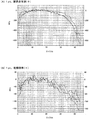
- FIG. 4 shows the result of the enzyme without glycerol
- FIG. 4A shows the result of the enzyme-containing solution ( ⁇ ) using the diluted enzyme solution without glycerol, that is, the result before drying.
- B) shows the result of dry enzyme ( ⁇ ) using the diluted enzyme solution without glycerol.
- FIG. 5 shows the result of the glycerol-added enzyme
- FIG. 5A shows the result of the enzyme-containing solution (+) using the diluted enzyme solution added with glycerol, that is, the result before drying.
- FIG. 4 shows the result of the enzyme without glycerol
- FIG. 4A shows the result of the enzyme-containing solution ( ⁇ ) using the diluted enzyme solution without glycerol, that is, the result before drying.
- the concentration of the antifreeze liquid in the enzyme-containing liquid is reduced to less than 50 w / v%, it is possible to suppress a decrease in activity during the drying process.
- the activity fall by a drying process can be suppressed, use of the enzyme amount which anticipated activity fall can be avoided, for example.
- it since it is in a dry state, it can be stored at room temperature, and thus a low-temperature storage facility is not essential. For this reason, the cost can be reduced as compared with the conventional method.
- the content of antifreeze is low, the influence on the enzyme reaction can be sufficiently avoided at the time of use, and the enzyme concentration at the time of use can be set within a desired range depending on the solvent to be added. This problem can also be avoided.
Landscapes
- Chemical & Material Sciences (AREA)
- Life Sciences & Earth Sciences (AREA)
- Health & Medical Sciences (AREA)
- Organic Chemistry (AREA)
- Zoology (AREA)
- Engineering & Computer Science (AREA)
- Bioinformatics & Cheminformatics (AREA)
- Genetics & Genomics (AREA)
- Wood Science & Technology (AREA)
- General Health & Medical Sciences (AREA)
- General Engineering & Computer Science (AREA)
- Biochemistry (AREA)
- Molecular Biology (AREA)
- Microbiology (AREA)
- Biotechnology (AREA)
- Biomedical Technology (AREA)
- Medicinal Chemistry (AREA)
- Enzymes And Modification Thereof (AREA)
Abstract
酵素含有液を乾燥させる際に生じる、酵素活性の低下を抑制する抑制方法を提供する。酵素含有液を乾燥させる際、前記酵素含有液における不凍液含有量を50w/v%未満に設定する。このような条件で酵素含有液を乾燥させれば、乾燥による酵素活性の低下を十分に抑制できる。前記酵素としては、制限されず、例えば、Taqポリメラーゼ等のポリメラーゼおよびウラシルDNAグリコシラーゼ等のDNAグリコシラーゼ等があげられる。
Description
本発明は、酵素乾燥時における活性の低下を抑制する方法に関する。
医薬および臨床化学分野等の様々な分野において、酵素反応が利用されており、種々の酵素が酵素試薬として流通されている。そして、前記酵素試薬は、使用時まで、その活性が失活することなく維持されることが望まれている。しかしながら、液状の酵素試薬を室温条件下で長期間保存すると、酵素活性が低下するため、不凍液(凍結防止剤)であるグリセロール等を添加して、-20℃以下という低温条件の下、流通・保存されるのが一般的である。
他方、前述のような不凍液は、例えば、保存後の活性を維持できるものの、前記酵素試薬に含まれる前記不凍液が酵素反応に影響を与えるおそれがある。具体的には、例えば、保存前と比較して、反応効率が大幅に低下するという問題がある。この問題に対処するため、前記不凍液濃度に対する前記酵素濃度を高めることで、前記不凍液の影響を受けない酵素活性を確保するという手段がとられている(特許文献1)。しかし、このように酵素濃度を高めると、酵素を使用する際、酵素試薬の採取量のわずかな誤差が、結果的に、酵素反応に影響を与え、測定誤差を与えるおそれがある。また、このような酵素濃度の増加、低温保存の面から、設備投資や酵素原料費のコストが増加するという問題もある。
また、前述の不凍液を含有する液状の酵素試薬を乾燥させ、乾燥試薬として使用する場合、乾燥前と比較して、大幅な活性低下がみられるという問題がある。このため、前記不凍液含有の液状酵素試薬を用いて、例えば、ドライ系の酵素反応用チップ等を製造する場合は、予め、活性の低下を見込んだ量の酵素を使用しなければならない。したがって、この場合においても、コストの増加という問題がある。
そこで、本発明は、酵素含有液を乾燥させる際に生じる酵素活性の低下を抑制する抑制方法の提供を目的とする。
前記目的を達成するために、本発明の抑制方法は、酵素含有液の乾燥時における酵素活性の低下を抑制する方法であって、前記酵素含有液における不凍液含有量を50w/v%未満に設定することを特徴とする。
本発明によれば、酵素含有液における前記不凍液の濃度を、従来必要とされていた濃度(例えば、50w/v%以上)よりも低い50w/v%未満に低減することで、乾燥処理時における活性低下を抑制できる。このように、乾燥処理による活性低下を抑制できることから、例えば、活性低下を見越した酵素量の使用を回避できる。また、乾燥状態であることから、室温保存が可能となるため、低温保存設備も必須ではない。このような理由から、従来法と比べて、コストの低下も実現できる。さらに、前記不凍液の含有割合が低いことから、使用時に、酵素反応への影響を十分に回避でき、使用時の酵素濃度も、添加する溶媒等によって所望の範囲に設定できることから、前述のような測定誤差の問題も回避できる。
<活性低下の抑制方法>
本発明の抑制方法は、前述のように、酵素含有液の乾燥時における酵素活性の低下を抑制する方法であって、前記酵素含有液における不凍液含有量を50w/v%未満に設定することを特徴とする。
本発明の抑制方法は、前述のように、酵素含有液の乾燥時における酵素活性の低下を抑制する方法であって、前記酵素含有液における不凍液含有量を50w/v%未満に設定することを特徴とする。
前記酵素含有液における不凍液含有量は、50w/v%未満であれば、特に制限されないが、例えば、25w/v%以下、好ましくは10w/v%以下、より好ましくは検出限界以下、さらに好ましくは、1w/v%以下、特に好ましくは、0.1w/v%以下、特に好ましくは、実質的に0w/v%、最も好ましくは0w/v%である。実質的に0w/v%とは、例えば、不凍液を微量に含有するが、極めて少なく、乾燥処理後の酵素活性にほとんど影響を与えないことを意味する。乾燥後の酵素活性にほとんど影響を与えない不凍液量とは、例えば、乾燥後の酵素活性を、前記乾燥前の酵素活性に対して、25%を超えて低下させない量である。本明細書において、「乾燥後の酵素活性」とは、乾燥前の酵素活性と同じ条件下で測定した場合の活性を意味する。また、「乾燥前の酵素活性」とは、例えば、酵素の種類に応じて、その酵素の至適条件下での活性を基準とすることができる。また、酵素活性の単位は、例えば、酵素の種類に応じて定義でき、一般に、単位時間あたりに一定量の酵素により生成物に変換される基質量で定義できる。
本発明の抑制方法によれば、前述のように、前記乾燥後の前記酵素は、乾燥処理による酵素活性の低下が抑制される。前記乾燥後の酵素活性(残存活性%)は、前記乾燥前の酵素活性を100%として、例えば、前記乾燥前の酵素活性の75%以上であり、好ましくは90%以上であり、より好ましくは95%以上であり、より好ましくは実質的に100%である。本発明の乾燥方法により乾燥させた酵素は、例えば、常温で安定に保存することも可能である。前記乾燥試薬を、例えば、常温で保存した場合、約1ヵ月間~3ヵ月間、好ましくは少なくとも約3ヵ月間は、使用時における十分な活性を維持でき、また、乾燥終了時の酵素活性を100%として、例えば、60%以上、好ましくは70%以上、より好ましくは95%以上の残存活性を維持可能である。なお、従来法により、高濃度不凍液を含有する酵素含有液を乾燥させた場合、乾燥前と比較して、乾燥後の酵素活性(残存活性)は、例えば、少なくとも80%未満、通常、75%未満、50%未満にまで低下する場合もあり、乾燥させた酵素を安定に保存することも困難である。
前記不凍液としては、特に制限されず、例えば、グリセロール、エチレングリコール、プロピレングリコール、ジエチレングリコール等があげられる。
本発明において、前記酵素含有液の乾燥方法は、特に制限されず、例えば、凍結状態で乾燥させる凍結乾燥でもよいが、操作の簡便性から、非凍結状態で乾燥させることが好ましい。非凍結状態での乾燥は、例えば、温度条件は、特に制限されず、例えば、酵素の耐熱性に応じて適宜設定でき、例えば、25~50℃であることが好ましく、より好ましくは25~40℃であり、さらに好ましくは25~30℃である。また、例えば、常温常圧下で静置して行う、いわゆる風乾によって行うこともできる。乾燥時の湿度条件も、特に制限されず、例えば、30%以下が好ましく、より好ましくは10%以下であり、さらに好ましくは5%以下である。乾燥処理の時間は、特に制限されず、例えば、目視で評価して、前記酵素に水が全く含まれない程度まで、または、目視で評価して、前記酵素に水が実質的に含まれない程度まで行えばよい。「前記酵素に水が実質的に含まれない程度」とは、前記酵素に水が含まれているが、その量が、極めて少なく、例えば、前記酵素の重量に対し、含まれる水の割合が1重量%未満であることを意味する。
本発明を適用する酵素の種類は、特に制限されず、例えば、トランスフェラーゼ、オキシドレダクターゼ、ハイドロラーゼ、リアーゼ、イソメラーゼ、リガーゼ等があげられる。具体例としては、制限酵素、ペプチダーゼ、カタラーゼ、アミラーゼ、オキシダーゼ、キナーゼ等があげられる。前記トランスフェラーゼとしては、例えば、ポリメラーゼがあげられ、前記ポリメラーゼとしては、例えば、DNA依存性DNAポリメラーゼ、RNA依存性DNAポリメラーゼ等のDNAポリメラーゼ、DNA依存性RNAポリメラーゼ、RNA依存性RNAポリメラーゼ等のRNAポリメラーゼがあげられる。前記ハイドロラーゼとしては、例えば、DNAグリコシラーゼがあげられ、前記DNAグリコシラーゼとしては、例えば、チミンDNAグリコシラーゼ、ウラシルDNAグリコシラーゼ(UNG)、オキソグアニングリコシラーゼ、アルキルグアニングリコシラーゼ等があげられる。また、本発明において、前記酵素は、耐熱性酵素であってもよく、例えば、耐熱性を示す、ポリメラーゼ等を含むトランスフェラーゼ、オキシドレダクターゼ、ハイドロラーゼ、リアーゼ、イソメラーゼ、リガーゼ等があげられ、具体例としては、耐熱性DNAポリメラーゼであるTaqポリメラーゼがあげられる。
本発明において、乾燥処理を施す酵素含有液の組成は、特に制限されないが、溶媒に目的の酵素が溶解または懸濁されていることが好ましい。前記溶媒としては、特に制限されず、例えば、水、緩衝液等があげられる。前記緩衝液の種類は、特に制限されず、処理する酵素に応じて適宜選択できる。具体例としては、例えば、トリス緩衝液、リン酸緩衝液、酢酸緩衝液、クエン酸緩衝液、ホウ酸緩衝液等の緩衝液があげられる。前記酵素含有液における酵素の含有量は、特に制限されないが、例えば、タンパク量が0.001mg/L~100g/Lであることが好ましく、より好ましくは0.01mg/L~10g/Lであり、さらに好ましくは0.01mg/L~100mg/Lである。また、本発明は、前記酵素含有液において、例えば、前記不凍液濃度にかかわらず、例えば、酵素のタンパク質量0.0001mg~10gあたり、0.001mg~1gあたり、または、0.001mg~10mgあたり、前記不凍液の量が、例えば、50g未満であってもよく、好ましくは、25mg以下、10g以下、1g以下または0.1g以下、特に好ましくは0gである。
前記酵素含有液は、例えば、さらに、吸着防止剤を含んでもよい。これによって、例えば、前記酵素含有液を容器に収容して乾燥処理を施す際、または、前記酵素含有液をピペット等で移動させる際、前記容器およびピペット等への酵素の吸着を十分に防止できる。前記吸着防止剤としては、特に制限されず、例えば、ウシ血清アルブミン(BSA)、メチルセルロース、ポリオキシエチレン(POE)-硬化ヒマシ油、レシチン、ヒドロキシプロピルセルロース、エチレンオキサイド-プロピレンオキサイド共重合体、POE-ソルビタンアルキルエステル類、メチルサイクロデキストリン、ソルビタン脂肪酸エステル、POE-オクチルフェニルエーテル、POE-ラウリルエーテル、バシトラシン、ポリエチレングリコール、塩化ベンザルコニウム、ゼラチン、ヒト血清アルブミン、尿素、カゼイン、グリチルリチン類等、および、これらの誘導体ならびに塩等があげられる。前記ポリオキシエチレン-硬化ヒマシ油の誘導体は、特に制限されないが、例えば、HCO-60等があげられる。前記POE-ソルビタンアルキルエステル類は、特に制限されないが、例えば、POE-ソルビタンモノオレート、Tween(登録商標)80、POE-ソルビタンモノラウレート等があげられる。前記グリチルリチン類は、特に制限されないが、例えば、グリチルリチン酸等およびその塩等があげられる。前記吸着防止剤は、例えば、本発明を適用する酵素の活性に影響を与えない限りの量で使用できる。前記酵素含有液における前記吸着防止剤の含有量は、特に制限されないが、例えば、0.005~80w/v%であることが好ましく、より好ましくは0.005~40w/v%であり、さらに好ましくは0.005~10w/v%である。また、前記酵素含有液において、前記酵素に対する前記吸着防止剤の添加割合は、特に制限されないが、例えば、酵素タンパク量1mgあたり、前記吸着防止剤0.01~10mgが好ましく、より好ましくは0.1~5mgである。前記吸着防止剤は、例えば、前記乾燥処理を行う前に、前記酵素含有液に添加してもよいし、前記乾燥処理工程において前記酵素含有液に添加してもよい。
本発明において、前記酵素含有液は、例えば、前記酵素の活性に影響を与えない限りにおいて、前記吸着防止剤以外の他の添加剤を含んでもよい。前記他の添加剤としては、例えば、糖類、界面活性剤、緩衝液等があげられる。前記糖類としては、特に制限されないが、例えば、トレハロース、グルコース等があげられる。前記界面活性剤としては、特に制限されないが、例えば、Triton(登録商標)X-100等があげられる。前記緩衝液としては、特に制限されないが、例えば、トリス緩衝液、リン酸緩衝液、酢酸緩衝液、クエン酸緩衝液、ホウ酸緩衝液等があげられる。
以上のような条件で乾燥させた酵素は、例えば、低温状態での保存はもちろんのこと、室温での保存も可能である。具体的には、例えば、25~50℃で保存することが好ましく、より好ましくは、25~40℃であり、さらに好ましくは25~30℃である。
本発明は、前述のように酵素の乾燥時における活性の低下を抑制できることから、酵素の乾燥時における活性の安定化方法ということもできる。また、本発明によれば、例えば、乾燥後の酵素を保存した際に、保存による活性低下の抑制も可能である。したがって、本発明は、例えば、乾燥時だけでなく、保存時における活性低下の抑制方法または安定化方法ということもできる。
<酵素試薬およびチップの製造方法>
つぎに、本発明は、乾燥状態の酵素試薬の製造方法であって、酵素含有液を乾燥させる乾燥処理工程を含み、前記酵素含有液における不凍液含有量を50w/v%未満に設定することを特徴とする。このような方法によれば、前述のように、乾燥処理時における酵素活性の低下を抑制して、乾燥状態の酵素試薬を製造できる。なお、具体的な方法は、前述のとおりである。
つぎに、本発明は、乾燥状態の酵素試薬の製造方法であって、酵素含有液を乾燥させる乾燥処理工程を含み、前記酵素含有液における不凍液含有量を50w/v%未満に設定することを特徴とする。このような方法によれば、前述のように、乾燥処理時における酵素活性の低下を抑制して、乾燥状態の酵素試薬を製造できる。なお、具体的な方法は、前述のとおりである。
また、本発明は、乾燥状態の酵素試薬を備える酵素反応用チップの製造方法であって、酵素含有液を基材に添加し、前記酵素含有液を乾燥させる乾燥処理工程を含み、前記酵素含有液における不凍液含有量を50w/v%未満に設定することを特徴とする。このような方法によれば、前述のように、乾燥処理時における酵素活性の低下を抑制して、乾燥状態の酵素試薬を備える酵素反応用チップを製造できる。なお、具体的な方法は、前述のとおりである。
本発明は、前述のような条件の酵素含有液を使用して乾燥処理を行うことが特徴であって、その他の構成や条件は、何ら制限されない。本発明において、前記基材の種類は、何ら制限されず、例えば、チューブ、板状体等、従来公知のあらゆる形態が採用できる。
つぎに、本発明の実施例について、比較例と併せて説明する。ただし、本発明は、下記実施例に限定ないし制限されない。
[実施例1]
実施例1として、不凍液であるグリセロール非存在下で乾燥させたTaqポリメラーゼ、比較例1として、グリセロール存在下で乾燥させたTaqポリメラーゼを、それぞれ準備し、乾燥処理前後の活性の変動を確認した。以下に、具体的な方法を示す。
実施例1として、不凍液であるグリセロール非存在下で乾燥させたTaqポリメラーゼ、比較例1として、グリセロール存在下で乾燥させたTaqポリメラーゼを、それぞれ準備し、乾燥処理前後の活性の変動を確認した。以下に、具体的な方法を示す。
(1)酵素の乾燥処理
酵素としてTaqポリメラーゼ(ニッポンジーン社製:5U/μL)、溶媒として蒸留水を使用し、下記表1の組成に示すグリセロール無添加の酵素含有液(-)およびグリセロール添加の酵素含有液(+)を調製した。これらの酵素含有液2.5μLをそれぞれチューブに入れ、湿度10%以下、温度25℃の条件下、一晩静置して乾燥させた。なお、一晩の乾燥処理で水分が完全に除去されたことは確認済みである。グリセロール無添加の酵素含有液(-)の乾燥により得られた乾燥酵素(-)を実施例1とし、グリセロール添加の酵素含有液(+)の乾燥により得られた乾燥酵素(+)を比較例1とした。

酵素としてTaqポリメラーゼ(ニッポンジーン社製:5U/μL)、溶媒として蒸留水を使用し、下記表1の組成に示すグリセロール無添加の酵素含有液(-)およびグリセロール添加の酵素含有液(+)を調製した。これらの酵素含有液2.5μLをそれぞれチューブに入れ、湿度10%以下、温度25℃の条件下、一晩静置して乾燥させた。なお、一晩の乾燥処理で水分が完全に除去されたことは確認済みである。グリセロール無添加の酵素含有液(-)の乾燥により得られた乾燥酵素(-)を実施例1とし、グリセロール添加の酵素含有液(+)の乾燥により得られた乾燥酵素(+)を比較例1とした。
(2)酵素の活性測定
乾燥処理前の酵素含有液(-)および乾燥処理後の乾燥酵素(-)、ならびに、乾燥処理前の酵素含有液(+)および乾燥処理後の乾燥酵素(+)について、それぞれ、PCRを行い、活性を確認した。
乾燥処理前の酵素含有液(-)および乾燥処理後の乾燥酵素(-)、ならびに、乾燥処理前の酵素含有液(+)および乾燥処理後の乾燥酵素(+)について、それぞれ、PCRを行い、活性を確認した。
乾燥処理前の酵素含有液(-)および酵素含有液(+)各2.5μLに、水22.5μLを添加して、計25μLの希釈酵素液を調製した。そして、所定量(2.1μL、1.4μLまたは1μL)の前記希釈酵素液と、下記PCR試薬10μLとを混合し、さらに蒸留水を添加して、計25μLに調整して、PCR反応液とした(n=3)。前記反応液について、サーマルサイクラー(商品名i-cycler、Bio-Rad Laboratories社)を用いてリアルタイムPCRを行った。PCRの反応条件は、94℃で3分間処理した後、94℃10秒、50℃2秒および72℃10秒を1サイクルとして45サイクル繰り返した。そして、45サイクルの間、並行して、前記反応液について経時的な蛍光強度変化を測定した(波長520~555nm)。
他方、乾燥処理後の乾燥酵素(-)および乾燥酵素(+)は、それぞれ蒸留水25μLを添加して、酵素を懸濁した。そして、所定量(2.1μL、1.4μL、1μL、または、0.7μL)の前記懸濁液と、下記表2のPCR試薬10μLとを混合し、さらに蒸留水を添加して、計25μLに調整して、PCR反応液とした(n=3)。これらのPCR反応液を使用した以外は、前述と同様にして、リアルタイムPCRを行った。
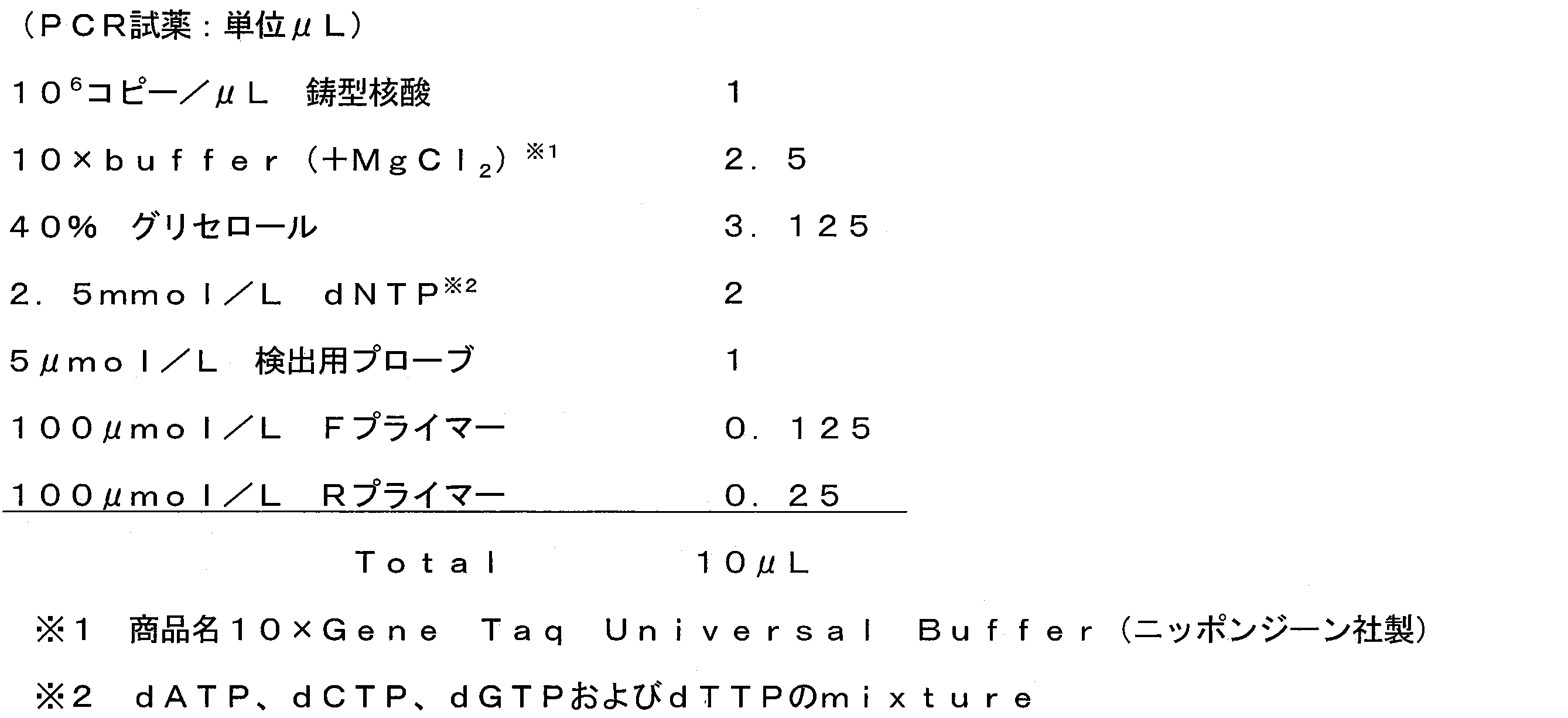
PCR反応の鋳型核酸としては、M13-Fを使用した。前記Fプライマーは、前記鋳型核酸用のフォワードプライマーであり、前記Rプライマーは、前記鋳型核酸用のリバースプライマーである。また、前記検出用プローブは、3’末端に蛍光物質BODIPY-FLを有し、前記Fプライマーと前記Rプライマーとにより増幅される塩基配列にハイブリダイズ可能なプローブである。前記検出用プローブは、単独で蛍光を発し、相補鎖とのハイブリダイズにより蛍光を消失する性質を有する。このため、リアルタイムPCRによって増幅産物が生成されると、前記増幅産物に前記検出用プローブがハイブリダイズし、前記検出用プローブの蛍光は消失する。したがって、リアルタイムPCRにおいて、蛍光強度変化、すなわち、蛍光強度の低下を測定することによって、鋳型核酸の増幅を測定できる。各プライマーおよびプローブの配列は、以下に示す通りである。
Fプライマー(配列番号1)
5’-GTTTTCCCAGTCACGACGTT-3’
Rプライマー(配列番号2)
5’-GGAAACAGCTATGACCATGA-3’
検出用プローブ(配列番号3)
5’-GTCGACTCTAGAGGATCC-(BODIPY-FL)-3’
5’-GTTTTCCCAGTCACGACGTT-3’
Rプライマー(配列番号2)
5’-GGAAACAGCTATGACCATGA-3’
検出用プローブ(配列番号3)
5’-GTCGACTCTAGAGGATCC-(BODIPY-FL)-3’
これらの結果を、図1、図2および図3に示す。前記各図は、リアルタイムPCRの結果であって、経時的な蛍光強度変化を示すグラフである。図1は、グリセロール無添加酵素の結果であり、同図(A)は、グリセロール無添加の希釈酵素液1μLを使用した酵素含有液(-)の結果、すなわち乾燥前の結果であり、同図(B)は、前記グリセロール無添加の希釈酵素液1μLを使用した乾燥酵素(-)の結果を示す。図2は、グリセロール添加酵素の結果であり、同図(A)は、前記グリセロール添加の希釈酵素液1.4μLを使用した酵素含有液(+)の結果、すなわち乾燥前の結果であり、同図(B)は、前記グリセロール添加の希釈酵素液1.4μLを使用した乾燥酵素(+)の結果であり、図3は、グリセロール添加酵素の結果であり、同図(A)は、前記グリセロール添加の希釈酵素液1μLを使用した酵素含有液(+)の結果、すなわち乾燥前の結果であり、同図(B)は、前記グリセロール添加の希釈酵素液1μLを使用した乾燥酵素(+)の結果である。全図において、横軸は、サイクル数、縦軸は、バックグラウンドを除いた相対蛍光単位(RFU)である。
図2(A)および(B)に示すように、グリセロール添加の希釈酵素を1.4μL使用した場合、乾燥前後において24サイクル付近から同程度の増幅が確認できた。しかしながら、図3(A)および(B)に示すように、グリセロール添加の希釈酵素を1μLに減少させると、乾燥後の増幅が確認できなかった。この結果から、グリセロール存在下で乾燥処理を施した場合、酵素活性は、乾燥前の酵素(活性100%)と比較して約70%程度の活性に低下したことがわかる。これに対して、図1(A)および(B)に示すように、グリセロール無添加の場合、希釈酵素を2.1μLから1μLに減少させても、乾燥後において、乾燥前と同様に、24サイクル付近から同程度の増幅が確認できた。この結果から、グリセロール非存在下での乾燥処理によれば、酵素活性の低下を抑制できることがわかった。
[実施例2]
実施例1として、不凍液であるグリセロール非存在下で乾燥させたUNG(ウラシルDNAグリコシラーゼ)、比較例1として、グリセロール存在下で乾燥させたUNGを、それぞれ準備し、乾燥処理前後の活性の変動を確認した。以下に、具体的な方法を示す。
実施例1として、不凍液であるグリセロール非存在下で乾燥させたUNG(ウラシルDNAグリコシラーゼ)、比較例1として、グリセロール存在下で乾燥させたUNGを、それぞれ準備し、乾燥処理前後の活性の変動を確認した。以下に、具体的な方法を示す。
(1)酵素の乾燥処理
酵素としてUNG(New England Biolabs社製)、溶媒として蒸留水を使用し、下記表3の組成に示すグリセロール無添加の酵素含有液(-)およびグリセロール添加の酵素含有液(+)を調製した。これらの酵素含有液2μLをそれぞれチューブに入れ、湿度10%以下、温度25℃の条件下、一晩静置して乾燥させた。なお、一晩の乾燥処理で水分が完全に除去されたことは確認済みである。乾燥処理後の各試薬を密封し、50℃で1週間静置した。静置後、グリセロール無添加の酵素含有液(-)の乾燥により得られた乾燥酵素(-)を実施例2とし、グリセロール添加の酵素含有液(+)の乾燥により得られた乾燥酵素(+)を比較例2とした。

酵素としてUNG(New England Biolabs社製)、溶媒として蒸留水を使用し、下記表3の組成に示すグリセロール無添加の酵素含有液(-)およびグリセロール添加の酵素含有液(+)を調製した。これらの酵素含有液2μLをそれぞれチューブに入れ、湿度10%以下、温度25℃の条件下、一晩静置して乾燥させた。なお、一晩の乾燥処理で水分が完全に除去されたことは確認済みである。乾燥処理後の各試薬を密封し、50℃で1週間静置した。静置後、グリセロール無添加の酵素含有液(-)の乾燥により得られた乾燥酵素(-)を実施例2とし、グリセロール添加の酵素含有液(+)の乾燥により得られた乾燥酵素(+)を比較例2とした。
(2)酵素の活性測定
乾燥処理前の酵素含有液(-)および乾燥処理後の乾燥酵素(-)、ならびに、乾燥処理前の酵素含有液(+)および乾燥処理後の乾燥酵素(+)について、それぞれ、PCRを行い、活性を確認した。
乾燥処理前の酵素含有液(-)および乾燥処理後の乾燥酵素(-)、ならびに、乾燥処理前の酵素含有液(+)および乾燥処理後の乾燥酵素(+)について、それぞれ、PCRを行い、活性を確認した。
乾燥処理前の酵素含有液(-)および酵素含有液(+)は、4℃で一週間保存した後、活性測定に供した。具体的には、乾燥処理前の酵素含有液(-)および酵素含有液(+)は、前記保存後、0.05w/v% BSA溶液を添加して、UNG濃度100mU/μLの希釈酵素液を調製した。そして、前記希釈酵素液1μLと、下記PCR試薬24μLとを混合し、PCR反応液とした(n=3)。前記反応液について、サーマルサイクラー(商品名i-cycler、Bio-Rad Laboratories社)を用いてリアルタイムPCRを行った。PCRの反応条件は、前記PCRを、まず4℃にセットしてから、50℃で2分間処理し、さらに95℃で1分間処理した後、95℃15秒および56℃45秒を1サイクルとして34サイクル繰り返した。そして、34サイクルの間、並行して、前記反応液について経時的な蛍光強度変化を測定した(波長548nm)。
他方、乾燥処理後の乾燥酵素(-)および乾燥酵素(+)は、それぞれ0.05w/v% BSA溶液20μLを添加して、酵素を懸濁し、UNG濃度100mU/μLの懸濁液を調製した。そして、前記懸濁液1μLと、下記表4のPCR試薬24μLとを混合して、PCR反応液とした(n=3)。これらのPCR反応液を使用した以外は、前述と同様にして、リアルタイムPCRを行った。なお、0.05w/v% BSA溶液1μLと、下記PCR試薬24μLとを混合したPCR反応液を、コントロールとした。

PCR反応の鋳型核酸としては、シロイヌナズナの精製ゲノムのPCRによる増幅産物を用いた。前記精製ゲノムのPCRは、前記Fプライマー、Rプライマー、ならびに、dNTP(dATP、dUTP、dGTP、dCTP)を用いて行った。前記Fプライマーは、前記鋳型核酸用のフォワードプライマーであり、前記Rプライマーは、前記鋳型核酸用のリバースプライマーである。また、前記検出用プローブは、3’末端に蛍光物質TAMRAを有し、前記Fプライマーと前記Rプライマーとにより増幅される塩基配列にハイブリダイズ可能なプローブである。前記検出用プローブは、単独で蛍光を発し、相補鎖とのハイブリダイズにより蛍光を消失する性質を有する。このため、リアルタイムPCRによって増幅産物が生成されると、前記増幅産物に前記検出用プローブがハイブリダイズし、前記検出用プローブの蛍光は消失する。したがって、リアルタイムPCRにおいて、蛍光強度変化(蛍光強度の低下)を測定することによって、鋳型核酸の増幅を測定できる。各プライマーおよびプローブの配列は、以下に示す通りである。
Fプライマー(配列番号4)
5’-TGAGTCTGTGGTGCACAATGAATGAG-3’
Rプライマー(配列番号5)
5’-CTCGTATCCCGACATTCCAGCAAC-3’
検出用プローブ(配列番号6)
5’-CGGTGCTCCAAGTATGTTAATGGC-(TAMRA)-3’
5’-TGAGTCTGTGGTGCACAATGAATGAG-3’
Rプライマー(配列番号5)
5’-CTCGTATCCCGACATTCCAGCAAC-3’
検出用プローブ(配列番号6)
5’-CGGTGCTCCAAGTATGTTAATGGC-(TAMRA)-3’
これらの結果を、図4および図5に示す。両図は、リアルタイムPCRの結果であって、経時的な蛍光強度変化を示すグラフである。図4は、グリセロール無添加酵素の結果であり、同図(A)は、グリセロール無添加の希釈酵素液を使用した酵素含有液(-)の結果、すなわち乾燥前の結果であり、同図(B)は、前記グリセロール無添加の希釈酵素液を使用した乾燥酵素(-)の結果を示す。図5は、グリセロール添加酵素の結果であり、同図(A)は、グリセロール添加の希釈酵素液を使用した酵素含有液(+)の結果、すなわち乾燥前の結果であり、同図(B)は、前記グリセロール添加の希釈酵素液を使用した乾燥酵素(+)の結果である。また、各図において、UNG無添加のコントロールの結果を、あわせて示す。全図において、横軸は、サイクル数、縦軸は、バックグラウンドを除いた相対蛍光単位(RFU)である。
各図に示すように、コントロールは、UNG無添加であるため、19サイクル付近から蛍光の減少が見られ、増幅産物の増加が確認された。そして、図5(A)に示すように、グリセロール添加の希釈酵素を使用した場合、増幅産物の増加は確認できなかった。これは、UNGによって、二本鎖DNAのウラシル-グリコシド結合が分解されるため、増幅産物の増加が抑制されたことを意味する。しかしながら、図5(B)に示すように、グリセロール添加の乾燥酵素を使用した場合、3回の測定全てについて、UNG無添加のコントロールと同様に、19サイクル付近から蛍光の減少が見られた。この結果から、グリセロールを含むUNG含有液を乾燥した場合、UNGの活性が大きく低下したことがわかった。他方、図4(A)に示すように、グリセロール無添加の希釈酵素を使用した場合、増幅産物の増加は確認されなかった。そして、図4(B)に示すように、グリセロール無添加の乾燥試薬を使用した場合も、増幅産物の増加は確認されなかった。この結果から、グリセロール無添加のUNG含有液を乾燥した場合、UNGの活性は、十分に維持できることがわかった。
以上のように、本発明によれば、酵素含有液における不凍液の濃度を、50w/v%未満に低減することで、乾燥処理時における活性低下を抑制することができる。このように、乾燥処理による活性低下を抑制できることから、例えば、活性低下を見越した酵素量の使用を回避することができる。また、乾燥状態であることから、室温保存が可能となるため、低温保存設備も必須ではない。このような理由から、従来法と比べて、コストの低下も実現できる。さらに、不凍液の含有割合が低いことから、使用時に、酵素反応への影響も十分に回避でき、使用時の酵素濃度も添加する溶媒等によって所望の範囲に設定できることから、前述のような測定誤差の問題も回避できる。
Claims (14)
- 酵素含有液の乾燥時における酵素活性の低下を抑制する方法であって、
前記酵素含有液における不凍液含有量を50w/v%未満に設定することを特徴とする抑制方法。 - 前記酵素含有液における不凍液含有量が、0w/v%である、請求の範囲1記載の抑制方法。
- 前記不凍液が、グリセロールである、請求の範囲1記載の抑制方法。
- 前記乾燥後の前記酵素の活性が、前記乾燥前の前記酵素の活性の75%以上である、請求の範囲1記載の抑制方法。
- 前記酵素含有液を、非凍結状態で乾燥させる、請求の範囲1記載の抑制方法。
- 前記酵素含有液を、25~50℃の温度条件下で乾燥させる、請求の範囲1記載の抑制方法。
- 前記酵素が、トランスフェラーゼ、オキシドレダクターゼ、ハイドロラーゼ、リアーゼ、イソメラーゼおよびリガーゼからなる群から選択される少なくとも一つである、請求の範囲1記載の抑制方法。
- 前記トランスフェラーゼが、ポリメラーゼである、請求の範囲7記載の抑制方法。
- 前記酵素が、耐熱性酵素である、請求の範囲1記載の抑制方法。
- 前記酵素が、Taqポリメラーゼである、請求の範囲9記載の抑制方法。
- 前記ハイドロラーゼが、DNAグリコシラーゼである、請求の範囲7記載の抑制方法。
- 前記DNAグリコシラーゼが、ウラシル-DNAグリコシラーゼである、請求の範囲11記載の抑制方法。
- 前記酵素含有液が、さらに、吸着防止剤を含む、請求の範囲1記載の抑制方法。
- 前記吸着防止剤が、ウシ血清アルブミン、メチルセルロース、ポリオキシエチレン(POE)-硬化ヒマシ油、レシチン、ヒドロキシプロピルセルロース、エチレンオキサイド-プロピレンオキサイド共重合体、POE-ソルビタンアルキルエステル類、メチルサイクロデキストリン、ソルビタン脂肪酸エステル、POE-オクチルフェニルエーテル、POE-ラウリルエーテル、バシトラシン、ポリエチレングリコール、塩化ベンザルコニウム、ゼラチン、ヒト血清アルブミン、尿素、カゼイン、グリチルリチン類、およびこれらの誘導体ならびにこれらの塩からなる群から選択される少なくとも一つである請求の範囲13記載の抑制方法。
Applications Claiming Priority (2)
| Application Number | Priority Date | Filing Date | Title |
|---|---|---|---|
| JP2009-068855 | 2009-03-19 | ||
| JP2009068855 | 2009-03-19 |
Publications (1)
| Publication Number | Publication Date |
|---|---|
| WO2010107112A1 true WO2010107112A1 (ja) | 2010-09-23 |
Family
ID=42739768
Family Applications (1)
| Application Number | Title | Priority Date | Filing Date |
|---|---|---|---|
| PCT/JP2010/054794 Ceased WO2010107112A1 (ja) | 2009-03-19 | 2010-03-19 | 酵素乾燥時における活性低下の抑制方法 |
Country Status (1)
| Country | Link |
|---|---|
| WO (1) | WO2010107112A1 (ja) |
Citations (3)
| Publication number | Priority date | Publication date | Assignee | Title |
|---|---|---|---|---|
| JP2004519242A (ja) * | 2001-03-12 | 2004-07-02 | ビオトールズ ビオテクノロジカル アンド メディカル ラボラトリーズ,エス.エー. | 完全にまたは部分的に乾燥した1つ以上の酵素を含む安定化反応混合物の製造方法、および該反応混合物並びにこれを含有するキット |
| JP2005114368A (ja) * | 2003-10-02 | 2005-04-28 | Arkray Inc | 酵素の安定化方法およびそれに用いる検体分析用具 |
| JP2006129727A (ja) * | 2004-11-02 | 2006-05-25 | Asahi Kasei Corp | 酵素反応試薬 |
-
2010
- 2010-03-19 WO PCT/JP2010/054794 patent/WO2010107112A1/ja not_active Ceased
Patent Citations (3)
| Publication number | Priority date | Publication date | Assignee | Title |
|---|---|---|---|---|
| JP2004519242A (ja) * | 2001-03-12 | 2004-07-02 | ビオトールズ ビオテクノロジカル アンド メディカル ラボラトリーズ,エス.エー. | 完全にまたは部分的に乾燥した1つ以上の酵素を含む安定化反応混合物の製造方法、および該反応混合物並びにこれを含有するキット |
| JP2005114368A (ja) * | 2003-10-02 | 2005-04-28 | Arkray Inc | 酵素の安定化方法およびそれに用いる検体分析用具 |
| JP2006129727A (ja) * | 2004-11-02 | 2006-05-25 | Asahi Kasei Corp | 酵素反応試薬 |
Similar Documents
| Publication | Publication Date | Title |
|---|---|---|
| US11447821B2 (en) | Nucleic acid amplification and testing | |
| JP5904153B2 (ja) | 核酸増幅反応用試料の調製方法、核酸増幅方法、固相状核酸増幅反応用試薬及びマイクロチップ | |
| US11952630B2 (en) | Dried compositions containing flap endonuclease | |
| CA2761059C (en) | A dried and stabilized ready-to-use composition containing nucleic acid polymerization enzymes for molecular biology applications | |
| CN116064746B (zh) | 用于核酸扩增的微球制剂、扩增方法及在联合检测中的应用 | |
| JP4855413B2 (ja) | 核酸を増幅するための組成物 | |
| WO2010107112A1 (ja) | 酵素乾燥時における活性低下の抑制方法 | |
| WO2024047160A1 (en) | Freeze dried nucleic acid amplification mixture | |
| CN112210593B (zh) | 一种冻干保护剂、可冻干的pcr试剂及其应用 | |
| CN112210594B (zh) | 一种逆转录试剂的冻干保护剂 |
Legal Events
| Date | Code | Title | Description |
|---|---|---|---|
| 121 | Ep: the epo has been informed by wipo that ep was designated in this application |
Ref document number: 10753603 Country of ref document: EP Kind code of ref document: A1 |
|
| NENP | Non-entry into the national phase |
Ref country code: DE |
|
| 122 | Ep: pct application non-entry in european phase |
Ref document number: 10753603 Country of ref document: EP Kind code of ref document: A1 |
|
| NENP | Non-entry into the national phase |
Ref country code: JP |