WO2010093174A2 - 토마토 히스티딘 디카르복실라제 유전자 유래 열매 특이적 발현 프로모터 및 이의 용도 - Google Patents
토마토 히스티딘 디카르복실라제 유전자 유래 열매 특이적 발현 프로모터 및 이의 용도 Download PDFInfo
- Publication number
- WO2010093174A2 WO2010093174A2 PCT/KR2010/000849 KR2010000849W WO2010093174A2 WO 2010093174 A2 WO2010093174 A2 WO 2010093174A2 KR 2010000849 W KR2010000849 W KR 2010000849W WO 2010093174 A2 WO2010093174 A2 WO 2010093174A2
- Authority
- WO
- WIPO (PCT)
- Prior art keywords
- plant
- fruit
- promoter
- gene
- expression
- Prior art date
- Legal status (The legal status is an assumption and is not a legal conclusion. Google has not performed a legal analysis and makes no representation as to the accuracy of the status listed.)
- Ceased
Links
Images




Classifications
-
- C—CHEMISTRY; METALLURGY
- C12—BIOCHEMISTRY; BEER; SPIRITS; WINE; VINEGAR; MICROBIOLOGY; ENZYMOLOGY; MUTATION OR GENETIC ENGINEERING
- C12N—MICROORGANISMS OR ENZYMES; COMPOSITIONS THEREOF; PROPAGATING, PRESERVING, OR MAINTAINING MICROORGANISMS; MUTATION OR GENETIC ENGINEERING; CULTURE MEDIA
- C12N15/00—Mutation or genetic engineering; DNA or RNA concerning genetic engineering, vectors, e.g. plasmids, or their isolation, preparation or purification; Use of hosts therefor
- C12N15/09—Recombinant DNA-technology
- C12N15/11—DNA or RNA fragments; Modified forms thereof; Non-coding nucleic acids having a biological activity
-
- A—HUMAN NECESSITIES
- A01—AGRICULTURE; FORESTRY; ANIMAL HUSBANDRY; HUNTING; TRAPPING; FISHING
- A01H—NEW PLANTS OR NON-TRANSGENIC PROCESSES FOR OBTAINING THEM; PLANT REPRODUCTION BY TISSUE CULTURE TECHNIQUES
- A01H1/00—Processes for modifying genotypes ; Plants characterised by associated natural traits
- A01H1/06—Processes for producing mutations, e.g. treatment with chemicals or with radiation
-
- A—HUMAN NECESSITIES
- A01—AGRICULTURE; FORESTRY; ANIMAL HUSBANDRY; HUNTING; TRAPPING; FISHING
- A01H—NEW PLANTS OR NON-TRANSGENIC PROCESSES FOR OBTAINING THEM; PLANT REPRODUCTION BY TISSUE CULTURE TECHNIQUES
- A01H6/00—Angiosperms, i.e. flowering plants, characterised by their botanic taxonomy
-
- C—CHEMISTRY; METALLURGY
- C12—BIOCHEMISTRY; BEER; SPIRITS; WINE; VINEGAR; MICROBIOLOGY; ENZYMOLOGY; MUTATION OR GENETIC ENGINEERING
- C12N—MICROORGANISMS OR ENZYMES; COMPOSITIONS THEREOF; PROPAGATING, PRESERVING, OR MAINTAINING MICROORGANISMS; MUTATION OR GENETIC ENGINEERING; CULTURE MEDIA
- C12N15/00—Mutation or genetic engineering; DNA or RNA concerning genetic engineering, vectors, e.g. plasmids, or their isolation, preparation or purification; Use of hosts therefor
- C12N15/09—Recombinant DNA-technology
- C12N15/63—Introduction of foreign genetic material using vectors; Vectors; Use of hosts therefor; Regulation of expression
- C12N15/79—Vectors or expression systems specially adapted for eukaryotic hosts
- C12N15/82—Vectors or expression systems specially adapted for eukaryotic hosts for plant cells, e.g. plant artificial chromosomes (PACs)
- C12N15/8201—Methods for introducing genetic material into plant cells, e.g. DNA, RNA, stable or transient incorporation, tissue culture methods adapted for transformation
- C12N15/8202—Methods for introducing genetic material into plant cells, e.g. DNA, RNA, stable or transient incorporation, tissue culture methods adapted for transformation by biological means, e.g. cell mediated or natural vector
-
- C—CHEMISTRY; METALLURGY
- C12—BIOCHEMISTRY; BEER; SPIRITS; WINE; VINEGAR; MICROBIOLOGY; ENZYMOLOGY; MUTATION OR GENETIC ENGINEERING
- C12N—MICROORGANISMS OR ENZYMES; COMPOSITIONS THEREOF; PROPAGATING, PRESERVING, OR MAINTAINING MICROORGANISMS; MUTATION OR GENETIC ENGINEERING; CULTURE MEDIA
- C12N15/00—Mutation or genetic engineering; DNA or RNA concerning genetic engineering, vectors, e.g. plasmids, or their isolation, preparation or purification; Use of hosts therefor
- C12N15/09—Recombinant DNA-technology
- C12N15/63—Introduction of foreign genetic material using vectors; Vectors; Use of hosts therefor; Regulation of expression
- C12N15/79—Vectors or expression systems specially adapted for eukaryotic hosts
- C12N15/82—Vectors or expression systems specially adapted for eukaryotic hosts for plant cells, e.g. plant artificial chromosomes (PACs)
- C12N15/8216—Methods for controlling, regulating or enhancing expression of transgenes in plant cells
- C12N15/8222—Developmentally regulated expression systems, tissue, organ specific, temporal or spatial regulation
- C12N15/823—Reproductive tissue-specific promoters
- C12N15/8235—Fruit-specific
Definitions
- the present invention relates to a tomato histidine decarboxylase gene-derived fruit specific expression promoter and its use, and more particularly to a tomato histidine decarboxylase gene-derived plant fruit specific expression promoter and a 5 'untranslated region; Hereafter abbreviated as 5'-UTR), a fruit specific expression vector comprising the same, a plant transformed with the expression vector, a method of expressing a foreign gene specifically using the expression vector and foreign by the method
- the present invention relates to a transgenic plant in which the gene is specifically expressed in fruit and its seeds.
- the 35S promoter is a promoter with very good expression efficiency in all parts of dicotyledonous tissue. Thus, it is the promoter that can be most usefully used to express genes in plants. However, this is an expression that is unnecessary to transform a specific substance and express it in a desired tissue. That is why research is needed to reduce the unnecessary expression of stems and leaves in plants that consume fruits, such as tomatoes, and to specifically express them in fruits.
- Tomato which is the best material for researching plants, is in the spotlight as a plant that can ingest the whole flesh, and overcooked some substance, then eaten raw or eaten raw and serve as a vaccine. Due to these advantages, it is confirmed that tomato fruit is a good ingredient in the development of oral vaccine recently (Giovanni Levia.
- Fruits of plants such as tomatoes can be consumed only after they have been fully matured, so that if the material expression that started from the mature fruit is maintained until maturity, a much larger amount of material will accumulate in the fruit. During the maturation process, the expression rate was either maintained or increased.
- the present inventors selected the genes whose expression is gradually increased or maintained from the mature green stage to the red stage of the tomato fruit by the microarray method, and among them, the histidine decarboxylase which is the gene with the highest expression efficiency. Genes were selected. This gene is thought to be suitable as a promoter of good expression efficiency because it is involved in ripening the fruit of tomato as the gene accumulates during the process of maturing, ie, the beginning of braking.
- Korean Patent Registration No. 0784165 discloses a promoter for controlling UDP-glucosyltransferase derived from pepper plants involved in the pathogenic infection of pepper plants and the ripening process of pepper berries, and in Korean Patent Registration No. 0574563 Arabidopsis-derived plant high efficiency expression promoter and a plant high efficiency expression vector containing the same are disclosed, but different from the promoter of the present invention.
- the present invention has been made in accordance with the requirements as described above, after cloning the promoter and 5'-UTR of the tomato histidine decarboxylase gene, inserting the promoter and 5'-UTR in a binary vector, as a result of introduction into tomato, The present invention was completed by revealing that a foreign gene is specifically expressed in the fruit tissue of the transformed tomato.
- the present invention provides a fruit specific expression promoter or 5'-UTR derived from histidine decarboxylase gene of tomato.
- the present invention also provides a fruit specific expression vector comprising the fruit specific expression promoter and / or 5′-UTR and a plant transformed with the expression vector.
- the present invention provides a method for expressing a foreign gene in plant fruit using the fruit specific expression promoter or 5'-UTR when the mass production of useful substances in plant fruit.
- the present invention provides a transgenic plant and seeds thereof, wherein the foreign genes produced by the method are fruit-specifically expressed.
- the gene can be expressed specifically in plant fruit. It was confirmed that it is a new promoter.
- FIG. 1 shows microarray data of a SOL genomic network database. Analysis of expression profiling of fruit-specifically expressed genes by microarray data of tomato maturation process (A) and SOL genomic network database ( http://www.sgn.cornell.edu ). DAP, days after pollination; MG, Mature green stage; B, Breaking stage.
- Figure 3 shows the SlHD-1 promoter sequence of the 5 'flanking region upstream of the transcription initiation site (+1). UTR, untranslated domain.
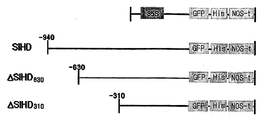
- pCAM-2300HD is a vector for full-length promoters
- pCAM-2300HD ⁇ 630 ⁇ SlHD 630
- pCAM-2300 ⁇ 310 ⁇ SlHD 310
- pCAMBIA 1302 35S
- NOS-t NOS terminator
- 35S CaMV35S promoter
- GFP green fluorescent protein coding gene
- His tag hexa histidine tail.
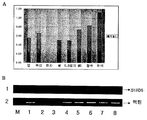
- FIG. 5 shows SlHD-2 gene expression in tomato tissue. Expression level of SlHD-1 gene in tomato tissue and fruit development stages.
- Real time PCR results A). Values are relative SlHD-1 expression levels when Actin is set to 1 in leaves.
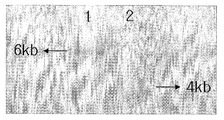
- FIG. 6 shows Southern blot hybridization. DNA blots of genomic DNA isolated from tomato plants were hybridized with 500 bp SlHD-1 promoter probe. Arrows shown in lanes 1 and 2 are SlHD-1 promoter-specific bands. Each lane contains 10 ug genomic DNA and is cleaved with HindIII (lane 1) and EcoRI (lane 2).
- FIG. 8 shows that in transient expression following Agro-infiltration, GFP expression levels with the SlHD-2 full-length promoter, ⁇ SlHD630, ⁇ SlHD310 partially deleted promoters are comparable to the CaMV 35S promoter in tomato rip fruit. Values represent the mean, and each construct was sampled in three replicates (GFP, Green Fluorescent Protein; TSP, Total Soluble Protein; mg, Thaw of Tomato Fruit).
- the present invention provides a fruit specific expression promoter comprising the nucleotide sequence of 1 to 784 (-784 to -1 site from the transcription start site) of the sequence (SEQ ID NO: 1) of Figure 3 do.
- the CaMV35S promoter derived from Cauliflower mosaic virus which is widely used in the past, expresses genes introduced in whole tissues, whereas the fruit-specific expression promoters of the present invention can express fruit-specific genes introduced in transgenic plants. have.
- the present invention provides a 5'-UTR comprising a nucleotide sequence of 785 to 940 (+1 to +156 site from the transcription initiation site) of the sequence of Figure 3 (SEQ ID NO: 1). .
- variants of such promoter sequences or 5′-UTR sequences are included within the scope of the present invention.
- a variant is a nucleotide sequence that changes in base sequence but has similar functional properties to that of SEQ ID NO: 1.
- the promoter sequence and the 5'-UTR sequence are at least 70%, more preferably at least 80%, even more preferably at least 90%, most preferably at least 95% of the nucleotide sequence of SEQ ID NO: 1 It may include base sequences having homology.
- the "% sequence homology" for a polynucleotide is identified by comparing two optimally arranged sequences with a comparison region, wherein part of the polynucleotide sequence in the comparison region is the reference sequence (addition or deletion) for the optimal alignment of the two sequences. It may include the addition or deletion (ie, gap) compared to).
- the present invention provides a fruit specific expression vector comprising a fruit specific expression promoter and / or 5'-UTR of the plant.
- the fruit specific expression vector of the present invention may contain only the promoter of the present invention or may be used in combination with a general plant expression promoter such as a CaMV 35S promoter in the 5'-UTR of the present invention, but preferably with the promoter of the present invention. It is good to include all 5'-UTR for fruit specific expression of the transgene in the plant.
- a general plant expression promoter such as a CaMV 35S promoter in the 5'-UTR of the present invention, but preferably with the promoter of the present invention. It is good to include all 5'-UTR for fruit specific expression of the transgene in the plant.
- the fruit specific expression vector of the present invention can be used as a transient expression vector capable of temporarily expressing a plant in which a foreign gene has been introduced and a plant expression vector capable of permanently expressing a foreign gene in a introduced plant. .
- Binary vectors that can be used in the present invention may be any binary vector containing the right border (RB) and left border (LB) of T-DNA capable of transforming plants in the presence of Ti plasmid of A. tumefaciens .
- RB right border
- LB left border
- pBI101 Cat #: 6018-1, Clontech, USA
- pBIN19 Genbank Accession No. U09365
- pBI121 pCAMBIA vectors, and the like, which are frequently used in the art, may be used.
- Fruit specific expression vector according to an embodiment of the present invention may be pCAM-2300HD shown in Figure 4, but is not limited thereto.
- the promoter of the present invention was inserted into a promoter analysis binary vector (pCAMBIA 1391Z) having a GFP gene to prepare pCAM-2300HD (FIG. 4), and was used for plant transformation using Agrobacterium ( Agrobacterium ). It will be apparent to those skilled in the art that the GFP reporter gene may be substituted with another desired foreign gene.
- vector is used to refer to a DNA fragment (s), a nucleic acid molecule, that is delivered into a cell. Vectors can replicate DNA and be reproduced independently in host cells.
- carrier is often used interchangeably with “vector”.
- expression vector refers to a recombinant DNA molecule comprising a coding sequence of interest and a suitable nucleic acid sequence necessary to express a coding sequence operably linked in a particular host organism. Promoters, enhancers, termination signals and polyadenylation signals available in eukaryotic cells are known.
- Ti-plasmid vectors which, when present in a suitable host such as Agrobacterium tumerfaciens, can transfer part of themselves, the so-called T-region, into plant cells.
- a suitable host such as Agrobacterium tumerfaciens
- Another type of Ti-plasmid vector (see EP 0 116 718 B1) is used to transfer hybrid DNA sequences to protoplasts from which current plant cells or new plants can be produced which properly insert hybrid DNA into the plant genome. have.
- a particularly preferred form of the Ti-plasmid vector is the so-called binary vector as claimed in EP 0 120 516 B1 and US Pat. No. 4,940,838.
- viral vectors such as those which can be derived from double stranded plant viruses (eg CaMV) and single stranded viruses, gemini viruses, etc.
- CaMV double stranded plant viruses
- gemini viruses single stranded viruses
- it may be selected from an incomplete plant viral vector.
- the use of such vectors can be advantageous, especially when it is difficult to properly transform a plant host.
- the expression vector preferably comprises one or more selectable markers.
- the marker is typically a nucleic acid sequence having properties that can be selected by a chemical method, which corresponds to all genes capable of distinguishing transformed cells from non-transformed cells. Examples include, but are not limited to, herbicide resistance genes such as glyphosate or phosphinothricin, antibiotic resistance genes such as kanamycin, G418, bleomycin, hygromycin, and chloramphenicol It doesn't happen.
- the terminator may use a conventional terminator, such as nopalin synthase (NOS), rice ⁇ -amylase RAmy1 A terminator, phaseoline terminator, agro Terminator of the octopine gene of Bacterium tumerfaciens ( Agrobacterium tumefaciens ), but is not limited thereto.
- NOS nopalin synthase
- rice ⁇ -amylase RAmy1 A terminator such as rice ⁇ -amylase RAmy1 A terminator, phaseoline terminator, agro Terminator of the octopine gene of Bacterium tumerfaciens ( Agrobacterium tumefaciens ), but is not limited thereto.
- the present invention provides transformed with fruit-specific plant expression vector of the present invention, Escherichia coli (E. coli) or Agrobacterium tyumeo Pacific Enschede (Agrobacterium tumefaciens).
- Escherichia coli E. coli
- Agrobacterium tyumeo Pacific Enschede Agrobacterium tumefaciens
- the present invention provides a plant transformed with the fruit specific plant expression vector of the present invention and its seed.
- the fruit specific plant expression vector of the present invention can transform any plant irrespective of dicotyledonous or monocotyledonous plants, but in the present invention, transformation was carried out in tomato.
- the plant according to an embodiment of the present invention is tomato, Arabidopsis, potato, eggplant, tobacco, pepper, burdock, garland chrysanthemum, lettuce, bellflower, spinach, beetroot, sweet potato, celery, carrot, buttercup, parsley, cabbage, cabbage, It may be a dicotyledonous plant, such as gat, watermelon, melon, cucumber, pumpkin, gourd, strawberry, soybean, mung bean, kidney bean, or pea.
- Plant transformation refers to any method of transferring DNA to a plant. Such transformation methods do not necessarily have a period of regeneration and / or tissue culture. Transformation of plant species is now common for plant species, including both dicotyledonous plants as well as monocotyledonous plants. In principle, any transformation method can be used to introduce hybrid DNA according to the invention into suitable progenitor cells. Method is calcium / polyethylene glycol method for protoplasts (Krens, FA et al., 1982, Nature 296, 72-74; Negrutiu I. et al., June 1987, Plant Mol. Biol. 8, 363-373), protoplasts Electroporation (Shillito RD et al., 1985 Bio / Technol.
- the "plant cells” used for plant transformation may be any plant cells.
- the plant cells may be cultured cells, cultured tissues, cultured organs or whole plants, preferably cultured cells, cultured tissues or cultured organs and more preferably any form of cultured cells.
- Plant tissue refers to tissues of differentiated or undifferentiated plants, such as, but not limited to, fruits, stems, leaves, pollen, seeds, cancer tissues and various types of cells used in culture, ie single cells, protoplasts. (protoplast), shoots and callus tissue.
- the plant tissue may be in planta or in an organ culture, tissue culture or cell culture.
- the present invention comprises the steps of recombining a foreign gene into the fruit specific expression vector of the present invention.
- a method for fruit-specific expression of a foreign gene in a transgenic plant comprising the step of transforming the recombinant fruit specific expression vector into a plant.
- the foreign gene may be any gene that is desired to be expressed in plant fruit, and may be located after the promoter in the fruit specific expression vector of the present invention and may be expressed by fusion with a reporter gene as necessary.
- the recombinant fruit specific expression vector may be transformed into a plant as described above.
- the plant is tomato, baby pole, potato, eggplant, tobacco, pepper, burdock, garland chrysanthemum, lettuce, bellflower, spinach, chard, sweet potato, celery, carrot, buttercup, parsley, cabbage And dicotyledonous plants, such as cabbage, mustard, watermelon, melon, cucumber, pumpkin, gourd, strawberry, soybean, mung bean, kidney bean, or pea.
- the present invention provides a transgenic plant and seed thereof, wherein the foreign gene produced by the method is fruit-specifically expressed.
- the transgenic plant can fruit-specifically express foreign genes by fruit-specific expression promoters and / or 5′-UTR.
- Tomato plants ( Solanum lycopersicum cv.Micro-Tom) were maintained at a temperature of 24 °C in the culture chamber.
- tomato leaf tissues were finely ground with liquid nitrogen and then extracted according to the protocol of DNeasy plant mini kit (Qiagen, Germany). Thereafter, 2.5 ug of genomic DNA was processed at 37 ° C. for at least 16 hours using 80 units of Dra I , EcoR V , Pvu II , and Stu I to produce blunt ends, and phenol: chloroform (1: 1). After purification, the mixture was recovered using 100% ethanol and dissolved in 20ul of sterile distilled water. Of these, 4ul was ligated with Genome walker Adaptor fragment (clontech, USA), and primary PCR was performed with Adaptor Primer 1 (AP1) and SlHD Gene Specific Primer 1 (GSP1).
- AP1 Adaptor Primer 1
- GSP1 SlHD Gene Specific Primer 1
- DNA polymerase buffer 1.5 mM Mg (OAc) 2 , 2.5 mM dNTP (dATP, dTTP, dCTP, dGTP), respectively, 10 pM primers (AP1 and SlHDGSP1); 1 ul ligated DNA, and 0.1 U DNA polymerase as template.
- the first PCR reaction conditions are 25 sec at 94 °C; 7 cycles were performed at 72 ° C., 3 min, followed by 94 ° C., 25 s; 32 cycles were performed at 67 ° C. and 3 min conditions. Further, 67 ° C. and 7 min was performed once, and then the reaction was terminated by lowering to 4 ° C.
- the first PCR product was diluted 1/50 and the nested secondary PCR was performed with AP2 and GSP2.
- the reaction composition was performed as the first PCR reaction composition, and the nested secondary PCR reaction was 94 ° C., 25 s; 5 cycles were performed at 72 ° C and 3 min, followed by 94 ° C, 25s; 20 cycles were performed at 67 ° C and 3min, and further 67 ° C and 7min was performed once to lower the temperature to 4 ° C to terminate the reaction.
- Primer sequences used in the above PCR are shown in Table 1. Electrophoresis was performed on 1% agarose gel to confirm the PCR result.
- E. coli strain DH5 ⁇ was inoculated in 3 ml of LB medium (peptone 10 g / L, yeast extract 5 g / L, NaCl 10 g / L, pH7.2) and shake-cultured at 37 ° C. for 18 hours or more, and then passaged in 100 ml LB liquid medium.
- the culture was incubated with an OD value of 0.4 to 0.45 at 600 nm.
- the culture was left on ice for 15 minutes, and then recovered by centrifugation at 4000 rpm for 20 minutes at 4 ° C.
- the recovered E. coli was treated with ice-cold 80 mM MgCl 2 -20 mM CaCl 2 solution.
- Agrobacterium was inoculated in 5 ml of YEP (10 g / L yeast extract, 10 g / L peptone, 5 g / L NaCl, pH7.2) liquid medium and shake-cultured at 28 ° C., and the cultured 1 ml was transferred to 50 ml YEP liquid medium. Incubated at 600 nm until the OD value is 0.6 ⁇ 1.0. This was placed on ice for 30 minutes, centrifuged at 4000 rpm / 4 ° C. for 20 minutes, resuspended in ice-cold 0.15M NaCl, and then placed on ice for 10 minutes. Thereafter, the pellets recovered by centrifugation at 4000 rpm / 4 ° C. for 20 minutes were resuspended in 1 ml of 20 mM CaCl 2 and dispensed in 50ul portions. It was quenched in liquid nitrogen and stored at -70 ° C.
- the SlHD promoter region revealed a 1 kb region by genomic walking PCR, which was then PCR with SlHD F primers and SlHD R primers, cut with HindIII and BamHI enzymes for recombination into pCAMBIA1391Z, followed by T4 ligase 3 at 24 ° C.
- Time ligation DH5 ⁇ / E.coli Eligible cells were transformed and screened on LB + Km 50 mg / L agar plates, followed by HindIII and BamH I enzyme was cut and confirmed, and the plasmid was extracted.
- the extracted plasmids were transformed into Agrobacterium LBA4404 strain qualified cells and selected from YEP + Rif 50mg / L + Km 50mg / L agar plates and used for plant transformation using Agro-infiltration.
- the SlHD promoter region was recombined in a vector fused with a GFP to pCAMBIA2300 in the same manner as described above, and transformed into Agrobacterium strain LBA4404 qualified cells.
- the SlHD promoter region was recombined into -480 / + 156 region and -155 / + 156 region, respectively.
- TRI REAGENT was used after finely grinding 50mg samples from 0.5cm diameter green, mature green, breaking, red ripe stage and leaves of tomato.
- For TRI reagent first homogenize 50 mg of tomato tissue, and then add 1 ml of TRI reagent. Vortex and leave for 5 minutes at room temperature. Add 0.2 ml of chloroform and mix vigorously. After 15 minutes at room temperature, centrifugation was performed for 15 minutes at 12000 rpm at 4 ° C. Transfer 0.5 ml of the aqueous phase to a new tube, add 0.5 ml of isopropanol and mix well.
- RNA pellet After 10 minutes at room temperature centrifugation is carried out at 4 °C 12000rpm for 15 minutes. Discard the supernatant and wash only RNA pellet with 0.5 ml of 75% EtOH. This pellet is dissolved in 20ul of water containing DEPC.
- RT-PCR uses RNA extracted earlier. Quantify 1 ug of RNA and mix with each primer. SYBR Green Master Mix kit was used (QuantiTect SYBR Green PCR Handbook. WWW.QIAGEN.COM). The real-time PCR program performed 40 cycles after thermal denaturation at 94 ° C. for 15 minutes and then set the cycle conditions at 94 ° C. for 1 minute at 52 ° C. for 1 minute and at 72 ° C. for 30 seconds. Primers were performed by constructing SlHD exons and 3′-UTR specific primer sets, and were used after PCR using primers of tomato actin gene as positive control.
- Hybridization is performed for 1 hour with prehybridization in a hybridization solution (5 ⁇ SSC, 0.02% SDS, 0.1% N-lauroyl sarcosine Na-salt, 1% Blocking reagent).
- the DIG labeled DNA probe is then discarded in the prehybridization solution and filled with 25 ml of probe solution. After 24 hours, the probe solution was removed and washed with 2 ⁇ SSC, 0.1% SDS solution at room temperature for 5 minutes. Change reagents into 2 ⁇ SSC, 0.5% SDS solution (20 ml) and wash twice for 15 minutes at the same temperature as the prehybridization step.
- Immunological detection step is washed for 5 minutes at room temperature using a washing buffer (0.1M maleic acid, 0.15M NaCl pH 7.5, 0.3% Tween 20).
- 10x blocking solution blocking reagent, maleic acid buffer
- maleic acid buffer adjusted to pH 7.5 with 0.1M maleic acid, 0.15M NaCl, NaOH
- Anti-digoxigenin-AP was added to the blocking buffer mixed at 1: 9 (4ul anti-digoxigenin-AP when 20ml blocking buffer) and reacted at room temperature for 30 minutes. After the reaction, wash twice with 15 ml of washing buffer at room temperature for 15 minutes.
- detection buffer 0.1M Tris-HCl, 0.1M NaCl
- 200ul NBT / BCIP is added to this detection buffer (10ml of 200ul NBT / BCIP / detection buffer). The reaction is carried out at room temperature for 16 hours or more.
- the sample was triturated with protein coating buffer (PCB, 3.3 g / L Na 2 CO 3 , 6.0 g / LNaHCO 3 , pH9.6) and then centrifuged at 15000 rpm at 4 ° C. to supernatant 100ul in a 96 well microplate. Dispense and leave it at room temperature for 2 hours. Then, washed with protein extraction buffer (PEB, 1.16g / L Na 2 HPO 4 , 0.1g / LKCl, 0.1g / LK 3 PO 4 , 4.0g / LNaCl, pH7.4), blocking buffer (5% skim milk 200ul was dispensed and placed at room temperature for 2 hours.
- PCB protein coating buffer
- a total of 11 genes were selected from the tomato microarray results of the SOL genomic network database (http://www.sgn.cornell.edu) with increasing expression as the fruit matures (FIG. 1).
- a primer capable of amplifying the 3'UTR and exon regions of selected genes was prepared and the mRNA expression rate was examined using RT-PCR to determine whether the expression rate was actually good in the fruit.
- Histidine decarboxylase -1, -2 (SlHD) -1, SlHD-2), lipoxigenase , and guanine nucleotide-binding protein beta subunit (GBB) genes gradually increased expression from the green stage to the red ripe stage.
- All 11 genes found in the microarrays were tested by using genomic walking PCR to identify the promoter region.
- gene-specific primers GSP1 and GSP2 were prepared using known genetic information, and PCR was performed in the genome working library using this primer and Adaptor-specific primers AP1 and AP2 in the genome working kit.
- a putative promoter portion of at least about 1 kb was isolated from the SlHD-1, SlHD-2 and GBB genes.
- the activity of putative promoter isolated from tomato fruit was confirmed by transient expression analysis. Only SlHD-2 promoter showed fruit specific expression.
- Primer sets used for genomic walking PCR of the SlHD-2 gene are shown in Table 1.
- GSP and AP primers were used for genomic walking PCR, SlHD Fwd / Rvs, ⁇ S1HD630, ⁇ S1HD310 primers were used for amplification of the full-length and partially deleted promoter regions, and Fwd / Rvs primers were used for real-time PCR analysis. It was.
- the minimal promoter region is estimated by the presence of a CAT box and a TATA box at positions -70 and -30, respectively.
- cis acting regulators such as CAT box at -780 site and TGACG box at -390 site were analyzed on the SlHD-2 promoter (Fig. 3).
- SlHD-2 expression was lower than actin in all tissues except during the fruit period. Indicated. However, as the fruit matured, the expression level gradually increased, indicating the highest expression level in the complete phase, which was higher than the actin expression level (FIG. 5). As a result, it was found that the SlHD-2 gene is a gene that is specifically expressed in the fruit and that the expression is increased as the fruit matures.
- Histidine decarboxylase genes exist in several families in tomatoes. Southern blots were performed to see how many copies of the SlHD-2 promoter were present in the tomato genome. The sample treated with HindIII could see one band at the position of 6 kb, and the sample treated with EcoR I could also see one band at the position of 4 kb (FIG. 6). This result shows that the promoter of the SlHD-2 gene is present in one copy in the tomato genome.
- Amplifying the SlHD-2 gene promoter region and recombining the pCAMBIA2300-GFP plasmid in which the Hexa-histidin tail was fused to the GFP C-terminal region was used to construct a pCAM-2300HD vector (FIG. 4).
- Agrobacterium containing the recombinant pCAM-2300HD was injected into the tomato tissues by Agro-infiltration method, and after 2-3 days, the amount of GFP transiently expressed in the tissues was confirmed.
- the expression of the GFP gene (pCAMBIA 1302) under the control of the CaMV35S promoter in each tissue was 1.00.
- the relative activity of the SlHD-2 promoter was found to be 0.5 times higher than that of the 35S promoter.
- ⁇ SlHD630 promoter which deleted bp of 5 'upstream region of 940 bp promoter region containing 156 bp 5'UTR
- ⁇ SlHD310 promoter which deleted 629 bp of 5' upstream region
- Promoter activity was investigated in transient fruit tissues by transient expression method. As a result, the promoter activity was the highest in the full-length promoter SlHD-2, and expression of the two deletion promoters was reduced by more than 80%.
- FIG. 8 shows that cis-acting modulators that indicate fruit specificity may be present in the vicinity of -784 to -304 of the SlHD-2 promoter.
Landscapes
- Health & Medical Sciences (AREA)
- Life Sciences & Earth Sciences (AREA)
- Genetics & Genomics (AREA)
- Engineering & Computer Science (AREA)
- Biomedical Technology (AREA)
- Biotechnology (AREA)
- Bioinformatics & Cheminformatics (AREA)
- Wood Science & Technology (AREA)
- Organic Chemistry (AREA)
- Chemical & Material Sciences (AREA)
- Zoology (AREA)
- General Engineering & Computer Science (AREA)
- Molecular Biology (AREA)
- General Health & Medical Sciences (AREA)
- Physics & Mathematics (AREA)
- Microbiology (AREA)
- Plant Pathology (AREA)
- Biophysics (AREA)
- Biochemistry (AREA)
- Cell Biology (AREA)
- Reproductive Health (AREA)
- Pregnancy & Childbirth (AREA)
- Botany (AREA)
- Developmental Biology & Embryology (AREA)
- Environmental Sciences (AREA)
- Physiology (AREA)
- Breeding Of Plants And Reproduction By Means Of Culturing (AREA)
- Micro-Organisms Or Cultivation Processes Thereof (AREA)
- Enzymes And Modification Thereof (AREA)
Abstract
Description

Claims (10)
- 서열번호 1의 1 내지 784 (-784 내지 -1 부위)의 염기서열을 포함하는 식물 열매 특이적 발현 프로모터.
- 서열번호 1의 785 내지 940 (+1 내지 +156 부위)의 염기서열을 포함하는 5'-UTR.
- 제1항의 열매 특이적 발현 프로모터, 제2항의 5'-UTR, 또는 제1항의 열매 특이적 발현 프로모터 및 제2항의 5'-UTR을 포함하는 열매 특이적 식물 발현 벡터.
- 제3항에 있어서, 도 4에 도시된 pCAM-2300HD인 것을 특징으로 하는 열매 특이적 식물 발현 벡터.
- 제3항 또는 제4항의 열매 특이적 식물 발현 벡터로 형질전환된 아그로박테리움 튜머파시엔스 (Agrobacterium tumefaciens).
- 제3항 또는 제4항의 열매 특이적 식물 발현 벡터로 형질전환된 식물체.
- 제6항에 있어서, 상기 식물체는 쌍자엽 식물인 것을 특징으로 하는 형질전환된 식물체.
- 제3항 또는 제4항의 열매 특이적 식물 발현 벡터에 외래 유전자를 재조합하는 단계; 및상기 재조합된 식물 발현 벡터를 식물체에 형질전환시키는 단계를 포함하는 외래 유전자를 형질전환 식물체에서 열매 특이적으로 발현시키는 방법.
- 제8항에 있어서, 상기 식물체는 쌍자엽 식물인 것을 특징으로 하는 방법.
- 제8항의 방법에 의해 제조된 외래 유전자가 열매 특이적으로 발현되는 형질전환 식물체.
Priority Applications (2)
| Application Number | Priority Date | Filing Date | Title |
|---|---|---|---|
| CN2010800076744A CN102317456B (zh) | 2009-02-12 | 2010-02-11 | 源自番茄组氨酸脱羧酶基因的果实特异性表达启动子及其用途 |
| US13/148,949 US8729340B2 (en) | 2009-02-12 | 2010-02-11 | Solanum lycopersicum histidine decarboxylase gene-derived fruit-specific expression promoter and uses thereof |
Applications Claiming Priority (2)
| Application Number | Priority Date | Filing Date | Title |
|---|---|---|---|
| KR10-2009-0011585 | 2009-02-12 | ||
| KR1020090011585A KR101101774B1 (ko) | 2009-02-12 | 2009-02-12 | 토마토 히스티딘 디카르복실라제 유전자 유래 열매 특이적 발현 프로모터 및 이의 용도 |
Publications (2)
| Publication Number | Publication Date |
|---|---|
| WO2010093174A2 true WO2010093174A2 (ko) | 2010-08-19 |
| WO2010093174A3 WO2010093174A3 (ko) | 2011-01-06 |
Family
ID=42562180
Family Applications (1)
| Application Number | Title | Priority Date | Filing Date |
|---|---|---|---|
| PCT/KR2010/000849 Ceased WO2010093174A2 (ko) | 2009-02-12 | 2010-02-11 | 토마토 히스티딘 디카르복실라제 유전자 유래 열매 특이적 발현 프로모터 및 이의 용도 |
Country Status (4)
| Country | Link |
|---|---|
| US (1) | US8729340B2 (ko) |
| KR (1) | KR101101774B1 (ko) |
| CN (1) | CN102317456B (ko) |
| WO (1) | WO2010093174A2 (ko) |
Families Citing this family (2)
| Publication number | Priority date | Publication date | Assignee | Title |
|---|---|---|---|---|
| BR102012008162B1 (pt) * | 2012-04-09 | 2018-08-14 | Empresa Brasileira De Pesquisa Agropecuária - Embrapa | composições e métodos para modificar a expressão de genes de interesse |
| KR102886632B1 (ko) * | 2025-06-13 | 2025-11-14 | 전남대학교산학협력단 | 토마토 열매의 히스타민 함량을 조절하는 히스티딘 디카복실레이즈 유전자 및 상기 유전자의 교정을 통한 열매의 히스타민 함량이 감소된 토마토 식물체의 제조방법 |
Family Cites Families (8)
| Publication number | Priority date | Publication date | Assignee | Title |
|---|---|---|---|---|
| NL8300698A (nl) | 1983-02-24 | 1984-09-17 | Univ Leiden | Werkwijze voor het inbouwen van vreemd dna in het genoom van tweezaadlobbige planten; agrobacterium tumefaciens bacterien en werkwijze voor het produceren daarvan; planten en plantecellen met gewijzigde genetische eigenschappen; werkwijze voor het bereiden van chemische en/of farmaceutische produkten. |
| NZ224787A (en) * | 1987-05-26 | 1990-08-28 | Calgene Inc | A dna construct for specifically modifying the phenotype of fruit as distinct from other plant tissue |
| CA1327173C (en) | 1987-07-21 | 1994-02-22 | Erwin Heberle-Bors | Method of gene transfer into plants |
| US5723746A (en) * | 1989-12-12 | 1998-03-03 | Epitope, Inc. | Reduced ethylene synthesis and delayed fruit ripening in transgenic tomatoes expressing S-adenosylmethionine hydrolase |
| AU2807592A (en) * | 1991-10-04 | 1993-05-03 | Smart Plants International, Inc. | Tissue-specific and developmentally regulated transcriptional sequences and uses thereof |
| US5536653A (en) * | 1994-11-04 | 1996-07-16 | Monsanto Company | Tomato fruit promoters |
| KR100574563B1 (ko) | 2003-10-10 | 2006-04-27 | 고려대학교 산학협력단 | 애기장대 유래 식물체 고효율 발현 프로모터 및 이를함유하는 식물체 고효율 발현 벡터 |
| KR100784165B1 (ko) | 2006-06-19 | 2007-12-10 | 고려대학교 산학협력단 | 고추식물 유래의 udp-글루코실트랜스퍼라제의 프로모터 |
-
2009
- 2009-02-12 KR KR1020090011585A patent/KR101101774B1/ko not_active Expired - Fee Related
-
2010
- 2010-02-11 US US13/148,949 patent/US8729340B2/en active Active
- 2010-02-11 CN CN2010800076744A patent/CN102317456B/zh not_active Expired - Fee Related
- 2010-02-11 WO PCT/KR2010/000849 patent/WO2010093174A2/ko not_active Ceased
Non-Patent Citations (4)
| Title |
|---|
| KORBAN ET AL.: 'Foods as production and delivery vehicles for human vaccines' J OF AMERICAN COLLEGE OF NUTRITION vol. 21, no. 3, 2002, pages 212S - 217S * |
| KRASNYANSKI ET AL.: 'Effect of an enhanced CaMV 35S promoter and a fruit-specific promoter on UIDA gene expression in transgenic tomato plants' IN VITRO CELL. DEV. BIOL. PLANT vol. 37, 2001, pages 427 - 433 * |
| RAMIREZ ET AL.: 'Fruit-specific expression of the human immunodeficiency virus type 1 Tat Gene in tomato plants and its immunogenic potential in mice' CLINICAL AND VACCINE IMMUNOLOGY vol. 14, no. 6, 2007, pages 685 - 692 * |
| ZHU-MEI HE ET AL.: 'Assessment of the utility of the tomato fruit-specific E8 promoter for driving vaccine antigen expression' GENETICA vol. 133, 2007, pages 207 - 214 * |
Also Published As
| Publication number | Publication date |
|---|---|
| CN102317456A (zh) | 2012-01-11 |
| WO2010093174A3 (ko) | 2011-01-06 |
| US20110321188A1 (en) | 2011-12-29 |
| US8729340B2 (en) | 2014-05-20 |
| CN102317456B (zh) | 2013-05-08 |
| KR20100092289A (ko) | 2010-08-20 |
| KR101101774B1 (ko) | 2012-01-05 |
Similar Documents
| Publication | Publication Date | Title |
|---|---|---|
| US8779238B2 (en) | Floral dip method for transformation of camelina | |
| JPH10248419A (ja) | C4植物の光合成酵素を発現するc3植物体 | |
| CN101617048A (zh) | 具有优化的5’端前导功能(5’-utr)的人工dna序列用以改进异源蛋白质在植物内的表达 | |
| Fonseca et al. | Functional analysis of a TGA factor-binding site located in the promoter region controlling salicylic acid-induced NIMIN-1 expression in Arabidopsis | |
| KR101085791B1 (ko) | 토마토 hr7 유전자 유래 꽃 및 열매 특이적 발현 프로모터 및 이의 용도 | |
| KR101085789B1 (ko) | 벼 유래의 환경스트레스 유도성 557 프로모터 및 이의 용도 | |
| WO2010093174A2 (ko) | 토마토 히스티딘 디카르복실라제 유전자 유래 열매 특이적 발현 프로모터 및 이의 용도 | |
| JP2002539779A (ja) | 植物における導入遺伝子の発現のためのバナナプロモーターおよびメロンプロモーター | |
| WO2002012450A1 (en) | Gossypium hirsutum tissue-specific promoters and their use | |
| US6784342B1 (en) | Regulation of embryonic transcription in plants | |
| WO2001071013A2 (en) | Melon promoters for expression of transgenes in plants | |
| CN107177602B (zh) | 与植物耐旱相关的NtDR1基因及其应用 | |
| US7420103B2 (en) | Plant RNA transport and RNA-directed RNA polymerase proteins | |
| CN120904304B (zh) | OpJRB1转录因子在提高短小蛇根草中喜树碱含量中的应用 | |
| WO2013062258A2 (ko) | 감자 유래의 괴경 조직 특이적 라케이즈 프로모터 및 이의 용도 | |
| KR20100043820A (ko) | 단자엽 식물 형질 전환을 위한 종자 배유 특이 발현 프로모터 | |
| KR101151238B1 (ko) | 벼 유래의 환경스트레스 유도성 996 프로모터 및 이의 용도 | |
| CN100392081C (zh) | 小麦wrab17基因启动子及其应用 | |
| KR101448118B1 (ko) | 고추 유래의 히스톤4 프로모터 및 이의 용도 | |
| CN100469881C (zh) | 小麦wcor726基因启动子及其应用 | |
| KR101479928B1 (ko) | 벼 Os02g0741200 유전자 유래 소포자 또는 화분 특이적 발현 프로모터 및 이의 용도 | |
| KR101441933B1 (ko) | 벼 Os11g0683800 유전자 유래 소포자 또는 화분 특이적 발현 프로모터 및 이의 용도 | |
| KR101394353B1 (ko) | CaMV 35S 유래의 최소 프로모터를 포함하는 선별 마커-프리 형질전환 벡터 및 이를 이용한 형질전환 식물체의 제조방법 | |
| KR101149338B1 (ko) | 벼 유래의 환경스트레스 유도성 972 프로모터 및 이의 용도 | |
| KR101479946B1 (ko) | 벼 Os01g0919200 유전자 유래 소포자 또는 화분 특이적 발현 프로모터 및 이의 용도 |
Legal Events
| Date | Code | Title | Description |
|---|---|---|---|
| WWE | Wipo information: entry into national phase |
Ref document number: 201080007674.4 Country of ref document: CN |
|
| 121 | Ep: the epo has been informed by wipo that ep was designated in this application |
Ref document number: 10741392 Country of ref document: EP Kind code of ref document: A2 |
|
| WWE | Wipo information: entry into national phase |
Ref document number: 13148949 Country of ref document: US |
|
| NENP | Non-entry into the national phase |
Ref country code: DE |
|
| 122 | Ep: pct application non-entry in european phase |
Ref document number: 10741392 Country of ref document: EP Kind code of ref document: A2 |