WO2010092710A1 - 音声処理装置、音声処理方法及び音声処理プログラム - Google Patents
音声処理装置、音声処理方法及び音声処理プログラム Download PDFInfo
- Publication number
- WO2010092710A1 WO2010092710A1 PCT/JP2009/068244 JP2009068244W WO2010092710A1 WO 2010092710 A1 WO2010092710 A1 WO 2010092710A1 JP 2009068244 W JP2009068244 W JP 2009068244W WO 2010092710 A1 WO2010092710 A1 WO 2010092710A1
- Authority
- WO
- WIPO (PCT)
- Prior art keywords
- error
- word
- utterance
- speech
- error occurrence
- Prior art date
- Legal status (The legal status is an assumption and is not a legal conclusion. Google has not performed a legal analysis and makes no representation as to the accuracy of the status listed.)
- Ceased
Links
Images








Classifications
-
- G—PHYSICS
- G10—MUSICAL INSTRUMENTS; ACOUSTICS
- G10L—SPEECH ANALYSIS TECHNIQUES OR SPEECH SYNTHESIS; SPEECH RECOGNITION; SPEECH OR VOICE PROCESSING TECHNIQUES; SPEECH OR AUDIO CODING OR DECODING
- G10L13/00—Speech synthesis; Text to speech systems
- G10L13/08—Text analysis or generation of parameters for speech synthesis out of text, e.g. grapheme to phoneme translation, prosody generation or stress or intonation determination
Definitions
- the present invention relates to an audio processing device, an audio processing method, and an audio processing program.
- Patent Document 1 proposes that a pet robot having an emotion control the output of synthetic sound according to the state of the emotion.
- Patent Document 2 a speech synthesizer capable of easily generating a sculpted synthetic sound
- Patent Document 3 a silent portion having an appropriate length at an appropriate position between voice waveform data.
- a voice synthesis apparatus can be replaced with a word that is easy to pronounce when it becomes difficult to pronounce as a sound.
- Patent Documents 2 to 4 still needs improvement in terms of human speech.
- the present invention has been made in view of the above, and when reading out a character string, more human-like speech is generated by intentionally generating a speech error instead of using the character string as it is. It is an object of the present invention to provide a voice processing device, a voice processing method and a voice processing program that can
- the present invention comprises an utterance error occurrence determination information storage unit that stores utterance error occurrence determination information in which a condition of a word causing an utterance error and an error pattern are associated.
- the character string is linguistically analyzed, and a character string analysis unit that divides the character string into word strings and each of the divided words are compared with the condition, and the error pattern is applied to the word that satisfies the condition.
- a speech error occurrence determining unit for assigning the word not satisfying the condition and determining that the word does not cause the speaking error; and a phonetic string of the speaking error according to the error pattern for the word to which the error pattern is assigned
- a phoneme string generation unit that generates a normal phoneme string for the word determined not to cause the speech error and generates a phoneme string of the word string.
- a character string analysis step in which the character string analysis unit linguistically analyzes the character string and divides the character string into a string of words, and the utterance error occurrence determination unit speaks each of the divided words
- the error pattern for the word corresponding to the condition is compared with the condition of the utterance error occurrence determination information storage unit storing the utterance error occurrence determination information in which the condition of the word causing the error is associated with the error pattern
- an utterance error occurrence determining step of determining that the word which does not meet the condition does not cause the utterance error
- a phoneme string generation unit adds the error pattern to the word to which the error pattern is attached.
- a phonological string generation step of generating a phonological string according to a uttering error and generating a normal phonological string for the word determined not to cause the uttering error to generate a phonological string of the word string Including It is characterized in.
- a character string analysis step of linguistically analyzing a character string and dividing it into a string of words, and associating each of the divided words with the condition of the word causing a speech error and an error pattern
- the error pattern is added to the word corresponding to the condition by comparing with the condition of the utterance error generation determination information storage unit storing the utterance error occurrence determination information, and the word not corresponding to the condition is the word
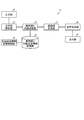
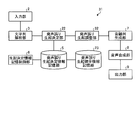
- FIG. 1 is a block diagram showing the configuration of the speech processing apparatus according to the first embodiment.
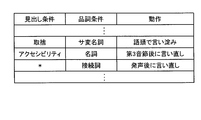
- FIG. 2A is a diagram of an example of Japanese utterance error occurrence determination information stored in the utterance error occurrence determination information storage unit.
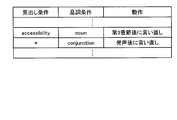
- FIG. 2B is a diagram of an example of English utterance error occurrence determination information stored in the utterance error occurrence determination information storage unit.
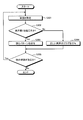
- FIG. 3 is a flowchart showing the operation of the utterance error occurrence determination unit.
- FIG. 4 is a diagram showing an example of a character string input by the input unit and an actual phoneme string generated by the phoneme string generation unit.
- FIG. 5 is a block diagram showing the configuration of the speech processing apparatus according to the second embodiment.
- FIG. 5 is a block diagram showing the configuration of the speech processing apparatus according to the second embodiment.
- FIG. 6 is a diagram showing an example of utterance error occurrence determination information stored in the utterance error occurrence determination information storage unit.
- FIG. 7-1 is a diagram of an example of Japanese related word information classified in terms of synonyms stored in the related word information storage unit.
- FIG. 7-2 is a diagram of an example of Japanese related word information classified in terms of sound stored in the related word information storage unit.
- FIG. 7-3 is a diagram of an example of English related word information stored in the related word information storage unit.
- FIG. 8 is a flowchart showing the operation of the utterance error occurrence determination unit.
- FIG. 9 is a diagram showing an example of a character string input by the input unit and an actual phoneme string generated by the phoneme string generation unit.
- FIG. 9 is a diagram showing an example of a character string input by the input unit and an actual phoneme string generated by the phoneme string generation unit.
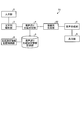
- FIG. 10 is a block diagram showing the configuration of the speech processing apparatus according to the third embodiment.
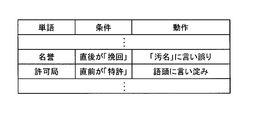
- FIG. 11 is a diagram showing an example of the utterance error occurrence determination information stored in the utterance error occurrence determination information storage unit.
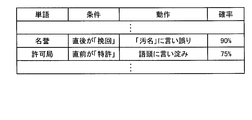
- FIG. 12 is a diagram showing an example of utterance error occurrence probability information stored in the utterance error occurrence probability information storage unit.
- FIG. 13 is a flowchart showing the operation of the utterance error occurrence determination unit.
- FIG. 14 is a diagram showing an example of a character string input by the input unit and an actual phoneme string generated by the phoneme string generation unit.
- FIG. 15 is a flowchart showing a modification of the operation of the utterance error occurrence determination unit.
- FIG. 11 is a diagram showing an example of the utterance error occurrence determination information stored in the utterance error occurrence determination information storage unit.
- FIG. 12 is a diagram showing an example of utterance error occurrence probability information stored in the utterance error occurrence probability information storage unit
- FIG. 16 is a diagram showing an example of a character string input by the input unit and an actual phoneme string generated by the phoneme string generation unit.
- FIG. 17 is a block diagram showing the configuration of the speech processing apparatus according to the fourth embodiment.
- FIG. 18 is a flowchart showing the operation of the occurrence error occurrence adjustment unit.
- FIG. 19 is a block diagram showing the configuration of the speech processing apparatus according to the fifth embodiment.
- FIG. 20A is a diagram of an example of Japanese context information having a configuration without the utterance error occurrence probability stored in the context information storage unit.
- FIG. 20-2 is a diagram of an example of Japanese context information having a configuration that has an utterance error occurrence probability stored in the context information storage unit.
- FIG. 20A is a diagram of an example of Japanese context information having a configuration without the utterance error occurrence probability stored in the context information storage unit.
- FIG. 20-2 is a diagram of an example of Japanese context information having a configuration that has an utterance error occurrence probability stored
- FIG. 20-3 is a diagram of an example of English context information stored in the context information storage unit.
- FIG. 21 is a flowchart showing the operation of the utterance error occurrence determination unit.
- FIG. 22-1 is a diagram of an example of a character string input by the input unit and an actual phoneme string generated by the phoneme string generation unit.
- FIG. 22-2 is a diagram of an example of a character string input by the input unit and an actual phoneme string generated by the phoneme string generation unit.
- FIG. 23 is a block diagram showing the configuration of the speech processing apparatus according to the sixth embodiment.
- FIG. 24 is a flowchart showing the operation of the phoneme string generation unit.
- FIG. 25 is a diagram showing an example of a character string input by the input unit and an actual phoneme string generated by the phoneme string generation unit.
- FIG. 1 is a block diagram showing the configuration of the speech processing apparatus according to the first embodiment.
- the speech processing device 1 converts a character string to be converted into speech into speech data as human speech and outputs the speech data as an actual speech (speech). Furthermore, when outputting as speech (speech), the speech processing device 1 intentionally generates a speech error as a speech error, rewording, and speech error.
- speaking means to utter a pause or a filler (connected word) before or during the utterance of a word.
- re-speak means that the word is uttered completely or halfway and then uttered again.
- pelling error means that after uttering another word completely or halfway, the correct word is uttered or the incorrect word is left uttered.
- correct reading is to read what is written in the character string as it is, and other readings are referred to as “speech error”. It does not apply to the content that contains the content to be reworded in advance by mistake in the string.
- the speech processing device 1 includes an input unit 2, a character string analysis unit 3, an utterance error occurrence determination unit 4, an utterance error occurrence determination information storage unit 5, an occurrence determination information storage control unit 6, a phoneme string generation unit 7 and a speech synthesis unit 8. , And an output unit 9.
- the input unit 2 inputs a character string to be made into a voice, and may be, for example, a keyboard.
- the character string analysis unit 3 linguistically analyzes the input character string by, for example, morphological analysis and divides the character string into word strings.
- the utterance error occurrence determination unit 4 determines whether each word of the analysis result causes an utterance error based on the utterance error occurrence determination information. The detailed operation of the utterance error occurrence determination unit 4 will be described in detail later.
- the utterance error occurrence determination information storage unit 5 stores utterance error occurrence determination information which is information for determining whether the utterance error occurrence determination unit 4 causes an utterance error.
- FIG. 2A is a diagram showing an example of Japanese utterance error occurrence determination information stored in the utterance error occurrence determination information storage unit 5.
- FIG. 2B is a diagram of an example of English utterance error occurrence determination information stored in the utterance error occurrence determination information storage unit 5.
- a condition causing the utterance error and its error pattern are described. In this example, the operation (error pattern) when the utterance error occurs according to the condition of the heading and the condition of the part of speech is It is determined. Note that "*" in the figure is a wild card, which means that all conjunctions cause a vocal error.
- the occurrence determination information storage control unit 6 controls the utterance error occurrence determination information storage unit 5 to store the utterance error occurrence determination information.
- the phoneme string generation unit 7 generates a phoneme string for a speech error or a correct speech from the information determined by the speech error occurrence determination unit 4.
- the speech synthesis unit 8 converts the generated phoneme string into speech data.
- the output unit 9 outputs voice data as voice, such as a speaker.
- the character string input by the input unit 2 is linguistically analyzed in the character string analysis unit 3 and divided into words.
- part of speech and reading of each word are also given.
- the utterance error occurrence determination unit 4 causes the utterance error to occur or not, based on the utterance error occurrence determination information, for each word of the word string obtained by the character string analysis unit 3. In this case, it is decided which pattern of speech errors is caused.
- the phoneme sequence generation unit 7 does not cause an utterance error in the phoneme string of the utterance error according to the determined error pattern when the utterance error occurs. Each generates the correct phonetic sequence.
- the speech synthesis unit 8 converts the phoneme string generated by the phoneme string generation unit 7 into speech waveform data, and sends it to the output unit 9.
- the output unit 9 outputs the speech waveform as speech, and the speech processing ends.
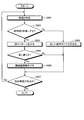
- FIG. 3 is a flowchart showing the operation of the utterance error occurrence determination unit 4.
- the utterance error occurrence determination unit 4 specifies the first word of the word string analyzed and divided by the character string analysis unit 3 (step S301).
- the utterance error occurrence determination unit 4 determines whether or not the word causes an utterance error (step S302).
- the utterance error occurrence determination unit 4 refers to all the utterance error occurrence determination information stored in the utterance error occurrence determination information storage unit 5, and the word is a utterance error in the utterance error occurrence determination information. To see if the conditions that cause
- the utterance error occurrence determination unit 4 determines that the word causes the utterance error (step S302: Yes)
- the utterance error occurrence determination unit 4 adds the corresponding error pattern of the utterance error occurrence determination information to the word. (Step S303).
- the utterance error occurrence determination unit 4 determines that the word does not cause an utterance error (Step S302: No)
- the utterance error occurrence determination unit 4 adds information that the utterance error is not generated, such as adding a correct utterance flag to the word Step S304).
- the utterance error occurrence determination unit 4 confirms whether there is another word in the word string (step S305).
- step S305: Yes the process returns to step S301, identifies the word, and repeats the subsequent steps.
- step S305: No the process ends.
- the phoneme string generation unit 7 generates a phoneme of the utterance error according to the determined error pattern when each word of the input sentence (word sequence) causes an utterance error. A string is generated, and a correct phonological string is generated if no utterance error occurs.
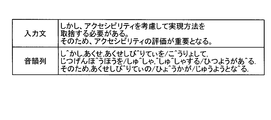
- FIG. 4 is a diagram showing an example of a character string input by the input unit 2 and an actual phoneme string generated by the phoneme string generation unit 7.
- FIG. 4 as shown in FIG. 2-1, as the content of the utterance error occurrence determination information, as the conjunction “but” is rephrased after utterance, the noun “accessibility” is reworded after the third syllable. It can be seen that phonological strings are created for each of the nouns "disposal" as stated at the beginning of the word.
- the utterance error occurrence determination unit determines whether the word obtained by dividing the character string causes the utterance error or not.
- the phonological string generation unit can generate a phonological string having a non-uniform vocal error, not as it is written in the character string,
- the synthesis unit can intentionally synthesize an erroneous voice so as not to be uniform, and the output unit can make a non-mechanical human speech.
- Second Embodiment in the case where the utterance error is a mistake, reference is made to related word information in which words which may cause an error for each word are referred, and a word to be mistaken is determined instead.
- a second embodiment will be described with reference to the attached drawings.
- the configuration of the speech processing apparatus according to the present embodiment will be described regarding differences from the first embodiment.
- the other parts are the same as those of the first embodiment, and therefore, for the parts denoted by the same reference numerals, the above description is referred to and the description here is omitted.
- FIG. 5 is a block diagram showing the configuration of the speech processing apparatus according to the second embodiment.
- the voice processing device 11 converts a character string desired to be a voice into voice data which is a human voice and outputs the voice data as an actual voice. Furthermore, when outputting as speech (speech), the speech processing device 11 intentionally generates a speech error as a speech error, a speech reword, and a speech error.
- the speech processing device 11 includes an input unit 2, a character string analysis unit 3, an utterance error occurrence determination unit 12, an utterance error occurrence determination information storage unit 5, an occurrence determination information storage control unit 6, a related word information storage unit 13, and a phoneme string generation
- the configuration includes a unit 7, a speech synthesis unit 8, and an output unit 9.
- the utterance error occurrence determination unit 12 determines whether each word in the analysis result causes an utterance error based on the utterance error occurrence determination information. Furthermore, the utterance error occurrence determination unit 12 searches for related word information and determines an incorrect word when the utterance error is "speech error".
- FIG. 6 is a view showing an example of the utterance error occurrence determination information stored in the utterance error occurrence determination information storage unit 5. In this example, in addition to the voicing error occurrence determination information described in the first embodiment, it is decided to add a saying error as an error pattern and randomly select a word to be wrong. The detailed operation of the utterance error occurrence determination unit 12 will be described in detail later.
- the related word information storage unit 13 indicates, in the case where the speech error is a "speech error", the words that actually cause each word to possibly make an error are put together to indicate what kind of speech error occurs.
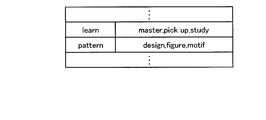
- FIG. 7-1 is a diagram showing an example of Japanese related word information stored in the related word information storage unit 13, such as meaning similar to or opposite to the meaning of the input word, etc. It is classified (grouped) in terms of synonyms.
- FIG. 7-2 is a diagram showing an example of Japanese related word information stored in the related word information storage unit 13, which is similar in sound to the input word and easy to be mistaken, or one of the sounds It is classified from the viewpoint of sound, such as the part being reversed. Note that these pieces of information can also be collected and held as one related word information. Also, not only Japanese but also other languages can have similar information.
- FIG. 7-3 is a diagram of an example of English related word information stored in the related word information storage unit 13.
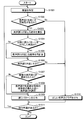
- FIG. 8 is a flowchart showing the operation of the utterance error occurrence determination unit 12.
- the utterance error occurrence determination unit 12 specifies the first word of the word string analyzed and divided by the character string analysis unit 3 (step S801).
- the utterance error occurrence determination unit 12 determines whether the word causes an utterance error (step S802).
- the utterance error occurrence determination unit 12 refers to all of the utterance error occurrence determination information stored in the utterance error occurrence determination information storage unit 5, and the word is a utterance error in the utterance error occurrence determination information. To see if the conditions that cause
- the utterance error occurrence determination unit 12 determines that the word causes the utterance error (step S802: Yes)
- the utterance error occurrence determination unit 12 adds the corresponding error pattern of the utterance error occurrence determination information to the word (step S803).
- the utterance error occurrence determination unit 12 confirms whether or not the error pattern (speech error) is a "speech error” (step S804).
- the utterance error occurrence determination unit 12 confirms that the error pattern is a "word error” (step S804: Yes)
- the utterance error occurrence determination unit 12 further adds related word information to the word (step S805). Specifically, the utterance error occurrence determination unit 12 searches for related term information of the word stored in the related term information storage unit 13 according to the selection method described in the utterance error occurrence determination information of the word. Determine the wrong word. Thereafter, the process proceeds to step S807.
- step S804 determines that the error pattern is not the “word error” (step S804: No)
- the process proceeds to step S807 as it is.
- step S802 determines that the word does not cause an utterance error
- step S806 the utterance error occurrence determination unit 12 adds information that the utterance error is not generated, such as adding a correct utterance flag to the word.
- step S807 the utterance error occurrence determination unit 12 confirms whether there is another word in the word string.
- step S 807: Yes the process returns to step S 801, identifies the word, and repeats the subsequent steps.
- step S807: No the process ends.
- the phoneme string generation unit 7 generates a phoneme of the utterance error according to the determined error pattern when each word of the input sentence (word sequence) causes an utterance error. A string is generated, and a correct phonological string is generated if no utterance error occurs.
- FIG. 9 is a view showing an example of a character string input by the input unit 2 and an actual phoneme string created by the phoneme string generation unit 7.
- the “consideration” of the profane noun is misinterpreted as the “consideration” randomly selected from the related word information memory of FIG. 7-1. After that, it can be seen that the phoneme string is created so as to correct and say "consider”.
- the utterance error occurrence determination unit determines that the error is generated for each word when it is determined that the error occurs. It does not appear in the character string because the phonological string generation unit can generate the phonological string of the wrong word by determining the wrong word from the word with reference to the related word information in which the possible words are collected Can be mistaken using related words, and more knowledgeable speech errors are possible.
- the utterance error occurrence determination unit determines whether to cause an utterance error based on the utterance error occurrence determination information and the utterance error occurrence probability.
- a third embodiment will be described with reference to the attached drawings. The configuration of the speech processing apparatus according to the present embodiment will be described regarding differences from the first embodiment. The other parts are the same as those of the first embodiment, and therefore, for the parts denoted by the same reference numerals, the above description is referred to and the description here is omitted.
- FIG. 10 is a block diagram showing the configuration of the speech processing apparatus according to the third embodiment.
- the speech processing device 21 converts a character string to be converted into speech into speech data, which is human speech, and outputs the speech data as actual speech. Furthermore, when outputting as speech (speech), the speech processing device 21 intentionally generates a speech error as a speech error, a speech reword, and a speech error.
- the speech processing device 21 includes an input unit 2, a character string analysis unit 3, an utterance error occurrence determination unit 22, an utterance error occurrence determination information storage unit 5, an occurrence determination information storage control unit 6, an utterance error occurrence probability information storage unit 23 and a phoneme
- a string generation unit 7, a speech synthesis unit 8, and an output unit 9 are provided.
- the utterance error occurrence determination unit 22 determines, based on the utterance error occurrence determination information, whether or not each word of the analysis result may cause an utterance error. Furthermore, if the utterance error occurrence determination unit 22 has a possibility of causing an utterance error, it calculates the probability that the utterance error occurs, and compares with the utterance error occurrence probability information whether the word causes the utterance error. decide.
- FIG. 11 is a view showing an example of the utterance error occurrence determination information stored in the utterance error occurrence determination information storage unit 5. In this example, there is a condition that there are a plurality of operations (error patterns) when a speech error occurs, as compared with the utterance error occurrence determination information described in the first embodiment. The detailed operation of the utterance error occurrence determination unit 22 will be described in detail later.
- the utterance error occurrence probability information storage unit 23 stores utterance error occurrence probability information indicating the probability of causing an utterance error.
- FIG. 12 is a diagram showing an example of the utterance error occurrence probability information stored in the utterance error occurrence probability information storage unit 23.
- the utterance error occurrence probability for each word is determined in advance for each error pattern, depending on the degree of difficulty of the word, the difficulty in speaking a reading, and the like. Occurrence probabilities are respectively associated with words having a plurality of error patterns. For example, in the “Round out” in the figure, the probability of speaking at the beginning is 60%, the probability of speaking after the first syllable is 30%, and the probability of rephrasing after utterance is 40%.
- occurrence probabilities are evaluated independently, respectively, and are used in deciding whether or not to cause a speech error. That is, since the utterance error occurrence determination unit 22 calculates the probability of occurrence of the utterance error for each error pattern and compares it with the utterance error occurrence probability information of each error pattern, even if the occurrence probability is high, the pattern error occurs. There are also cases where it is decided not to do so, and even when the occurrence probability is low, it is sometimes decided to cause an error in the pattern.
- FIG. 13 is a flowchart showing the operation of the utterance error occurrence determination unit 22.
- the utterance error occurrence determination unit 22 specifies the first word of the word string analyzed and divided by the character string analysis unit 3 (step S1301).
- the utterance error occurrence determination unit 22 determines whether or not the word may cause an utterance error (step S1302).
- the utterance error occurrence determination unit 22 refers to all the utterance error occurrence determination information stored in the utterance error occurrence determination information storage unit 5, and the word is a utterance error in the utterance error occurrence determination information. To see if the conditions that cause
- the utterance error occurrence determination unit 22 determines that the word may cause an utterance error (step S1302: Yes), it is determined for the probability that the utterance error occurs, that is, whether or not the utterance error occurs.
- the determination value is calculated (step S1303). Specifically, the utterance error occurrence determination unit 22 selects one of the randomly generated numerical values of 0 to 99, and sets this value as the probability of occurrence of the utterance error.
- the utterance error occurrence determination unit 22 determines whether the word causes an utterance error (step S1304). Specifically, the utterance error occurrence determination unit 22 determines the probability value of the utterance error occurrence probability information of the word stored in the utterance error occurrence probability information storage unit 23 as the probability value of occurrence of the utterance error calculated in step S1303. Whether or not the word causes a speech error is determined depending on whether it is smaller or not.
- the utterance error occurrence determination unit 22 determines that the word causes the utterance error (Yes at step S1304), that is, the probability value at which the utterance error occurs calculated at step S1303 is the utterance error occurrence probability information of the word. If it is smaller than the probability value, the process proceeds to step S1305.
- step S1304 determines that the word does not cause the utterance error (step S1304: No), that is, the probability value at which the utterance error occurs in step S1303 is the utterance error occurrence probability information of the word. If the probability value is larger than the probability value, information indicating that no utterance error occurs, such as attaching a correct utterance flag to the word, is attached (step S1308), and the process proceeds to step S1309.
- steps S1303 and S1304 are performed for each error pattern. Only when it is determined not to cause an error, the process proceeds to step S1308.
- step S1305 the utterance error occurrence determination unit 22 further confirms whether a plurality of utterance errors (error patterns) have been selected.
- the utterance error occurrence determination unit 22 confirms that a plurality of utterance errors are selected (step S1305: Yes)
- the utterance error occurrence determination unit 22 selects an error pattern having the largest probability value of utterance error occurrence probability information (step S1306).
- the selected error pattern is attached to the word (step S1307). For example, in the case of “discarding” in FIG. 12, when two words, the post-syllabic wording (probability value 30%) and the post-speech wording (probability value 40%), are selected, the wording with high probability value The rewording of is selected. Thereafter, the process proceeds to step S1309.
- step S1305 When the utterance error occurrence determination unit 22 confirms that a plurality of utterance errors are not selected (step S1305: No), the selected utterance pattern is attached to the word (step S1307). Thereafter, the process proceeds to step S1309.
- step S1302 when it is determined in step S1302 that the utterance error occurrence determination unit 22 determines that there is no possibility that the word causes the utterance error (step S1302: No), the utterance error such as adding the correct utterance flag to the word Is given (step S1308), and the process proceeds to step S1309.
- step S1309 the utterance error occurrence determination unit 22 confirms whether there is another word in the word string.
- step S1309: Yes the process returns to step S1301, identifies the word, and repeats the subsequent steps.
- step S1309: No the process ends.
- the phoneme string generation unit 7 generates a phoneme of the utterance error according to the determined error pattern when each word of the input sentence (word sequence) causes an utterance error. A string is generated, and a correct phonological string is generated if no utterance error occurs.
- FIG. 14 is a diagram showing an example of a character string input by the input unit 2 and an actual phoneme string created by the phoneme string generation unit 7.
- the noun "accessibility” says after the third syllable
- the sutra noun “throws up” says after the utterance, respectively. It can be seen that a phoneme string is created.
- a numerical value of 0 to 99 is randomly generated, and the numerical value is compared with the probability value of the speech error occurrence probability information.
- any method may be used as long as the result follows the probability information globally.
- the case of false error is not described in the utterance error occurrence determination information and the utterance error occurrence probability information for simplification of the description, but the same applies to the case of the erroneous error, and the second embodiment Can be implemented in combination with
- the utterance error occurrence determination unit 22 determines whether the same word as the word determined to cause the occurrence error appears again in the same word string. The method of calculating the probability of occurrence of an error is changed to make occurrence error unlikely.
- FIG. 15 is a flowchart showing a modification of the operation of the utterance error occurrence determination unit 22.
- the utterance error occurrence determination unit 22 specifies the first word of the word string analyzed and divided by the character string analysis unit 3 (step S1501). Next, the utterance error occurrence determination unit 22 determines whether or not the word may cause an utterance error (step S1502). Specifically, the utterance error occurrence determination unit 22 refers to all the utterance error occurrence determination information stored in the utterance error occurrence determination information storage unit 5, and the word is a utterance error in the utterance error occurrence determination information. To see if the conditions that cause
- the utterance error occurrence determination unit 22 determines that the word may cause an utterance error (step S1502: Yes)
- the probability that the utterance error occurs that is, the determination for determining whether the utterance error occurs
- a value is calculated (step S1503). Specifically, the utterance error occurrence determination unit 22 selects one of the randomly generated numerical values of 0 to 99, and sets this value as the probability of occurrence of the utterance error.
- the utterance error occurrence determination unit 22 confirms whether the word is a word to which an error pattern has been previously assigned (step S1504).
- the utterance error occurrence determination unit 22 confirms that the word is a word to which an error pattern has been added previously (step S1504: Yes)
- the utterance error occurrence determination unit 22 recalculates the probability that the utterance error occurs (step S1505). Specifically, the utterance error occurrence determination unit 22 increases the probability of occurrence of the utterance error according to the number, fixes the second time to the maximum value, and makes the occurrence error less likely to occur.
- step S1504 when the utterance error occurrence determination unit 22 confirms that the word is not a word to which an error pattern has been added before (step S1504: No), the process proceeds to step S1506.
- FIG. 16 is a diagram showing an example of a character string input by the input unit 2 and an actual phoneme string created by the phoneme string generation unit 7.
- the phonological string is created so that the "accessibility" of the first appearing noun in the string will be rephrased after the third syllable, but the "accessibility" of the second appearing noun is that speech errors occur It can be seen that the phoneme string is created so as not to.
- the utterance error occurrence determination unit determines whether the word obtained by dividing the character string causes the utterance error or not. Since it is possible to determine that an utterance error occurs on the basis of the determination information and the utterance error occurrence probability that is a probability that the word causes an utterance error, the phoneme string generation unit is not as it is written in the character string. Phonological sequence of non-uniform utterance errors can be generated, the voice synthesis unit can intentionally synthesize more erroneous voices intentionally so as not to be uniform, and the output unit utters more human It becomes possible.
- the occurrence error occurrence adjustment unit adjusts the number of occurrences of utterance errors in the entire character string.
- the fourth embodiment will be described with reference to the accompanying drawings.
- the configuration of the speech processing apparatus according to the present embodiment will be described regarding differences from the third embodiment.
- the other parts are the same as those of the third embodiment, and therefore, for the parts denoted by the same reference numerals, the above description is referred to and the description here is omitted.
- FIG. 17 is a block diagram showing the configuration of the speech processing apparatus according to the fourth embodiment.
- the voice processing device 31 converts a character string desired to be a voice into voice data as human speech and outputs the voice data as an actual voice. Furthermore, when outputting as speech (speech), the speech processing device 31 intentionally generates a speech error as a speech error, rewording, and speech error.
- the speech processing device 31 includes an input unit 2, a character string analysis unit 3, an utterance error occurrence determination unit 22, an utterance error occurrence determination information storage unit 5, an occurrence determination information storage control unit 6 and an utterance error occurrence probability information storage unit 23.
- An error occurrence adjustment unit 32, a phoneme string generation unit 7, a speech synthesis unit 8, and an output unit 9 are provided.
- the occurrence error occurrence adjustment unit 32 adjusts the number of occurrences of utterance errors in the entire character string. Specifically, the occurrence error occurrence adjustment unit 32 determines the number of occurrences of utterance error, the number of characters between words in which the utterance error occurs, or the utterance error occurrence probability of the word, which is predetermined for the entire character string. The number of occurrences of speech errors is adjusted based on each condition.
- FIG. 18 is a flowchart showing the operation of the occurrence error occurrence adjustment unit 32.
- one of the following conditions is designated as the condition for adjusting the occurrence of the utterance error.
- A Limit the number of utterance errors in one string.
- B There are intervals of a certain number of characters or more between utterance errors.
- C Only utterance errors occur that the utterance error occurrence probability of the word is a certain value or more.
- the occurrence error occurrence adjustment unit 32 performs processing corresponding to each of the conditions for adjusting the occurrence of the utterance error (step S1801).
- the occurrence error occurrence adjustment unit 32 first adjusts the number of times of limitation by the synthesis parameter when the condition is (A) the number of utterance errors within one character string limit (step S1801: (A)) (step S1802 ). Next, the occurrence error occurrence adjustment unit 32 counts the number of utterance errors in the entire one character string (step S1803). Next, the occurrence error occurrence adjustment unit 32 checks whether the number of utterance errors exceeds the limit number (step S1804).
- step S1804: Yes When the occurrence error occurrence adjustment unit 32 confirms that the number of utterance errors exceeds the limited number (step S1804: Yes), the utterance errors are left as many as the limitation number in descending order of the occurrence probability of utterance errors, and the other is canceled. (Step S1805), and the process ends.
- step S1804: No When the occurrence error occurrence adjustment unit 32 confirms that the number of utterance errors does not exceed the limit number (step S1804: No), the process is ended without doing anything.
- the occurrence error occurrence adjustment unit 32 first adjusts the number of characters to be an interval according to the synthesis parameter when the condition (B) is an interval of a predetermined number of characters or more between utterance errors (step S1801: (B)) (step S1806) .
- the occurrence error occurrence adjustment unit 32 checks whether there is a speaking error sequentially from the beginning of the character string (step S1807).
- step S1807: No When the occurrence error occurrence adjustment unit 32 confirms that there is no utterance error (step S1807: No), the process is ended without doing anything. On the other hand, when the occurrence error occurrence adjustment unit 32 confirms that there is a speech error (step S1807: Yes), the occurrence error occurrence adjustment unit 32 confirms whether there is a next utterance error (step S1808).
- step S1808: No When the occurrence error occurrence adjustment unit 32 confirms that there is no next utterance error (step S1808: No), the process is ended without doing anything. On the other hand, when the occurrence error occurrence adjustment unit 32 confirms that there is the next utterance error (step S1808: Yes), the occurrence error occurrence adjustment unit 32 confirms whether the number of characters between utterance errors is a predetermined number or more (step S1809).
- step S1809: No the next utterance error is canceled (step S1810), and the process returns to step S1808.
- step S1809: Yes the process returns to step S1808 as it is.
- the occurrence error occurrence adjustment unit 32 adjusts the lowest probability according to the synthesis parameter (step S1811) if the utterance error occurrence probability of the (C) word is equal to or more than a predetermined level (step S1801: (C)). Next, the occurrence error occurrence adjustment unit 32 checks whether there is a speaking error sequentially from the beginning of the character string (step S1812).
- step S1812 When the occurrence error occurrence adjustment unit 32 confirms that there is no utterance error (step S1812: No), the process is ended without doing anything. On the other hand, when the occurrence error occurrence adjustment unit 32 confirms that there is a utterance error (step S1812: Yes), the occurrence error occurrence adjustment unit 32 confirms whether the utterance error occurrence probability of the word is equal to or more than the lowest probability (step S1813).
- step S 1813: No If the occurrence error occurrence adjustment unit 32 confirms that the utterance error occurrence probability of the word is not the minimum probability or more (step S 1813: No), the occurrence error of the word is canceled (step S 1814), and the process returns to step S 1812. Check if there is the next utterance error. On the other hand, when the occurrence error occurrence adjustment unit 32 confirms that the utterance error occurrence probability of the word is equal to or higher than the lowest probability (step S 1813: Yes), the process returns to step S 1812 as it is, whether or not the next utterance error exists. Confirm.
- the phoneme string generation unit 7 generates a speech error on each word of the input sentence (word string) based on the determination result by the speech error occurrence determination unit 22 and the adjustment result by the occurrence error occurrence adjustment unit 32. Generates a phonetic string of a speech error according to the determined error pattern, and generates a correct phonetic string if no speech error occurs.
- the occurrence error occurrence adjustment unit 32 is configured to have the utterance error occurrence probability of a word. However, the condition that the number of utterance errors in one character string or a certain interval or more is left As in the first embodiment and the second embodiment, even if there is no utterance error occurrence probability, it is randomly selected to meet the conditions, or only the first utterance error is selected. The same effect can be obtained.
- the phoneme string generation unit unnaturally produces utterance errors. It is possible to avoid generating a phoneme string that occurs continuously, the speech synthesis unit can synthesize an erroneous speech more naturally, and the output unit can make a more human voice.
- the utterance error occurrence determination unit determines whether to cause an utterance error based on the utterance error occurrence determination information and the context information.
- the fifth embodiment will be described with reference to the accompanying drawings.
- the configuration of the speech processing apparatus according to the present embodiment will be described regarding differences from the first embodiment.
- the other parts are the same as those of the first embodiment, and therefore, for the parts denoted by the same reference numerals, the above description is referred to and the description here is omitted.
- FIG. 19 is a block diagram showing the configuration of the speech processing apparatus according to the fifth embodiment.
- the speech processing device 41 converts a character string desired to be into speech into speech data that is human speech and outputs it as actual speech. Furthermore, when outputting as speech (speech), the speech processing device 41 intentionally generates a speech error as a speech error, a speech reword, and a speech error.
- the speech processing device 41 includes an input unit 2, a character string analysis unit 3, an utterance error occurrence determination unit 42, an utterance error occurrence determination information storage unit 5, an occurrence determination information storage control unit 6, a context information storage unit 43, and a phoneme string generation unit 7 includes a voice synthesis unit 8 and an output unit 9.
- the utterance error occurrence determination unit 42 determines, based on the utterance error occurrence determination information, whether or not each word of the analysis result may cause an utterance error. Furthermore, if there is a possibility that the utterance error occurs, the utterance error occurrence determination unit 42 searches context information of the corresponding word to determine whether the word causes the utterance error. The detailed operation of the utterance error occurrence determination unit 42 will be described in detail later.
- the context information storage unit 43 indicates whether or not the utterance error occurs depending on the type of the word described before and after the word that may cause the utterance error, and if the utterance error occurs, the context information storage unit 43 specifically Store context information that indicates an important action.
- FIG. 20A is a diagram showing an example of Japanese context information stored in the context information storage unit 43, and is an example of a configuration having no utterance error occurrence probability.
- FIG. 20-2 is a diagram illustrating an example of Japanese context information stored in the context information storage unit 43, and is an example of a configuration having a speech error occurrence probability. For example, in the “honour” of FIG.
- FIG. 20-3 is a diagram showing an example of English context information stored in the context information storage unit 43. As shown in FIG.
- FIG. 21 is a flowchart showing the operation of the utterance error occurrence determination unit 42.
- the utterance error occurrence determination unit 42 specifies the first word of the word string analyzed and divided by the character string analysis unit 3 (step S2101).
- the utterance error occurrence determination unit 42 determines whether or not the word may cause an utterance error (step S2102).
- the utterance error occurrence determination unit 42 refers to all the utterance error occurrence determination information stored in the utterance error occurrence determination information storage unit 5, and the word is a utterance error in the utterance error occurrence determination information. To see if the conditions that cause
- the utterance error occurrence determination unit 42 determines that there is no possibility that the word causes the utterance error (Step S2102: No)
- the information that the utterance error is not caused, such as adding the correct utterance flag to the word is determined. It grants (step S2103).
- the context information storage unit 43 searches for context information corresponding to the word. (Step S2104).
- the utterance error occurrence determination unit 42 determines whether the context matches, that is, whether the content of the context information matches the content of the input sentence (the type of the word described before or after the word). (Step S2105). When the utterance error occurrence determination unit 42 confirms that the contexts match (step S2105: Yes), the utterance error occurrence determination unit 42 adds the corresponding error pattern of the context information to the word. (Step S2106). When the utterance error occurrence determination unit 42 confirms that the contexts do not match (Step S2105: No), the utterance error occurrence determination unit 42 adds information that the utterance error is not caused, such as adding a correct utterance flag to the word (Step S2103). ).
- the utterance error occurrence determination unit 42 confirms whether there is another word in the word string (step S2107).
- step S2107: Yes the process returns to step S2101, identifies the word, and repeats the subsequent steps.
- step S2107: No the process ends.
- the phoneme string generation unit 7 generates a phoneme of a speech error according to the determined error pattern when each word of the input sentence (word string) causes a speech error. A string is generated, and a correct phonological string is generated if no utterance error occurs.
- FIGS. 22-1 and 22-2 are diagrams showing an example of the character string input by the input unit 2 and an actual phoneme string created by the phoneme string generating unit 7.
- a phoneme string that misrepresents "honor” as “stigma” as shown in Fig. 22-1 and a phoneme string as saying "permitted station” as shown in Fig. 22-2 are based on the condition of context information It can be seen that they are created only if they match.
- the occurrence error is a word error, it can be implemented in combination with the second embodiment.
- the utterance error occurrence determination unit determines whether the word obtained by dividing the character string causes the utterance error or not. Since it is possible to determine that an utterance error occurs on the basis of the determination information and the context information, the phoneme string generator may generate an utterance error only for words used in a specific context even for the same word described in the character string. Phonetic sequences can be generated, the speech synthesis unit can intentionally synthesize an erroneous speech more naturally as it is not uniform, and the output unit can make a more human voice .
- the phoneme string generation unit when the phoneme string generation unit generates the phonetic string of the reword, the phoneme string is generated such that the word to be uttered again is emphasized to be uttered.
- the sixth embodiment will be described with reference to the attached drawings.
- the configuration of the speech processing apparatus according to the present embodiment will be described regarding differences from the first embodiment.
- the other parts are the same as those of the first embodiment, and therefore, for the parts denoted by the same reference numerals, the above description is referred to and the description here is omitted.
- FIG. 23 is a block diagram showing the configuration of the speech processing apparatus according to the sixth embodiment.
- the speech processing device 51 converts a character string to be converted into speech into speech data that is human speech and outputs the speech data as actual speech. Furthermore, when outputting as speech (speech), the speech processing device 51 intentionally generates a speech error as a speech error, a speech reword, and a speech error.
- the speech processing device 51 includes an input unit 2, a character string analysis unit 3, an utterance error occurrence determination unit 4, an utterance error occurrence determination information storage unit 5, an occurrence determination information storage control unit 6, a phoneme string generation unit 52, and a voice synthesis unit 8. , And an output unit 9.
- the phoneme string generation unit 52 generates a phoneme string for a speech error or a correct utterance from the information determined by the speech error occurrence determination unit 4. Furthermore, the phoneme string generation unit 52 inserts a tag for emphasizing and speaking into the generated phoneme string of the speech error, when the speech error is “re-speak”.
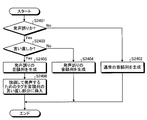
- FIG. 24 is a flowchart showing the operation of the phoneme string generation unit 52.
- the phoneme string generation unit 52 checks whether there is a speech error (error pattern) (step S2401). When it is confirmed that there is no utterance error (Step S2401: No), the phoneme string generation unit 52 generates a normal phoneme string (Step S2402), and ends the process.
- step S2401 When the phoneme string generation unit 52 confirms that there is a speech error (step S2401: Yes), the phoneme string generation unit 52 confirms whether the speech error is "again” (step S2403). When the phoneme string generation unit 52 confirms that the speech error is not "re-speak” (step S2403: No), the phoneme string generation unit 52 generates a phoneme string of speech error (step S2404), and ends the process.
- step S 2403 When the phoneme string generation unit 52 confirms that the speech error is “again” (step S 2403: Yes), the phoneme string generation unit 52 generates a phoneme string of speech error (step S 2405). Next, the phonological string generation unit 52 inserts a tag for emphasizing and uttering into the rewording part of the phonological string (step S2406), and ends the processing.
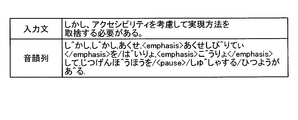
- FIG. 25 is a diagram showing an example of a character string input by the input unit 2 and an actual phoneme string generated by the phoneme string generation unit 52. It can be seen from FIG. 25 that emphasis tags are inserted for the “accessibility” of the rewording noun and the “consideration” of the saunun.
- the present embodiment is configured to have no utterance error occurrence probability, it may be configured to have an utterance error occurrence probability in combination with the third embodiment.
- the phoneme string generation unit when the phoneme string generation unit generates a phoneme string for rewording (wording error), the word to be uttered is emphasized and uttered again. Since a phoneme string such as this can be generated, it is possible to emphasize and pronounce the correct word when the output unit utters the correct word, and it is possible to clearly indicate that the correction was correct.
- the present invention is not limited to Japanese, and the same effect can be applied to English and other languages. You can get
- the present invention is not limited to the above embodiment as it is, and at the implementation stage, the constituent elements can be modified and embodied without departing from the scope of the invention.
- various inventions can be formed by appropriate combinations of a plurality of components disclosed in the above embodiments. For example, some components may be deleted from all the components shown in the embodiment. Furthermore, components in different embodiments may be combined as appropriate.
- the voice processing apparatus includes a control device such as a CPU, a storage device such as a ROM or RAM, an external storage device such as an HDD or a CD drive device, a display device such as a display device, a keyboard or a mouse And an output device such as a speaker and a LAN interface, and has a hardware configuration using a normal computer.
- a control device such as a CPU, a storage device such as a ROM or RAM, an external storage device such as an HDD or a CD drive device, a display device such as a display device, a keyboard or a mouse And an output device such as a speaker and a LAN interface, and has a hardware configuration using a normal computer.
- the audio processing program executed by the audio processing apparatus is a file of an installable format or an executable format, such as a CD-ROM, a flexible disk (FD), a CD-R, a DVD (Digital Versatile Disk), etc.
- the program is recorded on a computer readable recording medium and provided as a computer program product.
- the voice processing program to be executed by the voice processing apparatus according to the present embodiment may be stored on a computer connected to a network such as the Internet and provided by being downloaded via the network. Further, the speech processing program executed by the speech processing apparatus of the present embodiment may be provided or distributed via a network such as the Internet.
- voice processing program of the present embodiment may be provided by being incorporated in advance in a ROM or the like.
- the speech processing program executed by the speech processing apparatus includes the above-described units (a character string analysis unit, a speech error occurrence determination unit, a phoneme string generation unit, a speech synthesis unit, and a speech error occurrence adjustment unit). These modules are included in the module configuration.
- the CPU processor
- the CPU reads out and executes the voice processing program from the storage medium, and the above-described units are loaded onto the main storage device, and the character string analysis unit
- An error occurrence determination unit, a phoneme string generation unit, a speech synthesis unit, and a speech error occurrence adjustment unit are generated on the main storage device.
- the present invention is not limited to the above embodiment as it is, and at the implementation stage, the constituent elements can be modified and embodied without departing from the scope of the invention.
- various inventions can be formed by appropriate combinations of a plurality of components disclosed in the above-described embodiment. For example, some components may be deleted from all the components shown in the embodiment. Furthermore, components in different embodiments may be combined as appropriate.
- the present invention is useful for all speech processing devices that convert character strings into speech data.
Landscapes
- Engineering & Computer Science (AREA)
- Computational Linguistics (AREA)
- Health & Medical Sciences (AREA)
- Audiology, Speech & Language Pathology (AREA)
- Human Computer Interaction (AREA)
- Physics & Mathematics (AREA)
- Acoustics & Sound (AREA)
- Multimedia (AREA)
- Machine Translation (AREA)
- Document Processing Apparatus (AREA)
Abstract
発声誤りを起こす単語の条件と誤りパターンとを対応付けた発声誤り生起決定情報を記憶する発声誤り生起決定情報記憶部5と、文字列を言語的に解析し、単語の列に分割する文字列解析部3と、分割された単語の各々と条件とを比較して、条件に該当する単語には誤りパターンを付与し、条件に該当しない単語は発声誤りを起こさないことを決定する発声誤り生起決定部4と、誤りパターンが付与された単語には誤りパターンに応じた発声誤りの音韻列を生成し、発声誤りを起こさないと決定した単語には通常の音韻列を生成して、単語の列の音韻列を生成する音韻列生成部7と、を備えた。
Description
本発明は、音声処理装置、音声処理方法及び音声処理プログラムに関する。
与えられた文字列を読み上げる音声合成技術は、従来より知られている。そして、従来の音声合成技術では、与えられた文字列を間違わずに読み上げることが求められていた。しかし昨今は、音声合成が利用される用途も広がり、ペットロボットやゲームのキャラクターなど、人格を持ったキャラクターが発声する際にも利用されるようになってきた。例えば、特許文献1では、感情を持つペットロボットがその感情の状態によって合成音の出力を制御する提案がなされている。
しかしながら、音声合成で読み上げられた音声は、自然性の点で人間的でないと思われる場合が多い。それは、音質的な問題や、感情の見えない抑揚などの問題もあるが、絶対に間違えずよどみなく読む点でも、人間的でないと感じられる。
この点に関して、例えば、特許文献2では、吃りのある合成音を容易に生成することができる音声合成装置、特許文献3では、音声波形データ間の適切な個所に適切な長さの無音部分を挿入することにより、自然で違和感のない音声合成を行うことができる音声合成装置、特許文献4では、音として発音しにくい並びになったときに、発音しやすい単語に置き換えることができる音声合成装置がそれぞれ開示されている。
しかしながら、特許文献2~4のいずれも、人間的な発声という点では依然として改善が必要である。
本発明は、上記に鑑みてなされたものであって、文字列を読み上げる際、文字列に表記されているそのままではなく、意図的に発声誤りを起こすことにより、より人間的な発声をすることができる音声処理装置、音声処理方法及び音声処理プログラムを提供することを目的とする。
上述した課題を解決し、目的を達成するために、本発明は、発声誤りを起こす単語の条件と誤りパターンとを対応付けた発声誤り生起決定情報を記憶する発声誤り生起決定情報記憶部と、文字列を言語的に解析し、単語の列に分割する文字列解析部と、分割された前記単語の各々と前記条件とを比較して、前記条件に該当する前記単語には前記誤りパターンを付与し、前記条件に該当しない前記単語は前記発声誤りを起こさないことを決定する発声誤り生起決定部と、前記誤りパターンが付与された前記単語には前記誤りパターンに応じた発声誤りの音韻列を生成し、前記発声誤りを起こさないと決定した前記単語には通常の音韻列を生成して、前記単語の列の音韻列を生成する音韻列生成部と、を備えたことを特徴とする。
また、本発明は、文字列解析部が、文字列を言語的に解析し、単語の列に分割する文字列解析ステップと、発声誤り生起決定部が、分割された前記単語の各々と、発声誤りを起こす単語の条件と誤りパターンとを対応付けた発声誤り生起決定情報を記憶する発声誤り生起決定情報記憶部の前記条件とを比較して、前記条件に該当する前記単語には前記誤りパターンを付与し、前記条件に該当しない前記単語は前記発声誤りを起こさないことを決定する発声誤り生起決定ステップと、音韻列生成部が、前記誤りパターンが付与された前記単語には前記誤りパターンに応じた発声誤りの音韻列を生成し、前記発声誤りを起こさないと決定した前記単語には通常の音韻列を生成して、前記単語の列の音韻列を生成する音韻列生成ステップと、を含むことを特徴とする。
また、本発明は、文字列を言語的に解析し、単語の列に分割する文字列解析ステップと、分割された前記単語の各々と、発声誤りを起こす単語の条件と誤りパターンとを対応付けた発声誤り生起決定情報を記憶する発声誤り生起決定情報記憶部の前記条件とを比較して、前記条件に該当する前記単語には前記誤りパターンを付与し、前記条件に該当しない前記単語は前記発声誤りを起こさないことを決定する発声誤り生起決定ステップと、前記誤りパターンが付与された前記単語には前記誤りパターンに応じた発声誤りの音韻列を生成し、前記発声誤りを起こさないと決定した前記単語には通常の音韻列を生成して、前記単語の列の音韻列を生成する音韻列生成ステップと、をコンピュータに実行させるためのものである。
本発明によれば、一律でないように意図的に誤った音声を合成することができ、機械的でない人間的な発声をすることができるという効果を奏する。
以下に添付図面を参照して、この発明にかかる音声処理装置、音声処理方法及び音声処理プログラムの最良な実施の形態を詳細に説明する。
(第1の実施の形態)
図1は、第1の実施の形態にかかる音声処理装置の構成を示すブロック図である。音声処理装置1は、音声にしたい文字列を人間的な発声である音声データに変換し、実際の音声(発声)として出力する。さらに、音声処理装置1は、音声(発声)として出力する際に、発声誤りとして、言い淀み、言い直し、言い誤りを意図的に発生させる。
図1は、第1の実施の形態にかかる音声処理装置の構成を示すブロック図である。音声処理装置1は、音声にしたい文字列を人間的な発声である音声データに変換し、実際の音声(発声)として出力する。さらに、音声処理装置1は、音声(発声)として出力する際に、発声誤りとして、言い淀み、言い直し、言い誤りを意図的に発生させる。
ここで、「言い淀み」とは、単語の発声前又は途中に、ポーズ又はフィラー(つなぎ言葉)の発声を行うこととする。また、「言い直し」とは、その単語を完全に又は途中まで発声してから、もう一度発声することとする。さらに、「言い誤り」とは、別の単語を完全に若しくは途中まで発声してから、正しい単語を発声する、又は、そのまま誤った単語を発声したままにすることとする。なお、ここでの「正しい」読み上げとは、文字列に書かれているものをそのまま読むことであり、それ以外の読み方を「発声誤り」とする。文字列にあらかじめ間違えて言い直したりする内容が含まれているものは対象としない。これらは、以後の実施の形態でも同様である。
音声処理装置1は、入力部2、文字列解析部3、発声誤り生起決定部4、発声誤り生起決定情報記憶部5、生起決定情報記憶制御部6、音韻列生成部7、音声合成部8、及び、出力部9を備えて構成されている。
入力部2は、音声にしたい文字列を入力し、例えばキーボードなどが挙げられる。文字列解析部3は、入力された文字列を、例えば形態素解析などで言語的に解析し、単語列に分割する。発声誤り生起決定部4は、発声誤り生起決定情報に基づいて、解析結果の各単語が発声誤りを起こすかどうかを決定する。なお、発声誤り生起決定部4の詳しい動作については、後ほど詳しく説明する。
発声誤り生起決定情報記憶部5は、発声誤り生起決定部4が発声誤りを起こすかどうかを決定するための情報である発声誤り生起決定情報を記憶する。図2-1は、発声誤り生起決定情報記憶部5に記憶されている日本語の発声誤り生起決定情報の一例を示す図である。図2-2は、発声誤り生起決定情報記憶部5に記憶されている英語の発声誤り生起決定情報の一例を示す図である。発声誤り生起決定情報には、発声誤りを起こす条件と、その誤りパターンが記述されており、本例では、見出しの条件と品詞の条件により、発声誤りを起こった場合の動作(誤りパターン)が決定される。なお、図中の「*」は、ワイルドカードであり、全ての接続詞について発声誤りを起こすことを意味する。
生起決定情報記憶制御部6は、発声誤り生起決定情報記憶部5が発声誤り生起決定情報を記憶するように制御する。音韻列生成部7は、発声誤り生起決定部4で決定された情報により、発声誤り又は正しい発声のための音韻列を生成する。音声合成部8は、生成された音韻列を音声データに変換する。出力部9は、音声データを音声として出力し、例えばスピーカなどが挙げられる。
音声処理装置1の音声処理の仕組みについて、まずその概要を説明する。初めに、入力部2により入力された文字列は、文字列解析部3において言語的に解析され、単語に分割される。ここで、各単語の品詞や読みも付与される。次に、発声誤り生起決定部4は、文字列解析部3で得られた単語列の各単語について、発声誤り生起決定情報に基づいて、発声誤りを起こすか起こさないか、さらに発声誤りを起こす場合にはどのパターンの発声誤りを起こすかを決定する。
次に、音韻列生成部7は、発声誤り生起決定部4による決定結果に基づいて、発声誤りを起こす場合には決定した誤りパターンに応じた発声誤りの音韻列を、発声誤りを起こさない場合には正しい音韻列を、それぞれ生成する。次に、音声合成部8は、音韻列生成部7が生成した音韻列を音声波形のデータに変換し、出力部9に送る。最後に、出力部9は音声波形を音声として出力し、音声処理が終了する。
(発声誤り生起決定部の動作)
次に、発声誤り生起決定部4の動作について詳しく説明する。図3は、発声誤り生起決定部4の動作を示すフローチャートである。初めに、発声誤り生起決定部4は、文字列解析部3において解析され分割された単語列の最初の単語を特定する(ステップS301)。次に、発声誤り生起決定部4は、当該単語が発声誤りを起こすか否かを決定する(ステップS302)。具体的には、発声誤り生起決定部4は、発声誤り生起決定情報記憶部5に記憶されている発声誤り生起決定情報の全てを参照して、当該単語が発声誤り生起決定情報中の発声誤りを起こす条件に該当するか否かを確認する。
次に、発声誤り生起決定部4の動作について詳しく説明する。図3は、発声誤り生起決定部4の動作を示すフローチャートである。初めに、発声誤り生起決定部4は、文字列解析部3において解析され分割された単語列の最初の単語を特定する(ステップS301)。次に、発声誤り生起決定部4は、当該単語が発声誤りを起こすか否かを決定する(ステップS302)。具体的には、発声誤り生起決定部4は、発声誤り生起決定情報記憶部5に記憶されている発声誤り生起決定情報の全てを参照して、当該単語が発声誤り生起決定情報中の発声誤りを起こす条件に該当するか否かを確認する。
発声誤り生起決定部4は、当該単語が発声誤りを起こすと決定した場合(ステップS302:Yes)、当該単語に発声誤り生起決定情報の該当する誤りパターンを付与する。(ステップS303)。発声誤り生起決定部4は、当該単語が発声誤りを起こさないと決定した場合(ステップS302:No)、当該単語に正しい発声のフラグを付与するなど、発声誤りを起こさないという情報を付与する(ステップS304)。
次に、発声誤り生起決定部4は、単語列に他の単語があるか否かを確認する(ステップS305)。発声誤り生起決定部4は、単語列に他の単語があると確認した場合(ステップS305:Yes)、ステップS301へ戻り、その単語を特定し以後のステップを繰り返す。発声誤り生起決定部4は、単語列に他の単語がないと確認した場合(ステップS305:No)、処理を終了する。
その後、音韻列生成部7は、発声誤り生起決定部4による決定結果に基づいて、入力文(単語列)の各単語が発声誤りを起こす場合には決定した誤りパターンに応じた発声誤りの音韻列を、発声誤りを起こさない場合には正しい音韻列を、それぞれ生成する。
図4は、入力部2により入力された文字列と、音韻列生成部7で作成された実際の音韻列の一例を示す図である。図4をみると、図2-1で示した発声誤り生起決定情報の内容の通り、接続詞の「しかし」は発声後に言い直すように、名詞の「アクセシビリティ」は第3音節後に言い直すように、サ変名詞の「取捨」は語頭で言い淀むように、それぞれ音韻列が作成されていることがわかる。
このように、第1の実施の形態にかかる音声処理装置によれば、発声誤り生起決定部が、文字列を分割した単語が発声誤りを起こすかどうかを決定するための情報である発声誤り生起決定情報に基づいて、発声誤りを起こすと決定した場合には、音韻列生成部が、文字列に表記されているそのままではなく、一律でない発声誤りの音韻列を生成することができるので、音声合成部が、一律でないように意図的に誤った音声を合成することができ、出力部が、機械的でない人間的な発声をすることが可能となる。
(第2の実施の形態)
第2の実施の形態では、発声誤りが言い誤りの場合に、単語ごとに言い誤りを起こす可能性がある単語を集めた関連語情報を参照して、代わりに言い誤る単語を決定する。第2の実施の形態について、添付図面を参照して説明する。本実施の形態にかかる音声処理装置の構成について、第1の実施の形態と異なる部分を説明する。他の部分については第1の実施の形態と同様であるので、同一の符号が付された箇所については、上述した説明を参照し、ここでの説明を省略する。
第2の実施の形態では、発声誤りが言い誤りの場合に、単語ごとに言い誤りを起こす可能性がある単語を集めた関連語情報を参照して、代わりに言い誤る単語を決定する。第2の実施の形態について、添付図面を参照して説明する。本実施の形態にかかる音声処理装置の構成について、第1の実施の形態と異なる部分を説明する。他の部分については第1の実施の形態と同様であるので、同一の符号が付された箇所については、上述した説明を参照し、ここでの説明を省略する。
図5は、第2の実施の形態にかかる音声処理装置の構成を示すブロック図である。音声処理装置11は、音声にしたい文字列を人間的な発声である音声データに変換し、実際の音声として出力する。さらに、音声処理装置11は、音声(発声)として出力する際に、発声誤りとして、言い淀み、言い直し、言い誤りを意図的に発生させる。音声処理装置11は、入力部2、文字列解析部3、発声誤り生起決定部12、発声誤り生起決定情報記憶部5、生起決定情報記憶制御部6、関連語情報記憶部13、音韻列生成部7、音声合成部8、及び、出力部9を備えて構成されている。
発声誤り生起決定部12は、発声誤り生起決定情報に基づいて、解析結果の各単語が発声誤りを起こすかどうかを決定する。さらに、発声誤り生起決定部12は、発声誤りが「言い誤り」の場合には、関連語情報を検索し、言い誤る単語を決定する。図6は、発声誤り生起決定情報記憶部5に記憶されている発声誤り生起決定情報の一例を示す図である。本例では、第1の実施形態で説明した発声誤り生起決定情報に加えて、誤りパターンとして言い誤りが追加され、言い誤る単語をランダムで選択することが決められている。なお、発声誤り生起決定部12の詳しい動作については、後ほど詳しく説明する。
関連語情報記憶部13は、発声誤りが「言い誤り」の場合に、実際に各単語が言い誤りを起こす可能性がある単語をまとめ、どの様な言い誤りを起こすかが示されている関連語情報を記憶する。図7-1は、関連語情報記憶部13に記憶されている日本語の関連語情報の一例を示す図であり、入力された単語と意味的に似ている又は反対の意味であるなどの類語の観点で分類(グルーピング)されたものである。図7-2は、関連語情報記憶部13に記憶されている日本語の関連語情報の一例を示す図であり、入力された単語と音的に似ていて間違いやすい、又は、音の一部が逆転しているなど音的な観点で分類されたものである。なお、これらの情報をまとめて、1つの関連語情報として持つこともできる。また、日本語に限らず他の言語でも同様の情報を持つことができる。図7-3は、関連語情報記憶部13に記憶されている英語の関連語情報の一例を示す図である。
(発声誤り生起決定部の動作)
次に、発声誤り生起決定部12の動作について詳しく説明する。図8は、発声誤り生起決定部12の動作を示すフローチャートである。初めに、発声誤り生起決定部12は、文字列解析部3において解析され分割された単語列の最初の単語を特定する(ステップS801)。次に、発声誤り生起決定部12は、当該単語が発声誤りを起こすか否かを決定する(ステップS802)。具体的には、発声誤り生起決定部12は、発声誤り生起決定情報記憶部5に記憶されている発声誤り生起決定情報の全てを参照して、当該単語が発声誤り生起決定情報中の発声誤りを起こす条件に該当するか否かを確認する。
次に、発声誤り生起決定部12の動作について詳しく説明する。図8は、発声誤り生起決定部12の動作を示すフローチャートである。初めに、発声誤り生起決定部12は、文字列解析部3において解析され分割された単語列の最初の単語を特定する(ステップS801)。次に、発声誤り生起決定部12は、当該単語が発声誤りを起こすか否かを決定する(ステップS802)。具体的には、発声誤り生起決定部12は、発声誤り生起決定情報記憶部5に記憶されている発声誤り生起決定情報の全てを参照して、当該単語が発声誤り生起決定情報中の発声誤りを起こす条件に該当するか否かを確認する。
発声誤り生起決定部12は、当該単語が発声誤りを起こすと決定した場合(ステップS802:Yes)、当該単語に発声誤り生起決定情報の該当する誤りパターンを付与する(ステップS803)。
次に、発声誤り生起決定部12は、誤りパターン(発声誤り)が「言い誤り」か否かを確認する(ステップS804)。発声誤り生起決定部12は、誤りパターンが「言い誤り」であると確認した場合(ステップS804:Yes)、当該単語に関連語情報をさらに付与する(ステップS805)。具体的には、発声誤り生起決定部12は、関連語情報記憶部13に記憶されている当該単語の関連語情報を検索し、当該単語の発声誤り生起決定情報に記述された選択方法に従って言い誤る単語を決定する。その後、ステップS807へ進む。
発声誤り生起決定部12は、誤りパターンが「言い誤り」でないと確認した場合(ステップS804:No)、そのままステップS807へ進む。
一方、発声誤り生起決定部12は、当該単語が発声誤りを起こさないと決定した場合(ステップS802:No)、当該単語に正しい発声のフラグを付与するなど、発声誤りを起こさないという情報を付与し(ステップS806)、ステップS807へ進む。
次に、ステップS807で、発声誤り生起決定部12は、単語列に他の単語があるか否かを確認する。発声誤り生起決定部12は、単語列に他の単語があると確認した場合(ステップS807:Yes)、ステップS801へ戻り、その単語を特定し以後のステップを繰り返す。発声誤り生起決定部12は、単語列に他の単語がないと確認した場合(ステップS807:No)、処理を終了する。
その後、音韻列生成部7は、発声誤り生起決定部12による決定結果に基づいて、入力文(単語列)の各単語が発声誤りを起こす場合には決定した誤りパターンに応じた発声誤りの音韻列を、発声誤りを起こさない場合には正しい音韻列を、それぞれ生成する。
図9は、入力部2により入力された文字列と、音韻列生成部7で作成された実際の音韻列の一例を示す図である。図9をみると、第1の実施の形態で説明した図4に加えて、サ変名詞の「考慮」を図7-1の関連語情報記憶からランダムに選択された「配慮」に言い誤った後、「考慮」と訂正して発声するように音韻列が作成されていることがわかる。
このように、第2の実施の形態にかかる音声処理装置によれば、発声誤りが言い誤りの場合、発声誤り生起決定部は言い誤りを起こすと決定した場合には、単語ごとに言い誤りを起こす可能性がある単語を集めた関連語情報を参照して当該単語から言い誤る単語を決定し、音韻列生成部が言い誤りの音韻列を生成することができるので、文字列には現れないが関連のある単語を用いて言い誤ることができ、より知識を持った発声誤りが可能となる。
(第3の実施の形態)
第3の実施の形態では、発声誤り生起決定部が発声誤り生起決定情報と発声誤り生起確率とに基づいて、発声誤りを起こすかどうかを決定する。第3の実施の形態について、添付図面を参照して説明する。本実施の形態にかかる音声処理装置の構成について、第1の実施の形態と異なる部分を説明する。他の部分については第1の実施の形態と同様であるので、同一の符号が付された箇所については、上述した説明を参照し、ここでの説明を省略する。
第3の実施の形態では、発声誤り生起決定部が発声誤り生起決定情報と発声誤り生起確率とに基づいて、発声誤りを起こすかどうかを決定する。第3の実施の形態について、添付図面を参照して説明する。本実施の形態にかかる音声処理装置の構成について、第1の実施の形態と異なる部分を説明する。他の部分については第1の実施の形態と同様であるので、同一の符号が付された箇所については、上述した説明を参照し、ここでの説明を省略する。
図10は、第3の実施の形態にかかる音声処理装置の構成を示すブロック図である。音声処理装置21は、音声にしたい文字列を人間的な発声である音声データに変換し、実際の音声として出力する。さらに、音声処理装置21は、音声(発声)として出力する際に、発声誤りとして、言い淀み、言い直し、言い誤りを意図的に発生させる。音声処理装置21は、入力部2、文字列解析部3、発声誤り生起決定部22、発声誤り生起決定情報記憶部5、生起決定情報記憶制御部6、発声誤り生起確率情報記憶部23、音韻列生成部7、音声合成部8、及び、出力部9を備えて構成されている。
発声誤り生起決定部22は、発声誤り生起決定情報に基づいて、解析結果の各単語が発声誤りを起こす可能性があるかどうかを決定する。さらに、発声誤り生起決定部22は、発声誤りを起こす可能性がある場合は、発声誤りが起こる確率を算出し、発声誤り生起確率情報と比較して、この単語が発声誤りを起こすかどうかを決定する。図11は、発声誤り生起決定情報記憶部5に記憶されている発声誤り生起決定情報の一例を示す図である。本例では、第1の実施形態で説明した発声誤り生起決定情報と比べて、発声誤りが起こった場合の動作(誤りパターン)が複数存在する条件がある。なお、発声誤り生起決定部22の詳しい動作については、後ほど詳しく説明する。
発声誤り生起確率情報記憶部23は、発声誤りを起こす確率が示されている発声誤り生起確率情報を記憶する。図12は、発声誤り生起確率情報記憶部23に記憶されている発声誤り生起確率情報の一例を示す図である。各単語における発声誤り生起確率は、あらかじめ、その単語の難易度や、読みの発声しにくさなどにより、誤りパターンごとに決められている。複数の誤りパターンを持つ単語には、それぞれ生起確率が対応付けられている。例えば、図の「取捨」では、語頭で言い淀む確率が60%、第1音節後に言い淀む確率が30%、発声後に言い直す確率が40%となっている。
そして、これらの生起確率は、それぞれ独立に評価され、発声誤りを起こすか起こさないかを決定する際に利用される。つまり、発声誤り生起決定部22は、発声誤りが起こる確率を誤りパターンごとに算出し、それぞれの誤りパターンの発声誤り生起確率情報と比較するので、生起確率が高くてもそのパターンの誤りを起こさないと決定する場合もあるし、生起確率が低くてもそのパターンの誤りを起こすと決定する場合もある。
(発声誤り生起決定部の動作)
次に、発声誤り生起決定部22の動作について詳しく説明する。図13は、発声誤り生起決定部22の動作を示すフローチャートである。初めに、発声誤り生起決定部22は、文字列解析部3において解析され分割された単語列の最初の単語を特定する(ステップS1301)。次に、発声誤り生起決定部22は、当該単語が発声誤りを起こす可能性があるか否かを決定する(ステップS1302)。具体的には、発声誤り生起決定部22は、発声誤り生起決定情報記憶部5に記憶されている発声誤り生起決定情報の全てを参照して、当該単語が発声誤り生起決定情報中の発声誤りを起こす条件に該当するか否かを確認する。
次に、発声誤り生起決定部22の動作について詳しく説明する。図13は、発声誤り生起決定部22の動作を示すフローチャートである。初めに、発声誤り生起決定部22は、文字列解析部3において解析され分割された単語列の最初の単語を特定する(ステップS1301)。次に、発声誤り生起決定部22は、当該単語が発声誤りを起こす可能性があるか否かを決定する(ステップS1302)。具体的には、発声誤り生起決定部22は、発声誤り生起決定情報記憶部5に記憶されている発声誤り生起決定情報の全てを参照して、当該単語が発声誤り生起決定情報中の発声誤りを起こす条件に該当するか否かを確認する。
発声誤り生起決定部22は、当該単語が発声誤りを起こす可能性があると決定した場合(ステップS1302:Yes)、発声誤りが起こる確率、すなわち、発声誤りを起こすか否かを決定するための判定値を算出する(ステップS1303)。具体的には、発声誤り生起決定部22は、ランダムに発生させた0~99の数値から1つを選択し、この値を発声誤りが起こる確率とする。
次に、発声誤り生起決定部22は、当該単語が発声誤りを起こすか否かを決定する(ステップS1304)。具体的には、発声誤り生起決定部22は、ステップS1303で算出した発声誤りが起こる確率値が、発声誤り生起確率情報記憶部23に記憶されている当該単語の発声誤り生起確率情報の確率値より小さいか否かにより、当該単語が発声誤りを起こすか否かを決定する。
発声誤り生起決定部22は、当該単語が発声誤りを起こすと決定した場合(ステップS1304:Yes)、すなわち、ステップS1303で算出した発声誤りが起こる確率値が、当該単語の発声誤り生起確率情報の確率値より小さい場合には、ステップS1305へ進む。
発声誤り生起決定部22は、当該単語が発声誤りを起こさないと決定した場合(ステップS1304:No)、すなわち、ステップS1303で算出した発声誤りが起こる確率値が、当該単語の発声誤り生起確率情報の確率値より大きい場合には、当該単語に正しい発声のフラグを付与するなど、発声誤りを起こさないという情報を付与し(ステップS1308)、ステップS1309へ進む。
なお、前述したように、発声誤り生起確率情報記憶部23に複数の誤りパターンが記憶されている単語については、誤りパターンごとにステップS1303とステップS1304とが行われるため、全ての誤りパターンについて発声誤りを起こさないと決定した場合にのみ、ステップS1308へ進むことになる。
ステップS1305で、発声誤り生起決定部22は、さらに、複数の発声誤り(誤りパターン)が選択されたか否かを確認する。発声誤り生起決定部22は、複数の発声誤りが選択されたことを確認した場合(ステップS1305:Yes)、発声誤り生起確率情報の確率値が最も大きい誤りパターンを選択し(ステップS1306)、当該単語に選択した誤りパターンを付与する(ステップS1307)。例えば、図12の「取捨」で、第1音節後の言い淀み(確率値30%)と、発声後の言い直し(確率値40%)の2つが選択された場合、確率値が高い発声後の言い直しが選択される。その後、ステップS1309へ進む。
発声誤り生起決定部22は、複数の発声誤りが選択されていないことを確認した場合(ステップS1305:No)、当該単語に選択した誤りパターンを付与する(ステップS1307)。その後、ステップS1309へ進む。
一方、ステップS1302で、発声誤り生起決定部22は、当該単語が発声誤りを起こす可能性がないと決定した場合(ステップS1302:No)、当該単語に正しい発声のフラグを付与するなど、発声誤りを起こさないという情報を付与し(ステップS1308)、ステップS1309へ進む。
次に、ステップS1309で、発声誤り生起決定部22は、単語列に他の単語があるか否かを確認する。発声誤り生起決定部22は、単語列に他の単語があると確認した場合(ステップS1309:Yes)、ステップS1301へ戻り、その単語を特定し以後のステップを繰り返す。発声誤り生起決定部22は、単語列に他の単語がないと確認した場合(ステップS1309:No)、処理を終了する。
その後、音韻列生成部7は、発声誤り生起決定部22による決定結果に基づいて、入力文(単語列)の各単語が発声誤りを起こす場合には決定した誤りパターンに応じた発声誤りの音韻列を、発声誤りを起こさない場合には正しい音韻列を、それぞれ生成する。
図14は、入力部2により入力された文字列と、音韻列生成部7で作成された実際の音韻列の一例を示す図である。図14をみると、接続詞の「しかし」は発声誤りを起こさないように、名詞の「アクセシビリティ」は第3音節後に言い淀むように、サ変名詞の「取捨」は発声後に言い直しするように、それぞれ音韻列が作成されていることがわかる。
なお、本例では、発声誤りが起こるかどうかを決める方法として、0~99の数値をランダムに発生させて、その数値と発声誤り生起確率情報の確率値とを比較しているが、もちろんこの方法以外でも、大局的に確率情報に添った結果が出る方法であればかまわない。
また、本例では、複数の誤りパターンが選択された場合、その中から1つの誤りパターンを選択して発声誤りを起こしているが、複数の誤りパターンを同時に起こすようにしてもよい。
また、本例では、説明の簡略化のため発声誤り生起決定情報及び発声誤り生起確率情報に言い誤りの場合を記述していないが、言い誤りの場合も同様であり、第2の実施の形態と組み合わせて実施することができる。
(変形例)
本実施の形態にかかる音声処理装置の変形例では、発声誤り生起決定部22は、同じ単語列内で、以前に発生誤りを起こすと決定した単語と同じ単語が再び現れた場合には、発声誤りが起こる確率の算出方法を変更し発生誤りを起こし難くする。図15は、発声誤り生起決定部22の動作の変形例を示すフローチャートである。
本実施の形態にかかる音声処理装置の変形例では、発声誤り生起決定部22は、同じ単語列内で、以前に発生誤りを起こすと決定した単語と同じ単語が再び現れた場合には、発声誤りが起こる確率の算出方法を変更し発生誤りを起こし難くする。図15は、発声誤り生起決定部22の動作の変形例を示すフローチャートである。
初めに、発声誤り生起決定部22は、文字列解析部3において解析され分割された単語列の最初の単語を特定する(ステップS1501)。次に、発声誤り生起決定部22は、当該単語が発声誤りを起こす可能性があるか否かを決定する(ステップS1502)。具体的には、発声誤り生起決定部22は、発声誤り生起決定情報記憶部5に記憶されている発声誤り生起決定情報の全てを参照して、当該単語が発声誤り生起決定情報中の発声誤りを起こす条件に該当するか否かを確認する。
発声誤り生起決定部22は、当該単語が発声誤りを起こす可能性があると決定した場合(ステップS1502:Yes)、発声誤りが起こる確率すなわち、発声誤りを起こすか否かを決定するための判定値を算出する(ステップS1503)。具体的には、発声誤り生起決定部22は、ランダムに発生させた0~99の数値から1つを選択し、この値を発声誤りが起こる確率とする。
次に、発声誤り生起決定部22は、当該単語が以前に誤りパターンを付与した単語であるか否かを確認する(ステップS1504)。発声誤り生起決定部22は、当該単語が以前に誤りパターンを付与した単語であると確認した場合(ステップS1504:Yes)、発声誤りが起こる確率を再計算する(ステップS1505)。具体的には、発声誤り生起決定部22は、発声誤りが起こる確率を回数に応じて増やしたり、二度目は最大値に固定するなど、発生誤りを起こし難くする。
一方、発声誤り生起決定部22は、当該単語が以前に誤りパターンを付与した単語ではないと確認した場合(ステップS1504:No)、ステップS1506へ進む。
なお、その後のステップS1506~S1511は、図13で説明したステップS1304~S1309と同じであるので説明を省略する。
図16は、入力部2により入力された文字列と、音韻列生成部7で作成された実際の音韻列の一例を示す図である。図をみると、文字列の最初に現れた名詞の「アクセシビリティ」は第3音節後に言い直すように音韻列が作成されているが、2番目に現れた名詞の「アクセシビリティ」は、発声誤りが発生しないように音韻列が作成されていることがわかる。
このように、第3の実施の形態にかかる音声処理装置によれば、発声誤り生起決定部が、文字列を分割した単語が発声誤りを起こすかどうかを決定するための情報である発声誤り生起決定情報と、単語が発声誤りを起こす確率である発声誤り生起確率とに基づいて、発声誤りを起こすと決定することができるので、音韻列生成部が、文字列に表記されているそのままではなく、一律でない発声誤りの音韻列を生成することができ、音声合成部が、一律でないように意図的により自然に誤った音声を合成することができ、出力部が、より人間的な発声をすることが可能となる。
(第4の実施の形態)
第4の実施の形態では、発生誤り生起調整部が文字列全体における発声誤りの発生回数を調整する。第4の実施の形態について、添付図面を参照して説明する。本実施の形態にかかる音声処理装置の構成について、第3の実施の形態と異なる部分を説明する。他の部分については第3の実施の形態と同様であるので、同一の符号が付された箇所については、上述した説明を参照し、ここでの説明を省略する。
第4の実施の形態では、発生誤り生起調整部が文字列全体における発声誤りの発生回数を調整する。第4の実施の形態について、添付図面を参照して説明する。本実施の形態にかかる音声処理装置の構成について、第3の実施の形態と異なる部分を説明する。他の部分については第3の実施の形態と同様であるので、同一の符号が付された箇所については、上述した説明を参照し、ここでの説明を省略する。
図17は、第4の実施の形態にかかる音声処理装置の構成を示すブロック図である。音声処理装置31は、音声にしたい文字列を人間的な発声である音声データに変換し、実際の音声として出力する。さらに、音声処理装置31は、音声(発声)として出力する際に、発声誤りとして、言い淀み、言い直し、言い誤りを意図的に発生させる。音声処理装置31は、入力部2、文字列解析部3、発声誤り生起決定部22、発声誤り生起決定情報記憶部5、生起決定情報記憶制御部6、発声誤り生起確率情報記憶部23、発生誤り生起調整部32、音韻列生成部7、音声合成部8、及び、出力部9を備えて構成されている。
発生誤り生起調整部32は、文字列全体における発声誤りの発生回数を調整する。発生誤り生起調整部32は、具体的には、文字列全体に対してあらかじめ決定されている、発声誤りの発生回数、発声誤りが発生する単語間の文字数、又は、単語の発声誤り生起確率の各条件に基づいて、発声誤りの発生回数を調整する。
(発生誤り生起調整部の動作)
図18は、発生誤り生起調整部32の動作を示すフローチャートである。ここでは、発声誤りの生起を調整する条件として、以下のような条件のうち、1つが指定されているものとする。
(A)1つの文字列内の発声誤りの回数を制限する。
(B)発声誤りの間には一定文字数以上の間隔がある。
(C)単語の発声誤り生起確率が一定以上の発声誤りのみ起こる。
図18は、発生誤り生起調整部32の動作を示すフローチャートである。ここでは、発声誤りの生起を調整する条件として、以下のような条件のうち、1つが指定されているものとする。
(A)1つの文字列内の発声誤りの回数を制限する。
(B)発声誤りの間には一定文字数以上の間隔がある。
(C)単語の発声誤り生起確率が一定以上の発声誤りのみ起こる。
さらに、それぞれの「1つの文字列内の発声誤りの回数」「一定の文字数の間隔」「一定の発声誤り生起確率」については、音声合成部8で出力音声を合成する際の、速度や話者、スタイルなどの合成パラメータに依存して変化する。例えば、速度が速い=早口でしゃべる=発声誤りを起こしやすい、と想定できるので、1つの文字列内の発声誤りの回数が増える、一定の文字数の間隔が減る、発声誤り生起確率が低くなる、などの調整を行う。この調整が、合成パラメータの何に依存しどのように変化するかは、ここでは限定しない。
初めに、発生誤り生起調整部32は、発声誤りの生起を調整する条件により、それぞれに応じた処理を行う(ステップS1801)。
発生誤り生起調整部32は、条件が(A)1つの文字列内の発声誤りの回数制限(ステップS1801:(A))の場合は、まず、合成パラメータにより制限する回数を調整する(ステップS1802)。次に、発生誤り生起調整部32は、1つの文字列全体にある発声誤りの回数を数える(ステップS1803)。次に、発生誤り生起調整部32は、発声誤りの回数が制限回数を超えているか否かを確認する(ステップS1804)。
発生誤り生起調整部32は、発声誤りの回数が制限回数を超えていると確認した場合(ステップS1804:Yes)、発声誤り生起確率の高い順に制限回数だけ発声誤りを残して、それ以外はキャンセルし(ステップS1805)、処理を終了する。発生誤り生起調整部32は、発声誤りの回数が制限回数を超えていないと確認した場合(ステップS1804:No)、そのまま何もせず処理を終了する。
発生誤り生起調整部32は、条件が(B)発声誤り間の一定文字数以上の間隔(ステップS1801:(B))の場合は、まず、合成パラメータにより間隔とする文字数を調整する(ステップS1806)。次に、発生誤り生起調整部32は、文字列の先頭から順次発声誤りがあるか否かを確認する(ステップS1807)。
発生誤り生起調整部32は、発声誤りがないと確認した場合(ステップS1807:No)、そのまま何もせず処理を終了する。一方、発生誤り生起調整部32は、発声誤りがあると確認した場合(ステップS1807:Yes)、次の発声誤りがあるか否かを確認する(ステップS1808)。
発生誤り生起調整部32は、次の発声誤りがないと確認した場合(ステップS1808:No)、そのまま何もせず処理を終了する。一方、発生誤り生起調整部32は、次の発声誤りがあると確認した場合(ステップS1808:Yes)、発声誤り間の文字数が一定数以上であるか否かを確認する(ステップS1809)。
発生誤り生起調整部32は、発声誤り間の文字数が一定数以上ではないと確認した場合(ステップS1809:No)、次の発声誤りをキャンセルし(ステップS1810)、ステップS1808へ戻る。一方、発生誤り生起調整部32は、発声誤り間の文字数が一定数以上であると確認した場合(ステップS1809:Yes)、そのまま、ステップS1808へ戻る。
発生誤り生起調整部32は、条件が(C)単語の発声誤り生起確率が一定以上(ステップS1801:(C))の場合は、まず、合成パラメータにより最低確率を調整する(ステップS1811)。次に、発生誤り生起調整部32は、文字列の先頭から順次発声誤りがあるか否かを確認する(ステップS1812)。
発生誤り生起調整部32は、発声誤りがないと確認した場合(ステップS1812:No)、そのまま何もせず処理を終了する。一方、発生誤り生起調整部32は、発声誤りがあると確認した場合(ステップS1812:Yes)、その単語の発声誤り生起確率が最低確率以上であるか否かを確認する(ステップS1813)。
発生誤り生起調整部32は、その単語の発声誤り生起確率が最低確率以上ではないと確認した場合(ステップS1813:No)、その単語の発声誤りをキャンセルし(ステップS1814)、ステップS1812へ戻り、次の発声誤りがあるか否かを確認する。一方、発生誤り生起調整部32は、その単語の発声誤り生起確率が最低確率以上であると確認した場合(ステップS1813:Yes)、そのまま、ステップS1812へ戻り、次の発声誤りがあるか否かを確認する。
その後、音韻列生成部7は、発声誤り生起決定部22による決定結果、及び、発生誤り生起調整部32による調整結果に基づいて、入力文(単語列)の各単語が発声誤りを起こす場合には決定した誤りパターンに応じた発声誤りの音韻列を、発声誤りを起こさない場合には正しい音韻列を、それぞれ生成する。
なお、第4の実施の形態では、発生誤り生起調整部32が単語の発声誤り生起確率を持った構成となっているが、1つの文字列内の発声誤り回数や一定以上の間隔を空ける条件については、第1の実施の形態や第2の実施の形態のように、発声誤り生起確率を持たない場合でも、条件に合うようにランダムに選ぶ、最初の発声誤りのみ選ぶ、などの方法により、同様の効果を得ることができる。
このように、第4の実施の形態にかかる音声処理装置によれば、発生誤り生起調整部が文字列全体における発声誤りの発生回数を調整するので、音韻列生成部が、不自然に発声誤りが連続して起こる音韻列を生成することを回避でき、音声合成部が、より自然に誤った音声を合成することができ、出力部が、より人間的な発声をすることが可能となる。
(第5の実施の形態)
第5の実施の形態では、発声誤り生起決定部が発声誤り生起決定情報と文脈情報とに基づいて、発声誤りを起こすかどうかを決定する。第5の実施の形態について、添付図面を参照して説明する。本実施の形態にかかる音声処理装置の構成について、第1の実施の形態と異なる部分を説明する。他の部分については第1の実施の形態と同様であるので、同一の符号が付された箇所については、上述した説明を参照し、ここでの説明を省略する。
第5の実施の形態では、発声誤り生起決定部が発声誤り生起決定情報と文脈情報とに基づいて、発声誤りを起こすかどうかを決定する。第5の実施の形態について、添付図面を参照して説明する。本実施の形態にかかる音声処理装置の構成について、第1の実施の形態と異なる部分を説明する。他の部分については第1の実施の形態と同様であるので、同一の符号が付された箇所については、上述した説明を参照し、ここでの説明を省略する。
図19は、第5の実施の形態にかかる音声処理装置の構成を示すブロック図である。音声処理装置41は、音声にしたい文字列を人間的な発声である音声データに変換し、実際の音声として出力する。さらに、音声処理装置41は、音声(発声)として出力する際に、発声誤りとして、言い淀み、言い直し、言い誤りを意図的に発生させる。音声処理装置41は、入力部2、文字列解析部3、発声誤り生起決定部42、発声誤り生起決定情報記憶部5、生起決定情報記憶制御部6、文脈情報記憶部43、音韻列生成部7、音声合成部8、及び、出力部9を備えて構成されている。
発声誤り生起決定部42は、発声誤り生起決定情報に基づいて、解析結果の各単語が発声誤りを起こす可能性があるかどうかを決定する。さらに、発声誤り生起決定部42は、発声誤りを起こす可能性がある場合は、該当する単語の文脈情報を検索して、この単語が発声誤りを起こすかどうかを決定する。なお、発声誤り生起決定部42の詳しい動作については、後ほど詳しく説明する。
文脈情報記憶部43は、発声誤りを起こす可能性がある単語の前後に記述されている単語の種類などによって発声誤りが起こるか否かの決定を示し、発声誤りが起こる場合にはその具体的な動作を示している文脈情報を記憶する。図20-1は、文脈情報記憶部43に記憶されている日本語の文脈情報の一例を示す図であり、発声誤り生起確率を持たない構成の場合の例である。図20-2は、文脈情報記憶部43に記憶されている日本語の文脈情報の一例を示す図であり、発声誤り生起確率を持つ構成の場合の例である。例えば、図20-1の「名誉」では、直後の単語が「挽回」の場合に「汚名」と言い誤り、図20-2の「名誉」では、直後の単語が「挽回」の場合に「汚名」と言い誤る確率が90%となっている。なお、日本語に限らず他の言語でも同様の情報を持つことができる。図20-3は、文脈情報記憶部43に記憶されている英語の文脈情報の一例を示す図である。
(発声誤り生起決定部の動作)
次に、発声誤り生起決定部42の動作について詳しく説明する。図21は、発声誤り生起決定部42の動作を示すフローチャートである。初めに、発声誤り生起決定部42は、文字列解析部3において解析され分割された単語列の最初の単語を特定する(ステップS2101)。次に、発声誤り生起決定部42は、当該単語が発声誤りを起こす可能性があるか否かを決定する(ステップS2102)。具体的には、発声誤り生起決定部42は、発声誤り生起決定情報記憶部5に記憶されている発声誤り生起決定情報の全てを参照して、当該単語が発声誤り生起決定情報中の発声誤りを起こす条件に該当するか否かを確認する。
次に、発声誤り生起決定部42の動作について詳しく説明する。図21は、発声誤り生起決定部42の動作を示すフローチャートである。初めに、発声誤り生起決定部42は、文字列解析部3において解析され分割された単語列の最初の単語を特定する(ステップS2101)。次に、発声誤り生起決定部42は、当該単語が発声誤りを起こす可能性があるか否かを決定する(ステップS2102)。具体的には、発声誤り生起決定部42は、発声誤り生起決定情報記憶部5に記憶されている発声誤り生起決定情報の全てを参照して、当該単語が発声誤り生起決定情報中の発声誤りを起こす条件に該当するか否かを確認する。
発声誤り生起決定部42は、当該単語が発声誤りを起こす可能性がないと決定した場合(ステップS2102:No)、当該単語に正しい発声のフラグを付与するなど、発声誤りを起こさないという情報を付与する(ステップS2103)。発声誤り生起決定部42は、当該単語が発声誤りを起こす可能性があると決定した場合(ステップS2102:Yes)、文脈情報記憶部43に記憶されているその単語に該当する文脈情報を検索する(ステップS2104)。
次に、発声誤り生起決定部42は、文脈が合致しているか、すなわち、文脈情報の内容と入力文の内容(当該単語の前後に記述されている単語の種類)とが合致しているか否かを確認する(ステップS2105)。発声誤り生起決定部42は、文脈が合致していると確認した場合(ステップS2105:Yes)、当該単語に文脈情報の該当する誤りパターンを付与する。(ステップS2106)。発声誤り生起決定部42は、文脈が合致していないと確認した場合(ステップS2105:No)、当該単語に正しい発声のフラグを付与するなど、発声誤りを起こさないという情報を付与する(ステップS2103)。
次に、発声誤り生起決定部42は、単語列に他の単語があるか否かを確認する(ステップS2107)。発声誤り生起決定部42は、単語列に他の単語があると確認した場合(ステップS2107:Yes)、ステップS2101へ戻り、その単語を特定し以後のステップを繰り返す。発声誤り生起決定部42は、単語列に他の単語がないと確認した場合(ステップS2107:No)、処理を終了する。
その後、音韻列生成部7は、発声誤り生起決定部42による決定結果に基づいて、入力文(単語列)の各単語が発声誤りを起こす場合には決定した誤りパターンに応じた発声誤りの音韻列を、発声誤りを起こさない場合には正しい音韻列を、それぞれ生成する。
図22-1及び図22-2は、入力部2により入力された文字列と、音韻列生成部7で作成された実際の音韻列の一例を示す図である。図22-1に示すように「名誉」を「汚名」に言い誤るような音韻列や、図22-2に示すように「許可局」を言い淀むような音韻列は、文脈情報の条件に合致した場合のみ作成されていることがわかる。
なお、発生誤りが言い誤りの場合は、第2の実施の形態と組み合わせて実施することができる。
また、発声誤り生起確率を持つ構成の場合には、第3の実施の形態と組み合わせて実施することができる。
このように、第5の実施の形態にかかる音声処理装置によれば、発声誤り生起決定部が、文字列を分割した単語が発声誤りを起こすかどうかを決定するための情報である発声誤り生起決定情報と文脈情報とに基づいて、発声誤りを起こすと決定することができるので、音韻列生成部が、文字列に表記されている同じ単語でも特定の文脈で使われた単語のみに発声誤りの音韻列を生成することができ、音声合成部が、一律でないように意図的により自然に誤った音声を合成することができ、出力部が、より人間的な発声をすることが可能となる。
(第6の実施の形態)
第6の実施の形態では、音韻列生成部が言い直しの音韻列を生成する場合には、もう一度発声する単語を強調して発声するような音韻列を生成する。第6の実施の形態について、添付図面を参照して説明する。本実施の形態にかかる音声処理装置の構成について、第1の実施の形態と異なる部分を説明する。他の部分については第1の実施の形態と同様であるので、同一の符号が付された箇所については、上述した説明を参照し、ここでの説明を省略する。
第6の実施の形態では、音韻列生成部が言い直しの音韻列を生成する場合には、もう一度発声する単語を強調して発声するような音韻列を生成する。第6の実施の形態について、添付図面を参照して説明する。本実施の形態にかかる音声処理装置の構成について、第1の実施の形態と異なる部分を説明する。他の部分については第1の実施の形態と同様であるので、同一の符号が付された箇所については、上述した説明を参照し、ここでの説明を省略する。
図23は、第6の実施の形態にかかる音声処理装置の構成を示すブロック図である。音声処理装置51は、音声にしたい文字列を人間的な発声である音声データに変換し、実際の音声として出力する。さらに、音声処理装置51は、音声(発声)として出力する際に、発声誤りとして、言い淀み、言い直し、言い誤りを意図的に発生させる。音声処理装置51は、入力部2、文字列解析部3、発声誤り生起決定部4、発声誤り生起決定情報記憶部5、生起決定情報記憶制御部6、音韻列生成部52、音声合成部8、及び、出力部9を備えて構成されている。
音韻列生成部52は、発声誤り生起決定部4で決定された情報により、発声誤り又は正しい発声のための音韻列を生成する。さらに、音韻列生成部52は、発声誤りが「言い直し」の場合には、生成した発声誤りの音韻列に、強調して発声するためのタグを挿入する。
(音韻列生成部の動作)
次に、音韻列生成部52の動作について詳しく説明する。図24は、音韻列生成部52の動作を示すフローチャートである。初めに、音韻列生成部52は、発声誤り(誤りパターン)があるか否かを確認する(ステップS2401)。音韻列生成部52は、発声誤りがないと確認した場合(ステップS2401:No)、通常の音韻列を生成し(ステップS2402)、処理を終了する。
次に、音韻列生成部52の動作について詳しく説明する。図24は、音韻列生成部52の動作を示すフローチャートである。初めに、音韻列生成部52は、発声誤り(誤りパターン)があるか否かを確認する(ステップS2401)。音韻列生成部52は、発声誤りがないと確認した場合(ステップS2401:No)、通常の音韻列を生成し(ステップS2402)、処理を終了する。
音韻列生成部52は、発声誤りがあると確認した場合(ステップS2401:Yes)、発声誤りが「言い直し」か否かを確認する(ステップS2403)。音韻列生成部52は、発声誤りが「言い直し」ではないと確認した場合(ステップS2403:No)、発声誤りの音韻列を生成し(ステップS2404)、処理を終了する。
音韻列生成部52は、発声誤りが「言い直し」であると確認した場合(ステップS2403:Yes)、発声誤りの音韻列を生成する(ステップS2405)。次に、音韻列生成部52は、強調して発声するためのタグを音韻列の言い直し部分に挿入し(ステップS2406)、処理を終了する。
図25は、入力部2により入力された文字列と、音韻列生成部52で作成された実際の音韻列の一例を示す図である。図25をみると、言い直しをする名詞の「アクセシビリティ」とサ変名詞の「考慮」について、強調のタグが挿入されていることがわかる。
なお、本例では、説明の簡略化のため言い誤りの場合を記述していないが、言い誤りの場合も同様であり、さらに第2の実施の形態と組み合わせて実施することができる。
また、本例では、発声誤り生起確率を持たない構成となっているが、第3の実施の形態と組み合わせて、発声誤り生起確率を持つ構成にすることもできる。
このように、第6の実施の形態にかかる音声処理装置によれば、音韻列生成部が言い直し(言い誤り)の音韻列を生成する場合には、もう一度発声する単語を強調して発声するような音韻列を生成することができるので、出力部が正しい単語を発声する時には強調して発声することができ、正しく訂正できたことを明確に示すことが可能となる。
なお、第1~第6の実施の形態では、主に日本語の場合について説明しているが、日本語に限定されるものではなく、英語や他の言語についても同様の方法で同様の効果を得ることができる。
また、本発明は上記実施の形態そのままに限定されるものではなく、実施段階ではその要旨を逸脱しない範囲で構成要素を変形して具体化できる。また、上記実施の形態に開示されている複数の構成要素の適宜な組み合わせにより、種々の発明を形成できる。例えば、実施の形態に示される全構成要素からいくつかの構成要素を削除してもよい。さらに、異なる実施の形態にわたる構成要素を適宜組み合わせてもよい。
本実施の形態の音声処理装置は、CPUなどの制御装置と、ROMやRAMなどの記憶装置と、HDD、CDドライブ装置などの外部記憶装置と、ディスプレイ装置などの表示装置と、キーボードやマウスなどの入力装置と、スピーカやLANインターフェースなどの出力装置を備えており、通常のコンピュータを利用したハードウェア構成となっている。
本実施形態の音声処理装置で実行される音声処理プログラムは、インストール可能な形式又は実行可能な形式のファイルでCD-ROM、フレキシブルディスク(FD)、CD-R、DVD(Digital Versatile Disk)等のコンピュータで読み取り可能な記録媒体に記録されてコンピュータプログラムプロダクトとして提供される。
また、本実施形態の音声処理装置で実行される音声処理プログラムを、インターネット等のネットワークに接続されたコンピュータ上に格納し、ネットワーク経由でダウンロードさせることにより提供するように構成しても良い。また、本実施形態の音声処理装置で実行される音声処理プログラムをインターネット等のネットワーク経由で提供又は配布するように構成しても良い。
また、本実施形態の音声処理プログラムを、ROM等に予め組み込んで提供するように構成してもよい。
本実施の形態の音声処理装置で実行される音声処理プログラムは、上述した各部(文字列解析部、発声誤り生起決定部、音韻列生成部、音声合成部、及び、発声誤り生起調整部)を含むモジュール構成となっており、実際のハードウェアとしてはCPU(プロセッサ)が上記記憶媒体から音声処理プログラムを読み出して実行することにより上記各部が主記憶装置上にロードされ、文字列解析部、発声誤り生起決定部、音韻列生成部、音声合成部、及び、発声誤り生起調整部が主記憶装置上に生成されるようになっている。
なお、本発明は、上記実施の形態そのままに限定されるものではなく、実施段階ではその要旨を逸脱しない範囲で構成要素を変形して具体化することができる。また、上記実施の形態に開示されている複数の構成要素の適宜な組み合わせにより、種々の発明を形成することができる。例えば、実施の形態に示される全構成要素からいくつかの構成要素を削除してもよい。さらに、異なる実施の形態にわたる構成要素を適宜組み合わせても良い。
本発明は、文字列を音声データに変換する全ての音声処理装置に有用である。
1、11、21、31、41、51 音声処理装置
2 入力部
3 文字列解析部
4、12、22、42 発声誤り生起決定部
5 発声誤り生起決定情報記憶部
6 生起決定情報記憶制御部
7、52 音韻列生成部
8 音声合成部
9 出力部
13 関連語情報記憶部
23 発声誤り生起確率情報記憶部
32 発声誤り生起調整部
43 文脈情報記憶部
2 入力部
3 文字列解析部
4、12、22、42 発声誤り生起決定部
5 発声誤り生起決定情報記憶部
6 生起決定情報記憶制御部
7、52 音韻列生成部
8 音声合成部
9 出力部
13 関連語情報記憶部
23 発声誤り生起確率情報記憶部
32 発声誤り生起調整部
43 文脈情報記憶部
Claims (20)
- 発声誤りを起こす単語の条件と誤りパターンとを対応付けた発声誤り生起決定情報を記憶する発声誤り生起決定情報記憶部と、
文字列を言語的に解析し、単語の列に分割する文字列解析部と、
分割された前記単語の各々と前記条件とを比較して、前記条件に該当する前記単語には前記誤りパターンを付与し、前記条件に該当しない前記単語は前記発声誤りを起こさないことを決定する発声誤り生起決定部と、
前記誤りパターンが付与された前記単語には前記誤りパターンに応じた発声誤りの音韻列を生成し、前記発声誤りを起こさないと決定した前記単語には通常の音韻列を生成して、前記単語の列の音韻列を生成する音韻列生成部と、
を備えたことを特徴とする音声処理装置。 - 前記誤りパターンは、単語の発声前又は発声途中に発声される言い淀みであること、を特徴とする請求項1に記載の音声処理装置。
- 前記誤りパターンは、単語を完全に又は途中まで発声してから、再度発声する言い直しであること、を特徴とする請求項1に記載の音声処理装置。
- 前記誤りパターンは、誤った単語を完全に若しくは途中まで発声してから正しい単語を発声する、又は、前記誤った単語を発声したままにする言い誤りであり、
前記発声誤りを起こす単語ごとに前記言い誤りを起こす可能性がある単語を集めた関連語情報を記憶する関連語情報記憶手段をさらに備え、
前記発声誤り生起決定部は、前記言い誤りを起こすと決定した場合には、前記関連語情報から言い誤る単語を決定すること、を特徴とする請求項1に記載の音声処理装置。 - 前記関連語情報は、意味的な関連がある単語を集めたグループ、又は、発音の関連がある単語を集めたグループであること、を特徴とする請求項4に記載の音声処理装置。
- 前記条件は、前記発声誤りを起こす単語の品詞を示すこと、を特徴とする請求項1に記載の音声処理装置。
- 前記発声誤りを起こす単語が前記発声誤りを起こす確率である発声誤り生起確率を記憶する発声誤り生起確率情報記憶部をさらに備え、
前記発声誤り生起決定部は、更に、前記発声誤り生起確率を考慮して、前記単語の各々が前記発声誤りを起こすか起こさないかを決定すること、を特徴とする請求項1に記載の音声処理装置。 - 前記発声誤り生起確率は、前記発声誤りを起こす単語の使用頻度、意味的な難易度、又は、読みの発声しにくさに依存すること、を特徴とする請求項7に記載の音声処理装置。
- 前記発声誤り生起決定部は、前記単語が既に前記発声誤りを起こした単語の場合、前記発声誤りを起こさないと決定すること、を特徴とする請求項7に記載の音声処理装置。
- 前記発声誤りを起こす単語の前後に記述されている単語の種類により、前記発声誤りを起こす単語が前記発声誤りを起こすか起こさないかを定義した情報である文脈情報を記憶する文脈情報記憶部をさらに備え、
前記発声誤り生起決定部は、更に、前記文脈情報を考慮して、前記単語の各々が前記発声誤りを起こすか起こさないかを決定すること、を特徴とする請求項1に記載の音声処理装置。 - 前記発声誤りを起こす単語の前後に記述されている単語の種類により、前記発声誤りを起こす単語が前記発声誤りを起こすか起こさないかを定義した情報である文脈情報を記憶する文脈情報記憶部をさらに備え、
前記発声誤り生起決定部は、更に、前記文脈情報を考慮して、前記単語の各々が前記発声誤りを起こすか起こさないかを決定すること、を特徴とする請求項7に記載の音声処理装置。 - 前記文字列全体における前記発声誤りの発生回数を調整する発生誤り生起調整部をさらに備えたこと、を特徴とする請求項7に記載の音声処理装置。
- 前記発生誤り生起調整部は、前記発声誤りの発生回数が特定の回数以下になるように調整すること、を特徴とする請求項12に記載の音声処理装置。
- 前記発生誤り生起調整部は、前記発声誤りが発生した後、次の発声誤りが発生する単語まで一定数以上の間隔がない場合には、前記次の発声誤りが発生しないように調整すること、を特徴とする請求項12に記載の音声処理装置。
- 前記発生誤り生起調整部は、前記発声誤り生起確率が一定以下の場合には、前記発声誤りが発生しないように調整すること、を特徴とする請求項12に記載の音声処理装置。
- 前記音韻列生成部は、前記言い直しの音韻列を生成する場合には、再度発声する前記単語を強調して発声する音韻列を生成すること、を特徴とする請求項3に記載の音声処理装置。
- 前記音韻列生成部は、前記言い誤りで前記誤った単語を完全に又は途中まで発声してから前記正しい単語を発声する場合には、前記正しい単語を強調して発声する音韻列を生成すること、を特徴とする請求項4に記載の音声処理装置。
- 前記単語の列の前記音韻列を音声データに変換する音声合成部をさらに備えたこと、を特徴とする請求項1に記載の音声処理装置。
- 文字列解析部が、文字列を言語的に解析し、単語の列に分割する文字列解析ステップと、
発声誤り生起決定部が、分割された前記単語の各々と、発声誤りを起こす単語の条件と誤りパターンとを対応付けた発声誤り生起決定情報を記憶する発声誤り生起決定情報記憶部の前記条件とを比較して、前記条件に該当する前記単語には前記誤りパターンを付与し、前記条件に該当しない前記単語は前記発声誤りを起こさないことを決定する発声誤り生起決定ステップと、
音韻列生成部が、前記誤りパターンが付与された前記単語には前記誤りパターンに応じた発声誤りの音韻列を生成し、前記発声誤りを起こさないと決定した前記単語には通常の音韻列を生成して、前記単語の列の音韻列を生成する音韻列生成ステップと、
を含むことを特徴とする音声処理方法。 - 文字列を言語的に解析し、単語の列に分割する文字列解析ステップと、
分割された前記単語の各々と、発声誤りを起こす単語の条件と誤りパターンとを対応付けた発声誤り生起決定情報を記憶する発声誤り生起決定情報記憶部の前記条件とを比較して、前記条件に該当する前記単語には前記誤りパターンを付与し、前記条件に該当しない前記単語は前記発声誤りを起こさないことを決定する発声誤り生起決定ステップと、
前記誤りパターンが付与された前記単語には前記誤りパターンに応じた発声誤りの音韻列を生成し、前記発声誤りを起こさないと決定した前記単語には通常の音韻列を生成して、前記単語の列の音韻列を生成する音韻列生成ステップと、
をコンピュータに実行させるための音声処理プログラム。
Priority Applications (1)
| Application Number | Priority Date | Filing Date | Title |
|---|---|---|---|
| US13/208,464 US8650034B2 (en) | 2009-02-16 | 2011-08-12 | Speech processing device, speech processing method, and computer program product for speech processing |
Applications Claiming Priority (2)
| Application Number | Priority Date | Filing Date | Title |
|---|---|---|---|
| JP2009033030A JP5398295B2 (ja) | 2009-02-16 | 2009-02-16 | 音声処理装置、音声処理方法及び音声処理プログラム |
| JP2009-033030 | 2009-02-16 |
Related Child Applications (1)
| Application Number | Title | Priority Date | Filing Date |
|---|---|---|---|
| US13/208,464 Continuation US8650034B2 (en) | 2009-02-16 | 2011-08-12 | Speech processing device, speech processing method, and computer program product for speech processing |
Publications (1)
| Publication Number | Publication Date |
|---|---|
| WO2010092710A1 true WO2010092710A1 (ja) | 2010-08-19 |
Family
ID=42561559
Family Applications (1)
| Application Number | Title | Priority Date | Filing Date |
|---|---|---|---|
| PCT/JP2009/068244 Ceased WO2010092710A1 (ja) | 2009-02-16 | 2009-10-23 | 音声処理装置、音声処理方法及び音声処理プログラム |
Country Status (3)
| Country | Link |
|---|---|
| US (1) | US8650034B2 (ja) |
| JP (1) | JP5398295B2 (ja) |
| WO (1) | WO2010092710A1 (ja) |
Families Citing this family (8)
| Publication number | Priority date | Publication date | Assignee | Title |
|---|---|---|---|---|
| JP5398295B2 (ja) * | 2009-02-16 | 2014-01-29 | 株式会社東芝 | 音声処理装置、音声処理方法及び音声処理プログラム |
| JP2014048443A (ja) * | 2012-08-31 | 2014-03-17 | Nippon Telegr & Teleph Corp <Ntt> | 音声合成システム、音声合成方法及び音声合成プログラム |
| JP6221301B2 (ja) * | 2013-03-28 | 2017-11-01 | 富士通株式会社 | 音声処理装置、音声処理システムおよび音声処理方法 |
| JP6327848B2 (ja) * | 2013-12-20 | 2018-05-23 | 株式会社東芝 | コミュニケーション支援装置、コミュニケーション支援方法およびプログラム |
| KR101614746B1 (ko) * | 2015-02-10 | 2016-05-02 | 미디어젠(주) | 사용자 패턴에 기반한 오류 db모듈을 적용한 임베디드 음성인식 처리방법 및 시스템 |
| JP2017021125A (ja) * | 2015-07-09 | 2017-01-26 | ヤマハ株式会社 | 音声対話装置 |
| JP6134043B1 (ja) * | 2016-11-04 | 2017-05-24 | 株式会社カプコン | 音声生成プログラムおよびゲーム装置 |
| JP7495125B2 (ja) * | 2018-12-03 | 2024-06-04 | Groove X株式会社 | ロボット、音声合成プログラム、及び音声出力方法 |
Citations (4)
| Publication number | Priority date | Publication date | Assignee | Title |
|---|---|---|---|---|
| JP2003208196A (ja) * | 2002-01-11 | 2003-07-25 | Matsushita Electric Ind Co Ltd | 音声対話方法および装置 |
| JP2004118004A (ja) * | 2002-09-27 | 2004-04-15 | Asahi Kasei Corp | 音声合成装置 |
| JP2006017819A (ja) * | 2004-06-30 | 2006-01-19 | Nippon Telegr & Teleph Corp <Ntt> | 音声合成方法、音声合成プログラム及び音声合成装置 |
| WO2008056590A1 (en) * | 2006-11-08 | 2008-05-15 | Nec Corporation | Text-to-speech synthesis device, program and text-to-speech synthesis method |
Family Cites Families (17)
| Publication number | Priority date | Publication date | Assignee | Title |
|---|---|---|---|---|
| US6038533A (en) * | 1995-07-07 | 2000-03-14 | Lucent Technologies Inc. | System and method for selecting training text |
| JPH11288298A (ja) | 1998-04-02 | 1999-10-19 | Victor Co Of Japan Ltd | 音声合成装置 |
| US6182040B1 (en) * | 1998-05-21 | 2001-01-30 | Sony Corporation | Voice-synthesizer responsive to panel display message |
| JP2001154685A (ja) | 1999-11-30 | 2001-06-08 | Sony Corp | 音声認識装置および音声認識方法、並びに記録媒体 |
| JP4465768B2 (ja) * | 1999-12-28 | 2010-05-19 | ソニー株式会社 | 音声合成装置および方法、並びに記録媒体 |
| US6823311B2 (en) * | 2000-06-29 | 2004-11-23 | Fujitsu Limited | Data processing system for vocalizing web content |
| JP2002268663A (ja) | 2001-03-08 | 2002-09-20 | Sony Corp | 音声合成装置および音声合成方法、並びにプログラムおよび記録媒体 |
| JP2002311979A (ja) | 2001-04-17 | 2002-10-25 | Sony Corp | 音声合成装置および音声合成方法、並びにプログラムおよび記録媒体 |
| US7640164B2 (en) | 2002-07-04 | 2009-12-29 | Denso Corporation | System for performing interactive dialog |
| JP4198403B2 (ja) * | 2002-07-04 | 2008-12-17 | 株式会社デンソー | 対話型しりとりシステム |
| JP3984207B2 (ja) * | 2003-09-04 | 2007-10-03 | 株式会社東芝 | 音声認識評価装置、音声認識評価方法、及び音声認識評価プログラム |
| JP4403284B2 (ja) * | 2004-03-31 | 2010-01-27 | 株式会社国際電気通信基礎技術研究所 | 電子メール処理装置および電子メール処理プログラム |
| US20070016421A1 (en) * | 2005-07-12 | 2007-01-18 | Nokia Corporation | Correcting a pronunciation of a synthetically generated speech object |
| JP2008185805A (ja) | 2007-01-30 | 2008-08-14 | Internatl Business Mach Corp <Ibm> | 高品質の合成音声を生成する技術 |
| US20100125459A1 (en) * | 2008-11-18 | 2010-05-20 | Nuance Communications, Inc. | Stochastic phoneme and accent generation using accent class |
| JP5398295B2 (ja) * | 2009-02-16 | 2014-01-29 | 株式会社東芝 | 音声処理装置、音声処理方法及び音声処理プログラム |
| JP5269668B2 (ja) * | 2009-03-25 | 2013-08-21 | 株式会社東芝 | 音声合成装置、プログラム、及び方法 |
-
2009
- 2009-02-16 JP JP2009033030A patent/JP5398295B2/ja not_active Expired - Fee Related
- 2009-10-23 WO PCT/JP2009/068244 patent/WO2010092710A1/ja not_active Ceased
-
2011
- 2011-08-12 US US13/208,464 patent/US8650034B2/en not_active Expired - Fee Related
Patent Citations (4)
| Publication number | Priority date | Publication date | Assignee | Title |
|---|---|---|---|---|
| JP2003208196A (ja) * | 2002-01-11 | 2003-07-25 | Matsushita Electric Ind Co Ltd | 音声対話方法および装置 |
| JP2004118004A (ja) * | 2002-09-27 | 2004-04-15 | Asahi Kasei Corp | 音声合成装置 |
| JP2006017819A (ja) * | 2004-06-30 | 2006-01-19 | Nippon Telegr & Teleph Corp <Ntt> | 音声合成方法、音声合成プログラム及び音声合成装置 |
| WO2008056590A1 (en) * | 2006-11-08 | 2008-05-15 | Nec Corporation | Text-to-speech synthesis device, program and text-to-speech synthesis method |
Non-Patent Citations (2)
| Title |
|---|
| FUMINORI TAKANO ET AL.: "Yojogo o Mochiita Kikitori Yasui Bunsho Yomiage System no Kaihatsu", PROCEEDINGS OF THE 6TH ANNUAL MEETING OF THE ASSOCIATION FOR NATURAL LANGUAGE PROCESSING, 7 March 2000 (2000-03-07), pages 159 - 162 * |
| HIDENORI USUKI ET AL.: "Hayakuchi Kotoba no Iiayamari to Iiyodomi no Seishitsu", IEICE TECHNICAL REPORT, vol. 94, no. 447, 20 January 1995 (1995-01-20), pages 1 - 6 * |
Also Published As
| Publication number | Publication date |
|---|---|
| US20120029909A1 (en) | 2012-02-02 |
| JP2010190995A (ja) | 2010-09-02 |
| US8650034B2 (en) | 2014-02-11 |
| JP5398295B2 (ja) | 2014-01-29 |
Similar Documents
| Publication | Publication Date | Title |
|---|---|---|
| US11443733B2 (en) | Contextual text-to-speech processing | |
| US8027837B2 (en) | Using non-speech sounds during text-to-speech synthesis | |
| US10140973B1 (en) | Text-to-speech processing using previously speech processed data | |
| US8566099B2 (en) | Tabulating triphone sequences by 5-phoneme contexts for speech synthesis | |
| US8036894B2 (en) | Multi-unit approach to text-to-speech synthesis | |
| CN114203147A (zh) | 用于文本到语音的跨说话者样式传递以及用于训练数据生成的系统和方法 | |
| JP5398295B2 (ja) | 音声処理装置、音声処理方法及び音声処理プログラム | |
| JP2007249212A (ja) | テキスト音声合成のための方法、コンピュータプログラム及びプロセッサ | |
| WO2018175892A1 (en) | System providing expressive and emotive text-to-speech | |
| CN105280177A (zh) | 语音合成字典创建装置、语音合成器、以及语音合成字典创建方法 | |
| WO2009081895A1 (ja) | 音声認識システム、音声認識方法、および音声認識用プログラム | |
| Hamza et al. | The IBM expressive speech synthesis system. | |
| Valle et al. | Fugatto 1: Foundational generative audio transformer opus 1 | |
| WO2016103652A1 (ja) | 音声処理装置、音声処理方法、および記録媒体 | |
| JP5819147B2 (ja) | 音声合成装置、音声合成方法およびプログラム | |
| JP5874639B2 (ja) | 音声合成装置、音声合成方法及び音声合成プログラム | |
| JP4829605B2 (ja) | 音声合成装置および音声合成プログラム | |
| Roshan et al. | Sentient Sound waves: Elevating Emotional Communication with AI-Generated Speech Technology | |
| JP5387410B2 (ja) | 音声合成装置、音声合成方法および音声合成プログラム | |
| JP2005181998A (ja) | 音声合成装置および音声合成方法 | |
| Maekawa et al. | Phonetic characteristics of filled pauses: a preliminary comparison between Japanese and Chinese | |
| Nishihara et al. | Singing voice synthesis based on frame-level sequence-to-sequence models considering vocal timing deviation | |
| JP4751230B2 (ja) | 韻律素片辞書作成方法、並びに音声合成装置及びプログラム | |
| CN119541452A (zh) | 一种语音合成模型构建方法、系统、存储介质和程序产品 | |
| Astrinaki et al. | sHTS: A streaming architecture for statistical parametric speech synthesis |
Legal Events
| Date | Code | Title | Description |
|---|---|---|---|
| 121 | Ep: the epo has been informed by wipo that ep was designated in this application |
Ref document number: 09840029 Country of ref document: EP Kind code of ref document: A1 |
|
| NENP | Non-entry into the national phase |
Ref country code: DE |
|
| 122 | Ep: pct application non-entry in european phase |
Ref document number: 09840029 Country of ref document: EP Kind code of ref document: A1 |