WO2010084590A1 - 楽曲出力装置、楽曲再生装置、楽曲出力方法、楽曲送信方法、楽曲出力プログラム、楽曲送信プログラムおよび記録媒体 - Google Patents
楽曲出力装置、楽曲再生装置、楽曲出力方法、楽曲送信方法、楽曲出力プログラム、楽曲送信プログラムおよび記録媒体 Download PDFInfo
- Publication number
- WO2010084590A1 WO2010084590A1 PCT/JP2009/050980 JP2009050980W WO2010084590A1 WO 2010084590 A1 WO2010084590 A1 WO 2010084590A1 JP 2009050980 W JP2009050980 W JP 2009050980W WO 2010084590 A1 WO2010084590 A1 WO 2010084590A1
- Authority
- WO
- WIPO (PCT)
- Prior art keywords
- music
- information
- output
- unit
- music information
- Prior art date
- Legal status (The legal status is an assumption and is not a legal conclusion. Google has not performed a legal analysis and makes no representation as to the accuracy of the status listed.)
- Ceased
Links
Images



Classifications
-
- G—PHYSICS
- G11—INFORMATION STORAGE
- G11B—INFORMATION STORAGE BASED ON RELATIVE MOVEMENT BETWEEN RECORD CARRIER AND TRANSDUCER
- G11B27/00—Editing; Indexing; Addressing; Timing or synchronising; Monitoring; Measuring tape travel
- G11B27/10—Indexing; Addressing; Timing or synchronising; Measuring tape travel
- G11B27/34—Indicating arrangements
-
- G—PHYSICS
- G11—INFORMATION STORAGE
- G11B—INFORMATION STORAGE BASED ON RELATIVE MOVEMENT BETWEEN RECORD CARRIER AND TRANSDUCER
- G11B27/00—Editing; Indexing; Addressing; Timing or synchronising; Monitoring; Measuring tape travel
- G11B27/10—Indexing; Addressing; Timing or synchronising; Measuring tape travel
- G11B27/102—Programmed access in sequence to addressed parts of tracks of operating record carriers
- G11B27/105—Programmed access in sequence to addressed parts of tracks of operating record carriers of operating discs
Definitions
- the present invention relates to a music output device, a music playback device, a music output method, a music transmission method, a music output program, a music transmission program, and a recording medium that select music information based on audio information.
- the use of the present invention is not limited to the above-described music output device, music playback device, music output method, music transmission method, music output program, music transmission program, and recording medium.
- a content reproduction system having an audio device (master device) capable of reproducing a plurality of different content data and a plurality of portable playback devices (slave devices) existing within a predetermined range with respect to the audio device has been proposed.
- the audio device acquires different content data from a plurality of source devices provided in the audio device, and transmits the content data to the plurality of portable playback devices in parallel using wireless communication.
- the plurality of portable playback devices request content data from the audio device by performing operations such as selection from the operation unit on the content list information displayed on the display screen of the portable playback device.
- the content data transmitted from the audio device is received and reproduced by each reproducing unit.
- Patent Document 1 the technique disclosed in Patent Document 1 described above is applicable to, for example, headphones that do not include a display screen, in order to select content data to be played back from a content list displayed on the display screen in a portable playback device. There is a problem that you can not.
- the music output device is the music information currently being reproduced by the music reproduction device from the music reproduction device in which the music information is recorded.
- a music output device that outputs the same music information to the output unit while receiving the same music information, and in the state of outputting the same music information, the sound for specifying the music information recorded in the music playback device
- a receiving means for receiving specific information comprising: music information different from the same music information from the music information recorded on the music playback device based on the specific information received by the receiving means.
- Selection means for accepting selection by a user, and transmission means for transmitting request information for requesting the music playback device for the different music information selected by the selection means , From the output of the same music information, characterized in that it comprises a control means for controlling to switch the output of the different music information received by the receiving means in response to the request information.
- a music reproducing device for transmitting music information to each of a plurality of music output devices, wherein the music information is recorded in the recording means and the recording means.
- Acquisition means for acquiring specific information consisting of sound for specifying each of the music information
- receiving means for receiving request information for selecting the music information from the music output device, and receiving by the receiving means
- the control means for outputting the music information corresponding to the requested information from the recording means, the specific information acquired by the acquisition means, and the music information output by the control means are transmitted to the music output device. And a transmission means.
- a fourteenth aspect of the present invention there is provided a music output method in which an output unit receives a piece of music information identical to the piece of music information currently being reproduced by the music reproduction device from a music reproduction device in which the music information is recorded.
- the specific information consisting of the sound for specifying the music information recorded in the music playback device is received in the state where the same music information is being output.
- a music transmission method is a music transmission method in a music playback device that transmits music information to each of a plurality of music output devices, wherein each of the music information recorded in a recording unit is stored.
- An acquisition step of acquiring specific information including voice for specifying, a first transmission step of transmitting the specific information acquired by the acquisition step to the music output device, and selecting the music information from the music output device Receiving the request information for receiving, the control step for outputting the music information corresponding to the request information received by the receiving step from the recording unit, and the music information output by the control step And a second transmission step of transmitting to the music output device.
- the music output program according to the invention of claim 16 causes a computer to execute the music output method of claim 14.
- a music transmission program according to the invention of claim 17 causes a computer to execute the music transmission method according to claim 15.
- a recording medium according to the invention of claim 18 is characterized in that the music output program or music transmission program according to claim 16 or 17 is recorded in a computer-readable state.
- FIG. 1 is a block diagram showing a functional configuration of a music output device according to the present embodiment.
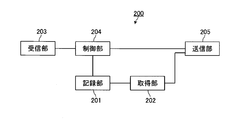
- FIG. 2 is a block diagram showing a functional configuration of the music reproducing device according to the present embodiment.
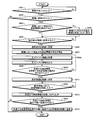
- FIG. 3 is a flowchart showing the music output processing procedure of the music output device.
- FIG. 4 is a flowchart showing the music transmission processing procedure of the music playback device.
- FIG. 5 is an explanatory diagram illustrating the outline of the audio system according to the present embodiment.
- FIG. 6 is a block diagram illustrating the hardware configuration of the parent device according to the present embodiment.
- FIG. 7 is a block diagram of the hardware configuration of the slave unit according to the present embodiment.
- FIG. 8 is a flowchart showing the contents of processing of the master unit.
- FIG. 9 is a flowchart showing the contents of processing of the slave unit.
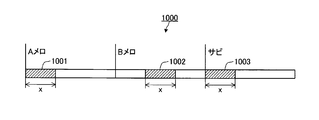
- FIG. 10 is an explanatory diagram showing the contents of the digest information.
- a music output device a music playback device, a music output method, a music transmission method, a music output program, a music transmission program, and a recording medium according to the present invention will be described below in detail with reference to the accompanying drawings. .
- FIG. 1 is a block diagram showing a functional configuration of a music output device according to the present embodiment.
- the music output device 100 includes an output unit 101, a reception unit 102, a selection unit 103, a control unit 104, and a transmission unit 105.
- the music output device 100 outputs to the output unit 101 while receiving the same music information as the music information currently being played back by the music playback device 200 from the music playback device 200 (see FIG. 2) in which the music information is recorded. To do. That is, the music output device 100 performs streaming playback of music information recorded in the music playback device 200.
- the music output device 100 is, for example, a headphone that does not have a display screen and is connected to the music playback device 200 wirelessly or by wire.
- the output unit 101 includes a speaker that outputs music information and the like. Specifically, the output unit 101 includes, for example, two speakers for the user's right ear and left ear.
- the receiving unit 102 specifies specific information composed of sound for specifying the music information recorded in the music reproducing device 200 in a state where the music reproducing device 200 outputs the same music information as the music information currently being reproduced.
- the specific information is, for example, recorded in a predetermined section of music information recorded in the music playback device 200 (hereinafter referred to as “digest information”) or in the music playback device 200. It is information consisting of sound related to music information.
- the digest information is specified by, for example, information for a predetermined section from the beginning of the music in the music information recorded in the music playback device 200, information for a predetermined section of the chorus part, or a music distributor.
- information for a predetermined section of the portion is specified by, for example, a label that issues music or a company that uses music for commercials.
- the information composed of the sound related to the music information may be any information that can identify each music by the information including the sound, such as the artist name, album name, title name, and genre of the music information.
- the receiving unit 102 receives music information recorded in the music playback device 200 in accordance with request information described later.
- the selection unit 103 selects the same piece of music information as the piece of music information currently reproduced by the music reproduction device 200 from the music information recorded in the music reproduction device 200. Accepts selection of different music information by the user.
- the selection unit 103 accepts selection of music information by the user based on, for example, an input from a dial-shaped operation unit by the user. Specifically, the dial-like operation unit can be used according to each operation depending on, for example, whether the dial is turned to the left or right, the number of times the dial is turned, and whether the dial is pressed. The input of the instruction from the person is accepted.
- the operation unit may be, for example, an electrostatic sensor or a microphone.
- the electrostatic sensor receives an input of an instruction according to the number of times touched by the user.
- the electrostatic sensor may be a polyhedron, and in this case, an input of an instruction corresponding to a place touched by the user may be accepted.
- the microphone may accept the input of the instruction by recognizing the sound leakage of the music information when the music output device 100 is removed from the user's ear, for example.
- the selection unit 103 accepts selection of music information by the user based on the specific information output by the output unit 101 when the user inputs from the operation unit. That is, when the specific information is sequentially output to the output unit 101, the selection unit 103 performs the music corresponding to the specific information output to the output unit 101 when the user inputs from the operation unit. Accept selection of information.
- the control unit 104 receives the music information that is currently reproduced by the music reproducing device 200 from the output of the same music information as the music information currently reproduced by the music reproducing device 200 and is received by the receiving unit 102 in response to the request information. Control to switch to output of different music information. In addition, the control unit 104 outputs to the output unit 101 music information that is received by the receiving unit 102 in response to request information from another music output device 100 and is different from the music information currently being played by the music playback device 200. To control.
- the request information may be information requesting music information being played back by the music playback device 200 or information requesting music information being played back by another music output device 100. Further, the control unit 104 may perform control so that the specific information received by the receiving unit 102 is sequentially output to the output unit 101.
- the transmitting unit 105 transmits request information for requesting the music reproducing device 200 for the music information selected by the selecting unit 103.
- the transmission unit 105 also transmits request information for requesting the music reproduction device 200 to transmit the music information selected by the selection unit 103 to another music output device 100.
- FIG. 2 is a block diagram showing a functional configuration of the music reproducing device according to the present embodiment.
- the music reproducing device 200 includes a recording unit 201, an acquisition unit 202, a reception unit 203, a control unit 204, and a transmission unit 205.
- the music playback device 200 transmits music information to each of the plurality of music output devices 100.
- the music playback device 200 may transmit the same music information to a plurality of music output devices 100, or may transmit different music information to the plurality of music output devices 100, respectively.
- the music information transmitted by the music playback device 200 may be music information being played back by the music playback device 200 or may be music information other than being played back. That is, the music reproducing device 200 can transmit other music information to the music output device 100 while reproducing the music information. Furthermore, specifically, the music playback device 200 may perform authentication processing on the music output device 100 within a predetermined range, for example, and transmit the music information only to the music output device 100 for which authentication has been established.
- the music playback device 200 may be connected to the music output device 100 within a predetermined range wirelessly such as Bluetooth (registered trademark), or may be connected by wire.
- the music reproducing device 200 is, for example, a portable digital audio player.
- the recording unit 201 records music information.
- the recording unit 201 may record information related to a section serving as digest information in the music information in association with the music information, or may record information including audio related to the music information in association with the music information.
- the digest information is information for a predetermined section of each piece of music information recorded in the recording unit 201.
- the information composed of sound related to the music information is information composed of sound such as artist name, album name, title name, and genre name.
- the acquisition unit 202 acquires specific information composed of sound for specifying each piece of music information recorded in the recording unit 201.
- the specific information is, for example, information including digest information and audio related to music information recorded in the recording unit 201.
- the acquisition unit 202 acquires digest information by extracting information for a predetermined section from the music information based on information about the section recorded in the recording unit 201, for example.
- the information regarding the section may be set by the music reproducing device 200, for example, or may be associated with the music information in advance.
- the music reproducing device 200 for example, a predetermined section from the beginning of the music, a predetermined section of the chorus portion, and the like are set.
- the rust portion can be detected based on, for example, sound volume.
- the information regarding the section is associated with the music information in advance, it is set by the user in advance on a PC that acquires the music information via a network, for example.
- the section that the user wants to hear the most is set by a label that issues music information in advance or a company that uses music information for CM. May be.
- information composed of sound related to music information may be associated with each music information in advance on a server that acquires music information via a network, for example.
- the receiving unit 203 receives request information for selecting music information from the music output device 100.
- the request information is information requesting music information desired by the user of the music output device 100, or the user of the music output device 100 requests transmission to another music output device 100.
- Information is information.
- the control unit 204 outputs music information corresponding to the request information received by the receiving unit 203 from the recording unit 201.
- the transmission unit 205 transmits the specific information acquired by the acquisition unit 202 and the music information output by the control unit 204 to the music output device 100.
- the transmission unit 205 sequentially transmits the digest information acquired by the acquisition unit 202 to the music output device 100 as specific information, for example.
- specific information for example, when the transmission unit 205 does not receive the request information from the music output device 100 by the reception unit 203 even though it has transmitted the digest information corresponding to all the music information recorded in the recording unit 201, again, Digest information of different sections of each piece of music information recorded in the recording unit 201 may be sequentially transmitted to the music output device 100. In this case, instead of the digest information, information about the music information may be sequentially transmitted.
- the transmission unit 205 transmits music information corresponding to the request information to the music output device 100 that has received the request information by the reception unit 203.
- the request information received by the receiving unit 203 is information that the user of the music output device 100 requests transmission to another music output device 100
- the transmission unit 205 receives the request information and the music output device 100 that has received the request information.
- the music information corresponding to the request information is transmitted to the music output device 100 different from the above.
- FIG. 3 is a flowchart showing the music output processing procedure of the music output device.
- the music playback apparatus 200 outputs the same music information as the music information currently being played back, specific information including voice for specifying the music information by the receiving unit 102 is displayed.
- Receive step S301).
- step S301 music information different from the music information currently reproduced by the music reproducing device 200 from the music information recorded in the music reproducing device 200 based on the specific information received by the selection unit 103 in step S301. It waits until the selection by the user is accepted (step S302: No loop).
- step S302 Yes
- the control unit 104 outputs request information for requesting the music playback device 200 for the music information selected in step S302. (Step S303).
- the transmission unit 105 transmits the request information output in step S303 to the music reproducing device 200 (step S304).
- the control unit 104 outputs the music information received in step S305 to the output unit 101 (Ste S306), a series of processing ends.
- the control unit 104 outputs the music information that is the same as the music information that the music reproducing device 200 is currently reproducing, and the music that the music reproducing device 200 is currently reproducing received in step S305. Control to switch to output of music information different from the information.
- an authentication process may be performed with the music playback device 200 before receiving the specific information including the voice for specifying the music information in step S301. Then, only when authentication is established, the process may proceed to step S301.
- step S306 After the music information received in step S306 is output, information requesting transmission of the music information output in step S306 to another music output device 100 is sent to the music playback device 200. You may send it. Moreover, the structure which outputs the music information transmitted from the music reproduction apparatus 200 by the request information transmitted from the other music output apparatus 100 may be sufficient.
- the music playback device 200 is received by the receiving unit 102 while outputting the same music information as the music information currently being played back. Based on the specific information including the sound for specifying the music information, the selection of the music information by the user can be received from the music information recorded in the music playback device 200 by the selection unit 103. Then, the music information selected by the selection unit 103 is transmitted to the music reproduction device 200 by request information transmitted by the transmission unit 105, and the music information received by the reception unit 102 according to the request information is transmitted by the control unit 104. The data can be output to the output unit 101.
- the music information different from the music information currently reproduced by the music reproducing device 200 can be output from the music information recorded in the music reproducing device 200 only by the information composed of sound.
- the user can easily listen to the desired music information from the music information of other users using only a simple device such as headphones without a display screen.
- the receiving unit 102 can receive the digest information of the music information recorded in the music playback device 200 as the specific information. Accordingly, the user can easily select desired music information from music information possessed by other users using only a simple device such as a headphone that does not have a display screen.
- the reception unit 102 can receive information for a predetermined section from the beginning of the music in the music information recorded in the music playback device 200 as digest information. . Accordingly, the user can easily select desired music information from music information possessed by other users using only a simple device such as a headphone that does not have a display screen.
- the reception unit 102 can receive information for a predetermined section of the rust portion in the music information recorded in the music playback device 200 as digest information.
- the information for a predetermined section of the portion specified by the music distributor in the music information recorded in the music playback device 200 as digest information by the receiving unit 102. Can be received.
- a user listens to a familiar part when selecting desired music information from music information possessed by other users, using only a simple device such as headphones without a display screen. Therefore, it is possible to prevent the desired music information from being mistaken.
- the music distributor can listen to the part he / she wants to hear when the user selects the music information, the product sold to the user in commercials using the music information and music information Can be promoted.
- the reception unit 102 can receive information consisting of sound related to music information recorded in the music playback device 200 as specific information.
- the reception unit 102 can receive information consisting of sound related to music information recorded in the music playback device 200 as specific information.
- FIG. the user can listen to the desired music information at the same time with other users using only a simple device such as headphones without a display screen.
- the selection unit 103 can accept selection of music information by the user based on the input from the dial-shaped operation unit by the user. Further, the selection of the music information by the user can be accepted based on the specific information output by the output unit 101 at the time when the input from the operation unit by the user is performed by the selection unit 103. Accordingly, the user can listen to desired music information only by operating a simple operation unit in a simple device such as a headphone that does not have a display screen.
- FIG. 4 is a flowchart showing the music transmission processing procedure of the music playback device.
- the acquisition unit 202 acquires specific information including audio for specifying each piece of music information recorded in the recording unit 201 (step S401).
- the specific information acquired in step S401 is transmitted to the music output device 100 by the transmission part 205 (step S402).
- the receiving unit 203 waits until request information for selecting music information is received from the music output device 100 that has transmitted the specific information in step S402 (step S403: No loop).
- the control unit 204 corresponds to the request information received in step S403: Yes from the recording unit 201.
- the music information is output (step S404).
- the music information output in step S404 is transmitted to the music output device 100 by the transmission part 205 (step S405), and a series of processes are complete
- step S403 the process waits until request information for selecting music information is received.
- the present invention is not limited to this. Specifically, for example, when specific information corresponding to all recorded music information is transmitted before receiving request information for selecting music information, the process returns to step S402 and other specific information is output as music. You may make it transmit to the apparatus 100.
- FIG. 1 the process waits until request information for selecting music information is received.
- the acquisition unit 202 acquires specific information including audio for specifying each piece of music information recorded in the recording unit 201, and the transmission unit 205. Can be transmitted to the music output device 100.
- the receiving unit 203 receives request information for selecting music information from the music output device 100, and the control unit 204 outputs the music information corresponding to the request information received by the receiving unit 203 from the recording unit 201 for transmission. It can be transmitted to the music output device 100 by the unit 205. Therefore, it is possible to cause each user having the music output device 100 to select music information desired by each user based only on information consisting of sound.
- digest information for a predetermined section of each piece of music information recorded in the recording unit 201 is acquired by the acquiring unit 202, and a music output device is acquired by the transmitting unit 205.
- 100 can be transmitted sequentially. Therefore, the music information desired by each user can be selected by letting each user having the music output device 100 hear a part of the music information.
- the recording unit 201 records the music information and information related to the section that is the digest information of the music information in association with each other, and the acquisition unit 202 performs the section.
- the digest information can be acquired by extracting information for a predetermined section from the music information based on the information regarding the information. Therefore, when the music information is taken in, a section serving as digest information can be set in advance.
- the acquisition unit 202 can acquire, as the specific information, information composed of sound related to each piece of music information recorded in the recording unit 201. Therefore, when the music information is captured, each user having the music output device 100 can select the music information desired by each user according to the artist name, album name, title name, etc. that are captured together with the music information. .
- the music playback device 200 of the present invention is implemented by a master device such as a portable digital audio device in an audio system
- the music output device 100 of the present invention is implemented by a slave device such as headphones.
- a master device such as a portable digital audio device in an audio system
- a slave device such as headphones
- FIG. 5 is an explanatory diagram illustrating the outline of the audio system according to the present embodiment.
- the audio system includes a portable digital audio device that is a parent device 501 and headphones that are a child device 502.
- the slave unit 502 may output the M song being played by the master unit 501, or the N song or L may be different from the M song being played by the master unit 501.
- You may output a song.
- base unit 501 can transmit a song other than the song being played in the own device to slave unit 502.
- the slave device 502 does not have a display screen, and can select desired music information only with the audio information by specifying information consisting of sound for specifying the music information recorded in the master device 501. .
- FIG. 6 is a block diagram illustrating the hardware configuration of the parent device according to the present embodiment.
- a base unit 501 includes a CPU 601, a ROM 602, a RAM 603, a magnetic disk drive 604, a magnetic disk 605, an audio I / F (interface) 606, a speaker 607, an input device 608, and a video I. / F609, a display 610, and a communication I / F611.
- the constituent units 601 to 611 are connected by a bus 620, respectively.
- the CPU 601 governs overall control of the parent device 501.
- the ROM 602 records programs such as a boot program, a data update program, and a specific information acquisition program.
- the RAM 603 is used as a work area for the CPU 601. That is, the CPU 601 controls the entire base unit 501 by executing various programs recorded in the ROM 602 while using the RAM 603 as a work area.
- the specific information acquisition program acquires specific information composed of sound for specifying music information.
- the specific information acquisition program is, for example, information consisting of information related to a predetermined section of music information (hereinafter referred to as “digest information”) or sound related to music information recorded in association with music information.
- the digest information is extracted from the music information based on, for example, information on a section that is digest information in the music information recorded in association with the music information.
- the magnetic disk drive 604 controls the reading / writing of the data with respect to the magnetic disk 605 according to control of CPU601.
- the magnetic disk 605 records data written under the control of the magnetic disk drive 604.
- an HD hard disk
- a memory card can be used as the magnetic disk 605.
- music information An example of information recorded on the magnetic disk 605 is music information.
- the music information may be associated with information on a section that is digest information in the music information or information that is composed of sound related to the music information.
- Information on the section that is digest information in the music information will be described in detail later.
- a predetermined section from the beginning of the music, a predetermined section of the chorus part, a predetermined section set by the user This is information that is the section most desired to be heard by a user set by a label that issues music information or a company that uses music information for commercials.
- the information composed of sound related to the music information is information composed of sound such as artist name, album name, title name, and genre name.
- the base unit 501 may include a flash memory, although not shown.
- the flash memory is a rewritable nonvolatile semiconductor memory, and reads / writes data under the control of the CPU 601.
- the flash memory for example, a NAND flash memory or a NOR flash memory can be used. Examples of information recorded in the flash memory include the above-described music information, information on a section that is digest information in the music information, and information that is composed of sound related to the music information.
- the flash memory may have a function as the ROM 602. That is, the flash memory may record the above-described programs.
- the sound I / F 606 is connected to a speaker 607 for sound output. From the speaker 607, a sound obtained by D / A converting a predetermined sound signal in the sound I / F 606 is output.
- the audio I / F 606 may be connected to, for example, two speakers 607 for the user's right ear and left ear.
- the input device 608 includes a remote controller, a keyboard, a touch panel, and the like provided with a plurality of keys for inputting characters, numerical values, various instructions, and the like.
- the input device 608 may be realized by any one form of a remote control, a keyboard, and a touch panel, but may be realized by a plurality of forms.
- the video I / F 609 is connected to the display 610.
- the video I / F 609 is output from, for example, a graphic controller that controls the entire display 610, a buffer memory such as a VRAM (Video RAM) that temporarily records image information that can be displayed immediately, and a graphic controller.
- a control IC for controlling the display 610 based on the image data to be processed.
- Display 610 displays icons, cursors, menus, windows, or various data such as characters and images. On the display 610, information on characters and images related to the music information described above may be drawn. As the display 610, for example, a liquid crystal display can be used.
- the communication I / F 611 is connected to the network via wireless and functions as an interface between the parent device 501 and the CPU 601.
- the communication I / F 611 is further connected to a communication network such as the Internet via wireless, and also functions as an interface between the communication network and the CPU 601. Then, desired music information can be fetched from a server on the Internet. Further, the communication I / F 611 is connected to a PC via a wireless or wired connection, and can retrieve music information stored in the PC. Then, the fetched music information is output to the magnetic disk 605.
- the communication I / F 611 When the communication I / F 611 is connected to the slave unit 502 via a wireless or wired connection and receives request information requesting music information recorded on the magnetic disk 605 from the slave unit 502, the song information corresponding to the request information Can be transmitted to the handset 502.
- the recording unit 201, the acquisition unit 202, the reception unit 203, the control unit 204, and the transmission unit 205 included in the music reproduction device 200 illustrated in FIG. 2 are included in the ROM 602, the RAM 603, the magnetic disk 605, and the like in the parent device 501 illustrated in FIG.
- the CPU 601 executes a predetermined program and controls each unit in the parent device 501, thereby realizing its function.
- the base unit 501 of the embodiment executes the music transmission processing program recorded in the ROM 602 as a recording medium in the base unit 501, thereby providing the functions provided in the music playback device 200 shown in FIG.
- FIG. 7 is a block diagram of the hardware configuration of the slave unit according to the present embodiment.
- the slave unit 502 includes a CPU 701, a ROM 702, a RAM 703, an audio I / F (interface) 704, a speaker 705, an input device 706, and a communication I / F 707.
- the constituent units 701 to 707 are connected by a bus 720, respectively.
- the CPU 701 governs overall control of the slave unit 502.
- the ROM 702 records programs such as a boot program and a data update program.
- the RAM 703 is used as a work area for the CPU 701. That is, the CPU 701 performs overall control of the child device 502 by executing various programs recorded in the ROM 702 while using the RAM 703 as a work area.
- the audio I / F 704 is connected to a speaker 705 for audio output.
- the speaker 705 outputs a sound obtained by D / A converting a predetermined sound signal in the sound I / F 704.
- the audio I / F 704 may be connected to, for example, two speakers 705 for the user's right ear and left ear.
- the input device 706 includes a dial operation unit, an electrostatic sensor, and a microphone for inputting user instructions.
- the input device 706 may be realized by any one of a dial operation unit, an electrostatic sensor, and a microphone, but may be realized by a plurality of forms.
- the dial operation unit accepts an input of a user instruction based on information about whether the rotation is right or left, information about how many rotations have been made, and information about whether the dial portion has been pressed.
- the electrostatic sensor accepts an input of a user's instruction based on information on how many times the user has touched, or information on which area is touched when the electrostatic sensor is a polyhedron.
- the microphone receives an instruction input from the user based on information indicating whether or not sound leaks because the speaker 705 is removed from the user's ear.
- the communication I / F 707 is connected to the network via wireless and functions as an interface between the slave unit 502 and the CPU 701.
- the communication I / F 707 is further connected to a communication network such as the Internet via wireless, and also functions as an interface between the communication network and the CPU 701.
- the communication I / F 707 is connected to the parent device 501 via a wireless or wired connection, transmits request information for requesting music information recorded on the magnetic disk 605 of the parent device 501, and transmits music corresponding to the request information. Information can be received from the parent device 501. In this case, the music information can be output to the speaker 705 via the audio I / F 704 while being received by the communication I / F 707.
- the output unit 101, the reception unit 102, the selection unit 103, the control unit 104, and the transmission unit 105 included in the music output device 100 illustrated in FIG. 1 are programs recorded in the ROM 702, the RAM 703, and the like in the slave unit 502 illustrated in FIG.
- the CPU 701 executes a predetermined program and controls each unit in the slave unit 502 to realize the function.
- the slave unit 502 executes the song output program recorded in the ROM 702 as a recording medium in the slave unit 502, thereby providing the functions provided in the song output apparatus 100 shown in FIG. It can be executed by the music output processing procedure shown.
- FIG. 8 is a flowchart showing the contents of processing of the master unit.
- the system waits until the power of the base unit 501 is turned on (step S801: No loop).
- step S801: Yes the process waits until a music information reproduction instruction is received by the input device 608 (step S802: No loop).
- step S802 the music information is displayed.
- step S803 reproduction of the music information for which the reproduction instruction is received in step S802 is started (step S803).
- step S803 output of music information to the speaker 607 via the audio I / F 606 is started.
- step S804 it is determined whether or not there is a child device 502 within a predetermined distance from the parent device 501 (step S804).
- step S804 it is determined whether or not there is a child device 502 within a predetermined distance. For example, among headphones connected to the parent device 501 via Bluetooth, the headphone authenticated by the parent device 501 is the child device 502. to decide.
- step S804 If it is not determined in step S804 that there is a child device 502 within a predetermined distance (step S804: No), the series of processing ends. If it is determined in step S804 that there is a child device 502 within a predetermined distance (step S804: Yes), it is determined whether or not the child device 502 has requested music information being played started in step S803. (Step S805). In step S805, for example, information consisting of a sound prompting the user to determine whether or not to request reproduction of the music information being reproduced is transmitted from the parent device 501, and a request for music information being reproduced is received from the child device 502. Then, it is determined that there is a request for music information being reproduced from the child device 502.
- step S805 If there is a request for music information being played from the child device 502 in step S805 (step S805: Yes), the music information being played started in step S803 is transmitted to the child device 502 (step S806). It is determined whether or not a music selection request has been received from handset 502 (step S807). If there is no request for music information being played from the child device 502 in step S805 (step S805: No), the process proceeds to step S807 as it is.
- the music selection request is information requesting that music information different from the music information being reproduced by the parent device 501 is selected and reproduced from the child device 502.
- step S807 it waits until a music selection request is received from the child device 502 (step S807: No loop).
- a music selection request is received from the child device 502 (step S807: Yes)
- the music information being reproduced in step S806 is displayed.
- the transmission of the music information to the child device 502 is stopped (step S808). If the music selection request is received from the slave unit 502 in step S807: Yes and the music information being played back is not transmitted to the slave unit 502 in step S806, the process directly proceeds to step S809.
- step S809 the specific information acquisition program is executed to acquire digest information (step S809), and the digest information acquired in step S809 is sequentially transmitted to the slave unit 502 (step S810). Then, it is determined whether or not specific information for specifying desired music information is received from the child device 502 (step S811), and when it is not determined that specific information for specifying desired music information is received from the child device 502 (step S811). S811: No), it is determined whether digest information corresponding to all the music information recorded on the magnetic disk 605 has been transmitted (step S812).
- step S812 when digest information corresponding to all pieces of music information has not been transmitted (step S812: No), the process returns to step S810, and the subsequent processing is repeated. If digest information corresponding to all music information is transmitted in step S812 (step S812: Yes), the digest information is changed to the digest information of another section (step S813), the process returns to step S809, and the subsequent processing is repeated. Do it.
- step S811 when specific information for specifying desired music information is received from the slave unit 502 in step S811 (step S811: Yes), music information corresponding to the specific information received in step S811 is extracted from the magnetic disk 605 (step S811). Step S814). Then, the music information desired by the user of the child device 502 indicated by the specific information extracted in step S814 is transmitted to the child device 502 (step S815).
- step S816 it is determined whether or not the request information for transmitting the desired music information to the other child device 502 is received from the child device 502 (step S816), and the desired music information is transmitted from the child device 502 to the other child device. If the request information to be transmitted to 502 is not received (step S816: No), the series of processing ends. On the other hand, when the request information for transmitting the desired music information to the other child device 502 is received from the child device 502 in step S816 (step S816: Yes), the desired music information according to the request information received in step S816. Is transmitted to the other child device 502 (step S817), and a series of processing is terminated.
- the digest information is acquired in step S809, but the present invention is not limited to this. Specifically, for example, each piece of music information such as an artist name, album name, and title name of the music information can be specified, and information other than digest information may be used as long as the information is audio.
- FIG. 9 is a flowchart showing the contents of processing of the slave unit.
- it waits until the power of the slave unit 502 is turned on (step S ⁇ b> 901: No loop). If the power of the slave unit 502 is turned on in step S901 (step S901: Yes), it is determined whether or not the master unit 501 has been authenticated (step S902).
- step S902 If it is not authenticated by the parent device 501 in step S902 (step S902: No), the series of processing is terminated as it is. If the master unit 501 is authenticated in step S902 (step S902: Yes), it is determined whether or not the master unit 501 requests the music information being played back (step S903). In step S903, for example, information consisting of a sound prompting the user to determine whether or not to request reproduction of the music information being played is received from the parent device 501, and the child music device 502 requests the music information being played from the user. When an input to that effect is received, it is determined that the master unit 501 requests music information being played back.
- step S903 If it is determined in step S903 that the master device 501 requests the music information being played back (step S903: Yes), the master device 501 is requested for the music information being played back, and then the music information being played back from the master device 501 is displayed. Is reproduced while receiving (step S904). And it is judged whether it changes to other music information (step S905). If it is determined in step S903 that the master unit 501 does not request the music information being reproduced (step S903: No), the process directly proceeds to step S905.
- step S905 the system waits until it is determined to change to other music information (step S905: No loop). If it is determined to change to other music information (step S905: Yes), the music selection request is sent to the master unit. It transmits to 501 (step S906). Next, when the music information being reproduced is being received from the parent device 501 in step S904, reproduction of the music information being reproduced is stopped in the parent device 501 (step S907), and the digest information is received. (Step S908). If it is determined in step S904 that the music information being played back is not being played back from the parent device 501, step S907 is omitted and the process proceeds to step S908.
- step S908 the digest information received in step S908 is output from the speaker 705 via the audio I / F 704 (step S909), and it is determined whether or not the selection of specific information specifying the music information desired by the user has been accepted. (Step S910). If it is not determined in step S910 that selection of specific information for specifying music information desired by the user has been received (step S910: No), the process returns to step S908, and the subsequent processing is repeated.
- step S910 determines whether selection of specific information for specifying the music information desired by the user has been received (step S910: Yes).
- request information requesting the music information desired by the user is sent to the parent device 501. Transmit (step S911). And it waits until it receives the music information according to the request information transmitted in step S911 from the parent device 501 (step S912: loop of No).
- step S912 when the music information corresponding to the request information is received (step S912: Yes), the music information corresponding to the request information, that is, the music information desired by the user is received and output (step S913).
- step S914 it is determined whether or not the parent device 501 is to transmit the music information desired by the user output in step S913 to another child device 502 (step S914). If it is not determined in step S914 that the music information desired by the user is transmitted to another child device 502 (step S914: No), the series of processing ends. On the other hand, when it is determined in step S914 that the music information desired by the user is to be transmitted to the other child device 502 (step S914: Yes), a request for transmitting the music information desired by the user to the other child device 502 is requested. Information is transmitted to the parent device 501 (step S915), and a series of processing ends.
- each piece of music information such as an artist name, album name, and title name of the music information can be specified, and information other than digest information may be used as long as the information is audio.
- FIG. 10 is an explanatory diagram showing the contents of the digest information.
- FIG. 10 shows music information 1000 for one song, first digest information 1001, second digest information 1002, and third digest information 1003.
- the digest information is information for a predetermined section (x seconds) in the music information.
- the first digest information 1001 is information for x seconds from the beginning of the music in the music information 1000.
- the second digest information 1002 is, for example, information corresponding to x seconds of the portion most desired to be heard by a user set by a label that issues music information or a company that uses music information for CM.
- the third digest information 1003 is information for x seconds of the rust portion.
- the first digest information 1001 to the third digest information 1003 are shown.
- the present invention is not limited to this, and other sections may be used as long as the music information 1000 can be specified. It can be long or short.
- the song information desired by the user from the song information recorded on the magnetic disk 605 of the master unit 501 is obtained. Selection can be made only by information consisting of sound such as digest information for a predetermined section of each piece of music information.
- the user can select and listen to desired music information from a plurality of music information recorded in the main device 501 only by using a simple handset 502 such as headphones.
- the user desires only by information consisting of sound. Music information can be selected.
- the music output method or music transmission method described in this embodiment can be realized by executing a program prepared in advance on a computer such as a personal computer, a workstation, or a mobile terminal device (mobile phone). it can.
- This program is recorded on a computer-readable recording medium such as a hard disk, a flexible disk, a CD-ROM, an MO, and a DVD, and is executed by being read from the recording medium by the computer.
- the program may be a transmission medium that can be distributed via a network such as the Internet.
Landscapes
- Indexing, Searching, Synchronizing, And The Amount Of Synchronization Travel Of Record Carriers (AREA)
Abstract
楽曲再生装置が現在再生している楽曲情報と同一の楽曲情報を出力している状態において、受信部(102)によって受信された楽曲情報を特定するための音声からなる特定情報に基づいて、選択部(103)によって楽曲再生装置に記録された楽曲情報の中から、楽曲再生装置が現在再生している楽曲情報と異なる楽曲情報の利用者による選択を受け付ける。つぎに、送信部(105)によって、選択された楽曲情報を楽曲再生装置に要求するための要求情報を送信する。そして、制御部(104)によって、楽曲再生装置が現在再生している楽曲情報と同一の楽曲情報から要求情報に応じて受信部(102)が受信した楽曲情報の出力に切り替えるように制御する。
Description
この発明は、音声からなる情報によって楽曲情報を選択する楽曲出力装置、楽曲再生装置、楽曲出力方法、楽曲送信方法、楽曲出力プログラム、楽曲送信プログラムおよび記録媒体に関する。ただし、この発明の利用は、上述した楽曲出力装置、楽曲再生装置、楽曲出力方法、楽曲送信方法、楽曲出力プログラム、楽曲送信プログラムおよび記録媒体には限られない。
従来、異なった複数のコンテンツデータを再生可能なオーディオ装置(親機)と、このオーディオ装置に対して、所定範囲内に存在する複数のポータブル再生装置(子機)とを有するコンテンツ再生システムが提案されている(たとえば、下記特許文献1参照。)。オーディオ装置は、このオーディオ装置に備えられた複数のソース機器から異なったコンテンツデータを取得して、複数のポータブル再生装置に対して並列に無線通信を用いて送信する。そして、複数のポータブル再生装置は、ポータブル再生装置の備える表示画面に表示されたコンテンツリスト情報に対して、操作部から選択などの操作をおこなうことによって、オーディオ装置にコンテンツデータを要求し、要求に対してオーディオ装置から送信されたコンテンツデータを受信して、各々の再生部にて再生する。
しかしながら、上述した特許文献1の技術では、ポータブル再生装置において、再生するコンテンツデータを、表示画面に表示されたコンテンツリストから選択するため、たとえば表示画面を備えていないヘッドフォンなどには適用することができないという問題がある。
上述した課題を解決し、目的を達成するため、請求項1の発明にかかる楽曲出力装置は、楽曲情報が記録されている楽曲再生装置から、当該楽曲再生装置が現在再生している前記楽曲情報と同一の楽曲情報を受信しながら出力部に出力する楽曲出力装置であって、前記同一の楽曲情報を出力している状態において、前記楽曲再生装置に記録された楽曲情報を特定するための音声からなる特定情報を受信する受信手段と、前記受信手段によって受信された前記特定情報に基づいて、前記楽曲再生装置に記録された前記楽曲情報の中から前記同一の楽曲情報とは異なる楽曲情報の利用者による選択を受け付ける選択手段と、前記選択手段によって選択された前記異なる楽曲情報を前記楽曲再生装置に要求するための要求情報を送信する送信手段と、前記同一の楽曲情報の出力から、当該要求情報に応じて前記受信手段が受信した前記異なる楽曲情報の出力に切り替えるように制御する制御手段と、を備えることを特徴とする。
また、請求項10の発明にかかる楽曲再生装置は、複数の楽曲出力装置のそれぞれに楽曲情報を送信する楽曲再生装置であって、前記楽曲情報を記録する記録手段と、前記記録手段に記録されたそれぞれの前記楽曲情報を特定するための音声からなる特定情報を取得する取得手段と、前記楽曲出力装置から前記楽曲情報を選択するための要求情報を受信する受信手段と、前記受信手段が受信した前記要求情報に対応する前記楽曲情報を前記記録手段から出力する制御手段と、前記取得手段によって取得された特定情報と、前記制御手段が出力する前記楽曲情報とを前記楽曲出力装置に送信する送信手段と、を備えることを特徴とする。
また、請求項14の発明にかかる楽曲出力方法は、楽曲情報が記録されている楽曲再生装置から、当該楽曲再生装置が現在再生している前記楽曲情報と同一の楽曲情報を受信しながら出力部に出力する楽曲出力装置における楽曲出力方法であって、前記同一の楽曲情報を出力している状態において、前記楽曲再生装置に記録された楽曲情報を特定するための音声からなる特定情報を受信する第1受信工程と、前記第1受信工程によって受信された前記特定情報に基づいて、前記楽曲再生装置に記録された前記楽曲情報の中から前記同一の楽曲情報とは異なる楽曲情報の利用者による選択を受け付ける選択工程と、前記選択工程によって選択された前記異なる楽曲情報を前記楽曲再生装置に要求するための要求情報を出力する出力工程と、前記要求情報を前記楽曲再生装置に送信する送信工程と、当該要求情報に応じた前記異なる楽曲情報を受信する第2受信工程と、前記同一の楽曲情報の出力から、前記第2受信工程によって受信された前記異なる楽曲情報の出力に切り替えるように制御する制御工程と、を含むことを特徴とする。
また、請求項15の発明にかかる楽曲送信方法は、複数の楽曲出力装置のそれぞれに楽曲情報を送信する楽曲再生装置における楽曲送信方法であって、記録部に記録されたそれぞれの前記楽曲情報を特定するための音声からなる特定情報を取得する取得工程と、前記取得工程によって取得された特定情報を前記楽曲出力装置に送信する第1送信工程と、前記楽曲出力装置から前記楽曲情報を選択するための要求情報を受信する受信工程と、前記受信工程によって受信された前記要求情報に対応する前記楽曲情報を前記記録部から出力する制御工程と、前記制御工程によって出力された前記楽曲情報を前記楽曲出力装置に送信する第2送信工程と、を含むことを特徴とする。
また、請求項16の発明にかかる楽曲出力プログラムは、請求項14に記載の楽曲出力方法をコンピュータに実行させることを特徴とする。
また、請求項17の発明にかかる楽曲送信プログラムは、請求項15に記載の楽曲送信方法をコンピュータに実行させることを特徴とする。
また、請求項18の発明にかかる記録媒体は、請求項16または17に記載の楽曲出力プログラムまたは楽曲送信プログラムをコンピュータに読み取り可能な状態で記録したことを特徴とする。
100 楽曲出力装置
101 出力部
102 受信部
103 選択部
104 制御部
105 送信部
101 出力部
102 受信部
103 選択部
104 制御部
105 送信部
以下に添付図面を参照して、この発明にかかる楽曲出力装置、楽曲再生装置、楽曲出力方法、楽曲送信方法、楽曲出力プログラム、楽曲送信プログラムおよび記録媒体の好適な実施の形態を詳細に説明する。
(実施の形態)
(楽曲出力装置の機能的構成)
まず、この発明の実施の形態にかかる楽曲出力装置100の機能的構成について説明する。図1は、本実施の形態にかかる楽曲出力装置の機能的構成を示すブロック図である。
(楽曲出力装置の機能的構成)
まず、この発明の実施の形態にかかる楽曲出力装置100の機能的構成について説明する。図1は、本実施の形態にかかる楽曲出力装置の機能的構成を示すブロック図である。
図1において、楽曲出力装置100は、出力部101と、受信部102と、選択部103と、制御部104と、送信部105と、を備えている。楽曲出力装置100は、楽曲情報が記録されている楽曲再生装置200(図2参照)から、楽曲再生装置200が現在再生している楽曲情報と同一の楽曲情報を受信しながら出力部101に出力する。すなわち、楽曲出力装置100は、楽曲再生装置200に記録されている楽曲情報のストリーミング再生をおこなうものである。楽曲出力装置100は、具体的には、たとえば無線または有線によって楽曲再生装置200と接続された、表示画面を有していないヘッドフォンなどである。
出力部101は、楽曲情報などを出力するスピーカを備えている。出力部101は、具体的には、たとえば利用者の右耳用と左耳用の2つのスピーカを備えている。
受信部102は、楽曲再生装置200が現在再生している楽曲情報と同一の楽曲情報を出力している状態において、楽曲再生装置200に記録された楽曲情報を特定するための音声からなる特定情報を受信する。ここで、特定情報は、具体的には、たとえば楽曲再生装置200に記録された楽曲情報のうちの所定区間分の情報(以下、「ダイジェスト情報」とする)や楽曲再生装置200に記録された楽曲情報に関する音声からなる情報である。
ダイジェスト情報としては、具体的には、たとえば楽曲再生装置200に記録された楽曲情報における楽曲の最初から所定区間分の情報や、サビ部分の所定区間分の情報や、楽曲の配信者によって指定された部分の所定区間分の情報などが挙げられる。ここで、楽曲の配信者とは、たとえば楽曲を発行しているレーベルや、楽曲をコマーシャルに用いている企業などである。
なお、楽曲情報に関する音声からなる情報は、楽曲情報のアーティスト名、アルバム名、タイトル名、ジャンルなど、音声からなる情報によってそれぞれの楽曲を特定可能な情報であればよい。
また、受信部102は、後述する要求情報に応じて、楽曲再生装置200に記録されている楽曲情報を受信する。
選択部103は、受信部102によって受信された特定情報に基づいて、楽曲再生装置200に記録された楽曲情報の中から、楽曲再生装置200が現在再生している楽曲情報と同一の楽曲情報とは異なる楽曲情報の利用者による選択を受け付ける。選択部103は、たとえば利用者によるダイヤル状の操作部からの入力に基づいて、楽曲情報の利用者による選択を受け付ける。ダイヤル状の操作部は、具体的には、たとえばダイヤルが左右どちらかに回されたか否かによって、回された回数によって、また、ダイヤルが押されたか否かによって、それぞれの操作に応じた利用者からの指示の入力を受け付ける。
また、操作部は、たとえば静電センサやマイクロフォンなどでもよい。静電センサは、たとえば利用者にタッチされた回数によって回数に応じた指示の入力を受け付ける。なお、静電センサは多面体でもよく、この場合、利用者にタッチされた場所に応じた指示の入力を受け付けてもよい。さらに、マイクロフォンは、たとえば楽曲出力装置100を利用者の耳から外した際の楽曲情報の音漏れを認識することで、指示の入力を受け付けてもよい。
選択部103は、利用者による操作部からの入力がなされた時点に出力部101により音声出力されている特定情報に基づいて、楽曲情報の利用者による選択を受け付ける。すなわち、選択部103は、特定情報が出力部101に順次音声出力されている場合、利用者による操作部からの入力がなされた時点に出力部101に音声出力されている特定情報に応じた楽曲情報の選択を受け付ける。
制御部104は、楽曲再生装置200が現在再生している楽曲情報と同一の楽曲情報の出力から、要求情報に応じて受信部102が受信した、楽曲再生装置200が現在再生している楽曲情報と異なる楽曲情報の出力に切り替えるように制御する。また、制御部104は、他の楽曲出力装置100からの要求情報に応じて受信部102が受信した、楽曲再生装置200が現在再生している楽曲情報と異なる楽曲情報を出力部101に出力するように制御する。なお、要求情報は、楽曲再生装置200において再生中の楽曲情報を要求する情報や、他の楽曲出力装置100によって再生中の楽曲情報を要求する情報であってもよい。さらに、制御部104は、受信部102によって受信された特定情報を出力部101に順次音声出力するように制御してもよい。
送信部105は、選択部103によって選択された楽曲情報を、楽曲再生装置200に要求するための要求情報を送信する。また、送信部105は、選択部103によって選択された楽曲情報の他の楽曲出力装置100への送信を楽曲再生装置200に要求するための要求情報を送信する。
(楽曲再生装置の機能的構成)
つぎに、この発明の実施の形態にかかる楽曲再生装置200の機能的構成について説明する。図2は、本実施の形態にかかる楽曲再生装置の機能的構成を示すブロック図である。
つぎに、この発明の実施の形態にかかる楽曲再生装置200の機能的構成について説明する。図2は、本実施の形態にかかる楽曲再生装置の機能的構成を示すブロック図である。
図2において、楽曲再生装置200は、記録部201と、取得部202と、受信部203と、制御部204と、送信部205と、を備えている。楽曲再生装置200は、複数の楽曲出力装置100のそれぞれに楽曲情報を送信する。楽曲再生装置200は、複数の楽曲出力装置100に同一の楽曲情報を送信してもよいし、複数の楽曲出力装置100にそれぞれ異なる楽曲情報を送信してもよい。
また、楽曲再生装置200が送信する楽曲情報は、楽曲再生装置200において再生中の楽曲情報でもよいし、再生中以外の楽曲情報でもよい。すなわち、楽曲再生装置200は、楽曲情報を再生しながら、他の楽曲情報を楽曲出力装置100に送信することができる。さらに、楽曲再生装置200は、具体的には、たとえば所定範囲内の楽曲出力装置100に対して認証処理をおこない、認証が成立した楽曲出力装置100にのみ、楽曲情報を送信してもよい。楽曲再生装置200は、所定範囲内の楽曲出力装置100と、ブルートゥース(登録商標)などの無線で接続されていてもよいし、有線で接続されていてもよい。楽曲再生装置200は、具体的には、たとえば携帯型デジタルオーディオプレーヤーなどである。
記録部201は、楽曲情報を記録する。記録部201は、楽曲情報のうちのダイジェスト情報となる区間に関する情報を楽曲情報に関連付けて記録してもよいし、楽曲情報に関する音声からなる情報を楽曲情報に関連付けて記録してもよい。ここで、ダイジェスト情報は、記録部201に記録されたそれぞれの楽曲情報のうちの所定区間分の情報である。また、楽曲情報に関する音声からなる情報は、アーティスト名、アルバム名、タイトル名、ジャンル名などの音声からなる情報である。
取得部202は、記録部201に記録されたそれぞれの楽曲情報を特定するための音声からなる特定情報を取得する。特定情報は、具体的には、たとえばダイジェスト情報や記録部201に記録された楽曲情報に関する音声からなる情報である。
また、取得部202は、たとえば記録部201に記録された区間に関する情報に基づいて、楽曲情報から所定区間分の情報を抽出することによりダイジェスト情報を取得する。区間に関する情報は、たとえば楽曲再生装置200によって設定されてもよいし、あらかじめ楽曲情報に関連付けられていてもよい。区間に関する情報が楽曲再生装置200によって設定される場合、たとえば楽曲の最初から所定区間、サビ部分の所定区間などが設定される。サビ部分は、たとえば音量などに基づいて検知することができる。
また、区間に関する情報があらかじめ楽曲情報に関連付けられている場合、たとえばネットワークを介して楽曲情報を取得するPCにおいて、あらかじめ利用者によって設定される。さらに、たとえばネットワークを介して楽曲情報を取得するサーバ上で、あらかじめ楽曲情報を発行しているレーベルや、楽曲情報をCMに用いている企業などによって利用者に一番聞かせたい区間が設定されていてもよい。また、同様に、楽曲情報に関する音声からなる情報は、たとえばネットワークを介して楽曲情報を取得するサーバ上で、あらかじめそれぞれの楽曲情報に関連付けられていてもよい。
受信部203は、楽曲出力装置100から楽曲情報を選択するための要求情報を受信する。ここで、要求情報は、上述したように、楽曲出力装置100の利用者が所望する楽曲情報を要求する情報、または楽曲出力装置100の利用者が他の楽曲出力装置100への送信を要求する情報である。また、制御部204は、受信部203が受信した要求情報に対応する楽曲情報を記録部201から出力する。
送信部205は、取得部202によって取得された特定情報と、制御部204が出力する楽曲情報とを楽曲出力装置100に送信する。送信部205は、たとえば特定情報として、取得部202によって取得されたダイジェスト情報を楽曲出力装置100に順次送信する。そして、たとえば送信部205は、記録部201に記録された全ての楽曲情報に対応するダイジェスト情報を送信したにも関わらず、受信部203によって楽曲出力装置100から要求情報を受信しない場合、再度、記録部201に記録されたそれぞれの楽曲情報の異なる区間のダイジェスト情報を楽曲出力装置100に順次送信してもよい。また、この場合、ダイジェスト情報に変えて、楽曲情報に関する音声からなる情報を順次送信してもよい。
送信部205は、受信部203によって要求情報を受信した楽曲出力装置100へ要求情報に対応する楽曲情報を送信する。また、送信部205は、受信部203によって受信した要求情報が、楽曲出力装置100の利用者が他の楽曲出力装置100への送信を要求する情報の場合、要求情報を受信した楽曲出力装置100とは異なる楽曲出力装置100へ要求情報に対応する楽曲情報を送信する。
(楽曲出力装置の楽曲出力処理手順)
つぎに、楽曲出力装置100の楽曲出力処理手順について説明する。図3は、楽曲出力装置の楽曲出力処理手順を示すフローチャートである。図3のフローチャートにおいて、まず、楽曲再生装置200が現在再生している楽曲情報と同一の楽曲情報を出力している状態において、受信部102によって楽曲情報を特定するための音声からなる特定情報を受信する(ステップS301)。
つぎに、楽曲出力装置100の楽曲出力処理手順について説明する。図3は、楽曲出力装置の楽曲出力処理手順を示すフローチャートである。図3のフローチャートにおいて、まず、楽曲再生装置200が現在再生している楽曲情報と同一の楽曲情報を出力している状態において、受信部102によって楽曲情報を特定するための音声からなる特定情報を受信する(ステップS301)。
つぎに、選択部103によって、ステップS301において受信された特定情報に基づいて、楽曲再生装置200に記録された楽曲情報の中から、楽曲再生装置200が現在再生している楽曲情報と異なる楽曲情報の利用者による選択を受け付けるまで待機する(ステップS302:Noのループ)。ステップS302において楽曲情報の利用者による選択を受け付けた場合(ステップS302:Yes)、制御部104によって、ステップS302において選択された楽曲情報を、楽曲再生装置200に要求するための要求情報を出力する(ステップS303)。
つぎに、送信部105によって、ステップS303において出力された要求情報を楽曲再生装置200に送信する(ステップS304)。そして、受信部102によって、ステップS304において送信した要求情報に応じた楽曲情報を受信した場合(ステップS305)、制御部104によって、出力部101に、ステップS305において受信した楽曲情報を出力して(ステップS306)、一連の処理を終了する。ステップS306においては、たとえば、制御部104によって、楽曲再生装置200が現在再生している楽曲情報と同一の楽曲情報の出力から、ステップS305において受信した、楽曲再生装置200が現在再生している楽曲情報と異なる楽曲情報の出力に切り替えるように制御する。
なお、図3のフローチャートにおいては、ステップS301において楽曲情報を特定するための音声からなる特定情報を受信する前に、楽曲再生装置200との間に認証処理をおこなってもよい。そして、認証が成立した場合のみ、ステップS301に進むようにしてもよい。
また、図3のフローチャートにおいては、ステップS306において受信した楽曲情報を出力した後に、ステップS306において出力された楽曲情報の、他の楽曲出力装置100への送信を要求する情報を楽曲再生装置200に送信してもよい。また、他の楽曲出力装置100から送信された要求情報によって、楽曲再生装置200から送信された楽曲情報を出力する構成でもよい。
上述したように、本実施の形態の楽曲出力装置100によれば、楽曲再生装置200が現在再生している楽曲情報と同一の楽曲情報を出力している状態で、受信部102によって受信された楽曲情報を特定するための音声からなる特定情報に基づいて、選択部103によって楽曲再生装置200に記録された楽曲情報の中から、楽曲情報の利用者による選択を受け付けることができる。そして、選択部103によって選択された楽曲情報を、送信部105によって楽曲再生装置200に要求する要求情報を送信し、制御部104によって、この要求情報に応じて受信部102が受信した楽曲情報を出力部101に出力することができる。したがって、音声からなる情報のみで、楽曲再生装置200に記録された楽曲情報の中から、楽曲再生装置200が現在再生している楽曲情報とは異なる楽曲情報を出力することができる。これによって、利用者は、表示画面を有しないヘッドフォンなどの簡易な装置のみを用いて、他の利用者が有する楽曲情報の中から簡単に所望の楽曲情報を聞くことができる。
また、本実施の形態の楽曲出力装置100によれば、受信部102によって、特定情報として、楽曲再生装置200に記録された楽曲情報のダイジェスト情報を受信することができる。これによって、利用者は、表示画面を有しないヘッドフォンなどの簡易な装置のみを用いて、他の利用者が有する楽曲情報の中から簡単に所望の楽曲情報を選択することができる。
また、本実施の形態の楽曲出力装置100によれば、受信部102によって、ダイジェスト情報として、楽曲再生装置200に記録された楽曲情報における楽曲の最初から所定区間分の情報を受信することができる。これによって、利用者は、表示画面を有しないヘッドフォンなどの簡易な装置のみを用いて、他の利用者が有する楽曲情報の中から簡単に所望の楽曲情報を選択することができる。
また、本実施の形態の楽曲出力装置100によれば、受信部102によって、ダイジェスト情報として、楽曲再生装置200に記録された楽曲情報におけるサビ部分の所定区間分の情報を受信することができる。これによって、利用者は、表示画面を有しないヘッドフォンなどの簡易な装置のみを用いて、他の利用者が有する楽曲情報の中から所望の楽曲情報を選択する際に、所望の楽曲情報を間違うことを防ぐことができる。
また、本実施の形態の楽曲出力装置100によれば、受信部102によって、ダイジェスト情報として、楽曲再生装置200に記録された楽曲情報における楽曲の配信者によって指定された部分の所定区間分の情報を受信することができる。これによって、利用者は、表示画面を有しないヘッドフォンなどの簡易な装置のみを用いて、他の利用者が有する楽曲情報の中から所望の楽曲情報を選択する際に、聞き覚えのある部分を聞くことができるので、所望の楽曲情報を間違うことを防ぐことができる。また、楽曲の配信者は、利用者が楽曲情報を選択する際に、自身の聞かせたい部分を聞かせることができるので、利用者に楽曲情報や楽曲情報を用いたコマーシャルで販売している商品の宣伝をおこなうことができる。
また、本実施の形態の楽曲出力装置100によれば、受信部102によって、特定情報として、楽曲再生装置200に記録された楽曲情報に関する音声からなる情報を受信することができる。これによって、利用者は、表示画面を有しないヘッドフォンなどの簡易な装置のみを用いて、他の利用者が有する楽曲情報の中から所望の楽曲情報を選択する際に、所望の楽曲情報を間違うことを防ぐことができる。
また、本実施の形態の楽曲出力装置100によれば、制御部104によって、選択部103によって選択された楽曲情報の他の楽曲出力装置100への送信を楽曲再生装置200に要求する要求情報を出力するとともに、他の楽曲出力装置100からの要求情報に応じて受信部102が受信した楽曲を出力部101に出力することができる。これによって、利用者は、表示画面を有しないヘッドフォンなどの簡易な装置のみを用いて、他の利用者と、所望の楽曲情報を同時に聞くことができる。
また、本実施の形態の楽曲出力装置100によれば、選択部103によって、利用者によるダイヤル状の操作部からの入力に基づいて、楽曲情報の利用者による選択を受け付けることができる。また、選択部103によって利用者による操作部からの入力がなされた時点に出力部101により音声出力されている特定情報に基づいて、楽曲情報の利用者による選択を受け付けることができる。これによって、利用者は、表示画面を有しないヘッドフォンなどの簡易な装置における、簡易な操作部の操作のみで、所望の楽曲情報を聞くことができる。
(楽曲再生装置の楽曲送信処理手順)
つぎに、楽曲再生装置200の楽曲送信処理手順について説明する。図4は、楽曲再生装置の楽曲送信処理手順を示すフローチャートである。図4のフローチャートにおいて、まず、取得部202によって、記録部201に記録されたそれぞれの楽曲情報を特定するための音声からなる特定情報を取得する(ステップS401)。そして、送信部205によって、ステップS401において取得された特定情報を楽曲出力装置100に送信する(ステップS402)。
つぎに、楽曲再生装置200の楽曲送信処理手順について説明する。図4は、楽曲再生装置の楽曲送信処理手順を示すフローチャートである。図4のフローチャートにおいて、まず、取得部202によって、記録部201に記録されたそれぞれの楽曲情報を特定するための音声からなる特定情報を取得する(ステップS401)。そして、送信部205によって、ステップS401において取得された特定情報を楽曲出力装置100に送信する(ステップS402)。
つぎに、受信部203によって、ステップS402において特定情報を送信した楽曲出力装置100から楽曲情報を選択するための要求情報を受信するまで待機する(ステップS403:Noのループ)。ステップS403において楽曲出力装置100から楽曲情報を選択するための要求情報を受信した場合(ステップS403:Yes)、制御部204によって、記録部201から、ステップS403:Yesにおいて受信した要求情報に対応する楽曲情報を出力する(ステップS404)。そして、送信部205によって、ステップS404において出力された楽曲情報を楽曲出力装置100に送信して(ステップS405)、一連の処理を終了する。
なお、図4のフローチャートにおいては、ステップS403:Noのループにおいて、楽曲情報を選択するための要求情報を受信するまで待機するとしているが、これに限るものではない。具体的には、たとえば楽曲情報を選択するための要求情報を受信する前に、記録された全ての楽曲情報に応じた特定情報を送信した場合、ステップS402に戻り、他の特定情報を楽曲出力装置100に送信するようにしてもよい。
上述したように、本実施の形態の楽曲再生装置200によれば、記録部201に記録されたそれぞれの楽曲情報を特定するための音声からなる特定情報を取得部202によって取得し、送信部205によって楽曲出力装置100に送信することができる。そして、受信部203によって楽曲出力装置100から楽曲情報を選択するための要求情報を受信し、制御部204によって受信部203が受信した要求情報に対応する楽曲情報を記録部201から出力し、送信部205によって楽曲出力装置100に送信することができる。したがって、楽曲出力装置100を有する各利用者に、音声からなる情報のみによって、各利用者が所望する楽曲情報を選択させることができる。
また、本実施の形態の楽曲再生装置200によれば、取得部202によって記録部201に記録されたそれぞれの楽曲情報のうちの所定区間分のダイジェスト情報を取得し、送信部205によって楽曲出力装置100に順次送信することができる。したがって、楽曲出力装置100を有する各利用者に、楽曲情報の一部を聞かせることで、各利用者が所望する楽曲情報を選択させることができる。
また、本実施の形態の楽曲再生装置200によれば、記録部201に、楽曲情報と、楽曲情報のうちのダイジェスト情報となる区間に関する情報と、を関連付けて記録し、取得部202によって、区間に関する情報に基づいて、楽曲情報から所定区間分の情報を抽出することによりダイジェスト情報を取得することができる。したがって、楽曲情報を取り込む際に、ダイジェスト情報となる区間をあらかじめ設定しておくことができる。
また、本実施の形態の楽曲再生装置200によれば、取得部202によって、記録部201に記録されたそれぞれの楽曲情報に関する音声からなる情報を特定情報として取得することができる。したがって、楽曲情報を取り込む際に、楽曲情報とともに取り込んだアーティスト名、アルバム名、タイトル名などによって、楽曲出力装置100を有する各利用者に、各利用者が所望する楽曲情報を選択させることができる。
以下に、本発明の実施例について説明する。本実施例では、たとえば、オーディオシステムにおける携帯型デジタルオーディオ装置などの親機によって、本発明の楽曲再生装置200を実施し、ヘッドフォンなどの子機によって、本発明の楽曲出力装置100を実施した場合の一例について説明する。
(オーディオシステムの概要)
つぎに、本実施例にかかるオーディオシステムの概要について説明する。図5は、本実施例にかかるオーディオシステムの概要について示す説明図である。図5に示すように、オーディオシステムは、親機501である携帯型デジタルオーディオ装置と、子機502であるヘッドフォンと、を有している。子機502は、複数あってもよい。親機501においてM曲を再生中に、子機502においては、親機501で再生中のM曲を出力してもよいし、親機501で再生中のM曲とは異なるN曲やL曲を出力してもよい。すなわち、親機501は、自装置において再生中の曲以外の曲を子機502に対して送信することができる。また、子機502は、表示画面を有していなく、親機501に記録された楽曲情報を特定するための音声からなる特定情報によって、音声情報のみで所望の楽曲情報を選択することができる。
つぎに、本実施例にかかるオーディオシステムの概要について説明する。図5は、本実施例にかかるオーディオシステムの概要について示す説明図である。図5に示すように、オーディオシステムは、親機501である携帯型デジタルオーディオ装置と、子機502であるヘッドフォンと、を有している。子機502は、複数あってもよい。親機501においてM曲を再生中に、子機502においては、親機501で再生中のM曲を出力してもよいし、親機501で再生中のM曲とは異なるN曲やL曲を出力してもよい。すなわち、親機501は、自装置において再生中の曲以外の曲を子機502に対して送信することができる。また、子機502は、表示画面を有していなく、親機501に記録された楽曲情報を特定するための音声からなる特定情報によって、音声情報のみで所望の楽曲情報を選択することができる。
(親機のハードウェア構成)
つぎに、本実施例にかかる親機501のハードウェア構成について説明する。図6は、本実施例にかかる親機のハードウェア構成を示すブロック図である。図6において、親機501は、CPU601と、ROM602と、RAM603と、磁気ディスクドライブ604と、磁気ディスク605と、音声I/F(インターフェース)606と、スピーカ607と、入力デバイス608と、映像I/F609と、ディスプレイ610と、通信I/F611と、を備えている。各構成部601~611は、バス620によってそれぞれ接続されている。
つぎに、本実施例にかかる親機501のハードウェア構成について説明する。図6は、本実施例にかかる親機のハードウェア構成を示すブロック図である。図6において、親機501は、CPU601と、ROM602と、RAM603と、磁気ディスクドライブ604と、磁気ディスク605と、音声I/F(インターフェース)606と、スピーカ607と、入力デバイス608と、映像I/F609と、ディスプレイ610と、通信I/F611と、を備えている。各構成部601~611は、バス620によってそれぞれ接続されている。
まず、CPU601は、親機501の全体の制御を司る。ROM602は、ブートプログラム、データ更新プログラム、特定情報取得プログラムなどのプログラムを記録している。また、RAM603は、CPU601のワークエリアとして使用される。すなわち、CPU601は、RAM603をワークエリアとして使用しながら、ROM602に記録された各種プログラムを実行することによって、親機501の全体の制御を司る。
特定情報取得プログラムは、楽曲情報を特定するための音声からなる特定情報を取得させる。特定情報取得プログラムは、具体的には、たとえば楽曲情報のうちの所定区間分の情報(以下、「ダイジェスト情報」とする)や、楽曲情報に関連付けられて記録された楽曲情報に関する音声からなる情報を取得させる。ダイジェスト情報は、たとえば楽曲情報に関連付けられて記録された、楽曲情報のうちのダイジェスト情報となる区間の情報に基づいて、楽曲情報から抽出される。
磁気ディスクドライブ604は、CPU601の制御にしたがって磁気ディスク605に対するデータの読み取り/書き込みを制御する。磁気ディスク605は、磁気ディスクドライブ604の制御で書き込まれたデータを記録する。磁気ディスク605としては、たとえば、HD(ハードディスク)やメモリカードを用いることができる。
磁気ディスク605に記録される情報の一例としては、楽曲情報が挙げられる。また、楽曲情報には、楽曲情報のうちのダイジェスト情報となる区間の情報や、楽曲情報に関する音声からなる情報が関連付けられていてもよい。楽曲情報のうちのダイジェスト情報となる区間の情報は、詳細は後述するが、楽曲情報のうちの、たとえば、楽曲の最初から所定区間、サビ部分の所定区間、利用者によって設定された所定区間、楽曲情報を発行しているレーベルや、楽曲情報をCMに用いている企業などによって設定された利用者に一番聞かせたい区間であるという情報である。また、楽曲情報に関する音声からなる情報は、アーティスト名、アルバム名、タイトル名、ジャンル名などの音声からなる情報である。
なお、親機501は、図示を省略するが、フラッシュメモリを備えていてもよい。フラッシュメモリは、書き換え自在な不揮発性半導体メモリであり、CPU601の制御にしたがってデータの読み取り/書き込みをおこなう。フラッシュメモリには、たとえば、NAND型フラッシュメモリやNOR型フラッシュメモリなどを用いることができる。フラッシュメモリに記録される情報の一例としては、上述した楽曲情報や、楽曲情報のうちのダイジェスト情報となる区間の情報や、楽曲情報に関する音声からなる情報が挙げられる。また、フラッシュメモリは、ROM602としての機能を有していてもよい。すなわち、フラッシュメモリは、上述の各プログラムを記録していてもよい。
音声I/F606は、音声出力用のスピーカ607に接続される。スピーカ607からは、所定の音声信号を音声I/F606内でD/A変換した音声が出力される。また、音声I/F606は、たとえば利用者の右耳用および左耳用の2つのスピーカ607に接続されていてもよい。
入力デバイス608は、文字、数値、各種指示などの入力のための複数のキーを備えたリモコン、キーボード、タッチパネルなどが挙げられる。入力デバイス608は、リモコン、キーボード、タッチパネルのうちいずれか1つの形態によって実現されてもよいが、複数の形態によって実現することも可能である。
映像I/F609は、ディスプレイ610に接続される。映像I/F609は、具体的には、たとえば、ディスプレイ610全体を制御するグラフィックコントローラと、即時表示可能な画像情報を一時的に記録するVRAM(Video RAM)などのバッファメモリと、グラフィックコントローラから出力される画像データに基づいてディスプレイ610を制御する制御ICなどによって構成される。
ディスプレイ610には、アイコン、カーソル、メニュー、ウインドウ、あるいは文字や画像などの各種データが表示される。ディスプレイ610には、上述した楽曲情報に関する文字や画像の情報が描画されてもよい。ディスプレイ610としては、たとえば、液晶ディスプレイなどを用いることができる。
通信I/F611は、無線を介してネットワークに接続され、親機501とCPU601とのインターフェースとして機能する。通信I/F611は、さらに、無線を介してインターネットなどの通信網に接続され、この通信網とCPU601とのインターフェースとしても機能する。そして、インターネット上のサーバから所望の楽曲情報を取り込むことができる。また、通信I/F611は、無線または有線を介してPC接続され、PCに保管されている楽曲情報を取り込むことができる。そして、これらの取り込んだ楽曲情報を、磁気ディスク605に出力する。通信I/F611は、無線または有線を介して子機502に接続され、子機502から磁気ディスク605に記録されている楽曲情報を要求する要求情報を受信した場合、要求情報に応じた楽曲情報を子機502に送信することができる。
図2に示した楽曲再生装置200が備える記録部201、取得部202、受信部203、制御部204、送信部205は、図6に示した親機501におけるROM602、RAM603、磁気ディスク605などに記録されたプログラムやデータを用いて、CPU601が所定のプログラムを実行し、親機501における各部を制御することによってその機能を実現する。
すなわち、実施例の親機501は、親機501における記録媒体としてのROM602に記録されている楽曲送信処理プログラムを実行することにより、図2に示した楽曲再生装置200が備える機能を、図4に示した楽曲送信処理手順で実行することができる。
(子機のハードウェア構成)
つぎに、本実施例にかかる子機502のハードウェア構成について説明する。図7は、本実施例にかかる子機のハードウェア構成を示すブロック図である。図7において、子機502は、CPU701と、ROM702と、RAM703と、音声I/F(インターフェース)704と、スピーカ705と、入力デバイス706と、通信I/F707と、を備えている。各構成部701~707は、バス720によってそれぞれ接続されている。
つぎに、本実施例にかかる子機502のハードウェア構成について説明する。図7は、本実施例にかかる子機のハードウェア構成を示すブロック図である。図7において、子機502は、CPU701と、ROM702と、RAM703と、音声I/F(インターフェース)704と、スピーカ705と、入力デバイス706と、通信I/F707と、を備えている。各構成部701~707は、バス720によってそれぞれ接続されている。
まず、CPU701は、子機502の全体の制御を司る。ROM702は、ブートプログラム、データ更新プログラムなどのプログラムを記録している。また、RAM703は、CPU701のワークエリアとして使用される。すなわち、CPU701は、RAM703をワークエリアとして使用しながら、ROM702に記録された各種プログラムを実行することによって、子機502の全体の制御を司る。
音声I/F704は、音声出力用のスピーカ705に接続される。スピーカ705からは、所定の音声信号を音声I/F704内でD/A変換した音声が出力される。また、音声I/F704は、たとえば利用者の右耳用および左耳用の2つのスピーカ705に接続されていてもよい。
入力デバイス706は、利用者の指示の入力のためのダイヤル操作部、静電センサ、マイクロフォンが挙げられる。入力デバイス706は、ダイヤル操作部、静電センサ、マイクロフォンのうちいずれか1つの形態によって実現されてもよいが、複数の形態によって実現することも可能である。具体的には、ダイヤル操作部は、右回転か左回転かの情報、何回転されたかの情報、ダイヤル部分が押されたかの情報によって、利用者の指示の入力を受け付ける。また、静電センサは、利用者に何回タッチされたかの情報、静電センサが多面体の場合は、どの領域にタッチされたかの情報によって、利用者の指示の入力を受け付ける。さらに、マイクロフォンは、スピーカ705が利用者の耳から外されたために音漏れしているか否かの情報によって、利用者からの指示の入力を受け付ける。
通信I/F707は、無線を介してネットワークに接続され、子機502とCPU701とのインターフェースとして機能する。通信I/F707は、さらに、無線を介してインターネットなどの通信網に接続され、この通信網とCPU701とのインターフェースとしても機能する。また、通信I/F707は、無線または有線を介して親機501に接続され、親機501の磁気ディスク605に記録されている楽曲情報を要求する要求情報を送信し、要求情報に応じた楽曲情報を親機501から受信することができる。また、この場合、楽曲情報を、通信I/F707によって受信しながら、音声I/F704を介してスピーカ705に出力することができる。
図1に示した楽曲出力装置100が備える出力部101、受信部102、選択部103、制御部104、送信部105は、図7に示した子機502におけるROM702、RAM703などに記録されたプログラムを用いて、CPU701が所定のプログラムを実行し、子機502における各部を制御することによってその機能を実現する。
すなわち、実施例の子機502は、子機502における記録媒体としてのROM702に記録されている楽曲出力プログラムを実行することにより、図1に示した楽曲出力装置100が備える機能を、図3に示した楽曲出力処理手順で実行することができる。
(親機の処理の内容)
つぎに、親機501の処理の内容について説明する。図8は、親機の処理の内容を示すフローチャートである。図8のフローチャートにおいて、まず、親機501の電源が投入されるまで待機する(ステップS801:Noのループ)。そして、ステップS801において親機501の電源が投入された場合(ステップS801:Yes)、入力デバイス608によって楽曲情報の再生指示を受け付けるまで待機する(ステップS802:Noのループ)、ステップS802において楽曲情報の再生指示を受け付けた場合(ステップS802:Yes)、ステップS802において再生指示を受け付けた楽曲情報の再生を開始する(ステップS803)。ステップS803においては、楽曲情報の音声I/F606を介したスピーカ607への出力を開始する。
つぎに、親機501の処理の内容について説明する。図8は、親機の処理の内容を示すフローチャートである。図8のフローチャートにおいて、まず、親機501の電源が投入されるまで待機する(ステップS801:Noのループ)。そして、ステップS801において親機501の電源が投入された場合(ステップS801:Yes)、入力デバイス608によって楽曲情報の再生指示を受け付けるまで待機する(ステップS802:Noのループ)、ステップS802において楽曲情報の再生指示を受け付けた場合(ステップS802:Yes)、ステップS802において再生指示を受け付けた楽曲情報の再生を開始する(ステップS803)。ステップS803においては、楽曲情報の音声I/F606を介したスピーカ607への出力を開始する。
つぎに、親機501から所定距離内に子機502があるか否かを判断する(ステップS804)。ステップS804において所定距離内に子機502があるか否かの判断は、たとえば親機501とブルートゥースによって接続されているヘッドフォンの中で、親機501によって認証されたヘッドフォンを子機502であると判断する。
ステップS804において所定距離内に子機502があると判断されない場合(ステップS804:No)、そのまま一連の処理を終了する。そして、ステップS804において所定距離内に子機502があると判断された場合(ステップS804:Yes)、子機502から、ステップS803において開始された再生中の楽曲情報の要求があったか否かを判断する(ステップS805)。ステップS805においては、たとえば親機501から再生中の楽曲情報の再生を要求するか否かの判断を促す音声からなる情報を送信し、子機502から再生中の楽曲情報の要求を受信した場合に、子機502から再生中の楽曲情報の要求があったと判断する。
ステップS805において子機502から再生中の楽曲情報の要求があった場合(ステップS805:Yes)、ステップS803において開始した再生中の楽曲情報を子機502に送信し(ステップS806)、つぎに、子機502から選曲要求を受け付けたか否かを判断する(ステップS807)。また、ステップS805において子機502から再生中の楽曲情報の要求がない場合(ステップS805:No)、そのままステップS807へ進む。ここで、選曲要求とは、子機502からの、親機501で再生中の楽曲情報とは異なる楽曲情報を選曲して再生したい旨を要求する情報である。
ステップS807において子機502から選曲要求を受け付けるまで待機して(ステップS807:Noのループ)、子機502から選曲要求を受け付けた場合(ステップS807:Yes)、ステップS806において再生中の楽曲情報を子機502に送信しているときは、子機502への楽曲情報の送信を停止する(ステップS808)。また、ステップS807:Yesにおいて子機502から選曲要求を受け付けた場合で、ステップS806において再生中の楽曲情報を子機502に送信していないときは、そのままステップS809へ進む。
つぎに、ステップS809において、特定情報取得プログラムを実行して、ダイジェスト情報を取得し(ステップS809)、子機502に、ステップS809において取得されたダイジェスト情報を順次送信する(ステップS810)。そして、子機502から所望する楽曲情報を特定する特定情報を受け付けたか否かを判断して(ステップS811)、子機502から所望する楽曲情報を特定する特定情報を受け付けたと判断されない場合(ステップS811:No)、磁気ディスク605に記録された全ての楽曲情報に対応するダイジェスト情報を送信したか否かを判断する(ステップS812)。
ステップS812において、全ての楽曲情報に対応するダイジェスト情報を送信していない場合(ステップS812:No)、ステップS810に戻り、以降の処理を繰り返しおこなう。また、ステップS812において全ての楽曲情報に対応するダイジェスト情報を送信した場合(ステップS812:Yes)、他の区間のダイジェスト情報に変更して(ステップS813)、ステップS809に戻り、以降の処理を繰り返しおこなう。
一方、ステップS811において子機502から所望する楽曲情報を特定する特定情報を受け付けた場合(ステップS811:Yes)、磁気ディスク605から、ステップS811において受け付けた特定情報に対応する楽曲情報を抽出する(ステップS814)。そして、ステップS814において抽出された、特定情報が示す、子機502の利用者が所望する楽曲情報を子機502に送信する(ステップS815)。
つぎに、子機502から所望する楽曲情報を他の子機502に送信する要求情報を受信したか否かを判断して(ステップS816)、子機502から所望する楽曲情報を他の子機502に送信する要求情報を受信しない場合(ステップS816:No)、そのまま一連の処理を終了する。一方、ステップS816において子機502から所望する楽曲情報を他の子機502に送信する要求情報を受信した場合(ステップS816:Yes)、ステップS816において受信した要求情報に応じて、所望する楽曲情報を他の子機502に送信して(ステップS817)、一連の処理を終了する。
なお、図8のフローチャートにおいては、ステップS809においてダイジェスト情報を取得するとしているが、これに限るものではない。具体的には、たとえば楽曲情報のアーティスト名、アルバム名、タイトル名などそれぞれの楽曲情報を特定可能であり、音声からなる情報であればダイジェスト情報以外でもよい。
(子機の処理の内容)
つぎに、子機502の処理の内容について説明する。図9は、子機の処理の内容を示すフローチャートである。図9のフローチャートにおいて、まず、子機502の電源が投入されるまで待機する(ステップS901:Noのループ)。そして、ステップS901において子機502の電源が投入された場合(ステップS901:Yes)、親機501に認証されたか否かを判断する(ステップS902)。
つぎに、子機502の処理の内容について説明する。図9は、子機の処理の内容を示すフローチャートである。図9のフローチャートにおいて、まず、子機502の電源が投入されるまで待機する(ステップS901:Noのループ)。そして、ステップS901において子機502の電源が投入された場合(ステップS901:Yes)、親機501に認証されたか否かを判断する(ステップS902)。
ステップS902において親機501に認証されない場合(ステップS902:No)、そのまま一連の処理を終了する。また、ステップS902において親機501に認証された場合(ステップS902:Yes)、親機501において再生中の楽曲情報を要求するか否かを判断する(ステップS903)。ステップS903においては、たとえば親機501から再生中の楽曲情報の再生を要求するか否かの判断を促す音声からなる情報を受信し、子機502において利用者から再生中の楽曲情報を要求する旨の入力を受け付けた場合に、親機501において再生中の楽曲情報を要求すると判断する。
ステップS903において親機501において再生中の楽曲情報を要求すると判断された場合(ステップS903:Yes)、親機501に再生中の楽曲情報を要求し、つづけて親機501から再生中の楽曲情報を受信しながら再生する(ステップS904)。そして、他の楽曲情報に変更するか否かを判断する(ステップS905)。また、ステップS903において親機501において再生中の楽曲情報を要求しないと判断された場合(ステップS903:No)、そのままステップS905に進む。
ステップS905において、他の楽曲情報に変更すると判断されるまで待機して(ステップS905:Noのループ)、他の楽曲情報に変更すると判断された場合(ステップS905:Yes)、選曲要求を親機501に送信する(ステップS906)。つぎに、ステップS904において親機501から再生中の楽曲情報を受信しながら再生しているときは、親機501において再生中の楽曲情報の再生を停止して(ステップS907)、ダイジェスト情報を受信する(ステップS908)。また、ステップS904において親機501から再生中の楽曲情報を受信しながら再生していないときは、ステップS907を省略して、ステップS908に進む。
そして、音声I/F704を介してスピーカ705から、ステップS908において受信したダイジェスト情報を出力して(ステップS909)、利用者の所望する楽曲情報を特定する特定情報の選択を受け付けたか否かを判断する(ステップS910)。ステップS910において利用者の所望する楽曲情報を特定する特定情報の選択を受け付けたと判断されない場合(ステップS910:No)、ステップS908に戻り、以降の処理を繰り返しおこなう。
一方、ステップS910において利用者の所望する楽曲情報を特定する特定情報の選択を受け付けたと判断された場合(ステップS910:Yes)、利用者の所望する楽曲情報を要求する要求情報を親機501に送信する(ステップS911)。そして、親機501から、ステップS911において送信した要求情報に応じた楽曲情報を受信するまで待機する(ステップS912:Noのループ)。
ステップS912において、要求情報に応じた楽曲情報を受信した場合(ステップS912:Yes)、要求情報に応じた楽曲情報、すなわち利用者の所望する楽曲情報を受信しながら出力する(ステップS913)。
つぎに、親機501に、ステップS913において出力された、利用者の所望する楽曲情報を他の子機502に送信させるか否かを判断する(ステップS914)。ステップS914において利用者の所望する楽曲情報を他の子機502に送信させると判断されない場合(ステップS914:No)、そのまま一連の処理を終了する。一方、ステップS914において利用者の所望する楽曲情報を他の子機502に送信させると判断された場合(ステップS914:Yes)、利用者の所望する楽曲情報を他の子機502に送信する要求情報を親機501に送信して(ステップS915)、一連の処理を終了する。
なお、図9のフローチャートにおいては、ステップS908においてダイジェスト情報を受信するとしているが、これに限るものではない。具体的には、たとえば楽曲情報のアーティスト名、アルバム名、タイトル名などそれぞれの楽曲情報を特定可能であり、音声からなる情報であればダイジェスト情報以外でもよい。
(ダイジェスト情報の内容について)
つぎに、図10を用いて、ダイジェスト情報の内容について説明する。図10は、ダイジェスト情報の内容について示す説明図である。図10には、1曲分の楽曲情報1000と、第1ダイジェスト情報1001と、第2ダイジェスト情報1002と、第3ダイジェスト情報1003と、を示している。図10に示すように、ダイジェスト情報は、楽曲情報のうちの所定区間(x秒)分の情報である。
つぎに、図10を用いて、ダイジェスト情報の内容について説明する。図10は、ダイジェスト情報の内容について示す説明図である。図10には、1曲分の楽曲情報1000と、第1ダイジェスト情報1001と、第2ダイジェスト情報1002と、第3ダイジェスト情報1003と、を示している。図10に示すように、ダイジェスト情報は、楽曲情報のうちの所定区間(x秒)分の情報である。
具体的には、第1ダイジェスト情報1001は、楽曲情報1000における楽曲の最初からx秒分の情報である。第2ダイジェスト情報1002は、たとえば楽曲情報を発行しているレーベルや、楽曲情報をCMに用いている企業などによって設定された利用者に一番聞かせたい部分のx秒分の情報である。また、第3ダイジェスト情報1003は、サビ部分のx秒分の情報である。
なお、図10においては、第1ダイジェスト情報1001~第3ダイジェスト情報1003について示したが、これに限らず、楽曲情報1000を特定可能な区間であれば、他の区間でもよいし、x秒より長くても短くてもよい。
上述した本実施例のオーディオシステムによれば、ヘッドフォンなどの表示画面を有しない子機502において、親機501の磁気ディスク605に記録された楽曲情報の中から利用者が所望する楽曲情報を、それぞれの楽曲情報の所定区間分のダイジェスト情報などの音声からなる情報のみによって選択させることができる。これによって、利用者は、ヘッドフォンなどの簡易な子機502を用いるのみで、親機501に記録している複数の楽曲情報の中から所望の楽曲情報を選択し、聞くことができる。
以上説明したように、本発明の楽曲出力装置、楽曲再生装置、楽曲出力方法、楽曲送信方法、楽曲出力プログラム、楽曲送信プログラムおよび記録媒体によれば、音声からなる情報のみによって利用者が所望する楽曲情報を選択することができる。
なお、本実施の形態で説明した楽曲出力方法または楽曲送信方法は、あらかじめ用意されたプログラムをパーソナル・コンピュータ、ワークステーション、携帯端末装置(携帯電話)などのコンピュータで実行することにより実現することができる。このプログラムは、ハードディスク、フレキシブルディスク、CD-ROM、MO、DVDなどのコンピュータで読み取り可能な記録媒体に記録され、コンピュータによって記録媒体から読み出されることによって実行される。またこのプログラムは、インターネットなどのネットワークを介して配布することが可能な伝送媒体であってもよい。
Claims (18)
- 楽曲情報が記録されている楽曲再生装置から、当該楽曲再生装置が現在再生している前記楽曲情報と同一の楽曲情報を受信しながら出力部に出力する楽曲出力装置であって、
前記同一の楽曲情報を出力している状態において、前記楽曲再生装置に記録された楽曲情報を特定するための音声からなる特定情報を受信する受信手段と、
前記受信手段によって受信された前記特定情報に基づいて、前記楽曲再生装置に記録された前記楽曲情報の中から前記同一の楽曲情報とは異なる楽曲情報の利用者による選択を受け付ける選択手段と、
前記選択手段によって選択された前記異なる楽曲情報を前記楽曲再生装置に要求するための要求情報を送信する送信手段と、
前記同一の楽曲情報の出力から、当該要求情報に応じて前記受信手段が受信した前記異なる楽曲情報の出力に切り替えるように制御する制御手段と、
を備えることを特徴とする楽曲出力装置。 - 前記受信手段は、前記特定情報として、前記楽曲再生装置に記録された前記楽曲情報のうちの所定区間分の情報(以下、「ダイジェスト情報」とする)を受信することを特徴とする請求項1に記載の楽曲出力装置。
- 前記受信手段は、前記ダイジェスト情報として、前記楽曲再生装置に記録された前記楽曲情報における当該楽曲の最初から所定区間分の情報を取得することを特徴とする請求項2に記載の楽曲出力装置。
- 前記受信手段は、前記ダイジェスト情報として、前記楽曲再生装置に記録された前記楽曲情報におけるサビ部分の所定区間分の情報を取得することを特徴とする請求項2に記載の楽曲出力装置。
- 前記受信手段は、前記ダイジェスト情報として、前記楽曲再生装置に記録された前記楽曲情報における当該楽曲の配信者によって指定された部分の所定区間分の情報を取得することを特徴とする請求項2に記載の楽曲出力装置。
- 前記受信手段は、前記特定情報として、前記楽曲再生装置に記録された前記楽曲情報に関する音声からなる情報を受信することを特徴とする請求項1に記載の楽曲出力装置。
- 前記送信手段は、前記選択手段によって選択された前記異なる楽曲情報の他の前記楽曲出力装置への送信を前記楽曲再生装置に要求するための要求情報を送信し、
前記制御手段は、他の前記楽曲出力装置からの前記要求情報に応じて前記受信手段が受信した前記異なる楽曲情報を出力部に出力するように制御することを特徴とする請求項1に記載の楽曲出力装置。 - 前記選択手段は、前記利用者によるダイヤル状の操作部からの入力に基づいて、前記同一の楽曲情報とは異なる楽曲情報の利用者による選択を受け付けることを特徴とする請求項1~7のいずれか一つに記載の楽曲出力装置。
- 前記制御手段は、前記受信手段によって受信された前記特定情報を前記出力部に順次音声出力するように制御し、
前記選択手段は、前記利用者による前記操作部からの入力がなされた時点に前記出力部により音声出力されている特定情報に基づいて、楽曲情報の前記利用者による選択を受け付けることを特徴とする請求項8に記載の楽曲出力装置。 - 複数の楽曲出力装置のそれぞれに楽曲情報を送信する楽曲再生装置であって、
前記楽曲情報を記録する記録手段と、
前記記録手段に記録されたそれぞれの前記楽曲情報を特定するための音声からなる特定情報を取得する取得手段と、
前記楽曲出力装置から前記楽曲情報を選択するための要求情報を受信する受信手段と、
前記受信手段が受信した前記要求情報に対応する前記楽曲情報を前記記録手段から出力する制御手段と、
前記取得手段によって取得された特定情報と、前記制御手段が出力する前記楽曲情報とを前記楽曲出力装置に送信する送信手段と、
を備えることを特徴とする楽曲再生装置。 - 前記取得手段は、前記記録手段に記録されたそれぞれの前記楽曲情報のうちの所定区間分の情報(以下、「ダイジェスト情報」とする)を前記特定情報として取得し、
前記送信手段は、前記取得手段によって取得された前記ダイジェスト情報を前記楽曲出力装置に順次送信することを特徴とする請求項10に記載の楽曲再生装置。 - 前記記録手段は、前記楽曲情報と、当該楽曲情報のうちの前記ダイジェスト情報となる区間に関する情報と、を関連付けて記録し、
前記取得手段は、前記区間に関する情報に基づいて、前記楽曲情報から前記所定区間分の情報を抽出することにより前記ダイジェスト情報を取得することを特徴とする請求項11に記載の楽曲再生装置。 - 前記取得手段は、前記記録手段に記録されたそれぞれの前記楽曲情報に関する音声からなる情報を特定情報として取得することを特徴とする請求項10に記載の楽曲再生装置。
- 楽曲情報が記録されている楽曲再生装置から、当該楽曲再生装置が現在再生している前記楽曲情報と同一の楽曲情報を受信しながら出力部に出力する楽曲出力装置における楽曲出力方法であって、
前記同一の楽曲情報を出力している状態において、前記楽曲再生装置に記録された楽曲情報を特定するための音声からなる特定情報を受信する第1受信工程と、
前記第1受信工程によって受信された前記特定情報に基づいて、前記楽曲再生装置に記録された前記楽曲情報の中から前記同一の楽曲情報とは異なる楽曲情報の利用者による選択を受け付ける選択工程と、
前記選択工程によって選択された前記異なる楽曲情報を前記楽曲再生装置に要求するための要求情報を出力する出力工程と、
前記要求情報を前記楽曲再生装置に送信する送信工程と、
当該要求情報に応じた前記異なる楽曲情報を受信する第2受信工程と、
前記同一の楽曲情報の出力から、前記第2受信工程によって受信された前記異なる楽曲情報の出力に切り替えるように制御する制御工程と、
を含むことを特徴とする楽曲出力方法。 - 複数の楽曲出力装置のそれぞれに楽曲情報を送信する楽曲再生装置における楽曲送信方法であって、
記録部に記録されたそれぞれの前記楽曲情報を特定するための音声からなる特定情報を取得する取得工程と、
前記取得工程によって取得された特定情報を前記楽曲出力装置に送信する第1送信工程と、
前記楽曲出力装置から前記楽曲情報を選択するための要求情報を受信する受信工程と、
前記受信工程によって受信された前記要求情報に対応する前記楽曲情報を前記記録部から出力する制御工程と、
前記制御工程によって出力された前記楽曲情報を前記楽曲出力装置に送信する第2送信工程と、
を含むことを特徴とする楽曲送信方法。 - 請求項14に記載の楽曲出力方法をコンピュータに実行させることを特徴とする楽曲出力プログラム。
- 請求項15に記載の楽曲送信方法をコンピュータに実行させることを特徴とする楽曲送信プログラム。
- 請求項16または17に記載の楽曲出力プログラムまたは楽曲送信プログラムを記録したことを特徴とするコンピュータに読み取り可能な記録媒体。
Priority Applications (1)
| Application Number | Priority Date | Filing Date | Title |
|---|---|---|---|
| PCT/JP2009/050980 WO2010084590A1 (ja) | 2009-01-22 | 2009-01-22 | 楽曲出力装置、楽曲再生装置、楽曲出力方法、楽曲送信方法、楽曲出力プログラム、楽曲送信プログラムおよび記録媒体 |
Applications Claiming Priority (1)
| Application Number | Priority Date | Filing Date | Title |
|---|---|---|---|
| PCT/JP2009/050980 WO2010084590A1 (ja) | 2009-01-22 | 2009-01-22 | 楽曲出力装置、楽曲再生装置、楽曲出力方法、楽曲送信方法、楽曲出力プログラム、楽曲送信プログラムおよび記録媒体 |
Publications (1)
| Publication Number | Publication Date |
|---|---|
| WO2010084590A1 true WO2010084590A1 (ja) | 2010-07-29 |
Family
ID=42355664
Family Applications (1)
| Application Number | Title | Priority Date | Filing Date |
|---|---|---|---|
| PCT/JP2009/050980 Ceased WO2010084590A1 (ja) | 2009-01-22 | 2009-01-22 | 楽曲出力装置、楽曲再生装置、楽曲出力方法、楽曲送信方法、楽曲出力プログラム、楽曲送信プログラムおよび記録媒体 |
Country Status (1)
| Country | Link |
|---|---|
| WO (1) | WO2010084590A1 (ja) |
Cited By (1)
| Publication number | Priority date | Publication date | Assignee | Title |
|---|---|---|---|---|
| US12099732B2 (en) | 2022-08-09 | 2024-09-24 | Kioxia Corporation | Memory system and information processing system |
Citations (8)
| Publication number | Priority date | Publication date | Assignee | Title |
|---|---|---|---|---|
| JPH0264987A (ja) * | 1989-07-22 | 1990-03-05 | Sharp Corp | 情報検索装置 |
| JP2003084903A (ja) * | 2001-09-11 | 2003-03-20 | Sony Corp | 操作装置および方法、並びにプログラム |
| JP2003196919A (ja) * | 2001-12-21 | 2003-07-11 | Sony Corp | 再生システム、コンテンツデータ提供装置、携帯情報端末、コンテンツデータの送信方法およびコンテンツデータの再生方法 |
| JP2005275692A (ja) * | 2004-03-24 | 2005-10-06 | Sony Corp | コンテンツ提供装置、コンテンツ提供システム、Webサイト変更装置、Webサイト変更システム、コンテンツ提供方法およびWebサイト変更方法 |
| JP2006059509A (ja) * | 2004-08-24 | 2006-03-02 | Matsushita Electric Ind Co Ltd | 楽曲再生方法、装置、プログラム及び媒体 |
| JP2007183947A (ja) * | 2006-01-05 | 2007-07-19 | Alpine Electronics Inc | ディジタルオーディオファイル検索方法および装置 |
| JP2008234453A (ja) * | 2007-03-22 | 2008-10-02 | Sony Corp | コンテンツ検索装置、コンテンツ検索方法及びコンテンツ検索プログラム |
| JP2008294516A (ja) * | 2007-05-22 | 2008-12-04 | Kenwood Corp | 再生装置および再生方法 |
-
2009
- 2009-01-22 WO PCT/JP2009/050980 patent/WO2010084590A1/ja not_active Ceased
Patent Citations (8)
| Publication number | Priority date | Publication date | Assignee | Title |
|---|---|---|---|---|
| JPH0264987A (ja) * | 1989-07-22 | 1990-03-05 | Sharp Corp | 情報検索装置 |
| JP2003084903A (ja) * | 2001-09-11 | 2003-03-20 | Sony Corp | 操作装置および方法、並びにプログラム |
| JP2003196919A (ja) * | 2001-12-21 | 2003-07-11 | Sony Corp | 再生システム、コンテンツデータ提供装置、携帯情報端末、コンテンツデータの送信方法およびコンテンツデータの再生方法 |
| JP2005275692A (ja) * | 2004-03-24 | 2005-10-06 | Sony Corp | コンテンツ提供装置、コンテンツ提供システム、Webサイト変更装置、Webサイト変更システム、コンテンツ提供方法およびWebサイト変更方法 |
| JP2006059509A (ja) * | 2004-08-24 | 2006-03-02 | Matsushita Electric Ind Co Ltd | 楽曲再生方法、装置、プログラム及び媒体 |
| JP2007183947A (ja) * | 2006-01-05 | 2007-07-19 | Alpine Electronics Inc | ディジタルオーディオファイル検索方法および装置 |
| JP2008234453A (ja) * | 2007-03-22 | 2008-10-02 | Sony Corp | コンテンツ検索装置、コンテンツ検索方法及びコンテンツ検索プログラム |
| JP2008294516A (ja) * | 2007-05-22 | 2008-12-04 | Kenwood Corp | 再生装置および再生方法 |
Cited By (1)
| Publication number | Priority date | Publication date | Assignee | Title |
|---|---|---|---|---|
| US12099732B2 (en) | 2022-08-09 | 2024-09-24 | Kioxia Corporation | Memory system and information processing system |
Similar Documents
| Publication | Publication Date | Title |
|---|---|---|
| JP2010205394A (ja) | 音源再生装置及び音源選択再生方法 | |
| KR101386012B1 (ko) | 플레이리스트 편집 방법 및 이를 적용한 멀티미디어재생장치 | |
| KR20090029138A (ko) | 동작에 의한 사용자 명령 입력 방법 및 이를 적용한멀티미디어 기기 | |
| JP2019117633A (ja) | 携帯端末装置、携帯端末装置の制御方法および制御プログラム | |
| JP4993491B2 (ja) | 音楽情報表示方法及びインターフェース装置 | |
| JP2023538943A (ja) | オーディオデータの処理方法、装置、機器及び記憶媒体 | |
| JP2015197694A (ja) | 携帯端末装置およびその制御方法 | |
| CN105119815A (zh) | 在即时通信界面实现音乐播放的方法及装置 | |
| WO2010084590A1 (ja) | 楽曲出力装置、楽曲再生装置、楽曲出力方法、楽曲送信方法、楽曲出力プログラム、楽曲送信プログラムおよび記録媒体 | |
| CN114385109B (zh) | 音频播放的处理方法、装置、电子设备及存储介质 | |
| JP2023134548A (ja) | 音声処理装置、音声処理方法、及び音声処理プログラム | |
| WO2019011270A1 (zh) | 音频播放方法、终端及计算机可读存储介质 | |
| JP2012113695A (ja) | クライアント装置、情報処理方法および情報処理システム | |
| JP2009110399A (ja) | 通信システム及び通信端末 | |
| KR100950177B1 (ko) | 외부입력에 대한 카 오디오/비디오 시스템의 제어방법 | |
| CN115687684B (zh) | 音频播放方法、装置、电子设备及可读存储介质 | |
| JP4191221B2 (ja) | 記録再生装置、同時記録再生制御方法、および同時記録再生制御プログラム | |
| KR20140038791A (ko) | 멀티미디어 데이터 재생방법 및 이를 적용한 멀티미디어 재생장치 | |
| JP2014027514A (ja) | イコライザ設定支援システム及びイコライザ設定装置 | |
| JP2013084187A (ja) | 情報処理装置 | |
| JP2015207327A (ja) | コンテンツ処理装置、方法、プログラムおよびシステム | |
| KR101386753B1 (ko) | 음원을 재생하는 재생 단말기 및 음원을 재생하기 위한 방법 | |
| US10877719B2 (en) | Audio device, audio system | |
| WO2017122772A1 (ja) | 情報処理装置、情報処理方法及び情報処理プログラム | |
| JP6343921B2 (ja) | プログラム及び楽音発生制御方法 |
Legal Events
| Date | Code | Title | Description |
|---|---|---|---|
| 121 | Ep: the epo has been informed by wipo that ep was designated in this application |
Ref document number: 09838781 Country of ref document: EP Kind code of ref document: A1 |
|
| NENP | Non-entry into the national phase |
Ref country code: DE |
|
| 122 | Ep: pct application non-entry in european phase |
Ref document number: 09838781 Country of ref document: EP Kind code of ref document: A1 |
|
| NENP | Non-entry into the national phase |
Ref country code: JP |