WO2010045542A2 - Fused ring heteroaryl kinase inhibitors - Google Patents

Fused ring heteroaryl kinase inhibitors Download PDF

Info

Publication number
WO2010045542A2
WO2010045542A2 PCT/US2009/060985 US2009060985W WO2010045542A2 WO 2010045542 A2 WO2010045542 A2 WO 2010045542A2 US 2009060985 W US2009060985 W US 2009060985W WO 2010045542 A2 WO2010045542 A2 WO 2010045542A2
Authority
WO
WIPO (PCT)
Prior art keywords
substituted
unsubstituted
compound
alkyl
heteroaryl
Prior art date
Legal status (The legal status is an assumption and is not a legal conclusion. Google has not performed a legal analysis and makes no representation as to the accuracy of the status listed.)
Ceased
Application number
PCT/US2009/060985
Other languages
French (fr)
Other versions
WO2010045542A3 (en
Inventor
Arvin Dar
Kevan M. Shokat
Current Assignee (The listed assignees may be inaccurate. Google has not performed a legal analysis and makes no representation or warranty as to the accuracy of the list.)
University of California Berkeley
University of California San Diego UCSD
Original Assignee
University of California Berkeley
University of California San Diego UCSD
Priority date (The priority date is an assumption and is not a legal conclusion. Google has not performed a legal analysis and makes no representation as to the accuracy of the date listed.)
Filing date
Publication date
Application filed by University of California Berkeley, University of California San Diego UCSD filed Critical University of California Berkeley
Priority to DK09821313.5T priority Critical patent/DK2358720T3/en
Priority to US13/124,657 priority patent/US8697709B2/en
Priority to JP2011532279A priority patent/JP5819195B2/en
Priority to CA2740885A priority patent/CA2740885C/en
Priority to AU2009305669A priority patent/AU2009305669A1/en
Priority to EP09821313.5A priority patent/EP2358720B1/en
Priority to ES09821313T priority patent/ES2570429T3/en
Publication of WO2010045542A2 publication Critical patent/WO2010045542A2/en
Publication of WO2010045542A3 publication Critical patent/WO2010045542A3/en
Anticipated expiration legal-status Critical
Ceased legal-status Critical Current

Links

Classifications

    • C—CHEMISTRY; METALLURGY
    • C07—ORGANIC CHEMISTRY
    • C07D—HETEROCYCLIC COMPOUNDS
    • C07D487/00—Heterocyclic compounds containing nitrogen atoms as the only ring hetero atoms in the condensed system, not provided for by groups C07D451/00 - C07D477/00
    • C07D487/02—Heterocyclic compounds containing nitrogen atoms as the only ring hetero atoms in the condensed system, not provided for by groups C07D451/00 - C07D477/00 in which the condensed system contains two hetero rings
    • C07D487/04—Ortho-condensed systems
    • A—HUMAN NECESSITIES
    • A61—MEDICAL OR VETERINARY SCIENCE; HYGIENE
    • A61K—PREPARATIONS FOR MEDICAL, DENTAL OR TOILETRY PURPOSES
    • A61K31/00—Medicinal preparations containing organic active ingredients
    • A61K31/33—Heterocyclic compounds
    • A61K31/395—Heterocyclic compounds having nitrogen as a ring hetero atom, e.g. guanethidine or rifamycins
    • A61K31/495—Heterocyclic compounds having nitrogen as a ring hetero atom, e.g. guanethidine or rifamycins having six-membered rings with two or more nitrogen atoms as the only ring heteroatoms, e.g. piperazine or tetrazines
    • A61K31/505—Pyrimidines; Hydrogenated pyrimidines, e.g. trimethoprim
    • A61K31/519—Pyrimidines; Hydrogenated pyrimidines, e.g. trimethoprim ortho- or peri-condensed with heterocyclic rings
    • A—HUMAN NECESSITIES
    • A61—MEDICAL OR VETERINARY SCIENCE; HYGIENE
    • A61P—SPECIFIC THERAPEUTIC ACTIVITY OF CHEMICAL COMPOUNDS OR MEDICINAL PREPARATIONS
    • A61P35/00—Antineoplastic agents
    • A—HUMAN NECESSITIES
    • A61—MEDICAL OR VETERINARY SCIENCE; HYGIENE
    • A61P—SPECIFIC THERAPEUTIC ACTIVITY OF CHEMICAL COMPOUNDS OR MEDICINAL PREPARATIONS
    • A61P35/00—Antineoplastic agents
    • A61P35/02—Antineoplastic agents specific for leukemia
    • A—HUMAN NECESSITIES
    • A61—MEDICAL OR VETERINARY SCIENCE; HYGIENE
    • A61P—SPECIFIC THERAPEUTIC ACTIVITY OF CHEMICAL COMPOUNDS OR MEDICINAL PREPARATIONS
    • A61P43/00—Drugs for specific purposes, not provided for in groups A61P1/00-A61P41/00

Definitions

  • Protein kinases represent one of the largest super- families of drug targets across all therapeutic areas.
  • the central challenge in the development of kinase inhibitor drug candidates is in targeting the disregulated kinase while avoiding inhibition of non-disease related kinases containing closely related ATP binding pockets.
  • Imatinib the first clinically approved kinase inhibitor provided a remarkable example of a highly selective inhibitor of the translocation product Bcr-Abl (SEQ ID NO: 1 ) (Capdeville et al, 2002, Nat Rev Drug
  • Imatinib potently inhibits Bcr-Abl, the oncogene which drives chronic myelogenous leukaemia, but does not inhibit the cytoplasmic tyrosine kinase, c-Src (SEQ ID NO:2), despite the fact that the two kinases share almost completely identical amino acids lining the ATP binding pocket which Imatinib contacts ( Figure IA; Schindler et al., 2000, Science 289:1938-1942; Seeliger et al, 2007, Structure 15:299-311).
  • Significant medicinal chemistry, structural biology, and computational modelling efforts have focussed on understanding the differential selectivity of Imatinib for Bcr-Abl and c-Src.
  • Imatinib has been crystallized in both its potent target AbI (Nagar et al, 2002, Id.; Schindler et al, 2000, Id.), as well as the poorly inhibited target, c-Src (Seeliger et al, 2007, Id.). Surprisingly, the Imatinib/co-crystal structures are virtually identical despite the significantly different affinities of Imatinib for the two protein kinases.
  • c-Kit is more closely related to c-Src than AbI (SEQ ID NO:11) in the amino acids lining the ATP binding pocket
  • c-Kit is more potently inhibited by Imatinib (Deininger et al, 2005, Blood 105:2640- 2653).
  • Structural studies of c-Kit in the absence of ligand (ATP or Imatinib) show the kinase adopts the DFG-out conformation, suggesting the Imatinib bound conformation is stable and pre-formed in the absence of Imatinib, thereby explaining its Imatinib sensitivity (MoI et ah, 2004, Id.)
  • x is an integer from 0 to 4
  • y is an integer from 0 to 5.
  • Ring A is arylene or heteroarylene.
  • Ring B is aryl or heteroaryl.
  • R and R are independently hydrogen, substituted or unsubstituted alkyl, or substituted or unsubstituted heteroalkyl.
  • R J , R , 22 and R , 2 ⁇ 3 are independently -CN, -CF 3 , -S(O) n R 0 , -N(O) m , -NR 7 R 8 , -C(O)R 9 , -NR 10 -C(O)R ⁇ , -NR 12 -C(O)-OR 13 , -C(O)NR 14 R 15 , -NR 16 S(O) 2 R 17 , -S(O) 2 NR 18 R 18' , -OR 19 , halomethyl, substituted or unsubstituted alkyl, substituted or unsubstituted heteroalkyl, substituted or unsubstituted cycloalkyl, substituted or unsubstituted heterocyclo alkyl, substituted or unsubstituted aryl, or substituted or unsubstituted heteroaryl, wherein n is an integer from 0 to 2, and m is an integer from
  • R 4 and R 5 are independently halogen, -CN, -CF 3 , -S(O) n R 6 , -N(O) m , -NR 7 R 8 , -C(O)R 9 , -NR 10 -C(O)R n , -NR I2 -C(O)-OR 13 , -C(O)NR 14 R 15 , -NR 16 S(O) 2 R 17 , -S(O) 2 NR 18 R 18' , -OR 19 , halomethyl, substituted or unsubstituted alkyl, substituted or unsubstituted heteroalkyl, substituted or unsubstituted cycloalkyl, substituted or unsubstituted heterocycloalkyl, substituted or unsubstituted aryl, or substituted or unsubstituted heteroaryl, wherein n is an integer from O to 2, and m is an integer from 1 to 2.
  • L 1 is a bond, substituted or unsubstituted alkylene or substituted or unsubstituted heteroalkylene.
  • L is -S(O)-, -S(O) 2 - or -C(O)-.
  • L is a bond, -N(R )-, substituted or unsubstituted alkylene, or substituted or unsubstituted heteroalkylene.
  • L 4 is a bond, -NH- or -CH 2 -.
  • R 6 , R 7 , R 8 , R 9 , R 10 , R 11 , R 12 , R 13 , R 14 , R 15 , R 16 , R 17 , R 18 , R 18' , R 19 and R 20 are independently hydrogen, substituted or unsubstituted alkyl, substituted or unsubstituted heteroalkyl, unsubstituted cycloalkyl, substituted or unsubstituted heterocycloalkyl, substituted or unsubstituted aryl, or substituted or unsubstituted heteroaryl.
  • w is an integer from O to 4, and z is an integer from O to 5.
  • Ring C is cycloalkylene, heterocycloalkylene, arylene, or heteroarylene.
  • Ring D is aryl or heteroaryl.
  • Z 1 , Z 2 , R 1 , R 2 , R 22 and R 23 are as defined for Formula IV above.
  • L 5 is a bond, substituted or unsubstituted alkylene, or substituted or unsubstituted heteroalkylene.
  • L 6 is -S(O)-, -S(O) 2 - or -C(O)-.
  • L 7 is a bond, -N(R )-, substituted or unsubstituted alkylene, or substituted or unsubstituted heteroalkylene, wherein R 20 is as defined for Formula IV above.
  • L 8 is a bond, -C(O)-, -NH- or -CH 2 -.
  • L , L , L , L , L , L , and L are as defined for Formulae V and VI above.
  • a method for treating liver cancer, colon cancer, breast cancer, melanoma, acute myelogenous leukemia, chronic myelogenous leukemia, non- small-cell lung cancer, a gastrointestinal stromal tumor, Philadelphia chromosome-positive acute lymphoblastic leukemia (Ph+ ALL), renal cell carcinoma, hepatocellular carcinoma, hypereosinophilic syndrome, or dermatofibrosarcoma protuberans.
  • the method includes administering an effective amount of a fused ring heteroaryl inhibitor disclosed herein to a subject in need of treatment for an indication described herein.
  • a method of reducing the activity of a Src tyrosine kinase includes contacting the Src tyrosine kinase with an effective amount of a fused ring heteroaryl inhibitor disclosed herein.
  • a method of reducing the activity of an AbI tyrosine kinase includes contacting the AbI tyrosine kinase with an effective amount of a fused ring heteroaryl inhibitor disclosed herein.
  • a method of reducing the activity of a T3151 Bcr-Abl kinase is provided. The method includes contacting the T315I Bcr-Abl Kinase with an effective amount of a fused ring heteroaryl inhibitor disclosed herein.
  • a method of treating a disease mediated by a T3151 Bcr-Abl kinase in a subject in need thereof includes administering to a subject an effective amount of a fused ring heteroaryl inhibitor disclosed herein.
  • FIG. 1 A A schematic representation of Imatinib contacts identified in its complexes with c-Src (PDB ID 2OIQ) (SEQ ID NO:4) and AbI (PDB ID HEP) (SEQ ID NO:5).
  • B. Type I inhibitors such as PPl (l-ter?-butyl-3-p-tolyl-lH-pyrazolo[3,4- d]pyrimidin-4-amine), occupy the adenosine pocket forming multiple hydrogen bonds with the hinge region of the kinase and threonine gatekeeper.
  • C Type II inhibitors, such as Imatinib, engage both the hinge binding region and extend into the pocket created by the DFG flip.
  • Figure 3 Crystal structures of compounds 3 and 5 bound to c-Src.
  • Figure 6 A composite
  • Figure 7. Cell-based assays to test the ability of AD57 to inhibit Bcr-ABL and T315I Bcr-Abl in BaF3 cells. A-C. Cell proliferation was quantified by incubation with Resazurin for the indicated time period after 2 or 3 days of drug exposure.
  • substituent groups are specified by their conventional chemical formulae, written from left to right, they equally encompass the chemically identical substituents that would result from writing the structure from right to left, e.g., -CH 2 O- is equivalent to -OCH 2 -.
  • alkyl by itself or as part of another substituent, means, unless otherwise stated, a straight (i.e. unbranched) or branched carbon chain, or combination thereof, which may be fully saturated, mono- or polyunsaturated and can include di- and multivalent radicals, having the number of carbon atoms designated (i.e. C J -C JO means one to ten carbons).
  • saturated hydrocarbon radicals include, but are not limited to, groups such as methyl, ethyl, n-propyl, isopropyl, n-butyl, t-butyl, isobutyl, sec-butyl, cyclohexyl, (cyclohexyl)methyl, cyclopropylmethyl, homologs and isomers of, for example, n-pentyl, n- hexyl, n-heptyl, n-octyl, and the like.
  • An unsaturated alkyl group is one having one or more double bonds or triple bonds.
  • unsaturated alkyl groups include, but are not limited to, vinyl, 2-propenyl, crotyl, 2-isopentenyl, 2-(butadienyl), 2,4-pentadienyl, 3-(l,4- pentadienyl), ethynyl, 1- and 3-propynyl, 3-butynyl, and the higher homologs and isomers.
  • alkyl ene by itself or as part of another substituent means a divalent radical derived from an alkyl, as exemplified, but not limited, by -CH 2 CH 2 CH 2 CH 2 -.
  • an alkyl (or alkylene) group will have from 1 to 24 carbon atoms, with those groups having 10 or fewer carbon atoms being preferred in the present invention.
  • a “lower alkyl” or “lower alkylene” is a shorter chain alkyl or alkylene group, generally having eight or fewer carbon atoms.
  • heteroalkyl by itself or in combination with another term, means, unless otherwise stated, a stable straight or branched chain, or cyclic hydrocarbon radical, or combinations thereof, consisting of at least one carbon atoms and at least one heteroatom selected from the group consisting of O, N, P, Si and S, and wherein the nitrogen and sulfur atoms may optionally be oxidized and the nitrogen heteroatom may optionally be quaternized.
  • the heteroatom(s) O, N, P and S and Si may be placed at any interior position of the heteroalkyl group or at the position at which the alkyl group is attached to the remainder of the molecule.
  • heteroalkylene by itself or as part of another substituent means a divalent radical derived from heteroalkyl, as exemplified, but not limited by, -CH 2 -CH 2 -S-CH 2 -CH 2 - and -CH 2 -S-CH 2 -CH 2 -NH-CH 2 -.
  • heteroatoms can also occupy either or both of the chain termini (e.g., alkyleneoxy, alkyl enedioxy, alkyleneamino, alkylenediamino, and the like). Still further, for alkyl ene and heteroalkylene linking groups, no orientation of the linking group is implied by the direction in which the formula of the linking group is written. For example, the formula -C(O) 2 R'- represents both -C(O) 2 R'- and -R 1 C(O) 2 -.
  • heteroalkyl groups include those groups that are attached to the remainder of the molecule through a heteroatom, such as -C(O)R', -C(O)NR', -NR'R " , -OR', -SR, and/or - SO 2 R'.
  • heteroalkyl is recited, followed by recitations of specific heteroalkyl groups, such as -NR'R or the like, it will be understood that the terms heteroalkyl and -NR'R" are not redundant or mutually exclusive. Rather, the specific heteroalkyl groups are recited to add clarity.
  • heteroalkyl should not be interpreted herein as excluding specific heteroalkyl groups, such as -NR'R or the like.
  • cycloalkyl and heterocycloalkyl by themselves or in combination with other terms, represent, unless otherwise stated, cyclic versions of “alkyl” and “heteroalkyl”, respectively. Additionally, for heterocycloalkyl, a heteroatom can occupy the position at which the heterocycle is attached to the remainder of the molecule.
  • cycloalkyl examples include, but are not limited to, cyclopentyl, cyclohexyl, 1 -cyclohexenyl, 3- cyclohexenyl, cycloheptyl, and the like.
  • heterocycloalkyl examples include, but are not limited to, 1 -(1,2,5,6-tetrahydropyridyl), 1 -piperidinyl, 2-piperidinyl, 3-piperidinyl, A- morpholinyl, 3-morpholinyl, tetrahydrofuran-2-yl, tetrahydrofuran-3-yl, tetrahydrothien-2-yl, tetrahydrothien-3-yl, 1-piperazinyl, 2-piperazinyl, and the like.
  • a “cycloalkylene” and “heterocycloalkylene” refer to a divalent radical derived from cycloalkyl and heterocycloalkyl, respectively.
  • halo or halogen
  • haloalkyl by themselves or as part of another substituent, mean, unless otherwise stated, a fluorine, chlorine, bromine, or iodine atom.
  • terms such as “haloalkyl,” are meant to include monohaloalkyl and polyhaloalkyl.
  • halo(Ci-C 4 )alkyl is mean to include, but not be limited to, trifluoromethyl, 2,2,2-trifluoroethyl, 4-chlorobutyl, 3-bromopropyl, and the like.
  • aryl means, unless otherwise stated, a polyunsaturated, aromatic, hydrocarbon substituent which can be a single ring or multiple rings (preferably from 1 to 3 rings) which are fused together or linked covalently.
  • heteroaryl refers to aryl groups (or rings) that contain from one to four heteroatoms selected from N, O, and S, wherein the nitrogen and sulfur atoms are optionally oxidized, and the nitrogen atom(s) are optionally quaternized.
  • a heteroaryl group can be attached to the remainder of the molecule through a carbon or heteroatom.
  • Non-limiting examples of aryl and heteroaryl groups include phenyl, 1-naphthyl, 2-naphthyl, 4-biphenyl, 1-pyrrolyl, 2-pyrrolyl, 3-pyrrolyl, 3- pyrazolyl, 2-imidazolyl, 4-imidazolyl, pyrazinyl, 2-oxazolyl, 4-oxazolyl, 2-phenyl-4- oxazolyl, 5-oxazolyl, 3-isoxazolyl, 4-isoxazolyl, 5-isoxazolyl, 2-thiazolyl, 4-thiazolyl, 5- thiazolyl, 2-furyl, 3-furyl, 2-thienyl, 3-thienyl, 2-pyridyl, 3-pyridyl, 4-pyridyl, 2-pyrimidyl, A- pyrimidyl, 5-benzothiazolyl, purinyl, 2-benzimidazolyl, 5-indolyl,
  • aryl and heteroaryl ring systems are selected from the group of acceptable substituents described below.
  • “Arylene” and “heteroarylene” refers to a divalent radical derived from a aryl and heteroaryl, respectively.
  • a “fused ring” refers a ring system with two or more rings having at least one bond and two atoms in common.
  • a “fused ring aryl” and a “fused ring heteroaryl” refer to ring systems having at least one aryl and heteroaryl, respectively, that share at least one bond and two atoms in common with another ring.
  • aryl when used in combination with other terms (e.g., aryloxy, arylthioxy, arylalkyl) includes both aryl and heteroaryl rings as defined above.
  • arylalkyl is meant to include those radicals in which an aryl group is attached to an alkyl group (e.g., benzyl, phenethyl, pyridylmethyl and the like) including those alkyl groups in which a carbon atom (e.g., a methylene group) has been replaced by, for example, an oxygen atom (e.g., phenoxymethyl, 2-pyridyloxymethyl, 3-(l- naphthyloxy)propyl, and the like).
  • alkyl group e.g., benzyl, phenethyl, pyridylmethyl and the like
  • an oxygen atom e.g., phenoxymethyl, 2-pyridyloxymethyl, 3-(l- naphthyloxy
  • alkylsulfonyl as used herein means a moiety having the formula -S(O 2 )- R', where R' is an alkyl group as defined above. R' may have a specified number of carbons (e.g. "Ci-C 4 alkylsulfonyl").
  • R', R", R" 1 and R" each preferably independently refer to hydrogen, substituted or unsubstituted heteroalkyl, substituted or unsubstituted cycloalkyl, substituted or unsubstituted heterocycloalkyl, substituted or unsubstituted aryl (e.g., aryl substituted with 1 -3 halogens), substituted or unsubstituted alkyl, alkoxy or thioalkoxy groups, or arylalkyl groups.
  • each of the R groups is independently selected as are each R 1 , R", R 1 " and R"" groups when more than one of these groups is present.
  • R' and R" When R' and R" are attached to the same nitrogen atom, they can be combined with the nitrogen atom to form a 4-, 5-, 6-, or 7-membered ring.
  • -NR 1 R" is meant to include, but not be limited to, 1 -pyrrolidinyl and 4-morpholinyl.
  • alkyl is meant to include groups including carbon atoms bound to groups other than hydrogen groups, such as haloalkyl (e.g., -CF 3 and -CH 2 CF 3 ) and acyl (e.g., -C(O)CH 3 , -C(O)CF 3 , -C(O)CH 2 OCH 3 , and the like).
  • haloalkyl e.g., -CF 3 and -CH 2 CF 3
  • acyl e.g., -C(O)CH 3 , -C(O)CF 3 , -C(O)CH 2 OCH 3 , and the like.
  • Two of the substituents on adjacent atoms of the aryl or heteroaryl ring may optionally form a ring of the formula -T-C(O)-(CRR') q -U-, wherein T and U are independently -NR-, -O-, -CRR'- or a single bond, and q is an integer of from O to 3.
  • two of the substituents on adjacent atoms of the aryl or heteroaryl ring may optionally be replaced with a substituent of the formula -A-(CH 2 VB-, wherein A and B are independently -CRR'-, -0-, -NR-, -S-, -S(O)-, -S(O) 2 -, -S(O) 2 NR'- or a single bond, and r is an integer of from 1 to 4.
  • One of the single bonds of the new ring so formed may optionally be replaced with a double bond.
  • two of the substituents on adjacent atoms of the aryl or heteroaryl ring may optionally be replaced with a substituent of the formula -(CRR') s -X'-(C"R'")d-, where s and d are independently integers of from O to 3, and X' is -0-, -NR'-, -S-, -S(O)-, -S(O) 2 -, or -S(O) 2 NR'-.
  • R, R', R" and R'" are preferably independently selected from hydrogen, substituted or unsubstituted alkyl, substituted or unsubstituted cycloalkyl, substituted or unsubstituted heterocycloalkyl, substituted or unsubstituted aryl, and substituted or unsubstituted heteroaryl.
  • heteroatom or "ring heteroatom” is meant to include oxygen (O), nitrogen (N), sulfur (S), phosphorus (P), and silicon (Si).
  • a "substituent group,” as used herein, means a group selected from the following moieties: (A) -OH, -NH 2 , -SH, -CN, -CF 3 , -NO 2 , oxo, halogen, unsubstituted alkyl, unsubstituted heteroalkyl, unsubstituted cycloalkyl, unsubstituted heterocycloalkyl, unsubstituted aryl, unsubstituted heteroaryl, and
  • a “size-limited substituent” or “ size-limited substituent group,” as used herein means a group selected from all of the substituents described above for a “substituent group,” wherein each substituted or unsubstituted alkyl is a substituted or unsubstituted Ci-C 20 alkyl, each substituted or unsubstituted heteroalkyl is a substituted or unsubstituted 2 to 20 membered heteroalkyl, each substituted or unsubstituted cycloalkyl is a substituted or unsubstituted C 3 -C 8 cycloalkyl, and each substituted or unsubstituted heterocycloalkyl is a substituted or unsubstituted 3 to 8 membered heterocycloalkyl.
  • a “lower substituent” or “lower substituent group,” as used herein means a group selected from all of the substituents described above for a “substituent group,” wherein each substituted or unsubstituted alkyl is a substituted or unsubstituted C]-C 8 alkyl, each substituted or unsubstituted heteroalkyl is a substituted or unsubstituted 2 to 8 membered heteroalkyl, each substituted or unsubstituted cycloalkyl is a substituted or unsubstituted C 3 -C 8 cycloalkyl, and each substituted or unsubstituted heterocycloalkyl is a substituted or unsubstituted 3 to 8 membered heterocycloalkyl.
  • halomethyl refers halogen substituted methyl, for example monohalomethyl, dihalomethyl or trihalomethyl.
  • the substituting halogens can be homogeneous (e.g., trifluoromethyl) or heterogeneous (e.g., chlorofluoromethyl).
  • exemplary halomethyl substituents include, but are not limited to, monofluoromethyl, difluoromethyl, trifluoromethyl, monochloromethyl, dichloromethyl, trichloromethyl, chlorofluoromethyl, and the like.
  • the compounds of the present invention may exist as salts.
  • the present invention includes such salts.
  • Examples of applicable salt forms include hydrochlorides, hydrobromides, sulfates, methanesulfonates, nitrates, maleates, acetates, citrates, fumarates, tartrates (e.g., (+)-tartrates, (-)-tartrates or mixtures thereof including racemic mixtures, succinates, benzoates and salts with amino acids such as glutamic acid.
  • These salts may be prepared by methods known to those skilled in art.
  • base addition salts such as sodium, potassium, calcium, ammonium, organic amino, or magnesium salt, or a similar salt.
  • acid addition salts can be obtained by contacting the neutral form of such compounds with a sufficient amount of the desired acid, either neat or in a suitable inert solvent.
  • acceptable acid addition salts include those derived from inorganic acids like hydrochloric, hydrobromic, nitric, carbonic, monohydrogencarbonic, phosphoric, monohydrogenphosphoric, dihydrogenphosphoric, sulfuric, monohydrogensulfuric, hydriodic, or phosphorous acids and the like, as well as the salts derived organic acids like acetic, propionic, isobutyric, maleic, malonic, benzoic, succinic, suberic, fumaric, lactic, mandelic, phthalic, benzenesulfonic, p-tolylsulfonic, citric, tartaric, methanesulfonic, and the like.
  • salts of amino acids such as arginate and the like, and salts of organic acids like glucuronic or galactunoric acids and the like.
  • Certain specific compounds of the present invention contain both basic and acidic functionalities that allow the compounds to be converted into either base or acid addition salts.
  • the neutral forms of the compounds are preferably regenerated by contacting the salt with a base or acid and isolating the parent compound in the conventional manner.
  • the parent form of the compound differs from the various salt forms in certain physical properties, such as solubility in polar solvents.
  • Certain compounds of the present invention can exist in unsolvated forms as well as solvated forms, including hydrated forms. In general, the solvated forms are equivalent to unsolvated forms and are encompassed within the scope of the present invention. Certain compounds of the present invention may exist in multiple crystalline or amorphous forms. In general, all physical forms are equivalent for the uses contemplated by the present invention and are intended to be within the scope of the present invention.
  • the neutral forms of the compounds are preferably regenerated by contacting the salt with a base or acid and isolating the parent compound in the conventional manner. The parent form of the compound differs from the various salt forms in certain physical properties, such as solubility in polar solvents.
  • Certain compounds of the present invention can exist in unsolvated forms as well as solvated forms, including hydrated forms. In general, the solvated forms are equivalent to unsolvated forms and are encompassed within the scope of the present invention. Certain compounds of the present invention may exist in multiple crystalline or amorphous forms. In general, all physical forms are equivalent for the uses contemplated by the present invention and are intended to be within the scope of the present invention. [0048] Certain compounds of the present invention possess asymmetric carbon atoms
  • the compounds of the present invention do not include those which are known in the art to be too unstable to synthesize and/or isolate.
  • the compounds of the present invention may also contain unnatural proportions of atomic isotopes at one or more of the atoms that constitute such compounds.
  • the compounds may be radiolabeled with radioactive isotopes, such as for example tritium ( 3 H), iodine-125 ( 125 I) or carbon-14 ( 14 C). All isotopic variations of the compounds of the present invention, whether radioactive or not, are encompassed within the scope of the present invention.
  • a or “an,” as used in herein means one or more.
  • substituted with a[n] means the specified group may be substituted with one or more of any or all of the named substituents.
  • a group such as an alkyl or heteroaryl group
  • the group may contain one or more unsubstituted Ci-C 20 alkyls, and/or one or more unsubstituted 2 to 20 membered heteroalkyls.
  • Methods of treating a disease refers to methods of treating a disease state, a condition caused by a disease state, or disease symptoms.
  • the term “treating,” “treatment” and other conjugations thereof, include prevention of a disease.
  • An "inhibitor" of a kinase as used herein refers to a compound capable of reducing the enzymatic activity of the kinase. Where a method is provided of "reducing the activity" of a kinase disclosed herein, the method reduces the enzymatic kinase activity of the recited kinase.
  • an "effective amount” as used herein refers to an amount effective to accomplish the intended purpose of the recited method (e.g. reducing a kinase activity or treating a disease state).
  • PDB refers to the Protein Data Bank archive of the Worldwide Protein Data Bank, as known in the art.
  • PDB identification numbers refer to unique alphanumeric identifiers for the structural data files forming the PDB.
  • fused ring heteroaryls useful in, inter alia, reducing the activity of a Src kinase and/or an AbI kinase (i.e. fused ring heteroaryl inhibitors).
  • a compound having the formula:
  • R and R are independently hydrogen, substituted or unsubstituted alkyl, substituted or unsubstituted heteroalkyl.
  • R 6 , R 7 , R 8 , R 9 , R 10 , R 11 , R 12 , R 13 , R 14 , R 15 , R 16 , R 17 , R 18 , R 18 , and R 19 are independently hydrogen, substituted or unsubstituted alkyl, substituted or unsubstituted heteroalkyl, unsubstituted cycloalkyl, substituted or unsubstituted heterocycloalkyl, substituted or unsubstituted aryl, or substituted or unsubstituted heteroaryl.
  • R 1 and R 2 are independently hydrogen, R 24 -substituted or unsubstituted alkyl, or R 24 -substituted or unsubstituted heteroalkyl.
  • R 24 is -OH, -NH 2 , -SH, -CN, -CF 3 , -NO 2 , oxo, halogen, R 25 -substituted or unsubstituted alkyl, R 25 -substituted or unsubstituted heteroalkyl,
  • R 25 -substituted or unsubstituted cycloalkyl, R 25 -substituted or unsubstituted heterocycloalkyl, R 25 -substituted or unsubstituted aryl, or R 25 -substituted or unsubstituted heteroaryl.
  • R 26 is -OH, -NH 2 , -SH, -CN, -CF 3 , -NO 2 , oxo, halogen, -COOH, -COOR 27 , -C(O)NHR 27 , R 27 -substituted or unsubstituted alkyl, R 27 -substituted or unsubstituted heteroalkyl, R -substituted or unsubstituted cycloalkyl, R -substituted or unsubstituted heterocycloalkyl, R 27 -substituted or unsubstituted aryl, or R 27 -substituted or unsubstituted heteroaryl.
  • R 3 is unsubstituted alkyl or unsubstituted heterocycloalkyl.
  • R 6 is R 32 -substituted or unsubstituted alkyl, R 32 -substituted or unsubstituted heteroalkyl, R 32 -substituted or unsubstituted cycloalkyl, R -substituted or unsubstituted heterocycloalkyl, R 32 -substituted or unsubstituted aryl, or R 32 -substituted or unsubstituted heteroaryl.
  • R 32 is -OH, -NH 2 , -SH, -CN, -CF 3 , -NO 2 , oxo, halogen, R 33 -substituted or unsubstituted alkyl, R 33 -substituted or unsubstituted heteroalkyl,
  • R 33 -substituted or unsubstituted cycloalkyl, R 33 -substituted or unsubstituted heterocycloalkyl, R 33 -substituted or unsubstituted aryl, or R 33 -substituted or unsubstituted heteroaryl.
  • R 7 and R 8 are independently hydrogen, R 34 -substituted or unsubstituted alkyl, R 34 -substituted or unsubstituted heteroalkyl, R 34 -substituted or unsubstituted cycloalkyl, R 34 -substituted or unsubstituted heterocycloalkyl, R 34 -substituted or unsubstituted aryl, or R 34 -substituted or unsubstituted heteroaryl.
  • R 34 is -OH, -NH 2 , -SH, -CN, -CF 3 , -NO 2 , oxo, halogen, R 35 -substituted or unsubstituted alkyl, R 35 -substituted or unsubstituted heteroalkyl, R 35 -substituted or unsubstituted cycloalkyl, R 35 -substituted or unsubstituted heterocycloalkyl, R 35 -substituted or unsubstituted aryl, or R 35 -substituted or unsubstituted heteroaryl.
  • R 9 is hydrogen, R 36 -substituted or unsubstituted alkyl, R 36 -substituted or unsubstituted heteroalkyl, R 36 -substituted or unsubstituted cycloalkyl, R 36 -substituted or unsubstituted heterocycloalkyl, R 36 -substituted or unsubstituted aryl, or R 36 -substituted or unsubstituted heteroaryl.
  • R 36 is -OH, -NH 2 , -SH, -CN, -CF 3 , -NO 2 , oxo, halogen, R 37 -substituted or unsubstituted alkyl, R 37 -substituted or unsubstituted heteroalkyl, R 37 -substituted or unsubstituted cycloalkyl, R 37 -substituted or unsubstituted heterocycloalkyl, R 37 -substituted or unsubstituted aryl, or R 37 -substituted or unsubstituted heteroaryl.
  • R 10 is hydrogen, R 38 -substituted or unsubstituted alkyl, R 38 -substituted or unsubstituted heteroalkyl, R 38 -substituted or unsubstituted cycloalkyl, R -substituted or unsubstituted heterocycloalkyl, R -substituted or unsubstituted aryl, or R 38 -substituted or unsubstituted heteroaryl.
  • R 38 is -OH, -NH 2 , -SH, -CN, -CF 3 , -NO 2 , oxo, halogen, R 39 -substituted or unsubstituted alkyl, R 39 -substituted or unsubstituted heteroalkyl, R 38 -substituted or unsubstituted cycloalkyl, R 39 -substituted or unsubstituted heterocycloalkyl, R 39 -substituted or unsubstituted aryl, or R 39 -substituted or unsubstituted heteroaryl.
  • R 1 ' is hydrogen, R 40 -substituted or unsubstituted alkyl, R 40 -substituted or unsubstituted heteroalkyl, R 40 -substituted or unsubstituted cycloalkyl, R 40 -substituted or unsubstituted heterocycloalkyl, R 4 -substituted or unsubstituted aryl, or R 40 -substituted or unsubstituted heteroaryl.
  • R 40 is -OH, -NH 2 , -SH, -CN, -CF 3 , -NO 2 , oxo, halogen, R 41 -substituted or unsubstituted alkyl, R 4 '-substituted or unsubstituted heteroalkyl, R 41 -substituted or unsubstituted cycloalkyl, R 4 '-substituted or unsubstituted heterocycloalkyl, R 4 ' -substituted or unsubstituted aryl, or R '-substituted or unsubstituted heteroaryl.
  • R 12 is hydrogen, R 42 -substituted or unsubstituted alkyl, R 42 -substituted or unsubstituted heteroalkyl, R 42 -substituted or unsubstituted cycloalkyl, R 42 -substituted or unsubstituted heterocycloalkyl, R 42 -substituted or unsubstituted aryl, or R 42 -substituted or unsubstituted heteroaryl.
  • R 42 is -OH, -NH 2 , -SH, -CN, -CF 3 , -NO 2 , oxo, halogen, R 43 -substituted or unsubstituted alkyl, R -substituted or unsubstituted heteroalkyl, R 43 -substituted or unsubstituted cycloalkyl, R -substituted or unsubstituted heterocycloalkyl, R 43 -substituted or unsubstituted aryl, or R 43 -substituted or unsubstituted heteroaryl.
  • R 13 is hydrogen, R 44 -substituted or unsubstituted alkyl, R 44 -substituted or unsubstituted heteroalkyl, R 44 -substituted or unsubstituted cycloalkyl, R 44 -substituted or unsubstituted heterocycloalkyl, R 44 -substituted or unsubstituted aryl, or R 44 -substituted or unsubstituted heteroaryl.
  • R 44 is -OH, -NH 2 , -SH, -CN, -CF 3 , -NO 2 , oxo, halogen, R 45 -substituted or unsubstituted alkyl, R 45 -substituted or unsubstituted heteroalkyl, R 45 -substituted or unsubstituted cycloalkyl, R 45 -substituted or unsubstituted heterocycloalkyl, R 45 -substituted or unsubstituted aryl, or R 45 -substituted or unsubstituted heteroaryl.
  • R 14 and R 15 are independently hydrogen, R 46 -substituted or unsubstituted alkyl, R 46 -substituted or unsubstituted heteroalkyl, R 4 -substituted or unsubstituted cycloalkyl, R 46 -substituted or unsubstituted heterocycloalkyl, R 46 -substituted or unsubstituted aryl, or R 46 -substituted or unsubstituted heteroaryl.
  • R 46 is -OH, -NH 2 , -SH, -CN, -CF 3 , -NO 2 , oxo, halogen, R 47 -substituted or unsubstituted alkyl, R 47 -substituted or unsubstituted heteroalkyl, R 47 -substituted or unsubstituted cycloalkyl, R 47 -substituted or unsubstituted heterocycloalkyl, R 47 -substituted or unsubstituted aryl, or R 47 -substituted or unsubstituted heteroaryl.
  • R 16 is hydrogen, R 4 -substituted or unsubstituted alkyl, R 48 -substituted or unsubstituted heteroalkyl, R 48 -substituted or unsubstituted cycloalkyl, R 48 -substituted or unsubstituted heterocycloalkyl, R 48 -substituted or unsubstituted aryl, or R 48 -substituted or unsubstituted heteroaryl.
  • R 48 is -OH, -NH 2 , -SH, -CN, -CF 3 , -NO 2 , oxo, halogen, R 49 -substituted or unsubstituted alkyl, R 4 -substituted or unsubstituted heteroalkyl, R 49 -substituted or unsubstituted cycloalkyl, R 49 -substituted or unsubstituted heterocycloalkyl, R 49 -substituted or unsubstituted aryl, or R 49 -substituted or unsubstituted heteroaryl.
  • R 17 is hydrogen, R 50 -substituted or unsubstituted alkyl, R 50 -substituted or unsubstituted heteroalkyl, R 50 -substituted or unsubstituted cycloalkyl, R 50 -substituted or unsubstituted heterocycloalkyl, R 5 -substituted or unsubstituted aryl, or R 50 -substituted or unsubstituted heteroaryl.
  • R 50 is -OH, -NH 2 , -SH, -CN, -CF 3 , -NO 2 , oxo, halogen, R 5 '-substituted or unsubstituted alkyl, R 5 '-substituted or unsubstituted heteroalkyl, R 5 '-substituted or unsubstituted cycloalkyl, R 5 '-substituted or unsubstituted heterocycloalkyl, R 5 '-substituted or unsubstituted aryl, or R 5 '-substituted or unsubstituted heteroaryl.
  • R 18 and R 18 are independently hydrogen, R 52 -substituted or unsubstituted alkyl, R 52 -substituted or unsubstituted heteroalkyl, R 52 -substituted or unsubstituted cycloalkyl, R 52 -substituted or unsubstituted heterocycloalkyl, R 52 -substituted or unsubstituted aryl, or R 52 -substituted or unsubstituted heteroaryl.
  • R 52 is -OH, -NH 2 , -SH, -CN, -CF 3 , -NO 2 , oxo, halogen, R 53 -substituted or unsubstituted alkyl, R 53 -substituted or unsubstituted heteroalkyl, R 53 -substituted or unsubstituted cycloalkyl, R 53 -substituted or unsubstituted heterocycloalkyl, R 53 -substituted or unsubstituted aryl, or R 53 -substituted or unsubstituted heteroaryl.
  • R 19 is hydrogen, R 54 -substituted or unsubstituted alkyl, R 54 -substituted or unsubstituted heteroalkyl, R 54 -substituted or unsubstituted cycloalkyl, R 54 -substituted or unsubstituted heterocycloalkyl, R 54 -substituted or unsubstituted aryl, or R 54 -substituted or unsubstituted heteroaryl.
  • R 54 is -OH, -NH 2 , -SH, -CN, -CF 3 , -NO 2 , oxo, halogen, R 55 -substituted or unsubstituted alkyl, R 55 -substituted or unsubstituted heteroalkyl, R 55 -substituted or unsubstituted cycloalkyl, R 55 -substituted or unsubstituted heterocycloalkyl, R 55 -substituted or unsubstituted aryl, or R 55 -substituted or unsubstituted heteroaryl.
  • R 2 ' is -CN, -CF 3 , -S(O) n R 6 , -N(O) m , -NR 7 R 8 , -C(O)R 9 ,
  • -N NH, -NR'°-C(O)R" , -NR' 2 -C(O)-OR 13 , -C(O)NR 14 R 15 , -NR 16 S(O) 2 R 17 , -S(O) 2 NR 18 R 18' , -OR 19 , substituted alkyl, substituted heteroalkyl, substituted cycloalkyl, substituted heterocycloalkyl, substituted aryl substituted heteroaryl.
  • R 56 is -OH, -NH 2 , -SH, -CN, -CF 3 , -NO 2 , oxo, halogen, R 57 -substituted or unsubstituted alkyl, R 57 -substituted or unsubstituted heteroalkyl, R 57 -substituted or unsubstituted cycloalkyl, R 57 -substituted or unsubstituted heterocycloalkyl, R 57 -substituted or unsubstituted aryl, or R 57 -substituted or unsubstituted heteroaryl.
  • R 22 is -CN, -CF 3 , -S(O) n R 6 , -N(O) n ,, -NR 7 R 8 , -C(O)R 9 ,
  • -N NH, -NR 10 -C(O)R ⁇ , -NR 12 -C(O)-OR 13 , -C(O)NR 14 R 15 , -NR 16 S(O) 2 R 17 , -S(O) 2 NR 18 R 18' , -OR 19 , R 60 -substituted or unsubstituted alkyl, R 60 -substituted or unsubstituted heteroalkyl, R -substituted or unsubstituted cycloalkyl, R -substituted or unsubstituted heterocycloalkyl, R 60 -substituted or unsubstituted aryl, or R 60 -substituted or unsubstituted heteroaryl.
  • R 60 is -OH, -NH 2 , -SH, -CN, -CF 3 , -NO 2 , oxo, halogen, R 61 -substituted or unsubstituted alkyl, R 6 '-substituted or unsubstituted heteroalkyl, R 61 -substituted or unsubstituted cycloalkyl, R 61 -substituted or unsubstituted heterocycloalkyl, R 6 '-substituted or unsubstituted aryl, or R 61 -substituted or unsubstituted heteroaryl.
  • R is -OH, -NH 2 , -SH, -CN, -CF 3 , -NO 2 , oxo, halogen, R 63 -substituted or unsubstituted alkyl, R 3 -substiruted or unsubstituted heteroalkyl, R 3 -substituted or unsubstituted cycloalkyl, R 63 -substituted or unsubstituted heterocycloalkyl, R 63 -substituted or unsubstituted aryl, or R 63 -substituted or unsubstituted heteroaryl.
  • R 25 , R 27 , R 33 , R 35 , R 37 , R 39 , R 41 , R 43 , R 45 , R 47 , R 49 , R 51 , R 53 , R 55 , R 57 , R 61 and R 63 are independently -OH, -NH 2 , -SH, -CN, -CF 3 , -NO 2 , oxo, halogen, unsubstituted alkyl, unsubstituted heteroalkyl, unsubstituted cycloalkyl, unsubstituted heterocycloalkyl, unsubstituted aryl, or unsubstituted heteroaryl.
  • Z 1 , Z 2 , R 1 , R 2 , and R 3 are as defined for Formula V.
  • x is an integer from 0 to 4, and y is an integer from 0 to 5. In some embodiments, x is 0. In some embodiments, y is 0 or 1, In some embodiments, y is 0.
  • Ring A is arylene or heteroarylene, e.g., phenylene.
  • Ring B is aryl or heteroaryl, e.g., phenyl.
  • R 28 is -OH, -NH 2 , -SH, -CN, -CF 3 , -NO 2 , oxo, halogen, R 29 -substituted or unsubstituted alkyl, R 29 -substituted or unsubstituted heteroalkyl, R 29 -substituted or unsubstituted cycloalkyl, R 29 -substituted or unsubstituted heterocycloalkyl, R 29 -substituted or unsubstituted aryl, or R 29 -substituted or unsubstituted heteroaryl.
  • R 30 is -OH, -NH 2 , -SH, -CN, -CF 3 , -NO 2 , oxo, halogen, R 3 '-substituted or unsubstituted alkyl, R 3 '-substituted or unsubstituted heteroalkyl,
  • L 1 is a bond, substituted or unsubstituted alkylene or substituted or unsubstituted heteroalkylene. In some embodiments, L 1 is a bond, R 4 - substituted or unsubstituted alkylene, or R 64 -substituted or unsubstituted heteroalkylene.
  • R 64 is -OH, -NH 2 , -SH, -CN, -CF 3 , -NO 2 , oxo, halogen, R 65 -substituted or unsubstituted alkyl, R 65 -substituted or heteroalkyl, R 65 -substituted or unsubstituted cycloalkyl, R 65 -substituted or unsubstituted heterocycloalkyl, R 65 -substituted or unsubstituted aryl, or R 65 -substituted or unsubstituted heteroaryl.
  • L 1 is methylene.
  • L 2 is -S(O)-, -S(O) 2 - or -C(O)-. In some embodiments, L 2 is -S(O)-. In some embodiments, L 2 is -S(O) 2 -. In some embodiments, L 2 is -C(O)-.
  • L 3 is a bond, -N(R 20 )-, substituted or unsubstituted alkylene, or substituted or unsubstituted heteroalkylene. In some embodiments, L 3 is a bond, -N(R 20 )-, R 66 -substituted or unsubstituted alkylene, or R 66 -substituted or unsubstituted heteroalkylene.
  • R 66 is -OH, -NH 2 , -SH, -CN, -CF 3 , -NO 2 , oxo, halogen, R 67 -substituted or unsubstituted alkyl, R 67 -substituted or heteroalkyl, R 67 -substituted or unsubstituted cycloalkyl, R 67 -substituted or unsubstituted heterocycloalkyl, R 67 -substituted or unsubstituted aryl, or R 67 -substituted or unsubstituted heteroaryl.
  • L 3 is -N(R 20 )-.
  • L 3 is -NH-.
  • R 2 is hydrogen, substituted or unsubstituted alkyl, substituted or unsubstituted heteroalkyl, unsubstituted cycloalkyl, substituted or unsubstituted heterocycloalkyl, substituted or unsubstituted aryl, or substituted or unsubstituted heteroaryl.
  • R 20 is hydrogen, R 58 -substituted or unsubstituted alkyl, R 58 -substituted or unsubstituted heteroalkyl, R 58 -substituted or unsubstituted cycloalkyl, R 58 -substituted or unsubstituted heterocycloalkyl, R -substituted or unsubstituted aryl, or R -substituted or unsubstituted heteroaryl.
  • R 58 is -OH, -NH 2 , -SH, -CN, -CF 3 , -NO 2 , oxo, halogen, R 59 -substituted or unsubstituted alkyl, R 59 -substituted or unsubstituted heteroalkyl, R 59 -substituted or unsubstituted cycloalkyl, R 59 -substituted or unsubstituted heterocycloalkyl, R 59 -substituted or unsubstituted aryl, or R 59 -substituted or unsubstituted heteroaryl.
  • R 29 , R 31 , R 59 , R 65 and R 67 are independently -OH, -NH 2 , -SH, -CN, -CF 3 , -NO 2 , oxo, halogen, unsubstituted alkyl, heteroalkyl, unsubstituted cycloalkyl, unsubstituted heterocycloalkyl, unsubstituted aryl, or unsubstituted heteroaryl.
  • L 4 is a bond, -NH- or -CH 2 -. In some embodiments, L 4 is a bond. In some embodiments, L 4 is -NH-. In some embodiments, L is -CH 2 -.
  • x, y, ring A, ring B, L 1 , L 2 , L 3 , R 1 , R 2 , R 3 , R 4 , and R 5 are as defined for Formula IV above.
  • x, y, ring A, ring B, L 2 , L 3 , R 1 , R 2 , R 3 , R 4 , and R 5 are as defined for Formula IV above.
  • a compound is provided having the structure of Formula Ib:
  • R 1 and R 2 are hydrogen.
  • R 3 is unsubstituted alkyl.
  • R 3 is Ci-C 1O alkyl, preferably methyl, ethyl, isopropyl or cyclopentyl.
  • R 3 is substituted C 1 -Ci O alkyl.
  • R 3 is substituted alkyl, including but not limited to, benzyl or cyclopropylmethyl.
  • R 3 is substituted or unsubstituted pyrrolidine.
  • R 3 is substituted or unsubstituted tetrahydrofuran.
  • R 1 , R 2 , R 3 are as defined above in Formulae I, III, IV and/or V; R 5 and y are as defined above for Formula V; and L 1 and L 3 are as defined above in Formula I and/or IV.
  • R 1 and R 2 in Formula II are hydrogen, L 1 is a bond or methylene, L 3 is -N(R 20 )-, and y is 1.
  • R 1 and R 2 are hydrogen, L 1 is methylene, L 3 is -N(R 20 )-, and y is 1.
  • R 1 and R 2 are hydrogen, L 1 is methylene, L 3 is -NH-, and y is 1.
  • ring A is arylene
  • ring B is aryl
  • ring A may be phenyl ene
  • ring B may be phenyl
  • L 1 is substituted or unsubstituted Ci-C 3 alkyl ene or substituted or unsubstituted 2 to 4 membered heteroalkylene.
  • L 1 is R 64 -substituted or unsubstituted CpC 3 alkylene or R 64 -substituted or unsubstituted 2 to 4 membered heteroalkylene, where R 64 is as defined for Formulae I, II and/or IV.
  • L 1 may be unsubstituted Ci-C 3 alkylene or unsubstituted 2 to 4 membered heteroalkylene.
  • L 1 may be unsubstituted C]-Ci 0 alkylene or unsubstituted 2 to 10 membered heteroalkylene.
  • L 1 may further be methylene.
  • R 1 or R 2 may be hydrogen.
  • R and R may also both be hydrogen simultaneously.
  • R may also be substituted or unsubstituted alkyl, substituted or unsubstituted heteroalkyl, substituted or unsubstituted cycloalkyl, substituted or unsubstituted heterocycloalkyl, substituted or unsubstituted aryl, or substituted or unsubstituted heteroaryl.
  • R 3 may also be substituted or unsubstituted alkyl or substituted or unsubstituted heterocycloalkyl.
  • R 3 is R 26 -substituted or unsubstituted alkyl, R 26 -substituted or unsubstituted heteroalkyl, R 26 -substituted or unsubstituted cycloalkyl, R 26 -substituted or unsubstituted heterocycloalkyl, R 26 -substituted or unsubstituted aryl, or R 26 -substituted or unsubstituted heteroaryl, where R 26 is as defined for Formulae I, III, IV and/or IV.
  • R 3 is unsubstituted alkyl, unsubstituted heteroalkyl, unsubstituted cycloalkyl, unsubstituted heterocycloalkyl, unsubstituted aryl, or unsubstituted heteroaryl.
  • R is R -substituted or unsubstituted alkyl, or R 26 -substituted or unsubstituted heterocycloalkyl.
  • R 3 may also be substituted or unsubstituted Ci-Ci 0 alkyl or substituted or unsubstituted 3 to 6 membered heterocycloalkyl.
  • R 3 may also be substituted or unsubstituted Ci-C 3 alkyl.
  • R 3 may be methyl, ethyl or isopropyl.
  • R 3 may also be an unsubstituted 3 to 6 membered heterocycloalkyl.
  • R 3 may be cyclopentyl.
  • R 3 is R 26 -substituted or unsubstituted Ci-Ci 0 alkyl, or R 26 -substituted or unsubstituted 3 to 8 membered heterocycloalkyl, where R 26 is as defined for Formulae I, III, IV and/or IV.
  • R is R -substituted or unsubstituted Cj-C 3 alkyl.
  • R is R -substituted 3 to 6 membered heterocycloalkyl.
  • R 5 is halomethyl.
  • R 5 may be -Br, -Cl, -I, -NO 2 , -CH 3 , -C 2 H 5 , -SH, -OH, -OCH 3 , -CN, -SCH 3 , -NO or -C(O)H.
  • R 5 may be -CF 3 .
  • L 2 may be a bond or -C(O)-L 3 -.
  • L 3 may be -N(R 20 )-.
  • L 3 may be -NH-.
  • L 1 may be substituted or unsubstituted Cj-Cio alkylene or substituted or unsubstituted 2 to 10 membered heteroalkylene.
  • L 1 is R 64 -substituted or unsubstituted Ci-Cio alkylene or R 64 -substituted or unsubstituted 2 to 10 membered heteroalkylene, where R 64 is as defined for Formulae I, II and/or IV.
  • the symbol x may be 0 and y may be 1.
  • R 1 , R 2 , R 3 are as defined above in Formulae I, III, IV and/or V; R 5 and y are as defined above for Formula V.
  • R 1 and R 2 in Formula Ha are hydrogen, and y is 1.
  • R 3 is R 26 -substituted or unsubstituted alkyl, R 26 -substituted or unsubstituted heteroalkyl, R 26 -substituted or unsubstituted cycloalkyl, R 26 -substituted or unsubstituted heterocycloalkyl, R 26 -substituted or unsubstituted aryl, or R 26 -substituted or unsubstituted heteroaryl, wherein R 26 is as defined for Formula IV.
  • R 3 is R 26 -substituted or unsubstituted alkyl, or R 26 -substituted or unsubstituted cycloalkyl. In some embodiments, R 3 is R 26 -substituted alkyl. In some embodiments, R 3 is benzyl. In some embodiments, R 3 is cyclopropylmethyl. In some embodiments, R 3 is unsubstituted alkyl or unsubstituted cycloalkyl. In some embodiments, R 3 is unsubstituted C 1 -C 10 alkyl or unsubstituted C 3 -C 8 cycloalkyl.
  • R 3 is unsubstituted C]-C 3 alkyl or unsubstituted C 3 -C 6 cycloalkyl.
  • R 3 is methyl, ethyl, n-propyl, isopropyl, n-butyl, tert-buty ⁇ , or cyclopentanyl.
  • R 3 is methyl.
  • R 3 is isopropyl.
  • R 3 is cyclopentanyl.
  • R 5 is R 30 -substituted or unsubstituted alkyl, R 30 -substituted or unsubstituted heteroalkyl, R 30 -substituted or unsubstituted cycloalkyl, R 30 -substituted or unsubstituted heterocycloalkyl, R 30 -substituted or unsubstituted aryl, or R 30 -substituted or unsubstituted heteroaryl, wherein R 30 is as defined for Formula IV.
  • R 5 is R -substituted or unsubstituted alkyl.
  • R 5 is R 30 -substituted or unsubstituted C 1 -C 1O alkyl. In some embodiments, R 5 is R 30 -substituted or unsubstituted Cj-C 3 alkyl. In some embodiments, R 5 is R 30 -substituted alkyl. In some embodiments, R 5 is halogen substituted methyl, preferably trifluoromethyl. [0101] In some embodiments, a compound is provided having the structure of Formula lib:
  • R 1 , R 2 , R 3 are as defined above in Formulae I, III, IV and/or V; R 5 and y are as defined above for Formula V.
  • R 1 and R 2 in Formula Ha are hydrogen, and y is 1.
  • R 3 is R 26 -substituted or unsubstituted alkyl, R 26 -substituted or unsubstituted heteroalkyl, R 26 -substituted or unsubstituted cycloalkyl, R 26 -substituted or unsubstituted heterocycloalkyl, R 26 -substituted or unsubstituted aryl, or R 26 -substituted or unsubstituted heteroaryl, wherein R 26 is as defined for Formula IV.
  • R 3 is R 2 -substituted or unsubstituted alkyl, or R 26 -substituted or unsubstituted cycloalkyl. In some embodiments, R 3 is R 26 -substituted alkyl. In some embodiments, R 3 is benzyl. In some embodiments, R 3 is cyclopropylmethyl. In some embodiments, R 3 is unsubstituted alkyl or unsubstituted cycloalkyl. In some embodiments, R 3 is unsubstituted C I -C JO alkyl or unsubstituted C 3 -Cg cycloalkyl.
  • R 3 is unsubstituted Ci-C 3 alkyl or unsubstituted C 3 -C 6 cycloalkyl.
  • R 3 is methyl, ethyl, n-propyl, isopropyl, n-butyl, tert-buty ⁇ , or cyclopentanyl.
  • R 3 is methyl.
  • R 3 is isopropyl.
  • R 3 is cyclopentanyl.
  • R 5 is R 30 -substituted or unsubstituted alkyl, R 30 -substituted or unsubstituted heteroalkyl, R 30 -substituted or unsubstituted cycloalkyl, R 30 -substituted or unsubstituted heterocycloalkyl, R 30 -substituted or unsubstituted aryl, or R 30 -substituted or unsubstituted heteroaryl, wherein R 30 is as defined for Formula IV. In some embodiments, R 5 is R 30 -substituted or unsubstituted alkyl.
  • R 5 is R 30 -substituted or unsubstituted Cj-Cio alkyl. In some embodiments, R 5 is R 3 -substituted or unsubstituted Ci-C 3 alkyl. In some embodiments, R 5 is R 30 -substituted alkyl. In some embodiments, R 5 is halogen substituted methyl, preferably trifluoromethyl. [0102] In some embodiments, a compound is provided having the structure of Formula Hc:
  • R 1 , R 2 , R 3 are as defined above in Formulae I, III, IV and/or V; R 5 and y are as defined above for Formula V.
  • R 1 and R 2 in Formula Ha are hydrogen, and y is 1.
  • R 3 is R 26 -substituted or unsubstituted alkyl, R 26 -substituted or unsubstituted heteroalkyl, R 26 -substituted or unsubstituted cycloalkyl, R 26 -substituted or unsubstituted heterocycloalkyl, R 26 -substituted or unsubstituted aryl, or R 26 -substituted or unsubstituted heteroaryl, wherein R 26 is as defined for Formula IV.
  • R 3 is R 26 -substituted or unsubstituted alkyl, or R 26 -substituted or unsubstituted cycloalkyl. In some embodiments, R 3 is R 26 -substituted alkyl. In some embodiments, R 3 is benzyl. In some embodiments, R 3 is cyclopropylmethyl. In some embodiments, R 3 is unsubstituted alkyl or unsubstituted cycloalkyl. In some embodiments, R 3 is unsubstituted Cj-Cio alkyl or unsubstituted C 3 -C 8 cycloalkyl.
  • R 3 is unsubstituted Ci-C 3 alkyl or unsubstituted C 3 -C 6 cycloalkyl.
  • R 3 is methyl, ethyl, n-propyl, isopropyl, n-butyl, tert-butyl, or cyclopentanyl.
  • R 3 is methyl.
  • R 3 is isopropyl.
  • R 3 is cyclopentanyl.
  • R 5 is R 30 -substituted or unsubstituted alkyl, R 30 -substituted or unsubstituted heteroalkyl, R 30 -substituted or unsubstituted cycloalkyl, R 30 -substituted or unsubstituted heterocycloalkyl, R 30 -substituted or unsubstituted aryl, or R , 30 -substituted or unsubstituted heteroaryl, wherein R 30 is as defined for Formula IV.
  • R 5 is R 3 -substituted or unsubstituted alkyl.
  • R 5 is R 30 -substituted or unsubstituted Ci -Qo alkyl. In some embodiments, R 5 is R 3 -substituted or unsubstituted CpC 3 alkyl. In some embodiments, R 5 is R 30 -substituted alkyl. In some embodiments, R 5 is halogen substituted methyl, preferably trifluoromethyl. [0103] In some embodiments, a compound is provided having the structure of Formula Hd:
  • R 1 , R 2 , R 3 are as defined above in Formulae I, III, IV and/or V; R 5 and y are as defined above for Formula V.
  • R 1 and R 2 in Formula Ha are hydrogen, and y is 1.
  • R is R -substituted or unsubstituted alkyl, R 26 -substituted or unsubstituted heteroalkyl, R 26 -substituted or unsubstituted cycloalkyl, R 2 -substituted or unsubstituted heterocycloalkyl, R 2 -substituted or unsubstituted aryl, or R 26 -substituted or unsubstituted heteroaryl, wherein R 26 is as defined for Formula IV.
  • R 3 is R 26 -substituted or unsubstituted alkyl, or R 2 -substituted or unsubstituted cycloalkyl. In some embodiments, R 3 is R 26 -substituted alkyl. In some embodiments, R 3 is benzyl. In some embodiments, R 3 is cyclopropylmethyl. In some embodiments, R 3 is unsubstituted alkyl or unsubstituted cycloalkyl. In some embodiments, R 3 is unsubstituted C 1 -Ci O alkyl or unsubstituted C 3 -Cg cycloalkyl.
  • R 3 is unsubstituted C]-C 3 alkyl or unsubstituted C 3 -C 6 cycloalkyl. In some embodiments, R 3 is methyl, ethyl, n-propyl, isopropyl, n-butyl, or cyclopentanyl. In some embodiments, R 3 is methyl. In some embodiments, R 3 is isopropyl. In some embodiments, R 3 is cyclopentanyl. In some embodiments, R 5 is R -substituted or unsubstituted alkyl,
  • R 5 is R 30 -substituted or unsubstituted alkyl.
  • R 5 is R 30 -substituted or unsubstituted C 1 -C 1O alkyl.
  • R 5 is R 30 -substituted or unsubstituted Ci-C 3 alkyl. In some embodiments, R 5 is R 30 -substituted alkyl. hi some embodiments, R 5 is halogen substituted methyl, preferably trifluoromethyl. [0104] In another aspect, compounds are provided having the formula:
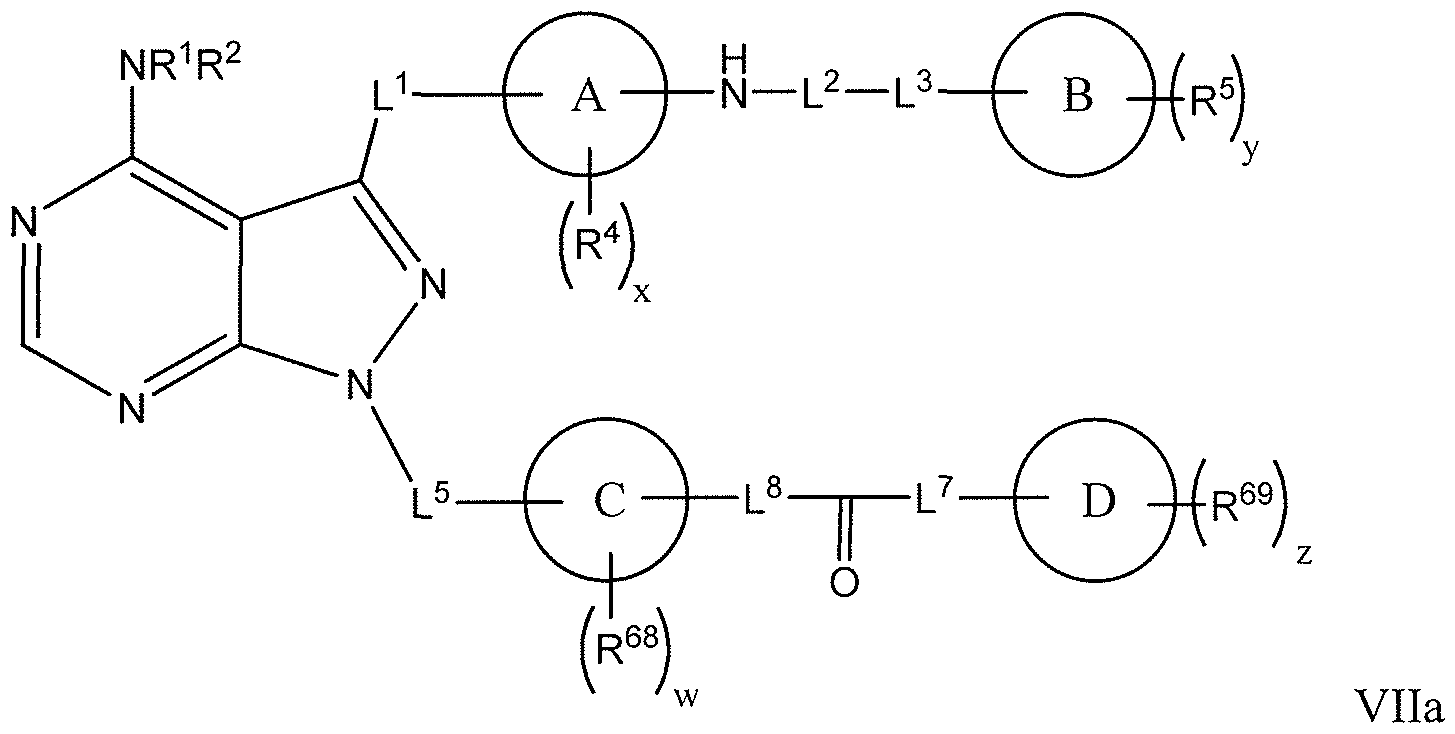
  • R 1 , R 2 , Z 1 , and Z 2 are as defined above.
  • Ring C is cycloalkylene, heterocycloalkylene, arylene, or heteroarylene.
  • Ring D is aryl or heteroaryl.
  • ring C is heteroarylene or heterocycloalkylene.
  • ring C is a nitrogen-containing 5-6 membered heterocycloalkylene, e.g., pyrrolidine-diyl.
  • ring D is aryl or heteroaryl.
  • ring D is aryl, e.g., phenyl.
  • w is an integer from 0 to 4, and z is an integer from 0 to 5. In some embodiments, w is 0. In some embodiments, z is 0 or 1, In some embodiments, z is 0.
  • R 68 is halogen, -CN, -CF 3 , -S(O) n R 6 , -N(O) 1n , -NR 7 R 8
  • R 70 is -OH, -NH 2 , -SH, -CN, -CF 3 , -NO 2 , oxo, halogen, R 71 -substituted or unsubstituted alkyl, R 71 -substituted or unsubstituted heteroalkyl, R 7 '-substituted or unsubstituted cycloalkyl, R 71 -substituted or unsubstituted heterocycloalkyl, R 71 -substituted or unsubstituted aryl, or R 7 '-substituted or unsubstituted heteroaryl.
  • R 72 is -OH, -NH 2 , -SH, -CN, -CF 3 , -NO 2 , oxo, halogen, R 73 -substituted or unsubstituted alkyl, R 73 -substituted or unsubstituted heteroalkyl, R 73 -substituted or unsubstituted cycloalkyl, R 73 -substituted or unsubstituted heterocycloalkyl, R 73 -substituted or unsubstituted aryl, or R 73 -substituted or unsubstituted heteroaryl.
  • L 5 is a bond, substituted or unsubstituted alkylene or substituted or unsubstituted heteroalkylene. In some embodiments, L 5 is a bond, R 74 -substituted or unsubstituted alkylene, or R 74 -substituted or unsubstituted heteroalkylene.
  • R 74 is -OH, -NH 2 , -SH, -CN, -CF 3 , -NO 2 , oxo, halogen, R 75 -substituted or unsubstituted alkyl, R 75 -substituted or heteroalkyl, R 75 -substituted or unsubstituted cycloalkyl, R 75 -substituted or unsubstituted heterocycloalkyl, R 75 -substituted or unsubstituted aryl, or R 75 -substituted or unsubstituted heteroaryl.
  • L 5 is a bond.
  • L 5 is a bond
  • R 21 is substituted phenyl, preferably NH 2 -substituted phenyl.
  • L 6 is -S(O)-, -S(O) 2 - or -C(O)-. In some embodiments, L 6 is -S(O)-. In some embodiments, L 6 is -S(O) 2 -. In some embodiments, L 6 is -C(O)-. [0111] In some embodiments, L 7 is a bond, -N(R 78 )-, substituted or unsubstituted alkylene, or substituted or unsubstituted heteroalkylene.
  • L 7 is a bond, -N(R 78 )-, R 76 -substituted or unsubstituted alkylene, or R 76 -substituted or unsubstituted heteroalkylene.
  • R 76 is -OH, -NH 2 , -SH, -CN, -CF 3 , -NO 2 , oxo, halogen, R 77 -substituted or unsubstituted alkyl, R 77 -substituted or heteroalkyl, R 77 -substituted or unsubstituted cycloalkyl, R 77 -substituted or unsubstituted heterocycloalkyl, R 77 -substituted or unsubstituted aryl, or R 77 -substituted or unsubstituted heteroaryl.
  • R is hydrogen, substituted or unsubstituted alkyl, substituted or unsubstituted heteroalkyl, unsubstituted cycloalkyl, substituted or unsubstituted heterocycloalkyl, substituted or unsubstituted aryl, or substituted or unsubstituted heteroaryl.
  • R is hydrogen, R -substituted or unsubstituted alkyl, R -substituted or unsubstituted heteroalkyl, R 79 -substituted or unsubstituted cycloalkyl, R 79 -substituted or unsubstituted heterocycloalkyl, R 79 -substituted or unsubstituted aryl, or R 79 -substituted or unsubstituted heteroaryl.
  • R 79 is -OH, -NH 2 , -SH, -CN, -CF 3 , -NO 2 , oxo, halogen, R 80 -substituted or unsubstituted alkyl, R 80 -substituted or unsubstituted heteroalkyl, R 80 -substituted or unsubstituted cycloalkyl, R 80 -substituted or unsubstituted heterocycloalkyl, R 80 -substituted or unsubstituted aryl, or R 80 -substituted or unsubstituted heteroaryl.
  • R 71 , R 73 , R 75 , R 77 and R 80 are independently -OH, -NH 2 , -SH, -CN, -CF 3 , -NO 2 , oxo, halogen, unsubstituted alkyl, heteroalkyl, unsubstituted cycloalkyl, unsubstituted heterocycloalkyl, unsubstituted aryl, or unsubstituted heteroaryl.
  • L 8 is a bond, -C(O)-, -NH- or -CH 2 -. In some embodiments, L 8 is a bond. In some embodiments, L 8 is -C(O)-. In some embodiments, L 8 is -NH-. In some embodiments, L is -CH 2 -.
  • R 1 , R 2 , R 21 , L 5 , L 7 , L 8 , ring C, ring D, R 68 , R 69 , w and z are as defined above.
  • a compound is provided wherein R is substituted aryl, L and L are bonds, ring C is heterocycloalkylene, preferably nitrogen containing heterocycloalkylene, L 7 is -NH-, ring D is aryl, preferably phenyl, w is 0, and z is 0 or 1.
  • z is 1, and R 69 is halomethyl, preferably trifluoromethyl.
  • R 21 is NH 2 -substituted phenyl.
  • R 5 and R 69 are independently halomethyl, preferably trifluoromethyl.
  • R 1 , R 2 , R 4 , R 5 , L 1 , L 2 , L 3 , L 5 , L 7 , L 8 , ring A, ring B, ring C, ring D, R 68 , R 69 , w, x, y and z are as defined above.
  • L , L and L are bonds
  • L is -C(O)-
  • L and L 7 are -NH-
  • ring A is arylene, preferably phenylene
  • ring B and ring D are independently aryl, preferably phenyl
  • ring C is heterocycloalkylene
  • x and w are 0, y and z are 1
  • R 5 and R 69 are independently halomethyl, preferably trifluoromethyl.
  • one or more substituted groups described in any of the above Formulae is substituted with at least one substituent group. More specifically, in some embodiments, at least one substituted alkyl, substituted heteroalkyl, substituted cycloalkyl, substituted heterocycloalkyl, substituted aryl, substituted heteroaryl, substituted alkylene, substituted heteroalkylene, substituted cycloalkylene, substituted heterocycloalkylene, substituted arylene, or substituted heteroarylene described in the above Formulae is substituted with at least one substituent group. In other embodiments, at least one or all of these groups are substituted with at least one size-limited substituent group. Alternatively, at least one or all of these groups are substituted with at least one lower substituent group.
  • each substituted or unsubstituted alkyl is a substituted or unsubstituted Ci-C 20 alkyl
  • each substituted or unsubstituted heteroalkyl is a substituted or unsubstituted 2 to 20 membered heteroalkyl
  • each substituted or unsubstituted cycloalkyl is a substituted or unsubstituted C 4 -C 8 cycloalkyl
  • each substituted or unsubstituted heterocycloalkyl is a substituted or unsubstituted 4 to 8 membered heterocycloalkyl
  • each substituted or unsubstituted aryl is a substituted or unsubstituted C 4 -Cg aryl
  • each substituted or unsubstituted heteroaryl is a substituted or unsubstituted 4 to 8 membered heteroaryl
  • each substituted or unsubstituted alkylene is a substituted or unsubstituted or
  • each substituted or unsubstituted alkyl is a substituted or unsubstituted Ci-C 8 alkyl
  • each substituted or unsubstituted heteroalkyl is a substituted or unsubstituted 2 to 8 membered heteroalkyl
  • each substituted or unsubstituted cycloalkyl is a substituted or unsubstituted C 5 -C 7 cycloalkyl
  • each substituted or unsubstituted heterocycloalkyl is a substituted or unsubstituted 5 to 7 membered heterocycloalkyl
  • each substituted or unsubstituted aryl is a substituted or unsubstituted Cs-C 7 aryl
  • each substituted or unsubstituted heteroaryl is a substituted or unsubstituted 5 to 7 membered heteroaryl
  • each substituted or unsubstituted alkylene is a substituted or unsubstituted Cj
  • any alkyl group can be a Ci-Cio, Ci-C 6 , or Ci-C 4 alkyl group.
  • Any heteroalkyl group can have 2-10, 2-6, or 2-4 members.
  • Any cycloalkyl group can be a C 3 -C 8 , Cs-C 7 , or C 5 -C 6 cycloalkyl group.
  • Any heterocycloalkyl group can have 3-8, 4-7, or 5-6 members.
  • Any aryl group can be a C 5 -C 8 or C 5 -C 6 aryl group.
  • Any heteroaryl group can have 5-8 or 5-6 members.
  • the compound is a compound set forth in Table Ia below. In some embodiments, the compound is a compound set forth in Table Ib below. Table 1 a. Inhibition data for selected compounds described herein.
  • +++ represents an IC 50 of less than 1 ⁇ M; ++ represents an IC 5O from 1 ⁇ M to 5 ⁇ M; and + represents an IC 50 of over 5 ⁇ M.
  • +++ represents an IC 50 of less than 1 ⁇ M
  • + represents an IC 50 of over 5 ⁇ M.
  • a method of reducing the activity of a Src tyrosine kinase includes contacting the Src tyrosine kinase with an effective amount of the compound of Formula I, II, III, IV or V.
  • the compound is the compound of Formula I, II or IV.
  • the compounds are the compound of Formula I.
  • a Src tyrosine kinase refers to any one of the family of Src proto- oncogenic tyrosine kinases and oncogene tyrosine kinases.
  • the Src tyrosine kinase is the cellular Src tyrosine kinase (c-Src), such as the human c-Src (also referred to in the art MGCl 17393) (SEQ ID NO:6) or oncogenic derivatives thereof. See also Mather et al, J Biol Chem. 2008 Aug 15;283(33):22709-22.
  • the contacting may occur in vitro, in situ, or in vivo.
  • the compound may be exposed to a cell containing the Src tyrosine kinase, allowed to enter into the cell, and contact the Src tyrosine kinase thereby reducing the activity of the Src tyrosine kinase.
  • the cell may be any appropriate cell, such as a mammalian cell (e.g. a human cell).
  • the cell may also form part of a tissue, organ or organism.
  • the compound may also be capable of reducing the activity of an AbI tyrosine kinase.
  • An AbI tyrosine kinase refers to any one of the family of AbI proto-oncogenic tyrosine kinases.
  • the AbI tyrosine kinase is the cellular AbI tyrosine kinase (c-Abl) or oncogenic derivatives thereof such as Bcr-Abl. See, e.g. Shaul Y (2000), Cell Death Differ. 7 (1): 10-6; Era T (2002) Int. J. Hematol. 76 (1): 35- 43; and Pendergast AM (2003) Adv.
  • the AbI kinase is a Bcr-Abl kinase or a T3151 Bcr-Abl kinase.
  • the method may further include contacting an AbI tyrosine kinase with the compound thereby reducing the activity of the AbI tyrosine kinase.
  • the method further includes contacting an AbI tyrosine kinase with the compound, it is understood that more than one compound is typically required to contact both an AbI and a Src tyrosine kinase. Therefore, a plurality of compounds having the same chemical structure are used.
  • the contacting of the AbI and Src tyrosine kinases may occur in vitro, in situ, or in vivo.
  • a plurality of the compound is contacted with a cell or vessel containing the AbI and Src tyrosine kinases. Once contacted by the compound, the AbI and Src tyrosine kinase activities are reduced.
  • a method of reducing the activity of an AbI tyrosine kinase includes contacting the AbI tyrosine kinase with an effective amount of a compound of Formula I, II, III, IV or V.
  • the compound is the compound of Formula I, II or IV.
  • the compounds is the compound of Formula I.
  • the AbI kinase is a Bcr-Abl kinase or a T3151 Bcr-Abl kinase.
  • the contacting of the AbI tyrosine kinases may occur in vitro, in situ, or in vivo.
  • the compound may be exposed to a cell containing the AbI tyrosine kinase, allowed to enter into the cell, and contact the AbI tyrosine kinase thereby reducing the activity of the Src tyrosine kinase.
  • the compound may also be capable of reducing the activity of a Src kinase.
  • the method may further include contacting a Src tyrosine kinase with the compound thereby reducing the activity of the Src tyrosine kinase.
  • the method further includes contacting a Src tyrosine kinase with the compound, it is understood that more than one compound is typically required to contact both an AbI and a Src tyrosine kinase. Therefore, a plurality of compounds having the same chemical structure are used.
  • a plurality of the compound is contacted with a cell or vessel containing the AbI and Src tyrosine kinases. Once contacted by the compound, the AbI and Src tyrosine kinase activities are reduced.
  • a method of reducing the activity of a T3151 Bcr-Abl kinase includes contacting the T3151 Bcr-Abl Kinase with an effective amount of a compound having Formula I, II, III, IV or V.
  • the compound had the Formula I, II or IV.
  • the compound had the Formula I.
  • the compound may also be capable of reducing the activity of a Src kinase.
  • the method may further include contacting a Src tyrosine kinase with the compound thereby reducing the activity of the Src tyrosine kinase.
  • the method further includes contacting a Src tyrosine kinase with the compound, it is understood that more than one compound is typically required to contact both a T315I Bcr-Abl kinase and a Src tyrosine kinase. Therefore, a plurality of compounds having the same chemical structure are used.
  • a plurality of the compound is contacted with a cell or vessel containing the T3151 Bcr-Abl kinase and Src tyrosine kinases. Once contacted by the compound, the T3151 Bcr-Abl kinase and Src tyrosine kinase activities are reduced.
  • a method of treating a disease mediated by a T3151 Bcr-Abl kinase in a subject in need thereof includes administering to a subject an effective amount of a compound of Formula I, II, III, IV or V.
  • the compound is the compound of Formula I, II or IV.
  • the disease mediated by a T3151 Bcr-Abl kinase may be hypereosinophilic syndrome, dermatof ⁇ brosarcoma protuberans, chronic myelogenous leukemia, or a gastrointestinal stromal tumor.
  • the compound may also be co-administered with a pharmaceutically acceptable excipient.
  • a method for treating liver cancer, colon cancer, breast cancer, melanoma, acute myelogenous leukemia, chronic myelogenous leukemia, non- small-cell lung cancer, a gastrointestinal stromal tumor, Philadelphia chromosome-positive acute lymphoblastic leukemia (Ph+ ALL), renal cell carcinoma, hepatocellular carcinoma, hypereosinophilic syndrome, or dermatof ⁇ brosarcoma protuberans.
  • the method includes administering an effective amount of the compound of Formula I, II, III, IV or V to a subject in need thereof.
  • the compound is of Formula I, II or IV.
  • the compound may also be co-administered with a pharmaceutically acceptable excipient.
  • the present invention provides methods of reducing Src (e.g. c-Src) and or AbI (e.g. Bcr-Abl or T3151 Bcr-Abl) kinase activity in a cell.
  • the method includes contacting the cell with a fused ring heteroaryl inhibitor described above (e.g. a compound of Formula I, II, III, IV or V).
  • the cell may be isolated or form part of an organ or organism.
  • the inhibitors provided herein find therapeutic utility via reduction of Src (e.g. c- Src) and or AbI (e.g. Bcr-Abl or T3151 Bcr-Abl) kinase activity in the treatment of diseases or conditions.
  • the inhibitor may have an IC 50 or Kj against the Src and/or AbI kinase of less than 10 ⁇ M, 5 ⁇ M, 1 ⁇ M, 500 nM, 100 nM, 50 nM, 25 nM, 10 nM, 5 nM, 1 nM, 0.5 nM, or 0.1 nM.
  • the fused ring heteroaryls utilized in the pharmaceutical method of the invention are administered at the initial dosage of about 0.001 mg/kg to about 1000 mg/kg daily.
  • a daily dose range of about 0.1 mg/kg to about 100 mg/kg is more typical.
  • the dosages may be varied depending upon the requirements of the patient, the severity of the condition being treated, and the modulator being employed. Determination of the proper dosage for a particular situation is within the skill of the practitioner. Generally, treatment is initiated with smaller dosages, which are less than the optimum dose of the modulator. Thereafter, the dosage is increased by small increments until the optimum effect under the circumstances is reached. For convenience, the total daily dosage may be divided and administered in portions during the day.
  • the present invention provides a pharmaceutical composition including a compound in admixture with a pharmaceutically acceptable excipient.
  • a pharmaceutical composition including a compound in admixture with a pharmaceutically acceptable excipient.
  • the pharmaceutical compositions include the pharmaceutically acceptable salts of the compounds of the present invention described above.
  • the compounds of the invention can be formulated for a variety of modes of administration, including systemic and topical or localized administration. Techniques and formulations generally may be found in Remington: The Science and Practice of Pharmacy (20 th ed.) Lippincott, Williams & Wilkins (2000).
  • the compounds according to the invention are effective over a wide dosage range.
  • the exact dosage will depend upon the route of administration, the form in which the compound is administered, the subject to be treated, the body weight of the subject to be treated, and the preference and experience of the attending physician.
  • salts are generally well known to those of ordinary skill in the art, and may include, by way of example but not limitation, acetate, benzenesulfonate, besylate, benzoate, bicarbonate, bitartrate, bromide, calcium edetate, carnsylate, carbonate, citrate, edetate, edisylate, estolate, esylate, fumarate, gluceptate, gluconate, glutamate, glycollylarsanilate, hexylresorcinate, hydrabamine, hydrobromide, hydrochloride, hydroxynaphthoate, iodide, isethionate, lactate, lactobionate, malate, maleate, mandelate, mesylate, mucate, napsylate, nitrate, pamoate (embonate), pantothenate, phosphate/diphosphate, polygalacturonate, salicy
  • compositions may be found in, for example, Remington: The Science and Practice of Pharmacy (20 th ed.) Lippincott, Williams & Wilkins (2000).
  • Preferred pharmaceutically acceptable salts include, for example, acetate, benzoate, bromide, carbonate, citrate, gluconate, hydrobromide, hydrochloride, maleate, mesylate, napsylate, pamoate (embonate), phosphate, salicylate, succinate, sulfate, or tartrate.
  • such agents may be formulated into liquid or solid dosage forms and administered systemically or locally.
  • the agents may be delivered, for example, in a timed- or sustained- low release form as is known to those skilled in the art. Techniques for formulation and administration may be found in Remington: The Science and Practice of Pharmacy (20 th ed.) Lippincott, Williams & Wilkins (2000).
  • Suitable routes may include oral, buccal, by inhalation spray, sublingual, rectal, transdermal, vaginal, transmucosal, nasal or intestinal administration; parenteral delivery, including intramuscular, subcutaneous, intramedullary injections, as well as intrathecal, direct intraventricular, intravenous, intra-articullar, intra -sternal, intra-synovial, intra-hepatic, intralesional, intracranial, intraperitoneal, intranasal, or intraocular injections or other modes of delivery.
  • the agents of the invention may be formulated and diluted in aqueous solutions, such as in physiologically compatible buffers such as Hank's solution, Ringer's solution, or physiological saline buffer.
  • physiologically compatible buffers such as Hank's solution, Ringer's solution, or physiological saline buffer.
  • penetrants appropriate to the barrier to be permeated are used in the formulation. Such penetrants are generally known in the art.
  • compositions of the present invention in particular, those formulated as solutions, may be administered parenterally, such as by intravenous injection.
  • the compounds can be formulated readily using pharmaceutically acceptable carriers well known in the art into dosages suitable for oral administration.
  • Such carriers enable the compounds of the invention to be formulated as tablets, pills, capsules, liquids, gels, syrups, slurries, suspensions and the like, for oral ingestion by a subject (e.g. patient) to be treated.
  • the agents of the invention may also be formulated by methods known to those of skill in the art, and may include, for example, but not limited to, examples of solubilizing, diluting, or dispersing substances such as, saline, preservatives, such as benzyl alcohol, absorption promoters, and fluorocarbons.
  • compositions suitable for use in the present invention include compositions wherein the active ingredients are contained in an effective amount to achieve its intended purpose. Determination of the effective amounts is well within the capability of those skilled in the art, especially in light of the detailed disclosure provided herein.
  • these pharmaceutical compositions may contain suitable pharmaceutically acceptable carriers comprising excipients and auxiliaries which facilitate processing of the active compounds into preparations which can be used pharmaceutically.
  • suitable pharmaceutically acceptable carriers comprising excipients and auxiliaries which facilitate processing of the active compounds into preparations which can be used pharmaceutically.
  • the preparations formulated for oral administration may be in the form of tablets, dragees, capsules, or solutions.
  • compositions for oral use can be obtained by combining the active compounds with solid excipients, optionally grinding a resulting mixture, and processing the mixture of granules, after adding suitable auxiliaries, if desired, to obtain tablets or dragee cores.
  • suitable excipients are, in particular, fillers such as sugars, including lactose, sucrose, mannitol, or sorbitol; cellulose preparations, for example, maize starch, wheat starch, rice starch, potato starch, gelatin, gum tragacanth, methyl cellulose, hydroxypropylmethyl- cellulose, sodium carboxym ethyl-cellulose (CMC), and/or polyvinylpyrrolidone (PVP: povidone).
  • disintegrating agents may be added, such as the cross- linked polyvinylpyrrolidone, agar, or alginic acid or a salt thereof such as sodium alginate.
  • Dragee cores are provided with suitable coatings.
  • suitable coatings may be used, which may optionally contain gum arabic, talc, polyvinylpyrrolidone, carbopol gel, polyethylene glycol (PEG), and/or titanium dioxide, lacquer solutions, and suitable organic solvents or solvent mixtures.
  • Dye-stuffs or pigments may be added to the tablets or dragee coatings for identification or to characterize different combinations of active compound doses.
  • compositions that can be used orally include push-fit capsules made of gelatin, as well as soft, sealed capsules made of gelatin, and a plasticizer, such as glycerol or sorbitol.
  • the push- fit capsules can contain the active ingredients in admixture with filler such as lactose, binders such as starches, and/or lubricants such as talc or magnesium stearate and, optionally, stabilizers.
  • the active compounds may be dissolved or suspended in suitable liquids, such as fatty oils, liquid paraffin, or liquid polyethylene glycols (PEGs).
  • PEGs liquid polyethylene glycols
  • stabilizers may be added.
  • chemotherapeutic agents or other anti-proliferative agents may be combined with the inhibitors of this invention to treat proliferative diseases and cancer.
  • chemotherapeutic agents include, but are not limited to, adriamycin, dexamethasone, vincristine, cyclophosphamide, fluorouracil, topotecan, taxol, interferons, and platinum derivatives.
  • these additional agents may be administered separately, as part of a multiple dosage regimen, from the composition.
  • these agents may be part of a single dosage form, mixed together with the compound in a single composition.
  • AbI or Src kinases can be assessed using a variety of in vitro, in situ, and in vivo assays, e.g., P assays, fluorescent assays, immunoassays and the like. Furthermore, such assays can be used to test for inhibitors of AbI and Src kinases. One particular assay is disclosed below in the Examples in the section entitled "In vitro Kinase Assays.” AbI and Src kinases have been implicated in a number of disorders that are targets for a therapeutic or prophylactic regimen. The inhibitors and methods of the invention are useful to treat these disease states as discussed above. Thus, using methods disclosed herein as well as those generally known in the art, one skilled in the art can easily make and test the fused ring heteroaryl compounds set forth herein to assess the degree to which kinase activities are reduced.
  • the compounds of the invention are synthesized by an appropriate combination of generally well known synthetic methods. Techniques useful in synthesizing the compounds of the invention are both readily apparent and accessible to those of skill in the relevant art.
  • the discussion below is offered to illustrate certain of the diverse methods available for use in assembling the compounds of the invention. However, the discussion is not intended to define the scope of reactions or reaction sequences that are useful in preparing the compounds of the present invention.
  • Scheme 1 following provides one of a variety of overall synthetic strategies which may be employed in the synthesis of compounds described herein. Substituents in Scheme 1 are as described herein for Formula IV. . Scheme 1
  • an acid starting material may be reacted with oxalyl chloride, e.g., in DMF and CH 2 Cl 2 , to afford the acid chloride.
  • the acid chloride may be reacted with malononitrile and NaH in, e.g., THF, to afford the substituted malononitrile.
  • the compound may be further reacted with dimethyl sulfate and NaHCC ⁇ in, e.g., dioxane and water, to afford the enol ether.
  • the enol ether may be reacted with a hydrazine in, e.g., THF, to afford the pyrazole.
  • the pyrazole may be further reacted with an amide to afford the pyrazolo[3,4-d]pyrimidine amine.
  • the pendant nitrate may be reduced to afford the amine.
  • Step g elaboration at the pendant amine may be employed to afford a compound of the invention.
  • one or more functionalities described herein and in Scheme 1 may be protected during synthesis and subsequently deprotected by methods well known in the art.
  • Exemplary amine protecting groups include, but are not limited to, carbobenzyloxy (Cbx), p- methyoxybenzyl carbonyl (Boz), tert-butyloxycarbonyl (Boc), 9-fluorenylmethyloxy carbonyl (FMoc), benzyl (Bn), p-methoxybenzyl (PMB), 2,3-dimethoxybenzyl (DMPM), p-methoxyphenyl (PMP), tosyl (Ts), allyloxycarbonyl (Alloc), and the like.
  • Cbx carbobenzyloxy
  • Boz p- methyoxybenzyl carbonyl
  • Boc tert-butyloxycarbonyl
  • FMoc 9-fluorenylmethyloxy carbonyl
  • benzyl Bn
  • PMB p-methoxybenzyl
  • DMPM 2,3-dimethoxybenzyl
  • PMP p-me
  • 6xHIS (SEQ ID NO:7) fusions of c-Src or AbI were expressed in bacteria in the presence of the YopH phosphatase and GroEL chaperone based on a recently developed strategy (Seeliger et al., 2005, Protein Sci 14:3135-3139). Briefly each kinase was purified in batch by Ni-NTA immobilized metal affinity chromatography. The 6X His was removed by TEV cleavage to yield the liberated kinase domain. Following cleavage, ion exchange chromatography was utilized to remove excess TEV and minor contaminants.
  • the proteins were applied to a gel filtration column in 100 mM NaCl, 20 mM Tris, 5% glycerol, 2 mM DTT. Pooled fractions were concentrated and flash frozen in liquid nitrogen for storage. Proteins were isolated in their unphosphorylated state as revealed by Western blot analysis, as known in the art. Typical yields for either protein construct ranged from 1- 10 mg of protein per 1 L of bacterial culture.
  • Example 2 In vitro Kinase Assays.
  • Purified c-Src or AbI were diluted in kinase reaction buffer (1 OmM HEPES [pH 7.2], 10 mM MgC12, 0.2 mM DTT) to a concentration of approximately 10 nM and pre- incubated with lmg/mL BSA, 2.5% (v/v) DMSO, 133 ⁇ M peptide (sequence EAIYAAPFKKK (SEQ ID NO:8) for AbI and EIYGEFKKK (SEQ ID NO:9) for c-Src), and varying concentrations of inhibitor.
  • Example 3 Crystallization and Structure Determination. [0163] Prior to crystallization, purified c-Src was applied to a S200 gel filtration column. Pooled fractions were concentrated to 3-10mg/mL and mixed with equimolar amounts of 3 or 5 in 100 mM NaCl, 10 mM Tris [pH 7.8], 5% glycerol, 2 mM DTT, 4% DMSO.
  • Topology and parameter files for the inhibitors were generated using PRODRG (Schuttelkopf and van Aalten, 2004, Acta Crystallographica Section D-Biological Crystallography 60:1355-1363). Data collection and refinement statistics are shown in Table 2 below. A representative composite omit simulated annealing electron density (
  • Reagent 2-(l -methoxy-2-(3-nitrophenyl)ethylidene)malononitrile (1.2g; 4.7 mmol) was combined with isopropylhydrazine-HCl (0.57g; 5.2 mmol; Sigma- Aldrich), 1.4 mL triethylamine in 5OmL EtOH for at 2 hours at RT. The reaction was concentrated in vacuo, suspended in brine and extracted with chloroform. The organic layer was dried over MgSO 4 .
  • the recovered intermediate (0.05g; 0.18 mmol) was combined with bromocyclopentane (0.1 mL; 0.38 mmol), 0.125g K 2 CO 3 , in 1 mL DMF and refluxed under argon for 2 hours.
  • Reagent 2-(l -methoxy-2-(3-nitrophenyl)ethylidene)malononitrile (1.2g; 4.7 mmol) was combined with tert-butylhydrazine-HCl (0.57g; 5.2 mmol; Sigma- Aldrich), 1.4 mL triethylamine in 5OmL EtOH for at 2 hours at 80 0 C.
  • the reaction was concentrated in vacuo, resuspended in brine and extracted with chloroform. The organic layer was dried over MgSO 4 .
  • Reagent 2-(l -methoxy-2-(3-nitrophenyl)ethylidene)malononitrile (0.97 g; 4.0 mmol) was combined with hydrazine (0.3mL; 6.0 mmol; Sigma- Aldrich) in 1OmL EtOH for 90 minutes at room temperature. Afterwards the reaction was concentrated in vacuo, suspended in brine and extracted with chloroform (3x 50 mL). The organic layer was dried over MgSO 4 , then filtered, and concentrated in vacuo to afford 3-(3-nitrobenzyl)-5-amino- lJ7-pyrazole-4-carbonitrile (ESI-MS m/z [M+H]+ found 244.5, calculated 244.1).
  • Reagent 3-iodo-lH-pyrazolo[3,4-d]pyrimidin-4-amine) (0.5g; 1.9 mmol; Apsel et al., 2008, Id.) was combined with cyclopentyl iodide (0.24 mL; 2.1 mmol), l .O ⁇ g K2CO3, in 20 mL DMF and heated to 45 °C under argon for 2 hours.
  • the reaction was filtered to remove solid K 2 CO 3 , and the filtrate was combined with brine and the organic product was extracted in CH 2 Cl 2 (3x 50 mL).
  • 4-nitrophenyl boronic acid (190 mg, 1.1 mmol; Sigma-Aldrich), was coupled to 1- cyclopentyl-3-iodo-lH-pyrazolo[3,4-d]pyrimidin-4-amine (150mg, 0.456 mmol) via the Suzuki reaction in 6 mL 1,2 methoxy ethane, 1 mL of saturated sodium carbonate, 1.65 mL EtOH, and 200 mg of polymer-bound tetrakis palladium. The reaction was stirred under argon for 12 hours at room temperature, filtered through Whatman paper to remove palladium, mixed with brine, extracted in chloroform and the product was subsequently purified on silica in EtOAc and concentrated in vacuo.
  • the reaction vessel was placed into an oil bath at 90 0 C and almost immediately afterwards a yellow solid began to form.
  • the reaction was left at 90 0 C for 2 hours.
  • the reaction mixture was removed from the oil bath and allowed to cool to room temperature. Afterwards, hydrazine (7.5 mL, 0.154 mol) was added, and the reaction was left stirring for 60 minutes. 200 mL of brine and 100 mL of 2N HCl were added and separated from the organic layer. The aqueous phase was extracted two additional times with CH 2 Cl 2 .
  • the organic phases were combined and concentrated in vacuo to yield a bright yellow solid.
  • Boc- deprotection was completed through the addition of formic acid (5 mL) and concentrated HCl (0.5 mL) added dropwise directly to the reaction mixture.
  • the reaction mixture was left stirring for 12 hours and then was concentrated in vacuo, resuspended in 50:50 H 2 O-CH 3 CN, and purified on a C18 column in CH 3 CN/H 2 O/0.1%TFA (1-100% gradient) to afford AD72.
  • Example 23a l-(4-(4-amino-l-((R)-pyrrolidin-3-yl)-lH-pyrazolo[3,4-d]pyrimidin-3- yl)phenyl)-3-(3-(trifluoromethyl)phenyl)urea (AD73a)
  • Example 23b (R)-3-(4-amino-3-(4-aminophenyl)-lH-pyrazolo[3,4-d]pyrimidin-l-yl)-N-
  • AD73a ESI-MS m/z [M+H]+ found 483.5, calculated 483.2
  • AD73b ESI-MS m/z [M+H]+ found 483.5, calculated 483.2
  • AD73c ESI-MS m/z [M+H]+ found 670.5, calculated 670.2J.
  • Wild-type Bcr-Abl, T3151 Bcr-Abl, and parental BaF3 cells were treated with AD57 (Cmpd 5) at the indicated concentrations for two days.
  • the parental BaF3 cells, but not the Bcr-Abl transduced cells, were grown in the presence of recombinant IL-3 during the time course of this experiment. After the two day treatment, cell proliferation was quantified using the dye Resazurin, which is converted into a fluorescently detectable form only when metabolized by living cells.
  • FIG. 7 A-C shows that AD57 (Cmpd 5) equally inhibits the growth of Bcr-Abl and T315I Bcr-Abl cells.
  • AD57 (Cmpd 5) equally inhibits the growth of Bcr-Abl and T315I Bcr-Abl cells.
  • the ability of AD57 (Cmpd 5) to equally inhibit WT and T315I Bcr-Abl is likely mediated through its unique ability to recognize the DFG-out conformation of the kinase, but in a manner that renders the drug insensitive to mutations at the Thr315 position.
  • AD57 (Cmpd 5) the effects of AD57 (Cmpd 5) on WT and T315I Bcr-Abl differ with respect to Imatinib, which effectively inhibits Bcr-Abl, but not the T3151 mutant.
  • This result suggests that AD57 (Cmpd 5) will be effective in inhibiting the growth of cancer cells that are dependent of Bcr- Abl, and will not be rendered ineffective by the emergence of drug-resistant clones, including the highly prevalent T3151 Bcr-Abl mutant.
  • Cancers that have been treated by Imatinib include CML, gastrointestinal stromal tumors, hypereoinophilic syndrome, and Ph-positive acute lymphoblastic leukemia.
  • T315I Resistance to Imatinib in these cancers has been linked to mutations at the position that is analogous T315I, including T670I in c-Kit (SEQ ID NO:3) and T674I in PDGFR (SEQ ID NO: 10). Since AD57 (Cmpd 5) inhibits T315I Bcr-Abl, it is plausible that the inhibitor will be effective against Bcr-Abl, c-Kit, PDGFR, and their Imatinib-resistant forms in these cancers.
  • AD57 (Cmpd 5) preferentially inhibits Bcr-Abl transformed BaF3 cells, but not parental BaF3 cells (especially comparing the growth of cells at 1 mM inhibitor). This suggests that the primary target of AD57 (Cmpd 5) in the BaF3-Bcr-Abl cells is indeed Bcr-Abl. This result also suggests that the effects of AD57 (Cmpd 5) on Bcr-Abl transduced BaF3 cells is not mediated through a generally toxic mechanism.
  • Example 27 Developing a DFG-out binder for c-Src.
  • type II (DFG-out) kinase inhibitors can be created by fusing a so-called hinge binding element of a type-I kinase inhibitor to an element capable of binding in the pocket created by the characteristic DFG movement in type II inhibitor bound structures (Liu and Gray, 2006, Id.; Okram et al, 2006, Id..)
  • the hinge-binding element from the well-characterized pyrazolopyrimidine PPl was chosen for that purpose, because it has been examined at both the structural and functional level and was first identified as a selective c-Src family tyrosine kinase inhibitor (Hanke et al, 1996, J Biol Chem 271:695-701; Liu et al, 1999, Chem Biol 6:671-678; Schindler et al, 1999, MoI Cell 3:639-648).
  • a key feature of the observed binding modes is the interaction with a portion of the activation segment termed the DFG motif and a highly conserved glutamic acid residue within helix ⁇ C, which are mediated through the amide/urea linker and hydrophobic portions of the inhibitors. Movement of the Asp residue out and the Phe residue in (hence 'DFG-out') by a flip of approximately 180 degrees relative to their position in the active state creates the cavity that is filled by these inhibitors. The extended portions of each inhibitor are remarkably similar, and their interactions with the kinase are mediated through highly conserved residues within the ATP pocket, suggesting that the general inhibitor features could be applied to other kinases.
  • Example 28 Inhibition of Src and AbI in vitro.
  • Cmpd 1 was found to inhibit c-Src with an IC 50 of approximately 6.2 ⁇ M, whereas a control compound in which the urea linker was placed at the para position of the benzyl ring lacked any detectable inhibitory activity (data not shown).
  • IC 50 values for 1-4 an interesting correlation between the size of the alkyl group substitutions and selectivity for c-Src and AbI was observed ( Figure 2).
  • the methyl derivative 1 was the weakest inhibitor against both c-Src and AbI, followed by the isopropyl 2 and t-butyl 3 compounds which gained moderate potency, with the optimal derivative appearing to be the cyclopentyl substitution 4, with an IC 50 of 480 nM for c-Src ( Figure 2).
  • Figure 2 Curiously, while most compounds in this set equally inhibited both c-Src and AbI, the cyclopentyl derivative showed a reproducible selectivity towards c-Src over AbI of approximately 5 fold. Although small, this modest degree of selectivity appeared significant in comparison to the yet smaller IC 5O value differences between c-Src and AbI for compounds 1, 2, and 4.
  • Cmpd 5 was the most potent inhibitor that we identified, with IC 50 values of 25 and 41 nM for c-Src and AbI, respectively ( Figure2). Interestingly, the potency of 5 approaches that of Imatinib for AbI, but without any significant discrimination against c-Src. In this test of compounds two interesting features were identified: Cmpd 3 with unexpected selectivity for c-Src, and Cmpd 5 with extremely high potency for both c-Src and AbI. In order to investigate whether the designed mode of binding was achieved co-crystal structures of c-Src bound to inhibitors 3 and 5 were determined.
  • the pyrazolopyrimidine core for both inhibitors lie deep within the adenosine pocket that is lined by the hinge region of the kinase.
  • the plane of the pyrazolopyrimidine rings of both 3 and 5 deviate slightly with respect to each other.
  • both 3 and 5 only form a single hydrogen bond to the main chain carbonyl of Glu339.
  • Cmpd 3 is shifted away from the side chain hydroxyl of the Thr338 gatekeeper, and as a result does not form the hydrogen bond seen in PPl or in 5 with this residue.
  • Both the benzyl group of 3 and the phenyl group in 5 lie juxtaposed to the gatekeeper; both of which are twisted out of plane relative to the pyrazolopyrimidine ring.
  • the urea extension forms the designed hydrogen bond with the side chain of Glu310 within helix aC, while the m-trifluoromethyl phenyl portion of both compounds lie within a pocket lined by residues Leu317, Leu322, Val402, Met314, His384.
  • Asp404 and Phe405 are flipped near 180 degrees relative to their active state positions.

Landscapes

  • Health & Medical Sciences (AREA)
  • Chemical & Material Sciences (AREA)
  • Organic Chemistry (AREA)
  • Life Sciences & Earth Sciences (AREA)
  • Veterinary Medicine (AREA)
  • Public Health (AREA)
  • General Health & Medical Sciences (AREA)
  • Medicinal Chemistry (AREA)
  • Animal Behavior & Ethology (AREA)
  • Pharmacology & Pharmacy (AREA)
  • General Chemical & Material Sciences (AREA)
  • Nuclear Medicine, Radiotherapy & Molecular Imaging (AREA)
  • Chemical Kinetics & Catalysis (AREA)
  • Epidemiology (AREA)
  • Engineering & Computer Science (AREA)
  • Bioinformatics & Cheminformatics (AREA)
  • Hematology (AREA)
  • Oncology (AREA)
  • Pharmaceuticals Containing Other Organic And Inorganic Compounds (AREA)
  • Nitrogen Condensed Heterocyclic Rings (AREA)

Abstract

Provided herein are fused ring heteroaryl compounds useful in a variety of methods, including reducing the activity of certain kinases and treating certain disease states.

Description

FUSED RING HETERO ARYL KINASE INHIBITORS
CROSS-REFERENCES TO RELATED APPLICATIONS [0001] This application claims the benefit of U.S. Provisional Application No. 61/106,137, filed October 16, 2008, and U.S. Provisional Application No. 61/106,453, filed October 17, 2008, the contents of both of which are incorporated herein by reference in their entireties and for all purposes.
STATEMENT AS TO RIGHTS TO INVENTIONS MADE UNDER FEDERALLY SPONSORED RESEARCH AND DEVELOPMENT
[0002] This invention was made with government support under grant number W8 IXWH- 06-1-0727 awarded by the Department of Defense. The Government has certain rights in the invention.
BACKGROUND OF THE INVENTION [0003] Protein kinases represent one of the largest super- families of drug targets across all therapeutic areas. The central challenge in the development of kinase inhibitor drug candidates is in targeting the disregulated kinase while avoiding inhibition of non-disease related kinases containing closely related ATP binding pockets. Imatinib, the first clinically approved kinase inhibitor provided a remarkable example of a highly selective inhibitor of the translocation product Bcr-Abl (SEQ ID NO: 1 ) (Capdeville et al, 2002, Nat Rev Drug
Discov 1:493-502; Sawyers, 2002, Cancer Cell 1:13-15). Imatinib potently inhibits Bcr-Abl, the oncogene which drives chronic myelogenous leukaemia, but does not inhibit the cytoplasmic tyrosine kinase, c-Src (SEQ ID NO:2), despite the fact that the two kinases share almost completely identical amino acids lining the ATP binding pocket which Imatinib contacts (Figure IA; Schindler et al., 2000, Science 289:1938-1942; Seeliger et al, 2007, Structure 15:299-311). Significant medicinal chemistry, structural biology, and computational modelling efforts have focussed on understanding the differential selectivity of Imatinib for Bcr-Abl and c-Src.
[0004] The first insight into the basis for selectivity of Imatinib was revealed when Kuriyan and co-workers solved the Imatinib-Abl co-crystal structure (Nagar et al., 2002, Cancer Research 62:4236-4243; Schindler et al, 2000, Id.). This structure revealed a not-previously observed kinase conformation indicating that Imatinib binds AbI in a catalytically inactive conformation defined by a crank shaft-like displacement of the N-terminal region of the activation loop of the kinase effecting a dramatic change in the conformation of the Asp-Phe- GIy (DFG) triad. This conformational change has been subsequently observed in other protein kinase-drug co-crystal structures (Irk, Kit, Flt3, p38 Mapk and B-Raf; Griffith et al, 2004, MoI Cell 13:169-178; Hubbard et al, 1994, Nature 372:746-754; MoI et al, 2004, J Biol Chem 279:31655-31663; Pargellis et al, 2002, Nat Struct Biol 9:268-272; Wan et al, 2004, Cell 116:855-867) and has been termed the "type-II" or "DFG-out" conformation. ATP competitive inhibitors which bind to kinases in the active conformation are termed
"type-I" or "DFG-in" binders; Figure IB and C; Liu and Gray, 2006, Nat Chem Biol 2:358- 364). The identification of an inactive conformation of AbI bound by the highly selective inhibitor Imatinib has guided many successful medicinal chemistry campaigns in search of selective kinase inhibitors (Angell et al, 2008, BioorgMed Chem Lett 18:4433-4437; Cumming et al, 2004, Bioorg Med Chem Lett 14:5389-5394; Gill et al, 2005, J Med Chem 48:414-426.; Heron et al, 2006, Bioorg Med Chem Lett 16:1320-1323; Okram et al, 2006, Chem Biol 13:779-786).
[0005] A wealth of data currently supports the view that the Imatinib bound conformation (DFG-out) of AbI is thermodynamically stable in complex with Imatinib, but that such conformations require energetically unfavourable interactions in c-Src complexes (Levinson et al, 2006, PLoS Biol 4:el44; Nagar et al, 2002, Id.; Seeliger et al, 2007, Id.; Vajpai et al, 2008, J Biol Chem 283: 18292- 18302). Imatinib has been crystallized in both its potent target AbI (Nagar et al, 2002, Id.; Schindler et al, 2000, Id.), as well as the poorly inhibited target, c-Src (Seeliger et al, 2007, Id.). Surprisingly, the Imatinib/co-crystal structures are virtually identical despite the significantly different affinities of Imatinib for the two protein kinases. Efforts to construct mutant forms of c-Src with the ability to be potently inhibited by Imatinib were only partially successful, which led Kuriyan and co-workers to suggest a distributed thermodynamic penalty for c-Src to adopt the DFG-out conformation (Seeliger et al, 2007, Id.). The importance of kinase conformational preference over precise amino acid - identity is highlighted by studies with the Imatinib target receptor kinase, c-Kit (SEQ ID NO:3). Although c-Kit is more closely related to c-Src than AbI (SEQ ID NO:11) in the amino acids lining the ATP binding pocket, c-Kit is more potently inhibited by Imatinib (Deininger et al, 2005, Blood 105:2640- 2653). Structural studies of c-Kit in the absence of ligand (ATP or Imatinib) show the kinase adopts the DFG-out conformation, suggesting the Imatinib bound conformation is stable and pre-formed in the absence of Imatinib, thereby explaining its Imatinib sensitivity (MoI et ah, 2004, Id.)
[0006] Without wishing to be bound by any theory, it is widely held that the explanation of the discrepancy in affinity of Imatinib despite the close similarity in structure of the two drug-protein complexes is based on the relative propensity of the two kinases to adopt the relevant drug-bound (DFG-out/type II) conformation: AbI is predicted to prefer the DFG out conformation relative to c-Src, and since Imatinib binds to the type-II conformation of the kinase, its affinity is higher to AbI than to c-Src.
BRIEF SUMMARY OF THE INVENTION
[0007] Provided herein are new modalities for the inhibition of certain kinases and anticancer treatments. In particular, fused ring heteroaryl compounds useful in a variety of methods, including reducing the activity of certain kinases and treating certain disease states are provided. [0008] In one aspect, compounds are provided having the formula:
Figure imgf000004_0001
In Formula IV, x is an integer from 0 to 4, y is an integer from 0 to 5. Ring A is arylene or heteroarylene. Ring B is aryl or heteroaryl. Z1 is -N= or -C(R22)=. Z2 is -N= or -C(R23)=. R and R are independently hydrogen, substituted or unsubstituted alkyl, or substituted or unsubstituted heteroalkyl. RJ, R , 22 and R , 2^3 are independently -CN, -CF3, -S(O)nR0, -N(O)m, -NR7R8, -C(O)R9, -NR10-C(O)Rπ, -NR12-C(O)-OR13, -C(O)NR14R15, -NR16S(O)2R17, -S(O)2NR18R18', -OR19, halomethyl, substituted or unsubstituted alkyl, substituted or unsubstituted heteroalkyl, substituted or unsubstituted cycloalkyl, substituted or unsubstituted heterocyclo alkyl, substituted or unsubstituted aryl, or substituted or unsubstituted heteroaryl, wherein n is an integer from 0 to 2, and m is an integer from 1 to 2. R4 and R5 are independently halogen, -CN, -CF3, -S(O)nR6, -N(O)m, -NR7R8, -C(O)R9, -NR10-C(O)Rn, -NRI2-C(O)-OR13, -C(O)NR14R15, -NR16S(O)2R17, -S(O)2NR18R18', -OR19, halomethyl, substituted or unsubstituted alkyl, substituted or unsubstituted heteroalkyl, substituted or unsubstituted cycloalkyl, substituted or unsubstituted heterocycloalkyl, substituted or unsubstituted aryl, or substituted or unsubstituted heteroaryl, wherein n is an integer from O to 2, and m is an integer from 1 to 2. L1 is a bond, substituted or unsubstituted alkylene or substituted or unsubstituted heteroalkylene. L is -S(O)-, -S(O)2- or -C(O)-. L is a bond, -N(R )-, substituted or unsubstituted alkylene, or substituted or unsubstituted heteroalkylene. L4 is a bond, -NH- or -CH2-. R6, R7, R8, R9, R10, R11, R12, R13, R14, R15, R16, R17, R18, R18', R19 and R20 are independently hydrogen, substituted or unsubstituted alkyl, substituted or unsubstituted heteroalkyl, unsubstituted cycloalkyl, substituted or unsubstituted heterocycloalkyl, substituted or unsubstituted aryl, or substituted or unsubstituted heteroaryl.
[0009] In another aspect, compounds are provided having the formula:
Figure imgf000005_0001
In Formula VI, w is an integer from O to 4, and z is an integer from O to 5. Ring C is cycloalkylene, heterocycloalkylene, arylene, or heteroarylene. Ring D is aryl or heteroaryl. Z1, Z2, R1, R2, R22 and R23 are as defined for Formula IV above. R21 is -CN, -CF3, -S(O)nR6, -N(O)m, -NR7R8, -C(O)R9, -N=NH, -NR10-C(O)Rπ, -NR12-C(O)-OR13, -C(O)NR14R15, -NR16S(O)2R17, -S(O)2NR18R18', -OR19, substituted or unsubstituted alkyl, substituted or unsubstituted heteroalkyl, substituted or unsubstituted cycloalkyl, substituted or unsubstituted heterocycloalkyl, substituted or unsubstituted aryl, or substituted or unsubstituted heteroaryl, wherein n, m, R6, R7, R8, R9, R10, R11, R12, R13, R14, R15, R16, R17, R18, R18', and R19 are as defined for Formula IV above. R68 and R69 are independently halogen, -CN, -CF3, -S(O)nR6, -N(0)m, -NR7R8, -C(O)R9, -N=NH, -NR10-C(O)Rπ, -NR12-C(O)-OR13, -C(O)NR14R15, -NR » 1160cS(O)2R > 117 ', -S(O)2NR , 1188-R0 1186' , -0R , 1i9y, substituted or unsubstituted alkyl, substituted or unsubstituted heteroalkyl, substituted or unsubstituted cycloalkyl, substituted or unsubstituted heterocycloalkyl, substituted or unsubstituted aryl, or substituted or unsubstituted heteroaryl, wherein n, m, R6, R7, R8, R9, R10, R1 >, R12, R13, R14, R15, R16, R17, R18, R18', and R19 are as defined for Formula IV above. L5 is a bond, substituted or unsubstituted alkylene, or substituted or unsubstituted heteroalkylene. L6 is -S(O)-, -S(O)2- or -C(O)-. L7 is a bond, -N(R )-, substituted or unsubstituted alkylene, or substituted or unsubstituted heteroalkylene, wherein R20 is as defined for Formula IV above. L8 is a bond, -C(O)-, -NH- or -CH2-.
[0010] In another aspect, compounds are provided having the formula:
Figure imgf000006_0001
In Formula VII, Z1, Z2, R1, R2, R4, R5, R68, R69, w, x, y, z, ring A, ring B, ring C, ring D, L1,
L , L , L , L , L , L , and L are as defined for Formulae V and VI above.
[0011] In another aspect, a method is provided for treating liver cancer, colon cancer, breast cancer, melanoma, acute myelogenous leukemia, chronic myelogenous leukemia, non- small-cell lung cancer, a gastrointestinal stromal tumor, Philadelphia chromosome-positive acute lymphoblastic leukemia (Ph+ ALL), renal cell carcinoma, hepatocellular carcinoma, hypereosinophilic syndrome, or dermatofibrosarcoma protuberans. The method includes administering an effective amount of a fused ring heteroaryl inhibitor disclosed herein to a subject in need of treatment for an indication described herein.
[0012] In another aspect, a method of reducing the activity of a Src tyrosine kinase is provided. The method includes contacting the Src tyrosine kinase with an effective amount of a fused ring heteroaryl inhibitor disclosed herein.
[0013] In another aspect, a method of reducing the activity of an AbI tyrosine kinase is provided. The method includes contacting the AbI tyrosine kinase with an effective amount of a fused ring heteroaryl inhibitor disclosed herein. [0014] In another aspect, a method of reducing the activity of a T3151 Bcr-Abl kinase is provided. The method includes contacting the T315I Bcr-Abl Kinase with an effective amount of a fused ring heteroaryl inhibitor disclosed herein.
[0015] In another aspect, a method of treating a disease mediated by a T3151 Bcr-Abl kinase in a subject in need thereof is provided. The method includes administering to a subject an effective amount of a fused ring heteroaryl inhibitor disclosed herein.
BRIEF DESCRIPTION OF THE DRAWINGS
[0016] Figure 1 A. A schematic representation of Imatinib contacts identified in its complexes with c-Src (PDB ID 2OIQ) (SEQ ID NO:4) and AbI (PDB ID HEP) (SEQ ID NO:5). B. Type I inhibitors, such as PPl (l-ter?-butyl-3-p-tolyl-lH-pyrazolo[3,4- d]pyrimidin-4-amine), occupy the adenosine pocket forming multiple hydrogen bonds with the hinge region of the kinase and threonine gatekeeper. C. Type II inhibitors, such as Imatinib, engage both the hinge binding region and extend into the pocket created by the DFG flip. [0017] Figure 2. IC5O values of Imatinib, and compounds 1-5 for both c-Src and AbI.
[0018] Figure 3. Crystal structures of compounds 3 and 5 bound to c-Src. A. Illustration of c-Src in complex with 3. B. Magnification of the active site of c-Src in complex with 3. C. Illustration of c-Src in complex with 5. D. Magnification of the active site of c-Src in complex with 5. [0019] Figure 4. Structural differences in the binding of 3, 5, and Imatinib to c-Src. A. stereo figure of a structural superposition of 3 in complex with c-Src and Imatinib in complex with AbI (PDB HEP) or c-Src (PDB 2OIQ). B. Stereo figure of 3, 5, and Imatinib in complex with c-Src.
[0020] Figure 5. Three different Type II inhibitors follow a nearly identical path within the active site of three different kinases.
[0021] Figure 6. A composite |2FO-FC| simulated annealing omit electron density map (Bhat, 1988, Journal of Applied Crystallography 21:279-281) computed at 2.3 A and contoured at 1.2σ and centered on Cmpd 5. [0022] Figure 7. Cell-based assays to test the ability of AD57 to inhibit Bcr-ABL and T315I Bcr-Abl in BaF3 cells. A-C. Cell proliferation was quantified by incubation with Resazurin for the indicated time period after 2 or 3 days of drug exposure.
DETAILED DESCRIPTION OF THE INVENTION I. Definitions
[0023] The abbreviations used herein have their conventional meaning within the chemical and biological arts.
[0024] Where substituent groups are specified by their conventional chemical formulae, written from left to right, they equally encompass the chemically identical substituents that would result from writing the structure from right to left, e.g., -CH2O- is equivalent to -OCH2-.
[0025] The term "alkyl," by itself or as part of another substituent, means, unless otherwise stated, a straight (i.e. unbranched) or branched carbon chain, or combination thereof, which may be fully saturated, mono- or polyunsaturated and can include di- and multivalent radicals, having the number of carbon atoms designated (i.e. CJ-CJO means one to ten carbons). Examples of saturated hydrocarbon radicals include, but are not limited to, groups such as methyl, ethyl, n-propyl, isopropyl, n-butyl, t-butyl, isobutyl, sec-butyl, cyclohexyl, (cyclohexyl)methyl, cyclopropylmethyl, homologs and isomers of, for example, n-pentyl, n- hexyl, n-heptyl, n-octyl, and the like. An unsaturated alkyl group is one having one or more double bonds or triple bonds. Examples of unsaturated alkyl groups include, but are not limited to, vinyl, 2-propenyl, crotyl, 2-isopentenyl, 2-(butadienyl), 2,4-pentadienyl, 3-(l,4- pentadienyl), ethynyl, 1- and 3-propynyl, 3-butynyl, and the higher homologs and isomers.
[0026] The term "alkyl ene" by itself or as part of another substituent means a divalent radical derived from an alkyl, as exemplified, but not limited, by -CH2CH2CH2CH2-. Typically, an alkyl (or alkylene) group will have from 1 to 24 carbon atoms, with those groups having 10 or fewer carbon atoms being preferred in the present invention. A "lower alkyl" or "lower alkylene" is a shorter chain alkyl or alkylene group, generally having eight or fewer carbon atoms.
[0027] The term "heteroalkyl," by itself or in combination with another term, means, unless otherwise stated, a stable straight or branched chain, or cyclic hydrocarbon radical, or combinations thereof, consisting of at least one carbon atoms and at least one heteroatom selected from the group consisting of O, N, P, Si and S, and wherein the nitrogen and sulfur atoms may optionally be oxidized and the nitrogen heteroatom may optionally be quaternized. The heteroatom(s) O, N, P and S and Si may be placed at any interior position of the heteroalkyl group or at the position at which the alkyl group is attached to the remainder of the molecule. Examples include, but are not limited to, -CH2-CH2-O-CH3, - CH2-CH2-NH-CH3, -CH2-CH2-N(CH3)-CH3, -CH2-S-CH2-CH3, -CH2-CH25-S(O)-CH3, -CH2- CH2-S(O)2-CH3, -CH=CH-O-CH3, -Si(CH3)3, -CH2-CH=N-OCH3, -CH=CH-N(CH3)-CH3, 0-CH3, -O-CH2-CH3j and -CN. Up to two heteroatoms may be consecutive, such as, for example, -CH2-NH-OCH3 and -CH2-O-Si(CH3)3. Similarly, the term "heteroalkylene" by itself or as part of another substituent means a divalent radical derived from heteroalkyl, as exemplified, but not limited by, -CH2-CH2-S-CH2-CH2- and -CH2-S-CH2-CH2-NH-CH2-. For heteroalkylene groups, heteroatoms can also occupy either or both of the chain termini (e.g., alkyleneoxy, alkyl enedioxy, alkyleneamino, alkylenediamino, and the like). Still further, for alkyl ene and heteroalkylene linking groups, no orientation of the linking group is implied by the direction in which the formula of the linking group is written. For example, the formula -C(O)2R'- represents both -C(O)2R'- and -R1C(O)2-. As described above, heteroalkyl groups, as used herein, include those groups that are attached to the remainder of the molecule through a heteroatom, such as -C(O)R', -C(O)NR', -NR'R", -OR', -SR, and/or - SO2R'. Where "heteroalkyl" is recited, followed by recitations of specific heteroalkyl groups, such as -NR'R or the like, it will be understood that the terms heteroalkyl and -NR'R" are not redundant or mutually exclusive. Rather, the specific heteroalkyl groups are recited to add clarity. Thus, the term "heteroalkyl" should not be interpreted herein as excluding specific heteroalkyl groups, such as -NR'R or the like. [0028] The terms "cycloalkyl" and "heterocycloalkyl", by themselves or in combination with other terms, represent, unless otherwise stated, cyclic versions of "alkyl" and "heteroalkyl", respectively. Additionally, for heterocycloalkyl, a heteroatom can occupy the position at which the heterocycle is attached to the remainder of the molecule. Examples of cycloalkyl include, but are not limited to, cyclopentyl, cyclohexyl, 1 -cyclohexenyl, 3- cyclohexenyl, cycloheptyl, and the like. Examples of heterocycloalkyl include, but are not limited to, 1 -(1,2,5,6-tetrahydropyridyl), 1 -piperidinyl, 2-piperidinyl, 3-piperidinyl, A- morpholinyl, 3-morpholinyl, tetrahydrofuran-2-yl, tetrahydrofuran-3-yl, tetrahydrothien-2-yl, tetrahydrothien-3-yl, 1-piperazinyl, 2-piperazinyl, and the like. A "cycloalkylene" and "heterocycloalkylene" refer to a divalent radical derived from cycloalkyl and heterocycloalkyl, respectively.
[0029] The terms "halo" or "halogen," by themselves or as part of another substituent, mean, unless otherwise stated, a fluorine, chlorine, bromine, or iodine atom. Additionally, terms such as "haloalkyl," are meant to include monohaloalkyl and polyhaloalkyl. For example, the term "halo(Ci-C4)alkyl" is mean to include, but not be limited to, trifluoromethyl, 2,2,2-trifluoroethyl, 4-chlorobutyl, 3-bromopropyl, and the like.
[0030] The term "aryl" means, unless otherwise stated, a polyunsaturated, aromatic, hydrocarbon substituent which can be a single ring or multiple rings (preferably from 1 to 3 rings) which are fused together or linked covalently. The term "heteroaryl" refers to aryl groups (or rings) that contain from one to four heteroatoms selected from N, O, and S, wherein the nitrogen and sulfur atoms are optionally oxidized, and the nitrogen atom(s) are optionally quaternized. A heteroaryl group can be attached to the remainder of the molecule through a carbon or heteroatom. Non-limiting examples of aryl and heteroaryl groups include phenyl, 1-naphthyl, 2-naphthyl, 4-biphenyl, 1-pyrrolyl, 2-pyrrolyl, 3-pyrrolyl, 3- pyrazolyl, 2-imidazolyl, 4-imidazolyl, pyrazinyl, 2-oxazolyl, 4-oxazolyl, 2-phenyl-4- oxazolyl, 5-oxazolyl, 3-isoxazolyl, 4-isoxazolyl, 5-isoxazolyl, 2-thiazolyl, 4-thiazolyl, 5- thiazolyl, 2-furyl, 3-furyl, 2-thienyl, 3-thienyl, 2-pyridyl, 3-pyridyl, 4-pyridyl, 2-pyrimidyl, A- pyrimidyl, 5-benzothiazolyl, purinyl, 2-benzimidazolyl, 5-indolyl, 1 -isoquinolyl, 5- isoquinolyl, 2-quinoxalinyl, 5-quinoxalinyl, 3-quinolyl, and 6-quinolyl. Substituents for each of the above noted aryl and heteroaryl ring systems are selected from the group of acceptable substituents described below. "Arylene" and "heteroarylene" refers to a divalent radical derived from a aryl and heteroaryl, respectively. A "fused ring " refers a ring system with two or more rings having at least one bond and two atoms in common. Thus, a "fused ring aryl" and a "fused ring heteroaryl" refer to ring systems having at least one aryl and heteroaryl, respectively, that share at least one bond and two atoms in common with another ring.
[0031] For brevity, the term "aryl" when used in combination with other terms (e.g., aryloxy, arylthioxy, arylalkyl) includes both aryl and heteroaryl rings as defined above. Thus, the term "arylalkyl" is meant to include those radicals in which an aryl group is attached to an alkyl group (e.g., benzyl, phenethyl, pyridylmethyl and the like) including those alkyl groups in which a carbon atom (e.g., a methylene group) has been replaced by, for example, an oxygen atom (e.g., phenoxymethyl, 2-pyridyloxymethyl, 3-(l- naphthyloxy)propyl, and the like).
[0032] The term "oxo" as used herein means an oxygen that is double bonded to a carbon atom. [0033] The term "alkylsulfonyl" as used herein means a moiety having the formula -S(O2)- R', where R' is an alkyl group as defined above. R' may have a specified number of carbons (e.g. "Ci-C4 alkylsulfonyl").
[0034] Each of the above terms (e.g., "alkyl," "heteroalkyl," "aryl" and "heteroaryl") are meant to include both substituted and unsubstituted forms of the indicated radical. Preferred substituents for each type of radical are provided below.
[0035] Substituents for the alkyl and heteroalkyl radicals (including those groups often referred to as alkylene, alkenyl, heteroalkylene, heteroalkenyl, alkynyl, cycloalkyl, heterocycloalkyl, cycloalkenyl, and heterocycloalkenyl) can be one or more of a variety of groups selected from, but not limited to: -OR', =O, =NR', =N-OR', -NR1R", -SR', halogen, -SiR1R11R'", -OC(O)R', -C(O)R', -CO2R', -CONR'R", -OC(O)NR1R", -NR11C(O)R1,
-NR'-C(O)NR"R"', -NR11C(O)2R', -NR-C(NR1R11R1 ")=NR"", -NR-C(NR'R")=NR'", -S(O)R1, -S(O)2R1, -S(O)2NR1R", -NRSO2R', -CN and -NO2 in a number ranging from zero to (2m'+l), where m' is the total number of carbon atoms in such radical. R', R", R"1 and R"" each preferably independently refer to hydrogen, substituted or unsubstituted heteroalkyl, substituted or unsubstituted cycloalkyl, substituted or unsubstituted heterocycloalkyl, substituted or unsubstituted aryl (e.g., aryl substituted with 1 -3 halogens), substituted or unsubstituted alkyl, alkoxy or thioalkoxy groups, or arylalkyl groups. When a compound of the invention includes more than one R group, for example, each of the R groups is independently selected as are each R1, R", R1" and R"" groups when more than one of these groups is present. When R' and R" are attached to the same nitrogen atom, they can be combined with the nitrogen atom to form a 4-, 5-, 6-, or 7-membered ring. For example, -NR1R" is meant to include, but not be limited to, 1 -pyrrolidinyl and 4-morpholinyl. From the above discussion of substituents, one of skill in the art will understand that the term "alkyl" is meant to include groups including carbon atoms bound to groups other than hydrogen groups, such as haloalkyl (e.g., -CF3 and -CH2CF3) and acyl (e.g., -C(O)CH3, -C(O)CF3, -C(O)CH2OCH3, and the like). [0036] Similar to the substituents described for the alkyl radical, substituents for the aryl and heteroaryl groups are varied and are selected from, for example: halogen, -OR', -NR1R", -SR', halogen, -SiR1R11R'", -OC(O)R', -C(O)R', -CO2R', -CONR'R", -OC(O)NR1R", -NR11C(O)R', -NR'-C(O)NR"R'", -NR11C(O)2R1, -NR-C(NR'R"R'")=NR"", -NR-C(NR'R")=NR'", -S(O)R', -S(O)2R', -S(O)2NR1R", -NRSO2R', -CN and -NO2, -R', -N3, -CH(Ph)2, fluoro(Ci-C4)alkoxy, and fluoro(Ci-C4)alkyl, in a number ranging from zero to the total number of open valences on the aromatic ring system; and where R', R", R'" and R"" are preferably independently selected from hydrogen, substituted or unsubstituted alkyl, substituted or unsubstituted heteroalkyl, substituted or unsubstituted cycloalkyl, substituted or unsubstituted heterocycloalkyl, substituted or unsubstituted aryl and substituted or unsubstituted heteroaryl. When a compound of the invention includes more than one R group, for example, each of the R groups is independently selected as are each R', R", R'" and R"" groups when more than one of these groups is present.
[0037] Two of the substituents on adjacent atoms of the aryl or heteroaryl ring may optionally form a ring of the formula -T-C(O)-(CRR')q-U-, wherein T and U are independently -NR-, -O-, -CRR'- or a single bond, and q is an integer of from O to 3. Alternatively, two of the substituents on adjacent atoms of the aryl or heteroaryl ring may optionally be replaced with a substituent of the formula -A-(CH2VB-, wherein A and B are independently -CRR'-, -0-, -NR-, -S-, -S(O)-, -S(O)2-, -S(O)2NR'- or a single bond, and r is an integer of from 1 to 4. One of the single bonds of the new ring so formed may optionally be replaced with a double bond. Alternatively, two of the substituents on adjacent atoms of the aryl or heteroaryl ring may optionally be replaced with a substituent of the formula -(CRR')s-X'-(C"R'")d-, where s and d are independently integers of from O to 3, and X' is -0-, -NR'-, -S-, -S(O)-, -S(O)2-, or -S(O)2NR'-. The substituents R, R', R" and R'" are preferably independently selected from hydrogen, substituted or unsubstituted alkyl, substituted or unsubstituted cycloalkyl, substituted or unsubstituted heterocycloalkyl, substituted or unsubstituted aryl, and substituted or unsubstituted heteroaryl.
[0038] As used herein, the term "heteroatom" or "ring heteroatom" is meant to include oxygen (O), nitrogen (N), sulfur (S), phosphorus (P), and silicon (Si). [0039] A "substituent group," as used herein, means a group selected from the following moieties: (A) -OH, -NH2, -SH, -CN, -CF3, -NO2, oxo, halogen, unsubstituted alkyl, unsubstituted heteroalkyl, unsubstituted cycloalkyl, unsubstituted heterocycloalkyl, unsubstituted aryl, unsubstituted heteroaryl, and
(B) alkyl, heteroalkyl, cycloalkyl, heterocycloalkyl, aryl, and heteroaryl, substituted with at least one substituent selected from:
(i) oxo, -OH, -NH2, -SH, -CN, -CF3, -NO2, halogen, unsubstituted alkyl, unsubstituted heteroalkyl, unsubstituted cycloalkyl, unsubstituted heterocycloalkyl, unsubstituted aryl, unsubstituted heteroaryl, and
(ii) alkyl, heteroalkyl, cycloalkyl, heterocycloalkyl, aryl, and heteroaryl, substituted with at least one substituent selected from:
(a) oxo, -OH, -NH2, -SH, -CN, -CF3, -NO2, halogen, unsubstituted alkyl, unsubstituted heteroalkyl, unsubstituted cycloalkyl, unsubstituted heterocycloalkyl, unsubstituted aryl, unsubstituted heteroaryl, and
(b) alkyl, heteroalkyl, cycloalkyl, heterocycloalkyl, aryl, or heteroaryl, substituted with at least one substituent selected from oxo, -OH, -NH2,
-SH, -CN, -CF3, -NO2, halogen, unsubstituted alkyl, unsubstituted heteroalkyl, unsubstituted cycloalkyl, unsubstituted heterocycloalkyl, unsubstituted aryl, and unsubstituted heteroaryl.
[0040] A "size-limited substituent" or " size-limited substituent group," as used herein means a group selected from all of the substituents described above for a "substituent group," wherein each substituted or unsubstituted alkyl is a substituted or unsubstituted Ci-C20 alkyl, each substituted or unsubstituted heteroalkyl is a substituted or unsubstituted 2 to 20 membered heteroalkyl, each substituted or unsubstituted cycloalkyl is a substituted or unsubstituted C3-C8 cycloalkyl, and each substituted or unsubstituted heterocycloalkyl is a substituted or unsubstituted 3 to 8 membered heterocycloalkyl.
[0041] A "lower substituent" or "lower substituent group," as used herein means a group selected from all of the substituents described above for a "substituent group," wherein each substituted or unsubstituted alkyl is a substituted or unsubstituted C]-C8 alkyl, each substituted or unsubstituted heteroalkyl is a substituted or unsubstituted 2 to 8 membered heteroalkyl, each substituted or unsubstituted cycloalkyl is a substituted or unsubstituted C3-C8 cycloalkyl, and each substituted or unsubstituted heterocycloalkyl is a substituted or unsubstituted 3 to 8 membered heterocycloalkyl. [0042] The term "halomethyl" refers halogen substituted methyl, for example monohalomethyl, dihalomethyl or trihalomethyl. The substituting halogens can be homogeneous (e.g., trifluoromethyl) or heterogeneous (e.g., chlorofluoromethyl). Exemplary halomethyl substituents include, but are not limited to, monofluoromethyl, difluoromethyl, trifluoromethyl, monochloromethyl, dichloromethyl, trichloromethyl, chlorofluoromethyl, and the like.
[0043] The compounds of the present invention may exist as salts. The present invention includes such salts. Examples of applicable salt forms include hydrochlorides, hydrobromides, sulfates, methanesulfonates, nitrates, maleates, acetates, citrates, fumarates, tartrates (e.g., (+)-tartrates, (-)-tartrates or mixtures thereof including racemic mixtures, succinates, benzoates and salts with amino acids such as glutamic acid. These salts may be prepared by methods known to those skilled in art. Also included are base addition salts such as sodium, potassium, calcium, ammonium, organic amino, or magnesium salt, or a similar salt. When compounds of the present invention contain relatively basic functionalities, acid addition salts can be obtained by contacting the neutral form of such compounds with a sufficient amount of the desired acid, either neat or in a suitable inert solvent. Examples of acceptable acid addition salts include those derived from inorganic acids like hydrochloric, hydrobromic, nitric, carbonic, monohydrogencarbonic, phosphoric, monohydrogenphosphoric, dihydrogenphosphoric, sulfuric, monohydrogensulfuric, hydriodic, or phosphorous acids and the like, as well as the salts derived organic acids like acetic, propionic, isobutyric, maleic, malonic, benzoic, succinic, suberic, fumaric, lactic, mandelic, phthalic, benzenesulfonic, p-tolylsulfonic, citric, tartaric, methanesulfonic, and the like. Also included are salts of amino acids such as arginate and the like, and salts of organic acids like glucuronic or galactunoric acids and the like. Certain specific compounds of the present invention contain both basic and acidic functionalities that allow the compounds to be converted into either base or acid addition salts.
[0044] The neutral forms of the compounds are preferably regenerated by contacting the salt with a base or acid and isolating the parent compound in the conventional manner. The parent form of the compound differs from the various salt forms in certain physical properties, such as solubility in polar solvents.
[0045] Certain compounds of the present invention can exist in unsolvated forms as well as solvated forms, including hydrated forms. In general, the solvated forms are equivalent to unsolvated forms and are encompassed within the scope of the present invention. Certain compounds of the present invention may exist in multiple crystalline or amorphous forms. In general, all physical forms are equivalent for the uses contemplated by the present invention and are intended to be within the scope of the present invention. [0046] The neutral forms of the compounds are preferably regenerated by contacting the salt with a base or acid and isolating the parent compound in the conventional manner. The parent form of the compound differs from the various salt forms in certain physical properties, such as solubility in polar solvents.
[0047] Certain compounds of the present invention can exist in unsolvated forms as well as solvated forms, including hydrated forms. In general, the solvated forms are equivalent to unsolvated forms and are encompassed within the scope of the present invention. Certain compounds of the present invention may exist in multiple crystalline or amorphous forms. In general, all physical forms are equivalent for the uses contemplated by the present invention and are intended to be within the scope of the present invention. [0048] Certain compounds of the present invention possess asymmetric carbon atoms
(optical centers) or double bonds; the racemates, diastereomers, tautomers, geometric isomers and individual isomers are encompassed within the scope of the present invention. The compounds of the present invention do not include those which are known in the art to be too unstable to synthesize and/or isolate. [0049] The compounds of the present invention may also contain unnatural proportions of atomic isotopes at one or more of the atoms that constitute such compounds. For example, the compounds may be radiolabeled with radioactive isotopes, such as for example tritium (3H), iodine-125 (125I) or carbon-14 (14C). All isotopic variations of the compounds of the present invention, whether radioactive or not, are encompassed within the scope of the present invention.
[0050] The terms "a" or "an," as used in herein means one or more. In addition, the phrase "substituted with a[n]," as used herein, means the specified group may be substituted with one or more of any or all of the named substituents. For example, where a group, such as an alkyl or heteroaryl group, is "substituted with an unsubstituted Ci-C20 alkyl, or unsubstituted 2 to 20 membered heteroalkyl," the group may contain one or more unsubstituted Ci-C20 alkyls, and/or one or more unsubstituted 2 to 20 membered heteroalkyls. [0051] "Methods of treating a disease," as used herein, refers to methods of treating a disease state, a condition caused by a disease state, or disease symptoms. The term "treating," "treatment" and other conjugations thereof, include prevention of a disease.
[0052] An "inhibitor" of a kinase as used herein refers to a compound capable of reducing the enzymatic activity of the kinase. Where a method is provided of "reducing the activity" of a kinase disclosed herein, the method reduces the enzymatic kinase activity of the recited kinase.
[0053] An "effective amount" as used herein refers to an amount effective to accomplish the intended purpose of the recited method (e.g. reducing a kinase activity or treating a disease state).
[0054] The term "PDB" refers to the Protein Data Bank archive of the Worldwide Protein Data Bank, as known in the art. PDB identification numbers ("PDB ID") refer to unique alphanumeric identifiers for the structural data files forming the PDB.
[0055] Specific amino acid substitution in a peptide or protein is indicated, as is customary in the art, by the designator "XNNNY" where "X" is the native single letter amino acid code, "NNN" is the numerical position of the substitution, and "Y" is the single letter amino acid code for the substituting residue. The position of a specific amino acid within a peptide or protein sequence is indicated, as is customary in the art, by either a superscripted numerical position identifier prepended (e.g., "123GIy") or postpended (e.g., "Glyl23") to the amino acid name.
Fused Ring Heteroaryl Inhibitors
[0056] Provided herein are certain fused ring heteroaryls useful in, inter alia, reducing the activity of a Src kinase and/or an AbI kinase (i.e. fused ring heteroaryl inhibitors). In one aspect, a compound is provided having the formula:
Figure imgf000016_0001
In Formula V, R and R are independently hydrogen, substituted or unsubstituted alkyl, substituted or unsubstituted heteroalkyl. Z1 is -N= or -C(R22)=. Z2 is -N= or -C(R23)=. R3, R21, R22 and R23 are independently -CN, -CF3, -S(O)nR6, -N(O)m, -NR7R8, -C(O)R9, -N=NH, -NR1^C(O)R1 ', -NR12-C(O)-OR13, -C(O)NR14R15, -NR16S(O)2R17, -S(O)2NR18R18', -OR19, substituted or unsubstituted alkyl, substituted or unsubstituted heteroalkyl, substituted or unsubstituted cycloalkyl, substituted or unsubstituted heterocycloalkyl, substituted or unsubstituted aryl, or substituted or unsubstituted heteroaryl, wherein n is an integer from O to 2, and m is an integer from 1 to 2. R6, R7, R8, R9, R10, R11, R12, R13, R14, R15, R16, R17, R18, R18 , and R19 are independently hydrogen, substituted or unsubstituted alkyl, substituted or unsubstituted heteroalkyl, unsubstituted cycloalkyl, substituted or unsubstituted heterocycloalkyl, substituted or unsubstituted aryl, or substituted or unsubstituted heteroaryl.
[0057] In some embodiments for compounds having the structure of Formula V, R1 and R2 are independently hydrogen, R24-substituted or unsubstituted alkyl, or R24-substituted or unsubstituted heteroalkyl. R24 is -OH, -NH2, -SH, -CN, -CF3, -NO2, oxo, halogen, R25-substituted or unsubstituted alkyl, R25-substituted or unsubstituted heteroalkyl,
R25-substituted or unsubstituted cycloalkyl, R25-substituted or unsubstituted heterocycloalkyl, R25-substituted or unsubstituted aryl, or R25-substituted or unsubstituted heteroaryl.
[0058] In some embodiments, R3 is -CN, -CF3, -S(O)nR6, -N(O)n,, -NR7R8, -C(O)R9, -N=NH, -NR10-C(O)Rπ, -NR12-C(O)-OR13, -C(O)NR14R15, -NR16S(O)2R17, -S(O)2NR18R18', -OR19, substituted alkyl, substituted heteroalkyl, substituted cycloalkyl, substituted heterocycloalkyl, substituted aryl or substituted heteroaryl, wherein n is an integer from O to 2, and m is an integer from 1 to 2. In some embodiments, R3 is -CN, -CF3, -S(O)nR6, -N(O)m, -NR7R8, -C(O)R9, -N=NH, -NR10-C(O)Rπ, -NR12-C(O)-OR13, -C(O)NR14R15, -NR16S(O)2R17, -S(O)2NR18R18', -OR19, R26-substituted or unsubstituted alkyl, R26-substituted or unsubstituted heteroalkyl, R26-substituted or unsubstituted cycloalkyl, R26-substituted or unsubstituted heterocycloalkyl, R26-substituted or unsubstituted aryl, or R26-substituted or unsubstituted heteroaryl. R26 is -OH, -NH2, -SH, -CN, -CF3, -NO2, oxo, halogen, -COOH, -COOR27, -C(O)NHR27, R27-substituted or unsubstituted alkyl, R27-substituted or unsubstituted heteroalkyl, R -substituted or unsubstituted cycloalkyl, R -substituted or unsubstituted heterocycloalkyl, R27-substituted or unsubstituted aryl, or R27-substituted or unsubstituted heteroaryl. In some embodiments, R3 is unsubstituted alkyl or unsubstituted heterocycloalkyl. [0059] In some embodiments, R6 is R32-substituted or unsubstituted alkyl, R32-substituted or unsubstituted heteroalkyl, R32-substituted or unsubstituted cycloalkyl, R -substituted or unsubstituted heterocycloalkyl, R32-substituted or unsubstituted aryl, or R32-substituted or unsubstituted heteroaryl. R32 is -OH, -NH2, -SH, -CN, -CF3, -NO2, oxo, halogen, R33-substituted or unsubstituted alkyl, R33-substituted or unsubstituted heteroalkyl,
R33-substituted or unsubstituted cycloalkyl, R33-substituted or unsubstituted heterocycloalkyl, R33-substituted or unsubstituted aryl, or R33-substituted or unsubstituted heteroaryl.
[0060] In some embodiments, R7 and R8 are independently hydrogen, R34-substituted or unsubstituted alkyl, R34-substituted or unsubstituted heteroalkyl, R34-substituted or unsubstituted cycloalkyl, R34-substituted or unsubstituted heterocycloalkyl, R34-substituted or unsubstituted aryl, or R34-substituted or unsubstituted heteroaryl. R34 is -OH, -NH2, -SH, -CN, -CF3, -NO2, oxo, halogen, R35-substituted or unsubstituted alkyl, R35-substituted or unsubstituted heteroalkyl, R35-substituted or unsubstituted cycloalkyl, R35-substituted or unsubstituted heterocycloalkyl, R35-substituted or unsubstituted aryl, or R35-substituted or unsubstituted heteroaryl.
[0061] In some embodiments, R9 is hydrogen, R36-substituted or unsubstituted alkyl, R36-substituted or unsubstituted heteroalkyl, R36-substituted or unsubstituted cycloalkyl, R36-substituted or unsubstituted heterocycloalkyl, R36-substituted or unsubstituted aryl, or R36-substituted or unsubstituted heteroaryl. R36 is -OH, -NH2, -SH, -CN, -CF3, -NO2, oxo, halogen, R37-substituted or unsubstituted alkyl, R37-substituted or unsubstituted heteroalkyl, R37-substituted or unsubstituted cycloalkyl, R37-substituted or unsubstituted heterocycloalkyl, R37-substituted or unsubstituted aryl, or R37-substituted or unsubstituted heteroaryl.
[0062] In some embodiments, R10 is hydrogen, R38-substituted or unsubstituted alkyl, R38-substituted or unsubstituted heteroalkyl, R38-substituted or unsubstituted cycloalkyl, R -substituted or unsubstituted heterocycloalkyl, R -substituted or unsubstituted aryl, or R38-substituted or unsubstituted heteroaryl. R38 is -OH, -NH2, -SH, -CN, -CF3, -NO2, oxo, halogen, R39-substituted or unsubstituted alkyl, R39-substituted or unsubstituted heteroalkyl, R38-substituted or unsubstituted cycloalkyl, R39-substituted or unsubstituted heterocycloalkyl, R39-substituted or unsubstituted aryl, or R39-substituted or unsubstituted heteroaryl. [0063] In some embodiments, R1 ' is hydrogen, R40-substituted or unsubstituted alkyl, R40-substituted or unsubstituted heteroalkyl, R40-substituted or unsubstituted cycloalkyl, R40-substituted or unsubstituted heterocycloalkyl, R4 -substituted or unsubstituted aryl, or R40-substituted or unsubstituted heteroaryl. R40 is -OH, -NH2, -SH, -CN, -CF3, -NO2, oxo, halogen, R41 -substituted or unsubstituted alkyl, R4 '-substituted or unsubstituted heteroalkyl, R41 -substituted or unsubstituted cycloalkyl, R4 '-substituted or unsubstituted heterocycloalkyl, R4' -substituted or unsubstituted aryl, or R '-substituted or unsubstituted heteroaryl. [0064] In some embodiments, R12 is hydrogen, R42-substituted or unsubstituted alkyl, R42-substituted or unsubstituted heteroalkyl, R42-substituted or unsubstituted cycloalkyl, R42-substituted or unsubstituted heterocycloalkyl, R42-substituted or unsubstituted aryl, or R42-substituted or unsubstituted heteroaryl. R42 is -OH, -NH2, -SH, -CN, -CF3, -NO2, oxo, halogen, R43-substituted or unsubstituted alkyl, R -substituted or unsubstituted heteroalkyl, R43-substituted or unsubstituted cycloalkyl, R -substituted or unsubstituted heterocycloalkyl, R43-substituted or unsubstituted aryl, or R43-substituted or unsubstituted heteroaryl.
[0065] In some embodiments, R13 is hydrogen, R44-substituted or unsubstituted alkyl, R44-substituted or unsubstituted heteroalkyl, R44-substituted or unsubstituted cycloalkyl, R44-substituted or unsubstituted heterocycloalkyl, R44-substituted or unsubstituted aryl, or R44-substituted or unsubstituted heteroaryl. R44 is -OH, -NH2, -SH, -CN, -CF3, -NO2, oxo, halogen, R45-substituted or unsubstituted alkyl, R45-substituted or unsubstituted heteroalkyl, R45-substituted or unsubstituted cycloalkyl, R45-substituted or unsubstituted heterocycloalkyl, R45-substituted or unsubstituted aryl, or R45-substituted or unsubstituted heteroaryl.
[0066] In some embodiments, R14 and R15 are independently hydrogen, R46-substituted or unsubstituted alkyl, R46-substituted or unsubstituted heteroalkyl, R4 -substituted or unsubstituted cycloalkyl, R46-substituted or unsubstituted heterocycloalkyl, R46-substituted or unsubstituted aryl, or R46-substituted or unsubstituted heteroaryl. R46 is -OH, -NH2, -SH, -CN, -CF3, -NO2, oxo, halogen, R47-substituted or unsubstituted alkyl, R47-substituted or unsubstituted heteroalkyl, R47-substituted or unsubstituted cycloalkyl, R47-substituted or unsubstituted heterocycloalkyl, R47-substituted or unsubstituted aryl, or R47-substituted or unsubstituted heteroaryl.
[0067] In some embodiments, R16 is hydrogen, R4 -substituted or unsubstituted alkyl, R48-substituted or unsubstituted heteroalkyl, R48-substituted or unsubstituted cycloalkyl, R48-substituted or unsubstituted heterocycloalkyl, R48-substituted or unsubstituted aryl, or R48-substituted or unsubstituted heteroaryl. R48 is -OH, -NH2, -SH, -CN, -CF3, -NO2, oxo, halogen, R49-substituted or unsubstituted alkyl, R4 -substituted or unsubstituted heteroalkyl, R49-substituted or unsubstituted cycloalkyl, R49-substituted or unsubstituted heterocycloalkyl, R49-substituted or unsubstituted aryl, or R49-substituted or unsubstituted heteroaryl.
[0068] In some embodiments, R17 is hydrogen, R50-substituted or unsubstituted alkyl, R50-substituted or unsubstituted heteroalkyl, R50-substituted or unsubstituted cycloalkyl, R50-substituted or unsubstituted heterocycloalkyl, R5 -substituted or unsubstituted aryl, or R50-substituted or unsubstituted heteroaryl. R50 is -OH, -NH2, -SH, -CN, -CF3, -NO2, oxo, halogen, R5 '-substituted or unsubstituted alkyl, R5 '-substituted or unsubstituted heteroalkyl, R5 '-substituted or unsubstituted cycloalkyl, R5 '-substituted or unsubstituted heterocycloalkyl, R5 '-substituted or unsubstituted aryl, or R5 '-substituted or unsubstituted heteroaryl. [0069] In some embodiments, R18 and R18 are independently hydrogen, R52-substituted or unsubstituted alkyl, R52-substituted or unsubstituted heteroalkyl, R52-substituted or unsubstituted cycloalkyl, R52-substituted or unsubstituted heterocycloalkyl, R52-substituted or unsubstituted aryl, or R52-substituted or unsubstituted heteroaryl. R52 is -OH, -NH2, -SH, -CN, -CF3, -NO2, oxo, halogen, R53-substituted or unsubstituted alkyl, R53-substituted or unsubstituted heteroalkyl, R53-substituted or unsubstituted cycloalkyl, R53-substituted or unsubstituted heterocycloalkyl, R53-substituted or unsubstituted aryl, or R53-substituted or unsubstituted heteroaryl.
[0070] In some embodiments, R19 is hydrogen, R54-substituted or unsubstituted alkyl, R54-substituted or unsubstituted heteroalkyl, R54-substituted or unsubstituted cycloalkyl, R54-substituted or unsubstituted heterocycloalkyl, R54-substituted or unsubstituted aryl, or R54-substituted or unsubstituted heteroaryl. R54 is -OH, -NH2, -SH, -CN, -CF3, -NO2, oxo, halogen, R55-substituted or unsubstituted alkyl, R55-substituted or unsubstituted heteroalkyl, R55-substituted or unsubstituted cycloalkyl, R55-substituted or unsubstituted heterocycloalkyl, R55-substituted or unsubstituted aryl, or R55-substituted or unsubstituted heteroaryl. [0071] In some embodiments, R2' is -CN, -CF3, -S(O)nR6, -N(O)m, -NR7R8, -C(O)R9,
-N=NH, -NR'°-C(O)R" , -NR'2-C(O)-OR13, -C(O)NR14R15, -NR16S(O)2R17, -S(O)2NR18R18', -OR19, substituted alkyl, substituted heteroalkyl, substituted cycloalkyl, substituted heterocycloalkyl, substituted aryl substituted heteroaryl. In some embodiments, R is -CN, -CF3, -S(O)nR6, -N(O)m, -NR7R8, -C(O)R9, -N=NH, -NRI0-C(O)Rπ, -NR12-C(O)-OR13, -C(O)NR14R15, -NR16S(O)2R17, -S(O)2NR18R18', -OR19, R56-substituted or unsubstituted alkyl, R56-substituted or unsubstituted heteroalkyl, R56-substituted or unsubstituted cycloalkyl, R56-substituted or unsubstituted heterocycloalkyl, R56-substituted or unsubstituted aryl, or R56-substituted or unsubstituted heteroaryl. R56 is -OH, -NH2, -SH, -CN, -CF3, -NO2, oxo, halogen, R57-substituted or unsubstituted alkyl, R57-substituted or unsubstituted heteroalkyl, R57-substituted or unsubstituted cycloalkyl, R57-substituted or unsubstituted heterocycloalkyl, R57-substituted or unsubstituted aryl, or R57-substituted or unsubstituted heteroaryl. [0072] In some embodiments, R22 is -CN, -CF3, -S(O)nR6, -N(O)n,, -NR7R8, -C(O)R9,
-N=NH, -NR10-C(O)Rπ, -NR12-C(O)-OR13, -C(O)NR14R15, -NR16S(O)2R17, -S(O)2NR18R18', -OR19, R60-substituted or unsubstituted alkyl, R60-substituted or unsubstituted heteroalkyl, R -substituted or unsubstituted cycloalkyl, R -substituted or unsubstituted heterocycloalkyl, R60-substituted or unsubstituted aryl, or R60-substituted or unsubstituted heteroaryl. R60 is -OH, -NH2, -SH, -CN, -CF3, -NO2, oxo, halogen, R61 -substituted or unsubstituted alkyl, R6 '-substituted or unsubstituted heteroalkyl, R61 -substituted or unsubstituted cycloalkyl, R61 -substituted or unsubstituted heterocycloalkyl, R6 '-substituted or unsubstituted aryl, or R61 -substituted or unsubstituted heteroaryl.
[0073] In some embodiments, R23 is -CN, -CF3, -S(O)nR6, -N(O)m, -NR7R8, -C(O)R9, -N=NH, -NR10-C(O)Rn, -NR12-C(O)-OR13, -C(O)NR14R15, -NR16S(O)2R17, -S(O)2NR18R18', -OR , R -substituted or unsubstituted alkyl, R -substituted or unsubstituted heteroalkyl, R62-substiruted or unsubstituted cycloalkyl, R62-substituted or unsubstituted heterocycloalkyl,
R -substituted or unsubstituted aryl, or R -substituted or unsubstituted heteroaryl. R is -OH, -NH2, -SH, -CN, -CF3, -NO2, oxo, halogen, R63-substituted or unsubstituted alkyl, R 3-substiruted or unsubstituted heteroalkyl, R 3-substituted or unsubstituted cycloalkyl, R63-substituted or unsubstituted heterocycloalkyl, R63-substituted or unsubstituted aryl, or R63-substituted or unsubstituted heteroaryl.
[0074] Further to embodiments for the compound having the structure of Formula V, R25, R27, R33, R35, R37, R39, R41, R43, R45, R47, R49, R51, R53, R55, R57, R61 and R63 are independently -OH, -NH2, -SH, -CN, -CF3, -NO2, oxo, halogen, unsubstituted alkyl, unsubstituted heteroalkyl, unsubstituted cycloalkyl, unsubstituted heterocycloalkyl, unsubstituted aryl, or unsubstituted heteroaryl.
[0075] In another aspect, compounds are provided having the structure of Formula III:
Figure imgf000022_0001
In Formula III, R ι l , r R> 2 , r R> 3 and R »21 are as defined above for Formula V. [0076] In another aspect, compounds are provided having the structure of Formula IV:
Figure imgf000022_0002
[0077] In Formula IV, Z1 , Z2, R1 , R2, and R3 are as defined for Formula V.
[0078] In Formula IV, x is an integer from 0 to 4, and y is an integer from 0 to 5. In some embodiments, x is 0. In some embodiments, y is 0 or 1, In some embodiments, y is 0.
[0079] Ring A is arylene or heteroarylene, e.g., phenylene. Ring B is aryl or heteroaryl, e.g., phenyl. [0080] In some embodiments, R4 is halogen, -CN, -CF3, -S(O)nR6, -N(O)m, -NR7R8, -C(O)R9, -N=NH, -NRI0-C(O)R", -NR12-C(O)-OR13, -C(O)NR14R15, -NR16S(O)2R17, -S(O)2NR18R18', -OR19, R28-substituted or unsubstituted alkyl, R28-substituted or unsubstituted heteroalkyl, R28-substituted or unsubstituted cycloalkyl, R28-substituted or unsubstituted heterocycloalkyl, R -substituted or unsubstituted aryl, or R -substituted or unsubstituted heteroaryl. R28 is -OH, -NH2, -SH, -CN, -CF3, -NO2, oxo, halogen, R29-substituted or unsubstituted alkyl, R29-substituted or unsubstituted heteroalkyl, R29-substituted or unsubstituted cycloalkyl, R29-substituted or unsubstituted heterocycloalkyl, R29-substituted or unsubstituted aryl, or R29-substituted or unsubstituted heteroaryl.
[0081] In some embodiments, R5 is halogen, -CN, -CF3, -S(O)nR6, -N(O)m, -NR7R8, -C(O)R9, -N=NH, -NR10-C(O)Rπ, -NRI2-C(O)-OR13, -C(O)NR14R15, -NR16S(O)2R17, -S(O)2NR18R18', -OR19, halomethyl, R30-substituted or unsubstituted alkyl, R30-substituted or unsubstituted heteroalkyl, R30-substituted or unsubstituted cycloalkyl, R30-substituted or unsubstituted heterocycloalkyl, R3 -substituted or unsubstituted aryl, or R -substituted or unsubstituted heteroaryl. R30 is -OH, -NH2, -SH, -CN, -CF3, -NO2, oxo, halogen, R3 '-substituted or unsubstituted alkyl, R3 '-substituted or unsubstituted heteroalkyl,
R3 '-substituted or unsubstituted cycloalkyl, R3 '-substituted or unsubstituted heterocycloalkyl, R3 '-substituted or unsubstituted aryl, or R3 '-substituted or unsubstituted heteroaryl.
[0082] In some embodiments, L1 is a bond, substituted or unsubstituted alkylene or substituted or unsubstituted heteroalkylene. In some embodiments, L1 is a bond, R 4- substituted or unsubstituted alkylene, or R64-substituted or unsubstituted heteroalkylene. R64 is -OH, -NH2, -SH, -CN, -CF3, -NO2, oxo, halogen, R65-substituted or unsubstituted alkyl, R65-substituted or heteroalkyl, R65-substituted or unsubstituted cycloalkyl, R65-substituted or unsubstituted heterocycloalkyl, R65-substituted or unsubstituted aryl, or R65-substituted or unsubstituted heteroaryl. In some embodiments, L1 is methylene. [0083] In some embodiments, L2 is -S(O)-, -S(O)2- or -C(O)-. In some embodiments, L2 is -S(O)-. In some embodiments, L2 is -S(O)2-. In some embodiments, L2 is -C(O)-.
[0084] In some embodiments, L3 is a bond, -N(R20)-, substituted or unsubstituted alkylene, or substituted or unsubstituted heteroalkylene. In some embodiments, L3 is a bond, -N(R20)-, R66-substituted or unsubstituted alkylene, or R66-substituted or unsubstituted heteroalkylene. R66 is -OH, -NH2, -SH, -CN, -CF3, -NO2, oxo, halogen, R67-substituted or unsubstituted alkyl, R67-substituted or heteroalkyl, R67-substituted or unsubstituted cycloalkyl, R67-substituted or unsubstituted heterocycloalkyl, R67-substituted or unsubstituted aryl, or R67-substituted or unsubstituted heteroaryl. In some embodiments, L3 is -N(R20)-. In some embodiments, L3 is -NH-. [0085] In some embodiments, R2 is hydrogen, substituted or unsubstituted alkyl, substituted or unsubstituted heteroalkyl, unsubstituted cycloalkyl, substituted or unsubstituted heterocycloalkyl, substituted or unsubstituted aryl, or substituted or unsubstituted heteroaryl. In some embodiments, R20 is hydrogen, R58-substituted or unsubstituted alkyl, R58-substituted or unsubstituted heteroalkyl, R58-substituted or unsubstituted cycloalkyl, R58-substituted or unsubstituted heterocycloalkyl, R -substituted or unsubstituted aryl, or R -substituted or unsubstituted heteroaryl. R58 is -OH, -NH2, -SH, -CN, -CF3, -NO2, oxo, halogen, R59-substituted or unsubstituted alkyl, R59-substituted or unsubstituted heteroalkyl, R59-substituted or unsubstituted cycloalkyl, R59-substituted or unsubstituted heterocycloalkyl, R59-substituted or unsubstituted aryl, or R59-substituted or unsubstituted heteroaryl.
[0086] In some embodiments, R29, R31, R59, R65 and R67 are independently -OH, -NH2, -SH, -CN, -CF3, -NO2, oxo, halogen, unsubstituted alkyl, heteroalkyl, unsubstituted cycloalkyl, unsubstituted heterocycloalkyl, unsubstituted aryl, or unsubstituted heteroaryl.
[0087] In some embodiments, L4 is a bond, -NH- or -CH2-. In some embodiments, L4 is a bond. In some embodiments, L4 is -NH-. In some embodiments, L is -CH2-.
[0088] In another embodiment, compounds are provided having the formula:
Figure imgf000024_0001
[0089] In Formula I, x, y, ring A, ring B, L1, L2, L3, R1, R2, R3, R4, and R5 are as defined for Formula IV above.
[0090] In another embodiment, compounds are provided having the formula:
Figure imgf000024_0002
[0091] In Formula Ia, x, y, ring A, ring B, L2, L3, R1, R2, R3, R4, and R5 are as defined for Formula IV above. [0092] In some embodiments, a compound is provided having the structure of Formula Ib:
Figure imgf000025_0001
[0093] In Formula Ib, y, ring B, L2, L3, R1, R2, R3 and R5 are as defined for Formula IV above. In some embodiments, R1 and R2 are hydrogen. In some embodiments, R3 is unsubstituted alkyl. In some embodiments, R3 is Ci-C1O alkyl, preferably methyl, ethyl, isopropyl or cyclopentyl. In some embodiments, R3 is substituted C1-CiO alkyl. In some embodiments, R3 is substituted alkyl, including but not limited to, benzyl or cyclopropylmethyl. In some embodiments, R3 is substituted or unsubstituted pyrrolidine. In some embodiments, R3 is substituted or unsubstituted tetrahydrofuran.
[0094] In some embodiments, a compound is provided having the structure of Formula II:
Figure imgf000025_0002
In Formula II, R1, R2, R3 are as defined above in Formulae I, III, IV and/or V; R5 and y are as defined above for Formula V; and L1 and L3 are as defined above in Formula I and/or IV. In some embodiments, R1 and R2 in Formula II are hydrogen, L1 is a bond or methylene, L3 is -N(R20)-, and y is 1. In some embodiments, R1 and R2 are hydrogen, L1 is methylene, L3 is -N(R20)-, and y is 1. In some embodiments, R1 and R2 are hydrogen, L1 is methylene, L3 is -NH-, and y is 1.
[0095] In some embodiments of Formulae I and/or IV, ring A is arylene, and ring B is aryl. Further, ring A may be phenyl ene, and ring B may be phenyl.
[0096] In some embodiments of Formulae I, II, and/or IV, L1 is substituted or unsubstituted Ci-C3 alkyl ene or substituted or unsubstituted 2 to 4 membered heteroalkylene. In some embodiments, L1 is R64-substituted or unsubstituted CpC3 alkylene or R64-substituted or unsubstituted 2 to 4 membered heteroalkylene, where R64 is as defined for Formulae I, II and/or IV. L1 may be unsubstituted Ci-C3 alkylene or unsubstituted 2 to 4 membered heteroalkylene. L1 may be unsubstituted C]-Ci0 alkylene or unsubstituted 2 to 10 membered heteroalkylene. L1 may further be methylene.
[0097] In other embodiments of Formulae I, II, III, IV and/or V, at least one of R1 or R2 may be hydrogen. R and R may also both be hydrogen simultaneously. R may also be substituted or unsubstituted alkyl, substituted or unsubstituted heteroalkyl, substituted or unsubstituted cycloalkyl, substituted or unsubstituted heterocycloalkyl, substituted or unsubstituted aryl, or substituted or unsubstituted heteroaryl. R3 may also be substituted or unsubstituted alkyl or substituted or unsubstituted heterocycloalkyl. In some embodiments, R3 is R26-substituted or unsubstituted alkyl, R26-substituted or unsubstituted heteroalkyl, R26-substituted or unsubstituted cycloalkyl, R26-substituted or unsubstituted heterocycloalkyl, R26-substituted or unsubstituted aryl, or R26-substituted or unsubstituted heteroaryl, where R26 is as defined for Formulae I, III, IV and/or IV. In some embodiments, R3 is unsubstituted alkyl, unsubstituted heteroalkyl, unsubstituted cycloalkyl, unsubstituted heterocycloalkyl, unsubstituted aryl, or unsubstituted heteroaryl. In some embodiments, R is R -substituted or unsubstituted alkyl, or R26-substituted or unsubstituted heterocycloalkyl.
[0098] R3 may also be substituted or unsubstituted Ci-Ci0 alkyl or substituted or unsubstituted 3 to 6 membered heterocycloalkyl. R3 may also be substituted or unsubstituted Ci-C3 alkyl. R3 may be methyl, ethyl or isopropyl. R3 may also be an unsubstituted 3 to 6 membered heterocycloalkyl. R3 may be cyclopentyl. In some embodiments, R3 is R26-substituted or unsubstituted Ci-Ci0 alkyl, or R26-substituted or unsubstituted 3 to 8 membered heterocycloalkyl, where R26 is as defined for Formulae I, III, IV and/or IV. In some embodiments, R is R -substituted or unsubstituted Cj-C3 alkyl. In some embodiments, R is R -substituted 3 to 6 membered heterocycloalkyl.
[0099] In some embodiments of Formulae I, II, and/or IV, R5 is halomethyl. In some embodiments, R5 may be -Br, -Cl, -I, -NO2, -CH3, -C2H5, -SH, -OH, -OCH3, -CN, -SCH3, -NO or -C(O)H. In some embodiments, R5 may be -CF3. In other embodiments, L2 may be a bond or -C(O)-L3-. L3 may be -N(R20)-. L3 may be -NH-. L1 may be substituted or unsubstituted Cj-Cio alkylene or substituted or unsubstituted 2 to 10 membered heteroalkylene. In some embodiments, L1 is R64-substituted or unsubstituted Ci-Cio alkylene or R64-substituted or unsubstituted 2 to 10 membered heteroalkylene, where R64 is as defined for Formulae I, II and/or IV. The symbol x may be 0 and y may be 1.
[0100] In some embodiments, a compound is provided having the structure of Formula Ha:
Figure imgf000027_0001
In Formula Ha, R1, R2, R3 are as defined above in Formulae I, III, IV and/or V; R5 and y are as defined above for Formula V. In some embodiments, R1 and R2 in Formula Ha are hydrogen, and y is 1. In some embodiments, R3 is R26-substituted or unsubstituted alkyl, R26-substituted or unsubstituted heteroalkyl, R26-substituted or unsubstituted cycloalkyl, R26-substituted or unsubstituted heterocycloalkyl, R26-substituted or unsubstituted aryl, or R26-substituted or unsubstituted heteroaryl, wherein R26 is as defined for Formula IV. In some embodiments, R3 is R26-substituted or unsubstituted alkyl, or R26-substituted or unsubstituted cycloalkyl. In some embodiments, R3 is R26-substituted alkyl. In some embodiments, R3 is benzyl. In some embodiments, R3 is cyclopropylmethyl. In some embodiments, R3 is unsubstituted alkyl or unsubstituted cycloalkyl. In some embodiments, R3 is unsubstituted C1-C10 alkyl or unsubstituted C3-C8 cycloalkyl. In some embodiments, R3 is unsubstituted C]-C3 alkyl or unsubstituted C3-C6 cycloalkyl. In some embodiments, R3 is methyl, ethyl, n-propyl, isopropyl, n-butyl, tert-buty\, or cyclopentanyl. In some embodiments, R3 is methyl. In some embodiments, R3 is isopropyl. In some embodiments, R3 is cyclopentanyl. In some embodiments, R5 is R30-substituted or unsubstituted alkyl, R30-substituted or unsubstituted heteroalkyl, R30-substituted or unsubstituted cycloalkyl, R30-substituted or unsubstituted heterocycloalkyl, R30-substituted or unsubstituted aryl, or R30-substituted or unsubstituted heteroaryl, wherein R30 is as defined for Formula IV. In some embodiments, R5 is R -substituted or unsubstituted alkyl. In some embodiments, R5 is R30-substituted or unsubstituted C1-C1O alkyl. In some embodiments, R5 is R30-substituted or unsubstituted Cj-C3 alkyl. In some embodiments, R5 is R30-substituted alkyl. In some embodiments, R5 is halogen substituted methyl, preferably trifluoromethyl. [0101] In some embodiments, a compound is provided having the structure of Formula lib:
Figure imgf000028_0001
In Formula lib, R1, R2, R3 are as defined above in Formulae I, III, IV and/or V; R5 and y are as defined above for Formula V. In some embodiments, R1 and R2 in Formula Ha are hydrogen, and y is 1. In some embodiments, R3 is R26-substituted or unsubstituted alkyl, R26-substituted or unsubstituted heteroalkyl, R26-substituted or unsubstituted cycloalkyl, R26-substituted or unsubstituted heterocycloalkyl, R26-substituted or unsubstituted aryl, or R26-substituted or unsubstituted heteroaryl, wherein R26 is as defined for Formula IV. In some embodiments, R3 is R2 -substituted or unsubstituted alkyl, or R26-substituted or unsubstituted cycloalkyl. In some embodiments, R3 is R26-substituted alkyl. In some embodiments, R3 is benzyl. In some embodiments, R3 is cyclopropylmethyl. In some embodiments, R3 is unsubstituted alkyl or unsubstituted cycloalkyl. In some embodiments, R3 is unsubstituted CI-CJO alkyl or unsubstituted C3-Cg cycloalkyl. In some embodiments, R3 is unsubstituted Ci-C3 alkyl or unsubstituted C3-C6 cycloalkyl. In some embodiments, R3 is methyl, ethyl, n-propyl, isopropyl, n-butyl, tert-buty\, or cyclopentanyl. In some embodiments, R3 is methyl. In some embodiments, R3 is isopropyl. In some embodiments, R3 is cyclopentanyl. In some embodiments, R5 is R30-substituted or unsubstituted alkyl, R30-substituted or unsubstituted heteroalkyl, R30-substituted or unsubstituted cycloalkyl, R30-substituted or unsubstituted heterocycloalkyl, R30-substituted or unsubstituted aryl, or R30-substituted or unsubstituted heteroaryl, wherein R30 is as defined for Formula IV. In some embodiments, R5 is R30-substituted or unsubstituted alkyl. In some embodiments, R5 is R30-substituted or unsubstituted Cj-Cio alkyl. In some embodiments, R5 is R3 -substituted or unsubstituted Ci-C3 alkyl. In some embodiments, R5 is R30-substituted alkyl. In some embodiments, R5 is halogen substituted methyl, preferably trifluoromethyl. [0102] In some embodiments, a compound is provided having the structure of Formula Hc:
Figure imgf000029_0001
In Formula Hc, R1, R2, R3 are as defined above in Formulae I, III, IV and/or V; R5 and y are as defined above for Formula V. In some embodiments, R1 and R2 in Formula Ha are hydrogen, and y is 1. In some embodiments, R3 is R26-substituted or unsubstituted alkyl, R26-substituted or unsubstituted heteroalkyl, R26-substituted or unsubstituted cycloalkyl, R26-substituted or unsubstituted heterocycloalkyl, R26-substituted or unsubstituted aryl, or R26-substituted or unsubstituted heteroaryl, wherein R26 is as defined for Formula IV. In some embodiments, R3 is R26-substituted or unsubstituted alkyl, or R26-substituted or unsubstituted cycloalkyl. In some embodiments, R3 is R26-substituted alkyl. In some embodiments, R3 is benzyl. In some embodiments, R3 is cyclopropylmethyl. In some embodiments, R3 is unsubstituted alkyl or unsubstituted cycloalkyl. In some embodiments, R3 is unsubstituted Cj-Cio alkyl or unsubstituted C3-C8 cycloalkyl. In some embodiments, R3 is unsubstituted Ci-C3 alkyl or unsubstituted C3-C6 cycloalkyl. In some embodiments, R3 is methyl, ethyl, n-propyl, isopropyl, n-butyl, tert-butyl, or cyclopentanyl. In some embodiments, R3 is methyl. In some embodiments, R3 is isopropyl. In some embodiments, R3 is cyclopentanyl. In some embodiments, R5 is R30-substituted or unsubstituted alkyl, R30-substituted or unsubstituted heteroalkyl, R30-substituted or unsubstituted cycloalkyl, R30-substituted or unsubstituted heterocycloalkyl, R30-substituted or unsubstituted aryl, or R , 30 -substituted or unsubstituted heteroaryl, wherein R 30 is as defined for Formula IV. In some embodiments, R5 is R3 -substituted or unsubstituted alkyl. In some embodiments, R5 is R30-substituted or unsubstituted Ci -Qo alkyl. In some embodiments, R5 is R3 -substituted or unsubstituted CpC3 alkyl. In some embodiments, R5 is R30-substituted alkyl. In some embodiments, R5 is halogen substituted methyl, preferably trifluoromethyl. [0103] In some embodiments, a compound is provided having the structure of Formula Hd:
Figure imgf000030_0001
In Formula Hd, R1, R2, R3 are as defined above in Formulae I, III, IV and/or V; R5 and y are as defined above for Formula V. In some embodiments, R1 and R2 in Formula Ha are hydrogen, and y is 1. In some embodiments, R is R -substituted or unsubstituted alkyl, R26-substituted or unsubstituted heteroalkyl, R26-substituted or unsubstituted cycloalkyl, R2 -substituted or unsubstituted heterocycloalkyl, R2 -substituted or unsubstituted aryl, or R26-substituted or unsubstituted heteroaryl, wherein R26 is as defined for Formula IV. In some embodiments, R3 is R26-substituted or unsubstituted alkyl, or R2 -substituted or unsubstituted cycloalkyl. In some embodiments, R3 is R26-substituted alkyl. In some embodiments, R3 is benzyl. In some embodiments, R3 is cyclopropylmethyl. In some embodiments, R3 is unsubstituted alkyl or unsubstituted cycloalkyl. In some embodiments, R3 is unsubstituted C1-CiO alkyl or unsubstituted C3-Cg cycloalkyl. In some embodiments, R3 is unsubstituted C]-C3 alkyl or unsubstituted C3-C6 cycloalkyl. In some embodiments, R3 is methyl, ethyl, n-propyl, isopropyl, n-butyl,
Figure imgf000030_0002
or cyclopentanyl. In some embodiments, R3 is methyl. In some embodiments, R3 is isopropyl. In some embodiments, R3 is cyclopentanyl. In some embodiments, R5 is R -substituted or unsubstituted alkyl,
R , 30 -substituted or unsubstituted heteroalkyl, R 30 -substituted or unsubstituted cycloalkyl, R30-substituted or unsubstituted heterocycloalkyl, R3 -substituted or unsubstituted aryl, or R30-substituted or unsubstituted heteroaryl, wherein R3 is as defined for Formula IV. In some embodiments, R5 is R30-substituted or unsubstituted alkyl. In some embodiments, R5 is R30-substituted or unsubstituted C1-C1O alkyl. In some embodiments, R5 is R30-substituted or unsubstituted Ci-C3 alkyl. In some embodiments, R5 is R30-substituted alkyl. hi some embodiments, R5 is halogen substituted methyl, preferably trifluoromethyl. [0104] In another aspect, compounds are provided having the formula:
Figure imgf000031_0001
wherein R1, R2, Z1, and Z2 are as defined above.
[0105] Ring C is cycloalkylene, heterocycloalkylene, arylene, or heteroarylene. Ring D is aryl or heteroaryl. In some embodiments, ring C is heteroarylene or heterocycloalkylene. In some embodiments, ring C is a nitrogen-containing 5-6 membered heterocycloalkylene, e.g., pyrrolidine-diyl. In some embodiment, ring D is aryl or heteroaryl. In one embodiment, ring D is aryl, e.g., phenyl.
[0106] In Formula VI, w is an integer from 0 to 4, and z is an integer from 0 to 5. In some embodiments, w is 0. In some embodiments, z is 0 or 1, In some embodiments, z is 0.
[0107] In some embodiments, R68 is halogen, -CN, -CF3, -S(O)nR6, -N(O)1n, -NR7R8
-C(O)R9, -N=NH, -NR10-C(O)Rn, -NR12-C(O)-OR13, -C(O)NR14R15, -NR16S(O)2R17, -S(O)2NR18R18', -OR19, R70-substituted or unsubstituted alkyl, R70-substituted or unsubstituted heteroalkyl, R70-substituted or unsubstituted cycloalkyl, R70-substituted or unsubstituted heterocycloalkyl, R7 -substituted or unsubstituted aryl, or R7 -substituted or unsubstituted heteroaryl. R70 is -OH, -NH2, -SH, -CN, -CF3, -NO2, oxo, halogen, R71 -substituted or unsubstituted alkyl, R71 -substituted or unsubstituted heteroalkyl, R7 '-substituted or unsubstituted cycloalkyl, R71 -substituted or unsubstituted heterocycloalkyl, R71-substituted or unsubstituted aryl, or R7 '-substituted or unsubstituted heteroaryl. [0108] In some embodiments, R69 is halogen, -CN, -CF3, -S(O)nR6, -N(O)m, -NR7R8, -C(O)R9, -N=NH, -NR10-C(O)Rπ, -NR12-C(O)-OR13, -C(O)NR14R15, -NR16S(O)2R17, -S(O)2NR18R18', -OR19, halomethyl, R72-substituted or unsubstituted alkyl, R72-substituted or unsubstituted heteroalkyl, R72-substituted or unsubstituted cycloalkyl, R72-substituted or unsubstituted heterocycloalkyl, R , 72 -substituted or unsubstituted aryl, or R 72 -substituted or unsubstituted heteroaryl. R72 is -OH, -NH2, -SH, -CN, -CF3, -NO2, oxo, halogen, R73-substituted or unsubstituted alkyl, R73-substituted or unsubstituted heteroalkyl, R73-substituted or unsubstituted cycloalkyl, R73-substituted or unsubstituted heterocycloalkyl, R73-substituted or unsubstituted aryl, or R73-substituted or unsubstituted heteroaryl. [0109] In some embodiments, L5 is a bond, substituted or unsubstituted alkylene or substituted or unsubstituted heteroalkylene. In some embodiments, L5 is a bond, R74-substituted or unsubstituted alkylene, or R74-substituted or unsubstituted heteroalkylene. R74 is -OH, -NH2, -SH, -CN, -CF3, -NO2, oxo, halogen, R75-substituted or unsubstituted alkyl, R75-substituted or heteroalkyl, R75-substituted or unsubstituted cycloalkyl, R75-substituted or unsubstituted heterocycloalkyl, R75-substituted or unsubstituted aryl, or R75-substituted or unsubstituted heteroaryl. In some embodiments, L5 is a bond. In some embodiments, L5 is a bond, and R21 is substituted phenyl, preferably NH2-substituted phenyl.
[0110] In some embodiments, L6 is -S(O)-, -S(O)2- or -C(O)-. In some embodiments, L6 is -S(O)-. In some embodiments, L6 is -S(O)2-. In some embodiments, L6 is -C(O)-. [0111] In some embodiments, L7 is a bond, -N(R78)-, substituted or unsubstituted alkylene, or substituted or unsubstituted heteroalkylene. In some embodiments, L7 is a bond, -N(R78)-, R76-substituted or unsubstituted alkylene, or R76-substituted or unsubstituted heteroalkylene. R76 is -OH, -NH2, -SH, -CN, -CF3, -NO2, oxo, halogen, R77-substituted or unsubstituted alkyl, R77-substituted or heteroalkyl, R77-substituted or unsubstituted cycloalkyl, R77-substituted or unsubstituted heterocycloalkyl, R77-substituted or unsubstituted aryl, or R77-substituted or unsubstituted heteroaryl.
[0112] In some embodiments, R is hydrogen, substituted or unsubstituted alkyl, substituted or unsubstituted heteroalkyl, unsubstituted cycloalkyl, substituted or unsubstituted heterocycloalkyl, substituted or unsubstituted aryl, or substituted or unsubstituted heteroaryl. In some embodiments, R is hydrogen, R -substituted or unsubstituted alkyl, R -substituted or unsubstituted heteroalkyl, R79-substituted or unsubstituted cycloalkyl, R79-substituted or unsubstituted heterocycloalkyl, R79-substituted or unsubstituted aryl, or R79-substituted or unsubstituted heteroaryl. R79 is -OH, -NH2, -SH, -CN, -CF3, -NO2, oxo, halogen, R80-substituted or unsubstituted alkyl, R80-substituted or unsubstituted heteroalkyl, R80-substituted or unsubstituted cycloalkyl, R80-substituted or unsubstituted heterocycloalkyl, R80-substituted or unsubstituted aryl, or R80-substituted or unsubstituted heteroaryl. [0113] In some embodiments, R71, R73, R75, R77 and R80 are independently -OH, -NH2, -SH, -CN, -CF3, -NO2, oxo, halogen, unsubstituted alkyl, heteroalkyl, unsubstituted cycloalkyl, unsubstituted heterocycloalkyl, unsubstituted aryl, or unsubstituted heteroaryl.
[0114] In some embodiments, L8 is a bond, -C(O)-, -NH- or -CH2-. In some embodiments, L8 is a bond. In some embodiments, L8 is -C(O)-. In some embodiments, L8 is -NH-. In some embodiments, L is -CH2-.
[0115] In some embodiments, compounds are provided having the formula
Figure imgf000033_0001
wherein R1, R2, R21, L5, L7, L8, ring C, ring D, R68, R69, w and z are as defined above. In some embodiments, a compound is provided wherein R is substituted aryl, L and L are bonds, ring C is heterocycloalkylene, preferably nitrogen containing heterocycloalkylene, L7 is -NH-, ring D is aryl, preferably phenyl, w is 0, and z is 0 or 1. In some embodiments, z is 1, and R69 is halomethyl, preferably trifluoromethyl. In some embodiments, R21 is NH2-substituted phenyl. [0116] In another aspect, compounds are provided having the fonnula:
Figure imgf000033_0002
wherein Z1, Z2, R1, R2, R4, R5R68, R69, w, x, y, z, ring A, ring B, ring C, ring D, L1, L2, L3, L4, L5, L6, L7, and L8 are as defined above. In some embodiments, R5 and R69 are independently halomethyl, preferably trifluoromethyl.
[0117] In some embodiments, compounds are provided having the formula:
Figure imgf000034_0001
wherein R1, R2, R4, R5, L1, L2, L3, L5, L7, L8, ring A, ring B, ring C, ring D, R68, R69, w, x, y and z are as defined above. In some embodiments, L , L and L are bonds, L is -C(O)-, L and L7 are -NH-, ring A is arylene, preferably phenylene, ring B and ring D are independently aryl, preferably phenyl, ring C is heterocycloalkylene, x and w are 0, y and z are 1, and R5 and R69 are independently halomethyl, preferably trifluoromethyl.
[0118] In some embodiments, one or more substituted groups described in any of the above Formulae is substituted with at least one substituent group. More specifically, in some embodiments, at least one substituted alkyl, substituted heteroalkyl, substituted cycloalkyl, substituted heterocycloalkyl, substituted aryl, substituted heteroaryl, substituted alkylene, substituted heteroalkylene, substituted cycloalkylene, substituted heterocycloalkylene, substituted arylene, or substituted heteroarylene described in the above Formulae is substituted with at least one substituent group. In other embodiments, at least one or all of these groups are substituted with at least one size-limited substituent group. Alternatively, at least one or all of these groups are substituted with at least one lower substituent group.
[0119] In other embodiments of the Formulae, each substituted or unsubstituted alkyl is a substituted or unsubstituted Ci-C20 alkyl, each substituted or unsubstituted heteroalkyl is a substituted or unsubstituted 2 to 20 membered heteroalkyl, each substituted or unsubstituted cycloalkyl is a substituted or unsubstituted C4-C8 cycloalkyl, each substituted or unsubstituted heterocycloalkyl is a substituted or unsubstituted 4 to 8 membered heterocycloalkyl, each substituted or unsubstituted aryl is a substituted or unsubstituted C4-Cg aryl, each substituted or unsubstituted heteroaryl is a substituted or unsubstituted 4 to 8 membered heteroaryl, each substituted or unsubstituted alkylene is a substituted or unsubstituted Ci-C2O alkylene, each substituted or unsubstituted heteroalkylene is a substituted or unsubstituted 2 to 20 membered heteroalkylene, each substituted or unsubstituted cycloalkylene substituted or unsubstituted C4-C8 cycloalkylene, each substituted or unsubstituted heterocycloalkylene is a substituted or unsubstituted 4 to 8 membered heterocycloalkylene, and each substituted or unsubstituted arylene is a substituted or unsubstituted C4-C8 arylene, each substituted or unsubstituted heteroarylene is a substituted or unsubstituted 4 to 8 membered heteroarylene. [0120] Alternatively, each substituted or unsubstituted alkyl is a substituted or unsubstituted Ci-C8 alkyl, each substituted or unsubstituted heteroalkyl is a substituted or unsubstituted 2 to 8 membered heteroalkyl, each substituted or unsubstituted cycloalkyl is a substituted or unsubstituted C5-C7 cycloalkyl, each substituted or unsubstituted heterocycloalkyl is a substituted or unsubstituted 5 to 7 membered heterocycloalkyl, each substituted or unsubstituted aryl is a substituted or unsubstituted Cs-C7 aryl, each substituted or unsubstituted heteroaryl is a substituted or unsubstituted 5 to 7 membered heteroaryl, each substituted or unsubstituted alkylene is a substituted or unsubstituted Cj-C8 alkylene, each substituted or unsubstituted heteroalkylene is a substituted or unsubstituted 2 to 8 membered heteroalkylene, each substituted or unsubstituted cycloalkylene substituted or unsubstituted C5-C6 cycloalkylene, and each substituted or unsubstituted heterocycloalkylene is a substituted or unsubstituted 5 to 7 membered heterocycloalkylene, each substituted or unsubstituted arylene is a substituted or unsubstituted Cs-C7 arylene, each substituted or unsubstituted heteroarylene is a substituted or unsubstituted 5 to 7 membered heteroarylene.
[0121] In any of the Formulae above, the substituents described herein, including linking moieties (e.g., alkylene or heteroalkylene), can be size-limited substituents or lower substituent groups. For example, any alkyl group can be a Ci-Cio, Ci-C6, or Ci-C4 alkyl group. Any heteroalkyl group can have 2-10, 2-6, or 2-4 members. Any cycloalkyl group can be a C3-C8, Cs-C7, or C5-C6 cycloalkyl group. Any heterocycloalkyl group can have 3-8, 4-7, or 5-6 members. Any aryl group can be a C5-C8 or C5-C6 aryl group. Any heteroaryl group can have 5-8 or 5-6 members.
[0122] In some embodiments, the compound is a compound set forth in Table Ia below. In some embodiments, the compound is a compound set forth in Table Ib below. Table 1 a. Inhibition data for selected compounds described herein.
Figure imgf000036_0001
Figure imgf000037_0001
Figure imgf000038_0001
Figure imgf000039_0003
Figure imgf000039_0001
+++ represents an IC50 of less than 1 μM; ++ represents an IC5O from 1 μM to 5 μM; and + represents an IC50 of over 5 μM.
Table Ib. Inhibition data for selected compounds described herein.
Figure imgf000039_0002
Figure imgf000040_0001
Figure imgf000041_0001
Figure imgf000042_0001
Figure imgf000043_0001
+++ represents an IC50 of less than 1 μM;
++ represents an IC5O from 1 μM to 5 μM; and
+ represents an IC50 of over 5 μM.
[0123] Some methods of synthesizing the fused ring heteroaryl compounds disclosed herein are set forth in the examples section below. One skilled in the art will immediately understand how to synthesize any of the fused ring heteroaryl compounds within the scope of this invention using or elaborating upon the synthesis methods disclosed herein and general principles of chemical synthesis known in the art. Methods of Reducing Kinase Activity
[0124] In another aspect, a method of reducing the activity of a Src tyrosine kinase is provided. The method includes contacting the Src tyrosine kinase with an effective amount of the compound of Formula I, II, III, IV or V. In some embodiments, the compound is the compound of Formula I, II or IV. In other embodiments, the compounds are the compound of Formula I.
[0125] A Src tyrosine kinase, as used herein, refers to any one of the family of Src proto- oncogenic tyrosine kinases and oncogene tyrosine kinases. In some embodiments, the Src tyrosine kinase is the cellular Src tyrosine kinase (c-Src), such as the human c-Src (also referred to in the art MGCl 17393) (SEQ ID NO:6) or oncogenic derivatives thereof. See also Mather et al, J Biol Chem. 2008 Aug 15;283(33):22709-22.
[0126] The contacting may occur in vitro, in situ, or in vivo. For example, the compound may be exposed to a cell containing the Src tyrosine kinase, allowed to enter into the cell, and contact the Src tyrosine kinase thereby reducing the activity of the Src tyrosine kinase. The cell may be any appropriate cell, such as a mammalian cell (e.g. a human cell). The cell may also form part of a tissue, organ or organism.
[0127] In some related embodiments, the compound may also be capable of reducing the activity of an AbI tyrosine kinase. An AbI tyrosine kinase refers to any one of the family of AbI proto-oncogenic tyrosine kinases. In some embodiments, the AbI tyrosine kinase is the cellular AbI tyrosine kinase (c-Abl) or oncogenic derivatives thereof such as Bcr-Abl. See, e.g. Shaul Y (2000), Cell Death Differ. 7 (1): 10-6; Era T (2002) Int. J. Hematol. 76 (1): 35- 43; and Pendergast AM (2003) Adv. Cancer Res. 85: 51-100. Thus, in some embodiments the AbI kinase is a Bcr-Abl kinase or a T3151 Bcr-Abl kinase. The method may further include contacting an AbI tyrosine kinase with the compound thereby reducing the activity of the AbI tyrosine kinase. Where the method further includes contacting an AbI tyrosine kinase with the compound, it is understood that more than one compound is typically required to contact both an AbI and a Src tyrosine kinase. Therefore, a plurality of compounds having the same chemical structure are used.
[0128] As described above, the contacting of the AbI and Src tyrosine kinases may occur in vitro, in situ, or in vivo. Thus, in some embodiments, a plurality of the compound is contacted with a cell or vessel containing the AbI and Src tyrosine kinases. Once contacted by the compound, the AbI and Src tyrosine kinase activities are reduced.
[0129] In another aspect, a method of reducing the activity of an AbI tyrosine kinase is provided. The method includes contacting the AbI tyrosine kinase with an effective amount of a compound of Formula I, II, III, IV or V. In some embodiments, the compound is the compound of Formula I, II or IV. In other embodiments, the compounds is the compound of Formula I. In some embodiments, the AbI kinase is a Bcr-Abl kinase or a T3151 Bcr-Abl kinase. As described above, the contacting of the AbI tyrosine kinases may occur in vitro, in situ, or in vivo. Thus, the compound may be exposed to a cell containing the AbI tyrosine kinase, allowed to enter into the cell, and contact the AbI tyrosine kinase thereby reducing the activity of the Src tyrosine kinase.
[0130] In some related embodiments, the compound may also be capable of reducing the activity of a Src kinase. Thus, the method may further include contacting a Src tyrosine kinase with the compound thereby reducing the activity of the Src tyrosine kinase. As explained above, where the method further includes contacting a Src tyrosine kinase with the compound, it is understood that more than one compound is typically required to contact both an AbI and a Src tyrosine kinase. Therefore, a plurality of compounds having the same chemical structure are used. Thus, in some embodiments, a plurality of the compound is contacted with a cell or vessel containing the AbI and Src tyrosine kinases. Once contacted by the compound, the AbI and Src tyrosine kinase activities are reduced.
[0131] In another aspect, a method of reducing the activity of a T3151 Bcr-Abl kinase is provided. The method includes contacting the T3151 Bcr-Abl Kinase with an effective amount of a compound having Formula I, II, III, IV or V. In some embodiments, the compound had the Formula I, II or IV. In another embodiment, the compound had the Formula I.
[0132] In some related embodiments, the compound may also be capable of reducing the activity of a Src kinase. Thus, the method may further include contacting a Src tyrosine kinase with the compound thereby reducing the activity of the Src tyrosine kinase. As explained above, where the method further includes contacting a Src tyrosine kinase with the compound, it is understood that more than one compound is typically required to contact both a T315I Bcr-Abl kinase and a Src tyrosine kinase. Therefore, a plurality of compounds having the same chemical structure are used. Thus, in some embodiments, a plurality of the compound is contacted with a cell or vessel containing the T3151 Bcr-Abl kinase and Src tyrosine kinases. Once contacted by the compound, the T3151 Bcr-Abl kinase and Src tyrosine kinase activities are reduced.
Methods of Treatment
[0133] In another aspect, a method of treating a disease mediated by a T3151 Bcr-Abl kinase in a subject in need thereof is provided. The method includes administering to a subject an effective amount of a compound of Formula I, II, III, IV or V. In some embodiments, the compound is the compound of Formula I, II or IV. The disease mediated by a T3151 Bcr-Abl kinase may be hypereosinophilic syndrome, dermatofϊbrosarcoma protuberans, chronic myelogenous leukemia, or a gastrointestinal stromal tumor. The compound may also be co-administered with a pharmaceutically acceptable excipient.
[0134] In another aspect, a method is provided for treating liver cancer, colon cancer, breast cancer, melanoma, acute myelogenous leukemia, chronic myelogenous leukemia, non- small-cell lung cancer, a gastrointestinal stromal tumor, Philadelphia chromosome-positive acute lymphoblastic leukemia (Ph+ ALL), renal cell carcinoma, hepatocellular carcinoma, hypereosinophilic syndrome, or dermatofϊbrosarcoma protuberans. The method includes administering an effective amount of the compound of Formula I, II, III, IV or V to a subject in need thereof. In some embodiments, the compound is of Formula I, II or IV. The compound may also be co-administered with a pharmaceutically acceptable excipient. [0135] Thus, the present invention provides methods of reducing Src (e.g. c-Src) and or AbI (e.g. Bcr-Abl or T3151 Bcr-Abl) kinase activity in a cell. The method includes contacting the cell with a fused ring heteroaryl inhibitor described above (e.g. a compound of Formula I, II, III, IV or V). The cell may be isolated or form part of an organ or organism.
[0136] The inhibitors provided herein find therapeutic utility via reduction of Src (e.g. c- Src) and or AbI (e.g. Bcr-Abl or T3151 Bcr-Abl) kinase activity in the treatment of diseases or conditions. The inhibitor may have an IC50 or Kj against the Src and/or AbI kinase of less than 10 μM, 5 μM, 1 μM, 500 nM, 100 nM, 50 nM, 25 nM, 10 nM, 5 nM, 1 nM, 0.5 nM, or 0.1 nM.
[0137] In therapeutic use for the treatment of disease states recited above, the fused ring heteroaryls utilized in the pharmaceutical method of the invention are administered at the initial dosage of about 0.001 mg/kg to about 1000 mg/kg daily. A daily dose range of about 0.1 mg/kg to about 100 mg/kg is more typical. The dosages, however, may be varied depending upon the requirements of the patient, the severity of the condition being treated, and the modulator being employed. Determination of the proper dosage for a particular situation is within the skill of the practitioner. Generally, treatment is initiated with smaller dosages, which are less than the optimum dose of the modulator. Thereafter, the dosage is increased by small increments until the optimum effect under the circumstances is reached. For convenience, the total daily dosage may be divided and administered in portions during the day.
Pharmaceutical Formulations
[0138] In another aspect, the present invention provides a pharmaceutical composition including a compound in admixture with a pharmaceutically acceptable excipient. One of skill in the art will recognize that the pharmaceutical compositions include the pharmaceutically acceptable salts of the compounds of the present invention described above.
[0139] In therapeutic and/or diagnostic applications, the compounds of the invention can be formulated for a variety of modes of administration, including systemic and topical or localized administration. Techniques and formulations generally may be found in Remington: The Science and Practice of Pharmacy (20th ed.) Lippincott, Williams & Wilkins (2000).
[0140] The compounds according to the invention are effective over a wide dosage range. The exact dosage will depend upon the route of administration, the form in which the compound is administered, the subject to be treated, the body weight of the subject to be treated, and the preference and experience of the attending physician.
[0141] Pharmaceutically acceptable salts are generally well known to those of ordinary skill in the art, and may include, by way of example but not limitation, acetate, benzenesulfonate, besylate, benzoate, bicarbonate, bitartrate, bromide, calcium edetate, carnsylate, carbonate, citrate, edetate, edisylate, estolate, esylate, fumarate, gluceptate, gluconate, glutamate, glycollylarsanilate, hexylresorcinate, hydrabamine, hydrobromide, hydrochloride, hydroxynaphthoate, iodide, isethionate, lactate, lactobionate, malate, maleate, mandelate, mesylate, mucate, napsylate, nitrate, pamoate (embonate), pantothenate, phosphate/diphosphate, polygalacturonate, salicylate, stearate, subacetate, succinate, sulfate, tannate, tartrate, or teoclate. Other pharmaceutically acceptable salts may be found in, for example, Remington: The Science and Practice of Pharmacy (20th ed.) Lippincott, Williams & Wilkins (2000). Preferred pharmaceutically acceptable salts include, for example, acetate, benzoate, bromide, carbonate, citrate, gluconate, hydrobromide, hydrochloride, maleate, mesylate, napsylate, pamoate (embonate), phosphate, salicylate, succinate, sulfate, or tartrate. [0142] Depending on the specific conditions being treated, such agents may be formulated into liquid or solid dosage forms and administered systemically or locally. The agents may be delivered, for example, in a timed- or sustained- low release form as is known to those skilled in the art. Techniques for formulation and administration may be found in Remington: The Science and Practice of Pharmacy (20th ed.) Lippincott, Williams & Wilkins (2000). Suitable routes may include oral, buccal, by inhalation spray, sublingual, rectal, transdermal, vaginal, transmucosal, nasal or intestinal administration; parenteral delivery, including intramuscular, subcutaneous, intramedullary injections, as well as intrathecal, direct intraventricular, intravenous, intra-articullar, intra -sternal, intra-synovial, intra-hepatic, intralesional, intracranial, intraperitoneal, intranasal, or intraocular injections or other modes of delivery.
[0143] For injection, the agents of the invention may be formulated and diluted in aqueous solutions, such as in physiologically compatible buffers such as Hank's solution, Ringer's solution, or physiological saline buffer. For such transmucosal administration, penetrants appropriate to the barrier to be permeated are used in the formulation. Such penetrants are generally known in the art.
[0144] Use of pharmaceutically acceptable inert carriers to formulate the compounds herein disclosed for the practice of the invention into dosages suitable for systemic administration is within the scope of the invention. With proper choice of carrier and suitable manufacturing practice, the compositions of the present invention, in particular, those formulated as solutions, may be administered parenterally, such as by intravenous injection. The compounds can be formulated readily using pharmaceutically acceptable carriers well known in the art into dosages suitable for oral administration. Such carriers enable the compounds of the invention to be formulated as tablets, pills, capsules, liquids, gels, syrups, slurries, suspensions and the like, for oral ingestion by a subject (e.g. patient) to be treated. [0145] For nasal or inhalation delivery, the agents of the invention may also be formulated by methods known to those of skill in the art, and may include, for example, but not limited to, examples of solubilizing, diluting, or dispersing substances such as, saline, preservatives, such as benzyl alcohol, absorption promoters, and fluorocarbons.
[0146] Pharmaceutical compositions suitable for use in the present invention include compositions wherein the active ingredients are contained in an effective amount to achieve its intended purpose. Determination of the effective amounts is well within the capability of those skilled in the art, especially in light of the detailed disclosure provided herein.
[0147] In addition to the active ingredients, these pharmaceutical compositions may contain suitable pharmaceutically acceptable carriers comprising excipients and auxiliaries which facilitate processing of the active compounds into preparations which can be used pharmaceutically. The preparations formulated for oral administration may be in the form of tablets, dragees, capsules, or solutions.
[0148] Pharmaceutical preparations for oral use can be obtained by combining the active compounds with solid excipients, optionally grinding a resulting mixture, and processing the mixture of granules, after adding suitable auxiliaries, if desired, to obtain tablets or dragee cores. Suitable excipients are, in particular, fillers such as sugars, including lactose, sucrose, mannitol, or sorbitol; cellulose preparations, for example, maize starch, wheat starch, rice starch, potato starch, gelatin, gum tragacanth, methyl cellulose, hydroxypropylmethyl- cellulose, sodium carboxym ethyl-cellulose (CMC), and/or polyvinylpyrrolidone (PVP: povidone). If desired, disintegrating agents may be added, such as the cross- linked polyvinylpyrrolidone, agar, or alginic acid or a salt thereof such as sodium alginate.
[0149] Dragee cores are provided with suitable coatings. For this purpose, concentrated sugar solutions may be used, which may optionally contain gum arabic, talc, polyvinylpyrrolidone, carbopol gel, polyethylene glycol (PEG), and/or titanium dioxide, lacquer solutions, and suitable organic solvents or solvent mixtures. Dye-stuffs or pigments may be added to the tablets or dragee coatings for identification or to characterize different combinations of active compound doses.
[0150] Pharmaceutical preparations that can be used orally include push-fit capsules made of gelatin, as well as soft, sealed capsules made of gelatin, and a plasticizer, such as glycerol or sorbitol. The push- fit capsules can contain the active ingredients in admixture with filler such as lactose, binders such as starches, and/or lubricants such as talc or magnesium stearate and, optionally, stabilizers. In soft capsules, the active compounds may be dissolved or suspended in suitable liquids, such as fatty oils, liquid paraffin, or liquid polyethylene glycols (PEGs). In addition, stabilizers may be added.
[0151] Depending upon the particular condition, or disease state, to be treated or prevented, additional therapeutic agents, which are normally administered to treat or prevent that condition, may be administered together with the inhibitors of this invention. For example, chemotherapeutic agents or other anti-proliferative agents may be combined with the inhibitors of this invention to treat proliferative diseases and cancer. Examples of known chemotherapeutic agents include, but are not limited to, adriamycin, dexamethasone, vincristine, cyclophosphamide, fluorouracil, topotecan, taxol, interferons, and platinum derivatives.
[0152] Other examples of agents the compounds of this invention may also be combined with include, without limitation, anti-inflammatory agents such as corticosteroids, TNF blockers, IL-I RA, azathioprine, cyclophosphamide, and sulfasalazine; immunomodulatory and immunosuppressive agents such as cyclosporin, tacrolimus, rapamycin, mycophenolate mofetil, interferons, corticosteroids, cyclophophamide, azathioprine, and sulfasalazine; neurotrophic factors such as acetylcholinesterase inhibitors, MAO inhibitors, interferons, anti-convulsants, ion channel blockers, riluzole, and anti-Parkinsonian agents; agents for treating cardiovascular disease such as beta-blockers, ACE inhibitors, diuretics, nitrates, calcium channel blockers, and statins; agents for treating liver disease such as corticosteroids, cholestyramine, interferons, and anti-viral agents; agents for treating blood disorders such as corticosteroids, anti-leukemic agents, and growth factors; agents for treating diabetes such as insulin, insulin analogues, alpha glucosidase inhibitors, biguanides, and insulin sensitizers; and agents for treating immunodeficiency disorders such as gamma globulin.
[0153] These additional agents may be administered separately, as part of a multiple dosage regimen, from the composition. Alternatively, these agents may be part of a single dosage form, mixed together with the compound in a single composition.
[0154] The present invention is not to be limited in scope by the exemplified embodiments, which are intended as illustrations of single aspects of the invention. Indeed, various modifications of the invention in addition to those described herein will become apparent to those having skill in the art from the foregoing description. Such modifications are intended to fall within the scope of the invention. Moreover, any one or more features of any embodiment of the invention may be combined with any one or more other features of any other embodiment of the invention, without departing from the scope of the invention. For example, the compounds of the present invention described above are equally applicable to the methods of treatment and the method of reducing kinase activity described herein. References cited throughout this application are examples of the level of skill in the art and are hereby incorporated by reference herein in their entirety for all purposes, whether previously specifically incorporated or not.
Assays
[0155] The activity of AbI or Src kinases can be assessed using a variety of in vitro, in situ, and in vivo assays, e.g., P assays, fluorescent assays, immunoassays and the like. Furthermore, such assays can be used to test for inhibitors of AbI and Src kinases. One particular assay is disclosed below in the Examples in the section entitled "In vitro Kinase Assays." AbI and Src kinases have been implicated in a number of disorders that are targets for a therapeutic or prophylactic regimen. The inhibitors and methods of the invention are useful to treat these disease states as discussed above. Thus, using methods disclosed herein as well as those generally known in the art, one skilled in the art can easily make and test the fused ring heteroaryl compounds set forth herein to assess the degree to which kinase activities are reduced.
Exemplary syntheses
[0156] The compounds of the invention are synthesized by an appropriate combination of generally well known synthetic methods. Techniques useful in synthesizing the compounds of the invention are both readily apparent and accessible to those of skill in the relevant art. The discussion below is offered to illustrate certain of the diverse methods available for use in assembling the compounds of the invention. However, the discussion is not intended to define the scope of reactions or reaction sequences that are useful in preparing the compounds of the present invention.
[0157] For example, Scheme 1 following provides one of a variety of overall synthetic strategies which may be employed in the synthesis of compounds described herein. Substituents in Scheme 1 are as described herein for Formula IV. . Scheme 1
Figure imgf000052_0001
[0158] Regarding Scheme 1, in Step a, an acid starting material may be reacted with oxalyl chloride, e.g., in DMF and CH2Cl2, to afford the acid chloride. In Step b, the acid chloride may be reacted with malononitrile and NaH in, e.g., THF, to afford the substituted malononitrile. In Step c, the compound may be further reacted with dimethyl sulfate and NaHCCβ in, e.g., dioxane and water, to afford the enol ether. In Step d, the enol ether may be reacted with a hydrazine in, e.g., THF, to afford the pyrazole. In Step e, the pyrazole may be further reacted with an amide to afford the pyrazolo[3,4-d]pyrimidine amine. In Step f, the pendant nitrate may be reduced to afford the amine. Finally, in Step g, elaboration at the pendant amine may be employed to afford a compound of the invention. [0159] Optionally, one or more functionalities described herein and in Scheme 1 may be protected during synthesis and subsequently deprotected by methods well known in the art. Exemplary amine protecting groups include, but are not limited to, carbobenzyloxy (Cbx), p- methyoxybenzyl carbonyl (Boz), tert-butyloxycarbonyl (Boc), 9-fluorenylmethyloxy carbonyl (FMoc), benzyl (Bn), p-methoxybenzyl (PMB), 2,3-dimethoxybenzyl (DMPM), p-methoxyphenyl (PMP), tosyl (Ts), allyloxycarbonyl (Alloc), and the like.
[0160] Formation of carbon- carbon bonds, for example between aryl functionalities, is available by a variety of routes known in the art. For example, the Suzuki reaction depicted in Scheme 2 is the reaction of an aryl- or vinyl -boronic acid with an aryl- or vinyl -halide, catalyzed by a Pd complex. Exemplary Pd complexes include, but are not limited to, tetrakis(triphenylphosphine)palladium(0), and polymer-bound tetrakis palladium, as known in the art. Scheme 2
Figure imgf000053_0001
Pd complex
Figure imgf000053_0003
Figure imgf000053_0002
Examples
Example 1: Protein Expression and Purification.
[0161] 6xHIS (SEQ ID NO:7) fusions of c-Src or AbI were expressed in bacteria in the presence of the YopH phosphatase and GroEL chaperone based on a recently developed strategy (Seeliger et al., 2005, Protein Sci 14:3135-3139). Briefly each kinase was purified in batch by Ni-NTA immobilized metal affinity chromatography. The 6X His was removed by TEV cleavage to yield the liberated kinase domain. Following cleavage, ion exchange chromatography was utilized to remove excess TEV and minor contaminants. In the final step the proteins were applied to a gel filtration column in 100 mM NaCl, 20 mM Tris, 5% glycerol, 2 mM DTT. Pooled fractions were concentrated and flash frozen in liquid nitrogen for storage. Proteins were isolated in their unphosphorylated state as revealed by Western blot analysis, as known in the art. Typical yields for either protein construct ranged from 1- 10 mg of protein per 1 L of bacterial culture.
Example 2: In vitro Kinase Assays. [0162] Purified c-Src or AbI were diluted in kinase reaction buffer (1 OmM HEPES [pH 7.2], 10 mM MgC12, 0.2 mM DTT) to a concentration of approximately 10 nM and pre- incubated with lmg/mL BSA, 2.5% (v/v) DMSO, 133 μM peptide (sequence EAIYAAPFKKK (SEQ ID NO:8) for AbI and EIYGEFKKK (SEQ ID NO:9) for c-Src), and varying concentrations of inhibitor. Kinase reactions were initiated by the addition of 100 mM cold ATP supplemented with 5 mCi γ32P ATP and allowed to proceed at room temperature (RT). At 10 minutes 1 mL of the reactions were spotted onto phosphocellulose sheets (P81, Whatman) and subsequently soaked in wash buffer (1.0% (v/v) phosphoric acid). The sheets were washed five times in buffer, dried, and transferred radioactivity was measured by phosphorimaging using a Typhoon™ scanner (Molecular Dynamics). Radioactive counts were quantified using ImageQuant™ software, and titration data were fit to a sigmoidal dose response to derive IC5O values using the Prism® software package. Dose responses were based on a 12 point inhibitor titration, using 1/3 dilutions starting from 100 mM. Experiments were completed 2-4 times to derive mean values.
Example 3: Crystallization and Structure Determination. [0163] Prior to crystallization, purified c-Src was applied to a S200 gel filtration column. Pooled fractions were concentrated to 3-10mg/mL and mixed with equimolar amounts of 3 or 5 in 100 mM NaCl, 10 mM Tris [pH 7.8], 5% glycerol, 2 mM DTT, 4% DMSO. Hanging drops containing 1 μL of complexes were mixed with equal volume of well buffer containing 4% PEG 4K, 16% glycerol, 50 mM NaAc, 100 mM MES [pH 6.5] and grown at 14°C to yield both the c-Src-3 and c-Src-5 crystals. Crystals were cryoprotected in well buffer supplemented with 20% glycerol and flash frozen. Diffraction data were collected at -1700C. Data processing and reduction was carried out using HKL2000 (Otwinowski and Minor, 1997, Macromolecular Crystallography, Pt A 276:307- 326) for the c-Src-5 complex and XDS (Kabsch, 1993, Journal of Applied Crystallography 26:795-800) for the c-Src-3 complex. Both structures were solved by molecular replacement using the X-ray crystallographic structure of the Src kinase domain (PDB ID:1YOJ) (SEQ ID NO: 12) lacking the activation segment, helix aC, and any ligands as the search model in the program PHASER (Mccoy et ah, 2007, Journal of Applied Crystallography 40:658-674). Molecular replacement solutions were modified and refined with alternate cycles of manual fitting and building into |2Fo-Fc| and composite omit electron density maps using Coot (Emsley and Cowtan, 2004, Acta Crystallographica Section D-Biological Crystallography 60:2126- 2132). Refinement of the structures was conducted using simulated annealing and maximum likelihood protocols using CNS (Brunger et ah, 1998, Acta Crystallographica Section D- Biological Crystallography 54:905-921)and REFMAC (Murshudov et ah, 1997, Acta Crystallographica Section D-Biological Crystallography 53:240-255). Topology and parameter files for the inhibitors were generated using PRODRG (Schuttelkopf and van Aalten, 2004, Acta Crystallographica Section D-Biological Crystallography 60:1355-1363). Data collection and refinement statistics are shown in Table 2 below. A representative composite omit simulated annealing electron density (|2FO-FC|) map from the Src-5 complex is shown in Figure 6. All structural figures were prepared with PYMOL (Delano and Lam, 2005, Abstracts of Papers of the American Chemical Society 230:U1371-U1372). Structures have been deposited in the Protein Data Bank under ID codes 3EL7 (Src-3) (SEQ ID NO:4) and 3EL8 (Src-5) (SEQ ID NO:4).
Table 2. X-ray crystallographic data collection and refinement statistics.
Figure imgf000055_0001
Figure imgf000056_0001
[0164] Chemical Synthesis. Starting materials were commercially available. Reactions were monitored by thin layer chromatography (TLC), and compounds were characterized by liquid chromatography-mass spectrometry (LC-MS) and nuclear magnetic resonance (NMR) spectroscopy. Compounds 1-4 were synthesized starting from 3-nitrophenyl acetic acid, and Cmpd 5 was synthesized starting from 4-nitrophenyl boronic acid based on established routes for preparing pyrazolopyrimidines as known in the art (Bishop et al., 1999, J American Chemical Society 121:627- 631 ; Bishop et al, 1998, Cur r Biol 8:257-266; Blethrow et al., 2004, Curr Protoc MoI Biol Chapter 18, Unit 18 11 ; Apsel et al., 2008, Nat. Chem. Biol. 4:691-699; Dar et al., 2008, Chem. Biol. 20:1015-1022)with modifications as described herein.
Example 4. 2-(l-methoxy-2-(3-nitrophenyl)ethylidene)malononitrile
[0165] 2-(l-methoxy-2-(3-nitrophenyl)ethylidene)malononitrile, a compound useful in the synthesis of compounds described herein, is conveniently synthesized by a variety of routes known in the art, including that provided in Scheme 3 following. Scheme 3
Figure imgf000057_0001
[0166] 2-(3-nitrophenyl)acetyl chloride. To a solution of 3-nitrophenyl acetic acid (5g, 27.6 mmol; Sigma- Aldrich) was added oxalyl chloride (12 mL, 138 mmol) and DMF (0.1 mL) in 40 mL CH2Cl2. The reaction mixture was stirred for 6 hours at room temperature yielding a clear yellow solution. Solvent was removed in vacuo to afford a yellow solid of the acid chloride, which was washed with CH2Cl2 three times and carried on directly to the next step.
[0167] 2-(2-(3-nitrophenyl)acetyl)malononitrile. The acid chloride was dissolved in 10 mL of THF and added dropwise to a reaction flask containing an ice-cold solution of malononitrile (2.7g, 41 mmol) and NaH (3.5g of a 60% paraffin oil emulsion, 88.3 mmol) in THF. The reaction was stirred for 4 hours and wanned to room temperature, after which 25 mL of 2N HCl was added. The aqueous layer was extracted three times with EtOAc. The organic extracts were combined and concentrated in vacuo. [0168] 2-(l-methoxy-2-(3-nitrophenyl)ethylidene)malononitrile. The crude material containing 2-(2-(3-nitrophenyl)acetyl)malononitrile was dissolved in H2O (7 mL) and 1,4- dioxane (42 mL), to which NaHCO3 (11.5 g, 138 mmol) and dimethyl sulfate (10.5 mL, 110 mmol) were added. The reaction mixture was heated to 80 0C and left stirring for 12 hours. The reaction mixture was diluted with EtOAc (100 mL) and brine (100 mL). The aqueous portion was extracted with EtOAc (3 x 100 mL). The combined organic fractions were dried over MgSO4, filtered, and concentrated in vacuo. The recovered solid was purified by silica gel chromatography (100% chloroform). Fractions containing the desired enol ether were pooled, concentrated, and dissolved in hot MeOH. The solution was cooled and fine white crystals formed overnight, which were recovered by filtration and washed with ice cold MeOH to afford 2-(l-methoxy-2-(3-nitrophenyl)ethylidene)malononitrile. 1H NMR (400 MHz, DMSO): δ 7.78 (IH, d), 7.72 (t, IH), 8.22 (d, IH), 8.25 (s, IH)5 4.36 (s, 2H), 4.04 (s, 3H). Example 5. l-(3-((4-ammo-l-methyl-lH-pyrazolo[3,4-d]pyrimidin-3-yl)methyl)phenyl)- 3-(3-(trifluoromethyl)phenyl)urea (Cmpd 1)
[0169] 2-(l-methoxy-2-(3-nitrophenyl)ethylidene)malononitrile (0.4g; l .όmmol) was combined with methylhydrazine (0.09 niL; 1.6 mmol; Sigma- Aldrich) in 1OmL of THF for 1 hour on a ice-bath. The product was concentrated in vacuo and recrystallized from MeOH to yield 3-(3-nitrobenzyl)-5-amino-l-methyl-li/-pyrazole-4-carbonitrile (ESI-MS m/z [M+H]+ found 258.1, calculated 258.09). The crystallized product (0.2g; 0.8mmol) was combined with formamide (1.5mL) and heated to 1600C overnight. H2O was added to the cooled reaction and the precipitate was filtered and dried to yield 3-(3-nitrobenzyl)-l-methyl-lH- pyrazolo[3,4-J]pyrimidin-4-amine (ESI-MS m/z [M+Η]+ found 285.1 , calculated 285.1). This precipitated intermediate (0.09 g; O.33mmol) was then mixed with excess Zinc dust, 5 mL THF, 0.4 mL HOAc for 12 hours under Argon at room temperature. Afterwards the reaction was filtered through Celite®, extracted with EtOAc and concentrated in vacuo to yield 3-(3-aminobenzyl)-l-methyl-lH-pyrazolo[3,4-<i]pyrimidin-4-amine (ESI-MS m/z [M+Η]+ found 255.3, calculated 255.13). ). To the reduced precursor, molar equivalents of 3-(trifluoromethyl)phenyl isocyanate (Sigma- Aldrich) were added drop wise in ice-cold CH2Cl2. The reaction proceeded until completion as judged by TLC, was concentrated in vacuo, resuspended in 50:50 H2O-CH3CN, and purified on a C18 column in CH3CN/H20/0.1%TFA (1-100% gradient) to yield final Cmpd 1 l-(3-((4-amino-l-methyl- lH-pyrazolo[3,4-(i]pyrimidin-3-yl)methyl)phenyl)-3-(3-(trifluoromethyl)phenyl)urea (ESI- MS m/z [M+H]+ found 442.1, calculated 442.15; 1H NMR (400 MHz, DMSO): δ 9.31 (s, IH), 9.05 (s, IH), 8.43 (s, IH), 8.03 (s, IH), 7.56 (d, J= 8Hz, IH), 7.50 (t, J= 8Hz, IH), 7.37 (s, IH), 7.36 (d, J= 8HZ, IH), 7.30 (d, J= 8Hz, IH), 7.21 (t, J= 8Hz, IH), 6.88 (d, J= 8Hz, IH), 4.40 (s, 2H), 3.93 (s, IH). 13C NMR (400 MHz, DMSO): δ 33.48, 34.34, 98.15, 116.47 (d), 1 15.05, 117.11, 117.98, 119.13, 122.29, 122.91, 124.73 (q), 129.33, 130.00 (q), 130.32, 139.24, 140.15, 141.21, 146.00, 149.49, 152.37, 153.00, 153.76, 159.48 (q)).
Example 6. l-(3-((4-amino-l-isopropyl-lH-pyrazolo[3,4-d]pyrimidin-3- yl)methyl)phenyl)-3-(3-(trifluoromethyl)phenyl)urea (Cmpd 2)
[0170] A specific synthetic strategy for Cmpd 2 is depicted in Scheme 4 following. Scheme 4
Figure imgf000059_0001
[0171] Reagent 2-(l -methoxy-2-(3-nitrophenyl)ethylidene)malononitrile (1.2g; 4.7 mmol) was combined with isopropylhydrazine-HCl (0.57g; 5.2 mmol; Sigma- Aldrich), 1.4 mL triethylamine in 5OmL EtOH for at 2 hours at RT. The reaction was concentrated in vacuo, suspended in brine and extracted with chloroform. The organic layer was dried over MgSO4. Following, the organic suspension was filtered, concentrated in vacuo, and purified on silica gel in 1% MeOH:CHCl3 to yield 3-(3-nitrobenzyl)-5-amino-l-isopropyl-lH-pyrazole-4- carbonitrile (ESI-MS m/z [M+H]+ found 286.4, calculated 286.12). The product was combined with formamide (1.5mL) and heated to 1600C overnight. H2O was added to the cooled reaction and the precipitate was filtered and dried to yield 3-(3-nitrobenzyl)-l- isopropyl-lH-pyrazolo[3,4-(f|pyrimidm-4-amine (ESI-MS m/z [M+H]+ found 313.4, calculated 313.13). This precipitated intermediate was then mixed with excess Zinc dust, 5 mL THF, 0.4 mL HOAc for 12 hours under Argon at room temperature. Afterwards the reaction was filtered through Celite®, extracted with EtOAc and concentrated in vacuo to yield 3-(3-aminobenzyl)-l-isopropyl-l//-pyrazolo[3,4-<i]pyrimidin-4-amine ESI-MS m/z [M+H]+ found 283.11, calculated 282.16. To the reduced precursor, molar equivalents of 3-(trifluoromethyl)phenyl isocyanate (Sigma-Aldrich) were added drop wise in ice-cold CH2Cl2. The reaction proceeded until completion as judged by TLC, was concentrated in vacuo, resuspended in 50:50 H2O-CH3CN, and purified on a Ci8 column in
CH3CN/H20/0.1%TFA (1-100% gradient) to yield Cmpd 2 l-(3-((4-amino-l-isopropyl-l/f- pyrazolo[3,4-ιi]pyrimidin-3-yl)methyl)phenyl)-3-(3-(trifluoromethyl)phenyl)urea (ESI-MS m/z [M+H]+ found 470.5, calculated 470.18; 1H NMR (400 MHz, DMSO): δ 9.25 (IH, s), 8.97 (s, IH), 8.36 (s, IH), 8.05 (s, IH), 7.48 - 7.54 (m, 2H), 7.41 (s, IH), 7.30 (d, J= 8Hz, 2H), 7.20 (t, J= 8Hz, IHO, 6.88 (d, J= 8Hz, IH), 5.03 (septet, J= 8Hz, IH), 1.48 (s, 6H). 13C NMR (400 MHz, DMSO): 5 22.15, 33.44, 49.21, 98.32, 116.48 (d), 117.03, 118.92, 122.16, 122.67, 124.70(q), 129.33, 129.98 (q), 130.47 (q), 139.50, 140.07, 141.15, 145.31, 150.15, 151.77, 152.94, 154.32, 159.10 (q)).
Example 7. l-(3-((4-amino- l-cyclopentyl-l H-pyrazolo [3,4-d] pyrimidin-3- yl)methyl)phenyl)-3-(3-(trifluoromethyl)phenyl)urea (Cmpd 3)
[0172] Reagent 2-(l-methoxy-2-(3-nitrophenyl)ethylidene)malononitrile (0.3g; 1.3 mmol) was combined with hydrazine monohydrate (0.07 mL; 1.4 mmol; Sigma- Aldrich) in 5 mL EtOH for 1 hour at RT. The reaction was concentrated in vacuo to yield 3-(3-nitrobenzyl)-5- amino-lH-pyrazole-4-carbonitrile (0.3g; 1.3 mmol; ESI-MS m/z [M+H]+ found 244.5, calculated 244.1, 1H NMR (400 MHz, DMSO): δ 11.77 (s, IH), 8.09 (d, J= 8 Hz, IH), 8.08 (s, IH), 7.69 (d, J= 8 Hz, IH), 7.60 (m, IH), 6.33 (s, 2H), 3.96 (s, 2H) ), which was subsequently combined with formamide (6mL) and heated to 1800C overnight. H2O was added to the cooled reaction and the precipitate was filtered and dried to yield 3-(3- nitrobenzyl)-l/J-pyrazolo[3,4-<i]pyrimidin-4-amine (0.26g; 0.96 mmol; ESI-MS m/z [M+H]+ found 271.4, calculated 271.09; 1H NMR (400 MHz, DMSO): δ 8.18 (s, IH), 8.10 (s, IH), 8.06 (d, J= 8 Hz, IH), 7.69 (d, J= 8Hz, IH), 7.58 (m, IH), 7.22 (br, 2H), 4.51 (s, 2H)). The recovered intermediate (0.05g; 0.18 mmol) was combined with bromocyclopentane (0.1 mL; 0.38 mmol), 0.125g K2CO3, in 1 mL DMF and refluxed under argon for 2 hours. The reaction was filtered to remove solid K2CO3, and the filtrate was combined with brine and the organic product was extracted in CH2Cl2 to yield 3-(3-nitrobenzyl)-l-cyclopentyl-l//- pyrazolo[3,4-<|pyrimidin-4-amine (ESI-MS m/z [M+H]+ found 339.5, calculated 339.15; 1H NMR (400 MHz, CDCl3): δ 8.30 (s, IH), 8.12 (m, 2H), 7.51 (m, 2H), 5.25 (pen, 8 Hz, IH), 5.06 (br, 2H), 4.42 (s, 2H), 2.14 (m, 4H), 1.97 (m, 2H), 1.73 (m, 2H)). Reduction of this material was carried out as per Cmpd 1 to yield 3 -(3 -aminobenzyl)- l-cyclopentyl-l H- pyrazolo[3,4-<i]pyrimidin-4-amine (ESI-MS m/z [M+H]+ found 309.5, calculated 309.17). The reduced precursor was coupled to 3-(trifluoromethyl) phenyl isocyanate and purified as described for Cmpd 1 to yield Cmpd 3 l-(3-((4-amino-l-cyclopentyl-lH-pyrazolo[3,4- <i]pyrimidin-3-yl)methyl)phenyl)-3-(3-(trifluoromethyl) phenyl)urea (ESI-MS m/z [M+H]+ found 496.4, calculated 496.2; 1H NMR (400 MHz, DMSO): δ 9.22 (s, IH), 8.93 (s, IH), 8.34 (s, IH), 8.06 (s, IH), 7.50-7.60, (m, 2H), 7.43 (s, IH), 7.18-7.22 (m, 3H), 6.90 (d, J= 8 Hz, IH), 5.20 (pentet, J= 7 Hz, IH), 4.40 (s, 2H), 1.98-2.13 (m, 4H), 1.85-1.95 (m, 2H), 1.62-1.73 (m, 2H); 13C NMR (400 MHz, DMSO): δ 24.76, 32.33, 33.48, 57.62, 98.34, 114.48, 117.01, 118.17, 118.46, 118.89, 122.13, 122.34, 122.66, 129.97 (q), 139.53, 140.11, 141.16, 145.37, 150.60, 152.32, 152.94, 154.38, 159.00 (q)).
Example 8. l-(3-((l-tert-butyI-4-amino-lH-pyrazoIo[3,4-d]pyrimidin-3- yl)methyl)phenyl)-3-(3-(trifluoromethyl)phenyl)urea (Cmpd 4)
[0173] Reagent 2-(l -methoxy-2-(3-nitrophenyl)ethylidene)malononitrile (1.2g; 4.7 mmol) was combined with tert-butylhydrazine-HCl (0.57g; 5.2 mmol; Sigma- Aldrich), 1.4 mL triethylamine in 5OmL EtOH for at 2 hours at 800C. The reaction was concentrated in vacuo, resuspended in brine and extracted with chloroform. The organic layer was dried over MgSO4. Following, the organic suspension was filtered, concentrated in vacuo, and purified on silica gel in 1% MeOH:CHCl3 to yield 3-(3-nitrobenzyl)-l-ter?-butyl-5-amino-lH- pyrazole-4-carbonitrile (ESI-MS m/z [M-CH3]+ found 285.5, calculated 285.14; 1H NMR (400 MHz, DMSO): δ 8.11 (s, IH), 8.08-8.12 (m, IH), 7.69 (d, J= 8 Hz, IH), 7.59-7.64 (m, IH), 3.96 (s, 2H), 3.34 (br, 2H), 1.52 (s, 9H)). This product was combined with formamide as per Cmpd 1 to yield 3-(3-nitrobenzyl)-l-ter?-butyl-lH-pyrazolo[3,4-<f]pyrimidin-4-amine (ESI-MS m/z [M+H]+ found 327.4, calculated 327.15; 1H NMR (400 MHz, DMSO): δ 8.22 (s, IH), 8.14 (s, IH), 8.07 (d, J= 8 Hz, IH), 7.67 (d, J= 8Hz, IH), 7.59 (d, J= 8Hz, IH), 7.22 (br, 2H), 4.52 (s, 2H), 1.70 (s, 9H)). Reduction of this material was completed as per Cmpd 1 to yield 3-(3-aminobenzyl)-l-/ert-butyl-l//-pyrazolo[3,4-(fJpyrimidin-4-amine (ESI- MS m/z [M+H]+ found 297.13 , calculated 297.17). The reduced precursor was coupled to 3-(trifluoromethyl)phenyl isocyanate and purified as described for Cmpd 1 to yield Cmpd 4 l-(3-((l-tert-butyl-4-amino-lH-pyrazolo[3,4-J]pyrimidin-3-yl)methyl)phenyl)-3-(3- (trifluoromethyl)phenyl)urea (ESI-MS m/z [M+H]+ found 484.5, calculated 484.2; 1H NMR (400 MHz, DMSO): δ 9.25 (s, IH), 8.96 (s, IH), 8.32 (s, IH), 8.06 (s, IH), 7.46-7.55 (m, 2H), 7.40 (s, IH), 7.29 (d, J= 8Hz, 2H), 7.20 (t, J= 8Hz, IH), 6.89 (d, J= 8Hz, IH), 4.39 (s, 2H), 1.73 (s, 9H). 13C NMR (400 MHz, DMSO): δ 29.25, 33.40, 60.74, 99.58, 116.43 (d), 116.95, 118.86, 122.13, 122.64, 124.69 (q), 129.29, 129.98 (q), 130.32, 139.60, 140.06, 141.16, 143.31, 149.70, 152.69, 152.92, 154.81, 159.12 (q)).
Example 9. l-(4-(4-amino-l-isopropyl-lH-pyrazolo[3,4-d]pyrimidin-3-yl)phenyl)-3-(3- (trifluoromethyl)phenyl)urea (Cmpd 5)
[0174] A synthetic strategy for Cmpd 5 is depicted in Scheme 5 following. Scheme 5
Figure imgf000062_0001
[0175] With reference to Scheme 5, 4-nitrophenyl boronic acid (100 mg, 0.330 mmol; Sigma- Aldrich), was coupled to 3-iodo-l-isopropyl-lH-pyrazolo[3,4-d]pyrimidin-4-amine (140mg, 0.8248mmol; Apsel et al., 2008) via the Suzuki reaction in 6 mL 1,2 methoxy ethane, 1 mL of saturated sodium carbonate, 1.65 mL EtOH, and 200 mg of polymer-bound tetrakis Palladium. The reaction was stirred under argon for 12 hours at room temperature, filtered through Whatman paper to remove Palladium, mixed with brine, extracted in chloroform and the product was subsequently purified on silica in EtOAc and concentrated in vacuo. The purified solid l-isopropyl-3-(4-nitrophenyl)-lH-pyrazolo[3,4-<i]pyrimidin-4- amine (ESI-MS m/z [M+H]+ found 299.1, calculated 299.1 ; lOOmg, 0.336 mmol) was combined with Zinc dust, 5 mL THF, 0.4 mL HOAc for 12 hours at room temperature under Argon. Then the reaction mixture was filtered through Celite®, extracted with EtOAc and concentrated in vacuo to yield 3-(4-aminophenyl)-l-isopropyl-lH-pyrazolo[3,4-<i]pyrimidin- 4-amine (ESI-MS m/z [M+H]+ found 269.1 , calculated 269.1 ). To this reduced product, molar equivalents of 3-(trifluoromethyl)phenyl isocyanate (Sigma- Aldrich) were added dropwise in ice-cold CH2Cl2. The reaction proceeded until completion as judged by TLC, was concentrated in vacuo, resuspended in 50:50 H2O-CH3CN, and purified on a Cl 8 column in CH3CN/H20/0.1%TFA (1-100% gradient) to yield Cmpd 5 l-(4-(4-amino-l-isopropyl-lH- pyrazolo[3,4-<i]pyrimidin-3-yl)phenyl)-3-(3-(trifluoromethyl)phenyl)urea (ESI-MS m/z
[M+H]+ found 455.2, calculated 455.2; 1H NMR (400 MHz, DMSO): δ 9.48 (s, IH), 9.42 (s, IH), 8.39 (s, IH), 8.07 (s, IH), 7.70 (d, J= 8Hz, 2H), 7.60 (d, J= 8Hz, 2H), 7.60 - 7.64 (m, IH), 7.53 (t, J= 8Hz, IH), 7.33 (d, J= 8Hz, IH), 5.10 (septet, J= 6.8Hz, IH), 1.51 (d, J = 6Hz, 6H), 3.10 (q, J= 4Hz, 1.5H, trace triethylamine), 1.18 (t, J= 8Hz, 2H, trace triethylamine).!3C NMR (400 MHz, DMSO): δ 9.08 (trace triethylamine), 22.23, 46.20 (trace triethylamine), 49.17, 97.40, 115.45, 116.0 (d), 119.20, 122.34, 124.70(q), 126.19, 129.35, 130.00 (q), 130.40, 140.85, 141.09, 145.20, 151.70, 152.35, 153.00, 155.72, 159.41 (q)).
Example 10. N-(3-((4-amino-l-benzyl-lH-pyrazolo[3,4-d]pyrimidin-3- yl)methyl)phenyl)-3-(trifluoromethyl)benzamide (BB5)
[0176] A synthetic strategy for Cmpd BB5 is depicted in Scheme 6 following. Scheme 6
Figure imgf000063_0001
Figure imgf000063_0003
Figure imgf000063_0002
[0177] Reagent 2-(l -methoxy-2-(3-nitrophenyl)ethylidene)malononitrile (0.97 g; 4.0 mmol) was combined with hydrazine (0.3mL; 6.0 mmol; Sigma- Aldrich) in 1OmL EtOH for 90 minutes at room temperature. Afterwards the reaction was concentrated in vacuo, suspended in brine and extracted with chloroform (3x 50 mL). The organic layer was dried over MgSO4, then filtered, and concentrated in vacuo to afford 3-(3-nitrobenzyl)-5-amino- lJ7-pyrazole-4-carbonitrile (ESI-MS m/z [M+H]+ found 244.5, calculated 244.1). The product was combined with formamide (1.5mL) and heated to 1600C overnight. H2O was added to the cooled reaction and the precipitate was filtered and dried to afford 3-(3- nitrobenzyl)-lH-pyrazolo[3,4-<f]pyrimidin-4-amine (ESI-MS m/z [M+H]+ found 271.4, calculated 271.1). This recovered solid (50 mg, 0.19 mmol) was then added to a solution containing benzyl bromide (0.1 mL, 0.28 mmol), K2CO3 (0.125 g), DMF (1.0 mL). The reaction mixture was purged with Argon and stirred overnight at 80 0C. The reaction was filtered to remove solid K2CO3, and the filtrate was combined with brine and the organic product was extracted in CH2Cl2 (3x 50 mL) to afford 3-(3-nitrobenzyl)-l-benzyl-l//- pyrazolo[3,4-ήT|pyrimidin-4-amine (ESI-MS m/z [M+H]+ found 361.4, calculated 361.1). This precipitated intermediate was then mixed with excess Zinc dust, 5 mL THF, 0.4 mL HOAc for 12 hours under Argon at room temperature. Afterwards the reaction was filtered through Celite®, extracted with EtOAc and concentrated in vacuo to afford 3-(3- aminobenzyl)-l-benzyl-lH-pyrazolo[3,4-<f]pyrimidin-4-amme (ESI-MS m/z [M+H]+ found 331.5, calculated 331.2). To this reduced precursor, molar equivalents of 3-(trifluoromethyl) benzoyl chloride (Sigma- Aldrich) were added drop wise in ice-cold CH2Cl2. The reaction proceeded until completion as judged by TLC, was concentrated in vacuo, resuspended in 50:50 H2O-CH3CN, and purified on a Ci8 column in CH3CN/H20/0.1%TFA (1-100% gradient) to yield final Cmpd BB5 N-(3-((4-amino-l-benzyl-lH-pyrazolo[3,4-d]pyrimidin-3- yl)methyl)phenyl)-3-(trifluoromethyl)benzamide (ESI-MS m/z [M+H]+ found 503.4, calculated 503.2).
Example 11. l-(3-((4-amino-l-benzyl-lH-pyrazolo[3,4-d]pyrimidin-3- yl)methyl)phenyl)-3-(3-(trifluoromethyl)phenyl)urea (BB6)
[0178] To 3-(3-aminobenzyl)-l-benzyl-lH-pyrazolo[3,4-<i]pyrimidin-4-amine, molar equivalents of 3-(trifluoromethyl)phenyl isocyanate (Sigma- Aldrich) were added drop wise in ice-cold CH2Cl2. The reaction proceeded until completion as judged by TLC, was concentrated in vacuo, resuspended in 50:50 H2O-CH3CN, and purified on a Cl 8 column in CH3CN/H20/0.1%TFA (1-100% gradient) to yield final Cmpd BB6 l-(3-((4-amino-l-benzyl- l//-pyrazolo[3,4-(f|pyrimidin-3-yl)methyl)phenyl)-3-(3-(trifluoromethyl)phenyl)urea (ESI- MS m/z [M+H]+ found 518.4, calculated 518.2). Example 12. l-(4-(4-amino-l-methyl-lH-pyrazolo[3,4-d]pyrimidin-3-yl)phenyl)-3-(3- (trifluoromethyl) phenyl)urea (AD59)
[0179] A synthetic strategy for Cmpd AD59 is depicted in Scheme 7 following. Scheme 7
Figure imgf000065_0001
[0181] 4-nitrobenzoic acid (5g, 29.9 mmol; Sigma-Aldrich) was combined with oxaylyl chloride (13.1 mL, 149.5) and DMF (0.1 mL) in 50 niL of dichloromethane and stirred for 2 hours at room temperature to yield a clear yellow solution. The reaction mixture was concentrated in vacuo and washed twice with dichloromethane to yield a bright yellow solid. The solid was dissolved in dry THF and added drop-wise to a round bottom flask containing a cooled solution of malononitrile (2.96g, 44.9 mmol) and NaH (8.45g of a 60% oil emulsion; 95.7 mmol) in THF. The reaction was allowed to warm slowly to room temperature and left for 2 hours. Following, 25 mL of 2N HCl and 50 mL of brine were added and the organic layer was extracted 3 times using EtOAc. The combined organic extracts were dried over Na2SO4, filtered, and concentrated in vacuo. This brown solid was dissolved in 50 mL of H20/dioxane (1 :8), NaHCO3 (20.Ig, 239 mmol), and dimethyl sulfate (14.2 mL, 150 mmol). The solution was heated to 80 0C for four hours. After cooling, brine was added, and the organic layer was extracted three times using EtOAc. The combined extracts were dried, concentrated in vacuo, and purified on silica in EtOAc-hexanes (50-100% gradient). The pure yellow solid, containing 2-(methoxy(4-nitrophenyl)methylene) malononitrile (lOOmg, 0.436 mmol) was added dropwise to monomethylhydrazine (20.1 mg, 0.436 mmol) in ice- cold THF. After 2 hours the reaction was complete as judged by TLC, giving 5-amino-l- methyl-3-(4-nitrophenyl)-lH-pyrazole-4-carbonitrile (ESI-MS m/z [M+H]+ found 243.9, calculated 244.1), which was concentrated in vacuo, suspended in 2 mL of formamide and heated to 165 0C for 12 hours. Following, the solution was cooled, 8 mL Of H2O was added, and a brown solid was collected by filtration. The purified solid l-methyl-3-(4-nitrophenyl)- lH-pyrazolo[3,4-φyrimidin-4-amine (ESI-MS m/z [M+H]+ found 270.9, calculated 271.1; 60 mg, 0.222 mmol) was combined with Zinc dust (0.4 g), 10 mL THF, 0.25 mL HOAc for 12 hours at room temperature. Afterwards, the reaction mixture was filtered through Celite®, extracted with EtOAc and concentrated in vacuo to yield 3-(4-aminophenyl)-l-methyl-lH- pyrazolo[3,4-J]pyrimidin-4-amine (ESI-MS m/z [M+Η]+ found 241.0, calculated 241.1). To this reduced product, molar equivalents of 3-(trifluoromethyl)ρhenyl isocyanate (Sigma- Aldrich) were added dropwise in ice-cold CH2Cl2. The reaction proceeded until completion as judged by TLC, was concentrated in vacuo, resuspended in 50:50 H2O-CH3CN, and purified on a C 18 column in CH3CN/H20/0.1 %TFA (1-100% gradient) to afford Cmpd AD59 l-(4-(4-amino-l-methyl-lH-pyrazolo[3,4-(i]pyrimidin-3-yl)phenyl)-3-(3-(trifluoromethyl) phenyl)urea (ESI-MS m/z [M+Η]+ found 428.0, calculated 428.1).
Example 13. l-(4-(4-amino-l-cyclopentyl-lH-pyrazolo[3,4-d]pyrimidin-3-yl)phenyl)-3- (3-(trifluoromethyl)phenyl)urea (AD60) [0182] A synthetic strategy for Cmpd AD60 is depicted in Scheme 8 following. Scheme 8
Figure imgf000066_0001
[0183] Reagent 3-iodo-lH-pyrazolo[3,4-d]pyrimidin-4-amine) (0.5g; 1.9 mmol; Apsel et al., 2008, Id.) was combined with cyclopentyl iodide (0.24 mL; 2.1 mmol), l .Oόg K2CO3, in 20 mL DMF and heated to 45 °C under argon for 2 hours. The reaction was filtered to remove solid K2CO3, and the filtrate was combined with brine and the organic product was extracted in CH2Cl2 (3x 50 mL). The combined organic layer was concentrated in vacuo and purified by silica gel chromatography (MeOH/Chloroform; 5:95) to afford l-cyclopentyl-3- iodo-lH-pyrazolo[3,4-d]pyrimidin-4-amine (ESI-MS m/z [M+H]+ found 330.0, calculated 330.0). 4-nitrophenyl boronic acid (190 mg, 1.1 mmol; Sigma-Aldrich), was coupled to 1- cyclopentyl-3-iodo-lH-pyrazolo[3,4-d]pyrimidin-4-amine (150mg, 0.456 mmol) via the Suzuki reaction in 6 mL 1,2 methoxy ethane, 1 mL of saturated sodium carbonate, 1.65 mL EtOH, and 200 mg of polymer-bound tetrakis palladium. The reaction was stirred under argon for 12 hours at room temperature, filtered through Whatman paper to remove palladium, mixed with brine, extracted in chloroform and the product was subsequently purified on silica in EtOAc and concentrated in vacuo. The purified solid l~cyclopentyl-3-(4- nitrophenyl)-lH-pyrazolo[3,4-d]pyrimidin-4-amine (ESI-MS m/z [M+H]+ found 325.0, calculated 325.1 ; lOOmg, 0.31 mmol) was combined with Zinc dust (605 mg, 9.25 mmol), 10 mL THF, 0.35 mL HOAc for 12 hours at room temperature under Argon. The reaction was filtered through CeIi te®, extracted with EtOAc and concentrated in vacuo to yield 3-(4- aminophenyl)-l -cyclopentyl- lH-pyrazolo [3, 4-d]pyrimidin-4-amine (ESI-MS m/z [M+H]+ found 295.0, calculated 295.2). To this reduced product, molar equivalents of
3-(trifluoromethyl)phenyl isocyanate (Sigma-Aldrich) were added dropwise in ice-cold CH2C12. The reaction proceeded until completion as judged by TLC, was concentrated in vacuo, resuspended in 50:50 H20-CH3CN, and purified on a Cl 8 column in CH3CN/H20/0.1%TFA (1-100% gradient) to yield AD60 l-(4-(4-amino-l -cyclopentyl- IH- pyrazolo[3,4-d]pyrimidin-3-yl)phenyl)-3-(3-(trifluoromethyl)phenyl)urea (ESI-MS m/z [M+H]+ found 482.2, calculated 482.0).
Example 14. l-(4-(4-amino-l-(3-hydroxypropyl)-lH-pyrazoIo[3,4-d]pyrimidin-3- yl)phenyl)-3-(3-(trifluoromethyl)phenyl)urea (AD64)
Step l 2
Figure imgf000067_0001
[0184] 5-amino-3-(4-nitrophenyl)-lH-pyrazole-4-carbonitrile. A 100O mL round bottom flask was pre-cooled in an ice-water bath, to which a solution of malononitrile (10.2 g, 0.154 mol) was mixed into a suspension of sodium hydride (6.72 g, 0.28 mol) in THF (100 mL). To this mixture, 4-nitrobenzoyl chloride (26 g, 0.14 mol; Sigma- Aldrich) was added slowly. After 20 minutes, the reaction was removed from the ice- water bath and left stirring for 2 hours. Dimethyl sulfate (16 mL, 0.168 mol) was then added with a syringe. The reaction vessel was placed into an oil bath at 90 0C and almost immediately afterwards a yellow solid began to form. The reaction was left at 90 0C for 2 hours. The reaction mixture was removed from the oil bath and allowed to cool to room temperature. Afterwards, hydrazine (7.5 mL, 0.154 mol) was added, and the reaction was left stirring for 60 minutes. 200 mL of brine and 100 mL of 2N HCl were added and separated from the organic layer. The aqueous phase was extracted two additional times with CH2Cl2. The organic phases were combined and concentrated in vacuo to yield a bright yellow solid. The solid was suspended in 100 mL EtOH, refluxed for 30 minutes, and the insoluble solid was collected by filtration, washed with room temperature EtOH, and dried to yield 5-amino-3-(4- nitrophenyl)-lH-pyrazole-4-carbonitrile (9.1g, 28% yield).
Step 2
Figure imgf000068_0001
[0185] 3-(4-nitrophenyl)-lH-pyrazolo[3,4-d]pyrimidin-4-amine. A solution of formamide (30 mL) and 5-amino-3-(4-nitrophenyl)-lH-pyrazole-4-carbomtrile (7.25 g, 32 mmol) was heated to 160 0C overnight under an argon atmosphere. The reaction was cooled, and 25 mL of H2O was added. The resulting solid was recovered by filtration and rinsed with cold H2O to afford 3-(4-nitrophenyl)-lH-pyrazolo[3,4-d]pyrimidin-4-amine (5.9 g, 72% yield). ESI-MS m/z [M+H]+ found 257.5, calculated 257.2. Step 3
Figure imgf000068_0002
[0186] 3-(-t-butyldimethylsilyloxy)-protected 3-(4-amino-3-(4-aminophenyl)-lH- pyrazolo[3,4-rf]pyrimidin-l-yl)propan-l-ol. A solution of 3-(4-nitrophenyl)-lΗ- pyrazolo[3,4-d]pyrimidin-4-amine (0.5 g, 1.95 mmol) and K2CO3 (1.08 g, 7.8 mmol) in DMF (20 mL) was brought to 80 0C under an argon atmosphere. 3-(-t-butyldimethylsilyloxy) propyl bromide (0.54 mL, 2.34 mmol) was added with a syringe. The reaction mixture was left stirring for 3 hours. The reaction mixture was cooled and then filtered. The filtrate was concentrated in vacuo, but not to dryness. 14 mL of 0.1 sodium citrate was added causing an orange solid to form, which was collected by filtration to afford TBS-protected 3-(4-amino-3- (4-nitrophenyl)-lH-pyrazolo[3,4-<i]pyrimidin-l-yl)propan-l-ol (0.79 g, 94% yield). ESI-MS m/z [M+Η]+ found 429.6, calculated 429.6.
[0187] The orange solid (400 mg, 0.93 mmol) was combined with zinc dust (1.8 g, 28 mmol), 10 mL THF, and 1 mL HOAc for 12 hours at room temperature under an argon atmosphere. Following, the reaction mixture was filtered through Celite®, extracted with EtOAc, and concentrated in vacuo to afford TBS-protected 3-(4-amino-3-(4-aminophenyl)- lH-pyrazolo[3,4-J]pyrimidin-l-yl)propan-l-ol. ESI-MS m/z [M+Η]+ found 399.7, calculated 399.6).
Step 4
Figure imgf000069_0001
[0188] A solution of TBS-protected 3-(4-amino-3-(4-aminophenyl)-l//-pyrazolo[3,4- <i]pyrimidin-l-yl)propan-l-ol (0.2 g, 0.51 mmol) in CH2Cl2 (10 mL) was cooled in an ice- water bath. To this, 3-(trifluoromethyl)phenyl isocyanate (0.072 mL, 0.5 mmol) diluted in CH2Cl2 (5 mL) was added dropwise. The reaction was allowed to warm to room temperature and left stirring for 12 hours. Formation of the urea intermediate was judged by TLC and LC-MS (ESI-MS m/z [M+H]+ found 586.8, calculated 587.7). Then 2N HCl (3 mL) was added into the reaction mixture. After 1 hour, water (25 mL) was added, and organic phases were extracted (2x 50 mL CH2Cl2). Organic phases were concentrated in vacuo and purified using silica gel column chromatography (EtOAc, 100%) to afford final compound AD64. ESI-MS m/z [M+H]+ found 472.6, calculated 472.4. Example 15: N-(4-(4-amino-l-(3-hydroxypropyl)-lH-pyrazolo[3,4-d]pyrimidin-3- yl)phenyl)-3-(trifluoromethyl)benzamide (AD65)
Figure imgf000070_0001
[0189] A solution of TBS-protected 3-(4-amino-3-(4-aminophenyl)-li/-pyrazolo[3,4- <f]pyrimidin-l-yl)propan-l-ol (0.2 g, 0.51 mmol) in CH2Cl2 (10 niL) was cooled in an ice- water bath. To this, 3-(trifluoromethyl)benzoyl chloride (0.074 mL, 0.5 mmol; Sigma- Aldrich) diluted in CH2Cl2 (5 mL) was added dropwise. The reaction was allowed to warm to room temperature and left stirring for 3 hours. Formation of the benzamide intermediate was judged by TLC and LC-MS (ESI-MS m/z [M+H]+ found 571.7, calculated 571.2). Afterwards, 2N HCl (3 mL) was added directly to the reaction mixture and stirred for 1 hour. Water (25 mL) was added, and organic phases were extracted (2x CH2Cl2). Organic phases were concentrated in vacuo and purified using silica gel column chromatography (EtOAc, 100%) to afford final compound AD65. ESI-MS m/z [M+H]+ found 457.6, calculated 457.2.
Example 16. l-(4-(4-amino-l-((»S)-tetrahydrofuran-3-yl)-lH-pyrazolo[3,4-^pyrirmdin- 3-yl)phenyl)-3-(3-(trifluoromethyl)phenyl)urea (AD66)
Step !
Figure imgf000070_0002
[0190] (i?)-tetrahydrofuran-3-yl methanesulfonate. A solution of (i?)-tetrahydrofuran-3- ol (1.1 g, 12.5 mmol) and triethylamine (13.6 mL, 97.5 mmol) in CH2Cl2 was cooled in an ice-water bath. To this, methanesulfonyl chloride (3.0 mL, 39 mmol) diluted in CH2Cl2 (10 mL) was added dropwise. The reaction was left stirring for 12 hours at room temperature. Water was added, and organic phases extracted in CH2Cl2 (3x 50 mL), which were subsequently dried onto silica and purified by silica gel chromatography (50% EtOAc:Hexanes to 100% EtOAc gradient) to afford (i?)-tetrahydrofuran-3-yl methanesulfonate (0.97g, brown oil, 47% yield). Step 2
Figure imgf000071_0001
[0191] 3-(4-aminophenyl)-l-((S)-tetrahydrofuran-3-yl)-lHr-pyrazolo[3,4-rf]pyrimidin- 4-amine. A solution of 3-(4-nitrophenyl)-lH-pyrazolo[3,4-d]pyrimidin-4-amine (0.5 g, 1.95 mmol), K2CO3 (1.08 g, 7.8 mmol), and (i?)-tetrahydrofuran-3-yl methanesulfonate (0.389 g, 2.34 mmol) in DMF (20 mL) was brought to 80 0C under an argon atmosphere. The reaction mixture was left stirring for 3 hours, then cooled and filtered. The filtrate was concentrated in vacuo, but not to dryness. 20 mL of 0.1 sodium citrate was added causing a solid to form, which was collected by filtration to afford l-((5)-tetrahydrofuran-3-yl)-3-(4-nitrophenyl)-lH- pyrazolo[3,4-d]pyrimidin-4-amine. ESI-MS m/z [M+H]+ found 327.6, calculated 327.3.
[0192] The resulting solid (250 mg, 0.77 mmol) was combined with zinc dust (1.5 g, 23 mmol), 30 mL THF, and 0.9 mL HOAc for 12 hours at room temperature under an argon atmosphere. Following, the reaction mixture was filtered through Celite® and concentrated in vacuo to afford 3-(4-aminophenyl)-l-((S)-tetrahydrofuran-3-yl)-lH-pyrazolo[3,4- <f]ρyrimidin-4-amine. ESI-MS m/z [M+Η]+ found 297.2, calculated 297.1).
Step 3
Figure imgf000071_0002
[0193] A solution of 3-(4-aminophenyl)-l-((5)-tetrahydrofuran-3-yl)-lH-pyrazolo[3,4- <i]pyrimidin-4-amine (0.1 g, 0.34 mmol) in CH2Cl2 (10 mL) was cooled in an ice-water bath. To this, 3-(trifluoromethyl)phenyl isocyanate (0.047 mL, 0.34 mmol) diluted in CH2Cl2 (5 mL) was added dropwise. The reaction was allowed to warm to room temperature and left stirring for 12 hours. Reaction completion was judged by TLC and LC-MS. The reaction mixture was filtered, dried onto silica, and purified using silica gel column chromatography (50% EtOAc:Hexanes to 100% EtOAc gradient) to afford final compound AD66. ESI-MS m/z [M+H]+ found 484.4, calculated 484.2. Example 17. iV-(4-(4-amino-l-((S)-tetrahydrofuran-3-yl)-lH-pyrazolo[3,4-rf]pyrimidin- 3-yl)phenyl)-3-(trifluoromethyl)benzamide (AD67)
Figure imgf000072_0001
[0194] A solution of 3-(4-aminophenyl)-l-((S)-tetrahydrofuran-3-yl)-lH-pyrazolo[3,4- <i]pyrimidin-4-amine (0.1 g, 0.34 mmol) in CH2Cl2 (10 mL) was cooled in an ice-water bath. To this, 3-(trifluoromethyl)benzoyl chloride (0.050 mL, 0.34 rnmol) diluted in CH2Cl2 (5 mL) was added dropwise. The reaction was allowed to warm to room temperature and left stirring for 12 hours. The reaction proceeded until completion as judged by TLC and LC-MS, was concentrated in vacuo, resuspended in 50:50 H2O-CH3CN, and purified on a Cl 8 column in CH3CN/H2O/0.1 %TFA (1-100% gradient) to afford AD67. ESI-MS m/z [M+H]+ found 469.4, calculated 469.2.
Example 18. 7V-(4-(4-amino-l-((i?)-tetrahydrofuran-3-yl)-lH-pyrazolo[3,4-rf]pyrimidin- 3-yl)phenyl)-3-(trifluoromethyl)benzamide (AD68)
Step 1
Figure imgf000072_0002
[0195] (S)-tetrahydrofuran-3-yl methanesulfonate. A solution of (>S)-tetrahydrofuran-3- ol (1.0 g, 11 mmol) and triethylamine (9.4 mL, 86 mmol) in CH2Cl2 (20 mL) was cooled in an ice-water bath. To this, methanesulfonyl chloride (3.0 mL, 39 mmol) diluted in CH2Cl2 (10 mL) was added dropwise. The reaction was left stirring for 12 hours at room temperature. Water was added, and organic phases extracted in CH2Cl2 (3x 50 mL), which were subsequently dried onto silica and purified by silica gel chromatography (50% EtOAc:Hexanes to 100% EtOAc gradient) to afford (S)-tetrahydrofuran-3-yl methanesulfonate (1.52 g, brown oil, 83% yield). Step 2
Figure imgf000073_0001
[0196] 3-(4-aminophenyl)-l-((i?)-tetrahydrofuran-3-yl)-lH-pyrazolo[3,4-rf]pyrimidin- 4-amine. A solution of 3-(4-nitrophenyl)-lH-pyrazolo[3,4-d]pyrimidin-4-amine (0.5 g, 1.95 mmol), K2CO3 (1.08 g, 7.8 mmol), and (5)-tetrahydroftιran-3-yl methanesulfonate (0.389 g, 2.34 mmol) in DMF (20 mL) was brought to 80 °C under an argon atmosphere. The reaction mixture was left stirring for 3 hours, then cooled and filtered. The filtrate was concentrated in vacuo, but not to dryness. 20 mL of 0.1 sodium citrate was added causing a solid to form, which was collected by filtration to afford l-((i?)-tetrahydrofuran-3-yl)-3-(4-nitrophenyl)-lH- pyrazolo[3,4-<]pyrimidin-4-amine. ESI-MS m/z [M+Η]+ found 327.6, calculated 327.3.
[0197] The resulting solid (250 mg, 0.77 mmol) was combined with zinc dust (1.5 g, 23 mmol), 30 mL THF, and 0.9 mL HOAc for 12 hours at room temperature under an argon atmosphere. Following, the reaction mixture was filtered through Celite® and concentrated in vacuo to afford 3-(4-aminophenyl)-l-((i?)-tetrahydrofuran-3-yl)-l//-pyrazolo[3,4- (fjpyrimidin-4-amine. ESI-MS m/z [M+H]+ found 297.5, calculated 297.1).
Step 3
Figure imgf000073_0002
[0198] A solution of 3-(4-aminophenyl)-l-((i?)-tetrahydrofuran-3-yl)-l//-pyrazolo[3,4- J]pyrimidin-4-amine (0.075 g, 0.25 mmol) in CH2Cl2 (10 mL) was cooled in an ice-water bath. To this, 3-(trifluoromethyl)benzoyl chloride (0.035 mL, 0.25 mmol) diluted in CH2Cl2 (5 mL) was added dropwise. The reaction was allowed to warm to room temperature and left stirring for 12 hours. The reaction proceeded until completion as judged by TLC and LC- MS, was concentrated in vacuo, resuspended in 50:50 H2O-CH3CN, and purified on a Cl 8 column in CH3CN/H2O/0.1%TFA (1-100% gradient) to afford AD68. ESI-MS m/z [M+H]+ found 469.4, calculated 469.2. Example 19. l-(4-(4-amino-l-((R)-tetrahydrofuran-3-yl)-lH-pyrazolo[3,4-d]pyrimidin- 3-yl)phenyl)-3-(3-(trifluoromethyl)phenyl)urea (AD69)
Figure imgf000074_0001
[0199] A solution of 3-(4-aminophenyl)-l -((i?)-tetrahydrofuran-3-yl)-l//-pyrazolo[3,4- <i]pyrimidin-4-amine (0.075 g, 0.25 mmol) in CH2Cl2 (10 niL) was cooled in an ice-water bath. To this, 3-(trifluoromethyl)phenyl isocyanate (0.035 mL, 0.25 mmol) diluted in CH2Cl2 (5 mL) was added dropwise. The reaction was allowed to warm to room temperature and left stirring for 12 hours. The reaction proceeded until completion as judged by TLC and LC- MS, was concentrated in vacuo, resuspended in 50:50 H2O-CH3CN, and purified on a Cl 8 column in CH3CN/H2O/0.1%TFA (1-100% gradient) to afford AD69. ESI-MS m/z [M+H]+ found 484.4, calculated 484.4.
Example 20. N-(4-(4-amino-l-((S)-pyrrolidin-3-yl)-lH-pyrazolo[3,4-d]pyrimidin-3- yl)phenyl)-3-(trifluoromethyl)benzamide (AD070)
Step 1
Figure imgf000074_0002
[0200] (i?)-l-(ter£-butoxycarbonyl)pyrrolidin-3-yl methanesulfonate. A solution of (R)- tert-bntyl 3-hydroxypyrrolidine-l-carboxylate (1.0 g, 5.3 mmol) and triethylamine (2.77 mL, 20 mmol) in CH2Cl2 (20 mL) was cooled in an ice-water bath. To this, methanesulfonyl chloride (1.15 mL, 15 mmol) diluted in CH2Cl2 (10 mL) was added dropwise. The reaction was left stirring for 12 hours at room temperature. Water was added, and organic phases extracted in CH2Cl2 (3x 50 mL), which were subsequently dried onto silica and purified by silica gel chromatography (50% EtOAc:Hexanes to 100% EtOAc gradient) to afford (R)-I- (te/t-butoxycarbonyl)pyrrolidin-3-yl methanesulfonate (1.53 g, brown oil, 100% yield).
Step 2
Figure imgf000074_0003
[0201] (S)-tert-butyl 3-(4-amino-3-(4-aminophenyl)-lH-pyrazolo[3,4-^pyrimidin-l- yl)pyrrolidine-l-carboxylate. A solution of 3-(4-nitrophenyl)-lH-pyrazolo[3,4- d]pyrimidin-4-amine (0.5 g, 1.95 mmol), K2CO3 (1.08 g, 7.8 mmol), and (R)-\-(tert- butoxycarbonyl)pyrrolidin-3-yl methanesulfonate (0.62 g, 2.34 mmol) in DMF (20 mL) was brought to 80 0C under an argon atmosphere. The reaction mixture was left stirring for 6 hours, then cooled and filtered. The filtrate was concentrated in vacuo, but not to dryness. 20 mL of 0.1 sodium citrate was added causing a solid to form, which was collected by filtration to afford (S)-tert-buty\ 3-(4-amino-3-(4-nitrophenyl)-lH-pyrazolo[3,4-<i]pyrimidin- l-yl)ρyrrolidine-l-carboxylate (0.43 g, 52% yield). ESI-MS m/z [M+H]+ found 426.7, calculated 426.2.
[0202] The resulting solid (330 mg, 0.78 mmol) was combined with zinc dust (1.5 g, 23 mmol), 30 mL THF, and 0.9 mL HOAc for 12 hours at room temperature under an argon atmosphere. Following, the reaction mixture was filtered through Celite®, mixed with water, and extracted with EtOAc. The organic phases were concentrated in vacuo to afford {S)-tert- butyl 3-(4-amino-3-(4-aminophenyl)-lH-pyrazolo[3,4-<i]pyrimidin-l-yl)pyrrolidine-l- carboxylate. ESI-MS m/z [M+H]+ found 396.5, calculated 396.5).
Step 3
Figure imgf000075_0001
[0203] A solution of (S)-tert-bu\y\ 3-(4-amino-3-(4-aminophenyl)-li7-pyrazolo[3,4- J]pyrimidin-l-yl)pyrrolidine-l-carboxylate (0.075 g, 0.17 mmol) in CH2Cl2 (10 mL) was cooled in an ice-water bath. To this, 3-(trifiuoromethyl)benzoyl chloride (0.025 mL, 0.17 mmol) diluted in CH2Cl2 (5 mL) was added dropwise. The reaction was allowed to warm to room temperature and left stirring for 4 hours, yielding the benzamide derivative (ESI-MS m/z [M+H]+ found 568.5, calculated 568.6). Boc-deprotection was completed through the addition of formic acid (5 mL) and concentrated HCl (0.5 mL) added dropwise directly to the reaction mixture. The reaction mixture was left stirring for 12 hours and then was concentrated in vacuo, resuspended in 50:50 H2O-CH3CN, and purified on a Cl 8 column in CH3CN/H2O/0.1%TFA (1-100% gradient) to afford AD70. ESI-MS m/z [M+H]+ found 468.5, calculated 468.2. Example 21a. l-(4-(4-amino-l-((iS)-pyrrolidin-3-yl)-lH-pyrazolo[3,4-</]pyrimidin-3- yI)phenyl)-3-(3-(trifluoromethyl)phenyl)urea (AD71a) Example 21b. (S)-3-(4-amino-3-(4-aminophenyl)-lH-pyrazolo[3,4-rf]pyrimidin-l-yl)-N-
(3-(trifluoromethyl)phenyl)pyrrolidine-l-carboxamide (AD71b) Example 21c. (S)-3-(4-amino-3-(4-(3-(3-(trifluoromethyl)phenyl)ureido)phenyl)-lH- pyrazolo[3,4-d]pyrimidin-l-yl)-N-(3-(trifluoromethyl)phenyl)pyrrolidine-l- carboxamide (AD71c)
Figure imgf000076_0001
[0204] A solution of (S)-tert-buty\ 3-(4-amino-3-(4-aminophenyl)-lH-pyrazolo[3,4- <i]pyrimidm-l-yl)pyrrolidine-l-carboxylate (0.080 g, 0.17 mmol) in CH2Cl2 (10 mL) was cooled in an ice-water bath. To this, 3-(trifluoromethyl)phenyl isocyanate (0.026 mL, 0.19 mmol) diluted in CH2Cl2 (5 mL) was added dropwise. The reaction was allowed to warm to room temperature and left stirring for 6 hours. After, formic acid (5 mL) and concentrated HCl (0.5 mL) were added dropwise directly to the reaction mixture. Three major species were observed by LC-MS corresponding to AD71a, AD71b, and AD71c. The reaction mixture was left stirring for 12 hours and then was concentrated in vacuo, resuspended in 50:50 H2O-CH3CN, and purified on a Q8 column in CH3CN/H2O/0.1%TFA (1-100% gradient) to afford AD71a (ESI-MS m/z [M+H]+ found 483.5, calculated 483.2), AD71b (ESI-MS m/z [M+H]+ found 483.5, calculated 483.2), and AD71c (ESI-MS m/z [M+H]+ found 670.5, calculated 670.2).
Example 22. N-(4-(4-amino-l-((R)-pyrrolidm-3-yl)-lH-pyrazolo[3,4-d]pyrimidin-3- yl)phenyl)-3-(trifluoromethyl)benzamide (AD72) Step l
OH ,s=o
O
Boc Boc
[0205] (5)-l-(fcrϊ-butoxycarbonyl)pyrrolidin-3-yl methanesulfonate. A solution of (S)- tert-buty\ 3-hydroxypyrrolidine-l-carboxylate (1.0 g, 5.3 mmol) and triethylamine (2.77 mL, 20 mmol) in CH2Cl2 (20 niL) was cooled in an ice-water bath. To this, methanesulfonyl chloride (1.15 mL, 15 mmol) diluted in CH2Cl2 (10 mL) was added dropwise. The reaction was left stirring for 12 hours at room temperature. Water was added, and organic phases extracted in CH2Cl2 (3x 50 mL), which were subsequently dried onto silica and purified by silica gel chromatography (50% EtOAc:Hexanes to 100% EtOAc gradient) to afford (S)-I- (te/-t-butoxycarbonyl)pyrrolidin-3-yl methanesulfonate (0.97 g, brown oil, 70% yield).
Step 2
Figure imgf000077_0001
[0206] (R)-tert-butyl 3-(4-amino-3-(4-aminophenyl)-lH-pyrazolo[3,4-rf]pyrimidin-l- yl)pyrrolidine-l-carboxylate. A solution of 3 -(4-nitrophenyl)-lH-pyrazolo [3,4- d]pyrimidin-4-amine (0.5 g, 1.95 mmol), K2CO3 (1.08 g, 7.8 mmol), and (S)-\-(tert- butoxycarbonyl)pyrrolidin-3-yl methanesulfonate (0.62 g, 2.34 mmol) in DMF (20 mL) was brought to 80 0C under an argon atmosphere. The reaction mixture was left stirring for 2 hours, then cooled and filtered. The filtrate was concentrated in vacuo, but not to dryness. 20 mL of 0.1 sodium citrate was added causing a solid to form, which was collected by filtration to afford (R)-tert-bvΛy\ 3-(4-amino-3-(4-nitrophenyl)-lH-pyrazolo[3,4-<i]pyrimidin- l-yl)pyrrolidine-l-carboxylate (0.38 g, 46% yield). ESI-MS m/z [M+H]+ found 426.5, calculated 426.2.
[0207] The resulting solid (300 mg, 0.70 mmol) was combined with zinc dust (1.4 g, 21 mmol), 30 mL THF, and 0.8 mL HOAc for 12 hours at room temperature under an argon atmosphere. Following, the reaction mixture was filtered through Celite® and concentrated in vacuo to afford (R)-tert-buty\ 3-(4-amino-3-(4-aminophenyl)-lH-pyrazolo[3,4- J]pyrimidin-l-yl)pyrrolidine-l-carboxylate. ESI-MS m/z [M+H]+ found 396.5, calculated 396.5. Step 3
Figure imgf000078_0001
[0208] A solution of (R)-tert-buty\ 3-(4-amino-3-(4-aminophenyl)-lH-pyrazolo[3,4- J]pyrimidin-l-yl)pyrrolidine-l-carboxylate (0.055 g, 0.14 mmol) in CH2Cl2 (10 mL) was cooled in an ice- water bath. To this, 3-(trifluoromethyl)benzoyl chloride (0.021 mL, 0.14 mmol) diluted in CH2Cl2 (5 mL) was added dropwise. The reaction was allowed to warm to room temperature and left stirring for 4 hours, yielding the benzamide derivative. Boc- deprotection was completed through the addition of formic acid (5 mL) and concentrated HCl (0.5 mL) added dropwise directly to the reaction mixture. The reaction mixture was left stirring for 12 hours and then was concentrated in vacuo, resuspended in 50:50 H2O-CH3CN, and purified on a C18 column in CH3CN/H2O/0.1%TFA (1-100% gradient) to afford AD72. ESI-MS m/z [M+H]+ found 468.5, calculated 468.2.
Example 23a. l-(4-(4-amino-l-((R)-pyrrolidin-3-yl)-lH-pyrazolo[3,4-d]pyrimidin-3- yl)phenyl)-3-(3-(trifluoromethyl)phenyl)urea (AD73a) Example 23b. (R)-3-(4-amino-3-(4-aminophenyl)-lH-pyrazolo[3,4-d]pyrimidin-l-yl)-N-
(3-(trifluoromethyl)phenyl)pyrrolidine-l-carboxamide (AD73b) Example 23c. (R)-3-(4-amino-3-(4-(3-(3-(trifluoromethyl)phenyl)ureido)phenyl)-lH- pyrazolo[3,4-d]pyrimidin-l-yl)-N-(3-(trifluoromethyl)phenyl)pyrrolidine-l- carboxamide (AD73c)
Figure imgf000078_0002
[0209] A solution of (R)-tert-hvXy\ 3-(4-amino-3-(4-aminophenyl)-lH-pyrazolo[3,4- J]pyrimidin-l-yl)pyrrolidine-l-carboxylate (0.090 g, 0.23 mmol) in CH2Cl2 (10 mL) was cooled in an ice-water bath. To this, 3-(trifluoromethyl)phenyl isocyanate (0.032 mL, 0.23 mmol) diluted in CH2Cl2 (5 mL) was added dropwise. The reaction was allowed to warm to room temperature and left stirring for 6 hours. After, formic acid (5 mL) and concentrated HCl (0.5 mL) were added dropwise directly to the reaction mixture. Three major species were observed by LC-MS corresponding to AD73a, AD73b, and AD73c. The reaction mixture was left stirring for 12 hours and then was concentrated in vacuo, resuspended in 50:50 H2O-CH3CN, and purified on a C18 column in CH3CN/H2O/0.1%TFA (1-100% gradient) to afford AD73a (ESI-MS m/z [M+H]+ found 483.5, calculated 483.2), AD73b (ESI-MS m/z [M+H]+ found 483.5, calculated 483.2), and AD73c (ESI-MS m/z [M+H]+ found 670.5, calculated 670.2J.
Example 24. (S)-tert-butyl 3-(4-amino-3-(4-(3-(3-(trifluoromethyl)phenyl)ureido) phenyl)-lH-pyrazolo[3,4-d]pyrimidin-l-yl)pyrrolidine-l-carboxylate (AD78)
Figure imgf000079_0001
[0210] A solution of (S)-tert-buty\ 3-(4-amino-3-(4-aminophenyl)-l.H-pyrazolo[3,4-
<i]pyrimidin-l-yl)pyrrolidine-l -carboxylate (0.035 g, 0.09 mmol) in CH2Cl2 (10 mL) was cooled in an ice- water bath. To this, 3-(trifluoromethyl)phenyl isocyanate (0.012 mL, 0.09 mmol) diluted in CH2Cl2 (5 mL) was added dropwise. The reaction was allowed to warm to room temperature and left stirring for 6 hours. The reaction proceeded until completion as judged by TLC and LC-MS, was concentrated in vacuo, resuspended in 50:50 H2O-CH3CN, and purified on a C18 column in CH3CN/H2O/0.1%TFA (1-100% gradient) to afford AD78. ESI-MS m/z [M+H]+ found 583.5, calculated 583.2.
Example 25. (R)-tert-butyl 3-(4-amino-3-(4-(3-(3- (trifluoromethyl)phenyl)ureido)phenyl)-lH-pyrazolo[3,4-d]pyrimidin-l- yl)pyrrolidine- 1 -carboxylate (AD79)
Figure imgf000079_0002
[0211] A solution of (R)-tert-buty\ 3-(4-amino-3-(4-aminophenyl)-lH-pyrazolo[3,4- <i]pyrimidin-l-yl)pyrrolidine-l -carboxylate (0.100 g, 0.25 mmol) in CH2Cl2 (10 mL) was cooled in an ice-water bath. To this, 3-(trifluoromethyl)phenyl isocyanate (0.035 mL, 0.25 mmol) diluted in CH2Cl2 (5 mL) was added dropwise. The reaction was allowed to warm to room temperature and left stirring for 6 hours. The reaction proceeded until completion as judged by TLC and LC-MS, was concentrated in vacuo, resuspended in 50:50 H2O-CH3CN, and purified on a Cl 8 column in CH3CN/H2O/0.1%TFA (1-100% gradient) to afford AD79. ESI-MS m/z [M+H]+ found 583.5, calculated 583.2. Example 26. Cell based assays: Inhibition of Bcr-Abl and T315I Bcr-Abl.
[0212] The ability of AD57 to inhibit Bcr-Abl and T3151 Bcr-Abl was examined in a cell based assay. The Bcr-Abl oncogene was transduced into BaF3 cells, rendering them IL-3-independent.'TL-3" refers to interleukin 3 which in human maps to gene locus 5q31.1, as known in the art. Recombinant IL-3 is available commercially. BaF3 is a hematopoietic cell line that is normally dependent on IL-3 for growth and proliferation. However, through expression of activated Bcr-Abl, the cells become transformed to an IL-3 independent state. In this assay, cell proliferation is directly correlated to the activity of Bcr-Abl. Wild-type Bcr-Abl, T3151 Bcr-Abl, and parental BaF3 cells were treated with AD57 (Cmpd 5) at the indicated concentrations for two days. The parental BaF3 cells, but not the Bcr-Abl transduced cells, were grown in the presence of recombinant IL-3 during the time course of this experiment. After the two day treatment, cell proliferation was quantified using the dye Resazurin, which is converted into a fluorescently detectable form only when metabolized by living cells.
[0213] Figure 7 A-C shows that AD57 (Cmpd 5) equally inhibits the growth of Bcr-Abl and T315I Bcr-Abl cells. According to the crystal structure of AD57 (Cmpd 5) in complex with Src, the ability of AD57 (Cmpd 5) to equally inhibit WT and T315I Bcr-Abl is likely mediated through its unique ability to recognize the DFG-out conformation of the kinase, but in a manner that renders the drug insensitive to mutations at the Thr315 position. Notably, the effects of AD57 (Cmpd 5) on WT and T315I Bcr-Abl differ with respect to Imatinib, which effectively inhibits Bcr-Abl, but not the T3151 mutant. This result suggests that AD57 (Cmpd 5) will be effective in inhibiting the growth of cancer cells that are dependent of Bcr- Abl, and will not be rendered ineffective by the emergence of drug-resistant clones, including the highly prevalent T3151 Bcr-Abl mutant. Cancers that have been treated by Imatinib include CML, gastrointestinal stromal tumors, hypereoinophilic syndrome, and Ph-positive acute lymphoblastic leukemia. Resistance to Imatinib in these cancers has been linked to mutations at the position that is analogous T315I, including T670I in c-Kit (SEQ ID NO:3) and T674I in PDGFR (SEQ ID NO: 10). Since AD57 (Cmpd 5) inhibits T315I Bcr-Abl, it is plausible that the inhibitor will be effective against Bcr-Abl, c-Kit, PDGFR, and their Imatinib-resistant forms in these cancers.
[0214] It is possible to inhibit the growth of BaF3 cells transduced with Bcr-Abl through non-specific inhibition mediated toxicity. Therefore, the effects of the inhibitors on the growth of parental BaF3 cells have also been measured. AD57 (Cmpd 5) preferentially inhibits Bcr-Abl transformed BaF3 cells, but not parental BaF3 cells (especially comparing the growth of cells at 1 mM inhibitor). This suggests that the primary target of AD57 (Cmpd 5) in the BaF3-Bcr-Abl cells is indeed Bcr-Abl. This result also suggests that the effects of AD57 (Cmpd 5) on Bcr-Abl transduced BaF3 cells is not mediated through a generally toxic mechanism.
Example 27. Developing a DFG-out binder for c-Src.
[0215] An approach pioneered by Liu, Gray, and co-workers was applied, whereby type II (DFG-out) kinase inhibitors can be created by fusing a so-called hinge binding element of a type-I kinase inhibitor to an element capable of binding in the pocket created by the characteristic DFG movement in type II inhibitor bound structures (Liu and Gray, 2006, Id.; Okram et al, 2006, Id..) The hinge-binding element from the well-characterized pyrazolopyrimidine PPl was chosen for that purpose, because it has been examined at both the structural and functional level and was first identified as a selective c-Src family tyrosine kinase inhibitor (Hanke et al, 1996, J Biol Chem 271:695-701; Liu et al, 1999, Chem Biol 6:671-678; Schindler et al, 1999, MoI Cell 3:639-648). In order to select the DFG-out binding element for the design, the co-crystal structures of AbI, Raf and p38 were examined in complex with Imatinib, BAY43-9006, and BIRB796, respectively; three chemically distinct type II inhibitors with three different kinase targets (Pargellis et al, 2002, Id.; Schindler et al, 2000, Id. ; Wan et al, 2004, Id.). Each inhibitor follows nearly the identical path within the active site pocket, despite their chemical uniqueness (Figure 5). A key feature of the observed binding modes is the interaction with a portion of the activation segment termed the DFG motif and a highly conserved glutamic acid residue within helix αC, which are mediated through the amide/urea linker and hydrophobic portions of the inhibitors. Movement of the Asp residue out and the Phe residue in (hence 'DFG-out') by a flip of approximately 180 degrees relative to their position in the active state creates the cavity that is filled by these inhibitors. The extended portions of each inhibitor are remarkably similar, and their interactions with the kinase are mediated through highly conserved residues within the ATP pocket, suggesting that the general inhibitor features could be applied to other kinases.
[0216] It was hypothesized that derivatization on the phenyl ring in PPl with a m-trifluoromethyl phenylurea group would create an inhibitor that could engage the DFG-out pocket. The pyrazolopyrimidine core of PPl occupies the portion of the active site within which the adenosine ring of ATP normally sits, forming key hydrogen bonds with the backbone of the kinase hinge region (Figure IB). A panel of molecules were synthesized searching for an inhibitor with tight (nM) binding affinity for c-Src.
[0217] The modelling suggested that addition of a methylene group between the pyrazolopyrimidine core and the phenyl ring would provide flexibility in guiding the m- trifluoromethyl phenyl urea substitution into the DFG pocket. Therefore, compounds 1-4 were synthesized, in which the phenyl group of PPl has been replaced with a benzyl functionality and the Nl position of the pyrazole ring has been varied with different alkyl groups (Figure 2 middle). Cmpd 5 was created to provide a direct link between the pyrazolopyrimidine core and the derivatized phenyl (Figure 2 bottom). Each molecule was prepared based on previously established routes for generating pyrazolopyrimidines (Bishop et al, 1999, Id.; Bishop et al., 1998, Id.; Blethrow et al, 2004, Id.) with the exception that the urea linker was appended through inclusion of a nitro group in the starting material, which in the final synthetic steps was reduced and coupled to m-trifluoromethyl phenyl isocyanate to generate the type II analogues.
Example 28. Inhibition of Src and AbI in vitro.
[0218] To ascertain the potency of the designed compounds, their ability to inhibit kinase domain fragments of c-Src and AbI that were expressed and purified identically from bacteria in their unphosphorylated forms was examined. The half maximal inhibitory concentrations (IC5o) was measured utilizing an in vitro assay in which the kinase catalyses phosphorylation of a synthetic peptide substrate in the presence of 100 mM ATP and varying amounts of inhibitor (Figure 2). From this analysis, the IC50 values for Imatinib were 24,370 and 11 nM for c-Src and AbI, respectively. These values are in close agreement to published values and highlight the inherent selectivity of Imatinib for AbI with respect to c-Src (Seeliger et al, 2007, Id.).
[0219] Cmpd 1 was found to inhibit c-Src with an IC50 of approximately 6.2 μM, whereas a control compound in which the urea linker was placed at the para position of the benzyl ring lacked any detectable inhibitory activity (data not shown). In measuring the IC50 values for 1-4, an interesting correlation between the size of the alkyl group substitutions and selectivity for c-Src and AbI was observed (Figure 2). The methyl derivative 1 was the weakest inhibitor against both c-Src and AbI, followed by the isopropyl 2 and t-butyl 3 compounds which gained moderate potency, with the optimal derivative appearing to be the cyclopentyl substitution 4, with an IC50 of 480 nM for c-Src (Figure 2). Curiously, while most compounds in this set equally inhibited both c-Src and AbI, the cyclopentyl derivative showed a reproducible selectivity towards c-Src over AbI of approximately 5 fold. Although small, this modest degree of selectivity appeared significant in comparison to the yet smaller IC5O value differences between c-Src and AbI for compounds 1, 2, and 4. Cmpd 5 was the most potent inhibitor that we identified, with IC50 values of 25 and 41 nM for c-Src and AbI, respectively (Figure2). Interestingly, the potency of 5 approaches that of Imatinib for AbI, but without any significant discrimination against c-Src. In this test of compounds two interesting features were identified: Cmpd 3 with unexpected selectivity for c-Src, and Cmpd 5 with extremely high potency for both c-Src and AbI. In order to investigate whether the designed mode of binding was achieved co-crystal structures of c-Src bound to inhibitors 3 and 5 were determined.
Example 29. Binding Mode Revealed by Co-crystallography.
[0220] Purified c-Src kinase domain in complex with 3 and 5 yielded crystals that diffracted to 2.8 and 2.3 Angstrom, respectively. Both structures were determined by molecular replacement, finding a single copy of c-Src within the asymmetric unit of the P2i crystal form for the c-Src-3 complex and two copies of c-Src in the Pl crystal form of the c- Src-5 complex. Interestingly, only one kinase molecule within the c-Src-5 complex appeared to contain inhibitor. This feature was observed previously in the co-crystal structure of c-Src with Imatinib, where only one kinase within the asymmetric unit was found to be in a drug complex despite molar equivalents of the protein and inhibitor at a concentration well above their binding constant (Seeliger et al., 2007, Id.). The structures of c-Src in complex with 3 and 5 are shown in Figure 3, with corresponding magnification of the active site.
[0221] As shown, the pyrazolopyrimidine core for both inhibitors lie deep within the adenosine pocket that is lined by the hinge region of the kinase. In comparison to PP 1 , the plane of the pyrazolopyrimidine rings of both 3 and 5 deviate slightly with respect to each other. As a result of the altered geometry, both 3 and 5 only form a single hydrogen bond to the main chain carbonyl of Glu339. Cmpd 3 is shifted away from the side chain hydroxyl of the Thr338 gatekeeper, and as a result does not form the hydrogen bond seen in PPl or in 5 with this residue. Both the benzyl group of 3 and the phenyl group in 5 lie juxtaposed to the gatekeeper; both of which are twisted out of plane relative to the pyrazolopyrimidine ring. In both 3 and 5, the urea extension forms the designed hydrogen bond with the side chain of Glu310 within helix aC, while the m-trifluoromethyl phenyl portion of both compounds lie within a pocket lined by residues Leu317, Leu322, Val402, Met314, His384. As a result of occupying this space, Asp404 and Phe405 are flipped near 180 degrees relative to their active state positions. In the c-Src-5 complex, the side chain carbonyl of Asp404 forms a hydrogen bond to the main chain amide of Gly406 (Figure 3B). The precise configuration has not been observed in crystal structures of DFG-out kinases, but has been hypothesized to occur during the DFG flip as revealed in molecular dynamic simulations (Levinson et al, 2006, Id.). Interestingly, the configuration of the aspartic acid side chain through to the glycine amide is strikingly similar to the structure of a beta bend (Fersht, 1999, Structure and Mechanism in Protein Science: a guide to enzyme catalysis and protein folding, New York: W.H. Freeman and Co.) In a classic beta bend, a nine atom turn along the main chain separates a carbonyl acceptor from an amide donor, and often contains a -CH2- glycine between the donor- acceptor pairs. Here the side chain of Asp404 appears to supply both the carbonyl acceptor and intervening -CH2- group. In both structures of c-Src described here, the configuration of the DFG triad and the position of Glu310 of helix aC adopt conformations that deviate from what was previously observed in either apo c-Src or the PPl -bound form of the closely related enzyme HCK (Schindler et ai, 1999, Id.; Xu et al., 1997, Nature 385:595-602). Rather 3 and 5 recognize the DFG-out configuration of c-Src that is similarly engaged by Imatinib. [0222] In their hybrid design approach, the set of type II inhibitors that were successfully developed for AbI by Liu, Gray, and co-workers started from four different type I scaffolds (Okram et al., 2006, Id.). It is noteworthy to mention that each of the designed inhibitors was tested against a panel of protein kinases including c-Src. Interestingly, each type II variant exhibited decreased affinity for c-Src relative to the starting scaffolds, whereas they gained potency and selectivity for AbI. While these experiments suggested that a hybrid design approach is feasible, it also hinted at the restricted effectiveness of new type II inhibitors towards certain kinases. [0223] One of the more significant differences between the c-Src complexes and the AbI- Imatinib structure is in the path of the P-loop (Figure 4A); the region defined by the "GXGXXG motif of kinases within the bl-b2 linker and that forms the top shelf of the ATP pocket. Notably, in the Abl-Imatinib complex, the P-loop tightly encloses the drug binding site in large part through residue Tyr253, which folds back onto the lip of the pyrimidine core. In the c-Src-Imatinib complex, the region occupied by Tyr253 of AbI is left unoccupied, whereas in the c-Src-3 complex, the cyclopentyl group of the inhibitor itself fills this space. Since the overall binding conformation of compounds 1-4 are less sensitive to the influence of substitutions at the R-I position on the pyrazole ring this series of inhibitors could be a reliable measure of engaging the Tyr253 pocket through varying steric bulk of the inhibitor. Indeed, the structure and activity of compounds 1-4 could be explained based on the potential role of the Tyr253 region as an affinity pocket, since there is a distinct structure activity relationship when this substituent is varied.
[0224] Interestingly, one other distinguishing feature between the 3-, 5-, and Imatinib complexes with c-Src is in the approach of these inhibitors towards the gatekeeper pocket (Figure 4B). Notably, the benzyl group of 3 and the phenyl ring of 5 are rotated away from Thr338 relative to o-m ethyl -phenylamino portion of Imatinib in a rank order that reflects the relative affinity of the drugs for c-Src. This extra distance from the gatekeeper Thr suggests compounds 1-5 may bind to mutant kinases such as the clinically relevant Imatinib resistant AbI Thr315Ile kinase (Shah et al, 2002, Cancer Cell 2:117-125). It can be concluded that the relative energy differences between favoured and disfavoured conformational states of particular kinases can be overcome by small molecules.

Claims

WHAT IS CLAIMED IS:
1. A compound having the formula:
Figure imgf000086_0001
wherein x is an integer from 0 to 4; y is an integer from 0 to 5; ring A is arylene or heteroarylene; ring B is aryl or heteroaryl;
Z1 is -N= or -C(R22)=;
Z2 is -N= or -C(R23)=;
R1 and R2 are independently hydrogen, substituted or unsubstituted alkyl, or substituted or unsubstituted heteroalkyl;
R3, R4, R5, R22 and R23 are independently -CN, -CF3, -S(O)nR6, -N(O)1n, -NR7R8, -C(O)R9, -NR10-C(O)Rπ, -NR12-C(O)-OR13, -C(O)NR14R15, -NR16S(O)2R17, -S(O)2NR18R18', -OR19, halomethyl, substituted or unsubstituted alkyl, substituted or unsubstituted heteroalkyl, substituted or unsubstituted cycloalkyl, substituted or unsubstituted heterocycloalkyl, substituted or unsubstituted aryl, or substituted or unsubstituted heteroaryl; n is an integer from O to 2; m is an integer from 1 to 2;
R6, R7, R8, R9, R10, R1 1, R12, R13, R14, R15, R16, R17, R18, R18', R19, and R20 are independently hydrogen, substituted or unsubstituted alkyl, substituted or unsubstituted heteroalkyl, unsubstituted cycloalkyl, substituted or unsubstituted heterocycloalkyl, substituted or unsubstituted aryl, or substituted or unsubstituted heteroaryl;
L1 is a bond, substituted or unsubstituted alkylene or substituted or unsubstituted heteroalkylene;
V is -S(O)-, -S(O)2-, or -C(O) -; LL33 iiss aa bboonndd,, --NN((RR:20)-, substituted or unsubstituted alkylene, or substituted or unsubstituted heteroalkylene; and L4 is a bond, -NH- or -CH2-.
2. The compound of claim 1 having the formula:
Figure imgf000087_0001
wherein x is an integer from 0 to 4; y is an integer from 0 to 5; ring A is arylene or heteroarylene; ring B is aryl or heteroaryl;
R1 and R2 are independently hydrogen, substituted or unsubstituted alkyl, or substituted or unsubstituted heteroalkyl;
R3, R4 and R5 are independently -CN, -CF3, -S(O)nR6, -N(O)m, -NR7R8, -C(O)R9, -NR10-C(O)Rπ, -NR12-C(O)-OR13, -C(O)NR14R15, -NR16S(O)2R17, -S(O)2NR18R18', -OR19, halomethyl, substituted or unsubstituted alkyl, substituted or unsubstituted heteroalkyl, substituted or unsubstituted cycloalkyl, substituted or unsubstituted heterocycloalkyl, substituted or unsubstituted aryl, or substituted or unsubstituted heteroaryl, wherein n is an integer from O to 2, and m is an integer from 1 to 2;
L1 is a bond, substituted or unsubstituted alkylene or substituted or unsubstituted heteroalkyl ene;
L2 is -S(O)-, -S(O)2- or -C(O)-,
L 3 i •s a bond, -N(R , 20 )-, substituted or unsubstituted alkylene, or substituted or unsubstituted heteroalkylene; and
R6, R7, R8, R9, R10, R". R12, R13, R14, R15, R16, R17, R18, R18', R19, and R20 are independently hydrogen, substituted or unsubstituted alkyl, substituted or unsubstituted heteroalkyl, unsubstituted cycloalkyl, substituted or unsubstituted heterocycloalkyl, substituted or unsubstituted aryl, or substituted or unsubstituted heteroaryl.
3. The compound of claim 1 , wherein ring A is arylene, and ring B is aryl.
4. The compound of claim 1, wherein ring A is phenylene, and ring B is phenyl.
5. The compound of claim 1, wherein L2 is a bond or -C(O)-L3-.
6. The compound of claim 5, wherein L3 is -N(R2 )-.
7. The compound of claim 5, wherein L3 is -NH-.
8. The compound of claim 1, wherein L1 is substituted or unsubstituted Ci-CiQ alkylene or substituted or unsubstituted 2 to 10 membered heteroalkylene.
9. The compound of claim 1, wherein L1 is substituted or unsubstituted Ci-C3 alkylene or substituted or unsubstituted 2 to 4 membered heteroalkylene.
10. The compound of claim 1, wherein L1 is unsubstituted Ci-C3 alkylene or unsubstituted 2 to 4 membered heteroalkylene.
11. The compound of claim 1, wherein L1 is unsubstituted Cj-Cio alkylene or unsubstituted 2 to 10 membered heteroalkylene.
12. The compound of claim 1, wherein L1 is methylene.
13. The compound of claim 1 , wherein at least one of R1 or R2 is hydrogen.
14. The compound of claim 1, wherein R1 and R2 are hydrogen.
15. The compound of claim 1 , wherein R3 is substituted or unsubstituted alkyl, substituted or unsubstituted heteroalkyl, substituted or unsubstituted cycloalkyl, substituted or unsubstituted heterocycloalkyl, substituted or unsubstituted aryl, or substituted or unsubstituted heteroaryl.
16. The compound of claim 1, wherein R3 is substituted or unsubstituted alkyl or substituted or unsubstituted heterocycloalkyl.
17. The compound of claim 1 , wherein R3 is substituted or unsubstituted Cj-Cio alkyl or substituted or unsubstituted 3 to 6 membered heterocycloalkyl.
18. The compound of claim 1 , wherein R3 is substituted or unsubstituted Ci-C3 alkyl.
19. The compound of claim 1, wherein R3 is methyl, ethyl or isopropyl.
20. The compound of claim 1, wherein R3 is an unsubstituted 3 to 6 membered heterocycloalkyl.
21. The compound of claim 1 , wherein R3 is cyclopentyl.
22. The compound of claim 1 , wherein x is 0 and y is 1.
23. The compound of claim 1, wherein R5 is -CX3 wherein X is independently a halogen.
24. The compound of claim 1, wherein R5 is -CF3.
25. The compound of claim 1 having the formula:
Figure imgf000089_0001
26. The compound of claim 25, wherein R! and R2 are hydrogen; L1 is a bond or methylene; L3 is -N(R20)-; and y is 1.
27. A compound having the formula
Figure imgf000090_0001
wherein w is an integer from 0 to 4; z is an integer from 0 to 5; ring C is cycloalkylene, heterocycloalkylene, arylene, or heteroarylene; ring D is aryl or heteroaryl;
Z1 is -N= or -C(R22)=;
Z2 is -N= or -C(R23)=;
R1 and R2 are independently hydrogen, substituted or unsubstituted alkyl, or substituted or unsubstituted heteroalkyl;
R6, R7, R8, R9, R10, R", R12, R13, R14, R15, R16, R17, R18, R18', R19, and R20 are independently hydrogen, substituted or unsubstituted alkyl, substituted or unsubstituted heteroalkyl, unsubstituted cycloalkyl, substituted or unsubstituted heterocycloalkyl, substituted or unsubstituted aryl, or substituted or unsubstituted heteroaryl;
R21 is -CN, -CF3, -S(O)nR6, -N(O)111, -NR7R8, -C(O)R9, -N=NH,
-NR10-C(O)Rn, -NR12-C(O)-OR13, -C(O)NR14R15, -NR16S(O)2R17, -S(O)2NR18R18', -OR19, substituted or unsubstituted alkyl, substituted or unsubstituted heteroalkyl, substituted or unsubstituted cycloalkyl, substituted or unsubstituted heterocycloalkyl, substituted or unsubstituted aryl, or substituted or unsubstituted heteroaryl; n is an integer from O to 2; m is an integer from 1 to 2;
R22 and R23 are independently -CN, -CF3, -S(O)nR6, -N(O)n,, -NR7R8,
-C(O)R9, -NR10-C(O)Rπ, -NR12-C(O)-OR13, -C(O)NR14R15, -NR16S(O)2R17, -S(O)2NR18R18', -OR19, halomethyl, substituted or unsubstituted alkyl, substituted or unsubstituted heteroalkyl, substituted or unsubstituted cycloalkyl, substituted or unsubstituted heterocycloalkyl, substituted or unsubstituted aryl, or substituted or unsubstituted heteroaryl;
R68 and R69 are independently halogen, -CN, -CF3, -S(O)nR6, -N(O)1n, -NR7R8,
-C(O)R 9y,
Figure imgf000091_0001
-NR12-C(O)-OR13, -C(O)NR14R15, -NR16S(O)2R17, -S(O)2NR18R18', -OR19, substituted or unsubstituted alkyl, substituted or unsubstituted heteroalkyl, substituted or unsubstituted cycloalkyl, substituted or unsubstituted heterocycloalkyl, substituted or unsubstituted aryl, or substituted or unsubstituted heteroaryl;
L5 is a bond, substituted or unsubstituted alkylene, or substituted or unsubstituted heteroalkylene;
L6 is -S(O)-, -S(O)2-, or -C(O)-;
L7 is a bond, -N(R2 )-, substituted or unsubstituted alkylene, or substituted or unsubstituted heteroalkylene; and
L8 is a bond, -C(O)-, -NH-, or -CH2-.
28. A compound having the formula
Figure imgf000091_0002
wherein w is an integer from O to 4; x is an integer from O to 4; y is an integer from O to 5; z is an integer from O to 5; ring A is arylene or heteroarylene; ring B and ring D are independently aryl or heteroaryl; ring C is cycloalkylene, heterocycloalkylene, arylene, or heteroarylene;
Z1 is -N= or -C(R22)=;
Z2 is -N= or -C(R23)=; R1 and R2 are independently hydrogen, substituted or unsubstituted alkyl, or substituted or unsubstituted heteroalkyl; R3, R4, R5, R22, and R23 are independently -CN, -CF3, -S(O)nR6, -N(O)n,, -NR7R8, -C(O)R9, -NR10-C(O)R' ', -NRI2-C(O)-OR13, -C(O)NR14R15, -NR16S(O)2R17, -S(O)2NR18R18', -OR19, halomethyl, substituted or unsubstituted alkyl, substituted or unsubstituted heteroalkyl, substituted or unsubstituted cycloalkyl, substituted or unsubstituted heterocycloalkyl, substituted or unsubstituted aryl, or substituted or unsubstituted heteroaryl; n is an integer from O to 2; m is an integer from 1 to 2; R6, R7, R8, R9, R10, R11, R12, R13, R14, R15, R16, R17, R18, R18', R19, and R20 are independently hydrogen, substituted or unsubstituted alkyl, substituted or unsubstituted heteroalkyl, unsubstituted cycloalkyl, substituted or unsubstituted heterocycloalkyl, substituted or unsubstituted aryl, or substituted or unsubstituted heteroaryl; R68 and R69 are independently halogen, -CN, -CF3, -S(O)nR6, -N(O)1n, -NR7R8, -C(O)R9, -N=NH, -NR10-C(O)Rπ, -NR12-C(O)-OR13, -C(O)NR14R15, -NR16S(O)2R17, -S(O)2NR18R18', -OR19, substituted or unsubstituted alkyl, substituted or unsubstituted heteroalkyl, substituted or unsubstituted cycloalkyl, substituted or unsubstituted heterocycloalkyl, substituted or unsubstituted aryl, or substituted or unsubstituted heteroaryl; L1 and L5 are independently a bond, substituted or unsubstituted alkyl ene or substituted or unsubstituted heteroalkylene; L2 and L6 are independently -S(O)-, -S(O)2-, or -C(O)-; L3 and L7 are independently a bond, -N(R20)-, substituted or unsubstituted alkyl ene, or substituted or unsubstituted heteroalkylene; L4 is a bond, -NH- or -CH2-; and L8 is a bond, -C(O)-, -NH-, or -CH2-.
29. A compound having the formula
Figure imgf000093_0001
Figure imgf000094_0001
Figure imgf000095_0001
Figure imgf000096_0001
30. A method of treating liver cancer, colon cancer, breast cancer, melanoma, acute myelogenous leukemia, chronic myelogenous leukemia, non-small-cell lun£ cancer, a gastrointestinal stromal tumor, Philadelphia chromosome-positive acute lymphoblastic leukemia (Ph+ ALL), renal cell carcinoma, hepatocellular carcinoma, hypereosinophilic syndrome, or dermatofibrosarcoma protuberans in a subject in need thereof, said method comprising administering to the subject an effective amount of the compound of claim 1.
31. A method of reducing the activity of a Src tyrosine kinase, said method comprising contacting said Src tyrosine kinase with an effective amount of a compound having the formula:
Figure imgf000097_0001
wherein x is an integer from 0 to 4; y is an integer from 0 to 5; ring A is arylene or heteroarylene; ring B is aryl or heteroaryl;
Z1 is -N= or -C(R22)=;
Z2 is -N= or -C(R23)=;
R1 and R2 are independently hydrogen, substituted or unsubstituted alkyl, or substituted or unsubstituted heteroalkyl;
R3, R4, R5, R22, and R23 are independently -CN, -CF3, -S(O)nR6, -N(O)111, -NR7R8, -C(O)R9, -NR10-C(O)Rn, -NR12-C(O)-OR13, -C(O)NR14R15, -NR16S(O)2R17, -S(O)2NR18R18', -OR19, halomethyl, substituted or unsubstituted alkyl, substituted or unsubstituted heteroalkyl, substituted or unsubstituted cycloalkyl, substituted or unsubstituted heterocycloalkyl, substituted or unsubstituted aryl, or substituted or unsubstituted heteroaryl; n is an integer from O to 2; m is an integer from 1 to 2;
R6, R7, R8, R9, R10, R", R12, R13, R14, R15, R16, R17, R18, R18', R19, and R20 are independently hydrogen, substituted or unsubstituted alkyl, substituted or unsubstituted heteroalkyl, unsubstituted cycloalkyl, substituted or unsubstituted heterocycloalkyl, substituted or unsubstituted aryl, or substituted or unsubstituted heteroaryl;
L1 is a bond, substituted or unsubstituted alkylene or substituted or unsubstituted heteroalkylene;
L2 is -S(O) -, -S(O)2-, or -C(O) -, L is a bond, -N(R )-, substituted or unsubstituted alkylene, or substituted or unsubstituted heteroalkylene; and L4 is a bond, -NH-, or -CH2-.
32. The method of claim 31 , further comprising contacting a AbI tyrosine kinase with said compound thereby reducing the activity of said AbI tyrosine kinase.
33. The method of claim 32, wherein said AbI kinase is a Bcr- AbI kinase or a T3151 Bcr- AbI kinase.
34. A method of reducing the activity of an AbI tyrosine kinase, said method comprising contacting said AbI tyrosine kinase with an effective amount of a compound of claim 1.
35. The method of claim 34, wherein said AbI kinase is a Bcr- AbI kinase or a T3151 Bcr- AbI kinase.
36. The method of claim 34, further comprising contacting a Src tyrosine kinase with said compound thereby reducing the activity of said Src tyrosine kinase.
37. A method of reducing the activity of a T3151 Bcr- AbI kinase, said method comprising contacting said T315I Bcr- AbI Kinase with an effective amount of a compound having the formula:
Figure imgf000098_0001
wherein,
Z1 is -N= or -C(R22)=;
Z2 is -N= or -C(R23)=;
R1 and R2 are independently hydrogen, substituted or unsubstituted alkyl, substituted or unsubstituted heteroalkyl; RR33,, RR2211,, RR2222 aanndd RR2233 aarree ii]ndependently -CN, -CF3, -S(O)nR6, -N(O)m, -NR7R8, -C(O)R9, -NR!0-C(O)Rn, -NR1^C(O)-OR1 J, -C(O)NR14R'3, -NR10S(O)2R", -S(O)2NR18R -OR19, substituted or unsubstituted alkyl, substituted or unsubstituted heteroalkyl, substituted or unsubstituted cycloalkyl, substituted or unsubstituted heterocycloalkyl, substituted or unsubstituted aryl, or substituted or unsubstituted heteroaryl, wherein n is an integer from 0 to 2, and m is an integer from 1 to 2; and R6, R7, R8, R9, R10, R11, R12, R13, R14, R15, R16, R17, R18, R18', R19, and R20 are independently hydrogen, substituted or unsubstituted alkyl, substituted or unsubstituted heteroalkyl, unsubstituted cycloalkyl, substituted or unsubstituted heterocycloalkyl, substituted or unsubstituted aryl, or substituted or unsubstituted heteroaryl.
38. The method of claim 37, further comprising contacting a Src tyrosine kinase with said compound thereby reducing the activity of said Src tyrosine kinase.
39. The method of claim 37, wherein said compound has the formula:
Figure imgf000099_0001
wherein x is an integer from 0 to 4; y is an integer from 0 to 5; ring A is arylene or heteroarylene; ring B is aryl or heteroaryl;
R and R are independently hydrogen, substituted or unsubstituted alkyl, or substituted or unsubstituted heteroalkyl;
R3, R4, and R5 are independently -CN, -CF35-S(O)nR6, -N(O)n,, -NR7R8, -C(O)R9, -NR10-C(O)Rπ, -NRI2-C(O)-OR13, -C(O)NR14R15, -NR16S(O)2R17, -S(O)2NR18R18', -OR19, substituted or unsubstituted alkyl, substituted or unsubstituted heteroalkyl, substituted or unsubstituted cycloalkyl, substituted or unsubstituted heterocycloalkyl, substituted or unsubstituted aryl, or substituted or unsubstituted heteroaryl, wherein n is an integer from O to 2, and m is an integer from 1 to 2;
L1 is a bond, substituted or unsubstituted alkylene or substituted or unsubstituted heteroalkylene; L2 is -S(O)-, -S(O)2-, or -C(O) -;
L is a bond, -N(R )-, substituted or unsubstituted alkylene, or substituted or unsubstituted heteroalkylene;
L4 is a bond, -NH-, or -CH2-; and
R6, R7, R8, R9, R10, R11, R12, R13, R14, R15, R16, R17, R18, R18', R19, and R20 are independently hydrogen, substituted or unsubstituted alkyl, substituted or unsubstituted heteroalkyl, unsubstituted cycloalkyl, substituted or unsubstituted heterocycloalkyl, substituted or unsubstituted aryl, or substituted or unsubstituted heteroaryl.
40. A method of treating a disease mediated by a T3151 Bcr-Abl kinase in a subject in need thereof, said method comprising administering to said subject an effective amount of a compound having the formula:
Figure imgf000100_0001
wherein,
Z1 is -N= or -C(R22)=;
Z2 is -N= or -C(R23)=;
R1 and R2 are independently hydrogen, substituted or unsubstituted alkyl, substituted or unsubstituted heteroalkyl;
R3, R21, R22, and R23 are independently -CN, -CF3, -S(O)nR6, -N(O)1n, -NR7R8, -C(O)R9, -NR10-C(O)Rπ, -NR12-C(O)-OR13, -C(O)NR14R15, -NR16S(O)2R17, -S(O)2NR18R18', -OR19, substituted or unsubstituted alkyl, substituted or unsubstituted heteroalkyl, substituted or unsubstituted cycloalkyl, substituted or unsubstituted heterocycloalkyl, substituted or unsubstituted aryl, or substituted or unsubstituted heteroaryl, wherein n is an integer from O to 2, and m is an integer from 1 to 2; and
R6, R7, R8, R9, R10, R11, R12, R13, R14, R15, R16, R17, R18, R18', R19, and R20 are independently hydrogen, substituted or unsubstituted alkyl, substituted or unsubstituted heteroalkyl, unsubstituted cycloalkyl, substituted or unsubstituted heterocycloalkyl, substituted or unsubstituted aryl, or substituted or unsubstituted heteroaryl.
41. The method of claim 40, wherein said compound has the formula:
Figure imgf000101_0001
wherein x is an integer from 0 to 4; y is an integer from 0 to 5; ring A is arylene or heteroarylene; ring B is aryl or heteroaryl;
R1 and R2 are independently hydrogen, substituted or unsubstituted alkyl, or substituted or unsubstituted heteroalkyl;
R3, R4, and R5 are independently -CN, -CF3, -S(O)nR6, -N(O)1n, -NR7R8, -C(O)R9, -NR10-C(O)R1 !, -NRI 2-C(O) -OR13, -C(O)NR14R15, -NR16S(O)2R17, -S(O)2NR18R18', -OR19, substituted or unsubstituted alkyl, substituted or unsubstituted heteroalkyl, substituted or unsubstituted cycloalkyl, substituted or unsubstituted heterocycloalkyl, substituted or unsubstituted aryl, or substituted or unsubstituted heteroaryl, wherein n is an integer from O to 2, and m is an integer from 1 to 2;
L1 is a bond, substituted or unsubstituted alkylene or substituted or unsubstituted heteroalkylene;
L2 is -S(O) -, -S(O)2-, or -C(O) -,
L3 is a bond, -N(R20)-, substituted or unsubstituted alkylene, or substituted or unsubstituted heteroalkylene;
L4 is a bond, -NH-, or -CH2-; and
R6, R7, R8, R9, R10, R1 1, R'2, R13, R14, R15, R16, R17, R18, R18', R19, and R20 are independently hydrogen, substituted or unsubstituted alkyl, substituted or unsubstituted heteroalkyl, unsubstituted cycloalkyl, substituted or unsubstituted heterocycloalkyl, substituted or unsubstituted aryl, or substituted or unsubstituted heteroaryl.
42. The method of claim 40, wherein said disease is hypereosinophilic syndrome, dermato fibrosarcoma protuberans, chronic myelogenous leukemia, or a gastrointestinal stromal tumor.
PCT/US2009/060985 2008-10-16 2009-10-16 Fused ring heteroaryl kinase inhibitors Ceased WO2010045542A2 (en)

Priority Applications (7)

Application Number Priority Date Filing Date Title
DK09821313.5T DK2358720T3 (en) 2008-10-16 2009-10-16 Heteroarylkinaseinhibitorer fused-ring
US13/124,657 US8697709B2 (en) 2008-10-16 2009-10-16 Fused ring heteroaryl kinase inhibitors
JP2011532279A JP5819195B2 (en) 2008-10-16 2009-10-16 Fusion ring heteroaryl kinase inhibitors
CA2740885A CA2740885C (en) 2008-10-16 2009-10-16 Fused ring heteroaryl kinase inhibitors
AU2009305669A AU2009305669A1 (en) 2008-10-16 2009-10-16 Fused ring heteroaryl kinase inhibitors
EP09821313.5A EP2358720B1 (en) 2008-10-16 2009-10-16 Fused ring heteroaryl kinase inhibitors
ES09821313T ES2570429T3 (en) 2008-10-16 2009-10-16 Condensed Ring Heteroaryl Kinase Inhibitors

Applications Claiming Priority (4)

Application Number Priority Date Filing Date Title
US10613708P 2008-10-16 2008-10-16
US61/106,137 2008-10-16
US10645308P 2008-10-17 2008-10-17
US61/106,453 2008-10-17

Publications (2)

Publication Number Publication Date
WO2010045542A2 true WO2010045542A2 (en) 2010-04-22
WO2010045542A3 WO2010045542A3 (en) 2010-08-19

Family

ID=42107267

Family Applications (1)

Application Number Title Priority Date Filing Date
PCT/US2009/060985 Ceased WO2010045542A2 (en) 2008-10-16 2009-10-16 Fused ring heteroaryl kinase inhibitors

Country Status (8)

Country Link
US (1) US8697709B2 (en)
EP (1) EP2358720B1 (en)
JP (2) JP5819195B2 (en)
AU (4) AU2009305669A1 (en)
CA (1) CA2740885C (en)
DK (1) DK2358720T3 (en)
ES (1) ES2570429T3 (en)
WO (1) WO2010045542A2 (en)

Cited By (18)

* Cited by examiner, † Cited by third party
Publication number Priority date Publication date Assignee Title
WO2013077921A3 (en) * 2011-09-02 2013-10-03 The Regents Of The University Of California Substituted pyrazolo[3,4-d]pyrimidines and uses thereof
US8598156B2 (en) 2010-03-25 2013-12-03 Glaxosmithkline Llc Chemical compounds
JP2014520863A (en) * 2011-07-13 2014-08-25 ファーマサイクリックス,インク. Inhibitor of Bruton type tyrosine kinase
US8980899B2 (en) 2009-10-16 2015-03-17 The Regents Of The University Of California Methods of inhibiting Ire1
US9163021B2 (en) 2012-10-04 2015-10-20 Pfizer Limited Pyrrolo[3,2-c]pyridine tropomyosin-related kinase inhibitors
US9295673B2 (en) 2011-02-23 2016-03-29 Intellikine Llc Combination of mTOR inhibitors and P13-kinase inhibitors, and uses thereof
US9512125B2 (en) 2004-11-19 2016-12-06 The Regents Of The University Of California Substituted pyrazolo[3.4-D] pyrimidines as anti-inflammatory agents
US9629843B2 (en) 2008-07-08 2017-04-25 The Regents Of The University Of California MTOR modulators and uses thereof
US9775841B2 (en) 2011-05-04 2017-10-03 Rhizen Pharmaceuticals Sa Compounds as modulators of protein kinases
WO2017220477A1 (en) 2016-06-21 2017-12-28 Nerviano Medical Sciences S.R.L. N-(substituted-phenyl)-sulfonamide derivatives as kinase inhibitors
WO2018170236A1 (en) * 2017-03-15 2018-09-20 Vyera Pharmaceuticals, LLC Cdpk1 inhibitors, compositions and methods related thereto
US10131668B2 (en) 2012-09-26 2018-11-20 The Regents Of The University Of California Substituted imidazo[1,5-a]pYRAZINES for modulation of IRE1
WO2019036001A1 (en) * 2017-08-17 2019-02-21 Vyera Pharmaceuticals, LLC Cdpk1 inhibitors, compositions, and methods related thereto
US10328053B2 (en) 2016-08-26 2019-06-25 Gilead Sciences, Inc. Substituted pyrrolizine compounds and uses thereof
US10836769B2 (en) 2018-02-26 2020-11-17 Gilead Sciences, Inc. Substituted pyrrolizine compounds and uses thereof
WO2022179238A1 (en) * 2021-02-26 2022-09-01 安润医药科技(苏州)有限公司 Btk and/or btk c481s small molecule inhibitor and use thereof
WO2022261352A1 (en) * 2021-06-09 2022-12-15 Icahn School Of Medicine At Mount Sinai Perfluoroalkane substituted pyrazolo[3,4-d]pyrimidin and pyrrolo[2,3-d]pyrimidin compounds and uses thereof
US12240846B2 (en) 2020-10-05 2025-03-04 Enliven Inc. 5- and 6-azaindole compounds for inhibition of Bcr-Abl tyrosine kinases

Families Citing this family (16)

* Cited by examiner, † Cited by third party
Publication number Priority date Publication date Assignee Title
MX2008014618A (en) * 2006-05-15 2008-11-28 Irm Llc Compositions and methods for fgf receptor kinases inhibitors.
CA2740885C (en) * 2008-10-16 2018-04-03 The Regents Of The University Of California Fused ring heteroaryl kinase inhibitors
MY162604A (en) 2009-08-17 2017-06-30 Intellikine Llc Heterocyclic compounds and uses thereof
WO2011153553A2 (en) 2010-06-04 2011-12-08 The Regents Of The University Of California Methods and compositions for kinase inhibition
CN105594216B (en) 2014-08-01 2019-02-19 Lg电子株式会社 Broadcast signal transmission method, broadcast signal transmission device
WO2016040806A1 (en) 2014-09-11 2016-03-17 The Regents Of The University Of California mTORC1 INHIBITORS
WO2017161344A1 (en) * 2016-03-17 2017-09-21 The Regants Of The University Of California Compositions and methods for treating parasitic diseases
CA3098698A1 (en) 2018-05-01 2019-11-07 Revolution Medicines, Inc. C26-linked rapamycin analogs as mtor inhibitors
CN118978535A (en) 2018-05-01 2024-11-19 锐新医药公司 C40-, C28- and C-32-linked rapamycin analogs as mTOR inhibitors
CN113194752A (en) 2018-06-01 2021-07-30 康奈尔大学 Combination therapy for PI3K related diseases or disorders
CN111646995B (en) * 2019-03-04 2023-03-21 四川大学 4-amino-pyrimidoazenitrogen heterocycle-phenylurea derivative and preparation method and application thereof
CN112961158B (en) * 2020-03-05 2022-07-01 四川大学华西医院 Aminopyrimidinopyrazole/pyrrole derivative and preparation method and application thereof
JP2023549540A (en) 2020-11-18 2023-11-27 デシフェラ・ファーマシューティカルズ,エルエルシー GCN2 and PERK Kinase Inhibitors and Methods of Their Use
CN115028633B (en) * 2021-03-08 2023-12-22 药雅科技(上海)有限公司 Preparation and application of pyrrolopyrimidine compound
PE20250609A1 (en) 2021-12-03 2025-02-26 Deciphera Pharmaceuticals Llc GCN2 and PERK kinase inhibitors and methods of using them
JP2025522296A (en) 2022-05-25 2025-07-15 レヴォリューション・メディスンズ,インコーポレイテッド Methods of Treating Cancer with mTOR Inhibitors

Family Cites Families (309)

* Cited by examiner, † Cited by third party
Publication number Priority date Publication date Assignee Title
GB812366A (en) 1955-08-18 1959-04-22 Wellcome Found Improvements in and relating to derivatives of pyrimidine and the preparation thereof
GB937725A (en) 1960-05-11 1963-09-25 Ciba Ltd Pyrazolo[3:4-d]pyrimidines
IT1153216B (en) 1981-10-16 1987-01-14 Schering Ag PROCEDURE FOR THE PREPARATION OF CYANETHEROCYCLIC COMPOUNDS
DE3406533A1 (en) 1984-02-23 1985-08-29 Boehringer Mannheim Gmbh, 6800 Mannheim USE OF ADENOSINE DERIVATIVES AS ANTIALLERGICA AND MEDICINAL PRODUCTS CONTAINING THEM
US5310731A (en) 1984-06-28 1994-05-10 Whitby Research, Inc. N-6 substituted-5'-(N-substitutedcarboxamido)adenosines as cardiac vasodilators and antihypertensive agents
WO1990003370A1 (en) 1988-09-28 1990-04-05 Microprobe Corporation DERIVATIVES OF PYRAZOLO[3,4-d]PYRIMIDINE
US5428125A (en) 1989-07-17 1995-06-27 The Dow Chemical Company Mesogenic polycyanates and thermosets thereof
US5442039A (en) 1989-07-17 1995-08-15 The Dow Chemical Company Mesogenic polycyanates and thermosets thereof
US5674998A (en) 1989-09-15 1997-10-07 Gensia Inc. C-4' modified adenosine kinase inhibitors
US5763596A (en) 1989-09-15 1998-06-09 Metabasis Therapeutics, Inc. C-4' modified adenosine kinase inhibitors
US5646128A (en) 1989-09-15 1997-07-08 Gensia, Inc. Methods for treating adenosine kinase related conditions
US5795977A (en) 1989-09-15 1998-08-18 Metabasis Therapeutics, Inc. Water soluble adenosine kinase inhibitors
US5763597A (en) 1989-09-15 1998-06-09 Metabasis Therapeutics, Inc. Orally active adenosine kinase inhibitors
US5721356A (en) 1989-09-15 1998-02-24 Gensia, Inc. Orally active adenosine kinase inhibitors
GB9009542D0 (en) 1990-04-27 1990-06-20 Beecham Group Plc Novel compounds
GB9113137D0 (en) 1990-07-13 1991-08-07 Ici Plc Thioxo heterocycles
US5563257A (en) 1990-08-20 1996-10-08 Boehringer Mannheim Gmbh Phospholipid derivatives of nucleosides
DE4026265A1 (en) 1990-08-20 1992-02-27 Boehringer Mannheim Gmbh NEW PHOSPHOLIPID DERIVATIVES OF NUCLEOSIDES, THEIR PRODUCTION AND THEIR USE AS ANTIVIRAL MEDICINAL PRODUCTS
US5652366A (en) 1990-09-25 1997-07-29 Rhone-Poulenc Rorer Pharmaceuticals Inc. DI (1R)-(-)camphosulfonic acid) salt, preparation thereof and use thereof
US5561134A (en) 1990-09-25 1996-10-01 Rhone-Poulenc Rorer Pharmaceuticals Inc. Compounds having antihypertensive, cardioprotective, anti-ischemic and antilipolytic properties
CA2092305C (en) 1990-09-25 2003-02-11 Alfred P. Spada Compounds having antihypertensive and anti-ischemic properties
GB9103839D0 (en) 1991-02-23 1991-04-10 Smithkline Beecham Plc Pharmaceuticals
MX9300141A (en) 1992-01-13 1994-07-29 Smithkline Beecham Corp NOVEL IMIDAZOLE COMPOUNDS, PROCEDURE FOR THE PREPARATION AND PHARMACEUTICAL COMPOSITIONS CONTAINING IT.
US5916891A (en) 1992-01-13 1999-06-29 Smithkline Beecham Corporation Pyrimidinyl imidazoles
DE4204032A1 (en) 1992-02-12 1993-08-19 Boehringer Mannheim Gmbh NEW LIPONUCLEOTIDES, THEIR PRODUCTION AND THEIR USE AS ANTIVIRAL MEDICINAL PRODUCTS
DE4204031A1 (en) 1992-02-12 1993-08-19 Boehringer Mannheim Gmbh NEW LIPID PHOSPHONIC ACID-NUCLEOSIDE CONJUGATES AND THEIR USE AS ANTIVIRAL MEDICINAL PRODUCTS
WO1993018035A1 (en) 1992-03-04 1993-09-16 Abbott Laboratories Angiotensin ii receptor antagonists
GB9208135D0 (en) 1992-04-13 1992-05-27 Ludwig Inst Cancer Res Polypeptides having kinase activity,their preparation and use
AU4115693A (en) 1992-04-24 1993-11-29 Sri International In vivo homologous sequence targeting in eukaryotic cells
DE69328440T3 (en) 1992-06-19 2009-05-07 Honeywell, Inc., Minneapolis INFRARED CAMERA WITH THERMOELECTRIC TEMPERATURE STABILIZATION
US6057305A (en) 1992-08-05 2000-05-02 Institute Of Organic Chemistry And Biochemistry Of The Academy Of Sciences Of The Czech Republic Antiretroviral enantiomeric nucleotide analogs
TW444018B (en) * 1992-12-17 2001-07-01 Pfizer Pyrazolopyrimidines
IL108523A0 (en) 1993-02-03 1994-05-30 Gensia Inc Pharmaceutical compositions containing adenosine kinase inhibitors for preventing or treating conditions involving inflammatory responses and pain
AU673055B2 (en) 1993-02-03 1996-10-24 Gensia, Inc. Adenosine kinase inhibitors comprising lyxofuranosyl derivatives
WO1995012588A1 (en) 1993-11-05 1995-05-11 Biochem Pharma Inc. Antineoplastic heteronaphthoquinones
IL112249A (en) 1994-01-25 2001-11-25 Warner Lambert Co Pharmaceutical compositions containing di and tricyclic pyrimidine derivatives for inhibiting tyrosine kinases of the epidermal growth factor receptor family and some new such compounds
US5654307A (en) 1994-01-25 1997-08-05 Warner-Lambert Company Bicyclic compounds capable of inhibiting tyrosine kinases of the epidermal growth factor receptor family
US6632789B1 (en) 1994-04-29 2003-10-14 The United States Of America As Represented By The Secretary Of The Navy Methods for modulating T cell responses by manipulating intracellular signal transduction
DE4418690A1 (en) 1994-05-28 1996-01-11 Boehringer Mannheim Gmbh Nucleoside 5'-mono-phosphate ester(s) of glyceryl di:ether derivs.
JP4145955B2 (en) * 1994-09-29 2008-09-03 ノバルティス アクチェンゲゼルシャフト Pyrrolo [2,3-d] pyrimidine and use thereof
US6323201B1 (en) 1994-12-29 2001-11-27 The Regents Of The University Of California Compounds for inhibition of ceramide-mediated signal transduction
JP4249804B2 (en) 1995-04-03 2009-04-08 ノバルティス・アクチエンゲゼルシャフト Pyrazole derivative and process for producing the same
US6312894B1 (en) 1995-04-03 2001-11-06 Epoch Pharmaceuticals, Inc. Hybridization and mismatch discrimination using oligonucleotides conjugated to minor groove binders
US5977061A (en) 1995-04-21 1999-11-02 Institute Of Organic Chemistry And Biochemistry Of The Academy Of Sciences Of The Czech Republic N6 - substituted nucleotide analagues and their use
US5593997A (en) 1995-05-23 1997-01-14 Pfizer Inc. 4-aminopyrazolo(3-,4-D)pyrimidine and 4-aminopyrazolo-(3,4-D)pyridine tyrosine kinase inhibitors
WO1996037777A1 (en) 1995-05-23 1996-11-28 Nelson Randall W Mass spectrometric immunoassay
CN1192696A (en) 1995-06-07 1998-09-09 G·D·瑟尔公司 Combination therapy of spironolactone and angiotensin Ⅱ antagonists for the treatment of congestive heart failure
WO1996040256A1 (en) 1995-06-07 1996-12-19 G.D. Searle & Co. Method to treat cardiofibrosis with a combination of an angiotensin ii antagonist and spironolactone
US5665721A (en) 1995-06-07 1997-09-09 Abbott Laboratories Heterocyclic substituted cyclopentane compounds
ES2167571T3 (en) 1995-06-07 2002-05-16 Searle & Co ANTIGONIST COMBINATION THERAPY OF ALDOSTERONE EPOXY-STEROID AND ANGIOTENSIN II ANTAGONIST FOR THE TREATMENT OF CONGESTIVE CARDIAC FAILURE.
US5763885A (en) 1995-12-19 1998-06-09 Loral Infrared & Imaging Systems, Inc. Method and apparatus for thermal gradient stabilization of microbolometer focal plane arrays
US5747235A (en) 1996-01-26 1998-05-05 Eastman Kodak Company Silver halide light sensitive emulsion layer having enhanced photographic sensitivity
CH690773A5 (en) 1996-02-01 2001-01-15 Novartis Ag Pyrrolo (2,3-d) pyrimides and their use.
DE19603576A1 (en) 1996-02-01 1997-08-07 Bayer Ag Acylated 4-amino and 4-hydrazinopyrimidines
US5914488A (en) 1996-03-05 1999-06-22 Mitsubishi Denki Kabushiki Kaisha Infrared detector
GB9611460D0 (en) 1996-06-01 1996-08-07 Ludwig Inst Cancer Res Novel lipid kinase
WO1997048694A1 (en) 1996-06-20 1997-12-24 Board Of Regents, The University Of Texas System Compounds and methods for providing pharmacologically active preparations and uses thereof
US5948776A (en) 1996-10-23 1999-09-07 Zymogenetic, Inc. Compositions and methods for treating bone deficit conditions
US5994358A (en) 1996-10-23 1999-11-30 Zymogenetics, Inc. Compositions and methods for treating bone deficit conditions
US5965573A (en) 1996-10-23 1999-10-12 Zymogenetics, Inc. Compositions and methods for treating bone deficit conditions
US6342514B1 (en) 1996-10-23 2002-01-29 Zymogenetics, Inc. Compositions and methods for treating bone deficit conditions
US5922753A (en) 1996-10-23 1999-07-13 Zymogenetics, Inc. Methods for treating bone deficit conditions with benzothiazole
US5990169A (en) 1996-10-23 1999-11-23 Zymogenetics, Inc. Compositions and methods for treating bone deficit conditions
US6153631A (en) 1996-10-23 2000-11-28 Zymogenetics, Inc. Compositions and methods for treating bone deficit conditions
US5919808A (en) 1996-10-23 1999-07-06 Zymogenetics, Inc. Compositions and methods for treating bone deficit conditions
US6251901B1 (en) 1996-10-23 2001-06-26 Zymogenetics, Inc. Compositions and methods for treating bone deficit conditions
US5858753A (en) 1996-11-25 1999-01-12 Icos Corporation Lipid kinase
JP4094066B2 (en) 1996-12-06 2008-06-04 バーテックス ファーマシューティカルズ インコーポレイテッド Inhibitor of interleukin-1β converting enzyme
US6093737A (en) 1996-12-30 2000-07-25 Merck & Co., Inc. Inhibitors of farnesyl-protein transferase
WO1998035048A2 (en) 1997-02-07 1998-08-13 Princeton University Engineered protein kinases which can utilize modified nucleotide triphosphate substrates
TR199902301T2 (en) 1997-03-19 1999-12-21 Basf Aktiengesellschaft Pyrilo $2,3D]pyrimidines and their use.
US7863444B2 (en) * 1997-03-19 2011-01-04 Abbott Laboratories 4-aminopyrrolopyrimidines as kinase inhibitors
WO1998052611A1 (en) 1997-05-23 1998-11-26 Nippon Shinyaku Co., Ltd. Medicinal composition for prevention or treatment of hepatopathy
US6207679B1 (en) 1997-06-19 2001-03-27 Sepracor, Inc. Antimicrobial agents uses and compositions related thereto
DE69839887D1 (en) 1997-10-02 2008-09-25 Eisai R&D Man Co Ltd CONDENSED PYRIDINE DERIVATIVES
US6649631B1 (en) 1997-10-23 2003-11-18 The Board Of Regents Of The University Of Texas System Compositions and methods for treating bone deficit conditions
CA2309350C (en) 1997-11-12 2007-04-03 Mitsubishi Chemical Corporation Purine derivatives and medicaments comprising the same as active ingredient
US6191170B1 (en) 1998-01-13 2001-02-20 Tularik Inc. Benzenesulfonamides and benzamides as therapeutic agents
US6127121A (en) 1998-04-03 2000-10-03 Epoch Pharmaceuticals, Inc. Oligonucleotides containing pyrazolo[3,4-D]pyrimidines for hybridization and mismatch discrimination
US7715989B2 (en) 1998-04-03 2010-05-11 Elitech Holding B.V. Systems and methods for predicting oligonucleotide melting temperature (TmS)
JP2000072773A (en) 1998-08-28 2000-03-07 Zeria Pharmaceut Co Ltd Purine derivatives
HK1039325B (en) 1998-09-18 2006-02-24 Abbott Gmbh & Co. Kg 4-aminopyrrolopyrimidines as kinase inhibitors
HK1039326A1 (en) * 1998-09-18 2002-04-19 Abbott Gmbh & Co. Kg Pyrrolopyrimidines as protein kinase inhibitors
US6713474B2 (en) * 1998-09-18 2004-03-30 Abbott Gmbh & Co. Kg Pyrrolopyrimidines as therapeutic agents
DK1140938T3 (en) 1999-01-11 2003-12-22 Univ Princeton High affinity inhibitors for target validation and their applications
CZ27399A3 (en) 1999-01-26 2000-08-16 Ústav Experimentální Botaniky Av Čr Substituted nitrogen heterocyclic derivatives process of their preparation, the derivatives employed as medicaments, pharmaceutical composition and a compound pharmaceutical preparation in which these derivatives are comprised as well as use of these derivatives for preparing medicaments
EP1040831A3 (en) 1999-04-02 2003-05-02 Pfizer Products Inc. Use of corticotropin releasing factor (CRF) antagonists to prevent sudden death
SE515856C2 (en) 1999-05-19 2001-10-22 Ericsson Telefon Ab L M Carrier for electronic components
MXPA01012442A (en) 1999-06-03 2004-09-10 Abbott Gmbh & Co Kg Benzothiazinone and benzoxazinone compounds.
US6387894B1 (en) 1999-06-11 2002-05-14 Pfizer Inc. Use of CRF antagonists and renin-angiotensin system inhibitors
TWI262914B (en) 1999-07-02 2006-10-01 Agouron Pharma Compounds and pharmaceutical compositions for inhibiting protein kinases
PE20010306A1 (en) 1999-07-02 2001-03-29 Agouron Pharma INDAZOLE COMPOUNDS AND PHARMACEUTICAL COMPOSITIONS CONTAINING THEM USEFUL FOR THE INHIBITION OF PROTEIN KINASE
GB9919588D0 (en) 1999-08-18 1999-10-20 Hoechst Schering Agrevo Gmbh Fungicidal compounds
JP4831906B2 (en) 1999-08-27 2011-12-07 ケモセントリックス, インコーポレイテッド Heterocyclic compounds and methods for modulating CXCR3 function
ATE286033T1 (en) 1999-09-16 2005-01-15 Curis Inc BROKERS OF IGEL SIGNAL PATHS, THEIR COMPOSITIONS AND USES
KR20020088406A (en) 1999-09-17 2002-11-27 애보트 게엠베하 운트 콤파니 카게 Pyrazolopyrimidines as therapeutic agents
US6921763B2 (en) 1999-09-17 2005-07-26 Abbott Laboratories Pyrazolopyrimidines as therapeutic agents
US6506769B2 (en) 1999-10-06 2003-01-14 Boehringer Ingelheim Pharmaceuticals, Inc. Heterocyclic compounds useful as inhibitors of tyrosine kinases
ATE277044T1 (en) 1999-10-06 2004-10-15 Boehringer Ingelheim Pharma HETEROCYCLIC COMPOUNDS USABLE AS TYROSINE KINASE INHIBITORS
US6472153B1 (en) 1999-10-26 2002-10-29 Epoch Biosciences, Inc. Hybridization-triggered fluorescent detection of nucleic acids
US6660845B1 (en) 1999-11-23 2003-12-09 Epoch Biosciences, Inc. Non-aggregating, non-quenching oligomers comprising nucleotide analogues; methods of synthesis and use thereof
GB0002032D0 (en) 2000-01-28 2000-03-22 Zeneca Ltd Chemical compounds
US7217722B2 (en) 2000-02-01 2007-05-15 Kirin Beer Kabushiki Kaisha Nitrogen-containing compounds having kinase inhibitory activity and drugs containing the same
JP4988119B2 (en) * 2000-03-27 2012-08-01 コンティネンタル・テーベス・アクチエンゲゼルシヤフト・ウント・コンパニー・オッフェネ・ハンデルスゲゼルシヤフト Vehicle steering device
AU2000240570A1 (en) * 2000-03-29 2001-10-08 Knoll Gesellschaft Mit Beschraenkter Haftung Pyrrolopyrimidines as tyrosine kinase inhibitors
AU2001287268A1 (en) * 2000-03-29 2001-10-08 Knoll Gesellschaft Mit Beschraenkter Haftung Method of identifying inhibitors of tie-2
US7115653B2 (en) 2000-03-30 2006-10-03 Curis, Inc. Small organic molecule regulators of cell proliferation
US6613798B1 (en) 2000-03-30 2003-09-02 Curis, Inc. Small organic molecule regulators of cell proliferation
DK2223922T3 (en) 2000-04-25 2016-06-06 Icos Corp Inhibitors of HUMANPHOSPHATIDYL-inositol 3-KINASEDELTA
US6667300B2 (en) 2000-04-25 2003-12-23 Icos Corporation Inhibitors of human phosphatidylinositol 3-kinase delta
AU6513701A (en) 2000-05-30 2001-12-11 Advanced Res & Tech Inst Compositions and methods for identifying agents which modulate pten function andpi-3 kinase pathways
BR0112030A (en) 2000-06-27 2003-04-29 Genelabs Tech Inc New compounds that have antibacterial, antifungal or antitumor activity
US6534691B2 (en) 2000-07-18 2003-03-18 E. I. Du Pont De Nemours And Company Manufacturing process for α-olefins
CA2425663C (en) 2000-10-11 2009-12-29 Applera Corporation Fluorescent nucleobase conjugates having anionic linkers
US20020173524A1 (en) 2000-10-11 2002-11-21 Tularik Inc. Modulation of CCR4 function
US6890747B2 (en) 2000-10-23 2005-05-10 Warner-Lambert Company Phosphoinositide 3-kinases
NZ526622A (en) 2000-12-11 2006-07-28 Amgen Sf Llc CXCR3 antagonists
ATE524441T1 (en) 2000-12-28 2011-09-15 Daiichi Seiyaku Co VLA-4 INHIBITORS
US7105499B2 (en) 2001-01-22 2006-09-12 Merck & Co., Inc. Nucleoside derivatives as inhibitors of RNA-dependent RNA viral polymerase
SI1355916T1 (en) 2001-01-22 2007-04-30 Merck & Co Inc Nucleoside derivatives as inhibitors of rna-dependent rna viral polymerase
US20030165873A1 (en) * 2001-03-02 2003-09-04 Come Jon H. Three hybrid assay system
MXPA03008560A (en) * 2001-03-22 2004-06-30 Abbot Gmbh & Co Kg Single-stage pfc + ballast control circuit/general purpose power converter.
WO2002088025A1 (en) 2001-04-26 2002-11-07 New York University Method for dissolving carbon nanotubes
DE60218458T2 (en) 2001-05-08 2007-11-15 Kudos Pharmaceuticals Ltd. ISOCHINOLINONE DERIVATIVES AS PARP INHIBITORS
WO2002094264A1 (en) 2001-05-23 2002-11-28 Tularik Inc. Ccr4 antagonists
AU2002312370A1 (en) 2001-06-13 2002-12-23 Roland W. Burli Antipathogenic benzamide compounds
US6825228B2 (en) 2001-06-13 2004-11-30 Genesoft Pharmaceuticals, Inc. Benzothiophene compounds having antiinfective activity
WO2002100832A1 (en) 2001-06-13 2002-12-19 Genesoft Pharmaceuticals, Inc. Isoquinoline compounds having antiinfective activity
EP1463742A4 (en) 2001-06-21 2006-05-10 Ariad Pharma Inc Novel pyrazolo-and pyrrolo-pyrimidines and uses thereof
AU2002355732B2 (en) 2001-08-01 2006-11-09 Merck Sharp & Dohme Corp. Benzimidazo[4,5-f]isoquinolinone derivatives
AU2002327422A1 (en) * 2001-08-03 2003-03-18 Abbott Laboratories Method of identifying inhibitors of lck
DK3042894T1 (en) 2001-08-10 2016-11-07 Shionogi & Co ANTIVIRAL AGENT
WO2004043335A2 (en) 2001-09-13 2004-05-27 Genesoft, Inc. Methods of treating infection by drug resistant bacteria
US7101884B2 (en) 2001-09-14 2006-09-05 Merck & Co., Inc. Tyrosine kinase inhibitors
AUPR769501A0 (en) 2001-09-14 2001-10-11 Biomolecular Research Institute Limited Cytokine receptor 1
TWI330183B (en) 2001-10-22 2010-09-11 Eisai R&D Man Co Ltd
US7319858B2 (en) 2001-11-16 2008-01-15 Cingular Wireless Ii, Llc System and method for querying message information
WO2003048081A2 (en) 2001-12-04 2003-06-12 Bristol-Myers Squibb Company Glycinamides as factor xa inhibitors
JP4085237B2 (en) 2001-12-21 2008-05-14 日本電気株式会社 Mobile phone usage contract system and communication method
AU2002351412B2 (en) 2001-12-21 2010-05-20 Exelixis Patent Company Llc Modulators of LXR
US7064218B2 (en) 2001-12-26 2006-06-20 Genelabs Technologies, Inc. Aromatic compounds and poly(oxyalkylene) containing aromatic compounds possessing antibacterial, antifungal or antitumor activity
US7414036B2 (en) 2002-01-25 2008-08-19 Muscagen Limited Compounds useful as A3 adenosine receptor agonists
US20030180924A1 (en) 2002-03-22 2003-09-25 Desimone Robert W. Formulation of certain pyrazolo [3,4,-d] pyrimidines as kinase modulators
CA2480468C (en) 2002-03-26 2012-03-13 Biofrontera Discovery Gmbh Fredericamycin derivatives
US7166293B2 (en) 2002-03-29 2007-01-23 Carlsbad Technology, Inc. Angiogenesis inhibitors
DE10217046A1 (en) 2002-04-17 2003-11-06 Bioleads Gmbh Fredericamycin derivatives
MXPA04010550A (en) 2002-04-26 2005-01-25 Pfizer Prod Inc Pyrimidine-2, 4, 6-trione metallo-proteinase inhibitors.
US6794562B2 (en) 2002-05-01 2004-09-21 Stine Seed Farm, Inc. Soybean cultivar 0332143
CA2485343A1 (en) 2002-05-23 2004-05-13 Merck & Co., Inc. Mitotic kinesin inhibitors
EP1556357A4 (en) 2002-06-14 2006-09-13 Cytokinetics Inc Compounds, compositions, and methods
US7265111B2 (en) 2002-06-27 2007-09-04 Sanofi-Aventis Deutschland Gmbh Adenosine analogues and their use as pharmaceutical agents
KR101124245B1 (en) 2002-06-27 2012-07-02 노보 노르디스크 에이/에스 Aryl carbonyl derivatives as therapeutic agents
AU2003243921B2 (en) 2002-06-27 2009-05-07 Novo Nordisk A/S Aryl carbonyl derivatives as therapeutic agents
DE10230917A1 (en) 2002-07-09 2004-02-05 Bioleads Gmbh Fredericamycin derivatives
AU2003249244A1 (en) 2002-07-15 2004-02-02 Combinatorx, Incorporated Methods for the treatment of neoplasms
JP2006503008A (en) 2002-08-13 2006-01-26 ワーナー−ランバート カンパニー リミティド ライアビリティー カンパニー 4-Hydroxyquinoline derivatives as matrix metalloproteinase inhibitors
JP4646626B2 (en) 2002-08-16 2011-03-09 アストラゼネカ アクチボラグ Inhibition of phosphoinositide 3-kinase β
AU2003262747A1 (en) 2002-08-21 2004-03-11 Cytokinetics, Inc. Compounds, compositions, and methods
US20030139427A1 (en) 2002-08-23 2003-07-24 Osi Pharmaceuticals Inc. Bicyclic pyrimidinyl derivatives and methods of use thereof
AU2003266668A1 (en) 2002-09-30 2004-04-23 Banyu Pharmaceutical Co., Ltd. 2-aminobenzimidazole derivative
JP2004161716A (en) 2002-11-15 2004-06-10 Takeda Chem Ind Ltd Jnk inhibitor
UA80171C2 (en) * 2002-12-19 2007-08-27 Pfizer Prod Inc Pyrrolopyrimidine derivatives
EP1572660B1 (en) 2002-12-20 2011-01-26 X-Ceptor Therapeutics, Inc. Isoquinolinone derivatives and their use as therapeutic agents
US7365094B2 (en) 2002-12-23 2008-04-29 4Sc Ag Compounds as anti-inflammatory, immunomodulatory and anti-proliferatory agents
US7071355B2 (en) 2002-12-23 2006-07-04 4 Sc Ag Compounds as anti-inflammatory, immunomodulatory and anti-proliferatory agents
US7247736B2 (en) 2002-12-23 2007-07-24 4Sc Ag Method of identifying inhibitors of DHODH
US20060135790A1 (en) 2003-03-06 2006-06-22 Hyett David J Process for the preparation of an alpha-amino carbonyl compound
CA2518465A1 (en) 2003-03-25 2004-10-14 Takeda San Diego, Inc. Dipeptidyl peptidase inhibitors
GB0306907D0 (en) 2003-03-26 2003-04-30 Angiogene Pharm Ltd Boireductively-activated prodrugs
US7217794B2 (en) 2003-04-02 2007-05-15 Daiamed, Inc. Compounds and methods for treatment of thrombosis
WO2004100868A2 (en) * 2003-04-23 2004-11-25 Abbott Laboratories Method of treating transplant rejection
ATE440825T1 (en) 2003-06-06 2009-09-15 Vertex Pharma PYRIMIDINE DERIVATIVES FOR USE AS MODULATORS OF ATP-BINDING CASSETTE TRANSPORTERS
US7429596B2 (en) 2003-06-20 2008-09-30 The Regents Of The University Of California 1H-pyrrolo [2,3-D] pyrimidine derivatives and methods of use thereof
CA2572324A1 (en) 2003-07-02 2005-01-13 Warner-Lambert Company Llc Combination of an allosteric inhibitor of matrix metalloproteinase-13 and a ligand to an alpha-2-delta receptor
GB0317951D0 (en) 2003-07-31 2003-09-03 Trigen Ltd Compounds
US7501538B2 (en) 2003-08-08 2009-03-10 Transtech Pharma, Inc. Aryl and heteroaryl compounds, compositions and methods of use
US7208601B2 (en) 2003-08-08 2007-04-24 Mjalli Adnan M M Aryl and heteroaryl compounds, compositions, and methods of use
US20050043239A1 (en) 2003-08-14 2005-02-24 Jason Douangpanya Methods of inhibiting immune responses stimulated by an endogenous factor
US20050054614A1 (en) 2003-08-14 2005-03-10 Diacovo Thomas G. Methods of inhibiting leukocyte accumulation
MXPA06001758A (en) 2003-08-15 2006-08-11 Irm Llc 6-substituted anilino purines as rtk inhibitors.
US7390820B2 (en) 2003-08-25 2008-06-24 Amgen Inc. Substituted quinolinone derivatives and methods of use
WO2005044181A2 (en) 2003-09-09 2005-05-19 Temple University-Of The Commonwealth System Of Higher Education Protection of tissues and cells from cytotoxic effects of ionizing radiation by abl inhibitors
GB0322409D0 (en) 2003-09-25 2003-10-29 Astrazeneca Ab Quinazoline derivatives
EP1687002A4 (en) 2003-11-10 2008-07-23 Synta Pharmaceuticals Corp Fused heterocyclic compounds
JP2007511596A (en) * 2003-11-17 2007-05-10 ファイザー・プロダクツ・インク Pyrrolopyrimidine compounds useful in the treatment of cancer
JP2007513154A (en) 2003-12-08 2007-05-24 サイトキネティクス・インコーポレーテッド Compounds, compositions and methods
WO2005063258A1 (en) 2003-12-22 2005-07-14 Gilead Sciences, Inc. Kinase inhibitor phosphonate conjugates
AU2004309420B2 (en) 2003-12-23 2008-10-30 Novartis Ag Bicyclic heterocyclic p-38 kinase inhibitors
CA2552664A1 (en) 2004-01-08 2005-07-28 Michigan State University Methods for treating and preventing hypertension and hypertension-related disorders
CA2553724A1 (en) 2004-02-03 2005-08-18 Abbott Laboratories Aminobenzoxazoles as therapeutic agents
UA83416C2 (en) 2004-02-13 2008-07-10 Баниу Фармасьютикал Ко., Лтд. Fused ring 4-oxopyrimidine derivative
US20050187418A1 (en) 2004-02-19 2005-08-25 Small Brooke L. Olefin oligomerization
WO2005080394A1 (en) 2004-02-24 2005-09-01 Bioaxone Therapeutique Inc. 4-substituted piperidine derivatives
JP2007523938A (en) 2004-02-27 2007-08-23 エフ.ホフマン−ラ ロシュ アーゲー Condensed derivatives of pyrazole
HRP20090495T1 (en) 2004-04-02 2009-10-31 Osi Pharmaceuticals 6,6-bicyclic ring substituted heterobicyclic protein kinase inhibitors
TW200538453A (en) * 2004-04-26 2005-12-01 Bristol Myers Squibb Co Bicyclic heterocycles as kinase inhibitors
CN1976907A (en) 2004-04-30 2007-06-06 武田药品工业株式会社 Heterocyclic amide compound and use thereof as an MMP-13 inhibitor
DE102004022897A1 (en) 2004-05-10 2005-12-08 Bayer Cropscience Ag Azinyl-imidazoazines
EP1761540B1 (en) 2004-05-13 2016-09-28 Icos Corporation Quinazolinones as inhibitors of human phosphatidylinositol 3-kinase delta
WO2005112935A1 (en) 2004-05-13 2005-12-01 Vanderbilt University Phosphoinositide 3-kinase delta selective inhibitors for inhibiting angiogenesis
CA2567883A1 (en) 2004-05-25 2005-12-15 Icos Corporation Methods for treating and/or preventing aberrant proliferation of hematopoietic cells
EP1773836B1 (en) * 2004-05-27 2012-09-05 Pfizer Products Inc. Pyrrolopyrimidine derivatives useful in cancer treatment
WO2005120511A1 (en) 2004-06-04 2005-12-22 Icos Corporation Methods for treating mast cell disorders
GB0420722D0 (en) 2004-09-17 2004-10-20 Addex Pharmaceuticals Sa Novel allosteric modulators
WO2006038865A1 (en) 2004-10-01 2006-04-13 Betagenon Ab Nucleotide derivatives for the treatment of type 2 diabetes and other disorders
US8212011B2 (en) 2004-11-03 2012-07-03 University Of Kansas Novobiocin analogues
AU2005301957B2 (en) 2004-11-03 2012-02-23 Department Of Health And Human Services Novobiocin analogues as anticancer agents
US8212012B2 (en) 2004-11-03 2012-07-03 University Of Kansas Novobiocin analogues having modified sugar moieties
US7622451B2 (en) 2004-11-03 2009-11-24 University Of Kansas Novobiocin analogues as neuroprotective agents and in the treatment of autoimmune disorders
GB0425035D0 (en) * 2004-11-12 2004-12-15 Novartis Ag Organic compounds
EP1831225A2 (en) 2004-11-19 2007-09-12 The Regents of the University of California Anti-inflammatory pyrazolopyrimidines
JP2008520741A (en) 2004-11-23 2008-06-19 ピーティーシー セラピューティクス, インコーポレイテッド Tetrahydrocarbazole as an activator to inhibit translation-controlled VEGF production
US20060156485A1 (en) 2005-01-14 2006-07-20 The Procter & Gamble Company Keratin dyeing compounds, keratin dyeing compositions containing them, and use thereof
GB0501999D0 (en) 2005-02-01 2005-03-09 Sentinel Oncology Ltd Pharmaceutical compounds
WO2006089106A2 (en) 2005-02-17 2006-08-24 Icos Corporation Phosphoinositide 3-kinase inhibitors for inhibiting leukocyte accumulation
US7579348B2 (en) 2005-02-25 2009-08-25 Pgxhealth, Llc Derivatives of 8-substituted xanthines
US20090124654A1 (en) 2005-03-01 2009-05-14 Mjalli Adnan M M Aryl and Heteroaryl Compounds, Compositions, Methods of Use
CA2601766A1 (en) * 2005-03-17 2006-09-28 Novartis Ag N- [3- (1-amin0-5, 6, 7, 8-tetrahydro-2 , 4, 4b-triazafluoren-9-yl)-phenyl] benzamides as tyrosine/threonine kinase inhibitors, in particular b-raf kinase
EP1865775A1 (en) 2005-04-06 2007-12-19 Irm, Llc Diarylamine-containing compounds and compositions, and their use as modulators of steroid hormone nuclear receptors
KR100781704B1 (en) 2005-04-20 2007-12-03 에스케이케미칼주식회사 Novel pyridine derivatives, process for preparing thereof and pharmaceutical compositions containing them
JP2008538771A (en) 2005-04-25 2008-11-06 インスティチュート オブ オーガニック ケミストリー アンド バイオケミストリー, アカデミー オブ サイエンシズ オブ ザ チェコ リパブリック Use of compounds to improve telomerase processivity
ZA200800309B (en) 2005-06-22 2009-10-28 Chemocentryx Inc Azaindazole compounds and methods of use
JP2008546843A (en) 2005-06-27 2008-12-25 アムゲン インコーポレイティッド Anti-inflammatory aryl nitrile compounds
BRPI0615524A2 (en) 2005-07-11 2010-04-06 Devgen Nv amide derivatives as kinase inhibitors
WO2007006547A1 (en) 2005-07-11 2007-01-18 Devgen N.V. Amide derivatives as kinase inhibitors
GB0516723D0 (en) 2005-08-15 2005-09-21 Novartis Ag Organic compounds
US20070049591A1 (en) 2005-08-25 2007-03-01 Kalypsys, Inc. Inhibitors of MAPK/Erk Kinase
WO2007023110A2 (en) 2005-08-25 2007-03-01 F. Hoffmann-La Roche Ag P38 map kinase inhibitors and methods for using the same
EP1919873A1 (en) 2005-09-01 2008-05-14 BioAgency AG Fredericamycin derivatives
CA2624220A1 (en) 2005-09-29 2007-04-12 Wyeth 1- (1h- indol- 1-yl) -3- (methylamino) -1- phenylpropan-2-ol derivatives and related compounds as modulators of the monoamine reuptake for the treatment of vasomotor symptoms (vms)
ES2436877T3 (en) 2005-11-17 2014-01-07 OSI Pharmaceuticals, LLC Intermediates for the preparation of condensed bicyclic mTOR inhibitors
CA2629192A1 (en) 2005-11-22 2007-05-31 Merck & Co., Inc. Indole orexin receptor antagonists
WO2007066189A2 (en) * 2005-12-09 2007-06-14 Pfizer Products Inc. Salts, prodrugs and formulations of 1-[5-(4-amino-7-isopropyl-7h-pyrrolo[2,3-d]pyrimidine-5-carbonyl)-2-methoxy-phenyl]-3-(2,4-dichloro-phenyl)-urea
US20080299113A1 (en) 2005-12-19 2008-12-04 Arnold Lee D Combined treatment with and composition of 6,6-bicyclic ring substituted heterobicyclic protein kinase inhibitor and anti-cancer agents
TW200801008A (en) 2005-12-29 2008-01-01 Abbott Lab Protein kinase inhibitors
WO2007089669A2 (en) 2006-01-26 2007-08-09 Wyeth Processes for the preparation of compounds which modulate cell proliferation
MX2008011220A (en) 2006-03-07 2008-09-11 Array Biopharma Inc Heterobicyclic pyrazole compounds and methods of use.
WO2007106503A2 (en) 2006-03-13 2007-09-20 Osi Pharmaceuticals, Inc. Combined treatment with an egfr kinase inhibitor and an agent that sensitizes tumor cells to the effects of egfr kinase inhibitors
HRP20160990T1 (en) 2006-03-24 2016-10-07 Biogen Hemophilia Inc. Pc5 as a factor ix propeptide processing enzyme
EP2007373A4 (en) 2006-03-29 2012-12-19 Foldrx Pharmaceuticals Inc INHIBITION OF THE TOXICITY OF ALPHA-SYNUCLEIN
EA200870409A1 (en) 2006-04-04 2009-04-28 Дзе Риджентс Оф Дзе Юниверсити Оф Калифорния ANTAGONISTS OF KINASE PI3
WO2007121453A2 (en) 2006-04-17 2007-10-25 The Regents Of The University Of California 2-hydroxy-1-oxo 1,2 dihydro isoquinoline chelating agents
GB0607948D0 (en) 2006-04-21 2006-05-31 Novartis Ag Organic compounds
ATE549337T1 (en) 2006-04-21 2012-03-15 Novartis Ag PURINE DERIVATIVES FOR USE AS ADENOSINE A2A RECEPTOR AGONISTS
GB0607950D0 (en) 2006-04-21 2006-05-31 Novartis Ag Organic compounds
WO2007125315A2 (en) 2006-04-25 2007-11-08 Astex Therapeutics Limited Pharmaceutical compounds
US20090082370A1 (en) 2006-04-25 2009-03-26 Neil Thomas Thompson Pharmaceutical Combinations of PK Inhibitors and Other Active Agents
DE102006020327A1 (en) 2006-04-27 2007-12-27 Bayer Healthcare Ag Heterocyclic substituted, fused pyrazole derivatives and their use
US20090306126A1 (en) 2006-05-22 2009-12-10 Astrazeneca Ab Indole Derivatives
GB0610242D0 (en) 2006-05-23 2006-07-05 Novartis Ag Organic compounds
GB0610317D0 (en) 2006-05-24 2006-07-05 Medical Res Council Antiparasitic compounds and compositions
AU2007275682B2 (en) 2006-07-20 2012-05-17 Amgen Inc. Substituted pyridone compounds and methods of use
EP2061764B1 (en) 2006-08-22 2014-07-02 Technion Research & Development Foundation LTD. Heterocyclic derivatives binding to the peripheral-type benzodiazepine receptor (pbr)
JP2010501593A (en) 2006-08-24 2010-01-21 セレネックス, インコーポレイテッド Isoquinoline, quinazoline and phthalazine derivatives
WO2008025755A1 (en) 2006-09-01 2008-03-06 Basf Se Use of n-containing heterocycles in dermocosmetics
US7956064B2 (en) 2006-09-01 2011-06-07 Cylene Pharmaceuticals, Inc. Fused tricyclic compounds as serine-threonine protein kinase and PARP modulators
EP1903044A1 (en) 2006-09-14 2008-03-26 Novartis AG Adenosine Derivatives as A2A Receptor Agonists
US8492405B2 (en) 2006-10-18 2013-07-23 Takeda Pharmaceutical Company Limited Glucokinase-activating fused heterocyclic compounds and methods of treating diabetes and obesity
US7772180B2 (en) 2006-11-09 2010-08-10 Bristol-Myers Squibb Company Hepatitis C virus inhibitors
JP5313909B2 (en) 2006-11-13 2013-10-09 アイコス コーポレイション Thienopyrimidinone for the treatment of inflammatory diseases and cancer
WO2008063625A2 (en) 2006-11-20 2008-05-29 Adolor Corporation Pyridine compounds and methods of their use
CA2672940A1 (en) 2006-12-20 2008-07-10 Schering Corporation Novel jnk inhibitors
ES2385759T3 (en) 2006-12-22 2012-07-31 Industrial Research Limited Azetidine analogs of nucleosidase and phosphorylase inhibitors
MX2009007944A (en) 2007-01-26 2009-08-07 Irm Llc Compounds and compositions as kinase inhibitors.
CN101686952A (en) 2007-03-12 2010-03-31 Vm生物医药公司 Novel agents of calcium ion channel modulators
AU2008231384B2 (en) 2007-03-23 2011-09-15 Amgen Inc. Heterocyclic compounds and their use
RS54706B1 (en) 2007-03-23 2016-08-31 Amgen Inc. HETEROCYCLIC UNITS AND THEIR USES
MX2009010050A (en) 2007-03-23 2009-10-12 Amgen Inc δ3- substituted quinoline or quinoxaline derivatives and their use as phosphatidylinositol 3-kinase ( pi3k) inhibitors.
US7867983B2 (en) 2007-03-29 2011-01-11 The University Of Connecticut Methods to protect skeletal muscle against injury
KR20100015546A (en) 2007-04-13 2010-02-12 사노피-아벤티스 A transition metal catalyzed synthesis of n-aminoindoles
CN101636397B (en) 2007-04-13 2012-06-13 中国人民解放军军事医学科学院毒物药物研究所 Urea compounds, preparation methods and pharmaceutical uses thereof
JP2010163361A (en) 2007-04-27 2010-07-29 Dainippon Sumitomo Pharma Co Ltd Quinoline derivatives
US7960353B2 (en) 2007-05-10 2011-06-14 University Of Kansas Novobiocin analogues as neuroprotective agents and in the treatment of autoimmune disorders
WO2008147852A1 (en) 2007-05-22 2008-12-04 Taigen Biotechnology Co., Ltd. Kinesin inhibitors
US7928111B2 (en) 2007-06-08 2011-04-19 Senomyx, Inc. Compounds including substituted thienopyrimidinone derivatives as ligands for modulating chemosensory receptors
US9603848B2 (en) 2007-06-08 2017-03-28 Senomyx, Inc. Modulation of chemosensory receptors and ligands associated therewith
AU2008267443A1 (en) 2007-06-26 2008-12-31 Sanofi-Aventis A regioselective metal catalyzed synthesis of annelated benzimidazoles and azabenzimidazoles
EP2170274A1 (en) 2007-07-02 2010-04-07 Technion Research and Development Foundation, Ltd. Compositions, articles and methods comprising tspo ligands for preventing or reducing tobacco-associated damage
RU2345996C1 (en) 2007-07-17 2009-02-10 Андрей Александрович Иващенко Annelated azaheterocyclic amides, which include pyrimidine fragment, method of obtaining and their application
EP2190466A4 (en) 2007-08-10 2011-12-21 Burnham Inst Medical Research NON-SPECIFIC TISSUE ALKALINE PHOSPHATASE ACTIVATORS (TNAP) AND USES THEREOF
MX2010001784A (en) 2007-08-13 2010-03-15 Metabasis Therapeutics Inc Novel activators of glucokinase.
WO2009044707A1 (en) 2007-10-03 2009-04-09 Riken Nitrotriazole derivative and method for producing compound using the same
KR20100089082A (en) 2007-10-15 2010-08-11 아스트라제네카 아베 Combination 059
JP5256693B2 (en) 2007-10-31 2013-08-07 信越化学工業株式会社 Production method of titanium oxide photocatalyst thin film
CN101917999A (en) * 2007-11-07 2010-12-15 弗尔德里克斯制药股份有限公司 regulation of protein transport
GEP20125635B (en) 2007-11-13 2012-09-10 Icos Corp Inhibitors of human phosphatidyl-inositol 3-kinase delta
WO2009078981A2 (en) 2007-12-13 2009-06-25 Sri International Ppar-delta ligands and methods of their use
US7960397B2 (en) 2007-12-28 2011-06-14 Institute Of Experimental Botany, Academy Of Sciences Of The Czech Republic 6,9-disubstituted purine derivatives and their use as cosmetics and cosmetic compositions
US8193182B2 (en) 2008-01-04 2012-06-05 Intellikine, Inc. Substituted isoquinolin-1(2H)-ones, and methods of use thereof
CA2711558C (en) 2008-01-04 2016-12-13 Intellikine, Inc. Phosphatidyl inositol-3 kinase inhibiting compounds
AU2009204084A1 (en) 2008-01-09 2009-07-16 Trovis Pharmaceuticals Llc Intrathecal treatment of neuropathic pain with A2AR agonists
US20110098267A1 (en) 2008-02-07 2011-04-28 Synta Pharmaceuticals Corporation Topical formulations for the treatment of psoriasis
KR20100117105A (en) 2008-02-07 2010-11-02 질레드 팔로 알토 인코포레이티드 Abca-1 elevating compounds and the use thereof
TWI444384B (en) 2008-02-20 2014-07-11 Gilead Sciences Inc Nucleotide analogues and their use in the treatment of malignancies
US8993580B2 (en) 2008-03-14 2015-03-31 Intellikine Llc Benzothiazole kinase inhibitors and methods of use
JP2011515401A (en) 2008-03-20 2011-05-19 アムジエン・インコーポレーテツド Aurora kinase modulator and methods of use
US20090312406A1 (en) 2008-06-12 2009-12-17 Hsing-Pang Hsieh Coumarin compounds and their use for treating viral infection
AU2009268611B2 (en) 2008-07-08 2015-04-09 Intellikine, Llc Kinase inhibitors and methods of use
WO2010006072A2 (en) 2008-07-08 2010-01-14 The Regents Of The University Of California Mtor modulators and uses thereof
US20110118286A1 (en) 2008-07-16 2011-05-19 Santhosh Francis Neelamkavil Bicyclic heterocycle derivatives and their use as gpcr modulators
US8450344B2 (en) 2008-07-25 2013-05-28 Aerie Pharmaceuticals, Inc. Beta- and gamma-amino-isoquinoline amide compounds and substituted benzamide compounds
AU2009282480B2 (en) 2008-08-11 2015-05-07 Children's Medical Center Corporation Halofuginone analogs for inhibition of tRNA synthetases and uses thereof
CA2738313A1 (en) 2008-09-23 2010-04-08 Georgetown University Viral and fungal inhibitors
JP5731978B2 (en) 2008-09-26 2015-06-10 インテリカイン, エルエルシー Heterocyclic kinase inhibitor
CA2740885C (en) * 2008-10-16 2018-04-03 The Regents Of The University Of California Fused ring heteroaryl kinase inhibitors
US8476282B2 (en) 2008-11-03 2013-07-02 Intellikine Llc Benzoxazole kinase inhibitors and methods of use
US20110269779A1 (en) 2008-11-18 2011-11-03 Intellikine, Inc. Methods and compositions for treatment of ophthalmic conditions
CN101602768B (en) 2009-07-17 2012-05-30 河南省农科院农副产品加工研究所 Method for purifying sesamin and sesamolin
WO2011047384A2 (en) * 2009-10-16 2011-04-21 The Regents Of The University Of California Methods of inhibiting ire1

Non-Patent Citations (49)

* Cited by examiner, † Cited by third party
Title
"Remington: The Science and Practice of Pharmacy", 2000, WILLIAMS & WILKINS
"Remington: The Science and Practice ofpharmacy", 2000, WILLIAMS & WILKINS
ANGELL ET AL., BIOORGMED CHEM LETT, vol. 18, 2008, pages 4433 - 4437
APSEL ET AL., NAT. CHEM. BIOL., vol. 4, 2008, pages 691 - 699
BHAT, JOURNAL OF APPLIED CRYSTALLOGRAPHY, vol. 21, 1988, pages 279 - 281
BISHOP ET AL., CURR BIOL, vol. 8, 1998, pages 257 - 266
BISHOP ET AL., JAMERICAN CHEMICAL SOCIETY, vol. 121, 1999, pages 627 - 631
BLETHROW ET AL., CURR PROTOC MOL BIOL CHAPTER, vol. 18, 2004
BRUNGER ET AL., ACTA CRYSTALLOGRAPHICA SECTION D-BIOLOGICAL CRYSTALLOGRAPHY, vol. 54, 1998, pages 905 - 921
CAPDEVILLE ET AL., NAT REV DRUG DISCOV, vol. 1, 2002, pages 493 - 502
CUMMING ET AL., BIOORG MED CHEM LETT, vol. 14, 2004, pages 5389 - 5394
DAR ET AL., CHEM. BIOL., vol. 20, 2008, pages 1015 - 1022
DEININGER ET AL., BLOOD, vol. 105, 2005, pages 2640 - 2653
DELANO; LAM, ABSTRACTS OFPAPERS OF THE AMERICAN CHEMICAL SOCIETY, vol. 230, 2005, pages U1371 - U1372
EMSLEY; COWTAN, ACTA CRYSTALLOGRAPHICA SECTION D-BIOLOGICAL CRYSTALLOGRAPHY, vol. 60, 2004, pages 2126 - 2132
ERA T, INT. J. HEMATOL., vol. 76, no. 1, 2002, pages 35 - 43
GILL ET AL., JMED CHEM, vol. 48, 2005, pages 414 - 426
GRIFFITH ET AL., MOL CELL, vol. 13, 2004, pages 169 - 178
HANKE ET AL., JBIOL CHEM, vol. 271, 1996, pages 695 - 701
HERON ET AL., BIOORG MED CHEM LETT, vol. 16, 2006, pages 1320 - 1323
HUBBARD ET AL., NATURE, vol. 372, 1994, pages 746 - 754
KABSCH, JOURNAL OF APPLIED CRYSTALLOGRAPHY, vol. 26, 1993, pages 795 - 800
LEVINSON ET AL., PLOS BIOL, vol. 4, 2006, pages E144
LIU ET AL., CHEM BIOL, vol. 6, 1999, pages 671 - 678
LIU; GRAY, NAT CHEM BIOL, vol. 2, 2006, pages 358 - 364
MATHER ET AL., JBIOL CHEM., vol. 283, no. 33, 15 August 2008 (2008-08-15), pages 22709 - 22
MCCOY ET AL., JOURNAL OFAPPLIED CRYSTALLOGRAPHY, vol. 40, 2007, pages 658 - 674
MOL ET AL., J BIOL CHEM, vol. 279, 2004, pages 31655 - 31663
MURSHUDOV ET AL., ACTA CRYSTALLOGRAPHICA SECTION D-BIOLOGICAL CRYSTALLOGRAPHY, vol. 53, 1997, pages 240 - 255
NAGAR ET AL., CANCER RESEARCH, vol. 62, 2002, pages 4236 - 4243
NAGAR ET AL., PLOS BIOL, 2002
OKRAM ET AL., CHEM BIOL, vol. 13, 2006, pages 779 - 786
OTWINOWSKI; MINOR, MACROMOLECULAR CRYSTALLOGRAPHY, vol. 276, 1997, pages 307 - 326
PARGELLIS ET AL., NAT STRUCT BIOL, vol. 9, 2002, pages 268 - 272
PENDERGAST AM, ADV. CANCER RES., vol. 85, 2003, pages 51 - 100
SAWYERS, CANCER CELL, vol. 1, 2002, pages 13 - 15
SCHINDLER ET AL., CANCER RESEARCH, 2000
SCHINDLER ET AL., MOL CELL, vol. 3, 1999, pages 639 - 648
SCHINDLER ET AL., SCIENCE, vol. 289, 2000, pages 1938 - 1942
SCHUTTELKOPF; VAN AALTEN, ACTA CRYSTALLOGRAPHICA SECTION D-BIOLOGICAL CRYSTALLOGRAPHY, vol. 60, 2004, pages 1355 - 1363
See also references of EP2358720A4
SEELIGER ET AL., PLOS BIOL, 2007
SEELIGER ET AL., PROTEIN SCI, vol. 14, 2005, pages 3135 - 3139
SEELIGER ET AL., STRUCTURE, vol. 15, 2007, pages 299 - 311
SHAH ET AL., CANCER CELL, vol. 2, 2002, pages 117 - 125
SHAUL Y, CELL DEATH DIFFER., vol. 7, no. 1, 2000, pages 10 - 6
VAJPAI ET AL., JBIOL CHEM, vol. 283, 2008, pages 18292 - 18302
WAN ET AL., CELL, vol. 116, 2004, pages 855 - 867
XU ET AL., NATURE, vol. 385, 1997, pages 595 - 602

Cited By (34)

* Cited by examiner, † Cited by third party
Publication number Priority date Publication date Assignee Title
US9512125B2 (en) 2004-11-19 2016-12-06 The Regents Of The University Of California Substituted pyrazolo[3.4-D] pyrimidines as anti-inflammatory agents
US9629843B2 (en) 2008-07-08 2017-04-25 The Regents Of The University Of California MTOR modulators and uses thereof
US8980899B2 (en) 2009-10-16 2015-03-17 The Regents Of The University Of California Methods of inhibiting Ire1
US8598156B2 (en) 2010-03-25 2013-12-03 Glaxosmithkline Llc Chemical compounds
US9295673B2 (en) 2011-02-23 2016-03-29 Intellikine Llc Combination of mTOR inhibitors and P13-kinase inhibitors, and uses thereof
US9775841B2 (en) 2011-05-04 2017-10-03 Rhizen Pharmaceuticals Sa Compounds as modulators of protein kinases
US11020399B2 (en) 2011-05-04 2021-06-01 Rhizen Pharmaceuticals Sa Intermediates useful in the synthesis of compounds as modulators of protein kinases
US10322130B2 (en) 2011-05-04 2019-06-18 Rhizen Pharmaceuticals Sa Substituted chromenones as modulators of protein kinases
US10220035B2 (en) 2011-05-04 2019-03-05 Rhizen Pharmaceuticals Sa Compounds as modulators of protein kinases
JP2014520863A (en) * 2011-07-13 2014-08-25 ファーマサイクリックス,インク. Inhibitor of Bruton type tyrosine kinase
US9862722B2 (en) 2011-07-13 2018-01-09 Pharmacyclics Llc Inhibitors of Bruton's tyrosine kinase
US9895373B2 (en) 2011-09-02 2018-02-20 The Regents Of The University Of California Substituted pyrazolo[3,4-D]pyrimidines and uses thereof
EP2751112A4 (en) * 2011-09-02 2015-04-01 Univ California SUBSTITUTED PYRAZOLO [3,4-D] PYRIMIDINES AND USES THEREOF
AU2012341028C1 (en) * 2011-09-02 2017-10-19 Mount Sinai School Of Medicine Substituted pyrazolo[3,4-D]pyrimidines and uses thereof
JP2014525464A (en) * 2011-09-02 2014-09-29 ザ リージェンツ オブ ザ ユニバーシティ オブ カリフォルニア Substituted pyrazolo [3,4-D] pyrimidine and uses thereof
US9321772B2 (en) 2011-09-02 2016-04-26 The Regents Of The University Of California Substituted pyrazolo[3,4-D]pyrimidines and uses thereof
WO2013077921A3 (en) * 2011-09-02 2013-10-03 The Regents Of The University Of California Substituted pyrazolo[3,4-d]pyrimidines and uses thereof
AU2012341028B2 (en) * 2011-09-02 2017-07-13 Mount Sinai School Of Medicine Substituted pyrazolo[3,4-D]pyrimidines and uses thereof
US10131668B2 (en) 2012-09-26 2018-11-20 The Regents Of The University Of California Substituted imidazo[1,5-a]pYRAZINES for modulation of IRE1
US10822340B2 (en) 2012-09-26 2020-11-03 The Regents Of The University Of California Substituted imidazolopyrazine compounds and methods of using same
US11613544B2 (en) 2012-09-26 2023-03-28 The Regents Of The University Of California Substituted imidazo[1,5-a]pyrazines for modulation of IRE1
US9163021B2 (en) 2012-10-04 2015-10-20 Pfizer Limited Pyrrolo[3,2-c]pyridine tropomyosin-related kinase inhibitors
WO2017220477A1 (en) 2016-06-21 2017-12-28 Nerviano Medical Sciences S.R.L. N-(substituted-phenyl)-sulfonamide derivatives as kinase inhibitors
US12161625B2 (en) 2016-08-26 2024-12-10 Gilead Sciences, Inc. Substituted pyrrolizine compounds and uses thereof
US10328053B2 (en) 2016-08-26 2019-06-25 Gilead Sciences, Inc. Substituted pyrrolizine compounds and uses thereof
US10874640B2 (en) 2016-08-26 2020-12-29 Gilead Sciences, Inc. Substituted pyrrolizine compounds and uses thereof
WO2018170236A1 (en) * 2017-03-15 2018-09-20 Vyera Pharmaceuticals, LLC Cdpk1 inhibitors, compositions and methods related thereto
US11518761B2 (en) 2017-08-17 2022-12-06 Vyera Pharmaceuticals, LLC CDPK1 inhibitors, compositions, and methods related thereto
WO2019036001A1 (en) * 2017-08-17 2019-02-21 Vyera Pharmaceuticals, LLC Cdpk1 inhibitors, compositions, and methods related thereto
US11420974B2 (en) 2018-02-26 2022-08-23 Gilead Sciences, Inc. Substituted pyrrolizine compounds and uses thereof
US10836769B2 (en) 2018-02-26 2020-11-17 Gilead Sciences, Inc. Substituted pyrrolizine compounds and uses thereof
US12240846B2 (en) 2020-10-05 2025-03-04 Enliven Inc. 5- and 6-azaindole compounds for inhibition of Bcr-Abl tyrosine kinases
WO2022179238A1 (en) * 2021-02-26 2022-09-01 安润医药科技(苏州)有限公司 Btk and/or btk c481s small molecule inhibitor and use thereof
WO2022261352A1 (en) * 2021-06-09 2022-12-15 Icahn School Of Medicine At Mount Sinai Perfluoroalkane substituted pyrazolo[3,4-d]pyrimidin and pyrrolo[2,3-d]pyrimidin compounds and uses thereof

Also Published As

Publication number Publication date
AU2009305669A1 (en) 2010-04-22
AU2020200597A1 (en) 2020-02-20
US8697709B2 (en) 2014-04-15
EP2358720A4 (en) 2012-08-15
AU2018201842A1 (en) 2018-04-12
JP2014193925A (en) 2014-10-09
AU2016202455A1 (en) 2016-05-12
EP2358720A2 (en) 2011-08-24
JP5819195B2 (en) 2015-11-18
CA2740885C (en) 2018-04-03
WO2010045542A3 (en) 2010-08-19
JP2012505916A (en) 2012-03-08
EP2358720B1 (en) 2016-03-02
US20110275651A1 (en) 2011-11-10
DK2358720T3 (en) 2016-06-06
ES2570429T3 (en) 2016-05-18
CA2740885A1 (en) 2010-04-22

Similar Documents

Publication Publication Date Title
EP2358720B1 (en) Fused ring heteroaryl kinase inhibitors
AU2017348826B2 (en) Amino pyrazolopyrimidine compound used as neurotrophic factor tyrosine kinase receptor inhibitor
JP7397452B2 (en) Heteroarylcarboxamide compounds
JP2023161027A (en) Compounds that participate in cooperative binding and uses thereof
AU2007347115A1 (en) PI3 kinase antagonists
JP2013510886A (en) Kinase inhibitor
JP7681616B2 (en) Adenosine receptor antagonist compounds
KR20200044062A (en) Macrocycles containing aminopyrazole and pyrimidine and pharmaceutical compositions and uses thereof
CA3197470A1 (en) Bicyclic compounds
CN116157122A (en) Imidazo[1,2-a]pyridine compounds and their use in therapy
Jiang et al. Design, synthesis and anti-inflammatory evaluation of novel pyrrolo [2, 3-d] pyrimidin derivatives as potent JAK inhibitors
Qhobosheane et al. Exploration of 7-azaindole-coumaranone hybrids and their analogues as protein kinase inhibitors
EP1713814A1 (en) Bicyclic pyrazolo-fused compounds as protein kinase modulators
ES2309518T3 (en) DIAMINOPIRROLOQUINAZOLINE COMPOUNDS AS INHIBITORS OF PROTEIN TIROSINA FOSFATASA.
KR102516260B1 (en) Compounds as a TRAP1 selective inhibitor, and composition for preventing or treating cancer comprising the same
WO2025255442A1 (en) Trim21-targeted compounds and uses thereof
EA050210B1 (en) ADENOSINE RECEPTOR ANTAGONIST COMPOUNDS
AU2013200389A1 (en) Kinase antagonists
EA051725B1 (en) Adenosine Receptor Antagonist Compounds
CA2639579A1 (en) Pi3 kinase antagonists
HK1182108A (en) Method for identifying pi3-kinase antagonists

Legal Events

Date Code Title Description
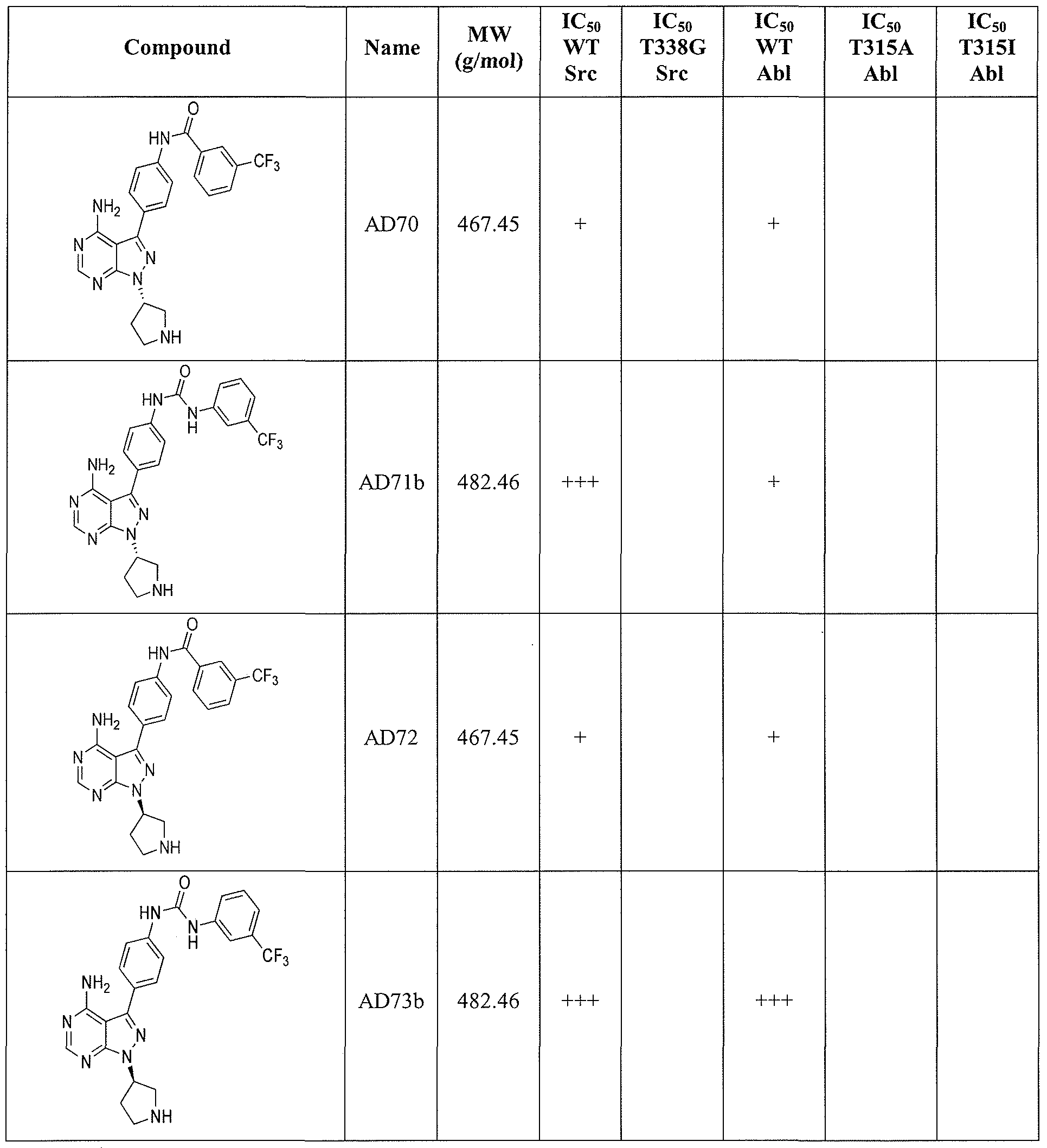
121 Ep: the epo has been informed by wipo that ep was designated in this application

Ref document number: 09821313

Country of ref document: EP

Kind code of ref document: A2

WWE Wipo information: entry into national phase

Ref document number: 2009305669

Country of ref document: AU

Ref document number: 2011532279

Country of ref document: JP

Ref document number: 2740885

Country of ref document: CA

NENP Non-entry into the national phase

Ref country code: DE

ENP Entry into the national phase

Ref document number: 2009305669

Country of ref document: AU

Date of ref document: 20091016

Kind code of ref document: A

WWE Wipo information: entry into national phase

Ref document number: 2009821313

Country of ref document: EP

WWE Wipo information: entry into national phase

Ref document number: 13124657

Country of ref document: US