US9758533B2 - Rapid and efficient bioorthogonal ligation reaction and boron-containing heterocycles useful in conjunction therewith - Google Patents
Rapid and efficient bioorthogonal ligation reaction and boron-containing heterocycles useful in conjunction therewith Download PDFInfo
- Publication number
- US9758533B2 US9758533B2 US14/694,744 US201514694744A US9758533B2 US 9758533 B2 US9758533 B2 US 9758533B2 US 201514694744 A US201514694744 A US 201514694744A US 9758533 B2 US9758533 B2 US 9758533B2
- Authority
- US
- United States
- Prior art keywords
- group
- composition
- acid
- alkyl
- moiety
- Prior art date
- Legal status (The legal status is an assumption and is not a legal conclusion. Google has not performed a legal analysis and makes no representation as to the accuracy of the status listed.)
- Expired - Fee Related
Links
- 0 *C(OCCCNC(CCCCCN)=O)=O Chemical compound *C(OCCCNC(CCCCCN)=O)=O 0.000 description 35
- LCHOKWVHAFEBMX-UHFFFAOYSA-N C=C1C2=C(C=CC=C2)C[B-]2(O)C3=CC=CC=C3C=NN12.O=C1C2=C(C=CC=C2)CB2C3=CC=CC=C3C=NN21 Chemical compound C=C1C2=C(C=CC=C2)C[B-]2(O)C3=CC=CC=C3C=NN12.O=C1C2=C(C=CC=C2)CB2C3=CC=CC=C3C=NN21 LCHOKWVHAFEBMX-UHFFFAOYSA-N 0.000 description 1
- PNGJLBYHEFMHCA-UXBLZVDNSA-N CO/N=C/c1c(B(O)O)cccc1 Chemical compound CO/N=C/c1c(B(O)O)cccc1 PNGJLBYHEFMHCA-UXBLZVDNSA-N 0.000 description 1
- ZYCCPTJVCZGPNV-UHFFFAOYSA-N NC(CC1=CC=C(B(O)O)C=C1)OC=O Chemical compound NC(CC1=CC=C(B(O)O)C=C1)OC=O ZYCCPTJVCZGPNV-UHFFFAOYSA-N 0.000 description 1
- HKOOXMFOFWEVGF-UHFFFAOYSA-N NNc1ccccc1 Chemical compound NNc1ccccc1 HKOOXMFOFWEVGF-UHFFFAOYSA-N 0.000 description 1
- WVALLLFRZVMHJA-UHFFFAOYSA-N O=C1C2=C(C=CC=C2)CB2C3=CC=CC=C3C=NN21.O=C1C2=C(C=CC=C2)C[B-]2(O)C3=CC=CC=C3C=NN12 Chemical compound O=C1C2=C(C=CC=C2)CB2C3=CC=CC=C3C=NN21.O=C1C2=C(C=CC=C2)C[B-]2(O)C3=CC=CC=C3C=NN12 WVALLLFRZVMHJA-UHFFFAOYSA-N 0.000 description 1
- DGUWACLYDSWXRZ-UHFFFAOYSA-N OB(c1c(C=O)cccc1)O Chemical compound OB(c1c(C=O)cccc1)O DGUWACLYDSWXRZ-UHFFFAOYSA-N 0.000 description 1
- PTWMNQHFDNYXEI-UHFFFAOYSA-N OB1N(c2ccccc2)N=Cc2c1cccc2 Chemical compound OB1N(c2ccccc2)N=Cc2c1cccc2 PTWMNQHFDNYXEI-UHFFFAOYSA-N 0.000 description 1
- VYLMBCVKHNTBIA-UHFFFAOYSA-N OB1NN=Cc2ccccc12 Chemical compound OB1NN=Cc2ccccc12 VYLMBCVKHNTBIA-UHFFFAOYSA-N 0.000 description 1
- LHYFQSZSVODPSE-UHFFFAOYSA-N OB1ON=Cc2c1cccc2 Chemical compound OB1ON=Cc2c1cccc2 LHYFQSZSVODPSE-UHFFFAOYSA-N 0.000 description 1
Images






Classifications
-
- C—CHEMISTRY; METALLURGY
- C07—ORGANIC CHEMISTRY
- C07F—ACYCLIC, CARBOCYCLIC OR HETEROCYCLIC COMPOUNDS CONTAINING ELEMENTS OTHER THAN CARBON, HYDROGEN, HALOGEN, OXYGEN, NITROGEN, SULFUR, SELENIUM OR TELLURIUM
- C07F5/00—Compounds containing elements of Groups 3 or 13 of the Periodic Table
- C07F5/02—Boron compounds
- C07F5/025—Boronic and borinic acid compounds
-
- A—HUMAN NECESSITIES
- A61—MEDICAL OR VETERINARY SCIENCE; HYGIENE
- A61K—PREPARATIONS FOR MEDICAL, DENTAL OR TOILETRY PURPOSES
- A61K31/00—Medicinal preparations containing organic active ingredients
- A61K31/69—Boron compounds
-
- C—CHEMISTRY; METALLURGY
- C01—INORGANIC CHEMISTRY
- C01B—NON-METALLIC ELEMENTS; COMPOUNDS THEREOF; METALLOIDS OR COMPOUNDS THEREOF NOT COVERED BY SUBCLASS C01C
- C01B35/00—Boron; Compounds thereof
- C01B35/08—Compounds containing boron and nitrogen, phosphorus, oxygen, sulfur, selenium or tellurium
- C01B35/10—Compounds containing boron and oxygen
-
- C—CHEMISTRY; METALLURGY
- C01—INORGANIC CHEMISTRY
- C01B—NON-METALLIC ELEMENTS; COMPOUNDS THEREOF; METALLOIDS OR COMPOUNDS THEREOF NOT COVERED BY SUBCLASS C01C
- C01B35/00—Boron; Compounds thereof
- C01B35/08—Compounds containing boron and nitrogen, phosphorus, oxygen, sulfur, selenium or tellurium
- C01B35/14—Compounds containing boron and nitrogen, phosphorus, sulfur, selenium or tellurium
- C01B35/146—Compounds containing boron and nitrogen, e.g. borazoles
-
- C—CHEMISTRY; METALLURGY
- C07—ORGANIC CHEMISTRY
- C07F—ACYCLIC, CARBOCYCLIC OR HETEROCYCLIC COMPOUNDS CONTAINING ELEMENTS OTHER THAN CARBON, HYDROGEN, HALOGEN, OXYGEN, NITROGEN, SULFUR, SELENIUM OR TELLURIUM
- C07F5/00—Compounds containing elements of Groups 3 or 13 of the Periodic Table
- C07F5/02—Boron compounds
-
- C—CHEMISTRY; METALLURGY
- C07—ORGANIC CHEMISTRY
- C07H—SUGARS; DERIVATIVES THEREOF; NUCLEOSIDES; NUCLEOTIDES; NUCLEIC ACIDS
- C07H21/00—Compounds containing two or more mononucleotide units having separate phosphate or polyphosphate groups linked by saccharide radicals of nucleoside groups, e.g. nucleic acids
-
- C—CHEMISTRY; METALLURGY
- C07—ORGANIC CHEMISTRY
- C07K—PEPTIDES
- C07K14/00—Peptides having more than 20 amino acids; Gastrins; Somatostatins; Melanotropins; Derivatives thereof
- C07K14/435—Peptides having more than 20 amino acids; Gastrins; Somatostatins; Melanotropins; Derivatives thereof from animals; from humans
- C07K14/76—Albumins
- C07K14/765—Serum albumin, e.g. HSA
-
- C—CHEMISTRY; METALLURGY
- C07—ORGANIC CHEMISTRY
- C07K—PEPTIDES
- C07K16/00—Immunoglobulins [IG], e.g. monoclonal or polyclonal antibodies
- C07K16/18—Immunoglobulins [IG], e.g. monoclonal or polyclonal antibodies against material from animals or humans
- C07K16/28—Immunoglobulins [IG], e.g. monoclonal or polyclonal antibodies against material from animals or humans against receptors, cell surface antigens or cell surface determinants
- C07K16/2863—Immunoglobulins [IG], e.g. monoclonal or polyclonal antibodies against material from animals or humans against receptors, cell surface antigens or cell surface determinants against receptors for growth factors, growth regulators
-
- C—CHEMISTRY; METALLURGY
- C07—ORGANIC CHEMISTRY
- C07K—PEPTIDES
- C07K16/00—Immunoglobulins [IG], e.g. monoclonal or polyclonal antibodies
- C07K16/40—Immunoglobulins [IG], e.g. monoclonal or polyclonal antibodies against enzymes
Definitions
- Click chemistry is a technology first developed by Sharpless at Scripps Institute, employing a copper (I) catalyzed reaction in which azide moieties are attached via a 1,3-cycloaddition with an alkyne. Copper-free click chemistry reactions are also possible. Methods of using click chemistry are known in the art and include those described by Rostovtsev et al., Angew. Chem. Int. Ed. 2002, 41, 2596-99 and Sun et al., Bioconjugate Chem., 2006, 17, 52-57, Baskin et al., Proc. Natl. Acad. Sci. USA 2007, 104, 16793-16797).
- “Click Chemistry” reactions are high yielding, wide in scope, create only byproducts that can be removed without chromatography, simple to perform, and can be conducted in easily removable or benign solvents. This concept was developed in parallel with the interest within the pharmaceutical, materials, and other industries in capabilities for generating large libraries of compounds for screening in discovery research.
- Several types of reaction have been identified that fulfill these criteria, thermodynamically-favored reactions that lead specifically to one product, such as nucleophilic ring opening reactions of epoxides and aziridines, non-aldol type carbonyl reactions, such as formation of hydrazones and heterocycles, additions to carbon-carbon multiple bonds, such as oxidative formation of epoxides and Michael Additions, and cycloaddition reactions.
- the azide-alkyne cycloaddition fulfills many of the prerequisites. Many of the starting monosubstituted alkynes and organic azides are available commercially, many others can easily be synthesized with a wide range of functional groups, and their cycloaddition reaction selectively gives 1,2,3-triazoles. See FIG. 45 .
- the thermal Huisgen 1,3-Dipolar Cycloaddition of alkynes to azides requires elevated temperatures and often produces mixtures of the two regioisomers when using asymmetric alkynes.
- the classic 1,3-dipolar cycloaddition fails as a true “click” reaction.
- a copper-catalyzed variant that follows a different mechanism can be conducted under aqueous conditions, even at room temperature.
- the classic Huisgen 1,3-dipolar cycloaddition often gives mixtures of regioisomers
- the copper-catalyzed reaction allows the synthesis of the 1,4-disubstituted regioisomers specifically.
- the click chemistry reactions are reactions between two functional groups that are highly selective, easy to perform and proceed at nearly quantitative yield.
- a biocompatible click reaction must have these characteristics but in addition such reactions need to proceed in dilute aqueous solution at neutral pH, and preferably with rapid kinetics.
- a bioorthogonal click reaction possesses all the characteristics of a biocompatible reaction with the additional requirement that the reactive functional groups do not form stable covalent bonds with functionalities in the biological system.
- One of the first types of reaction that was used for bioorthogonal ligations is the reaction of aldehydes and ketones with heteroatom-bonded amines that are sometimes called “ ⁇ -effect amines” (hydrazine, hydrazide, and other amine-nitrogen compounds, aminooxy reagents, etc.). While an amine-aldehyde/ketone reaction is highly reversible in aqueous solution, an ⁇ -effect amine-aldehyde/ketone reaction proceeds readily in mildly acidic aqueous solution to form a product (hydrazone or oxime) that is considerably more stable and less reversible than the product formed with a simple amine.
- the alpha effect refers to the increased nucleophilicity of a molecule due to the presence of an adjacent (alpha) atom with lone pair electrons. These include hydrazine, hydroxylamine, the hypochlorite ion and the hydroperoxide anion. (Buncel, E., and Um, I.-H. (2004) The ⁇ -effect and its modulation by solvent, Tetrahedron 60, 7801-7825.)
- Bioorthogonal reactions are chemical reactions that can be used in biological systems, coupling one reactive group specifically with another reactive group: without side reactions; in neutral, aqueous solution; and under additional conditions that are compatible with the biological system. Bioorthogonal reactions can be used for conjugating a biomolecule and a reporter; in biotechnology; proteomics; (bio)polymer engineering; sensors and detectors; and drug delivery.
- the ideal bioconjugation chemistry has, for example, the following characteristics, some of which are optional or context dependent (adapted from Solulink, Inc. White paper on Bioconjugation Chemistry):
- the conjugation reaction occurs directly upon mixing the two modified biomolecules, preferably not requiring addition of an oxidant, reductant, or metal.
- linkers can be incorporated on a variety of biomolecules, including oligonucleotides and peptides.
- bioorthogonality means that the technology does not interfere with biological processes in the same medium (unless specifically targeted), and the technology is not interfered with by components of the biological medium. Bioorthogonal processes therefore occur in aqueous medium, without addition of toxic substances (or toxic concentrations of substances), within a physiological pH range (e.g., ⁇ 6-8), at physiological temperatures (e.g., 0-42° C., depending on species) and pressures (e.g., 1 Atm), are not interactive with physiological thiols or amines, or are sensitive to redox chemistry.
- a physiological pH range e.g., ⁇ 6-8
- physiological temperatures e.g., 0-42° C., depending on species
- pressures e.g., 1 Atm
- the biological environment typically contains a range of enzymes that can degrade certain structures, and therefore bioorthogonal reaction reagents or products should not be sensitive to modification by the various enzymes in the medium. See, Bertozzi: Chem Soc Review, 2010; US 2011/0207147.
- VNPs viral nanoparticles
- VLPs non-infectious virus-like particles
- Ciaravino V., Plattner, J., and Chanda, S. (2013) An assessment of the genetic toxicology of novel boron-containing therapeutic agents, Environ. Mol. Mutag. 54, 338-346;
- the present technology provides a bioorthogonal reaction and reagents useful therein, which comprise a boronic acid or ester having an ortho carbonyl or aldehyde on an optionally substituted aryl or aromatic heterocyclic compound, which reacts with an alpha-effect amine under biologically compatible conditions.
- a reaction is a dehydration reaction, forming a hydrazono or imino arylboronic acid product (A).
- the product from the dehydration reaction is frequently followed by a second reaction to form a heterocyclic ring that contains a boron atom, e.g., a 3,4-borazaisoquinoline (B) or a related boron-containing heterocycle such as a 1,2-dihydrobenzo[d][1,2,3]diazaborinin-1-uide (C).
- a boron atom e.g., a 3,4-borazaisoquinoline (B) or a related boron-containing heterocycle such as a 1,2-dihydrobenzo[d][1,2,3]diazaborinin-1-uide (C).
- the reaction generally approaches the ideal “click chemistry” profile; it occurs without toxic reagents in aqueous solution at neutral pH, with high reaction yields, rapid and spontaneous initiation, and lack of cross reactivity in a physiological environment.
- the rate of formation of these products in neutral aqueous solution is considerably greater than the rate of formation of substrates without the boronic acid or ester. Furthermore, the final product is more stable than the corresponding product without the boron atom. See FIG. 1 .
- FIG. 1 shows the reaction of aromatic boronic acid or ester with ⁇ -effect amines.
- the structure of the final product is a function of the various R groups.
- Product A may be the final product (especially when X ⁇ O) or it may be an intermediate product (especially when X ⁇ NH).
- R 2 is alkyl, substituted alkyl, or aryl
- molecules with the core structure of Product B will be the final product.
- the product labeled C is a form of products A or B that may be produced depending on the substituents.
- the characteristics of the reaction of ortho-carbonyl phenylboronic acid or ester with an ⁇ -effect amine are different from those of the reaction of other aromatic aldehydes and ketones with these reagents.
- the reaction is very fast at neutral pH, and no catalyst is needed.
- the observed reaction may be faster with hydrazides than hydrazines. This is the opposite of how an ⁇ -effect amine behaves with any other known aldehyde or ketone. Under some reaction conditions, a methyl ketone reacts faster than the corresponding aldehyde. This is the opposite of how these reactions normally behave.
- Boronic esters may hydrolyze to form boronic acids and alcohols in aqueous solution.
- boronic acids and alcohols may hydrolyze to form boronic acids and alcohols in aqueous solution.
- aqueous solution Achilli, C., Ciana, A., Fagnoni, M., Balduini, C., and Minetti, G. (2013) Susceptibility to hydrolysis of phenylboronic pinacol esters at physiological pH, Cent. Eur. J. Chem. 11, 137-139.
- Reaction of these solutions with ⁇ -effect amines proceeds. Therefore, other forms of boron can be used in the reaction provided that they undergo hydrolysis to form the boronic acid.
- the reagent added to the medium may be a precursor of this structure, such as a boronic acid ester or blocked boronate, and an ortho enol or enamine.
- the boronic acid and carbonyl are typically ortho substituted on an aromatic ring, but may be part of other structures, such as heterocycles or non-aryl compositions.
- reaction of ortho-carbonyl phenylboronic acid or ester with an ⁇ -effect amine is a known reaction; however, it has not previously been applied to coupling under physiological conditions, i.e., aqueous solvent, physiologically compatible temperature, pH, lack of reagents at toxic concentrations, etc.
- the present technology comprises coupling two molecules to react with quantitative yields under physiological conditions and without harsh conditions or organic solvents, with the possibility of further rearranging to form a boron-containing heterocycle or related product.
- biomolecules are stable in a limited pH range (near neutral pH), temperature (0-37 degrees centigrade, or higher in some organisms, e.g., 40, 43, 45, 50, or 55° C., and lower, especially in organisms having antifreeze properties, e.g., ⁇ 5° C.) and environment (aqueous).
- Coupling reactions that can be performed under conditions that preserve the structure and activity of the biomolecule have many potential applications.
- the pH range is preferably 2-9, more preferably 6-8, and most preferably 6.5 to 7.5. The reaction preferably proceeds to essential completion within 10 minutes under the biocompatible conditions.
- the product of the reaction may be stable at neutral pH for many months. Stability of the product at various pHs depends on the substitution pattern. This property may be useful for pH-dependent reversal of the coupling reaction.
- boronic acids are generally non-toxic. (Ciaravino, V., Plattner, J., and Chanda, S. (2013) An assessment of the genetic toxicology of novel boron-containing therapeutic agents, Environ. Mol. Mutag. 54, 338-346.) They are not metabolized in humans. Sulfonyl-substituted 3,4-borazaisoquinolines that have been tested for antimicrobial activity are generally not cytotoxic (Future Science 1 1275-1288, 2009).
- the ortho carbonyl (e.g., aldehyde, ketone) derivatives of p-boronophenylalanine are believed to be useful to provide selective coupling to peptides in which the p-boronophenylalanine derivative substitutes for a naturally occurring amino acid. See FIG. 2 .
- It is therefore an object to provide a process for preparing a hydrazono or imino arylboronic acid, 3,4-borazaisoquinoline or a 1,2-dihydrobenzo[d][1,2,3]diazaborinin-1-uide comprising: contacting a carbonyl-substituted arylboronic acid with an ⁇ -effect amine in an aqueous medium for a time sufficient to form the product.
- the reaction is preferably carried out at ambient temperature, and/or at neutral pH. Equimolar amounts of the carbonyl-substituted arylboronic acid and the ⁇ -effect amine may be contacted, and the reaction between these components preferably proceeds essentially to completion, with minimal or no side reactions.
- the carbonyl substituted arylboronic acid may comprise an ortho formyl phenylboronic acid derivative; or an ortho ketone phenylboronic acid derivative.
- the carbonyl substituted arylboronic acid may comprise an ortho formyl phenylboronic acid derivative of an amino acid or an ortho formyl phenylboronic acid derivatized with an orthogonal reactive functional group.
- the ⁇ -effect amine may comprise a hydrazine, a semicarbazide, a thiosemicarbazide, a hydrazide, a thiohydrazide, a hydroxylamine, an O-alkylhydroxylamine or an O-arylhydroxylamine.
- reactions between competing boronic acid esters and/or ⁇ -amines may be provided, wherein the ratio of product serves, e.g., as an indicator of process.
- one or more fluorescent reporters or fluorescence quenching molecules may be linked to the boronic acid ester, and/or ⁇ -effect amine.
- the aqueous medium preferably has a pH between 2 and 9, more preferably between 6 and 8, and most preferably between 7.0 and 7.5.
- the aqueous medium may have a pH of about 7.
- the time is preferably less than about 10 minutes at a temperature, between about 0 C and 37 C, and for example proceeds essentially to completion e.g., >90% yield, within 5 minutes at 25-37 C.
- the hydrazono or imino arylboronic acid, 3,4-borazaisoquinoline or a 1,2-dihydrobenzo[d][1,2,3]diazaborinin-1-uide derivative, carbonyl-substituted arylboronic acid, ⁇ -effect amine, and aqueous medium are preferably each bioorthogonal.
- It is another object to provide a reaction method comprising combining a carbonyl-substituted arylboronic acid and an ⁇ -effect amine in aqueous solution at a temperature between about ⁇ 5 C to 55 C, and a pH between 2 and 8 to produce an adduct A, which may then proceed to form B or C, see FIG. 1 :
- R 1 may be H or pinacol, or more generally any boronic acid or ester forming compound which readily hydrolyses in aqueous solvent under physiological conditions, e.g., C 1 -C 6 alkyl which optionally may incorporate one further heteroatom selected from nitrogen, oxygen and sulfur, formyl or C 2 -C 6 alkanoyl, OCH 2 Ar or OCH 2 CH 3 Ar in which the Ar group may be a phenyl, a substituted phenyl ring, a naphtyl, a heteroaromatic ring or fused ring comprising at least one ring heteroatom selected from nitrogen, oxygen and sulfur.
- C 1 -C 6 alkyl which optionally may incorporate one further heteroatom selected from nitrogen, oxygen and sulfur, formyl or C 2 -C 6 alkanoyl, OCH 2 Ar or OCH 2 CH 3 Ar in which the Ar group may be a phenyl, a substituted phenyl ring, a naphtyl, a heteroaro
- R 2 may be H or CH 3 , or more generally C 1 -C 6 alkyl, aryl, heteroaryl, which optionally may incorporate one further heteroatom selected from nitrogen, oxygen and sulfur, C 2 -C 6 alkanoyl, CH 2 Ar or CH 2 CH 2 Ar in which the Ar group may be a phenyl, a substituted phenyl ring, a naphtyl, a heteroaromatic ring or fused ring comprising at least one ring heteroatom selected from nitrogen, oxygen and sulfur, a 4 to 7 ring optionally incorporating one or more heteroatoms selected from oxygen, nitrogen or sulfur, an aromatic ring optionally substituted with fluorescent groups, sugars and polyethylene glycol chains.
- R 3 may be selected from one or more of the group consisting of OH, O-alkyl, O-alkylamine, O-alkylthiol, O-alkylthioester, alkylamine, alkylbromide or F, and C 1 -C 6 alkyl, aryl, heteroaryl, which optionally may incorporate one further heteroatom selected from nitrogen, oxygen and sulfur, C 2 -C 6 alkanoyl, CH 2 Ar or CH 2 CH 2 Ar in which the Ar group may be a phenyl, a substituted phenyl ring, a naphtyl, a heteroaromatic ring or fused ring comprising at least one ring heteroatom selected from nitrogen, oxygen and sulfur, a 4 to 7 ring optionally incorporating one or more heteroatoms selected from oxygen, nitrogen or sulfur, an aromatic ring optionally substituted with fluorescent groups, sugars and polyethylene glycol chains, and may be the same or different.
- R 4 may be selected from one or more of the group consisting of H, CH 3 , CH 2 CH 3 , CH 2 Ph, p-COOH Ph, o-NH 2 Ph, o-OH Ph, COH, COCH 3 , COCH 2 Ph, COPh, CO-coumarin, or CONH 2 , and may be the same or different.
- composition comprising at least one of (see FIGS. 39A-39D ):
- R 2 is H or CH 3 ;
- R 3 is alkyl or OR (which may be, e.g., alkyl, alkylamine, alkylthiol, alkylbromide aryl, heteroaryl, which optionally may incorporate one further heteroatom selected from nitrogen, oxygen and sulfur, C 2 -C 6 alkanoyl, CH 2 Ar or CH 2 CH 2 Ar in which the Ar group may be a phenyl, a substituted phenyl ring, a naphtyl, a heteroaromatic ring or fused ring comprising at least one ring heteroatom selected from nitrogen, oxygen and sulfur, a 4 to 7 ring optionally incorporating one or more heteroatoms selected from oxygen, nitrogen or sulfur, an aromatic ring optionally substituted with fluorescent groups, sugars and polyethylene glycol chains); and R 5 is H, CH 3 , CH 2 CH 3 , CH 2 Ph, Ph, substituted Ph, NH 2 , for example.
- the alpha carbon of the carbonyl may be bonded to an amine (see FIGS. 40A-40C ):
- R 5 may comprise an aryl group having an ortho nucleophile, 2-hydroxy phenyl, 2-amino phenyl, or a nucleophilic substituent that cyclizes with the boron atom.
- a further object provides a process comprising, contacting a first composition having a boron atom bonded to a sp 2 hybridized carbon, the boron having at least one labile substituent, conjugated with a cis-carbonyl, with a second composition having an ⁇ -effect amine, in an aqueous medium for a time sufficient to form an adduct, which may proceed to further products, such as by dehydration, interaction as a Lewis base with the solvent (e.g., water) or a heteroatom (e.g., amine). See FIG. 41
- the reaction may proceed as follows:
- X 1 and X 2 represents independently selected groups that can hydrolyze to boronic acid (OHs): e.g., OH, F, C 1 -C 6 alkyl which optionally may incorporate one further heteroatom selected from nitrogen, oxygen and sulfur, formyl or C 2 -C 6 alkanoyl, OCH 2 Ar or OCH 2 CH 2 Ar in which the Ar group may be a phenyl, a substituted phenyl ring, a naphtyl, a heteroaromatic ring or fused ring comprising at least one ring heteroatom selected from nitrogen, oxygen and sulfur; or the group X 1 and X 2 together represents a 5 to 7 ring optionally incorporating one or more heteroatoms selected from oxygen, nitrogen or sulfur.
- OHs boronic acid
- R 1 and R 2 independently represent H, CH 3 , C 1 -C 6 alkyl, which optionally may incorporate one further heteroatom selected from nitrogen, oxygen and sulfur, C 2 -C 6 alkanoyl, CH 2 Ar or CH 2 CH 2 Ar in which the Ar group may be a phenyl, a substituted phenyl ring, a naphtyl, a heteroaromatic ring or fused ring comprising at least one ring heteroatom selected from nitrogen, oxygen, and sulfur; or the group R 1 —C ⁇ C—R 2 together represents a 5 to 7 member ring optionally incorporating one or more heteroatoms selected from oxygen, nitrogen, or sulfur, an aromatic ring optionally substituted with fluorescent groups, sugars and polyethylene glycol chains.
- R 3 represents CH 3 , C 1 -C 6 alkyl which optionally may incorporate one further heteroatom selected from nitrogen, oxygen, and sulfur, C 2 -C 6 alkanoyl, CH 2 Ar or CH 2 CH 2 Ar in which the Ar group may be a phenyl, a substituted phenyl ring, a naphtyl, a heteroaromatic ring, or fused ring comprising at least one ring heteroatom selected from nitrogen, oxygen and sulfur, a 4 to 7 member ring optionally incorporating one or more heteroatoms selected from oxygen, nitrogen, or sulfur, an aromatic ring optionally substituted with fluorescent groups, sugars and polyethylene glycol chains.
- X 3 may be O or N.
- X 4 may be OH, H 2 O, alkyl, aryl, or other heteroatom containing group (usually solvent).
- the aqueous medium preferably has a neutral pH, e.g., pH 6.8-7.5, but the reaction may occur in a solution having a pH of, e.g., between 2 and 8.
- the process is preferably performed at a temperature between 0 C and 45° C., e.g., 25 C-37° C., though the range may extend to, e.g., ⁇ 5 to 55° C.
- the reactants and range of reaction conditions are preferably bioorthogonal, i.e., compatible with living cells.
- composition may comprise a carbonyl-substituted arylboronic acid or ester.
- composition may be selected from the group consisting of:
- X 1 , X 2 are groups that can hydrolyze from the boron to yield boronic acid
- R 1 , R 2 , and R 3 are hydrogen, organic ligands, or heterorganic ligands.
- R 2 may be selected from the group consisting of: H, CH 3 ;
- R 3 may be selected from the group consisting of OH, O-alkyl, O-alkylbromide, O-alkylamine, O-alkylamide, O-alkylthiol, O-alkylthioester, alkylamine, alkylamide and alkylbromide.
- the ⁇ -effect amine may be selected from the group consisting of: H 2 N—X 3 R 4 , wherein: X 3 is O or N; and R 4 is an alkyl, aryl or a heteroatom containing group.
- R 4 may be selected from the group consisting of: H, CH 3 , CH 2 CH 3 , CH 2 Ph, p-COOH Ph, o-NH 2 Ph, o-OH Ph, COH, COCH 3 , COCH 2 Ph, COPh, CO-coumarin, and CONH 2 .
- the ⁇ -effect amine may be selected from the group consisting of alpha-hydrazides of tyrosine, phenylalanine, alanine, beta-alanine, glycine, dimethylglycine, and CBz-serine.
- the ⁇ -effect amine may also be selected from the group consisting of: a hydrazine; a semicarbazide, a thiosemicarbazide; a hydrazide, a thiohydrazide, a hydroxylamine, an O-alkylhydroxylamine, and an O-arylhydroxylamine.
- the adduct may comprise a composition selected from the group consisting of:
- the further product may comprises, for example, a dehydration product selected from the group consisting of:
- R 4 is selected from the group consisting of alkyl, aryl, heteroalkyl, heteroaryl, and hydroxyl
- X 4 is selected from the group consisting of alkyl, aryl, heteroalkyl, heteroaryl, hydroxyl and water (H 2 O).
- the adduct may be selected from the group consisting of a hydrazono or imino arylboronic acid, 3,4-borazaisoquinoline and a 1,2-dihydrobenzo[d][1,2,3]diazaborinin-1-uide.
- the adduct composition product may be selected from the group consisting of:
- R 2 is selected from the group consisting of H and CH 3 ;
- R 3 is selected from the group consisting of alkyl, OH, O-alkyl, O-alkylbromide, O-alkylamine, O-alkylamide, O-alkylthiol, O-alkylthioester, alkylamine, alkylamide and alkylbromide; and
- R 5 is selected from the group consisting of H, —CH 3 , —CH 2 CH 3 , —CH 2 Ph, Ph, substituted Ph, and —NH 2 .
- the adduct may also be selected from the group consisting of:
- R 2 is H or CH 3 ;
- R 3 and R 6 are independently selected from the group consisting of alkyl or OR, wherein R is selected from the group consisting of alkyl, heteroalkyl, heteroaryl, alkylamine, alkylthiol, alkylbromide, arylbromide, C 2 -C 6 alkanoyl, CH 2 Ar or CH 2 CH 2 Ar,
- heteroatom of the heteroalkyl and heteroaryl is selected from the group consisting of nitrogen, oxygen sulfur,
- the Ar group of CH 2 Ar or CH 2 CH 2 Ar is selected from the group consisting of a phenyl, a substituted phenyl ring, a naphtyl, a heteroaromatic ring or fused ring comprising at least one ring heteroatom selected from nitrogen, oxygen and sulfur, a 4 to 7 ring optionally incorporating one or more heteroatoms selected from oxygen, nitrogen or sulfur, an aromatic ring optionally substituted with a fluorescent group, sugars or polyethylene glycol chain; and
- the composition may comprise a carbonyl substituted arylboronic acid selected from the group consisting of: an ortho formyl phenylboronic acid or ester derivative; an ortho ketone phenylboronic acid or ester derivative; an ortho aldehyde phenylboronic acid ester derivative of an amino acid; a ketone phenylboronic acid or ester derivative of an amino acid; an ortho aldehyde phenylboronic acid derivatized with an orthogonal reactive functional group; and a ketone phenylboronic acid derivatized with an orthogonal reactive functional group.
- a carbonyl substituted arylboronic acid selected from the group consisting of: an ortho formyl phenylboronic acid or ester derivative; an ortho ketone phenylboronic acid or ester derivative; an ortho aldehyde phenylboronic acid ester derivative of an amino acid; a ketone phenylboronic acid derivatized with an orthogon
- the spontaneous formation of the adduct is preferably substantially complete within a period of less than about 10 minutes at a temperature of about 25 C at a pH of 7, though the reaction need not be conducted under these conditions.
- a methylene is a diradical of a methyl group, that is, it is a —CH 2 — group; and an ethylene is a diradical of an ethyl group, i.e., —CH 2 CH 2 —.
- alkyl refers to an aliphatic hydrocarbon group.
- the alkyl moiety includes a “saturated alkyl” group, which means that it does not contain any alkene or alkyne moieties.
- the alkyl moiety also includes an “unsaturated alkyl” moiety, which means that it contains at least one alkene or alkyne moiety.
- An “alkene” moiety refers to a group that has at least one carbon-carbon double bond
- an “alkyne” moiety refers to a group that has at least one carbon-carbon triple bond.
- the alkyl moiety, whether saturated or unsaturated includes branched, straight chain, or cyclic moieties.
- an alkyl group includes a monoradical or a diradical (i.e., an alkylene group), and if a “lower alkyl” having 1 to 6 carbon atoms.
- C 1 -C x includes C 1 -C 2 , C 1 -C 3 . . . C 1 -C x .
- alkyl moiety optionally has 1 to 24 carbon atoms (whenever it appears herein, a numerical range such as “1 to 24” refers to each integer in the given range; e.g., “1 to 24 carbon atoms” means that the alkyl group is selected from a moiety having 1 carbon atom, 2 carbon atoms, 3 carbon atoms, etc., up to and including 24 carbon atoms, although the present definition also covers the occurrence of the term “alkyl” where no numerical range is designated).
- the alkyl group of the compounds described herein may be designated as “C 1 -C 4 alkyl” or similar designations.
- C 1 -C 4 alkyl indicates that there are one to four carbon atoms in the alkyl chain, i.e., the alkyl chain is selected from among methyl, ethyl, propyl, isopropyl, n-butyl, iso-butyl, sec-butyl, and t-butyl.
- C 1 -C 4 alkyl includes C 1 -C 2 alkyl and C 1 -C 3 alkyl.
- Alkyl groups are optionally substituted or unsubstituted.
- Typical alkyl groups include, but are in no way limited to, methyl, ethyl, propyl, isopropyl, butyl, isobutyl, tertiary butyl, pentyl, hexyl, ethenyl, propenyl, butenyl, cyclopropyl, cyclobutyl, cyclopentyl, cyclohexyl, and the like.
- alkenyl refers to a type of alkyl group in which the first two atoms of the alkyl group form a double bond that is not part of an aromatic group. That is, an alkenyl group begins with the atoms —C(R) ⁇ C(R)—R, wherein R refers to the remaining portions of the alkenyl group, which are either the same or different.
- the alkenyl moiety is optionally branched, straight chain, or cyclic (in which case, it is also known as a “cycloalkenyl” group).
- an alkenyl group includes a monoradical or a diradical (i.e., an alkenylene group). Alkenyl groups are optionally substituted.
- Non-limiting examples of an alkenyl group include —CH ⁇ CH 2 , —C(CH 3 ) ⁇ CH 2 , —CH ⁇ CHCH 3 , —C(CH 3 ) ⁇ CHCH 3 .
- Alkenylene groups include, but are not limited to, —CH ⁇ CH—, —C(CH 3 ) ⁇ CH—, —CH ⁇ CHCH 2 —, —CH ⁇ CHCH 2 CH 2 — and —C(CH 3 ) ⁇ CHCH 2 —.
- Alkenyl groups optionally have 2 to 10 carbons, and if a “lower alkenyl” having 2 to 6 carbon atoms.
- alkynyl refers to a type of alkyl group in which the first two atoms of the alkyl group form a triple bond. That is, an alkynyl group begins with the atoms —C ⁇ C—R, wherein R refers to the remaining portions of the alkynyl group, which is either the same or different.
- R refers to the remaining portions of the alkynyl group, which is either the same or different.
- the “R” portion of the alkynyl moiety may be branched, straight chain, or cyclic.
- an alkynyl group includes a monoradical or a diradical (i.e., an alkynylene group). Alkynyl groups are optionally substituted.
- Non-limiting examples of an alkynyl group include, but are not limited to, —C ⁇ CH, —C ⁇ CCH 3 , —C ⁇ CCH 2 CH 3 , —C ⁇ C—, and —C ⁇ CCH 2 —.
- Alkynyl groups optionally have 2 to 10 carbons, and if a “lower alkynyl” having 2 to 6 carbon atoms.
- alkoxy refers to a (alkyl)O— group, where alkyl is as defined herein.
- “Hydroxyalkyl” refers to an alkyl radical, as defined herein, substituted with at least one hydroxy group.
- Non-limiting examples of a hydroxyalkyl include, but are not limited to, hydroxymethyl, 2-hydroxyethyl, 2-hydroxypropyl, 3-hydroxypropyl, 1-(hydroxymethyl)-2-methylpropyl, 2-hydroxybutyl, 3-hydroxybutyl, 4-hydroxybutyl, 2,3-dihydroxypropyl, 1-(hydroxymethyl)-2-hydroxyethyl, 2,3-dihydroxybutyl, 3,4-dihydroxybutyl and 2-(hydroxymethyl)-3-hydroxypropyl.
- Alkoxyalkyl refers to an alkyl radical, as defined herein, substituted with an alkoxy group, as defined herein.
- Alkylaminoalkyl refers to an alkyl radical, as defined herein, substituted with an alkylamine, as defined herein.
- Hydroalkylaminoalkyl refers to an alkyl radical, as defined herein, substituted with an alkylamine, and alkylhydroxy, as defined herein.
- Alkoxyalkylaminoalkyl refers to an alkyl radical, as defined herein, substituted with an alkylamine and substituted with an alkylalkoxy, as defined herein.
- aryl refers to a cyclic organic composition with conjugated pi (sp2 or sp) bonding.
- the aryl functionality may optionally be substituted.
- an “amide” is a chemical moiety with the formula —C(O)NHR or —NHC(O)R, where R is selected from among alkyl, cycloalkyl, aryl, heteroaryl (bonded through a ring carbon) and heteroalicyclic (bonded through a ring carbon).
- R is selected from among alkyl, cycloalkyl, aryl, heteroaryl (bonded through a ring carbon) and heteroalicyclic (bonded through a ring carbon).
- an amide moiety forms a linkage between an amino acid or a peptide molecule and a compound described herein, thereby forming a prodrug. Any amine, or carboxyl side chain on the compounds described herein can be amidified.
- amino acid fragment refers to a portion of an amino acid, such the 20 common, genetically-encoded amino acids (i.e., alanine, arginine, asparagine, aspartic acid, cysteine, glutamine, glutamic acid, glycine, histidine, isoleucine, leucine, lysine, methionine, phenylalanine, proline, serine, threonine, tryptophan, tyrosine, and valine) as well as the modified amino acids disclosed herein and further modified amino acids consistent with the disclosure and purposes hereof, or a dipeptide, tripeptide or other polypeptide comprising a combination of the 20 common amino acids or a non-natural amino acid.
- amino acids i.e., alanine, arginine, asparagine, aspartic acid, cysteine, glutamine, glutamic acid, glycine, histidine, isoleucine, leucine, lysine, me
- esters refers to a chemical moiety with formula —XOOR, where R is selected from among alkyl, heteroalkyl, cycloalkyl, aryl, heteroaryl (bonded through a ring carbon) and heteroalicyclic (bonded through a ring carbon). Any hydroxy, or carboxyl side chain on the compounds described herein can be esterified. The procedures and specific groups to make such esters are found in sources such as Greene and Wuts, Protective Groups in Organic Synthesis, 3.sup.rd Ed., John Wiley & Sons, New York, N.Y., 1999, which is incorporated herein by reference for this disclosure.
- Rings refers to any covalently closed structure. Rings include, for example, carbocycles (e.g., aryls and cycloalkyls), heterocycles (e.g., heteroaryls and non-aromatic heterocycles), aromatics (e.g. aryls and heteroaryls), and non-aromatics (e.g., cycloalkyls and non-aromatic heterocycles). Rings can be optionally substituted. Rings can be monocyclic or polycyclic.
- ring system refers to one, or more than one ring.
- membered ring can embrace any cyclic structure.
- membered is meant to denote the number of skeletal atoms that constitute the ring.
- cyclohexyl, pyridine, pyran and thiopyran are 6-membered rings and cyclopentyl, pyrrole, furan, and thiophene are 5-membered rings.
- fused refers to structures in which two or more rings share one or more bonds.
- Carbocyclic or “carbocycle” refers to a ring wherein each of the atoms forming the ring is a carbon atom.
- Carbocycle includes aryl and cycloalkyl. The term thus distinguishes carbocycle from heterocycle (“heterocyclic”) in which the ring backbone contains at least one atom which is different from carbon (i.e a heteroatom).
- Heterocycle includes heteroaryl and heterocycloalkyl. Carbocycles and heterocycles can be optionally substituted.
- aromatic refers to a planar ring having a delocalized ⁇ -electron system containing 4n+2 ⁇ electrons, where n is an integer. Aromatic rings can be formed from five, six, seven, eight, nine, or more than nine atoms. Aromatics can be optionally substituted.
- aromatic includes both carbocyclic aryl (e.g., phenyl) and heterocyclic aryl (or “heteroaryl” or “heteroaromatic”) groups (e.g., pyridine).
- the term includes monocyclic or fused-ring polycyclic (i.e., rings which share adjacent pairs of carbon atoms) groups.
- aryl refers to an aromatic ring wherein each of the atoms forming the ring is a carbon atom.
- Aryl rings can be formed by five, six, seven, eight, nine, or more than nine carbon atoms.
- Aryl groups can be optionally substituted. Examples of aryl groups include, but are not limited to phenyl, naphthalenyl, phenanthrenyl, anthracenyl, fluorenyl, and indenyl.
- an aryl group can be a monoradical or a diradical (i.e., an arylene group).
- aryloxy group refers to an (aryl)O— group, where aryl is as defined herein.
- carbonyl refers to a group containing a moiety selected from the group consisting of —C(O)—, —S(O)—, —S(O)2-, and —C(S)—, including, but not limited to, groups containing a least one ketone group, and/or at least one aldehyde group, and/or at least one ester group, and/or at least one carboxylic acid group, and/or at least one thioester group.
- Such carbonyl groups include ketones, aldehydes, carboxylic acids, esters, and thioesters. In some embodiments, such groups are a part of linear, branched, or cyclic molecules.
- cycloalkyl refers to a monocyclic or polycyclic radical that contains only carbon and hydrogen, and is optionally saturated, partially unsaturated, or fully unsaturated. Cycloalkyl groups include groups having from 3 to 10 ring atoms. Depending on the structure, a cycloalkyl group is either a monoradical or a diradical (e.g., an cycloalkylene group), and if a “lower cycloalkyl” having 3 to 8 carbon atoms.
- Cycloalkylalkyl means an alkyl radical, as defined herein, substituted with a cycloalkyl group.
- Non-limiting cycloalkylalkyl groups include cyclopropylmethyl, cyclobutylmethyl, cyclopentylmethyl, cyclohexylmethyl, and the like.
- heterocycle refers to heteroaromatic and heteroalicyclic groups containing one to four heteroatoms each selected from O, S and N, wherein each heterocyclic group has from 4 to 10 atoms in its ring system, and with the proviso that the ring of said group does not contain two adjacent O or S atoms.
- the number of carbon atoms in a heterocycle is indicated (e.g., C 1 -C 6 heterocycle), at least one other atom (the heteroatom) must be present in the ring.
- Designations such as “C 1 -C 6 heterocycle” refer only to the number of carbon atoms in the ring and do not refer to the total number of atoms in the ring.
- heterocylic ring can have additional heteroatoms in the ring.
- Designations such as “4-6 membered heterocycle” refer to the total number of atoms that are contained in the ring (i.e., a four, five, or six membered ring, in which at least one atom is a carbon atom, at least one atom is a heteroatom and the remaining two to four atoms are either carbon atoms or heteroatoms).
- those two or more heteroatoms can be the same or different from one another.
- Heterocycles can be optionally substituted. Binding to a heterocycle can be at a heteroatom or via a carbon atom.
- Non-aromatic heterocyclic groups include groups having only 4 atoms in their ring system, but aromatic heterocyclic groups must have at least 5 atoms in their ring system.
- the heterocyclic groups include benzo-fused ring systems.
- An example of a 4-membered heterocyclic group is azetidinyl (derived from azetidine).
- An example of a 5-membered heterocyclic group is thiazolyl.
- An example of a 6-membered heterocyclic group is pyridyl, and an example of a 10-membered heterocyclic group is quinolinyl.
- non-aromatic heterocyclic groups are pyrrolidinyl, tetrahydrofuranyl, dihydrofuranyl, tetrahydrothienyl, tetrahydropyranyl, dihydropyranyl, tetrahydrothiopyranyl, piperidino, morpholino, thiomorpholino, thioxanyl, piperazinyl, azetidinyl, oxetanyl, thietanyl, homopiperidinyl, oxepanyl, thiepanyl, oxazepinyl, diazepinyl, thiazepinyl, 1,2,3,6-tetrahydropyridinyl, 2-pyrrolinyl, 3-pyrrolinyl, indolinyl, 2H-pyranyl, 4H-pyranyl, dioxanyl, 1,3-dioxolanyl, pyrazolinyl, dithio
- aromatic heterocyclic groups are pyridinyl, imidazolyl, pyrimidinyl, pyrazolyl, triazolyl, pyrazinyl, tetrazolyl, furyl, thienyl, isoxazolyl, thiazolyl, oxazolyl, isothiazolyl, pyrrolyl, quinolinyl, isoquinolinyl, indolyl, benzimidazolyl, benzofuranyl, cinnolinyl, indazolyl, indolizinyl, phthalazinyl, pyridazinyl, triazinyl, isoindolyl, pteridinyl, purinyl, oxadiazolyl, thiadiazolyl, furazanyl, benzofurazanyl, benzothiophenyl, benzothiazolyl, benzoxazolyl, quinazolinyl, quinox
- a group derived from pyrrole includes pyrrol-1-yl (N-attached) or pyrrol-3-yl (C-attached).
- a group derived from imidazole includes imidazol-1-yl or imidazol-3-yl (both N-attached) or imidazol-2-yl, imidazol-4-yl or imidazol-5-yl (all C-attached).
- heterocyclic groups include benzo-fused ring systems and ring systems substituted with one or two oxo ( ⁇ O) moieties such as pyrrolidin-2-one.
- a heterocycle group can be a monoradical or a diradical (i.e., a heterocyclene group).
- heteroaryl or, alternatively, “heteroaromatic” refers to an aromatic group that includes one or more ring heteroatoms selected from nitrogen, oxygen and sulfur.
- An N-containing “heteroaromatic” or “heteroaryl” moiety refers to an aromatic group in which at least one of the skeletal atoms of the ring is a nitrogen atom.
- a heteroaryl group can be a monoradical or a diradical (i.e., a heteroarylene group).
- heteroalicyclic also includes all ring forms of the carbohydrates, including but not limited to the monosaccharides, the disaccharides and the oligosaccharides.
- a heterocycloalkyl group can be a monoradical or a diradical (i.e., a heterocycloalkylene group).
- halo or, alternatively, “halogen” or “halide” means fluoro, chloro, bromo and iodo.
- haloalkyl refers to alkyl structures in which at least one hydrogen is replaced with a halogen atom. In certain embodiments in which two or more hydrogen atoms are replaced with halogen atoms, the halogen atoms are all the same as one another. In other embodiments in which two or more hydrogen atoms are replaced with halogen atoms, the halogen atoms are not all the same as one another.
- fluoroalkyl refers to alkyl group in which at least one hydrogen is replaced with a fluorine atom.
- fluoroalkyl groups include, but are not limited to, —CF 3 , —CH 2 CF 3 , —CF 2 CF 3 , —CH 2 CH 2 CF 3 and the like.
- heteroalkyl refers to optionally substituted alkyl radicals in which one or more skeletal chain atoms is a heteroatom, e.g., oxygen, nitrogen, sulfur, silicon, phosphorus or combinations thereof.
- the heteroatom(s) are placed at any interior position of the heteroalkyl group or at the position at which the heteroalkyl group is attached to the remainder of the molecule.
- Examples include, but are not limited to, —CH 2 —O—CH 3 , —CH 2 —CH 2 —O—CH 3 , —CH 2 —NH—CH 3 , —CH 2 —CH 2 —NH—CH 3 , —CH 2 —N(CH 3 )—CH 3 , —CH 2 —CH 2 —NH—CH 3 , —CH 2 —CH 2 —N(CH 3 )—CH 3 , —CH 2 —S—CH 2 —CH 3 , —CH 2 —CH 2 , —S((O)—CH 3 , —CH 2 —CH 2 —S(O) 2 —CH 3 , —CH ⁇ CH—O—CH 3 , —Si(CH 3 ) 3 , —CH 2 —CH ⁇ N—OCH 3 , and —CH ⁇ CH—N(CH 3 )—CH 3 .
- up to two heteroatoms are consecutive, such as,
- heteroatom refers to an atom other than carbon or hydrogen. Heteroatoms are typically independently selected from among oxygen, sulfur, nitrogen, silicon and phosphorus, but are not limited to these atoms. In embodiments in which two or more heteroatoms are present, the two or more heteroatoms can all be the same as one another, or some or all of the two or more heteroatoms can each be different from the others.
- a “thioalkoxy” or “alkylthio” group refers to a —S-alkyl group.
- optionally substituted or “substituted” means that the referenced group may be substituted with one or more additional group(s) individually and independently selected from alkyl, cycloalkyl, aryl, heteroaryl, heteroalicyclic, hydroxy, alkoxy, aryloxy, alkylthio, arylthio, alkylsulfoxide, arylsulfoxide, alkylsulfone, arylsulfone, cyano, halo, acyl, nitro, haloalkyl, fluoroalkyl, amino, including mono- and di-substituted amino groups, and the protected derivatives thereof.
- an optional substituents may be L s R s , wherein each L s is independently selected from a bond, —O—, —C( ⁇ O)—, —S—, —S( ⁇ O)—, —S( ⁇ O) 2 —, —NH—, —NHC(O)—, —C(O)NH—, S( ⁇ O) 2 NH—, —NHS( ⁇ O) 2 , —OC(O)NH—, —NHC(O)O—, -(substituted or unsubstituted C 1 -C 6 alkyl), or -(substituted or unsubstituted C 2 -C 6 alkenyl); and each R s is independently selected from H, (substituted or unsubstituted C 1 -C 4 alkyl), (substituted or unsubstituted C 3 -C 6 cycloalkyl), heteroaryl, or heteroalky
- the ortho carbonyl boronic acid and/or ⁇ -effect amine compounds may be provided to an animal or plant, to permit layer coupling of a corresponding ⁇ -effect amine compounds or ortho carbonyl boronic acid for therapeutic and/or diagnostic purposes.
- the ortho carbonyl boronic acid and ⁇ -effect amine compounds are combined as part of a manufacturing process to create a therapeutic or diagnostic agent, which can then be administered to an animal or plant, including a human subject or patient.
- 9,012,463 expressly incorporated herein by reference in its entirety, provides a detailed description of various pharmaceutical technologies, and subject to substitution of the present ortho carbonyl boronic acid and/or ⁇ -effect amine compounds and/or reaction product for the compounds discussed therein, the various pharmaceutical technologies and products are applicable hereto.
- salts of the ortho carbonyl boronic acid and/or ⁇ -effect amine compounds described herein are provided pharmaceutically acceptable salts of the ortho carbonyl boronic acid and/or ⁇ -effect amine compounds described herein.
- a protonated composition formed with inorganic acids such as hydrochloric acid, hydrobromic acid, phosphoric acid, sulfuric acid and perchloric acid or with organic acids such as acetic acid, oxalic acid, maleic acid, tartaric acid, citric acid, succinic acid or malonic acid.
- Further salts include those in which the counterion is an anion, such as adipate, alginate, ascorbate, aspartate, benzenesulfonate, benzoate, bisulfate, borate, butyrate, camphorate, camphorsulfonate, citrate, cyclopentanepropionate, digluconate, dodecylsulfate, ethanesulfonate, formate, fumarate, glucoheptonate, glycerophosphate, gluconate, hemisulfate, heptanoate, hexanoate, hydroiodide, 2-hydroxy-ethanesulfonate, lactobionate, lactate, laurate, lauryl sulfate, malate, maleate, malonate, methanesulfonate, 2-naphthalenesulfonate, nicotinate, nitrate, oleate, oxalate, palm
- Further salts include those in which the counterion is a cation, such as sodium, lithium, potassium, calcium, magnesium, ammonium, and quaternary ammonium (substituted with at least one organic moiety) cations. Also described herein are salts having at least one sulfate group formed with a counterion, such as by way of example only, sodium, lithium, potassium, calcium, magnesium, ammonium, and quaternary ammonium cations.
- compositions which include a therapeutically effective amount of at least one of any of the compounds described herein, or a pharmaceutically acceptable salt or pharmaceutically acceptable solvent.
- compositions provided herein further include a pharmaceutically acceptable diluent, excipient and/or binder.
- the effective amounts and concentrations are effective for ameliorating any of the symptoms of any of the diseases, disorders or conditions disclosed herein.
- the compositions may also be provided for diagnostic and/or research purposes.
- provided herein are methods for treating a patient by administering a compound provided herein.
- a compound provided herein for example, an animal ingests modified amino acids which contain the ortho carbonyl boronic acid or ⁇ -effect amine compounds, which are then incorporated into proteins. Thereafter, the corresponding ⁇ -effect amine or ortho carbonyl boronic acid compounds are either administered, or used to treat clinical specimens.
- compounds provided herein are administered to a human. In some embodiments, compounds provided herein are orally administered. In other embodiments, the pharmaceutical formulation that is formulated for a route of administration is selected from oral administration, parenteral administration, buccal administration, nasal administration, topical administration, or rectal administration.
- Articles of manufacture including packaging material, a compound or composition or pharmaceutically acceptable derivative thereof provided herein, within the packaging material, and a label that indicates that the compound or composition, or pharmaceutically acceptable salt or pharmaceutically acceptable solvent thereof are provided.
- compositions comprising the ortho carbonyl boronic acid or ⁇ -effect amine compounds.
- the pharmaceutical formulation includes a pharmaceutical acceptable excipient.
- pharmaceutical formulations provided herein are administered to a human or animal or experimental animal. In some embodiments, the compositions are orally administered.
- any of the aforementioned aspects are further embodiments in which administration is enteral, parenteral, or both, and wherein (a) the effective amount of the compound is systemically administered to the animal or plant; (b) the effective amount of the compound may be administered orally to the animal; (c) the effective amount of the compound may be intravenously administered to the animal; (d) the effective amount of the compound administered by inhalation; (e) the effective amount of the compound is administered by nasal administration; or (f) the effective amount of the compound is administered by injection to the animal or plant; (g) the effective amount of the compound is administered topically (dermal) to the animal or plant; (h) the effective amount of the compound is administered by ophthalmic administration; or (i) the effective amount of the compound is administered rectally to the animal.
- the pharmaceutical formulation is formulated for a route of administration selected from oral administration, parenteral administration, buccal administration, nasal administration, topical administration, or rectal administration.
- any of the aforementioned aspects are further embodiments comprising single administrations of the effective amount of the pharmaceutical formulation, including further embodiments in which (i) the pharmaceutical formulations is administered once; (ii) the pharmaceutical formulations is administered to the animal once a day; (iii) the pharmaceutical formulations is administered to the animal multiple times over the span of one day; (iv) continually; or (v) continuously.
- the respective composition may be provided in growth media or supplements, or within foodstuffs.
- a pharmaceutical composition containing: i) a physiologically acceptable carrier, diluent, and/or excipient; and ii) one or more compounds provided herein.
- acceptable or “pharmaceutically acceptable”, with respect to a formulation, composition or ingredient, as used herein, means having no persistent detrimental effect on the general health of the subject being treated or does not abrogate the biological activity or properties of the compound, and is relatively nontoxic.
- co-administration are meant to encompass administration of the selected therapeutic agents to a single patient, and are intended to include treatment regimens in which the agents are administered by the same or different route of administration or at the same or different time.
- an “effective amount” or “therapeutically effective amount,” as used herein, refer to a sufficient amount of an agent or a compound being administered which will relieve to some extent one or more of the symptoms of the disease or condition being treated, or to arrive at a diagnosis. The result can be reduction and/or alleviation of the signs, symptoms, or causes of a disease, or any other desired alteration of a biological system.
- an “effective amount” for therapeutic uses is the amount of the composition including a compound as disclosed herein required to provide a clinically significant decrease in disease symptoms without undue adverse side effects.
- An appropriate “effective amount” in any individual case is optionally determined using techniques, such as a dose escalation study.
- the term “therapeutically effective amount” includes, for example, a prophylactically effective amount.
- an “effective amount” of a compound disclosed herein is an amount effective to achieve a desired pharmacologic effect or therapeutic improvement without undue adverse side effects. It is understood that “an effect amount” or “a therapeutically effective amount” can vary from subject to subject, due to variation in metabolism of the compounds described herein, age, weight, general condition of the subject, the condition being treated, the severity of the condition being treated, and the judgment of the prescribing physician.
- linkages refer to bonds or a chemical moiety formed from a chemical reaction between the functional group of a linker and another molecule.
- bonds include, but are not limited to, covalent linkages and non-covalent bonds
- chemical moieties include, but are not limited to, esters, carbonates, imines, phosphate esters, hydrazones, acetals, orthoesters, peptide linkages, and oligonucleotide linkages.
- Hydrolytically stable linkages means that the linkages are substantially stable in water and do not react with water at useful pH values, including but not limited to, under physiological conditions for an extended period of time, perhaps even indefinitely.
- Hydrolytically unstable or degradable linkages means that the linkages are degradable in water or in aqueous solutions, including for example, blood.
- enzymatically unstable or degradable linkages means that the linkage is degraded by one or more enzymes.
- PEG and related polymers include degradable linkages in the polymer backbone or in the linker group between the polymer backbone and one or more of the terminal functional groups of the polymer molecule.
- Such degradable linkages include, but are not limited to, ester linkages formed by the reaction of PEG carboxylic acids or activated PEG carboxylic acids with alcohol groups on a biologically active agent, wherein such ester groups generally hydrolyze under physiological conditions to release the biologically active agent.
- hydrolytically degradable linkages include but are not limited to carbonate linkages; imine linkages resulted from reaction of an amine and an aldehyde; phosphate ester linkages formed by reacting an alcohol with a phosphate group; hydrazone linkages which are reaction product of a hydrazide and an aldehyde; acetal linkages that are the reaction product of an aldehyde and an alcohol; orthoester linkages that are the reaction product of a formate and an alcohol; peptide linkages formed by an amine group, including but not limited to, at an end of a polymer such as PEG, and a carboxyl group of a peptide; and oligonucleotide linkages formed by a phosphoramidite group, including but not limited to, at the end of a polymer, and a 5′ hydroxyl group of an oligonucleotide.
- subject refers to an animal which is the object of treatment, observation or experiment.
- a subject may be, but is not limited to, an animal including, but not limited to, a human.
- treat include alleviating, abating or ameliorating a disease or condition symptoms, preventing additional symptoms, ameliorating or preventing the underlying metabolic causes of symptoms, inhibiting the disease or condition, e.g., arresting the development of the disease or condition, relieving the disease or condition, causing regression of the disease or condition, relieving a condition caused by the disease or condition, or stopping the symptoms of the disease or condition.
- the terms “treat,” “treating” or “treatment”, include, but are not limited to, prophylactic and/or therapeutic treatments.
- diagnostic refers to the ability to determine a state of an animal or plant based on a level or selective response.
- the ortho carbonyl boronic acid or ⁇ -effect amine will be administered to the animal or plant to label a protein, surface, or other biological composition or structure.
- the corresponding ⁇ -effect amine or ortho carbonyl boronic acid is then applied to detect the label, which may be in vivo or in vitro.
- compositions are formulated in a conventional manner using one or more physiologically acceptable carriers including excipients and auxiliaries which facilitate processing of the active compounds into preparations which can be used pharmaceutically. Proper formulation is dependent upon the route of administration chosen.
- a summary of pharmaceutical compositions described herein is found, for example, in Remington: The Science and Practice of Pharmacy, Nineteenth Ed (Easton, Pa.: Mack Publishing Company, 1995); Hoover, John E., Remington's Pharmaceutical Sciences, Mack Publishing Co., Easton, Pa. 1975; Liberman, H. A. and Lachman, L., Eds., Pharmaceutical Dosage Forms, Marcel Decker, New York, N.Y., 1980; and Pharmaceutical Dosage Forms and Drug Delivery Systems, Seventh Ed. (Lippincott Williams & Wilkins 1999).
- a pharmaceutical composition refers to a mixture of a compound described herein, with other chemical components, such as carriers, stabilizers, diluents, dispersing agents, suspending agents, thickening agents, and/or excipients.
- the pharmaceutical composition facilitates administration of the compound to an organism.
- therapeutically effective amounts of compounds described herein are administered in a pharmaceutical composition to a animal having a disease, disorder, or condition to be treated.
- the animal is a human.
- the compounds in some embodiments, are used singly or in combination with one or more therapeutic agents as components of mixtures.
- the pharmaceutical formulations described herein in some embodiments is administered to a subject by multiple administration routes, including but not limited to, oral, parenteral (e.g., intravenous, subcutaneous, intramuscular), intranasal, buccal, topical, rectal, or transdermal administration routes.
- the pharmaceutical formulations described herein include, but are not limited to, aqueous liquid dispersions, self-emulsifying dispersions, solid solutions, liposomal dispersions, aerosols, solid dosage forms, powders, immediate release formulations, controlled release formulations, fast melt formulations, tablets, capsules, pills, delayed release formulations, extended release formulations, pulsatile release formulations, multiparticulate formulations, and mixed immediate and controlled release formulations.
- a “carrier” or “carrier materials” includes excipients in pharmaceutics and is selected on the basis of compatibility with compounds disclosed herein and the release profile properties of the desired dosage form.
- exemplary carrier materials include, e.g., binders, suspending agents, disintegration agents, filling agents, surfactants, solubilizers, stabilizers, lubricants, wetting agents, diluents, and the like. See, e.g., Remington: The Science and Practice of Pharmacy, Nineteenth Ed (Easton, Pa.: Mack Publishing Company, 1995); Hoover, John E., Remington's Pharmaceutical Sciences, Mack Publishing Co., Easton, Pa. 1975; Liberman, H. A. and Lachman, L., Eds., Pharmaceutical Dosage Forms, Marcel Decker, New York, N.Y., 1980; and Pharmaceutical Dosage Forms and Drug Delivery Systems, Seventh Ed. (Lippincott Williams & Wilkins 1999).
- compositions described herein are formulated into any suitable dosage form, including but not limited to, aqueous oral dispersions, liquids, gels, syrups, elixirs, slurries, suspensions and the like, for oral ingestion by a patient to be treated, solid oral dosage forms, aerosols, controlled release formulations, fast melt formulations, effervescent formulations, lyophilized formulations, tablets, powders, pills, dragees, capsules, delayed release formulations, extended release formulations, pulsatile release formulations, multiparticulate formulations, and mixed immediate release and controlled release formulations.
- aqueous oral dispersions liquids, gels, syrups, elixirs, slurries, suspensions and the like
- solid oral dosage forms including but not limited to, solid oral dosage forms, aerosols, controlled release formulations, fast melt formulations, effervescent formulations, lyophilized formulations, tablets, powders, pills, dragees, capsules, delayed release formulation
- the pharmaceutical solid dosage forms described herein optionally include a compound described herein and one or more pharmaceutically acceptable additives such as a compatible carrier, binder, filling agent, suspending agent, flavoring agent, sweetening agent, disintegrating agent, dispersing agent, surfactant, lubricant, colorant, diluent, solubilizer, moistening agent, plasticizer, stabilizer, penetration enhancer, wetting agent, anti-foaming agent, antioxidant, preservative, or one or more combination thereof.
- a film coating is provided around the formulation.
- some or all of the particles are microencapsulated.
- the particles are not microencapsulated and are uncoated.
- a capsule may be prepared, for example, by placing the bulk blend of the formulation of the compound, inside of a capsule.
- the formulations non-aqueous suspensions and solutions
- the formulations are placed in a soft gelatin capsule.
- the formulations are placed in standard gelatin capsules or non-gelatin capsules such as capsules comprising HPMC.
- the formulation is placed in a sprinkle capsule, wherein the capsule may be swallowed whole or the capsule may be opened and the contents sprinkled on food prior to eating.
- the therapeutic dose is split into multiple (e.g., two, three, or four) capsules.
- the entire dose of the formulation is delivered in a capsule form.
- the formulations described herein which include solid dispersions. Methods of producing such solid dispersions are known in the art and include, but are not limited to, for example, U.S. Pat. Nos. 4,343,789, 5,340,591, 5,456,923, 5,700,485, 5,723,269, and U.S. Pub. Appl 2004/0013734, each of which is specifically incorporated by reference.
- the formulations described herein are solid solutions. Solid solutions incorporate a substance together with the active agent and other excipients such that heating the mixture results in dissolution of the drug and the resulting composition is then cooled to provide a solid blend which can be further formulated or directly added to a capsule or compressed into a tablet.
- Transdermal formulations may be administered using a variety of devices which have been described in the art.
- such devices include, but are not limited to, U.S. Pat. Nos. 3,598,122, 3,598,123, 3,710,795, 3,731,683, 3,742,951, 3,814,097, 3,921,636, 3,972,995, 3,993,072, 3,993,073, 3,996,934, 4,031,894, 4,060,084, 4,069,307, 4,077,407, 4,201,211, 4,230,105, 4,292,299, 4,292,303, 5,336,168, 5,665,378, 5,837,280, 5,869,090, 6,923,983, 6,929,801 and 6,946,144, each of which is specifically incorporated by reference in its entirety.
- the pharmaceutical composition described herein may be in unit dosage forms suitable for single administration of precise dosages.
- the formulation is divided into unit doses containing appropriate quantities of one or more compound.
- the unit dosage may be in the form of a package containing discrete quantities of the formulation.
- Non-limiting examples are packaged tablets or capsules, and powders in vials or ampoules.
- Aqueous suspension compositions can be packaged in single-dose non-reclosable containers.
- multiple-dose reclosable containers can be used, in which case it is typical to include a preservative in the composition.
- formulations for parenteral injection may be presented in unit dosage form, which include, but are not limited to ampoules, or in multi-dose containers, with an added preservative.
- kits and articles of manufacture are also described herein.
- Such kits can include a carrier, package, or container that is compartmentalized to receive one or more containers such as vials, tubes, and the like, each of the container(s) including one of the separate elements to be used in a method described herein.
- Suitable containers include, for example, bottles, vials, syringes, and test tubes.
- the containers can be formed from a variety of materials such as glass or plastic.
- Packaging materials for use in packaging pharmaceutical products include, e.g., U.S. Pat. Nos. 5,323,907, 5,052,558 and 5,033,252.
- Examples of pharmaceutical packaging materials include, but are not limited to, blister packs, bottles, tubes, inhalers, pumps, bags, vials, containers, syringes, bottles, and any packaging material suitable for a selected formulation and intended mode of administration and treatment.
- a wide array of formulations of the compounds and compositions provided herein are contemplated as are a variety of treatments or diagnostic agents for any disease, disorder, or condition that benefit thereby.
- a kit will typically include one or more additional containers, each with one or more of various materials (such as reagents, optionally in concentrated form, and/or devices) desirable from a commercial and user standpoint for use of a compound described herein.
- materials include, but not limited to, buffers, diluents, filters, needles, syringes; carrier, package, container, vial and/or tube labels listing contents and/or instructions for use, and package inserts with instructions for use.
- a set of instructions will also typically be included.
- a label can be on or associated with the container.
- a label can be on a container when letters, numbers or other characters forming the label are attached, molded or etched into the container itself; a label can be associated with a container when it is present within a receptacle or carrier that also holds the container, e.g., as a package insert.
- a label can be used to indicate that the contents are to be used for a specific therapeutic application. The label can also indicate directions for use of the contents, such as in the methods described herein.
- the pharmaceutical compositions can be presented in a pack or dispenser device which can contain one or more unit dosage forms containing a compound provided herein.
- the pack can for example contain metal or plastic foil, such as a blister pack.
- the pack or dispenser device can be accompanied by instructions for administration.
- the pack or dispenser can also be accompanied with a notice associated with the container in form prescribed by a governmental agency regulating the manufacture, use, or sale of pharmaceuticals, which notice is reflective of approval by the agency of the form of the drug for human or veterinary administration. Such notice, for example, can be the labeling approved by the U.S. Food and Drug Administration for prescription drugs, or the approved product insert.
- Compositions containing a compound provided herein formulated in a compatible pharmaceutical carrier can also be prepared, placed in an appropriate container, and labeled for treatment of an indicated condition.
- FIG. 1 shows the reaction of aromatic boronic acid or ester with ⁇ -effect amines at neutral pH.
- FIG. 2 shows p-boronophenylalanine
- FIG. 3 shows reaction pathways of SAL of 2-formylphenylboronic acid (fPBA) with PhNHNH 2 .
- FIGS. 4A-4D show reaction kinetics of SAL and PhNHNH 2 , compared with PBA and PhNHN 2
- FIG. 5 shows a reaction of an aromatic aldehyde or boronic acid with a hydrazide.
- FIGS. 6A-6D show reaction kinetics of F-Tyr and CHzide, compared with fPBA and CHzide.
- FIG. 7 shows the 2-boronic acid benzophenone with a hydrazide.
- FIGS. 8A and 8B show reaction kinetics of 2-acetylphenylboronic acid with coumarin hydrazide.
- FIG. 9 shows the reaction of fPBA with phenylhydrazide and phenylhydrazine in neutral buffer.
- FIG. 10 shows reaction kinetics of phenylhydrazide and benzyl hydrazine with fPBA.
- FIGS. 11 and 12 shows products of fPBA with O-methylhydroxylamine, hydroxylamine and hydrazine hydrate, and their respective NMR spectra.
- FIG. 13 shows a reaction of Tyrosine hydrazide tubulin and fPBA.
- FIG. 14 shows a change in UV absorbance spectra over time.
- FIG. 15 shows linking of a protein with an fPBA linked to a substance of interest.
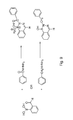
- FIGS. 16, 17, 18, 19 and 20 show fPBA or esters thereof having various second functional groups.
- FIG. 21 shows a prior art Drug-Antibody Conjugates, Trastuzumab emtansine, for HER2-positive metastatic breast cancer linked through an MCC linker to maytansine.
- FIGS. 22 and 23 show Taxol linked through a spacer modified to terminate in a formylboronic acid fPBA for coupling to monoclonal antibodies.
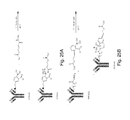
- FIGS. 24A and 24B show antibodies modified with a non-natural amino acid containing a hydrazide or a fPBA functionality.
- FIGS. 25A and 25B show a coupling of Antibody-hydrazide with fPBA-derivatized taxol and a coupling of Antibody-2fPBA with hydrazide-derivatized taxol.
- FIGS. 26A and 26B show biomolecule immobilization with hydrazide-functionalized surface and biomolecule immobilization with fPBA-functionalized surface, bead, resin, or other material
- FIG. 27 shows hydrazide-oligonucleotide immobilization on fPBA-functionalized surface, bead, resin, or other material.
- FIGS. 28 and 29 show a prior art and a new 18 F PET radionuclide, respectively.
- FIG. 30 shows a schematic depiction of metabolic labeling.
- FIGS. 31A and 31B show semicarbazide and azide derivatized sugars.
- FIG. 32 shows a generic reaction according to the present technology.
- FIGS. 33A, 33B and 33C show alternate products of the reaction.
- FIGS. 34A, 34B, 34C and 34D show alternate products of the reaction.
- FIGS. 35A and 35B show a cyclized boronic acid reaction product in anhydrous and hydrated form.
- FIG. 36 shows a tetracyclic product according to the present technology.
- FIGS. 37 and 38 show antibody linkage reactions according to the present technology.
- FIGS. 39A-39D and 40A-40C show carbonyl-substituted arylboronic acid moieties according to the present technology.
- FIG. 41 shows reaction of a boron atom bonded to a sp 2 hybridized carbon, the boron having at least one labile substituent, conjugated with a cis-carbonyl, with a second composition having an ⁇ -effect amine, in an aqueous medium, which may proceed to form further products.
- FIGS. 42A and 42B show linkage of hydrazine- and hydrazide-containing protein (bovine serum albumen) with coumarin-fPBA.
- FIG. 42C shows a UV fluorescence plot of the reaction.
- FIG. 43 shows a hydrazine-protein labeled with coumarin-fPBA imaged under long wavelength UV (left panel) and Coomassie blue dyed electrophoresis gel (right panel).
- FIG. 44 shows a coupling reaction of a thiol linked boronic acid according to the present technology.
- FIGS. 45 and 46 show prior art azide-alkyne cycloaddition coupling reactions.
- Each component o-carbonyl-substituted phenylboronic acid, alpha-effect amine-containing molecule
- the solutions are mixed such that the molar ratio of the components in the mixture is 1:1.
- the concentration of each reagent is normally 30 ⁇ M to 5 mM. Normally a single product is formed. Stereoisomers can be formed when the product contains a chirality center.
- the structure of the product is identified by 1 H, 13 C and 11 B NMR. Reactions are followed by absorption difference spectroscopy.
- Salicylaldehyde represents a typical aromatic aldehyde used in a coupling reaction.
- Ortho-formylphenylboronic acid (2f-PBA) exemplifies the effect of the boronic acid at the ortho position.
- the ⁇ -effect amine is an aromatic hydrazine, e.g., phenylhydrazine.
- the reaction is shown in FIG. 3 . Therefore the boronic acid substituted fPBA produces a stable cyclic product, while the product Sal with phenylhydrazine does not cyclize.
- 3-Formyltyrosine represents a typical aromatic aldehyde used in a coupling reaction.
- fPBA exemplifies the effect of the boronic acid at the ortho position.
- the ⁇ -effect amine is an aromatic hydrazide, e.g., 7-diethylamino coumarin 3-carbohydrazide (CHzide), as shown in FIG. 5 .
- Hydrazides react with aldehydes only very slowly at neutral pH. The corresponding reaction with a boronic acid ortho- to the aldehyde is complete in minutes.
- the 3-formyl-4-boronophenylalanine derivative would be expected to engage in similar reactions, with similar kinetics, to fPBA, in this reaction, and therefore may be used to derivatize peptides for compatibility with the present click reaction.
- 2-Acetylphenylboronic acid exemplifies a ketone-substituted phenylboronic acid.
- Acetophenone exemplifies an aromatic ketone. See FIG. 7 .
- No reaction was observed with acetophenone under the general conditions noted above.
- the reaction of 2-acetylphenylboronic acid with 7-(diethylamino) coumarin-3-carbohydrazide does lead to an adduct. Note that this reaction is faster than the reaction in example 2. This is the opposite of the normal trend for hydrazone-forming reactions.
- BSA with hydrazide functionalities was prepared by allowing oxidized BSA to react with adipic dihydrazide.
- BSA hydrazide Zide-BSA, final concentration 10 ⁇ M
- O-BSA oxidized BSA
- 20 ⁇ M C-2fPBA 20 ⁇ M C-2fPBA for 30 min in 10 mM sodium phosphate buffer (pH 7) prior to rapid gel filtration.
- the samples were excited at 340 nm, and emission spectra were collected. Each spectrum was normalized by protein concentration estimated by BCA assay. See FIGS. 42B and 42C .
- Bifunctional linkers Molecules that possess a second reactive functional groups may be used to link the boronic acid or boronic ester conjugated to a carbonyl-containing moiety to the desired partner, as shown in FIG. 16 .
- the ring may be substituted.
- a reactive functional group (R 3 ) is appended to the ring or part of a substituent attached to the ring. See FIG. 1 , left structure.
- Tyrosine hydrazide (Y-zide) is covalently bonded to the carboxyl terminus of alpha-tubulin using the enzyme tubulin tyrosine ligase as described in Mukherjee and Bane. (Mukherjee, K., and Bane, S. L. (2013) Site-specific fluorescent labeling of tubulin, In Microtubules, In Vitro 2nd ed., pp 1-12.) Y-zide-tubulin is equilibrated in PME buffer (0.1 M PIPES, 1 mM MgSO 4 , 2 mM EGTA, pH 6.9) using rapid gel filtration.
- PME buffer 0.1 M PIPES, 1 mM MgSO 4 , 2 mM EGTA, pH 6.9
- Y-zide-tubulin solution To the Y-zide-tubulin solution is added fPBA in 10 mM phosphate buffer, pH 7. The final concentration of Y-zide-tubulin and of fPBA is 93 ⁇ M. The reaction progress is monitored by absorption spectroscopy. The appearance of a shoulder at ⁇ 310 nm is indicative of product formation. See FIG. 13 .
- C-terminal hydrazide-containing proteins may be synthesized as described by Thom et al (Jennifer Thom; David Anderson; Joanne McGregor; Graham Cotton; Bioconjugate Chem. 2011, 22, 1017-1020).
- the probe or substance of interest fluorophore, nanoparticle, protein, carbohydrate, surface, etc.
- the hydrazide-containing protein is allowed to react with the probe at neutral pH at microM to millimilar concentration and 1:1 stoichiometry at room temperature for 5-60 min. Progress of the reaction may be monitored by a change in the absorption spectrum. See FIG. 15 .
- unnatural amino acid mutagenesis is a known method for adding reactive functional groups to proteins. This has been done with boronophenylalanine. (Liu, C. C., and Schultz, P. G. (2010) Adding New Chemistries to the Genetic Code, In Annual Review of Biochemistry, Vol 79 (Kornberg, R. D., Raetz, C. R. H., Rothman, J. E., and Thorner, J. W., Eds.), pp 413-444, U.S. Pat. No.
- Drug-Antibody Conjugates are provided. Procedures for coupling fluorophores to proteins are generally applicable to coupling drugs to targeting proteins such as antibodies.
- An antibody-drug complex is Trastuzumab emtansine, which has been used for HER2-positive metastatic breast cancer. Maytansine can be attached to the antibody through an MCC linker, as shown below. See, Elkins K et al. Mol Cancer Ther 2012; 11:2222-2232. See FIG. 20 .
- Taxol may be linked through a spacer modified to terminate in a formylboronic acid fPBA or a hydrazide for coupling to targeting proteins such as antibodies.
- a Taxol derivative with an amine-terminated spacer is known. Altering the spacer to terminate in an alpha-effect amine or an ortho carbonyl-phenylboronic acid allows for the drug to be attached to the appropriately modified antibody. See FIGS. 21 and 22 .
- the antibody may be expressed with unnatural amino acids, as is known with different reactive amino acids.
- a key advantage of this technology is that the drug may be coupled to the antibody quickly, at neutral pH and without excess reagent. Integrating a non-natural amino acid reduces post-production steps for the antibody, and allows the antibody to be labeled after addition to a biological system; the standard coupling procedure is not selective, and will add hydrazine functionality to all exposed cysteine residues.
- Nanoparticle-biomolecule conjugates Gold nanoparticles (1-100 nm), nanospheres and nanorods have applications in photothermal therapy and optical and contrast imaging techniques.
- Targeting nanoparticles to particular in vivo locations requires conjugation to a biological moiety.
- the gold nanostructure must first be coated with an appropriate linkers, which is generally accomplished through bifunctional thiol ligands, as shown in FIG. 45 .
- Biomolecules may be attached to a surface according to the present technology.
- 96 well plates with hydrazide functional groups are commercially available (for example, Corning Carbo-BINDTM 96 well plates).
- Biomolecules that have been covalently modified with the reactive ortho-carbonyl phenylboronic acid can then be attached to these plates by adding the desired molecule to the well. If the modified protein is an antibody, then such plates may be used for ELISA (Brillhart, K. L., and Ngo, T. T. (1991) Use Of Microwell Plates Carrying Hydrazide Groups To Enhance Antibody Immobilization In Enzyme Immunoassays, J. Immunol. Methods 144, 19-25.).
- a bifunctional ortho-carbonyl phenylboronic acid linker can also be attached to appropriately functionalized solid supports, surfaces or beads.
- immobilized phenylboronic acids are commercially available (PierceTM Boronic Acid Resin, Affi-Gel® Boronate Affinity Gel), Such surfaces would be then be available for linking to substances containing alpha-effect amines. See FIG. 26B .
- Nucleic acid conjugates are provided. Hydrazides can be appended easily to nucleic acids.
- Hydrazides can be appended easily to nucleic acids.
- a problem for preparing radiolabeled conjugates for positron emission tomography (PET) use is the short half-life of 18 F, a commonly used emitter. The longer the time required to prepare the conjugate, the less isotope will be available for patient imaging. The present technology can shorten the time to prepare the conjugate, and the reaction is stoichiometric, and the reagents and product are bioorthogonal (to the limits of 18 F radiopharmaceutical pharmacology), so a purification step is not necessary.
Landscapes
- Chemical & Material Sciences (AREA)
- Organic Chemistry (AREA)
- Health & Medical Sciences (AREA)
- Life Sciences & Earth Sciences (AREA)
- Biochemistry (AREA)
- Molecular Biology (AREA)
- General Health & Medical Sciences (AREA)
- Genetics & Genomics (AREA)
- Medicinal Chemistry (AREA)
- Inorganic Chemistry (AREA)
- Proteomics, Peptides & Aminoacids (AREA)
- Biophysics (AREA)
- Immunology (AREA)
- Engineering & Computer Science (AREA)
- Biotechnology (AREA)
- Pharmacology & Pharmacy (AREA)
- Epidemiology (AREA)
- Animal Behavior & Ethology (AREA)
- Public Health (AREA)
- Veterinary Medicine (AREA)
- Toxicology (AREA)
- Zoology (AREA)
- Gastroenterology & Hepatology (AREA)
Priority Applications (2)
| Application Number | Priority Date | Filing Date | Title |
|---|---|---|---|
| US14/694,744 US9758533B2 (en) | 2014-04-23 | 2015-04-23 | Rapid and efficient bioorthogonal ligation reaction and boron-containing heterocycles useful in conjunction therewith |
| US15/700,911 US10435418B2 (en) | 2014-04-23 | 2017-09-11 | Rapid and efficient bioorthogonal ligation reaction and boron-containing heterocycles useful in conjunction therewith |
Applications Claiming Priority (2)
| Application Number | Priority Date | Filing Date | Title |
|---|---|---|---|
| US201461983396P | 2014-04-23 | 2014-04-23 | |
| US14/694,744 US9758533B2 (en) | 2014-04-23 | 2015-04-23 | Rapid and efficient bioorthogonal ligation reaction and boron-containing heterocycles useful in conjunction therewith |
Related Child Applications (1)
| Application Number | Title | Priority Date | Filing Date |
|---|---|---|---|
| US15/700,911 Division US10435418B2 (en) | 2014-04-23 | 2017-09-11 | Rapid and efficient bioorthogonal ligation reaction and boron-containing heterocycles useful in conjunction therewith |
Publications (2)
| Publication Number | Publication Date |
|---|---|
| US20150329568A1 US20150329568A1 (en) | 2015-11-19 |
| US9758533B2 true US9758533B2 (en) | 2017-09-12 |
Family
ID=54333035
Family Applications (2)
| Application Number | Title | Priority Date | Filing Date |
|---|---|---|---|
| US14/694,744 Expired - Fee Related US9758533B2 (en) | 2014-04-23 | 2015-04-23 | Rapid and efficient bioorthogonal ligation reaction and boron-containing heterocycles useful in conjunction therewith |
| US15/700,911 Active US10435418B2 (en) | 2014-04-23 | 2017-09-11 | Rapid and efficient bioorthogonal ligation reaction and boron-containing heterocycles useful in conjunction therewith |
Family Applications After (1)
| Application Number | Title | Priority Date | Filing Date |
|---|---|---|---|
| US15/700,911 Active US10435418B2 (en) | 2014-04-23 | 2017-09-11 | Rapid and efficient bioorthogonal ligation reaction and boron-containing heterocycles useful in conjunction therewith |
Country Status (3)
| Country | Link |
|---|---|
| US (2) | US9758533B2 (de) |
| EP (1) | EP3134418A4 (de) |
| WO (1) | WO2015164213A1 (de) |
Cited By (5)
| Publication number | Priority date | Publication date | Assignee | Title |
|---|---|---|---|---|
| US20180065993A1 (en) * | 2014-04-23 | 2018-03-08 | The Research Foundation For The State University Of New York | Rapid and efficient bioorthogonal ligation reaction and boron-containing heterocycles useful in conjunction therewith |
| US11262349B2 (en) * | 2017-10-11 | 2022-03-01 | Cleveland State University | Multiplexed immune cell assays on a micropillar/microwell chip platform |
| US11390836B2 (en) | 2016-11-17 | 2022-07-19 | Cleveland State University | Chip platforms for microarray 3D bioprinting |
| US20240000947A1 (en) * | 2022-05-24 | 2024-01-04 | Encodia, Inc. | Polypeptide modification and conjugation methods |
| WO2024163405A1 (en) * | 2023-01-30 | 2024-08-08 | 5Metis, Inc. | Boron containing compounds and their uses |
Families Citing this family (4)
| Publication number | Priority date | Publication date | Assignee | Title |
|---|---|---|---|---|
| US10738338B2 (en) | 2016-10-18 | 2020-08-11 | The Research Foundation for the State University | Method and composition for biocatalytic protein-oligonucleotide conjugation and protein-oligonucleotide conjugate |
| WO2020023620A1 (en) * | 2018-07-25 | 2020-01-30 | Trustees Of Boston College | Methods and compositions of chemically modified phage libraries |
| US11655468B2 (en) | 2018-07-25 | 2023-05-23 | The Trustees Of Boston College | Methods and compositions of chemically modified phage libraries |
| CN114957681B (zh) * | 2022-04-18 | 2024-05-10 | 苏州大学 | 基于金属硼-咪唑框架的中子屏蔽材料及其制备方法 |
Citations (56)
| Publication number | Priority date | Publication date | Assignee | Title |
|---|---|---|---|---|
| US3598122A (en) | 1969-04-01 | 1971-08-10 | Alza Corp | Bandage for administering drugs |
| US3598123A (en) | 1969-04-01 | 1971-08-10 | Alza Corp | Bandage for administering drugs |
| US3710795A (en) | 1970-09-29 | 1973-01-16 | Alza Corp | Drug-delivery device with stretched, rate-controlling membrane |
| US3731683A (en) | 1971-06-04 | 1973-05-08 | Alza Corp | Bandage for the controlled metering of topical drugs to the skin |
| US3742951A (en) | 1971-08-09 | 1973-07-03 | Alza Corp | Bandage for controlled release of vasodilators |
| US3814097A (en) | 1972-02-14 | 1974-06-04 | Ici Ltd | Dressing |
| US3921636A (en) | 1973-01-15 | 1975-11-25 | Alza Corp | Novel drug delivery device |
| US3972995A (en) | 1975-04-14 | 1976-08-03 | American Home Products Corporation | Dosage form |
| US3993073A (en) | 1969-04-01 | 1976-11-23 | Alza Corporation | Novel drug delivery device |
| US3993072A (en) | 1974-08-28 | 1976-11-23 | Alza Corporation | Microporous drug delivery device |
| US3996934A (en) | 1971-08-09 | 1976-12-14 | Alza Corporation | Medical bandage |
| US4031894A (en) | 1975-12-08 | 1977-06-28 | Alza Corporation | Bandage for transdermally administering scopolamine to prevent nausea |
| US4060084A (en) | 1976-09-07 | 1977-11-29 | Alza Corporation | Method and therapeutic system for providing chemotherapy transdermally |
| US4069307A (en) | 1970-10-01 | 1978-01-17 | Alza Corporation | Drug-delivery device comprising certain polymeric materials for controlled release of drug |
| US4077407A (en) | 1975-11-24 | 1978-03-07 | Alza Corporation | Osmotic devices having composite walls |
| US4151273A (en) | 1974-10-31 | 1979-04-24 | The Regents Of The University Of California | Increasing the absorption rate of insoluble drugs |
| US4201211A (en) | 1977-07-12 | 1980-05-06 | Alza Corporation | Therapeutic system for administering clonidine transdermally |
| US4230105A (en) | 1978-11-13 | 1980-10-28 | Merck & Co., Inc. | Transdermal delivery of drugs |
| US4292303A (en) | 1979-08-14 | 1981-09-29 | Key Pharmaceuticals, Inc. | Polymeric diffusion matrix containing clonidine |
| US4292299A (en) | 1978-11-06 | 1981-09-29 | Teijin Limited | Slow-releasing medical preparation to be administered by adhering to a wet mucous surface |
| US4327725A (en) | 1980-11-25 | 1982-05-04 | Alza Corporation | Osmotic device with hydrogel driving member |
| US4343789A (en) | 1979-07-05 | 1982-08-10 | Yamanouchi Pharmaceutical Co., Ltd. | Sustained release pharmaceutical composition of solid medical material |
| US4624848A (en) | 1984-05-10 | 1986-11-25 | Ciba-Geigy Corporation | Active agent containing hydrogel devices wherein the active agent concentration profile contains a sigmoidal concentration gradient for improved constant release, their manufacture and use |
| US4968509A (en) | 1987-07-27 | 1990-11-06 | Mcneilab, Inc. | Oral sustained release acetaminophen formulation and process |
| US5033252A (en) | 1987-12-23 | 1991-07-23 | Entravision, Inc. | Method of packaging and sterilizing a pharmaceutical product |
| US5052558A (en) | 1987-12-23 | 1991-10-01 | Entravision, Inc. | Packaged pharmaceutical product |
| US5281420A (en) | 1992-05-19 | 1994-01-25 | The Procter & Gamble Company | Solid dispersion compositions of tebufelone |
| US5323907A (en) | 1992-06-23 | 1994-06-28 | Multi-Comp, Inc. | Child resistant package assembly for dispensing pharmaceutical medications |
| US5336168A (en) | 1987-05-28 | 1994-08-09 | Drug Delivery Systems Inc. | Pulsating transdermal drug delivery system |
| US5340591A (en) | 1992-01-24 | 1994-08-23 | Fujisawa Pharmaceutical Co., Ltd. | Method of producing a solid dispersion of the sparingly water-soluble drug, nilvadipine |
| US5456923A (en) | 1991-04-16 | 1995-10-10 | Nippon Shinyaku Company, Limited | Method of manufacturing solid dispersion |
| US5461140A (en) | 1992-04-30 | 1995-10-24 | Pharmaceutical Delivery Systems | Bioerodible polymers for solid controlled release pharmaceutical compositions |
| US5516527A (en) | 1989-01-12 | 1996-05-14 | Pfizer Inc. | Dispensing device powered by hydrogel |
| US5622721A (en) | 1991-11-22 | 1997-04-22 | The Procter & Gamble Company | Dosage forms of risedronate |
| US5665378A (en) | 1994-09-30 | 1997-09-09 | Davis; Roosevelt | Transdermal therapeutic formulation |
| US5686105A (en) | 1993-10-19 | 1997-11-11 | The Procter & Gamble Company | Pharmaceutical dosage form with multiple enteric polymer coatings for colonic delivery |
| US5700410A (en) | 1992-10-16 | 1997-12-23 | Nippon Shinyaku Co., Ltd. | Method of manufacturing wax matrices |
| US5700485A (en) | 1992-09-10 | 1997-12-23 | Children's Medical Center Corporation | Prolonged nerve blockade by the combination of local anesthetic and glucocorticoid |
| US5723269A (en) | 1992-07-24 | 1998-03-03 | Takeda Chemical Industries, Ltd. | Microparticle preparation and production thereof |
| US5837280A (en) | 1990-11-28 | 1998-11-17 | Sano Corporation | Transdermal administration of azapirones |
| US5869090A (en) | 1998-01-20 | 1999-02-09 | Rosenbaum; Jerry | Transdermal delivery of dehydroepiandrosterone |
| US5977175A (en) | 1995-05-17 | 1999-11-02 | Cedars-Sinai Medical Center | Methods and compositions for improving digestion and absorption in the small intestine |
| US6083518A (en) | 1995-06-20 | 2000-07-04 | Bioglan Ab | Composition comprising an active agent dissolved in a glass-forming carrier and a process for the preparation thereof |
| US6465014B1 (en) | 2001-03-21 | 2002-10-15 | Isp Investments Inc. | pH-dependent sustained release, drug-delivery composition |
| US20040013734A1 (en) | 1999-02-10 | 2004-01-22 | Pfizer Inc. | Pharmaceutical solid dispersions |
| US6923983B2 (en) | 1996-02-19 | 2005-08-02 | Acrux Dds Pty Ltd | Transdermal delivery of hormones |
| US6929801B2 (en) | 1996-02-19 | 2005-08-16 | Acrux Dds Pty Ltd | Transdermal delivery of antiparkinson agents |
| US6932983B1 (en) | 1999-05-27 | 2005-08-23 | Acusphere, Inc. | Porous drug matrices and methods of manufacture thereof |
| US6946144B1 (en) | 1998-07-08 | 2005-09-20 | Oryxe | Transdermal delivery system |
| US20090148887A1 (en) | 2007-11-02 | 2009-06-11 | The Scripps Research Institute | Genetically encoded boronate amino acid |
| WO2009126691A1 (en) | 2008-04-09 | 2009-10-15 | Infinity Pharmaceuticals, Inc | Inhibitors of fatty acid amide hydrolase |
| US20100297693A1 (en) | 2008-12-10 | 2010-11-25 | The Scripps Research Institute | Production of carrier-peptide conjugates using chemically reactive unnatural amino acids |
| US20110207147A1 (en) | 2010-02-12 | 2011-08-25 | Jewett John C | Compositions and Methods for Modification of Biomolecules |
| WO2013084198A1 (en) | 2011-12-07 | 2013-06-13 | Universidade De Lisboa | Chemical modification and bioconjugation of proteins or peptides using boron compounds |
| US8632970B2 (en) | 2005-05-09 | 2014-01-21 | Affymetrix, Inc. | Multiplex capture of nucleic acids |
| US9012463B2 (en) | 2009-10-12 | 2015-04-21 | Pharmacyclics, Inc. | Inhibitors of bruton's tyrosine kinase |
Family Cites Families (5)
| Publication number | Priority date | Publication date | Assignee | Title |
|---|---|---|---|---|
| US8236783B2 (en) * | 2006-08-15 | 2012-08-07 | Duke University | ROS-sensitive iron chelators and methods of using the same |
| US20090253161A1 (en) * | 2008-04-03 | 2009-10-08 | Duke University | Fluorescent prochelators for cellular iron detection |
| EP3134418A4 (de) * | 2014-04-23 | 2018-01-03 | The Research Foundation for The State University of New York | Schnelle und effiziente reaktion zur bioorthogonalen reaktion und borhaltige, zusammen damit nützliche heterocyclen |
| RU2017104897A (ru) * | 2014-08-08 | 2018-09-10 | Дана-Фарбер Кэнсер Инститьют, Инк. | Производные диазепана и их применения |
| EP3194359B1 (de) * | 2014-09-17 | 2020-04-08 | Intrexon Corporation | Borhaltige diacylhydrazinverbindungen |
-
2015
- 2015-04-17 EP EP15782459.0A patent/EP3134418A4/de not_active Withdrawn
- 2015-04-17 WO PCT/US2015/026456 patent/WO2015164213A1/en not_active Ceased
- 2015-04-23 US US14/694,744 patent/US9758533B2/en not_active Expired - Fee Related
-
2017
- 2017-09-11 US US15/700,911 patent/US10435418B2/en active Active
Patent Citations (61)
| Publication number | Priority date | Publication date | Assignee | Title |
|---|---|---|---|---|
| US3993073A (en) | 1969-04-01 | 1976-11-23 | Alza Corporation | Novel drug delivery device |
| US3598123A (en) | 1969-04-01 | 1971-08-10 | Alza Corp | Bandage for administering drugs |
| US3598122B1 (de) | 1969-04-01 | 1982-11-23 | ||
| US3598122A (en) | 1969-04-01 | 1971-08-10 | Alza Corp | Bandage for administering drugs |
| US3710795A (en) | 1970-09-29 | 1973-01-16 | Alza Corp | Drug-delivery device with stretched, rate-controlling membrane |
| US4069307A (en) | 1970-10-01 | 1978-01-17 | Alza Corporation | Drug-delivery device comprising certain polymeric materials for controlled release of drug |
| US3731683A (en) | 1971-06-04 | 1973-05-08 | Alza Corp | Bandage for the controlled metering of topical drugs to the skin |
| US3742951A (en) | 1971-08-09 | 1973-07-03 | Alza Corp | Bandage for controlled release of vasodilators |
| US3996934A (en) | 1971-08-09 | 1976-12-14 | Alza Corporation | Medical bandage |
| US3742951B1 (de) | 1971-08-09 | 1982-11-23 | ||
| US3814097A (en) | 1972-02-14 | 1974-06-04 | Ici Ltd | Dressing |
| US3921636A (en) | 1973-01-15 | 1975-11-25 | Alza Corp | Novel drug delivery device |
| US3993072A (en) | 1974-08-28 | 1976-11-23 | Alza Corporation | Microporous drug delivery device |
| US4151273A (en) | 1974-10-31 | 1979-04-24 | The Regents Of The University Of California | Increasing the absorption rate of insoluble drugs |
| US3972995A (en) | 1975-04-14 | 1976-08-03 | American Home Products Corporation | Dosage form |
| US4077407A (en) | 1975-11-24 | 1978-03-07 | Alza Corporation | Osmotic devices having composite walls |
| US4031894A (en) | 1975-12-08 | 1977-06-28 | Alza Corporation | Bandage for transdermally administering scopolamine to prevent nausea |
| US4060084A (en) | 1976-09-07 | 1977-11-29 | Alza Corporation | Method and therapeutic system for providing chemotherapy transdermally |
| US4201211A (en) | 1977-07-12 | 1980-05-06 | Alza Corporation | Therapeutic system for administering clonidine transdermally |
| US4292299A (en) | 1978-11-06 | 1981-09-29 | Teijin Limited | Slow-releasing medical preparation to be administered by adhering to a wet mucous surface |
| US4230105A (en) | 1978-11-13 | 1980-10-28 | Merck & Co., Inc. | Transdermal delivery of drugs |
| US4343789A (en) | 1979-07-05 | 1982-08-10 | Yamanouchi Pharmaceutical Co., Ltd. | Sustained release pharmaceutical composition of solid medical material |
| US4292303A (en) | 1979-08-14 | 1981-09-29 | Key Pharmaceuticals, Inc. | Polymeric diffusion matrix containing clonidine |
| US4327725A (en) | 1980-11-25 | 1982-05-04 | Alza Corporation | Osmotic device with hydrogel driving member |
| US4624848A (en) | 1984-05-10 | 1986-11-25 | Ciba-Geigy Corporation | Active agent containing hydrogel devices wherein the active agent concentration profile contains a sigmoidal concentration gradient for improved constant release, their manufacture and use |
| US5336168A (en) | 1987-05-28 | 1994-08-09 | Drug Delivery Systems Inc. | Pulsating transdermal drug delivery system |
| US4968509A (en) | 1987-07-27 | 1990-11-06 | Mcneilab, Inc. | Oral sustained release acetaminophen formulation and process |
| US5052558A (en) | 1987-12-23 | 1991-10-01 | Entravision, Inc. | Packaged pharmaceutical product |
| US5033252A (en) | 1987-12-23 | 1991-07-23 | Entravision, Inc. | Method of packaging and sterilizing a pharmaceutical product |
| US5516527A (en) | 1989-01-12 | 1996-05-14 | Pfizer Inc. | Dispensing device powered by hydrogel |
| US5837280A (en) | 1990-11-28 | 1998-11-17 | Sano Corporation | Transdermal administration of azapirones |
| US5456923A (en) | 1991-04-16 | 1995-10-10 | Nippon Shinyaku Company, Limited | Method of manufacturing solid dispersion |
| US5622721A (en) | 1991-11-22 | 1997-04-22 | The Procter & Gamble Company | Dosage forms of risedronate |
| US5340591A (en) | 1992-01-24 | 1994-08-23 | Fujisawa Pharmaceutical Co., Ltd. | Method of producing a solid dispersion of the sparingly water-soluble drug, nilvadipine |
| US5461140A (en) | 1992-04-30 | 1995-10-24 | Pharmaceutical Delivery Systems | Bioerodible polymers for solid controlled release pharmaceutical compositions |
| US5281420A (en) | 1992-05-19 | 1994-01-25 | The Procter & Gamble Company | Solid dispersion compositions of tebufelone |
| US5323907A (en) | 1992-06-23 | 1994-06-28 | Multi-Comp, Inc. | Child resistant package assembly for dispensing pharmaceutical medications |
| US5723269A (en) | 1992-07-24 | 1998-03-03 | Takeda Chemical Industries, Ltd. | Microparticle preparation and production thereof |
| US5700485A (en) | 1992-09-10 | 1997-12-23 | Children's Medical Center Corporation | Prolonged nerve blockade by the combination of local anesthetic and glucocorticoid |
| US5700410A (en) | 1992-10-16 | 1997-12-23 | Nippon Shinyaku Co., Ltd. | Method of manufacturing wax matrices |
| US5686105A (en) | 1993-10-19 | 1997-11-11 | The Procter & Gamble Company | Pharmaceutical dosage form with multiple enteric polymer coatings for colonic delivery |
| US5665378A (en) | 1994-09-30 | 1997-09-09 | Davis; Roosevelt | Transdermal therapeutic formulation |
| US5977175A (en) | 1995-05-17 | 1999-11-02 | Cedars-Sinai Medical Center | Methods and compositions for improving digestion and absorption in the small intestine |
| US6083518A (en) | 1995-06-20 | 2000-07-04 | Bioglan Ab | Composition comprising an active agent dissolved in a glass-forming carrier and a process for the preparation thereof |
| US6929801B2 (en) | 1996-02-19 | 2005-08-16 | Acrux Dds Pty Ltd | Transdermal delivery of antiparkinson agents |
| US6923983B2 (en) | 1996-02-19 | 2005-08-02 | Acrux Dds Pty Ltd | Transdermal delivery of hormones |
| US5869090A (en) | 1998-01-20 | 1999-02-09 | Rosenbaum; Jerry | Transdermal delivery of dehydroepiandrosterone |
| US6946144B1 (en) | 1998-07-08 | 2005-09-20 | Oryxe | Transdermal delivery system |
| US20040013734A1 (en) | 1999-02-10 | 2004-01-22 | Pfizer Inc. | Pharmaceutical solid dispersions |
| US6932983B1 (en) | 1999-05-27 | 2005-08-23 | Acusphere, Inc. | Porous drug matrices and methods of manufacture thereof |
| US6465014B1 (en) | 2001-03-21 | 2002-10-15 | Isp Investments Inc. | pH-dependent sustained release, drug-delivery composition |
| US8632970B2 (en) | 2005-05-09 | 2014-01-21 | Affymetrix, Inc. | Multiplex capture of nucleic acids |
| US20090148887A1 (en) | 2007-11-02 | 2009-06-11 | The Scripps Research Institute | Genetically encoded boronate amino acid |
| WO2009126691A1 (en) | 2008-04-09 | 2009-10-15 | Infinity Pharmaceuticals, Inc | Inhibitors of fatty acid amide hydrolase |
| US20100297693A1 (en) | 2008-12-10 | 2010-11-25 | The Scripps Research Institute | Production of carrier-peptide conjugates using chemically reactive unnatural amino acids |
| US20110312027A1 (en) | 2008-12-10 | 2011-12-22 | Travis Young | Production of Carrier-Peptide Conjugates Using Chemically Reactive Unnatural Amino Acids |
| US8609383B2 (en) | 2008-12-10 | 2013-12-17 | The Scripps Research Institute | Production of carrier-peptide conjugates using chemically reactive unnatural amino acids |
| US8637306B2 (en) | 2008-12-10 | 2014-01-28 | The Scripps Research Institute | Production of carrier-peptide conjugates using chemically reactive unnatural amino acids |
| US9012463B2 (en) | 2009-10-12 | 2015-04-21 | Pharmacyclics, Inc. | Inhibitors of bruton's tyrosine kinase |
| US20110207147A1 (en) | 2010-02-12 | 2011-08-25 | Jewett John C | Compositions and Methods for Modification of Biomolecules |
| WO2013084198A1 (en) | 2011-12-07 | 2013-06-13 | Universidade De Lisboa | Chemical modification and bioconjugation of proteins or peptides using boron compounds |
Non-Patent Citations (2)
| Title |
|---|
| International Search Report for Application No. PCT/US2015/026456 dated Aug. 27, 2015. |
| Skowronska-Serafinowa B. et al., "Arylboronic compounds. I. Some new derivatives of phenylboronic acid", Roczniki Chemii, 1961, 35, 359-364. |
Cited By (6)
| Publication number | Priority date | Publication date | Assignee | Title |
|---|---|---|---|---|
| US20180065993A1 (en) * | 2014-04-23 | 2018-03-08 | The Research Foundation For The State University Of New York | Rapid and efficient bioorthogonal ligation reaction and boron-containing heterocycles useful in conjunction therewith |
| US10435418B2 (en) * | 2014-04-23 | 2019-10-08 | The Research Foundation for the State University o | Rapid and efficient bioorthogonal ligation reaction and boron-containing heterocycles useful in conjunction therewith |
| US11390836B2 (en) | 2016-11-17 | 2022-07-19 | Cleveland State University | Chip platforms for microarray 3D bioprinting |
| US11262349B2 (en) * | 2017-10-11 | 2022-03-01 | Cleveland State University | Multiplexed immune cell assays on a micropillar/microwell chip platform |
| US20240000947A1 (en) * | 2022-05-24 | 2024-01-04 | Encodia, Inc. | Polypeptide modification and conjugation methods |
| WO2024163405A1 (en) * | 2023-01-30 | 2024-08-08 | 5Metis, Inc. | Boron containing compounds and their uses |
Also Published As
| Publication number | Publication date |
|---|---|
| US20150329568A1 (en) | 2015-11-19 |
| EP3134418A1 (de) | 2017-03-01 |
| US10435418B2 (en) | 2019-10-08 |
| EP3134418A4 (de) | 2018-01-03 |
| WO2015164213A1 (en) | 2015-10-29 |
| US20180065993A1 (en) | 2018-03-08 |
Similar Documents
| Publication | Publication Date | Title |
|---|---|---|
| US10435418B2 (en) | Rapid and efficient bioorthogonal ligation reaction and boron-containing heterocycles useful in conjunction therewith | |
| Vaishnani et al. | Biological importance and synthesis of 1, 2, 3-triazole derivatives: a review | |
| Marchetti et al. | The versatility of squaramides: from supramolecular chemistry to chemical biology | |
| Liu et al. | The unique chemistry of benzoxaboroles: current and emerging applications in biotechnology and therapeutic treatments | |
| Fang et al. | Recent advances in supramolecular gels and catalysis | |
| Finbloom et al. | Cucurbit [6] uril-promoted click chemistry for protein modification | |
| JP7028766B2 (ja) | サイクリン依存性キナーゼの阻害剤 | |
| Wang et al. | Tumor‐microenvironment‐activated in situ self‐assembly of sequentially responsive biopolymer for targeted photodynamic therapy | |
| US12042513B2 (en) | Proteolysis targeting chimeric molecules (PROTACs) with functional handles and uses thereof | |
| Musumeci et al. | Click chemistry, a potent tool in medicinal sciences | |
| Chio et al. | Click chemistry conjugations | |
| JP2021506862A (ja) | Tlr7/8アンタゴニストおよびそれらの使用 | |
| CN115666563A (zh) | 作为kras抑制剂的取代的7-(哌嗪-1-基)吡唑并[1,5-a]嘧啶类似物的组合物和方法 | |
| US11167277B2 (en) | Cu(I)-catalyzed azide-alkyne cycloadditions (CuAAC) ligands and methods for carrying out Cu(I)-catalyzed azide-alkyne cycloaddition reactions | |
| Angeli et al. | Click chemistry approaches for developing carbonic anhydrase inhibitors and their applications | |
| Li et al. | Encapsulation of vitamin B1 and its phosphate derivatives by cucurbit [7] uril: Tunability of the binding site and affinity by the presence of phosphate groups | |
| CN117337267A (zh) | 适用于点击/取消点击应用的生物正交反应 | |
| Li et al. | Multifunctional nanoprobe based on fluorescence resonance energy transfer for furin detection and drug delivery | |
| US8431521B2 (en) | Site-specific chemical modification of proteins at their N-termini, enabling the formation of homogeneous adducts | |
| US6908948B1 (en) | DNA-cleaving antitumor agents | |
| Serda et al. | In situ cellular localization of nonfluorescent [60] fullerene nanomaterial in MCF-7 breast cancer cells | |
| Jamil et al. | A recent trends on green synthesis and bioactivity of imidazole | |
| Ma et al. | A polyamine-based dinitro-naphthalimide conjugate as substrates for polyamine transporters preferentially accumulates in cancer cells and minimizes side effects in vitro and in vivo | |
| Pang et al. | Novel bioorthogonal theranostic scaffold enables on-target drug release and real time monitoring in vivo | |
| Gao et al. | Transition Metal Ru (II) Catalysts Immobilized Nanoreactors for Conditional Bioorthogonal Catalysis in Cells |
Legal Events
| Date | Code | Title | Description |
|---|---|---|---|
| AS | Assignment |
Owner name: THE RESEARCH FOUNDATION FOR THE STATE UNIVERSITY O Free format text: ASSIGNMENT OF ASSIGNORS INTEREST;ASSIGNORS:TUTTLE, SUSAN BANE;DILEK, OZLEM;MUKHERJEE, KAMALIKA;SIGNING DATES FROM 20150420 TO 20150422;REEL/FRAME:035492/0200 |
|
| STCF | Information on status: patent grant |
Free format text: PATENTED CASE |
|
| AS | Assignment |
Owner name: NATIONAL INSTITUTES OF HEALTH (NIH), U.S. DEPT. OF Free format text: CONFIRMATORY LICENSE;ASSIGNOR:STATE UNIVERSITY OF NY,BINGHAMTON;REEL/FRAME:043687/0028 Effective date: 20170825 |
|
| MAFP | Maintenance fee payment |
Free format text: PAYMENT OF MAINTENANCE FEE, 4TH YR, SMALL ENTITY (ORIGINAL EVENT CODE: M2551); ENTITY STATUS OF PATENT OWNER: SMALL ENTITY Year of fee payment: 4 |
|
| FEPP | Fee payment procedure |
Free format text: MAINTENANCE FEE REMINDER MAILED (ORIGINAL EVENT CODE: REM.); ENTITY STATUS OF PATENT OWNER: SMALL ENTITY |
|
| LAPS | Lapse for failure to pay maintenance fees |
Free format text: PATENT EXPIRED FOR FAILURE TO PAY MAINTENANCE FEES (ORIGINAL EVENT CODE: EXP.); ENTITY STATUS OF PATENT OWNER: SMALL ENTITY |
|
| STCH | Information on status: patent discontinuation |
Free format text: PATENT EXPIRED DUE TO NONPAYMENT OF MAINTENANCE FEES UNDER 37 CFR 1.362 |
|
| FP | Lapsed due to failure to pay maintenance fee |
Effective date: 20250912 |