US9604616B2 - Brake booster for a vehicle and method for operating a brake booster of a vehicle - Google Patents
Brake booster for a vehicle and method for operating a brake booster of a vehicle Download PDFInfo
- Publication number
- US9604616B2 US9604616B2 US14/378,272 US201214378272A US9604616B2 US 9604616 B2 US9604616 B2 US 9604616B2 US 201214378272 A US201214378272 A US 201214378272A US 9604616 B2 US9604616 B2 US 9604616B2
- Authority
- US
- United States
- Prior art keywords
- primary piston
- booster
- component
- force
- force transmission
- Prior art date
- Legal status (The legal status is an assumption and is not a legal conclusion. Google has not performed a legal analysis and makes no representation as to the accuracy of the status listed.)
- Expired - Fee Related, expires
Links
- 238000000034 method Methods 0.000 title claims abstract description 38
- 230000005540 biological transmission Effects 0.000 claims abstract description 102
- 239000012530 fluid Substances 0.000 claims description 32
- 230000009467 reduction Effects 0.000 claims description 2
- 230000003213 activating effect Effects 0.000 claims 1
- 230000008901 benefit Effects 0.000 description 20
- 230000000694 effects Effects 0.000 description 14
- 239000000446 fuel Substances 0.000 description 7
- 239000003344 environmental pollutant Substances 0.000 description 6
- 230000009760 functional impairment Effects 0.000 description 6
- 231100000719 pollutant Toxicity 0.000 description 6
- 230000004044 response Effects 0.000 description 5
- 230000009471 action Effects 0.000 description 3
- 238000005516 engineering process Methods 0.000 description 2
- 238000007667 floating Methods 0.000 description 2
- 238000002156 mixing Methods 0.000 description 2
- 238000007789 sealing Methods 0.000 description 2
- 230000001960 triggered effect Effects 0.000 description 2
- 230000001133 acceleration Effects 0.000 description 1
- 230000008878 coupling Effects 0.000 description 1
- 238000010168 coupling process Methods 0.000 description 1
- 238000005859 coupling reaction Methods 0.000 description 1
- 230000009849 deactivation Effects 0.000 description 1
- 230000006735 deficit Effects 0.000 description 1
- 230000001771 impaired effect Effects 0.000 description 1
- 230000006872 improvement Effects 0.000 description 1
- 239000013589 supplement Substances 0.000 description 1
Images


Classifications
-
- B—PERFORMING OPERATIONS; TRANSPORTING
- B60—VEHICLES IN GENERAL
- B60T—VEHICLE BRAKE CONTROL SYSTEMS OR PARTS THEREOF; BRAKE CONTROL SYSTEMS OR PARTS THEREOF, IN GENERAL; ARRANGEMENT OF BRAKING ELEMENTS ON VEHICLES IN GENERAL; PORTABLE DEVICES FOR PREVENTING UNWANTED MOVEMENT OF VEHICLES; VEHICLE MODIFICATIONS TO FACILITATE COOLING OF BRAKES
- B60T13/00—Transmitting braking action from initiating means to ultimate brake actuator with power assistance or drive; Brake systems incorporating such transmitting means, e.g. air-pressure brake systems
- B60T13/10—Transmitting braking action from initiating means to ultimate brake actuator with power assistance or drive; Brake systems incorporating such transmitting means, e.g. air-pressure brake systems with fluid assistance, drive, or release
- B60T13/12—Transmitting braking action from initiating means to ultimate brake actuator with power assistance or drive; Brake systems incorporating such transmitting means, e.g. air-pressure brake systems with fluid assistance, drive, or release the fluid being liquid
- B60T13/14—Transmitting braking action from initiating means to ultimate brake actuator with power assistance or drive; Brake systems incorporating such transmitting means, e.g. air-pressure brake systems with fluid assistance, drive, or release the fluid being liquid using accumulators or reservoirs fed by pumps
- B60T13/142—Systems with master cylinder
-
- B—PERFORMING OPERATIONS; TRANSPORTING
- B60—VEHICLES IN GENERAL
- B60T—VEHICLE BRAKE CONTROL SYSTEMS OR PARTS THEREOF; BRAKE CONTROL SYSTEMS OR PARTS THEREOF, IN GENERAL; ARRANGEMENT OF BRAKING ELEMENTS ON VEHICLES IN GENERAL; PORTABLE DEVICES FOR PREVENTING UNWANTED MOVEMENT OF VEHICLES; VEHICLE MODIFICATIONS TO FACILITATE COOLING OF BRAKES
- B60T11/00—Transmitting braking action from initiating means to ultimate brake actuator without power assistance or drive or where such assistance or drive is irrelevant
- B60T11/10—Transmitting braking action from initiating means to ultimate brake actuator without power assistance or drive or where such assistance or drive is irrelevant transmitting by fluid means, e.g. hydraulic
- B60T11/16—Master control, e.g. master cylinders
- B60T11/20—Tandem, side-by-side, or other multiple master cylinder units
- B60T11/203—Side-by-side configuration
-
- B—PERFORMING OPERATIONS; TRANSPORTING
- B60—VEHICLES IN GENERAL
- B60T—VEHICLE BRAKE CONTROL SYSTEMS OR PARTS THEREOF; BRAKE CONTROL SYSTEMS OR PARTS THEREOF, IN GENERAL; ARRANGEMENT OF BRAKING ELEMENTS ON VEHICLES IN GENERAL; PORTABLE DEVICES FOR PREVENTING UNWANTED MOVEMENT OF VEHICLES; VEHICLE MODIFICATIONS TO FACILITATE COOLING OF BRAKES
- B60T13/00—Transmitting braking action from initiating means to ultimate brake actuator with power assistance or drive; Brake systems incorporating such transmitting means, e.g. air-pressure brake systems
- B60T13/10—Transmitting braking action from initiating means to ultimate brake actuator with power assistance or drive; Brake systems incorporating such transmitting means, e.g. air-pressure brake systems with fluid assistance, drive, or release
- B60T13/58—Combined or convertible systems
- B60T13/588—Combined or convertible systems both fluid and mechanical assistance or drive
-
- B—PERFORMING OPERATIONS; TRANSPORTING
- B60—VEHICLES IN GENERAL
- B60T—VEHICLE BRAKE CONTROL SYSTEMS OR PARTS THEREOF; BRAKE CONTROL SYSTEMS OR PARTS THEREOF, IN GENERAL; ARRANGEMENT OF BRAKING ELEMENTS ON VEHICLES IN GENERAL; PORTABLE DEVICES FOR PREVENTING UNWANTED MOVEMENT OF VEHICLES; VEHICLE MODIFICATIONS TO FACILITATE COOLING OF BRAKES
- B60T13/00—Transmitting braking action from initiating means to ultimate brake actuator with power assistance or drive; Brake systems incorporating such transmitting means, e.g. air-pressure brake systems
- B60T13/74—Transmitting braking action from initiating means to ultimate brake actuator with power assistance or drive; Brake systems incorporating such transmitting means, e.g. air-pressure brake systems with electrical assistance or drive
- B60T13/745—Transmitting braking action from initiating means to ultimate brake actuator with power assistance or drive; Brake systems incorporating such transmitting means, e.g. air-pressure brake systems with electrical assistance or drive acting on a hydraulic system, e.g. a master cylinder
-
- B—PERFORMING OPERATIONS; TRANSPORTING
- B60—VEHICLES IN GENERAL
- B60T—VEHICLE BRAKE CONTROL SYSTEMS OR PARTS THEREOF; BRAKE CONTROL SYSTEMS OR PARTS THEREOF, IN GENERAL; ARRANGEMENT OF BRAKING ELEMENTS ON VEHICLES IN GENERAL; PORTABLE DEVICES FOR PREVENTING UNWANTED MOVEMENT OF VEHICLES; VEHICLE MODIFICATIONS TO FACILITATE COOLING OF BRAKES
- B60T7/00—Brake-action initiating means
- B60T7/02—Brake-action initiating means for personal initiation
- B60T7/04—Brake-action initiating means for personal initiation foot actuated
- B60T7/042—Brake-action initiating means for personal initiation foot actuated by electrical means, e.g. using travel or force sensors
-
- B—PERFORMING OPERATIONS; TRANSPORTING
- B60—VEHICLES IN GENERAL
- B60T—VEHICLE BRAKE CONTROL SYSTEMS OR PARTS THEREOF; BRAKE CONTROL SYSTEMS OR PARTS THEREOF, IN GENERAL; ARRANGEMENT OF BRAKING ELEMENTS ON VEHICLES IN GENERAL; PORTABLE DEVICES FOR PREVENTING UNWANTED MOVEMENT OF VEHICLES; VEHICLE MODIFICATIONS TO FACILITATE COOLING OF BRAKES
- B60T8/00—Arrangements for adjusting wheel-braking force to meet varying vehicular or ground-surface conditions, e.g. limiting or varying distribution of braking force
- B60T8/32—Arrangements for adjusting wheel-braking force to meet varying vehicular or ground-surface conditions, e.g. limiting or varying distribution of braking force responsive to a speed condition, e.g. acceleration or deceleration
- B60T8/34—Arrangements for adjusting wheel-braking force to meet varying vehicular or ground-surface conditions, e.g. limiting or varying distribution of braking force responsive to a speed condition, e.g. acceleration or deceleration having a fluid pressure regulator responsive to a speed condition
- B60T8/38—Arrangements for adjusting wheel-braking force to meet varying vehicular or ground-surface conditions, e.g. limiting or varying distribution of braking force responsive to a speed condition, e.g. acceleration or deceleration having a fluid pressure regulator responsive to a speed condition including valve means of the relay or driver controlled type
Definitions
- the present invention relates to a brake booster for a vehicle. Furthermore, the present invention relates to a method for operating a brake booster for a vehicle.
- German document DE 10 2009 055 117 A1 discusses a master brake cylinder for an hydraulic vehicle brake system and a method for its operation.
- the master brake cylinder has a rod piston that may be designated as first piston and a tube-shaped second piston.
- the first piston is able to be displaced by a specifiable piston stroke through the second piston into a first pressure chamber of the master brake cylinder.
- a driving device developed on the second piston is supposed to have the effect that the first piston takes along the second piston after overcoming the predefined piston stroke. After overcoming the predefined piston stroke, the first piston and the second piston are supposed to be able to act in common upon the first pressure chamber of the master brake cylinder.
- a second pressure chamber of the master brake cylinder is supposed to be able to be acted upon.
- the present invention creates a brake booster for a vehicle having the features described herein, a braking system having the features described herein, a method for operating a brake booster of a vehicle having the features described herein and a method for operating a brake booster of a vehicle having the features of described herein.
- the effect of a driver braking force exerted on the brake operating element/brake pedal may be reduced/eliminated.
- a second free play between the booster force transmission component and the second primary piston component it is possible to prevent a booster force exerted on the booster force transmission component from automatically effecting a braking action into the master brake cylinder.
- a braking effect of the booster force, exerted on the booster force transmission component, using the actuator device may be reduced by the development of the second free play.
- the braking force transmission component present in its force-free initial position may be at a distanced by the first free play, unequal to zero, from the first primary piston component, which is greater than a distance between the booster force transmission component present in its force-free initial position and the second primary piston component.
- the distance between the booster force transmission component in its force-free initial position and the second primary piston component may be equal to zero or unequal to zero. Consequently, even before a direct braking on the part of the driver into the master brake cylinder, an admission pressure may be built up at least in the first primary piston chamber. As will be stated more precisely below, thus, even before the driver brakes into the master brake cylinder, an air gap is able to be closed.
- the booster force transmission component present in its force-free initial position may be at a distanced by the second free play, unequal to zero, from the second primary piston component, which is greater than a distance between the braking force transmission component present in its force-free initial position and the first primary piston component.
- the distance between the braking force transmission component in its force-free initial position and the first primary piston component may, in this case, be equal to zero or unequal to zero.
- an artificially extended free play between the booster force transmission component present in its force-free initial position and the second primary piston component may be developed, which may be used for a recuperation, without this being connected to an exceeding of a setpoint deceleration of the vehicle specified by the driver.
- the brake booster may have a fluid exchange device, via which, when the fluid exchange device is present in a first operating mode, a fluid is exchangeable between the first primary piston chamber and the second primary piston chamber, and via which, when the fluid exchange device is present in a second operating mode, a fluid exchange between the first primary piston chamber and the second primary piston chamber is prevented.
- the primary brake-in volume of the master brake cylinder is able to be varied by the switching/actuating of the fluid exchange device. For example, it may be established, by the switching/controlling of the fluid exchange device into the first operating mode, that the driver and the actuator device are able to brake into an overall primary piston chamber from the first primary piston chamber and from the second primary piston chamber using a greater overall volume.
- the fluid exchange device into the second operating mode may be established, by a switching/controlling of the fluid exchange device into the second operating mode, that only the driver is able to brake in to the first primary piston chamber, that is, in a primary braking volume with only the first volume of the primary piston chamber.
- the switching/control of the fluid exchange device into the second operating mode is particularly advantageous in a mechanical fall-back plane, that is, in response to a failure/functioning impairment of the actuator device.
- the master brake cylinder may also have a secondary piston chamber and a secondary piston that is able to be adjusted between the first primary piston chamber and the secondary piston chamber.
- the advantages of the present invention are also applicable to a tandem master brake cylinder.
- the brake booster is able to have an actuator-control device using which the actuator device is able to be actuated in such a way that, at a driver braking force less than the minimum driver braking force, a specified setpoint booster force is able to be exerted, using the actuated actuator device, in such a way on the second primary piston component, that the second volume of the second primary piston chamber is reducible using the adjusted second primary piston chamber, and a fluid transfer from the second primary piston chamber into at least one wheel brake cylinder to build up an admission pressure in the at least one wheel brake cylinder is able to be triggered.
- an advantageous admission pressure is present in the at least one wheel brake cylinder.
- the actuator-control device may, for instance, also be configured to specify the setpoint booster force while taking into account at least one state of a braking system component and/or a traffic situation. Consequently, in one state of the braking system component and/or in a traffic situation in which rapid braking of the vehicle seems to be advantageous, even before a direct braking of the driver into the master brake cylinder, an admission pressure is built up in the at least one wheel brake cylinder.
- the setpoint booster force may be specified, or be specifiable, using the actuator-control device, in such a way that an air gap between at least one residual torque-free brake caliper and a brake disk is able to be closed using the built-up admission pressure.
- the brake booster may have a generator control device, which, at least at a booster force less than the minimum booster force, is configured to actuate a generator in such a way that, using the generator, a generator braking torque unequal to zero is able to be exerted.
- the braking effect of the booster force prevented by the second free play is thus able to be utilized for the more rapid charging of a vehicle battery.
- the braking system may have at least one residual torque-free brake caliper. Since, by using the build-up of an admission pressure even before the direct braking of the driver using the driver braking force, the air gap between the at least one brake caliper and the brake disk cooperating with it is already able to be closed, the braking system is able to combine the advantages of a good operating comfort with a reduced fuel consumption and a slight emission of pollutants.
- FIG. 1 shows a schematic representation of a first specific embodiment of the brake booster.
- FIGS. 2 a and 2 b show schematic partial representations of a second specific embodiment of the brake booster.
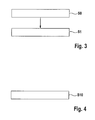
- FIG. 3 shows a flow chart for explaining a first specific embodiment of the method for operating a brake booster of a vehicle.
- FIG. 4 shows a flow chart for explaining a first second specific embodiment of the method for operating a brake booster of a vehicle.
- FIG. 1 shows a schematic illustration of a first specific development of the brake booster.
- the brake booster shown schematically in FIG. 1 is able to be used in a vehicle, which may be in a vehicle equipped with a generator.
- the brake booster may be able to be situated as a compact unit in a braking system of the vehicle.
- the brake booster may also be developed as a non-separately developed subunit of the braking system.
- the brake booster has a master brake cylinder 10 having a first primary piston chamber 12 , a first volume of the first primary piston chamber 12 being able to be varied using an adjustable first primary piston component 14 .
- a braking force transmission component 16 of the brake booster such as an output rod, is able to be situated in such a way (directly or indirectly) on a braking operation element (not shown) that at least one driver braking force is able to be transmitted via braking force transmission component 16 to first adjustable primary piston component 14 contacted by braking force transmission component 16 .
- the brake operating element may be a brake pedal, for instance. However, the practicability of the brake operating element or the braking force transmission component 16 is not limited to the exemplary embodiments enumerated here.
- Master brake cylinder 10 also has a second primary piston chamber 18 , whose second volume is able to be varied using an adjustable second primary piston component 20 .
- the brake booster also has a booster force transmission component 22 , on which a (non-sketched) actuator device is able to be positioned (directly or indirectly) in such a way, that a booster force provided by the actuator device is able to be transmitted at least partially via booster force transmission component 22 to second adjustable primary piston component 20 contacted by booster force transmission component 22 .
- the actuator device may, for instance, be a motor and/or a hydraulic system of a braking force booster.
- First primary piston component 14 and/or second primary piston component 20 may be developed as a rod piston component. We should point out, however, that the ability to develop a primary piston component 14 and 20 is not limited to a rod piston. Similarly, first primary piston component 14 and/or second primary piston component 20 may each be constructed of a plurality of subcomponents. The shape of first primary piston component 14 and of second primary piston component 20 as well are established using great freedom of configuration.
- braking force transmission component 16 that is present in its force-free initial position, is distanced from first primary piston component 14 by a first free play L 1 unequal to zero and/or booster force transmission component 22 , that is present in its force-free initial position, is distanced by a second free play L 2 unequal to zero from second primary piston component 20 .
- force-free initial position of braking force transmission component 16 one may, for example, understand a position of it in which braking force transmission component 16 is present if no driver braking force is being transmitted to it.
- booster force transmission component 22 by a force-free initial position of booster force transmission component 22 one may understand a position of it in which booster force transmission component 22 is present at a booster force equal to zero or at a deactivation of the actuator device.
- first free play L 1 unequal to zero is connected with the advantage that, in spite of a driver braking force unequal to zero, which effects an adjustment of braking force transmission component 16 , the braking of the driver braking force into master brake cylinder 10 is prevented up to a certain minimum driver braking force.
- second free play L 2 unequal to zero has the effect that, in spite of a booster force unequal to zero, which triggers an adjustment of booster force transmission component 22 , the braking of the booster force into master brake cylinder 10 is prevented up to the exceeding of the minimum booster force. This may be utilized for a plurality of advantageous utilization possibilities, which will be described more exactly below.
- braking force transmission component 16 in its force-free initial position may be present distanced by a first free play L 1 unequal to zero from first primary piston component 14 , which is greater than a distance (equal to zero or unequal to zero) between booster force transmission component 22 in its force-free initial position and second primary piston component 20 .
- first free play L 1 unequal to zero from first primary piston component 14
- booster force transmission component 22 in its force-free initial position is greater than a distance (equal to zero or unequal to zero) between booster force transmission component 22 in its force-free initial position and second primary piston component 20 .
- booster force transmission component 22 in its force-free initial position may be present distanced by a second free play L 2 unequal to zero from second primary piston component 20 , which is greater than a distance (equal to zero or unequal to zero) between braking force transmission component 16 in its force-free initial position and the first primary piston component 14 .
- a large second free play L 2 is connected with the advantage that, in spite of a booster force unequal to zero and a booster force transmission component 22 adjusted at least slightly from its force-free initial position, no additional braking pressure is built up by adjusting second primary piston component 20 .
- the braking effect dropping out because of the remaining of second primary piston component 20 in a position having a maximum second volume may be utilized for using a generator, without a vehicle deceleration specified by the driver being exceeded. Consequently, a comparatively greater second free play L 2 may be used for a more rapid charging of a vehicle battery.
- first primary piston component 14 bounds first primary piston chamber 12 with a first boundary surface F 1 .
- second primary piston chamber 18 is bounded by a second boundary surface F 2 of second primary piston component 14 . It should be pointed out that first primary piston component 14 is still able to be adjusted into master brake cylinder 10 , even when an actuator device is present in a deactivated/functionally impaired state.
- the advantageous, separate development of master brake cylinder 10 and the use of two primary piston components 14 and 20 is additionally connected with the advantage that, in response to a functional impairment of the actuator device/braking force booster device using an operations of the braking operating element, only first primary piston component 14 is to be moved, while second primary piston component 20 remains in a certain position in spite of the operation of the braking operation element by the driver.
- the driver consequently does not have to brake using the overall braking surface equal to the sum of boundary surfaces F 1 +F 2 , but only using a reduced braking surface equal to first boundary surface F 1 , into first primary piston chamber 12 of master brake cylinder 10 .
- the braking volume may be reduced in response to a functional impairment of braking force booster device 12 . This improves in addition the compensatability of a functional impairment/of a failure of the braking force booster device.
- master brake cylinder 10 may also have a secondary piston chamber 24 and a secondary piston 26 that is able to be adjusted between first primary piston chamber 12 and the secondary piston chamber 24 .
- Secondary piston 26 may be developed particularly as a floating piston.
- First primary piston chamber 12 , second primary piston chamber 18 and/or secondary piston chamber 24 may be connected via at least one brake fluid exchange opening 28 , such as a snifting bore, to a brake fluid reservoir 30 /brake fluid container.
- at least one partial separating wall 32 may have been developed, which separates the first volume of first primary piston chamber 12 from the second volume of second primary piston chamber 18 .
- each of primary piston components 14 and 20 may have its own opening 34 and 36 assigned to it.
- at least one sealing element such as a sealing ring, the trickling out of fluid may be prevented in spite of an adjustment of the respective primary piston component 14 and 20 from the respective opening 35 and 36 .
- the brake booster has a fluid exchange device 38 , via which a fluid is exchangeable between the first primary piston chamber 12 and the second primary piston chamber 18 , when fluid exchange device 38 is present in a first operating mode.
- fluid exchange device 38 may be controllable/switchable from the first operating mode at least into a second operating mode, a fluid exchange being prevented between first primary piston chamber 12 and second primary piston chamber 18 using fluid exchange device 38 when fluid exchange device 38 is present in the second operating mode.
- Fluid exchange device 38 may, for example, be a brake circuit 38 having at least one wheel brake cylinder 40 to which primary piston chambers 12 and 18 are connected.
- first brake circuit 38 For switching/controlling first brake circuit 38 between the at least two operating modes, a component (not sketched) of first brake circuit 38 may be used. (In an optional manner, secondary piston chamber 24 may also be connected to a second brake circuit 42 having at least one wheel brake cylinder 44 .) As fluid exchange device 38 one may, however, also use a valve developed in partial separating wall 32 . One particularly advantageous development of the at least one wheel brake cylinder 40 and 44 /equipment of the at least one brake circuit 38 and 42 will be further discussed below.
- the brake booster may have a booster body 46 which is situated between the actuator device and booster force transmission component 22 in such a way that the booster force is able to be transmitted to booster force transmission component 22 via booster body 46 .
- booster body 46 is able to contact braking force transmission component 16 in at least one position.
- at least one part of the booster force may also be transmitted via braking force transmission component 16 to first primary piston component 14 for the force-connected support of the driver during braking into master brake cylinder 10 . This ensures an advantageous brake operating comfort for the driver.
- FIGS. 2 a and 2 b show schematic partial illustrations of a second specific embodiment of the brake booster.
- FIGS. 2 a and 2 b show a first return spring 50 that cooperates with braking force transmission component 16 , a second return spring 52 cooperating with booster body 46 and a spring system 54 situated in first primary piston chamber 12 , via which first primary piston component 14 is supported on second piston component 26 .
- master brake cylinder 10 in the specific embodiment shown, has still a third primary piston chamber 56 , whose third volume is variable using an adjustable third primary piston component 58 .
- an additional booster force transmission component 60 at least one part of the booster force may also be transmitted by booster body 46 to third primary piston component 58 . Consequently, the advantage of the varying braking surface, which has been mentioned above, is able to be increased optionally using a refinement of master brake cylinder 10 .
- Second primary piston chamber 18 and third primary piston chamber 56 may be developed particularly symmetrically to each other with respect to a center longitudinal axis 62 of first primary piston chamber 12 .
- the refinement of master brake cylinder 10 described here is optional.
- the brake boosters described in the above paragraphs may, in one advantageous refinement, also have an actuator-control device and/or a generator-control device.
- the cooperation of the brake boosters with the actuator-control device is advantageous, provided at least braking force transmission component 16 , present in its force-free initial position, distanced by the first free play unequal to zero from first primary piston component 14 , which is able to be closed only as of a minimum driver braking force.
- the actuator-control device is of advantage if braking force transmission component 16 present in its force-free initial position may be distanced by the first free play, unequal to zero, from first primary piston component 14 , which is greater than a distance between the booster force transmission component 22 present in its force-free initial position and the second primary piston component 20 .
- the actuator-control device may be configured so that, using the actuator-control device, the actuator device is able to be actuated in such a way that for a driver braking force below the minimum driver braking force, a specified setpoint booster force is able to be exerted using the actuated actuator device on second primary piston component 20 in such a way that the second volume of second primary piston chamber 18 is reducible using the adjusted second primary piston chamber 18 , and a fluid transfer from second primary piston chamber 18 into the at least one wheel brake cylinder is able to be triggered for building up an admission pressure at least in the at least one wheel brake cylinder.
- the actuator-control device is advantageously also configured to specify the setpoint booster force while taking into account at least one state of a braking system component and/or a traffic situation.
- the setpoint booster force may be specifiable, using the actuator-control device, in such a way that an air gap between at least one residual torque-free brake caliper and a brake disk is able to be closed using the built-up admission pressure.
- the brake boosters described above may particularly be a subunit of a brake system which has at least one residual torque-free brake caliper.
- the cooperation of the brake boosters, described above, with a generator-control device is advantageous, provided at least booster force transmission component 22 , present in its force-free initial position, is present distanced by the first free play unequal to zero from first primary piston component 20 , which is able to be closed only as of a minimum driver braking force.
- the actuator-control device is of advantage if braking force transmission component 22 , present in its force-free initial position, is distanced by the second free play, unequal to zero, from second primary piston component 20 , which is greater than a distance between the booster force transmission component 16 present in its force-free initial position and first primary piston component 14 .
- the generator-control device is advantageously configured at a booster force less than the minimum booster force to actuate a generator in such a way that, using the generator, a generator brake torque unequal to zero is able to be exerted.
- the actuator-control device and/or the generator-control device may, in particular, be configured to carry out the functions explained with the aid of the methods described below. With respect to the functioning of the actuator-control device and the generator-control device, which may especially be integrated into a common electronics system, and the advantages coming about thereby, we therefore refer to the following methods.
- FIG. 3 shows a flow chart for explaining a first specific embodiment of the method for operating a brake booster of a vehicle.
- the method reproduced with the aid of FIG. 3 may be carried out using a brake booster having a master brake cylinder that has a first primary piston chamber and a second primary piston chamber, a braking force transmission component by which at least one driver braking force is transmitted to a first adjustable primary piston chamber contacted by the braking force transmission component in such a way, that a first volume of the first primary piston chamber is varied using the adjusted first primary piston component, and a booster force transmission component, with which a booster force, provided by an actuator device, is transmitted, at least partially, in such a way to a second adjustable primary piston component contacted by the booster force transmission component, that a second volume of the second primary piston chamber is varied using the adjusted second primary piston.
- the braking force transmission component in its force-free initial position is present distanced by a first free play, unequal to zero, from the first primary piston component, which is only closed as of a minimum driver braking force.
- the method is also advantageous, provided the braking force transmission component is present in its force-free initial position distanced by the first free play, unequal to zero, from the first primary piston component, which is greater than a distance between the booster force transmission component 22 present in its force-free initial position and the second primary piston component.
- the method described here is able to be executed using the brake booster described above, for example. The feasibility of the method, however, is not limited to the use of such a brake booster.
- the method has at least one method step S 1 , in which an admission pressure at least of at least one wheel brake cylinder at/in spite of a driver braking force is built up below the minimum driver braking force. This takes place by exerting a specified setpoint booster force using the actuator device.
- the setpoint booster force transmitted at least partially to the second primary piston component, effects a reduction in the second volume of the second primary piston chamber, using the adjusted second primary piston component, and triggers a fluid transfer from the second primary piston chamber into the at least one wheel brake cylinder. Consequently, even at the beginning of a direct braking of the driver into the master brake cylinder, an advantageous admission pressure is present in the at least one wheel brake cylinder.
- the method also optionally has a method step S 0 , in which the setpoint booster force is specified while taking into account at least one state of a braking system component and/or a traffic situation.
- an advantageous admission pressure is built up.
- at least one state of a braking system component such as a functional impairment of a braking system component, is taken into account when establishing the setpoint booster force.
- the setpoint booster force is specified or established so (fixedly/constantly), that an air gap between at least one brake caliper and a brake disk is closed using the built-up admission pressure even before a direct braking of the driver into the master brake cylinder.
- a residual torque-free brake caliper has an increased air gap.
- the increased air gap of the residual torque-free brake caliper is connected with the advantage that no undesired braking takes place during the non-operation of the brake operating element, and thus travel of the vehicle is possible even at slight fuel consumption and low emission of pollutants.
- a volume take-up of the associated wheel brake cylinder, which is necessary before the braking torque is effected is increased. Therefore, the driver of a vehicle having residual torque-free brake calipers, conventionally often gets the impression that that he has a “long brake pedal”, which is sometimes perceived as unsporty or unpleasant. Therefore, many drivers do not avail themselves of equipping their vehicle with residual torque-free brake calipers, in spite of the advantages connected to these with respect to lower fuel consumption and low emission of pollutants.
- the build-up of the admission pressure effected by method step S 1 has the effect of prefilling the wheel brake cylinder, however, whereby even before a direct braking of the driver into the master brake cylinder, the air gap may be overcome.
- the driver of a vehicle whose brake system is operated using the method reproduced here thus gets a normal braking feel/pedal feel, even when being equipped with residual torque-free brake calipers. Consequently, the method described here combines the advantages of an advantageous brake feel/pedal feel with reduced fuel consumption and slight emission of pollutants.
- Increased air gaps are able to be compensated for in this instance, using the method described. Because of the prefilling effected, the driver has, in any case, a shorter brake operating path/pedal path.
- the application of the method described here is able to be combined with the improved mechanical fallback level, that was described above, for instance, in response to a functional impairment of at least one brake system component, such as particularly the actuator device utilized as braking force booster.
- FIG. 4 shows a flow chart to show a second exemplary embodiment of the method for operating a brake booster of a vehicle.
- the method may be carried out using a brake booster having a master brake cylinder that has a first primary piston chamber and a second primary piston chamber, a braking force transmission component by which at least one driver braking force is transmitted to a first adjustable primary piston chamber contacted by the braking force transmission component in such a way, that a first volume of the first primary piston chamber is varied using the adjusted first primary piston component, and a booster force transmission component, with which a booster force, provided by an actuator device, is transmitted, at least partially, in such a way to a second adjustable primary piston component contacted by the booster force transmission component, that a second volume of the second primary piston chamber is varied using the adjusted second primary piston component.
- At least the booster force transmission component present in its force-free initial position is distanced by a second free play, unequal to zero, from the second primary piston component, which is closed only as of a minimum booster force.
- the method is of advantage if the booster force transmission component, present in its force-free initial position, is distanced by the second free play, unequal to zero, from the second primary piston component, which is greater than a distance between the braking force transmission component, present in its force-free initial position, and the second primary piston component.
- the method described here is able to be executed using the brake booster described above, for example.
- the feasibility of the method is not limited to the use of such a brake booster.
- the method has a method step S 10 , in which, at least in response to a booster force below the minimum booster force, a generator is activated to exert a generator braking torque unequal to zero. Consequently, the second free play between the booster force transmission component and the second primary piston component is utilized for reducing, particularly preventing, a braking effect of the actuator device, and thus to use a generator for the more rapid charging of a vehicle battery.
- the advantage is ensured that the driver is able, rapidly and reliably, to brake directly into the master brake cylinder, and thus to effect a standstill of the vehicle.
- the advantageous technology makes possible coupling an operation of the actuator device and operating the brake operating element by the driver. At the same time it is possible to decouple the driver from the brake system, within a restricted scope.
- the blending may be carried out in particular so that the driver notices no difference between electrical braking and hydraulic braking.
- an improvement of the fallback level may be achieved.
Landscapes
- Engineering & Computer Science (AREA)
- Transportation (AREA)
- Mechanical Engineering (AREA)
- Physics & Mathematics (AREA)
- Fluid Mechanics (AREA)
- Braking Systems And Boosters (AREA)
- Regulating Braking Force (AREA)
- Transmission Of Braking Force In Braking Systems (AREA)
Applications Claiming Priority (4)
| Application Number | Priority Date | Filing Date | Title |
|---|---|---|---|
| DE102012202201.5 | 2012-02-14 | ||
| DE102012202201 | 2012-02-14 | ||
| DE102012202201A DE102012202201A1 (de) | 2012-02-14 | 2012-02-14 | Bremsgerät für ein Fahrzeug und Verfahren zum Betreiben eines Bremsgeräts eines Fahrzeugs |
| PCT/EP2012/075725 WO2013120562A1 (de) | 2012-02-14 | 2012-12-17 | Bremsgerät für ein fahrzeug und verfahren zum betreiben eines bremsgeräts eines fahrzeugs |
Publications (2)
| Publication Number | Publication Date |
|---|---|
| US20150034438A1 US20150034438A1 (en) | 2015-02-05 |
| US9604616B2 true US9604616B2 (en) | 2017-03-28 |
Family
ID=47504908
Family Applications (1)
| Application Number | Title | Priority Date | Filing Date |
|---|---|---|---|
| US14/378,272 Expired - Fee Related US9604616B2 (en) | 2012-02-14 | 2012-12-17 | Brake booster for a vehicle and method for operating a brake booster of a vehicle |
Country Status (7)
| Country | Link |
|---|---|
| US (1) | US9604616B2 (de) |
| EP (1) | EP2814701B1 (de) |
| JP (1) | JP5977371B2 (de) |
| KR (1) | KR20140129020A (de) |
| CN (1) | CN104093610B (de) |
| DE (1) | DE102012202201A1 (de) |
| WO (1) | WO2013120562A1 (de) |
Families Citing this family (5)
| Publication number | Priority date | Publication date | Assignee | Title |
|---|---|---|---|---|
| DE102014213727A1 (de) | 2014-07-15 | 2016-01-21 | Robert Bosch Gmbh | Hauptbremszylinder und Bremssystem für ein Fahrzeug |
| CN107284429A (zh) * | 2016-04-13 | 2017-10-24 | 史占彪 | 柱塞式增压泵 |
| JP6840947B2 (ja) * | 2016-07-21 | 2021-03-10 | 株式会社アドヴィックス | 車両の制動制御装置 |
| JP6604311B2 (ja) * | 2016-11-01 | 2019-11-13 | トヨタ自動車株式会社 | 排気管構造 |
| DE102017208685A1 (de) * | 2017-05-23 | 2018-11-29 | Robert Bosch Gmbh | Steuervorrichtung und Verfahren zum Betreiben eines elektromechanischen Bremskraftverstärkers eines Fahrzeugs |
Citations (9)
| Publication number | Priority date | Publication date | Assignee | Title |
|---|---|---|---|---|
| US20060186733A1 (en) * | 2003-07-11 | 2006-08-24 | Continal Teves Ag & Co. Ohg | Electrohydraulic brake system for motor vehicles |
| JP2007230419A (ja) | 2006-03-02 | 2007-09-13 | Toyota Motor Corp | ブレーキ制御装置 |
| DE102007016861A1 (de) | 2007-04-10 | 2008-10-16 | Robert Bosch Gmbh | Bremskraftverstärker und Hilfskraftbremssystem für ein Fahrzeug |
| DE102009055117A1 (de) | 2009-12-22 | 2011-06-30 | Robert Bosch GmbH, 70469 | Hauptbremszylinder für eine hydraulische Fahrzeugbremsanlage und Verfahren zu ihrem Betrieb |
| CN102211573A (zh) | 2010-04-09 | 2011-10-12 | 罗伯特·博世有限公司 | 制动力放大器-耦合装置 |
| WO2012013391A1 (de) | 2010-07-28 | 2012-02-02 | Robert Bosch Gmbh | Bremssystem für ein fahrzeug und verfahren zum betreiben eines bremssystems für ein fahrzeug |
| US20130076114A1 (en) * | 2011-09-23 | 2013-03-28 | Robert Bosch Gmbh | Brake booster |
| US20130263588A1 (en) * | 2010-11-01 | 2013-10-10 | Masayuki Yoshimoto | Electric motor-driven booster |
| US20140325973A1 (en) * | 2011-09-30 | 2014-11-06 | Robert Bosch Gmbh | Primary piston assembly for a master brake cylinder of a braking system of a vehicle, manufacturing method for a braking unit, and method for operating a braking unit |
-
2012
- 2012-02-14 DE DE102012202201A patent/DE102012202201A1/de not_active Withdrawn
- 2012-12-17 KR KR1020147022663A patent/KR20140129020A/ko not_active Withdrawn
- 2012-12-17 WO PCT/EP2012/075725 patent/WO2013120562A1/de not_active Ceased
- 2012-12-17 EP EP12810200.1A patent/EP2814701B1/de not_active Not-in-force
- 2012-12-17 CN CN201280069637.5A patent/CN104093610B/zh not_active Expired - Fee Related
- 2012-12-17 US US14/378,272 patent/US9604616B2/en not_active Expired - Fee Related
- 2012-12-17 JP JP2014555108A patent/JP5977371B2/ja not_active Expired - Fee Related
Patent Citations (12)
| Publication number | Priority date | Publication date | Assignee | Title |
|---|---|---|---|---|
| US20060186733A1 (en) * | 2003-07-11 | 2006-08-24 | Continal Teves Ag & Co. Ohg | Electrohydraulic brake system for motor vehicles |
| JP2007230419A (ja) | 2006-03-02 | 2007-09-13 | Toyota Motor Corp | ブレーキ制御装置 |
| DE102007016861A1 (de) | 2007-04-10 | 2008-10-16 | Robert Bosch Gmbh | Bremskraftverstärker und Hilfskraftbremssystem für ein Fahrzeug |
| DE102009055117A1 (de) | 2009-12-22 | 2011-06-30 | Robert Bosch GmbH, 70469 | Hauptbremszylinder für eine hydraulische Fahrzeugbremsanlage und Verfahren zu ihrem Betrieb |
| CN102211573A (zh) | 2010-04-09 | 2011-10-12 | 罗伯特·博世有限公司 | 制动力放大器-耦合装置 |
| WO2012013391A1 (de) | 2010-07-28 | 2012-02-02 | Robert Bosch Gmbh | Bremssystem für ein fahrzeug und verfahren zum betreiben eines bremssystems für ein fahrzeug |
| DE102010038555A1 (de) | 2010-07-28 | 2012-02-02 | Robert Bosch Gmbh | Bremssystem für ein Fahrzeug und Verfahren zum Betreiben eines Bremssystems für ein Fahrzeug |
| US20130181506A1 (en) * | 2010-07-28 | 2013-07-18 | Reinhard Weiberle | Brake system for a vehicle and method for operating a brake system for a vehicle |
| US9061673B2 (en) * | 2010-07-28 | 2015-06-23 | Robert Bosch Gmbh | Brake system for a vehicle and method for operating a brake system for a vehicle |
| US20130263588A1 (en) * | 2010-11-01 | 2013-10-10 | Masayuki Yoshimoto | Electric motor-driven booster |
| US20130076114A1 (en) * | 2011-09-23 | 2013-03-28 | Robert Bosch Gmbh | Brake booster |
| US20140325973A1 (en) * | 2011-09-30 | 2014-11-06 | Robert Bosch Gmbh | Primary piston assembly for a master brake cylinder of a braking system of a vehicle, manufacturing method for a braking unit, and method for operating a braking unit |
Also Published As
| Publication number | Publication date |
|---|---|
| US20150034438A1 (en) | 2015-02-05 |
| CN104093610A (zh) | 2014-10-08 |
| DE102012202201A1 (de) | 2013-08-14 |
| JP5977371B2 (ja) | 2016-08-24 |
| JP2015509879A (ja) | 2015-04-02 |
| KR20140129020A (ko) | 2014-11-06 |
| WO2013120562A1 (de) | 2013-08-22 |
| CN104093610B (zh) | 2016-11-16 |
| EP2814701B1 (de) | 2016-05-11 |
| EP2814701A1 (de) | 2014-12-24 |
Similar Documents
| Publication | Publication Date | Title |
|---|---|---|
| US11110802B2 (en) | Method for operating a regenerative braking system of a vehicle and control unit for a regenerative braking system of a vehicle | |
| US9932023B2 (en) | Braking device for a braking system of a vehicle and braking system for a vehicle | |
| US9267377B2 (en) | Coupling device for connecting a brake input element to a main brake cylinder and method for operating such a coupling device | |
| US8876223B2 (en) | Brake system for motor vehicles | |
| US9964128B2 (en) | Master brake cylinder system and brake system for a vehicle | |
| KR102082307B1 (ko) | 차량 제동 시스템을 작동시키기 위한 방법 및 차량 제동 시스템용 제어 장치 | |
| US9604616B2 (en) | Brake booster for a vehicle and method for operating a brake booster of a vehicle | |
| CN102361786B (zh) | 车辆用制动装置 | |
| JP5815183B2 (ja) | 車両用ブレーキ装置 | |
| US9321436B2 (en) | Brake system for motor vehicles | |
| GB2484584A (en) | Brake actuating system having a spring between an actuating element and an ouput piston | |
| CN103562025A (zh) | 用于车辆制动系统的控制设备和运行车辆制动系统的方法 | |
| CN112654538A (zh) | 一种制动系统、制动方法及汽车 | |
| US10214188B2 (en) | Control apparatus for hydraulic components of a braking system of a vehicle, and method for executing an antilock braking function at at least one wheel brake cylinder of a vehicle | |
| CN100528651C (zh) | 用于车辆的液压制动系统和用于该系统的制动力发生器 | |
| CN106573600B (zh) | 具有复合制动能力的制动系统 | |
| US11958453B2 (en) | Method for operating a brake system, and brake system | |
| US9643582B2 (en) | Master brake cylinder for a braking system of a vehicle and method for operating a master brake cylinder | |
| CN104039615B (zh) | 用于机动车的制动系统的主制动缸和用于运行具有主制动缸的制动系统的方法 | |
| JP2010215069A (ja) | Bbw式ブレーキ装置 | |
| CN113242822B (zh) | 用于运行制动系统的方法和装置、制动系统 | |
| JP3922160B2 (ja) | 回生協調制御用ブレーキブースタ | |
| CN106458201A (zh) | 刹车装置 | |
| JP2014124969A (ja) | 車両用液圧ブレーキ装置 | |
| JP2001354132A (ja) | ブレーキ増圧マスタシリンダおよびこれを用いたブレーキシステム |
Legal Events
| Date | Code | Title | Description |
|---|---|---|---|
| AS | Assignment |
Owner name: ROBERT BOSCH GMBH, GERMANY Free format text: ASSIGNMENT OF ASSIGNORS INTEREST;ASSIGNORS:WEIBERLE, REINHARD;KISTNER, MATTHIAS;REEL/FRAME:035066/0723 Effective date: 20140919 |
|
| STCF | Information on status: patent grant |
Free format text: PATENTED CASE |
|
| FEPP | Fee payment procedure |
Free format text: MAINTENANCE FEE REMINDER MAILED (ORIGINAL EVENT CODE: REM.); ENTITY STATUS OF PATENT OWNER: LARGE ENTITY |
|
| LAPS | Lapse for failure to pay maintenance fees |
Free format text: PATENT EXPIRED FOR FAILURE TO PAY MAINTENANCE FEES (ORIGINAL EVENT CODE: EXP.); ENTITY STATUS OF PATENT OWNER: LARGE ENTITY |
|
| STCH | Information on status: patent discontinuation |
Free format text: PATENT EXPIRED DUE TO NONPAYMENT OF MAINTENANCE FEES UNDER 37 CFR 1.362 |
|
| FP | Lapsed due to failure to pay maintenance fee |
Effective date: 20210328 |