US9525139B2 - Materials for an organic electroluminescence element, electroluminescent, display and illuminating devices using the elements - Google Patents
Materials for an organic electroluminescence element, electroluminescent, display and illuminating devices using the elements Download PDFInfo
- Publication number
- US9525139B2 US9525139B2 US13/758,546 US201313758546A US9525139B2 US 9525139 B2 US9525139 B2 US 9525139B2 US 201313758546 A US201313758546 A US 201313758546A US 9525139 B2 US9525139 B2 US 9525139B2
- Authority
- US
- United States
- Prior art keywords
- group
- compound
- carbon atoms
- general formula
- light emitting
- Prior art date
- Legal status (The legal status is an assumption and is not a legal conclusion. Google has not performed a legal analysis and makes no representation as to the accuracy of the status listed.)
- Active, expires
Links
- 239000000463 material Substances 0.000 title claims description 135
- 238000005401 electroluminescence Methods 0.000 title 1
- 125000004432 carbon atom Chemical group C* 0.000 claims abstract description 317
- 239000010410 layer Substances 0.000 claims abstract description 302
- 150000001875 compounds Chemical class 0.000 claims abstract description 275
- 125000001424 substituent group Chemical group 0.000 claims abstract description 211
- 125000003118 aryl group Chemical group 0.000 claims abstract description 178
- 125000000217 alkyl group Chemical group 0.000 claims abstract description 111
- 239000012044 organic layer Substances 0.000 claims abstract description 82
- 125000001072 heteroaryl group Chemical group 0.000 claims abstract description 74
- 125000004435 hydrogen atom Chemical group [H]* 0.000 claims abstract description 73
- 239000000758 substrate Substances 0.000 claims abstract description 36
- 125000004433 nitrogen atom Chemical group N* 0.000 claims abstract description 33
- 125000005647 linker group Chemical group 0.000 claims abstract description 22
- 229910052757 nitrogen Inorganic materials 0.000 claims abstract description 22
- 229910052799 carbon Inorganic materials 0.000 claims abstract description 12
- -1 aminophenanthro triphenylene compound Chemical class 0.000 description 75
- 230000000052 comparative effect Effects 0.000 description 54
- 0 [1*]C1=C2C(=C([4*])C([3*])=C1[2*])C1=C([5*])C([6*])=C([7*])C([8*])=C1C1=C([9*])C3=C(C([18*])=C21)C1=C(C([14*])=C([15*])C([16*])=C1[17*])C1=C3C([10*])=C([11*])C([12*])=C1[13*] Chemical compound [1*]C1=C2C(=C([4*])C([3*])=C1[2*])C1=C([5*])C([6*])=C([7*])C([8*])=C1C1=C([9*])C3=C(C([18*])=C21)C1=C(C([14*])=C([15*])C([16*])=C1[17*])C1=C3C([10*])=C([11*])C([12*])=C1[13*] 0.000 description 44
- 230000000903 blocking effect Effects 0.000 description 44
- 125000001997 phenyl group Chemical group [H]C1=C([H])C([H])=C(*)C([H])=C1[H] 0.000 description 43
- 125000004093 cyano group Chemical group *C#N 0.000 description 36
- 125000000623 heterocyclic group Chemical group 0.000 description 33
- 125000003367 polycyclic group Chemical group 0.000 description 32
- 125000001153 fluoro group Chemical group F* 0.000 description 28
- 239000010408 film Substances 0.000 description 27
- OKTJSMMVPCPJKN-UHFFFAOYSA-N Carbon Chemical compound [C] OKTJSMMVPCPJKN-UHFFFAOYSA-N 0.000 description 25
- 229910052731 fluorine Inorganic materials 0.000 description 24
- 238000000034 method Methods 0.000 description 24
- 230000008859 change Effects 0.000 description 22
- 125000003277 amino group Chemical group 0.000 description 20
- 125000003545 alkoxy group Chemical group 0.000 description 18
- MWPLVEDNUUSJAV-UHFFFAOYSA-N anthracene Natural products C1=CC=CC2=CC3=CC=CC=C3C=C21 MWPLVEDNUUSJAV-UHFFFAOYSA-N 0.000 description 18
- 125000004104 aryloxy group Chemical group 0.000 description 17
- 230000015556 catabolic process Effects 0.000 description 16
- 238000006731 degradation reaction Methods 0.000 description 16
- 125000001624 naphthyl group Chemical group 0.000 description 16
- 229940125904 compound 1 Drugs 0.000 description 15
- 238000005286 illumination Methods 0.000 description 15
- 238000000859 sublimation Methods 0.000 description 15
- 230000008022 sublimation Effects 0.000 description 15
- UFWIBTONFRDIAS-UHFFFAOYSA-N Naphthalene Chemical compound C1=CC=CC2=CC=CC=C21 UFWIBTONFRDIAS-UHFFFAOYSA-N 0.000 description 14
- 125000002496 methyl group Chemical group [H]C([H])([H])* 0.000 description 14
- 125000005580 triphenylene group Chemical group 0.000 description 14
- 238000000746 purification Methods 0.000 description 13
- 125000003808 silyl group Chemical group [H][Si]([H])([H])[*] 0.000 description 13
- 238000005160 1H NMR spectroscopy Methods 0.000 description 12
- 230000015572 biosynthetic process Effects 0.000 description 12
- 229910052751 metal Inorganic materials 0.000 description 12
- 239000002184 metal Substances 0.000 description 12
- 125000004076 pyridyl group Chemical group 0.000 description 11
- 125000003342 alkenyl group Chemical group 0.000 description 10
- 125000005577 anthracene group Chemical group 0.000 description 10
- 125000005842 heteroatom Chemical group 0.000 description 10
- 125000002887 hydroxy group Chemical group [H]O* 0.000 description 10
- 238000001228 spectrum Methods 0.000 description 10
- 125000000609 carbazolyl group Chemical group C1(=CC=CC=2C3=CC=CC=C3NC12)* 0.000 description 9
- 229940126214 compound 3 Drugs 0.000 description 9
- 125000001495 ethyl group Chemical group [H]C([H])([H])C([H])([H])* 0.000 description 9
- 238000007789 sealing Methods 0.000 description 9
- 238000003786 synthesis reaction Methods 0.000 description 9
- 125000000999 tert-butyl group Chemical group [H]C([H])([H])C(*)(C([H])([H])[H])C([H])([H])[H] 0.000 description 9
- IAZDPXIOMUYVGZ-WFGJKAKNSA-N Dimethyl sulfoxide Chemical compound [2H]C([2H])([2H])S(=O)C([2H])([2H])[2H] IAZDPXIOMUYVGZ-WFGJKAKNSA-N 0.000 description 8
- 229940125782 compound 2 Drugs 0.000 description 8
- 125000000753 cycloalkyl group Chemical group 0.000 description 8
- 239000002019 doping agent Substances 0.000 description 8
- 125000005843 halogen group Chemical group 0.000 description 8
- 125000004430 oxygen atom Chemical group O* 0.000 description 8
- 239000011241 protective layer Substances 0.000 description 8
- BBEAQIROQSPTKN-UHFFFAOYSA-N pyrene Chemical compound C1=CC=C2C=CC3=CC=CC4=CC=C1C2=C43 BBEAQIROQSPTKN-UHFFFAOYSA-N 0.000 description 8
- 125000000304 alkynyl group Chemical group 0.000 description 7
- 150000001721 carbon Chemical group 0.000 description 7
- 238000000576 coating method Methods 0.000 description 7
- 230000003247 decreasing effect Effects 0.000 description 7
- 238000011156 evaluation Methods 0.000 description 7
- 239000011521 glass Substances 0.000 description 7
- 125000001449 isopropyl group Chemical group [H]C([H])([H])C([H])(*)C([H])([H])[H] 0.000 description 7
- 239000000203 mixture Substances 0.000 description 7
- 125000004434 sulfur atom Chemical group 0.000 description 7
- ZWEHNKRNPOVVGH-UHFFFAOYSA-N 2-Butanone Chemical compound CCC(C)=O ZWEHNKRNPOVVGH-UHFFFAOYSA-N 0.000 description 6
- CUFNKYGDVFVPHO-UHFFFAOYSA-N azulene Chemical compound C1=CC=CC2=CC=CC2=C1 CUFNKYGDVFVPHO-UHFFFAOYSA-N 0.000 description 6
- IOJUPLGTWVMSFF-UHFFFAOYSA-N benzothiazole Chemical compound C1=CC=C2SC=NC2=C1 IOJUPLGTWVMSFF-UHFFFAOYSA-N 0.000 description 6
- 239000011248 coating agent Substances 0.000 description 6
- 125000000113 cyclohexyl group Chemical group [H]C1([H])C([H])([H])C([H])([H])C([H])(*)C([H])([H])C1([H])[H] 0.000 description 6
- 125000004986 diarylamino group Chemical group 0.000 description 6
- 150000002430 hydrocarbons Chemical group 0.000 description 6
- RAXXELZNTBOGNW-UHFFFAOYSA-N imidazole Natural products C1=CNC=N1 RAXXELZNTBOGNW-UHFFFAOYSA-N 0.000 description 6
- YNPNZTXNASCQKK-UHFFFAOYSA-N phenanthrene Chemical compound C1=CC=C2C3=CC=CC=C3C=CC2=C1 YNPNZTXNASCQKK-UHFFFAOYSA-N 0.000 description 6
- MWWATHDPGQKSAR-UHFFFAOYSA-N propyne Chemical group CC#C MWWATHDPGQKSAR-UHFFFAOYSA-N 0.000 description 6
- 229910052717 sulfur Inorganic materials 0.000 description 6
- 125000001544 thienyl group Chemical group 0.000 description 6
- 125000001425 triazolyl group Chemical group 0.000 description 6
- SLGBZMMZGDRARJ-UHFFFAOYSA-N Triphenylene Natural products C1=CC=C2C3=CC=CC=C3C3=CC=CC=C3C2=C1 SLGBZMMZGDRARJ-UHFFFAOYSA-N 0.000 description 5
- 239000000853 adhesive Substances 0.000 description 5
- 230000001070 adhesive effect Effects 0.000 description 5
- 238000000149 argon plasma sintering Methods 0.000 description 5
- 150000004945 aromatic hydrocarbons Chemical class 0.000 description 5
- 238000006243 chemical reaction Methods 0.000 description 5
- 125000004987 dibenzofuryl group Chemical group C1(=CC=CC=2OC3=C(C21)C=CC=C3)* 0.000 description 5
- 230000000694 effects Effects 0.000 description 5
- 239000007788 liquid Substances 0.000 description 5
- 125000004123 n-propyl group Chemical group [H]C([H])([H])C([H])([H])C([H])([H])* 0.000 description 5
- 150000002894 organic compounds Chemical class 0.000 description 5
- 125000000843 phenylene group Chemical group C1(=C(C=CC=C1)*)* 0.000 description 5
- 125000000714 pyrimidinyl group Chemical group 0.000 description 5
- 239000002356 single layer Substances 0.000 description 5
- 125000000026 trimethylsilyl group Chemical group [H]C([H])([H])[Si]([*])(C([H])([H])[H])C([H])([H])[H] 0.000 description 5
- ITOFPJRDSCGOSA-KZLRUDJFSA-N (2s)-2-[[(4r)-4-[(3r,5r,8r,9s,10s,13r,14s,17r)-3-hydroxy-10,13-dimethyl-2,3,4,5,6,7,8,9,11,12,14,15,16,17-tetradecahydro-1h-cyclopenta[a]phenanthren-17-yl]pentanoyl]amino]-3-(1h-indol-3-yl)propanoic acid Chemical compound C([C@H]1CC2)[C@H](O)CC[C@]1(C)[C@@H](CC[C@]13C)[C@@H]2[C@@H]3CC[C@@H]1[C@H](C)CCC(=O)N[C@H](C(O)=O)CC1=CNC2=CC=CC=C12 ITOFPJRDSCGOSA-KZLRUDJFSA-N 0.000 description 4
- QFLWZFQWSBQYPS-AWRAUJHKSA-N (3S)-3-[[(2S)-2-[[(2S)-2-[5-[(3aS,6aR)-2-oxo-1,3,3a,4,6,6a-hexahydrothieno[3,4-d]imidazol-4-yl]pentanoylamino]-3-methylbutanoyl]amino]-3-(4-hydroxyphenyl)propanoyl]amino]-4-[1-bis(4-chlorophenoxy)phosphorylbutylamino]-4-oxobutanoic acid Chemical compound CCCC(NC(=O)[C@H](CC(O)=O)NC(=O)[C@H](Cc1ccc(O)cc1)NC(=O)[C@@H](NC(=O)CCCCC1SC[C@@H]2NC(=O)N[C@H]12)C(C)C)P(=O)(Oc1ccc(Cl)cc1)Oc1ccc(Cl)cc1 QFLWZFQWSBQYPS-AWRAUJHKSA-N 0.000 description 4
- UJOBWOGCFQCDNV-UHFFFAOYSA-N 9H-carbazole Chemical compound C1=CC=C2C3=CC=CC=C3NC2=C1 UJOBWOGCFQCDNV-UHFFFAOYSA-N 0.000 description 4
- YTPLMLYBLZKORZ-UHFFFAOYSA-N Thiophene Chemical compound C=1C=CSC=1 YTPLMLYBLZKORZ-UHFFFAOYSA-N 0.000 description 4
- 239000012790 adhesive layer Substances 0.000 description 4
- 125000002947 alkylene group Chemical group 0.000 description 4
- 125000006267 biphenyl group Chemical group 0.000 description 4
- 238000004440 column chromatography Methods 0.000 description 4
- 229940125773 compound 10 Drugs 0.000 description 4
- 229940125810 compound 20 Drugs 0.000 description 4
- 229940125898 compound 5 Drugs 0.000 description 4
- ZSWFCLXCOIISFI-UHFFFAOYSA-N cyclopentadiene Chemical compound C1C=CC=C1 ZSWFCLXCOIISFI-UHFFFAOYSA-N 0.000 description 4
- 125000001511 cyclopentyl group Chemical group [H]C1([H])C([H])([H])C([H])([H])C([H])(*)C1([H])[H] 0.000 description 4
- TXCDCPKCNAJMEE-UHFFFAOYSA-N dibenzofuran Chemical compound C1=CC=C2C3=CC=CC=C3OC2=C1 TXCDCPKCNAJMEE-UHFFFAOYSA-N 0.000 description 4
- IYYZUPMFVPLQIF-UHFFFAOYSA-N dibenzothiophene Chemical compound C1=CC=C2C3=CC=CC=C3SC2=C1 IYYZUPMFVPLQIF-UHFFFAOYSA-N 0.000 description 4
- 125000005509 dibenzothiophenyl group Chemical group 0.000 description 4
- 239000010419 fine particle Substances 0.000 description 4
- GVEPBJHOBDJJJI-UHFFFAOYSA-N fluoranthrene Natural products C1=CC(C2=CC=CC=C22)=C3C2=CC=CC3=C1 GVEPBJHOBDJJJI-UHFFFAOYSA-N 0.000 description 4
- RMBPEFMHABBEKP-UHFFFAOYSA-N fluorene Chemical compound C1=CC=C2C3=C[CH]C=CC3=CC2=C1 RMBPEFMHABBEKP-UHFFFAOYSA-N 0.000 description 4
- 125000002541 furyl group Chemical group 0.000 description 4
- 125000002883 imidazolyl group Chemical group 0.000 description 4
- 239000012535 impurity Substances 0.000 description 4
- ZLVXBBHTMQJRSX-VMGNSXQWSA-N jdtic Chemical compound C1([C@]2(C)CCN(C[C@@H]2C)C[C@H](C(C)C)NC(=O)[C@@H]2NCC3=CC(O)=CC=C3C2)=CC=CC(O)=C1 ZLVXBBHTMQJRSX-VMGNSXQWSA-N 0.000 description 4
- NIHNNTQXNPWCJQ-UHFFFAOYSA-N o-biphenylenemethane Natural products C1=CC=C2CC3=CC=CC=C3C2=C1 NIHNNTQXNPWCJQ-UHFFFAOYSA-N 0.000 description 4
- 239000011368 organic material Substances 0.000 description 4
- IEQIEDJGQAUEQZ-UHFFFAOYSA-N phthalocyanine Chemical compound N1C(N=C2C3=CC=CC=C3C(N=C3C4=CC=CC=C4C(=N4)N3)=N2)=C(C=CC=C2)C2=C1N=C1C2=CC=CC=C2C4=N1 IEQIEDJGQAUEQZ-UHFFFAOYSA-N 0.000 description 4
- 238000001953 recrystallisation Methods 0.000 description 4
- 239000013557 residual solvent Substances 0.000 description 4
- 150000003839 salts Chemical class 0.000 description 4
- 229920006395 saturated elastomer Polymers 0.000 description 4
- 125000002023 trifluoromethyl group Chemical group FC(F)(F)* 0.000 description 4
- 238000001771 vacuum deposition Methods 0.000 description 4
- 238000007740 vapor deposition Methods 0.000 description 4
- AOSZTAHDEDLTLQ-AZKQZHLXSA-N (1S,2S,4R,8S,9S,11S,12R,13S,19S)-6-[(3-chlorophenyl)methyl]-12,19-difluoro-11-hydroxy-8-(2-hydroxyacetyl)-9,13-dimethyl-6-azapentacyclo[10.8.0.02,9.04,8.013,18]icosa-14,17-dien-16-one Chemical compound C([C@@H]1C[C@H]2[C@H]3[C@]([C@]4(C=CC(=O)C=C4[C@@H](F)C3)C)(F)[C@@H](O)C[C@@]2([C@@]1(C1)C(=O)CO)C)N1CC1=CC=CC(Cl)=C1 AOSZTAHDEDLTLQ-AZKQZHLXSA-N 0.000 description 3
- SZUVGFMDDVSKSI-WIFOCOSTSA-N (1s,2s,3s,5r)-1-(carboxymethyl)-3,5-bis[(4-phenoxyphenyl)methyl-propylcarbamoyl]cyclopentane-1,2-dicarboxylic acid Chemical compound O=C([C@@H]1[C@@H]([C@](CC(O)=O)([C@H](C(=O)N(CCC)CC=2C=CC(OC=3C=CC=CC=3)=CC=2)C1)C(O)=O)C(O)=O)N(CCC)CC(C=C1)=CC=C1OC1=CC=CC=C1 SZUVGFMDDVSKSI-WIFOCOSTSA-N 0.000 description 3
- GHYOCDFICYLMRF-UTIIJYGPSA-N (2S,3R)-N-[(2S)-3-(cyclopenten-1-yl)-1-[(2R)-2-methyloxiran-2-yl]-1-oxopropan-2-yl]-3-hydroxy-3-(4-methoxyphenyl)-2-[[(2S)-2-[(2-morpholin-4-ylacetyl)amino]propanoyl]amino]propanamide Chemical compound C1(=CCCC1)C[C@@H](C(=O)[C@@]1(OC1)C)NC([C@H]([C@@H](C1=CC=C(C=C1)OC)O)NC([C@H](C)NC(CN1CCOCC1)=O)=O)=O GHYOCDFICYLMRF-UTIIJYGPSA-N 0.000 description 3
- YJTKZCDBKVTVBY-UHFFFAOYSA-N 1,3-Diphenylbenzene Chemical group C1=CC=CC=C1C1=CC=CC(C=2C=CC=CC=2)=C1 YJTKZCDBKVTVBY-UHFFFAOYSA-N 0.000 description 3
- BCMCBBGGLRIHSE-UHFFFAOYSA-N 1,3-benzoxazole Chemical compound C1=CC=C2OC=NC2=C1 BCMCBBGGLRIHSE-UHFFFAOYSA-N 0.000 description 3
- KQZLRWGGWXJPOS-NLFPWZOASA-N 1-[(1R)-1-(2,4-dichlorophenyl)ethyl]-6-[(4S,5R)-4-[(2S)-2-(hydroxymethyl)pyrrolidin-1-yl]-5-methylcyclohexen-1-yl]pyrazolo[3,4-b]pyrazine-3-carbonitrile Chemical compound ClC1=C(C=CC(=C1)Cl)[C@@H](C)N1N=C(C=2C1=NC(=CN=2)C1=CC[C@@H]([C@@H](C1)C)N1[C@@H](CCC1)CO)C#N KQZLRWGGWXJPOS-NLFPWZOASA-N 0.000 description 3
- WZZBNLYBHUDSHF-DHLKQENFSA-N 1-[(3s,4s)-4-[8-(2-chloro-4-pyrimidin-2-yloxyphenyl)-7-fluoro-2-methylimidazo[4,5-c]quinolin-1-yl]-3-fluoropiperidin-1-yl]-2-hydroxyethanone Chemical compound CC1=NC2=CN=C3C=C(F)C(C=4C(=CC(OC=5N=CC=CN=5)=CC=4)Cl)=CC3=C2N1[C@H]1CCN(C(=O)CO)C[C@@H]1F WZZBNLYBHUDSHF-DHLKQENFSA-N 0.000 description 3
- ONBQEOIKXPHGMB-VBSBHUPXSA-N 1-[2-[(2s,3r,4s,5r)-3,4-dihydroxy-5-(hydroxymethyl)oxolan-2-yl]oxy-4,6-dihydroxyphenyl]-3-(4-hydroxyphenyl)propan-1-one Chemical compound O[C@@H]1[C@H](O)[C@@H](CO)O[C@H]1OC1=CC(O)=CC(O)=C1C(=O)CCC1=CC=C(O)C=C1 ONBQEOIKXPHGMB-VBSBHUPXSA-N 0.000 description 3
- FZKCAHQKNJXICB-UHFFFAOYSA-N 2,1-benzoxazole Chemical group C1=CC=CC2=CON=C21 FZKCAHQKNJXICB-UHFFFAOYSA-N 0.000 description 3
- TVTJUIAKQFIXCE-HUKYDQBMSA-N 2-amino-9-[(2R,3S,4S,5R)-4-fluoro-3-hydroxy-5-(hydroxymethyl)oxolan-2-yl]-7-prop-2-ynyl-1H-purine-6,8-dione Chemical compound NC=1NC(C=2N(C(N(C=2N=1)[C@@H]1O[C@@H]([C@H]([C@H]1O)F)CO)=O)CC#C)=O TVTJUIAKQFIXCE-HUKYDQBMSA-N 0.000 description 3
- NPRYCHLHHVWLQZ-TURQNECASA-N 2-amino-9-[(2R,3S,4S,5R)-4-fluoro-3-hydroxy-5-(hydroxymethyl)oxolan-2-yl]-7-prop-2-ynylpurin-8-one Chemical compound NC1=NC=C2N(C(N(C2=N1)[C@@H]1O[C@@H]([C@H]([C@H]1O)F)CO)=O)CC#C NPRYCHLHHVWLQZ-TURQNECASA-N 0.000 description 3
- 125000004974 2-butenyl group Chemical group C(C=CC)* 0.000 description 3
- 125000001622 2-naphthyl group Chemical group [H]C1=C([H])C([H])=C2C([H])=C(*)C([H])=C([H])C2=C1[H] 0.000 description 3
- 125000003903 2-propenyl group Chemical group [H]C([*])([H])C([H])=C([H])[H] 0.000 description 3
- 125000001494 2-propynyl group Chemical group [H]C#CC([H])([H])* 0.000 description 3
- QBWKPGNFQQJGFY-QLFBSQMISA-N 3-[(1r)-1-[(2r,6s)-2,6-dimethylmorpholin-4-yl]ethyl]-n-[6-methyl-3-(1h-pyrazol-4-yl)imidazo[1,2-a]pyrazin-8-yl]-1,2-thiazol-5-amine Chemical compound N1([C@H](C)C2=NSC(NC=3C4=NC=C(N4C=C(C)N=3)C3=CNN=C3)=C2)C[C@H](C)O[C@H](C)C1 QBWKPGNFQQJGFY-QLFBSQMISA-N 0.000 description 3
- 125000000590 4-methylphenyl group Chemical group [H]C1=C([H])C(=C([H])C([H])=C1*)C([H])([H])[H] 0.000 description 3
- 229940126657 Compound 17 Drugs 0.000 description 3
- KFZMGEQAYNKOFK-UHFFFAOYSA-N Isopropanol Chemical compound CC(C)O KFZMGEQAYNKOFK-UHFFFAOYSA-N 0.000 description 3
- LJOOWESTVASNOG-UFJKPHDISA-N [(1s,3r,4ar,7s,8s,8as)-3-hydroxy-8-[2-[(4r)-4-hydroxy-6-oxooxan-2-yl]ethyl]-7-methyl-1,2,3,4,4a,7,8,8a-octahydronaphthalen-1-yl] (2s)-2-methylbutanoate Chemical compound C([C@H]1[C@@H](C)C=C[C@H]2C[C@@H](O)C[C@@H]([C@H]12)OC(=O)[C@@H](C)CC)CC1C[C@@H](O)CC(=O)O1 LJOOWESTVASNOG-UFJKPHDISA-N 0.000 description 3
- LNUFLCYMSVYYNW-ZPJMAFJPSA-N [(2r,3r,4s,5r,6r)-2-[(2r,3r,4s,5r,6r)-6-[(2r,3r,4s,5r,6r)-6-[(2r,3r,4s,5r,6r)-6-[[(3s,5s,8r,9s,10s,13r,14s,17r)-10,13-dimethyl-17-[(2r)-6-methylheptan-2-yl]-2,3,4,5,6,7,8,9,11,12,14,15,16,17-tetradecahydro-1h-cyclopenta[a]phenanthren-3-yl]oxy]-4,5-disulfo Chemical compound O([C@@H]1[C@@H](COS(O)(=O)=O)O[C@@H]([C@@H]([C@H]1OS(O)(=O)=O)OS(O)(=O)=O)O[C@@H]1[C@@H](COS(O)(=O)=O)O[C@@H]([C@@H]([C@H]1OS(O)(=O)=O)OS(O)(=O)=O)O[C@@H]1[C@@H](COS(O)(=O)=O)O[C@H]([C@@H]([C@H]1OS(O)(=O)=O)OS(O)(=O)=O)O[C@@H]1C[C@@H]2CC[C@H]3[C@@H]4CC[C@@H]([C@]4(CC[C@@H]3[C@@]2(C)CC1)C)[C@H](C)CCCC(C)C)[C@H]1O[C@H](COS(O)(=O)=O)[C@@H](OS(O)(=O)=O)[C@H](OS(O)(=O)=O)[C@H]1OS(O)(=O)=O LNUFLCYMSVYYNW-ZPJMAFJPSA-N 0.000 description 3
- 125000004397 aminosulfonyl group Chemical group NS(=O)(=O)* 0.000 description 3
- 125000003785 benzimidazolyl group Chemical group N1=C(NC2=C1C=CC=C2)* 0.000 description 3
- 125000001164 benzothiazolyl group Chemical group S1C(=NC2=C1C=CC=C2)* 0.000 description 3
- 125000002529 biphenylenyl group Chemical group C1(=CC=CC=2C3=CC=CC=C3C12)* 0.000 description 3
- 125000003917 carbamoyl group Chemical group [H]N([H])C(*)=O 0.000 description 3
- 229940125797 compound 12 Drugs 0.000 description 3
- 229940126543 compound 14 Drugs 0.000 description 3
- 229940126142 compound 16 Drugs 0.000 description 3
- 229940125846 compound 25 Drugs 0.000 description 3
- 229940125851 compound 27 Drugs 0.000 description 3
- 229940127204 compound 29 Drugs 0.000 description 3
- 229940125877 compound 31 Drugs 0.000 description 3
- 125000001559 cyclopropyl group Chemical group [H]C1([H])C([H])([H])C1([H])* 0.000 description 3
- 238000000151 deposition Methods 0.000 description 3
- 238000000605 extraction Methods 0.000 description 3
- 229910010272 inorganic material Inorganic materials 0.000 description 3
- 239000011147 inorganic material Substances 0.000 description 3
- 125000001786 isothiazolyl group Chemical group 0.000 description 3
- 125000000842 isoxazolyl group Chemical group 0.000 description 3
- PQXKHYXIUOZZFA-UHFFFAOYSA-M lithium fluoride Chemical compound [Li+].[F-] PQXKHYXIUOZZFA-UHFFFAOYSA-M 0.000 description 3
- 125000004957 naphthylene group Chemical group 0.000 description 3
- WCPAKWJPBJAGKN-UHFFFAOYSA-N oxadiazole Chemical compound C1=CON=N1 WCPAKWJPBJAGKN-UHFFFAOYSA-N 0.000 description 3
- 125000002971 oxazolyl group Chemical group 0.000 description 3
- 125000005010 perfluoroalkyl group Chemical group 0.000 description 3
- XDJOIMJURHQYDW-UHFFFAOYSA-N phenalene Chemical compound C1=CC(CC=C2)=C3C2=CC=CC3=C1 XDJOIMJURHQYDW-UHFFFAOYSA-N 0.000 description 3
- 238000002360 preparation method Methods 0.000 description 3
- 230000008569 process Effects 0.000 description 3
- 125000003373 pyrazinyl group Chemical group 0.000 description 3
- 125000003226 pyrazolyl group Chemical group 0.000 description 3
- 125000002098 pyridazinyl group Chemical group 0.000 description 3
- 125000000168 pyrrolyl group Chemical group 0.000 description 3
- 238000001226 reprecipitation Methods 0.000 description 3
- 229910052710 silicon Inorganic materials 0.000 description 3
- 230000003595 spectral effect Effects 0.000 description 3
- PCCVSPMFGIFTHU-UHFFFAOYSA-N tetracyanoquinodimethane Chemical class N#CC(C#N)=C1C=CC(=C(C#N)C#N)C=C1 PCCVSPMFGIFTHU-UHFFFAOYSA-N 0.000 description 3
- 238000005979 thermal decomposition reaction Methods 0.000 description 3
- 230000007704 transition Effects 0.000 description 3
- 125000000391 vinyl group Chemical group [H]C([*])=C([H])[H] 0.000 description 3
- 229920002554 vinyl polymer Polymers 0.000 description 3
- UAOUIVVJBYDFKD-XKCDOFEDSA-N (1R,9R,10S,11R,12R,15S,18S,21R)-10,11,21-trihydroxy-8,8-dimethyl-14-methylidene-4-(prop-2-enylamino)-20-oxa-5-thia-3-azahexacyclo[9.7.2.112,15.01,9.02,6.012,18]henicosa-2(6),3-dien-13-one Chemical compound C([C@@H]1[C@@H](O)[C@@]23C(C1=C)=O)C[C@H]2[C@]12C(N=C(NCC=C)S4)=C4CC(C)(C)[C@H]1[C@H](O)[C@]3(O)OC2 UAOUIVVJBYDFKD-XKCDOFEDSA-N 0.000 description 2
- IWZSHWBGHQBIML-ZGGLMWTQSA-N (3S,8S,10R,13S,14S,17S)-17-isoquinolin-7-yl-N,N,10,13-tetramethyl-2,3,4,7,8,9,11,12,14,15,16,17-dodecahydro-1H-cyclopenta[a]phenanthren-3-amine Chemical compound CN(C)[C@H]1CC[C@]2(C)C3CC[C@@]4(C)[C@@H](CC[C@@H]4c4ccc5ccncc5c4)[C@@H]3CC=C2C1 IWZSHWBGHQBIML-ZGGLMWTQSA-N 0.000 description 2
- UWRZIZXBOLBCON-VOTSOKGWSA-N (e)-2-phenylethenamine Chemical compound N\C=C\C1=CC=CC=C1 UWRZIZXBOLBCON-VOTSOKGWSA-N 0.000 description 2
- VERMWGQSKPXSPZ-BUHFOSPRSA-N 1-[(e)-2-phenylethenyl]anthracene Chemical compound C=1C=CC2=CC3=CC=CC=C3C=C2C=1\C=C\C1=CC=CC=C1 VERMWGQSKPXSPZ-BUHFOSPRSA-N 0.000 description 2
- UNILWMWFPHPYOR-KXEYIPSPSA-M 1-[6-[2-[3-[3-[3-[2-[2-[3-[[2-[2-[[(2r)-1-[[2-[[(2r)-1-[3-[2-[2-[3-[[2-(2-amino-2-oxoethoxy)acetyl]amino]propoxy]ethoxy]ethoxy]propylamino]-3-hydroxy-1-oxopropan-2-yl]amino]-2-oxoethyl]amino]-3-[(2r)-2,3-di(hexadecanoyloxy)propyl]sulfanyl-1-oxopropan-2-yl Chemical compound O=C1C(SCCC(=O)NCCCOCCOCCOCCCNC(=O)COCC(=O)N[C@@H](CSC[C@@H](COC(=O)CCCCCCCCCCCCCCC)OC(=O)CCCCCCCCCCCCCCC)C(=O)NCC(=O)N[C@H](CO)C(=O)NCCCOCCOCCOCCCNC(=O)COCC(N)=O)CC(=O)N1CCNC(=O)CCCCCN\1C2=CC=C(S([O-])(=O)=O)C=C2CC/1=C/C=C/C=C/C1=[N+](CC)C2=CC=C(S([O-])(=O)=O)C=C2C1 UNILWMWFPHPYOR-KXEYIPSPSA-M 0.000 description 2
- FCEHBMOGCRZNNI-UHFFFAOYSA-N 1-benzothiophene Chemical compound C1=CC=C2SC=CC2=C1 FCEHBMOGCRZNNI-UHFFFAOYSA-N 0.000 description 2
- 125000001637 1-naphthyl group Chemical group [H]C1=C([H])C([H])=C2C(*)=C([H])C([H])=C([H])C2=C1[H] 0.000 description 2
- SULWTXOWAFVWOY-PHEQNACWSA-N 2,3-bis[(E)-2-phenylethenyl]pyrazine Chemical compound C=1C=CC=CC=1/C=C/C1=NC=CN=C1\C=C\C1=CC=CC=C1 SULWTXOWAFVWOY-PHEQNACWSA-N 0.000 description 2
- MVWPVABZQQJTPL-UHFFFAOYSA-N 2,3-diphenylcyclohexa-2,5-diene-1,4-dione Chemical compound O=C1C=CC(=O)C(C=2C=CC=CC=2)=C1C1=CC=CC=C1 MVWPVABZQQJTPL-UHFFFAOYSA-N 0.000 description 2
- IXHWGNYCZPISET-UHFFFAOYSA-N 2-[4-(dicyanomethylidene)-2,3,5,6-tetrafluorocyclohexa-2,5-dien-1-ylidene]propanedinitrile Chemical compound FC1=C(F)C(=C(C#N)C#N)C(F)=C(F)C1=C(C#N)C#N IXHWGNYCZPISET-UHFFFAOYSA-N 0.000 description 2
- YSUIQYOGTINQIN-UZFYAQMZSA-N 2-amino-9-[(1S,6R,8R,9S,10R,15R,17R,18R)-8-(6-aminopurin-9-yl)-9,18-difluoro-3,12-dihydroxy-3,12-bis(sulfanylidene)-2,4,7,11,13,16-hexaoxa-3lambda5,12lambda5-diphosphatricyclo[13.2.1.06,10]octadecan-17-yl]-1H-purin-6-one Chemical compound NC1=NC2=C(N=CN2[C@@H]2O[C@@H]3COP(S)(=O)O[C@@H]4[C@@H](COP(S)(=O)O[C@@H]2[C@@H]3F)O[C@H]([C@H]4F)N2C=NC3=C2N=CN=C3N)C(=O)N1 YSUIQYOGTINQIN-UZFYAQMZSA-N 0.000 description 2
- 125000004105 2-pyridyl group Chemical group N1=C([*])C([H])=C([H])C([H])=C1[H] 0.000 description 2
- ZYASLTYCYTYKFC-UHFFFAOYSA-N 9-methylidenefluorene Chemical compound C1=CC=C2C(=C)C3=CC=CC=C3C2=C1 ZYASLTYCYTYKFC-UHFFFAOYSA-N 0.000 description 2
- PAYRUJLWNCNPSJ-UHFFFAOYSA-N Aniline Chemical compound NC1=CC=CC=C1 PAYRUJLWNCNPSJ-UHFFFAOYSA-N 0.000 description 2
- XKRFYHLGVUSROY-UHFFFAOYSA-N Argon Chemical compound [Ar] XKRFYHLGVUSROY-UHFFFAOYSA-N 0.000 description 2
- MGCSFXRMAFURMF-UHFFFAOYSA-N C1=CC=C2C3=CC=C(C=4C(=C5C=CC=CC5=C5C=CC=C(C=45)N)C=C4)C4=C3C=CC2=C1 Chemical group C1=CC=C2C3=CC=C(C=4C(=C5C=CC=CC5=C5C=CC=C(C=45)N)C=C4)C4=C3C=CC2=C1 MGCSFXRMAFURMF-UHFFFAOYSA-N 0.000 description 2
- KAHUOMKPZRAHNK-UHFFFAOYSA-N CC1=C(N2C(C3=CC=C(C4=CC=C(C5=CC(C6=CC(C7=NC8=C(N=CC=C8)N7C7=C(C)C=CC=C7)=CC=C6)=CC=C5)C=C4)C=C3)=NC3=C2N=CC=C3)C=CC=C1 Chemical compound CC1=C(N2C(C3=CC=C(C4=CC=C(C5=CC(C6=CC(C7=NC8=C(N=CC=C8)N7C7=C(C)C=CC=C7)=CC=C6)=CC=C5)C=C4)C=C3)=NC3=C2N=CC=C3)C=CC=C1 KAHUOMKPZRAHNK-UHFFFAOYSA-N 0.000 description 2
- KCBAMQOKOLXLOX-BSZYMOERSA-N CC1=C(SC=N1)C2=CC=C(C=C2)[C@H](C)NC(=O)[C@@H]3C[C@H](CN3C(=O)[C@H](C(C)(C)C)NC(=O)CCCCCCCCCCNCCCONC(=O)C4=C(C(=C(C=C4)F)F)NC5=C(C=C(C=C5)I)F)O Chemical compound CC1=C(SC=N1)C2=CC=C(C=C2)[C@H](C)NC(=O)[C@@H]3C[C@H](CN3C(=O)[C@H](C(C)(C)C)NC(=O)CCCCCCCCCCNCCCONC(=O)C4=C(C(=C(C=C4)F)F)NC5=C(C=C(C=C5)I)F)O KCBAMQOKOLXLOX-BSZYMOERSA-N 0.000 description 2
- YLQBMQCUIZJEEH-UHFFFAOYSA-N Furan Chemical compound C=1C=COC=1 YLQBMQCUIZJEEH-UHFFFAOYSA-N 0.000 description 2
- SIKJAQJRHWYJAI-UHFFFAOYSA-N Indole Chemical compound C1=CC=C2NC=CC2=C1 SIKJAQJRHWYJAI-UHFFFAOYSA-N 0.000 description 2
- OPFJDXRVMFKJJO-ZHHKINOHSA-N N-{[3-(2-benzamido-4-methyl-1,3-thiazol-5-yl)-pyrazol-5-yl]carbonyl}-G-dR-G-dD-dD-dD-NH2 Chemical compound S1C(C=2NN=C(C=2)C(=O)NCC(=O)N[C@H](CCCN=C(N)N)C(=O)NCC(=O)N[C@H](CC(O)=O)C(=O)N[C@H](CC(O)=O)C(=O)N[C@H](CC(O)=O)C(N)=O)=C(C)N=C1NC(=O)C1=CC=CC=C1 OPFJDXRVMFKJJO-ZHHKINOHSA-N 0.000 description 2
- ZCQWOFVYLHDMMC-UHFFFAOYSA-N Oxazole Chemical compound C1=COC=N1 ZCQWOFVYLHDMMC-UHFFFAOYSA-N 0.000 description 2
- WTKZEGDFNFYCGP-UHFFFAOYSA-N Pyrazole Chemical compound C=1C=NNC=1 WTKZEGDFNFYCGP-UHFFFAOYSA-N 0.000 description 2
- JUJWROOIHBZHMG-UHFFFAOYSA-N Pyridine Chemical compound C1=CC=NC=C1 JUJWROOIHBZHMG-UHFFFAOYSA-N 0.000 description 2
- KAESVJOAVNADME-UHFFFAOYSA-N Pyrrole Chemical compound C=1C=CNC=1 KAESVJOAVNADME-UHFFFAOYSA-N 0.000 description 2
- BUGBHKTXTAQXES-UHFFFAOYSA-N Selenium Chemical group [Se] BUGBHKTXTAQXES-UHFFFAOYSA-N 0.000 description 2
- XUIMIQQOPSSXEZ-UHFFFAOYSA-N Silicon Chemical group [Si] XUIMIQQOPSSXEZ-UHFFFAOYSA-N 0.000 description 2
- WREOTYWODABZMH-DTZQCDIJSA-N [[(2r,3s,4r,5r)-3,4-dihydroxy-5-[2-oxo-4-(2-phenylethoxyamino)pyrimidin-1-yl]oxolan-2-yl]methoxy-hydroxyphosphoryl] phosphono hydrogen phosphate Chemical compound O[C@@H]1[C@H](O)[C@@H](COP(O)(=O)OP(O)(=O)OP(O)(O)=O)O[C@H]1N(C=C\1)C(=O)NC/1=N\OCCC1=CC=CC=C1 WREOTYWODABZMH-DTZQCDIJSA-N 0.000 description 2
- 125000002252 acyl group Chemical group 0.000 description 2
- 125000004442 acylamino group Chemical group 0.000 description 2
- 125000004423 acyloxy group Chemical group 0.000 description 2
- 125000004450 alkenylene group Chemical group 0.000 description 2
- 125000004453 alkoxycarbonyl group Chemical group 0.000 description 2
- 125000004466 alkoxycarbonylamino group Chemical group 0.000 description 2
- 125000004414 alkyl thio group Chemical group 0.000 description 2
- 229910052782 aluminium Inorganic materials 0.000 description 2
- XAGFODPZIPBFFR-UHFFFAOYSA-N aluminium Chemical compound [Al] XAGFODPZIPBFFR-UHFFFAOYSA-N 0.000 description 2
- 229940058303 antinematodal benzimidazole derivative Drugs 0.000 description 2
- 150000004982 aromatic amines Chemical class 0.000 description 2
- 125000006615 aromatic heterocyclic group Chemical group 0.000 description 2
- 125000005162 aryl oxy carbonyl amino group Chemical group 0.000 description 2
- 125000005161 aryl oxy carbonyl group Chemical group 0.000 description 2
- 125000005110 aryl thio group Chemical group 0.000 description 2
- 125000000732 arylene group Chemical group 0.000 description 2
- XRWSZZJLZRKHHD-WVWIJVSJSA-N asunaprevir Chemical compound O=C([C@@H]1C[C@H](CN1C(=O)[C@@H](NC(=O)OC(C)(C)C)C(C)(C)C)OC1=NC=C(C2=CC=C(Cl)C=C21)OC)N[C@]1(C(=O)NS(=O)(=O)C2CC2)C[C@H]1C=C XRWSZZJLZRKHHD-WVWIJVSJSA-N 0.000 description 2
- 125000004429 atom Chemical group 0.000 description 2
- 125000002785 azepinyl group Chemical group 0.000 description 2
- 150000001556 benzimidazoles Chemical class 0.000 description 2
- 150000001616 biphenylenes Chemical group 0.000 description 2
- UFVXQDWNSAGPHN-UHFFFAOYSA-K bis[(2-methylquinolin-8-yl)oxy]-(4-phenylphenoxy)alumane Chemical compound [Al+3].C1=CC=C([O-])C2=NC(C)=CC=C21.C1=CC=C([O-])C2=NC(C)=CC=C21.C1=CC([O-])=CC=C1C1=CC=CC=C1 UFVXQDWNSAGPHN-UHFFFAOYSA-K 0.000 description 2
- 125000001951 carbamoylamino group Chemical group C(N)(=O)N* 0.000 description 2
- 150000001718 carbodiimides Chemical class 0.000 description 2
- 229940125758 compound 15 Drugs 0.000 description 2
- 229940126086 compound 21 Drugs 0.000 description 2
- 229940126208 compound 22 Drugs 0.000 description 2
- 229940125833 compound 23 Drugs 0.000 description 2
- 229940125961 compound 24 Drugs 0.000 description 2
- 125000006165 cyclic alkyl group Chemical group 0.000 description 2
- JHIVVAPYMSGYDF-UHFFFAOYSA-N cyclohexanone Chemical compound O=C1CCCCC1 JHIVVAPYMSGYDF-UHFFFAOYSA-N 0.000 description 2
- 230000008021 deposition Effects 0.000 description 2
- 238000011161 development Methods 0.000 description 2
- 125000004663 dialkyl amino group Chemical group 0.000 description 2
- 239000007772 electrode material Substances 0.000 description 2
- YLQWCDOCJODRMT-UHFFFAOYSA-N fluoren-9-one Chemical compound C1=CC=C2C(=O)C3=CC=CC=C3C2=C1 YLQWCDOCJODRMT-UHFFFAOYSA-N 0.000 description 2
- 230000020169 heat generation Effects 0.000 description 2
- 125000004404 heteroalkyl group Chemical group 0.000 description 2
- 150000005232 imidazopyridines Chemical class 0.000 description 2
- 239000003446 ligand Substances 0.000 description 2
- 238000004020 luminiscence type Methods 0.000 description 2
- VQSRKMNBWMHJKY-YTEVENLXSA-N n-[3-[(4ar,7as)-2-amino-6-(5-fluoropyrimidin-2-yl)-4,4a,5,7-tetrahydropyrrolo[3,4-d][1,3]thiazin-7a-yl]-4-fluorophenyl]-5-methoxypyrazine-2-carboxamide Chemical compound C1=NC(OC)=CN=C1C(=O)NC1=CC=C(F)C([C@@]23[C@@H](CN(C2)C=2N=CC(F)=CN=2)CSC(N)=N3)=C1 VQSRKMNBWMHJKY-YTEVENLXSA-N 0.000 description 2
- 125000000449 nitro group Chemical group [O-][N+](*)=O 0.000 description 2
- IJGRMHOSHXDMSA-UHFFFAOYSA-N nitrogen Substances N#N IJGRMHOSHXDMSA-UHFFFAOYSA-N 0.000 description 2
- 230000003287 optical effect Effects 0.000 description 2
- 125000001820 oxy group Chemical group [*:1]O[*:2] 0.000 description 2
- 125000002080 perylenyl group Chemical group C1(=CC=C2C=CC=C3C4=CC=CC5=CC=CC(C1=C23)=C45)* 0.000 description 2
- CSHWQDPOILHKBI-UHFFFAOYSA-N peryrene Natural products C1=CC(C2=CC=CC=3C2=C2C=CC=3)=C3C2=CC=CC3=C1 CSHWQDPOILHKBI-UHFFFAOYSA-N 0.000 description 2
- 150000005041 phenanthrolines Chemical class 0.000 description 2
- PTMHPRAIXMAOOB-UHFFFAOYSA-N phosphoric acid amide group Chemical group P(N)(O)(O)=O PTMHPRAIXMAOOB-UHFFFAOYSA-N 0.000 description 2
- 125000004437 phosphorous atom Chemical group 0.000 description 2
- 230000000704 physical effect Effects 0.000 description 2
- 125000003386 piperidinyl group Chemical group 0.000 description 2
- 125000005936 piperidyl group Chemical group 0.000 description 2
- 229920000123 polythiophene Polymers 0.000 description 2
- 150000003222 pyridines Chemical class 0.000 description 2
- MCJGNVYPOGVAJF-UHFFFAOYSA-N quinolin-8-ol Chemical class C1=CN=C2C(O)=CC=CC2=C1 MCJGNVYPOGVAJF-UHFFFAOYSA-N 0.000 description 2
- 125000005493 quinolyl group Chemical group 0.000 description 2
- 229920005989 resin Polymers 0.000 description 2
- 239000011347 resin Substances 0.000 description 2
- 229910052711 selenium Inorganic materials 0.000 description 2
- 238000004904 shortening Methods 0.000 description 2
- 150000004756 silanes Chemical class 0.000 description 2
- 125000004469 siloxy group Chemical group [SiH3]O* 0.000 description 2
- 239000002904 solvent Substances 0.000 description 2
- 238000004528 spin coating Methods 0.000 description 2
- 230000006641 stabilisation Effects 0.000 description 2
- 238000011105 stabilization Methods 0.000 description 2
- 238000006467 substitution reaction Methods 0.000 description 2
- 125000000475 sulfinyl group Chemical group [*:2]S([*:1])=O 0.000 description 2
- 125000006296 sulfonyl amino group Chemical group [H]N(*)S(*)(=O)=O 0.000 description 2
- 125000000472 sulfonyl group Chemical group *S(*)(=O)=O 0.000 description 2
- 229940042055 systemic antimycotics triazole derivative Drugs 0.000 description 2
- 229910052714 tellurium Inorganic materials 0.000 description 2
- PORWMNRCUJJQNO-UHFFFAOYSA-N tellurium atom Chemical group [Te] PORWMNRCUJJQNO-UHFFFAOYSA-N 0.000 description 2
- FHCPAXDKURNIOZ-UHFFFAOYSA-N tetrathiafulvalene Chemical compound S1C=CSC1=C1SC=CS1 FHCPAXDKURNIOZ-UHFFFAOYSA-N 0.000 description 2
- JIIYLLUYRFRKMG-UHFFFAOYSA-N tetrathianaphthacene Chemical compound C1=CC=CC2=C3SSC(C4=CC=CC=C44)=C3C3=C4SSC3=C21 JIIYLLUYRFRKMG-UHFFFAOYSA-N 0.000 description 2
- 229920001187 thermosetting polymer Polymers 0.000 description 2
- 239000010409 thin film Substances 0.000 description 2
- 125000004149 thio group Chemical group *S* 0.000 description 2
- 229930192474 thiophene Natural products 0.000 description 2
- 125000003944 tolyl group Chemical group 0.000 description 2
- 150000003852 triazoles Chemical class 0.000 description 2
- JYEUMXHLPRZUAT-UHFFFAOYSA-N 1,2,3-triazine Chemical compound C1=CN=NN=C1 JYEUMXHLPRZUAT-UHFFFAOYSA-N 0.000 description 1
- GEYOCULIXLDCMW-UHFFFAOYSA-N 1,2-phenylenediamine Chemical compound NC1=CC=CC=C1N GEYOCULIXLDCMW-UHFFFAOYSA-N 0.000 description 1
- KLCLIOISYBHYDZ-UHFFFAOYSA-N 1,4,4-triphenylbuta-1,3-dienylbenzene Chemical compound C=1C=CC=CC=1C(C=1C=CC=CC=1)=CC=C(C=1C=CC=CC=1)C1=CC=CC=C1 KLCLIOISYBHYDZ-UHFFFAOYSA-N 0.000 description 1
- 125000004973 1-butenyl group Chemical group C(=CCC)* 0.000 description 1
- GUPMCMZMDAGSPF-UHFFFAOYSA-N 1-phenylbuta-1,3-dienylbenzene Chemical compound C=1C=CC=CC=1[C](C=C[CH2])C1=CC=CC=C1 GUPMCMZMDAGSPF-UHFFFAOYSA-N 0.000 description 1
- 125000006017 1-propenyl group Chemical group 0.000 description 1
- 125000000530 1-propynyl group Chemical group [H]C([H])([H])C#C* 0.000 description 1
- HYZJCKYKOHLVJF-UHFFFAOYSA-N 1H-benzimidazole Chemical compound C1=CC=C2NC=NC2=C1 HYZJCKYKOHLVJF-UHFFFAOYSA-N 0.000 description 1
- BAXOFTOLAUCFNW-UHFFFAOYSA-N 1H-indazole Chemical compound C1=CC=C2C=NNC2=C1 BAXOFTOLAUCFNW-UHFFFAOYSA-N 0.000 description 1
- XWIYUCRMWCHYJR-UHFFFAOYSA-N 1h-pyrrolo[3,2-b]pyridine Chemical compound C1=CC=C2NC=CC2=N1 XWIYUCRMWCHYJR-UHFFFAOYSA-N 0.000 description 1
- YQTCQNIPQMJNTI-UHFFFAOYSA-N 2,2-dimethylpropan-1-one Chemical group CC(C)(C)[C]=O YQTCQNIPQMJNTI-UHFFFAOYSA-N 0.000 description 1
- STTGYIUESPWXOW-UHFFFAOYSA-N 2,9-dimethyl-4,7-diphenyl-1,10-phenanthroline Chemical compound C=12C=CC3=C(C=4C=CC=CC=4)C=C(C)N=C3C2=NC(C)=CC=1C1=CC=CC=C1 STTGYIUESPWXOW-UHFFFAOYSA-N 0.000 description 1
- 125000002941 2-furyl group Chemical group O1C([*])=C([H])C([H])=C1[H] 0.000 description 1
- NEAQRZUHTPSBBM-UHFFFAOYSA-N 2-hydroxy-3,3-dimethyl-7-nitro-4h-isoquinolin-1-one Chemical compound C1=C([N+]([O-])=O)C=C2C(=O)N(O)C(C)(C)CC2=C1 NEAQRZUHTPSBBM-UHFFFAOYSA-N 0.000 description 1
- 125000005979 2-naphthyloxy group Chemical group 0.000 description 1
- MGADZUXDNSDTHW-UHFFFAOYSA-N 2H-pyran Chemical compound C1OC=CC=C1 MGADZUXDNSDTHW-UHFFFAOYSA-N 0.000 description 1
- DMEVMYSQZPJFOK-UHFFFAOYSA-N 3,4,5,6,9,10-hexazatetracyclo[12.4.0.02,7.08,13]octadeca-1(18),2(7),3,5,8(13),9,11,14,16-nonaene Chemical group N1=NN=C2C3=CC=CC=C3C3=CC=NN=C3C2=N1 DMEVMYSQZPJFOK-UHFFFAOYSA-N 0.000 description 1
- YFCSASDLEBELEU-UHFFFAOYSA-N 3,4,5,6,9,10-hexazatetracyclo[12.4.0.02,7.08,13]octadeca-1(18),2(7),3,5,8(13),9,11,14,16-nonaene-11,12,15,16,17,18-hexacarbonitrile Chemical group N#CC1=C(C#N)C(C#N)=C2C3=C(C#N)C(C#N)=NN=C3C3=NN=NN=C3C2=C1C#N YFCSASDLEBELEU-UHFFFAOYSA-N 0.000 description 1
- GOLORTLGFDVFDW-UHFFFAOYSA-N 3-(1h-benzimidazol-2-yl)-7-(diethylamino)chromen-2-one Chemical compound C1=CC=C2NC(C3=CC4=CC=C(C=C4OC3=O)N(CC)CC)=NC2=C1 GOLORTLGFDVFDW-UHFFFAOYSA-N 0.000 description 1
- YXVFYQXJAXKLAK-UHFFFAOYSA-M 4-phenylphenolate Chemical compound C1=CC([O-])=CC=C1C1=CC=CC=C1 YXVFYQXJAXKLAK-UHFFFAOYSA-M 0.000 description 1
- ZCYVEMRRCGMTRW-UHFFFAOYSA-N 7553-56-2 Chemical group [I] ZCYVEMRRCGMTRW-UHFFFAOYSA-N 0.000 description 1
- BPMFPOGUJAAYHL-UHFFFAOYSA-N 9H-Pyrido[2,3-b]indole Chemical compound C1=CC=C2C3=CC=CC=C3NC2=N1 BPMFPOGUJAAYHL-UHFFFAOYSA-N 0.000 description 1
- WKBOTKDWSSQWDR-UHFFFAOYSA-N Bromine atom Chemical group [Br] WKBOTKDWSSQWDR-UHFFFAOYSA-N 0.000 description 1
- SQASVDNTCXHFCM-GQLWLIOKSA-M C1=CC(C2=CC(C3=CC=CC4=C3SC3=C4C=CC=C3)=CC=C2)=CC(C2=CC=CC3=C2SC2=C3C=CC=C2)=C1.C1=CC=C(C2=C3C=CC=CC3=C(C3=CC=C(N4C5=C(C=CC=C5)C5=C4C=CC=C5)C=C3)C3=CC=CC=C32)C=C1.C1=CC=C(C2=CC=CC=C2N2C(C3=CC=C(C4=CC=C(C5=NC6=C(N=CC=C6)N5C5=C(C6=CC=CC=C6)C=CC=C5)C=C4)C=C3)=NC3=C2N=CC=C3)C=C1.C1=CC=C(C2=NC(C3=CC=CC=C3)=NC(C3=CC(C4=CC=C(N5C6=C(C=CC=C6)C6=C5C=CC=C6)C=C4)=CC=C3)=C2)C=C1.C1=CC=C(C2=NC3=C(C=CC=C3)N2C2=CC=C(C3=C4C=CC=CC4=C(C4=CC5=CC=CC=C5C=C4)C4=CC=CC=C43)C=C2)C=C1.C1=CC=C(N2C3=C(C=CC=C3)/N=C\2C2=CC=C(C3=CC4=C(C5=CC=C6C=CC=CC6=C5)C5=CC=CC=C5C(C5=CC6=CC=CC=C6C=C5)=C4C=C3)C=C2)C=C1.C1=CC=C2C=C(C3=C4C=CC=CC4=C(C4=CC=C(C5=C6C=CC=CC6=CC=C5)C=C4)C4=CC=CC=C43)C=CC2=C1.C1=CC=C2C=C(C3=CC=C4C=C(C5=CC=CC(C6=C7/C=C\C=C8\C9=CC=CC=C9C(=C78)C=C6)=C5)C=CC4=C3)C=CC2=C1.C1=CN2=C3C(=C1)/C=C\C=C/3O[AlH]2.[2H]C1=C([2H])C([2H])=C(C2=C3C=CC=CC3=C(C3=CC=C(C4=C5C=CC=CC5=CC=C4)C=C3)C3=CC=CC=C32)C([2H])=C1[2H] Chemical compound C1=CC(C2=CC(C3=CC=CC4=C3SC3=C4C=CC=C3)=CC=C2)=CC(C2=CC=CC3=C2SC2=C3C=CC=C2)=C1.C1=CC=C(C2=C3C=CC=CC3=C(C3=CC=C(N4C5=C(C=CC=C5)C5=C4C=CC=C5)C=C3)C3=CC=CC=C32)C=C1.C1=CC=C(C2=CC=CC=C2N2C(C3=CC=C(C4=CC=C(C5=NC6=C(N=CC=C6)N5C5=C(C6=CC=CC=C6)C=CC=C5)C=C4)C=C3)=NC3=C2N=CC=C3)C=C1.C1=CC=C(C2=NC(C3=CC=CC=C3)=NC(C3=CC(C4=CC=C(N5C6=C(C=CC=C6)C6=C5C=CC=C6)C=C4)=CC=C3)=C2)C=C1.C1=CC=C(C2=NC3=C(C=CC=C3)N2C2=CC=C(C3=C4C=CC=CC4=C(C4=CC5=CC=CC=C5C=C4)C4=CC=CC=C43)C=C2)C=C1.C1=CC=C(N2C3=C(C=CC=C3)/N=C\2C2=CC=C(C3=CC4=C(C5=CC=C6C=CC=CC6=C5)C5=CC=CC=C5C(C5=CC6=CC=CC=C6C=C5)=C4C=C3)C=C2)C=C1.C1=CC=C2C=C(C3=C4C=CC=CC4=C(C4=CC=C(C5=C6C=CC=CC6=CC=C5)C=C4)C4=CC=CC=C43)C=CC2=C1.C1=CC=C2C=C(C3=CC=C4C=C(C5=CC=CC(C6=C7/C=C\C=C8\C9=CC=CC=C9C(=C78)C=C6)=C5)C=CC4=C3)C=CC2=C1.C1=CN2=C3C(=C1)/C=C\C=C/3O[AlH]2.[2H]C1=C([2H])C([2H])=C(C2=C3C=CC=CC3=C(C3=CC=C(C4=C5C=CC=CC5=CC=C4)C=C3)C3=CC=CC=C32)C([2H])=C1[2H] SQASVDNTCXHFCM-GQLWLIOKSA-M 0.000 description 1
- OEGXVCAQQBISOA-UHFFFAOYSA-N C1=CC2=C(C=C1)N(C1=CC=C(N(C3=CC=C(N4C5=C(C=CC=C5)C5=C4C=CC=C5)C=C3)C3=CC=C(N4C5=C(C=CC=C5)C5=C4C=CC=C5)C=C3)C=C1)C1=C2C=CC=C1.C1=CC=C(N(C2=CC=C(N3C4=C(C=CC=C4)C4=C3C=CC=C4)C=C2)C2=CC=C(N3C4=C(C=CC=C4)C4=C3C=CC=C4)C=C2)C=C1.C1=CC=C(N(C2=CC=CC=C2)C2=CC=CC(C3=CC=CC(N(C4=CC=CC=C4)C4=CC=CC=C4)=C3)=C2)C=C1.CC1=CC=C(N(C2=CC=C(C)C=C2)C2=CC=C(C3(C4=CC=C(N(C5=CC=C(C)C=C5)C5=CC=C(C)C=C5)C=C4)CCCCC3)C=C2)C=C1.CC1=CC=C(N(C2=CC=C(C)C=C2)C2=CC=C([Si](C3=CC=CC=C3)(C3=CC=CC=C3)C3=CC=C(N(C4=CC=C(C)C=C4)C4=CC=C(C)C=C4)C=C3)C=C2)C=C1.CC1=CC=C(N(C2=CC=C(C)C=C2)C2=CC=CC(N(C3=CC=C(C)C=C3)C3=CC=C(C)C=C3)=C2)C=C1.CC1=CC=CC(N(C2=CC=C(C3=C(C)C=C(N(C4=CC=CC(C)=C4)C4=CC=CC(C)=C4)C=C3)C(C)=C2)C2=CC(C)=CC=C2)=C1 Chemical compound C1=CC2=C(C=C1)N(C1=CC=C(N(C3=CC=C(N4C5=C(C=CC=C5)C5=C4C=CC=C5)C=C3)C3=CC=C(N4C5=C(C=CC=C5)C5=C4C=CC=C5)C=C3)C=C1)C1=C2C=CC=C1.C1=CC=C(N(C2=CC=C(N3C4=C(C=CC=C4)C4=C3C=CC=C4)C=C2)C2=CC=C(N3C4=C(C=CC=C4)C4=C3C=CC=C4)C=C2)C=C1.C1=CC=C(N(C2=CC=CC=C2)C2=CC=CC(C3=CC=CC(N(C4=CC=CC=C4)C4=CC=CC=C4)=C3)=C2)C=C1.CC1=CC=C(N(C2=CC=C(C)C=C2)C2=CC=C(C3(C4=CC=C(N(C5=CC=C(C)C=C5)C5=CC=C(C)C=C5)C=C4)CCCCC3)C=C2)C=C1.CC1=CC=C(N(C2=CC=C(C)C=C2)C2=CC=C([Si](C3=CC=CC=C3)(C3=CC=CC=C3)C3=CC=C(N(C4=CC=C(C)C=C4)C4=CC=C(C)C=C4)C=C3)C=C2)C=C1.CC1=CC=C(N(C2=CC=C(C)C=C2)C2=CC=CC(N(C3=CC=C(C)C=C3)C3=CC=C(C)C=C3)=C2)C=C1.CC1=CC=CC(N(C2=CC=C(C3=C(C)C=C(N(C4=CC=CC(C)=C4)C4=CC=CC(C)=C4)C=C3)C(C)=C2)C2=CC(C)=CC=C2)=C1 OEGXVCAQQBISOA-UHFFFAOYSA-N 0.000 description 1
- BDUMXANKPDCZMG-UHFFFAOYSA-N C1=CC2=CC=CC(N3C(C4=CC(/C5=N/C6=C(N=CC=C6)N5C5=C6N=CC=CC6=CC=C5)=CC(/C5=N/C6=C(N=CC=C6)N5C5=C6N=CC=CC6=CC=C5)=C4)=NC4=C3N=CC=C4)=C2N=C1.C1=CC=C(C2=C(N3C(C4=CC(/C5=N/C6=C(C=CC=C6)N5C5=C(C6=CC=CC=C6)C=CC=C5)=CC(/C5=N/C6=C(C=CC=C6)N5C5=C(C6=CC=CC=C6)C=CC=C5)=C4)=NC4=C3C=CC=C4)C=CC=C2)C=C1.C1=CC=C(C2=C(N3C(C4=CC(/C5=N/C6=C(N=CC=C6)N5C5=C(C6=CC=CC=C6)C=CC=C5)=CC(/C5=N/C6=C(N=CC=C6)N5C5=C(C6=CC=CC=C6)C=CC=C5)=C4)=NC4=C3N=CC=C4)C=CC=C2)C=C1.C1=CC=C(C2=CC=CC(N3C(C4=CC(/C5=N/C6=C(N=CC=C6)N5C5=CC(C6=CC=CC=C6)=CC=C5)=CC(/C5=N/C6=C(N=CC=C6)N5C5=CC(C6=CC=CC=C6)=CC=C5)=C4)=NC4=C3N=CC=C4)=C2)C=C1.C1=CC=C(N2C(C3=CC=C(C4=NC5=C(C=CC=N5)N4C4=CC=CC=C4)C=C3)=NC3=C2C=CC=N3)C=C1.CC(C)(C)C1=CC=C(N2C(C3=CC(/C4=N/C5=C(C=CC=C5)N4C4=CC=C(C(C)(C)C)C=C4)=CC(/C4=N/C5=C(C=CC=C5)N4C4=CC=C(C(C)(C)C)C=C4)=C3)=NC3=C2C=CC=C3)C=C1 Chemical compound C1=CC2=CC=CC(N3C(C4=CC(/C5=N/C6=C(N=CC=C6)N5C5=C6N=CC=CC6=CC=C5)=CC(/C5=N/C6=C(N=CC=C6)N5C5=C6N=CC=CC6=CC=C5)=C4)=NC4=C3N=CC=C4)=C2N=C1.C1=CC=C(C2=C(N3C(C4=CC(/C5=N/C6=C(C=CC=C6)N5C5=C(C6=CC=CC=C6)C=CC=C5)=CC(/C5=N/C6=C(C=CC=C6)N5C5=C(C6=CC=CC=C6)C=CC=C5)=C4)=NC4=C3C=CC=C4)C=CC=C2)C=C1.C1=CC=C(C2=C(N3C(C4=CC(/C5=N/C6=C(N=CC=C6)N5C5=C(C6=CC=CC=C6)C=CC=C5)=CC(/C5=N/C6=C(N=CC=C6)N5C5=C(C6=CC=CC=C6)C=CC=C5)=C4)=NC4=C3N=CC=C4)C=CC=C2)C=C1.C1=CC=C(C2=CC=CC(N3C(C4=CC(/C5=N/C6=C(N=CC=C6)N5C5=CC(C6=CC=CC=C6)=CC=C5)=CC(/C5=N/C6=C(N=CC=C6)N5C5=CC(C6=CC=CC=C6)=CC=C5)=C4)=NC4=C3N=CC=C4)=C2)C=C1.C1=CC=C(N2C(C3=CC=C(C4=NC5=C(C=CC=N5)N4C4=CC=CC=C4)C=C3)=NC3=C2C=CC=N3)C=C1.CC(C)(C)C1=CC=C(N2C(C3=CC(/C4=N/C5=C(C=CC=C5)N4C4=CC=C(C(C)(C)C)C=C4)=CC(/C4=N/C5=C(C=CC=C5)N4C4=CC=C(C(C)(C)C)C=C4)=C3)=NC3=C2C=CC=C3)C=C1 BDUMXANKPDCZMG-UHFFFAOYSA-N 0.000 description 1
- UHJDEIIUHMSYFD-UHFFFAOYSA-N C1=CC2=NC=CN2C=C1.C1=CC=C2C=CC=CC2=C1.CC.CC.CC.CC.CC.CC1=NC2=C(C=CC=C2)N1C.CCC.CCC.CCC.CCC1=NC2=C(C=CC=C2)N1C.CCN1C(C)=NC2=C1C=CC=C2 Chemical compound C1=CC2=NC=CN2C=C1.C1=CC=C2C=CC=CC2=C1.CC.CC.CC.CC.CC.CC1=NC2=C(C=CC=C2)N1C.CCC.CCC.CCC.CCC1=NC2=C(C=CC=C2)N1C.CCN1C(C)=NC2=C1C=CC=C2 UHJDEIIUHMSYFD-UHFFFAOYSA-N 0.000 description 1
- JUJDBTDVYFQUGA-UHFFFAOYSA-N C1=CC=C(/C2=C(C3=CC=C(C4=CC5=C(C6=CC7=CC=CC=C7C=C6)C6=CC=CC=C6C(C6=CC=C7C=CC=CC7=C6)=C5C=C4)C=C3)/N=C3/C=CC=CN32)C=C1.C1=CC=C(C2=C3C=CC=CC3=C(C3=CC=CC(C4=CC=C5C=CC=CC5=C4)=C3)C3=CC=CC=C32)C=C1.C1=CC=C2C=C(C3=C4C=C(C5=CN=C(C6=CN=C7C=CC=CC7=C6)C=C5)C=CC4=C(C4=CC=C5C=CC=CC5=C4)C4=CC=CC=C43)C=CC2=C1.CC1(C)C2=C(C=CC(C3=CC=C(C4=C5\C=C/C6=CC=CC7=CC=C(\C=C/4)C5=C76)C=C3)=C2)C2=C1/C=C(C1=C3\C=C/C4=CC=CC5=CC=C(\C=C/1)C3=C54)\C=C/2.CC1=CC=C(C2=CC(C3=CC=CC=C3)=CC=C2)C=C1C1=C2C=CC=CC2=C(C2=CC=CC=C2)C2=CC=CC=C21 Chemical compound C1=CC=C(/C2=C(C3=CC=C(C4=CC5=C(C6=CC7=CC=CC=C7C=C6)C6=CC=CC=C6C(C6=CC=C7C=CC=CC7=C6)=C5C=C4)C=C3)/N=C3/C=CC=CN32)C=C1.C1=CC=C(C2=C3C=CC=CC3=C(C3=CC=CC(C4=CC=C5C=CC=CC5=C4)=C3)C3=CC=CC=C32)C=C1.C1=CC=C2C=C(C3=C4C=C(C5=CN=C(C6=CN=C7C=CC=CC7=C6)C=C5)C=CC4=C(C4=CC=C5C=CC=CC5=C4)C4=CC=CC=C43)C=CC2=C1.CC1(C)C2=C(C=CC(C3=CC=C(C4=C5\C=C/C6=CC=CC7=CC=C(\C=C/4)C5=C76)C=C3)=C2)C2=C1/C=C(C1=C3\C=C/C4=CC=CC5=CC=C(\C=C/1)C3=C54)\C=C/2.CC1=CC=C(C2=CC(C3=CC=CC=C3)=CC=C2)C=C1C1=C2C=CC=CC2=C(C2=CC=CC=C2)C2=CC=CC=C21 JUJDBTDVYFQUGA-UHFFFAOYSA-N 0.000 description 1
- JJWWPFJJOSGDNE-UHFFFAOYSA-N C1=CC=C(/C2=C3\C=CC=C\C3=C(/C3=CC=C(C4=CC=C5C6=CC=CC=C6C6=CC=CC=C6C5=C4)C=C3)C3=CC=CC=C32)C=C1.C1=CC=C(C2=C3C=CC=CC3=C(C3=CC=C(C4=CC=C5C6=CC=C(C7=CC=C(/C8=C9\C=CC=C\C9=C(/C9=CC=CC=C9)C9=CC=CC=C98)C=C7)C=C6C6=CC=CC=C6C5=C4)C=C3)C3=CC=CC=C32)C=C1.C1=CC=C(C2=C3C=CC=CC3=C(C3=CC=C4C5=CC=C(/C6=C7\C=CC=C\C7=C(/C7=CC=CC=C7)C7=CC=CC=C76)C=C5C5=CC=CC=C5C4=C3)C3=CC=CC=C32)C=C1.C1=CC=C(C2=CC=C(C3=C4C=CC(C5=CC6=C(C=C5)C5=CC=CC=C5C5=CC=CC=C56)=CC4=C(C4=CC=C(C5=CC=CC=C5)C=C4)C4=CC=CC=C43)C=C2)C=C1.CC1(C)C2=CC=CC=C2C2=CC=C(C3=C4C=C(C5=CC6=C(C=C5)C5=CC=CC=C5C5=CC=CC=C56)C=CC4=C(C4=CC5=C(C=C4)C4=C(C=CC=C4)C5(C)C)C4=CC=CC=C43)C=C21 Chemical compound C1=CC=C(/C2=C3\C=CC=C\C3=C(/C3=CC=C(C4=CC=C5C6=CC=CC=C6C6=CC=CC=C6C5=C4)C=C3)C3=CC=CC=C32)C=C1.C1=CC=C(C2=C3C=CC=CC3=C(C3=CC=C(C4=CC=C5C6=CC=C(C7=CC=C(/C8=C9\C=CC=C\C9=C(/C9=CC=CC=C9)C9=CC=CC=C98)C=C7)C=C6C6=CC=CC=C6C5=C4)C=C3)C3=CC=CC=C32)C=C1.C1=CC=C(C2=C3C=CC=CC3=C(C3=CC=C4C5=CC=C(/C6=C7\C=CC=C\C7=C(/C7=CC=CC=C7)C7=CC=CC=C76)C=C5C5=CC=CC=C5C4=C3)C3=CC=CC=C32)C=C1.C1=CC=C(C2=CC=C(C3=C4C=CC(C5=CC6=C(C=C5)C5=CC=CC=C5C5=CC=CC=C56)=CC4=C(C4=CC=C(C5=CC=CC=C5)C=C4)C4=CC=CC=C43)C=C2)C=C1.CC1(C)C2=CC=CC=C2C2=CC=C(C3=C4C=C(C5=CC6=C(C=C5)C5=CC=CC=C5C5=CC=CC=C56)C=CC4=C(C4=CC5=C(C=C4)C4=C(C=CC=C4)C5(C)C)C4=CC=CC=C43)C=C21 JJWWPFJJOSGDNE-UHFFFAOYSA-N 0.000 description 1
- QKLNLWVWBDAEHE-UHFFFAOYSA-N C1=CC=C(C(=CC2=CC=C(C3=C4C=CC=CC4=C(C4=CC=C(C=C(C5=CC=CC=C5)C5=CC=CC=C5)C=C4)C4=CC=CC=C43)C=C2)C2=CC=CC=C2)C=C1.C1=CC=C(C2=C3C=CC(C4=CC5=C(C=C4)C4=CC=CC=C4C4=CC=CC=C45)=CC3=C(C3=CC=CC=C3)C3=CC=CC=C32)C=C1.C1=CC=C(C2=C3C=CC=CC3=C(C3=CC=CC=C3)C3=CC(C4=CC=C(C5=CC=C(C6=CC=C7C8=CC=CC=C8C8=CC=CC=C8C7=C6)C=C5)C=C4)=CC=C32)C=C1.C1=CC=C(C2=C3C=CC=CC3=C(C3=CC=CC=C3)C3=CC(C4=CC=C(C5=CC=C6C7=CC=CC=C7C7=CC=CC=C7C6=C5)C5=CC=CC=C45)=CC=C32)C=C1.C1=CC=C(C2=C3C=CC=CC3=C(C3=CC=CC=C3)C3=CC(C4=CC=C5C6=CC=C(C7=CC8=C(C9=CC=CC=C9)C9=CC=CC=C9C(C9=CC=CC=C9)=C8C=C7)C=C6C6=CC=CC=C6C5=C4)=CC=C32)C=C1.C1=CC=C2C(=C1)C1=CC(C3=CC=C4C(=C3)C(C3=CC=C5C=CC=CC5=C3)=C3C=CC=CC3=C4C3=CC=C4C=CC=CC4=C3)=CC=C1C1=CC=C(C3=CC4=C(C5=CC=C6C=CC=CC6=C5)C5=CC=CC=C5C(C5=CC=C6C=CC=CC6=C5)=C4C=C3)C=C21.CC1(C)C2=C(C=CC=C2)C2=C1C=C(C1=CC=C(C3=C4C=CC=CC4=C(C4=CC=CC=C4)C4=CC=CC=C43)C=C1)C=C2.CC1(C)C2=CC(C3=CC=CC(C4=C5C=CC=CC5=C(C5=CC=CC=C5)C5=CC=CC=C54)=C3)=CC=C2C2=C1C=CC=C2.CC1(C)C2=CC=CC=C2C2=CC=C(C3=C4C=CC=CC4=C(C4=CC5=C(C=C4)C4=C(C=CC=C4)C5(C)C)C4=CC=CC=C43)C=C21 Chemical compound C1=CC=C(C(=CC2=CC=C(C3=C4C=CC=CC4=C(C4=CC=C(C=C(C5=CC=CC=C5)C5=CC=CC=C5)C=C4)C4=CC=CC=C43)C=C2)C2=CC=CC=C2)C=C1.C1=CC=C(C2=C3C=CC(C4=CC5=C(C=C4)C4=CC=CC=C4C4=CC=CC=C45)=CC3=C(C3=CC=CC=C3)C3=CC=CC=C32)C=C1.C1=CC=C(C2=C3C=CC=CC3=C(C3=CC=CC=C3)C3=CC(C4=CC=C(C5=CC=C(C6=CC=C7C8=CC=CC=C8C8=CC=CC=C8C7=C6)C=C5)C=C4)=CC=C32)C=C1.C1=CC=C(C2=C3C=CC=CC3=C(C3=CC=CC=C3)C3=CC(C4=CC=C(C5=CC=C6C7=CC=CC=C7C7=CC=CC=C7C6=C5)C5=CC=CC=C45)=CC=C32)C=C1.C1=CC=C(C2=C3C=CC=CC3=C(C3=CC=CC=C3)C3=CC(C4=CC=C5C6=CC=C(C7=CC8=C(C9=CC=CC=C9)C9=CC=CC=C9C(C9=CC=CC=C9)=C8C=C7)C=C6C6=CC=CC=C6C5=C4)=CC=C32)C=C1.C1=CC=C2C(=C1)C1=CC(C3=CC=C4C(=C3)C(C3=CC=C5C=CC=CC5=C3)=C3C=CC=CC3=C4C3=CC=C4C=CC=CC4=C3)=CC=C1C1=CC=C(C3=CC4=C(C5=CC=C6C=CC=CC6=C5)C5=CC=CC=C5C(C5=CC=C6C=CC=CC6=C5)=C4C=C3)C=C21.CC1(C)C2=C(C=CC=C2)C2=C1C=C(C1=CC=C(C3=C4C=CC=CC4=C(C4=CC=CC=C4)C4=CC=CC=C43)C=C1)C=C2.CC1(C)C2=CC(C3=CC=CC(C4=C5C=CC=CC5=C(C5=CC=CC=C5)C5=CC=CC=C54)=C3)=CC=C2C2=C1C=CC=C2.CC1(C)C2=CC=CC=C2C2=CC=C(C3=C4C=CC=CC4=C(C4=CC5=C(C=C4)C4=C(C=CC=C4)C5(C)C)C4=CC=CC=C43)C=C21 QKLNLWVWBDAEHE-UHFFFAOYSA-N 0.000 description 1
- XDSRYLTYWBCRGT-UHFFFAOYSA-N C1=CC=C(C2=C(C3=CC=C(N(C4=CC=CC=C4)C4=CC=C(C5=CC6=CC=CC=C6C=C5)C=C4)C=C3)C=C3C4=CC=CC=C4C4=CC(N(C5=CC=CC=C5)C5=CC=C(C6=CC=C7C=CC=CC7=C6)C=C5)=CC=C4C3=C2)C=C1.CC(C)(C)C1=CC=C(C2=CC=C(N(C3=CC=CC=C3)C3=CC=C4C(=C3)C3=CC=CC=C3C3=CC5=C(C=C43)C3=C(C=CC=C3)C3=C5C=CC(N(C4=CC=CC=C4)C4=CC=C(C5=CC=C(C(C)(C)C)C=C5)C=C4)=C3)C=C2)C=C1.FC1=CC(F)=CC(C2=CC=C(N(C3=CC=CC=C3)C3=CC=C4C(=C3)C3=CC=CC=C3C3=CC5=C(C=C43)C3=C(C=CC=C3)C3=C5C=CC(N(C4=CC=CC=C4)C4=CC=C(C5=CC(F)=CC(F)=C5)C=C4)=C3)C=C2)=C1.FC1=CC=C2C(=C1)C1=CC(N(C3=CC=CC=C3)C3=CC=C(C4=CC=CC=C4)C=C3)=CC=C1C1=CC3=C(C=C21)C1=C(C=C(N(C2=CC=CC=C2)C2=CC=C(C4=CC=CC=C4)C=C2)C=C1)C1=C3C=CC(F)=C1 Chemical compound C1=CC=C(C2=C(C3=CC=C(N(C4=CC=CC=C4)C4=CC=C(C5=CC6=CC=CC=C6C=C5)C=C4)C=C3)C=C3C4=CC=CC=C4C4=CC(N(C5=CC=CC=C5)C5=CC=C(C6=CC=C7C=CC=CC7=C6)C=C5)=CC=C4C3=C2)C=C1.CC(C)(C)C1=CC=C(C2=CC=C(N(C3=CC=CC=C3)C3=CC=C4C(=C3)C3=CC=CC=C3C3=CC5=C(C=C43)C3=C(C=CC=C3)C3=C5C=CC(N(C4=CC=CC=C4)C4=CC=C(C5=CC=C(C(C)(C)C)C=C5)C=C4)=C3)C=C2)C=C1.FC1=CC(F)=CC(C2=CC=C(N(C3=CC=CC=C3)C3=CC=C4C(=C3)C3=CC=CC=C3C3=CC5=C(C=C43)C3=C(C=CC=C3)C3=C5C=CC(N(C4=CC=CC=C4)C4=CC=C(C5=CC(F)=CC(F)=C5)C=C4)=C3)C=C2)=C1.FC1=CC=C2C(=C1)C1=CC(N(C3=CC=CC=C3)C3=CC=C(C4=CC=CC=C4)C=C3)=CC=C1C1=CC3=C(C=C21)C1=C(C=C(N(C2=CC=CC=C2)C2=CC=C(C4=CC=CC=C4)C=C2)C=C1)C1=C3C=CC(F)=C1 XDSRYLTYWBCRGT-UHFFFAOYSA-N 0.000 description 1
- LSPLXHOYHGSKCZ-UHFFFAOYSA-N C1=CC=C(C2=C(C3=CC=C4C(=C3)C(C3=CC=CC(C5=CC=CC6=CC=CC=C65)=C3)=C3C=CC=CC3=C4C3=CC(C4=C5C=CC=CC5=CC=C4)=CC=C3)C=CC=C2)C=C1.C1=CC=C(C2=C3C=CC=CC3=C(C3=C4C=CC=CC4=C(C4=CC=C(C5=CC=C6C=CC=CC6=C5)C=C4)C4=CC=CC=C43)C=C2)C=C1.C1=CC=C(C2=C3C=CC=CC3=C(C3=C4C=CC=CC4=C(C4=CC=C5C=CC=CC5=C4)C4=CC=CC=C43)C=C2)C=C1.C1=CC=C(C2=CC(C3=CC=CC=C3)=CC(C3=C4C=CC=CC4=C(C4=CC=C5C=CC=CC5=C4)C4=CC=CC=C43)=C2)C=C1.C1=CC=C(C2=CC=C3C=C(C4=C5C=CC=CC5=C(C5=CC=C6C=CC=CC6=C5)C5=CC=CC=C54)C=CC3=C2)C=C1.C1=CC=C2C(=C1)C(C1=CC=C(C3=C4C=CC=CC4=CC=C3)C=C1)=C1C=CC=CC1=C2C1=CC=C(C2=C3C=CC=CC3=CC=C2)C=C1.C1=CC=C2C(=C1)C(C1=CC=C(C3=CC=C4C=CC=CC4=C3)C=C1)=C1C=CC=CC1=C2C1=C2C=CC=CC2=CC=C1.C1=CC=C2C(=C1)C(C1=CC=C(C3=CC=C4C=CC=CC4=C3)C=C1)=C1C=CC=CC1=C2C1=CC=C(C2=C3C=CC=CC3=CC=C2)C=C1.C1=CC=C2C=C(C3=C4C=CC=CC4=C(C4=CC=C(C5=C6C=CC=CC6=CC=C5)C=C4)C4=CC=CC=C43)C=CC2=C1.C1=CC=C2C=C(C3=C4C=CC=CC4=C(C4=CC=C5C=CC=CC5=C4)C4=CC=CC=C43)C=CC2=C1.C1=CC=C2C=C(C3=CC=C(C4=C5C=CC=CC5=C(C5=CC=C(C6=CC=C7C=CC=CC7=C6)C=C5)C5=CC=CC=C54)C=C3)C=CC2=C1.C1=CC=C2C=C(C3=CC=C(C4=C5C=CC=CC5=C(C5=CC=C6C=CC=CC6=C5)C5=CC=CC=C54)C=C3)C=CC2=C1.C1=CC=C2C=C(C3=CC=CC(C4=C5C=CC=CC5=C(C5=CC=C6C=CC=CC6=C5)C5=CC=CC=C54)=C3)C=CC2=C1.CC(C)(C)C1=CC=C2C(=C1)C(C1=CC3=CC=CC=C3C=C1)=C1C=CC=CC1=C2C1=CC=C2C=CC=CC2=C1 Chemical compound C1=CC=C(C2=C(C3=CC=C4C(=C3)C(C3=CC=CC(C5=CC=CC6=CC=CC=C65)=C3)=C3C=CC=CC3=C4C3=CC(C4=C5C=CC=CC5=CC=C4)=CC=C3)C=CC=C2)C=C1.C1=CC=C(C2=C3C=CC=CC3=C(C3=C4C=CC=CC4=C(C4=CC=C(C5=CC=C6C=CC=CC6=C5)C=C4)C4=CC=CC=C43)C=C2)C=C1.C1=CC=C(C2=C3C=CC=CC3=C(C3=C4C=CC=CC4=C(C4=CC=C5C=CC=CC5=C4)C4=CC=CC=C43)C=C2)C=C1.C1=CC=C(C2=CC(C3=CC=CC=C3)=CC(C3=C4C=CC=CC4=C(C4=CC=C5C=CC=CC5=C4)C4=CC=CC=C43)=C2)C=C1.C1=CC=C(C2=CC=C3C=C(C4=C5C=CC=CC5=C(C5=CC=C6C=CC=CC6=C5)C5=CC=CC=C54)C=CC3=C2)C=C1.C1=CC=C2C(=C1)C(C1=CC=C(C3=C4C=CC=CC4=CC=C3)C=C1)=C1C=CC=CC1=C2C1=CC=C(C2=C3C=CC=CC3=CC=C2)C=C1.C1=CC=C2C(=C1)C(C1=CC=C(C3=CC=C4C=CC=CC4=C3)C=C1)=C1C=CC=CC1=C2C1=C2C=CC=CC2=CC=C1.C1=CC=C2C(=C1)C(C1=CC=C(C3=CC=C4C=CC=CC4=C3)C=C1)=C1C=CC=CC1=C2C1=CC=C(C2=C3C=CC=CC3=CC=C2)C=C1.C1=CC=C2C=C(C3=C4C=CC=CC4=C(C4=CC=C(C5=C6C=CC=CC6=CC=C5)C=C4)C4=CC=CC=C43)C=CC2=C1.C1=CC=C2C=C(C3=C4C=CC=CC4=C(C4=CC=C5C=CC=CC5=C4)C4=CC=CC=C43)C=CC2=C1.C1=CC=C2C=C(C3=CC=C(C4=C5C=CC=CC5=C(C5=CC=C(C6=CC=C7C=CC=CC7=C6)C=C5)C5=CC=CC=C54)C=C3)C=CC2=C1.C1=CC=C2C=C(C3=CC=C(C4=C5C=CC=CC5=C(C5=CC=C6C=CC=CC6=C5)C5=CC=CC=C54)C=C3)C=CC2=C1.C1=CC=C2C=C(C3=CC=CC(C4=C5C=CC=CC5=C(C5=CC=C6C=CC=CC6=C5)C5=CC=CC=C54)=C3)C=CC2=C1.CC(C)(C)C1=CC=C2C(=C1)C(C1=CC3=CC=CC=C3C=C1)=C1C=CC=CC1=C2C1=CC=C2C=CC=CC2=C1 LSPLXHOYHGSKCZ-UHFFFAOYSA-N 0.000 description 1
- XWPRNPLEASEEBC-UHFFFAOYSA-N C1=CC=C(C2=C(N3C(C4=CC=C(C5=CC=C(C6=CC=C(C7=NC8=C(N=CC=C8)N7C7=C(C8=CC=CC=C8)C=CC=C7)C=C6)C=C5)C=C4)=NC4=C3N=CC=C4)C=CC=C2)C=C1.C1=CC=C(N2C(C3=CC=CC(C4=CC=CC(C5=NC6=C(C=CC=N6)N5C5=CC=CC=C5)=C4)=C3)=NC3=C2C=CC=N3)C=C1.CC1(C2=CC=C(C3=CC=CC(C4=NC5=C(N=CC=C5)N4C4=CC=CC=C4)=C3)C=C2)=CC(C2=NC3=C(N=CC=C3)N2C2=CC=CC=C2)=CC=C1.CC1=C(N2C(C3=CC=C(C4=CC=C(C5=NC6=C(N=CC=C6)N5C5=C(C)C=CC=C5)C=C4)C=C3)=NC3=C2N=CC=C3)C=CC=C1.CC1=CC=CC(C)=C1N1C(C2=CC=C(C3=CC=C(C4=CC=C(C5=CC=C(C6=NC7=C(N=CC=C7)N6C6=C(C)C=CC=C6C)C=C5)C=C4)C=C3)C=C2)=NC2=C1N=CC=C2.CC1=CC=CC(C)=C1N1C(C2=CC=C(C3=CC=C(C4=NC5=C(N=CC=C5)N4C4=C(C)C=CC=C4C)C=C3)C=C2)=NC2=C1N=CC=C2 Chemical compound C1=CC=C(C2=C(N3C(C4=CC=C(C5=CC=C(C6=CC=C(C7=NC8=C(N=CC=C8)N7C7=C(C8=CC=CC=C8)C=CC=C7)C=C6)C=C5)C=C4)=NC4=C3N=CC=C4)C=CC=C2)C=C1.C1=CC=C(N2C(C3=CC=CC(C4=CC=CC(C5=NC6=C(C=CC=N6)N5C5=CC=CC=C5)=C4)=C3)=NC3=C2C=CC=N3)C=C1.CC1(C2=CC=C(C3=CC=CC(C4=NC5=C(N=CC=C5)N4C4=CC=CC=C4)=C3)C=C2)=CC(C2=NC3=C(N=CC=C3)N2C2=CC=CC=C2)=CC=C1.CC1=C(N2C(C3=CC=C(C4=CC=C(C5=NC6=C(N=CC=C6)N5C5=C(C)C=CC=C5)C=C4)C=C3)=NC3=C2N=CC=C3)C=CC=C1.CC1=CC=CC(C)=C1N1C(C2=CC=C(C3=CC=C(C4=CC=C(C5=CC=C(C6=NC7=C(N=CC=C7)N6C6=C(C)C=CC=C6C)C=C5)C=C4)C=C3)C=C2)=NC2=C1N=CC=C2.CC1=CC=CC(C)=C1N1C(C2=CC=C(C3=CC=C(C4=NC5=C(N=CC=C5)N4C4=C(C)C=CC=C4C)C=C3)C=C2)=NC2=C1N=CC=C2 XWPRNPLEASEEBC-UHFFFAOYSA-N 0.000 description 1
- PIUAAULBOSMSBS-UHFFFAOYSA-N C1=CC=C(C2=C(N3C(C4=CC=C(C5=CC=C(C6=NC7=C(N=CC=C7)N6C6=C(C7=CC=CC=C7)C=CC=C6)C=C5)C=C4)=NC4=C3N=CC=C4)C=CC=C2)C=C1.C1=CC=C(N2C(C3=CC(/C4=N/C5=C(N=CC=C5)N4C4=CC=CC=C4)=NC(/C4=N/C5=C(N=CC=C5)N4C4=CC=CC=C4)=C3)=NC3=C2N=CC=C3)C=C1.C1=CC=C(N2C(C3=CC=C(C4=CC=C(C5=NC6=C(N=CC=C6)N5C5=CC=CC=C5)C=C4)C=C3)=NC3=C2N=CC=C3)C=C1.CC1=CC=CC(N2C(C3=CC(/C4=N/C5=C(C=CC=C5)N4C4=CC(C(F)(F)F)=CC=C4)=CC(/C4=N/C5=C(C=CC=C5)N4C4=CC(C)=CC=C4)=C3)=NC3=C2C=CC=C3)=C1.[C-]#[N+]C1=CC=CC(N2C(C3=CC(/C4=N/C5=C(N=CC=C5)N4C4=CC(C#N)=CC=C4)=CC(/C4=N/C5=C(N=CC=C5)N4C4=CC([N+]#[C-])=CC=C4)=C3)=NC3=C2N=CC=C3)=C1 Chemical compound C1=CC=C(C2=C(N3C(C4=CC=C(C5=CC=C(C6=NC7=C(N=CC=C7)N6C6=C(C7=CC=CC=C7)C=CC=C6)C=C5)C=C4)=NC4=C3N=CC=C4)C=CC=C2)C=C1.C1=CC=C(N2C(C3=CC(/C4=N/C5=C(N=CC=C5)N4C4=CC=CC=C4)=NC(/C4=N/C5=C(N=CC=C5)N4C4=CC=CC=C4)=C3)=NC3=C2N=CC=C3)C=C1.C1=CC=C(N2C(C3=CC=C(C4=CC=C(C5=NC6=C(N=CC=C6)N5C5=CC=CC=C5)C=C4)C=C3)=NC3=C2N=CC=C3)C=C1.CC1=CC=CC(N2C(C3=CC(/C4=N/C5=C(C=CC=C5)N4C4=CC(C(F)(F)F)=CC=C4)=CC(/C4=N/C5=C(C=CC=C5)N4C4=CC(C)=CC=C4)=C3)=NC3=C2C=CC=C3)=C1.[C-]#[N+]C1=CC=CC(N2C(C3=CC(/C4=N/C5=C(N=CC=C5)N4C4=CC(C#N)=CC=C4)=CC(/C4=N/C5=C(N=CC=C5)N4C4=CC([N+]#[C-])=CC=C4)=C3)=NC3=C2N=CC=C3)=C1 PIUAAULBOSMSBS-UHFFFAOYSA-N 0.000 description 1
- BHSQDTSUBBHJAT-UHFFFAOYSA-N C1=CC=C(C2=C3C=CC=CC3=C(C3=CC4=CC=C(C5=CC=C(/C6=C7\C=CC=C\C7=C(/C7=CC=CC=C7)C7=CC=CC=C76)C=C5)C=C4C=C3)C3=CC=CC=C32)C=C1.C1=CC=C(C2=C3C=CC=CC3=C(C3=CC=C(C4=C5OC6=C(C=CC=C6)C5=CC=C4)C=C3)C3=CC=CC=C32)C=C1.C1=CC=C(C2=C3C=CC=CC3=C(C3=CC=C(C4=C5SC6=C(C=CC=C6)C5=CC=C4)C=C3)C3=CC=CC=C32)C=C1.C1=CC=C(C2=C3C=CC=CC3=C(C3=CC=C(N4C5=C(C=CC=C5)C5=C4C=CC=C5)C=C3)C3=CC=CC=C32)C=C1.C1=CC=C(C2=C3C=CC=CC3=C(C3=CC=CC(C4=CC=CC5=C4OC4=C5C=CC=C4)=C3)C3=CC=CC=C32)C=C1.C1=CC=C(C2=C3C=CC=CC3=C(C3=CC=CC(C4=CC=CC5=C4SC4=C5C=CC=C4)=C3)C3=CC=CC=C32)C=C1.C1=CC=C(C2=C3C=CC=CC3=C(C3=CC=CC(N4C5=C(C=CC=C5)C5=C4C=CC=C5)=C3)C3=CC=CC=C32)C=C1.C1=CC=C(C2=CC(C3=CC=CC=C3)=CC(C3=CC=C(C4=C5C=CC=CC5=C(C5=CC=C(C6=CC(C7=CC=CC=C7)=CC(C7=CC=CC=C7)=C6)C=C5)C5=CC=CC=C54)C=C3)=C2)C=C1.C1=CC=C(C2=CC=CC(C3=CC=C(C4=C5C=CC=CC5=C(C5=CC=C(C6=CC=CC(C7=CC=CC=C7)=C6)C=C5)C5=CC=CC=C54)C=C3)=C2)C=C1.C1=CC=C2C(=C1)C(C1=CC=C3C=CC=CC3=C1)=C1C=CC=CC1=C2C1=C2C=CC=CC2=C(C2=CC=C3C=CC=CC3=C2)C=C1.CC1=CC(C2=CC=CC(C3=CC=CC=C3)=C2)=CC(C2=C3C=CC=CC3=C(C3=CC(C4=CC(C5=CC=CC=C5)=CC=C4)=CC(C)=C3)C3=CC=CC=C32)=C1 Chemical compound C1=CC=C(C2=C3C=CC=CC3=C(C3=CC4=CC=C(C5=CC=C(/C6=C7\C=CC=C\C7=C(/C7=CC=CC=C7)C7=CC=CC=C76)C=C5)C=C4C=C3)C3=CC=CC=C32)C=C1.C1=CC=C(C2=C3C=CC=CC3=C(C3=CC=C(C4=C5OC6=C(C=CC=C6)C5=CC=C4)C=C3)C3=CC=CC=C32)C=C1.C1=CC=C(C2=C3C=CC=CC3=C(C3=CC=C(C4=C5SC6=C(C=CC=C6)C5=CC=C4)C=C3)C3=CC=CC=C32)C=C1.C1=CC=C(C2=C3C=CC=CC3=C(C3=CC=C(N4C5=C(C=CC=C5)C5=C4C=CC=C5)C=C3)C3=CC=CC=C32)C=C1.C1=CC=C(C2=C3C=CC=CC3=C(C3=CC=CC(C4=CC=CC5=C4OC4=C5C=CC=C4)=C3)C3=CC=CC=C32)C=C1.C1=CC=C(C2=C3C=CC=CC3=C(C3=CC=CC(C4=CC=CC5=C4SC4=C5C=CC=C4)=C3)C3=CC=CC=C32)C=C1.C1=CC=C(C2=C3C=CC=CC3=C(C3=CC=CC(N4C5=C(C=CC=C5)C5=C4C=CC=C5)=C3)C3=CC=CC=C32)C=C1.C1=CC=C(C2=CC(C3=CC=CC=C3)=CC(C3=CC=C(C4=C5C=CC=CC5=C(C5=CC=C(C6=CC(C7=CC=CC=C7)=CC(C7=CC=CC=C7)=C6)C=C5)C5=CC=CC=C54)C=C3)=C2)C=C1.C1=CC=C(C2=CC=CC(C3=CC=C(C4=C5C=CC=CC5=C(C5=CC=C(C6=CC=CC(C7=CC=CC=C7)=C6)C=C5)C5=CC=CC=C54)C=C3)=C2)C=C1.C1=CC=C2C(=C1)C(C1=CC=C3C=CC=CC3=C1)=C1C=CC=CC1=C2C1=C2C=CC=CC2=C(C2=CC=C3C=CC=CC3=C2)C=C1.CC1=CC(C2=CC=CC(C3=CC=CC=C3)=C2)=CC(C2=C3C=CC=CC3=C(C3=CC(C4=CC(C5=CC=CC=C5)=CC=C4)=CC(C)=C3)C3=CC=CC=C32)=C1 BHSQDTSUBBHJAT-UHFFFAOYSA-N 0.000 description 1
- GYPNYGSBVMSBLW-MABRFVNESA-N C1=CC=C(C2=C3C=CC=CC3=C(C3=CC=CC(C4=CC=C5C=CC=CC5=C4)=C3)C3=CC=CC=C32)C=C1.C1=CC=C(C2=CC(C3=CC=CC=C3)=CC(C3=C4C=CC=CC4=C(C4=CC=CC=C4)C4=CC=CC=C43)=C2)C=C1.C1=CC=C(C2=CC=CC=C2C2=C3C=CC=CC3=C(C3=C(C4=CC=CC=C4)C=CC=C3)C3=CC=CC=C32)C=C1.C1=CC=C(C2=CC=CC=C2C2=CC=C(C3=C4C=CC=CC4=C(C4=CC=C(C5=C(C6=CC=CC=C6)C=CC=C5)C=C4)C4=CC=CC=C43)C=C2)C=C1.C1=CC=C(C2=CC=CC=C2C2=CC=CC=C2C2=C3C=CC=CC3=C(C3=C(C4=C(C5=CC=CC=C5)C=CC=C4)C=CC=C3)C3=CC=CC=C32)C=C1.C1=CC=C2C(=C1)C=CC=C2C1=C(C2=C3C=CC=CC3=C(C3=CC=CC=C3C3=C4C=CC=CC4=CC=C3)C3=CC=CC=C32)C=CC=C1.CC(C)(C)C1=CC=C2C(=C1)C(C1=C(C3=CC=C(C4=CC=CC=C4)C=C3)C=CC=C1)=C1C=CC=CC1=C2C1=C(C2=CC=C(C3=CC=CC=C3)C=C2)C=CC=C1.CC1=CC(C2=C3C=CC=CC3=C(C3=CC=CC=C3)C3=CC=CC=C32)=CC=C1C1=CC2=CC=CC=C2C=C1.CC1=CC=C(C2=CC(C3=CC=CC=C3)=CC=C2)C=C1C1=C2C=CC=CC2=C(C2=CC=CC=C2)C2=CC=CC=C21.[2H]C1=C([2H])C([2H])=C(C2=C3C=CC=CC3=C(C3=CC=C(C4=C5C=CC=CC5=CC=C4)C=C3)C3=CC=CC=C32)C([2H])=C1[2H] Chemical compound C1=CC=C(C2=C3C=CC=CC3=C(C3=CC=CC(C4=CC=C5C=CC=CC5=C4)=C3)C3=CC=CC=C32)C=C1.C1=CC=C(C2=CC(C3=CC=CC=C3)=CC(C3=C4C=CC=CC4=C(C4=CC=CC=C4)C4=CC=CC=C43)=C2)C=C1.C1=CC=C(C2=CC=CC=C2C2=C3C=CC=CC3=C(C3=C(C4=CC=CC=C4)C=CC=C3)C3=CC=CC=C32)C=C1.C1=CC=C(C2=CC=CC=C2C2=CC=C(C3=C4C=CC=CC4=C(C4=CC=C(C5=C(C6=CC=CC=C6)C=CC=C5)C=C4)C4=CC=CC=C43)C=C2)C=C1.C1=CC=C(C2=CC=CC=C2C2=CC=CC=C2C2=C3C=CC=CC3=C(C3=C(C4=C(C5=CC=CC=C5)C=CC=C4)C=CC=C3)C3=CC=CC=C32)C=C1.C1=CC=C2C(=C1)C=CC=C2C1=C(C2=C3C=CC=CC3=C(C3=CC=CC=C3C3=C4C=CC=CC4=CC=C3)C3=CC=CC=C32)C=CC=C1.CC(C)(C)C1=CC=C2C(=C1)C(C1=C(C3=CC=C(C4=CC=CC=C4)C=C3)C=CC=C1)=C1C=CC=CC1=C2C1=C(C2=CC=C(C3=CC=CC=C3)C=C2)C=CC=C1.CC1=CC(C2=C3C=CC=CC3=C(C3=CC=CC=C3)C3=CC=CC=C32)=CC=C1C1=CC2=CC=CC=C2C=C1.CC1=CC=C(C2=CC(C3=CC=CC=C3)=CC=C2)C=C1C1=C2C=CC=CC2=C(C2=CC=CC=C2)C2=CC=CC=C21.[2H]C1=C([2H])C([2H])=C(C2=C3C=CC=CC3=C(C3=CC=C(C4=C5C=CC=CC5=CC=C4)C=C3)C3=CC=CC=C32)C([2H])=C1[2H] GYPNYGSBVMSBLW-MABRFVNESA-N 0.000 description 1
- JVYTYZXAMNGUDF-UHFFFAOYSA-N C1=CC=C(C2=C3C=CC=CC3=C(C3=CC=CC(C4=CC=CC5=CC=CC=C54)=C3)C3=CC=CC=C32)C=C1.C1=CC=C(C2=CC(C3=CC=CC=C3)=CC(C3=C4C=CC=CC4=C(C4=CC(C5=CC=CC=C5)=CC(C5=CC=CC=C5)=C4)C4=CC=CC=C43)=C2)C=C1.C1=CC=C(C2=CC(C3=CC=CC=C3)=CC(C3=C4C=CC=CC4=C(C4=CC=C(C5=C6C=CC=CC6=CC=C5)C=C4)C4=CC=CC=C43)=C2)C=C1.C1=CC=C(C2=CC(C3=CC=CC=C3)=CC(C3=CC(C4=C5C=CC=CC5=C(C5=CC=CC=C5)C5=CC=CC=C54)=CC=C3)=C2)C=C1.C1=CC=C(C2=CC=C(C3=CC(C4=C5C=CC=CC5=C(C5=CC=CC=C5)C5=CC=CC=C54)=CC=C3)C=C2)C=C1.C1=CC=C(C2=CC=CC(C3=C4C=CC=CC4=C(C4=CC=C(C5=C6C=CC=CC6=CC=C5)C=C4)C4=CC=CC=C43)=C2)C=C1.FC1=C(C2=CC(C3=C4C=CC=CC4=C(C4=CC=CC=C4)C4=CC=CC=C43)=CC=C2)C(C2=CC=CC=C2)=CC(C2=CC=CC=C2)=C1.FC1=C(C2=CC=CC=C2)C=C(C2=C3C=CC=CC3=C(C3=CC=CC=C3)C3=CC=CC=C32)C=C1C1=CC=CC=C1.FC1=CC(C2=C3C=CC=CC3=C(C3=CC=C(C4=C5C=CC=CC5=CC=C4)C=C3)C3=CC=CC=C32)=CC=C1.FC1=CC(C2=C3C=CC=CC3=C(C3=CC=CC=C3)C3=CC=CC=C32)=CC=C1C1=C2C=CC=CC2=CC=C1.FC1=CC(F)=CC(C2=C3C=CC=CC3=C(C3=CC=C(C4=C5C=CC=CC5=CC=C4)C=C3)C3=CC=CC=C32)=C1.FC1=CC=C(C2=C3C=CC=CC3=C(C3=CC=C(C4=C5C=CC=CC5=CC=C4)C=C3)C3=CC=CC=C32)C=C1 Chemical compound C1=CC=C(C2=C3C=CC=CC3=C(C3=CC=CC(C4=CC=CC5=CC=CC=C54)=C3)C3=CC=CC=C32)C=C1.C1=CC=C(C2=CC(C3=CC=CC=C3)=CC(C3=C4C=CC=CC4=C(C4=CC(C5=CC=CC=C5)=CC(C5=CC=CC=C5)=C4)C4=CC=CC=C43)=C2)C=C1.C1=CC=C(C2=CC(C3=CC=CC=C3)=CC(C3=C4C=CC=CC4=C(C4=CC=C(C5=C6C=CC=CC6=CC=C5)C=C4)C4=CC=CC=C43)=C2)C=C1.C1=CC=C(C2=CC(C3=CC=CC=C3)=CC(C3=CC(C4=C5C=CC=CC5=C(C5=CC=CC=C5)C5=CC=CC=C54)=CC=C3)=C2)C=C1.C1=CC=C(C2=CC=C(C3=CC(C4=C5C=CC=CC5=C(C5=CC=CC=C5)C5=CC=CC=C54)=CC=C3)C=C2)C=C1.C1=CC=C(C2=CC=CC(C3=C4C=CC=CC4=C(C4=CC=C(C5=C6C=CC=CC6=CC=C5)C=C4)C4=CC=CC=C43)=C2)C=C1.FC1=C(C2=CC(C3=C4C=CC=CC4=C(C4=CC=CC=C4)C4=CC=CC=C43)=CC=C2)C(C2=CC=CC=C2)=CC(C2=CC=CC=C2)=C1.FC1=C(C2=CC=CC=C2)C=C(C2=C3C=CC=CC3=C(C3=CC=CC=C3)C3=CC=CC=C32)C=C1C1=CC=CC=C1.FC1=CC(C2=C3C=CC=CC3=C(C3=CC=C(C4=C5C=CC=CC5=CC=C4)C=C3)C3=CC=CC=C32)=CC=C1.FC1=CC(C2=C3C=CC=CC3=C(C3=CC=CC=C3)C3=CC=CC=C32)=CC=C1C1=C2C=CC=CC2=CC=C1.FC1=CC(F)=CC(C2=C3C=CC=CC3=C(C3=CC=C(C4=C5C=CC=CC5=CC=C4)C=C3)C3=CC=CC=C32)=C1.FC1=CC=C(C2=C3C=CC=CC3=C(C3=CC=C(C4=C5C=CC=CC5=CC=C4)C=C3)C3=CC=CC=C32)C=C1 JVYTYZXAMNGUDF-UHFFFAOYSA-N 0.000 description 1
- SRUJFNBSSKIPBC-UHFFFAOYSA-N C1=CC=C(C2=CC(C3=CC=CC=C3)=CC(C3=CC=C4C(=C3)C3=CC5=C(C=C3C3=CC=C(N(C6=CC=CC=C6)C6=CC=CC=C6)C=C43)C3=C(C=CC(C4=CC(C6=CC=CC=C6)=CC(C6=CC=CC=C6)=C4)=C3)C3=C5C=CC(N(C4=CC=CC=C4)C4=CC=CC=C4)=C3)=C2)C=C1.C1=CC=C(C2=CC=C(C3=CC=CC=C3)C(C3=CC4=C(C=C3)C3=C(C=CC(N(C5=CC=CC=C5)C5=CC=CC=C5)=C3)C3=C4C=C4C5=CC=C(N(C6=CC=CC=C6)C6=CC=CC=C6)C=C5C5=CC=C(C6=C(C7=CC=CC=C7)C=CC(C7=CC=CC=C7)=C6)C=C5C4=C3)=C2)C=C1.CC1=CC(C)=CC(C2=CC=C3C(=C2)C2=CC4=C(C=C2C2=CC=C(N(C5=CC=CC=C5)C5=CC=CC=C5)C=C32)C2=C(C=CC(C3=CC(C)=CC(C)=C3)=C2)C2=C4C=CC(N(C3=CC=CC=C3)C3=CC=CC=C3)=C2)=C1.CC1=CC2=C(C=C1)C1=C(C=C3C4=CC=C(C(F)(F)F)C=C4C4=CC(N5C6=C(C=C(C)C=C6)C6=C5C=CC(C)=C6)=CC=C4C3=C1)C1=C2C=C(N2C3=C(C=C(C)C=C3)C3=C2C=CC(C)=C3)C=C1.CC1=CC2=C(C=C1)N(C1=CC=C3C(=C1)C1=CC=CC=C1C1=CC4=C(C=C31)C1=C(C=CC=C1)C1=C4C=CC(N3C4=C(C=C(C)C=C4)C4=C3C=CC(C)=C4)=C1)C1=C2C=C(C)C=C1.FC1=CC=C(C2=CC(F)=CC(F)=C2)C(C2=CC3=C(C=C2)C2=C(C=CC(N(C4=CC=CC=C4)C4=CC=CC=C4)=C2)C2=C3C=C3C4=CC=C(N(C5=CC=CC=C5)C5=CC=CC=C5)C=C4C4=CC=C(C5=C(C6=CC(F)=CC(F)=C6)C=CC(F)=C5)C=C4C3=C2)=C1 Chemical compound C1=CC=C(C2=CC(C3=CC=CC=C3)=CC(C3=CC=C4C(=C3)C3=CC5=C(C=C3C3=CC=C(N(C6=CC=CC=C6)C6=CC=CC=C6)C=C43)C3=C(C=CC(C4=CC(C6=CC=CC=C6)=CC(C6=CC=CC=C6)=C4)=C3)C3=C5C=CC(N(C4=CC=CC=C4)C4=CC=CC=C4)=C3)=C2)C=C1.C1=CC=C(C2=CC=C(C3=CC=CC=C3)C(C3=CC4=C(C=C3)C3=C(C=CC(N(C5=CC=CC=C5)C5=CC=CC=C5)=C3)C3=C4C=C4C5=CC=C(N(C6=CC=CC=C6)C6=CC=CC=C6)C=C5C5=CC=C(C6=C(C7=CC=CC=C7)C=CC(C7=CC=CC=C7)=C6)C=C5C4=C3)=C2)C=C1.CC1=CC(C)=CC(C2=CC=C3C(=C2)C2=CC4=C(C=C2C2=CC=C(N(C5=CC=CC=C5)C5=CC=CC=C5)C=C32)C2=C(C=CC(C3=CC(C)=CC(C)=C3)=C2)C2=C4C=CC(N(C3=CC=CC=C3)C3=CC=CC=C3)=C2)=C1.CC1=CC2=C(C=C1)C1=C(C=C3C4=CC=C(C(F)(F)F)C=C4C4=CC(N5C6=C(C=C(C)C=C6)C6=C5C=CC(C)=C6)=CC=C4C3=C1)C1=C2C=C(N2C3=C(C=C(C)C=C3)C3=C2C=CC(C)=C3)C=C1.CC1=CC2=C(C=C1)N(C1=CC=C3C(=C1)C1=CC=CC=C1C1=CC4=C(C=C31)C1=C(C=CC=C1)C1=C4C=CC(N3C4=C(C=C(C)C=C4)C4=C3C=CC(C)=C4)=C1)C1=C2C=C(C)C=C1.FC1=CC=C(C2=CC(F)=CC(F)=C2)C(C2=CC3=C(C=C2)C2=C(C=CC(N(C4=CC=CC=C4)C4=CC=CC=C4)=C2)C2=C3C=C3C4=CC=C(N(C5=CC=CC=C5)C5=CC=CC=C5)C=C4C4=CC=C(C5=C(C6=CC(F)=CC(F)=C6)C=CC(F)=C5)C=C4C3=C2)=C1 SRUJFNBSSKIPBC-UHFFFAOYSA-N 0.000 description 1
- RKOFHUVJEREKOE-UHFFFAOYSA-N C1=CC=C(C2=CC(N(C3=CC=CC=C3)C3=CC=C4C(=C3)C3=CC=CC=C3C3=CC5=C(C=C43)C3=C(C=CC=C3)C3=C5C=CC(N(C4=CC=CC=C4)C4=CC(C5=CC=CC=C5)=C5C=CC=CC5=C4)=C3)=CC3=CC=CC=C32)C=C1.C1=CC=C(C2=CC=C(C3=CC=C(N(C4=CC=C5C(=C4)C4=CC=CC=C4C4=CC6=C(C=C54)C4=C(C=CC=C4)C4=C6C=CC(N(C5=CC=C(C6=CC=C(C7=CC=CC=C7)C=C6)C=C5)C5=CC=C6C=CC=CC6=C5)=C4)C4=CC5=CC=CC=C5C=C4)C=C3)C=C2)C=C1.C1=CC=C2C=C(N(C3=CC=C4C=CC=CC4=C3)C3=CC=C4C(=C3)C3=CC=CC=C3C3=CC5=C(C=C43)C3=C(C=CC=C3)C3=C5C=CC(N(C4=CC=C5C=CC=CC5=C4)C4=CC5=CC=CC=C5C=C4)=C3)C=CC2=C1.CC1=CC=CC(N(C2=CC=C3C=CC=CC3=C2)C2=CC3=C(C=C2)C2=C(C=C4C5=CC=C(N(C6=CC=CC(C)=C6)C6=CC7=CC=CC=C7C=C6)C=C5C5=CC=C(C6=C(C)C=CC=C6C)C=C5C4=C2)C2=C3C=CC(C3=C(C)C=CC=C3C)=C2)=C1 Chemical compound C1=CC=C(C2=CC(N(C3=CC=CC=C3)C3=CC=C4C(=C3)C3=CC=CC=C3C3=CC5=C(C=C43)C3=C(C=CC=C3)C3=C5C=CC(N(C4=CC=CC=C4)C4=CC(C5=CC=CC=C5)=C5C=CC=CC5=C4)=C3)=CC3=CC=CC=C32)C=C1.C1=CC=C(C2=CC=C(C3=CC=C(N(C4=CC=C5C(=C4)C4=CC=CC=C4C4=CC6=C(C=C54)C4=C(C=CC=C4)C4=C6C=CC(N(C5=CC=C(C6=CC=C(C7=CC=CC=C7)C=C6)C=C5)C5=CC=C6C=CC=CC6=C5)=C4)C4=CC5=CC=CC=C5C=C4)C=C3)C=C2)C=C1.C1=CC=C2C=C(N(C3=CC=C4C=CC=CC4=C3)C3=CC=C4C(=C3)C3=CC=CC=C3C3=CC5=C(C=C43)C3=C(C=CC=C3)C3=C5C=CC(N(C4=CC=C5C=CC=CC5=C4)C4=CC5=CC=CC=C5C=C4)=C3)C=CC2=C1.CC1=CC=CC(N(C2=CC=C3C=CC=CC3=C2)C2=CC3=C(C=C2)C2=C(C=C4C5=CC=C(N(C6=CC=CC(C)=C6)C6=CC7=CC=CC=C7C=C6)C=C5C5=CC=C(C6=C(C)C=CC=C6C)C=C5C4=C2)C2=C3C=CC(C3=C(C)C=CC=C3C)=C2)=C1 RKOFHUVJEREKOE-UHFFFAOYSA-N 0.000 description 1
- UACPVMUHTGZBSS-UHFFFAOYSA-N C1=CC=C(C2=CC3=C(C=C2)C2=C(C=C4C5=CC=C(C6=CC=C(N(C7=CC=CC=C7)C7=CC=CC=C7)C=C6)C=C5C5=CC=CC=C5C4=C2)C2=C3C=CC=C2)C=C1.C1=CC=C(N(C2=CC=CC=C2)C2=CC=C3C(=C2)C2=CC=C(N(C4=CC=CC=C4)C4=CC=CC=C4)C=C2C2=CC4=C(C=C32)C2=C(C=CC(N(C3=CC=CC=C3)C3=CC=CC=C3)=C2)C2=C4C=CC(N(C3=CC=CC=C3)C3=CC=CC=C3)=C2)C=C1 Chemical compound C1=CC=C(C2=CC3=C(C=C2)C2=C(C=C4C5=CC=C(C6=CC=C(N(C7=CC=CC=C7)C7=CC=CC=C7)C=C6)C=C5C5=CC=CC=C5C4=C2)C2=C3C=CC=C2)C=C1.C1=CC=C(N(C2=CC=CC=C2)C2=CC=C3C(=C2)C2=CC=C(N(C4=CC=CC=C4)C4=CC=CC=C4)C=C2C2=CC4=C(C=C32)C2=C(C=CC(N(C3=CC=CC=C3)C3=CC=CC=C3)=C2)C2=C4C=CC(N(C3=CC=CC=C3)C3=CC=CC=C3)=C2)C=C1 UACPVMUHTGZBSS-UHFFFAOYSA-N 0.000 description 1
- VYBHRAMHEFIGTO-UHFFFAOYSA-N C1=CC=C(C2=CC=C(C3=C4C=CC=CC4=C(C4=CC=C(C5=C6C=CC=CC6=C(C6=CC=C(C7=CC=CC=C7)C=C6)C6=CC=CC=C65)C=C4)C4=CC=CC=C43)C=C2)C=C1.C1=CC=C(C2=CC=C(C3=CC=CC=C3C3=C4C=CC=CC4=C(C4=C5C=CC=CC5=C(C5=C(C6=CC=C(C7=CC=CC=C7)C=C6)C=CC=C5)C5=CC=CC=C54)C4=CC=CC=C43)C=C2)C=C1.C1=CC=C(C2=CC=C3C=C(C4=C5/C=C\C=C/C5=C(C5=CC6=CC=CC=C6C6=CC=CC=C65)C5=CC=CC=C54)C=CC3=C2)C=C1.C1=CC=C(C2=CC=CC=C2C2=C3C=CC=CC3=C(C3=C4C=CC=CC4=C(C4=C(C5=CC=CC=C5)C=CC=C4)C4=CC=CC=C43)C3=CC=CC=C32)C=C1.C1=CC=C(C2=CC=CC=C2C2=CC=C3C=C(C4=C5/C=C\C=C/C5=C(C5=CC6=CC=CC=C6C6=CC=CC=C65)C5=CC=CC=C54)C=CC3=C2)C=C1.C1=CC=C2C(=C1)C(C1=CC=C(C3=CC=C4/C=C\C5=CC=CC6=CC=C3C4=C65)C=C1)=C1C=CC=CC1=C2C1=CC=C(C2=C3/C=C\C4=CC=CC5=CC=C(C=C2)C3=C54)C=C1.C1=CC=C2C(=C1)C(C1=CC=C(C3=CC=C4C5=C(C=CC=C5)C5=C4C3=CC=C5)C=C1)=C1/C=C\C=C/C1=C2C1=CC=C2C=CC=CC2=C1.C1=CC=C2C(=C1)C1=CC=C(C3=C4/C=C\C=C/C4=C(C4=CC=C(C5=CC=C6C7=C(C=CC=C7)C7=CC=CC5=C76)C=C4)C4=CC=CC=C43)C3=CC=CC2=C13.C1=CC=C2C(=C1)C=C(C1=CC=CC(C3=C4/C=C\C=C/C4=C(C4=CC=CC(C5=C6C=CC=CC6=C6C=CC=CC6=C5)=C4)C4=CC=CC=C43)=C1)C1=CC=CC=C21.C1=CC=C2C=C(C3=C4/C=C\C=C/C4=C(C4=CC5=CC=CC=C5C5=CC=CC=C54)C4=CC=CC=C43)C=CC2=C1.C1=CC=C2C=C(C3=CC=C(C4=C5/C=C\C=C/C5=C(C5=CC=C6C7=CC=CC=C7C7=C6C5=CC=C7)C5=CC=CC=C54)C=C3)C=CC2=C1 Chemical compound C1=CC=C(C2=CC=C(C3=C4C=CC=CC4=C(C4=CC=C(C5=C6C=CC=CC6=C(C6=CC=C(C7=CC=CC=C7)C=C6)C6=CC=CC=C65)C=C4)C4=CC=CC=C43)C=C2)C=C1.C1=CC=C(C2=CC=C(C3=CC=CC=C3C3=C4C=CC=CC4=C(C4=C5C=CC=CC5=C(C5=C(C6=CC=C(C7=CC=CC=C7)C=C6)C=CC=C5)C5=CC=CC=C54)C4=CC=CC=C43)C=C2)C=C1.C1=CC=C(C2=CC=C3C=C(C4=C5/C=C\C=C/C5=C(C5=CC6=CC=CC=C6C6=CC=CC=C65)C5=CC=CC=C54)C=CC3=C2)C=C1.C1=CC=C(C2=CC=CC=C2C2=C3C=CC=CC3=C(C3=C4C=CC=CC4=C(C4=C(C5=CC=CC=C5)C=CC=C4)C4=CC=CC=C43)C3=CC=CC=C32)C=C1.C1=CC=C(C2=CC=CC=C2C2=CC=C3C=C(C4=C5/C=C\C=C/C5=C(C5=CC6=CC=CC=C6C6=CC=CC=C65)C5=CC=CC=C54)C=CC3=C2)C=C1.C1=CC=C2C(=C1)C(C1=CC=C(C3=CC=C4/C=C\C5=CC=CC6=CC=C3C4=C65)C=C1)=C1C=CC=CC1=C2C1=CC=C(C2=C3/C=C\C4=CC=CC5=CC=C(C=C2)C3=C54)C=C1.C1=CC=C2C(=C1)C(C1=CC=C(C3=CC=C4C5=C(C=CC=C5)C5=C4C3=CC=C5)C=C1)=C1/C=C\C=C/C1=C2C1=CC=C2C=CC=CC2=C1.C1=CC=C2C(=C1)C1=CC=C(C3=C4/C=C\C=C/C4=C(C4=CC=C(C5=CC=C6C7=C(C=CC=C7)C7=CC=CC5=C76)C=C4)C4=CC=CC=C43)C3=CC=CC2=C13.C1=CC=C2C(=C1)C=C(C1=CC=CC(C3=C4/C=C\C=C/C4=C(C4=CC=CC(C5=C6C=CC=CC6=C6C=CC=CC6=C5)=C4)C4=CC=CC=C43)=C1)C1=CC=CC=C21.C1=CC=C2C=C(C3=C4/C=C\C=C/C4=C(C4=CC5=CC=CC=C5C5=CC=CC=C54)C4=CC=CC=C43)C=CC2=C1.C1=CC=C2C=C(C3=CC=C(C4=C5/C=C\C=C/C5=C(C5=CC=C6C7=CC=CC=C7C7=C6C5=CC=C7)C5=CC=CC=C54)C=C3)C=CC2=C1 VYBHRAMHEFIGTO-UHFFFAOYSA-N 0.000 description 1
- VBUUIMGOKOXSTG-UHFFFAOYSA-N C1=CC=C(C2=CC=C(C3=CC=C(N(C4=CC=CC=C4)C4=CC=C(C5=CC=C(N(C6=CC=C(C7=CC=CC=C7)C=C6)C6=CC=C(C7=CC=CC=C7)C=C6)C=C5)C=C4)C=C3)C=C2)C=C1.C1=CC=C(N(C2=CC=CC=C2)C2=CC=C(C3=CC=C(N(C4=CC=CC=C4)C4=CC=C(C5=CC=C(N(C6=CC=CC=C6)C6=CC=C(C7=CC=C(N(C8=CC=CC=C8)C8=CC=CC=C8)C=C7)C=C6)C=C5)C=C4)C=C3)C=C2)C=C1.CC1(C)C2=C(C=CC=C2)C2=C1C=C(N(C1=CC=C(C3=CC=CC=C3)C=C1)C1=CC=C(C3=CC4=C(C=C3)N(C3=CC=CC=C3)C3=C4C=CC=C3)C=C1)C=C2 Chemical compound C1=CC=C(C2=CC=C(C3=CC=C(N(C4=CC=CC=C4)C4=CC=C(C5=CC=C(N(C6=CC=C(C7=CC=CC=C7)C=C6)C6=CC=C(C7=CC=CC=C7)C=C6)C=C5)C=C4)C=C3)C=C2)C=C1.C1=CC=C(N(C2=CC=CC=C2)C2=CC=C(C3=CC=C(N(C4=CC=CC=C4)C4=CC=C(C5=CC=C(N(C6=CC=CC=C6)C6=CC=C(C7=CC=C(N(C8=CC=CC=C8)C8=CC=CC=C8)C=C7)C=C6)C=C5)C=C4)C=C3)C=C2)C=C1.CC1(C)C2=C(C=CC=C2)C2=C1C=C(N(C1=CC=C(C3=CC=CC=C3)C=C1)C1=CC=C(C3=CC4=C(C=C3)N(C3=CC=CC=C3)C3=C4C=CC=C3)C=C1)C=C2 VBUUIMGOKOXSTG-UHFFFAOYSA-N 0.000 description 1
- XXYJWWZUSHLHSH-UHFFFAOYSA-N C1=CC=C(C2=CC=C(C3=CC=C(N(C4=CC=CC=C4)C4=CC=C5C(=C4)C4=CC=CC=C4C4=CC6=C(C=C54)C4=C(C=CC=C4)C4=C6C=CC(N(C5=CC=CC=C5)C5=CC=C(C6=CC=C(C7=CC=CC=C7)C=C6)C=C5)=C4)C=C3)C=C2)C=C1.CC(C)(C)C1=CC=C2C3=CC(N(C4=CC=C(C5=CC=C(C6=CC=CC=C6)C=C5)C=C4)C4=CC(F)=CC(F)=C4)=CC=C3C3=CC4=C(C=C3C2=C1)C1=C(C=C(N(C2=CC=C(C3=CC=C(C5=CC=CC=C5)C=C3)C=C2)C2=CC(F)=CC(F)=C2)C=C1)C1=C4C=C(C(C)(C)C)C=C1.CC1=CC=C(C2=CC(C3=CC=C(C)C=C3)=CC(N(C3=CC=CC=C3)C3=CC=C4C(=C3)C3=CC=CC=C3C3=CC5=C(C=C43)C3=C(C=CC=C3)C3=C5C=CC(N(C4=CC=CC=C4)C4=CC(C5=CC=C(C)C=C5)=CC(C5=CC=C(C)C=C5)=C4)=C3)=C2)C=C1 Chemical compound C1=CC=C(C2=CC=C(C3=CC=C(N(C4=CC=CC=C4)C4=CC=C5C(=C4)C4=CC=CC=C4C4=CC6=C(C=C54)C4=C(C=CC=C4)C4=C6C=CC(N(C5=CC=CC=C5)C5=CC=C(C6=CC=C(C7=CC=CC=C7)C=C6)C=C5)=C4)C=C3)C=C2)C=C1.CC(C)(C)C1=CC=C2C3=CC(N(C4=CC=C(C5=CC=C(C6=CC=CC=C6)C=C5)C=C4)C4=CC(F)=CC(F)=C4)=CC=C3C3=CC4=C(C=C3C2=C1)C1=C(C=C(N(C2=CC=C(C3=CC=C(C5=CC=CC=C5)C=C3)C=C2)C2=CC(F)=CC(F)=C2)C=C1)C1=C4C=C(C(C)(C)C)C=C1.CC1=CC=C(C2=CC(C3=CC=C(C)C=C3)=CC(N(C3=CC=CC=C3)C3=CC=C4C(=C3)C3=CC=CC=C3C3=CC5=C(C=C43)C3=C(C=CC=C3)C3=C5C=CC(N(C4=CC=CC=C4)C4=CC(C5=CC=C(C)C=C5)=CC(C5=CC=C(C)C=C5)=C4)=C3)=C2)C=C1 XXYJWWZUSHLHSH-UHFFFAOYSA-N 0.000 description 1
- FSZWWXGIAYGGNK-UHFFFAOYSA-N C1=CC=C(C2=CC=C(C3=CC=C(N(C4=CC=CC=C4)C4=CC=C5C(=C4)C4=CC=CC=C4C4=CC6=C(C=C54)C4=C(C=CC=C4)C4=C6C=CC(N(C5=CC=CC=C5)C5=CC=C(C6=CC=C(C7=CC=CC=C7)C=C6)C=C5)=C4)C=C3)C=C2)C=C1.CC(C)(C)C1=CC=C2C3=CC(N(C4=CC=C(C5=CC=C(C6=CC=CC=C6)C=C5)C=C4)C4=CC(F)=CC(F)=C4)=CC=C3C3=CC4=C(C=C3C2=C1)C1=C(C=C(N(C2=CC=C(C3=CC=C(C5=CC=CC=C5)C=C3)C=C2)C2=CC(F)=CC(F)=C2)C=C1)C1=C4C=C(C(C)(C)C)C=C1.CC[Si](CC)(CC)C1=CC=C2C3=CC(N(C4=CC=C(C5=CC=CC=C5)C=C4)C4=CC=C(C5=CC=CC=C5)C=C4)=CC=C3C3=CC4=C(C=C3C2=C1)C1=C(C=C(N(C2=CC=C(C3=CC=CC=C3)C=C2)C2=CC=C(C3=CC=CC=C3)C=C2)C=C1)C1=C4C=C([Si](CC)(CC)CC)C=C1 Chemical compound C1=CC=C(C2=CC=C(C3=CC=C(N(C4=CC=CC=C4)C4=CC=C5C(=C4)C4=CC=CC=C4C4=CC6=C(C=C54)C4=C(C=CC=C4)C4=C6C=CC(N(C5=CC=CC=C5)C5=CC=C(C6=CC=C(C7=CC=CC=C7)C=C6)C=C5)=C4)C=C3)C=C2)C=C1.CC(C)(C)C1=CC=C2C3=CC(N(C4=CC=C(C5=CC=C(C6=CC=CC=C6)C=C5)C=C4)C4=CC(F)=CC(F)=C4)=CC=C3C3=CC4=C(C=C3C2=C1)C1=C(C=C(N(C2=CC=C(C3=CC=C(C5=CC=CC=C5)C=C3)C=C2)C2=CC(F)=CC(F)=C2)C=C1)C1=C4C=C(C(C)(C)C)C=C1.CC[Si](CC)(CC)C1=CC=C2C3=CC(N(C4=CC=C(C5=CC=CC=C5)C=C4)C4=CC=C(C5=CC=CC=C5)C=C4)=CC=C3C3=CC4=C(C=C3C2=C1)C1=C(C=C(N(C2=CC=C(C3=CC=CC=C3)C=C2)C2=CC=C(C3=CC=CC=C3)C=C2)C=C1)C1=C4C=C([Si](CC)(CC)CC)C=C1 FSZWWXGIAYGGNK-UHFFFAOYSA-N 0.000 description 1
- OSCOLNNNIWPHLD-UHFFFAOYSA-N C1=CC=C(C2=CC=C(C3=CC=CC(N(C4=CC=CC=C4)C4=CC5=C(C=C4)C4=C(C=C6C7=CC=C(N(C8=CC=CC=C8)C8=CC=CC(C9=CC=C(C%10=CC=CC=C%10)C=C9)=C8)C=C7C7=CC=CC=C7C6=C4)C4=C5C=CC=C4)=C3)C=C2)C=C1.C1=CC=C(C2=CC=CC(N(C3=CC=CC(C4=CC=CC=C4)=C3)C3=CC=C4C(=C3)C3=CC=CC=C3C3=CC5=C(C=C43)C3=C(C=CC=C3)C3=C5C=CC(N(C4=CC=CC(C5=CC=CC=C5)=C4)C4=CC(C5=CC=CC=C5)=CC=C4)=C3)=C2)C=C1.COC1=CC=C(N(C2=CC=CC=C2)C2=CC=C3C(=C2)C2=CC=CC=C2C2=CC4=C(C=C32)C2=C(C=CC=C2)C2=C4C=CC(N(C3=CC=CC=C3)C3=CC=C(OC)C=C3)=C2)C=C1 Chemical compound C1=CC=C(C2=CC=C(C3=CC=CC(N(C4=CC=CC=C4)C4=CC5=C(C=C4)C4=C(C=C6C7=CC=C(N(C8=CC=CC=C8)C8=CC=CC(C9=CC=C(C%10=CC=CC=C%10)C=C9)=C8)C=C7C7=CC=CC=C7C6=C4)C4=C5C=CC=C4)=C3)C=C2)C=C1.C1=CC=C(C2=CC=CC(N(C3=CC=CC(C4=CC=CC=C4)=C3)C3=CC=C4C(=C3)C3=CC=CC=C3C3=CC5=C(C=C43)C3=C(C=CC=C3)C3=C5C=CC(N(C4=CC=CC(C5=CC=CC=C5)=C4)C4=CC(C5=CC=CC=C5)=CC=C4)=C3)=C2)C=C1.COC1=CC=C(N(C2=CC=CC=C2)C2=CC=C3C(=C2)C2=CC=CC=C2C2=CC4=C(C=C32)C2=C(C=CC=C2)C2=C4C=CC(N(C3=CC=CC=C3)C3=CC=C(OC)C=C3)=C2)C=C1 OSCOLNNNIWPHLD-UHFFFAOYSA-N 0.000 description 1
- BAGJMXVXTIETHN-UHFFFAOYSA-N C1=CC=C(C2=CC=C(C3=CC=CC=C3N(C3=CC=CC=C3)C3=CC=C4C(=C3)C3=CC=CC=C3C3=CC5=C(C=C43)C3=C(C=CC=C3)C3=C5C=CC(N(C4=CC=CC=C4)C4=C(C5=CC=C(C6=CC=CC=C6)C=C5)C=CC=C4)=C3)C=C2)C=C1.C1=CC=C(C2=CC=CC=C2N(C2=CC=C3C(=C2)C2=CC=CC=C2C2=CC4=C(C=C32)C2=C(C=CC=C2)C2=C4C=CC(N(C3=C(C4=CC=CC=C4)C=CC=C3)C3=C(C4=CC=CC=C4)C=CC=C3)=C2)C2=CC=CC=C2C2=CC=CC=C2)C=C1.C1=CC=C(C2=CC=CC=C2N(C2=CC=CC=C2)C2=CC=C3C(=C2)C2=CC=CC=C2C2=CC4=C(C=C32)C2=C(C=CC=C2)C2=C4C=CC(N(C3=CC=CC=C3)C3=C(C4=CC=CC=C4)C=CC=C3)=C2)C=C1.FC1=CC=C2C(=C1)C1=CC(N(C3=CC=C(C4=CC=CC=C4)C=C3)C3=CC(F)=CC(F)=C3)=CC=C1C1=CC3=C(C=C21)C1=C(C=C(N(C2=CC=C(C4=CC=CC=C4)C=C2)C2=CC(F)=CC(F)=C2)C=C1)C1=C3C=CC(F)=C1 Chemical compound C1=CC=C(C2=CC=C(C3=CC=CC=C3N(C3=CC=CC=C3)C3=CC=C4C(=C3)C3=CC=CC=C3C3=CC5=C(C=C43)C3=C(C=CC=C3)C3=C5C=CC(N(C4=CC=CC=C4)C4=C(C5=CC=C(C6=CC=CC=C6)C=C5)C=CC=C4)=C3)C=C2)C=C1.C1=CC=C(C2=CC=CC=C2N(C2=CC=C3C(=C2)C2=CC=CC=C2C2=CC4=C(C=C32)C2=C(C=CC=C2)C2=C4C=CC(N(C3=C(C4=CC=CC=C4)C=CC=C3)C3=C(C4=CC=CC=C4)C=CC=C3)=C2)C2=CC=CC=C2C2=CC=CC=C2)C=C1.C1=CC=C(C2=CC=CC=C2N(C2=CC=CC=C2)C2=CC=C3C(=C2)C2=CC=CC=C2C2=CC4=C(C=C32)C2=C(C=CC=C2)C2=C4C=CC(N(C3=CC=CC=C3)C3=C(C4=CC=CC=C4)C=CC=C3)=C2)C=C1.FC1=CC=C2C(=C1)C1=CC(N(C3=CC=C(C4=CC=CC=C4)C=C3)C3=CC(F)=CC(F)=C3)=CC=C1C1=CC3=C(C=C21)C1=C(C=C(N(C2=CC=C(C4=CC=CC=C4)C=C2)C2=CC(F)=CC(F)=C2)C=C1)C1=C3C=CC(F)=C1 BAGJMXVXTIETHN-UHFFFAOYSA-N 0.000 description 1
- QBEOSQHMFRSQQI-UHFFFAOYSA-N C1=CC=C(C2=CC=C(N(C3=CC4=C(C=C3)C3=CC=CC=C3C4(C3=CC=CC=C3)C3=CC=CC=C3)C3=C/C4=C(\C=C/3)N(C3=CC=CC=C3)C3=C4C=CC=C3)C=C2)C=C1.C1=CC=C(N(C2=CC=C(C3=CC4=C(C=C3)N(C3=CC=CC=C3)C3=C4C=CC=C3)C=C2)C2=CC3=C(C=C2)C2=CC=CC=C2C3(C2=CC=CC=C2)C2=CC=CC=C2)C=C1.C1=CC=C(N2C3=C(C=CC=C3)C3=C2/C=C\C(N(C2=CC=C4/C=C\C=C/C4=C2)C2=CC4=C(C=C2)C2=CC=CC=C2C4(C2=CC=CC=C2)C2=CC=CC=C2)=C/3)C=C1.CC1(C)C2=CC=CC=C2C2=C1C=C(N(C1=CC=C(C3=CC=CC=C3)C=C1)C1=CC=C(C3=CC=C4C(=C3)C3=C(C=CC=C3)N4C3=CC=CC=C3)C=C1)C=C2.CC1=CC=C(N(C2=CC=C(C3=CC4=C(C=C3)N(C3=CC=CC=C3)C3=C4C=CC=C3)C=C2)C2=CC3=C(C=C2)C2=CC=CC=C2C3(C2=CC=CC=C2)C2=CC=CC=C2)C=C1.FC1=CC=C(N(C2=CC=C(C3=CC4=C(C=C3)N(C3=CC=CC=C3)C3=C4C=CC=C3)C=C2)C2=CC3=C(C=C2)C2=CC=CC=C2C3(C2=CC=CC=C2)C2=CC=CC=C2)C=C1 Chemical compound C1=CC=C(C2=CC=C(N(C3=CC4=C(C=C3)C3=CC=CC=C3C4(C3=CC=CC=C3)C3=CC=CC=C3)C3=C/C4=C(\C=C/3)N(C3=CC=CC=C3)C3=C4C=CC=C3)C=C2)C=C1.C1=CC=C(N(C2=CC=C(C3=CC4=C(C=C3)N(C3=CC=CC=C3)C3=C4C=CC=C3)C=C2)C2=CC3=C(C=C2)C2=CC=CC=C2C3(C2=CC=CC=C2)C2=CC=CC=C2)C=C1.C1=CC=C(N2C3=C(C=CC=C3)C3=C2/C=C\C(N(C2=CC=C4/C=C\C=C/C4=C2)C2=CC4=C(C=C2)C2=CC=CC=C2C4(C2=CC=CC=C2)C2=CC=CC=C2)=C/3)C=C1.CC1(C)C2=CC=CC=C2C2=C1C=C(N(C1=CC=C(C3=CC=CC=C3)C=C1)C1=CC=C(C3=CC=C4C(=C3)C3=C(C=CC=C3)N4C3=CC=CC=C3)C=C1)C=C2.CC1=CC=C(N(C2=CC=C(C3=CC4=C(C=C3)N(C3=CC=CC=C3)C3=C4C=CC=C3)C=C2)C2=CC3=C(C=C2)C2=CC=CC=C2C3(C2=CC=CC=C2)C2=CC=CC=C2)C=C1.FC1=CC=C(N(C2=CC=C(C3=CC4=C(C=C3)N(C3=CC=CC=C3)C3=C4C=CC=C3)C=C2)C2=CC3=C(C=C2)C2=CC=CC=C2C3(C2=CC=CC=C2)C2=CC=CC=C2)C=C1 QBEOSQHMFRSQQI-UHFFFAOYSA-N 0.000 description 1
- CWBKTXFUXCEOKV-UHFFFAOYSA-N C1=CC=C(C2=CC=C(N(C3=CC4=C(C=C3)N(C3=CC=CC=C3)C3=C4C=CC=C3)C3=CC4=C(C=C3)N(C3=CC=CC=C3)C3=C4/C=C(N(C4=CC=C(C5=CC=CC=C5)C=C4)C4=CC=C5C(=C4)C4=C(C=CC=C4)N5C4=CC=CC=C4)\C=C/3)C=C2)C=C1.C1=CC=C(N(C2=CC=C3C(=C2)C2=C(C=CC=C2)N3C2=CC=CC=C2)C2=CC3=C(C=C2)N(C2=CC=CC=C2)C2=C3C=CC=C2)C=C1.C1=CC=C(OC2=CC=C(N(C3=CC=C4C(=C3)C3=C(C=CC=C3)N4C3=CC=CC=C3)C3=CC4=C(C=C3)N(C3=CC=CC=C3)C3=C4C=CC=C3)C=C2)C=C1.CC1=CC=C(N(C2=CC=C3C(=C2)C2=C(C=CC=C2)N3C2=CC=CC=C2)C2=CC3=C(C=C2)N(C2=CC=CC=C2)C2=C3C=CC=C2)C=C1.COC1=CC=C(N(C2=CC=C3C(=C2)C2=C(C=CC=C2)N3C2=CC=CC=C2)C2=CC3=C(C=C2)N(C2=CC=CC=C2)C2=C3C=CC=C2)C=C1.FC1=CC=C(N(C2=CC=C3C(=C2)C2=C(C=CC=C2)N3C2=CC=CC=C2)C2=CC3=C(C=C2)N(C2=CC=CC=C2)C2=C3C=CC=C2)C=C1.N#CC1=CC=C(N(C2=CC=C3C(=C2)C2=C(C=CC=C2)N3C2=CC=CC=C2)C2=CC3=C(C=C2)N(C2=CC=CC=C2)C2=C3C=CC=C2)C=C1 Chemical compound C1=CC=C(C2=CC=C(N(C3=CC4=C(C=C3)N(C3=CC=CC=C3)C3=C4C=CC=C3)C3=CC4=C(C=C3)N(C3=CC=CC=C3)C3=C4/C=C(N(C4=CC=C(C5=CC=CC=C5)C=C4)C4=CC=C5C(=C4)C4=C(C=CC=C4)N5C4=CC=CC=C4)\C=C/3)C=C2)C=C1.C1=CC=C(N(C2=CC=C3C(=C2)C2=C(C=CC=C2)N3C2=CC=CC=C2)C2=CC3=C(C=C2)N(C2=CC=CC=C2)C2=C3C=CC=C2)C=C1.C1=CC=C(OC2=CC=C(N(C3=CC=C4C(=C3)C3=C(C=CC=C3)N4C3=CC=CC=C3)C3=CC4=C(C=C3)N(C3=CC=CC=C3)C3=C4C=CC=C3)C=C2)C=C1.CC1=CC=C(N(C2=CC=C3C(=C2)C2=C(C=CC=C2)N3C2=CC=CC=C2)C2=CC3=C(C=C2)N(C2=CC=CC=C2)C2=C3C=CC=C2)C=C1.COC1=CC=C(N(C2=CC=C3C(=C2)C2=C(C=CC=C2)N3C2=CC=CC=C2)C2=CC3=C(C=C2)N(C2=CC=CC=C2)C2=C3C=CC=C2)C=C1.FC1=CC=C(N(C2=CC=C3C(=C2)C2=C(C=CC=C2)N3C2=CC=CC=C2)C2=CC3=C(C=C2)N(C2=CC=CC=C2)C2=C3C=CC=C2)C=C1.N#CC1=CC=C(N(C2=CC=C3C(=C2)C2=C(C=CC=C2)N3C2=CC=CC=C2)C2=CC3=C(C=C2)N(C2=CC=CC=C2)C2=C3C=CC=C2)C=C1 CWBKTXFUXCEOKV-UHFFFAOYSA-N 0.000 description 1
- PKGCUNCWYSHLPV-UHFFFAOYSA-N C1=CC=C(C2=CC=C(N(C3=CC=C(C4=CC=C(N(C5=CC=C(C6=CC=CC=C6)C=C5)C5=CC6=C(C=C5)N(C5=CC=CC=C5)C5=C6C=CC=C5)C=C4)C=C3)C3=CC4=C(C=C3)N(C3=CC=CC=C3)C3=C4C=CC=C3)C=C2)C=C1.C1=CC=C(OC2=CC=C(N(C3=CC=C(C4=CC=C(N(C5=CC=C(OC6=CC=CC=C6)C=C5)C5=CC6=C(C=C5)N(C5=CC=CC=C5)C5=C6C=CC=C5)C=C4)C=C3)C3=CC4=C(C=C3)N(C3=CC=CC=C3)C3=C4C=CC=C3)C=C2)C=C1.CC1=CC=C(C2=CC=C(N(C3=CC=C(C4=CC=C(N(C5=CC=C(C6=CC=C(C)C=C6)C=C5)C5=CC6=C(C=C5)N(C5=CC=CC=C5)C5=C6C=CC=C5)C=C4)C=C3)C3=CC4=C(C=C3)N(C3=CC=CC=C3)C3=C4C=CC=C3)C=C2)C=C1.CC1=CC=C(N(C2=CC=C(C3=CC=C(N(C4=CC=C(C)C=C4)C4=CC5=C(C=C4)N(C4=CC=CC=C4)C4=C5C=CC=C4)C=C3)C=C2)C2=CC3=C(C=C2)N(C2=CC=CC=C2)C2=C3C=CC=C2)C=C1.COC1=CC=C(N(C2=CC=C(C3=CC=C(N(C4=CC=C(CO)C=C4)C4=CC5=C(C=C4)N(C4=CC=CC=C4)C4=C5C=CC=C4)C=C3)C=C2)C2=CC3=C(C=C2)N(C2=CC=CC=C2)C2=C3C=CC=C2)C=C1.FC1=CC=C(N(C2=CC=C(C3=CC=C(N(C4=CC=C(F)C=C4)C4=CC5=C(C=C4)N(C4=CC=CC=C4)C4=C5C=CC=C4)C=C3)C=C2)C2=CC3=C(C=C2)N(C2=CC=CC=C2)C2=C3C=CC=C2)C=C1.[C-]#[N+]C1=CC=C(C2=CC=C(N(C3=CC=C(C4=CC=C(N(C5=CC=C(C6=CC=C(C#N)C=C6)C=C5)C5=CC6=C(C=C5)N(C5=CC=CC=C5)C5=C6C=CC=C5)C=C4)C=C3)C3=CC4=C(C=C3)N(C3=CC=CC=C3)C3=C4C=CC=C3)C=C2)C=C1.[C-]#[N+]C1=CC=C(N(C2=CC=C(C3=CC=C(N(C4=CC=C(C#N)C=C4)C4=CC5=C(C=C4)N(C4=CC=CC=C4)C4=C5C=CC=C4)C=C3)C=C2)C2=CC3=C(C=C2)N(C2=CC=CC=C2)C2=C3C=CC=C2)C=C1 Chemical compound C1=CC=C(C2=CC=C(N(C3=CC=C(C4=CC=C(N(C5=CC=C(C6=CC=CC=C6)C=C5)C5=CC6=C(C=C5)N(C5=CC=CC=C5)C5=C6C=CC=C5)C=C4)C=C3)C3=CC4=C(C=C3)N(C3=CC=CC=C3)C3=C4C=CC=C3)C=C2)C=C1.C1=CC=C(OC2=CC=C(N(C3=CC=C(C4=CC=C(N(C5=CC=C(OC6=CC=CC=C6)C=C5)C5=CC6=C(C=C5)N(C5=CC=CC=C5)C5=C6C=CC=C5)C=C4)C=C3)C3=CC4=C(C=C3)N(C3=CC=CC=C3)C3=C4C=CC=C3)C=C2)C=C1.CC1=CC=C(C2=CC=C(N(C3=CC=C(C4=CC=C(N(C5=CC=C(C6=CC=C(C)C=C6)C=C5)C5=CC6=C(C=C5)N(C5=CC=CC=C5)C5=C6C=CC=C5)C=C4)C=C3)C3=CC4=C(C=C3)N(C3=CC=CC=C3)C3=C4C=CC=C3)C=C2)C=C1.CC1=CC=C(N(C2=CC=C(C3=CC=C(N(C4=CC=C(C)C=C4)C4=CC5=C(C=C4)N(C4=CC=CC=C4)C4=C5C=CC=C4)C=C3)C=C2)C2=CC3=C(C=C2)N(C2=CC=CC=C2)C2=C3C=CC=C2)C=C1.COC1=CC=C(N(C2=CC=C(C3=CC=C(N(C4=CC=C(CO)C=C4)C4=CC5=C(C=C4)N(C4=CC=CC=C4)C4=C5C=CC=C4)C=C3)C=C2)C2=CC3=C(C=C2)N(C2=CC=CC=C2)C2=C3C=CC=C2)C=C1.FC1=CC=C(N(C2=CC=C(C3=CC=C(N(C4=CC=C(F)C=C4)C4=CC5=C(C=C4)N(C4=CC=CC=C4)C4=C5C=CC=C4)C=C3)C=C2)C2=CC3=C(C=C2)N(C2=CC=CC=C2)C2=C3C=CC=C2)C=C1.[C-]#[N+]C1=CC=C(C2=CC=C(N(C3=CC=C(C4=CC=C(N(C5=CC=C(C6=CC=C(C#N)C=C6)C=C5)C5=CC6=C(C=C5)N(C5=CC=CC=C5)C5=C6C=CC=C5)C=C4)C=C3)C3=CC4=C(C=C3)N(C3=CC=CC=C3)C3=C4C=CC=C3)C=C2)C=C1.[C-]#[N+]C1=CC=C(N(C2=CC=C(C3=CC=C(N(C4=CC=C(C#N)C=C4)C4=CC5=C(C=C4)N(C4=CC=CC=C4)C4=C5C=CC=C4)C=C3)C=C2)C2=CC3=C(C=C2)N(C2=CC=CC=C2)C2=C3C=CC=C2)C=C1 PKGCUNCWYSHLPV-UHFFFAOYSA-N 0.000 description 1
- OSYYBWBYLMWZNO-DYCDLGHISA-N C1=CC=C(C2=CC=C(N(C3=CC=C(C4=CC=CC=C4)C=C3)C3=CC=C(C4=CC=C(N(C5=CC=C(C6=CC=CC=C6)C=C5)C5=CC=C(C6=CC=CC=C6)C=C5)C=C4)C=C3)C=C2)C=C1.C1=CC=C(N(C2=CC=C(C3=CC=C(N(C4=CC=CC=C4)C4=C5C=CC=CC5=CC=C4)C=C3)C=C2)C2=CC=CC3=CC=CC=C32)C=C1.C1=CC=C(N(C2=CC=C(C3=CC=C(N(C4=CC=CC=C4)C4=CC=C5C(=C4)C4=C(C=CC=C4)N5C4=CC=CC=C4)C=C3)C=C2)C2=CC=C3C(=C2)C2=C(C=CC=C2)N3C2=CC=CC=C2)C=C1.C1=CC=C(N(C2=CC=CC=C2)C2=CC=C(C3=CC=C(N(C4=CC=CC=C4)C4=CC=C(C5=CC=C(N(C6=CC=CC=C6)C6=CC=C(C7=CC=C(N(C8=CC=CC=C8)C8=CC=CC=C8)C=C7)C=C6)C=C5)C=C4)C=C3)C=C2)C=C1.CC1(C)C2=C(C=CC=C2)C2=C1C=C(N(C1=CC=C(C3=CC=CC=C3)C=C1)C1=CC=C(C3=CC4=C(C=C3)N(C3=CC=CC=C3)C3=C4C=CC=C3)C=C1)C=C2.[2H]N=P.[C-]#[N+]C1=C(C#N)N=C2C3=NC(C#N)=C(C#N)N=C3C3=NC([N+]#[C-])=C([N+]#[C-])N=C3C2=N1 Chemical compound C1=CC=C(C2=CC=C(N(C3=CC=C(C4=CC=CC=C4)C=C3)C3=CC=C(C4=CC=C(N(C5=CC=C(C6=CC=CC=C6)C=C5)C5=CC=C(C6=CC=CC=C6)C=C5)C=C4)C=C3)C=C2)C=C1.C1=CC=C(N(C2=CC=C(C3=CC=C(N(C4=CC=CC=C4)C4=C5C=CC=CC5=CC=C4)C=C3)C=C2)C2=CC=CC3=CC=CC=C32)C=C1.C1=CC=C(N(C2=CC=C(C3=CC=C(N(C4=CC=CC=C4)C4=CC=C5C(=C4)C4=C(C=CC=C4)N5C4=CC=CC=C4)C=C3)C=C2)C2=CC=C3C(=C2)C2=C(C=CC=C2)N3C2=CC=CC=C2)C=C1.C1=CC=C(N(C2=CC=CC=C2)C2=CC=C(C3=CC=C(N(C4=CC=CC=C4)C4=CC=C(C5=CC=C(N(C6=CC=CC=C6)C6=CC=C(C7=CC=C(N(C8=CC=CC=C8)C8=CC=CC=C8)C=C7)C=C6)C=C5)C=C4)C=C3)C=C2)C=C1.CC1(C)C2=C(C=CC=C2)C2=C1C=C(N(C1=CC=C(C3=CC=CC=C3)C=C1)C1=CC=C(C3=CC4=C(C=C3)N(C3=CC=CC=C3)C3=C4C=CC=C3)C=C1)C=C2.[2H]N=P.[C-]#[N+]C1=C(C#N)N=C2C3=NC(C#N)=C(C#N)N=C3C3=NC([N+]#[C-])=C([N+]#[C-])N=C3C2=N1 OSYYBWBYLMWZNO-DYCDLGHISA-N 0.000 description 1
- ZSVNUNKHGYRDHH-UHFFFAOYSA-N C1=CC=C(C2=CC=C(N(C3=CC=C(C4=CC=CC=C4)C=C3)C3=CC=C(C4=CC=C(N(C5=CC=C(C6=CC=CC=C6)C=C5)C5=CC=C(C6=CC=CC=C6)C=C5)C=C4)C=C3)C=C2)C=C1.C1=CC=C(N(C2=CC=C(C3=CC=C(N(C4=CC=CC=C4)C4=CC=CC5=C4C=CC=C5)C=C3)C=C2)C2=CC=CC3=C2C=CC=C3)C=C1 Chemical compound C1=CC=C(C2=CC=C(N(C3=CC=C(C4=CC=CC=C4)C=C3)C3=CC=C(C4=CC=C(N(C5=CC=C(C6=CC=CC=C6)C=C5)C5=CC=C(C6=CC=CC=C6)C=C5)C=C4)C=C3)C=C2)C=C1.C1=CC=C(N(C2=CC=C(C3=CC=C(N(C4=CC=CC=C4)C4=CC=CC5=C4C=CC=C5)C=C3)C=C2)C2=CC=CC3=C2C=CC=C3)C=C1 ZSVNUNKHGYRDHH-UHFFFAOYSA-N 0.000 description 1
- HBOXVHGAUKHWKQ-UHFFFAOYSA-N C1=CC=C(C2=CC=C(N(C3=CC=C(C4=CC=CC=C4)C=C3)C3=CC=C4C(=C3)C3=CC=CC=C3C3=CC5=C(C=C43)C3=C(C=CC=C3)C3=C5C=CC(C4=CC(C5=CC=CC=C5)=CC(C5=CC=CC=C5)=C4)=C3)C=C2)C=C1.CC1=CC=C(N(C2=CC=C(C)C=C2)C2=CC=C(C3=CC4=C(C=C3)C3=C(C=C5C6=CC=C(N(C7=CC=C(C)C=C7)C7=CC=C(C)C=C7)C=C6C6=CC=CC=C6C5=C3)C3=C4C=CC=C3)C=C2)C=C1.FC1=C2C3=CC=CC=C3C3=CC(N(C4=CC=C5C=CC=CC5=C4)C4=CC5=CC=CC=C5C=C4)=CC=C3C2=C(F)C2=C1C1=C(C=CC=C1)C1=C2C=CC=C1 Chemical compound C1=CC=C(C2=CC=C(N(C3=CC=C(C4=CC=CC=C4)C=C3)C3=CC=C4C(=C3)C3=CC=CC=C3C3=CC5=C(C=C43)C3=C(C=CC=C3)C3=C5C=CC(C4=CC(C5=CC=CC=C5)=CC(C5=CC=CC=C5)=C4)=C3)C=C2)C=C1.CC1=CC=C(N(C2=CC=C(C)C=C2)C2=CC=C(C3=CC4=C(C=C3)C3=C(C=C5C6=CC=C(N(C7=CC=C(C)C=C7)C7=CC=C(C)C=C7)C=C6C6=CC=CC=C6C5=C3)C3=C4C=CC=C3)C=C2)C=C1.FC1=C2C3=CC=CC=C3C3=CC(N(C4=CC=C5C=CC=CC5=C4)C4=CC5=CC=CC=C5C=C4)=CC=C3C2=C(F)C2=C1C1=C(C=CC=C1)C1=C2C=CC=C1 HBOXVHGAUKHWKQ-UHFFFAOYSA-N 0.000 description 1
- UXBDNALCJUHJFW-UHFFFAOYSA-N C1=CC=C(C2=CC=C(N(C3=CC=C(C4=CC=CC=C4)C=C3)C3=CC=C4C(=C3)C3=CC=CC=C3C3=CC5=C(C=C43)C3=C(C=CC=C3)C3=C5C=CC(N(C4=CC=C(C5=CC=CC=C5)C=C4)C4=CC=C(C5=CC=CC=C5)C=C4)=C3)C=C2)C=C1.C1=CC=C(N(C2=CCCC=C2)C2=CN=C3C(=C2)C2=CC=CC=C2C2=CC4=C(C=C23)C2=C(C=CC=C2)C2=C4N=CC(N(C3=CC=CC=C3)C3=CC=CC=C3)=C2)C=C1.FC1=CC=C2C(=C1)C1=CC(N(C3=CC=C4C=CC=CC4=C3)C3=CC4=CC=CC=C4C=C3)=CC=C1C1=CC3=C(C=C21)C1=C(C=C(N(C2=CC=C4C=CC=CC4=C2)C2=CC4=CC=CC=C4C=C2)C=C1)C1=C3C=CC(F)=C1 Chemical compound C1=CC=C(C2=CC=C(N(C3=CC=C(C4=CC=CC=C4)C=C3)C3=CC=C4C(=C3)C3=CC=CC=C3C3=CC5=C(C=C43)C3=C(C=CC=C3)C3=C5C=CC(N(C4=CC=C(C5=CC=CC=C5)C=C4)C4=CC=C(C5=CC=CC=C5)C=C4)=C3)C=C2)C=C1.C1=CC=C(N(C2=CCCC=C2)C2=CN=C3C(=C2)C2=CC=CC=C2C2=CC4=C(C=C23)C2=C(C=CC=C2)C2=C4N=CC(N(C3=CC=CC=C3)C3=CC=CC=C3)=C2)C=C1.FC1=CC=C2C(=C1)C1=CC(N(C3=CC=C4C=CC=CC4=C3)C3=CC4=CC=CC=C4C=C3)=CC=C1C1=CC3=C(C=C21)C1=C(C=C(N(C2=CC=C4C=CC=CC4=C2)C2=CC4=CC=CC=C4C=C2)C=C1)C1=C3C=CC(F)=C1 UXBDNALCJUHJFW-UHFFFAOYSA-N 0.000 description 1
- FBXGFKSSJQYKNO-UHFFFAOYSA-N C1=CC=C(C2=CC=C(N(C3=CC=C(C4=CC=CC=C4)C=C3)C3=CC=C4C(=C3)C3=CC=CC=C3C3=CC5=C(C=C43)C3=C(C=CC=C3)C3=C5C=CC(N(C4=CC=C(C5=CC=CC=C5)C=C4)C4=CC=C(C5=CC=CC=C5)C=C4)=C3)C=C2)C=C1.CC1=CC=C(N(C2=CC=C(C3=CC=CC=C3)C=C2)C2=CC=C3C(=C2)C2=CC=CC=C2C2=CC4=C(C=C32)C2=C(C=CC=C2)C2=C4C=CC(N(C3=CC=C(C)C=C3)C3=CC=C(C4=CC=CC=C4)C=C3)=C2)C=C1.C[Si](C)(C)C1=CC=C(N(C2=CC=CC=C2)C2=CC=C3C(=C2)C2=CC=CC=C2C2=CC4=C(C=C32)C2=C(C=CC=C2)C2=C4C=CC(N(C3=CC=CC=C3)C3=CC=C([Si](C)(C)C)C=C3)=C2)C=C1.FC1=CC(F)=CC(N(C2=CC=CC=C2)C2=CC=C3C(=C2)C2=CC=CC=C2C2=CC4=C(C=C32)C2=C(C=CC=C2)C2=C4C=CC(N(C3=CC=CC=C3)C3=CC(F)=CC(F)=C3)=C2)=C1 Chemical compound C1=CC=C(C2=CC=C(N(C3=CC=C(C4=CC=CC=C4)C=C3)C3=CC=C4C(=C3)C3=CC=CC=C3C3=CC5=C(C=C43)C3=C(C=CC=C3)C3=C5C=CC(N(C4=CC=C(C5=CC=CC=C5)C=C4)C4=CC=C(C5=CC=CC=C5)C=C4)=C3)C=C2)C=C1.CC1=CC=C(N(C2=CC=C(C3=CC=CC=C3)C=C2)C2=CC=C3C(=C2)C2=CC=CC=C2C2=CC4=C(C=C32)C2=C(C=CC=C2)C2=C4C=CC(N(C3=CC=C(C)C=C3)C3=CC=C(C4=CC=CC=C4)C=C3)=C2)C=C1.C[Si](C)(C)C1=CC=C(N(C2=CC=CC=C2)C2=CC=C3C(=C2)C2=CC=CC=C2C2=CC4=C(C=C32)C2=C(C=CC=C2)C2=C4C=CC(N(C3=CC=CC=C3)C3=CC=C([Si](C)(C)C)C=C3)=C2)C=C1.FC1=CC(F)=CC(N(C2=CC=CC=C2)C2=CC=C3C(=C2)C2=CC=CC=C2C2=CC4=C(C=C32)C2=C(C=CC=C2)C2=C4C=CC(N(C3=CC=CC=C3)C3=CC(F)=CC(F)=C3)=C2)=C1 FBXGFKSSJQYKNO-UHFFFAOYSA-N 0.000 description 1
- ZNTDLJKUEXMERE-UHFFFAOYSA-N C1=CC=C(C2=CC=C(N(C3=CC=C4C(=C3)C3=C(C=CC=C3)N4C3=CC=CC=C3)C3=CC4=C(C=C3)N(C3=CC=CC=C3)C3=C4C=CC=C3)C=C2)C=C1.C1=CC=C(N2C3=CC=C(N(C4=CC5=C(C=C4)N(C4=CC=CC=C4)C4=C5C=CC=C4)C4=CC5=C(C=C4)C4=C(C=CC=C4)C5(C4=CC=CC=C4)C4=CC=CC=C4)C=C3C3=C2C=CC=C3)C=C1.C1=CC=C(N2C3=CC=C(N(C4=CC5=C(C=CC=C5)C=C4)C4=CC5=C(C=C4)N(C4=CC=CC=C4)C4=C5C=CC=C4)C=C3C3=C2C=CC=C3)C=C1.C1=CC=C(N2C3=CC=C(N(C4=CC=C(C5=CC6=C(C=C5)C5=C(C=CC=C5)C6(C5=CC=CC=C5)C5=CC=CC=C5)C=C4)C4=CC5=C(C=C4)N(C4=CC=CC=C4)C4=C5C=CC=C4)C=C3C3=C2C=CC=C3)C=C1.CC1(C)C2=C(C=CC=C2)C2=C1C=C(C1=CC=C(N(C3=CC=C4C(=C3)C3=C(C=CC=C3)N4C3=CC=CC=C3)C3=CC4=C(C=C3)N(C3=CC=CC=C3)C3=C4C=CC=C3)C=C1)C=C2.CC1(C)C2=C(C=CC=C2)C2=C1C=C(N(C1=CC=C3C(=C1)C1=C(C=CC=C1)N3C1=CC=CC=C1)C1=CC3=C(C=C1)N(C1=CC=CC=C1)C1=C3C=CC=C1)C=C2 Chemical compound C1=CC=C(C2=CC=C(N(C3=CC=C4C(=C3)C3=C(C=CC=C3)N4C3=CC=CC=C3)C3=CC4=C(C=C3)N(C3=CC=CC=C3)C3=C4C=CC=C3)C=C2)C=C1.C1=CC=C(N2C3=CC=C(N(C4=CC5=C(C=C4)N(C4=CC=CC=C4)C4=C5C=CC=C4)C4=CC5=C(C=C4)C4=C(C=CC=C4)C5(C4=CC=CC=C4)C4=CC=CC=C4)C=C3C3=C2C=CC=C3)C=C1.C1=CC=C(N2C3=CC=C(N(C4=CC5=C(C=CC=C5)C=C4)C4=CC5=C(C=C4)N(C4=CC=CC=C4)C4=C5C=CC=C4)C=C3C3=C2C=CC=C3)C=C1.C1=CC=C(N2C3=CC=C(N(C4=CC=C(C5=CC6=C(C=C5)C5=C(C=CC=C5)C6(C5=CC=CC=C5)C5=CC=CC=C5)C=C4)C4=CC5=C(C=C4)N(C4=CC=CC=C4)C4=C5C=CC=C4)C=C3C3=C2C=CC=C3)C=C1.CC1(C)C2=C(C=CC=C2)C2=C1C=C(C1=CC=C(N(C3=CC=C4C(=C3)C3=C(C=CC=C3)N4C3=CC=CC=C3)C3=CC4=C(C=C3)N(C3=CC=CC=C3)C3=C4C=CC=C3)C=C1)C=C2.CC1(C)C2=C(C=CC=C2)C2=C1C=C(N(C1=CC=C3C(=C1)C1=C(C=CC=C1)N3C1=CC=CC=C1)C1=CC3=C(C=C1)N(C1=CC=CC=C1)C1=C3C=CC=C1)C=C2 ZNTDLJKUEXMERE-UHFFFAOYSA-N 0.000 description 1
- RUEVZRXCBCVVPI-UHFFFAOYSA-N C1=CC=C(C2=CC=C(N(C3=CC=C4C(=C3)C3=CC=CC=C3C3=CC5=C(C=C43)C3=C(C=CC=C3)C3=C5C=CC(N(C4=CC=C(C5=CC=CC=C5)C=C4)C4=C(C5=CC=CC=C5)C=CC=C4)=C3)C3=CC=CC=C3C3=CC=CC=C3)C=C2)C=C1.C1=CC=C(C2=CC=C(N(C3=CC=C4C(=C3)C3=CC=CC=C3C3=CC5=C(C=C43)C3=C(C=CC=C3)C3=C5C=CC(N(C4=CC=C(C5=CC=CC=C5)C=C4)C4=CC=CC(C5=CC=CC=C5)=C4)=C3)C3=CC(C4=CC=CC=C4)=CC=C3)C=C2)C=C1.C1=CC=C(C2=CC=CC(C3=CC=CC=C3)=C2N(C2=CC=CC=C2)C2=CC=C3C(=C2)C2=CC=CC=C2C2=CC4=C(C=C32)C2=C(C=CC=C2)C2=C4C=CC(N(C3=CC=CC=C3)C3=C(C4=CC=CC=C4)C=CC=C3C3=CC=CC=C3)=C2)C=C1 Chemical compound C1=CC=C(C2=CC=C(N(C3=CC=C4C(=C3)C3=CC=CC=C3C3=CC5=C(C=C43)C3=C(C=CC=C3)C3=C5C=CC(N(C4=CC=C(C5=CC=CC=C5)C=C4)C4=C(C5=CC=CC=C5)C=CC=C4)=C3)C3=CC=CC=C3C3=CC=CC=C3)C=C2)C=C1.C1=CC=C(C2=CC=C(N(C3=CC=C4C(=C3)C3=CC=CC=C3C3=CC5=C(C=C43)C3=C(C=CC=C3)C3=C5C=CC(N(C4=CC=C(C5=CC=CC=C5)C=C4)C4=CC=CC(C5=CC=CC=C5)=C4)=C3)C3=CC(C4=CC=CC=C4)=CC=C3)C=C2)C=C1.C1=CC=C(C2=CC=CC(C3=CC=CC=C3)=C2N(C2=CC=CC=C2)C2=CC=C3C(=C2)C2=CC=CC=C2C2=CC4=C(C=C32)C2=C(C=CC=C2)C2=C4C=CC(N(C3=CC=CC=C3)C3=C(C4=CC=CC=C4)C=CC=C3C3=CC=CC=C3)=C2)C=C1 RUEVZRXCBCVVPI-UHFFFAOYSA-N 0.000 description 1
- RXOKIQYLCSUPIF-UHFFFAOYSA-N C1=CC=C(C2=CC=C(N(C3=CC=C4C(=C3)C3=CC=CC=C3C3=CC5=C(C=C43)C3=C(C=CC=C3)C3=C5C=CC(N(C4=CC=C(C5=CC=CC=C5)C=C4)C4=CC=C5C=CC=CC5=C4)=C3)C3=CC4=CC=CC=C4C=C3)C=C2)C=C1.C1=CC=C2C=C(N(C3=CC=C4C=CC=CC4=C3)C3=CC=C4C(=C3)C3=CC=CC=C3C3=CC5=C(C=C43)C3=C(C=CC=C3)C3=C5C=CC(N(C4=CC=C5C=CC=CC5=C4)C4=CC5=CC=CC=C5C=C4)=C3)C=CC2=C1.CC(C)C1=CC=C2C(=C1)C1=CC3=C(C=C1C1=CC=C(N(C4=CC=C(C(C)(C)C)C=C4)C4=CC=CC5=CC=CC=C54)C=C21)C1=C(C=CC(C(C)C)=C1)C1=C3C=CC(N(C2=CC=C(C(C)(C)C)C=C2)C2=C3C=CC=CC3=CC=C2)=C1.CC1=CC=C(N(C2=CC=C(C)C=C2)C2=CC3=C(C=C2)C2=C(C=C4C5=CC=C(N(C6=CC=C(F)C=C6)C6=CC=C(F)C=C6)C=C5C5=CC=CC=C5C4=C2)C2=C3C=CC=C2)C=C1.C[Si](C)(C)C1=CC=C2C3=CC(N(C4=CC=C5C=CC=CC5=C4)C4=CC=CC5=CC=CC=C54)=CC=C3C3=CC4=C(C=C3C2=C1)C1=C(C=C(N(C2=CC3=CC=CC=C3C=C2)C2=C3C=CC=CC3=CC=C2)C=C1)C1=C4C=C([Si](C)(C)C)C=C1 Chemical compound C1=CC=C(C2=CC=C(N(C3=CC=C4C(=C3)C3=CC=CC=C3C3=CC5=C(C=C43)C3=C(C=CC=C3)C3=C5C=CC(N(C4=CC=C(C5=CC=CC=C5)C=C4)C4=CC=C5C=CC=CC5=C4)=C3)C3=CC4=CC=CC=C4C=C3)C=C2)C=C1.C1=CC=C2C=C(N(C3=CC=C4C=CC=CC4=C3)C3=CC=C4C(=C3)C3=CC=CC=C3C3=CC5=C(C=C43)C3=C(C=CC=C3)C3=C5C=CC(N(C4=CC=C5C=CC=CC5=C4)C4=CC5=CC=CC=C5C=C4)=C3)C=CC2=C1.CC(C)C1=CC=C2C(=C1)C1=CC3=C(C=C1C1=CC=C(N(C4=CC=C(C(C)(C)C)C=C4)C4=CC=CC5=CC=CC=C54)C=C21)C1=C(C=CC(C(C)C)=C1)C1=C3C=CC(N(C2=CC=C(C(C)(C)C)C=C2)C2=C3C=CC=CC3=CC=C2)=C1.CC1=CC=C(N(C2=CC=C(C)C=C2)C2=CC3=C(C=C2)C2=C(C=C4C5=CC=C(N(C6=CC=C(F)C=C6)C6=CC=C(F)C=C6)C=C5C5=CC=CC=C5C4=C2)C2=C3C=CC=C2)C=C1.C[Si](C)(C)C1=CC=C2C3=CC(N(C4=CC=C5C=CC=CC5=C4)C4=CC=CC5=CC=CC=C54)=CC=C3C3=CC4=C(C=C3C2=C1)C1=C(C=C(N(C2=CC3=CC=CC=C3C=C2)C2=C3C=CC=CC3=CC=C2)C=C1)C1=C4C=C([Si](C)(C)C)C=C1 RXOKIQYLCSUPIF-UHFFFAOYSA-N 0.000 description 1
- FKZINIMZHXNRJV-UHFFFAOYSA-N C1=CC=C(C2=CC=C(N(C3=CC=C4C(=C3)C3=CC=CC=C3C3=CC5=C(C=C43)C3=C(C=CC=C3)C3=C5C=CC(N(C4=CC=C(C5=CC=CC=C5)C=C4)C4=CC=C5C=CC=CC5=C4)=C3)C3=CC4=CC=CC=C4C=C3)C=C2)C=C1.CC1=CC(C)=CC(N(C2=CC=C3C(=C2)C2=CC(C4=CC=CC=C4)=CC=C2C2=CC4=C(C=C32)C2=C(C=C(C3=CC=CC=C3)C=C2)C2=C4C=CC(N(C3=CC=C4C=CC=CC4=C3)C3=CC(C)=CC(C)=C3)=C2)C2=CC3=CC=CC=C3C=C2)=C1.CC1=CC=C(N(C2=CC=C3C(=C2)C2=CC=C(OC4=CC=CC=C4)C=C2C2=CC4=C(C=C32)C2=C(C=CC(OC3=CC=CC=C3)=C2)C2=C4C=CC(N(C3=CC=C(C)C=C3)C3=CC=C4C=CC=CC4=C3)=C2)C2=CC3=CC=CC=C3C=C2)C=C1.CC1=CC=C2C(=C1)C1=CC3=C(C=C1C1=CC=C(N(C4=CC=CC=C4)C4=CC5=CC(C)=C(C)C=C5C=C4)C=C21)C1=C(C=CC(C)=C1)C1=C3C=CC(N(C2=CC=CC=C2)C2=CC=C3C=C(C)C(C)=CC3=C2)=C1 Chemical compound C1=CC=C(C2=CC=C(N(C3=CC=C4C(=C3)C3=CC=CC=C3C3=CC5=C(C=C43)C3=C(C=CC=C3)C3=C5C=CC(N(C4=CC=C(C5=CC=CC=C5)C=C4)C4=CC=C5C=CC=CC5=C4)=C3)C3=CC4=CC=CC=C4C=C3)C=C2)C=C1.CC1=CC(C)=CC(N(C2=CC=C3C(=C2)C2=CC(C4=CC=CC=C4)=CC=C2C2=CC4=C(C=C32)C2=C(C=C(C3=CC=CC=C3)C=C2)C2=C4C=CC(N(C3=CC=C4C=CC=CC4=C3)C3=CC(C)=CC(C)=C3)=C2)C2=CC3=CC=CC=C3C=C2)=C1.CC1=CC=C(N(C2=CC=C3C(=C2)C2=CC=C(OC4=CC=CC=C4)C=C2C2=CC4=C(C=C32)C2=C(C=CC(OC3=CC=CC=C3)=C2)C2=C4C=CC(N(C3=CC=C(C)C=C3)C3=CC=C4C=CC=CC4=C3)=C2)C2=CC3=CC=CC=C3C=C2)C=C1.CC1=CC=C2C(=C1)C1=CC3=C(C=C1C1=CC=C(N(C4=CC=CC=C4)C4=CC5=CC(C)=C(C)C=C5C=C4)C=C21)C1=C(C=CC(C)=C1)C1=C3C=CC(N(C2=CC=CC=C2)C2=CC=C3C=C(C)C(C)=CC3=C2)=C1 FKZINIMZHXNRJV-UHFFFAOYSA-N 0.000 description 1
- NLRALGBKMAFVCO-UHFFFAOYSA-N C1=CC=C(C2=CC=C(N(C3=CC=CC4=C3C=CC=C4N(C3=CC=C(C4=CC=CC=C4)C=C3)C3=C/C4=C(\C=C/3)N(C3=CC=CC=C3)C3=C4C=CC=C3)C3=C/C4=C(\C=C/3)N(C3=CC=CC=C3)C3=C4C=CC=C3)C=C2)C=C1.C1=CC=C(N(C2=CC3=C(C=C2)N(C2=CC=CC=C2)C2=C3C=CC=C2)C2=CC3=C(C=C2)N(C2=CC=CC=C2)C2=C3/C=C(N(C3=CC=CC=C3)C3=CC=C4C(=C3)C3=C(C=CC=C3)N4C3=CC=CC=C3)\C=C/2)C=C1.C1=CC=C(OC2=CC=C(N(C3=CC=CC4=C3C=CC=C4N(C3=CC=C(OC4=CC=CC=C4)C=C3)C3=C/C4=C(\C=C/3)N(C3=CC=CC=C3)C3=C4C=CC=C3)C3=C/C4=C(\C=C/3)N(C3=CC=CC=C3)C3=C4C=CC=C3)C=C2)C=C1.COC1=CC=C(N(C2=CC=CC3=C2C=CC=C3N(C2=CC=C(CO)C=C2)C2=C/C3=C(\C=C/2)N(C2=CC=CC=C2)C2=C3C=CC=C2)C2=C/C3=C(\C=C/2)N(C2=CC=CC=C2)C2=C3C=CC=C2)C=C1 Chemical compound C1=CC=C(C2=CC=C(N(C3=CC=CC4=C3C=CC=C4N(C3=CC=C(C4=CC=CC=C4)C=C3)C3=C/C4=C(\C=C/3)N(C3=CC=CC=C3)C3=C4C=CC=C3)C3=C/C4=C(\C=C/3)N(C3=CC=CC=C3)C3=C4C=CC=C3)C=C2)C=C1.C1=CC=C(N(C2=CC3=C(C=C2)N(C2=CC=CC=C2)C2=C3C=CC=C2)C2=CC3=C(C=C2)N(C2=CC=CC=C2)C2=C3/C=C(N(C3=CC=CC=C3)C3=CC=C4C(=C3)C3=C(C=CC=C3)N4C3=CC=CC=C3)\C=C/2)C=C1.C1=CC=C(OC2=CC=C(N(C3=CC=CC4=C3C=CC=C4N(C3=CC=C(OC4=CC=CC=C4)C=C3)C3=C/C4=C(\C=C/3)N(C3=CC=CC=C3)C3=C4C=CC=C3)C3=C/C4=C(\C=C/3)N(C3=CC=CC=C3)C3=C4C=CC=C3)C=C2)C=C1.COC1=CC=C(N(C2=CC=CC3=C2C=CC=C3N(C2=CC=C(CO)C=C2)C2=C/C3=C(\C=C/2)N(C2=CC=CC=C2)C2=C3C=CC=C2)C2=C/C3=C(\C=C/2)N(C2=CC=CC=C2)C2=C3C=CC=C2)C=C1 NLRALGBKMAFVCO-UHFFFAOYSA-N 0.000 description 1
- GNKXJCHHWVMJQT-AZVDVYICSA-N C1=CC=C(C2=CC=C(N(C3=CC=CC=C3)C3=CC=C(C4=CC=C(N(C5=CC=CC=C5)C5=CC=C(C6=CC=CC=C6)C=C5)C=C4)C=C3)C=C2)C=C1.C1=CC=C(N(C2=CC=C(C3=CC=C(N(C4=CC=CC=C4)C4=CC=CC5=C4C=CC=C5)C=C3)C=C2)C2=CC=CC3=C2C=CC=C3)C=C1.[2H]C1=C([2H])C(N2C3=C(C=C(N4C5=C(C=CC=C5)C5=C4C=CC=C5)C=C3)C3=C2/C=C\C(N2C4=C(C=CC=C4)C4=C2C=CC=C4)=C/3)=C([2H])C(C([2H])([2H])[2H])=C1[2H].[2H]C1=C([2H])C2=C(C([2H])=C1N1C3=C(C=CC=C3)C3=C1C=CC=C3)C1=C(/C([2H])=C([2H])\C(N3C4=C(C=CC=C4)C4=C3C=CC=C4)=C/1[2H])N2C1=CC=CC=C1.[2H]C1=C([2H])C2=C(C([2H])=C1[2H])N(C1=CC3=C(C=C1)N(C1=CC(C)=CC=C1)C1=C3/C=C(N3C4=C(C([2H])=C([2H])C([2H])=C4[2H])C4=C3C([2H])=C([2H])C([2H])=C4[2H])\C=C/1)C1=C2C([2H])=C([2H])C([2H])=C1[2H] Chemical compound C1=CC=C(C2=CC=C(N(C3=CC=CC=C3)C3=CC=C(C4=CC=C(N(C5=CC=CC=C5)C5=CC=C(C6=CC=CC=C6)C=C5)C=C4)C=C3)C=C2)C=C1.C1=CC=C(N(C2=CC=C(C3=CC=C(N(C4=CC=CC=C4)C4=CC=CC5=C4C=CC=C5)C=C3)C=C2)C2=CC=CC3=C2C=CC=C3)C=C1.[2H]C1=C([2H])C(N2C3=C(C=C(N4C5=C(C=CC=C5)C5=C4C=CC=C5)C=C3)C3=C2/C=C\C(N2C4=C(C=CC=C4)C4=C2C=CC=C4)=C/3)=C([2H])C(C([2H])([2H])[2H])=C1[2H].[2H]C1=C([2H])C2=C(C([2H])=C1N1C3=C(C=CC=C3)C3=C1C=CC=C3)C1=C(/C([2H])=C([2H])\C(N3C4=C(C=CC=C4)C4=C3C=CC=C4)=C/1[2H])N2C1=CC=CC=C1.[2H]C1=C([2H])C2=C(C([2H])=C1[2H])N(C1=CC3=C(C=C1)N(C1=CC(C)=CC=C1)C1=C3/C=C(N3C4=C(C([2H])=C([2H])C([2H])=C4[2H])C4=C3C([2H])=C([2H])C([2H])=C4[2H])\C=C/1)C1=C2C([2H])=C([2H])C([2H])=C1[2H] GNKXJCHHWVMJQT-AZVDVYICSA-N 0.000 description 1
- HKHCFEZXRNSJEA-UHFFFAOYSA-N C1=CC=C(C2=CC=C(N3C4=C(C=C(N5C6=C(C=CC=C6)C6=C5C=CC=C6)C=C4)C4=C3/C=C\C(N3C5=C(C=CC=C5)C5=C3C=CC=C5)=C/4)C=C2)C=C1.C1=CC=C(C2=CC=CC(N3C4=C(C=C(N5C6=C(C=CC=C6)C6=C5C=CC=C6)C=C4)C4=C3/C=C\C(N3C5=C(C=CC=C5)C5=C3C=CC=C5)=C/4)=C2)C=C1.CC(C)(C)C1=CC2=C(C=C1)N(C1=CC3=C(C=C1)N(C1=CC=CC=C1)C1=C3/C=C(N3C4=C(C=CC=C4)C4=C3C=CC(C(C)(C)C)=C4)\C=C/1)C1=C2C=CC=C1.CC(C)(C)C1=CC2=C(C=C1)N(C1=CC3=C(C=C1)N(C1=CC=CC=C1)C1=C3/C=C(N3C4=C(C=CC=C4)C4=C3C=CC=C4)\C=C/1)C1=C2C=CC=C1.CC(C)(C)CC1=CC(CC(C)(C)C)=CC(N2C3=C(C=C(N4C5=C(C=CC=C5)C5=C4C=CC=C5)C=C3)C3=C2/C=C\C(N2C4=C(C=CC=C4)C4=C2C=CC=C4)=C/3)=C1.CC(C)(C)CC1=CC=CC(N2C3=C(C=C(N4C5=C(C=CC=C5)C5=C4C=CC=C5)C=C3)C3=C2/C=C\C(N2C4=C(C=CC=C4)C4=C2C=CC=C4)=C/3)=C1.CCCCCC1=CC=CC(N2C3=C(C=C(N4C5=C(C=CC=C5)C5=C4C=CC=C5)C=C3)C3=C2/C=C\C(N2C4=C(C=CC=C4)C4=C2C=CC=C4)=C/3)=C1 Chemical compound C1=CC=C(C2=CC=C(N3C4=C(C=C(N5C6=C(C=CC=C6)C6=C5C=CC=C6)C=C4)C4=C3/C=C\C(N3C5=C(C=CC=C5)C5=C3C=CC=C5)=C/4)C=C2)C=C1.C1=CC=C(C2=CC=CC(N3C4=C(C=C(N5C6=C(C=CC=C6)C6=C5C=CC=C6)C=C4)C4=C3/C=C\C(N3C5=C(C=CC=C5)C5=C3C=CC=C5)=C/4)=C2)C=C1.CC(C)(C)C1=CC2=C(C=C1)N(C1=CC3=C(C=C1)N(C1=CC=CC=C1)C1=C3/C=C(N3C4=C(C=CC=C4)C4=C3C=CC(C(C)(C)C)=C4)\C=C/1)C1=C2C=CC=C1.CC(C)(C)C1=CC2=C(C=C1)N(C1=CC3=C(C=C1)N(C1=CC=CC=C1)C1=C3/C=C(N3C4=C(C=CC=C4)C4=C3C=CC=C4)\C=C/1)C1=C2C=CC=C1.CC(C)(C)CC1=CC(CC(C)(C)C)=CC(N2C3=C(C=C(N4C5=C(C=CC=C5)C5=C4C=CC=C5)C=C3)C3=C2/C=C\C(N2C4=C(C=CC=C4)C4=C2C=CC=C4)=C/3)=C1.CC(C)(C)CC1=CC=CC(N2C3=C(C=C(N4C5=C(C=CC=C5)C5=C4C=CC=C5)C=C3)C3=C2/C=C\C(N2C4=C(C=CC=C4)C4=C2C=CC=C4)=C/3)=C1.CCCCCC1=CC=CC(N2C3=C(C=C(N4C5=C(C=CC=C5)C5=C4C=CC=C5)C=C3)C3=C2/C=C\C(N2C4=C(C=CC=C4)C4=C2C=CC=C4)=C/3)=C1 HKHCFEZXRNSJEA-UHFFFAOYSA-N 0.000 description 1
- FBKSUQFXWUPTMT-UHFFFAOYSA-N C1=CC=C(C2=CC=C3C(=C2)C2=CC4=C(C=C2C2=CC=C(N(C5=CC=CC=C5)C5=CC=CC6=CC=CC=C65)C=C32)C2=C(C=CC(C3=CC=CC=C3)=C2)C2=C4C=CC(N(C3=CC=CC=C3)C3=C4C=CC=CC4=CC=C3)=C2)C=C1.C1=CC=C(N(C2=CC=C3C(=C2)C2=CC=CC=C2C2=CC4=C(C=C32)C2=C(C=CC=C2)C2=C4C=CC(N(C3=CC=CC=C3)C3=C4C=CC=CC4=CC=C3)=C2)C2=CC=CC3=CC=CC=C32)C=C1.C1=CC=C2C(=C1)C=CC=C2N(C1=CC=C2C(=C1)C1=CC=CC=C1C1=CC3=C(C=C21)C1=C(C=CC=C1)C1=C3C=CC(N(C2=C3C=CC=CC3=CC=C2)C2=C3C=CC=CC3=CC=C2)=C1)C1=CC=CC2=CC=CC=C21.CC(C)(C)C1=CC=C(C2=C3C4=CC=C(N(C5=CC=C6C=CC=CC6=C5)C5=CC6=CC=CC=C6C=C5)C=C4C4=CC=CC=C4C3=C(C3=CC=C(C(C)(C)C)C=C3)C3=C2C2=C(C=CC=C2)C2=C3C=CC(N(C3=CC=C4C=CC=CC4=C3)C3=CC4=CC=CC=C4C=C3)=C2)C=C1.CC1=CC(N(C2=CC=C3C(=C2)C2=CC=CC=C2C2=CC4=C(C=C32)C2=C(C=CC=C2)C2=C4C=CC(N(C3=CC=C4C=CC=CC4=C3)C3=CC(C)=NC(C)=C3)=C2)C2=CC3=CC=CC=C3C=C2)=CC(C)=N1.CCC1=CC2=CC=CC=C2C=C1N(C1=CC=CC=C1)C1=CC=C2C(=C1)C1=CC=CC=C1C1=C(F)C3=C(C(F)=C21)C1=C(C=CC=C1)C1=C3C=CC(N(C2=CC=CC=C2)C2=C(CC)C=C3C=CC=CC3=C2)=C1.C[Si](C)(C)C1=CC=C2C3=CC(N(C4=CC=C5C=CC=CC5=C4)C4=CC=CC5=CC=CC=C54)=CC=C3C3=CC4=C(C=C3C2=C1)C1=C(C=C(N(C2=CC3=CC=CC=C3C=C2)C2=C3C=CC=CC3=CC=C2)C=C1)C1=C4C=C([Si](C)(C)C)C=C1.FC1=CC=C2C(=C1)C1=CC(N(C3=CC=C4C=CC=CC4=C3)C3=CC4=CC=CC=C4C=C3)=CC=C1C1=CC3=C(C=C21)C1=C(C=C(N(C2=CC=C4C=CC=CC4=C2)C2=CC4=CC=CC=C4C=C2)C=C1)C1=C3C=CC(F)=C1 Chemical compound C1=CC=C(C2=CC=C3C(=C2)C2=CC4=C(C=C2C2=CC=C(N(C5=CC=CC=C5)C5=CC=CC6=CC=CC=C65)C=C32)C2=C(C=CC(C3=CC=CC=C3)=C2)C2=C4C=CC(N(C3=CC=CC=C3)C3=C4C=CC=CC4=CC=C3)=C2)C=C1.C1=CC=C(N(C2=CC=C3C(=C2)C2=CC=CC=C2C2=CC4=C(C=C32)C2=C(C=CC=C2)C2=C4C=CC(N(C3=CC=CC=C3)C3=C4C=CC=CC4=CC=C3)=C2)C2=CC=CC3=CC=CC=C32)C=C1.C1=CC=C2C(=C1)C=CC=C2N(C1=CC=C2C(=C1)C1=CC=CC=C1C1=CC3=C(C=C21)C1=C(C=CC=C1)C1=C3C=CC(N(C2=C3C=CC=CC3=CC=C2)C2=C3C=CC=CC3=CC=C2)=C1)C1=CC=CC2=CC=CC=C21.CC(C)(C)C1=CC=C(C2=C3C4=CC=C(N(C5=CC=C6C=CC=CC6=C5)C5=CC6=CC=CC=C6C=C5)C=C4C4=CC=CC=C4C3=C(C3=CC=C(C(C)(C)C)C=C3)C3=C2C2=C(C=CC=C2)C2=C3C=CC(N(C3=CC=C4C=CC=CC4=C3)C3=CC4=CC=CC=C4C=C3)=C2)C=C1.CC1=CC(N(C2=CC=C3C(=C2)C2=CC=CC=C2C2=CC4=C(C=C32)C2=C(C=CC=C2)C2=C4C=CC(N(C3=CC=C4C=CC=CC4=C3)C3=CC(C)=NC(C)=C3)=C2)C2=CC3=CC=CC=C3C=C2)=CC(C)=N1.CCC1=CC2=CC=CC=C2C=C1N(C1=CC=CC=C1)C1=CC=C2C(=C1)C1=CC=CC=C1C1=C(F)C3=C(C(F)=C21)C1=C(C=CC=C1)C1=C3C=CC(N(C2=CC=CC=C2)C2=C(CC)C=C3C=CC=CC3=C2)=C1.C[Si](C)(C)C1=CC=C2C3=CC(N(C4=CC=C5C=CC=CC5=C4)C4=CC=CC5=CC=CC=C54)=CC=C3C3=CC4=C(C=C3C2=C1)C1=C(C=C(N(C2=CC3=CC=CC=C3C=C2)C2=C3C=CC=CC3=CC=C2)C=C1)C1=C4C=C([Si](C)(C)C)C=C1.FC1=CC=C2C(=C1)C1=CC(N(C3=CC=C4C=CC=CC4=C3)C3=CC4=CC=CC=C4C=C3)=CC=C1C1=CC3=C(C=C21)C1=C(C=C(N(C2=CC=C4C=CC=CC4=C2)C2=CC4=CC=CC=C4C=C2)C=C1)C1=C3C=CC(F)=C1 FBKSUQFXWUPTMT-UHFFFAOYSA-N 0.000 description 1
- KBOQOTYBKOUDSH-UHFFFAOYSA-N C1=CC=C(C2=CC=C3C(=C2)C2=CC4=C(C=C2C2=CC=C(N(C5=CC=CC=C5)C5=CC=CC=C5)C=C32)C2=C(C=CC(C3=CC=CC=C3)=C2)C2=C4C=CC(N(C3=CC=CC=C3)C3=CC=CC=C3)=C2)C=C1.C1=CC=C(N(C2=CC=C3C(=C2)C2=CC=CC=C2C2=CC4=C(C=C32)C2=C(C=CC=C2)C2=C4C=CC(N(C3=CC=CC=C3)C3=CC=C4C=CC=CC4=C3)=C2)C2=CC3=CC=CC=C3C=C2)C=C1.CC1=CC(C2=CC3=C(C=C2)C2=C(C=CC(N(C4=CC=CC=C4)C4=CC=CC=C4)=C2)C2=C3C=C3C4=CC=C(N(C5=CC=CC=C5)C5=CC=CC=C5)C=C4C4=CC=C(C5=CC(C(F)(F)F)=CC=C5)C=C4C3=C2)=CC=C1.CC1=CC=C(N(C2=CC=C3C(=C2)C2=CC=CC=C2C2=CC4=C(C=C32)C2=C(C=CC=C2)C2=C4C=CC(N(C3=CC=C(C)C=C3)C3=CC=C4C=CC=CC4=C3)=C2)C2=CC3=CC=CC=C3C=C2)C=C1.FC1=CC=C2C(=C1)C1=CC(N(C3=CC=CC=C3)C3=CC4=CC=CC=C4C=C3)=CC=C1C1=CC3=C(C=C21)C1=C(C=C(N(C2=CC=CC=C2)C2=CC=C4C=CC=CC4=C2)C=C1)C1=C3C=CC(F)=C1 Chemical compound C1=CC=C(C2=CC=C3C(=C2)C2=CC4=C(C=C2C2=CC=C(N(C5=CC=CC=C5)C5=CC=CC=C5)C=C32)C2=C(C=CC(C3=CC=CC=C3)=C2)C2=C4C=CC(N(C3=CC=CC=C3)C3=CC=CC=C3)=C2)C=C1.C1=CC=C(N(C2=CC=C3C(=C2)C2=CC=CC=C2C2=CC4=C(C=C32)C2=C(C=CC=C2)C2=C4C=CC(N(C3=CC=CC=C3)C3=CC=C4C=CC=CC4=C3)=C2)C2=CC3=CC=CC=C3C=C2)C=C1.CC1=CC(C2=CC3=C(C=C2)C2=C(C=CC(N(C4=CC=CC=C4)C4=CC=CC=C4)=C2)C2=C3C=C3C4=CC=C(N(C5=CC=CC=C5)C5=CC=CC=C5)C=C4C4=CC=C(C5=CC(C(F)(F)F)=CC=C5)C=C4C3=C2)=CC=C1.CC1=CC=C(N(C2=CC=C3C(=C2)C2=CC=CC=C2C2=CC4=C(C=C32)C2=C(C=CC=C2)C2=C4C=CC(N(C3=CC=C(C)C=C3)C3=CC=C4C=CC=CC4=C3)=C2)C2=CC3=CC=CC=C3C=C2)C=C1.FC1=CC=C2C(=C1)C1=CC(N(C3=CC=CC=C3)C3=CC4=CC=CC=C4C=C3)=CC=C1C1=CC3=C(C=C21)C1=C(C=C(N(C2=CC=CC=C2)C2=CC=C4C=CC=CC4=C2)C=C1)C1=C3C=CC(F)=C1 KBOQOTYBKOUDSH-UHFFFAOYSA-N 0.000 description 1
- BNJRKJTWRHTIRH-UHFFFAOYSA-N C1=CC=C(C2=CC=C3C(=C2)C2=CC4=C(C=C2C2=CC=C(N(C5=CC=CC=C5)C5=CC=CC=C5)C=C32)C2=C(C=CC(C3=CC=CC=C3)=C2)C2=C4C=CC(N(C3=CC=CC=C3)C3=CC=CC=C3)=C2)C=C1.C1=CC=C(N(C2=CC=CC=C2)C2=CC=C3C(=C2)C2=CC(C4=CC=CC=N4)=CC=C2C2=CC4=C(C=C32)C2=C(C=C(C3=NC=CC=C3)C=C2)C2=C4C=CC(N(C3=CC=CC=C3)C3=CC=CC=C3)=C2)C=C1.C1=CC=C(N(C2=CC=CC=C2)C2=CC=C3C(=C2)C2=CC(C4=CC=CS4)=CC=C2C2=CC4=C(C=C32)C2=C(C=C(C3=CC=CS3)C=C2)C2=C4C=CC(N(C3=CC=CC=C3)C3=CC=CC=C3)=C2)C=C1.C1=CC=C(N(C2=CC=CC=C2)C2=CC=C3C(=C2)C2=CC([Si](C4=CC=CC=C4)(C4=CC=CC=C4)C4=CC=CC=C4)=CC=C2C2=CC4=C(C=C32)C2=C(C=C([Si](C3=CC=CC=C3)(C3=CC=CC=C3)C3=CC=CC=C3)C=C2)C2=C4C=CC(N(C3=CC=CC=C3)C3=CC=CC=C3)=C2)C=C1.CC1=CC(C2=CC3=C(C=C2)C2=C(C=CC(N(C4=CC=CC=C4)C4=CC=CC=C4)=C2)C2=C3C=C3C4=CC=C(N(C5=CC=CC=C5)C5=CC=CC=C5)C=C4C4=CC=C(C5=CC(C(F)(F)F)=CC=C5)C=C4C3=C2)=CC=C1.CC1=CC2=C(C=C1)C1=C(C=C3C4=CC=C(C(F)(F)F)C=C4C4=CC(N(C5=CC=CC=C5)C5=CC=CC=C5)=CC=C4C3=C1)C1=C2C=C(N(C2=CC=CC=C2)C2=CC=CC=C2)C=C1.FC(F)(F)C1=CC=CC(C2=CC=C3C(=C2)C2=CC(N(C4=CC=CC=C4)C4=CC=CC=C4)=CC=C2C2=CC4=C(C=C32)C2=C(C=C(N(C3=CC=CC=C3)C3=CC=CC=C3)C=C2)C2=C4C=CC(C3=CC=CC(C(F)(F)F)=C3)=C2)=C1.[C-]#[N+]C1=CC2=C(C=C1)C1=C(C=C3C4=CC=C(C#N)C=C4C4=CC(N(C5=CC=CC=C5)C5=CC=CC=C5)=CC=C4C3=C1)C1=C2C=C(N(C2=CC=CC=C2)C2=CC=CC=C2)C=C1 Chemical compound C1=CC=C(C2=CC=C3C(=C2)C2=CC4=C(C=C2C2=CC=C(N(C5=CC=CC=C5)C5=CC=CC=C5)C=C32)C2=C(C=CC(C3=CC=CC=C3)=C2)C2=C4C=CC(N(C3=CC=CC=C3)C3=CC=CC=C3)=C2)C=C1.C1=CC=C(N(C2=CC=CC=C2)C2=CC=C3C(=C2)C2=CC(C4=CC=CC=N4)=CC=C2C2=CC4=C(C=C32)C2=C(C=C(C3=NC=CC=C3)C=C2)C2=C4C=CC(N(C3=CC=CC=C3)C3=CC=CC=C3)=C2)C=C1.C1=CC=C(N(C2=CC=CC=C2)C2=CC=C3C(=C2)C2=CC(C4=CC=CS4)=CC=C2C2=CC4=C(C=C32)C2=C(C=C(C3=CC=CS3)C=C2)C2=C4C=CC(N(C3=CC=CC=C3)C3=CC=CC=C3)=C2)C=C1.C1=CC=C(N(C2=CC=CC=C2)C2=CC=C3C(=C2)C2=CC([Si](C4=CC=CC=C4)(C4=CC=CC=C4)C4=CC=CC=C4)=CC=C2C2=CC4=C(C=C32)C2=C(C=C([Si](C3=CC=CC=C3)(C3=CC=CC=C3)C3=CC=CC=C3)C=C2)C2=C4C=CC(N(C3=CC=CC=C3)C3=CC=CC=C3)=C2)C=C1.CC1=CC(C2=CC3=C(C=C2)C2=C(C=CC(N(C4=CC=CC=C4)C4=CC=CC=C4)=C2)C2=C3C=C3C4=CC=C(N(C5=CC=CC=C5)C5=CC=CC=C5)C=C4C4=CC=C(C5=CC(C(F)(F)F)=CC=C5)C=C4C3=C2)=CC=C1.CC1=CC2=C(C=C1)C1=C(C=C3C4=CC=C(C(F)(F)F)C=C4C4=CC(N(C5=CC=CC=C5)C5=CC=CC=C5)=CC=C4C3=C1)C1=C2C=C(N(C2=CC=CC=C2)C2=CC=CC=C2)C=C1.FC(F)(F)C1=CC=CC(C2=CC=C3C(=C2)C2=CC(N(C4=CC=CC=C4)C4=CC=CC=C4)=CC=C2C2=CC4=C(C=C32)C2=C(C=C(N(C3=CC=CC=C3)C3=CC=CC=C3)C=C2)C2=C4C=CC(C3=CC=CC(C(F)(F)F)=C3)=C2)=C1.[C-]#[N+]C1=CC2=C(C=C1)C1=C(C=C3C4=CC=C(C#N)C=C4C4=CC(N(C5=CC=CC=C5)C5=CC=CC=C5)=CC=C4C3=C1)C1=C2C=C(N(C2=CC=CC=C2)C2=CC=CC=C2)C=C1 BNJRKJTWRHTIRH-UHFFFAOYSA-N 0.000 description 1
- ROLOEWDLEXPONC-UHFFFAOYSA-N C1=CC=C(C2=CC=C3C(=C2)C2=CC4=C(C=C2C2=CC=C(N(C5=CC=CC=C5)C5=CC=CC=C5)C=C32)C2=C(C=CC=C2)C2=C4C=CC(N(C3=CC=CC=C3)C3=CC=C4C=CC=CC4=C3)=C2)C=C1.CC1=CC=C(N(C2=CC=C(C)C=C2)C2=CC3=C(C=C2)C2=C(C=C4C5=CC=C(N(C6=CC=C(C)C=C6)C6=CC=CC(C)=N6)C=C5C5=CC=CC=C5C4=C2)C2=C3C=CC=C2)C=C1.CC1=CC=C(N(C2=CC=C(C)C=C2)C2=CC3=C(C=C2)C2=C(C=C4C5=CC=C(N(C6=CC=C(F)C=C6)C6=CC=C(F)C=C6)C=C5C5=CC=CC=C5C4=C2)C2=C3C=CC=C2)C=C1.CC1=CC=C(N(C2=CC=C(C)C=C2)C2=CC3=C(C=C2)C2=C(C=C4C5=CC=C(N(C6=CC=C7C=CC=CC7=C6)C6=CC7=CC=CC=C7C=C6)C=C5C5=CC=CC=C5C4=C2)C2=C3C=CC=C2)C=C1.CC1=CC=C(N(C2=CC=C(C)C=C2)C2=CC=C3C(=C2)C2=CC=C(C4=CC(F)=CC(F)=C4)C=C2C2=CC4=C(C=C32)C2=C(C=CC=C2)C2=C4C=CC(N(C3=CC=C(C)C=C3)C3=CC=C(C)C=C3)=C2)C=C1.CC1=CC=C(N(C2=CC=CC=C2)C2=CC=C3C(=C2)C2=CC(F)=CC=C2C2=CC4=C(C=C32)C2=C(C=CC=C2)C2=C4C=CC(N(C3=CC=CC=C3)C3=CC=C(C)C=C3)=C2)C=C1 Chemical compound C1=CC=C(C2=CC=C3C(=C2)C2=CC4=C(C=C2C2=CC=C(N(C5=CC=CC=C5)C5=CC=CC=C5)C=C32)C2=C(C=CC=C2)C2=C4C=CC(N(C3=CC=CC=C3)C3=CC=C4C=CC=CC4=C3)=C2)C=C1.CC1=CC=C(N(C2=CC=C(C)C=C2)C2=CC3=C(C=C2)C2=C(C=C4C5=CC=C(N(C6=CC=C(C)C=C6)C6=CC=CC(C)=N6)C=C5C5=CC=CC=C5C4=C2)C2=C3C=CC=C2)C=C1.CC1=CC=C(N(C2=CC=C(C)C=C2)C2=CC3=C(C=C2)C2=C(C=C4C5=CC=C(N(C6=CC=C(F)C=C6)C6=CC=C(F)C=C6)C=C5C5=CC=CC=C5C4=C2)C2=C3C=CC=C2)C=C1.CC1=CC=C(N(C2=CC=C(C)C=C2)C2=CC3=C(C=C2)C2=C(C=C4C5=CC=C(N(C6=CC=C7C=CC=CC7=C6)C6=CC7=CC=CC=C7C=C6)C=C5C5=CC=CC=C5C4=C2)C2=C3C=CC=C2)C=C1.CC1=CC=C(N(C2=CC=C(C)C=C2)C2=CC=C3C(=C2)C2=CC=C(C4=CC(F)=CC(F)=C4)C=C2C2=CC4=C(C=C32)C2=C(C=CC=C2)C2=C4C=CC(N(C3=CC=C(C)C=C3)C3=CC=C(C)C=C3)=C2)C=C1.CC1=CC=C(N(C2=CC=CC=C2)C2=CC=C3C(=C2)C2=CC(F)=CC=C2C2=CC4=C(C=C32)C2=C(C=CC=C2)C2=C4C=CC(N(C3=CC=CC=C3)C3=CC=C(C)C=C3)=C2)C=C1 ROLOEWDLEXPONC-UHFFFAOYSA-N 0.000 description 1
- NJFMNYWEZOIJJA-UHFFFAOYSA-N C1=CC=C(C2=CC=C3C(=C2)CCCN3C2=CC=C3C(=C2)C2=CC=CC=C2C2=CC4=C(C=C32)C2=C(C=CC=C2)C2=C4C=CC(N3CCCC4=C3C=CC(C3=CC=CC=C3)=C4)=C2)C=C1.C1=CC=C2C(=C1)C1=CC(N3C4=C(C=CC=C4)C4=C3C=C3C=CC=CC3=C4)=CC=C1C1=CC3=C(C=C21)C1=C(C=C(N2C4=C(C=CC=C4)C4=C2C=C2C=CC=CC2=C4)C=C1)C1=C3C=CC=C1.C1=CC=C2C(=C1)C=CC1=C2C2=C(C=CC=C2)N1C1=CC=C2C(=C1)C1=CC=CC=C1C1=CC3=C(C=C21)C1=C(C=CC=C1)C1=C3C=CC(N2C3=C(C=CC=C3)C3=C2C=CC2=CC=CC=C23)=C1.C1=CC=C2C(=C1)C=CC1=C2CCCN1C1=CC2=C(C=C1)C1=C(C=C3C4=CC=C(N5CCCC6=C7C=CC=CC7=CC=C65)C=C4C4=CC=CC=C4C3=C1)C1=C2C=CC=C1.C1=CC=C2C(=C1)CCCN2C1=CC=C2C(=C1)C1=CC=CC=C1C1=CC3=C(C=C21)C1=C(C=CC=C1)C1=C3C=CC(N2CCCC3=C2C=CC=C3)=C1.CCN(C1=CC=C2C=CC=CC2=C1)C1=CC=C2C(=C1)C1=CC=CC=C1C1=CC3=C(C=C21)C1=C(C=CC=C1)C1=C3C=CC(N(CC)C2=CC3=CC=CC=C3C=C2)=C1.FC1=CC=CC2=C1C1=C(C=C3C(=C1)C1=CC=C(N(C4=CC=CC=C4)C4=CC=C5C=CC=CC5=C4)C=C1C1=CC=CC(F)=C13)C1=C2C=C(N(C2=CC=CC=C2)C2=CC3=CC=CC=C3C=C2)C=C1 Chemical compound C1=CC=C(C2=CC=C3C(=C2)CCCN3C2=CC=C3C(=C2)C2=CC=CC=C2C2=CC4=C(C=C32)C2=C(C=CC=C2)C2=C4C=CC(N3CCCC4=C3C=CC(C3=CC=CC=C3)=C4)=C2)C=C1.C1=CC=C2C(=C1)C1=CC(N3C4=C(C=CC=C4)C4=C3C=C3C=CC=CC3=C4)=CC=C1C1=CC3=C(C=C21)C1=C(C=C(N2C4=C(C=CC=C4)C4=C2C=C2C=CC=CC2=C4)C=C1)C1=C3C=CC=C1.C1=CC=C2C(=C1)C=CC1=C2C2=C(C=CC=C2)N1C1=CC=C2C(=C1)C1=CC=CC=C1C1=CC3=C(C=C21)C1=C(C=CC=C1)C1=C3C=CC(N2C3=C(C=CC=C3)C3=C2C=CC2=CC=CC=C23)=C1.C1=CC=C2C(=C1)C=CC1=C2CCCN1C1=CC2=C(C=C1)C1=C(C=C3C4=CC=C(N5CCCC6=C7C=CC=CC7=CC=C65)C=C4C4=CC=CC=C4C3=C1)C1=C2C=CC=C1.C1=CC=C2C(=C1)CCCN2C1=CC=C2C(=C1)C1=CC=CC=C1C1=CC3=C(C=C21)C1=C(C=CC=C1)C1=C3C=CC(N2CCCC3=C2C=CC=C3)=C1.CCN(C1=CC=C2C=CC=CC2=C1)C1=CC=C2C(=C1)C1=CC=CC=C1C1=CC3=C(C=C21)C1=C(C=CC=C1)C1=C3C=CC(N(CC)C2=CC3=CC=CC=C3C=C2)=C1.FC1=CC=CC2=C1C1=C(C=C3C(=C1)C1=CC=C(N(C4=CC=CC=C4)C4=CC=C5C=CC=CC5=C4)C=C1C1=CC=CC(F)=C13)C1=C2C=C(N(C2=CC=CC=C2)C2=CC3=CC=CC=C3C=C2)C=C1 NJFMNYWEZOIJJA-UHFFFAOYSA-N 0.000 description 1
- OEAVUUPPZBIXKJ-UHFFFAOYSA-N C1=CC=C(C2=CC=C3C(=C2)CCCN3C2=CC=C3C(=C2)C2=CC=CC=C2C2=CC4=C(C=C32)C2=C(C=CC=C2)C2=C4C=CC(N3CCCC4=C3C=CC(C3=CC=CC=C3)=C4)=C2)C=C1.CCC1=CC=CC(N(C2=CC=C3C=CC=CC3=C2)C2=CC=C3C(=C2)C2=CC(C)=CC=C2C2=CC4=C(C=C32)C2=C(C=C(C)C=C2)C2=C4C=CC(N(C3=CC=CC(CC)=C3)C3=CC4=CC=CC=C4C=C3)=C2)=C1.FC1=CC=C2C=C(N(C3=CC=C4C=C(F)C=CC4=C3)C3=CC=C4C(=C3)C3=CC=CC=C3C3=CC5=C(C=C43)C3=C(C=CC=C3)C3=C5C=CC(N(C4=CC=C5C=C(F)C=CC5=C4)C4=CC5=CC=C(F)C=C5C=C4)=C3)C=CC2=C1.FC1=CC=CC2=C1C1=C(C=C3C(=C1)C1=CC=C(N(C4=CC=C5C=CC=CC5=C4)C4=CC5=CC=CC=C5C=C4)C=C1C1=CC=CC(F)=C13)C1=C2C=C(N(C2=CC=C3C=CC=CC3=C2)C2=CC3=CC=CC=C3C=C2)C=C1 Chemical compound C1=CC=C(C2=CC=C3C(=C2)CCCN3C2=CC=C3C(=C2)C2=CC=CC=C2C2=CC4=C(C=C32)C2=C(C=CC=C2)C2=C4C=CC(N3CCCC4=C3C=CC(C3=CC=CC=C3)=C4)=C2)C=C1.CCC1=CC=CC(N(C2=CC=C3C=CC=CC3=C2)C2=CC=C3C(=C2)C2=CC(C)=CC=C2C2=CC4=C(C=C32)C2=C(C=C(C)C=C2)C2=C4C=CC(N(C3=CC=CC(CC)=C3)C3=CC4=CC=CC=C4C=C3)=C2)=C1.FC1=CC=C2C=C(N(C3=CC=C4C=C(F)C=CC4=C3)C3=CC=C4C(=C3)C3=CC=CC=C3C3=CC5=C(C=C43)C3=C(C=CC=C3)C3=C5C=CC(N(C4=CC=C5C=C(F)C=CC5=C4)C4=CC5=CC=C(F)C=C5C=C4)=C3)C=CC2=C1.FC1=CC=CC2=C1C1=C(C=C3C(=C1)C1=CC=C(N(C4=CC=C5C=CC=CC5=C4)C4=CC5=CC=CC=C5C=C4)C=C1C1=CC=CC(F)=C13)C1=C2C=C(N(C2=CC=C3C=CC=CC3=C2)C2=CC3=CC=CC=C3C=C2)C=C1 OEAVUUPPZBIXKJ-UHFFFAOYSA-N 0.000 description 1
- MOPVJGBISJLXDD-UHFFFAOYSA-N C1=CC=C(C2=CC=C3C=C(N(C4=CC=CC=C4)C4=CC5=C(C=C4)C4=C(C=C6C7=CC=C(N(C8=CC=CC=C8)C8=CC=C9C=C(C%10=CC=CC=C%10)C=CC9=C8)C=C7C7=CC=CC=C7C6=C4)C4=C5C=CC=C4)C=CC3=C2)C=C1.CC1=CC=CC2=C1C1=C(C=C3C(=C1)C1=CC=C(N(C4=CC=C5C=C(C6=CC=CC=C6)C=CC5=C4)C4=CC(F)=CC=C4)C=C1C1=CC=CC(C)=C13)C1=C2C=C(N(C2=CC=CC(F)=C2)C2=CC3=CC=C(C4=CC=CC=C4)C=C3C=C2)C=C1.FC1=CC=C2C=C(N(C3=CC=C4C=C(F)C=CC4=C3)C3=CC=C4C(=C3)C3=CC=CC=C3C3=CC5=C(C=C43)C3=C(C=CC=C3)C3=C5C=CC(N(C4=CC=C5C=C(F)C=CC5=C4)C4=CC5=CC=C(F)C=C5C=C4)=C3)C=CC2=C1 Chemical compound C1=CC=C(C2=CC=C3C=C(N(C4=CC=CC=C4)C4=CC5=C(C=C4)C4=C(C=C6C7=CC=C(N(C8=CC=CC=C8)C8=CC=C9C=C(C%10=CC=CC=C%10)C=CC9=C8)C=C7C7=CC=CC=C7C6=C4)C4=C5C=CC=C4)C=CC3=C2)C=C1.CC1=CC=CC2=C1C1=C(C=C3C(=C1)C1=CC=C(N(C4=CC=C5C=C(C6=CC=CC=C6)C=CC5=C4)C4=CC(F)=CC=C4)C=C1C1=CC=CC(C)=C13)C1=C2C=C(N(C2=CC=CC(F)=C2)C2=CC3=CC=C(C4=CC=CC=C4)C=C3C=C2)C=C1.FC1=CC=C2C=C(N(C3=CC=C4C=C(F)C=CC4=C3)C3=CC=C4C(=C3)C3=CC=CC=C3C3=CC5=C(C=C43)C3=C(C=CC=C3)C3=C5C=CC(N(C4=CC=C5C=C(F)C=CC5=C4)C4=CC5=CC=C(F)C=C5C=C4)=C3)C=CC2=C1 MOPVJGBISJLXDD-UHFFFAOYSA-N 0.000 description 1
- RTMJRGUTDVHELM-UHFFFAOYSA-N C1=CC=C(C2=CC=CC(C3=C4C=CC(C5=CC=C(C6=NC7=C(C=CC=C7)N6C6=CC=CC=C6)C=C5)=CC4=C(C4=CC=CC=C4C4=CC=CC=C4)C4=CC=C(C5=CC=C(C6=NC7=C(C=CC=C7)N6C6=CC=CC=C6)C=C5)C=C43)=C2)C=C1.C1=CC=C(C2=NC3=C(C=CC(C4=CC=C(C5=C6C=CC=CC6=C(C6=CC7=CC=CC=C7C=C6)C6=CC=CC=C65)C=C4)=C3)N2C2=CC=CC=C2)C=C1.C1=CC=C(N2C(C3=CC=C(C4=C5C=CC=CC5=C(C5=CC6=CC=CC=C6C=C5)C5=CC=CC=C54)C=C3)=NC3=C2C=CC=C3)C=C1.C1=CC=C(N2C(C3=CC=CC(C4=C5C=CC=CC5=C(C5=CC6=CC=CC=C6C=C5)C5=CC=CC=C54)=C3)=NC3=C2C=CC=C3)C=C1.C1=CC=C2C=C(C3=C4C=CC=CC4=C(C4=CC=C(C5=NC6=C(C=CC=C6)N5C5=NC=CC=C5)C=C4)C4=CC=CC=C43)C=CC2=C1.CC1=NC2=C(C=CC(C3=CC=C(C4=C5C=CC=CC5=C(C5=CC6=CC=CC=C6C=C5)C5=CC=CC=C54)C=C3)=C2)N1C1=CC=CC=C1 Chemical compound C1=CC=C(C2=CC=CC(C3=C4C=CC(C5=CC=C(C6=NC7=C(C=CC=C7)N6C6=CC=CC=C6)C=C5)=CC4=C(C4=CC=CC=C4C4=CC=CC=C4)C4=CC=C(C5=CC=C(C6=NC7=C(C=CC=C7)N6C6=CC=CC=C6)C=C5)C=C43)=C2)C=C1.C1=CC=C(C2=NC3=C(C=CC(C4=CC=C(C5=C6C=CC=CC6=C(C6=CC7=CC=CC=C7C=C6)C6=CC=CC=C65)C=C4)=C3)N2C2=CC=CC=C2)C=C1.C1=CC=C(N2C(C3=CC=C(C4=C5C=CC=CC5=C(C5=CC6=CC=CC=C6C=C5)C5=CC=CC=C54)C=C3)=NC3=C2C=CC=C3)C=C1.C1=CC=C(N2C(C3=CC=CC(C4=C5C=CC=CC5=C(C5=CC6=CC=CC=C6C=C5)C5=CC=CC=C54)=C3)=NC3=C2C=CC=C3)C=C1.C1=CC=C2C=C(C3=C4C=CC=CC4=C(C4=CC=C(C5=NC6=C(C=CC=C6)N5C5=NC=CC=C5)C=C4)C4=CC=CC=C43)C=CC2=C1.CC1=NC2=C(C=CC(C3=CC=C(C4=C5C=CC=CC5=C(C5=CC6=CC=CC=C6C=C5)C5=CC=CC=C54)C=C3)=C2)N1C1=CC=CC=C1 RTMJRGUTDVHELM-UHFFFAOYSA-N 0.000 description 1
- LNBOWPVSWZENNQ-UHFFFAOYSA-N C1=CC=C(C2=CC=CC(C3=CC4=C(C=C3)C3=C(C=C5C6=CC=C(C7=CC=CC(C8=CC=CC=C8)=C7)C=C6C6=CC(C7=CC=CC(C8=CC=CC=C8)=C7)=CC=C6C5=C3)C3=C4C=C(C4=CC(C5=CC=CC=C5)=CC=C4)C=C3)=C2)C=C1.C1=CC=C(N(C2=CC=CC=C2)C2=CC=C(C3=CC=C4C5=CC=C(C6=CC=C(N(C7=CC=CC=C7)C7=CC=CC=C7)C=C6)C=C5C5=CC=CC=C5C4=C3)C=C2)C=C1.C1=CC=C(N(C2=CC=CC=C2)C2=CC=C3C(=C2)C2=CC=C(N(C4=CC=CC=C4)C4=CC=CC=C4)C=C2C2=CC4=C(C=C32)C2=C(C=CC(N(C3=CC=CC=C3)C3=CC=CC=C3)=C2)C2=C4C=CC(N(C3=CC=CC=C3)C3=CC=CC=C3)=C2)C=C1.C1=CC=C(N(C2=CC=CC=C2)C2=CC=C3C4=CC=C(N(C5=CC=CC=C5)C5=CC=CC=C5)C=C4C4=CC=CC=C4C3=C2)C=C1.C1=CC=C(SC2=CC=C(N(C3=CC=C(SC4=CC=CC=C4)C=C3)C3=C4C5=CC=CC=C5C5=CC=CC=C5C4=C(N(C4=CC=C(SC5=CC=CC=C5)C=C4)C4=CC=C(SC5=CC=CC=C5)C=C4)C4=C3C3=C(C=CC=C3)C3=C4C=CC=C3)C=C2)C=C1.C1=CC=C2C=C(C3=CC4=C(C=C3)C3=C(C=C5C6=CC=C(N(C7=CC=C8C=CC=CC8=C7)C7=CC8=CC=CC=C8C=C7)C=C6C6=CC=CC=C6C5=C3)C3=C4C=C(C4=CC5=CC=CC=C5C=C4)C=C3)C=CC2=C1 Chemical compound C1=CC=C(C2=CC=CC(C3=CC4=C(C=C3)C3=C(C=C5C6=CC=C(C7=CC=CC(C8=CC=CC=C8)=C7)C=C6C6=CC(C7=CC=CC(C8=CC=CC=C8)=C7)=CC=C6C5=C3)C3=C4C=C(C4=CC(C5=CC=CC=C5)=CC=C4)C=C3)=C2)C=C1.C1=CC=C(N(C2=CC=CC=C2)C2=CC=C(C3=CC=C4C5=CC=C(C6=CC=C(N(C7=CC=CC=C7)C7=CC=CC=C7)C=C6)C=C5C5=CC=CC=C5C4=C3)C=C2)C=C1.C1=CC=C(N(C2=CC=CC=C2)C2=CC=C3C(=C2)C2=CC=C(N(C4=CC=CC=C4)C4=CC=CC=C4)C=C2C2=CC4=C(C=C32)C2=C(C=CC(N(C3=CC=CC=C3)C3=CC=CC=C3)=C2)C2=C4C=CC(N(C3=CC=CC=C3)C3=CC=CC=C3)=C2)C=C1.C1=CC=C(N(C2=CC=CC=C2)C2=CC=C3C4=CC=C(N(C5=CC=CC=C5)C5=CC=CC=C5)C=C4C4=CC=CC=C4C3=C2)C=C1.C1=CC=C(SC2=CC=C(N(C3=CC=C(SC4=CC=CC=C4)C=C3)C3=C4C5=CC=CC=C5C5=CC=CC=C5C4=C(N(C4=CC=C(SC5=CC=CC=C5)C=C4)C4=CC=C(SC5=CC=CC=C5)C=C4)C4=C3C3=C(C=CC=C3)C3=C4C=CC=C3)C=C2)C=C1.C1=CC=C2C=C(C3=CC4=C(C=C3)C3=C(C=C5C6=CC=C(N(C7=CC=C8C=CC=CC8=C7)C7=CC8=CC=CC=C8C=C7)C=C6C6=CC=CC=C6C5=C3)C3=C4C=C(C4=CC5=CC=CC=C5C=C4)C=C3)C=CC2=C1 LNBOWPVSWZENNQ-UHFFFAOYSA-N 0.000 description 1
- SSDKAVYASJBAHJ-UHFFFAOYSA-N C1=CC=C(C2=CC=CC(C3=CC=CC=C3)=C2C2=CC=C3C(=C2)C2=CC4=C(C=C2C2=CC=C(N(C5=CC=CC=C5)C5=CC=CC=C5)C=C32)C2=C(C=CC(C3=C(C5=CC=CC=C5)C=CC=C3C3=CC=CC=C3)=C2)C2=C4C=CC(N(C3=CC=CC=C3)C3=CC=CC=C3)=C2)C=C1.C1=CC=C(N(C2=CC=CC=C2)C2=CC=C3C(=C2)C2=CC=C(C4=C5C=CC=CC5=CC=C4)C=C2C2=CC4=C(C=C32)C2=C(C=CC(C3=CC=CC5=CC=CC=C53)=C2)C2=C4C=CC(N(C3=CC=CC=C3)C3=CC=CC=C3)=C2)C=C1.C1=CC=C(N(C2=CC=CC=C2)C2=CC=C3C(=C2)C2=CC=C(C4=CC5=CC=CC=C5C=C4)C=C2C2=CC4=C(C=C32)C2=C(C=CC(C3=CC=C5C=CC=CC5=C3)=C2)C2=C4C=CC(N(C3=CC=CC=C3)C3=CC=CC=C3)=C2)C=C1.CC1(C)C2=CC3=C(C=C2C2=C1C=CC=C2)C1=C(C=C2C(=C1)C1=CC=C(N(C4=CC=CC=C4)C4=CC=CC=C4)C=C1C1=CC4=C(C=C21)C1=C(C=CC=C1)C4(C)C)C1=C3C=C(N(C2=CC=CC=C2)C2=CC=CC=C2)C=C1.CC1=CC=CC=C1C1=CC2=C(C=C1)C1=C(C=CC(N(C3=CC=CC=C3)C3=CC=CC=C3)=C1)C1=C2C=C2C3=CC=C(N(C4=CC=CC=C4)C4=CC=CC=C4)C=C3C3=CC=C(C4=C(C(F)(F)F)C=CC=C4)C=C3C2=C1.[C-]#[N+]C1=CC=CC=C1C1=CC2=C(C=C1)C1=C(C=CC(N(C3=CC=CC=C3)C3=CC=CC=C3)=C1)C1=C2C=C2C3=CC=C(N(C4=CC=CC=C4)C4=CC=CC=C4)C=C3C3=CC=C(C4=C(C#N)C=CC=C4)C=C3C2=C1 Chemical compound C1=CC=C(C2=CC=CC(C3=CC=CC=C3)=C2C2=CC=C3C(=C2)C2=CC4=C(C=C2C2=CC=C(N(C5=CC=CC=C5)C5=CC=CC=C5)C=C32)C2=C(C=CC(C3=C(C5=CC=CC=C5)C=CC=C3C3=CC=CC=C3)=C2)C2=C4C=CC(N(C3=CC=CC=C3)C3=CC=CC=C3)=C2)C=C1.C1=CC=C(N(C2=CC=CC=C2)C2=CC=C3C(=C2)C2=CC=C(C4=C5C=CC=CC5=CC=C4)C=C2C2=CC4=C(C=C32)C2=C(C=CC(C3=CC=CC5=CC=CC=C53)=C2)C2=C4C=CC(N(C3=CC=CC=C3)C3=CC=CC=C3)=C2)C=C1.C1=CC=C(N(C2=CC=CC=C2)C2=CC=C3C(=C2)C2=CC=C(C4=CC5=CC=CC=C5C=C4)C=C2C2=CC4=C(C=C32)C2=C(C=CC(C3=CC=C5C=CC=CC5=C3)=C2)C2=C4C=CC(N(C3=CC=CC=C3)C3=CC=CC=C3)=C2)C=C1.CC1(C)C2=CC3=C(C=C2C2=C1C=CC=C2)C1=C(C=C2C(=C1)C1=CC=C(N(C4=CC=CC=C4)C4=CC=CC=C4)C=C1C1=CC4=C(C=C21)C1=C(C=CC=C1)C4(C)C)C1=C3C=C(N(C2=CC=CC=C2)C2=CC=CC=C2)C=C1.CC1=CC=CC=C1C1=CC2=C(C=C1)C1=C(C=CC(N(C3=CC=CC=C3)C3=CC=CC=C3)=C1)C1=C2C=C2C3=CC=C(N(C4=CC=CC=C4)C4=CC=CC=C4)C=C3C3=CC=C(C4=C(C(F)(F)F)C=CC=C4)C=C3C2=C1.[C-]#[N+]C1=CC=CC=C1C1=CC2=C(C=C1)C1=C(C=CC(N(C3=CC=CC=C3)C3=CC=CC=C3)=C1)C1=C2C=C2C3=CC=C(N(C4=CC=CC=C4)C4=CC=CC=C4)C=C3C3=CC=C(C4=C(C#N)C=CC=C4)C=C3C2=C1 SSDKAVYASJBAHJ-UHFFFAOYSA-N 0.000 description 1
- GTGWDIMMTBMJEP-UHFFFAOYSA-N C1=CC=C(C2=CC=CC(N(C3=CC=C(C4=CC=C(N(C5=CC=CC(C6=CC=CC=C6)=C5)C5=CC6=C(C=C5)N(C5=CC=CC=C5)C5=C6C=CC=C5)C=C4)C=C3)C3=CC4=C(C=C3)N(C3=CC=CC=C3)C3=C4C=CC=C3)=C2)C=C1.C1=CC=C(N2C3=C(C=CC=C3)C3=C2/C=C\C(N(C2=CC=CC=C2)C2=CC=CC4=C2C=CC=C4N(C2=CC=CC=C2)C2=C/C4=C(\C=C/2)N(C2=CC=CC=C2)C2=C4C=CC=C2)=C/3)C=C1.C1=CC=C(N2C3=CC=C(N(C4=CC=C(C5=CC=C(N(C6=CC7=C(C=C6)N(C6=CC=CC=C6)C6=C7C=CC=C6)C6=CC7=C(C=C6)N(C6=CC=CC=C6)C6=C7C=CC=C6)C=C5)C=C4)C4=CC5=C(C=C4)N(C4=CC=CC=C4)C4=C5C=CC=C4)C=C3C3=C2C=CC=C3)C=C1.CC1=CC=C(N(C2=CC=CC3=C2C=CC=C3N(C2=CC=C(C)C=C2)C2=C/C3=C(\C=C/2)N(C2=CC=CC=C2)C2=C3C=CC=C2)C2=C/C3=C(\C=C/2)N(C2=CC=CC=C2)C2=C3C=CC=C2)C=C1.COC1=CC=C(C2=CC=C(N(C3=CC=C(C4=CC=C(N(C5=CC=C(C6=CC=C(CO)C=C6)C=C5)C5=CC6=C(C=C5)N(C5=CC=CC=C5)C5=C6C=CC=C5)C=C4)C=C3)C3=CC4=C(C=C3)N(C3=CC=CC=C3)C3=C4C=CC=C3)C=C2)C=C1.FC1=CC=C(C2=CC=C(N(C3=CC=C(C4=CC=C(N(C5=CC=C(C6=CC=C(F)C=C6)C=C5)C5=CC6=C(C=C5)N(C5=CC=CC=C5)C5=C6C=CC=C5)C=C4)C=C3)C3=CC4=C(C=C3)N(C3=CC=CC=C3)C3=C4C=CC=C3)C=C2)C=C1.FC1=CC=C(N(C2=CC=CC3=C2C=CC=C3N(C2=CC=C(F)C=C2)C2=C/C3=C(\C=C/2)N(C2=CC=CC=C2)C2=C3C=CC=C2)C2=C/C3=C(\C=C/2)N(C2=CC=CC=C2)C2=C3C=CC=C2)C=C1.[C-]#[N+]C1=CC=C(N(C2=CC=CC3=C2C=CC=C3N(C2=CC=C(C#N)C=C2)C2=C/C3=C(\C=C/2)N(C2=CC=CC=C2)C2=C3C=CC=C2)C2=C/C3=C(\C=C/2)N(C2=CC=CC=C2)C2=C3C=CC=C2)C=C1 Chemical compound C1=CC=C(C2=CC=CC(N(C3=CC=C(C4=CC=C(N(C5=CC=CC(C6=CC=CC=C6)=C5)C5=CC6=C(C=C5)N(C5=CC=CC=C5)C5=C6C=CC=C5)C=C4)C=C3)C3=CC4=C(C=C3)N(C3=CC=CC=C3)C3=C4C=CC=C3)=C2)C=C1.C1=CC=C(N2C3=C(C=CC=C3)C3=C2/C=C\C(N(C2=CC=CC=C2)C2=CC=CC4=C2C=CC=C4N(C2=CC=CC=C2)C2=C/C4=C(\C=C/2)N(C2=CC=CC=C2)C2=C4C=CC=C2)=C/3)C=C1.C1=CC=C(N2C3=CC=C(N(C4=CC=C(C5=CC=C(N(C6=CC7=C(C=C6)N(C6=CC=CC=C6)C6=C7C=CC=C6)C6=CC7=C(C=C6)N(C6=CC=CC=C6)C6=C7C=CC=C6)C=C5)C=C4)C4=CC5=C(C=C4)N(C4=CC=CC=C4)C4=C5C=CC=C4)C=C3C3=C2C=CC=C3)C=C1.CC1=CC=C(N(C2=CC=CC3=C2C=CC=C3N(C2=CC=C(C)C=C2)C2=C/C3=C(\C=C/2)N(C2=CC=CC=C2)C2=C3C=CC=C2)C2=C/C3=C(\C=C/2)N(C2=CC=CC=C2)C2=C3C=CC=C2)C=C1.COC1=CC=C(C2=CC=C(N(C3=CC=C(C4=CC=C(N(C5=CC=C(C6=CC=C(CO)C=C6)C=C5)C5=CC6=C(C=C5)N(C5=CC=CC=C5)C5=C6C=CC=C5)C=C4)C=C3)C3=CC4=C(C=C3)N(C3=CC=CC=C3)C3=C4C=CC=C3)C=C2)C=C1.FC1=CC=C(C2=CC=C(N(C3=CC=C(C4=CC=C(N(C5=CC=C(C6=CC=C(F)C=C6)C=C5)C5=CC6=C(C=C5)N(C5=CC=CC=C5)C5=C6C=CC=C5)C=C4)C=C3)C3=CC4=C(C=C3)N(C3=CC=CC=C3)C3=C4C=CC=C3)C=C2)C=C1.FC1=CC=C(N(C2=CC=CC3=C2C=CC=C3N(C2=CC=C(F)C=C2)C2=C/C3=C(\C=C/2)N(C2=CC=CC=C2)C2=C3C=CC=C2)C2=C/C3=C(\C=C/2)N(C2=CC=CC=C2)C2=C3C=CC=C2)C=C1.[C-]#[N+]C1=CC=C(N(C2=CC=CC3=C2C=CC=C3N(C2=CC=C(C#N)C=C2)C2=C/C3=C(\C=C/2)N(C2=CC=CC=C2)C2=C3C=CC=C2)C2=C/C3=C(\C=C/2)N(C2=CC=CC=C2)C2=C3C=CC=C2)C=C1 GTGWDIMMTBMJEP-UHFFFAOYSA-N 0.000 description 1
- YTGQOFGKQVLHEQ-UHFFFAOYSA-N C1=CC=C(C2=CC=CC3=C(N(C4=CC=CC=C4)C4=CC5=C(C=C4)C4=C(C=C6C7=CC=C(N(C8=CC=CC=C8)C8=CC=CC9=C(C%10=CC=CC=C%10)C=CC=C89)C=C7C7=CC=CC=C7C6=C4)C4=C5C=CC=C4)C=CC=C23)C=C1.CC(C)C1=CC(C(C)C)=C(C2=CC=C3C(=C2)C2=CC4=C(C=C2C2=CC=C(N(C5=CC=C6C=CC=CC6=C5)C5=CC6=CC=CC=C6C=C5)C=C32)C2=C(C=CC(C3=C(C(C)C)C=C(C(C)C)C=C3C(C)C)=C2)C2=C4C=CC(N(C3=CC=C4C=CC=CC4=C3)C3=CC4=CC=CC=C4C=C3)=C2)C(C(C)C)=C1.CC1=CC=CC(N(C2=CC=C3C=C(C4=C(C)C=CC=C4C)C=CC3=C2)C2=CC=C3C(=C2)C2=CC(C(C)(C)C)=CC=C2C2=CC4=C(C=C32)C2=C(C=C(C(C)(C)C)C=C2)C2=C4C=CC(N(C3=CC=CC=C3)C3=CC4=CC=C(C5=C(C)C=CC=C5C)C=C4C=C3)=C2)=C1 Chemical compound C1=CC=C(C2=CC=CC3=C(N(C4=CC=CC=C4)C4=CC5=C(C=C4)C4=C(C=C6C7=CC=C(N(C8=CC=CC=C8)C8=CC=CC9=C(C%10=CC=CC=C%10)C=CC=C89)C=C7C7=CC=CC=C7C6=C4)C4=C5C=CC=C4)C=CC=C23)C=C1.CC(C)C1=CC(C(C)C)=C(C2=CC=C3C(=C2)C2=CC4=C(C=C2C2=CC=C(N(C5=CC=C6C=CC=CC6=C5)C5=CC6=CC=CC=C6C=C5)C=C32)C2=C(C=CC(C3=C(C(C)C)C=C(C(C)C)C=C3C(C)C)=C2)C2=C4C=CC(N(C3=CC=C4C=CC=CC4=C3)C3=CC4=CC=CC=C4C=C3)=C2)C(C(C)C)=C1.CC1=CC=CC(N(C2=CC=C3C=C(C4=C(C)C=CC=C4C)C=CC3=C2)C2=CC=C3C(=C2)C2=CC(C(C)(C)C)=CC=C2C2=CC4=C(C=C32)C2=C(C=C(C(C)(C)C)C=C2)C2=C4C=CC(N(C3=CC=CC=C3)C3=CC4=CC=C(C5=C(C)C=CC=C5C)C=C4C=C3)=C2)=C1 YTGQOFGKQVLHEQ-UHFFFAOYSA-N 0.000 description 1
- YKROBYZZHOMUGB-UHFFFAOYSA-N C1=CC=C(C2=CC=CC=C2C2=C3C=C(C4=CC=C(C5=NC6=C(C=CC=C6)N5C5=CC=CC=C5)C=C4)C=CC3=C(C3=C(C4=CC=CC=C4)C=CC=C3)C3=CC=CC=C32)C=C1.C1=CC=C(C2=CC=CC=C2C2=C3C=C(C4=NC5=C(C=CC=C5)N4C4=CC=CC=C4)C=CC3=C(C3=C(C4=CC=CC=C4)C=CC=C3)C3=CC=CC=C32)C=C1.C1=CC=C(N2C(C3=CC=C(C4=CC5=C(C6=CC=C7C=CC=CC7=C6)C6=CC=CC=C6C(C6=CC7=CC=CC=C7C=C6)=C5C=C4)C=C3)=NC3=C2C=CC=C3)C=C1.C1=CC=C(N2C(C3=CC=C(C4=CC=C5C(=C4)C(C4=CC6=CC=CC=C6C=C4)=C4C=CC(C6=CC=C(C7=NC8=C(C=CC=C8)N7C7=CC=CC=C7)C=C6)=CC4=C5C4=CC=C5C=CC=CC5=C4)C=C3)=NC3=C2C=CC=C3)C=C1 Chemical compound C1=CC=C(C2=CC=CC=C2C2=C3C=C(C4=CC=C(C5=NC6=C(C=CC=C6)N5C5=CC=CC=C5)C=C4)C=CC3=C(C3=C(C4=CC=CC=C4)C=CC=C3)C3=CC=CC=C32)C=C1.C1=CC=C(C2=CC=CC=C2C2=C3C=C(C4=NC5=C(C=CC=C5)N4C4=CC=CC=C4)C=CC3=C(C3=C(C4=CC=CC=C4)C=CC=C3)C3=CC=CC=C32)C=C1.C1=CC=C(N2C(C3=CC=C(C4=CC5=C(C6=CC=C7C=CC=CC7=C6)C6=CC=CC=C6C(C6=CC7=CC=CC=C7C=C6)=C5C=C4)C=C3)=NC3=C2C=CC=C3)C=C1.C1=CC=C(N2C(C3=CC=C(C4=CC=C5C(=C4)C(C4=CC6=CC=CC=C6C=C4)=C4C=CC(C6=CC=C(C7=NC8=C(C=CC=C8)N7C7=CC=CC=C7)C=C6)=CC4=C5C4=CC=C5C=CC=CC5=C4)C=C3)=NC3=C2C=CC=C3)C=C1 YKROBYZZHOMUGB-UHFFFAOYSA-N 0.000 description 1
- BSJGEWQWUOWIIC-UHFFFAOYSA-N C1=CC=C(C2=CC=CC=C2C2=CC3=C(C=C2)C2=C(C=CC(N(C4=CC=CC=C4)C4=CC=CC=C4)=C2)C2=C3C=C3C4=CC=C(N(C5=CC=CC=C5)C5=CC=CC=C5)C=C4C4=CC=C(C5=C(C6=CC=CC=C6)C=CC=C5)C=C4C3=C2)C=C1.CC(C)(C)C1=CC=CC=C1C1=CC2=C(C=C1)C1=C(C=CC(N(C3=CC=CC=C3)C3=CC=CC=C3)=C1)C1=C2C=C2C3=CC=C(N(C4=CC=CC=C4)C4=CC=CC=C4)C=C3C3=CC=C(C4=C(C(C)(C)C)C=CC=C4)C=C3C2=C1.CC1=CC(F)=CC(C)=C1C1=CC=C2C(=C1)C1=CC3=C(C=C1C1=CC=C(N(C4=CC=CC=C4)C4=CC=CC=C4)C=C21)C1=C(C=CC(C2=C(C)C=C(F)C=C2C)=C1)C1=C3C=CC(N(C2=CC=CC=C2)C2=CC=CC=C2)=C1.CC1=CC(F)=CC=C1C1=CC2=C(C=C1)C1=C(C=CC(N(C3=CC=CC=C3)C3=CC=CC=C3)=C1)C1=C2C=C2C3=CC=C(N(C4=CC=CC=C4)C4=CC=CC=C4)C=C3C3=CC=C(C4=C(C)C=C(F)C=C4)C=C3C2=C1.CC1=CC=CC(C)=C1C1=CC=C2C(=C1)C1=CC3=C(C=C1C1=CC=C(N(C4=CC=CC=C4)C4=CC=CC=C4)C=C21)C1=C(C=CC(C2=C(C)C=CC=C2C)=C1)C1=C3C=CC(N(C2=CC=CC=C2)C2=CC=CC=C2)=C1.CC1=CC=CC(F)=C1C1=CC2=C(C=C1)C1=C(C=CC(N(C3=CC=CC=C3)C3=CC=CC=C3)=C1)C1=C2C=C2C3=CC=C(N(C4=CC=CC=C4)C4=CC=CC=C4)C=C3C3=CC=C(C4=C(C)C=CC=C4F)C=C3C2=C1 Chemical compound C1=CC=C(C2=CC=CC=C2C2=CC3=C(C=C2)C2=C(C=CC(N(C4=CC=CC=C4)C4=CC=CC=C4)=C2)C2=C3C=C3C4=CC=C(N(C5=CC=CC=C5)C5=CC=CC=C5)C=C4C4=CC=C(C5=C(C6=CC=CC=C6)C=CC=C5)C=C4C3=C2)C=C1.CC(C)(C)C1=CC=CC=C1C1=CC2=C(C=C1)C1=C(C=CC(N(C3=CC=CC=C3)C3=CC=CC=C3)=C1)C1=C2C=C2C3=CC=C(N(C4=CC=CC=C4)C4=CC=CC=C4)C=C3C3=CC=C(C4=C(C(C)(C)C)C=CC=C4)C=C3C2=C1.CC1=CC(F)=CC(C)=C1C1=CC=C2C(=C1)C1=CC3=C(C=C1C1=CC=C(N(C4=CC=CC=C4)C4=CC=CC=C4)C=C21)C1=C(C=CC(C2=C(C)C=C(F)C=C2C)=C1)C1=C3C=CC(N(C2=CC=CC=C2)C2=CC=CC=C2)=C1.CC1=CC(F)=CC=C1C1=CC2=C(C=C1)C1=C(C=CC(N(C3=CC=CC=C3)C3=CC=CC=C3)=C1)C1=C2C=C2C3=CC=C(N(C4=CC=CC=C4)C4=CC=CC=C4)C=C3C3=CC=C(C4=C(C)C=C(F)C=C4)C=C3C2=C1.CC1=CC=CC(C)=C1C1=CC=C2C(=C1)C1=CC3=C(C=C1C1=CC=C(N(C4=CC=CC=C4)C4=CC=CC=C4)C=C21)C1=C(C=CC(C2=C(C)C=CC=C2C)=C1)C1=C3C=CC(N(C2=CC=CC=C2)C2=CC=CC=C2)=C1.CC1=CC=CC(F)=C1C1=CC2=C(C=C1)C1=C(C=CC(N(C3=CC=CC=C3)C3=CC=CC=C3)=C1)C1=C2C=C2C3=CC=C(N(C4=CC=CC=C4)C4=CC=CC=C4)C=C3C3=CC=C(C4=C(C)C=CC=C4F)C=C3C2=C1 BSJGEWQWUOWIIC-UHFFFAOYSA-N 0.000 description 1
- MIFMQUWBQVODCM-UHFFFAOYSA-N C1=CC=C(C2=NC3=C(C=CC(C4=C5C=CC=CC5=C(C5=CC6=CC=CC=C6C=C5)C5=CC=CC=C54)=C3)N2C2=CC=CC=C2)C=C1.C1=CC=C(C2=NC3=C(C=CC=C3)N2C2=CC=C(C3=C4C=CC=CC4=C(C4=CC5=CC=CC=C5C=C4)C4=CC=CC=C43)C=C2)C=C1 Chemical compound C1=CC=C(C2=NC3=C(C=CC(C4=C5C=CC=CC5=C(C5=CC6=CC=CC=C6C=C5)C5=CC=CC=C54)=C3)N2C2=CC=CC=C2)C=C1.C1=CC=C(C2=NC3=C(C=CC=C3)N2C2=CC=C(C3=C4C=CC=CC4=C(C4=CC5=CC=CC=C5C=C4)C4=CC=CC=C43)C=C2)C=C1 MIFMQUWBQVODCM-UHFFFAOYSA-N 0.000 description 1
- DSTIIJYEIJMJSN-UHFFFAOYSA-N C1=CC=C(N(C2=CC=C(C3=CC=C(N(C4=CC=CC=C4)C4=CC5=C(C=C4)N(C4=CC=CC=C4)C4=C5C=CC=C4)C=C3)C=C2)C2=CC3=C(C=C2)N(C2=CC=CC=C2)C2=C3C=CC=C2)C=C1.C1=CC=C(N(C2=CC=C(N(C3=CC=CC=C3)C3=CC4=C(C=C3)N(C3=CC=CC=C3)C3=C4C=CC=C3)C=C2)C2=CC3=C(C=C2)N(C2=CC=CC=C2)C2=C3C=CC=C2)C=C1.C1=CC=C(OC2=CC=C(N(C3=CC=C(N(C4=CC=C(OC5=CC=CC=C5)C=C4)C4=CC5=C(C=C4)N(C4=CC=CC=C4)C4=C5C=CC=C4)C=C3)C3=CC4=C(C=C3)N(C3=CC=CC=C3)C3=C4C=CC=C3)C=C2)C=C1.CC1=CC(N(C2=CC=CC=C2)C2=CC3=C(C=C2)N(C2=CC=CC=C2)C2=C3C=CC=C2)=C(C)C=C1N(C1=CC=CC=C1)C1=CC2=C(C=C1)N(C1=CC=CC=C1)C1=C2C=CC=C1.CC1=CC=C(N(C2=CC=C(N(C3=CC=C(C)C=C3)C3=CC4=C(C=C3)N(C3=CC=CC=C3)C3=C4C=CC=C3)C=C2)C2=CC3=C(C=C2)N(C2=CC=CC=C2)C2=C3C=CC=C2)C=C1.COC1=CC=C(N(C2=CC=C(N(C3=CC=C(CO)C=C3)C3=CC4=C(C=C3)N(C3=CC=CC=C3)C3=C4C=CC=C3)C=C2)C2=CC3=C(C=C2)N(C2=CC=CC=C2)C2=C3C=CC=C2)C=C1.FC1=CC=C(N(C2=CC=C(N(C3=CC=C(F)C=C3)C3=CC4=C(C=C3)N(C3=CC=CC=C3)C3=C4C=CC=C3)C=C2)C2=CC3=C(C=C2)N(C2=CC=CC=C2)C2=C3C=CC=C2)C=C1.[C-]#[N+]C1=CC=C(N(C2=CC=C(N(C3=CC=C(C#N)C=C3)C3=CC4=C(C=C3)N(C3=CC=CC=C3)C3=C4C=CC=C3)C=C2)C2=CC3=C(C=C2)N(C2=CC=CC=C2)C2=C3C=CC=C2)C=C1 Chemical compound C1=CC=C(N(C2=CC=C(C3=CC=C(N(C4=CC=CC=C4)C4=CC5=C(C=C4)N(C4=CC=CC=C4)C4=C5C=CC=C4)C=C3)C=C2)C2=CC3=C(C=C2)N(C2=CC=CC=C2)C2=C3C=CC=C2)C=C1.C1=CC=C(N(C2=CC=C(N(C3=CC=CC=C3)C3=CC4=C(C=C3)N(C3=CC=CC=C3)C3=C4C=CC=C3)C=C2)C2=CC3=C(C=C2)N(C2=CC=CC=C2)C2=C3C=CC=C2)C=C1.C1=CC=C(OC2=CC=C(N(C3=CC=C(N(C4=CC=C(OC5=CC=CC=C5)C=C4)C4=CC5=C(C=C4)N(C4=CC=CC=C4)C4=C5C=CC=C4)C=C3)C3=CC4=C(C=C3)N(C3=CC=CC=C3)C3=C4C=CC=C3)C=C2)C=C1.CC1=CC(N(C2=CC=CC=C2)C2=CC3=C(C=C2)N(C2=CC=CC=C2)C2=C3C=CC=C2)=C(C)C=C1N(C1=CC=CC=C1)C1=CC2=C(C=C1)N(C1=CC=CC=C1)C1=C2C=CC=C1.CC1=CC=C(N(C2=CC=C(N(C3=CC=C(C)C=C3)C3=CC4=C(C=C3)N(C3=CC=CC=C3)C3=C4C=CC=C3)C=C2)C2=CC3=C(C=C2)N(C2=CC=CC=C2)C2=C3C=CC=C2)C=C1.COC1=CC=C(N(C2=CC=C(N(C3=CC=C(CO)C=C3)C3=CC4=C(C=C3)N(C3=CC=CC=C3)C3=C4C=CC=C3)C=C2)C2=CC3=C(C=C2)N(C2=CC=CC=C2)C2=C3C=CC=C2)C=C1.FC1=CC=C(N(C2=CC=C(N(C3=CC=C(F)C=C3)C3=CC4=C(C=C3)N(C3=CC=CC=C3)C3=C4C=CC=C3)C=C2)C2=CC3=C(C=C2)N(C2=CC=CC=C2)C2=C3C=CC=C2)C=C1.[C-]#[N+]C1=CC=C(N(C2=CC=C(N(C3=CC=C(C#N)C=C3)C3=CC4=C(C=C3)N(C3=CC=CC=C3)C3=C4C=CC=C3)C=C2)C2=CC3=C(C=C2)N(C2=CC=CC=C2)C2=C3C=CC=C2)C=C1 DSTIIJYEIJMJSN-UHFFFAOYSA-N 0.000 description 1
- GUDKXCSROULUQE-UHFFFAOYSA-N C1=CC=C(N(C2=CC=C(C3=CC=C(N4C5=C(C=CC=C5)C5=C4C=CC=C5)C=C3)C=C2)C2=CC=C(C3=CC=C(N4C5=C(C=CC=C5)C5=C4C=CC=C5)C=C3)C=C2)C=C1.C1=CC=C(N2C3=C(C=C(N4C5=C(C=CC=C5)C5=C4C=CC=C5)C=C3)C3=C2/C=C\C(N2C4=C(C=CC=C4)C4=C2C=CC=C4)=C/3)C=C1.CC(C)(C)C1=CC=C2C(=C1)C(C)(C)C1=C(C=CC=C1)N2C1=CC(N2C3=CC=CC=C3C(C)(C)C3=C2C=CC(C(C)(C)C)=C3)=CC=C1.CC1(C)C2=CC=CC=C2N(C2=CC(N3C4=CC=CC=C4C(C)(C)C4=C3C=CC=C4)=CC(N3C4=CC=CC=C4C(C)(C)C4=C3C=CC=C4)=C2)C2=C1C=CC=C2.CC1(C)C2=CC=CC=C2N(C2=CC=CC(C3=CC=CC(N4C5=CC=CC=C5C(C)(C)C5=C4C=CC=C5)=C3)=C2)C2=C1C=CC=C2.CC1(C)C2=CC=CC=C2N(C2=CC=CC(N3C4=CC=CC=C4C(C)(C)C4=C3C=CC=C4)=C2)C2=C1C=CC=C2.CC1=CC=CC(C)=C1N1C2=C(C=C(N3C4=C(C=CC=C4)C4=C3C=CC=C4)C=C2)C2=C1/C=C\C(N1C3=C(C=CC=C3)C3=C1C=CC=C3)=C/2 Chemical compound C1=CC=C(N(C2=CC=C(C3=CC=C(N4C5=C(C=CC=C5)C5=C4C=CC=C5)C=C3)C=C2)C2=CC=C(C3=CC=C(N4C5=C(C=CC=C5)C5=C4C=CC=C5)C=C3)C=C2)C=C1.C1=CC=C(N2C3=C(C=C(N4C5=C(C=CC=C5)C5=C4C=CC=C5)C=C3)C3=C2/C=C\C(N2C4=C(C=CC=C4)C4=C2C=CC=C4)=C/3)C=C1.CC(C)(C)C1=CC=C2C(=C1)C(C)(C)C1=C(C=CC=C1)N2C1=CC(N2C3=CC=CC=C3C(C)(C)C3=C2C=CC(C(C)(C)C)=C3)=CC=C1.CC1(C)C2=CC=CC=C2N(C2=CC(N3C4=CC=CC=C4C(C)(C)C4=C3C=CC=C4)=CC(N3C4=CC=CC=C4C(C)(C)C4=C3C=CC=C4)=C2)C2=C1C=CC=C2.CC1(C)C2=CC=CC=C2N(C2=CC=CC(C3=CC=CC(N4C5=CC=CC=C5C(C)(C)C5=C4C=CC=C5)=C3)=C2)C2=C1C=CC=C2.CC1(C)C2=CC=CC=C2N(C2=CC=CC(N3C4=CC=CC=C4C(C)(C)C4=C3C=CC=C4)=C2)C2=C1C=CC=C2.CC1=CC=CC(C)=C1N1C2=C(C=C(N3C4=C(C=CC=C4)C4=C3C=CC=C4)C=C2)C2=C1/C=C\C(N1C3=C(C=CC=C3)C3=C1C=CC=C3)=C/2 GUDKXCSROULUQE-UHFFFAOYSA-N 0.000 description 1
- PQYGTVZVMNICMS-UHFFFAOYSA-N C1=CC=C(N(C2=CC=C3C(=C2)C2=C4C3=CC=C/C4=C/C=C\2)C2=CC3=C(C=C2)C2=C(C=C4C5=CC=C(N(C6=CC=CC=C6)C6=CC7=C(C=C6)/C6=C/C=C\C8=CC=CC7=C86)C=C5C5=CC=CC=C5C4=C2)C2=C3C=CC=C2)C=C1.C1=CC=C(N(C2=CC=C3C(=C2)C2=CC=CC=C2C2=CC4=C(C=C32)C2=C(C=CC=C2)C2=C4C=CC(N(C3=CC=CC=C3)C3=C4C=CC=CC4=C4C=CC=CC4=C3)=C2)C2=CC3=CC=CC=C3C3=CC=CC=C32)C=C1.C1=CC=C(N(C2=CC=C3C(=C2)C2=CC=CC=C2C2=CC4=C(C=C32)C2=C(C=CC=C2)C2=C4C=CC(N(C3=CC=CC=C3)C3=C4C=CC=CC4=CC4=CC=CC=C43)=C2)C2=C3C=CC=CC3=CC3=CC=CC=C32)C=C1.C1=CC=C(N(C2=CC=C3C4=CC=CC=C4C4=CC=CC=C4C3=C2)C2=CC=C3C(=C2)C2=CC=CC=C2C2=CC4=C(C=C32)C2=C(C=CC=C2)C2=C4C=CC(N(C3=CC=CC=C3)C3=CC4=C(C=C3)C3=C(C=CC=C3)C3=C4C=CC=C3)=C2)C=C1.CC(C)C1=CC=C2C(=C1)C1=CC3=C(C=C1C1=CC=C(N(C4=CC=C(C(C)(C)C)C=C4)C4=CC=CC5=CC=CC=C54)C=C21)C1=C(C=CC(C(C)C)=C1)C1=C3C=CC(N(C2=CC=C(C(C)(C)C)C=C2)C2=C3C=CC=CC3=CC=C2)=C1.CC1=CC(C)=CC(N(C2=CC=C3C(=C2)C2=CC(C4=CC=CC=C4)=C(C4=CC=CC=C4)C=C2C2=CC4=C(C=C32)C2=C(C=C(C3=CC=CC=C3)C(C3=CC=CC=C3)=C2)C2=C4C=CC(N(C3=CC(C)=CC(C)=C3)C3=C4C=CC=CC4=CC=C3)=C2)C2=CC=CC3=CC=CC=C32)=C1 Chemical compound C1=CC=C(N(C2=CC=C3C(=C2)C2=C4C3=CC=C/C4=C/C=C\2)C2=CC3=C(C=C2)C2=C(C=C4C5=CC=C(N(C6=CC=CC=C6)C6=CC7=C(C=C6)/C6=C/C=C\C8=CC=CC7=C86)C=C5C5=CC=CC=C5C4=C2)C2=C3C=CC=C2)C=C1.C1=CC=C(N(C2=CC=C3C(=C2)C2=CC=CC=C2C2=CC4=C(C=C32)C2=C(C=CC=C2)C2=C4C=CC(N(C3=CC=CC=C3)C3=C4C=CC=CC4=C4C=CC=CC4=C3)=C2)C2=CC3=CC=CC=C3C3=CC=CC=C32)C=C1.C1=CC=C(N(C2=CC=C3C(=C2)C2=CC=CC=C2C2=CC4=C(C=C32)C2=C(C=CC=C2)C2=C4C=CC(N(C3=CC=CC=C3)C3=C4C=CC=CC4=CC4=CC=CC=C43)=C2)C2=C3C=CC=CC3=CC3=CC=CC=C32)C=C1.C1=CC=C(N(C2=CC=C3C4=CC=CC=C4C4=CC=CC=C4C3=C2)C2=CC=C3C(=C2)C2=CC=CC=C2C2=CC4=C(C=C32)C2=C(C=CC=C2)C2=C4C=CC(N(C3=CC=CC=C3)C3=CC4=C(C=C3)C3=C(C=CC=C3)C3=C4C=CC=C3)=C2)C=C1.CC(C)C1=CC=C2C(=C1)C1=CC3=C(C=C1C1=CC=C(N(C4=CC=C(C(C)(C)C)C=C4)C4=CC=CC5=CC=CC=C54)C=C21)C1=C(C=CC(C(C)C)=C1)C1=C3C=CC(N(C2=CC=C(C(C)(C)C)C=C2)C2=C3C=CC=CC3=CC=C2)=C1.CC1=CC(C)=CC(N(C2=CC=C3C(=C2)C2=CC(C4=CC=CC=C4)=C(C4=CC=CC=C4)C=C2C2=CC4=C(C=C32)C2=C(C=C(C3=CC=CC=C3)C(C3=CC=CC=C3)=C2)C2=C4C=CC(N(C3=CC(C)=CC(C)=C3)C3=C4C=CC=CC4=CC=C3)=C2)C2=CC=CC3=CC=CC=C32)=C1 PQYGTVZVMNICMS-UHFFFAOYSA-N 0.000 description 1
- GRZOHKXFAWQCCP-UHFFFAOYSA-N C1=CC=C(N(C2=CC=C3C(=C2)C2=CC=CC=C2C2=CC4=C(C=C32)C2=C(C=CC=C2)C2=C4C=CC(N(C3=CC=CC=C3)C3=C4OC5=C(C=CC=C5)C4=CC=C3)=C2)C2=CC=CC3=C2OC2=CC=CC=C23)C=C1.C1=CC=C(N(C2=CC=C3C(=C2)C2=CC=CC=C2C2=CC4=C(C=C32)C2=C(C=CC=C2)C2=C4C=CC(N(C3=CC=CC=C3)C3=C4SC5=C(C=CC=C5)C4=CC=C3)=C2)C2=CC=CC3=C2SC2=CC=CC=C23)C=C1.C1=CC=C(N2C3=CC=CC=C3C3=CC4=C(C=C32)N(C2=CC3=C(C=C2)C2=C(C=C5C6=CC=C(N7C8=C(C=CC=C8)C8=C7C=C7C(=C8)C8=C(C=CC=C8)N7C7=CC=CC=C7)C=C6C6=CC=CC=C6C5=C2)C2=C3C=CC=C2)C2=C4C=CC=C2)C=C1.C1=CC=C2C(=C1)C1=CC(N3CCCCC3)=CC=C1C1=CC3=C(C=C21)C1=C(C=C(N2CCCCC2)C=C1)C1=C3C=CC=C1.C1=CC=C2C(=C1)C1=CC3=C(C=C1C1=CC4=C5C(=C21)CCCN5CCC4)C1=C(C=CC=C1)C1=C3C=C2CCCN3CCCC1=C23.CCN(C1=CC=CC=C1)C1=CC=C2C(=C1)C1=CC=CC=C1C1=CC3=C(C=C21)C1=C(C=CC=C1)C1=C3C=CC(N(CC)C2=CC=CC=C2)=C1.CN(C)C1=CC=C2C(=C1)C1=CC(C3=CC=CC=C3)=C(C3=CC=CC=C3)C=C1C1=CC3=C(C=C21)C1=C(C=C(C2=CC=CC=C2)C(C2=CC=CC=C2)=C1)C1=C3C=CC(N(C)C)=C1 Chemical compound C1=CC=C(N(C2=CC=C3C(=C2)C2=CC=CC=C2C2=CC4=C(C=C32)C2=C(C=CC=C2)C2=C4C=CC(N(C3=CC=CC=C3)C3=C4OC5=C(C=CC=C5)C4=CC=C3)=C2)C2=CC=CC3=C2OC2=CC=CC=C23)C=C1.C1=CC=C(N(C2=CC=C3C(=C2)C2=CC=CC=C2C2=CC4=C(C=C32)C2=C(C=CC=C2)C2=C4C=CC(N(C3=CC=CC=C3)C3=C4SC5=C(C=CC=C5)C4=CC=C3)=C2)C2=CC=CC3=C2SC2=CC=CC=C23)C=C1.C1=CC=C(N2C3=CC=CC=C3C3=CC4=C(C=C32)N(C2=CC3=C(C=C2)C2=C(C=C5C6=CC=C(N7C8=C(C=CC=C8)C8=C7C=C7C(=C8)C8=C(C=CC=C8)N7C7=CC=CC=C7)C=C6C6=CC=CC=C6C5=C2)C2=C3C=CC=C2)C2=C4C=CC=C2)C=C1.C1=CC=C2C(=C1)C1=CC(N3CCCCC3)=CC=C1C1=CC3=C(C=C21)C1=C(C=C(N2CCCCC2)C=C1)C1=C3C=CC=C1.C1=CC=C2C(=C1)C1=CC3=C(C=C1C1=CC4=C5C(=C21)CCCN5CCC4)C1=C(C=CC=C1)C1=C3C=C2CCCN3CCCC1=C23.CCN(C1=CC=CC=C1)C1=CC=C2C(=C1)C1=CC=CC=C1C1=CC3=C(C=C21)C1=C(C=CC=C1)C1=C3C=CC(N(CC)C2=CC=CC=C2)=C1.CN(C)C1=CC=C2C(=C1)C1=CC(C3=CC=CC=C3)=C(C3=CC=CC=C3)C=C1C1=CC3=C(C=C21)C1=C(C=C(C2=CC=CC=C2)C(C2=CC=CC=C2)=C1)C1=C3C=CC(N(C)C)=C1 GRZOHKXFAWQCCP-UHFFFAOYSA-N 0.000 description 1
- HBVLSZSQHDUULW-UHFFFAOYSA-N C1=CC=C(N(C2=CC=C3C(=C2)C2=CC=CC=C2C2=CC4=C(C=C32)C2=C(C=CC=C2)C2=C4C=CC(N(C3=CC=CC=C3)C3=CC=C4C=CC=CC4=C3)=C2)C2=CC3=CC=CC=C3C=C2)C=C1.CC1=CC=C(N(C2=CC=C3C(=C2)C2=CC(C(C)(C)C)=CC=C2C2=CC4=C(C=C32)C2=C(C=C(C(C)(C)C)C=C2)C2=C4C=CC(N(C3=CC=C(C)C=C3)C3=CC=C4C=CC=CC4=C3)=C2)C2=CC3=CC=CC=C3C=C2)C=C1.CC1=CC=C(N(C2=CC=C3C(=C2)C2=CC(F)=CC=C2C2=CC4=C(C=C32)C2=C(C=C(F)C=C2)C2=C4C=CC(N(C3=CC=C(C)C=C3)C3=CC=C4C=CC=CC4=C3)=C2)C2=CC3=CC=CC=C3C=C2)C=C1.CC1=CC=C(N(C2=CC=C3C(=C2)C2=CC=CC=C2C2=CC4=C(C=C32)C2=C(C=CC=C2)C2=C4C=CC(N(C3=CC=C(C)C=C3)C3=CC=C4C=CC=CC4=C3)=C2)C2=CC3=CC=CC=C3C=C2)C=C1.CC1=CC=CC(C)=C1C1=CC=C2C(=C1)C1=CC3=C(C=C1C1=CC=C(N(C4=CC5=CC=CC=C5C=C4)C4=C(C)C=CC=C4)C=C21)C1=C(C=CC(C2=C(C)C=CC=C2C)=C1)C1=C3C=CC(N(C2=CC=C3C=CC=CC3=C2)C2=CC=CC=C2C(F)(F)F)=C1.FC1=CC=C2C(=C1)C1=CC(N(C3=CC=CC=C3)C3=CC4=CC=CC=C4C=C3)=CC=C1C1=CC3=C(C=C21)C1=C(C=C(N(C2=CC=CC=C2)C2=CC=C4C=CC=CC4=C2)C=C1)C1=C3C=CC(F)=C1 Chemical compound C1=CC=C(N(C2=CC=C3C(=C2)C2=CC=CC=C2C2=CC4=C(C=C32)C2=C(C=CC=C2)C2=C4C=CC(N(C3=CC=CC=C3)C3=CC=C4C=CC=CC4=C3)=C2)C2=CC3=CC=CC=C3C=C2)C=C1.CC1=CC=C(N(C2=CC=C3C(=C2)C2=CC(C(C)(C)C)=CC=C2C2=CC4=C(C=C32)C2=C(C=C(C(C)(C)C)C=C2)C2=C4C=CC(N(C3=CC=C(C)C=C3)C3=CC=C4C=CC=CC4=C3)=C2)C2=CC3=CC=CC=C3C=C2)C=C1.CC1=CC=C(N(C2=CC=C3C(=C2)C2=CC(F)=CC=C2C2=CC4=C(C=C32)C2=C(C=C(F)C=C2)C2=C4C=CC(N(C3=CC=C(C)C=C3)C3=CC=C4C=CC=CC4=C3)=C2)C2=CC3=CC=CC=C3C=C2)C=C1.CC1=CC=C(N(C2=CC=C3C(=C2)C2=CC=CC=C2C2=CC4=C(C=C32)C2=C(C=CC=C2)C2=C4C=CC(N(C3=CC=C(C)C=C3)C3=CC=C4C=CC=CC4=C3)=C2)C2=CC3=CC=CC=C3C=C2)C=C1.CC1=CC=CC(C)=C1C1=CC=C2C(=C1)C1=CC3=C(C=C1C1=CC=C(N(C4=CC5=CC=CC=C5C=C4)C4=C(C)C=CC=C4)C=C21)C1=C(C=CC(C2=C(C)C=CC=C2C)=C1)C1=C3C=CC(N(C2=CC=C3C=CC=CC3=C2)C2=CC=CC=C2C(F)(F)F)=C1.FC1=CC=C2C(=C1)C1=CC(N(C3=CC=CC=C3)C3=CC4=CC=CC=C4C=C3)=CC=C1C1=CC3=C(C=C21)C1=C(C=C(N(C2=CC=CC=C2)C2=CC=C4C=CC=CC4=C2)C=C1)C1=C3C=CC(F)=C1 HBVLSZSQHDUULW-UHFFFAOYSA-N 0.000 description 1
- XHVOWZQKFVARLP-UHFFFAOYSA-N C1=CC=C(N(C2=CC=C3C(=C2)C2=CC=CC=C2C2=CC4=C(C=C32)C2=C(C=CC=C2)C2=C4C=CC(N(C3=CC=CC=C3)C3=CC=CO3)=C2)C2=CC=CO2)C=C1.C1=CC=C(N(C2=CC=C3C(=C2)C2=CC=CC=C2C2=CC4=C(C=C32)C2=C(C=CC=C2)C2=C4C=CC(N(C3=CC=CC=C3)C3=CC=CS3)=C2)C2=CC=CS2)C=C1.C1=CC=C(N2C3=CC=CC=C3C3=CC4=C(C=C32)C2=C(C=CC=C2)C2=C4C=C3C4=CC=CC=C4C4=CC5=C(C=C4C3=C2)C2=CC=CC=C2N5C2=CC=CC=C2)C=C1.C1=CC=C2C(=C1)C1=CC(N3C4=C(C=CC=C4)C4=C3C=CC=C4)=CC=C1C1=CC3=C(C=C21)C1=C(C=C(N2C4=C(C=CC=C4)C4=C2C=CC=C4)C=C1)C1=C3C=CC=C1.C1=CC=C2C(=C1)OC1=C(C=CC=C1)N2C1=CC=C2C(=C1)C1=CC=CC=C1C1=CC3=C(C=C21)C1=C(C=CC=C1)C1=C3C=CC(N2C3=CC=CC=C3OC3=C2C=CC=C3)=C1.CC1(C)C2=CC3=C(C=C2N(C2=CC=CC=C2)C2=C1C=CC=C2)C1=C(C=CC=C1)C1=C3C=C2C3=CC=CC=C3C3=CC4=C(C=C3C2=C1)C(C)(C)C1=CC=CC=C1N4C1=CC=CC=C1.CC1(C)C2=CC=CC=C2N(C2=CC=C3C(=C2)C2=CC=CC=C2C2=CC4=C(C=C32)C2=C(C=CC=C2)C2=C4C=CC(N3C4=CC=CC=C4C(C)(C)C4=C3C=CC=C4)=C2)C2=C1C=CC=C2.CC1=CC=CC(N(C2=CC=CC=C2)C2=CC3=C(C=C2)C2=C(C=C4C5=CC=C(N(C6=CC=CC=C6)C6=CC=CC(C)=N6)C=C5C5=CC=CC=C5C4=C2)C2=C3C=CC=C2)=N1 Chemical compound C1=CC=C(N(C2=CC=C3C(=C2)C2=CC=CC=C2C2=CC4=C(C=C32)C2=C(C=CC=C2)C2=C4C=CC(N(C3=CC=CC=C3)C3=CC=CO3)=C2)C2=CC=CO2)C=C1.C1=CC=C(N(C2=CC=C3C(=C2)C2=CC=CC=C2C2=CC4=C(C=C32)C2=C(C=CC=C2)C2=C4C=CC(N(C3=CC=CC=C3)C3=CC=CS3)=C2)C2=CC=CS2)C=C1.C1=CC=C(N2C3=CC=CC=C3C3=CC4=C(C=C32)C2=C(C=CC=C2)C2=C4C=C3C4=CC=CC=C4C4=CC5=C(C=C4C3=C2)C2=CC=CC=C2N5C2=CC=CC=C2)C=C1.C1=CC=C2C(=C1)C1=CC(N3C4=C(C=CC=C4)C4=C3C=CC=C4)=CC=C1C1=CC3=C(C=C21)C1=C(C=C(N2C4=C(C=CC=C4)C4=C2C=CC=C4)C=C1)C1=C3C=CC=C1.C1=CC=C2C(=C1)OC1=C(C=CC=C1)N2C1=CC=C2C(=C1)C1=CC=CC=C1C1=CC3=C(C=C21)C1=C(C=CC=C1)C1=C3C=CC(N2C3=CC=CC=C3OC3=C2C=CC=C3)=C1.CC1(C)C2=CC3=C(C=C2N(C2=CC=CC=C2)C2=C1C=CC=C2)C1=C(C=CC=C1)C1=C3C=C2C3=CC=CC=C3C3=CC4=C(C=C3C2=C1)C(C)(C)C1=CC=CC=C1N4C1=CC=CC=C1.CC1(C)C2=CC=CC=C2N(C2=CC=C3C(=C2)C2=CC=CC=C2C2=CC4=C(C=C32)C2=C(C=CC=C2)C2=C4C=CC(N3C4=CC=CC=C4C(C)(C)C4=C3C=CC=C4)=C2)C2=C1C=CC=C2.CC1=CC=CC(N(C2=CC=CC=C2)C2=CC3=C(C=C2)C2=C(C=C4C5=CC=C(N(C6=CC=CC=C6)C6=CC=CC(C)=N6)C=C5C5=CC=CC=C5C4=C2)C2=C3C=CC=C2)=N1 XHVOWZQKFVARLP-UHFFFAOYSA-N 0.000 description 1
- JLDVFCGEKYTXTL-UHFFFAOYSA-N C1=CC=C(N(C2=CC=C3C(=C2)C2=CC=CC=C2C2=CC4=C(C=C32)C2=C(C=CC=C2)C2=C4C=CC=C2)C2=C/C3=C(\C=C/2)C2=C(C=C4C5=CC=CC=C5C5=CC=CC=C5C4=C2)C2=C3C=CC=C2)C=C1.C1=CC=C(N(C2=CC=CC=C2)C2=CC=C3C(=C2)C2=CC(N(C4=CC=CC=C4)C4=CC=CC=C4)=CC=C2C2=CC4=C(C=C32)C2=C(C=CC=C2)C2=C4C=CC(N(C3=CC=CC=C3)C3=CC=CC=C3)=C2)C=C1.C1=CC=C(N(C2=CC=CC=C2)C2=CC=C3C4=CC=C(N(C5=CC=CC=C5)C5=CC=CC=C5)C=C4C4=CC5=C(C=C4C3=C2)C2=C(C=CC=C2)C2=C5C=CC(N(C3=CC=CC=C3)C3=CC=CC=C3)=C2)C=C1.C1=CC=C(OC2=CC3=C(C=C2)C2=C(C=C4C5=CC=C(N(C6=CC=CC=C6)C6=CC=CC=C6)C=C5C5=CC=CC=C5C4=C2)C2=C3C=C(OC3=CC=CC=C3)C=C2)C=C1.C1=CC=C(OC2=CC=C3C4=CC=C(N(C5=CC=CC=C5)C5=CC=CC=C5)C=C4C4=CC5=C(C=C4C3=C2)C2=C(C=CC=C2)C2=C5C=CC=C2)C=C1.CC(C)(C)C1=CC=C2C(=C1)C1=CC=CC=C1C1=CC3=C(C=C21)C1=C(C=CC=C1)C1=C3/C=C\C(N(C2=CC=C3C(=C2)C2=CC=CC=C2C2=CC4=C(C=C32)C2=C(C=CC=C2)C2=C4C=CC(C(C)(C)C)=C2)C2=CC(F)=CC(F)=C2)=C/1 Chemical compound C1=CC=C(N(C2=CC=C3C(=C2)C2=CC=CC=C2C2=CC4=C(C=C32)C2=C(C=CC=C2)C2=C4C=CC=C2)C2=C/C3=C(\C=C/2)C2=C(C=C4C5=CC=CC=C5C5=CC=CC=C5C4=C2)C2=C3C=CC=C2)C=C1.C1=CC=C(N(C2=CC=CC=C2)C2=CC=C3C(=C2)C2=CC(N(C4=CC=CC=C4)C4=CC=CC=C4)=CC=C2C2=CC4=C(C=C32)C2=C(C=CC=C2)C2=C4C=CC(N(C3=CC=CC=C3)C3=CC=CC=C3)=C2)C=C1.C1=CC=C(N(C2=CC=CC=C2)C2=CC=C3C4=CC=C(N(C5=CC=CC=C5)C5=CC=CC=C5)C=C4C4=CC5=C(C=C4C3=C2)C2=C(C=CC=C2)C2=C5C=CC(N(C3=CC=CC=C3)C3=CC=CC=C3)=C2)C=C1.C1=CC=C(OC2=CC3=C(C=C2)C2=C(C=C4C5=CC=C(N(C6=CC=CC=C6)C6=CC=CC=C6)C=C5C5=CC=CC=C5C4=C2)C2=C3C=C(OC3=CC=CC=C3)C=C2)C=C1.C1=CC=C(OC2=CC=C3C4=CC=C(N(C5=CC=CC=C5)C5=CC=CC=C5)C=C4C4=CC5=C(C=C4C3=C2)C2=C(C=CC=C2)C2=C5C=CC=C2)C=C1.CC(C)(C)C1=CC=C2C(=C1)C1=CC=CC=C1C1=CC3=C(C=C21)C1=C(C=CC=C1)C1=C3/C=C\C(N(C2=CC=C3C(=C2)C2=CC=CC=C2C2=CC4=C(C=C32)C2=C(C=CC=C2)C2=C4C=CC(C(C)(C)C)=C2)C2=CC(F)=CC(F)=C2)=C/1 JLDVFCGEKYTXTL-UHFFFAOYSA-N 0.000 description 1
- PQCSPUOSDWBQLX-UHFFFAOYSA-N C1=CC=C(N(C2=CC=C3C(=C2)OC2=C3C=CC=C2)C2=CC=C3C(=C2)C2=CC=CC=C2C2=CC4=C(C=C32)C2=C(C=CC=C2)C2=C4C=CC(N(C3=CC=CC=C3)C3=CC4=C(C=C3)C3=C(C=CC=C3)O4)=C2)C=C1.C1=CC=C(N(C2=CC=C3C(=C2)SC2=C3C=CC=C2)C2=CC=C3C(=C2)C2=CC=CC=C2C2=CC4=C(C=C32)C2=C(C=CC=C2)C2=C4C=CC(N(C3=CC=CC=C3)C3=CC4=C(C=C3)C3=C(C=CC=C3)S4)=C2)C=C1.CC1(C)C2=CC(N(C3=CC=CC=C3)C3=CC=C4C(=C3)C3=CC=CC=C3C3=CC5=C(C=C43)C3=C(C=CC=C3)C3=C5C=CC(N(C4=CC=CC=C4)C4=CC5=C(C=C4)C4=C(C=CC=C4)C5(C)C)=C3)=CC=C2C2=C1C=CC=C2 Chemical compound C1=CC=C(N(C2=CC=C3C(=C2)OC2=C3C=CC=C2)C2=CC=C3C(=C2)C2=CC=CC=C2C2=CC4=C(C=C32)C2=C(C=CC=C2)C2=C4C=CC(N(C3=CC=CC=C3)C3=CC4=C(C=C3)C3=C(C=CC=C3)O4)=C2)C=C1.C1=CC=C(N(C2=CC=C3C(=C2)SC2=C3C=CC=C2)C2=CC=C3C(=C2)C2=CC=CC=C2C2=CC4=C(C=C32)C2=C(C=CC=C2)C2=C4C=CC(N(C3=CC=CC=C3)C3=CC4=C(C=C3)C3=C(C=CC=C3)S4)=C2)C=C1.CC1(C)C2=CC(N(C3=CC=CC=C3)C3=CC=C4C(=C3)C3=CC=CC=C3C3=CC5=C(C=C43)C3=C(C=CC=C3)C3=C5C=CC(N(C4=CC=CC=C4)C4=CC5=C(C=C4)C4=C(C=CC=C4)C5(C)C)=C3)=CC=C2C2=C1C=CC=C2 PQCSPUOSDWBQLX-UHFFFAOYSA-N 0.000 description 1
- BAUPYIKNZFLXCS-UHFFFAOYSA-N C1=CC=C(N(C2=CC=CC=C2)C2=CC([Si](C3=CC=CC=C3)(C3=CC=CC=C3)C3=CC=C4C(=C3)C3=CC=CC=C3C3=CC5=C(C=C43)C3=C(C=CC=C3)C3=C5C=CC=C3)=CC=C2)C=C1.C1=CC=C(N(C2=CC=CC=C2)C2=CC=CC(C3=CC4=C(C=C3)C3=C(C=C5C6=CC=CC=C6C6=CC(C7=CC=CC(N(C8=CC=CC=C8)C8=CC=CC=C8)=C7)=CC=C6C5=C3)C3=C4C=CC=C3)=C2)C=C1.CC(C)(C1=CC=C(N(C2=CC=CC=C2)C2=CC=CC=C2)C=C1)C1=CC=C2C3=CC=C(C(C)(C)C4=CC=C(N(C5=CC=CC=C5)C5=CC=CC=C5)C=C4)C=C3C3=CC4=C(C=C3C2=C1)C1=C(C=CC=C1)C1=C4C=CC=C1.CC(C)C1=CC2=CC3=C(C=C2C=C1)N(C1=CC=C2C(=C1)C1=CC=CC=C1C1=CC4=C(C=C21)C1=C(C=CC=C1)C1=C4C=CC(C(C)C)=C1)C1=C3C=C2C=C(C(C)C)C=CC2=C1 Chemical compound C1=CC=C(N(C2=CC=CC=C2)C2=CC([Si](C3=CC=CC=C3)(C3=CC=CC=C3)C3=CC=C4C(=C3)C3=CC=CC=C3C3=CC5=C(C=C43)C3=C(C=CC=C3)C3=C5C=CC=C3)=CC=C2)C=C1.C1=CC=C(N(C2=CC=CC=C2)C2=CC=CC(C3=CC4=C(C=C3)C3=C(C=C5C6=CC=CC=C6C6=CC(C7=CC=CC(N(C8=CC=CC=C8)C8=CC=CC=C8)=C7)=CC=C6C5=C3)C3=C4C=CC=C3)=C2)C=C1.CC(C)(C1=CC=C(N(C2=CC=CC=C2)C2=CC=CC=C2)C=C1)C1=CC=C2C3=CC=C(C(C)(C)C4=CC=C(N(C5=CC=CC=C5)C5=CC=CC=C5)C=C4)C=C3C3=CC4=C(C=C3C2=C1)C1=C(C=CC=C1)C1=C4C=CC=C1.CC(C)C1=CC2=CC3=C(C=C2C=C1)N(C1=CC=C2C(=C1)C1=CC=CC=C1C1=CC4=C(C=C21)C1=C(C=CC=C1)C1=C4C=CC(C(C)C)=C1)C1=C3C=C2C=C(C(C)C)C=CC2=C1 BAUPYIKNZFLXCS-UHFFFAOYSA-N 0.000 description 1
- GEOHOWYTNIEOCI-UHFFFAOYSA-N C1=CC=C(N(C2=CC=CC=C2)C2=CC3=C(C=N2)C2=C(C=C4C5=CN=C(N(C6=CC=CC=C6)C6=CC=CC=C6)C=C5C5=CC=CC=C5C4=C2)C2=C3C=CC=C2)C=C1.C1=CC=C(N(C2=CC=CC=C2)C2=CC=C3C(=C2)C2=CC(N(C4=CC=CC=C4)C4=CC=CC=C4)=CC=C2C2=CC4=C(C=C32)C2=C(C=CC=C2)C2=C4C=CC=C2)C=C1.C1=CC=C(N(C2=CC=CC=C2)C2=CC=C3C(=C2)C2=CC=CC=C2C2=CC4=C(C=C32)C2=C(C=C(N(C3=CC=CC=C3)C3=CC=CC=C3)C=C2)C2=C4C=CC=C2)C=C1.C1=CC=C(N(C2=CC=CC=C2)C2=CC=C3C(=C2)C2=CN=CN=C2C2=CC4=C(C=C32)C2=C(C=NC=N2)C2=C4C=CC(N(C3=CC=CC=C3)C3=CC=CC=C3)=C2)C=C1.C1=CC=C(N(C2=CC=CC=C2)C2=CC=C3C4=CC5=C(C=C4C4=CC=CC=C4C3=N2)C2=C(N=C(N(C3=CC=CC=C3)C3=CC=CC=C3)C=C2)C2=C5C=CC=C2)C=C1.C1=CC=C(N(C2=CC=CC=C2)C2=CC=C3C4=CC5=C(C=C4C4=CN=CN=C4C3=C2)C2=C(C=C(N(C3=CC=CC=C3)C3=CC=CC=C3)C=C2)C2=C5C=NC=N2)C=C1.C1=CC=C(N(C2=CC=CC=C2)C2=CN=C3C(=C2)C2=CC=CC=C2C2=CC4=C(C=C23)C2=C(C=CC=C2)C2=C4N=CC(N(C3=CC=CC=C3)C3=CC=CC=C3)=C2)C=C1.C1=CC=C(N(C2=CC=CC=C2)C2=NC=C3C4=CC5=C(C=C4C4=CC=CC=C4C3=N2)C2=C(N=C(N(C3=CC=CC=C3)C3=CC=CC=C3)N=C2)C2=C5C=CC=C2)C=C1 Chemical compound C1=CC=C(N(C2=CC=CC=C2)C2=CC3=C(C=N2)C2=C(C=C4C5=CN=C(N(C6=CC=CC=C6)C6=CC=CC=C6)C=C5C5=CC=CC=C5C4=C2)C2=C3C=CC=C2)C=C1.C1=CC=C(N(C2=CC=CC=C2)C2=CC=C3C(=C2)C2=CC(N(C4=CC=CC=C4)C4=CC=CC=C4)=CC=C2C2=CC4=C(C=C32)C2=C(C=CC=C2)C2=C4C=CC=C2)C=C1.C1=CC=C(N(C2=CC=CC=C2)C2=CC=C3C(=C2)C2=CC=CC=C2C2=CC4=C(C=C32)C2=C(C=C(N(C3=CC=CC=C3)C3=CC=CC=C3)C=C2)C2=C4C=CC=C2)C=C1.C1=CC=C(N(C2=CC=CC=C2)C2=CC=C3C(=C2)C2=CN=CN=C2C2=CC4=C(C=C32)C2=C(C=NC=N2)C2=C4C=CC(N(C3=CC=CC=C3)C3=CC=CC=C3)=C2)C=C1.C1=CC=C(N(C2=CC=CC=C2)C2=CC=C3C4=CC5=C(C=C4C4=CC=CC=C4C3=N2)C2=C(N=C(N(C3=CC=CC=C3)C3=CC=CC=C3)C=C2)C2=C5C=CC=C2)C=C1.C1=CC=C(N(C2=CC=CC=C2)C2=CC=C3C4=CC5=C(C=C4C4=CN=CN=C4C3=C2)C2=C(C=C(N(C3=CC=CC=C3)C3=CC=CC=C3)C=C2)C2=C5C=NC=N2)C=C1.C1=CC=C(N(C2=CC=CC=C2)C2=CN=C3C(=C2)C2=CC=CC=C2C2=CC4=C(C=C23)C2=C(C=CC=C2)C2=C4N=CC(N(C3=CC=CC=C3)C3=CC=CC=C3)=C2)C=C1.C1=CC=C(N(C2=CC=CC=C2)C2=NC=C3C4=CC5=C(C=C4C4=CC=CC=C4C3=N2)C2=C(N=C(N(C3=CC=CC=C3)C3=CC=CC=C3)N=C2)C2=C5C=CC=C2)C=C1 GEOHOWYTNIEOCI-UHFFFAOYSA-N 0.000 description 1
- GPMXGVUNMVMSNO-UHFFFAOYSA-N C1=CC=C(N(C2=CC=CC=C2)C2=CC=C(C3=CC=C4C(=C3)C3=CC=CC=C3C3=CC5=C(C=C43)C3=C(C=CC=C3)C3=C5C=CC(C4=CC=C(N(C5=CC=CC=C5)C5=CC=CC=C5)C=C4)=C3)C=C2)C=C1.C1=CC=C2C=C(C3=CC4=C(C=C3)C3=C(C=C5C6=CC=C(N(C7=CC=C8C=CC=CC8=C7)C7=CC8=CC=CC=C8C=C7)C=C6C6=CC=CC=C6C5=C3)C3=C4C=C(C4=CC5=CC=CC=C5C=C4)C=C3)C=CC2=C1.C1=CC=C2C=C(C3=CC4=C(C=C3)C3=C(C=C5C6=CC=C(N(C7=CC=C8C=CC=CC8=C7)C7=CC8=CC=CC=C8C=C7)C=C6C6=CC=CC=C6C5=C3)C3=C4C=CC=C3)C=CC2=C1.CC(C)C1=CC(C2=CC=C(N(C3=CC=CC=C3)C3=CC=C(C4=CC=CC=C4)C=C3)C=C2)=CC(C2=CC=C3C(=C2)C2=CC=CC=C2C2=CC4=C(C=C32)C2=C(C=CC=C2)C2=C4C=CC=C2)=C1.CC1=CC=C(N(C2=CC=C(C)C=C2)C2=CC3=C(C=C2)C2=CC=C(C4=CC=C5C(=C4)C4=CC=CC=C4C4=CC6=C(C=C54)C4=C(C=CC=C4)C4=C6C=CC=C4)C=C2C3(C)C)C=C1 Chemical compound C1=CC=C(N(C2=CC=CC=C2)C2=CC=C(C3=CC=C4C(=C3)C3=CC=CC=C3C3=CC5=C(C=C43)C3=C(C=CC=C3)C3=C5C=CC(C4=CC=C(N(C5=CC=CC=C5)C5=CC=CC=C5)C=C4)=C3)C=C2)C=C1.C1=CC=C2C=C(C3=CC4=C(C=C3)C3=C(C=C5C6=CC=C(N(C7=CC=C8C=CC=CC8=C7)C7=CC8=CC=CC=C8C=C7)C=C6C6=CC=CC=C6C5=C3)C3=C4C=C(C4=CC5=CC=CC=C5C=C4)C=C3)C=CC2=C1.C1=CC=C2C=C(C3=CC4=C(C=C3)C3=C(C=C5C6=CC=C(N(C7=CC=C8C=CC=CC8=C7)C7=CC8=CC=CC=C8C=C7)C=C6C6=CC=CC=C6C5=C3)C3=C4C=CC=C3)C=CC2=C1.CC(C)C1=CC(C2=CC=C(N(C3=CC=CC=C3)C3=CC=C(C4=CC=CC=C4)C=C3)C=C2)=CC(C2=CC=C3C(=C2)C2=CC=CC=C2C2=CC4=C(C=C32)C2=C(C=CC=C2)C2=C4C=CC=C2)=C1.CC1=CC=C(N(C2=CC=C(C)C=C2)C2=CC3=C(C=C2)C2=CC=C(C4=CC=C5C(=C4)C4=CC=CC=C4C4=CC6=C(C=C54)C4=C(C=CC=C4)C4=C6C=CC=C4)C=C2C3(C)C)C=C1 GPMXGVUNMVMSNO-UHFFFAOYSA-N 0.000 description 1
- PLIGQYUPYINDMN-UHFFFAOYSA-N C1=CC=C(N(C2=CC=CC=C2)C2=CC=C(C3=CC=C4C(=C3)C3=CC=CC=C3C3=CC5=C(C=C43)C3=C(C=CC=C3)C3=C5C=CC(C4=CC=C(N(C5=CC=CC=C5)C5=CC=CC=C5)C=C4)=C3)C=C2)C=C1.CC1(C)C2=CC3=C(C=C2C2=C1C=CC=C2)C1=C(C=CC=C1)C1=C3C=C2C3=CC=CC=C3C3=CC4=C(C=C3C2=C1)C(C)(C)C1=C4C=CC(N(C2=CC=CC=C2)C2=CC=CC=C2)=C1.CC1=CC=CC2=C1C1=C(C=C3C(=C1)C1=CC=C(N(C4=CC=C5C=C(C6=CC=CC=C6)C=CC5=C4)C4=CC(F)CC=C4)C=C1C1=CC=CC(C)=C13)C1=C2C=C(N(C2=CC=CC(F)=C2)C2=CC3=CC=C(C4=CC=CC=C4)C=C3C=C2)C=C1 Chemical compound C1=CC=C(N(C2=CC=CC=C2)C2=CC=C(C3=CC=C4C(=C3)C3=CC=CC=C3C3=CC5=C(C=C43)C3=C(C=CC=C3)C3=C5C=CC(C4=CC=C(N(C5=CC=CC=C5)C5=CC=CC=C5)C=C4)=C3)C=C2)C=C1.CC1(C)C2=CC3=C(C=C2C2=C1C=CC=C2)C1=C(C=CC=C1)C1=C3C=C2C3=CC=CC=C3C3=CC4=C(C=C3C2=C1)C(C)(C)C1=C4C=CC(N(C2=CC=CC=C2)C2=CC=CC=C2)=C1.CC1=CC=CC2=C1C1=C(C=C3C(=C1)C1=CC=C(N(C4=CC=C5C=C(C6=CC=CC=C6)C=CC5=C4)C4=CC(F)CC=C4)C=C1C1=CC=CC(C)=C13)C1=C2C=C(N(C2=CC=CC(F)=C2)C2=CC3=CC=C(C4=CC=CC=C4)C=C3C=C2)C=C1 PLIGQYUPYINDMN-UHFFFAOYSA-N 0.000 description 1
- HNBXXKDNZVRKJC-PRPZDJLOSA-N C1=CC=C(N(C2=CC=CC=C2)C2=CC=C3C(=C2)C2=CC(N(C4=CC=CC=C4)C4=CC=CC=C4)=CC(N(C4=CC=CC=C4)C4=CC=CC=C4)=C2C2=CC4=C(C=C32)C2=C(C=C(N(C3=CC=CC=C3)C3=CC=CC=C3)C=C2N(C2=CC=CC=C2)C2=CC=CC=C2)C2=C4C=CC(N(C3=CC=CC=C3)C3=CC=CC=C3)=C2)C=C1.C1=CC=C(N(C2=CC=CC=C2)C2=CC=C3C(=C2)C2=CC(N(C4=CC=CC=C4)C4=CC=CC=C4)=CC=C2C2=CC4=C(C=C32)C2=C(C=C(N(C3=CC=CC=C3)C3=CC=CC=C3)C=C2)C2=C4C=CC(N(C3=CC=CC=C3)C3=CC=CC=C3)=C2)C=C1.C1=CC=C(N(C2=CC=CC=C2)C2=CC=C3C4=CC=C(N(C5=CC=CC=C5)C5=CC=CC=C5)C=C4C4=CC5=C(C=C4C3=C2)C2=C(C=C(N(C3=CC=CC=C3)C3=CC=CC=C3)C=C2)C2=C5C=CC(N(C3=CC=CC=C3)C3=CC=CC=C3)=C2)C=C1.[2H]C1=C([2H])C([2H])=C(N(C2=CC=C3C(=C2)C2=CC=CC=C2C2=CC4=C(C=C32)C2=C(C=CC=C2)C2=C4C=CC(N(C3=C([2H])C([2H])=C([2H])C([2H])=C3[2H])C3=C([2H])C([2H])=C([2H])C([2H])=C3[2H])=C2)C2=C([2H])C([2H])=C([2H])C([2H])=C2[2H])C([2H])=C1[2H].[2H]C1=CC=C(N(C2=CC=C([2H])C=C2)C2=CC=C3C(=C2)C2=CC([2H])=C([2H])C=C2C2=C([2H])C4=C(C([2H])=C32)C2=C(C=C([2H])C([2H])=C2)C2=C4C=CC(N(C3=CC=C([2H])C=C3)C3=CC=C([2H])C=C3)=C2)C=C1 Chemical compound C1=CC=C(N(C2=CC=CC=C2)C2=CC=C3C(=C2)C2=CC(N(C4=CC=CC=C4)C4=CC=CC=C4)=CC(N(C4=CC=CC=C4)C4=CC=CC=C4)=C2C2=CC4=C(C=C32)C2=C(C=C(N(C3=CC=CC=C3)C3=CC=CC=C3)C=C2N(C2=CC=CC=C2)C2=CC=CC=C2)C2=C4C=CC(N(C3=CC=CC=C3)C3=CC=CC=C3)=C2)C=C1.C1=CC=C(N(C2=CC=CC=C2)C2=CC=C3C(=C2)C2=CC(N(C4=CC=CC=C4)C4=CC=CC=C4)=CC=C2C2=CC4=C(C=C32)C2=C(C=C(N(C3=CC=CC=C3)C3=CC=CC=C3)C=C2)C2=C4C=CC(N(C3=CC=CC=C3)C3=CC=CC=C3)=C2)C=C1.C1=CC=C(N(C2=CC=CC=C2)C2=CC=C3C4=CC=C(N(C5=CC=CC=C5)C5=CC=CC=C5)C=C4C4=CC5=C(C=C4C3=C2)C2=C(C=C(N(C3=CC=CC=C3)C3=CC=CC=C3)C=C2)C2=C5C=CC(N(C3=CC=CC=C3)C3=CC=CC=C3)=C2)C=C1.[2H]C1=C([2H])C([2H])=C(N(C2=CC=C3C(=C2)C2=CC=CC=C2C2=CC4=C(C=C32)C2=C(C=CC=C2)C2=C4C=CC(N(C3=C([2H])C([2H])=C([2H])C([2H])=C3[2H])C3=C([2H])C([2H])=C([2H])C([2H])=C3[2H])=C2)C2=C([2H])C([2H])=C([2H])C([2H])=C2[2H])C([2H])=C1[2H].[2H]C1=CC=C(N(C2=CC=C([2H])C=C2)C2=CC=C3C(=C2)C2=CC([2H])=C([2H])C=C2C2=C([2H])C4=C(C([2H])=C32)C2=C(C=C([2H])C([2H])=C2)C2=C4C=CC(N(C3=CC=C([2H])C=C3)C3=CC=C([2H])C=C3)=C2)C=C1 HNBXXKDNZVRKJC-PRPZDJLOSA-N 0.000 description 1
- ZDQYCQHCRAYGPY-UHFFFAOYSA-N C1=CC=C(N(C2=CC=CC=C2)C2=CC=C3C(=C2)C2=CC=CC=C2C2=CC4=C(C=C32)C2=C(C=CC=C2)C2=C4C=CC(N(C3=CC=CC=C3)C3=CC=CC=C3)=C2)C=C1.CC1=CC=C(N(C2=CC(C)=CC(C)=C2)C2=CC3=C(C=C2)C2=C(C=C4C5=CC=C(N(C6=CC(C)=CC(C)=C6)C6=C(C)C=C(C)C=C6)C=C5C5=CC=CC=C5C4=C2)C2=C3C=CC=C2)C(C)=C1.CC1=CC=C(N(C2=CC=C(C)C=C2)C2=CC=C3C(=C2)C2=CC(F)=CC=C2C2=CC4=C(C=C32)C2=C(C=C(F)C=C2)C2=C4C=CC(N(C3=CC=C(C)C=C3)C3=CC=C(C)C=C3)=C2)C=C1.CC1=CC=C(N(C2=CC=C(C)C=C2)C2=CC=C3C(=C2)C2=CC=CC=C2C2=CC4=C(C=C32)C2=C(C=CC=C2)C2=C4C=CC(N(C3=CC=C(C)C=C3)C3=CC=C(C)C=C3)=C2)C=C1.CC1=CC=C(N(C2=CC=C3C(=C2)C2=CC=CC=C2C2=CC4=C(C=C32)C2=C(C=CC=C2)C2=C4C=CC(N(C3=CC=C(C)C=C3)C3=CC(C)=CC(C)=C3)=C2)C2=CC(C)=CC(C)=C2)C=C1.CC1=CC=C(N(C2=CC=CC=C2)C2=CC=C3C(=C2)C2=CC(F)=CC=C2C2=CC4=C(C=C32)C2=C(C=C(F)C=C2)C2=C4C=CC(N(C3=CC=CC=C3)C3=CC=C(C)C=C3)=C2)C=C1.CC1=CC=C(N(C2=CC=CC=C2)C2=CC=C3C(=C2)C2=CC=CC=C2C2=CC4=C(C=C32)C2=C(C=CC=C2)C2=C4C=CC(N(C3=CC=CC=C3)C3=CC=C(C)C=C3)=C2)C=C1.FC1=CC=C2C(=C1)C1=CC(N(C3=CC=CC=C3)C3=CC=CC=C3)=CC=C1C1=CC3=C(C=C21)C1=C(C=C(N(C2=CC=CC=C2)C2=CC=CC=C2)C=C1)C1=C3C=CC(F)=C1 Chemical compound C1=CC=C(N(C2=CC=CC=C2)C2=CC=C3C(=C2)C2=CC=CC=C2C2=CC4=C(C=C32)C2=C(C=CC=C2)C2=C4C=CC(N(C3=CC=CC=C3)C3=CC=CC=C3)=C2)C=C1.CC1=CC=C(N(C2=CC(C)=CC(C)=C2)C2=CC3=C(C=C2)C2=C(C=C4C5=CC=C(N(C6=CC(C)=CC(C)=C6)C6=C(C)C=C(C)C=C6)C=C5C5=CC=CC=C5C4=C2)C2=C3C=CC=C2)C(C)=C1.CC1=CC=C(N(C2=CC=C(C)C=C2)C2=CC=C3C(=C2)C2=CC(F)=CC=C2C2=CC4=C(C=C32)C2=C(C=C(F)C=C2)C2=C4C=CC(N(C3=CC=C(C)C=C3)C3=CC=C(C)C=C3)=C2)C=C1.CC1=CC=C(N(C2=CC=C(C)C=C2)C2=CC=C3C(=C2)C2=CC=CC=C2C2=CC4=C(C=C32)C2=C(C=CC=C2)C2=C4C=CC(N(C3=CC=C(C)C=C3)C3=CC=C(C)C=C3)=C2)C=C1.CC1=CC=C(N(C2=CC=C3C(=C2)C2=CC=CC=C2C2=CC4=C(C=C32)C2=C(C=CC=C2)C2=C4C=CC(N(C3=CC=C(C)C=C3)C3=CC(C)=CC(C)=C3)=C2)C2=CC(C)=CC(C)=C2)C=C1.CC1=CC=C(N(C2=CC=CC=C2)C2=CC=C3C(=C2)C2=CC(F)=CC=C2C2=CC4=C(C=C32)C2=C(C=C(F)C=C2)C2=C4C=CC(N(C3=CC=CC=C3)C3=CC=C(C)C=C3)=C2)C=C1.CC1=CC=C(N(C2=CC=CC=C2)C2=CC=C3C(=C2)C2=CC=CC=C2C2=CC4=C(C=C32)C2=C(C=CC=C2)C2=C4C=CC(N(C3=CC=CC=C3)C3=CC=C(C)C=C3)=C2)C=C1.FC1=CC=C2C(=C1)C1=CC(N(C3=CC=CC=C3)C3=CC=CC=C3)=CC=C1C1=CC3=C(C=C21)C1=C(C=C(N(C2=CC=CC=C2)C2=CC=CC=C2)C=C1)C1=C3C=CC(F)=C1 ZDQYCQHCRAYGPY-UHFFFAOYSA-N 0.000 description 1
- LSYXCOFHNSXFDK-UHFFFAOYSA-N C1=CC=C(N(C2=CC=CC=C2)C2=CC=C3C(=C2)C2=CC=CC=C2C2=CC4=C(C=C32)C2=C(C=CC=C2)C2=C4C=CC(N(C3=CC=CC=C3)C3=CC=CC=C3)=C2)C=C1.CC1=CC=C(N(C2=CC=C(C)C=C2)C2=CC=C3C(=C2)C2=CC=CC=C2C2=CC4=C(C=C32)C2=C(C=CC=C2)C2=C4C=CC(N(C3=CC=C(C)C=C3)C3=CC=C(C)C=C3)=C2)C=C1.CC1=CC=C(N(C2=CC=C(C3=CC=CC=C3)C=C2)C2=CC=C3C(=C2)C2=CC=CC=C2C2=CC4=C(C=C32)C2=C(C=CC=C2)C2=C4C=CC(N(C3=CC=C(C)C=C3)C3=CC=C(C4=CC=CC=C4)C=C3)=C2)C=C1.FC1=CC=C2C(=C1)C1=CC(N(C3=CC=CC=C3)C3=CC=CC=C3)=CC=C1C1=CC3=C(C=C21)C1=C(C=C(N(C2=CC=CC=C2)C2=CC=CC=C2)C=C1)C1=C3C=CC(F)=C1 Chemical compound C1=CC=C(N(C2=CC=CC=C2)C2=CC=C3C(=C2)C2=CC=CC=C2C2=CC4=C(C=C32)C2=C(C=CC=C2)C2=C4C=CC(N(C3=CC=CC=C3)C3=CC=CC=C3)=C2)C=C1.CC1=CC=C(N(C2=CC=C(C)C=C2)C2=CC=C3C(=C2)C2=CC=CC=C2C2=CC4=C(C=C32)C2=C(C=CC=C2)C2=C4C=CC(N(C3=CC=C(C)C=C3)C3=CC=C(C)C=C3)=C2)C=C1.CC1=CC=C(N(C2=CC=C(C3=CC=CC=C3)C=C2)C2=CC=C3C(=C2)C2=CC=CC=C2C2=CC4=C(C=C32)C2=C(C=CC=C2)C2=C4C=CC(N(C3=CC=C(C)C=C3)C3=CC=C(C4=CC=CC=C4)C=C3)=C2)C=C1.FC1=CC=C2C(=C1)C1=CC(N(C3=CC=CC=C3)C3=CC=CC=C3)=CC=C1C1=CC3=C(C=C21)C1=C(C=C(N(C2=CC=CC=C2)C2=CC=CC=C2)C=C1)C1=C3C=CC(F)=C1 LSYXCOFHNSXFDK-UHFFFAOYSA-N 0.000 description 1
- QQFZBQPFNMMIOH-UHFFFAOYSA-N C1=CC=C(N(C2=CC=CC=C2)C2=CC=C3C(=C2)C2=CC=CC=C2C2=CC4=C(C=C32)C2=C(C=CC=C2)C2=C4C=CC=C2)C=C1.C1=CC=C(N(C2=CC=CC=C2)C2=CC=C3C4=CC=C(N(C5=CC=CC=C5)C5=CC=CC=C5)C=C4C4=CC5=C(C=C4C3=C2)C2=C(C=CC=C2)C2=C5C=CC=C2)C=C1.C1=CC=C(N(C2=CC=CC=C2)C2=CC=C3C4=CC=CC=C4C4=CC5=C(C=C4C3=C2)C2=C(C=CC(N(C3=CC=CC=C3)C3=CC=CC=C3)=C2)C2=C5C=CC=C2)C=C1.C1=CC=C(N(C2=CC=CC=C2)C2=CC=C3C4=CC=CC=C4C4=CC5=C(C=C4C3=C2)C2=C(C=CC=C2)C2=C5C=C(N(C3=CC=CC=C3)C3=CC=CC=C3)C=C2)C=C1.C1=CC=C(N(C2=CC=CC=C2)C2=CC=C3C4=CC=CC=C4C4=CC5=C(C=C4C3=C2)C2=C(C=CC=C2)C2=C5C=CC=C2)C=C1.CC(C)(C)C1=CC2=C(C=C1)C1=C(C=C3C4=CC(N(C5=CC=CC=C5)C5=CC=CC=C5)=CC=C4C4=CC=C(N(C5=CC=CC=C5)C5=CC=CC=C5)C=C4C3=C1)C1=C2C=CC=C1 Chemical compound C1=CC=C(N(C2=CC=CC=C2)C2=CC=C3C(=C2)C2=CC=CC=C2C2=CC4=C(C=C32)C2=C(C=CC=C2)C2=C4C=CC=C2)C=C1.C1=CC=C(N(C2=CC=CC=C2)C2=CC=C3C4=CC=C(N(C5=CC=CC=C5)C5=CC=CC=C5)C=C4C4=CC5=C(C=C4C3=C2)C2=C(C=CC=C2)C2=C5C=CC=C2)C=C1.C1=CC=C(N(C2=CC=CC=C2)C2=CC=C3C4=CC=CC=C4C4=CC5=C(C=C4C3=C2)C2=C(C=CC(N(C3=CC=CC=C3)C3=CC=CC=C3)=C2)C2=C5C=CC=C2)C=C1.C1=CC=C(N(C2=CC=CC=C2)C2=CC=C3C4=CC=CC=C4C4=CC5=C(C=C4C3=C2)C2=C(C=CC=C2)C2=C5C=C(N(C3=CC=CC=C3)C3=CC=CC=C3)C=C2)C=C1.C1=CC=C(N(C2=CC=CC=C2)C2=CC=C3C4=CC=CC=C4C4=CC5=C(C=C4C3=C2)C2=C(C=CC=C2)C2=C5C=CC=C2)C=C1.CC(C)(C)C1=CC2=C(C=C1)C1=C(C=C3C4=CC(N(C5=CC=CC=C5)C5=CC=CC=C5)=CC=C4C4=CC=C(N(C5=CC=CC=C5)C5=CC=CC=C5)C=C4C3=C1)C1=C2C=CC=C1 QQFZBQPFNMMIOH-UHFFFAOYSA-N 0.000 description 1
- MYMYEMHBISUVBO-UHFFFAOYSA-N C1=CC=C(N(C2=CC=CC=C2)C2=CC=C3C(=C2)C2=CC=CC=C2C2=CC4=C(N=C32)C2=C(C=CC=C2)C2=C4C=CC(N(C3=CC=CC=C3)C3=CC=CC=C3)=C2)C=C1.C1=CC=C(N(C2=CC=CC=C2)C2=CC=C3C(=C2)C2=CC=CC=C2C2=NC4=C(N=C32)C2=C(C=CC=C2)C2=C4C=CC(N(C3=CC=CC=C3)C3=CC=CC=C3)=C2)C=C1.C1=CC=C(N(C2=CC=CC=C2)C2=CC=C3C(=C2)C2=CC=CN=C2C2=CC4=C(C=C32)C2=C(C=CC=N2)C2=C4C=CC(N(C3=CC=CC=C3)C3=CC=CC=C3)=C2)C=C1.C1=CC=C(N(C2=CC=CC=C2)C2=CC=C3C(=C2)C2=CC=NC=C2C2=CC4=C(C=C32)C2=C(C=CN=C2)C2=C4C=CC(N(C3=CC=CC=C3)C3=CC=CC=C3)=C2)C=C1.C1=CC=C(N(C2=CC=CC=C2)C2=CC=C3C(=C2)C2=CN=CC=C2C2=CC4=C(C=C32)C2=C(C=NC=C2)C2=C4C=CC(N(C3=CC=CC=C3)C3=CC=CC=C3)=C2)C=C1.C1=CC=C(N(C2=CC=CC=C2)C2=CC=C3C4=CC5=C(C=C4C4=CC=CN=C4C3=C2)C2=C(C=C(N(C3=CC=CC=C3)C3=CC=CC=C3)C=C2)C2=C5C=CC=N2)C=C1.CC1=CC=C(N(C2=CC=C3C(=C2)C2=CC=CC=C2C2=CC4=C(C=C32)C2=C(C=CC=C2)C2=C4C=CC(N(C3=CC=CC=C3)C3=CC=C(C4=CC=CC=C4)C=C3)=C2)C2=CC3=CC=CC=C3C=C2)C=C1.CCN(C1=CC=C2C(=C1)C1=CC=CC=C1C1=CC3=C(C=C21)C1=C(C=CC=C1)C1=C3C=CC(N(C2=CC=C(C)C=C2)C2=CC=C(C)C=C2)=C1)C1=CC(C)=CC(C)=C1 Chemical compound C1=CC=C(N(C2=CC=CC=C2)C2=CC=C3C(=C2)C2=CC=CC=C2C2=CC4=C(N=C32)C2=C(C=CC=C2)C2=C4C=CC(N(C3=CC=CC=C3)C3=CC=CC=C3)=C2)C=C1.C1=CC=C(N(C2=CC=CC=C2)C2=CC=C3C(=C2)C2=CC=CC=C2C2=NC4=C(N=C32)C2=C(C=CC=C2)C2=C4C=CC(N(C3=CC=CC=C3)C3=CC=CC=C3)=C2)C=C1.C1=CC=C(N(C2=CC=CC=C2)C2=CC=C3C(=C2)C2=CC=CN=C2C2=CC4=C(C=C32)C2=C(C=CC=N2)C2=C4C=CC(N(C3=CC=CC=C3)C3=CC=CC=C3)=C2)C=C1.C1=CC=C(N(C2=CC=CC=C2)C2=CC=C3C(=C2)C2=CC=NC=C2C2=CC4=C(C=C32)C2=C(C=CN=C2)C2=C4C=CC(N(C3=CC=CC=C3)C3=CC=CC=C3)=C2)C=C1.C1=CC=C(N(C2=CC=CC=C2)C2=CC=C3C(=C2)C2=CN=CC=C2C2=CC4=C(C=C32)C2=C(C=NC=C2)C2=C4C=CC(N(C3=CC=CC=C3)C3=CC=CC=C3)=C2)C=C1.C1=CC=C(N(C2=CC=CC=C2)C2=CC=C3C4=CC5=C(C=C4C4=CC=CN=C4C3=C2)C2=C(C=C(N(C3=CC=CC=C3)C3=CC=CC=C3)C=C2)C2=C5C=CC=N2)C=C1.CC1=CC=C(N(C2=CC=C3C(=C2)C2=CC=CC=C2C2=CC4=C(C=C32)C2=C(C=CC=C2)C2=C4C=CC(N(C3=CC=CC=C3)C3=CC=C(C4=CC=CC=C4)C=C3)=C2)C2=CC3=CC=CC=C3C=C2)C=C1.CCN(C1=CC=C2C(=C1)C1=CC=CC=C1C1=CC3=C(C=C21)C1=C(C=CC=C1)C1=C3C=CC(N(C2=CC=C(C)C=C2)C2=CC=C(C)C=C2)=C1)C1=CC(C)=CC(C)=C1 MYMYEMHBISUVBO-UHFFFAOYSA-N 0.000 description 1
- UAFBHDIXXLZGKQ-UHFFFAOYSA-N C1=CC=C(N2C(C3=CC(/C4=N/C5=C(C=CC=C5)N4C4=CC=CC=C4)=CC(/C4=N/C5=C(C=CC=C5)N4C4=CC=CC=C4)=C3)=NC3=C2C=CC=C3)C=C1.C1=CC=C(N2C(C3=CC(/C4=N/C5=C(N=CC=C5)N4C4=CC=CC=C4)=CC(/C4=N/C5=C(N=CC=C5)N4C4=CC=CC=C4)=C3)=NC3=C2N=CC=C3)C=C1.C1=CC=C(N2C(C3=CC(/C4=N/C5=C(N=CC=N5)N4C4=CC=CC=C4)=CC(/C4=N/C5=C(N=CC=N5)N4C4=CC=CC=C4)=C3)=NC3=C2N=CC=N3)C=C1.CC1=C(C2=NC3=C(C=CC=C3)N2C2=CC=CC=C2)C(C)=C(/C2=N/C3=C(C=CC=C3)N2C2=CC=CC=C2)C(C)=C1/C1=N/C2=C(C=CC=C2)N1C1=CC=CC=C1.CC1=C(N2C(C3=CC(/C4=N/C5=C(C=CC=C5)N4C4=C(C)C=CC=C4)=CC(/C4=N/C5=C(C=CC=C5)N4C4=C(C)C=CC=C4)=C3)=NC3=C2C=CC=C3)C=CC=C1.CC1=C(N2C(C3=CC(/C4=N/C5=C(N=CC=C5)N4C4=C(C)C=CC=C4)=CC(/C4=N/C5=C(N=CC=C5)N4C4=C(C)C=CC=C4)=C3)=NC3=C2N=CC=C3)C=CC=C1 Chemical compound C1=CC=C(N2C(C3=CC(/C4=N/C5=C(C=CC=C5)N4C4=CC=CC=C4)=CC(/C4=N/C5=C(C=CC=C5)N4C4=CC=CC=C4)=C3)=NC3=C2C=CC=C3)C=C1.C1=CC=C(N2C(C3=CC(/C4=N/C5=C(N=CC=C5)N4C4=CC=CC=C4)=CC(/C4=N/C5=C(N=CC=C5)N4C4=CC=CC=C4)=C3)=NC3=C2N=CC=C3)C=C1.C1=CC=C(N2C(C3=CC(/C4=N/C5=C(N=CC=N5)N4C4=CC=CC=C4)=CC(/C4=N/C5=C(N=CC=N5)N4C4=CC=CC=C4)=C3)=NC3=C2N=CC=N3)C=C1.CC1=C(C2=NC3=C(C=CC=C3)N2C2=CC=CC=C2)C(C)=C(/C2=N/C3=C(C=CC=C3)N2C2=CC=CC=C2)C(C)=C1/C1=N/C2=C(C=CC=C2)N1C1=CC=CC=C1.CC1=C(N2C(C3=CC(/C4=N/C5=C(C=CC=C5)N4C4=C(C)C=CC=C4)=CC(/C4=N/C5=C(C=CC=C5)N4C4=C(C)C=CC=C4)=C3)=NC3=C2C=CC=C3)C=CC=C1.CC1=C(N2C(C3=CC(/C4=N/C5=C(N=CC=C5)N4C4=C(C)C=CC=C4)=CC(/C4=N/C5=C(N=CC=C5)N4C4=C(C)C=CC=C4)=C3)=NC3=C2N=CC=C3)C=CC=C1 UAFBHDIXXLZGKQ-UHFFFAOYSA-N 0.000 description 1
- HZMVGQHRXGCUOV-UHFFFAOYSA-N C1=CC=C(N2C3=C(C=CC=C3)C3=C2/C=C\C(N(C2=CC=CC=C2)C2=CC4=C(C=C2)C2=CC=CC=C2C4(C2=CC=CC=C2)C2=CC=CC=C2)=C/3)C=C1.CC1(C)C2=CC=C(N(C3=CC4=C(C=C3)C3=CC=CC=C3C4(C)C)C3=C/C4=C(\C=C/3)N(C3=CC=CC=C3)C3=C4C=CC=C3)C=C2C2=C1C=CC=C2.CC1(C)C2=CC=CC=C2C2=C1C=C(C1=CC=C(N(C3=CC=C(F)C=C3)C3=C/C4=C(\C=C/3)N(C3=CC=CC=C3)C3=C4C=CC=C3)C=C1)C=C2.CC1(C)C2=CC=CC=C2C2=C1C=CC(N(C1=CC=C(N(C3=CC=CC=C3)C3=CC=CC=C3)C=C1)C1=C/C3=C(\C=C/1)N(C1=CC=CC=C1)C1=C3C=CC=C1)=C2.FC1=CC=C(N(C2=CC3=C(C=C2)C2=CC=CC=C2C3(C2=CC=CC=C2)C2=CC=CC=C2)C2=C/C3=C(\C=C/2)N(C2=CC=CC=C2)C2=C3C=CC=C2)C=C1.N#CC1=CC=C(N(C2=CC3=C(C=C2)C2=CC=CC=C2C3(C2=CC=CC=C2)C2=CC=CC=C2)C2=C/C3=C(\C=C/2)N(C2=CC=CC=C2)C2=C3C=CC=C2)C=C1 Chemical compound C1=CC=C(N2C3=C(C=CC=C3)C3=C2/C=C\C(N(C2=CC=CC=C2)C2=CC4=C(C=C2)C2=CC=CC=C2C4(C2=CC=CC=C2)C2=CC=CC=C2)=C/3)C=C1.CC1(C)C2=CC=C(N(C3=CC4=C(C=C3)C3=CC=CC=C3C4(C)C)C3=C/C4=C(\C=C/3)N(C3=CC=CC=C3)C3=C4C=CC=C3)C=C2C2=C1C=CC=C2.CC1(C)C2=CC=CC=C2C2=C1C=C(C1=CC=C(N(C3=CC=C(F)C=C3)C3=C/C4=C(\C=C/3)N(C3=CC=CC=C3)C3=C4C=CC=C3)C=C1)C=C2.CC1(C)C2=CC=CC=C2C2=C1C=CC(N(C1=CC=C(N(C3=CC=CC=C3)C3=CC=CC=C3)C=C1)C1=C/C3=C(\C=C/1)N(C1=CC=CC=C1)C1=C3C=CC=C1)=C2.FC1=CC=C(N(C2=CC3=C(C=C2)C2=CC=CC=C2C3(C2=CC=CC=C2)C2=CC=CC=C2)C2=C/C3=C(\C=C/2)N(C2=CC=CC=C2)C2=C3C=CC=C2)C=C1.N#CC1=CC=C(N(C2=CC3=C(C=C2)C2=CC=CC=C2C3(C2=CC=CC=C2)C2=CC=CC=C2)C2=C/C3=C(\C=C/2)N(C2=CC=CC=C2)C2=C3C=CC=C2)C=C1 HZMVGQHRXGCUOV-UHFFFAOYSA-N 0.000 description 1
- UNMQVBLOGKNQIW-UHFFFAOYSA-N C1=CC=C(N2C3=C(C=CC=C3)C3=C2C=C2C(=C3)C3=CC4=C(C=C3C3=CC5=C(C=C32)N(C2=CC=CC=C2)C2=C5C=CC=C2)C2=C(C=CC=C2)C2=C4C=CC=C2)C=C1.C1=CC=C(N2C3=C(C=CC=C3)C3=C2C=C2C4=CC5=C(C=C4C4=CC6=C(C=C4C2=C3)C2=C(C=CC=C2)N6C2=CC=CC=C2)C2=C(C=CC=C2)C2=C5C=CC=C2)C=C1.C1=CC=C(N2C3=CC4=C(C=C3C3=C2C=CC=C3)C2=C(C=C3C(=C2)C2=CC=CC=C2C2=CC5=C(C=C32)C2=C(C=CC=C2)N5C2=CC=CC=C2)C2=C4C=CC=C2)C=C1.C1=CC=C(N2C3=CC4=C(C=C3C3=C2C=CC=C3)C2=C(C=CC=C2)C2=C4C=C3C4=CC=CC=C4C4=CC5=C(C=C4C3=C2)N(C2=CC=CC=C2)C2=C5C=CC=C2)C=C1.C1=CC=C(N2C3=CC=C4C5=CC6=C(C=C5C5=CC=CC=C5C4=C3C3=C2C=CC=C3)C2=C(C3=C6C=CC=C3)C3=C(C=C2)N(C2=CC=CC=C2)C2=C3C=CC=C2)C=C1.CC1(C)C2=C(C=C3C4=CC=CC=C4C4=CC5=C(C=C4C3=C2)C2=C(C=CC=C2)C2=C5C=CC=C2)C2=C1C=C(N(C1=CC=CC=C1)C1=CC=CC=C1)C=C2 Chemical compound C1=CC=C(N2C3=C(C=CC=C3)C3=C2C=C2C(=C3)C3=CC4=C(C=C3C3=CC5=C(C=C32)N(C2=CC=CC=C2)C2=C5C=CC=C2)C2=C(C=CC=C2)C2=C4C=CC=C2)C=C1.C1=CC=C(N2C3=C(C=CC=C3)C3=C2C=C2C4=CC5=C(C=C4C4=CC6=C(C=C4C2=C3)C2=C(C=CC=C2)N6C2=CC=CC=C2)C2=C(C=CC=C2)C2=C5C=CC=C2)C=C1.C1=CC=C(N2C3=CC4=C(C=C3C3=C2C=CC=C3)C2=C(C=C3C(=C2)C2=CC=CC=C2C2=CC5=C(C=C32)C2=C(C=CC=C2)N5C2=CC=CC=C2)C2=C4C=CC=C2)C=C1.C1=CC=C(N2C3=CC4=C(C=C3C3=C2C=CC=C3)C2=C(C=CC=C2)C2=C4C=C3C4=CC=CC=C4C4=CC5=C(C=C4C3=C2)N(C2=CC=CC=C2)C2=C5C=CC=C2)C=C1.C1=CC=C(N2C3=CC=C4C5=CC6=C(C=C5C5=CC=CC=C5C4=C3C3=C2C=CC=C3)C2=C(C3=C6C=CC=C3)C3=C(C=C2)N(C2=CC=CC=C2)C2=C3C=CC=C2)C=C1.CC1(C)C2=C(C=C3C4=CC=CC=C4C4=CC5=C(C=C4C3=C2)C2=C(C=CC=C2)C2=C5C=CC=C2)C2=C1C=C(N(C1=CC=CC=C1)C1=CC=CC=C1)C=C2 UNMQVBLOGKNQIW-UHFFFAOYSA-N 0.000 description 1
- ZISRHVDOWFRODU-UHFFFAOYSA-N C1=CC=C(OC2=CC=C(N(C3=CC=CC=C3)C3=CC=C4C(=C3)C3=CC=CC=C3C3=CC5=C(C=C43)C3=C(C=CC=C3)C3=C5C=CC(N(C4=CC=CC=C4)C4=CC=C(OC5=CC=CC=C5)C=C4)=C3)C=C2)C=C1.CC1=CC(C)=CC(N(C2=CC=C3C(=C2)C2=CC=CC=C2C2=CC4=C(C=C32)C2=C(C=CC=C2)C2=C4C=CC(N(C3=CC(C)=CC(C)=C3)C3=CC(F)=CC(F)=C3)=C2)C2=CC(F)=CC(F)=C2)=C1.CC1=CC=C(N(C2=CC=C(C)C=C2)C2=CC=C3C(=C2)C2=CC=C(C4CCCCC4)C=C2C2=CC4=C(C=C32)C2=C(C=CC(C3CCCCC3)=C2)C2=C4C=CC(N(C3=CC=C(C)C=C3)C3=CC=C(C)C=C3)=C2)C=C1.CC1=CC=C(N(C2=CC=C(F)C=C2)C2=CC=C3C(=C2)C2=CC=CC=C2C2=CC4=C(C=C32)C2=C(C=CC=C2)C2=C4C=CC(N(C3=CC=C(C)C=C3)C3=CC=C(F)C=C3)=C2)C=C1.CC1=CC=C(N(C2=CC=C3C(=C2)C2=CC=CC=C2C2=CC4=C(C=C32)C2=C(C=CC=C2)C2=C4C=CC(N(C3=CC=C(C)C=C3)C3=NC(C)=CC=C3)=C2)C2=CC=CC(C)=N2)C=C1 Chemical compound C1=CC=C(OC2=CC=C(N(C3=CC=CC=C3)C3=CC=C4C(=C3)C3=CC=CC=C3C3=CC5=C(C=C43)C3=C(C=CC=C3)C3=C5C=CC(N(C4=CC=CC=C4)C4=CC=C(OC5=CC=CC=C5)C=C4)=C3)C=C2)C=C1.CC1=CC(C)=CC(N(C2=CC=C3C(=C2)C2=CC=CC=C2C2=CC4=C(C=C32)C2=C(C=CC=C2)C2=C4C=CC(N(C3=CC(C)=CC(C)=C3)C3=CC(F)=CC(F)=C3)=C2)C2=CC(F)=CC(F)=C2)=C1.CC1=CC=C(N(C2=CC=C(C)C=C2)C2=CC=C3C(=C2)C2=CC=C(C4CCCCC4)C=C2C2=CC4=C(C=C32)C2=C(C=CC(C3CCCCC3)=C2)C2=C4C=CC(N(C3=CC=C(C)C=C3)C3=CC=C(C)C=C3)=C2)C=C1.CC1=CC=C(N(C2=CC=C(F)C=C2)C2=CC=C3C(=C2)C2=CC=CC=C2C2=CC4=C(C=C32)C2=C(C=CC=C2)C2=C4C=CC(N(C3=CC=C(C)C=C3)C3=CC=C(F)C=C3)=C2)C=C1.CC1=CC=C(N(C2=CC=C3C(=C2)C2=CC=CC=C2C2=CC4=C(C=C32)C2=C(C=CC=C2)C2=C4C=CC(N(C3=CC=C(C)C=C3)C3=NC(C)=CC=C3)=C2)C2=CC=CC(C)=N2)C=C1 ZISRHVDOWFRODU-UHFFFAOYSA-N 0.000 description 1
- INPDQDWPDACDMP-UHFFFAOYSA-N C1=CC=C(OC2=CC=C(N(C3=CC=CC=C3)C3=CC=C4C(=C3)C3=CC=CC=C3C3=CC5=C(C=C43)C3=C(C=CC=C3)C3=C5C=CC(N(C4=CC=CC=C4)C4=CC=C(OC5=CC=CC=C5)C=C4)=C3)C=C2)C=C1.FC1=CC=C(C2=CC=C3C(=C2)C2=CC4=C(C=C2C2=CC=C(N(C5=CC=CC=C5)C5=CC=CC=C5)C=C32)C2=C(C=CC(C3=CC=C(F)C=C3)=C2)C2=C4C=CC(N(C3=CC=CC=C3)C3=CC=CC=C3)=C2)C=C1.FC1=CC=CC(C2=CC=C3C(=C2)C2=CC4=C(C=C2C2=CC=C(N(C5=CC=CC=C5)C5=CC=CC=C5)C=C32)C2=C(C=CC(C3=CC=CC(F)=C3)=C2)C2=C4C=CC(N(C3=CC=CC=C3)C3=CC=CC=C3)=C2)=C1.FC1=CC=CC(F)=C1C1=CC=C2C(=C1)C1=CC3=C(C=C1C1=CC=C(N(C4=CC=CC=C4)C4=CC=CC=C4)C=C21)C1=C(C=CC(C2=C(F)C=CC=C2F)=C1)C1=C3C=CC(N(C2=CC=CC=C2)C2=CC=CC=C2)=C1.FC1=CC=CC=C1C1=CC2=C(C=C1)C1=C(C=CC(N(C3=CC=CC=C3)C3=CC=CC=C3)=C1)C1=C2C=C2C3=CC=C(N(C4=CC=CC=C4)C4=CC=CC=C4)C=C3C3=CC=C(C4=C(F)C=CC=C4)C=C3C2=C1 Chemical compound C1=CC=C(OC2=CC=C(N(C3=CC=CC=C3)C3=CC=C4C(=C3)C3=CC=CC=C3C3=CC5=C(C=C43)C3=C(C=CC=C3)C3=C5C=CC(N(C4=CC=CC=C4)C4=CC=C(OC5=CC=CC=C5)C=C4)=C3)C=C2)C=C1.FC1=CC=C(C2=CC=C3C(=C2)C2=CC4=C(C=C2C2=CC=C(N(C5=CC=CC=C5)C5=CC=CC=C5)C=C32)C2=C(C=CC(C3=CC=C(F)C=C3)=C2)C2=C4C=CC(N(C3=CC=CC=C3)C3=CC=CC=C3)=C2)C=C1.FC1=CC=CC(C2=CC=C3C(=C2)C2=CC4=C(C=C2C2=CC=C(N(C5=CC=CC=C5)C5=CC=CC=C5)C=C32)C2=C(C=CC(C3=CC=CC(F)=C3)=C2)C2=C4C=CC(N(C3=CC=CC=C3)C3=CC=CC=C3)=C2)=C1.FC1=CC=CC(F)=C1C1=CC=C2C(=C1)C1=CC3=C(C=C1C1=CC=C(N(C4=CC=CC=C4)C4=CC=CC=C4)C=C21)C1=C(C=CC(C2=C(F)C=CC=C2F)=C1)C1=C3C=CC(N(C2=CC=CC=C2)C2=CC=CC=C2)=C1.FC1=CC=CC=C1C1=CC2=C(C=C1)C1=C(C=CC(N(C3=CC=CC=C3)C3=CC=CC=C3)=C1)C1=C2C=C2C3=CC=C(N(C4=CC=CC=C4)C4=CC=CC=C4)C=C3C3=CC=C(C4=C(F)C=CC=C4)C=C3C2=C1 INPDQDWPDACDMP-UHFFFAOYSA-N 0.000 description 1
- ZZPOUNDITDQRBO-FADPRRSLSA-N C1=CC=C2C(=C1)C1=CC(N3C4=C(C=CC=C4)C4=C3C=C3C=CC=CC3=C4)=CC=C1C1=CC3=C(C=C21)C1=C(C=C(N2C4=C(C=CC=C4)C4=C2C=C2C=CC=CC2=C4)C=C1)C1=C3C=CC=C1.FC1=CC=C2C(=C1)C1=CC(N(C3=CC=CC=C3)C3=CC=C(C4=CC=CC=C4)C=C3)=CC=C1C1=CC3=C(C=C21)C1=C(C=C(N(C2=CC=CC=C2)C2=CC=C(C4=CC=CC=C4)C=C2)C=C1)C1=C3C=CC(F)=C1.FC1=CC=CC=C1C1=CC2=C(C=C1)C1=C(C=CC(N(C3=CC=CC=C3)C3=CC=CC=C3)=C1)C1=C2C=C2C3=CC=C(N(C4=CC=CC=C4)C4=CC=CC=C4)C=C3C3=CC=C(C4=C(F)C=CC=C4)C=C3C2=C1.[2H]C1=C([2H])C([2H])=C(N(C2=CC=C3C=CC=CC3=C2)C2=CC=C3C(=C2)C2=CC=CC=C2C2=CC4=C(C=C32)C2=C(C=CC=C2)C2=C4C=CC(N(C3=CC4=CC=CC=C4C=C3)C3=C([2H])C([2H])=C([2H])C([2H])=C3[2H])=C2)C([2H])=C1[2H] Chemical compound C1=CC=C2C(=C1)C1=CC(N3C4=C(C=CC=C4)C4=C3C=C3C=CC=CC3=C4)=CC=C1C1=CC3=C(C=C21)C1=C(C=C(N2C4=C(C=CC=C4)C4=C2C=C2C=CC=CC2=C4)C=C1)C1=C3C=CC=C1.FC1=CC=C2C(=C1)C1=CC(N(C3=CC=CC=C3)C3=CC=C(C4=CC=CC=C4)C=C3)=CC=C1C1=CC3=C(C=C21)C1=C(C=C(N(C2=CC=CC=C2)C2=CC=C(C4=CC=CC=C4)C=C2)C=C1)C1=C3C=CC(F)=C1.FC1=CC=CC=C1C1=CC2=C(C=C1)C1=C(C=CC(N(C3=CC=CC=C3)C3=CC=CC=C3)=C1)C1=C2C=C2C3=CC=C(N(C4=CC=CC=C4)C4=CC=CC=C4)C=C3C3=CC=C(C4=C(F)C=CC=C4)C=C3C2=C1.[2H]C1=C([2H])C([2H])=C(N(C2=CC=C3C=CC=CC3=C2)C2=CC=C3C(=C2)C2=CC=CC=C2C2=CC4=C(C=C32)C2=C(C=CC=C2)C2=C4C=CC(N(C3=CC4=CC=CC=C4C=C3)C3=C([2H])C([2H])=C([2H])C([2H])=C3[2H])=C2)C([2H])=C1[2H] ZZPOUNDITDQRBO-FADPRRSLSA-N 0.000 description 1
- FDYTUHODVMOTKG-UHFFFAOYSA-N C1=CC=C2C=C(N(C3=CC=C4CCCC4=C3)C3=CC4=C(C=C3)C3=C(C=C5C6=CC=C(N(C7=CC=C8C=CC=CC8=C7)C7=CC8=C(C=C7)CCC8)C=C6C6=CC=CC=C6C5=C3)C3=C4C=CC=C3)C=CC2=C1.CC1=CC(F)=CC(C)=C1C1=CC=C2C(=C1)C1=CC3=C(C=C1C1=CC=C(N(C4=CC=C5C=C(F)C=CC5=C4)C4=CC5=CC=C(F)C=C5C=C4)C=C21)C1=C(C=CC(C2=C(C)C=C(F)C=C2C)=C1)C1=C3C=CC(N(C2=CC=C3C=C(F)C=CC3=C2)C2=CC3=CC=C(F)C=C3C=C2)=C1.CCC(C)C1=CC=CC(N(C2=CC3=CC=CC=C3C=C2)C2=CC3=C(C=C2)C2=C(C=C4C5=CC=C(N(C6=CC=C7C=CC=CC7=C6)C6=CC=CC(C(C)CC)=C6)C=C5C5=CC=CC=C5C4=C2)C2=C3C=CC=C2)=C1.CCCCC(CC)CC1=CC=C2C(=C1)C1=CC3=C(C=C1C1=CC=C(N(C4=CC=C5C=CC=CC5=C4)C4=CC5=CC=CC=C5C=C4)C=C21)C1=C(C=CC(CC(CC)CCCC)=C1)C1=C3C=CC(N(C2=CC=C3C=CC=CC3=C2)C2=CC3=CC=CC=C3C=C2)=C1.CCCCCCC1=CC(N(C2=CC3=CC=CC=C3C=C2)C2=CC3=C(C=C2)C2=C(C=C4C5=CC=C(N(C6=CC=C7C=CC=CC7=C6)C6=CC(C7CCCCC7)=CC=C6)C=C5C5=CC=CC=C5C4=C2)C2=C3C=CC=C2)=CC=C1 Chemical compound C1=CC=C2C=C(N(C3=CC=C4CCCC4=C3)C3=CC4=C(C=C3)C3=C(C=C5C6=CC=C(N(C7=CC=C8C=CC=CC8=C7)C7=CC8=C(C=C7)CCC8)C=C6C6=CC=CC=C6C5=C3)C3=C4C=CC=C3)C=CC2=C1.CC1=CC(F)=CC(C)=C1C1=CC=C2C(=C1)C1=CC3=C(C=C1C1=CC=C(N(C4=CC=C5C=C(F)C=CC5=C4)C4=CC5=CC=C(F)C=C5C=C4)C=C21)C1=C(C=CC(C2=C(C)C=C(F)C=C2C)=C1)C1=C3C=CC(N(C2=CC=C3C=C(F)C=CC3=C2)C2=CC3=CC=C(F)C=C3C=C2)=C1.CCC(C)C1=CC=CC(N(C2=CC3=CC=CC=C3C=C2)C2=CC3=C(C=C2)C2=C(C=C4C5=CC=C(N(C6=CC=C7C=CC=CC7=C6)C6=CC=CC(C(C)CC)=C6)C=C5C5=CC=CC=C5C4=C2)C2=C3C=CC=C2)=C1.CCCCC(CC)CC1=CC=C2C(=C1)C1=CC3=C(C=C1C1=CC=C(N(C4=CC=C5C=CC=CC5=C4)C4=CC5=CC=CC=C5C=C4)C=C21)C1=C(C=CC(CC(CC)CCCC)=C1)C1=C3C=CC(N(C2=CC=C3C=CC=CC3=C2)C2=CC3=CC=CC=C3C=C2)=C1.CCCCCCC1=CC(N(C2=CC3=CC=CC=C3C=C2)C2=CC3=C(C=C2)C2=C(C=C4C5=CC=C(N(C6=CC=C7C=CC=CC7=C6)C6=CC(C7CCCCC7)=CC=C6)C=C5C5=CC=CC=C5C4=C2)C2=C3C=CC=C2)=CC=C1 FDYTUHODVMOTKG-UHFFFAOYSA-N 0.000 description 1
- YFIJUGVEBJKLHA-UHFFFAOYSA-N C1=CC=C2C=C3C=CC=CC3=CC2=C1.CC Chemical compound C1=CC=C2C=C3C=CC=CC3=CC2=C1.CC YFIJUGVEBJKLHA-UHFFFAOYSA-N 0.000 description 1
- HFMTZBITVJPSLU-UHFFFAOYSA-N C1=CC=CC=C1.CC.CC.CC.CC.CC.CN(C1=CC=CC=C1)C1=CC=CC=C1.CN(C1=CC=CC=C1)C1=CC=CC=C1 Chemical compound C1=CC=CC=C1.CC.CC.CC.CC.CC.CN(C1=CC=CC=C1)C1=CC=CC=C1.CN(C1=CC=CC=C1)C1=CC=CC=C1 HFMTZBITVJPSLU-UHFFFAOYSA-N 0.000 description 1
- KTWVHHGTMDSAKH-UHFFFAOYSA-N C1C=CC(N(c2ccccc2)c2cc(c(cccc3)c3c(c3c4)cc5c4c4ccccc4c4c5ncc(N(c5ccccc5)c5ccccc5)c4)c3nc2)=CC1 Chemical compound C1C=CC(N(c2ccccc2)c2cc(c(cccc3)c3c(c3c4)cc5c4c4ccccc4c4c5ncc(N(c5ccccc5)c5ccccc5)c4)c3nc2)=CC1 KTWVHHGTMDSAKH-UHFFFAOYSA-N 0.000 description 1
- UFOQUPDLPPXNPI-UHFFFAOYSA-N CC(C)(C)C1=CC2=C(C=C1)C1=C(C=C3C4=CC(N(C5=CC=CC=C5)C5=CC=CC=C5)=CC=C4C4=CC=C(N(C5=CC=CC=C5)C5=CC=CC=C5)C=C4C3=C1)C1=C2C=CC=C1.CC1=CC=C(N(C2=CC=C(C)C=C2)C2=CC=C(C3=CC4=C(C=C3)C3=C(C=C5C6=CC=C(N(C7=CC=C(C)C=C7)C7=CC=C(C)C=C7)C=C6C6=CC=CC=C6C5=C3)C3=C4C=CC=C3)C=C2)C=C1 Chemical compound CC(C)(C)C1=CC2=C(C=C1)C1=C(C=C3C4=CC(N(C5=CC=CC=C5)C5=CC=CC=C5)=CC=C4C4=CC=C(N(C5=CC=CC=C5)C5=CC=CC=C5)C=C4C3=C1)C1=C2C=CC=C1.CC1=CC=C(N(C2=CC=C(C)C=C2)C2=CC=C(C3=CC4=C(C=C3)C3=C(C=C5C6=CC=C(N(C7=CC=C(C)C=C7)C7=CC=C(C)C=C7)C=C6C6=CC=CC=C6C5=C3)C3=C4C=CC=C3)C=C2)C=C1 UFOQUPDLPPXNPI-UHFFFAOYSA-N 0.000 description 1
- PVDDRGABULRKRZ-UHFFFAOYSA-N CC(C)(C)C1=CC2=C(C=C1)N(C1=CC3=C(C=C1)N(C1=CC=CC=C1)C1=C3/C=C(N3C4=C(C=C(C(C)(C)C)C=C4)C4=C3C=CC(C(C)(C)C)=C4)\C=C/1)C1=C2C=C(C(C)(C)C)C=C1.CC(C)(C)C1=CC2=C(C=C1)N(C1=CC3=C(C=C1)N(C1=CC=CC=C1)C1=C3/C=C(N3C4=C(C=CC=C4)C4=C3C=CC=C4)\C=C/1)C1=C2C=C(C(C)(C)C)C=C1.FC1=CC2=C(C=C1)N(C1=CC3=C(C=C1)N(C1=CC=CC=C1)C1=C3/C=C(N3C4=C(C=CC=C4)C4=C3C=CC(F)=C4)\C=C/1)C1=C2C=CC=C1.[C-]#[N+]C1=CC2=C(C=C1)N(C1=C/C3=C(\C=C/1)N(C1=CC=CC=C1)C1=C3C=C(N3C4=C(C=CC=C4)C4=C3C=CC(C#N)=C4)C=C1)C1=C2C=CC=C1 Chemical compound CC(C)(C)C1=CC2=C(C=C1)N(C1=CC3=C(C=C1)N(C1=CC=CC=C1)C1=C3/C=C(N3C4=C(C=C(C(C)(C)C)C=C4)C4=C3C=CC(C(C)(C)C)=C4)\C=C/1)C1=C2C=C(C(C)(C)C)C=C1.CC(C)(C)C1=CC2=C(C=C1)N(C1=CC3=C(C=C1)N(C1=CC=CC=C1)C1=C3/C=C(N3C4=C(C=CC=C4)C4=C3C=CC=C4)\C=C/1)C1=C2C=C(C(C)(C)C)C=C1.FC1=CC2=C(C=C1)N(C1=CC3=C(C=C1)N(C1=CC=CC=C1)C1=C3/C=C(N3C4=C(C=CC=C4)C4=C3C=CC(F)=C4)\C=C/1)C1=C2C=CC=C1.[C-]#[N+]C1=CC2=C(C=C1)N(C1=C/C3=C(\C=C/1)N(C1=CC=CC=C1)C1=C3C=C(N3C4=C(C=CC=C4)C4=C3C=CC(C#N)=C4)C=C1)C1=C2C=CC=C1 PVDDRGABULRKRZ-UHFFFAOYSA-N 0.000 description 1
- XMWIHXOHQYBTCU-UHFFFAOYSA-N CC(C)(C)C1=CC=C(N2C3=C(C=C(N4C5=C(C=CC=C5)C5=C4C=CC=C5)C=C3)C3=C2/C=C\C(N2C4=C(C=CC=C4)C4=C2C=CC=C4)=C/3)C=C1.CC(C)C1=CC(C(C)C)=CC(N2C3=C(C=C(N4C5=C(C=CC=C5)C5=C4C=CC=C5)C=C3)C3=C2/C=C\C(N2C4=C(C=CC=C4)C4=C2C=CC=C4)=C/3)=C1.CC1=CC=CC(N2C3=C(C=C(N4C5=C(C=CC=C5)C5=C4C=CC=C5)C=C3)C3=C2/C=C\C(N2C4=C(C=CC=C4)C4=C2C=CC=C4)=C/3)=C1.CCC1=CC=CC(N2C3=C(C=C(N4C5=C(C=CC=C5)C5=C4C=CC=C5)C=C3)C3=C2/C=C\C(N2C4=C(C=CC=C4)C4=C2C=CC=C4)=C/3)=C1.ClC1=CC(Cl)=CC(N2C3=C(C=C(N4C5=C(C=CC=C5)C5=C4C=CC=C5)C=C3)C3=C2/C=C\C(N2C4=C(C=CC=C4)C4=C2C=CC=C4)=C/3)=C1.FC1=CC(F)=CC(N2C3=C(C=C(N4C5=C(C=CC=C5)C5=C4C=CC=C5)C=C3)C3=C2/C=C\C(N2C4=C(C=CC=C4)C4=C2C=CC=C4)=C/3)=C1.N#CC1=CC=C(N2C3=C(C=C(N4C5=C(C=CC=C5)C5=C4C=CC=C5)C=C3)C3=C2/C=C\C(N2C4=C(C=CC=C4)C4=C2C=CC=C4)=C/3)C=C1.[C-]#[N+]C1=CC(N2C3=C(C=C(N4C5=C(C=CC=C5)C5=C4C=CC=C5)C=C3)C3=C2/C=C\C(N2C4=C(C=CC=C4)C4=C2C=CC=C4)=C/3)=CC(C#N)=C1 Chemical compound CC(C)(C)C1=CC=C(N2C3=C(C=C(N4C5=C(C=CC=C5)C5=C4C=CC=C5)C=C3)C3=C2/C=C\C(N2C4=C(C=CC=C4)C4=C2C=CC=C4)=C/3)C=C1.CC(C)C1=CC(C(C)C)=CC(N2C3=C(C=C(N4C5=C(C=CC=C5)C5=C4C=CC=C5)C=C3)C3=C2/C=C\C(N2C4=C(C=CC=C4)C4=C2C=CC=C4)=C/3)=C1.CC1=CC=CC(N2C3=C(C=C(N4C5=C(C=CC=C5)C5=C4C=CC=C5)C=C3)C3=C2/C=C\C(N2C4=C(C=CC=C4)C4=C2C=CC=C4)=C/3)=C1.CCC1=CC=CC(N2C3=C(C=C(N4C5=C(C=CC=C5)C5=C4C=CC=C5)C=C3)C3=C2/C=C\C(N2C4=C(C=CC=C4)C4=C2C=CC=C4)=C/3)=C1.ClC1=CC(Cl)=CC(N2C3=C(C=C(N4C5=C(C=CC=C5)C5=C4C=CC=C5)C=C3)C3=C2/C=C\C(N2C4=C(C=CC=C4)C4=C2C=CC=C4)=C/3)=C1.FC1=CC(F)=CC(N2C3=C(C=C(N4C5=C(C=CC=C5)C5=C4C=CC=C5)C=C3)C3=C2/C=C\C(N2C4=C(C=CC=C4)C4=C2C=CC=C4)=C/3)=C1.N#CC1=CC=C(N2C3=C(C=C(N4C5=C(C=CC=C5)C5=C4C=CC=C5)C=C3)C3=C2/C=C\C(N2C4=C(C=CC=C4)C4=C2C=CC=C4)=C/3)C=C1.[C-]#[N+]C1=CC(N2C3=C(C=C(N4C5=C(C=CC=C5)C5=C4C=CC=C5)C=C3)C3=C2/C=C\C(N2C4=C(C=CC=C4)C4=C2C=CC=C4)=C/3)=CC(C#N)=C1 XMWIHXOHQYBTCU-UHFFFAOYSA-N 0.000 description 1
- JWUZLZQSJHQYNU-UHFFFAOYSA-N CC(C)(C)C1=CC=C2C(=C1)C1=CC(N(C3=CC=CC=C3)C3=CC=CC=C3)=CC=C1C1=CC3=C(C=C21)C1=C(C=C(N(C2=CC=CC=C2)C2=CC=CC=C2)C=C1)C1=C3C=CC(C(C)(C)C)=C1.CC(C)C1=CC=C2C(=C1)C1=CC3=C(C=C1C1=CC=C(N(C4=CC=CC=C4)C4=CC=CC=C4)C=C21)C1=C(C=CC(C(C)C)=C1)C1=C3C=CC(N(C2=CC=CC=C2)C2=CC=CC=C2)=C1.CC1=CC(N(C2=CC=CC=C2)C2=CC=CC=C2)=CC2=C1C1=C(C=C3C(=C1)C1=CC=CC=C1C1=CC(N(C4=CC=CC=C4)C4=CC=CC=C4)=CC(C)=C13)C1=C2C=CC=C1.CC1=CC=CC2=C1C1=C(C=C3C(=C1)C1=CC=C(N(C4=CC=CC=C4)C4=CC=CC=C4)C=C1C1=CC=CC(C)=C13)C1=C2C=C(N(C2=CC=CC=C2)C2=CC=CC=C2)C=C1.CC1=CC=CC2=C1C1=C(C=CC(N(C3=CC=CC=C3)C3=CC=CC=C3)=C1)C1=C2C=C2C3=CC=C(N(C4=CC=CC=C4)C4=CC=CC=C4)C=C3C3=C(C)C=CC=C3C2=C1.FC1=CC(F)=C2C(=C1)C1=CC(N(C3=CC=CC=C3)C3=CC=CC=C3)=CC=C1C1=CC3=C(C=C12)C1=C(C=C(N(C2=CC=CC=C2)C2=CC=CC=C2)C=C1)C1=C3C(F)=CC(F)=C1.FC1=CC2=C(C=C1F)C1=C(C=CC(N(C3=CC=CC=C3)C3=CC=CC=C3)=C1)C1=C2C=C2C3=CC=C(N(C4=CC=CC=C4)C4=CC=CC=C4)C=C3C3=CC(F)=C(F)C=C3C2=C1.FC1=CC=CC2=C1C1=C(C=CC(N(C3=CC=CC=C3)C3=CC=CC=C3)=C1)C1=C2C=C2C3=CC=C(N(C4=CC=CC=C4)C4=CC=CC=C4)C=C3C3=C(F)C=CC=C3C2=C1 Chemical compound CC(C)(C)C1=CC=C2C(=C1)C1=CC(N(C3=CC=CC=C3)C3=CC=CC=C3)=CC=C1C1=CC3=C(C=C21)C1=C(C=C(N(C2=CC=CC=C2)C2=CC=CC=C2)C=C1)C1=C3C=CC(C(C)(C)C)=C1.CC(C)C1=CC=C2C(=C1)C1=CC3=C(C=C1C1=CC=C(N(C4=CC=CC=C4)C4=CC=CC=C4)C=C21)C1=C(C=CC(C(C)C)=C1)C1=C3C=CC(N(C2=CC=CC=C2)C2=CC=CC=C2)=C1.CC1=CC(N(C2=CC=CC=C2)C2=CC=CC=C2)=CC2=C1C1=C(C=C3C(=C1)C1=CC=CC=C1C1=CC(N(C4=CC=CC=C4)C4=CC=CC=C4)=CC(C)=C13)C1=C2C=CC=C1.CC1=CC=CC2=C1C1=C(C=C3C(=C1)C1=CC=C(N(C4=CC=CC=C4)C4=CC=CC=C4)C=C1C1=CC=CC(C)=C13)C1=C2C=C(N(C2=CC=CC=C2)C2=CC=CC=C2)C=C1.CC1=CC=CC2=C1C1=C(C=CC(N(C3=CC=CC=C3)C3=CC=CC=C3)=C1)C1=C2C=C2C3=CC=C(N(C4=CC=CC=C4)C4=CC=CC=C4)C=C3C3=C(C)C=CC=C3C2=C1.FC1=CC(F)=C2C(=C1)C1=CC(N(C3=CC=CC=C3)C3=CC=CC=C3)=CC=C1C1=CC3=C(C=C12)C1=C(C=C(N(C2=CC=CC=C2)C2=CC=CC=C2)C=C1)C1=C3C(F)=CC(F)=C1.FC1=CC2=C(C=C1F)C1=C(C=CC(N(C3=CC=CC=C3)C3=CC=CC=C3)=C1)C1=C2C=C2C3=CC=C(N(C4=CC=CC=C4)C4=CC=CC=C4)C=C3C3=CC(F)=C(F)C=C3C2=C1.FC1=CC=CC2=C1C1=C(C=CC(N(C3=CC=CC=C3)C3=CC=CC=C3)=C1)C1=C2C=C2C3=CC=C(N(C4=CC=CC=C4)C4=CC=CC=C4)C=C3C3=C(F)C=CC=C3C2=C1 JWUZLZQSJHQYNU-UHFFFAOYSA-N 0.000 description 1
- ZGPOFAWPZNLVLS-UHFFFAOYSA-N CC(C)(C)C1=CC=C2C3=CC(N(C4=CC=CC=C4)C4=CC=C(C5=CC=CC=C5)C=C4)=CC=C3C3=CC4=C(C=C3C2=C1)C1=C(C=C(N(C2=CC=CC=C2)C2=CC=C(C3=CC=CC=C3)C=C2)C=C1)C1=C4C=C(C(C)(C)C)C=C1.C[Si](C)(C)C1=CC=C(N(C2=CC=C(C3=CC=CC=C3)C=C2)C2=CC=C3C(=C2)C2=CC=CC=C2C2=CC4=C(C=C32)C2=C(C=CC=C2)C2=C4C=CC(N(C3=CC=C(C4=CC=CC=C4)C=C3)C3=CC=C([Si](C)(C)C)C=C3)=C2)C=C1.FC1=CC=C2C(=C1)C1=CC(N(C3=CC=CC=C3)C3=CC=C(C4=CC=CC=C4F)C=C3)=CC=C1C1=CC3=C(C=C21)C1=C(C=C(N(C2=CC=CC=C2)C2=CC=C(C4=C(F)C=CC=C4)C=C2)C=C1)C1=C3C=CC(F)=C1 Chemical compound CC(C)(C)C1=CC=C2C3=CC(N(C4=CC=CC=C4)C4=CC=C(C5=CC=CC=C5)C=C4)=CC=C3C3=CC4=C(C=C3C2=C1)C1=C(C=C(N(C2=CC=CC=C2)C2=CC=C(C3=CC=CC=C3)C=C2)C=C1)C1=C4C=C(C(C)(C)C)C=C1.C[Si](C)(C)C1=CC=C(N(C2=CC=C(C3=CC=CC=C3)C=C2)C2=CC=C3C(=C2)C2=CC=CC=C2C2=CC4=C(C=C32)C2=C(C=CC=C2)C2=C4C=CC(N(C3=CC=C(C4=CC=CC=C4)C=C3)C3=CC=C([Si](C)(C)C)C=C3)=C2)C=C1.FC1=CC=C2C(=C1)C1=CC(N(C3=CC=CC=C3)C3=CC=C(C4=CC=CC=C4F)C=C3)=CC=C1C1=CC3=C(C=C21)C1=C(C=C(N(C2=CC=CC=C2)C2=CC=C(C4=C(F)C=CC=C4)C=C2)C=C1)C1=C3C=CC(F)=C1 ZGPOFAWPZNLVLS-UHFFFAOYSA-N 0.000 description 1
- RVLDXEDPWOSFJI-UHFFFAOYSA-N CC.CC.CC.CC.CC.CC.CC1=CC=C(N(C2=CC=C(C3=CC=C(N(C4=CC=C(C)C=C4)C4=CC5=C(C=C4)C(C4=CC=CC=C4)C4=C5C=CC=C4)C=C3)C=C2)C2=CC=C3C(=C2)C2=C(C=CC=C2)N3C2=CC=CC=C2)C=C1 Chemical compound CC.CC.CC.CC.CC.CC.CC1=CC=C(N(C2=CC=C(C3=CC=C(N(C4=CC=C(C)C=C4)C4=CC5=C(C=C4)C(C4=CC=CC=C4)C4=C5C=CC=C4)C=C3)C=C2)C2=CC=C3C(=C2)C2=C(C=CC=C2)N3C2=CC=CC=C2)C=C1 RVLDXEDPWOSFJI-UHFFFAOYSA-N 0.000 description 1
- QONURPIELNBJKJ-UHFFFAOYSA-N CC.CC.CC.CC.CC.CC.CN(CN(C)C1=CC2=C(C=C1)N(C1=CC=CC=C1)C1=C2C=CC=C1)C1=CC=C2C(=C1)C1=C(C=CC=C1)N2C1=CC=CC=C1 Chemical compound CC.CC.CC.CC.CC.CC.CN(CN(C)C1=CC2=C(C=C1)N(C1=CC=CC=C1)C1=C2C=CC=C1)C1=CC=C2C(=C1)C1=C(C=CC=C1)N2C1=CC=CC=C1 QONURPIELNBJKJ-UHFFFAOYSA-N 0.000 description 1
- GAARWLAZRISLQZ-UHFFFAOYSA-N CC.CC.CC.CC.CN(C1=CC2=C(C=C1)N(C1=CC=CC=C1)C1=C2C=CC=C1)C1=CC2=C(C=C1)N(C1=CC=CC=C1)C1=C2C=CC=C1 Chemical compound CC.CC.CC.CC.CN(C1=CC2=C(C=C1)N(C1=CC=CC=C1)C1=C2C=CC=C1)C1=CC2=C(C=C1)N(C1=CC=CC=C1)C1=C2C=CC=C1 GAARWLAZRISLQZ-UHFFFAOYSA-N 0.000 description 1
- KDQLGABBIYAYQP-UHFFFAOYSA-N CC.CC.CC.CC.[SbH2]CC1=CC=C(N(C2=CC3=C(C=C2)N(C2=CC=CC=C2)C2=C3C=CC=C2)C2=CC3=C(C=C2)N(C2=CC=CC=C2)C2=C3C=CC=C2)C=C1 Chemical compound CC.CC.CC.CC.[SbH2]CC1=CC=C(N(C2=CC3=C(C=C2)N(C2=CC=CC=C2)C2=C3C=CC=C2)C2=CC3=C(C=C2)N(C2=CC=CC=C2)C2=C3C=CC=C2)C=C1 KDQLGABBIYAYQP-UHFFFAOYSA-N 0.000 description 1
- AQHBUPUJBJUUMQ-UHFFFAOYSA-N CC.CC.CN(CC1=CC2=C(C=C1)N(C)C1=C2C=CC=C1)CC1=CC2=C(C=C1)C1=C(C=CC=C1)C2(C)C Chemical compound CC.CC.CN(CC1=CC2=C(C=C1)N(C)C1=C2C=CC=C1)CC1=CC2=C(C=C1)C1=C(C=CC=C1)C2(C)C AQHBUPUJBJUUMQ-UHFFFAOYSA-N 0.000 description 1
- LMLURMPJEXKDIM-UHFFFAOYSA-N CC.CC.CN1C2=C(C=CC=C2)C2=C1C=CC(C1=CC=C(N(C3=CC=C(C[Sc])C=C3)C3=CC4=C(C=C3)C3=C(C=CC=C3)C4(C)C)C=C1)=C2 Chemical compound CC.CC.CN1C2=C(C=CC=C2)C2=C1C=CC(C1=CC=C(N(C3=CC=C(C[Sc])C=C3)C3=CC4=C(C=C3)C3=C(C=CC=C3)C4(C)C)C=C1)=C2 LMLURMPJEXKDIM-UHFFFAOYSA-N 0.000 description 1
- AJWODAREZSEQEH-UHFFFAOYSA-N CC1(C)C2=C(C=C3C4=CC=CC=C4C4=CC5=C(C=C4C3=C2)C2=C(C=CC=C2)C2=C5C=CC=C2)C2=C1C=C(N(C1=CC=C3C=CC=CC3=C1)C1=CC3=CC=CC=C3C=C1)C=C2.CC1(C)C2=CC3=C(C=C2C2=C1C=C(N(C1=CC=CC=C1)C1=CC=CC=C1)C=C2)C1=C(C=CC=C1)C1=C3C=C2C3=CC=CC=C3C3=CC4=C(C=C3C2=C1)C(C)(C)C1=C4C=CC(N(C2=CC=CC=C2)C2=CC=CC=C2)=C1.CC1(C)C2=CC3=C(C=C2C2=C1C=CC=C2)C1=C(C=CC=C1)C1=C3C=C2C3=CC=CC=C3C3=CC4=C(C=C3C2=C1)C(C)(C)C1=C4C=CC(N(C2=CC=CC=C2)C2=CC=CC=C2)=C1 Chemical compound CC1(C)C2=C(C=C3C4=CC=CC=C4C4=CC5=C(C=C4C3=C2)C2=C(C=CC=C2)C2=C5C=CC=C2)C2=C1C=C(N(C1=CC=C3C=CC=CC3=C1)C1=CC3=CC=CC=C3C=C1)C=C2.CC1(C)C2=CC3=C(C=C2C2=C1C=C(N(C1=CC=CC=C1)C1=CC=CC=C1)C=C2)C1=C(C=CC=C1)C1=C3C=C2C3=CC=CC=C3C3=CC4=C(C=C3C2=C1)C(C)(C)C1=C4C=CC(N(C2=CC=CC=C2)C2=CC=CC=C2)=C1.CC1(C)C2=CC3=C(C=C2C2=C1C=CC=C2)C1=C(C=CC=C1)C1=C3C=C2C3=CC=CC=C3C3=CC4=C(C=C3C2=C1)C(C)(C)C1=C4C=CC(N(C2=CC=CC=C2)C2=CC=CC=C2)=C1 AJWODAREZSEQEH-UHFFFAOYSA-N 0.000 description 1
- NXCLLABCNWKZEL-UHFFFAOYSA-N CC1(C)C2=CC=CC=C2C2=C1C=C(N(C1=CC=C(C#N)C=C1)C1=C/C3=C(\C=C/1)N(C1=CC=CC=C1)C1=C3C=CC=C1)C=C2.CC1(C)C2=CC=CC=C2C2=C1C=C(N(C1=CC=C(C3=CC=CC=C3)C=C1)C1=C/C3=C(\C=C/1)N(C1=CC=CC=C1)C1=C3C=CC=C1)C=C2.CC1(C)C2=CC=CC=C2C2=C1C=C(N(C1=CC=C(F)C=C1)C1=C/C3=C(\C=C/1)N(C1=CC=CC=C1)C1=C3C=CC=C1)C=C2.CC1(C)C2=CC=CC=C2C2=C1C=C(N(C1=CC=C3/C=C\C=C/C3=C1)C1=C/C3=C(\C=C/1)N(C1=CC=CC=C1)C1=C3C=CC=C1)C=C2.CC1(C)C2=CC=CC=C2C2=C1C=C(N(C1=CC=CC=C1)C1=C/C3=C(\C=C/1)N(C1=CC=CC=C1)C1=C3C=CC=C1)C=C2.CC1=CC=C(N(C2=CC3=C(C=C2)C2=CC=CC=C2C3(C)C)C2=C/C3=C(\C=C/2)N(C2=CC=CC=C2)C2=C3C=CC=C2)C=C1 Chemical compound CC1(C)C2=CC=CC=C2C2=C1C=C(N(C1=CC=C(C#N)C=C1)C1=C/C3=C(\C=C/1)N(C1=CC=CC=C1)C1=C3C=CC=C1)C=C2.CC1(C)C2=CC=CC=C2C2=C1C=C(N(C1=CC=C(C3=CC=CC=C3)C=C1)C1=C/C3=C(\C=C/1)N(C1=CC=CC=C1)C1=C3C=CC=C1)C=C2.CC1(C)C2=CC=CC=C2C2=C1C=C(N(C1=CC=C(F)C=C1)C1=C/C3=C(\C=C/1)N(C1=CC=CC=C1)C1=C3C=CC=C1)C=C2.CC1(C)C2=CC=CC=C2C2=C1C=C(N(C1=CC=C3/C=C\C=C/C3=C1)C1=C/C3=C(\C=C/1)N(C1=CC=CC=C1)C1=C3C=CC=C1)C=C2.CC1(C)C2=CC=CC=C2C2=C1C=C(N(C1=CC=CC=C1)C1=C/C3=C(\C=C/1)N(C1=CC=CC=C1)C1=C3C=CC=C1)C=C2.CC1=CC=C(N(C2=CC3=C(C=C2)C2=CC=CC=C2C3(C)C)C2=C/C3=C(\C=C/2)N(C2=CC=CC=C2)C2=C3C=CC=C2)C=C1 NXCLLABCNWKZEL-UHFFFAOYSA-N 0.000 description 1
- LPZRBSMMBQBQPP-UHFFFAOYSA-N CC1=C(C)C(C)=C(C)C(C)=C1C.CC1=C(C)C=CC=C1.CC1=C(C2=C(C)C=CC=C2)C=CC=C1.CC1=CC(C)=C(C)C(C)=C1C.CC1=CC(C)=C(C)C=C1.CC1=CC(C)=C(C)C=C1C.CC1=CC(C)=CC(C)=C1.CC1=CC(C)=CC(C2=CC=CC(C)=C2)=C1.CC1=CC(C2=C(C)C=CC=C2)=CC=C1.CC1=CC=C(C)C=C1.CC1=CC=C(C2=C(C)C=CC=C2)C=C1.CC1=CC=C(C2=CC(C)=CC(C)=C2)C=C1.CC1=CC=C(C2=CC(C)=CC=C2)C=C1.CC1=CC=C(C2=CC=C(C)C=C2)C=C1.CC1=CC=C(C2=CC=C(C)C=C2C)C=C1.CC1=CC=CC(C)=C1.CC1=CC=CC(C2=CC=CC(C)=C2)=C1 Chemical compound CC1=C(C)C(C)=C(C)C(C)=C1C.CC1=C(C)C=CC=C1.CC1=C(C2=C(C)C=CC=C2)C=CC=C1.CC1=CC(C)=C(C)C(C)=C1C.CC1=CC(C)=C(C)C=C1.CC1=CC(C)=C(C)C=C1C.CC1=CC(C)=CC(C)=C1.CC1=CC(C)=CC(C2=CC=CC(C)=C2)=C1.CC1=CC(C2=C(C)C=CC=C2)=CC=C1.CC1=CC=C(C)C=C1.CC1=CC=C(C2=C(C)C=CC=C2)C=C1.CC1=CC=C(C2=CC(C)=CC(C)=C2)C=C1.CC1=CC=C(C2=CC(C)=CC=C2)C=C1.CC1=CC=C(C2=CC=C(C)C=C2)C=C1.CC1=CC=C(C2=CC=C(C)C=C2C)C=C1.CC1=CC=CC(C)=C1.CC1=CC=CC(C2=CC=CC(C)=C2)=C1 LPZRBSMMBQBQPP-UHFFFAOYSA-N 0.000 description 1
- LOQFJSZEHDNUFN-UHFFFAOYSA-N CC1=CC(C)=C(N(C2=CC=C3C(=C2)C2=CC=CC=C2C2=CC4=C(C=C32)C2=C(C=CC=C2)C2=C4C=CC(N(C3=CC(C4=CC=CC=C4)=CC(C4=CC=CC=C4)=C3)C3=C(C)C=C(C)C=C3C)=C2)C2=CC(C3=CC=CC=C3)=CC(C3=CC=CC=C3)=C2)C(C)=C1.CCC(C)(C)C1=CC=C2C(=C1)C1=CC(N(C3=CC=CC=C3)C3=CC=C4CCCC4=C3)=CC=C1C1=CC3=C(C=C21)C1=C(C=C(N(C2=CC=CC=C2)C2=CC4=C(C=C2)CCC4)C=C1)C1=C3C=CC(C(C)(C)CC)=C1.CCCC1=CC=C2C(=C1)C1=CC3=C(C=C1C1=CC=C(N(C4=CC=CC=C4)C4=CC=C(C(C)(C)C5=CC=CC=C5)C=C4)C=C21)C1=C(C=CC(CCC)=C1)C1=C3C=CC(N(C2=CC=CC=C2)C2=CC=C(C(C)(C)C3=CC=CC=C3)C=C2)=C1 Chemical compound CC1=CC(C)=C(N(C2=CC=C3C(=C2)C2=CC=CC=C2C2=CC4=C(C=C32)C2=C(C=CC=C2)C2=C4C=CC(N(C3=CC(C4=CC=CC=C4)=CC(C4=CC=CC=C4)=C3)C3=C(C)C=C(C)C=C3C)=C2)C2=CC(C3=CC=CC=C3)=CC(C3=CC=CC=C3)=C2)C(C)=C1.CCC(C)(C)C1=CC=C2C(=C1)C1=CC(N(C3=CC=CC=C3)C3=CC=C4CCCC4=C3)=CC=C1C1=CC3=C(C=C21)C1=C(C=C(N(C2=CC=CC=C2)C2=CC4=C(C=C2)CCC4)C=C1)C1=C3C=CC(C(C)(C)CC)=C1.CCCC1=CC=C2C(=C1)C1=CC3=C(C=C1C1=CC=C(N(C4=CC=CC=C4)C4=CC=C(C(C)(C)C5=CC=CC=C5)C=C4)C=C21)C1=C(C=CC(CCC)=C1)C1=C3C=CC(N(C2=CC=CC=C2)C2=CC=C(C(C)(C)C3=CC=CC=C3)C=C2)=C1 LOQFJSZEHDNUFN-UHFFFAOYSA-N 0.000 description 1
- QAZYLPWFWKDNKP-UHFFFAOYSA-N CC1=CC(C)=CC(C2=CC(C)=CC(C)=C2)=C1.CC1=CC(C)=NC(C)=C1.CC1=CC(C2=CC(C)=NC(C)=C2)=CC(C)=N1.CC1=CC2=C(C=C1)C(C)(C)C1=C2/C=C(C)\C=C/1.CC1=CC2=C(C=C1)C1=C(/C=C(C)\C=C/1)C2(C)C.CC1=CC2=C(C=C1)C1=C(/C=C(C)\C=C/1)N2C1=CC=CC=C1.CC1=CC2=C(C=C1)C1=C(/C=C(C)\C=C/1)O2.CC1=CC2=C(C=C1)C1=C(/C=C(C)\C=C/1)S2.CC1=CC2=C(C=C1)N(C1=CC=CC=C1)C1=C2/C=C(C)\C=C/1.CC1=CC2=C(C=C1)OC1=C2/C=C(C)\C=C/1.CC1=CC2=C(C=C1)SC1=C2/C=C(C)\C=C/1.CC1=CC=C(C2=NC=C(C)C=C2)N=C1.CC1=CC=CC(C)=N1.CC1=CC=CC(C2=CC=CC(C)=N2)=N1.CC1=NC(C)=C(C)C(C)=C1C Chemical compound CC1=CC(C)=CC(C2=CC(C)=CC(C)=C2)=C1.CC1=CC(C)=NC(C)=C1.CC1=CC(C2=CC(C)=NC(C)=C2)=CC(C)=N1.CC1=CC2=C(C=C1)C(C)(C)C1=C2/C=C(C)\C=C/1.CC1=CC2=C(C=C1)C1=C(/C=C(C)\C=C/1)C2(C)C.CC1=CC2=C(C=C1)C1=C(/C=C(C)\C=C/1)N2C1=CC=CC=C1.CC1=CC2=C(C=C1)C1=C(/C=C(C)\C=C/1)O2.CC1=CC2=C(C=C1)C1=C(/C=C(C)\C=C/1)S2.CC1=CC2=C(C=C1)N(C1=CC=CC=C1)C1=C2/C=C(C)\C=C/1.CC1=CC2=C(C=C1)OC1=C2/C=C(C)\C=C/1.CC1=CC2=C(C=C1)SC1=C2/C=C(C)\C=C/1.CC1=CC=C(C2=NC=C(C)C=C2)N=C1.CC1=CC=CC(C)=N1.CC1=CC=CC(C2=CC=CC(C)=N2)=N1.CC1=NC(C)=C(C)C(C)=C1C QAZYLPWFWKDNKP-UHFFFAOYSA-N 0.000 description 1
- DXYMNVRTSJEXJH-UHFFFAOYSA-N CC1=CC=C(C2=CC(C3=CC=C(C)C=C3)=CC(N(C3=CC=CC=C3)C3=CC=C4C(=C3)C3=CC=CC=C3C3=CC5=C(C=C43)C3=C(C=CC=C3)C3=C5C=CC(N(C4=CC=CC=C4)C4=CC(C5=CC=C(C)C=C5)=CC(C5=CC=C(C)C=C5)=C4)=C3)=C2)C=C1.FC1=CC=C(N(C2=CC=C(C3=CC=CC=C3)C=C2)C2=CC=C3C(=C2)C2=CC(F)=CC=C2C2=CC4=C(C=C32)C2=C(C=C(F)C=C2)C2=C4C=CC(N(C3=CC=C(F)C=C3)C3=CC=C(C4=CC=CC=C4)C=C3)=C2)C=C1.FC1=CC=C2C(=C1)C1=CC(N(C3=CC=C(C4=CC=CC=C4)C=C3)C3=CC(F)=CC=C3)=CC=C1C1=CC3=C(C=C21)C1=C(C=C(N(C2=CC=C(C4=CC=CC=C4)C=C2)C2=CC=CC(F)=C2)C=C1)C1=C3C=CC(F)=C1 Chemical compound CC1=CC=C(C2=CC(C3=CC=C(C)C=C3)=CC(N(C3=CC=CC=C3)C3=CC=C4C(=C3)C3=CC=CC=C3C3=CC5=C(C=C43)C3=C(C=CC=C3)C3=C5C=CC(N(C4=CC=CC=C4)C4=CC(C5=CC=C(C)C=C5)=CC(C5=CC=C(C)C=C5)=C4)=C3)=C2)C=C1.FC1=CC=C(N(C2=CC=C(C3=CC=CC=C3)C=C2)C2=CC=C3C(=C2)C2=CC(F)=CC=C2C2=CC4=C(C=C32)C2=C(C=C(F)C=C2)C2=C4C=CC(N(C3=CC=C(F)C=C3)C3=CC=C(C4=CC=CC=C4)C=C3)=C2)C=C1.FC1=CC=C2C(=C1)C1=CC(N(C3=CC=C(C4=CC=CC=C4)C=C3)C3=CC(F)=CC=C3)=CC=C1C1=CC3=C(C=C21)C1=C(C=C(N(C2=CC=C(C4=CC=CC=C4)C=C2)C2=CC=CC(F)=C2)C=C1)C1=C3C=CC(F)=C1 DXYMNVRTSJEXJH-UHFFFAOYSA-N 0.000 description 1
- DHANTBQMEKVCRQ-UHFFFAOYSA-N CC1=CC=C(N(C2=CC3=C(C=C2)N(C2=CC=CC=C2)C2=C3C=CC=C2)C2=CC3=C(C=C2)N(C2=CC=CC=C2)C2=C3/C=C(N(C3=CC=C(C)C=C3)C3=CC=C4C(=C3)C3=C(C=CC=C3)N4C3=CC=CC=C3)\C=C/2)C=C1.COC1=CC=C(N(C2=CC=C3C(=C2)C2=C(C=CC=C2)N3C2=CC=CC=C2)C2=C/C3=C(\C=C/2)N(C2=CC=CC=C2)C2=C3C=C(N(C3=CC=C(CO)C=C3)C3=CC4=C(C=C3)N(C3=CC=CC=C3)C3=C4C=CC=C3)C=C2)C=C1.FC1=CC=C(N(C2=CC3=C(C=C2)N(C2=CC=CC=C2)C2=C3C=CC=C2)C2=CC3=C(C=C2)N(C2=CC=CC=C2)C2=C3/C=C(N(C3=CC=C(F)C=C3)C3=CC=C4C(=C3)C3=C(C=CC=C3)N4C3=CC=CC=C3)\C=C/2)C=C1.[C-]#[N+]C1=CC=C(N(C2=CC3=C(C=C2)N(C2=CC=CC=C2)C2=C3C=CC=C2)C2=CC3=C(C=C2)N(C2=CC=CC=C2)C2=C3/C=C(N(C3=CC=C(C#N)C=C3)C3=CC=C4C(=C3)C3=C(C=CC=C3)N4C3=CC=CC=C3)\C=C/2)C=C1 Chemical compound CC1=CC=C(N(C2=CC3=C(C=C2)N(C2=CC=CC=C2)C2=C3C=CC=C2)C2=CC3=C(C=C2)N(C2=CC=CC=C2)C2=C3/C=C(N(C3=CC=C(C)C=C3)C3=CC=C4C(=C3)C3=C(C=CC=C3)N4C3=CC=CC=C3)\C=C/2)C=C1.COC1=CC=C(N(C2=CC=C3C(=C2)C2=C(C=CC=C2)N3C2=CC=CC=C2)C2=C/C3=C(\C=C/2)N(C2=CC=CC=C2)C2=C3C=C(N(C3=CC=C(CO)C=C3)C3=CC4=C(C=C3)N(C3=CC=CC=C3)C3=C4C=CC=C3)C=C2)C=C1.FC1=CC=C(N(C2=CC3=C(C=C2)N(C2=CC=CC=C2)C2=C3C=CC=C2)C2=CC3=C(C=C2)N(C2=CC=CC=C2)C2=C3/C=C(N(C3=CC=C(F)C=C3)C3=CC=C4C(=C3)C3=C(C=CC=C3)N4C3=CC=CC=C3)\C=C/2)C=C1.[C-]#[N+]C1=CC=C(N(C2=CC3=C(C=C2)N(C2=CC=CC=C2)C2=C3C=CC=C2)C2=CC3=C(C=C2)N(C2=CC=CC=C2)C2=C3/C=C(N(C3=CC=C(C#N)C=C3)C3=CC=C4C(=C3)C3=C(C=CC=C3)N4C3=CC=CC=C3)\C=C/2)C=C1 DHANTBQMEKVCRQ-UHFFFAOYSA-N 0.000 description 1
- IVIXDAWKIPMUBD-UHFFFAOYSA-N CC1=CC=C2C=C(N(C3=CC=C4C=C(C)C=CC4=C3)C3=CC=C4C(=C3)C3=CC=CC=C3C3=CC5=C(C=C43)C3=C(C=CC=C3)C3=C5C=CC(N(C4=CC=C5C=C(C)C=CC5=C4)C4=CC5=CC=C(C)C=C5C=C4)=C3)C=CC2=C1.CC1=CC=CC2=CC(N(C3=CC=C4C(=C3)C3=CC=CC=C3C3=CC5=C(C=C43)C3=C(C=CC=C3)C3=C5C=CC(N(C4=CC=C5C(C)=CC=CC5=C4)C4=CC5=CC=CC(C)=C5C=C4)=C3)C3=CC4=CC=CC(C)=C4C=C3)=CC=C12.FC1=CC(F)=C2C(=C1)C1=CC(N(C3=CC=CC=C3)C3=CC=C4C=CC=CC4=C3)=CC=C1C1=CC3=C(C=C12)C1=C(C=C(N(C2=CC=CC=C2)C2=CC4=CC=CC=C4C=C2)C=C1)C1=C3C(F)=CC(F)=C1.FC1=CC=CC2=C1C1=C(C=C3C(=C1)C1=CC=C(N(C4=CC=C5C=CC=CC5=C4)C4=CC5=CC=CC=C5C=C4)C=C1C1=CC=CC(F)=C13)C1=C2C=C(N(C2=CC=C3C=CC=CC3=C2)C2=CC3=CC=CC=C3C=C2)C=C1 Chemical compound CC1=CC=C2C=C(N(C3=CC=C4C=C(C)C=CC4=C3)C3=CC=C4C(=C3)C3=CC=CC=C3C3=CC5=C(C=C43)C3=C(C=CC=C3)C3=C5C=CC(N(C4=CC=C5C=C(C)C=CC5=C4)C4=CC5=CC=C(C)C=C5C=C4)=C3)C=CC2=C1.CC1=CC=CC2=CC(N(C3=CC=C4C(=C3)C3=CC=CC=C3C3=CC5=C(C=C43)C3=C(C=CC=C3)C3=C5C=CC(N(C4=CC=C5C(C)=CC=CC5=C4)C4=CC5=CC=CC(C)=C5C=C4)=C3)C3=CC4=CC=CC(C)=C4C=C3)=CC=C12.FC1=CC(F)=C2C(=C1)C1=CC(N(C3=CC=CC=C3)C3=CC=C4C=CC=CC4=C3)=CC=C1C1=CC3=C(C=C12)C1=C(C=C(N(C2=CC=CC=C2)C2=CC4=CC=CC=C4C=C2)C=C1)C1=C3C(F)=CC(F)=C1.FC1=CC=CC2=C1C1=C(C=C3C(=C1)C1=CC=C(N(C4=CC=C5C=CC=CC5=C4)C4=CC5=CC=CC=C5C=C4)C=C1C1=CC=CC(F)=C13)C1=C2C=C(N(C2=CC=C3C=CC=CC3=C2)C2=CC3=CC=CC=C3C=C2)C=C1 IVIXDAWKIPMUBD-UHFFFAOYSA-N 0.000 description 1
- MHHVDDAYJMAKHS-UHFFFAOYSA-N CC1=CC=C2C=C(N(C3=CC=CC=C3)C3=CC4=C(C=C3)C3=C(C=C5C6=CC=C(N(C7=CC=CC=C7)C7=CC=C8C=C(C)C=CC8=C7)C=C6C6=CC=CC=C6C5=C3)C3=C4C=CC=C3)C=CC2=C1.CC1=CC=CC2=C1C1=C(C=C3C(=C1)C1=CC=C(N(C4=CC=CC=C4)C4=CC=C5C=CC=CC5=C4)C=C1C1=CC=CC(C)=C13)C1=C2C=C(N(C2=CC=CC=C2)C2=CC3=CC=CC=C3C=C2)C=C1.CCC1=CC=CC(N(C2=CC=C3C=CC=CC3=C2)C2=CC=C3C(=C2)C2=CC(C)=CC=C2C2=CC4=C(C=C32)C2=C(C=C(C)C=C2)C2=C4C=CC(N(C3=CC=CC(CC)=C3)C3=CC4=CC=CC=C4C=C3)=C2)=C1.FC1=CC=C(N(C2=CC=C3C=CC=CC3=C2)C2=CC=C3C(=C2)C2=CC(F)=CC=C2C2=CC4=C(C=C32)C2=C(C=C(F)C=C2)C2=C4C=CC(N(C3=CC=C(F)C=C3)C3=CC4=CC=CC=C4C=C3)=C2)C=C1.FC1=CC=C2C(=C1)C1=CC(N(C3=CC=C4C=CC=CC4=C3)C3=CC(F)=CC=C3)=CC=C1C1=CC3=C(C=C21)C1=C(C=C(N(C2=CC=CC(F)=C2)C2=CC4=CC=CC=C4C=C2)C=C1)C1=C3C=CC(F)=C1.FC1=CC=C2C=C(N(C3=CC=CC=C3)C3=CC4=C(C=C3)C3=C(C=C5C6=CC=C(N(C7=CC=CC=C7)C7=CC=C8C=C(F)C=CC8=C7)C=C6C6=CC=CC=C6C5=C3)C3=C4C=CC=C3)C=CC2=C1 Chemical compound CC1=CC=C2C=C(N(C3=CC=CC=C3)C3=CC4=C(C=C3)C3=C(C=C5C6=CC=C(N(C7=CC=CC=C7)C7=CC=C8C=C(C)C=CC8=C7)C=C6C6=CC=CC=C6C5=C3)C3=C4C=CC=C3)C=CC2=C1.CC1=CC=CC2=C1C1=C(C=C3C(=C1)C1=CC=C(N(C4=CC=CC=C4)C4=CC=C5C=CC=CC5=C4)C=C1C1=CC=CC(C)=C13)C1=C2C=C(N(C2=CC=CC=C2)C2=CC3=CC=CC=C3C=C2)C=C1.CCC1=CC=CC(N(C2=CC=C3C=CC=CC3=C2)C2=CC=C3C(=C2)C2=CC(C)=CC=C2C2=CC4=C(C=C32)C2=C(C=C(C)C=C2)C2=C4C=CC(N(C3=CC=CC(CC)=C3)C3=CC4=CC=CC=C4C=C3)=C2)=C1.FC1=CC=C(N(C2=CC=C3C=CC=CC3=C2)C2=CC=C3C(=C2)C2=CC(F)=CC=C2C2=CC4=C(C=C32)C2=C(C=C(F)C=C2)C2=C4C=CC(N(C3=CC=C(F)C=C3)C3=CC4=CC=CC=C4C=C3)=C2)C=C1.FC1=CC=C2C(=C1)C1=CC(N(C3=CC=C4C=CC=CC4=C3)C3=CC(F)=CC=C3)=CC=C1C1=CC3=C(C=C21)C1=C(C=C(N(C2=CC=CC(F)=C2)C2=CC4=CC=CC=C4C=C2)C=C1)C1=C3C=CC(F)=C1.FC1=CC=C2C=C(N(C3=CC=CC=C3)C3=CC4=C(C=C3)C3=C(C=C5C6=CC=C(N(C7=CC=CC=C7)C7=CC=C8C=C(F)C=CC8=C7)C=C6C6=CC=CC=C6C5=C3)C3=C4C=CC=C3)C=CC2=C1 MHHVDDAYJMAKHS-UHFFFAOYSA-N 0.000 description 1
- XYYYIVRDTLXJEF-UHFFFAOYSA-L CC1=N2/C3=C(C=CC=C3\C=C/1)O[Al]2OC1=CC=C(C2=CC=CC=C2)C=C1 Chemical compound CC1=N2/C3=C(C=CC=C3\C=C/1)O[Al]2OC1=CC=C(C2=CC=CC=C2)C=C1 XYYYIVRDTLXJEF-UHFFFAOYSA-L 0.000 description 1
- QVOOAXSCFCUTEP-RBRCNXFESA-N COC1=CC=CC(N2C3=C(C=C(N4C5=C(C=CC=C5)C5=C4C=CC=C5)C=C3)C3=C2/C=C\C(N2C4=C(C=CC=C4)C4=C2C=CC=C4)=C/3)=C1.O=[N+]([O-])C1=CC2=C(C=C1)N(C1=CC3=C(C=C1)N(C1=CC=CC=C1)C1=C3/C=C(N3C4=C(C=CC=C4)C4=C3C=CC([N+](=O)[O-])=C4)\C=C/1)C1=C2C=CC=C1.[2H]C1=C([2H])C([2H])=C(N2C3=C(C=C(N4C5=C(C([2H])=C([2H])C([2H])=C5[2H])C5=C4C([2H])=C([2H])C([2H])=C5[2H])C=C3)C3=C2/C=C\C(N2C4=C(C([2H])=C([2H])C([2H])=C4[2H])C4=C2C([2H])=C([2H])C([2H])=C4[2H])=C/3)C([2H])=C1[2H].[2H]C1=C([2H])C([2H])=C(N2C3=C(C=C(N4C5=C(C=CC=C5)C5=C4C=CC=C5)C=C3)C3=C2/C=C\C(N2C4=C(C=CC=C4)C4=C2C=CC=C4)=C/3)C([2H])=C1[2H].[2H]C1=C([2H])C2=C(C([2H])=C1[2H])N(C1=CC3=C(C=C1)N(C1=C([2H])C(C([2H])([2H])[2H])=C([2H])C([2H])=C1[2H])C1=C3/C=C(N3C4=C(C([2H])=C([2H])C([2H])=C4[2H])C4=C3C([2H])=C([2H])C([2H])=C4[2H])\C=C/1)C1=C2C([2H])=C([2H])C([2H])=C1[2H].[2H]C1=C([2H])C2=C(C([2H])=C1[2H])N(C1=CC3=C(C=C1)N(C1=CC=CC=C1)C1=C3/C=C(N3C4=C(C([2H])=C([2H])C([2H])=C4[2H])C4=C3C([2H])=C([2H])C([2H])=C4[2H])\C=C/1)C1=C2C([2H])=C([2H])C([2H])=C1[2H] Chemical compound COC1=CC=CC(N2C3=C(C=C(N4C5=C(C=CC=C5)C5=C4C=CC=C5)C=C3)C3=C2/C=C\C(N2C4=C(C=CC=C4)C4=C2C=CC=C4)=C/3)=C1.O=[N+]([O-])C1=CC2=C(C=C1)N(C1=CC3=C(C=C1)N(C1=CC=CC=C1)C1=C3/C=C(N3C4=C(C=CC=C4)C4=C3C=CC([N+](=O)[O-])=C4)\C=C/1)C1=C2C=CC=C1.[2H]C1=C([2H])C([2H])=C(N2C3=C(C=C(N4C5=C(C([2H])=C([2H])C([2H])=C5[2H])C5=C4C([2H])=C([2H])C([2H])=C5[2H])C=C3)C3=C2/C=C\C(N2C4=C(C([2H])=C([2H])C([2H])=C4[2H])C4=C2C([2H])=C([2H])C([2H])=C4[2H])=C/3)C([2H])=C1[2H].[2H]C1=C([2H])C([2H])=C(N2C3=C(C=C(N4C5=C(C=CC=C5)C5=C4C=CC=C5)C=C3)C3=C2/C=C\C(N2C4=C(C=CC=C4)C4=C2C=CC=C4)=C/3)C([2H])=C1[2H].[2H]C1=C([2H])C2=C(C([2H])=C1[2H])N(C1=CC3=C(C=C1)N(C1=C([2H])C(C([2H])([2H])[2H])=C([2H])C([2H])=C1[2H])C1=C3/C=C(N3C4=C(C([2H])=C([2H])C([2H])=C4[2H])C4=C3C([2H])=C([2H])C([2H])=C4[2H])\C=C/1)C1=C2C([2H])=C([2H])C([2H])=C1[2H].[2H]C1=C([2H])C2=C(C([2H])=C1[2H])N(C1=CC3=C(C=C1)N(C1=CC=CC=C1)C1=C3/C=C(N3C4=C(C([2H])=C([2H])C([2H])=C4[2H])C4=C3C([2H])=C([2H])C([2H])=C4[2H])\C=C/1)C1=C2C([2H])=C([2H])C([2H])=C1[2H] QVOOAXSCFCUTEP-RBRCNXFESA-N 0.000 description 1
- DQFBYFPFKXHELB-UHFFFAOYSA-N Chalcone Natural products C=1C=CC=CC=1C(=O)C=CC1=CC=CC=C1 DQFBYFPFKXHELB-UHFFFAOYSA-N 0.000 description 1
- SQYLEFUQINSYFD-UHFFFAOYSA-N FC1=CC=C(N(C2=CC=C(C3=CC=CC=C3)C=C2)C2=CC=C3C(=C2)C2=CC(F)=CC=C2C2=CC4=C(C=C32)C2=C(C=C(F)C=C2)C2=C4C=CC(N(C3=CC=C(F)C=C3)C3=CC=C(C4=CC=CC=C4)C=C3)=C2)C=C1.FC1=CC=C2C(=C1)C1=CC(N(C3=CC=C(C4=CC=CC=C4)C=C3)C3=CC=C(C4=CC=CC=C4)C=C3)=CC=C1C1=CC3=C(C=C21)C1=C(C=C(N(C2=CC=C(C4=CC=CC=C4)C=C2)C2=CC=C(C4=CC=CC=C4)C=C2)C=C1)C1=C3C=CC(F)=C1 Chemical compound FC1=CC=C(N(C2=CC=C(C3=CC=CC=C3)C=C2)C2=CC=C3C(=C2)C2=CC(F)=CC=C2C2=CC4=C(C=C32)C2=C(C=C(F)C=C2)C2=C4C=CC(N(C3=CC=C(F)C=C3)C3=CC=C(C4=CC=CC=C4)C=C3)=C2)C=C1.FC1=CC=C2C(=C1)C1=CC(N(C3=CC=C(C4=CC=CC=C4)C=C3)C3=CC=C(C4=CC=CC=C4)C=C3)=CC=C1C1=CC3=C(C=C21)C1=C(C=C(N(C2=CC=C(C4=CC=CC=C4)C=C2)C2=CC=C(C4=CC=CC=C4)C=C2)C=C1)C1=C3C=CC(F)=C1 SQYLEFUQINSYFD-UHFFFAOYSA-N 0.000 description 1
- SKZPURNJSABMDE-CECQDUIYSA-N FC1=CC=C2C(=C1)C1=CC3=C(C=C1C1=CC=C(N(C4=CC=CC=C4)C4=CC=CC=C4)C=C21)C1=C(C=CC(F)=C1)C1=C3C=CC(N(C2=CC=CC=C2)C2=CC=CC=C2)=C1.FC1=CC=CC2=C1C1=C(C=C3C(=C1)C1=CC=C(N(C4=CC=CC=C4)C4=CC=CC=C4)C=C1C1=CC=CC(F)=C13)C1=C2C=C(N(C2=CC=CC=C2)C2=CC=CC=C2)C=C1.[2H]C1=C([2H])C([2H])=C(N(C2=CC=C3C=CC=CC3=C2)C2=CC=C3C(=C2)C2=CC=CC=C2C2=CC4=C(C=C32)C2=C(C=CC=C2)C2=C4C=CC(N(C3=CC4=CC=CC=C4C=C3)C3=C([2H])C([2H])=C([2H])C([2H])=C3[2H])=C2)C([2H])=C1[2H].[2H]C1=C([2H])C([2H])=C2C([2H])=C(N(C3=CC=C4C(=C3)C3=CC=CC=C3C3=CC5=C(C=C43)C3=C(C=CC=C3)C3=C5C=CC(N(C4=C([2H])C([2H])=C5C([2H])=C([2H])C([2H])=C([2H])C5=C4[2H])C4=C([2H])C5=C([2H])C([2H])=C([2H])C([2H])=C5C([2H])=C4[2H])=C3)C3=C([2H])C([2H])=C4C([2H])=C([2H])C([2H])=C([2H])C4=C3[2H])C([2H])=C([2H])C2=C1[2H] Chemical compound FC1=CC=C2C(=C1)C1=CC3=C(C=C1C1=CC=C(N(C4=CC=CC=C4)C4=CC=CC=C4)C=C21)C1=C(C=CC(F)=C1)C1=C3C=CC(N(C2=CC=CC=C2)C2=CC=CC=C2)=C1.FC1=CC=CC2=C1C1=C(C=C3C(=C1)C1=CC=C(N(C4=CC=CC=C4)C4=CC=CC=C4)C=C1C1=CC=CC(F)=C13)C1=C2C=C(N(C2=CC=CC=C2)C2=CC=CC=C2)C=C1.[2H]C1=C([2H])C([2H])=C(N(C2=CC=C3C=CC=CC3=C2)C2=CC=C3C(=C2)C2=CC=CC=C2C2=CC4=C(C=C32)C2=C(C=CC=C2)C2=C4C=CC(N(C3=CC4=CC=CC=C4C=C3)C3=C([2H])C([2H])=C([2H])C([2H])=C3[2H])=C2)C([2H])=C1[2H].[2H]C1=C([2H])C([2H])=C2C([2H])=C(N(C3=CC=C4C(=C3)C3=CC=CC=C3C3=CC5=C(C=C43)C3=C(C=CC=C3)C3=C5C=CC(N(C4=C([2H])C([2H])=C5C([2H])=C([2H])C([2H])=C([2H])C5=C4[2H])C4=C([2H])C5=C([2H])C([2H])=C([2H])C([2H])=C5C([2H])=C4[2H])=C3)C3=C([2H])C([2H])=C4C([2H])=C([2H])C([2H])=C([2H])C4=C3[2H])C([2H])=C([2H])C2=C1[2H] SKZPURNJSABMDE-CECQDUIYSA-N 0.000 description 1
- MRTGPVNXLWTSNA-UHFFFAOYSA-N Fc(cc1)cc(c(cc(cc2)N(c3ccc(cccc4)c4c3)c3cc4ccccc4cc3)c2c2c3)c1c2cc(c(c(c1c2)c4)ccc4N(c4cc(cccc5)c5cc4)c4cc(cccc5)c5cc4)c3c1ccc2F Chemical compound Fc(cc1)cc(c(cc(cc2)N(c3ccc(cccc4)c4c3)c3cc4ccccc4cc3)c2c2c3)c1c2cc(c(c(c1c2)c4)ccc4N(c4cc(cccc5)c5cc4)c4cc(cccc5)c5cc4)c3c1ccc2F MRTGPVNXLWTSNA-UHFFFAOYSA-N 0.000 description 1
- WHXSMMKQMYFTQS-UHFFFAOYSA-N Lithium Chemical compound [Li] WHXSMMKQMYFTQS-UHFFFAOYSA-N 0.000 description 1
- 229920000265 Polyparaphenylene Polymers 0.000 description 1
- CZPWVGJYEJSRLH-UHFFFAOYSA-N Pyrimidine Chemical compound C1=CN=CN=C1 CZPWVGJYEJSRLH-UHFFFAOYSA-N 0.000 description 1
- NRCMAYZCPIVABH-UHFFFAOYSA-N Quinacridone Chemical compound N1C2=CC=CC=C2C(=O)C2=C1C=C1C(=O)C3=CC=CC=C3NC1=C2 NRCMAYZCPIVABH-UHFFFAOYSA-N 0.000 description 1
- BLRPTPMANUNPDV-UHFFFAOYSA-N Silane Chemical compound [SiH4] BLRPTPMANUNPDV-UHFFFAOYSA-N 0.000 description 1
- VYPSYNLAJGMNEJ-UHFFFAOYSA-N Silicium dioxide Chemical compound O=[Si]=O VYPSYNLAJGMNEJ-UHFFFAOYSA-N 0.000 description 1
- PJANXHGTPQOBST-VAWYXSNFSA-N Stilbene Natural products C=1C=CC=CC=1/C=C/C1=CC=CC=C1 PJANXHGTPQOBST-VAWYXSNFSA-N 0.000 description 1
- DGEZNRSVGBDHLK-UHFFFAOYSA-N [1,10]phenanthroline Chemical compound C1=CN=C2C3=NC=CC=C3C=CC2=C1 DGEZNRSVGBDHLK-UHFFFAOYSA-N 0.000 description 1
- 238000010521 absorption reaction Methods 0.000 description 1
- 125000000738 acetamido group Chemical group [H]C([H])([H])C(=O)N([H])[*] 0.000 description 1
- 125000002777 acetyl group Chemical group [H]C([H])([H])C(*)=O 0.000 description 1
- 125000003668 acetyloxy group Chemical group [H]C([H])([H])C(=O)O[*] 0.000 description 1
- 239000002253 acid Substances 0.000 description 1
- HSFWRNGVRCDJHI-UHFFFAOYSA-N alpha-acetylene Natural products C#C HSFWRNGVRCDJHI-UHFFFAOYSA-N 0.000 description 1
- AZDRQVAHHNSJOQ-UHFFFAOYSA-N alumane Chemical class [AlH3] AZDRQVAHHNSJOQ-UHFFFAOYSA-N 0.000 description 1
- REDXJYDRNCIFBQ-UHFFFAOYSA-N aluminium(3+) Chemical compound [Al+3] REDXJYDRNCIFBQ-UHFFFAOYSA-N 0.000 description 1
- MHDLAWFYLQAULB-UHFFFAOYSA-N anilinophosphonic acid Chemical compound OP(O)(=O)NC1=CC=CC=C1 MHDLAWFYLQAULB-UHFFFAOYSA-N 0.000 description 1
- 238000000137 annealing Methods 0.000 description 1
- IOPMMIJTSVPXRK-UHFFFAOYSA-N anthracene triphenylene Chemical group C1=CC=CC2=CC3=CC=CC=C3C=C21.C1=CC=C2C3=CC=CC=C3C3=CC=CC=C3C2=C1 IOPMMIJTSVPXRK-UHFFFAOYSA-N 0.000 description 1
- 150000001454 anthracenes Chemical class 0.000 description 1
- RJGDLRCDCYRQOQ-UHFFFAOYSA-N anthrone Chemical compound C1=CC=C2C(=O)C3=CC=CC=C3CC2=C1 RJGDLRCDCYRQOQ-UHFFFAOYSA-N 0.000 description 1
- 150000008425 anthrones Chemical class 0.000 description 1
- 229940027991 antiseptic and disinfectant quinoline derivative Drugs 0.000 description 1
- 229910052786 argon Inorganic materials 0.000 description 1
- 150000001491 aromatic compounds Chemical class 0.000 description 1
- 238000007611 bar coating method Methods 0.000 description 1
- 230000008901 benefit Effects 0.000 description 1
- 125000000043 benzamido group Chemical group [H]N([*])C(=O)C1=C([H])C([H])=C([H])C([H])=C1[H] 0.000 description 1
- RFRXIWQYSOIBDI-UHFFFAOYSA-N benzarone Chemical compound CCC=1OC2=CC=CC=C2C=1C(=O)C1=CC=C(O)C=C1 RFRXIWQYSOIBDI-UHFFFAOYSA-N 0.000 description 1
- 125000004604 benzisothiazolyl group Chemical group S1N=C(C2=C1C=CC=C2)* 0.000 description 1
- 125000004603 benzisoxazolyl group Chemical group O1N=C(C2=C1C=CC=C2)* 0.000 description 1
- XJHABGPPCLHLLV-UHFFFAOYSA-N benzo[de]isoquinoline-1,3-dione Chemical compound C1=CC(C(=O)NC2=O)=C3C2=CC=CC3=C1 XJHABGPPCLHLLV-UHFFFAOYSA-N 0.000 description 1
- 125000004618 benzofuryl group Chemical group O1C(=CC2=C1C=CC=C2)* 0.000 description 1
- 125000004196 benzothienyl group Chemical group S1C(=CC2=C1C=CC=C2)* 0.000 description 1
- 125000004541 benzoxazolyl group Chemical group O1C(=NC2=C1C=CC=C2)* 0.000 description 1
- 125000003236 benzoyl group Chemical group [H]C1=C([H])C([H])=C(C([H])=C1[H])C(*)=O 0.000 description 1
- 125000001231 benzoyloxy group Chemical group C(C1=CC=CC=C1)(=O)O* 0.000 description 1
- 125000002619 bicyclic group Chemical group 0.000 description 1
- UHOVQNZJYSORNB-UHFFFAOYSA-N c1ccccc1 Chemical compound c1ccccc1 UHOVQNZJYSORNB-UHFFFAOYSA-N 0.000 description 1
- 229910052792 caesium Inorganic materials 0.000 description 1
- TVFDJXOCXUVLDH-UHFFFAOYSA-N caesium atom Chemical compound [Cs] TVFDJXOCXUVLDH-UHFFFAOYSA-N 0.000 description 1
- 125000003178 carboxy group Chemical group [H]OC(*)=O 0.000 description 1
- 235000005513 chalcones Nutrition 0.000 description 1
- 229910052801 chlorine Inorganic materials 0.000 description 1
- 125000001309 chloro group Chemical group Cl* 0.000 description 1
- 125000000259 cinnolinyl group Chemical group N1=NC(=CC2=CC=CC=C12)* 0.000 description 1
- 238000004140 cleaning Methods 0.000 description 1
- 238000004891 communication Methods 0.000 description 1
- 150000004696 coordination complex Chemical class 0.000 description 1
- 229920001577 copolymer Polymers 0.000 description 1
- 238000005034 decoration Methods 0.000 description 1
- 229910052805 deuterium Inorganic materials 0.000 description 1
- 125000004431 deuterium atom Chemical group 0.000 description 1
- 125000004988 dibenzothienyl group Chemical group C1(=CC=CC=2SC3=C(C21)C=CC=C3)* 0.000 description 1
- NBAUUSKPFGFBQZ-UHFFFAOYSA-N diethylaminophosphonic acid Chemical compound CCN(CC)P(O)(O)=O NBAUUSKPFGFBQZ-UHFFFAOYSA-N 0.000 description 1
- 125000005047 dihydroimidazolyl group Chemical class N1(CNC=C1)* 0.000 description 1
- 229910001873 dinitrogen Inorganic materials 0.000 description 1
- 238000001035 drying Methods 0.000 description 1
- 230000005684 electric field Effects 0.000 description 1
- 230000005611 electricity Effects 0.000 description 1
- 239000003822 epoxy resin Substances 0.000 description 1
- 125000003754 ethoxycarbonyl group Chemical group C(=O)(OCC)* 0.000 description 1
- 125000004705 ethylthio group Chemical group C(C)S* 0.000 description 1
- 125000002534 ethynyl group Chemical group [H]C#C* 0.000 description 1
- 150000002219 fluoranthenes Chemical class 0.000 description 1
- 150000008376 fluorenones Chemical class 0.000 description 1
- 125000002485 formyl group Chemical group [H]C(*)=O 0.000 description 1
- 239000007789 gas Substances 0.000 description 1
- 230000009477 glass transition Effects 0.000 description 1
- 125000005549 heteroarylene group Chemical group 0.000 description 1
- 238000004128 high performance liquid chromatography Methods 0.000 description 1
- 125000000717 hydrazino group Chemical group [H]N([*])N([H])[H] 0.000 description 1
- 150000007857 hydrazones Chemical class 0.000 description 1
- 150000002460 imidazoles Chemical class 0.000 description 1
- 125000002632 imidazolidinyl group Chemical group 0.000 description 1
- 125000001841 imino group Chemical group [H]N=* 0.000 description 1
- 230000006872 improvement Effects 0.000 description 1
- PZOUSPYUWWUPPK-UHFFFAOYSA-N indole Natural products CC1=CC=CC2=C1C=CN2 PZOUSPYUWWUPPK-UHFFFAOYSA-N 0.000 description 1
- RKJUIXBNRJVNHR-UHFFFAOYSA-N indolenine Natural products C1=CC=C2CC=NC2=C1 RKJUIXBNRJVNHR-UHFFFAOYSA-N 0.000 description 1
- 125000001041 indolyl group Chemical group 0.000 description 1
- 229940079865 intestinal antiinfectives imidazole derivative Drugs 0.000 description 1
- 238000011835 investigation Methods 0.000 description 1
- 229910052740 iodine Inorganic materials 0.000 description 1
- 125000002183 isoquinolinyl group Chemical group C1(=NC=CC2=CC=CC=C12)* 0.000 description 1
- 238000010030 laminating Methods 0.000 description 1
- 229910052744 lithium Inorganic materials 0.000 description 1
- 238000004519 manufacturing process Methods 0.000 description 1
- 230000007246 mechanism Effects 0.000 description 1
- 125000001160 methoxycarbonyl group Chemical group [H]C([H])([H])OC(*)=O 0.000 description 1
- 125000006626 methoxycarbonylamino group Chemical group 0.000 description 1
- 125000002816 methylsulfanyl group Chemical group [H]C([H])([H])S[*] 0.000 description 1
- 125000004170 methylsulfonyl group Chemical group [H]C([H])([H])S(*)(=O)=O 0.000 description 1
- 229910000476 molybdenum oxide Inorganic materials 0.000 description 1
- AODWRBPUCXIRKB-UHFFFAOYSA-N naphthalene perylene Chemical group C1=CC=CC2=CC=CC=C21.C1=CC(C2=CC=CC=3C2=C2C=CC=3)=C3C2=CC=CC3=C1 AODWRBPUCXIRKB-UHFFFAOYSA-N 0.000 description 1
- 150000002790 naphthalenes Chemical class 0.000 description 1
- 150000004866 oxadiazoles Chemical class 0.000 description 1
- 150000007978 oxazole derivatives Chemical class 0.000 description 1
- 230000003647 oxidation Effects 0.000 description 1
- 238000007254 oxidation reaction Methods 0.000 description 1
- MPQXHAGKBWFSNV-UHFFFAOYSA-N oxidophosphanium Chemical class [PH3]=O MPQXHAGKBWFSNV-UHFFFAOYSA-N 0.000 description 1
- PQQKPALAQIIWST-UHFFFAOYSA-N oxomolybdenum Chemical compound [Mo]=O PQQKPALAQIIWST-UHFFFAOYSA-N 0.000 description 1
- 229910052760 oxygen Inorganic materials 0.000 description 1
- 239000001301 oxygen Substances 0.000 description 1
- 229960003540 oxyquinoline Drugs 0.000 description 1
- 239000002245 particle Substances 0.000 description 1
- SLIUAWYAILUBJU-UHFFFAOYSA-N pentacene Chemical compound C1=CC=CC2=CC3=CC4=CC5=CC=CC=C5C=C4C=C3C=C21 SLIUAWYAILUBJU-UHFFFAOYSA-N 0.000 description 1
- 125000001147 pentyl group Chemical group C(CCCC)* 0.000 description 1
- DGBWPZSGHAXYGK-UHFFFAOYSA-N perinone Chemical compound C12=NC3=CC=CC=C3N2C(=O)C2=CC=C3C4=C2C1=CC=C4C(=O)N1C2=CC=CC=C2N=C13 DGBWPZSGHAXYGK-UHFFFAOYSA-N 0.000 description 1
- 150000002987 phenanthrenes Chemical class 0.000 description 1
- 125000001792 phenanthrenyl group Chemical group C1(=CC=CC=2C3=CC=CC=C3C=CC12)* 0.000 description 1
- 125000003356 phenylsulfanyl group Chemical group [*]SC1=C([H])C([H])=C([H])C([H])=C1[H] 0.000 description 1
- LFSXCDWNBUNEEM-UHFFFAOYSA-N phthalazine Chemical class C1=NN=CC2=CC=CC=C21 LFSXCDWNBUNEEM-UHFFFAOYSA-N 0.000 description 1
- 125000004592 phthalazinyl group Chemical group C1(=NN=CC2=CC=CC=C12)* 0.000 description 1
- 229920003227 poly(N-vinyl carbazole) Polymers 0.000 description 1
- 229920000553 poly(phenylenevinylene) Polymers 0.000 description 1
- 229920000548 poly(silane) polymer Polymers 0.000 description 1
- 229920000647 polyepoxide Polymers 0.000 description 1
- 229920000642 polymer Polymers 0.000 description 1
- 229920006389 polyphenyl polymer Polymers 0.000 description 1
- 150000004032 porphyrins Chemical class 0.000 description 1
- 150000003216 pyrazines Chemical class 0.000 description 1
- JEXVQSWXXUJEMA-UHFFFAOYSA-N pyrazol-3-one Chemical compound O=C1C=CN=N1 JEXVQSWXXUJEMA-UHFFFAOYSA-N 0.000 description 1
- DNXIASIHZYFFRO-UHFFFAOYSA-N pyrazoline Chemical compound C1CN=NC1 DNXIASIHZYFFRO-UHFFFAOYSA-N 0.000 description 1
- 150000003220 pyrenes Chemical class 0.000 description 1
- UMJSCPRVCHMLSP-UHFFFAOYSA-N pyridine Natural products COC1=CC=CN=C1 UMJSCPRVCHMLSP-UHFFFAOYSA-N 0.000 description 1
- 125000005554 pyridyloxy group Chemical group 0.000 description 1
- 125000005030 pyridylthio group Chemical group N1=C(C=CC=C1)S* 0.000 description 1
- 229940083082 pyrimidine derivative acting on arteriolar smooth muscle Drugs 0.000 description 1
- 150000003230 pyrimidines Chemical class 0.000 description 1
- 125000000719 pyrrolidinyl group Chemical group 0.000 description 1
- 125000002294 quinazolinyl group Chemical group N1=C(N=CC2=CC=CC=C12)* 0.000 description 1
- 150000003248 quinolines Chemical class 0.000 description 1
- 125000002943 quinolinyl group Chemical group N1=C(C=CC2=CC=CC=C12)* 0.000 description 1
- 125000001567 quinoxalinyl group Chemical group N1=C(C=NC2=CC=CC=C12)* 0.000 description 1
- 150000005838 radical anions Chemical class 0.000 description 1
- 150000005839 radical cations Chemical class 0.000 description 1
- 229910052761 rare earth metal Inorganic materials 0.000 description 1
- 150000002910 rare earth metals Chemical class 0.000 description 1
- 230000006798 recombination Effects 0.000 description 1
- 238000005215 recombination Methods 0.000 description 1
- 230000009467 reduction Effects 0.000 description 1
- 238000011160 research Methods 0.000 description 1
- 230000004044 response Effects 0.000 description 1
- YYMBJDOZVAITBP-UHFFFAOYSA-N rubrene Chemical compound C1=CC=CC=C1C(C1=C(C=2C=CC=CC=2)C2=CC=CC=C2C(C=2C=CC=CC=2)=C11)=C(C=CC=C2)C2=C1C1=CC=CC=C1 YYMBJDOZVAITBP-UHFFFAOYSA-N 0.000 description 1
- 229910000077 silane Inorganic materials 0.000 description 1
- 239000010703 silicon Substances 0.000 description 1
- 150000003967 siloles Chemical class 0.000 description 1
- ORFSSYGWXNGVFB-UHFFFAOYSA-N sodium 4-amino-6-[[4-[4-[(8-amino-1-hydroxy-5,7-disulfonaphthalen-2-yl)diazenyl]-3-methoxyphenyl]-2-methoxyphenyl]diazenyl]-5-hydroxynaphthalene-1,3-disulfonic acid Chemical group COC1=C(C=CC(=C1)C2=CC(=C(C=C2)N=NC3=C(C4=C(C=C3)C(=CC(=C4N)S(=O)(=O)O)S(=O)(=O)O)O)OC)N=NC5=C(C6=C(C=C5)C(=CC(=C6N)S(=O)(=O)O)S(=O)(=O)O)O.[Na+] ORFSSYGWXNGVFB-UHFFFAOYSA-N 0.000 description 1
- 238000004544 sputter deposition Methods 0.000 description 1
- PJANXHGTPQOBST-UHFFFAOYSA-N stilbene Chemical compound C=1C=CC=CC=1C=CC1=CC=CC=C1 PJANXHGTPQOBST-UHFFFAOYSA-N 0.000 description 1
- 235000021286 stilbenes Nutrition 0.000 description 1
- 238000003860 storage Methods 0.000 description 1
- 239000000126 substance Substances 0.000 description 1
- 125000000213 sulfino group Chemical group [H]OS(*)=O 0.000 description 1
- 125000000020 sulfo group Chemical group O=S(=O)([*])O[H] 0.000 description 1
- 239000011593 sulfur Substances 0.000 description 1
- 238000001308 synthesis method Methods 0.000 description 1
- 125000006836 terphenylene group Chemical group 0.000 description 1
- 238000012360 testing method Methods 0.000 description 1
- RQBFBRABPQPCHC-UHFFFAOYSA-N tetrabenz(a,c,h,j)anthracene Chemical compound C1=CC=CC2=C(C=C3C4=CC=CC=C4C=4C(=CC=CC=4)C3=C3)C3=C(C=CC=C3)C3=C21 RQBFBRABPQPCHC-UHFFFAOYSA-N 0.000 description 1
- QKTRRACPJVYJNU-UHFFFAOYSA-N thiadiazolo[5,4-b]pyridine Chemical compound C1=CN=C2SN=NC2=C1 QKTRRACPJVYJNU-UHFFFAOYSA-N 0.000 description 1
- 125000001113 thiadiazolyl group Chemical group 0.000 description 1
- 125000002769 thiazolinyl group Chemical group 0.000 description 1
- 125000003396 thiol group Chemical group [H]S* 0.000 description 1
- IBBLKSWSCDAPIF-UHFFFAOYSA-N thiopyran Chemical compound S1C=CC=C=C1 IBBLKSWSCDAPIF-UHFFFAOYSA-N 0.000 description 1
- NZFNXWQNBYZDAQ-UHFFFAOYSA-N thioridazine hydrochloride Chemical compound Cl.C12=CC(SC)=CC=C2SC2=CC=CC=C2N1CCC1CCCCN1C NZFNXWQNBYZDAQ-UHFFFAOYSA-N 0.000 description 1
- 125000002088 tosyl group Chemical group [H]C1=C([H])C(=C([H])C([H])=C1C([H])([H])[H])S(*)(=O)=O 0.000 description 1
- OVTCUIZCVUGJHS-VQHVLOKHSA-N trans-dipyrrin Chemical compound C=1C=CNC=1/C=C1\C=CC=N1 OVTCUIZCVUGJHS-VQHVLOKHSA-N 0.000 description 1
- 238000012546 transfer Methods 0.000 description 1
- 150000003918 triazines Chemical class 0.000 description 1
- 125000004306 triazinyl group Chemical group 0.000 description 1
- 125000003960 triphenylenyl group Chemical group C1(=CC=CC=2C3=CC=CC=C3C3=CC=CC=C3C12)* 0.000 description 1
- 125000002221 trityl group Chemical group [H]C1=C([H])C([H])=C([H])C([H])=C1C([*])(C1=C(C(=C(C(=C1[H])[H])[H])[H])[H])C1=C([H])C([H])=C([H])C([H])=C1[H] 0.000 description 1
- 238000004506 ultrasonic cleaning Methods 0.000 description 1
Images


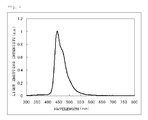
Classifications
-
- H01L51/006—
-
- H—ELECTRICITY
- H10—SEMICONDUCTOR DEVICES; ELECTRIC SOLID-STATE DEVICES NOT OTHERWISE PROVIDED FOR
- H10K—ORGANIC ELECTRIC SOLID-STATE DEVICES
- H10K85/00—Organic materials used in the body or electrodes of devices covered by this subclass
- H10K85/60—Organic compounds having low molecular weight
- H10K85/631—Amine compounds having at least two aryl rest on at least one amine-nitrogen atom, e.g. triphenylamine
- H10K85/633—Amine compounds having at least two aryl rest on at least one amine-nitrogen atom, e.g. triphenylamine comprising polycyclic condensed aromatic hydrocarbons as substituents on the nitrogen atom
-
- H—ELECTRICITY
- H10—SEMICONDUCTOR DEVICES; ELECTRIC SOLID-STATE DEVICES NOT OTHERWISE PROVIDED FOR
- H10K—ORGANIC ELECTRIC SOLID-STATE DEVICES
- H10K85/00—Organic materials used in the body or electrodes of devices covered by this subclass
- H10K85/60—Organic compounds having low molecular weight
- H10K85/649—Aromatic compounds comprising a hetero atom
- H10K85/657—Polycyclic condensed heteroaromatic hydrocarbons
- H10K85/6572—Polycyclic condensed heteroaromatic hydrocarbons comprising only nitrogen in the heteroaromatic polycondensed ring system, e.g. phenanthroline or carbazole
-
- C—CHEMISTRY; METALLURGY
- C07—ORGANIC CHEMISTRY
- C07C—ACYCLIC OR CARBOCYCLIC COMPOUNDS
- C07C211/00—Compounds containing amino groups bound to a carbon skeleton
- C07C211/43—Compounds containing amino groups bound to a carbon skeleton having amino groups bound to carbon atoms of six-membered aromatic rings of the carbon skeleton
- C07C211/57—Compounds containing amino groups bound to a carbon skeleton having amino groups bound to carbon atoms of six-membered aromatic rings of the carbon skeleton having amino groups bound to carbon atoms of six-membered aromatic rings being part of condensed ring systems of the carbon skeleton
- C07C211/61—Compounds containing amino groups bound to a carbon skeleton having amino groups bound to carbon atoms of six-membered aromatic rings of the carbon skeleton having amino groups bound to carbon atoms of six-membered aromatic rings being part of condensed ring systems of the carbon skeleton with at least one of the condensed ring systems formed by three or more rings
-
- C—CHEMISTRY; METALLURGY
- C07—ORGANIC CHEMISTRY
- C07D—HETEROCYCLIC COMPOUNDS
- C07D209/00—Heterocyclic compounds containing five-membered rings, condensed with other rings, with one nitrogen atom as the only ring hetero atom
- C07D209/56—Ring systems containing three or more rings
- C07D209/80—[b, c]- or [b, d]-condensed
-
- C—CHEMISTRY; METALLURGY
- C07—ORGANIC CHEMISTRY
- C07D—HETEROCYCLIC COMPOUNDS
- C07D209/00—Heterocyclic compounds containing five-membered rings, condensed with other rings, with one nitrogen atom as the only ring hetero atom
- C07D209/56—Ring systems containing three or more rings
- C07D209/80—[b, c]- or [b, d]-condensed
- C07D209/82—Carbazoles; Hydrogenated carbazoles
-
- C—CHEMISTRY; METALLURGY
- C07—ORGANIC CHEMISTRY
- C07D—HETEROCYCLIC COMPOUNDS
- C07D215/00—Heterocyclic compounds containing quinoline or hydrogenated quinoline ring systems
- C07D215/02—Heterocyclic compounds containing quinoline or hydrogenated quinoline ring systems having no bond between the ring nitrogen atom and a non-ring member or having only hydrogen atoms or carbon atoms directly attached to the ring nitrogen atom
- C07D215/04—Heterocyclic compounds containing quinoline or hydrogenated quinoline ring systems having no bond between the ring nitrogen atom and a non-ring member or having only hydrogen atoms or carbon atoms directly attached to the ring nitrogen atom with only hydrogen atoms or radicals containing only hydrogen and carbon atoms, directly attached to the ring carbon atoms
- C07D215/06—Heterocyclic compounds containing quinoline or hydrogenated quinoline ring systems having no bond between the ring nitrogen atom and a non-ring member or having only hydrogen atoms or carbon atoms directly attached to the ring nitrogen atom with only hydrogen atoms or radicals containing only hydrogen and carbon atoms, directly attached to the ring carbon atoms having only hydrogen atoms, hydrocarbon or substituted hydrocarbon radicals, attached to the ring nitrogen atom
-
- C—CHEMISTRY; METALLURGY
- C07—ORGANIC CHEMISTRY
- C07D—HETEROCYCLIC COMPOUNDS
- C07D403/00—Heterocyclic compounds containing two or more hetero rings, having nitrogen atoms as the only ring hetero atoms, not provided for by group C07D401/00
- C07D403/02—Heterocyclic compounds containing two or more hetero rings, having nitrogen atoms as the only ring hetero atoms, not provided for by group C07D401/00 containing two hetero rings
- C07D403/10—Heterocyclic compounds containing two or more hetero rings, having nitrogen atoms as the only ring hetero atoms, not provided for by group C07D401/00 containing two hetero rings linked by a carbon chain containing aromatic rings
-
- C—CHEMISTRY; METALLURGY
- C07—ORGANIC CHEMISTRY
- C07D—HETEROCYCLIC COMPOUNDS
- C07D471/00—Heterocyclic compounds containing nitrogen atoms as the only ring hetero atoms in the condensed system, at least one ring being a six-membered ring with one nitrogen atom, not provided for by groups C07D451/00 - C07D463/00
- C07D471/02—Heterocyclic compounds containing nitrogen atoms as the only ring hetero atoms in the condensed system, at least one ring being a six-membered ring with one nitrogen atom, not provided for by groups C07D451/00 - C07D463/00 in which the condensed system contains two hetero rings
- C07D471/04—Ortho-condensed systems
-
- C—CHEMISTRY; METALLURGY
- C07—ORGANIC CHEMISTRY
- C07F—ACYCLIC, CARBOCYCLIC OR HETEROCYCLIC COMPOUNDS CONTAINING ELEMENTS OTHER THAN CARBON, HYDROGEN, HALOGEN, OXYGEN, NITROGEN, SULFUR, SELENIUM OR TELLURIUM
- C07F7/00—Compounds containing elements of Groups 4 or 14 of the Periodic Table
- C07F7/02—Silicon compounds
- C07F7/08—Compounds having one or more C—Si linkages
- C07F7/0803—Compounds with Si-C or Si-Si linkages
- C07F7/081—Compounds with Si-C or Si-Si linkages comprising at least one atom selected from the elements N, O, halogen, S, Se or Te
-
- C—CHEMISTRY; METALLURGY
- C09—DYES; PAINTS; POLISHES; NATURAL RESINS; ADHESIVES; COMPOSITIONS NOT OTHERWISE PROVIDED FOR; APPLICATIONS OF MATERIALS NOT OTHERWISE PROVIDED FOR
- C09K—MATERIALS FOR MISCELLANEOUS APPLICATIONS, NOT PROVIDED FOR ELSEWHERE
- C09K11/00—Luminescent, e.g. electroluminescent, chemiluminescent materials
- C09K11/06—Luminescent, e.g. electroluminescent, chemiluminescent materials containing organic luminescent materials
-
- H01L51/0056—
-
- H01L51/0061—
-
- H01L51/0072—
-
- H—ELECTRICITY
- H05—ELECTRIC TECHNIQUES NOT OTHERWISE PROVIDED FOR
- H05B—ELECTRIC HEATING; ELECTRIC LIGHT SOURCES NOT OTHERWISE PROVIDED FOR; CIRCUIT ARRANGEMENTS FOR ELECTRIC LIGHT SOURCES, IN GENERAL
- H05B33/00—Electroluminescent light sources
- H05B33/12—Light sources with substantially two-dimensional radiating surfaces
- H05B33/14—Light sources with substantially two-dimensional radiating surfaces characterised by the chemical or physical composition or the arrangement of the electroluminescent material, or by the simultaneous addition of the electroluminescent material in or onto the light source
-
- H—ELECTRICITY
- H10—SEMICONDUCTOR DEVICES; ELECTRIC SOLID-STATE DEVICES NOT OTHERWISE PROVIDED FOR
- H10K—ORGANIC ELECTRIC SOLID-STATE DEVICES
- H10K50/00—Organic light-emitting devices
- H10K50/10—OLEDs or polymer light-emitting diodes [PLED]
- H10K50/11—OLEDs or polymer light-emitting diodes [PLED] characterised by the electroluminescent [EL] layers
-
- H—ELECTRICITY
- H10—SEMICONDUCTOR DEVICES; ELECTRIC SOLID-STATE DEVICES NOT OTHERWISE PROVIDED FOR
- H10K—ORGANIC ELECTRIC SOLID-STATE DEVICES
- H10K85/00—Organic materials used in the body or electrodes of devices covered by this subclass
- H10K85/40—Organosilicon compounds, e.g. TIPS pentacene
-
- H—ELECTRICITY
- H10—SEMICONDUCTOR DEVICES; ELECTRIC SOLID-STATE DEVICES NOT OTHERWISE PROVIDED FOR
- H10K—ORGANIC ELECTRIC SOLID-STATE DEVICES
- H10K85/00—Organic materials used in the body or electrodes of devices covered by this subclass
- H10K85/60—Organic compounds having low molecular weight
- H10K85/615—Polycyclic condensed aromatic hydrocarbons, e.g. anthracene
- H10K85/624—Polycyclic condensed aromatic hydrocarbons, e.g. anthracene containing six or more rings
-
- H—ELECTRICITY
- H10—SEMICONDUCTOR DEVICES; ELECTRIC SOLID-STATE DEVICES NOT OTHERWISE PROVIDED FOR
- H10K—ORGANIC ELECTRIC SOLID-STATE DEVICES
- H10K85/00—Organic materials used in the body or electrodes of devices covered by this subclass
- H10K85/60—Organic compounds having low molecular weight
- H10K85/631—Amine compounds having at least two aryl rest on at least one amine-nitrogen atom, e.g. triphenylamine
-
- H—ELECTRICITY
- H10—SEMICONDUCTOR DEVICES; ELECTRIC SOLID-STATE DEVICES NOT OTHERWISE PROVIDED FOR
- H10K—ORGANIC ELECTRIC SOLID-STATE DEVICES
- H10K85/00—Organic materials used in the body or electrodes of devices covered by this subclass
- H10K85/60—Organic compounds having low molecular weight
- H10K85/631—Amine compounds having at least two aryl rest on at least one amine-nitrogen atom, e.g. triphenylamine
- H10K85/636—Amine compounds having at least two aryl rest on at least one amine-nitrogen atom, e.g. triphenylamine comprising heteroaromatic hydrocarbons as substituents on the nitrogen atom
-
- H—ELECTRICITY
- H10—SEMICONDUCTOR DEVICES; ELECTRIC SOLID-STATE DEVICES NOT OTHERWISE PROVIDED FOR
- H10K—ORGANIC ELECTRIC SOLID-STATE DEVICES
- H10K85/00—Organic materials used in the body or electrodes of devices covered by this subclass
- H10K85/60—Organic compounds having low molecular weight
- H10K85/649—Aromatic compounds comprising a hetero atom
-
- H—ELECTRICITY
- H10—SEMICONDUCTOR DEVICES; ELECTRIC SOLID-STATE DEVICES NOT OTHERWISE PROVIDED FOR
- H10K—ORGANIC ELECTRIC SOLID-STATE DEVICES
- H10K85/00—Organic materials used in the body or electrodes of devices covered by this subclass
- H10K85/60—Organic compounds having low molecular weight
- H10K85/649—Aromatic compounds comprising a hetero atom
- H10K85/654—Aromatic compounds comprising a hetero atom comprising only nitrogen as heteroatom
-
- H—ELECTRICITY
- H10—SEMICONDUCTOR DEVICES; ELECTRIC SOLID-STATE DEVICES NOT OTHERWISE PROVIDED FOR
- H10K—ORGANIC ELECTRIC SOLID-STATE DEVICES
- H10K85/00—Organic materials used in the body or electrodes of devices covered by this subclass
- H10K85/60—Organic compounds having low molecular weight
- H10K85/649—Aromatic compounds comprising a hetero atom
- H10K85/657—Polycyclic condensed heteroaromatic hydrocarbons
-
- C—CHEMISTRY; METALLURGY
- C07—ORGANIC CHEMISTRY
- C07C—ACYCLIC OR CARBOCYCLIC COMPOUNDS
- C07C2603/00—Systems containing at least three condensed rings
- C07C2603/02—Ortho- or ortho- and peri-condensed systems
- C07C2603/54—Ortho- or ortho- and peri-condensed systems containing more than five condensed rings
-
- C—CHEMISTRY; METALLURGY
- C09—DYES; PAINTS; POLISHES; NATURAL RESINS; ADHESIVES; COMPOSITIONS NOT OTHERWISE PROVIDED FOR; APPLICATIONS OF MATERIALS NOT OTHERWISE PROVIDED FOR
- C09K—MATERIALS FOR MISCELLANEOUS APPLICATIONS, NOT PROVIDED FOR ELSEWHERE
- C09K2211/00—Chemical nature of organic luminescent or tenebrescent compounds
- C09K2211/10—Non-macromolecular compounds
- C09K2211/1003—Carbocyclic compounds
- C09K2211/1007—Non-condensed systems
-
- C—CHEMISTRY; METALLURGY
- C09—DYES; PAINTS; POLISHES; NATURAL RESINS; ADHESIVES; COMPOSITIONS NOT OTHERWISE PROVIDED FOR; APPLICATIONS OF MATERIALS NOT OTHERWISE PROVIDED FOR
- C09K—MATERIALS FOR MISCELLANEOUS APPLICATIONS, NOT PROVIDED FOR ELSEWHERE
- C09K2211/00—Chemical nature of organic luminescent or tenebrescent compounds
- C09K2211/10—Non-macromolecular compounds
- C09K2211/1003—Carbocyclic compounds
- C09K2211/1011—Condensed systems
-
- C—CHEMISTRY; METALLURGY
- C09—DYES; PAINTS; POLISHES; NATURAL RESINS; ADHESIVES; COMPOSITIONS NOT OTHERWISE PROVIDED FOR; APPLICATIONS OF MATERIALS NOT OTHERWISE PROVIDED FOR
- C09K—MATERIALS FOR MISCELLANEOUS APPLICATIONS, NOT PROVIDED FOR ELSEWHERE
- C09K2211/00—Chemical nature of organic luminescent or tenebrescent compounds
- C09K2211/10—Non-macromolecular compounds
- C09K2211/1003—Carbocyclic compounds
- C09K2211/1014—Carbocyclic compounds bridged by heteroatoms, e.g. N, P, Si or B
-
- C—CHEMISTRY; METALLURGY
- C09—DYES; PAINTS; POLISHES; NATURAL RESINS; ADHESIVES; COMPOSITIONS NOT OTHERWISE PROVIDED FOR; APPLICATIONS OF MATERIALS NOT OTHERWISE PROVIDED FOR
- C09K—MATERIALS FOR MISCELLANEOUS APPLICATIONS, NOT PROVIDED FOR ELSEWHERE
- C09K2211/00—Chemical nature of organic luminescent or tenebrescent compounds
- C09K2211/10—Non-macromolecular compounds
- C09K2211/1018—Heterocyclic compounds
- C09K2211/1025—Heterocyclic compounds characterised by ligands
- C09K2211/1029—Heterocyclic compounds characterised by ligands containing one nitrogen atom as the heteroatom
-
- C—CHEMISTRY; METALLURGY
- C09—DYES; PAINTS; POLISHES; NATURAL RESINS; ADHESIVES; COMPOSITIONS NOT OTHERWISE PROVIDED FOR; APPLICATIONS OF MATERIALS NOT OTHERWISE PROVIDED FOR
- C09K—MATERIALS FOR MISCELLANEOUS APPLICATIONS, NOT PROVIDED FOR ELSEWHERE
- C09K2211/00—Chemical nature of organic luminescent or tenebrescent compounds
- C09K2211/10—Non-macromolecular compounds
- C09K2211/1018—Heterocyclic compounds
- C09K2211/1025—Heterocyclic compounds characterised by ligands
- C09K2211/1044—Heterocyclic compounds characterised by ligands containing two nitrogen atoms as heteroatoms
-
- H01L51/5012—
-
- H—ELECTRICITY
- H10—SEMICONDUCTOR DEVICES; ELECTRIC SOLID-STATE DEVICES NOT OTHERWISE PROVIDED FOR
- H10K—ORGANIC ELECTRIC SOLID-STATE DEVICES
- H10K85/00—Organic materials used in the body or electrodes of devices covered by this subclass
- H10K85/60—Organic compounds having low molecular weight
- H10K85/615—Polycyclic condensed aromatic hydrocarbons, e.g. anthracene
- H10K85/626—Polycyclic condensed aromatic hydrocarbons, e.g. anthracene containing more than one polycyclic condensed aromatic rings, e.g. bis-anthracene
Definitions
- the present invention relates to an organic electroluminescent element, and a compound and a material for the organic electroluminescent element capable of being used therefor.
- the present invention also relates to a light emitting device, a display device, or an illumination device, using the organic electroluminescent element.
- organic electroluminescent element (hereinafter also referred to as an “element” or an “organic EL element”) has been actively studied since it provides light emission with high brightness with low voltage driving.
- the organic electroluminescent element has an organic layer between a pair of electrodes. Further, the electrons injected from a cathode with a hole injected from an anode are recombined in the organic layer, and the energy of excitons produced are used for light emission.
- the organic electroluminescent element can be provided as an element having various light emitting wavelengths, and since the element has a high response speed, and is relatively thin in thickness and is light in weight, a wide range of applications is expected. Among them, development of the organic electroluminescent element having high blue chromatic purity and high light emitting efficiency is important in application or the like to a full-color display, and various development research results have been reported so far.
- Patent Document 1 it is described that an organic electroluminescent element having a blue luminous color or high light emitting efficiency and excellent heat resistance is obtained by using tetrabenzanthracene “phenanthro triphenylene” derivative.
- an alkyl group or an aryl group is used as a substituent of the compound, and a compound having a bicyclic or tricyclic oligoaryl group is used as an example, however, a compound having an amino group as a substituent is not disclosed.
- Patent Document 2 it is described that an organic electroluminescent element having excellent solvent solubility or heat resistance, low driving voltage even in a case of formation by a wet film forming method, and sufficient life time is obtained by using a triphenylene-based compound which is substituted with a diarylamino group through an allylene group.
- a case where substituents that substitute triphenylene scaffold form a fused ring is not described.
- Patent Documents 3 and 4 it is described that an organic electroluminescent element having high light emitting efficiency and excellent stabilization at the time of repeated use is obtained by using a compound obtained by substituting 9- and 10-positions of anthracene by a diarylamino group.
- a compound having an aminophenanthro triphenylene scaffold in which substituents of 1- and 2-positions, 3- and 4-positions, 5- and 6-positions, and 7- and 8-positions of anthracene of a compound having a diarylamino group in 9- and 10-positions of anthracene, form a fused ring is used as an example, however, the performance thereof is not investigated.
- a compound in which a diarylamino group is introduced to positions other than 9- and 10-positions of anthracene is not described.
- Patent Document 5 it is described that an organic electroluminescent element having high brightness and long life time is obtained by using a triphenylene-based compound which is substituted with a diarylamino group.
- substituents that substitute triphenylene scaffold may be formed a fused ring, however, a case in which the substituents that substitute triphenylene scaffold form a fused ring in practice, is not investigated.
- the present inventors have made extensive investigation aimed at providing an organic electroluminescent element having high light emitting efficiency, excellent blue chromatic purity, and small chromaticity change which occurs with driving degradation. As a result, they found that the problems described above can be solved, if an aminophenanthro triphenylene compound having a specified structure or a derivative thereof is used, and thus the present invention described below is provided.
- An organic electroluminescent element including a substrate, a pair of electrodes including an anode and a cathode, disposed on the substrate, and at least one layer of organic layers including a light emitting layer, disposed between the electrodes, in which at least one of the organic layers contains a compound represented by the following general formula (1).
- R 1 to R 18 each independently represent a hydrogen atom or a substituent, and at least one of R 1 to R 8 and R 10 to R 17 represents -L-NR 19 R 20 (R 19 and R 20 each independently represent any of an alkyl group, an aryl group, a heteroaryl group. R 19 and R 20 may be combined to each other to form a ring.
- L represents a single bond or a divalent linking group).
- X 1 to X 18 each independently represent a carbon atom or a nitrogen atom, and when X 1 to X 18 represent nitrogen atoms, R 1 to R 18 for bonding do not present.
- R 1 , R 2 , R 4 to R 11 , R 13 to R 18 , and R 21 to R 40 each independently represent a hydrogen atom or a substituent.
- a plurality of R 21 to R 30 and R 31 to R 40 may be combined to each other to form a ring.
- R 1 , R 2 , R 4 to R 11 , R 13 to R 18 , R 21 to R 40 , and R 41 to R 50 each independently represent a hydrogen atom or a substituent.
- a plurality of R 21 to R 30 , R 31 to R 40 , and R 41 to R 50 may be combined to each other to form a ring.
- R 1 , R 2 , R 4 to R 11 , R 13 to R 18 , R 21 to R 25 , R 31 to R 35 , R 51 to R 57 , and R 61 to R 67 each independently represent a hydrogen atom or a substituent.
- a plurality of R 21 to R 30 , R 31 to R 40 , R 51 to R 57 , and R 61 to R 67 may be combined to each other to form a ring.
- R 1 , R 2 , R 4 , R 5 , R 7 to R 11 , R 13 , R 14 , R 16 to R 18 , and R 21 to R 40 each independently represent a hydrogen atom or a substituent.
- a plurality of R 21 to R 30 and R 31 to R 40 may be combined to each other to form a ring.
- R 1 , R 2 , R 4 to R 6 , R 8 to R 11 , R 13 to R 15 , R 17 , R 18 , R 21 to R 40 , and R 68 to R 77 each independently represent a hydrogen atom or a substituent.
- a plurality of R 21 to R 30 and R 31 to R 40 may be combined to each other to form a ring.
- Ar 1 and Ar 2 each independently represent an aryl group or a heteroaryl group
- R 301 to R 308 each independently represent a hydrogen atom or a substituent.
- R 301 and R 302 , R 302 and R 303 , R 303 and R 304 , R 305 and R 306 , R 306 and R 307 , and R 307 and R 308 may be combined to each other to form a ring.
- R 301 and R 318 each independently represent a hydrogen atom or a substituent.
- R P1 and R′ P1 each independently represent an alkyl group, an aryl group, or a heteroaryl group.
- n P1 represents an integer of 0 to 4, and when a plurality of R P1 's are present, they may be the same as or different from each other.
- L P1 represents any one of a single bond and a divalent linking group consisting of an aryl ring or a heteroaryl ring. * represents a bonding position with the anthracene ring of the general formula (P).
- R P2 and R′ P2 each independently represent an alkyl group, an aryl group, or a heteroaryl group.
- n P2 represents an integer of 0 to 4, and when a plurality of R P2 's are present, they may be the same as or different from each other.
- L P2 represents any one of a single bond and a divalent linking group consisting of an aryl ring or a heteroaryl ring. * represents a bonding position with the anthracene ring of the general formula (P).
- R P3 , R′ P3 , and R′′ P3 each independently represent an alkyl group, an aryl group, or a heteroaryl group.
- n P3 represents an integer of 0 to 4, and when a plurality of R P3 's are present, they may be the same as or different from each other.
- L P3 represents any one of a single bond and a divalent linking group consisting of an aryl ring or a heteroaryl ring. * represents a bonding position with the anthracene ring of the general formula (P).
- R P4 represents an alkyl group, an aryl group, or a heteroaryl group.
- n P4 represents an integer of 0 to 4, and when a plurality of R P4 's are present, they may be the same as or different from each other.
- L P4 represents anyone of a single bond and a divalent linking group consisting of an aryl ring or a heteroaryl ring. * represents a bonding position with the anthracene ring of the general formula (P).
- R P5 represents an alkyl group, an aryl group, or a heteroaryl group.
- n P5 represents an integer of 0 to 4, and when a plurality of R P5 's are present, they may be the same as or different from each other.
- L P5 represents anyone of a single bond and a divalent linking group consisting of an aryl ring or a heteroaryl ring. * represents a bonding position with the anthracene ring of the general formula (P).
- R 1 to R 18 each independently represent a hydrogen atom or a substituent, and at least one of R 1 to R 8 and R 10 to R 17 represents -L-NR 19 R 20 (R 19 and R 20 each independently represent any of an alkyl group, an aryl group, and a heteroaryl group. R 19 and R 20 may be combined to each other to form a ring. L represents a single bond or a divalent linking group.).
- X 1 to X 18 each independently represent a carbon atom or a nitrogen atom, and when X 1 to X 18 represent nitrogen atoms, R 1 to R 18 for combination do not present.
- R 1 , R 2 , R 4 to R 11 , R 13 to R 18 , and R 21 to R 40 each independently represent a hydrogen atom or a substituent.
- a plurality of R 21 to R 30 and R 31 to R 40 may be combined to each other to form a ring.
- R 1 , R 2 , R 4 to R 11 , R 13 to R 18 , R 21 to R 40 , and R 41 to R 50 each independently represent a hydrogen atom or a substituent.
- a plurality of R 21 to R 30 , R 31 to R 40 , and R 41 to R 50 may be combined to each other to form a ring.
- R 1 , R 2 , R 4 to R 11 , R 13 to R 18 , R 21 to R 25 , R 31 to R 35 , R 51 to R 57 , and R 61 to R 67 each independently represent a hydrogen atom or a substituent.
- a plurality of R 21 to R 25 , R 31 to R 35 , R 51 to R 57 , and R 61 to R 67 may be combined to each other to form a ring.
- R 1 , R 2 , R 4 , R 5 , R 7 to R 11 , R 13 , R 14 , R 16 to R 18 , and R 21 to R 40 each independently represent a hydrogen atom or a substituent.
- a plurality of R 21 to R 30 and R 31 to R 40 may be combined to each other to form a ring.
- R 1 , R 2 , R 4 to R 6 , R 8 to R 11 , R 13 to R 15 , R 17 , R 18 , R 21 to R 40 , and R 68 to R 77 each independently represent a hydrogen atom or a substituent.
- a plurality of R 21 to R 30 and R 31 to R 40 may be combined to each other to form a ring.
- the organic electroluminescent element of the present invention has advantageous effects which are high light emitting efficiency, excellent blue chromatic purity, and small chromaticity change which occurs with driving degradation.
- the compound of the present invention is used, it is possible to easily manufacture such excellent organic electroluminescent element.
- the light emitting device, the display device, and the illumination device of the present invention have advantageous effects which are small power consumption, excellent blue chromatic purity, and chromaticity which hardly changes even after being used for a long time.
- FIG. 1 is a schematic view showing one example of a configuration of the organic electroluminescent element according to the present invention.
- FIG. 2 is a schematic view showing one example of the light emitting device according to the present invention.
- FIG. 3 is a schematic view showing one example of the illumination device of the present invention.
- FIG. 4 is a light emitting spectrum of a compound 1 of the present invention.
- the numerical range expressed with “to” means a range including the numerical values before and after “to” as the lower limit and the upper limit, respectively.
- the organic electroluminescent element of the present invention may include a substrate, a pair of electrodes including an anode and a cathode, disposed on the substrate, and at least one layer of organic layers including a light emitting layer, disposed between the electrodes, and at least one of the organic layers contains a compound represented by the following general formula (1).
- R 1 to R 18 each independently represent a hydrogen atom or a substituent, and at least one of R 1 to R 8 and R 10 to R 17 represents -L-NR 19 R 20 (R 19 and R 20 each independently represent any of an alkyl group, an aryl group, a heteroaryl group. R 19 and R 20 may be combined to each other to form a ring.
- L represents a single bond or a divalent linking group).
- X 1 to X 18 each independently represent a carbon atom or a nitrogen atom, and when X 1 to X 18 represent nitrogen atoms, R 1 to R 18 for bonding do not present.
- the organic electroluminescent element of the present invention By including the compound represented by the general formula (1) at least in one layer of the organic layers, in the organic electroluminescent element of the present invention, the light emitting spectrum is sharpened and the blue chromatic purity may be improved. It is known a fact that the shortening of the light emitting wavelength is effective to improve the blue chromatic purity. However, if the light emitting wavelength of the light emitting material is short, since S 1 (lowest excited singlet energy unit) of the light emitting material becomes higher, the difference between S 1 of the light emitting material and S 1 of a host material may be small, or S 1 of the host material may become higher than S 1 of the light emitting material.
- S 1 lowest excited singlet energy unit
- the compound of the present invention is stable with respect to holes (oxidation) and the electron (reduction), the injecting/transporting properties of the charge are high, the association formation of phenanthro triphenylene rings hardly occurs, and the chemical reaction degradation due to the element driving also hardly occurs, the chromaticity change hardly occurs.
- a hydrogen atom in the description of the general formula (1) further includes isotopes (a deuterium atom and the like), and atoms further constituting the substituent also include isotopes thereof.
- the “substituent” at each occurrence may be further substituted.
- examples of the “alkyl group” at each occurrence include an alkyl group substituted with a fluorine atom (for example, a trifluoromethyl group), an alkyl group substituted with an aryl group (for example, a triphenylmethyl group), however, examples of the “alkyl group having 1 to 6 carbon atoms” at each occurrence show that 1 to 6 carbon atoms are included in all groups including the substituted groups.
- the compound of the present invention is the compound represented by the following general formula (1).
- R 1 to R 18 each independently represent a hydrogen atom or a substituent, and at least one of R 1 to R 8 and R 10 to R 17 represents -L-NR 19 R 20 (R 19 and R 20 each independently represent any of an alkyl group, an aryl group, a heteroaryl group. R 19 and R 20 may be combined to each other to form a ring.
- L represents a single bond or a divalent linking group).
- X 1 to X 18 each independently represent a carbon atom or a nitrogen atom, and when X 1 to X 18 represent nitrogen atoms, R 1 to R 18 for bonding do not present.
- R 1 to R 18 each independently represent a hydrogen atom or a substituent, and at least one of R 1 to R 8 and R 10 to R 17 represents -L-NR 19 R 20 .
- L represents a single bond or a divalent linking group. L is particularly preferably a single bond.
- R 19 and R 20 each independently represent any of an alkyl group, an aryl group, a heteroaryl group.
- R 19 and R 20 may be combined to each other to form a ring.
- R 19 or R 20 may be combined to each other to form a ring.
- alkyl group represented by R 19 or R 20 is preferably an alkyl group having 1 to 30 carbon atoms, more preferably an alkyl group having 1 to 20 carbon atoms, and particularly preferably a alkyl group having 1 to 10 carbon atoms, and examples thereof include a methyl group, an ethyl group, an n-propyl group, an isopropyl group, a tert-butyl, an n-octyl group, an n-decyl group, an n-hexadecyl group, a cyclopropyl group, a cyclopentyl group, a cyclohexyl group and more particularly preferably a methyl group, an ethyl group, an n-propyl group.
- the alkyl group represented by R 19 or R 20 may further include substituents.
- substituents include substituents included in a Substituent Group A which will be described later, and among them, the aryl group is preferable and the phenyl group is more preferable.
- R 19 and R 20 represent the alkyl group
- R 19 and R 20 are preferable to be combined to each other to form a ring
- the ring formed in this case is preferably a 5- or 6-membered ring, more preferably 6-membered ring, and particularly preferably a piperidine ring.
- R 19 or R 20 represent the alkyl group
- R 19 or R 20 and any of R 1 to R 18 other than -L-NR 19 R 20 including R 19 or R 20 (preferably any of R 1 to R 18 adjacent to R 1 to R 18 represented by -L-NR 19 R 20 including R 19 or R 20 ) are preferably combined to each other to form a ring, and the ring formed in this case is preferably a saturated 5- or 6-membered ring, and more preferably a saturated 6-membered ring.
- Examples of the aryl group represented by R 19 or R 20 are preferably an aryl group having 6 to 30 carbon atoms, more preferably an aryl group having 6 to 20 carbon atoms (for example, a phenyl group, a naphthyl group, an anthranil group, a phenanthrenyl group, and a triphenylenyl group), particularly preferably an aryl group having 6 to 15 carbon atoms, more particularly preferably a phenyl group, 1-naphthyl group, and 2-naphthyl group, and even more particularly preferably a phenyl group and 2-naphthyl group.
- an aryl group having 6 to 30 carbon atoms for example, a phenyl group, a naphthyl group, an anthranil group, a phenanthrenyl group, and a triphenylenyl group
- an aryl group having 6 to 15 carbon atoms more particularly preferably
- the aryl group represented by R 19 or R 20 may further include substituents.
- substituents include substituents included in the Substituent Group A which will be described later, and among them, an alkyl group (an alkyl group having 1 to 5 carbon atoms is preferable, a methyl group, an ethyl group, an n-propyl group, an isopropyl group, and a tert-butyl group are more preferable, and a methyl group is particularly preferable), an aryl group (an aryl group having 6 to 10 carbon atoms is preferable, and a phenyl group is more preferable.
- the aryl group may further include substituents, and in this case, the substituent is preferably included in para position), a halogen atom (preferably a fluorine atom), and a silyl group (preferably a trimethylsilyl group or a triphenylsilyl group) are preferable, and an alkyl group and an aryl group are more preferable.
- substituents preferably included in para position
- a halogen atom preferably a fluorine atom
- silyl group preferably a trimethylsilyl group or a triphenylsilyl group
- substituents of the aryl group represented by R 19 or R 20 may be combined to each other to form a ring, and the ring formed in this case is preferably a 5- or 6-membered ring, and more preferably a 5-membered ring.
- the formed 5- or 6-membered ring is preferably any one of a hydrocarbon ring and a heterocycle, and more preferably a 5-membered heterocycle or a 5-membered hydrocarbon ring.
- R 19 and R 20 are also preferably combined to each other to form a ring, and the ring formed in this case is preferably 5- or 6-membered ring.
- the case where R 19 and R 20 are combined to each other to form a ring includes a case where R 19 and R 20 form a ring through a single bond, a case where the substituent which is further included in R 19 , and R 20 form a ring, a case where the substituent which is further included in R 20 , and R 19 form a ring, and a case where the substituent which is further included in R 19 , and the substituent which is further included in R 20 form a ring.
- R 19 and R 20 are preferably combined to each other through a linking group L′.
- the linking group L′ is preferably CR 112 R 113 , NR 114 , SiR 115 R 116 (R 112 , R 113 , R 114 , R 115 and R 116 each independently represent a substituent, and preferably represent a fluorine atom, an alkyl group, an aryl group, or a heteroaryl group), an O atom, an S atom, more preferably CR 112 R 113 , NR 114 , an O atom, or an S atom, and particularly preferably CR 112 R 113 , NR 114 , or an O atom.
- R 112 , R 113 , R 115 and R 116 (substituents on carbon atoms and substituents on silicon atoms), ones in the following Substituent Group A may be employed
- Examples thereof are an alkyl group (preferably having 1 to 30 carbon atoms, more preferably having 1 to 20 carbon atoms, and particularly preferably having 1 to 10 carbon atoms, and examples of the alkyl group include methyl, ethyl, isopropyl, tert-butyl, n-octyl, n-decyl, n-hexadecyl, cyclopropyl, cyclopentyl, and cyclohexyl), an alkenyl group (preferably having 2 to 30 carbon atoms, more preferably having 2 to 20 carbon atoms, and particularly preferably having 2 to 10 carbon atoms, and examples of the alkenyl group include vinyl, allyl, 2-butenyl, and 3-pentenyl), an alkynyl group (preferably having 2 to 30 carbon atoms, more preferably having 2 to 20 carbon atoms, and particularly preferably having 2 to 10 carbon atoms, and examples of the alkynyl group include proparg
- substituents may be further substituted, and examples of further substituents include groups selected from the Substituent Group A as described above. Further, the substituent that substitutes the substituent may be further substituted, and examples of further substituents include groups selected from the Substituent Group A as described above. In addition, a substituent that substitutes the substituent that substitutes the substituent may be further substituted, and examples of further substituents include groups selected from the Substituent Group A as described above.
- R 112 , R 113 , R 115 and R 116 each independently preferably represent an alkyl group, particularly preferably represent a linear, branched, or cyclic alkyl group having 1 to 10 carbon atoms, and more particularly preferably represent a linear, branched, or cyclic alkyl group having 1 to 6 carbon atoms .
- R 112 and R 113 are preferably the same substituents.
- R 115 and R 116 are preferably the same substituents.
- Examples thereof include an alkyl group (preferably having 1 to 30 carbon atoms, more preferably having 1 to 20 carbon atoms, and particularly preferably having 1 to 10 carbon atoms, and examples of the alkyl group include methyl, ethyl, isopropyl, tert-butyl, n-octyl, n-decyl, n-hexadecyl, cyclopropyl, cyclopentyl, and cyclohexyl), an alkenyl group (preferably having 2 to 30 carbon atoms, more preferably having 2 to 20 carbon atoms, and particularly preferably having 2 to 10 carbon atoms, and examples of the alkenyl group include vinyl, allyl, 2-butenyl, and 3-pentenyl), an alkynyl group (preferably having 2 to 30 carbon atoms, more preferably having 2 to 20 carbon atoms, and particularly preferably having 2 to 10 carbon atoms, and examples of the alkynyl group include proparg
- substituents may be further substituted, and examples of further substituents include groups selected from the Substituent Group A as described above. Further, the substituent that substitutes the substituent may be further substituted, and examples of further substituents include groups selected from the Substituent Group A as described above. In addition, a substituent that substitutes the substituent that substitutes the substituent may be further substituted, and examples of further substituents include groups selected from the Substituent Group A as described above.
- R 114 more preferably represent an aryl group, and particularly preferably represent a phenyl group.
- a heteroaryl group represented by R 19 or R 20 is preferably a heteroaryl group having 5 to 30 ring members, more preferably a heteroaryl group having 5 to 10 ring members, and particularly preferably an heteroaryl group having 5 or 6 ring members.
- a hetero atom configuring the heteroaryl group is preferably a nitrogen atom, an oxygen atom, or a sulfur atom.
- the number of hetero atoms included in the heteroaryl group is preferably 1 to 3, and more preferably 1.
- the heteroaryl group represented by R 19 or R 20 is particularly preferably a pyridyl group, a furanyl group, and a thiophenyl group, and more particularly preferably a 2-pyridyl group, a 2-furanyl group, and a 2-thiophenyl group.
- the heteroalkyl group represented by R 19 or R 20 may further include substituents.
- substituents include substituents included in the Substituent Group A, and among them, an alkyl group is preferable, an alkyl group having 1 to 3 carbon atoms is more preferable, and a methyl group is particularly preferable.
- R 19 and R 20 each independently preferably represent an aryl group or a heteroaryl group from the viewpoint of light emitting efficiency, and all of R 19 and R 20 preferably represent an aryl group, and more preferably represent any of an unsubstituted phenyl group, a 1-naphthyl group, a 2-naphthyl group, a biphenyl group (preferably p-phenylphenyl group), and a methylphenyl group (preferably p-methylphenyl group), from the viewpoint of light emitting efficiency.
- R 19 and R 20 are aryl groups
- the combination of R 19 and R 20 is not particularly limited.
- At least one of R 1 to R 8 and R 10 to R 17 is -L-NR 19 R 20
- at least one of R 2 , R 3 , R 6 , R 7 , R 11 , R 12 , R 15 , and R 16 is preferably -L-NR 19 R 20
- at least one of R 3 , R 6 , R 12 , and R 15 is more preferably -L-NR 19 R 20 , from the viewpoint of light emitting efficiency.
- one to four of R 1 to R 18 each independently preferably represent -L-NR 19 R 20 , one or two thereof each independently more preferably represent -L-NR 19 R 20 , and two thereof each independently particularly preferably represent -L-NR 19 R 20 , from the viewpoint of blue chromatic purity.
- R 3 and R 12 are preferably -L-NR 19 R 20 or R 6 and R 15 are preferably -L-NR 19 R 20 , from viewpoints of easy synthesis and light emitting intensity (transition vibrator intensity).
- the combination of the groups represented by -L-NR 19 R 20 is not particularly limited, however, two or more -L-NR 19 R 20 are preferably the same with each other from the viewpoint of easy synthesis.
- R 9 and R 18 may include or may not include substituents, however, in a case where R 9 and R 18 include substituents, the substituents are preferably substituents other than -L-NR 19 R 20 , from viewpoints of shortening of the light emitting wavelength and setting pure blue region.
- R 9 and R 18 is particularly preferably hydrogen atoms, from viewpoints for maintaining flatness of the phenanthro triphenylene scaffold and for improving the blue chromatic purity and the light emitting intensity.
- Examples of the substituents other than -L-NR 19 R 20 represented by R 1 to R 18 in the general formula (1) include the substituents included in the Substituent Group A.
- the substituents other than -L-NR 19 R 20 represented by R 1 to R 18 are preferably an alkyl group, an aryl group, a heteroaryl group, a halogen atom, a cyano group and a silyl group, and more preferably an alkyl group, an aryl group, a halogen atom, and a silyl group.
- the alkyl group represented by R 1 to R 18 is preferably an alkyl group having 1 to 6 carbon atoms, more preferably a methyl group, an ethyl group, an n-propyl group, an i-propyl group, a tert-butyl group, a pentyl group, and a cyclohexyl group, and particularly preferably a methyl group and a tert-butyl group.
- the alkyl group represented by R 1 to R 18 may further include substituents. Examples of the substituents include substituents included in the Substituent Group A, and among them, the halogen atom is preferable, and the fluorine atom is more preferable.
- the aryl group represented by R 1 to R 18 is preferably an aryl group having 6 to 10 carbon atoms and more preferably a phenyl group.
- the phenyl group is preferably introduced to any of R 5 to R 8 and R 14 to R 17 of the general formula (1), since association of the phenanthro triphenylene rings is effectively suppressed.
- the phenyl group is particularly preferably introduced to the positions of R 7 and R 16 from the viewpoint of transition vibrator intensity.
- the aryl group represented by R 1 to R 18 may further include substituents.
- substituents include substituents included in the Substituent Group A, and among them, an alkyl group, an aryl group, and an amino group are preferable, an alkyl group is more preferable, and a trifluoromethyl group is particularly preferable.
- the aryl group represented by R 1 to R 18 may include an amino group (for example, the L-NR 19 R 20 group), and the aryl group represented by R 1 to R 18 is preferably an unsubstituted or alkyl group-substituted, from the viewpoints of sharpening the light emitting spectrum to improve blue chromatic purity.
- the heteroaryl group represented by R 1 to R 18 is preferably a heteroaryl group having 5 to 10 ring members, and more preferably a heteroaryl group having 5 or 6 ring members.
- the hetero atom configuring the heteroaryl group is preferably a nitrogen atom, an oxygen atom, or a sulfur atom.
- the number of hetero atoms included in the heteroaryl group is preferably 1 to 3, and more preferably 1.
- the heteroaryl group represented by R 1 to R 18 is particularly preferably a pyridyl group and a thiophenyl group, and more particularly preferably a 2-pyridyl group and a 2-2-thiophenyl group.
- the halogen atom represented by R 1 to R 18 is preferably a fluorine atom.
- the fluorine atom is preferably introduced into a molecule since a sublimation temperature is decreased.
- the fluorine atom F is particularly preferably introduced into the positions of R 6 and R 15 of the general formula (1), since the transition vibration intensity becomes great.
- the silyl group represented by R 1 to R 18 is preferably a trimethylsilyl group, a triphenylsilyl group, and more preferably a trimethylsilyl group.
- the number of the substituents other than -L-NR 19 R 20 represented by R 1 to R 18 is preferably 0 to 6, more preferably 0 to 4, particularly preferably 0 to 2, and more particularly preferably 0 or 2.
- the positions of the substituents other than -L-NR 19 R 20 represented by R 1 to R 18 are not particularly limited, however, preferably R 2 , R 3 , R 6 , R 7 , R 11 , R 12 , R 15 , or R 16 , and more preferably R 3 , R 6 , R 12 or R 15 .
- the ring formed by combining of R 1 to R 18 in the general formula (1) is preferably 5- or 6-membered ring. Two of R 1 to R 18 which are adjacent to each other are more preferably combined to form a ring, the ring formed in this case is also preferably 5- or 6-membered ring.
- X 1 to X 18 each independently represent a carbon atom or a nitrogen atom.
- X 1 to X 18 at least two or more of X 2 , X 3 , X 6 , X 7 , X 11 , X 12 , X 15 , and X 16 are preferably carbon atoms, and at least two or more of X 3 , X 6 , X 12 , and X 15 are more preferably carbon atoms.
- X 1 to X 18 are preferably carbon atoms, 14 or more thereof are more preferably carbon atoms, and 16 or more thereof are particularly preferably carbon atoms.
- all of X 1 to X 18 are particularly preferably carbon atoms.
- the compound represented by the general formula (1) is preferably represented by the following general formula (2).
- R 1 , R 2 , R 4 to R 11 , R 13 to R 18 , and R 21 to R 40 each independently represent a hydrogen atom or a substituent.
- a plurality of R 21 to R 30 and R 31 to R 40 may be combined to each other to form a ring.
- R 1 , R 2 , R 4 to R 11 , R 13 to R 18 in the general formula (2) are the same as the description and the preferred ranges of R 1 , R 2 , R 4 to R 11 , R 13 to R 18 in the general formula (1).
- the preferred ranges of the substituents represented by R 21 to R 30 and R 31 to R 40 in the general formula (2) are the same as the preferred ranges of the substituents of the aryl group when R 19 or R 20 represents the aryl group in the general formula (1).
- the term “a plurality of R 21 to R 30 and R 31 to R 40 may be combined to each other to form a ring” of the general formula (2) means that the compound represented by the general formula (2) includes a compound in which polycyclic condensed aromatic group is formed as a result of forming an aromatic ring by combining R 21 to R 25 to each other, a compound in which polycyclic condensed aromatic group is formed as a result of forming an aromatic ring by combining R 26 to R 30 to each other, a compound in which polycyclic condensed aromatic group is formed as a result of forming an aromatic ring by combining R 31 to R 35 to each other, and a compound in which polycyclic condensed aromatic group is formed as a result of forming an aromatic ring by combining R 36 to R 40 to each other.
- the compound represented by the general formula (2) also includes a compound in which a phenyl group including R 21 to R 25 as a result of combining of R 21 and R 22 to each other forms a naphthyl
- R 21 to R 25 in the general formula (2) represent hydrogen atoms or substituents, and in R 21 to R 25 , the number of substituents is preferably 0 to 4, more preferably 0 to 3, particularly preferably 0 to 2, or more particularly preferably 0 or 1.
- positions of the substituents in a case of three substituents are preferably R 21 , R 23 , and R 25
- positions of the substituents in a case of two substituents are preferably any of R 22 to R 24
- a position of the substituent in a case of one substituent is preferably any of R 22 to R 24 .
- the substituents represented by R 21 to R 25 in the general formula (2) are preferably an alkyl group (preferably an alkyl group having 1 to 5 carbon atoms, more preferably a methyl group, an ethyl group, n-propyl group, an isopropyl group, and a tert-butyl group, and particularly preferably a methyl group), an aryl group (preferably an aryl group having 6 to 10 carbon atoms, and more preferably a phenyl group.
- the aryl group may further include substituents.), a halogen atom (preferably a fluorine atom), and a silyl group (preferably a trimethylsilyl group or a triphenylsilyl group), and more preferably an alkyl group and an aryl group.
- a halogen atom preferably a fluorine atom
- a silyl group preferably a trimethylsilyl group or a triphenylsilyl group
- R 21 to R 25 in the general formula (2) may be combined to each other to form a ring, and the ring formed in this case is preferably 5- or 6-membered ring, and more preferably 5-membered ring.
- the formed 5- or 6-membered ring is preferably any one of a hydrocarbon ring and a heterocycle, and more preferably a 5-membered heterocycle or a 5-membered hydrocarbon ring.
- R 21 to R 25 , R 22 and R 23 are preferably combined to each other to form a ring.
- Any carbon atom of benzene rings including R 21 to R 25 in the general formula (2), and any one substituent of R 21 to R 25 may be condensed to form a ring through a single bond or the linking group L′.
- the ring formed in this case is preferably 5- or 6-membered ring, and more preferably 5-membered ring.
- R 26 to R 30 in the general formula (2) are the same as the preferred ranges of R 21 to R 25 in the general formula (2).
- the number of the substituents in R 26 to R 30 in the general formula (2) is the same as the number of the substituents in R 21 to R 25 .
- the positions of the substituents in R 26 to R 30 in the general formula (2) are preferably R 26 , R 28 , and R 30 , the positions of the substituents in a case of two substituents are preferably any of R 27 to R 29 , and a position of the substituent in a case of one substituent is preferably any of R 27 to R 29 .
- any group of R 21 to R 25 and any group of R 26 to R 30 may be combined to each other to form a ring, and the ring formed in this case is preferably 5- or 6-membered ring.
- the ring may be formed through a single bond, or the groups may be combined through the linking group L′.
- R 25 and R 30 are preferably combined to each other to form a ring.
- R 26 to R 30 may be combined to each other to form a ring, and the preferred ranges of the ring formed in this case are the same as that of the case where R 21 to R 25 are combined to each other to form a ring.
- R 28 and R 29 are preferably combined to each other to form a ring.
- Any carbon atom of benzene rings including R 26 to R 30 in the general formula (2), and any one substituent of R 26 to R 30 may be condensed to form a ring through a single bond or the linking group L′.
- the ring formed in this case is preferably 5- or 6-membered ring, and more preferably 5-membered ring.
- the more preferred ranges of the substituents represented by R 31 to R 40 in the general formula (2) are the same as the preferred ranges of the substituents represented by R 21 to R 30 in the general formula (2), respectively.
- the compound represented by the general formula (1) is preferably represented by the following general formula (3).
- R 1 , R 2 , R 4 to R 11 , R 13 to R 18 , R 21 to R 40 , and R 41 to R 50 each independently represent a hydrogen atom or a substituent.
- a plurality of R 21 to R 30 , R 31 to R 40 , and R 41 to R 50 may be combined to each other to form a ring.
- R 1 , R 2 , R 4 to R 11 , R 13 to R 18 in the general formula (3) are the same as the description and the preferred ranges of R 1 , R 2 , R 4 to R 11 , R 13 to R 18 in the general formula (1).
- the term “a plurality of R 21 to R 30 , R 31 to R 40 , and R 41 to R 50 may be combined to each other to form a ring” of the general formula (3) means that the compound represented by the general formula (2) includes a compound in which polycyclic condensed aromatic group is formed as a result of forming an aromatic ring by combining R 21 to R 25 to each other, a compound in which polycyclic condensed aromatic group is formed as a result of forming an aromatic ring by combining R 26 to R 30 to each other, a compound in which polycyclic condensed aromatic group is formed as a result of forming an aromatic ring by combining R 31 to R 35 to each other, a compound in which polycyclic condensed aromatic group is formed as a result of forming an aromatic ring by combining R 36 to R 40 to each other, a compound in which polycyclic condensed aromatic group is formed as a result of forming an aromatic ring by combining R 41 to R 45 to each other, and a compound in which polycycl
- the preferred ranges of the substituents represented by R 21 to R 40 in the general formula (3) are the same as the preferred ranges of the substituents of the aryl group when R 19 or R 20 represents the aryl group in the general formula (1), and the more preferred ranges thereof are the same as the preferred ranges of the substituents represented by R 21 to R 40 in the general formula (2).
- any group of R 21 to R 25 and any group of R 26 to R 30 are not preferably combined to each other to form a ring, and any group of R 31 to R 35 and any group of R 36 to R 40 are not preferably combined to each other to form a ring.
- R 26 to R 30 are not preferably combined to each other to form a ring, and R 36 to R 40 are not preferably combined to each other to form a ring.
- Examples of the substituents represented by R 41 to R 45 in the general formula (3) include the substituents included in the Substituent Group A, and among them, the aryl group is preferable, the phenyl group is more preferable, and the unsubstituted phenyl group is particularly preferable.
- the number of the substituents is preferably 0 to 2, more preferably 0 or 1, and particularly preferably 0.
- the position of the substituent in a case where R 41 to R 45 have the substituent is preferably R 43 .
- R 46 to R 50 the preferred ranges of the number of the substituents are the same as the preferred ranges of the number of the substituents in R 41 to R 45 .
- the position of the substituent in a case where R 46 to R 50 have the substituents is preferably R 48 .
- the compound represented by the general formula (1) is preferably represented by the following general formula (4).
- R 1 , R 2 , R 4 to R 11 , R 13 to R 18 , R 21 to R 25 , R 31 to R 35 , R 51 to R 57 , and R 61 to R 67 each independently represent a hydrogen atom or a substituent.
- a plurality of R 21 to R 25 , R 31 to R 35 , R 51 to R 57 , and R 61 to R 67 may be combined to each other to form a ring.
- the term “a plurality of R 21 to R 30 , R 31 to R 40 , R 51 to R 57 , and R 61 to R 67 may be combined to each other to form a ring” of the general formula (4) means that the compound represented by the general formula (2) includes a compound in which polycyclic condensed aromatic group is formed as a result of forming an aromatic ring by combining R 21 to R 25 to each other, a compound in which polycyclic condensed aromatic group is formed as a result of forming an aromatic ring by combining R 31 to R 35 to each other, a compound in which polycyclic condensed aromatic group is formed as a result of forming an aromatic ring by combining R 51 to R 57 to each other, and a compound in which polycyclic condensed aromatic group is formed as a result of forming an aromatic ring by combining R 61 to R 67 to each other.
- the compound represented by the general formula (4) also includes a compound in which a phenyl group including R 21 to R 25
- the preferred ranges of the substituents represented by R 21 to R 25 and R 31 to R 35 in the general formula (4) are the same as the preferred ranges of the substituents of the aryl group when R 19 or R 20 represents the aryl group in the general formula (1), and the more preferred ranges thereof are the same as the preferred ranges of the substituents represented by R 21 to R 25 and R 31 to R 35 in the general formula (2).
- any group of R 21 to R 25 and any group of R 51 to R 57 are not preferably combined to each other to form a ring, and any group of R 31 to R 35 and any group of R 61 to R 67 are not preferably combined to each other to form a ring.
- Examples of the substituents represented by R 51 to R 57 in the general formula (4) include the substituents included in the Substituent Group A, and among them, the alkyl group and the aryl group are preferable, the alkyl group having 1 to 5 carbon atoms and the aryl group having 6 to 10 carbon atoms are more preferable, and the methyl group, the ethyl group, and the phenyl group are particularly preferable.
- R 51 to R 57 the number of the substituents is preferably 0 to 2, more preferably 0 or 1, and particularly preferably 0.
- the positions of the substituents in a case where R 51 to R 57 have the substituents are preferably R 53 , R 54 , R 56 , and R 57 .
- R 61 to R 67 the preferred ranges of the number of the substituents are the same as the preferred ranges of the number of the substituents in R 51 to R 57 .
- the positions of the substituents in a case where R 61 to R 67 have the substituents are preferably R 63 , R 64 , R 66 , and R 67 .
- the compound represented by the general formula (1) is preferably represented by the following general formula (5).
- R 1 , R 2 , R 4 , R 5 , R 7 to R 11 , R 13 , R 14 , R 16 to R 18 , and R 21 to R 40 each independently represent a hydrogen atom or a substituent.
- a plurality of R 21 to R 30 and R 31 to R 40 may be combined to each other to form a ring.
- R 1 , R 2 , R 4 , R 5 , R 7 to R 11 , R 13 , R 14 , R 16 to R 18 in the general formula (5) are the same as the description and the preferred ranges of R 1 , R 2 , R 4 , R 5 , R 7 to R 11 , R 13 , R 14 , R 16 to R 18 in the general formula (1).
- Examples of the substituents represented by R 21 to R 40 in the general formula (5) include the substituents included in the Substituent Group A, and among them, the aryl group is preferable, the phenyl group is more preferable, and the unsubstituted phenyl group is particularly preferable.
- the number of the substituents is preferably 0 to 2, more preferably 0 or 1, and particularly preferably 0.
- the compound represented by the general formula (1) is preferably represented by the following general formula (6).
- R 1 , R 2 , R 4 to R 6 , R 8 to R 11 , R 13 to R 15 , R 17 , R 18 , R 21 to R 40 , and R 68 to R 77 each independently represent a hydrogen atom or a substituent.
- a plurality of R 21 to R 30 and R 31 to R 40 may be combined to each other to form a ring.
- R 1 , R 2 , R 4 to R 6 , R 8 to R 11 , R 13 to R 15 , R 17 , and R 18 in the general formula (6) are the same as the description and the preferred ranges of R 1 , R 2 , R 4 to R 6 , R 8 to R 11 , R 13 to R 15 , R 17 , and R 18 in the general formula (1).
- the number of the substituents is preferably 0 to 2, more preferably 0 or 1, and particularly preferably 0.
- the maximum light emitting wavelength of the organic electroluminescent element is normally less than 460 nm.
- the maximum light emitting wavelength is preferably equal to or more than 400 nm and less than 460 nm, more preferably equal to or more than 420 nm and less than 455 nm, still more preferably equal to or more than 430 nm and less than 455 nm, and from the viewpoint of acquiring blue light emitting with high chromatic purity, most preferably equal to or more than 440 nm and less than 455 nm.
- the maximum light emitting wavelength in a thin film state of the compound represented by the general formula (1) is particularly preferably equal to or more than 440 nm and less than 455 nm, since the blue light emitting with high chromatic purity is acquired.
- the molecular weight of the compound represented by the general formula (1) is preferably equal to or less than 1100, more preferably equal to or less than 1000, still more preferably equal to or less than 950, and particularly preferably equal to or less than 900.
- the molecular weight of the compound represented by the general formula (1) is preferably equal to or less than 1100, more preferably equal to or less than 1000, still more preferably equal to or less than 950, and particularly preferably equal to or less than 900.
- the sublimation temperature (means a temperature decreased by 10% by mass, in the specification) represented by the general formula (1) is preferably 425° C., more preferably equal to or lower than 400° C., still more preferably equal to or lower than 375° C., and most preferably equal to or lower than 350° C. Since in the compound represented by the general formula (1), the phenanthro triphenylene scaffold is rigid, the thermal decomposition hardly occurs even with a high sublimation temperature, and thus, the molecular weight can be designed to be relatively higher.
- the compound represented by the general formula (1) can be synthesized with a combination of other known reactions.
- the synthesis can be performed with reference to JP-A-2008-50308.
- purification is preferably carried out by column chromatography, recrystallization, or the like, and then by sublimation purification.
- Organic impurities can be separated and inorganic salts, residual solvents, or the like can also be removed effectively by the sublimation purification.
- the maximum light emitting wavelength in the thin film state is preferably less than 460 nm, more preferably equal to or more than 430 nm and equal to or less than 460 nm, particularly preferably equal to or more than 430 nm and less than 455 nm, still more preferably equal to or more than 435 nm and less than 455 nm, and most preferably equal to or more than 440 nm and less than 455 nm.
- the organic electroluminescent element of the present invention includes a substrate, a pair of electrodes including an anode and a cathode, disposed on the substrate, and at least one layer of organic layers including a light emitting layer, disposed between the electrodes, and at least one of the light emitting layers contains a compound represented by the general formula (1).
- FIG. 1 shows one example of the configuration of the organic electroluminescent element of the present invention.
- the organic electroluminescent element 10 of FIG. 1 has an organic layer between a pair of electrodes (an anode 3 and a cathode 9 ) on a substrate 2 .
- the organic electroluminescent element of the present invention has a substrate.
- the substrate used in the present invention is preferably a substrate that cannot scatter or diminish light radiated from the organic layer.
- the organic material those having excellent heat resistance, dimensional stability, solvent resistance, electricity insulating properties, and processibility are preferred.
- the organic electroluminescent element of the present invention has a pair of electrodes including an anode and a cathode, disposed on the substrate.
- At least one electrode of a pair of electrodes, the anode and the cathode is preferably transparent or semi-transparent.
- the anode is usually any of those having a function as an electrode of supplying holes into an organic layer, and is not particularly limited in its shape, structure, size, or the like. Further, depending on the use and purpose of the light emitting element, the anode can be suitably selected from the known electrode materials. As described above, the anode is usually provided as a transparent anode.
- the cathode is usually any of those having a function as an electrode of injecting electrons to an organic layer, and is not particularly limited in its shape, structure, size, or the like. Further, depending on the use and purpose of the light emitting element, the cathode can be suitably selected from the known electrode materials.
- the organic electroluminescent element of the present invention has at least one layer of the organic layers including the light emitting layer, and disposed between the electrodes, and at least one layer of the light emitting layers may contain a compound represented by the general formula (1).
- the organic layer is not particularly limited and can be suitably selected depending on the use and purpose of the organic electroluminescent element.
- the organic layer is preferably formed on a transparent electrode or a semi-transparent electrode. In this case, the organic layer is formed on the whole surface or one surface of the transparent electrode or the semi-transparent electrode.
- the shape, the size, the thickness, or the like of the organic layer are not particularly limited, and can be suitably selected depending on the purpose.
- the organic layers includes a light emitting layer.
- the organic layer preferably includes a charge transporting layer.
- the charge transporting layer refers to a layer in which charges move when voltage is applied to the organic electroluminescent element. Specific examples thereof include a hole injecting layer, a hole transporting layer, an electron blocking layer, a light emitting layer, a hole blocking layer, an electron transporting layer, and an electron injecting layer. If the charge transporting layer is a hole injecting layer, a hole transporting layer, an electron blocking layer, or a light emitting layer, the organic electroluminescent element can be manufactured with low cost and high efficiency.
- the compound represented by the general formula (1) is contained in at least one layer of the light emitting layers in the organic layers disposed between the electrodes of the organic electroluminescent element.
- the compound represented by the general formula (1) may be contained in the other organic layer of the organic electroluminescent element of the present invention.
- the organic layer other than the light emitting layer which may contain the compound represented by the general formula (1) include a hole injecting layer, a hole transporting layer, an electron transporting layer, an electron injecting layer, an exciton blocking layer, and a charge blocking layer (a hole blocking layer, an electron blocking layer, and the like), preferably any of a hole injecting layer, a hole transporting layer, an exciton blocking layer, and a charge blocking layer, and more preferably a hole transporting layer, an exciton blocking layer, and a charge blocking layer.
- the compound represented by the general formula (1) is contained in the light emitting layer, the compound represented by the general formula (1) is preferably contained in the amount of 0.1% to 100% by mass, more preferably contained in the amount of 1% to 50% by mass, and still more preferably 2% to 20% by mass, based on the total mass of the organic layer.
- the compound represented by the general formula (1) is contained in the organic layer other than the light emitting layer, the compound represented by the general formula (1) is preferably contained in the amount of 70% to 100% by mass, more preferably contained in the amount of 80% to 100% by mass, and still more preferably 90% to 100% by mass, based on the total mass of the organic layer.
- the respective organic layer in the organic electroluminescent element of the present invention can be suitably formed by any of dry film forming methods such as a deposition method and a sputtering method, wet type film forming methods (solution coating methods) such as a transfer method, a printing method, a spin-coating method, and a bar coating method.
- dry film forming methods such as a deposition method and a sputtering method
- wet type film forming methods such as a transfer method, a printing method, a spin-coating method, and a bar coating method.
- the organic layers disposed between a pair of electrodes preferably further include at least a layer formed by the deposition of a composition including the compound represented by the general formula (1).
- the light emitting layer is a layer having a function of, upon application of an electric field, receiving holes from the anode, the hole injecting layer, or the hole transporting layer, receiving electrons from the cathode, the electron injecting layer, or the electron transporting layer, providing a recombination site of the holes and the electrons, and causing light to be emitted.
- the light emitting layer in the present invention is not necessarily limited to the light emission by such a mechanism.
- the light emitting layer in the organic electroluminescent element of the present invention may be constituted of only a light emitting material or may be constituted as a mixed layer of a host material and a light emitting material.
- the light emitting material may be made of a single kind or two or more kinds.
- the host material is preferably a charge transport material.
- the host material may be made of a single kind or two or more kinds. Examples thereof include a configuration in which an electron-transporting host material and a hole-transporting host material are mixed.
- the light emitting layer may contain a material which cannot have charge transporting properties and which cannot emit light.
- the light emitting layer may be made of a single layer or two or more layers.
- the respective layers may include the same light emitting materials or host materials, and may also include different materials from each other. In a case where a plurality of light emitting layers are present, the respective light emitting layers may emit light in a different luminous color from each other.
- the thickness of the light emitting layer is not particularly limited, but it is usually preferably from 2 nm to 500 nm, and among these, from the viewpoint of external quantum efficiency, it is more preferably from 3 nm to 200 nm, and still more preferably from 5 nm to 100 nm.
- the light emitting layer contains the compound represented by the general formula (1), and the compound represented by the general formula (1) is used as the light emitting material in the light emitting layer in a more preferred embodiment.
- the host material used in the present specification is a compound which usually plays a role in injecting or transporting charges in the light emitting layer and is also a compound which cannot substantially emit light itself.
- the term “which cannot substantially emit light” means that the amount of light emitted from the compound which cannot substantially emit light is preferably 5% or less, more preferably 3% or less, and still more preferably 1% or less of the total amount of light emitted in the whole of the element.
- the compound represented by the general formula (1) may be used as the host material of the light emitting layer.
- the compound represented by the general formula (1) is preferably the light emitting material, however, even in this case, the compound represented by the general formula (1) can be used with a combination with the other light emitting material.
- the organic electroluminescent element of the present invention in a case where the compound represented by the general formula (1) is used as the host material of the light emitting layer or in a case where the compound is used for the organic layer other than the light emitting layer, the light emitting material other than the compound represented by the general formula (1) is used for the light emitting layer.
- the light emitting material which can be used in the present invention may be any of a phosphorescent light emitting material, a fluorescent emitting material, and the like.
- the light emitting layer of the present invention can contain two or more types of light emitting materials for improving the chromatic purity or expanding the light emitting wavelength region.
- the fluorescent emitting material or the phosphorescent light emitting material which can be used for the organic electroluminescent element of the present invention is disclosed in Paragraph Nos. [0100] to [0164] of JP-A-2008-270736 and Paragraph Nos. [0088] to [0090] of JP-A-2007-266458, and the disclosed description can be applied to the present invention.
- Examples of the phosphorescent light emitting material which can be used in the present invention include phosphorescent light emitting compounds disclosed in U.S. Pat. Nos. 6,303,238 and 6,097,147, WO00/57676, WO00/70655, WO01/08230, WO01/39234, WO01/41512, WO02/02714, WO02/15645, WO02/44189, WO05/19373, JP-A-2001-247859, JP-A-2002-302671, JP-A-2002-117978, JP-A-2003-133074, JP-A-2002-235076, JP-A-2003-123982, JP-A-2002-170684, EP Publication No.
- examples of the further preferable light emitting material include phosphorescent light emitting metal complex compound such as an Ir complex, a Pt complex, a Cu complex, a Re complex, a W complex, a Rh complex, a Ru complex, a Pd complex, an Os complex, an Eu complex, a Tb complex, a Gd complex, a Dy complex, a Ce complex, and the like.
- An Ir complex, a Pt complex, or a Re complex is particularly preferable, and among them, an Ir complex, a Pt complex, or a Re complex including coordination of at least one of metal-carbon bond, metal-nitrogen bond, metal-oxygen bond, and metal-sulfur bond is preferable. Further, from the viewpoints of the light emitting efficiency, driving durability, and chromaticity, an Ir complex and a Pt complex are particularly preferable, and an Ir complex is most preferable.
- the types of the fluorescent emitting material which can be used in the present invention is not particularly limited, however, other than the compound represented by the general formula (1), examples thereof include benzoxazole, benzimidazole, benzothiazole, styrylbenzene, polyphenyl, diphenyl butadiene, tetraphenylbutadiene, naphthalimide, coumarin, pyran, perinone, oxadiazole, aldazine, pyralidine, cyclopentadiene, bis styrylanthracene, quinacridone, pyrrolopyridine, thiadiazolopyridine, cyclopentadiene, styrylamine, condensed polycyclic aromatic compounds (anthracene, phenanthroline, pyrene, perylene, rubrene, pentacene, or the like), various metal complexes represented by a 8-quinolinol metal complex, a pyrromethene
- JP-A-2010-111620 can be used as the light emitting material.
- the light emitting layer in the organic electroluminescent element of the present invention may be constituted of only a light emitting material or may be constituted as a mixed layer of a host material and a light emitting material.
- the light emitting material may be made of a single kind or two or more kinds.
- the host material is preferably a charge transport material.
- the host material may be made of a single kind or two or more kinds. Examples thereof include a configuration in which an electron-transporting host material and a hole-transporting host material are mixed.
- the light emitting layer may contain a material which cannot have charge transporting properties and which cannot emit light.
- the light emitting layer may be made of a single layer or two or more layers.
- the respective layers may include the same light emitting materials or host materials, and may also include different materials from each other. In a case where a plurality of light emitting layers are present, the respective light emitting layers may emit light in a different luminous color from each other.
- the host material used in the present specification is a compound which usually plays a role in injecting or transporting charges in the light emitting layer and is also a compound which cannot substantially emit light itself.
- the term “which cannot substantially emit light” means that the amount of light emitted from the compound which cannot substantially emit light is preferably 5% or less, more preferably 3% or less, and still more preferably 1% or less of the total amount of light emitted in the whole of the element.
- examples of the host material that can be used in the organic electroluminescent element of the present invention include the following compounds:
- conductive high-molecular oligomers such as pyrrole, indole, carbazole, azaindole, azacarbazole, triazole, oxazole, oxadiazole, pyrazole, imidazole, thiophene, benzothiophene, dibenzothiophene, furan, benzofuran, dibenzofuran, polyarylalkane, pyrazoline, pyrazolone, phenylenediamine, arylamine, amino-substituted chalcone, styrylanthracene, fluorenone, hydrazone, stilbene, silazane, aromatic tertiary amine compounds, styrylamine compounds, porphyrin-based compounds, aromatic hydrocarbon compounds with fused rings (fluorene, naphthalene, phenanthrene, triphenylene, and the like), polysilane-based compounds, poly(N-vinylcarba
- aromatic hydrocarbon compounds with fused rings are more particularly preferred for stabilization.
- aromatic hydrocarbon compounds with fused rings a naphthalene-based compound, an anthracene-based compound, a phenanthrene-based compound, a triphenylene-based compound, and a pyrene-based compound are preferred, an anthracene-based compound and a pyrene-based compound are more preferred, and an anthracene triphenylene-based compound is particularly preferred.
- the light emitting element of the present invention preferably contains a compound represented by the following general formula (An-1), as the host material.
- Ar 1 and Ar 2 each independently represent an aryl group or a heteroaryl group
- R 301 to R 308 each independently represent a hydrogen atom or a substituent.
- R 301 and R 302 , R 302 and R 303 , R 303 and R 304 , R 305 and R 306 , R 306 and R 307 , and R 307 and R 308 may be combined to each other to form a ring.
- the aryl group represented by Ar 1 and Ar 2 is preferably an aryl group having 6 to 36 carbon atoms, more preferably an aryl group having 6 to 18 carbon atoms, particularly preferably an aryl group having 6 to 14 carbon atoms, and more particularly preferably a phenyl group or a naphthyl group.
- the heteroaryl group represented by Ar 1 and Ar 2 is preferably a heteroaryl group having 5 to 20 ring members, and more preferably a heteroaryl group having 5 to 13 ring members.
- the hetero atom included in the heteroaryl group represented by Ar 1 and Ar 2 is preferably a nitrogen atom, an oxygen atom and a sulfur atom, and more preferably a nitrogen atom.
- the number of the hetero atoms included in the heteroaryl group represented by Ar 1 and Ar 2 is preferably 1 to 3, more preferably 1 or 2, and particularly preferably 1.
- the heteroaryl group represented by Ar 1 and Ar 2 is particularly preferably a pyridyl group, a carbazolyl group, a dibenzofuryl group, and a dibenzothiophenyl group.
- Ar 1 and Ar 2 is preferably a phenyl group, a naphthyl group, a pyridyl group, a carbazolyl group, a dibenzofuryl group, a dibenzothiophenyl group, and a group with combination thereof.
- Ar 1 and Ar 2 is more preferably a phenyl group or a naphthyl group among them, and at least one of Ar 1 and Ar 2 is particularly preferably a substituted or unsubstituted phenyl group.
- Ar 1 and Ar 2 may further include substituents.
- substituents include an aryl group, a heteroaryl group, a fluorine atom, an alkyl group (preferably having 1 to 4 carbon atoms), an alkenyl group, a silyl group, and a cyano group.
- examples of the substituents represented by R 301 and R 308 include an aryl group, a heteroaryl group, a fluorine atom, an alkyl group, a silyl group, a cyano group, and a group with combination thereof.
- the substituents thereof are preferably a phenyl group, a naphthyl group, a pyridyl group, a carbazolyl group, a dibenzofuryl group, a dibenzothiophenyl group, a fluorine atom, an alkyl group, a silyl group, a cyano group, and a group with combination thereof, and more preferably a phenyl group, a naphthyl group, and an alkyl group having 1 to 5 carbon atoms (particularly preferably tert-butyl group).
- R 301 or R 308 may further include substituents.
- substituents include an aryl group, a heteroaryl group, and an alkyl group, and an aryl group and a heteroaryl group are preferable, and an aryl group having 6 to 18 carbon atoms is more preferable.
- the number of the substituents included in R 301 or R 308 is preferably 0 to 4, more preferably 0 or 2, particularly preferably 0 or 1, and more particularly preferably 0.
- the position of the substituents included in R 301 or R 308 is preferably R 302 , R 303 , R 306 , or R 307 , and more preferably any one of R 302 and R 303 or any one of R 306 and R 307 .
- R 301 and R 302 , R 302 and R 303 , R 303 and R 304 , R 305 and R 306 , and R 307 , and R 307 and R 308 may be combined to each other to form a ring, however, they are not preferably combined to each other to form a ring.
- the compound represented by the general formula (An-1) is preferably a compound represented by the following general formula (An-2).
- R 301 and R 318 each independently represent a hydrogen atom or a substituent.
- R 301 and R 308 in the general formula (An-2) are the same as the preferred ranges of R 301 and R 308 in the general formula (An-1).
- examples of the substituents represented by R 309 and R 318 include an aryl group, a heteroaryl group, a fluorine atom, an alkyl group, a silyl group, a cyano group, and a group with combination thereof.
- the substituents thereof are an aryl group having 6 to 18 carbon atoms, a heteroaryl group having 5 to 20 ring members, a fluorine atom, an alkyl group, an alkenyl group, a silyl group, a cyano group, and a group with combination thereof, more preferably a phenyl group, a naphthyl group, a pyridyl group, a carbazolyl group, a dibenzofuryl group, a dibenzothiophenyl group, a fluoroine atom, an alkyl group, an alkenyl group, a silyl group, a cyano group, and a group with combination thereof, and particularly preferably a phenyl group, a naphthyl group, and a carbazolyl group.
- R 309 or R 318 may further include substituents.
- substituents include an aryl group, an alkyl group, and a fluorine atom, and the substituents may be combined to each other to form a ring.
- the number of the substituents included in R 309 or R 318 is preferably 0 to 4, more preferably 0 or 2, particularly preferably 0 or 1, and more particularly preferably 0.
- the position of the substituents included in R 309 or R 318 is not particularly limited, however, in a case of including the substituents, at least one of R 311 or R 316 is preferably included.
- R 309 and R 310 , R 310 and R 311 , R 311 and R 312 , R 312 and R 313 , R 314 and R 315 , R 315 and R 316 , R 316 and R 317 , and R 317 and R 318 may be combined to each other to form a ring, and the formed ring is preferably a 5- or 6-membered ring, and more preferably a 5-membered ring.
- the host material which may be used in the light emitting layer in the organic electroluminescent element of the present invention may be either a hole transporting property host material or an electron transporting property host material.
- the lowest excited singlet energy (S 1 energy) in the film state of the host material be higher than the S 1 energy of the light emitting material, from the viewpoint of chromatic purity, luminous efficiency, and driving durability.
- S 1 of the host material is preferably equal to or more than 0.1 eV, more preferably equal to or more than 0.2 eV, and still more preferably equal to or more than 0.3 eV, with respect to S 1 of the light emitting material.
- the S 1 in the film state of the host material is lower than the S 1 energy of the light emitting material, the light emission is lost, and accordingly, a S 1 higher than that of the light emitting material is demanded for the host material.
- a small difference between the two S 1 causes a partial reverse movement of energy from the light emitting material to the host material, which is responsible for a decrease in the efficiency, the chromatic purity, and the durability. Therefore, there is a demand for a host material having sufficiently great S 1 , and having high chemical stability and carrier injecting/transporting properties.
- the content of the host compound in the light emitting layer in the organic electroluminescent element of the present invention organic electroluminescent element is not particularly limited, but it is preferably from 15% by mass to 99% by mass, based on the mass of all the compounds forming the light emitting layer, from the viewpoints of light emitting efficiency and driving voltage.
- the content of the compound represented by the general formula (An-1) is preferably 50% to 99% by mass in the all host compounds.
- the organic electroluminescent element of the present invention may contain layers other than the light emitting layer.
- Examples of the organic layer other than the light emitting layer which may be included in the organic layer include a hole injecting layer, a hole transporting layer, a blocking layer (a hole blocking layer, an exciton blocking layer, and the like), and an electron transporting layer.
- Examples of the specific layer configuration include those below, but the present invention is not limited to these configurations.
- the organic electroluminescent element of the present invention preferably includes at least one layer of (A) organic layers that are preferably disposed between the anode and the light emitting layer.
- Examples of (A) the organic layer that is preferably disposed between the anode and the light emitting layer include a hole injecting layer, a hole transporting layer, and an electron blocking layer from the anode side.
- the organic electroluminescent element of the present invention preferably includes at least one layer of (B) organic layers that are preferably disposed between the cathode and the light emitting layer.
- Examples of (B) the organic layer that is preferably disposed between cathode and the light emitting layer include an electron injecting layer, an electron transporting layer, and a hole blocking layer from the cathode side.
- an example of the preferred embodiments of the organic electroluminescent element of the present invention is the embodiment shown in FIG. 1 , in which a hole injecting layer 4 , a hole transporting layer 5 , a light emitting layer 6 , a hole blocking layer 7 , and an electron transporting layer 8 are laminated in this order as the organic layer from the anode 3 side.
- the hole injecting layer and the hole transporting layer are layers having a function of receiving holes from the anode or the anode side and transporting them to the cathode side.
- the light emitting element of the present invention preferably includes at least one layer of the organic layers between the light emitting layer and the anode, and the organic layer preferably includes at least one compound in the compounds represented by the following general formula (Sa-1), general formula (Sb-1), and general formula (Sa-1).
- X represents a substituted or unsubstituted alkylene group having 1 to 30 carbon atoms, a substituted or unsubstituted alkenylene group having 2 to 30 carbon atoms, a substituted or unsubstituted allylene group having 6 to 30 carbon atoms, a substituted or unsubstituted heteroallylene group having 2 to 30 carbon atoms, a substituted or unsubstituted heterocyclic group having 2 to 30 carbon atoms, or a group with combination of these groups.
- R S1 , R S2 , and R S3 each independently represent a hydrogen atom, a substituted or unsubstituted alkyl group having 1 to 30 carbon atoms, a substituted or unsubstituted alkoxy group having 1 to 30 carbon atoms, a substituted or unsubstituted aryl group having 6 to 30 carbon atoms, a substituted or unsubstituted aryloxy group having 6 to 30 carbon atoms, a substituted or unsubstituted heterocycle having 2 to 30 carbon atoms, a substituted or unsubstituted fused polycyclic group having 5 to 30 carbon atoms, a hydroxy group, a cyano group, or a substituted or unsubstituted amino group.
- R S1 , R S2 , and R S3 which are adjacent to each other may be bonded to each other to form a saturated carbon ring or an unsaturated carbon ring.
- Ar S1 and Ar S2 each independently represent a substituted or unsubstituted aryl group having 6 to 30 carbon atoms, or a substituted or unsubstituted heteroaryl group having 2 to 30 carbon atoms.
- R S4 , R S5 , R S6 , and R S7 each independently represent a hydrogen atom, a substituted or unsubstituted alkyl group having 1 to 30 carbon atoms, a substituted or unsubstituted alkoxy group having 1 to 30 carbon atoms, a substituted or unsubstituted aryl group having 6 to 30 carbon atoms, a substituted or unsubstituted aryloxy group having 6 to 30 carbon atoms, a substituted or unsubstituted heterocycle having 2 to 30 carbon atoms, a substituted or unsubstituted fused polycyclic group having 5 to 30 carbon atoms, a hydroxy group, a cyano group, or a substituted or unsubstituted amino group.
- R S4 , R S5 , R S6 , and R S7 which are adjacent to each other may be bonded to each other to form a saturated carbon ring or an unsaturated carbon ring.
- Ar S3 represents a substituted or unsubstituted aryl group having 6 to 30 carbon atoms, or a substituted or unsubstituted heteroaryl group having 2 to 30 carbon atoms.
- R S8 and R S9 each independently represent a hydrogen atom, a substituted or unsubstituted alkyl group having 1 to 30 carbon atoms, a substituted or unsubstituted aryl group having 6 to 30 carbon atoms, a substituted or unsubstituted heterocyclic group having 2 to 30 carbon atoms, or a substituted or unsubstituted fused polycyclic group having to 30 carbon atoms.
- R S10 represents a substituted or unsubstituted alkyl group having 1 to 30 carbon atoms, a substituted or unsubstituted aryl group having 6 to 30 carbon atoms, a substituted or unsubstituted heterocyclic group having 2 to 30 carbon atoms, or a substituted or unsubstituted fused polycyclic group having 5 to 30 carbon atoms.
- R S11 and R S12 each independently represent a hydrogen atom, a substituted or unsubstituted alkyl group having 1 to 30 carbon atoms, a substituted or unsubstituted alkoxy group having 1 to 30 carbon atoms, a substituted or unsubstituted aryl group having 6 to 30 carbon atoms, a substituted or unsubstituted aryloxy group having 6 to 30 carbon atoms, a substituted or unsubstituted heterocycle having 2 to 30 carbon atoms, a substituted or unsubstituted fused polycyclic group having 5 to 30 carbon atoms, a hydroxy group, a cyano group, or a substituted or unsubstituted amino group.
- R S11 and R S12 which are adjacent to each other may be bonded to each other to form a saturated carbon ring or an unsaturated carbon ring.
- Ar S4 represents a substituted or unsubstituted aryl group having 6 to 30 carbon atoms, or a substituted or unsubstituted heteroaryl group having 2 to 30 carbon atoms.
- Y S1 and Y S2 each independently represent a substituted or unsubstituted alkylene group having 1 to 30 carbon atoms, or a substituted or unsubstituted allylene group having 6 to 30 carbon atoms.
- n and m each independently represent an integer of 0 to 5.
- X represents a substituted or unsubstituted alkylene group having 1 to 30 carbon atoms, a substituted or unsubstituted alkenylene group having 2 to 30 carbon atoms, a substituted or unsubstituted arylene group having 6 to 30 carbon atoms, a substituted or unsubstituted heteroarylene group having 2 to 30 carbon atoms, a substituted or unsubstituted heterocyclic group having 2 to 30 carbon atoms, or a group with combination of these groups.
- X is preferably a substituted or unsubstituted arylene group having 6 to 30 carbon atoms, more preferably substituted or unsubstituted phenylene, substituted or unsubstituted biphenylene, and substituted or unsubstituted naphthylene, and still more preferably substituted or unsubstituted biphenylene.
- R S1 , R S2 , and R S3 each independently represent a hydrogen atom, a substituted or unsubstituted alkyl group having 1 to 30 carbon atoms, a substituted or unsubstituted alkoxy group having 1 to 30 carbon atoms, a substituted or unsubstituted aryl group having 6 to 30 carbon atoms, a substituted or unsubstituted aryloxy group having 6 to 30 carbon atoms, a substituted or unsubstituted heterocycle having 2 to 30 carbon atoms, a substituted or unsubstituted fused polycyclic group having 5 to 30 carbon atoms, a hydroxy group, a cyano group, or a substituted or unsubstituted amino group.
- R S1 , R S2 and R S3 which are adjacent to each other may be bonded to each other to form a saturated carbon ring or an unsaturated carbon ring.
- saturated carbon ring or the unsaturated carbon ring include naphthalene, azulene, anthracene, fluorene, phenalene, and the like.
- R S1 , R S2 , and R S3 are preferably a hydrogen atom, a substituted or unsubstituted alkyl group having 1 to 30 carbon atoms, a substituted or unsubstituted aryl group having 6 to 30 carbon atoms, a substituted or unsubstituted fused polycyclic group having 5 to 30 carbon atoms, and a cyano group, and more preferably a hydrogen atom.
- Ar S1 and Ar S2 each independently represent a substituted or unsubstituted aryl group having 6 to 30 carbon atoms, or a substituted or unsubstituted heteroaryl group having 2 to 30 carbon atoms.
- Ar S1 and Ar S2 are preferably a substituted or unsubstituted phenyl group.
- R S4 , R S5 , R S6 , and R S7 each independently represent a hydrogen atom, a substituted or unsubstituted alkyl group having 1 to 30 carbon atoms, a substituted or unsubstituted alkoxy group having 1 to 30 carbon atoms, a substituted or unsubstituted aryl group having 6 to 30 carbon atoms, a substituted or unsubstituted aryloxy group having 6 to 30 carbon atoms, a substituted or unsubstituted heterocycle having 2 to 30 carbon atoms, a substituted or unsubstituted fused polycyclic group having 5 to 30 carbon atoms, a hydroxy group, a cyano group, or a substituted or unsubstituted amino group.
- R S4 , R S5 , R S6 , and R S7 which are adjacent to each other may be bonded to each other to form a saturated carbon ring or an unsaturated carbon ring.
- saturated carbon ring or the unsaturated carbon ring include naphthalene, azulene, anthracene, fluorene, phenalene, and the like.
- R S4 , R S5 , R S6 , and R S7 are preferably a hydrogen atom, a substituted or unsubstituted alkyl group having 1 to 30 carbon atoms, a substituted or unsubstituted aryl group having 6 to 30 carbon atoms, a substituted or unsubstituted fused polycyclic group having 5 to 30 carbon atoms, and a cyano group, and more preferably a hydrogen atom.
- Ar S3 represents a substituted or unsubstituted aryl group having 6 to 30 carbon atoms, or a substituted or unsubstituted heteroaryl group having 2 to 30 carbon atoms.
- Ar S3 is preferably substituted or unsubstituted phenyl group.
- R S8 and R′′ each independently represent a hydrogen atom, a substituted or unsubstituted alkyl group having 1 to 30 carbon atoms, a substituted or unsubstituted aryl group having 6 to 30 carbon atoms, a substituted or unsubstituted heterocyclic group having 2 to 30 carbon atoms, or a substituted or unsubstituted fused polycyclic group having 5 to 30 carbon atoms.
- R S8 and R S9 are preferably a substituted or unsubstituted alkyl group having 1 to 30 carbon atoms, and a substituted or unsubstituted aryl group having 6 to 30 carbon atoms, and more preferably a methyl group and a phenyl group.
- R S10 represents a substituted or unsubstituted alkyl group having 1 to 30 carbon atoms, a substituted or unsubstituted aryl group having 6 to 30 carbon atoms, a substituted or unsubstituted heterocyclic group having 2 to 30 carbon atoms, or a substituted or unsubstituted fused polycyclic group having 5 to 30 carbon atoms.
- R S10 is preferably a substituted or unsubstituted aryl group having 6 to 30 carbon atoms, and more preferably a phenyl group.
- R S11 and R S12 each independently represent a hydrogen atom, a substituted or unsubstituted alkyl group having 1 to 30 carbon atoms, a substituted or unsubstituted alkoxy group having 1 to 30 carbon atoms, a substituted or unsubstituted aryl group having 6 to 30 carbon atoms, a substituted or unsubstituted aryloxy group having 6 to 30 carbon atoms, a substituted or unsubstituted heterocycle having 2 to 30 carbon atoms, a substituted or unsubstituted fused polycyclic group having 5 to 30 carbon atoms, a hydroxy group, a cyano group, or a substituted or unsubstituted amino group.
- R S11 and R S12 which are adjacent to each other may be bonded to each other to form a saturated carbon ring or an unsaturated carbon ring.
- saturated carbon ring or the unsaturated carbon ring include naphthalene, azulene, anthracene, fluorene, phenalene, and the like.
- R S11 and R S12 are preferably a hydrogen atom, a substituted or unsubstituted alkyl group having 1 to 30 carbon atoms, a substituted or unsubstituted aryl group having 6 to 30 carbon atoms, a substituted or unsubstituted fused polycyclic group having 5 to 30 carbon atoms, and a cyano group, and more preferably a hydrogen atom.
- Ar S4 represents a substituted or unsubstituted aryl group having 6 to 30 carbon atoms, or a substituted or unsubstituted heteroaryl group having 2 to 30 carbon atoms.
- Y S1 and Y S2 represent a substituted or unsubstituted alkylene group having 1 to 30 carbon atoms, or a substituted or unsubstituted allylene group having 6 to 30 carbon atoms.
- Y S1 and Y S2 are preferably a substituted or unsubstituted allylene group having 6 to 30 carbon atoms, and more preferably substituted or unsubstituted phenylene.
- n is an integer of 0 to 5, preferably an integer of 0 to 3, more preferably an integer of 0 to 2, and sill more preferably an integer of 0.
- m is an integer of 0 to 5, preferably an integer of 0 to 3, more preferably an integer of 0 to 2, and sill more preferably an integer of 1.
- the general formula (Sa-1) is preferably the compound represented by the following general formula (Sa-2).
- R S1 , R S2 , and R S3 each independently represent a hydrogen atom, a substituted or unsubstituted alkyl group having 1 to 30 carbon atoms, a substituted or unsubstituted alkoxy group having 1 to 30 carbon atoms, a substituted or unsubstituted aryl group having 6 to 30 carbon atoms, a substituted or unsubstituted aryloxy group having 6 to 30 carbon atoms, a substituted or unsubstituted heterocycle having 2 to 30 carbon atoms, a substituted or unsubstituted fused polycyclic group having 5 to 30 carbon atoms, a hydroxy group, a cyano group, or a substituted or unsubstituted amino group.
- R S1 , R S2 , and R S3 which are adjacent to each other may be bonded to each other to form a saturated carbon ring or an unsaturated carbon ring.
- Q Sa independently represent a hydrogen atom, a cyano group, a fluorine atom, an alkoxy group having 1 to 30 carbon atoms, a substituted or unsubstituted alkyl group having 1 to 30 carbon atoms, an aryloxy group having 6 to 30 carbon atoms, a substituted or unsubstituted aryl group having 6 to 30 carbon atoms, substituted or unsubstituted heterocycle having 2 to 30 carbon atoms, or a substituted or unsubstituted amino group.
- R S1 , R S2 , and R S3 are the same as that in the general formula (Sa-1), and the preferred ranges are the same.
- Q Sa independently represent a hydrogen atom, a cyano group, a fluorine atom, an alkoxy group having 1 to 30 carbon atoms, a substituted or unsubstituted alkyl group having 1 to 30 carbon atoms, an aryloxy group having 6 to 30 carbon atoms, a substituted or unsubstituted aryl group having 6 to 30 carbon atoms, substituted or unsubstituted heterocycle having 2 to 30 carbon atoms, or a substituted or unsubstituted amino group.
- Q Sa preferably a hydrogen atom, a cyano group, a fluorine atom, a substituted or unsubstituted alkyl group having 1 to 30 carbon atoms, and a substituted or unsubstituted aryl group having 6 to 30 carbon atoms, and more preferably a hydrogen atom, and a substituted or unsubstituted alkyl group having 1 to 30 carbon atoms, and still more preferably a hydrogen atom.
- the general formula (Sb-1) is preferably the compound represented by the following general formula (Sb-2).
- R S4 , R S5 , R S6 , and R S7 each independently represent a hydrogen atom, a substituted or unsubstituted alkyl group having 1 to 30 carbon atoms, a substituted or unsubstituted alkoxy group having 1 to 30 carbon atoms, a substituted or unsubstituted aryl group having 6 to 30 carbon atoms, a substituted or unsubstituted aryloxy group having 6 to 30 carbon atoms, a substituted or unsubstituted heterocycle having 2 to 30 carbon atoms, a substituted or unsubstituted fused polycyclic group having 5 to 30 carbon atoms, a hydroxy group, a cyano group, or a substituted or unsubstituted amino group.
- R S4 , R S5 , R S6 , and R S7 which are adjacent to each other may be bonded to each other to form a saturated carbon ring or an unsaturated carbon ring.
- Q Sb independently represent a hydrogen atom, a cyano group, a fluorine atom, an alkoxy group having 1 to 30 carbon atoms, a substituted or unsubstituted alkyl group having 1 to 30 carbon atoms, an aryloxy group having 6 to 30 carbon atoms, a substituted or unsubstituted aryl group having 6 to 30 carbon atoms, substituted or unsubstituted heterocycle having 2 to 30 carbon atoms, or a substituted or unsubstituted amino group.
- R S4 , R S5 , R S6 , and R S7 are the same as that in the general formula (Sb-1), and the preferred ranges are the same.
- Q Sa independently represent a hydrogen atom, a cyano group, a fluorine atom, an alkoxy group having 1 to 30 carbon atoms, a substituted or unsubstituted alkyl group having 1 to 30 carbon atoms, an aryloxy group having 6 to 30 carbon atoms, a substituted or unsubstituted aryl group having 6 to 30 carbon atoms, substituted or unsubstituted heterocycle having 2 to 30 carbon atoms, or a substituted or unsubstituted amino group.
- Q Sa is preferably a hydrogen atom, a cyano group, a fluorine atom, a substituted or unsubstituted alkyl group having 1 to 30 carbon atoms, and a substituted or unsubstituted aryl group having 6 to 30 carbon atoms, and more preferably a hydrogen atom, and a substituted or unsubstituted alkyl group having 1 to 30 carbon atoms, and still more preferably a hydrogen atom.
- the general formula (Sc-1) is preferably the compound represented by the following formula (Sc-2).
- R S8 and R S9 each independently represent a hydrogen atom, a substituted or unsubstituted alkyl group having 1 to 30 carbon atoms, a substituted or unsubstituted aryl group having 6 to 30 carbon atoms, a substituted or unsubstituted heterocyclic group having 2 to 30 carbon atoms, or a substituted or unsubstituted fused polycyclic group having to 30 carbon atoms.
- R S10 represents a substituted or unsubstituted alkyl group having 1 to 30 carbon atoms, a substituted or unsubstituted aryl group having 6 to 30 carbon atoms, a substituted or unsubstituted heterocyclic group having 2 to 30 carbon atoms, or a substituted or unsubstituted fused polycyclic group having 5 to 30 carbon atoms.
- R S11 and R S12 each independently represent a hydrogen atom, a substituted or unsubstituted alkyl group having 1 to 30 carbon atoms, a substituted or unsubstituted alkoxy group having 1 to 30 carbon atoms, a substituted or unsubstituted aryl group having 6 to 30 carbon atoms, a substituted or unsubstituted aryloxy group having 6 to 30 carbon atoms, a substituted or unsubstituted heterocycle having 2 to 30 carbon atoms, or a substituted or unsubstituted fused polycyclic group having 5 to 30 carbon atoms, a hydroxy group, a cyano group, or a substituted or unsubstituted amino group.
- R S11 and R S12 which are adjacent to each other may be bonded to each other to form a saturated carbon ring or an unsaturated carbon ring.
- Q Sc represents a hydrogen atom, a cyano group, a fluorine atom, an alkoxy group having 1 to 30 carbon atoms, a substituted or unsubstituted alkyl group having 1 to 30 carbon atoms, an aryloxy group having 6 to 30 carbon atoms, a substituted or unsubstituted aryl group having 6 to 30 carbon atoms, substituted or unsubstituted heterocycle having 2 to 30 carbon atoms, or a substituted or unsubstituted amino group.
- R S8 , R S9 , R S10 , R S11 , and R S12 are the same as that in the general formula (Sc-1), and the preferred ranges are the same.
- Q Sc represents a hydrogen atom, a cyano group, a fluorine atom, an alkoxy group having 1 to 30 carbon atoms, a substituted or unsubstituted alkyl group having 1 to 30 carbon atoms, an aryloxy group having 6 to 30 carbon atoms, a substituted or unsubstituted aryl group having 6 to 30 carbon atoms, substituted or unsubstituted heterocycle having 2 to 30 carbon atoms, or a substituted or unsubstituted amino group.
- Q Sc is preferably a hydrogen atom, a cyano group, a fluorine atom, a substituted or unsubstituted alkyl group having 1 to 30 carbon atoms, and a substituted or unsubstituted aryl group having 6 to 30 carbon atoms, and more preferably a hydrogen atom, and a substituted or unsubstituted aryl group having 6 to 30 carbon atoms, and still more preferably a phenyl group.
- the compound represented by the general formula (Sa-1), (Sb-1), or (Sc-1) can be synthesized by the method described in JP-A-2007-318101. After the synthesis, purification is preferably carried out by column chromatography, recrystallization, reprecipitation, or the like, and then by sublimation purification. Organic impurities can be separated and inorganic salts, residual solvents, moisture, or the like can be removed effectively by the sublimation purification.
- the compound represented by the general formula (Sa-1), (Sb-1), or (Sc-1) is preferably contained in the organic layer between the light emitting layer and the anode, and among them, is more preferably contained in the layer on the anode side adjacent to the light emitting layer, and is particularly preferably a hole transporting material contained in a hole transporting layer.
- the compound represented by the general formula (Sa-1), (Sb-1), or (Sc-1) is preferably contained in the amount of 70 to 100% by mass, and more preferably 85 to 100% by mass, based on the total mass of the organic layer added.
- the organic electroluminescent element of the present invention is a material which is particularly preferably used in an organic layer (A), preferably disposed between the anode and the light emitting layer, and examples thereof include at least one kind of the compound represented by the following general formula (M-3).
- the compound represented by the general formula (M-3) is more preferably contained in the organic layer adjacent to the light emitting layer between the light emitting layer and the anode, but it is not limited in its uses and may be further contained in any of other layers in the organic layer.
- the layer to which the compound represented by the general formula (M-3) is introduced may be any one or plural layers of a light emitting layer, a hole injecting layer, a hole transporting layer, an electron transporting layer, an electron injecting layer, and a charge blocking layer.
- the organic layer adjacent to the light emitting layer between the light emitting layer and the anode, which contains the compound represented by the general formula (M-3), is more preferably an electron blocking layer or a hole transporting layer.
- R 31 to R 35 each independently represent an alkyl group, a cycloalkyl group, an alkenyl group, an alkynyl group, —CN, a perfluoroalkyl group, a trifluorovinyl group, —CO 2 R, —C(O)R, —NR 2 , —NO 2 , —OR, a halogen atom, an aryl group, or a heteroaryl group, and may also have a substituent Z.
- R's each independently represent a hydrogen atom, an alkyl group, a perhaloalkyl group, an alkenyl group, an alkynyl group, a heteroalkyl group, an aryl group, or a heteroaryl group.
- R 31 's to R 35 's may be bonded to each other to form a ring and further have a substituent Z.
- a represents an integer of 0 to 4, and when a plurality of R S1 's are present, they may be the same as or different from each other and may be bonded to each other to form a ring.
- b to e each independently represent an integer of 0 to 5, and when each of a plurality of R S2 's to R S5 's are present, they may be the same as or different from each other, and any two out of them may be bonded to each other to form a ring.
- q is an integer of 1 to 5, and when q is 2 or more, the plurality of R S1 's may be the same as or different from each other, and may be bonded to each other to form a ring.
- the alkyl group may have a substituent and may be saturated or unsaturated.
- Examples of the group which may be used for substitution include the above-described substituents Z.
- Examples of the alkyl group represented by R S1 to R S5 preferably include alkyl groups having 1 to 8 carbon atoms in total, and more preferably alkyl groups having 1 to 6 carbon atoms in total, for example, a methyl group, an ethyl group, an i-propyl group, a cyclohexyl group, and a tert-butyl group.
- the cycloalkyl group may have a substituent, and may be saturated or unsaturated.
- Examples of the group which may be used for substitution include the above-described substituents Z.
- Examples of the cycloalkyl group represented by R S1 to R S5 preferably include cycloalkyl groups having 4 to 7 ring members, and more preferably cycloalkyl groups having 5 to 6 carbon atoms in total, for example, a cyclopentyl group and a cyclohexyl group.
- Examples of the alkenyl group represented by R S1 to R S5 include ones preferably having 2 to 30 carbon atoms, more preferably 2 to 20 carbon atoms, and particularly preferably 2 to 10 carbon atoms, for example, vinyl, allyl, 1-propenyl, 1-isopropenyl, 1-butenyl, 2-butenyl, and 3-pentenyl.
- Examples of the alkynyl group represented by R S1 to R S5 include ones preferably having 2 to 30 carbon atoms, more preferably 2 to 20 carbon atoms, and particularly preferably to 10 carbon atoms, for example, ethynyl, propargyl, 1-propynyl, and 3-pentynyl.
- Examples of the perfluoroalkyl group represented by R S1 to R S5 include those in which all the hydrogen atoms of the above-described alkyl group are substituted with fluorine atoms.
- Preferred examples of the aryl group represented by R S1 to R S5 include a substituted or unsubstituted aryl group having 6 to 30 carbon atoms, for example, a phenyl group, a tolyl group, a biphenyl group, and a terphenyl group.
- the heteroaryl group represented by R S1 to R S5 is preferably a heteroaryl group having 5 to 8 carbon atoms, and more preferably a 5- or 6-membered substituted or unsubstituted heteroaryl group, and examples thereof include a pyridyl group, a pyrazinyl group, a pyridazinyl group, a pyrimidinyl group, a triazinyl group, a quinolinyl group, an isoquinolinyl group, a quinazolinyl group, a cinnolinyl group, a phthalazinyl group, a quinoxalinyl group, a pyrrolyl group, an indolyl group, a furyl group, a benzofuryl group, a thienyl group, a benzothienyl group, a pyrazolyl group, an imidazolyl group, a benzimidazolyl group,
- Preferred examples thereof include a pyridyl group, a pyrimidinyl group, an imidazolyl group, and a thienyl group, and more preferably a pyridyl group and a pyrimidinyl group.
- R S1 to R S5 are preferably a hydrogen atom, an alkyl group, a cyano group, a trifluoromethyl group, a perfluoroalkyl group, a dialkylamino group, a fluoro group, an aryl group, or a heteroaryl group, more preferably a hydrogen atom, an alkyl group, a cyano group, a trifluoromethyl group, a fluoro group, or an aryl group, and still more preferably a hydrogen atom, an alkyl group, or an aryl group.
- the substituent Z is preferably an alkyl group, an alkoxy group, a fluoro group, a cyano group, or a dialkylamino group, and more preferably a hydrogen atom or an alkyl group.
- R S1 to R S5 may be bonded to each other to form a fused 4- to 7-membered ring, and the fused 4- to 7-membered ring is cycloalkyl, aryl, or heteroaryl, and the fused 4- to 7-membered ring may further have a substituent Z.
- the definitions and preferred ranges thereof of the cycloalkyl, aryl, and heteroaryl thus formed are the same as for the cycloalkyl group, the aryl group, and the heteroaryl group defined by R S1 to R S5 .
- the compound represented by the general formula (M-3) is preferably contained in the amount of 50 to 100% by mass, more preferably 80 to 100% by mass, and particularly preferably 95 to 100% by mass.
- the compound represented by the general formula (M-3) is used in a plurality of organic layers, the compound is preferably contained in an amount of the above-described range in each layer.
- the thickness of the hole transporting layer including the compound represented by the general formula (M-3) is preferably from 1 nm to 500 nm, more preferably from 3 nm to 200 nm, and still more preferably from 5 nm to 100 nm. Further, the hole transporting layer is preferably provided to be adjacent to the light emitting layer.
- JP-A-2008-270736 can also be applied to the present invention.
- detailed description in Paragraph Nos. [0250] to [0339] of JP-A-2011-71452 can also be applied to the hole injecting layer and the hole transporting layer of the present invention.
- the compound represented by the general formula (1) is preferably applied to the hole injecting layer and the hole transporting layer.
- the hole injecting layer preferably contains an electron receptive dopant.
- an electron receptive dopant By incorporating the electron receptive dopant in the hole injecting layer, there are effects in which, for example, the hole injecting properties are improved, the driving voltage is lowered, and the efficiency is improved.
- the electron receptive dopant may be any one of organic materials and inorganic materials as long as it is capable of withdrawing electrons from doped material and generating radical cations.
- TCNQ compounds such as tetracyanoquinodimethane (TCNQ) and tetrafluorotetracyanoquinodimethane (F 4 -TCNQ), hexaazatriphenylene compounds such as hexacyanohexaazatriphenylene (HAT-CN), and molybdenum oxide.
- the electron receptive dopant in the hole injecting layer is preferably contained in the amount of 0.01% by mass to 50% by mass, more preferably 0.1% by mass to 40% by mass, and still more preferably 0.2% by mass to 30% by mass, based on the mass of all the compounds forming the hole injecting layer.
- the electron blocking layer is a layer having a function of preventing the electrons, which have been transported from the cathode side to the light emitting layer, from passing through to the anode side.
- the electron blocking layer can be provided as an organic layer adjacent to the light emitting layer on the anode side.
- organic compound constituting the electron blocking layer those exemplified above as the hole transporting materials may be applied.
- the thickness of the electron blocking layer is preferably from 1 nm to 500 nm, more preferably from 3 nm to 100 nm, and still more preferably from 5 nm to 50 nm.
- the electron blocking layer may have either a single layer structure composed of one or more materials selected from the above-exemplified materials or a multilayer structure composed of a plurality of layers having the same composition or different compositions.
- the material used in the electron blocking layer preferably has higher S 1 energy than that of the light emitting material in views of chromatic purity, luminous efficiency, and driving durability.
- S 1 in a film state of the material used for the electron blocking layer is preferably equal to or more than 0.1 eV, more preferably equal to or more than 0.2 eV, and still more preferably equal to or more than 0.3 eV, with respect to S 1 of the light emitting material.
- the electron injecting layer and the electron transporting layer are layers having a function of receiving electrons from the cathode or the cathode side and transporting them to the anode side.
- the electron injecting material and the electron transporting material used in these layers may be either a low-molecular compound or a high-molecular compound.
- the compound represented by the general formula (1) can be used.
- the other electron transporting materials any one selected from aromatic ring tetracarboxylic acid anhydrides, such as pyridine derivatives, quinoline derivatives, pyrimidine derivatives, pyrazine derivatives, phthalazine derivatives, phenanthroline derivatives, triazine derivatives, triazole derivatives, oxazole derivatives, oxadiazole derivatives, imidazole derivatives, benzimidazole derivatives, imidazopyridine derivatives, fluorenone derivatives, anthraquinodimethane derivatives, anthrone derivatives, diphenylquinone derivatives, thiopyrandioxide derivatives, carbodiimide derivatives, fluorenylidenemethane derivatives, distyrylpyrazine derivatives, naphthalene, and perylene; various metal complexes typified by metal complexes of
- each of the electron injecting layer and the electron transporting layer is preferably 500 nm or less from the viewpoint that the driving voltage is decreased.
- the thickness of the electron transporting layer is preferably from 1 nm to 500 nm, more preferably from 5 nm to 200 nm, and still more preferably from 10 nm to 100 nm.
- the thickness of the electron injecting layer is preferably from 0.1 nm to 200 nm, more preferably from 0.2 nm to 100 nm, and still more preferably from 0.5 nm to 50 nm.
- the electron injecting layer and the electron transporting layer may have either a single layer structure composed of one or more materials selected from the above-exemplified materials or a multilayer structure composed of a plurality of layers having the same composition or different compositions.
- the electron injecting layer preferably contains an electron donating dopant.
- an electron donating dopant By incorporating the electron donating dopant in the electron injecting layer, there are effects that, for example, the electron injecting properties are improved, the driving voltage is lowered, and the efficiency is improved.
- the electron donating dopant may be any one of organic materials and inorganic materials as long as it is capable of giving electrons to the material to be doped and generating radical anions, and examples thereof include dihydroimidazole compounds such as tetrathiafulvalene (TTF), tetrathianaphthacene (TTT), and bis-[1,3-diethyl-2-methyl-1,2-dihydrobenzimidazolyl], lithium, and cesium.
- TTF tetrathiafulvalene
- TTT tetrathianaphthacene
- the electron donating dopant in the electron injecting layer is preferably contained in the amount of 0.01 to 50% by mass, more preferably 0.1 to 40% by mass, and still more preferably 0.5 to 30% by mass, based on the mass of all the compounds forming the electron injecting layer.
- the hole blocking layer is a layer having a function of preventing holes, which have been transported from the anode side to the light emitting layer, from passing through to the cathode side.
- the hole blocking layer can be provided as an organic layer adjacent to the light emitting layer on the cathode side.
- the S 1 energy of the organic compound in the film state constituting the hole blocking layer prevents the energy movement of excitons produced in the light emitting layer, and thus, cannot lower the luminous efficiency, a higher S 1 energy of the light emitting material is preferred.
- the organic compound constituting the hole blocking layer for example, the compound represented by the general formula (1) can be used.
- Examples of the organic compounds constituting the hole blocking layer, other than the compound represented by the general formula (1), include aluminum complexes such as aluminum (iii) bis(2-methyl-8-quinolinato) 4-phenylphenolate (abbreviated as “BAlq”), triazole derivatives, and phenanthroline derivatives such as 2,9-dimethyl-4,7-diphenyl-1,10-phenanthroline (abbreviated as “BCP”).
- aluminum complexes such as aluminum (iii) bis(2-methyl-8-quinolinato) 4-phenylphenolate (abbreviated as “BAlq”), triazole derivatives, and phenanthroline derivatives such as 2,9-dimethyl-4,7-diphenyl-1,10-phenanthroline (abbreviated as “BCP”).
- the thickness of the hole blocking layer is preferably from 1 nm to 500 nm, more preferably from 3 nm to 100 nm, and still more preferably from 5 nm to 50 nm.
- the hole blocking layer may have either a single layer structure composed of one or more materials selected from the above-exemplified materials or a multilayer structure composed of a plurality of layers having the same composition or different compositions.
- the material used in the hole blocking layer preferably has higher S 1 energy than that of the light emitting material in views of chromatic purity, luminous efficiency, and driving durability.
- S 1 in a film state of the material used for the hole blocking layer is preferably equal to or more than 0.1 eV, more preferably equal to or more than 0.2 eV, and still more preferably equal to or more than 0.3 eV, with respect to S 1 of the light emitting material.
- examples of the material which is particularly preferably used in the materials for an organic layer (B), preferably disposed between the cathode and the light emitting layer include the compound represented by the general formula (1), a compound represented by the following general formula (P-1), and a compound represented by the following general formula (O-1).
- the organic electroluminescent element of the present invention preferably includes at least one layer of organic layers between the light emitting layer and the cathode, and the organic layer preferably contains at least one of compounds represented by the following general formula (O-1), from the viewpoint of efficiency or driving voltage of an element.
- the general formula (O-1) will be described.
- R O1 represents an alkyl group, an aryl group, or a heteroaryl group.
- a O1 to A O4 each independently represent C—R A or a nitrogen atom.
- R A represents a hydrogen atom, an alkyl group, an aryl group, or a heteroaryl group, and the plurality of R A 's may be the same as or different from each other.
- L O1 represents any of divalent or hexavalent linking groups with an aryl ring or a heteroaryl ring.
- n O1 represents an integer of 2 to 6).
- R O1 represents an alkyl group (preferably having 1 to 8 carbon atoms), an aryl group (preferably having 6 to 30 carbon atoms), or a heteroaryl group (preferably having 4 to 12 carbon atoms), which may have a substituent selected from the above-described Substituent Group A.
- R O1 is preferably an aryl group or a heteroaryl group, and more preferably an aryl group.
- Preferred examples of the substituent in a case where the aryl group of R O1 has a substituent include an alkyl group, an aryl group, or a cyano group, more preferably an alkyl group or an aryl group, and still more preferably an aryl group.
- the aryl group of R O1 has a plurality of substituents
- the plurality of substituents may be bonded to each other to form a 5- or 6-membered ring.
- the aryl group of R O1 is preferably a phenyl group which may have a substituent selected from Substituent Group A, more preferably a phenyl group which may be substituted with an alkyl group or an aryl group, and still more preferably an unsubstituted phenyl group or a 2-phenylphenyl group.
- a O1 to A O4 each independently represent C—R A or a nitrogen atom. It is preferable that 0 to 2 out of A O1 to A O4 be nitrogen atoms; and it is more preferable that 0 or 1 out of A O1 to A O4 be nitrogen atoms. It is preferable that all of A O1 to A O4 be C—R A , or A O1 be a nitrogen atom, and A O2 to A O4 be C—R A ; it is more preferable that A O1 be a nitrogen atom, and A O2 to A O4 be C—R A ; it is still more preferable that A O1 be a nitrogen atom, A O2 to A O4 be C—R A , and R A be all hydrogen atoms.
- R A represents a hydrogen atom, an alkyl group (preferably having 1 to 8 carbon atoms), an aryl group (preferably having 6 to 30 carbon atoms), or a heteroaryl group (preferably having 4 to 12 carbon atoms), and may have a substituent selected from the above-described Substituent Group A. Further, a plurality of R A 's may be the same as or different from each other. R A is preferably a hydrogen atom or an alkyl group, and more preferably a hydrogen atom.
- L O1 represents a divalent to hexavalent linking group including an aryl ring (preferably having 6 to 30 carbon atoms) or a heteroaryl ring (preferably having 4 to 12 carbon atoms).
- L O1 is preferably an allylene group, a heteroallylene group, an aryltriyl group, or a heteroaryltriyl group, more preferably a phenylene group, a biphenylene group, or a benzenetriyl group, and still more preferably a biphenylene group or a benzenetriyl group.
- L O1 may have a substituent selected from the above-described Substituent Group A, and in a case of having the substituent, the substituent is preferably an alkyl group, an aryl group, or a cyano group.
- Specific examples of L O1 include the following.
- n O1 represents an integer of 2 to 6, preferably an integer of 2 to 4, and more preferably 2 or 3. n O1 is most preferably 3 from the viewpoint of the efficiency of an element, or most preferably 2 from the viewpoint of the durability of an element.
- the glass transition temperature (Tg) of the compound represented by the general formula (O-1) is preferably from 100° C. to 300° C., more preferably from 120° C. to 300° C., and still more preferably from 140° C. to 300° C., from the viewpoint of stability during storage at a high temperature, or stable operation during driving at a high temperature or against heat generation during driving.
- the compound represented by the general formula (O-1) can be synthesized by the method described in JP-A-2001-335776. After the synthesis, purification is preferably carried out by column chromatography, recrystallization, reprecipitation, or the like, and then by sublimation purification. Organic impurities can be separated and inorganic salts, residual solvents, moisture, or the like can be removed effectively by the sublimation purification.
- the compound represented by the general formula (0-1) is preferably included in the organic layer between the light emitting layer and the cathode, however, it is more preferably included in the layer on the cathode side adjacent to the light emitting layer.
- the compound represented by the general formula (O-1) is preferably contained in the amount of 70 to 100% by mass, and more preferably 85 to 100% by mass, based on the total mass of the organic layer added.
- the organic electroluminescent element of the present invention preferably includes at least one layer of organic layers between the light emitting layer and the cathode, and it is preferable that the organic layer contain at least one of compounds represented by the following general formula (P), from the viewpoint of efficiency or the driving voltage of an element.
- P general formula
- R P represents an alkyl group (preferably having 1 to 8 carbon atoms), an aryl group (preferably having 6 to 30 carbon atoms), or a heteroaryl group (preferably having 4 to 12 carbon atoms), which may have a substituent selected from the above-described Substituent Group A.
- nP represents an integer of 1 to 10, and in a case where there are a plurality R P 's, these may be the same as or different from each other.
- At least one of R P is a substituent represented by the following general formulae (P-1) to (P-3).
- the general formula (P-4) is more preferably the following general formula (P-4′).
- the general formula (P-5) is more preferably the following general formula (P-5′).
- R P1 to R P5 , R′ P1 to R′ P3 , R′ P5 , and R′′ P3 each represent an alkyl group (preferably having 1 to 8 carbon atoms), an aryl group (preferably having 6 to 30 carbon atoms), or a heteroaryl group (preferably having 4 to 12 carbon atoms), which may have a substituent selected from the above-described Substituent Group A.
- n P1 to n P2 , n P4 , and n P5 represent an integer of 0 to 4, and n P3 and n P5 represent an integer of 0 to 2, and in a case where any of R P1 to R P5 , R′ P1 to R′ P3 , R′ P5 , and R′′ P3 exist more than one, they may be the same as or different from each other.
- L P1 to L P5 represent any one of a single bond and a divalent linking groups consisting of an aryl ring, or a heteroaryl ring. * represents a bonding position with the anthracene ring of the general formula (P)).
- a preferred substituent other than the substituents represented by (P-1) to (P-5) as R P is an aryl group, more preferably any one of a phenyl group, a biphenyl group, a terphenyl group, and a naphthyl group, and still more preferably a naphthyl group.
- R P1 to R P5 , R′ P1 to R′ P3 , R′ P5 , and R′′ P3 are preferably any one of an aryl group and a heteroaryl group, more preferably an aryl group, still more preferably any one of a phenyl group, a biphenyl group, a terphenyl group, and a naphthyl group, and most preferably a phenyl group.
- L P1 to L P5 are preferably any one of a single bond and a divalent linking groups consisting of an aryl ring, more preferably any one of a single bond, phenylene, biphenylene, terphenylene, and naphthylene, and still more preferably any one of a single bond, phenylene, and naphthylene.
- the compound represented by the general formula (P) can be synthesized by the method described in WO2003/060956 and WO2004/080975. After the synthesis, purification is preferably carried out by column chromatography, recrystallization, reprecipitation, or the like, and then by sublimation purification. Organic impurities can be separated and inorganic salts, residual solvents, moisture, or the like can be removed effectively by the sublimation purification.
- the compound represented by the general formula (P) is preferably included in the organic layer between the light emitting layer and the cathode, and more preferably in the layer adjacent to the cathode.
- the compound represented by the general formula (P) is preferably contained in the amount of 70 to 100% by mass, and more preferably 85 to 100% by mass, based on the total mass of the organic layer added.
- Preferred examples of the material other than the material used in the electron injecting layer or the electron transporting layer in the organic electroluminescent element of the present invention include silole compounds described in JP-A-09-194487 or the like, phosphine oxide compounds described in JP-A-2006-73581 or the like, nitrogen-containing aromatic 6-membered ring hetero compounds described in JP-A-2005-276801, JP-A-2006-225320, WO2005/085387, or the like, compounds having nitrogen-containing aromatic 6-membered hetero structures and carbazole structures, described in WO2003/080760, WO2005/085387, or the like, and aromatic hydrocarbon compounds described in US2009/0009065, WO2010/134350, Japanese PCT National Publication No. 2010-535806 (naphthalene compounds, anthracene compounds, triphenylene compounds, phenanthrene compounds, pyrene compounds, fluoranthene compounds, and the like).
- the entirety of the organic electric element may be protected by a protective layer.
- the protective layer For the protective layer, the detailed description in, for example, Paragraph Nos. [0169] to [0170] of JP-A-2008-270736 can also be applied to the present invention. Further, the materials for the protective layer may be either inorganic materials or organic materials.
- the entirety of the element may be sealed with a sealing enclosure.
- JP-A-2008-270736 For the sealing enclosure, the detailed description in Paragraph No. [0171] of JP-A-2008-270736 may be applied to the present invention.
- the organic electroluminescent element of the present invention can emit light by applying a direct current (it may contain an alternate current component, if necessary), voltage (typically, from 2 volts to 15 volts) or a direct current between the anode and the cathode.
- driving methods described in JP-A-2-148687, JP-A-6-301355, JP-A-5-29080, JP-A-7-134558, JP-A-8-234685, and JP-A-8-241047, Japanese Patent No. 2784615, and U.S. Pat. Nos. 5,828,429 and 6,023,308 may be applied.
- the external quantum efficiency of the organic electroluminescent element of the present invention is preferably 5% or more, more preferably 6% or more, and still more preferably 7% or more.
- the maximum value of the external quantum efficiency when the element is driven at 20° C. or a value of the external quantum efficiency around 300 cd/m 2 to 400 cd/m 2 when the element is driven at 20° C. can be used.
- the internal quantum efficiency of the organic electroluminescent element of the present invention is preferably 30% or more, more preferably 50% or more, and still more preferably 70% or more.
- the internal quantum efficiency of the element is calculated by dividing the external quantum efficiency by the light extraction efficiency.
- the light extraction efficiency in usual organic EL elements is about 20%, but by taking into consideration the shape of a substrate, the shape of an electrode, the thickness of an organic layer, the thickness of an inorganic layer, the refractive index of an organic layer, the refractive index of an inorganic layer, or the like, it is possible to increase the light extraction efficiency to 20% or more.
- the organic electroluminescent element of the present invention is not limited in its light emitting wavelength, but is preferably used for blue or white light emission.
- the compound represented by the general formula (1) is preferably used to emit light as a light emitting material, and particularly preferably used to emit blue light.
- the organic electroluminescent element of the present invention can be suitably used for display elements, displays, backlights, electrophotography, illumination light sources, recording light sources, exposure light sources, readout light sources, signs, billboards, interior decorations, optical communications, and the like, and particularly preferably for devices driven in a region of high-intensity luminescence, such as a light emitting device, an illumination device, and a display device.
- the light emitting device of the present invention may include the organic electroluminescent element of the present invention.
- the light emitting device of the present invention is formed by using the organic electroluminescent element.
- FIG. 2 is a cross-sectional view schematically showing one example of the light emitting device of the present invention.
- the light emitting device 20 in FIG. 2 includes a transparent substrate 2 (supporting substrate), an organic electroluminescent element 10 , a sealing enclosure 16 , and the like.
- the organic electroluminescent element 10 is formed by laminating an anode (first electrode) 3 , an organic layer 11 , and a cathode (second electrode) 9 onto the substrate 2 in this order.
- a protective layer 12 is laminated onto the cathode 9 , and a sealing enclosure 16 is further provided on the protective layer 12 via an adhesive layer 14 .
- a part of each of the electrodes 3 and 9 , a diaphragm, an insulating layer, and the like are omitted.
- thermosetting adhesive such as an epoxy resin, or a thermosetting adhesive
- a thermosetting adhesive sheet may also be used as the adhesive layer 14 .
- the light emitting device of the present invention is not particularly limited in its use, and it can be used as not only an illumination device but also a display device of a television, a personal computer, a mobile phone, electronic paper, or the like.
- the illumination device of the present invention includes the organic electroluminescent element of the present invention.
- FIG. 3 is a cross-sectional view schematically showing one example of the illumination device of the present invention.
- the illumination device 40 of the present invention includes, as shown in FIG. 3 , the above-described organic EL element 10 and a light scattering member 30 . More specifically, the illumination device 40 is configured such that the substrate 2 of the organic EL element 10 and the light scattering member 30 are in contact with each other.
- the light scattering member 30 is not particularly limited as long as it can scatter light, but in FIG. 3 , a member obtained by dispersing fine particles 32 in a transparent substrate 31 is used. Suitable examples of the transparent substrate 31 include a glass substrate, and suitable examples of the fine particles 32 include transparent fine resin particles. A known product can be used for both the glass substrate and the transparent resin fine particles.
- the illumination device 40 when light emitted from the organic electroluminescent element 10 is incident on the light incident surface 30 A of the scattering member 30 , the incident light is scattered by the light scattering member 30 and the scattered light is output as illuminating light from the light output surface 30 B.
- the display device of the present invention includes the organic electroluminescent element of the present invention.
- the display device of the present invention can be used for, for example, a display device of a television, a personal computer, a mobile phone, electronic paper, or the like.
- Comparative Compound 1 is the compound described in JP-A-2008-50308, Comparative Compound 2 is the compound described in JP-A-2007-157899 and JP-A-2007-227717, Comparative Compound 3 is the compound described in JP-A-11-251063, and Comparative Compound 4 is the compound described in JP-A-2009-292760.
- the compound represented by the general formula (1) can be synthesized by the method described in the present specification, or a combination of other known reactions.
- the compounds 1 to 32 were synthesized by similar methods with the synthesis method described in JP-A-2008-50308.
- H-1 and each light emitting material were deposited on a 0.7 mm-thick and 2.5 cm-square quartz glass substrate by vacuum deposition so as to have a mass ratio of (95:5), to form a film having a thickness of 50 nm.
- the obtained film was illustrated with UV light of 350 nm, the light emitting spectrum at the time of light emitting was measured using a fluorescence spectrophotometer (FP-6300 manufactured by JASCO Corporation), the light emitting wavelength (nm) and the spectral line half width (energy difference (eV) of the long wavelength and the short wavelength set to 0.5, when the light emitting maximum value is set to 1) were acquired, and then, each of them were described in three stages of O, X, and ⁇ as shown below.
- the light emitting spectrum of the Compound 1 is shown in FIG. 4 as an example.
- ⁇ equal to or more than 435 nm and less than 455 nm
- ⁇ equal to or more than 0.30 and less than 0.35 eV
- a 0.5 mm-thick and 2.5 cm-square glass substrate (manufactured by Geomatec Co., Ltd., surface resistance: 10 ⁇ /square) having an ITO film was put into a cleaning container. After the ultrasonic cleaning in 2-propanol, the glass substrate was subjected to a UV-ozone treatment for 30 minutes. The organic compound layers were deposited sequentially on the transparent anode (ITO film) by a vacuum deposition method.
- HAT-CN film thickness 10 nm
- Second layer HT-1: film thickness 30 nm
- ET-1 film thickness 30 nm
- Lithium fluoride 1 nm and metal aluminum 100 nm were deposited sequentially thereon to obtain a cathode.
- the obtained laminate was put in a glove box purged with a nitrogen gas without bringing it into contact with the atmosphere, and then sealed with a sealing can made of glass and an ultraviolet curing adhesive (XNR5516HV, manufactured by Nagase Chemical Co., Ltd.) to obtain Organic Electroluminescent elements 1-1 to 1-7 in which the light emitting portion is 2 mm ⁇ 2 mm square, and Comparative Elements 1-1 to 1-4 for comparison.
- XNR5516HV ultraviolet curing adhesive
- Source Measure Unit 2400 manufactured by TOYO Corporation, direct voltage was applied to each element to make them emit light and the brightness thereof was measured using a luminance meter (BM-8 manufactured by TOPCON CORPORATION). The light emitting spectrum and the light emitting wavelength were measured using Spectrum Analyzer PMA-11 manufactured by Hamamatsu Photonics K.K. Based on these, external quantum efficiency ( ⁇ ) with the brightness around 1000 cd/m 2 was calculated by a brightness conversion method.
- values of the external quantum efficiency of Comparative Elements 1 to 4 were set to 1.0 and shown with relative values. The numerical values are preferably large, since it shows excellent efficiency.
- Chromaticity (x, y) from the light emitting spectrum when each organic electroluminescent element emits light to a brightness of 1000 cd/m 2 was acquired (CIE 1931 color system).
- the y value at this time was evaluated by four stages with the following criteria.
- ⁇ equal to or more than 0.03 and equal to or less than 0.08
- ⁇ equal to or more than 0.025 and less than 0.03, equal to or more than 0.08 and less than 0.10
- ⁇ equal to or more than 0.02 and less than 0.025, equal to or more than 0.10 and less than 0.15
- ⁇ equal to or more than 0.01 and less than 0.02
- ⁇ equal to or more than 0.02 and less than 0.03
- the organic electroluminescent element was prepared in the same manner as Example 3, except for changing the layer configuration as shown below, and the same evaluation as Example 3 was performed. The results are shown in the following Table 3. In addition, the light emitting efficiency of the following Table 3 is shown with a relative value when the external quantum efficiency of Comparative Element 2-3 is set to 1.0.
- Hi-1 film thickness 50 nm
- Second layer HT-2: film thickness 45 nm
- ET-2 film thickness 5 nm
- ET-3 film thickness 20 nm
- the organic electroluminescent element was prepared in the same manner as Example 3, except for changing the layer configuration as shown below, and the same evaluation as Example 3 was performed. The results are shown in the following Table 4. In addition, the light emitting efficiency of the following Table 4 is shown with a relative value when the external quantum efficiency of Organic Electroluminescent Element 3-4 for comparison is set to 1.0.
- Hi-2 film thickness 10 nm
- NPD film thickness 30 nm
- Third layer host material and light emitting material disclosed in the following Table 4 (95:5): film thickness 30 nm
- MEK methyl ethyl ketone
- ITO was deposited on a glass substrate having a size of 25 mm ⁇ 25 mm ⁇ 0.7 mm so as to have a thickness of 150 nm, to prepare a transparent supporting substrate.
- the transparent supporting substrate was etched and cleaned.
- electronic industrial cyclohexanone manufactured by KANTO CHEMICAL CO., INC.
- spin coating at 2,000 rpm, for 20 seconds
- drying at 120° C. for 30 minutes and an annealing process at 160° C. for 10 minutes were performed, and accordingly, a hole injecting layer was formed.
- the coating liquid 1 for forming a light emitting layer was spin coated (at 1,300 rpm for 30 seconds) onto this hole injecting layer so as to have a thickness of about 40 nm to obtain a light emitting layer.
- BAlq bis(2-methyl-8-quinolinato)-4-(phenyl-phenolate)-aluminium (III) represented by the following structural formula was formed on the light emitting layer so as to have a thickness of 40 nm by a vacuum deposition method.
- lithium fluoride LiF
- metal aluminum was deposited to have a thickness of 70 nm to obtain a cathode.
- the laminate prepared as described above was put in a glove box purged with an argon gas, and then sealed with a sealing can made of stainless and an ultraviolet curing adhesive (XNR5516HV, manufactured by Nagase Chemical Co., Ltd.) to obtain an Organic Electroluminescent Element 4-1.
- a sealing can made of stainless and an ultraviolet curing adhesive XNR5516HV, manufactured by Nagase Chemical Co., Ltd.
- Organic Electroluminescent Elements 4-2 and 4-3, and Comparative Elements 4-1 and 4-2 were obtained using a coating liquid prepared in the same manner as the coating liquid 1 for forming a light emitting layer, except for changing the compound 1 into a compound disclosed in Table 5.
- Example 2 The same evaluation as Example 1 was performed for the Organic Electroluminescent Elements 4-1 to 4-3 and Comparative Elements 4-1 and 4-2. The results are shown in the following Table 5. In addition the light emitting efficiency of the following Table 5 is shown with a relative value when the external quantum efficiency of the Organic Electroluminescent Element 4-1 for comparison is set to 1.0.
- the compound of the present invention has high light emitting efficiency, excellent blue chromatic purity, and small chromaticity change which occurs with the driving degradation.
Landscapes
- Chemical & Material Sciences (AREA)
- Organic Chemistry (AREA)
- Engineering & Computer Science (AREA)
- Materials Engineering (AREA)
- Physics & Mathematics (AREA)
- Spectroscopy & Molecular Physics (AREA)
- Optics & Photonics (AREA)
- Electroluminescent Light Sources (AREA)
- Organic Low-Molecular-Weight Compounds And Preparation Thereof (AREA)
- Indole Compounds (AREA)
- Quinoline Compounds (AREA)
- Nitrogen Condensed Heterocyclic Rings (AREA)
Abstract

(R1 to R18 each independently represent a hydrogen atom or a substituent, and at least one of R1 to R8 and R10 to R17 represents -L-NR19R20 (R19 and R20 each independently represent any of an alkyl group, an aryl group, a heteroaryl group. R19 and R20 may be combined to each other to form a ring. L represents a single bond or a divalent linking group). X1 to X18 each independently represent a carbon atom or a nitrogen atom, and when X1 to X18 represent nitrogen atoms, R1 to R18 for bonding do not present.)
Description


-
- Anode/hole transporting layer/light emitting layer/electron transporting layer/cathode,
- Anode/hole transporting layer/light emitting layer/blocking layer/electron transporting layer/cathode,
- Anode/hole transporting layer/light emitting layer/blocking layer/electron transporting layer/electron injecting layer/cathode,
- Anode/hole injecting layer/hole transporting layer/light emitting layer/blocking layer/electron transporting layer/cathode,
- Anode/hole injecting layer/hole transporting layer/light emitting layer/electron transporting layer/electron injecting layer/cathode,
- Anode/hole injecting layer/hole transporting layer/light emitting layer/blocking layer/electron transporting layer/electron injecting layer/cathode,
- Anode/hole injecting layer/hole transporting layer/blocking layer/light emitting layer/blocking layer/electron transporting layer/electron injecting layer/cathode.


| TABLE 1 | |||
| Light emitting | Light emitting | Spectral line | |
| material | wavelength | half width | Note |
| Compound 1 | ◯ | ◯ | |
| Compound | |||
| 2 | ◯ | ◯ | |
| Compound | |||
| 3 | ◯ | ◯ | |
| Compound | |||
| 4 | ◯ | ◯ | |
| Compound | |||
| 5 | ◯ | ◯ | |
| Compound | |||
| 6 | ◯ | ◯ | Present Invention |
| Compound 7 | ◯ | ◯ | |
| Compound | |||
| 8 | ◯ | ◯ | |
| Compound | |||
| 9 | ◯ | ◯ | |
| Compound | |||
| 10 | ◯ | ◯ | Present Invention |
| Compound 11 | ◯ | ◯ | |
| Compound | |||
| 12 | ◯ | ◯ | Present Invention |
| Compound 13 | ◯ | ◯ | |
| Compound | |||
| 14 | ◯ | ◯ | Present Invention |
| Compound 15 | ◯ | ◯ | |
| Compound | |||
| 16 | ◯ | Δ | Present Invention |
| Compound 17 | ◯ | ◯ | Present Invention |
| Compound 18 | ◯ | ◯ | Present Invention |
| Compound 19 | ◯ | ◯ | |
| Compound | |||
| 20 | ◯ | ◯ | Present Invention |
| Compound 21 | ◯ | ◯ | Present Invention |
| Compound 22 | ◯ | ◯ | Present Invention |
| Compound 23 | ◯ | ◯ | Present Invention |
| Compound 24 | ◯ | ◯ | Present Invention |
| Compound 25 | ◯ | ◯ | Present Invention |
| Compound 26 | ◯ | ◯ | Present Invention |
| Compound 27 | ◯ | ◯ | Present Invention |
| Compound 28 | ◯ | ◯ | Present Invention |
| Compound 29 | ◯ | Δ | |
| Compound | |||
| 30 | ◯ | Δ | |
| Compound | |||
| 31 | ◯ | Δ | |
| Compound | |||
| 32 | ◯ | ◯ | Present Invention |
| Comparative | Δ | X | Comparative |
| Compound 1 | Example | ||
| Comparative | X | | Comparative |
| Compound | |||
| 2 | Example | ||
| Comparative | Δ | | Comparative |
| Compound | |||
| 3 | Example | ||
| Comparative | ◯ | | Comparative |
| Compound | |||
| 4 | Example | ||
| TABLE 2 | |||||
| Light | |||||
| emitting | Driving | ||||
| Light | Light | efficiency | Chro- | chroma- | |
| emitting | emitting | (relative | matic | ticity | |
| Element No. | material | color | value) | purity | change |
| Element 1-1 | Compound 1 | Blue | 1.3 | ⊙ | ⊙ |
| Element 1-2 | |
Blue | 1.4 | ⊙ | ⊙ |
| Element 1-3 | |
Blue | 1.3 | ⊙ | ⊙ |
| Element 1-4 | Compound 7 | Blue | 1.4 | ⊙ | ⊙ |
| Element 1-5 | |
Blue | 1.4 | ⊙ | ⊙ |
| Element 1-6 | |
Blue | 1.5 | ⊙ | ⊙ |
| Element 1-7 | Compound 11 | Blue | 1.5 | ⊙ | ⊙ |
| Element 1-8 | Compound 13 | Blue | 1.3 | ⊙ | ⊙ |
| Element 1-9 | |
Blue | 1.3 | Δ | ⊙ |
| Element 1-10 | Compound 17 | Blue | 1.5 | ⊙ | ⊙ |
| Element 1-11 | |
Blue | 1.4 | ⊙ | ⊙ |
| Element 1-12 | Compound 23 | Blue | 1.3 | ⊙ | ⊙ |
| Element 1-13 | Compound 28 | Blue | 1.6 | ⊙ | ⊙ |
| Element 1-14 | |
Blue | 1.6 | ◯ | ⊙ |
| Element 1-15 | |
Blue | 1.3 | ⊙ | ⊙ |
| Comparative | Comparative | Blue | 0.6 | X | X |
| Element 1-1 | Compound 1 | ||||
| Comparative | Comparative | Blue- | 0.7 | X | X |
| Element 1-2 | |
green | |||
| Comparative | Comparative | Blue | 1.1 | X | X |
| Element 1-3 | |
||||
| Comparative | Comparative | Blue | 1.0 | X | Δ |
| Element 1-4 | |
||||
| TABLE 3 | |||||
| Light | |||||
| emitting | Driving | ||||
| Light | Light | efficiency | Chro- | chroma- | |
| emitting | emitting | (relative | matic | ticity | |
| Element No. | material | color | value) | purity | change |
| Element 2-1 | |
Blue | 1.4 | ⊙ | ⊙ |
| Element 2-2 | |
Blue | 1.4 | ⊙ | ⊙ |
| Element 2-3 | |
Blue | 1.3 | ⊙ | ⊙ |
| Element 2-4 | |
Blue | 1.3 | ◯ | ⊙ |
| Element 2-5 | |
Blue | 1.4 | ⊙ | ⊙ |
| Element 2-6 | |
Blue | 1.4 | ⊙ | ⊙ |
| Element 2-7 | |
Blue | 1.4 | ⊙ | ⊙ |
| Element 2-8 | Compound 15 | Blue | 1.2 | ◯ | ⊙ |
| Element 2-9 | Compound 18 | Blue | 1.5 | ⊙ | ⊙ |
| Element 2-10 | Compound 19 | Blue | 1.2 | ⊙ | ◯ |
| Element 2-11 | Compound 22 | Blue | 1.2 | ⊙ | ⊙ |
| Element 2-12 | Compound 24 | Blue | 1.2 | ⊙ | ◯ |
| Element 2-13 | Compound 27 | Blue | 1.5 | ⊙ | ⊙ |
| Element 2-14 | Compound 29 | Blue | 1.5 | ◯ | ⊙ |
| Element 2-15 | |
Blue | 1.3 | ◯ | ⊙ |
| Comparative | Comparative | Blue | 0.5 | X | X |
| Element 2-1 | Compound 1 | ||||
| Comparative | Comparative | Blue | 1.1 | X | X |
| Element 2-2 | |
||||
| Comparative | Comparative | Blue | 1.0 | X | X |
| Element 2-3 | |
||||
| TABLE 4 | |||||||
| Light | |||||||
| emitting | |||||||
| Light | Electron | Light | efficiency | Driving | |||
| Host | emitting | transporting | emitting | (relative | Chromatic | chromaticity | |
| Element No. | material | material | material | color | value) | purity | change |
| Element 3-1 | H- 1 | Compound 1 | ET-4 | Blue | 1.5 | ⊙ | ⊙ |
| Element 3-2 | H- 4 | Compound 5 | ET-4 | Blue | 1.6 | ⊙ | ⊙ |
| Element 3-3 | H- 1 | Compound 8 | ET-4 | Blue | 1.7 | ⊙ | ⊙ |
| Element 3-4 | H- 4 | Compound 9 | ET-5 | Blue | 1.7 | ⊙ | ⊙ |
| Element 3-5 | H- 1 | Compound 10 | ET-5 | Blue | 1.6 | ⊙ | ⊙ |
| Element 3-6 | H- 5 | Compound 7 | ET-6 | Blue | 1.6 | ⊙ | ⊙ |
| Element 3-7 | H- 6 | Compound 11 | ET-6 | Blue | 1.7 | ⊙ | ⊙ |
| Element 3-8 | H- 5 | Compound 16 | ET-6 | Blue | 1.6 | ◯ | ⊙ |
| Element 3-9 | H- 7 | Compound 17 | ET-7 | Blue | 1.7 | ⊙ | ⊙ |
| Element 3-10 | H- 1 | Compound 20 | ET-6 | Blue | 1.6 | ⊙ | ⊙ |
| Element 3-11 | H- 6 | Compound 21 | ET-6 | Blue | 1.7 | ⊙ | ⊙ |
| Element 3-12 | H- 6 | Compound 25 | ET-7 | Blue | 1.6 | ⊙ | ⊙ |
| Element 3-13 | H- 7 | Compound 26 | ET-7 | Blue | 1.5 | ⊙ | ⊙ |
| Element 3-14 | H- 7 | Compound 27 | ET-4 | Blue | 1.7 | ⊙ | ⊙ |
| Element 3-15 | H- 5 | Compound 29 | ET-7 | Blue | 1.7 | ◯ | ⊙ |
| Element 3-16 | H- 2 | Compound 30 | ET-6 | Blue | 1.7 | ◯ | ⊙ |
| Element 3-17 | H- 3 | Compound 31 | ET-6 | Blue | 1.5 | ◯ | ⊙ |
| Element 3-18 | H- 6 | Compound 32 | ET-4 | Blue | 1.5 | ⊙ | ⊙ |
| Comparative | H- 1 | Comparative | ET-4 | Blue | 0.9 | X | X |
| Element 3-1 | Compound 1 | ||||||
| Comparative | H- 4 | Comparative | ET-4 | Blue-green | 0.8 | X | X |
| Element 3-2 | Compound 2 | ||||||
| Comparative | H- 1 | Comparative | ET-5 | Blue | 1.3 | X | X |
| Element 3-3 | Compound 3 | ||||||
| Comparative | H- 4 | Comparative | ET-5 | Blue | 1.0 | X | Δ |
| Element 3-4 | Compound 4 | ||||||
(Evaluation of Organic EL Element (coating))


| TABLE 5 | |||||
| Light | |||||
| emitting | Driving | ||||
| Light | Light | efficiency | chroma- | ||
| emitting | emitting | Chromatic | (relative | ticity | |
| Element No. | material | color | purity | value) | change |
| Element 4-1 | |
Blue | ◯ | 1.7 | ◯ |
| Element 4-2 | |
Blue | ◯ | 1.5 | ◯ |
| Element 4-3 | |
Blue | ◯ | 1.8 | ⊙ |
| Element 4-4 | Compound 25 | Blue | ◯ | 1.8 | ⊙ |
| Comparative | Comparative | Blue | X | 0.8 | X |
| Element 4-1 | Compound 1 | ||||
| Comparative | Comparative | Blue | X | 1.0 | X |
| Element 4-2 | |
||||
Claims (12)


Priority Applications (1)
| Application Number | Priority Date | Filing Date | Title |
|---|---|---|---|
| US15/383,835 US10903428B2 (en) | 2012-02-06 | 2016-12-19 | Organic electroluminescent element, compound and material for organic electroluminescent element capable of being used therefor, light emitting device, display device, and illumination device, each using the element |
Applications Claiming Priority (4)
| Application Number | Priority Date | Filing Date | Title |
|---|---|---|---|
| JP2012023175 | 2012-02-06 | ||
| JP2012-023175 | 2012-02-06 | ||
| JP2012-083304 | 2012-03-30 | ||
| JP2012083304A JP6118034B2 (en) | 2012-02-06 | 2012-03-30 | ORGANIC ELECTROLUMINESCENT ELEMENT, COMPOUND USABLE FOR THE SAME, ORGANIC ELECTROLUMINESCENT ELEMENT MATERIAL, AND LIGHT EMITTING DEVICE, DISPLAY DEVICE AND LIGHTING DEVICE USING THE ELEMENT |
Related Child Applications (1)
| Application Number | Title | Priority Date | Filing Date |
|---|---|---|---|
| US15/383,835 Continuation US10903428B2 (en) | 2012-02-06 | 2016-12-19 | Organic electroluminescent element, compound and material for organic electroluminescent element capable of being used therefor, light emitting device, display device, and illumination device, each using the element |
Publications (2)
| Publication Number | Publication Date |
|---|---|
| US20130264547A1 US20130264547A1 (en) | 2013-10-10 |
| US9525139B2 true US9525139B2 (en) | 2016-12-20 |
Family
ID=48868453
Family Applications (2)
| Application Number | Title | Priority Date | Filing Date |
|---|---|---|---|
| US13/758,546 Active 2034-09-11 US9525139B2 (en) | 2012-02-06 | 2013-02-04 | Materials for an organic electroluminescence element, electroluminescent, display and illuminating devices using the elements |
| US15/383,835 Active US10903428B2 (en) | 2012-02-06 | 2016-12-19 | Organic electroluminescent element, compound and material for organic electroluminescent element capable of being used therefor, light emitting device, display device, and illumination device, each using the element |
Family Applications After (1)
| Application Number | Title | Priority Date | Filing Date |
|---|---|---|---|
| US15/383,835 Active US10903428B2 (en) | 2012-02-06 | 2016-12-19 | Organic electroluminescent element, compound and material for organic electroluminescent element capable of being used therefor, light emitting device, display device, and illumination device, each using the element |
Country Status (4)
| Country | Link |
|---|---|
| US (2) | US9525139B2 (en) |
| JP (1) | JP6118034B2 (en) |
| KR (1) | KR102040989B1 (en) |
| DE (1) | DE102013201846B4 (en) |
Cited By (2)
| Publication number | Priority date | Publication date | Assignee | Title |
|---|---|---|---|---|
| US20170098767A1 (en) * | 2012-02-06 | 2017-04-06 | Udc Ireland Limited | Organic Electroluminescent Element, Compound and Material For Organic Electroluminescent Element Capable of Being Used Therefor, Light Emitting Device, Display Device, and Illumination Device, Each Using The Element |
| US10602069B2 (en) * | 2016-03-31 | 2020-03-24 | Fujifilm Corporation | Digital camera and display method of digital camera |
Families Citing this family (5)
| Publication number | Priority date | Publication date | Assignee | Title |
|---|---|---|---|---|
| JP2014231507A (en) * | 2013-04-30 | 2014-12-11 | キヤノン株式会社 | Novel organic compound, organic light-emitting element, and image display device |
| CN104629717B (en) * | 2013-11-07 | 2016-08-17 | 吉林奥来德光电材料股份有限公司 | Conjugate derivative and the application as electroluminescent material thereof |
| US9812649B2 (en) * | 2015-02-17 | 2017-11-07 | Luminescence Technology Corp. | Indenotriphenylene-based amine derivative for organic electroluminescent device |
| JP7135428B2 (en) * | 2017-05-17 | 2022-09-13 | 東ソー株式会社 | condensed ring compound |
| WO2021049657A1 (en) * | 2019-09-13 | 2021-03-18 | 出光興産株式会社 | Organic electroluminescence element and electronic device |
Citations (12)
| Publication number | Priority date | Publication date | Assignee | Title |
|---|---|---|---|---|
| JPH11251063A (en) | 1997-12-25 | 1999-09-17 | Nec Corp | Organic electroluminescence element |
| JP2002063988A (en) | 2000-08-22 | 2002-02-28 | Toray Ind Inc | Light emitting element |
| US20040076853A1 (en) * | 2002-04-24 | 2004-04-22 | Eastman Kodak Company | Organic light-emitting diode devices with improved operational stability |
| JP2007157899A (en) | 2005-12-02 | 2007-06-21 | Toyo Ink Mfg Co Ltd | Organic electroluminescence device |
| JP2007227717A (en) | 2006-02-24 | 2007-09-06 | Toyo Ink Mfg Co Ltd | Organic electroluminescence device |
| JP2008050308A (en) | 2006-08-25 | 2008-03-06 | Toyota Central R&D Labs Inc | Tetrabenzanthracene derivative and organic electroluminescence device using the same |
| JP4185097B2 (en) | 2003-03-13 | 2008-11-19 | 出光興産株式会社 | Novel nitrogen-containing heterocyclic derivative and organic electroluminescence device using the same |
| JP2009292760A (en) | 2008-06-04 | 2009-12-17 | Mitsubishi Chemicals Corp | Triphenylene-based compound, organic electroluminescent element containing triphenylene-based compound and organic el display |
| JP2010171205A (en) | 2009-01-22 | 2010-08-05 | Fujifilm Corp | Organic electric field light-emitting element |
| JP2011187959A (en) | 2010-03-08 | 2011-09-22 | Samsung Mobile Display Co Ltd | Organic light-emitting device, and method of manufacturing the same |
| US20130214259A1 (en) * | 2012-02-14 | 2013-08-22 | Udc Ireland Limited | Organic electroluminescent element, compounds and materials used for the organic electroluminescent element, and light-emitting, display and illuminating devices using the elements |
| US20140008621A1 (en) * | 2012-07-09 | 2014-01-09 | Udc Ireland Limited | Organic electroluminescent devices |
Family Cites Families (61)
| Publication number | Priority date | Publication date | Assignee | Title |
|---|---|---|---|---|
| JPH01211257A (en) | 1988-02-18 | 1989-08-24 | Toppan Printing Co Ltd | Method for forming protective film of optical information recording medium |
| US4996523A (en) | 1988-10-20 | 1991-02-26 | Eastman Kodak Company | Electroluminescent storage display with improved intensity driver circuits |
| US5061569A (en) * | 1990-07-26 | 1991-10-29 | Eastman Kodak Company | Electroluminescent device with organic electroluminescent medium |
| JP2780880B2 (en) | 1990-11-28 | 1998-07-30 | 出光興産株式会社 | Organic electroluminescence element and light emitting device using the element |
| JP2784615B2 (en) | 1991-10-16 | 1998-08-06 | 株式会社半導体エネルギー研究所 | Electro-optical display device and driving method thereof |
| JP3063453B2 (en) | 1993-04-16 | 2000-07-12 | 凸版印刷株式会社 | Driving method of organic thin film EL element |
| JPH07134558A (en) | 1993-11-08 | 1995-05-23 | Idemitsu Kosan Co Ltd | Organic electroluminescence display device |
| US5550066A (en) | 1994-12-14 | 1996-08-27 | Eastman Kodak Company | Method of fabricating a TFT-EL pixel |
| US6137467A (en) | 1995-01-03 | 2000-10-24 | Xerox Corporation | Optically sensitive electric paper |
| JP3677850B2 (en) | 1996-01-12 | 2005-08-03 | チッソ株式会社 | Silacyclopentadiene derivative |
| US6303238B1 (en) | 1997-12-01 | 2001-10-16 | The Trustees Of Princeton University | OLEDs doped with phosphorescent compounds |
| US6097147A (en) | 1998-09-14 | 2000-08-01 | The Trustees Of Princeton University | Structure for high efficiency electroluminescent device |
| AU3908400A (en) | 1999-03-23 | 2000-10-09 | University Of Southern California | Cyclometallated metal complexes as phosphorescent dopants in organic leds |
| ATE344532T1 (en) | 1999-05-13 | 2006-11-15 | Univ Princeton | LIGHT-EMITTING ORGANIC ELECTROPHOSPHORESCENCE-BASED ARRANGEMENT WITH VERY HIGH QUANTUM YIELD |
| JP2001071452A (en) | 1999-07-05 | 2001-03-21 | Fuji Photo Film Co Ltd | Original plate of lithographic printing plate and method for producing lithographic printing plate using the same |
| US6310360B1 (en) | 1999-07-21 | 2001-10-30 | The Trustees Of Princeton University | Intersystem crossing agents for efficient utilization of excitons in organic light emitting devices |
| JP4686011B2 (en) | 1999-07-22 | 2011-05-18 | 富士フイルム株式会社 | Novel heterocyclic compound, light emitting device material, and light emitting device using the same |
| US6458475B1 (en) | 1999-11-24 | 2002-10-01 | The Trustee Of Princeton University | Organic light emitting diode having a blue phosphorescent molecule as an emitter |
| DE60045110D1 (en) | 1999-12-01 | 2010-11-25 | Univ Princeton | RESOURCES IN ORGANIC LEDS |
| JP3929690B2 (en) | 1999-12-27 | 2007-06-13 | 富士フイルム株式会社 | Light emitting device material, light emitting device and novel iridium complex comprising orthometalated iridium complex |
| JP3929706B2 (en) | 2000-02-10 | 2007-06-13 | 富士フイルム株式会社 | Light emitting device material and light emitting device comprising iridium complex |
| JP2001298470A (en) | 2000-04-11 | 2001-10-26 | Dx Antenna Co Ltd | Data transmission system |
| US20020121638A1 (en) | 2000-06-30 | 2002-09-05 | Vladimir Grushin | Electroluminescent iridium compounds with fluorinated phenylpyridines, phenylpyrimidines, and phenylquinolines and devices made with such compounds |
| JP4340401B2 (en) | 2000-07-17 | 2009-10-07 | 富士フイルム株式会社 | Light emitting device and iridium complex |
| EP1325671B1 (en) | 2000-08-11 | 2012-10-24 | The Trustees Of Princeton University | Organometallic compounds and emission-shifting organic electrophosphorescence |
| JP4067286B2 (en) | 2000-09-21 | 2008-03-26 | 富士フイルム株式会社 | Light emitting device and iridium complex |
| JP4505162B2 (en) | 2000-09-21 | 2010-07-21 | 富士フイルム株式会社 | Light emitting device and novel rhenium complex |
| JP4086499B2 (en) | 2000-11-29 | 2008-05-14 | キヤノン株式会社 | Metal coordination compound, light emitting device and display device |
| JP4086498B2 (en) | 2000-11-29 | 2008-05-14 | キヤノン株式会社 | Metal coordination compound, light emitting device and display device |
| EP1889891B1 (en) | 2000-11-30 | 2017-11-22 | Canon Kabushiki Kaisha | Luminescence device and display apparatus |
| JP4154145B2 (en) | 2000-12-01 | 2008-09-24 | キヤノン株式会社 | Metal coordination compound, light emitting device and display device |
| JP2002203678A (en) | 2000-12-27 | 2002-07-19 | Fuji Photo Film Co Ltd | Light-emitting element |
| JP2002203679A (en) | 2000-12-27 | 2002-07-19 | Fuji Photo Film Co Ltd | Light-emitting element |
| JP3812730B2 (en) | 2001-02-01 | 2006-08-23 | 富士写真フイルム株式会社 | Transition metal complex and light emitting device |
| JP3988915B2 (en) | 2001-02-09 | 2007-10-10 | 富士フイルム株式会社 | Transition metal complex, light emitting device material comprising the same, and light emitting device |
| JP4672899B2 (en) * | 2001-04-20 | 2011-04-20 | 三井化学株式会社 | Organic electroluminescent device, light emitting material of organic electroluminescent device, and hole injection transport material |
| JP2003123982A (en) | 2001-08-07 | 2003-04-25 | Fuji Photo Film Co Ltd | Light emitting element and novel iridium complex |
| KR100577179B1 (en) * | 2001-10-30 | 2006-05-10 | 엘지전자 주식회사 | Organic electroluminescent element |
| KR100691543B1 (en) | 2002-01-18 | 2007-03-09 | 주식회사 엘지화학 | New material for electron transport and organic light emitting device using the same |
| JP4316387B2 (en) | 2002-03-22 | 2009-08-19 | 出光興産株式会社 | Material for organic electroluminescence device and organic electroluminescence device using the same |
| JP2004357791A (en) | 2003-06-02 | 2004-12-24 | Sea Shell:Kk | Footwear |
| DE10338550A1 (en) | 2003-08-19 | 2005-03-31 | Basf Ag | Transition metal complexes with carbene ligands as emitters for organic light-emitting diodes (OLEDs) |
| JP4622433B2 (en) | 2003-10-06 | 2011-02-02 | 三菱化学株式会社 | Compound, electron transport material and organic electroluminescence device |
| CN1934213A (en) | 2004-03-08 | 2007-03-21 | 出光兴产株式会社 | Material for organic electroluminescent device and organic electroluminescent device using same |
| KR100846586B1 (en) | 2006-05-29 | 2008-07-16 | 삼성에스디아이 주식회사 | Organic light emitting device and flat panel display device having the same |
| JP4725056B2 (en) | 2004-08-31 | 2011-07-13 | 東レ株式会社 | Light emitting device material and light emitting device |
| JP4815786B2 (en) | 2004-11-08 | 2011-11-16 | ソニー株式会社 | Organic material for display element and display element |
| JP4706243B2 (en) * | 2004-11-30 | 2011-06-22 | Tdk株式会社 | ORGANIC EL ELEMENT AND METHOD FOR PRODUCING ORGANIC EL ELEMENT |
| JP4907090B2 (en) | 2005-02-17 | 2012-03-28 | 東ソー株式会社 | 1,3,5-triazine derivative |
| JP4399429B2 (en) | 2005-03-16 | 2010-01-13 | 富士フイルム株式会社 | Organic electroluminescence device |
| JP4399382B2 (en) | 2005-03-16 | 2010-01-13 | 富士フイルム株式会社 | Organic electroluminescence device |
| JP5046548B2 (en) | 2005-04-25 | 2012-10-10 | 富士フイルム株式会社 | Organic electroluminescence device |
| JP2007084635A (en) | 2005-09-21 | 2007-04-05 | Konica Minolta Holdings Inc | Material for organic electroluminescent element, organic electroluminescent element, display device and lighting equipment |
| JP4848198B2 (en) | 2006-03-29 | 2011-12-28 | 富士フイルム株式会社 | Organic electroluminescence device |
| JP5081010B2 (en) | 2007-03-26 | 2012-11-21 | 富士フイルム株式会社 | Organic electroluminescence device |
| US7948165B2 (en) * | 2007-05-09 | 2011-05-24 | Global Oled Technology Llc | High-performance tandem white OLED |
| US8330350B2 (en) | 2007-07-07 | 2012-12-11 | Idemitsu Kosan Co., Ltd. | Organic electroluminescence device and material for organic electroluminescence device |
| KR101665726B1 (en) | 2007-08-08 | 2016-10-12 | 유니버셜 디스플레이 코포레이션 | Single triphenylene chromophores in phosphorescent light emitting diodes |
| JP5366505B2 (en) | 2008-11-06 | 2013-12-11 | キヤノン株式会社 | Indenopyrene compound and organic light-emitting device using the same |
| US20100295444A1 (en) | 2009-05-22 | 2010-11-25 | Idemitsu Kosan Co., Ltd. | Organic electroluminescence device |
| JP6118034B2 (en) * | 2012-02-06 | 2017-04-19 | ユー・ディー・シー アイルランド リミテッド | ORGANIC ELECTROLUMINESCENT ELEMENT, COMPOUND USABLE FOR THE SAME, ORGANIC ELECTROLUMINESCENT ELEMENT MATERIAL, AND LIGHT EMITTING DEVICE, DISPLAY DEVICE AND LIGHTING DEVICE USING THE ELEMENT |
-
2012
- 2012-03-30 JP JP2012083304A patent/JP6118034B2/en active Active
-
2013
- 2013-02-04 US US13/758,546 patent/US9525139B2/en active Active
- 2013-02-05 DE DE102013201846.0A patent/DE102013201846B4/en active Active
- 2013-02-06 KR KR1020130013498A patent/KR102040989B1/en active Active
-
2016
- 2016-12-19 US US15/383,835 patent/US10903428B2/en active Active
Patent Citations (13)
| Publication number | Priority date | Publication date | Assignee | Title |
|---|---|---|---|---|
| JPH11251063A (en) | 1997-12-25 | 1999-09-17 | Nec Corp | Organic electroluminescence element |
| JP2002063988A (en) | 2000-08-22 | 2002-02-28 | Toray Ind Inc | Light emitting element |
| US20040076853A1 (en) * | 2002-04-24 | 2004-04-22 | Eastman Kodak Company | Organic light-emitting diode devices with improved operational stability |
| JP4185097B2 (en) | 2003-03-13 | 2008-11-19 | 出光興産株式会社 | Novel nitrogen-containing heterocyclic derivative and organic electroluminescence device using the same |
| JP2007157899A (en) | 2005-12-02 | 2007-06-21 | Toyo Ink Mfg Co Ltd | Organic electroluminescence device |
| JP2007227717A (en) | 2006-02-24 | 2007-09-06 | Toyo Ink Mfg Co Ltd | Organic electroluminescence device |
| JP2008050308A (en) | 2006-08-25 | 2008-03-06 | Toyota Central R&D Labs Inc | Tetrabenzanthracene derivative and organic electroluminescence device using the same |
| JP2009292760A (en) | 2008-06-04 | 2009-12-17 | Mitsubishi Chemicals Corp | Triphenylene-based compound, organic electroluminescent element containing triphenylene-based compound and organic el display |
| JP2010171205A (en) | 2009-01-22 | 2010-08-05 | Fujifilm Corp | Organic electric field light-emitting element |
| JP2011187959A (en) | 2010-03-08 | 2011-09-22 | Samsung Mobile Display Co Ltd | Organic light-emitting device, and method of manufacturing the same |
| US20130214259A1 (en) * | 2012-02-14 | 2013-08-22 | Udc Ireland Limited | Organic electroluminescent element, compounds and materials used for the organic electroluminescent element, and light-emitting, display and illuminating devices using the elements |
| US9287507B2 (en) * | 2012-02-14 | 2016-03-15 | UDC Ireland | Organic electroluminescent element, compounds and materials used for the organic electroluminescent element, and light-emitting, display and illuminating devices using the elements |
| US20140008621A1 (en) * | 2012-07-09 | 2014-01-09 | Udc Ireland Limited | Organic electroluminescent devices |
Cited By (3)
| Publication number | Priority date | Publication date | Assignee | Title |
|---|---|---|---|---|
| US20170098767A1 (en) * | 2012-02-06 | 2017-04-06 | Udc Ireland Limited | Organic Electroluminescent Element, Compound and Material For Organic Electroluminescent Element Capable of Being Used Therefor, Light Emitting Device, Display Device, and Illumination Device, Each Using The Element |
| US10903428B2 (en) * | 2012-02-06 | 2021-01-26 | Udc Ireland Limited | Organic electroluminescent element, compound and material for organic electroluminescent element capable of being used therefor, light emitting device, display device, and illumination device, each using the element |
| US10602069B2 (en) * | 2016-03-31 | 2020-03-24 | Fujifilm Corporation | Digital camera and display method of digital camera |
Also Published As
| Publication number | Publication date |
|---|---|
| KR20130090845A (en) | 2013-08-14 |
| US20170098767A1 (en) | 2017-04-06 |
| JP2013179242A (en) | 2013-09-09 |
| DE102013201846A1 (en) | 2013-08-14 |
| JP6118034B2 (en) | 2017-04-19 |
| US20130264547A1 (en) | 2013-10-10 |
| DE102013201846B4 (en) | 2021-09-09 |
| US10903428B2 (en) | 2021-01-26 |
| KR102040989B1 (en) | 2019-11-05 |
Similar Documents
| Publication | Publication Date | Title |
|---|---|---|
| US11700769B2 (en) | Organic electroluminescent element, compound, and light emitting device, display device and lighting system, using said element | |
| JP6100476B2 (en) | ORGANIC ELECTROLUMINESCENT ELEMENT, ORGANIC ELECTROLUMINESCENT ELEMENT MATERIAL, AND LIGHT EMITTING DEVICE, DISPLAY DEVICE AND LIGHTING DEVICE USING THE ORGANIC ELECTROLUMINESCENT ELEMENT | |
| US10903428B2 (en) | Organic electroluminescent element, compound and material for organic electroluminescent element capable of being used therefor, light emitting device, display device, and illumination device, each using the element | |
| US10763440B2 (en) | Organic electroluminescent element, and light emitting device, display device and lighting device each using organic electroluminescent element | |
| US10388903B2 (en) | Charge-transporting material, organic electroluminescent element, and light-emitting device, display device and illumination device characterised by using said element | |
| US12404264B2 (en) | Organic electric light emitting element, material for said element, and light emitting device, display device, and illumination device employing said element | |
| US9620720B2 (en) | Organic electroluminescent element, and light emitting device, display device and lighting device each using organic electroluminescent element | |
| JP5946317B2 (en) | ORGANIC ELECTROLUMINESCENT ELEMENT, COMPOUND USABLE FOR THE SAME, ORGANIC ELECTROLUMINESCENT ELEMENT MATERIAL, AND LIGHT EMITTING DEVICE, DISPLAY DEVICE AND LIGHTING DEVICE | |
| US9691988B2 (en) | Organic electroluminescent element, light-emitting material for organic electroluminescent element, and light-emitting device, display device, and illumination device using said element | |
| US9287507B2 (en) | Organic electroluminescent element, compounds and materials used for the organic electroluminescent element, and light-emitting, display and illuminating devices using the elements | |
| US11844229B2 (en) | Electroluminescent element, and light emitting device, display device and lighting device each using organic electroluminescent element | |
| US9812650B2 (en) | Organic electroluminescent element, compound and material for organic electroluminescent element, used in the same, and light emitting device, display device and illumination device, using the element | |
| US9876175B2 (en) | Organic electroluminescent element, material for organic electroluminescent element, and light emitting device, display device and lighting device each using organic electroluminscent element | |
| US9825237B2 (en) | Organic electroluminescent element, compound for organic electroluminescent element, and light-emitting device, display device, and illumination device using said element | |
| US9647214B2 (en) | Organic electroluminescent element, compound for organic electroluminescent element, and light-emitting device, display device, and illumination device using said element | |
| US11563178B2 (en) | Organic electroluminescent element, compound for use in the element, and light emitting device, display device, and illumination device using the element | |
| US9397303B2 (en) | Organic electroluminescent element, material for said element, and light-emitting device, display device, and illumination device using said element | |
| US11744144B2 (en) | Organic electroluminescent element, light-emitting material therefor, light emitting device, display device, and illumination device | |
| WO2012141249A1 (en) | Organic electroluminescent element | |
| US9412963B2 (en) | Organic electroluminescent element, material for organic electroluminescent element, and light emitting device, display device and illumination device each using the element | |
| US9627623B2 (en) | Organic electroluminescent element, compound, and light emitting device, display device and lighting device each using organic electroluminescent element |
Legal Events
| Date | Code | Title | Description |
|---|---|---|---|
| AS | Assignment |
Owner name: UDC IRELAND LIMITED, IRELAND Free format text: ASSIGNMENT OF ASSIGNORS INTEREST;ASSIGNOR:FUJIFILM CORPORATION;REEL/FRAME:029760/0235 Effective date: 20120726 |
|
| AS | Assignment |
Owner name: UDC IRELAND LIMITED, IRELAND Free format text: ASSIGNMENT OF ASSIGNORS INTEREST;ASSIGNORS:KITAMURA, TETSU;OUYANG, TIANHUA;HIRAI, YUKI;AND OTHERS;SIGNING DATES FROM 20131209 TO 20140126;REEL/FRAME:032178/0214 |
|
| FEPP | Fee payment procedure |
Free format text: PAYOR NUMBER ASSIGNED (ORIGINAL EVENT CODE: ASPN); ENTITY STATUS OF PATENT OWNER: LARGE ENTITY |
|
| STCF | Information on status: patent grant |
Free format text: PATENTED CASE |
|
| MAFP | Maintenance fee payment |
Free format text: PAYMENT OF MAINTENANCE FEE, 4TH YEAR, LARGE ENTITY (ORIGINAL EVENT CODE: M1551); ENTITY STATUS OF PATENT OWNER: LARGE ENTITY Year of fee payment: 4 |
|
| MAFP | Maintenance fee payment |
Free format text: PAYMENT OF MAINTENANCE FEE, 8TH YEAR, LARGE ENTITY (ORIGINAL EVENT CODE: M1552); ENTITY STATUS OF PATENT OWNER: LARGE ENTITY Year of fee payment: 8 |