US8802870B2 - Method for converting trans-cis nepetalactone to cis-trans nepetalactone using molecular sieves - Google Patents
Method for converting trans-cis nepetalactone to cis-trans nepetalactone using molecular sieves Download PDFInfo
- Publication number
- US8802870B2 US8802870B2 US12/744,513 US74451308A US8802870B2 US 8802870 B2 US8802870 B2 US 8802870B2 US 74451308 A US74451308 A US 74451308A US 8802870 B2 US8802870 B2 US 8802870B2
- Authority
- US
- United States
- Prior art keywords
- trans
- cis
- nepetalactone
- mixture
- molecular sieve
- Prior art date
- Legal status (The legal status is an assumption and is not a legal conclusion. Google has not performed a legal analysis and makes no representation as to the accuracy of the status listed.)
- Expired - Fee Related, expires
Links
- 239000002808 molecular sieve Substances 0.000 title claims abstract description 98
- URGAHOPLAPQHLN-UHFFFAOYSA-N sodium aluminosilicate Chemical compound [Na+].[Al+3].[O-][Si]([O-])=O.[O-][Si]([O-])=O URGAHOPLAPQHLN-UHFFFAOYSA-N 0.000 title claims abstract description 98
- ZDKZHVNKFOXMND-VDAHYXPESA-N trans-cis-Nepetalactone Natural products O=C1OC=C(C)[C@@H]2[C@@H]1[C@H](C)CC2 ZDKZHVNKFOXMND-VDAHYXPESA-N 0.000 title claims abstract description 76
- ZDKZHVNKFOXMND-NBEYISGCSA-N cis-trans-nepetalactone Chemical compound O=C1OC=C(C)[C@@H]2[C@H]1[C@@H](C)CC2 ZDKZHVNKFOXMND-NBEYISGCSA-N 0.000 title claims abstract description 58
- ZDKZHVNKFOXMND-ZQARSLAVSA-N trans-cis-nepetalactone Chemical compound O=C1OC=C(C)[C@@H]2[C@@H]1[C@@H](C)CC2 ZDKZHVNKFOXMND-ZQARSLAVSA-N 0.000 title claims abstract description 57
- 238000000034 method Methods 0.000 title claims abstract description 51
- ZDKZHVNKFOXMND-FTLITQJKSA-N cis-trans-Nepetalactone Natural products O=C1OC=C(C)[C@@H]2[C@H]1[C@H](C)CC2 ZDKZHVNKFOXMND-FTLITQJKSA-N 0.000 title claims abstract description 46
- XLYOFNOQVPJJNP-UHFFFAOYSA-N water Substances O XLYOFNOQVPJJNP-UHFFFAOYSA-N 0.000 claims abstract description 23
- 238000010438 heat treatment Methods 0.000 claims abstract description 11
- 240000009215 Nepeta cataria Species 0.000 claims description 60
- 235000010679 Nepeta cataria Nutrition 0.000 claims description 58
- 239000000203 mixture Substances 0.000 claims description 52
- -1 trans-cis nepetalactone compound Chemical class 0.000 claims description 27
- 238000006243 chemical reaction Methods 0.000 claims description 16
- LSRNBGXEEKNZHN-UHFFFAOYSA-N Dihydronepetalactone Chemical compound O=C1OCC(C)C2C1C(C)CC2 LSRNBGXEEKNZHN-UHFFFAOYSA-N 0.000 claims description 12
- 239000011324 bead Substances 0.000 claims description 10
- 239000000843 powder Substances 0.000 claims description 6
- 101100065719 Drosophila melanogaster Ets98B gene Proteins 0.000 claims description 3
- 241001529733 Nepeta Species 0.000 claims description 3
- 239000003921 oil Substances 0.000 description 54
- ZDKZHVNKFOXMND-UHFFFAOYSA-N cis-Nepetalactone Natural products O=C1OC=C(C)C2C1C(C)CC2 ZDKZHVNKFOXMND-UHFFFAOYSA-N 0.000 description 15
- 230000000694 effects Effects 0.000 description 15
- IJGRMHOSHXDMSA-UHFFFAOYSA-N Atomic nitrogen Chemical compound N#N IJGRMHOSHXDMSA-UHFFFAOYSA-N 0.000 description 14
- 150000001768 cations Chemical class 0.000 description 11
- 150000001875 compounds Chemical class 0.000 description 9
- HNPSIPDUKPIQMN-UHFFFAOYSA-N dioxosilane;oxo(oxoalumanyloxy)alumane Chemical compound O=[Si]=O.O=[Al]O[Al]=O HNPSIPDUKPIQMN-UHFFFAOYSA-N 0.000 description 9
- 239000010457 zeolite Substances 0.000 description 9
- 229910021536 Zeolite Inorganic materials 0.000 description 8
- PLWVFYKDQKCFIY-UHFFFAOYSA-N (+)-Nepetalic acid Natural products O=C1OC(O)C(C)C2C1C(C)CC2 PLWVFYKDQKCFIY-UHFFFAOYSA-N 0.000 description 7
- 229910052757 nitrogen Inorganic materials 0.000 description 7
- 238000003860 storage Methods 0.000 description 7
- RGTMAXSVLBZNEL-RBXMUDONSA-N (1r,2s,5r)-2-methyl-5-[(2r)-1-oxopropan-2-yl]cyclopentane-1-carboxylic acid Chemical compound O=C[C@H](C)[C@H]1CC[C@H](C)[C@H]1C(O)=O RGTMAXSVLBZNEL-RBXMUDONSA-N 0.000 description 6
- RGTMAXSVLBZNEL-UHFFFAOYSA-N Nepetalic acid Natural products O=CC(C)C1CCC(C)C1C(O)=O RGTMAXSVLBZNEL-UHFFFAOYSA-N 0.000 description 6
- 230000004913 activation Effects 0.000 description 6
- 230000015572 biosynthetic process Effects 0.000 description 5
- 239000000463 material Substances 0.000 description 5
- 239000011148 porous material Substances 0.000 description 5
- 239000003960 organic solvent Substances 0.000 description 4
- 238000000926 separation method Methods 0.000 description 4
- KFZMGEQAYNKOFK-UHFFFAOYSA-N Isopropanol Chemical compound CC(C)O KFZMGEQAYNKOFK-UHFFFAOYSA-N 0.000 description 3
- CTQNGGLPUBDAKN-UHFFFAOYSA-N O-Xylene Chemical compound CC1=CC=CC=C1C CTQNGGLPUBDAKN-UHFFFAOYSA-N 0.000 description 3
- CDBYLPFSWZWCQE-UHFFFAOYSA-L Sodium Carbonate Chemical compound [Na+].[Na+].[O-]C([O-])=O CDBYLPFSWZWCQE-UHFFFAOYSA-L 0.000 description 3
- 239000007864 aqueous solution Substances 0.000 description 3
- ZDKZHVNKFOXMND-XVYDVKMFSA-N cis-cis-nepetalactone Chemical compound O=C1OC=C(C)[C@H]2[C@@H]1[C@@H](C)CC2 ZDKZHVNKFOXMND-XVYDVKMFSA-N 0.000 description 3
- 238000009826 distribution Methods 0.000 description 3
- 238000000605 extraction Methods 0.000 description 3
- 238000005984 hydrogenation reaction Methods 0.000 description 3
- 229910052751 metal Inorganic materials 0.000 description 3
- 239000002184 metal Substances 0.000 description 3
- 239000002904 solvent Substances 0.000 description 3
- 238000000638 solvent extraction Methods 0.000 description 3
- 238000001256 steam distillation Methods 0.000 description 3
- 238000003786 synthesis reaction Methods 0.000 description 3
- 239000008096 xylene Substances 0.000 description 3
- GQHTUMJGOHRCHB-UHFFFAOYSA-N 2,3,4,6,7,8,9,10-octahydropyrimido[1,2-a]azepine Chemical compound C1CCCCN2CCCN=C21 GQHTUMJGOHRCHB-UHFFFAOYSA-N 0.000 description 2
- XKRFYHLGVUSROY-UHFFFAOYSA-N Argon Chemical compound [Ar] XKRFYHLGVUSROY-UHFFFAOYSA-N 0.000 description 2
- LFQSCWFLJHTTHZ-UHFFFAOYSA-N Ethanol Chemical compound CCO LFQSCWFLJHTTHZ-UHFFFAOYSA-N 0.000 description 2
- 239000002253 acid Substances 0.000 description 2
- 229910000323 aluminium silicate Inorganic materials 0.000 description 2
- 238000013459 approach Methods 0.000 description 2
- 239000008346 aqueous phase Substances 0.000 description 2
- 230000008901 benefit Effects 0.000 description 2
- 229910052796 boron Inorganic materials 0.000 description 2
- 239000003054 catalyst Substances 0.000 description 2
- 239000003795 chemical substances by application Substances 0.000 description 2
- 239000007789 gas Substances 0.000 description 2
- 238000002290 gas chromatography-mass spectrometry Methods 0.000 description 2
- 238000011534 incubation Methods 0.000 description 2
- 239000011261 inert gas Substances 0.000 description 2
- 150000002500 ions Chemical class 0.000 description 2
- 229910052680 mordenite Inorganic materials 0.000 description 2
- 239000001301 oxygen Substances 0.000 description 2
- 229910052760 oxygen Inorganic materials 0.000 description 2
- 238000002360 preparation method Methods 0.000 description 2
- 238000004064 recycling Methods 0.000 description 2
- 230000008929 regeneration Effects 0.000 description 2
- 238000011069 regeneration method Methods 0.000 description 2
- 239000000243 solution Substances 0.000 description 2
- 238000003756 stirring Methods 0.000 description 2
- 239000000126 substance Substances 0.000 description 2
- JOXIMZWYDAKGHI-UHFFFAOYSA-N toluene-4-sulfonic acid Chemical compound CC1=CC=C(S(O)(=O)=O)C=C1 JOXIMZWYDAKGHI-UHFFFAOYSA-N 0.000 description 2
- NZTAYUZDCFZKGA-UHFFFAOYSA-N 2-methyl-5-propan-2-ylcyclopentane-1-carboxylic acid Chemical compound CC(C)C1CCC(C)C1C(O)=O NZTAYUZDCFZKGA-UHFFFAOYSA-N 0.000 description 1
- 241000269350 Anura Species 0.000 description 1
- 101100065718 Caenorhabditis elegans ets-4 gene Proteins 0.000 description 1
- 241000196324 Embryophyta Species 0.000 description 1
- 241000238631 Hexapoda Species 0.000 description 1
- UFHFLCQGNIYNRP-UHFFFAOYSA-N Hydrogen Chemical compound [H][H] UFHFLCQGNIYNRP-UHFFFAOYSA-N 0.000 description 1
- GNKTZDSRQHMHLZ-UHFFFAOYSA-N [Si].[Si].[Si].[Ti].[Ti].[Ti].[Ti].[Ti] Chemical compound [Si].[Si].[Si].[Ti].[Ti].[Ti].[Ti].[Ti] GNKTZDSRQHMHLZ-UHFFFAOYSA-N 0.000 description 1
- 230000003213 activating effect Effects 0.000 description 1
- PNEYBMLMFCGWSK-UHFFFAOYSA-N aluminium oxide Inorganic materials [O-2].[O-2].[O-2].[Al+3].[Al+3] PNEYBMLMFCGWSK-UHFFFAOYSA-N 0.000 description 1
- ILRRQNADMUWWFW-UHFFFAOYSA-K aluminium phosphate Chemical compound O1[Al]2OP1(=O)O2 ILRRQNADMUWWFW-UHFFFAOYSA-K 0.000 description 1
- 229910052786 argon Inorganic materials 0.000 description 1
- 229910052785 arsenic Inorganic materials 0.000 description 1
- QVGXLLKOCUKJST-UHFFFAOYSA-N atomic oxygen Chemical compound [O] QVGXLLKOCUKJST-UHFFFAOYSA-N 0.000 description 1
- 229910052790 beryllium Inorganic materials 0.000 description 1
- 229910052792 caesium Inorganic materials 0.000 description 1
- TVFDJXOCXUVLDH-UHFFFAOYSA-N caesium atom Chemical compound [Cs] TVFDJXOCXUVLDH-UHFFFAOYSA-N 0.000 description 1
- NLSCHDZTHVNDCP-UHFFFAOYSA-N caesium nitrate Inorganic materials [Cs+].[O-][N+]([O-])=O NLSCHDZTHVNDCP-UHFFFAOYSA-N 0.000 description 1
- 230000008859 change Effects 0.000 description 1
- 239000007795 chemical reaction product Substances 0.000 description 1
- 239000000470 constituent Substances 0.000 description 1
- 229910052593 corundum Inorganic materials 0.000 description 1
- 239000006184 cosolvent Substances 0.000 description 1
- 238000010908 decantation Methods 0.000 description 1
- 230000001419 dependent effect Effects 0.000 description 1
- 239000002274 desiccant Substances 0.000 description 1
- 238000004821 distillation Methods 0.000 description 1
- 238000001035 drying Methods 0.000 description 1
- 238000005516 engineering process Methods 0.000 description 1
- 239000003925 fat Substances 0.000 description 1
- 229910001657 ferrierite group Inorganic materials 0.000 description 1
- 238000001914 filtration Methods 0.000 description 1
- 229910052733 gallium Inorganic materials 0.000 description 1
- 238000004817 gas chromatography Methods 0.000 description 1
- 229910052732 germanium Inorganic materials 0.000 description 1
- 239000008187 granular material Substances 0.000 description 1
- 239000001257 hydrogen Substances 0.000 description 1
- 229910052739 hydrogen Inorganic materials 0.000 description 1
- 230000007062 hydrolysis Effects 0.000 description 1
- 238000006460 hydrolysis reaction Methods 0.000 description 1
- 239000012535 impurity Substances 0.000 description 1
- 238000002347 injection Methods 0.000 description 1
- 239000007924 injection Substances 0.000 description 1
- 150000007529 inorganic bases Chemical class 0.000 description 1
- 238000005342 ion exchange Methods 0.000 description 1
- 229910052742 iron Inorganic materials 0.000 description 1
- 238000002955 isolation Methods 0.000 description 1
- 238000004811 liquid chromatography Methods 0.000 description 1
- 229910052744 lithium Inorganic materials 0.000 description 1
- 229910052749 magnesium Inorganic materials 0.000 description 1
- 229910052748 manganese Inorganic materials 0.000 description 1
- 238000004519 manufacturing process Methods 0.000 description 1
- 238000002156 mixing Methods 0.000 description 1
- 229910052755 nonmetal Inorganic materials 0.000 description 1
- 150000002892 organic cations Chemical class 0.000 description 1
- 239000012074 organic phase Substances 0.000 description 1
- BWHMMNNQKKPAPP-UHFFFAOYSA-L potassium carbonate Chemical compound [K+].[K+].[O-]C([O-])=O BWHMMNNQKKPAPP-UHFFFAOYSA-L 0.000 description 1
- 230000008569 process Effects 0.000 description 1
- 239000000047 product Substances 0.000 description 1
- 238000010992 reflux Methods 0.000 description 1
- 230000004044 response Effects 0.000 description 1
- 229910052710 silicon Inorganic materials 0.000 description 1
- 239000012086 standard solution Substances 0.000 description 1
- 238000000194 supercritical-fluid extraction Methods 0.000 description 1
- 229920002994 synthetic fiber Polymers 0.000 description 1
- 239000010936 titanium Substances 0.000 description 1
- 229910052719 titanium Inorganic materials 0.000 description 1
- 229910001845 yogo sapphire Inorganic materials 0.000 description 1
- 229910052725 zinc Inorganic materials 0.000 description 1
Images



Classifications
-
- C—CHEMISTRY; METALLURGY
- C07—ORGANIC CHEMISTRY
- C07D—HETEROCYCLIC COMPOUNDS
- C07D311/00—Heterocyclic compounds containing six-membered rings having one oxygen atom as the only hetero atom, condensed with other rings
- C07D311/02—Heterocyclic compounds containing six-membered rings having one oxygen atom as the only hetero atom, condensed with other rings ortho- or peri-condensed with carbocyclic rings or ring systems
- C07D311/94—Heterocyclic compounds containing six-membered rings having one oxygen atom as the only hetero atom, condensed with other rings ortho- or peri-condensed with carbocyclic rings or ring systems condensed with rings other than six-membered or with ring systems containing such rings
Definitions
- This invention relates to a method for converting trans-cis nepetalactone to cis-trans nepetalactone.
- Dihydronepetalactone (“DHN”) is a useful chemical that has been shown to have a variety of properties such as insect repellency [see, for example, Jefson et al ( J. Chemical Ecology [ 1983] 9:159-180), or WO 03/79786 (Hallahan)].
- Dihydronepetalactone can be produced by contacting purified nepetalactones, or mixtures comprising various nepetalactones, with hydrogen in the presence of a catalyst, as described for example by Regnier et al [ Phytochemistry (1967) 6:1281-1289]; Waller and Johnson [ Proc. Oklahoma Acad. Sci . (1984) 64:49-56]; and U.S. Pat. No. 7,067,677 (Manzer).
- Catmint oil which contains a mixture of stereoisomers of nepetalactone (including trans-cis nepetalactone and cis-trans nepetalactone), can be used as a source of nepetalactone for the hydrogenation reaction described above.
- the hydrogenation of trans-cis nepetalactone at high temperatures may, however, lead to the formation of undesired end-products such as puleganic acid. It is thus desirable to perform the hydrogenation reaction primarily on the cis-trans isomer, and preferably on the cis-trans isomer alone.
- U.S. Ser. No. 06/121,134 describes a method for the separation of ZE-nepetalactone and EZ-nepetalactone from catnip oil by dissolving the catnip oil in at least one water-immiscible, non-halogenated solvent, and mixing this solution with an aqueous solution comprising at least one inorganic base.
- the ZE-nepetalactone is hydrolyzed to ZE-nepetalic acid.
- the aqueous phase containing ZE-nepetalic acid may be separated from the organic phase containing EZ-nepetalactone.
- the aqueous phase optionally, can further be acidified and added to at least one organic solvent to lactonize the ZE-nepetalic acid, in the presence for example of p-toluene sulfonic acid, to ZE-nepetalactone.
- this approach requires the hydrolysis of ZE-nepetalactone, and may involve the regeneration of ZE-nepetalactone from ZE-nepetalic acid.
- this invention is related to a method for converting trans-cis nepetalactone to cis-trans nepetalactone by contacting a trans-cis nepetalactone compound, or a mixture comprising trans-cis nepetalactone and cis-trans nepetalactone, with at least one molecular sieve.
- this invention is related to the preparation of dihydronepetalactone or hydrogenated catmint oil after a trans-cis nepetalactone compound, or a mixture comprising trans-cis nepetalactone and cis-trans nepetalactone, has been contacted with at least one molecular sieve.
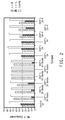
- FIG. 1 shows the distribution of the trans-cis and cis-trans nepetalactone isomers after incubating catmint oil with molecular sieves.
- FIG. 2 shows the distribution of the trans-cis and cis-trans nepetalactone isomers after incubating catmint oil with molecular sieves activated at 250° C., 350° C. or 500° C.
- FIG. 3 shows the effect of varying the amount of molecular sieves on the conversion of trans-cis nepetalactone to cis-trans nepetalactone.
- FIG. 4 shows the effect of a storage gas (air or nitrogen) on the conversion of trans-cis nepetalactone to cis-trans nepetalactone.
- FIG. 5 shows the effect of recycling molecular sieves on the conversion of trans-cis nepetalactone to cis-trans nepetalactone.
- FIGS. 6 and 7 each shows the effect of various molecular sieves on the conversion of trans-cis nepetalactone to cis-trans nepetalactone.
- FIG. 8 shows the pH of various molecular sieves in water.
- FIG. 9 shows the pH of various molecular sieves in water.
- This invention relates to a method for converting trans-cis nepetalactone to cis-trans nepetalactone through the use of molecular sieves.
- trans-cis nepetalactone or a mixture of trans-cis nepetalactone and cis-trans nepetalactone (a “T,C/C,T mixture”)
- T,C/C,T mixture a mixture of trans-cis nepetalactone and cis-trans nepetalactone
- the trans-cis nepetalactone, or the T,C/C,T mixture may, for example, be obtained from, or contained in, catmint oil, which may in turn be obtained from the Nepeta cataria plant.
- Trans-cis nepetalactone as treated herein, or the treated mixture, or the treated catmint oil, obtained from the conversion operation is useful for the production of dihydronepetalactone.
- nepetalactone refers to a compound having the formula:
- Cis-trans nepetalactone is a compound having the formula:
- Trans-cis nepetalactone is a compound having the formula:
- Cis-cis nepetalactone is a compound having the formula:
- Trans-cis nepetalactone, or a T,C/C,T mixture, as used in the method of this invention may be obtained from, or contained in, catmint oil, which may in turn be obtained from the catmint plant, Nepeta cataria .
- Catmint oil may be obtained from Nepeta cataria plants by various isolation processes, including but not limited to steam distillation, organic solvent extraction, microwave-assisted organic solvent extraction, supercritical fluid extraction, mechanical extraction and enfleurage (initial cold extraction into fats followed by organic solvent extraction).
- the oil can be used in the crude form, or the nepetalactones themselves can be further purified from the oil by distillation, as described for example in U.S. Provisional Application No. 60/876,569, which is by this reference incorporated in its entirety as a part hereof for all purposes.
- Catmint oil typically includes more than one nepetalactone isomer, and, as shown in Table 1 below, the concentrations of the isomers can vary based on the source of the plant material and/or the method of catmint oil preparation.
- This invention is applicable to catmint oils that contain trans-cis nepetalactone at a variety of different levels of content, such as concentrations greater than about 1%, and more particularly greater than about 10%, 15%, 25% or 40%, by weight relative to the total weight of nepetalactone in the oil.
- trans-cis nepetalactone may be present at a similar variety of different levels of content, such as concentrations greater than about 1%, and more particularly greater than about 10%, 15%, 25% or 40%, by weight relative to the total weight of the mixture.
- concentrations greater than about 1% and more particularly greater than about 10%, 15%, 25% or 40%, by weight relative to the total weight of the mixture.
- the trans-cis nepetalactone may be regarded essentially as an impurity in a cis-trans nepetalactone compound.
- the invention is also applicable to the conversion of a trans-cis nepetalactone compound itself to cis-trans nepetalactone through the use of molecular sieves.
- Molecular sieves suitable for use in the method hereof may in general include a natural or synthetic material with a microporous, typically crystalline structure, with pore sizes typically ranging from 5 to 10 Angstroms, that can separate components of a mixture based on molecular size and shape differences.
- Molecular sieves are three-dimensional crystalline or non-crystalline networks. Although these networks typically comprise oxide lattices containing tetrahedral Si 4+ and Al 3+ cations (which compositionally define a zeolite molecular sieve such as described below), other cations can also occupy these sites.
- coordination may be tetrahedral, trigonal, trigonal bypyramidal or octahedral, as well as distorted variations of these. More than one type of coordination may occur within the same framework.
- Exemplary molecular sieves include silicas, metalloaluminates, aluminophosphates and gallogerminates, such as those described, for example, in Szostak ( Molecular Sieves: Principles of Synthesis and Identification , Van Nostrand Reinhold, New York, 1989).
- the silicas include titanosilicates and metallosilicates.
- the metallosilicates include aluminosilicates (zeolites), gallosilicates, chromosilicates, borosilicates, and ferrisilicates.
- the metalloaluminates include germaniumaluminates.
- the aluminophosphates include silicon-substituted aluminum phosphate (SAPO) molecular sieves; metal-incorporated aluminum phosphate (MeAPO) molecular sieves (wherein the metal can, for example, be Li, Be, B, Mg, Si, Ga, Ge, As, Ti, Mn, Fe, Co or Zn); metal silicoaluminophosphate (MeAPSO) molecular sieves as well as ElAPO molecular sieves (such as those described, for example, in EP 158,976 and EP 158,349); and ElAPSO molecular sieves (such as those described, for example, in EP 159,624).
- SAPO silicon-substituted aluminum phosphate
- MeAPO metal-incorporated aluminum phosphate
- MeAPSO metal silicoaluminophosphate
- a zeolite as used herein, is in general a crystalline aluminosilicate with a framework based on an extensive three-dimensional network of oxygen ions, as described, for example, in Szostak, supra; and Breck ( Zeolite Molecular Sieves , John Wiley & Sons, New York, 1974). Situated within the tetrahedral sites formed by the oxygen can be either a Si 4+ or Al 3+ ion. The AlO 2 ⁇ tetrahedra in the structure determine the framework charge. This is balanced by cations that occupy nonframework positions.
- a representative empirical formula for a zeolite may be written as M 2/n O.Al 2 O 3 .xSiO 2 .yH 2 O, wherein “M” represents the exchangeable cations, generally from the Group I or II ions, although other metal, non-metal or organic cations may be used to balance the framework charge; and “n” represents the cation valence. These cations are present either during synthesis or through post-synthesis ion exchange.
- the value of “x” is equal to or greater than 2 because Al 3+ does not occupy adjacent tetrahedral sites.
- the pore or channel openings range from about 3 ⁇ to greater than 7 ⁇ , with the exact pore size dependent on the structure.
- Typical cations include alkaline cations such as Na + , K + , Rb + and Cs + ; alkaline earth cations such as Mg ++ and Ca ++ ; NH 4 + ; and tetramethylammonium cations.
- Suitable molecular sieves can be small-, medium-, or large-pore molecular sieves, or combinations thereof, and can include 3A (wherein 3A is a potassium-exchanged form of zeolite A), 4A or 5A in powder, bead or rod form (available from Sigma-Aldrich, St. Louis, Mo.); silicalite (available from Sigma-Aldrich); ETS-4 (titanium silicate, available from BASF, Florham Park, N.J.); and CG-180 MAP (available from Ineos, Joliet, Ill.).
- 3A is a potassium-exchanged form of zeolite A
- 4A or 5A in powder bead or rod form
- silicalite available from Sigma-Aldrich
- ETS-4 titanium silicate, available from BASF, Florham Park, N.J.
- CG-180 MAP available from Ineos, Joliet, Ill.
- a molecular sieve as used herein to convert trans-cis nepetalactone to cis-trans nepetalactone may have a pH in water of about 9 or higher, and more particularly about 10 or higher.
- Nepetalic acid is a compound having the formula:
- molecular sieves as used herein include those that act as desiccants, i.e. that remove water present in trans-cis nepetalactone, or in a mixture of trans-cis nepetalactone and cis-trans nepetalactone.
- desiccants i.e. that remove water present in trans-cis nepetalactone, or in a mixture of trans-cis nepetalactone and cis-trans nepetalactone.
- suitable desiccating molecular sieves include 3A, 4A and 5A.
- nepetalic acid trans-cis nepetalactone compound, or a T,C/C,T mixture
- catmint oil containing same may be provided that contains less than about 0.3 wt % water by weight relative to the weight of the water and the compound or T,C,/C,T mixture, or the weight of the water and the catmint oil.
- the compound, T,C/C,T mixture, or the catmint oil contains more than about 0.3 wt % water
- water, ethanol or isopropyl alcohol is used as a solvent in the method, the use of a dessicating molecular sieve is recommended to reduce the formation of nepetalic acid.
- Molecular sieves suitable for use herein can be obtained commercially, or can be prepared using methods known in the art.
- the molecular sieves employed herein may be used in the form of powders, granules or other particulate forms.
- a molecular sieve for use herein may be any one or more of all the members of the total group of molecular sieves disclosed herein.
- the molecular sieve may also, however, be any one or more of those members of a subgroup of the total group of molecular sieves disclosed herein, where the subgroup is formed by excluding any one or more other members from the total group.
- the molecular sieve in such instance may not only be any one or more of the molecular sieves in any subgroup of any size that may be selected from the total group of molecular sieves in all the various different combinations of individual members of the total group, but the members in any subgroup may thus be selected and used in the absence of one or more of the members of the total group that have been excluded to form the subgroup.
- the subgroup formed by excluding various members from the total group of molecular sieves may, moreover, be an individual member of the total group such that that molecular sieve is used in the absence of all other members of the total group except the selected individual member.
- molecular sieve(s) used herein may be desirable to activate by drying. Activation by heating may be carried out at a temperature of about 200° C. to about 500° C. or more in air, an inert gas, or under vacuum.
- Molecular sieve(s) are typically used in the method hereof in an amount such that the weight ratio of molecular sieve(s) to the trans-cis nepetalactone compound, T,C,/C,T mixture, or catmint oil containing same, is in the range of about 0.01/1 to about 5/1, or is in the range of about 0.01/1 to about 2/1.
- T,C/C,T mixture is contacted with molecular sieve(s).
- a temperature up to the flash point of the catmint oil which is frequently in the range of about 85° C. to about 95° C. at atmospheric pressure, may be used.
- the temperature at which contact occurs can be maintained constant, can be varied according to a pre-selected regime, or can be permitted to fluctuate without control.
- the method of this invention may be carried out in batch in a single container opened or unopened to the atmosphere, or in a container under a blanket of an inert gas such as argon or nitrogen.
- Contact of the compound or T,C/C,T mixture with molecular sieve(s) can be carried out with or without stirring, as desired.
- trans-cis nepetalactone by weight relative to the initial weight of the trans-cis nepetalactone present or in the T,C/C,T mixture
- cis-trans nepetalactone by weight relative to the initial weight of the trans-cis nepetalactone present or in the T,C/C,T mixture
- the trans-cis nepetalactone compound or T,C,/C,T mixture, or the catmint oil containing same may optionally be separated from the molecular sieve(s), and the molecular sieve(s) and/or products can be recovered. Suitable methods of separation, such as decantation and filtration, are known in the art. Following separation, the molecular sieve(s) can be recycled for further use in the method. For further use, it may be desirable to first re-activate the molecular sieve(s) by heating.
- the treated trans-cis nepetalactone compound or the T,C/C,T mixture is contained in catmint oil, it may optionally then be hydrogenated to produce hydrogenated catmint oil, such as by the method disclosed in U.S. Provisional Application No. 60/876,568, which is by this reference incorporated in its entirety as a part hereof for all purposes.
- the treated trans-cis nepetalactone compound or the T,C/C,T mixture is not contained in catmint oil, or where cis-trans nepetalactone is recovered from treated catmint oil, the cis-trans nepetalactone may optionally then be hydrogenated to produce dihydronepetalactone by a method such as discussed above, including particularly the method disclosed in U.S. Pat. No. 7,067,677, which is by this reference incorporated in its entirety as a part hereof for all purposes.
- GC gas chromatography
- GC-MS gas chromatography-mass spectrometry
- FID flame ionization detector
- C Centigrade
- mL milliliter
- CMO catmint oil
- wt % weight percent
- NL is nepetalactone
- c,t-NL is cis-trans nepetalactone
- t,c-NL is trans-cis nepetalactone
- NL3 is cis-cis nepetalactone
- h or hr hour
- conc. concentration
- temp. temperature
- press. pressure
- ° C. degrees Centigrade
- g gram
- RT room temperature (about 25° C.).
- SSO refers to Specialty Seeds of Oregon (Culver, Oreg.); Thacker refers to catmint oil (obtained by steam distillation of catmint plant material) supplied by George Thacker Sons (Alberta, Canada); AMT refers to catmint oil (also obtained by steam distillation) supplied by AM Todd & Co., Kalamazoo, Mich.; AMT SSO is catmint oil produced from SSO seeds by AM Todd & Co.; and Thacker SSO is catmint oil produced from SSO seeds by George Thacker Sons.
- Thacker SSO and AMT SSO are shown in Table 1, wherein the distribution of the nepetalactone isomers in catmint oil from several sources was determined. The values for weight percent were calculated relative to the total CMO weight.
- 3A beads 8-12 mesh, EMD Sciences (Gibbstown, N.J.);
- 4A beads 8-12 mesh, Davison Molecular Sieves (WR Grace, Columbia, Md.);
- Fluka available from Sigma-Aldrich
- 4A-b 4A rods obtained from an unidentified source
- H-Mordenite ZEOLYST ZD 96065 (Calcined CBV-30A), Zeolyst Intl. (Valley Forge, Pa.);
- Na-Mordenite CONTEKA (now part of Zeolyst Intl.); CBV-10A, granulated to ⁇ 10/+20 mesh;
- H-ZSM-5 CU Chemie Uetikon GmbH (Hillsborough, N.J.), AG PZ-2/50H;
- Na-ZSM-5 CU Chemie Uetikon AG, PZ-2/40 Na Calcined
- LSX hydrated, United Catalyst, Inc., KY (8 ⁇ 12 beads);
- Silicalite ABSCENTS T-3000, powder, zeolite-Sigma-Aldrich Catalog #419095, Lot 04815 PF;
- CG-180 MAP zeolite of the type P, Crosfield (now part of INEOS Silicas (Lyndhurst, UK));
- ETS-4 is a small pore member of the Engelhard TitanoSilicate (ETS) family of mixed octahedral/tetrahedral microporous framework materials, which can be obtained from BASF (Florham Park, N.J.); and
- EZ-500 ferrierite zeolite, Engelhard (now part of BASF) EZ-500.
- Cs,Na—X was prepared as follows: Cesium impregnated Na—X, zeolite; NaX (5 g) (Alfa Aesar, Catalog #87950, —600 mesh) that was granulated to ⁇ 20/+40 mesh was added to a solution containing 0.15 g of CsNO 3 (Sigma-Aldrich) in 3 g of distilled/deionized (DI) water. DI water (1.9 g) was slowly added to the mixture with stirring until incipient wetness was obtained. The sample was then dried at 70° C. in a vacuum oven.
- the molecular sieves (also referred to herein as “sieves”) were heated as described below to activate them. Heating of the molecular sieves was carried out using Method A, Method B, or as indicated in a particular example. According to Method A, activation of molecular sieves was carried out by heating in a vacuum oven held at 150° C. and 20 psig (137.9 kPa) of vacuum for 1 day under a constant flow of N 2 . Following activation, the oven pressure was increased to room pressure and vials with the sieves were removed from the oven and capped. Molecular sieves were cooled to room temperature prior to use.
- molecular sieves were inserted into a tube furnace designed for activating molecular sieves.
- a flow of nitrogen was passed through the tube and the inside of the tube containing the sieves was heated up to a fixed temperature as indicated in the various examples. This temperature was selected generally with reference to parameters recommended for each sieve by the manufacturer.
- the tube was then cooled down to room temperature under nitrogen.
- the sieves were then removed from the oven, placed in individual vials, and the vials were capped under air. Molecular sieves were cooled to room temperature prior to use.
- This example shows the effect of molecular sieves (4A rods) and storage (i.e., contact or incubation) time on the conversion of t,c-NL to c,t-NL using Thacker SSO or AMT SSO.
- the molecular sieves (abbreviated “mol. sieve” in Table 2) were activated by Method A and the oils were stored in contact with the molecular sieve for one week at 35° C. or 55° C. More complete conversion of t,c-NL to c,t-NL was observed by storage at 55° C.
- the composition of the controls was taken from Table 1. The results are shown in Table 2, wherein the values for weight percent were calculated relative to the total CMO weight.
- This example shows the effect of various other molecular sieves and storage times on AMT SSO oils stored at 55° C.
- the molecular sieves were activated at 150° C. using the vacuum oven (Method A).
- the results are shown in Table 3, wherein the values for weight percent were calculated relative to the total CMO weight.
- the sieves used in this example were activated at 250° C. using the tube furnace (Method B). The results are shown in Table 4, wherein the values for weight percent were calculated relative to the total CMO weight.
- AMT SSO was used, and the provided contact of sieves and CMO was carried out at 55° C. for 7 days.
- the sieves were heated (i.e. activated) at 250° C. using Method B, or not heated (i.e. not activated).
- Total NL was calculated as the sum of c,t-NL, t,c-NL, and NL3. NL3 data are not shown because these values did not appreciably change with incubation time. The results are shown in FIG. 1 .
- the molecular sieves were activated according to Method B. Mixtures of 1 g of catmint oil (AMT SSO oil) and increasing amounts of sieves (0.1 g, 0.5 g and 1 g) were prepared in 4 mL vials. The caps were closed and the vials were stored in an oven set at 55-60° C. for 7 days. The results are shown in FIG. 3 .
- AMT SSO oil catmint oil
- sieves 0.1 g, 0.5 g and 1 g
- Examples were prepared as described in Example 7 under air. After incubating for 7 days, the sieves were filtered from the CMO. The sieves were then heated inside a tube furnace at 350° C. to burn off the remaining catmint oil and regenerate them. Sieves were allowed to cool to room temperature. Mixtures of 1 g of catmint oil and 0.5 g of sieves were then prepared in 4 mL vials. The caps were closed and the vials were stored in an oven set at 55-60° C. for 7 days. The results are shown in FIG. 5 .
- the materials were treated by heating in a tube furnace at 350° C. for 2 hrs. Mixtures of 2 g of CMO and 0.5 g of each of the components were made and stored at 55-60° C. for a period of 1 week. The results are shown in FIG. 6 .
- Cs,Na—X was treated by heating in a tube furnace at 350° C. for 2 hrs. All other materials were heated at 115° C. for 2 hrs. Mixtures of 2 g of CMO and 0.5 g of each of the molecular sieves were prepared and stored at 55-60° C. for a period of 1 week. The results are shown in FIG. 7 .
- the pH of water containing molecular sieves was determined.
- the ratio of water to sieves was 2 to 1 (weight of water/weight of sieve). With heating, sieves slightly increased the pH of water. The results are shown in FIG. 8 .
- the pH of various molecular sieves in water was determined.
- the ratio of water to sieves was 2 to 1 (weight of water/weight of sieve). The results are shown in FIG. 9 .
Landscapes
- Chemical & Material Sciences (AREA)
- Organic Chemistry (AREA)
- Fats And Perfumes (AREA)
- Organic Low-Molecular-Weight Compounds And Preparation Thereof (AREA)
- Seasonings (AREA)
- Pyrane Compounds (AREA)
- Low-Molecular Organic Synthesis Reactions Using Catalysts (AREA)
- Pharmaceuticals Containing Other Organic And Inorganic Compounds (AREA)
Priority Applications (1)
| Application Number | Priority Date | Filing Date | Title |
|---|---|---|---|
| US12/744,513 US8802870B2 (en) | 2007-11-26 | 2008-11-26 | Method for converting trans-cis nepetalactone to cis-trans nepetalactone using molecular sieves |
Applications Claiming Priority (3)
| Application Number | Priority Date | Filing Date | Title |
|---|---|---|---|
| US99011707P | 2007-11-26 | 2007-11-26 | |
| PCT/US2008/084795 WO2009070641A1 (en) | 2007-11-26 | 2008-11-26 | Method for converting trans-cis nepetalactone to cis-trans nepetalactone using molecular sieves |
| US12/744,513 US8802870B2 (en) | 2007-11-26 | 2008-11-26 | Method for converting trans-cis nepetalactone to cis-trans nepetalactone using molecular sieves |
Publications (2)
| Publication Number | Publication Date |
|---|---|
| US20100261915A1 US20100261915A1 (en) | 2010-10-14 |
| US8802870B2 true US8802870B2 (en) | 2014-08-12 |
Family
ID=40364434
Family Applications (1)
| Application Number | Title | Priority Date | Filing Date |
|---|---|---|---|
| US12/744,513 Expired - Fee Related US8802870B2 (en) | 2007-11-26 | 2008-11-26 | Method for converting trans-cis nepetalactone to cis-trans nepetalactone using molecular sieves |
Country Status (10)
| Country | Link |
|---|---|
| US (1) | US8802870B2 (https=) |
| EP (1) | EP2217586B1 (https=) |
| JP (1) | JP5377508B2 (https=) |
| KR (1) | KR101577472B1 (https=) |
| CN (1) | CN101874027B (https=) |
| CA (1) | CA2705367C (https=) |
| ES (1) | ES2442010T3 (https=) |
| MX (1) | MX2010005706A (https=) |
| WO (1) | WO2009070641A1 (https=) |
| ZA (1) | ZA201003220B (https=) |
Cited By (2)
| Publication number | Priority date | Publication date | Assignee | Title |
|---|---|---|---|---|
| US9174897B2 (en) | 2012-06-28 | 2015-11-03 | Central Glass Company, Limited | Method for purifying trans-1,3,3,3-tetrafluoropropene |
| US12378213B1 (en) | 2024-08-13 | 2025-08-05 | William Allen Boulanger | Process for the hydrogenation of catnip oil |
Families Citing this family (12)
| Publication number | Priority date | Publication date | Assignee | Title |
|---|---|---|---|---|
| US7547793B2 (en) * | 2003-03-19 | 2009-06-16 | E.I. Du Pont De Nemours And Company | Method for making insect repellent composition |
| CA2648270C (en) * | 2006-05-10 | 2014-07-08 | E.I. Du Pont De Nemours And Company | Formulated tick and insect repellent compositions comprising dihydronepetalactone |
| US9521844B2 (en) | 2006-12-21 | 2016-12-20 | E I Du Pont De Nemours And Company | Solvent addition and removal in the hydrogenation of catmint oil |
| SI2121885T1 (sl) * | 2006-12-21 | 2017-10-30 | E.I. Du Pont De Nemours And Company | Parna destilacija mačje mete |
| WO2008079253A1 (en) | 2006-12-21 | 2008-07-03 | E. I. Du Pont De Nemours And Company | Hydrogenation of catmint oil |
| SI2114911T1 (sl) * | 2006-12-21 | 2015-12-31 | E.I. Du Pont De Nemours And Company | Produkcija dihidronepetalaktona s hidrogeniranjem nepetalaktona |
| BRPI0719453A2 (pt) * | 2006-12-21 | 2014-03-18 | Du Pont | Processo de preparação de óleo de erva dos gatos hidrogenado, processo de preparação de produtos formulados com um óleo de erva dos gatos hidrogenado e óleo de erva dos gatos hidrogenado |
| CA2705367C (en) | 2007-11-26 | 2016-05-31 | E.I. Du Pont De Nemours And Company | Method for converting trans-cis nepetalactone to cis-trans nepetalactone using molecular sieves |
| JP5805099B2 (ja) | 2009-11-11 | 2015-11-04 | イー・アイ・デュポン・ドウ・ヌムール・アンド・カンパニーE.I.Du Pont De Nemours And Company | イヌハッカ油の回収を向上させる方法 |
| EP2762873A4 (en) | 2011-09-26 | 2015-05-20 | Toto Ltd | METHOD FOR SPECIFIC DETECTION OF A TEST SUBSTANCE |
| CN103012338B (zh) * | 2012-12-07 | 2014-10-08 | 南京中医药大学 | 一种荆芥内酯对溴苯甲酸酯及其制备工艺和用途 |
| CN114324645B (zh) * | 2021-12-24 | 2023-10-24 | 广州白云山汉方现代药业有限公司 | 一种快速鉴别藏荆芥药材的方法 |
Citations (23)
| Publication number | Priority date | Publication date | Assignee | Title |
|---|---|---|---|---|
| US4496467A (en) | 1983-02-23 | 1985-01-29 | International Flavors & Fragrances Inc. | Insect repellent, pheremonal, animal repellent diagnostic and/or aroma augmenting or enhancing compositions and articles containing at least a major proportion of poly(epsilon caprolactone)homopolymers, and having imbedded therein one or more functional |
| EP0158976A2 (en) | 1984-04-13 | 1985-10-23 | Uop | Molecular sieve compositions |
| US4869896A (en) | 1984-05-30 | 1989-09-26 | Angus Chemical Company | Potentiated insect repellent composition and method |
| EP0158349B1 (en) | 1984-04-13 | 1990-03-14 | Uop | Molecular sieve compositions |
| EP0159624B1 (en) | 1984-04-13 | 1991-12-18 | Uop | Molecular sieve compositions |
| US6462015B1 (en) | 2000-11-10 | 2002-10-08 | International Flavors & Fragrances Inc. | Bicyclic lactones, perfumery uses thereof, processes for preparing same and intermediates therefor |
| US6524605B1 (en) | 1999-08-06 | 2003-02-25 | Iowa State University Research Foundation, Inc. | Biorational repellents obtained from terpenoids for use against arthropods |
| WO2003079786A1 (en) | 2002-03-20 | 2003-10-02 | E. I. Du Pont De Nemours And Company | Dihydronepetalactone as insect repellent |
| US6673756B2 (en) | 2000-09-20 | 2004-01-06 | Symrise Gmbh & Co. Kg | Multiphase soaps |
| US20040024054A1 (en) | 2002-04-08 | 2004-02-05 | Jodi Haenke | Materials and methods for controlling wood-boring insects |
| US20050244441A1 (en) | 2004-04-29 | 2005-11-03 | Unilever Home & Personal Care Usa, Division Of Conopco, Inc. | Cosmetic compositions |
| US7067677B2 (en) | 2002-04-03 | 2006-06-27 | E. I. Du Pont De Nemours And Company | Production of dihydronepetalactone by hydrogenation of nepetalactone |
| US20060223878A1 (en) | 2004-11-03 | 2006-10-05 | Scialdone Mark A | Formulations containing insect repellent compounds |
| US20070077262A1 (en) | 2005-09-30 | 2007-04-05 | Scialdone Mark A | Puleganic acid insect repellents |
| US20070264297A1 (en) | 2006-05-10 | 2007-11-15 | Scialdone Mark A | Formulated tick and insect repellent compositions |
| US20080305135A1 (en) | 2007-05-31 | 2008-12-11 | Beiersdorf Ag | Wasp repellents |
| US20100034906A1 (en) | 2006-12-21 | 2010-02-11 | Yamaira Gonzalez | Steam distillation of catmint plants |
| US20100092404A1 (en) | 2006-12-21 | 2010-04-15 | E.I. Du Pont De Nemours And Comapny | Hydrogenation of caryophellene |
| US20100145077A1 (en) | 2006-12-21 | 2010-06-10 | E. I. Du Pont De Nemours And Company | Hydrogenation of catmint oil |
| US20100145078A1 (en) | 2006-12-21 | 2010-06-10 | E.I. Du Pont De Nemours And Company | Solvent addition and removal in the hydrogenation of catmint oil |
| US20100168447A1 (en) | 2006-12-21 | 2010-07-01 | E.I. Du Pont De Nemours And Company | Production of dihydronepetalactone |
| US20100261915A1 (en) | 2007-11-26 | 2010-10-14 | Yamaira Gonzalez | Method for converting trans-cis nepetalactone to cis-trans nepetalactone using molecular sieves |
| US7820145B2 (en) | 2003-08-04 | 2010-10-26 | Foamix Ltd. | Oleaginous pharmaceutical and cosmetic foam |
Family Cites Families (4)
| Publication number | Priority date | Publication date | Assignee | Title |
|---|---|---|---|---|
| CN1011220B (zh) * | 1984-04-13 | 1991-01-16 | 联合碳化公司 | 分子筛的制备方法 |
| US4686093A (en) * | 1984-04-13 | 1987-08-11 | Union Carbide Corporation | Molecular sieve compositions with aluminum, phosphorus and at least two other elements |
| US5072063A (en) * | 1990-01-09 | 1991-12-10 | Dowelanco | Process for rearranging allylic geminal dihalogen compounds |
| WO1998021170A1 (en) * | 1996-11-13 | 1998-05-22 | Chevron Chemical Company Llc | Process for olefin isomerization |
-
2008
- 2008-11-26 CA CA2705367A patent/CA2705367C/en not_active Expired - Fee Related
- 2008-11-26 US US12/744,513 patent/US8802870B2/en not_active Expired - Fee Related
- 2008-11-26 ES ES08853740.2T patent/ES2442010T3/es active Active
- 2008-11-26 JP JP2010535122A patent/JP5377508B2/ja not_active Expired - Fee Related
- 2008-11-26 KR KR1020107014060A patent/KR101577472B1/ko not_active Expired - Fee Related
- 2008-11-26 WO PCT/US2008/084795 patent/WO2009070641A1/en not_active Ceased
- 2008-11-26 CN CN200880117731.7A patent/CN101874027B/zh not_active Expired - Fee Related
- 2008-11-26 EP EP08853740.2A patent/EP2217586B1/en not_active Not-in-force
- 2008-11-26 MX MX2010005706A patent/MX2010005706A/es active IP Right Grant
-
2010
- 2010-05-06 ZA ZA2010/03220A patent/ZA201003220B/en unknown
Patent Citations (24)
| Publication number | Priority date | Publication date | Assignee | Title |
|---|---|---|---|---|
| US4496467A (en) | 1983-02-23 | 1985-01-29 | International Flavors & Fragrances Inc. | Insect repellent, pheremonal, animal repellent diagnostic and/or aroma augmenting or enhancing compositions and articles containing at least a major proportion of poly(epsilon caprolactone)homopolymers, and having imbedded therein one or more functional |
| EP0158976A2 (en) | 1984-04-13 | 1985-10-23 | Uop | Molecular sieve compositions |
| EP0158349B1 (en) | 1984-04-13 | 1990-03-14 | Uop | Molecular sieve compositions |
| EP0159624B1 (en) | 1984-04-13 | 1991-12-18 | Uop | Molecular sieve compositions |
| US4869896A (en) | 1984-05-30 | 1989-09-26 | Angus Chemical Company | Potentiated insect repellent composition and method |
| US6524605B1 (en) | 1999-08-06 | 2003-02-25 | Iowa State University Research Foundation, Inc. | Biorational repellents obtained from terpenoids for use against arthropods |
| US6673756B2 (en) | 2000-09-20 | 2004-01-06 | Symrise Gmbh & Co. Kg | Multiphase soaps |
| US6462015B1 (en) | 2000-11-10 | 2002-10-08 | International Flavors & Fragrances Inc. | Bicyclic lactones, perfumery uses thereof, processes for preparing same and intermediates therefor |
| US7232844B2 (en) | 2002-03-20 | 2007-06-19 | E. I. Du Pont De Nemours And Company | Insect repellent compounds |
| WO2003079786A1 (en) | 2002-03-20 | 2003-10-02 | E. I. Du Pont De Nemours And Company | Dihydronepetalactone as insect repellent |
| US7067677B2 (en) | 2002-04-03 | 2006-06-27 | E. I. Du Pont De Nemours And Company | Production of dihydronepetalactone by hydrogenation of nepetalactone |
| US20040024054A1 (en) | 2002-04-08 | 2004-02-05 | Jodi Haenke | Materials and methods for controlling wood-boring insects |
| US7820145B2 (en) | 2003-08-04 | 2010-10-26 | Foamix Ltd. | Oleaginous pharmaceutical and cosmetic foam |
| US20050244441A1 (en) | 2004-04-29 | 2005-11-03 | Unilever Home & Personal Care Usa, Division Of Conopco, Inc. | Cosmetic compositions |
| US20060223878A1 (en) | 2004-11-03 | 2006-10-05 | Scialdone Mark A | Formulations containing insect repellent compounds |
| US20070077262A1 (en) | 2005-09-30 | 2007-04-05 | Scialdone Mark A | Puleganic acid insect repellents |
| US20070264297A1 (en) | 2006-05-10 | 2007-11-15 | Scialdone Mark A | Formulated tick and insect repellent compositions |
| US20100034906A1 (en) | 2006-12-21 | 2010-02-11 | Yamaira Gonzalez | Steam distillation of catmint plants |
| US20100092404A1 (en) | 2006-12-21 | 2010-04-15 | E.I. Du Pont De Nemours And Comapny | Hydrogenation of caryophellene |
| US20100145077A1 (en) | 2006-12-21 | 2010-06-10 | E. I. Du Pont De Nemours And Company | Hydrogenation of catmint oil |
| US20100145078A1 (en) | 2006-12-21 | 2010-06-10 | E.I. Du Pont De Nemours And Company | Solvent addition and removal in the hydrogenation of catmint oil |
| US20100168447A1 (en) | 2006-12-21 | 2010-07-01 | E.I. Du Pont De Nemours And Company | Production of dihydronepetalactone |
| US20080305135A1 (en) | 2007-05-31 | 2008-12-11 | Beiersdorf Ag | Wasp repellents |
| US20100261915A1 (en) | 2007-11-26 | 2010-10-14 | Yamaira Gonzalez | Method for converting trans-cis nepetalactone to cis-trans nepetalactone using molecular sieves |
Non-Patent Citations (14)
| Title |
|---|
| Chris Peterson et. al., Insect Repellents-Past, Present and Future, Pesticide Outlook, Aug. 2001. |
| Depooter et. al., The Essential Oils Five Nepeta Species. A Preliminary Evaluation of Their Use in Chemotaxonomy by Cluster Analysis, Flavour and Fragrance Journal, 1988, vol. 3:155-159. |
| Fleming et. al., Sterocontrol in Organic Synthesis Using Silicon-Containing Compounds, a Synthesis of (+) Dihydronepetalactone Using the SE2 Reaction of an Allysilane, J. Chem. Soc., Perkin Trans, 1998, vol. 1:2645-2649. |
| G.W.K. Cavill et. al., Defensive and Other Secretions of the Australlian Cocktail Ant, Iridomyrex Nitidiceps, Tetrahedron, 1982, vol. 38:1931-1938. |
| Handjieva et. al., Constituents of Essential Oils From Nepeta Cataria L., N. Grandiflora M.B. and N. Nuda L., J. Essential Oil Res., 1996, vol. 8:639-643. |
| International Search Report, PCT/US2008/084795, Dated Nov. 26, 2008. |
| Jefson et. al., Chemical Defense of a Rove Bettle, Journal of Chemical Ecology, 1983, vol. 9:150-180. |
| Libikas et al, Simplified Isolation Procedure and Interconversion of the Diastereomers of Nepetalactone and Nepetalactol, J. Nat. Prod., Vol. 68, 2005, pp. 886-890, XP002519342. |
| Regnier et al, "Studies on the Composition of the Essential Oils of Three Nepeta Species", Phytochemistry 1967, Vol. 6, pp. 1281 to 1289. |
| Regnier et al, Nepetalactone and Eipnepetalactone From Nepeta Cataria L., Phytochemistry, 1967, vol. 6:1271-1280. |
| Sakan et al, "The exact nature of matatabilactone and the Terpenes of Nepeta Cataria", Tetrahedron Letters, No. 46, pp. 4097-4102; 1965. |
| T. Eisner, Science, 1964, vol. 146:1318-1320. |
| Tanimori et. al., Total Synthesis of (+) Dihydronepetalactone, Agric. Biol. Chem., 1991, vol. 55:1181-11832. |
| Wolinsky et. al., Syntheses of the Dihydronepetalactones, J. Org. Chem., 1972, vol. 37:3376-3378. |
Cited By (2)
| Publication number | Priority date | Publication date | Assignee | Title |
|---|---|---|---|---|
| US9174897B2 (en) | 2012-06-28 | 2015-11-03 | Central Glass Company, Limited | Method for purifying trans-1,3,3,3-tetrafluoropropene |
| US12378213B1 (en) | 2024-08-13 | 2025-08-05 | William Allen Boulanger | Process for the hydrogenation of catnip oil |
Also Published As
| Publication number | Publication date |
|---|---|
| MX2010005706A (es) | 2010-06-02 |
| WO2009070641A1 (en) | 2009-06-04 |
| CN101874027A (zh) | 2010-10-27 |
| US20100261915A1 (en) | 2010-10-14 |
| JP5377508B2 (ja) | 2013-12-25 |
| CN101874027B (zh) | 2014-08-20 |
| CA2705367C (en) | 2016-05-31 |
| KR101577472B1 (ko) | 2015-12-14 |
| EP2217586B1 (en) | 2013-11-13 |
| JP2011504882A (ja) | 2011-02-17 |
| ES2442010T3 (es) | 2014-02-07 |
| ZA201003220B (en) | 2011-08-31 |
| KR20100099207A (ko) | 2010-09-10 |
| CA2705367A1 (en) | 2009-06-04 |
| EP2217586A1 (en) | 2010-08-18 |
Similar Documents
| Publication | Publication Date | Title |
|---|---|---|
| US8802870B2 (en) | Method for converting trans-cis nepetalactone to cis-trans nepetalactone using molecular sieves | |
| Bouaziz et al. | Polyphenols content, antioxidant and antimicrobial activities of extracts of some wild plants collected from the south of Tunisia | |
| Sarrou et al. | Metabolite profiling and antioxidative activity of Sage (Salvia fruticosa Mill.) under the influence of genotype and harvesting period | |
| Preininger et al. | Evaluation of key odorants of the neutral volatiles of Emmentaler cheese by the calculation of odour activity values | |
| Hirai | Abscisic acid | |
| Blanco‐Ania et al. | Hybrid‐type strigolactone analogues derived from auxins | |
| Dieterman et al. | Accumulation of ayapin and scopolin in sunflower plants treated with 2, 4-dichlorophenoxyacetic acid | |
| Kain et al. | Metabolic Characterization, Antioxidant Capacity, and In vitro Antiurolithiatic Potential of Achillea millefolium L.. | |
| Onayade et al. | Lavender lactone and other volatile constituents of the oleoresin from seeds of Garcinia kola Heckel | |
| Olopade et al. | Modification of montmorillonite clay with Cymbopogon citratus for the decontamination of zearalenone in millet | |
| US20050025795A1 (en) | Compounds, Compositions and methods for insect control | |
| Dmitriev et al. | Phytoalexins from onion and their role in disease resistance | |
| Carpenter et al. | (−)-5-Methylmellein and catechol derivatives from four Semecarpus species | |
| WO2002067680A1 (en) | Compositions and methods for insect control | |
| Songca et al. | A pentacyclic triterpene from the leaves of Combretum collinum Fresen showing antibacterial properties against Staphylococcus aureus | |
| Darriet et al. | Identification of chrysanthenyl esters from the essential oil of Anthemis maritima L. investigated by GC/RI, GC‐MS (EI and CI) and 13C‐NMR spectroscopy: chemical composition and variability | |
| Al-Rubaye et al. | Determination of Alkaloid Compounds of Datura Stramonium Using Gc-Ms and Ftir and Evaluation of its Antibacterial, Antifungal and Anti-Diabetic Activity. | |
| US20060121134A1 (en) | Methods of separating ZE-nepetalactone and EZ-nepetalactone from catnip oil | |
| Melkani et al. | Constituents of the essential oils from two varieties of Cymbopogon distans | |
| KR19980025844A (ko) | 생강나무에서 분리한 항생물질 | |
| YOSHIHARA et al. | Fungitoxic compounds from the roots of the eggplant stock | |
| US6447819B2 (en) | Water-soluble complex of an extract of Ginkgo biloba, process for the preparation thereof and composition comprising the same | |
| Zialé et al. | Structural characterization and in vitro biological exploration of phytoconstituents isolated from a chloroform extract of Rauvolfia vomitoria (Apocynaceae) root bark from Côte d’Ivoire | |
| Kunkeler et al. | Zeolite catalyzed regioselective synthesis of indoles | |
| Mazandarani et al. | Ecological requirements, antioxidant activity and new chemotype essential oil from Achillea millefolium L. and Achillea micrantha Wild. in north of Iran (Golestan Province) |
Legal Events
| Date | Code | Title | Description |
|---|---|---|---|
| AS | Assignment |
Owner name: E. I. DU PONT DE NEMOURS AND COMPANY, DELAWARE Free format text: ASSIGNMENT OF ASSIGNORS INTEREST;ASSIGNOR:GONZALEZ, YAMAIRA;REEL/FRAME:024602/0007 Effective date: 20100520 |
|
| AS | Assignment |
Owner name: E. I. DU PONT DE NEMOURS AND COMPANY, DELAWARE Free format text: ASSIGNMENT OF ASSIGNORS INTEREST;ASSIGNOR:CORBIN, DAVID R.;REEL/FRAME:031439/0992 Effective date: 20130723 |
|
| FEPP | Fee payment procedure |
Free format text: MAINTENANCE FEE REMINDER MAILED (ORIGINAL EVENT CODE: REM.) |
|
| LAPS | Lapse for failure to pay maintenance fees |
Free format text: PATENT EXPIRED FOR FAILURE TO PAY MAINTENANCE FEES (ORIGINAL EVENT CODE: EXP.); ENTITY STATUS OF PATENT OWNER: LARGE ENTITY |
|
| STCH | Information on status: patent discontinuation |
Free format text: PATENT EXPIRED DUE TO NONPAYMENT OF MAINTENANCE FEES UNDER 37 CFR 1.362 |
|
| FP | Lapsed due to failure to pay maintenance fee |
Effective date: 20180812 |