US8415200B2 - Method for manufacturing semiconductor package - Google Patents

Method for manufacturing semiconductor package Download PDF

Info

Publication number
US8415200B2
US8415200B2 US13/007,444 US201113007444A US8415200B2 US 8415200 B2 US8415200 B2 US 8415200B2 US 201113007444 A US201113007444 A US 201113007444A US 8415200 B2 US8415200 B2 US 8415200B2
Authority
US
United States
Prior art keywords
layer
metal
metal layer
semiconductor package
manufacturing
Prior art date
Legal status (The legal status is an assumption and is not a legal conclusion. Google has not performed a legal analysis and makes no representation as to the accuracy of the status listed.)
Expired - Fee Related
Application number
US13/007,444
Other versions
US20120088334A1 (en
Inventor
Mi Sun Hwang
Keung Jin Sohn
Eung Suek Lee
Myung Sam Kang
Current Assignee (The listed assignees may be inaccurate. Google has not performed a legal analysis and makes no representation or warranty as to the accuracy of the list.)
Samsung Electro Mechanics Co Ltd
Original Assignee
Samsung Electro Mechanics Co Ltd
Priority date (The priority date is an assumption and is not a legal conclusion. Google has not performed a legal analysis and makes no representation as to the accuracy of the date listed.)
Filing date
Publication date
Application filed by Samsung Electro Mechanics Co Ltd filed Critical Samsung Electro Mechanics Co Ltd
Assigned to SAMSUNG ELECTRO-MECHANICS CO., LTD. reassignment SAMSUNG ELECTRO-MECHANICS CO., LTD. ASSIGNMENT OF ASSIGNORS INTEREST (SEE DOCUMENT FOR DETAILS). Assignors: LEE, EUNG SUEK, SOHN, KEUNG JIN, HWANG, MI SUN, KANG, MYUNG SAM
Publication of US20120088334A1 publication Critical patent/US20120088334A1/en
Application granted granted Critical
Publication of US8415200B2 publication Critical patent/US8415200B2/en
Expired - Fee Related legal-status Critical Current
Anticipated expiration legal-status Critical

Links

Images

Classifications

    • H10W70/635
    • HELECTRICITY
    • H05ELECTRIC TECHNIQUES NOT OTHERWISE PROVIDED FOR
    • H05KPRINTED CIRCUITS; CASINGS OR CONSTRUCTIONAL DETAILS OF ELECTRIC APPARATUS; MANUFACTURE OF ASSEMBLAGES OF ELECTRICAL COMPONENTS
    • H05K3/00Apparatus or processes for manufacturing printed circuits
    • H05K3/40Forming printed elements for providing electric connections to or between printed circuits
    • H05K3/4038Through-connections; Vertical interconnect access [VIA] connections
    • H10W70/095
    • H10W70/69
    • HELECTRICITY
    • H05ELECTRIC TECHNIQUES NOT OTHERWISE PROVIDED FOR
    • H05KPRINTED CIRCUITS; CASINGS OR CONSTRUCTIONAL DETAILS OF ELECTRIC APPARATUS; MANUFACTURE OF ASSEMBLAGES OF ELECTRICAL COMPONENTS
    • H05K2203/00Indexing scheme relating to apparatus or processes for manufacturing printed circuits covered by H05K3/00
    • H05K2203/03Metal processing
    • H05K2203/0384Etch stop layer, i.e. a buried barrier layer for preventing etching of layers under the etch stop layer
    • HELECTRICITY
    • H05ELECTRIC TECHNIQUES NOT OTHERWISE PROVIDED FOR
    • H05KPRINTED CIRCUITS; CASINGS OR CONSTRUCTIONAL DETAILS OF ELECTRIC APPARATUS; MANUFACTURE OF ASSEMBLAGES OF ELECTRICAL COMPONENTS
    • H05K3/00Apparatus or processes for manufacturing printed circuits
    • H05K3/02Apparatus or processes for manufacturing printed circuits in which the conductive material is applied to the surface of the insulating support and is thereafter removed from such areas of the surface which are not intended for current conducting or shielding
    • H05K3/06Apparatus or processes for manufacturing printed circuits in which the conductive material is applied to the surface of the insulating support and is thereafter removed from such areas of the surface which are not intended for current conducting or shielding the conductive material being removed chemically or electrolytically, e.g. by photo-etch process
    • HELECTRICITY
    • H05ELECTRIC TECHNIQUES NOT OTHERWISE PROVIDED FOR
    • H05KPRINTED CIRCUITS; CASINGS OR CONSTRUCTIONAL DETAILS OF ELECTRIC APPARATUS; MANUFACTURE OF ASSEMBLAGES OF ELECTRICAL COMPONENTS
    • H05K3/00Apparatus or processes for manufacturing printed circuits
    • H05K3/46Manufacturing multilayer circuits
    • H05K3/4644Manufacturing multilayer circuits by building the multilayer layer by layer, i.e. build-up multilayer circuits
    • H05K3/4647Manufacturing multilayer circuits by building the multilayer layer by layer, i.e. build-up multilayer circuits by applying an insulating layer around previously made via studs
    • H10W72/072
    • H10W72/07236
    • H10W72/241
    • H10W72/252
    • H10W72/865
    • H10W90/701
    • H10W90/724
    • H10W90/754

Definitions

  • the present invention relates to a method for manufacturing a semiconductor package.
  • the semiconductor package may be designed only with a printed circuit board that includes only a single metal layer, and as a result, is in a superior position in terms of price competitiveness of a semiconductor package.
  • FIGS. 1 to 6 are cross-sectional views showing a method for manufacturing a semiconductor package according to the prior art in a process sequence.
  • a copper clad laminate configured of an insulating layer 1 and a copper layer 2 is provided and a through hole 3 is machined on the copper clad laminate for interlayer conduction.
  • the through hole is generally formed using CNC drilling or laser drilling.
  • a chemical copper plating process and an electrical copper plating process are performed, thereby forming a copper plating layer 4 over the copper clad laminate.
  • the inside of the through hole 3 is filled with a plugging ink 5 and a plating is performed on the panel, thereby forming a plating layer 6 that is to be thick.
  • the plating layer 6 is selectively etched, thereby forming a circuit pattern 7 .
  • a solder resist 8 is applied to both surfaces of the copper clad laminate formed with the circuit pattern 7 and an opening part is formed so that a portion of the circuit pattern 7 is opened.
  • a solder ball 10 is formed on a pad part of the circuit pattern 7 and a semiconductor chip 20 is mounted on the substrate using the wire 30 , thereby implementing a semiconductor package 50 .
  • the through hole should be formed on the copper clad laminate for interlayer conduction and the electrical/chemical copper plating processes should also be performed, which causes increase in manufacturing costs.
  • the present invention has been made in an effort to provide a method for manufacturing a semiconductor package capable of being implemented in a high-density package at low manufacturing costs.
  • a method for manufacturing a semiconductor package including: (A) preparing a metal member in which a first metal layer, a barrier layer, and a second metal layer are stacked in sequence; (B) forming a metal post by selectively etching the second metal layer; (C) removing the exposed bather layer from the metal post and laminating an insulating layer on the first metal layer through which the metal post is penetrated; and (D) patterning the first metal layer contacting one surface of the insulating layer to form a circuit layer.
  • the first metal layer and the second metal layer may be made of copper, and the bather layer may be made of nickel.
  • the second metal layer may have a thickness in the range of 50 to 300 ⁇ m.
  • Step (B) may include: (B1) applying an etching resist to a surface of the second metal layer; and (B2) after patterning the etching resist, selectively etching the second metal layer before the bather layer to form the metal post.
  • the metal post at step (B) may have a diameter increased in a direction towards the bather layer.
  • the method for manufacturing a semiconductor package may further include, after step (C), (C′) polishing an exposed surface of the insulating layer to form a roughness.
  • Step (D) may include: (D1) applying an etching resist to a surface of the first metal layer; and (D2) after patterning the etching resist, selectively etching the first metal layer to form a circuit layer.
  • the method for manufacturing a semiconductor package may further include, after step (D), (E) after applying a solder resist to both surfaces of the insulating layer, forming a first opening by processing the solder resist so that a pad part of the circuit layer formed on one surface of the insulating layer is exposed and forming a second opening by processing the solder resist so that the metal post formed on the other surface of the insulating layer is exposed.
  • the method for manufacturing a semiconductor package may further include, after step (E), (F) mounting a semiconductor chip on the pad part exposed by the first opening through a solder bump and forming a solder ball on the metal post exposed by the second opening.
  • a method for manufacturing a semiconductor package including: (A) preparing a base member in which a first metal layer, a barrier layer, and a second metal layer are stacked on both surfaces thereof in sequence based on an adhesive member; (B) forming a metal post by selectively etching the second metal layer; (C) removing the exposed bather layer from the metal post, laminating an insulating layer on the first metal layer through which the metal post is penetrated, and then, separating the first metal layer from the adhesive member; and (D) patterning the first metal layer contacting one surface of the insulating layer to form a circuit layer.
  • the first metal layer and the second metal layer may be made of copper, and the bather layer may be made of nickel.
  • the second metal layer may have a thickness in the range of 50 to 300 ⁇ m.
  • Step (B) may include: (B1) applying an etching resist to a surface of the second metal layer; and (B2) after patterning the etching resist, selectively etching the second metal layer before the bather layer to form the metal post.
  • the metal post at step (B) may have a diameter increased in a direction towards the bather layer.
  • the method for manufacturing a semiconductor package may further include, after step (C), (C′) polishing an exposed surface of the insulating layer to form a roughness.
  • Step (D) may include: (D1) applying an etching resist to a surface of the first metal layer; and (D2) after patterning the etching resist, selectively etching the first metal layer to form a circuit layer.
  • the method for manufacturing a semiconductor package may further include, after step (D), (E) after applying a solder resist to both surfaces of the insulating layer, forming a first opening by processing the solder resist so that a pad part of the circuit layer formed on one surface of the insulating layer is exposed and forming a second opening by processing the solder resist so that the metal post formed on the other surface of the insulating layer is exposed.
  • the method for manufacturing a semiconductor package may further include, after step (E), (F) mounting a semiconductor chip on the pad part exposed by the first opening through a solder bump and forming a solder ball on the metal post exposed by the second opening.
  • FIGS. 1 to 6 are cross-sectional views showing a method for manufacturing a semiconductor package according to the prior art in a process sequence
  • FIGS. 7 to 16 are cross-sectional views showing a method for manufacturing a semiconductor package according to a first preferred embodiment of the present invention in a process sequence.
  • FIGS. 17 to 27 are cross-sectional views showing a method for manufacturing a semiconductor package according to a second preferred embodiment of the present invention in a process sequence.
  • FIGS. 7 to 16 are cross-sectional views showing a method for manufacturing a semiconductor package according to a first preferred embodiment of the present invention in a process sequence.
  • a method for manufacturing a semiconductor package according to the present embodiment will be described with reference to the accompanying drawings.
  • a metal member 100 is provided, the metal member 100 in which a first metal layer 113 , a bather layer 115 , and a second metal layer 117 are stacked in sequence.
  • the first metal layer 113 and the second metal layer 117 are made of copper (Cu).
  • the first metal layer 113 is patterned to be formed as a circuit layer 160 and the second metal layer 117 is selectively etched to be formed as a metal post 140 .
  • the second metal layer 117 may be selected to have a thickness in the range of 50 to 300 ⁇ m, and the first metal layer 113 may have a thickness thinner than that of the second metal layer 117 .
  • the bather layer 115 is interposed between the first metal layer 113 and the second metal layer 117 and has no limit in configuration components thereof, but may be preferably made of nickel (Ni).
  • the bather layer 115 is not willing to react with an etchant during a process of forming the metal post 140 by etching the second metal layer 117 , thereby protecting the first metal layer 113 from the etchant.
  • the second metal layer 117 is selectively etched, thereby forming the metal post 140 .
  • a process of forming the metal post 140 will be described in detail.
  • An etching resist 130 is applied to the surface of the second metal layer 117 formed at the outer side of the metal member 100 and then is patterned, thereby forming an etching resist pattern (see FIG. 8 ). Thereafter, the second metal layer 117 is selectively etched before the bather layer 115 by applying a tenting method to form the metal post 140 having a pillar shape, and the etching resist pattern is removed (see FIG. 9 ).
  • the diameter and the shape of the metal post 140 may be variously formed according to the thickness of the second metal layer 117 and the set condition of the etchant. However, the metal post 140 generally has a shape in which its diameter is increased in a direction towards the barrier layer 115 .
  • the exposed bather layer 115 formed by etching the second metal layer 117 is etched to be removed from the metal post 140 .
  • the bather layer 115 is made of nickel
  • the bather layer 115 is removed using a nickel etchant.
  • the nickel etchant is not reactive with copper, such that the metal post 140 and the first metal layer 113 are not etched.
  • an insulating layer 150 is stacked on the first metal layer 113 through which the metal post 140 is penetrated.
  • the insulating layer 150 may, for example, include a polymer resin such as prepreg (PPG) or an epoxy-based resin such as FR-4, BT, or the like. Thereafter, a desmear process is performed so as to remove resin residues on the penetrated metal post 140 .
  • the first metal layer 113 in contact with one surface of the insulating layer 150 is patterned to form a circuit layer 160 , and an exposed surface of the insulating layer 150 is polished to form a roughness.
  • the etching resist 130 is applied to the surface of the first metal layer 113 and then is patterned, thereby forming an etching resist pattern (see FIG. 12 ).
  • the first metal layer 113 is selectively etched by applying a tenting method to form the circuit layer 160 , and the etching resist pattern is removed (see FIG. 13 ).
  • the exposed surface of the insulating layer 150 is polished to form a roughness, thereby generating anchor effects (see FIG. 13 ).
  • the method of forming a roughness may use one or two or more methods of a group consisting of etching, CZ pre-treatment, black oxide, brown oxide, acid base chemical (ABC), ceramic buff, and Z-scrubbing treatment; however, well-known methods by those skilled in the art may not be particularly limited thereto but be applied.
  • solder resist 170 is applied to both surfaces of the insulating layer 150 .
  • a first opening 180 is formed in the solder resist 170 so that a pad part 165 of the circuit layer 160 formed on one surface of the insulating layer 150 is exposed, and a second opening 190 is formed in the solder resist 170 so that the metal post 140 formed on the other surface of the insulating layer 150 is exposed.
  • a solder bump 250 is formed on the pad part 165 exposed by the first opening 180 and then, a semiconductor chip 300 is mounted on the solder resist 170 .
  • the semiconductor chip 300 is electrically connected to the pad part 165 of the circuit layer 160 through the solder bump 250 .
  • a solder ball 200 is formed on the metal post 140 exposed by the second opening 190 .
  • FIGS. 17 to 27 are cross-sectional views showing a method for manufacturing a semiconductor package according to a second preferred embodiment of the present invention in a process sequence.
  • a method for manufacturing a semiconductor package according to the present embodiment will be described with reference to the accompanying drawings.
  • a base member 120 is provided, the base member 120 in which a first metal layer 113 , a barrier layer 115 , and a second metal layer 117 are each stacked on both surfaces of a adhesive member 111 in sequence based on the adhesive member 111 .
  • the base member 120 may be provided by laminating a first metal layer 113 , a bather layer 115 , and a second metal layer 117 on both surfaces of an adhesive member 111 in sequence based on the adhesive member 111 . Furthermore, the base member 120 may be provided by preparing a pair of three-layer metal members 100 configured of a first metal layer 113 , a bather layer 115 , and a second metal layer 117 , disposing the pair of metal members 100 so that their first metal layers 113 face each other, and then bonding the pair of metal members 110 to both surfaces of the adhesive member 111 .
  • the adhesive member 111 serves to temporarily bond the pair of metal members 100 and is separated from the metal members 100 , after the manufacturing the metal post 140 , the removing the bather layer 115 , and the laminating the insulating layer 150 are performed. If this material is well-known by those skilled in the art, it may be selectively applied, without being particularly limited.
  • the first metal layer 113 and the second metal layer 117 are made of copper (Cu).
  • the first metal layer 113 is patterned to be formed as a circuit layer 160 and the second metal layer 117 is selectively etched to be formed as a metal post 140 .
  • the second metal layer 117 may be selected to have a thickness in the range of 50 to 300 ⁇ m, and the first metal layer 113 may have a thickness thinner than that of the second metal layer 117 .
  • the bather layer 115 is interposed between the first metal layer 113 and the second metal layer 117 and has no limit in configuring the components thereof, but may be preferably made of nickel (Ni).
  • the bather layer 115 is not willing to react with an etchant during a process of forming the metal post 140 by etching the second metal layer 117 , thereby protecting the first metal layer 113 from the etchant.
  • the second metal layer 117 is selectively etched, thereby forming the metal post 140 .
  • the metal post 140 may have a shape in which its diameter is increase in a direction towards the bather layer 115 .
  • the process of forming the metal post 140 is the same as that of forming the metal post 140 in the first preferred embodiment of the present invention and thus, a detailed description thereof will be omitted.
  • the exposed bather layer 115 formed by etching the second metal layer 117 is etched to be removed from the metal post 140 .
  • the bather layer 115 is made of nickel
  • the bather layer 115 is removed using a nickel etchant.
  • the nickel etchant is not reactive with copper, such that the metal post 140 and the first metal layer 113 are not etched.
  • an insulating layer 150 is stacked on the first metal layer 113 through which the metal post 140 is penetrated.
  • the insulating layer 150 may, for example, include a polymer resin such as prepreg (PPG) or an epoxy-based resin such as FR-4, BT, or the like. Thereafter, a desmear process is performed so as to remove resin residues on the penetrated metal post 140 .
  • the first metal layer 113 is separated from the adhesive member 11 , thereby accomplishing a pair of structures 125 .
  • the pair of structures 125 are simultaneously formed, the structures 125 configured of the first metal layer 113 , the bather layer 115 , the metal post 140 , and the insulating layer 150 , thereby making it possible to reduce manufacturing costs.
  • the first metal layer 113 formed on one surface of each of the structures 125 is patterned to form a circuit layer 160 , and an exposed surface of the insulating layer 150 is polished to form a roughness.
  • the process of forming the circuit layer 160 is the same as that of forming the circuit layer 160 in the first preferred embodiment of the present invention and thus, a detailed description thereof will be omitted (see FIG. 23 ).
  • the exposed surface of the insulating layer 150 is polished to form a roughness, thereby generating anchor effects (see FIG. 24 ).
  • the process of forming the roughness is the same as that of forming the roughness in the first preferred embodiment of the present invention and thus, a detailed description thereof will be omitted.
  • solder resist 170 is applied to both surfaces of the insulating layer 150 .
  • a first opening 180 is formed in the solder resist 170 so that a pad part 165 of the circuit layer 160 formed on one surface of the insulating layer 150 is exposed, and a second opening 190 is formed in the solder resist 170 so that the metal post 140 formed on the other surface of the insulating layer 150 is exposed.
  • a solder bump 250 is formed on the pad part 165 exposed by the first opening 180 and then, a semiconductor chip 300 is mounted on the solder resist 170 .
  • the semiconductor chip 300 is electrically connected to the pad part 165 of the circuit layer 160 through the solder bump 250 .
  • a solder ball 200 is formed on the metal post 140 exposed by the second opening 190 .
  • the semiconductor chip is electrically connected to the printed circuit board using a solder bump rather than a wire bonding, thereby making it possible to implement a high density package.
  • the metal post is formed instead of the through hole required in the interlayer circuit connection, thereby making it possible to reduce costs required during the processing/plating of the through hole.
  • the present invention uses the base member in which the first metal layer, the bather layer, and the second metal layer are stacked on both surfaces thereof in sequence based on the adhesive member. Therefore, if the first metal layer is separated from the adhesive member after processing a series of manufacturing processes, two printed circuit boards are simultaneously formed, thereby making it possible to improve manufacturing efficiency.

Landscapes

  • Engineering & Computer Science (AREA)
  • Manufacturing & Machinery (AREA)
  • Microelectronics & Electronic Packaging (AREA)
  • Production Of Multi-Layered Print Wiring Board (AREA)
  • Internal Circuitry In Semiconductor Integrated Circuit Devices (AREA)
  • Printing Elements For Providing Electric Connections Between Printed Circuits (AREA)

Abstract

Disclosed herein is a method for manufacturing a semiconductor package which uses a base member 120 in which a first metal layer 113, a barrier layer 115, and a second metal layer 117 are stacked on both surface thereof in sequence based on an adhesive member 111 to simultaneously manufacture two printed circuit boards through a single sheet process, thereby making it possible to improve manufacturing efficiency; electrically connects a semiconductor chip 300 to a printed circuit board through a solder bump 250, thereby making it possible to implement a high-density package substrate; and forms a metal post 140 instead of a through hole to required in an interlayer circuit connection, thereby making it possible to reduce costs required in the processing/plating of the through hole.

Description

CROSS REFERENCE TO RELATED APPLICATION
This application claims the benefit of Korean Patent Application No. 10-2010-0098850, filed on Oct. 11, 2010, entitled “Method For Manufacturing Semiconductor Package” which is hereby incorporated by reference in its entirety into this application.
BACKGROUND OF THE INVENTION
1. Technical Field
The present invention relates to a method for manufacturing a semiconductor package.
2. Description of the Related Art
Recently, the electronic industry has developed slim, thin and light products having multi-function and high performance at low costs. One of the technologies accomplishing such trends is a packaging technology. With the development in the electronic industry, the usage of a package of electronic equipment mounted with a semiconductor chip has been abruptly increased and research into a package technology related thereto has been actively conducted.
At this time, most of the semiconductor packages have been accomplished such that one package is made by connecting a semiconductor chip to a printed circuit board by a wire bonding. This board is called a board on chip (BOC). In such a BOC structure, the semiconductor package may be designed only with a printed circuit board that includes only a single metal layer, and as a result, is in a superior position in terms of price competitiveness of a semiconductor package.
FIGS. 1 to 6 are cross-sectional views showing a method for manufacturing a semiconductor package according to the prior art in a process sequence.
As shown in FIG. 1, a copper clad laminate configured of an insulating layer 1 and a copper layer 2 is provided and a through hole 3 is machined on the copper clad laminate for interlayer conduction. The through hole is generally formed using CNC drilling or laser drilling.
Thereafter, as shown in FIG. 2, a chemical copper plating process and an electrical copper plating process are performed, thereby forming a copper plating layer 4 over the copper clad laminate.
Then, as shown in FIG. 3, the inside of the through hole 3 is filled with a plugging ink 5 and a plating is performed on the panel, thereby forming a plating layer 6 that is to be thick.
Then, as shown in FIG. 4, the plating layer 6 is selectively etched, thereby forming a circuit pattern 7.
Then, as shown in FIG. 5, a solder resist 8 is applied to both surfaces of the copper clad laminate formed with the circuit pattern 7 and an opening part is formed so that a portion of the circuit pattern 7 is opened.
Then, as shown in FIG. 6, after a slot 9 into which a wire 30 is to be inserted is machined, a solder ball 10 is formed on a pad part of the circuit pattern 7 and a semiconductor chip 20 is mounted on the substrate using the wire 30, thereby implementing a semiconductor package 50.
In order to implement the semiconductor package according to the prior art, the through hole should be formed on the copper clad laminate for interlayer conduction and the electrical/chemical copper plating processes should also be performed, which causes increase in manufacturing costs.
In addition, when a semiconductor chip is connected to a printed circuit board using a wire to implement a high-volume/high-density semiconductor package, there is a limit in receiving density of semiconductor chips and an increase in the manufacturing costs of a printed circuit board due to a demand for a BOC of two-layer or more.
SUMMARY OF THE INVENTION
The present invention has been made in an effort to provide a method for manufacturing a semiconductor package capable of being implemented in a high-density package at low manufacturing costs.
According to a first preferred embodiment of the present invention, there is provided a method for manufacturing a semiconductor package, including: (A) preparing a metal member in which a first metal layer, a barrier layer, and a second metal layer are stacked in sequence; (B) forming a metal post by selectively etching the second metal layer; (C) removing the exposed bather layer from the metal post and laminating an insulating layer on the first metal layer through which the metal post is penetrated; and (D) patterning the first metal layer contacting one surface of the insulating layer to form a circuit layer.
Herein, the first metal layer and the second metal layer may be made of copper, and the bather layer may be made of nickel.
The second metal layer may have a thickness in the range of 50 to 300 μm.
Step (B) may include: (B1) applying an etching resist to a surface of the second metal layer; and (B2) after patterning the etching resist, selectively etching the second metal layer before the bather layer to form the metal post.
The metal post at step (B) may have a diameter increased in a direction towards the bather layer.
The method for manufacturing a semiconductor package may further include, after step (C), (C′) polishing an exposed surface of the insulating layer to form a roughness.
Step (D) may include: (D1) applying an etching resist to a surface of the first metal layer; and (D2) after patterning the etching resist, selectively etching the first metal layer to form a circuit layer.
The method for manufacturing a semiconductor package may further include, after step (D), (E) after applying a solder resist to both surfaces of the insulating layer, forming a first opening by processing the solder resist so that a pad part of the circuit layer formed on one surface of the insulating layer is exposed and forming a second opening by processing the solder resist so that the metal post formed on the other surface of the insulating layer is exposed.
The method for manufacturing a semiconductor package may further include, after step (E), (F) mounting a semiconductor chip on the pad part exposed by the first opening through a solder bump and forming a solder ball on the metal post exposed by the second opening.
According to a second preferred embodiment of the present invention, there is provided a method for manufacturing a semiconductor package, including: (A) preparing a base member in which a first metal layer, a barrier layer, and a second metal layer are stacked on both surfaces thereof in sequence based on an adhesive member; (B) forming a metal post by selectively etching the second metal layer; (C) removing the exposed bather layer from the metal post, laminating an insulating layer on the first metal layer through which the metal post is penetrated, and then, separating the first metal layer from the adhesive member; and (D) patterning the first metal layer contacting one surface of the insulating layer to form a circuit layer.
Herein, the first metal layer and the second metal layer may be made of copper, and the bather layer may be made of nickel.
The second metal layer may have a thickness in the range of 50 to 300 μm.
Step (B) may include: (B1) applying an etching resist to a surface of the second metal layer; and (B2) after patterning the etching resist, selectively etching the second metal layer before the bather layer to form the metal post.
The metal post at step (B) may have a diameter increased in a direction towards the bather layer.
The method for manufacturing a semiconductor package may further include, after step (C), (C′) polishing an exposed surface of the insulating layer to form a roughness.
Step (D) may include: (D1) applying an etching resist to a surface of the first metal layer; and (D2) after patterning the etching resist, selectively etching the first metal layer to form a circuit layer.
The method for manufacturing a semiconductor package may further include, after step (D), (E) after applying a solder resist to both surfaces of the insulating layer, forming a first opening by processing the solder resist so that a pad part of the circuit layer formed on one surface of the insulating layer is exposed and forming a second opening by processing the solder resist so that the metal post formed on the other surface of the insulating layer is exposed.
The method for manufacturing a semiconductor package may further include, after step (E), (F) mounting a semiconductor chip on the pad part exposed by the first opening through a solder bump and forming a solder ball on the metal post exposed by the second opening.
BRIEF DESCRIPTION OF THE DRAWINGS
FIGS. 1 to 6 are cross-sectional views showing a method for manufacturing a semiconductor package according to the prior art in a process sequence;
FIGS. 7 to 16 are cross-sectional views showing a method for manufacturing a semiconductor package according to a first preferred embodiment of the present invention in a process sequence; and
FIGS. 17 to 27 are cross-sectional views showing a method for manufacturing a semiconductor package according to a second preferred embodiment of the present invention in a process sequence.
DESCRIPTION OF THE PREFERRED EMBODIMENTS
Various objects, advantages and features of the invention will become apparent from the following description of embodiments with reference to the accompanying drawings.
The terms and words used in the present specification and claims should not be interpreted as being limited to typical meanings or dictionary definitions, but should be interpreted as having meanings and concepts relevant to the technical scope of the present invention based on the rule according to which an inventor can appropriately define the concept of the term to describe most appropriately the best method he or she knows for carrying out the invention.
The above and other objects, features and advantages of the present invention will be more clearly understood from the following detailed description taken in conjunction with the accompanying drawings. In the specification, in adding reference numerals to components throughout the drawings, it is to be noted that like reference numerals designate like components even though components are shown in different drawings. Further, when it is determined that the detailed description of the known art related to the present invention may obscure the gist of the present invention, the detailed description thereof will be omitted.
FIGS. 7 to 16 are cross-sectional views showing a method for manufacturing a semiconductor package according to a first preferred embodiment of the present invention in a process sequence. Hereinafter, a method for manufacturing a semiconductor package according to the present embodiment will be described with reference to the accompanying drawings.
First, as shown in FIG. 7, a metal member 100 is provided, the metal member 100 in which a first metal layer 113, a bather layer 115, and a second metal layer 117 are stacked in sequence.
Herein, the first metal layer 113 and the second metal layer 117 are made of copper (Cu). In a process described below, the first metal layer 113 is patterned to be formed as a circuit layer 160 and the second metal layer 117 is selectively etched to be formed as a metal post 140. In addition, the second metal layer 117 may be selected to have a thickness in the range of 50 to 300 μm, and the first metal layer 113 may have a thickness thinner than that of the second metal layer 117.
In addition, the bather layer 115 is interposed between the first metal layer 113 and the second metal layer 117 and has no limit in configuration components thereof, but may be preferably made of nickel (Ni). The bather layer 115 is not willing to react with an etchant during a process of forming the metal post 140 by etching the second metal layer 117, thereby protecting the first metal layer 113 from the etchant.
Then, as shown in FIGS. 8 and 9, the second metal layer 117 is selectively etched, thereby forming the metal post 140. A process of forming the metal post 140 will be described in detail.
An etching resist 130 is applied to the surface of the second metal layer 117 formed at the outer side of the metal member 100 and then is patterned, thereby forming an etching resist pattern (see FIG. 8). Thereafter, the second metal layer 117 is selectively etched before the bather layer 115 by applying a tenting method to form the metal post 140 having a pillar shape, and the etching resist pattern is removed (see FIG. 9). Herein, the diameter and the shape of the metal post 140 may be variously formed according to the thickness of the second metal layer 117 and the set condition of the etchant. However, the metal post 140 generally has a shape in which its diameter is increased in a direction towards the barrier layer 115.
Then, as shown in FIG. 10, the exposed bather layer 115 formed by etching the second metal layer 117 is etched to be removed from the metal post 140. When the bather layer 115 is made of nickel, the bather layer 115 is removed using a nickel etchant. In this case, the nickel etchant is not reactive with copper, such that the metal post 140 and the first metal layer 113 are not etched.
Then, as shown in FIG. 11, an insulating layer 150 is stacked on the first metal layer 113 through which the metal post 140 is penetrated. Herein, the insulating layer 150 may, for example, include a polymer resin such as prepreg (PPG) or an epoxy-based resin such as FR-4, BT, or the like. Thereafter, a desmear process is performed so as to remove resin residues on the penetrated metal post 140.
Then, as shown in FIGS. 12 and 13, the first metal layer 113 in contact with one surface of the insulating layer 150 is patterned to form a circuit layer 160, and an exposed surface of the insulating layer 150 is polished to form a roughness.
First, the etching resist 130 is applied to the surface of the first metal layer 113 and then is patterned, thereby forming an etching resist pattern (see FIG. 12).
Thereafter, the first metal layer 113 is selectively etched by applying a tenting method to form the circuit layer 160, and the etching resist pattern is removed (see FIG. 13).
Then, in order to enhance adhesion between the insulating layer 150 and the solder resist 170 (see FIG. 14), the exposed surface of the insulating layer 150 is polished to form a roughness, thereby generating anchor effects (see FIG. 13). The method of forming a roughness may use one or two or more methods of a group consisting of etching, CZ pre-treatment, black oxide, brown oxide, acid base chemical (ABC), ceramic buff, and Z-scrubbing treatment; however, well-known methods by those skilled in the art may not be particularly limited thereto but be applied.
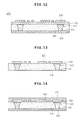
Then, as shown in FIG. 14, a solder resist 170 is applied to both surfaces of the insulating layer 150.
Then, as shown in FIG. 15, a first opening 180 is formed in the solder resist 170 so that a pad part 165 of the circuit layer 160 formed on one surface of the insulating layer 150 is exposed, and a second opening 190 is formed in the solder resist 170 so that the metal post 140 formed on the other surface of the insulating layer 150 is exposed.
Then, as shown in FIG. 16, a solder bump 250 is formed on the pad part 165 exposed by the first opening 180 and then, a semiconductor chip 300 is mounted on the solder resist 170. The semiconductor chip 300 is electrically connected to the pad part 165 of the circuit layer 160 through the solder bump 250. In addition, a solder ball 200 is formed on the metal post 140 exposed by the second opening 190.
FIGS. 17 to 27 are cross-sectional views showing a method for manufacturing a semiconductor package according to a second preferred embodiment of the present invention in a process sequence. Hereinafter, a method for manufacturing a semiconductor package according to the present embodiment will be described with reference to the accompanying drawings.
First, as shown in FIG. 17, a base member 120 is provided, the base member 120 in which a first metal layer 113, a barrier layer 115, and a second metal layer 117 are each stacked on both surfaces of a adhesive member 111 in sequence based on the adhesive member 111.
The base member 120 may be provided by laminating a first metal layer 113, a bather layer 115, and a second metal layer 117 on both surfaces of an adhesive member 111 in sequence based on the adhesive member 111. Furthermore, the base member 120 may be provided by preparing a pair of three-layer metal members 100 configured of a first metal layer 113, a bather layer 115, and a second metal layer 117, disposing the pair of metal members 100 so that their first metal layers 113 face each other, and then bonding the pair of metal members 110 to both surfaces of the adhesive member 111.
The adhesive member 111 serves to temporarily bond the pair of metal members 100 and is separated from the metal members 100, after the manufacturing the metal post 140, the removing the bather layer 115, and the laminating the insulating layer 150 are performed. If this material is well-known by those skilled in the art, it may be selectively applied, without being particularly limited.
Herein, the first metal layer 113 and the second metal layer 117 are made of copper (Cu). In the same manner as in the first embodiment, the first metal layer 113 is patterned to be formed as a circuit layer 160 and the second metal layer 117 is selectively etched to be formed as a metal post 140. In addition, the second metal layer 117 may be selected to have a thickness in the range of 50 to 300 μm, and the first metal layer 113 may have a thickness thinner than that of the second metal layer 117.
In addition, the bather layer 115 is interposed between the first metal layer 113 and the second metal layer 117 and has no limit in configuring the components thereof, but may be preferably made of nickel (Ni). The bather layer 115 is not willing to react with an etchant during a process of forming the metal post 140 by etching the second metal layer 117, thereby protecting the first metal layer 113 from the etchant.
Then, as shown in FIGS. 18 and 19, the second metal layer 117 is selectively etched, thereby forming the metal post 140. In this case, the metal post 140 may have a shape in which its diameter is increase in a direction towards the bather layer 115. The process of forming the metal post 140 is the same as that of forming the metal post 140 in the first preferred embodiment of the present invention and thus, a detailed description thereof will be omitted.
Then, as shown in FIG. 20, the exposed bather layer 115 formed by etching the second metal layer 117 is etched to be removed from the metal post 140. When the bather layer 115 is made of nickel, the bather layer 115 is removed using a nickel etchant. In this case, the nickel etchant is not reactive with copper, such that the metal post 140 and the first metal layer 113 are not etched.
Then, as shown in FIG. 21, an insulating layer 150 is stacked on the first metal layer 113 through which the metal post 140 is penetrated. Herein, the insulating layer 150 may, for example, include a polymer resin such as prepreg (PPG) or an epoxy-based resin such as FR-4, BT, or the like. Thereafter, a desmear process is performed so as to remove resin residues on the penetrated metal post 140.
Then, as shown in FIG. 22, the first metal layer 113 is separated from the adhesive member 11, thereby accomplishing a pair of structures 125. In other words, after the first metal layer 113 is separated from the adhesive member 111, the pair of structures 125 are simultaneously formed, the structures 125 configured of the first metal layer 113, the bather layer 115, the metal post 140, and the insulating layer 150, thereby making it possible to reduce manufacturing costs.
Then, as shown in FIGS. 23 and 24, the first metal layer 113 formed on one surface of each of the structures 125 is patterned to form a circuit layer 160, and an exposed surface of the insulating layer 150 is polished to form a roughness.
First, the process of forming the circuit layer 160 is the same as that of forming the circuit layer 160 in the first preferred embodiment of the present invention and thus, a detailed description thereof will be omitted (see FIG. 23).
Then, in order to enhance adhesion between the insulating layer 150 and the solder resist 170 (see FIG. 25), the exposed surface of the insulating layer 150 is polished to form a roughness, thereby generating anchor effects (see FIG. 24). The process of forming the roughness is the same as that of forming the roughness in the first preferred embodiment of the present invention and thus, a detailed description thereof will be omitted.
Then, as shown in FIG. 25, the solder resist 170 is applied to both surfaces of the insulating layer 150.
Then, as shown in FIG. 26, a first opening 180 is formed in the solder resist 170 so that a pad part 165 of the circuit layer 160 formed on one surface of the insulating layer 150 is exposed, and a second opening 190 is formed in the solder resist 170 so that the metal post 140 formed on the other surface of the insulating layer 150 is exposed.
Then, as shown in FIG. 27, a solder bump 250 is formed on the pad part 165 exposed by the first opening 180 and then, a semiconductor chip 300 is mounted on the solder resist 170. The semiconductor chip 300 is electrically connected to the pad part 165 of the circuit layer 160 through the solder bump 250. In addition, a solder ball 200 is formed on the metal post 140 exposed by the second opening 190.
According to the method for manufacturing a semiconductor package according to the present invention, the semiconductor chip is electrically connected to the printed circuit board using a solder bump rather than a wire bonding, thereby making it possible to implement a high density package.
According to the present invention, the metal post is formed instead of the through hole required in the interlayer circuit connection, thereby making it possible to reduce costs required during the processing/plating of the through hole.
In addition, the present invention uses the base member in which the first metal layer, the bather layer, and the second metal layer are stacked on both surfaces thereof in sequence based on the adhesive member. Therefore, if the first metal layer is separated from the adhesive member after processing a series of manufacturing processes, two printed circuit boards are simultaneously formed, thereby making it possible to improve manufacturing efficiency.
Although the preferred embodiments of the present invention have been disclosed for illustrative purposes, they are for specifically explaining the present invention and thus a method for manufacturing a semiconductor package according to the present invention is not limited thereto, but those skilled in the art will appreciate that various modifications, additions and substitutions are possible, without departing from the scope and spirit of the invention as disclosed in the accompanying claims.
Accordingly, such modifications, additions and substitutions should also be understood to fall within the scope of the present invention.

Claims (17)

What is claimed is:
1. A method for manufacturing a semiconductor package, comprising:
(A) preparing a metal member in which a first metal layer, a barrier layer, and a second metal layer are stacked in sequence;
(B) forming a metal post by selectively etching the second metal layer;
(C) removing the exposed barrier layer from the metal post and laminating an insulating layer on the first metal layer through which the metal post is penetrated; and
(D) patterning the first metal layer contacting one surface of the insulating layer to form a circuit layer: and,
(E) after applying a solder resist to both surfaces of the insulating layer, forming a first opening by processing the solder resist so that a pad part of the circuit layer formed on one surface of the insulating layer is exposed and forming a second opening by processing the solder resist so that the metal post formed on the other surface of the insulating layer is exposed.
2. The method for manufacturing a semiconductor package as set forth in claim 1, wherein the first metal layer and the second metal layer are made of copper, and the barrier layer is made of nickel.
3. The method for manufacturing a semiconductor package as set forth in claim 1, wherein the second metal layer has a thickness in the range of 50 to 300 μm.
4. The method for manufacturing a semiconductor package as set forth in claim 1, wherein step (B) includes:
(B1) applying an etching resist to a surface of the second metal layer; and
(B2) after patterning the etching resist, selectively etching the second metal layer before the barrier layer to form the metal post.
5. The method for manufacturing a semiconductor package as set forth in claim 1, wherein the metal post at step (B) has a diameter increased in a direction towards the barrier layer.
6. The method for manufacturing a semiconductor package as set forth in claim 1, further comprising, after step (C), (C′) treating an exposed surface of the insulating layer to form a roughness.
7. The method for manufacturing a semiconductor package as set forth in claim 1, step (D) includes:
(D1) applying an etching resist to a surface of the first metal layer; and
(D2) after patterning the etching resist, selectively etching the first metal layer to form a circuit layer.
8. The method for manufacturing a semiconductor package as set forth in claim 1, further comprising, after step (E), (F) mounting a semiconductor chip on the pad part exposed by the first opening through a solder bump and forming a solder ball on the metal post exposed by the second opening.
9. A method for manufacturing a semiconductor package, comprising:
(A) preparing a base member in which a first metal layer, a barrier layer, and a second metal layer are stacked on both surfaces thereof in sequence based on an adhesive member;
(B) forming a metal post by selectively etching the second metal layer;
(C) removing the exposed barrier layer from the metal post, laminating an insulating layer on the first metal layer through which the metal post is penetrated, and then, separating the first metal layer from the adhesive member; and
(D) patterning the first metal layer contacting one surface of the insulating layer to form a circuit layer.
10. The method for manufacturing a semiconductor package as set forth in claim 9, wherein the first metal layer and the second metal layer are made of copper, and the barrier layer is made of nickel.
11. The method for manufacturing a semiconductor package as set forth in claim 9, wherein the second metal layer has a thickness in the range of 50 to 300 μm.
12. The method for manufacturing a semiconductor package as set forth in claim 9, wherein step (B) includes:
(B1) applying an etching resist to a surface of the second metal layer; and
(B2) after patterning the etching resist, selectively etching the second metal layer before the barrier layer to form the metal post.
13. The method for manufacturing a semiconductor package as set forth in claim 9, wherein the metal post at step (B) has a diameter increased in a direction towards the barrier layer.
14. The method for manufacturing a semiconductor package as set forth in claim 9, further comprising, after step (C), (C′) treating an exposed surface of the insulating layer to form a roughness.
15. The method for manufacturing a semiconductor package as set forth in claim 9, step (D) includes:
(D1) applying an etching resist to a surface of the first metal layer; and
(D2) after patterning the etching resist, selectively etching the first metal layer to form a circuit layer.
16. The method for manufacturing a semiconductor package as set forth in claim 9, further comprising, after step (D), (E) after applying a solder resist to both surfaces of the insulating layer, forming a first opening by processing the solder resist so that a pad part of the circuit layer formed on one surface of the insulating layer is exposed and forming a second opening by processing the solder resist so that the metal post formed on the other surface of the insulating layer is exposed.
17. The method for manufacturing a semiconductor package as set forth in claim 16, further comprising, after step (E), (F) mounting a semiconductor chip on the pad part exposed by the first opening through a solder bump and forming a solder ball on the metal post exposed by the second opening.
US13/007,444 2010-10-11 2011-01-14 Method for manufacturing semiconductor package Expired - Fee Related US8415200B2 (en)

Applications Claiming Priority (2)

Application Number Priority Date Filing Date Title
KR10-2010-0098850 2010-10-11
KR1020100098850A KR101167429B1 (en) 2010-10-11 2010-10-11 Method for manufacturing the semiconductor package

Publications (2)

Publication Number Publication Date
US20120088334A1 US20120088334A1 (en) 2012-04-12
US8415200B2 true US8415200B2 (en) 2013-04-09

Family

ID=45925454

Family Applications (1)

Application Number Title Priority Date Filing Date
US13/007,444 Expired - Fee Related US8415200B2 (en) 2010-10-11 2011-01-14 Method for manufacturing semiconductor package

Country Status (5)

Country Link
US (1) US8415200B2 (en)
JP (1) JP2012084826A (en)
KR (1) KR101167429B1 (en)
CN (1) CN102446772B (en)
TW (1) TWI442528B (en)

Families Citing this family (7)

* Cited by examiner, † Cited by third party
Publication number Priority date Publication date Assignee Title
US20140001622A1 (en) 2012-06-27 2014-01-02 Infineon Technologies Ag Chip packages, chip arrangements, a circuit board, and methods for manufacturing chip packages
CN102933031A (en) * 2012-11-14 2013-02-13 东莞市五株电子科技有限公司 Printed circuit board and its manufacturing process
KR101565690B1 (en) * 2014-04-10 2015-11-03 삼성전기주식회사 Circuit board, method for menufacturing of circuit board, electronic component package and method for menufacturing of electronic component package
KR101799668B1 (en) * 2016-04-07 2017-11-20 앰코 테크놀로지 코리아 주식회사 Semiconductor package and manufacturing method thereof
FR3062515B1 (en) * 2017-01-30 2019-11-01 Primo1D METHOD OF INSERTING A WIRE INTO A GROOVE OF A SEMICONDUCTOR CHIP, AND EQUIPMENT FOR IMPLEMENTING SUCH A METHOD
US11758654B2 (en) 2018-04-09 2023-09-12 Bitmain Development Pte. Ltd. Circuit substrate, chip, series circuit, circuit board and electronic device
TWI862363B (en) * 2023-12-28 2024-11-11 恆勁科技股份有限公司 Method for manufacturing package substrate

Citations (7)

* Cited by examiner, † Cited by third party
Publication number Priority date Publication date Assignee Title
JP2002222894A (en) 2001-01-29 2002-08-09 Hitachi Metals Ltd Semiconductor package
JP2003309214A (en) 2002-04-17 2003-10-31 Shinko Electric Ind Co Ltd Manufacturing method of wiring board
JP2004063742A (en) 2002-07-29 2004-02-26 Hitachi Chem Co Ltd Wiring board, semiconductor package and method of manufacturing them
KR20040086783A (en) 2003-03-31 2004-10-12 가부시키가이샤 노스 Wiring circuit board, manufacturing method for the wiring circuit board, and circuit module
JP2005183590A (en) 2003-12-18 2005-07-07 Hitachi Chem Co Ltd Wiring member, semiconductor package board, and manufacturing method for wiring plate and wiring member
US20090115047A1 (en) * 2007-10-10 2009-05-07 Tessera, Inc. Robust multi-layer wiring elements and assemblies with embedded microelectronic elements
KR20100052835A (en) 2008-11-11 2010-05-20 삼성전기주식회사 Copper clad laminating substrate used for manufacturing a pcb by copper direct laser method, and manufacturing method of a pcb therewith

Family Cites Families (7)

* Cited by examiner, † Cited by third party
Publication number Priority date Publication date Assignee Title
AU2003220938A1 (en) * 2002-05-28 2003-12-12 Hitachi Chemical Co., Ltd. Substrate, wiring board, semiconductor package-use substrate, semiconductor package and production methods for them
CN101414566A (en) * 2003-03-31 2009-04-22 德塞拉互连材料股份有限公司 Wiring circuit board, manufacturing method thereof, circuit module provided with this wiring circuit board
JP4379693B2 (en) * 2003-11-10 2009-12-09 カシオ計算機株式会社 Semiconductor device and manufacturing method thereof
IL171378A (en) * 2005-10-11 2010-11-30 Dror Hurwitz Integrated circuit support structures and the fabrication thereof
KR100973949B1 (en) * 2005-12-20 2010-08-05 이비덴 가부시키가이샤 Manufacturing method of printed wiring board
JP2007173622A (en) * 2005-12-22 2007-07-05 Kyocer Slc Technologies Corp Method for manufacturing wiring board
EP2351077B1 (en) * 2008-10-30 2017-03-01 Tessera Advanced Technologies, Inc. Through-substrate via and redistribution layer with metal paste

Patent Citations (7)

* Cited by examiner, † Cited by third party
Publication number Priority date Publication date Assignee Title
JP2002222894A (en) 2001-01-29 2002-08-09 Hitachi Metals Ltd Semiconductor package
JP2003309214A (en) 2002-04-17 2003-10-31 Shinko Electric Ind Co Ltd Manufacturing method of wiring board
JP2004063742A (en) 2002-07-29 2004-02-26 Hitachi Chem Co Ltd Wiring board, semiconductor package and method of manufacturing them
KR20040086783A (en) 2003-03-31 2004-10-12 가부시키가이샤 노스 Wiring circuit board, manufacturing method for the wiring circuit board, and circuit module
JP2005183590A (en) 2003-12-18 2005-07-07 Hitachi Chem Co Ltd Wiring member, semiconductor package board, and manufacturing method for wiring plate and wiring member
US20090115047A1 (en) * 2007-10-10 2009-05-07 Tessera, Inc. Robust multi-layer wiring elements and assemblies with embedded microelectronic elements
KR20100052835A (en) 2008-11-11 2010-05-20 삼성전기주식회사 Copper clad laminating substrate used for manufacturing a pcb by copper direct laser method, and manufacturing method of a pcb therewith

Non-Patent Citations (2)

* Cited by examiner, † Cited by third party
Title
Office Action from counterpart Japanese Patent Application No. 2010-278422, mailed Oct. 2, 2012, 7 pages, English Summary included.
Office Action from counterpart Korean Patent Application No. 10-2010-0098550, Feb. 14, 2012, 8 pages.

Also Published As

Publication number Publication date
JP2012084826A (en) 2012-04-26
US20120088334A1 (en) 2012-04-12
CN102446772B (en) 2015-11-25
TW201236121A (en) 2012-09-01
KR101167429B1 (en) 2012-07-19
TWI442528B (en) 2014-06-21
KR20120037219A (en) 2012-04-19
CN102446772A (en) 2012-05-09

Similar Documents

Publication Publication Date Title
JP4716819B2 (en) Manufacturing method of interposer
US9723729B2 (en) Printed wiring board
CN102738116B (en) Electronic component-embeded board and method for manufacturing same
US8445790B2 (en) Coreless substrate having filled via pad and method of manufacturing the same
JP6711509B2 (en) Printed circuit board, semiconductor package and manufacturing method thereof
CN100481357C (en) Method for manufacturing a substrate with cavity
US8415200B2 (en) Method for manufacturing semiconductor package
US9793250B2 (en) Package board, method for manufacturing the same and package on package having the same
TWI659677B (en) Wiring board and manufacturing method thereof
KR102186148B1 (en) Embedded board and method of manufacturing the same
US9894764B2 (en) Printed circuit board and method of manufacturing the same
US20150223341A1 (en) Embedded board, printed circuit board and method of manufacturing the same
US20160242277A1 (en) Printed circuit board and manufacturing method thereof
US20160143137A1 (en) Printed circuit board and method of manufacturing the same, and electronic component module
CN101557674A (en) High density circuit board and manufacturing method thereof
KR20170067481A (en) Printed circuit board, eletronic device package the same and method for manufacturing for printed circuit board
KR20150135046A (en) Package board, method for manufacturing the same and package on packaage having the thereof
JP2013070009A (en) Printed circuit board and method for manufacturing the same
US20140014398A1 (en) Coreless subtrate and method of manufacturing the same
US9578740B2 (en) Copper clad laminate, printed circuit board, and method of manufacturing the same
KR20110128532A (en) Semiconductor package substrate and manufacturing method thereof
US20160021736A1 (en) Printed circuit board and method of manufacturing the same
US20150075845A1 (en) Printed circuit board and method of manufacturing the same
KR101140882B1 (en) A printed circuit board having a bump and a method of manufacturing the same
US20150101852A1 (en) Printed circuit board and method of manufacturing the same

Legal Events

Date Code Title Description
AS Assignment

Owner name: SAMSUNG ELECTRO-MECHANICS CO., LTD., KOREA, REPUBL

Free format text: ASSIGNMENT OF ASSIGNORS INTEREST;ASSIGNORS:HWANG, MI SUN;SOHN, KEUNG JIN;LEE, EUNG SUEK;AND OTHERS;SIGNING DATES FROM 20101201 TO 20101208;REEL/FRAME:027014/0826

FEPP Fee payment procedure

Free format text: PAYOR NUMBER ASSIGNED (ORIGINAL EVENT CODE: ASPN); ENTITY STATUS OF PATENT OWNER: LARGE ENTITY

REMI Maintenance fee reminder mailed
LAPS Lapse for failure to pay maintenance fees
STCH Information on status: patent discontinuation

Free format text: PATENT EXPIRED DUE TO NONPAYMENT OF MAINTENANCE FEES UNDER 37 CFR 1.362

STCH Information on status: patent discontinuation

Free format text: PATENT EXPIRED DUE TO NONPAYMENT OF MAINTENANCE FEES UNDER 37 CFR 1.362

FP Lapsed due to failure to pay maintenance fee

Effective date: 20170409