US7715028B2 - Card type memory, image forming apparatus, and starting method therefor - Google Patents
Card type memory, image forming apparatus, and starting method therefor Download PDFInfo
- Publication number
- US7715028B2 US7715028B2 US11/137,651 US13765105A US7715028B2 US 7715028 B2 US7715028 B2 US 7715028B2 US 13765105 A US13765105 A US 13765105A US 7715028 B2 US7715028 B2 US 7715028B2
- Authority
- US
- United States
- Prior art keywords
- program
- rescue
- card
- mfp
- forming apparatus
- Prior art date
- Legal status (The legal status is an assumption and is not a legal conclusion. Google has not performed a legal analysis and makes no representation as to the accuracy of the status listed.)
- Expired - Fee Related, expires
Links
Images




Classifications
-
- G—PHYSICS
- G06—COMPUTING OR CALCULATING; COUNTING
- G06F—ELECTRIC DIGITAL DATA PROCESSING
- G06F9/00—Arrangements for program control, e.g. control units
- G06F9/06—Arrangements for program control, e.g. control units using stored programs, i.e. using an internal store of processing equipment to receive or retain programs
- G06F9/44—Arrangements for executing specific programs
- G06F9/4401—Bootstrapping
- G06F9/4406—Loading of operating system
Definitions
- the present invention relates to a card type memory, an image forming apparatus, and a method for starting the image forming apparatus with the card type memory.
- an image forming apparatus implements various functions, such as a facsimile, a printer, a copier, a scanner, etc.
- Such an image forming apparatus includes a display section, a printing section, and an image pickup section, and correspondingly stores four types of applications.
- the image forming apparatus can serve as the facsimile, the printer, the copier, and the scanner in accordance with the application.
- Flash-ROM is mapped to a memory in an ASIC installed in the image forming apparatus as shown in FIG. 1 .
- sixteen Mega bytes of the memory are assigned to the Flash-ROM.
- an ASIC can use a card type memory as a substitute of the Flash-ROM using a memory emulation function to map a memory of the card type memory in the ASIC.
- SD Secure Digital Memory
- the SD card is ruled by a SDA to include one FAT file system, and cannot be simply used as a memory such as a Flash-ROM while omitting the FAT file system.
- an object of the present invention is to address and resolve the above-noted and other problems and provide a new card type memory, an image forming apparatus, and an image forming apparatus starting method using the card type memory that stores program arranged to efficiently use the card type memory.
- a new and noble card type memory includes a file system for use in an image forming apparatus, which stores, outside the file system, an operating system configured to start a program installed in the image forming apparatus, an image formation program configured to execute image formation, and a start program configured to start the program.
- a card type memory includes a file system for use in an image forming apparatus which stores, outside the file system, an operating system configured to start a program installed in the image forming apparatus, a rescue program configured to recover program of the image forming apparatus, and a rescue start program configured to start the rescue program.
- an operating system for operating program installed in the image forming apparatus, an image formation program for executing image formation, and the start program are stored outside the file system.
- the image formation program for executing image formation, and the start program for starting the program are stored inside the file system.
- a boot loader program is stored to start the image forming apparatus.
- an interface is included in the card type memory.
- a first memory device is included to map a region outside the file system.
- a second memory device is included to allow expansion of the program stored in the file system of the first memory device or the card type memory.
- a file system-mounting device is included to mount the file system of the card type memory.
- FIG. 1 illustrates an exemplary memory map of an ASIC
- FIG. 2 illustrates an exemplary system configuration of an image forming apparatus (e.g. a MFP);
- an image forming apparatus e.g. a MFP
- FIG. 3 illustrates an exemplary SD card interface
- FIG. 4 illustrates exemplary memory maps of the ASIC and the SD card
- FIG. 5 illustrates an exemplary sequence of read access to the SD card executed by a control circuit
- FIG. 6 illustrates an exemplary sequence of read access to the SD card executed by a software
- FIG. 7 illustrates an exemplary software of the MFP
- FIG. 8 illustrates an exemplary configuration when a rescue system starts
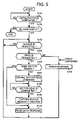
- FIG. 9 illustrates a conventional start sequence
- FIG. 10 illustrates an exemplary start sequence of loading to a RAM
- FIG. 11 illustrates an exemplary memory map in which a program is arranged outside a file system
- FIG. 12 illustrates an exemplary start sequence
- FIG. 13 illustrates an exemplary memory map in which a MFP/printer system is arranged outside the file system
- FIG. 14 illustrates an exemplary start sequence
- FIG. 15 illustrates an exemplary memory map in which a MFP/printer system and a rescue system are arranged outside the file system;
- FIG. 16 illustrates an exemplary start sequence
- FIG. 17 illustrates another exemplary memory map in which a MFP/printer system and a rescue system are arranged outside the file system;
- FIG. 18 illustrates still another exemplary memory map in which a MFP/printer system and a rescue system are arranged outside the file system;
- FIGS. 19A and 19B collectively illustrates an exemplary start sequence
- FIG. 20 illustrates an exemplary memory map in which a MFP/printer system and a rescue system are arranged inside and outside the file system, respectively;
- FIG. 21 illustrates another exemplary memory map in which a MFP/printer system and a rescue system are arranged inside and outside the file system, respectively;
- FIGS. 22A and 22B collectively illustrates an exemplary start sequence
- FIG. 23 illustrates still another exemplary memory map in which a MFP/printer system and a rescue system are arranged inside and outside the file system, respectively;
- FIGS. 24A and 24B collectively illustrates an exemplary start sequence
- FIG. 25 illustrates still another exemplary memory map in which a MFP/printer system and a rescue system are arranged inside and outside the file system, respectively.
- FIG. 2 illustrates an exemplary configuration of an image forming apparatus.
- an ASIC 20 a CPU 11 , a plotter engine 12 , a scanner engine 13 , a facsimile control unit (FCU) 14 , a SD card 10 , a non-volatile RAM (NVRAM) 15 , an operation section 16 , and a RAM 17 are included in the MFP.
- FCU facsimile control unit
- the ASIC 20 servers as an IC for image processing use in cooperation with hardware elements.
- the CPU 11 generally controls the MFP.
- the FCU 14 is a unit for facsimile use.
- the scanner engine 13 reads an image.
- the plotter engine 12 executes printing.
- the SD card 10 is a media having the same size as a stamp, and is recently capable of recording massive contents by one Giga bytes at maximum.
- the NVRAM 15 stores various data.
- the operation section 16 receives inputs from a user and gives a display to the user.
- the RAM 17 stores various program and data.
- the ASIC 20 is formed from a CPU interface 21 , a memory arbiter 25 , a memory controller 22 , a direct memory access (DMA) controller 23 , and a SD card interface 24 .
- the CPU interface 21 interfaces with the CPU 11 and the ASIC 20 .
- the memory controller 22 controls data communications between the RAM 17 and the ASIC 20 .
- the DMA controller 23 controls data communications between the memory arbiter 25 and the SD card interface 24 .
- the SD card interface 24 serves as an interface of the SD card 10 .
- the SD card interface 24 is formed from a SD control circuit 26 , a DMA interface 27 , a RAM access interface 28 , a selector 30 , and a control circuit 29 .
- the SD control circuit 26 directly controls the SD card and reads data therefrom and writes data thereto.
- the control circuit 29 controls the SD control circuit 26 , communicates with the CPU interface, and switches the selector 30 .
- the DMA interface 27 communicates with the DMA controller 23 .
- the RAM access interface 28 includes a buffer and communicates with the memory controller 22 .
- the selector 30 switches output and input destinations to and from the SD control circuit 26 between DMA interface 27 and the RAM access interface 28 .
- FIG. 4 a memory map of the ASIC and the SD card are described with reference to FIG. 4 .
- a pair of memory maps 40 and 50 of two SD cards and a memory map 60 of an ASIC are illustrated.
- the memory map 40 is a memory map of the SD card at the time of shipping thereof.
- a MBR Master Boot Record
- a Boot Sector a Boot Sector
- a FAT 0 a FAT 1
- a Root Directory Entry a User datan area
- a range from the Boot Sector to the Root Directory Entry is represented herein after as an area A.
- a memory map 50 of a SD card includes an area 44 having sixteen Mega bytes visible from an ASIC in addition to the memory map 40 . As shown, the ASIC visible area 44 is arranged between the MBR 43 and the area A 41 . A leading address of the area A 41 corresponds to that of the User Datan area 42 of the memory map 40 .
- the ASIC visible area 44 is mapped to an SD card area 63 formed in the memory map 60 .
- a RAM area 61 a PCI memory area, a PCI-I/O area, a register area, a reservation area, a NVRAM use area, and a SD card area 63 are illustrated in the memory map 60 .
- a SD card controller register area is also provided in the register area.
- an area ranging from the PCI memory area to the NVRAM use area is represented as an area B.
- control circuit 29 determines if initialization of the SD card controller 26 is completed in step S 101 . If the initialization is completed, the control circuit 29 determines if the SD card is present in step S 102 . If the SD card is absent, the process is terminated.
- step S 103 the process goes to step S 103 , in which an access request is waited for. If the access request is made, the control circuit 29 determines if the access request indicates a reading request in step S 104 . If the reading request is not indicated and the other request, such as a write request, etc., is indicated, the control circuit 29 outputs an error response, and the process returns to step S 103 .
- the control circuit 29 determines if it relates to the same selector region in step S 107 . If it relates to the same selector region, the process goes to step S 110 . If it does not relate to the same selector region, the control circuit 29 issues a sector read command to the SD control circuit 26 in step S 107 . Thus, reading starts. If it is determined that the sector read is completed in step S 108 , the control circuit 29 copies a buffer memory in step S 109 . Then, the control circuit 29 outputs a read data response in step S 109 , and the process goes to step S 103 in which an access request is waited for.
- step S 201 a buffer memory is acquired to store information read from the SD card.
- step S 202 a read address is designated as a leading address from which reading starts.
- step S 203 a read selector count is designated to represent a number of sectors to read starting from the read address.
- step S 204 a sector read command is issued in step S 204 , thereby reading starts. If the sector read is completed in step S 205 , copying to a main memory is started in step S 206 .
- a software of the MFP is described with reference to FIG. 7 .
- a program group 123 of the MFP, a MFP starting section 101 , and a hardware resource 125 are included.
- the MFP 1 starts the program group 123 using the MFP starting section 101 in response to power supplying.
- the hardware resource 125 includes a plotter engine 12 , a scanner engine 13 and other hardware resources 122 .
- the other hardware resources may include an ADF, for example.
- the program group 123 is started on an operation system, such as a UNIX (TM), etc.
- an operation system such as a UNIX (TM), etc.
- Various applications such as a copier use application 102 , a printer use application 103 , a facsimile use application 104 , a net file application 104 , etc., are utilized.
- Various services such as an engine control service 110 , a memory control service 111 , an operation panel control service 112 , a facsimile control service 113 , a network control service 114 , a system control service 115 , etc., are executed by these applications through an API (Application Program Interface) 107 .
- API Application Program Interface
- the system control service 115 includes an on-demand updating service 116 .
- a process of the engine control service 110 controls an engine, such as a plotter engine 12 , a scanner engine 13 , etc.
- a process of the memory control service 111 executes memory control, such as obtaining and releasing a memory, usage of a HDD, etc.
- a process of the operation panel control service 112 controls an operation panel that serves as an information communications device between an operator and an apparatus.
- a process of the facsimile control service 113 provides an API that executes facsimile communications using a PSTN or an ISDN network. The process registers and quotes various facsimile data administrated in a memory for backup use, reads, receives, and prints the facsimile, or the like.
- a process of the network control service 114 provides commonly available services to applications, which use a network I/O. Specifically, the process of the NCS 114 distributes data received from the network side to respective applications using respective protocol, and mediates data transmission from the respective applications to the network side. The process of the NCS 114 controls data communications with network instruments via the network using hypertext transfer protocol daemon by means of HTTP.
- a process of the system control service 115 executes various processing, such as application administration, operation section controlling, system screen displaying, LED displaying, hardware resource administration, interruption application control, etc.
- a process of the on-demand update service 116 receives update program for updating existing program from the network.
- a process of the SRM 117 executes system control and hardware resource administration in cooperation with that of the system control service 115 .
- a process of the SRM 117 executes mediation in accordance with acquirement requests for hardware, such as a plotter engine 12 , a scanner engine 13 , etc., from an upper lank layer, while controlling operations.
- the process of the SRM 40 determines if a hardware resource that is requested to acquire is available, and reports availability thereof to the upper lank layer if the determination is positive.
- the process also schedules usage of the hardware resource of the acquirement requests from the upper lank layer, and directly corresponds to requests, such as paper transportation and image formation executed by a printer engine, memory reservation, file generation, etc.
- FIG. 8 a software of a rescue system is described with reference to FIG. 8 .
- an application does not yet start in the software configuration. Remaining portions are substantially the same as those in FIG. 7 .
- FIG. 9 illustrates a conventional sequence in a mapping mode.
- a ROM monitor loaded in the SD card operates the MFP.
- the ROM monitor serves as a program that loads and executes an operation system.
- a phrase “ROM monitor (a SD card)” used in step S 301 represents that the ROM monitor is loaded in the SD card. The same applies to a phrase “ROM monitor (a RAM)”.
- step S 302 a program start section loaded in the SD card operates the MFP in a similar manner to the above.
- a program loaded in the conventional SD card runs in a mapping mode. Since a processing speed is slow in the mapping mode, a program is loaded in a RAM and runs in accordance with a start sequence as shown in FIG. 10 . Specifically, in step S 401 , when the MFP is operated by a ROM monitor loaded in the SD card in a similar manner as mentioned above, the MPF monitor is copied into the RAM.
- the MFP is operated by the RAM monitor copied in step S 402 , and is operated by the program start section loaded in the RAM in step S 403 .
- the start sequence can be executed at high speed.
- FIG. 11 is similar to FIG. 4 , repetitious descriptions are herein below avoided.
- a MFP/printer system A 71 serving as a program is arranged between a MBR 43 and an area A 41 in a memory map 50 , and is mapped to a SD card area of the ASIC as indicated in a memory map 60 of the ASIC.
- a MFP/printer system A 71 is formed from a ROM monitor 72 , an operation system 73 , a program start section 74 , and a MFP/printer program 75 having execution codes.
- These program start section 74 and MFP/printer program 75 can be formed from a file system different from that of the SD card.
- a start sequence is described with reference to FIG. 12 when a SD card has program arrangement as illustrated in FIG. 11 .
- a ROM monitor starts in step S 501 .
- An operation system starts in step S 502 .
- a program start section starts in step S 503 .
- a MFP/printer program starts in step S 504 .
- a memory map in which the MFP/printer system is arranged outside a file system, is described with reference to FIG. 13 .
- a MFP/printer system B 81 as a program is arranged between a MBR 43 and an area A 41 in the memory map 50 .
- the MFP/printer system B 81 is mapped to a SD card area of an ASIC as shown in the memory map 60 of the ASIC.
- the MFP/printer system B 82 is loaded in a RAM area 61 .
- the MFP/printer system B 81 is formed from a ROM monitor 72 , a RAM monitor 83 , an operation system 84 , a program start section 85 , and a MFP/printer program 86 .
- the ROM monitor includes an execution code, and the others include RAM execution codes.
- a difference between a RAM execution code and an execution code is as follows:
- the latter code can be executed as is, while the former code is designed to be executed at a prescribed RAM address, and thus needs rearrangement of the code to the prescribed RAM address.
- respective codes of the RAM monitor, the operation system 84 , the program start section 85 , and the MFP/printer program 86 can be compressed, and respective RAM execution codes can be decoded when loaded in the RAM area 61 .
- the program start section 85 and the MFP/printer program 86 can be a file image.
- the program start section 89 and the MFP/printer program 90 can be file systems. When a file system is implemented on the operation system 88 , a file system region of the SD card can be accessed.
- a ROM monitor starts in step S 601 .
- a RAM execution code of a MFP/printer system is loaded in a RAM area in step S 602 .
- a RAM monitor loaded in a RAM area starts in step S 603 .
- An operation system, a program starting section, and a MFP/printer program start in steps S 604 , S 605 , and S 606 , respectively, while similarly being loaded in a RAM area.
- the SD card (the file system) is mounted in step S 607 .
- a first memory map in which a MFP/printer program and a rescue system are arranged outside a file system, is described with reference to FIG. 15 .
- the MFP/printer program and the rescue system are generally difficult to delete because of existing the outside the file system (herein below the same whenever program exists the outside).
- the rescue system serves as a program capable of executing recovery when rewriting of an update program results in failure.
- a boot selector 91 As shown, a boot selector 91 , a rescue system A 92 , and a MFP/printer system C 93 are arranged between a MBR 43 and an area A 41 in a memory map 50 .
- the boot selector 91 , the rescue system A 92 , and the MFP/printer system C 93 are mapped to a SD card area of the ASIC as shown in the memory map 60 of the ASIC.
- the boot selector 91 serves as a ROM monitor 72 including a program that selectively uses a rescue system.
- the rescue system A 92 is formed from a rescue operation system 301 , a rescue program starting section 202 , and a rescue program 203 each having an execution code.
- the MFP/printer system C 93 is formed from an operation system 88 , a program start section 89 , a MFP/printer program 90 , each having an execution code.
- the rescue program start section 202 , the rescue program 203 , the program start section 89 , and the MFP/printer program 90 can be administrated by a different file system from that of the SD card.
- a ROM monitor starts in step S 701 .
- a NVRAM is checked, i.e., a rescue flag is checked in step S 702 .
- the rescue flag represents if rewriting of an update program results in failure.
- the rescue flag is present when the rewriting is not completed and ends by some reason, for example.
- step S 702 If the checking result in step S 702 is negative (i.e., a rescue flag is absent), a normal operation system (i.e., not rescue system) starts in step S 703 . Subsequently, a normal program start section starts in step S 704 . A MFP/printer program starts in step S 705 .
- a rescue operation system starts in step S 706 .
- a rescue program start section starts in step S 707 .
- a rescue program starts in the next step S 708 .
- FIG. 17 illustrates conditions in which a boot selector loaded in a SD card area of the ASIC drives a rescue system, and the rescue system causes a MFP/printer system to be loaded in a RAM area.
- a boot selector 91 , a rescue system B 204 , and a MFP/printer system D 205 are arranged between a MBR 43 and an area A 41 in a memory map 50 .
- the boot selector 91 , the rescue system B 204 , and the MFP/printer system D 205 are mapped to a SD card area of the ASIC as shown in the memory map 60 .
- the rescue system B 204 is formed from a rescue RAM monitor 210 , a rescue operation system 207 , a rescue program start section 208 , and a rescue program 209 . These programs include RAM execution codes. Thus, files of those can be compressed.
- the MFP/printer system D 205 is formed from a RAM monitor 83 , an operation system 84 , a program start section 85 , and a MFP/printer program 86 . These programs also include RAM execution codes. Thus, files of those can also be compressed.
- the rescue OS 207 , the rescue program start section 208 , the rescue program 209 , the operation system 84 , the program start section 85 , and the MFP/printer program 86 can be an image of a combined file system. If a file system is implemented on the operation system 88 , a file system region of the SD card can be accessed.
- FIG. 18 execution of a rescue system in a third memory map, in which a MFP/printer program and a rescue system are arranged outside a file system, is described with reference to FIG. 18 .
- a boot selector loaded in a SD card area of an ASIC causes a rescue system to be loaded in a RAM area.
- the rescue system B 220 is loaded in the RAM area 61 .
- the loaded rescue system B 220 is formed from a rescue RAM monitor 221 , a rescue operation system 222 , a rescue program start section 223 , and a rescue program 224 .
- a file system of the SD card can be accessed if a file system is implemented on the operation system 88 in the example of FIG. 18 .
- a ROM monitor starts in step S 801 .
- a NVRAM is checked in step S 802 .
- a MFP/printer system is loaded in a RAM area in step S 803 .
- a normal RAM monitor starts in the next step S 804 .
- a normal operation system subsequently starts in step S 805 .
- a normal program start section starts in the next step S 804 .
- a MFP/printer program starts in step S 807 , and a SD card is mounted in step S 808 .
- step S 802 determines whether the determination in step S 802 is positive (i.e., a rescue flag is present).
- a rescue system is loaded in the RAM area in step S 809 .
- a rescue RAM monitor starts in the next step S 810 .
- a rescue operation system starts in the next step S 811 .
- a rescue program start section subsequently starts in step S 812 .
- a rescue program starts in step S 813 , and the SD card is mounted in step S 814 .
- a boot selector 91 and a rescue system A 92 are arranged between a MBR 43 and an area A 41 in a memory map 50 of a SD card. These boot selector 91 and rescue system A 92 are mapped to the SD card area of the ASIC as shown in the memory map 60 .
- a file 207 of the MFP/printer system D is loaded in a file system as shown in the memory map 50 .
- the file 207 of the MFP/printer system D can be an image such that a RAM monitor, an operation system, a program start section, and a MFP/printer program collectively form a combined file system.
- the file 207 is loaded in the RAM area 61 as a MFP/printer system D 206 as shown in a memory map 60 .
- a boot selector 91 loaded in the SD card area of the ASIC executes such loading.
- FIG. 21 Similar to the example of FIG. 20 , a memory map is illustrated, in which a MFP/printer program is arranged in the file system, and a rescue system is arranged outside the file system. A rescue system is executed in this situation as follows:
- a boot selector 91 and a rescue system A 92 are arranged between an area A 41 and a MBR 43 in a memory map 50 .
- a MFP/printer system 208 is loaded in the file system.
- the boot selector 91 and the rescue system A 92 are mapped to a SD card area of the ASIC as shown in the memory map 60 .
- the boot selector 91 thus mapped starts the rescue system A 92 .
- a start sequence is described with reference to FIG. 22 when the SD card has program arrangement as illustrated in FIGS. 20 and 21 .
- a ROM monitor starts in step S 901 .
- a NVRAM is checked in the next step S 902 .
- step S 902 If the checking results in negative in step S 902 , a file of a MFP/printer system is loaded in a RAM area in step S 903 .
- a normal RAM monitor starts in the next step S 904 .
- a normal operation system subsequently starts in step S 905 .
- a normal program start section starts in the next step S 906 .
- a MFP/printer program starts in step S 907 .
- a SD card is mounted in step S 908 .
- step S 902 if the checking result is positive (i.e., a rescue flag is present) in step S 902 , a rescue operation system starts in step S 909 .
- a rescue program start section starts in the next step S 910 .
- a rescue program starts in the next step S 911 .
- FIG. 23 execution of a MFP/printer system in a memory map, in which a MFP/printer system and a rescue system are arranged inside and outside a file system, respectively, is described.
- a boot selector loaded in a SD card area of an ASIC drives a rescue system, and the rescue system causes a RAM monitor and an operation system to be loaded in a RAM area.
- a boot selector 91 and a rescue system B 204 are arranged between a MBR 43 and an area A 41 in a memory map 50 .
- the boot selector 91 , the rescue system B 204 , and the MFP/printer system D 205 are mapped to a SD card area of the ASIC as shown in the memory map 60 .
- a MFP/printer system file group 209 including a MFP/printer program group 210 is loaded in the file system.
- the mapped boot selector 91 causes the RAM monitor and the operation system of the MFP/printer system group 209 to be loaded in the RAM area 61 of the ASIC as a RAM monitor 87 and an operation system 88 , and executes those.
- a ROM monitor starts in step S 1001 .
- a NVRAM is checked in the next step S 1002 .
- step S 1002 If the checking result in step S 1002 is negative, a RAM monitor and a normal operation system expand in the RAM area in step S 1003 .
- a normal RAM monitor starts in the next step S 1004 .
- a normal operation system subsequently starts in step S 1005 .
- the SD card is mounted in the next step S 1006 .
- a file of the normal program start section starts in step S 1007 .
- a MFP/printer program starts in step S 1008 .
- step S 1010 If the checking result in step S 1002 is positive, a rescue operation system starts in step S 1010 .
- a rescue program start section starts in the next step S 1011 .
- a rescue program starts in the next step S 1012 .
- a rescue system in a memory map in which a MFP/printer system is arranged within a file system and a rescue system is arranged outside the file system, is described with reference to FIG. 25 .
- a boot selector loaded in a SD card area of an ASIC causes a rescue system to be loaded in a RAM area.
- a boot selector 91 and a rescue system B 204 are arranged between a MBR 43 and an area A 41 in the memory map 50 of the SD card. These boot selector 91 and rescue system B 204 are mapped to the SD card area of the ASIC as shown in the memory map 60 of the ASIC.
- a MFP/printer system 208 is loaded in the file system shown in the memory map 50 .
- the mapped boot selector 91 causes the rescue system B 204 to be loaded in the RAM area 61 of the ASIC, and executes those.
- a start sequence executed when a SD card has program arrangement as illustrated in FIG. 25 is similar to that as illustrated in FIG. 19 .
- the MFP/printer program corresponds the image formation program.
- the program start section corresponds to the start program.
- the rescue program start section corresponds the start rescue program.
- the ROM monitor, the RAM monitor, and the boot selector collectively correspond to the boot loader program.
- the SD card area corresponds to a first memory device.
- the RAM area and the memory collectively correspond to the second memory device.
- the file system-mounting device corresponds to the CPU.
- the processing program corresponds to the MFP/printer system.
- the rescue system corresponds to the recovery program.
- the ROM monitor mapped to the SD card area corresponds to a first boot loader program.
- the RAM monitor loaded in the RAM area corresponds to a second boot loader program.
- Step S 501 corresponds to the boot loader start step.
- Step S 502 corresponds to the operation system start step.
- Step S 504 corresponds to the image formation program start step.
- Step S 702 corresponds to the rescue flag check step.
- Step S 803 corresponds to the processing program expansion step.
- Step S 808 corresponds to the file system mount step.
Landscapes
- Engineering & Computer Science (AREA)
- Software Systems (AREA)
- Theoretical Computer Science (AREA)
- Computer Security & Cryptography (AREA)
- Physics & Mathematics (AREA)
- General Engineering & Computer Science (AREA)
- General Physics & Mathematics (AREA)
- Stored Programmes (AREA)
- Facsimiles In General (AREA)
- Record Information Processing For Printing (AREA)
- Control Or Security For Electrophotography (AREA)
Applications Claiming Priority (2)
| Application Number | Priority Date | Filing Date | Title |
|---|---|---|---|
| JP2004-158118 | 2004-05-27 | ||
| JP2004158118A JP4695348B2 (ja) | 2004-05-27 | 2004-05-27 | カード型メモリ、画像形成装置、画像形成装置起動方法 |
Publications (2)
| Publication Number | Publication Date |
|---|---|
| US20060001909A1 US20060001909A1 (en) | 2006-01-05 |
| US7715028B2 true US7715028B2 (en) | 2010-05-11 |
Family
ID=35169429
Family Applications (1)
| Application Number | Title | Priority Date | Filing Date |
|---|---|---|---|
| US11/137,651 Expired - Fee Related US7715028B2 (en) | 2004-05-27 | 2005-05-26 | Card type memory, image forming apparatus, and starting method therefor |
Country Status (3)
| Country | Link |
|---|---|
| US (1) | US7715028B2 (enExample) |
| EP (1) | EP1622010A1 (enExample) |
| JP (1) | JP4695348B2 (enExample) |
Cited By (2)
| Publication number | Priority date | Publication date | Assignee | Title |
|---|---|---|---|---|
| US20150199000A1 (en) * | 2014-01-16 | 2015-07-16 | Ricoh Company, Ltd. | Information processing apparatus, control method, and recording medium storing a control program |
| US9823846B2 (en) | 2014-08-20 | 2017-11-21 | Qualcomm Incorporated | Systems and methods for expanding memory for a system on chip |
Families Citing this family (9)
| Publication number | Priority date | Publication date | Assignee | Title |
|---|---|---|---|---|
| US7739487B2 (en) * | 2006-01-17 | 2010-06-15 | Nokia Corporation | Method for booting a host device from an MMC/SD device, a host device bootable from an MMC/SD device and an MMC/SD device method a host device may booted from |
| US8570583B2 (en) * | 2006-11-06 | 2013-10-29 | Ricoh Company, Ltd. | Method for controlling an image forming apparatus using information from a detachable recording medium |
| JP5707870B2 (ja) * | 2010-11-02 | 2015-04-30 | 富士ゼロックス株式会社 | 情報処理装置及び記憶媒体 |
| CN104063234B (zh) * | 2013-03-19 | 2017-06-27 | 华为技术有限公司 | 一种兼容方法及装置 |
| JP6064755B2 (ja) * | 2013-04-10 | 2017-01-25 | 富士ゼロックス株式会社 | 電子機器、画像形成装置、制御装置及びプログラム |
| JP6090261B2 (ja) * | 2014-08-20 | 2017-03-08 | コニカミノルタ株式会社 | 画像形成装置、起動制御方法および起動制御プログラム |
| US10616433B2 (en) * | 2015-01-27 | 2020-04-07 | Brother Kogyo Kabushiki Kaisha | Image processing device |
| KR101822253B1 (ko) * | 2015-02-04 | 2018-01-25 | 주식회사 엘지화학 | 점착제 조성물 |
| JP7790213B2 (ja) * | 2022-03-07 | 2025-12-23 | ブラザー工業株式会社 | 画像形成システム、及び画像形成装置 |
Citations (7)
| Publication number | Priority date | Publication date | Assignee | Title |
|---|---|---|---|---|
| WO2001040946A1 (en) | 1999-12-01 | 2001-06-07 | Microsoft Corporation | Automated recovery of computer appliances |
| US20010034821A1 (en) | 2000-04-19 | 2001-10-25 | Yung-Chi Hwang | Program-downloadable data processing system and method for accessing memory by using a unified memory space therein |
| US6381694B1 (en) | 1994-02-18 | 2002-04-30 | Apple Computer, Inc. | System for automatic recovery from software problems that cause computer failure |
| US20030038968A1 (en) | 2001-08-27 | 2003-02-27 | Hisanori Kawaura | Image forming apparatus, program updating method and recording medium |
| US20030044185A1 (en) | 2001-08-27 | 2003-03-06 | Hisanori Kawaura | Image forming apparatus, program updating method and recording medium |
| EP1369780A1 (en) | 2002-05-08 | 2003-12-10 | Ricoh Company | Image forming apparatus, program adding method, and a recording medium |
| US20040239975A1 (en) | 2003-03-19 | 2004-12-02 | Hisanori Kawaura | Image forming apparatus that checks authenticity of an update program |
Family Cites Families (4)
| Publication number | Priority date | Publication date | Assignee | Title |
|---|---|---|---|---|
| JPH06324857A (ja) * | 1993-05-13 | 1994-11-25 | Toshiba Corp | コンピュータシステム |
| JP3667958B2 (ja) * | 1997-10-09 | 2005-07-06 | 東芝テック株式会社 | 情報処理装置 |
| US6715067B1 (en) * | 1999-09-21 | 2004-03-30 | Intel Corporation | Initializing a processor-based system from a non-volatile re-programmable semiconductor memory |
| JP2002312212A (ja) * | 2001-04-13 | 2002-10-25 | Toshiba Corp | ファイルシステム |
-
2004
- 2004-05-27 JP JP2004158118A patent/JP4695348B2/ja not_active Expired - Fee Related
-
2005
- 2005-05-23 EP EP05011103A patent/EP1622010A1/en not_active Ceased
- 2005-05-26 US US11/137,651 patent/US7715028B2/en not_active Expired - Fee Related
Patent Citations (13)
| Publication number | Priority date | Publication date | Assignee | Title |
|---|---|---|---|---|
| US6381694B1 (en) | 1994-02-18 | 2002-04-30 | Apple Computer, Inc. | System for automatic recovery from software problems that cause computer failure |
| WO2001040946A1 (en) | 1999-12-01 | 2001-06-07 | Microsoft Corporation | Automated recovery of computer appliances |
| US20010034821A1 (en) | 2000-04-19 | 2001-10-25 | Yung-Chi Hwang | Program-downloadable data processing system and method for accessing memory by using a unified memory space therein |
| US20040213588A1 (en) | 2001-08-27 | 2004-10-28 | Hisanori Kawaura | Image forming apparatus, program updating method and recording medium |
| US20030038968A1 (en) | 2001-08-27 | 2003-02-27 | Hisanori Kawaura | Image forming apparatus, program updating method and recording medium |
| US20030044185A1 (en) | 2001-08-27 | 2003-03-06 | Hisanori Kawaura | Image forming apparatus, program updating method and recording medium |
| EP1292102A2 (en) | 2001-08-27 | 2003-03-12 | Ricoh Company, Ltd. | Image forming apparatus, program updating method and recording medium |
| EP1369780A1 (en) | 2002-05-08 | 2003-12-10 | Ricoh Company | Image forming apparatus, program adding method, and a recording medium |
| EP1376346A2 (en) | 2002-05-08 | 2004-01-02 | Ricoh Company, Ltd. | Image forming apparatus, a program adding method, and a recording medium |
| EP1385087A2 (en) | 2002-05-08 | 2004-01-28 | Ricoh Company | Image forming apparatus, a program adding method, and a recording medium |
| EP1387264A2 (en) | 2002-05-08 | 2004-02-04 | Ricoh Company, Ltd. | Image forming apparatus, a program adding method, and a recording medium |
| US20030231343A1 (en) * | 2002-05-08 | 2003-12-18 | Ayako Kobayashi | Image forming apparatus, program adding method, and a recording medium |
| US20040239975A1 (en) | 2003-03-19 | 2004-12-02 | Hisanori Kawaura | Image forming apparatus that checks authenticity of an update program |
Non-Patent Citations (11)
| Title |
|---|
| "Booting", WIKIPEDIA.ORG, XP-002355021, May 13, 2004, papes 1-2. |
| "Concept of SPB-Linux 2", www.8UNG.AT, XP-002904340, Mar. 24, 2003, pp. 1-3. |
| "Memory Card Provides Boot Memory for Boot-Up Operation", Research Disclosure, Mason Publications, No. 326, XP-000206605, Jun. 1, 1991, p. 427. |
| Patent Abstracts of Japan, JP 2003-099313, Apr. 4, 2003. |
| Patent Abstracts of Japan, JP 2003-182191, Jul. 3, 2003. |
| Patent Abstracts of Japan, JP 2003-223386, Aug. 8, 2003. |
| Patent Abstracts of Japan, JP 2003-308253, Oct. 31, 2003. |
| Patent Abstracts of Japan, JP 2003-335028, Nov. 25, 2003. |
| Patent Abstracts of Japan, JP 2004-046801, Feb. 12, 2004. |
| Patent Abstracts of Japan, JP 2004-299389, Oct. 28, 2004. |
| Patent Abstracts of Japan, JP 2004-303209, Oct. 28, 2004. |
Cited By (3)
| Publication number | Priority date | Publication date | Assignee | Title |
|---|---|---|---|---|
| US20150199000A1 (en) * | 2014-01-16 | 2015-07-16 | Ricoh Company, Ltd. | Information processing apparatus, control method, and recording medium storing a control program |
| US9261944B2 (en) * | 2014-01-16 | 2016-02-16 | Ricoh Company, Ltd. | Information processing apparatus, control method, and recording medium storing a control program |
| US9823846B2 (en) | 2014-08-20 | 2017-11-21 | Qualcomm Incorporated | Systems and methods for expanding memory for a system on chip |
Also Published As
| Publication number | Publication date |
|---|---|
| EP1622010A1 (en) | 2006-02-01 |
| JP4695348B2 (ja) | 2011-06-08 |
| JP2005339271A (ja) | 2005-12-08 |
| US20060001909A1 (en) | 2006-01-05 |
Similar Documents
| Publication | Publication Date | Title |
|---|---|---|
| US7380243B2 (en) | Image forming apparatus of which programs are remotely updatable | |
| US8094330B2 (en) | Image forming apparatus that can launch external applications selectively after shipment of the apparatus | |
| US8854388B2 (en) | Image processing apparatus and memory management method for image processing apparatus | |
| US20040239975A1 (en) | Image forming apparatus that checks authenticity of an update program | |
| JP5015046B2 (ja) | 情報処理装置及び情報処理方法 | |
| US7715028B2 (en) | Card type memory, image forming apparatus, and starting method therefor | |
| JP5487962B2 (ja) | 操作抑制システム、画像形成装置、操作抑制情報提供装置、及び操作抑制方法 | |
| US7302578B2 (en) | Information processing apparatus, image forming apparatus, program-initiation error processing method, and recording medium | |
| US20190265964A1 (en) | Electronic apparatus, updating method, and recording medium | |
| US8495364B2 (en) | Image processing apparatus and method using electronic signature information | |
| JP4001531B2 (ja) | 画像形成装置 | |
| JP4394387B2 (ja) | 画像処理装置およびメモリディスク管理方法 | |
| JP2004303209A (ja) | 画像形成装置、プログラム更新方法、及び更新用記憶媒体 | |
| JP2004299389A (ja) | 画像形成装置、プログラム更新方法、及び更新用記憶媒体 | |
| US20050086450A1 (en) | Information processing apparatus and file management method | |
| JP4237511B2 (ja) | 画像形成装置、プログラム更新方法 | |
| JP4276885B2 (ja) | 画像形成装置およびパス指定方法 | |
| JP2003099313A (ja) | メモリ書換え方法およびその方法をコンピュータに実行させるためのプログラム | |
| US20040246253A1 (en) | Drawing apparatus, drawing program, recording medium and drawing method | |
| JP2007295371A (ja) | 画像形成装置及びコンピュータプログラム | |
| JP4246608B2 (ja) | 画像形成装置及びプログラム起動方法 | |
| JP2005064688A (ja) | 記憶装置および画像形成装置 | |
| JP3857654B2 (ja) | 画像形成装置,ユーザ情報管理方法,ユーザ情報管理プログラムおよび記録媒体 | |
| JP2005202890A (ja) | 画像形成装置、ハードディスク管理方法 | |
| US20060200868A1 (en) | Information processing device and information processing method |
Legal Events
| Date | Code | Title | Description |
|---|---|---|---|
| AS | Assignment |
Owner name: RICOH COMPANY, LTD.,JAPAN Free format text: ASSIGNMENT OF ASSIGNORS INTEREST;ASSIGNOR:KAWAURA, HISANORI;REEL/FRAME:016989/0271 Effective date: 20050825 Owner name: RICOH COMPANY, LTD., JAPAN Free format text: ASSIGNMENT OF ASSIGNORS INTEREST;ASSIGNOR:KAWAURA, HISANORI;REEL/FRAME:016989/0271 Effective date: 20050825 |
|
| FEPP | Fee payment procedure |
Free format text: PAYOR NUMBER ASSIGNED (ORIGINAL EVENT CODE: ASPN); ENTITY STATUS OF PATENT OWNER: LARGE ENTITY |
|
| FPAY | Fee payment |
Year of fee payment: 4 |
|
| FEPP | Fee payment procedure |
Free format text: MAINTENANCE FEE REMINDER MAILED (ORIGINAL EVENT CODE: REM.) |
|
| LAPS | Lapse for failure to pay maintenance fees |
Free format text: PATENT EXPIRED FOR FAILURE TO PAY MAINTENANCE FEES (ORIGINAL EVENT CODE: EXP.) |
|
| STCH | Information on status: patent discontinuation |
Free format text: PATENT EXPIRED DUE TO NONPAYMENT OF MAINTENANCE FEES UNDER 37 CFR 1.362 |