US7580849B2 - Product sales support method and product sales support apparatus - Google Patents
Product sales support method and product sales support apparatus Download PDFInfo
- Publication number
- US7580849B2 US7580849B2 US10/426,552 US42655203A US7580849B2 US 7580849 B2 US7580849 B2 US 7580849B2 US 42655203 A US42655203 A US 42655203A US 7580849 B2 US7580849 B2 US 7580849B2
- Authority
- US
- United States
- Prior art keywords
- required service
- service characteristic
- user
- information
- data
- Prior art date
- Legal status (The legal status is an assumption and is not a legal conclusion. Google has not performed a legal analysis and makes no representation as to the accuracy of the status listed.)
- Expired - Fee Related, expires
Links
Images




Classifications
-
- G—PHYSICS
- G06—COMPUTING OR CALCULATING; COUNTING
- G06Q—INFORMATION AND COMMUNICATION TECHNOLOGY [ICT] SPECIALLY ADAPTED FOR ADMINISTRATIVE, COMMERCIAL, FINANCIAL, MANAGERIAL OR SUPERVISORY PURPOSES; SYSTEMS OR METHODS SPECIALLY ADAPTED FOR ADMINISTRATIVE, COMMERCIAL, FINANCIAL, MANAGERIAL OR SUPERVISORY PURPOSES, NOT OTHERWISE PROVIDED FOR
- G06Q30/00—Commerce
- G06Q30/02—Marketing; Price estimation or determination; Fundraising
-
- G—PHYSICS
- G06—COMPUTING OR CALCULATING; COUNTING
- G06Q—INFORMATION AND COMMUNICATION TECHNOLOGY [ICT] SPECIALLY ADAPTED FOR ADMINISTRATIVE, COMMERCIAL, FINANCIAL, MANAGERIAL OR SUPERVISORY PURPOSES; SYSTEMS OR METHODS SPECIALLY ADAPTED FOR ADMINISTRATIVE, COMMERCIAL, FINANCIAL, MANAGERIAL OR SUPERVISORY PURPOSES, NOT OTHERWISE PROVIDED FOR
- G06Q30/00—Commerce
- G06Q30/02—Marketing; Price estimation or determination; Fundraising
- G06Q30/0201—Market modelling; Market analysis; Collecting market data
- G06Q30/0203—Market surveys; Market polls
Definitions
- the present invention relates to a product sales support method, a product sales support apparatus, and a product sales support program.
- it relates to a technique for implementing a product marketing strategy that has a high level of customer satisfaction, specifically a highly competitive product marketing strategy, by making planning decisions on services accompanying product sales variable for expanding sales of a product based on several preferences of the user for the services accompanying product sales.
- a sales staff member collects product preferences directly from customers or end users (hereinafter collectively called ‘users’) in the form of user meetings, interviews, or surveys (commonly referred to as Voice of Customer: VOC). This VOC is then manually analyzed by sales staff member to determine what services users want and what services should accompany the sales product in order to increase sales.
- the sales staff member or sales department formulates new strategies for product sales growth from the analysis results using their experience, intuition, and previous examples of successful contracts and applies these strategies to product marketing activities.
- service a service that can be understood from VOC collected from users
- determination of what the overriding preferences are that should be incorporated into a product out of the plurality of preferences could only be made using sales staff member experience, intuition, and previous examples of successful contracts.
- a situation may be considered where the following comments are gathered through VOC regarding for instance, a semiconductor-related product.
- VOC level of customer satisfaction
- sales growth strategy formulation relies wholly upon the experience and intuition of experienced sales staff members. As a result, less experienced sales staff members were unable to formulate product sales growth strategies by collecting VOC required for product sales growth, evaluate the collected VOC, and then systematically analyze the results. Moreover, since sales growth strategy formulation for the product is wholly dependent on experienced sales staff members, it could not be performed on a systematic or organizational level, and effective cultivation of competent staff was difficult.
- a product sales supporting tool has been also desired, in user requirement groups for service accompanying product obtained from VOC, to indicate the current status of the company and the competitor customer satisfaction levels and also to provide a function which allows quantitative and visual selection of requirements contributing to product sales growth where efforts should be focused.
- An aspect of the present invention provides a method of product sales support, comprising: generating required service characteristic information that indicates user requirements for a service accompanying subject product offer, which are obtained from user preference data related to the service; storing the required service characteristic information in a storage device; prompting input of user evaluation data regarding each piece of generated required service characteristic information and user satisfaction level data regarding each piece of the required service characteristic information; outputting the input evaluation data and the input satisfaction level data in a list on a display device in a visually recognizable manner as required service characteristic evaluation information for each piece of the required service characteristic information; and outputting for display a quantitative metric importance level calculated for each respective quantitative metric, based on input of a correlation value between the required service characteristic information and the quantitative metric measuring the required service characteristic information.
- An another aspect of the present invention provides a product sales support apparatus, comprising: a required service characteristic information generation unit configured to generate required service characteristic information that indicates user requirements for a service accompanying subject product offer, which are obtained from user preference data relating to the service, and store the required service characteristic information in a storage device; a required service characteristic information collection unit configured to prompt to input user evaluation data regarding each piece of generated required service characteristic information and user satisfaction level data regarding each piece of the required service characteristic information; a required service characteristic evaluation information output unit configured to output the input evaluation data and the input satisfaction level data in a list on a display device in a visually recognizable manner as required service characteristic evaluation information for each piece of the required service characteristic information; and a quantitative metric information output unit configured to output for display a quantitative metric importance level calculated for each respective quantitative metric, based on input of a correlation value between the required service characteristic information and the quantitative metric measuring the required service characteristic information.
- An another aspect of the present invention provides a program, which causes a computer to execute a product sales support processing, comprising:
- a required service characteristic information generation process which generates required service characteristic information that indicates user requirements for a service accompanying subject product offer, which are obtained from user preference data related to the service, and stores the required service characteristic information in a storage device; a required service characteristic information collection process, which prompts input of user evaluation data regarding each piece of generated required service characteristic information and user satisfaction level data regarding each piece of said required service characteristic information; a required service characteristic evaluation information output process, which outputs the input evaluation data and the input satisfaction level data in a list on a display device in a visually recognizable manner as required service characteristic evaluation information for each piece of the required service characteristic information; and a quantitative metric information output process, which outputs for display a quantitative metric importance level calculated for each respective quantitative metric, based on input of a correlation value between the required service characteristic information and a quantitative metric measuring the required service characteristic information.
- FIG. 1 is a block diagram illustrating the functional configuration of a product sales support apparatus according to a first embodiment of the present invention
- FIG. 2 is a flowchart showing an abbreviated processing algorithm for the product sales support method according to the first embodiment of the present invention
- FIG. 3 is a flowchart showing detail of the processing in the VOC collection step (step S 10 ) in FIG. 2 ;
- FIG. 4 illustrates an example of a VOC input screen that has been input with VOC
- FIG. 5 is a flowchart showing detail of the processing in the required service characteristic extraction step (step S 20 ) in FIG. 2 ;
- FIG. 6 illustrates an example of a VOC related information input screen displaying with read-out VOC
- FIG. 7 illustrates an example of an operation screen, which extracts required service characteristics from the VOC related information input screen in FIG. 6 ;
- FIG. 8 illustrates an example of an operation screen for grouping required service characteristics after converting required service characteristics from VOC input in the VOC related information input screen
- FIG. 9 is a flowchart showing detail of the processing in the required service characteristic evaluation step (step S 30 ) in FIG. 2 ;
- FIG. 10 illustrates an example of a screen requiring/prompting survey input regarding each required service characteristic for the user (customer);
- FIG. 11 illustrates an example of a required service characteristic evaluation information input screen displayed in step S 303 ;
- FIG. 12 illustrates an example of a graph image displayed in step S 313 ;
- FIG. 13 illustrates an example of a required service characteristic evaluation information input screen displayed in step S 303 ;
- FIG. 14 illustrates an example of a graph image displayed in step S 315 ;
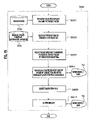
- FIG. 15 is a flowchart showing detail of the processing in the EM evaluation step (step S 40 ) in FIG. 2 ;
- FIG. 16 illustrates an example of a QFD matrix screen image for inputting a correlation value between a required service quality and an EM
- FIG. 17 is a flowchart showing detail of the processing in the target EM value setting step (step S 50 ) in FIG. 2 ;
- FIG. 18 illustrates an example of a QFD matrix screen for selecting an EM to become key to product sales strategy formulation and setting the target value thereof;
- FIG. 19 is a flowchart showing detail of the processing in the product sales strategy analysis step (step S 60 ) in FIG. 2 ;
- FIG. 20 is a block diagram illustrating the hardware configuration of a product sales support device and product sales support system according to each embodiment of the present invention.
- FIG. 21 illustrates an example of an embodiment of the present invention loaded on a network such as the Internet.
- required service characteristics customer requirements, hereafter referred to as ‘CR’
- CR customer requirements
- a required service characteristic (Customer Requirement, hereinafter referred to as ‘CR’) which is a requirement a user has indicated during interaction for the subject product itself or service to accompany the subject product is extracted and generated by referencing a required service characteristic database.
- CR Customer Requirement
- survey results from users are input to quantity level of importance and customer satisfaction for each required service characteristic and then output in a visibly recognizable format.
- This output is an indicator of current status in terms of product sales growth, and is a starting point for sales growth strategy formulation.
- an operator for example a sales staff member, can quantitatively investigate in order beginning with the required service characteristic having the highest importance which required service characteristics should be focused on to obtain higher levels of customer satisfaction surpassing competitor companies and thus contribute to product sales growth.
- This embodiment determines potential requirements regarding services accompanying a product offer of a user to directly contribute to increased product sales based on VOC collection, and provides functions for systematic, easy determination of a product sales growth strategy capable of obtaining the highest level of customer satisfaction.
- this embodiment uses user requirement groups obtained from VOC regarding services accompanying products to indicate to the operator the current status of their own and their competitors level of customer satisfaction and also to provide a function which allows quantitative and visual selection of requirements contributing to product sales growth where efforts should be focused.
- FIG. 1 is a block diagram illustrating the functional configuration of a product sales support apparatus according to a first embodiment of the present invention.
- the product is a concept that includes both a tangible product and the intangible service itself.
- a product sales support apparatus 100 comprises a VOC collection unit 10 , a user information database 10 a , VOC database 10 b , a required service characteristic extraction unit 20 , a required service characteristic generation rule 20 a , a required service characteristic database 20 b , a required service characteristic evaluation unit 30 , an EM evaluation unit 40 , an EM database 30 a , a target EM value setting unit 50 , a product sales strategy information database 30 b , a product sales strategy analysis unit 60 , and an input/output unit 70 .
- the VOC collection unit 10 not only collects and transfers to the required service characteristic extraction unit 20 VOC recorded with user's preferences for the subject product (recorded with real and unprocessed voice), but also gathers these VOC into the VOC database 10 b as well as saves in the user information database 10 a user attribute information including user identification information who inputs the VOC during VOC collection and scene information showing the situations under which the subject product is used.
- the user attribute information includes information such as name of the user from whom VOC was collected and level of decision-making authority over purchase of the target product. It should be noted that this VOC is information either saved as audio data of the user's voice or data described based on the content of the discussion.
- the required service characteristic extraction unit 20 converts the VOC transferred from the VOC collection unit 10 into required service characteristics (customer requirements: CR) by applying, for example, the required service characteristic generation rule 20 a , and saves the converted required service characteristics in the required service characteristic database 20 b .
- the required service characteristic (CR) is information related to preferences recognized as a real benefit which indicate status of the service desired by the user for a service accompanying the target product and is obtained from the user's VOC recorded with various abstract values such as what was merely said about target numbers or what was said about desired functions through application of the required service characteristic generation rule 20 a .
- This required service characteristic generation rule 20 a functions to convert the collected user's VOC to required service characteristic (CR) by employing a description where user's benefit on purchasing and using a product of interest is recited.
- the required service characteristic evaluation unit 30 calculates the level of importance of each required service characteristic and the level of user satisfaction with the company and with other companies using the input user survey results with respect to required service characteristic groups extracted by the required service characteristic extraction unit 20 . The calculation result is then output as a graph through the input/output unit 70 , linked to each required service characteristic, and output to the required service characteristic database 20 b.
- the EM evaluation unit 40 gives a weight to each EM by calculating allotment based on the degree of interrelated strength/weakness (correlation) between the respective groups of evaluation indices stored in the EM database 30 a for each subject product and subject product group, and the required service characteristics extracted by the required service characteristic extraction unit 20 , and then selects the EM considered the most important metric by the user
- the EM are metrics that can quantitatively measure the level of potential benefits of the user achieved regarding service accompanying subject product and in this embodiment are indices allowing numeric quantitative evaluation. Weighted EM are mapped to required service characteristics (CR) and output to the product sales strategy information database 30 b.
- each required service characteristics the weighted CR are calculated according to user evaluation input through a survey or the like.
- allotments are calculated based on the degree of interrelated strength/weakness (correlation) between the weighted CR and the EM, so that a score for each EM is obtained by means of weighted summing operation.
- a target EM are selected based on the calculated score of each EM.
- the target EM value setting unit 50 not only selects the EM to be used for product sales strategy formulation, but also sets the specific target value for that EM based on the current EM value of the company and other companies input regarding each EM and the weight of each EM calculated by the EM evaluation unit 40 .
- the product sales strategy analysis unit 60 selects the product sales strategy proposal that is expected to reach the target value for the subject EM selected by the target EM value setting unit 50 from the plurality of product sales strategy proposals (sales strategy concepts) regarding the service accompanying subject product stored in the product sales strategy information database 30 b . More specifically, a sales strategy proposal (subject service) is selected for the subject product for each product sales strategy proposal (sales strategy concept) by calculating worth and cost upon a two-dimensional graph.
- the input/output unit 70 is provided locally for the product sales support device 100 via various input/output devices or remotely via a network. At each of the various stages including, for example, VOC collection, required service characteristic extraction, required service characteristic evaluation, EM evaluation, target EM value setting, and product sales strategy analysis, the input/output unit 70 provides an input/output screen for an operator (e.g. sales staff member) and transfers the input information to either the required service characteristic extraction unit 20 , the required service characteristic evaluation unit 30 , the EM evaluation unit 40 , the target EM value setting unit 50 , or the product sales strategy analysis unit 60 .
- an operator e.g. sales staff member
- FIG. 2 is a flowchart showing an abbreviated processing algorithm for the product sales support method according to the first embodiment of the present invention.
- VOC collection unit 10 which users are appropriate for VOC collection is determined and VOC is collected from users within a set range of customers or end users (step S 10 ).
- this collected VOC is analyzed, and what real user requirements are included in the VOC and ultimately what the user feels are the benefits of a service accompanying the subject product are extracted as preference information regarding the service reflected by the user preferences, namely as required service characteristics (CR) (step S 20 ).
- required service characteristic evaluation unit 30 evaluation processing for each required service characteristic (CR) is carried out, and a subject required service characteristic (CR) is selected for use in product sales strategy formulation (step S 30 ).
- the interrelated strength/weakness (correlation) between the required service characteristic (CR) and the EM that is a functional metric necessary for implementing the required service characteristic (CR) is evaluated upon a two-dimensional matrix to weight each EM (step S 40 ).
- the target EM value setting unit 50 the EM to be used for product sales strategy formulation is selected and the target value for that EM is set (step S 50 ).
- the product sales strategy proposal having the optimum cost/worth balance of the product sales strategy proposals is selected as the subject service expected to reach the selected target EM value (step S 60 ).
- FIG. 3 is a flowchart showing detail of the processing in the VOC collection step (step S 21 ) in FIG. 2 .
- a VOC input screen is displayed (step S 101 ).
- a VOC of user is input to the VOC input screen through the input/output unit 70 (S 103 ).
- This VOC is input together with information showing the individual name of the user from whom the VOC has been collected and a user weight (step S 105 ).
- the information indicating this user weight is a weight (score) set in several stages and indicates what level of decision-making authority that user has regarding subject product purchase. It should be noted that step S 103 and step S 105 can be executed in any order, and may even be carried out simultaneously.
- step S 107 The user's individual name and user weight corresponding to the VOC, and each VOC input in step S 103 and step S 105 are saved in the VOC database (step S 107 ).
- the user weight input in this step is used to apply a weight for evaluation during the required service characteristic evaluation value calculation in a subsequent required service characteristic evaluation step (S 30 ).
- the subject product is memory
- subject product specifications are tied up so as to conform to required industry standard specifications
- the user having main decision-making authority regarding memory product purchase is the person in charge of purchasing a product.
- the subject product is microcomputers or system LSI
- software embedded therein must be developed by the software manufacturer (user) side that purchases the product. Therefore, it is important that the product specifications facilitate software development, and that the user having main decision-making authority regarding purchase of these products be the person in charge of software development.
- FIG. 4 illustrates an example of a VOC input screen that has been input with VOC.
- the input VOC 41 is shown as unsorted VOC from a plurality of users.
- FIG. 5 is a flowchart showing detail of the processing in the required service characteristic extraction step (step S 20 ) in FIG. 2 .
- a VOC is read out from the VOC database 10 b (step S 201 ).
- the read-out VOC is displayed upon the VOC related information input screen through the input/output unit 70 .
- FIG. 6 illustrates an example of a VOC related information input screen displaying with read-out VOC.
- VOC input field 61 “WE ESSENTIALLY DO NOT USE DISCRETE LOGIC FOR PARTS WHERE SPEED IS CRITICAL” is displayed.
- Scene information is then input for this displayed VOC (step S 205 ).
- a description regarding the scene on the user side that may serve as VOC background in the VOC input field 61 is respectively input to scene input fields 63 a and 63 b.
- VOC related information input screen in FIG, 6 further analysis of the VOC based on these pieces of scene information is carried out.
- Required items relating to the read-out VOC are selected from a required item candidate group displayed in an input candidate field 69 and input to required item input field 65 . It should be noted that the required items give a description of conditions before required service characteristics are converted from the VOC. In this embodiment, it is not always necessary to generate required items. Required service characteristics may be generated directly from the VOC.
- a required service characteristic generation rule is read out from required service characteristic generation rules 20 a (step S 207 )
- a required service characteristic “COMPONENT SELECTION IS EASY” (required service characteristic field 73 )
- the obtained required service characteristic is then sorted into groups of similar required service characteristics (step S 211 ). As shown in FIG. 8 , the obtained required service characteristic (e.g. “COMPONENT SELECTION IS EASY” in required service characteristic field 87 ) is sorted from the UNSORTED ITEMS 81 to the “COMPONENT SELECTION IS EASY” group 83 .
- the sorted required service characteristics are saved in the required service characteristic database 20 b (step S 213 ).
- FIG. 9 is a flowchart showing detail of the processing in the required service characteristic evaluation step (step S 30 ) in FIG. 2 .
- a required service characteristic is read out from the required service characteristic database 20 b (step S 301 ).
- the read-out required service characteristics are displayed upon a required service characteristic evaluation information input screen through the input/output unit 70 (step S 303 ).
- FIG. 10 illustrates an example of a screen prompting survey input regarding each required service characteristic for the user (customer). For each required service characteristic, input of at least the level of importance, the level of customer satisfaction regarding the company's product, and the level of customer satisfaction regarding another company's product is prompted fur the user through the survey screen.
- the level of importance for the required service characteristic for example two required service characteristics that can be obtained from the combination of all of the required service characteristics are displayed, and by selecting one of the two options, the respective levels of importance for the required service characteristic may be calculated.
- FIG. 11 illustrates an example of a required service characteristic evaluation information input screen displayed in step S 303 .
- the level of importance for each required service characteristic (step S 305 ), the level of customer satisfaction regarding the company's product for each required service characteristic (step S 307 ), and the level of customer satisfaction regarding another company's product for each required service characteristic (step S 309 ) are input into the required service characteristic evaluation information input screen. More specifically, as shown in FIG. 11 , level of importance (importance level input field 117 ), level of satisfaction regarding company's product (company satisfaction input field 119 ), and level of satisfaction regarding another company's product (other company satisfaction input field 121 ) are respectively input regarding each required service characteristic displayed in the required service characteristic field 111 .
- Each required service characteristic displayed in the required service characteristic display field 111 can be deleted, inserted, or jumped by manipulating (e.g., clicking with a pointing device such as a mouse) the respective required service characteristic operation buttons 113 (DELETE, INSERT, AND JUMP).
- each EM displayed in each column of the display can be deleted, inserted or jumped by manipulating the respective EM operation buttons 115 .
- the weight of the user's individual name corresponding to each required service characteristic is read out while referencing the VOC database 10 b and the user information database 10 a .
- the evaluation score for each required service characteristic in other words each score for the level of importance 117 , level of company satisfaction 119 , and level of other company satisfaction is weighted (step S 311 ).
- the required service characteristic importance level and customer satisfaction levels for all of the required service characteristics are displayed in an appropriate graph in accordance with operator's manipulation (step S 313 ).
- FIG. 12 illustrates an example of a comprehensive display image, specifically a graph image, displayed in step S 313 .
- the company customer satisfaction level 123 and competitor customer satisfaction levels 125 a and 125 b are shown with bar graphs, and the required service characteristic importance level is shown with a broken line graph 121 .
- FIG. 12 it can be easily recognized that for the required service characteristic “COMPONENT SELECTION IS EASY”, customer satisfaction it low compared to the importance level thereof. An increase in product share through product sales growth can be expected by improving the customer satisfaction level of this required service characteristic “COMPONENT SELECTION IS EASY”. Referencing the graph of FIG.
- the operator can visually recognize that, although it is a required service characteristic with a high level of importance, the level of customer satisfaction is currently low for both the company and the other companies for the required service characteristic “COMPONENT SELECTION IS EASY” and can select it as a subject required service characteristic for sales strategy formulation.
- the difference between the required service characteristic importance level and the company/other company customer satisfaction level can be calculated, and a subject required service characteristic candidate clan be automatically selected based on this difference.
- a target value regarding the company customer satisfaction level can be selected for the subject required service characteristic (step S 315 ).
- the target value for the required service characteristic is set to 8.5.
- the rate of improvement field 133 displays the rate of improvement graded for the targeted customer satisfaction level against the current company customer satisfaction level
- the sales point field 135 displays how much of a sales point that required service characteristic will become in product sales for the company.
- FIG. 14 displays as bar graphs the current company customer satisfaction level 143 and target customer satisfaction level 145 for the subject required service characteristic selected in step S 315 and for other required service characteristics.
- the level of importance for each of the required service characteristics is shown as a broken line graph overlapping the bar graphs It can be visually confirmed that a target in the product sales strategy has become improving the current customer satisfaction level of the subject required service characteristic selected in step S 315 , “COMPONENT SELECTION IS EASY”, from 4.8 to 8.5.
- FIG. 15 is a flowchart showing detail of the processing in the EM evaluation step (step S 40 ) in FIG. 2 .
- An EM is read out from the EM database 30 a (step S 401 ). Moreover, a required service characteristic and the level of importance for that required service characteristic is read out from the required service characteristic database 20 b (step S 403 ).
- a quality function development (QFD) matrix screen which is a screen prompting an operator to input the correlation between this required service characteristic and the EM is displayed through the input/output unit 70 (step S 405 ).
- FIG. 16 illustrates an example of this QFD matrix screen image.
- a matrix of the required service characteristics and EM is configured by displaying the respective required service characteristics in the rows of the required service characteristic display field 167 and the respective EM in the columns of the display field 163 for the EM, which are indices for quantitatively measuring the required service characteristics.
- Input of the correlation value between the required service characteristic and the EM is prompted to this QFD matrix input screen (step S 407 ).
- a filled in circle denotes strong correlation
- a hollow circle denotes medium-range correlation
- a triangle denotes weak correlation
- a space denotes no correlation.
- weighted calculation of the sum of the correlation values is performed for each EM column using weight derived from the level of importance of each required service characteristic (step S 409 ).
- the result of the weighted calculation is output and displayed upon the QFD matrix screen (step S 411 ).
- FIG. 17 is a flowchart showing detail of the processing in the target EM value setting step (step S 50 ) in FIG. 2 .
- a quality function development (QFD) matrix screen is displayed through the input/output unit 70 (step S 501 ).
- FIG. 18 illustrates an example of a QFD matrix screen for selecting an EM to become key to product sales strategy formulation and setting the target value thereof.
- the level of importance for each EM is calculated based on the required service characteristic importance level (field 161 in FIG. 16 ) and displayed in the EM importance level field 185 .
- the EM importance level field 185 in FIG. 18 requires the numeric value in the case where independent allotment (button 181 in FIG. 18 ) is selected, however, it is also possible to use proportional distribution (button 183 ) for EM importance level calculation.
- This proportional distribution is a method for calculating an EM importance level after adjusting the correlation value so that each of the required service characteristic correlation value score totals are all the same value. In the case where there is deviation in the correlation values first input, it is possible to adjust that deviation.
- the weight for evaluation of each EM on the product offer side that is, how much of a sales point, is calculated as a score for each EM and displayed in the evaluation EM weight field 187 .
- the in-house company current EM value measured for each EM is displayed in the in-house company current EM value field 191 and the other company current EM value measured for each EM is displayed in the other company current EM value field 193 (step S 503 , step S 505 ).
- a subject EM and target value thereof are determined for product sales strategy formulation based on the EM importance level from the relative weight calculated for each of these EM and the in-house company and other company current EM values (step S 507 ).
- the determined subject EM and target value thereof are saved in for example the EM database 30 a or another storage device (step S 509 ). More specifically, it is possible to select a target EM value (target EM value display field 195 in FIG. 18 ) that is attainable and improves customer satisfaction, in other words is significant enough to directly increase sales, by comparing the relative weight obtained as the EM importance level and the in-house company and other company current EM values.
- the target value regarding the EM “TIME SPENT SELECTING COMPONENTS”, is set to 0.5 hours.
- FIG. 19 is a flowchart showing detail of the processing in the product sales strategy analysis step (step S 60 ) in FIG. 2 .
- the selected subject required service characteristic, EM, and the respective target values thereof are read out from the EM database 30 a (step S 601 ). Meanwhile, from the product sales strategy information database 30 b , product sales strategy information is read out (step S 603 ). Next, sales strategy proposal candidates, which are means for reaching the selected subject EM target value, are selected from the read-out sales strategy information (step S 605 ). Costs required for reaching the selected EM target value are calculated for each of these sales strategy candidates and the results are displayed through the input/output unit 70 (step S 607 ). Ultimately, through the procedures described in the foregoing, the service is selected for the sales strategy to directly increasing sales in order to obtain the best user satisfaction regarding a service accompanying product (step S 609 ). The selected sales strategy is output and displayed as needed via the input/output unit 70 (step S 611 ).
- FIG. 20 is a block diagram illustrating the hardware configuration of a product sales support device and product sales support system according to each embodiment of the present invention.
- the product sales support apparatus 100 according to each embodiment of the present invention has the exemplary structure shown in FIG. 20 .
- the product sales support apparatus 100 according to each embodiment of the present invention is configured by embedding each element of the product sales support processing in a single or a plurality of computer systems.
- the computer system includes a central processing unit 110 such as a microprocessor and other units interconnected via a system bus 112 .
- This computer system 100 is configured with a random access memory 114 ; read only memory 116 ; I/O adapter 118 , which connects peripheral devices such as a hard disk unit 120 to the system bus 112 ; user interface adapter 122 , which connects user interface units such as a keyboard 124 , mouse 126 , speaker 128 , microphone 132 or touch screen (not shown in the figures) to the system bus 112 ; a communications adaptor 134 , which connects this computer system to a communications network; a display adaptor 136 , which connects a display unit 138 to the system bus 112 ; and an external disk driver 142 , which respectively actuates a floppy disk 114 , optical disk 146 , and various memory cards 148 .
- a product sales support program for executing each of the functions of the product sales support processing according to the present invention is stored in any of the various computer readable storage media typified by a floppy disk 114 , optical disk 146 , or the various types of memory cards 148 , and it is possible to install the product sales support program for executing various functions of product sales support processing of the present invention stored in these storage media by performing a predetermined reading-out operation from these storage media via an external disk driver.
- Product sales support processing of the present invention is carried out by loading these programs in a random access memory 114 and executing these with the central processing unit 110 .
- the above-mentioned product sales support program may be executed in a single computer or may be executed in a plurality of network connected computers In the case where executed in a plurality of computers, a module operating in the respective computers is loaded into the respective computers with a storage medium stored therewith.
- FIG. 21 illustrates an example of an embodiment of the present invention loaded on a network such as the Internet.
- the product sales support system according to the present invention includes a plurality of client machines 202 connected to a server 204 via a network 200 .
- Large-scale implementation of this embodiment is also possible by arranging a product sales support unit 100 on the server 204 , arranging an input/output unit 60 on the client machines 202 , and loading the product sales support system according to this embodiment on the network.
Landscapes
- Business, Economics & Management (AREA)
- Strategic Management (AREA)
- Engineering & Computer Science (AREA)
- Accounting & Taxation (AREA)
- Development Economics (AREA)
- Finance (AREA)
- Entrepreneurship & Innovation (AREA)
- Game Theory and Decision Science (AREA)
- Economics (AREA)
- Marketing (AREA)
- Physics & Mathematics (AREA)
- General Business, Economics & Management (AREA)
- General Physics & Mathematics (AREA)
- Theoretical Computer Science (AREA)
- Data Mining & Analysis (AREA)
- Management, Administration, Business Operations System, And Electronic Commerce (AREA)
Applications Claiming Priority (2)
| Application Number | Priority Date | Filing Date | Title |
|---|---|---|---|
| JP2002129153A JP2003323541A (ja) | 2002-04-30 | 2002-04-30 | 製品販売支援方法および製品販売支援装置 |
| JPP2002-129153 | 2002-04-30 |
Publications (2)
| Publication Number | Publication Date |
|---|---|
| US20040015387A1 US20040015387A1 (en) | 2004-01-22 |
| US7580849B2 true US7580849B2 (en) | 2009-08-25 |
Family
ID=29542665
Family Applications (1)
| Application Number | Title | Priority Date | Filing Date |
|---|---|---|---|
| US10/426,552 Expired - Fee Related US7580849B2 (en) | 2002-04-30 | 2003-04-30 | Product sales support method and product sales support apparatus |
Country Status (3)
| Country | Link |
|---|---|
| US (1) | US7580849B2 (https=) |
| EP (1) | EP1376428A1 (https=) |
| JP (1) | JP2003323541A (https=) |
Cited By (1)
| Publication number | Priority date | Publication date | Assignee | Title |
|---|---|---|---|---|
| US20100185494A1 (en) * | 2007-06-13 | 2010-07-22 | Dentscape Inc. | Method for acquiring, managing and processing information concerning the degree of customer satisfaction and it product using such method |
Families Citing this family (7)
| Publication number | Priority date | Publication date | Assignee | Title |
|---|---|---|---|---|
| US6313833B1 (en) * | 1998-10-16 | 2001-11-06 | Prophet Financial Systems | Graphical data collection and retrieval interface |
| US20060287874A1 (en) * | 2005-06-17 | 2006-12-21 | Askeland Eric L | Management of information pertaining to application sales opportunities |
| US20080319777A1 (en) * | 2007-06-20 | 2008-12-25 | Roland Hoff | Business transaction issue manager |
| US10032174B2 (en) * | 2007-07-31 | 2018-07-24 | Sap Se | Management of sales opportunities |
| JP5035178B2 (ja) * | 2008-08-26 | 2012-09-26 | トヨタ自動車株式会社 | 評価項目生成装置及びプログラム |
| JP2010231497A (ja) * | 2009-03-27 | 2010-10-14 | Nec Corp | サービスシステム設計・管理支援方法、装置及びプログラム |
| JP7325212B2 (ja) * | 2019-04-09 | 2023-08-14 | 三菱電機株式会社 | 情報処理装置、適正納期算出方法およびプログラム |
Citations (11)
| Publication number | Priority date | Publication date | Assignee | Title |
|---|---|---|---|---|
| US5732200A (en) | 1994-04-19 | 1998-03-24 | International Business Machines Corporation | Integration of groupware with quality function deployment methodology via facilitated work sessions |
| US5754738A (en) | 1996-06-07 | 1998-05-19 | Camc Corporation | Computerized prototyping system employing virtual system design enviroment |
| US5963910A (en) | 1996-09-20 | 1999-10-05 | Ulwick; Anthony W. | Computer based process for strategy evaluation and optimization based on customer desired outcomes and predictive metrics |
| JP2001014021A (ja) | 1999-07-02 | 2001-01-19 | Hitachi Ltd | 受注システム、顧客側端末、受注方法および記憶媒体 |
| JP2001209728A (ja) | 1999-11-15 | 2001-08-03 | Power To The People:Kk | 商品等評価データ集計装置、商品等評価データ集計方法、商品等評価装置、商品等評価方法および記録媒体 |
| JP2001338100A (ja) | 2000-05-26 | 2001-12-07 | Ec Watch.Com:Kk | 評価装置及び評価方法並びに評価用ソフトウェアを記録した記録媒体 |
| JP2002092190A (ja) | 2000-09-11 | 2002-03-29 | Sony Corp | 商品評価システム、商品評価方法および記録媒体 |
| JP2002108946A (ja) | 2000-07-28 | 2002-04-12 | Toshiba Corp | 製品設計方法、製品設計装置および製品設計プログラムを格納する記憶媒体 |
| US6687560B2 (en) * | 2001-09-24 | 2004-02-03 | Electronic Data Systems Corporation | Processing performance data describing a relationship between a provider and a client |
| US6691093B2 (en) * | 1996-11-25 | 2004-02-10 | Allyn M. Shell | Multi-level marketing computer network server |
| US7191143B2 (en) * | 2001-11-05 | 2007-03-13 | Keli Sev K H | Preference information-based metrics |
-
2002
- 2002-04-30 JP JP2002129153A patent/JP2003323541A/ja active Pending
-
2003
- 2003-04-30 EP EP03009703A patent/EP1376428A1/en not_active Withdrawn
- 2003-04-30 US US10/426,552 patent/US7580849B2/en not_active Expired - Fee Related
Patent Citations (11)
| Publication number | Priority date | Publication date | Assignee | Title |
|---|---|---|---|---|
| US5732200A (en) | 1994-04-19 | 1998-03-24 | International Business Machines Corporation | Integration of groupware with quality function deployment methodology via facilitated work sessions |
| US5754738A (en) | 1996-06-07 | 1998-05-19 | Camc Corporation | Computerized prototyping system employing virtual system design enviroment |
| US5963910A (en) | 1996-09-20 | 1999-10-05 | Ulwick; Anthony W. | Computer based process for strategy evaluation and optimization based on customer desired outcomes and predictive metrics |
| US6691093B2 (en) * | 1996-11-25 | 2004-02-10 | Allyn M. Shell | Multi-level marketing computer network server |
| JP2001014021A (ja) | 1999-07-02 | 2001-01-19 | Hitachi Ltd | 受注システム、顧客側端末、受注方法および記憶媒体 |
| JP2001209728A (ja) | 1999-11-15 | 2001-08-03 | Power To The People:Kk | 商品等評価データ集計装置、商品等評価データ集計方法、商品等評価装置、商品等評価方法および記録媒体 |
| JP2001338100A (ja) | 2000-05-26 | 2001-12-07 | Ec Watch.Com:Kk | 評価装置及び評価方法並びに評価用ソフトウェアを記録した記録媒体 |
| JP2002108946A (ja) | 2000-07-28 | 2002-04-12 | Toshiba Corp | 製品設計方法、製品設計装置および製品設計プログラムを格納する記憶媒体 |
| JP2002092190A (ja) | 2000-09-11 | 2002-03-29 | Sony Corp | 商品評価システム、商品評価方法および記録媒体 |
| US6687560B2 (en) * | 2001-09-24 | 2004-02-03 | Electronic Data Systems Corporation | Processing performance data describing a relationship between a provider and a client |
| US7191143B2 (en) * | 2001-11-05 | 2007-03-13 | Keli Sev K H | Preference information-based metrics |
Non-Patent Citations (5)
| Title |
|---|
| Bender, Graphical Presentation of RMF Host Performance Data with Programmable Workstation Based Spreadsheet Programs, IBM Technical Disclosure Bulletin, Sep. 1995, p. 125, vol. 38, No. 9. |
| Fung et al (An intelligent hybrid system for customer requirements analysis and product attribute targets), Dec. 1998, Int. J. Prod. Res., vol. 36, No. 1, pp. 1-22. * |
| Jay (Measuring the value added by technical documentation: a review of research and practice), Aug. 1998, Technical Communication, V45, n3, Dialog file 47 Accession No. 05229974, pp. 1-32. * |
| Krishnan (Customer Satisfaction for Financial Serivces: The Role of Products, Services, and Information Technology), Sep. 1999, Management Science, vol. 45, No. 9. pp. 1-17. * |
| Szymanski et al (Customer Satisfaction: A Meta-Analysis of the Empirical Evidence), Dec. 2001, Journal of the Academy of Marketing Science, vol. 29, No. 1, pp. 16-35. * |
Cited By (1)
| Publication number | Priority date | Publication date | Assignee | Title |
|---|---|---|---|---|
| US20100185494A1 (en) * | 2007-06-13 | 2010-07-22 | Dentscape Inc. | Method for acquiring, managing and processing information concerning the degree of customer satisfaction and it product using such method |
Also Published As
| Publication number | Publication date |
|---|---|
| JP2003323541A (ja) | 2003-11-14 |
| US20040015387A1 (en) | 2004-01-22 |
| EP1376428A1 (en) | 2004-01-02 |
Similar Documents
| Publication | Publication Date | Title |
|---|---|---|
| US11200528B2 (en) | Data integrated analysis system | |
| KR101196314B1 (ko) | 소매 판매 분석을 수행하기 위한 컴퓨터화된 시스템 | |
| Chen et al. | A Web-based personalized recommendation system for mobile phone selection: Design, implementation, and evaluation | |
| JP6364581B2 (ja) | プログラム、情報処理装置及び情報処理方法 | |
| JP2004538535A (ja) | 以前の調査質問事項への回答の分析結果に基づく調査質問事項の自動生成 | |
| US20050010515A1 (en) | Method of identifying high value patents within a patent porfolio | |
| US20050108094A1 (en) | Method for making a decision according to customer needs | |
| US20170323316A1 (en) | Method for Documenting a Customer's Journey Using an Online Survey Platform | |
| US7580849B2 (en) | Product sales support method and product sales support apparatus | |
| JP6732084B1 (ja) | コンピュータプログラム、送信方法及び送信装置 | |
| JP6613210B2 (ja) | 人材育成支援システム | |
| JP6419865B2 (ja) | データ統合分析システム | |
| CN119168688A (zh) | 基于客户意向分析的数据处理方法及系统 | |
| JP2003288476A (ja) | 生産ラインの統合ライン能力評価・管理運用システム、および、その統合ライン能力評価・管理運用方法 | |
| KR102593124B1 (ko) | 인공지능 기반으로 비즈니스 문제점을 진단하고 비즈니스 전략을 제공하는 비즈니스 분석 정보 제공 방법, 장치, 및 프로그램 | |
| US20180012162A1 (en) | Human resource development support system | |
| WO2017141837A1 (ja) | プログラム、情報処理装置及び情報処理方法 | |
| JP7303151B2 (ja) | 計画運用プログラム、計画運用方法及び計画運用装置 | |
| KR102769705B1 (ko) | 온라인 셀러를 위한 인공지능 기반의 올인원 솔루션 플랫폼을 제공하기 위한 운영 서버 및 그 동작 방법 | |
| CN119579223A (zh) | 数据信托交易的动态定价方法及系统 | |
| JP2021060970A (ja) | コンピュータプログラム、出力方法及び出力装置 | |
| JP7233148B2 (ja) | 計画作成プログラム、計画作成装置及び計画作成方法 | |
| Soesilo et al. | Application of optimization techniques to maximize uniform sales profit using the Simplex Method | |
| US20060217989A1 (en) | Ecommerce benchmarking | |
| JP5403810B2 (ja) | 顧客情報管理サーバ、及び顧客情報管理プログラム |
Legal Events
| Date | Code | Title | Description |
|---|---|---|---|
| AS | Assignment |
Owner name: KABUSHIKI KAISHA TOSHIBA, JAPAN Free format text: ASSIGNMENT OF ASSIGNORS INTEREST;ASSIGNOR:NISHIKAWA, AKIHITO;REEL/FRAME:014501/0031 Effective date: 20030902 |
|
| FEPP | Fee payment procedure |
Free format text: PAYOR NUMBER ASSIGNED (ORIGINAL EVENT CODE: ASPN); ENTITY STATUS OF PATENT OWNER: LARGE ENTITY |
|
| FEPP | Fee payment procedure |
Free format text: PAYOR NUMBER ASSIGNED (ORIGINAL EVENT CODE: ASPN); ENTITY STATUS OF PATENT OWNER: LARGE ENTITY Free format text: PAYER NUMBER DE-ASSIGNED (ORIGINAL EVENT CODE: RMPN); ENTITY STATUS OF PATENT OWNER: LARGE ENTITY |
|
| REMI | Maintenance fee reminder mailed | ||
| LAPS | Lapse for failure to pay maintenance fees | ||
| STCH | Information on status: patent discontinuation |
Free format text: PATENT EXPIRED DUE TO NONPAYMENT OF MAINTENANCE FEES UNDER 37 CFR 1.362 |
|
| STCH | Information on status: patent discontinuation |
Free format text: PATENT EXPIRED DUE TO NONPAYMENT OF MAINTENANCE FEES UNDER 37 CFR 1.362 |
|
| FP | Lapsed due to failure to pay maintenance fee |
Effective date: 20130825 |