US7517536B2 - Antimicrobial compositions and wound dressings - Google Patents
Antimicrobial compositions and wound dressings Download PDFInfo
- Publication number
- US7517536B2 US7517536B2 US11/347,716 US34771606A US7517536B2 US 7517536 B2 US7517536 B2 US 7517536B2 US 34771606 A US34771606 A US 34771606A US 7517536 B2 US7517536 B2 US 7517536B2
- Authority
- US
- United States
- Prior art keywords
- activated carbon
- layer
- noble metal
- antimicrobial
- antimicrobial material
- Prior art date
- Legal status (The legal status is an assumption and is not a legal conclusion. Google has not performed a legal analysis and makes no representation as to the accuracy of the status listed.)
- Active, expires
Links
- 230000000845 anti-microbial effect Effects 0.000 title claims abstract description 76
- 239000000203 mixture Substances 0.000 title claims abstract description 19
- OKTJSMMVPCPJKN-UHFFFAOYSA-N Carbon Chemical compound [C] OKTJSMMVPCPJKN-UHFFFAOYSA-N 0.000 claims abstract description 83
- 229910000510 noble metal Inorganic materials 0.000 claims abstract description 55
- 239000000463 material Substances 0.000 claims abstract description 53
- VNWKTOKETHGBQD-UHFFFAOYSA-N methane Chemical class C VNWKTOKETHGBQD-UHFFFAOYSA-N 0.000 claims abstract description 40
- BQCADISMDOOEFD-UHFFFAOYSA-N Silver Chemical compound [Ag] BQCADISMDOOEFD-UHFFFAOYSA-N 0.000 claims abstract description 23
- 229910052709 silver Inorganic materials 0.000 claims abstract description 22
- 239000004332 silver Substances 0.000 claims abstract description 22
- KDLHZDBZIXYQEI-UHFFFAOYSA-N Palladium Chemical compound [Pd] KDLHZDBZIXYQEI-UHFFFAOYSA-N 0.000 claims abstract description 18
- BASFCYQUMIYNBI-UHFFFAOYSA-N platinum Chemical compound [Pt] BASFCYQUMIYNBI-UHFFFAOYSA-N 0.000 claims abstract description 18
- 239000004599 antimicrobial Substances 0.000 claims abstract description 16
- HCHKCACWOHOZIP-UHFFFAOYSA-N Zinc Chemical compound [Zn] HCHKCACWOHOZIP-UHFFFAOYSA-N 0.000 claims abstract description 9
- PCHJSUWPFVWCPO-UHFFFAOYSA-N gold Chemical compound [Au] PCHJSUWPFVWCPO-UHFFFAOYSA-N 0.000 claims abstract description 9
- 229910052737 gold Inorganic materials 0.000 claims abstract description 9
- 239000010931 gold Substances 0.000 claims abstract description 9
- 229910052763 palladium Inorganic materials 0.000 claims abstract description 9
- 229910052697 platinum Inorganic materials 0.000 claims abstract description 9
- 229910052725 zinc Inorganic materials 0.000 claims abstract description 9
- 239000011701 zinc Substances 0.000 claims abstract description 9
- RYGMFSIKBFXOCR-UHFFFAOYSA-N Copper Chemical compound [Cu] RYGMFSIKBFXOCR-UHFFFAOYSA-N 0.000 claims abstract description 8
- 229910052802 copper Inorganic materials 0.000 claims abstract description 8
- 239000010949 copper Substances 0.000 claims abstract description 8
- 239000002245 particle Substances 0.000 claims abstract description 8
- 239000010410 layer Substances 0.000 claims description 91
- 239000004744 fabric Substances 0.000 claims description 24
- 239000004820 Pressure-sensitive adhesive Substances 0.000 claims description 19
- 239000000835 fiber Substances 0.000 claims description 14
- URAYPUMNDPQOKB-UHFFFAOYSA-N triacetin Chemical compound CC(=O)OCC(OC(C)=O)COC(C)=O URAYPUMNDPQOKB-UHFFFAOYSA-N 0.000 claims description 8
- CPKVUHPKYQGHMW-UHFFFAOYSA-N 1-ethenylpyrrolidin-2-one;molecular iodine Chemical compound II.C=CN1CCCC1=O CPKVUHPKYQGHMW-UHFFFAOYSA-N 0.000 claims description 5
- 229920000153 Povidone-iodine Polymers 0.000 claims description 5
- 229910052799 carbon Inorganic materials 0.000 claims description 5
- 229960001621 povidone-iodine Drugs 0.000 claims description 5
- MINDHVHHQZYEEK-UHFFFAOYSA-N (E)-(2S,3R,4R,5S)-5-[(2S,3S,4S,5S)-2,3-epoxy-5-hydroxy-4-methylhexyl]tetrahydro-3,4-dihydroxy-(beta)-methyl-2H-pyran-2-crotonic acid ester with 9-hydroxynonanoic acid Natural products CC(O)C(C)C1OC1CC1C(O)C(O)C(CC(C)=CC(=O)OCCCCCCCCC(O)=O)OC1 MINDHVHHQZYEEK-UHFFFAOYSA-N 0.000 claims description 4
- SODWJACROGQSMM-UHFFFAOYSA-N 5,6,7,8-tetrahydronaphthalen-1-amine Chemical compound C1CCCC2=C1C=CC=C2N SODWJACROGQSMM-UHFFFAOYSA-N 0.000 claims description 4
- 244000146462 Centella asiatica Species 0.000 claims description 4
- 235000004032 Centella asiatica Nutrition 0.000 claims description 4
- QCDFBFJGMNKBDO-UHFFFAOYSA-N Clioquinol Chemical compound C1=CN=C2C(O)=C(I)C=C(Cl)C2=C1 QCDFBFJGMNKBDO-UHFFFAOYSA-N 0.000 claims description 4
- CTETYYAZBPJBHE-UHFFFAOYSA-N Haloprogin Chemical compound ClC1=CC(Cl)=C(OCC#CI)C=C1Cl CTETYYAZBPJBHE-UHFFFAOYSA-N 0.000 claims description 4
- TYMRLRRVMHJFTF-UHFFFAOYSA-N Mafenide Chemical compound NCC1=CC=C(S(N)(=O)=O)C=C1 TYMRLRRVMHJFTF-UHFFFAOYSA-N 0.000 claims description 4
- YZODJQFXMFEJRM-UHFFFAOYSA-N acrisorcin Chemical compound CCCCCCC1=CC=C(O)C=C1O.C1=CC=C2C(N)=C(C=CC=C3)C3=NC2=C1 YZODJQFXMFEJRM-UHFFFAOYSA-N 0.000 claims description 4
- 229960004124 acrisorcin Drugs 0.000 claims description 4
- 239000012790 adhesive layer Substances 0.000 claims description 4
- 229960003645 econazole nitrate Drugs 0.000 claims description 4
- 235000013773 glyceryl triacetate Nutrition 0.000 claims description 4
- 239000001087 glyceryl triacetate Substances 0.000 claims description 4
- 229960001906 haloprogin Drugs 0.000 claims description 4
- 229960003640 mafenide Drugs 0.000 claims description 4
- 229960003128 mupirocin Drugs 0.000 claims description 4
- 229930187697 mupirocin Natural products 0.000 claims description 4
- DDHVILIIHBIMQU-YJGQQKNPSA-L mupirocin calcium hydrate Chemical compound O.O.[Ca+2].C[C@H](O)[C@H](C)[C@@H]1O[C@H]1C[C@@H]1[C@@H](O)[C@@H](O)[C@H](C\C(C)=C\C(=O)OCCCCCCCCC([O-])=O)OC1.C[C@H](O)[C@H](C)[C@@H]1O[C@H]1C[C@@H]1[C@@H](O)[C@@H](O)[C@H](C\C(C)=C\C(=O)OCCCCCCCCC([O-])=O)OC1 DDHVILIIHBIMQU-YJGQQKNPSA-L 0.000 claims description 4
- FUSNMLFNXJSCDI-UHFFFAOYSA-N tolnaftate Chemical compound C=1C=C2C=CC=CC2=CC=1OC(=S)N(C)C1=CC=CC(C)=C1 FUSNMLFNXJSCDI-UHFFFAOYSA-N 0.000 claims description 4
- 229960002622 triacetin Drugs 0.000 claims description 4
- 230000000699 topical effect Effects 0.000 abstract description 6
- 206010052428 Wound Diseases 0.000 description 58
- 208000027418 Wounds and injury Diseases 0.000 description 58
- 239000003814 drug Substances 0.000 description 19
- 229940079593 drug Drugs 0.000 description 19
- 239000011241 protective layer Substances 0.000 description 11
- -1 polyethylene Polymers 0.000 description 9
- 239000000853 adhesive Substances 0.000 description 6
- 230000001070 adhesive effect Effects 0.000 description 6
- 230000008901 benefit Effects 0.000 description 6
- 208000015181 infectious disease Diseases 0.000 description 6
- SQGYOTSLMSWVJD-UHFFFAOYSA-N silver(1+) nitrate Chemical compound [Ag+].[O-]N(=O)=O SQGYOTSLMSWVJD-UHFFFAOYSA-N 0.000 description 6
- 206010053615 Thermal burn Diseases 0.000 description 5
- 239000011248 coating agent Substances 0.000 description 5
- 238000000576 coating method Methods 0.000 description 5
- 238000010586 diagram Methods 0.000 description 5
- 230000035876 healing Effects 0.000 description 5
- 238000000034 method Methods 0.000 description 5
- ULGZDMOVFRHVEP-RWJQBGPGSA-N Erythromycin Chemical compound O([C@@H]1[C@@H](C)C(=O)O[C@@H]([C@@]([C@H](O)[C@@H](C)C(=O)[C@H](C)C[C@@](C)(O)[C@H](O[C@H]2[C@@H]([C@H](C[C@@H](C)O2)N(C)C)O)[C@H]1C)(C)O)CC)[C@H]1C[C@@](C)(OC)[C@@H](O)[C@H](C)O1 ULGZDMOVFRHVEP-RWJQBGPGSA-N 0.000 description 4
- 239000004698 Polyethylene Substances 0.000 description 4
- 239000002250 absorbent Substances 0.000 description 4
- 230000002745 absorbent Effects 0.000 description 4
- 239000000499 gel Substances 0.000 description 4
- 208000014674 injury Diseases 0.000 description 4
- 230000000813 microbial effect Effects 0.000 description 4
- 239000000546 pharmaceutical excipient Substances 0.000 description 4
- 229920000573 polyethylene Polymers 0.000 description 4
- 229920000642 polymer Polymers 0.000 description 4
- 230000001225 therapeutic effect Effects 0.000 description 4
- 230000008733 trauma Effects 0.000 description 4
- XLYOFNOQVPJJNP-UHFFFAOYSA-N water Substances O XLYOFNOQVPJJNP-UHFFFAOYSA-N 0.000 description 4
- 102000008186 Collagen Human genes 0.000 description 3
- 108010035532 Collagen Proteins 0.000 description 3
- 239000004952 Polyamide Substances 0.000 description 3
- 239000004743 Polypropylene Substances 0.000 description 3
- 230000000844 anti-bacterial effect Effects 0.000 description 3
- 229920001436 collagen Polymers 0.000 description 3
- 239000006071 cream Substances 0.000 description 3
- 239000003085 diluting agent Substances 0.000 description 3
- 239000002552 dosage form Substances 0.000 description 3
- 239000002674 ointment Substances 0.000 description 3
- 229920002647 polyamide Polymers 0.000 description 3
- 229920000728 polyester Polymers 0.000 description 3
- 229920000098 polyolefin Polymers 0.000 description 3
- 229920001155 polypropylene Polymers 0.000 description 3
- 238000002360 preparation method Methods 0.000 description 3
- 230000008569 process Effects 0.000 description 3
- 229910001961 silver nitrate Inorganic materials 0.000 description 3
- 229960004880 tolnaftate Drugs 0.000 description 3
- IJGRMHOSHXDMSA-UHFFFAOYSA-N Atomic nitrogen Chemical compound N#N IJGRMHOSHXDMSA-UHFFFAOYSA-N 0.000 description 2
- 229930186147 Cephalosporin Natural products 0.000 description 2
- 229920002396 Polyurea Polymers 0.000 description 2
- 229920001328 Polyvinylidene chloride Polymers 0.000 description 2
- 239000004098 Tetracycline Substances 0.000 description 2
- 230000003213 activating effect Effects 0.000 description 2
- POJWUDADGALRAB-UHFFFAOYSA-N allantoin Chemical compound NC(=O)NC1NC(=O)NC1=O POJWUDADGALRAB-UHFFFAOYSA-N 0.000 description 2
- 229910045601 alloy Inorganic materials 0.000 description 2
- 239000000956 alloy Substances 0.000 description 2
- 229940121375 antifungal agent Drugs 0.000 description 2
- 239000003429 antifungal agent Substances 0.000 description 2
- 238000013459 approach Methods 0.000 description 2
- 239000001913 cellulose Substances 0.000 description 2
- 229920002678 cellulose Polymers 0.000 description 2
- 229940124587 cephalosporin Drugs 0.000 description 2
- 150000001780 cephalosporins Chemical class 0.000 description 2
- 150000001875 compounds Chemical class 0.000 description 2
- 238000001035 drying Methods 0.000 description 2
- 229960003276 erythromycin Drugs 0.000 description 2
- 239000005038 ethylene vinyl acetate Substances 0.000 description 2
- 230000002209 hydrophobic effect Effects 0.000 description 2
- 150000002500 ions Chemical class 0.000 description 2
- 239000004745 nonwoven fabric Substances 0.000 description 2
- 229920001200 poly(ethylene-vinyl acetate) Polymers 0.000 description 2
- 229920001296 polysiloxane Polymers 0.000 description 2
- 239000004814 polyurethane Substances 0.000 description 2
- 229920002635 polyurethane Polymers 0.000 description 2
- 229920000915 polyvinyl chloride Polymers 0.000 description 2
- 239000004800 polyvinyl chloride Substances 0.000 description 2
- 229960002180 tetracycline Drugs 0.000 description 2
- 229930101283 tetracycline Natural products 0.000 description 2
- 235000019364 tetracycline Nutrition 0.000 description 2
- 150000003522 tetracyclines Chemical class 0.000 description 2
- 239000002562 thickening agent Substances 0.000 description 2
- 238000003466 welding Methods 0.000 description 2
- 239000002759 woven fabric Substances 0.000 description 2
- IBLKWZIFZMJLFL-UHFFFAOYSA-N 1-phenoxypropan-2-ol Chemical compound CC(O)COC1=CC=CC=C1 IBLKWZIFZMJLFL-UHFFFAOYSA-N 0.000 description 1
- POJWUDADGALRAB-PVQJCKRUSA-N Allantoin Natural products NC(=O)N[C@@H]1NC(=O)NC1=O POJWUDADGALRAB-PVQJCKRUSA-N 0.000 description 1
- 241000416162 Astragalus gummifer Species 0.000 description 1
- 241000894006 Bacteria Species 0.000 description 1
- 229920000049 Carbon (fiber) Polymers 0.000 description 1
- 229920003043 Cellulose fiber Polymers 0.000 description 1
- GHXZTYHSJHQHIJ-UHFFFAOYSA-N Chlorhexidine Chemical compound C=1C=C(Cl)C=CC=1NC(N)=NC(N)=NCCCCCCN=C(N)N=C(N)NC1=CC=C(Cl)C=C1 GHXZTYHSJHQHIJ-UHFFFAOYSA-N 0.000 description 1
- 229920000742 Cotton Polymers 0.000 description 1
- 229910001111 Fine metal Inorganic materials 0.000 description 1
- 241000233866 Fungi Species 0.000 description 1
- 239000004166 Lanolin Substances 0.000 description 1
- 239000004677 Nylon Substances 0.000 description 1
- 229920006282 Phenolic fiber Polymers 0.000 description 1
- 239000002202 Polyethylene glycol Substances 0.000 description 1
- 229920000297 Rayon Polymers 0.000 description 1
- 206010072170 Skin wound Diseases 0.000 description 1
- 229920002472 Starch Polymers 0.000 description 1
- 229920001615 Tragacanth Polymers 0.000 description 1
- XEFQLINVKFYRCS-UHFFFAOYSA-N Triclosan Chemical compound OC1=CC(Cl)=CC=C1OC1=CC=C(Cl)C=C1Cl XEFQLINVKFYRCS-UHFFFAOYSA-N 0.000 description 1
- 241000700605 Viruses Species 0.000 description 1
- 230000004931 aggregating effect Effects 0.000 description 1
- 229960000458 allantoin Drugs 0.000 description 1
- 229910052782 aluminium Inorganic materials 0.000 description 1
- XAGFODPZIPBFFR-UHFFFAOYSA-N aluminium Chemical compound [Al] XAGFODPZIPBFFR-UHFFFAOYSA-N 0.000 description 1
- CEGOLXSVJUTHNZ-UHFFFAOYSA-K aluminium tristearate Chemical compound [Al+3].CCCCCCCCCCCCCCCCCC([O-])=O.CCCCCCCCCCCCCCCCCC([O-])=O.CCCCCCCCCCCCCCCCCC([O-])=O CEGOLXSVJUTHNZ-UHFFFAOYSA-K 0.000 description 1
- 229940063655 aluminum stearate Drugs 0.000 description 1
- 239000003242 anti bacterial agent Substances 0.000 description 1
- 230000001028 anti-proliverative effect Effects 0.000 description 1
- 239000010426 asphalt Substances 0.000 description 1
- 230000003385 bacteriostatic effect Effects 0.000 description 1
- 238000001266 bandaging Methods 0.000 description 1
- 239000000440 bentonite Substances 0.000 description 1
- 229910000278 bentonite Inorganic materials 0.000 description 1
- SVPXDRXYRYOSEX-UHFFFAOYSA-N bentoquatam Chemical compound O.O=[Si]=O.O=[Al]O[Al]=O SVPXDRXYRYOSEX-UHFFFAOYSA-N 0.000 description 1
- 238000009960 carding Methods 0.000 description 1
- 235000010980 cellulose Nutrition 0.000 description 1
- 238000012512 characterization method Methods 0.000 description 1
- 238000006243 chemical reaction Methods 0.000 description 1
- 239000003153 chemical reaction reagent Substances 0.000 description 1
- 239000003795 chemical substances by application Substances 0.000 description 1
- 229960003260 chlorhexidine Drugs 0.000 description 1
- KRKNYBCHXYNGOX-UHFFFAOYSA-N citric acid Chemical compound OC(=O)CC(O)(C(O)=O)CC(O)=O KRKNYBCHXYNGOX-UHFFFAOYSA-N 0.000 description 1
- 229960002227 clindamycin Drugs 0.000 description 1
- KDLRVYVGXIQJDK-AWPVFWJPSA-N clindamycin Chemical compound CN1C[C@H](CCC)C[C@H]1C(=O)N[C@H]([C@H](C)Cl)[C@@H]1[C@H](O)[C@H](O)[C@@H](O)[C@@H](SC)O1 KDLRVYVGXIQJDK-AWPVFWJPSA-N 0.000 description 1
- KPUWHANPEXNPJT-UHFFFAOYSA-N disiloxane Chemical class [SiH3]O[SiH3] KPUWHANPEXNPJT-UHFFFAOYSA-N 0.000 description 1
- 238000010494 dissociation reaction Methods 0.000 description 1
- 230000005593 dissociations Effects 0.000 description 1
- 239000003937 drug carrier Substances 0.000 description 1
- 230000000694 effects Effects 0.000 description 1
- 238000007772 electroless plating Methods 0.000 description 1
- 238000009713 electroplating Methods 0.000 description 1
- 230000009881 electrostatic interaction Effects 0.000 description 1
- 239000000839 emulsion Substances 0.000 description 1
- 239000006260 foam Substances 0.000 description 1
- 108010025899 gelatin film Proteins 0.000 description 1
- 239000003349 gelling agent Substances 0.000 description 1
- 230000006872 improvement Effects 0.000 description 1
- 239000004615 ingredient Substances 0.000 description 1
- 229940039717 lanolin Drugs 0.000 description 1
- 235000019388 lanolin Nutrition 0.000 description 1
- 230000007246 mechanism Effects 0.000 description 1
- 229910052751 metal Inorganic materials 0.000 description 1
- 239000002184 metal Substances 0.000 description 1
- 239000002923 metal particle Substances 0.000 description 1
- 230000004048 modification Effects 0.000 description 1
- 238000012986 modification Methods 0.000 description 1
- 150000002825 nitriles Chemical class 0.000 description 1
- 229910052757 nitrogen Inorganic materials 0.000 description 1
- 231100000252 nontoxic Toxicity 0.000 description 1
- 230000003000 nontoxic effect Effects 0.000 description 1
- 229920001778 nylon Polymers 0.000 description 1
- 239000007800 oxidant agent Substances 0.000 description 1
- 238000007254 oxidation reaction Methods 0.000 description 1
- 239000002831 pharmacologic agent Substances 0.000 description 1
- 229940106026 phenoxyisopropanol Drugs 0.000 description 1
- 229920003023 plastic Polymers 0.000 description 1
- 239000004033 plastic Substances 0.000 description 1
- 238000007747 plating Methods 0.000 description 1
- 229920000058 polyacrylate Polymers 0.000 description 1
- 229920001223 polyethylene glycol Polymers 0.000 description 1
- 229920006306 polyurethane fiber Polymers 0.000 description 1
- 239000011148 porous material Substances 0.000 description 1
- 230000001681 protective effect Effects 0.000 description 1
- 231100000241 scar Toxicity 0.000 description 1
- RMAQACBXLXPBSY-UHFFFAOYSA-N silicic acid Chemical compound O[Si](O)(O)O RMAQACBXLXPBSY-UHFFFAOYSA-N 0.000 description 1
- 235000012239 silicon dioxide Nutrition 0.000 description 1
- 239000002356 single layer Substances 0.000 description 1
- 238000002791 soaking Methods 0.000 description 1
- 239000008107 starch Substances 0.000 description 1
- 235000019698 starch Nutrition 0.000 description 1
- 239000000126 substance Substances 0.000 description 1
- 239000000725 suspension Substances 0.000 description 1
- 229920002994 synthetic fiber Polymers 0.000 description 1
- 239000012209 synthetic fiber Substances 0.000 description 1
- 239000000454 talc Substances 0.000 description 1
- 229910052623 talc Inorganic materials 0.000 description 1
- 238000002560 therapeutic procedure Methods 0.000 description 1
- 239000000196 tragacanth Substances 0.000 description 1
- 235000010487 tragacanth Nutrition 0.000 description 1
- 229940116362 tragacanth Drugs 0.000 description 1
- 229960003500 triclosan Drugs 0.000 description 1
- 238000005406 washing Methods 0.000 description 1
- 238000009941 weaving Methods 0.000 description 1
- 230000037314 wound repair Effects 0.000 description 1
Images


Classifications
-
- A—HUMAN NECESSITIES
- A61—MEDICAL OR VETERINARY SCIENCE; HYGIENE
- A61L—METHODS OR APPARATUS FOR STERILISING MATERIALS OR OBJECTS IN GENERAL; DISINFECTION, STERILISATION OR DEODORISATION OF AIR; CHEMICAL ASPECTS OF BANDAGES, DRESSINGS, ABSORBENT PADS OR SURGICAL ARTICLES; MATERIALS FOR BANDAGES, DRESSINGS, ABSORBENT PADS OR SURGICAL ARTICLES
- A61L15/00—Chemical aspects of, or use of materials for, bandages, dressings or absorbent pads
- A61L15/16—Bandages, dressings or absorbent pads for physiological fluids such as urine or blood, e.g. sanitary towels, tampons
- A61L15/42—Use of materials characterised by their function or physical properties
- A61L15/46—Deodorants or malodour counteractants, e.g. to inhibit the formation of ammonia or bacteria
-
- A—HUMAN NECESSITIES
- A61—MEDICAL OR VETERINARY SCIENCE; HYGIENE
- A61K—PREPARATIONS FOR MEDICAL, DENTAL OR TOILETRY PURPOSES
- A61K33/00—Medicinal preparations containing inorganic active ingredients
- A61K33/24—Heavy metals; Compounds thereof
-
- A—HUMAN NECESSITIES
- A61—MEDICAL OR VETERINARY SCIENCE; HYGIENE
- A61K—PREPARATIONS FOR MEDICAL, DENTAL OR TOILETRY PURPOSES
- A61K33/00—Medicinal preparations containing inorganic active ingredients
- A61K33/24—Heavy metals; Compounds thereof
- A61K33/242—Gold; Compounds thereof
-
- A—HUMAN NECESSITIES
- A61—MEDICAL OR VETERINARY SCIENCE; HYGIENE
- A61K—PREPARATIONS FOR MEDICAL, DENTAL OR TOILETRY PURPOSES
- A61K33/00—Medicinal preparations containing inorganic active ingredients
- A61K33/24—Heavy metals; Compounds thereof
- A61K33/243—Platinum; Compounds thereof
-
- A—HUMAN NECESSITIES
- A61—MEDICAL OR VETERINARY SCIENCE; HYGIENE
- A61K—PREPARATIONS FOR MEDICAL, DENTAL OR TOILETRY PURPOSES
- A61K33/00—Medicinal preparations containing inorganic active ingredients
- A61K33/24—Heavy metals; Compounds thereof
- A61K33/30—Zinc; Compounds thereof
-
- A—HUMAN NECESSITIES
- A61—MEDICAL OR VETERINARY SCIENCE; HYGIENE
- A61K—PREPARATIONS FOR MEDICAL, DENTAL OR TOILETRY PURPOSES
- A61K33/00—Medicinal preparations containing inorganic active ingredients
- A61K33/24—Heavy metals; Compounds thereof
- A61K33/34—Copper; Compounds thereof
-
- A—HUMAN NECESSITIES
- A61—MEDICAL OR VETERINARY SCIENCE; HYGIENE
- A61K—PREPARATIONS FOR MEDICAL, DENTAL OR TOILETRY PURPOSES
- A61K33/00—Medicinal preparations containing inorganic active ingredients
- A61K33/24—Heavy metals; Compounds thereof
- A61K33/38—Silver; Compounds thereof
-
- A—HUMAN NECESSITIES
- A61—MEDICAL OR VETERINARY SCIENCE; HYGIENE
- A61K—PREPARATIONS FOR MEDICAL, DENTAL OR TOILETRY PURPOSES
- A61K33/00—Medicinal preparations containing inorganic active ingredients
- A61K33/44—Elemental carbon, e.g. charcoal, carbon black
-
- A—HUMAN NECESSITIES
- A61—MEDICAL OR VETERINARY SCIENCE; HYGIENE
- A61K—PREPARATIONS FOR MEDICAL, DENTAL OR TOILETRY PURPOSES
- A61K36/00—Medicinal preparations of undetermined constitution containing material from algae, lichens, fungi or plants, or derivatives thereof, e.g. traditional herbal medicines
- A61K36/18—Magnoliophyta (angiosperms)
- A61K36/185—Magnoliopsida (dicotyledons)
- A61K36/23—Apiaceae or Umbelliferae (Carrot family), e.g. dill, chervil, coriander or cumin
-
- A—HUMAN NECESSITIES
- A61—MEDICAL OR VETERINARY SCIENCE; HYGIENE
- A61K—PREPARATIONS FOR MEDICAL, DENTAL OR TOILETRY PURPOSES
- A61K45/00—Medicinal preparations containing active ingredients not provided for in groups A61K31/00 - A61K41/00
- A61K45/06—Mixtures of active ingredients without chemical characterisation, e.g. antiphlogistics and cardiaca
-
- A—HUMAN NECESSITIES
- A61—MEDICAL OR VETERINARY SCIENCE; HYGIENE
- A61L—METHODS OR APPARATUS FOR STERILISING MATERIALS OR OBJECTS IN GENERAL; DISINFECTION, STERILISATION OR DEODORISATION OF AIR; CHEMICAL ASPECTS OF BANDAGES, DRESSINGS, ABSORBENT PADS OR SURGICAL ARTICLES; MATERIALS FOR BANDAGES, DRESSINGS, ABSORBENT PADS OR SURGICAL ARTICLES
- A61L15/00—Chemical aspects of, or use of materials for, bandages, dressings or absorbent pads
- A61L15/16—Bandages, dressings or absorbent pads for physiological fluids such as urine or blood, e.g. sanitary towels, tampons
- A61L15/18—Bandages, dressings or absorbent pads for physiological fluids such as urine or blood, e.g. sanitary towels, tampons containing inorganic materials
-
- A—HUMAN NECESSITIES
- A61—MEDICAL OR VETERINARY SCIENCE; HYGIENE
- A61L—METHODS OR APPARATUS FOR STERILISING MATERIALS OR OBJECTS IN GENERAL; DISINFECTION, STERILISATION OR DEODORISATION OF AIR; CHEMICAL ASPECTS OF BANDAGES, DRESSINGS, ABSORBENT PADS OR SURGICAL ARTICLES; MATERIALS FOR BANDAGES, DRESSINGS, ABSORBENT PADS OR SURGICAL ARTICLES
- A61L15/00—Chemical aspects of, or use of materials for, bandages, dressings or absorbent pads
- A61L15/16—Bandages, dressings or absorbent pads for physiological fluids such as urine or blood, e.g. sanitary towels, tampons
- A61L15/42—Use of materials characterised by their function or physical properties
- A61L15/44—Medicaments
Definitions
- the present invention relates to the use of an activated carbon-carried noble metal in an antimicrobial composition and an antimicrobial wound dressing.
- the present invention actively aggregates and destroys the microbes close to said composition and wound dressing to prevent microbial infection.
- antimicrobial drugs have been directly applied onto the injured part of the body.
- medical wound dressings such as medical tape, patch, gelatin film bandage and band-aids, have been adopted to cover the wound, thereby, isolating the wound from improper contact with the external atmosphere, protecting the wound, preventing infection, and reducing pain.
- noble metals such as silver, gold, palladium, platinum, copper, and zinc in dressings
- the use of such noble metals in dressings has been disclosed in many references.
- Robert Edward Burrell et al. U.S. Pat. No. 6,692,773 B2 disclose the use of a noble metal such as silver, gold, palladium, or platinum, or an alloy or a compound thereof, in a nanocrystalline form with a grain size of less than 100 nm, in coating a fabric to provide a dressing having the antiproliferative effect.
- Widemire U.S. Pat. No.
- 5,782,788 discloses the fixation of a silver foil layer on a gauze pad to inhibit the growth of bacteria, virus, and fungus.
- Fabo U.S. Pat. No. 5,340,363 discloses a dressing comprising an outer absorbent layer and an inner porous hydrophobic layer knitted of elastic threads and encapsulated by a soft hydrophobic silicone or polyurethane gel, wherein the gel can be used as a carrier for an antibacterial agent (e.g., zinc), a pain-relieving substance, and an agent that stimulates wound repair.
- an antibacterial agent e.g., zinc
- Klippel et al. U.S. Pat. No. 3,830,908 disclose the use of micronized allantoin as a carrier for a bactericidal or bacteriostatic ingredient (such as silver citro allantoinate).
- the composition is dispersed on the surface of a plastic air splint or other bandaging product to provide antibacterial action, depending on the molecular dissociation.
- McKnight et al. U.S. Pat. No. 3,800,792 disclose a surgical dressing comprising a layer of tanned and reconstituted collagen foam film, which is laminated to a thick continuous layer of an inert polymer.
- the collagen layer contains a finely-divided silver metal added by soaking the collagen film in Tollen's reagent.
- Stoberg U.S. Pat. No. 2,934,066 discloses a dressing of absorbent metal-coated fibers, such as a carding fleece coated with aluminum and backed by compressed cellulose, and polyamide fibers coated with vacuum-deposited silver.
- the above-mentioned noble metals can only fight microbes in the presence of moisture. Therefore, for practical use, the medium must always be moist. If necessary, water is added to provide a moist environment.
- U.S. Pat. No. 6,692,773 B2 when a nanocrystalline noble metal is coated onto a dressing for topical use on skin, the dressing must maintain a moist condition for the noble metal to exhibit the desired efficacy (see column 6,line 64 to column 7,line 17). Consequently, U.S. Pat. No. 6,692,773 B2 further discloses the preference for an absorbent layer in the dressing to hold in moisture for activating the noble metal (see said patent, column 5,lines 33 to 37).
- the present invention relates to an improvement of the therapeutic application of a noble metal that has an antimicrobial effect.
- the present invention actively aggregates and then destroys microbes so as to effectively reduce, and even prevent, the microbial infection.
- the present invention aims to provide a method for preventing a wound from a microbial infection comprising covering the wound with a noble metal-carrying activated carbon fiber cloth.
- the noble metal is selected from the group consisting of silver, gold, palladium, platinum, copper, zinc, and a combination thereof.
- the present invention also aims to provide a wound dressing comprising a flexible base layer and an antimicrobial material, wherein the antimicrobial material comprises an activated carbon-carried noble metal, the activated carbon is selected from the group consisting of an activated carbon powder, an activated carbon particle, an activated carbon fiber, and a combination thereof, and the noble metal is selected from the group consisting of silver, gold, palladium, platinum, copper, zinc, and a combination thereof.
- this dressing can optionally comprise a pressure sensitive adhesive component and other therapeutically active components. Those components can be either incorporated into the antimicrobial material or exist individually in a separate layer.
- the present invention further aims to provide an antimicrobial composition for topical use on skin comprising an activated carbon-carried noble metal, wherein the activated carbon is selected from the group consisting of an activated carbon powder, an activated carbon particle, an activated carbon fiber, and a combination thereof, and the noble metal is selected from the group consisting of silver, gold, palladium, platinum, copper, zinc, and a combination thereof.
- Said composition can optionally comprise other therapeutically active components.
- the activated carbon can aggregate and absorb microbes on its surface due to the electrostatic interactions or van der Waal forces between the microbes and the surface of the activated carbon, as well as the bioaffinity of the activated carbon. Consequently, as compared with the passive effect of the prior art in which microbes are destroyed and killed when “coincidentally” in contact with the noble metal, the present invention adopts an active manner in aggregating and destroying the microbes around the noble metal, providing a superior antimicrobial effect. Moreover, the composition and wound dressing of the present invention activate the used noble metal without the need for adding moisture or utilizing other approaches. As compared with the prior art that requires moisture and/or a moisture-holding component such as an absorbent layer to activate the antimicrobial noble metal, the present invention provides a simpler way to attain the desired antimicrobial benefit.
- FIG. 1 shows a schematic diagram of an embodiment of the wound dressing of the present invention, wherein the wound dressing is a patch.
- FIG. 2 shows a schematic diagram of another embodiment of the wound dressing of the present invention, wherein the wound dressing is a patch.
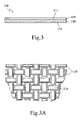
- FIG. 3 shows a schematic diagram of a further embodiment of the wound dressing of the present invention, wherein the wound dressing is gauze.
- FIG. 4 shows a schematic diagram of another further embodiment of the wound dressing of the present invention, wherein the wound dressing is a band-aid.
- FIG. 5 shows a cross-section view along line 5 - 5 in FIG. 4 .
- the wound dressing of the present invention comprises a flexible base layer and an antimicrobial material, wherein the flexible base layer comprises a first surface and a second surface and the antimicrobial material is applied on at least one portion of said first surface and contains an activated carbon-carried noble metal.
- the flexible base layer contained in the wound dressing of the present invention can be porous or drug-impermeable. If a gauze or band-aid is desired, the flexible base is suitably composed of a porous material, preferably of a non-adhesive material. If a patch is desired, it is suitable to adopt a drug-impermeable base in the present invention. Materials that are conventionally used for providing a base for a wound dressing and meet the above porous or drug-impermeable requirement can be used in the present invention.
- the porous base can be prepared from a woven fabric or non-woven fabric, preferably non-woven fabric, composed of one or more the following materials: natural fiber, polyolefin fiber, polyester fiber, polyurethane fiber, polyamide fiber, polycellulose fiber, and cotton fiber.
- Polymers suitable for providing a drug-impermeable base comprise polyvinyl chloride, polyvinyl dichloride, polyolefin (e.g., ethylene vinylacetate copolymer, polyethylene, and polypropylene), polyurea, and polyester (e.g., polyethylene terephthlate).
- the drug-impermeable base can be a single polymer layer or film, or a laminate composed of multiple polymer layers.
- the noble metal-carrying activated carbon contained in the antimicrobial material of the wound dressing of the present invention is selected from the group consisting of an activated carbon powder, an activated carbon particle, an activated carbon fiber, and a combination thereof, and an activated carbon fiber is preferred.
- the noble metal is selected from the group consisting of silver, gold, palladium, platinum, copper, zinc, and a combination thereof, and silver is preferred.
- any means known prior to the filing of the subject application such as thermocracking, electroplating, electroless plating, or vacuum plating, can be used to carry the noble metal on the activated carbon powder, activated carbon particle, or activated carbon fiber.
- the noble metal can be carried on activated carbon in any known forms.
- the noble metal particulate carried on activated carbon is of a size of nanometer, wherein the maximum grain size of the particulate is about 100 nm, preferably no more than 50 nm, and most preferably no more than 25 nm.
- a process which can be used for preparing a silver-carrying activated carbon fiber useful in the present invention comprises the following steps:
- An activated carbon fiber is immersed in a solution of silver nitrate for 1 to 720 minutes to reduce the silver on the surface of the activated carbon fiber, followed by a drying step to remove the water phase.
- the pH of the silver nitrate solution is maintained between the range of 3 and 8.
- the drying step is conducted at a temperature ranges from 25° C. to 150° C.
- the silver-containing activated carbon fiber is placed in a high temperature furnace, with a controlled temperature between 120° C. and 450° C. for 5 to 120 minutes, to break the silver on the surface of the activated carbon fiber into ultra fine metal particles.
- a controlled temperature between 120° C. and 450° C. for 5 to 120 minutes, to break the silver on the surface of the activated carbon fiber into ultra fine metal particles.
- the high-temperature thermocracked silver-containing activated carbon fiber is washed with water for 1 minute to 600 hours to remove the excess silver on the surface of the activated carbon fiber. This step is followed by baking the washed, activated carbon fiber to produce a silver-carrying activated carbon fiber.
- the silver-carrying activated carbon fiber prepared according to the above process has a BET specific surface of above 400 m/g, carbon content of above 50 wt %, silver content of above 0.001 wt %, and a density of above 1.8 g/m 3 .
- a fiber selected from the group consisting of polypropylene nitrile fiber, cellulose fiber, bitumen fiber, phenolic fiber, and a combination thereof can be used in the above process to prepare an antimicrobial noble metal-carrying activated carbon fiber which has the above properties.
- the noble metal-carrying activated carbon fiber for use in the wound dressing of the present invention can be in the form of fiber, cloth, carpet, band, or yarn.
- the noble metal-carrying activated carbon fiber is produced as a noble metal-carrying activated carbon fiber cloth, it can be directly applied to cover a wound to prevent the wound from the infection of microbes.
- the cloth can be fixed by any approaches well known in the art.
- a bandage can be used to fix the noble metal-carrying activated carbon fiber cloth to cover the wound and prevent it from the microbial infection.
- a therapeutically active component can be coated on at least one portion of a surface of the cloth.
- the therapeutically active component is selected from the group consisting of acrisorcin, haloprogin, iodochlorhydroxyquin, tolnaftate, triacetin, centella asiatica, econazole nitrate, mafenide, mupirocin, povidone iodine, and a mixture thereof.
- the antimicrobial material can be continuously or discontinuously coated on at least one portion of the first surface of the base.
- the antimicrobial material further comprises an adhesive component to enhance its bond with the base. Therefore, if the antimicrobial material will come into contact with the wound or the surrounding skin, an adhesive that does not stimulate the skin, preferably a pressure sensitive adhesive, is more suitable.
- a noble metal-carrying activated carbon fiber is used as the antimicrobial material, the activated carbon fiber can be incorporated into the base fiber to provide a wound dressing of the present invention.
- the activated carbon fiber is incorporated by a co-weaving manner to provide a porous base in a form of woven fabric.
- the antimicrobial material can be applied upon at least one portion of the first surface of the base as a fabric layer.
- the activated carbon fiber fabric and the base can be combined by way of such as ultrasonic welding to laminate the antimicrobial material fabric layer and the base, or utilizing an additional adhesive layer to bind the two layers.
- the antimicrobial material can be directly applied on at least one portion of the first surface of the base as a single material layer.
- the antimicrobial material containing said activated carbon fiber can be applied on at least one portion of the first surface of the base as a fabric layer.
- the fabric layer can be laminated to the base layer by utilizing methods such as ultrasonic welding.
- the antimicrobial material fabric layer is composed of noble metal-carrying activated carbon fiber and natural or synthetic fiber, or is an activated carbon fiber fabric.
- an additional adhesive layer can be used on the first surface of the base to bind the antimicrobial material layer and the first surface.
- the antimicrobial material layer can directly contain an adhesive. In this case, if the antimicrobial material layer will come into contact with the wound or the surrounding skin, an adhesive that does not stimulate the skin, preferably a pressure sensitive adhesive, is more suitable.
- Adhesives that are known to be commonly applied in wound dressings can be utilized in the present invention. It is preferred to use a pressure sensitive adhesive, e.g., those disclosed in U.S. Pat. Nos. 4,675,009, 4,696,854, 5,536,263, 5,741,510, 5,972,377, and 6,495,158 B1. The above patents are incorporated hereinto for reference.
- the pressure sensitive adhesives useful in the present invention include, but not limited to, the following pressure sensitive adhesives for use in a percutaneous patch: polyacrylate, siloxane, or polyisobutadiene.
- the wound dressing of the present invention can optionally comprise other therapeutically active components to provide additional therapeutic benefits.
- the therapeutically active component can either be directly incorporated into the antimicrobial material, or exist individually, for example, in a separate layer. If the therapeutically active component and the antimicrobial material individually exist in separate drug layers, the antimicrobial material may be placed between the base layer and the drug layer as a single layer. As mentioned above, the antimicrobial material can also be applied on the porous base as a coating.
- the drug layer can further comprise a pressure sensitive adhesive component suitable for percutaneous patch. Alternatively, the antimicrobial material layer can be inserted in between two drug layers (i.e., base layer, drug layer, antimicrobial material layer, and drug layer in order).
- the therapeutically active components and pressure sensitive adhesive components contained in the drug layers can be the same or different.
- the therapeutically active component useful in the wound dressing of the present invention comprises, but is not limited to, an antifungal agent such as erythromycin, tetracycline, clindamycin, cephalosporin, acrisorcin, haloprogin, iodochlorhydroxyquin, tolnaftate, and triacetin, as well as a drug component for trauma, burn, and scald such as centella asiatica, econazole nitrate, mafenide, mupirocin, and povidone iodine.
- an antifungal agent such as erythromycin, tetracycline, clindamycin, cephalosporin, acrisorcin, haloprogin, iodochlorhydroxyquin, tolnaftate, and triacetin
- scald such as centella asiatica, econazole nitrate, mafenide, mupirocin, and povidone i
- the wound dressing of the present invention can further comprise a protective layer on the exterior surface of the material layer which contains a pressure sensitive adhesive (the material layer can be a drug layer or an antimicrobial material layer) to protect the material.
- the protective layer can be a single material layer or two material layers which partially overlap each other. Any known protective layers useful in wound dressings can be used in the present invention.
- a film consisted of one or more the following materials can be used as the protective layer: polyurethane, nylon, polyamide, polycellulose, polyvinyl chloride, polyvinyl dichloride, polyolefin (e.g., ethylene vinylacetate copolymer, polyethylene, and polypropylene), polyurea, and polyester (e.g., polyethylene terephthlate).
- polyurethane nylon, polyamide, polycellulose, polyvinyl chloride, polyvinyl dichloride, polyolefin (e.g., ethylene vinylacetate copolymer, polyethylene, and polypropylene), polyurea, and polyester (e.g., polyethylene terephthlate).
- FIG. 1 shows a side view of an embodiment of the wound dressing of the present invention, wherein the wound dressing is a patch ( 1 ) for healing a wound.
- the patch ( 1 ) contains a base layer ( 10 ) having a first surface ( 11 ) and a second surface( 12 ), an antimicrobial layer ( 20 ) on said first surface, and a protective layer ( 40 ) on said antimicrobial layer ( 20 ).
- the antimicrobial layer ( 20 ) comprises a pressure sensitive adhesive (not depicted) and a silver-carrying activated carbon ( 30 ), and, optionally, a therapeutically active component (not depicted) for healing trauma, burn, or scald wounds.
- the activated carbon can be an activated carbon powder, an activated carbon particle, an activated carbon fiber, or a combination thereof.
- FIG. 2 shows a side view of another embodiment of the wound dressing of the present invention.
- the schematic patch ( 1 ) contains a base layer ( 10 ) having a first surface ( 11 ) and a second surface ( 12 ), an antimicrobial layer ( 20 ) on said first surface ( 11 ), a drug layer ( 50 ) coated on said antimicrobial layer ( 20 ), and a protective layer ( 40 ) on said drug layer ( 50 ).
- the drug layer ( 50 ) contains a therapeutically active component (not depicted) for healing burn and scald wounds and a pressure sensitive adhesive (not depicted).
- the antimicrobial layer ( 20 ) is composed of a silver-carrying activated carbon fiber fabric.
- the protective layer ( 40 ) is torn from said drug layer ( 50 ) and then the patch ( 1 ) is stuck on to the wound or injured part of the body with the side containing the drug layer ( 50 ).
- another drug layer is placed between the base layer ( 10 ) and the antimicrobial layer ( 20 ).
- FIG. 3 shows a side view of another embodiment of the wound dressing of the present invention, wherein the wound dressing is a gauze ( 100 ).
- FIG. 3A is a partially enlarged front view of the gauze ( 100 ).
- the gauze ( 100 ) contains a fiber fabric base layer ( 110 ) that has a first surface ( 111 ), a second surface ( 112 ) and an antimicrobial coating ( 120 ) applied on at least one portion of said first surface ( 111 ).
- the antimicrobial coating ( 120 ) contains a silver-carrying activated carbon (not depicted) and a pressure sensitive adhesive (not depicted).
- FIG. 4 shows a schematic diagram of another embodiment of the wound dressing of the present invention, wherein the wound dressing is a band-aid ( 200 ).
- FIG. 5 shows a cross-section view along line 5 - 5 of FIG. 4 .
- the band-aid ( 200 ) contains a base layer ( 210 ) that has a first surface ( 211 ), a second surface ( 212 ), a pressure sensitive adhesive ( 220 ) coated on said first surface( 211 ), an antimicrobial fabric layer ( 230 ) preferably positioned on the center of the base layer ( 21 ), and two protective layers ( 240 ) which partially overlap each other.
- the antimicrobial fabric layer ( 230 ) is a gauze layer comprising a silver-carrying activated carbon fiber.
- a drug layer (not depicted) containing another drug component for healing trauma, burn, or scald wounds can be applied on the gauze layer to provide additional therapeutic effects.
- the activated carbon takes the initiative to absorb and aggregate the microbes close to the wound dressing on its surface.
- the activated carbon-carried noble metal proceeds to destroy the absorbed/aggregated microbes to provide an aseptic condition for the wound, promote the wound occlusion, and reduce the scar.
- the activated carbon absorbs moisture (normally 5 to 20 wt %), the moisture can activate the noble metal carried thereon. Therefore, it is unnecessary to further add moisture or adopt other manners to activate the noble metal. By utilizing a simpler manner, the present invention attains the desired antimicrobial benefit.
- the present invention further provides an antimicrobial composition for topical use on skin comprising an activated carbon-carried noble metal.
- the activated carbon is selected from the group consisting of an activated carbon powder, an activated carbon particle, an activated carbon fiber, or a combination thereof.
- the noble metal is selected from the group consisting of silver, gold, palladium, platinum, copper, zinc, or a combination thereof.
- the activated carbon-carried noble metal is activated carbon fiber-carried silver.
- the amount of the activated carbon-carried noble metal in view of the weight of the noble metal per se, is typically about 0.001 to about 30 wt %, preferably about 0.01 to 10 wt %. It is preferred that the noble metal is carried on an activated carbon fiber in the particulate form. To more effectively release the noble metal ions that have the antimicrobial activity, it is more preferred that the activated carbon fiber-carried particulate noble metal is in the nanometer particulate form, and has a maximum size of about 100 nm. More preferably, the maximum size is no more than 50 nm, and most preferably no more than 25 nm.
- composition of the present invention further contains a therapeutically active component in a therapeutically effective amount.
- the therapeutically active components comprise, but not limited to, an antimicrobial agent, an antifungal agent, or other therapeutic components for trauma, burn, or scald wounds.
- composition of the present invention can optionally contain erythromycin, tetracycline, clindamycion, cephalosporin, triclosan, phenoxy isopropanol, chlorhexidine gludonate, povidone iodine, acrisorcin, haloprogin, iodochlorhydroxyquin, tolnaftate, triacetin, centella asiatica, econazole nitrate, mafenide, mupirocin, or povidone iodine.
- composition of the present invention can further contain a non-toxic, pharmaceutically and skin acceptable carrier, diluent, and excipient suitable for topical use.
- a non-toxic, pharmaceutically and skin acceptable carrier diluent, and excipient suitable for topical use.
- the carrier, diluent, and excipient, and the standard doses of known pharmacological agents can be found in U.S. Pat. No. 6,692,773 B2. The contents are incorporated hereinto for reference.
- the composition for topical use of the present invention can be in various dosage forms, such as a gel, a paste, an ointment, a cream, an emulsion, and a suspension.
- the noble metal-carrying activated carbon can be mixed with the pharmaceutically acceptable carrier, diluent, or excipient and other optional active components under aseptic conditions to provide the desired dosage form.
- a suitable thickener or gelling agent is added to an aqueous or oil base to formulate an ointment or cream. Water can be used as the aqueous base.
- aluminum stearate and hydrogenated lanolin can be used as a thickener.
- Starch tragacanth, cellulose derivative, polyethylene glycol, silicones, bentonite, silicic acid, talc, or a mixture thereof can be used as the excipient to provide the composition of the present invention in a dosage form of a paste, an ointment, a cream, or a gel.
- the noble metal that has the antimicrobial characteristic
- the present invention is used in the present invention in the form of an activated carbon-carried noble metal. Because the activated carbon contains moisture, the present invention can activate the noble metal to provide the antimicrobial benefit without adding moisture. Moreover, since the activated carbon can aggregate microbes, the present invention improves the “passive” benefit attained by the prior art, in which the noble metal merely kills the microbes upon contact. The present invention takes an active manner to destroy the microbes. Therefore, the present invention is suitable in situations known in the prior art where the noble metals are topically used on skins to destroy microbes and inhibit their growth, so as to provide a superior antimicrobial benefit.
Landscapes
- Health & Medical Sciences (AREA)
- Chemical & Material Sciences (AREA)
- Life Sciences & Earth Sciences (AREA)
- Epidemiology (AREA)
- Animal Behavior & Ethology (AREA)
- General Health & Medical Sciences (AREA)
- Public Health (AREA)
- Veterinary Medicine (AREA)
- Medicinal Chemistry (AREA)
- Pharmacology & Pharmacy (AREA)
- Inorganic Chemistry (AREA)
- Engineering & Computer Science (AREA)
- Natural Medicines & Medicinal Plants (AREA)
- Hematology (AREA)
- Materials Engineering (AREA)
- Alternative & Traditional Medicine (AREA)
- Biotechnology (AREA)
- Botany (AREA)
- Medical Informatics (AREA)
- Microbiology (AREA)
- Mycology (AREA)
- Materials For Medical Uses (AREA)
- Pharmaceuticals Containing Other Organic And Inorganic Compounds (AREA)
- Prostheses (AREA)
Abstract
The present invention relates to a wound dressing comprising a flexible base layer and an antimicrobial material, wherein the antimicrobial material comprises an activated carbon-carried noble metal, the activated carbon is selected from the group consisting of an activated carbon powder, an activated carbon particle, an activated carbon fiber, and a combination thereof, and the noble metal is selected from the group consisting of silver, gold, palladium, platinum, copper, zinc, and a combination thereof. The invention also relates to an antimicrobial composition for topical use on skin, in which the composition comprises the aforementioned activated carbon-carried noble metal.
Description
The present invention relates to the use of an activated carbon-carried noble metal in an antimicrobial composition and an antimicrobial wound dressing. In particular, the present invention actively aggregates and destroys the microbes close to said composition and wound dressing to prevent microbial infection.
In the past, antimicrobial drugs have been directly applied onto the injured part of the body. Recently, depending on the type of wound, medical wound dressings, such as medical tape, patch, gelatin film bandage and band-aids, have been adopted to cover the wound, thereby, isolating the wound from improper contact with the external atmosphere, protecting the wound, preventing infection, and reducing pain.
It is known that the use of noble metals such as silver, gold, palladium, platinum, copper, and zinc in dressings, have effectively killed microbes. The use of such noble metals in dressings has been disclosed in many references. For example, Robert Edward Burrell et al. (U.S. Pat. No. 6,692,773 B2) disclose the use of a noble metal such as silver, gold, palladium, or platinum, or an alloy or a compound thereof, in a nanocrystalline form with a grain size of less than 100 nm, in coating a fabric to provide a dressing having the antiproliferative effect. Widemire (U.S. Pat. No. 5,782,788) discloses the fixation of a silver foil layer on a gauze pad to inhibit the growth of bacteria, virus, and fungus. Fabo (U.S. Pat. No. 5,340,363) discloses a dressing comprising an outer absorbent layer and an inner porous hydrophobic layer knitted of elastic threads and encapsulated by a soft hydrophobic silicone or polyurethane gel, wherein the gel can be used as a carrier for an antibacterial agent (e.g., zinc), a pain-relieving substance, and an agent that stimulates wound repair.
Klippel et al. (U.S. Pat. No. 3,830,908) disclose the use of micronized allantoin as a carrier for a bactericidal or bacteriostatic ingredient (such as silver citro allantoinate). The composition is dispersed on the surface of a plastic air splint or other bandaging product to provide antibacterial action, depending on the molecular dissociation. McKnight et al. (U.S. Pat. No. 3,800,792) disclose a surgical dressing comprising a layer of tanned and reconstituted collagen foam film, which is laminated to a thick continuous layer of an inert polymer. The collagen layer contains a finely-divided silver metal added by soaking the collagen film in Tollen's reagent. Stowasser (U.S. Pat. No. 2,934,066) discloses a dressing of absorbent metal-coated fibers, such as a carding fleece coated with aluminum and backed by compressed cellulose, and polyamide fibers coated with vacuum-deposited silver.
Given the prior technology mentioned above, it is clear that antimicrobial noble metals are widely used in therapy, especially in dressing. However, the use of these noble metals still focuses on the noble metal alone and at most, the noble metal in a form of an alloy or compound. Although such use can provide an antimicrobial effect, the microbes are only destroyed upon “coincidentally” contact with the noble metal. Because of this, the noble metals merely provide a “passive” antimicrobial effect.
Moreover, as known by persons having ordinary skill in the art, the above-mentioned noble metals can only fight microbes in the presence of moisture. Therefore, for practical use, the medium must always be moist. If necessary, water is added to provide a moist environment. For example, according to U.S. Pat. No. 6,692,773 B2, when a nanocrystalline noble metal is coated onto a dressing for topical use on skin, the dressing must maintain a moist condition for the noble metal to exhibit the desired efficacy (see column 6,line 64 to column 7,line 17). Consequently, U.S. Pat. No. 6,692,773 B2 further discloses the preference for an absorbent layer in the dressing to hold in moisture for activating the noble metal (see said patent, column 5,lines 33 to 37). Such need of moisture for activating noble metals can also can be found in other references, such as the content published via the website, http://www.burnsurgery.org/Modules/silver/images/section7b/Mid_partial_thickness3copy.ipg.
The present invention relates to an improvement of the therapeutic application of a noble metal that has an antimicrobial effect. The present invention actively aggregates and then destroys microbes so as to effectively reduce, and even prevent, the microbial infection.
The present invention aims to provide a method for preventing a wound from a microbial infection comprising covering the wound with a noble metal-carrying activated carbon fiber cloth. The noble metal is selected from the group consisting of silver, gold, palladium, platinum, copper, zinc, and a combination thereof.
The present invention also aims to provide a wound dressing comprising a flexible base layer and an antimicrobial material, wherein the antimicrobial material comprises an activated carbon-carried noble metal, the activated carbon is selected from the group consisting of an activated carbon powder, an activated carbon particle, an activated carbon fiber, and a combination thereof, and the noble metal is selected from the group consisting of silver, gold, palladium, platinum, copper, zinc, and a combination thereof. In addition, this dressing can optionally comprise a pressure sensitive adhesive component and other therapeutically active components. Those components can be either incorporated into the antimicrobial material or exist individually in a separate layer.
The present invention further aims to provide an antimicrobial composition for topical use on skin comprising an activated carbon-carried noble metal, wherein the activated carbon is selected from the group consisting of an activated carbon powder, an activated carbon particle, an activated carbon fiber, and a combination thereof, and the noble metal is selected from the group consisting of silver, gold, palladium, platinum, copper, zinc, and a combination thereof. Said composition can optionally comprise other therapeutically active components.
It is believed that the activated carbon can aggregate and absorb microbes on its surface due to the electrostatic interactions or van der Waal forces between the microbes and the surface of the activated carbon, as well as the bioaffinity of the activated carbon. Consequently, as compared with the passive effect of the prior art in which microbes are destroyed and killed when “coincidentally” in contact with the noble metal, the present invention adopts an active manner in aggregating and destroying the microbes around the noble metal, providing a superior antimicrobial effect. Moreover, the composition and wound dressing of the present invention activate the used noble metal without the need for adding moisture or utilizing other approaches. As compared with the prior art that requires moisture and/or a moisture-holding component such as an absorbent layer to activate the antimicrobial noble metal, the present invention provides a simpler way to attain the desired antimicrobial benefit.
| 1 | |
| 10 | |
| 11, 12 | first surface and second surface of the |
| 20 | |
| 30 | noble metal-carrying activated |
| 40 | |
| 50 | |
| 100 | |
| 110 | |
| 111, 112 | first surface and second surface of the |
| 120 | |
| 200 | band- |
| 210 | |
| 211, 212 | first surface and second surface of the |
| 220 | pressure sensitive |
| 230 | |
| 240 | protective layer |
The wound dressing of the present invention comprises a flexible base layer and an antimicrobial material, wherein the flexible base layer comprises a first surface and a second surface and the antimicrobial material is applied on at least one portion of said first surface and contains an activated carbon-carried noble metal.
The flexible base layer contained in the wound dressing of the present invention can be porous or drug-impermeable. If a gauze or band-aid is desired, the flexible base is suitably composed of a porous material, preferably of a non-adhesive material. If a patch is desired, it is suitable to adopt a drug-impermeable base in the present invention. Materials that are conventionally used for providing a base for a wound dressing and meet the above porous or drug-impermeable requirement can be used in the present invention. For example, the porous base can be prepared from a woven fabric or non-woven fabric, preferably non-woven fabric, composed of one or more the following materials: natural fiber, polyolefin fiber, polyester fiber, polyurethane fiber, polyamide fiber, polycellulose fiber, and cotton fiber. Polymers suitable for providing a drug-impermeable base comprise polyvinyl chloride, polyvinyl dichloride, polyolefin (e.g., ethylene vinylacetate copolymer, polyethylene, and polypropylene), polyurea, and polyester (e.g., polyethylene terephthlate). The drug-impermeable base can be a single polymer layer or film, or a laminate composed of multiple polymer layers.
The noble metal-carrying activated carbon contained in the antimicrobial material of the wound dressing of the present invention is selected from the group consisting of an activated carbon powder, an activated carbon particle, an activated carbon fiber, and a combination thereof, and an activated carbon fiber is preferred. The noble metal is selected from the group consisting of silver, gold, palladium, platinum, copper, zinc, and a combination thereof, and silver is preferred.
Any means known prior to the filing of the subject application, such as thermocracking, electroplating, electroless plating, or vacuum plating, can be used to carry the noble metal on the activated carbon powder, activated carbon particle, or activated carbon fiber. Moreover, the noble metal can be carried on activated carbon in any known forms. To effectively release the noble metal ion that has antimicrobial activity, it is preferred that the noble metal particulate carried on activated carbon is of a size of nanometer, wherein the maximum grain size of the particulate is about 100 nm, preferably no more than 50 nm, and most preferably no more than 25 nm.
For example, a process which can be used for preparing a silver-carrying activated carbon fiber useful in the present invention comprises the following steps:
a. Immersing in a Solution of Silver Nitrate
An activated carbon fiber is immersed in a solution of silver nitrate for 1 to 720 minutes to reduce the silver on the surface of the activated carbon fiber, followed by a drying step to remove the water phase. The pH of the silver nitrate solution is maintained between the range of 3 and 8. The drying step is conducted at a temperature ranges from 25° C. to 150° C.
b. High Temperature Thermocracking
The silver-containing activated carbon fiber is placed in a high temperature furnace, with a controlled temperature between 120° C. and 450° C. for 5 to 120 minutes, to break the silver on the surface of the activated carbon fiber into ultra fine metal particles. To avoid the oxidization or podzolization of the activated carbon fiber, it is preferred to conduct the high temperature thermocracking in vacuum or in the presence of a protective air such as nitrogen.
c. Washing
The high-temperature thermocracked silver-containing activated carbon fiber is washed with water for 1 minute to 600 hours to remove the excess silver on the surface of the activated carbon fiber. This step is followed by baking the washed, activated carbon fiber to produce a silver-carrying activated carbon fiber.
The silver-carrying activated carbon fiber prepared according to the above process has a BET specific surface of above 400 m/g, carbon content of above 50 wt %, silver content of above 0.001 wt %, and a density of above 1.8 g/m3. A fiber selected from the group consisting of polypropylene nitrile fiber, cellulose fiber, bitumen fiber, phenolic fiber, and a combination thereof can be used in the above process to prepare an antimicrobial noble metal-carrying activated carbon fiber which has the above properties. The noble metal-carrying activated carbon fiber for use in the wound dressing of the present invention can be in the form of fiber, cloth, carpet, band, or yarn.
If the noble metal-carrying activated carbon fiber is produced as a noble metal-carrying activated carbon fiber cloth, it can be directly applied to cover a wound to prevent the wound from the infection of microbes. In this case, the cloth can be fixed by any approaches well known in the art. For instance, a bandage can be used to fix the noble metal-carrying activated carbon fiber cloth to cover the wound and prevent it from the microbial infection. Optionally, a therapeutically active component can be coated on at least one portion of a surface of the cloth. The therapeutically active component is selected from the group consisting of acrisorcin, haloprogin, iodochlorhydroxyquin, tolnaftate, triacetin, centella asiatica, econazole nitrate, mafenide, mupirocin, povidone iodine, and a mixture thereof.
The relevant details of the above preparation process can be found in the co-pending U.S. Ser. No. 10/866,655,which was also assigned to this assignee and corresponding to Taiwan (ROC) Patent Publication No. 0059115.Moreover, the preparation of a silver-carrying activated carbon fiber can be found in JP 10-99678;T. A. Oya, T. Wakahara, and S. Yoshida, Carbon, 31, 1243-1247, 1993;Fu, R., H. Zeng, and Y. Lu, “Studies on the Mechanisms of the Reaction of Activated Carbon Fibers with Oxidants,” Carbon, 32(4), 593-598(1994); and Wang, Y. L., Y. Z. Wan, X. H. Dong, G. X. Cheng, H. M. Tao, and T. Y Wen, “Preparation and Characterization of Antibacterial Viscose-based Activated Carbon Fiber Supporting Silver,” Carbon, 36(11), 1567-1571(1998). The above documents are incorporated hereinto for reference.
If the base layer of the wound dressing is a porous base, the antimicrobial material can be continuously or discontinuously coated on at least one portion of the first surface of the base. Optionally, the antimicrobial material further comprises an adhesive component to enhance its bond with the base. Therefore, if the antimicrobial material will come into contact with the wound or the surrounding skin, an adhesive that does not stimulate the skin, preferably a pressure sensitive adhesive, is more suitable. If a noble metal-carrying activated carbon fiber is used as the antimicrobial material, the activated carbon fiber can be incorporated into the base fiber to provide a wound dressing of the present invention. For example, the activated carbon fiber is incorporated by a co-weaving manner to provide a porous base in a form of woven fabric. Moreover, if the noble metal-carrying activated carbon contained in the antimicrobial material is an activated carbon fiber fabric, such as cloth, the antimicrobial material can be applied upon at least one portion of the first surface of the base as a fabric layer. The activated carbon fiber fabric and the base can be combined by way of such as ultrasonic welding to laminate the antimicrobial material fabric layer and the base, or utilizing an additional adhesive layer to bind the two layers. As a result, a wound dressing in the form of a band-aid is provided.
If the base layer of the wound dressing is drug-impermeable, the antimicrobial material can be directly applied on at least one portion of the first surface of the base as a single material layer. In this respect, if the noble metal-carrying activated carbon contained in the antimicrobial material is an activated carbon fiber, the antimicrobial material containing said activated carbon fiber can be applied on at least one portion of the first surface of the base as a fabric layer. The fabric layer can be laminated to the base layer by utilizing methods such as ultrasonic welding. In this case, the antimicrobial material fabric layer is composed of noble metal-carrying activated carbon fiber and natural or synthetic fiber, or is an activated carbon fiber fabric. Optionally, an additional adhesive layer can be used on the first surface of the base to bind the antimicrobial material layer and the first surface. Alternatively, the antimicrobial material layer can directly contain an adhesive. In this case, if the antimicrobial material layer will come into contact with the wound or the surrounding skin, an adhesive that does not stimulate the skin, preferably a pressure sensitive adhesive, is more suitable.
Adhesives that are known to be commonly applied in wound dressings can be utilized in the present invention. It is preferred to use a pressure sensitive adhesive, e.g., those disclosed in U.S. Pat. Nos. 4,675,009, 4,696,854, 5,536,263, 5,741,510, 5,972,377, and 6,495,158 B1.The above patents are incorporated hereinto for reference. For example, the pressure sensitive adhesives useful in the present invention include, but not limited to, the following pressure sensitive adhesives for use in a percutaneous patch: polyacrylate, siloxane, or polyisobutadiene.
The wound dressing of the present invention can optionally comprise other therapeutically active components to provide additional therapeutic benefits. As indicated above, the therapeutically active component can either be directly incorporated into the antimicrobial material, or exist individually, for example, in a separate layer. If the therapeutically active component and the antimicrobial material individually exist in separate drug layers, the antimicrobial material may be placed between the base layer and the drug layer as a single layer. As mentioned above, the antimicrobial material can also be applied on the porous base as a coating. The drug layer can further comprise a pressure sensitive adhesive component suitable for percutaneous patch. Alternatively, the antimicrobial material layer can be inserted in between two drug layers (i.e., base layer, drug layer, antimicrobial material layer, and drug layer in order). The therapeutically active components and pressure sensitive adhesive components contained in the drug layers can be the same or different.
Any therapeutically active component for healing skin wounds can be applied in the wound dressing of the present invention. For example, the therapeutically active component useful in the wound dressing of the present invention comprises, but is not limited to, an antifungal agent such as erythromycin, tetracycline, clindamycin, cephalosporin, acrisorcin, haloprogin, iodochlorhydroxyquin, tolnaftate, and triacetin, as well as a drug component for trauma, burn, and scald such as centella asiatica, econazole nitrate, mafenide, mupirocin, and povidone iodine.
Optionally, the wound dressing of the present invention can further comprise a protective layer on the exterior surface of the material layer which contains a pressure sensitive adhesive (the material layer can be a drug layer or an antimicrobial material layer) to protect the material. The protective layer can be a single material layer or two material layers which partially overlap each other. Any known protective layers useful in wound dressings can be used in the present invention. For example, a film consisted of one or more the following materials can be used as the protective layer: polyurethane, nylon, polyamide, polycellulose, polyvinyl chloride, polyvinyl dichloride, polyolefin (e.g., ethylene vinylacetate copolymer, polyethylene, and polypropylene), polyurea, and polyester (e.g., polyethylene terephthlate).
The known technology used in the wound dressing of the present invention is briefly mentioned to facilitate the explication of the present invention. The technical features and contents of the present invention will be further explained according to the drawings. Nonetheless, the relevant drawings are not drawn according to the actual proportion, since they function to express the features of the present invention only.
In the wound dressing of the present invention where the noble metal is carried on the activated carbon, the activated carbon takes the initiative to absorb and aggregate the microbes close to the wound dressing on its surface. The activated carbon-carried noble metal proceeds to destroy the absorbed/aggregated microbes to provide an aseptic condition for the wound, promote the wound occlusion, and reduce the scar. Moreover, because the activated carbon absorbs moisture (normally 5 to 20 wt %), the moisture can activate the noble metal carried thereon. Therefore, it is unnecessary to further add moisture or adopt other manners to activate the noble metal. By utilizing a simpler manner, the present invention attains the desired antimicrobial benefit.
The present invention further provides an antimicrobial composition for topical use on skin comprising an activated carbon-carried noble metal. The activated carbon is selected from the group consisting of an activated carbon powder, an activated carbon particle, an activated carbon fiber, or a combination thereof. The noble metal is selected from the group consisting of silver, gold, palladium, platinum, copper, zinc, or a combination thereof. Preferably, the activated carbon-carried noble metal is activated carbon fiber-carried silver.
In the composition of the present invention, the amount of the activated carbon-carried noble metal, in view of the weight of the noble metal per se, is typically about 0.001 to about 30 wt %, preferably about 0.01 to 10 wt %. It is preferred that the noble metal is carried on an activated carbon fiber in the particulate form. To more effectively release the noble metal ions that have the antimicrobial activity, it is more preferred that the activated carbon fiber-carried particulate noble metal is in the nanometer particulate form, and has a maximum size of about 100 nm. More preferably, the maximum size is no more than 50 nm, and most preferably no more than 25 nm.
Optionally, the composition of the present invention further contains a therapeutically active component in a therapeutically effective amount. For example, the therapeutically active components comprise, but not limited to, an antimicrobial agent, an antifungal agent, or other therapeutic components for trauma, burn, or scald wounds. For example, the composition of the present invention can optionally contain erythromycin, tetracycline, clindamycion, cephalosporin, triclosan, phenoxy isopropanol, chlorhexidine gludonate, povidone iodine, acrisorcin, haloprogin, iodochlorhydroxyquin, tolnaftate, triacetin, centella asiatica, econazole nitrate, mafenide, mupirocin, or povidone iodine.
In addition to the active components, the composition of the present invention can further contain a non-toxic, pharmaceutically and skin acceptable carrier, diluent, and excipient suitable for topical use. The carrier, diluent, and excipient, and the standard doses of known pharmacological agents can be found in U.S. Pat. No. 6,692,773 B2. The contents are incorporated hereinto for reference.
The composition for topical use of the present invention can be in various dosage forms, such as a gel, a paste, an ointment, a cream, an emulsion, and a suspension. The noble metal-carrying activated carbon can be mixed with the pharmaceutically acceptable carrier, diluent, or excipient and other optional active components under aseptic conditions to provide the desired dosage form. For example, a suitable thickener or gelling agent is added to an aqueous or oil base to formulate an ointment or cream. Water can be used as the aqueous base. Depending upon the inherent properties of the base, aluminum stearate and hydrogenated lanolin can be used as a thickener. Starch, tragacanth, cellulose derivative, polyethylene glycol, silicones, bentonite, silicic acid, talc, or a mixture thereof can be used as the excipient to provide the composition of the present invention in a dosage form of a paste, an ointment, a cream, or a gel.
It should be noted that the major difference between the subject invention and the prior art lies in that the noble metal, that has the antimicrobial characteristic, is used in the present invention in the form of an activated carbon-carried noble metal. Because the activated carbon contains moisture, the present invention can activate the noble metal to provide the antimicrobial benefit without adding moisture. Moreover, since the activated carbon can aggregate microbes, the present invention improves the “passive” benefit attained by the prior art, in which the noble metal merely kills the microbes upon contact. The present invention takes an active manner to destroy the microbes. Therefore, the present invention is suitable in situations known in the prior art where the noble metals are topically used on skins to destroy microbes and inhibit their growth, so as to provide a superior antimicrobial benefit.
Although the present invention has been disclosed above, the disclosure does not limit the present invention. Persons having ordinary skill in the art can make any changes or modifications without departing from the spirit and scope of the present invention. Consequently, the scope of protection of the present invention is based on the claims attached.
Claims (10)
1. A wound dressing, comprising a flexible base layer having a first surface and a second surface and an antimicrobial material, wherein said antimicrobial material comprises an activated carbon-carried noble metal, said activated carbon is selected from the group consisting of an activated carbon powder, an activated carbon particle, an activated carbon fiber, and a combination thereof, and said noble metal is selected from the group consisting of silver, gold, palladium, platinum, copper, zinc, and a combination thereof.
2. The dressing according to claim 1 , wherein said activated carbon is a carbon active fiber and said noble metal is silver.
3. The dressing according to claim 2 , wherein said noble metal is in a form of particulate and has a maximum grain size of no more than 100 nm.
4. The dressing according to claim 1 , wherein said flexible base layer is porous and said antimicrobial material is continuously or discontinuously coated on at least one portion of said first surface.
5. The dressing according to claim 1 , wherein said antimicrobial material is a material layer or a fabric layer and covers on at least one portion of said first surface.
6. The dressing according to claim 5 , further comprising an adhesive layer, wherein said antimicrobial material is a fabric layer and said adhesive layer is placed between said antimicrobial material fabric layer and said first surface.
7. The dressing according to claim 1 , further comprising a therapeutically active component, wherein said therapeutically active component is selected from the group consisting of acrisorcin, haloprogin, iodochlorhydroxyquin, tolnaflate, triacetin, centella asiatica, econazole nitrate, mafenide, mupirocin, povidone iodine, and a mixture thereof.
8. The dressing according to claim 7 , wherein said therapeutically active component is incorporated into said antimicrobial material and said antimicrobial material further comprises a pressure sensitive adhesive component.
9. The dressing according to claim 7 , wherein said therapeutically active exists in a material layer and said antimicrobial material is placed between said material layer and said first surface.
10. The dressing according to claim 9 , wherein said material layer further comprises a first pressure sensitive adhesive component and/or said antimicrobial material further comprises a second pressure sensitive adhesive component, and the first pressure sensitive adhesive component and the second pressure sensitive adhesive component are the same or different.
Applications Claiming Priority (2)
| Application Number | Priority Date | Filing Date | Title |
|---|---|---|---|
| TW94141437 | 2005-11-25 | ||
| TW094141437 | 2005-11-25 |
Publications (2)
| Publication Number | Publication Date |
|---|---|
| US20070122461A1 US20070122461A1 (en) | 2007-05-31 |
| US7517536B2 true US7517536B2 (en) | 2009-04-14 |
Family
ID=38087825
Family Applications (1)
| Application Number | Title | Priority Date | Filing Date |
|---|---|---|---|
| US11/347,716 Active 2027-05-12 US7517536B2 (en) | 2005-11-25 | 2006-02-03 | Antimicrobial compositions and wound dressings |
Country Status (2)
| Country | Link |
|---|---|
| US (1) | US7517536B2 (en) |
| JP (1) | JP4944570B2 (en) |
Cited By (8)
| Publication number | Priority date | Publication date | Assignee | Title |
|---|---|---|---|---|
| US20070212381A1 (en) * | 2004-04-29 | 2007-09-13 | C.R. Bard, Inc. | Modulating agents for antimicrobial coatings |
| US20100028436A1 (en) * | 2006-06-05 | 2010-02-04 | Bactiguard Ab | Polymer matrix, uses thereof and a method of manufacturing the same |
| US20100324510A1 (en) * | 2007-06-27 | 2010-12-23 | Molnlycke Health Care Ab | device for treatment of wounds with reduced pressure |
| US20110165221A1 (en) * | 2010-01-06 | 2011-07-07 | The Curators Of The University Of Missouri | Wound care |
| RU2437707C1 (en) * | 2010-06-17 | 2011-12-27 | Учреждение Российской академии наук Институт химии твердого тела и механохимии Сибирского отделения РАН (ИХТТМ СО РАН) | Anti-virus filtration material |
| DE102011120487A1 (en) * | 2011-09-02 | 2013-03-07 | BLüCHER GMBH | Wound dressing, useful e.g. for topical wound care, comprises a wound-covering layer and a sorbent based on an activated carbon, which comprises a biocidal and/or biostatic, preferably antimicrobial activity and/or equipment |
| US10927230B2 (en) | 2018-01-26 | 2021-02-23 | City University Of Hong Kong | Method for preparing composite materials |
| US12521484B2 (en) | 2023-02-21 | 2026-01-13 | Osteal Therapeutics, Inc. | Irrigation system and methods of use |
Families Citing this family (22)
| Publication number | Priority date | Publication date | Assignee | Title |
|---|---|---|---|---|
| US8734421B2 (en) * | 2003-06-30 | 2014-05-27 | Johnson & Johnson Consumer Companies, Inc. | Methods of treating pores on the skin with electricity |
| US7480530B2 (en) * | 2003-06-30 | 2009-01-20 | Johnson & Johnson Consumer Companies, Inc. | Device for treatment of barrier membranes |
| TWI343360B (en) * | 2007-03-09 | 2011-06-11 | Univ Feng Chia | Method for manufacturing metal-carrying carbonaceous material |
| US8150525B2 (en) * | 2008-08-27 | 2012-04-03 | Johnson & Johnson Consumer Companies, Inc. | Treatment of hyperhydrosis |
| US20120089232A1 (en) | 2009-03-27 | 2012-04-12 | Jennifer Hagyoung Kang Choi | Medical devices with galvanic particulates |
| CA2780537A1 (en) | 2009-11-13 | 2011-05-19 | Johnson & Johnson Consumer Companies, Inc. | Galvanic skin treatment device |
| TWM413501U (en) * | 2011-05-12 | 2011-10-11 | Bio Medical Carbon Technology Co Ltd | Film capable of emitting far-infrared rays |
| CN103889379A (en) * | 2011-08-24 | 2014-06-25 | 卡尔冈碳素公司 | Wound Dressings Containing Activated Charcoal |
| DE202011108805U1 (en) | 2011-09-02 | 2012-09-03 | BLüCHER GMBH | wound dressing |
| WO2013074825A1 (en) * | 2011-11-15 | 2013-05-23 | Kci Licensing, Inc. | Medical dressings, systems, and methods with thermally- enhanced vapor transmission |
| US9393164B2 (en) | 2013-02-28 | 2016-07-19 | Kimberly-Clark Worldwide, Inc. | Aldehyde control in personal care products |
| US9861531B2 (en) * | 2013-06-18 | 2018-01-09 | Sanko Tekstil Isletmeleri Sanayi Ve Ticaret Anonim Sirketi | Multi-function emergency bandage |
| DE102013114575A1 (en) * | 2013-12-19 | 2015-06-25 | AMiSTec GmbH & Co. KG | A method of making an antimicrobial composite and antimicrobial composite |
| KR101575178B1 (en) * | 2014-06-10 | 2015-12-07 | (주)시지바이오 | Charcoal wound dressing and manufacturing method thereof |
| KR101698324B1 (en) * | 2015-05-22 | 2017-01-20 | 주식회사 퓨처바이오웍스 | Moist wound dressing band for electric stimulating |
| KR101787192B1 (en) | 2015-08-12 | 2017-10-18 | 주식회사 제네웰 | Antimicrbacterial dressing material and method for preparing thereof |
| CN105136938A (en) * | 2015-09-18 | 2015-12-09 | 南京大学 | Method for detecting total organic iodine in iodine ion water sample according to LC-MS technology |
| CN111803710B (en) * | 2016-12-28 | 2022-04-19 | 广州迈普再生医学科技股份有限公司 | Composite tissue repair patch prepared by tape casting process and preparation method thereof |
| WO2018148455A1 (en) * | 2017-02-08 | 2018-08-16 | HKL Medical, LLC | Intrasite administration and dosing methods and pharmaceuticals for use therein |
| EP3654944B1 (en) * | 2017-07-20 | 2025-11-26 | Nanotess Inc. | Formulation comprising nanostructured, biocompatible and biocatalytic material for the treatment of wounds and infections |
| CN108066807A (en) * | 2018-02-07 | 2018-05-25 | 苏州元禾医疗器械有限公司 | The preparation method of the absorption styptic dressing of high imbibition ability |
| KR102268976B1 (en) * | 2019-08-27 | 2021-06-25 | 주식회사 티앤엘 | Antibacterial Nonwoven Dressing |
Citations (8)
| Publication number | Priority date | Publication date | Assignee | Title |
|---|---|---|---|---|
| US2934066A (en) | 1957-05-11 | 1960-04-26 | Lohmann Kg | Metallized bandaging material especially for the treatment of wounds |
| US3800792A (en) | 1972-04-17 | 1974-04-02 | Johnson & Johnson | Laminated collagen film dressing |
| US3830908A (en) | 1971-07-23 | 1974-08-20 | H Margraf | Anti-microbial compositions utilizing allantoin compounds and complexes |
| US5340363A (en) | 1986-03-10 | 1994-08-23 | Molnlycke Ab | Wound dressing |
| JPH1099678A (en) | 1996-10-02 | 1998-04-21 | Mitsubishi Chem Corp | Method for producing silver composite activated carbon |
| US5782788A (en) | 1997-03-21 | 1998-07-21 | Widemire; Dewitt P. | Wound dressing |
| US6692773B2 (en) | 2000-07-27 | 2004-02-17 | Nucryst Pharmaceuticals Corp. | Treatment of hyperproliferative skin disorders and diseases |
| US20040259728A1 (en) | 2003-06-20 | 2004-12-23 | Tse-Hao Ko | Method of fabricating product of activated carbon supporting silver |
Family Cites Families (8)
| Publication number | Priority date | Publication date | Assignee | Title |
|---|---|---|---|---|
| JPH06313266A (en) * | 1993-04-26 | 1994-11-08 | Meiji Milk Prod Co Ltd | Antibacterial fiber and its production |
| JPH07206710A (en) * | 1994-01-21 | 1995-08-08 | Nitto Denko Corp | Tape preparation for transdermal administration |
| JPH10110257A (en) * | 1996-10-03 | 1998-04-28 | Nissin Electric Co Ltd | Medical coating |
| JPH1149672A (en) * | 1997-08-07 | 1999-02-23 | Sato Seiyaku Kk | Plaster for wound treatment |
| KR100321589B1 (en) * | 1999-04-15 | 2002-01-31 | 임창혁 | Active carbon electro-deposited with Ag-I system having sterilizing effect |
| JP2004059482A (en) * | 2002-07-29 | 2004-02-26 | Masahiro Sakanaka | Tissue regeneration promoter |
| JP2004210668A (en) * | 2002-12-27 | 2004-07-29 | Lion Corp | External pharmaceutical composition |
| EP1654114B1 (en) * | 2003-08-14 | 2020-05-13 | Milliken & Company | Silver-containing wound care device, composition therefor, and method of producing |
-
2006
- 2006-02-03 US US11/347,716 patent/US7517536B2/en active Active
- 2006-10-30 JP JP2006294464A patent/JP4944570B2/en not_active Expired - Fee Related
Patent Citations (8)
| Publication number | Priority date | Publication date | Assignee | Title |
|---|---|---|---|---|
| US2934066A (en) | 1957-05-11 | 1960-04-26 | Lohmann Kg | Metallized bandaging material especially for the treatment of wounds |
| US3830908A (en) | 1971-07-23 | 1974-08-20 | H Margraf | Anti-microbial compositions utilizing allantoin compounds and complexes |
| US3800792A (en) | 1972-04-17 | 1974-04-02 | Johnson & Johnson | Laminated collagen film dressing |
| US5340363A (en) | 1986-03-10 | 1994-08-23 | Molnlycke Ab | Wound dressing |
| JPH1099678A (en) | 1996-10-02 | 1998-04-21 | Mitsubishi Chem Corp | Method for producing silver composite activated carbon |
| US5782788A (en) | 1997-03-21 | 1998-07-21 | Widemire; Dewitt P. | Wound dressing |
| US6692773B2 (en) | 2000-07-27 | 2004-02-17 | Nucryst Pharmaceuticals Corp. | Treatment of hyperproliferative skin disorders and diseases |
| US20040259728A1 (en) | 2003-06-20 | 2004-12-23 | Tse-Hao Ko | Method of fabricating product of activated carbon supporting silver |
Non-Patent Citations (4)
| Title |
|---|
| Fu, et al., "Studies on the Mechanism of the Reaction of Activated Carbon Fibers With Oxidants," Carbon, vol. 32, No. 4, pp. 593-598 (1994). |
| http://www.burnsurgery.org/Modules/silver/images/section7b/Mid-partial-thickness3copy.jpg, "Mid-Partial Thickness Burn", date not provided. |
| Oya, et al., "Preparation of Pitch-Based Antibacterial Activated Carbon Fiber," Carbon, vol. 31, No. 8, pp. 1243-1247 (1993). |
| Wang, et al., "Preparation and Characterization of Antibacterial Vicose-Based Activated Carbon Fiber Supporting Silver," Carbon, vol. 11, pp. 1567-1571 (1998). |
Cited By (16)
| Publication number | Priority date | Publication date | Assignee | Title |
|---|---|---|---|---|
| US8414547B2 (en) * | 2004-04-29 | 2013-04-09 | C. R. Bard, Inc. | Modulating agents for antimicrobial coatings |
| US20070212381A1 (en) * | 2004-04-29 | 2007-09-13 | C.R. Bard, Inc. | Modulating agents for antimicrobial coatings |
| US20100028436A1 (en) * | 2006-06-05 | 2010-02-04 | Bactiguard Ab | Polymer matrix, uses thereof and a method of manufacturing the same |
| US8497017B2 (en) * | 2006-06-05 | 2013-07-30 | Bactiguard Ab | Polymer matrix, uses thereof and a method of manufacturing the same |
| US20100324510A1 (en) * | 2007-06-27 | 2010-12-23 | Molnlycke Health Care Ab | device for treatment of wounds with reduced pressure |
| US8545466B2 (en) * | 2007-06-27 | 2013-10-01 | Mölnlycke Health Care Ab | Device for treatment of wounds with reduced pressure |
| US9486554B2 (en) | 2010-01-06 | 2016-11-08 | The Curators Of The University Of Missouri | Wound care compositions comprising borate (B2O3) glass-based particles |
| US8173154B2 (en) | 2010-01-06 | 2012-05-08 | The Curators Of The University Of Missouri | Boron trioxide glass-based fibers and particles in dressings, sutures, surgical glue, and other wound care compositions |
| US8535710B2 (en) | 2010-01-06 | 2013-09-17 | The Curators Of The University Of Missouri | Wound care |
| US20110165221A1 (en) * | 2010-01-06 | 2011-07-07 | The Curators Of The University Of Missouri | Wound care |
| US10624982B2 (en) | 2010-01-06 | 2020-04-21 | The Curators Of The University Of Missouri | Wound care compositions |
| RU2437707C1 (en) * | 2010-06-17 | 2011-12-27 | Учреждение Российской академии наук Институт химии твердого тела и механохимии Сибирского отделения РАН (ИХТТМ СО РАН) | Anti-virus filtration material |
| DE102011120487A1 (en) * | 2011-09-02 | 2013-03-07 | BLüCHER GMBH | Wound dressing, useful e.g. for topical wound care, comprises a wound-covering layer and a sorbent based on an activated carbon, which comprises a biocidal and/or biostatic, preferably antimicrobial activity and/or equipment |
| US9474827B2 (en) | 2011-09-02 | 2016-10-25 | BLüCHER GMBH | Wound dressing with an antimicrobial effect |
| US10927230B2 (en) | 2018-01-26 | 2021-02-23 | City University Of Hong Kong | Method for preparing composite materials |
| US12521484B2 (en) | 2023-02-21 | 2026-01-13 | Osteal Therapeutics, Inc. | Irrigation system and methods of use |
Also Published As
| Publication number | Publication date |
|---|---|
| JP4944570B2 (en) | 2012-06-06 |
| US20070122461A1 (en) | 2007-05-31 |
| JP2007144149A (en) | 2007-06-14 |
Similar Documents
| Publication | Publication Date | Title |
|---|---|---|
| US20070122461A1 (en) | Antimicrobial compositions and wound dressings | |
| US20070122463A1 (en) | Antimicrobial compositions and wound dressings | |
| AU2007200085B2 (en) | Antimicrobial compositions and wound dressings | |
| CA2644896C (en) | Methods for producing silver-bonded antimicrobial moist wound dressings and moist wound dressings produced by the methods | |
| US6592888B1 (en) | Composition for wound dressings safely using metallic compounds to produce anti-microbial properties | |
| EP2736542B1 (en) | Multi-layered wound dressing containing an hydrocolloid and activated carbon | |
| EP2734244B1 (en) | Wound dressing with air permeable layer | |
| US8303551B2 (en) | Wound dressings | |
| EP3096727B1 (en) | Traumatic wound dressing system with conformal cover | |
| US20170100504A1 (en) | Activated carbon containing wound dressing | |
| WO2010099182A1 (en) | Activated creatinine and precursors as antibacterial agents, compositions and products containing such agents and uses thereof | |
| JP4808402B2 (en) | Wound dressing material containing a complex of anionic polysaccharide and silver | |
| WO2014020133A2 (en) | Process and device | |
| Mayorova et al. | Modern assortment, properties and perspectives of medical dressings improvement of wound treatment | |
| CN103182098B (en) | Antimicrobial compositions and wound coverings | |
| RU100724U1 (en) | ATRAUMATIC BANDING AGENT WITH NANOPARTICLES OF ASEPTICA SILVER | |
| TWI429462B (en) | Hydrogel wound dressing | |
| CN100998888A (en) | Antimicrobial compositions and wound coverings | |
| Elsner et al. | Novel composite antibiotic-eluting structures for wound healing applications | |
| HK1177594A1 (en) | Nail discoloration and fungus treatment |
Legal Events
| Date | Code | Title | Description |
|---|---|---|---|
| AS | Assignment |
Owner name: FENG CHIA UNIVERSITY, TAIWAN Free format text: ASSIGNMENT OF ASSIGNORS INTEREST;ASSIGNOR:KO, TSE-HAO;REEL/FRAME:017320/0830 Effective date: 20051221 |
|
| STCF | Information on status: patent grant |
Free format text: PATENTED CASE |
|
| FPAY | Fee payment |
Year of fee payment: 4 |
|
| FPAY | Fee payment |
Year of fee payment: 8 |
|
| MAFP | Maintenance fee payment |
Free format text: PAYMENT OF MAINTENANCE FEE, 12TH YR, SMALL ENTITY (ORIGINAL EVENT CODE: M2553); ENTITY STATUS OF PATENT OWNER: SMALL ENTITY Year of fee payment: 12 |