US7024681B1 - Method and apparatus for near video on demand - Google Patents
Method and apparatus for near video on demand Download PDFInfo
- Publication number
- US7024681B1 US7024681B1 US09/204,523 US20452398A US7024681B1 US 7024681 B1 US7024681 B1 US 7024681B1 US 20452398 A US20452398 A US 20452398A US 7024681 B1 US7024681 B1 US 7024681B1
- Authority
- US
- United States
- Prior art keywords
- asset
- schedule
- information
- master scheduler
- nvod
- Prior art date
- Legal status (The legal status is an assumption and is not a legal conclusion. Google has not performed a legal analysis and makes no representation as to the accuracy of the status listed.)
- Expired - Fee Related, expires
Links
Images




Classifications
-
- H—ELECTRICITY
- H04—ELECTRIC COMMUNICATION TECHNIQUE
- H04N—PICTORIAL COMMUNICATION, e.g. TELEVISION
- H04N21/00—Selective content distribution, e.g. interactive television or video on demand [VOD]
- H04N21/40—Client devices specifically adapted for the reception of or interaction with content, e.g. set-top-box [STB]; Operations thereof
- H04N21/47—End-user applications
- H04N21/472—End-user interface for requesting content, additional data or services; End-user interface for interacting with content, e.g. for content reservation or setting reminders, for requesting event notification, for manipulating displayed content
- H04N21/47208—End-user interface for requesting content, additional data or services; End-user interface for interacting with content, e.g. for content reservation or setting reminders, for requesting event notification, for manipulating displayed content for requesting near-video-on-demand content
-
- H—ELECTRICITY
- H04—ELECTRIC COMMUNICATION TECHNIQUE
- H04N—PICTORIAL COMMUNICATION, e.g. TELEVISION
- H04N21/00—Selective content distribution, e.g. interactive television or video on demand [VOD]
- H04N21/20—Servers specifically adapted for the distribution of content, e.g. VOD servers; Operations thereof
- H04N21/23—Processing of content or additional data; Elementary server operations; Server middleware
- H04N21/238—Interfacing the downstream path of the transmission network, e.g. adapting the transmission rate of a video stream to network bandwidth; Processing of multiplex streams
- H04N21/2385—Channel allocation; Bandwidth allocation
-
- H—ELECTRICITY
- H04—ELECTRIC COMMUNICATION TECHNIQUE
- H04N—PICTORIAL COMMUNICATION, e.g. TELEVISION
- H04N21/00—Selective content distribution, e.g. interactive television or video on demand [VOD]
- H04N21/20—Servers specifically adapted for the distribution of content, e.g. VOD servers; Operations thereof
- H04N21/25—Management operations performed by the server for facilitating the content distribution or administrating data related to end-users or client devices, e.g. end-user or client device authentication, learning user preferences for recommending movies
- H04N21/254—Management at additional data server, e.g. shopping server, rights management server
- H04N21/2543—Billing, e.g. for subscription services
-
- H—ELECTRICITY
- H04—ELECTRIC COMMUNICATION TECHNIQUE
- H04N—PICTORIAL COMMUNICATION, e.g. TELEVISION
- H04N21/00—Selective content distribution, e.g. interactive television or video on demand [VOD]
- H04N21/20—Servers specifically adapted for the distribution of content, e.g. VOD servers; Operations thereof
- H04N21/25—Management operations performed by the server for facilitating the content distribution or administrating data related to end-users or client devices, e.g. end-user or client device authentication, learning user preferences for recommending movies
- H04N21/258—Client or end-user data management, e.g. managing client capabilities, user preferences or demographics, processing of multiple end-users preferences to derive collaborative data
- H04N21/25866—Management of end-user data
-
- H—ELECTRICITY
- H04—ELECTRIC COMMUNICATION TECHNIQUE
- H04N—PICTORIAL COMMUNICATION, e.g. TELEVISION
- H04N21/00—Selective content distribution, e.g. interactive television or video on demand [VOD]
- H04N21/20—Servers specifically adapted for the distribution of content, e.g. VOD servers; Operations thereof
- H04N21/25—Management operations performed by the server for facilitating the content distribution or administrating data related to end-users or client devices, e.g. end-user or client device authentication, learning user preferences for recommending movies
- H04N21/262—Content or additional data distribution scheduling, e.g. sending additional data at off-peak times, updating software modules, calculating the carousel transmission frequency, delaying a video stream transmission, generating play-lists
- H04N21/26208—Content or additional data distribution scheduling, e.g. sending additional data at off-peak times, updating software modules, calculating the carousel transmission frequency, delaying a video stream transmission, generating play-lists the scheduling operation being performed under constraints
- H04N21/26233—Content or additional data distribution scheduling, e.g. sending additional data at off-peak times, updating software modules, calculating the carousel transmission frequency, delaying a video stream transmission, generating play-lists the scheduling operation being performed under constraints involving content or additional data duration or size, e.g. length of a movie, size of an executable file
-
- H—ELECTRICITY
- H04—ELECTRIC COMMUNICATION TECHNIQUE
- H04N—PICTORIAL COMMUNICATION, e.g. TELEVISION
- H04N21/00—Selective content distribution, e.g. interactive television or video on demand [VOD]
- H04N21/40—Client devices specifically adapted for the reception of or interaction with content, e.g. set-top-box [STB]; Operations thereof
- H04N21/47—End-user applications
- H04N21/482—End-user interface for programme selection
- H04N21/4821—End-user interface for programme selection using a grid, e.g. sorted out by channel and broadcast time
-
- H—ELECTRICITY
- H04—ELECTRIC COMMUNICATION TECHNIQUE
- H04N—PICTORIAL COMMUNICATION, e.g. TELEVISION
- H04N21/00—Selective content distribution, e.g. interactive television or video on demand [VOD]
- H04N21/80—Generation or processing of content or additional data by content creator independently of the distribution process; Content per se
- H04N21/83—Generation or processing of protective or descriptive data associated with content; Content structuring
- H04N21/84—Generation or processing of descriptive data, e.g. content descriptors
-
- H—ELECTRICITY
- H04—ELECTRIC COMMUNICATION TECHNIQUE
- H04N—PICTORIAL COMMUNICATION, e.g. TELEVISION
- H04N7/00—Television systems
- H04N7/16—Analogue secrecy systems; Analogue subscription systems
- H04N7/173—Analogue secrecy systems; Analogue subscription systems with two-way working, e.g. subscriber sending a programme selection signal
- H04N7/17309—Transmission or handling of upstream communications
- H04N7/17327—Transmission or handling of upstream communications with deferred transmission or handling of upstream communications
-
- H—ELECTRICITY
- H04—ELECTRIC COMMUNICATION TECHNIQUE
- H04N—PICTORIAL COMMUNICATION, e.g. TELEVISION
- H04N7/00—Television systems
- H04N7/16—Analogue secrecy systems; Analogue subscription systems
- H04N7/173—Analogue secrecy systems; Analogue subscription systems with two-way working, e.g. subscriber sending a programme selection signal
- H04N7/17309—Transmission or handling of upstream communications
- H04N7/17336—Handling of requests in head-ends
Definitions
- This disclosure relates generally to the field of video distribution over a network, and in particular to a scheduling apparatus and method for providing near video on demand over a distribution network.
- NVOD near-video-on-demand
- a user such as a subscriber has the opportunity to purchase or rent videos such as movies, including recent hit movies, using a broadcast technique known as staggered start.
- staggered start video distribution a plurality of video signals, each of which corresponds to a single movie, is transmitted on multiple channels, with the beginning of each video signal starting at a different time. For movies with fixed play times, such different start times effectively stagger the movies by a short amount.
- NVOD systems typically use a back-end processing system which initiates and coordinates NVOD video scheduling, as well as performing remote schedule retrieval, schedule validation, schedule error handling, schedule distribution, video service content management, event process modification, and downstream digital channel allocation. Such operations are typically used for other digital broadband services, such as video on demand (VOD), home shopping, and video conferencing.
- VOD video on demand
- home shopping home shopping
- video conferencing video conferencing
- Video distribution systems in the prior art implement VOD and NVOD, as well as staggered video distribution.
- video distribution systems for storing, managing, and transmitting videos to a plurality of subscribers are described in commonly assigned U.S. Pat. No. 5,168,353 to Walker et al.; U.S. Pat. No. 5,311,423 to Clark; U.S. Pat. No. 5,383,112 to Clark; and U.S. Pat. No. 5,583,937 to Ullrich et al., which are incorporated herein by reference.
- video distribution systems have a master scheduler connected to a video server, a billing computer, and optionally a downstream controller.
- the master scheduler sends a schedule in the form of, for example, a schedule file or database, to the video server, which in turn responds to the schedule to distribute videos.
- scheduling has been limited to scheduling videos and transferring billing and customer requests to the video server.
- Other aspects of a video distribution system have generally not been automated, with various independent systems handling specific operations without coordination.
- a master scheduler system and method which automatically operate and/or coordinate operation of a plurality of relatively independent systems, including manual systems, to function in unison as an NVOD system.
- the disclosed master scheduler system and method may also be applied to automate manual processes of analog-based and digital broadcast-based service.
- the master scheduler receives, processes, and disseminates NVOD schedule-related information for end-to-end NVOD service; that is, sending video from a video server which provides video data to a head-end distribution system for delivery to and subsequent viewing by a user.
- the master scheduler also provides operational support for the NVOD system, such as tracking the head-end configuration; performing schedule revision, management and distribution; and performing asset and content management, etc.
- scheduling information was typically keyed in manually. Video tapes were played according to the scheduling information. Since a video tape had to be played to determine the duration of the video program recorded on the video tape, the duration of the video program could not be confirmed prior to playing of the video tape. Also, since each playing of an analog video tape tends to degrade the quality of the recorded video program, attempting to play the video tape in advance so as to determine the duration of the video program has the negative side effect of greatly accelerating tape degradation.
- the prior art systems cannot validate the scheduling information, i.e. they cannot confirm that the video programs will, when played according to the scheduling information, provide continuous video program material without temporal gaps and without temporal overlap.
- the prior art systems do not provide for propagation of information, such as billing information, program guide information, and factoid information (specific factual information relating to a video program, such as the actors and actresses, the year in which the video program was created, any awards the video program may have won, etc.), from an asset provider to various systems, such as a business support system, an electronic program guide system, and a factoid provider system.
- information such as billing information, program guide information, and factoid information (specific factual information relating to a video program, such as the actors and actresses, the year in which the video program was created, any awards the video program may have won, etc.)
- an asset provider such as a business support system, an electronic program guide system, and a factoid provider system.
- Embodiments of the present invention are able to provide for reception, modification, validation, and propagation of scheduling information and for propagation of information, such as billing information, program guide information, and factoid information to various systems.
- Embodiments of the invention also allow coordination between these various systems and modification of information in a manner that ensures consistency of the information among the various systems.
- Embodiments of the invention allow easier performance of administrative functions by avoiding the need for extensive manual entry of information and entry of information into multiple systems.
- FIG. 1 illustrates one specific illustrative embodiment of an NVOD system using a master scheduler in accordance with our invention
- FIG. 2 illustrates the disclosed master scheduler in greater detail
- FIG. 3 illustrates a GUI screen for configuring the hardware of the head-end
- FIG. 4 illustrates a GUI screen for configuring the distribution status of the head-end
- FIGS. 5A , 5 B, 5 C, and 5 D illustrate an information model for the master scheduler
- FIG. 6 illustrates sample code for configuring the master scheduler
- FIG. 7 illustrates an NVOD end-to-end channel map
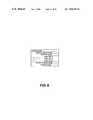
- FIG. 8 illustrates a data file structure
- FIG. 9 illustrates an example of a schedule for NVOD services
- FIG. 10 illustrates a GUI screen for managing blocks of portions of schedules
- FIG. 11 illustrates a GUI screen for managing programs in schedules
- FIG. 12 illustrates a GUI screen for managing price changes of scheduled events
- FIG. 13 illustrates a GUI screen for managing the status and distribution of schedules
- FIG. 14 illustrates a set of task states for distributing a channel line-up
- FIG. 15 illustrates a set of task states for distributing a periodic schedule of programs and events
- FIG. 16 illustrates a relational arrangement between scheduled programs, events, asset data, and asset tapes
- FIG. 17 illustrates an asset metadata file structure
- FIG. 18 illustrates a state diagram of the distribution of assets
- FIG. 19 illustrates a GUI screen for asset management
- FIG. 20 illustrates a GUI screen for accessing asset metadata
- FIG. 21 illustrates data paths of content for content management in the disclosed master scheduler
- FIG. 22 illustrates a GUI screen for importing and loading files specifying schedules
- FIG. 23 illustrates a GUI screen for content management of data providers
- FIG. 24 illustrates a GUI screen for validating content management actions
- FIG. 25 illustrates a state diagram for loading and unloading content
- FIG. 26 illustrates a timeline and flow diagram of the performance of tasks
- FIG. 27 illustrates a state diagram of task progress
- FIG. 28 illustrates a state diagram of a task timeline
- FIG. 29 illustrates a timeline for task tracking
- FIG. 30 illustrates a set of pull-down menus of a GUI screen of the master scheduler application
- FIG. 31 illustrates a GUI screen for purging records
- FIG. 32 illustrates a GUI screen for editing system parameters
- FIG. 33 illustrates a GUI screen for editing event notifications
- FIG. 34 illustrates a GUI screen for editing preferences and default settings
- FIG. 35 illustrates a GUI screen for managing tasks.
- the present disclosure describes an NVOD system 10 having a master scheduler 20 and method for scheduling and operating various functions of the NVOD system 10 .
- the master scheduler 20 receives, processes, and disseminates NVOD schedule-related information for end-to-end NVOD service; that is, for sending video from a video server which provides video data to a head-end distribution system for delivery to and subsequent viewing of a user.
- the master scheduler also provides operational support for the NVOD system 10 , such as tracking the head-end configuration; performing schedule revision, management and distribution; and performing asset and content management, etc.
- the master scheduler 20 is connected to a video server 11 which is, in turn, connected to a head-end 12 of the NVOD system 10 .
- the video server 11 is a “HEWLETT-PACKARD” (HP) “MEDIASTREAM” server, a commercially available video server for transferring and processing video data to a plurality of subscribers 36 .
- One embodiment of video server 11 may include a server controller, a VMS/VTE interface, a data source, an ATM switch, and a depot disk.
- the VMS/VTE interface allows interaction with a video management unit 90 , for example, a Hewlett-Packard “Video Transfer Engine” (VTE) video management unit.
- the ATM switch controls transfer of data over a medium, for example, an asynchronous transfer mode (ATM) network.
- the master scheduler 20 may optionally be connected to a downstream controller 24 which may be connected to or be included with the head-end 12 .
- head-end 12 may comprise a video stream processing device, for example the ITEM 1000 , which is commercially available from General Instruments, 101 Tournament Drive, Horsham, Pa. 19044.
- the video stream processing device receives video streams from the video server 11 , for example, high-bandwidth MPEG-2 video streams over an OC-3 fiber optic medium, and generates multiple smaller streams suitable for quadrature amplitude modulation (QAM) transmission.
- the OC-3 fiber optic medium may have an overall payload capacity of approximately 120 Mbps.
- the video streams passed through the OC-3 fiber optic medium may each have a data rate of approximately 4.5 Mbps.
- each of the multiple smaller QAM video streams may have an overall payload capacity of approximately 27 Mbps for transmitting one or more of the 4.5 Mbps video streams.
- the video stream processing device also encrypts video data from video server 11 and passes encrypted video data to the plurality of QAM's.
- the head-end 12 may also comprise a plurality of quadrature amplitude modulators (QAM's), a plurality of upconverters, and a summer ( ⁇ ).
- QAM's provide a signal modulated with the encrypted video data to the plurality of upconverters.
- the upconverters convert the frequency of the modulated signal and provide upconverted signals to a summer.
- the summer combines the upconverted signals from the upconverters for distribution.
- the head-end 12 is functionally connected to a plurality of subscribers 36 having appropriate video viewing devices, such as set-top boxes (STBs) and descramblers.
- the video viewing devices may be coupled to the head-end 12 using a hybrid fiber coax (HFC) medium.
- HFC hybrid fiber coax
- the master scheduler 20 may also connected to a communication device, such a telephone 52 and/or modem to other systems, and to a business support system (BSS) 88 which may include a billing system 26 , as in the systems described in the patents incorporated herein.
- a communication device such as a telephone 52 and/or modem to other systems
- BSS business support system
- the master scheduler 20 may be configured with certain external components, for example those such as are present in the systems described in commonly assigned U.S. Pat. No. 5,168,353 to Walker et al.; U.S. Pat. No. 5,311,423 to Clark; U.S. Pat. No. 5,383,112 to Clark; and U.S. Pat. No. 5,583,937 to Ullrich et al., which are incorporated herein by reference.
- the NVOD system 10 may include a video management unit 90 connected to the video server 11 , to allow an administrator to perform content management tasks, as described herein.
- the master scheduler 20 includes the following components for performing specific functions: a head-end configuration manager 60 , a schedule management system 62 , a schedule distributor 64 , an asset management system 66 , a video server content manager 68 , a data management system 70 , a task management system 72 , a report generator 74 , a security management system 76 , an administrator interface 78 , an event notification generator 80 , and a memory such as a database 82 .
- the master scheduler 20 is functionally connected to a schedule provider 84 , a factoid provider system 86 , and the business support system (BSS) 88 .
- a provider 94 of asset data and metadata i.e., data descriptive of the asset data
- the video management unit 90 which is a computer and/or processor having a graphic user interface (GUI) 92 , is connected to the video server 11 .
- the video management unit 90 which may be a “VTE” management system available from “HEWLETT-PACKARD”, is used by an operator who receives information from the administrator interface 78 of the master scheduler, as shown in FIGS.
- the video management unit 90 may be remotely disposed relative to the master scheduler 20 , and so both the video management unit 90 and the administrator interface 78 may include components such as computer expansion cards to perform telecommunication protocols, such as TCP/IP, between the master scheduler 20 and the video server 11 .
- the master scheduler 20 also generates reports 96 and alerts 98 , accesses various available assets and tapes 100 , and performs operations procedures 102 .
- the master scheduler 20 and the components thereof shown in FIG. 2 may be implemented in hardware and/or software, for example, as a master scheduler application (MSA), which may be a software program with source code written, for example, in C++, or other appropriate programming languages.
- MSA master scheduler application
- the master scheduler 20 stores and maintains head-end configuration data, which is used by the head-end configuration manager 60 .
- the head-end configuration manager 60 is used to track the addition, deletion, modification, tracking, planning, viewing, and reporting of the head-end configuration information, including physical as well as logical channel parameters.
- FIG. 3 illustrates a GUI screen 104 for configuring the hardware of the head-end, which provides lists, scrollable lists, and descriptions of available items, such as channels and data providers, which may be activated on predetermined effective dates.
- available items such as channels and data providers
- the ports for such channels may be activated on predetermined effective dates.
- Such items and ports may have associated identification (ID) numbers.
- FIG. 4 illustrates a GUI screen 106 for configuring the distribution status of the head-end, in which lists, such as scrollable lists, of schedule line-ups and versions thereof may be displayed with the status of the distribution of each line-up.
- lists of data organizations such as the factoid provider 86 , which provides factual information regarding video programs, and the BSS 88 may be displayed with the status of the distribution to or from the NVOD system 10 , as well as confirmation dates and comments.
- the master scheduler 20 manages and controls the flow of information to and from the NVOD 10 .
- an information model 108 for the master scheduler 20 provides structural and functional relationships between elements and data.
- the information model 108 may be implemented using predetermined records or tables stored in memory, such as in the database 82 .
- the information model 108 may be implemented as objects and classes using object-oriented programming.
- Each of the elements 110 – 172 includes at least one field.
- each of the elements 110 – 172 includes an associated ID, which may be alphanumeric.
- each item element 110 and each port element 112 includes a description field and an effective date field.
- each item element 110 may be contained in the record or object of a port element 112 .
- Each port element 112 includes a frequency ID number and an item ID number.
- Each frequency element 114 includes a frequency value, and is associated with a respective port element 112 .
- Each digital stream element 116 includes a value field, a bit rate field, a virtual port ID (VPI) field, a port ID field, and a virtual circuit ID (VCI) field.
- each digital stream element 116 is associated with a respective port element 112 .
- each VCI element 118 is associated with a value field.
- Each channel element 120 includes an electronic programming guide (EPG) channel name field, a BSS service code field, and a set-top box (STB) display channel field, as well as a digital stream ID field, a supplier number field, and a status ID field.
- EPG electronic programming guide
- STB set-top box
- each channel element 120 is associated with a respective digital stream element 116 .
- Each supplier element 122 includes a supplier value field and a supplier name field, and is associated with a channel element 120 .
- Each status element 124 includes a status field and is associated with a channel element 120 .
- Each channel history element 126 includes a port indicator, a digital stream indicator, a bit rate field, a display channel field, a channel name, a supplier number, a status field, and an operative date.
- Each distribute line-up element 128 includes a distribution status field, a distribution date/time, a distribution owner, a confirmation status field, a confirmation date/time, a confirmation owner, and a remarks text message.
- Each line-up element 130 includes a vendor name field, a version number field, a start date/time, an end date/time, and a status ID field.
- Each organization element 132 includes a name field, and each distribute schedule element 134 includes a distribution status indicator, a distribution date/time, a distribution owner indicator, a confirmation status field, a confirmation date/time, a confirmation of owner value and a remarks text message.
- Each program element 136 includes a title field, a short title field, a description field, a language indicator, a start date/time, a duration value, a content indicator, a stereo status indicator for stereo audio transmissions, a Motion Picture Association of America (MPAA) rating indicator, an MPAA traits indicator such as indicating violent content, a type field, and a pay-per-view indicator.
- MPAA Motion Picture Association of America
- Each block element 138 includes a title, a start date/time, an end date/time, a stagger time duration, a price value, and an indication that no channels are required for a given asset.
- Each product element 140 includes a name, a valid start date/time, a valid end date/time, a price value, an indicator that programs are included with the product, and an indicator that an impulse signal is allowed.
- a product file element 142 includes a creation date/time, a vendor name, a start date/time, an end date/time, a schedule (SCHD) group name, a value indicating a number of records, and a status field.
- Each module element 152 includes a name field
- each error log element 154 includes a task field, a description field, a date/time, an owner field, and a status field.
- Each task type element 156 includes a task duration field and a time window field.
- Each notification type element 158 includes a demo field, a level field and a notification field.
- Each task element 160 includes a details field, a recommended start date/time field, a deadline field, a time status field, an actual start date/time, an actual duration field, and a progress status field to indicate how long into the duration of the task that the task is currently situated.
- Each registration element 162 includes a date/time field and an owner field.
- Each notification element 164 includes a details field and a date/time field.
- Each E-mail user element 166 includes a name field and an E-mail address field.
- Each metadata file field 168 includes a name field, a creation date/time field, a number of records field, a received date/time field, and a status field.
- Each asset metadata element 170 includes a source field, a name field, a provider field, a live field indicating whether the asset is recorded from a live event, a satellite field, a transponder field, a transponder channel field, a polarization field, an anticipated duration field, a pre-show field, a post-show field, a total time field, a shipped date/time field, a format field, a start date/time field, an end date/time field, a load date field, and a return date/time field.
- the asset metadata element 170 includes a barcode field, a duration field, an age field, a return restriction field, an owner restriction field, and a status field.
- a default element 172 includes a name field, a value field, and a type field.
- Such elements 110 – 172 may be programmed, for example, using C++ for configuring the master scheduler 20 to handle such data elements 110 – 172 , and a sample of such code is shown in FIG. 6 .
- FIG. 7 illustrates an NVOD end-to-end channel map generated by configuration of the head-end 12 as described above to have predetermined allocations of analog frequencies, VCIs, VPIs, item numbers, item ports, digital streams, bit rates, etc.
- the master scheduler 20 stores and maintains the head-end configuration, including both physical and logical channel line-up information in order to link scheduled content with the delivery channels of the NVOD system 10 , as well as to validate and distribute the schedule.
- the head-end configuration information is used by various components of the master scheduler 20 , such as the components 62 , 64 , 68 , for providing the appropriate data for scheduling programming events and for displaying program listings.
- the channel line-up information includes two types of information: physical information and logical information.
- the physical channel line-up information includes parameters which effect the properties of the channels of the cable provider.
- the logical channel line-up information includes the parameters which characterize the channels in the marketplace, such as channel identification and logos. Such logical information may be modified without affecting the physical information, and so may be changed as necessary.
- the master scheduler 20 may optionally perform the following channel line-up/configuration tasks: creation of new video channel entries, deletion of video channel entries, loading of initial channel configurations, modification of channel configurations, version control of channel line-ups, and the viewing and reporting of channel line-ups.
- the head-end configuration information may be stored using the data management system 70 , and may be viewed and modified using the administrator interface 78 with the GUI 92 .
- the report generator 74 may be used to generate the reports 96 of the information regarding the head-end configuration.
- the master scheduler 20 also validates the configuration of the head-end 12 and the channels by examining the correctness of the parameter values, checking for exclusiveness of predetermined parameters which require unique values, checking physical bound-related parameters such as the bandwidth of each and all of the channels, and checking other configurable predefined bounds such as STB channel numbers. Inconsistencies in the configuration information may indicate incorrect scheduling.
- the actual duration data from the video server 11 may be different than the duration indicated for the asset by the schedule provider 84 within a predetermined tolerance of duration discrepancy.
- the duration indicated for the asset by the schedule provider 84 is obtained from the asset provider, for example “AMERICAST,” while the video server 11 determines the actual duration data itself. Accordingly, the duration of any particular event is to be identical in each of the files containing such records of the particular event.
- consistency checks include confirmation that the start and end times of a particular event have a duration equal to a predetermined duration of the particular event.
- content is not to be scheduled for play on the NVOD system 10 after a tape return date, and so such post-return scheduling indicates incorrect scheduling data received from the asset provider, for example “AMERICAST.”
- the master scheduler 20 may also have a dedicated NVOD channel set aside as a test channel and so to be unused for broadcasting NVOD programs.
- the test channel may be used for validating that the correct content is loaded and may be played out of the video server 11 and decoded on an STB, for example, subsequent to the loading of the content and before a scheduled viewing time.
- the test channel may also be used for monitoring video quality.
- the head-end configuration thus has the test channel marked or otherwise indicated such that the test channel, and only the test channel, is used solely for testing purposes, and such that the test channel is not distributed or reported to the EPG and the schedule data provider.
- the test channel may also be encrypted.
- the master scheduler 20 In order to program schedules and to set-up the head-end configurations accordingly, the master scheduler 20 generates multiple future versions of channel line-ups.
- the master scheduler 20 also tracks past, current, and future versions of the channel line-ups using, for example, the version field in the line-up elements 130 .
- a new version may be marked as being a work-in-progress (WIP) before being marked as finalized, with only finalized channel line-ups being distributed.
- WIP work-in-progress
- the schedule provider 84 shown in FIG. 2 may obtain scheduling data from an asset provider, for example the “AMERICAST” system, and, by virtue of being functionally connected to the master scheduler 20 , transmit this scheduling data to the master scheduler 20 .
- the schedule provider 84 may be connected to the scheduler management system 62 to provide a new and/or updated schedule in a data format representing content and/or event schedules to the schedule management system 62 of the master scheduler 20 .
- the data from the schedule provider 84 may include an electronic program guide (EPG) data file having scheduling information, a product definition file which provides pricing information of available programs and events, and an asset metadata file which provides information on the content and the tapes carrying the content.
- EPG electronic program guide
- the schedule file may be provided in an EPG data file having the format shown in FIG. 8 , in which a header record is associated with at least one service (channel) record corresponding to a specific service or channel. Each service record is in turn associated with at least one program record having corresponding event records.
- the schedule management system 62 then converts the schedule from the original data format to a new data format which is used internally by the master scheduler 20 .
- the schedule format shown in FIG. 9 may be used as the new data format to have each program with corresponding events serially grouped for each service/channel, with multiple channels having staggered start times for implementing the NVOD system 10 .
- each program may include a number of events, with at least one being a main feature, and other events being previews and interstices, for example, with NVOD system announcements of start times of events and main features.
- the converted schedule is then processed by the schedule management system 62 with respect to the head-end configuration and previous schedule to validate that the new and/or updated schedule is to be used by the master scheduler 20 .
- the validation process may compare the new and/or updated schedule with the previous schedule to ensure that there are no conflicts; that is, no two events are scheduled at the same time or on the same channel.
- the schedule management system 62 may be configured to give the new and/or updated schedule precedence over the previous schedule; for example, to cancel a previously scheduled video program to broadcast a new video program.
- the integrity and correct format of the received schedule in the first format may be checked by the schedule management system 62 prior to accepting the received schedule.
- the consistency of the channel line-up of the received schedule is also checked to meet predetermined channel line-up specifications.
- the assignment of events to channels according to the number of channels and an associated bandwidth may also be checked, and the scheduling of events to have a proper time allotment may be verified.
- the schedule management system 62 may determine whether sufficient time is available for a schedule to be processed, distributed, and implemented in the NVOD system 10 .
- the schedule management system 62 may also determine whether interstitial information such as event and program announcements as well as premieres may be placed between the events and programs.
- the master scheduler 20 Upon completion of the validation process, the master scheduler 20 stores the new and/or updated schedule in the database 82 as a currently valid schedule. The master scheduler 20 then disseminates at least a portion of the currently valid schedule to external recipient systems, such as the video server 11 , the electronic program guide (EPG) system 87 , the factoid provider system 86 , and the BSS 88 , which are functionally connected to, for example, the schedule distributor 64 of the master scheduler 20 , as shown in FIG. 2 .
- the schedule may be sent in an FTP format via a socket protocol to a playlist application of the head-end 12 .
- the electronic program guide (EPG) system 87 provides a guide for viewers.
- Data provided to the EPG system 87 by master scheduler 20 may be stored in an EPG data file having one or more service (channel) records, each having one or more program records, with each program record having one or more event records.
- the service records store information relating to a particular channel.
- the program records store information relating to a particular program, and the event records store information relating to events within a program, for example, portions to be shown as a preview of the program.
- the business support system (BSS) 88 includes a billing system 26 and is provided with information from master scheduler 20 that relates to business transactions involving the NVOD system.
- the master scheduler 20 may pass information relating to the prices of scheduled events to BSS 88 .
- the price information is used by the billing system 26 to bill customers for the scheduled events.
- the video server 11 may receive the downstream VCI and VPI information, while the factoid provider system 86 may receive, for example, only the titles of the videos available, and the BSS 88 may receive, for example, only the prices of the events.
- the factoid provider system 86 may optionally be the commercially available system, and the BSS 88 may be the “INTELICABLE SYSTEM” (ITC), which is commercially available from “CABLEDATA”.
- ITC INTELICABLE SYSTEM
- FIG. 10 illustrates a GUI screen 174 for managing blocks of portions of schedules, in which a schedule specified by a name, time period, and/or version number is displayed for a plurality of channels labeled, for example, NVOD 1 , NVOD 2 , and NVOD 3 .
- the user may scroll through the plurality of channels and through the dates and months of a specified schedule.
- the status of the schedule as being active or inactive may also be indicated.
- FIG. 11 illustrates a GUI screen 176 for managing programs within schedules, in which the start and stop times may be modified for specific programs for each channel.
- the user may scroll through the plurality of channels and through the dates and times of a specified schedule.
- schedules may be generated for selected time periods and selected services.
- Program-by-program and event-by-event schedules may thus be manipulated.
- program block schedules may be generated as an aggregated schedule of a specific program within one service/channel or across multiple services.
- the schedules may also be modified for selected attributes, such as version number and status; that is, active or WIP.
- selected attributes of each program and event may be specified, such as provider, source studio, MPAA rating, content ratings, etc.
- the program block schedule allows a user to obtain an overview of the movies and programming events offered on specific channels, with the duration of each event, for example, in terms of the number of days that the programs and events are scheduled to play.
- FIG. 12 illustrates a GUI screen 178 for managing price changes of scheduled events, in which the current price of a program or event may be changed and updated.
- the scheduled run-times of the program/event as well as a scrollable list of a price history of the program/event may be displayed. Accordingly, flexible price editing of the schedule and specified programs/events therein may be performed.
- an administrator may specify, through additional commands in pull-down menus, default prices to be applied to an entire schedule, as well as price changes for individual programs, for programming blocks, and for different dates/times.
- the price changes may also be effected for programs with specified traits, such as title, provider, studio, MPAA ratings, etc.
- FIG. 13 illustrates a GUI screen 180 for managing the status and distribution of schedules, which allows a user to scroll through and view the status and version numbers of schedules for a plurality of months.
- the date of distribution and confirmation of such schedules to a plurality of organizations and entities may also be viewed, and remarks may be entered and stored pertaining to such schedule status.
- the user may also distribute schedules by actuating a BEGIN DISTRIBUTION icon, which causes the schedule distributor 64 to distribute all finalized schedules to available receiving entities, such as the factoid provider system 86 , the BSS 88 , and the video server 11 , for distributing the prepared and finalized schedules to the appropriate receiving entities at the appropriate time.
- available receiving entities such as the factoid provider system 86 , the BSS 88 , and the video server 11 .
- FIG. 14 illustrates a set of task states for distributing a channel line-up.
- the WIP schedule is finalized to be a current version, which is then distributed in step 186 by the schedule distributor 64 , with the schedule entering a BEING DISTRIBUTED state.
- the master scheduler 20 then waits for confirmation, electronic or otherwise, from the distribution receivers.
- the master scheduler 20 Upon receiving confirmation from each of the distribution receivers, the master scheduler 20 causes the schedule to be in a fully confirmed state in step 188 . In response to such a fully confirmed state, the schedule then enters an active state in step 190 , in which the finalized channel line-up becomes effective.
- the master scheduler 20 then monitors the dates and times for each finalized schedule. When a specific effective date/time passes, the master scheduler 20 causes the corresponding channel line-up to enter a PAST state; that is, a state of no longer being effective in step 192 .
- the subsequent versions are finalized and distributed to override the current version. Accordingly, when a subsequent version is finalized in step 184 , the current version of the channel line-up is concurrently invalidated or overridden in step 194 . The finalized state of the current version is thus changed to be an invalid/overridden state. Similarly, as the subsequent version is distributed in step 186 , the distribution status of the current version is changed in step 196 to be in an invalid/overridden state. Finally, as the subsequent version is confirmed by all distribution receivers, the confirmation status of the current version is changed in step 198 to be in an invalid/overridden state.
- FIG. 15 illustrates a set of task states for distributing a periodic schedule of programs and events; for example, daily, weekly, or monthly, etc.
- a periodic schedule of programs and events for example, daily, weekly, or monthly, etc.
- the schedule is received and loaded.
- the schedule is then validated and, if valid, accepted in step 202 to become an initial schedule which is in a WIP state.
- the WIP schedule is modified until all modifications are completed in step 206 .
- the WIP schedule is thus finalized to be a current version, which is then distributed by the schedule distributor 64 in step 208 , with the schedule being in a BEING DISTRIBUTED state.
- the master scheduler 20 then waits for confirmation from the distribution receivers. Upon receiving confirmation from each of the distribution receivers, the master scheduler 20 causes the schedule to be in a fully confirmed state in step 210 . In response to such a fully confirmed state, the schedule then enters an active state in step 212 , in which the finalized monthly schedule becomes effective.
- the master scheduler 20 then monitors the dates and times for each finalized schedule. When a specific effective date/time passes, the master scheduler 20 causes the corresponding periodic schedule, such as daily or monthly, to enter a PAST state; that is, a state of no longer being effective in step 214 .
- a currently validated periodic schedule is overridden in step 216 .
- a current WIP is modified, for example, to include subsequent versions in step 218 and/or to include the price changes in step 204 .
- the current WIP is overridden in step 220 .
- subsequent versions are finalized and distributed in step 206
- the current finalized version of the monthly schedule is concurrently overridden in step 222 .
- the finalized state of the current version is thus changed to be an invalid/overridden state.
- the distribution status of the current version is changed in step 224 to be in an invalid/overridden state.
- step 210 When the subsequent version of the monthly schedule is confirmed in step 210 , the currently confirmed monthly schedule is overridden in step 226 . Further, as the subsequent version becomes the active monthly schedule in step 212 , the active status of the current version is changed in step 228 to be in an invalid/overridden state.
- the master scheduler 20 stores in the database 82 a predetermined and reconfigurable value indicating a minimum time window for determining a next schedule due date; that is, the date and/or time when a distribution is to commence. Such time windowing may be controlled by a schedule retrieval subsystem and/or the event notification generator 80 of the master scheduler 20 , such that the schedule is properly applied to components throughout the NVOD system 10 , and that the schedule is properly validated in adequate time before the scheduled programs/events are to be broadcast by the NVOD system 10 .
- the master scheduler 20 may periodically interact with the schedule provider 84 , which serves as a content provider, to receive an updated schedule, such as new schedules and schedule changes. For example, the master scheduler may poll the schedule provider 84 for the updated schedule.
- the schedule distributor 64 If a due date for distribution has passed without a distribution, for example, due to a lack in receiving an up-to-date schedule from the schedule provider 84 , the schedule distributor 64 generates an alert which is sent to an administrator through the GUI 92 . In one configuration, the schedule distributor 64 does not perform the distribution process unless the administrator manually initiates distribution, for example, relying on a previous monthly schedule of programs/events. In another configuration, the schedule distributor 64 may be set, by default, to use the monthly schedule from the previous month.
- the asset management system 66 manages the video assets, such as asset tapes, which are received from the assets and tapes data provider 100 ( FIG. 2 ). It is to be understood that other forms of assets may be employed, including video disks, digital video disks and/or digital versatile disks (DVDs), film spools, etc.
- the asset management system 66 performs archival and retrieval functions to store and obtain video data in the database 82 .
- the asset management system 66 also tracks the status of the video data; for example, when and how often a video asset is retrieved.
- FIG. 16 illustrates a relational arrangement between scheduled programs, events, asset data, and asset tapes.
- An asset provider such as “AMERICAST” or “DISNEY TELEVENTURES,” periodically sends asset tapes 230 from an asset storage location 232 to the head-end 12 and thence to the video server 11 of the NVOD system 10 .
- the asset tapes 230 may be provided directly to the video server 11 .
- the head-end 12 and/or video server 11 subsequently provides the content from the asset tapes 230 to the subscribers 36 , for example, using staggered broadcast times.
- asset tapes 230 are cataloged by the master scheduler 20 .
- the cataloging of the asset tapes 230 by the master scheduler 20 is updated, for example, to indicate return of the asset tapes 230 and/or deletion of the entry for the returned asset tapes 230 .
- asset management system 66 maintains asset data and metadata 94 , which may be stored, for example, in the database 82 .
- first asset metadata 234 may be maintained for a first event such as a main event 236
- second asset metadata 238 may be maintained for a second event, which may be a plurality of identical events 240 , 242 .
- FIG. 17 illustrates an asset metadata file structure for the asset metadata 234 , 238 of FIG. 16 , with a header record being associated with at least one asset metadata record. Each asset metadata record is in turn associated with at least one asset event record.
- the asset event records may include indicators specifying that the event corresponds to a main event.
- FIG. 18 illustrates a state diagram of the distribution of assets.
- an asset tape arrives at the head-end 12 , if no metadata associated with the asset tape is in a database of asset metadata, for example, stored in the database 82 , the asset tape is received in step 244 to have such asset metadata generated and/or entered into the database.
- the asset tape is then checked in through the asset management system 66 ; that is, the asset tape is indicated in step 246 to be available to the video server 11 for distribution to subscribers 36 .
- the asset tape arrives and associated metadata is present in the database; for example, if the asset tape had been previously used by the NVOD system 10 , then the asset tape is directly checked in through the asset management system 66 in step 246 .
- the asset tape may be checked out in step 248 , for example, to load the asset tape onto or into the video server 11 for distribution to subscribers 36 according to the finalized schedules.
- steps 244 – 246 it may be determined that a specific asset tape is instead to be returned to the asset storage location 232 ; for example, if there is no need for the specific asset tape in the foreseeable schedules of the NVOD system 10 . Accordingly, the asset tape is received by the asset management system 66 in step 250 in order to have the asset metadata of the asset tape updated to indicate that the asset tape is being returned. The asset tape is then shipped out to the asset storage location 232 in step 252 .
- the integrity of the asset tape may be checked prior to processing.
- the asset tape may be determined to be corrupted; that is, physically damaged, informationally damaged including magnetically erased, or unidentifiable in the course of attempting to generate or process the metadata thereof. If the asset tape is corrupted, then the asset tape is recorded in memory in step 254 as having a corrupted state, and then the asset tape is returned to the asset storage location after steps 250 – 252 are performed to indicate the return of the asset tape and to ship out the asset tape.
- an asset may be tracked and managed over the entire life cycle of the asset in relation to the master scheduler 20 and the NVOD system 10 .
- the assets and the contents thereof may thus be cataloged and tracked as to the status of the assets.
- Such asset metadata by cataloging and tracking may be reported using the report generator 74 to generate reports 96 on the use of assets and the functioning of the NVOD system 10 .
- FIG. 19 illustrates a GUI screen for asset management, in which the asset data and metadata may be viewed and edited.
- assets such as asset tapes
- a plurality of assets such as asset tapes
- Individual tape details may also be viewed to list the barcode, tape name, and location of a selected tape. Comments may also be entered, stored, and subsequently viewed concerning a specific tape.
- a plurality of icons may be provided to allow a user to receive a tape, check the tape in, check the tape out, return a tape, mark that the tape was corrupt, and other functions for reviewing and processing the asset metadata.
- the user may select and browse through a plurality of records in a plurality of modes such as view mode and edit mode.
- Other functions may also be supported, such as printing the records, and saving and/or deleting records.
- FIG. 20 illustrates a GUI screen for accessing asset metadata, in which greater details may be retrieved from memory and reviewed.
- the name of the asset and the source and provider IDs may be indicated.
- the shipping, loading, and return dates and times may be indicated, as well as the data size of the asset metadata.
- the user may input and thence retrieve additional information such as return instructions for properly returning the asset tape, and other instructions such as instructions common to different tapes, for example, to specify that a set of tapes are to be returned together.
- the asset management system 66 processes the asset metadata to check such information against the schedule information. For example, an asset may be received which is scheduled for broadcast, so the processing of the asset and the asset data/metadata thereof may be given priority in processing.
- the duration of an actual asset may be compared to the scheduled duration of the asset in the asset metadata file. For example, actual asset may be loaded into video server 11 . By measuring the amount of storage space needed on video server 11 to store the actual asset, given a known rate at which the data comprising the asset will be played, the duration of the actual asset can be determined. Significant discrepancies may cause the asset management system 66 to generate an alert and/or to reconcile the discrepancy, for example, by determining if the asset metadata of a specific asset tape is in error.
- the return date of the asset may also be checked against the schedule, for example, to ensure that the asset is returned after any scheduled broadcast, and not before a broadcast.
- the physical tape entity may be correlated to the associated asset data/metadata.
- a location code may be assigned to the physical asset tape, with a location label having the location code emplaced on the physical asset tape.
- the location code may indicate a designated location for storing the asset tape in the NVOD system 10 prior to return to the asset storage location 232 .
- the asset management system 66 may also generate alerts through, for example, the event notification generator 80 to provide warning messages in the event that a user is attempting to check out an asset tape which is currently loaded in the video server 11 and/or which is scheduled to be loaded on the video server 11 , unless the asset metadata of the specific asset tape indicates that the asset tape is in a corrupted state.
- the video server content manager 68 communicates with the video server 11 to inquire about content-related information. For example, the video server content manager 68 determines when and where to load/unload an item of content, such as a video asset. The video server content manager 68 also performs an operations procedure 102 to allow administrators to monitor and control the loading and unloading of content, and validates the content loading and unloading of the content.
- FIG. 21 illustrates data paths of content for content management in the disclosed master scheduler 20 .
- the video server content manager 68 receives information from the video management unit 90 , such as an HP VTE terminal, as well as from the schedule provider 84 .
- the video management unit 90 sends HP VTE information, such as content information and data provider disk space utilization, to the video server content manager 68 .
- the content information may include content title, content size, bit rate, and duration of the content.
- the schedule provider 84 sends EPG schedule fields 87 such as service records, program records, and event records in a format such as shown in FIG. 8 .
- the service records include a channel designation, the start and end dates/times, and the number of programs.
- the schedule provider 84 may also send content information, such as asset data and metadata from the “CAPS” system of “AMERICAST,” to the schedule management system (SMS) 62 of the master scheduler 20 , and thence to the video server content manager 68 .
- CMS schedule management system
- the asset metadata 94 may be provided from the asset management system 66 , including an asset name, bit rate, size, duration, start date, end date, load date, return date, and assigned barcode.
- the video server content manager 68 Upon receiving such content information, the video server content manager 68 generates error logs, tasks, and reports, which may be processed through the event notification generator 80 , the task management system 72 , and the report generator 74 ( FIG. 2 ), respectively.
- FIG. 22 illustrates a GUI screen 256 for importing and loading files specifying schedules through the video server content manager 68 .
- the administrator may load content to the video server 11 from a plurality of providers, such as imported/downloaded content such as assets and tapes 100 from an asset provider, such as “AMERICAST,” as well as schedules, “CAPS-SMS” data, and asset metadata 94 .
- the administrator may also load content presently stored in the database 82 of the master scheduler 20 as local files to the video server 11 .
- FIG. 23 illustrates a GUI screen 258 for content management of the video server's data sources, in which each data provider is identified by name or designation, by a respective total capacity, and by the remaining capacity for providing content. The status of each data provider as being available or down (unavailable) is also provided, and the last update of the status and capacity of each data provider may also be listed.
- FIG. 24 illustrates a GUI screen 260 for validating content management actions.
- each available asset may be listed by title and/or asset ID number.
- the scheduled loading date may be displayed, as well as the status of the loading to the video server 11 .
- the status of a task may also be displayed, to indicate that a task is loaded or unloaded. If a task is loaded, the task is ready to be performed, i.e. to load the video server 11 with the corresponding asset.
- the status of an asset may be checked by actuating a CHECK STATUS icon.
- the validation of the specific asset may also be performed by actuating the PLAY ON TEST CHANNEL icon to utilize the test channel to view the asset for verifying the integrity of the asset prior to distribution to subscribers 36 .
- FIG. 25 illustrates a state diagram for loading and unloading content.
- the content is scheduled to be loaded according to the validated schedule determined by the schedule management system 62 , described above.
- the content is loaded into the video server 11 .
- This loading step may be performed by transferring data to the video server, for example electronically, or by loading media, such as video tapes.
- the assets may span multiple tapes, and so the loading step may require multiple steps to fully load some video content such as movies into the video server 11 .
- any specific item of content may be in an active state or be in an inactive state; for example, the item of content may be loaded in advance of a scheduled start time, and so the item of content waits in an inactive state until used or unloaded, for example, in the event of a schedule change.
- the item of content may then be played by the video server 11 ; that is, the item of content is sent to the subscribers 36 . Since the NVOD system 10 staggers content by predetermined time intervals, portions of an item of content may be active and not playing, while other portions are active and playing. However, once an item of content is no longer playing, the item of content may enter the active state or the inactive state.
- the item of content is to become active subsequently, or the item of content is scheduled to be unloaded from the video server 11 .
- no inactive content is playable until the status of the content is changed to the active state.
- an active item of content may be scheduled to be unloaded, according to the current schedule, immediately after play, and so the item of content need not enter an inactive state to be scheduled to be unloaded.
- the content is unloaded from the video server 11 , which may require multiple passes to remove and/or erase predetermined amounts of the content.
- the content is then in an unloaded state, and the content is subsequently checked out as being unavailable by the asset management system 66 .
- the video server content manager 66 of the disclosed master scheduler 20 uses an intelligent processing method to determine when and where to load/unload content for each scheduled event.
- the video server content manager 68 operates using factors such as the configuration of video server data providers, the remaining space of the data providers, a load balance among the data providers, the content currently loaded into the video server 11 , the scheduled working days, hours, and holidays of manual technicians such as the administrator, who would physically load tapes if necessary, an estimated time to load/unload content, the time to verify the content by looking at all or part of it, the content currently queued to be loaded/unloaded, a required quality assurance (QA) time, etc.
- QA quality assurance
- the intelligent processing method of the video server content manager 68 may have general goals to maximize performance, such as functions to minimize the number of uses of any single data provider, in order to minimize any loss of programs and revenue if a data provider becomes available, including system maintenance or if the data provider goes down. Another goal may include minimizing the number of simultaneous uses of or demands upon any single data provider, and also adjusting load balances among a plurality of data providers. Pass-through procedures may be performed, such as the determination of main events loaded from each data providers, and then, for each unique main event, the current and future schedules are scanned to determine the current uses and the number of simultaneous uses of the data providers. In addition, for each data provider, the total current and future uses of main events are determined. For each new portion of a main event, a data provider is determined which has a minimum number of uses, such that if the determined data provider has enough memory space and stream slots, then the main event is placed from the data provider.
- video server content manager 68 interacts with the video server 11 , validation procedures are also performed to determine if appropriate assets are loaded; otherwise, an alert is generated upon the discovery that an incorrect asset is loaded/unloaded.
- the video server content manager 68 also polls the video server 11 at regular intervals to verify that a load content instruction was performed properly; otherwise, an alert is generated.
- the data management system 70 maintains the database 82 for storing information about the assets from content providers, as well as network configurations used to transport video data, such as MPEG-2 video bitstreams.
- the data management system 70 also stores the current valid schedule for delivering NVOD events to the subscribers 36 .
- Other persistent data used by the master scheduler 20 such as the operating parameters and user login data such as passwords, as well as an operating system and application programs executed by the master scheduler 20 , are stored in the database 82 and maintained by the data management system 70 .
- the database 82 may be a commercially available database 82 from “ORACLE” such as the “ORACLE” 7.3.X database, and so the data management system 70 may include an “ORACLE” interface using, for example, “SQL*NET”.
- the task management system 72 coordinates and causes the execution of tasks and sub-tasks performed by the master scheduler 20 , and also tracks the execution and status of such tasks and sub-tasks, in order to complete all tasks in an orderly and timely manner.
- FIG. 26 illustrates a timeline and flow diagram of the performance of tasks and task dependencies.
- the master scheduler 20 updates the channel line-up in step 262 , and the NVOD system 10 , such as a “GTE” NVOD apparatus, sends the channel line-up to the schedule provider 84 in step 264 , which develops a program schedule in step 266 for a specific period beginning at time X and ending at time Y.
- the schedule provider 84 creates schedule files in step 268 for the NVOD system 10 , and the MSA receives the schedule files therefrom in step 270 .
- the MSA validates, stores, and updates the schedule in step 272 , and the MSA then creates in step 274 a task schedule and milestones; that is, indicator events, times, and tasks which are used to gauge the operation of the master scheduler 20 .
- the MSA proceeds to generate a playlist and send the playlist to the video server 11 in step 276 ; distributes the schedule information to the factoid provider system 86 , such as “TVDATA”, in step 278 ; sends the schedule information to the BSS 88 , such as the “CABLEDATA INTELICABLE SYSTEM” (ITC) in step 280 ; performs automated content management tasks in step 282 , as described above; and generates periodic tape loading instructions and alerts in step 284 .
- the steps 276 – 284 are commenced at substantially the same time.
- the video server 11 receives the playlist from the MSA and streams out content in step 286 from start time X to end time Y to preform the NVOD services over the plurality of channels according to the schedules and playlist from the MSA.
- the factoid provider system 86 augments program information with the distributed schedule information, and sends schedule information to other facilities, such as “STARSIGHT”.
- the NVOD system 10 the factoid provider system 86 , and the other facilities perform quality assurance (QA) procedures for ensuring, for example, that the schedule information is consistent and in the correct format.
- QA quality assurance
- the BSS 88 performs a QA procedure on the received schedule information, and sends the schedule information to the ITC interface of the NVOD 10 , which may be functionally connected to the schedule distributor 64 of the master scheduler 20 .
- the NVOD 10 sends the schedule information to the head-end (HE) 12 .
- HE head-end
- the step 282 of automated content management is performed over a relatively long duration, and also into a specific scheduled time window between times X and Y, in order for content to be processed and managed to send content to the video server 11 for operation during the scheduled time window.
- step 288 is performed over a relatively long duration such that the acquisition of assets and the generation and transmission of tapes by the schedule provider 84 begins when the master scheduler 20 sends the channel line-up in step 264 .
- the acquisition and transmission of tapes may also extend into the scheduled time window to provide the video server 11 with the scheduled assets and content.
- the master scheduler 20 instructs the video server 11 and/or the video server content manager 68 in step 290 to load and/or unload specific tapes, for example, to prepare for upcoming scheduled events.
- a QA procedure may then be performed in step 292 to ensure that the proper tapes have been loaded and/or unloaded, and especially in sufficient time before a scheduled event to remedy any loading/unloading errors.
- the tape loading instructions from step 284 may also instruct the video server content manager 68 to check-out tapes in step 294 , for example, if a schedule is modified to cause some tapes to be unnecessary and so returned to the asset storage location 232 .
- the master scheduler 20 may continue in step 296 to instruct the video server 11 and/or the video server content manager 68 in step 290 to load and/or unload specific tapes, for example, to prepare for upcoming scheduled events during the schedule window, and to unload used tapes after the corresponding events have occurred.
- step 288 assets are repeatedly sent, and so in steps 298 , the assets are repeatedly received at the NVOD 10 from the asset storage location 232 , and the master scheduler 20 in turn archives the assets, for example, by checking tapes in, and holding onto the tapes until the assets thereupon are loaded onto the video server 11 .
- FIG. 27 illustrates a state diagram of task progress. After a task is created, the corresponding operation of the task begins and the task enters a WIP state. The operation is then in progress until completed, when the task enters a completed state.
- FIG. 28 illustrates a state diagram of a task timeline.
- the task After a task is scheduled for a specific early start date/time, the task enters a scheduled state. For example, the tasks may involve loading a specific tape for a specific scheduled event.
- the task management system 72 tracks the start dates and times as time passes. If the scheduled start date/time occurs and the task has been completed, the task enters a completed state.
- the task enters an urgent state.
- the task management system 72 determines if the task has been completed and/or is a WIP. If completed, the task enters the completed state. If the task is not completed and is not a WIP, an alert is generated and sent to the event notification generator 80 , and the task is stopped. The task then enters a stopped state, in which the task is too late to be completed.
- FIG. 29 illustrates a timeline for task tracking, in which the early start date, the urgent start date, the latest start date, and a deadline are set, and are maintained and stored in memory, such as the database 82 .
- the master schedule 20 includes a clock device for monitoring and updating a stored value of the current date and time.
- At least the task management system 76 monitors the current date and time to determine whether such start dates and deadlines have occurred, and so to generate alerts.
- alerts are generated to indicate that a task is to be initiated before the latest start date in order to allow the task to have sufficient time to be completed before the deadline.
- the latest start date is determined to provide at least a minimum time for the task duration, as well as optionally some tolerance time.
- the alerting period may be any arbitrary time period predetermined and set by an administrator.
- Automated tasks are automatically performed, unless overridden by an administrator. Manual tasks are performed by an operator who is alerted by the event notification generator 80 in response to alert signals generated by the task management system 72 .
- the task management system 72 In creating task instructions, as in step 274 of FIG. 26 , the task management system 72 generates appropriate signals to the report generator 74 to have the task schedule and instructions reported weekly for work planning purposes, and reported daily for causing the performance of tasks for any given day.
- the task instructions are also used to track the progress of tasks according to the scheduled start and completion times of tasks, the actual start and completion times, any errors encountered, and the results of such tasks, and the task management system 72 generates corresponding task tracking data reflecting such task progress.
- the task management system 72 may forward the task tracking data to the report generator 74 to generate task progress reports.
- Content management tasks are generated by the task management system 72 using parameters from the video server content manager 68 .
- the content management tasks are step-by-step instructions for instructing the video server 11 to load, unload, and relocate assets to and from tapes.
- the task management system 72 provides for correct procedures, commands, and parameters to indicate which tapes to obtain, where each tape is located, which tapes to load for an upcoming schedule, which content to unload from the video server 11 , and how to load and unload assets from designated providers and destinations, respectively.
- the task management system 72 may interrogate or poll the video server 11 at regular intervals, such as daily, to ensure that the tasks are performed properly and routinely.
- the task management system 70 may also generate and manage tasks for asset management in conjunction with the asset management system 66 , for example, to manage delivery and shipping of tapes from the asset storage location 232 , including logging shipping slips as well as affidavits of delivery and return of tapes to and from the NVOD 10 .
- the report generator 74 allows users, such as system administrators, to generate a variety of pre-defined reports 96 .
- the report generator 74 may be hardware and/or software commercially available from “ORACLE”, and is functionally connected to at least one output device, such as a printer, a display, a disk storage system, or a network on-line connection, to generate corresponding reports therefrom.
- the output device may be included in the master scheduler 20 , or alternatively may be external to but functionally connected to the master scheduler 20 .
- the reports 96 may be visually displayed through the GUI 92 by sending the reports 96 to the administrator interface 78 .
- a user may then print the form from the screen by a screen capture procedure, which may involve blocking off a selected portion of the report on the screen to be printed.
- the report generator 74 may prepare and issue the following types of reports: channel configuration/line-up report, asset and tape catalog report, server content report, task management report, event schedule, and trouble/error report.
- the channel configuration/line-up report is generated in response to receiving a date to determine when the channels are in effect.
- the channels may be presented in tabular format, such as shown in FIG. 7 , which lists the physical as well as logical configuration information for the NVOD channels originating from the video server 11 and ending at the STB of the subscribers 36 . Reports of channel line-up changes, such as changes to the latest version of the line-up, may also be generated.
- the asset and tape catalog report provides an inventory of all tapes and assets which are currently in the possession of the NVOD 10 .
- the report generator 74 may include filtering and sorting functions to obtain, for example, lists of tapes to be returned, or lists of assets currently loaded in the video server 11 .
- the server content report summarizes the contents and assets on the video server 11 at any specified moment, and includes information such as metadata of the loaded content, location of the content, and whether the content is currently in use; that is, playing and being streamed out to subscribers 36 .
- the server content report maybe be generated to be arranged according to content title, content status, and/or content location.
- the task management report may be generated on a daily or weekly basis to list the tasks and instructions to be performed by the NVOD 10 and by the administrators using the master scheduler 20 .
- the milestones and progress charts may be listed indicating milestones reached and/or progress for a specified day or week.
- administrators may use a content management report regarding content management which is generated to provide detailed content management procedures which administrators are to follow, for example, through commands input via the video management unit 90 and/or the GUI 92 .
- the content management report may be generated with or as a portion of the task management report.
- the event schedule may be generated in a format such as shown in FIG. 9 .
- the trouble/error report may list errors encountered and generated alerts in an error log, for example, in chronological order.
- the security management system 76 maintains security protocols to ensure that only legitimate users may gain access to the operations of the master scheduler 20 .
- the security management system 76 also ensures that only authorized operations according to predetermined privileges may be performed via the master scheduler 20 .
- a user database is maintained, for example, in the database 82 , which lists user names and passwords of authorized users such as administrators of the master scheduler 20 .
- Login and confirmation of passwords as well as re-login procedures may be performed. The re-login procedures may be performed if the master scheduler 20 times out; that is, if the master scheduler 20 is relatively inactive for a predetermined time period.
- read-write privileges may be assigned only to local users such as administrators, while remote users such as tape receiving personnel may be granted only read-only privileges.
- MSA_VIEW viewer
- MSA_MKTG marketer
- MSA_OPER perator
- AND MSA-ADMN administrative role
- a user with MSA_VIEW access has rights to view schedule-related data reports, prices, programs, schedule dates, pending tasks, etc.
- a user with MSA_MKTG access has the rights of an MSA_VIEW user as well as rights to edit/save prices and to finalize schedules.
- a user with MSA_OPER access has the rights of an MSA_MKTG user as well as rights to import and load files, to perform schedule processing and distribution, to perform diagnostics, and to manage assets and content.
- a user with MSA_ADMN access has the rights of an MSA_OPER user as well as rights to configure the head-end 12 , to configure assets, and to perform securing management, as well as to access all functions of the master scheduler 20 .
- the administrator interface 78 allows an administrator to view schedules, to make price changes for the use of the NVOD system 10 , to perform content management using the video server content management system 68 , and to generate reports using the report generator 74 .
- administrators may perform a predetermined shutdown procedure through the administrator interface 78 for properly shutting down the master scheduler 20 and/or the NVOD system 10 .
- the administrator may also use the administrator interface 78 to export records and data from the database 82 and perform other system management tasks, as described herein.
- the administrator interface 78 may include the graphic user interface (GUI) 92 , such as a GUI interface based on “WINDOWS” such as “WINDOWS NT”, available from MICROSOFT CORPORATION. Accordingly, administrators are provided an easy-to-use, interactive, and point-and-click facility to access the functions of the master scheduler 20 and the NVOD 10 .
- GUI graphic user interface
- FIG. 30 illustrates a set of pull-down menus of a GUI screen 300 of the master scheduler application, which allows an administrator, for example, to import/load content to the video server 11 ; to set and edit system parameters, preferences, and notifications, such as notifications generated by the event notification generator 80 ; to manage schedules, content, and tasks; to configure the head-end 12 ; and to generate and print reports/logs 96 through the report generator 74 .
- Such reports 96 may include indications of notifications, error logs, channel lineup, server content, tasks, schedules, and assets.
- the various display screens may be generated through the GUI 92 of the video management unit 90 , which may be a terminal or workstation. Though point-and-click interaction, an administrator has access to the functionality of the master scheduler 20 to administer the NVOD 10 .
- the various display screens may be text and/or non-GUI oriented screen interfaces, such as choices displayed on a screen which may be selected by tabbing using a TAB key, or otherwise relying on specific keyboard commands such as hotkeys and key combinations.
- FIG. 31 illustrates a GUI screen 302 for purging records, which may be an option available to the administrator through the ADMINISTER command on screen 300 of FIG. 30 .
- an administrator is able to select a range of dates for marking any programs, events, and tasks in such a range for deletion. The administrator may then delete the records by actuating the DELETE icon, and so to purge outdated records to clear memory in the video server 11 as well as to improve the efficiency of the master scheduler 20 to process all of the available records, since outdated records may be unnecessarily processed with up-to-date records.
- FIG. 32 illustrates a GUI screen 304 for editing system parameters, such as the default price for pay-per-view events, a minimum distribution time of the finalized schedules to the factoid provider 86 and the BSS 88 , a minimum loading time of content to the video server 11 in advance of a scheduled time for the content, and hardware configuration parameters such as the maximum number of VCIs, the maximum number of STB display channels, and the range of channel frequencies such as the maximum and minimum channel frequencies allotted to the NVOD channels.
- Such parameters may be scrollable and selectable through the “WINDOWS”-based GUI screen 304 shown in FIG. 32 .
- FIG. 33 illustrates a GUI screen 306 for editing event notifications, through which the administrator may enter and alter the status and conditions by which the event notification generator 80 responds to alert conditions.
- the type of notification may be specified as normal or alert.
- a normal notification may be a pop-up dialog box or text on the screen which is generated upon occurrence of the corresponding condition, such as a change in a schedule, which may be of interest to the administrator.
- Alert conditions may include the occurrence of an abnormal condition which hinders the functions of the master scheduler 20 and/or the NVOD system 10 , as well as any occurrence of the failure of a task to be completed, or if the master scheduler 20 determines if a task is in jeopardy of not being completed in time. For example, for schedule management, alert conditions occur when a schedule expected from the schedule provider 84 is unavailable by a certain date, or when a received schedule fails to be validated.
- alert conditions arise when the various systems 60 – 82 of the master scheduler 20 fail to properly communicate with each other.
- alert conditions include the occurrence of errors while acquiring or distributing scheduling information, or when a distribution fails to start or complete by a certain date or time.
- alert conditions occur when the metadata of an asset is unavailable by a certain date as derived from a scheduled loading time of the corresponding asset, when an asset tape is not checked in by a certain date as derived from a scheduled loading time of the tape, or when an asset tape is not checked out by a predetermined number of days after the asset tape is due to be returned to the asset storage location 232 .
- alerts are generated when an asset is either not loaded onto or not unloaded from the video server 11 by a certain date. Also, such content management alerts may occur when an asset is mistakenly unloaded or is mistakenly loaded to a wrong location, or when an incorrect asset is loaded to the video server 11 .
- the video server content manager 68 may automatically execute a content loading procedure, which includes the steps of determining the availability of memory such as disk space sufficient for an entire video program on the video server 11 as well as the step of determining a location for storing an asset for an event on the video server 11 . If such content cannot be accommodated, the event notification generator 80 generates a corresponding alert to the administrator indicating that the specific content may not be loaded.
- Data management alerts may be generated when the master scheduler application is not operational, or when the database 82 reaches a certain low level of capacity which may indicate insufficient resources to meet broadcast schedules, such that fewer assets are available to subscribers 36 using the NVOD system 10 , which may cause a loss of potential revenue. Alerts may also be generated for security management upon the detection of repeated unauthorized attempts to gain access to the master scheduler 20 .
- An alert notification may cause, through the GUI 92 at the video management unit 90 , the generation of flashing lights, colors, animation, and/or windows; a synthesized audio message or warning tone; or a dialog box which requires acknowledgment or some response from the user in order to proceed.
- the notification may be audio or flashing visuals as described above.
- the notification may also be sent to a printer or other hardcopy output devices, for example, as part of the reports 96 .
- FIG. 34 illustrates a GUI screen 308 for editing preferences and default settings, such as for automatic or manual tasks; that is, specified tasks may be performed automatically by the master scheduler 20 and/or the video server 11 , or may be performed manually by a user such as an administrator with or without prompts or instructions generated by the task management system 72 .
- FIG. 35 illustrates a GUI screen 310 for managing tasks such as any tasks in a selectable range of dates. Such tasks may be grouped and sorted in a scrollable window according to functional area, description of the tasks, recommended start dates, estimated duration, and deadline date. The current status of the task may also be displayed with the actual start and end dates, and the current progress status.
- the event notification generator 80 generates event notifications, including alerts and messages to the administrator, either through the GUI of the administrator interface 78 , through an E-mail system, or through printed reports or messages using, for example, the report generator 74 .
- the event notification generator 80 may be event driven, or may determine specific event conditions from polling of components of the master scheduler 20 . Certain event conditions may be encountered, for example, when errors are found in schedule dates provided by the schedule provider 84 during validation, or when a specific item of content is not loaded onto the video server 11 within a specified time. When such event conditions occur, the event notification generator 80 notifies administrators and/or other designated personnel, such as troubleshooters.
- the master scheduler 20 may be accessed by multiple users simultaneously, with authorized users such as system administrators being capable of modifying the operating parameters and data of the master scheduler 20 . Remote users such as subscribers and monitoring personnel may access the master scheduler 20 to view scheduling data, but are not authorized to modify the scheduling data.
Landscapes
- Engineering & Computer Science (AREA)
- Multimedia (AREA)
- Signal Processing (AREA)
- Databases & Information Systems (AREA)
- Human Computer Interaction (AREA)
- Computer Networks & Wireless Communication (AREA)
- Computer Graphics (AREA)
- Two-Way Televisions, Distribution Of Moving Picture Or The Like (AREA)
- Studio Circuits (AREA)
Priority Applications (8)
| Application Number | Priority Date | Filing Date | Title |
|---|---|---|---|
| US09/204,523 US7024681B1 (en) | 1997-12-04 | 1998-12-03 | Method and apparatus for near video on demand |
| PCT/US1998/025777 WO1999029108A1 (en) | 1997-12-04 | 1998-12-04 | Method and apparatus for near video on demand |
| DE69840580T DE69840580D1 (de) | 1997-12-04 | 1998-12-04 | Verfahren und vorrichtung für video auf anfrage mit verzögerung |
| AT98963787T ATE423431T1 (de) | 1997-12-04 | 1998-12-04 | Verfahren und vorrichtung für video auf anfrage mit verzögerung |
| CA002311309A CA2311309C (en) | 1997-12-04 | 1998-12-04 | Method and apparatus for near video on demand |
| EP98963787A EP1055327B1 (en) | 1997-12-04 | 1998-12-04 | Method and apparatus for near video on demand |
| JP2000523805A JP2003501846A (ja) | 1997-12-04 | 1998-12-04 | 準ビデオオンデマンドのための方法及び装置 |
| US11/395,217 US8726321B2 (en) | 1997-12-04 | 2006-04-03 | Method and apparatus for video on demand asset management |
Applications Claiming Priority (3)
| Application Number | Priority Date | Filing Date | Title |
|---|---|---|---|
| US6745297P | 1997-12-04 | 1997-12-04 | |
| US7010697P | 1997-12-31 | 1997-12-31 | |
| US09/204,523 US7024681B1 (en) | 1997-12-04 | 1998-12-03 | Method and apparatus for near video on demand |
Related Child Applications (1)
| Application Number | Title | Priority Date | Filing Date |
|---|---|---|---|
| US11/395,217 Continuation US8726321B2 (en) | 1997-12-04 | 2006-04-03 | Method and apparatus for video on demand asset management |
Publications (1)
| Publication Number | Publication Date |
|---|---|
| US7024681B1 true US7024681B1 (en) | 2006-04-04 |
Family
ID=27371158
Family Applications (2)
| Application Number | Title | Priority Date | Filing Date |
|---|---|---|---|
| US09/204,523 Expired - Fee Related US7024681B1 (en) | 1997-12-04 | 1998-12-03 | Method and apparatus for near video on demand |
| US11/395,217 Expired - Fee Related US8726321B2 (en) | 1997-12-04 | 2006-04-03 | Method and apparatus for video on demand asset management |
Family Applications After (1)
| Application Number | Title | Priority Date | Filing Date |
|---|---|---|---|
| US11/395,217 Expired - Fee Related US8726321B2 (en) | 1997-12-04 | 2006-04-03 | Method and apparatus for video on demand asset management |
Country Status (7)
| Country | Link |
|---|---|
| US (2) | US7024681B1 (enExample) |
| EP (1) | EP1055327B1 (enExample) |
| JP (1) | JP2003501846A (enExample) |
| AT (1) | ATE423431T1 (enExample) |
| CA (1) | CA2311309C (enExample) |
| DE (1) | DE69840580D1 (enExample) |
| WO (1) | WO1999029108A1 (enExample) |
Cited By (85)
| Publication number | Priority date | Publication date | Assignee | Title |
|---|---|---|---|---|
| US20020021807A1 (en) * | 1994-04-01 | 2002-02-21 | Mitsubishi Corporation | Method for controlling database copyrights |
| US20020052850A1 (en) * | 1994-10-27 | 2002-05-02 | Mitsubishi Corporation | Digital content management system and apparatus |
| US20020144269A1 (en) * | 2001-03-30 | 2002-10-03 | Connelly Jay H. | Apparatus and method for a dynamic electronic program guide enabling billing broadcast services per EPG line item |
| US20020144265A1 (en) * | 2001-03-29 | 2002-10-03 | Connelly Jay H. | System and method for merging streaming and stored content information in an electronic program guide |
| US20020194585A1 (en) * | 2001-06-15 | 2002-12-19 | Connelly Jay H. | Methods and apparatus for providing ranking feedback for content in a broadcast system |
| US20030005301A1 (en) * | 2001-06-28 | 2003-01-02 | Jutzi Curtis E. | Apparatus and method for enabling secure content decryption within a set-top box |
| US20030061611A1 (en) * | 2001-09-26 | 2003-03-27 | Ramesh Pendakur | Notifying users of available content and content reception based on user profiles |
| US20030135605A1 (en) * | 2002-01-11 | 2003-07-17 | Ramesh Pendakur | User rating feedback loop to modify virtual channel content and/or schedules |
| US20030135857A1 (en) * | 2002-01-11 | 2003-07-17 | Ramesh Pendakur | Content discovery in a digital broadcast data service |
| US20030144963A1 (en) * | 1994-09-30 | 2003-07-31 | Mitsubishi Corporation | Data copyright management system |
| US20030187862A1 (en) * | 2002-03-28 | 2003-10-02 | Ncr Corporation | Using point-in-time views to provide varying levels of data freshness |
| US20040103120A1 (en) * | 2002-11-27 | 2004-05-27 | Ascent Media Group, Inc. | Video-on-demand (VOD) management system and methods |
| US20040111756A1 (en) * | 2002-12-05 | 2004-06-10 | Stuckman Bruce E. | DSL video service with storage |
| US20040167890A1 (en) * | 2000-01-24 | 2004-08-26 | Aviv Eyal | System and method for media search and playback |
| US20040199657A1 (en) * | 2000-01-24 | 2004-10-07 | Aviv Eyal | Streaming media search and playback system |
| US20040210936A1 (en) * | 2003-04-04 | 2004-10-21 | Microsoft Corporation | Providing and receiving on-demand assets using a pool of assets containing unavailable assets |
| US20040231002A1 (en) * | 2004-02-18 | 2004-11-18 | Jansen Michael E. | Motion picture theater and associated promotion |
| US20040236788A1 (en) * | 2001-07-09 | 2004-11-25 | Mitsuhiro Sato | Content management method, content management apparatus, content reproduction apparatus, and content recording apparatus |
| US20050165921A1 (en) * | 2004-01-23 | 2005-07-28 | Sam Abadir | Systems and methods for vertically integrated data distribution and access management |
| US20050210508A1 (en) * | 2004-03-19 | 2005-09-22 | Lau Vincent W | System and method for managing time-go-live information of media content |
| US20050262023A1 (en) * | 1994-04-01 | 2005-11-24 | Intarsia Software Llc | Method for controlling database copyrights |
| US20060095946A1 (en) * | 2002-12-04 | 2006-05-04 | Koninklijke Philips Electronics N.V. | System and method for broadcasting a video program |
| US20060101034A1 (en) * | 2004-11-05 | 2006-05-11 | Microsoft Corporation | Method and system for managing user interface messages |
| US20060112434A1 (en) * | 1999-06-11 | 2006-05-25 | Arturo Rodriguez | Video on demand system with selectable options of configurable random-access control |
| US20060146836A1 (en) * | 2004-12-30 | 2006-07-06 | Park Kyung R | Centralized call control |
| WO2006105604A1 (en) * | 2005-04-06 | 2006-10-12 | Ruzz Tv Pty Ltd | Schedules of a broadcast management system |
| US7167895B1 (en) | 2000-03-22 | 2007-01-23 | Intel Corporation | Signaling method and apparatus to provide content on demand in a broadcast system |
| EP1753237A1 (en) * | 2005-08-10 | 2007-02-14 | Alcatel | Scheduling for Internet Protocol Television Broadcast |
| US20070038900A1 (en) * | 2005-08-10 | 2007-02-15 | Alcatel | System with executing nodes for executing schedules |
| US20070050834A1 (en) * | 2005-08-31 | 2007-03-01 | Royo Jose A | Localized media content management |
| US20070053293A1 (en) * | 2005-09-07 | 2007-03-08 | Mcdonald James F | Optimizing data rate for video services |
| US20070088960A1 (en) * | 1994-10-27 | 2007-04-19 | Intarsia Software Llc | Data copyright management |
| US20070150595A1 (en) * | 2005-12-23 | 2007-06-28 | Microsoft Corporation | Identifying information services and schedule times to implement load management |
| US7275254B1 (en) | 2000-11-21 | 2007-09-25 | Intel Corporation | Method and apparatus for determining and displaying the service level of a digital television broadcast signal |
| US7281034B1 (en) * | 2000-01-24 | 2007-10-09 | Friskit, Inc. | System and method for media playback over a network using links that contain control signals and commands |
| US20070240185A1 (en) * | 2005-08-26 | 2007-10-11 | Weaver Timothy H | Methods, apparatuses, and computer program products for delivering audio content on demand |
| US7284064B1 (en) * | 2000-03-21 | 2007-10-16 | Intel Corporation | Method and apparatus to determine broadcast content and scheduling in a broadcast system |
| US20070250875A1 (en) * | 2005-08-26 | 2007-10-25 | Weaver Timothy H | Methods, apparatuses, and computer program products for delivering one or more television programs for viewing during a specified viewing interval |
| US20080098421A1 (en) * | 2002-02-11 | 2008-04-24 | Rodriguez Arturo A | User Preference Television Advertising |
| US20080281968A1 (en) * | 2001-06-29 | 2008-11-13 | Rodriguez Arturo A | Updating Download Options for Unavailable Media Content |
| US20080320530A1 (en) * | 2005-08-26 | 2008-12-25 | Weaver Timothy H | Methods, apparatuses, and computer program products for delivering video on demand content |
| US20090077246A1 (en) * | 2007-09-19 | 2009-03-19 | The Chinese University Of Hong Kong | Load balancing and admission scheduling in pull-based parallel video servers |
| US20090106803A1 (en) * | 2006-12-05 | 2009-04-23 | Huawei Technologies Co., Ltd. | IPTV APPLICATION SYSTEM AND METHOD AND SYSTEM FOR PLAYING NEAR VoD PROGRAMS |
| US20090158339A1 (en) * | 2000-04-03 | 2009-06-18 | Scientific-Atlanta, Inc. | Configurable options for accessible on-demand information |
| US20090162032A1 (en) * | 2007-12-21 | 2009-06-25 | Aceurity, Inc. | Smart Viewing Rights System and Switch |
| US20090174787A1 (en) * | 2008-01-03 | 2009-07-09 | International Business Machines Corporation | Digital Life Recorder Implementing Enhanced Facial Recognition Subsystem for Acquiring Face Glossary Data |
| US20090175510A1 (en) * | 2008-01-03 | 2009-07-09 | International Business Machines Corporation | Digital Life Recorder Implementing Enhanced Facial Recognition Subsystem for Acquiring a Face Glossary Data |
| US20090177679A1 (en) * | 2008-01-03 | 2009-07-09 | David Inman Boomer | Method and apparatus for digital life recording and playback |
| US20090177700A1 (en) * | 2008-01-03 | 2009-07-09 | International Business Machines Corporation | Establishing usage policies for recorded events in digital life recording |
| US20090175599A1 (en) * | 2008-01-03 | 2009-07-09 | International Business Machines Corporation | Digital Life Recorder with Selective Playback of Digital Video |
| US20090187940A1 (en) * | 2008-01-23 | 2009-07-23 | Fujitsu Limited | Video broadcasting method, apparatus, and system |
| US20090282440A1 (en) * | 2001-06-29 | 2009-11-12 | Scientific-Atlanta, Inc. | Purchasable audiovisual and personal bi-directional communication services |
| US20090295911A1 (en) * | 2008-01-03 | 2009-12-03 | International Business Machines Corporation | Identifying a Locale for Controlling Capture of Data by a Digital Life Recorder Based on Location |
| US20100107119A1 (en) * | 2007-04-13 | 2010-04-29 | Thomson Licensing | System and method for mapping logical and physical assests in a user interface |
| US20100115079A1 (en) * | 1999-02-09 | 2010-05-06 | Sony Corporation | Information distribution system and method, terminal apparatus, server apparatus, data reception method, and data transmission method |
| USRE41657E1 (en) | 1994-10-27 | 2010-09-07 | Makoto Saito | Data management system |
| US7801817B2 (en) | 1995-10-27 | 2010-09-21 | Makoto Saito | Digital content management system and apparatus |
| USRE42163E1 (en) | 1994-04-01 | 2011-02-22 | Intarsia Software Llc | Data management system |
| US7934232B1 (en) | 2000-05-04 | 2011-04-26 | Jerding Dean F | Navigation paradigm for access to television services |
| US7962370B2 (en) | 2000-06-29 | 2011-06-14 | Rodriguez Arturo A | Methods in a media service system for transaction processing |
| US7975277B1 (en) | 2000-04-03 | 2011-07-05 | Jerding Dean F | System for providing alternative services |
| US8006262B2 (en) | 2001-06-29 | 2011-08-23 | Rodriguez Arturo A | Graphic user interfaces for purchasable and recordable media (PRM) downloads |
| US20110205364A1 (en) * | 2009-11-09 | 2011-08-25 | Charles Lampe | Method and apparatus to transmit video data |
| US8020184B2 (en) | 1999-06-11 | 2011-09-13 | Jerding Dean F | Channel control system for exiting from an interactive program guide |
| US8024810B2 (en) | 1998-10-15 | 2011-09-20 | Intarsia Software Llc | Method and apparatus for protecting digital data by double re-encryption |
| US8032914B2 (en) | 2000-11-10 | 2011-10-04 | Rodriguez Arturo A | Systems and methods for dynamically allocating bandwidth in a digital broadband delivery system |
| US8069259B2 (en) | 2000-06-09 | 2011-11-29 | Rodriguez Arturo A | Managing removal of media titles from a list |
| US8161388B2 (en) | 2004-01-21 | 2012-04-17 | Rodriguez Arturo A | Interactive discovery of display device characteristics |
| US20120158894A1 (en) * | 2010-12-21 | 2012-06-21 | Desgagne Yves | Video stream distribution |
| US8516525B1 (en) | 2000-06-09 | 2013-08-20 | Dean F. Jerding | Integrated searching system for interactive media guide |
| US20130297060A1 (en) * | 2012-04-20 | 2013-11-07 | Pipeline Software, Inc. | Method and system for virtualized composite project work schedules |
| US8595502B2 (en) | 1995-09-29 | 2013-11-26 | Intarsia Software Llc | Data management system |
| US8640172B2 (en) | 2001-06-29 | 2014-01-28 | Cisco Technology, Inc. | System and method for characterization of purchasable and recordable media (PRM) |
| US8707153B2 (en) | 2000-06-09 | 2014-04-22 | Cisco Technology, Inc. | Displaying comment data corresponding to a video presentation |
| US20140215538A1 (en) * | 1999-04-01 | 2014-07-31 | Comcast Cable Communications, Llc | Method and Apparatus for Hierarchial Distribution of Video Content for an Interactive Information Distribution System |
| US20140258881A1 (en) * | 2013-03-08 | 2014-09-11 | Tencent Technology (Shenzhen) Company Limited | Methods and systems for loading data into terminal devices |
| US8943540B2 (en) | 2001-09-28 | 2015-01-27 | Intel Corporation | Method and apparatus to provide a personalized channel |
| US9066113B1 (en) * | 1999-10-19 | 2015-06-23 | International Business Machines Corporation | Method for ensuring reliable playout in a DMD system |
| CN106210774A (zh) * | 2016-08-30 | 2016-12-07 | 成都奥科睿科技有限公司 | 分布式可扩展的视音频点播系统及其使用方法 |
| US20170282064A1 (en) * | 2013-04-08 | 2017-10-05 | Kabushiki Kaisha Square Enix (Also Trading As Square Enix Co., Ltd.) | Video game processing apparatus and video game processing program |
| US20180255364A1 (en) * | 2017-03-06 | 2018-09-06 | Tribune Broadcasting Company, Llc | Video production system with dynamic character generator output |
| US10149002B1 (en) * | 2016-03-21 | 2018-12-04 | Tribune Broadcasting Company, Llc | Systems and methods for retrieving content files |
| US10506062B2 (en) * | 2007-12-27 | 2019-12-10 | At&T Intellectual Property I, L.P. | Network-optimized content delivery for high demand non-live contents |
| US10575034B1 (en) * | 2016-12-15 | 2020-02-25 | CSC Holdings, LLC | Dynamic transport stream monitoring device |
| US11595712B2 (en) * | 2020-04-02 | 2023-02-28 | Sk Stoa Co., Ltd. | TV broadcasting system that automatically generates progress data for broadcasting |
Families Citing this family (43)
| Publication number | Priority date | Publication date | Assignee | Title |
|---|---|---|---|---|
| US7444663B2 (en) * | 1998-12-31 | 2008-10-28 | Lodgenet Interactive Corporation | Menuing system for controlling content delivery within a video distribution system |
| ATE241244T1 (de) * | 1999-09-22 | 2003-06-15 | Future Tv Technologies Ltd | Vorrichtung und verfahren für verteilte, individuelle media auf anfrage, in grossem umfang |
| WO2001043437A1 (fr) * | 1999-12-08 | 2001-06-14 | Nagravision Sa | Methode de programmation multi-services pour systeme video |
| JP2001292436A (ja) * | 2000-04-07 | 2001-10-19 | Sony Corp | 管理装置および方法 |
| AU2001258687A1 (en) * | 2000-05-30 | 2001-12-11 | Moyses, Maria Elizabeth Danetta | Video on demand |
| JP4957934B2 (ja) * | 2000-10-31 | 2012-06-20 | ▲高▼野 直人 | 情報処理システム |
| WO2002043353A2 (en) | 2000-11-16 | 2002-05-30 | Mydtv, Inc. | System and methods for determining the desirability of video programming events |
| US7444660B2 (en) | 2000-11-16 | 2008-10-28 | Meevee, Inc. | System and method for generating metadata for video programming events |
| CA2359854C (en) * | 2000-11-28 | 2004-09-07 | At&T Corp. | Providing simulated broadcast services over a limited bandwidth channel |
| CA2431928A1 (en) * | 2000-12-13 | 2002-06-20 | The Chinese University Of Hong Kong | Method and system for delivering media selections through a network |
| JP4191932B2 (ja) * | 2001-03-08 | 2008-12-03 | パナソニック株式会社 | メディア配信装置およびメディア配信方法 |
| US20030229893A1 (en) * | 2001-04-26 | 2003-12-11 | Vito Sgaraglino | Multiple response means for interactive advertising and information systems |
| US20020199200A1 (en) * | 2001-05-25 | 2002-12-26 | N2 Broadband, Inc. | System and method for scheduling the distribution of assets from multiple asset providers to multiple receivers |
| JP3883397B2 (ja) * | 2001-06-08 | 2007-02-21 | 富士通株式会社 | 広告付き完全パッケージ番組提供方法及び広告付き完全パッケージ番組利用方法 |
| US8713623B2 (en) | 2001-09-20 | 2014-04-29 | Time Warner Cable Enterprises, LLC | Technique for effectively providing program material in a cable television system |
| AU2002366072A1 (en) * | 2001-11-16 | 2003-06-10 | Mydtv, Inc. | Systems and methods relating to determining the desirability of and recording programming events |
| GB0210325D0 (en) * | 2002-05-04 | 2002-06-12 | Gaffney Philip M | Secure data delivery |
| US7362349B2 (en) | 2002-07-10 | 2008-04-22 | Seiko Epson Corporation | Multi-participant conference system with controllable content delivery using a client monitor back-channel |
| JP4609753B2 (ja) | 2002-11-15 | 2011-01-12 | トムソン ライセンシング | スタガー配列統計的多重化のための方法およびシステム |
| JP3977282B2 (ja) * | 2003-05-12 | 2007-09-19 | 日本電信電話株式会社 | コンテンツ再生装置、コンテンツ再生方法、この方法のプログラムおよびこのプログラムを記録した記録媒体 |
| US20040230655A1 (en) * | 2003-05-16 | 2004-11-18 | Chia-Hsin Li | Method and system for media playback architecture |
| WO2006002662A1 (en) * | 2004-06-30 | 2006-01-12 | Telefonaktiebolaget Lm Ericsson (Publ) | Method and apparatus scheduling processing of data portions from multiple data sources |
| US9723267B2 (en) | 2004-12-15 | 2017-08-01 | Time Warner Cable Enterprises Llc | Method and apparatus for wideband distribution of content |
| KR101207279B1 (ko) * | 2005-11-24 | 2012-12-03 | 삼성전자주식회사 | 방송 프로그램 정보 표시방법 및 방송수신장치 |
| EP2074826A4 (en) * | 2006-10-11 | 2011-11-09 | Nokia Corp | SERVICE DISCOVERY IN BROADCAST NETWORKS |
| US20100037263A1 (en) * | 2008-08-08 | 2010-02-11 | The Directv Group, Inc. | Method and apparatus for scheduling interactive content in a broadcast communication system |
| US8774946B2 (en) * | 2009-12-29 | 2014-07-08 | Verizon Patent And Licensing Inc. | Method and system for accurately determining service provider assets |
| US8490139B2 (en) | 2010-05-04 | 2013-07-16 | The Directv Group, Inc. | Method and system for pushing content in a broadcast communication system |
| US8931013B2 (en) * | 2010-05-04 | 2015-01-06 | The Directv Group, Inc. | Method and system for controlling a queue for communicating content in a broadcast communication system |
| WO2011139736A1 (en) * | 2010-05-04 | 2011-11-10 | The Directv Group, Inc. | Method and system for pushing content in a broadcast communication system |
| US9300445B2 (en) | 2010-05-27 | 2016-03-29 | Time Warner Cable Enterprise LLC | Digital domain content processing and distribution apparatus and methods |
| US9185341B2 (en) | 2010-09-03 | 2015-11-10 | Time Warner Cable Enterprises Llc | Digital domain content processing and distribution apparatus and methods |
| US20120096499A1 (en) * | 2010-10-19 | 2012-04-19 | Charles Dasher | Apparatus and method for facilitating video-on-demand catalog search and content distribution |
| BE1019655A4 (nl) * | 2010-11-25 | 2012-09-04 | Sawax Consulting | Systeem voor het op een interactieve wijze beheren van digitale goederen. |
| US8813255B2 (en) * | 2011-01-28 | 2014-08-19 | International Business Machines Corporation | Security classification applying social norming |
| US9172982B1 (en) | 2011-06-06 | 2015-10-27 | Vuemix, Inc. | Audio selection from a multi-video environment |
| US9740377B1 (en) | 2011-06-06 | 2017-08-22 | Vuemix, Inc. | Auxiliary information data exchange within a video environment |
| US8352626B1 (en) * | 2011-06-06 | 2013-01-08 | Vyumix, Inc. | Program selection from within a plurality of active videos |
| WO2014021915A1 (en) * | 2012-08-01 | 2014-02-06 | Whisper Innovations, Llc | System and method for managing and accessing multiple content feeds and supplemental content using an on-screen interactive interface |
| US9843835B2 (en) * | 2014-12-22 | 2017-12-12 | Rovi Guides, Inc. | Methods and systems for verifying media guidance data |
| US10764611B2 (en) * | 2016-08-30 | 2020-09-01 | Disney Enterprises, Inc. | Program verification and decision system |
| US11395217B2 (en) * | 2016-09-30 | 2022-07-19 | Telefonaktiebolaget Lm Ericsson (Publ) | Methods and apparatuses for network selection |
| US20240430514A1 (en) * | 2023-06-23 | 2024-12-26 | Philo, Inc. | Electronic programming guide (epg) for accessing linear channels and dynamic channels |
Citations (18)
| Publication number | Priority date | Publication date | Assignee | Title |
|---|---|---|---|---|
| US5073930A (en) * | 1989-10-19 | 1991-12-17 | Green James A | Method and system for receiving and distributing satellite transmitted television signals |
| US5168353A (en) | 1990-12-21 | 1992-12-01 | Gte Laboratories Incorporated | Video distribution system allowing viewer access to time staggered indentical prerecorded programs |
| US5283639A (en) * | 1989-10-23 | 1994-02-01 | Esch Arthur G | Multiple media delivery network method and apparatus |
| US5311423A (en) | 1991-01-07 | 1994-05-10 | Gte Service Corporation | Schedule management method |
| US5383112A (en) * | 1991-01-07 | 1995-01-17 | Gte Service Corporation | Inventory management method |
| US5446489A (en) * | 1994-01-25 | 1995-08-29 | Egendorf; Andrew | Cable television billing method |
| US5499046A (en) * | 1994-05-23 | 1996-03-12 | Cable Services Technologies, Inc. | CATV distribution system with each channel having its own remote scheduler |
| US5576755A (en) * | 1994-10-28 | 1996-11-19 | Davis; Bruce | System and method for verification of electronic television program guide data |
| US5583937A (en) | 1990-12-21 | 1996-12-10 | Gte Service Corporation | Method for providing video programming nearly on demand |
| US5583995A (en) * | 1995-01-30 | 1996-12-10 | Mrj, Inc. | Apparatus and method for data storage and retrieval using bandwidth allocation |
| US5592551A (en) | 1992-12-01 | 1997-01-07 | Scientific-Atlanta, Inc. | Method and apparatus for providing interactive electronic programming guide |
| US5629733A (en) | 1994-11-29 | 1997-05-13 | News America Publications, Inc. | Electronic television program guide schedule system and method with display and search of program listings by title |
| US5631693A (en) | 1993-10-25 | 1997-05-20 | Antec Corporation | Method and apparatus for providing on demand services in a subscriber system |
| US5666645A (en) * | 1995-04-26 | 1997-09-09 | News America Publications, Inc. | Data management and distribution system and method for an electronic television program guide |
| US5790523A (en) * | 1993-09-17 | 1998-08-04 | Scientific-Atlanta, Inc. | Testing facility for a broadband communications system |
| US6088816A (en) * | 1997-10-01 | 2000-07-11 | Micron Electronics, Inc. | Method of displaying system status |
| US6119109A (en) * | 1996-09-30 | 2000-09-12 | Digital Vision Laboratories Corporation | Information distribution system and billing system used for the information distribution system |
| US6119163A (en) * | 1996-05-09 | 2000-09-12 | Netcast Communications Corporation | Multicasting method and apparatus |
Family Cites Families (20)
| Publication number | Priority date | Publication date | Assignee | Title |
|---|---|---|---|---|
| JPH01231122A (ja) * | 1988-03-11 | 1989-09-14 | Hitachi Ltd | データ記憶装置 |
| US5940504A (en) * | 1991-07-01 | 1999-08-17 | Infologic Software, Inc. | Licensing management system and method in which datagrams including an address of a licensee and indicative of use of a licensed product are sent from the licensee's site |
| US5396417A (en) * | 1991-11-01 | 1995-03-07 | Capitol Cities/Abc, Inc. | Product distribution equipment and method |
| US5715018A (en) * | 1992-04-10 | 1998-02-03 | Avid Technology, Inc. | Digital advertisement insertion system |
| KR0129997B1 (ko) * | 1992-08-31 | 1998-04-18 | 윤종용 | 리얼 테이프 잔량 계산방법 |
| US5659350A (en) * | 1992-12-09 | 1997-08-19 | Discovery Communications, Inc. | Operations center for a television program packaging and delivery system |
| US5600573A (en) * | 1992-12-09 | 1997-02-04 | Discovery Communications, Inc. | Operations center with video storage for a television program packaging and delivery system |
| US5440336A (en) * | 1993-07-23 | 1995-08-08 | Electronic Data Systems Corporation | System and method for storing and forwarding audio and/or visual information on demand |
| US5589892A (en) * | 1993-09-09 | 1996-12-31 | Knee; Robert A. | Electronic television program guide schedule system and method with data feed access |
| JPH07230380A (ja) * | 1994-02-15 | 1995-08-29 | Internatl Business Mach Corp <Ibm> | 適用業務プログラムの利用管理方法およびシステム |
| US7095854B1 (en) * | 1995-02-13 | 2006-08-22 | Intertrust Technologies Corp. | Systems and methods for secure transaction management and electronic rights protection |
| US5682597A (en) * | 1995-06-15 | 1997-10-28 | International Business Machines Corporation | Hybrid video-on-demand based on a near-video-on-demand system |
| US5751336A (en) * | 1995-10-12 | 1998-05-12 | International Business Machines Corporation | Permutation based pyramid block transmission scheme for broadcasting in video-on-demand storage systems |
| US6118925A (en) * | 1995-11-14 | 2000-09-12 | Hitachi Denshi Kabushiki Kaisha | Method of and system for confirming program materials to be broadcasted and then broadcasting the program materials, and recording medium having recorded therein a procedure for implementing the method |
| US5594491A (en) * | 1995-12-29 | 1997-01-14 | Vxl/Hcr Technology Corporation | Near-video-on-demand digital video distribution system utilizing asymmetric digital subscriber lines |
| JPH09261617A (ja) * | 1996-01-19 | 1997-10-03 | Matsushita Electric Ind Co Ltd | オンデマンド通信システム |
| US6469753B1 (en) * | 1996-05-03 | 2002-10-22 | Starsight Telecast, Inc. | Information system |
| US5928327A (en) * | 1996-08-08 | 1999-07-27 | Wang; Pong-Sheng | System and process for delivering digital data on demand |
| US5920700A (en) * | 1996-09-06 | 1999-07-06 | Time Warner Cable | System for managing the addition/deletion of media assets within a network based on usage and media asset metadata |
| US5875249A (en) * | 1997-01-08 | 1999-02-23 | International Business Machines Corporation | Invisible image watermark for image verification |
-
1998
- 1998-12-03 US US09/204,523 patent/US7024681B1/en not_active Expired - Fee Related
- 1998-12-04 EP EP98963787A patent/EP1055327B1/en not_active Expired - Lifetime
- 1998-12-04 WO PCT/US1998/025777 patent/WO1999029108A1/en not_active Ceased
- 1998-12-04 AT AT98963787T patent/ATE423431T1/de not_active IP Right Cessation
- 1998-12-04 JP JP2000523805A patent/JP2003501846A/ja active Pending
- 1998-12-04 DE DE69840580T patent/DE69840580D1/de not_active Expired - Lifetime
- 1998-12-04 CA CA002311309A patent/CA2311309C/en not_active Expired - Fee Related
-
2006
- 2006-04-03 US US11/395,217 patent/US8726321B2/en not_active Expired - Fee Related
Patent Citations (20)
| Publication number | Priority date | Publication date | Assignee | Title |
|---|---|---|---|---|
| US5073930A (en) * | 1989-10-19 | 1991-12-17 | Green James A | Method and system for receiving and distributing satellite transmitted television signals |
| US5283639A (en) * | 1989-10-23 | 1994-02-01 | Esch Arthur G | Multiple media delivery network method and apparatus |
| US5583937A (en) | 1990-12-21 | 1996-12-10 | Gte Service Corporation | Method for providing video programming nearly on demand |
| US5168353A (en) | 1990-12-21 | 1992-12-01 | Gte Laboratories Incorporated | Video distribution system allowing viewer access to time staggered indentical prerecorded programs |
| US5583937B1 (en) | 1990-12-21 | 1997-10-07 | Gte Service Corp | Method for providing video programming nearly on demand |
| US5311423A (en) | 1991-01-07 | 1994-05-10 | Gte Service Corporation | Schedule management method |
| US5383112A (en) * | 1991-01-07 | 1995-01-17 | Gte Service Corporation | Inventory management method |
| US5592551A (en) | 1992-12-01 | 1997-01-07 | Scientific-Atlanta, Inc. | Method and apparatus for providing interactive electronic programming guide |
| US5790523A (en) * | 1993-09-17 | 1998-08-04 | Scientific-Atlanta, Inc. | Testing facility for a broadband communications system |
| US5631693A (en) | 1993-10-25 | 1997-05-20 | Antec Corporation | Method and apparatus for providing on demand services in a subscriber system |
| US5446489A (en) * | 1994-01-25 | 1995-08-29 | Egendorf; Andrew | Cable television billing method |
| US5446489C1 (en) * | 1994-01-25 | 2001-06-26 | Datacraft Corp | Cable television billing method |
| US5499046A (en) * | 1994-05-23 | 1996-03-12 | Cable Services Technologies, Inc. | CATV distribution system with each channel having its own remote scheduler |
| US5576755A (en) * | 1994-10-28 | 1996-11-19 | Davis; Bruce | System and method for verification of electronic television program guide data |
| US5629733A (en) | 1994-11-29 | 1997-05-13 | News America Publications, Inc. | Electronic television program guide schedule system and method with display and search of program listings by title |
| US5583995A (en) * | 1995-01-30 | 1996-12-10 | Mrj, Inc. | Apparatus and method for data storage and retrieval using bandwidth allocation |
| US5666645A (en) * | 1995-04-26 | 1997-09-09 | News America Publications, Inc. | Data management and distribution system and method for an electronic television program guide |
| US6119163A (en) * | 1996-05-09 | 2000-09-12 | Netcast Communications Corporation | Multicasting method and apparatus |
| US6119109A (en) * | 1996-09-30 | 2000-09-12 | Digital Vision Laboratories Corporation | Information distribution system and billing system used for the information distribution system |
| US6088816A (en) * | 1997-10-01 | 2000-07-11 | Micron Electronics, Inc. | Method of displaying system status |
Cited By (159)
| Publication number | Priority date | Publication date | Assignee | Title |
|---|---|---|---|---|
| US7730323B2 (en) | 1994-04-01 | 2010-06-01 | Makoto Saito | Controlling database copyrights |
| US20020021807A1 (en) * | 1994-04-01 | 2002-02-21 | Mitsubishi Corporation | Method for controlling database copyrights |
| US7383447B2 (en) | 1994-04-01 | 2008-06-03 | Intarsia Software Llc | Method for controlling database copyrights |
| US20070110228A1 (en) * | 1994-04-01 | 2007-05-17 | Makoto Saito | Controlling database copyrights |
| US8554684B2 (en) | 1994-04-01 | 2013-10-08 | Intarsia Software Llc | Controlling database copyrights |
| US20070061267A1 (en) * | 1994-04-01 | 2007-03-15 | Makoto Saito | Controlling database copyrights |
| USRE42163E1 (en) | 1994-04-01 | 2011-02-22 | Intarsia Software Llc | Data management system |
| US20050262023A1 (en) * | 1994-04-01 | 2005-11-24 | Intarsia Software Llc | Method for controlling database copyrights |
| US7979354B2 (en) | 1994-04-01 | 2011-07-12 | Intarsia Software Llc | Controlling database copyrights |
| US7730324B2 (en) * | 1994-04-01 | 2010-06-01 | Makoto Saito | Method for controlling database copyrights |
| US7447914B1 (en) | 1994-04-01 | 2008-11-04 | Intarsia Software Llc | Method for controlling database copyrights |
| US20030144963A1 (en) * | 1994-09-30 | 2003-07-31 | Mitsubishi Corporation | Data copyright management system |
| US8352373B2 (en) | 1994-09-30 | 2013-01-08 | Intarsia Software Llc | Data copyright management system |
| US20070038575A1 (en) * | 1994-09-30 | 2007-02-15 | Intarsia Software Llc | Data copyright management system |
| US7302415B1 (en) | 1994-09-30 | 2007-11-27 | Intarsia Llc | Data copyright management system |
| USRE41657E1 (en) | 1994-10-27 | 2010-09-07 | Makoto Saito | Data management system |
| US8407782B2 (en) | 1994-10-27 | 2013-03-26 | Intarsia Software Llc | Data copyright management |
| US20070088960A1 (en) * | 1994-10-27 | 2007-04-19 | Intarsia Software Llc | Data copyright management |
| US8448254B2 (en) | 1994-10-27 | 2013-05-21 | Intarsia Software Llc | Digital content management system and apparatus |
| US20020052850A1 (en) * | 1994-10-27 | 2002-05-02 | Mitsubishi Corporation | Digital content management system and apparatus |
| USRE43599E1 (en) | 1994-10-27 | 2012-08-21 | Intarsia Software Llc | Data management system |
| US7827109B2 (en) | 1994-10-27 | 2010-11-02 | Makoto Saito | Digital content management system and apparatus |
| US9245260B2 (en) | 1994-10-27 | 2016-01-26 | Xylon Llc | Data copyright management |
| US7986785B2 (en) | 1994-10-27 | 2011-07-26 | Intarsia Software Llc | Data management |
| US8595502B2 (en) | 1995-09-29 | 2013-11-26 | Intarsia Software Llc | Data management system |
| US7801817B2 (en) | 1995-10-27 | 2010-09-21 | Makoto Saito | Digital content management system and apparatus |
| US8024810B2 (en) | 1998-10-15 | 2011-09-20 | Intarsia Software Llc | Method and apparatus for protecting digital data by double re-encryption |
| US20100115079A1 (en) * | 1999-02-09 | 2010-05-06 | Sony Corporation | Information distribution system and method, terminal apparatus, server apparatus, data reception method, and data transmission method |
| US8442055B2 (en) * | 1999-02-09 | 2013-05-14 | Sony Corporation | Information distribution system and method, terminal apparatus, server apparatus, data reception method, and data transmission method |
| US9565589B2 (en) | 1999-02-09 | 2017-02-07 | Sony Corporation | Information distribution system and method, terminal apparatus, server apparatus, data reception method, and data transmission method |
| US20140215538A1 (en) * | 1999-04-01 | 2014-07-31 | Comcast Cable Communications, Llc | Method and Apparatus for Hierarchial Distribution of Video Content for an Interactive Information Distribution System |
| US9813745B2 (en) * | 1999-04-01 | 2017-11-07 | Comcast Ip Holdings I, Llc | Method and apparatus for hierarchical distribution of video content for an interactive information distribution system |
| US8020184B2 (en) | 1999-06-11 | 2011-09-13 | Jerding Dean F | Channel control system for exiting from an interactive program guide |
| US20060112434A1 (en) * | 1999-06-11 | 2006-05-25 | Arturo Rodriguez | Video on demand system with selectable options of configurable random-access control |
| US8056106B2 (en) | 1999-06-11 | 2011-11-08 | Rodriguez Arturo A | Video on demand system with dynamic enablement of random-access functionality |
| US8037504B2 (en) * | 1999-06-11 | 2011-10-11 | Jerding Dean F | Video on demand system with selectable options of configurable random-access control |
| US9066113B1 (en) * | 1999-10-19 | 2015-06-23 | International Business Machines Corporation | Method for ensuring reliable playout in a DMD system |
| US20040199657A1 (en) * | 2000-01-24 | 2004-10-07 | Aviv Eyal | Streaming media search and playback system |
| US9547650B2 (en) | 2000-01-24 | 2017-01-17 | George Aposporos | System for sharing and rating streaming media playlists |
| US9779095B2 (en) | 2000-01-24 | 2017-10-03 | George Aposporos | User input-based play-list generation and playback system |
| US10318647B2 (en) | 2000-01-24 | 2019-06-11 | Bluebonnet Internet Media Services, Llc | User input-based play-list generation and streaming media playback system |
| US20040167890A1 (en) * | 2000-01-24 | 2004-08-26 | Aviv Eyal | System and method for media search and playback |
| US7281034B1 (en) * | 2000-01-24 | 2007-10-09 | Friskit, Inc. | System and method for media playback over a network using links that contain control signals and commands |
| US9405753B2 (en) | 2000-01-24 | 2016-08-02 | George Aposporos | Dynamic ratings-based streaming media playback system |
| US7469283B2 (en) | 2000-01-24 | 2008-12-23 | Friskit, Inc. | Streaming media search and playback system |
| US7284064B1 (en) * | 2000-03-21 | 2007-10-16 | Intel Corporation | Method and apparatus to determine broadcast content and scheduling in a broadcast system |
| US8108542B2 (en) | 2000-03-21 | 2012-01-31 | Intel Corporation | Method and apparatus to determine broadcast content and scheduling in a broadcast system |
| US8839298B2 (en) | 2000-03-21 | 2014-09-16 | Intel Corporation | Method and apparatus to determine broadcast content and scheduling in a broadcast system |
| US7962573B2 (en) | 2000-03-21 | 2011-06-14 | Intel Corporation | Method and apparatus to determine broadcast content and scheduling in a broadcast system |
| US7167895B1 (en) | 2000-03-22 | 2007-01-23 | Intel Corporation | Signaling method and apparatus to provide content on demand in a broadcast system |
| US20090158339A1 (en) * | 2000-04-03 | 2009-06-18 | Scientific-Atlanta, Inc. | Configurable options for accessible on-demand information |
| US7975277B1 (en) | 2000-04-03 | 2011-07-05 | Jerding Dean F | System for providing alternative services |
| US7992166B2 (en) | 2000-04-03 | 2011-08-02 | Jerding Dean F | Providing alternative services based on receiver configuration and type of display device |
| US20090158329A1 (en) * | 2000-04-03 | 2009-06-18 | Scientific-Atlanta, Inc. | Configuration of enhancement options provided with a television service |
| US8739212B2 (en) | 2000-05-04 | 2014-05-27 | Cisco Technology, Inc. | Configuration of presentations of selectable TV services according to usage |
| US7934232B1 (en) | 2000-05-04 | 2011-04-26 | Jerding Dean F | Navigation paradigm for access to television services |
| US9380347B2 (en) | 2000-05-04 | 2016-06-28 | Cisco Technology, Inc. | Hypertext service guide menu display |
| US8707153B2 (en) | 2000-06-09 | 2014-04-22 | Cisco Technology, Inc. | Displaying comment data corresponding to a video presentation |
| US8069259B2 (en) | 2000-06-09 | 2011-11-29 | Rodriguez Arturo A | Managing removal of media titles from a list |
| US8516525B1 (en) | 2000-06-09 | 2013-08-20 | Dean F. Jerding | Integrated searching system for interactive media guide |
| US7962370B2 (en) | 2000-06-29 | 2011-06-14 | Rodriguez Arturo A | Methods in a media service system for transaction processing |
| US8032914B2 (en) | 2000-11-10 | 2011-10-04 | Rodriguez Arturo A | Systems and methods for dynamically allocating bandwidth in a digital broadband delivery system |
| US7275254B1 (en) | 2000-11-21 | 2007-09-25 | Intel Corporation | Method and apparatus for determining and displaying the service level of a digital television broadcast signal |
| US20020144265A1 (en) * | 2001-03-29 | 2002-10-03 | Connelly Jay H. | System and method for merging streaming and stored content information in an electronic program guide |
| US20020144269A1 (en) * | 2001-03-30 | 2002-10-03 | Connelly Jay H. | Apparatus and method for a dynamic electronic program guide enabling billing broadcast services per EPG line item |
| US20020194585A1 (en) * | 2001-06-15 | 2002-12-19 | Connelly Jay H. | Methods and apparatus for providing ranking feedback for content in a broadcast system |
| US7328455B2 (en) | 2001-06-28 | 2008-02-05 | Intel Corporation | Apparatus and method for enabling secure content decryption within a set-top box |
| US20030005301A1 (en) * | 2001-06-28 | 2003-01-02 | Jutzi Curtis E. | Apparatus and method for enabling secure content decryption within a set-top box |
| US8006262B2 (en) | 2001-06-29 | 2011-08-23 | Rodriguez Arturo A | Graphic user interfaces for purchasable and recordable media (PRM) downloads |
| US20090282440A1 (en) * | 2001-06-29 | 2009-11-12 | Scientific-Atlanta, Inc. | Purchasable audiovisual and personal bi-directional communication services |
| US8640172B2 (en) | 2001-06-29 | 2014-01-28 | Cisco Technology, Inc. | System and method for characterization of purchasable and recordable media (PRM) |
| US8006273B2 (en) | 2001-06-29 | 2011-08-23 | Rodriguez Arturo A | Updating download options for unavailable media content |
| US20080281968A1 (en) * | 2001-06-29 | 2008-11-13 | Rodriguez Arturo A | Updating Download Options for Unavailable Media Content |
| US8191093B2 (en) | 2001-06-29 | 2012-05-29 | Rodriguez Arturo A | Providing information pertaining to audio-visual and personal bi-directional services |
| US20040236788A1 (en) * | 2001-07-09 | 2004-11-25 | Mitsuhiro Sato | Content management method, content management apparatus, content reproduction apparatus, and content recording apparatus |
| US20030061611A1 (en) * | 2001-09-26 | 2003-03-27 | Ramesh Pendakur | Notifying users of available content and content reception based on user profiles |
| US8943540B2 (en) | 2001-09-28 | 2015-01-27 | Intel Corporation | Method and apparatus to provide a personalized channel |
| US20030135857A1 (en) * | 2002-01-11 | 2003-07-17 | Ramesh Pendakur | Content discovery in a digital broadcast data service |
| US20030135605A1 (en) * | 2002-01-11 | 2003-07-17 | Ramesh Pendakur | User rating feedback loop to modify virtual channel content and/or schedules |
| US20090158355A1 (en) * | 2002-02-11 | 2009-06-18 | Rodriguez Arturo A | Configuration and Selection of Advertisements by Product Name Brands |
| US8745656B2 (en) | 2002-02-11 | 2014-06-03 | Cisco Technology, Inc. | Tracking of presented television advertisements |
| US20080098421A1 (en) * | 2002-02-11 | 2008-04-24 | Rodriguez Arturo A | User Preference Television Advertising |
| US20080104637A1 (en) * | 2002-02-11 | 2008-05-01 | Rodriguez Arturo A | Selective Advertising Presentations |
| US7882103B2 (en) * | 2002-03-28 | 2011-02-01 | Teradata Us, Inc. | Using point-in-time views to provide varying levels of data freshness |
| US20030187862A1 (en) * | 2002-03-28 | 2003-10-02 | Ncr Corporation | Using point-in-time views to provide varying levels of data freshness |
| US20040103120A1 (en) * | 2002-11-27 | 2004-05-27 | Ascent Media Group, Inc. | Video-on-demand (VOD) management system and methods |
| US9027063B2 (en) * | 2002-11-27 | 2015-05-05 | Deluxe Digital Distribution Inc. | Video-on-demand (VOD) management system and methods |
| US20060095946A1 (en) * | 2002-12-04 | 2006-05-04 | Koninklijke Philips Electronics N.V. | System and method for broadcasting a video program |
| US7870593B2 (en) * | 2002-12-05 | 2011-01-11 | Att Knowledge Ventures, L.P. | DSL video service with storage |
| US20040111756A1 (en) * | 2002-12-05 | 2004-06-10 | Stuckman Bruce E. | DSL video service with storage |
| US7814519B2 (en) * | 2003-04-04 | 2010-10-12 | Microsoft Corporation | Providing and receiving on-demand assets using a pool of assets containing unavailable assets |
| US20040210936A1 (en) * | 2003-04-04 | 2004-10-21 | Microsoft Corporation | Providing and receiving on-demand assets using a pool of assets containing unavailable assets |
| US9615139B2 (en) | 2004-01-21 | 2017-04-04 | Tech 5 | Determining device that performs processing of output pictures |
| US8161388B2 (en) | 2004-01-21 | 2012-04-17 | Rodriguez Arturo A | Interactive discovery of display device characteristics |
| US7877468B2 (en) | 2004-01-23 | 2011-01-25 | Concurrent Computer Corporation | Systems and methods for vertically integrated data distribution and access management |
| US20050165921A1 (en) * | 2004-01-23 | 2005-07-28 | Sam Abadir | Systems and methods for vertically integrated data distribution and access management |
| US7747464B2 (en) * | 2004-02-18 | 2010-06-29 | Jansen Michael E | Motion picture theater and associated promotion |
| US20040231002A1 (en) * | 2004-02-18 | 2004-11-18 | Jansen Michael E. | Motion picture theater and associated promotion |
| US20050210508A1 (en) * | 2004-03-19 | 2005-09-22 | Lau Vincent W | System and method for managing time-go-live information of media content |
| US7657554B2 (en) * | 2004-11-05 | 2010-02-02 | Microsoft Corporation | Method and system for managing user interface messages |
| US20060101034A1 (en) * | 2004-11-05 | 2006-05-11 | Microsoft Corporation | Method and system for managing user interface messages |
| US20060146836A1 (en) * | 2004-12-30 | 2006-07-06 | Park Kyung R | Centralized call control |
| US20080263594A1 (en) * | 2005-04-06 | 2008-10-23 | Ruzz Tv Pty Ltd | Schedule of a Broadcast Management System |
| WO2006105604A1 (en) * | 2005-04-06 | 2006-10-12 | Ruzz Tv Pty Ltd | Schedules of a broadcast management system |
| EP1753237A1 (en) * | 2005-08-10 | 2007-02-14 | Alcatel | Scheduling for Internet Protocol Television Broadcast |
| US20070038900A1 (en) * | 2005-08-10 | 2007-02-15 | Alcatel | System with executing nodes for executing schedules |
| US20070240185A1 (en) * | 2005-08-26 | 2007-10-11 | Weaver Timothy H | Methods, apparatuses, and computer program products for delivering audio content on demand |
| US20070250875A1 (en) * | 2005-08-26 | 2007-10-25 | Weaver Timothy H | Methods, apparatuses, and computer program products for delivering one or more television programs for viewing during a specified viewing interval |
| US20080320530A1 (en) * | 2005-08-26 | 2008-12-25 | Weaver Timothy H | Methods, apparatuses, and computer program products for delivering video on demand content |
| US20070050834A1 (en) * | 2005-08-31 | 2007-03-01 | Royo Jose A | Localized media content management |
| US7908244B2 (en) * | 2005-08-31 | 2011-03-15 | Ascent Media Group, Llc | Localized media content management |
| US20070053293A1 (en) * | 2005-09-07 | 2007-03-08 | Mcdonald James F | Optimizing data rate for video services |
| US7961643B2 (en) | 2005-09-07 | 2011-06-14 | Mcdonald James F | Optimizing data rates for video services to a subscriber |
| US8189472B2 (en) | 2005-09-07 | 2012-05-29 | Mcdonald James F | Optimizing bandwidth utilization to a subscriber premises |
| US20070150595A1 (en) * | 2005-12-23 | 2007-06-28 | Microsoft Corporation | Identifying information services and schedule times to implement load management |
| US20090106803A1 (en) * | 2006-12-05 | 2009-04-23 | Huawei Technologies Co., Ltd. | IPTV APPLICATION SYSTEM AND METHOD AND SYSTEM FOR PLAYING NEAR VoD PROGRAMS |
| US8843462B2 (en) | 2007-04-13 | 2014-09-23 | Gvbb Holdings S.A.R.L. | System and method for mapping logical and physical assets in a user interface |
| US20100107119A1 (en) * | 2007-04-13 | 2010-04-29 | Thomson Licensing | System and method for mapping logical and physical assests in a user interface |
| US20090077246A1 (en) * | 2007-09-19 | 2009-03-19 | The Chinese University Of Hong Kong | Load balancing and admission scheduling in pull-based parallel video servers |
| US20100318602A1 (en) * | 2007-09-19 | 2010-12-16 | The Chinese University Of Hong Kong | Load balancing and admission scheduling in pull-based parallel video servers |
| US7797391B2 (en) * | 2007-09-19 | 2010-09-14 | The Chinese University Of Hong Kong | Load balancing and admission scheduling in pull-based parallel video servers |
| US8577985B2 (en) | 2007-09-19 | 2013-11-05 | The Chinese University Of Hong Kong | Load balancing and admission scheduling in pull-based parallel video servers |
| US8108480B2 (en) | 2007-09-19 | 2012-01-31 | The Chinese University Of Hong Kong | Load balancing and admission scheduling in pull-based parallel video servers |
| US20090162032A1 (en) * | 2007-12-21 | 2009-06-25 | Aceurity, Inc. | Smart Viewing Rights System and Switch |
| US10506062B2 (en) * | 2007-12-27 | 2019-12-10 | At&T Intellectual Property I, L.P. | Network-optimized content delivery for high demand non-live contents |
| US20090174787A1 (en) * | 2008-01-03 | 2009-07-09 | International Business Machines Corporation | Digital Life Recorder Implementing Enhanced Facial Recognition Subsystem for Acquiring Face Glossary Data |
| US9164995B2 (en) * | 2008-01-03 | 2015-10-20 | International Business Machines Corporation | Establishing usage policies for recorded events in digital life recording |
| US8005272B2 (en) | 2008-01-03 | 2011-08-23 | International Business Machines Corporation | Digital life recorder implementing enhanced facial recognition subsystem for acquiring face glossary data |
| US20090177700A1 (en) * | 2008-01-03 | 2009-07-09 | International Business Machines Corporation | Establishing usage policies for recorded events in digital life recording |
| US20090177679A1 (en) * | 2008-01-03 | 2009-07-09 | David Inman Boomer | Method and apparatus for digital life recording and playback |
| US20090175510A1 (en) * | 2008-01-03 | 2009-07-09 | International Business Machines Corporation | Digital Life Recorder Implementing Enhanced Facial Recognition Subsystem for Acquiring a Face Glossary Data |
| US9105298B2 (en) | 2008-01-03 | 2015-08-11 | International Business Machines Corporation | Digital life recorder with selective playback of digital video |
| US7894639B2 (en) | 2008-01-03 | 2011-02-22 | International Business Machines Corporation | Digital life recorder implementing enhanced facial recognition subsystem for acquiring a face glossary data |
| US20090175599A1 (en) * | 2008-01-03 | 2009-07-09 | International Business Machines Corporation | Digital Life Recorder with Selective Playback of Digital Video |
| US9270950B2 (en) | 2008-01-03 | 2016-02-23 | International Business Machines Corporation | Identifying a locale for controlling capture of data by a digital life recorder based on location |
| US20090295911A1 (en) * | 2008-01-03 | 2009-12-03 | International Business Machines Corporation | Identifying a Locale for Controlling Capture of Data by a Digital Life Recorder Based on Location |
| US8014573B2 (en) | 2008-01-03 | 2011-09-06 | International Business Machines Corporation | Digital life recording and playback |
| US20090187940A1 (en) * | 2008-01-23 | 2009-07-23 | Fujitsu Limited | Video broadcasting method, apparatus, and system |
| US8171519B2 (en) * | 2008-01-23 | 2012-05-01 | Fujitsu Limited | Video broadcasting method, apparatus, and system |
| US20110205364A1 (en) * | 2009-11-09 | 2011-08-25 | Charles Lampe | Method and apparatus to transmit video data |
| US9813677B2 (en) | 2009-11-09 | 2017-11-07 | Verint Americas Inc. | Method and apparatus to transmit video data |
| US20120158894A1 (en) * | 2010-12-21 | 2012-06-21 | Desgagne Yves | Video stream distribution |
| US8600536B2 (en) * | 2012-04-20 | 2013-12-03 | Pipeline Software, Inc. | Method and system for virtualized composite project work schedules |
| US20130297060A1 (en) * | 2012-04-20 | 2013-11-07 | Pipeline Software, Inc. | Method and system for virtualized composite project work schedules |
| US9473563B2 (en) * | 2013-03-08 | 2016-10-18 | Tencent Technology (Shenzhen) Company Limited | Methods and systems for loading data into terminal devices |
| US20140258881A1 (en) * | 2013-03-08 | 2014-09-11 | Tencent Technology (Shenzhen) Company Limited | Methods and systems for loading data into terminal devices |
| US11344798B2 (en) | 2013-04-08 | 2022-05-31 | Kabushiki Kaisha Square Enix | Video game processing apparatus and video game processing program |
| US20170282064A1 (en) * | 2013-04-08 | 2017-10-05 | Kabushiki Kaisha Square Enix (Also Trading As Square Enix Co., Ltd.) | Video game processing apparatus and video game processing program |
| US10625154B2 (en) | 2013-04-08 | 2020-04-21 | Kabushiki Kaisha Square Enix | Video game processing apparatus and video game processing program |
| US10124254B2 (en) * | 2013-04-08 | 2018-11-13 | Kabushiki Kaisha Square Enix | Video game processing apparatus and video game processing program |
| US10149002B1 (en) * | 2016-03-21 | 2018-12-04 | Tribune Broadcasting Company, Llc | Systems and methods for retrieving content files |
| CN106210774A (zh) * | 2016-08-30 | 2016-12-07 | 成都奥科睿科技有限公司 | 分布式可扩展的视音频点播系统及其使用方法 |
| US10575034B1 (en) * | 2016-12-15 | 2020-02-25 | CSC Holdings, LLC | Dynamic transport stream monitoring device |
| US11184651B1 (en) * | 2016-12-15 | 2021-11-23 | CSC Holdings, LLC | Dynamic transport stream monitoring device |
| US11683544B1 (en) | 2016-12-15 | 2023-06-20 | CSC Holdings, LLC | Dynamic transport stream monitoring device |
| US12028563B1 (en) | 2016-12-15 | 2024-07-02 | CSC Holdings, LLC | Dynamic transport stream monitoring device |
| US10433018B2 (en) * | 2017-03-06 | 2019-10-01 | Tribune Broadcasting Company, Llc | Video production system with dynamic character generator output |
| US20180255364A1 (en) * | 2017-03-06 | 2018-09-06 | Tribune Broadcasting Company, Llc | Video production system with dynamic character generator output |
| US11595712B2 (en) * | 2020-04-02 | 2023-02-28 | Sk Stoa Co., Ltd. | TV broadcasting system that automatically generates progress data for broadcasting |
Also Published As
| Publication number | Publication date |
|---|---|
| ATE423431T1 (de) | 2009-03-15 |
| EP1055327A1 (en) | 2000-11-29 |
| EP1055327A4 (en) | 2006-03-08 |
| CA2311309A1 (en) | 1999-06-10 |
| EP1055327B1 (en) | 2009-02-18 |
| US8726321B2 (en) | 2014-05-13 |
| JP2003501846A (ja) | 2003-01-14 |
| US20060179469A1 (en) | 2006-08-10 |
| CA2311309C (en) | 2009-10-06 |
| WO1999029108A1 (en) | 1999-06-10 |
| DE69840580D1 (de) | 2009-04-02 |
Similar Documents
| Publication | Publication Date | Title |
|---|---|---|
| US8726321B2 (en) | Method and apparatus for video on demand asset management | |
| JP3507506B2 (ja) | 電子テレビプログラムガイド用データ管理・分配装置及び方法 | |
| US5383112A (en) | Inventory management method | |
| US5311423A (en) | Schedule management method | |
| US8006262B2 (en) | Graphic user interfaces for purchasable and recordable media (PRM) downloads | |
| US8640172B2 (en) | System and method for characterization of purchasable and recordable media (PRM) | |
| US6760918B2 (en) | Method and apparatus for recordable media content distribution | |
| US7751451B2 (en) | Systems and methods for analog channel reuse in a cable system | |
| EP0382764B1 (en) | Signal processing apparatus and methods | |
| USRE45774E1 (en) | Smart broadcast program recording padding and scheduling system | |
| US8621523B2 (en) | Remote DVR manager | |
| US20040187159A1 (en) | Multi-tiered content management system | |
| EP1143637B1 (en) | Apparatus and method for information providing and delivering | |
| EP1711013A1 (en) | Data scheduling | |
| WO2000060482A1 (en) | A program scheduler for an interactive information distribution system | |
| US9066113B1 (en) | Method for ensuring reliable playout in a DMD system | |
| HK1059348B (en) | Data management and distribution system and method for an electronic television program guide |
Legal Events
| Date | Code | Title | Description |
|---|---|---|---|
| AS | Assignment |
Owner name: GTE LABORATORIES INCORPORATED, MASSACHUSETTS Free format text: ASSIGNMENT OF ASSIGNORS INTEREST;ASSIGNORS:FRANSMAN, ANDREW;CHIPALKATTI, RENU;REEL/FRAME:009618/0163;SIGNING DATES FROM 19981202 TO 19981203 |
|
| AS | Assignment |
Owner name: VERIZON LABORATORIES INC., MASSACHUSETTS Free format text: CHANGE OF NAME;ASSIGNOR:GTE LABORATORIES INCORPORATED;REEL/FRAME:013704/0101 Effective date: 20000630 |
|
| FPAY | Fee payment |
Year of fee payment: 4 |
|
| FPAY | Fee payment |
Year of fee payment: 8 |
|
| FEPP | Fee payment procedure |
Free format text: MAINTENANCE FEE REMINDER MAILED (ORIGINAL EVENT CODE: REM.) |
|
| LAPS | Lapse for failure to pay maintenance fees |
Free format text: PATENT EXPIRED FOR FAILURE TO PAY MAINTENANCE FEES (ORIGINAL EVENT CODE: EXP.) |
|
| STCH | Information on status: patent discontinuation |
Free format text: PATENT EXPIRED DUE TO NONPAYMENT OF MAINTENANCE FEES UNDER 37 CFR 1.362 |
|
| FP | Lapsed due to failure to pay maintenance fee |
Effective date: 20180404 |