US6180399B1 - RNA ribozyme polymerases, dephosphorylases, restriction endoribonucleases and methods - Google Patents
RNA ribozyme polymerases, dephosphorylases, restriction endoribonucleases and methods Download PDFInfo
- Publication number
- US6180399B1 US6180399B1 US09/005,325 US532598A US6180399B1 US 6180399 B1 US6180399 B1 US 6180399B1 US 532598 A US532598 A US 532598A US 6180399 B1 US6180399 B1 US 6180399B1
- Authority
- US
- United States
- Prior art keywords
- rna
- rna molecule
- naturally occurring
- ivs
- site
- Prior art date
- Legal status (The legal status is an assumption and is not a legal conclusion. Google has not performed a legal analysis and makes no representation as to the accuracy of the status listed.)
- Expired - Fee Related
Links
- NAPQCZKOGKUDHS-UHFFFAOYSA-M C=C=C=CO=C.CO.O[U]C[U] Chemical compound C=C=C=CO=C.CO.O[U]C[U] NAPQCZKOGKUDHS-UHFFFAOYSA-M 0.000 description 1
Images




Classifications
-
- C—CHEMISTRY; METALLURGY
- C12—BIOCHEMISTRY; BEER; SPIRITS; WINE; VINEGAR; MICROBIOLOGY; ENZYMOLOGY; MUTATION OR GENETIC ENGINEERING
- C12N—MICROORGANISMS OR ENZYMES; COMPOSITIONS THEREOF; PROPAGATING, PRESERVING, OR MAINTAINING MICROORGANISMS; MUTATION OR GENETIC ENGINEERING; CULTURE MEDIA
- C12N15/00—Mutation or genetic engineering; DNA or RNA concerning genetic engineering, vectors, e.g. plasmids, or their isolation, preparation or purification; Use of hosts therefor
- C12N15/09—Recombinant DNA-technology
- C12N15/11—DNA or RNA fragments; Modified forms thereof; Non-coding nucleic acids having a biological activity
- C12N15/113—Non-coding nucleic acids modulating the expression of genes, e.g. antisense oligonucleotides; Antisense DNA or RNA; Triplex- forming oligonucleotides; Catalytic nucleic acids, e.g. ribozymes; Nucleic acids used in co-suppression or gene silencing
-
- C—CHEMISTRY; METALLURGY
- C12—BIOCHEMISTRY; BEER; SPIRITS; WINE; VINEGAR; MICROBIOLOGY; ENZYMOLOGY; MUTATION OR GENETIC ENGINEERING
- C12N—MICROORGANISMS OR ENZYMES; COMPOSITIONS THEREOF; PROPAGATING, PRESERVING, OR MAINTAINING MICROORGANISMS; MUTATION OR GENETIC ENGINEERING; CULTURE MEDIA
- C12N15/00—Mutation or genetic engineering; DNA or RNA concerning genetic engineering, vectors, e.g. plasmids, or their isolation, preparation or purification; Use of hosts therefor
- C12N15/09—Recombinant DNA-technology
- C12N15/10—Processes for the isolation, preparation or purification of DNA or RNA
-
- C—CHEMISTRY; METALLURGY
- C12—BIOCHEMISTRY; BEER; SPIRITS; WINE; VINEGAR; MICROBIOLOGY; ENZYMOLOGY; MUTATION OR GENETIC ENGINEERING
- C12N—MICROORGANISMS OR ENZYMES; COMPOSITIONS THEREOF; PROPAGATING, PRESERVING, OR MAINTAINING MICROORGANISMS; MUTATION OR GENETIC ENGINEERING; CULTURE MEDIA
- C12N2310/00—Structure or type of the nucleic acid
- C12N2310/10—Type of nucleic acid
- C12N2310/11—Antisense
- C12N2310/111—Antisense spanning the whole gene, or a large part of it
-
- C—CHEMISTRY; METALLURGY
- C12—BIOCHEMISTRY; BEER; SPIRITS; WINE; VINEGAR; MICROBIOLOGY; ENZYMOLOGY; MUTATION OR GENETIC ENGINEERING
- C12N—MICROORGANISMS OR ENZYMES; COMPOSITIONS THEREOF; PROPAGATING, PRESERVING, OR MAINTAINING MICROORGANISMS; MUTATION OR GENETIC ENGINEERING; CULTURE MEDIA
- C12N2310/00—Structure or type of the nucleic acid
- C12N2310/10—Type of nucleic acid
- C12N2310/12—Type of nucleic acid catalytic nucleic acids, e.g. ribozymes
- C12N2310/124—Type of nucleic acid catalytic nucleic acids, e.g. ribozymes based on group I or II introns
- C12N2310/1241—Tetrahymena
Definitions
- compositions of RNA functioning as an RNA enzyme i.e. a ribozyme in several capacities: dephosphorylase (acid phosphatase and transphosphorylase), ribonucleotidyl transferase (polymerase activity) and sequence-specific endoribonuclease activities.
- dephosphorylase acid phosphatase and transphosphorylase
- ribonucleotidyl transferase polymerase activity
- sequence-specific endoribonuclease activities sequence-specific endoribonuclease activities.
- RNA can serve as an enzyme acting on other RNA molecules in vitro (ribozyme) as a: 1) dephosphorylating enzyme catalyzing the removal of 3′ terminal phosphate of RNA in a sequence-specific manner, 2) RNA polymerase (nucleotidyl transferase) catalyzing the conversion of oligoribonucleotides to polyribonucleotides, 3) sequence specific endoribonuclease. (This latter activity is also referred to as RNA restriction endanuclease or endoribonuclease activity.)
- FIGS. 1A-1B compares RNA self-splicing (A) to RNA endoribonuclease activity (B).
- FIGS. 2A-2C shows products of cleavage of a variety of RNA substrates by the RNA endoribonuclease.
- FIGS. 3A-3C compares different substrate activity of three variant forms of L-19 IVS ribozyme in 2.5M urea.
- FIGS. 4A-4C shows the time course of oligonucleotide cleavage.
- FIGS. 5A-5G shows the cleavage and reforming of oligoribonucleotide substrates by L-19-IVS RNA.
- FIG. 6 shows the kinetics of conversion of pC 5 to larger and smaller oligonucleotides with L-19 IVS RNA.
- FIGS. 7A-7D shows the enzyme-substrate intermediate of L-19 IVS RNA.
- FIG. 8 is a model for enzymatic mechanism of L-19 IVS RNA acting as a ribonucleotidyl transferase.
- FIGS. 9A-9C shows the competitive inhibition of pC 5 reaction by dC 5 .
- FIGS. 10A-10F shows the relation of reactions catalyzed by the L-19 IVS RNA to self-splicing and related IVS RNA-mediated reactions.
- FIGS. 11A-11B shows the dephosphorylation of oligo (cytidylic acid) 3-phosphate.
- FIGS. 12A-12C shows the effect of pH on phosphotransfer and nucleotidyl transfer reactions.
- FIG. 13 shows that the phosphorylation of L-19 IVS RNA ribozyme is reversible.
- FIGS. 14A-14C shows the L-19 IVS RNA acts catalytically as a phosphotransferase.
- FIG. 15 shows the single active site model for the activity of L-19 IVS RNA on phosphate diester and phosphate monoester substrates.
- FIG. 16 shows the plasmid construction which produces the L-21 IVS RNA.
- FIGS. 1A-1B A model for the L-19 IVS RNA acting like an RNA restriction endonuclease by a mechanism that is an intermolecular version of the first step of pre-rRNA self-splicing. Thin letters and lines represent IVS sequences, boldface letters and thick lines represent exon sequences (above) or substrate RNA sequences (below), and the G in italics is a free guanosine nucleotide or nucleoside.
- FIGS. 2A-2C The L-19 IVS-beta RNA cleaves large RNA substrates with transfer of guanosine.
- M Mixture of 4 substrate RNAs as molecular weight markers.
- RNA substrates (1 ug each) incubated with 0.2 uM L-19 IVS-beta RNA and 120 uM [alpha- 32 P]GTP for 1 h under the same reaction conditions as a .
- Autoradiogram reveals [ 32 p]GTP-labeled products only.
- the L-19 IVS-beta RNA also becomes GTP-labeled during the incubation.
- c Nucleotide sequence of the cleavage product pAK105(1) determined by the enzymatic method (Donis-Keller, H., (1980) Nucleic Acids Res. 8:3133-3142). Some nucleotides could not be assigned due to presence of a band in the untreated (control) RNA sample.
- G* labeled GTP joined to the RNA during the reaction.
- L-19 IVS RNA was synthesized by methods similar to those described previously (Zaug, A. J., and Cech, T. R., (1986) Science 231:470-475), except a different RNA polymerase-template system was used.
- Plasmid pT7-TT1A3 (which contains a T7 RNA polymerase promoter, a 42 bp 5′ exon, the entire 413 bp IVS, and an 82 bp 3′ exon) was cleaved with Eco RI and transcribed with bacteriophage T7 RNA polymerase (Davanloo, P., et al. (1984) Proc. Nat'l. Acad. Sci. U.S.A.
- the transcripts were incubated further under self-splicing, cyclization, and site-specific hydrolysis conditions to produce L-19 IVS RNA (Zaug, A. J., et al. (1984) Science 224:574-578; Zaug,-A. J. and Cech, T. R., (1986) Science 231:470-475).
- the 3′-terminal guanosine was then removed by periodate oxidation and beta-elimination (Winter, G., et al. (1978) Nucleic Acids Res. 5, 3129-3139) to yield L-19 IVS-beta RNA.
- Substrate RNAs were produced by T7 RNA polymerase transcription of BamHI-cleaved pAK105 (Mount, S. M., et al. (1983) Cell 33:509-518), XmnI- or ScaI-cleaved pT 7-1 (purchased from U.S. Biochemical Corp.), and SnaBI-cleaved pDW27, which encodes Ml RNA (obtained from D. Wahl and N. Pace).
- Substrate RNAs were incubated with L-19 IVS-beta RNA in 5 mM MgCl 2 , 10 mM NaCl, 50 mM Tris-HCl, pH 7.5 at 50° C.; in addition, GTP was present at the concentration indicated. Reactions were stopped by the addition of EDTA to a final concentration of 25 mM. Products were analyzed by electrophoresis in 4% polyacrylamide, 8 M urea gels and subjected to fluorography ( a ) or autoradiography ( b ).
- FIGS. 3A-3C Three different ribozymes can distinguish between sequences that differ by only one single-base change within the recognition element.
- a Synthesis of defined oligoribonucleotide substrates by the method of Lowary et al. (Lowary, P., et al. NATO ASI Series A, vol. 110, 69-76, 1986). DNA was transcribed with T7 RNA polymerase in the presence of [alpha- 32 P]ATP to produce oligoribonucleotides labeled with 32 P in the positions indicated (*)
- b Proposed interactions between the three oligoribonucleotide substrates (top strands, boldface letters) and the active sites of the matched ribozymes (bottom strands).
- Substrates were prepared by transcription of deoxyoligonucleotides synthesized on an Applied Biosystems DNA Synthesizer. The same promoter top strand was used in each transcription. The bottom strand, which contains promoter and template sequences, was varied to obtain the different RNA substrates.
- the DNA was transcribed with purified phage T7 RNA polymerase (Davanloo, P., et al. (1984) Proc. Nat'l. Acad. Sci. U.S.A. 81:2035-2039) as described (Lowary, P., et al. NATO ASI Series, vol. 110, as above).
- Variant ribozymes are described by Been and Cech (Been, M.
- the 24C ribozyme was similarly prepared from transcripts of pBG/-3G:24C.
- the variant ribozymes were not subjected to beta-elimination to remove their 3′-terminal G.
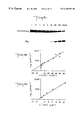
- FIGS. 4A-4C Kinetic analysis of the RNA endoribonuclease reaction.
- a The oligoribonucleotide substrate (2.5 uM) was incubated with wild-type L-19 IVS-beta RNA (0.2 uM) as in FIG. 3, except that urea was omitted.
- b Kinetics of cleavage of GGCCCUCUA 5 as a function of GTP concentration.
- RNA substrate concentration was kept constant at 2.5 uM.
- c Kinetics of cleavage as a function of RNA substrate concentration, with GTP concentration kept constant at 0.5 mM.
- FIGS. 5A-5G The L-19 IVS RNA catalyzes the cleavage and rejoining of oligoribonucleotide substrates; (A) 10 uM pC 5 and (B) 10 uM d-pC 5 , both with 1.6 uM L-19 IVS RNA; (C) 45 uM pC 5 in the absence of L-19 IVS RNA; (D) 45 uM pU 6 with 1.6 uM L-19 IVS RNA; (E) 10 uM pC 5 , (F) 50 uM pC 5 and (G) 100 uM pC 5 , all with 1.6 uM L-19 IVS RNA.
- Oligonucleotides were 5′-end labeled by treatment with [gamma- 32 P]ATP and polynucleotide kinase; they were diluted with unlabeled oligonucleotide of the same sequence to keep the amount of radioactivity per reaction constant.
- the L-19 IVS RNA was synthesized by transcription and splicing in vitro. Supercoiled pSPTT1A3 DNA (Price, J. V., et al. (1985) Science 228:719) was cut with Eco RI and then transcribed with SP6 RNA polymerase (Butler, E. T., et al. (1982) J. Biol. Chem. 257:5772; Melton, D. A., et al.
- nucleoside triphosphates 0.5 mM each
- 6 mM MgCl 2 4 mM spermidine
- 10 mM dithiothreitol 40 mM tris-HCl
- pH 7.5 100 units of SP6 RNA polymerase per microgram of plasmid DNA.
- NaCl was added to a final concentration of 240 mM and incubation was continued at 37° C. for 30 minutes to promote excision and cyclization of the IVS RNA.
- Nucleic acids were precipitated with three volumes of ethanol and redissolved in 50 mM CHES, pH 9.0; MgCl 2 was added to a final concentration of 20 mM, and the solution was incubated at 42° C. for 1 hour to promote site-specific hydrolysis of the circular IVS RNA to give L-19 IVS RNA (Zaug, A. J., et al., Science 224, 574 (1984). The reaction was stopped by the addition of EDTA to 25 mM. The L-19 IVS RNA was purified by preparative gel electrophoresis and Sephadex G-50 chromatography. Labeled oligonucleotides were incubated with unlabeled L-19 IVS RNA at 42° C.
- FIG. 6 Kinetics of conversion of pC 5 to larger and smaller oligonucleotides with 1.6 uM L-19 IVS RNA.
- Products were separated by polyacrylamide gel electrophoresis. With the autoradiogram as a guide, the gel was cut into strips and the radioactivity in each RNA species was determined by liquid scintillation counting. The amount of reaction at each time was taken as the radioactivity in pC 3 +pC 4 +pC 6 +pC 7 + . . . divided by the total radioactivity in the lane.
- the initial velocity of product formation, V o was determined from a semilogarithmic plot of the fraction of reaction as a function of time.
- V o was then plotted as a function of substrate concentration; the line is a least-squares fit to the Michaelis-Menten equation.
- the kinetic parameters for the first and second steps in the reaction have not yet been determined separately.
- FIGS. 7A-7D Formation and resolution of the covalent enzyme-substrate intermediate.
- A To form the covalent L-19 IVS RNA-substrate intermediate, 8.5 nM C 5 was treated with 0.16 uM L-19 IVS RNA under standard reaction conditions for 0 to 60 minutes.
- B C 5 (0.01 uM) was reacted with 0.16 uM L-19 IVS RNA. Cleavage occurred normally, but there was very little rejoining.
- C Labeled covalent intermediate was prepared as in (A) (60 minutes) and purified by electrophoresis in a 4 percent polyacrylamide, 8M urea gel. It was then incubated with 10 uM unlabeled C 5 under standard reaction conditions for 0 to 60 minutes.
- the charge-to-mass ratio is increasing with chain length, whereas with 5′-phosphorylated oligonucleotides the charge-to-mass ratio is independent of chain length.
- the distribution was converted to the normal spacing as in FIG. 1 [Zaug, A., et al. (unpublished data)].
- FIG. 8 Model for the enzymatic mechanism of the L-19 IVS RNA.
- the RNA catalyzes cleavage and rejoining of oligo(C) by the pathway 1 -2 -3 -4 -1.
- the L-19 IVS RNA enzyme (1) is shown with the oligopyrimidine binding site (RRRRRR, six purines) near its 5′ end and G 414 with a free 3′-hydroxyl group at its 3′ end.
- RRRRRRRR oligopyrimidine binding site
- the complex folded core structure of the molecule (Davies, R. W., et al., (1982) Nature (London) 300:719; Waring, R. B., et al. (1983) J. Mol. Biol. 167:595; Michel, F., et al.
- the covalent intermediate is usually loaded with a single nucleotide, as shown; with substrates of longer chain length, an oligonucleotide can be attached to the 3′ end of G 414 . If C 5 binds to the intermediate (3) in the manner shown in (4), transesterification can occur to give the new product C 6 and regenerate the enzyme (1). Note that all four reactions in this pathway are reversible. When acting as a ribonuclease, the L-19 IVS RNA follows the pathway 1 -2 -3 -1. The covalent intermediate (3) undergoes hydrolysis, releasing the nucleotide or oligonucleotide attached to its 3′ end (in this case pC) and regenerating the enzyme (1).
- FIGS. 9A-9C Competitive inhibition of the pC 5 reaction by d-C 5 .
- FIGS. 10A-10F Relation of reactions catalyzed by the L-19 IVS RNA to self-splicing and the related IVS RNA-mediated reactions.
- Formation of the covalent enzyme-substrate intermediate (A) is analogous to IVS RNA autocyclization (B).
- Resolution of the enzyme-substrate intermediate (C) is analogous to exon ligation (D) or the reversal of cyclization (Sullivan, F. X. and Cech, T. R. (1985) Cell 42:639).
- Hydrolysis of the enzyme-substrate intermediate (E) is analogous to site-specific hydrolysis of the circular IVS RNA (F) or the pre-rRNA (Inoue, T., et al. (1986) J. Mol. Biol. 189:143-165).
- FIGS. 11A-11B The L-19 IVS RNA catalyzes the dephosphorylation of oligo(cytidylic acid) 3′-phosphate.
- L-19 IVS RNA (0.16 uM) was incubated with p*C 5 (10 uM), p*A 6 (10 uM), C 5 p*Cp(about 2 nM), and A 6 p*CP (about 3 nM) in 20 mM MgCl 2 and 50 mM Tris-HCl, pH 7.5, at 42° C. for the times indicated. Reaction products were separated by electrophoresis in a 20% polyacrylamide-7 M urea sequencing gel, an autoradiogram of which is shown.
- FIGS. 12A-12C Effect of pH on the phospho transfer and nucleotidyl transfer reactions.
- A Lane 1 , untreated C 5 p*Cp; lanes 2 - 11 , C 5 p*Cp (15 nM) incubated with excess L-19 IVS RNA (500 nM) in 20 mM MgCl 2 and 50 mM buffer (NaOAc for pH 4.0 and 5.0, Tris-HCl for pH 7.5, CHES for pH 9.0 and 10.0); lane 12 , C 5 p*Cp treated with calf intestinal phosphatase to provide a marker for C 5 p*C—OH; lane 13 , untreated p*C 5 ; lanes 14 - 23 , p*C 5 (15 nM) incubated with excess L-19 IVS RNA (500 nM) as in lanes 2 - 11 .
- FIG. 13 Phosphorylation of the enzyme is reversible.
- L-19 IVS RNA (0.2 uM) was phosphorylated by incubation with 2.5 uM unlabeled C 5 p for min at 42° C. at pH 5.0.
- FIG. 14A-14C The L-19 IVS RNA acts catalytically as a phosphotransferase.
- A Decreasing concentrations of C 5 p* were incubated for 30 min with 0.32 uM L-19 IVS RNA and 100 uM unlabeled UCU—OH. The specific radioactivity of C 5 p* was adjusted by addition of unlabeled C 5 p* to keep the amount of radioactivity constant among samples. The small amount of intermediate band seen in some reactions is presumed to be UCUCp formed by attack of UCU on an E-pCp covalent intermediate. (-lane) C 5 p* prior to incubation.
- FIG. 15 Single active site model for the activity of the L-19 IVS RNA on phosphate diester and phosphate monoester substrates.
- A Reversible nucleotidylation of the L-19 IVS RNA, proposed to be the key step in the poly(C) polymerase reaction (Zauc & Cech, (1986) Science (Wash. D.C. 231:470-475.
- B Reversible phosphorylation of the L-19 IVS RNA, which allows the enzyme to act as a phosphotransferase.
- the oligo(C) substrate base pairs to the oligo(Pyrimidine) binding site (six R's) to form a noncovalent complex.
- the binding site is nucleotides 22-27 of the IVS RNA and has the sequence GGAGGG (M.D. Been and T. R. Cech, (1986) Cell 47:206-216). Nucleophilic attack by the 3′-hydroxyl of the active site guanosine, G414, leads to formation of E-pC (A) or E-p (B) and the release of C 5 .
- the complex folded core structure of the IVS is depicted as a simple curved line.
- FIG. 16 Plasmid pBGST7 contains a fragment with the IVS inserted into the multicloning site of a small pUC18 derivative which in turn contains a phage T7 promoter.
- the double line represents the plasmid DNA with the IVS. The relative positions of the promoters are indicated. The positions of the EcoRI and Hind III site are indicated by the arrowheads.
- the upper line represents the in vitro transcript made from purified plasmid DNA with phage T7 RNA polymerase. The numbers above it refer to the length, in nucleotides, of the exons and IVS.
- the lower line represents the in vivo transcript of the 5 ′ end of lacZ′.
- the IVS (heavy line) contains stop codons in all three reading frames, so a functional alpha fragment can only be produced if the IVS is excised and the exons are joined by splicing in E. coli.
- the Tetrahymena rRNA intervening sequence is a catalytic RNA molecule or ribozyme. It mediates RNA self-splicing, accomplishing its own excision from the large ribosomal RNA precursor, and subsequently converts itself to a circular form (Kruger, K., et al. (1982) Cell 31:147-157; Zaug, A. J., et al. (1983) Nature 301:578-583). In these reactions, the splice sites and cyclization sites can be viewed as intramolecular substrates for an activity that resides within the IVS RNA (Zaug, A. J., et al. (1984) Science 224:574-578). This is not a true enzymatic reaction however since the RNA is not regenerated in its original form at the end of the self-splicing reaction.
- the IVS RNA when in its linear form is referred to as L IVS RNA.
- the L-19 TVS RNA acts as an enzyme with nucleotidyltransferase [poly(C) polymerase] and phosphodiesterase (ribonuclease) activities (Zaug, A. J. and Cech, T. R. (1986) Science 231:470-475).
- poly(C) polymerase nucleotidyltransferase
- ribonuclease ribonuclease activities
- 3′-phosphorylated oligo(C) substrates the same ribozyme acts as a phosphotransferase and an acid phosphatase (Zaug, A. J. and Cech, T. R. (1986) Biochemistry 25:4478-4482).
- a key mechanistic feature of all four of these reactions is the formation of a covalent enzyme-substrate intermediate in which a nucleotide or phosphate is esterified through the 3′-O of G 414 , the 3′ terminal guanosine of the IVS RNA.
- a fifth enzymatic activity concerning the endoribonuclease activity of the L-19 IVS RNA on other RNA molecules.
- the excised IVS RNA (Abbreviations: IVS, intervening sequence or intron: L-19 IVS RNA (read “L minus 19”), a 395-nt RNA missing the first 19 nt of the L IVS RNA (the direct product of pre-ribosomal RNA splicing); , 32 P within an oligonucleotide, that is, C 5 C is CpCpCpC 32 pC and C 5 is 32 pCpCpCpCpC; d-C 5 , deoxyC 5 ) undergoes a series of RNA-mediated cyclization and site-specific hydrolysis reactions.
- the final product, the L-19 IVS RNA is a linear molecule that does not have the first 19 nucleotides of the original excised IVS RNA (Zaug, A. J., et al., Science 224:574 (1984).
- the L-19 IVS RNA is a true enzyme.
- the enzyme can act on RNA molecules of large size and complex sequence, we have found that studies with simple oligoribonucleotides like pC 5 (pentacytidylic acid) have been most valuable in revealing the minimum substrate requirements and reaction mechanism of this enzyme.
- rRNA self-splicing ribosomal RNA
- the reaction mechanism resembles that of rRNA precursor self-slicing. With pentacytidylic acid as the substrate, successive cleavage and rejoining reactions lead to the synthesis of polycytidylic acid.
- RNA molecule can act as an RNA polymerase, differing from the protein enzyme in that it uses an internal rather than an external template.
- various heteropolymers would be constructed by varient RNA enzyme forms. This predicts the formation for example of messenger RNA molecules for particular peptides or proteins. This messenger could be synthesized with or without introns.
- the same RNA enzyme has activity as a sequence-specific ribonuclease.
- the L-19 IVS RNA makes poly(C) with chain lengths of 30 nucleotides and longer, acting as an RNA polymerase or nucleotidyl transferase.
- longer oligonucleotides can be formed from short oligonucleotide starting material.
- the number of P—O bonds is unchanged in the process.
- the RNA polymerase reaction is also conservative with respect to the number of P—O bonds in the system.
- the L-19 IVS RNA can therefore be considered to be a poly(C) polymerase that uses C 4 pC instead of pppC as a substrate. It incorporates pC units at the 3′ end of the growing chain and releases C 4 ; the C 4 is analogous to the pyrophosphate released by RNA polymerase. Synthesis is directed by a template, but the template is internal to the RNA enzyme. It may be possible to physically separate the template portion from the catalytic portion of the RNA enzyme with retention of activity. If so, the RNA enzyme could conceivably act as a primordial RNA replicase, catalyzing both its own replication and that of other RNA molecules (T. R. Cech, (1986) Proc. Nat'l. Acad. Sci. U.S.A. 83:4360-4363.
- the K m is typical of that of protein enzymes.
- the k cat and k cat /K m are lower than those of many protein enzymes. However, k cat is well within the range of values for proteins that recognize specific nucleic acid sequences and catalyze chain cleavage or initiation of polymerization.
- Another way to gauge the catalytic effectiveness of the L-19 IVS RNA is to compare the rate of the catalyzed reaction to the basal chemical rate.
- a transesterification reaction between two free oligonucleotides has never been observed, and hence the uncatalyzed rate is unknown.
- the rate of hydrolysis of simple phosphate diesters has been studied (Kumamoto, J., et al. (1956) J. Am. Chem. Soc. 78:4858; P. C. Haake et al. ibid. (1961) 83:1102; Kirby, A. J., et al. (1970) J. Chem. Soc. Ser. B., p. 1165; Bunton, C.
- the second-order rate constant for alkaline hydrolysis of the labile phosphodiester bond in the circular IVS RNA is 12 orders of magnitude higher than that of dimethyl phosphate (Kumamoto, J., et al. (1956) Supra) and ten orders of magnitude higher than that expected for a normal phosphodiester bond in RNA (The rate of nucleophilic attack by hydroxide ion on phosphate esters is sensitive to the pK a of the conjugate acid of the leaving group.
- pK a 12.5 for a nucleoside ribose
- pK a 15.5 for methanol
- RNA The estimate for RNA pertains to direct attack by OH ⁇ on the phosphate, resulting in 3′-hydroxyl and 5′-phosphate termini. Cleavage of RNA by OH ⁇ -catalyzed transphos-phorylation, producing a 2′,3′-cyclic phosphate, is a much more rapid (intramolecular) reaction but is not relevant to the reactions of the L-19 IVS RNA).
- the covalent enzyme-substrate complex undergoes hydrolysis at approximately the same rate as the equivalent bond in the circular IVS RNA.
- the L-19 IVS RNA in its ribonuclease mode enhances the rate of hydrolysis of its substrate about 10 10 times.
- RNA moiety of ribonuclease P the enzyme responsible for cleaving transfer RNA (tRNA) precursors to generate the mature 5 ′ end of the tRNA
- tRNA transfer RNA
- RNA enzyme molecule an enzyme molecule.
- this enzyme catalyzes only a specific tRNA reaction without general RNA activity. The specificity is such that a variety of single base changes in the t-RNA portion of the pre-tRNA substrate prevent the enzyme from cleaving the substrate.
- the same enzyme has activity toward phosphate monoesters.
- the 3′-phosphate of C 5 p or C 6 p is transferred to the 3′-terminal guanosine of the enzyme.
- the pH dependence of the reaction indicates that the enzyme has activity toward the dianion and much greater activity toward the monoanion form of the 3′-phosphate of the substrate.
- Phosphorylation of the enzyme is reversible by C 5 —OH and other oligo(pyrimidines) such as UCU—OH.
- the RNA enzyme acts as a phosphotransferase, transferring the 3′-terminal phosphate of C 5 p to UCU—OH with multiple turnover.
- RNA enzyme dephosphorylates oligonucleotide substrates with high sequence specificity, which distinguishes it from known protein enzymes.
- the L-19 IVS RNA has transphosphorylation activity toward 3′-phosphorylated oligo(C) substrates.
- the properties of the transphosphorylation reaction indicate that it is taking place in the same active site as the poly(C) polymerase and ribonuclease reactions (FIG. 15 ).
- the properties include the specificity of the reactions for oligo(C) substrates, the production of oligo(C) products with 3′-hydroxyl termini, and the formation of similar covalent enzyme-substrate complexes.
- the presumptive intermediate is a phosphoenzyme, E-p, in the case of the phosphotransferase reaction and a nucleotidyl enzyme, E-pC or E-(pC) n , in the case of the poly(C) polymerase and ribonuclease reactions (Zaug & Cech, (1986) Science (Wash., D.C. 231:470-475).
- the presumptive covalent intermediate involves a phosphate ester linkage through the 3′-O of G414 of the L-19 IVS RNA (Zaug and Cech, unpublished results).
- the transphosphorylation reaction is readily reversible.
- the phosphate can be transferred from the enzyme to an acceptor with a 3′-hydroxyl group, such as C 5 or UCU.
- C 5 p and UCU as cosubstrates, the L-19 IVS RNA can catalyze the reaction C 5 p+UCU—OH ⁇ C 5 —OH+UCUp.
- the proposed pathway is
- the L-19 IVS RNA has transphosphorylation activity resembling that of Escherichia coli alkaline phosphatase (Reid & Wilsor, (1971) Enzymes (3rd Ed.) 4:373-415); Coleman & Gettins, (1983) Adv. Enzymol. Relat. Area Mol. Biol., 55:381), acid phosphatase, and a variety of other phosphotransferases that form covalent enzyme-substrate intermediates (Knowles, (1980) Ann. Rev. Biochem. 49:877).
- the L-19 IVS RNA phosphoenzyme can transfer its phosphate to water at pH 4 and 5, indicating it has acid phosphatase activity.
- the acidic pH requirement for hydrolysis of the phosphoenzyme can be similarly explained if the reaction occurs by attack of water on the phosphate monoester monoanion.
- the pH independence of transphosphorylation between pH 7.5 and pH 9.0 strongly suaqests that the monoester dianion is also reactive, albeit at a rate less than 5% that of the monoester moncoanion.
- the reactivity of the monoester dianion is surprising and perhaps indicates that the enzyme provides electrophilic assistance to the departure of the leaving group with a proton or metal ion.
- the phosphodiester bond following G414 is labile in the circular IVS RNA (Zaug et al., 1984 Science (Wash., D.C. 224:574), in the pre-rRNA (Inoue et al., 1986, J. Mol. Biol. 189:143), and in E-pC (Zaug, A. J., and Cech, T., 1986, Science (Wash., D.C.) 231:470-475), whereas the phosphomonoester bond following G414 is stable in E-p. Specific hydrolysis of the phosphodiester bonds involves attack of hydroxide ion (Zaug, A. J. et al., (1985) Biochemistry 24:6211).
- the L-19 IVS RNA is unique among known enzymes in its ability to remove 3′-phosphates from RNA with high substrate specificity. E. coli and mammalian alkaline phosphatases are nonspecific. These enzymes remove 5′-, 3′-, and 2′-phosphates from RNA with little regard for the base sequence of the molecule (Garen & Levinthal, (1960) Biochem. Biophys. Acta. 38:470; Harkness, (1968) Arch. Biochem. Biophys. 126:513).
- Polynucleotide kinase has 3′-phosphatase, 2′-phosphatase, and cyclic 2′, 3′-phosphatase activity (Cameron & Uhlenbeck, (1977) Biochemistry 16:5120; Weber, (1985) Ph.D. Thesis, University of Illinois). Substrates as diverse as U 5 p, A 6 Cp, and pCp are readily dephosphorylated, and where careful kinetic measurements have been made, the rates of dephosphorylation of different RNA substrates seldom vary by more than a factor of 2 (Weber, (1985) Supra).
- P1 nuclease and mung bean nuclease have limited preference for certain nucleoside 3′-monophosphates (Shishido & Ando, (1982) Supra).
- the L-19 IVS RNA transfers the 3′-phosphate of RNA to a donor molecule with high substrate specificity; C 5 p and C 6 p are substrates, whereas pCp and A 6 pCp are not.
- This length and sequence specificity is explained by the requirement that the substance must bind to the enzyme by Watson-Crick base pairing to the guanosine-rich active site (FIG. 15 ). If this model is correct, it should be possible to alter the sequence specificity of the phosphotransferase by site-specific mutagenesis of the active site.
- RNA enzyme described here has cleavage-ligation activity as well as the dephosphorylation activity. Unless these activities can be separated, the usefulness of the enzyme as a reagent for dephosphorylation of RNA is limited.
- sequence-specific endoribonucleases protein-free i.e. able to act in the absence of protein, and composed of RNA, which are enzymatically active on other RNA molecules.
- RNA ribozymes act on exogenous RNA.
- the enzyme or ribozyme is composed of RNA and the substrate is RNA (or mixed RNA-DNA polymers)
- the ribozyme has high specificity for cleavage after the nucleotide sequence CUCU; under stringent conditions it can discriminate against sites that have a 3-out-of-4 match to this recognition sequence. For example, in a solution containing 2.5 M urea the ribozyme cleaves after CUCU while ignoring the related sequences CUGU and CGCU (FIG. 3 c ).
- the sequence specificity approaches that of the DNA restriction endonucleases (Nathans, D. and Smith, H. O. (1975) Annu. Rev. Biochem. 44:273-293).
- site-specific mutations in the active site of the IVS RNA the so-called internal guide sequence (Davies, R.
- Protein ribonucleases that are active on single-stranded RNA substrates have specificity only at the mononucleotide level (for example, ribonuclease T 1 cleaves after guanosine).
- the L-19 has more base-sequence specificity for single-stranded RNA than any known protein ribonuclease, and may approach the specificity of some of the DNA restriction endonucleases.
- An attractive feature of this new RNA enribonuclease is that its substrate specificity can be completely and predictably changed by altering the sequence of the internal binding site.
- the endoribonuclease reaction is analogous to the first step of pre-rRNA self-splicing (FIGS. 1 A- 1 B). Both the enzymatic and the self-splicing reactions make use of the same two binding sites, an oligopyrimidine-binding site and a guanosine-binding site, to achieve specificity and to contribute to catalysis.
- the oligopyrimidine-binding site is also known as the 5′ guide sequence (Waring, R. B., et al. (1986) Nature 321:133-139) or the 5′ exon-binding site (Inoue, T., et al. (1985) Cell 43:431, Garriga, G., et al.
- the endoribonuclease activity of the L-19 IVS RNA does not require its 3′-terminal guanosine (G 414 ). In this respect it differs from the nucleotidyl transfer, phospho transfer and hydrolytic activities of the same enzyme. In those reactions G 414 participates in a covalent enzyme-substrate complex that appears to be an obligatory reaction intermediate (Zaug, A. J. and Cech, T. R. (1986) Science 231:470-475; Zaug, A. J. and Cech, T. R. (1986) Biochemistry 25:4478). Thus, the L-19 IVS RNA is not restricted to reaction mechanisms involving formation of a covalent enzyme-substrate intermediate.
- Ribonuclease P an RNA enzyme that catalyzes cleavage by hydrolysis rather than by transesterification, also appears to act without formation of a covalent intermediate (Marsh, T. L., et al. (1985) Science 229:79-81; Guerrier-Takeda, C., et al. (1986) Biochemistry 25:1509).
- the substrate tested by Szostak ((1986) Nature Supra) was an RNA fragment containing the end of the 5′ exon paired with the 5′ exon-binding site. However, this RNA “substrate” also included a substantial portion of the IVS RNA, so it remains to be established whether the ribozyme has endoribonuclease activity with double-stranded RNA substrates in general.
- Sequence-specific endoribonucleases might have many of the same applications for the study of RNA that DNA restriction endonucleases have for the study of DNA (Nathans, D. and Smith, H. O., (1975) Ann. Rev. Biochem. 44:273).
- the pattern of restriction fragments could be used to establish sequence relationships between two related RNAs, and large RNAs could be specifically cleaved to fragments of a size more useful for study.
- the 4-nucleotide specificity of the ribozyme is ideal for cleavage of RNAs of unknown sequence; an RNA of random sequence would have an average of 1 cleavage site every 256 bases.
- the automatic end-labelling of one fragment during ribozyme cleavage is a practical advantage.
- RNA substrates The efficiency of cleavage of large RNA substrates needs to be increased so that complete digests rather than partial digests can be obtained.
- denaturants such as urea and formamide must be further explored; they appear to increase the sequence specificity of cleavage, and at the same time they should melt structure in the substrate to maximize the availability of target sequences.
- mutagenesis of the active site of the ribozyme by those skilled in the art can be accomplished to ascertain all possible permutations of the 256 possible tetranucleotide cleavage enzymes.
- RNA sequence recognition Protein ribonucleases can cleave RNA substrates with high specificity by recognizing a combination of RNA structure and sequence, with the emphasis on structure (e.g., RNase III (Robertson, H. D. (1982) Cell 30:669) and RNase M5 (Stahl, D. A., et al. (1980) Proc. Natl. Acad. Sci. U.S.A. 77:5644).
- RNase III Robertson, H. D. (1982) Cell 30:669
- RNase M5 Stahl, D. A., et al. (1980) Proc. Natl. Acad. Sci. U.S.A. 77:5644.
- RNA substrates have specificity only at the mononucleotide or dinucleotide level (e.g., RNase T 1 cleaves after guanosines (Egami, F., et al. (1980) Molec Biol. Biochem. Biophys. 32:250-277].
- RNase T 1 cleaves after guanosines (Egami, F., et al. (1980) Molec Biol. Biochem. Biophys. 32:250-277].
- the L-19 IVS RNA has considerably more base-sequence specificity for cleaving single-stranded RNA than any known protein ribonuclease.
- Cech, T. R., et al. have recently found a yet smaller piece of the L-19 IVS RNA which contains full enzymatic activity and comprises nucleotides 19-331 of the RNA. It is also found that the 21-331 piece is fully active. Plasmids have been constructed to produce the L-19 and L-21 IVS RNA strands directly. Here the promoter is moved to the 19 position or 21 position and the DNA coding for the restriction site is at the 331 position instead of the 414 site.
- RNA sequence elements can be considered to provide the minimum active site for ribozyme activity, based on (Cech, et al., PNAS (1983) and Waring & Davies Supra).
- Elements A and B interact with each other, as do 9L and 2. In many positions of the sequence, more than 1 base is allowed; the observed substitutions are shown by printing a letter directly below the base for which it can substitute. For example, at position 1 in sequence element A , the nucleotides A and U are observed, A being more common.
- L IVS RNA The linear sequence of non-template DNA coding for L IVS RNA is shown below. Coding for the L-19 IVS RNA “ribozyme” begins at the site indicated by the arrow and extends to the end (G 414 ). Of course, in RNA the T's are U's.
- the first ribonucleotide for the L-19 IVS RNA at the 5′OH end is the equivalent of the nucleotide 20 of the intact L IVS RNA.
- positions 23, 24, 25 etc. these are positions 23, 24, 25 of the L IVS RNA (as if the fiest 19 position were present).
- L-19 IVS RNA Since dC 5 binds to the L-19 IVS RNA (see above), it is likely that the endoribonucleases will work on mixed polymers of RNA and DNA. For example, L-19 IVS RNA will bind the DNA portion while the RNA enzyme works on the RNA piece of the mixed polymer. Alteration of the binding site to bind the other nucleotides will result in an array of mixed polymer activity in a series of such endoribonucleases.
- IVS intervening sequence
- L-19 IVS RNA read “L minus 19”
- CHES 2-(cyclohexylamino)-ethanesulfonic acid
- EDTA ethylenediaminetetraacetic acid
- MES 2-(N-Morpholino)-ethanesulfonic acid
- Tris tris(hydroxy-methyl)aminomethane
- p* 32 P within an oligonucleotide (for example, C 5 p* is CpCpCpCpC[ 32 P]-pCp).
- RNA was transcribed from pSPTT1A3 with bacteriophage SP6 RNA polymerase in vitro.
- RNA can be transcribed from pT7-TT1A3 or from any of the plasmids in the pBG series with bacteriophage T7 RNA polymerase in vitro). Transcripts were further incubated to promote self-splicing and cyclization of the IVS RNA.
- RNA was subsequently incubated in MgCl 2 at pH 9.0 (site-specific hydrolysis conditions) to convert circular IVS RNA to L-19 IVS RNA.
- the L-19 IVS RNA was purified by polyacrylamide gel electrophoresis and Sephadex G-50 chromatography. Enzyme concentration was determined by spectrophotometry assuming a molar extinction coefficient at 260 nm of 3.26 ⁇ 10 6 M ⁇ 1 cm ⁇ 1 .
- Active plasmids in use are as follows:
- pSPTT1A3, pT7-TT1A3, pBGST7 pBG/-2G:23C, pBG/23C, pBG/-3G:24C, pBG/24C, pBG/-4G:25C, pBG/25C, and pBG/23A 4 and pT7L-21.
- the PBG plasmid series is described in Been, M. and Cech, T. R. (1986) Cell 407:207.
- the pBG/3G:24C and the pBG/24C plasmids produce the L-19 IVS RNA 24C variant which cleaves RNA after the CGCU 4 base sequence.
- plasmids are on deposit and available at the Department of Chemistry and Biochemistry, University of Colorado, Boulder, Colo. 80309-0215. Examples of these including pBG ST7 (ATCC 40288) , pT7-TT1A3 (ATCC 40290) and pBG/-3G:24C (ATCC 40289) have been deposited with the American Type Culture Collection (ATCC) 12301 Parklawn Drive, Rockville Md. 20301 on Nov. 25, 1986.
- the plasmid pT7L-21 makes the L-21 IVS RNA wherein the first 21 bases are deleted. This plasmid (ATCC 40291) was also placed on deposit at the ATCC on Dec. 2, 1986.
- C 5 p*Cp and A 6 p*Cp were prepared from C 5 —OH and A 6 —OH, respectively, with T4 RNA ligase (New England Nuclear), p*Cp, and ATP. Products were purified by 20% polyacrylamide-7 M urea gel electrophoresis and Sephadex G-25 chromatography.
- C 5 p* was prepared from C 5 p*Cp by treatment with calf intestinal phosphatase and beta-elimination (Winter & Brownlee, 1978 Nucleic Acid. Res. 5:3129).
- Unlabeled C 5 p was prepared in a similar manner with unlabeled pCp as donor in the ligase reaction. Concentration was determined by spectrophotometry using a molar extinction coefficient at 270 nm of 30 ⁇ 10 3 M ⁇ 1 cm ⁇ 1 .
- E-p* Unlabeled L-19 IVS RNA (16 pmol) was incubated with 5.2 pmol of C 5 p* in 50 mM NaOAc, pH 5.0, and 20 mM MgCl 2 at 42° C. for 10 min. The reaction was stopped by the addition of EDTA to 40 mM.
- the E-p* was purified from unreacted C 5 p* by column chromatography on Sephadex G-100-120, which was equilibrated in 0.01 M Tris-HCl, pH 7.5, 0.25 M NaCl, and 0.001 M EDTA. The fractions that contained E-p* complex were pooled and precipitated with 3 volumes of ethanol. The dried precipitate was then dissolved in H 2 O.
- the oligoribonucleotide substrate (for example 10-100 uM pC 5 ) is incubated with ribozyme (for example 0.1-2.0 uM L-19 IVS RNA) at 42° C. in 20 mM MgCl 2 and 50 mM Tris, pH 7.5 for 1 hour.
- ribozyme for example 0.1-2.0 uM L-19 IVS RNA
- the 3′-phosphorylated RNA substrate (for example 2.5 uM C 5 p) is incubated with ribozyme (for example 0.1 uM L-19 IVS RNA) and an acceptor oligonucleotide (for example, 200 uM UpCpU) at 42° C. in 20 mM MgCl 2 and 50 mM MES, pH 6.0 for 3 hours.
- ribozyme for example 0.1 uM L-19 IVS RNA
- acceptor oligonucleotide for example, 200 uM UpCpU
- the 3′ phosphorylated RNA substrate (for example 2.5 uM C 5 p) incubated in equimolar concentration of ribozyme (for example 2.5 uM L-19 IVS RNA) at 42° C. in 20 mM MgCl 2 and 50 mm NaC 2 H 3 O 2 (Na acetate), pH 5.0 for 24 hours.
- ribozyme for example 2.5 uM L-19 IVS RNA
- Substrate RNA is pretreated with glyoxal according to the procedure of Carmichael and McMaster (1980) Meth in Enzymol. 65:380-391 and then ethanol precipitated and the precipitate pelleted by centrifugation in an eppendorf centrifuge. The pellet is dried and the RNA re-suspended in water.
- the glyoxylated substrate RNA (0.2 uM) is incubated with ribozyme (for example L-19 IVS-beta RNA, 0.2 uM) at 50° C. in 10 mM 10 MgCl 2 , 10 mM NaCl, 50 mM Tris-HCl pH 7.5, 0.5 mM GTP, 2.5M Urea for 1 hour.
- the L-19 IVS RNA enzyme was prepared by incubation of pre-rRNA under conditions that promote self-splicing, cyclization, and site-specific hydrolysis, (Zaug, A. J., et al. (1984) Science 224:574; Zaug, A. J., et al. (1986) Science 231:470).
- the 3′-terminal guanosine (G 414 ) was then removed from the L-19 IVS RNA by periodate oxidation followed by beta-elimination (Winter, G., et al. (1978) Nucleic Acids Res. 5:3129-3139).
- the resulting ribozyme (L-19 IVS-beta) has greatly reduced activity as a nucleotidyl-transferase, assayed using [ 32 P]-p(C) 5 as a substrate.
- the ribozyme was able to cleave p(C) 5 as well as large RNA molecules.
- the 504 nt pAK105 transcript (Mount, S. M., et al.
- L-19 IVS RNA are protein-free.
- the L-19 IVS RNA is therefore a protein-free RNA enzyme (or ribozyme).
- L-19 IVS RNA and the like also function as enzymes in the absence of proteins. This applies to exogenous as well as endogenous protein. This is evidenced by retention of activity when subjected to protease activity, boiling or sodium dodecyl sulfate. Any RNA polymerase protein from the transcription system used to produce IVS RNA is removed by phenol extraction. The ability to make the IVS RNA in a totally defined system in vitro and remove the RNA polymerase by phenol extraction is further evidence of the protein-free nature of the reaction.
- RNA (essentially pBR322 sequences) produced 4 major labeled fragments. These were sequenced in the same manner.
- pT7-1RNA with an additional 122 nt at its 3 ′ end produced by transcription of pT7-1 DNA that had been cleaved at the Sca I site, showed the expected increase in molecular weight of the labeled products.
- the L-19 IVS RNA became labeled, perhaps by the guanosine-exchange reaction proposed elsewhere (Zaug, A. J., et al. (1985) Science 229:1060-1064; Price, J. V., et al. (1987) J. Mol. Biol. in press).
- the sites of self-labeling were heterogeneous.
- coli strain JM83 Individual colonies were picked and miniprep DNA was screened by restriction endonuclease digestion to locate the promoter fragment to the correct HaeII site (position 680 on the map in the New England Biolabs Catalog). The orientation of the T7 promoter was determined by transcribing EcoRI-cut miniprep DNA with T7 RNA polymerase and determining the size of the product. This plasmid (pUT718) was then cut in the multicloning site with KpnI and SphI and treated with T4 DNA polymerase followed by calf intestinal phosphatase. An IVS-containing BamHI DNA fragment was isolated from pJE457 (Price, J. V. and Cech, T.
- Exon sequences were determined by dideoxy-sequencing the miniprep DNA. Ideally, site is not yet clear, although the absence of G residues may be significant. There is no apparent sequence preference downstream from the cleavage site, with all four nucleotides represented at position +1.
- M1 RNA the RNA subunit of E coli RNase P (Reed, R. E., et al. (1982) Cell 30:627-636) , was not cleaved by L-19 IVS RNA-beta under standard reaction conditions (FIG. 2 b ) .
- M1 RNA contains the sequence UCCUCU, which should be an excellent targent site. However, this sequence is involved in a stable hairpin stem (Guerrier-Takada, C., et al. (1984) Biochemistry 23:6327-6334; Pace, N. R., et al. (1985) Orig. of Life 16:97-116), which presumably makes it unavailable as a substrate.
- Oligoribonucleotide substrates were synthesized by the phage T7 RNA polymerase transcription method developed by Uhlenbeck and co-workers (Lowary, P., et al. (1986) NATO ASI Series, vol. 110, 69-76) (FIG. 3 a ).
- One substrate contained a perfect match to the tetranucleotide consensus sequence.
- Two other substrates had single-base changes giving a 3-out-of-4 match to the consensus.
- the active site can be manipulated to recognize any base sequence so far that is XYZU, where X, Y and Z can be any of the four bases A,U,C,G and the nucleotides in the four base sequence can be the same or different.
- each ribozyme When variant ribozymes were incubated with the 504 nt pAK105 RNA, each ribozyme gave a different pattern of cleavage products.
- One major cleavage site has been mapped for three variant ribozymes, including a 25C variant (G converted to C at position 25).
- the sites cleaved by the 23C, 24C and 25C ribozymes are preceded by CCCUGU, UCUGCU, and CUGUCU, respectively; the underlining indicates the base that would form a G.C. base pair with the mutated nucleotide in the variant ribozyme.
- Each of these sequences can form 6 continuous base-pairs with the active site nucleotides of the variant ribozyme. While more cleavage sites must be sequenced before specificity can be properly assessed, these initial results are promising.
- FIG. 4 a The time course of cleavage of the oligonucleotide substrate GGCCCUCU*AAAAA (where the asterisk designates the cleavage site) by the wild-type ribozyme is shown in FIG. 4 a .
- the reaction of 2.5 uM substrate with 0.2 uM ribozyme is 66% complete in 90 minutes.
- the ribozyme is acting catalytically.
- the reaction rate was determined at a series of substrate concentrations. The kinetics are adequately described by the Michaelis-Menten rate law.
- the dependence of the rate on GTP concentration is shown in the form of a Lineweaver-Burk plot in FIG. 4 b .
- the K m for GTP is 44 uM.
- the dependence of the rate on RNA substance concentration at saturating GTP concentration is shown in FIG. 4 C.
- the K m for this oligoribonucleotide substrate is 0.8 uM, and k cat is 0.13 min ⁇ 1 .
- V max conditions the enzyme turns over about 8 times per hour.
- the L-19 IVS RNA Catalyzes the Cleavage and Rejoining of Oligonucleotides
- Unlabeled L-19 IVS RNA was incubated with 5′- 32 P-labeled pC 5 in a solution containing 20 mM MgCl 2 , 50 mM tris-HCl, pH 7.5.
- the pC 5 was progressively converted to oligocytidylic acid with both longer and shorter chain length than the starting material (FIG. 5 A).
- the longer products extended to at least pC 30 , as judged by a longer exposure of an autoradiogram such as that shown in FIG. 5 A.
- THe shorter products were exclusively pC 4 and pC 3 .
- Incubation of pC 5 in the absence of the L-19 IVS RNA gave no reaction (FIG. 5 C).
- the reaction was specific for ribonucleotides, no reaction taking place with d-pC 5 (FIG. 1B) or d-pA 5 (Zaug, A., et al. unpublished data).
- pU 6 was a much poorer substrate than pC 5 or pC 6 (FIG. 5 D), and pA 6 gave no reaction (Zaug, A., and Cech, T. R., (1986), Biochemistry 25:4478).
- the L-19 IVS RNA is regenerated after each reaction, such that each enzyme molecule can react with many substrate molecules.
- quantitation of the data shown in FIG. 5G revealed that 16 pmol of enzyme converted 1080 pmol of pC 5 to products in 60 minutes. Such numbers underestimate the turnover number of the enzyme; because the initial products are predominantly C 6 and C 4 , it is likely that the production of chains of length greater than six or less than four involves two or more catalytic cycles. Quantitation of the amount of radioactivity in each product also provides some indication of the reaction mechanism.
- the amount of radioactivity (a measure of numbers of chains) in products larger than pC 5 is approximately equal to that found in pC 4 plus pC 3 , consistent with a mechanism in which the total number of phosphodiester bonds is conserved in each reaction. As the reaction proceeds, however, the radioactivity distribution shifts toward the smaller products. This is most likely due to a competing hydrolysis reaction also catalyzed by the L-19 IVS RNA, as described below.
- the rate of conversion of 30 uM pC 5 to products increases linearly with L-19 IVS RNA enzyme concentration in the range 0.06 to 1.00 uM (Zaug, A., et al. unpublished data).
- a fixed enzyme concentration (FIG. 5, E to G) there is a hyperbolic relation between the reaction rate and the concentration of pC 5 .
- the data are fit by the Michaelis-Menten rate law in FIG. 6 .
- the stability of the enzyme was determined by preliminary incubation at 42° C. for 1 hour in the presence of Mg 2+ (standard reaction conditions) or for 18 hours under the same conditions but without Mg 2+ . In both cases, the incubated enzyme had activity indistinguishable from that of untreated enzyme tested in parallel, and no degradation of the enzyme was observed on polyacrylamide gel electrophoresis (Zaug, A., et al. unpublished data). Thus, the L-19 IVS RNA is not a good substrate. The enzyme is also stable during storage at ⁇ 20° C. for periods of months. The specific activity of the enzyme is consistent between preparations.
- radioactivity became covalently attached to the L-19 IVS RNA (FIG. 7A)
- the radioactive phosphate was bonded covalently to the L-19 IVS RNA as judged by the following criteria: it remained associated when the complex was isolated and subjected to a second round of denaturing gel electrophoresis; it was released in the form of a mononucleotide upon RNase T 2 treatment; and it was released in the form of a series of unidentified oligonucleotides upon RNase T 1 treatment (A. Zaug and T. Cech, unpublished data).
- the model shown in FIG. 8 was tested by isolating the covalent enzyme-substrate complex prepared by reaction with C 5 C and incubating it with unlabeled C 5 . A portion of the radioactivity was converted to oligonucleotides with the electrophoretic mobility of C 6 , C 7 , C 8 , and higher oligomers (FIG. 7 C). In a confirmatory experiment, the covalent complex was prepared with unlabeled C 5 and reacted with C 5 . Radioactivity was again converted to a series of higher molecular weight oligonucleotides (Zaug, A., et al. unpublished data).
- the covalent complex is a mixture of L-19 IVS RNA's terminating in . . . GpC, . . . GpCpC, . . . GpCpC, and so on. Because they can react with C 5 to complete the catalytic cycle, these covalent enzvme-substrate complexes are presumptive intermediates in the reaction (FIG. 8 ). A more detailed analysis of the rate of their formation and resolution is needed to evaluate whether or not they are kinetically competent to be intermediates. We can make no firm conclusion about that portion of the enzyme-substrate complex that did not react with C 5 . This unreactive RNA could be a covalent intermediate that was denatured during isolation such that it lost reactivity, or it could represent a small amount of a different enzyme-substrate complex that was nonproductive and therefore accumulated during the reaction.
- the G 414 -A 16 linkage in the C IVS RNA, the G 414 -U 20 linkage in the C′ IVS RNA, and the G 414 -U 415 linkage in the pre-rRNA are unusual phosphodiester bonds in that they are extremely labile to alkaline hydrolysis, leaving 5′ phosphate and 3′-hydroxyl termini (Zaug, A. J. et al, (1984) Science 224:574 and Inoue, T., et al. (1986) J. Mol. Biol. 189,143-165).
- the lability of the G 414 -C bond forms the basis for the L-19 IVS RNA acting as a ribonuclease (FIG. 8) by a mechanism that is distinct from that of the endoribonuclease described in Examples I through VI.
- a competitive inhibitor Deoxy C 5 , which is not a substrate for L-19 IVS RNA-catalyzed cleavage, inhibits the cleavage of pC 5 (FIG. 9 A).
- Analysis of the rate of the conversion of pC 5 to pC 4 and pC 3 as a function of d-C 5 concentration is summarized in FIG. 9B and C.
- inhibition by d-C 5 is not some general effect of introducing a deoxyoligonucleotide into the system but depends on sequence.
- EpC covalent enzyme-substrate intermediate
- K i k- 1 /k 1 , the dissociation constant for the noncovalent E ⁇ C 5 complex.
- K i for d-C 5 is within an order of magnitude of the K m for C 5 can then be interpreted in terms of d-C 5 and C 5 having similar binding constants for interaction with the active site on the enzyme. This fits well with the idea that the substrate binds to an oligopurine (R 5 ) sequence in the active site primarily by Watson-Crick base-pairing, in which case the C 5 ⁇ R 5 duplex and the d-C 5 ⁇ R 5 duplex should have similar stability.
- Transesterification is expected to be highly reversible. If the product C 4 rebinds to the enzyme, it can attack the covalent intermediate and reform the starting material, C 5 . Early in the reaction, however, the concentration of C 5 is much greater than the concentration of C 4 ; if C 5 binds and attacks the covalent intermediate, C 6 is produced (FIG. 8 ). The net reaction is 2 C 5 converted to C 6 +C 4 . The products are substrates for further reaction, for example, C 6 +C 5 is converted to C 7 +C 4 and C 4 +C 5 is converted to C 3 +C 6 . The absence of products smaller than C 3 is explicable in terms of the loss of binding interactions of C 3 relative to C 4 (C 3 could form only two base pairs in the binding mode that would be productive for cleavage).
- RNA ligation can occur without an external energy source as is required by RNA or DNA ligase.
- Hydrolysis of the covalent intermediate competes with transesterification.
- the net reaction is C 5 +H 2 O converted to C 4 +pC, with the L-19 IVS RNA acting as a ribonuclease.
- the catalytic strategies of the L-19 IVS RNA enzyme appear to be the same as those used by protein enzymes (Jencks, W. P., (1969) Catalysis in Chemistry and Enzymology (McGraw-Hill, New York).
- the RNA enzyme like protein enzymes, forms a specific noncovalent complex with its oligonucleotide substrate. This interaction is proposed to hold the oligonucleotide substrate at a distance and in an orientation such as to facilitate attack by the 3′-hydroxyl of the terminal guanosine of the enzyme.
- a covalent enzyme-substrate complex is a presumptive intermediate in the L-19 IVS RNA reaction.
- Covalent intermediates are prevalent in enzyme-catalyzed group transfer reactions.
- the phosphodiester bond formed in the covalent intermediate is unusually susceptible to hydrolysis, suggesting that it may be strained or activated to facilitate formation of the pentavalent transition state upon nucleophilic attack (Zaug, A. J., et al. (1985) Biochemistry 24:6211; Zaug, A. J., et al. (1984) Science 224:574).
- protein catalysts are thought to facilitate the formation of the transition state, for example, by providing active site groups that bind the transition state better than the unreacted substrate (Fersht, A., (1985) Enzyme Structure and Mechanism (Freeman, New York, ed. 2); Wells, T. N.
- Each L-19 IVS RNA-catalyzed transesterification and hydrolysis reaction is analogous to one of the steps in Tetrahymena pre-rRNA self-splicing or one of the related self-reactions (FIGS. 10 A- 10 F).
- the finding of enzymatic activity in a portion of the IVS RNA validates the view that the pre-rRNA carries its own splicing enzyme as an intrinsic part of its polynucleotide chain. It seems likely that the C 5 substrate binding site of the L-19 IVS RNA is the oligopyrimidine binding site that directs the choice of the 5′ splice site and the various IVS RNA cyclization sites (Sullivan, F. X., et al.
- GGAGGG The putative binding site, is located at nucleotides 22 to 27 of the intact Tetrahymena IVS RNA and at positions 3 to 8 very near the 5′ end of the L-19 IVS RNA. If this is the substrate binding site, site-specific mutation of the sequence should change the substrate specificity of the enzyme in a predictable manner.
- the L-19 IVS RNA Dephosphorylates C 6 p.
- oligo(cytidylic acid) with a 3′-terminal hydroxyl group is incubated with the L-19 IVS RNA enzyme in 20 mM MgCl 2 , it is converted to oligo(C) with both larger and smaller chain lengths (FIG. 1A) as described previously (Examples VII and VIII and Zaug & Cech, (1986) Science (Wash., D.C.) 231:470-475.
- the reaction is specific for oligo(C); for example, pA 6 —OH is unreactive under the same conditions (FIG. 11A)
- Dephosphorylation is specific for the 3′-phosphate of oligo(cytidylic acid).
- the 5′-phosphate of pC 5 is not reactive (FIG. 11A) and neither phosphate is removed from pCp (data not shown). (We estimate that 0.1% reaction would have been detected).
- a 6 Cp (FIG. 11A) nor pA 6 p (not shown) is a substrate. (We estimate that 0.1% reaction would have been detected).
- there is both a minimum length requirement and a sequence requirements for a substrate and that the requirement are similar to those of the nucleotidyl transfer activity of the L-19 IVS RNA (Zaug & Cech, (1986) Science Supra).
- E-p Formation and Stability of E-p.
- the structure of E-p has been determined; the phosphate is esterified through the 3′-O of the 3′-terminal guanosine residue (G414) of the RNA (Zauc and Cech, unpublished results).
- the rate of conversion of G 5 p to C 5 —OH+E-p is pH-dependent with an optimum around pH 5.0.
- a sample of the data is shown in FIGS. 12A-12C.
- the phospho transfer reaction is essentially pH-independent in the range pH 7.5-9 and proceeds at a rate similar to that of the nucleotidyl transfer reaction (FIG. 12A) .
- the phospho transfer reaction is accelerated more than 20-fold, while the nucleotidyl transfer reaction is unaffected.
- the enzyme still has substantial phospho transfer activity while its nucleotidyl transfer activity is greatly diminished.
- E-pC The covalent intermediate formed during the reaction of pC 5 —OH with the L-19 IVS RNA (E-pC) is alkali-labile; at pH 9.0 it undergoes hydrolysis, releasing the nucleotide pC and regenerating the free enzyme (Zaug & Cech, (1986) Science Supra).
- E-pC The covalent intermediate formed during the reaction of pC 5 —OH with the L-19 IVS RNA
- the terminal phosphate monoester of E-p underwent slow hydrolysis.
- the phosphate was released as P i at a rate of approximately 10%/h. The rate was slower at pH 4.0 and at pH 6.0 than at pH 5.0. Release of P i was also observed during the reaction of C 5 p* with L-19 IVS RNA at pH 5.0 at reaction times of 2 and 4 h. Thus, the L-19 IVS RNA has acid phosphatase activity. This hydrolytic reaction is so slow, however, that we have not attempted to demonstrate multiple turnover.
- E-p is inactive as a nucleotidyltransferase but is readily subject to a reverse phosphorylation reaction.
- the L-19 IVS RNA is a Phosphotransferase.
- the phosphotransfer reactions described thus far were all done in enzyme excess.
- L-19 IVS RNA was capable of transferring the 3′-terminal phosphate from C 5 p to UCU.
- pBGST7 plasmid used for these studies.
- pUC18 was partially digested with HaeII and unit length linear molecules were isolated by agarose gel electrophoresis and electroelution. The recovered DNA was treated with T4 DNA polymerase to make blunt ends and then dephosphorylated with calf intestinal phosphatase.
- pT7-2 (U.S. Biochemical Corp.) was cut with Pvull and HindIII and treated with T4 DNA polymerase, and the fragment containing only plasmids containing IVS and exons that will preserve the reading frame of the lacZ gene fragment should give blue colonies and this will depend on the splicing of the message in E. coli (Waring, R. B., et al., (1985) Cell 40:371-380; Price, J. V. and Cech, T. R., (1985) Science 228:719-722). In fact, several plasmids that conferred a light blue color to the colonies had exons for which correct splicing of the IVS should not generate the proper reading frame; these were not investigated further. One that produced a dark blue colony, pBGST7 (FIG. 16 ), also had the expected reading frame and was used for these studies.
- Oligonucleotide-directed mutagenesis on plasmid DNA was done essentially as described by Inouye, S. and Inouye M. (1986) In DNA and RNA Synthesis, S. Narang, ed. (New York: Academic Press), in press.
- pBGST7 DNA was cleaved in the gene coding for ampicillin resistance with XmnI.
- pBGST7 DNA was cut with EcoRI and HindIII, sites that flank the IVS and exon sequences.
- the vector portion of the plasmid was separated from the IVS-containing fragment by agarose gel electrophoresis and recovered by electroelution.
- XmnI-cut DNA was mixed with the vector fragment in the presence of the oligonucleotide containing the mismatched base, heated to 95° C. for 5 min, place at 37° C. for 30 min, then at 4° C. for 30 min an then put on ice.
- the products were treated with dNTPs and Klenow fragment of DNA pol I at room temperature for 2 hr.
- E. coli strain JM83 was transformed with the DNA and ampicillin-resistant colonies were picked on the basis of color (white or light blue indicating loss of splicing activity) and the miniprep DNA was sequenced.
- the double mutants were made using the plasmid DNA of single mutants and screening for restored beta-galactosidase activity.
- pBG/-2G:23C was made from pBG/-2G and a second oligonucleotide directed at position 23.
- pBG/-3G:24C was made starting with pBG/24C and using the oligonucleotide directed at position -3.
- pBG/-4G:25C was made by generating a circular heteroduplex from pBG/-4G:25C that had been linearized at different positions. Transformation of these heteroduplexes generated blue and light blue colonies, both at a low frequency. The blue colonies were wild-type sequence the light blues double mutant.
- the ThaI fragment of Tetrahymena ribosomal RNA gene contains the IVS and small portions of the flanking exons. Hind III linkers were ligated onto the ends of the ThaI fragment and it was inserted into the Hind III site in the polylinker of pSP62 (New England Nuclear), which contains the SP6 promoter. The recombinant plasmid was cloned in E. coli by standard methods.
- pT7TT1A3 was identical to pSPTT1A3 except that the ThaI fragment was cloned into the Hind III site of pT7-2 (U.S. Biochemical Corp.) which contains the T7 promoter.
- pBGST7 (described in Been & Cech, (1986) Cell 47:207 was cleaved with restriction endonucleases SphI and Hind III and the small fragment containing the IVS minus its first 44 nucleotides was purified.
- pUC18 was cleaved with SpH I and Hind III, mixed with the Sph-HIND III fragment from pBGST7 and treated with DNA ligase. E. coli cells were transformed, colonies were picked, plasmid DNA was isolated from individual colonies and sequenced. A plasmid containing the SphI-Hind III fragment of the IVS properly inserted into pUC18 was selected for the next step.
- This plasmid was cleaved with SphI and EcoRI restriction endonucleases and a synthetic oligonucleotide was inserted into the plasmid using DNA ligase.
- the synthetic oligonucleotide contained one-half of the EcoRI restriction site, the T7 promoter, and nucleotides 22-44 of the Tetrahymena IVS, ending at the SphI site. E coli cells were transformed, colonies were picked, plasmid DNA was isolated from individual colonies and sequenced.
- the final plasmid pT7L-21 was found by sequence analysis to contain the T7 promoter properly juxtaposed to nucleotide 22 of the IVS. (See FIG. 16) Therefore the method can be used to create defined pieces of RNA.
- these defined pieces can be 5′-OH or 3′-OH end pieces, or center pieces containing the active site for study and production of varient RNA forms.
- the expected consensus sequence is based on the known sequence at the end of the 5′ exon (CUCUCU) modified by the possibility that either a C or a U at position -5 might be able to pair with the G in the active site.
- CUCUCU 5′ exon
Landscapes
- Genetics & Genomics (AREA)
- Life Sciences & Earth Sciences (AREA)
- Engineering & Computer Science (AREA)
- Health & Medical Sciences (AREA)
- Biomedical Technology (AREA)
- Chemical & Material Sciences (AREA)
- Wood Science & Technology (AREA)
- Organic Chemistry (AREA)
- Biotechnology (AREA)
- General Engineering & Computer Science (AREA)
- Bioinformatics & Cheminformatics (AREA)
- Zoology (AREA)
- Molecular Biology (AREA)
- Physics & Mathematics (AREA)
- Microbiology (AREA)
- Plant Pathology (AREA)
- Biochemistry (AREA)
- General Health & Medical Sciences (AREA)
- Biophysics (AREA)
- Crystallography & Structural Chemistry (AREA)
- Enzymes And Modification Thereof (AREA)
- Saccharide Compounds (AREA)
- Acyclic And Carbocyclic Compounds In Medicinal Compositions (AREA)
- Pharmaceuticals Containing Other Organic And Inorganic Compounds (AREA)
- Preparation Of Compounds By Using Micro-Organisms (AREA)
Abstract
RNA enzymes or ribozymes can act as endoribonucleases, catalyzing the cleavage of RNA molecules with a sequence specificity of cleavage greater than that of known ribonucleases and approaching that of the DNA restriction endonucleases, thus serving as RNA sequence specific endoribonucleases. An example is a shortened form of the self-splicing ribosomal RNA intervening sequence of Tetrahymena (L-19 IVS RNA). Site-specific mutagenesis of the enzyme active site of the L-19 IVS RNA alters the substrate sequence specificity in a predictable manner, allowing a set of sequence-specific endoribonucleases to be synthesized. Varying conditions allow the ribozyme to act as a polymerase (nucleotidyltransferase), a dephosphorylase (acid phosphatase or phosphotransferase) or a sequence-specific endoribonuclease.
Description
This application is a continuation of Cech et al., U.S. Ser. No. 08/671,824, filed Jun. 5, 1996, U.S. Pat. No. 6,025,167, which is a continuation of Cech et al., U.S. Ser. No. 08/278,624, filed Jul. 21, 1994 (U.S. Pat. No. 5,591,610), which is a continuation of Cech et al., U.S. Ser. No. 07/843,737, filed Feb. 28, 1992 (U.S. Pat. No. 5,354,855), which is a continuation of Cech et al., U.S. Ser. No. 07/562,672, filed Aug. 3, 1990 (U.S. Pat. No. 5,093,246), which is a division of U.S. Ser. No. 06/937,327, filed Dec. 3, 1986 (U.S. Pat. No. 4,987,071), which are hereby incorporated by reference in their entireties.
The invention was made in part with government funds under Grant GM 28039 from the National Institutes of Health. Therefore, the United States Government has certain rights in the invention.
This invention concerns compositions of RNA functioning as an RNA enzyme, i.e. a ribozyme in several capacities: dephosphorylase (acid phosphatase and transphosphorylase), ribonucleotidyl transferase (polymerase activity) and sequence-specific endoribonuclease activities.
It is found that purified ribonucleic acid (RNA) can serve as an enzyme acting on other RNA molecules in vitro (ribozyme) as a: 1) dephosphorylating enzyme catalyzing the removal of 3′ terminal phosphate of RNA in a sequence-specific manner, 2) RNA polymerase (nucleotidyl transferase) catalyzing the conversion of oligoribonucleotides to polyribonucleotides, 3) sequence specific endoribonuclease. (This latter activity is also referred to as RNA restriction endanuclease or endoribonuclease activity.)
FIGS. 1A-1B compares RNA self-splicing (A) to RNA endoribonuclease activity (B).
FIGS. 2A-2C shows products of cleavage of a variety of RNA substrates by the RNA endoribonuclease.
FIGS. 3A-3C compares different substrate activity of three variant forms of L-19 IVS ribozyme in 2.5M urea.
FIGS. 4A-4C shows the time course of oligonucleotide cleavage.
FIGS. 5A-5G shows the cleavage and reforming of oligoribonucleotide substrates by L-19-IVS RNA.
FIG. 6 shows the kinetics of conversion of pC5 to larger and smaller oligonucleotides with L-19 IVS RNA.
FIGS. 7A-7D shows the enzyme-substrate intermediate of L-19 IVS RNA.
FIG. 8 is a model for enzymatic mechanism of L-19 IVS RNA acting as a ribonucleotidyl transferase.
FIGS. 9A-9C shows the competitive inhibition of pC5 reaction by dC5.
FIGS. 10A-10F shows the relation of reactions catalyzed by the L-19 IVS RNA to self-splicing and related IVS RNA-mediated reactions.
FIGS. 11A-11B shows the dephosphorylation of oligo (cytidylic acid) 3-phosphate.
FIGS. 12A-12C shows the effect of pH on phosphotransfer and nucleotidyl transfer reactions.
FIG. 13 shows that the phosphorylation of L-19 IVS RNA ribozyme is reversible.
FIGS. 14A-14C shows the L-19 IVS RNA acts catalytically as a phosphotransferase.
FIG. 15 shows the single active site model for the activity of L-19 IVS RNA on phosphate diester and phosphate monoester substrates.
FIG. 16 shows the plasmid construction which produces the L-21 IVS RNA.
Figure Legends
FIGS. 1A-1B A model for the L-19 IVS RNA acting like an RNA restriction endonuclease by a mechanism that is an intermolecular version of the first step of pre-rRNA self-splicing. Thin letters and lines represent IVS sequences, boldface letters and thick lines represent exon sequences (above) or substrate RNA sequences (below), and the G in italics is a free guanosine nucleotide or nucleoside.
FIGS. 2A-2C The L-19 IVS-beta RNA cleaves large RNA substrates with transfer of guanosine. a, Uniformly labeled 0.6 uM (u=micro) pAK105 RNA (508 nt) incubated with 0.2 uM L-19 IVS-beta RNA and 0, 0.1 or 0.5 mM GTP (unlabeled) for 1 h under conditions described below. (M) Mixture of 4 substrate RNAs as molecular weight markers. b, Various tritiated RNA substrates (1 ug each) incubated with 0.2 uM L-19 IVS-beta RNA and 120 uM [alpha-32P]GTP for 1 h under the same reaction conditions as a. Autoradiogram reveals [32p]GTP-labeled products only. The L-19 IVS-beta RNA also becomes GTP-labeled during the incubation. c, Nucleotide sequence of the cleavage product pAK105(1) determined by the enzymatic method (Donis-Keller, H., (1980) Nucleic Acids Res. 8:3133-3142). Some nucleotides could not be assigned due to presence of a band in the untreated (control) RNA sample. G*, labeled GTP joined to the RNA during the reaction.
Methods: L-19 IVS RNA was synthesized by methods similar to those described previously (Zaug, A. J., and Cech, T. R., (1986) Science 231:470-475), except a different RNA polymerase-template system was used. Plasmid pT7-TT1A3 (which contains a T7 RNA polymerase promoter, a 42 bp 5′ exon, the entire 413 bp IVS, and an 82 bp 3′ exon) was cleaved with Eco RI and transcribed with bacteriophage T7 RNA polymerase (Davanloo, P., et al. (1984) Proc. Nat'l. Acad. Sci. U.S.A. 81: 2035-2039). The transcripts were incubated further under self-splicing, cyclization, and site-specific hydrolysis conditions to produce L-19 IVS RNA (Zaug, A. J., et al. (1984) Science 224:574-578; Zaug,-A. J. and Cech, T. R., (1986) Science 231:470-475). The 3′-terminal guanosine was then removed by periodate oxidation and beta-elimination (Winter, G., et al. (1978) Nucleic Acids Res. 5, 3129-3139) to yield L-19 IVS-beta RNA. Substrate RNAs were produced by T7 RNA polymerase transcription of BamHI-cleaved pAK105 (Mount, S. M., et al. (1983) Cell 33:509-518), XmnI- or ScaI-cleaved pT 7-1 (purchased from U.S. Biochemical Corp.), and SnaBI-cleaved pDW27, which encodes Ml RNA (obtained from D. Wahl and N. Pace). Substrate RNAs were incubated with L-19 IVS-beta RNA in 5 mM MgCl2, 10 mM NaCl, 50 mM Tris-HCl, pH 7.5 at 50° C.; in addition, GTP was present at the concentration indicated. Reactions were stopped by the addition of EDTA to a final concentration of 25 mM. Products were analyzed by electrophoresis in 4% polyacrylamide, 8 M urea gels and subjected to fluorography (a) or autoradiography (b).
FIGS. 3A-3C Three different ribozymes can distinguish between sequences that differ by only one single-base change within the recognition element. a, Synthesis of defined oligoribonucleotide substrates by the method of Lowary et al. (Lowary, P., et al. NATO ASI Series A, vol. 110, 69-76, 1986). DNA was transcribed with T7 RNA polymerase in the presence of [alpha-32P]ATP to produce oligoribonucleotides labeled with 32P in the positions indicated (*) b, Proposed interactions between the three oligoribonucleotide substrates (top strands, boldface letters) and the active sites of the matched ribozymes (bottom strands). Arrows designate sites of cleavage and guanosine addition. c, Cleavage of 3 oligoribonucleotide substrates by wild-type and variant L-19 IVS RNAs, assayed by 20% polyacrylamide, 7M urea gel electrophoresis. (−), untreated substrate. In other pairs of lanes, 1.0 uM 32p-labeled substrate was incubated with 0.125 M ribozyme for 15 min (left lane) or 60 min (right lane) at 50° C. in 10 mM MgCl2, 10 mM NaCl, 50 mM Tris-HCl, pH 7.5, 0.5 mM GTP (unlabeled), 2.5 M urea. Because the 32P is confined to the nucleotides downstream from the cleavage site, only the smaller of the products is apparent. The identity of the GA5 product was confirmed by treatment of the substrate and reaction mixtures with RNase T2 and monitoring the transfer of 32P to Gp. The band migrating above GA5 in lanes 2 and 3 was not produced consistently and has not been identified.
Methods: Substrates were prepared by transcription of deoxyoligonucleotides synthesized on an Applied Biosystems DNA Synthesizer. The same promoter top strand was used in each transcription. The bottom strand, which contains promoter and template sequences, was varied to obtain the different RNA substrates. The DNA was transcribed with purified phage T7 RNA polymerase (Davanloo, P., et al. (1984) Proc. Nat'l. Acad. Sci. U.S.A. 81:2035-2039) as described (Lowary, P., et al. NATO ASI Series, vol. 110, as above). Variant ribozymes are described by Been and Cech (Been, M. D., et al. (1986) Cell, 47:207-216). The 24C ribozyme was similarly prepared from transcripts of pBG/-3G:24C. The variant ribozymes were not subjected to beta-elimination to remove their 3′-terminal G.
FIGS. 4A-4C Kinetic analysis of the RNA endoribonuclease reaction. a, The oligoribonucleotide substrate (2.5 uM) was incubated with wild-type L-19 IVS-beta RNA (0.2 uM) as in FIG. 3, except that urea was omitted. b, Kinetics of cleavage of GGCCCUCUA5 as a function of GTP concentration. RNA substrate concentration was kept constant at 2.5 uM. c, Kinetics of cleavage as a function of RNA substrate concentration, with GTP concentration kept constant at 0.5 mM.
Methods: Products were separated by polyacrylamide gel electrophoresis. With the autoradiogram as a guide, each gel was cut into strips, and the radioactivity in the unreacted substrate and the GA5 product was determined by liquid scintillation counting. The initial velocity of cleavage (Vo) was determined from a semilogarithmic plot of the fraction of reaction as a function of time. 1/Vo was then plotted as a function of inverse substrate concentration; the graphs are linear least-squares fits to the data points.
FIGS. 5A-5G The L-19 IVS RNA catalyzes the cleavage and rejoining of oligoribonucleotide substrates; (A) 10 uM pC5 and (B) 10 uM d-pC5, both with 1.6 uM L-19 IVS RNA; (C) 45 uM pC5 in the absence of L-19 IVS RNA; (D) 45 uM pU6 with 1.6 uM L-19 IVS RNA; (E) 10 uM pC5, (F) 50 uM pC5 and (G) 100 uM pC5, all with 1.6 uM L-19 IVS RNA. Oligonucleotides were 5′-end labeled by treatment with [gamma-32P]ATP and polynucleotide kinase; they were diluted with unlabeled oligonucleotide of the same sequence to keep the amount of radioactivity per reaction constant. The L-19 IVS RNA was synthesized by transcription and splicing in vitro. Supercoiled pSPTT1A3 DNA (Price, J. V., et al. (1985) Science 228:719) was cut with Eco RI and then transcribed with SP6 RNA polymerase (Butler, E. T., et al. (1982) J. Biol. Chem. 257:5772; Melton, D. A., et al. (1984) Nucleic Acids Res. 12:7035) for 2 hours at 37° C. in a solution of nucleoside triphosphates (0.5 mM each), 6 mM MgCl2, 4 mM spermidine, 10 mM dithiothreitol, 40 mM tris-HCl, pH 7.5, with 100 units of SP6 RNA polymerase per microgram of plasmid DNA. Then NaCl was added to a final concentration of 240 mM and incubation was continued at 37° C. for 30 minutes to promote excision and cyclization of the IVS RNA. Nucleic acids were precipitated with three volumes of ethanol and redissolved in 50 mM CHES, pH 9.0; MgCl2 was added to a final concentration of 20 mM, and the solution was incubated at 42° C. for 1 hour to promote site-specific hydrolysis of the circular IVS RNA to give L-19 IVS RNA (Zaug, A. J., et al., Science 224, 574 (1984). The reaction was stopped by the addition of EDTA to 25 mM. The L-19 IVS RNA was purified by preparative gel electrophoresis and Sephadex G-50 chromatography. Labeled oligonucleotides were incubated with unlabeled L-19 IVS RNA at 42° C. in 20 mM MgCl2, 50 mM tris, pH 7.5, for 0, 1, 2, 5, 10, 30, and 60 minutes. Reactions were stopped by the addition of EDTA to a final concentration of 25 mM. Products were analyzed by electrophoresis in a 20 percent polyacrylamide, 7M urea gel, autoradiograms of which are shown.
FIG. 6 Kinetics of conversion of pC5 to larger and smaller oligonucleotides with 1.6 uM L-19 IVS RNA. Products were separated by polyacrylamide gel electrophoresis. With the autoradiogram as a guide, the gel was cut into strips and the radioactivity in each RNA species was determined by liquid scintillation counting. The amount of reaction at each time was taken as the radioactivity in pC3+pC4+pC6+pC7+ . . . divided by the total radioactivity in the lane. The initial velocity of product formation, Vo, was determined from a semilogarithmic plot of the fraction of reaction as a function of time. Vo was then plotted as a function of substrate concentration; the line is a least-squares fit to the Michaelis-Menten equation. The resulting kinetic parameters are Km=42 uM, Vmax=2.8 uM min−1 and kcat=1.7 min−1. The kinetic parameters for the first and second steps in the reaction have not yet been determined separately.
FIGS. 7A-7D Formation and resolution of the covalent enzyme-substrate intermediate. (A) To form the covalent L-19 IVS RNA-substrate intermediate, 8.5 nM C5 was treated with 0.16 uM L-19 IVS RNA under standard reaction conditions for 0 to 60 minutes. (B) C5 (0.01 uM) was reacted with 0.16 uM L-19 IVS RNA. Cleavage occurred normally, but there was very little rejoining. (C) Labeled covalent intermediate was prepared as in (A) (60 minutes) and purified by electrophoresis in a 4 percent polyacrylamide, 8M urea gel. It was then incubated with 10 uM unlabeled C5 under standard reaction conditions for 0 to 60 minutes. The product designated C6 comigrated with labeled C6 marker (not shown). (D) Isolated covalent intermediate as in (C) was incubated under site-specific hydrolysis conditions (20 mM MgCl2, 50 mM CHES, pH 9.0) at 42° C. for 0 to 60 minutes. Positions of labeled mono- and dinucleotide markers are indicated. In the 10- and 30-minute lanes of (A) and the 10-, 30-, and 60-minute lanes of (C), band compression (reduced difference in electrophoretic mobility) is seen between C6 and C7 and to a lesser extent between C7 and C8. This is due to the absence of a 5′ phosphate. Thus, the charge-to-mass ratio is increasing with chain length, whereas with 5′-phosphorylated oligonucleotides the charge-to-mass ratio is independent of chain length. When such products were phosphorylated by treatment with polynucleotide kinase and ATP, the distribution was converted to the normal spacing as in FIG. 1 [Zaug, A., et al. (unpublished data)].
FIG. 8 Model for the enzymatic mechanism of the L-19 IVS RNA. The RNA catalyzes cleavage and rejoining of oligo(C) by the pathway 1 -2 -3 -4 -1. The L-19 IVS RNA enzyme (1) is shown with the oligopyrimidine binding site (RRRRRR, six purines) near its 5′ end and G414 with a free 3′-hydroxyl group at its 3′ end. The complex folded core structure of the molecule (Davies, R. W., et al., (1982) Nature (London) 300:719; Waring, R. B., et al. (1983) J. Mol. Biol. 167:595; Michel, F., et al. (1983) EMBO J. 2:33; Cech, T. R., et al. (1983) Proc. Nat'l. Acad. Sci. U.S.A. 80:3903; Inoue, T., et al. (1985) ibid 82:648) is simply represented by a curved line. The enzyme binds its substrate (C5) by Watson-Crick base-pairing to form the noncovalent enzyme-substrate complex (2). Nucleophilic attack by G414 leads to formation of the covalent intermediate (3). With the pentanucleotide C5 as substrate, the covalent intermediate is usually loaded with a single nucleotide, as shown; with substrates of longer chain length, an oligonucleotide can be attached to the 3′ end of G414. If C5 binds to the intermediate (3) in the manner shown in (4), transesterification can occur to give the new product C6 and regenerate the enzyme (1). Note that all four reactions in this pathway are reversible. When acting as a ribonuclease, the L-19 IVS RNA follows the pathway 1 -2 -3 -1. The covalent intermediate (3) undergoes hydrolysis, releasing the nucleotide or oligonucleotide attached to its 3′ end (in this case pC) and regenerating the enzyme (1).
FIGS. 9A-9C Competitive inhibition of the pC5 reaction by d-C5. (A) 5 uM C5, shown unreacted in lane 0, was incubated with 0.16 uM L-19 IVS RNA under standard reaction conditions. Reactions were done in the absence of d-C5 or in the presence of 50 uM, 500 uM, or 1000 uM d-C5 as indicated. (B) Lineweaver-Burk plots of the rate of conversion of pC5 to pC4+pC3 in the presence of (o) 0 uM, (open square) 50 uM, (open triangle) 150 uM, (closed circle) 300 uM, or (closed square) 500 uM unlabeled d-C5. The analysis was limited to the smaller products because their production is affected only by the first transesterification reaction (FIG. 8). Although d-C5 is inactive in the first transesterification reaction, it has some activity as a substrate in the second transesterification reaction (Zaug, A., et al. unpublished data) and therefore could affect the production of chains of length greater than 5. (C) Km/Vmax, determined from the slopes of the lines in (B), is plotted against the inhibitor concentration. The x-intercept gives the negative of Ki; Ki=260 uM.
FIGS. 10A-10F Relation of reactions catalyzed by the L-19 IVS RNA to self-splicing and the related IVS RNA-mediated reactions. Formation of the covalent enzyme-substrate intermediate (A) is analogous to IVS RNA autocyclization (B). Resolution of the enzyme-substrate intermediate (C) is analogous to exon ligation (D) or the reversal of cyclization (Sullivan, F. X. and Cech, T. R. (1985) Cell 42:639). Hydrolysis of the enzyme-substrate intermediate (E) is analogous to site-specific hydrolysis of the circular IVS RNA (F) or the pre-rRNA (Inoue, T., et al. (1986) J. Mol. Biol. 189:143-165).
FIGS. 11A-11B The L-19 IVS RNA catalyzes the dephosphorylation of oligo(cytidylic acid) 3′-phosphate. (A) L-19 IVS RNA (0.16 uM) was incubated with p*C5 (10 uM), p*A6 (10 uM), C5p*Cp(about 2 nM), and A6p*CP (about 3 nM) in 20 mM MgCl2 and 50 mM Tris-HCl, pH 7.5, at 42° C. for the times indicated. Reaction products were separated by electrophoresis in a 20% polyacrylamide-7 M urea sequencing gel, an autoradiogram of which is shown. (B) L-19 IVS RNA (0.2 uM) was incubated with C5p* (about 2 nM) as above. The phosphoenzyme E-p* is the L-19 IVS RNA with a 3′-terminal phosphate monoester. Gel electrophoresis and autoradiography as in (A). Only a portion of the 5-min sample was loaded on the gel.
FIGS. 12A-12C Effect of pH on the phospho transfer and nucleotidyl transfer reactions. (A) Lane 1, untreated C5p*Cp; lanes 2-11, C5p*Cp (15 nM) incubated with excess L-19 IVS RNA (500 nM) in 20 mM MgCl2 and 50 mM buffer (NaOAc for pH 4.0 and 5.0, Tris-HCl for pH 7.5, CHES for pH 9.0 and 10.0); lane 12, C5p*Cp treated with calf intestinal phosphatase to provide a marker for C5p*C—OH; lane 13, untreated p*C5; lanes 14-23, p*C5 (15 nM) incubated with excess L-19 IVS RNA (500 nM) as in lanes 2-11. Reactions proceeded at 42° C. for the indicated times, after which they were stopped by he addition of an equal volume of urea sample buffer containing 50 mM EDTA. (B) C5p*Cp (about 2 nM) was incubated with L-19 IVS RNA (0.2 uM) at pH 5.0 for the times indicated. (C) Data similar to those shown in (B) except with 15 nM C5p*Cp were quantitated by liquid scintillation counting of the sliced gel. Semilogarithmic plots, which were linear for the first three or four-time points, were used to determine t1/2. The observed first-order rate constant (kobsd) was calculated as (1 n 2)/t1/2. NaOAc buffer was used for pH 4.0 and 5.0, MES for pH 5.5 and 6.0, and Tris-HCl for pH 7 (estimate based on a single point that showed about 50% reaction).
FIG. 13. Phosphorylation of the enzyme is reversible. L-19 IVS RNA (0.2 uM) was phosphorylated by incubation with 2.5 uM unlabeled C5p for min at 42° C. at pH 5.0. A trace amount of (A) C5p* (1.2 nM) or (B)p*C5 (20 nM) was then added to the unlabeled E-p, and incubation was continued for the times shown.
FIG. 14A-14C. The L-19 IVS RNA acts catalytically as a phosphotransferase. (A) Decreasing concentrations of C5p* were incubated for 30 min with 0.32 uM L-19 IVS RNA and 100 uM unlabeled UCU—OH. The specific radioactivity of C5p* was adjusted by addition of unlabeled C5p* to keep the amount of radioactivity constant among samples. The small amount of intermediate band seen in some reactions is presumed to be UCUCp formed by attack of UCU on an E-pCp covalent intermediate. (-lane) C5p* prior to incubation. (B) C5p* (2.5 uM) incubated with 0.16 uM L-19 IVS RNA and 200 uM unlabeled UCU—OH. (C) Quantitation of data shown in (B), including labeled E-p, which ran near the top of the gel. In all cases, incubation was in 20 mM MgCl2 and 50 mM MES, pH 6.0, at 42° C.
FIG. 15. Single active site model for the activity of the L-19 IVS RNA on phosphate diester and phosphate monoester substrates. (A) Reversible nucleotidylation of the L-19 IVS RNA, proposed to be the key step in the poly(C) polymerase reaction (Zauc & Cech, (1986) Science (Wash. D.C. 231:470-475. (B) Reversible phosphorylation of the L-19 IVS RNA, which allows the enzyme to act as a phosphotransferase. In both cases, the oligo(C) substrate base pairs to the oligo(Pyrimidine) binding site (six R's) to form a noncovalent complex. The binding site is nucleotides 22-27 of the IVS RNA and has the sequence GGAGGG (M.D. Been and T. R. Cech, (1986) Cell 47:206-216). Nucleophilic attack by the 3′-hydroxyl of the active site guanosine, G414, leads to formation of E-pC (A) or E-p (B) and the release of C5. The complex folded core structure of the IVS is depicted as a simple curved line.
FIG. 16 Plasmid pBGST7 contains a fragment with the IVS inserted into the multicloning site of a small pUC18 derivative which in turn contains a phage T7 promoter. The double line represents the plasmid DNA with the IVS. The relative positions of the promoters are indicated. The positions of the EcoRI and Hind III site are indicated by the arrowheads. The upper line represents the in vitro transcript made from purified plasmid DNA with phage T7 RNA polymerase. The numbers above it refer to the length, in nucleotides, of the exons and IVS. The lower line represents the in vivo transcript of the 5′ end of lacZ′. The IVS (heavy line) contains stop codons in all three reading frames, so a functional alpha fragment can only be produced if the IVS is excised and the exons are joined by splicing in E. coli.
The Tetrahymena rRNA intervening sequence (IVS) is a catalytic RNA molecule or ribozyme. It mediates RNA self-splicing, accomplishing its own excision from the large ribosomal RNA precursor, and subsequently converts itself to a circular form (Kruger, K., et al. (1982) Cell 31:147-157; Zaug, A. J., et al. (1983) Nature 301:578-583). In these reactions, the splice sites and cyclization sites can be viewed as intramolecular substrates for an activity that resides within the IVS RNA (Zaug, A. J., et al. (1984) Science 224:574-578). This is not a true enzymatic reaction however since the RNA is not regenerated in its original form at the end of the self-splicing reaction. The IVS RNA when in its linear form is referred to as L IVS RNA.
This view has been validated by studies of the L-19 IVS RNA, a linear form of the IVS which is missing the first 19 nucleotides. Because it lacks the cyclization sites, the L-19 IVS RNA cannot undergo intramolecular reactions (Zaug, A. J. , et al. (1984) Science 224:574-578). It still retains activity, however, and can catalyze cleavage-ligation reactions on other RNA molecules (Zaug, A. J. and Cech, T. R. (1986) Science 231:470-475). When provided with oligo(cytidylic acid) as a substrate, the L-19 TVS RNA acts as an enzyme with nucleotidyltransferase [poly(C) polymerase] and phosphodiesterase (ribonuclease) activities (Zaug, A. J. and Cech, T. R. (1986) Science 231:470-475). With 3′-phosphorylated oligo(C) substrates, the same ribozyme acts as a phosphotransferase and an acid phosphatase (Zaug, A. J. and Cech, T. R. (1986) Biochemistry 25:4478-4482). A key mechanistic feature of all four of these reactions is the formation of a covalent enzyme-substrate intermediate in which a nucleotide or phosphate is esterified through the 3′-O of G414, the 3′ terminal guanosine of the IVS RNA. In addition, we describe herein a fifth enzymatic activity concerning the endoribonuclease activity of the L-19 IVS RNA on other RNA molecules.
Following self-splicing of the Tetrahymena rRNA precursor, the excised IVS RNA (Abbreviations: IVS, intervening sequence or intron: L-19 IVS RNA (read “L minus 19”), a 395-nt RNA missing the first 19 nt of the L IVS RNA (the direct product of pre-ribosomal RNA splicing); , 32 P within an oligonucleotide, that is, C5C is CpCpCpCpC32pC and C5 is 32pCpCpCpCpC; d-C5, deoxyC5) undergoes a series of RNA-mediated cyclization and site-specific hydrolysis reactions. The final product, the L-19 IVS RNA, is a linear molecule that does not have the first 19 nucleotides of the original excised IVS RNA (Zaug, A. J., et al., Science 224:574 (1984). We interpreted the lack of further reaction of the L-19 species as an indication that all potential reaction sites on the molecule that could reach its active site (that is, intramolecular substrates) had been consumed; and we argued that the activity was probably unperturbed (Zaug, A. J., et al., Science 224:574 (1984) (L IVS RNA is linear IVS RNA). We have now tested this by adding oligonucleotide substrates to the L-19 IVS RNA. We find that each IVS RNA molecule can catalyze the cleavage and rejoining of many oligonucleotides. Thus, the L-19 IVS RNA is a true enzyme. Although the enzyme can act on RNA molecules of large size and complex sequence, we have found that studies with simple oligoribonucleotides like pC5 (pentacytidylic acid) have been most valuable in revealing the minimum substrate requirements and reaction mechanism of this enzyme.
Nucleotidyltransferase or RNA Polymerase Activity
When the shortened form of the self-splicing ribosomal RNA (rRNA) intervening sequence of Tetrahymena thermophila acts as a nucleotidyl transferase, it catalyzes the cleavage and rejoining of oligonucleotide substrates in a sequence-dependent manner with Km=42 uM and kcat=2 min−1. The reaction mechanism resembles that of rRNA precursor self-slicing. With pentacytidylic acid as the substrate, successive cleavage and rejoining reactions lead to the synthesis of polycytidylic acid. When the active site is changed from the natural nucleotide sequence GGAGGG to the sequence GAAAAG, oligouridylic acid is polymerized to polyuridylic acid [Been and Cech, Cell 47:207 (1986)]. Thus, the RNA molecule can act as an RNA polymerase, differing from the protein enzyme in that it uses an internal rather than an external template. Thus various heteropolymers would be constructed by varient RNA enzyme forms. This predicts the formation for example of messenger RNA molecules for particular peptides or proteins. This messenger could be synthesized with or without introns. At about pH 9, the same RNA enzyme has activity as a sequence-specific ribonuclease.
With C5 as substrate, the L-19 IVS RNA makes poly(C) with chain lengths of 30 nucleotides and longer, acting as an RNA polymerase or nucleotidyl transferase. Thus longer oligonucleotides (polynucleotides) can be formed from short oligonucleotide starting material. The number of P—O bonds is unchanged in the process. In the synthesis of poly(C) on a poly(dG) template by RNA polymerase, one CTP is cleaved for each residue polymerized. Thus, the RNA polymerase reaction is also conservative with respect to the number of P—O bonds in the system. The L-19 IVS RNA can therefore be considered to be a poly(C) polymerase that uses C4pC instead of pppC as a substrate. It incorporates pC units at the 3′ end of the growing chain and releases C4; the C4 is analogous to the pyrophosphate released by RNA polymerase. Synthesis is directed by a template, but the template is internal to the RNA enzyme. It may be possible to physically separate the template portion from the catalytic portion of the RNA enzyme with retention of activity. If so, the RNA enzyme could conceivably act as a primordial RNA replicase, catalyzing both its own replication and that of other RNA molecules (T. R. Cech, (1986) Proc. Nat'l. Acad. Sci. U.S.A. 83:4360-4363.
The L-19 IVS RNA catalyzes the cleavage-ligation of pC5 with Km=42 uM, kcat=2 min−1, and kcat/Km=1×103 sec−1 M−1. The Km is typical of that of protein enzymes. The kcat and kcat/Km are lower than those of many protein enzymes. However, kcat is well within the range of values for proteins that recognize specific nucleic acid sequences and catalyze chain cleavage or initiation of polymerization. For example, Eco RI restriction endonuclease cleaves its recognition sequence in various DNA substrates, including a specific 8-bp DNA fragment, with kcat=1 min−1 to 18 min (Greene, P. J., et al. (1975) J. Mol. Biol. 99:237; Modrich, et al. (1976) J. Biol. Chem. 251:5866; Wells, R. D., et al. (1981) Enzymes 14:157; Brennan, M. B., et al. in preparation; and Terry, B., et al. in preparation) The kcat is also similar to that of the RNA enzyme ribonuclease P, which cleaves the precursor to tRNA with kcat=2 min (Guerrier-Takada, C., et al. (1983) Cell 35:849; Marsh, T. L., et al. in Sequence Specificity in Transcription and Translation, R. Calendar and L. Gold Eds., UCLA Symposium on Molecular and Cellular Biology (Plenum, N.Y., in press)).
Another way to gauge the catalytic effectiveness of the L-19 IVS RNA is to compare the rate of the catalyzed reaction to the basal chemical rate. A transesterification reaction between two free oligonucleotides has never been observed, and hence the uncatalyzed rate is unknown. On the other hand, the rate of hydrolysis of simple phosphate diesters has been studied (Kumamoto, J., et al. (1956) J. Am. Chem. Soc. 78:4858; P. C. Haake et al. ibid. (1961) 83:1102; Kirby, A. J., et al. (1970) J. Chem. Soc. Ser. B., p. 1165; Bunton, C. A., et al. (1969) J. Org. Chem. 34:767)). The second-order rate constant for alkaline hydrolysis of the labile phosphodiester bond in the circular IVS RNA (Zaug, A. J., et al. (1985) Biochemistry 24:6211) is 12 orders of magnitude higher than that of dimethyl phosphate (Kumamoto, J., et al. (1956) Supra) and ten orders of magnitude higher than that expected for a normal phosphodiester bond in RNA (The rate of nucleophilic attack by hydroxide ion on phosphate esters is sensitive to the pKa of the conjugate acid of the leaving group. A phosphate in RNA should be more reactive than dimethyl phosphate, because pKa=12.5 for a nucleoside ribose and pKa=15.5 for methanol [values at 25° C. from P.O.P. T'so, Basic Principles in Nucleic Acid Chemistry (Academic Press, New York, (1974), vol. I, pp. 462-463 and P. Ballinger and F. A. Long, J. Am. Chem. Soc. 82:795 (1960), respectively). On the basis of the kinetic data available for the alkaline hydrolysis of phosphate diesters (Kumamoto, J., et al. (1956) J. Am. Chem. Soc. 78:4858; Haake, P. C. (1961) et al. ibid. 83:1102; Kirby, A. J., et al. (1970) J. Chem. Soc. Ser. B., p. 1165; Bunton, C. A., et al. (1969) J. Org. Chem. 34:767), the slope of a graph of the logarithm of the rate constant for hydrolysis as a function of pKa can be roughly estimated as 0.6. Thus, RNA is expected to be more reactive than dimethyl phosphate by a factor of 100.6 (15.5−12.5)=101.8. The estimate for RNA pertains to direct attack by OH− on the phosphate, resulting in 3′-hydroxyl and 5′-phosphate termini. Cleavage of RNA by OH−-catalyzed transphos-phorylation, producing a 2′,3′-cyclic phosphate, is a much more rapid (intramolecular) reaction but is not relevant to the reactions of the L-19 IVS RNA). On the basis of the data of FIG. 7D, the covalent enzyme-substrate complex undergoes hydrolysis at approximately the same rate as the equivalent bond in the circular IVS RNA. Thus, we estimate that the L-19 IVS RNA in its ribonuclease mode enhances the rate of hydrolysis of its substrate about 1010 times.
The RNA moiety of ribonuclease P, the enzyme responsible for cleaving transfer RNA (tRNA) precursors to generate the mature 5′ end of the tRNA, is an example of an RNA enzyme molecule. (Guerrier-Takada, C., et al., (1983) Cell 35:849; Guerrier-Takada, C., et al. (1984) Science 223:285; Marsh, T. L., et al. in Sequence Specificity in Transcription and Translation, R. Calendar and L. Gold Eds., UCLA Symposium on Molecular and Cellular Biology (Plenum, N.Y., in press); Marsh, T. L., et al. (1985) Science 229:79). However, this enzyme catalyzes only a specific tRNA reaction without general RNA activity. The specificity is such that a variety of single base changes in the t-RNA portion of the pre-tRNA substrate prevent the enzyme from cleaving the substrate.
Dephosphorylation Activity
We have also found that the same enzyme has activity toward phosphate monoesters. The 3′-phosphate of C5p or C6p is transferred to the 3′-terminal guanosine of the enzyme. The pH dependence of the reaction (optimum at pH 5) indicates that the enzyme has activity toward the dianion and much greater activity toward the monoanion form of the 3′-phosphate of the substrate. Phosphorylation of the enzyme is reversible by C5—OH and other oligo(pyrimidines) such as UCU—OH. Thus, the RNA enzyme acts as a phosphotransferase, transferring the 3′-terminal phosphate of C5p to UCU—OH with multiple turnover. At pH 4 and 5, the phosphoenzyme undergoes slow hydrolysis to yield inorganic phosphate. Thus, the enzyme has acid phosphatase activity. These are the two aspects of its dephosphorylase activity. The RNA enzyme dephosphorylates oligonucleotide substrates with high sequence specificity, which distinguishes it from known protein enzymes.
The L-19 IVS RNA has transphosphorylation activity toward 3′-phosphorylated oligo(C) substrates. The properties of the transphosphorylation reaction indicate that it is taking place in the same active site as the poly(C) polymerase and ribonuclease reactions (FIG. 15). The properties include the specificity of the reactions for oligo(C) substrates, the production of oligo(C) products with 3′-hydroxyl termini, and the formation of similar covalent enzyme-substrate complexes. The presumptive intermediate is a phosphoenzyme, E-p, in the case of the phosphotransferase reaction and a nucleotidyl enzyme, E-pC or E-(pC)n, in the case of the poly(C) polymerase and ribonuclease reactions (Zaug & Cech, (1986) Science (Wash., D.C. 231:470-475). In both cases the presumptive covalent intermediate involves a phosphate ester linkage through the 3′-O of G414 of the L-19 IVS RNA (Zaug and Cech, unpublished results).
The transphosphorylation reaction is readily reversible. The phosphate can be transferred from the enzyme to an acceptor with a 3′-hydroxyl group, such as C5 or UCU. With C5p and UCU as cosubstrates, the L-19 IVS RNA can catalyze the reaction C5p+UCU—OH−C5—OH+UCUp. The proposed pathway is 
Thus, the L-19 IVS RNA has transphosphorylation activity resembling that of Escherichia coli alkaline phosphatase (Reid & Wilsor, (1971) Enzymes (3rd Ed.) 4:373-415); Coleman & Gettins, (1983) Adv. Enzymol. Relat. Area Mol. Biol., 55:381), acid phosphatase, and a variety of other phosphotransferases that form covalent enzyme-substrate intermediates (Knowles, (1980) Ann. Rev. Biochem. 49:877). In addition, the L-19 IVS RNA phosphoenzyme can transfer its phosphate to water at pH 4 and 5, indicating it has acid phosphatase activity.
As the pH is lowered from 7.5 to 5.0, the rate of the transphosphorylation reaction increases substantially. In this same pH range, the 3′-phosphate of C5p is converted to a monoanion [pKa approximately 6.0, based on the value for cytidine 3′-phosphate from Ts'o [(1974) Basic Principles in Nucleic Acid Chemistry vol. 1, pp. 462 Academic, New York ]. Protonation of a phosphate monoester makes it possible for it to react like a diester (Benkovic & Schray, (1973) Enzymes (3rd Ed.) 8:235). Thus, it seems reasonable that an enzyme known to react with diesters could use the same mechanism to react with monoester monoanions. The acidic pH requirement for hydrolysis of the phosphoenzyme can be similarly explained if the reaction occurs by attack of water on the phosphate monoester monoanion. The pH independence of transphosphorylation between pH 7.5 and pH 9.0 strongly suaqests that the monoester dianion is also reactive, albeit at a rate less than 5% that of the monoester moncoanion. The reactivity of the monoester dianion is surprising and perhaps indicates that the enzyme provides electrophilic assistance to the departure of the leaving group with a proton or metal ion.
At alkaline pH the phosphodiester bond following G414 is labile in the circular IVS RNA (Zaug et al., 1984 Science (Wash., D.C. 224:574), in the pre-rRNA (Inoue et al., 1986, J. Mol. Biol. 189:143), and in E-pC (Zaug, A. J., and Cech, T., 1986, Science (Wash., D.C.) 231:470-475), whereas the phosphomonoester bond following G414 is stable in E-p. Specific hydrolysis of the phosphodiester bonds involves attack of hydroxide ion (Zaug, A. J. et al., (1985) Biochemistry 24:6211). It is not surprising that attack of hydroxide ion on the phosphate monoester dianion of E-p might be prohibited due to electrostatic repulsion (Kirby & Younas, (1970) J. Chem. Soc. B, 1165).
At pH 5 the phosphoenzyme undergoes very slow hydrolysis but readily transfers its phospho group to C5—OH. The rate of the hydrolysis reaction is 2-3 orders of magnitude slower than that of the phospho transfer reaction, even though H2O is present at 55 M and the oligonucleotide at less than 1 uM. Thus, C5—OH is a better acceptor than H2O by a factor exceeding 1010. [Such a large factor is not unusual for phosphotransferases; for example, Ray et al. (1976) Biochemistry 15:4006 report that phosphoglucomutase transfers a phosphate to the C-6 hydroxyl of glucose 1-phosphate at a rate 3×10¹⁰ times greater than that of transfer to H2O.] The difference in rate is much too large to be explained by the greater nucleophilicity of the 3′-hydroxyl of C5—OH than H2O, which could perhaps account for a factor of 10 (Lohrmann & Orgel (1978) Tetrahedron 34:853; Kirby & Varvoglis, (1967) J. Am. Chem. Soc. 89:415-423). Most of the difference in rate probably reflects the ability of the enzyme to utilize the binding energy from its interaction with non-reacting portions of C5—OH (Jencks, W. P., 1975, Adv. Enzymol. Relat. Areas Md. Biol. 43:219). For example, specific binding interactions could precisely position the 3′-hydroxyl of C5—OH for displacement of the phosphate from the enzyme, but would not be available to facilitate the addition of water. Furthermore, the catalytic apparatus may not be fully assembled until the acceptor oligonucleotide is in place and water is absent (Koshland, (1963) Cold Spring Harbor Symp. Quant. Biol. 28:473; Knowles, (1980) Ann. Rev. Biochem. 49:877).
We are only beginning to understand how the L-19 IVS RNA catalyzes phospho transfer. The overall transfer reaction is undoubtedly facilitated by the formation of a covalent bond between the enzyme and the phosphate of the substrate. Such covalent catalysis is common in enzyme-catalyzed group transfer reactions (Jencks, (1969) Catalysis in Chemistry and Enzymology McGraw-Hill, New York; Walsh, (1979) Enzymatic Reaction Mechanisms W. H. Freeman, San Francisco). Binding sites within the IVS RNA for the oligo(pyrimidine) substrate (Zaug & Cech, (1986) Science (Wash., D.C. 231:470-475) and for the nucleophilic G residue at its own 3′ end (N. K. Tanner and T. R. Cech, unpublished results) contribute to the catalysis of the transfer reactions. These binding interactions presumably place the 3′-hydroxyl group of G414 in an optimal orientation for nucleophilic attack on the terminal phosphate of C5p (FIG. 15B) or on an internal phosphate of C5—OH (FIG. 15A). We suspect that catalysis might also involve a specific role for Mg2+ [Steffens et al., (1973) J. Am. Chem. Soc. 95:936 and (1975) Biochemistry 14:2431; Anderson et al. , (1977) J. Am. Chem. Soc. 99:2652; see also Zaug et al. (1985) Biochemistry 24:6211 and Guerrier-Takada et al. (1986) Biochemistry 25:15091 and general acid-base catalysis [see Cech and Bass (1986) Ann. Rev. Biochem. 55:599-629], but we have no direct evidence for such mechanisms. Applicants are not specifically bound by only those mechanisms discussed herein.
One unanswered question concerns the extremely low extent of nucleotidyl transfer with the C5p substrate at neutral pH. Since C5—OH is readily attacked at the phosphate following the fourth C to produce E-pC, why is C5p not attacked at the equivalent phosphate to produce E-pCp? Perhaps the terminal phosphate of C5p is coordinated to Mg(II) or serves as a hydrogen bond acceptor, resulting in a preferred mode of binding different from that of C5—OH.
Finding an enzyme that has both phosphodiesterase and phosphomonoesterase activity is unusual but not unprecedented. Exonuclease III (Richardson & Kornberg, (1964) J. Biol. Chem. 239:242-250), P1 nuclease, and mung bean nuclease (Shishido & Ando, 1982 in Nucleases (Linn, S. M. & Roberts, R. J. Eds) pp. 155-185, Cold Spring Harbor Laboratory, Cold Spring Harbor, N.Y.) all have 3′-phosphatase activity.
The L-19 IVS RNA is unique among known enzymes in its ability to remove 3′-phosphates from RNA with high substrate specificity. E. coli and mammalian alkaline phosphatases are nonspecific. These enzymes remove 5′-, 3′-, and 2′-phosphates from RNA with little regard for the base sequence of the molecule (Garen & Levinthal, (1960) Biochem. Biophys. Acta. 38:470; Harkness, (1968) Arch. Biochem. Biophys. 126:513). Polynucleotide kinase has 3′-phosphatase, 2′-phosphatase, and cyclic 2′, 3′-phosphatase activity (Cameron & Uhlenbeck, (1977) Biochemistry 16:5120; Weber, (1985) Ph.D. Thesis, University of Illinois). Substrates as diverse as U5p, A6Cp, and pCp are readily dephosphorylated, and where careful kinetic measurements have been made, the rates of dephosphorylation of different RNA substrates seldom vary by more than a factor of 2 (Weber, (1985) Supra). P1 nuclease and mung bean nuclease have limited preference for certain nucleoside 3′-monophosphates (Shishido & Ando, (1982) Supra). The L-19 IVS RNA, on the other hand, transfers the 3′-phosphate of RNA to a donor molecule with high substrate specificity; C5p and C6p are substrates, whereas pCp and A6pCp are not. This length and sequence specificity is explained by the requirement that the substance must bind to the enzyme by Watson-Crick base pairing to the guanosine-rich active site (FIG. 15). If this model is correct, it should be possible to alter the sequence specificity of the phosphotransferase by site-specific mutagenesis of the active site.
A series of sequence-specific 3′-phosphate dephosphorylating enzymes would provide a useful tool for RNA biochemistry and recombinant RNA manipulations. However, the RNA enzyme described here has cleavage-ligation activity as well as the dephosphorylation activity. Unless these activities can be separated, the usefulness of the enzyme as a reagent for dephosphorylation of RNA is limited.
Endoribonuclease or “RNA Restriction Endonuclease” Activity
We describe here a fifth enzymatic activity of the Tetrahymena ribozyme. It cleaves other RNA molecules at sequences that resemble the 5′ splice site of the rRNA precursor. Cleavage is concomitant with addition of a free guanosine nucleotide to the 5′ end of the downstream RNA fragment; thus, one product can be readily end-labeled during the reaction. The reaction is analogous to the first step of pre-rRNA self-splicing (FIGS. 1A-1B). Cleavage does not require nucleotide G414 of the ribozyme; thus, unlike the first four activities, it does not involve formation of a covalent enzyme-substrate intermediate. Thus there exists as a result of the work of the invention sequence-specific endoribonucleases, protein-free i.e. able to act in the absence of protein, and composed of RNA, which are enzymatically active on other RNA molecules. These RNA ribozymes act on exogenous RNA. Thus the enzyme or ribozyme is composed of RNA and the substrate is RNA (or mixed RNA-DNA polymers)
The ribozyme has high specificity for cleavage after the nucleotide sequence CUCU; under stringent conditions it can discriminate against sites that have a 3-out-of-4 match to this recognition sequence. For example, in a solution containing 2.5 M urea the ribozyme cleaves after CUCU while ignoring the related sequences CUGU and CGCU (FIG. 3c). The sequence specificity approaches that of the DNA restriction endonucleases (Nathans, D. and Smith, H. O. (1975) Annu. Rev. Biochem. 44:273-293). We further show that site-specific mutations in the active site of the IVS RNA, the so-called internal guide sequence (Davies, R. W., et al. (1982) Nature 300:719-724; Waring, R. B., et al. (1986) Nature 321:133-139) or 5′ exon-binding site (Inoue, T., et al. (1985) Cell 43:431-437; Garriga, G., et al. (1986) Nature 322:86-89; Been, M. D. and Cech, T. R., (1986) Cell 47, 207-216), alter the sequence specificity of the ribozyme in a predictable manner. In its endoribonuclease mode, the L-19 IVS RNA recognizes four or more nucleotides in choosing a reaction site. Protein ribonucleases that are active on single-stranded RNA substrates have specificity only at the mononucleotide level (for example, ribonuclease T1 cleaves after guanosine). Thus the L-19 has more base-sequence specificity for single-stranded RNA than any known protein ribonuclease, and may approach the specificity of some of the DNA restriction endonucleases. An attractive feature of this new RNA enribonuclease is that its substrate specificity can be completely and predictably changed by altering the sequence of the internal binding site.
The endoribonuclease reaction is analogous to the first step of pre-rRNA self-splicing (FIGS. 1A-1B). Both the enzymatic and the self-splicing reactions make use of the same two binding sites, an oligopyrimidine-binding site and a guanosine-binding site, to achieve specificity and to contribute to catalysis. The oligopyrimidine-binding site is also known as the 5′ guide sequence (Waring, R. B., et al. (1986) Nature 321:133-139) or the 5′ exon-binding site (Inoue, T., et al. (1985) Cell 43:431, Garriga, G., et al. (1986) Nature 322:86-89, Been, M. D. and Cech, T. R., Cell (1986) 47, 207-216). Its role in self-splicing has been conclusively demonstrated by the analysis of single-base mutations and second-site suppressor mutations (Waring, R. B., et al. (1986) Supra; Been, M. D. and Cech, T. R., (1986) Supra; Perea, J. and Jacq, C., (1985) EMBO, J. 4:3281). The role of these same nucleotides in the endoribonuclease reaction is demonstrated by the change in substrate specificity of the mutant enzymes (FIGS. 3B-3C) , the altered specificity being predictable by the rules of Watson-Crick base pairing. The guanosine-binding site involved in self-splicing has not been localized to a particular set of nucleotides, but its general features have been described (Bass, B. L. and Cech, T. R., (1984) Nature 308:820; (1986) Biochemistry 25:4473). The endoribonuclease activity appears to make use of the same guanosine-binding site by the following criteria: in both cases guanosine is as active as GTP, whereas UTP, CTP, ATP and dGTP have little if any activity. In addition, the K m of 44 uM for GTP shown is in reasonable agreement to the value of 32±8 uM determined for self-splicing under somewhat different reaction conditions (Bass, B. L. and Cech, T. R., Biochemistry (1986) Supra).
The endoribonuclease activity of the L-19 IVS RNA does not require its 3′-terminal guanosine (G414). In this respect it differs from the nucleotidyl transfer, phospho transfer and hydrolytic activities of the same enzyme. In those reactions G414 participates in a covalent enzyme-substrate complex that appears to be an obligatory reaction intermediate (Zaug, A. J. and Cech, T. R. (1986) Science 231:470-475; Zaug, A. J. and Cech, T. R. (1986) Biochemistry 25:4478). Thus, the L-19 IVS RNA is not restricted to reaction mechanisms involving formation of a covalent enzyme-substrate intermediate. It an also catalyze bisubstrate reactions by a single-displacement mechanism. Ribonuclease P, an RNA enzyme that catalyzes cleavage by hydrolysis rather than by transesterification, also appears to act without formation of a covalent intermediate (Marsh, T. L., et al. (1985) Science 229:79-81; Guerrier-Takeda, C., et al. (1986) Biochemistry 25:1509).
The L-19 IVS RNA endoribonuclease activity reported here appears to require single-stranded RNA substrates. Based on work recently reported by Szostak ((1986) Nature 322:83-86), it seems possible that a smaller version of the Tetrahymena IVS RNA missing its 5′ exon-binding site may have an endoribonuclease activity that requires a base-paired substrate. The substrate tested by Szostak ((1986) Nature Supra) was an RNA fragment containing the end of the 5′ exon paired with the 5′ exon-binding site. However, this RNA “substrate” also included a substantial portion of the IVS RNA, so it remains to be established whether the ribozyme has endoribonuclease activity with double-stranded RNA substrates in general.
Potential usefulness of sequence-specific RNA endoribonucleases. Sequence-specific endoribonucleases might have many of the same applications for the study of RNA that DNA restriction endonucleases have for the study of DNA (Nathans, D. and Smith, H. O., (1975) Ann. Rev. Biochem. 44:273). For example, the pattern of restriction fragments could be used to establish sequence relationships between two related RNAs, and large RNAs could be specifically cleaved to fragments of a size more useful for study. The 4-nucleotide specificity of the ribozyme is ideal for cleavage of RNAs of unknown sequence; an RNA of random sequence would have an average of 1 cleavage site every 256 bases. In addition, the automatic end-labelling of one fragment during ribozyme cleavage is a practical advantage.
Development of the ribozymes as useful tools for molecular biology has begun. The efficiency of cleavage of large RNA substrates needs to be increased so that complete digests rather than partial digests can be obtained. The effects of denaturants such as urea and formamide must be further explored; they appear to increase the sequence specificity of cleavage, and at the same time they should melt structure in the substrate to maximize the availability of target sequences. Finally, mutagenesis of the active site of the ribozyme by those skilled in the art can be accomplished to ascertain all possible permutations of the 256 possible tetranucleotide cleavage enzymes.
RNA sequence recognition. Protein ribonucleases can cleave RNA substrates with high specificity by recognizing a combination of RNA structure and sequence, with the emphasis on structure (e.g., RNase III (Robertson, H. D. (1982) Cell 30:669) and RNase M5 (Stahl, D. A., et al. (1980) Proc. Natl. Acad. Sci. U.S.A. 77:5644). Known proteins that cleave single-stranded RNA substrates, on the other hand, have specificity only at the mononucleotide or dinucleotide level (e.g., RNase T1 cleaves after guanosines (Egami, F., et al. (1980) Molec Biol. Biochem. Biophys. 32:250-277]. Thus, the L-19 IVS RNA has considerably more base-sequence specificity for cleaving single-stranded RNA than any known protein ribonuclease.
Variant Ribozymes (or Other Versions of the Ribozyme that Retain Activity)
Earlier work on sequence requirements for self-splicing (Price, J. V., et al. (1985) Nucleic Acid. Res. 13:1871) show that sequence requirements can be examined as shown therein by insertions and deletions to obtain other self-splicing IVS RNA's. In like manner, we could alter the L-19 IVS RNA to obtain an array of RNA sequence-specific endoribonuclease molecules. Thus three regions were found by Price et al. to be necessary for IVS self-splicing. Similar experiments would reveal necessary portions of L-19 IVS RNA for endoribonuclease activity. Burke, J. M., et al. (1986) Cell 45:167-176 show the role of conserved elements for the IVS self-splicing sequence; that work shows a further use of mutagenesis experiments to alter the highly conserved sequences to alter activity thereof. Just so, in like manner, the activity of the L-19 IVS RNA can be altered with accompanying alteration in activity to effect an array of endoribnucleases.
Cech, T. R., et al. have recently found a yet smaller piece of the L-19 IVS RNA which contains full enzymatic activity and comprises nucleotides 19-331 of the RNA. It is also found that the 21-331 piece is fully active. Plasmids have been constructed to produce the L-19 and L-21 IVS RNA strands directly. Here the promoter is moved to the 19 position or 21 position and the DNA coding for the restriction site is at the 331 position instead of the 414 site.
Been, M. D. and Cech, T. R. ((1986) Cell 47:207) show alteration in the specificity of the polymerase activity to effect polymerase activity with respect to oligo U using site-specific mutagenesis. Thus those skilled in the art can readily use the above to obtain other active L-19 IVS RNA enzymes.
Waring, R. B. and Davies, (1984) Gene 28:277 show a class of IVS RNA molecules with similar structure. This work is similar to that of Cech, T. R., et al. (1983) Proc. Natl. Acad. Sci. U.S.A. 80:3903 showing a class of fungal mitochondrial RNA IVS molecules. Some of these other IVS molecules have been found to be self-splicing. (Cech, T. R., et al. (1981) Cell 27:487; Kruger, K., et al. (1982) ibid. 31:147; Garriga, G., et al. (1984) ibid 39:631; Van der Horst, G., et al. (1985) ibid 40:759; Chu, F. K., et al. (1985) J. Biol. Chem. 260:10680; Peebles, C. L., et al. Cell in press; Van der Veen, R., et al., ibid. in press) Thus a series, or many series or class, or family of endoribonucleases from the same or other natural sources can be based on the work of the invention. Those skilled in the art will be able to search out other RNA enzymes from various natural sources.
The following RNA sequence elements can be considered to provide the minimum active site for ribozyme activity, based on (Cech, et al., PNAS (1983) and Waring & Davies Supra). Elements A and B interact with each other, as do 9L and 2. In many positions of the sequence, more than 1 base is allowed; the observed substitutions are shown by printing a letter directly below the base for which it can substitute. For example, at position 1 in sequence element A, the nucleotides A and U are observed, A being more common. 
these pair namely GACUA on left and UAGUC on right as underlined;
compensatory base changes are allowed—see Burke, et al. (1986) Supra
The linear sequence of non-template DNA coding for L IVS RNA is shown below. Coding for the L-19 IVS RNA “ribozyme” begins at the site indicated by the arrow and extends to the end (G414). Of course, in RNA the T's are U's.
| L - 19 | |
| • • • • • | ||
| --> | ||
| GAAATAGCAATATTTACCT|TTGGAGGGAAAAGTTATCAGGCATGCACCTGGTA | 53 | |
| |||| | ||
| 22||25 | ||
| 2324 | ||
| • • • • • | ||
| |
105 | |
| • • • • • | ||
| TTGCGGGAAAGGGGTCAACAGCCGTTCAGTACCAAGTCTCAGGGGAAACTTT | 157 | |
| • • • • • | ||
| GAGATGGCCTTGCAAAGGGTATGGTAATAAGCTGACGGACATGGTCCTAACC | 209 | |
| • • • • • • | ||
| ACGCAGCCAAGTCCTAAGTCAACAGATCTTCTGTTGATATGGATGCAGTTCA | 261 | |
| • • • • | ||
| CAGACTAAATGTCGGTCGGGGAAGATGTATTCTTCTCATAAGATATAGT | 310 | |
| • • • • • • | ||
| CGGACCTCTCCTTAATGGGAGCTAGCGGATGAAGTGATGCAACACTGGAGCC | 362 | |
| • • • • • | ||
| GCTGGGAACTAATTTGTATGCGAAAGTATATTGATTAGTTTTGGAGTACTCG | 414 |
}{0451 !
In the discussion of L-19 IVS RNA, the region of the active site sequence discussed with respect to activity and variants is:
| U U G G A |
|
| 20 21 22 23 24 25 26 27 |
The first ribonucleotide for the L-19 IVS RNA at the 5′OH end is the equivalent of the nucleotide 20 of the intact L IVS RNA. As regards positions 23, 24, 25 etc., these are positions 23, 24, 25 of the L IVS RNA (as if the fiest 19 position were present).
Since dC5 binds to the L-19 IVS RNA (see above), it is likely that the endoribonucleases will work on mixed polymers of RNA and DNA. For example, L-19 IVS RNA will bind the DNA portion while the RNA enzyme works on the RNA piece of the mixed polymer. Alteration of the binding site to bind the other nucleotides will result in an array of mixed polymer activity in a series of such endoribonucleases.
Abbreviations: IVS, intervening sequence; L-19 IVS RNA (read “L minus 19”), a 395-nucleotide linear RNA missing the first 19 nucleotides of the IVS; CHES, 2-(cyclohexylamino)-ethanesulfonic acid; EDTA, ethylenediaminetetraacetic acid; MES, 2-(N-Morpholino)-ethanesulfonic acid; Tris, tris(hydroxy-methyl)aminomethane; p*, 32P within an oligonucleotide (for example, C5p* is CpCpCpCpC[32P]-pCp).
Enzyme Preparation. L-19 IVS RNA can be synthesized and purified as described by Zaug and Cech (1986) Science (Wash., D.C.) 231:470-475 (see FIG. 5 for detailed description). In brief, RNA was transcribed from pSPTT1A3 with bacteriophage SP6 RNA polymerase in vitro. (Alternatively RNA can be transcribed from pT7-TT1A3 or from any of the plasmids in the pBG series with bacteriophage T7 RNA polymerase in vitro). Transcripts were further incubated to promote self-splicing and cyclization of the IVS RNA. The RNA was subsequently incubated in MgCl2 at pH 9.0 (site-specific hydrolysis conditions) to convert circular IVS RNA to L-19 IVS RNA. The L-19 IVS RNA was purified by polyacrylamide gel electrophoresis and Sephadex G-50 chromatography. Enzyme concentration was determined by spectrophotometry assuming a molar extinction coefficient at 260 nm of 3.26×10⁶ M−1 cm−1.
Active plasmids in use are as follows:
pSPTT1A3, pT7-TT1A3, pBGST7, pBG/-2G:23C, pBG/23C, pBG/-3G:24C, pBG/24C, pBG/-4G:25C, pBG/25C, and pBG/23A4 and pT7L-21. The PBG plasmid series is described in Been, M. and Cech, T. R. (1986) Cell 407:207. For example, the pBG/3G:24C and the pBG/24C plasmids produce the L-19 IVS RNA 24C variant which cleaves RNA after the CGCU 4 base sequence. These plasmids are on deposit and available at the Department of Chemistry and Biochemistry, University of Colorado, Boulder, Colo. 80309-0215. Examples of these including pBG ST7 (ATCC 40288) , pT7-TT1A3 (ATCC 40290) and pBG/-3G:24C (ATCC 40289) have been deposited with the American Type Culture Collection (ATCC) 12301 Parklawn Drive, Rockville Md. 20301 on Nov. 25, 1986. The plasmid pT7L-21 makes the L-21 IVS RNA wherein the first 21 bases are deleted. This plasmid (ATCC 40291) was also placed on deposit at the ATCC on Dec. 2, 1986.
Preparation of Substrates. C5p*Cp and A6p*Cp were prepared from C5—OH and A6—OH, respectively, with T4 RNA ligase (New England Nuclear), p*Cp, and ATP. Products were purified by 20% polyacrylamide-7 M urea gel electrophoresis and Sephadex G-25 chromatography. C5p* was prepared from C5p*Cp by treatment with calf intestinal phosphatase and beta-elimination (Winter & Brownlee, 1978 Nucleic Acid. Res. 5:3129). Unlabeled C5p was prepared in a similar manner with unlabeled pCp as donor in the ligase reaction. Concentration was determined by spectrophotometry using a molar extinction coefficient at 270 nm of 30×103 M−1 cm−1.
Preparation of E-p*. Unlabeled L-19 IVS RNA (16 pmol) was incubated with 5.2 pmol of C5p* in 50 mM NaOAc, pH 5.0, and 20 mM MgCl2 at 42° C. for 10 min. The reaction was stopped by the addition of EDTA to 40 mM. The E-p* was purified from unreacted C5p* by column chromatography on Sephadex G-100-120, which was equilibrated in 0.01 M Tris-HCl, pH 7.5, 0.25 M NaCl, and 0.001 M EDTA. The fractions that contained E-p* complex were pooled and precipitated with 3 volumes of ethanol. The dried precipitate was then dissolved in H2O.
Standard Nucleotidyl Transferase Reaction Conditions
The oligoribonucleotide substrate (for example 10-100 uM pC5) is incubated with ribozyme (for example 0.1-2.0 uM L-19 IVS RNA) at 42° C. in 20 mM MgCl2 and 50 mM Tris, pH 7.5 for 1 hour.
Standard Transphosphorylase Conditions
The 3′-phosphorylated RNA substrate (for example 2.5 uM C5p) is incubated with ribozyme (for example 0.1 uM L-19 IVS RNA) and an acceptor oligonucleotide (for example, 200 uM UpCpU) at 42° C. in 20 mM MgCl2 and 50 mM MES, pH 6.0 for 3 hours.
Standard Acid Phosphotase Conditions
The 3′ phosphorylated RNA substrate (for example 2.5 uM C5p) incubated in equimolar concentration of ribozyme (for example 2.5 uM L-19 IVS RNA) at 42° C. in 20 mM MgCl2 and 50 mm NaC2H3O2 (Na acetate), pH 5.0 for 24 hours.
Standard Endoribonuclease Reactions
Substrate RNA is pretreated with glyoxal according to the procedure of Carmichael and McMaster (1980) Meth in Enzymol. 65:380-391 and then ethanol precipitated and the precipitate pelleted by centrifugation in an eppendorf centrifuge. The pellet is dried and the RNA re-suspended in water. The glyoxylated substrate RNA (0.2 uM) is incubated with ribozyme (for example L-19 IVS-beta RNA, 0.2 uM) at 50° C. in 10 mM 10 MgCl2, 10 mM NaCl, 50 mM Tris-HCl pH 7.5, 0.5 mM GTP, 2.5M Urea for 1 hour.
Stopping Reactions and Analyzing Products
In all cases reactions are stopped by the addition of EDTA to a final concentration of 25 mM. Products can be analyzed by electrophoresis in a 20% polyacrylamide, 7.0 M Urea gel (standard sequencing gel). If 32P-labelled RNA substrates are used, products can be localized by autoradiography.
The following Examples and the standard conditions above serve to illustrate, but not to limit the invention.
Sequence-Specific Cleavage of Large RNAs
The L-19 IVS RNA enzyme was prepared by incubation of pre-rRNA under conditions that promote self-splicing, cyclization, and site-specific hydrolysis, (Zaug, A. J., et al. (1984) Science 224:574; Zaug, A. J., et al. (1986) Science 231:470). The 3′-terminal guanosine (G414 ) was then removed from the L-19 IVS RNA by periodate oxidation followed by beta-elimination (Winter, G., et al. (1978) Nucleic Acids Res. 5:3129-3139). As expected, the resulting ribozyme (L-19 IVS-beta) has greatly reduced activity as a nucleotidyl-transferase, assayed using [32 P]-p(C)5 as a substrate. When GTP was added, however, the ribozyme was able to cleave p(C)5 as well as large RNA molecules. For example, the 504 nt pAK105 transcript (Mount, S. M., et al. (1983) Cell 33:509-518), a fragment of mouse beta-globin pre-mRNA containing the first intron, was cleaved to give major fragments of 148, 360 and 464 nt, as well as some minor fragments (FIG. 2a). As shown below, the 360 and 148 nt fragments can be explained as the 5′ and 3′ products of cleavage at position 360. The 464 nt fragment is the 3′ product of cleavage at position 44, the 5′ 44 nt fragment being to small to be observed. The absence of a major amount of a 316 nt RNA, the expected product of cleavage at both position 44 and 360, is indicative of partial digestion with few molecules cleaved more than once.
Cleavage required magnesium ion (optimum at 10-20 mM MgCl2) and was essentially independent of monovalent cation in the range 0-200 mM NaCl. The pH optimum was in the range of 7.5-8.0, and the temperature optimum was approximately 50° C. Although the beta-eliminated L-19 IVS RNA was competent to catalyze the cleavage reaction, removal of G414 from the ribozyme was not required for cleavage activity. The enzyme worked at the same rate whether or not G414 had been removed. We explain the activity of the intact L-19 IVS RNA by the postulate that, at saturating concentrations of GTP, the attack by GTP on the substrate competes very effectively with attack by G414.
We note the IVS RNA and L-19 IVS RNA are protein-free. The L-19 IVS RNA is therefore a protein-free RNA enzyme (or ribozyme). L-19 IVS RNA and the like also function as enzymes in the absence of proteins. This applies to exogenous as well as endogenous protein. This is evidenced by retention of activity when subjected to protease activity, boiling or sodium dodecyl sulfate. Any RNA polymerase protein from the transcription system used to produce IVS RNA is removed by phenol extraction. The ability to make the IVS RNA in a totally defined system in vitro and remove the RNA polymerase by phenol extraction is further evidence of the protein-free nature of the reaction.
Labelled Cleavage Products
When [alpha-32P]GTP was included in the reaction of pAK105 RNA as in Example I above, the 148 and 464 nt cleavage products were labeled (FIG. 2b). Direct sequencing of these labeled RNA fragments (e.g., FIG. 2c) showed that cleavage and GTP-addition occur at nucleotides 44 and 360 in the sequence, such that the downstream cleavage products are 5′-GTP labeled. The bonds formed by GTP addition are sensitive to RNase T1, confirming that the GTP was covalently added through its 3′-O by a normal 3′-5′ phosphodiester bond. Reaction of the 841 nt pT 7-1 (Xmn 1) RNA (essentially pBR322 sequences) produced 4 major labeled fragments. These were sequenced in the same manner. pT7-1RNA with an additional 122 nt at its 3 ′ end, produced by transcription of pT7-1 DNA that had been cleaved at the Sca I site, showed the expected increase in molecular weight of the labeled products. In all of the reactions, including those in which substrate RNA was omitted, the L-19 IVS RNA became labeled, perhaps by the guanosine-exchange reaction proposed elsewhere (Zaug, A. J., et al. (1985) Science 229:1060-1064; Price, J. V., et al. (1987) J. Mol. Biol. in press). The sites of self-labeling were heterogeneous.
Specificity Assessment
The sequence near the 5′ end of each end-labeled product (See Example II above) was compared to the known sequence of the RNA to identify the nucleotides preceding the site of cleavage. The results are summarized in Table 1. Both the major and the minor cleavage sites are preceded by four pyrimidines, the consensus sequence being CUCU. This is exactly the tetranucleotide sequence expected to be an optimal target for the ribozyme. The importance of nucleotides at positions -5 and -6 relative to the cleavage the phage T7 promoter was isolated by polyacrylamide gel electrophoresis and electroelution. The promoter-containing fragment was ligated into the linearized pUC18 and the plasmid transformed into E. coli strain JM83. Individual colonies were picked and miniprep DNA was screened by restriction endonuclease digestion to locate the promoter fragment to the correct HaeII site (position 680 on the map in the New England Biolabs Catalog). The orientation of the T7 promoter was determined by transcribing EcoRI-cut miniprep DNA with T7 RNA polymerase and determining the size of the product. This plasmid (pUT718) was then cut in the multicloning site with KpnI and SphI and treated with T4 DNA polymerase followed by calf intestinal phosphatase. An IVS-containing BamHI DNA fragment was isolated from pJE457 (Price, J. V. and Cech, T. R., (1985) Science 228:719-722) and treated with S1 nuclease, phenol extracted, chloroform extracted, and ethanol precipitated. The S1-treated fragment, containing short deletions at both ends, was ligated into the KpnI/SphI-cut pUT718. E. coli strain JM83 was transformed with the recombinant plasmid and plated on LB agar containing ampicillin and X-gal (5-bromo-4-chloro-3-indolyl-beta-D-galactoside). DNA isolated from blue colonies was assayed by agarose gels electrophoresis for IVS-size inserts. Exon sequences were determined by dideoxy-sequencing the miniprep DNA. Ideally, site is not yet clear, although the absence of G residues may be significant. There is no apparent sequence preference downstream from the cleavage site, with all four nucleotides represented at position +1.
In assessing specificity, it is also necessary to consider which potential sites in the RNA were not cleaved by the ribozyme. For the pAK105 RNA, there was only one CUCU site at which cleavage was not observed. (Cleavage at this site would have produced a labeled 378 nt RNA.) On the other hand, a great many sites that match CUCU in 3 out of 4 positions were not cleaved. These include 17 CUMU sequences (where M≠C) and 7 CNCU sequences (where N≠U). In pT 7-1 RNA, cleavage was observed at both the CUCU sequences in the RNA, but at only one of the 15 UUUU sequences present. Thus, the ribozyme has a strong preference for cleavage after the tetranucleotide CUCU.
Cleavage Within Regions of Base-Paired RNA Secondary Structure
M1 RNA, the RNA subunit of E coli RNase P (Reed, R. E., et al. (1982) Cell 30:627-636) , was not cleaved by L-19 IVS RNA-beta under standard reaction conditions (FIG. 2b) . M1 RNA contains the sequence UCCUCU, which should be an excellent targent site. However, this sequence is involved in a stable hairpin stem (Guerrier-Takada, C., et al. (1984) Biochemistry 23:6327-6334; Pace, N. R., et al. (1985) Orig. of Life 16:97-116), which presumably makes it unavailable as a substrate. We have found that denaturation of M1 RNA with glyoxal allowed efficient cleavage of this site by L-19 IVS RNA, in support of the interpretation that RNA secondary structure can inhibit cleavage. The glyoxal procedure used for denaturation is according to Carmichael, G. G., et al. (1980) Meth. in Enzymol. 65:380-391.
Active-Site Mutations Alter Substrate Specificity
The substrate specificity was next studied in a defined system where we could be certain that secondary structure in the substrate RNA was not affecting the cleavage reaction. Oligoribonucleotide substrates were synthesized by the phage T7 RNA polymerase transcription method developed by Uhlenbeck and co-workers (Lowary, P., et al. (1986) NATO ASI Series, vol. 110, 69-76) (FIG. 3a). One substrate contained a perfect match to the tetranucleotide consensus sequence. Two other substrates had single-base changes giving a 3-out-of-4 match to the consensus.
These substrates were tested with the wild-type L-19 IVS RNA and with two altered ribozymes (Been, M. D. and Cech, T. R., (1986) Cell 47,207-216). The two variants have single-base changes in the 5′ exon-binding site that alter the sequence specificity of the first step in pre-rRNA self-splicing (Been, M. D., et al. Supra). The 23C variant (G converted to C at position 23 of the L-19 IVS RNA) is expected to recognize CUGU substrates, and the 24C (A converted to C at position 24) variant should recognize CGCU (FIG. 3b). In the course of these studies, we found that the inclusion of 2.5M urea or 15% formamide in the reactions greatly increased the specificity, allowing each ribozyme to differentiate substrates with a single base change in the recognition sequence. Our operating model is that these denaturants destabilized the base-pairing between the substrate and the active site nucleotides of the ribozyme, thereby discriminating against mismatched complexes. The results of treatment of the 3 substrates with each of the 3 ribozymes in the presence of 2.5 M urea are shown in FIG. 3c. Each substrate is cleaved exclusively by the ribozyme that is capable of making a perfectly base-paired enzyme-substrate complex (FIG. 3b). Thus it is contemplated the active site can be manipulated to recognize any base sequence so far that is XYZU, where X, Y and Z can be any of the four bases A,U,C,G and the nucleotides in the four base sequence can be the same or different.
When variant ribozymes were incubated with the 504 nt pAK105 RNA, each ribozyme gave a different pattern of cleavage products. One major cleavage site has been mapped for three variant ribozymes, including a 25C variant (G converted to C at position 25). The sites cleaved by the 23C, 24C and 25C ribozymes are preceded by CCCUGU, UCUGCU, and CUGUCU, respectively; the underlining indicates the base that would form a G.C. base pair with the mutated nucleotide in the variant ribozyme. Each of these sequences can form 6 continuous base-pairs with the active site nucleotides of the variant ribozyme. While more cleavage sites must be sequenced before specificity can be properly assessed, these initial results are promising.
Cleavage is Catalytic
The time course of cleavage of the oligonucleotide substrate GGCCCUCU*AAAAA (where the asterisk designates the cleavage site) by the wild-type ribozyme is shown in FIG. 4a. The reaction of 2.5 uM substrate with 0.2 uM ribozyme is 66% complete in 90 minutes. Thus, it is readily apparent that the ribozyme is acting catalytically.
The reaction rate was determined at a series of substrate concentrations. The kinetics are adequately described by the Michaelis-Menten rate law. The dependence of the rate on GTP concentration is shown in the form of a Lineweaver-Burk plot in FIG. 4b. The Km for GTP is 44 uM. The dependence of the rate on RNA substance concentration at saturating GTP concentration is shown in FIG. 4C. The Km for this oligoribonucleotide substrate is 0.8 uM, and kcat is 0.13 min−1. Thus under Vmax conditions the enzyme turns over about 8 times per hour.
The L-19 IVS RNA Catalyzes the Cleavage and Rejoining of Oligonucleotides
Unlabeled L-19 IVS RNA was incubated with 5′-32P-labeled pC5 in a solution containing 20 mM MgCl2, 50 mM tris-HCl, pH 7.5. The pC5 was progressively converted to oligocytidylic acid with both longer and shorter chain length than the starting material (FIG. 5A). The longer products extended to at least pC30, as judged by a longer exposure of an autoradiogram such as that shown in FIG. 5A. THe shorter products were exclusively pC4 and pC3. Incubation of pC5 in the absence of the L-19 IVS RNA gave no reaction (FIG. 5C).
Phosphatase treatment of a 60-minute reaction mixture resulted in the complete conversion of the 32P radioactivity to inorganic phosphate, as judged by polyethyleneimine thin-layer chromatography (TLC) in 1M sodium formate, pH 3.5 (Zaug, A., et al. unpublished data). Thus, the 5′-terminal phosphate of the substrate does not become internalized during the reaction, and the substrate is being extended on its 3′ end to form the larger oligonucleotides. When C5C was used as the substrate and the products were treated with ribonuclease T2 or ribonuclease A, the 32P radioactivity was totally converted to C (Zaug, A., et al. unpublished data). Thus, the linkages being formed in the reaction were exclusively 3′,5′-phosphodiester bonds. The products of the C5C reaction were totally resistant to phosphatase treatment.
The reaction was specific for ribonucleotides, no reaction taking place with d-pC5 (FIG. 1B) or d-pA5 (Zaug, A., et al. unpublished data). Among the oligoribonucleotides, pU6 was a much poorer substrate than pC5 or pC6 (FIG. 5D), and pA6 gave no reaction (Zaug, A., and Cech, T. R., (1986), Biochemistry 25:4478).
No reaction occurred when magnesium chloride was omitted. The enzyme activity was approximately constant in the range 5 to 40 mM MgCl2 (Zaug, A., et al. unpublished data). The 20 mM concentration was routinely used to circumvent the potential effect of chelation of Mg2+ by high concentrations of oligonucleotide substrates.
The L-19 IVS RNA is regenerated after each reaction, such that each enzyme molecule can react with many substrate molecules. For example, quantitation of the data shown in FIG. 5G revealed that 16 pmol of enzyme converted 1080 pmol of pC5 to products in 60 minutes. Such numbers underestimate the turnover number of the enzyme; because the initial products are predominantly C6 and C4, it is likely that the production of chains of length greater than six or less than four involves two or more catalytic cycles. Quantitation of the amount of radioactivity in each product also provides some indication of the reaction mechanism. At early reaction times, the amount of radioactivity (a measure of numbers of chains) in products larger than pC5 is approximately equal to that found in pC4 plus pC3, consistent with a mechanism in which the total number of phosphodiester bonds is conserved in each reaction. As the reaction proceeds, however, the radioactivity distribution shifts toward the smaller products. This is most likely due to a competing hydrolysis reaction also catalyzed by the L-19 IVS RNA, as described below.
The rate of conversion of 30 uM pC5 to products increases linearly with L-19 IVS RNA enzyme concentration in the range 0.06 to 1.00 uM (Zaug, A., et al. unpublished data). At a fixed enzyme concentration (FIG. 5, E to G) there is a hyperbolic relation between the reaction rate and the concentration of pC5. The data are fit by the Michaelis-Menten rate law in FIG. 6. The resulting kinetic parameters are Km=42 uM and kcat=1.7 min−1.
The stability of the enzyme was determined by preliminary incubation at 42° C. for 1 hour in the presence of Mg2+ (standard reaction conditions) or for 18 hours under the same conditions but without Mg2+. In both cases, the incubated enzyme had activity indistinguishable from that of untreated enzyme tested in parallel, and no degradation of the enzyme was observed on polyacrylamide gel electrophoresis (Zaug, A., et al. unpublished data). Thus, the L-19 IVS RNA is not a good substrate. The enzyme is also stable during storage at −20° C. for periods of months. The specific activity of the enzyme is consistent between preparations.
Convalent intermediate. When C5 was used as a substrate, radioactivity became covalently attached to the L-19 IVS RNA (FIG. 7A) (The radioactive phosphate was bonded covalently to the L-19 IVS RNA as judged by the following criteria: it remained associated when the complex was isolated and subjected to a second round of denaturing gel electrophoresis; it was released in the form of a mononucleotide upon RNase T2 treatment; and it was released in the form of a series of unidentified oligonucleotides upon RNase T1 treatment (A. Zaug and T. Cech, unpublished data). These results are consistent with a series of covalent enzyme-substrate complexes in which various portions of C5C are linked to the L-19 IVS RNA via a normal 3′-5′-phosphodiester bond. This observation, combined with our previous knowledge of the mechanism of IVS RNA cyclization (Zaug, A. J., et al., (1984) Science 224:574; Sullivan and Cech, T. R., (1985) Cell 42:639; Zaug, A. J., et al. (1983) Nature (London) 301:578), Been, M. and Cech, T. R. (1985) Nucleic Acids Res. 13:8389), led to a model for the reaction mechanism involving a covalent enzyme-substrate intermediate (FIG. 8).
This reaction pathway is supported by analysis of reactions in which a trace amount of C5 was incubated with a large molar. excess of L-19 IVS RNA. The cleavage reaction occurred with high efficiency, as judged by the production of C4 and C3, but there was very little synthesis of products larger than the starting material (FIG. 7B; compare to FIG. 5A). These data are easily interpreted in terms of the proposed reaction pathway. The first step, formation of the covalent intermediate with release of the 5′-terminal fragment of the oligonucleotide, is occurring normally. The first step consumes all the substrate, leaving insufficient C5 to drive the second transesterification reaction.
The model shown in FIG. 8 was tested by isolating the covalent enzyme-substrate complex prepared by reaction with C5C and incubating it with unlabeled C5. A portion of the radioactivity was converted to oligonucleotides with the electrophoretic mobility of C6, C7, C8, and higher oligomers (FIG. 7C). In a confirmatory experiment, the covalent complex was prepared with unlabeled C5 and reacted with C5. Radioactivity was again converted to a series of higher molecular weight oligonucleotides (Zaug, A., et al. unpublished data). In both types of experiments the data are readily explained if the covalent complex is a mixture of L-19 IVS RNA's terminating in . . . GpC, . . . GpCpC, . . . GpCpCpC, and so on. Because they can react with C5 to complete the catalytic cycle, these covalent enzvme-substrate complexes are presumptive intermediates in the reaction (FIG. 8). A more detailed analysis of the rate of their formation and resolution is needed to evaluate whether or not they are kinetically competent to be intermediates. We can make no firm conclusion about that portion of the enzyme-substrate complex that did not react with C5. This unreactive RNA could be a covalent intermediate that was denatured during isolation such that it lost reactivity, or it could represent a small amount of a different enzyme-substrate complex that was nonproductive and therefore accumulated during the reaction.
The G414-A16 linkage in the C IVS RNA, the G414-U20 linkage in the C′ IVS RNA, and the G414-U415 linkage in the pre-rRNA are unusual phosphodiester bonds in that they are extremely labile to alkaline hydrolysis, leaving 5′ phosphate and 3′-hydroxyl termini (Zaug, A. J. et al, (1984) Science 224:574 and Inoue, T., et al. (1986) J. Mol. Biol. 189,143-165). We therefore tested the lability of the G414-C linkage in the covalent enzvme-substrate intermediate by incubation at pH 9.0 in a Mg2+-containing buffer. This treatment resulted in the release of products that comigrated with pC and pCpC markers and larger products that were presumably higher oligomers of pC (FIG. 7D) Thin-layer chromatography was used to confirm the identity of the major products (Zaug, A., et al. unpublished data) In those molecules that released pC, the release was essentially complete in 5 minutes. Approximately half of the covalent complex was resistant to the pH 9.0 treatment. Once again, we can make no firm conclusion about the molecules that did not react. The lability of the G 414-C bond forms the basis for the L-19 IVS RNA acting as a ribonuclease (FIG. 8) by a mechanism that is distinct from that of the endoribonuclease described in Examples I through VI.
A competitive inhibitor. Deoxy C5, which is not a substrate for L-19 IVS RNA-catalyzed cleavage, inhibits the cleavage of pC5 (FIG. 9A). Analysis of the rate of the conversion of pC5 to pC4 and pC3 as a function of d-C5 concentration is summarized in FIG. 9B and C. The data indicate that d-C5 is a true competitive inhibitor with the inhibition constant Ki=260 uM. At 500 uM, d-A5 inhibits the reaction only 16 percent as much as d-C5. Thus, inhibition by d-C5 is not some general effect of introducing a deoxyoligonucleotide into the system but depends on sequence.
The formation of the covalent enzyme-substrate intermediate (EpC) can be represented as 
If k-1>>k2, then Km=k-1/k1, the dissociation constant for the noncovalent E·C5 complex. The observation the the Ki for d-C5 is within an order of magnitude of the Km for C5 can then be interpreted in terms of d-C5 and C5 having similar binding constants for interaction with the active site on the enzyme. This fits well with the idea that the substrate binds to an oligopurine (R5) sequence in the active site primarily by Watson-Crick base-pairing, in which case the C5·R5 duplex and the d-C5·R5 duplex should have similar stability.
Enzyme mechanism and its relation to self-splicing. The stoichiometry of the reaction products (equimolar production of oligonucleotides smaller than and larger than the starting material), the lack of an ATP or GTP (adenosine triphosphate; guanosine triphosphate) energy requirement, the involvement of a covalent intermediate, the specificity for oligoc substrates, and the competitive inhibition by d-C5 lead to a model for the enzyme mechanism (FIG. 8). The L-19 IVS RNA is proposed to bind the substrate noncovalently by hydrogen-bonded base-pairing interactions. A transesterification reaction between the 3′-terminal guanosine residue of the enzyme and a phosphate ester of the substrate then produces a covalent enzyme-substrate intermediate.
Transesterification is expected to be highly reversible. If the product C4 rebinds to the enzyme, it can attack the covalent intermediate and reform the starting material, C5. Early in the reaction, however, the concentration of C5 is much greater than the concentration of C4; if C5 binds and attacks the covalent intermediate, C6 is produced (FIG. 8). The net reaction is 2 C5 converted to C6+C4. The products are substrates for further reaction, for example, C6+C5 is converted to C7+C4 and C4+C5 is converted to C3+C6. The absence of products smaller than C3 is explicable in terms of the loss of binding interactions of C3 relative to C4 (C3 could form only two base pairs in the binding mode that would be productive for cleavage).
The transesterification reactions are conservative with respect to the number of phosphodiester bonds in the system. Thus, RNA ligation can occur without an external energy source as is required by RNA or DNA ligase. Hydrolysis of the covalent intermediate competes with transesterification. The net reaction is C5+H2O converted to C4+pC, with the L-19 IVS RNA acting as a ribonuclease.
On the basis of our current understanding of the reaction, the catalytic strategies of the L-19 IVS RNA enzyme appear to be the same as those used by protein enzymes (Jencks, W. P., (1969) Catalysis in Chemistry and Enzymology (McGraw-Hill, New York). First, the RNA enzyme, like protein enzymes, forms a specific noncovalent complex with its oligonucleotide substrate. This interaction is proposed to hold the oligonucleotide substrate at a distance and in an orientation such as to facilitate attack by the 3′-hydroxyl of the terminal guanosine of the enzyme. Second, a covalent enzyme-substrate complex is a presumptive intermediate in the L-19 IVS RNA reaction. Covalent intermediates are prevalent in enzyme-catalyzed group transfer reactions. Third, the phosphodiester bond formed in the covalent intermediate is unusually susceptible to hydrolysis, suggesting that it may be strained or activated to facilitate formation of the pentavalent transition state upon nucleophilic attack (Zaug, A. J., et al. (1985) Biochemistry 24:6211; Zaug, A. J., et al. (1984) Science 224:574). Similarly, protein catalysts are thought to facilitate the formation of the transition state, for example, by providing active site groups that bind the transition state better than the unreacted substrate (Fersht, A., (1985) Enzyme Structure and Mechanism (Freeman, New York, ed. 2); Wells, T. N. C. , et al. (1985) Nature (London) 316:656). Thus far there is no evidence that another major category of enzyme catalysis, general acid-base catalysis, occurs in the L-19 IVS RNA reactions, but we think it likely that it will be involved in facilitating the required proton transfers.
Each L-19 IVS RNA-catalyzed transesterification and hydrolysis reaction is analogous to one of the steps in Tetrahymena pre-rRNA self-splicing or one of the related self-reactions (FIGS. 10A-10F). Thus, the finding of enzymatic activity in a portion of the IVS RNA validates the view that the pre-rRNA carries its own splicing enzyme as an intrinsic part of its polynucleotide chain. It seems likely that the C5 substrate binding site of the L-19 IVS RNA is the oligopyrimidine binding site that directs the choice of the 5′ splice site and the various IVS RNA cyclization sites (Sullivan, F. X., et al. (1985) Cell Supra; Been, M., et al. (1985) Nucleic Acid Research Supra; Inoue, T., et al. J. Mol. Biol., Supra; Inoue, T., et al. (1985) Cell 43:431. Although the Location of this site within the IVS RNA has not been proved, the best candidate is a portion of the “internal guide sequence” proposed by Davies and co-workers (Davies, R. W., et al. (1982) Nature (London) 300:719; Waring, R. B., et al. (1983) J. Mol. Biol. 167:595). Michel and Dujon (Michiel, F., et al. (1983) EMBO J. 2:33) show a similar pairing interaction in their RNA structure model. The putative binding site, GGAGGG, is located at nucleotides 22 to 27 of the intact Tetrahymena IVS RNA and at positions 3 to 8 very near the 5′ end of the L-19 IVS RNA. If this is the substrate binding site, site-specific mutation of the sequence should change the substrate specificity of the enzyme in a predictable manner.
The L-19 IVS RNA Dephosphorylates C6p. When oligo(cytidylic acid) with a 3′-terminal hydroxyl group is incubated with the L-19 IVS RNA enzyme in 20 mM MgCl2, it is converted to oligo(C) with both larger and smaller chain lengths (FIG. 1A) as described previously (Examples VII and VIII and Zaug & Cech, (1986) Science (Wash., D.C.) 231:470-475. The reaction is specific for oligo(C); for example, pA6—OH is unreactive under the same conditions (FIG. 11A)
When oligo(cytidylic acid) with a 3′-terminal phosphate is incubated with excess L-19 IVS RNA in 20 mM MgCl2, the substrate is converted to a product with reduced electrophoretic mobility (FIG. 11A) . This abrupt reduction in electrophoretic mobility, equivalent to an increase of approximately three nucleotides on a sequencing ladder, is exactly that obtained by treating the substrate with alkaline phosphatase (not shown in FIG. 11A; an example is shown in FIG. 12A). Thus, it appeared that the product was C6—OH. When the substrate is internally labeled (C5p*Cp), the labeled phosphate is retained in the product (FIG. 11A) . On the other hand, when the substrate is terminally labeled (C5p*), the oligonucleotide product is unlabeled and the L-19 IVS RNA becomes labeled (FIG. 11B). These findings confirmed that the reaction involves removal of the 3′-terminal phosphate of the substrate.
Dephosphorylation is specific for the 3′-phosphate of oligo(cytidylic acid). The 5′-phosphate of pC5 is not reactive (FIG. 11A) and neither phosphate is removed from pCp (data not shown). (We estimate that 0.1% reaction would have been detected). Neither A6Cp (FIG. 11A) nor pA6p (not shown) is a substrate. (We estimate that 0.1% reaction would have been detected). On the basis of this sample, it appears that there is both a minimum length requirement and a sequence requirements for a substrate and that the requirement are similar to those of the nucleotidyl transfer activity of the L-19 IVS RNA (Zaug & Cech, (1986) Science Supra).
Formation and Stability of E-p. We next investigated the fate of the phosphate that is removed from C5p in the presence of L-19 IVS RNA. At neutral pH no inorganic phosphate is formed during the reaction, as judged by thin-layer chromatography of the reaction products (data not shown). When the reaction is conducted in the presence of C5p*, it becomes clear that the phosphate is transferred to the L-19 RNA (FIG. 11B). Treatment of the phosphorylated L-19 IVS RNA (hereafter called E-p) with alkaline phosphatase leads to quantitative release of the radioactivity in the form of inorganic phosphate. Thus, the dephosphorylation of the substrate is accomplished by transphosphorylation. The structure of E-p has been determined; the phosphate is esterified through the 3′-O of the 3′-terminal guanosine residue (G414) of the RNA (Zauc and Cech, unpublished results).
The rate of conversion of G5p to C5—OH+E-p is pH-dependent with an optimum around pH 5.0. A sample of the data is shown in FIGS. 12A-12C. The phospho transfer reaction is essentially pH-independent in the range pH 7.5-9 and proceeds at a rate similar to that of the nucleotidyl transfer reaction (FIG. 12A) . At pH 5 the phospho transfer reaction is accelerated more than 20-fold, while the nucleotidyl transfer reaction is unaffected. At pH 4, the enzyme still has substantial phospho transfer activity while its nucleotidyl transfer activity is greatly diminished. Since the enzyme is probably starting to denature below pH 5 (Zaug, et al., (1985) Biochemistry 24:6211) the phospho transfer activity profile in this range presumably reflects the inactivation of the enzyme rather than the pH optimum for the transfer step. Data such as those shown in FIG. 12B were quantified, and the resulting rate constants are summarized in FIG. 12C.
The covalent intermediate formed during the reaction of pC5—OH with the L-19 IVS RNA (E-pC) is alkali-labile; at pH 9.0 it undergoes hydrolysis, releasing the nucleotide pC and regenerating the free enzyme (Zaug & Cech, (1986) Science Supra). We therefore investigated the stability of the phosphate monoester in the phosphenzyme E-p. There is no detectable hydrolysis of the phosphate monoester at pH 9.0, conditions in which E-pC treated in parallel gave release of pC, or at any other pH in the range 7.0-9.0.
At acidic pH, on the other hand, the terminal phosphate monoester of E-p underwent slow hydrolysis. When E-p was incubated at pH 5.0, the phosphate was released as Pi at a rate of approximately 10%/h. The rate was slower at pH 4.0 and at pH 6.0 than at pH 5.0. Release of Pi was also observed during the reaction of C5p* with L-19 IVS RNA at pH 5.0 at reaction times of 2 and 4 h. Thus, the L-19 IVS RNA has acid phosphatase activity. This hydrolytic reaction is so slow, however, that we have not attempted to demonstrate multiple turnover.
Phosphorylation of the Enzyme is Reversible. When unlabeled E-p is incubated with a trace amount of C5p*, very little reaction takes place (FIG. 13A). In contrast, when the same E-p is incubated with a trace amount of labeled pC5—OH, labeled pC5p is progressively formed (FIG. 13B). The products normally formed by incubation of pC5—OH with excess L-19 IVS RNA, pC4—OH and pC3—OH (Zaug & Cech, 1986) are not observed. Thus, E-p is inactive as a nucleotidyltransferase but is readily subject to a reverse phosphorylation reaction.
The reversibility of phosphorylation of the L-19 IVS RNA was confirmed by reacting the enzyme with C5p* to form E-p*, purifying the E-p*, and incubating it with unlabeled C5—OH. A labeled product corresponding to C5p* was produced (data not shown) This approach allowed to rapid screening of a series of nucleotides and oligonucleotides for their ability to reverse the phosphorylation reaction. As shown in Table 2, of the oligonucleotides tested only UCU and C4U had activity comparable to the of C5. It remains possible that some of the other oligonucleotides have a high Km and would have detectable activity at a higher concentration.
The L-19 IVS RNA is a Phosphotransferase. The phosphotransfer reactions described thus far were all done in enzyme excess. To prove that the L-19 IVS RNA could act catalytically, it was necessary to show that each enzyme molecule could mediate the dephosphorylation of multiple substrate molecules. This was accomplished by the incubation of L-19 IVS RNA with a molar excess of C5p* and an even greater molar excess of unlabeled UCU, to act as a phosphate acceptor. As shown in FIG. 14A, L-19 IVS RNA was capable of transferring the 3′-terminal phosphate from C5p to UCU. Treatment of the product with RNase T2 and thin-layer chromatography confirmed that the phosphate had been transferred from a C to a U residue. The time course in FIG. 14B was done under conditions of lower enzyme concentration (0.16 uM) and higher acceptor concentration (200 uM) than those used in the experiment of FIG. 14A. Quantitation of the data (FIG. 14C) showed that under these conditions 11 substrate molecules were dephosphorylated per enzyme molecule after 120 min. Phosphorylation of the enzyme precedes substantial product formation, consistent with E-p being an oligatory intermediate in the reaction. At steady state 63% of the enzyme is present as E-p.
Plasmid Construction
Been, Michael D. and Cech, Thomas, R. (1986) Cell 47:207-216 reports the construction of the pBG plasmid series. In general, the plasmid used for these studies (pBGST7) was derived from the cloning vector pUC18. The methodology for the following manipulations is described in Maniatis, T., et al. (1982) Molecular Cloning: A Laboratory Manual (Cold Spring Harbor, N.Y.: Cold Spring Harbor) . pUC18 was partially digested with HaeII and unit length linear molecules were isolated by agarose gel electrophoresis and electroelution. The recovered DNA was treated with T4 DNA polymerase to make blunt ends and then dephosphorylated with calf intestinal phosphatase. pT7-2 (U.S. Biochemical Corp.) was cut with Pvull and HindIII and treated with T4 DNA polymerase, and the fragment containing only plasmids containing IVS and exons that will preserve the reading frame of the lacZ gene fragment should give blue colonies and this will depend on the splicing of the message in E. coli (Waring, R. B., et al., (1985) Cell 40:371-380; Price, J. V. and Cech, T. R., (1985) Science 228:719-722). In fact, several plasmids that conferred a light blue color to the colonies had exons for which correct splicing of the IVS should not generate the proper reading frame; these were not investigated further. One that produced a dark blue colony, pBGST7 (FIG. 16), also had the expected reading frame and was used for these studies.
Mutagenesis
Oligonucleotide-directed mutagenesis on plasmid DNA was done essentially as described by Inouye, S. and Inouye M. (1986) In DNA and RNA Synthesis, S. Narang, ed. (New York: Academic Press), in press. pBGST7 DNA was cleaved in the gene coding for ampicillin resistance with XmnI. In a separate reaction, pBGST7 DNA was cut with EcoRI and HindIII, sites that flank the IVS and exon sequences. The vector portion of the plasmid was separated from the IVS-containing fragment by agarose gel electrophoresis and recovered by electroelution. XmnI-cut DNA was mixed with the vector fragment in the presence of the oligonucleotide containing the mismatched base, heated to 95° C. for 5 min, place at 37° C. for 30 min, then at 4° C. for 30 min an then put on ice. The products were treated with dNTPs and Klenow fragment of DNA pol I at room temperature for 2 hr. E. coli strain JM83 was transformed with the DNA and ampicillin-resistant colonies were picked on the basis of color (white or light blue indicating loss of splicing activity) and the miniprep DNA was sequenced.
The double mutants were made using the plasmid DNA of single mutants and screening for restored beta-galactosidase activity. pBG/-2G:23C was made from pBG/-2G and a second oligonucleotide directed at position 23. pBG/-3G:24C was made starting with pBG/24C and using the oligonucleotide directed at position -3. pBG/-4G:25C was made by generating a circular heteroduplex from pBG/-4G:25C that had been linearized at different positions. Transformation of these heteroduplexes generated blue and light blue colonies, both at a low frequency. The blue colonies were wild-type sequence the light blues double mutant.
pSPTT1A3
The ThaI fragment of Tetrahymena ribosomal RNA gene contains the IVS and small portions of the flanking exons. Hind III linkers were ligated onto the ends of the ThaI fragment and it was inserted into the Hind III site in the polylinker of pSP62 (New England Nuclear), which contains the SP6 promoter. The recombinant plasmid was cloned in E. coli by standard methods.
pT7TT1A3
Construction of pT7TT1A3 was identical to pSPTT1A3 except that the ThaI fragment was cloned into the Hind III site of pT7-2 (U.S. Biochemical Corp.) which contains the T7 promoter.
pT7 L-21 plasmid
pBGST7 (described in Been & Cech, (1986) Cell 47:207 was cleaved with restriction endonucleases SphI and Hind III and the small fragment containing the IVS minus its first 44 nucleotides was purified. pUC18 was cleaved with SpH I and Hind III, mixed with the Sph-HIND III fragment from pBGST7 and treated with DNA ligase. E. coli cells were transformed, colonies were picked, plasmid DNA was isolated from individual colonies and sequenced. A plasmid containing the SphI-Hind III fragment of the IVS properly inserted into pUC18 was selected for the next step. This plasmid was cleaved with SphI and EcoRI restriction endonucleases and a synthetic oligonucleotide was inserted into the plasmid using DNA ligase. The synthetic oligonucleotide contained one-half of the EcoRI restriction site, the T7 promoter, and nucleotides 22-44 of the Tetrahymena IVS, ending at the SphI site. E coli cells were transformed, colonies were picked, plasmid DNA was isolated from individual colonies and sequenced.
The final plasmid pT7L-21 was found by sequence analysis to contain the T7 promoter properly juxtaposed to nucleotide 22 of the IVS. (See FIG. 16) Therefore the method can be used to create defined pieces of RNA. For example, these defined pieces can be 5′-OH or 3′-OH end pieces, or center pieces containing the active site for study and production of varient RNA forms.
| TABLE 1 |
| Sites of cleavage of large RNA substrates by the |
| wild-type L - 19 IVSβ RNA. |
| Substrate | Site | Size (nt)* | Sequence† |
| pAK-105 (β-globin pre-mRNA) | 1 | 148 |
 |
| 2 | 464 |
 |
|
| pT7-1 (pBR322) | 1 | 145 |
 |
| 2 | 556 |
 |
|
| 3 | 603 |
 |
|
| 4 | 805 |
 |
|
| Consensus observed |
 |
||
| expected‡ |
 |
||
| *Size of the GTP-labeled fragment. | |||
| †Sequences are listed in 5′ → 3′ direction. Arrows indicate sites of cleavage and guanosine addition. | |||
| ‡The expected consensus sequence is based on the known sequence at the end of the 5′ exon (CUCUCU) modified by the possibility that either a C or a U at position -5 might be able to pair with the G in the active site. At position -1, there is some basis for thinking that a C might not be as good as a U (Davies, R. W. , et al. (1982) Nature 300:710-724; Michel, F., et al. (1983) EMBO J. 2:33-38; Inoue, T., et al. (1986) J. Mol. Biol. 189:143-165. | |||
| TABLE 2 |
| Relative Activity of Different Acceptors in the |
| Transphosphorylation Reactiona |
| acceptor | activity | acceptor | activity | ||
| UTP | − | UUU | − | ||
| CTP | − | UCU | ++ | ||
| UC | − | CCU | +/− | ||
| CC | − | AU3 | − | ||
| AA | − | GU3 | − | ||
| GU | − | C4U | ++ | ||
| UU | − | C5 | ++ | ||
| CU | − | U6 | +/− | ||
| AUU | − | dC5 | − | ||
| aE-p° was incubated with 10 μM oligonucleotide (or mono- or di-nucleotide) in 20 mM MgCl2 and 50 mM Tris-HCl, pH 7.5, at 42° C. for 30 min. Transfer of the phosphate to the oligonucleotide was assayed by sequencing gel electrophoresis and autoradiography. | |||||
| ++, approximately the same activity as C5; | |||||
| +/−, barely detectable activity, estimated as ˜1% that of C5; | |||||
| −, no activity detectable under these conditions. | |||||
Claims (17)
1. A non-naturally occurring RNA molecule having endonuclease activity, wherein said non-naturally occurring RNA molecule has an altered substrate binding site when compared to a corresponding naturally occurring RNA molecule.
2. The non-naturally occurring RNA molecule of claim 1, wherein said endonuclease activity is intramolecular.
3. The non-naturally occurring RNA molecule of claim 1, wherein said endonuclease activity is intermolecular.
4. The non-naturally occurring RNA molecule of claim 1, wherein said endonuclease activity occurs in the presence of a divalent metal ion.
5. The non-naturally occurring RNA molecule of claim 4, wherein said divalent metal ion is magnesium.
6. An expression vector comprising a nucleic acid sequence encoding the non-naturally occurring RNA molecule of claim 1, wherein said expression vector allows expression of said non-naturally occurring RNA molecule.
7. The expression vector of claim 6, wherein said expression vector is DNA.
8. A non-naturally occurring RNA molecule having an endonuclease activity independent of any protein, said endonuclease activity being specific for a nucleotide sequence defining a cleavage site comprising single stranded RNA and causing cleavage at said cleavage site by a transesterification reaction, wherein said non-naturally occurring RNA molecule has an altered substrate binding site when compared to a corresponding naturally occurring RNA molecule.
9. The non-naturally occurring RNA molecule of claim 8, wherein said endonuclease activity is intramolecular.
10. The non-naturally occurring RNA molecule of claim 8, wherein said endonuclease activity is intermolecular.
11. The non-naturally occurring RNA molecule of claim 8, wherein said endonuclease activity occurs in the presence of a divalent metal ion.
12. The non-naturally occurring RNA molecule of claim 11, wherein said divalent metal ion is magnesium.
13. An expression vector comprising a nucleic acid sequence encoding the non-naturally occurring RNA molecule of claim 8, wherein said expression vector allows expression of said non-naturally occurring RNA molecule.
14. The expression vector of claim 13, wherein said expression vector is DNA.
15. A method for producing a non-naturally occurring enzymatic nucleic acid molecule comprising ribonucleic acid having an endonuclease activity independent of any protein, said activity being specific for a nucleotide sequence defining a cleavage site comprising a single-stranded RNA target site in a separate first RNA molecule, comprising the steps of:
(i) identifying a second RNA molecule capable of intramolecular cleavage by transesterification resulting from nucleophilic attack at a phosphorous ester bond,
(ii) determining the cleavage site and nucleophilic attacking group of said second RNA molecule, said site comprising at least four bases, and
(iii) synthesizing said enzymatic nucleic acid molecule comprising ribonucleic acid corresponding to said second RNA molecule but lacking said cleavage site and said nucleophilic attacking group, such that said enzymatic molecule can only cleave by transesterification, a single-stranded target sequence without forming a covalent bond between itself and any portion of the target sequence, wherein said synthesizing optionally includes altering one or more residues of said second RNA molecule such that the target specificity of the enzymatic molecule is altered.
16. The method of claim 15, wherein said determining step comprises determining the nucleotide immediately adjacent in the 3′ or 5′ direction to said cleavage site of said second RNA molecule.
17. A method for producing a non-naturally occurring enzymatic RNA comprising an oligonucleotide having an endonuclease activity independent of any protein, said activity being specific for a nucleotide sequence defining a cleavage site comprising a single-stranded RNA target site in a separate first RNA molecule, comprising the steps of:
(i) identifying a second RNA molecule capable of intramolecular cleavage by transesterification resulting from nucleophilic attack at a phosphorous ester bond,
(ii) determining the cleavage site and nucleophilic attacking group of said second RNA molecule, said site comprising at least four bases, and
(iii) synthesizing an oligonucleotide corresponding to said second RNA molecule but lacking said cleavage site and said nucleophilic attacking group, such that said oligonucleotide can only cleave by transesterification, a single-stranded target sequence without forming a covalent bond between itself and any portion of the target sequence, wherein said synthesizing optionally includes altering one or more residues of said second RNA molecule such that the target specificity of the enzymatic molecule is altered.
Priority Applications (2)
| Application Number | Priority Date | Filing Date | Title |
|---|---|---|---|
| US09/005,325 US6180399B1 (en) | 1986-12-03 | 1998-01-09 | RNA ribozyme polymerases, dephosphorylases, restriction endoribonucleases and methods |
| US09/686,341 US6696250B1 (en) | 1986-12-03 | 2000-10-10 | RNA ribozyme polymerases, dephosphorylases, restriction endoribonucleases and methods |
Applications Claiming Priority (6)
| Application Number | Priority Date | Filing Date | Title |
|---|---|---|---|
| US06/937,327 US4987071A (en) | 1986-12-03 | 1986-12-03 | RNA ribozyme polymerases, dephosphorylases, restriction endoribonucleases and methods |
| US07/562,672 US5093246A (en) | 1986-12-03 | 1990-08-03 | Rna ribozyme polymerases, dephosphorylases, restriction endoribo-nucleases and methods |
| US07/843,737 US5354855A (en) | 1986-12-03 | 1992-02-28 | RNA Ribozyme which cleaves substrate RNA without formation of a convalent bond |
| US08/278,624 US5591610A (en) | 1986-12-03 | 1994-07-21 | RNA ribozyme polymerases, dephosphorylases, restriction endoribonucleases and methods |
| US08/671,824 US6025167A (en) | 1986-12-03 | 1996-06-05 | RNA ribozyme polymerases, dephosphorylases, restriction endoribonucleases and methods |
| US09/005,325 US6180399B1 (en) | 1986-12-03 | 1998-01-09 | RNA ribozyme polymerases, dephosphorylases, restriction endoribonucleases and methods |
Related Parent Applications (1)
| Application Number | Title | Priority Date | Filing Date |
|---|---|---|---|
| US08/671,824 Continuation US6025167A (en) | 1986-12-03 | 1996-06-05 | RNA ribozyme polymerases, dephosphorylases, restriction endoribonucleases and methods |
Related Child Applications (1)
| Application Number | Title | Priority Date | Filing Date |
|---|---|---|---|
| US09/686,341 Continuation US6696250B1 (en) | 1986-12-03 | 2000-10-10 | RNA ribozyme polymerases, dephosphorylases, restriction endoribonucleases and methods |
Publications (1)
| Publication Number | Publication Date |
|---|---|
| US6180399B1 true US6180399B1 (en) | 2001-01-30 |
Family
ID=25469785
Family Applications (6)
| Application Number | Title | Priority Date | Filing Date |
|---|---|---|---|
| US06/937,327 Expired - Lifetime US4987071A (en) | 1986-12-03 | 1986-12-03 | RNA ribozyme polymerases, dephosphorylases, restriction endoribonucleases and methods |
| US07/562,672 Expired - Lifetime US5093246A (en) | 1986-12-03 | 1990-08-03 | Rna ribozyme polymerases, dephosphorylases, restriction endoribo-nucleases and methods |
| US07/843,737 Expired - Lifetime US5354855A (en) | 1986-12-03 | 1992-02-28 | RNA Ribozyme which cleaves substrate RNA without formation of a convalent bond |
| US08/278,624 Expired - Lifetime US5591610A (en) | 1986-12-03 | 1994-07-21 | RNA ribozyme polymerases, dephosphorylases, restriction endoribonucleases and methods |
| US08/671,824 Expired - Fee Related US6025167A (en) | 1986-12-03 | 1996-06-05 | RNA ribozyme polymerases, dephosphorylases, restriction endoribonucleases and methods |
| US09/005,325 Expired - Fee Related US6180399B1 (en) | 1986-12-03 | 1998-01-09 | RNA ribozyme polymerases, dephosphorylases, restriction endoribonucleases and methods |
Family Applications Before (5)
| Application Number | Title | Priority Date | Filing Date |
|---|---|---|---|
| US06/937,327 Expired - Lifetime US4987071A (en) | 1986-12-03 | 1986-12-03 | RNA ribozyme polymerases, dephosphorylases, restriction endoribonucleases and methods |
| US07/562,672 Expired - Lifetime US5093246A (en) | 1986-12-03 | 1990-08-03 | Rna ribozyme polymerases, dephosphorylases, restriction endoribo-nucleases and methods |
| US07/843,737 Expired - Lifetime US5354855A (en) | 1986-12-03 | 1992-02-28 | RNA Ribozyme which cleaves substrate RNA without formation of a convalent bond |
| US08/278,624 Expired - Lifetime US5591610A (en) | 1986-12-03 | 1994-07-21 | RNA ribozyme polymerases, dephosphorylases, restriction endoribonucleases and methods |
| US08/671,824 Expired - Fee Related US6025167A (en) | 1986-12-03 | 1996-06-05 | RNA ribozyme polymerases, dephosphorylases, restriction endoribonucleases and methods |
Country Status (7)
| Country | Link |
|---|---|
| US (6) | US4987071A (en) |
| EP (1) | EP0291533B1 (en) |
| JP (1) | JP2530906B2 (en) |
| AT (1) | ATE129251T1 (en) |
| DE (1) | DE3751567T2 (en) |
| HK (1) | HK188395A (en) |
| WO (1) | WO1988004300A1 (en) |
Cited By (8)
| Publication number | Priority date | Publication date | Assignee | Title |
|---|---|---|---|---|
| US20040209353A1 (en) * | 2002-12-12 | 2004-10-21 | Chiron Corporation | Biological sample storage device and method for biological sample contamination testing |
| US20050053985A1 (en) * | 2003-07-02 | 2005-03-10 | Ptc Therapeutics, Inc. | RNA processing protein complexes and uses thereof |
| US20060269923A1 (en) * | 2003-03-27 | 2006-11-30 | Trotta Christopher R | Methods of identifying compounds that target trna splicing endonuclease and uses of said compounds as anti-fungal agents |
| US20070020630A1 (en) * | 2003-03-27 | 2007-01-25 | Trotta Christopher R | Methods of identifying compounds that target trna splicing endonuclease and uses of said compounds as anti-proliferative agents |
| US20070178456A1 (en) * | 2003-03-27 | 2007-08-02 | Trotta Christopher R | Targeting enzymes of the trna splicing pathway for identification of anti-fungal and/or anti-proliferative molecules |
| US20070258976A1 (en) * | 2006-05-04 | 2007-11-08 | Ward Keith W | Combination Therapy for Diseases Involving Angiogenesis |
| EP2302076A1 (en) | 2005-02-14 | 2011-03-30 | University of Iowa Research Foundation | Methods and reagents for treatment and diagnosis of age-related macular degeneration |
| EP2447275A1 (en) | 2006-07-13 | 2012-05-02 | University of Iowa Research Foundation | Methods and reagents for treatment of age-related macular degeneration |
Families Citing this family (1265)
| Publication number | Priority date | Publication date | Assignee | Title |
|---|---|---|---|---|
| US5116742A (en) * | 1986-12-03 | 1992-05-26 | University Patents, Inc. | RNA ribozyme restriction endoribonucleases and methods |
| US4987071A (en) * | 1986-12-03 | 1991-01-22 | University Patents, Inc. | RNA ribozyme polymerases, dephosphorylases, restriction endoribonucleases and methods |
| US6696250B1 (en) | 1986-12-03 | 2004-02-24 | Competitive Technologies, Inc. | RNA ribozyme polymerases, dephosphorylases, restriction endoribonucleases and methods |
| AU632993B2 (en) * | 1987-12-15 | 1993-01-21 | Gene Shears Pty. Limited | Ribozymes |
| US5543508A (en) * | 1987-12-15 | 1996-08-06 | Gene Shears Pty. Limited | Ribozymes |
| US5254678A (en) * | 1987-12-15 | 1993-10-19 | Gene Shears Pty. Limited | Ribozymes |
| DE3810286A1 (en) * | 1988-03-25 | 1989-10-12 | Max Planck Gesellschaft | TRANSGENIC PLANT WITH MODIFIED PHYSIOLOGY, MORPHOLOGY AND MODIFIED HORMONE METABOLISM, TISSUE CULTURES OF THIS PLANT AND METHOD FOR THE PRODUCTION THEREOF |
| JP2750127B2 (en) * | 1988-07-29 | 1998-05-13 | 三共株式会社 | Method for Cleavage of Specific Site of Polyribonucleotide by Ribozyme |
| CA1340323C (en) * | 1988-09-20 | 1999-01-19 | Arnold E. Hampel | Rna catalyst for cleaving specific rna sequences |
| US5866701A (en) * | 1988-09-20 | 1999-02-02 | The Board Of Regents For Northern Illinois University Of Dekalb | HIV targeted hairpin ribozymes |
| ATE140961T1 (en) * | 1989-03-16 | 1996-08-15 | Boehringer Ingelheim Int | GENETIC UNITS FOR INHIBITING THE FUNCTION OF RNA |
| US5168053A (en) * | 1989-03-24 | 1992-12-01 | Yale University | Cleavage of targeted RNA by RNAase P |
| US5624824A (en) * | 1989-03-24 | 1997-04-29 | Yale University | Targeted cleavage of RNA using eukaryotic ribonuclease P and external guide sequence |
| US5225347A (en) * | 1989-09-25 | 1993-07-06 | Innovir Laboratories, Inc. | Therapeutic ribozyme compositions and expression vectors |
| US5225337A (en) * | 1989-09-25 | 1993-07-06 | Innovir Laboratories, Inc. | Ribozyme compositions and methods for use |
| DE3933384A1 (en) * | 1989-10-06 | 1991-04-18 | Hoechst Ag | MULTIFUNCTIONAL RNA WITH SELF-PROCESSING ACTIVITY, THEIR PRODUCTION AND THEIR USE |
| EP0594584A1 (en) * | 1990-01-12 | 1994-05-04 | The Scripps Research Institute | Nucleic acid enzymes for cleaving dna |
| US5180818A (en) * | 1990-03-21 | 1993-01-19 | The University Of Colorado Foundation, Inc. | Site specific cleavage of single-stranded dna |
| WO1991018913A1 (en) * | 1990-06-07 | 1991-12-12 | City Of Hope | Ribozyme mediated reversal of transformation by cleavage of the hras oncogene rna |
| US6258941B1 (en) | 1990-06-14 | 2001-07-10 | Washington University | RNA hydrolysis |
| US6008343A (en) * | 1990-06-19 | 1999-12-28 | Gene Shears Pty. Ltd. | Nucleotide based endonucleases |
| ATE150789T1 (en) * | 1990-06-19 | 1997-04-15 | Gene Shears Pty Ltd | ENDONUCLEASIS |
| US6365730B1 (en) * | 1990-06-19 | 2002-04-02 | Gene Shears Pty. Limited | DNA-Armed ribozymes and minizymes |
| US5246921A (en) * | 1990-06-26 | 1993-09-21 | The Wistar Institute Of Anatomy And Biology | Method for treating leukemias |
| WO1992007065A1 (en) | 1990-10-12 | 1992-04-30 | MAX-PLANCK-Gesellschaft zur Förderung der Wissenschaften e.V. | Modified ribozymes |
| US6605712B1 (en) * | 1990-12-20 | 2003-08-12 | Arch Development Corporation | Gene transcription and ionizing radiation: methods and compositions |
| NZ241311A (en) * | 1991-01-17 | 1995-03-28 | Gen Hospital Corp | Rna sequence having trans-splicing activity, plant strains |
| NZ314629A (en) * | 1991-01-17 | 2000-08-25 | Gen Hospital Corp | Use trans-splicing ribozymes to prepare medicaments for gene therapies |
| EP0568641A4 (en) * | 1991-01-25 | 1994-09-14 | Us Biochemical Corp | Regulation of nucleic acid translation |
| US6001884A (en) * | 1991-08-23 | 1999-12-14 | Nps Pharmaceuticals, Inc. | Calcium receptor-active molecules |
| US6313146B1 (en) | 1991-08-23 | 2001-11-06 | Nps Pharmaceuticals, Inc. | Calcium receptor-active molecules |
| US6031003A (en) * | 1991-08-23 | 2000-02-29 | Nps Pharmaceuticals, Inc. | Calcium receptor-active molecules |
| US6011068A (en) * | 1991-08-23 | 2000-01-04 | Nps Pharmaceuticals, Inc. | Calcium receptor-active molecules |
| US5688938A (en) * | 1991-08-23 | 1997-11-18 | The Brigham & Women's Hospital, Inc. | Calcium receptor-active molecules |
| US5763569A (en) * | 1991-08-23 | 1998-06-09 | The Brigham And Women's Hospital, Inc | Calcium receptor-active molecules |
| US5858684A (en) * | 1991-08-23 | 1999-01-12 | The Brigham And Women's Hospital, Inc. | Method of screening calcium receptor-active molecules |
| US6030954A (en) * | 1991-09-05 | 2000-02-29 | University Of Connecticut | Targeted delivery of poly- or oligonucleotides to cells |
| JPH07502898A (en) * | 1992-01-13 | 1995-03-30 | デューク・ユニバーシティー | enzyme rna molecule |
| US5652094A (en) * | 1992-01-31 | 1997-07-29 | University Of Montreal | Nucleozymes |
| DK0638121T3 (en) * | 1992-04-28 | 1996-08-12 | Univ Yale | Targeted cleavage of RNA using eukaryotic ribonuclease P and external leader sequence |
| US6469158B1 (en) | 1992-05-14 | 2002-10-22 | Ribozyme Pharmaceuticals, Incorporated | Synthesis, deprotection, analysis and purification of RNA and ribozymes |
| WO1993023569A1 (en) * | 1992-05-11 | 1993-11-25 | Ribozyme Pharmaceuticals, Inc. | Method and reagent for inhibiting viral replication |
| US6007989A (en) | 1992-05-13 | 1999-12-28 | Board Of Regents, The University Of Texas System | Methods of screening for compounds that derepress or increase telomerase activity |
| US5610054A (en) * | 1992-05-14 | 1997-03-11 | Ribozyme Pharmaceuticals, Inc. | Enzymatic RNA molecule targeted against Hepatitis C virus |
| US5977343A (en) | 1992-05-14 | 1999-11-02 | Ribozyme Pharmaceuticals, Inc. | Synthesis, deprotection, analysis and purification of RNA and ribozymes |
| US20040127446A1 (en) * | 1992-05-14 | 2004-07-01 | Lawrence Blatt | Oligonucleotide mediated inhibition of hepatitis B virus and hepatitis C virus replication |
| US5693535A (en) * | 1992-05-14 | 1997-12-02 | Ribozyme Pharmaceuticals, Inc. | HIV targeted ribozymes |
| US5686599A (en) * | 1992-05-14 | 1997-11-11 | Ribozyme Pharmaceuticals, Inc. | Synthesis, deprotection, analysis and purification of RNA and ribozymes |
| US5804683A (en) * | 1992-05-14 | 1998-09-08 | Ribozyme Pharmaceuticals, Inc. | Deprotection of RNA with alkylamine |
| US5714383A (en) * | 1992-05-14 | 1998-02-03 | Ribozyme Pharmaceuticals, Inc. | Method and reagent for treating chronic myelogenous leukemia |
| US5972699A (en) | 1992-05-14 | 1999-10-26 | Ribozyme Pharmaceuticals, Inc. | Method and reagent for inhibiting herpes simplex virus replication |
| US20030125270A1 (en) * | 2000-12-18 | 2003-07-03 | Lawrence Blatt | Enzymatic nucleic acid treatment of diseases or conditions related to hepatitis C virus infection |
| US20040054156A1 (en) * | 1992-05-14 | 2004-03-18 | Kenneth Draper | Method and reagent for inhibiting hepatitis B viral replication |
| US5610052A (en) * | 1992-08-26 | 1997-03-11 | Ribozyme Pharmaceuticals Inc. | Enzymatic RNA with activity to ras |
| US5989906A (en) * | 1992-05-14 | 1999-11-23 | Ribozyme Pharmaceuticals, Inc. | Method and reagent for inhibiting P-glycoprotein (mdr-1-gene) |
| US5646042A (en) * | 1992-08-26 | 1997-07-08 | Ribozyme Pharmaceuticals, Inc. | C-myb targeted ribozymes |
| US5409823A (en) * | 1992-09-24 | 1995-04-25 | Ciba-Geigy Corporation | Methods for the production of hybrid seed |
| US5891684A (en) * | 1992-10-15 | 1999-04-06 | Ribozyme Pharmaceuticals, Inc. | Base-modified enzymatic nucleic acid |
| WO1994013793A1 (en) * | 1992-12-04 | 1994-06-23 | Apollon, Inc. | Compounds and methods for the treatment of leukemias |
| WO1994013791A1 (en) * | 1992-12-04 | 1994-06-23 | Innovir Laboratories, Inc. | Regulatable nucleic acid therapeutic and methods of use thereof |
| US5837542A (en) | 1992-12-07 | 1998-11-17 | Ribozyme Pharmaceuticals, Inc. | Intercellular adhesion molecule-1 (ICAM-1) ribozymes |
| US5616488A (en) * | 1992-12-07 | 1997-04-01 | Ribozyme Pharmaceuticals, Inc. | IL-5 targeted ribozymes |
| US5811300A (en) * | 1992-12-07 | 1998-09-22 | Ribozyme Pharmaceuticals, Inc. | TNF-α ribozymes |
| US5616490A (en) * | 1992-12-07 | 1997-04-01 | Ribozyme Pharmaceuticals, Inc. | Ribozymes targeted to TNF-α RNA |
| US5612215A (en) * | 1992-12-07 | 1997-03-18 | Ribozyme Pharmaceuticals, Inc. | Stromelysin targeted ribozymes |
| US5658780A (en) | 1992-12-07 | 1997-08-19 | Ribozyme Pharmaceuticals, Inc. | Rel a targeted ribozymes |
| EP0674708A4 (en) * | 1992-12-15 | 1996-07-24 | Commw Scient Ind Res Org | DNA MOLECULES ENCODING INDUCTIBLE PLANT PROMOTERS AND TOMATO ADH2 ENZYME. |
| US5516664A (en) * | 1992-12-23 | 1996-05-14 | Hyman; Edward D. | Enzymatic synthesis of repeat regions of oligonucleotides |
| US5436143A (en) * | 1992-12-23 | 1995-07-25 | Hyman; Edward D. | Method for enzymatic synthesis of oligonucleotides |
| US5639655A (en) * | 1993-01-19 | 1997-06-17 | Ribozyme Pharmaceuticals, Inc. | PML-RARA targeted ribozymes |
| US5962314A (en) * | 1993-02-23 | 1999-10-05 | Nps Pharmaceuticals, Inc. | Calcium receptor-active molecules |
| US6096880A (en) | 1993-04-15 | 2000-08-01 | University Of Rochester | Circular DNA vectors for synthesis of RNA and DNA |
| US7135312B2 (en) * | 1993-04-15 | 2006-11-14 | University Of Rochester | Circular DNA vectors for synthesis of RNA and DNA |
| US6077668A (en) * | 1993-04-15 | 2000-06-20 | University Of Rochester | Highly sensitive multimeric nucleic acid probes |
| EP0702716A4 (en) * | 1993-05-17 | 1999-05-26 | Univ California | Ribozyme gene therapy for hiv infection and aids |
| US5773244A (en) * | 1993-05-19 | 1998-06-30 | Regents Of The University Of California | Methods of making circular RNA |
| US5817635A (en) * | 1993-08-09 | 1998-10-06 | Max-Planck-Gesellschaft Zur Forderung Der Wissenschaften E.V. | Modified ribozymes |
| WO1995006731A2 (en) | 1993-09-02 | 1995-03-09 | Ribozyme Pharmaceuticals, Inc. | Non-nucleotide containing enzymatic nucleic acid |
| ES2127948T3 (en) * | 1993-10-27 | 1999-05-01 | Ribozyme Pharm Inc | OLIGONUCLEOTIDES MODIFIED IN THE POSITION 2'-AMIDO AND 2'-PEPTIDE. |
| US6207373B1 (en) | 1998-02-25 | 2001-03-27 | Nanogen, Inc. | Methods for determining nature of repeat units in DNA |
| US6225059B1 (en) | 1993-11-01 | 2001-05-01 | Nanogen, Inc. | Advanced active electronic devices including collection electrodes for molecular biological analysis and diagnostics |
| US6331274B1 (en) | 1993-11-01 | 2001-12-18 | Nanogen, Inc. | Advanced active circuits and devices for molecular biological analysis and diagnostics |
| AU687479B2 (en) | 1993-11-08 | 1998-02-26 | Ribozyme Pharmaceuticals, Inc. | Base-modified enzymatic nucleic acid |
| US6897016B1 (en) | 1993-11-12 | 2005-05-24 | The Regents Of The University Of Colorado | Alteration of sequence of a target molecule |
| US5667969A (en) * | 1993-11-12 | 1997-09-16 | University Research Corporation | Alteration of sequence of a deleterious target molecule by ribozyme catalyzed trans-splicing |
| JPH09505475A (en) * | 1993-11-23 | 1997-06-03 | チバ コーニング ダイアグノスティクス コーポレイション | Use of antisense oligomers in the process of controlling impurity contamination in nucleic acid amplification reactions |
| US5693532A (en) * | 1994-11-04 | 1997-12-02 | Ribozyme Pharmaceuticals, Inc. | Respiratory syncytial virus ribozymes |
| US5639647A (en) * | 1994-03-29 | 1997-06-17 | Ribozyme Pharmaceuticals, Inc. | 2'-deoxy-2'alkylnucleotide containing nucleic acid |
| US5869248A (en) * | 1994-03-07 | 1999-02-09 | Yale University | Targeted cleavage of RNA using ribonuclease P targeting and cleavage sequences |
| US5834440A (en) * | 1994-03-07 | 1998-11-10 | Immusol Incorporated | Ribozyme therapy for the inhibition of restenosis |
| US6551618B2 (en) * | 1994-03-15 | 2003-04-22 | University Of Birmingham | Compositions and methods for delivery of agents for neuronal regeneration and survival |
| US5627053A (en) * | 1994-03-29 | 1997-05-06 | Ribozyme Pharmaceuticals, Inc. | 2'deoxy-2'-alkylnucleotide containing nucleic acid |
| US5631148A (en) * | 1994-04-22 | 1997-05-20 | Chiron Corporation | Ribozymes with product ejection by strand displacement |
| US6103890A (en) * | 1994-05-18 | 2000-08-15 | Ribozyme Pharmaceuticals, Inc. | Enzymatic nucleic acids that cleave C-fos |
| US5853975A (en) | 1994-08-23 | 1998-12-29 | Millennium Pharmaceuticals, Inc. | Methods for identifying compositions for the treatment of body weight disorders, including obesity |
| US5688670A (en) * | 1994-09-01 | 1997-11-18 | The General Hospital Corporation | Self-modifying RNA molecules and methods of making |
| US6350934B1 (en) | 1994-09-02 | 2002-02-26 | Ribozyme Pharmaceuticals, Inc. | Nucleic acid encoding delta-9 desaturase |
| US5599706A (en) * | 1994-09-23 | 1997-02-04 | Stinchcomb; Dan T. | Ribozymes targeted to apo(a) mRNA |
| US5700923A (en) * | 1994-09-29 | 1997-12-23 | Hybridon, Inc. | Finderons and methods of their preparation and use |
| US5643877A (en) | 1994-12-05 | 1997-07-01 | University Of Maryland Biotechnology Institute | Compounds comprising gonadotropin releasing hormone (GnRH) and methods for controlling reproduction in fish |
| US5672501A (en) * | 1994-12-23 | 1997-09-30 | Ribozyme Pharmaceuticals, Inc. | Base-modified enzymatic nucleic acid |
| US5716824A (en) | 1995-04-20 | 1998-02-10 | Ribozyme Pharmaceuticals, Inc. | 2'-O-alkylthioalkyl and 2-C-alkylthioalkyl-containing enzymatic nucleic acids (ribozymes) |
| US6107027A (en) * | 1994-12-14 | 2000-08-22 | University Of Washington | Ribozymes for treating hepatitis C |
| US5705388A (en) * | 1994-12-23 | 1998-01-06 | Ribozyme Pharmaceuticals, Inc. | CETP Ribozymes |
| US5683873A (en) * | 1995-01-13 | 1997-11-04 | Innovir Laboratories, Inc. | EGS-mediated inactivation of target RNA |
| US6057153A (en) * | 1995-01-13 | 2000-05-02 | Yale University | Stabilized external guide sequences |
| US5872241A (en) * | 1995-01-25 | 1999-02-16 | The Trustees Of Columbia University In The City Of New York | Multiple component RNA catalysts and uses thereof |
| US5646031A (en) * | 1995-05-16 | 1997-07-08 | Northern Illinois University | SArMV and sCYMVI hairpin ribozymes |
| US6004806A (en) * | 1995-06-07 | 1999-12-21 | Commonwealth Scientific And Industrial Research Organization | Optimized minizymes and miniribozymes and uses thereof |
| EP0837933A4 (en) | 1995-06-07 | 2003-05-21 | Commw Scient Ind Res Org | Optimized minizymes and miniribozymes and uses thereof |
| US6010904A (en) * | 1995-06-07 | 2000-01-04 | The General Hospital Corporation | Cell ablation using trans-splicing ribozymes |
| US5877021A (en) | 1995-07-07 | 1999-03-02 | Ribozyme Pharmaceuticals, Inc. | B7-1 targeted ribozymes |
| US20030207837A1 (en) * | 1995-07-07 | 2003-11-06 | Ribozyme Pharmaceuticals, Inc. | Method and reagent for the induction of graft tolerance and reversal of immune responses |
| US6482803B1 (en) | 1995-09-01 | 2002-11-19 | Board Of Regents, The University Of Texas System | Modification of mutated P53 gene in tumors by retroviral delivery of ribozyme A |
| US20040102389A1 (en) * | 1995-10-26 | 2004-05-27 | Ribozyme Pharmaceuticals, Inc. | Nucleic acid-mediated treatment of diseases or conditions related to levels of vascular endothelial growth factor receptor (VEGF-R) |
| US20040142895A1 (en) * | 1995-10-26 | 2004-07-22 | Sirna Therapeutics, Inc. | Nucleic acid-based modulation of gene expression in the vascular endothelial growth factor pathway |
| US7034009B2 (en) * | 1995-10-26 | 2006-04-25 | Sirna Therapeutics, Inc. | Enzymatic nucleic acid-mediated treatment of ocular diseases or conditions related to levels of vascular endothelial growth factor receptor (VEGF-R) |
| US6346398B1 (en) | 1995-10-26 | 2002-02-12 | Ribozyme Pharmaceuticals, Inc. | Method and reagent for the treatment of diseases or conditions related to levels of vascular endothelial growth factor receptor |
| US20040220128A1 (en) * | 1995-10-26 | 2004-11-04 | Sirna Therapeutics, Inc. | Nucleic acid based modulation of female reproductive diseases and conditions |
| US5739313A (en) * | 1995-11-13 | 1998-04-14 | Regents Of The University Of Minnesota | Radionuclide labeling of vitamin B12 and coenzymes thereof |
| US5998203A (en) * | 1996-04-16 | 1999-12-07 | Ribozyme Pharmaceuticals, Inc. | Enzymatic nucleic acids containing 5'-and/or 3'-cap structures |
| US6087129A (en) | 1996-01-19 | 2000-07-11 | Betagene, Inc. | Recombinant expression of proteins from secretory cell lines |
| US6620805B1 (en) | 1996-03-14 | 2003-09-16 | Yale University | Delivery of nucleic acids by porphyrins |
| US5877162A (en) * | 1996-03-14 | 1999-03-02 | Innovir Laboratories, Inc. | Short external guide sequences |
| ATE386811T1 (en) | 1996-04-05 | 2008-03-15 | Novartis Vaccines & Diagnostic | ALPHAVIRUS VECTOR WITH A REDUCED INHIBITION OF THE SYNTHESIS OF CELL MACROMOLECLES |
| ES2248847T3 (en) * | 1996-05-24 | 2006-03-16 | Angiotech Pharmaceuticals, Inc. | COMPOSITIONS AND METHODS TO TREAT OR PREVENT DISEASES OF THE BODY DRIVING ROADS. |
| US5932779A (en) | 1996-06-10 | 1999-08-03 | Millennium Pharmaceuticals, Inc. | Screening methods for compounds useful in the regulation of body weight |
| US5976874A (en) * | 1996-08-16 | 1999-11-02 | Yale University | Phenotypic conversion of drug-resistant bacteria to drug-sensitivity |
| US6610478B1 (en) | 1996-08-16 | 2003-08-26 | Yale University | Phenotypic conversion of cells mediated by external guide sequences |
| US5830850A (en) * | 1996-08-28 | 1998-11-03 | Mount Sinai School Of Medicine Of The City Of New York | Methods for the treatment of bone resorption disorders, including osteoporosis |
| CA2275438A1 (en) * | 1996-11-20 | 1998-05-28 | Board Of Regents, The University Of Texas System | Improved methods for transducing cells |
| US5807743A (en) * | 1996-12-03 | 1998-09-15 | Ribozyme Pharmaceuticals, Inc. | Interleukin-2 receptor gamma-chain ribozymes |
| KR100516561B1 (en) | 1996-12-06 | 2005-09-22 | 아벤티스 파마슈티칼스 인크. | Polypeptides encoded by a human lipase-like gene, compositions and methods |
| US7008776B1 (en) * | 1996-12-06 | 2006-03-07 | Aventis Pharmaceuticals Inc. | Compositions and methods for effecting the levels of high density lipoprotein (HDL) cholesterol and apolipoprotein AI very low density lipoprotein (VLDL) cholesterol and low density lipoprotein (LDL) cholesterol |
| US6248878B1 (en) | 1996-12-24 | 2001-06-19 | Ribozyme Pharmaceuticals, Inc. | Nucleoside analogs |
| US6605429B1 (en) | 1997-01-23 | 2003-08-12 | Immusol, Incorporated | Gene functional analysis and discovery using randomized or target-specific ribozyme gene vector libraries |
| US6057156A (en) | 1997-01-31 | 2000-05-02 | Robozyme Pharmaceuticals, Inc. | Enzymatic nucleic acid treatment of diseases or conditions related to levels of epidermal growth factor receptors |
| US20030186909A1 (en) * | 1997-01-27 | 2003-10-02 | Ribozyme Pharmaceuticals, Inc. | Nucleic acid treatment of diseases or conditions related to levels of epidermal growth factor receptors |
| US6482795B1 (en) | 1997-01-30 | 2002-11-19 | Myriad Genetics, Inc. | Tumor suppressor designated TS10q23.3 |
| US6262242B1 (en) | 1997-01-30 | 2001-07-17 | Board Of Regents, The University Of Texas System | Tumor suppressor designated TS10Q23.3 |
| US6159951A (en) * | 1997-02-13 | 2000-12-12 | Ribozyme Pharmaceuticals Inc. | 2'-O-amino-containing nucleoside analogs and polynucleotides |
| US6011197A (en) * | 1997-03-06 | 2000-01-04 | Infigen, Inc. | Method of cloning bovines using reprogrammed non-embryonic bovine cells |
| US5955355A (en) * | 1997-03-27 | 1999-09-21 | Millennium Pharmaceuticals, Inc. | Chromosome 18 marker |
| US5939316A (en) * | 1997-03-27 | 1999-08-17 | Millennium Pharmaceuticals, Inc. | Chromosome 18 marker |
| US5914394A (en) * | 1997-03-27 | 1999-06-22 | Millenium Pharmaceuticals, Inc. | Methods and compositions for the diagnosis and treatment of neuropsychiatric disorders |
| US5866412A (en) * | 1997-03-27 | 1999-02-02 | Millennium Pharmaceuticals, Inc. | Chromosome 18 marker |
| US6251666B1 (en) | 1997-03-31 | 2001-06-26 | Ribozyme Pharmaceuticals, Inc. | Nucleic acid catalysts comprising L-nucleotide analogs |
| AU728220B2 (en) | 1997-04-14 | 2001-01-04 | Cell Genesys, Inc. | Methods for increasing the efficiency of recombinant AAV product |
| US6787319B2 (en) * | 1997-04-16 | 2004-09-07 | American Home Products Corp. | β-amyloid peptide-binding proteins and polynucleotides encoding the same |
| AU7137398A (en) | 1997-04-16 | 1998-11-11 | Millennium Pharmaceuticals, Inc. | Crsp protein (cysteine-rich secreted proteins), nucleic acid molecules encoding them and uses therefor |
| US7005295B1 (en) | 1997-04-16 | 2006-02-28 | Wyeth | β-amyloid peptide-binding proteins and polynucleotides encoding the same |
| BR9808606A (en) | 1997-04-21 | 2000-05-23 | Univ Florida | Materials and methods for treating diseases with ribozymes |
| US20050096282A1 (en) * | 1997-04-21 | 2005-05-05 | Lewin Alfred S. | Adeno-associated virus-delivered ribozyme compositions and methods for the treatment of retinal diseases |
| AU746775B2 (en) | 1997-06-03 | 2002-05-02 | University Of Chicago, The | Plant artificial chromosome (PLAC) compositions and methods |
| US6183959B1 (en) | 1997-07-03 | 2001-02-06 | Ribozyme Pharmaceuticals, Inc. | Method for target site selection and discovery |
| US6316612B1 (en) | 1997-08-22 | 2001-11-13 | Ribozyme Pharmaceuticals, Inc. | Xylofuranosly-containing nucleoside phosphoramidites and polynucleotides |
| JP2001516582A (en) | 1997-09-16 | 2001-10-02 | クロップデザイン エヌ.ブイ. | Cyclin-dependent kinase inhibitors and uses thereof |
| WO1999017798A1 (en) | 1997-10-02 | 1999-04-15 | MAX-PLANCK-Gesellschaft zur Förderung der Wissenschaften e.V. | Methods for the modulation of neovascularization and/or the growth of collateral arteries and/or other arteries from preexisting arteriolar connections |
| US6054576A (en) * | 1997-10-02 | 2000-04-25 | Ribozyme Pharmaceuticals, Inc. | Deprotection of RNA |
| AU748334B2 (en) | 1997-10-16 | 2002-05-30 | Board Of Regents, The University Of Texas System | Models and treatments for cardiac hypertrophy in relation with NF-AT3 function |
| JP4303418B2 (en) * | 1997-10-24 | 2009-07-29 | ライフ テクノロジーズ コーポレーション | Recombination cloning using nucleic acids with recombination sites |
| US6087172A (en) * | 1997-10-31 | 2000-07-11 | Hisamitsu Pharmaceutical Co., Inc. | Ribozymes targeted to human IL-15 mRNA |
| US6482932B1 (en) | 1997-11-05 | 2002-11-19 | Ribozyme Pharmaceuticals, Incorporated | Nucleoside triphosphates and their incorporation into oligonucleotides |
| US6617438B1 (en) | 1997-11-05 | 2003-09-09 | Sirna Therapeutics, Inc. | Oligoribonucleotides with enzymatic activity |
| JP4749541B2 (en) | 1997-11-18 | 2011-08-17 | マックス−プランク−ゲゼルシャフト・ツア・フェルデルング・デア・ヴィッセンシャフテン・エー・ファオ | Nucleic acids involved in responder phenotypes and their applications |
| US6013447A (en) * | 1997-11-21 | 2000-01-11 | Innovir Laboratories, Inc. | Random intracellular method for obtaining optimally active nucleic acid molecules |
| US6610497B1 (en) * | 1997-12-11 | 2003-08-26 | Millennium Pharmaceuticals, Inc. | Angiotensin converting enzyme homolog and therapeutic and diagnostic uses therefor |
| CA2317895A1 (en) | 1998-01-15 | 1999-07-22 | Btg International Limited | Ribozymal nucleic acids cleaving ccr5 or cxcr4 |
| DE69933856D1 (en) * | 1998-02-13 | 2006-12-14 | Koester Hubert | USE OF RIBOZYMES FOR DETERMINING THE FUNCTION OF GENES |
| WO1999047535A1 (en) | 1998-03-16 | 1999-09-23 | Millennium Pharmaceuticals, Inc. | METHODS AND COMPOSITIONS FOR DIAGNOSING AND TREATING CHROMOSOME-18p RELATED DISORDERS |
| US20020147143A1 (en) | 1998-03-18 | 2002-10-10 | Corixa Corporation | Compositions and methods for the therapy and diagnosis of lung cancer |
| US6248525B1 (en) | 1998-03-30 | 2001-06-19 | Yale University | Method for identifying essential or functional genes |
| WO1999054459A2 (en) | 1998-04-20 | 1999-10-28 | Ribozyme Pharmaceuticals, Inc. | Nucleic acid molecules with novel chemical compositions capable of modulating gene expression |
| US6733991B1 (en) * | 1998-05-08 | 2004-05-11 | Osi Pharmaceuticals, Inc. | AGS proteins and nucleic acid molecules and uses therefor |
| US6746852B1 (en) | 1998-05-08 | 2004-06-08 | Osi Pharmaceuticals, Inc. | AGS proteins and nucleic acid molecules and uses thereof |
| US20020061522A1 (en) | 2000-02-29 | 2002-05-23 | Glucksmann Maria Alexandra | 1983, 52881, 2398, 45449, 50289, and 52872 novel G protein-coupled receptors and uses therefor |
| FR2780059B1 (en) | 1998-06-17 | 2002-10-11 | Bio Merieux | METHOD FOR LABELING A RIBONUCLEIC ACID AND BRANDED RNA FRAGMENTS THUS OBTAINED |
| US20040259079A1 (en) * | 1998-07-22 | 2004-12-23 | Immusol, Inc. | Substantially complete ribozyme libraries |
| US7157418B1 (en) | 1998-07-22 | 2007-01-02 | Osprey Pharmaceuticals, Ltd. | Methods and compositions for treating secondary tissue damage and other inflammatory conditions and disorders |
| US20030215421A1 (en) * | 1999-07-21 | 2003-11-20 | Mcdonald John R. | Methods and compositions for treating secondary tissue damage and other inflammatory conditions and disorders |
| CA2334170A1 (en) | 1998-07-27 | 2000-02-10 | Genentech, Inc. | Improved transformation efficiency in phage display through modification of a coat protein |
| US6414223B1 (en) | 1998-08-03 | 2002-07-02 | Cargill, Incorporated | Plants, seeds and oils having an elevated total monounsaturated fatty acid content |
| US6281375B1 (en) | 1998-08-03 | 2001-08-28 | Cargill, Incorporated | Biodegradable high oxidative stability oils |
| US6537750B1 (en) | 1998-08-04 | 2003-03-25 | Cargill Incorporated | Plant fatty acid desaturase promoters |
| EP1108008A4 (en) * | 1998-08-28 | 2004-12-08 | Univ New York | NEW UBIQUITIN LIGASES AS THERAPEUTIC GOALS |
| US20050079558A1 (en) * | 1998-08-28 | 2005-04-14 | New York University | Methods to identify compounds useful for the treatment of proliferative and differentiative disorders |
| US20060088846A1 (en) * | 1998-08-28 | 2006-04-27 | Michele Pagano | Methods to identify compounds useful for the treatment of proliferative and differentiative disorders |
| US7897843B2 (en) | 1999-03-23 | 2011-03-01 | Mendel Biotechnology, Inc. | Transcriptional regulation of plant biomass and abiotic stress tolerance |
| US20050086718A1 (en) | 1999-03-23 | 2005-04-21 | Mendel Biotechnology, Inc. | Plant transcriptional regulators of abiotic stress |
| US6713117B1 (en) | 1998-10-02 | 2004-03-30 | Dharma Kodali | Vegetable oil having elevated stearic acid content |
| US6743906B1 (en) | 1998-10-02 | 2004-06-01 | Board Of Regents, The University Of Texas | PPP2R1B is a tumor suppressor |
| US6995259B1 (en) * | 1998-10-23 | 2006-02-07 | Sirna Therapeutics, Inc. | Method for the chemical synthesis of oligonucleotides |
| US20030027998A1 (en) * | 1998-10-30 | 2003-02-06 | Holtzman Douglas A. | Novel genes encoding proteins having prognostic, diagnostic, preventive, therapeutic, and other uses |
| TR200101342T2 (en) | 1998-11-12 | 2001-09-21 | Max-Planck-Gesellschaft Zur Foerderung Der Wissenschaften | Chimeric promoters that can mediate gene expression in plants upon pathogen infection |
| US6322792B1 (en) | 1998-11-19 | 2001-11-27 | Elliott D. Kieff | Rhadino virus LANA acts in trans on a unit of rhadino virus DNA to mediate efficient episome persistance |
| US6855549B1 (en) | 1998-11-23 | 2005-02-15 | The University Of Iowa Research Foundation | Methods and compositions for increasing the infectivity of gene transfer vectors |
| US6700037B2 (en) | 1998-11-24 | 2004-03-02 | Infigen, Inc. | Method of cloning porcine animals |
| US6258998B1 (en) | 1998-11-24 | 2001-07-10 | Infigen, Inc. | Method of cloning porcine animals |
| US20030224516A1 (en) * | 2002-06-03 | 2003-12-04 | Isis Pharmaceuticals Inc. | Antisense modulation of prox-1 expression |
| JP4813660B2 (en) | 1998-11-27 | 2011-11-09 | ダーウィン ディスカバリー リミテッド | Compositions and methods for increasing bone mineralization |
| US20040009535A1 (en) | 1998-11-27 | 2004-01-15 | Celltech R&D, Inc. | Compositions and methods for increasing bone mineralization |
| WO2000034461A2 (en) | 1998-12-10 | 2000-06-15 | Board Of Regents, The University Of Texas System | Compositions and methods of modulating cholesterol metabolism |
| US7063850B1 (en) | 1998-12-22 | 2006-06-20 | University Of Tennessee Research Foundation | Protective antigen of group A Streptococci |
| US6358712B1 (en) | 1999-01-05 | 2002-03-19 | Trustee Of Boston University | Ordered gene assembly |
| JP2002537762A (en) * | 1999-01-05 | 2002-11-12 | トラスティーズ オブ ボストン ユニバーシティ | Improved nucleic acid cloning |
| US20040005673A1 (en) * | 2001-06-29 | 2004-01-08 | Kevin Jarrell | System for manipulating nucleic acids |
| DE19956568A1 (en) * | 1999-01-30 | 2000-08-17 | Roland Kreutzer | Method and medicament for inhibiting the expression of a given gene |
| US6156515A (en) * | 1999-02-09 | 2000-12-05 | Urocor, Inc. | Prostate-specific gene for diagnosis, prognosis and management of prostate cancer |
| AU3382800A (en) | 1999-02-26 | 2000-09-14 | Millennium Pharmaceuticals, Inc. | Secreted proteins and uses thereof |
| US6878514B1 (en) | 1999-03-30 | 2005-04-12 | Purdue Research Foundation | Methods for identifying agents that inhibit serum aging factors and uses and compositions thereof |
| US6864235B1 (en) | 1999-04-01 | 2005-03-08 | Eva A. Turley | Compositions and methods for treating cellular response to injury and other proliferating cell disorders regulated by hyaladherin and hyaluronans |
| US6911429B2 (en) * | 1999-04-01 | 2005-06-28 | Transition Therapeutics Inc. | Compositions and methods for treating cellular response to injury and other proliferating cell disorders regulated by hyaladherin and hyaluronans |
| EP1170993A1 (en) * | 1999-04-09 | 2002-01-16 | McGill University | Non-human transgenic animal whose germ cells and somatic cells contain a knockout mutation in dna encoding 4e-bp1 |
| US6806363B1 (en) * | 1999-04-16 | 2004-10-19 | Mayo Foundation For Medical Education & Research | Cobalamin conjugates useful as antitumor agents |
| WO2000066780A2 (en) * | 1999-04-30 | 2000-11-09 | University Of Florida | Adeno-associated virus-delivered ribozyme compositions and methods of use |
| US20040229779A1 (en) * | 1999-05-14 | 2004-11-18 | Ramesh Kekuda | Therapeutic polypeptides, nucleic acids encoding same, and methods of use |
| US20040023874A1 (en) * | 2002-03-15 | 2004-02-05 | Burgess Catherine E. | Therapeutic polypeptides, nucleic acids encoding same, and methods of use |
| US6429357B1 (en) | 1999-05-14 | 2002-08-06 | Dekalb Genetics Corp. | Rice actin 2 promoter and intron and methods for use thereof |
| US6974684B2 (en) * | 2001-08-08 | 2005-12-13 | Curagen Corporation | Therapeutic polypeptides, nucleic acids encoding same, and methods of use |
| EP1754488A1 (en) | 1999-05-24 | 2007-02-21 | Introgen Therapeutics, Inc. | Methods and compositions for non-viral gene therapy for treatment of hyperproliferative diseases |
| US20040067490A1 (en) * | 2001-09-07 | 2004-04-08 | Mei Zhong | Therapeutic polypeptides, nucleic acids encoding same, and methods of use |
| IL146782A0 (en) | 1999-06-07 | 2002-07-25 | Basf Plant Science Gmbh | 6-acetylenase and 6-desaturase from ceratodon purpureus |
| US7485715B2 (en) * | 1999-06-18 | 2009-02-03 | Ceres, Inc. | Sequence-determined DNA encoding AP2 domain polypeptides |
| ES2178979T1 (en) | 1999-06-25 | 2003-01-16 | Basf Ag | CORYNEBACTERIUM GLUTAMICUM GENES THAT CODIFY PROTEINS INVOLVED IN CARBON METABOLISM AND ENERGY PRODUCTION. |
| US7291714B1 (en) | 1999-06-30 | 2007-11-06 | Millennium Pharmaceuticals, Inc. | Glycoprotein VI and uses thereof |
| ES2174768T1 (en) | 1999-07-01 | 2002-11-16 | Basf Ag | CORYNEBACTERIUM GLUTAMICUM GENES THAT CODIFY PROPHINES OF THE PHOSFOENOLPIRUVATO SYSTEM: SUGAR PHOSPHOTRANSPHERASE. |
| EP1702980A1 (en) | 1999-07-01 | 2006-09-20 | Basf Aktiengesellschaft | Corynebacterium glutamicum gene encoding Hpr of phosphoenolpyruvate:sugar phosphotransferase system |
| ATE305718T1 (en) | 1999-07-20 | 2005-10-15 | Gvs Ges Fuer Erwerb Und Verwer | NEW METHOD FOR THE PRODUCTION AND SELECTION OF TRANSGENIC FLAT PLANTS AND FLAX SEEDS |
| US7479555B2 (en) * | 1999-07-21 | 2009-01-20 | Ceres, Inc. | Polynucleotides having a nucleotide sequence that encodes a polypeptide having MOV34 family activity |
| SK782002A3 (en) | 1999-07-21 | 2003-08-05 | Lexigen Pharm Corp | FC fusion proteins for enhancing the immunogenicity of protein and peptide antigens |
| PT1210428E (en) | 1999-08-23 | 2015-07-21 | Genetics Inst Llc | Pd-1, a receptor for b7-4, and uses therefor |
| US6429303B1 (en) | 1999-09-03 | 2002-08-06 | Curagen Corporation | Nucleic acids encoding members of the human B lymphocyte activation antigen B7 family and methods of using the same |
| US20030190644A1 (en) * | 1999-10-13 | 2003-10-09 | Andreas Braun | Methods for generating databases and databases for identifying polymorphic genetic markers |
| US7591995B2 (en) * | 1999-10-15 | 2009-09-22 | Mayo Foundation For Medical Education And Research | Cobalamin conjugates useful as imaging and therapeutic agents |
| US6855806B1 (en) * | 1999-10-15 | 2005-02-15 | Curagen Corporation | Thymosin beta 10-like proteins and nucleic acids encoding same |
| CA2387928A1 (en) * | 1999-10-19 | 2001-04-26 | Curagen Corporation | Genes associated with obesity and methods for using the same |
| AU784861B2 (en) | 1999-10-21 | 2006-07-06 | Case Western Reserve University | Gene expression profiling of inflammatory bowel disease |
| US20060194958A1 (en) * | 1999-11-10 | 2006-08-31 | Nickolai Alexandrov | Sequence-determined DNA fragments encoding AN1-like zinc finger proteins |
| MXPA02004870A (en) | 1999-11-17 | 2004-09-10 | Mendel Biotechnology Inc | Environmental stress tolerance genes. |
| EP1950306A1 (en) | 1999-11-17 | 2008-07-30 | Mendel Biotechnology, Inc. | Environmental stress tolerance genes |
| DE10100586C1 (en) * | 2001-01-09 | 2002-04-11 | Ribopharma Ag | Inhibiting gene expression in cells, useful for e.g. treating tumors, by introducing double-stranded complementary oligoRNA having unpaired terminal bases |
| EP1234031B2 (en) | 1999-11-30 | 2021-11-24 | Mayo Foundation For Medical Education And Research | B7-h1, a novel immunoregulatory molecule |
| US7452664B2 (en) * | 1999-12-15 | 2008-11-18 | Massachusetts Institute Of Technology | Methods for identifying agents which alter histone protein acetylation |
| US8642284B1 (en) | 1999-12-15 | 2014-02-04 | Massachusetts Institute Of Technology | Methods for identifying agents that alter NAD-dependent deacetylation activity of a SIR2 protein |
| US6682902B2 (en) | 1999-12-16 | 2004-01-27 | Schering Aktiengesellschaft | DNA encoding a novel RG1 polypeptide |
| US6902891B2 (en) | 1999-12-17 | 2005-06-07 | Bio Merieux | Process for labeling a nucleic acid |
| DE69938567T2 (en) * | 1999-12-17 | 2009-06-04 | Bio Merieux | PROCESS FOR MARKING NUCLEIC ACIDS |
| WO2001044506A1 (en) * | 1999-12-17 | 2001-06-21 | Bio Merieux | Process for labeling a ribonucleic acid, and labeled rna fragments which are obtained thereby |
| US6489114B2 (en) | 1999-12-17 | 2002-12-03 | Bio Merieux | Process for labeling a ribonucleic acid, and labeled RNA fragments which are obtained thereby |
| ES2258489T3 (en) | 1999-12-22 | 2006-09-01 | Basf Plant Science Gmbh | PROTEINS RELATED TO STRESS BY PYROPHOSPHATES AND METHODS OF USE IN PLANTS. |
| GB9930616D0 (en) * | 1999-12-24 | 2000-02-16 | Mathilda & Terence Kennedy Ins | Activation and inhibition of the immune system |
| JP3365500B2 (en) * | 2000-01-19 | 2003-01-14 | ウシオ電機株式会社 | Narrow band ArF excimer laser device |
| PL207026B1 (en) | 2000-02-09 | 2010-10-29 | Basf Ag | Novel elongase gene and method for producing multiple-unsaturated fatty acids |
| US8202979B2 (en) * | 2002-02-20 | 2012-06-19 | Sirna Therapeutics, Inc. | RNA interference mediated inhibition of gene expression using chemically modified short interfering nucleic acid |
| US7491805B2 (en) * | 2001-05-18 | 2009-02-17 | Sirna Therapeutics, Inc. | Conjugates and compositions for cellular delivery |
| WO2005041859A2 (en) | 2003-04-30 | 2005-05-12 | Sirna Therapeutics, Inc. | Conjugates and compositions for cellular delivery. |
| US7833992B2 (en) * | 2001-05-18 | 2010-11-16 | Merck Sharpe & Dohme | Conjugates and compositions for cellular delivery |
| US20070026394A1 (en) * | 2000-02-11 | 2007-02-01 | Lawrence Blatt | Modulation of gene expression associated with inflammation proliferation and neurite outgrowth using nucleic acid based technologies |
| AU3811101A (en) * | 2000-02-11 | 2001-08-20 | Lawrence Blatt | Method and reagent for the modulation and diagnosis of cd20 and nogo gene expression |
| US20040002068A1 (en) | 2000-03-01 | 2004-01-01 | Corixa Corporation | Compositions and methods for the detection, diagnosis and therapy of hematological malignancies |
| DE60125148T2 (en) * | 2000-03-03 | 2007-09-27 | Curagen Corp., New Haven | FCTRX SPECIFIED PROTEINS AND NUCLEIC ACID ENCODING THEREFOR |
| US20040009510A1 (en) * | 2000-03-06 | 2004-01-15 | Scott Seiwert | Allosteric nucleic acid sensor molecules |
| WO2003089650A2 (en) * | 2001-11-05 | 2003-10-30 | Sirna Therapeutics, Inc. | Allosteric nucleic acid sensor molecules |
| US20030065155A1 (en) * | 2000-03-06 | 2003-04-03 | Nassim Usman | Nucleic acid sensor molecules |
| AU2001249450B2 (en) | 2000-03-22 | 2006-08-10 | Curagen Corporation | Angiogenesis associated proteins, and nucleic acids encoding the same |
| US20030212022A1 (en) * | 2001-03-23 | 2003-11-13 | Jean-Marie Vogel | Compositions and methods for gene therapy |
| EP1267839B1 (en) | 2000-03-24 | 2007-10-03 | Biosphere Medical, Inc. | Microspheres for active embolization |
| GB0018307D0 (en) | 2000-07-26 | 2000-09-13 | Aventis Pharm Prod Inc | Polypeptides |
| AU2001253031A1 (en) | 2000-03-31 | 2001-10-15 | Novarx | Compositions containing genetically modified lung cancer cells expressing a tgf-beta inhibitor |
| EP2169069A3 (en) | 2000-04-07 | 2010-07-14 | BASF Plant Science GmbH | Phosphatase stress-related proteins and methods of use in plants |
| US7691991B2 (en) * | 2000-04-17 | 2010-04-06 | Ceres, Inc. | Sequence-determined DNA fragments encoding cytochrome P450 proteins |
| US6808876B1 (en) * | 2000-05-02 | 2004-10-26 | Immusol, Inc. | Cellular regulators of infectious agents and methods of use |
| US20030219786A1 (en) * | 2000-08-11 | 2003-11-27 | Applied Research Systems Ars Holding N.V. | Novel glycoproteins and methods of use thereof |
| US20040005554A1 (en) * | 2000-05-08 | 2004-01-08 | Tayar Nabil El | Novel glycoproteins and methods of use thereof |
| US7585497B2 (en) | 2000-05-17 | 2009-09-08 | Oregon Health & Science University | Induction of apoptosis and cell growth inhibition by protein 4.33 |
| EP1714661A3 (en) | 2000-05-19 | 2012-03-14 | The Center for Blood Research, INC. | Methods for diagnosing and treating hemostatic disorders by modulating p-selectin activity |
| EP1950297A2 (en) | 2000-05-31 | 2008-07-30 | Novartis Vaccines and Diagnostics, Inc. | Compositions and methods for treating neoplastic disease using chemotherapy and radiation sensitizers |
| EP1353549A2 (en) * | 2000-06-01 | 2003-10-22 | PHARMACIA & UPJOHN COMPANY | Mice heterozygous for wfs1 gene as mouse models for depression |
| CA2709771A1 (en) | 2000-06-23 | 2002-01-03 | Genentech, Inc. | Compositions and methods for the diagnosis and treatment of disorders involving angiogenesis |
| EP2042597B1 (en) | 2000-06-23 | 2014-05-07 | Genentech, Inc. | Compositions and methods for the diagnosis and treatment of disorders involving angiogenesis |
| EP1319069B1 (en) | 2000-06-28 | 2008-05-21 | Corixa Corporation | Compositions and methods for the therapy and diagnosis of lung cancer |
| US6958214B2 (en) | 2000-07-10 | 2005-10-25 | Sequenom, Inc. | Polymorphic kinase anchor proteins and nucleic acids encoding the same |
| US20040023259A1 (en) * | 2000-07-26 | 2004-02-05 | Luca Rastelli | Therapeutic polypeptides, nucleic acids encoding same, and methods of use |
| US7198924B2 (en) * | 2000-12-11 | 2007-04-03 | Invitrogen Corporation | Methods and compositions for synthesis of nucleic acid molecules using multiple recognition sites |
| EP1406483A4 (en) | 2000-08-22 | 2005-05-25 | Mendel Biotechnology Inc | Genes for modifying plant traits iv |
| JP2003000268A (en) * | 2000-08-25 | 2003-01-07 | Pfizer Prod Inc | Method and composition for diagnosing and treating disease related to neovascularization |
| EP1197550A3 (en) * | 2000-08-25 | 2002-11-20 | Pfizer Products Inc. | Methods and compositions for diagnosing and treating disorders involving angiogenesis |
| US20080032942A1 (en) * | 2000-08-30 | 2008-02-07 | Mcswiggen James | RNA interference mediated treatment of Alzheimer's disease using short interfering nucleic acid (siNA) |
| US20050209179A1 (en) * | 2000-08-30 | 2005-09-22 | Sirna Therapeutics, Inc. | RNA interference mediated treatment of Alzheimer's disease using short interfering nucleic acid (siNA) |
| US20020150936A1 (en) * | 2000-09-01 | 2002-10-17 | Leonid Beigelman | Methods for synthesizing nucleosides, nucleoside derivatives and non-nucleoside derivatives |
| AU2001286959B2 (en) | 2000-09-01 | 2007-09-06 | Ribozyme Pharmaceuticals, Incorporated | Methods for synthesizing nucleosides, nucleoside derivatives and non-nucleoside derivatives |
| US20040052762A1 (en) * | 2001-09-10 | 2004-03-18 | Hua Yu | Stat3 agonists and antagonists and therapeutic uses thereof |
| CA2318517A1 (en) * | 2000-09-15 | 2002-03-15 | Her Majesty In Right Of Canada As Represented By The Minister Of Agricul Of Agriculture And Agri-Food | Modulation of homologous recombination with single stranded dna binding proteins |
| UA83458C2 (en) | 2000-09-18 | 2008-07-25 | Байоджен Айдек Ма Інк. | The isolated polypeptide baff-r (the receptor of the factor of activation of b-cells of the family tnf) |
| US20110052546A1 (en) * | 2000-09-19 | 2011-03-03 | University Of South Florida | Inhibition of SHIP to Enhance Stem Cell Harvest and Transplantation |
| US20020165192A1 (en) * | 2000-09-19 | 2002-11-07 | Kerr William G. | Control of NK cell function and survival by modulation of ship activity |
| TWI228512B (en) * | 2000-10-25 | 2005-03-01 | Mayo Foundation | Transcobalamin binding conjugates useful for treating abnormal cellular proliferation |
| US6821264B1 (en) | 2000-11-27 | 2004-11-23 | Gautam Khurana | Gene delivery device and gene delivery method |
| US6821731B2 (en) | 2000-11-28 | 2004-11-23 | Wyeth | Expression analysis of FKBP nucleic acids and polypeptides useful in the diagnosis of prostate cancer |
| WO2002044419A2 (en) | 2000-11-28 | 2002-06-06 | Wyeth | Expression analysis of kiaa nucleic acids and polypeptides useful in the diagnosis and treatment of prostate cancer |
| JP2004522742A (en) | 2000-12-08 | 2004-07-29 | ベイラー カレッジ オブ メディシン | TREM-1 splice variants for use in modifying an immune response |
| WO2002059310A2 (en) | 2000-12-12 | 2002-08-01 | University Of Connecticut | Polynucleotides encoding cellular transporters and methods of use thereof |
| US20030082647A1 (en) * | 2000-12-12 | 2003-05-01 | Reenan Robert A. | Transporter protein |
| US7572575B2 (en) * | 2000-12-13 | 2009-08-11 | Massachusetts Institute Of Technology | SIR2 activity |
| AU2002216245A1 (en) * | 2000-12-22 | 2002-07-08 | Synovis Limited | Methods of modulating toll-related receptor (trr) signaling |
| US7385046B2 (en) * | 2001-01-03 | 2008-06-10 | Ceres, Inc. | Sequence-determined DNA fragments encoding ethylene responsive element binding proteins |
| AU2002246955B2 (en) * | 2001-01-09 | 2007-03-22 | Baylor Research Institute | Methods for treating autoimmune diseases in a subject and in vitro diagnostic assays |
| US7423142B2 (en) | 2001-01-09 | 2008-09-09 | Alnylam Pharmaceuticals, Inc. | Compositions and methods for inhibiting expression of anti-apoptotic genes |
| US7767802B2 (en) * | 2001-01-09 | 2010-08-03 | Alnylam Pharmaceuticals, Inc. | Compositions and methods for inhibiting expression of anti-apoptotic genes |
| US6964849B2 (en) | 2001-01-11 | 2005-11-15 | Curagen Corporation | Proteins and nucleic acids encoding same |
| US20040043928A1 (en) * | 2001-08-02 | 2004-03-04 | Ramesh Kekuda | Therapeutic polypeptides, nucleic acids encoding same, and methods of use |
| CA2438433A1 (en) * | 2001-02-14 | 2002-08-22 | Tularik Inc. | Methods for the diagnosis and treatment of tumors employing the hepsin gene |
| WO2002072790A2 (en) | 2001-03-14 | 2002-09-19 | Myriad Genetics, Inc | Tsg101-gag interaction and use thereof |
| US8231878B2 (en) * | 2001-03-20 | 2012-07-31 | Cosmo Research & Development S.P.A. | Receptor trem (triggering receptor expressed on myeloid cells) and uses thereof |
| US20090081199A1 (en) * | 2001-03-20 | 2009-03-26 | Bioxell S.P.A. | Novel receptor trem (triggering receptor expressed on myeloid cells) and uses thereof |
| CA2342376C (en) * | 2001-03-20 | 2013-11-12 | Marco Colonna | A receptor trem (triggering receptor expressed on myeloid cells) and uses thereof |
| US8981061B2 (en) | 2001-03-20 | 2015-03-17 | Novo Nordisk A/S | Receptor TREM (triggering receptor expressed on myeloid cells) and uses thereof |
| GB0107510D0 (en) | 2001-03-26 | 2001-05-16 | Univ Bristol | New elongase gene and a process for the production of -9-polyunsaturated fatty acids |
| EP1383782A1 (en) * | 2001-03-26 | 2004-01-28 | Sirna Therpeutics, Inc. | Oligonucleotide mediated inhibition of hepatitis b virus and hepatitis c virus replication |
| WO2002079499A1 (en) | 2001-04-02 | 2002-10-10 | Wyeth | Pd-1, a receptor for b7-4, and uses therefor |
| US20030148298A1 (en) * | 2001-04-03 | 2003-08-07 | O''toole Margot | Methods for diagnosing and treating systemic lupus erythematosus disease and compositions thereof |
| ATE541937T1 (en) * | 2001-04-06 | 2012-02-15 | Univ Chicago | CHEMOTHERAPEUTIC INTRODUCTION OF EGR-1 PROMOTER ACTIVITY IN GENE THERAPY |
| US20040242523A1 (en) * | 2003-03-06 | 2004-12-02 | Ana-Farber Cancer Institue And The Univiersity Of Chicago | Chemo-inducible cancer gene therapy |
| US8034791B2 (en) | 2001-04-06 | 2011-10-11 | The University Of Chicago | Activation of Egr-1 promoter by DNA damaging chemotherapeutics |
| ATE527375T1 (en) | 2001-04-12 | 2011-10-15 | Imp Innovations Ltd | DIAGNOSIS AND TREATMENT OF BREAST CANCER WITH SCN5A |
| CN1636062A (en) | 2001-04-16 | 2005-07-06 | 惠氏控股公司 | Streptococcus neopneumoniae open reading frame encoding polypeptide antigen and its application |
| US20030017159A1 (en) * | 2001-05-02 | 2003-01-23 | Jerome Ritz | Immunogenic tumor antigens: nucleic acids and polypeptides encoding the same and methods of use thereof |
| DK1390516T3 (en) | 2001-05-03 | 2009-07-13 | Fit Biotech Oy | Hitherto unknown expression vectors and uses thereof |
| FI116851B (en) | 2001-05-03 | 2006-03-15 | Fit Biotech Oyj Plc | Expression vector, its uses and process for its preparation and products containing it |
| ATE405586T1 (en) | 2001-05-08 | 2008-09-15 | Darwin Molecular Corp | METHOD FOR REGULATING IMMUNE FUNCTION IN PRIMATES USING THE FOXP3 PROTEIN |
| CA2446788A1 (en) | 2001-05-09 | 2002-11-14 | Corixa Corporation | Compositions and methods for the therapy and diagnosis of prostate cancer |
| US7309783B2 (en) * | 2001-05-09 | 2007-12-18 | The University Of Connecticut | Mammalian early developmental regulator gene |
| US20050164967A1 (en) * | 2001-05-18 | 2005-07-28 | Sirna Therapeutics, Inc. | RNA interference mediated inhibition of platelet-derived endothelial cell growth factor (ECGF1) gene expression using short interfering nucleic acid (siNA) |
| US20050136436A1 (en) * | 2001-05-18 | 2005-06-23 | Sirna Therapeutics, Inc. | RNA interference mediated inhibition of G72 and D-amino acid oxidase (DAAO) gene expression using short interfering nucleic acid (siNA) |
| US7517864B2 (en) * | 2001-05-18 | 2009-04-14 | Sirna Therapeutics, Inc. | RNA interference mediated inhibition of vascular endothelial growth factor and vascular endothelial growth factor receptor gene expression using short interfering nucleic acid (siNA) |
| US20050287128A1 (en) * | 2001-05-18 | 2005-12-29 | Sirna Therapeutics, Inc. | RNA interference mediated inhibition of TGF-beta and TGF-beta receptor gene expression using short interfering nucleic acid (siNA) |
| US20050282188A1 (en) * | 2001-05-18 | 2005-12-22 | Sirna Therapeutics, Inc. | RNA interference mediated inhibition of gene expression using short interfering nucleic acid (siNA) |
| US20050233996A1 (en) * | 2002-02-20 | 2005-10-20 | Sirna Therapeutics, Inc. | RNA interference mediated inhibition of hairless (HR) gene expression using short interfering nucleic acid (siNA) |
| US20050054598A1 (en) * | 2002-02-20 | 2005-03-10 | Sirna Therapeutics, Inc. | RNA interference mediated inhibition hairless (HR) gene expression using short interfering nucleic acid (siNA) |
| US20050153914A1 (en) * | 2001-05-18 | 2005-07-14 | Sirna Therapeutics, Inc. | RNA interference mediated inhibition of MDR P-glycoprotein gene expression using short interfering nucleic acid (siNA) |
| US20050159376A1 (en) * | 2002-02-20 | 2005-07-21 | Slrna Therapeutics, Inc. | RNA interference mediated inhibition 5-alpha reductase and androgen receptor gene expression using short interfering nucleic acid (siNA) |
| US20030124513A1 (en) * | 2001-05-29 | 2003-07-03 | Mcswiggen James | Enzymatic nucleic acid treatment of diseases or conditions related to levels of HIV |
| US20070042983A1 (en) * | 2001-05-18 | 2007-02-22 | Sirna Therapeutics, Inc. | RNA interference mediated inhibition of gene expression using short interfering nucleic acid (siNA) |
| EP1572067A4 (en) | 2001-05-18 | 2009-05-13 | Sirna Therapeutics Inc | CONJUGATES AND COMPOSITIONS FOR CELL DELIVERY |
| US20050143333A1 (en) * | 2001-05-18 | 2005-06-30 | Sirna Therapeutics, Inc. | RNA interference mediated inhibition of interleukin and interleukin receptor gene expression using short interfering nucleic acid (SINA) |
| US20050182006A1 (en) * | 2001-05-18 | 2005-08-18 | Sirna Therapeutics, Inc | RNA interference mediated inhibition of protein kinase C alpha (PKC-alpha) gene expression using short interfering nucleic acid (siNA) |
| US20050079610A1 (en) * | 2001-05-18 | 2005-04-14 | Sirna Therapeutics, Inc. | RNA interference mediated inhibition of Fos gene expression using short interfering nucleic acid (siNA) |
| US20050014172A1 (en) * | 2002-02-20 | 2005-01-20 | Ivan Richards | RNA interference mediated inhibition of muscarinic cholinergic receptor gene expression using short interfering nucleic acid (siNA) |
| US20050227935A1 (en) * | 2001-05-18 | 2005-10-13 | Sirna Therapeutics, Inc. | RNA interference mediated inhibition of TNF and TNF receptor gene expression using short interfering nucleic acid (siNA) |
| US20040006035A1 (en) * | 2001-05-29 | 2004-01-08 | Dennis Macejak | Nucleic acid mediated disruption of HIV fusogenic peptide interactions |
| US7109165B2 (en) * | 2001-05-18 | 2006-09-19 | Sirna Therapeutics, Inc. | Conjugates and compositions for cellular delivery |
| US20050164224A1 (en) * | 2001-05-18 | 2005-07-28 | Sirna Therapeutics, Inc. | RNA interference mediated inhibition of cyclin D1 gene expression using short interfering nucleic acid (siNA) |
| US20050153915A1 (en) * | 2001-05-18 | 2005-07-14 | Sirna Therapeutics, Inc. | RNA interference mediated inhibition of early growth response gene expression using short interfering nucleic acid (siNA) |
| US20050080031A1 (en) * | 2001-05-18 | 2005-04-14 | Sirna Therapeutics, Inc. | Nucleic acid treatment of diseases or conditions related to levels of Ras, HER2 and HIV |
| US20050124567A1 (en) * | 2001-05-18 | 2005-06-09 | Sirna Therapeutics, Inc. | RNA interference mediated inhibition of TRPM7 gene expression using short interfering nucleic acid (siNA) |
| US20050119211A1 (en) * | 2001-05-18 | 2005-06-02 | Sirna Therapeutics, Inc. | RNA mediated inhibition connexin gene expression using short interfering nucleic acid (siNA) |
| US20040209831A1 (en) * | 2002-02-20 | 2004-10-21 | Mcswiggen James | RNA interference mediated inhibition of hepatitis C virus (HCV) gene expression using short interfering nucleic acid (siNA) |
| US20050191638A1 (en) * | 2002-02-20 | 2005-09-01 | Sirna Therapeutics, Inc. | RNA interference mediated treatment of polyglutamine (polyQ) repeat expansion diseases using short interfering nucleic acid (siNA) |
| US20050137155A1 (en) * | 2001-05-18 | 2005-06-23 | Sirna Therapeutics, Inc. | RNA interference mediated treatment of Parkinson disease using short interfering nucleic acid (siNA) |
| US20070270579A1 (en) * | 2001-05-18 | 2007-11-22 | Sirna Therapeutics, Inc. | RNA interference mediated inhibition of gene expression using short interfering nucleic acid (siNA) |
| US20030130186A1 (en) * | 2001-07-20 | 2003-07-10 | Chandra Vargeese | Conjugates and compositions for cellular delivery |
| US20060019913A1 (en) * | 2001-05-18 | 2006-01-26 | Sirna Therapeutics, Inc. | RNA interference mediated inhibtion of protein tyrosine phosphatase-1B (PTP-1B) gene expression using short interfering nucleic acid (siNA) |
| US20050182009A1 (en) * | 2001-05-18 | 2005-08-18 | Sirna Therapeutics, Inc. | RNA interference mediated inhibition of NF-Kappa B / REL-A gene expression using short interfering nucleic acid (siNA) |
| US9994853B2 (en) | 2001-05-18 | 2018-06-12 | Sirna Therapeutics, Inc. | Chemically modified multifunctional short interfering nucleic acid molecules that mediate RNA interference |
| US20080161256A1 (en) * | 2001-05-18 | 2008-07-03 | Sirna Therapeutics, Inc. | RNA interference mediated inhibition of gene expression using short interfering nucleic acid (siNA) |
| US20050187174A1 (en) * | 2001-05-18 | 2005-08-25 | Sirna Therapeutics, Inc. | RNA interference mediated inhibition of intercellular adhesion molecule (ICAM) gene expression using short interfering nucleic acid (siNA) |
| US20060142226A1 (en) * | 2001-05-18 | 2006-06-29 | Sirna Therapeutics, Inc. | RNA interference mediated inhibition of cholesteryl ester transfer protein (CETP) gene expression using short interfering nucleic acid (siNA) |
| US20050256068A1 (en) * | 2001-05-18 | 2005-11-17 | Sirna Therapeutics, Inc. | RNA interference mediated inhibition of stearoyl-CoA desaturase (SCD) gene expression using short interfering nucleic acid (siNA) |
| US20050196767A1 (en) * | 2001-05-18 | 2005-09-08 | Sirna Therapeutics, Inc. | RNA interference mediated inhibition of GRB2 associated binding protein (GAB2) gene expression using short interfering nucleic acis (siNA) |
| US20060241075A1 (en) * | 2001-05-18 | 2006-10-26 | Sirna Therapeutics, Inc. | RNA interference mediated inhibition of desmoglein gene expression using short interfering nucleic acid (siNA) |
| US20050182007A1 (en) * | 2001-05-18 | 2005-08-18 | Sirna Therapeutics, Inc. | RNA interference mediated inhibition of interleukin and interleukin receptor gene expression using short interfering nucleic acid (SINA) |
| US20050124568A1 (en) * | 2001-05-18 | 2005-06-09 | Sirna Therapeutics, Inc. | RNA interference mediated inhibition of acetyl-CoA-carboxylase gene expression using short interfering nucleic acid (siNA) |
| US20050233344A1 (en) * | 2001-05-18 | 2005-10-20 | Sirna Therapeutics, Inc. | RNA interference mediated inhibition of platelet derived growth factor (PDGF) and platelet derived growth factor receptor (PDGFR) gene expression using short interfering nucleic acid (siNA) |
| US20080188430A1 (en) * | 2001-05-18 | 2008-08-07 | Sirna Therapeutics, Inc. | RNA interference mediated inhibition of hypoxia inducible factor 1 (HIF1) gene expression using short interfering nucleic acid (siNA) |
| US20050288242A1 (en) * | 2001-05-18 | 2005-12-29 | Sirna Therapeutics, Inc. | RNA interference mediated inhibition of RAS gene expression using short interfering nucleic acid (siNA) |
| US20050159379A1 (en) * | 2001-05-18 | 2005-07-21 | Sirna Therapeutics, Inc | RNA interference mediated inhibition of gastric inhibitory polypeptide (GIP) and gastric inhibitory polypeptide receptor (GIPR) gene expression using short interfering nucleic acid (siNA) |
| US20050176664A1 (en) * | 2001-05-18 | 2005-08-11 | Sirna Therapeutics, Inc. | RNA interference mediated inhibition of cholinergic muscarinic receptor (CHRM3) gene expression using short interfering nucleic acid (siNA) |
| US20050196765A1 (en) * | 2001-05-18 | 2005-09-08 | Sirna Therapeutics, Inc. | RNA interference mediated inhibition of checkpoint Kinase-1 (CHK-1) gene expression using short interfering nucleic acid (siNA) |
| US20050164966A1 (en) * | 2001-05-18 | 2005-07-28 | Sirna Therapeutics, Inc. | RNA interference mediated inhibition of type 1 insulin-like growth factor receptor gene expression using short interfering nucleic acid (siNA) |
| US20050159380A1 (en) * | 2001-05-18 | 2005-07-21 | Sirna Therapeutics, Inc. | RNA interference mediated inhibition of angiopoietin gene expression using short interfering nucleic acid (siNA) |
| US20050176666A1 (en) * | 2001-05-18 | 2005-08-11 | Sirna Therapeutics, Inc. | RNA interference mediated inhibition of GPRA and AAA1 gene expression using short interfering nucleic acid (siNA) |
| US20050233997A1 (en) * | 2001-05-18 | 2005-10-20 | Sirna Therapeutics, Inc. | RNA interference mediated inhibition of matrix metalloproteinase 13 (MMP13) gene expression using short interfering nucleic acid (siNA) |
| US20050176665A1 (en) * | 2001-05-18 | 2005-08-11 | Sirna Therapeutics, Inc. | RNA interference mediated inhibition of hairless (HR) gene expression using short interfering nucleic acid (siNA) |
| US20050222066A1 (en) * | 2001-05-18 | 2005-10-06 | Sirna Therapeutics, Inc. | RNA interference mediated inhibition of vascular endothelial growth factor and vascular endothelial growth factor receptor gene expression using short interfering nucleic acid (siNA) |
| US20050209180A1 (en) * | 2001-05-18 | 2005-09-22 | Sirna Therapeutics, Inc. | RNA interference mediated inhibition of hepatitis C virus (HCV) expression using short interfering nucleic acid (siNA) |
| US20040198682A1 (en) * | 2001-11-30 | 2004-10-07 | Mcswiggen James | RNA interference mediated inhibition of placental growth factor gene expression using short interfering nucleic acid (siNA) |
| US20050119212A1 (en) * | 2001-05-18 | 2005-06-02 | Sirna Therapeutics, Inc. | RNA interference mediated inhibition of FAS and FASL gene expression using short interfering nucleic acid (siNA) |
| US20050130181A1 (en) * | 2001-05-18 | 2005-06-16 | Sirna Therapeutics, Inc. | RNA interference mediated inhibition of wingless gene expression using short interfering nucleic acid (siNA) |
| WO2002095002A2 (en) | 2001-05-22 | 2002-11-28 | University Of Chicago | N4 virion single-stranded dna dependent rna polymerase |
| US20050287647A9 (en) * | 2001-05-30 | 2005-12-29 | Carl Perez | Plant artificial chromosomes, uses thereof and methods of preparing plant artificial chromosomes |
| ATE429502T1 (en) | 2001-05-31 | 2009-05-15 | Performance Plants Inc | COMPOSITIONS AND METHODS FOR INCREASE STRESS TOLERANCE IN PLANTS |
| CA2448881A1 (en) | 2001-06-04 | 2002-12-12 | Basf Plant Science Gmbh | Sugar and lipid metabolism regulators in plants ii |
| EP1925671A1 (en) | 2001-06-06 | 2008-05-28 | Bioriginal Food & Science Corp. | Flax (Linum usitatissimum L.) seed-specific promoters |
| EP1423521B1 (en) | 2001-06-06 | 2008-08-13 | Bioriginal Food & Science Corp. | Flax (linum usitatissimum l.) seed-specific sequences |
| MXPA03011260A (en) * | 2001-06-07 | 2004-02-27 | Wyeth Corp | A g-protein coupled receptor and uses therefor. |
| US20030140362A1 (en) * | 2001-06-08 | 2003-07-24 | Dennis Macejak | In vivo models for screening inhibitors of hepatitis B virus |
| GB0116249D0 (en) * | 2001-07-05 | 2001-08-29 | Imp College Innovations Ltd | Methods |
| US20030129613A1 (en) * | 2001-07-05 | 2003-07-10 | Fernandes Elma R. | Novel human proteins and polynucleotides encoding them |
| US20030087274A1 (en) * | 2001-07-05 | 2003-05-08 | Anderson David W. | Therapeutic polypeptides, nucleic acids encoding same, and methods of use |
| US20040029790A1 (en) * | 2001-07-05 | 2004-02-12 | Meera Patturajan | Novel human proteins, polynucleotides encoding them and methods of using the same |
| US7205399B1 (en) | 2001-07-06 | 2007-04-17 | Sirna Therapeutics, Inc. | Methods and reagents for oligonucleotide synthesis |
| US20030109537A1 (en) * | 2001-07-09 | 2003-06-12 | Turner Russell T. | Methods and materials for treating bone conditions |
| CA2452633A1 (en) | 2001-07-12 | 2003-01-23 | Mcgill University | Nuclear fertility restorer genes and methods of use in plants |
| US8022272B2 (en) | 2001-07-13 | 2011-09-20 | Sungene Gmbh & Co. Kgaa | Expression cassettes for transgenic expression of nucleic acids |
| US20030148928A1 (en) * | 2001-07-20 | 2003-08-07 | Leonid Beigelman | Enzymatic nucleic acid peptide conjugates |
| DE60237696D1 (en) * | 2001-08-01 | 2010-10-28 | Univ Utah | AT N-TERMINUS TRUNCATED ISOFORMS OF CYCLIC PHOSPHODIESTERASES PDE3A |
| US20040030096A1 (en) * | 2001-08-02 | 2004-02-12 | Linda Gorman | Novel human proteins, polynucleotides encoding them and methods of using the same |
| WO2003014376A2 (en) | 2001-08-10 | 2003-02-20 | Basf Plant Science Gmbh | Sugar and lipid metabolism regulators in plants iii |
| US20030082140A1 (en) * | 2001-08-20 | 2003-05-01 | Fisher Paul B. | Combinatorial methods for inducing cancer cell death |
| JP2005507654A (en) * | 2001-08-27 | 2005-03-24 | トゥラリック インコーポレイテッド | Amplified oncogenes and their involvement in cancer |
| AU2002324792A1 (en) * | 2001-08-27 | 2003-03-10 | Tularik Inc. | Amplified gene involved in cancer |
| US7270960B2 (en) | 2001-08-29 | 2007-09-18 | Pacific Northwest Research Institute | Diagnosis of ovarian carcinomas |
| US7456335B2 (en) * | 2001-09-03 | 2008-11-25 | Basf Plant Science Gmbh | Nucleic acid sequences and their use in methods for achieving pathogen resistance in plants |
| ES2381031T3 (en) | 2001-09-05 | 2012-05-22 | Basf Plant Science Gmbh | Polypeptides related to stress regulated by protein phosphatase and methods of use in plants |
| US20030050266A1 (en) * | 2001-09-07 | 2003-03-13 | Fisher Paul B. | Anti-tumor effects of prostate carcinoma tumor antigen-1 |
| US20040142325A1 (en) * | 2001-09-14 | 2004-07-22 | Liat Mintz | Methods and systems for annotating biomolecular sequences |
| EP1435973A4 (en) * | 2001-09-28 | 2007-05-02 | Mayo Foundation | COMBINED DELIVERY OF TRANSPORT PROTEINS AND CONJUGATED COBALAMINE FOR DELIVERY OF AGENTS |
| US20030199442A1 (en) * | 2001-10-09 | 2003-10-23 | Alsobrook John P. | Therapeutic polypeptides, nucleic acids encoding same, and methods of use |
| CA2463008A1 (en) * | 2001-10-26 | 2003-07-24 | Id Biomedical Corporation Of Washington | Efficient protein expression system |
| EP2189524A3 (en) | 2001-11-09 | 2010-07-07 | BASF Plant Science GmbH | Protein kinase stress-related polypetides and methods of use in plants |
| ES2365912T3 (en) | 2001-11-09 | 2011-10-13 | Basf Plant Science Gmbh | TRANSCRIPTION FACTOR POLIPEPTIDES RELATED TO STRESS AND METHODS OF USE IN PLANTS. |
| WO2003044161A2 (en) * | 2001-11-15 | 2003-05-30 | Tularik Inc. | Gene amplification and overexpression in cancer |
| US7319145B2 (en) | 2001-12-03 | 2008-01-15 | Rima Rozen | Methylenetetrahydrofolate reductase inhibitors and use thereof |
| US20060165683A1 (en) | 2001-12-05 | 2006-07-27 | Gerard Karsenty | Methods and compositions for control of bone formation via modulation of sympathetic tone |
| WO2003050241A2 (en) | 2001-12-12 | 2003-06-19 | The Government Of The United States Of America As Represented By The Secretary, Department Of Healthand Human Services | Methods for using extracellular adenosine inhibitors and adenosine receptor inhibitors to enhance immune response and inflammation |
| EP1581119B1 (en) | 2001-12-17 | 2013-01-30 | Corixa Corporation | Compositions and methods for the therapy and diagnosis of inflammatory bowel disease |
| WO2003053363A2 (en) * | 2001-12-19 | 2003-07-03 | Millennium Pharmaceuticals, Inc. | Human diacylglycerol acyltransferase 2 (dgat2) family members and uses therefor |
| CA2470088A1 (en) * | 2001-12-20 | 2003-07-03 | Tularik Inc. | Identification of an amplified gene and target for drug intervention |
| US20050042632A1 (en) * | 2002-02-13 | 2005-02-24 | Sirna Therapeutics, Inc. | Antibodies having specificity for nucleic acids |
| EP2302385B1 (en) | 2002-02-13 | 2014-12-03 | Sekisui Diagnostics, LLC | Methods for selecting treatment regimens and predicting outcomes in cancer patients |
| US7071311B2 (en) * | 2002-02-13 | 2006-07-04 | Sirna Therapeutics, Inc. | Antibodies having specificity for 2′-C-allyl nucleic acids |
| US20030235533A1 (en) * | 2002-02-19 | 2003-12-25 | Idec Pharmaceuticals Corporation | Prostate specific genes and the use thereof in design or therapeutics |
| US9657294B2 (en) | 2002-02-20 | 2017-05-23 | Sirna Therapeutics, Inc. | RNA interference mediated inhibition of gene expression using chemically modified short interfering nucleic acid (siNA) |
| WO2003106476A1 (en) * | 2002-02-20 | 2003-12-24 | Sirna Therapeutics, Inc | Nucleic acid mediated inhibition of enterococcus infection and cytolysin toxin activity |
| US9181551B2 (en) | 2002-02-20 | 2015-11-10 | Sirna Therapeutics, Inc. | RNA interference mediated inhibition of gene expression using chemically modified short interfering nucleic acid (siNA) |
| US20050137153A1 (en) * | 2002-02-20 | 2005-06-23 | Sirna Therapeutics, Inc. | RNA interference mediated inhibition of alpha-1 antitrypsin (AAT) gene expression using short interfering nucleic acid (siNA) |
| US20050222064A1 (en) * | 2002-02-20 | 2005-10-06 | Sirna Therapeutics, Inc. | Polycationic compositions for cellular delivery of polynucleotides |
| GB2385852A (en) | 2002-02-27 | 2003-09-03 | Rothamsted Ex Station | Delta 6-desaturases from Primulaceae |
| CA2374388C (en) | 2002-02-28 | 2005-07-12 | Matthew C. Coffey | The use of ribozymes in the detection of adventitious agents |
| US20040005546A1 (en) * | 2002-02-28 | 2004-01-08 | Oncolytics Biotech Inc. | Use of ribozymes in the detection of adventitious agents |
| US7153685B2 (en) * | 2002-03-11 | 2006-12-26 | The Board Of Trustees Of The University Of Illinois | Tamoxifen and 4-hydroxytamoxifen-activated system for regulated production of proteins in eukaryotic cells |
| US20050208044A1 (en) * | 2002-03-19 | 2005-09-22 | Jane Barclay | Methods for the identification of compounds useful for the suppression of chronic neuropathic pain and compositions thereof |
| US6974672B2 (en) * | 2002-03-19 | 2005-12-13 | Amgen Inc. | Gene amplification in cancer |
| DE10212892A1 (en) | 2002-03-20 | 2003-10-09 | Basf Plant Science Gmbh | Constructs and methods for regulating gene expression |
| US7541150B2 (en) * | 2002-04-08 | 2009-06-02 | University Of Louisville Research Foundation, Inc | Method for the diagnosis and prognosis of malignant diseases |
| US7357928B2 (en) | 2002-04-08 | 2008-04-15 | University Of Louisville Research Foundation, Inc. | Method for the diagnosis and prognosis of malignant diseases |
| PT1497418E (en) | 2002-04-19 | 2013-01-25 | Dsm Ip Assets Bv | Phospholipases, nucleic acids encoding them and methods for making and using them |
| US7226771B2 (en) | 2002-04-19 | 2007-06-05 | Diversa Corporation | Phospholipases, nucleic acids encoding them and methods for making and using them |
| US20030199464A1 (en) | 2002-04-23 | 2003-10-23 | Silviu Itescu | Regeneration of endogenous myocardial tissue by induction of neovascularization |
| US20040142416A1 (en) * | 2002-04-30 | 2004-07-22 | Laipis Philip J. | Treatment for phenylketonuria |
| US7432342B2 (en) * | 2002-05-03 | 2008-10-07 | Sequenom, Inc. | Kinase anchor protein muteins, peptides thereof and related documents |
| US20040005615A1 (en) * | 2002-05-24 | 2004-01-08 | Jing Li | Amplification and overexpression of oncogenes |
| US6949365B2 (en) | 2002-06-12 | 2005-09-27 | University Of New Hampshire | Polynucleotides encoding lamprey GnRH-III |
| DE60331310D1 (en) * | 2002-06-26 | 2010-04-01 | Univ Louisville Res Found | PROCEDURE FOR APOPTOSE DETECTION |
| US7771952B2 (en) | 2002-06-26 | 2010-08-10 | Abott Laboratories | Modulators and modulation of the interaction between RGM and Neogenin |
| US6989442B2 (en) * | 2002-07-12 | 2006-01-24 | Sirna Therapeutics, Inc. | Deprotection and purification of oligonucleotides and their derivatives |
| US7655790B2 (en) * | 2002-07-12 | 2010-02-02 | Sirna Therapeutics, Inc. | Deprotection and purification of oligonucleotides and their derivatives |
| US20040219516A1 (en) * | 2002-07-18 | 2004-11-04 | Invitrogen Corporation | Viral vectors containing recombination sites |
| US7057087B2 (en) * | 2002-07-26 | 2006-06-06 | Board Of Control Of Michigan Technological University | Application of aspen MADS-box genes to alter reproduction and development in trees |
| ATE546539T1 (en) | 2002-07-26 | 2012-03-15 | Basf Plant Science Gmbh | REVERSING THE NEGATIVE-SELECTIVE EFFECT OF NEGATIVE MARKER PROTEINS AS A SELECTION METHOD |
| BR0313110A (en) | 2002-08-02 | 2005-07-12 | Basf Plant Science Gmbh | nucleic acids encoding regulatory proteins of sugar and lipid metabolism in plants and their uses |
| CA2494626A1 (en) | 2002-08-07 | 2004-03-04 | Basf Plant Science Gmbh | Nucleic acid sequences encoding proteins associated with abiotic stress response |
| AU2003254064A1 (en) * | 2002-08-07 | 2004-02-25 | Tularik Inc. | Amplification and overexpression of oncogenes |
| US7977049B2 (en) | 2002-08-09 | 2011-07-12 | President And Fellows Of Harvard College | Methods and compositions for extending the life span and increasing the stress resistance of cells and organisms |
| WO2004018999A2 (en) | 2002-08-20 | 2004-03-04 | Millenium Pharmaceuticals, Inc. | Compositions, kits, and methods for identification, assessment, prevention, and therapy of cervical cancer |
| AU2003262898A1 (en) * | 2002-08-28 | 2004-03-19 | Michael M. Neff | The gene for a dof transcription factor capable of altering the size and stature of a plant |
| US20080214437A1 (en) * | 2002-09-06 | 2008-09-04 | Mohapatra Shyam S | Methods and compositions for reducing activity of the atrial natriuretic peptide receptor and for treatment of diseases |
| US20080260744A1 (en) * | 2002-09-09 | 2008-10-23 | Omeros Corporation | G protein coupled receptors and uses thereof |
| AU2003300776A1 (en) * | 2002-09-09 | 2004-05-25 | Omeros Corporation | G protein coupled receptors and uses thereof |
| US20040052161A1 (en) * | 2002-09-17 | 2004-03-18 | Steven Liao | Mechanical clock having wireless manipulation and adjustment function |
| JP2006500030A (en) * | 2002-09-20 | 2006-01-05 | イェール ユニバーシティ | Riboswitch, method of using the same, and composition for use with riboswitch |
| AU2003282550C1 (en) * | 2002-10-09 | 2008-09-25 | Tolerx, Inc. | Molecules preferentially associated with effector T cells or regulatory T cells and methods of their use |
| WO2004036188A2 (en) * | 2002-10-18 | 2004-04-29 | Cylene Pharmaceuticals, Inc. | Processes for identifying quadruplex-targeted antiviral molecules |
| AU2003287424A1 (en) * | 2002-11-01 | 2004-06-07 | Case Western Reserve University | Methods of inhibiting glial scar formation |
| US20040086892A1 (en) * | 2002-11-06 | 2004-05-06 | Crothers Donald M. | Universal tag assay |
| CN1787837A (en) | 2002-11-15 | 2006-06-14 | 希龙公司 | Methods for preventing and treating cancer metastasis and bone loss associated with cancer metastasis |
| EP2112229A3 (en) | 2002-11-25 | 2009-12-02 | Sequenom, Inc. | Methods for identifying risk of breast cancer and treatments thereof |
| CA2508690A1 (en) * | 2002-12-10 | 2004-06-24 | Ottawa Health Research Institute | Modulation of stem cell differentiation by modulation of caspase-3 activity |
| US20040231231A1 (en) * | 2002-12-20 | 2004-11-25 | Cataldo Dominic A. | Use of colloidal clays for sustained release of active ingredients |
| CN101018864A (en) | 2002-12-26 | 2007-08-15 | 先正达合作有限公司 | Cell proliferation related polypeptide and its application |
| WO2004063342A2 (en) * | 2003-01-09 | 2004-07-29 | Invitrogen Corporation | Cellular delivery and activation polypeptide-nucleic acid complexes |
| US8426194B2 (en) | 2003-01-21 | 2013-04-23 | Ptc Therapeutics, Inc. | Methods and agents for screening for compounds capable of modulating VEGF expression |
| US9068234B2 (en) | 2003-01-21 | 2015-06-30 | Ptc Therapeutics, Inc. | Methods and agents for screening for compounds capable of modulating gene expression |
| US8021833B2 (en) | 2003-02-12 | 2011-09-20 | Functional Genetics, Inc. | Method for reducing HIV viral budding by administering a VPS28-specfic antibody that disrupts Gag-TSG101-VPS28 binding interactions |
| US20040235019A1 (en) * | 2003-03-06 | 2004-11-25 | Agouron Pharmaceuticals, Inc. | Diagnostics and therapeutics for the gene expression signature of PPAR-gamma receptor ligand |
| EP3508578A1 (en) | 2003-03-06 | 2019-07-10 | BASF Enzymes, LLC | Amylases, nucleic acids encoding them and methods for making and using them |
| EP2853593B1 (en) | 2003-03-07 | 2017-10-04 | DSM IP Assets B.V. | Hydrolases, nucleic acids encoding them and mehods for making and using them |
| US7638122B2 (en) * | 2003-03-07 | 2009-12-29 | University Of South Florida | Stat3 antagonists and their use as vaccines against cancer |
| US20070141570A1 (en) * | 2003-03-07 | 2007-06-21 | Sequenom, Inc. | Association of polymorphic kinase anchor proteins with cardiac phenotypes and related methods |
| EP1613348B1 (en) | 2003-03-12 | 2010-06-23 | The Arizona Board of Regents on Behalf of the University of Arizona | Methods for modulating angiogenesis with apelin compositions |
| DK2341136T3 (en) | 2003-04-04 | 2016-09-12 | Basf Enzymes Llc | Pectate lyases, nucleic acids encoding them, and methods of making and using them |
| US20040223971A1 (en) * | 2003-04-07 | 2004-11-11 | Glycogenesys, Inc. | Composition and uses of galectin antagonists |
| JP2006522163A (en) | 2003-04-07 | 2006-09-28 | グリコジェネシス, インク. | Compositions and uses of galectin antagonists |
| WO2005014828A2 (en) | 2003-08-01 | 2005-02-17 | Basf Plant Science Gmbh | Process for the production of fine chemicals in plants |
| EP1641930B1 (en) | 2003-04-15 | 2011-06-29 | BASF Plant Science GmbH | Nucleic acid sequences encoding proteins associated with abiotic stress response and plant cells and plants with increased tolerance to environmental stress |
| EP2228379A1 (en) | 2003-04-25 | 2010-09-15 | North Carolina State University | Lactobacillus acidophilus nucleic acid sequences encoding cell surface protein homologues and uses therefore |
| ES2333598T5 (en) * | 2003-05-06 | 2013-09-04 | Biogen Idec Hemophilia Inc | CHEMICAL PROTEINS OF FC COAGULATION FACTOR TO TREAT HEMOPHILIA. |
| TWI353991B (en) | 2003-05-06 | 2011-12-11 | Syntonix Pharmaceuticals Inc | Immunoglobulin chimeric monomer-dimer hybrids |
| US7348004B2 (en) * | 2003-05-06 | 2008-03-25 | Syntonix Pharmaceuticals, Inc. | Immunoglobulin chimeric monomer-dimer hybrids |
| US7892563B2 (en) | 2003-05-20 | 2011-02-22 | Wyeth Holdings Corporation | Methods for treatment of severe acute respiratory syndrome (SARS) |
| MXPA05012619A (en) * | 2003-05-21 | 2006-02-08 | Univ Texas | Inhibition of protein kinase c-mu (pkd) as a treatment for cardiac hypertrophy and heart failure. |
| PL1625142T3 (en) | 2003-05-21 | 2011-11-30 | Andes Biotechnologies Global Inc | Markers for pre-cancer and cancer cells and the method to interfere with cell proliferation therein |
| US20070010008A1 (en) * | 2005-06-29 | 2007-01-11 | Tissuetech, Inc. | Ex vivo expansion of primary animal cells |
| US20040241657A1 (en) * | 2003-05-28 | 2004-12-02 | Perlegen Sciences, Inc. | Liver related disease compositions and methods |
| WO2004112575A2 (en) * | 2003-06-20 | 2004-12-29 | Amgen Inc. | Gene amplification and overexpression in cancer |
| US7407787B2 (en) | 2003-06-23 | 2008-08-05 | North Carolina State University | Lactobacillus acidophilus nucleic acids encoding fructo-oligosaccharide utilization compounds and uses thereof |
| EP2295586A3 (en) | 2003-06-27 | 2011-06-29 | Chromatin, Inc. | Plant centromere compositions |
| WO2005010142A2 (en) | 2003-06-27 | 2005-02-03 | Chromatin, Inc. | Plant centromere compositions |
| BRPI0412279A (en) | 2003-07-02 | 2006-09-19 | Diversa Corp | glucanases, nucleic acids encoding the same and methods for preparing and applying them |
| WO2005002527A2 (en) * | 2003-07-03 | 2005-01-13 | Massachusetts Institute Of Technology | Sirt1 modulation of adipogenesis and adipose function |
| WO2005012487A2 (en) * | 2003-08-01 | 2005-02-10 | Invitrogen Corporation | Compositions and methods for preparing short rna molecules and other nucleic acids |
| EP1668111A4 (en) | 2003-08-08 | 2008-07-02 | Genenews Inc | Osteoarthritis biomarkers and uses thereof |
| EP1654383A1 (en) * | 2003-08-08 | 2006-05-10 | Licentia, Ltd. | Materials and methods for colorectal cancer screening, diagnosis, and therapy |
| US20050069929A1 (en) | 2003-08-08 | 2005-03-31 | Invitrogen Corporation | Methods and compositions for seamless cloning of nucleic acid molecules |
| PL1654276T3 (en) | 2003-08-11 | 2013-08-30 | Simplot Co J R | Fungus resistant plants and their uses |
| CA2535526C (en) | 2003-08-11 | 2015-09-29 | Diversa Corporation | Laccases, nucleic acids encoding them and methods for making and using them |
| CN1838878A (en) * | 2003-08-19 | 2006-09-27 | 二十二世纪有限公司 | Reduced-exposure tobacco products |
| CA2536086C (en) | 2003-08-20 | 2013-03-19 | University Of Miami | Inhibition of dr3 in the treatment of allergic lung inflammation |
| NZ592039A (en) | 2003-08-27 | 2013-03-28 | Ophthotech Corp | Combination therapy for the treatment of ocular neovascular disorders |
| WO2005074417A2 (en) * | 2003-09-03 | 2005-08-18 | Salk Institute For Biological Studies | Multiple antigen detection assays and reagents |
| GB0322689D0 (en) * | 2003-09-27 | 2003-10-29 | Medical Res Council | Methods |
| CN102517381A (en) | 2003-10-07 | 2012-06-27 | 千年药品公司 | Nucleic acid molecules and proteins for the identification, assessment, prevention, and therapy of ovarian cancer |
| KR20060116825A (en) | 2003-10-23 | 2006-11-15 | 일루미겐 바이오사이언시스, 인코포레이티드 | Detection of mutations in OAS1, a gene associated with resistance to viral infections |
| US20050287668A1 (en) * | 2003-11-04 | 2005-12-29 | Cell Therapeutics, Inc. (Cti) | RNA interference compositions and screening methods for the identification of novel genes and biological pathways |
| US20050164969A1 (en) * | 2003-11-19 | 2005-07-28 | Massachusetts Institute Of Technology | Method of extending life span |
| US7807646B1 (en) * | 2003-11-20 | 2010-10-05 | University Of South Florida | SHIP-deficiency to increase megakaryocyte progenitor production |
| US20050112678A1 (en) * | 2003-11-24 | 2005-05-26 | Amgen Inc. | Gene amplification and overexpression in cancer |
| US8304189B2 (en) * | 2003-12-01 | 2012-11-06 | Life Technologies Corporation | Nucleic acid molecules containing recombination sites and methods of using the same |
| CA2487107A1 (en) * | 2003-12-22 | 2005-06-22 | F. Hoffmann-La Roche Ag | Novel targets for obesity from skeletal muscle |
| CA2487098A1 (en) * | 2003-12-22 | 2005-06-22 | F. Hoffmann-La Roche Ag | Novel targets for obesity from fat tissue |
| EP1699930A2 (en) | 2003-12-23 | 2006-09-13 | BASF Plant Science GmbH | Sugar and lipid metabolism regulators in plants vi |
| US20050155097A1 (en) * | 2004-01-12 | 2005-07-14 | Lee James J. | Eosinophil-deficient transgenic animals |
| US20060147946A1 (en) * | 2004-01-27 | 2006-07-06 | Pinchas Akiva | Novel calcium channel variants and methods of use thereof |
| WO2005071059A2 (en) * | 2004-01-27 | 2005-08-04 | Compugen Ltd. | Methods of identifying putative gene products by interspecies sequence comparison and biomolecular sequences uncovered thereby |
| US20050226947A1 (en) * | 2004-02-04 | 2005-10-13 | Dale Kern | Agents for sequestering serum aging factors and uses therefore |
| US20060235212A1 (en) * | 2004-12-22 | 2006-10-19 | Nickolai Alexandrov | Nucleic acid sequences encoding zinc finger proteins |
| CA2554818A1 (en) | 2004-02-09 | 2005-08-25 | Thomas Jefferson University | Diagnosis and treatment of cancers with microrna located in or near cancer-associated chromosomal features |
| WO2005094420A2 (en) * | 2004-02-17 | 2005-10-13 | University Of South Florida | Materials and methods for treatment of inflammatory and cell proliferation disorders |
| WO2005092924A2 (en) | 2004-02-24 | 2005-10-06 | The Government Of The United States Of America As Represented By The Secretary Of The Department Of Health And Human Services, Centers For Disease Control And Prevention | Rab9a, rab11a, and modulators thereof related to infectious disease |
| ES2368741T3 (en) * | 2004-02-25 | 2011-11-21 | Dana-Farber Cancer Institute, Inc. | INHIBITORS OF THE RECEPTOR 1 OF THE INSULIN TYPE GROWTH FACTOR TO INHIBIT THE GROWTH OF TUMOR CELLS. |
| US7459289B2 (en) | 2004-03-08 | 2008-12-02 | North Carolina State University | Lactobacillus acidophilus nucleic acid sequences encoding carbohydrate utilization-related proteins and uses therefor |
| GB0406415D0 (en) | 2004-03-22 | 2004-04-21 | Inst Of Cancer Res The | Materials and methods for treatment of cancer |
| EP1789453A2 (en) * | 2004-05-18 | 2007-05-30 | Genentech, Inc. | M13 virus major coat protein variants for c-terminal and bi-terminal display of a heterologous protein |
| US20060024268A1 (en) * | 2004-05-19 | 2006-02-02 | Wyeth | Modulation of immunoglobulin production and atopic disorders |
| US10508277B2 (en) | 2004-05-24 | 2019-12-17 | Sirna Therapeutics, Inc. | Chemically modified multifunctional short interfering nucleic acid molecules that mediate RNA interference |
| CA2567526A1 (en) * | 2004-05-26 | 2005-12-15 | Wisconsin Alumni Research Foundation | Cancer treatment method by inhibiting mage gene expression or function |
| US7323347B2 (en) * | 2004-05-27 | 2008-01-29 | Sensata Technologies, Inc. | Biosensor surface structures and methods |
| EP1602926A1 (en) | 2004-06-04 | 2005-12-07 | University of Geneva | Novel means and methods for the treatment of hearing loss and phantom hearing |
| US7919094B2 (en) | 2004-06-10 | 2011-04-05 | Omeros Corporation | Methods for treating conditions associated with MASP-2 dependent complement activation |
| EP2386315A1 (en) | 2004-06-10 | 2011-11-16 | Omeros Corporation | Methods for treating conditions associated with MASP-2 dependent complement activation |
| ES2461857T3 (en) | 2004-06-16 | 2014-05-21 | Dsm Ip Assets B.V. | Compositions and methods for enzymatic discoloration of chlorophyll |
| WO2006007432A2 (en) | 2004-06-16 | 2006-01-19 | Basf Plant Science Gmbh | Nucleic acid molecules encoding wrinkled1-like polypeptides and methods of use in plants |
| EP1765857A2 (en) | 2004-07-02 | 2007-03-28 | Metanomics GmbH | Process for the production of fine chemicals |
| US7968762B2 (en) | 2004-07-13 | 2011-06-28 | Van Andel Research Institute | Immune-compromised transgenic mice expressing human hepatocyte growth factor (hHGF) |
| CA2573720A1 (en) | 2004-07-14 | 2006-02-23 | University Of Utah Research Foundation | Netrin-related compositions and uses |
| WO2006014798A2 (en) * | 2004-07-27 | 2006-02-09 | Mount Sinai School Of Medicine | Methods and compositions for using sax2 |
| EP1789437A4 (en) * | 2004-07-30 | 2008-11-05 | Sinai School Medicine | Npc1l1 and npc1l1 inhibitors and methods of use thereof |
| EP1781784A2 (en) | 2004-08-02 | 2007-05-09 | BASF Plant Science GmbH | Method for isolation of transcription termination sequences |
| AU2005272920B2 (en) | 2004-08-10 | 2011-05-12 | Institute For Multiple Myeloma And Bone Cancer Research | Methods of regulating differentiation and treating of multiple myeloma |
| CA2577938C (en) | 2004-08-26 | 2013-04-16 | Himanshu Brahmbhatt | Delivering functional nucleic acids to mammalian cells via bacterially derived, intact minicells |
| WO2006021893A2 (en) | 2004-08-26 | 2006-03-02 | The University Of Western Ontario | Pharmaceutical compositions comprising inhibitors of iron transport, and method of identifying iron transport inhibitors, fn staphylococcus aureus |
| US20060059585A1 (en) * | 2004-09-14 | 2006-03-16 | Boris Jankowski | Modulating plant sugar levels |
| WO2006031859A2 (en) | 2004-09-14 | 2006-03-23 | Ceres Inc. | Modulation of amino acid and sugar content in plants |
| US20060063187A1 (en) * | 2004-09-15 | 2006-03-23 | Hotamisligil Gokhan S | Modulation of XBP-1 activity for treatment of metabolic disorders |
| FI20041204A0 (en) | 2004-09-16 | 2004-09-16 | Riikka Lund | Methods for the utilization of new target genes associated with immune-mediated diseases |
| ATE486606T1 (en) | 2004-09-18 | 2010-11-15 | Univ Maryland | THERAPEUTIC AGENTS FOR TARGETING THE NCCA ATP CHANNEL AND METHOD OF USE THEREOF |
| EP2339007A1 (en) | 2004-09-20 | 2011-06-29 | BASF Plant Science GmbH | Arabidopsis genes encoding proteins involved in sugar and lipid metabolism and methods of use |
| AU2005286427B2 (en) | 2004-09-24 | 2011-09-15 | Basf Plant Science Gmbh | Plant cells and plants with increased tolerance to environmental stress |
| CN103289961A (en) | 2004-09-24 | 2013-09-11 | 巴斯福植物科学有限公司 | Nucleic acid sequences encoding proteins associated with abiotic stress response and plant cells and plants with increased tolerance to environmental stress |
| GB0421639D0 (en) | 2004-09-29 | 2004-10-27 | Proteome Sciences Plc | Methods and compositions relating to alzheimer's disease |
| ATE514776T1 (en) | 2004-10-05 | 2011-07-15 | California Inst Of Techn | APTAMER-REGULATED NUCLEIC ACIDS AND USES THEREOF |
| DK3428191T3 (en) * | 2004-10-06 | 2025-01-02 | Mayo Found Medical Education & Res | B7-H1 AND PD-1 FOR THE TREATMENT OF RENAL CELL CARCINOMA |
| US7429692B2 (en) * | 2004-10-14 | 2008-09-30 | Ceres, Inc. | Sucrose synthase 3 promoter from rice and uses thereof |
| US9492400B2 (en) | 2004-11-04 | 2016-11-15 | Massachusetts Institute Of Technology | Coated controlled release polymer particles as efficient oral delivery vehicles for biopharmaceuticals |
| JP2008520583A (en) * | 2004-11-15 | 2008-06-19 | マウント シナイ スクール オブ メディスン オブ ニューヨーク ユニバーシティー | Compositions and methods for modifying WNT autocrine signaling |
| GB0426146D0 (en) | 2004-11-29 | 2004-12-29 | Bioxell Spa | Therapeutic peptides and method |
| US7517870B2 (en) | 2004-12-03 | 2009-04-14 | Fondazione Telethon | Use of compounds that interfere with the hedgehog signaling pathway for the manufacture of a medicament for preventing, inhibiting, and/or reversing ocular diseases related with ocular neovascularization |
| WO2007089610A1 (en) * | 2006-01-26 | 2007-08-09 | Ceres, Inc. | Modulating plant oil levels |
| US7329797B2 (en) * | 2004-12-08 | 2008-02-12 | Ceres, Inc. | Modulating plant carbon levels |
| CN101072555B (en) | 2004-12-08 | 2011-06-29 | 矫正诊疗公司 | Methods, assays and compositions for treating retinol-related diseases |
| US9758790B2 (en) | 2004-12-08 | 2017-09-12 | Ceres, Inc. | Modulating the level of components within plants |
| WO2007050625A1 (en) * | 2005-10-25 | 2007-05-03 | Ceres, Inc. | Modulation of triterpenoid content in plants |
| US7335510B2 (en) * | 2004-12-16 | 2008-02-26 | Ceres, Inc. | Modulating plant nitrogen levels |
| CA2585798A1 (en) | 2004-12-17 | 2006-06-17 | Metanomics Gmbh | Process for the control of production of fine chemicals |
| CA2593956A1 (en) * | 2004-12-22 | 2006-06-29 | Lipopeptide Ab | Agents inhibiting the cathelin-like protein cap18/ll-37 |
| US7335760B2 (en) * | 2004-12-22 | 2008-02-26 | Ceres, Inc. | Nucleic acid sequences encoding zinc finger proteins |
| CA2592894C (en) | 2004-12-28 | 2013-08-27 | Pioneer Hi-Bred International, Inc. | Improved grain quality through altered expression of gamma-zein protein |
| BRPI0606621A2 (en) | 2005-01-14 | 2009-07-07 | Univ Guelph | Nitrogen-regulated sugar perception gene and protein |
| US7718625B2 (en) * | 2005-01-27 | 2010-05-18 | University Of South Florida | Polynucleotides targeted against the extended 5′-UTR region of argininosuccinate synthase and uses thereof |
| US8455437B2 (en) | 2005-02-04 | 2013-06-04 | The United States Of America, As Represented By The Secretary Of The Department Of Health And Human Services | Method to predict and prevent oxygen-induced inflammatory tissue injury |
| CN103497993A (en) | 2005-02-07 | 2014-01-08 | 基因信息公司 | Mild osteoarthritis biomarkers and uses thereof |
| EP1846560A4 (en) | 2005-02-09 | 2009-02-11 | Bioriginal Food & Science Corp | Novel omega-3 fatty acid desaturase family members and uses thereof |
| WO2006086681A2 (en) * | 2005-02-09 | 2006-08-17 | Beth Israel Deaconess Medical Center, Inc. | Methods of inhibiting smooth muscle cell migration and proliferation |
| DK1851340T3 (en) | 2005-02-10 | 2013-03-11 | Us Gov Health & Human Serv | PROCEDURE FOR DIAGNOSTICATION AND TREATMENT OF CANCER USING B-CATENIN SPLIT VARIETIES |
| US20060188507A1 (en) * | 2005-02-11 | 2006-08-24 | Elias Georges | Methods for identifying chemotherapeutic resistance in non-hematopoietic tumors |
| US20090124993A1 (en) | 2005-02-17 | 2009-05-14 | Burkly Linda C | Treating neurological disorders |
| WO2006101629A2 (en) * | 2005-02-17 | 2006-09-28 | Vertex Pharmaceuticals Incorporated | SODIUM CHANNEL PROTEIN TYPE III α-SUBUNIT SPLICE VARIANT |
| AU2006216715A1 (en) * | 2005-02-22 | 2006-08-31 | Ceres Inc. | Modulating plant alkaloids |
| WO2006091194A1 (en) | 2005-02-23 | 2006-08-31 | North Carolina State University | Alteration of tobacco alkaloid content through modification of specific cytochrome p450 genes |
| US8841259B2 (en) * | 2005-02-24 | 2014-09-23 | Joslin Diabetes Center | Compositions and methods for treating vascular permeability |
| EP2886658A1 (en) | 2005-03-10 | 2015-06-24 | BASF Enzymes LLC | Lyase enzymes, nucleic acids encoding them and methods for making and using them |
| NZ594810A (en) | 2005-03-15 | 2012-12-21 | Verenium Corp | Cellulases, nucleic acids encoding them and methods for making and using them |
| ATE541928T1 (en) | 2005-03-31 | 2012-02-15 | Calando Pharmaceuticals Inc | RIBONUCLEOTIDE REDUCTASE SUBUNITY 2 INHIBITORS AND USES THEREOF |
| ES2440953T3 (en) | 2005-03-31 | 2014-01-31 | The General Hospital Corporation | Modulation of HGF / HGFR activity to treat lymphedema |
| CA2604580A1 (en) | 2005-04-15 | 2006-10-26 | President And Fellows Of Harvard College | Methods for modulating bone formation and mineralization by modulating krc activity |
| WO2006115575A1 (en) * | 2005-04-20 | 2006-11-02 | Ceres Inc. | Regulatory regions from papaveraceae |
| US20070099830A1 (en) | 2005-04-21 | 2007-05-03 | Massachusetts Institute Of Technology | Sirt4 activities |
| EP1880027B1 (en) | 2005-05-02 | 2014-02-19 | Cold Spring Harbor Laboratory | Composition and methods for cancer diagnosis utilizing the mir 17-92 cluster |
| US7585818B2 (en) * | 2005-05-10 | 2009-09-08 | Halliburton Energy Services, Inc. | Nonnatural galactomannans and methods of use |
| EP2287340A3 (en) | 2005-05-11 | 2011-03-30 | Aarhus Universitet | Method for diagnosis and treatment of a mental disease |
| CA2608429A1 (en) | 2005-05-11 | 2006-11-23 | Anthony Albino | Reduced risk tobacco products and methods of making same |
| BRPI0610419A2 (en) * | 2005-05-17 | 2012-10-23 | Cargill Inc | granular lecithin, lysolecithin, process for producing granular lecithin, granular composition, process for producing a granular lecithin composition, product, and, processes for producing granular lysolecithin and for producing a granular lysolecithin composition |
| NZ564016A (en) | 2005-05-25 | 2009-08-28 | Pioneer Hi Bred Int | Methods for improving crop plant architecture and yield by introducing recombinant expression cassette |
| WO2006133461A1 (en) * | 2005-06-08 | 2006-12-14 | Ceres Inc. | Identification of terpenoid-biosynthesis related regulatory protein-regulatory region associations |
| US8124111B2 (en) * | 2005-06-10 | 2012-02-28 | Children's Hospital & Research Center At Oakland | Immunomodulation by altering sphingosine 1-phosphate lyase (SPL) activity |
| US7880055B2 (en) | 2005-06-17 | 2011-02-01 | Basf Plant Science Gmbh | Lecitin-like protein kinase stress-related polypeptides and methods of use in plants |
| US20100129288A1 (en) * | 2005-06-28 | 2010-05-27 | Elior Peles | Gliomedin, Fragments Thereof and Methods of Using Same |
| US8097769B2 (en) | 2005-07-18 | 2012-01-17 | Basf Plant Science Gmbh | Yield increase in plants overexpressing the ACCDP genes |
| EP3222729A3 (en) | 2005-07-18 | 2017-11-08 | BASF Plant Science GmbH | Increase in root length in arabidopsis plants over-expressing the arabidopsis shmt4 (shm4) gene (at4g13930) |
| WO2007020198A2 (en) | 2005-08-12 | 2007-02-22 | Basf Plant Science Gmbh | Nucleic acid sequences encoding proteins associated with abiotic stress response and plant cells and plants with increased tolerance to environmental stress |
| US20090176725A1 (en) * | 2005-08-17 | 2009-07-09 | Sirna Therapeutics Inc. | Chemically modified short interfering nucleic acid molecules that mediate rna interference |
| WO2007024589A2 (en) * | 2005-08-24 | 2007-03-01 | The Trustees Of Columbia University In The City Of New York | Phagocyte enhancement therapy for atherosclerosis |
| BRPI0617057A2 (en) | 2005-08-30 | 2011-07-12 | Univ Miami | isolated antibody, tumor necrosis factor 25 receptor-specific toxin (tnfr25), method for activating tumor necrosis factor 25 receptor (tnfr25), method for inhibiting tumor necrosis factor 25 receptor (tnfr25) signaling in a cell , antitumor vaccine, method for immunizing a patient against tumor, method for treating cancer in a patient, method for treating and / or preventing intestinal inflammation, therapeutic composition for facilitating an organ transplant, method for transplanting tissue from a donor to a host, method for inhibiting clonal expression of a cognate cd8 t cell population, method for treating and / or preventing pulmonary inflammation, isolated tnfr25 antagonist, composition and expression vector |
| US8193328B2 (en) * | 2005-09-08 | 2012-06-05 | Philadelphia Health & Education Corporation | Identification of modulators of serine protease inhibitor Kazal and their use as anti-cancer and anti-viral agents |
| CN101277974A (en) | 2005-09-30 | 2008-10-01 | 阿伯特有限及两合公司 | Binding domains of proteins of the Repulsive Guide Molecule (RGM) protein family, functional fragments thereof and their uses |
| US7972813B2 (en) * | 2005-09-30 | 2011-07-05 | Vertex Pharmaceuticals Incorporated | Tetrodotoxin-resistant sodium channel alpha subunit |
| US20080200408A1 (en) * | 2005-09-30 | 2008-08-21 | Mccormack Kenneth | Deletion mutants of tetrodotoxin-resistant sodium channel alpha subunit |
| WO2007041536A2 (en) * | 2005-09-30 | 2007-04-12 | Ceres, Inc. | Modulating plant tocopherol levels |
| AU2006302728B2 (en) * | 2005-10-07 | 2012-03-08 | Molecular Discovery Systems | Sumoylation control agent and uses thereof |
| US8093369B2 (en) * | 2005-10-11 | 2012-01-10 | Ben Gurion University Of The Negev Research And Development Authority Ltd. | Compositions for silencing the expression of VDAC1 and uses thereof |
| JP5237817B2 (en) | 2005-10-21 | 2013-07-17 | ジーンニュース インコーポレーティッド | Method and apparatus for correlating biomarker product levels with disease |
| WO2007056113A2 (en) * | 2005-11-02 | 2007-05-18 | Cylene Pharmaceuticals, Inc. | Methods for targeting quadruplex sequences |
| AU2006311005B2 (en) | 2005-11-08 | 2013-06-06 | Cropdesign N.V. | Plants having improved growth characteristics and a method for making the same |
| CA2628505A1 (en) | 2005-11-08 | 2007-05-18 | Basf Plant Science Gmbh | Use of armadillo repeat (arm1) polynucleotides for obtaining resistance to pathogens in plants |
| EP2166106B1 (en) | 2005-12-01 | 2015-02-25 | CropDesign N.V. | Plants having improved growth characteristics and methods for making the same |
| CA2632405A1 (en) | 2005-12-09 | 2007-06-14 | Basf Plant Science Gmbh | Nucleic acid molecules encoding polypeptides involved in regulation of sugar and lipid metabolism and methods of use viii |
| WO2007070682A2 (en) | 2005-12-15 | 2007-06-21 | Massachusetts Institute Of Technology | System for screening particles |
| US8014957B2 (en) | 2005-12-15 | 2011-09-06 | Fred Hutchinson Cancer Research Center | Genes associated with progression and response in chronic myeloid leukemia and uses thereof |
| EP1974052A2 (en) * | 2005-12-21 | 2008-10-01 | Yale University | Methods and compositions related to the modulation of riboswitches |
| US7592505B2 (en) | 2005-12-30 | 2009-09-22 | Pioneer Hi-Bred International, Inc. | UDP-xylose synthases (UXS) polynucleotides, polypeptides, and uses thereof |
| EP2484782B1 (en) | 2006-01-05 | 2015-11-18 | The Ohio State University Research Foundation | MicroRNA-based methods and compositions for the diagnosis and treatment of solid cancers |
| EP2502630B1 (en) | 2006-01-05 | 2015-03-11 | The Ohio State University Research Foundation | MicroRNA-based methods and compositions for the diagnosis, prognosis and treatment of lung cancer |
| CN101384273B (en) | 2006-01-05 | 2013-07-10 | 俄亥俄州立大学研究基金会 | Abnormal expression of microRNAs in pancreatic endocrine and acinar tumors |
| WO2007082144A2 (en) * | 2006-01-05 | 2007-07-19 | Mayo Foundation For Medical Education And Research | B7-h1 and survivin in cancer |
| US20090215084A1 (en) * | 2006-01-05 | 2009-08-27 | Mayo Foundation For Medical Education And Research | B7-h1 and b7-h4 in cancer |
| CA2632872A1 (en) | 2006-01-12 | 2007-07-19 | Basf Plant Science Gmbh | Use of stomatin (stm1) polynucleotides for achieving a pathogen resistance in plants |
| US8541177B2 (en) | 2006-01-13 | 2013-09-24 | A Chan Holding B.V. | Treatment and diagnosis of abnormal bone density with an inhibitor of the glypican-sclerostin interaction |
| CN100562342C (en) * | 2006-01-17 | 2009-11-25 | 奥林格斯技术有限公司 | Oligonucleotide Drugs for Prevention and Treatment of Influenza Virus Infection |
| ATE476986T1 (en) | 2006-01-18 | 2010-08-15 | Gen Hospital Corp | METHOD FOR INCREASE LYMPHATIC FUNCTION |
| US20090304901A1 (en) * | 2006-01-25 | 2009-12-10 | Steven Craig Bobzin | Modulating plant protein levels |
| EP2216403A3 (en) | 2006-02-02 | 2010-11-24 | Verenium Corporation | Esterases and related nucleic acids and methods |
| US7589257B2 (en) | 2006-02-09 | 2009-09-15 | Pioneer Hi-Bred International Inc. | Genes for enhancing nitrogen utilization efficiency in crop plants |
| NZ595501A (en) | 2006-02-10 | 2013-05-31 | Verenium Corp | Cellulolytic enzymes, nucleic acids encoding them and methods for making and using them |
| TR201809912T4 (en) | 2006-02-14 | 2018-07-23 | Bp Corp North America Inc | Xylanases, nucleic acids encoding them, and methods for making and using them. |
| GB0602992D0 (en) * | 2006-02-15 | 2006-03-29 | Morvus Technology Ltd | Methods, genes and proteins |
| US20070199090A1 (en) * | 2006-02-22 | 2007-08-23 | Nestor Apuya | Modulating alkaloid biosynthesis |
| WO2007120989A2 (en) * | 2006-02-24 | 2007-10-25 | Ceres, Inc. | Shade regulatory regions |
| ES2448491T3 (en) | 2006-03-02 | 2014-03-14 | The Ohio State University Research Foundation | MicroRNA expression profile associated with pancreatic cancer |
| EP2112227B1 (en) | 2006-03-07 | 2013-05-15 | Cargill, Incorporated | Aldolases, nucleic acids encoding them and methods for making and using them |
| EA029538B1 (en) | 2006-03-07 | 2018-04-30 | Басф Энзаймс Ллк | Polypeptide having aldolase activity, polynucleotide encoding this polypeptide and methods for making and using the polynucleotide and polypeptide |
| EP2596807B1 (en) | 2006-03-08 | 2015-12-16 | Archemix LLC | Complement binding aptamers and anti-C5 agents useful in the treatment of ocular disorders |
| US7820883B2 (en) * | 2006-03-15 | 2010-10-26 | Dow Agrosciences Llc | Resistance to auxinic herbicides |
| EP2369013A1 (en) | 2006-03-20 | 2011-09-28 | The Ohio State University Research Foundation | Micro-RNA fingerprints during human megakaryocytopoiesis |
| MX2008012252A (en) | 2006-03-24 | 2009-01-14 | Basf Plant Science Gmbh | Proteins associated with abiotic stress response and homologs. |
| WO2007109857A1 (en) * | 2006-03-28 | 2007-10-04 | Biopharmica Ltd | Agent for the treatment of hormone-dependent disorders and uses thereof |
| US8642838B2 (en) | 2006-03-31 | 2014-02-04 | Basf Plant Science Gmbh | Plants having enhanced yield-related traits and a method for making the same |
| CA2648099C (en) | 2006-03-31 | 2012-05-29 | The Brigham And Women's Hospital, Inc | System for targeted delivery of therapeutic agents |
| US8129334B2 (en) | 2006-03-31 | 2012-03-06 | The Regents Of The University Of California | Methods and compositions for treating neurodegenerative disorders and Alzheimer'S disease and improving normal memory |
| CA2644273A1 (en) | 2006-04-05 | 2008-03-27 | Metanomics Gmbh | Process for the production of a fine chemical |
| US20090222957A1 (en) * | 2006-04-07 | 2009-09-03 | Ceres Inc. | Regulatory protein-regulatory region associations related to alkaloid biosynthesis |
| US20090258827A1 (en) * | 2006-04-07 | 2009-10-15 | Biopharmica Ltd. | Transcription Factor Modulator |
| CA2648718A1 (en) | 2006-04-07 | 2007-10-18 | The Research Foundation Of State University Of New York | Transcobalamin receptor polypeptides, nucleic acids, and modulators thereof, and related methods of use in modulating cell growth and treating cancer and cobalamin deficiency |
| GB0607354D0 (en) * | 2006-04-12 | 2006-05-24 | Bioinvent Int Ab | Agent, Composition And Method |
| BRPI0710455A2 (en) | 2006-04-19 | 2011-08-16 | Pioneer Hi Bred Int | isolated polypeptide, isolated polynucleotide and methods for increasing the level of a polypeptide in a plant, modulating the level of a polypeptide in a plant and modifying plant growth |
| WO2007124361A2 (en) * | 2006-04-20 | 2007-11-01 | Mayo Foundation For Medical Education And Research | Soluble b7-h1 |
| CA2656990A1 (en) * | 2006-04-28 | 2007-11-08 | University Of South Florida | Materials and methods for reducing inflammation by inhibition of the atrial natriuretic peptide receptor |
| EP2019691B1 (en) | 2006-05-15 | 2020-08-12 | Massachusetts Institute of Technology | Polymers for functional particles |
| WO2007133804A2 (en) * | 2006-05-15 | 2007-11-22 | Ceres, Inc. | Modulation of oil levels in plants |
| WO2007137117A2 (en) * | 2006-05-17 | 2007-11-29 | Massachusetts Institute Of Technology | Aptamer-directed drug delivery |
| WO2007137114A2 (en) | 2006-05-17 | 2007-11-29 | Pioneer Hi-Bred International, Inc. | Artificial plant minichromosomes |
| EP2030021B1 (en) | 2006-05-18 | 2012-11-21 | Andreas Reichert | Method for diagnosing mitochondrial dysfunction |
| WO2007137300A2 (en) | 2006-05-23 | 2007-11-29 | Bellicum Pharmaceuticals, Inc. | Modified dendritic cells having enhanced survival and immunogenicity and related compositions and methods |
| BRPI0712607A8 (en) | 2006-05-25 | 2019-06-04 | Biogen Idec Inc | stroke treatment methods |
| EP2377937A1 (en) | 2006-05-30 | 2011-10-19 | CropDesign N.V. | Plants with reduced expression of a CLE-like gene having enhanced yield-related traits and a method for making the same |
| WO2007140599A1 (en) | 2006-06-05 | 2007-12-13 | Cancer Care Ontario | Assessment of risk for colorectal cancer |
| DE602007013213D1 (en) * | 2006-06-06 | 2011-04-28 | Massachusetts Inst Technology | CHOLESTERIC REGULATING COMPLEX OF SIRT1 AND LXR AND ITS USE |
| WO2007147068A2 (en) * | 2006-06-14 | 2007-12-21 | Ceres, Inc. | Increasing uv-b tolerance in plants |
| US20090320165A1 (en) * | 2006-06-21 | 2009-12-24 | Steven Craig Bobzin | Modulation of protein levels in plants |
| US9381477B2 (en) | 2006-06-23 | 2016-07-05 | Massachusetts Institute Of Technology | Microfluidic synthesis of organic nanoparticles |
| US9878043B2 (en) | 2006-06-23 | 2018-01-30 | Engeneic Molecular Delivery Pty Ltd | Targeted delivery of drugs, therapeutic nucleic acids and functional nucleic acids to mammalian cells via intact killed bacterial cells |
| US8097596B2 (en) * | 2006-06-30 | 2012-01-17 | Lakewood-Amedex, Inc. | Compositions and methods for the treatment of muscle wasting |
| US20130191941A1 (en) | 2006-07-05 | 2013-07-25 | Shing Kwok | Modulating light response pathways in plants, increasing light-related tolerances in plants, and increasing biomass in plants |
| WO2008054561A2 (en) | 2006-07-11 | 2008-05-08 | University Of Medicine And Dentistry Of New Jersey | Proteins, nucleic acids encoding the same and associated methods of use |
| EP2455493B1 (en) | 2006-07-13 | 2014-01-08 | The Ohio State University Research Foundation | Micro-RNA-based methods and compositions for the diagnosis and treatment of colon related diseases |
| AU2007276793B2 (en) * | 2006-07-28 | 2014-01-16 | Sanofi | Composition and method for treatment of tumors |
| CN104099368A (en) | 2006-08-02 | 2014-10-15 | 克罗普迪塞恩股份有限公司 | Plants having improved characteristics and a method for making the same |
| EP2054516B1 (en) | 2006-08-02 | 2014-01-08 | CropDesign N.V. | Plants having improved characteristics and a method for making the same |
| DK2069389T3 (en) | 2006-08-04 | 2015-01-12 | Bp Corp North America Inc | Glucanases, nucleic acids encoding them, and processes for their preparation and use |
| WO2008022035A2 (en) * | 2006-08-10 | 2008-02-21 | The Scripps Research Institute | Methods for identifying cellular modulators of disaggregation activity or aggregation activity in an animal |
| PT2062049E (en) | 2006-09-06 | 2014-07-28 | Univ California | MOLECULAR DIAGNOSIS AND MALIGNANT MELANOMA CLASSIFICATION |
| WO2008033866A2 (en) * | 2006-09-11 | 2008-03-20 | Yale University | Methods and compositions for the use of lysine riboswitches |
| EP1900749A1 (en) | 2006-09-12 | 2008-03-19 | Institut National De La Sante Et De La Recherche Medicale (Inserm) | Nucleic acids for expressing a polynucleotide of interest in mammalian cancer cells |
| HUE029140T2 (en) | 2006-09-21 | 2017-02-28 | Basf Enzymes Llc | Phytases, nucleic acids encoding them, and processes for their preparation and use |
| CA2663001A1 (en) | 2006-09-21 | 2008-03-27 | Verenium Corporation | Phospholipases, nucleic acids encoding them and methods for making and using them |
| AU2007319576B2 (en) | 2006-10-06 | 2014-01-16 | The Government Of The United States Of America As Represented By The Secretary Of The Department Of Health And Human Services | Prevention of tissue ischemia, related methods and compositions |
| US8344205B2 (en) | 2006-10-13 | 2013-01-01 | Basf Plant Science Gmbh | Plants with increased yield |
| US8362322B2 (en) | 2006-10-27 | 2013-01-29 | Ceres, Inc. | Modulating lignin in plants |
| CA2667971C (en) | 2006-11-01 | 2017-04-18 | Gary Weisinger | Adipocyte-specific constructs and methods for inhibiting platelet-type 12 lipoxygenase expression |
| WO2008058291A2 (en) | 2006-11-09 | 2008-05-15 | California Institute Of Technology | Modular aptamer-regulated ribozymes |
| US20110294782A1 (en) | 2006-11-10 | 2011-12-01 | Massachusetts Institute Of Technology | Small molecule pak inhibitors |
| US9102948B2 (en) | 2006-11-17 | 2015-08-11 | 22Nd Century Limited, Llc | Regulating alkaloids |
| US20100303723A1 (en) * | 2006-11-20 | 2010-12-02 | Massachusetts Institute Of Technology | Drug delivery systems using fc fragments |
| US8222388B2 (en) * | 2006-11-22 | 2012-07-17 | Ceres, Inc. | Broadly expressing regulatory regions |
| BRPI0718977A2 (en) | 2006-11-24 | 2014-02-04 | Cropdesign Nv | METHOD FOR INCREASING SEED Yield IN PLANTS IN RELATION TO CONTROL PLANTS, CONSTRUCTION, USE OF THE SAME, PLANT, PART OF PLANT OR PLANT CELL, METHOD FOR THE PRODUCTION OF A TRANSGENIC PLANT HAVING INCREASE IN PLANT SEED CONTROL , Transgenic plant, harvestable parts of a plant, products, and use of a nucleic acid |
| WO2008067840A1 (en) | 2006-12-08 | 2008-06-12 | Swetree Technologies Ab | Plants having improved growth characteristics and method for making the same |
| BRPI0719449A2 (en) | 2006-12-21 | 2017-06-20 | Syngenta Participations Ag | isolated, synthetic or recombinant nucleic acid molecule, isolated polypeptide, plant or part of plant, cloning vehicle comprising a nucleic acid, expression cassette comprising a nucleic acid molecule and method for hydrolyzing a polysaccharide, oligosaccharide or starch |
| US20100129358A1 (en) | 2006-12-22 | 2010-05-27 | University Of Utah Research Foundation | Method of detecting ocular diseases and pathologic conditions and treatment of same |
| WO2008089103A2 (en) | 2007-01-12 | 2008-07-24 | University Of Maryland, Baltimore | Targeting ncca-atp channel for organ protection following ischemic episode |
| DK2202314T3 (en) * | 2007-01-15 | 2014-06-16 | Basf Plant Science Gmbh | Use of Subtilisin (RNR9) Polynucleotides to Achieve Pathogen Resistance in Plants |
| US20100119512A1 (en) * | 2007-01-25 | 2010-05-13 | Joslin Diabetes Center | Methods of diagnosing, treating, and preventing increased vascular permeability |
| CA2676613A1 (en) * | 2007-01-29 | 2008-08-07 | Wyeth | Immunophilin ligands and methods for modulating immunophilin and calcium channel activity |
| NZ578309A (en) | 2007-01-30 | 2012-06-29 | Verenium Corp | Enzymes for the treatment of lignocellulosics, nucleic acids encoding them and methods for making and using them |
| BRPI0807047A2 (en) | 2007-01-31 | 2014-04-22 | Basf Plant Science Gmbh | METHOD FOR INCREASING RESISTANCE TO ABIOTIC STRESS IN PLANTS RELATING TO CONTROL PLANTS, AND USES OF A CONSTRUCTION AND NUCLEIC ACID THAT ENCODES A NAP1-LIKE POLYPEPTIDE. |
| AR065083A1 (en) * | 2007-02-02 | 2009-05-13 | Amgen Inc | HEPCIDINE, HEPCIDINE ANTAGONISTS AND METHODS OF USE |
| EP2134830A2 (en) | 2007-02-09 | 2009-12-23 | Massachusetts Institute of Technology | Oscillating cell culture bioreactor |
| CA2675926A1 (en) | 2007-02-16 | 2008-08-21 | Basf Plant Science Gmbh | Nucleic acid sequences for regulation of embryo-specific expression in monocotyledonous plants |
| US20080207885A1 (en) * | 2007-02-23 | 2008-08-28 | Silverman Scott K | Method for site-specific labeling of RNA using a deoxyribozyme |
| WO2008106551A2 (en) | 2007-02-28 | 2008-09-04 | The Govt. Of The U.S.A. As Represented By The Secretary Of The Dept. Of Health & Human Serv. | Brachyury polypeptides and methods for use |
| US20110189663A1 (en) | 2007-03-05 | 2011-08-04 | Cancer Care Ontario | Assessment of risk for colorectal cancer |
| US20100119474A1 (en) * | 2007-03-06 | 2010-05-13 | Cornell University | Chronic obstructive pulmonary disease susceptibility and related compositions and methods |
| WO2008115387A2 (en) * | 2007-03-15 | 2008-09-25 | University Hospitals Of Cleveland | Screening, diagnosing, treating and prognosis of pathophysiologic states by rna regulation |
| CA2685202C (en) | 2007-03-23 | 2017-11-28 | The Board Of Regents Of The University Of Texas System | Methods for treating allergic asthma |
| WO2008119057A2 (en) | 2007-03-27 | 2008-10-02 | Omeros Corporation | The use of pde7 inhibitors for the treatment of movement disorders |
| WO2008124634A1 (en) | 2007-04-04 | 2008-10-16 | Massachusetts Institute Of Technology | Polymer-encapsulated reverse micelles |
| WO2008124632A1 (en) | 2007-04-04 | 2008-10-16 | Massachusetts Institute Of Technology | Amphiphilic compound assisted nanoparticles for targeted delivery |
| HUE030719T2 (en) | 2007-04-09 | 2017-05-29 | Univ Florida | RAAV vector formulations and methods comprising tyrosine-modified capsid proteins for their use |
| US20100255004A1 (en) * | 2007-04-13 | 2010-10-07 | Dana Farber Cancer Institute | Receptor tyrosine kinase profiling |
| ES2529790T3 (en) | 2007-04-13 | 2015-02-25 | Dana-Farber Cancer Institute, Inc. | Methods of treating cancer resistant to therapeutic agents of ERBB |
| US20100113294A1 (en) | 2007-04-16 | 2010-05-06 | Momenta Pharmaceuticals, Inc. | Defined glycoprotein products and related methods |
| CA2584934A1 (en) | 2007-04-17 | 2008-10-17 | University Of Guelph | Nitrogen-regulated sugar sensing gene and protein and modulation thereof |
| US8999634B2 (en) | 2007-04-27 | 2015-04-07 | Quest Diagnostics Investments Incorporated | Nucleic acid detection combining amplification with fragmentation |
| EP2230310B1 (en) | 2007-05-03 | 2013-01-16 | BASF Plant Science GmbH | Plants having enhanced yield-related traits and a method for making the same |
| WO2008135467A2 (en) | 2007-05-04 | 2008-11-13 | Basf Plant Science Gmbh | Enhancement of seed oil / amino acid content by combinations of pyruvate kinase subunits |
| AR067318A1 (en) | 2007-05-22 | 2009-10-07 | Basf Plant Science Gmbh | PLANTS WITH HIGHER TOLERANCE AND / OR INCREASED RESISTANCE TO ENVIRONMENTAL STRESS AND HIGHER BIOMASS PRODUCTION |
| US20100162432A1 (en) | 2007-05-22 | 2010-06-24 | Basf Plant Science Gmbh | Plant cells and plants with increased tolerance and/or resistance to environmental stress and increased biomass production-ko |
| US20100150924A1 (en) * | 2007-05-22 | 2010-06-17 | Elior Peles | Regulation of myelination by nectin-like (necl) molecules |
| PL2152885T3 (en) | 2007-05-23 | 2014-11-28 | Syngenta Participations Ag | Polynucleotide markers |
| EP3486653A1 (en) | 2007-05-24 | 2019-05-22 | The United States Government as represented by The Department of Veterans Affairs | Treatment of skeletal muscle disorder using ent2 |
| WO2008156987A2 (en) * | 2007-05-29 | 2008-12-24 | Yale University | Riboswitches and methods and compositions for use of and with riboswitches |
| WO2008150884A1 (en) * | 2007-05-29 | 2008-12-11 | Yale University | Methods and compositions related to riboswitches that control alternative splicing and rna processing |
| CN101711287B (en) | 2007-06-08 | 2016-04-27 | 由卫生与公众服务部代表的美利坚合众国政府 | Methods for Determining Hepatocellular Carcinoma Subtypes and Detecting Liver Cancer Stem Cells |
| US8097422B2 (en) | 2007-06-20 | 2012-01-17 | Salk Institute For Biological Studies | Kir channel modulators |
| US8822409B2 (en) | 2007-06-20 | 2014-09-02 | Phylogica Limited | Compositions and uses thereof for the treatment of acute respiratory distress syndrome (ARDS) and clinical disorders associated with therewith |
| CA2690563A1 (en) | 2007-06-29 | 2009-01-08 | Basf Plant Science Gmbh | Plants having enhanced yield-related traits and a method for making the same |
| WO2009011855A2 (en) * | 2007-07-16 | 2009-01-22 | California Institute Of Technology | Selection of nucleic acid-based sensor domains within nucleic acid switch platform |
| WO2009012263A2 (en) | 2007-07-18 | 2009-01-22 | The Trustees Of Columbia University In The City Of New York | Tissue-specific micrornas and compositions and uses thereof |
| AR067633A1 (en) | 2007-07-20 | 2009-10-21 | Basf Plant Science Gmbh | PLANTS THAT HAVE INCREASED FEATURES RELATED TO PERFORMANCE AND A METHOD FOR PRODUCING |
| CA2697186A1 (en) | 2007-07-31 | 2009-02-05 | Basf Plant Science Gmbh | Plants having enhanced yield-related traits and a method for making the same |
| AR067748A1 (en) | 2007-07-31 | 2009-10-21 | Basf Plant Science Gmbh | PLANTS THAT HAVE IMPROVED FEATURES RELATED TO PERFORMANCE AND A METHOD FOR OBTAINING THEM |
| CN101809169B (en) | 2007-07-31 | 2013-07-17 | 俄亥俄州立大学研究基金会 | Methods for reverting methylation by targeting DNMT3A and DNMT3B |
| EP2173908B1 (en) | 2007-08-03 | 2016-01-06 | The Ohio State University Research Foundation | Ultraconserved regions encoding ncrnas |
| ES2477294T3 (en) | 2007-08-13 | 2014-07-16 | Baxter International Inc | IVIG modulation of chemokines for the treatment of multiple sclerosis, Alzheimer's disease and Parkinson's disease |
| CA2926831A1 (en) | 2007-08-22 | 2009-02-26 | The Ohio State University Research Foundation | Methods and compositions for inducing deregulation of epha7 and erk phosphorylation in human acute leukemias |
| US8367815B2 (en) | 2007-08-28 | 2013-02-05 | California Institute Of Technology | Modular polynucleotides for ligand-controlled regulatory systems |
| US20120165387A1 (en) | 2007-08-28 | 2012-06-28 | Smolke Christina D | General composition framework for ligand-controlled RNA regulatory systems |
| CA2698771A1 (en) | 2007-09-06 | 2009-03-12 | The Ohio State University Research Foundation | Microrna signatures in human ovarian cancer |
| US8865667B2 (en) | 2007-09-12 | 2014-10-21 | California Institute Of Technology | Higher-order cellular information processing devices |
| CA2699066A1 (en) | 2007-09-14 | 2009-03-19 | Basf Plant Science Gmbh | Plants having increased yield-related traits and a method for making the same comprising expression of a growth-regulating factor (grf) polypeptide |
| CL2008002775A1 (en) | 2007-09-17 | 2008-11-07 | Amgen Inc | Use of a sclerostin binding agent to inhibit bone resorption. |
| AU2008300579B2 (en) | 2007-09-18 | 2014-11-13 | Basf Plant Science Gmbh | Plants with increased yield |
| EP2594646A3 (en) | 2007-09-21 | 2013-11-06 | BASF Plant Science GmbH | Plant with increased yield |
| EP2040075A1 (en) | 2007-09-24 | 2009-03-25 | Julius-Maximilians-Universität Würzburg | Compounds and markers for surface-enhanced raman scattering |
| CA2700981C (en) | 2007-09-24 | 2016-12-13 | Performance Plants, Inc. | Plants having increased biomass |
| CN110577945A (en) | 2007-10-03 | 2019-12-17 | 维莱尼姆公司 | xylanases, nucleic acids encoding them, and methods for making and using them |
| CN103937876B (en) | 2007-10-11 | 2016-08-17 | 俄亥俄州立大学研究基金会 | For diagnosing and treat the method and composition of adenocarcinoma of esophagus |
| CA2917512C (en) | 2007-10-12 | 2025-08-05 | President And Fellows Of Harvard College | Vaccine nanotechnology |
| EP2217721A4 (en) * | 2007-10-29 | 2013-01-09 | Univ California | GENE THERAPY FOR OSTEOARTHRITIS |
| CA2703827A1 (en) | 2007-10-29 | 2009-05-07 | Basf Plant Science Gmbh | Plants having enhanced yield-related traits and a method for making the same |
| US8124851B2 (en) | 2007-11-12 | 2012-02-28 | North Carolina State University | Alteration of tobacco alkaloid content through modification of specific cytochrome P450 genes |
| WO2009067580A2 (en) | 2007-11-20 | 2009-05-28 | Pioneer Hi-Bred International, Inc. | Maize ethylene signaling genes and modulation of same for improved stress tolerance in plants |
| US8697948B2 (en) | 2007-11-26 | 2014-04-15 | Basf Plant Science Gmbh | Plants having enhanced yield-related traits and a method for making the same |
| CN102006890A (en) | 2007-12-04 | 2011-04-06 | 阿尔尼拉姆医药品有限公司 | Targeting lipids |
| US9029524B2 (en) | 2007-12-10 | 2015-05-12 | California Institute Of Technology | Signal activated RNA interference |
| JP2011506483A (en) | 2007-12-14 | 2011-03-03 | アムジエン・インコーポレーテツド | Fracture treatment method using anti-sclerostin antibody |
| MX2010006643A (en) | 2007-12-17 | 2010-08-02 | Basf Plant Science Gmbh | Lipid metabolism proteins, combinations of lipid metabolism proteins and uses thereof. |
| CA2708093A1 (en) * | 2007-12-17 | 2009-06-25 | Basf Plant Science Gmbh | Lipid metabolism protein and uses thereof i (bzip transcription factor) |
| AU2008337398B2 (en) * | 2007-12-19 | 2014-04-03 | Basf Plant Science Gmbh | Plants with increased yield and/or increased tolerance to environmental stress (IY-BM) |
| CN101969759A (en) | 2007-12-20 | 2011-02-09 | 巴斯夫植物科学有限公司 | Plants having enhanced yield-related traits and a method for making the same |
| US20100293665A1 (en) * | 2007-12-21 | 2010-11-18 | Basf Plant Science Gmbh | Plants With Increased Yield (KO NUE) |
| JP5701610B2 (en) | 2007-12-28 | 2015-04-15 | スヴェトリー・テクノロジーズ・アーベー | Woody plant with improved growth characteristics and method for producing it using transcription factors |
| US20090226914A1 (en) * | 2007-12-31 | 2009-09-10 | Bates Paula J | Methods and products to target, capture and characterize stem cells |
| JP5749494B2 (en) | 2008-01-02 | 2015-07-15 | テクミラ ファーマシューティカルズ コーポレイション | Improved compositions and methods for delivery of nucleic acids |
| EP2238242B9 (en) | 2008-01-03 | 2015-06-10 | BASF Enzymes LLC | Transferases and oxidoreductases, nucleic acids encoding them and methods for making and using them |
| US8541220B2 (en) | 2008-01-03 | 2013-09-24 | Verenium Corporation | Isomerases, nucleic acids encoding them and methods for making and using them |
| CA2712567A1 (en) | 2008-01-25 | 2009-07-30 | Basf Plant Science Gmbh | Plants having enhanced yield-related traits and a method for making the same |
| WO2009094647A2 (en) | 2008-01-25 | 2009-07-30 | Introgen Therapeutics, Inc. | P53 biomarkers |
| EP2247733A2 (en) | 2008-01-31 | 2010-11-10 | National Institute of Biological Sciences | Plants having altered growth and/or development and a method for making the same |
| AU2009208607B2 (en) * | 2008-01-31 | 2013-08-01 | Compugen Ltd. | Polypeptides and polynucleotides, and uses thereof as a drug target for producing drugs and biologics |
| US20110010800A1 (en) * | 2008-02-27 | 2011-01-13 | Basf Plant Science Gmbh | Plants with increased yield |
| US8962803B2 (en) | 2008-02-29 | 2015-02-24 | AbbVie Deutschland GmbH & Co. KG | Antibodies against the RGM A protein and uses thereof |
| WO2009111315A2 (en) * | 2008-02-29 | 2009-09-11 | Mayo Foundation For Medical Education And Research | Methods for reducing granulomatous inflammation |
| AU2009221778A1 (en) | 2008-03-05 | 2009-09-11 | The Regents Of The University Of California | Molecular diagnosis and classification of malignant melanoma |
| US20090246152A1 (en) * | 2008-03-28 | 2009-10-01 | Nu Skin International, Inc. | Naractin compositions for the inhibition of reactive oxygen species |
| US20090246153A1 (en) * | 2008-03-28 | 2009-10-01 | Nu Skin International, Inc. | Cosmetic compositions for the inhibition of reactive oxygen species |
| WO2009123764A2 (en) | 2008-04-04 | 2009-10-08 | Calando Pharmaceuticals, Inc. | Compositions and use of epas1 inhibitors |
| NZ588583A (en) | 2008-04-15 | 2012-08-31 | Protiva Biotherapeutics Inc | Novel lipid formulations for nucleic acid delivery |
| CN102066568A (en) | 2008-04-16 | 2011-05-18 | 巴斯夫植物科学有限公司 | Plants having enhanced yield-related traits and a method for making the same |
| DE112009000934T5 (en) | 2008-05-05 | 2011-07-14 | BASF Plant Science GmbH, 67063 | Plants with improved yield-related traits and methods for their production |
| WO2009136293A2 (en) | 2008-05-08 | 2009-11-12 | Alellyx Applied Genomics | Genes and methods for increasing disease resistance in plants |
| EP2297327A1 (en) | 2008-06-20 | 2011-03-23 | BASF Plant Science GmbH | Plants having enhanced yield-related traits and a method for making the same |
| BRPI0914689A2 (en) | 2008-06-26 | 2016-08-09 | Basf Plant Science Gmbh | methods for enhancing plant yield characteristics in relation to control plants, and for producing a transgenic plant, construct, use of a construct, use of a nucleic acid, plant, part of the plant or plant cell, harvestable parts of a plant and products |
| BRPI0914602A2 (en) | 2008-07-04 | 2015-12-15 | Basf Plant Science Gmbh | method for enhancing plant yield characteristics relative to control plants, and for the production of a transgenic plant, isolated nucleic acid molecule, isolated polypeptide, construct, uses of a construct and a nucleic acid, plant, parts of a plant or plant cell, harvestable parts of a plant, and products. |
| JP2011527572A (en) | 2008-07-09 | 2011-11-04 | バイオジェン・アイデック・エムエイ・インコーポレイテッド | Composition comprising a LINGO antibody or fragment |
| AU2009272815B2 (en) | 2008-07-17 | 2016-05-12 | Basf Plant Science Gmbh | Plants having enhanced yield-related traits and a method for making the same |
| US8419145B2 (en) * | 2008-07-25 | 2013-04-16 | Eastman Kodak Company | Inkjet printhead and method of printing with multiple drop volumes |
| EP2669379A3 (en) | 2008-07-31 | 2014-03-19 | BASF Plant Science GmbH | Plants having modified growth characteristics and a method for making the same |
| EP2352822A2 (en) | 2008-08-19 | 2011-08-10 | BASF Plant Science GmbH | Plants with increased yield by increasing or generating one or more activities in a plant or a part thereof |
| BRPI0917396A2 (en) | 2008-08-20 | 2014-11-18 | Basf Plant Science Gmbh | METHODS FOR INCREASING PLANT-RELATED YIELD CHARACTERISTICS IN RELATION TO CONTROL PLANTS, AND FOR THE PRODUCTION OF A TRANSGENIC PLANT HAVING INCOME, CONSTRUCTION, USES OF A CONSTRUCTION, AND A PLANT PLANTIC CODIPHYLTIC CIPHYLTIC ACID OR PLANT CELL, TRANSGENIC PLANT HAVING INCREASED INCOME, HARVESTING PARTS OF A PLANT, PRODUCTS, INSULATED NUCLEIC ACID MOLECULATION, AND ISOLATED POLYPETIDE. |
| US8153391B2 (en) | 2008-08-29 | 2012-04-10 | Bunge Oils, Inc. | Hydrolases, nucleic acids encoding them and methods for making and using them |
| US8357503B2 (en) | 2008-08-29 | 2013-01-22 | Bunge Oils, Inc. | Hydrolases, nucleic acids encoding them and methods for making and using them |
| US8198062B2 (en) | 2008-08-29 | 2012-06-12 | Dsm Ip Assets B.V. | Hydrolases, nucleic acids encoding them and methods for making and using them |
| AU2009291747B2 (en) | 2008-09-10 | 2016-05-26 | Genentech, Inc. | Methods for inhibiting ocular angiogenesis |
| MX347112B (en) | 2008-09-15 | 2017-04-12 | Genentech Inc | Compositions and methods for regulating cell osmolarity. |
| US20110263478A1 (en) | 2008-09-16 | 2011-10-27 | Simard J Marc | Sur1 inhibitors for therapy |
| BRPI0919153A2 (en) | 2008-09-23 | 2019-05-07 | Basf Plant Science Gmbh | method for producing a high yielding plant, nucleic acid molecule, nucleic acid construct, vector, process for producing a polypeptide, polypeptide, antibody, plant cell nucleus, plant cell, plant tissue, propagating material, pollen , progeny, material collected, or a plant, or part of a plant, a transgenic plant, process for identifying a compound, method for producing an agricultural composition, composition, use of nucleic acid, and method for identifying a plant with an increased yield, and to increase the yield of a plant population |
| CN102224247B (en) | 2008-09-24 | 2016-09-28 | 巴斯夫植物科学有限公司 | There is the plant of the Correlated Yield Characters of improvement and for the method preparing this plant |
| US9207242B2 (en) | 2008-10-09 | 2015-12-08 | The University Of Hong Kong | Cadherin-17 as diagnostic marker and therapeutic target for liver cancer |
| US8298794B2 (en) * | 2008-10-09 | 2012-10-30 | Ceres, Inc. | Cinnamyl-alcohol dehydrogenases |
| JP5777519B2 (en) | 2008-10-09 | 2015-09-09 | テクミラ ファーマシューティカルズ コーポレイション | Improved aminolipid and nucleic acid delivery methods |
| JP2012505243A (en) | 2008-10-09 | 2012-03-01 | ノースイースタン・ユニバーシティ | Multifunctional self-assembled polymer nanosystem |
| US8591905B2 (en) | 2008-10-12 | 2013-11-26 | The Brigham And Women's Hospital, Inc. | Nicotine immunonanotherapeutics |
| US8343497B2 (en) | 2008-10-12 | 2013-01-01 | The Brigham And Women's Hospital, Inc. | Targeting of antigen presenting cells with immunonanotherapeutics |
| US8343498B2 (en) | 2008-10-12 | 2013-01-01 | Massachusetts Institute Of Technology | Adjuvant incorporation in immunonanotherapeutics |
| US8277812B2 (en) * | 2008-10-12 | 2012-10-02 | Massachusetts Institute Of Technology | Immunonanotherapeutics that provide IgG humoral response without T-cell antigen |
| MX2011004270A (en) | 2008-10-23 | 2011-07-13 | Basf Plant Science Gmbh | PLANTS WITH INCREASED PERFORMANCE (NUE). |
| CN104745624A (en) | 2008-10-23 | 2015-07-01 | 巴斯夫植物科学有限公司 | A method for producing a transgenic cell with increased gamma-aminobutyric acid (gaba) content |
| EP3199553B1 (en) | 2008-10-29 | 2019-04-24 | Circular Commitment Company | Methods and agents for the diagnosis and treatment of hepatocellular carcinoma |
| EP2184351A1 (en) | 2008-10-30 | 2010-05-12 | Max-Planck-Gesellschaft zur Förderung der Wissenschaften e.V. | Polynucleotides encoding caryophyllene synthase and uses thereof |
| WO2010056519A1 (en) | 2008-10-30 | 2010-05-20 | Pioneer Hi-Bred International, Inc. | Manipulation of glutamine synthetases (gs) to improve nitrogen use efficiency and grain yield in higher plants |
| US20120005770A1 (en) | 2008-11-03 | 2012-01-05 | Swetree Technologies Ab | Vegetabile material, plants and a method of producing a plant having altered lignin properties |
| EP2350264A4 (en) | 2008-11-06 | 2012-08-29 | Univ Johns Hopkins | TREATMENT OF CHRONIC INFLAMMATORY RESPIRATORY DISEASES |
| US9447176B2 (en) | 2008-11-10 | 2016-09-20 | Alexion Pharmaceuticals, Inc. | Methods and compositions for treating complement-associated disorders |
| EP4241767B1 (en) | 2008-11-10 | 2024-10-23 | Arbutus Biopharma Corporation | Novel lipids and compositions for the delivery of therapeutics |
| EP2358880A1 (en) | 2008-11-12 | 2011-08-24 | BASF Plant Science Company GmbH | Plants having enhanced abiotic stress tolerance and/or enhanced yield-related traits and a method for making the same |
| EA201170752A1 (en) | 2008-12-03 | 2012-04-30 | Басф Плант Сайенс Гмбх | PLANTS WITH IMPROVED RESISTANCE TO ABIOTIC STRESS AND / OR IMPROVED YIELD CHARACTERISTICS AND METHOD FOR PRODUCING THEM |
| US8431775B2 (en) | 2008-12-04 | 2013-04-30 | Pioneer Hi Bred International Inc | Methods and compositions for enhanced yield by targeted expression of knotted1 |
| US20100183633A1 (en) * | 2008-12-04 | 2010-07-22 | University Of Massachusetts | Interleukin 6 and tumor necrosis factor alpha as biomarkers of jnk inhibition |
| US20100150949A1 (en) * | 2008-12-16 | 2010-06-17 | Oncopharmacologics, Inc. | Methods and compositions for modulating proline levels |
| CA2745747A1 (en) | 2008-12-17 | 2010-06-24 | Basf Plant Science Gmbh | Plants having enhanced yield-related traits and/or abiotic stress tolerance and a method for making the same |
| CN104232679A (en) | 2009-01-28 | 2014-12-24 | 巴斯夫植物科学有限公司 | Plants having enhanced yield-related traits and a method for making the same |
| US20120101148A1 (en) | 2009-01-29 | 2012-04-26 | Alnylam Pharmaceuticals, Inc. | lipid formulation |
| WO2010093607A1 (en) | 2009-02-13 | 2010-08-19 | Indiana University Research And Technology Corporation | Compounds and methods for inhibiting mmp2 and mmp9 |
| US8329882B2 (en) | 2009-02-18 | 2012-12-11 | California Institute Of Technology | Genetic control of mammalian cells with synthetic RNA regulatory systems |
| EP2401291A1 (en) | 2009-02-25 | 2012-01-04 | BASF Plant Science Company GmbH | Plants having enhanced yield-related traits and a method for making the same |
| WO2010101818A1 (en) | 2009-03-02 | 2010-09-10 | Pioneer Hi-Bred International, Inc. | Nac transcriptional activators involved in abiotic stress tolerance |
| GB0904904D0 (en) | 2009-03-23 | 2009-05-06 | Univ Leiden Medical Ct | Angiogenesis methods, medicaments and agents |
| US9145555B2 (en) | 2009-04-02 | 2015-09-29 | California Institute Of Technology | Integrated—ligand-responsive microRNAs |
| ES2363358B1 (en) | 2009-04-03 | 2012-06-21 | FUNDACIÓ INSTITUT DE RECERCA HOSPITAL UNIVERSITARI VALL D'HEBRON (Titular al | THERAPEUTIC AGENTS FOR THE TREATMENT OF DISEASES ASSOCIATED WITH AN INDESEABLE CELLULAR PROLIFERATION. |
| UA108071C2 (en) | 2009-04-14 | 2015-03-25 | Піонер Хай-Бред Інтернешнл, Інк. | Method to improve plants endurance to nitrogen stress |
| CA3020943A1 (en) | 2009-04-22 | 2010-10-28 | Basf Plant Science Company Gmbh | Whole seed specific promoter |
| WO2010124953A1 (en) | 2009-04-29 | 2010-11-04 | Basf Plant Science Company Gmbh | Plants having enhanced yield-related traits and a method for making the same |
| CN102459613A (en) | 2009-04-29 | 2012-05-16 | 巴斯夫植物科学有限公司 | Plants having enhanced yield-related traits and a method for making the same |
| SG176553A1 (en) | 2009-05-05 | 2012-01-30 | Muthiah Manoharan | Lipid compositions |
| CA2760706C (en) | 2009-05-05 | 2019-08-06 | Alnylam Pharmaceuticals, Inc. | Methods of delivering oligonucleotides to immune cells |
| MX2011011646A (en) | 2009-05-06 | 2011-11-29 | Basf Plant Science Co Gmbh | Plants having enhanced yield-related traits and/or enhanced abiotic stress tolerance and a method for making the same. |
| CN106011159A (en) | 2009-05-21 | 2016-10-12 | 巴斯夫酶有限责任公司 | Phytases, nucleic acids encoding them and methods for making and using them |
| EP2437592A4 (en) | 2009-06-05 | 2013-02-27 | Univ Florida | ISOLATION AND TARGETED SUPPRESSION OF GENES OF LIGNIN BIOSYNTHESIS IN SUGAR CANE |
| TR201811076T4 (en) | 2009-06-10 | 2018-08-27 | Arbutus Biopharma Corp | Improved lipid formulation. |
| CA2764732A1 (en) | 2009-06-19 | 2011-01-20 | Basf Plant Science Company Gmbh | Plants having enhanced yield-related traits and a method for making the same |
| JP2012531926A (en) | 2009-06-30 | 2012-12-13 | アボット ラボラトリーズ | Markers for XMRV infection and their use |
| US20120090043A1 (en) | 2009-06-30 | 2012-04-12 | Universite De Liege | Targets for retrovirus associated diseases |
| US8283333B2 (en) | 2009-07-01 | 2012-10-09 | Protiva Biotherapeutics, Inc. | Lipid formulations for nucleic acid delivery |
| CN102573451A (en) | 2009-07-20 | 2012-07-11 | 希尔雷斯股份有限公司 | Transgenic plants having increased biomass |
| GB0912624D0 (en) | 2009-07-21 | 2009-08-26 | Imp Innovations Ltd | Methods |
| US20120117867A1 (en) | 2009-07-23 | 2012-05-17 | Basf Plant Science Company Gmbh | Plants with Increased Yield |
| EA201200177A1 (en) | 2009-07-24 | 2012-06-29 | Пайонир Хай-Бред Интернэшнл, Инк. | APPLICATION OF TIES OF DOMAIN COMPONENTS OF DIMERIZATION TO REGULATE PLANT ARCHITECTURE |
| DK2462165T3 (en) | 2009-08-03 | 2016-08-29 | Univ Miami | Method for in vivo proliferation of regulatory T cells |
| AU2010282340B2 (en) | 2009-08-13 | 2016-12-22 | The Johns Hopkins University | Methods of modulating immune function |
| EA201200284A1 (en) | 2009-08-19 | 2013-03-29 | Басф Плант Сайенс Компани Гмбх | PLANTS HAVING IMPROVED CHARACTERISTICS ASSOCIATED WITH CROP, AND A METHOD OF CREATING SUCH |
| US8828656B2 (en) | 2009-08-31 | 2014-09-09 | University Of Bremen | Microrna-based methods and compositions for the diagnosis, prognosis and treatment of tumor involving chromosomal rearrangements |
| ES2354922B1 (en) | 2009-09-02 | 2012-02-07 | Fundacion Institut De Recerca De L'hospital Universitari Vall D'hebron | MARKERS FOR THE SELECTION OF PERSONALIZED THERAPIES FOR THE TREATMENT OF THE C�? NCER. |
| HUE028878T2 (en) | 2009-09-03 | 2017-01-30 | Cancer Res Tech Ltd | Clec14a inhibitors |
| AU2010299857A1 (en) | 2009-09-25 | 2012-04-19 | Basf Plant Science Company Gmbh | Plants having enhanced yield-related traits and a method for making the same |
| CA2772983A1 (en) | 2009-09-25 | 2011-03-31 | Basf Plant Science Company Gmbh | Plants having enhanced yield-related traits and a method for making the same |
| EP2482837A4 (en) | 2009-09-29 | 2013-05-22 | Joslin Diabetes Center Inc | USE OF INHIBITORS OF PROTEIN KINASE C DELTA (PKCD) FOR THE TREATMENT OF DIABETES, OBESITY AND HEPATIC STEATOSIS |
| EP2305285A1 (en) | 2009-09-29 | 2011-04-06 | Julius-Maximilians-Universität Würzburg | Means and methods for treating ischemic conditions |
| US20110252505A1 (en) | 2009-10-02 | 2011-10-13 | Pioneer Hi-Bred International, Inc. | Down-Regulation of ACC Synthase for Improved Plant Performance |
| UA111708C2 (en) | 2009-10-16 | 2016-06-10 | Бандж Ойлз, Інк. | METHOD OF OIL REFINING |
| AU2010306581B2 (en) | 2009-10-16 | 2015-03-19 | Omeros Corporation | Methods for treating disseminated intravascular coagulation by inhibiting MASP-2 dependent complement activation |
| UA109884C2 (en) | 2009-10-16 | 2015-10-26 | A POLYPEPTIDE THAT HAS THE ACTIVITY OF THE PHOSPHATIDYLINOSYTOL-SPECIFIC PHOSPHOLIPASE C, NUCLEIC ACID, AND METHOD OF METHOD | |
| DE112010003738T5 (en) | 2009-10-22 | 2013-08-14 | Basf Plant Science Company Gmbh | Plants with enhanced yield-related traits and methods for their production |
| WO2011051478A1 (en) | 2009-10-30 | 2011-05-05 | Domain Therapeutics | Novel oxime derivatives and their use as allosteric modulators of metabotropic glutamate receptors |
| EP2322149A1 (en) | 2009-11-03 | 2011-05-18 | Universidad del Pais Vasco | Methods and compositions for the treatment of ischemia |
| EP2499251A1 (en) | 2009-11-13 | 2012-09-19 | BASF Plant Science Company GmbH | Plants having enhanced yield-related traits and a method for making the same |
| US8968740B2 (en) | 2009-11-13 | 2015-03-03 | Dana-Farber Cancer Institute, Inc. | Compositions, kits, and methods for the diagnosis, prognosis, monitoring, treatment and modulation of post-transplant lymphoproliferative disorders and hypoxia associated angiogenesis disorders using galectin-1 |
| AU2010320547B2 (en) | 2009-11-17 | 2016-06-09 | Basf Plant Science Company Gmbh | Plants with increased yield |
| WO2011062997A2 (en) | 2009-11-17 | 2011-05-26 | Musc Foundation For Research Development | Human monoclonal antibodies to human nucleolin |
| ES2365343B1 (en) | 2009-11-19 | 2012-07-10 | Fundación Centro Nacional De Investigaciones Cardiovasculares Carlos Iii | USE OF CD98 AS AN ENDOMETRIAL RECEPTIVITY MARKER. |
| US9872905B2 (en) | 2009-12-01 | 2018-01-23 | President And Fellows Of Harvard College | Modulation of NK cell antigen specific effector activity by modulation of CXCR6 (CD186) |
| WO2011071860A2 (en) | 2009-12-07 | 2011-06-16 | Alnylam Pharmaceuticals, Inc. | Compositions for nucleic acid delivery |
| KR20120118002A (en) | 2009-12-08 | 2012-10-25 | 애보트 게엠베하 운트 콤파니 카게 | Monoclonal antibodies against the rgm a protein for use in the treatment of retinal nerve fiber layer degeneration |
| EP3494963A1 (en) | 2009-12-18 | 2019-06-12 | The University of British Columbia | Methods and compositions for delivery of nucleic acids |
| AU2010334911A1 (en) | 2009-12-23 | 2012-07-12 | Novartis Ag | Lipids, lipid compositions, and methods of using them |
| EP2338492A1 (en) | 2009-12-24 | 2011-06-29 | Universidad del Pais Vasco | Methods and compositions for the treatment of alzheimer |
| US8704041B2 (en) | 2009-12-30 | 2014-04-22 | Pioneer Hi Bred International Inc | Methods and compositions for targeted polynucleotide modification |
| WO2011082318A2 (en) | 2009-12-30 | 2011-07-07 | Pioneer Hi-Bred International, Inc. | Methods and compositions for the introduction and regulated expression of genes in plants |
| EP2521788A1 (en) | 2010-01-06 | 2012-11-14 | Pioneer Hi-Bred International Inc. | Identification of diurnal rhythms in photosynthetic and non-photosynthetic tissues from zea mays and use in improving crop plants |
| WO2011088163A1 (en) | 2010-01-14 | 2011-07-21 | President And Fellows Of Harvard College | Methods for modulating skeletal remodeling and patterning by modulating shn2 activity, shn3 activity, or shn2 and shn3 activity in combination |
| US9597346B2 (en) | 2010-01-15 | 2017-03-21 | Cornell University | Methods for reducing protein levels in a cell |
| US20130137584A1 (en) | 2010-02-01 | 2013-05-30 | The Regents Of The University Of California | Novel diagnostic and therapeutic targets associated with or regulated by n-cadherin expression and/or epithelial to mesenchymal transition (emt) in prostate cancer and other malignancies |
| BR112012021232A2 (en) | 2010-02-24 | 2015-09-08 | Basf Plant Science Co Gmbh | method for accentuating yield traits in plants, plants, buildings, uses of a building. methods of producing a transgenic plant, transgenic plants, harvestable parts of a plant, products derived from a plant, use of a nucleic acid |
| WO2011104128A2 (en) | 2010-02-24 | 2011-09-01 | Basf Plant Science Company Gmbh | Plants having enhanced yield-related traits and a method for making the same |
| EP2361927A1 (en) | 2010-02-26 | 2011-08-31 | BASF Plant Science Company GmbH | Plants having enhanced yield-related traits and a method for making the same |
| EP2361985A1 (en) | 2010-02-26 | 2011-08-31 | BASF Plant Science Company GmbH | Plants having enhanced yield-related traits and a method for making the same |
| CN103154250A (en) | 2010-03-09 | 2013-06-12 | 耶路撒冷希伯来大学伊森姆研究发展有限公司 | Organisms with altered carotenoid content and methods of making same |
| AU2011228707A1 (en) | 2010-03-18 | 2012-09-27 | Basf Plant Science Company Gmbh | Plants having enhanced yield-related traits and method for making the same |
| EP2547773A4 (en) | 2010-03-18 | 2014-01-22 | Basf Plant Science Holding Gmbh | Plants having enhanced yield-related traits and method for making the same |
| CA2793394A1 (en) | 2010-03-19 | 2011-09-22 | Basf Plant Science Company Gmbh | Plants having enhanced yield-related traits and a method for making the same |
| BR112012023503A2 (en) | 2010-03-19 | 2015-09-01 | Basf Plant Science Co Gmbh | Method for increasing plant yield over control plants, plant, building, use of a building, methods for producing a transgenic plant and a product, harvestable parts of a plant, products derived from a plant, and use of a nucleic acid |
| EP2371845A1 (en) | 2010-03-22 | 2011-10-05 | BASF Plant Science Company GmbH | Plants having enhanced yield-related traits and a method for making the same |
| EP2924439B1 (en) | 2010-03-26 | 2017-02-01 | MyCartis N.V. | Ltbp2 as a biomarker for predicting or prognosticating mortality |
| US20150231215A1 (en) | 2012-06-22 | 2015-08-20 | Randolph J. Noelle | VISTA Antagonist and Methods of Use |
| US10745467B2 (en) | 2010-03-26 | 2020-08-18 | The Trustees Of Dartmouth College | VISTA-Ig for treatment of autoimmune, allergic and inflammatory disorders |
| MX342017B (en) | 2010-03-26 | 2016-09-09 | Dartmouth College | Vista regulatory t cell mediator protein, vista binding agents and use thereof. |
| WO2011128357A2 (en) | 2010-04-13 | 2011-10-20 | Pronota N.V. | Biomarkers for hypertensive disorders of pregnancy |
| GB201105584D0 (en) | 2011-04-01 | 2011-05-18 | Imp Innovations Ltd | Cancer methods |
| KR20200047642A (en) | 2010-04-23 | 2020-05-07 | 유니버시티 오브 플로리다 리서치 파운데이션, 인크. | Raav-guanylate cyclase compositions and methods for treating leber's congenital amaurosis-1 (lca1) |
| WO2011140329A1 (en) | 2010-05-06 | 2011-11-10 | Ceres, Inc. | Transgenic plants having increased biomass |
| CN109593814A (en) | 2010-05-12 | 2019-04-09 | 哥伦比亚大学纽约管理委员会 | Screening analysis, the method and pharmaceutical composition for identifying medicament |
| WO2011161295A2 (en) | 2010-06-23 | 2011-12-29 | Fundación Centro Nacional De Investigaciones Cardiovasculares Carlos Iii | Use of anticalcineurin compounds for the treatment of pathologies involving ocular neovascularisation |
| WO2011161617A1 (en) | 2010-06-24 | 2011-12-29 | Basf Plant Science Company Gmbh | Plants having enhanced yield-related traits and method for making the same |
| US8476485B2 (en) | 2010-06-24 | 2013-07-02 | Academia Sinica | Non-human animal model for amyotrophic lateral sclerosis (ALS) with loss-of-TDP-43 function |
| WO2011161620A1 (en) | 2010-06-25 | 2011-12-29 | Basf Plant Science Company Gmbh | Plants with enhanced yield-related traits and producing method thereof |
| ES2817780T3 (en) | 2010-07-12 | 2021-04-08 | The State Of Israel Ministry Of Agriculture And Rural Development Agricultural Res Organization A R | Isolated polynucleotides and methods and plants that use them to regulate the acidity of plants |
| CA2805236A1 (en) | 2010-07-14 | 2012-01-19 | E. I. Du Pont De Nemours And Company | Blended soy protein products with a combined pufa content having altered characteristics |
| US9428763B2 (en) | 2010-07-16 | 2016-08-30 | Basf Plant Science Company Gmbh | Plants having enhanced yield-related traits and a method for making the same |
| WO2012016188A2 (en) | 2010-07-30 | 2012-02-02 | Alnylam Pharmaceuticals, Inc. | Methods and compositions for delivery of active agents |
| US20130323269A1 (en) | 2010-07-30 | 2013-12-05 | Muthiah Manoharan | Methods and compositions for delivery of active agents |
| EP2601532B1 (en) | 2010-08-06 | 2016-01-27 | Mycartis N.V. | Perlecan as a biomarker for renal dysfunction |
| MX2013002137A (en) | 2010-08-24 | 2013-05-17 | Basf Plant Science Co Gmbh | Plants having enhanced yield-related traits and method for making the same. |
| ES2377785B2 (en) | 2010-09-08 | 2012-09-26 | Universidad Miguel Hernández De Elche | PHARMACEUTICAL COMPOSITION FOR DRY EYE TREATMENT. |
| SG10201508118WA (en) | 2010-09-30 | 2015-11-27 | Agency Science Tech & Res | Methods and reagents for detection and treatment of esophageal metaplasia |
| AU2011308567B2 (en) | 2010-10-01 | 2015-09-03 | Fundacion Centro Nacional De Investigaciones Oncologicas, Carlos Iii | Manipulation of stem cell function by p53 isoforms |
| BR112013008347A2 (en) | 2010-10-06 | 2016-06-14 | Bp Corp North America Inc | cbh variant polypeptides i |
| DK3091085T3 (en) | 2010-10-06 | 2019-05-06 | Inst Catalana Recerca Estudis Avancats | Method of Designing a Breast Cancer Metastasis Therapy |
| WO2012058223A1 (en) | 2010-10-27 | 2012-05-03 | Ceres, Inc. | Transgenic plants having altered biomass composition |
| EP3766975A1 (en) | 2010-10-29 | 2021-01-20 | Sirna Therapeutics, Inc. | Rna interference mediated inhibition of gene expression using short interfering nucleic acid (sina) |
| KR20130124333A (en) | 2010-11-08 | 2013-11-13 | 오메로스 코포레이션 | Treatment of addiction and impulse-control disorders using pde7 inhibitors |
| BR112013011523A2 (en) | 2010-11-10 | 2019-09-24 | Basf Plant Science Co Gmbh | method, plant, construct, use, transgenic plant, harvestable parts of a plant, products and harvestable parts of a plant |
| WO2012068463A2 (en) | 2010-11-18 | 2012-05-24 | Beth Israel Deaconess Medicall Center, Inc. | Methods of treating obesity by inhibiting nicotinamide n-methyl transferase (nnmt) |
| WO2012072850A2 (en) | 2010-12-02 | 2012-06-07 | Fundación Centro Nacional De Investigaciones Cardiovasculares Carlos Iii (Cnic) | Compounds for treating cardiac damage after ischaemia/reperfusion |
| US9150926B2 (en) | 2010-12-06 | 2015-10-06 | The United States Of America, As Represented By The Secretary, Department Of Health And Human Services | Diagnosis and treatment of adrenocortical tumors using human microRNA-483 |
| WO2012093258A2 (en) | 2011-01-05 | 2012-07-12 | Imperial Innovations Limited | Treatment and screening |
| JP5902197B2 (en) | 2011-01-11 | 2016-04-13 | アルニラム・ファーマシューティカルズ・インコーポレーテッド | PEGylated lipids and their use for drug delivery |
| WO2012095548A2 (en) | 2011-01-13 | 2012-07-19 | Centro De Investigación Biomédica En Red De Enfermedades Neurodegenerativas (Ciberned) | Compounds for treating neurodegenerative disorders |
| WO2012095843A1 (en) | 2011-01-13 | 2012-07-19 | Yeda Research And Development Co. Ltd. | Organisms with altered steroidal saponin and steroidal alkaloid levels and methods for producing same |
| CN103429745A (en) | 2011-01-20 | 2013-12-04 | 巴斯夫植物科学有限公司 | Plants having enhanced yield-related traits and method for making same |
| WO2012100835A1 (en) | 2011-01-28 | 2012-08-02 | Laboratorios Del Dr. Esteve, S.A. | Methods and compositions for the treatment of aids |
| WO2012109238A2 (en) | 2011-02-07 | 2012-08-16 | President And Fellows Of Harvard College | Methods for increasing immune responses using agents that directly bind to and activate ire-1 |
| EP3369828B1 (en) | 2011-02-07 | 2020-07-15 | The Governing Council Of The University Of Toronto | Bioprobes and methods of use thereof |
| EP2678026B1 (en) | 2011-02-21 | 2016-05-18 | The University of Zurich | Ankyrin g for use in the treatment of neurodegenerative disorders |
| WO2012117324A1 (en) | 2011-02-28 | 2012-09-07 | Basf Plant Science Company Gmbh | Plants having enhanced yield-related traits and producing methods thereof |
| PH12013501770A1 (en) | 2011-02-28 | 2013-10-14 | Basf Plant Science Co Gmbh | Plants having enhanced yield-related traits and producing methods thereof |
| CA2827386A1 (en) | 2011-03-01 | 2012-09-07 | Basf Plant Science Company Gmbh | Plants having enhanced yield-related traits and producing methods thereof |
| PH12013501802B1 (en) | 2011-03-02 | 2018-06-27 | Berg Llc | Interrogatory cell-based assays and uses thereof |
| BR112013023120A2 (en) | 2011-03-10 | 2017-09-19 | Genentech Inc | method of treating a dysfunction associated with altered vascular barrier function in a subject, method of reducing or inhibiting vascular barrier function in a subject in need thereof and method of treating a dysfunction requiring formation of new blood vessels in a subject |
| US10184942B2 (en) | 2011-03-17 | 2019-01-22 | University Of South Florida | Natriuretic peptide receptor as a biomarker for diagnosis and prognosis of cancer |
| CN107638565B (en) | 2011-04-08 | 2021-12-21 | 莱斯特大学 | Methods for treating conditions associated with MASP-2 dependent complement activation |
| US9644035B2 (en) | 2011-04-08 | 2017-05-09 | Omeros Corporation | Methods for treating conditions associated with MASP-2 dependent complement activation |
| EP2514831A1 (en) | 2011-04-19 | 2012-10-24 | Pronota NV | New biomarker for measuring beta cell activity |
| GB201106845D0 (en) | 2011-04-26 | 2011-06-01 | Vib Vzw | Methods and means to produce abiotic stress tolerant plants |
| CN103502269A (en) | 2011-04-29 | 2014-01-08 | 先锋国际良种公司 | Down-regulation of a homeodomain-leucine zipper i-class homeobox gene for improved plant performance |
| CA2834788C (en) | 2011-05-05 | 2020-11-17 | Coordinated Program Development, Llc | Cochleate compositions and methods of making and using same |
| WO2012156447A1 (en) | 2011-05-18 | 2012-11-22 | Pronota N.V. | New biomarker for the classification of ovarian tumours |
| ES2765874T3 (en) | 2011-05-25 | 2020-06-11 | Innate Pharma Sa | Anti-KIR antibodies for the treatment of inflammatory disorders |
| EP2714906A1 (en) | 2011-06-01 | 2014-04-09 | INSERM (Institut National de la Santé et de la Recherche Médicale) | Methods for adjusting expression of mitochondrial genome by microrna |
| ES2572915T3 (en) | 2011-06-02 | 2016-06-03 | The University Of Louisville Research Foundation, Inc. | Nanoparticles conjugated to an antinucleolin agent |
| US9920327B2 (en) | 2011-06-02 | 2018-03-20 | The Regents Of The University Of California | Plants with elevated levels of glucan |
| EP2718728A1 (en) | 2011-06-10 | 2014-04-16 | Université Libre de Bruxelles | Targets and agents for the treatment of impaired bone fracture healing |
| US20140216118A1 (en) | 2011-06-14 | 2014-08-07 | Synthon Biopharmaceuticals B.V. | Compositions and Methods for Making and Biocontaining Auxotrophic Transgenic Plants |
| CN103608030A (en) | 2011-06-21 | 2014-02-26 | 昂科发克特公司 | Compositions and methods for treating and diagnosing cancer |
| GB201110546D0 (en) | 2011-06-22 | 2011-08-03 | Imp Innovations Ltd | Compositions |
| CN103765212A (en) | 2011-06-27 | 2014-04-30 | 杰克逊实验室 | Methods and compositions for treating cancer and autoimmune diseases |
| WO2013011153A2 (en) | 2011-07-21 | 2013-01-24 | Fundació Institut D'investigació Biomèdica De Bellvitge (Idibell) | Method for the prognosis and treatment of metastasis in breast cancer |
| WO2013022594A1 (en) | 2011-07-21 | 2013-02-14 | The Regents Of The University Of California | Transcription factors for the production of cellulose degrading enzymes |
| CA2842580A1 (en) | 2011-07-22 | 2013-01-31 | Public University Corporation Yokohama City University | Technique for cleaving out part of poly(a) chain and/or 3'-terminal sequence of mrna to inhibit translation reaction |
| WO2013023994A1 (en) | 2011-08-12 | 2013-02-21 | Pronota N.V. | New biomarker for the classification of ovarian tumours |
| WO2013024121A2 (en) | 2011-08-18 | 2013-02-21 | Basf Plant Science Company Gmbh | Increase of sucrose transporter activity in the seeds of plants |
| ES2704126T3 (en) | 2011-08-23 | 2019-03-14 | Found Medicine Inc | KIF5B-RET fusion molecules and their uses |
| GB201115280D0 (en) | 2011-09-05 | 2011-10-19 | Alligator Bioscience Ab | Antibodies, uses and methods |
| WO2013039880A1 (en) | 2011-09-12 | 2013-03-21 | The United States Of America, As Represented By The Secretary, Department Of Health And Human Services | Biomarkers and therapeutic targets of hepatocellular cancer |
| PT2760463T (en) | 2011-09-20 | 2019-02-27 | Univ North Carolina Chapel Hill | Regulation of sodium channels by plunc proteins |
| EP2760477B1 (en) | 2011-09-27 | 2018-08-08 | Alnylam Pharmaceuticals, Inc. | Di-aliphatic substituted pegylated lipids |
| WO2013053732A1 (en) | 2011-10-12 | 2013-04-18 | Université Libre de Bruxelles | Bcl6-mediated modulation of cortical differentiation of neuronal progenitor cells |
| EP2766500A4 (en) | 2011-10-14 | 2015-10-14 | Univ Ohio State | METHODS AND MATERIALS RELATED TO OVARIAN CANCER |
| WO2013056178A2 (en) | 2011-10-14 | 2013-04-18 | Foundation Medicine, Inc. | Novel estrogen receptor mutations and uses thereof |
| US10378060B2 (en) | 2011-10-14 | 2019-08-13 | Dana-Farber Cancer Institute, Inc. | ZNF365/ZFP365 biomarker predictive of anti-cancer response |
| MX390891B (en) | 2011-10-14 | 2025-03-19 | Genentech Inc | ANTI-HtrA1 ANTIBODIES AND METHODS OF USE. |
| EP2766734A1 (en) | 2011-10-14 | 2014-08-20 | Pronota NV | Procathepsin l and cathepsin l as biomarkers for ischemia |
| WO2013059740A1 (en) | 2011-10-21 | 2013-04-25 | Foundation Medicine, Inc. | Novel alk and ntrk1 fusion molecules and uses thereof |
| WO2013060894A1 (en) | 2011-10-27 | 2013-05-02 | INSERM (Institut National de la Santé et de la Recherche Médicale) | Methods for the treatment and diagnosis of atherosclerosis |
| EP2773762A1 (en) | 2011-10-31 | 2014-09-10 | Pioneer Hi-Bred International Inc. | Improving plant drought tolerance, nitrogen use efficiency and yield |
| BR122020026845B1 (en) | 2011-11-02 | 2021-04-13 | Ceres, Inc | METHOD OF INCREASING PLANT Yield IN SOIL CONTAINING HIGH LEVELS OF AL3 +, METHOD OF INCREASING TOLERANCE IN A PLANT |
| EP2788371A2 (en) | 2011-12-08 | 2014-10-15 | Biocartis NV | Biomarkers and test panels useful in systemic inflammatory conditions |
| AU2012347263A1 (en) | 2011-12-09 | 2014-07-24 | Mycartis N.V. | LTBP2 as a biomarker for lung injury |
| BR112014013853A2 (en) | 2011-12-09 | 2020-01-14 | Ceres, Inc. | use of an isolated nucleic acid, method of obtaining a transgenic plant cell, method of obtaining a transgenic plant, method of producing a plant, method of producing biomass, method of biomass processing, method of altering the composition of biomass , biomass composition modulation method, production method of a forage product |
| US9745631B2 (en) | 2011-12-20 | 2017-08-29 | Dana-Farber Cancer Institute, Inc. | Methods for diagnosing and treating oncogenic kras-associated cancer |
| EP2606897A1 (en) | 2011-12-22 | 2013-06-26 | Laboratorios Del. Dr. Esteve, S.A. | Methods and compositions for the treatment of diseases caused by enveloped viruses |
| EP3369746A1 (en) | 2012-01-27 | 2018-09-05 | AbbVie Deutschland GmbH & Co KG | Composition and method for diagnosis and treatment of diseases associated with neurite degeneration |
| LT2814842T (en) | 2012-02-15 | 2018-11-12 | Novo Nordisk A/S | Antibodies that bind peptidoglycan recognition protein 1 |
| ES2640268T3 (en) | 2012-02-15 | 2017-11-02 | Novo Nordisk A/S | Antibodies that bind to and block a trigger receptor expressed in myeloid cells 1 (TREM-1) |
| US9550830B2 (en) | 2012-02-15 | 2017-01-24 | Novo Nordisk A/S | Antibodies that bind and block triggering receptor expressed on myeloid cells-1 (TREM-1) |
| DK2817287T3 (en) | 2012-02-24 | 2019-01-02 | Arbutus Biopharma Corp | TRIALKYL CATIONIC LIPID AND METHODS FOR USING IT |
| AU2013229786B2 (en) | 2012-03-08 | 2017-06-22 | Halozyme, Inc. | Conditionally active anti-epidermal growth factor receptor antibodies and methods of use thereof |
| EA201491670A1 (en) | 2012-03-13 | 2015-07-30 | Пайонир Хай-Бред Интернэшнл, Инк. | GENETIC REDUCTION OF MALE REPRODUCTIVE FUNCTION IN PLANTS |
| WO2013138309A1 (en) | 2012-03-13 | 2013-09-19 | Pioneer Hi-Bred International, Inc. | Genetic reduction of male fertility in plants |
| EP2836591B1 (en) | 2012-04-09 | 2018-06-06 | The United States of America, as represented by The Secretary, Department of Health and Human Services | Methods for generation of pluripotent and multipotent cells |
| EP2650682A1 (en) | 2012-04-09 | 2013-10-16 | Fundació Privada Institut de Recerca Biomèdica | Method for the prognosis and treatment of cancer metastasis |
| EP2836219A1 (en) | 2012-04-10 | 2015-02-18 | INSERM - Institut National de la Santé et de la Recherche Médicale | Methods for the treatment of nonalcoholic steatohepatitis |
| WO2013153139A1 (en) | 2012-04-11 | 2013-10-17 | INSERM (Institut National de la Santé et de la Recherche Médicale) | Methods for the treatment and diagnosis of acute leukemia |
| MX381731B (en) | 2012-05-14 | 2025-03-13 | Biogen Ma Inc | Leucine-rich repeat-containing immunoglobulin domain (LINGO-2) receptor-interacting protein antagonists for the treatment of conditions involving motor neurons. |
| EP2666775A1 (en) | 2012-05-21 | 2013-11-27 | Domain Therapeutics | Substituted pyrazoloquinazolinones and pyrroloquinazolinones as allosteric modulators of group II metabotropic glutamate receptors |
| AU2013266243A1 (en) | 2012-05-24 | 2014-12-18 | Beth Israel Deaconess Medical Center, Inc. | Targeting the glutamine to pyruvate pathway for treatment of oncogenic Kras-associated cancer |
| BR112014030750A2 (en) | 2012-06-06 | 2017-08-22 | Inst Catalana Recerca Estudis Avancats | METHOD FOR DIAGNOSIS, PROGNOSIS AND TREATMENT OF LUNG CANCER METASTASIS |
| ES2434853B1 (en) | 2012-06-12 | 2014-09-30 | Fundación Centro Nacional De Investigaciones Cardiovasculares Carlos Iii | Molecular marker of therapeutic potency of human mesenchymal stem cells and their uses |
| EP2677035A1 (en) | 2012-06-22 | 2013-12-25 | BASF Plant Science Company GmbH | Plants having enhanced yield-related traits and a method for making the same |
| CN104619722B (en) | 2012-06-22 | 2022-10-04 | 达特茅斯大学理事会 | Novel VISTA-IG constructs and use of VISTA-IG for treatment of autoimmune, allergic and inflammatory diseases |
| US9890215B2 (en) | 2012-06-22 | 2018-02-13 | King's College London | Vista modulators for diagnosis and treatment of cancer |
| WO2014007832A1 (en) | 2012-07-03 | 2014-01-09 | E. I. Du Pont De Nemours And Company | Environmentally sustainable frying oils |
| EP2687852A1 (en) | 2012-07-17 | 2014-01-22 | Laboratorios Del. Dr. Esteve, S.A. | Method for diagnosing and treating chronic fatigue syndrome |
| US20150285802A1 (en) | 2012-07-18 | 2015-10-08 | Dana-Farber Cancer Institute, Inc. | Methods for treating, preventing and predicting risk of developing breast cancer |
| CA2880764C (en) | 2012-08-03 | 2022-08-30 | Foundation Medicine, Inc. | Human papilloma virus as predictor of cancer prognosis |
| US10457733B2 (en) | 2012-08-03 | 2019-10-29 | Dana-Farber Cancer Institute, Inc. | Agents that modulate immune cell activation and methods of use thereof |
| WO2014027021A1 (en) | 2012-08-16 | 2014-02-20 | Vib Vzw | Means and methods for altering the lignin pathway in plants |
| CA2884704C (en) | 2012-09-07 | 2023-04-04 | Randolph J. Noelle | Vista modulators for diagnosis and treatment of cancer |
| PL2900686T3 (en) | 2012-09-28 | 2021-01-25 | The University Of North Carolina At Chapel Hill | Aav vectors targeted to oligodendrocytes |
| CN104870014A (en) | 2012-10-09 | 2015-08-26 | 比奥根Ma公司 | Combination therapy and use for treating demyelinating disorders |
| ES2906586T3 (en) | 2012-10-12 | 2022-04-19 | Inbiomotion Sl | Method for the diagnosis, prognosis and treatment of metastatic prostate cancer |
| US10119171B2 (en) | 2012-10-12 | 2018-11-06 | Inbiomotion S.L. | Method for the diagnosis, prognosis and treatment of prostate cancer metastasis |
| AU2013337277B2 (en) | 2012-11-05 | 2018-03-08 | Foundation Medicine, Inc. | Novel NTRK1 fusion molecules and uses thereof |
| WO2014071419A2 (en) | 2012-11-05 | 2014-05-08 | Foundation Medicine, Inc. | Novel fusion molecules and uses thereof |
| AU2013202668B2 (en) | 2012-12-24 | 2014-12-18 | Adelaide Research & Innovation Pty Ltd | Inhibition of cancer growth and metastasis |
| CA2897826C (en) | 2013-01-09 | 2022-09-27 | Taylor H. Schreiber | Compositions and methods for the regulation of t regulatory cells using tl1a-ig fusion protein |
| WO2014113729A2 (en) | 2013-01-18 | 2014-07-24 | Foundation Mecicine, Inc. | Methods of treating cholangiocarcinoma |
| US20150376637A1 (en) | 2013-01-29 | 2015-12-31 | The University Court Of The University Of Glasgow | Methods and means for increasing stress tolerance and biomass in plants |
| WO2014127835A1 (en) | 2013-02-22 | 2014-08-28 | Christian-Albrechts-Universität Zu Kiel | Plant-derived resistance gene |
| US20160184449A1 (en) | 2013-02-28 | 2016-06-30 | University Of Massachusetts | Peptide-and amine-modified glucan particles for delivery of therapeutic cargoes |
| EP3608308B1 (en) | 2013-03-08 | 2021-07-21 | Novartis AG | Lipids and lipid compositions for the delivery of active agents |
| WO2014164014A1 (en) | 2013-03-11 | 2014-10-09 | Pioneer Hi-Bred International, Inc. | Genes for improving nutrient uptake and abiotic stress tolerance in plants |
| WO2014160183A1 (en) | 2013-03-13 | 2014-10-02 | The United States Of America,As Represented By The Secretary,Department Of Health And Human Services | Methods for modulating chemotherapeutic cytotoxicity |
| WO2014164116A1 (en) | 2013-03-13 | 2014-10-09 | Pioneer Hi-Bred International, Inc. | Functional expression of bacterial major facilitator superfamily (sfm) gene in maize to improve agronomic traits and grain yield |
| WO2014164074A1 (en) | 2013-03-13 | 2014-10-09 | Pioneer Hi-Bred International, Inc. | Enhanced nitrate uptake and nitrate translocation by over-expressing maize functional low-affinity nitrate transporters in transgenic maize |
| JP2016519083A (en) | 2013-03-14 | 2016-06-30 | アンデス バイオテクノロジーズ ソシエダード アノニマAndes Biotechnologies S.A. | Methods for detecting and treating multiple myeloma |
| HUE042738T2 (en) | 2013-03-14 | 2019-07-29 | Andes Biotechnologies Global Inc | Antisense oligonucleotides for treatment of cancer stem cells |
| US20160024513A1 (en) | 2013-03-14 | 2016-01-28 | Pioneer Hi-Bred International Inc. | Maize stress related transcription factor 18 and uses thereof |
| US9302005B2 (en) | 2013-03-14 | 2016-04-05 | Mayo Foundation For Medical Education And Research | Methods and materials for treating cancer |
| KR20150122731A (en) | 2013-03-15 | 2015-11-02 | 펀다시오 인스티튜트 드 르세르카 바이오메디카 (아이알비 바르셀로나) | Method for the prognosis and treatment of cancer metastasis |
| WO2014184679A2 (en) | 2013-03-15 | 2014-11-20 | Inbiomotion S.L. | Method for the prognosis and treatment of renal cell carcinoma metastasis |
| CA2904350A1 (en) | 2013-03-15 | 2014-09-25 | The General Hospital Corporation | Glycine, mitochondrial one-carbon metabolism, and cancer |
| CA2903555A1 (en) | 2013-03-15 | 2014-09-18 | Pioneer Hi-Bred International, Inc. | Compositions and methods of use of acc oxidase polynucleotides and polypeptides |
| WO2014140896A2 (en) | 2013-03-15 | 2014-09-18 | Fundacio Privada Institut De Recerca Biomedica | Method for the diagnosis, prognosis and treatment of cancer metastasis |
| TWI828269B (en) | 2013-03-15 | 2024-01-01 | 美商百歐維拉提夫治療公司 | Factor ix polypeptide formulations |
| EP2976429B1 (en) | 2013-03-21 | 2017-04-19 | VIB vzw | Means and methods for the reduction of photorespiration in crops |
| EP3473272A1 (en) | 2013-03-29 | 2019-04-24 | Alexion Pharmaceuticals, Inc. | Compositions and methods for increasing the serum half-life of a therapeutic agent targeting complement c5 |
| US10806119B2 (en) | 2013-06-05 | 2020-10-20 | Yeda Research And Development Co. Ltd. | Plant with altered content of steroidal alkaloids |
| WO2014195944A1 (en) | 2013-06-05 | 2014-12-11 | Yeda Research And Development Co. Ltd. | Plant with altered content of steroidal glycoalkaloids |
| EP3293275B1 (en) | 2013-06-06 | 2021-08-04 | Dana-Farber Cancer Institute, Inc. | Compositions and methods for identification, assessment prevention, and treatment of cancer using pd-l1 isoforms |
| CA2917105C (en) | 2013-07-01 | 2023-09-26 | Bayer Cropscience Nv | Methods and means for modulating flowering time in monocot plants |
| US9512430B2 (en) | 2013-07-03 | 2016-12-06 | Wisconsin Alumni Research Foundation | Compositions and methods to promote erythropoiesis |
| WO2015006543A1 (en) | 2013-07-10 | 2015-01-15 | The United States Of America, As Represented By The Secretary, Department Of Health And Human Services | Method for predicting and detecting tumor metastasis in kidney cancer |
| EP4039278A1 (en) | 2013-07-11 | 2022-08-10 | Alnylam Pharmaceuticals, Inc. | Oligonucleotide-ligand conjugates and process for their preparation |
| WO2015009831A2 (en) | 2013-07-17 | 2015-01-22 | Foundation Medicine, Inc. | Methods of treating urothelial carcinomas |
| US20160175401A1 (en) | 2013-07-31 | 2016-06-23 | Dana-Farber Cancer Institute Inc. | Compoitions and methods for modulating thermogenesis using pth-related and egf-related compounds |
| WO2015038984A2 (en) | 2013-09-12 | 2015-03-19 | Halozyme, Inc. | Modified anti-epidermal growth factor receptor antibodies and methods of use thereof |
| WO2015036643A2 (en) | 2013-09-13 | 2015-03-19 | Sierra Jiménez Angels | Marker for predicting metastasis of breast cancer |
| US9957506B2 (en) | 2013-09-25 | 2018-05-01 | Cornell University | Compounds for inducing anti-tumor immunity and methods thereof |
| PT3049085T (en) | 2013-09-26 | 2021-10-01 | Beth Israel Deaconess Medical Ct Inc | Inhibition of sgk1 in the treatment of heart conditions |
| EP3757130A1 (en) | 2013-09-26 | 2020-12-30 | Costim Pharmaceuticals Inc. | Methods for treating hematologic cancers |
| EP3470081A1 (en) | 2013-10-01 | 2019-04-17 | Mayo Foundation for Medical Education and Research | Methods for treating cancer in patients with elevated levels of bim |
| WO2015054451A1 (en) | 2013-10-09 | 2015-04-16 | The United States Of America As Represented By The Secretary Department Of Health And Human Services | Detection of hepatitis delta virus (hdv) for the diagnosis and treatment of sjögren's syndrome and lymphoma |
| AU2014333513B2 (en) | 2013-10-09 | 2020-11-26 | Fundacio Institut De Recerca Biomedica (Irb Barcelona) | Method for the prognosis and treatment of metastasizing cancer of the bone originating from breast cancer |
| RS61351B1 (en) | 2013-10-17 | 2021-02-26 | Omeros Corp | Methods for treating conditions associated with masp-2 dependent complement activation |
| JP6317440B2 (en) | 2013-10-29 | 2018-04-25 | プレジデント アンド フェローズ オブ ハーバード カレッジ | Methods and compositions for inhibiting oxidative stress |
| EP3071688B1 (en) | 2013-11-18 | 2020-07-08 | University of Pittsburgh - Of the Commonwealth System of Higher Education | Microsphere-based delivery and ex vivo manipulation of dendritic cells for autoimmune therapies |
| GB201322094D0 (en) | 2013-12-13 | 2014-01-29 | Electrophoretics Ltd | Methods and compositions relating to alzheimers disease |
| PT3083556T (en) | 2013-12-19 | 2020-03-05 | Novartis Ag | Lipids and lipid compositions for the delivery of active agents |
| WO2015095346A1 (en) | 2013-12-19 | 2015-06-25 | Novartis Ag | Lipids and lipid compositions for the delivery of active agents |
| EP4043493A1 (en) | 2013-12-24 | 2022-08-17 | Janssen Pharmaceutica NV | Anti-vista antibodies and fragments |
| US11014987B2 (en) | 2013-12-24 | 2021-05-25 | Janssen Pharmaceutics Nv | Anti-vista antibodies and fragments, uses thereof, and methods of identifying same |
| AU2015206603B9 (en) | 2014-01-14 | 2019-07-18 | Dana-Farber Cancer Institute, Inc. | Compositions and methods for identification, assessment, prevention, and treatment of melanoma using PD-L1 isoforms |
| EP2896698A1 (en) | 2014-01-17 | 2015-07-22 | BASF Plant Science Company GmbH | Plants having one or more enhanced yield-related traits and a method for making the same |
| US20170166920A1 (en) | 2014-01-30 | 2017-06-15 | Two Blades Foundation | Plants with enhanced resistance to phytophthora |
| MX373460B (en) | 2014-03-11 | 2020-04-07 | Cellectis | METHOD FOR GENERATING COMPATIBLE T CELLS FOR ALLOGENIC TRANSPLANTATION. |
| US10350264B2 (en) | 2014-03-27 | 2019-07-16 | Dana-Farber Cancer Institute, Inc. | Compositions and methods for modulating NCOA4-mediated autophagic targeting of ferritin |
| WO2015164743A2 (en) | 2014-04-24 | 2015-10-29 | Dana-Farber Cancer Institute, Inc. | Tumor suppressor and oncogene biomarkers predictive of anti-immune checkpoint inhibitor response |
| US9101100B1 (en) | 2014-04-30 | 2015-08-11 | Ceres, Inc. | Methods and materials for high throughput testing of transgene combinations |
| WO2015171603A1 (en) | 2014-05-06 | 2015-11-12 | Two Blades Foundation | Methods for producing plants with enhanced resistance to oomycete pathogens |
| US10302653B2 (en) | 2014-05-22 | 2019-05-28 | Mayo Foundation For Medical Education And Research | Distinguishing antagonistic and agonistic anti B7-H1 antibodies |
| EP3154585B1 (en) | 2014-06-11 | 2022-02-23 | Kathy A. Green | Use of vista agonists and antagonists to suppress or enhance humoral immunity |
| US9458464B2 (en) | 2014-06-23 | 2016-10-04 | The Johns Hopkins University | Treatment of neuropathic pain |
| WO2015200281A1 (en) | 2014-06-24 | 2015-12-30 | The Regents Of The University Of California | Methods for production of xylosyl-xylitol oligomers |
| US10487314B2 (en) | 2014-06-26 | 2019-11-26 | The Trustees Of Columbia University In The City Of New York | Inhibition of serotonin expression in gut enteroendocrine cells results in conversion to insulin-positive cells |
| EP3166964A1 (en) | 2014-07-08 | 2017-05-17 | Vib Vzw | Means and methods to increase plant yield |
| CA2955191C (en) | 2014-07-15 | 2024-03-12 | Ceres, Inc. | Methods of increasing crop yield under abiotic stress |
| EP3169309B1 (en) | 2014-07-16 | 2023-05-10 | Novartis AG | Method of encapsulating a nucleic acid in a lipid nanoparticle host |
| KR102641268B1 (en) | 2014-07-17 | 2024-02-27 | 노보 노르디스크 에이/에스 | Site directed mutagenesis of trem-1 antibodies for decreasing viscosity |
| US11278572B2 (en) | 2014-07-18 | 2022-03-22 | The United States Of America, As Represented By The Secretary, Department Of Health And Human Services | Reducing CXCR4 expression and/or function to enhance engraftment of hematopoietic stem cells |
| EP3171896A4 (en) | 2014-07-23 | 2018-03-21 | Mayo Foundation for Medical Education and Research | Targeting dna-pkcs and b7-h1 to treat cancer |
| CN107072946B (en) | 2014-09-05 | 2022-01-11 | 诺华股份有限公司 | Lipids and lipid compositions for delivery of active agents |
| EP3000814A1 (en) | 2014-09-26 | 2016-03-30 | Domain Therapeutics | Substituted pyrazoloquinazolinones and pyrroloquinazolinones as allosteric modulators of group II metabotropic glutamate receptors |
| WO2016050512A1 (en) | 2014-10-03 | 2016-04-07 | Bayer Cropscience Nv | Methods and means for increasing stress tolerance and biomass in plants |
| US20170248603A1 (en) | 2014-10-06 | 2017-08-31 | Dana-Farber Cancer Institute, Inc. | Angiopoiten-2 biomarkers predictive of anti-immune checkpoint response |
| US10300073B2 (en) | 2014-10-14 | 2019-05-28 | The Regents Of The University Of California | Use of CDK9 and BRD4 inhibitors to inhibit inflammation |
| EP4344741A3 (en) | 2014-11-21 | 2024-08-28 | The University of North Carolina at Chapel Hill | Aav vectors targeted to the central nervous system |
| JP2018505911A (en) | 2014-12-05 | 2018-03-01 | イミュネクスト,インコーポレーテッド | Identification of VSIG8 as a putative VISTA receptor and its use to produce a VISTA / VSIG8 modulator |
| US11220545B2 (en) | 2014-12-08 | 2022-01-11 | Dana-Farber Cancer Institute, Inc. | Methods for upregulating immune responses using combinations of anti-RGMb and anti-PD-1 agents |
| EP3229909B1 (en) | 2014-12-11 | 2020-10-14 | Inbiomotion S.L. | Binding members for human c-maf |
| JP2018504400A (en) | 2015-01-08 | 2018-02-15 | バイオジェン・エムエイ・インコーポレイテッドBiogen MA Inc. | LINGO-1 antagonist and use for treatment of demyelinating disorders |
| WO2016127057A1 (en) | 2015-02-06 | 2016-08-11 | The University Of North Carolina At Chapel Hill | Optimized human clotting factor viii gene expression cassettes and their use |
| AU2016229238B2 (en) | 2015-03-06 | 2022-06-02 | Dana-Farber Cancer Institute, Inc. | PD-L2 biomarkers predictive of PD-1 pathway inhibitor responses in esophagogastric cancers |
| US20180042998A1 (en) | 2015-03-10 | 2018-02-15 | University Of Massachusetts | Targeting gdf6 and bmp signaling for anti-melanoma therapy |
| WO2016168756A1 (en) | 2015-04-15 | 2016-10-20 | Synthetic Genomics, Inc. | Algal chloroplastic srp54 mutants |
| JP2018515479A (en) | 2015-05-05 | 2018-06-14 | イッサム リサーチ ディベロップメント カンパニー オブ ザ ヘブライ ユニバーシティー オブ エルサレム リミテッドYissum Research Development Company Of The Hebrew Universty Of Jerusalem Ltd. | Nucleic acid-cationic polymer composition and methods for making and using the same |
| WO2016179394A1 (en) | 2015-05-05 | 2016-11-10 | Malik Mohammad Tariq | Anti-nucleolin agent-conjugated nanoparticles as radio-sensitizers and mri and/or x-ray contrast agents |
| WO2016191734A1 (en) | 2015-05-28 | 2016-12-01 | University Of California Berkeley | Monofunctional aldehyde and alcohol dehydrogenases for production of fuels and commodity chemicals |
| EP3722314A1 (en) | 2015-06-24 | 2020-10-14 | Janssen Pharmaceutica NV | Anti-vista antibodies and fragments |
| US20180243370A1 (en) | 2015-09-14 | 2018-08-30 | Children's Hospital Medical Center | Methods and compositions for treatment of gaucher disease via modulation of c5a receptor |
| WO2017053681A1 (en) | 2015-09-24 | 2017-03-30 | Wisconsin Alumni Research Foundation | Methods of expanding hematopoietic stem cells, compositions, and methods of use thereof |
| WO2017062790A1 (en) | 2015-10-09 | 2017-04-13 | Two Blades Foundation | Cold shock protein receptors and methods of use |
| WO2017066561A2 (en) | 2015-10-16 | 2017-04-20 | President And Fellows Of Harvard College | Regulatory t cell pd-1 modulation for regulating t cell effector immune responses |
| EP3368157B1 (en) | 2015-10-29 | 2022-06-29 | Dana-Farber Cancer Institute, Inc. | Methods for identification, assessment, prevention, and treatment of metabolic disorders using pm20d1 and n-lipidated amino acids |
| US10875923B2 (en) | 2015-10-30 | 2020-12-29 | Mayo Foundation For Medical Education And Research | Antibodies to B7-H1 |
| SG11201803356SA (en) | 2015-10-30 | 2018-05-30 | Genentech Inc | Anti-htra1 antibodies and methods of use thereof |
| ES2881392T3 (en) | 2015-10-30 | 2021-11-29 | Pioneer Hi Bred Int | Methods and compositions for rapid plant transformation |
| WO2017079227A1 (en) | 2015-11-05 | 2017-05-11 | University Of Connecticut | Compositions and methods for the treatment of liver fibrosis |
| WO2017078836A1 (en) | 2015-11-06 | 2017-05-11 | Pioneer Hi-Bred International, Inc. | Methods and compositions of improved plant transformation |
| EA201891132A1 (en) | 2015-11-09 | 2018-10-31 | Омерос Корпорейшн | METHODS OF TREATMENT OF CONDITIONS ASSOCIATED WITH MASP-2 DEPENDABLE COMPLEMENT ACTIVATION |
| EP3173483A1 (en) | 2015-11-27 | 2017-05-31 | Fundació Privada Institut d'Investigació Oncològica de Vall-Hebron | Agents for the treatment of diseases associated with undesired cell proliferation |
| SG11201805695SA (en) | 2016-01-05 | 2018-07-30 | Univ Leicester | Methods for inhibiting fibrosis in a subject in need thereof |
| TW202216201A (en) | 2016-02-12 | 2022-05-01 | 比利時商楊森製藥公司 | Anti-vista antibodies and fragments, uses thereof, and methods of identifying same |
| CN109196121B (en) | 2016-02-29 | 2022-01-04 | 基因泰克公司 | Methods for treatment and diagnosis of cancer |
| CN109476731A (en) | 2016-02-29 | 2019-03-15 | 基础医药有限公司 | Methods of treating cancer |
| CA3016592A1 (en) | 2016-03-04 | 2017-09-08 | Rhode Island Hospital | Targeting microrna for cancer treatment |
| WO2017158514A1 (en) | 2016-03-15 | 2017-09-21 | National Research Council Of Canada | Modulating plant abiotic stress responses using the kanghan gene family |
| US11859196B2 (en) | 2016-03-15 | 2024-01-02 | National Research Council Of Canada | Modulating drought tolerance in Brassicaceae using the Kanghan gene family |
| WO2017161206A1 (en) | 2016-03-16 | 2017-09-21 | Halozyme, Inc. | Conjugates containing conditionally active antibodies or antigen-binding fragments thereof, and methods of use |
| AU2017234920B2 (en) | 2016-03-18 | 2023-08-17 | E. I. Du Pont De Nemours And Company | Methods and compositions for producing clonal, non-reduced, non-recombined gametes |
| JP2019512271A (en) | 2016-03-21 | 2019-05-16 | デイナ ファーバー キャンサー インスティチュート,インコーポレイテッド | T cell exhaustion state specific gene expression regulator and use thereof |
| EA202191185A1 (en) | 2016-03-31 | 2021-10-29 | Омерос Корпорейшн | METHODS FOR INHIBITING ANGIOGENESIS IN A PATIENT |
| JP7184751B2 (en) | 2016-04-15 | 2022-12-06 | イミュネクスト インコーポレイテッド | ANTI-HUMAN VISTA ANTIBODY AND USES THEREOF |
| CA2932910A1 (en) | 2016-06-14 | 2017-12-14 | Entos Pharmaceuticals Inc. | Methods for diagnosing and treating metastatic cancer |
| CA3029263A1 (en) | 2016-06-27 | 2018-01-04 | Intrexon Corporation | Compositions and methods for making benzylisoquinoline alkaloids, morphinan alkaloids, thebaine, and derivatives thereof |
| US20200031924A1 (en) | 2016-07-13 | 2020-01-30 | Biogen Ma Inc. | Dosage Regimens of Lingo-1 Antagonists and Uses for Treatment of Demyelinating Disorders |
| AU2017315252B2 (en) | 2016-08-22 | 2023-03-16 | Biolumic Limited | System, device and methods of seed treatment |
| ES3033182T3 (en) | 2016-09-20 | 2025-07-31 | Dana Farber Cancer Inst Inc | Compositions and methods for identification, assessment, prevention, and treatment of aml using usp10 biomarkers and modulators |
| US20200315540A1 (en) | 2016-12-14 | 2020-10-08 | Progenity, Inc. | Treatment of a disease of the gastrointestinal tract with an il-1 inhibitor |
| US11134889B2 (en) | 2016-12-14 | 2021-10-05 | Progenity, Inc. | Treatment of a disease of the gastrointestinal tract with a SMAD7 inhibitor |
| CN110072519A (en) | 2016-12-14 | 2019-07-30 | 普罗根尼蒂公司 | Treatment of gastrointestinal disorders using JAK inhibitors and devices |
| CN110072551B (en) | 2016-12-14 | 2023-05-23 | 比奥拉治疗股份有限公司 | Treatment of Gastrointestinal Disorders Using IL-12/IL-23 Inhibitors Released Using an Ingestible Device |
| AU2017378393B2 (en) | 2016-12-14 | 2023-03-09 | Bt Bidco, Inc. | Treatment of a disease of the gastrointestinal tract with a TNF inhibitor |
| WO2018112237A1 (en) | 2016-12-14 | 2018-06-21 | Progenity Inc. | Treatment of a disease of the gastrointestinal tract with an il-6r inhibitor |
| KR20190095936A (en) | 2016-12-14 | 2019-08-16 | 프로제너티, 인크. | Treatment of Gastrointestinal Diseases with Integrin Inhibitors |
| IL250538A0 (en) | 2017-02-09 | 2017-03-30 | Yeda Res & Dev | Glycoalkaloid metabolism enyzymes (games) and uses thereof |
| CA3054159A1 (en) | 2017-03-30 | 2018-10-04 | Progenity, Inc. | Treatment of a disease of the gastrointestinal tract with a chst15 inhibitor |
| WO2018183932A1 (en) | 2017-03-30 | 2018-10-04 | Progenity Inc. | Treatment of a disease of the gastrointestinal tract with a il-13 inhibitor |
| EP3600416B1 (en) | 2017-03-30 | 2023-06-07 | Biora Therapeutics, Inc. | Treatment of a disease of the gastrointestinal tract with an immune modulatory agent released using an ingestible device |
| WO2018185110A1 (en) | 2017-04-03 | 2018-10-11 | Fit Biotech Oy | Novel expression vectors and uses thereof |
| US11820822B2 (en) | 2017-06-06 | 2023-11-21 | Dana-Farber Cancer Institute, Inc. | Methods for sensitizing cancer cells to T cell-mediated killing by modulating molecular pathways |
| JP2020525002A (en) | 2017-06-29 | 2020-08-27 | バイオルミック リミテッド | Methods for improving crop yield and/or quality |
| JP7598137B2 (en) | 2017-07-17 | 2024-12-11 | ザ・リージエンツ・オブ・ザ・ユニバーシテイ・オブ・コロラド、ア・ボデイー・コーポレイト | Compositions and methods for preventing and treating radiation-induced bystander effects caused by radiation or radiation therapy - Patents.com |
| TW202529812A (en) | 2017-08-15 | 2025-08-01 | 美商歐米諾斯公司 | Methods for treating and/or preventing graft-versus-host disease and/or diffuse alveolar hemorrhage and/or veno-occlusive disease associated with hematopoietic stem cell transplant |
| WO2019038594A2 (en) | 2017-08-21 | 2019-02-28 | Biolumic Limited | High growth and high hardiness transgenic plants |
| CA3082956A1 (en) | 2017-12-08 | 2019-06-13 | Synthetic Genomics, Inc. | Improving algal lipid productivity via genetic modification of a tpr domain containing protein |
| WO2019118937A1 (en) | 2017-12-15 | 2019-06-20 | Juno Therapeutics, Inc. | Anti-cct5 binding molecules and methods of use thereof |
| EP3732189A4 (en) | 2017-12-29 | 2022-01-19 | Synthetic Genomics, Inc. | GENETIC MODULATION OF PHOTOSYNTHETIC ORGANISMS FOR ENHANCED GROWTH |
| CN111819285B (en) | 2018-01-09 | 2024-08-09 | 希博斯美国有限公司 | Shatterproof genes and mutations |
| US12582809B2 (en) | 2018-01-26 | 2026-03-24 | Bt Bidco, Inc. | Treatment of a disease of the gastrointestinal tract with a PDE4 inhibitor |
| CA3090305A1 (en) | 2018-02-28 | 2019-09-06 | Dana-Farber Cancer Institute, Inc. | Methods for treating cancer using combinations of anti-btnl2 and immune checkpoint blockade agents |
| ES3036459T3 (en) | 2018-03-12 | 2025-09-19 | Pioneer Hi Bred Int | Methods for plant transformation |
| AU2019248547B2 (en) | 2018-04-02 | 2025-07-17 | Bristol-Myers Squibb Company | Anti-TREM-1 antibodies and uses thereof |
| AU2019247403B2 (en) | 2018-04-04 | 2025-04-10 | Cibus Europe, B.V. | FAD2 genes and mutations |
| CN118373875A (en) | 2018-05-29 | 2024-07-23 | 奥默罗斯公司 | MASP-2 inhibitors and methods of use |
| US11584714B2 (en) | 2018-05-29 | 2023-02-21 | Omeros Corporation | MASP-2 inhibitors and methods of use |
| US12410441B2 (en) | 2018-06-12 | 2025-09-09 | The University Of North Carolina At Chapel Hill | Synthetic liver-tropic adeno-associated virus capsids and uses thereof |
| EP3810085A1 (en) | 2018-06-20 | 2021-04-28 | Progenity, Inc. | Treatment of a disease of the gastrointestinal tract with an integrin inhibitor |
| US12227565B2 (en) | 2018-06-20 | 2025-02-18 | Biora Therapeutics, Inc. | Method of formulating a pharmaceutical composition comprising administering an immune modulator to the small intestine |
| US20230312700A1 (en) | 2018-06-20 | 2023-10-05 | Progenity, Inc. | Treatment of a disease of the gastrointestinal tract with a tnf inhibitor |
| EP3810268A1 (en) | 2018-06-20 | 2021-04-28 | Progenity, Inc. | Treatment of a disease of the gastrointestinal tract with an il-12/il-23 inhibitor |
| US12171764B2 (en) | 2018-06-20 | 2024-12-24 | Biora Therapeutics, Inc. | Treatment of a disease of the gastrointestinal tract with a JAK or other kinase inhibitor |
| BR112020026640A2 (en) | 2018-06-28 | 2021-04-06 | Pioneer Hi-Bred International, Inc. | METHODS FOR SELECTING TRANSFORMED PLANTS |
| CA3103664A1 (en) | 2018-07-03 | 2020-01-09 | Novartis Ag | Methods of treating or selecting a treatment for a subject resistant to tnf inhibitor using a nlrp3 antagonist |
| US12041907B2 (en) | 2018-09-06 | 2024-07-23 | Yeda Research And Development Co. Ltd. | Cellulose-synthase-like enzymes and uses thereof |
| US20220056115A1 (en) | 2018-09-17 | 2022-02-24 | Kyoto University | Administration of an anti-c5 agent for treatment of hepatic injury or failure |
| JP2022505562A (en) | 2018-10-24 | 2022-01-14 | ノバルティス アーゲー | Compounds and compositions for treating conditions associated with NLRP activity |
| WO2020092839A1 (en) | 2018-10-31 | 2020-05-07 | Mayo Foundation For Medical Education And Research | Methods and materials for treating cancer |
| EP3873540A4 (en) | 2018-10-31 | 2022-07-27 | Mayo Foundation for Medical Education and Research | METHODS AND MATERIALS FOR THE TREATMENT OF CANCER |
| CA3116412A1 (en) | 2018-10-31 | 2020-05-07 | Humanigen, Inc. | Materials and methods for treating cancer |
| AU2019369415A1 (en) | 2018-10-31 | 2021-03-25 | Pioneer Hi-Bred International, Inc. | Compositions and methods for Ochrobactrum-mediated plant transformation |
| US11325978B2 (en) | 2018-11-06 | 2022-05-10 | The United States Of America, As Represented By The Secretary Of The Department Of Health And Human Services | Compositions and methods for treating beta-globinopathies |
| ES2957692T3 (en) | 2018-11-13 | 2024-01-24 | Novartis Ag | Compounds and compositions for the treatment of conditions associated with NLRP activity |
| ES2974842T3 (en) | 2018-11-13 | 2024-07-01 | Novartis Ag | Compounds and compositions for the treatment of conditions associated with nlrp activity |
| WO2020106757A1 (en) | 2018-11-19 | 2020-05-28 | Progenity, Inc. | Ingestible device for delivery of therapeutic agent to the gastrointestinal tract |
| US12227548B2 (en) | 2018-11-19 | 2025-02-18 | Dana-Farber Cancer Institute, Inc. | Use of IRE1α-XBP1 signaling pathway biomarkers for modulating immune responses |
| EP3914583A1 (en) | 2019-01-22 | 2021-12-01 | Novartis AG | Compounds and compositions for treating conditions associated with nlrp activity |
| IL265841A (en) | 2019-04-03 | 2020-10-28 | Yeda Res & Dev | Plant expressing animal milk proteins |
| US20220170057A1 (en) | 2019-04-11 | 2022-06-02 | Eleszto Genetika, Inc. | Microorganisms and methods for the fermentation of cannabinoids |
| US20220211741A1 (en) | 2019-04-18 | 2022-07-07 | INSERM (Institut National de la Santé et de la Recherche Médicale) | Methods for the treatment and prognosis of cancer |
| US20220289854A1 (en) | 2019-04-30 | 2022-09-15 | Dana-Farber Cancer Institute, Inc. | Methods for treating cancer using combinations of anti-cx3cr1 and immune checkpoint blockade agents |
| US11473086B2 (en) | 2019-06-19 | 2022-10-18 | Ut-Battelle, Llc | Loss of function alleles of PtEPSP-TF and its regulatory targets in rice |
| EP3987291A1 (en) | 2019-06-21 | 2022-04-27 | IFM Due, Inc. | Methods of treating cancer |
| WO2021002887A1 (en) | 2019-07-02 | 2021-01-07 | Novartis Inflammasome Research, Inc. | Gut-targeted nlrp3 antagonists and their use in therapy |
| WO2021019536A1 (en) | 2019-07-30 | 2021-02-04 | The State Of Israel, Ministry Of Agriculture & Rural Development, Agricultural Research Organization (Aro) (Volcani Center) | Methods of controlling cannabinoid synthesis in plants or cells and plants and cells produced thereby |
| EP4014047B1 (en) | 2019-08-14 | 2025-11-19 | Memorial Sloan Kettering Cancer Center | Ogdh inhibitors for use in the treatment of cancer |
| ES2918001B2 (en) | 2019-08-14 | 2026-05-13 | Acuitas Therapeutics Inc | ENHANCED LIPID NANOPARTICLES FOR NUCLEIC ACID DELIVERY |
| KR20220110531A (en) | 2019-12-04 | 2022-08-08 | 오메로스 코포레이션 | MASP-2 Inhibitors and Methods of Use |
| WO2021113682A1 (en) | 2019-12-04 | 2021-06-10 | Omeros Corporation | Masp-2 inhibitors and methods of use |
| WO2021113698A1 (en) | 2019-12-04 | 2021-06-10 | Omeros Corporation | Masp-2 inhibitors and methods of use |
| CN121197633A (en) | 2019-12-13 | 2025-12-26 | 比特比德科有限责任公司 | Ingestible device for delivering therapeutic agents to the gastrointestinal tract |
| EP4706689A2 (en) | 2019-12-19 | 2026-03-11 | Entrada Therapeutics, Inc. | Compositions for delivery of antisense compounds |
| EP4093513A4 (en) | 2020-01-24 | 2024-05-08 | Dana-Farber Cancer Institute, Inc. | USE OF BIOMARKERS TO IMPROVE IMMUNOTHERAPY |
| TWI867422B (en) | 2020-03-06 | 2024-12-21 | 美商奥默羅斯公司 | Methods of inhibiting masp-2 for the treatment and/or prevention of acute respiratory distress syndrome, pneumonia or some other pulmonary manifestation of influenza virus infection induced by influenza virus |
| EP4121018A4 (en) | 2020-03-17 | 2024-07-03 | Genevant Sciences Gmbh | CATIONIC LIPIDS FOR THE DELIVERY OF LIPID NANOPARTICLES OF THERAPEUTIC AGENTS TO HEPATIC STELLAR CELLS |
| WO2021198534A1 (en) | 2020-04-04 | 2021-10-07 | Oxurion NV | Plasma kallikrein inhibitors for use in the treatment of coronaviral disease |
| CN116096378A (en) | 2020-08-10 | 2023-05-09 | 诺华股份有限公司 | Treatment of Retinal Degenerative Diseases |
| KR20230118715A (en) | 2020-10-14 | 2023-08-11 | 조지 메이슨 리서치 파운데이션 인코포레이티드 | Ionizable lipids and methods of making and using the same |
| CN117479963A (en) | 2020-12-18 | 2024-01-30 | 盖纳万科学有限公司 | PEG lipids and lipid nanoparticles |
| WO2022140410A1 (en) | 2020-12-22 | 2022-06-30 | Ifm Due, Inc. | Methods of treating cancer |
| EP4267126A1 (en) | 2020-12-22 | 2023-11-01 | IFM Due, Inc. | Methods of treating cancer |
| WO2022140387A1 (en) | 2020-12-22 | 2022-06-30 | Ifm Due, Inc. | Methods of treating cancer |
| US20240060982A1 (en) | 2020-12-22 | 2024-02-22 | Ifm Due, Inc. | Methods of treating cancer |
| WO2022147481A1 (en) | 2020-12-30 | 2022-07-07 | Ansun Biopharma Inc. | Combination therapy of an oncolytic virus delivering a foreign antigen and an engineered immune cell expressing a chimeric receptor targeting the foreign antigen |
| US20250243244A1 (en) | 2021-03-31 | 2025-07-31 | Entrada Therapeutics, Inc. | Cyclic cell penetrating peptides |
| US20250270575A1 (en) | 2021-04-07 | 2025-08-28 | Neoplants Sas | Compositions and methods for indoor air remediation |
| AU2022271873A1 (en) | 2021-05-10 | 2024-01-04 | Entrada Therapeutics, Inc. | Compositions and methods for intracellular therapeutics |
| WO2022240721A1 (en) | 2021-05-10 | 2022-11-17 | Entrada Therapeutics, Inc. | Compositions and methods for modulating interferon regulatory factor-5 (irf-5) activity |
| EP4337261A2 (en) | 2021-05-10 | 2024-03-20 | Entrada Therapeutics, Inc. | Compositions and methods for modulating mrna splicing |
| US20240352456A1 (en) | 2021-05-13 | 2024-10-24 | The United States Of America, As Represented By The Secretary, Department Of Health & Human Services | Compositions and methods for treating sickle cell diseases |
| WO2022261183A2 (en) | 2021-06-08 | 2022-12-15 | Dana-Farber Cancer Institute, Inc. | Compositions and methods for treating and/or identifying an agent for treating intestinal cancers |
| GEAP202416440A (en) | 2021-06-23 | 2024-04-25 | Entrada Therapeutics Inc | Antisense compounds and methods for targeting cug repeats |
| US12465647B2 (en) | 2021-08-05 | 2025-11-11 | Sanegene Bio Usa Inc. | 1′-alkyl modified ribose derivatives and methods of use |
| AU2022324708A1 (en) | 2021-08-06 | 2024-02-15 | Kws Vegetables B.V. | Durable downy mildew resistance in spinach |
| IT202100023357A1 (en) | 2021-09-09 | 2023-03-09 | Cheirontech S R L | Peptides with anti-angiogenic activity |
| AU2022352676A1 (en) | 2021-09-22 | 2024-03-14 | Sanegene Bio Usa Inc. | 2'-alkyl or 3'- alkyl modified ribose derivatives for use in the in-vivo delivery of oligonucleotides |
| AU2022356427A1 (en) | 2021-09-30 | 2024-05-09 | Akouos, Inc. | Compositions and methods for treating kcnq4-associated hearing loss |
| JP2024542929A (en) | 2021-10-05 | 2024-11-19 | セーンジーン バイオ ユーエスエー インコーポレイティド | Polyhydroxylated cyclopentane derivatives and methods of use |
| EP4440594A2 (en) | 2021-11-29 | 2024-10-09 | Dana-Farber Cancer Institute, Inc. | Methods and compositions to modulate riok2 |
| CN118922401A (en) | 2022-01-31 | 2024-11-08 | 盖纳万科学有限公司 | Ionizable cationic lipids for lipid nanoparticles |
| CN118900701A (en) | 2022-01-31 | 2024-11-05 | 盖纳万科学有限公司 | Poly(alkyl oxazoline)-lipid conjugate and lipid particles containing the poly(alkyl oxazoline)-lipid conjugate |
| WO2023144030A1 (en) | 2022-01-31 | 2023-08-03 | Oxurion NV | Plasma kallikrein inhibitor therapy for anti-vegf sensitization |
| WO2023148016A1 (en) | 2022-02-04 | 2023-08-10 | Oxurion NV | Biomarker for plasma kallikrein inhibitor therapy response |
| JP2025508785A (en) | 2022-02-22 | 2025-04-10 | セーンジーン バイオ ユーエスエー インコーポレイティド | 5'-Modified Carbocyclic Ribonucleotide Derivatives and Methods of Use |
| WO2024015796A1 (en) | 2022-07-11 | 2024-01-18 | Sanegene Bio Usa Inc. | Optimized 2'- modified ribose derivatives and methods of use |
| AU2023326563A1 (en) | 2022-08-18 | 2025-02-27 | Mitodicure Gmbh | Use of a therapeutic agent with phosphodiesterase-7 inhibitory activity for the treatment and prevention of diseases associated with chronic fatigue, exhaustion and/or exertional intolerance |
| CN119923254A (en) | 2022-08-26 | 2025-05-02 | 米托迪治愈有限责任公司 | Use of therapeutic agents having sodium-hydrogen antiporter 1 inhibitory activity for the treatment and prevention of diseases associated with chronic fatigue, exhaustion and/or exertion intolerance |
| US12383615B2 (en) | 2023-03-23 | 2025-08-12 | Carbon Biosciences, Inc. | Protoparvovirus compositions comprising a protoparvovirus variant VP1 capsid polypeptide and related methods |
| WO2024196965A1 (en) | 2023-03-23 | 2024-09-26 | Carbon Biosciences, Inc. | Parvovirus compositions and related methods for gene therapy |
| KR20260005960A (en) | 2023-05-03 | 2026-01-12 | 사네진 바이오 유에스에이 인크. | Lipid-based conjugates for systemic, central nervous system, peripheral nervous system, and ocular delivery |
| WO2025021687A1 (en) | 2023-07-21 | 2025-01-30 | Institut National de la Santé et de la Recherche Médicale | Use of let-7b or mir-21 inhibitors for the treatment inflammatory bowel diseases |
| US20250064939A1 (en) | 2023-07-24 | 2025-02-27 | Sanegene Bio Usa Inc. | Lipid-based enhancement agent for rna delivery and therapy |
| WO2025049599A1 (en) | 2023-08-29 | 2025-03-06 | President And Fellows Of Harvard College | Methods for treating muscle-related disorders by modulating prolyl hydroxylase 3 |
| WO2025052278A1 (en) | 2023-09-05 | 2025-03-13 | Genevant Sciences Gmbh | Pyrrolidine based cationic lipids for lipid nanoparticle delivery of therapeutics to hepatic stellate cells |
| WO2025061810A1 (en) | 2023-09-20 | 2025-03-27 | Institut National de la Santé et de la Recherche Médicale | Use of a mirna inhibitor for the treatment of osteogenesis imperfecta |
| WO2025133951A1 (en) | 2023-12-21 | 2025-06-26 | Genevant Sciences Gmbh | Ionizable lipids suitable for lipid nanoparticles |
| WO2026064736A1 (en) | 2024-09-23 | 2026-03-26 | Carbon Biosciences, Inc. | Parvovirus compositions and related methods for gene therapy |
| WO2026064739A1 (en) | 2024-09-23 | 2026-03-26 | Carbon Biosciences, Inc. | Parvovirus compositions and related methods for gene therapy |
Citations (1)
| Publication number | Priority date | Publication date | Assignee | Title |
|---|---|---|---|---|
| WO1988004300A1 (en) | 1986-12-03 | 1988-06-16 | University Patents, Inc. | Rna ribozyme polymerases, dephosphorylases, restriction endoribonucleases and methods |
-
1986
- 1986-12-03 US US06/937,327 patent/US4987071A/en not_active Expired - Lifetime
-
1987
- 1987-12-02 EP EP88901380A patent/EP0291533B1/en not_active Revoked
- 1987-12-02 DE DE3751567T patent/DE3751567T2/en not_active Revoked
- 1987-12-02 JP JP63501538A patent/JP2530906B2/en not_active Expired - Lifetime
- 1987-12-02 WO PCT/US1987/003161 patent/WO1988004300A1/en not_active Ceased
- 1987-12-02 AT AT88901380T patent/ATE129251T1/en not_active IP Right Cessation
-
1990
- 1990-08-03 US US07/562,672 patent/US5093246A/en not_active Expired - Lifetime
-
1992
- 1992-02-28 US US07/843,737 patent/US5354855A/en not_active Expired - Lifetime
-
1994
- 1994-07-21 US US08/278,624 patent/US5591610A/en not_active Expired - Lifetime
-
1995
- 1995-12-14 HK HK188395A patent/HK188395A/en not_active IP Right Cessation
-
1996
- 1996-06-05 US US08/671,824 patent/US6025167A/en not_active Expired - Fee Related
-
1998
- 1998-01-09 US US09/005,325 patent/US6180399B1/en not_active Expired - Fee Related
Patent Citations (3)
| Publication number | Priority date | Publication date | Assignee | Title |
|---|---|---|---|---|
| WO1988004300A1 (en) | 1986-12-03 | 1988-06-16 | University Patents, Inc. | Rna ribozyme polymerases, dephosphorylases, restriction endoribonucleases and methods |
| US4987071A (en) | 1986-12-03 | 1991-01-22 | University Patents, Inc. | RNA ribozyme polymerases, dephosphorylases, restriction endoribonucleases and methods |
| EP0291533B1 (en) | 1986-12-03 | 1995-10-18 | University Patents, Inc. | Rna ribozyme restriction endoribonucleases and methods |
Non-Patent Citations (118)
Cited By (17)
| Publication number | Priority date | Publication date | Assignee | Title |
|---|---|---|---|---|
| US20040209353A1 (en) * | 2002-12-12 | 2004-10-21 | Chiron Corporation | Biological sample storage device and method for biological sample contamination testing |
| US20050048519A1 (en) * | 2002-12-12 | 2005-03-03 | Chiron Corporation | Device and method for in-line blood testing using biochips |
| US7785782B2 (en) | 2002-12-12 | 2010-08-31 | Novartis Vaccines And Diagnostics, Inc. | Device and method for in-line blood testing using biochips |
| US20070020630A1 (en) * | 2003-03-27 | 2007-01-25 | Trotta Christopher R | Methods of identifying compounds that target trna splicing endonuclease and uses of said compounds as anti-proliferative agents |
| US20100267035A1 (en) * | 2003-03-27 | 2010-10-21 | Ptc Therapeutics, Inc. | METHODS OF IDENTIFYING COMPOUNDS THAT TARGET tRNA SPLICING ENDONUCLEASE AND USES OF SAID COMPOUNDS AS ANTI-PROLIFERATIVE AGENTS |
| US20070178456A1 (en) * | 2003-03-27 | 2007-08-02 | Trotta Christopher R | Targeting enzymes of the trna splicing pathway for identification of anti-fungal and/or anti-proliferative molecules |
| US7939468B2 (en) | 2003-03-27 | 2011-05-10 | Ptc Therapeutics, Inc. | Methods of identifying compounds that target tRNA splicing endonuclease and uses of said compounds as anti-proliferative agents |
| US20060269923A1 (en) * | 2003-03-27 | 2006-11-30 | Trotta Christopher R | Methods of identifying compounds that target trna splicing endonuclease and uses of said compounds as anti-fungal agents |
| US7829503B2 (en) | 2003-03-27 | 2010-11-09 | Ptc Therapeutics, Inc. | Methods of identifying compounds that target tRNA splicing endonuclease and uses of said compounds as anti-fungal agents |
| US20100136710A1 (en) * | 2003-07-02 | 2010-06-03 | Ptc Therapeutics, Inc. | RNA processing protein complexes and uses thereof |
| US20050053985A1 (en) * | 2003-07-02 | 2005-03-10 | Ptc Therapeutics, Inc. | RNA processing protein complexes and uses thereof |
| US8278085B2 (en) | 2003-07-02 | 2012-10-02 | Ptc Therapeutics, Inc. | RNA processing protein complexes and uses thereof |
| EP2302076A1 (en) | 2005-02-14 | 2011-03-30 | University of Iowa Research Foundation | Methods and reagents for treatment and diagnosis of age-related macular degeneration |
| EP2357254A1 (en) | 2005-02-14 | 2011-08-17 | University of Iowa Research Foundation | Methods and reagents for treatment and diagnosis of age-related macular degeneration |
| US20070258976A1 (en) * | 2006-05-04 | 2007-11-08 | Ward Keith W | Combination Therapy for Diseases Involving Angiogenesis |
| EP2447275A1 (en) | 2006-07-13 | 2012-05-02 | University of Iowa Research Foundation | Methods and reagents for treatment of age-related macular degeneration |
| EP2479284A2 (en) | 2006-07-13 | 2012-07-25 | University of Iowa Research Foundation | Methods and reagents for treatment and diagnosis of vascular disorders and age-related macular degeneration |
Also Published As
| Publication number | Publication date |
|---|---|
| US4987071A (en) | 1991-01-22 |
| DE3751567T2 (en) | 1996-05-02 |
| US5093246A (en) | 1992-03-03 |
| US6025167A (en) | 2000-02-15 |
| HK188395A (en) | 1995-12-22 |
| ATE129251T1 (en) | 1995-11-15 |
| JPH01501445A (en) | 1989-05-25 |
| US5591610A (en) | 1997-01-07 |
| WO1988004300A1 (en) | 1988-06-16 |
| EP0291533B1 (en) | 1995-10-18 |
| EP0291533A1 (en) | 1988-11-23 |
| EP0291533A4 (en) | 1989-10-12 |
| DE3751567D1 (en) | 1995-11-23 |
| JP2530906B2 (en) | 1996-09-04 |
| US5354855A (en) | 1994-10-11 |
Similar Documents
| Publication | Publication Date | Title |
|---|---|---|
| US5591610A (en) | RNA ribozyme polymerases, dephosphorylases, restriction endoribonucleases and methods | |
| US5116742A (en) | RNA ribozyme restriction endoribonucleases and methods | |
| US5037746A (en) | RNA ribozyme polymerases, and methods | |
| US6696250B1 (en) | RNA ribozyme polymerases, dephosphorylases, restriction endoribonucleases and methods | |
| Woodson et al. | Reverse self-splicing of the Tetrahymena group I intron: implication for the directionality of splicing and for intron transposition | |
| Guo et al. | Efficient trans‐cleavage of a stem‐loop RNA substrate by a ribozyme derived from neurospora VS RNA. | |
| Cech et al. | Group I ribozymes: substrate recognition, catalytic strategies, and comparative mechanistic analysis | |
| US6890908B1 (en) | Modified ribozymes | |
| US5817635A (en) | Modified ribozymes | |
| US7135312B2 (en) | Circular DNA vectors for synthesis of RNA and DNA | |
| Williams et al. | Selection of novel Mg (2+)‐dependent self‐cleaving ribozymes. | |
| Grosshans et al. | A hammerhead ribozyme allows synthesis of a new form of the Tetrahymena ribozyme homogeneous in length with a 3'end blocked for transesterification | |
| Chowrira et al. | Extensive phosphorothioate substitution yields highly active and nuclease-resistant hairpin ribozymes | |
| Kazakov et al. | A trinucleotide can promote metal ion-dependent specific cleavage of RNA. | |
| EP0654077A1 (en) | Method and reagent for treatment of animal diseases | |
| JPH10500021A (en) | Novel enzyme RNA molecule | |
| CA2135499A1 (en) | Method and reagent for inhibiting cancer development | |
| Campbell et al. | Identification of ribozymes within a ribozyme library that efficiently cleave a long substrate RNA. | |
| Williams et al. | In vitro selection of catalytic RNA | |
| US20030144489A1 (en) | Method for screening nucleic acid catalysts | |
| Boiziau et al. | Antisense oligonucleotides inhibit in vitro cDNA synthesis by HIV-1 reverse transcriptase | |
| WO1996019577A1 (en) | Vs ribozymes | |
| US6280936B1 (en) | Method for screening nucleic acid catalysts | |
| Doudna | Towards the design of an RNA replicase | |
| Strauss-Soukup et al. | Ribozyme enzymology |
Legal Events
| Date | Code | Title | Description |
|---|---|---|---|
| FEPP | Fee payment procedure |
Free format text: PAYOR NUMBER ASSIGNED (ORIGINAL EVENT CODE: ASPN); ENTITY STATUS OF PATENT OWNER: LARGE ENTITY |
|
| FPAY | Fee payment |
Year of fee payment: 4 |
|
| REMI | Maintenance fee reminder mailed | ||
| FPAY | Fee payment |
Year of fee payment: 8 |
|
| SULP | Surcharge for late payment |
Year of fee payment: 7 |
|
| REMI | Maintenance fee reminder mailed | ||
| LAPS | Lapse for failure to pay maintenance fees | ||
| STCH | Information on status: patent discontinuation |
Free format text: PATENT EXPIRED DUE TO NONPAYMENT OF MAINTENANCE FEES UNDER 37 CFR 1.362 |
|
| FP | Lapsed due to failure to pay maintenance fee |
Effective date: 20130130 |