US6151744A - Method of and apparatus for cleaning substrate - Google Patents

Method of and apparatus for cleaning substrate Download PDF

Info

Publication number
US6151744A
US6151744A US08/839,470 US83947097A US6151744A US 6151744 A US6151744 A US 6151744A US 83947097 A US83947097 A US 83947097A US 6151744 A US6151744 A US 6151744A
Authority
US
United States
Prior art keywords
cleaning
substrate
nozzle
brush
ultrasonic
Prior art date
Legal status (The legal status is an assumption and is not a legal conclusion. Google has not performed a legal analysis and makes no representation as to the accuracy of the status listed.)
Expired - Lifetime
Application number
US08/839,470
Inventor
Masami Ohtani
Masahide Ikeda
Mitsuhiro Fujita
Joichi Nishimura
Current Assignee (The listed assignees may be inaccurate. Google has not performed a legal analysis and makes no representation or warranty as to the accuracy of the list.)
Screen Holdings Co Ltd
Original Assignee
Dainippon Screen Manufacturing Co Ltd
Priority date (The priority date is an assumption and is not a legal conclusion. Google has not performed a legal analysis and makes no representation as to the accuracy of the date listed.)
Filing date
Publication date
Family has litigation
First worldwide family litigation filed litigation Critical https://patents.darts-ip.com/?family=26434007&utm_source=google_patent&utm_medium=platform_link&utm_campaign=public_patent_search&patent=US6151744(A) "Global patent litigation dataset” by Darts-ip is licensed under a Creative Commons Attribution 4.0 International License.
Application filed by Dainippon Screen Manufacturing Co Ltd filed Critical Dainippon Screen Manufacturing Co Ltd
Assigned to DAINIPPON SCREEN MFG. CO., LTD. reassignment DAINIPPON SCREEN MFG. CO., LTD. ASSIGNMENT OF ASSIGNORS INTEREST (SEE DOCUMENT FOR DETAILS). Assignors: FUJITA, MITSUHIRO, IKEDA, MASAHIDE, NISHIMURA, JOICHI, OHTANI, MASAMI
Application granted granted Critical
Publication of US6151744A publication Critical patent/US6151744A/en
Assigned to SCREEN Holdings Co., Ltd. reassignment SCREEN Holdings Co., Ltd. CHANGE OF NAME (SEE DOCUMENT FOR DETAILS). Assignors: DAINIPPON SCREEN MFG. CO., LTD.
Anticipated expiration legal-status Critical
Expired - Lifetime legal-status Critical Current

Links

Images

Classifications

    • H10P52/00
    • H10P72/0414
    • H10P72/0412

Definitions

  • the present invention relates to a method of and apparatus for cleaning a sheet-like substrate (referred to hereinafter as a "substrate”) such as a semiconductor substrate or a glass substrate for liquid crystal display while rotating the substrate.
  • a sheet-like substrate referred to hereinafter as a "substrate”
  • substrate such as a semiconductor substrate or a glass substrate for liquid crystal display while rotating the substrate.
  • the substrate is sequentially subjected to various processes such as resist coating, exposure, and development for desired substrate processing. Since contamination by particles and the like deposited on the substrate during the above described processes results in significantly deteriorated characteristics of the processed substrate, the substrate cleaning apparatus cleans the substrate using various cleaning means such as a cleaning brush, an ultrasonic cleaning nozzle, a high-pressure cleaning nozzle or a cleaning chemical dispensing nozzle.
  • various cleaning means such as a cleaning brush, an ultrasonic cleaning nozzle, a high-pressure cleaning nozzle or a cleaning chemical dispensing nozzle.
  • Each of the various cleaning means is provided on the forward end of an arm having a pivot axis outside a rotary table for placing and rotating the substrate thereon.
  • the cleaning means are retracted externally to of the rotary table so as not to interfere with loading or unloading the substrate before and after the cleaning process, and are positioned over a surface of the substrate during the cleaning process.
  • the cleaning brush during the cleaning process, is positioned in contact with or in slightly spaced relation with the substrate, and is driven from the center of rotation of the substrate toward the periphery thereof to sweep away the particles on the substrate surface.
  • the ultrasonic cleaning nozzle, and high-pressure cleaning nozzle during the cleaning process are driven so that a cleaning fluid delivered therefrom reaches locations on the substrate surface in a reciprocal manner between the center of rotation of the substrate and the periphery thereof, and function to peel off the particles deposited on the substrate.
  • the peeled particles are removed by centrifugal force caused by the rotation of the substrate.
  • a substrate cleaning apparatus comprising the plurality of above described cleaning means.
  • Such a substrate cleaning apparatus is designed such that the plurality of cleaning means sequentially move toward positions over the substrate to clean the substrate.
  • the substrate cleaning apparatus wherein one of the cleaning means performs the cleaning process while the other cleaning means are retracted externally to of the rotary table in a repeated manner requires prolonged cleaning time, resulting in low processing efficiency.
  • the present invention is directed to an apparatus for cleaning a surface of a substrate while rotating the substrate.
  • the apparatus comprises: a) a plurality of cleaning elements operable to scan the surface for cleaning the surface along respective predetermined paths each including a center of the surface; b) a plurality of driving elements for driving the plurality of cleaning elements, respectively; and c) a controller for controlling the plurality of driving elements such that a cleaning process of the surface includes a simultaneous cleaning operation of the plurality of the cleaning elements on the surface.
  • the plurality of cleaning elements may simultaneously clean the substrate. This requires shorter cleaning time than the sequential use of the plurality of cleaning elements one by one to clean the substrate, thereby enhancing processing efficiency.
  • the apparatus further comprises: d) inputting elements for inputting at least one driving pattern for the plurality of cleaning elements; and e) a memory for storing the at least one driving pattern; wherein the controller elements controls the plurality of driving elements in accordance with the at least one driving pattern.
  • the present invention is also directed to a method of cleaning a surface of a substrate while rotating the substrate.
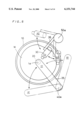
  • FIG. 1 schematically illustrates a rotary substrate cleaning apparatus (spin scrubber) according to one preferred embodiment of the present invention
  • FIG. 2 illustrates an ultrasonic cleaning nozzle of the rotary substrate cleaning apparatus of FIG. 1 which is held;
  • FIG. 3 is a flow chart showing a cleaning procedure using the rotary substrate cleaning apparatus of FIG. 1;
  • FIG. 4 is a flow chart showing a procedure of for a cleaning process according to one aspect of the invention.
  • FIG. 5 is a plan view showing an arrangement of a cleaning brush and the ultrasonic cleaning nozzle
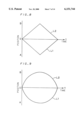
  • FIG. 6 illustrates a processing pattern according to the invention entered by an operator
  • FIGS. 7 through 9 illustrate other processing patterns in accordance with the invention.
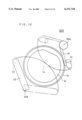
  • FIG. 10 is a plan view showing another arrangement of the cleaning brush and the ultrasonic cleaning nozzle
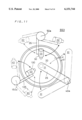
  • FIG. 11 is a plan view of a rotary substrate cleaning apparatus having three cleaning means
  • FIG. 12 illustrates a processing pattern applied to the rotary substrate cleaning apparatus of FIG. 11;
  • FIG. 13 is a plan view of a rotary substrate cleaning apparatus having two cleaning brushes
  • FIG. 14 illustrates a processing p pattern applied to the rotary substrate cleaning apparatus of FIG. 13;
  • FIG. 15 is a plan view of a rotary substrate cleaning apparatus having three cleaning brushes.
  • FIG. 16 illustrates a processing pattern applied to the rotary substrate cleaning apparatus of FIG. 15.
  • FIG. 1 schematically illustrates a rotary substrate cleaning apparatus (spin scrubber) SS according to one preferred embodiment of the present invention.
  • a substrate supporting member 3 provided on an upper surface of a rotary table 1 supports a substrate W.
  • the rotary table 1 is coupled to a motor not shown by a motor shaft 2, and is driven for rotation about a rotational axis 1a. As the rotary table 1 is driven for rotation, the substrate W is also rotated about the rotational axis 1a.
  • a cleaning brush 20 is in contact with or in closely spaced relation to the rotating substrate W to clean the substrate W.
  • the cleaning brush 20 is mounted on a suspended portion 25a of a brush arm 25 which in turn is permitted to pivot and vertically move by a pulse motor 40 and a pulse motor 60.
  • a support block 65 is fitted by splined engagement over a motor shaft 41 of the pulse motor 40, and is in threaded engagement with a ball screw 61 of the pulse motor 60.
  • the ball screw 61 and the support block 65 are coupled to each other so that the support block 65 is pivoted about a pivot axis 40a by the pulse motor 40.
  • a vertically extending support rod 26 is mounted on an upper surface of the support block 65, and a horizontal portion 25b of the brush arm 25 is fixedly coupled to the top end of the support rod 26.
  • the pulse motor 60 and the pulse motor 40 may vertically move and pivot the support block 65, accordingly vertically moving the brush arm 25 and pivoting the brush arm 25 about the pivot axis 40a.
  • a cleaning fluid is delivered from an ultrasonic cleaning nozzle 30 in addition to the cleaning by the cleaning brush 20.
  • the ultrasonic cleaning nozzle 30 is a nozzle including an ultrasonic oscillator for exposing the cleaning fluid to an ultrasonic wave to enhance the cleaning capability.
  • the ultrasonic cleaning nozzle 30 is mounted on the forward end of a nozzle arm 35 which in turn is permitted to vertically move and pivot by an air cylinder 70 and a pulse motor 50.
  • a support block 75 on which a vertically extending support rod 36 fixedly coupled to the nozzle arm 35 is mounted is fitted by splined engagement over a motor shaft 51 of the pulse motor 50 and is coupled to a piston 71 of the air cylinder 70.
  • the piston 71 and the support block 75 are coupled to each other so that the support block 75 may pivot about a pivot axis 50a.
  • the nozzle arm 35 is vertically moved by the air cylinder 70 and is pivoted about the pivot axis 50a by the pulse motor 50.
  • the nozzle arm 35 uses the air cylinder 70 but the brush arm 25 uses the pulse motor 60 for vertical movement thereof.
  • the brush arm 25 is faster in moving speed and response than the nozzle arm 35 for ease of time management for processing including vertical movement.
  • the element for vertically moving the support block 75 is not limited to the air cylinder but may be an electromagnetic actuator or the like.
  • the ultrasonic cleaning nozzle 30 is mounted on the nozzle arm 35 so that the direction of the delivery of the cleaning fluid is at a predetermined angle with respect to the substrate W.
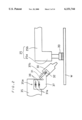
  • FIG. 2 illustrates the ultrasonic cleaning nozzle 30 in more detail.
  • the nozzle arm 35 has a forward end portion formed with three vertically arranged screw holes 35a. Two of the screw holes 35a are used to hold a nozzle holding member 37.
  • the nozzle holding member 37 has two elongated holes 37a.
  • two screws 38 inserted through the elongated holes 37a threadedly engage the lower two of the three screw holes 35a to hold the nozzle holding member 37.
  • the nozzle holding member 37 has an elongated hole 37b, and the ultrasonic cleaning nozzle 30 is fastened to the nozzle holding member 37 by a nut 32 at a desired position of the elongated hole 37b.
  • the ultrasonic cleaning nozzle 30 is then held in such a position that the direction of the delivery of the cleaning fluid is at the predetermined angle with respect to a major surface of the substrate W.
  • the above described construction allows the ultrasonic cleaning nozzle 30 to be held inclined and at adjustable position and angle. Therefore, the ultrasonic cleaning nozzle 30 and the cleaning brush 20 do not interfere with each other if they are positioned adjacent the center of rotation of the substrate W.
  • the ultrasonic cleaning nozzle 30 is coupled to a cable 31 for feeding the cleaning fluid.
  • the cleaning fluid fed from the cable 31 is exposed to the ultrasonic wave in the ultrasonic cleaning nozzle 30 and is then delivered from the ultrasonic cleaning nozzle 30.
  • the delivered cleaning fluid reaches the upper surface of the substrate W adjacent a position at which the cleaning brush 20 contacts the substrate W.
  • a cup 10 for collecting the cleaning fluid scattered from the substrate W and the rotary table 1 during the rotation is provided around the rotary table 1.
  • the pulse motor 40 for driving the brush arm 25 and the pulse motor 50 for driving the nozzle arm 35 include an encoder 45 and an encoder 55, respectively.
  • the encoders 45 and 55 detect the rotation of the pulse motors 40 and 50 to detect the position, direction and speed of pivotal movement of the brush arm 25 and nozzle arm 35, respectively.
  • the encoders 45 and 55 are electrically connected to a control portion 80 to transmit detected signals to the control portion 80.
  • the control portion 80 comprises a CPU 81 and a memory 82, and is connected to an input panel 85 provided on the rotary substrate cleaning apparatus SS.
  • the CPU 81 verifies the signals transmitted from the encoders 45 and 55 in accordance with a processing pattern (driving pattern) entered from the input panel 85 to apply commands to the pulse motors 40 and 50.
  • the pulse motor 60 and the air cylinder 70 are also electrically connected to the CPU 81, and operate in response to commands from the CPU 81.
  • a cleaning procedure using the rotary substrate cleaning apparatus SS will be described below.
  • an operator initially sets and enters a desired processing pattern, and then the cleaning brush 20 and the ultrasonic cleaning nozzle 30 clean the substrate W in accordance with the processing pattern.
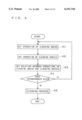
  • FIG. 3 is a flow chart showing the cleaning procedure using the rotary substrate cleaning apparatus SS.
  • the operator sets the operation of the cleaning brush 20 process step S1).
  • the operation setting is carried out by entering the processing start time of the cleaning brush 20, the length of processing time, and the pivot speed of the brush arm 25 from the input panel 85.
  • the operation of the ultrasonic cleaning nozzle 30 is set (process step S2).
  • the operation setting is carried out by the operator entering the processing start time, the length of processing time, and the pivot speed of the nozzle arm 35 from the input panel 85, in similar manner to that of the cleaning brush 20. It should be noted that the operations of the cleaning brush 20 and ultrasonic cleaning nozzle 30 may be set in reverse order.
  • process step S3 wherein the relation between the operations of the cleaning brush 20 and ultrasonic cleaning nozzle 30 is set.
  • the operator selects whether the cleaning brush 20 and the ultrasonic cleaning nozzle 30 are driven simultaneously or alternately to clean the substrate W.
  • a sequence of above described settings produce the processing pattern of the cleaning brush 20 and the ultrasonic cleaning nozzle 30.
  • the produced processing pattern is stored in the memory 82.
  • the sequence of settings may be repeated to simultaneously produce a plurality of processing patterns.
  • the CPU 81 judges whether or not the cleaning brush 20 and the ultrasonic cleaning nozzle 30 interfere with each other when the cleaning process is performed in accordance with the processing pattern produced by the operator (process step S4).
  • the interference between the cleaning brush 20 and the ultrasonic cleaning nozzle 30 is discussed hereinafter.
  • FIG. 5 is a plan view illustrating an arrangement of the cleaning brush 20 and the ultrasonic cleaning nozzle 30.
  • the cleaning brush 20 and the ultrasonic cleaning nozzle 30 interfere with each other when the cleaning brush 20 moves between a position O1 and a position B1 and the ultrasonic cleaning nozzle 30 moves between a position O2 and a position B2.
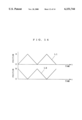
  • FIG. 6 illustrates a processing pattern entered by the operator.
  • the vertical axis of FIG. 6 is the pivot position of the cleaning brush 20 and the ultrasonic cleaning nozzle 30, and the horizontal axis thereof is the processing time.
  • the line L1 of FIG. 6 represents an operation pattern of the cleaning brush 20, and the line L2 represents an operation pattern of the ultrasonic cleaning nozzle 30.
  • the position A1 of the cleaning brush 20 and the position A2 of the ultrasonic cleaning nozzle 30 illustrated in FIG. 5 correspond to the position A of FIG. 6.
  • the position O1 of the cleaning brush 20 and the position O2 of the ultrasonic cleaning nozzle 30 correspond to the position O position adjacent the center of rotation of the substrate W) of FIG.
  • the position B1 of the cleaning brush 20 and the position B2 of the ultrasonic cleaning nozzle 30 correspond to the position B of FIG. 6.
  • the cleaning brush 20 pivots at a constant speed from the position A1 through the position O1 to the position B1
  • the ultrasonic cleaning nozzle 30 pivots at a constant speed from the position B2 through the position O2 to the position A2.
  • the cleaning brush 20 is located between the positions O1 and B1 and the ultrasonic cleaning nozzle 30 is located between the positions O2 and B2, creating the possibility that the cleaning brush 20 and the ultrasonic cleaning nozzle 30 interfere with each other as described above.
  • the CPU 81 judges that the cleaning brush 20 and the ultrasonic cleaning nozzle 30 interfere with each other, and the flow returns to the process step S1 for reentry of the processing pattern.
  • the CPU 81 judges that the interference occurs when both of the lines L1 and L2 of FIG. 6 are above the horizontal axis (time axis) at the same time for purposes of convenience.
  • the position at which the interference occurs changes, for example, by adjusting the position and angle at which the ultrasonic cleaning nozzle 30 is mounted on the nozzle arm 35. The operator may instruct the CPU 81 about the position at which the interference occurs as required.
  • both of the lines L1 and L2 are not above the horizontal axis at the same time.
  • the CPU 81 judges that no interference occurs, and the flow proceeds to the process step S5 for execution of the cleaning process.
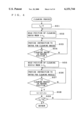
  • FIG. 4 is a flow chart illustrating the procedure of the cleaning process.
  • the CPU 81 sets a variable t 1 to "0" (process step S51).
  • the CPU 81 then reads the position of the cleaning brush 20 when time t equals the variable t 1 from the processing pattern stored in the memory 82 (process step S52).
  • the CPU 81 provides an instruction to the pulse motor 40 so that the cleaning brush 20 moves to the read position (process step S53).
  • the pulse motor 40 drives the cleaning brush 20, and the encoder 45 detects the rotation of the pulse motor 40 to detect the position of the cleaning brush 20.
  • the signal detected by the encoder 45 is transmitted to the CPU 81 which in turn judges whether or not the cleaning brush 20 has reached the read position (process step S54). If the cleaning brush 20 has not reached the read position, the flow returns to the process step S53, and the CPU 81 provides the instruction to the pulse motor 40 again.
  • the flow proceeds to the process step S55 wherein the position of the ultrasonic cleaning nozzle 30 when time t equals the variable t 1 is read from the processing pattern.
  • the CPU 81 then provides an instruction to the pulse motor 50 in the above described manner so that the ultrasonic cleaning nozzle 30 moves to the read position (process step S56).
  • the pulse motor 50 drives the ultrasonic cleaning nozzle 30, and the encoder 55 detects the rotation of the pulse motor 50 to detect the position of the ultrasonic cleaning nozzle 30.
  • the signal detected by the encoder 55 is transmitted to the CPU 81 which in turn judges whether or not the ultrasonic cleaning nozzle 30 has reached the read position (process step S57). If the ultrasonic cleaning nozzle 30 has not reached the read position, the flow returns to the process step S56, and the CPU 81 provides the instruction to the pulse motor 50 again.
  • the flow proceeds to the process step S58 wherein a predetermined time ⁇ t is added to the variable t 1 .
  • the predetermined time ⁇ t is the time corresponding to the operation cycle of the CPU 81.
  • the flow proceeds to the process step S59 wherein the CPU 81 judges whether or not the variable ti is greater than a preset processing end time t p .
  • the flow returns to the process step S52 if the variable t 1 is not greater than the processing end time t p , and the cleaning process is terminated if the variable t 1 is greater than the processing end time t p .
  • the above described processing sequence is repeated until the variable t 1 exceeds the processing end time t p .
  • the execution of the processing pattern shown in FIG. 6 in accordance with the above described procedure of the cleaning process causes the cleaning brush 20 to pivot from the position A1 (FIG. 5) toward the position O1 and causes the ultrasonic cleaning nozzle 30 to pivot from the position B2 toward the position O2.
  • the cleaning brush 20 reaches the position O1
  • the ultrasonic cleaning nozzle 30 reaches the position O2
  • Both of the cleaning means cooperate to clean the substrate W adjacent the center of rotation of the substrate W.
  • the cleaning brush 20 pivots from the position O1 toward the position B1
  • the ultrasonic cleaning nozzle 30 pivots from the position O2 toward the position A2.
  • the cleaning brush 20 and the ultrasonic cleaning nozzle 30 repeatedly reciprocate between the positions A1 and B1 and between the positions A2 and B2, respectively, in accordance with the pattern reverse to the above described processing pattern.
  • the above described processing allows the cleaning brush 20 and the ultrasonic cleaning nozzle 30 to operate simultaneously to perform the cleaning process without interference therebetween, reducing the cleaning time and enhancing processing efficiency.
  • the simultaneous use of the cleaning brush 20 and the ultrasonic cleaning nozzle 30 for cleaning provides synergistic effects of cleaning to enhance cleaning effects throughout the substrate W while ensuring the cleaning adjacent the center of rotation of the substrate W.
  • kinetic energy by rotation is difficult to act upon the portion adjacent the center of rotation of the substrate W, and it is accordingly difficult to remove contamination from that portion.
  • the synergistic effect of cleaning using the cleaning brush 20 and the ultrasonic cleaning nozzle 30 simultaneously enhances the cleaning effects adjacent the center of rotation of the substrate W.
  • the processing pattern is not limited to that shown in FIG. 6 but may be any processing pattern which avoids the interference between the cleaning brush 20 and the ultrasonic cleaning nozzle 30.
  • FIGS. 7 through 9 illustrate other processing patterns.
  • the cleaning brush 20 pivots from the position O1 toward the position A1 while the ultrasonic cleaning nozzle 30 pivots from the position A2 toward the position B2.
  • Such a processing pattern also permits the cleaning brush 20 and the ultrasonic cleaning nozzle 30 to operate simultaneously to perform the cleaning process without interference therebetween, reducing the cleaning time.
  • the cleaning brush 20 reciprocates between the position O1 and the position A1 while the ultrasonic cleaning nozzle 30 reciprocates between the position O2 and the position B2.
  • Such a processing pattern also permits the cleaning brush 20 and the ultrasonic cleaning nozzle 30 to operate simultaneously to perform the cleaning process without interference therebetween, reducing the cleaning time and enhancing the cleaning effects adjacent the center of rotation of the substrate W.
  • the cleaning brush 20 is in contact with or in closely spaced relation to the surface of the substrate W to be cleaned while moving from the position O1 toward the position A1, that is, from adjacent the center of rotation of the substrate W toward the periphery thereof, but the cleaning brush 20 is spaced apart from the surface of the substrate W to be cleaned while moving from the position A1 toward the position O1, that is, from the periphery of the substrate W toward adjacent the center of rotation thereof.
  • the cleaning brush 20 reciprocates between the position O1 and the position A1 while the ultrasonic cleaning nozzle 30 reciprocates between the position O2 and the position B2 as described above.
  • the processing pattern shown in FIG. 9 differs from that shown in FIG. 8 in that the speed of the movement of the two cleaning elements varies as the cleaning elements travel. Specifically, the cleaning brush 20 and the ultrasonic cleaning nozzle 30 are driven at high speeds adjacent the positions O1 and O2 but are driven at low speeds adjacent the positions A1 and B2, respectively.
  • the processing pattern shown in FIG. 9 also permits the cleaning brush 20 and the ultrasonic cleaning nozzle 30 to operate simultaneously to perform the cleaning process without interference therebetween, reducing the cleaning time.
  • any processing pattern may be produced so that the cleaning brush 20 and the ultrasonic cleaning nozzle 30 do not interfere with each other, and both of the cleaning elements perform the cleaning process in accordance with the processing pattern. This allows the operator to produce a desired processing pattern depending upon the types of films deposited on the surface of the substrate W to perform the cleaning process suitable for the film types.
  • FIG. 10 is a plan view illustrating another arrangement of the cleaning brush 20 and the ultrasonic cleaning nozzle 30.
  • the arrangement in a rotary substrate cleaning apparatus SS2 of FIG. 10 creates no possibility that the cleaning brush 20 and the ultrasonic cleaning nozzle 30 interfere with each other throughout their movable range, providing the setting of a more flexible processing pattern than the arrangement of FIG. 5. More specifically, there is a possibility that the cleaning brush 20 and the ultrasonic cleaning nozzle 30 interfere with each other when both of the lines L1 and L2 (FIG. 6) are above the horizontal axis of the processing pattern at the same time. On the other hand, there is no possibility of the interference in the arrangement of FIG. 10, providing free setting of the processing pattern.
  • FIG. 11 is a plan view of a rotary substrate cleaning apparatus SS3 having three cleaning elements.
  • the rotary substrate cleaning apparatus SS3 comprises a high-pressure cleaning nozzle 130 in addition to the cleaning brush 20 and the ultrasonic cleaning nozzle 30 of the rotary substrate cleaning apparatus SS.
  • the high-pressure cleaning nozzle 130 is a nozzle for delivering high-pressure cleaning fluid to clean the substrate W.
  • the high-pressure cleaning nozzle 130 is mounted on the forward end of a nozzle arm 135 which in turn is permitted to vertically move and pivot about a pivot axis 150a by an air cylinder and a pulse motor (not shown), like the nozzle arm 35 to which the ultrasonic cleaning nozzle 30 is mounted.
  • the air cylinder and pulse motor are controlled by the control portion 80 (See FIG. 1).
  • the three cleaning elements do not interfere with each other when located adjacent the center of rotation of the substrate W at the same time since the ultrasonic cleaning nozzle 30 and the high-pressure cleaning nozzle 130 are inclined (See FIG. 2).
  • FIG. 12 illustrates a processing pattern applied to the rotary substrate cleaning apparatus SS3.
  • the lines L1, L2 and L3 indicate the operation patterns of the cleaning brush 20, the ultrasonic cleaning nozzle 30, and the high-pressure cleaning nozzle 130, respectively.
  • the position A1 of the cleaning brush 20, the position A2 of the ultrasonic cleaning nozzle 30, and the position A3 of the high-pressure cleaning nozzle 130 shown in FIG. 11 correspond to the position A of FIG. 12.
  • the position O1 of the cleaning brush 20, the position O2 of the ultrasonic cleaning nozzle 30, and the position O3 of the high-pressure cleaning nozzle 130 correspond to the position O of FIG. 12
  • the position B1 of the cleaning brush 20, the position B2 of the ultrasonic cleaning nozzle 30, and the position B3 of the high-pressure cleaning nozzle 130 correspond to the position B of FIG. 12.
  • the processing pattern must be produced again if there is a possibility that the three cleaning elements interfere with each other in the processing pattern.
  • the three cleaning elements of the rotary substrate cleaning apparatus SS3 might interfere with each other in the cases where the high-pressure nozzle 130 moves between the positions B3 and O3 while the cleaning brush 20 moves between the positions A1 an O1 and where the ultrasonic cleaning nozzle 30 moves between the positions A2 and O2 while the cleaning brush 20 moves between the positions O1 and B1.
  • the CPU 81 refers to the processing pattern of FIG. 12 to request the reproduction of the processing pattern if the plurality of cleaning elements are positioned to cause the interference at the same time.
  • the rotary substrate cleaning apparatus SS3 performs the cleaning process in accordance with the processing pattern of FIG. 12 in a manner similar to the rotary substrate cleaning apparatus SS.
  • the cleaning brush 20, the ultrasonic cleaning nozzle 30, and the high-pressure cleaning nozzle 130 pivot from the positions B1, B2, B3 toward the positions O1, O2, O3, respectively.
  • the cleaning brush 20, the ultrasonic cleaning nozzle 30, and the high-pressure cleaning nozzle 130 reach the positions O1, O2, O3, respectively, at the same time.
  • the three cleaning elements cooperate to clean the substrate W adjacent the center of rotation of the substrate W.
  • the cleaning brush 20, the ultrasonic cleaning nozzle 30, and the high-pressure cleaning nozzle 130 pivot from the positions O1, O2, O3 toward the positions A1, A2, A3, respectively.
  • the three cleaning means repeatedly reciprocate between the positions A1 and B1, between the positions A2 and B2, and between the positions A3 and B3, respectively, in accordance with the pattern reverse to the above described processing pattern.
  • the above described processing allows the cleaning brush 20, the ultrasonic cleaning nozzle 30, and the high-pressure cleaning nozzle 130 to operate simultaneously to perform the cleaning process without interference therebetween, reducing the cleaning time and enhancing the cleaning efficiency.
  • the cleaning brush 20, the ultrasonic cleaning nozzle 30, and the high-pressure cleaning nozzle 130 are used simultaneously to clean the substrate W. This provides the synergistic effect of cleaning, enhancing the cleaning effects throughout the substrate W while ensuring the cleaning adjacent the center of rotation of the substrate W. In particular, kinetic energy by rotation is difficult to act upon the portion adjacent the center of rotation of the substrate W, and it is accordingly difficult to remove contamination from that portion.
  • the synergistic effect of cleaning using simultaneously the cleaning brush 20, the ultrasonic cleaning nozzle 30, and the high-pressure cleaning nozzle 130 enhances the cleaning effects adjacent the center of rotation of the substrate W. If three or more cleaning elements are provided, any processing pattern may be produced on the condition that the cleaning elements do not interfere with each other.
  • the above discussed rotary substrate cleaning apparatus is adapted such that the plurality of cleaning elements do not interfere with each other adjacent the center of rotation of the substrate W. However, if the interference occurs, the processing pattern may be produced so that the plurality of cleaning elements are not located adjacent the center of rotation of the substrate W at the same time to achieve the cleaning process.
  • FIG. 13 is a plan view of a rotary substrate cleaning apparatus SS4 having two cleaning brushes.
  • the rotary substrate cleaning apparatus SS4 comprises the cleaning brush 20 serving as a contact-type or closely-spaced-type cleaning elements, and a cleaning brush 120 of the same type as the cleaning brush 20.
  • the cleaning brush 120 is similar in construction and function to the cleaning brush 20. More specifically, the cleaning brush 120 is mounted on a brush arm 125 which in turn is permitted to pivot about a pivot axis 140a and vertically move by a pulse motor not shown.
  • the cleaning brush 120 of the rotary substrate cleaning apparatus SS4 reciprocates between the positions O1 and B1 to clean the substrate W.
  • the cleaning brush 120 similar to the cleaning brush 20, is in contact with or in closely spaced relation to the surface of the substrate W to be cleaned while moving from the position O1 toward the position B1, that is, from adjacent the center of rotation of the substrate W toward the periphery thereof, but is spaced apart from the surface of the substrate W to be cleaned while moving from the position B1 toward the position O1, that is, from the periphery of the substrate W toward adjacent the center of rotation thereof.
  • the cleaning brushes 20 and 120 are the contact-type or closely-spaced-type cleaning elements which may clean the substrate W adjacent the center of rotation thereof in contact with or in closely spaced relation to the substrate W, and thus interfere with each other adjacent the center of rotation thereof.
  • FIG. 14 illustrates a processing pattern applied to the rotary substrate cleaning apparatus SS4.
  • the lines L1 and L2 indicate the operation patterns of the cleaning brushes 20 and 120, respectively.
  • the position A1 of the cleaning brush 20 and the position B1 of the cleaning brush 120 shown in FIG. 13 correspond respectively to the positions A and B of FIG. 14.
  • the position O1 of the cleaning brushes 20 and 120 corresponds to the position O of FIG. 14.
  • the CPU 81 judges whether or not the two cleaning brushes interfere with each other when the cleaning process is performed in accordance with the processing pattern produced by the operator as above described.
  • the two cleaning brushes of the rotary substrate cleaning apparatus SS4 interfere with each other in the case where the cleaning brushes 20 and 120 are located adjacent the position O1, that is, the center of rotation of the substrate W at the same time. In such a case, the CPU 81 requests the reproduction of the processing pattern.
  • the cleaning process is performed in accordance with the processing pattern of FIG. 14.
  • the cleaning brushes 20 and 120 repeat the reciprocal movement in the same cycle to perform the cleaning process, but there is a 1/2 phase shift therebetween. More specifically, the cleaning brush 120 is located at the position B1 when the cleaning brush 20 is located at the position O1. As the cleaning brush 20 pivots toward the position A1, the cleaning brush 120 pivots toward the position O1. The cleaning brush 120 reaches the position O1 when the cleaning brush 20 reaches the position A1. The cleaning brush 20 then starts pivoting toward the position O1, and the cleaning brush 120 starts pivoting toward the position B1. Such a series of operations are subsequently repeated, whereby the two cleaning brushes cooperate to clean the substrate W.
  • FIG. 15 is a plan view of a rotary substrate cleaning apparatus SS5 having three cleaning brushes.
  • the rotary substrate cleaning apparatus SS5 comprises the cleaning brush 20 serving as the contact-type or closely-spaced-type cleaning elements, and cleaning brushes 120 and 220 of the same type as the cleaning brush 20.
  • the cleaning brush 220 is similar in construction and function to the cleaning brushes 20 and 120.
  • the cleaning brush 220 is mounted on a brush arm 225 which in turn is permitted to pivot about a pivot axis 240a and vertically move by a pulse motor not shown.
  • the cleaning brush 220 of the rotary substrate cleaning apparatus SS5 reciprocates between the positions O1 and C1 to clean the substrate W.
  • the cleaning brush 220 similar to the cleaning brush 20, is in contact with or in closely spaced relation to the surface of the substrate W to be cleaned while moving from the position O1 toward the position C1, that is, from adjacent the center of rotation of the substrate W toward the periphery thereof, but is spaced apart from the surface of the substrate W to be cleaned while moving from the position C1 toward the position O1, that is, from the periphery of the substrate W toward the center of rotation thereof.
  • the three cleaning brushes 20, 120 and 220 are the contact-type or closely-spaced-type cleaning elements which may clean the substrate W adjacent the center of rotation thereof in contact with or in closely spaced relation to the substrate W, and thus interfere with each other adjacent the center of rotation thereof.
  • FIG. 16 illustrates a processing pattern applied to the rotary substrate cleaning apparatus SS5.
  • the lines L1, L2 and L3 indicate the operation patterns of the cleaning brushes 20, 120 and 220, respectively.
  • the position A1 of the cleaning brush 20, the position B1 of the cleaning brush 120, and the position C1 of the cleaning brush 220 shown in FIG. 15 correspond respectively to the positions A, B and C of FIG. 16.
  • the position O1 of the cleaning brushes 20, 120 and 220 corresponds to the position O of FIG. 16.
  • the processing pattern shown in FIG. 16 creates no possibility that the three cleaning brushes interfere with each other, and the cleaning process is performed in accordance with the processing pattern of FIG. 16.
  • the three cleaning brushes repeat the reciprocal movement in the same cycle to perform the cleaning process, but there is a 1/3 phase shift therebetween. The three cleaning brushes cooperate to clean the substrate W.
  • the above described processing permits the plurality of contact-type or closely-spaced-type cleaning elements of the same type to cooperate to clean the substrate W, reducing the cleaning time.
  • the rotary substrate cleaning apparatus of the present invention may reduce the cleaning time for this substrate to achieve cleaning efficiency obtained by a substrate having a diameter of 200 mm.
  • the ultrasonic cleaning nozzle 30 of the rotary substrate cleaning apparatus SS may be replaced with the high-pressure cleaning nozzle 130 or cleaning chemical dispensing nozzle (not shown) which dispense cleaning chemical contained hydrogen peroxide, hydrofluoric acid or ammonia etc.
  • the plurality of cleaning elements of this preferred embodiment may include any combination of the cleaning brush 20, the ultrasonic cleaning nozzle 30, the high-pressure cleaning nozzle 130, and cleaning chemical dispensing nozzle (not shown).
  • the plurality of ultrasonic cleaning nozzle 30 may be used, or only the plurality of high-pressure cleaning nozzle 130 may be used.

Landscapes

  • Cleaning Or Drying Semiconductors (AREA)
  • Cleaning In General (AREA)
  • Cleaning By Liquid Or Steam (AREA)

Abstract

A method of and apparatus for cleaning a substrate which require shorter processing time with high processing efficiency are disclosed. A cleaning brush pivots about a pivot axis between two positions. An ultrasonic cleaning nozzle pivots about a pivot axis between two positions. To perform a cleaning process, the cleaning brush and the ultrasonic cleaning nozzle are driven in accordance with a processing pattern previously produced by an operator. The processing pattern is produced so that the movement of the cleaning brush between two positions and the movement of the ultrasonic cleaning nozzle between two positions are not caused simultaneously. Any processing pattern desired by the operator may be produced if this requirement is satisfied. Execution of the cleaning process in accordance with the processing pattern allows cleaning of a substrate using the cleaning brush and the ultrasonic cleaning nozzle at the same time.

Description

BACKGROUND OF THE INVENTION
1. Field of the Invention
The present invention relates to a method of and apparatus for cleaning a sheet-like substrate (referred to hereinafter as a "substrate") such as a semiconductor substrate or a glass substrate for liquid crystal display while rotating the substrate.
2. Description of the Background Art
In general, the substrate is sequentially subjected to various processes such as resist coating, exposure, and development for desired substrate processing. Since contamination by particles and the like deposited on the substrate during the above described processes results in significantly deteriorated characteristics of the processed substrate, the substrate cleaning apparatus cleans the substrate using various cleaning means such as a cleaning brush, an ultrasonic cleaning nozzle, a high-pressure cleaning nozzle or a cleaning chemical dispensing nozzle.
Each of the various cleaning means is provided on the forward end of an arm having a pivot axis outside a rotary table for placing and rotating the substrate thereon. By the pivotal movement of the arm, the cleaning means are retracted externally to of the rotary table so as not to interfere with loading or unloading the substrate before and after the cleaning process, and are positioned over a surface of the substrate during the cleaning process.
The cleaning brush, during the cleaning process, is positioned in contact with or in slightly spaced relation with the substrate, and is driven from the center of rotation of the substrate toward the periphery thereof to sweep away the particles on the substrate surface.
The ultrasonic cleaning nozzle, and high-pressure cleaning nozzle during the cleaning process, are driven so that a cleaning fluid delivered therefrom reaches locations on the substrate surface in a reciprocal manner between the center of rotation of the substrate and the periphery thereof, and function to peel off the particles deposited on the substrate. The peeled particles are removed by centrifugal force caused by the rotation of the substrate.
To clean the substrate more positively, there has been used a substrate cleaning apparatus comprising the plurality of above described cleaning means. Such a substrate cleaning apparatus is designed such that the plurality of cleaning means sequentially move toward positions over the substrate to clean the substrate.
However, the substrate cleaning apparatus wherein one of the cleaning means performs the cleaning process while the other cleaning means are retracted externally to of the rotary table in a repeated manner requires prolonged cleaning time, resulting in low processing efficiency.
SUMMARY OF THE INVENTION
The present invention is directed to an apparatus for cleaning a surface of a substrate while rotating the substrate.
According to the present invention, the apparatus comprises: a) a plurality of cleaning elements operable to scan the surface for cleaning the surface along respective predetermined paths each including a center of the surface; b) a plurality of driving elements for driving the plurality of cleaning elements, respectively; and c) a controller for controlling the plurality of driving elements such that a cleaning process of the surface includes a simultaneous cleaning operation of the plurality of the cleaning elements on the surface.
The plurality of cleaning elements may simultaneously clean the substrate. This requires shorter cleaning time than the sequential use of the plurality of cleaning elements one by one to clean the substrate, thereby enhancing processing efficiency.
In one aspect of the present invention, the apparatus further comprises: d) inputting elements for inputting at least one driving pattern for the plurality of cleaning elements; and e) a memory for storing the at least one driving pattern; wherein the controller elements controls the plurality of driving elements in accordance with the at least one driving pattern.
The present invention is also directed to a method of cleaning a surface of a substrate while rotating the substrate.
It is therefore an object of the present invention to provide a method of and apparatus for cleaning a substrate which require a shorter time to perform a series of processes and which achieve higher processing efficiency.
These and other objects, features, aspects and advantages of the present invention will become more apparent from the following detailed description of the present invention when taken in conjunction with the accompanying drawings.
BRIEF DESCRIPTION OF THE DRAWINGS
FIG. 1 schematically illustrates a rotary substrate cleaning apparatus (spin scrubber) according to one preferred embodiment of the present invention;
FIG. 2 illustrates an ultrasonic cleaning nozzle of the rotary substrate cleaning apparatus of FIG. 1 which is held;
FIG. 3 is a flow chart showing a cleaning procedure using the rotary substrate cleaning apparatus of FIG. 1;
FIG. 4 is a flow chart showing a procedure of for a cleaning process according to one aspect of the invention;
FIG. 5 is a plan view showing an arrangement of a cleaning brush and the ultrasonic cleaning nozzle;
FIG. 6 illustrates a processing pattern according to the invention entered by an operator;
FIGS. 7 through 9 illustrate other processing patterns in accordance with the invention;
FIG. 10 is a plan view showing another arrangement of the cleaning brush and the ultrasonic cleaning nozzle;
FIG. 11 is a plan view of a rotary substrate cleaning apparatus having three cleaning means;
FIG. 12 illustrates a processing pattern applied to the rotary substrate cleaning apparatus of FIG. 11;
FIG. 13 is a plan view of a rotary substrate cleaning apparatus having two cleaning brushes;
FIG. 14 illustrates a processing p pattern applied to the rotary substrate cleaning apparatus of FIG. 13;
FIG. 15 is a plan view of a rotary substrate cleaning apparatus having three cleaning brushes; and
FIG. 16 illustrates a processing pattern applied to the rotary substrate cleaning apparatus of FIG. 15.
DESCRIPTION OF THE PREFERRED EMBODIMENTS
One preferred embodiment according to the present invention will now be described in detail with reference to the drawings.
FIG. 1 schematically illustrates a rotary substrate cleaning apparatus (spin scrubber) SS according to one preferred embodiment of the present invention. In the rotary substrate cleaning apparatus SS, a substrate supporting member 3 provided on an upper surface of a rotary table 1 supports a substrate W. The rotary table 1 is coupled to a motor not shown by a motor shaft 2, and is driven for rotation about a rotational axis 1a. As the rotary table 1 is driven for rotation, the substrate W is also rotated about the rotational axis 1a.
A cleaning brush 20 is in contact with or in closely spaced relation to the rotating substrate W to clean the substrate W. The cleaning brush 20 is mounted on a suspended portion 25a of a brush arm 25 which in turn is permitted to pivot and vertically move by a pulse motor 40 and a pulse motor 60. Specifically, a support block 65 is fitted by splined engagement over a motor shaft 41 of the pulse motor 40, and is in threaded engagement with a ball screw 61 of the pulse motor 60. The ball screw 61 and the support block 65 are coupled to each other so that the support block 65 is pivoted about a pivot axis 40a by the pulse motor 40. A vertically extending support rod 26 is mounted on an upper surface of the support block 65, and a horizontal portion 25b of the brush arm 25 is fixedly coupled to the top end of the support rod 26. Thus, the pulse motor 60 and the pulse motor 40 may vertically move and pivot the support block 65, accordingly vertically moving the brush arm 25 and pivoting the brush arm 25 about the pivot axis 40a.
During the cleaning process, a cleaning fluid is delivered from an ultrasonic cleaning nozzle 30 in addition to the cleaning by the cleaning brush 20. The ultrasonic cleaning nozzle 30 is a nozzle including an ultrasonic oscillator for exposing the cleaning fluid to an ultrasonic wave to enhance the cleaning capability. The ultrasonic cleaning nozzle 30 is mounted on the forward end of a nozzle arm 35 which in turn is permitted to vertically move and pivot by an air cylinder 70 and a pulse motor 50. A support block 75 on which a vertically extending support rod 36 fixedly coupled to the nozzle arm 35 is mounted is fitted by splined engagement over a motor shaft 51 of the pulse motor 50 and is coupled to a piston 71 of the air cylinder 70. The piston 71 and the support block 75 are coupled to each other so that the support block 75 may pivot about a pivot axis 50a. Thus, the nozzle arm 35 is vertically moved by the air cylinder 70 and is pivoted about the pivot axis 50a by the pulse motor 50. The nozzle arm 35 uses the air cylinder 70 but the brush arm 25 uses the pulse motor 60 for vertical movement thereof. Thus, the brush arm 25 is faster in moving speed and response than the nozzle arm 35 for ease of time management for processing including vertical movement. The element for vertically moving the support block 75 is not limited to the air cylinder but may be an electromagnetic actuator or the like.
The ultrasonic cleaning nozzle 30 is mounted on the nozzle arm 35 so that the direction of the delivery of the cleaning fluid is at a predetermined angle with respect to the substrate W. FIG. 2 illustrates the ultrasonic cleaning nozzle 30 in more detail. The nozzle arm 35 has a forward end portion formed with three vertically arranged screw holes 35a. Two of the screw holes 35a are used to hold a nozzle holding member 37. Specifically, the nozzle holding member 37 has two elongated holes 37a. In the structure of FIG. 2, two screws 38 inserted through the elongated holes 37a threadedly engage the lower two of the three screw holes 35a to hold the nozzle holding member 37.
The nozzle holding member 37 has an elongated hole 37b, and the ultrasonic cleaning nozzle 30 is fastened to the nozzle holding member 37 by a nut 32 at a desired position of the elongated hole 37b. The ultrasonic cleaning nozzle 30 is then held in such a position that the direction of the delivery of the cleaning fluid is at the predetermined angle with respect to a major surface of the substrate W. The above described construction allows the ultrasonic cleaning nozzle 30 to be held inclined and at adjustable position and angle. Therefore, the ultrasonic cleaning nozzle 30 and the cleaning brush 20 do not interfere with each other if they are positioned adjacent the center of rotation of the substrate W.
The ultrasonic cleaning nozzle 30 is coupled to a cable 31 for feeding the cleaning fluid. The cleaning fluid fed from the cable 31 is exposed to the ultrasonic wave in the ultrasonic cleaning nozzle 30 and is then delivered from the ultrasonic cleaning nozzle 30. The delivered cleaning fluid reaches the upper surface of the substrate W adjacent a position at which the cleaning brush 20 contacts the substrate W.
Returning to FIG. 1, a cup 10 for collecting the cleaning fluid scattered from the substrate W and the rotary table 1 during the rotation is provided around the rotary table 1.
The pulse motor 40 for driving the brush arm 25 and the pulse motor 50 for driving the nozzle arm 35 include an encoder 45 and an encoder 55, respectively. The encoders 45 and 55 detect the rotation of the pulse motors 40 and 50 to detect the position, direction and speed of pivotal movement of the brush arm 25 and nozzle arm 35, respectively. The encoders 45 and 55 are electrically connected to a control portion 80 to transmit detected signals to the control portion 80.
The control portion 80 comprises a CPU 81 and a memory 82, and is connected to an input panel 85 provided on the rotary substrate cleaning apparatus SS. The CPU 81 verifies the signals transmitted from the encoders 45 and 55 in accordance with a processing pattern (driving pattern) entered from the input panel 85 to apply commands to the pulse motors 40 and 50. The pulse motor 60 and the air cylinder 70 are also electrically connected to the CPU 81, and operate in response to commands from the CPU 81.
A cleaning procedure using the rotary substrate cleaning apparatus SS will be described below. For the cleaning process, an operator initially sets and enters a desired processing pattern, and then the cleaning brush 20 and the ultrasonic cleaning nozzle 30 clean the substrate W in accordance with the processing pattern.
FIG. 3 is a flow chart showing the cleaning procedure using the rotary substrate cleaning apparatus SS. First, the operator sets the operation of the cleaning brush 20 process step S1). The operation setting is carried out by entering the processing start time of the cleaning brush 20, the length of processing time, and the pivot speed of the brush arm 25 from the input panel 85.
Then, the operation of the ultrasonic cleaning nozzle 30 is set (process step S2). The operation setting is carried out by the operator entering the processing start time, the length of processing time, and the pivot speed of the nozzle arm 35 from the input panel 85, in similar manner to that of the cleaning brush 20. It should be noted that the operations of the cleaning brush 20 and ultrasonic cleaning nozzle 30 may be set in reverse order.
The flow continues into the process step S3 wherein the relation between the operations of the cleaning brush 20 and ultrasonic cleaning nozzle 30 is set (process step S3). In the process step S3, the operator selects whether the cleaning brush 20 and the ultrasonic cleaning nozzle 30 are driven simultaneously or alternately to clean the substrate W.
A sequence of above described settings produce the processing pattern of the cleaning brush 20 and the ultrasonic cleaning nozzle 30. The produced processing pattern is stored in the memory 82. The sequence of settings may be repeated to simultaneously produce a plurality of processing patterns.
Next, the CPU 81 judges whether or not the cleaning brush 20 and the ultrasonic cleaning nozzle 30 interfere with each other when the cleaning process is performed in accordance with the processing pattern produced by the operator (process step S4). The interference between the cleaning brush 20 and the ultrasonic cleaning nozzle 30 is discussed hereinafter.
FIG. 5 is a plan view illustrating an arrangement of the cleaning brush 20 and the ultrasonic cleaning nozzle 30. In the arrangement of FIG. 5, there is a possibility that the cleaning brush 20 and the ultrasonic cleaning nozzle 30 interfere with each other when the cleaning brush 20 moves between a position O1 and a position B1 and the ultrasonic cleaning nozzle 30 moves between a position O2 and a position B2.
FIG. 6 illustrates a processing pattern entered by the operator. The vertical axis of FIG. 6 is the pivot position of the cleaning brush 20 and the ultrasonic cleaning nozzle 30, and the horizontal axis thereof is the processing time. The line L1 of FIG. 6 represents an operation pattern of the cleaning brush 20, and the line L2 represents an operation pattern of the ultrasonic cleaning nozzle 30. The position A1 of the cleaning brush 20 and the position A2 of the ultrasonic cleaning nozzle 30 illustrated in FIG. 5 correspond to the position A of FIG. 6. Likewise, the position O1 of the cleaning brush 20 and the position O2 of the ultrasonic cleaning nozzle 30 correspond to the position O position adjacent the center of rotation of the substrate W) of FIG. 6, and the position B1 of the cleaning brush 20 and the position B2 of the ultrasonic cleaning nozzle 30 correspond to the position B of FIG. 6. In this processing pattern, the cleaning brush 20 pivots at a constant speed from the position A1 through the position O1 to the position B1, and the ultrasonic cleaning nozzle 30 pivots at a constant speed from the position B2 through the position O2 to the position A2.
Referring to FIG. 6, when both of the lines L1 and L2 are above the horizontal axis (time axis) at the same time, the cleaning brush 20 is located between the positions O1 and B1 and the ultrasonic cleaning nozzle 30 is located between the positions O2 and B2, creating the possibility that the cleaning brush 20 and the ultrasonic cleaning nozzle 30 interfere with each other as described above. In such a case, the CPU 81 judges that the cleaning brush 20 and the ultrasonic cleaning nozzle 30 interfere with each other, and the flow returns to the process step S1 for reentry of the processing pattern. The CPU 81 judges that the interference occurs when both of the lines L1 and L2 of FIG. 6 are above the horizontal axis (time axis) at the same time for purposes of convenience. However, the position at which the interference occurs changes, for example, by adjusting the position and angle at which the ultrasonic cleaning nozzle 30 is mounted on the nozzle arm 35. The operator may instruct the CPU 81 about the position at which the interference occurs as required.
In the processing pattern shown in FIG. 6, both of the lines L1 and L2 are not above the horizontal axis at the same time. The CPU 81 then judges that no interference occurs, and the flow proceeds to the process step S5 for execution of the cleaning process.
FIG. 4 is a flow chart illustrating the procedure of the cleaning process. First, the CPU 81 sets a variable t1 to "0" (process step S51). The CPU 81 then reads the position of the cleaning brush 20 when time t equals the variable t1 from the processing pattern stored in the memory 82 (process step S52). The CPU 81 provides an instruction to the pulse motor 40 so that the cleaning brush 20 moves to the read position (process step S53). The pulse motor 40 drives the cleaning brush 20, and the encoder 45 detects the rotation of the pulse motor 40 to detect the position of the cleaning brush 20. The signal detected by the encoder 45 is transmitted to the CPU 81 which in turn judges whether or not the cleaning brush 20 has reached the read position (process step S54). If the cleaning brush 20 has not reached the read position, the flow returns to the process step S53, and the CPU 81 provides the instruction to the pulse motor 40 again.
If the cleaning brush 20 has reached the read position, the flow proceeds to the process step S55 wherein the position of the ultrasonic cleaning nozzle 30 when time t equals the variable t1 is read from the processing pattern. The CPU 81 then provides an instruction to the pulse motor 50 in the above described manner so that the ultrasonic cleaning nozzle 30 moves to the read position (process step S56). The pulse motor 50 drives the ultrasonic cleaning nozzle 30, and the encoder 55 detects the rotation of the pulse motor 50 to detect the position of the ultrasonic cleaning nozzle 30. The signal detected by the encoder 55 is transmitted to the CPU 81 which in turn judges whether or not the ultrasonic cleaning nozzle 30 has reached the read position (process step S57). If the ultrasonic cleaning nozzle 30 has not reached the read position, the flow returns to the process step S56, and the CPU 81 provides the instruction to the pulse motor 50 again.
If the ultrasonic cleaning nozzle 30 has reached the read position, the flow proceeds to the process step S58 wherein a predetermined time Δt is added to the variable t1. The predetermined time Δt is the time corresponding to the operation cycle of the CPU 81. Then, the flow proceeds to the process step S59 wherein the CPU 81 judges whether or not the variable ti is greater than a preset processing end time tp. The flow returns to the process step S52 if the variable t1 is not greater than the processing end time tp, and the cleaning process is terminated if the variable t1 is greater than the processing end time tp. Thus, the above described processing sequence is repeated until the variable t1 exceeds the processing end time tp.
The execution of the processing pattern shown in FIG. 6 in accordance with the above described procedure of the cleaning process causes the cleaning brush 20 to pivot from the position A1 (FIG. 5) toward the position O1 and causes the ultrasonic cleaning nozzle 30 to pivot from the position B2 toward the position O2. At the same time that the cleaning brush 20 reaches the position O1, the ultrasonic cleaning nozzle 30 reaches the position O2 Both of the cleaning means cooperate to clean the substrate W adjacent the center of rotation of the substrate W. Then, the cleaning brush 20 pivots from the position O1 toward the position B1, and the ultrasonic cleaning nozzle 30 pivots from the position O2 toward the position A2. After completion of a sequence of driving processes in accordance with the processing pattern shown in FIG. 6, the cleaning brush 20 and the ultrasonic cleaning nozzle 30 repeatedly reciprocate between the positions A1 and B1 and between the positions A2 and B2, respectively, in accordance with the pattern reverse to the above described processing pattern.
The above described processing allows the cleaning brush 20 and the ultrasonic cleaning nozzle 30 to operate simultaneously to perform the cleaning process without interference therebetween, reducing the cleaning time and enhancing processing efficiency. The simultaneous use of the cleaning brush 20 and the ultrasonic cleaning nozzle 30 for cleaning provides synergistic effects of cleaning to enhance cleaning effects throughout the substrate W while ensuring the cleaning adjacent the center of rotation of the substrate W. In particular, kinetic energy by rotation is difficult to act upon the portion adjacent the center of rotation of the substrate W, and it is accordingly difficult to remove contamination from that portion. However, the synergistic effect of cleaning using the cleaning brush 20 and the ultrasonic cleaning nozzle 30 simultaneously enhances the cleaning effects adjacent the center of rotation of the substrate W.
The processing pattern is not limited to that shown in FIG. 6 but may be any processing pattern which avoids the interference between the cleaning brush 20 and the ultrasonic cleaning nozzle 30. FIGS. 7 through 9 illustrate other processing patterns.
In the processing pattern shown in FIG. 7, the cleaning brush 20 pivots from the position O1 toward the position A1 while the ultrasonic cleaning nozzle 30 pivots from the position A2 toward the position B2. Such a processing pattern also permits the cleaning brush 20 and the ultrasonic cleaning nozzle 30 to operate simultaneously to perform the cleaning process without interference therebetween, reducing the cleaning time.
In the processing pattern shown in FIG. 8, the cleaning brush 20 reciprocates between the position O1 and the position A1 while the ultrasonic cleaning nozzle 30 reciprocates between the position O2 and the position B2. Such a processing pattern also permits the cleaning brush 20 and the ultrasonic cleaning nozzle 30 to operate simultaneously to perform the cleaning process without interference therebetween, reducing the cleaning time and enhancing the cleaning effects adjacent the center of rotation of the substrate W. In the reciprocal movement, the cleaning brush 20 is in contact with or in closely spaced relation to the surface of the substrate W to be cleaned while moving from the position O1 toward the position A1, that is, from adjacent the center of rotation of the substrate W toward the periphery thereof, but the cleaning brush 20 is spaced apart from the surface of the substrate W to be cleaned while moving from the position A1 toward the position O1, that is, from the periphery of the substrate W toward adjacent the center of rotation thereof.
In the processing pattern shown in FIG. 9, the cleaning brush 20 reciprocates between the position O1 and the position A1 while the ultrasonic cleaning nozzle 30 reciprocates between the position O2 and the position B2 as described above. The processing pattern shown in FIG. 9 differs from that shown in FIG. 8 in that the speed of the movement of the two cleaning elements varies as the cleaning elements travel. Specifically, the cleaning brush 20 and the ultrasonic cleaning nozzle 30 are driven at high speeds adjacent the positions O1 and O2 but are driven at low speeds adjacent the positions A1 and B2, respectively. The processing pattern shown in FIG. 9 also permits the cleaning brush 20 and the ultrasonic cleaning nozzle 30 to operate simultaneously to perform the cleaning process without interference therebetween, reducing the cleaning time.
As discussed above, any processing pattern may be produced so that the cleaning brush 20 and the ultrasonic cleaning nozzle 30 do not interfere with each other, and both of the cleaning elements perform the cleaning process in accordance with the processing pattern. This allows the operator to produce a desired processing pattern depending upon the types of films deposited on the surface of the substrate W to perform the cleaning process suitable for the film types.
The arrangement of the cleaning brush 20 and the ultrasonic cleaning nozzle 30 is not limited to that of FIG. 5. FIG. 10 is a plan view illustrating another arrangement of the cleaning brush 20 and the ultrasonic cleaning nozzle 30. The arrangement in a rotary substrate cleaning apparatus SS2 of FIG. 10 creates no possibility that the cleaning brush 20 and the ultrasonic cleaning nozzle 30 interfere with each other throughout their movable range, providing the setting of a more flexible processing pattern than the arrangement of FIG. 5. More specifically, there is a possibility that the cleaning brush 20 and the ultrasonic cleaning nozzle 30 interfere with each other when both of the lines L1 and L2 (FIG. 6) are above the horizontal axis of the processing pattern at the same time. On the other hand, there is no possibility of the interference in the arrangement of FIG. 10, providing free setting of the processing pattern.
The number of cleaning elements is not limited to two but may also be three or more. FIG. 11 is a plan view of a rotary substrate cleaning apparatus SS3 having three cleaning elements. The rotary substrate cleaning apparatus SS3 comprises a high-pressure cleaning nozzle 130 in addition to the cleaning brush 20 and the ultrasonic cleaning nozzle 30 of the rotary substrate cleaning apparatus SS. The high-pressure cleaning nozzle 130 is a nozzle for delivering high-pressure cleaning fluid to clean the substrate W.
The high-pressure cleaning nozzle 130 is mounted on the forward end of a nozzle arm 135 which in turn is permitted to vertically move and pivot about a pivot axis 150a by an air cylinder and a pulse motor (not shown), like the nozzle arm 35 to which the ultrasonic cleaning nozzle 30 is mounted. The air cylinder and pulse motor are controlled by the control portion 80 (See FIG. 1). The three cleaning elements do not interfere with each other when located adjacent the center of rotation of the substrate W at the same time since the ultrasonic cleaning nozzle 30 and the high-pressure cleaning nozzle 130 are inclined (See FIG. 2).
For the cleaning process using the rotary substrate cleaning apparatus SS3 like the rotary substrate cleaning apparatus SS, the operator initially produces a desired processing pattern. FIG. 12 illustrates a processing pattern applied to the rotary substrate cleaning apparatus SS3. In FIG. 12, the lines L1, L2 and L3 indicate the operation patterns of the cleaning brush 20, the ultrasonic cleaning nozzle 30, and the high-pressure cleaning nozzle 130, respectively. The position A1 of the cleaning brush 20, the position A2 of the ultrasonic cleaning nozzle 30, and the position A3 of the high-pressure cleaning nozzle 130 shown in FIG. 11 correspond to the position A of FIG. 12. Likewise, the position O1 of the cleaning brush 20, the position O2 of the ultrasonic cleaning nozzle 30, and the position O3 of the high-pressure cleaning nozzle 130 correspond to the position O of FIG. 12, and the position B1 of the cleaning brush 20, the position B2 of the ultrasonic cleaning nozzle 30, and the position B3 of the high-pressure cleaning nozzle 130 correspond to the position B of FIG. 12.
The processing pattern must be produced again if there is a possibility that the three cleaning elements interfere with each other in the processing pattern. The three cleaning elements of the rotary substrate cleaning apparatus SS3 might interfere with each other in the cases where the high-pressure nozzle 130 moves between the positions B3 and O3 while the cleaning brush 20 moves between the positions A1 an O1 and where the ultrasonic cleaning nozzle 30 moves between the positions A2 and O2 while the cleaning brush 20 moves between the positions O1 and B1.
The CPU 81 refers to the processing pattern of FIG. 12 to request the reproduction of the processing pattern if the plurality of cleaning elements are positioned to cause the interference at the same time.
The rotary substrate cleaning apparatus SS3 performs the cleaning process in accordance with the processing pattern of FIG. 12 in a manner similar to the rotary substrate cleaning apparatus SS. In accordance with the processing pattern of FIG. 12, the cleaning brush 20, the ultrasonic cleaning nozzle 30, and the high-pressure cleaning nozzle 130 pivot from the positions B1, B2, B3 toward the positions O1, O2, O3, respectively. The cleaning brush 20, the ultrasonic cleaning nozzle 30, and the high-pressure cleaning nozzle 130 reach the positions O1, O2, O3, respectively, at the same time. The three cleaning elements cooperate to clean the substrate W adjacent the center of rotation of the substrate W. Then, the cleaning brush 20, the ultrasonic cleaning nozzle 30, and the high-pressure cleaning nozzle 130 pivot from the positions O1, O2, O3 toward the positions A1, A2, A3, respectively. After completion of a sequence of driving processes in accordance with the processing pattern of FIG. 12, the three cleaning means repeatedly reciprocate between the positions A1 and B1, between the positions A2 and B2, and between the positions A3 and B3, respectively, in accordance with the pattern reverse to the above described processing pattern.
The above described processing allows the cleaning brush 20, the ultrasonic cleaning nozzle 30, and the high-pressure cleaning nozzle 130 to operate simultaneously to perform the cleaning process without interference therebetween, reducing the cleaning time and enhancing the cleaning efficiency. The cleaning brush 20, the ultrasonic cleaning nozzle 30, and the high-pressure cleaning nozzle 130 are used simultaneously to clean the substrate W. This provides the synergistic effect of cleaning, enhancing the cleaning effects throughout the substrate W while ensuring the cleaning adjacent the center of rotation of the substrate W. In particular, kinetic energy by rotation is difficult to act upon the portion adjacent the center of rotation of the substrate W, and it is accordingly difficult to remove contamination from that portion. However, the synergistic effect of cleaning using simultaneously the cleaning brush 20, the ultrasonic cleaning nozzle 30, and the high-pressure cleaning nozzle 130 enhances the cleaning effects adjacent the center of rotation of the substrate W. If three or more cleaning elements are provided, any processing pattern may be produced on the condition that the cleaning elements do not interfere with each other.
The above discussed rotary substrate cleaning apparatus is adapted such that the plurality of cleaning elements do not interfere with each other adjacent the center of rotation of the substrate W. However, if the interference occurs, the processing pattern may be produced so that the plurality of cleaning elements are not located adjacent the center of rotation of the substrate W at the same time to achieve the cleaning process.
FIG. 13 is a plan view of a rotary substrate cleaning apparatus SS4 having two cleaning brushes. The rotary substrate cleaning apparatus SS4 comprises the cleaning brush 20 serving as a contact-type or closely-spaced-type cleaning elements, and a cleaning brush 120 of the same type as the cleaning brush 20. The cleaning brush 120 is similar in construction and function to the cleaning brush 20. More specifically, the cleaning brush 120 is mounted on a brush arm 125 which in turn is permitted to pivot about a pivot axis 140a and vertically move by a pulse motor not shown.
The cleaning brush 120 of the rotary substrate cleaning apparatus SS4 reciprocates between the positions O1 and B1 to clean the substrate W. In the repeated reciprocal movement, the cleaning brush 120, similar to the cleaning brush 20, is in contact with or in closely spaced relation to the surface of the substrate W to be cleaned while moving from the position O1 toward the position B1, that is, from adjacent the center of rotation of the substrate W toward the periphery thereof, but is spaced apart from the surface of the substrate W to be cleaned while moving from the position B1 toward the position O1, that is, from the periphery of the substrate W toward adjacent the center of rotation thereof.
As illustrated in FIG. 13, the cleaning brushes 20 and 120 are the contact-type or closely-spaced-type cleaning elements which may clean the substrate W adjacent the center of rotation thereof in contact with or in closely spaced relation to the substrate W, and thus interfere with each other adjacent the center of rotation thereof.
FIG. 14 illustrates a processing pattern applied to the rotary substrate cleaning apparatus SS4. In FIG. 14, the lines L1 and L2 indicate the operation patterns of the cleaning brushes 20 and 120, respectively. The position A1 of the cleaning brush 20 and the position B1 of the cleaning brush 120 shown in FIG. 13 correspond respectively to the positions A and B of FIG. 14. Likewise, the position O1 of the cleaning brushes 20 and 120 corresponds to the position O of FIG. 14.
In the rotary substrate cleaning apparatus SS4, the CPU 81 judges whether or not the two cleaning brushes interfere with each other when the cleaning process is performed in accordance with the processing pattern produced by the operator as above described. The two cleaning brushes of the rotary substrate cleaning apparatus SS4 interfere with each other in the case where the cleaning brushes 20 and 120 are located adjacent the position O1, that is, the center of rotation of the substrate W at the same time. In such a case, the CPU 81 requests the reproduction of the processing pattern.
Since the processing pattern shown in FIG. 14 creates no possibility that the two cleaning brushes interfere with each other, the cleaning process is performed in accordance with the processing pattern of FIG. 14. In accordance with the processing pattern of FIG. 14, the cleaning brushes 20 and 120 repeat the reciprocal movement in the same cycle to perform the cleaning process, but there is a 1/2 phase shift therebetween. More specifically, the cleaning brush 120 is located at the position B1 when the cleaning brush 20 is located at the position O1. As the cleaning brush 20 pivots toward the position A1, the cleaning brush 120 pivots toward the position O1. The cleaning brush 120 reaches the position O1 when the cleaning brush 20 reaches the position A1. The cleaning brush 20 then starts pivoting toward the position O1, and the cleaning brush 120 starts pivoting toward the position B1. Such a series of operations are subsequently repeated, whereby the two cleaning brushes cooperate to clean the substrate W.
FIG. 15 is a plan view of a rotary substrate cleaning apparatus SS5 having three cleaning brushes. The rotary substrate cleaning apparatus SS5 comprises the cleaning brush 20 serving as the contact-type or closely-spaced-type cleaning elements, and cleaning brushes 120 and 220 of the same type as the cleaning brush 20. The cleaning brush 220 is similar in construction and function to the cleaning brushes 20 and 120. The cleaning brush 220 is mounted on a brush arm 225 which in turn is permitted to pivot about a pivot axis 240a and vertically move by a pulse motor not shown.
The cleaning brush 220 of the rotary substrate cleaning apparatus SS5 reciprocates between the positions O1 and C1 to clean the substrate W. In the repeated reciprocal movement, the cleaning brush 220, similar to the cleaning brush 20, is in contact with or in closely spaced relation to the surface of the substrate W to be cleaned while moving from the position O1 toward the position C1, that is, from adjacent the center of rotation of the substrate W toward the periphery thereof, but is spaced apart from the surface of the substrate W to be cleaned while moving from the position C1 toward the position O1, that is, from the periphery of the substrate W toward the center of rotation thereof.
The three cleaning brushes 20, 120 and 220 are the contact-type or closely-spaced-type cleaning elements which may clean the substrate W adjacent the center of rotation thereof in contact with or in closely spaced relation to the substrate W, and thus interfere with each other adjacent the center of rotation thereof.
FIG. 16 illustrates a processing pattern applied to the rotary substrate cleaning apparatus SS5. In FIG. 16, the lines L1, L2 and L3 indicate the operation patterns of the cleaning brushes 20, 120 and 220, respectively. The position A1 of the cleaning brush 20, the position B1 of the cleaning brush 120, and the position C1 of the cleaning brush 220 shown in FIG. 15 correspond respectively to the positions A, B and C of FIG. 16. Likewise, the position O1 of the cleaning brushes 20, 120 and 220 corresponds to the position O of FIG. 16.
Since the three cleaning brushes are not located adjacent the position O1, that is, the center of rotation of the substrate W, at the same time, the processing pattern shown in FIG. 16 creates no possibility that the three cleaning brushes interfere with each other, and the cleaning process is performed in accordance with the processing pattern of FIG. 16. In accordance with the processing pattern of FIG. 16, the three cleaning brushes repeat the reciprocal movement in the same cycle to perform the cleaning process, but there is a 1/3 phase shift therebetween. The three cleaning brushes cooperate to clean the substrate W.
The above described processing permits the plurality of contact-type or closely-spaced-type cleaning elements of the same type to cooperate to clean the substrate W, reducing the cleaning time. Thus, when the substrate to be cleaned has a large diameter on the order of 300 mm, the rotary substrate cleaning apparatus of the present invention may reduce the cleaning time for this substrate to achieve cleaning efficiency obtained by a substrate having a diameter of 200 mm.
Although one preferred embodiment of the present invention has been described hereinabove, the present invention is not limited to the preferred embodiment. For instance, the ultrasonic cleaning nozzle 30 of the rotary substrate cleaning apparatus SS may be replaced with the high-pressure cleaning nozzle 130 or cleaning chemical dispensing nozzle (not shown) which dispense cleaning chemical contained hydrogen peroxide, hydrofluoric acid or ammonia etc.
The plurality of cleaning elements of this preferred embodiment may include any combination of the cleaning brush 20, the ultrasonic cleaning nozzle 30, the high-pressure cleaning nozzle 130, and cleaning chemical dispensing nozzle (not shown). For example, only the plurality of ultrasonic cleaning nozzle 30 may be used, or only the plurality of high-pressure cleaning nozzle 130 may be used.
While the invention has been described in detail, the foregoing description is in all aspects illustrative and not restrictive. It is understood that numerous other modifications and variations can be devised without departing from the scope of the invention.

Claims (4)

We claim:
1. An apparatus for cleaning a surface of a substrate while rotating said substrate, said apparatus comprising:
a) a plurality of cleaning elements operable to scan said surface for cleaning said surface along respective predetermined paths each including a center of said surface;
b) a plurality of driving elements for driving said plurality of cleaning elements, respectively;
c) a controller for controlling said plurality of driving elements such that a cleaning process of said surface includes a simultaneous cleaning operation of said plurality of said cleaning elements on said surface;
d) an inputting element for inputting at least one driving pattern for said plurality of cleaning elements; and
e) a memory for storing said at least one driving pattern;
wherein said controller controls said plurality of driving elements in accordance with said at least one driving pattern.
2. The apparatus of claim 1, wherein said plurality of cleaning elements comprise:
a-1) a brush for scanning said surface along a first path including said center of said surface; and
a-2) a nozzle for rinsing said surface along a second path including said center of said surface.
3. The apparatus of claim 2, wherein
said nozzle has a nozzle head inclined from a vertical direction of said surface.
4. The apparatus of claim 1, wherein said plurality of cleaning elements comprise:
a-3) a plurality of brushes for scanning said surface along respective predetermined paths including said center of said surface to clean said surface, and
said controller controlling said plurality of driving elements without interference between said plurality of brushes.
US08/839,470 1996-04-15 1997-04-14 Method of and apparatus for cleaning substrate Expired - Lifetime US6151744A (en)

Applications Claiming Priority (4)

Application Number Priority Date Filing Date Title
JP9260896 1996-04-15
JP8-092608 1996-04-15
JP8-221260 1996-08-22
JP22126096A JP3393016B2 (en) 1996-04-15 1996-08-22 Substrate cleaning apparatus and method

Publications (1)

Publication Number Publication Date
US6151744A true US6151744A (en) 2000-11-28

Family

ID=26434007

Family Applications (1)

Application Number Title Priority Date Filing Date
US08/839,470 Expired - Lifetime US6151744A (en) 1996-04-15 1997-04-14 Method of and apparatus for cleaning substrate

Country Status (3)

Country Link
US (1) US6151744A (en)
JP (1) JP3393016B2 (en)
KR (1) KR100237761B1 (en)

Cited By (32)

* Cited by examiner, † Cited by third party
Publication number Priority date Publication date Assignee Title
US6345630B2 (en) 1998-11-11 2002-02-12 Applied Materials, Inc. Method and apparatus for cleaning the edge of a thin disc
US6385805B2 (en) * 1998-02-20 2002-05-14 Tokyo Electron Limited Scrubbing apparatus
US20020059686A1 (en) * 2000-10-02 2002-05-23 Hidetomo Uemukai Cleaning processing system and cleaning processing apparatus
US20020121289A1 (en) * 2001-03-05 2002-09-05 Applied Materials, Inc. Spray bar
US20020189641A1 (en) * 2001-06-18 2002-12-19 Dainippon Screen Mfg. Co., Ltd. Substrate cleaning apparatus and method
US6543079B1 (en) * 1999-09-27 2003-04-08 Samsung Electronics Co., Ltd. Wafer cleaning apparatus
US20030093166A1 (en) * 2001-11-09 2003-05-15 Erko Robert J. Information management system device and method of use for surface maintenance vehicles and equipment
US20030196285A1 (en) * 2002-04-19 2003-10-23 Hyen-Ok O Washing machine for sports shoes
US20040045592A1 (en) * 2000-12-28 2004-03-11 Yoshiharu Yamamoto Apparatus for cleaning semiconductor wafer
US20040206378A1 (en) * 2000-09-22 2004-10-21 Dainippon Screen Mfg. Co., Ltd. Substrate processing apparatus
US6904637B2 (en) 2001-10-03 2005-06-14 Applied Materials, Inc. Scrubber with sonic nozzle
US20070095367A1 (en) * 2005-10-28 2007-05-03 Yaxin Wang Apparatus and method for atomic layer cleaning and polishing
US20070137672A1 (en) * 2005-12-19 2007-06-21 Fujitsu Limited Spin cleaning apparatus and wafer cleaning method
US20070175501A1 (en) * 2004-04-06 2007-08-02 Masaru Amai Substrate cleaning apparatus, substrate cleaning method, and medium for recording program used for the method
US20090031512A1 (en) * 2003-10-27 2009-02-05 Applied Materials, Inc. Post cmp scrubbing of substrates
US20090283221A1 (en) * 2008-05-16 2009-11-19 Android Industries Llc Robotic Soaper
US20110180113A1 (en) * 2010-01-28 2011-07-28 Chin-Cheng Chien Method of wafer cleaning and apparatus of wafer cleaning
US8151395B2 (en) * 2010-06-12 2012-04-10 Groetsch Markus Motorized golf ball cleaning device
CN103252700A (en) * 2013-05-24 2013-08-21 中国科学院上海光学精密机械研究所 Automatic brush for polishing disc
DE102013204646A1 (en) 2013-03-15 2014-09-18 Leica Biosystems Nussloch Gmbh Device for processing histological samples
US20140373289A1 (en) * 2013-06-24 2014-12-25 Ebara Corporation Substrate holding apparatus and substrate cleaning apparatus
US20150107619A1 (en) * 2013-10-22 2015-04-23 Taiwan Semiconductor Manufacturing Company Limited Wafer particle removal
CN104624545A (en) * 2009-12-24 2015-05-20 联华电子股份有限公司 Wafer cleaning device and wafer cleaning method
US20150343495A1 (en) * 2014-06-03 2015-12-03 Kyoungseob Kim Apparatus and methods for treating substrates
US9539621B2 (en) 2009-12-11 2017-01-10 United Microelectronics Corp. Wafer cleaning device and method thereof
US20180071884A1 (en) * 2016-09-13 2018-03-15 SCREEN Holdings Co., Ltd. Substrate cleaning device, substrate processing apparatus and substrate cleaning method
CN108780746A (en) * 2016-03-08 2018-11-09 株式会社荏原制作所 Base plate cleaning device, substrate-cleaning method, substrate board treatment and substrate drying device
US10340158B2 (en) 2015-05-06 2019-07-02 Samsung Electronics Co., Ltd. Substrate cleaning apparatus
US20220395866A1 (en) * 2021-06-11 2022-12-15 SCREEN Holdings Co., Ltd. Substrate cleaning device and substrate cleaning method
US12017257B2 (en) 2021-06-23 2024-06-25 SCREEN Holdings Co., Ltd. Substrate cleaning device and substrate cleaning method
US12036583B2 (en) 2021-07-05 2024-07-16 SCREEN Holdings Co., Ltd. Substrate cleaning device and substrate cleaning method
US12485461B2 (en) 2021-07-15 2025-12-02 SCREEN Holdings Co., Ltd. Substrate cleaning device, substrate cleaning system, substrate processing system, substrate cleaning method and substrate processing method

Families Citing this family (11)

* Cited by examiner, † Cited by third party
Publication number Priority date Publication date Assignee Title
JP2005228961A (en) * 2004-02-13 2005-08-25 Dainippon Screen Mfg Co Ltd Substrate cleaning device
JP4413882B2 (en) * 2006-03-20 2010-02-10 株式会社荏原製作所 Polishing device
JP4555843B2 (en) * 2007-07-30 2010-10-06 Okiセミコンダクタ株式会社 Substrate cleaning method
KR100899875B1 (en) * 2007-12-03 2009-05-29 세메스 주식회사 Substrate cleaning apparatus and substrate cleaning method
JP5474858B2 (en) * 2011-03-24 2014-04-16 東京エレクトロン株式会社 Liquid processing apparatus and liquid processing method
JP6941920B2 (en) * 2016-03-08 2021-09-29 株式会社荏原製作所 Substrate cleaning equipment, substrate cleaning method, substrate processing equipment and substrate drying equipment
JP6868991B2 (en) * 2016-09-26 2021-05-12 東京エレクトロン株式会社 Substrate processing equipment and substrate processing method
CN113573619B (en) * 2019-03-25 2023-07-11 株式会社泉食品机械 Cleaning device and extraction system
KR102516838B1 (en) * 2021-02-10 2023-04-03 (유) 천진기업 Die hole filling of the pellet cokes forming die, the manual removal apparatus
KR102488417B1 (en) * 2021-02-10 2023-01-17 (유) 천진기업 Die hole filling of the pellet cokes forming die, it fills up for removing remover nozzle
JP2026013171A (en) * 2024-07-16 2026-01-28 ヤマハロボティクス株式会社 Semiconductor device bonding method

Citations (7)

* Cited by examiner, † Cited by third party
Publication number Priority date Publication date Assignee Title
JPH0695382A (en) * 1991-09-14 1994-04-08 Sannopuko Kk Photosensitive resin composition
US5351360A (en) * 1991-06-06 1994-10-04 Enya Systems, Limited Cleaning device for a wafer mount plate
US5421056A (en) * 1993-04-19 1995-06-06 Tokyo Electron Limited Spin chuck and treatment apparatus using same
US5485644A (en) * 1993-03-18 1996-01-23 Dainippon Screen Mfg. Co., Ltd. Substrate treating apparatus
US5518542A (en) * 1993-11-05 1996-05-21 Tokyo Electron Limited Double-sided substrate cleaning apparatus
US5636401A (en) * 1994-05-12 1997-06-10 Tokyo Electron Limited Cleaning apparatus and cleaning method
US5651160A (en) * 1995-01-19 1997-07-29 Tokyo Electron Limited Cleaning apparatus for cleaning substrates

Family Cites Families (2)

* Cited by examiner, † Cited by third party
Publication number Priority date Publication date Assignee Title
JP2890915B2 (en) * 1991-08-13 1999-05-17 信越半導体株式会社 Wafer brush cleaning equipment
JPH0794456A (en) * 1993-09-22 1995-04-07 Dainippon Screen Mfg Co Ltd Substrate processing equipment

Patent Citations (7)

* Cited by examiner, † Cited by third party
Publication number Priority date Publication date Assignee Title
US5351360A (en) * 1991-06-06 1994-10-04 Enya Systems, Limited Cleaning device for a wafer mount plate
JPH0695382A (en) * 1991-09-14 1994-04-08 Sannopuko Kk Photosensitive resin composition
US5485644A (en) * 1993-03-18 1996-01-23 Dainippon Screen Mfg. Co., Ltd. Substrate treating apparatus
US5421056A (en) * 1993-04-19 1995-06-06 Tokyo Electron Limited Spin chuck and treatment apparatus using same
US5518542A (en) * 1993-11-05 1996-05-21 Tokyo Electron Limited Double-sided substrate cleaning apparatus
US5636401A (en) * 1994-05-12 1997-06-10 Tokyo Electron Limited Cleaning apparatus and cleaning method
US5651160A (en) * 1995-01-19 1997-07-29 Tokyo Electron Limited Cleaning apparatus for cleaning substrates

Cited By (55)

* Cited by examiner, † Cited by third party
Publication number Priority date Publication date Assignee Title
US6385805B2 (en) * 1998-02-20 2002-05-14 Tokyo Electron Limited Scrubbing apparatus
US6345630B2 (en) 1998-11-11 2002-02-12 Applied Materials, Inc. Method and apparatus for cleaning the edge of a thin disc
US6651285B2 (en) * 1999-09-27 2003-11-25 Samsung Electronics Co., Ltd. Wafer cleaning apparatus
US6543079B1 (en) * 1999-09-27 2003-04-08 Samsung Electronics Co., Ltd. Wafer cleaning apparatus
US7428907B2 (en) * 2000-09-22 2008-09-30 Dainippon Screen Mfg. Co., Ltd. Substrate processing apparatus
US20040206378A1 (en) * 2000-09-22 2004-10-21 Dainippon Screen Mfg. Co., Ltd. Substrate processing apparatus
US20050022325A1 (en) * 2000-10-02 2005-02-03 Hidetomo Uemukai Cleaning processing system and cleaning processing apparatus
US7451515B2 (en) 2000-10-02 2008-11-18 Tokyo Electron Limited Cleaning processing system and cleaning processing apparatus
US6842932B2 (en) * 2000-10-02 2005-01-18 Tokyo Electron Limited Cleaning processing system and cleaning processing apparatus
US20020059686A1 (en) * 2000-10-02 2002-05-23 Hidetomo Uemukai Cleaning processing system and cleaning processing apparatus
US20040045592A1 (en) * 2000-12-28 2004-03-11 Yoshiharu Yamamoto Apparatus for cleaning semiconductor wafer
US7216656B2 (en) * 2000-12-28 2007-05-15 Yoshiharu Yamamoto Semiconductor substrate cleansing apparatus
US20020121289A1 (en) * 2001-03-05 2002-09-05 Applied Materials, Inc. Spray bar
US20020189641A1 (en) * 2001-06-18 2002-12-19 Dainippon Screen Mfg. Co., Ltd. Substrate cleaning apparatus and method
US6942737B2 (en) * 2001-06-18 2005-09-13 Dainippon Screen Mfg. Co., Ltd. Substrate cleaning apparatus and method
US6904637B2 (en) 2001-10-03 2005-06-14 Applied Materials, Inc. Scrubber with sonic nozzle
US20050268937A1 (en) * 2001-10-03 2005-12-08 Applied Materials, Inc. Scrubber with sonic nozzle
US7063749B2 (en) 2001-10-03 2006-06-20 Applied Materials Scrubber with sonic nozzle
US20030093166A1 (en) * 2001-11-09 2003-05-15 Erko Robert J. Information management system device and method of use for surface maintenance vehicles and equipment
US6895363B2 (en) * 2001-11-09 2005-05-17 Tennant Company Information management system device and method of use for surface maintenance vehicles and equipment
US20030196285A1 (en) * 2002-04-19 2003-10-23 Hyen-Ok O Washing machine for sports shoes
US20090031512A1 (en) * 2003-10-27 2009-02-05 Applied Materials, Inc. Post cmp scrubbing of substrates
US8372210B2 (en) 2003-10-27 2013-02-12 Applied Materials, Inc. Post CMP scrubbing of substrates
US20070175501A1 (en) * 2004-04-06 2007-08-02 Masaru Amai Substrate cleaning apparatus, substrate cleaning method, and medium for recording program used for the method
US7803230B2 (en) * 2004-04-06 2010-09-28 Tokyo Electron Limited Substrate cleaning apparatus, substrate cleaning method, and medium for recording program used for the method
US20070095367A1 (en) * 2005-10-28 2007-05-03 Yaxin Wang Apparatus and method for atomic layer cleaning and polishing
US20070137672A1 (en) * 2005-12-19 2007-06-21 Fujitsu Limited Spin cleaning apparatus and wafer cleaning method
US20090283221A1 (en) * 2008-05-16 2009-11-19 Android Industries Llc Robotic Soaper
US8297220B2 (en) * 2008-05-16 2012-10-30 Android Industries Llc Robotic soaper
US9539621B2 (en) 2009-12-11 2017-01-10 United Microelectronics Corp. Wafer cleaning device and method thereof
CN104624545A (en) * 2009-12-24 2015-05-20 联华电子股份有限公司 Wafer cleaning device and wafer cleaning method
US20110180113A1 (en) * 2010-01-28 2011-07-28 Chin-Cheng Chien Method of wafer cleaning and apparatus of wafer cleaning
US8151395B2 (en) * 2010-06-12 2012-04-10 Groetsch Markus Motorized golf ball cleaning device
DE102013204646A1 (en) 2013-03-15 2014-09-18 Leica Biosystems Nussloch Gmbh Device for processing histological samples
DE102013204646B4 (en) * 2013-03-15 2018-04-05 Leica Biosystems Nussloch Gmbh Device for processing histological samples
US9304069B2 (en) 2013-03-15 2016-04-05 Leica Biosystems Nussloch Gmbh Apparatus for working on histological samples
CN103252700A (en) * 2013-05-24 2013-08-21 中国科学院上海光学精密机械研究所 Automatic brush for polishing disc
CN103252700B (en) * 2013-05-24 2016-04-13 中国科学院上海光学精密机械研究所 Polishing disk is brushed automatically
US9558971B2 (en) * 2013-06-24 2017-01-31 Ebara Corporation Substrate holding apparatus and substrate cleaning apparatus
US20140373289A1 (en) * 2013-06-24 2014-12-25 Ebara Corporation Substrate holding apparatus and substrate cleaning apparatus
US20150107619A1 (en) * 2013-10-22 2015-04-23 Taiwan Semiconductor Manufacturing Company Limited Wafer particle removal
US20150343495A1 (en) * 2014-06-03 2015-12-03 Kyoungseob Kim Apparatus and methods for treating substrates
US10340158B2 (en) 2015-05-06 2019-07-02 Samsung Electronics Co., Ltd. Substrate cleaning apparatus
CN108780746B (en) * 2016-03-08 2024-03-22 株式会社荏原制作所 Substrate cleaning apparatus, substrate cleaning method, substrate processing apparatus, and substrate drying apparatus
CN108780746A (en) * 2016-03-08 2018-11-09 株式会社荏原制作所 Base plate cleaning device, substrate-cleaning method, substrate board treatment and substrate drying device
US11676827B2 (en) 2016-03-08 2023-06-13 Ebara Corporation Substrate cleaning apparatus, substrate cleaning method, substrate processing apparatus, and substrate drying apparatus
CN107818929A (en) * 2016-09-13 2018-03-20 株式会社斯库林集团 Base plate cleaning device, substrate board treatment and substrate-cleaning method
US10668591B2 (en) 2016-09-13 2020-06-02 SCREEN Holdings Co., Ltd. Substrate cleaning device, substrate processing apparatus and substrate cleaning method
CN107818929B (en) * 2016-09-13 2021-07-09 株式会社斯库林集团 Substrate cleaning device, substrate processing device, and substrate cleaning method
US20180071884A1 (en) * 2016-09-13 2018-03-15 SCREEN Holdings Co., Ltd. Substrate cleaning device, substrate processing apparatus and substrate cleaning method
US20220395866A1 (en) * 2021-06-11 2022-12-15 SCREEN Holdings Co., Ltd. Substrate cleaning device and substrate cleaning method
US12251735B2 (en) * 2021-06-11 2025-03-18 SCREEN Holdings Co., Ltd. Substrate cleaning device and substrate cleaning method
US12017257B2 (en) 2021-06-23 2024-06-25 SCREEN Holdings Co., Ltd. Substrate cleaning device and substrate cleaning method
US12036583B2 (en) 2021-07-05 2024-07-16 SCREEN Holdings Co., Ltd. Substrate cleaning device and substrate cleaning method
US12485461B2 (en) 2021-07-15 2025-12-02 SCREEN Holdings Co., Ltd. Substrate cleaning device, substrate cleaning system, substrate processing system, substrate cleaning method and substrate processing method

Also Published As

Publication number Publication date
JP3393016B2 (en) 2003-04-07
JPH104072A (en) 1998-01-06
KR970072218A (en) 1997-11-07
KR100237761B1 (en) 2000-01-15

Similar Documents

Publication Publication Date Title
US6151744A (en) Method of and apparatus for cleaning substrate
US20020170579A1 (en) Automated spray cleaning apparatus for semiconductor wafers
CN1115714C (en) Device and method for jet-coating photoresit
US20090199869A1 (en) Apparatus for and method of cleaning substrate
US6159291A (en) Substrate treating apparatus
CN110651356B (en) Cleaning apparatus, substrate processing apparatus, maintenance method for cleaning apparatus, and computer-readable recording medium
US6221171B1 (en) Method and apparatus for conveying a workpiece
JP2001038614A (en) Polishing equipment
KR102778937B1 (en) Cleaning module and substrate processing apparatus including cleaning module
KR20010041290A (en) Apparatus and method for the face-up surface treatment of wafers
JP2004363453A (en) Substrate washing apparatus
JPH06151397A (en) Wafer cleaning equipment
US6092542A (en) Cleaning apparatus
JPH0786218A (en) Substrate cleaning equipment
JP2000070875A (en) Base cleaning apparatus and base cleaning
JP3380671B2 (en) Substrate cleaning device
JP4282159B2 (en) Substrate cleaning apparatus and substrate cleaning method
JPH11283950A5 (en)
JP2011077245A (en) Substrate processing apparatus and teaching method
JPS62173718A (en) Cleaning method for semiconductor wafer
JPH1157632A (en) Substrate treating device
JPH11121421A (en) Method and equipment for cleaning substrate
JPH1167624A (en) Substrate processing equipment
JPH06124885A (en) Rotation processing device
JP4620911B2 (en) Substrate processing apparatus and processing method

Legal Events

Date Code Title Description
AS Assignment

Owner name: DAINIPPON SCREEN MFG. CO., LTD., JAPAN

Free format text: ASSIGNMENT OF ASSIGNORS INTEREST;ASSIGNORS:OHTANI, MASAMI;IKEDA, MASAHIDE;FUJITA, MITSUHIRO;AND OTHERS;REEL/FRAME:008507/0548

Effective date: 19970304

STCF Information on status: patent grant

Free format text: PATENTED CASE

FEPP Fee payment procedure

Free format text: PAYOR NUMBER ASSIGNED (ORIGINAL EVENT CODE: ASPN); ENTITY STATUS OF PATENT OWNER: LARGE ENTITY

FPAY Fee payment

Year of fee payment: 4

FPAY Fee payment

Year of fee payment: 8

FPAY Fee payment

Year of fee payment: 12

AS Assignment

Owner name: SCREEN HOLDINGS CO., LTD., JAPAN

Free format text: CHANGE OF NAME;ASSIGNOR:DAINIPPON SCREEN MFG. CO., LTD.;REEL/FRAME:035248/0483

Effective date: 20141001