US582065A - Theophilus r - Google Patents
Theophilus r Download PDFInfo
- Publication number
- US582065A US582065A US582065DA US582065A US 582065 A US582065 A US 582065A US 582065D A US582065D A US 582065DA US 582065 A US582065 A US 582065A
- Authority
- US
- United States
- Prior art keywords
- button
- washer
- base
- shank
- hub
- Prior art date
- Legal status (The legal status is an assumption and is not a legal conclusion. Google has not performed a legal analysis and makes no representation as to the accuracy of the status listed.)
- Expired - Lifetime
Links
Images
Classifications
-
- A—HUMAN NECESSITIES
- A44—HABERDASHERY; JEWELLERY
- A44B—BUTTONS, PINS, BUCKLES, SLIDE FASTENERS, OR THE LIKE
- A44B1/00—Buttons
- A44B1/18—Buttons adapted for special ways of fastening
- A44B1/44—Buttons adapted for special ways of fastening with deformable counterpiece
-
- Y—GENERAL TAGGING OF NEW TECHNOLOGICAL DEVELOPMENTS; GENERAL TAGGING OF CROSS-SECTIONAL TECHNOLOGIES SPANNING OVER SEVERAL SECTIONS OF THE IPC; TECHNICAL SUBJECTS COVERED BY FORMER USPC CROSS-REFERENCE ART COLLECTIONS [XRACs] AND DIGESTS
- Y10—TECHNICAL SUBJECTS COVERED BY FORMER USPC
- Y10T—TECHNICAL SUBJECTS COVERED BY FORMER US CLASSIFICATION
- Y10T24/00—Buckles, buttons, clasps, etc.
- Y10T24/36—Button with fastener
- Y10T24/3611—Deflecting prong or rivet
Definitions
- ⁇ 4 formed of a circular piece of UNiTED STATES PATENT OFFICE.
- This invention relates to that class of but# tons which are secured in position by means of a metallic fastening, as distinguished from those buttons which are'attachedV by sewing; and the invention relates more especially to that class of buttons in which the metallic fastening is made as a hollow rivet ⁇ or eyelet.
- the object of the invention is to provide a washer or base-flange for the button-head
- the invention consists of a metallic button having a head and a shank or hub,to which latter a washer or base-ange is permanentlyV secured, the said Washer enbase-flange being V etal with a central perforationand dished, And the shank or hub of the head being provided with integral.v prongs or spurs which are adapted to be' passed through the hole in the Washer and then turned 4or bent over Within the raised portion thereof firmly to unite the buttonhead and washer.' i
- Fig. 2 is a perspective -view of a washer or base- Iiange
- Fig. 3 is a perspective view of the hollow rivet or eyelet
- Fig. 4 is a bottom plan view of the completed button with the-Washer or base-flange attached
- Fig. 5 is avertical section
- Fig. 6 is a vertical section showing the button applied to a piece of fabric.
- the head a of the buttonand its shank or metal andin onepece.
- the bottom of the shank or hub is made Whole', landthen in order to form the prongs or spurs c for joining the Washer or base-flange.
- d to the button-head such Whole bottom of the shank or Vhub is punched out, a proper tool being used for this purpose to insure the division of the metal of the bottom of the shank or hub into anumber of such prongs or spurs.
- the Washer or base-anged may be cut out (of fiat metal and provided with a central opening e and elevated-that is to say, dished'about its lcentral o' opening.
- the washer or baselange thus formed is made to ⁇ encirclet the prongs or spurs c of the button-head, and then such prongs or spurs are turned back within and upon the under side of the4 washer or base-flange, as shown in lFigs. 4, 5, and 6.
- the Washer or base-Harige thus applied forms a foot for the button, which, when the button a broad and stable base for the-button.
- any suitable means may be employed for piercing the fabric or garment for the passage of the fastening device.
- the comparatively dat washer with a base orfoot which does not unduly elevate it and which may be applied tothe buttonfhead very readily'and inexpensively 'when the integral fastening devices are employed.
- theintegral fastening devices I am enabled to dispense with a separate eyelet which h-as heretofore been used to attach a base to abutton, and by attaching the Washer enbase-flange to the buttonhead permanently there are only two members to be assembled in applying the button to the garment.
- the washer or base-flange may be connected with the button shank o1' hub by first forming hub b in the instance shown are made of is applied to a fabric or garment, constitutes.
- the preferred form of metallic fastening is e or base-fiange d the button-head is providedl Vthrough Vthe washer or base-flangeand into the shank or hub ofthe button and then has its- A 8o ric will be confined between the flange h of v Ico the latter with the prongs or spurs and then bending down the prongs or spurs Within the said washer or base-flange, or the unpierced button-head andwasher or base-flange may be properly arranged and then the shank or hub pierced'and its prongs or spurs formed and projected through the central opening in the Washer or base-ange-and bent about the latter, thus forming the prongs or spurs' and attaching the washer or base-flan ge to the button-head by a single operation.
- a button-head having a shank or hub whose lower end is provided with integralA prongs or spurs, and a washer or base-flange having a central opening arranged at said lower end ofthe sha k or hub and connected therewith by the sai prongs or spurs which are bent downupon the underside of the said washer or base-flange, the said washer being axed and permanent part of the button-head as well before as after it is set, substantially as described.
- a button-head having a shank' or hub
- a button having a shank or l hub, a Washer or base-Hanger integral prongsor spurs on-said shank or hub bent over upon and permanently connecting the Washer or baseiian ge therewith before the button is set o'r secured upon a garment, and a hollow rivet or eyelet for connecting the button with the garment, substantially as described.
Landscapes
- Slide Fasteners, Snap Fasteners, And Hook Fasteners (AREA)
Description
(No Model.)
` T. R. HYDE, Jr..
BUTTON.
No. 52,065. men-ted may@ my.
` 4 formed of a circular piece of UNiTED STATES PATENT OFFICE.
THEOPHILUS R. HYDE, JR., CF WATERURY, CONNECTICUT, ASSIGNOR'TO,
THE .soovinn MANUEACTUEING coMPANn on sAME j PLACE.
BuTToN.
SPECIFICATION forming part of Letters -Iatent No. 582,065, dated May 4, 1,8917'.
' Application ned september 30,1896. serieine. 607,461. (ne Riedel.)l M
To all whom it may concerts:
'Be it known that I, THEoPHILUs R`.'IIYDE, Jr., a citizen of the United States, residing at .lVaterbury, in the county of ,New Haven and State of Connecticut, have invented a certain new and useful Improvement in Buttons, of which the following is a f u-ll, clear, and exact description.
`This invention relates to that class of but# tons which are secured in position by means of a metallic fastening, as distinguished from those buttons which are'attachedV by sewing; and the invention relates more especially to that class of buttons in which the metallic fastening is made as a hollow rivet `or eyelet.
vThe object of the invention is to provide a washer or base-flange for the button-head,
between whichV and the head of the rivet the fabric iseonfined when the button is applied thereto, and also to. provide means for conveniently applying the washer or base-'flange to the'button-head prior to and independently of the application of the fastening device, so that the user of the button has only two pieces to han dle-n amely, the button-head, with the flange permanently attached thereto, and the rivet or fastening. The invention'consists of a metallic button having a head and a shank or hub,to which latter a washer or base-ange is permanentlyV secured, the said Washer enbase-flange being V etal with a central perforationand dished, And the shank or hub of the head being provided with integral.v prongs or spurs which are adapted to be' passed through the hole in the Washer and then turned 4or bent over Within the raised portion thereof firmly to unite the buttonhead and washer.' i
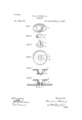
In the accompanying drawings, illustrating my invention, in the several figures of which like parts are similarly designated, Figure l `is a perspective View of a button-head. Fig.
2 is a perspective -view of a washer or base- Iiange, and Fig. 3 is a perspective view of the hollow rivet or eyelet. Fig. 4 is a bottom plan view of the completed button with the-Washer or base-flange attached, and Fig. 5 is avertical section. Fig. 6 is a vertical section showing the button applied to a piece of fabric.
The head a of the buttonand its shank or metal andin onepece. In the manufacture of this form of button the bottom of the shank or hub is made Whole', landthen in order to form the prongs or spurs c for joining the Washer or base-flange. d to the button-head such Whole bottom of the shank or Vhub is punched out, a proper tool being used for this purpose to insure the division of the metal of the bottom of the shank or hub into anumber of such prongs or spurs., Y
The Washer or base-angedmay be cut out (of fiat metal and provided with a central opening e and elevated-that is to say, dished'about its lcentral o' opening. The washer or baselange thus formed is made to` encirclet the prongs or spurs c of the button-head, and then such prongs or spurs are turned back within and upon the under side of the4 washer or base-flange, as shown in lFigs. 4, 5, and 6. The Washer or base-Harige thus applied forms a foot for the button, which, when the button a broad and stable base for the-button.
a hollow rivet f, whose tuber'g is passed up tube upset or clenched Wit-hin the shank or hub, substantially as in Fig. 6. Thus the fabthe rivet and the washer or base-ange d.
Any suitable means may be employed for piercing the fabric or garment for the passage of the fastening device. By means of the comparatively dat washer with a base orfoot which does not unduly elevate it and which may be applied tothe buttonfhead very readily'and inexpensively 'when the integral fastening devices are employed. By usingtheintegral fastening devices I am enabled to dispense with a separate eyelet which h-as heretofore been used to attach a base to abutton, and by attaching the Washer enbase-flange to the buttonhead permanently there are only two members to be assembled in applying the button to the garment. Y t
The washer or base-flange may be connected with the button shank o1' hub by first forming hub b in the instance shown are made of is applied to a fabric or garment, constitutes.
The preferred form of metallic fastening is e or base-fiange d the button-head is providedl Vthrough Vthe washer or base-flangeand into the shank or hub ofthe button and then has its- A 8o ric will be confined between the flange h of v Ico the latter with the prongs or spurs and then bending down the prongs or spurs Within the said washer or base-flange, or the unpierced button-head andwasher or base-flange may be properly arranged and then the shank or hub pierced'and its prongs or spurs formed and projected through the central opening in the Washer or base-ange-and bent about the latter, thus forming the prongs or spurs' and attaching the washer or base-flan ge to the button-head by a single operation.
What 1 claim isl. A button-head, having a shank or hub whose lower end is provided with integralA prongs or spurs, and a washer or base-flange having a central opening arranged at said lower end ofthe sha k or hub and connected therewith by the sai prongs or spurs which are bent downupon the underside of the said washer or base-flange, the said washer being axed and permanent part of the button-head as well before as after it is set, substantially as described.
2. A button-head, having a shank' or hub,
and adished washer or base-flange having a central opening and arranged at the lower end of said shank or hub, and iixedly and permanently connnected with it, before the buttonhead is set, by:` prongs or spurs, which are integral with the shank or hub and are projected through said central opening and bent over upon the said Washer or base-iange, substantially as described. r
3. A button, having a shank or l hub, a Washer or base-Hanger integral prongsor spurs on-said shank or hub bent over upon and permanently connecting the Washer or baseiian ge therewith before the button is set o'r secured upon a garment, and a hollow rivet or eyelet for connecting the button with the garment, substantially as described.
In testimony whereof l have hereunto set my hand this 29th day of September, A. D.
Publications (1)
| Publication Number | Publication Date |
|---|---|
| US582065A true US582065A (en) | 1897-05-04 |
Family
ID=2650741
Family Applications (1)
| Application Number | Title | Priority Date | Filing Date |
|---|---|---|---|
| US582065D Expired - Lifetime US582065A (en) | Theophilus r |
Country Status (1)
| Country | Link |
|---|---|
| US (1) | US582065A (en) |
Cited By (2)
| Publication number | Priority date | Publication date | Assignee | Title |
|---|---|---|---|---|
| US2453227A (en) * | 1946-09-21 | 1948-11-09 | George Martin | Button staple anchor and shield |
| USD616503S1 (en) * | 2008-09-12 | 2010-05-25 | Scatterday Mark A | Advertising disc |
-
0
- US US582065D patent/US582065A/en not_active Expired - Lifetime
Cited By (2)
| Publication number | Priority date | Publication date | Assignee | Title |
|---|---|---|---|---|
| US2453227A (en) * | 1946-09-21 | 1948-11-09 | George Martin | Button staple anchor and shield |
| USD616503S1 (en) * | 2008-09-12 | 2010-05-25 | Scatterday Mark A | Advertising disc |
Similar Documents
| Publication | Publication Date | Title |
|---|---|---|
| WO2003073883A1 (en) | Male fixing member of hook-and loop fastener, and sheet product with the fixing member | |
| US2242352A (en) | Button backing for snap fastener elements | |
| US474252A (en) | Button | |
| US296216A (en) | Button | |
| US772280A (en) | Button-fastener. | |
| US576759A (en) | Theophilus r | |
| US424795A (en) | Glove-fastener | |
| US371975A (en) | Fastening device or button for gloves | |
| US691222A (en) | Fastener. | |
| US236402A (en) | Geokge e | |
| US382342A (en) | Button-fastener | |
| US294517A (en) | Island | |
| US389386A (en) | Theophilus e | |
| US329337A (en) | Irving g | |
| US715645A (en) | Fastener for gloves, &c. | |
| US2611167A (en) | Detachable button for garments | |
| US352712A (en) | Ikventoe | |
| US820612A (en) | Snap-fastener. | |
| US757196A (en) | Snap-fastener. | |
| US855575A (en) | Button. | |
| US272913A (en) | Island | |
| US189035A (en) | Improvement in button-fastenings | |
| US382904A (en) | Fastening for gloves | |
| US672496A (en) | Socket member for glove-fasteners. | |
| US522293A (en) | Glove-fastener |