US4978409A - Method of bonding fibers to hydrogenated nitrile rubber - Google Patents
Method of bonding fibers to hydrogenated nitrile rubber Download PDFInfo
- Publication number
- US4978409A US4978409A US07/373,062 US37306289A US4978409A US 4978409 A US4978409 A US 4978409A US 37306289 A US37306289 A US 37306289A US 4978409 A US4978409 A US 4978409A
- Authority
- US
- United States
- Prior art keywords
- fibers
- rubber
- hydrogenated nitrile
- latices
- formalin
- Prior art date
- Legal status (The legal status is an assumption and is not a legal conclusion. Google has not performed a legal analysis and makes no representation as to the accuracy of the status listed.)
- Expired - Lifetime
Links
- 239000000835 fiber Substances 0.000 title claims abstract description 125
- 229920000459 Nitrile rubber Polymers 0.000 title claims abstract description 54
- 238000000034 method Methods 0.000 title claims abstract description 26
- 239000000853 adhesive Substances 0.000 claims abstract description 85
- 230000001070 adhesive effect Effects 0.000 claims abstract description 85
- 239000000203 mixture Substances 0.000 claims abstract description 80
- WSFSSNUMVMOOMR-UHFFFAOYSA-N Formaldehyde Chemical compound O=C WSFSSNUMVMOOMR-UHFFFAOYSA-N 0.000 claims abstract description 62
- GHMLBKRAJCXXBS-UHFFFAOYSA-N resorcinol Chemical compound OC1=CC=CC(O)=C1 GHMLBKRAJCXXBS-UHFFFAOYSA-N 0.000 claims abstract description 62
- 229920001971 elastomer Polymers 0.000 claims abstract description 52
- 239000005060 rubber Substances 0.000 claims abstract description 52
- 229920000126 latex Polymers 0.000 claims abstract description 45
- 229920000642 polymer Polymers 0.000 claims abstract description 30
- 150000001875 compounds Chemical class 0.000 claims abstract description 29
- 229920001228 polyisocyanate Polymers 0.000 claims abstract description 23
- 239000005056 polyisocyanate Substances 0.000 claims abstract description 23
- 239000004816 latex Substances 0.000 claims abstract description 21
- 229910052736 halogen Inorganic materials 0.000 claims abstract description 13
- 150000002367 halogens Chemical class 0.000 claims abstract description 13
- 125000003118 aryl group Chemical group 0.000 claims abstract description 10
- 239000003795 chemical substances by application Substances 0.000 claims abstract description 9
- 230000003213 activating effect Effects 0.000 claims abstract description 8
- 239000006087 Silane Coupling Agent Substances 0.000 claims abstract description 6
- 239000004593 Epoxy Substances 0.000 claims abstract description 5
- 238000007598 dipping method Methods 0.000 claims abstract description 3
- 239000004760 aramid Substances 0.000 claims description 13
- 229920003235 aromatic polyamide Polymers 0.000 claims description 13
- 229920002681 hypalon Polymers 0.000 claims description 9
- 229920001084 poly(chloroprene) Polymers 0.000 claims description 9
- 239000005062 Polybutadiene Substances 0.000 claims description 7
- 229920002857 polybutadiene Polymers 0.000 claims description 7
- NLHHRLWOUZZQLW-UHFFFAOYSA-N Acrylonitrile Chemical compound C=CC#N NLHHRLWOUZZQLW-UHFFFAOYSA-N 0.000 claims description 5
- 239000004953 Aliphatic polyamide Substances 0.000 claims description 5
- 239000004372 Polyvinyl alcohol Substances 0.000 claims description 5
- 229920003231 aliphatic polyamide Polymers 0.000 claims description 5
- 229920000728 polyester Polymers 0.000 claims description 5
- 229920002451 polyvinyl alcohol Polymers 0.000 claims description 5
- 238000005984 hydrogenation reaction Methods 0.000 claims description 4
- 229920000049 Carbon (fiber) Polymers 0.000 claims description 3
- 239000004917 carbon fiber Substances 0.000 claims description 3
- KGIGUEBEKRSTEW-UHFFFAOYSA-N 2-vinylpyridine Chemical compound C=CC1=CC=CC=N1 KGIGUEBEKRSTEW-UHFFFAOYSA-N 0.000 claims description 2
- 229920000742 Cotton Polymers 0.000 claims description 2
- 229920000297 Rayon Polymers 0.000 claims description 2
- MTAZNLWOLGHBHU-UHFFFAOYSA-N butadiene-styrene rubber Chemical compound C=CC=C.C=CC1=CC=CC=C1 MTAZNLWOLGHBHU-UHFFFAOYSA-N 0.000 claims description 2
- 239000003365 glass fiber Substances 0.000 claims description 2
- 229920000915 polyvinyl chloride Polymers 0.000 claims description 2
- 239000004800 polyvinyl chloride Substances 0.000 claims description 2
- 239000002964 rayon Substances 0.000 claims description 2
- 239000007787 solid Substances 0.000 claims description 2
- 239000002131 composite material Substances 0.000 abstract description 3
- 239000000243 solution Substances 0.000 description 66
- ZAMOUSCENKQFHK-UHFFFAOYSA-N Chlorine atom Chemical compound [Cl] ZAMOUSCENKQFHK-UHFFFAOYSA-N 0.000 description 24
- 229910052801 chlorine Inorganic materials 0.000 description 24
- 239000000460 chlorine Substances 0.000 description 24
- 230000014759 maintenance of location Effects 0.000 description 17
- YXFVVABEGXRONW-UHFFFAOYSA-N Toluene Chemical compound CC1=CC=CC=C1 YXFVVABEGXRONW-UHFFFAOYSA-N 0.000 description 12
- 238000005259 measurement Methods 0.000 description 12
- PEDCQBHIVMGVHV-UHFFFAOYSA-N Glycerine Chemical compound OCC(O)CO PEDCQBHIVMGVHV-UHFFFAOYSA-N 0.000 description 6
- 239000004615 ingredient Substances 0.000 description 5
- -1 aromatic nitroso compounds Chemical class 0.000 description 4
- 239000006229 carbon black Substances 0.000 description 4
- XLYOFNOQVPJJNP-UHFFFAOYSA-N water Substances O XLYOFNOQVPJJNP-UHFFFAOYSA-N 0.000 description 4
- UHOVQNZJYSORNB-UHFFFAOYSA-N Benzene Chemical compound C1=CC=CC=C1 UHOVQNZJYSORNB-UHFFFAOYSA-N 0.000 description 3
- LYCAIKOWRPUZTN-UHFFFAOYSA-N Ethylene glycol Chemical compound OCCO LYCAIKOWRPUZTN-UHFFFAOYSA-N 0.000 description 3
- 239000007864 aqueous solution Substances 0.000 description 3
- 238000009472 formulation Methods 0.000 description 3
- 235000011187 glycerol Nutrition 0.000 description 3
- 238000010438 heat treatment Methods 0.000 description 3
- 229920000620 organic polymer Polymers 0.000 description 3
- KATAXDCYPGGJNJ-UHFFFAOYSA-N 1,3-bis(oxiran-2-ylmethoxy)propan-2-ol Chemical compound C1OC1COCC(O)COCC1CO1 KATAXDCYPGGJNJ-UHFFFAOYSA-N 0.000 description 2
- MKZXROSCOHNKDX-UHFFFAOYSA-N 1,4-dinitrosobenzene Chemical compound O=NC1=CC=C(N=O)C=C1 MKZXROSCOHNKDX-UHFFFAOYSA-N 0.000 description 2
- HIXDQWDOVZUNNA-UHFFFAOYSA-N 2-(3,4-dimethoxyphenyl)-5-hydroxy-7-methoxychromen-4-one Chemical compound C=1C(OC)=CC(O)=C(C(C=2)=O)C=1OC=2C1=CC=C(OC)C(OC)=C1 HIXDQWDOVZUNNA-UHFFFAOYSA-N 0.000 description 2
- UPMLOUAZCHDJJD-UHFFFAOYSA-N 4,4'-Diphenylmethane Diisocyanate Chemical compound C1=CC(N=C=O)=CC=C1CC1=CC=C(N=C=O)C=C1 UPMLOUAZCHDJJD-UHFFFAOYSA-N 0.000 description 2
- ISWSIDIOOBJBQZ-UHFFFAOYSA-N Phenol Chemical compound OC1=CC=CC=C1 ISWSIDIOOBJBQZ-UHFFFAOYSA-N 0.000 description 2
- NINIDFKCEFEMDL-UHFFFAOYSA-N Sulfur Chemical compound [S] NINIDFKCEFEMDL-UHFFFAOYSA-N 0.000 description 2
- XLOMVQKBTHCTTD-UHFFFAOYSA-N Zinc monoxide Chemical compound [Zn]=O XLOMVQKBTHCTTD-UHFFFAOYSA-N 0.000 description 2
- 239000003963 antioxidant agent Substances 0.000 description 2
- 239000003822 epoxy resin Substances 0.000 description 2
- RTZKZFJDLAIYFH-UHFFFAOYSA-N ether Substances CCOCC RTZKZFJDLAIYFH-UHFFFAOYSA-N 0.000 description 2
- WXZMFSXDPGVJKK-UHFFFAOYSA-N pentaerythritol Chemical compound OCC(CO)(CO)CO WXZMFSXDPGVJKK-UHFFFAOYSA-N 0.000 description 2
- 150000002989 phenols Chemical class 0.000 description 2
- 229920000647 polyepoxide Polymers 0.000 description 2
- 239000011347 resin Substances 0.000 description 2
- 229920005989 resin Polymers 0.000 description 2
- 238000010008 shearing Methods 0.000 description 2
- 150000005846 sugar alcohols Polymers 0.000 description 2
- 229910052717 sulfur Inorganic materials 0.000 description 2
- 239000011593 sulfur Substances 0.000 description 2
- WYTZZXDRDKSJID-UHFFFAOYSA-N (3-aminopropyl)triethoxysilane Chemical compound CCO[Si](OCC)(OCC)CCCN WYTZZXDRDKSJID-UHFFFAOYSA-N 0.000 description 1
- YXIWHUQXZSMYRE-UHFFFAOYSA-N 1,3-benzothiazole-2-thiol Chemical compound C1=CC=C2SC(S)=NC2=C1 YXIWHUQXZSMYRE-UHFFFAOYSA-N 0.000 description 1
- VGHSXKTVMPXHNG-UHFFFAOYSA-N 1,3-diisocyanatobenzene Chemical compound O=C=NC1=CC=CC(N=C=O)=C1 VGHSXKTVMPXHNG-UHFFFAOYSA-N 0.000 description 1
- JBHRGAHUHVVXQI-UHFFFAOYSA-N 1-triethoxysilylpropan-1-amine Chemical compound CCO[Si](OCC)(OCC)C(N)CC JBHRGAHUHVVXQI-UHFFFAOYSA-N 0.000 description 1
- XDLMVUHYZWKMMD-UHFFFAOYSA-N 3-trimethoxysilylpropyl 2-methylprop-2-enoate Chemical compound CO[Si](OC)(OC)CCCOC(=O)C(C)=C XDLMVUHYZWKMMD-UHFFFAOYSA-N 0.000 description 1
- SOKFWRPORPTXSA-UHFFFAOYSA-N 4-[2-(4-hydroxyphenyl)-2-methylpropyl]phenol Chemical compound C=1C=C(O)C=CC=1C(C)(C)CC1=CC=C(O)C=C1 SOKFWRPORPTXSA-UHFFFAOYSA-N 0.000 description 1
- OKTJSMMVPCPJKN-UHFFFAOYSA-N Carbon Chemical compound [C] OKTJSMMVPCPJKN-UHFFFAOYSA-N 0.000 description 1
- FBPFZTCFMRRESA-FSIIMWSLSA-N D-Glucitol Natural products OC[C@H](O)[C@H](O)[C@@H](O)[C@H](O)CO FBPFZTCFMRRESA-FSIIMWSLSA-N 0.000 description 1
- FBPFZTCFMRRESA-JGWLITMVSA-N D-glucitol Chemical compound OC[C@H](O)[C@@H](O)[C@H](O)[C@H](O)CO FBPFZTCFMRRESA-JGWLITMVSA-N 0.000 description 1
- BRLQWZUYTZBJKN-UHFFFAOYSA-N Epichlorohydrin Chemical compound ClCC1CO1 BRLQWZUYTZBJKN-UHFFFAOYSA-N 0.000 description 1
- 239000005057 Hexamethylene diisocyanate Substances 0.000 description 1
- 229920000271 Kevlar® Polymers 0.000 description 1
- CTQNGGLPUBDAKN-UHFFFAOYSA-N O-Xylene Chemical compound CC1=CC=CC=C1C CTQNGGLPUBDAKN-UHFFFAOYSA-N 0.000 description 1
- 239000002202 Polyethylene glycol Substances 0.000 description 1
- BLRPTPMANUNPDV-UHFFFAOYSA-N Silane Chemical compound [SiH4] BLRPTPMANUNPDV-UHFFFAOYSA-N 0.000 description 1
- 239000004902 Softening Agent Substances 0.000 description 1
- 235000021355 Stearic acid Nutrition 0.000 description 1
- XSTXAVWGXDQKEL-UHFFFAOYSA-N Trichloroethylene Chemical group ClC=C(Cl)Cl XSTXAVWGXDQKEL-UHFFFAOYSA-N 0.000 description 1
- ZJCCRDAZUWHFQH-UHFFFAOYSA-N Trimethylolpropane Chemical compound CCC(CO)(CO)CO ZJCCRDAZUWHFQH-UHFFFAOYSA-N 0.000 description 1
- NOZAQBYNLKNDRT-UHFFFAOYSA-N [diacetyloxy(ethenyl)silyl] acetate Chemical compound CC(=O)O[Si](OC(C)=O)(OC(C)=O)C=C NOZAQBYNLKNDRT-UHFFFAOYSA-N 0.000 description 1
- 239000000654 additive Substances 0.000 description 1
- 150000001338 aliphatic hydrocarbons Chemical class 0.000 description 1
- 150000001491 aromatic compounds Chemical class 0.000 description 1
- 150000004945 aromatic hydrocarbons Chemical class 0.000 description 1
- 230000005540 biological transmission Effects 0.000 description 1
- 239000002981 blocking agent Substances 0.000 description 1
- 229910052799 carbon Inorganic materials 0.000 description 1
- 239000004568 cement Substances 0.000 description 1
- 238000006243 chemical reaction Methods 0.000 description 1
- 239000007795 chemical reaction product Substances 0.000 description 1
- 238000007906 compression Methods 0.000 description 1
- 230000006835 compression Effects 0.000 description 1
- 230000006866 deterioration Effects 0.000 description 1
- FWDBOZPQNFPOLF-UHFFFAOYSA-N ethenyl(triethoxy)silane Chemical compound CCO[Si](OCC)(OCC)C=C FWDBOZPQNFPOLF-UHFFFAOYSA-N 0.000 description 1
- NKSJNEHGWDZZQF-UHFFFAOYSA-N ethenyl(trimethoxy)silane Chemical compound CO[Si](OC)(OC)C=C NKSJNEHGWDZZQF-UHFFFAOYSA-N 0.000 description 1
- WOXXJEVNDJOOLV-UHFFFAOYSA-N ethenyl-tris(2-methoxyethoxy)silane Chemical compound COCCO[Si](OCCOC)(OCCOC)C=C WOXXJEVNDJOOLV-UHFFFAOYSA-N 0.000 description 1
- 150000002170 ethers Chemical class 0.000 description 1
- 239000000945 filler Substances 0.000 description 1
- 125000005843 halogen group Chemical group 0.000 description 1
- RRAMGCGOFNQTLD-UHFFFAOYSA-N hexamethylene diisocyanate Chemical compound O=C=NCCCCCCN=C=O RRAMGCGOFNQTLD-UHFFFAOYSA-N 0.000 description 1
- 125000004435 hydrogen atom Chemical group [H]* 0.000 description 1
- 239000004761 kevlar Substances 0.000 description 1
- 238000004519 manufacturing process Methods 0.000 description 1
- 125000000018 nitroso group Chemical group N(=O)* 0.000 description 1
- QIQXTHQIDYTFRH-UHFFFAOYSA-N octadecanoic acid Chemical compound CCCCCCCCCCCCCCCCCC(O)=O QIQXTHQIDYTFRH-UHFFFAOYSA-N 0.000 description 1
- OQCDKBAXFALNLD-UHFFFAOYSA-N octadecanoic acid Natural products CCCCCCCC(C)CCCCCCCCC(O)=O OQCDKBAXFALNLD-UHFFFAOYSA-N 0.000 description 1
- 239000003960 organic solvent Substances 0.000 description 1
- 239000012466 permeate Substances 0.000 description 1
- 239000005011 phenolic resin Substances 0.000 description 1
- 239000004014 plasticizer Substances 0.000 description 1
- 229920002587 poly(1,3-butadiene) polymer Polymers 0.000 description 1
- 229920001515 polyalkylene glycol Polymers 0.000 description 1
- 229920001223 polyethylene glycol Polymers 0.000 description 1
- 229920006389 polyphenyl polymer Polymers 0.000 description 1
- 229920001451 polypropylene glycol Polymers 0.000 description 1
- 230000002265 prevention Effects 0.000 description 1
- 230000006798 recombination Effects 0.000 description 1
- 238000005215 recombination Methods 0.000 description 1
- 239000012783 reinforcing fiber Substances 0.000 description 1
- 239000012763 reinforcing filler Substances 0.000 description 1
- 150000003335 secondary amines Chemical class 0.000 description 1
- 229910000077 silane Inorganic materials 0.000 description 1
- 239000000600 sorbitol Substances 0.000 description 1
- 239000008117 stearic acid Substances 0.000 description 1
- 150000003509 tertiary alcohols Chemical class 0.000 description 1
- KUAZQDVKQLNFPE-UHFFFAOYSA-N thiram Chemical compound CN(C)C(=S)SSC(=S)N(C)C KUAZQDVKQLNFPE-UHFFFAOYSA-N 0.000 description 1
- 229960002447 thiram Drugs 0.000 description 1
- DVKJHBMWWAPEIU-UHFFFAOYSA-N toluene 2,4-diisocyanate Chemical compound CC1=CC=C(N=C=O)C=C1N=C=O DVKJHBMWWAPEIU-UHFFFAOYSA-N 0.000 description 1
- GQIUQDDJKHLHTB-UHFFFAOYSA-N trichloro(ethenyl)silane Chemical compound Cl[Si](Cl)(Cl)C=C GQIUQDDJKHLHTB-UHFFFAOYSA-N 0.000 description 1
- UBOXGVDOUJQMTN-UHFFFAOYSA-N trichloroethylene Natural products ClCC(Cl)Cl UBOXGVDOUJQMTN-UHFFFAOYSA-N 0.000 description 1
- 239000005050 vinyl trichlorosilane Substances 0.000 description 1
- 238000004073 vulcanization Methods 0.000 description 1
- 239000004846 water-soluble epoxy resin Substances 0.000 description 1
- 239000008096 xylene Substances 0.000 description 1
- 239000011787 zinc oxide Substances 0.000 description 1
Images



Classifications
-
- C—CHEMISTRY; METALLURGY
- C08—ORGANIC MACROMOLECULAR COMPOUNDS; THEIR PREPARATION OR CHEMICAL WORKING-UP; COMPOSITIONS BASED THEREON
- C08J—WORKING-UP; GENERAL PROCESSES OF COMPOUNDING; AFTER-TREATMENT NOT COVERED BY SUBCLASSES C08B, C08C, C08F, C08G or C08H
- C08J5/00—Manufacture of articles or shaped materials containing macromolecular substances
- C08J5/04—Reinforcing macromolecular compounds with loose or coherent fibrous material
- C08J5/06—Reinforcing macromolecular compounds with loose or coherent fibrous material using pretreated fibrous materials
-
- C—CHEMISTRY; METALLURGY
- C08—ORGANIC MACROMOLECULAR COMPOUNDS; THEIR PREPARATION OR CHEMICAL WORKING-UP; COMPOSITIONS BASED THEREON
- C08J—WORKING-UP; GENERAL PROCESSES OF COMPOUNDING; AFTER-TREATMENT NOT COVERED BY SUBCLASSES C08B, C08C, C08F, C08G or C08H
- C08J2315/00—Characterised by the use of rubber derivatives
-
- Y—GENERAL TAGGING OF NEW TECHNOLOGICAL DEVELOPMENTS; GENERAL TAGGING OF CROSS-SECTIONAL TECHNOLOGIES SPANNING OVER SEVERAL SECTIONS OF THE IPC; TECHNICAL SUBJECTS COVERED BY FORMER USPC CROSS-REFERENCE ART COLLECTIONS [XRACs] AND DIGESTS
- Y10—TECHNICAL SUBJECTS COVERED BY FORMER USPC
- Y10S—TECHNICAL SUBJECTS COVERED BY FORMER USPC CROSS-REFERENCE ART COLLECTIONS [XRACs] AND DIGESTS
- Y10S156/00—Adhesive bonding and miscellaneous chemical manufacture
- Y10S156/91—Bonding tire cord and elastomer: improved adhesive system
-
- Y—GENERAL TAGGING OF NEW TECHNOLOGICAL DEVELOPMENTS; GENERAL TAGGING OF CROSS-SECTIONAL TECHNOLOGIES SPANNING OVER SEVERAL SECTIONS OF THE IPC; TECHNICAL SUBJECTS COVERED BY FORMER USPC CROSS-REFERENCE ART COLLECTIONS [XRACs] AND DIGESTS
- Y10—TECHNICAL SUBJECTS COVERED BY FORMER USPC
- Y10T—TECHNICAL SUBJECTS COVERED BY FORMER US CLASSIFICATION
- Y10T428/00—Stock material or miscellaneous articles
- Y10T428/29—Coated or structually defined flake, particle, cell, strand, strand portion, rod, filament, macroscopic fiber or mass thereof
- Y10T428/2913—Rod, strand, filament or fiber
- Y10T428/2933—Coated or with bond, impregnation or core
- Y10T428/2938—Coating on discrete and individual rods, strands or filaments
Definitions
- This invention relates to a method of bonding fibers to hydrogenated nitrile rubber.
- Hydrogenated nitrile rubber is produced by hydrogenation of double bonds contained in nitrile rubber.
- the hydrogenated nitrile rubber recombination of sulfur to thermal age and deterioration in elasticity based thereon are prevented, and the hydrogenated nitrile rubber is improved in heat resistance while maintaining excellent oil resistance which the nitrile rubber originally possesses.
- the hydrogenated nitrile rubber is now widely used on account of its excellent heat and oil resistance.
- Fibers are bonded to hydrogenated nitrile rubber to a degree by treating the fibers in advance with RFL solutions, as set forth above, however, the resulting adhesion does not stand uses where large shearing force is generated between the rubber and fibers by, for example, compression or elongation.
- an object of the invention to obviate the problems involved in the prior art adhesion of fibers to hydrogenated nitrile rubber, and to provide a method of attaining strong adhesion between fibers and hydrogenated nitrile rubber which stands uses where large shearing force is generated therebetween.
- the method of bonding fibers to hydrogenated nitrile rubber in accordance with the invention comprises:
- the third step of treating the fibers with an adhesive composition which comprises (a) 1-90% by weight of polymers, based on the composition, the polymers containing halogens in amounts of 25-70% by weight based on the polymers, and (b) 10-99% by weight of polyisocyanates, aromatic polynitroso compounds or polyepoxy compounds; and
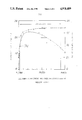
- FIGS. 1, 3 and 5 are graphs which show the relation between the chlorine content of polymers in the adhesive compositions used and adhesive force attained in the resultant adherends of hydrogenated nitrile rubber and aromatic polyamide fiber cords;
- FIGS. 2, 4 and 6 are graphs which show the relation between the weight ratio of chlorine-containing polymers to polyisocyanates, aromatic polynitroso compounds and polyepoxy compounds, respectively, all as ingredients in the adhesive compositions used, and adhesive force and strength retention of the resultant adherends of hydrogenated nitrile rubber and aromatic polyamide fiber cords.
- the fibers are treated with an activating agent selected from the group consisting of polyisocyanates, epoxy compounds and silane coupling agents, to activate the fibers.
- an activating agent selected from the group consisting of polyisocyanates, epoxy compounds and silane coupling agents, to activate the fibers.
- the polyisocyanates used are not specifically limited, but preferred examples include tolylenediisocyanate, m-phenylenediisocyanate, diphenylmethane diisocyanate, hexamethylenediisocyanate and polymethylene polyphenyl polyisocyanate.
- the polyisocyanates may be in the form of adducts with compounds which have not less than two active hydrogens in the molecule such as polyhydric alcohols exemplified by trimethylolpropane or pentaerythritol, or in the form of blocked polyisocyanates which are obtained by the reaction of the polyisocyanates with blocking agents such as phenols, tertiary alcohols or secondary amines.
- the polyepoxy compounds used include, for example, reaction products of polyhydric compounds with halogen containing epoxide compounds such as epichlorohydrin.
- polyhydric compounds for example, polyhydric alcohols such as ethylene glycol, glycerine, sorbitol or pentaerythritol; polyalkylene glycols such as polyethylene glycol or polypropylene glycol; or polyfunctional phenols such as resorcinol or bis(4-hydroxyphenyl)dimethylethane; or phenol resins such as phenol/formalin resins or resorcinol/formalin resins.
- polyhydric alcohols such as ethylene glycol, glycerine, sorbitol or pentaerythritol
- polyalkylene glycols such as polyethylene glycol or polypropylene glycol
- polyfunctional phenols such as resorcinol or bis(4-hydroxyphenyl)dimethylethane
- silane coupling agents preferably used include vinyltrialkoxysilanes, aminoalkyltrialkoxysilanes, acryloxyalkyltrialkoxysilanes and methacryloxyalkyltrialkoxysilanes.
- silane coupling agents for instance, vinyltrichlorosilane, vinyltrimethoxysilane, vinyltriethoxysilane, vinyltris( ⁇ -methoxyethoxy)silane, ⁇ -methacryloxypropyltrimethoxysilane, ⁇ -methacryloxypropyltris( ⁇ -methoxy)silane, ⁇ -aminopropyltriethoxysilane or vinyltriacetoxysilane.
- the activating agent is usually used in the form of solutions.
- the fibers are dipped into the solutions, and then dried, preferably under heating, for example, at temperatures of about 100°-250° C. so that the activating agent reacts with and is fixed on the fibers.
- the thus activated fibers are treated with resorcinol/formalin/latex solutions.
- the fibers are activated by the treatment with the activating agent in the previous step, so that the resorcinol/formalin/latex solutions adhere strongly to the fibers in this step, and in the end, a strong adhesion is attained between the fibers and hydrogenated nitrile rubber.
- the resorcinol/formalin/latex solutions preferably contain resorcinol and formalin in molar ratios of 1/3-3/1, and the latices and resorcinol/formalin in ratios of latices as solids to resorcinol/formalin in dry weights of 10/1-1/3.
- the latices used include, for instance, acrylonitrile/butadiene rubber (NBR) latices, carboxylated acrylonitrile/butadiene rubber (NBR) latices, styrene/butadiene rubber (SBR) latices, vinylpyridine rubber (VP) latices, chloroprene rubber (CR) latices and chlorosulfonated polyethylene rubber (CSM) latices.
- NBR acrylonitrile/butadiene rubber
- NBR carboxylated acrylonitrile/butadiene rubber
- SBR styrene/butadiene rubber
- VP vinylpyridine rubber
- CR chloroprene rubber
- CSM chlorosulfonated polyethylene rubber
- the fibers are usually dipped into the resorcinol/formalin/latex solutions and then dried, preferably under heating at temperatures, for instance, of about 100°-250° C. for several minutes to fix the solutions on the fibers.
- the treatment of the fibers with the resorcinol/formalin/latex solutions in the second step improves wettability of adhesive compositions to the fibers, as will be described in the next third step, but also prevents the adhesive compositions from permeating into fiber cords when the fiber cords are bonded to hydrogenated nitrile rubber, thereby to attain an effective adhesion therebetween with use of small amounts of the adhesive compositions. Further, the prevention of the adhesive compositions from permeating into fiber cords keeps the fiber cords flexible as they originally are, thereby to provide adherends of the fiber cords and the rubber of a high resistance to fatigue when repeatedly flexed.
- the composition comprises (a) 1-90% by weight of organic polymers and (b) 10-99% by weight of polyisocyanates, aromatic polynitroso compounds or polyepoxy compounds.
- the organic polymers contain halogens, preferably chlorine, therein in amounts of 25-70%, preferably 25-60% by weight based on the polymer, and may be exemplified by chlorinated rubber, polyvinyl chloride, chloroprene rubber or chlorosulfonated polyethylene rubber.
- the polymers used contain halogens in amounts other than the above specified, the resultant adherends have very weak adhesion between the fibers and hydrogenated nitrile rubber.
- the polyisocyanates in the adhesive compositions may be the same as described hereinbefore, and may also be in the form of adducts or blocked polyisocyanates.
- the aromatic polynitroso compounds used in the adhesive compositions are aromatic compounds which have not less than two nitroso groups in the molecule, and may be exemplified by poly-p-dinitrosobenzene and polydinitrosonaphthalene.
- the polyepoxy compounds used in the adhesive compositions also may be the same as hereinbefore described.
- the adhesive compositions are preferably used in the form of solutions in organic solvents such as aromatic hydrocarbons including benzene, toluene or xylene, or ethers, or halogenated aliphatic hydrocarbons such as trichloroethylene.
- organic solvents such as aromatic hydrocarbons including benzene, toluene or xylene, or ethers, or halogenated aliphatic hydrocarbons such as trichloroethylene.
- the fibers are usually dipped into the solutions of the adhesive compositions and then dried, preferably under heating at temperatures usually of not more than about 250° C., although depending upon the fibers used, so that the adhesive compositions are fixed on the fibers.
- the adhesive compositions In the treatment of the fibers with the adhesive compositions in the third step, since the adhesive compositions contain organic polymers which contain high polarity halogen groups therein, the adhesive compositions have a high miscibility with the latices, and further, the adhesive compositions are strongly adsorbed on the fibers, but also they have high miscibility with hydrogenated nitrile rubber. Moreover, the adhesive compositions are crosslinked to rubber latices and hydrogenated nitrile rubber by vulcanizing agents or, the polyisocyanates, aromatic polynitroso compounds or polyepoxy compounds contained in the adhesive compositions, in the next fourth vulcanizing step. It is likely that, based on these reasons, a strong adhesion is formed between the fibers and the hydrogenated nitrile rubber according to the invention.
- the adhesive compositions may further contain additives such as carbon black, fillers, softening agents or antioxidants, which are usually incorporated into compounded hydrogenated nitrile rubber mixes.
- the hydrogenated nitrile rubber mix may contain reinforcing fillers, antioxidants, plasticizers, vulcanizing assistants or processing assistants.
- the fibers may be treated with rubber cement containing compounded hydrogenated nitrile rubber mixes.
- the hydrogenated nitrile rubber used in the invention has a hydrogenation rate preferably of 80-99%.
- the method of the invention is applicable to any fibers, but preferred fibers are, for example, cotton, rayon, polyvinyl alcohol fibers, aliphatic polyamide fibers, aromatic polyamide fibers, polyester fibers, glass fibers and carbon fibers.
- the fibers are finally placed in close contact with compounded hydrogenated nitrile rubber mixes in the fourth step, and the rubber mixes are vulcanized together with the fibers in conventional manners.
- the fibers are treated with activating agents to activate the fibers, then with resorcinol/formalin/latex solutions, and then with adhesive compositions which have high miscibility with both hydrogenated nitrile rubber and rubber latices, in accordance with the invention, so that a strong adhesion is formed between the fibers and the rubber.
- the fibers are treated with the adhesive composition after being treated with resorcinol/formalin/latex solutions, so that there takes place no significant permeation of the adhesive compositions into the cords, and as results, composite adherends which have large strength and high resistance to fatigue from repeated flexure are obtained.
- the method of the invention is suitably applicable to adhesion of reinforcing fibers to hydrogenated nitrile rubber in the production of dynamic fiber-rubber composites such as power transmission belts, conveyor belts and automobile tires.
- Aromatic polyamide fiber cords (“Kevlar” (tradename) by Du pont, 1500D/2 ⁇ 3) were dipped into a 5% aqueous solution of water soluble epoxy resin (Denacol EX 313 by Nagase Sangyo K. K., glycerine polyglycidyl ether), the solution being referred to as Solution A hereinafter, and then dried at 200° C. for two minutes.
- the cords were then dipped into a resorcinol/formalin/latex solution composed of 5.0 parts of resorcinol, 3.1 parts of a 37% formalin solution, 61.6 parts of an NBR latex (Nipol 1562 by Nippon Zeon K. K.) of resorcinol/formalin molar ratio of 1.2/1 and 84.3 parts of water, the latex solution being referred to as Solution H hereinafter, and then dried at 200° C. for two minutes.
- NBR latex Nipol 1562 by Nippon Zeon K. K.
- the cords were then dipped into adhesive compositions W, X and Y, respectively, all of which contained chlorine containing polymers, as their formulations are shown in the Table 1, and dried at 110° C. for two minutes (Runs Invention No. 1-3).
- the fibers were treated with an adhesive composition Z which contained no halogen containing polymers, as shown in the Table 1, and otherwise in the same manner as above described (Runs Comparison No. 1).
- the fibers were first treated with the Solution A, and then treated with the adhesive compositions W, X, Y and Z, respectively, without the treatment with the Solution H (Runs Comparison No. 3-6).
- the fiber cords were then placed at intervals of 3 mm on a sheet of a compounded mix composed of 100 parts of hydrogenated nitrile rubber (Zetpol 2020, hydrogenation rate of 90%, by Nippon Zeon K. K.), 5 parts of zinc oxide (JIS No. 1 Grade), 1 part of stearic acid, 0.5 parts of sulfur, 40 parts of SFR carbon, 2 parts of tetramethylthiuram disulfide and 0.5 parts of mercaptobenzothiazol, and the sheet was vulcanized together with the cords at 160° C. for 20 minutes.
- the resultant adherends were cut into specimens of one inch in width, and peeling adhesive force was measured at a peeling angle of 90° and a peeling rate of 50 mm per minute.
- the results are shown in the Table 2 and in FIG. 1 which illustrates the relation between the chlorine contents of the polymers in the adhesive compositions and the peeling adhesive forces in the resultant adherends.
- the same sheet of the compounded mix of the hydrogenated nitrile rubber of 1.0 mm thick as in the Example 1 was rolled on a drum, and thereon the fiber cords which had been treated in the Example 1 were spun. Then, the same sheet of the rubber mix was further rolled on the fiber cords.
- the layered sheets of the rubber mixes were then steam vulcanized under 6 kg/cm 2 for 35 minutes, to provide layered sheets bonded together and having two fiber cords therebetween extending parallel to each other longitudinally of the sheets.
- the specimen was fixed at its one end to a frame, and then travelled along a pair of rotational bars, with the other end connected to a load of 1.5 kg. Then the bars were moved up and down in the opposite directions 100,000 times while rotating in such a manner that the distance between the rotational axes of the bars oscillatorily changed, thereby to estimate the tensile strength retention which is defined by tensile strength after the flexing test divided tensile strength before the test. The results are shown in the Table 2.
- the same fiber cords as in the Example 1 were treated with adhesive compositions containing halogen containing polymers and polyisocyanates in varied ratios, and otherwise in the same manner as in the Run Invention No. 1 in the Example 1. Then, the cords were bonded to the same rubber mix sheets as in the Examples 1 and 2, to provide adherends. The same measurements as in the Examples 1 and 2 were carried out.
- FIG. 2 shows the relation between the weight ratio of chlorine-containing polymers to polyisocyanates in the adhesive compositions used, and adhesive force and strength retention of the resultant adherends of hydrogenated nitrile rubber and aromatic polyamide fiber cords.
- a Solution B was prepared which was composed of 5 parts of 4,4'-diphenylmethane diisocyanate blocked with phenol and 95 parts of water, and a Solution C composed of 5 parts of ⁇ -aminopropyltriethoxysilane and 95 parts of water.
- the fiber cords shown in the Table 5 were used in place of the aromatic polyamide fiber cords, and otherwise in the same manner as in the Run Invention No. 1 in the Example 1, the cords were bonded to the same sheet of the hydrogenated nitrile rubber mix as in the Examples 1 and 2.
- the cords were then dipped into adhesive compositions W, X and Y, respectively, all of which contained chlorine containing polymers, as their formulations are shown in the Table 6, and dried at 110° C. for two minutes (Runs Invention No. 1-3).
- the fiber cords were treated with an adhesive composition Z which contained no halogen containing polymers, as shown in the Table 6, and otherwise in the same manner as above described (Runs Comparison No. 1).
- the fibers were first treated with the Solution A, and then treated with the adhesive compositions W, X, Y and Z, respectively, without the treatment with the Solution H (Runs Comparison No. 3-6).
- Example 1 The same sheet of the rubber mix as in the Example 1 was rolled on a drum, and thereon the fiber cords which had been treated in the Example 7 were spun. Then, the same sheet of the rubber mix as above was further rolled on the fiber cords.
- the layered sheets of the rubber mixes were then steam vulcanized in the same manner as in the Example 2.
- the resultant layered sheets bonded together and having fiber cords embedded therebetween were subjected to the same flexing test as in the Example 2. The results are shown in the Table 7.
- FIG. 4 shows the relation between the weight ratio of chlorine-containing polymers to aromatic polynitroso compounds in the adhesive compositions used, and adhesive force and strength retention of the resultant adherends of hydrogenated nitrile rubber and aromatic polyamide fiber cords.
- the fiber cords shown in the Table 9 were used in place of the aromatic polyamide fiber cords, and otherwise in the same manner as in the Run Invention No. 1 in the Example 7, the cords were bonded to the same sheet of the hydrogenated nitrile rubber mix as in the Examples 1 and 2.
- the cords were then dipped into adhesive compositions W, X and Y, respectively, all of which contained chlorine containing polymers, as their formulations are shown in the Table 10, and dried at 110° C. for two minutes (Runs Invention No. 1-3).
- the fibers were treated with an adhesive composition Z which contained no halogen containing polymers, as shown in the Table 10, and otherwise in the same manner as above described (Runs Comparison No. 1).
- the fibers were first treated with the Solution A, and then treated with the adhesive compositions W, X, Y and Z, respectively, without the treatment with the Solution H (Runs Comparison No. 3-6).
- the fiber cords were then bonded to the same rubber mix as in the Example 1, and peeling adhesive force was measured in the same manner as in the Example 1.
- the results are shown in the Table 11 and in FIG. 5 which illustrates the relation between the chlorine content of the polymers in the adhesive compositions and the peeling adhesive force.
- Example 1 The same sheet of the rubber mix as in the Example 1 was rolled on a drum, and thereon the fiber cords which had been treated in the Example 12 were spun. Then, the same sheet of the rubber mix as above was further rolled on the fiber cords.
- the layered sheets of the rubber mixes were then steam vulcanized in the same manner as in the Example 2.
- the resultant layered sheets having fiber cords embedded therein were subjected to the same flexing test as in the Example 2. The results are shown in the Table 11.
- FIG. 6 shows the relation between the weight ratio of chlorine-containing polymers to polyepoxy compounds in the adhesive compositions used, and adhesive force and strength retention of the resultant adherends of hydrogenated nitrile rubber and aromatic polyamide fiber cords.
- the fiber cords shown in the Table 13 were used in place of the aromatic polyamide fiber cords, and otherwise in the same manner as in the Run Invention No. 1 in the Example 13, the cords were bonded to the same sheet of the hydrogenated nitrile rubber mix as in the Examples 1 and 2.
Landscapes
- Chemical & Material Sciences (AREA)
- Engineering & Computer Science (AREA)
- Materials Engineering (AREA)
- Manufacturing & Machinery (AREA)
- Health & Medical Sciences (AREA)
- Chemical Kinetics & Catalysis (AREA)
- Medicinal Chemistry (AREA)
- Polymers & Plastics (AREA)
- Organic Chemistry (AREA)
- Treatments For Attaching Organic Compounds To Fibrous Goods (AREA)
- Manufacture Of Macromolecular Shaped Articles (AREA)
- Reinforced Plastic Materials (AREA)
Abstract
Description
              TABLE 1
______________________________________
                 Adhesive Compositions (%)
Ingredients of Adhesives
                    W     X       Y   Z
______________________________________
Chlorinated rubber.sup.(1)
                    10    --      --  --
Chloroprene rubber.sup.(2)
                    --    10      --  --
Chlorosulfonated polyethylene
                    --    --      10  --
rubber.sup.(3)
Nitrile rubber.sup.(4)
                    --    --      --  10
Polymethylenepolyphenyl
                    10    10      10  10
polyisocyanate
Carbon black         5     5       5   5
Toluene             75    75      75  75
______________________________________
 Notes:
 .sup.(1) CR-50, chlorine content 58%, Asahi Denka K.K.
 .sup.(2) M-40, chlorine content 40%, Denki Kagaku K.K.
 .sup.(3) CSM-20, chlorine content 29%, Du pont.
 .sup.(4) Chlorine content 0%, Nippon Zeon K.K.
              TABLE 2
______________________________________
             Invention    Comparison
             1     2      3       1    2
______________________________________
Solution in 1st step
               A       A      A     A    A
Solution in 2nd step
               H       H      H     H    H
Adhesive in 3rd step
               W       X      Y     Z    --
Adhesive force (Kg/in.)
               21.6    22.8   19.4  8.6  5.8
Strength (Kg/cord)
Before flexing 164     167    168   170  171
After flexing  130     142    150   148  157
Strength retention (%)
                79      85     89    87   92
______________________________________
              Comparison
              3    4        5      6
______________________________________
Solution in 1st step
                A      A        A    A
Solution in 2nd step
                --     --       --   --
Adhesive in 3rd step
                W      X        Y    Z
Adhesive force (Kg/in.)
                12.1   15.4     13.2 8.1
Strength (Kg/cord)
Before flexing  150    152      155  154
After flexing   cut    cut       23   31
Strength retention (%)
                 0      0        15   20
______________________________________
              TABLE 3
______________________________________
Ingredients of
             RFL Solutions
RFL Solutions
             I           J      K
______________________________________
Resorcinol    5.0         5.0    5.0
Formalin (37%)
              3.1         3.1    3.1
SBR latex.sup.(1)
             61.6        --     --
VP patex.sup.(2)
             --          61.6   --
CR latex.sup.(3)
             --          --     61.6
Water        84.3        84.3   84.3
______________________________________
 Notes:
 .sup.(1) Nippon Zeon K.K.
 .sup.(2) Nippon Gosei Rubber K.K.
 .sup.(3) Denki Kagaku K.K.
              TABLE 4
______________________________________
             Example 4    Example 5
             Invention    Invention
             4     5      6       7    8
______________________________________
Solution in 1st step
               A       A      A     B    C
Solution in 2nd step
               I       J      K     H    H
Adhesive in 3rd step
               W       W      W     W    W
Adhesive force (Kg/in.)
               21.7    20.4   25.3  20.3 18.2
Strength retention (%)
               81      76     83    97   98
______________________________________
              TABLE 5
______________________________________
              Invention
              9       10      11
______________________________________
Fiber cords.sup.(1)
                a         b       c
Structures      1200D/    1260D/  1100D/
                2 × 3
                          2 × 3
                                  2 × 3
Adhesive force (Kg/in.)
                22.3      21.4    20.4
Strength retention (%)
                98        99      84
______________________________________
 Notes:
 a: of polyvinyl alcohol;
 b: of aliphatic polyamide;
 c: of polyester
              TABLE 6
______________________________________
                  Adhesive Compositions (%)
Ingredients of Adhesives
                    W     X       Y   Z
______________________________________
Chlorinated rubber .sup.(1)
                    10    --      --  --
Chloroprene rubber.sup.(2)
                    --    10      --  --
Chlorosulfonated polyethylene
                    --    --      10  --
rubber.sup.(3)
Nitrile rubber.sup.(4)
                    --    --      --  10
Poly-p-nitrosobenzene.sup.(5)
                    10    10      10  10
Carbon black         5     5       5   5
Toluene             75    75      75  75
______________________________________
 Notes:
 .sup.(1) CR-50, chlorine content 58%, Asahi Denka K.K.
 .sup.(2) M-40, chlorine content 40%, Denki Kagaku K.K.
 .sup.(3) CSM-20, chlorine content 29%, Du pont.
 .sup.(4) Chlorine content 0%, Nippon Zeon K.K.
 .sup.(5) Valnock DNB, Ohuchi Shinko Kagaku K.K.
              TABLE 7
______________________________________
             Invention    Comparison
             1     2      3       1    2
______________________________________
Solution in 1st step
               A       A      A     A    A
Solution in 2nd step
               H       H      H     H    H
Adhesive in 3rd step
               W       X      Y     Z    --
Adhesive force (Kg/in.)
               24.6    25.8   24.4  12.6 9.8
Strength (Kg/cord)
Before flexing 154     157    158   157  161
After flexing  120     132    140   138  147
Strength retention (%)
                78      84     89    88   91
______________________________________
              Comparison
              3    4        5      6
______________________________________
Solution in 1st step
                A      A        A    A
Solution in 2nd step
                --     --       --   --
Adhesive in 3rd step
                W      X        Y    Z
Adhesive force (Kg/in.)
                17.1   17.9     17.8 11.1
Strength (kg/cord)
Before flexing  140    142      145  144
After flexing   cut    cut       13   21
Strength retention (%)
                 0      0        9    15
______________________________________
              TABLE 8
______________________________________
             Example 10   Example 11
             Invention    Invention
             4     5      6       7    8
______________________________________
Solution in 1st step
               A       A      A     B    C
Solution in 2nd step
               I       J      K     H    H
Adhesive in 3rd step
               W       W      W     W    W
Adhesive force 24.7    23.4   28.3  23.3 21.2
(Kg/inch)
Strength retention (%)
               82      75     83    97   97
______________________________________
              TABLE 9
______________________________________
               Invention
               9       10      11
______________________________________
Fiber cords.sup.(1)
                 a         b       c
Structures       1200D/    1260D/  1100D/
                 2 × 3
                           2 × 3
                                   2 × 3
Adhesive force (Kg/inch)
                 23.3      23.4    22.1
Strength retention (%)
                 97        98      83
______________________________________
 Notes:
 a: of polyvinyl alcohol;
 b: of aliphatic polyamide;
 c: of polyester
              TABLE 10
______________________________________
                 Adhesive Compositions (%)
Ingredients of Adhesive
                    W     X       Y   Z
______________________________________
Chlorinate rubber.sup.(1)
                    10    --      --  --
Chloroprene rubber.sup.(2)
                    --    10      --  --
Chlorosulfonated polyethylene
                    --    --      10  --
rubber.sup.(3)
Nitrile rubber.sup.(4)
                    --    --      --  10
Glycerine polyglycidyl ether.sup.(5)
                    10    10      10  10
Carbon black         5     5       5   5
Toluene             75    75      75  75
______________________________________
 Notes:
 .sup.(1) CR-50, chlorine content 58%, Asahi Denka K.K.
 .sup.(2) M-40, chlorine content 40%, Denki Kagaku K.K.
 .sup.(3) CSM-20, chlorine content 29%, Du pont.
 .sup.(4) Chlorine content 0%, Nippon Zeon K.K.
 .sup.(5) Denacol EX 313, Nagase Sangyo K.K.
              TABLE 11
______________________________________
             Invention    Comparison
             1     2      3       1    2
______________________________________
Solution in 1st step
               A       A      A     A    A
Solution in 2nd step
               H       H      H     H    H
Adhesive in 3rd step
               W       X      Y     Z    --
Adhesive force (Kg/in.)
               19.6    20.8   18.4  7.4  3.8
Strength (Kg/cord)
Before flexing 169     172    173   172  176
After flexing  135     147    155   152  162
Strength retention (%)
                80      85     90    88   92
______________________________________
              Comparison
              3    4        5      6
______________________________________
Solution in 1st step
                A      A        A    A
Solution in 2nd step
                --     --       --   --
Adhesive in 3rd step
                W      X        Y    Z
Adhesive force (Kg/in.)
                10.1   13.4     11.2 8.1
Strength (Kg/cord)
Before flexing  153    155      158  157
After flexing   cut    cut       28   36
Strength retention (%)
                 0      0        18   23
______________________________________
              TABLE 12
______________________________________
             Example 16   Example 17
             Invention    Invention
             4     5      6       7    8
______________________________________
Solution in 1st step
               A       A      A     B    C
Solution in 2nd step
               I       J      K     H    H
Adhesive in 3rd step
               W       W      W     W    W
Adhesive force (Kg/in.)
               19.7    18.4   23.3  18.3 18.1
Strength retention (%)
               86      81     88    98   99
______________________________________
              TABLE 13
______________________________________
              Invention
               9       10      11
______________________________________
Fiber cords.sup.(1)
                 a         b       c
Structures       1200D/    1260D/  1100D/
                 2 × 3
                           2 × 3
                                   2 × 3
Adhesive force (Kg/inch)
                 20.3      19.4    18.4
Strength retention (%)
                 98        99      89
______________________________________
 Notes:
 a: of polyvinyl alcohol;
 b: of aliphatic polyamide;
 c: of polyester
Claims (8)
Applications Claiming Priority (6)
| Application Number | Priority Date | Filing Date | Title |
|---|---|---|---|
| JP63-169884 | 1988-07-06 | ||
| JP63169883A JPH0641525B2 (en) | 1988-07-06 | 1988-07-06 | Method of bonding hydrogenated nitrile rubber compound to fiber |
| JP63169885A JPH0641527B2 (en) | 1988-07-06 | 1988-07-06 | Method of bonding hydrogenated nitrile rubber compound to fiber |
| JP63169884A JPH0641526B2 (en) | 1988-07-06 | 1988-07-06 | Method of bonding hydrogenated nitrile rubber compound to fiber |
| JP63-169883 | 1988-07-06 | ||
| JP63-169885 | 1988-07-06 |
Publications (1)
| Publication Number | Publication Date |
|---|---|
| US4978409A true US4978409A (en) | 1990-12-18 |
Family
ID=27323257
Family Applications (1)
| Application Number | Title | Priority Date | Filing Date |
|---|---|---|---|
| US07/373,062 Expired - Lifetime US4978409A (en) | 1988-07-06 | 1989-06-29 | Method of bonding fibers to hydrogenated nitrile rubber |
Country Status (5)
| Country | Link |
|---|---|
| US (1) | US4978409A (en) |
| EP (1) | EP0353473B1 (en) |
| KR (1) | KR0131089B1 (en) |
| CA (1) | CA1322445C (en) |
| DE (1) | DE68903698T2 (en) |
Cited By (23)
| Publication number | Priority date | Publication date | Assignee | Title |
|---|---|---|---|---|
| US5219902A (en) * | 1990-01-25 | 1993-06-15 | Mitsuboshi Belting Ltd | Method of bonding a hydrogenated nitrile rubber composition with fibers and articles |
| US5484497A (en) * | 1988-12-23 | 1996-01-16 | Bando Chemical Industries, Ltd. | Process of bonding aromatic polyamide fibers to rubber compounds |
| US5524718A (en) * | 1995-01-31 | 1996-06-11 | Baker Hughes Incorporated | Earth-boring bit with improved bearing seal assembly |
| US5691415A (en) * | 1992-03-16 | 1997-11-25 | Tosoh Corporation | Reinforced elastic body and production process thereof |
| WO1999050342A1 (en) * | 1998-03-27 | 1999-10-07 | Lord Corporation | Reinforced composite and adhesive |
| US6106943A (en) * | 1998-02-24 | 2000-08-22 | Nippon Sheet Glass Co., Ltd. | Cord for reinforcing a rubber and treating material thereof |
| US6358609B2 (en) | 1997-07-14 | 2002-03-19 | Mitsuboshi Belting Ltd. | Processed fiber which is bondable to a rubber composition and a power transmission belt incorporating the processed fiber |
| US6399702B1 (en) | 1998-01-27 | 2002-06-04 | Lord Corporation | Butadiene polymer latex |
| US6406397B1 (en) * | 1996-06-20 | 2002-06-18 | Unitta Company | Toothed belt including short fibers distributed therein |
| US6506240B2 (en) | 1999-12-14 | 2003-01-14 | Seiko Epson Corporation | Ink for ink jet recording |
| US6524417B2 (en) * | 1999-12-15 | 2003-02-25 | Mitsubishi Belting Ltd. | Method of bonding an ethylene•α-olefin rubber composition and a fiber and a power transmission belt made using the method |
| US20030130077A1 (en) * | 2001-01-12 | 2003-07-10 | Knutson Paul S. | Power transmission belt and method |
| US20030158338A1 (en) * | 2002-01-30 | 2003-08-21 | Jazenski Peter James | Aqueous adhesive compositions for bonding elastomers |
| US20030198794A1 (en) * | 2002-04-18 | 2003-10-23 | Toyo Boseki Kabushiki Kaisha | Method for manufacturing a polyester fiber cord for reinforcing rubber materials |
| US6695733B2 (en) | 2001-01-12 | 2004-02-24 | The Gates Corporation | Low growth power transmission belt |
| US20050245666A1 (en) * | 2003-01-17 | 2005-11-03 | Takuya Yamanaka | Hydrogenated nitrile rubber composition |
| US20060280942A1 (en) * | 2003-09-12 | 2006-12-14 | Teijin Twaron B.V. | Two-step method for dipping synthetic fiber |
| CN100338112C (en) * | 2002-02-27 | 2007-09-19 | 日本板硝子株式会社 | Treating agent for rubber-reinforcing glass fiber, rubber-reinforcing cord made with the same, and rubber product |
| WO2010042465A1 (en) * | 2008-10-06 | 2010-04-15 | E. I. Du Pont De Nemours And Company | Reinforced composite material and preparation method and applications thereof |
| US20110129647A1 (en) * | 2009-12-01 | 2011-06-02 | The Gates Corporation | Polyurea-Urethane Cord Treatment for Power Transmission Belt and Belt |
| WO2018071382A1 (en) | 2016-10-11 | 2018-04-19 | Gates Corporation | Urethane adhesive cord treatment for power transmission belt and belt |
| CN114016288A (en) * | 2021-12-07 | 2022-02-08 | 中国第一汽车股份有限公司 | Fiber cord dipping solution and preparation method and application thereof |
| WO2025116943A1 (en) * | 2023-11-30 | 2025-06-05 | CNPC USA Corp. | A high resilience, low compression set, abrasion resistant hydrogenated nitrile butadiene rubber (hnbr) compound for high temperature high pressure o&g applications |
Families Citing this family (13)
| Publication number | Priority date | Publication date | Assignee | Title |
|---|---|---|---|---|
| DE4028601A1 (en) * | 1990-09-08 | 1992-03-12 | Continental Ag | METHOD FOR PRODUCING AN ELASTOMERIC COMPOSITE, COMPOSITE AND AIR BELLOWEM PRODUCED THEREOF |
| FR2671113B1 (en) * | 1990-12-27 | 1994-05-20 | Michelin Et Cie | PLASMA TREATMENT OF AN ARAMID MONOFILAMENT AND MONOFILAMENT THUS OBTAINED. |
| DE4234149B4 (en) * | 1991-10-09 | 2004-07-08 | Mitsuboshi Belting Ltd., Kobe | Timing belts containing coated cables with increased durability |
| JP3116291B2 (en) * | 1992-06-11 | 2000-12-11 | 日本板硝子株式会社 | Treatment liquid for glass fiber for rubber reinforcement and glass fiber cord for rubber reinforcement |
| JP2565660B2 (en) * | 1994-05-31 | 1996-12-18 | バンドー化学株式会社 | Fiber-reinforced elastic body and transmission belt using the same |
| EP0686714B1 (en) * | 1994-06-06 | 2001-09-19 | Bando Chemical Industries, Limited | Method of producing short fibers |
| JP2003139198A (en) * | 2001-01-26 | 2003-05-14 | Mitsuboshi Belting Ltd | Short fiber bonding treatment method, rubber composition, and power transmission belt |
| JP3864097B2 (en) | 2001-03-12 | 2006-12-27 | 本田技研工業株式会社 | Fiber for reinforcing rubber products |
| KR100739327B1 (en) * | 2001-06-29 | 2007-07-12 | 매그나칩 반도체 유한회사 | Current bias circuit for controlling the amount of current in the digital domain |
| RU2215757C1 (en) * | 2002-02-28 | 2003-11-10 | Общество с ограниченной ответственностью "Инжиниринговая компания "ИНКОМП-НЕФТЬ" | Material for manufacturing general mechanical rubber goods and a method for preparation thereof |
| JP2003268678A (en) * | 2002-03-14 | 2003-09-25 | Nippon Sheet Glass Co Ltd | Glass fiber treating agent for rubber reinforcement, rubber reinforcing cord using the same and rubber product |
| CN102660223B (en) * | 2012-05-09 | 2014-03-05 | 林维挺 | Tire sealant |
| CN105061843A (en) * | 2015-07-28 | 2015-11-18 | 苏州天健竹业科技有限公司 | Carbon fiber tyre and preparation method thereof |
Citations (4)
| Publication number | Priority date | Publication date | Assignee | Title |
|---|---|---|---|---|
| US3278333A (en) * | 1962-11-24 | 1966-10-11 | Hoechst Ag | Adhesion of shaped polyester structures to rubber elastomers by use of isocyanate |
| GB1097880A (en) * | 1964-11-21 | 1968-01-03 | Bridgestone Tire Co Ltd | Adhesive for bonding polyester fibre to rubber, and method of bonding these substance |
| US4448813A (en) * | 1982-09-20 | 1984-05-15 | The B. F. Goodrich Company | Preparation of cord for bonding to rubber |
| US4751143A (en) * | 1984-09-20 | 1988-06-14 | Celanese Corporation | Process for treating chemically stabilized, adhesive activated polyester material, polyester material treated by the process and an improved finish composition |
Family Cites Families (1)
| Publication number | Priority date | Publication date | Assignee | Title |
|---|---|---|---|---|
| JPH0742448B2 (en) * | 1985-03-12 | 1995-05-10 | 日本ゼオン株式会社 | Method of bonding rubber compound and fiber |
-
1989
- 1989-06-29 US US07/373,062 patent/US4978409A/en not_active Expired - Lifetime
- 1989-07-04 DE DE8989112194T patent/DE68903698T2/en not_active Expired - Fee Related
- 1989-07-04 EP EP89112194A patent/EP0353473B1/en not_active Expired - Lifetime
- 1989-07-05 CA CA000604802A patent/CA1322445C/en not_active Expired - Fee Related
- 1989-07-06 KR KR1019890009576A patent/KR0131089B1/en not_active Expired - Fee Related
Patent Citations (4)
| Publication number | Priority date | Publication date | Assignee | Title |
|---|---|---|---|---|
| US3278333A (en) * | 1962-11-24 | 1966-10-11 | Hoechst Ag | Adhesion of shaped polyester structures to rubber elastomers by use of isocyanate |
| GB1097880A (en) * | 1964-11-21 | 1968-01-03 | Bridgestone Tire Co Ltd | Adhesive for bonding polyester fibre to rubber, and method of bonding these substance |
| US4448813A (en) * | 1982-09-20 | 1984-05-15 | The B. F. Goodrich Company | Preparation of cord for bonding to rubber |
| US4751143A (en) * | 1984-09-20 | 1988-06-14 | Celanese Corporation | Process for treating chemically stabilized, adhesive activated polyester material, polyester material treated by the process and an improved finish composition |
Cited By (39)
| Publication number | Priority date | Publication date | Assignee | Title |
|---|---|---|---|---|
| US5484497A (en) * | 1988-12-23 | 1996-01-16 | Bando Chemical Industries, Ltd. | Process of bonding aromatic polyamide fibers to rubber compounds |
| US5728245A (en) * | 1988-12-23 | 1998-03-17 | Bando Chemical Industries, Ltd. | Process of bonding aromatic polyamide fibers to rubber compounds |
| US5219902A (en) * | 1990-01-25 | 1993-06-15 | Mitsuboshi Belting Ltd | Method of bonding a hydrogenated nitrile rubber composition with fibers and articles |
| US5691415A (en) * | 1992-03-16 | 1997-11-25 | Tosoh Corporation | Reinforced elastic body and production process thereof |
| US5524718A (en) * | 1995-01-31 | 1996-06-11 | Baker Hughes Incorporated | Earth-boring bit with improved bearing seal assembly |
| US6406397B1 (en) * | 1996-06-20 | 2002-06-18 | Unitta Company | Toothed belt including short fibers distributed therein |
| US6358609B2 (en) | 1997-07-14 | 2002-03-19 | Mitsuboshi Belting Ltd. | Processed fiber which is bondable to a rubber composition and a power transmission belt incorporating the processed fiber |
| US20040176533A1 (en) * | 1998-01-27 | 2004-09-09 | Kucera Helmut W. | Adhesives from stable butadiene polymer latexes |
| US6399702B1 (en) | 1998-01-27 | 2002-06-04 | Lord Corporation | Butadiene polymer latex |
| US7820747B2 (en) | 1998-01-27 | 2010-10-26 | Lord Corporation | Method for preparing adhesives from stable butadiene polymer latexes |
| US20080045644A1 (en) * | 1998-01-27 | 2008-02-21 | Kucera Helmut W | Method for preparing adhesives from stable butadiene polymer latexes |
| US6106943A (en) * | 1998-02-24 | 2000-08-22 | Nippon Sheet Glass Co., Ltd. | Cord for reinforcing a rubber and treating material thereof |
| CN1131877C (en) * | 1998-03-27 | 2003-12-24 | 洛德公司 | reinforced composite and adhesive |
| WO1999050342A1 (en) * | 1998-03-27 | 1999-10-07 | Lord Corporation | Reinforced composite and adhesive |
| US6506240B2 (en) | 1999-12-14 | 2003-01-14 | Seiko Epson Corporation | Ink for ink jet recording |
| US6524417B2 (en) * | 1999-12-15 | 2003-02-25 | Mitsubishi Belting Ltd. | Method of bonding an ethylene•α-olefin rubber composition and a fiber and a power transmission belt made using the method |
| US6872159B2 (en) * | 2001-01-12 | 2005-03-29 | The Gates Corporation | Low growth power transmission belt |
| US20040132571A1 (en) * | 2001-01-12 | 2004-07-08 | Knutson Paul S. | Low growth power transmission belt |
| US6695733B2 (en) | 2001-01-12 | 2004-02-24 | The Gates Corporation | Low growth power transmission belt |
| US20030130077A1 (en) * | 2001-01-12 | 2003-07-10 | Knutson Paul S. | Power transmission belt and method |
| US6945891B2 (en) * | 2001-01-12 | 2005-09-20 | The Gates Corporation | Power transmission belt and method |
| US7144630B2 (en) | 2002-01-30 | 2006-12-05 | Rohm And Haas Company | Aqueous adhesive compositions for bonding elastomers |
| US20030158338A1 (en) * | 2002-01-30 | 2003-08-21 | Jazenski Peter James | Aqueous adhesive compositions for bonding elastomers |
| CN100338112C (en) * | 2002-02-27 | 2007-09-19 | 日本板硝子株式会社 | Treating agent for rubber-reinforcing glass fiber, rubber-reinforcing cord made with the same, and rubber product |
| US6896930B2 (en) * | 2002-04-18 | 2005-05-24 | Toyo Boseki Kabushiki Kaisha | Method for manufacturing a polyester fiber cord for reinforcing rubber materials |
| US20030198794A1 (en) * | 2002-04-18 | 2003-10-23 | Toyo Boseki Kabushiki Kaisha | Method for manufacturing a polyester fiber cord for reinforcing rubber materials |
| US20050245666A1 (en) * | 2003-01-17 | 2005-11-03 | Takuya Yamanaka | Hydrogenated nitrile rubber composition |
| US7094825B2 (en) * | 2003-01-17 | 2006-08-22 | Nok Corporation | Hydrogenated nitrile rubber composition |
| US20060280942A1 (en) * | 2003-09-12 | 2006-12-14 | Teijin Twaron B.V. | Two-step method for dipping synthetic fiber |
| WO2010042465A1 (en) * | 2008-10-06 | 2010-04-15 | E. I. Du Pont De Nemours And Company | Reinforced composite material and preparation method and applications thereof |
| US20110129647A1 (en) * | 2009-12-01 | 2011-06-02 | The Gates Corporation | Polyurea-Urethane Cord Treatment for Power Transmission Belt and Belt |
| WO2011068729A1 (en) | 2009-12-01 | 2011-06-09 | The Gates Corporation | Polyurea-urethane cord treatment for power transmission belt and belt |
| EP2889428A1 (en) | 2009-12-01 | 2015-07-01 | The Gates Corporation | Polyurea-urethane cord treatment for power transmission belt and belt |
| US9944763B2 (en) | 2009-12-01 | 2018-04-17 | Gates Corporation | Polyurea-urethane cord treatment for power transmission belt and belt |
| US11111342B2 (en) | 2009-12-01 | 2021-09-07 | Gates Corporation | Polyurea-urethane cord treatment for power transmission belt and belt |
| WO2018071382A1 (en) | 2016-10-11 | 2018-04-19 | Gates Corporation | Urethane adhesive cord treatment for power transmission belt and belt |
| CN114016288A (en) * | 2021-12-07 | 2022-02-08 | 中国第一汽车股份有限公司 | Fiber cord dipping solution and preparation method and application thereof |
| CN114016288B (en) * | 2021-12-07 | 2024-03-15 | 中国第一汽车股份有限公司 | Fiber cord impregnating solution and preparation method and application thereof |
| WO2025116943A1 (en) * | 2023-11-30 | 2025-06-05 | CNPC USA Corp. | A high resilience, low compression set, abrasion resistant hydrogenated nitrile butadiene rubber (hnbr) compound for high temperature high pressure o&g applications |
Also Published As
| Publication number | Publication date |
|---|---|
| EP0353473B1 (en) | 1992-12-02 |
| CA1322445C (en) | 1993-09-28 |
| EP0353473A1 (en) | 1990-02-07 |
| KR900001761A (en) | 1990-02-27 |
| KR0131089B1 (en) | 1998-04-13 |
| DE68903698D1 (en) | 1993-01-14 |
| DE68903698T2 (en) | 1993-05-06 |
Similar Documents
| Publication | Publication Date | Title |
|---|---|---|
| EP0353473B1 (en) | Method of bonding fibers to hydrogenated nitrile rubber | |
| EP0376623B1 (en) | Process of bonding aromatic polyamide fibers to rubber compounds | |
| EP0624557B1 (en) | Glass fiber for rubber reinforcement | |
| JP2565660B2 (en) | Fiber-reinforced elastic body and transmission belt using the same | |
| JPH0641527B2 (en) | Method of bonding hydrogenated nitrile rubber compound to fiber | |
| JP2625421B2 (en) | Glass fiber cord | |
| JPH0641525B2 (en) | Method of bonding hydrogenated nitrile rubber compound to fiber | |
| JP5519401B2 (en) | Method for producing rubber reinforcing fiber | |
| JPH0641526B2 (en) | Method of bonding hydrogenated nitrile rubber compound to fiber | |
| JPH042605B2 (en) | ||
| JPH02170830A (en) | Bonding of aromatic polyamide fiber and rubber compound | |
| JP3231535B2 (en) | Adhesion treatment method between polyester fiber and ethylene propylene rubber | |
| JP3008373B2 (en) | Bonding method between fiber and rubber compound | |
| JP3765072B2 (en) | Aromatic polyamide fiber for rubber reinforcement, method for producing the same, and fiber-reinforced rubber composite material | |
| JP3137833B2 (en) | Adhesion treatment method between aromatic polyamide fiber and ethylene propylene rubber | |
| JP2998134B2 (en) | Method for bonding aromatic polyamide fiber to rubber compound | |
| JPH0633340B2 (en) | Method for bonding aromatic polyamide fiber and rubber compound | |
| JPH0892386A (en) | Method of bonding rubber compound and fiber | |
| JP2001164233A (en) | Rubber / fiber adhesive composition, rubber-reinforced synthetic fiber and fiber-reinforced rubber structure | |
| JP2000045184A (en) | Aromatic polyamide fiber for rubber reinforcement, method for producing the same, and fiber-reinforced rubber composite material | |
| JPH11279291A (en) | Manufacturing method of reinforced rubber products | |
| JPH0340875A (en) | Treatment of fiber | |
| JPH10280280A (en) | Polyester fiber bonding method | |
| JPH08260359A (en) | Aramid fiber treatment method | |
| JPH07138880A (en) | Method of treating polyester fiber |
Legal Events
| Date | Code | Title | Description |
|---|---|---|---|
| AS | Assignment |
Owner name: BANDO CHEMICAL INDUSTRIES, LTD., JAPAN Free format text: ASSIGNMENT OF ASSIGNORS INTEREST.;ASSIGNORS:FUJIWARA, AKINORI;MATSUOKA, HIROSHI;ONOE, SUSUMU;AND OTHERS;REEL/FRAME:005173/0333 Effective date: 19891005 |
|
| STCF | Information on status: patent grant |
Free format text: PATENTED CASE |
|
| FPAY | Fee payment |
Year of fee payment: 4 |
|
| FEPP | Fee payment procedure |
Free format text: PAYOR NUMBER ASSIGNED (ORIGINAL EVENT CODE: ASPN); ENTITY STATUS OF PATENT OWNER: LARGE ENTITY |
|
| FPAY | Fee payment |
Year of fee payment: 8 |
|
| FPAY | Fee payment |
Year of fee payment: 12 |