US4942548A - Parallel adder having removed dependencies - Google Patents
Parallel adder having removed dependencies Download PDFInfo
- Publication number
- US4942548A US4942548A US07/066,364 US6636487A US4942548A US 4942548 A US4942548 A US 4942548A US 6636487 A US6636487 A US 6636487A US 4942548 A US4942548 A US 4942548A
- Authority
- US
- United States
- Prior art keywords
- sub
- bit
- sum
- adder
- pseudo
- Prior art date
- Legal status (The legal status is an assumption and is not a legal conclusion. Google has not performed a legal analysis and makes no representation as to the accuracy of the status listed.)
- Expired - Fee Related
Links
Images


Classifications
-
- G—PHYSICS
- G06—COMPUTING OR CALCULATING; COUNTING
- G06F—ELECTRIC DIGITAL DATA PROCESSING
- G06F7/00—Methods or arrangements for processing data by operating upon the order or content of the data handled
- G06F7/38—Methods or arrangements for performing computations using exclusively denominational number representation, e.g. using binary, ternary, decimal representation
- G06F7/48—Methods or arrangements for performing computations using exclusively denominational number representation, e.g. using binary, ternary, decimal representation using non-contact-making devices, e.g. tube, solid state device; using unspecified devices
- G06F7/50—Adding; Subtracting
- G06F7/505—Adding; Subtracting in bit-parallel fashion, i.e. having a different digit-handling circuit for each denomination
- G06F7/506—Adding; Subtracting in bit-parallel fashion, i.e. having a different digit-handling circuit for each denomination with simultaneous carry generation for, or propagation over, two or more stages
- G06F7/508—Adding; Subtracting in bit-parallel fashion, i.e. having a different digit-handling circuit for each denomination with simultaneous carry generation for, or propagation over, two or more stages using carry look-ahead circuits
Definitions
- the present invention relates to the design of arithmetic units in digital computer systems and, more particularly, to the design of binary adders.
- Arithmetic operations in computer systems such as addition and subtraction, are performed on two operands, each having a given number of bits (e.g., N bits), the operations yielding an N-bit result.
- a i B i is defined as G i ;
- a i +B i is defined as T i .
- V is the Exclusive OR
- SUM i is the SUM of bit i.
- CLA carry-look-ahead
- the SUM can be computed either implicitly (i.e., by producing a carry propagated to a previous group of bits and then using a formulation for the SUM that involves that carry) or explicitly (i.e., by producing the carry into bit position that is being considered and using an exclusive OR operation to produce the SUM). Implicit calculations produce the SUM one stage after producing a carry into a group, and explicit calculations produce the SUM two stages after the production of a carry into a group.
- delays in the critical path are due to the production of carries.
- the SUM requires at least one stage after the creation of the appropriate carry for either implicit or explicit calculation.
- H i is not always defined. That is, there are cases in which no value can be attributed to H i . Thus SUM i in those cases has no meaning and cannot be calculated.
- SUM 31 contains H 32 which is equal to:
- H 28 is undefined as are the SUMs depending thereon; in the aforementioned article by Ling, H 28 is defined and repeatedly used as follows:
- Equation (1) is equivalent to equation (2) if and only if:
- T 29 T 30 T 31 T 32 T 33 H 33 is undefined, contains parameters not within the scope of the addition, and has no meaning. Consequently this term cannot be assumed ever to be identical to binary 0.
- the CLA technique can produce redundancies. Specifically, all T i K i are equal to K i and should have been eliminated. Similar conclusions can be applied to any length addition.
- book is defined as one or more cells comprising logical devices capable of computing Boolean expressions.
- 3 ⁇ 8 indicates a three-way AND gate and eight-way OR gate configuration.
- the present invention reduces the delay necessary to execute addition in computer arithmetic units. It is also within the scope of the invention to propose SUM equations that are proven to respect the equivalence with the addition operation, guaranteeing that the recursive formulas are operational. To reduce the delay necessary to calculate the SUM, critical quantities are generated that require less delay than do carries. The SUM is produced in such a way as to require Boolean expressions that can be implemented with the same delay as, or less delay than, delays for the conventional formulations.
- the formulation of the function in accordance with the present invention is different than the formulation in the prior art. Because pseudo quantities and new-carries can be implemented faster than the carries described by conventional formulations, the new formulation of the function results in faster execution time and preserves the equivalence with the addition. Compared to the aforementioned paper by Ling, the present invention SUM equation contains less terms. Thus, when implemented, it requires smaller technology books, resulting in reduced delay. The new carry is defined for all natural numbers, implying that there are no regions of undefined quantities. Thus the SUM always has a correct addition value.
- the equations of the present invention produce a new-carry for look ahead with no redundancies to be excluded. Pseudo quantities are defined to improve delay in a CLA scheme, combined with group look ahead to produce defined new-carries. Such pseudo quantities contain no redundancies, so there is no need to delete unwanted quantities, an operation that tends to penalize implementation.
- New recursive equations are provided herein for the addition function.
- the implementation of the equations in any chosen technology can be achieved with ripple carry or with any parallel technique.
- the adder circuitry resulting from implementation comprises pseudo generate signals, pseudo transmit signals, pseudo half sum signals and pseudo transmit half sum signals.
- the new-carry is defined for any width addition and represents a binary value and a SUM equation described for ripple or parallel configurations.
- All quantities can be used on single bit boundaries, or extensively for any chosen grouping of bits. All equations can accommodate any chosen technology or grouping so as to facilitate the design and to increase the performance of hardware-implemented adders under the constraints of a varied technology book set.
- a SUM equation is chosen that is convenient for the technology constraints.
- a convenient grouping is imposed.
- bit pseudo transmit half sums and pseudo half sums are implemented, in addition to group pseudo transit and pseudo generate signals as dictated by the specified SUM and grouping.
- the new-carry is derived and implemented, requiring its own group pseudo generate, pseudo transmit signals and a new-carry of some previous group.
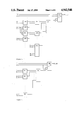
- FIG. 1 is a schematic block diagram showing the circuitry necessary to produce a pseudo generate signal
- FIG. 2 is a schematic block diagram showing the circuitry necessary to produce a pseudo transmit signal
- FIG. 3 is a schematic block diagram showing the circuitry necessary to produce a new-carry signal
- FIG. 4 is a schematic block diagram showing the circuitry necessary to produce pseudo half sum and pseudo transmit half sum signals
- FIGS. 5-7 are schematic block diagrams that show the circuitry necessary to produce a SUM of a given bit of the addition
- FIG. 8 is a schematic block diagram showing the circuitry necessary to produce pseudo quantities T for a group of bit-length 1, 2, 3, 4;
- FIG. 9 is a schematic block diagram showing the circuitry necessary to produce pseudo quantities G* for a group of bit length 1, 2, 3;
- FIG. 10 is a schematic block diagram showing the circuitry necessary to produce PS 30 , its negation, and the negation of the carry into the adder;
- FIG. 11 is a schematic block diagram showing the circuitry necessary to produce PS.sub.(22,29) and the negation of the carry into the adder;
- FIGS. 12-18 are schematic block diagrams that show the circuitry necessary to produce auxiliary functions Y.sub.(10,21), L.sub.(16,22), Z.sub.(11,15), X.sub.(i,9), W.sub.(13,21), R.sub.(6,15), and Q.sub.(i,5), respectively;
- the invention reduces overall delay by creating pseudo quantities and new-carries (PS i ), that are not equivalent or equal to the carries.
- PS i requires less hardware and less delay than does the implementation of carries.
- New SUM equations have been created that maintain equivalence with the addition function by means of pseudo quantities, a new-carry term (PS i ), defined properly for any width addition, and Boolean equations representing the SUM.
- the new SUM equations can be implemented with only one stage of delay after production of the new-carries.
- FIGS. 1 through 7 can be described by the Boolean equations shown hereinbelow.
- H i the pseudo half sum, is described for bit i.
- FIG. 4 also describes M i , the pseudo transmit half sum for bit i.
- FIG. 6 describes the following Boolean equation: ##EQU6##
- FIG. 7 describes the following equation: ##EQU7##
- C i is equal to T i PS.sub.(i,m) with PS.sub.(i,m) defined by (2.2). This is because in this case H i-1 is always defined to be equal to the half sum.
- Equations 2.1 and 2.2 are parametrical.
- the parameters involved are arbitrary (i.e., no law attributes a value to them).
- the only restriction imposed on the parameters by the foregoing definitions is that:
- R i (.)PS i (.) and Y i (.)PS i (.)' are m-way ANDs such that m is maximum-way in (2.9);
- the equation that computes the SUM is (i+2) ⁇ 2(i+1) AND-OR function i being equal to the number of the removed recurrences.
- any schema may be implemented with one or more algorithms, one fact remains unique: the expressions that describe a function from its positive and/or negative primary inputs will implicitly or explicitly determine the width of the gates and consequently the equivalent books needed for an optimal implementation of the function. Because actual technologies do not allow arbitrary width gates and/or books, it can be inferred that such expressions directly or indirectly will determine the corresponding logic levels in an optimal implementation of the given function with an appropriate algorithm for any chosen technology. Thus, since in each logic level there is associated a delay and a number of cells (two of the major concerns in logic design), the "primary" expressions determine performance and area.
- One of the objects of this invention is to shorten the critical paths of the adder and therefore to prove the superiority of the present invention with respect to conventional processes. It is sufficient to prove that the expressions involved are inherently better to implement independent of the technology and algorithms. This can be achieved by proving that the width of the "primary" expressions involved in the critical paths are of a lesser magnitude than the ones involved in conventional methods of addition and that the area required to produce the critical expressions in the present method is smaller. That is because even if it may be the case that the final formulation of the SUM as described by this new schema may require more hardware, this hardware will be involved with the non-critical paths. Thus, if the width of the "primary" expressions and the area involved in the critical paths are less, then the critical paths have been improved.
- both schemas imply that the delay of the critical paths are the ones that contain recursion, namely C i as described by (1.b) and PS.sub.(i,m) as described by (2.2), while the other expressions that determine the SUM can be computed immediately.
- G.sub.(i+1,n) has g-1 OR terms.
- T i has two OR terms:
- PS.sub.(i,m) contains exactly 2.sup.(n-i+1) OR terms if fully expanded.
- G*.sub.(i,n) contains:
- T.sub.(i+1,n) contains: 2.sup.(n-i) OR terms.
- PS.sub.(i,m) contains: one two-way AND, 2.sup.(n-i) (n-i+1)-way ANDs and 2.sup.(r-2) r-way ANDs with r getting all the values between and including 2 and n-i+1 if fully expanded.
- G*.sub.(i,m) implies that there is at least one two-way AND in PS.sub.(i,n) --the one due to the G i term.
- the width of the gates involved to produce C i from its primary inputs is of a greater magnitude than the ones that produce PS(.)
- Theorems 4 through 10 determine that the methodology proposed by this study will contain in its critical paths less hardware as well as less "primary" terms in its expressions than do the traditional formulation of the critical paths.
- FIGS. 8-20 refer to equations discussed hereinbelow that describe the critical path of SUM 0 , and by extension, every other path. This demonstrates the design of an adder of three logic stages with the use of a maximum 3 ⁇ 8 AND-OR book.
- the diagrams represent the design of the present invention with simple gates that can be transformed to appropriate more complex books by any person skilled in the art of computer system design.
- circuitry for PS.sub.(22,29) and its complement is computed as follows:
- FIGS. 12-18 compute the Boolean expressions that calculate the auxiliary function, and described as shown hereinbelow. ##EQU19##
- SUM 0 The critical path of the three stage adder is described as follows.
- the SUM of bit 0 requires maximum add time. That is, it lies on the critical path. Therefore, the design of SUM 0 dictates the maximum delay of the adder implementation.
- SUM 0 can be expressed as follows:
- the transformed SUM 0 can be implemented in one stage in a 3 ⁇ 8 AND-OR book, assuming that all quantities included in the equations have been implemented previously.
- group transmit signals and their complements must be implemented. However, such implementation is not critical since they can be computed by AND and NAND logic. Also, the group pseudo generates (G*) must be implemented. However, the groups involved are smaller than G*.sub.(i+1,9). Therefore, smaller books, or books the same size as those used for G*.sub.(i+1,9) are required for implementation.
Landscapes
- Engineering & Computer Science (AREA)
- Physics & Mathematics (AREA)
- General Physics & Mathematics (AREA)
- Theoretical Computer Science (AREA)
- Pure & Applied Mathematics (AREA)
- Mathematical Analysis (AREA)
- Computational Mathematics (AREA)
- Computing Systems (AREA)
- Mathematical Optimization (AREA)
- General Engineering & Computer Science (AREA)
- Complex Calculations (AREA)
- Compression, Expansion, Code Conversion, And Decoders (AREA)
- Error Detection And Correction (AREA)
Priority Applications (4)
| Application Number | Priority Date | Filing Date | Title |
|---|---|---|---|
| US07/066,364 US4942548A (en) | 1987-06-25 | 1987-06-25 | Parallel adder having removed dependencies |
| EP88107310A EP0296344B1 (en) | 1987-06-25 | 1988-05-06 | Parallel adder having removed dependencies |
| DE3854284T DE3854284T2 (de) | 1987-06-25 | 1988-05-06 | Paralleladdierer mit entfernten Abhängigkeiten. |
| JP63126066A JPS649523A (en) | 1987-06-25 | 1988-05-25 | Adder |
Applications Claiming Priority (1)
| Application Number | Priority Date | Filing Date | Title |
|---|---|---|---|
| US07/066,364 US4942548A (en) | 1987-06-25 | 1987-06-25 | Parallel adder having removed dependencies |
Publications (1)
| Publication Number | Publication Date |
|---|---|
| US4942548A true US4942548A (en) | 1990-07-17 |
Family
ID=22069030
Family Applications (1)
| Application Number | Title | Priority Date | Filing Date |
|---|---|---|---|
| US07/066,364 Expired - Fee Related US4942548A (en) | 1987-06-25 | 1987-06-25 | Parallel adder having removed dependencies |
Country Status (4)
| Country | Link |
|---|---|
| US (1) | US4942548A (enExample) |
| EP (1) | EP0296344B1 (enExample) |
| JP (1) | JPS649523A (enExample) |
| DE (1) | DE3854284T2 (enExample) |
Cited By (3)
| Publication number | Priority date | Publication date | Assignee | Title |
|---|---|---|---|---|
| US5299319A (en) * | 1990-04-04 | 1994-03-29 | International Business Machines Corporation | High performance interlock collapsing SCISM ALU apparatus |
| US7991820B1 (en) | 2007-08-07 | 2011-08-02 | Leslie Imre Sohay | One step binary summarizer |
| US20110202585A1 (en) * | 2008-10-14 | 2011-08-18 | Fam Adly T | Generating partial sums |
Families Citing this family (1)
| Publication number | Priority date | Publication date | Assignee | Title |
|---|---|---|---|---|
| JP4531838B2 (ja) * | 2006-09-28 | 2010-08-25 | 富士通株式会社 | 桁上先見回路および桁上先見方法 |
Citations (6)
| Publication number | Priority date | Publication date | Assignee | Title |
|---|---|---|---|---|
| US4138731A (en) * | 1976-12-30 | 1979-02-06 | Fujitsu Limited | High speed binary and binary coded decimal adder |
| US4157590A (en) * | 1978-01-03 | 1979-06-05 | International Business Machines Corporation | Programmable logic array adder |
| GB2011669A (en) * | 1978-01-03 | 1979-07-11 | Ibm | Improvements in programmable logic array adders |
| US4348736A (en) * | 1978-10-05 | 1982-09-07 | International Business Machines Corp. | Programmable logic array adder |
| US4584661A (en) * | 1980-04-23 | 1986-04-22 | Nathan Grundland | Multi-bit arithmetic logic units having fast parallel carry systems |
| US4737926A (en) * | 1986-01-21 | 1988-04-12 | Intel Corporation | Optimally partitioned regenerative carry lookahead adder |
-
1987
- 1987-06-25 US US07/066,364 patent/US4942548A/en not_active Expired - Fee Related
-
1988
- 1988-05-06 DE DE3854284T patent/DE3854284T2/de not_active Expired - Fee Related
- 1988-05-06 EP EP88107310A patent/EP0296344B1/en not_active Expired - Lifetime
- 1988-05-25 JP JP63126066A patent/JPS649523A/ja active Granted
Patent Citations (6)
| Publication number | Priority date | Publication date | Assignee | Title |
|---|---|---|---|---|
| US4138731A (en) * | 1976-12-30 | 1979-02-06 | Fujitsu Limited | High speed binary and binary coded decimal adder |
| US4157590A (en) * | 1978-01-03 | 1979-06-05 | International Business Machines Corporation | Programmable logic array adder |
| GB2011669A (en) * | 1978-01-03 | 1979-07-11 | Ibm | Improvements in programmable logic array adders |
| US4348736A (en) * | 1978-10-05 | 1982-09-07 | International Business Machines Corp. | Programmable logic array adder |
| US4584661A (en) * | 1980-04-23 | 1986-04-22 | Nathan Grundland | Multi-bit arithmetic logic units having fast parallel carry systems |
| US4737926A (en) * | 1986-01-21 | 1988-04-12 | Intel Corporation | Optimally partitioned regenerative carry lookahead adder |
Non-Patent Citations (10)
| Title |
|---|
| Hwang, Kai, Computer Arithmetic Prinicples, Architecture, and Design, pp. 84 91. * |
| Hwang, Kai, Computer Arithmetic Prinicples, Architecture, and Design, pp. 84-91. |
| Ling, "High Speed Binary Adders", IBM Technical Disclosure Bulletin, vol. 24, #1B, pp. 495-506, Jun. 1981. |
| Ling, "High-Speed Binary Adder", IBM J. Res. Develop., vol. #25, #3, pp. 156-166, May 1987. |
| Ling, High Speed Binary Adder , IBM J. Res. Develop., vol. 25, 3, pp. 156 166, May 1987. * |
| Ling, High Speed Binary Adders , IBM Technical Disclosure Bulletin, vol. 24, 1B, pp. 495 506, Jun. 1981. * |
| Weinberger, "High-Speed Binary Adder", IBM Technical Disclosure Bulletin, vol. 24, #8, pp. 4393-4398, Jan. 1982. |
| Weinberger, "High-Speed Programmable Logic Array Adders", IBM Journal of Research and Development, vol. 23, #2, pp. 163-178, Mar. 1979. |
| Weinberger, High Speed Binary Adder , IBM Technical Disclosure Bulletin, vol. 24, 8, pp. 4393 4398, Jan. 1982. * |
| Weinberger, High Speed Programmable Logic Array Adders , IBM Journal of Research and Development, vol. 23, 2, pp. 163 178, Mar. 1979. * |
Cited By (4)
| Publication number | Priority date | Publication date | Assignee | Title |
|---|---|---|---|---|
| US5299319A (en) * | 1990-04-04 | 1994-03-29 | International Business Machines Corporation | High performance interlock collapsing SCISM ALU apparatus |
| US7991820B1 (en) | 2007-08-07 | 2011-08-02 | Leslie Imre Sohay | One step binary summarizer |
| US20110202585A1 (en) * | 2008-10-14 | 2011-08-18 | Fam Adly T | Generating partial sums |
| US8271572B2 (en) | 2008-10-14 | 2012-09-18 | The Research Foundation Of State University Of New York | Generating partial sums |
Also Published As
| Publication number | Publication date |
|---|---|
| DE3854284T2 (de) | 1996-03-28 |
| EP0296344A2 (en) | 1988-12-28 |
| JPS649523A (en) | 1989-01-12 |
| EP0296344A3 (en) | 1991-01-30 |
| DE3854284D1 (de) | 1995-09-14 |
| JPH0424730B2 (enExample) | 1992-04-27 |
| EP0296344B1 (en) | 1995-08-09 |
Similar Documents
| Publication | Publication Date | Title |
|---|---|---|
| US7395304B2 (en) | Method and apparatus for performing single-cycle addition or subtraction and comparison in redundant form arithmetic | |
| EP0450754B1 (en) | High speed dividers | |
| EP0018519B1 (en) | Multiplier apparatus having a carry-save/propagate adder | |
| US5299319A (en) | High performance interlock collapsing SCISM ALU apparatus | |
| Atkins | Introduction to the role of redundancy in computer arithmetic | |
| JPH0542011B2 (enExample) | ||
| US5426600A (en) | Double precision division circuit and method for digital signal processor | |
| JPH0969040A (ja) | 推測的演算を有する3つのオーバーラップしたステージにより基数2の平方根演算/除算を行う回路 | |
| US5132925A (en) | Radix-16 divider using overlapped quotient bit selection and concurrent quotient rounding and correction | |
| US4769780A (en) | High speed multiplier | |
| US5357455A (en) | Floating point remainder generator for a math processor | |
| US5497343A (en) | Reducing the number of carry-look-ahead adder stages in high-speed arithmetic units, structure and method | |
| US4942548A (en) | Parallel adder having removed dependencies | |
| US5097436A (en) | High performance adder using carry predictions | |
| US5867413A (en) | Fast method of floating-point multiplication and accumulation | |
| US5506800A (en) | Self-checking complementary adder unit | |
| JP2597775B2 (ja) | 除算方法および除算装置 | |
| US5103419A (en) | Circuit for calculating the sum of products of data | |
| US4503512A (en) | Cellular division circuit | |
| US6813628B2 (en) | Method and apparatus for performing equality comparison in redundant form arithmetic | |
| Ercegovac et al. | Fast radix-2 division with quotient-digit prediction | |
| US6795842B2 (en) | Method and apparatus for comparing two binary numbers with a power-of-two threshold | |
| EP0534760A2 (en) | High speed multiplier device | |
| US6826588B2 (en) | Method and apparatus for a fast comparison in redundant form arithmetic | |
| Vassiliadis | A comparison between adders with new defined carries and traditional schemes for addition |
Legal Events
| Date | Code | Title | Description |
|---|---|---|---|
| AS | Assignment |
Owner name: INTERNATIONAL BUSINESS MACHINES CORPORATION, ARMON Free format text: ASSIGNMENT OF ASSIGNORS INTEREST.;ASSIGNOR:VASSILIADIS, STAMATIS;REEL/FRAME:004733/0154 Effective date: 19870622 |
|
| FPAY | Fee payment |
Year of fee payment: 4 |
|
| REMI | Maintenance fee reminder mailed | ||
| LAPS | Lapse for failure to pay maintenance fees | ||
| FP | Lapsed due to failure to pay maintenance fee |
Effective date: 19980722 |
|
| STCH | Information on status: patent discontinuation |
Free format text: PATENT EXPIRED DUE TO NONPAYMENT OF MAINTENANCE FEES UNDER 37 CFR 1.362 |