US20250180098A1 - Device - Google Patents
Device Download PDFInfo
- Publication number
- US20250180098A1 US20250180098A1 US18/844,166 US202218844166A US2025180098A1 US 20250180098 A1 US20250180098 A1 US 20250180098A1 US 202218844166 A US202218844166 A US 202218844166A US 2025180098 A1 US2025180098 A1 US 2025180098A1
- Authority
- US
- United States
- Prior art keywords
- gear
- gear mechanism
- carrier
- clutch
- input shaft
- Prior art date
- Legal status (The legal status is an assumption and is not a legal conclusion. Google has not performed a legal analysis and makes no representation as to the accuracy of the status listed.)
- Pending
Links
Images


Classifications
-
- F—MECHANICAL ENGINEERING; LIGHTING; HEATING; WEAPONS; BLASTING
- F16—ENGINEERING ELEMENTS AND UNITS; GENERAL MEASURES FOR PRODUCING AND MAINTAINING EFFECTIVE FUNCTIONING OF MACHINES OR INSTALLATIONS; THERMAL INSULATION IN GENERAL
- F16H—GEARING
- F16H3/00—Toothed gearings for conveying rotary motion with variable gear ratio or for reversing rotary motion
- F16H3/44—Toothed gearings for conveying rotary motion with variable gear ratio or for reversing rotary motion using gears having orbital motion
- F16H3/62—Gearings having three or more central gears
- F16H3/66—Gearings having three or more central gears composed of a number of gear trains without drive passing from one train to another
-
- F—MECHANICAL ENGINEERING; LIGHTING; HEATING; WEAPONS; BLASTING
- F16—ENGINEERING ELEMENTS AND UNITS; GENERAL MEASURES FOR PRODUCING AND MAINTAINING EFFECTIVE FUNCTIONING OF MACHINES OR INSTALLATIONS; THERMAL INSULATION IN GENERAL
- F16H—GEARING
- F16H3/00—Toothed gearings for conveying rotary motion with variable gear ratio or for reversing rotary motion
- F16H3/44—Toothed gearings for conveying rotary motion with variable gear ratio or for reversing rotary motion using gears having orbital motion
- F16H3/46—Gearings having only two central gears, connected by orbital gears
-
- B—PERFORMING OPERATIONS; TRANSPORTING
- B60—VEHICLES IN GENERAL
- B60K—ARRANGEMENT OR MOUNTING OF PROPULSION UNITS OR OF TRANSMISSIONS IN VEHICLES; ARRANGEMENT OR MOUNTING OF PLURAL DIVERSE PRIME-MOVERS IN VEHICLES; AUXILIARY DRIVES FOR VEHICLES; INSTRUMENTATION OR DASHBOARDS FOR VEHICLES; ARRANGEMENTS IN CONNECTION WITH COOLING, AIR INTAKE, GAS EXHAUST OR FUEL SUPPLY OF PROPULSION UNITS IN VEHICLES
- B60K1/00—Arrangement or mounting of electrical propulsion units
- B60K2001/001—Arrangement or mounting of electrical propulsion units one motor mounted on a propulsion axle for rotating right and left wheels of this axle
-
- B—PERFORMING OPERATIONS; TRANSPORTING
- B60—VEHICLES IN GENERAL
- B60Y—INDEXING SCHEME RELATING TO ASPECTS CROSS-CUTTING VEHICLE TECHNOLOGY
- B60Y2400/00—Special features of vehicle units
- B60Y2400/42—Clutches or brakes
- B60Y2400/427—One-way clutches
-
- F—MECHANICAL ENGINEERING; LIGHTING; HEATING; WEAPONS; BLASTING
- F16—ENGINEERING ELEMENTS AND UNITS; GENERAL MEASURES FOR PRODUCING AND MAINTAINING EFFECTIVE FUNCTIONING OF MACHINES OR INSTALLATIONS; THERMAL INSULATION IN GENERAL
- F16H—GEARING
- F16H2200/00—Transmissions for multiple ratios
- F16H2200/0021—Transmissions for multiple ratios specially adapted for electric vehicles
-
- F—MECHANICAL ENGINEERING; LIGHTING; HEATING; WEAPONS; BLASTING
- F16—ENGINEERING ELEMENTS AND UNITS; GENERAL MEASURES FOR PRODUCING AND MAINTAINING EFFECTIVE FUNCTIONING OF MACHINES OR INSTALLATIONS; THERMAL INSULATION IN GENERAL
- F16H—GEARING
- F16H2200/00—Transmissions for multiple ratios
- F16H2200/003—Transmissions for multiple ratios characterised by the number of forward speeds
- F16H2200/0039—Transmissions for multiple ratios characterised by the number of forward speeds the gear ratios comprising three forward speeds
-
- F—MECHANICAL ENGINEERING; LIGHTING; HEATING; WEAPONS; BLASTING
- F16—ENGINEERING ELEMENTS AND UNITS; GENERAL MEASURES FOR PRODUCING AND MAINTAINING EFFECTIVE FUNCTIONING OF MACHINES OR INSTALLATIONS; THERMAL INSULATION IN GENERAL
- F16H—GEARING
- F16H2200/00—Transmissions for multiple ratios
- F16H2200/20—Transmissions using gears with orbital motion
- F16H2200/2002—Transmissions using gears with orbital motion characterised by the number of sets of orbital gears
- F16H2200/2007—Transmissions using gears with orbital motion characterised by the number of sets of orbital gears with two sets of orbital gears
-
- F—MECHANICAL ENGINEERING; LIGHTING; HEATING; WEAPONS; BLASTING
- F16—ENGINEERING ELEMENTS AND UNITS; GENERAL MEASURES FOR PRODUCING AND MAINTAINING EFFECTIVE FUNCTIONING OF MACHINES OR INSTALLATIONS; THERMAL INSULATION IN GENERAL
- F16H—GEARING
- F16H2200/00—Transmissions for multiple ratios
- F16H2200/20—Transmissions using gears with orbital motion
- F16H2200/203—Transmissions using gears with orbital motion characterised by the engaging friction means not of the freewheel type, e.g. friction clutches or brakes
-
- F—MECHANICAL ENGINEERING; LIGHTING; HEATING; WEAPONS; BLASTING
- F16—ENGINEERING ELEMENTS AND UNITS; GENERAL MEASURES FOR PRODUCING AND MAINTAINING EFFECTIVE FUNCTIONING OF MACHINES OR INSTALLATIONS; THERMAL INSULATION IN GENERAL
- F16H—GEARING
- F16H2200/00—Transmissions for multiple ratios
- F16H2200/20—Transmissions using gears with orbital motion
- F16H2200/203—Transmissions using gears with orbital motion characterised by the engaging friction means not of the freewheel type, e.g. friction clutches or brakes
- F16H2200/2038—Transmissions using gears with orbital motion characterised by the engaging friction means not of the freewheel type, e.g. friction clutches or brakes with three engaging means
-
- F—MECHANICAL ENGINEERING; LIGHTING; HEATING; WEAPONS; BLASTING
- F16—ENGINEERING ELEMENTS AND UNITS; GENERAL MEASURES FOR PRODUCING AND MAINTAINING EFFECTIVE FUNCTIONING OF MACHINES OR INSTALLATIONS; THERMAL INSULATION IN GENERAL
- F16H—GEARING
- F16H2200/00—Transmissions for multiple ratios
- F16H2200/20—Transmissions using gears with orbital motion
- F16H2200/203—Transmissions using gears with orbital motion characterised by the engaging friction means not of the freewheel type, e.g. friction clutches or brakes
- F16H2200/2069—Transmissions using gears with orbital motion characterised by the engaging friction means not of the freewheel type, e.g. friction clutches or brakes using two freewheel mechanism
-
- F—MECHANICAL ENGINEERING; LIGHTING; HEATING; WEAPONS; BLASTING
- F16—ENGINEERING ELEMENTS AND UNITS; GENERAL MEASURES FOR PRODUCING AND MAINTAINING EFFECTIVE FUNCTIONING OF MACHINES OR INSTALLATIONS; THERMAL INSULATION IN GENERAL
- F16H—GEARING
- F16H2200/00—Transmissions for multiple ratios
- F16H2200/20—Transmissions using gears with orbital motion
- F16H2200/2079—Transmissions using gears with orbital motion using freewheel type mechanisms, e.g. freewheel clutches
- F16H2200/2084—Transmissions using gears with orbital motion using freewheel type mechanisms, e.g. freewheel clutches two freewheel mechanisms
-
- Y—GENERAL TAGGING OF NEW TECHNOLOGICAL DEVELOPMENTS; GENERAL TAGGING OF CROSS-SECTIONAL TECHNOLOGIES SPANNING OVER SEVERAL SECTIONS OF THE IPC; TECHNICAL SUBJECTS COVERED BY FORMER USPC CROSS-REFERENCE ART COLLECTIONS [XRACs] AND DIGESTS
- Y02—TECHNOLOGIES OR APPLICATIONS FOR MITIGATION OR ADAPTATION AGAINST CLIMATE CHANGE
- Y02T—CLIMATE CHANGE MITIGATION TECHNOLOGIES RELATED TO TRANSPORTATION
- Y02T10/00—Road transport of goods or passengers
- Y02T10/60—Other road transportation technologies with climate change mitigation effect
- Y02T10/62—Hybrid vehicles
Definitions
- the present invention relates to a device.
- Patent Document 1 discloses a device including a gear mechanism that transmits power (rotation force) generated by a motor.
- the gear mechanism changes a speed of rotation input from the motor via an input shaft, and outputs the rotation to a differential mechanism via an output shaft.
- the device includes a clutch (lock-up clutch) that equalizes rotation speeds of the input shaft and the output shaft.
- a device includes:
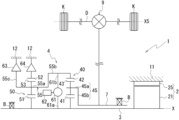
- FIG. 1 is a skeleton diagram showing a power transmission device.
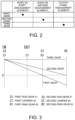
- FIG. 2 is an engagement table of engagement elements in first to third gears.
- FIG. 3 is a collinear diagram showing a speed of rotation (rotation speed) of each element of a gear mechanism in the first to third gears.
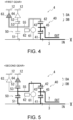
- FIG. 4 is a diagram showing a power transmission path in the first gear.
- FIG. 5 is a diagram showing a power transmission path in the second gear.
- FIG. 6 is a diagram showing a power transmission path in the third gear.
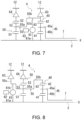
- FIG. 7 is a skeleton diagram showing a gear mechanism according to a first modification.
- FIG. 8 is a skeleton diagram showing a gear mechanism according to a second modification.
- the power transmission device includes a motor that is a rotation electrical machine, and a power transmission mechanism that transmits power of the motor to a drive wheel.
- the power transmission mechanism includes, for example, a gear mechanism and/or a differential mechanism (differential gear mechanism).
- first element and the second element are connected to each other in a power-transmissible manner.
- a power input side is upstream, and a power output side is downstream.
- the first element and the second element may be connected to each other via another element (clutch, other gear mechanism, or the like).
- “Overlapping when viewed from a predetermined direction” means that a plurality of elements are arranged in a predetermined direction, and has the same meaning as “overlapping in a predetermined direction”.
- the “predetermined direction” is, for example, an axial direction, a radial direction, a gravity direction, or a vehicle traveling direction (vehicle forward direction and vehicle backward direction).
- “Not overlapping when viewed from a predetermined direction” and “offset when viewed from a predetermined direction” mean that a plurality of elements are not arranged in a predetermined direction, and has the same meaning as “not overlapping in a predetermined direction” and “offset in a predetermined direction”.
- the “predetermined direction” is, for example, an axial direction, a radial direction, a gravity direction, or a vehicle traveling direction (vehicle forward direction and vehicle backward direction).
- a first element (member, portion, or the like) is positioned between a second element (member, portion, or the like) and a third element (member, portion, or the like)” means that the first element can be observed to be between the second element and the third element when viewed from the predetermined direction.
- the “predetermined direction” is, for example, an axial direction, a radial direction, a gravity direction, or a vehicle traveling direction (vehicle forward direction and vehicle backward direction).
- the first element is positioned between the second element and the third element when viewed from the radial direction.
- a drawing shows that a first element is between a second element and a third element when viewed from a predetermined direction, it can be considered that in explanation of the description, there is a sentence illustrating that the first element is between the second element and the third element when viewed from the predetermined direction.
- the “axial direction” means an axial direction of a rotation axis of a member that constitutes the device.
- the “radial direction” means a direction orthogonal to the rotation axis of the member that constitutes the device.
- the member is, for example, a motor, a gear mechanism, or a differential gear mechanism.
- FIG. 1 is a skeleton diagram showing a power transmission device 1 .
- the power transmission device 1 includes a motor 2 (rotation electrical machine) which is a power source that drives a vehicle.
- the power transmission device 1 includes an input shaft 3 , a gear mechanism 4 , an output shaft 7 , a differential mechanism 9 , and a drive shaft D as a power transmission mechanism that transmits output rotation of the motor 2 .
- the input shaft 3 , the gear mechanism 4 , and the output shaft 7 are disposed coaxially with a rotation axis X of the motor 2 .
- the motor 2 is disposed on one side (right side in the drawing) in a direction of the rotation axis X of the power transmission device 1 , and the gear mechanism 4 is disposed on the other side (left side in the drawing).
- the motor 2 is connected to the gear mechanism 4 via the input shaft 3 .
- the gear mechanism 4 is connected to the differential mechanism 9 via the output shaft 7 .
- the rotation axis X extends along a vehicle width direction.
- the output shaft 7 is connected to the differential mechanism 9 via a reduction gear, a counter gear, and the like (not shown).
- the reduction gear, the counter gear, and the like are provided along a vehicle front-rear direction, which is a direction orthogonal to the rotation axis X.
- the differential mechanism 9 is connected to left and right drive wheels K, K of the vehicle via the drive shaft D.
- the drive shaft D extends along an axis X 5 parallel to the rotation axis X.
- the motor 2 includes a rotor core 21 that is externally fitted to the input shaft 3 , and a stator core 25 that surrounds an outer periphery of the rotor core 21 with a gap therebetween.
- the input shaft 3 rotates integrally with the rotor core 21 .
- a speed of the rotation input from the input shaft 3 is changed by the gear mechanism 4 and the rotation is output to the output shaft 7 .
- the rotation output to the output shaft 7 is decelerated by a reduction gear, a counter gear, and the like (not shown), and is transmitted to the differential mechanism 9 .
- the rotation transmitted to the differential mechanism 9 is transmitted to the left and right drive wheels K, K of the vehicle via the drive shaft D.
- the gear mechanism 4 is located downstream of the motor 2 in a power transmission path for transmitting a rotation force of the motor 2 .
- the differential mechanism 9 is located downstream of the gear mechanism 4 in the power transmission path.
- the output shaft 7 may have, for example, a hollow cylindrical shape.
- the input shaft 3 extending from the motor 2 in the direction of the rotation axis X penetrates an inside of the output shaft 7 and is connected to the gear mechanism 4 .
- the input shaft 3 and the output shaft 7 are provided so as to be rotatable relative to each other around the rotation axis X.
- a part of the input shaft 3 overlaps with the output shaft 7 .
- the power transmission device 1 has a structure in which the input shaft 3 extends from the motor 2 toward the gear mechanism 4 , and the output shaft 7 is folded back from the gear mechanism 4 toward the motor 2 .
- the output shaft 7 is disposed between the motor 2 located on the one side in the direction of the rotation axis X of the power transmission device 1 and the gear mechanism 4 located on the other side. In other words, the output shaft is disposed in a central portion of the power transmission device 1 .
- differential mechanism 9 connected to the output shaft 7 via the reduction gear, the counter gear, and the like (not shown) is disposed in the central portion of the drive shaft D in the direction of the axis X 5 (vehicle width direction).
- the power transmission device 1 includes a motor case 11 that accommodates the motor 2 and a gear case 12 that accommodates the gear mechanism 4 .
- the input shaft 3 and the output shaft 7 are supported by the motor case 11 or the gear case 12 via a bearing B.
- the differential mechanism 9 is accommodated in, for example, an axle case separate from the gear case 12 .
- the gear mechanism 4 includes a first planetary gear mechanism 40 (hereinafter, also simply referred to as a “first gear mechanism 40 ”) and a second planetary gear mechanism 50 (hereinafter, also simply referred to as a “second gear mechanism 50 ”).
- the first gear mechanism 40 and the second gear mechanism 50 are arranged side by side on the rotation axis X.
- the first gear mechanism 40 is disposed between the motor 2 and the second gear mechanism 50 in the direction of the rotation axis X.
- the first gear mechanism 40 and the second gear mechanism 50 overlap with the motor 2 when viewed from the direction of the rotation axis X.
- the first gear mechanism 40 includes a first sun gear 41 , a first carrier 45 , and a first ring gear 42 .
- the first sun gear 41 is fixed to an outer periphery of the input shaft 3 by, for example, spline fitting.
- the first carrier 45 includes a holding portion 45 a that holds a pinion gear 43 , and a connecting portion 45 b that extends radially inward from the holding portion 45 a and is connected to the output shaft 7 .
- the pinion gear 43 meshes with an outer periphery of the first sun gear 41 .
- the pinion gear 43 is provided so as to be revolvable in a circumferential direction around the rotation axis X, and is provided so as to be rotatable about an axis thereof.
- the first ring gear 42 meshes with the pinion gear 43 .
- the first ring gear 42 is provided so as to be rotatable integrally with a second carrier 55 to be described later.
- the first sun gear 41 fixed to the input shaft 3 is an input element
- the first carrier 45 connected to the output shaft 7 is an output element
- the second gear mechanism 50 includes a second sun gear 51 , the second carrier 55 , and a second ring gear 52 .
- the second sun gear 51 is fixed to the outer periphery of the input shaft 3 by, for example, spline fitting. That is, the input shaft 3 is provided in manner of penetrating inner peripheries of the first sun gear 41 and the second sun gear 51 in the direction of the rotation axis X.
- the second carrier 55 includes a holding portion 55 a that holds a pinion gear 53 , a first connecting portion 55 b, and a second connecting portion 55 c.
- the pinion gear 53 meshes with an outer periphery of the second sun gear 51 .
- the pinion gear 53 is provided so as to be revolvable in the circumferential direction around the rotation axis X, and is provided so as to be rotatable about an axis thereof.
- An inner periphery of the second ring gear 52 meshes with the pinion gear 53 .
- the first connecting portion 55 b of the second carrier 55 is provided on a motor 2 side of the holding portion 55 a in the direction of the rotation axis X.
- the first connecting portion 55 b connects the holding portion 55 a to the first ring gear 42 of the first gear mechanism 40 .
- the first connecting portion 55 b allows the second carrier 55 and the first ring gear 42 to rotate integrally.
- the second sun gear 51 fixed to the input shaft 3 is an input element
- the second carrier 55 connected to the first ring gear 42 of the first gear mechanism 40 is an output element.
- a clutch 61 (third engagement element) is provided on an inner diameter side of the first connecting portion 55 b.
- An input end 61 a of the clutch 61 is fixed to the input shaft 3
- an output end 61 b is fixed to the first connecting portion 55 b of the second carrier 55 .
- the first sun gear 41 is fixed to the input shaft 3
- the first ring gear 42 is connected to the first connecting portion 55 b. Therefore, the first sun gear 41 and the first ring gear 42 are connected to the clutch 61 via the input shaft 3 and the first connecting portion 55 b.
- An electric actuator 62 is connected to the clutch 61 .
- the clutch 61 and the electric actuator 62 are disposed between the first gear mechanism 40 and the second gear mechanism 50 in the direction of the rotation axis X.
- the clutch 61 and the electric actuator 62 are disposed at positions overlapping with the first gear mechanism 40 and the second gear mechanism 50 in the direction of the rotation axis X.
- the clutch 61 is operated by the electric actuator 62 , and is switched between an engaged state and a released state. An operation on the clutch 61 performed by the electric actuator 62 is controlled by a control device (not shown).
- a control device not shown.
- the clutch 61 When the clutch 61 is engaged, the input shaft 3 and the first connecting portion 55 b of the second carrier 55 are engaged. Accordingly, the first sun gear 41 fixed to the input shaft 3 , the second sun gear 51 , the second carrier 55 , and the first ring gear 42 rotate integrally.
- the clutch 61 functions as a lock-up clutch that matches the rotation speeds of the input shaft 3 and the output shaft 7 .
- the second connecting portion 55 c of the second carrier 55 is provided on an opposite side of the first connecting portion 55 b of the holding portion 55 a in the direction of the rotation axis X.
- the second connecting portion 55 c connects the holding portion 55 a to a selectable one way clutch 63 as a first engagement element (hereinafter also referred to as “SOWC 63 ”).
- SOWC 63 a selectable one way clutch 63 as a first engagement element
- the SOWC 63 is operated by an actuator (not shown), and is switched among an engaged state, a released state, and an engagement state.
- the second carrier 55 and the first ring gear 42 connected to the second carrier 55 are non-rotatably fixed to the gear case 12 .
- the second carrier 55 and the first ring gear 42 are rotatable in either one direction or the other direction relative to the gear case 12 .
- the second carrier 55 and the first ring gear 42 are rotatable in only one direction relative to the gear case 12 .
- An outer periphery of the second ring gear 52 is connected to a selectable one way clutch 64 (hereinafter also referred to as “SOWC 64 ”) that is a second engagement element.
- SOWC 64 selectable one way clutch 64
- the second ring gear 52 is supported by the gear case 12 (second fixed element) via the SOWC 64 .
- the SOWC 64 is operated by an actuator (not shown), and is switched between an engaged state, a released state, and an engagement state.
- the second ring gear 52 is non-rotatably fixed to the gear case 12 .
- the second ring gear 52 is rotatable in either one direction or the other direction relative to the gear case 12 .
- the second ring gear 52 is rotatable only in one direction relative to the gear case 12 .
- Operations on the SOWC 63 , 64 by the actuator are controlled by a control device (not shown).
- the SOWC 63 , 64 may include, for example, a waiting mechanism formed by a spring or the like.
- the waiting mechanism is a mechanism that accumulates a thrust applied from the actuator.
- the SOWC 63 , 64 can quickly switch between the released state, the engaged state, and the engagement state by the waiting mechanism.
- a gear ratio of the first gear mechanism 40 is set to be larger than a gear ratio of the second gear mechanism 50 .
- a ⁇ value of the first gear mechanism 40 (the number of teeth of the first sun gear 41 /the number of teeth of the first ring gear 42 ) is set to be smaller than a ⁇ value of the second gear mechanism 50 (the number of teeth of the second sun gear 51 /the number of teeth of the second ring gear 52 ).
- the gear mechanism 4 has, as three gear positions having different gear ratios (output rotation speed/input rotation speed), a first gear position, a second gear position, and a third gear position. Switching to each gear position is performed by operating the SOWC 63 , 64 and the clutch 61 .
- the “first gear position”, the “second gear position”, and the “third gear position” are simply referred to as a “first gear”, a “second gear”, and a “third gear”.
- FIG. 2 is an engagement table of the engagement elements (SOWC 63 , 64 and clutch 61 ) in the first to third gears.
- FIG. 2 a black circle is displayed in a column for an engaged state element.
- a column for a released state element is blank.
- FIG. 3 is a collinear diagram showing a speed of rotation (rotation speed) of each element of the gear mechanism 4 in the first to third gears.
- the number 0 on each vertical axis means that the speed of rotation is 0.
- a side above 0 indicates rotation in one direction DA, which will be described later, and a side below 0 indicates rotation in the other direction DB, which will be described later.
- speeds of rotation of the input shaft 3 in the first to third gears are the same.
- FIG. 4 is a diagram showing a power transmission path in the first gear.
- FIG. 5 is a diagram showing a power transmission path in the second gear.
- the power transmission path is indicated by a thick line.
- elements in the released state are indicated by dashed lines, and elements in the engaged state are indicated by cross-hatching.
- elements of the first gear mechanism 40 and the second gear mechanism 50 that are non-rotatably fixed are shown with hatching.
- speeds of rotation of the first sun gear 41 and the second sun gear 51 correspond to the input rotation speed (IN) from the input shaft 3 to the gear mechanism 4 .
- the speed of rotation of the first carrier 45 corresponds to the output rotation speed (OUT) from the gear mechanism 4 to the output shaft 7 .
- the gear ratio (OUT/IN) in the first gear is the smallest, and the gear ratio in the third gear is the largest.
- the gear ratio in the second gear is set to be higher than that in the first gear and smaller than that in the third gear.
- the third gear is set to a gear ratio 1 in which the input rotation speed and the output rotation speed coincide with each other.
- the one direction DA means a rotation direction when the vehicle travels forward.
- the one direction DA can be, for example, a counterclockwise direction.
- the other direction DB is a clockwise direction when the one direction DA is counterclockwise.
- the second ring gear 52 idles in the other direction DB due to the rotation of the pinion gear 53 .
- the first sun gear 41 rotates in the one direction DA
- the first ring gear 42 is non-rotatably fixed.
- the pinion gear 43 meshing with the first sun gear 41 and the first ring gear 42 rotates in the other direction DB while revolving in the one direction DA. Due to the revolution of the pinion gear 43 , the first carrier 45 rotates in the one direction DA. The rotation of the first carrier 45 is output to the output shaft 7 .
- the first ring gear 42 is fixed and the speed of rotation is zero, so that the gear ratio (OUT/IN) is small. Accordingly, in the first gear, the rotation input by first sun gear 41 is significantly decelerated, and the output rotation speed is the lowest among first to third gears.
- the SOWC 63 is in the released state, the SOWC 64 is in the engaged state, and the clutch 61 is in the released state.
- the first sun gear 41 of the first gear mechanism 40 and the second sun gear 51 of the second gear mechanism 50 rotate integrally with the input shaft 3 in the one direction DA.
- the second ring gear 52 of the second gear mechanism 50 is non-rotatably fixed to the gear case 12 .
- the pinion gear 53 meshing with the second sun gear 51 rotating in the one direction DA and the fixed second ring gear 52 rotates in the other direction DB while revolving in the one direction DA.
- the second carrier 55 rotates in the one direction DA by the revolution of the pinion gear 53 .
- the first ring gear 42 of the first gear mechanism 40 which is connected to the second carrier 55 also rotates in the one direction DA. That is, the rotation output from the second carrier 55 of the second gear mechanism 50 is input to the first ring gear 42 of the first gear mechanism 40 .
- the speed of the rotation input to the first ring gear 42 is changed at a small gear ratio of the second gear mechanism 50 . As shown in FIG. 3 , the rotation speed of the first ring gear 42 is lower than the rotation speed of the first sun gear 41 .
- the pinion gear 43 rotates in the other direction DB while revolving in the one direction DA.
- the first carrier 45 rotates in the one direction DA by the revolution of the pinion gear 43 .
- the rotation of the first carrier 45 is output to the output shaft 7 .
- the rotation decelerated by the second gear mechanism 50 is input to the first ring gear 42 of the first gear mechanism 40 via the second carrier 55 , and thus the first ring gear 42 rotates at a speed slower than the input rotation speed.
- the gear ratio (OUT/IN) is higher than that of the first gear in which the first ring gear 42 is fixed and does not rotate.
- the output rotation speed of the second gear is higher than the output rotation speed of the first gear and lower than the output rotation speed which is the same as the input rotation speed of the third gear.
- the SOWC 63 may be in the engagement state instead of in the released state.
- the second carrier 55 and the first ring gear 42 can rotate only in the one direction DA.
- the SOWC 63 and the SOWC 64 are in the released state, and the clutch 61 is in the engaged state.
- the first sun gear 41 of the first gear mechanism 40 and the second sun gear 51 of the gear mechanism 4 rotate integrally with the input shaft 3 in the one direction DA.
- the second carrier 55 of the second gear mechanism 50 is directly connected to the input shaft 3 .
- the first sun gear 41 fixed to the input shaft 3 and the first ring gear 42 connected to the second carrier 55 are connected by the clutch 61 as the lock-up clutch.
- the first sun gear 41 and the first ring gear 42 of the first gear mechanism 40 rotate in the one direction DA at the same rotation speed as the input shaft 3 .
- the pinion gear 43 meshing with the first sun gear 41 and the first ring gear 42 revolves in the one direction DA without rotating.
- the first carrier 45 rotates in the one direction DA at the same rotation speed as the input shaft 3 due to the revolution of the pinion gear 43 .
- the rotation of the first carrier 45 is output to the output shaft 7 .
- the second carrier 55 of the second gear mechanism 50 is connected to the second sun gear 51 fixed to the input shaft 3 by the clutch 61 . Accordingly, the second sun gear 51 and the second carrier 55 rotate in the one direction DA at the same rotation speed as the input shaft 3 .
- the second ring gear 52 meshing with the pinion gear 53 held by the second carrier 55 also rotates in the one direction DA at the same rotation speed as the input shaft 3 . That is, in the third gear, all six elements of the first gear mechanism 40 and the second gear mechanism 50 rotate at the same rotation speed as the input shaft 3 .
- the clutch 61 functions as the lock-up clutch that makes the rotation speeds of the input shaft 3 and the output shaft 7 equal.
- the first ring gear 42 rotates at the same speed as the input shaft 3 , and thus the gear ratio becomes 1, which is the largest.
- the output rotation speed of the third gear which coincides with the input rotation speed, is the highest among the first to third gears.
- the SOWC 63 , 64 may be in the engagement state instead of the released state.
- the second carrier 55 and the second ring gear 52 can rotate only in the one direction DA.
- the first sun gear 41 of the first gear mechanism 40 is an input element, the first carrier 45 is an output element, and in the first speed, the first ring gear 42 is fixed. Accordingly, it is possible to increase the output torque by increasing the reduction ratio in the first gear. By increasing the reduction ratio and increasing the torque, the output of the motor 2 can be reduced.
- the clutch 61 is engaged to set the gear ratio 1 in which all the elements of the first gear mechanism 40 and the second gear mechanism 50 rotate at the same rotation speed.
- the first ring gear 42 and the second carrier 55 are not rotating. Further, the second ring gear 52 rotates in the other direction DB opposite to the one direction DA which is a rotation direction of the input shaft 3 .
- the clutch 61 is engaged in a state in which there is a large difference in rotation speed between the elements of the gear mechanism 4 , a large shock occurs when the clutch 61 is engaged. It is possible to engage the clutch 61 after reducing the difference in rotation speed, but in that case, it takes time until the clutch 61 is engaged.
- the second gear that is a middle gear position is provided between the first gear that is the lowest gear position and the third gear that is the highest gear position. Accordingly, by reducing a step ratio, the shock caused when the clutch 61 is engaged can be mitigated.
- the output end 61 b of the clutch 61 can also be connected to the second ring gear 52 of the second gear mechanism 50 .
- the second ring gear 52 is fixed by the SOWC 64 and does not rotate (see FIG. 3 ). Therefore, a difference in rotation speed between the second ring gear 52 and the input shaft 3 to which the input end 61 a of the clutch 61 is connected is large, and the shock that occurs when the clutch 61 is engaged is difficult to reduce.
- the third gear as described above, all the elements of the first gear mechanism 40 and the second gear mechanism 50 (first sun gear 41 , first carrier 45 , first ring gear 42 , second sun gear 51 , second carrier 55 , and second ring gear 52 ) rotate together.
- the four elements that is, the first sun gear 41 , the second sun gear 51 , the second carrier 55 , and the first ring gear 42 , are restrained by the engagement of the clutch 61 , stability of integral rotation can be improved.
- a torque sharing rate of the SOWC 63 engaged in the first gear is 2.174
- a torque sharing rate of the SOWC 64 engaged in the second gear is 0.792, as one of appropriate tuning ranges.
- the torque sharing rate of the SOWC 63 and the SOWC 64 in one of the above tuning ranges can be evaluated as a small value compared to a general standard. That is, the skeleton according to one aspect of the present invention has potential to reduce loads on the SOWC 63 and the SOWC 64 in a tuned skeleton.
- the skeleton according to one aspect of the present invention that can reduce the load on the engagement element in the tuned skeleton can be evaluated as a good skeleton.
- the power transmission device 1 includes the first planetary gear mechanism 40 and the second planetary gear mechanism 50 .
- the first planetary gear mechanism 40 includes the first sun gear 41 connected to the input shaft 3 , the first carrier 45 connected to the output shaft 7 , and the first ring gear 42 .
- the second planetary gear mechanism 50 includes the second sun gear 51 connected to the input shaft 3 , the second carrier 55 connected to the gear case 12 (first fixed element) via the SOWC 63 (first engagement element), and the second ring gear 52 connected to the gear case 12 (second fixed element) via the SOWC 64 (second engagement element).
- the first planetary gear mechanism 40 and the second planetary gear mechanism 50 are connected by the first ring gear 42 and the second carrier 55 .
- the first connecting portion 55 b of the second carrier 55 which is the output element of the second planetary gear mechanism 50 , is connected to the first ring gear 42 .
- the first sun gear 41 and the first ring gear 42 are connected by the clutch 61 (third engagement element).
- the input end 61 a of the clutch 61 is fixed to the input shaft 3
- the output end 61 b is fixed to the first connecting portion 55 b of the second carrier 55 .
- the first sun gear 41 is fixed to the input shaft 3
- the first connecting portion 55 b is connected to the first ring gear 42 . Therefore, the first sun gear 41 and the first ring gear 42 are connected to the clutch 61 via the input shaft 3 and the first connecting portion 55 b.
- the second gear position (gear ratio: medium) can be set between the first gear position (gear ratio: small) in which the first ring gear 42 is fixed and the third gear position (gear ratio: large) in which the first ring gear 42 rotates integrally with the input shaft 3 with such a configuration.
- the clutch 61 is connected to the first ring gear 42 rotating in the second gear position, rather than to the second ring gear 52 of the second planetary gear mechanism 50 which is fixed in the second gear position. Accordingly, it is possible to reduce a difference in rotation speed between an input end 61 a side and an output end 61 b side immediately before the clutch 61 is engaged. Accordingly, it is possible to reduce the shock that occurs when the clutch 61 is engaged, and also to more appropriately set the time until the clutch 61 is engaged.
- the four elements that is, the first sun gear 41 , the second sun gear 51 , the second carrier 55 , and the first ring gear 42 can be restrained by the clutch 61 . Accordingly, rotational stability is improved when all the elements of the first planetary gear mechanism 40 and the second planetary gear mechanism 50 are rotated integrally in the third gear position.
- first fixed element and the second fixed element are the gear case 12
- the present invention is not limited to this aspect.
- At least one of the first fixed element and the second fixed element may be a fixing member provided separately from the gear case 12 .
- the smaller the ⁇ value the larger the gear ratio. That is, the gear ratio of the first planetary gear mechanism 40 is larger than the gear ratio of the second planetary gear mechanism 50 .
- the gear ratio can be reduced in the first gear position in which the first ring gear 42 is fixed, and an output torque from the gear mechanism 4 to the output shaft 7 can be increased.
- At least one of the first engagement element and the second engagement element can be a selectable one way clutch.
- the selectable one way clutch does not generate drag resistance like a multi-disc clutch or a band brake, and therefore can reduce friction when engaged. Since the selectable one way clutch includes the waiting mechanism that accumulates the thrust applied from the actuator, the selectable one way clutch can be quickly switched between the released state, the engaged state, and the engagement state. Accordingly, the power transmission device 1 can improve controllability.
- first engagement element and the second engagement element are the selectable one way clutches 63 and 64
- the present invention is not limited to this aspect. Any one of the first engagement element and the second engagement element may be a selectable one way clutch, and the remaining one may be another engagement element such as a multi-disc clutch.
- the clutch 61 can be operated by the electric actuator 62 .
- the first planetary gear mechanism 40 can be disposed between the second planetary gear mechanism 50 and the motor 2 (rotation electrical machine) in the direction of the rotation axis X (axial direction) of the input shaft 3 .
- the output shaft 7 connected to the first carrier 45 of the first planetary gear mechanism 40 can be folded back toward the motor 2 side.
- the output shaft 7 has the folded structure, an extra space is likely to be created on an opposite side of the input shaft 3 and the output shaft 7 in the direction of the rotation axis X.
- an axial length can be shortened.
- the output shaft 7 can be disposed in the central portion of the power transmission device 1 in the direction of the rotation axis X.
- the differential mechanism 9 connected to the output shaft 7 can be disposed in the central portion of the drive shaft D in the direction of the rotation axis X. Since the differential mechanism 9 is disposed at the central portion of the drive shaft D connected to the left and right driving wheels K, K of the vehicle, balance of the vehicle can be improved.
- the power transmission device 1 includes, for example, the electric actuator 62 disposed at a position overlapping with the first planetary gear mechanism 40 and the second planetary gear mechanism 50 in the axial direction.
- the power transmission device 1 can reduce an increase in size in the radial direction.
- the space is likely to be created on the opposite side of the input shaft 3 and the output shaft 7 in the direction of the rotation axis X.
- the electric actuator 62 in this space, the space can be effectively utilized, which is advantageous in layout.
- FIG. 7 is a skeleton diagram showing the gear mechanism 4 according to a first modification.
- FIG. 7 illustrates only the gear mechanism 4 .
- the SOWC 63 (first engagement element) is connected to the second connecting portion 55 c of the second carrier 55
- the present invention is not limited to this aspect. Since the first connecting portion 55 b of the second carrier 55 is connected to the first ring gear 42 , the SOWC 63 may be provided in either the second carrier 55 or the first ring gear 42 .
- the SOWC 63 as the first engagement element may be provided in manner of being connected to an outer periphery of the first ring gear 42 .
- the second connecting portion 55 c of the second carrier 55 may not be provided.
- the second carrier 55 is connected to the gear case 12 (first fixed element) via the SOWC 63 (first engagement element). Specifically, the second carrier 55 is connected to the gear case 12 (first fixed element) via the first ring gear 42 and the SOWC 63 (first engagement element).
- the second carrier 55 and the first ring gear 42 can also be non-rotatably fixed by engaging the SOWC 63 in the first gear as in the above-described embodiment.
- the SOWC 63 (first engagement element) may be connected to the first connecting portion 55 b of the second carrier 55 .
- the second carrier 55 and the first ring gear 42 can also be non-rotatably fixed by engaging the SOWC 63 in the first gear as in the above-described embodiment.
- FIG. 8 is a skeleton diagram showing the gear mechanism 4 according to a second modification.
- FIG. 8 illustrates only the gear mechanism 4 .
- the clutch 61 which is the third engagement element, may be any clutch as long as the first sun gear 41 and the first ring gear 42 can be integrally rotatably connected in the third gear.
- the output end 61 b of the clutch 61 may be connected to the second connecting portion 55 c of the second carrier 55 .
- the input end 61 a of the clutch 61 is fixed to the input shaft 3 .
- the first sun gear 41 is fixed to the input shaft 3
- the second connecting portion 55 c is connected to the first ring gear 42 via the holding portion 55 a and the first connecting portion 55 b. Therefore, in the first modification, the first sun gear 41 and the first ring gear 42 are also connected to the clutch 61 (third engagement element).
- the clutch 61 by engaging the clutch 61 in the third gear, the four elements, that is, the first sun gear 41 , the second sun gear 51 , the second carrier 55 , and the first ring gear 42 are restrained by the clutch 61 and integrally rotated.
- the input end 61 a of the clutch 61 which is the third engagement element, may be connected to the first sun gear 41 or the second sun gear 51 instead of the input shaft 3 .
- the output end 61 b of the clutch 61 may be connected to the first ring gear 42 .
- the clutch 61 or the electric actuator 62 is disposed on one side in the direction of the rotation axis X (axial direction) with the first planetary gear mechanism 40 and the second planetary gear mechanism 50 interposed therebetween, and an element and the motor 2 (see FIG. 1 ) connected to the differential mechanism 9 are disposed on the other side.
- the clutch 61 or the electric actuator 62 is disposed so as to overlap with the first planetary gear mechanism 40 or the second planetary gear mechanism 50 in the direction of the rotation axis X.
- the power transmission device 1 according to the second modification can reduce an increase in size in the radial direction of the rotation axis X.
- a space is likely to be created on the opposite side of the input shaft 3 and the output shaft 7 in the direction of the rotation axis X.
- the clutch 61 or the electric actuator 62 in this space, the space can be effectively utilized, which is advantageous in layout.
- the element connected to the differential mechanism 9 is disposed between the first planetary gear mechanism 40 or the second planetary gear mechanism 50 and the motor 2 and sandwiched in the axial direction.
- the motor 2 and the gear mechanism 4 are disposed on both sides of the differential mechanism 9 , and thus weight balance of the entire device can be improved.
- the second modification is particularly suitable when the weight balance is improved in this way.
- the power transmission device 1 includes the clutch 61 or the electric actuator 62 located further back than the first planetary gear mechanism 40 or the second planetary gear mechanism 50 , in which the space can be more easily ensured, which is advantageous in layout.
- the clutch 61 or the electric actuator 62 is not sandwiched between the two planetary gear mechanisms 40 , 50 . Therefore, a gap between the two planetary gear mechanisms 40 , 50 can be packed. Accordingly, for example, it is advantageous to increase a degree of freedom in design in terms of layout and shaft support for the two planetary gear mechanisms 40 , 50 .
- the present invention is not limited to this aspect.
- the device according to an aspect of the present invention can be applied to one other than the vehicle.
Landscapes
- Engineering & Computer Science (AREA)
- General Engineering & Computer Science (AREA)
- Mechanical Engineering (AREA)
- Structure Of Transmissions (AREA)
Abstract
Description
- The present invention relates to a device.
-
Patent Document 1 discloses a device including a gear mechanism that transmits power (rotation force) generated by a motor. The gear mechanism changes a speed of rotation input from the motor via an input shaft, and outputs the rotation to a differential mechanism via an output shaft. The device includes a clutch (lock-up clutch) that equalizes rotation speeds of the input shaft and the output shaft. -
-
- Patent Document 1: CN 106979285 A
- When the clutch is engaged in a state in which a difference between the rotation speeds of the input shaft and the output shaft is large, a shock caused by the engagement is large. The shock can be mitigated by reducing the difference between the rotation speeds before engaging the clutch, but a time for engaging the clutch becomes longer.
- In a device, it is required to appropriately set a time for engaging a clutch while reducing a shock that occurs when the clutch is engaged.
- A device according to an aspect of the present invention includes:
-
- a first planetary gear mechanism including a first sun gear connected to an input shaft, a first carrier connected to an output shaft, and a first ring gear; and
- a second planetary gear mechanism including a second sun gear connected to the input shaft, a second carrier connected to a first fixed element via a first engagement element, and a second ring gear connected to a second fixed element via a second engagement element, in which
- the first planetary gear mechanism and the second planetary gear mechanism are connected by the first ring gear and the second carrier, and
- the first sun gear and the first ring gear are connected by a third engagement element.
- According to an aspect of the present invention, it is possible to appropriately set a time for engaging the clutch while reducing a shock that occurs when the clutch as a third engagement element is engaged.
-
FIG. 1 is a skeleton diagram showing a power transmission device. -
FIG. 2 is an engagement table of engagement elements in first to third gears. -
FIG. 3 is a collinear diagram showing a speed of rotation (rotation speed) of each element of a gear mechanism in the first to third gears. -
FIG. 4 is a diagram showing a power transmission path in the first gear. -
FIG. 5 is a diagram showing a power transmission path in the second gear. -
FIG. 6 is a diagram showing a power transmission path in the third gear. -
FIG. 7 is a skeleton diagram showing a gear mechanism according to a first modification. -
FIG. 8 is a skeleton diagram showing a gear mechanism according to a second modification. - In the following description, an example in which an device according to an aspect of the present invention is applied to a power transmission device mounted on a vehicle will be described. The power transmission device includes a motor that is a rotation electrical machine, and a power transmission mechanism that transmits power of the motor to a drive wheel. The power transmission mechanism includes, for example, a gear mechanism and/or a differential mechanism (differential gear mechanism).
- In the following description, when referring to a second element (member, portion, or the like) connected to a first element (member, portion, or the like), a second element (member, portion, or the like) connected downstream of a first element (member, portion, or the like), or a second element (member, portion, or the like) connected upstream of a first element (member, portion, or the like), it is meant that the first element and the second element are connected to each other in a power-transmissible manner. A power input side is upstream, and a power output side is downstream. Further, the first element and the second element may be connected to each other via another element (clutch, other gear mechanism, or the like).
- “Overlapping when viewed from a predetermined direction” means that a plurality of elements are arranged in a predetermined direction, and has the same meaning as “overlapping in a predetermined direction”. The “predetermined direction” is, for example, an axial direction, a radial direction, a gravity direction, or a vehicle traveling direction (vehicle forward direction and vehicle backward direction).
- If a drawing shows that a plurality of elements (member, portion, or the like) are arranged in a predetermined direction, it can be considered that in explanation of the description, there is a sentence illustrating that the plurality of elements overlap when viewed from the predetermined direction.
- “Not overlapping when viewed from a predetermined direction” and “offset when viewed from a predetermined direction” mean that a plurality of elements are not arranged in a predetermined direction, and has the same meaning as “not overlapping in a predetermined direction” and “offset in a predetermined direction”. The “predetermined direction” is, for example, an axial direction, a radial direction, a gravity direction, or a vehicle traveling direction (vehicle forward direction and vehicle backward direction).
- If a drawing shows that a plurality of elements (member, portion, or the like) are not arranged in a predetermined direction, it can be considered that in explanation of the description, there is a sentence illustrating that the plurality of elements do not overlap when viewed from the predetermined direction.
- “When viewed from a predetermined direction, a first element (member, portion, or the like) is positioned between a second element (member, portion, or the like) and a third element (member, portion, or the like)” means that the first element can be observed to be between the second element and the third element when viewed from the predetermined direction. The “predetermined direction” is, for example, an axial direction, a radial direction, a gravity direction, or a vehicle traveling direction (vehicle forward direction and vehicle backward direction).
- For example, when the second element, the first element, and the third element are arranged in this order along the axial direction, it can be said that the first element is positioned between the second element and the third element when viewed from the radial direction. If a drawing shows that a first element is between a second element and a third element when viewed from a predetermined direction, it can be considered that in explanation of the description, there is a sentence illustrating that the first element is between the second element and the third element when viewed from the predetermined direction.
- When two elements (member, portion, or the like) overlap when viewed from the axial direction, the two elements are coaxial.
- The “axial direction” means an axial direction of a rotation axis of a member that constitutes the device. The “radial direction” means a direction orthogonal to the rotation axis of the member that constitutes the device. The member is, for example, a motor, a gear mechanism, or a differential gear mechanism.
-
FIG. 1 is a skeleton diagram showing apower transmission device 1. - As shown in
FIG. 1 , thepower transmission device 1 includes a motor 2 (rotation electrical machine) which is a power source that drives a vehicle. Thepower transmission device 1 includes aninput shaft 3, agear mechanism 4, anoutput shaft 7, adifferential mechanism 9, and a drive shaft D as a power transmission mechanism that transmits output rotation of themotor 2. - The
input shaft 3, thegear mechanism 4, and theoutput shaft 7 are disposed coaxially with a rotation axis X of themotor 2. Themotor 2 is disposed on one side (right side in the drawing) in a direction of the rotation axis X of thepower transmission device 1, and thegear mechanism 4 is disposed on the other side (left side in the drawing). Themotor 2 is connected to thegear mechanism 4 via theinput shaft 3. Thegear mechanism 4 is connected to thedifferential mechanism 9 via theoutput shaft 7. The rotation axis X extends along a vehicle width direction. - The
output shaft 7 is connected to thedifferential mechanism 9 via a reduction gear, a counter gear, and the like (not shown). The reduction gear, the counter gear, and the like are provided along a vehicle front-rear direction, which is a direction orthogonal to the rotation axis X. - The
differential mechanism 9 is connected to left and right drive wheels K, K of the vehicle via the drive shaft D. The drive shaft D extends along an axis X5 parallel to the rotation axis X. - The
motor 2 includes arotor core 21 that is externally fitted to theinput shaft 3, and astator core 25 that surrounds an outer periphery of therotor core 21 with a gap therebetween. - When the
motor 2 is driven and therotor core 21 rotates around the rotation axis X, theinput shaft 3 rotates integrally with therotor core 21. A speed of the rotation input from theinput shaft 3 is changed by thegear mechanism 4 and the rotation is output to theoutput shaft 7. The rotation output to theoutput shaft 7 is decelerated by a reduction gear, a counter gear, and the like (not shown), and is transmitted to thedifferential mechanism 9. The rotation transmitted to thedifferential mechanism 9 is transmitted to the left and right drive wheels K, K of the vehicle via the drive shaft D. - The
gear mechanism 4 is located downstream of themotor 2 in a power transmission path for transmitting a rotation force of themotor 2. Thedifferential mechanism 9 is located downstream of thegear mechanism 4 in the power transmission path. - The
output shaft 7 may have, for example, a hollow cylindrical shape. Theinput shaft 3 extending from themotor 2 in the direction of the rotation axis X penetrates an inside of theoutput shaft 7 and is connected to thegear mechanism 4. Theinput shaft 3 and theoutput shaft 7 are provided so as to be rotatable relative to each other around the rotation axis X. When viewed from a radial direction of the rotation axis X, a part of theinput shaft 3 overlaps with theoutput shaft 7. In other words, thepower transmission device 1 has a structure in which theinput shaft 3 extends from themotor 2 toward thegear mechanism 4, and theoutput shaft 7 is folded back from thegear mechanism 4 toward themotor 2. - According to this folded structure, the
output shaft 7 is disposed between themotor 2 located on the one side in the direction of the rotation axis X of thepower transmission device 1 and thegear mechanism 4 located on the other side. In other words, the output shaft is disposed in a central portion of thepower transmission device 1. - Further, the
differential mechanism 9 connected to theoutput shaft 7 via the reduction gear, the counter gear, and the like (not shown) is disposed in the central portion of the drive shaft D in the direction of the axis X5 (vehicle width direction). - As shown in
FIG. 1 , thepower transmission device 1 includes amotor case 11 that accommodates themotor 2 and agear case 12 that accommodates thegear mechanism 4. Theinput shaft 3 and theoutput shaft 7 are supported by themotor case 11 or thegear case 12 via a bearing B. Although not shown, thedifferential mechanism 9 is accommodated in, for example, an axle case separate from thegear case 12. - The
gear mechanism 4 includes a first planetary gear mechanism 40 (hereinafter, also simply referred to as a “first gear mechanism 40”) and a second planetary gear mechanism 50 (hereinafter, also simply referred to as a “second gear mechanism 50”). Thefirst gear mechanism 40 and thesecond gear mechanism 50 are arranged side by side on the rotation axis X. Thefirst gear mechanism 40 is disposed between themotor 2 and thesecond gear mechanism 50 in the direction of the rotation axis X. Thefirst gear mechanism 40 and thesecond gear mechanism 50 overlap with themotor 2 when viewed from the direction of the rotation axis X. - The
first gear mechanism 40 includes afirst sun gear 41, afirst carrier 45, and afirst ring gear 42. - The
first sun gear 41 is fixed to an outer periphery of theinput shaft 3 by, for example, spline fitting. - The
first carrier 45 includes a holdingportion 45 a that holds apinion gear 43, and a connectingportion 45 b that extends radially inward from the holdingportion 45 a and is connected to theoutput shaft 7. Thepinion gear 43 meshes with an outer periphery of thefirst sun gear 41. Thepinion gear 43 is provided so as to be revolvable in a circumferential direction around the rotation axis X, and is provided so as to be rotatable about an axis thereof. - An inner periphery of the
first ring gear 42 meshes with thepinion gear 43. Thefirst ring gear 42 is provided so as to be rotatable integrally with asecond carrier 55 to be described later. - As described above, in the
first gear mechanism 40, thefirst sun gear 41 fixed to theinput shaft 3 is an input element, and thefirst carrier 45 connected to theoutput shaft 7 is an output element. - The
second gear mechanism 50 includes asecond sun gear 51, thesecond carrier 55, and asecond ring gear 52. - The
second sun gear 51 is fixed to the outer periphery of theinput shaft 3 by, for example, spline fitting. That is, theinput shaft 3 is provided in manner of penetrating inner peripheries of thefirst sun gear 41 and thesecond sun gear 51 in the direction of the rotation axis X. - The
second carrier 55 includes a holdingportion 55 a that holds apinion gear 53, a first connectingportion 55 b, and a second connectingportion 55 c. Thepinion gear 53 meshes with an outer periphery of thesecond sun gear 51. Thepinion gear 53 is provided so as to be revolvable in the circumferential direction around the rotation axis X, and is provided so as to be rotatable about an axis thereof. - An inner periphery of the
second ring gear 52 meshes with thepinion gear 53. - The first connecting
portion 55 b of thesecond carrier 55 is provided on amotor 2 side of the holdingportion 55 a in the direction of the rotation axis X. The first connectingportion 55 b connects the holdingportion 55 a to thefirst ring gear 42 of thefirst gear mechanism 40. The first connectingportion 55 b allows thesecond carrier 55 and thefirst ring gear 42 to rotate integrally. - That is, in the
second gear mechanism 50, thesecond sun gear 51 fixed to theinput shaft 3 is an input element, and thesecond carrier 55 connected to thefirst ring gear 42 of thefirst gear mechanism 40 is an output element. - A clutch 61 (third engagement element) is provided on an inner diameter side of the first connecting
portion 55 b. An input end 61 a of the clutch 61 is fixed to theinput shaft 3, and anoutput end 61 b is fixed to the first connectingportion 55 b of thesecond carrier 55. As described above, thefirst sun gear 41 is fixed to theinput shaft 3, and thefirst ring gear 42 is connected to the first connectingportion 55 b. Therefore, thefirst sun gear 41 and thefirst ring gear 42 are connected to the clutch 61 via theinput shaft 3 and the first connectingportion 55 b. - An
electric actuator 62 is connected to the clutch 61. The clutch 61 and theelectric actuator 62 are disposed between thefirst gear mechanism 40 and thesecond gear mechanism 50 in the direction of the rotation axis X. The clutch 61 and theelectric actuator 62 are disposed at positions overlapping with thefirst gear mechanism 40 and thesecond gear mechanism 50 in the direction of the rotation axis X. - The clutch 61 is operated by the
electric actuator 62, and is switched between an engaged state and a released state. An operation on the clutch 61 performed by theelectric actuator 62 is controlled by a control device (not shown). When the clutch 61 is engaged, theinput shaft 3 and the first connectingportion 55 b of thesecond carrier 55 are engaged. Accordingly, thefirst sun gear 41 fixed to theinput shaft 3, thesecond sun gear 51, thesecond carrier 55, and thefirst ring gear 42 rotate integrally. Although details will be described later, the clutch 61 functions as a lock-up clutch that matches the rotation speeds of theinput shaft 3 and theoutput shaft 7. - The second connecting
portion 55 c of thesecond carrier 55 is provided on an opposite side of the first connectingportion 55 b of the holdingportion 55 a in the direction of the rotation axis X. The second connectingportion 55 c connects the holdingportion 55 a to a selectable one way clutch 63 as a first engagement element (hereinafter also referred to as “SOWC 63”). Thesecond carrier 55 is supported by the gear case 12 (first fixed element) via theSOWC 63. - The
SOWC 63 is operated by an actuator (not shown), and is switched among an engaged state, a released state, and an engagement state. - In the engaged state, the
second carrier 55 and thefirst ring gear 42 connected to thesecond carrier 55 are non-rotatably fixed to thegear case 12. - In the released state, the
second carrier 55 and thefirst ring gear 42 are rotatable in either one direction or the other direction relative to thegear case 12. - In the engagement state, the
second carrier 55 and thefirst ring gear 42 are rotatable in only one direction relative to thegear case 12. - An outer periphery of the
second ring gear 52 is connected to a selectable one way clutch 64 (hereinafter also referred to as “SOWC 64”) that is a second engagement element. Thesecond ring gear 52 is supported by the gear case 12 (second fixed element) via theSOWC 64. - The
SOWC 64 is operated by an actuator (not shown), and is switched between an engaged state, a released state, and an engagement state. - In the engaged state, the
second ring gear 52 is non-rotatably fixed to thegear case 12. - In the released state, the
second ring gear 52 is rotatable in either one direction or the other direction relative to thegear case 12. - In the engagement state, the
second ring gear 52 is rotatable only in one direction relative to thegear case 12. - Operations on the
SOWC - The
SOWC SOWC - A gear ratio of the
first gear mechanism 40 is set to be larger than a gear ratio of thesecond gear mechanism 50. - In a planetary gear mechanism, the smaller the value (λ value) obtained by dividing the number of teeth of a sun gear by the number of teeth of a ring gear, the larger the gear ratio. That is, a λ value of the first gear mechanism 40 (the number of teeth of the
first sun gear 41/the number of teeth of the first ring gear 42) is set to be smaller than a λ value of the second gear mechanism 50 (the number of teeth of thesecond sun gear 51/the number of teeth of the second ring gear 52). - The
gear mechanism 4 has, as three gear positions having different gear ratios (output rotation speed/input rotation speed), a first gear position, a second gear position, and a third gear position. Switching to each gear position is performed by operating theSOWC -
FIG. 2 is an engagement table of the engagement elements (SOWC - In
FIG. 2 , a black circle is displayed in a column for an engaged state element. A column for a released state element is blank. -
FIG. 3 is a collinear diagram showing a speed of rotation (rotation speed) of each element of thegear mechanism 4 in the first to third gears. Thenumber 0 on each vertical axis means that the speed of rotation is 0. A side above 0 indicates rotation in one direction DA, which will be described later, and a side below 0 indicates rotation in the other direction DB, which will be described later. For convenience of description, speeds of rotation of theinput shaft 3 in the first to third gears are the same. -
FIG. 4 is a diagram showing a power transmission path in the first gear. -
FIG. 5 is a diagram showing a power transmission path in the second gear. -
FIG. 6 is a diagram showing a power transmission path in the third gear. - In
FIGS. 4 to 6 , the power transmission path is indicated by a thick line. Moreover, among theSOWC first gear mechanism 40 and thesecond gear mechanism 50 that are non-rotatably fixed are shown with hatching. - As shown in
FIG. 3 , speeds of rotation of thefirst sun gear 41 and thesecond sun gear 51 correspond to the input rotation speed (IN) from theinput shaft 3 to thegear mechanism 4. The speed of rotation of thefirst carrier 45 corresponds to the output rotation speed (OUT) from thegear mechanism 4 to theoutput shaft 7. In thegear mechanism 4, the gear ratio (OUT/IN) in the first gear is the smallest, and the gear ratio in the third gear is the largest. The gear ratio in the second gear is set to be higher than that in the first gear and smaller than that in the third gear. The third gear is set to agear ratio 1 in which the input rotation speed and the output rotation speed coincide with each other. - As shown in
FIG. 2 , in the first gear, theSOWC 63 is in the engaged state, theSOWC 64 is in the released state, and the clutch 61 is in the released state. - When the motor 2 (see
FIG. 1 ) is driven, theinput shaft 3 rotates in the one direction DA around the rotation axis X as shown inFIG. 4 . The one direction DA means a rotation direction when the vehicle travels forward. The one direction DA can be, for example, a counterclockwise direction. The other direction DB is a clockwise direction when the one direction DA is counterclockwise. - By engaging the
SOWC 63, thesecond carrier 55 of thesecond gear mechanism 50 and thefirst ring gear 42 of thefirst gear mechanism 40 connected to thesecond carrier 55 are non-rotatably fixed to thegear case 12. Therefore, thepinion gear 53 held by thesecond carrier 55 does not revolve and rotates in the other direction DB. InFIGS. 4 to 6 , arrows indicate only revolution directions of the pinion gears 43 and 53, and rotation directions thereof are omitted. - The
second ring gear 52 idles in the other direction DB due to the rotation of thepinion gear 53. - Thus, since the
second carrier 55 and thefirst ring gear 42 are fixed in the first gear, the rotation input to thesecond sun gear 51 of thesecond gear mechanism 50 is not output to thefirst gear mechanism 40. - In the
first gear mechanism 40, thefirst sun gear 41 rotates in the one direction DA, and thefirst ring gear 42 is non-rotatably fixed. Thepinion gear 43 meshing with thefirst sun gear 41 and thefirst ring gear 42 rotates in the other direction DB while revolving in the one direction DA. Due to the revolution of thepinion gear 43, thefirst carrier 45 rotates in the one direction DA. The rotation of thefirst carrier 45 is output to theoutput shaft 7. - As shown in
FIG. 3 , in the first gear, thefirst ring gear 42 is fixed and the speed of rotation is zero, so that the gear ratio (OUT/IN) is small. Accordingly, in the first gear, the rotation input byfirst sun gear 41 is significantly decelerated, and the output rotation speed is the lowest among first to third gears. - As shown in
FIG. 2 , in the second gear, theSOWC 63 is in the released state, theSOWC 64 is in the engaged state, and the clutch 61 is in the released state. - As shown in
FIG. 5 , thefirst sun gear 41 of thefirst gear mechanism 40 and thesecond sun gear 51 of thesecond gear mechanism 50 rotate integrally with theinput shaft 3 in the one direction DA. - When the
SOWC 64 is in the engaged state, thesecond ring gear 52 of thesecond gear mechanism 50 is non-rotatably fixed to thegear case 12. Thepinion gear 53 meshing with thesecond sun gear 51 rotating in the one direction DA and the fixedsecond ring gear 52 rotates in the other direction DB while revolving in the one direction DA. Thesecond carrier 55 rotates in the one direction DA by the revolution of thepinion gear 53. Thefirst ring gear 42 of thefirst gear mechanism 40 which is connected to thesecond carrier 55 also rotates in the one direction DA. That is, the rotation output from thesecond carrier 55 of thesecond gear mechanism 50 is input to thefirst ring gear 42 of thefirst gear mechanism 40. - The speed of the rotation input to the
first ring gear 42 is changed at a small gear ratio of thesecond gear mechanism 50. As shown inFIG. 3 , the rotation speed of thefirst ring gear 42 is lower than the rotation speed of thefirst sun gear 41. - As shown in
FIG. 5 , due to a difference in rotation speed between thefirst sun gear 41 and thefirst ring gear 42, thepinion gear 43 rotates in the other direction DB while revolving in the one direction DA. Thefirst carrier 45 rotates in the one direction DA by the revolution of thepinion gear 43. The rotation of thefirst carrier 45 is output to theoutput shaft 7. - Thus, in the second gear, the rotation decelerated by the
second gear mechanism 50 is input to thefirst ring gear 42 of thefirst gear mechanism 40 via thesecond carrier 55, and thus thefirst ring gear 42 rotates at a speed slower than the input rotation speed. Accordingly, as shown inFIG. 3 , at the second gear, the gear ratio (OUT/IN) is higher than that of the first gear in which thefirst ring gear 42 is fixed and does not rotate. The output rotation speed of the second gear is higher than the output rotation speed of the first gear and lower than the output rotation speed which is the same as the input rotation speed of the third gear. - In the second gear, the
SOWC 63 may be in the engagement state instead of in the released state. In this case, thesecond carrier 55 and thefirst ring gear 42 can rotate only in the one direction DA. - As shown in
FIG. 2 , in the third gear, theSOWC 63 and theSOWC 64 are in the released state, and the clutch 61 is in the engaged state. - As shown in
FIG. 6 , thefirst sun gear 41 of thefirst gear mechanism 40 and thesecond sun gear 51 of thegear mechanism 4 rotate integrally with theinput shaft 3 in the one direction DA. - When the clutch 61 is in the engaged state, the
second carrier 55 of thesecond gear mechanism 50 is directly connected to theinput shaft 3. In other words, thefirst sun gear 41 fixed to theinput shaft 3 and thefirst ring gear 42 connected to thesecond carrier 55 are connected by the clutch 61 as the lock-up clutch. - Accordingly, the
first sun gear 41 and thefirst ring gear 42 of thefirst gear mechanism 40 rotate in the one direction DA at the same rotation speed as theinput shaft 3. Thepinion gear 43 meshing with thefirst sun gear 41 and thefirst ring gear 42 revolves in the one direction DA without rotating. Thefirst carrier 45 rotates in the one direction DA at the same rotation speed as theinput shaft 3 due to the revolution of thepinion gear 43. The rotation of thefirst carrier 45 is output to theoutput shaft 7. - The
second carrier 55 of thesecond gear mechanism 50 is connected to thesecond sun gear 51 fixed to theinput shaft 3 by the clutch 61. Accordingly, thesecond sun gear 51 and thesecond carrier 55 rotate in the one direction DA at the same rotation speed as theinput shaft 3. Thesecond ring gear 52 meshing with thepinion gear 53 held by thesecond carrier 55 also rotates in the one direction DA at the same rotation speed as theinput shaft 3. That is, in the third gear, all six elements of thefirst gear mechanism 40 and thesecond gear mechanism 50 rotate at the same rotation speed as theinput shaft 3. - Thus, the clutch 61 functions as the lock-up clutch that makes the rotation speeds of the
input shaft 3 and theoutput shaft 7 equal. As shown inFIG. 3 , in the third gear, thefirst ring gear 42 rotates at the same speed as theinput shaft 3, and thus the gear ratio becomes 1, which is the largest. The output rotation speed of the third gear, which coincides with the input rotation speed, is the highest among the first to third gears. - In the third gear, the
SOWC second carrier 55 and thesecond ring gear 52 can rotate only in the one direction DA. - In a stage of accelerating the vehicle, a large torque is required. The greater the reduction ratio (input rotation speed/output rotation speed) in the
gear mechanism 4, the greater the output torque. That is, by increasing the reduction ratio, the output torque can be increased while an output of the motor is reduced. - The
first sun gear 41 of thefirst gear mechanism 40 is an input element, thefirst carrier 45 is an output element, and in the first speed, thefirst ring gear 42 is fixed. Accordingly, it is possible to increase the output torque by increasing the reduction ratio in the first gear. By increasing the reduction ratio and increasing the torque, the output of themotor 2 can be reduced. - On the other hand, When the vehicle is cruising at a high speed, a large torque is not required, but it is desirable to reduce a mesh loss of the gear in the
gear mechanism 4. Therefore, in the third gear, the clutch 61 is engaged to set thegear ratio 1 in which all the elements of thefirst gear mechanism 40 and thesecond gear mechanism 50 rotate at the same rotation speed. - Here, a case of directly switching from the first gear to the third gear without providing the second gear will be considered.
- In the first gear, the
first ring gear 42 and thesecond carrier 55 are not rotating. Further, thesecond ring gear 52 rotates in the other direction DB opposite to the one direction DA which is a rotation direction of theinput shaft 3. When the clutch 61 is engaged in a state in which there is a large difference in rotation speed between the elements of thegear mechanism 4, a large shock occurs when the clutch 61 is engaged. It is possible to engage the clutch 61 after reducing the difference in rotation speed, but in that case, it takes time until the clutch 61 is engaged. - In the
power transmission device 1, the second gear that is a middle gear position is provided between the first gear that is the lowest gear position and the third gear that is the highest gear position. Accordingly, by reducing a step ratio, the shock caused when the clutch 61 is engaged can be mitigated. - Further, when the second gear is provided, how to connect the clutch 61 (third engagement element) becomes an important consideration.
- Here, the
output end 61 b of the clutch 61 can also be connected to thesecond ring gear 52 of thesecond gear mechanism 50. However, in the second gear, thesecond ring gear 52 is fixed by theSOWC 64 and does not rotate (seeFIG. 3 ). Therefore, a difference in rotation speed between thesecond ring gear 52 and theinput shaft 3 to which the input end 61 a of the clutch 61 is connected is large, and the shock that occurs when the clutch 61 is engaged is difficult to reduce. - On the other hand, since the
first ring gear 42 of thefirst gear mechanism 40 rotates in the second gear, a difference in rotation speed between thefirst ring gear 42 and theinput shaft 3 is small. Accordingly, the shock that occurs when the clutch 61 is engaged can be further reduced, and an engagement time of the clutch 61 can be appropriately set. - Further, in the third gear, as described above, all the elements of the
first gear mechanism 40 and the second gear mechanism 50 (first sun gear 41,first carrier 45,first ring gear 42,second sun gear 51,second carrier 55, and second ring gear 52) rotate together. At this time, since the four elements, that is, thefirst sun gear 41, thesecond sun gear 51, thesecond carrier 55, and thefirst ring gear 42, are restrained by the engagement of the clutch 61, stability of integral rotation can be improved. - When applying a skeleton (see
FIG. 1 ) according to one aspect of the present invention to a vehicle, it is normal to first carry out tuning to determine appropriate values for the gear ratio, the step ratio, and the like. - When the tuning is performed on the skeleton in one aspect of the present invention, a torque sharing rate of the
SOWC 63 engaged in the first gear is 2.174, and a torque sharing rate of theSOWC 64 engaged in the second gear is 0.792, as one of appropriate tuning ranges. - The smaller the torque sharing rate, the smaller the load imposed when the
SOWC 63 and theSOWC 64 are engaged. The torque sharing rate of theSOWC 63 and theSOWC 64 in one of the above tuning ranges can be evaluated as a small value compared to a general standard. That is, the skeleton according to one aspect of the present invention has potential to reduce loads on theSOWC 63 and theSOWC 64 in a tuned skeleton. - Here, when the torque sharing rate between the
SOWC 63 and theSOWC 64 becomes large as a result of tuning, it is normal to select engagement elements having high strength. In that case, a size of the engagement element increases, leading to an increase in cost. There is a technical background to this, where even a single difference in connection between the elements in the skeleton can result in a significant change in the torque sharing rate as a result of tuning. - In view of the technical background, the skeleton according to one aspect of the present invention that can reduce the load on the engagement element in the tuned skeleton can be evaluated as a good skeleton.
- Hereinafter, examples of the device according to an aspect of the present invention will be listed.
- (1) The power transmission device 1 (device) includes the first
planetary gear mechanism 40 and the secondplanetary gear mechanism 50. - The first
planetary gear mechanism 40 includes thefirst sun gear 41 connected to theinput shaft 3, thefirst carrier 45 connected to theoutput shaft 7, and thefirst ring gear 42. - The second
planetary gear mechanism 50 includes thesecond sun gear 51 connected to theinput shaft 3, thesecond carrier 55 connected to the gear case 12 (first fixed element) via the SOWC 63 (first engagement element), and thesecond ring gear 52 connected to the gear case 12 (second fixed element) via the SOWC 64 (second engagement element). - The first
planetary gear mechanism 40 and the secondplanetary gear mechanism 50 are connected by thefirst ring gear 42 and thesecond carrier 55. For example, the first connectingportion 55 b of thesecond carrier 55, which is the output element of the secondplanetary gear mechanism 50, is connected to thefirst ring gear 42. - The
first sun gear 41 and thefirst ring gear 42 are connected by the clutch 61 (third engagement element). For example, the input end 61 a of the clutch 61 is fixed to theinput shaft 3, and theoutput end 61 b is fixed to the first connectingportion 55 b of thesecond carrier 55. Thefirst sun gear 41 is fixed to theinput shaft 3, and the first connectingportion 55 b is connected to thefirst ring gear 42. Therefore, thefirst sun gear 41 and thefirst ring gear 42 are connected to the clutch 61 via theinput shaft 3 and the first connectingportion 55 b. - According to an aspect of the present invention, it is possible to reduce the shock that occurs when the clutch 61 is engaged, and also to appropriately set the time until the clutch 61 is engaged with such a configuration.
- Specifically, according to an aspect of the present invention, the second gear position (gear ratio: medium) can be set between the first gear position (gear ratio: small) in which the
first ring gear 42 is fixed and the third gear position (gear ratio: large) in which thefirst ring gear 42 rotates integrally with theinput shaft 3 with such a configuration. - Further, in one aspect of the present invention, the clutch 61 is connected to the
first ring gear 42 rotating in the second gear position, rather than to thesecond ring gear 52 of the secondplanetary gear mechanism 50 which is fixed in the second gear position. Accordingly, it is possible to reduce a difference in rotation speed between aninput end 61 a side and anoutput end 61 b side immediately before the clutch 61 is engaged. Accordingly, it is possible to reduce the shock that occurs when the clutch 61 is engaged, and also to more appropriately set the time until the clutch 61 is engaged. - Further, in the third gear position, among the six elements of the first
planetary gear mechanism 40 and the secondplanetary gear mechanism 50, the four elements, that is, thefirst sun gear 41, thesecond sun gear 51, thesecond carrier 55, and thefirst ring gear 42 can be restrained by the clutch 61. Accordingly, rotational stability is improved when all the elements of the firstplanetary gear mechanism 40 and the secondplanetary gear mechanism 50 are rotated integrally in the third gear position. - Although the example in which the first fixed element and the second fixed element are the
gear case 12 has been described, the present invention is not limited to this aspect. At least one of the first fixed element and the second fixed element may be a fixing member provided separately from thegear case 12. - (2) The value (λ value) obtained by dividing the number of teeth of the
first sun gear 41 of the firstplanetary gear mechanism 40 by the number of teeth of thefirst ring gear 42 is smaller than the value (λ value) obtained by dividing the number of teeth of thesecond sun gear 51 of the secondplanetary gear mechanism 50 by the number of teeth of thesecond ring gear 52. - In the planetary gear mechanism, the smaller the λ value, the larger the gear ratio. That is, the gear ratio of the first
planetary gear mechanism 40 is larger than the gear ratio of the secondplanetary gear mechanism 50. By increasing the gear ratio of the firstplanetary gear mechanism 40, the gear ratio can be reduced in the first gear position in which thefirst ring gear 42 is fixed, and an output torque from thegear mechanism 4 to theoutput shaft 7 can be increased. - (3) In the
power transmission device 1, at least one of the first engagement element and the second engagement element can be a selectable one way clutch. - The selectable one way clutch does not generate drag resistance like a multi-disc clutch or a band brake, and therefore can reduce friction when engaged. Since the selectable one way clutch includes the waiting mechanism that accumulates the thrust applied from the actuator, the selectable one way clutch can be quickly switched between the released state, the engaged state, and the engagement state. Accordingly, the
power transmission device 1 can improve controllability. - Although the example in which both the first engagement element and the second engagement element are the selectable one
way clutches - (4) In the
power transmission device 1, the clutch 61 can be operated by theelectric actuator 62. - By using the
electric actuator 62 to operate the clutch 61, responsiveness of the clutch 61 can be improved. Further, when a hydraulic actuator is adopted, it is necessary to mount an oil pump, oil, and the like, and this raises concerns about an increase in weight of thepower transmission device 1. By using theelectric actuator 62, a weight of thepower transmission device 1 can be reduced. - (5) In the
power transmission device 1, the firstplanetary gear mechanism 40 can be disposed between the secondplanetary gear mechanism 50 and the motor 2 (rotation electrical machine) in the direction of the rotation axis X (axial direction) of theinput shaft 3. - With this configuration, the
output shaft 7 connected to thefirst carrier 45 of the firstplanetary gear mechanism 40 can be folded back toward themotor 2 side. When theoutput shaft 7 has the folded structure, an extra space is likely to be created on an opposite side of theinput shaft 3 and theoutput shaft 7 in the direction of the rotation axis X. Further, by partially overlapping theinput shaft 3 and theoutput shaft 7 in the radial direction, an axial length can be shortened. Further, theoutput shaft 7 can be disposed in the central portion of thepower transmission device 1 in the direction of the rotation axis X. Accordingly, thedifferential mechanism 9 connected to theoutput shaft 7 can be disposed in the central portion of the drive shaft D in the direction of the rotation axis X. Since thedifferential mechanism 9 is disposed at the central portion of the drive shaft D connected to the left and right driving wheels K, K of the vehicle, balance of the vehicle can be improved. - (6) The
power transmission device 1 includes, for example, theelectric actuator 62 disposed at a position overlapping with the firstplanetary gear mechanism 40 and the secondplanetary gear mechanism 50 in the axial direction. - With such a configuration, the
power transmission device 1 can reduce an increase in size in the radial direction. In particular, in the structure in which theoutput shaft 7 is folded back toward theinput shaft 3, the space is likely to be created on the opposite side of theinput shaft 3 and theoutput shaft 7 in the direction of the rotation axis X. For example, by disposing theelectric actuator 62 in this space, the space can be effectively utilized, which is advantageous in layout. -
FIG. 7 is a skeleton diagram showing thegear mechanism 4 according to a first modification. - Since an overall configuration of the
power transmission device 1 according to the first modification is the same as that of the above-described embodiment,FIG. 7 illustrates only thegear mechanism 4. - In the above-described embodiment, as shown in
FIG. 1 , the example in which the SOWC 63 (first engagement element) is connected to the second connectingportion 55 c of thesecond carrier 55 has been described, the present invention is not limited to this aspect. Since the first connectingportion 55 b of thesecond carrier 55 is connected to thefirst ring gear 42, theSOWC 63 may be provided in either thesecond carrier 55 or thefirst ring gear 42. - For example, as shown in
FIG. 7 , theSOWC 63 as the first engagement element may be provided in manner of being connected to an outer periphery of thefirst ring gear 42. In this case, the second connectingportion 55 c of thesecond carrier 55 may not be provided. - In the first modification, the
second carrier 55 is connected to the gear case 12 (first fixed element) via the SOWC 63 (first engagement element). Specifically, thesecond carrier 55 is connected to the gear case 12 (first fixed element) via thefirst ring gear 42 and the SOWC 63 (first engagement element). - In the first modification, the
second carrier 55 and thefirst ring gear 42 can also be non-rotatably fixed by engaging theSOWC 63 in the first gear as in the above-described embodiment. - The SOWC 63 (first engagement element) may be connected to the first connecting
portion 55 b of thesecond carrier 55. In this case, thesecond carrier 55 and thefirst ring gear 42 can also be non-rotatably fixed by engaging theSOWC 63 in the first gear as in the above-described embodiment. -
FIG. 8 is a skeleton diagram showing thegear mechanism 4 according to a second modification. - Since an overall configuration of the
power transmission device 1 according to the second modification is the same as that of the above-described embodiment,FIG. 8 illustrates only thegear mechanism 4. - In the above-described embodiment, the example in which the input end 61 a of the clutch 61 (third engagement element) is connected to the
input shaft 3 and theoutput end 61 b is connected to the first connectingportion 55 b of thesecond carrier 55 has been described, but the present invention is not limited to this aspect. The clutch 61, which is the third engagement element, may be any clutch as long as thefirst sun gear 41 and thefirst ring gear 42 can be integrally rotatably connected in the third gear. - For example, as shown in
FIG. 8 , theoutput end 61 b of the clutch 61 may be connected to the second connectingportion 55 c of thesecond carrier 55. The input end 61 a of the clutch 61 is fixed to theinput shaft 3. Thefirst sun gear 41 is fixed to theinput shaft 3, and the second connectingportion 55 c is connected to thefirst ring gear 42 via the holdingportion 55 a and the first connectingportion 55 b. Therefore, in the first modification, thefirst sun gear 41 and thefirst ring gear 42 are also connected to the clutch 61 (third engagement element). - In the second modification, by engaging the clutch 61 in the third gear, the four elements, that is, the
first sun gear 41, thesecond sun gear 51, thesecond carrier 55, and thefirst ring gear 42 are restrained by the clutch 61 and integrally rotated. - The input end 61 a of the clutch 61, which is the third engagement element, may be connected to the
first sun gear 41 or thesecond sun gear 51 instead of theinput shaft 3. Theoutput end 61 b of the clutch 61 may be connected to thefirst ring gear 42. - In the second modification, as shown in
FIG. 8 , the clutch 61 or theelectric actuator 62 is disposed on one side in the direction of the rotation axis X (axial direction) with the firstplanetary gear mechanism 40 and the secondplanetary gear mechanism 50 interposed therebetween, and an element and the motor 2 (seeFIG. 1 ) connected to thedifferential mechanism 9 are disposed on the other side. The clutch 61 or theelectric actuator 62 is disposed so as to overlap with the firstplanetary gear mechanism 40 or the secondplanetary gear mechanism 50 in the direction of the rotation axis X. - With such a configuration, the
power transmission device 1 according to the second modification can reduce an increase in size in the radial direction of the rotation axis X. In particular, in a structure in which theoutput shaft 7 is folded back toward theinput shaft 3, a space is likely to be created on the opposite side of theinput shaft 3 and theoutput shaft 7 in the direction of the rotation axis X. For example, by disposing the clutch 61 or theelectric actuator 62 in this space, the space can be effectively utilized, which is advantageous in layout. - In the second modification, the element connected to the
differential mechanism 9 is disposed between the firstplanetary gear mechanism 40 or the secondplanetary gear mechanism 50 and themotor 2 and sandwiched in the axial direction. With such a configuration, themotor 2 and thegear mechanism 4 are disposed on both sides of thedifferential mechanism 9, and thus weight balance of the entire device can be improved. Although the improvement in weight balance can be achieved with configurations other than that shown inFIG. 8 , the second modification is particularly suitable when the weight balance is improved in this way. As shown inFIG. 8 , thepower transmission device 1 includes the clutch 61 or theelectric actuator 62 located further back than the firstplanetary gear mechanism 40 or the secondplanetary gear mechanism 50, in which the space can be more easily ensured, which is advantageous in layout. - In the configuration of the second modification shown in
FIG. 8 , for example, as shown inFIG. 1 , the clutch 61 or theelectric actuator 62 is not sandwiched between the twoplanetary gear mechanisms planetary gear mechanisms planetary gear mechanisms - In the present embodiment, the example in which the device according to an aspect of the present invention is applied to the
power transmission device 1 mounted on the vehicle has been described, the present invention is not limited to this aspect. The device according to an aspect of the present invention can be applied to one other than the vehicle. When a plurality of examples and modifications are described in the present embodiment, these examples and modifications may be freely combined. - Although the embodiment of the present invention has been described above, the above embodiment is merely an application example of the present invention and is not intended to limit the technical scope of the present invention to the specific configuration of the above embodiment. The embodiment can be changed as appropriate within the scope of the technical idea of the invention.
-
-
- 1 power transmission device (device)
- 2 motor (rotation electrical machine)
- 3 input shaft
- 7 output shaft
- 12 gear case (first fixed element, second fixed element)
- 40 first planetary gear mechanism (first gear mechanism)
- 41 first sun gear
- 42 first ring gear
- 45 first carrier
- 50 second planetary gear mechanism (second gear mechanism)
- 51 second sun gear
- 52
second ring gear 52 - 55 second carrier
- 61 clutch (third engagement element)
- 62 electric actuator
- 63 selectable one way clutch (SOWC) (first engagement element)
- 64 selectable one way clutch (SOWC) (second engagement element)
- X rotation axis (axis)
Claims (7)
Applications Claiming Priority (3)
| Application Number | Priority Date | Filing Date | Title |
|---|---|---|---|
| JP2022-035857 | 2022-03-09 | ||
| JP2022035857 | 2022-03-09 | ||
| PCT/JP2022/044065 WO2023171054A1 (en) | 2022-03-09 | 2022-11-29 | Device |
Publications (1)
| Publication Number | Publication Date |
|---|---|
| US20250180098A1 true US20250180098A1 (en) | 2025-06-05 |
Family
ID=87936510
Family Applications (1)
| Application Number | Title | Priority Date | Filing Date |
|---|---|---|---|
| US18/844,166 Pending US20250180098A1 (en) | 2022-03-09 | 2022-11-29 | Device |
Country Status (5)
| Country | Link |
|---|---|
| US (1) | US20250180098A1 (en) |
| EP (1) | EP4491905A4 (en) |
| JP (1) | JP7566449B2 (en) |
| CN (1) | CN118742751A (en) |
| WO (1) | WO2023171054A1 (en) |
Citations (5)
| Publication number | Priority date | Publication date | Assignee | Title |
|---|---|---|---|---|
| US5224908A (en) * | 1989-11-15 | 1993-07-06 | Aisin Aw Co., Ltd. | Automatic transmission |
| US5857934A (en) * | 1996-07-11 | 1999-01-12 | Exedy Corporation | Automatic transmission apparatus with torque convertor planetary gear mechanism |
| US6290044B1 (en) * | 2000-04-03 | 2001-09-18 | General Motors Corporation | Selectable one-way clutch assembly |
| US9005071B2 (en) * | 2012-01-27 | 2015-04-14 | Deere & Company | Flexible and scalable multi-ratio planetary transmission |
| US9631708B2 (en) * | 2014-01-14 | 2017-04-25 | Aisin Aw Co., Ltd. | Automatic transmission |
Family Cites Families (6)
| Publication number | Priority date | Publication date | Assignee | Title |
|---|---|---|---|---|
| EP2584220B1 (en) * | 2011-10-20 | 2014-08-13 | AIRBUS HELICOPTERS DEUTSCHLAND GmbH | Planetary gear for variable transmission |
| CN106979285A (en) | 2017-05-19 | 2017-07-25 | 福建万润新能源科技有限公司 | A kind of shift transmission of Double gear-ring dry friction external control three |
| CN107178585B (en) * | 2017-06-30 | 2023-08-04 | 贵州凯星液力传动机械有限公司 | A high-power hydraulic variable speed transmission device |
| DE102018117051A1 (en) * | 2018-07-13 | 2020-01-16 | Patrick Harms | Gearbox switchable under load |
| CN109099131A (en) | 2018-08-30 | 2018-12-28 | 上海迪鲲机电科技有限公司 | A kind of electric drive transmission device and control method for electric vehicle |
| CN111396516B (en) * | 2020-06-02 | 2020-10-16 | 北京航空航天大学 | Planetary gear speed change device for electric automobile |
-
2022
- 2022-11-29 US US18/844,166 patent/US20250180098A1/en active Pending
- 2022-11-29 WO PCT/JP2022/044065 patent/WO2023171054A1/en not_active Ceased
- 2022-11-29 EP EP22931026.3A patent/EP4491905A4/en active Pending
- 2022-11-29 JP JP2024505897A patent/JP7566449B2/en active Active
- 2022-11-29 CN CN202280093132.6A patent/CN118742751A/en active Pending
Patent Citations (5)
| Publication number | Priority date | Publication date | Assignee | Title |
|---|---|---|---|---|
| US5224908A (en) * | 1989-11-15 | 1993-07-06 | Aisin Aw Co., Ltd. | Automatic transmission |
| US5857934A (en) * | 1996-07-11 | 1999-01-12 | Exedy Corporation | Automatic transmission apparatus with torque convertor planetary gear mechanism |
| US6290044B1 (en) * | 2000-04-03 | 2001-09-18 | General Motors Corporation | Selectable one-way clutch assembly |
| US9005071B2 (en) * | 2012-01-27 | 2015-04-14 | Deere & Company | Flexible and scalable multi-ratio planetary transmission |
| US9631708B2 (en) * | 2014-01-14 | 2017-04-25 | Aisin Aw Co., Ltd. | Automatic transmission |
Also Published As
| Publication number | Publication date |
|---|---|
| JPWO2023171054A1 (en) | 2023-09-14 |
| JP7566449B2 (en) | 2024-10-15 |
| CN118742751A (en) | 2024-10-01 |
| EP4491905A4 (en) | 2025-07-09 |
| EP4491905A1 (en) | 2025-01-15 |
| WO2023171054A1 (en) | 2023-09-14 |
Similar Documents
| Publication | Publication Date | Title |
|---|---|---|
| US5751081A (en) | Reduction gear device with differential gear mechanism for electric vehicle | |
| US10203028B2 (en) | Drive gear unit | |
| JP6156135B2 (en) | Drive device for hybrid vehicle | |
| JP2025096420A (en) | Vehicle drive device | |
| JP5218031B2 (en) | Vehicle drive device | |
| JPH05196103A (en) | Variable speed gear | |
| JP2010052518A (en) | Driving device of hybrid vehicle | |
| EP4491905A1 (en) | Device | |
| JP5062122B2 (en) | Vehicle drive device | |
| US12601401B2 (en) | Unit | |
| US20250389318A1 (en) | Unit | |
| EP4556748A1 (en) | Unit | |
| US20250155007A1 (en) | Gearing for An Electrical Drive System of a Motor Vehicle, and Electrical Drive System Having a Gearing of this Kind | |
| US20260054565A1 (en) | Unit | |
| EP4556750A1 (en) | Unit | |
| US20260055798A1 (en) | Unit | |
| WO2024014122A1 (en) | Unit | |
| US20260043459A1 (en) | Unit | |
| US20260055799A1 (en) | Unit | |
| WO2024014121A1 (en) | Unit | |
| WO2024014119A1 (en) | Unit | |
| WO2024014125A1 (en) | Unit | |
| WO2024014127A1 (en) | Unit | |
| WO2024062708A1 (en) | Unit | |
| WO2024062707A1 (en) | Unit |
Legal Events
| Date | Code | Title | Description |
|---|---|---|---|
| AS | Assignment |
Owner name: JATCO LTD, JAPAN Free format text: ASSIGNMENT OF ASSIGNORS INTEREST;ASSIGNORS:SHIMOZONO, KAZUTOSHI;SHOICHI, MINORU;REEL/FRAME:068496/0095 Effective date: 20240806 |
|
| STPP | Information on status: patent application and granting procedure in general |
Free format text: RESPONSE TO NON-FINAL OFFICE ACTION ENTERED AND FORWARDED TO EXAMINER |
|
| STPP | Information on status: patent application and granting procedure in general |
Free format text: NON FINAL ACTION COUNTED, NOT YET MAILED |
|
| STPP | Information on status: patent application and granting procedure in general |
Free format text: NON FINAL ACTION MAILED |
|
| STPP | Information on status: patent application and granting procedure in general |
Free format text: RESPONSE TO NON-FINAL OFFICE ACTION ENTERED AND FORWARDED TO EXAMINER |
|
| STPP | Information on status: patent application and granting procedure in general |
Free format text: FINAL REJECTION COUNTED, NOT YET MAILED |
|
| STPP | Information on status: patent application and granting procedure in general |
Free format text: FINAL REJECTION MAILED |