US12350342B2 - O-linked glycosylation recognition motifs - Google Patents
O-linked glycosylation recognition motifs Download PDFInfo
- Publication number
- US12350342B2 US12350342B2 US17/416,106 US201917416106A US12350342B2 US 12350342 B2 US12350342 B2 US 12350342B2 US 201917416106 A US201917416106 A US 201917416106A US 12350342 B2 US12350342 B2 US 12350342B2
- Authority
- US
- United States
- Prior art keywords
- seq
- comp
- glycosylation
- fusion protein
- amino acid
- Prior art date
- Legal status (The legal status is an assumption and is not a legal conclusion. Google has not performed a legal analysis and makes no representation as to the accuracy of the status listed.)
- Active, expires
Links
Images




Classifications
-
- A—HUMAN NECESSITIES
- A61—MEDICAL OR VETERINARY SCIENCE; HYGIENE
- A61K—PREPARATIONS FOR MEDICAL, DENTAL OR TOILETRY PURPOSES
- A61K39/00—Medicinal preparations containing antigens or antibodies
- A61K39/385—Haptens or antigens, bound to carriers
-
- A—HUMAN NECESSITIES
- A61—MEDICAL OR VETERINARY SCIENCE; HYGIENE
- A61K—PREPARATIONS FOR MEDICAL, DENTAL OR TOILETRY PURPOSES
- A61K47/00—Medicinal preparations characterised by the non-active ingredients used, e.g. carriers or inert additives; Targeting or modifying agents chemically bound to the active ingredient
- A61K47/50—Medicinal preparations characterised by the non-active ingredients used, e.g. carriers or inert additives; Targeting or modifying agents chemically bound to the active ingredient the non-active ingredient being chemically bound to the active ingredient, e.g. polymer-drug conjugates
- A61K47/51—Medicinal preparations characterised by the non-active ingredients used, e.g. carriers or inert additives; Targeting or modifying agents chemically bound to the active ingredient the non-active ingredient being chemically bound to the active ingredient, e.g. polymer-drug conjugates the non-active ingredient being a modifying agent
- A61K47/62—Medicinal preparations characterised by the non-active ingredients used, e.g. carriers or inert additives; Targeting or modifying agents chemically bound to the active ingredient the non-active ingredient being chemically bound to the active ingredient, e.g. polymer-drug conjugates the non-active ingredient being a modifying agent the modifying agent being a protein, peptide or polyamino acid
- A61K47/64—Drug-peptide, drug-protein or drug-polyamino acid conjugates, i.e. the modifying agent being a peptide, protein or polyamino acid which is covalently bonded or complexed to a therapeutically active agent
- A61K47/6415—Toxins or lectins, e.g. clostridial toxins or Pseudomonas exotoxins
-
- A—HUMAN NECESSITIES
- A61—MEDICAL OR VETERINARY SCIENCE; HYGIENE
- A61K—PREPARATIONS FOR MEDICAL, DENTAL OR TOILETRY PURPOSES
- A61K47/00—Medicinal preparations characterised by the non-active ingredients used, e.g. carriers or inert additives; Targeting or modifying agents chemically bound to the active ingredient
- A61K47/50—Medicinal preparations characterised by the non-active ingredients used, e.g. carriers or inert additives; Targeting or modifying agents chemically bound to the active ingredient the non-active ingredient being chemically bound to the active ingredient, e.g. polymer-drug conjugates
- A61K47/51—Medicinal preparations characterised by the non-active ingredients used, e.g. carriers or inert additives; Targeting or modifying agents chemically bound to the active ingredient the non-active ingredient being chemically bound to the active ingredient, e.g. polymer-drug conjugates the non-active ingredient being a modifying agent
- A61K47/62—Medicinal preparations characterised by the non-active ingredients used, e.g. carriers or inert additives; Targeting or modifying agents chemically bound to the active ingredient the non-active ingredient being chemically bound to the active ingredient, e.g. polymer-drug conjugates the non-active ingredient being a modifying agent the modifying agent being a protein, peptide or polyamino acid
- A61K47/64—Drug-peptide, drug-protein or drug-polyamino acid conjugates, i.e. the modifying agent being a peptide, protein or polyamino acid which is covalently bonded or complexed to a therapeutically active agent
- A61K47/646—Drug-peptide, drug-protein or drug-polyamino acid conjugates, i.e. the modifying agent being a peptide, protein or polyamino acid which is covalently bonded or complexed to a therapeutically active agent the entire peptide or protein drug conjugate elicits an immune response, e.g. conjugate vaccines
-
- A—HUMAN NECESSITIES
- A61—MEDICAL OR VETERINARY SCIENCE; HYGIENE
- A61K—PREPARATIONS FOR MEDICAL, DENTAL OR TOILETRY PURPOSES
- A61K47/00—Medicinal preparations characterised by the non-active ingredients used, e.g. carriers or inert additives; Targeting or modifying agents chemically bound to the active ingredient
- A61K47/50—Medicinal preparations characterised by the non-active ingredients used, e.g. carriers or inert additives; Targeting or modifying agents chemically bound to the active ingredient the non-active ingredient being chemically bound to the active ingredient, e.g. polymer-drug conjugates
- A61K47/51—Medicinal preparations characterised by the non-active ingredients used, e.g. carriers or inert additives; Targeting or modifying agents chemically bound to the active ingredient the non-active ingredient being chemically bound to the active ingredient, e.g. polymer-drug conjugates the non-active ingredient being a modifying agent
- A61K47/62—Medicinal preparations characterised by the non-active ingredients used, e.g. carriers or inert additives; Targeting or modifying agents chemically bound to the active ingredient the non-active ingredient being chemically bound to the active ingredient, e.g. polymer-drug conjugates the non-active ingredient being a modifying agent the modifying agent being a protein, peptide or polyamino acid
- A61K47/65—Peptidic linkers, binders or spacers, e.g. peptidic enzyme-labile linkers
-
- C—CHEMISTRY; METALLURGY
- C07—ORGANIC CHEMISTRY
- C07K—PEPTIDES
- C07K14/00—Peptides having more than 20 amino acids; Gastrins; Somatostatins; Melanotropins; Derivatives thereof
- C07K14/195—Peptides having more than 20 amino acids; Gastrins; Somatostatins; Melanotropins; Derivatives thereof from bacteria
- C07K14/21—Peptides having more than 20 amino acids; Gastrins; Somatostatins; Melanotropins; Derivatives thereof from bacteria from Pseudomonadaceae (F)
- C07K14/212—Moraxellaceae, e.g. Acinetobacter, Moraxella, Oligella, Psychrobacter
-
- A—HUMAN NECESSITIES
- A61—MEDICAL OR VETERINARY SCIENCE; HYGIENE
- A61K—PREPARATIONS FOR MEDICAL, DENTAL OR TOILETRY PURPOSES
- A61K39/00—Medicinal preparations containing antigens or antibodies
- A61K2039/60—Medicinal preparations containing antigens or antibodies characteristics by the carrier linked to the antigen
- A61K2039/6031—Proteins
- A61K2039/6037—Bacterial toxins, e.g. diphteria toxoid [DT], tetanus toxoid [TT]
-
- A—HUMAN NECESSITIES
- A61—MEDICAL OR VETERINARY SCIENCE; HYGIENE
- A61K—PREPARATIONS FOR MEDICAL, DENTAL OR TOILETRY PURPOSES
- A61K39/00—Medicinal preparations containing antigens or antibodies
- A61K2039/62—Medicinal preparations containing antigens or antibodies characterised by the link between antigen and carrier
- A61K2039/627—Medicinal preparations containing antigens or antibodies characterised by the link between antigen and carrier characterised by the linker
-
- A—HUMAN NECESSITIES
- A61—MEDICAL OR VETERINARY SCIENCE; HYGIENE
- A61K—PREPARATIONS FOR MEDICAL, DENTAL OR TOILETRY PURPOSES
- A61K38/00—Medicinal preparations containing peptides
-
- C—CHEMISTRY; METALLURGY
- C07—ORGANIC CHEMISTRY
- C07K—PEPTIDES
- C07K2319/00—Fusion polypeptide
- C07K2319/90—Fusion polypeptide containing a motif for post-translational modification
- C07K2319/91—Fusion polypeptide containing a motif for post-translational modification containing a motif for glycosylation
-
- Y—GENERAL TAGGING OF NEW TECHNOLOGICAL DEVELOPMENTS; GENERAL TAGGING OF CROSS-SECTIONAL TECHNOLOGIES SPANNING OVER SEVERAL SECTIONS OF THE IPC; TECHNICAL SUBJECTS COVERED BY FORMER USPC CROSS-REFERENCE ART COLLECTIONS [XRACs] AND DIGESTS
- Y02—TECHNOLOGIES OR APPLICATIONS FOR MITIGATION OR ADAPTATION AGAINST CLIMATE CHANGE
- Y02A—TECHNOLOGIES FOR ADAPTATION TO CLIMATE CHANGE
- Y02A50/00—TECHNOLOGIES FOR ADAPTATION TO CLIMATE CHANGE in human health protection, e.g. against extreme weather
- Y02A50/30—Against vector-borne diseases, e.g. mosquito-borne, fly-borne, tick-borne or waterborne diseases whose impact is exacerbated by climate change
Definitions
- glycosylation pathways were recombinantly introduced into E. coli creating the field of bacterial glycoengineering (Wacker M, et al. (2002) N-linked glycosylation in Campylobacter jejuni and its functional transfer into E. coli . Science 298(5599):1790-1793).
- Bacterial glycoengineering is an emerging biotechnological tool that harnesses prokaryotic glycosylation systems for the generation of recombinantly glycosylated proteins using E. coli or other Gram-negative organisms as a host.
- glycoengineering utilizes two broad approaches to recombinantly glycosylate proteins, both of which can generate N- or O-linkages: oligosaccharyltransferase (OTase)-dependent and OTase-independent.
- oligosaccharyltransferase OTase
- OTase-independent oligosaccharyltransferase
- Protein glycosylation or the covalent attachment of carbohydrates to proteins, is a ubiquitous posttranslational modification. For the most part, protein glycosylation is characterized as either N-linked with glycans attached to asparagine residues, or as O-linked with glycans attached to serine or threonine residues. While the importance of eukaryotic glycosylation has been and continues to be a source of intensive research, prokaryotic glycosylation has only recently grabbed the attention of the scientific community with the discovery of a general N-linked protein glycosylation system in the ⁇ -proteobacterium Campylobacter jejuni (Szymanski C M, et al.
- OTase-independent glycosylation occurs in the cytoplasm and relies on glycosyltransferases to transfer monosaccharides from nucleotide activated precursors for the sequential assembly of glycoproteins. Both OTase-dependent and -independent pathways are exploited for bioconjugating carbohydrates to proteins.
- Bacterial surface polysaccharides are some of the first, and most abundant, microbial components encountered by the immune system during infection (Comstock L E & Kasper D L (2006) Bacterial glycans: key mediators of diverse host immune responses. Cell 126(5):847-850). These polysaccharides, usually in the form of capsule or O antigen attached to lipid A, serve a multitude of purposes, including protecting microbial organisms from external threats and immune clearance. Given their abundance on invading organisms as well as their biochemical distinctness from eukaryotic carbohydrates, some microbial surface polysaccharides have been used as antigens for vaccine development.
- polysaccharides when used alone in vaccine formulations, they usually act as T-cell independent antigens and therefore do not stimulate immunoglobulin class switching and long-term B cell memory.
- polysaccharide vaccines alone do not elicit protection in vulnerable groups like infants and children under two years of age. This poor immune response can be overcome by covalently attaching a polysaccharide to a protein carrier in a process known as conjugation (De Gregorio E & Rappuoli R (2014) From empiricism to rational design: a personal perspective of the evolution of vaccine development. Nat Rev Immunol 14(7):505-514).
- bioconjugation represents a simplification of the production and manufacturing process of glycoconjugate vaccines (Rappuoli R, De Gregorio E, & Costantino P (2019) On the mechanisms of conjugate vaccines. Proc Natl Acad Sci USA 116(1):14-16).
- N-linking and O-linking OTases have been employed for biologically conjugating polysaccharides to carrier proteins for glycoconjugate vaccine production. Regardless of which OTase is employed, biological conjugations in any Gram-negative bacterium rely on three components: a genetic locus or loci that encode(s) for the polysaccharide biosynthesis proteins, a carrier protein to be glycosylated, and an OTase to transfer the desired carbohydrate to the carrier protein. While these three components are required, they do not necessarily need to be on three separate plasmids.
- Strains of Acinetobacter that encode for a PglS protein also encode for a PglL protein, which has been shown to act as the general OTase glycosylating at least seven membrane-associated proteins in a manner similar to Neisseria species (Iwashkiw J A, et al. (2012) Identification of a general O-linked protein glycosylation system in Acinetobacter baumannii and its role in virulence and biofilm formation. PLoS Pathog 8(6):e1002758).
- Acinetobacter also encode for PilO OTases, making Acinetobacter the only known genera of bacteria carrying genes for all three O-OTase families (PilO, PglL, and PglS) (Harding C M, et al. (2015) Acinetobacter strains carry two functional oligosaccharyltransferases, one devoted exclusively to type IV pilin, and the other one dedicated to O-glycosylation of multiple proteins.
- PglS glycosylates its cognate pilin at a unique serine site that is not conserved when compared to the site of glycosylation for PilE (the pilin target of PglL) or PilA (the pilin target for PilO), and is not contained within an LCR (Harding C M, et al. (2019) A platform for glycoengineering a polyvalent pneumococcal bioconjugate vaccine using E. coli as a host. Nat Commun 10(1):891). However, the most notable difference lies in the polysaccharide substrates PglS transfers.
- the ComP glycosylation tag does not comprise a methionine residue corresponding to the conserved methionine residue at position 104 of SEQ ID NO: 2 (ComP110264: ENV58402.1).
- the fusion protein of the bioconjugate does not comprise, in relationship to the ComP glycosylation tag, a methionine residue at a position that would correspond to or correspond about to the conserved methionine residue at position 104 of SEQ ID NO: 2 (ComP110264: ENV58402.1).
- the bioconjugate is a conjugate vaccine.
- ComP glycosylation tag comprising an isolated fragment of a ComP protein, wherein the fragment comprises a serine residue corresponding to the conserved serine residue at position 84 in SEQ ID NO: 1 (ComPADP1: AAC45886.1) and both a cysteine residue corresponding to the conserved cysteine residue at position 71 of SEQ ID NO: 2 (ComP110264: ENV58402.1) and a cysteine residue corresponding to the conserved cysteine residue at position 93 of SEQ ID NO: 2 or both a cysteine residue corresponding to the conserved cysteine residue at position 75 of SEQ ID NO: 1 (ComPADP1: AAC45886.1) and a cysteine residue corresponding to the conserved cysteine residue at position 95 of SEQ ID NO: 1.
- the ComP glycosylation tag does not comprise a methionine residue corresponding to the conserved methionine residue at position 104 of SEQ ID NO: 2 (ComP110264: ENV58402.1). In certain embodiments, wherein the amino acid sequence of the ComP glycosylation tag does not extend in the C-terminus direction beyond the amino acid residue corresponding to position 103 of SEQ ID NO: 2 (ComP110264: ENV58402.1).
- Also provided for herein is a method of in vivo conjugation of an oligo- or polysaccharide to an acceptor polypeptide, the method comprising covalently linking the oligo- or polysaccharide to the acceptor polypeptide with a PglS oligosaccharyltransferase (OTase), wherein the acceptor polypeptide comprises the ComP glycosylation tag of this disclosure; optionally, wherein the ComP glycosylation tag is linked to a heterologous carrier protein.
- OTase PglS oligosaccharyltransferase
- Also provided for herein is a host cell comprising (a) a genetic cluster encoding for the proteins required to synthesize an oligo- or polysaccharide; (b) a PglS OTase; and (3) an acceptor polypeptide comprising the ComP glycosylation tag of this disclosure.
- Also provided for herein is an isolated nucleic acid encoding the ComP glycosylation tag and/or the fusion protein of this disclosure and a host cell comprising said isolated nucleic acid.
- composition comprising the conjugate vaccine or the fusion protein of thisi disclosure, and an adjuvant.
- a method of inducing a host immune response against a bacterial pathogen comprising administering to a subject in need of the immune response an effective amount of the conjugate vaccine, the fusion protein, or a composition of this disclosure.
- Also provided for herein is a method of preventing or treating a bacterial disease and/or infection in a subject comprising administering to a subject in need thereof the conjugate vaccine, the fusion protein, or a composition of this disclosure.
- Also provided for herein is a method of producing a pneumococcal conjugate vaccine against pneumococcal infection comprising isolating the bioconjugate or glycosylated fusion protein of this disclosure and combining the isolated conjugate vaccine or isolated glycosylated fusion protein with an adjuvant.
- FIG. 1 A and FIG. 1 B show that the cysteine residues flanking immediately serine 84 in ComP from Acinetobacter baylyi ADP1 (ComP ADP1 ) contribute to PglS dependent glycosylation and ComP stability.
- (A) illustrates the amino acid sequence of ComP ADP1 from amino acid residues 75 to 95 with the two cysteine residues flanking serine 84, the site of PglS dependent glycosylation.
- FIG. 2 shows a schematic of the recombinant fusion protein containing a C-terminal fragment of ComP from Acinetobacter soli strain 110264 (herein referred to as ComP 110264 ).
- FIG. 3 A and FIG. 3 B show PglS ADP1 glycosylating recombinant fusion proteins composed of fragments of ComP 110264 containing the cysteine residues in position 71 and 93 that flank the previously established site of glycosylation at serine 82.
- PglS ADP1 was only able to glycosylate those recombinant fusion proteins that contained fragments of ComP 110264 that contained cysteine 71, serine 82, and cysteine 93. Specifically, fusion proteins C1, D1, and E1 were found to be glycosylated as indicated by the immunoreactive bands running at a higher molecular weight.
- the “+” sample acts as a positive control as this fusion protein containing the ComP 110264 fragment consisting of amino acids 29 to 145 has previously been shown to be efficiently glycosylated by PglS ADP1 .
- FIG. 4 A and FIG. 4 B show PglS ADP1 glycosylating recombinant fusion proteins composed of fragments of ComP 110264 containing the cysteine residues in position 71 and 93 that flank the previously established site of glycosylation at serine 82.
- PglS ADP1 was only able to glycosylate those recombinant fusion proteins that contained fragments of ComP 110264 that contained cysteine 71, serine 82, and cysteine 93. Specifically, fusion proteins E2, F2, G2, H2, A3, B3, and C3 were found to be glycosylated as indicated by the immunoreactive bands running at a higher molecular weight.
- the “+” sample acts as a positive control as this fusion protein containing the ComP 110264 fragment consisting of amino acids 29 to 145 has previously been shown to be efficiently glycosylated by PglS ADP1 .
- FIG. 5 A and FIG. 5 B show PglS ADP1 glycosylating recombinant fusion proteins composed of fragments of ComP 110264 containing the cysteine residues in position 71 and 93 that flank the previously established site of glycosylation at serine 82.
- PglS ADP1 was only able to glycosylate those recombinant fusion proteins that contained fragments of ComP 110264 that contained cysteine 71, serine 82, and cysteine 93. Specifically, fusion proteins D4, E4, F4, G4, A5, B5, D5, and E5 were found to be glycosylated as indicated by the immunoreactive bands running at a higher molecular weight.
- the “+” sample acts as a positive control as this fusion protein containing the ComP 110264 fragment consisting of amino acids 29 to 145 has previously been shown to be efficiently glycosylated by PglS ADP1 .
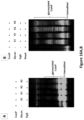
- FIG. 6 A and FIG. 6 B show PglS ADP1 glycosylating recombinant fusion proteins composed of fragments of ComP 110264 containing the cysteine residues in position 71 and 93 that flank the previously established site of glycosylation at serine 82.
- PglS ADP1 was only able to glycosylate those recombinant fusion proteins that contained fragments of ComP 110264 that contained cysteine 71, serine 82, and cysteine 93. Specifically, fusion proteins F5 and H6 were found to be glycosylated as indicated by the immunoreactive bands running at a higher molecular weight.
- the “+” sample acts as a positive control as this fusion protein containing the ComP 110264 fragment consisting of amino acids 29 to 145 has previously been shown to be efficiently glycosylated by PglS ADP1 .
- FIG. 7 A and FIG. 7 B show PglS ADP1 glycosylation being blocked by the methionine at position 104 even in the presence of the cysteine 71, serine 82, and cysteine 93.
- A Western blot analysis of E. coli whole cell lysates co-expressing PglS ADP1 , the pneumococcal serotype 8 capsular polysaccharide, and a fusion protein that contains a fragment of ComP 110264 .
- PglS ADP1 was only able to glycosylate those recombinant fusion proteins that contained fragments of ComP 110264 that contained cysteine 71, serine 82, cysteine 93 and lacked methionine 104.
- fusion proteins B7, C7, D7, E7, F7, A8, and B8 were found to be glycosylated as indicated by the immunoreactive bands running at a higher molecular weight.
- the “+” sample acts as a positive control as this fusion protein containing the ComP 110264 fragment consisting of amino acids 29 to 145 has previously been shown to be efficiently glycosylated by PglS ADP1 .
- FIG. 8 A and FIG. 8 B show that PglS ADP1 glycosylation of serine 82 is not blocked by the presence of multiple methionine residues 5′ of cysteine 71 and cysteine 93.
- A Western blot analysis of E. coli whole cell lysates co-expressing PglS ADP1 , the pneumococcal serotype 8 capsular polysaccharide, and a fusion protein that contains a fragment of ComP 110264 .
- PglS ADP1 was only able to glycosylate those recombinant fusion proteins that contained fragments of ComP 110264 that contained cysteine 71, serine 82, cysteine 93 and lacked methionine 104.
- fusion proteins A10 and B10 were found to be glycosylated as indicated by the immunoreactive bands running at a higher molecular weight.
- the “+” sample acts as a positive control as this fusion protein containing the ComP 110264 fragment consisting of amino acids 29 to 145 has previously been shown to be efficiently glycosylated by PglS ADP1 .
- FIG. 9 A and FIG. 9 B show that PglS ADP1 glycosylation of serine 82 is not blocked by the presence of multiple methionine residues 5′ of cysteine 71 and cysteine 93.
- A Western blot analysis of E. coli whole cell lysates co-expressing PglS ADP1 , the pneumococcal serotype 8 capsular polysaccharide, and a fusion protein that contains a fragment of ComP 110264 .
- PglS ADP1 was only able to glycosylate those recombinant fusion proteins that contained fragments of ComP 110264 that contained cysteine 71, serine 82, cysteine 93 and lacked methionine 104.
- fusion proteins C10, D10, F10, G10, H10, A11, B11, and C11 were found to be glycosylated as indicated by the immunoreactive bands running at a higher molecular weight.
- the “+” sample acts as a positive control as this fusion protein containing the ComP 110264 fragment consisting of amino acids 29 to 145 has previously been shown to be efficiently glycosylated by PglS ADP1 .
- FIG. 10 A and FIG. 10 B shows that PglS ADP1 glycosylation of serine 82 is blocked by the presence methionine at position 104.
- A Western blot analysis of E. coli whole cell lysates co-expressing PglS ADP1 , the pneumococcal serotype 8 capsular polysaccharide, and a fusion protein that contains a fragment of ComP 110264 .
- PglS ADP1 was only able to glycosylate those recombinant fusion proteins that contained fragments of ComP 110264 that contained cysteine 71, serine 82, cysteine 93 and lacked methionine 104.
- FIG. 11 A and FIG. 11 B show fragments of ComP 110264 displaying efficient glycosylation by PglS ADP1 with the serotype 8 pneumococcal capsular polysaccharide.
- Western blots were run in duplicate and probed with either the anti-exotoxin A antisera (A) or anti-His antisera (B).
- the different ComP 110264 fragments all showed similar levels of glycosylation as indicated by the immunoreactive bands running at a higher molecular weight. All fragments contain cysteine 71, serine 82, and cysteine 93.
- FIG. 11 C shows in table format the fragments of ComP 110264 used for recombinant fusion glycosylation experiment and summarizing western blot observations for the presence of glycosylation.
- serine 82 the site of known PglS dependent glycosylation, is in bold underlined font.
- FIG. 13 A , FIG. 13 B , and FIG. 13 C show that two ComP 110264 fragments translationally fused in tandem at the C-terminus of a carrier protein are glycosylated with high molecular weight polysaccharides. Fusion proteins were purified from E. coli cells co-expressing the pneumococcal serotype 8 capsular polysaccharide in the presence or absence of PglS ADP1 .
- FIG. 18 shows Serine 84 of ComPADP1 is the site of PglS dependent glycosylation.
- Western blot analysis on E. coli whole cell lysates probing for hexa-histidine tagged ComP ADP1 variants and the Campylobacter jejuni heptasaccharide.
- the ComP[S84A] ADP1 variant was expressed; however, was not glycosylated as indicated by the absence of any reactive bands probing with the anti-hR6 heptasaccharide antisera.
- FIG. 19 lists ComP ortholog amino acid sequences. The site of predicted glycosylation is bolded, flanked by a predicted disulfide bond (underlined) linking the predicted alpha beta loop to the beta strand region.
- FIG. 20 shows that PglS ADP1 , but not PglS 110264 , efficiently glycosylates both its cognate ComP ADP1 as well as ComP 110264 from A. soli CIP 110264.
- FIG. 21 shows that PglS ADP1 efficiently glycosylates DsbA-ComP ⁇ 28 110264 fusions but not DsbA-ComP ⁇ 28 ADP1 fusions. All fusions either had a triple alanine peptide (AAA; SEQ ID NO: 24) or glycine-glycine-glycine-serine peptide (GGGS; SEQ ID NO: 23) linking DsbA to either a hexa-histidine tagged ComP ⁇ 28 110264 or ComP ⁇ 28 ADP1 .
- Western blot analysis on E. coli whole cell lysates probing for hexa-histidine tagged ComP variants and RNA polymerase. RNA polymerase was used as a loading control.
- FIG. 22 shows that PglS ADP1 efficiently glycosylates MBP-ComP ⁇ 28 110264 fusions but not MBP-ComP ⁇ 28 ADP1 fusions. All fusions either had a triple alanine peptide (AAA; SEQ ID NO: 24) or glycine-glycine-glycine-serine peptide (GGGS; SEQ ID NO: 23) linking maltose binding protein (MBP) to either a hexa-histidine tagged ComP ⁇ 28 110264 or ComP ⁇ 28 ADP1 .
- AAAA triple alanine peptide
- GGGS glycine-glycine-glycine-serine peptide
- MBP maltose binding protein
- FIG. 23 PglS ADP1 , but not PglS 110264 , efficiently EPA-GGGS-ComP ⁇ 28 110264 fusions.
- EPA-GGGS exotoxin A with a glycine-glycine-glycine-serine peptide (GGGS; SEQ ID NO: 23) linking a hexa-histidine tagged ComP ⁇ 28 110264 variant.
- FIG. 24 shows amino acid sequences of representative ComP ⁇ 28 110264 fusion proteins.
- FIG. 25 A , FIG. 25 B , and FIG. 25 C show that a monovalent CPS14-ComP ADP1 bioconjugate vaccine induces serotype specific IgG antibodies.
- FIG. 26 shows that a trivalent bioconjugate vaccine against serotypes 8, 9V, and 14 induces serotype specific IgG titers at comparable levels to Prevnar 13.
- FIG. 27 lists ComP ⁇ 28 ortholog amino acid sequences in which the amino acids corresponding to the 28 N-terminal amino acids of SEQ ID NO: 1 (ComPADp1: AAC45886.1) have been removed.
- the site of predicted glycosylation is bolded, flanked by a predicted disulfide bond (underlined) linking the predicted alpha beta loop to the beta strand region.
- FIG. 28 shows an alignment of a region ComP sequences including the serine (S) residue (boxed) corresponding to the serine residue at position 84 of SEQ ID NO: 1 (ComP ADP1 : AAC45886.1).
- FIG. 29 shows higher energy collisional dissociation (HCD) fragmentation spectra of GluC digested CPS14-ComP bioconjugates.
- GluC digested CPS14-ComP was subjected to HCD fragmentation enabling the confirmation of a semi-GluC derived single peptide attached to a glycan with the CPS14 repeating subunit. Additional glycopeptides were also observed decorated with extended glycans corresponding to up to four tetrasaccharide repeat units.
- FIG. 30 shows higher energy collisional dissociation (HCD) fragmentation spectra of GluC digested ComP glycosylated with the C. jejuni heptasaccharide (ComP-Glycan Cj ).
- GluC digested ComP-Glycan Cj was subjected to HCD fragmentation enabling the confirmation of a single peptide attached to a glycan with the CPS14 repeating subunit.
- Low collision energies regimes were undertaken to confirm the glycosylation of the peptide ISASNATTNVATAT (SEQ ID NO: 22) with a 1380.53 Da glycan corresponding to 6*HexNAc,1*Hexose.
- FIG. 31 shows higher energy collisional dissociation (HCD) fragmentation spectra of GluC digested ComP glycosylated with the C. jejuni heptasaccharide (ComP-Glycan Cj ).
- GluC digested ComP-Glycan Cj was subjected to HCD fragmentation enabling the confirmation of a single peptide attached to a glycan with the CPS14 repeating subunit.
- High collision energies regimes were undertaken to confirm the glycosylation of the peptide ISASNATTNVATAT (SEQ ID NO: 22) with a 1380.53 Da glycan corresponding to 6*HexNAc,1*Hexose.
- FIG. 32 A-I shows that the oligosaccharyltransferase PglS can glycosylate the acceptor protein ComP with the pneumococcal CPS14 polysaccharide.
- E. coli SDB1 cells co-expressing an acceptor protein (DsbA, AcrA, or ComP), an OTase (PglL, PglB, or PglS), and the CPS14 polysaccharide were analyzed for protein glycosylation via western blot analysis of the affinity purified acceptor proteins.
- A-C DsbA purified from SDB1 cells in the presence or absence of PglL.
- FIG. 33 A and FIG. 33 B show higher energy collisional dissociation (HCD) fragmentation spectra of GluC digested CPS14-ComP bioconjugates.
- GluC digested CPS14-ComP was subjected to HCD fragmentation enabling the confirmation of a single peptide attached to a glycan with the CPS14 repeating subunit.
- High collision energies (A) and low collision energies (B) regimes were undertaken to confirm the glycosylation of the peptide ISASNATTNVATAT (SEQ ID NO: 22) with a 1378.47 Da glycan corresponding to HexNAc2Hexose6.
- FIG. 34 A-F shows Western blot analysis of CPS8-ComP and CPS9V-ComP glycoproteins.
- E. coli SDB1 cells were prepared co-expressing ComP, PglS, and either the pneumococcal CPS8 or CPS9V. Affinity purified glycosylated ComP from each strain was analyzed for protein glycosylation via western blot analysis.
- A-C Western blot analysis of CPS8-ComP bioconjugates compared against ComP alone
- A Anti-His channel probing for hexa-histidine tagged ComP purified from SDB1 expressing CPS8 in the presence or absence of PglS.
- FIG. 35 A-F shows IgG responses of mice vaccinated with ComP, PREVNAR 13®, a monovalent CPS14-ComP bioconjugate and a trivalent CPS8-/CPS9V-/CPS14-ComP bioconjugate.
- Groups of mice were vaccinated with ComP alone, PREVNAR 13®, a monovalent CPS14-ComP bioconjugate vaccine, or a CPS8-/CPS9V-/CPS14-ComP bioconjugate vaccine.
- Sera was collected on day 49 and analyzed for serotype specific IgG responses via ELISA compared against sera collected on day 0.
- FIG. 35 G-L shows IgG responses of mice vaccinated with ComP, PREVNAR 13®, a monovalent CPS14-ComP bioconjugate and a trivalent CPS8-/CPS9V-/CPS14-ComP bioconjugate.
- Groups of mice were vaccinated with ComP alone, PREVNAR 13®, a monovalent CPS14-ComP bioconjugate vaccine, or a CPS8-/CPS9V-/CPS14-ComP bioconjugate vaccine.
- Sera was collected on day 49 and analyzed for serotype specific IgG responses via ELISA compared against sera collected on day 0.
- FIG. 36 A and FIG. 36 B shows bactericidal activity of sera from vaccinated mice against S. pneumoniae serotypes 8 and 14.
- Opsonophagocytosis assays OPA
- a 5% (v/v) sample serum and a bacterial MOI of 0.01 were added to fresh whole blood from naive mice to perform the assay.
- Viable bacterial counts were performed after 4 h of incubation. To determine bacterial killing, viable bacterial counts from tubes incubated with sample sera were compared to those incubated with control naive mouse sera. Results are expressed as percent bacterial killing for individual mice, with horizontal bars representing the standard deviation of the mean.
- FIG. 37 A and FIG. 37 B shows analysis of EPA glycosylation with the CPS8 capsular polysaccharide.
- A—Left panel Anti-His channel probing for hexa-histidine tagged EPA purified from SDB1 expressing CPS8 in the presence or absence of PglS.
- A—Middle panel Anti-glycan channel probing for CPS8.
- A—Right panel Merged images for left and middle panels.
- B EPA-CPS8 separated on a SDS polyacrylamide gel stained with Coomassie.
- ComP proteins can be differentiated from other pilins by the presence of the conserved glycosylated serine located at position 84 relative to the ADP1 ComP protein and the presence of a disulfide loop flanking the site of glycosylation.
- the presence of a pglS homolog immediately downstream of ComP is an indicator of ComP.
- the OTase downstream of ComP must display higher sequence conservation with PglS (ACIAD3337) when compared to PglL (ACIAD0103) in A.
- coli cells expressing either MBP-AAA-ComP ⁇ 28 110264 or MBP-GGGS-ComP ⁇ 28 110264 in combination with PglS ADP1 demonstrated detectable levels of glycosylation as indicated by the modal distribution of anti-His reactive signals; whereas, fusions with ComP ⁇ 28 ADP1 were only minimally glycosylated.
- a fusion protein was engineered containing the DsbA signal peptide sequence fused to EPA.
- bioconjugates comprising an oligo- or polysaccharide linked to a fusion protein.
- the oligo- or polysaccharide is covalently linked to the fusion protein.
- the fusion protein comprises a ComP protein (ComP).
- the fusion protein comprises a glycosylation tag of a ComP protein (as described in detail elsewhere herein).
- ComP is glycosylated on a serine (S) residue.
- S serine residue
- This serine residue is conserved in ComP proteins and corresponds to position 84 of SEQ ID NO: 1 (ComP ADP1 : AAC45886.1).
- This serine residue also corresponds to position 82 of SEQ ID NO: 2 (ComP 110264 : ENV58402.1) ( FIGS. 39 A , B, and C).
- a fusion protein (and thus the bioconjugate) is glycosylated with an oligo- or polysaccharide on a ComP glycosylation tag thereof at a serine residue corresponding to the serine residue at position 84 of SEQ ID NO: 1 (ComP ADP1 : AAC45886.1) or corresponding to the serine residue at position 82 of SEQ ID NO: 2.
- FIG. 28 shows an alignment of a region of ComP sequences including the serine (S) residue (boxed) corresponding to the serine residue at position 84 of SEQ ID NO: 1 (ComP ADP1 : AAC45886.1), which is conserved across the ComP sequences.
- the ComP glycosylation tag comprises both a cysteine residue corresponding to the conserved cysteine residue at position 75 of SEQ ID NO: 1 (ComP ADP1 : AAC45886.1) and a cysteine residue corresponding to the conserved cysteine residue at position 95 of SEQ ID NO: 1.
- the ComP glycosylation tag comprises both a cysteine residue corresponding to the conserved cysteine residue at position 71 of SEQ ID NO: 2 (ComP ADP1 : AAC45886.1) and a cysteine residue corresponding to the conserved cysteine residue at position 93 of SEQ ID NO: 2.
- the oligo- or polysaccharide comprises a glucose at its reducing end.
- a ComP protein is a protein that has been identified as ComP protein consistent with the description provided herein.
- representative examples of ComP proteins include, but are not limited to: AAC45886.1 ComP [ Acinetobacter sp. ADP1]; ENV58402.1 hypothetical protein F951_00736 [ Acinetobacter soli CIP 110264]; APV36638.1 competence protein [ Acinetobacter soli GFJ-2]; PKD82822.1 competence protein [ Acinetobacter radioresistens 50v1]; SNX44537.1 type IV pilus assembly protein PilA [ Acinetobacter puyangensis ANC 4466]; and OAL75955.1 competence protein [ Acinetobacter sp. SFC].
- a ComP protein comprises an amino acid sequence that is at least 50%, 60%, 70%, 75%, 80%, 85%, 90%, 95%, 96%, 97%, 98%, 99%, or 100% identical to SEQ ID NO: 1 (ComP ADP1 : AAC45886.1) and contains a serine residue corresponding to the conserved serine residue at position 84 of SEQ ID NO: 1 (ComP ADP1 : AAC45886.1).
- SEQ ID NO: 1 comprises a leader sequence of 28 amino acids.
- a ComP protein comprises an amino acid sequence that is at least 50%, 60%, 70%, 75%, 80%, 85%, 90%, 95%, 97%, 98%, 99%, or 100% identical to SEQ ID NO: 7 (ComP ⁇ 28 ADP1 ), SEQ ID NO: 8 (ComP ⁇ 28 110264 ), SEQ ID NO: 9 (ComP ⁇ 28 GFJ-3 ), SEQ ID NO: 10 (ComP ⁇ 28 P50v1 ), SEQ ID NO: 11 (ComP ⁇ 28 4466 ), or SEQ ID NO: 12 (ComP ⁇ 28 SFC ) that do not include the 28 amino acid leader sequence but do contain a serine residue corresponding to the conserved serine residue at position 84 of SEQ ID NO: 1 (ComP ADP1 : AAC45886.1).
- the ComP protein is SEQ ID NO: 1 (ComP ADP1 : AAC45886.1), SEQ ID NO: 2 (ComP 110264 : ENV58402.1), SEQ ID NO: 3 (ComP GFJ-2 : APV36638.1), SEQ ID NO: 4 (ComP 50v1 : PKD82822.1), SEQ ID NO: 5 (ComP 4466 : SNX44537.1), or SEQ ID NO: 6 (ComP SFC : OAL75955.1).
- SEQ ID NO: 1 ComP ADP1 : AAC45886.1
- SEQ ID NO: 2 ComP 110264 : ENV58402.1
- SEQ ID NO: 3 ComP GFJ-2 : APV36638.1
- SEQ ID NO: 4 ComP 50v1 : PKD82822.1
- SEQ ID NO: 5 ComP 4466 : SNX44537.1
- SEQ ID NO: 6 ComP SFC : OAL75955.1
- the ComP glycosylation tag of this disclosure does not comprise a methionine residue corresponding to the conserved methionine residue at position 104 of SEQ ID NO: 2 (ComP 110264 : ENV58402.1).
- such methionine residue in a ComP amino acid sequence is substituted with another amino acid that does not exhibit an inhibitory effect or is deleted from the ComP glycosylation tag amino acid sequence.
- the amino acid sequence of the ComP glycosylation tag does not extend in the C-terminus direction beyond the amino acid residue corresponding to position 103 of SEQ ID NO: 2 (ComP 110264 : ENV58402.1).
- the amino acid sequence of the ComP glycosylation tag ends with the residue corresponding to position 93, 94, 95, 96, 97, 98, 99, 100, 101, 102, or 103 of SEQ ID NO: 2 (ComP 110264 : ENV58402.1).
- a fusion protein comprising a ComP glycosylation tag likewise would not comprise a methionine residue at a position corresponding to or corresponding about to the conserved methionine residue at position 104 of SEQ ID NO: 2 (ComP 110264 : ENV58402.1) in relation to the ComP glycosylation tag, even if the methionine residue is attributed to a sequence of the fusion protein not as belonging to the ComP glycosylation tag sequence.
- the fusion protein of the bioconjugate does not comprise, in relationship to the ComP glycosylation tag, a methionine residue at a position that would correspond to or correspond about to the conserved methionine residue at position 104 of SEQ ID NO: 2 (ComP 110264 : ENV58402.1).
- the fusion protein of the bioconjugate does not comprise, in relationship to the ComP glycosylation tag, a methionine residue at a position that would correspond to the conserved methionine residue at position 104 of SEQ ID NO: 2 (ComP 110264 : ENV58402.1).
- a ComP glycosylation tag of the current disclosure is generally not a full length ComP protein.
- the ComP glycosylation tag has a length of between 18 and 50 amino acids in length, for example, 18, 19, 20, 21, 22, 23, 24, 25, 26, 27, 28, 29, 30, 31, 32, 33, 34, 35, 36, 37, 38, 39, 40, 41, 42, 43, 44, 45, 46, 47, 48, 49, or 50 amino acids in length.
- the glycosylation tag has length of between 21 and 45 amino acids in length.
- the glycosylation tag has a length of between 23 and 45 amino acids in length.
- the ComP glycosylation tag of the current disclosure can be a fragment, a variant, or a variant fragment of a ComP protein as described anywhere herein.
- the ComP protein comprises an amino acid sequence that is at least 50%, 60%, 70%, 75%, 80%, 85%, 90%, 95%, 96%, 97%, 98%, 99%, or 100% identical to SEQ ID NO: 7 (ComP ⁇ 28 ADP1 ), SEQ ID NO: 8 (ComP ⁇ 28 116264 ), SEQ ID NO: 9 (ComP ⁇ 28 GFJ-2 ), SEQ ID NO: 10 (ComP ⁇ 28 P50v1 ), SEQ ID NO: 11 (ComP ⁇ 28 4466 ), or SEQ ID NO: 12 (ComP ⁇ 28 SFC ).
- the ComP protein comprises an amino acid sequence that is at least 50%, 60%, 70%, 75%, 80%, 85%, 90%, 95%, 96%, 97%, 98%, 99%, or 100% identical to SEQ ID NO: 7 (ComP ⁇ 28 ADP1 ) or SEQ ID NO: 8 (ComP ⁇ 28 1106264 ).
- the ComP protein comprises SEQ ID NO: 7 (ComP ⁇ 28 ADP1 ), SEQ ID NO: 8 (ComP ⁇ 28 110264 ), SEQ ID NO: 9 (ComP ⁇ 28 GFJ-2 ), SEQ ID NO: 10 (ComP ⁇ 28 P50v1 ), SEQ ID NO: 11 (ComP ⁇ 28 4466 ), or SEQ ID NO: 12 (ComP ⁇ 28 SFC ).
- the ComP protein comprises an amino acid sequence that is at least 50%, 60%, 70%, 75%, 80%, 85%, 90%, 95%, 96%, 97%, 98%, 99%, or 100% identical to SEQ ID NO: 1 (ComP ADP1 : AAC45886.1), SEQ ID NO: 2 (ComP 110264 : ENV58402.1), SEQ ID NO: 3 (ComP G FJ-2: APV36638.1), SEQ ID NO: 4 (Comp 50v1 : PKD82822.1), SEQ ID NO: 5 (ComP 4466 : SNX44537.1), or SEQ ID NO: 6 (ComP SFC : OAL75955.1).
- SEQ ID NO: 1 ComP ADP1 : AAC45886.1
- SEQ ID NO: 2 ComP 110264 : ENV58402.1
- SEQ ID NO: 3 ComP G FJ-2: APV36638.1
- SEQ ID NO: 4 Comp 50v1 : PKD82822.1
- the ComP protein comprises an amino acid sequence that is at least 50%, 60%, 70%, 75%, 80%, 85%, 90%, 95%, 96%, 97%, 98%, 99%, or 100% identical to SEQ ID NO: 1 (ComP ADP1 : AAC45886.1) or SEQ ID NO: 2 (ComP 110264 : ENV58402.1).
- the ComP protein comprises SEQ ID NO: 1 (ComP ADP1 : AAC45886.1), SEQ ID NO: 2 (ComP 110264 : ENV58402.1), SEQ ID NO: 3 (ComP GFJ-2 : APV36638.1), SEQ ID NO: 4 (Comp 50v1 : PKD82822.1), SEQ ID NO: 5 (ComP 4466 : SNX44537.1), or SEQ ID NO: 6 (ComP SFC : OAL75955.1).
- SEQ ID NO: 1 ComP ADP1 : AAC45886.1
- SEQ ID NO: 2 ComP 110264 : ENV58402.1
- SEQ ID NO: 3 ComP GFJ-2 : APV36638.1
- SEQ ID NO: 4 Comp 50v1 : PKD82822.1
- SEQ ID NO: 5 ComP 4466 : SNX44537.1
- SEQ ID NO: 6 ComP SFC : OAL75955.1
- a ComP glycosylation tag of the current disclosure can be defined as comprising or consisting of the amino acid consensus sequence of SEQ ID NO: 27:
- X 1 is V, A, or no amino acid
- a ComP glycosylation tag comprises or consists of a fragment of the amino acid consensus sequence of SEQ ID NO: 27, wherein the fragment retains the cysteine residue at position 13 of SEQ ID NO: 27, the cysteine residue at position 35 of SEQ ID NO: 27, and the serine residue at position 24 of SEQ ID NO: 27.
- a ComP glycosylation tag comprises or consists of a variant of the amino acid consensus sequence of SEQ ID NO: 27 or a fragment thereof, having one, two, three, four, five, six, or seven amino acid substitutions, additions, and/or deletions, however, wherein the variant maintains the cysteine residue at position 13 of SEQ ID NO: 27, the cysteine residue at position 35 of SEQ ID NO: 27, and the serine residue at position 24 of SEQ ID NO: 27.
- the amino acid substitution is a conservative amino acid substitution.
- a ComP glycosylation tag comprising SEQ ID NO: 27 does not comprise a methionine residue in a position corresponding to the conserved methionine residue at position 104 of SEQ ID NO: 2 (ComP 110264 : ENV58402.1). Further, in certain embodiments, the amino acid sequence of a ComP glycosylation tag comprising SEQ ID NO: 27 does not extend in the C-terminus direction beyond the amino acid residue corresponding to position 44 of SEQ ID NO: 27. In certain embodiments, a ComP glycosylation tag comprising or consisting of the amino acid consensus sequence of SEQ ID NO: 27 or fragment and/or variant thereof is not more than 25, 30, 40, 45, or 50 amino acids in length.
- a ComP glycosylation tag of the current disclosure can be defined as comprising or consisting of the amino acid consensus sequence of SEQ ID NO: 28:
- a ComP glycosylation tag comprises or consists of a variant of the amino acid consensus sequence of SEQ ID NO: 28 having one, two, three, four, five, six, or seven amino acid substitutions, additions, and/or deletions, however, wherein the variant maintains the cysteine residue at position 1 of SEQ ID NO: 28, the cysteine residue at position 23 of SEQ ID NO: 28, and the serine residue at position 12 of SEQ ID NO: 28.
- the amino acid substitution is a conservative amino acid substitution.
- a ComP glycosylation tag comprising SEQ ID NO: 28 does not comprise a methionine residue in a position corresponding to the conserved methionine residue at position 104 of SEQ ID NO: 2 (ComP 110264 : ENV58402.1). Further, in certain embodiments, the amino acid sequence of a ComP glycosylation tag comprising SEQ ID NO: 28 does not extend in the C-terminus direction beyond the amino acid residue corresponding to position 103 of SEQ ID NO: 2 (ComP 110264 : ENV58402.1). In certain embodiments, a ComP glycosylation tag comprising the amino acid consensus sequence of SEQ ID NO: 28 or variant thereof is not more than 25, 30, 40, 45, or 50 amino acids in length.
- the ComP glycosylation tag comprises or consists of a variant thereof having one, two, three, four, five, six, or seven amino acid substitutions, additions, and/or deletions of an amino acid sequence selected from the group consisting of: SEQ ID NO: 32 [C1]; SEQ ID NO: 33 [D1]; SEQ ID NO: 34 [E1]; SEQ ID NO: 41 [E2]; SEQ ID NO: 42 [F2]; SEQ ID NO: 43 [G2]; SEQ ID NO: 44 [H2]; SEQ ID NO: 45 [A3]; SEQ ID NO: 46 [B3]; SEQ ID NO: 47 [C3]; SEQ ID NO: 55 [D4]; SEQ ID NO: 56 [E4]; SEQ ID NO: 57 [F4]; SEQ ID NO: 58 [G4]; SEQ ID NO: 59 [A5]; SEQ ID NO: 60 [B5]; SEQ ID NO: 61 [D5]; SEQ ID NO:
- the polysaccharide is a Klebsiella pneumoniae, Klebsiella varricola, Klebsiella michinganenis , or Klebsiella oxytoca capsular polysaccharide.
- the polysaccharide is a Klebsiella pneumoniae capsular polysaccharide.
- the polysaccharide is a serotype K1 or serotype K2 capsular polysaccharide of Klebsiella pneumoniae.
- the EPA fusion containing the ComP ⁇ 28 110264 fragment was included as this protein has previously been established to be glycosylated by PglS ADP1 with the CPS8.
- EPA fusion constructs were then introduced into E. coli SDB1 co-expressing the pneumococcal CPS8 in the presence of absence of PglS ADP1 .
- all EPA-ComP 110264 fusion constructs were glycosylated with the pneumococcal CPS8 indicating that ComP 110264 O-linking glycosylation recognition motifs can be translationally fused in multiple combinations at the N-terminus or C-terminus and still be glycosylated by PglS ADP1 .
- EPA fusion constructs were built containing a tandem, C-terminally fused double ComP ⁇ 28 110264 glycosylation tag.
- the ComP ⁇ 28 110264 glycosylation tags were separated by either a glycine-glycine-glycine-glycine-serine (GGGS) linker (SEQ ID NO: 23) or by a proline-alanine-proline-alanine-proline (PAPAP) linker (SEQ ID NO: 25). Both constructs contained a hexahistidine tag to aid downstream purification.
- GGGS glycine-glycine-glycine-glycine-glycine-serine
- PAPAP proline-alanine-proline-alanine-proline linker
Landscapes
- Health & Medical Sciences (AREA)
- Life Sciences & Earth Sciences (AREA)
- Chemical & Material Sciences (AREA)
- Proteomics, Peptides & Aminoacids (AREA)
- Engineering & Computer Science (AREA)
- Bioinformatics & Cheminformatics (AREA)
- General Health & Medical Sciences (AREA)
- Medicinal Chemistry (AREA)
- Epidemiology (AREA)
- Animal Behavior & Ethology (AREA)
- Molecular Biology (AREA)
- Public Health (AREA)
- Veterinary Medicine (AREA)
- Pharmacology & Pharmacy (AREA)
- Immunology (AREA)
- Organic Chemistry (AREA)
- Microbiology (AREA)
- Virology (AREA)
- Toxicology (AREA)
- Gastroenterology & Hepatology (AREA)
- Biochemistry (AREA)
- Biophysics (AREA)
- Genetics & Genomics (AREA)
- Mycology (AREA)
- Peptides Or Proteins (AREA)
- Medicines Containing Antibodies Or Antigens For Use As Internal Diagnostic Agents (AREA)
- Medicines That Contain Protein Lipid Enzymes And Other Medicines (AREA)
- Micro-Organisms Or Cultivation Processes Thereof (AREA)
- Medicinal Preparation (AREA)
Priority Applications (1)
| Application Number | Priority Date | Filing Date | Title |
|---|---|---|---|
| US17/416,106 US12350342B2 (en) | 2018-12-21 | 2019-11-05 | O-linked glycosylation recognition motifs |
Applications Claiming Priority (3)
| Application Number | Priority Date | Filing Date | Title |
|---|---|---|---|
| US201862783971P | 2018-12-21 | 2018-12-21 | |
| US17/416,106 US12350342B2 (en) | 2018-12-21 | 2019-11-05 | O-linked glycosylation recognition motifs |
| PCT/US2019/059893 WO2020131236A1 (en) | 2018-12-21 | 2019-11-05 | O-linked glycosylation recognition motifs |
Publications (2)
| Publication Number | Publication Date |
|---|---|
| US20220088211A1 US20220088211A1 (en) | 2022-03-24 |
| US12350342B2 true US12350342B2 (en) | 2025-07-08 |
Family
ID=71101542
Family Applications (1)
| Application Number | Title | Priority Date | Filing Date |
|---|---|---|---|
| US17/416,106 Active 2042-04-01 US12350342B2 (en) | 2018-12-21 | 2019-11-05 | O-linked glycosylation recognition motifs |
Country Status (7)
| Country | Link |
|---|---|
| US (1) | US12350342B2 (enExample) |
| EP (1) | EP3897685B1 (enExample) |
| JP (2) | JP7699543B2 (enExample) |
| AU (1) | AU2019404924B2 (enExample) |
| CA (1) | CA3124312A1 (enExample) |
| ES (1) | ES3055827T3 (enExample) |
| WO (1) | WO2020131236A1 (enExample) |
Families Citing this family (7)
| Publication number | Priority date | Publication date | Assignee | Title |
|---|---|---|---|---|
| ES3039659T3 (en) | 2015-02-26 | 2025-10-23 | Vaxnewmo Llc | Acinetobacter o-oligosaccharyltransferases and uses thereof |
| JP2021528059A (ja) | 2018-06-16 | 2021-10-21 | ヴァックスニューモ エルエルシーVaxnewmo Llc | グリコシル化されたComPピリンバリアント、製造方法及びその使用 |
| US12350342B2 (en) | 2018-12-21 | 2025-07-08 | Vaxnewmo Llc | O-linked glycosylation recognition motifs |
| US20240066109A1 (en) * | 2020-12-31 | 2024-02-29 | Vaxnewmo Llc | Klebsiella Pneumoniae O-Antigen Glycosylated Proteins and Methods of Making and Uses Thereof |
| EP4329796A4 (en) * | 2021-04-28 | 2025-03-19 | Vaxnewmo Llc | Minimal sequons sufficient for o-linking glycosylation |
| CN115120712B (zh) * | 2022-06-30 | 2025-11-18 | 中国人民解放军军事科学院军事医学研究院 | 肺炎链球菌糖蛋白生物结合疫苗及其制备方法和应用 |
| WO2024077205A2 (en) * | 2022-10-07 | 2024-04-11 | Vaxnewmo Llc | Moraxellaceae o-linking oligosaccharyltransferases, glycosylation fragments, and uses thereof |
Citations (16)
| Publication number | Priority date | Publication date | Assignee | Title |
|---|---|---|---|---|
| WO2008093165A2 (en) | 2006-12-13 | 2008-08-07 | The Governors Of The University Of Alberta | Methods and systems for o-glycosylating proteins |
| WO2011109600A1 (en) | 2010-03-05 | 2011-09-09 | Alnylam Pharmaceuticals, Inc. | Compositions and methods for modifying the glycosylation pattern of a polypeptide |
| WO2013023296A1 (en) | 2011-08-12 | 2013-02-21 | The Governors Of The University Of Alberta | Method of diagnosing bacterial infections using bacterial glycoproteins |
| WO2013067523A1 (en) | 2011-11-04 | 2013-05-10 | Cornell University | A prokaryote-based cell-free system for the synthesis of glycoproteins |
| WO2014057109A1 (en) | 2012-10-12 | 2014-04-17 | Glycovaxyn Ag | Methods of host cell modification |
| WO2014072405A1 (en) | 2012-11-07 | 2014-05-15 | Glycovaxyn Ag | Production of recombinant vaccine in e. coli by enzymatic conjugation |
| WO2016107819A1 (en) | 2014-12-30 | 2016-07-07 | Glycovaxyn Ag | Compositions and methods for protein glycosylation |
| WO2016134485A1 (en) | 2015-02-26 | 2016-09-01 | Vaxalta Inc. | Acinetobacter o-oligosaccharyltransferases and uses thereof |
| US9499614B2 (en) | 2013-03-14 | 2016-11-22 | Abbvie Inc. | Methods for modulating protein glycosylation profiles of recombinant protein therapeutics using monosaccharides and oligosaccharides |
| US20180194812A1 (en) | 2014-09-18 | 2018-07-12 | Raphael Simon | Broad spectrum conjugate vaccine to prevent klebsiella pneumoniae and pseudomonas aeruginosa infections |
| WO2018135860A1 (ko) | 2017-01-17 | 2018-07-26 | 포항공과대학교 산학협력단 | 식물 세포에서의 목적 단백질 발현을 위한 재조합 벡터 |
| WO2019106200A1 (en) | 2017-11-30 | 2019-06-06 | Vaxxilon Ag | Vaccine against klebsiella pneumoniae |
| US10435704B2 (en) | 2013-06-04 | 2019-10-08 | Icon Genetics Gmbh | Method of co-expressing a glycoprotein and a single-subunit olicosaccharyltransferase in a plant |
| WO2019241672A2 (en) | 2018-06-16 | 2019-12-19 | Vaxnewmo Llc | Glycosylated comp pilin variants, methods of making and uses thereof |
| WO2020131236A1 (en) | 2018-12-21 | 2020-06-25 | Vaxnewmo Llc | O-linked glycosylation recognition motifs |
| US20220054632A1 (en) | 2018-12-12 | 2022-02-24 | Glaxosmithkline Biologicals Sa | Modified carrier proteins for o-linked glycosylation |
Family Cites Families (1)
| Publication number | Priority date | Publication date | Assignee | Title |
|---|---|---|---|---|
| US5892019A (en) | 1987-07-15 | 1999-04-06 | The United States Of America, As Represented By The Department Of Health And Human Services | Production of a single-gene-encoded immunoglobulin |
-
2019
- 2019-11-05 US US17/416,106 patent/US12350342B2/en active Active
- 2019-11-05 ES ES19898969T patent/ES3055827T3/es active Active
- 2019-11-05 AU AU2019404924A patent/AU2019404924B2/en active Active
- 2019-11-05 CA CA3124312A patent/CA3124312A1/en active Pending
- 2019-11-05 WO PCT/US2019/059893 patent/WO2020131236A1/en not_active Ceased
- 2019-11-05 JP JP2021536212A patent/JP7699543B2/ja active Active
- 2019-11-05 EP EP19898969.1A patent/EP3897685B1/en active Active
-
2024
- 2024-12-09 JP JP2024214739A patent/JP2025032259A/ja not_active Withdrawn
Patent Citations (19)
| Publication number | Priority date | Publication date | Assignee | Title |
|---|---|---|---|---|
| JP2010515430A (ja) | 2006-12-13 | 2010-05-13 | ザ・ガバナーズ・オブ・ザ・ユニバーシティ・オブ・アルバータ | タンパク質のo−グリコシル化方法およびそのシステム |
| US20110243980A1 (en) | 2006-12-13 | 2011-10-06 | The Governors Of The University Of Alberta | Methods and systems for o-glycosylating proteins |
| WO2008093165A2 (en) | 2006-12-13 | 2008-08-07 | The Governors Of The University Of Alberta | Methods and systems for o-glycosylating proteins |
| WO2011109600A1 (en) | 2010-03-05 | 2011-09-09 | Alnylam Pharmaceuticals, Inc. | Compositions and methods for modifying the glycosylation pattern of a polypeptide |
| WO2013023296A1 (en) | 2011-08-12 | 2013-02-21 | The Governors Of The University Of Alberta | Method of diagnosing bacterial infections using bacterial glycoproteins |
| WO2013067523A1 (en) | 2011-11-04 | 2013-05-10 | Cornell University | A prokaryote-based cell-free system for the synthesis of glycoproteins |
| WO2014057109A1 (en) | 2012-10-12 | 2014-04-17 | Glycovaxyn Ag | Methods of host cell modification |
| WO2014072405A1 (en) | 2012-11-07 | 2014-05-15 | Glycovaxyn Ag | Production of recombinant vaccine in e. coli by enzymatic conjugation |
| US9499614B2 (en) | 2013-03-14 | 2016-11-22 | Abbvie Inc. | Methods for modulating protein glycosylation profiles of recombinant protein therapeutics using monosaccharides and oligosaccharides |
| US10435704B2 (en) | 2013-06-04 | 2019-10-08 | Icon Genetics Gmbh | Method of co-expressing a glycoprotein and a single-subunit olicosaccharyltransferase in a plant |
| US20180194812A1 (en) | 2014-09-18 | 2018-07-12 | Raphael Simon | Broad spectrum conjugate vaccine to prevent klebsiella pneumoniae and pseudomonas aeruginosa infections |
| WO2016107819A1 (en) | 2014-12-30 | 2016-07-07 | Glycovaxyn Ag | Compositions and methods for protein glycosylation |
| US20180050101A1 (en) | 2015-02-26 | 2018-02-22 | Vaxnewmo Llc | Acinetobacter o-oligosaccharyltransferases and uses thereof |
| WO2016134485A1 (en) | 2015-02-26 | 2016-09-01 | Vaxalta Inc. | Acinetobacter o-oligosaccharyltransferases and uses thereof |
| WO2018135860A1 (ko) | 2017-01-17 | 2018-07-26 | 포항공과대학교 산학협력단 | 식물 세포에서의 목적 단백질 발현을 위한 재조합 벡터 |
| WO2019106200A1 (en) | 2017-11-30 | 2019-06-06 | Vaxxilon Ag | Vaccine against klebsiella pneumoniae |
| WO2019241672A2 (en) | 2018-06-16 | 2019-12-19 | Vaxnewmo Llc | Glycosylated comp pilin variants, methods of making and uses thereof |
| US20220054632A1 (en) | 2018-12-12 | 2022-02-24 | Glaxosmithkline Biologicals Sa | Modified carrier proteins for o-linked glycosylation |
| WO2020131236A1 (en) | 2018-12-21 | 2020-06-25 | Vaxnewmo Llc | O-linked glycosylation recognition motifs |
Non-Patent Citations (121)
Also Published As
| Publication number | Publication date |
|---|---|
| JP2025032259A (ja) | 2025-03-11 |
| JP2022514704A (ja) | 2022-02-14 |
| EP3897685B1 (en) | 2025-10-08 |
| AU2019404924A1 (en) | 2021-07-08 |
| EP3897685A1 (en) | 2021-10-27 |
| JP7699543B2 (ja) | 2025-06-27 |
| ES3055827T3 (en) | 2026-02-16 |
| CA3124312A1 (en) | 2020-06-25 |
| EP3897685A4 (en) | 2022-07-27 |
| WO2020131236A1 (en) | 2020-06-25 |
| US20220088211A1 (en) | 2022-03-24 |
| AU2019404924B2 (en) | 2025-09-18 |
Similar Documents
| Publication | Publication Date | Title |
|---|---|---|
| US12350342B2 (en) | O-linked glycosylation recognition motifs | |
| US12577280B2 (en) | Glycosylated comp pilin variants, methods of making and uses thereof | |
| JP7551618B2 (ja) | O-結合型グリコシル化のための修飾キャリアタンパク質 | |
| EP3262077B1 (en) | Acinetobacter o-oligosaccharyltransferases and uses thereof | |
| US20240066109A1 (en) | Klebsiella Pneumoniae O-Antigen Glycosylated Proteins and Methods of Making and Uses Thereof | |
| US20240207383A1 (en) | Minimal Sequons Sufficient for O-Linking Glycosylation | |
| AU2023356184A1 (en) | Moraxellaceae o -linking oligosaccharyltransferases, glycosylation fragments, and uses thereof | |
| CN120897997A (zh) | 用于生产具有与第二多肽配偶体的异肽键的糖缀合物多肽的组合物和方法以及这些糖缀合物多肽的用途 | |
| Mayer et al. | A platform for glycoengineering a polyvalent pneumococcal bioconjugate vaccine using E. coli as a host |
Legal Events
| Date | Code | Title | Description |
|---|---|---|---|
| FEPP | Fee payment procedure |
Free format text: ENTITY STATUS SET TO UNDISCOUNTED (ORIGINAL EVENT CODE: BIG.); ENTITY STATUS OF PATENT OWNER: LARGE ENTITY |
|
| FEPP | Fee payment procedure |
Free format text: ENTITY STATUS SET TO SMALL (ORIGINAL EVENT CODE: SMAL); ENTITY STATUS OF PATENT OWNER: LARGE ENTITY |
|
| AS | Assignment |
Owner name: VAXNEWMO LLC, MISSOURI Free format text: ASSIGNMENT OF ASSIGNORS INTEREST;ASSIGNORS:HARDING, CHRISTIAN;FELDMAN, MARIO;REEL/FRAME:058487/0138 Effective date: 20190402 |
|
| STPP | Information on status: patent application and granting procedure in general |
Free format text: DOCKETED NEW CASE - READY FOR EXAMINATION |
|
| STPP | Information on status: patent application and granting procedure in general |
Free format text: NON FINAL ACTION MAILED |
|
| FEPP | Fee payment procedure |
Free format text: ENTITY STATUS SET TO UNDISCOUNTED (ORIGINAL EVENT CODE: BIG.); ENTITY STATUS OF PATENT OWNER: LARGE ENTITY |
|
| STPP | Information on status: patent application and granting procedure in general |
Free format text: RESPONSE TO NON-FINAL OFFICE ACTION ENTERED AND FORWARDED TO EXAMINER |
|
| STPP | Information on status: patent application and granting procedure in general |
Free format text: NON FINAL ACTION MAILED |
|
| AS | Assignment |
Owner name: NATIONAL INSTITUTES OF HEALTH (NIH), U.S. DEPT. OF HEALTH AND HUMAN SERVICES (DHHS), U.S. GOVERNMENT, MARYLAND Free format text: LICENSE;ASSIGNOR:VAXNEWMO LLC;REEL/FRAME:069432/0450 Effective date: 20231214 |
|
| STPP | Information on status: patent application and granting procedure in general |
Free format text: RESPONSE TO NON-FINAL OFFICE ACTION ENTERED AND FORWARDED TO EXAMINER |
|
| STPP | Information on status: patent application and granting procedure in general |
Free format text: NOTICE OF ALLOWANCE MAILED -- APPLICATION RECEIVED IN OFFICE OF PUBLICATIONS |
|
| STCF | Information on status: patent grant |
Free format text: PATENTED CASE |