US11268101B2 - Recombinant protein production - Google Patents
Recombinant protein production Download PDFInfo
- Publication number
- US11268101B2 US11268101B2 US16/065,421 US201716065421A US11268101B2 US 11268101 B2 US11268101 B2 US 11268101B2 US 201716065421 A US201716065421 A US 201716065421A US 11268101 B2 US11268101 B2 US 11268101B2
- Authority
- US
- United States
- Prior art keywords
- trna
- nucleotide sequence
- eukaryotic cell
- expression
- cell
- Prior art date
- Legal status (The legal status is an assumption and is not a legal conclusion. Google has not performed a legal analysis and makes no representation as to the accuracy of the status listed.)
- Active, expires
Links
Images




Classifications
-
- C—CHEMISTRY; METALLURGY
- C12—BIOCHEMISTRY; BEER; SPIRITS; WINE; VINEGAR; MICROBIOLOGY; ENZYMOLOGY; MUTATION OR GENETIC ENGINEERING
- C12N—MICROORGANISMS OR ENZYMES; COMPOSITIONS THEREOF; PROPAGATING, PRESERVING, OR MAINTAINING MICROORGANISMS; MUTATION OR GENETIC ENGINEERING; CULTURE MEDIA
- C12N15/00—Mutation or genetic engineering; DNA or RNA concerning genetic engineering, vectors, e.g. plasmids, or their isolation, preparation or purification; Use of hosts therefor
- C12N15/09—Recombinant DNA-technology
- C12N15/63—Introduction of foreign genetic material using vectors; Vectors; Use of hosts therefor; Regulation of expression
- C12N15/79—Vectors or expression systems specially adapted for eukaryotic hosts
- C12N15/80—Vectors or expression systems specially adapted for eukaryotic hosts for fungi
- C12N15/81—Vectors or expression systems specially adapted for eukaryotic hosts for fungi for yeasts
-
- C—CHEMISTRY; METALLURGY
- C12—BIOCHEMISTRY; BEER; SPIRITS; WINE; VINEGAR; MICROBIOLOGY; ENZYMOLOGY; MUTATION OR GENETIC ENGINEERING
- C12N—MICROORGANISMS OR ENZYMES; COMPOSITIONS THEREOF; PROPAGATING, PRESERVING, OR MAINTAINING MICROORGANISMS; MUTATION OR GENETIC ENGINEERING; CULTURE MEDIA
- C12N15/00—Mutation or genetic engineering; DNA or RNA concerning genetic engineering, vectors, e.g. plasmids, or their isolation, preparation or purification; Use of hosts therefor
- C12N15/09—Recombinant DNA-technology
- C12N15/63—Introduction of foreign genetic material using vectors; Vectors; Use of hosts therefor; Regulation of expression
- C12N15/67—General methods for enhancing the expression
-
- C—CHEMISTRY; METALLURGY
- C12—BIOCHEMISTRY; BEER; SPIRITS; WINE; VINEGAR; MICROBIOLOGY; ENZYMOLOGY; MUTATION OR GENETIC ENGINEERING
- C12P—FERMENTATION OR ENZYME-USING PROCESSES TO SYNTHESISE A DESIRED CHEMICAL COMPOUND OR COMPOSITION OR TO SEPARATE OPTICAL ISOMERS FROM A RACEMIC MIXTURE
- C12P21/00—Preparation of peptides or proteins
- C12P21/02—Preparation of peptides or proteins having a known sequence of two or more amino acids, e.g. glutathione
-
- C—CHEMISTRY; METALLURGY
- C12—BIOCHEMISTRY; BEER; SPIRITS; WINE; VINEGAR; MICROBIOLOGY; ENZYMOLOGY; MUTATION OR GENETIC ENGINEERING
- C12N—MICROORGANISMS OR ENZYMES; COMPOSITIONS THEREOF; PROPAGATING, PRESERVING, OR MAINTAINING MICROORGANISMS; MUTATION OR GENETIC ENGINEERING; CULTURE MEDIA
- C12N15/00—Mutation or genetic engineering; DNA or RNA concerning genetic engineering, vectors, e.g. plasmids, or their isolation, preparation or purification; Use of hosts therefor
- C12N15/09—Recombinant DNA-technology
- C12N15/11—DNA or RNA fragments; Modified forms thereof; Non-coding nucleic acids having a biological activity
-
- C—CHEMISTRY; METALLURGY
- C12—BIOCHEMISTRY; BEER; SPIRITS; WINE; VINEGAR; MICROBIOLOGY; ENZYMOLOGY; MUTATION OR GENETIC ENGINEERING
- C12N—MICROORGANISMS OR ENZYMES; COMPOSITIONS THEREOF; PROPAGATING, PRESERVING, OR MAINTAINING MICROORGANISMS; MUTATION OR GENETIC ENGINEERING; CULTURE MEDIA
- C12N15/00—Mutation or genetic engineering; DNA or RNA concerning genetic engineering, vectors, e.g. plasmids, or their isolation, preparation or purification; Use of hosts therefor
- C12N15/09—Recombinant DNA-technology
- C12N15/11—DNA or RNA fragments; Modified forms thereof; Non-coding nucleic acids having a biological activity
- C12N15/62—DNA sequences coding for fusion proteins
Definitions
- the disclosure relates to recombinant protein expression systems comprising genetically modified cells wherein the cells are transformed or transfected with tRNA genes to reduce base mismatch due to genetic degeneracy in the genetic code and hence reliance on wobble for decoding; the modified cells have so improved recombinant protein expression.
- the amino acid composition of proteins determines their properties and is encoded by the DNA sequence of genes.
- the gene sequence is copied into messenger RNA (mRNA) and decoded using transfer RNA (tRNA) that delivers amino acids in the specified order.
- mRNA messenger RNA
- tRNA transfer RNA
- the code is written in contiguous triplets of bases, called codons and is decoded by binding to the tRNAs' complementary base triplets, called anticodons.
- Each tRNA has a single anticodon and delivers a specified amino acid. However, although the combination of the four bases present in the DNA provides 64 codons, there are fewer tRNAs and anticodons present.
- DNA comprises four different bases whereby adenosine specifically binds with thymine and guanine specifically binds with cytosine. All organisms have fewer species of tRNA than codons and therefore some tRNA species must pair with more than one codon, which led to the “Wobble” hypothesis postulating that the 5′ base on the anticodon, which binds to the 3′ base on the mRNA, can have non-standard base pairing, with only two of the three bases optimally matched. Suboptimal base pairing can lead to misincorporation errors upon translation. The most frequent errors correspond to a G (mRNA)/U (tRNA) base pair mismatch and additional wobble position mismatches (C/U and U/U) during translation.
- Heterologous expression of recombinant proteins provided a wealth of diagnostic and therapeutic agents. Often bacterial systems are the preferred host for protein expression due to the low maintenance and easy handling. However, inability to accommodate for posttranslational modifications led to the usage of other expression systems such as yeast, insect cells, plants or mammalian expression systems. Approximately 70% of recombinant protein pharmaceuticals and most proteins used for vaccination, human therapy or diagnostics are currently produced in mammalian cells or cell lines, such as CHO or HEK293. However, although the choice of expression systems aids expression, there are still significant misincorporation levels being reported when expressing therapeutic monoclonal antibodies in CHO cells during clinical development. The impact of such sequence variation affects not just the quality and efficacy, but could compromise patient safety by triggering an immunogenic response.
- Optimal protein expression systems leading to error-free and soluble protein expression are highly desired. As described above, no organism harbours a full set of tRNAs and moreover, there are species-dependent differences. Expression of e.g. a human-derived transgene in a bacterial system is often problematic, as the codon usage and frequency can differ greatly, leading to inefficient expression. This problem is generally addressed by optimising codons to the preferred codon usage by the expression hosts. However, manipulating transgene sequence is extremely problematic, as it interferes with the structure, folding, stability and regulation of the encoded mRNA transcript in ways that are poorly understood and highly unpredictable. An alternative approach is to introduce additional tRNA transgenes into the host so as to improve codon recognition; this has been used successfully in E. coli , but has not been attempted in eukaryotic hosts. In addition this approach does not deal with the problems associated with wobble such as inefficient translation and reduced translational fidelity.
- the present disclosure relates to the introduction of tRNA genes with anticodons to optimally match codons that otherwise depend on wobble; in this way, unintended heterogeneity can be reduced and efficiency of protein synthesis can be improved.
- an isolated eukaryotic cell wherein the cell is modified by transfection or transformation with a nucleic acid molecule comprising a transcription cassette, the transcription cassette comprising at least one nucleotide sequence encoding a transfer RNA [tRNA], the tRNA including an anticodon nucleotide sequence that is absent from said eukaryotic cell, wherein said anticodon sequence corrects base mismatches at any one of the cognate first, second or third nucleotide position in the corresponding messenger RNA [mRNA] codon to improve translation efficiency and/or decrease amino acid mis-incorporation as a consequence of degeneracy in the genetic code.
- tRNA transfer RNA
- said cell is a prokaryotic cell.
- said base mismatch correction reduces said cells reliance on wobble during translation of said mRNA.
- “Wobble” is a well-known natural phenomenon.
- the genetic code means that a cell would need tRNAs with 61 different anticodons to complement the available 61 codons. However, due to the degeneracy of the genetic code, the third base is less discriminatory for the amino acid than the other two bases. This third position in the codon is referred to as the “wobble” position.
- Us and Cs may be read by a G in the anticodon.
- As and Gs may be read by a U or y (pseudouridine) in the anticodon
- A, U or C can be read by inosine in the anticodon.
- the invention addresses these problems by genetically engineering cells to reduce the reliance on “wobble” to enhance translation and increase translation fidelity.
- the transcription cassette according to the invention is adapted for expression of said tRNA. This includes the provision of a suitable RNA polymerase III promoter. Alternatively, the transcription cassette can be intergrated into the genome of said cell at a position near to a suitable promoter, for example an RNA polymerase III promoter.
- said tRNA corrects a base mismatch in the first, second or third nucleotide position in the corresponding mRNA codon.
- said nucleic acid molecule is part of an expression vector adapted for eukaryotic expression of said tRNA.
- said cell is further modified by transformation or transfection with a nucleic acid molecule encoding a recombinant protein, polypeptide or peptide.
- said expression vector is adapted for expression in a mammalian cell.
- said adaptation includes the provision of transcription control sequences (promoter sequences) which mediate cell/tissue specific expression.
- promoter sequences may be cell/tissue specific, inducible or constitutive.
- Promoter is an art recognised term and, for the sake of clarity, includes the following features which are provided by example only.
- Enhancer elements are cis acting nucleotide sequences often found 5′ to the transcription initiation site of a gene (enhancers can also be found 3′ to a gene sequence or even located in intronic sequences). Enhancers function to increase the rate of transcription of the gene to which the enhancer is linked. Enhancer activity is responsive to trans acting transcription factors (polypeptides) which have been shown to bind specifically to enhancer elements.
- transcription factors is responsive to a number of physiological/environmental cues which include, by example and not by way of limitation, intermediary metabolites (e.g. glucose, lipids), environmental effectors (e.g. heat).
- Promoter elements also include so called TATA box and RNA polymerase initiation selection sequences which function to select a site of transcription initiation. These sequences also bind polypeptides which function, inter alia, to facilitate transcription initiation selection by RNA polymerase II or III.
- the vector may be a bi-functional expression vector which functions in multiple hosts. In the case of genomic DNA, this may contain its own promoter or other regulatory elements and in the case of cDNA this may be under the control of an appropriate promoter or other regulatory elements for expression in the host cell.
- Adaptations also include the provision of selectable markers and autonomous replication sequences which facilitate the maintenance of said vector in either the eukaryotic cell or prokaryotic host.
- Vectors which are maintained autonomously are referred to as episomal vectors.
- Episomal vectors are desirable since these molecules can incorporate large DNA fragments (30-50 kb DNA).
- Episomal vectors of this type are described in WO98/07876.
- vectors can be “integrating vectors” which recombine with chromosomal DNA to stably transform the cell into which the integrating vector is incorporated.
- Adaptations which facilitate the expression of vector encoded recombinant genes include the provision of transcription termination/polyadenylation sequences. This also includes the provision of internal ribosome entry sites (IRES) which function to maximise expression of vector encoded genes arranged in bi-cistronic or multi-cistronic expression cassettes.
- Expression control sequences also include so-called Locus Control Regions (LCRs). These are regulatory elements which confer position-independent, copy number-dependent expression to linked genes when assayed as transgenic constructs. LCRs include regulatory elements that insulate transgenes from the silencing effects of adjacent heterochromatin, Grosveld et al., Cell (1987), 51: 975-985.
- viruses are commonly used as vectors for the delivery of exogenous genes.
- Commonly employed vectors include recombinantly modified enveloped or non-enveloped DNA and RNA viruses, preferably selected from baculoviridiae, parvoviridiae, picornoviridiae, herpesveridiae, poxviridae, adenoviridiae, or picornnaviridiae.
- Chimeric vectors may also be employed which exploit advantageous elements of each of the parent vector properties (See e.g., Feng, et al. (1997) Nature Biotechnology 15:866-870).
- Such viral vectors may be wild-type or may be modified by recombinant DNA techniques to be replication deficient, conditionally replicating or replication competent.
- said expression vector is adapted for expression in a fungal cell.
- said expression vector is adapted for expression in an insect cell.
- said expression vector is adapted for expression in a plant cell.
- Suitable promoters for expression of recombinant proteins or tRNAs in plant cells include constitutive, tissue-specific, inducible, developmental or other promoters for expression in plant cells.
- Such promoters include viral, fungal, bacterial, animal and plant-derived promoters capable of functioning in plant cells.
- Constitutive promoters include, for example CaMV 35S promoter (Odell et al. (1985) Nature 313, 9810-812); rice actin (McElroy et al. (1990) Plant Cell 2: 163-171); ubiquitin (Christian et al. (1989) Plant Mol. Biol. 18 (675-689); pEMU (Last et al. (1991) Theor Appl. Genet.
- Chemical-regulated plant promoters can be used to modulate the expression of a gene in a plant cell through the application of an exogenous chemical regulator.
- the promoter may be a chemical-inducible promoter, where application of the chemical induces gene expression, or a chemical-repressible promoter, where application of the chemical represses gene expression.
- Chemical-inducible promoters are known in the art of plant transgenic expression and include, but are not limited to, the maize In2-2 promoter, which is activated by benzenesulfonamide herbicide safeners, the maize GST promoter, which is activated by hydrophobic electrophilic compounds that are used as pre-emergent herbicides, and the tobacco PR-la promoter, which is activated by salicylic acid.
- Other chemical-regulated plant promoters of interest include steroid-responsive promoters (see, for example, the glucocorticoid-inducible promoter in Schena et al. (1991) Proc. Natl. Acad. Sci. USA 88: 10421-10425 and McNellis et al.
- tissue-specific promoters can be utilised.
- Tissue-specific promoters include those described by Yamamoto et al. (1997) Plant J. 12(2): 255-265; Kawamata et al. (1997) Plant Cell Physiol. 38(7): 792-803; Hansen et al. (1997) Mol. Gen. Genet. 254(3): 337-343; Russell et al. (1997) Transgenic Res. 6(2): 157-168; Rinehart et al. (1996) Plant Physiol. 112(3): 1331-1341; Van Camp et al. (1996) Plant Physiol. 112(2): 525-535; Canevascni et al. (1996) Plant Physiol.
- nucleic acid constructs which operate as plant vectors. Specific procedures and vectors previously used with wide success in plants are described by Guerineau and Mullineaux (1993) (Plant transformation and expression vectors. In: Plant Molecular Biology Labfax (Croy R R D ed) Oxford, BIOS Scientific Publishers, pp 121-148.
- Suitable vectors may include plant viral-derived vectors (see e.g. EP194809).
- selectable genetic markers may be included in the construct, such as those that confer selectable phenotypes such as resistance to herbicides (e.g. kanamycin, hygromycin, phosphinotricin, chlorsulfuron, methotrexate, gentamycin, spectinomycin, imidazolinones and glyphosate).
- said isolated eukaryotic cell is an insect, plant, fungal or mammalian cell.
- said isolated mammalian cell is a non-human mammalian cell.
- said isolated mammalian cell is selected from the group consisting of: Chinese Hamster Ovary, [CHO], HEK293, NS0 or CAP cells.
- said fungal cell is selected from the group consisting of yeast: Saccharomyces cerevisae, Schizosaccharomyces pombe Pichia pastoris, Aspergillus spp [e.g A. niger ], Kluyveromyces lactis and Trichoderma reesei and Yarrowia lipolytica.
- said plant cell is isolated from a plant species selected from the group: corn ( Zea mays ), canola ( Brassica napus, Brassica rapa ssp.), alfalfa ( Medicago sativa ), rice ( Oryza sativa ), rye ( Secale cerale ), Sorghum ( Sorghum bicolor, Sorghum vulgare ), sunflower ( helianthus annuas ), wheat ( Tritium aestivum ), soybean ( Glycine max ), tobacco ( Nicotiana tabacum ), potato ( Solanum tuberosum ), peanuts ( Arachis hypogaea ), cotton ( Gossypium hirsutum ), sweet potato ( Ipomoea batatus ), cassava ( Manihot esculenta ), coffee ( Cofea spp.), coconut ( Cocos nucifera ), pineapple ( Anana comosus ), citris tree ( Citrus s), corn ( Zea mays
- plant cells of the present invention are crop plants (for example, cereals and pulses, maize, wheat, potatoes, tapioca, rice, Sorghum , millet, cassava, barley, pea, and other root, tuber or seed crops).
- Important seed crops are oil-seed rape, sugar beet, maize, sunflower, soybean, and Sorghum .
- Horticultural plants to which the present invention may be applied may include lettuce, endive, and vegetable brassicas including cabbage, broccoli, and cauliflower, and carnations and geraniums.
- the present invention may be applied in tobacco, cucurbits, carrot, strawberry, sunflower, tomato, pepper, chrysanthemum .
- Grain plants that provide seeds of interest include oil-seed plants and leguminous plants.
- Seeds of interest include grain seeds, such as corn, wheat, barley, rice, Sorghum , rye, etc.
- Oil-seed plants include cotton, soybean, safflower, sunflower, Brassica , maize, alfalfa, palm, coconut, etc.
- Leguminous plants include beans and peas. Beans include guar, locust bean, fenugreek, soybean, garden beans, cowpea, mungbean, lima bean, fava bean, lentils, chickpea.
- said expression cassette comprises nucleotide sequences encoding 1, 2, 3, 4, 5, 6, 7, 8, 9, 10, 11, 12, 13, 14 or 15 different tRNAs.
- said nucleic acid encodes a transfer RNA selected from the group of Ala-tRNA, Arg-tRNA, Asp-tRNA, Asn-tRNA, Cys-tRNA, Glu-tRNA, Gln-tRNA, Gly-tRNA, His-tRNA, Ile-tRNA, Leu-tRNA, Lys-tRNA, Met-tRNA, Phe-tRNA, Pro-tRNA, Ser-tRNA, Thr-tRNA, Trp-tRNA, Tyr-tRNA and Val-tRNA.
- a transfer RNA selected from the group of Ala-tRNA, Arg-tRNA, Asp-tRNA, Asn-tRNA, Cys-tRNA, Glu-tRNA, Gln-tRNA, Gly-tRNA, His-tRNA, Ile-tRNA, Leu-tRNA, Lys-tRNA, Met-tRNA, Phe-tRNA, Pro-tRNA, Ser-tRNA, Thr-tRNA, Trp-tRNA, Tyr-tRNA and
- said anticodon is cytosine and/or adenine rich.
- said anticodon is uracil free.
- said anticodon is selected from the group consisting of AGC, GGC, CGC, UGC, ACC, GCC, CCC, UCC, AGG, GGG, CGG, UGG, AGU, GGU, CGU, UGU, AAC, GAC, CAC, UAC, AAA, GAA, AUU, GUU, CUU, UUU, AUC, GUC, CUC, UUC, AGA, GGA, CGA, UGA, ACU, GCU, ACG, GCG, CCG, UCG, CCU, UCU, AAG, GAG, CAG, UAG, CAA, UAA, AAU, GAU, UAU, CAU, AUA, GUA, ACA, GCA, AUG, GUG, CUG, UUG, CCA
- said modified cell is transformed or transfected with a nucleic acid molecule encoding a therapeutic antibody.
- said modified cell is transformed or transfected with a nucleic acid molecule encoding a pharmaceutical or therapeutic protein or peptide.
- said modified cell is transformed or transfected with a nucleic acid molecule encoding an industrial enzyme.
- said modified cell is further modified by transformation or transfection with a nucleic acid molecule comprising a 7SL nucleotide sequence.
- Secreted and membrane proteins contain signal sequences that are required to target proteins to be secreted to the endoplasmic reticulum.
- the signal sequences of native and recombinant proteins destined for secretion interact with a signal recognition particle which is a ribonucleoprotein complex comprising six different proteins and a structural RNA of around 300 nucleotides and is referred to as 7SL RNA.
- 7SL RNA is conserved across species and although there is little homology at the level of sequence identity the secondary structures of 7SL RNA are highly conserved comprising a central double stranded region which is flanked at one end by two small stem loop structures and at the other end by two relatively large stem loop structures.
- co-expression of 7SL nucleic acid in our modified cells greatly enhances expression of recombinant protein.
- said nucleic acid molecule comprises the nucleotide sequence set forth in SEQ ID NO: 10, or a nucleotide sequence variant that has at least 90% nucleotide sequence identity over the full length to the nucleotide sequence set forth in SEQ ID NO: 10.
- nucleic acid molecule that comprises a nucleotide sequence that has at least 91%, 92%, 93%, 94%, 95%, 96%, 97%, 98% or 99% nucleotide sequence identity over the full length to the nucleotide sequence set forth in SEQ ID NO: 10.
- said nucleic acid molecule comprises or consists of a nucleotide sequence as set forth in SEQ ID NO: 10.
- translation efficiency is enhanced by greater than 1-fold when compared to a non-modified cell of the same species.
- translation efficiency is enhanced at least two fold when compared to a non-modified cell of the same species.
- translational efficiency is enhanced at least 3-fold, 4-fold, 5-fold, 6-fold, 7-fold, 8-fold, 9-fold or at least 10-fold when compared to a non-modified cell of the same species.
- translation is enhanced by greater than 10-fold when compared to a non-modified cell of the same species.
- the mis-incorporation of amino acids in said recombinant protein is suppressed by greater than 1-fold when compared to the amino acid mis-incorporation rate in a non-modified cell of the same species.
- the mis-incorporation of amino acids in said recombinant protein is suppressed by at least 2-fold when compared to the amino acid mis-incorporation rate in a non-modified cell of the same species.
- mis-incorporation is suppressed by at least 3-fold, 4-fold, 5-fold, 6-fold, 7-fold, 8-fold, 9-fold, 10-fold, 15-fold, 20-fold, 25-fold, 30-fold, 35-fold or at least 40-fold when compared to the amino acid mis-incorporation rate in a non-modified cell of the same species.
- a modified cell according to the invention for use in reducing tRNA mismatch as a consequence of the degeneracy in the genetic code in the production of recombinant protein.
- said reduction in tRNA mismatch reduces said cell's reliance on wobble during translation of said mRNA by said modified cell.
- a method to customise expression of a selected recombinant protein in a cell expression system comprising the steps:
- said cell is a eukaryotic cell.
- said cell is a mammalian cell, a fungal cell, an insect cell or a plant cell.
- said cell is a prokaryotic cell, for example a bacterial cell.
- a cell culture vessel comprising a modified cell according to the invention.
- said cell culture vessel is a bioreactor such as a fermenter.
- eukaryotic microbial or prokaryotic expression is preferred in the methods according to the invention they are grown or cultured in the manner with which the skilled worker is familiar, depending on the host organism.
- microorganisms are grown in a liquid medium comprising a carbon source, usually in the form of sugars, a nitrogen source, usually in the form of organic nitrogen sources such as yeast extract or salts such as ammonium sulfate, trace elements such as salts of iron, manganese and magnesium and, if appropriate, vitamins, at temperatures of between 0° C. and 100° C., preferably between 10° C. and 60° C., while gassing in oxygen.
- the pH of the liquid medium can either be kept constant, that is to say regulated during the culturing period, or not.
- the cultures can be grown batch wise, semi-batch wise or continuously.
- Nutrients can be provided at the beginning of the fermentation or fed in semi-continuously or continuously.
- Recombinant protein produced can be isolated from the organisms as described above by processes known to the skilled worker, for example by extraction, if appropriate precipitation with salt, and/or chromatography. To this end, the organisms can advantageously be disrupted beforehand.
- the pH value kept between pH 4 and 12, preferably between pH 6 and 9, especially preferably between pH 7 and 8.
- the culture medium to be used must suitably meet the requirements of the strains in question. Descriptions of culture media for various microorganisms can be found in the textbook “Manual of Methods for General Bacteriology” of the American Society for Bacteriology (Washington D.C., USA, 1981).
- these media which can be employed in accordance with the invention usually comprise one or more carbon sources, nitrogen sources, inorganic salts, vitamins and/or trace elements.
- Preferred carbon sources are sugars, such as mono-, di- or polysaccharides. Examples of carbon sources are glucose, fructose, mannose, galactose, ribose, sorbose, ribulose, lactose, maltose, sucrose, raffinose, starch or cellulose.
- Sugars can also be added to the media via complex compounds such as molasses or other by-products from sugar refining. The addition of mixtures of a variety of carbon sources may also be advantageous.
- oils and fats such as, for example, soya oil, sunflower oil, peanut oil and/or coconut fat, fatty acids such as, for example, palmitic acid, stearic acid and/or linoleic acid, alcohols and/or polyalcohols such as, for example, glycerol, methanol and/or ethanol, and/or organic acids such as, for example, acetic acid and/or lactic acid.
- Nitrogen sources are usually organic or inorganic nitrogen compounds or materials comprising these compounds.
- nitrogen sources comprise ammonia in liquid or gaseous form or ammonium salts such as ammonium sulfate, ammonium chloride, ammonium phosphate, ammonium carbonate or ammonium nitrate, nitrates, urea, amino acids or complex nitrogen sources such as cornsteep liquor, soya meal, soya protein, yeast extract, meat extract and others.
- the nitrogen sources can be used individually or as a mixture.
- Inorganic salt compounds which may be present in the media comprise the chloride, phosphorus and sulfate salts of calcium, magnesium, sodium, cobalt, molybdenum, potassium, manganese, zinc, copper and iron.
- Inorganic sulfur-containing compounds such as, for example, sulfates, sulfites, dithionites, tetrathionates, thiosulfates, sulfides, or else organic sulfur compounds such as mercaptans and thiols may be used as sources of sulfur for the production of sulfur-containing fine chemicals, in particular of methionine.
- Phosphoric acid, potassium dihydrogenphosphate or dipotassium hydrogenphosphate or the corresponding sodium-containing salts may be used as sources of phosphorus.
- the fermentation media used according to the invention for culturing microorganisms usually also comprise other growth factors such as vitamins or growth promoters, which include, for example, biotin, riboflavin, thiamine, folic acid, nicotinic acid, panthothenate and pyridoxine.
- growth factors and salts are frequently derived from complex media components such as yeast extract, molasses, cornsteep liquor and the like. It is moreover possible to add suitable precursors to the culture medium.
- said reaction mixture includes an expression vector and RNA polymerase and the method is a combined transcription/translation reaction.
- kit comprising:
- Antibodies include polyclonal, monoclonal antibodies, humanised and chimeric antibodies and derived fragments comprising CDRs.
- Chimeric antibodies are recombinant antibodies in which all of the V-regions of a mouse or rat antibody are combined with human antibody C-regions.
- Humanised antibodies are recombinant hybrid antibodies which fuse the complementarity determining regions from a rodent antibody V-region with the framework regions from the human antibody V-regions. The C-regions from the human antibody are also used.
- the complementarity determining regions (CDRs) are the regions within the N-terminal domain of both the heavy and light chain of the antibody to where the majority of the variation of the V-region is restricted. These regions form loops at the surface of the antibody molecule. These loops provide the binding surface between the antibody and antigen.
- Antibodies from non-human animals provoke an immune response to the foreign antibody and its removal from the circulation.
- Both chimeric and humanised antibodies have reduced antigenicity when injected to a human subject because there is a reduced amount of rodent (i.e. foreign) antibody within the recombinant hybrid antibody, while the human antibody regions do not elicit an immune response. This results in a weaker immune response and a decrease in the clearance of the antibody. This is clearly desirable when using therapeutic antibodies in the treatment of human diseases.
- Humanised antibodies are designed to have less “foreign” antibody regions and are therefore thought to be less immunogenic than chimeric antibodies.
- a Fab fragment is a multimeric protein consisting of the immunologically active portions of an immunoglobulin heavy chain variable region and an immunoglobulin light chain variable region, covalently coupled together and capable of specifically binding to an antigen.
- Fab fragments are generated via proteolytic cleavage (with, for example, papain) of an intact immunoglobulin molecule.
- a Fab 2 fragment comprises two joined Fab fragments. When these two fragments are joined by the immunoglobulin hinge region, a F(ab′) 2 fragment results.
- An Fv fragment is multimeric protein consisting of the immunologically active portions of an immunoglobulin heavy chain variable region and an immunoglobulin light chain variable region covalently coupled together and capable of specifically binding to an antigen.
- a fragment could also be a single chain polypeptide containing only one light chain variable region, or a fragment thereof that contains the three CDRs of the light chain variable region, without an associated heavy chain variable region, or a fragment thereof containing the three CDRs of the heavy chain variable region, without an associated light chain moiety; and multi specific antibodies formed from antibody fragments, this has for example been described in U.S. Pat. No. 6,248,516.
- Fv fragments or single region (domain) fragments are typically generated by expression in host cell lines of the relevant identified regions.
- immunoglobulin or antibody fragments are within the scope of the invention and are described in standard immunology textbooks such as Paul, Fundamental Immunology or Janeway et al. Immunobiology (cited above). Molecular biology now allows direct synthesis (via expression in cells or chemically) of these fragments, as well as synthesis of combinations thereof. A fragment of an antibody or immunoglobulin can also have bispecific function as described above.
- Cytokines are involved in a number of diverse cellular functions. These include modulation of the immune system, regulation of energy metabolism and control of growth and development. Cytokines mediate their effects via receptors expressed at the cell surface on target cells. Examples of cytokines include the interleukins such as: IL1, 2, 3, 4, 5, 6, 7, 8, 9, 10, 11, 12, 13, 14, 15, 16, 17, 18, 19, 20, 21, 22, 23, 24, 25, 26, 27, 28, 29, 30, 31, 32 and 33.
- growth hormone examples include growth hormone, leptin, erythropoietin, prolactin, tumour necrosis factor [TNF] granulocyte colony stimulating factor (GCSF), granulocyte macrophage colony stimulating factor (GMCSF), ciliary neurotrophic factor (CNTF), cardiotrophin-1 (CT-1), leukemia inhibitory factor (LIF) and oncostatin M (OSM), interferon ⁇ , interferon ⁇ , interferon ⁇ , interferon ⁇ and ⁇ interferon.
- TNF tumour necrosis factor
- GCSF granulocyte colony stimulating factor
- GMCSF granulocyte macrophage colony stimulating factor
- CNTF ciliary neurotrophic factor
- CT-1 cardiotrophin-1
- LIF leukemia inhibitory factor
- OSM oncostatin M
- Examples of pharmaceutically active peptides include GLP-1, anti-diuretic hormone; oxytocin; gonadotropin releasing hormone, corticotrophin releasing hormone; calcitonin, glucagon, amylin, A-type natriuretic hormone, B-type natriuretic hormone, ghrelin, neuropeptide Y, neuropeptide YY 3-36 , growth hormone releasing hormone, somatostatin; or homologues or analogues thereof.
- chemokine refers to a group of structurally related low-molecular weight factors secreted by cells having mitogenic, chemotactic or inflammatory activities. They are primarily cationic proteins of 70 to 100 amino acid residues that share four conserved cysteine residues. These proteins can be sorted into two groups based on the spacing of the two amino-terminal cysteines. In the first group, the two cysteines are separated by a single residue (C-x-C), while in the second group they are adjacent (C-C).
- Examples of members of the ‘C-x-C’ chemokines include but are not limited to platelet factor 4 (PF4), platelet basic protein (PBP), interleukin-8 (IL-8), melanoma growth stimulatory activity protein (MGSA), macrophage inflammatory protein 2 (MIP-2), mouse Mig (m119), chicken 9E3 (or pCEF-4), pig alveolar macrophage chemotactic factors I and II (AMCF-1 and —II), pre-B cell growth stimulating factor (PBSF), and IP10.
- PF4 platelet factor 4
- PBP platelet basic protein
- IL-8 interleukin-8
- MGSA melanoma growth stimulatory activity protein
- MIP-2 macrophage inflammatory protein 2
- mouse Mig m119
- chicken 9E3 or pCEF-4
- pig alveolar macrophage chemotactic factors I and II AMCF-1 and —II
- PBSF pre-B cell growth stimulating factor
- Examples of members of the ‘C-C’ group include but are not limited to monocyte chemotactic protein 1 (MCP-1), monocyte chemotactic protein 2 (MCP-2), monocyte chemotactic protein 3 (MCP-3), monocyte chemotactic protein 4 (MCP-4), macrophage inflammatory protein 1 ⁇ (MIP-1- ⁇ ), macrophage inflammatory protein 1 ⁇ (MIP-1- ⁇ ), macrophage inflammatory protein 1- ⁇ (MIP-1- ⁇ ), macrophage inflammatory protein 3 ⁇ (MIP-3- ⁇ , macrophage inflammatory protein 3 ⁇ (MIP-3- ⁇ ), chemokine (ELC), macrophage inflammatory protein-4 (MIP-4), macrophage inflammatory protein 5 (MIP-5), LD78 ⁇ , RANTES, SIS-epsilon (p500), thymus and activation-regulated chemokine (TARC), eotaxin, 1-309, human protein HCC-1/NCC-2, human protein HCC-3.
- MIP-1 mon
- VEGF A vascular endothelial growth factor
- VEGF B vascular endothelial growth factor
- VEGF C vascular endothelial growth factor
- VEGF D vascular growth factor
- TGFb transforming growth factor
- aFGF and bFGF acidic and basic fibroblast growth factor
- PDGF platelet derived growth factor
- VEGF is an endothelial cell-specific growth factor which has a very specific site of action, namely the promotion of endothelial cell proliferation, migration and differentiation.
- VEGF is a complex comprising two identical 23 kD polypeptides.
- VEGF can exist as four distinct polypeptides of different molecular weight, each being derived from an alternatively spliced mRNA.
- bFGF is a growth factor that functions to stimulate the proliferation of fibroblasts and endothelial cells.
- bFGF is a single polypeptide chain with a molecular weight of 16.5 Kd.
- molecular forms of bFGF have been discovered which differ in the length at their amino terminal region. However the biological function of the various molecular forms appears to be the same.
- FIG. 1 Illustrates expression vector pcDNA3 Tyr-ATA carrying a 570 bp insert that includes a tRNA TyrATA gene that is absent from CHO cells;
- FIG. 2 Illustrates RT-PCR assay demonstrating expression of human tRNA Tyr-ATA gene in stably-transfected CHO cells
- FIG. 3 Illustrates a transgenic cluster carrying three human tRNA genes with no equivalent in the CHO genome. These were incorporated cloned into pcDNA3 to create pcDNA.YIN, and stably transfected into CHO cells;
- FIG. 4 Illustrates RT-PCR assay demonstrating expression of human tRNA Tyr-ATA, tRNA Asn-ATT and tRNA Ile-GAT genes in CHO cells transfected with pcDNA.YIN;
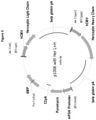
- FIG. 5 Illustrates the expression vector pCET1006L&H encoding Herceptin light and heavy chains
- FIG. 6 Illustrates the effects on relative expression of secreted Herceptin (trastuzumab) of transiently transfecting cloned cells carrying stably incorporated pCET1006L&H with empty vector, pcDNA.YIN+pSUPER.7SL, pcDNA.YIN+vector, or pSUPER-7SL+vector.
- FIG. 7 Illustrates the relative expression of secreted Herceptin (trastuzumab) by matched clones of cells stably transfected with pCET1006L&H with or without pcDNA.YIN.
- FIG. 8 Illustrates the percentage of Herceptin (trastuzumab) polypeptides secreted by matched clones of cells stably transfected with pCET1006L&H with or without pcDNA.YIN that have lysine erroneously incorporated instead of asparagine at residue 156 of the light chain and residues 307, 336 and 405 of the heavy chain;
- FIG. 9 Illustrates vector pRS426, which received a 300 bp fragment of Schizosaccharomyces pombe genomic sequence containing the tRNA49-LeuCAG gene (SEQ ID NO 9), to create pAU39;
- FIG. 11 Illustrates vector pESC-TRP, which was used to express in S. cerevisiae the turmeric enzyme diketide-CoA synthase (DCS); and
- FIG. 12 Illustrates expression of DCS and Pgk1, as determined by western blot, in S. cerevisiae with or without plasmid pAU39 expressing tRNA-LeuCAG.
- a 500 bp genomic DNA fragment (sequence ID NO 1) containing the human tRNA-Tyr-ATA gene (chr2:219110270-219110770) with the addition of an attB sequence at the 5′ end and flanked by BglII (5′) and XhoI (3′) restriction enzyme sequences was synthesised by Life Technologies and provided in the vector pMK-Tyr_ATA. The sequence was released by digestion with BglII and XhoI at 37° C. and gel purified. The eukaryotic expression vector pcDNA3 was digested with BglII and XhoI to remove the CMV promoter, and gel purified.
- the two DNA fragments were joined using T4 ligase (NEB) and introduced into chemically induced competent E. coli by heat shock for 1 minute at 42° C. Plasmid was subsequently isolated from the resulting carbenicillin resistant (50 ⁇ g/ml) colonies and the presence of the insert confirmed by restriction digest and subsequent sequencing.
- NEB T4 ligase
- Sequence 1 Sequence of synthesised genomic fragment containing the human Tyr-ATA gene (green text) with the lambda Attb integration site fused at the 3′ end for targeted genomic integration (yellow highlight).
- CHO-KI cells were grown in Ham's F12 media supplemented with 10% foetal calf serum and cultured at 37° C. in 5% CO 2 .
- 350,000 cells were plated per well in a 6 well plate containing 3 ml of media.
- the next day the media was removed and replaced by 1 ml fresh media and 5 ⁇ g of plasmid was introduced to the cells using the X-fect reagent (Clontech) according to the manufacturer's instructions.
- all cells from 3 wells were collected and re-plated into a T75 flask containing 15 ml media supplemented with 400 ⁇ g/ml G418 as the pcDNA vector carries a neomycin resistance gene.
- the cDNA was subsequently diluted to 100 ⁇ l with DNase/RNase free water and was used in PCR reactions with OneTaq polymerase 2 ⁇ mix (NEB) and gene-specific primers (SEQ ID NO 2: ATA forward—GCTGGTAGAGCAGAGGACTAT, SEQ ID NO 3: ATA(2) reverse—TCGAACCAGCAACCTAAGGAC).
- Sequence was obtained for each tRNA gene as follows—Ile-GAT 1-1 hg19_dna range ChrX: 3756418-3756491, Asn-ATT1-1 hg19_dna range chr1: 147718729-147719202.
- the sequences were synthesised as one fragment of DNA with HindIII site separating them (sequence ID NO 4), and flanked by BamHI sites for cloning adjacent to the Tyr-ATA tRNA sequence in pcDNA-Tyr-ATA ( FIG. 3 ).
- the resultant construct was named pcDNA.YIN.
- pcDNA-YIN was transfected stably into CHO K1 cells, as described above for pcDNA-Tyr-ATA. Expression of each tRNA was confirmed in transfectants ( FIG. 4 ), as described above for tRNA-Tyr-ATA.
- Primer sequences were (SEQ ID NO 5: Forward-TCAGGCGGCCGGTTAGC, SEQ ID NO 6: Reverse—GCTAACGCCGTGGCCGGTG) for tRNA-Ile-GAT and (SEQ ID NO 7 Forward—TCGCTAGTACCTGTCTCTGTGG and SEQ ID NO 8: Reverse—CCTGGGTGGTCTTGAACTACTC) for tRNA-Asn-ATT.
- Xfect Polymer 1.5 ⁇ l Xfect Polymer was added to the diluted plasmid DNA, mixed well by vortexing for 10 sec at high speed (the ratio of Polymer:DNA held constant: 0.3 ⁇ l of Xfect Polymer per 1 ⁇ g of plasmid DNA). The mixture was incubated for 10 min at room temperature to allow nanoparticle complexes to form. The entire 100 ⁇ l of nanoparticle complex solution was added dropwise to the cell culture medium in a well. Plates were incubated at 37° C., 5% CO 2 for 4 hr to overnight, then nanoparticle complexes were removed from cells by aspiration, replaced with 2-3 ml fresh complete growth medium and the plates were returned to the 37° C. incubator.
- the cells were trypsinised, counted and resuspended at 200, 500 or 1000 cells/ml in ClonaCellTM semi-solid media (Stem Cell Technologies) supplemented with Glutamax (Gibco) and puromycin (10 ⁇ g/ml) in untreated plates. The plates were incubated at 37° C., 5% CO 2 for 14-21 days until the colonies were clearly visible. Individual colonies were pipetted off into liquid F12 media, supplemented with 10% FCS and 10 ug/ml puromycin, and expanded, before analysis by Western blot.
- Protein was transferred to membrane (Amersham Protran 0.45 micron NC #10600003) pre-soaked in transfer buffer (Towbin-25 mM Tris-HCl, 192 mM Glycine, pH8.3, 20% MeOH) using a Hoefer Semiphor semi-dry blotter.
- transfer buffer Towbin-25 mM Tris-HCl, 192 mM Glycine, pH8.3, 20% MeOH
- the membrane was rinsed in 1 ⁇ PBS and blocked 0/N at 4° C. in 5% milk powder, 1% PVP-40 (Sigma 101616021), 0.05% Tween-20 (Applichem GmbH A4974) in 1 ⁇ PBS). Blocking buffer was then removed and replaced with an HRP conjugated anti-human IgG antibody at a dilution of 1/5000.
- Membranes were then rinsed in 1 ⁇ PBS and Fibronectin antibody Ab 2413 (Abcam) added at a 1/10000 dilution in blocking buffer or Sigma F6140 Fibronectin mouse monoclonal 1/4000 dilution blocked in 5% BSA (Sigma A7906) and incubated O/N at 4° C. Membranes then were washed 3 ⁇ 10 mins 1 ⁇ PBS+0.05% Tween 20, then secondary antibody added in milk blocking buffer (Anti-rabbit IgG HRP 7074S Cell Signalling at a dilution of 1/5000 or anti-mouse HRP 1/5000 dilution #7076P2 Cell Signalling) and incubated 1 hr at RT with shaking.
- Abcam Fibronectin antibody Ab 2413
- Clones stably transfected with pCET1006L+H were used to test how expression of Herceptin (trastuzumab) responds to wobble suppression by transient or stable introduction of human tRNA-IleGAT1-1, tRNA-AsnATT1-1 and tRNA-TyrATA genes using pcDNA.YIN.
- CHO cells do not have these three tRNAs and therefore rely on wobble to decode ATC, AAT and TAT codons for Ile, Asn and Tyr, respectively.
- Clones expressing stably transfected pCET1006L+H were grown at 37° C. in 5% CO 2 in Hams F12 medium with L-glutamine (Lonza BE12615F), supplemented with 10% foetal calf serum (Gibco 10270), 100 U/ml Pen/Strep (Gibco 15140122) and 10 ⁇ g/ml Puromycin (Gibco A11138) and transfected with pcDNA.YIN or equal amounts of pcDNA.3 empty vector, using Genecelin. Response to overexpression of 7SL RNA was tested in parallel, by cotransfection of pSUPER-7SL (Misra et al. (2005) J. Biol.
- Chem 280, 29364 with equal amounts of pcDNA.YIN or empty vector.
- Levels of Herceptin (trastuzumab) secreted into medium were determined by western blot, as above, 3 days after transfection ( FIG. 6 ).
- clones stably transfected with pCET1006L+H were further transfected with pcDNA.YIN, as above.
- the cells were trypsinised, counted and resuspended at 200, 500 or 1000 cells/ml in ClonaCellTM semi-solid media (Stem Cell Technologies) supplemented with Glutamax (Gibco) and puromycin (10 ⁇ g/ml) (Gibco A11138), for continued selection of pCET1006L+H integration, and 800 ⁇ g/ml G418 (Sigma A1720) for selection of pcDNA.YIN integration. The plates were incubated at 37° C., 5% CO 2 for 14-21 days until the colonies were clearly visible.
- Herceptin was purified from cell culture supernatant (F12:DMEM medium with 10% Ultra-Low IgG FBS [Thermo Scientific]) harvested 72-96 hr after plating of single cell clones of stably expressing CHO cells, using Pierce Protein A Magnetic Beads. (Thermo Scientific Pierce 50 ⁇ l, 0.5 mg) Magnetic Beads were pipetted to a microcentrifuge tube. The tube was placed on the magnet to separate the beads from the storage solution. The Magnetic Beads were washed with 1 ml wash buffer (TBS containing 0.05% Tween-20 Detergent), the beads were collected by magnet and the supernatant removed.
- TBS containing 0.05% Tween-20 Detergent
- elution buffer 50 mM glycine pH 2.8
- the eluted protein was mixed with LDS sample buffer (Biorad, 4:1) and reduced by DTT (final concentration 100 mM).
- the mixture was heated for 10 min at 95° C. and loaded onto a 4-15% SDS-PAGE gel (Biorad). The gel was run according to the manufacturer's instructions (180V, 30-40 min).
- the SDS-PAGE gel was stained using InstantBlue Coomasie-based protein stain (Expedeon).
- Peptides were loaded onto an UltiMate 3000 RSLCnano HPLC system (Thermo) equipped with a PepMap 100 ⁇ C 18 , 5 ⁇ m trap column (300 ⁇ m ⁇ 5 mm, Thermo) and an Acclaim PepMap RSLC or EasyNano column, 2 ⁇ m, 100 ⁇ , (C 18 , 75 ⁇ m ⁇ 150 mm, Thermo).
- the trap wash solvent was aqueous 0.05% (v:v) trifluoroacetic acid and the trapping flow rate was 15 ⁇ l/min. The trap was washed for 3 min before switching flow to the capillary column.
- the separation used a gradient elution of two solvents (solvent A: aqueous 1% (v:v) formic acid; solvent B: aqueous 80% (v:v) acetonitrile containing 1% (v:v) formic acid).
- solvent A aqueous 1% (v:v) formic acid
- solvent B aqueous 80% (v:v) acetonitrile containing 1% (v:v) formic acid
- the flow rate for the capillary column was 300 nl/min. Column temperature was 40° C. and the gradient profile was: linear 3-10% B over 7 mins, linear 10-35% B over 30 mins, linear 35-99% B over 5 mins then proceeded to wash with 99% solvent B for 4 min.
- the column was returned to initial conditions and re-equilibrated for 15 min before subsequent injections.
- the nanoLC system was interfaced with an Orbitrap Fusion hybrid mass spectrometer (Thermo) with a Nanospray Flex or EasyNano ionisation source (Thermo). Positive ESI-MS and MS 2 spectra were acquired using Xcalibur software (version 4.0, Thermo). Instrument source settings were: ion spray voltage, 1,900-2,400 V; sweep gas, 2 Arb; ion transfer tube temperature; 275° C. MS 1 spectra were acquired in the Orbitrap with common acquisition parameters among all acquisitions, specifically: 120,000 resolution; scan range, m/z 375-1,500; AGC target, 4e 5 ; max fill time, 100 ms and data type, profile.
- MS 2 spectra were acquired in top speed mode maintaining a fixed cycle time of 1 s; quadrupole isolation window, m/z 1.6; activation type, HCD; collision energy, 32%; first mass, m/z 110 and data type, centroid.
- multiple MS 2 acquisition regimes were performed using both the linear ion trap and Orbitrap mass analysers.
- Linear ion trap MS 2 acquisitions specified scan rate, rapid; AGC target, 5e 3 and max injection time, 100 ms.
- Orbitrap MS 2 acquisitions used resolution, 30,000; AGC target, 5e 4 and max injection time, 54 ms.
- Data dependent precursor selection was selected either the most or least (separate acquisitions) intense precursor above a threshold of 5e 3 .
- Dynamic exclusion was applied for 50 s post precursor selection and a minimum threshold for fragmentation was set at 5e 3 . Latterly, a targeted approach was taken for MS 2 acquisitions using a fixed inclusion list containing the theoretical 2+ and 3+m/z values for peptides previously identified as containing Asn to Lys modification.
- Peak lists were generated in MGF format using MSConvert (proteowizard, version 3.0.9967).
- MGF files were searched against the expected protein sequences, appended to an in-house database, using a locally-running copy of the Mascot program (Matrix Science Ltd., version 2.5.1). Search criteria specified: Enzyme, semi-trypsin; Fixed modifications, Carbamidomethyl (C); Variable modifications, Oxidation (M), Asn ⁇ Lys (N); Peptide tolerance, 3 ppm; MS/MS tolerance, 0.5 Da for linear ion trap or 10 mDa for Orbitrap; Instrument, ESI-TRAP or ESI-ORBITRAP-HCD. Peptides classified as containing amino acid substitutions were required to have expect scores ⁇ 0.05 and were manually validated to ensure the presence of sequence ions localising the position of substitution to the suggested amino acid.
- Extracted ion chromatogram peak areas were generated using Qual Browser (Xcalibur, version 4.0, Thermo), setting a 2 mDa window around expected precursor m/z values.
- XICs were Gaussian smoothed and peak picking parameters specified: baseline window, 100; area noise factor, 5; peak noise factor, 100. Percentage of amino acid substitution was estimated by comparing the peptide XIC areas of the substituted form with the sum of the substituted and expected forms.
- FIG. 8 shows the frequency of lysine misincorporation in matched clones with or without pcDNA.YIN. Data are given for four sites where misincorporation of lysine was detected consistently. In each case, the correct residue, asparagine, is encoded by an AAT codon that depends on wobble in native CHO cells, but can be decoded without wobble by tRNA-AsnATT in cells transfected with pcDNA.YIN.
- Saccharomyces cerevisiae strain COG8-TAP (genotype his3 ⁇ 1 leu2 ⁇ 0 met15 ⁇ 0 ura3 ⁇ 0, COG8-TAP::HIS3, Mat a) was transformed using lithium acetate with pAU39 or empty pRS426 vector. Transformants were grown in standard minimal media (SD, lacking amino acids where appropriate for plasmid selection). 5 OD 600 unit equivalents of cells were harvested from liquid cultures in log phase and resuspended in 120 ⁇ l lysis buffer prior to incubation at 95° C. for 2 min and vortexing for 3 min in the presence of 100 ⁇ g glass beads (425-600 ⁇ m, acid washed). Lysates were resolved by 8% SDS PAGE and then analysed by western blotting with antibodies against COG8 and loading control Pgk1, as above ( FIG. 10 ).
- Strain G175 (ADE2 MET his3 leu2 ura3 trp1 TAG+SE+, Mat ⁇ ) was also transformed with pAU39 or empty pRS426, along with vector pESC-TRP ( FIG. 11 ) with or without a transgene containing the coding sequence of diketide-CoA synthase (DCS; AB495006.1), taken from turmeric ( Curcuma longa ), attached to a Myc tag.
- DCS diketide-CoA synthase
- This sequence contains 17 CTG codons that depend on wobble for expression in native S. cerevisiae , but not after introduction of the exogenous tRNA-LeuCAG gene on pAU39. Expression of DCS was measured by western blotting, as above, with antibody against the Myc tag ( FIG. 12 ).
- CHO cells do not have genes for tRNA-IleGAT, tRNA-AsnATT or tRNA-TyrATA and therefore rely on wobble to decode TAT, AAT and ATC codons.
- pcDNA.YIN carrying human tRNA-IleGAT, tRNA-AsnATT and tRNA-TyrATA genes.
- a DNA fragment containing the tRNA14-TyrATA gene from human chromosome 2 was synthesized and cloned ( FIG. 1 ).
- the construct was stably transfected into CHO cells and RT-PCR analysis confirmed expression of the transgene ( FIG. 2 ).
- FIG. 3 The same approach was used to introduce a synthetic assembly ( FIG. 3 ), in pcDNA.YIN, expressing human tRNA-TyrATA, tRNA-AsnATT and tRNA-IleGAT. Expression of all three human tRNAs in recipient CHO cells was confirmed by RT-PCR ( FIG. 4 ). The effect of these tRNAs was tested on expression of Herceptin (trastuzumab) in CHO cells stably transfected with pCET1006L+H expression vector ( FIG. 5 ). These cells were transfected with empty vector, pcDNA.YIN and/or pSUPER-7SL and secreted Herceptin (trastuzumab) was harvested and quantified ( FIG. 6 ).
- Transient transfection of pcDNA.YIN was found to raise Herceptin expression by ⁇ 20%. This enhancement was boosted to ⁇ 49% by cotransfection of pSUPER-7SL, a construct containing the human RN7SL1 gene, that encodes 7SL RNA.
- genomic incorporation of pcDNA.YIN was found to raise by ⁇ 59% expression of Herceptin (trastuzumab), relative to the parental clone without pcDNA.YIN ( FIG. 7 ).
- Mass spectrometry was used to ascertain rates of lysine misincorporation in the secreted antibody due to misreading of the wobble-dependent AAT codon for asparagine.
- S. cerevisiae relies on wobble to decode the CTG codon for leucine, as it has no tRNA-LeuCAG.
- To remove the wobble-dependence of this codon we created a strain of S. cerevisiae that carries an exogenous tRNA-LeuCAG gene from Schizosaccharomyces pombe . The effect of this tRNA was measured on expression of genes that are rich in CTG codons.
- a DNA fragment containing the trna49-LeuCAG gene from chromosome 1 of S. pombe was synthesized and cloned into pRS426 ( FIG. 9 ) to create plasmid pAU39.
Landscapes
- Life Sciences & Earth Sciences (AREA)
- Health & Medical Sciences (AREA)
- Genetics & Genomics (AREA)
- Engineering & Computer Science (AREA)
- Organic Chemistry (AREA)
- Chemical & Material Sciences (AREA)
- Zoology (AREA)
- Wood Science & Technology (AREA)
- Bioinformatics & Cheminformatics (AREA)
- Biotechnology (AREA)
- General Engineering & Computer Science (AREA)
- Biomedical Technology (AREA)
- Biochemistry (AREA)
- Microbiology (AREA)
- Molecular Biology (AREA)
- General Health & Medical Sciences (AREA)
- Biophysics (AREA)
- Physics & Mathematics (AREA)
- Plant Pathology (AREA)
- Mycology (AREA)
- Proteomics, Peptides & Aminoacids (AREA)
- Chemical Kinetics & Catalysis (AREA)
- General Chemical & Material Sciences (AREA)
- Micro-Organisms Or Cultivation Processes Thereof (AREA)
- Preparation Of Compounds By Using Micro-Organisms (AREA)
- Apparatus Associated With Microorganisms And Enzymes (AREA)
Applications Claiming Priority (4)
| Application Number | Priority Date | Filing Date | Title |
|---|---|---|---|
| GBGB1600512.6A GB201600512D0 (en) | 2016-01-12 | 2016-01-12 | Recombinant protein production |
| GB1600512 | 2016-01-12 | ||
| GB1600512.6 | 2016-01-12 | ||
| PCT/GB2017/050028 WO2017121988A1 (en) | 2016-01-12 | 2017-01-09 | Recombinant protein production |
Publications (2)
| Publication Number | Publication Date |
|---|---|
| US20180362992A1 US20180362992A1 (en) | 2018-12-20 |
| US11268101B2 true US11268101B2 (en) | 2022-03-08 |
Family
ID=55445872
Family Applications (1)
| Application Number | Title | Priority Date | Filing Date |
|---|---|---|---|
| US16/065,421 Active 2038-10-21 US11268101B2 (en) | 2016-01-12 | 2017-01-09 | Recombinant protein production |
Country Status (6)
| Country | Link |
|---|---|
| US (1) | US11268101B2 (de) |
| EP (1) | EP3377633B9 (de) |
| JP (1) | JP7257788B2 (de) |
| ES (1) | ES2949051T3 (de) |
| GB (1) | GB201600512D0 (de) |
| WO (1) | WO2017121988A1 (de) |
Families Citing this family (6)
| Publication number | Priority date | Publication date | Assignee | Title |
|---|---|---|---|---|
| JP2022517275A (ja) * | 2019-01-18 | 2022-03-07 | フラッグシップ パイオニアリング, インコーポレイテッド | Trem組成物及びその使用 |
| EP3976782A1 (de) * | 2019-05-31 | 2022-04-06 | Flagship Pioneering, Inc. | Verwendung von trem-zusammensetzungen zur modulation von trna-pools |
| AU2021255583A1 (en) | 2020-04-14 | 2022-11-10 | Flagship Pioneering Innovations Vi, Llc | Trem compositions and uses thereof |
| GB202107057D0 (en) * | 2021-05-18 | 2021-06-30 | Univ York | Glycosylation method |
| EP4377457A1 (de) * | 2021-07-26 | 2024-06-05 | Flagship Pioneering Innovations VI, LLC | Trem-zusammensetzungen und verwendungen davon |
| WO2023220342A2 (en) * | 2022-05-13 | 2023-11-16 | Shape Therapeutics Inc. | Engineered tranfer rnas |
Citations (15)
| Publication number | Priority date | Publication date | Assignee | Title |
|---|---|---|---|---|
| WO2000012728A1 (en) | 1998-08-28 | 2000-03-09 | Promega Corporation | Expression of clostridial toxins and proteins |
| WO2000044926A1 (en) | 1999-01-27 | 2000-08-03 | Stratagene | High level expression of a heterologous protein having rare codons |
| WO2004024915A1 (en) | 2002-09-13 | 2004-03-25 | The University Of Queensland | Gene expression system based on codon translation efficiency |
| WO2004085463A2 (en) | 2003-03-21 | 2004-10-07 | Neurion Pharmaceuticals | Methods of unnatural amino acid incorporation in proteins in mammalian cells |
| US20050028639A1 (en) | 2003-08-04 | 2005-02-10 | Jen-Show Chang | Luminous pedals for bicycles |
| WO2007103307A2 (en) | 2006-03-03 | 2007-09-13 | California Institute Of Technology | Site-specific incorporation of amino acids into molecules |
| EP1911840A1 (de) | 2005-08-02 | 2008-04-16 | Riken | Trna-syntheseverfahren, nukleins!aure, aminoacyl-trna-syntheseverfahren und verfahren zur herstellung vn proteinmit darin engebauter nichtnaturicher aminosaure |
| WO2008073184A2 (en) | 2006-10-18 | 2008-06-19 | The Scripps Research Institute | Genetic incorporation of unnatural amino acids into proteins in mammalian cells |
| WO2009058812A1 (en) | 2007-10-30 | 2009-05-07 | Genentech, Inc. | Antibody purification by cation exchange chromatography |
| EP2246428A1 (de) | 2008-02-07 | 2010-11-03 | The University of Tokyo | Modifizierte trna mit nichtnatürlichem nukleotid und verwendung davon |
| US20130149699A1 (en) | 2011-10-31 | 2013-06-13 | The University of Texas Medical Branch at Galveston | Translation Kinetic Mapping, Modification and Harmonization |
| WO2014140347A2 (en) | 2013-03-15 | 2014-09-18 | Allozyne, Inc | Novel nucleic acid molecules |
| WO2014160032A1 (en) | 2013-03-13 | 2014-10-02 | University Of Louisville Research Foundation, Inc. | Exosome-associated rna as a diagnostic marker |
| WO2015048989A1 (en) | 2013-10-02 | 2015-04-09 | Wageningen Universiteit | Systematic optimization of coding sequence for functional protein expression |
| JP2016154502A (ja) | 2015-02-25 | 2016-09-01 | 神戸天然物化学株式会社 | 酸化セスキテルペンの生産およびその利用 |
Family Cites Families (3)
| Publication number | Priority date | Publication date | Assignee | Title |
|---|---|---|---|---|
| JP3317983B2 (ja) * | 1991-08-20 | 2002-08-26 | 日本酸素株式会社 | 非天然型アミノ酸組み込み蛋白質とその製造法及び試薬キット |
| US20050287639A1 (en) * | 2004-05-17 | 2005-12-29 | California Institute Of Technology | Methods of incorporating amino acid analogs into proteins |
| WO2011036666A2 (en) | 2009-09-24 | 2011-03-31 | Anima Cell Metrology, Inc. | Systems and methods for measuring translation of target proteins in cells |
-
2016
- 2016-01-12 GB GBGB1600512.6A patent/GB201600512D0/en not_active Ceased
-
2017
- 2017-01-09 ES ES17700873T patent/ES2949051T3/es active Active
- 2017-01-09 JP JP2018534839A patent/JP7257788B2/ja active Active
- 2017-01-09 WO PCT/GB2017/050028 patent/WO2017121988A1/en not_active Ceased
- 2017-01-09 US US16/065,421 patent/US11268101B2/en active Active
- 2017-01-09 EP EP17700873.7A patent/EP3377633B9/de active Active
Patent Citations (15)
| Publication number | Priority date | Publication date | Assignee | Title |
|---|---|---|---|---|
| WO2000012728A1 (en) | 1998-08-28 | 2000-03-09 | Promega Corporation | Expression of clostridial toxins and proteins |
| WO2000044926A1 (en) | 1999-01-27 | 2000-08-03 | Stratagene | High level expression of a heterologous protein having rare codons |
| WO2004024915A1 (en) | 2002-09-13 | 2004-03-25 | The University Of Queensland | Gene expression system based on codon translation efficiency |
| WO2004085463A2 (en) | 2003-03-21 | 2004-10-07 | Neurion Pharmaceuticals | Methods of unnatural amino acid incorporation in proteins in mammalian cells |
| US20050028639A1 (en) | 2003-08-04 | 2005-02-10 | Jen-Show Chang | Luminous pedals for bicycles |
| EP1911840A1 (de) | 2005-08-02 | 2008-04-16 | Riken | Trna-syntheseverfahren, nukleins!aure, aminoacyl-trna-syntheseverfahren und verfahren zur herstellung vn proteinmit darin engebauter nichtnaturicher aminosaure |
| WO2007103307A2 (en) | 2006-03-03 | 2007-09-13 | California Institute Of Technology | Site-specific incorporation of amino acids into molecules |
| WO2008073184A2 (en) | 2006-10-18 | 2008-06-19 | The Scripps Research Institute | Genetic incorporation of unnatural amino acids into proteins in mammalian cells |
| WO2009058812A1 (en) | 2007-10-30 | 2009-05-07 | Genentech, Inc. | Antibody purification by cation exchange chromatography |
| EP2246428A1 (de) | 2008-02-07 | 2010-11-03 | The University of Tokyo | Modifizierte trna mit nichtnatürlichem nukleotid und verwendung davon |
| US20130149699A1 (en) | 2011-10-31 | 2013-06-13 | The University of Texas Medical Branch at Galveston | Translation Kinetic Mapping, Modification and Harmonization |
| WO2014160032A1 (en) | 2013-03-13 | 2014-10-02 | University Of Louisville Research Foundation, Inc. | Exosome-associated rna as a diagnostic marker |
| WO2014140347A2 (en) | 2013-03-15 | 2014-09-18 | Allozyne, Inc | Novel nucleic acid molecules |
| WO2015048989A1 (en) | 2013-10-02 | 2015-04-09 | Wageningen Universiteit | Systematic optimization of coding sequence for functional protein expression |
| JP2016154502A (ja) | 2015-02-25 | 2016-09-01 | 神戸天然物化学株式会社 | 酸化セスキテルペンの生産およびその利用 |
Non-Patent Citations (14)
| Title |
|---|
| Agris et al., "tRNA's Wobble Decoding of the Genome: 40 Years of Modification," J Mol Biol. 366:1-13, 2007. |
| Behura & Severson, "Coadaptation of Isoacceptor tRNA genes and codon usage bias for translation efficiency in Aedes aegypti and Anopheles gambiae," Insect Mol Biol. 20:177-187, 2011. |
| Brown, T.A., Genomes—An Approach to New Bioinformation Systems [in Japanese], Medical Science International, 1st edition, May 26, 2000, pp. 262, 263, 463. |
| Devos et al., Proteins: Structure, Function and Genetics, 2000, vol. 41: 98-107. * |
| English translation of Office Action dated Aug. 17, 2021 in Japanese Patent Application No. 2018-534839 (8 pages). |
| GB1600512.6 Search Report dated Oct. 14, 2016 (4 pages). |
| Iben and Maraia, "tRNAomics: tRNA gene copy number variation and codon use provide bioinformatic evidence of a new anticodon:codon wobble pair in a eukaryote," RNA 18:1358-1372, 2012. |
| Johansson et al., "Genetic Code Translation Displays a Linear Trade-Off Between Efficiency and Accuracy of tRNA Selection," Proc Natl Acad Sci U.S.A. 109:131-136, 2012. |
| Kisselev L., Structure, 2002, vol. 10: 8-9. * |
| PCTGB2017050028 International Search Report and Written Opinion dated Apr. 5, 2017 (15 pages). |
| Seligmann, "Error compensation of tRNA misacylation by codon-anticodon mismatch prevents translational amino acid misinsertion," Comput Biol Chem. 35:81-95, 2011. |
| Wald et al., "Codon usage bias in prokaryotic pyrimidine-ending codons is associated with the degeneracy of the encoded amino acids," Nucleic Acids Res. 40:7074-7083, 2012. |
| Whisstock et al., Quarterly Reviews of Biophysics 2003, vol. 36 (3): 307-340. * |
| Witkowski et al., Biochemistry 38:11643-11650, 1999. * |
Also Published As
| Publication number | Publication date |
|---|---|
| ES2949051T9 (es) | 2023-10-24 |
| EP3377633B9 (de) | 2023-10-04 |
| GB201600512D0 (en) | 2016-02-24 |
| JP7257788B2 (ja) | 2023-04-14 |
| ES2949051T3 (es) | 2023-09-25 |
| EP3377633B1 (de) | 2023-06-07 |
| EP3377633C0 (de) | 2023-06-07 |
| EP3377633A1 (de) | 2018-09-26 |
| US20180362992A1 (en) | 2018-12-20 |
| JP2019500875A (ja) | 2019-01-17 |
| WO2017121988A1 (en) | 2017-07-20 |
Similar Documents
| Publication | Publication Date | Title |
|---|---|---|
| US11268101B2 (en) | Recombinant protein production | |
| Gao et al. | Interaction between a poly (A)-specific ribonuclease and the 5′ cap influences mRNA deadenylation rates in vitro | |
| CN1468304B (zh) | 蛋白质功能域的制备方法 | |
| US8809017B2 (en) | IRES mediated multicistronic vectors | |
| CN101622353B (zh) | 蛋白生产的改良 | |
| EP2217702A2 (de) | Gerichtete evolution unter verwendung von proteinen mit nicht natürlichen aminosäuren | |
| EP1367126B1 (de) | Neue vektoren für tierzellen und verwendung davon | |
| US9790488B2 (en) | Mutated internal ribosomal entry site (IRES) for controlled gene expression | |
| US20230257767A1 (en) | Promoter of Hspa5 Gene | |
| US7968700B2 (en) | Expression augmenting DNA fragments, use thereof, and methods for finding thereof | |
| EP3943601A1 (de) | Translation von proteinen mittels zirkulärer rna und deren verwendung | |
| CN102392047B (zh) | 一种适用于哺乳动物细胞的双顺反子表达载体及其应用 | |
| CN120310832A (zh) | 一种非天然氨基酸的表达系统和方法 | |
| CN103097542B (zh) | 生产细胞系 | |
| CN102365364B (zh) | 用于选择高效表达重组细胞系的方法 | |
| EP3891288B1 (de) | Matrixbindungsbereiche und verwendungen zur förderung der genexpression | |
| WO2022243286A1 (en) | Method of glycoslyated protein production in a cell | |
| Lin et al. | Overexpression of Serpinb1 in Chinese hamster ovary cells increases recombinant IgG productivity | |
| Campomenosi et al. | Comparison of the baculovirus‐insect cell and Pichia pastoris heterologous systems for the expression of the human tumor suppressor protein RNASET2 | |
| JP2015519899A (ja) | リボソームポリヌクレオチドおよび関連する発現系 | |
| Fujimoto et al. | Short 5′ UTR enables optimal translation of plant virus tricistronic RNA via leaky scanning | |
| Medveczky et al. | Methionine-independent translation initiation from naturally occurring non-AUG codons | |
| EP4476351A1 (de) | Polynukleotide mit selektionsmarkern |
Legal Events
| Date | Code | Title | Description |
|---|---|---|---|
| AS | Assignment |
Owner name: THE UNIVERSITY OF YORK, UNITED KINGDOM Free format text: ASSIGNMENT OF ASSIGNORS INTEREST;ASSIGNOR:WHITE, ROBERT;REEL/FRAME:046177/0960 Effective date: 20180621 |
|
| FEPP | Fee payment procedure |
Free format text: ENTITY STATUS SET TO UNDISCOUNTED (ORIGINAL EVENT CODE: BIG.); ENTITY STATUS OF PATENT OWNER: SMALL ENTITY |
|
| FEPP | Fee payment procedure |
Free format text: ENTITY STATUS SET TO SMALL (ORIGINAL EVENT CODE: SMAL); ENTITY STATUS OF PATENT OWNER: SMALL ENTITY |
|
| STPP | Information on status: patent application and granting procedure in general |
Free format text: APPLICATION DISPATCHED FROM PREEXAM, NOT YET DOCKETED |
|
| STPP | Information on status: patent application and granting procedure in general |
Free format text: DOCKETED NEW CASE - READY FOR EXAMINATION |
|
| STPP | Information on status: patent application and granting procedure in general |
Free format text: RESPONSE TO NON-FINAL OFFICE ACTION ENTERED AND FORWARDED TO EXAMINER |
|
| STPP | Information on status: patent application and granting procedure in general |
Free format text: NON FINAL ACTION MAILED |
|
| STPP | Information on status: patent application and granting procedure in general |
Free format text: RESPONSE TO NON-FINAL OFFICE ACTION ENTERED AND FORWARDED TO EXAMINER |
|
| STPP | Information on status: patent application and granting procedure in general |
Free format text: NOTICE OF ALLOWANCE MAILED -- APPLICATION RECEIVED IN OFFICE OF PUBLICATIONS |
|
| STPP | Information on status: patent application and granting procedure in general |
Free format text: AWAITING TC RESP., ISSUE FEE NOT PAID |
|
| STPP | Information on status: patent application and granting procedure in general |
Free format text: NOTICE OF ALLOWANCE MAILED -- APPLICATION RECEIVED IN OFFICE OF PUBLICATIONS |
|
| STCF | Information on status: patent grant |
Free format text: PATENTED CASE |
|
| MAFP | Maintenance fee payment |
Free format text: PAYMENT OF MAINTENANCE FEE, 4TH YR, SMALL ENTITY (ORIGINAL EVENT CODE: M2551); ENTITY STATUS OF PATENT OWNER: SMALL ENTITY Year of fee payment: 4 |