US10842798B1 - Charged ion channel blockers and methods for use - Google Patents
Charged ion channel blockers and methods for use Download PDFInfo
- Publication number
- US10842798B1 US10842798B1 US16/815,325 US202016815325A US10842798B1 US 10842798 B1 US10842798 B1 US 10842798B1 US 202016815325 A US202016815325 A US 202016815325A US 10842798 B1 US10842798 B1 US 10842798B1
- Authority
- US
- United States
- Prior art keywords
- substituted
- pain
- unsubstituted
- acid
- compound
- Prior art date
- Legal status (The legal status is an assumption and is not a legal conclusion. Google has not performed a legal analysis and makes no representation as to the accuracy of the status listed.)
- Active
Links
- HGTFFQGAGPYARH-UHFFFAOYSA-N CC[N+]1(C(C)C)CCCCC1 Chemical compound CC[N+]1(C(C)C)CCCCC1 HGTFFQGAGPYARH-UHFFFAOYSA-N 0.000 description 64
- XCFRVEZTRDLSQZ-UHFFFAOYSA-N CC[N+]1(C(C)C)CCCCCC1 Chemical compound CC[N+]1(C(C)C)CCCCCC1 XCFRVEZTRDLSQZ-UHFFFAOYSA-N 0.000 description 41
- 0 *.**C1=CSC(*B)=C1CC(C)(*[2H])[N+](C)(F)CC.[Y-] Chemical compound *.**C1=CSC(*B)=C1CC(C)(*[2H])[N+](C)(F)CC.[Y-] 0.000 description 36
- IOWLCLOFADGHKZ-UHFFFAOYSA-N CCN1(C(C)C)CCCCCC1 Chemical compound CCN1(C(C)C)CCCCCC1 IOWLCLOFADGHKZ-UHFFFAOYSA-N 0.000 description 19
- NKRAJTUTWBTQFT-UHFFFAOYSA-N CCC1=C(C(C)(C)C)C=CC=C1 Chemical compound CCC1=C(C(C)(C)C)C=CC=C1 NKRAJTUTWBTQFT-UHFFFAOYSA-N 0.000 description 12
- OYBFKZHDPTTWGE-UHFFFAOYSA-N CCC1=CC=C(C(C)(C)C)C=C1 Chemical compound CCC1=CC=C(C(C)(C)C)C=C1 OYBFKZHDPTTWGE-UHFFFAOYSA-N 0.000 description 11
- KYXNATZCTBFSTH-UHFFFAOYSA-N CC(C)(C)C1=CC(Cl)=CC=C1 Chemical compound CC(C)(C)C1=CC(Cl)=CC=C1 KYXNATZCTBFSTH-UHFFFAOYSA-N 0.000 description 10
- XRTANKYQJQXSFP-UHFFFAOYSA-N CC(C)(C)C1=CC=C(Cl)C=C1 Chemical compound CC(C)(C)C1=CC=C(Cl)C=C1 XRTANKYQJQXSFP-UHFFFAOYSA-N 0.000 description 10
- MUJPTTGNHRHIPH-UHFFFAOYSA-N CCC1=CC=CC(C(C)(C)C)=C1 Chemical compound CCC1=CC=CC(C(C)(C)C)=C1 MUJPTTGNHRHIPH-UHFFFAOYSA-N 0.000 description 10
- MCUPBIBNSTXCPQ-UHFFFAOYSA-N COC1=CC=C(C(C)(C)C)C=C1 Chemical compound COC1=CC=C(C(C)(C)C)C=C1 MCUPBIBNSTXCPQ-UHFFFAOYSA-N 0.000 description 10
- HMRNLPCZVBVKLZ-UHFFFAOYSA-N CC(C)(C)C1=C(Cl)C=CC=C1 Chemical compound CC(C)(C)C1=C(Cl)C=CC=C1 HMRNLPCZVBVKLZ-UHFFFAOYSA-N 0.000 description 9
- SEOMMYGICIHJHP-UHFFFAOYSA-N CC(C)(C)C1=C(F)C=CC=C1 Chemical compound CC(C)(C)C1=C(F)C=CC=C1 SEOMMYGICIHJHP-UHFFFAOYSA-N 0.000 description 9
- YDWBCSZHGGMJAB-UHFFFAOYSA-N CC(C)(C)C1=CC(C#N)=CC=C1 Chemical compound CC(C)(C)C1=CC(C#N)=CC=C1 YDWBCSZHGGMJAB-UHFFFAOYSA-N 0.000 description 9
- SEYVXKNLOLHDRF-UHFFFAOYSA-N CC(C)(C)C1=CC(F)=CC=C1 Chemical compound CC(C)(C)C1=CC(F)=CC=C1 SEYVXKNLOLHDRF-UHFFFAOYSA-N 0.000 description 9
- IIZURLNRIMKEDL-UHFFFAOYSA-N CC(C)(C)C1=CC=C(C#N)C=C1 Chemical compound CC(C)(C)C1=CC=C(C#N)C=C1 IIZURLNRIMKEDL-UHFFFAOYSA-N 0.000 description 9
- ISXPXFQBHNIYCU-UHFFFAOYSA-N CC(C)(C)C1=CC=C(F)C=C1 Chemical compound CC(C)(C)C1=CC=C(F)C=C1 ISXPXFQBHNIYCU-UHFFFAOYSA-N 0.000 description 9
- IPGSPXKLIPOGON-UHFFFAOYSA-N COC1=CC(C(C)(C)C)=CC=C1 Chemical compound COC1=CC(C(C)(C)C)=CC=C1 IPGSPXKLIPOGON-UHFFFAOYSA-N 0.000 description 9
- YIQUTYFGUKCQCY-UHFFFAOYSA-N COC1=CC=CC=C1C(C)(C)C Chemical compound COC1=CC=CC=C1C(C)(C)C YIQUTYFGUKCQCY-UHFFFAOYSA-N 0.000 description 9
- FKDNUUPUBOAPAC-UHFFFAOYSA-N [C-]#[N+]C1=C(C(C)(C)C)C=CC=C1 Chemical compound [C-]#[N+]C1=C(C(C)(C)C)C=CC=C1 FKDNUUPUBOAPAC-UHFFFAOYSA-N 0.000 description 9
- YTZKOQUCBOVLHL-UHFFFAOYSA-N CC(C)(C)C1=CC=CC=C1 Chemical compound CC(C)(C)C1=CC=CC=C1 YTZKOQUCBOVLHL-UHFFFAOYSA-N 0.000 description 5
- UXONHVPWLGSUQG-UHFFFAOYSA-O CC1=CSC(C(=O)OC(C)C)=C1NC(=O)C[N+]1(CC2=CC=CC=C2)CCCCCC1.[Br-] Chemical compound CC1=CSC(C(=O)OC(C)C)=C1NC(=O)C[N+]1(CC2=CC=CC=C2)CCCCCC1.[Br-] UXONHVPWLGSUQG-UHFFFAOYSA-O 0.000 description 3
- IHLZRORQQFZNET-UHFFFAOYSA-N CCC1=CC(C(C)C)=NO1 Chemical compound CCC1=CC(C(C)C)=NO1 IHLZRORQQFZNET-UHFFFAOYSA-N 0.000 description 3
- PPEAHGKNNPFFNR-UHFFFAOYSA-O CCCOC(=O)C1=C(NC(=O)C[N+]2(CC3=CC=CC=C3)CCCCCC2)C(C)=CS1.[Br-] Chemical compound CCCOC(=O)C1=C(NC(=O)C[N+]2(CC3=CC=CC=C3)CCCCCC2)C(C)=CS1.[Br-] PPEAHGKNNPFFNR-UHFFFAOYSA-O 0.000 description 3
- CYKJXUKKTNARBW-UHFFFAOYSA-O CCOC(=O)C1=C(NC(=O)C[N+]2(CC3=CC=CC=C3)CCCCCC2)C(C)=CS1.[Br-] Chemical compound CCOC(=O)C1=C(NC(=O)C[N+]2(CC3=CC=CC=C3)CCCCCC2)C(C)=CS1.[Br-] CYKJXUKKTNARBW-UHFFFAOYSA-O 0.000 description 3
- XDOYYGWZGDOVLS-UHFFFAOYSA-O CC[N+]1(CC(=O)NC2=C(C(=O)OC)SC=C2C)CCCC(C2=CC=CC=C2)C1.[I-] Chemical compound CC[N+]1(CC(=O)NC2=C(C(=O)OC)SC=C2C)CCCC(C2=CC=CC=C2)C1.[I-] XDOYYGWZGDOVLS-UHFFFAOYSA-O 0.000 description 3
- HIWVOKMGWQYFOJ-UHFFFAOYSA-O COC(=O)C1=C(NC(=O)C[N+]2(CC3=CC=CC=C3)CCCC2)C(C)=CS1.[Br-] Chemical compound COC(=O)C1=C(NC(=O)C[N+]2(CC3=CC=CC=C3)CCCC2)C(C)=CS1.[Br-] HIWVOKMGWQYFOJ-UHFFFAOYSA-O 0.000 description 3
- GVPVTXHWNOBWIX-UHFFFAOYSA-O COC(=O)C1=C(NC(=O)C[N+]2(CC3=CC=CC=C3)CCCCC2)C(C)=CS1.[Br-] Chemical compound COC(=O)C1=C(NC(=O)C[N+]2(CC3=CC=CC=C3)CCCCC2)C(C)=CS1.[Br-] GVPVTXHWNOBWIX-UHFFFAOYSA-O 0.000 description 3
- FNWLEBXRXATOOU-UHFFFAOYSA-N CC(C)(C)C1=C(C2=CC=NC=C2)C=CC=C1 Chemical compound CC(C)(C)C1=C(C2=CC=NC=C2)C=CC=C1 FNWLEBXRXATOOU-UHFFFAOYSA-N 0.000 description 2
- NYBZSVLCAXABQM-UHFFFAOYSA-N CC(C)(C)C1=C(N2CCNCC2)C=CC=C1 Chemical compound CC(C)(C)C1=C(N2CCNCC2)C=CC=C1 NYBZSVLCAXABQM-UHFFFAOYSA-N 0.000 description 2
- OOWNNCMFKFBNOF-UHFFFAOYSA-N CC(C)(C)C1=CC=C(C(C)(C)C)C=C1 Chemical compound CC(C)(C)C1=CC=C(C(C)(C)C)C=C1 OOWNNCMFKFBNOF-UHFFFAOYSA-N 0.000 description 2
- LXXBRMJLVPKZBL-UHFFFAOYSA-N CC(C)(C)C1=CC=C(C2CCCC2)C=C1 Chemical compound CC(C)(C)C1=CC=C(C2CCCC2)C=C1 LXXBRMJLVPKZBL-UHFFFAOYSA-N 0.000 description 2
- AGYWEUQFCAQALX-UHFFFAOYSA-N CC(C)(C)C1=CC=C(C2CCCCC2)C=C1 Chemical compound CC(C)(C)C1=CC=C(C2CCCCC2)C=C1 AGYWEUQFCAQALX-UHFFFAOYSA-N 0.000 description 2
- OJKXHABQHGWPRS-UHFFFAOYSA-N CC(C)C1=C(F)SC=C1 Chemical compound CC(C)C1=C(F)SC=C1 OJKXHABQHGWPRS-UHFFFAOYSA-N 0.000 description 2
- OWOLIQXOOMFSJE-UHFFFAOYSA-N CC(C)C1=CC=CC(C(C)(C)C)=C1 Chemical compound CC(C)C1=CC=CC(C(C)(C)C)=C1 OWOLIQXOOMFSJE-UHFFFAOYSA-N 0.000 description 2
- MWQKURVBJZAOSC-UHFFFAOYSA-N CC(C)C1=CC=CC1 Chemical compound CC(C)C1=CC=CC1 MWQKURVBJZAOSC-UHFFFAOYSA-N 0.000 description 2
- RZXLGATYHGEUHY-UHFFFAOYSA-N CC(C)C1=CON=C1 Chemical compound CC(C)C1=CON=C1 RZXLGATYHGEUHY-UHFFFAOYSA-N 0.000 description 2
- PFYPDUUXDADWKC-UHFFFAOYSA-N CC(C)C1=NC=CC=C1 Chemical compound CC(C)C1=NC=CC=C1 PFYPDUUXDADWKC-UHFFFAOYSA-N 0.000 description 2
- FUOZJYASZOSONT-UHFFFAOYSA-N CC(C)C1=NC=CN1 Chemical compound CC(C)C1=NC=CN1 FUOZJYASZOSONT-UHFFFAOYSA-N 0.000 description 2
- LVEIJLGSXRYDEY-UHFFFAOYSA-N CC(C)C1=NNN=C1 Chemical compound CC(C)C1=NNN=C1 LVEIJLGSXRYDEY-UHFFFAOYSA-N 0.000 description 2
- WNDFIWWJJCOFFN-UHFFFAOYSA-N CC(C)C1=NOC=C1O Chemical compound CC(C)C1=NOC=C1O WNDFIWWJJCOFFN-UHFFFAOYSA-N 0.000 description 2
- JLPYJVFUOQKHMD-UHFFFAOYSA-N CC(C)CC1=CC=CC=C1C(C)(C)C Chemical compound CC(C)CC1=CC=CC=C1C(C)(C)C JLPYJVFUOQKHMD-UHFFFAOYSA-N 0.000 description 2
- GGJHUZCTTZIUQL-UHFFFAOYSA-O CC1=CSC(C)=C1NC(=O)C[N+]1(CC2=CC=CC=C2)CCCCCC1.[Br-] Chemical compound CC1=CSC(C)=C1NC(=O)C[N+]1(CC2=CC=CC=C2)CCCCCC1.[Br-] GGJHUZCTTZIUQL-UHFFFAOYSA-O 0.000 description 2
- NBLLKYURKANGGY-UHFFFAOYSA-O CCC(C(=O)NC)[N+](C)(C)CC.[Y-] Chemical compound CCC(C(=O)NC)[N+](C)(C)CC.[Y-] NBLLKYURKANGGY-UHFFFAOYSA-O 0.000 description 2
- LBONHEPJXUJYCD-UHFFFAOYSA-O CCC(C(=O)NC)[N+](CC)(CC)CC.[Y-] Chemical compound CCC(C(=O)NC)[N+](CC)(CC)CC.[Y-] LBONHEPJXUJYCD-UHFFFAOYSA-O 0.000 description 2
- IFJSQKPFPREJQX-UHFFFAOYSA-O CCC(C(=O)NC)[N+]1(CC)CCCC1.[Y-] Chemical compound CCC(C(=O)NC)[N+]1(CC)CCCC1.[Y-] IFJSQKPFPREJQX-UHFFFAOYSA-O 0.000 description 2
- POOULINPPAPVCQ-UHFFFAOYSA-O CCC(C(=O)NC)[N+]1(CC)CCCCC1.[Y-] Chemical compound CCC(C(=O)NC)[N+]1(CC)CCCCC1.[Y-] POOULINPPAPVCQ-UHFFFAOYSA-O 0.000 description 2
- ZOMVAUFXSBDRKE-UHFFFAOYSA-M CCC(C(=O)NC1=C(C(=O)OC)SC=C1C)N1(CC2=CC=CC=C2)[CH+]CCCC1.[Br-] Chemical compound CCC(C(=O)NC1=C(C(=O)OC)SC=C1C)N1(CC2=CC=CC=C2)[CH+]CCCC1.[Br-] ZOMVAUFXSBDRKE-UHFFFAOYSA-M 0.000 description 2
- JDCUTFWYWJTSLU-UHFFFAOYSA-O CCC(C(=O)NC1=C(C(=O)OC)SC=C1C)[N+]1(CC2=C(Cl)C=CC=C2)CCCCC1.[Y-] Chemical compound CCC(C(=O)NC1=C(C(=O)OC)SC=C1C)[N+]1(CC2=C(Cl)C=CC=C2)CCCCC1.[Y-] JDCUTFWYWJTSLU-UHFFFAOYSA-O 0.000 description 2
- WZSSJYVITILKNC-UHFFFAOYSA-O CCC(C(=O)NC1=C(C(=O)OC)SC=C1C)[N+]1(CC2=C(F)C=CC=C2)CCCCC1.[Y-] Chemical compound CCC(C(=O)NC1=C(C(=O)OC)SC=C1C)[N+]1(CC2=C(F)C=CC=C2)CCCCC1.[Y-] WZSSJYVITILKNC-UHFFFAOYSA-O 0.000 description 2
- OEHRSYPKNZXVNT-UHFFFAOYSA-O CCC(C(=O)NC1=C(C(=O)OC)SC=C1C)[N+]1(CC2=C(O)C=CC=C2)CCCCC1.[Y-] Chemical compound CCC(C(=O)NC1=C(C(=O)OC)SC=C1C)[N+]1(CC2=C(O)C=CC=C2)CCCCC1.[Y-] OEHRSYPKNZXVNT-UHFFFAOYSA-O 0.000 description 2
- MBENTQDSKXAJSF-UHFFFAOYSA-O CCC(C(=O)NC1=C(C(=O)OC)SC=C1C)[N+]1(CC2=CC(Cl)=CC=C2)CCCCC1.[Y-] Chemical compound CCC(C(=O)NC1=C(C(=O)OC)SC=C1C)[N+]1(CC2=CC(Cl)=CC=C2)CCCCC1.[Y-] MBENTQDSKXAJSF-UHFFFAOYSA-O 0.000 description 2
- PHVBWGHQBTWWAE-UHFFFAOYSA-O CCC(C(=O)NC1=C(C(=O)OC)SC=C1C)[N+]1(CC2=CC(O)=CC=C2)CCCCC1.[Y-] Chemical compound CCC(C(=O)NC1=C(C(=O)OC)SC=C1C)[N+]1(CC2=CC(O)=CC=C2)CCCCC1.[Y-] PHVBWGHQBTWWAE-UHFFFAOYSA-O 0.000 description 2
- RZAULDHUCDGVGM-UHFFFAOYSA-O CCC(C(=O)NC1=C(C(=O)OC)SC=C1C)[N+]1(CC2=CC=C(Cl)C=C2)CCCCC1.[Y-] Chemical compound CCC(C(=O)NC1=C(C(=O)OC)SC=C1C)[N+]1(CC2=CC=C(Cl)C=C2)CCCCC1.[Y-] RZAULDHUCDGVGM-UHFFFAOYSA-O 0.000 description 2
- ZSPCSDHCBRGYSN-UHFFFAOYSA-O CCC(C(=O)NC1=C(C(=O)OC)SC=C1C)[N+]1(CC2=CC=CC=C2)CCCCCC1.[Y-] Chemical compound CCC(C(=O)NC1=C(C(=O)OC)SC=C1C)[N+]1(CC2=CC=CC=C2)CCCCCC1.[Y-] ZSPCSDHCBRGYSN-UHFFFAOYSA-O 0.000 description 2
- IJMRGWHGXIENGE-UHFFFAOYSA-O CCC(C(=O)NC1=C(C(=O)OC)SC=C1C)[N+]1(CC2=NOC(C)=C2)CCCCC1.[Y-] Chemical compound CCC(C(=O)NC1=C(C(=O)OC)SC=C1C)[N+]1(CC2=NOC(C)=C2)CCCCC1.[Y-] IJMRGWHGXIENGE-UHFFFAOYSA-O 0.000 description 2
- HXRWZSPVRGLMOF-UHFFFAOYSA-N CCC1=C(C(C)C)C=CS1 Chemical compound CCC1=C(C(C)C)C=CS1 HXRWZSPVRGLMOF-UHFFFAOYSA-N 0.000 description 2
- ITRVIPHRLSGEOI-UHFFFAOYSA-O CCC1=C(C[N+]2(C(CC)C(=O)NC3=C(C(=O)OC)SC=C3C)CCCCC2)C=CC=C1.[Y-] Chemical compound CCC1=C(C[N+]2(C(CC)C(=O)NC3=C(C(=O)OC)SC=C3C)CCCCC2)C=CC=C1.[Y-] ITRVIPHRLSGEOI-UHFFFAOYSA-O 0.000 description 2
- WVJDRZFFSHZGAU-UHFFFAOYSA-N CCC1=CC(C(C)C)=CS1 Chemical compound CCC1=CC(C(C)C)=CS1 WVJDRZFFSHZGAU-UHFFFAOYSA-N 0.000 description 2
- VAEZCQQZPHZDFG-UHFFFAOYSA-O CCC1=CC=CC(C[N+]2(C(CC)C(=O)NC3=C(C(=O)OC)SC=C3C)CCCCC2)=C1.[Y-] Chemical compound CCC1=CC=CC(C[N+]2(C(CC)C(=O)NC3=C(C(=O)OC)SC=C3C)CCCCC2)=C1.[Y-] VAEZCQQZPHZDFG-UHFFFAOYSA-O 0.000 description 2
- MZIHEJRUPOELON-UHFFFAOYSA-N CCC1=CON=C1C(C)C Chemical compound CCC1=CON=C1C(C)C MZIHEJRUPOELON-UHFFFAOYSA-N 0.000 description 2
- NIAMEMJAWKNOMW-UHFFFAOYSA-N CCC1=CSC=C1C(C)C Chemical compound CCC1=CSC=C1C(C)C NIAMEMJAWKNOMW-UHFFFAOYSA-N 0.000 description 2
- GPRQWDZTBQWUAT-UHFFFAOYSA-N CCOC1=CC(C(C)(C)C)=CC=C1 Chemical compound CCOC1=CC(C(C)(C)C)=CC=C1 GPRQWDZTBQWUAT-UHFFFAOYSA-N 0.000 description 2
- RMSGBIDKBWPHMJ-UHFFFAOYSA-N CCOC1=CC=C(C(C)(C)C)C=C1 Chemical compound CCOC1=CC=C(C(C)(C)C)C=C1 RMSGBIDKBWPHMJ-UHFFFAOYSA-N 0.000 description 2
- HINMEQQASUCYRT-UHFFFAOYSA-N C.C.C.C.CCC1=CC=CC=C1C(C)(C)C Chemical compound C.C.C.C.CCC1=CC=CC=C1C(C)(C)C HINMEQQASUCYRT-UHFFFAOYSA-N 0.000 description 1
- IKKPJOQQYMHMBC-UHFFFAOYSA-N C=C(OC)C1=C(C(C)C)C(C)=CS1.C=O.CC(=O)C1=C(C(C)C)C(C)=CS1.CC1=CSC(C)=C1C(C)C Chemical compound C=C(OC)C1=C(C(C)C)C(C)=CS1.C=O.CC(=O)C1=C(C(C)C)C(C)=CS1.CC1=CSC(C)=C1C(C)C IKKPJOQQYMHMBC-UHFFFAOYSA-N 0.000 description 1
- JOGNGOHFQSMWMU-UHFFFAOYSA-N C=O.CC(=O)C1=C(C(C)C)C(C)=CS1 Chemical compound C=O.CC(=O)C1=C(C(C)C)C(C)=CS1 JOGNGOHFQSMWMU-UHFFFAOYSA-N 0.000 description 1
- FAMBKWFZKVDIHN-UHFFFAOYSA-N CC(C)(C)C1=C(C(N)=O)C=CC=C1 Chemical compound CC(C)(C)C1=C(C(N)=O)C=CC=C1 FAMBKWFZKVDIHN-UHFFFAOYSA-N 0.000 description 1
- IRUFLAAZAAOXHM-UHFFFAOYSA-N CC(C)(C)C1=C(C2=CC=CC=C2)C=CC=C1 Chemical compound CC(C)(C)C1=C(C2=CC=CC=C2)C=CC=C1 IRUFLAAZAAOXHM-UHFFFAOYSA-N 0.000 description 1
- XXZYLICSIFACIW-UHFFFAOYSA-N CC(C)(C)C1=C(C2=CC=CCO2)C=CC=C1 Chemical compound CC(C)(C)C1=C(C2=CC=CCO2)C=CC=C1 XXZYLICSIFACIW-UHFFFAOYSA-N 0.000 description 1
- SAQALOCWZLNXEQ-UHFFFAOYSA-N CC(C)(C)C1=C(C2=CC=CO2)C=CC=C1 Chemical compound CC(C)(C)C1=C(C2=CC=CO2)C=CC=C1 SAQALOCWZLNXEQ-UHFFFAOYSA-N 0.000 description 1
- YTHMBKKBUNJFTG-UHFFFAOYSA-N CC(C)(C)C1=C(C2CC2)C=CC=C1 Chemical compound CC(C)(C)C1=C(C2CC2)C=CC=C1 YTHMBKKBUNJFTG-UHFFFAOYSA-N 0.000 description 1
- FIKZZIWLAZIOGJ-UHFFFAOYSA-N CC(C)(C)C1=C(C2CCC2)C=CC=C1 Chemical compound CC(C)(C)C1=C(C2CCC2)C=CC=C1 FIKZZIWLAZIOGJ-UHFFFAOYSA-N 0.000 description 1
- HZEJWOCGFXRABS-UHFFFAOYSA-N CC(C)(C)C1=C(C2CCCC2)C=CC=C1 Chemical compound CC(C)(C)C1=C(C2CCCC2)C=CC=C1 HZEJWOCGFXRABS-UHFFFAOYSA-N 0.000 description 1
- NMBGFKSXQDTSMZ-UHFFFAOYSA-N CC(C)(C)C1=C(C2CCCCC2)C=CC=C1 Chemical compound CC(C)(C)C1=C(C2CCCCC2)C=CC=C1 NMBGFKSXQDTSMZ-UHFFFAOYSA-N 0.000 description 1
- BSHCNQUEQLRDNB-UHFFFAOYSA-N CC(C)(C)C1=C(C2CCCCN2)C=CC=C1 Chemical compound CC(C)(C)C1=C(C2CCCCN2)C=CC=C1 BSHCNQUEQLRDNB-UHFFFAOYSA-N 0.000 description 1
- OALPXFJKHZQIGA-UHFFFAOYSA-N CC(C)(C)C1=C(C2CCCN2)C=CC=C1 Chemical compound CC(C)(C)C1=C(C2CCCN2)C=CC=C1 OALPXFJKHZQIGA-UHFFFAOYSA-N 0.000 description 1
- UQLMOXPWQQWRLV-UHFFFAOYSA-N CC(C)(C)C1=C(C2CCN2)C=CC=C1 Chemical compound CC(C)(C)C1=C(C2CCN2)C=CC=C1 UQLMOXPWQQWRLV-UHFFFAOYSA-N 0.000 description 1
- XVXBVWUODGPNHF-UHFFFAOYSA-N CC(C)(C)C1=C(C2CN2)C=CC=C1 Chemical compound CC(C)(C)C1=C(C2CN2)C=CC=C1 XVXBVWUODGPNHF-UHFFFAOYSA-N 0.000 description 1
- BRGCWRUGBKXYPL-UHFFFAOYSA-N CC(C)(C)C1=C(N2C=CC=CC=C2)C=CC=C1 Chemical compound CC(C)(C)C1=C(N2C=CC=CC=C2)C=CC=C1 BRGCWRUGBKXYPL-UHFFFAOYSA-N 0.000 description 1
- XVQJWOBHKBDTPK-UHFFFAOYSA-N CC(C)(C)C1=C(N2C=CC=CC=N2)C=CC=C1 Chemical compound CC(C)(C)C1=C(N2C=CC=CC=N2)C=CC=C1 XVQJWOBHKBDTPK-UHFFFAOYSA-N 0.000 description 1
- ABECWVYSAUDQSR-UHFFFAOYSA-N CC(C)(C)C1=C(NC(N)=O)C=CC=C1 Chemical compound CC(C)(C)C1=C(NC(N)=O)C=CC=C1 ABECWVYSAUDQSR-UHFFFAOYSA-N 0.000 description 1
- WJQOZHYUIDYNHM-UHFFFAOYSA-N CC(C)(C)C1=C(O)C=CC=C1 Chemical compound CC(C)(C)C1=C(O)C=CC=C1 WJQOZHYUIDYNHM-UHFFFAOYSA-N 0.000 description 1
- CEKMRJVRIRSIFF-UHFFFAOYSA-N CC(C)(C)C1=C(S(N)(=O)=O)C=CC=C1 Chemical compound CC(C)(C)C1=C(S(N)(=O)=O)C=CC=C1 CEKMRJVRIRSIFF-UHFFFAOYSA-N 0.000 description 1
- VYZIRLYFWZFTRE-UHFFFAOYSA-N CC(C)(C)C1=CC(C(N)=O)=CC=C1 Chemical compound CC(C)(C)C1=CC(C(N)=O)=CC=C1 VYZIRLYFWZFTRE-UHFFFAOYSA-N 0.000 description 1
- GBGBXUYACWXKPV-UHFFFAOYSA-N CC(C)(C)C1=CC(C2=CC=CC=C2)=CC=C1 Chemical compound CC(C)(C)C1=CC(C2=CC=CC=C2)=CC=C1 GBGBXUYACWXKPV-UHFFFAOYSA-N 0.000 description 1
- BIXTZYCRFIIWRA-UHFFFAOYSA-N CC(C)(C)C1=CC(C2=CC=CCO2)=CC=C1 Chemical compound CC(C)(C)C1=CC(C2=CC=CCO2)=CC=C1 BIXTZYCRFIIWRA-UHFFFAOYSA-N 0.000 description 1
- RXOGFROECTVFGU-UHFFFAOYSA-N CC(C)(C)C1=CC(C2=CC=CO2)=CC=C1 Chemical compound CC(C)(C)C1=CC(C2=CC=CO2)=CC=C1 RXOGFROECTVFGU-UHFFFAOYSA-N 0.000 description 1
- CSCMSZFLESQTRZ-UHFFFAOYSA-N CC(C)(C)C1=CC(C2=CC=NC=C2)=CC=C1 Chemical compound CC(C)(C)C1=CC(C2=CC=NC=C2)=CC=C1 CSCMSZFLESQTRZ-UHFFFAOYSA-N 0.000 description 1
- AZNWLDYJBMLTHI-UHFFFAOYSA-N CC(C)(C)C1=CC(C2CC2)=CC=C1 Chemical compound CC(C)(C)C1=CC(C2CC2)=CC=C1 AZNWLDYJBMLTHI-UHFFFAOYSA-N 0.000 description 1
- XPUPWPPHAGVDTH-UHFFFAOYSA-N CC(C)(C)C1=CC(C2CCC2)=CC=C1 Chemical compound CC(C)(C)C1=CC(C2CCC2)=CC=C1 XPUPWPPHAGVDTH-UHFFFAOYSA-N 0.000 description 1
- GPINKOPRUAMGQE-UHFFFAOYSA-N CC(C)(C)C1=CC(C2CCCC2)=CC=C1 Chemical compound CC(C)(C)C1=CC(C2CCCC2)=CC=C1 GPINKOPRUAMGQE-UHFFFAOYSA-N 0.000 description 1
- WYIXIYMLGZNHMJ-UHFFFAOYSA-N CC(C)(C)C1=CC(C2CCCCC2)=CC=C1 Chemical compound CC(C)(C)C1=CC(C2CCCCC2)=CC=C1 WYIXIYMLGZNHMJ-UHFFFAOYSA-N 0.000 description 1
- OLWFBAPCDHFBCG-UHFFFAOYSA-N CC(C)(C)C1=CC(C2CCCCN2)=CC=C1 Chemical compound CC(C)(C)C1=CC(C2CCCCN2)=CC=C1 OLWFBAPCDHFBCG-UHFFFAOYSA-N 0.000 description 1
- VQHRPNGNLUOSMW-UHFFFAOYSA-N CC(C)(C)C1=CC(C2CCCN2)=CC=C1 Chemical compound CC(C)(C)C1=CC(C2CCCN2)=CC=C1 VQHRPNGNLUOSMW-UHFFFAOYSA-N 0.000 description 1
- LCNQFYIADGQWBB-UHFFFAOYSA-N CC(C)(C)C1=CC(C2CCN2)=CC=C1 Chemical compound CC(C)(C)C1=CC(C2CCN2)=CC=C1 LCNQFYIADGQWBB-UHFFFAOYSA-N 0.000 description 1
- PJXHVDAQWNIJJV-UHFFFAOYSA-N CC(C)(C)C1=CC(C2CN2)=CC=C1 Chemical compound CC(C)(C)C1=CC(C2CN2)=CC=C1 PJXHVDAQWNIJJV-UHFFFAOYSA-N 0.000 description 1
- ZYARURNGWZPYTG-UHFFFAOYSA-N CC(C)(C)C1=CC(N2C=CC=CC=C2)=CC=C1 Chemical compound CC(C)(C)C1=CC(N2C=CC=CC=C2)=CC=C1 ZYARURNGWZPYTG-UHFFFAOYSA-N 0.000 description 1
- BBFRZAXSAPDCJY-UHFFFAOYSA-N CC(C)(C)C1=CC(N2C=CC=CC=N2)=CC=C1 Chemical compound CC(C)(C)C1=CC(N2C=CC=CC=N2)=CC=C1 BBFRZAXSAPDCJY-UHFFFAOYSA-N 0.000 description 1
- AOQXUYWSRNMQPG-UHFFFAOYSA-N CC(C)(C)C1=CC(N2CCNCC2)=CC=C1 Chemical compound CC(C)(C)C1=CC(N2CCNCC2)=CC=C1 AOQXUYWSRNMQPG-UHFFFAOYSA-N 0.000 description 1
- RIUDVVSYVXYAOP-UHFFFAOYSA-N CC(C)(C)C1=CC(NC(N)=O)=CC=C1 Chemical compound CC(C)(C)C1=CC(NC(N)=O)=CC=C1 RIUDVVSYVXYAOP-UHFFFAOYSA-N 0.000 description 1
- CYEKUDPFXBLGHH-UHFFFAOYSA-N CC(C)(C)C1=CC(O)=CC=C1 Chemical compound CC(C)(C)C1=CC(O)=CC=C1 CYEKUDPFXBLGHH-UHFFFAOYSA-N 0.000 description 1
- JACGHULSRUWRBD-UHFFFAOYSA-N CC(C)(C)C1=CC(S(N)(=O)=O)=CC=C1 Chemical compound CC(C)(C)C1=CC(S(N)(=O)=O)=CC=C1 JACGHULSRUWRBD-UHFFFAOYSA-N 0.000 description 1
- VIPMBJSGYWWHAO-UHFFFAOYSA-N CC(C)(C)C1=CC=C(C(N)=O)C=C1 Chemical compound CC(C)(C)C1=CC=C(C(N)=O)C=C1 VIPMBJSGYWWHAO-UHFFFAOYSA-N 0.000 description 1
- CDOYZTOFTGTGBC-UHFFFAOYSA-N CC(C)(C)C1=CC=C(C2=CC=CC=C2)C=C1 Chemical compound CC(C)(C)C1=CC=C(C2=CC=CC=C2)C=C1 CDOYZTOFTGTGBC-UHFFFAOYSA-N 0.000 description 1
- BYUMHARFKKMMFN-UHFFFAOYSA-N CC(C)(C)C1=CC=C(C2=CC=CCO2)C=C1 Chemical compound CC(C)(C)C1=CC=C(C2=CC=CCO2)C=C1 BYUMHARFKKMMFN-UHFFFAOYSA-N 0.000 description 1
- DRFTWAOIXAHSQD-UHFFFAOYSA-N CC(C)(C)C1=CC=C(C2=CC=CO2)C=C1 Chemical compound CC(C)(C)C1=CC=C(C2=CC=CO2)C=C1 DRFTWAOIXAHSQD-UHFFFAOYSA-N 0.000 description 1
- FIDJLZPIZGTDKT-UHFFFAOYSA-N CC(C)(C)C1=CC=C(C2=CC=NC=C2)C=C1 Chemical compound CC(C)(C)C1=CC=C(C2=CC=NC=C2)C=C1 FIDJLZPIZGTDKT-UHFFFAOYSA-N 0.000 description 1
- NNTXNRPVVQIIAZ-UHFFFAOYSA-N CC(C)(C)C1=CC=C(C2CC2)C=C1 Chemical compound CC(C)(C)C1=CC=C(C2CC2)C=C1 NNTXNRPVVQIIAZ-UHFFFAOYSA-N 0.000 description 1
- BSFZHKSCKGSOTL-UHFFFAOYSA-N CC(C)(C)C1=CC=C(C2CCC2)C=C1 Chemical compound CC(C)(C)C1=CC=C(C2CCC2)C=C1 BSFZHKSCKGSOTL-UHFFFAOYSA-N 0.000 description 1
- KNBGKSZKUSJNFM-UHFFFAOYSA-N CC(C)(C)C1=CC=C(C2CCN2)C=C1 Chemical compound CC(C)(C)C1=CC=C(C2CCN2)C=C1 KNBGKSZKUSJNFM-UHFFFAOYSA-N 0.000 description 1
- FNRHWGDGWVZKMG-UHFFFAOYSA-N CC(C)(C)C1=CC=C(C2CN2)C=C1 Chemical compound CC(C)(C)C1=CC=C(C2CN2)C=C1 FNRHWGDGWVZKMG-UHFFFAOYSA-N 0.000 description 1
- QEQPYBZEWHMENU-UHFFFAOYSA-N CC(C)(C)C1=CC=C(N2C=CC=CC=C2)C=C1 Chemical compound CC(C)(C)C1=CC=C(N2C=CC=CC=C2)C=C1 QEQPYBZEWHMENU-UHFFFAOYSA-N 0.000 description 1
- DDNWLPQOTUAOQQ-UHFFFAOYSA-N CC(C)(C)C1=CC=C(N2C=CC=CC=N2)C=C1 Chemical compound CC(C)(C)C1=CC=C(N2C=CC=CC=N2)C=C1 DDNWLPQOTUAOQQ-UHFFFAOYSA-N 0.000 description 1
- ORDMNUOREWSOKN-UHFFFAOYSA-N CC(C)(C)C1=CC=C(N2CCNCC2)C=C1 Chemical compound CC(C)(C)C1=CC=C(N2CCNCC2)C=C1 ORDMNUOREWSOKN-UHFFFAOYSA-N 0.000 description 1
- APUKPRMBZKSZMB-UHFFFAOYSA-N CC(C)(C)C1=CC=C(NC(N)=O)C=C1 Chemical compound CC(C)(C)C1=CC=C(NC(N)=O)C=C1 APUKPRMBZKSZMB-UHFFFAOYSA-N 0.000 description 1
- QHPQWRBYOIRBIT-UHFFFAOYSA-N CC(C)(C)C1=CC=C(O)C=C1 Chemical compound CC(C)(C)C1=CC=C(O)C=C1 QHPQWRBYOIRBIT-UHFFFAOYSA-N 0.000 description 1
- MLFGFDOIQSGRFH-UHFFFAOYSA-N CC(C)(C)C1=CC=C(OC2CCCC2)C=C1 Chemical compound CC(C)(C)C1=CC=C(OC2CCCC2)C=C1 MLFGFDOIQSGRFH-UHFFFAOYSA-N 0.000 description 1
- JRONYRFSAZKHFX-UHFFFAOYSA-N CC(C)(C)C1=CC=C(OC2CCCCC2)C=C1 Chemical compound CC(C)(C)C1=CC=C(OC2CCCCC2)C=C1 JRONYRFSAZKHFX-UHFFFAOYSA-N 0.000 description 1
- KYDZEZNYRFJCSA-UHFFFAOYSA-N CC(C)(C)C1=CC=C(S(N)(=O)=O)C=C1 Chemical compound CC(C)(C)C1=CC=C(S(N)(=O)=O)C=C1 KYDZEZNYRFJCSA-UHFFFAOYSA-N 0.000 description 1
- NZJBWNZEOQYMKW-UHFFFAOYSA-N CC(C)(C)C1=CC=CC(OC2CCCC2)=C1 Chemical compound CC(C)(C)C1=CC=CC(OC2CCCC2)=C1 NZJBWNZEOQYMKW-UHFFFAOYSA-N 0.000 description 1
- CREXJHQPSAQNPN-UHFFFAOYSA-N CC(C)(C)C1=CC=CC(OC2CCCCC2)=C1 Chemical compound CC(C)(C)C1=CC=CC(OC2CCCCC2)=C1 CREXJHQPSAQNPN-UHFFFAOYSA-N 0.000 description 1
- SZURZHQMGVKJLV-UHFFFAOYSA-N CC(C)(C)C1=CC=CC=C1C(C)(C)C Chemical compound CC(C)(C)C1=CC=CC=C1C(C)(C)C SZURZHQMGVKJLV-UHFFFAOYSA-N 0.000 description 1
- DXIBZFIBIVTBIL-UHFFFAOYSA-N CC(C)(C)CC1=CC(C(C)(C)C)=CC=C1 Chemical compound CC(C)(C)CC1=CC(C(C)(C)C)=CC=C1 DXIBZFIBIVTBIL-UHFFFAOYSA-N 0.000 description 1
- SOZAMJROIDCHBD-UHFFFAOYSA-N CC(C)(C)CC1=CC=C(C(C)(C)C)C=C1 Chemical compound CC(C)(C)CC1=CC=C(C(C)(C)C)C=C1 SOZAMJROIDCHBD-UHFFFAOYSA-N 0.000 description 1
- BGUSRUYXGHBKLU-UHFFFAOYSA-N CC(C)(C)CC1=CC=CC=C1C(C)(C)C Chemical compound CC(C)(C)CC1=CC=CC=C1C(C)(C)C BGUSRUYXGHBKLU-UHFFFAOYSA-N 0.000 description 1
- YQLUJHYIVFWLND-UHFFFAOYSA-N CC(C)C1=C(C#N)SC=C1 Chemical compound CC(C)C1=C(C#N)SC=C1 YQLUJHYIVFWLND-UHFFFAOYSA-N 0.000 description 1
- ZWXWLXMLDSPWKH-UHFFFAOYSA-N CC(C)C1=C(Cl)SC=C1 Chemical compound CC(C)C1=C(Cl)SC=C1 ZWXWLXMLDSPWKH-UHFFFAOYSA-N 0.000 description 1
- BGFXGKAGTVXQQW-UHFFFAOYSA-N CC(C)C1=C(O)SC=C1 Chemical compound CC(C)C1=C(O)SC=C1 BGFXGKAGTVXQQW-UHFFFAOYSA-N 0.000 description 1
- QLPNXSSDHYYKBS-UHFFFAOYSA-N CC(C)C1=CC=C(C(C)(C)C)C=C1 Chemical compound CC(C)C1=CC=C(C(C)(C)C)C=C1 QLPNXSSDHYYKBS-UHFFFAOYSA-N 0.000 description 1
- UNEATYXSUBPPKP-UHFFFAOYSA-N CC(C)C1=CC=CC(C(C)C)=C1 Chemical compound CC(C)C1=CC=CC(C(C)C)=C1 UNEATYXSUBPPKP-UHFFFAOYSA-N 0.000 description 1
- YBTIDJMQEDHFHN-UHFFFAOYSA-N CC(C)C1=CC=CC1.CC(C)C1=CC=CC=C1.CC(C)C1=CC=CO1.CC(C)C1=CC=CS1.CC(C)C1=CC=NC=C1.CC(C)C1=CC=NO1.CC(C)C1=CC=NS1.CC(C)C1=CN=CC=C1.CC(C)C1=CN=CN1.CC(C)C1=CN=CN=C1.CC(C)C1=CN=CO1.CC(C)C1=CN=CS1.CC(C)C1=CN=NC=C1.CC(C)C1=CN=NN1.CC(C)C1=CNC=C1.CC(C)C1=CNN=C1.CC(C)C1=COC=C1.CC(C)C1=COC=N1.CC(C)C1=CON=C1.CC(C)C1=CSC=C1.CC(C)C1=CSC=N1.CC(C)C1=CSN=C1.CC(C)C1=NC=CC=C1.CC(C)C1=NC=CN1.CC(C)C1=NC=CO1.CC(C)C1=NC=CS1.CC(C)C1=NC=NC=C1.CC(C)C1=NC=NN1.CC(C)C1=NN=CC=C1.CC(C)C1=NNC=C1.CC(C)C1=NNN=C1.CC(C)C1=NOC=C1.CC(C)C1=NSC=C1 Chemical compound CC(C)C1=CC=CC1.CC(C)C1=CC=CC=C1.CC(C)C1=CC=CO1.CC(C)C1=CC=CS1.CC(C)C1=CC=NC=C1.CC(C)C1=CC=NO1.CC(C)C1=CC=NS1.CC(C)C1=CN=CC=C1.CC(C)C1=CN=CN1.CC(C)C1=CN=CN=C1.CC(C)C1=CN=CO1.CC(C)C1=CN=CS1.CC(C)C1=CN=NC=C1.CC(C)C1=CN=NN1.CC(C)C1=CNC=C1.CC(C)C1=CNN=C1.CC(C)C1=COC=C1.CC(C)C1=COC=N1.CC(C)C1=CON=C1.CC(C)C1=CSC=C1.CC(C)C1=CSC=N1.CC(C)C1=CSN=C1.CC(C)C1=NC=CC=C1.CC(C)C1=NC=CN1.CC(C)C1=NC=CO1.CC(C)C1=NC=CS1.CC(C)C1=NC=NC=C1.CC(C)C1=NC=NN1.CC(C)C1=NN=CC=C1.CC(C)C1=NNC=C1.CC(C)C1=NNN=C1.CC(C)C1=NOC=C1.CC(C)C1=NSC=C1 YBTIDJMQEDHFHN-UHFFFAOYSA-N 0.000 description 1
- KNCZPLRYWQLPQT-UHFFFAOYSA-N CC(C)C1=CC=CC=C1C(C)(C)C Chemical compound CC(C)C1=CC=CC=C1C(C)(C)C KNCZPLRYWQLPQT-UHFFFAOYSA-N 0.000 description 1
- GVZGBQYTRFISOV-UHFFFAOYSA-N CC(C)C1=CC=CC=C1OC1CCCC1 Chemical compound CC(C)C1=CC=CC=C1OC1CCCC1 GVZGBQYTRFISOV-UHFFFAOYSA-N 0.000 description 1
- HDKNXRHCVHGSOZ-UHFFFAOYSA-N CC(C)C1=CC=CC=C1OC1CCCCC1 Chemical compound CC(C)C1=CC=CC=C1OC1CCCCC1 HDKNXRHCVHGSOZ-UHFFFAOYSA-N 0.000 description 1
- AFOPCURQYRRFRQ-UHFFFAOYSA-N CC(C)C1=CC=CO1 Chemical compound CC(C)C1=CC=CO1 AFOPCURQYRRFRQ-UHFFFAOYSA-N 0.000 description 1
- LOXBELRNKUFSRD-UHFFFAOYSA-N CC(C)C1=CC=CS1 Chemical compound CC(C)C1=CC=CS1 LOXBELRNKUFSRD-UHFFFAOYSA-N 0.000 description 1
- FRGXNJWEDDQLFH-UHFFFAOYSA-N CC(C)C1=CC=NC=C1 Chemical compound CC(C)C1=CC=NC=C1 FRGXNJWEDDQLFH-UHFFFAOYSA-N 0.000 description 1
- ZGVSLIJCYFJGDQ-UHFFFAOYSA-N CC(C)C1=CC=NO1 Chemical compound CC(C)C1=CC=NO1 ZGVSLIJCYFJGDQ-UHFFFAOYSA-N 0.000 description 1
- WQHKPJGEPSIORA-UHFFFAOYSA-N CC(C)C1=CC=NS1 Chemical compound CC(C)C1=CC=NS1 WQHKPJGEPSIORA-UHFFFAOYSA-N 0.000 description 1
- PUACTIIESPYWSI-UHFFFAOYSA-N CC(C)C1=CN=CC=C1 Chemical compound CC(C)C1=CN=CC=C1 PUACTIIESPYWSI-UHFFFAOYSA-N 0.000 description 1
- HINMGNHBDCADKG-UHFFFAOYSA-N CC(C)C1=CN=CN1 Chemical compound CC(C)C1=CN=CN1 HINMGNHBDCADKG-UHFFFAOYSA-N 0.000 description 1
- FGBZKVZPZYYCLH-UHFFFAOYSA-N CC(C)C1=CN=CO1 Chemical compound CC(C)C1=CN=CO1 FGBZKVZPZYYCLH-UHFFFAOYSA-N 0.000 description 1
- GUCKIHDYYQOYJB-UHFFFAOYSA-N CC(C)C1=CN=CS1 Chemical compound CC(C)C1=CN=CS1 GUCKIHDYYQOYJB-UHFFFAOYSA-N 0.000 description 1
- WVMBISZHWMJNNM-UHFFFAOYSA-N CC(C)C1=CNN=C1 Chemical compound CC(C)C1=CNN=C1 WVMBISZHWMJNNM-UHFFFAOYSA-N 0.000 description 1
- DAAARXMHBLJQPU-UHFFFAOYSA-N CC(C)C1=COC=C1 Chemical compound CC(C)C1=COC=C1 DAAARXMHBLJQPU-UHFFFAOYSA-N 0.000 description 1
- QNUATAPIFCVSFE-UHFFFAOYSA-N CC(C)C1=COC=N1 Chemical compound CC(C)C1=COC=N1 QNUATAPIFCVSFE-UHFFFAOYSA-N 0.000 description 1
- NIDMIPPDMJFDRB-UHFFFAOYSA-N CC(C)C1=CSC(Cl)=C1 Chemical compound CC(C)C1=CSC(Cl)=C1 NIDMIPPDMJFDRB-UHFFFAOYSA-N 0.000 description 1
- RQWFAUKDMFEJHH-UHFFFAOYSA-N CC(C)C1=CSC(F)=C1 Chemical compound CC(C)C1=CSC(F)=C1 RQWFAUKDMFEJHH-UHFFFAOYSA-N 0.000 description 1
- IPHGKMRQOOOGBM-UHFFFAOYSA-N CC(C)C1=CSC(O)=C1 Chemical compound CC(C)C1=CSC(O)=C1 IPHGKMRQOOOGBM-UHFFFAOYSA-N 0.000 description 1
- LJPDBPCGTFTUDE-UHFFFAOYSA-N CC(C)C1=CSC=C1 Chemical compound CC(C)C1=CSC=C1 LJPDBPCGTFTUDE-UHFFFAOYSA-N 0.000 description 1
- DAGSSFZNPCTFQU-UHFFFAOYSA-N CC(C)C1=CSC=C1C#N Chemical compound CC(C)C1=CSC=C1C#N DAGSSFZNPCTFQU-UHFFFAOYSA-N 0.000 description 1
- GURKRJSMKMWONO-UHFFFAOYSA-N CC(C)C1=CSC=C1Cl Chemical compound CC(C)C1=CSC=C1Cl GURKRJSMKMWONO-UHFFFAOYSA-N 0.000 description 1
- CIOSFUZWGMWCBH-UHFFFAOYSA-N CC(C)C1=CSC=C1F Chemical compound CC(C)C1=CSC=C1F CIOSFUZWGMWCBH-UHFFFAOYSA-N 0.000 description 1
- VATGHHQCZHJQAN-UHFFFAOYSA-N CC(C)C1=CSC=C1O Chemical compound CC(C)C1=CSC=C1O VATGHHQCZHJQAN-UHFFFAOYSA-N 0.000 description 1
- IYERPWBBOZARFV-UHFFFAOYSA-N CC(C)C1=CSC=N1 Chemical compound CC(C)C1=CSC=N1 IYERPWBBOZARFV-UHFFFAOYSA-N 0.000 description 1
- NXOYHIZFDODULI-UHFFFAOYSA-N CC(C)C1=CSN=C1 Chemical compound CC(C)C1=CSN=C1 NXOYHIZFDODULI-UHFFFAOYSA-N 0.000 description 1
- LCIOLMRKUOHMSW-UHFFFAOYSA-N CC(C)C1=NC=CO1 Chemical compound CC(C)C1=NC=CO1 LCIOLMRKUOHMSW-UHFFFAOYSA-N 0.000 description 1
- BZFIPFGRXRRZSP-UHFFFAOYSA-N CC(C)C1=NC=CS1 Chemical compound CC(C)C1=NC=CS1 BZFIPFGRXRRZSP-UHFFFAOYSA-N 0.000 description 1
- AJNQPSCMOSUVKK-UHFFFAOYSA-N CC(C)C1=NC=NN1 Chemical compound CC(C)C1=NC=NN1 AJNQPSCMOSUVKK-UHFFFAOYSA-N 0.000 description 1
- ZICRALLMHKILDG-UHFFFAOYSA-N CC(C)C1=NNC=C1 Chemical compound CC(C)C1=NNC=C1 ZICRALLMHKILDG-UHFFFAOYSA-N 0.000 description 1
- UDIQUHUBJJEBTB-UHFFFAOYSA-N CC(C)C1=NOC(Cl)=C1 Chemical compound CC(C)C1=NOC(Cl)=C1 UDIQUHUBJJEBTB-UHFFFAOYSA-N 0.000 description 1
- HMDQLDJFGPRDLP-UHFFFAOYSA-N CC(C)C1=NOC(F)=C1 Chemical compound CC(C)C1=NOC(F)=C1 HMDQLDJFGPRDLP-UHFFFAOYSA-N 0.000 description 1
- HQCLEKCRIUAGDK-UHFFFAOYSA-N CC(C)C1=NOC(O)=C1 Chemical compound CC(C)C1=NOC(O)=C1 HQCLEKCRIUAGDK-UHFFFAOYSA-N 0.000 description 1
- YVOIIFNYZFCVHY-UHFFFAOYSA-N CC(C)C1=NOC=C1 Chemical compound CC(C)C1=NOC=C1 YVOIIFNYZFCVHY-UHFFFAOYSA-N 0.000 description 1
- DSHVCFYUZZPCOH-UHFFFAOYSA-N CC(C)C1=NOC=C1Cl Chemical compound CC(C)C1=NOC=C1Cl DSHVCFYUZZPCOH-UHFFFAOYSA-N 0.000 description 1
- IUDJPWNOBRFJDA-UHFFFAOYSA-N CC(C)C1=NOC=C1F Chemical compound CC(C)C1=NOC=C1F IUDJPWNOBRFJDA-UHFFFAOYSA-N 0.000 description 1
- CWIVGTGPDVKWSI-UHFFFAOYSA-N CC(C)C1=NSC=C1 Chemical compound CC(C)C1=NSC=C1 CWIVGTGPDVKWSI-UHFFFAOYSA-N 0.000 description 1
- DRZMTNWVQGQLPZ-UHFFFAOYSA-N CC(C)CC1=CC(C(C)C)=CC=C1 Chemical compound CC(C)CC1=CC(C(C)C)=CC=C1 DRZMTNWVQGQLPZ-UHFFFAOYSA-N 0.000 description 1
- BNMPTGXSMLHHNS-UHFFFAOYSA-N CC(C)CC1=CC=C(C(C)(C)C)C=C1 Chemical compound CC(C)CC1=CC=C(C(C)(C)C)C=C1 BNMPTGXSMLHHNS-UHFFFAOYSA-N 0.000 description 1
- YYVXFHGBRROFSE-UHFFFAOYSA-N CC(C)CCC1=CC(C(C)C)=CC=C1 Chemical compound CC(C)CCC1=CC(C(C)C)=CC=C1 YYVXFHGBRROFSE-UHFFFAOYSA-N 0.000 description 1
- RWELWKJUTIIXNO-UHFFFAOYSA-N CC(C)CCC1=CC=C(C(C)(C)C)C=C1 Chemical compound CC(C)CCC1=CC=C(C(C)(C)C)C=C1 RWELWKJUTIIXNO-UHFFFAOYSA-N 0.000 description 1
- SZLTXAYZEHLJNZ-UHFFFAOYSA-N CC(C)CCC1=CC=CC=C1C(C)(C)C Chemical compound CC(C)CCC1=CC=CC=C1C(C)(C)C SZLTXAYZEHLJNZ-UHFFFAOYSA-N 0.000 description 1
- CIAHALKYGGHIQM-UHFFFAOYSA-N CC(C)COC1=CC(C(C)C)=CC=C1 Chemical compound CC(C)COC1=CC(C(C)C)=CC=C1 CIAHALKYGGHIQM-UHFFFAOYSA-N 0.000 description 1
- WZVMOOJVNFYATQ-UHFFFAOYSA-N CC(C)COC1=CC=C(C(C)C)C=C1 Chemical compound CC(C)COC1=CC=C(C(C)C)C=C1 WZVMOOJVNFYATQ-UHFFFAOYSA-N 0.000 description 1
- XENRBMOJEWAMOL-UHFFFAOYSA-N CC(C)COC1=CC=CC=C1C(C)C Chemical compound CC(C)COC1=CC=CC=C1C(C)C XENRBMOJEWAMOL-UHFFFAOYSA-N 0.000 description 1
- XIEHTVIJQPXZSB-UHFFFAOYSA-N CC(C)N1=CC=CC=C1 Chemical compound CC(C)N1=CC=CC=C1 XIEHTVIJQPXZSB-UHFFFAOYSA-N 0.000 description 1
- XOKHSLRXRUBLBF-UHFFFAOYSA-N CC(C)OC(c([s]cc1C)c1NC(C[N]1(Cc2ccccc2)CCCCCC1)=O)=O Chemical compound CC(C)OC(c([s]cc1C)c1NC(C[N]1(Cc2ccccc2)CCCCCC1)=O)=O XOKHSLRXRUBLBF-UHFFFAOYSA-N 0.000 description 1
- JEEULDDLKQIKBX-UHFFFAOYSA-N CC(C)OC1=CC(C(C)(C)C)=CC=C1 Chemical compound CC(C)OC1=CC(C(C)(C)C)=CC=C1 JEEULDDLKQIKBX-UHFFFAOYSA-N 0.000 description 1
- ZGLFMBVKFRXIES-UHFFFAOYSA-N CC(C)OC1=CC=C(C(C)(C)C)C=C1 Chemical compound CC(C)OC1=CC=C(C(C)(C)C)C=C1 ZGLFMBVKFRXIES-UHFFFAOYSA-N 0.000 description 1
- XJQRPRQYNLEXJN-UHFFFAOYSA-N CC(C)OC1=CC=CC=C1C(C)(C)C Chemical compound CC(C)OC1=CC=CC=C1C(C)(C)C XJQRPRQYNLEXJN-UHFFFAOYSA-N 0.000 description 1
- JOUDOKTWTODMRP-UHFFFAOYSA-N CC(C)[N+]1(C(C)C)CCCC1.CC(C)[N+]1(C(C)C)CCCCC1.CC(C)[N+]1(C(C)C)CCCCCC1.CC(C)[N+]1(C(C)C)CCCCCCC1 Chemical compound CC(C)[N+]1(C(C)C)CCCC1.CC(C)[N+]1(C(C)C)CCCCC1.CC(C)[N+]1(C(C)C)CCCCCC1.CC(C)[N+]1(C(C)C)CCCCCCC1 JOUDOKTWTODMRP-UHFFFAOYSA-N 0.000 description 1
- AXHVNJGQOJFMHT-UHFFFAOYSA-N CC1=C(C(C)(C)C)C=CC=C1 Chemical compound CC1=C(C(C)(C)C)C=CC=C1 AXHVNJGQOJFMHT-UHFFFAOYSA-N 0.000 description 1
- WGCPSSWNXRAZOH-UHFFFAOYSA-N CC1=C(C(C)C)C=CS1 Chemical compound CC1=C(C(C)C)C=CS1 WGCPSSWNXRAZOH-UHFFFAOYSA-N 0.000 description 1
- BBPCMFPJULNZGV-UHFFFAOYSA-N CC1=CC(C(C)C)=CS1 Chemical compound CC1=CC(C(C)C)=CS1 BBPCMFPJULNZGV-UHFFFAOYSA-N 0.000 description 1
- FKSUYCMWHIJXCW-UHFFFAOYSA-N CC1=CC(C(C)C)=NO1 Chemical compound CC1=CC(C(C)C)=NO1 FKSUYCMWHIJXCW-UHFFFAOYSA-N 0.000 description 1
- ZXAZIZNEXCRCEU-UHFFFAOYSA-N CC1=CC(C2=C(C(C)(C)C)C=CC=C2)=CC=C1 Chemical compound CC1=CC(C2=C(C(C)(C)C)C=CC=C2)=CC=C1 ZXAZIZNEXCRCEU-UHFFFAOYSA-N 0.000 description 1
- DYZWMBLUWWZALE-UHFFFAOYSA-N CC1=CC(C2=C(C(C)(C)C)C=CC=C2)=CC=N1 Chemical compound CC1=CC(C2=C(C(C)(C)C)C=CC=C2)=CC=N1 DYZWMBLUWWZALE-UHFFFAOYSA-N 0.000 description 1
- AXJNIIOKBOFEPI-UHFFFAOYSA-N CC1=CC(C2=CC=C(C(C)(C)C)C=C2)=CC=N1 Chemical compound CC1=CC(C2=CC=C(C(C)(C)C)C=C2)=CC=N1 AXJNIIOKBOFEPI-UHFFFAOYSA-N 0.000 description 1
- HDMVCYZEMIKFOX-UHFFFAOYSA-N CC1=CC(C2=CC=CC(C(C)(C)C)=C2)=CC=N1 Chemical compound CC1=CC(C2=CC=CC(C(C)(C)C)=C2)=CC=N1 HDMVCYZEMIKFOX-UHFFFAOYSA-N 0.000 description 1
- QCWXDVFBZVHKLV-UHFFFAOYSA-N CC1=CC=C(C(C)(C)C)C=C1 Chemical compound CC1=CC=C(C(C)(C)C)C=C1 QCWXDVFBZVHKLV-UHFFFAOYSA-N 0.000 description 1
- IWZPSIAFOJCGIM-UHFFFAOYSA-N CC1=CC=C(C2=CC=C(C(C)(C)C)C=C2)C=C1 Chemical compound CC1=CC=C(C2=CC=C(C(C)(C)C)C=C2)C=C1 IWZPSIAFOJCGIM-UHFFFAOYSA-N 0.000 description 1
- GNJVBBGRIUILKO-UHFFFAOYSA-N CC1=CC=C(C2=CC=CC(C(C)(C)C)=C2)C=C1 Chemical compound CC1=CC=C(C2=CC=CC(C(C)(C)C)=C2)C=C1 GNJVBBGRIUILKO-UHFFFAOYSA-N 0.000 description 1
- JTIAYWZZZOZUTK-UHFFFAOYSA-N CC1=CC=CC(C(C)(C)C)=C1 Chemical compound CC1=CC=CC(C(C)(C)C)=C1 JTIAYWZZZOZUTK-UHFFFAOYSA-N 0.000 description 1
- MJRKZPRJYPQZQY-UHFFFAOYSA-N CC1=CON=C1C(C)C Chemical compound CC1=CON=C1C(C)C MJRKZPRJYPQZQY-UHFFFAOYSA-N 0.000 description 1
- QJGGABXFHTVYCY-UHFFFAOYSA-N CC1=CSC(C)=C1C(C)C Chemical compound CC1=CSC(C)=C1C(C)C QJGGABXFHTVYCY-UHFFFAOYSA-N 0.000 description 1
- ONECEIVGIXINKC-UHFFFAOYSA-O CC1=CSC(C)=C1NC(=O)C[N+]1(CCOC(=O)C2=CC=CC=C2)CCCCCC1 Chemical compound CC1=CSC(C)=C1NC(=O)C[N+]1(CCOC(=O)C2=CC=CC=C2)CCCCCC1 ONECEIVGIXINKC-UHFFFAOYSA-O 0.000 description 1
- ZMOXVLDQIPLUDA-UHFFFAOYSA-N CC1=CSC=C1C(C)C Chemical compound CC1=CSC=C1C(C)C ZMOXVLDQIPLUDA-UHFFFAOYSA-N 0.000 description 1
- OOFKFCPHYSVKSW-UHFFFAOYSA-O CCC(C(=O)NC)[N+]1(CC)CCCCCC1.[Y-] Chemical compound CCC(C(=O)NC)[N+]1(CC)CCCCCC1.[Y-] OOFKFCPHYSVKSW-UHFFFAOYSA-O 0.000 description 1
- OPQQOGGKZHTFPY-UHFFFAOYSA-N CCC(C(=O)NC)[N+]1(CC)[CH-]CCCCC1.[Y] Chemical compound CCC(C(=O)NC)[N+]1(CC)[CH-]CCCCC1.[Y] OPQQOGGKZHTFPY-UHFFFAOYSA-N 0.000 description 1
- JHDUPWJMJMLEOC-UHFFFAOYSA-N CCC(C(=O)NC1=C(C(=O)OC)SC=C1C)N1(CC2=C(C#N)C=CC=C2)CCCCC1.[Y] Chemical compound CCC(C(=O)NC1=C(C(=O)OC)SC=C1C)N1(CC2=C(C#N)C=CC=C2)CCCCC1.[Y] JHDUPWJMJMLEOC-UHFFFAOYSA-N 0.000 description 1
- YYNAXHBBJUNXGH-UHFFFAOYSA-N CCC(C(=O)NC1=C(C(=O)OC)SC=C1C)N1(CC2=C(C)C=CC=C2)CCCCC1.[Y] Chemical compound CCC(C(=O)NC1=C(C(=O)OC)SC=C1C)N1(CC2=C(C)C=CC=C2)CCCCC1.[Y] YYNAXHBBJUNXGH-UHFFFAOYSA-N 0.000 description 1
- FXTRRDUHOJAXOB-UHFFFAOYSA-N CCC(C(=O)NC1=C(C(=O)OC)SC=C1C)N1(CC2=C(OC)C=CC=C2)CCCCC1.[Y] Chemical compound CCC(C(=O)NC1=C(C(=O)OC)SC=C1C)N1(CC2=C(OC)C=CC=C2)CCCCC1.[Y] FXTRRDUHOJAXOB-UHFFFAOYSA-N 0.000 description 1
- NATLLIPMGOWWTI-UHFFFAOYSA-N CCC(C(=O)NC1=C(C(=O)OC)SC=C1C)N1(CC2=CC(C#N)=CC=C2)CCCCC1.[Y] Chemical compound CCC(C(=O)NC1=C(C(=O)OC)SC=C1C)N1(CC2=CC(C#N)=CC=C2)CCCCC1.[Y] NATLLIPMGOWWTI-UHFFFAOYSA-N 0.000 description 1
- JZPIFWOTKAJWLB-UHFFFAOYSA-N CCC(C(=O)NC1=C(C(=O)OC)SC=C1C)N1(CC2=CC(C)=CC=C2)CCCCC1.[Y] Chemical compound CCC(C(=O)NC1=C(C(=O)OC)SC=C1C)N1(CC2=CC(C)=CC=C2)CCCCC1.[Y] JZPIFWOTKAJWLB-UHFFFAOYSA-N 0.000 description 1
- ANPBTPZXCXNAQQ-UHFFFAOYSA-N CCC(C(=O)NC1=C(C(=O)OC)SC=C1C)N1(CC2=CC(F)=CC=C2)CCCCC1.[Y] Chemical compound CCC(C(=O)NC1=C(C(=O)OC)SC=C1C)N1(CC2=CC(F)=CC=C2)CCCCC1.[Y] ANPBTPZXCXNAQQ-UHFFFAOYSA-N 0.000 description 1
- XNAZHCONPRQPLG-UHFFFAOYSA-N CCC(C(=O)NC1=C(C(=O)OC)SC=C1C)N1(CC2=CC(OC)=CC=C2)CCCCC1.[Y] Chemical compound CCC(C(=O)NC1=C(C(=O)OC)SC=C1C)N1(CC2=CC(OC)=CC=C2)CCCCC1.[Y] XNAZHCONPRQPLG-UHFFFAOYSA-N 0.000 description 1
- MBIMYEQFYIUUKR-UHFFFAOYSA-N CCC(C(=O)NC1=C(C(=O)OC)SC=C1C)N1(CC2=CC=C(C#N)C=C2)CCCCC1.[Y] Chemical compound CCC(C(=O)NC1=C(C(=O)OC)SC=C1C)N1(CC2=CC=C(C#N)C=C2)CCCCC1.[Y] MBIMYEQFYIUUKR-UHFFFAOYSA-N 0.000 description 1
- IWXUFQZNGDYFTO-UHFFFAOYSA-N CCC(C(=O)NC1=C(C(=O)OC)SC=C1C)N1(CC2=CC=C(C)C=C2)CCCCC1.[Y] Chemical compound CCC(C(=O)NC1=C(C(=O)OC)SC=C1C)N1(CC2=CC=C(C)C=C2)CCCCC1.[Y] IWXUFQZNGDYFTO-UHFFFAOYSA-N 0.000 description 1
- KGSUWLVZJOURFI-UHFFFAOYSA-N CCC(C(=O)NC1=C(C(=O)OC)SC=C1C)N1(CC2=CC=C(F)C=C2)CCCCC1.[Y] Chemical compound CCC(C(=O)NC1=C(C(=O)OC)SC=C1C)N1(CC2=CC=C(F)C=C2)CCCCC1.[Y] KGSUWLVZJOURFI-UHFFFAOYSA-N 0.000 description 1
- GVEXMEKVOQLWNL-UHFFFAOYSA-N CCC(C(=O)NC1=C(C(=O)OC)SC=C1C)N1(CC2=CC=C(OC)C=C2)CCCCC1.[Y] Chemical compound CCC(C(=O)NC1=C(C(=O)OC)SC=C1C)N1(CC2=CC=C(OC)C=C2)CCCCC1.[Y] GVEXMEKVOQLWNL-UHFFFAOYSA-N 0.000 description 1
- CYGZIYAUWVYAGY-UHFFFAOYSA-N CCC(C(=O)NC1=C(C(=O)OC)SC=C1C)N1(CC2=CC=CC=C2)CCCCC1.[Y] Chemical compound CCC(C(=O)NC1=C(C(=O)OC)SC=C1C)N1(CC2=CC=CC=C2)CCCCC1.[Y] CYGZIYAUWVYAGY-UHFFFAOYSA-N 0.000 description 1
- OSRYXKDNAHXXAJ-UHFFFAOYSA-N CCC(C(=O)NC1=C(C(=O)OC)SC=C1C)N1(CC2=CN=C(C)S2)CCCCC1.[Y] Chemical compound CCC(C(=O)NC1=C(C(=O)OC)SC=C1C)N1(CC2=CN=C(C)S2)CCCCC1.[Y] OSRYXKDNAHXXAJ-UHFFFAOYSA-N 0.000 description 1
- XQFYQFAHIDOMCE-UHFFFAOYSA-N CCC(C(=O)NC1=C(C(=O)OC)SC=C1C)N1(CC2=CSC=C2)CCCCC1.[Y] Chemical compound CCC(C(=O)NC1=C(C(=O)OC)SC=C1C)N1(CC2=CSC=C2)CCCCC1.[Y] XQFYQFAHIDOMCE-UHFFFAOYSA-N 0.000 description 1
- RBJQOQARPWMEOK-UHFFFAOYSA-O CCC(C(=O)NC1=C(C(=O)OC)SC=C1C)[N+]1(CC2=C(C#N)C=CC=C2)CCCCC1.[Y-] Chemical compound CCC(C(=O)NC1=C(C(=O)OC)SC=C1C)[N+]1(CC2=C(C#N)C=CC=C2)CCCCC1.[Y-] RBJQOQARPWMEOK-UHFFFAOYSA-O 0.000 description 1
- BZFORLLRYDOYOV-UHFFFAOYSA-O CCC(C(=O)NC1=C(C(=O)OC)SC=C1C)[N+]1(CC2=C(C)C=CC=C2)CCCCC1.[Y-] Chemical compound CCC(C(=O)NC1=C(C(=O)OC)SC=C1C)[N+]1(CC2=C(C)C=CC=C2)CCCCC1.[Y-] BZFORLLRYDOYOV-UHFFFAOYSA-O 0.000 description 1
- KTQGYGWDQHBMQW-UHFFFAOYSA-O CCC(C(=O)NC1=C(C(=O)OC)SC=C1C)[N+]1(CC2=C(OC)C=CC=C2)CCCCC1.[Y-] Chemical compound CCC(C(=O)NC1=C(C(=O)OC)SC=C1C)[N+]1(CC2=C(OC)C=CC=C2)CCCCC1.[Y-] KTQGYGWDQHBMQW-UHFFFAOYSA-O 0.000 description 1
- KPQYHDCGBCZFKG-UHFFFAOYSA-O CCC(C(=O)NC1=C(C(=O)OC)SC=C1C)[N+]1(CC2=CC(C#N)=CC=C2)CCCCC1.[Y-] Chemical compound CCC(C(=O)NC1=C(C(=O)OC)SC=C1C)[N+]1(CC2=CC(C#N)=CC=C2)CCCCC1.[Y-] KPQYHDCGBCZFKG-UHFFFAOYSA-O 0.000 description 1
- REFMHOXQGKFLEZ-UHFFFAOYSA-O CCC(C(=O)NC1=C(C(=O)OC)SC=C1C)[N+]1(CC2=CC(C)=CC=C2)CCCCC1.[Y-] Chemical compound CCC(C(=O)NC1=C(C(=O)OC)SC=C1C)[N+]1(CC2=CC(C)=CC=C2)CCCCC1.[Y-] REFMHOXQGKFLEZ-UHFFFAOYSA-O 0.000 description 1
- JAYRPCMORJIYQD-UHFFFAOYSA-O CCC(C(=O)NC1=C(C(=O)OC)SC=C1C)[N+]1(CC2=CC(F)=CC=C2)CCCCC1.[Y-] Chemical compound CCC(C(=O)NC1=C(C(=O)OC)SC=C1C)[N+]1(CC2=CC(F)=CC=C2)CCCCC1.[Y-] JAYRPCMORJIYQD-UHFFFAOYSA-O 0.000 description 1
- YLRRUKHWTCNREE-UHFFFAOYSA-O CCC(C(=O)NC1=C(C(=O)OC)SC=C1C)[N+]1(CC2=CC(OC)=CC=C2)CCCCC1.[Y-] Chemical compound CCC(C(=O)NC1=C(C(=O)OC)SC=C1C)[N+]1(CC2=CC(OC)=CC=C2)CCCCC1.[Y-] YLRRUKHWTCNREE-UHFFFAOYSA-O 0.000 description 1
- XUZLOWGUJBTDGH-UHFFFAOYSA-O CCC(C(=O)NC1=C(C(=O)OC)SC=C1C)[N+]1(CC2=CC=C(C#N)C=C2)CCCCC1.[Y-] Chemical compound CCC(C(=O)NC1=C(C(=O)OC)SC=C1C)[N+]1(CC2=CC=C(C#N)C=C2)CCCCC1.[Y-] XUZLOWGUJBTDGH-UHFFFAOYSA-O 0.000 description 1
- VCQNRLMJGQQKJP-UHFFFAOYSA-O CCC(C(=O)NC1=C(C(=O)OC)SC=C1C)[N+]1(CC2=CC=C(C)C=C2)CCCCC1.[Y-] Chemical compound CCC(C(=O)NC1=C(C(=O)OC)SC=C1C)[N+]1(CC2=CC=C(C)C=C2)CCCCC1.[Y-] VCQNRLMJGQQKJP-UHFFFAOYSA-O 0.000 description 1
- VSOHROQDLHHOKT-UHFFFAOYSA-O CCC(C(=O)NC1=C(C(=O)OC)SC=C1C)[N+]1(CC2=CC=C(F)C=C2)CCCCC1.[Y-] Chemical compound CCC(C(=O)NC1=C(C(=O)OC)SC=C1C)[N+]1(CC2=CC=C(F)C=C2)CCCCC1.[Y-] VSOHROQDLHHOKT-UHFFFAOYSA-O 0.000 description 1
- SSGQCPRQMQOCMS-UHFFFAOYSA-O CCC(C(=O)NC1=C(C(=O)OC)SC=C1C)[N+]1(CC2=CC=C(OC)C=C2)CCCCC1.[Y-] Chemical compound CCC(C(=O)NC1=C(C(=O)OC)SC=C1C)[N+]1(CC2=CC=C(OC)C=C2)CCCCC1.[Y-] SSGQCPRQMQOCMS-UHFFFAOYSA-O 0.000 description 1
- OSSXGRCRUBRZBK-UHFFFAOYSA-O CCC(C(=O)NC1=C(C(=O)OC)SC=C1C)[N+]1(CC2=CC=CC=C2)CCCCC1.[Br-] Chemical compound CCC(C(=O)NC1=C(C(=O)OC)SC=C1C)[N+]1(CC2=CC=CC=C2)CCCCC1.[Br-] OSSXGRCRUBRZBK-UHFFFAOYSA-O 0.000 description 1
- KLROQIZPWPAGEC-UHFFFAOYSA-O CCC(C(=O)NC1=C(C(=O)OC)SC=C1C)[N+]1(CC2=CC=CC=C2)CCCCC1.[Y-] Chemical compound CCC(C(=O)NC1=C(C(=O)OC)SC=C1C)[N+]1(CC2=CC=CC=C2)CCCCC1.[Y-] KLROQIZPWPAGEC-UHFFFAOYSA-O 0.000 description 1
- RKHONSKAZBWABW-UHFFFAOYSA-O CCC(C(=O)NC1=C(C(=O)OC)SC=C1C)[N+]1(CC2=CN=C(C)S2)CCCCC1.[Y-] Chemical compound CCC(C(=O)NC1=C(C(=O)OC)SC=C1C)[N+]1(CC2=CN=C(C)S2)CCCCC1.[Y-] RKHONSKAZBWABW-UHFFFAOYSA-O 0.000 description 1
- RSFVQGTWCSXCAX-UHFFFAOYSA-O CCC(C(=O)NC1=C(C(=O)OC)SC=C1C)[N+]1(CC2=CSC=C2)CCCCC1.[Y-] Chemical compound CCC(C(=O)NC1=C(C(=O)OC)SC=C1C)[N+]1(CC2=CSC=C2)CCCCC1.[Y-] RSFVQGTWCSXCAX-UHFFFAOYSA-O 0.000 description 1
- DKZKPFVNORDBRY-UHFFFAOYSA-N CCC(C(Nc1c(C(OC)=O)[s]cc1C)=O)[N]1(Cc(cc2)ccc2F)CCCCC1 Chemical compound CCC(C(Nc1c(C(OC)=O)[s]cc1C)=O)[N]1(Cc(cc2)ccc2F)CCCCC1 DKZKPFVNORDBRY-UHFFFAOYSA-N 0.000 description 1
- WGDZYLJETZSCEF-UHFFFAOYSA-N CCC(C(Nc1c(C(OC)=O)[s]cc1C)=O)[N]1(Cc(cc2)ccc2OC)CCCCC1 Chemical compound CCC(C(Nc1c(C(OC)=O)[s]cc1C)=O)[N]1(Cc(cc2)ccc2OC)CCCCC1 WGDZYLJETZSCEF-UHFFFAOYSA-N 0.000 description 1
- LJRHGFMZZQOLAT-UHFFFAOYSA-N CCC(C(Nc1c(C(OC)=O)[s]cc1C)=O)[N]1(Cc2ccccc2)CCCCC1 Chemical compound CCC(C(Nc1c(C(OC)=O)[s]cc1C)=O)[N]1(Cc2ccccc2)CCCCC1 LJRHGFMZZQOLAT-UHFFFAOYSA-N 0.000 description 1
- FHAIDDSTCYIAAZ-UHFFFAOYSA-N CCC(C(Nc1c(C(OC)=O)[s]cc1C)=O)[N]1(Cc2ccccc2OC)CCCCC1 Chemical compound CCC(C(Nc1c(C(OC)=O)[s]cc1C)=O)[N]1(Cc2ccccc2OC)CCCCC1 FHAIDDSTCYIAAZ-UHFFFAOYSA-N 0.000 description 1
- HCHDRQYSTPHSFO-UHFFFAOYSA-N CCC1(C)(C)(C)(C)=CC(C(C)(C)C)=CC=C1 Chemical compound CCC1(C)(C)(C)(C)=CC(C(C)(C)C)=CC=C1 HCHDRQYSTPHSFO-UHFFFAOYSA-N 0.000 description 1
- WWSNEOGVOCVVIT-UHFFFAOYSA-N CCC1(C)(C)(C)=CC(C(C)(C)C)=CC=C1 Chemical compound CCC1(C)(C)(C)=CC(C(C)(C)C)=CC=C1 WWSNEOGVOCVVIT-UHFFFAOYSA-N 0.000 description 1
- RDGHXQILXIAHFH-UHFFFAOYSA-N CCC1(C)(C)=CC=C(C(C)(C)C)C=C1 Chemical compound CCC1(C)(C)=CC=C(C(C)(C)C)C=C1 RDGHXQILXIAHFH-UHFFFAOYSA-N 0.000 description 1
- UMGSYHOUXREALD-UHFFFAOYSA-N CCC1(C)=CC(C(C)(C)C)=CC=C1 Chemical compound CCC1(C)=CC(C(C)(C)C)=CC=C1 UMGSYHOUXREALD-UHFFFAOYSA-N 0.000 description 1
- FUZAOWZTYOTUHU-UHFFFAOYSA-N CCC1=CC(CN2(C(CC)C(=O)NC3=C(C(=O)O)SC=C3C)CCCCC2)=CC=C1 Chemical compound CCC1=CC(CN2(C(CC)C(=O)NC3=C(C(=O)O)SC=C3C)CCCCC2)=CC=C1 FUZAOWZTYOTUHU-UHFFFAOYSA-N 0.000 description 1
- WQBCQAWMFYMSFB-UHFFFAOYSA-N CCC1=CC(CN2(C(CC)C(=O)NC3=C(C(=O)OC)SC=C3C)[CH+]CCCC2)=CC=C1 Chemical compound CCC1=CC(CN2(C(CC)C(=O)NC3=C(C(=O)OC)SC=C3C)[CH+]CCCC2)=CC=C1 WQBCQAWMFYMSFB-UHFFFAOYSA-N 0.000 description 1
- TULXXXUXMRJWQL-UHFFFAOYSA-O CCC1=CC(C[N+]2(C(CC)C(=O)NC3=C(C(=O)OC)SC=C3C)CCCCC2)=CC=C1 Chemical compound CCC1=CC(C[N+]2(C(CC)C(=O)NC3=C(C(=O)OC)SC=C3C)CCCCC2)=CC=C1 TULXXXUXMRJWQL-UHFFFAOYSA-O 0.000 description 1
- YFSDZGDTRFLTPD-UHFFFAOYSA-N CCC1=CC=C(CN2(C(CC)C(=O)NC3=C(C(=O)OC)SC=C3C)CCCCC2)C=C1.[Y] Chemical compound CCC1=CC=C(CN2(C(CC)C(=O)NC3=C(C(=O)OC)SC=C3C)CCCCC2)C=C1.[Y] YFSDZGDTRFLTPD-UHFFFAOYSA-N 0.000 description 1
- ICMRKKDRWWEYEZ-UHFFFAOYSA-O CCC1=CC=C(C[N+]2(C(CC)C(=O)NC3=C(C(=O)OC)SC=C3C)CCCCC2)C=C1.[Y-] Chemical compound CCC1=CC=C(C[N+]2(C(CC)C(=O)NC3=C(C(=O)OC)SC=C3C)CCCCC2)C=C1.[Y-] ICMRKKDRWWEYEZ-UHFFFAOYSA-O 0.000 description 1
- CQGJZPFCZUOBKD-UHFFFAOYSA-O CCCC(C(=O)NC)[N+](C)(C)CC.[Y-] Chemical compound CCCC(C(=O)NC)[N+](C)(C)CC.[Y-] CQGJZPFCZUOBKD-UHFFFAOYSA-O 0.000 description 1
- DQJFSXJXPODWSA-UHFFFAOYSA-O CCCC(C(=O)NC)[N+](CC)(CC)CC.[Y-] Chemical compound CCCC(C(=O)NC)[N+](CC)(CC)CC.[Y-] DQJFSXJXPODWSA-UHFFFAOYSA-O 0.000 description 1
- ANYIPSHGCVJWPA-UHFFFAOYSA-O CCCC(C(=O)NC)[N+]1(CC)CCCC1.[Y-] Chemical compound CCCC(C(=O)NC)[N+]1(CC)CCCC1.[Y-] ANYIPSHGCVJWPA-UHFFFAOYSA-O 0.000 description 1
- OFODDUSPOBVGMG-UHFFFAOYSA-O CCCC(C(=O)NC)[N+]1(CC)CCCCC1.[Y-] Chemical compound CCCC(C(=O)NC)[N+]1(CC)CCCCC1.[Y-] OFODDUSPOBVGMG-UHFFFAOYSA-O 0.000 description 1
- ICVPESHTYUTDIW-UHFFFAOYSA-N CCCC(C(=O)NC)[N+]1(CC)[CH-]CCCCC1.[Y-] Chemical compound CCCC(C(=O)NC)[N+]1(CC)[CH-]CCCCC1.[Y-] ICVPESHTYUTDIW-UHFFFAOYSA-N 0.000 description 1
- WEQVRDGIHHPUJN-UHFFFAOYSA-N CCCCCCC1=CC=C(C(C)(C)C)C=C1 Chemical compound CCCCCCC1=CC=C(C(C)(C)C)C=C1 WEQVRDGIHHPUJN-UHFFFAOYSA-N 0.000 description 1
- AQWIBBRTXIHUCW-UHFFFAOYSA-N CCCOC1=CC(C(C)(C)C)=CC=C1 Chemical compound CCCOC1=CC(C(C)(C)C)=CC=C1 AQWIBBRTXIHUCW-UHFFFAOYSA-N 0.000 description 1
- SESHYPWSAOBSOY-UHFFFAOYSA-N CCCOC1=CC=C(C(C)(C)C)C=C1 Chemical compound CCCOC1=CC=C(C(C)(C)C)C=C1 SESHYPWSAOBSOY-UHFFFAOYSA-N 0.000 description 1
- DWDFWKSVDNBLKE-UHFFFAOYSA-N CCO(C)(C)C1=CC=CC=C1C(C)(C)C Chemical compound CCO(C)(C)C1=CC=CC=C1C(C)(C)C DWDFWKSVDNBLKE-UHFFFAOYSA-N 0.000 description 1
- UBKAXXWQFRHKGI-UHFFFAOYSA-N CCO(C)C1=CC=CC=C1C(C)(C)C Chemical compound CCO(C)C1=CC=CC=C1C(C)(C)C UBKAXXWQFRHKGI-UHFFFAOYSA-N 0.000 description 1
- GEAATNMFSXVFSA-UHFFFAOYSA-O CCOC(=O)C1=C(NC(=O)C[N+]2(CCOC(=O)C3=CC=CC=C3)CCCCCC2)C(C)=CS1 Chemical compound CCOC(=O)C1=C(NC(=O)C[N+]2(CCOC(=O)C3=CC=CC=C3)CCCCCC2)C(C)=CS1 GEAATNMFSXVFSA-UHFFFAOYSA-O 0.000 description 1
- FWYPNNIWSJAZSN-UHFFFAOYSA-N CCOC1=C(C(C)C)C=CS1 Chemical compound CCOC1=C(C(C)C)C=CS1 FWYPNNIWSJAZSN-UHFFFAOYSA-N 0.000 description 1
- YMLQSOJAWXVRJS-UHFFFAOYSA-N CCOC1=CC(C(C)C)=CS1 Chemical compound CCOC1=CC(C(C)C)=CS1 YMLQSOJAWXVRJS-UHFFFAOYSA-N 0.000 description 1
- AAOKVOUVUBHNOD-UHFFFAOYSA-N CCOC1=CC(C(C)C)=NO1 Chemical compound CCOC1=CC(C(C)C)=NO1 AAOKVOUVUBHNOD-UHFFFAOYSA-N 0.000 description 1
- GOYWWIUHYNVWOL-UHFFFAOYSA-N CCOC1=CC=CC=C1C(C)(C)C Chemical compound CCOC1=CC=CC=C1C(C)(C)C GOYWWIUHYNVWOL-UHFFFAOYSA-N 0.000 description 1
- RDLVSFLATDCNGQ-UHFFFAOYSA-N CCOC1=CON=C1C(C)C Chemical compound CCOC1=CON=C1C(C)C RDLVSFLATDCNGQ-UHFFFAOYSA-N 0.000 description 1
- JEUFBTUNXIEJAY-UHFFFAOYSA-N CCOC1=CSC=C1C(C)C Chemical compound CCOC1=CSC=C1C(C)C JEUFBTUNXIEJAY-UHFFFAOYSA-N 0.000 description 1
- UJXCABIHFQESRX-UHFFFAOYSA-O CC[N+](C)(C)C(C)C(=O)NC.[Y-] Chemical compound CC[N+](C)(C)C(C)C(=O)NC.[Y-] UJXCABIHFQESRX-UHFFFAOYSA-O 0.000 description 1
- CCIISELTIGJFRR-UHFFFAOYSA-O CC[N+](C)(C)C1(C(=O)NC)CC1.[Y-] Chemical compound CC[N+](C)(C)C1(C(=O)NC)CC1.[Y-] CCIISELTIGJFRR-UHFFFAOYSA-O 0.000 description 1
- VMLNSFCEYOOBMU-UHFFFAOYSA-O CC[N+](C)(C)C1(C(=O)NC)CCC1.[Y-] Chemical compound CC[N+](C)(C)C1(C(=O)NC)CCC1.[Y-] VMLNSFCEYOOBMU-UHFFFAOYSA-O 0.000 description 1
- DAPVYMFTWWOVKN-UHFFFAOYSA-O CC[N+](C)(C)CC(=O)NC.[Y-] Chemical compound CC[N+](C)(C)CC(=O)NC.[Y-] DAPVYMFTWWOVKN-UHFFFAOYSA-O 0.000 description 1
- JBALZBCFNSQCOY-UHFFFAOYSA-O CC[N+](CC)(CC)C(C)C(=O)NC.[Y-] Chemical compound CC[N+](CC)(CC)C(C)C(=O)NC.[Y-] JBALZBCFNSQCOY-UHFFFAOYSA-O 0.000 description 1
- SHODMAXIAKXMKZ-UHFFFAOYSA-O CC[N+](CC)(CC)C1(C(=O)NC)CC1.[Y-] Chemical compound CC[N+](CC)(CC)C1(C(=O)NC)CC1.[Y-] SHODMAXIAKXMKZ-UHFFFAOYSA-O 0.000 description 1
- NXQYGRVXJFPUHY-UHFFFAOYSA-O CC[N+](CC)(CC)C1(C(=O)NC)CCC1.[Y-] Chemical compound CC[N+](CC)(CC)C1(C(=O)NC)CCC1.[Y-] NXQYGRVXJFPUHY-UHFFFAOYSA-O 0.000 description 1
- OXKCLQXEHGIRKI-UHFFFAOYSA-O CC[N+](CC)(CC)CC(=O)NC.[Y-] Chemical compound CC[N+](CC)(CC)CC(=O)NC.[Y-] OXKCLQXEHGIRKI-UHFFFAOYSA-O 0.000 description 1
- GBRMAKWBOAIHJU-UHFFFAOYSA-O CC[N+](CC)(CC1=CC=CC=C1)C(C)C(=O)NC1=C(C(=O)OC)SC=C1C.[Y-] Chemical compound CC[N+](CC)(CC1=CC=CC=C1)C(C)C(=O)NC1=C(C(=O)OC)SC=C1C.[Y-] GBRMAKWBOAIHJU-UHFFFAOYSA-O 0.000 description 1
- MKADNKINCZYJNL-UHFFFAOYSA-O CC[N+]1(C(C)C(=O)NC)CCCC1.[Y-] Chemical compound CC[N+]1(C(C)C(=O)NC)CCCC1.[Y-] MKADNKINCZYJNL-UHFFFAOYSA-O 0.000 description 1
- RFOJIMNILCAAJR-UHFFFAOYSA-O CC[N+]1(C(C)C(=O)NC)CCCCC1.[Y-] Chemical compound CC[N+]1(C(C)C(=O)NC)CCCCC1.[Y-] RFOJIMNILCAAJR-UHFFFAOYSA-O 0.000 description 1
- NADTYEVEVGFHJT-UHFFFAOYSA-N CC[N+]1(C(C)C(=O)NC)[CH-]CCCCC1.[Y-] Chemical compound CC[N+]1(C(C)C(=O)NC)[CH-]CCCCC1.[Y-] NADTYEVEVGFHJT-UHFFFAOYSA-N 0.000 description 1
- SEHNNOOJVBFMAF-UHFFFAOYSA-O CC[N+]1(C2(C(=O)NC)CC2)CCCC1.[Y-] Chemical compound CC[N+]1(C2(C(=O)NC)CC2)CCCC1.[Y-] SEHNNOOJVBFMAF-UHFFFAOYSA-O 0.000 description 1
- XXPWPTHMHULUSP-UHFFFAOYSA-O CC[N+]1(C2(C(=O)NC)CC2)CCCCC1.[Y-] Chemical compound CC[N+]1(C2(C(=O)NC)CC2)CCCCC1.[Y-] XXPWPTHMHULUSP-UHFFFAOYSA-O 0.000 description 1
- BLYCISKBZNUENX-UHFFFAOYSA-N CC[N+]1(C2(C(=O)NC)CC2)[CH-]CCCCC1.[Y] Chemical compound CC[N+]1(C2(C(=O)NC)CC2)[CH-]CCCCC1.[Y] BLYCISKBZNUENX-UHFFFAOYSA-N 0.000 description 1
- QEAGYTXMTGOIDP-UHFFFAOYSA-O CC[N+]1(C2(C(=O)NC)CCC2)CCCC1.[Y-] Chemical compound CC[N+]1(C2(C(=O)NC)CCC2)CCCC1.[Y-] QEAGYTXMTGOIDP-UHFFFAOYSA-O 0.000 description 1
- WASFLMBFIGKPMD-UHFFFAOYSA-O CC[N+]1(C2(C(=O)NC)CCC2)CCCCC1.[Y-] Chemical compound CC[N+]1(C2(C(=O)NC)CCC2)CCCCC1.[Y-] WASFLMBFIGKPMD-UHFFFAOYSA-O 0.000 description 1
- ZDIDXWBXUASCCT-UHFFFAOYSA-N CC[N+]1(C2(C(=O)NC)CCC2)[CH-]CCCCC1.[Y-] Chemical compound CC[N+]1(C2(C(=O)NC)CCC2)[CH-]CCCCC1.[Y-] ZDIDXWBXUASCCT-UHFFFAOYSA-N 0.000 description 1
- TXVZWBJPVIWWKB-UHFFFAOYSA-N CC[N+]1(C2CCCCN(C)C2=O)CCCCC1.[Y-] Chemical compound CC[N+]1(C2CCCCN(C)C2=O)CCCCC1.[Y-] TXVZWBJPVIWWKB-UHFFFAOYSA-N 0.000 description 1
- KGVVEZSMGIJTKG-UHFFFAOYSA-N CC[N+]1(C2CCCN(C)C2=O)CCCCC1.[Y-] Chemical compound CC[N+]1(C2CCCN(C)C2=O)CCCCC1.[Y-] KGVVEZSMGIJTKG-UHFFFAOYSA-N 0.000 description 1
- POVAPGHSGUDQBH-UHFFFAOYSA-N CC[N+]1(C2CCN(C)C2=O)CCCCC1.[Y-] Chemical compound CC[N+]1(C2CCN(C)C2=O)CCCCC1.[Y-] POVAPGHSGUDQBH-UHFFFAOYSA-N 0.000 description 1
- YYQVQPBSSAMDEO-UHFFFAOYSA-O CC[N+]1(CC(=O)NC)CCCC1.[Y-] Chemical compound CC[N+]1(CC(=O)NC)CCCC1.[Y-] YYQVQPBSSAMDEO-UHFFFAOYSA-O 0.000 description 1
- JOYZNHSKQJBEEF-UHFFFAOYSA-O CC[N+]1(CC(=O)NC)CCCCC1.[Y-] Chemical compound CC[N+]1(CC(=O)NC)CCCCC1.[Y-] JOYZNHSKQJBEEF-UHFFFAOYSA-O 0.000 description 1
- HYTAXCVNURJMNZ-UHFFFAOYSA-O CC[N+]1(CC(=O)NC)CCCCCC1.[Y-] Chemical compound CC[N+]1(CC(=O)NC)CCCCCC1.[Y-] HYTAXCVNURJMNZ-UHFFFAOYSA-O 0.000 description 1
- HOHJAHNNJCZAAG-UHFFFAOYSA-N CCc1n[o]cc1C Chemical compound CCc1n[o]cc1C HOHJAHNNJCZAAG-UHFFFAOYSA-N 0.000 description 1
- FYUGIEMMGZXLBS-UHFFFAOYSA-N COC(=O)C1=C(C(C)(C)C)C=CC=C1 Chemical compound COC(=O)C1=C(C(C)(C)C)C=CC=C1 FYUGIEMMGZXLBS-UHFFFAOYSA-N 0.000 description 1
- BYJBYCIQJIIVRA-UHFFFAOYSA-N COC(=O)C1=C(C(C)C)C(C)=CS1 Chemical compound COC(=O)C1=C(C(C)C)C(C)=CS1 BYJBYCIQJIIVRA-UHFFFAOYSA-N 0.000 description 1
- VFLYQPSNMYHIDV-UHFFFAOYSA-O COC(=O)C1=C(NC(=O)C(C)[N+](C)(C)CC2=CC=CC=C2)C(C)=CS1.[Y-] Chemical compound COC(=O)C1=C(NC(=O)C(C)[N+](C)(C)CC2=CC=CC=C2)C(C)=CS1.[Y-] VFLYQPSNMYHIDV-UHFFFAOYSA-O 0.000 description 1
- IIAXZSOFJNEZCH-UHFFFAOYSA-O COC(=O)C1=C(NC(=O)C(C)[N+]2(CC3=CC=CC=C3)CCCC2)C(C)=CS1.[Y-] Chemical compound COC(=O)C1=C(NC(=O)C(C)[N+]2(CC3=CC=CC=C3)CCCC2)C(C)=CS1.[Y-] IIAXZSOFJNEZCH-UHFFFAOYSA-O 0.000 description 1
- GZZBFBQMFHNQJJ-UHFFFAOYSA-O COC(=O)C1=C(NC(=O)C(C)[N+]2(CC3=CC=CC=C3)CCCC2)C(C)=CS1.[Y] Chemical compound COC(=O)C1=C(NC(=O)C(C)[N+]2(CC3=CC=CC=C3)CCCC2)C(C)=CS1.[Y] GZZBFBQMFHNQJJ-UHFFFAOYSA-O 0.000 description 1
- DILUIOXMQQUING-UHFFFAOYSA-O COC(=O)C1=C(NC(=O)C(C)[N+]2(CC3=CC=CC=C3)CCCCC2)C(C)=CS1.[Y-] Chemical compound COC(=O)C1=C(NC(=O)C(C)[N+]2(CC3=CC=CC=C3)CCCCC2)C(C)=CS1.[Y-] DILUIOXMQQUING-UHFFFAOYSA-O 0.000 description 1
- ZGLXNFAOLWKJJB-UHFFFAOYSA-O COC(=O)C1=C(NC(=O)C(C)[N+]2(CC3=CC=CC=C3)CCCCCC2)C(C)=CS1.[Y-] Chemical compound COC(=O)C1=C(NC(=O)C(C)[N+]2(CC3=CC=CC=C3)CCCCCC2)C(C)=CS1.[Y-] ZGLXNFAOLWKJJB-UHFFFAOYSA-O 0.000 description 1
- XZKZNWPDUZYSSO-UHFFFAOYSA-N COC(=O)C1=C(NC(=O)C(C)[N+]2(CC3=CC=CC=C3)[CH-]CCCC2)C(C)=CS1.[Y] Chemical compound COC(=O)C1=C(NC(=O)C(C)[N+]2(CC3=CC=CC=C3)[CH-]CCCC2)C(C)=CS1.[Y] XZKZNWPDUZYSSO-UHFFFAOYSA-N 0.000 description 1
- HSIQARRDVQSPLD-UHFFFAOYSA-N COC(=O)C1=C(NC(=O)C(C)[N+]2(CC3=CC=CC=C3)[CH-]CCCCC2)C(C)=CS1.[Y] Chemical compound COC(=O)C1=C(NC(=O)C(C)[N+]2(CC3=CC=CC=C3)[CH-]CCCCC2)C(C)=CS1.[Y] HSIQARRDVQSPLD-UHFFFAOYSA-N 0.000 description 1
- MIKOIWDWPGMOTD-UHFFFAOYSA-N COC(=O)C1=C(NC(=O)CN2(CC3=CC=CC=C3)CCCCCC2)C(C)=CS1.[Y-] Chemical compound COC(=O)C1=C(NC(=O)CN2(CC3=CC=CC=C3)CCCCCC2)C(C)=CS1.[Y-] MIKOIWDWPGMOTD-UHFFFAOYSA-N 0.000 description 1
- GUVNGANYPFNRQH-UHFFFAOYSA-N COC(=O)C1=C(NC(=O)CN2(CC3=CC=CC=C3)CCCCCC2)C(C)=CS1.[Y] Chemical compound COC(=O)C1=C(NC(=O)CN2(CC3=CC=CC=C3)CCCCCC2)C(C)=CS1.[Y] GUVNGANYPFNRQH-UHFFFAOYSA-N 0.000 description 1
- PPEQHUZDYXEEHV-UHFFFAOYSA-O COC(=O)C1=C(NC(=O)C[N+]2(CC3=CC=CC=C3)CCCCCC2)C(C)=CS1.[Br-] Chemical compound COC(=O)C1=C(NC(=O)C[N+]2(CC3=CC=CC=C3)CCCCCC2)C(C)=CS1.[Br-] PPEQHUZDYXEEHV-UHFFFAOYSA-O 0.000 description 1
- BOTXYYULIZAIIG-UHFFFAOYSA-O COC(=O)C1=C(NC(=O)C[N+]2(CCOC(=O)C3=CC=CC=C3)CCCCCC2)C(C)=CS1.[Br-] Chemical compound COC(=O)C1=C(NC(=O)C[N+]2(CCOC(=O)C3=CC=CC=C3)CCCCCC2)C(C)=CS1.[Br-] BOTXYYULIZAIIG-UHFFFAOYSA-O 0.000 description 1
- UPIJOAFHOIWPLT-UHFFFAOYSA-N COC(=O)C1=CC=C(C(C)(C)C)C=C1 Chemical compound COC(=O)C1=CC=C(C(C)(C)C)C=C1 UPIJOAFHOIWPLT-UHFFFAOYSA-N 0.000 description 1
- LPGQRCJRGVXWDV-UHFFFAOYSA-N COC(=O)C1=CC=CC(C(C)(C)C)=C1 Chemical compound COC(=O)C1=CC=CC(C(C)(C)C)=C1 LPGQRCJRGVXWDV-UHFFFAOYSA-N 0.000 description 1
- VNMDRNHMARFIOK-UHFFFAOYSA-N COC1=C(C(C)C)C=CS1 Chemical compound COC1=C(C(C)C)C=CS1 VNMDRNHMARFIOK-UHFFFAOYSA-N 0.000 description 1
- PAQOTBUASXRHKC-UHFFFAOYSA-N COC1=CC(C(C)C)=CS1 Chemical compound COC1=CC(C(C)C)=CS1 PAQOTBUASXRHKC-UHFFFAOYSA-N 0.000 description 1
- GBUAFVQXCSVWEU-UHFFFAOYSA-N COC1=CC(C(C)C)=NO1 Chemical compound COC1=CC(C(C)C)=NO1 GBUAFVQXCSVWEU-UHFFFAOYSA-N 0.000 description 1
- QGDOYSQNZXAUIP-UHFFFAOYSA-N COC1=CON=C1C(C)C Chemical compound COC1=CON=C1C(C)C QGDOYSQNZXAUIP-UHFFFAOYSA-N 0.000 description 1
- WLENWZIFJFWOHT-UHFFFAOYSA-N COC1=CSC=C1C(C)C Chemical compound COC1=CSC=C1C(C)C WLENWZIFJFWOHT-UHFFFAOYSA-N 0.000 description 1
- XKJKTQBNBKKXNM-UHFFFAOYSA-N COCC1=CC(C(C)(C)C)=CC=C1 Chemical compound COCC1=CC(C(C)(C)C)=CC=C1 XKJKTQBNBKKXNM-UHFFFAOYSA-N 0.000 description 1
- PNMIQNQBKODIPP-UHFFFAOYSA-N COCC1=CC=C(C(C)(C)C)C=C1 Chemical compound COCC1=CC=C(C(C)(C)C)C=C1 PNMIQNQBKODIPP-UHFFFAOYSA-N 0.000 description 1
- REGNREYWUJSEBA-UHFFFAOYSA-N COCC1=CC=CC=C1C(C)(C)C Chemical compound COCC1=CC=CC=C1C(C)(C)C REGNREYWUJSEBA-UHFFFAOYSA-N 0.000 description 1
- KCJJHMNAAXVQFS-UHFFFAOYSA-N Cc1c[s]c(C(OC)=[O]CC2[N]3(Cc4cccc(Cl)c4)CCCCC3)c1NC2=O Chemical compound Cc1c[s]c(C(OC)=[O]CC2[N]3(Cc4cccc(Cl)c4)CCCCC3)c1NC2=O KCJJHMNAAXVQFS-UHFFFAOYSA-N 0.000 description 1
- XHISPQVVLLIWQO-UHFFFAOYSA-N Cc1c[s]c(C)c1NC(C[N]1(Cc2ccccc2)CCCCCC1)=O Chemical compound Cc1c[s]c(C)c1NC(C[N]1(Cc2ccccc2)CCCCCC1)=O XHISPQVVLLIWQO-UHFFFAOYSA-N 0.000 description 1
- XLSZMDLNRCVEIJ-UHFFFAOYSA-N Cc1cnc[nH]1 Chemical compound Cc1cnc[nH]1 XLSZMDLNRCVEIJ-UHFFFAOYSA-N 0.000 description 1
- RLYUNPNLXMSXAX-UHFFFAOYSA-N Cc1cnc[s]1 Chemical compound Cc1cnc[s]1 RLYUNPNLXMSXAX-UHFFFAOYSA-N 0.000 description 1
- ZOJKRSHANOSTHC-UHFFFAOYSA-N [C-]#[N+]C1=CC(C(C)C)=CS1 Chemical compound [C-]#[N+]C1=CC(C(C)C)=CS1 ZOJKRSHANOSTHC-UHFFFAOYSA-N 0.000 description 1
- SBVBKAZXNOCXRI-UHFFFAOYSA-N [C-]#[N+]C1=CC(C(C)C)=NO1 Chemical compound [C-]#[N+]C1=CC(C(C)C)=NO1 SBVBKAZXNOCXRI-UHFFFAOYSA-N 0.000 description 1
- CLMQHAKTZRJKNB-UHFFFAOYSA-N [C-]#[N+]C1=CON=C1C(C)C Chemical compound [C-]#[N+]C1=CON=C1C(C)C CLMQHAKTZRJKNB-UHFFFAOYSA-N 0.000 description 1
Classifications
-
- C—CHEMISTRY; METALLURGY
- C07—ORGANIC CHEMISTRY
- C07D—HETEROCYCLIC COMPOUNDS
- C07D333/00—Heterocyclic compounds containing five-membered rings having one sulfur atom as the only ring hetero atom
- C07D333/02—Heterocyclic compounds containing five-membered rings having one sulfur atom as the only ring hetero atom not condensed with other rings
- C07D333/04—Heterocyclic compounds containing five-membered rings having one sulfur atom as the only ring hetero atom not condensed with other rings not substituted on the ring sulphur atom
- C07D333/26—Heterocyclic compounds containing five-membered rings having one sulfur atom as the only ring hetero atom not condensed with other rings not substituted on the ring sulphur atom with hetero atoms or with carbon atoms having three bonds to hetero atoms with at the most one bond to halogen, e.g. ester or nitrile radicals, directly attached to ring carbon atoms
- C07D333/38—Carbon atoms having three bonds to hetero atoms with at the most one bond to halogen, e.g. ester or nitrile radicals
-
- A—HUMAN NECESSITIES
- A61—MEDICAL OR VETERINARY SCIENCE; HYGIENE
- A61K—PREPARATIONS FOR MEDICAL, DENTAL OR TOILETRY PURPOSES
- A61K31/00—Medicinal preparations containing organic active ingredients
- A61K31/33—Heterocyclic compounds
- A61K31/38—Heterocyclic compounds having sulfur as a ring hetero atom
- A61K31/381—Heterocyclic compounds having sulfur as a ring hetero atom having five-membered rings
-
- A—HUMAN NECESSITIES
- A61—MEDICAL OR VETERINARY SCIENCE; HYGIENE
- A61K—PREPARATIONS FOR MEDICAL, DENTAL OR TOILETRY PURPOSES
- A61K31/00—Medicinal preparations containing organic active ingredients
- A61K31/33—Heterocyclic compounds
- A61K31/395—Heterocyclic compounds having nitrogen as a ring hetero atom, e.g. guanethidine or rifamycins
- A61K31/40—Heterocyclic compounds having nitrogen as a ring hetero atom, e.g. guanethidine or rifamycins having five-membered rings with one nitrogen as the only ring hetero atom, e.g. sulpiride, succinimide, tolmetin, buflomedil
- A61K31/4025—Heterocyclic compounds having nitrogen as a ring hetero atom, e.g. guanethidine or rifamycins having five-membered rings with one nitrogen as the only ring hetero atom, e.g. sulpiride, succinimide, tolmetin, buflomedil not condensed and containing further heterocyclic rings, e.g. cromakalim
-
- A—HUMAN NECESSITIES
- A61—MEDICAL OR VETERINARY SCIENCE; HYGIENE
- A61K—PREPARATIONS FOR MEDICAL, DENTAL OR TOILETRY PURPOSES
- A61K31/00—Medicinal preparations containing organic active ingredients
- A61K31/33—Heterocyclic compounds
- A61K31/395—Heterocyclic compounds having nitrogen as a ring hetero atom, e.g. guanethidine or rifamycins
- A61K31/435—Heterocyclic compounds having nitrogen as a ring hetero atom, e.g. guanethidine or rifamycins having six-membered rings with one nitrogen as the only ring hetero atom
- A61K31/44—Non condensed pyridines; Hydrogenated derivatives thereof
- A61K31/4427—Non condensed pyridines; Hydrogenated derivatives thereof containing further heterocyclic ring systems
- A61K31/4436—Non condensed pyridines; Hydrogenated derivatives thereof containing further heterocyclic ring systems containing a heterocyclic ring having sulfur as a ring hetero atom
-
- A—HUMAN NECESSITIES
- A61—MEDICAL OR VETERINARY SCIENCE; HYGIENE
- A61K—PREPARATIONS FOR MEDICAL, DENTAL OR TOILETRY PURPOSES
- A61K31/00—Medicinal preparations containing organic active ingredients
- A61K31/33—Heterocyclic compounds
- A61K31/395—Heterocyclic compounds having nitrogen as a ring hetero atom, e.g. guanethidine or rifamycins
- A61K31/435—Heterocyclic compounds having nitrogen as a ring hetero atom, e.g. guanethidine or rifamycins having six-membered rings with one nitrogen as the only ring hetero atom
- A61K31/44—Non condensed pyridines; Hydrogenated derivatives thereof
- A61K31/445—Non condensed piperidines, e.g. piperocaine
- A61K31/452—Piperidinium derivatives
-
- A—HUMAN NECESSITIES
- A61—MEDICAL OR VETERINARY SCIENCE; HYGIENE
- A61K—PREPARATIONS FOR MEDICAL, DENTAL OR TOILETRY PURPOSES
- A61K31/00—Medicinal preparations containing organic active ingredients
- A61K31/33—Heterocyclic compounds
- A61K31/395—Heterocyclic compounds having nitrogen as a ring hetero atom, e.g. guanethidine or rifamycins
- A61K31/55—Heterocyclic compounds having nitrogen as a ring hetero atom, e.g. guanethidine or rifamycins having seven-membered rings, e.g. azelastine, pentylenetetrazole
-
- A—HUMAN NECESSITIES
- A61—MEDICAL OR VETERINARY SCIENCE; HYGIENE
- A61K—PREPARATIONS FOR MEDICAL, DENTAL OR TOILETRY PURPOSES
- A61K45/00—Medicinal preparations containing active ingredients not provided for in groups A61K31/00 - A61K41/00
- A61K45/06—Mixtures of active ingredients without chemical characterisation, e.g. antiphlogistics and cardiaca
-
- A—HUMAN NECESSITIES
- A61—MEDICAL OR VETERINARY SCIENCE; HYGIENE
- A61P—SPECIFIC THERAPEUTIC ACTIVITY OF CHEMICAL COMPOUNDS OR MEDICINAL PREPARATIONS
- A61P25/00—Drugs for disorders of the nervous system
-
- C—CHEMISTRY; METALLURGY
- C07—ORGANIC CHEMISTRY
- C07D—HETEROCYCLIC COMPOUNDS
- C07D409/00—Heterocyclic compounds containing two or more hetero rings, at least one ring having sulfur atoms as the only ring hetero atoms
- C07D409/02—Heterocyclic compounds containing two or more hetero rings, at least one ring having sulfur atoms as the only ring hetero atoms containing two hetero rings
- C07D409/12—Heterocyclic compounds containing two or more hetero rings, at least one ring having sulfur atoms as the only ring hetero atoms containing two hetero rings linked by a chain containing hetero atoms as chain links
Definitions
- the invention features compounds, compositions and methods for the selective inhibition of sensory neurons (nociceptors, cough receptors and pruriceptors) and the treatment of neurogenic inflammation by targeting nociceptors with a small molecule drug, while minimizing effects on non-nociceptive-sensing neurons or other types of cells.
- small, cationic drug molecules gain access to the intracellular compartment of sensory neurons via entry through large pore receptor/ion channels that are present in pain- cough- and itch-sensing neurons but to a lesser extent or not at all in other types of neurons or in other types of tissue.
- Local anesthetics such as lidocaine and articaine act by inhibiting voltage-dependent sodium channels in neurons. These anesthetics block sodium channels and thereby the excitability of all neurons, not just pain-sensing neurons (nociceptors).
- administration of local anesthetics also produces unwanted or deleterious effects such as general numbness from block of low threshold pressure and touch receptors, motor deficits and/or paralysis from block of motor axons and other complications from block of autonomic fibers.
- Local anesthetics are relatively hydrophobic molecules that gain access to their blocking site on the sodium channel by diffusing through the cell membrane.
- Pain-, cough-, and itch-sensing neurons differ from other types of neurons in expressing (in most cases) the TRPV1 receptor/channel, which is activated by painful heat or by capsaicin, the pungent ingredient in chili pepper.
- TRPV2-4 Other types of channels selectively expressed in various types of pain-sensing, cough-sensing and itch-sensing (pruriceptor) neurons include but are not limited to TRPV2-4, TRPA1, TRPM8, ASIC and P2X(2/3) channels. It is well established that some cationic small molecules such as QX-314 are able to enter a cell via passage through activated large pore channels such as TRPV1.
- Neuropathic, inflammatory, and nociceptive pain differ in their etiology, pathophysiology, diagnosis, and treatment.
- Nociceptive pain occurs in response to the activation of a specific subset of high threshold peripheral sensory neurons, the nociceptors, by intense or noxious stimuli. It is generally acute, self-limiting and serves a protective biological function by acting as a warning of potential or on-going tissue damage. It is typically well-localized.
- Examples of nociceptive pain include, but are not limited to, traumatic or surgical pain, labor pain, sprains, bone fractures, burns, bumps, bruises, injections, dental procedures, skin biopsies, and obstructions.
- Inflammatory pain is pain that occurs in the presence of tissue damage or inflammation including postoperative (i.e. pain associated with acute perioperative pain resulting from inflammation caused by tissue trauma (e.g., surgical incision, dissection, burns) or direct nerve injury (e.g., nerve transection, stretching, or compression), post-traumatic pain, arthritic pain (rheumatoid; or osteoarthritis (i.e. joint pain and stiffness due to gradual deterioration of the joint cartilage; risk factors include aging, injury, and obesity; commonly affected joints are the hand, wrist, neck, knee, hip, and spine), pain and pain associated with damage to joints, muscle, and tendons as in axial low back pain (i.e. a prevalent, painful condition affecting the lower portion of the back; common causes include muscle strain, spine fracture, bulging or ruptured disc, and arthritis), severe nociceptive pain may transition to inflammatory pain if there is associated tissue injury.
- tissue trauma e.g., surgical incision, dissection, burns
- Neuropathic pain is a common type of chronic, non-malignant pain, which is the result of an injury or malfunction in the peripheral or central nervous system and serves no protective biological function. It is estimated to affect more than 1.6 million people in the U.S. population. Neuropathic pain has many different etiologies, and may occur, for example, due to trauma, surgery, herniation of an intervertebral disk, spinal cord injury, diabetes, infection with herpes zoster (shingles), HIV/AIDS, late-stage cancer, amputation (including mastectomy), carpal tunnel syndrome, chronic alcohol use, exposure to radiation, and as an unintended side-effect of neurotoxic treatment agents, such as certain anti-HIV and chemotherapeutic drugs.
- Peripheral neuropathy is caused by damages to the peripheral nerves from injury, trauma, prolonged pressure, or inflammation causing numbness and pain in corresponding areas of the body.
- Neuropathic pain is frequently described as “burning,” “electric,” “tingling,” or “shooting” in nature. It is often characterized by chronic dynamic allodynia (defined as pain resulting from a moving stimulus that does not ordinarily elicit a painful response, such as light touch) and hyperalgesia (defined as an increased sensitivity to a normally painful stimulus) and may persist for months or years beyond the apparent healing of any damaged tissues.
- chronic dynamic allodynia defined as pain resulting from a moving stimulus that does not ordinarily elicit a painful response, such as light touch
- hyperalgesia defined as an increased sensitivity to a normally painful stimulus
- Pain may occur in patients with cancer, which may be due to multiple causes; inflammation, compression, invasion, metastatic spread into bone or other tissues.
- dysfunctional pain There are some conditions where pain occurs in the absence of a noxious stimulus, tissue damage or a lesion to the nervous system, called dysfunctional pain and these include but are not limited to fibromyalgia, tension type headache, and irritable bowel disorders.
- Migraine is a headache associated with the activation of sensory fibers innervating the meninges of the brain.
- Itch is a dermatological condition that may be localized and generalized and can be associated with skin lesions (rash, atopic eczema, wheals). Itch accompanies many conditions including but not limited to stress, anxiety, UV radiation from the sun, metabolic and endocrine disorders (e.g., liver or kidney disease, hyperthyroidism), cancers (e.g., lymphoma), reactions to drugs or food, parasitic and fungal infections, allergic reactions, diseases of the blood (e.g., polycythemia vera), and dermatological conditions.
- stress e.g., anxiety, UV radiation from the sun
- metabolic and endocrine disorders e.g., liver or kidney disease, hyperthyroidism
- cancers e.g., lymphoma
- reactions to drugs or food e.g., parasitic and fungal infections
- allergic reactions e.g., polycythemia vera
- diseases of the blood e.g., polycythemia vera
- TRPV1 channels and other large pore channels (e.g. TRPV2-4, TRPA1, TRPM8, ASIC and P2X(2/3).
- Topical capsaicin suppresses histamine-induced itch. Pruriceptors like nociceptors are therefore a suitable target for this method of delivering ion channel blockers.
- Cough is a defensive reflex designed to protect the airway from foreign bodies and to aid in the clearance of luminal debris. This reflex, however, can became aberrant in a number of diseases leading to a non-productive dry cough where hyper- or allo-tussive states exist. Hyper- and allo-tussive states are often chronic in nature lasting greater than three months and can be manifested in many airway diseases states including asthma, COPD, asthma-COPD overlap syndrome (ACOS), interstitial pulmonary fibrosis (IPF) and lung cancer. In addition, inappropriate cough reflexes can be manifested acutely and chronically following viral infection. Furthermore, chronic cough can be idiopathic in nature with unknown etiology.
- Neurogenic inflammation is a mode of inflammation mediated by the efferent (motor) functions of sensory neurons, in which pro-inflammatory mediator molecules released in the periphery by pain-sensing neurons (nociceptors) both activate a variety of inflammatory pathways in immune cells, and also act on the vascular system to alter blood flow and capillary permeability.
- Neurogenic inflammation contributes to the peripheral inflammation elicited by tissue injury, autoimmune disease, infection, allergy, exposure to irritants in a variety of tissues, and is thought to play an important role in the pathogenesis of numerous disorders (e.g. migraine, arthritis, rhinitis, gastritis, colitis, cystitis, and sunburn).
- One way to reduce neurogenic inflammation is to block excitability in nociceptors, thereby preventing the activation of nociceptor peripheral terminals and the release of pro-inflammatory chemicals.
- the present invention provides compounds represented by Formula (I) that can be used to treat or prevent pain, itch, and neurogenic inflammation:
- Y ⁇ is a pharmaceutically acceptable anion
- R A and R B are each independently selected from H, D, halogen, substituted or unsubstituted alkyl, substituted or unsubstituted alkenyl, substituted or unsubstituted alkynyl, OR I , NR J R K , NR L C(O)R M , S(O)R N , S(O) 2 R N , SO 2 R O R P , SO 2 NR Q R R , SO 3 R S , CO 2 R T , C(O)R U , and C(O)NR V R W ;
- each of R I , R J , R K , R L , R M , R N , R O , R P , R Q , R R , R S , R T , R U , R V , and R W is independently selected from H, D, substituted or unsubstituted alkyl, substituted or unsubstituted alkenyl, substituted or unsubstituted alkynyl, and substituted or unsubstituted heteroalkyl;
- X 1 is selected from —CR X R Y —, —NR Z C(O)—, —OC(O)—, —SC(O)—, —C(O)NR 1A —, —C(O)O—, —C(O)—, —(O)CS—, —NR 1A S(O)—, —S(O)NR 1A —, —NR 1A C(O)NR 1A —, —S(O)— and —S(O) 2 —;
- X 1 can also be —NR Z C(O)CR X R Y —;
- each of R X , R Y , R Z , and R 1A is independently selected from H, D, substituted or unsubstituted alkyl, substituted or unsubstituted alkenyl, substituted or unsubstituted alkynyl, and substituted or unsubstituted heteroalkyl; or can be taken together with any other R X , R Y , R Z , R 1A , R D or R E together with any intervening atoms to form a substituted or unsubstituted ring;
- each of R D and R E is independently selected from H, D, substituted or unsubstituted alkyl, substituted or unsubstituted alkenyl, substituted or unsubstituted alkynyl, substituted or unsubstituted heteroalkyl, and substituted or unsubstituted cycloalkyl; or R D and R E together with the carbon to which they are attached form a substituted or unsubstituted 3-6-membered cycloalkyl (a C 3 -C 6 cycloalkyl), substituted or unsubstituted heterocyclic, or substituted or unsubstituted heteroalkyl ring; or R D and R Z together with the carbon and the —N—C(O)— to which they are attached form an optionally substituted 5-8-membered lactam;
- R F and R G together with the N + to which they are attached form an optionally substituted heterocyclic ring having one or more nitrogen atoms; or, each of R F and R G is independently selected from substituted or unsubstituted alkyl, substituted or unsubstituted alkenyl, substituted or unsubstituted alkynyl, substituted or unsubstituted heteroalkyl, and substituted or unsubstituted C 3-6 cycloalkyl; and
- R H is a substituted or unsubstituted aryl ring, or a substituted or unsubstituted heteroaryl ring.
- R H can be a substituted alkyl.
- the substituent is preferably an ester group, such as —OC(O)R 1B wherein R 1B is substituted or unsubstituted alkyl, substituted or unsubstituted alkenyl, substituted or unsubstituted alkynyl, and substituted or unsubstituted heteroalkyl; substituted or unsubstituted aryl or substituted or unsubstituted heteroaryl.
- R 1B is preferably a substituted or unsubstituted phenyl.
- R H is preferably —CH 2 OC(O)-phenyl.
- the present invention provides compounds represented by Formula (I) as described above, or pharmaceutically acceptable salts, stereoisomers, solvates, hydrates or combinations thereof.
- the invention also provides compositions comprising compounds having Formula (I) or a pharmaceutically acceptable salts thereof, for example, a composition comprising an effective amount of a compound of Formula (I) or a pharmaceutically acceptable salt thereof, and a pharmaceutically acceptable excipient.
- the compositions of the invention may further comprise compounds of the invention and a biologically active agent.
- the compositions can be formulated for oral, intravenous, intramuscular, rectal, cutaneous, subcutaneous, topical, transdermal, sublingual, nasal, inhalation, vaginal, intrathecal, epidural, or ocular administration.
- the invention further provides methods for treating pain, itch, or a neurogenic inflammatory disorder in a patient, including administering to the patient a composition comprising a compound having Formula (I), wherein the compound inhibits one or more voltage-gated ion channels present in nociceptors and/or cough receptors and/or pruriceptors when exposed or applied to the internal face of the channels but does not substantially inhibit the channels when applied to the external face of the channels, and wherein the compound is capable of entering nociceptors, cough receptors or pruriceptors through a large pore channel when the channel is activated and inhibiting one or more voltage-gated ion channels present in the nociceptors cough receptors or pruriceptors.
- a composition comprising a compound having Formula (I), wherein the compound inhibits one or more voltage-gated ion channels present in nociceptors and/or cough receptors and/or pruriceptors when exposed or applied to the internal face of the channels but does not substantially inhibit the channels when applied to the
- the large pore channel is a transient receptor potential ion channel (TRP channel).
- TRP channel is activated by an exogenous or endogenous agonist.
- the large pore channel is TRPA1, TRPV1-4, TRPM8, ASIC or P2X.
- the compound is capable of entering nociceptors, cough receptors or pruriceptors through the TRPA1 TRPV1-4, TRPM8, ASIC or P2X receptor/channel when the receptor/channel is activated.
- the compound inhibits voltage-gated sodium channels.
- the type of pain treated by the methods, compositions, and kits of the invention is selected from the group consisting of neuropathic pain, inflammatory pain, nociceptive pain, pain due to infections, and procedural pain, or wherein the neurogenic inflammatory disorder is selected from the group consisting of allergic inflammation, asthma, chronic cough, conjunctivitis, rhinitis, psoriasis, inflammatory bowel disease, interstitial cystitis, and atopic dermatitis.
- the ion channel blocking compounds of the present invention are positively charged, they are not membrane-permeable and thus cannot enter cells that do not express large pore channels. Since large pore channels are often more active in tissue conditions associated with pain (such as inflammation) due to release of endogenous ligands or activation by thermal stimuli, the ion channel blocker of the invention can be used alone to selectively target activated nociceptors in order to effectively treat (e.g., eliminate or alleviate) pain, cough, itch, or neurogenic inflammation.
- the ion channel blockers of the invention can also be used in combination with one or more exogenous large pore channel agonists to selectively target nociceptors in order to effectively treat (e.g., eliminate or alleviate) pain, itch, or neurogenic inflammation.
- Voltage-dependent ion channels in pain-sensing neurons are currently of great interest in developing drugs to treat pain. Blocking voltage-dependent sodium channels in pain-sensing neurons can block pain signals by interrupting initiation and transmission of the action potential. Moreover, blocking voltage-dependent sodium channels in nociceptors can reduce or eliminate neurogenic inflammation by preventing activation of nociceptor peripheral terminals and the release thereof pro-inflammatory chemicals.
- the inhibitors of the present invention are membrane-impermeable and are only effective when present inside the nociceptor cell, and thus must pass through the cell membrane via a channel or receptor, such as large pore channels (e.g., TRPAV1-4, TRPA1, TRPM8, ASIC and P2X(2/3)), in order to produce an effect.
- large pore channels e.g., TRPAV1-4, TRPA1, TRPM8, ASIC and P2X(2/3)
- most large pore channels in nociceptors are not active but require a noxious thermal, mechanical, or chemical stimulus to activate them.
- TRP channels in nociceptors can be activated by an exogenous TRP ligand (i.e. TRP agonist) such as capsaicin, which opens the TRPV1 channel.
- one approach to selectively targeting nociceptors is to co-administer the membrane-impermeable ion channel inhibitor with an exogenous TRP ligand that permits passage of the inhibitor through the TRP channel into the cell.
- the exogenous TRP ligand can also be another capsaicinoid, mustard oil, or lidocaine.
- TRP channels may be active in response to exogenous irritant activators such as inhaled acrolein from smoke or chemical warfare agents such as tear gas.
- large pore channels can be activated in the absence of exogenous large pore channel agonists/ligands by endogenous inflammatory activators that are generated by tissue damage, infection, autoimmunity, atopy, ischemia, hypoxia, cellular stress, immune cell activation, immune mediator production, and oxidative stress.
- endogenous molecules e.g., protons, lipids, and reactive oxygen species
- Endogenous inflammatory activators of large pore channels include, for example, prostaglandins, nitric oxide (NO), peroxide (H 2 O 2 ), cysteine-reactive inflammatory mediators like 4-hydroxynonenal, endogenous alkenyl aldehydes, endocannabinoids, and immune mediators (e.g., interleukin 1 (IL-1), nerve growth factor (NGF), and bradykinin, whose receptors are coupled to large pore channels).
- IL-1 interleukin 1
- NEF nerve growth factor
- bradykinin whose receptors are coupled to large pore channels.
- biologically active is meant that a molecule, including biological molecules, such as nucleic acids, peptides, polypeptides, and proteins, exerts a biological, physical or chemical effect activity on a protein, enzyme, receptor, ligand, antigen, itself or other molecule.
- a “biologically active” molecule may possess, e.g., enzymatic activity, protein binding activity, or pharmacological activities.
- Biologically active agents that can be used in the methods and kits described herein include, without limitation, TRP1A receptor agonists, TRPV1-4 receptor agonists, ASIC agonists, TRPM8 agonists, P2X receptor agonists, NSAIDs, glucocorticoids, narcotics, anti-proliferative and immune modulatory agents, an antibody or antibody fragment, an antibiotic, a polynucleotide, a polypeptide, a protein, an anti-cancer agent, a growth factor, and a vaccine.
- inflammation is meant any types of inflammation, such those caused by the immune system (immune-mediated inflammation) and by the nervous system (neurogenic inflammation), and any symptom of inflammation, including redness, heat, swelling, pain, and/or loss of function.
- neurogenic inflammation is meant any type of inflammation mediated or contributed to by neurons (e.g. nociceptors) or any other component of the central or peripheral nervous system.
- pain is used herein in the broadest sense and refers to all types of pain, including acute and chronic pain, such as nociceptive pain, e.g. somatic pain and visceral pain; inflammatory pain, dysfunctional pain, idiopathic pain, neuropathic pain, e.g., centrally generated pain and peripherally generated pain, migraine, and cancer pain.
- nociceptive pain e.g. somatic pain and visceral pain
- inflammatory pain e.g. somatic pain and visceral pain
- idiopathic pain e.g., centrally generated pain and peripherally generated pain, migraine, and cancer pain.
- nociceptive pain is used to include all pain caused by noxious stimuli that threaten to or actually injure body tissues, including, without limitation, by a cut, bruise, bone fracture, crush injury, burn, and the like. Pain receptors for tissue injury (nociceptors) are located mostly in the skin, musculoskeletal system, or internal organs.
- spontaneous pain is used to refer to pain arising from bone, joint, muscle, skin, or connective tissue. This type of pain is typically well localized.
- visceral pain is used herein to refer to pain arising from visceral organs, such as the respiratory, gastrointestinal tract and pancreas, the urinary tract and reproductive organs. Visceral pain includes pain caused by tumor involvement of the organ capsule. Another type of visceral pain, which is typically caused by obstruction of hollow viscus, is characterized by intermittent cramping and poorly localized pain. Visceral pain may be associated with inflammation as in cystitis or reflux esophagitis.
- inflammatory pain includes pain associates with active inflammation that may be caused by trauma, surgery, infection and autoimmune diseases.
- neurodegenerative pain is used herein to refer to pain originating from abnormal processing of sensory input by the peripheral or central nervous system consequent on a lesion to these systems.
- procedural pain refers to pain arising from a medical, dental or surgical procedure wherein the procedure is usually planned or associated with acute trauma.
- itch is used herein in the broadest sense and refers to all types of itching and stinging sensations localized and generalized, acute intermittent and persistent.
- the itch may be idiopathic, allergic, metabolic, infectious, drug-induced, due to liver, kidney disease, or cancer. “Pruritus” is severe itching.
- patient is meant any animal.
- the patient is a human.
- Other animals that can be treated using the methods, compositions, and kits of the invention include but are not limited to non-human primates (e.g., monkeys, gorillas, chimpanzees), domesticated animals (e.g., horses, pigs, goats, rabbits, sheep, cattle, llamas), and companion animals (e.g., guinea pigs, rats, mice, lizards, snakes, dogs, cats, fish, hamsters, and birds).
- non-human primates e.g., monkeys, gorillas, chimpanzees
- domesticated animals e.g., horses, pigs, goats, rabbits, sheep, cattle, llamas
- companion animals e.g., guinea pigs, rats, mice, lizards, snakes, dogs, cats, fish, hamsters, and birds.
- Compounds useful in the invention include, but are not limited to, those described herein in any of their pharmaceutically acceptable forms, including isomers such as diastereomers and enantiomers, salts, esters, amides, thioesters, solvates, and polymorphs thereof, as well as racemic mixtures and pure isomers of the compounds described herein.
- pharmaceutically acceptable anion refers to the conjugate base of a pharmaceutically acceptable acid. Such acids are described in Stahl, P. H. and Wermuth, C. G. (eds.), Handbook of Pharmaceutical Salts: Properties, Selection and Use, Wiley VCH (2008).
- Pharmaceutically acceptable acids include, but are not limited to, acetic acid, dichloroacetic acid, adipic acid, alginic acid, L-ascorbic acid, L-aspartic acid, benzenesulfonic acid, 4-acetamidobenzoic acid, benzoic acid, p-bromophenylsulfonic acid, (+)-camphoric acid, (+)-camphor-10-sulfonic acid, capric acid, caproic acid, caprylic acid, carbonic acid, cinnamic acid, cyclamic acid, dodecylsulfuric acid, ethane-1,2-disulfonic acid, ethanesulfonic acid, 2-hydroxyethanesulfonic acid, sulfuric acid, boric acid, citric acid, formic acid, fumaric acid, galactaric acid, gentisic acid, D-glucoheptonic acid, D-gluconic acid, D-glucuronic acid, glutamic acid, glut
- salts represent those salts which are, within the scope of sound medical judgment, suitable for use in contact with the tissues of humans and lower animals without undue toxicity, irritation, allergic response and the like, and are commensurate with a reasonable benefit/risk ratio.
- the salts can be prepared in situ during the final isolation and purification of the compounds of the invention, or separately by reacting the free base function with a suitable organic acid.
- Representative acid addition salts include, but are not limited to, acetate, adipate, alginate, ascorbate, aspartate, benzenesulfonate, benzoate, bisulfate, borate, butyrate, camphorate, camphorsulfonate, citrate, cyclopentanepropionate, digluconate, dodecylsulfate, ethanesulfonate, fumarate, glucoheptonate, glycerophosphate, hemisulfate, heptonate, hexanoate, hydrobromide, hydrochloride, hydroiodide, 2-hydroxy-ethanesulfonate, isethionate, lactobionate, lactate, laurate, lauryl sulfate, malate, maleate, malonate, mesylate, methanesulfonate, 2-naphthalenesulfonate, nicotinate, nitrate, o
- the number of atoms of a particular type in a substituent group is generally given as a range, e.g., an alkyl group containing from 1 to 4 carbon atoms or C 1-4 alkyl or C 1 -C 4 alkyl. Reference to such a range is intended to include specific references to groups having each of the integer number of atoms within the specified range.
- an alkyl group from 1 to 4 carbon atoms includes each of C 1 , C 2 , C 3 , and C 4 alkyls.
- Other numbers of atoms and other types of atoms may be indicated in a similar manner.
- alkyl and the prefix “alk-” are inclusive of both straight chain and branched chain groups and of cyclic groups, i.e., cycloalkyl.
- Cyclic groups can be monocyclic or polycyclic and preferably have from 3 to 6 ring carbon atoms or 3 to 7 carbon atoms, inclusive.
- Exemplary cyclic groups include cyclopropyl, cyclobutyl, cyclopentyl, and cyclohexyl groups.
- C 1-4 alkyl or “C 1 -C 4 alkyl” is meant a branched or unbranched hydrocarbon group having from 1 to 4 carbon atoms.
- a “C 1-6 alkyl” or “C 1 -C 6 ” is a branched or unbranched hydrocarbon group having from 1 to 6 carbon atoms.
- An alkyl, including, for example, a C 1-4 alkyl or C 1-6 alkyl group may be substituted or unsubstituted.
- substituents include alkoxy, aryloxy, sulfhydryl, alkylthio, arylthio, halide, hydroxyl, fluoroalkyl, perfluoralkyl, amino, alkylamino, disubstituted amino, quaternary amino, alkylcarboxy, and carboxyl groups.
- substituents also include alkoxy, aryloxy, sulfhydryl, alkylthio, arylthio, halide (F, Cl, Br or I), hydroxyl, fluoroalkyl, perfluoralkyl, oxo, amino, alkylamino, disubstituted amino, quaternary amino, amido, ester, alkylcarboxy, alkoxycarbonyl, alkoxycarbonyloxy, aryloxycarbonyloxy, carboxyl, alkylcarbonyl, arylcarbonyl, alkylthiocarbonyl, phosphate, phosphonato, phosphinato, acylamino (including alkylcarbonylamino, arylcarbonylamino, carbamoyl, and ureido), amidino, imino, sulfhydryl, alkylthio, arylthio, thiocarboxylate, sulfates, alkyl
- C 1-4 alkyls include, without limitation, methyl, ethyl, n-propyl, isopropyl, cyclopropyl, cyclopropylmethyl, n-butyl, iso-butyl, sec-butyl, tert-butyl, and cyclobutyl.
- C 1-6 alkyls include, without limitation, methyl, ethyl, n-propyl, isopropyl, cyclopropyl, cyclopropylmethyl, n-butyl, iso-butyl, sec-butyl, tert-butyl, n-pentyl, n-hexyl, cyclobutyl, cyclopentyl, and cyclohexyl.
- heteroalkyl is meant a branched or unbranched alkyl, cycloalkyl, alkenyl, or alkynyl group having from 1 to 7 or more carbon atoms in addition to 1, 2, 3 or 4 heteroatoms independently selected from the group consisting of N, O, and S.
- C 1-7 heteroalkyl is meant a branched or unbranched alkyl, alkenyl, or alkynyl group having from 1 to 7 carbon atoms in addition to 1, 2, 3 or 4 heteroatoms independently selected from the group consisting of N, O, S, and P.
- Heteroalkyls can include, without limitation, tertiary amines, secondary amines, ethers, thioethers, amides, thioamides, carbamates, thiocarbamates, hydrazones, imines, phosphodiesters, phosphoramidates, sulfonamides, and disulfides.
- a heteroalkyl may optionally include monocyclic, bicyclic, or tricyclic rings, in which each ring desirably has three to six members. The heteroalkyl group may be substituted or unsubstituted.
- substituents include alkyl, alkoxy, aryloxy, sulfhydryl, alkylthio, arylthio, halide (F, Cl, Br or I), hydroxyl, fluoroalkyl, perfluoralkyl, oxo, amino, alkylamino, disubstituted amino, quaternary amino, amido, ester, alkylcarboxy, alkoxycarbonyl, alkoxycarbonyloxy, aryloxycarbonyloxy, carboxyl, alkylcarbonyl, arylcarbonyl, alkylthiocarbonyl, phosphate, phosphonato, phosphinato, acylamino (including alkylcarbonylamino, arylcarbonylamino, carbamoyl, and ureido), amidino, imino, sulfhydryl, alkylthio, arylthio, thiocarboxylate, sulfates
- alkenyl is a branched or unbranched hydrocarbon group containing one or more double bonds.
- C 2-6 alkenyl or “C 2 -C 6 alkenyl” is meant a branched or unbranched hydrocarbon group containing one or more double bonds and having from 2 to 6 carbon atoms.
- An alkenyl may optionally include monocyclic or polycyclic rings, in which each ring desirably has from three to six members. The alkenyl group may be substituted or unsubstituted.
- substituents include those described above for alkyl, and specifically include alkoxy, aryloxy, sulfhydryl, alkylthio, arylthio, halide, hydroxyl, fluoroalkyl, perfluoralkyl, amino, alkylamino, disubstituted amino, quaternary amino, alkylcarboxy, and carboxyl groups.
- C 2-6 alkenyls include, without limitation, vinyl, allyl, 2-cyclopropyl-1-ethenyl, 1-propenyl, 1-butenyl, 2-butenyl, 3-butenyl, 2-methyl-1-propenyl, and 2-methyl-2-propenyl.
- An alkynyl is a branched or unbranched hydrocarbon group containing one or more triple bonds.
- C 2-6 alkynyl or “C 2 -C 6 alkynyl” is meant a branched or unbranched hydrocarbon group containing one or more triple bonds and having from 2 to 6 carbon atoms.
- An alkynyl may optionally include monocyclic, bicyclic, or tricyclic rings, in which each ring desirably has five or six members. The alkynyl group may be substituted or unsubstituted.
- substituents those described above for alkyl, and specifically include alkoxy, aryloxy, sulfhydryl, alkylthio, arylthio, halide, hydroxy, fluoroalkyl, perfluoralkyl, amino, alkylamino, disubstituted amino, quaternary amino, alkylcarboxy, and carboxyl groups.
- C 2-6 alkynyls include, without limitation, ethynyl, 1-propynyl, 2-propynyl, 1-butynyl, 2-butynyl, and 3-butynyl.
- heterocyclyl By “heterocyclyl,” “heterocyclic,” or “heterocycloalkyl” is meant a stable monocyclic or polycyclic (including a bicyclic or a tricyclic) heterocyclic ring which is saturated, partially unsaturated or unsaturated (including heteroaryl or aromatic), and which consists of 2 or more carbon atoms and 1, 2, 3 4 or more heteroatoms independently selected from N, O, and S and including any bicyclic or polycyclic group in which any of the above-defined heterocyclic rings is fused to a benzene ring, heteroaryl, cycloalkyl or heterocycloalkyl.
- the heterocyclyl is a 3- to 15-membered ring system, a 3- to 12-membered ring system, or a 3- to 9-membered ring system.
- C 2-6 heterocyclyl is meant a stable 5- to 7-membered monocyclic or 7- to 14-membered bicyclic heterocyclic ring which is saturated, partially unsaturated or unsaturated (including heteroaryl or aromatic), and which consists of 2 to 6 carbon atoms and 1, 2, 3 or 4 heteroatoms independently selected from N, O, and S and including any bicyclic group in which any of the above-defined heterocyclic rings is fused to a benzene ring, heteroaryl, cycloalkyl or heterocycloalkyl.
- the heterocyclyl or heteroaryl group may be substituted or unsubstituted.
- substituents include substituted or unsubstituted alkyl, aryl, cycloalkyl, heterocycloalkyl, heteroaryl, alkoxy, aryloxy, sulfhydryl, alkylthio, arylthio, halide, hydroxy, fluoroalkyl, perfluoralkyl, amino, alkylamino, disubstituted amino, quaternary amino, alkylcarboxy, and carboxyl groups.
- the nitrogen and sulfur heteroatoms may optionally be oxidized.
- the heterocyclic ring may be covalently attached via any heteroatom or carbon atom which results in a stable structure, e.g., an imidazolinyl ring may be linked at either of the ring-carbon atom positions or at the nitrogen atom.
- a nitrogen atom in the heterocycle can be quaternized.
- Heterocycles include, without limitation, 1H-indazole, 2-pyrrolidonyl, 2H,6H-1,5,2-dithiazinyl, 2H-pyrrolyl, 3H-indolyl, 4-piperidonyl, 4aH-carbazole, 4H-quinolizinyl, 6H-1,2,5-thiadiazinyl, acridinyl, azocinyl, benzimidazolyl, benzofuranyl, benzothiofuranyl, benzothiophenyl, benzoxazolyl, benzthiazolyl, benztriazolyl, benztetrazolyl, benzisoxazolyl, benzisothiazolyl, benzimidazalonyl, carbazolyl, 4aH-carbazolyl, b-carbolinyl, chromanyl, chromenyl, cinnolinyl, decahydroquinolinyl, 2
- Preferred 5 to 10 membered heterocycles include, but are not limited to, pyridinyl, pyrimidinyl, triazinyl, furanyl, thienyl, thiazolyl, pyrrolyl, pyrazolyl, imidazolyl, oxazolyl, isoxazolyl, tetrazolyl, benzofuranyl, benzothiofuranyl, indolyl, benzimidazolyl, 1H-indazolyl, oxazolidinyl, isoxazolidinyl, benzotriazolyl, benzisoxazolyl, oxindolyl, benzoxazolinyl, quinolinyl, and isoquinolinyl.
- Preferred 5 to 6 membered heterocycles include, without limitation, pyridinyl, quinolinyl, pyrimidinyl, triazinyl, furanyl, thienyl, thiazolyl, pyrrolyl, piperazinyl, piperidinyl, pyrazolyl, imidazolyl, oxazolyl, isoxazolyl, and tetrazolyl.
- Preferred substituents include phenyl, methyl, ethyl, propyl, butyl, chloro, bromo, fluoro and iodo.
- aryl is meant an aromatic group having a ring system comprised of carbon atoms with conjugated ⁇ electrons (e.g., phenyl).
- a “C 6 -C 12 aryl” or “C 6 -C 10 aryl” is an aryl group that has from 6 to 12 carbon atoms or 6 to 10 carbon atoms, respectively.
- Aryl groups may optionally include monocyclic, bicyclic, or tricyclic rings, in which each ring desirably has five or six members. The aryl group may be substituted or unsubstituted.
- substituents include substituted or unsubstituted alkyl, hydroxyl, alkoxy, aryloxy, sulfhydryl, alkylthio, arylthio, halide, fluoroalkyl, carboxyl, alkylcarboxy, amino, alkylamino, monosubstituted amino, disubstituted amino, and quaternary amino groups.
- a preferred aryl group is phenyl.
- aralkyl is meant a substituted or unsubstituted alkyl that is substituted by a substituted or unsubstituted aryl (including, for example, (e.g., benzyl, phenethyl, or 3,4-dichlorophenethyl).
- C 7-14 aralkyl is meant an alkyl substituted by an aryl group (e.g., benzyl, phenethyl, or 3,4-dichlorophenethyl) having from 7 to 14 carbon atoms.
- aryl group e.g., benzyl, phenethyl, or 3,4-dichlorophenethyl
- C 3-10 heterocycloalkyl is meant an alkyl substituted heterocyclic group having from 3 to 10 carbon atoms in addition to one or more heteroatoms (e.g., 3-furanylmethyl, 2-furanylmethyl, 3-tetrahydrofuranylmethyl, or 2-tetrahydrofuranylmethyl).
- halide or “halogen” is meant bromine, chlorine, iodine, or fluorine.
- fluoroalkyl is meant an alkyl group that is substituted with a fluorine atom.
- alkylcarboxy is meant a chemical moiety with the formula —(R)—COOH, wherein R is selected from C 1-7 alkyl, C 2-7 alkenyl, C 2-7 alkynyl, C 2-6 heterocyclyl, C 6-12 aryl, C 7-14 aralkyl, C 3-10 heterocycloalkyl, or C 1-7 heteroalkyl.
- alkoxy is meant a chemical substituent of the formula —OR, wherein R is a substituted or unsubstituted alkyl, substituted or unsubstituted alkenyl, or substituted or unsubstituted alkynyl or R can be selected from C 1-7 alkyl, C 2-7 alkenyl, C 2-7 alkynyl, C 2-6 heterocyclyl, C 6-12 aryl, C 7-14 aralkyl, C 3-10 heterocycloalkyl, or C 1-7 heteroalkyl.
- aryloxy is meant a chemical substituent of the formula —OR, wherein R is a C 6-12 aryl group.
- alkylthio is meant a chemical substituent of the formula —SR, wherein R is selected from C 1-7 alkyl, C 2-7 alkenyl, C 2-7 alkynyl, C 2-6 heterocyclyl, C 6-12 aryl, C 7-14 aralkyl, C 3-10 heterocycloalkyl, or C 1-7 heteroalkyl.
- arylthio is meant a chemical substituent of the formula —SR, wherein R is a C 6-12 aryl group.
- charged moiety is meant a moiety which gains a proton at physiological pH thereby becoming positively charged (e.g., ammonium, guanidinium, or amidinium) or a moiety that includes a net formal positive charge without protonation (e.g., quaternary ammonium).
- the charged moiety may be either permanently charged or transiently charged.
- terapéuticaally effective amount means an amount sufficient to produce a desired result, for example, the reduction or elimination of pain, cough, itch, or neurogenic inflammation in a patient (e.g., a human) suffering from a condition, disease, or illness that is caused wholly or in part by neurogenic inflammation (e.g. asthma, arthritis, colitis, contact dermatitis, diabetes, eczema, cystitis, chronic refractory cough, post-viral cough, gastritis, migraine headache, psoriasis, rhinitis, rosacea, or sunburn).
- a patient e.g., a human
- a condition, disease, or illness that is caused wholly or in part by neurogenic inflammation (e.g. asthma, arthritis, colitis, contact dermatitis, diabetes, eczema, cystitis, chronic refractory cough, post-viral cough, gastritis, migraine headache, psoriasis, rhinitis, ros
- solvent addition forms that contain either stoichiometric or nonstoichiometric amounts of solvent.
- the compounds of the present invention can exist in unsolvated forms as well as solvated forms, including hydrated forms and unhydrated forms.
- the solvated forms are equivalent to unsolvated forms and are encompassed within the scope of the present invention.
- Nonlimiting examples of hydrates include monohydrates, dihydrates, hemihydrates, etc.
- the compound is a hemihydrate.
- Nonlimiting examples of solvates include ethanol solvates, acetone solvates, etc.
- the compounds of the invention may exist in multiple crystalline or amorphous forms. In general, all physical forms are equivalent for uses contemplated by the present invention and are intended to be within the scope of the invention.
- compositions, kits, and methods of the invention include compounds having Formula (I), or a pharmaceutically acceptable salt thereof:
- Y ⁇ is a pharmaceutically acceptable anion
- R A and R B are each independently selected from H, D, halogen, substituted or unsubstituted alkyl, substituted or unsubstituted alkenyl, substituted or unsubstituted alkynyl, OR I , NR J R K , NR L C(O)R M , S(O)R N , S(O) 2 R N , SO 2 R O R P , SO 2 NR Q R R , SO 3 R S , CO 2 R T , C(O)R U , and C(O)NR V R W ;
- each of R I , R J , R K , R L , R M , R N , R O , R P , R Q , R R , R S , R T , R U , R V , and R W is independently selected from H, D, substituted or unsubstituted alkyl, substituted or unsubstituted alkenyl, and substituted or unsubstituted alkynyl;
- X 1 is selected from —CR X R Y —, —NR Z C(O)—, —NR Z C(O)CR X R Y —, —OC(O)—, —SC(O)—, —C(O)NR 1A —, —C(O)O—, —C(O)—, —(O)CS—, —NR 1A S(O)—, —S(O)NR 1A —, —NR 1A C(O)NR 1A —, —S(O)— and —S(O) 2 —;
- each of R X , R Y , R Z , and R 1A is independently selected from H, D, substituted or unsubstituted alkyl, substituted or unsubstituted alkenyl, and substituted or unsubstituted alkynyl;
- each of R D and R E is independently selected from H, D, substituted or unsubstituted alkyl, substituted or unsubstituted alkenyl, substituted or unsubstituted alkynyl, and substituted or unsubstituted cycloalkyl; or R D and R E together with the carbon to which they are attached form a substituted or unsubstituted C 3 -C 6 cycloalkyl or a substituted or unsubstituted heterocyclic (for example, a 5- to 7-membered heterocyclic ring); or R D and R Z together with the carbon and the —N—C(O)— to which they are attached form an optionally substituted 5-8-membered lactam;
- R F and R G together with the N + to which they are attached form an optionally substituted heterocyclic ring having zero, one or more nitrogen atoms in addition to the N + ; or, each of R F and R G is independently selected from substituted or unsubstituted alkyl, substituted or unsubstituted alkenyl, substituted or unsubstituted alkynyl, substituted or unsubstituted heterocyclyl, and substituted or unsubstituted C 3-6 cycloalkyl; and
- R H is a substituted or unsubstituted aryl, or a substituted or unsubstituted heteroaryl.
- R H is selected from a substituted or unsubstituted C 5-10 aryl or a substituted or unsubstituted C 5-10 heteroaryl.
- R H is selected from a substituted or unsubstituted C 6-10 aryl or a substituted or unsubstituted 5- to 10-membered heteroaryl.
- R H is a substituted C 6-10 aryl or a substituted C 5-10 heteroaryl optionally substituted with C 1-6 alkyl, substituted or unsubstituted cycloalkyl, substituted or unsubstituted heterocyclic, substituted or unsubstituted aryl (for example, substituted or unsubstituted phenyl), substituted or unsubstituted heteroaryl, carboxamide, hydroxyl, ether, amide, ester, sulfonamide, sulfone, amino, amino alkyl, urea, nitrile, or halogen.
- the C 1-6 alkyl is selected from methyl, ethyl, n-propyl, isopropyl, n-butyl, isobutyl, tert-butyl, n-pentyl, isopentyl, neopentyl, and n-hexyl.
- the C 1-6 heteroalkane is selected from —O-methyl, —O-ethyl, —O-propyl, —O-isopropyl, —O-butyl, —O— isobutyl, —O-cyclohexyl, —O-cyclopentyl, and -ethyl-O-methyl.
- the cycloalkyl is selected from cyclopropyl, cyclobutyl, cyclopentyl, and cyclohexyl.
- the heterocyclyl is selected from aziridine, azetidine, furan, pyrrolidine, pyran, piperidine, piperazine, azepine, and diazapine.
- R H is a substituted or unsubstituted C 6-10 aryl or a substituted or unsubstituted 5- to 10-membered heteroaryl.
- R H is an unsubstituted C 6-10 aryl or an unsubstituted 5- to 10-membered heteroaryl.
- R H is a C 6-10 aryl or a 5- to 10-membered heteroaryl, each optionally substituted with a substituted or unsubstituted C 1 -C 6 alkyl, halo, nitrile, hydroxyl, and alkoxy.
- R H is a C 6-10 aryl or a 5- to 10-membered heteroaryl, each optionally substituted with a substituted or unsubstituted C 1 -C 6 alkyl, halo, nitrile, and OR 2B , wherein R 2B is hydrogen or substituted or unsubstituted C 1 -C 6 alkyl.
- R H is an unsubstituted phenyl.
- R H is phenyl substituted with a substituent selected from the group consisting of substituted or unsubstituted C 1 -C 6 alkyl, halo, nitrile, hydroxyl, and alkoxy.
- R H is phenyl is substituted with a substituent selected from the group consisting of substituted or unsubstituted C 1 -C 6 alkyl, halo, nitrile, and OR 2B , wherein R 2B is hydrogen or substituted, and unsubstituted C 1 -C 6 alkyl.
- R H is phenyl substituted with an unsubstituted C 1 -C 6 alkyl, halo, nitrile, hydroxyl, or alkoxy.
- R H is phenyl substituted with a substituent selected from the group consisting of unsubstituted C 1 -C 6 alkyl, halo, nitrile, and OR 2B , wherein R 2B is hydrogen or substituted or unsubstituted C 1 -C 6 alkyl.
- R H is selected from the Z groups shown in Tables 1 to 3.
- X 1 is —NHC(O)— or —C(O)NH—. In another preferred embodiment, X 1 is —NHC(O)—.
- R A and R B are each independently selected from H, D, halogen, substituted or unsubstituted C 1-4 alkyl, and CO 2 R T ; and R T is selected from H and substituted or unsubstituted C 1-4 alkyl.
- R A is CH 3 and R B is CO 2 R T , wherein R T is selected from H and substituted or unsubstituted C 1-4 alkyl.
- R A is CH 3
- R B is —CO 2 CH 3 .
- R A and R B are independently selected from H, D, halogen, OR′, substituted or unsubstituted C 1 -C 4 alkyl, and CO 2 R T ; wherein each of R′ and R T is independently selected from H and substituted or unsubstituted C 1 -C 4 alkyl.
- R A is methyl
- R B is selected from C(O)OCH 3 and C(O)OCH 2 CH 3 .
- R A is methyl and R B is C(O)OCH 3 .
- R A is methyl and R B is C(O)OCH 2 CH 3 .
- R A is methyl and R B is methyl.
- R D is C 1-4 alkyl optionally substituted with a substituent selected from the group consisting of halogen, oxygen, C 3-8 cycloalkyl, aryl, or heteroaryl
- R E is H or C 1-4 alkyl optionally substituted with a substituent selected from the group consisting of halogen, oxygen, C 3-8 cycloalkyl, aryl, or heteroaryl.
- each of R D and R E is independently selected from H, D, CH 3 , CH 2 CH 3 , (CH 2 ) 2 CH 3 , and (CH 2 ) 3 CH 3 .
- R E is hydrogen or ethyl and R D is CH 3 , CH 2 CH 3 , (CH 2 ) 2 CH 3 , or (CH 2 ) 3 CH 3 .
- R D and R E together form a substituted or unsubstituted C 3 -C 6 cycloalkyl.
- R D is selected from hydrogen and ethyl and R E is hydrogen.
- R D is selected from hydrogen and ethyl and R E is an alkyl, for example, a C 1 -C 6 alkyl or a C 1 -C 4 alkyl including, but not limited to, methyl, ethyl, propyl and butyl.
- R D is hydrogen and R E is hydrogen.
- R D is ethyl and R E is hydrogen.
- R D and R E are taken together with the carbon to which they are attached to form a C 3 -C 6 cycloalkyl including, but not limited to, cyclopropyl or cyclobutyl.
- R F and R G together with the N + to which they are attached form a five, six, seven, or eight-membered heterocyclic ring.
- R F and R G together with the N + to which they are attached form a five, six, seven, or eight-membered nitrogen-containing heterocyclic ring, including but not limited to:
- R F and R G are independently a C 1 -C 4 alkyl. In another embodiment, R F and R G are independently selected from CH 3 and CH 2 CH 3 . In certain other aspects, R F and R G are the same and are substituted or unsubstituted C 1 -C 4 alkyl. In yet additional aspects, R F and R G are the same and are methyl, ethyl, propyl, or butyl. In yet another embodiment, R F and R G are the same and are CH 3 or CH 2 CH 3 .
- Y ⁇ is a halide anion, a carboxylate, or a sulfonate.
- Y ⁇ can, for example, be a halide ion, a substituted or unsubstituted alkylsulfonate, a substituted or unsubstituted arylsulfonate, a substituted or unsubstitued alkyl or aliphatic carboxylate, a substituted or unsubstituted aryl carboxylate, or a substituted or unsubstituted heterocyclyl carboxylate.
- Y ⁇ is selected from the group consisting of trifluoroacetate, sulfate, phosphate, acetate, fumarate, formate, carbonate, maleate, citrate, pyruvate, succinate, oxalate, a sulfonate, (for example, methanesulfonate, trifluoromethanesulfonate, toluenesulfonate such as p-toluenesulfonate, benzenesulfonate, ethanesulfonate, camphorsulfonate, 2-mesitylenesulfonate, or naphthalenesulfonate such as 2-naphthalenesulfonate), bisulfate, malonate, xinafoate, ascorbate, oleate, nicotinate, saccharinate, adipate, formate, glycolate, L-lactate, D-lactate, aspartate, mal
- the anion is selected from the halide ions bromide, chloride, or iodide.
- the present invention relates to compounds of Formula (I), or a pharmaceutically acceptable salt thereof, wherein R H is an optionally substituted aryl or optionally substituted heteroaryl selected from one of the following:
- R H is substituted or unsubstituted phenyl.
- the compound is selected from Table A below, or a pharmaceutically acceptable thereof, wherein Y ⁇ is a pharmaceutically acceptable anion:
- the compound is selected from Table A, wherein Y ⁇ is bromide, chloride, or iodide. In preferred aspects, the compound is selected from Table A, wherein Y ⁇ is bromide. In additional preferred aspects, the compound is selected from Table A, wherein Y ⁇ is chloride.
- G is either an aryl or a heteroaryl structure selected from one of the structures in Table 1, or a substituted aryl or substituted heteroaryl structure selected from one of the structures in Tables 2-3.
- G is
- G is
- G is
- compositions of the invention can comprise racemic mixtures, pure enantiomers, or an excess of one enantiomer over the other.
- a composition can comprise an enantiomeric excess of at least 5, 10, 20, 30, 40, 50, 60, 70, 80 or 90%. In one embodiment, the enantiomeric excess is at least 95%.
- the compounds of the invention include all enantiomers which may be defined, in terms of absolute stereochemistry, as (R)- or (S)-, as well as their racemic and optically pure forms, and is not limited to those described herein in any of their pharmaceutically acceptable forms, including enantiomers, salts, solvates, polymorphs, solvatomorphs, hydrates, anhydrous and other crystalline forms and combinations thereof. Likewise, all tautomeric forms are intended to be included.
- a pharmaceutical composition comprises a compound of the invention as an R enantiomer in substantially pure form; or, a pharmaceutical composition comprises a compound of the invention as an S enantiomer in substantially pure form; or, a pharmaceutical composition comprises a compound of the invention as enantiomeric mixtures which contain an excess of the R enantiomer or an excess of the S enantiomer. It is particularly preferred that the pharmaceutical composition contains a compound of the invention which is a substantially pure optical isomer. For the avoidance of doubt, a compound of the invention can, if desired, be used in the form of solvates.
- the compound or composition of the invention can be administered with a biologically active agent.
- one or more additional biologically active agents including those typically used to treat neurogenic inflammation, may be used in combination with a compound or composition of the invention described herein.
- the biologically active agents include, but are not limited to, TRP1A receptor agonists, TRPV1-4 receptor agonists, TRPM8 agonists, ASIC agonists, P2X receptor agonists, acetaminophen, NSAIDs, glucocorticoids, narcotics, tricyclic antidepressants, amine transporter inhibitors, anticonvulsants, anti-proliferative and immune modulatory agents, an antibody or antibody fragment, an antibiotic, a polynucleotide, a polypeptide, a protein, an anti-cancer agent, a growth factor, and a vaccine.
- TRPV1 agonists that can be employed in the methods, kits and compositions of the invention include, but are not limited to, any that activates TRPV1 receptors on nociceptors and allows for entry of at least one inhibitor of voltage-gated ion channels (for example, a compound of the invention).
- a suitable TRPV1 agonist is capsaicin or another capsaicinoids, which are members of the vanilloid family of molecules. Naturally occurring capsaicinoids are capsaicin itself, dihydrocapsaicin, nordihydrocapsaicin, homodihydrocapsaicin, homocapsaicin, and nonivamide.
- capsaicinoids and capsaicinoid analogs and derivatives for use in the compositions and methods of the present invention include naturally occurring and synthetic capsaicin derivatives and analogs including, e.g., vanilloids (e.g., N-vanillyl-alkanedienamides, N-vanillyl-alkanedienyls, and N-vanillyl-cis-monounsaturated alkenamides), capsiate, dihydrocapsiate, nordihydrocapsiate and other capsinoids, capsiconiate, dihydrocapsiconiate and other coniferyl esters, capsiconinoid, resiniferatoxin, tinyatoxin, civamide, N-phenylmethylalkenamide capsaicin derivatives, olvanil, N-[(4-(2-aminoethoxy)-3-methoxyphenyl)methyl]-9Z-octa-decanamide, N-oleyl-homovanillamide
- TRPV1 agonists include but are not limited to eugenol, arvanil (N-arachidonoylvanillamine), anandamide, 2-aminoethoxydiphenyl borate (2APB), AM404, resiniferatoxin, phorbol 12-phenylacetate 13-acetate 20-homovanillate (PPAHV), olvanil (NE 19550), OLDA (N-oleoyldopamine), N-arachidonyldopamine (NADA), 6′-iodoresiniferatoxin (6′-IRTX), C18 N-acylethanolamines, lipoxygenase derivatives such as 12-hydroperoxyeicosatetraenoic acid, inhibitor cysteine knot (ICK) peptides (vanillotoxins), piperine, MSK195 (N-[2-(3,4-d imethylbenzyl)-3-(pivaloyloxy)propyl]-2-[4-(2-amino
- TRPV1 agonists include amylocaine, articaine, benzocaine, bupivacaine, carbocaine, carticaine, chloroprocaine, cyclomethycaine, dibucaine (cinchocaine), dimethocaine (larocaine), etidocaine, hexylcaine, levobupivacaine, lidocaine, mepivacaine, meprylcaine (oracaine), metabutoxycaine, piperocaine, prilocaine, procaine (novacaine), proparacaine, propoxycaine, risocaine, ropivacaine, tetracaine (amethocaine), and trimecaine.
- Suitable TRPV2-4 agonists include, but are not limited to, are 2-APB, cannabinol, diphenylboronic anhydride, insulin-like growth factor 1, lysophosphatidylcholine, lysophosphatidylinositol, probenecid, ⁇ 9-tetrahydrocannabinol, vanillin, eugenol, cinnamaldehyde, camphor, carvacrol, thymol, citral, farnesyl diphosphate, tetrahydrocannabivarin, incensole acetate, diphenylboronic anhydride, 6-tert-butyl-m-cresol, dihydrocarveocarveol, borneol, ( ⁇ )-menthol, GSK1016790A, 4 ⁇ -PDH, 5,6-epoxyeicosatrienoic acid, 4 ⁇ -PDD, bisandrographolide, citric acid, phorbol 12-myristate
- Suitable TRPM8 agonists include, but are not limited to, are menthol, icilin, eucalyptus, linalool, geraniol, hydroxy-citronellal, WS-3, WS-23, Frescolat MGA, Frescolat ML, PMD 38, CPS125, Coolact P, M8-Ag, AITC, cryosim-3 and Cooling Agent 10.
- Suitable ASIC agonists include, but are not limited to, chlorophenylguanidine hydrochloride, GMQ hydrochloride, tetrahydropapaveroline (THP), reticulin, polyamine agmatine, lysophosphatidylcholine, arachidonic acid and neuropeptide SF.
- TRP1A agonists include but are not limited to cinnamaldehyde, allyl-isothiocynanate (mustard oil), diallyl disulfide, icilin, cinnamon oil, wintergreen oil, clove oil, acrolein, hydroxy-alpha-sanshool, 2-aminoethoxydiphenyl borate, 4-hydroxynonenal, methyl p-hydroxybenzoate, and 3′-carbamoylbiphenyl-3-yl cyclohexylcarbamate (URB597).
- P2X agonists that can be employed in the methods, compositions, and kits of the invention include any that activates P2X receptors on nociceptors or pruriceptors and allows for entry of at least one inhibitor of voltage-gated ion channels.
- Suitable P2X agonists include but are not limited to ATP, ⁇ , ⁇ -methylene ATP, 2-methylthio-ATP, 2′ and 3′-O-(4-benzoylbenzoyl)-ATP, and ATP5′-O-(3-thiotriphosphate).
- Other biologically active agents that can be used in combination with the compounds of the invention include NSAIDs, glucocorticoids, narcotics, tricyclic antidepressants, amine transporter inhibitors, anticonvulsants, anti-proliferative and immune modulatory agents, an antibody or antibody fragment, an antibiotic, a polynucleotide, a polypeptide, a protein, an anti-cancer agent, a growth factor, and a vaccine.
- Non-steroidal anti-inflammatory drugs that can be administered to a patient (e.g., a human) suffering from neurogenic inflammation in combination with a composition of the invention include, but are not limited to, acetylsalicylic acid, amoxiprin, benorylate, benorilate, choline magnesium salicylate, diflunisal, ethenzamide, fatelamine, methyl salicylate, magnesium salicylate, salicyl salicylate, salicylamide, diclofenac, aceclofenac, acemethacin, alclofenac, bromfenac, etodolac, indometacin, nabumetone, oxametacin, proglumetacin, sulindac, tolmetin, ibuprofen, alminoprofen, benoxaprofen, carprofen, dexibuprofen, dexketoprofen, fenbufen, f
- Narcotics that can be administered to a patient (e.g., a human) suffering from neurogenic inflammation in combination with a composition of the invention include, but are not limited, to tramadol, hydrocodone, oxycodone, morphine, and pharmaceutically acceptable salts thereof.
- Antiproliferative and immune modulatory agents that can be administered to a patient (e.g., a human) suffering from neurogenic inflammation in combination with a composition of the invention include, but are not limited to, alkylating agents, platinum agents, antimetabolites, topoisomerase inhibitors, dihydrofolate reductase inhibitors, antitumor antibiotics, antimitotic agents, aromatase inhibitors, thymidylate synthase inhibitors, DNA antagonists, farnesyltransferase inhibitors, pump inhibitors, histone acetyltransferase inhibitors, metalloproteinase inhibitors, ribonucleoside reductase inhibitors, TNF-alpha agonists, TNF-alpha antagonists or scavengers, interleukin 1 (IL-1) antagonists or scavengers, endothelin A receptor antagonists, retinoic acid receptor agonists, hormonal agents, antihormonal agents, photodynamic agents, and
- the biologically active agents can be administered prior to, concurrent with, or following administration of a composition of the invention, using any formulation, dosing, or administration known in the art that is therapeutically effective.
- the administration of the compounds of the invention may be by any suitable means that results in the reduction of perceived pain sensation at the target region.
- the compounds of the invention may be contained in any appropriate amount in any suitable carrier substance, and are generally present in amounts totaling 1-99% by weight of the total weight of the composition.
- the composition may be provided in a dosage form that is suitable for oral, parenteral (e.g., intravenous, intramuscular), rectal, cutaneous, subcutaneous, topical, transdermal, sublingual, nasal, vaginal, intrathecal, epidural, or ocular administration, or by injection, inhalation, or direct contact with the nasal or oral mucosa.
- the composition may be in the form of, e.g., tablets, capsules, pills, powders, granulates, suspensions, emulsions, solutions, gels including hydrogels, pastes, ointments, creams, plasters, drenches, osmotic delivery devices, suppositories, enemas, injectables, implants, sprays, or aerosols.
- the compositions may be formulated according to conventional pharmaceutical practice (see, e.g., Remington: The Science and Practice of Pharmacy, 22nd edition, 2013, ed. L. V. Allen, Pharmaceutical Press, Philadelphia, and Encyclopedia of Pharmaceutical Technology, 4 th Edition, ed. J. Swarbrick, 2013, CRC Press, New York).
- Each compound may be formulated in a variety of ways that are known in the art.
- a compound of the invention and a biologically active agent as defined herein may be formulated together or separately.
- a compound of the invention and a biologically active agent are formulated together for their simultaneous or near simultaneous administration.
- two or more biologically active agents may be formulated together with a compound of the invention, or separately.
- Other examples include, but are not limited to, two or more compounds of the invention formulated together, wherein the compounds are formulated together with or without one or more biologically active agents.
- kits that contain, e.g., two pills, a pill and a powder, a suppository and a liquid in a vial, two topical creams, etc.
- the kit can include optional components that aid in the administration of the unit dose to patients, such as vials for reconstituting powder forms, syringes for injection, customized IV delivery systems, inhalers, etc.
- the unit dose kit can contain instructions for preparation and administration of the compositions.
- the kit may be manufactured as a single use unit dose for one patient, multiple uses for a particular patient (at a constant dose or in which the individual compounds may vary in potency as therapy progresses); or the kit may contain multiple doses suitable for administration to multiple patients (“bulk packaging”).
- the kit components may be assembled in cartons, blister packs, bottles, tubes, and the like.
- Each compound of the invention can be formulated for controlled release (e.g., sustained or measured) administration, as described in U.S. Patent Application Publication Nos. 2003/0152637 and 2005/0025765, each incorporated herein by reference.
- a compound of the invention, alone or in combination with one or more of the biologically active agents as described herein can be incorporated into a capsule or tablet that is administered to the patient.
- Any pharmaceutically acceptable vehicle or formulation suitable for local application and/or injection into a site to be treated e.g., a painful surgical incision, wound, or joint
- a sustained release of compound of the invention alone or in combination with one or more of the biologically active agents as described herein, may be employed to provide for prolonged elimination or alleviation of inflammation, as needed.
- Controlled release formulations known in the art include specially coated pellets, polymer formulations or matrices for surgical insertion or as sustained release microparticles, e.g., microspheres or microcapsules, for implantation, insertion, infusion or injection, wherein the slow release of the active medicament is brought about through sustained or controlled diffusion out of the matrix and/or selective breakdown of the coating of the preparation or selective breakdown of a polymer matrix.
- Other formulations or vehicles for controlled, sustained or immediate delivery of an agent to a preferred localized site in a patient include, e.g., suspensions, emulsions, gels, liposomes and any other suitable art known delivery vehicle or formulation acceptable for subcutaneous or intramuscular administration.
- biocompatible materials may be utilized as a controlled release carrier to provide the controlled release of a compound of the invention, alone or in combination with one or more biologically active agents, as described herein.
- Any pharmaceutically acceptable biocompatible polymer known to those skilled in the art may be utilized. It is preferred that the biocompatible controlled release material degrade in vivo within about one year, preferably within about 3 months, more preferably within about two months. More preferably, the controlled release material will degrade significantly within one to three months, with at least 50% of the material degrading into non-toxic residues, which are removed by the body, and 100% of the compound of the invention being released within a time period within about two weeks, preferably within about 2 days to about 7 days.
- a degradable controlled release material should preferably degrade by hydrolysis, either by surface erosion or bulk erosion, so that release is not only sustained but also provides desirable release rates.
- the pharmacokinetic release profile of these formulations may be first order, zero order, bi- or multi-phasic, to provide the desired reversible local anti-nociceptive effect over the desired time period.
- Suitable biocompatible polymers can be utilized as the controlled release material.
- the polymeric material may comprise biocompatible, biodegradable polymers, and, in certain preferred embodiments, is preferably a copolymer of lactic and glycolic acid.
- Preferred controlled release materials which are useful in the formulations of the invention include the polyanhydrides, polyesters, co-polymers of lactic acid and glycolic acid (preferably wherein the weight ratio of lactic acid to glycolic acid is no more than 4:1 i.e., 80% or less lactic acid to 20% or more glycolic acid by weight) and polyorthoesters containing a catalyst or degradation enhancing compound, for example, containing at least 1% by weight anhydride catalyst such as maleic anhydride.
- polyesters include polylactic acid, polyglycolic acid and polylactic acid-polyglycolic acid copolymers.
- Other useful polymers include protein polymers such as collagen, gelatin, fibrin and fibrinogen and polysaccharides such as hyaluronic acid.
- the polymeric material may be prepared by any method known to those skilled in the art.
- this copolymer may be prepared by the procedure set forth in U.S. Pat. No. 4,293,539, incorporated herein by reference.
- copolymers of lactic and glycolic acid may be prepared by any other procedure known to those skilled in the art.
- polysaccharides include polylactides, polyglycolides, polyanhydrides, polyorthoesters, polycaprolactones, polyphosphazenes, polyphosphoesters, polysaccharides, proteinaceous polymers, soluble derivatives of polysaccharides, soluble derivatives of proteinaceous polymers, polypeptides, polyesters, and polyorthoesters or mixtures or blends of any of these.
- polyanhydrides which are useful in the present invention have a water-labile anhydride linkage.
- the rate of drug release can be controlled by the particular polyanhydride polymer utilized and its molecular weight.
- the polysaccharides may be poly-1,4-glucans, e.g., starch glycogen, amylose, amylopectin, and mixtures thereof.
- the biodegradable hydrophilic or hydrophobic polymer may be a water-soluble derivative of a poly-1,4-glucan, including hydrolyzed amylopectin, derivatives of hydrolyzed amylopectin such as hydroxyethyl starch (HES), hydroxyethyl amylose, dialdehyde starch, and the like.
- the polyanhydride polymer may be branched or linear.
- polymers which are useful in the present invention include (in addition to homopolymers and copolymers of poly(lactic acid) and/or poly(glycolic acid)) poly[bis(p-carboxyphenoxy) propane anhydride] (PCPP), poly[bis(p-carboxy)methane anhydride] (PCPM), polyanhydrides of oligomerized unsaturated aliphatic acids, polyanhydride polymers prepared from amino acids which are modified to include an additional carboxylic acid, aromatic polyanhydride compositions, and co-polymers of polyanhydrides with other substances, such as fatty acid terminated polyanhydrides, e.g., polyanhydrides polymerized from monomers of dimers and/or trimers of unsaturated fatty acids or unsaturated aliphatic acids.
- PCPP bis(p-carboxyphenoxy) propane anhydride]
- PCPM poly[bis(p-carboxy)methane anhydride]
- Polyanhydrides may be prepared in accordance with the methods set forth in U.S. Pat. No. 4,757,128, incorporated herein by reference.
- Polyorthoester polymers may be prepared, e.g., as set forth in U.S. Pat. No. 4,070,347, incorporated herein by reference.
- Polyphosphoesters may be prepared and used as set forth in U.S. Pat. Nos. 6,008,318, 6,153,212, 5,952,451, 6,051,576, 6,103,255, 5,176,907 and 5,194,581, each of which is incorporated herein by reference.
- Proteinaceous polymers may also be used. Proteinaceous polymers and their soluble derivatives include gelation biodegradable synthetic polypeptides, elastin, alkylated collagen, alkylated elastin, and the like.
- Biodegradable synthetic polypeptides include poly-(N-hydroxyalkyl)-L-asparagine, poly-(N-hydroxyalkyl)-L-glutamine, copolymers of N-hydroxyalkyl-L-asparagine and N-hydroxyalkyl-L-glutamine with other amino acids. Suggested amino acids include L-alanine, L-lysine, L-phenylalanine, L-valine, L-tyrosine, and the like.
- the controlled release material which in effect acts as a carrier for a compound of the invention, alone or in combination with one or more biologically active agents as described herein, can further include a bioadhesive polymer such as pectins (polygalacturonic acid), mucopolysaccharides (hyaluronic acid, mucin) or non-toxic lectins or the polymer itself may be bioadhesive, e.g., polyanhydride or polysaccharides such as chitosan.
- a bioadhesive polymer such as pectins (polygalacturonic acid), mucopolysaccharides (hyaluronic acid, mucin) or non-toxic lectins or the polymer itself may be bioadhesive, e.g., polyanhydride or polysaccharides such as chitosan.
- the biodegradable polymer comprises a gel
- one such useful polymer is a thermally gelling polymer, e.g., polyethylene oxide, polypropylene oxide (PEO-PPO) block copolymer such as PLURONICTM F127 from BASF Wyandotte.
- the local anesthetic formulation may be injected via syringe as a free-flowing liquid, which gels rapidly above 30° C. (e.g., when injected into a patient).
- the gel system then releases a steady dose of a compound of the invention, alone or in combination with one or more biologically active agents as described herein, at the site of administration.
- Formulations for oral use include tablets containing the active ingredient(s) in a mixture with non-toxic pharmaceutically acceptable excipients.
- excipients may be, for example, inert diluents or fillers (e.g., sucrose, sorbitol, sugar, mannitol, microcrystalline cellulose, starches including potato starch, calcium carbonate, sodium chloride, lactose, calcium phosphate, calcium sulfate, or sodium phosphate); granulating and disintegrating agents (e.g., cellulose derivatives including microcrystalline cellulose, starches including potato starch, croscarmellose sodium, alginates, or alginic acid); binding agents (e.g., sucrose, glucose, sorbitol, acacia, alginic acid, sodium alginate, gelatin, starch, pregelatinized starch, microcrystalline cellulose, magnesium aluminum silicate, carboxymethylcellulose sodium, methylcellulose, hydroxypropyl methylcellulose, ethylcellulose
- One or more compounds of the invention and one or more biologically active agents, as defined herein, may be mixed together in a tablet, capsule, or other vehicle, or may be partitioned.
- a compound of the invention is contained on the inside of the tablet, and the biologically active agent is on the outside of the tablet, such that a substantial portion of the biologically active agent is released prior to the release of the compound of the invention.
- Formulations for oral use may also be provided as chewable tablets, or as hard gelatin capsules wherein the active ingredient is mixed with an inert solid diluent (e.g., potato starch, lactose, microcrystalline cellulose, calcium carbonate, calcium phosphate or kaolin), or as soft gelatin capsules wherein the active ingredient is mixed with water or an oil medium, for example, peanut oil, liquid paraffin, or olive oil.
- an inert solid diluent e.g., potato starch, lactose, microcrystalline cellulose, calcium carbonate, calcium phosphate or kaolin
- water or an oil medium for example, peanut oil, liquid paraffin, or olive oil.
- Powders, granulates, and pellets may be prepared using the ingredients mentioned above under tablets and capsules in a conventional manner using, e.g., a mixer, a fluid bed apparatus or a spray drying equipment.
- Formulations for oral administration to the mouth may also be provided as a mouthwash, an oral spray, oral rinse solution, or oral ointment, or oral gel.
- Dissolution or diffusion controlled release can be achieved by appropriate coating of a tablet, capsule, pellet, or granulate formulation of compounds, or by incorporating the compound into an appropriate matrix.
- a controlled release coating may include one or more of the coating substances mentioned above and/or, e.g., shellac, beeswax, glycowax, castor wax, carnauba wax, stearyl alcohol, glyceryl monostearate, glyceryl distearate, glycerol palmitostearate, ethylcellulose, acrylic resins, dl-polylactic acid, cellulose acetate butyrate, polyvinyl chloride, polyvinyl acetate, vinyl pyrrolidone, polyethylene, polymethacrylate, methylmethacrylate, 2-hydroxymethacrylate, methacrylate hydrogels, 1,3 butylene glycol, ethylene glycol methacrylate, and/or polyethylene glycols.
- the matrix material may also include, e.g., hydrated methylcellulose, carnauba wax and stearyl alcohol, carbopol 934, silicone, glyceryl tristearate, methyl acrylate-methyl methacrylate, polyvinyl chloride, polyethylene, and/or halogenated fluorocarbon.
- liquid forms in which the compounds and compositions of the present invention can be incorporated for administration orally include aqueous solutions, suitably flavored syrups, aqueous or oil suspensions, and flavored emulsions with edible oils such as cottonseed oil, sesame oil, coconut oil, or peanut oil, as well as elixirs and similar pharmaceutical vehicles.
- aqueous solutions suitably flavored syrups, aqueous or oil suspensions, and flavored emulsions with edible oils such as cottonseed oil, sesame oil, coconut oil, or peanut oil, as well as elixirs and similar pharmaceutical vehicles.
- the oral dosage of any of the compounds of the combination of the invention will depend on the nature of the compound, and can readily be determined by one skilled in the art. Typically, such dosage is normally about 0.001 mg to 2000 mg per day, desirably about 1 mg to 1000 mg per day, and more desirably about 5 mg to 500 mg per day. Dosages up to 200 mg per day may be necessary.
- Administration of each drug in a combination therapy can, independently, be one to four times daily for one day to one year, and may even be for the life of the patient. Chronic, long-term administration will be indicated in many cases.
- Formulations suitable for parenteral administration include aqueous or non-aqueous, isotonic, pyrogen-free, sterile liquids (e.g., solutions, suspensions), in which the compound is dissolved, suspended, or otherwise provided (e.g., in a liposome or other microparticulate).
- sterile liquids e.g., solutions, suspensions
- Such liquids may additional contain other pharmaceutically acceptable ingredients, such as anti-oxidants, buffers, preservatives, stabilizers, bacteriostats, suspending agents, thickening agents, and solutes which render the formulation isotonic with the blood (or other relevant bodily fluid) of the intended recipient.
- excipients include, for example, water, alcohols, polyols, glycerol, vegetable oils, and the like.
- suitable isotonic carriers for use in such formulations include Sodium Chloride Injection, Ringer's Solution, or Lactated Ringer's Injection.
- concentration of the compound in the liquid is from about 1 ng/ml to about 10 ⁇ g/ml, for example from about 10 ng/ml to about 1 ⁇ g/ml.
- the formulations may be presented in unit-dose or multi-dose sealed containers, for example, ampoules and vials, and may be stored in a freeze-dried (lyophilised) condition requiring only the addition of the sterile liquid carrier, for example water for injections, immediately prior to use.
- sterile liquid carrier for example water for injections, immediately prior to use.
- Extemporaneous injection solutions and suspensions may be prepared from sterile powders, granules, and tablets.
- compositions of the invention alone or in combination with one or more of the biologically active agents described herein, can also be adapted for topical use with a topical vehicle containing from between 0.0001% and 25% (w/w) or more of active ingredient(s).
- the active ingredients are preferably each from between 0.0001% to 10% (w/w), more preferably from between 0.0005% to 4% (w/w) active agent.
- the topical formulation including but not limited to a cream, gel, or ointment, can be applied one to four times daily, or as needed.
- the topical vehicle containing the composition of the invention, or a combination therapy containing a composition of the invention is preferably applied to the site of inflammation on the patient.
- a cream may be applied to the hands of a patient suffering from arthritic fingers.
- compositions can be formulated using any dermatologically acceptable carrier.
- exemplary carriers include a solid carrier, such as alumina, clay, microcrystalline cellulose, silica, or talc; and/or a liquid carrier, such as an alcohol, a glycol, or a water-alcohol/glycol blend.
- the therapeutic agents may also be administered in liposomal formulations that allow therapeutic agents to enter the skin. Such liposomal formulations are described in U.S. Pat. Nos.
- Suitable vehicles of the invention may also include mineral oil, petrolatum, polydecene, stearic acid, isopropyl myristate, polyoxyl 40 stearate, stearyl alcohol, or vegetable oil.
- the composition can further include a skin penetrating enhancer, such as those described in “Percutaneous Penetration enhancers”, (eds. Smith E W and Maibach H I. CRC Press 1995).
- skin penetrating enhancers include alkyl (N,N-disubstituted amino alkanoate) esters, such as dodecyl 2-(N,N dimethylamino) propionate (DDAIP), which is described in U.S. Pat. Nos.
- a water-dispersible acid polymer such as a polyacrylic acid polymer, a carbomer (e.g., CARBOPOLTM or CARBOPOL 940PTM, available from B. F. Goodrich Company (Akron, Ohio)), copolymers of polyacrylic acid (e.g., PEMULENTM from B. F. Goodrich Company or PolycarbophilTM from A. H.
- a polysaccharide gum such as agar gum, alginate, carrageenan gum, ghatti gum, karaya gum, kadaya gum, rhamsan gum, xanthan gum, and galactomannan gum (e.g., guar gum, carob gum, and locust bean gum), as well as other gums known in the art (see for instance, Industrial Gums: Polysaccharides & Their Derivatives, Whistler R. L., BeMiller J. N. (eds.), 3rd Ed. Academic Press (1992) and Davidson, R. L., Handbook of Water-Soluble Gums & Resins, McGraw-Hill, Inc., N.Y. (1980)); or combinations thereof.
- a polysaccharide gum such as agar gum, alginate, carrageenan gum, ghatti gum, karaya gum, kadaya gum, rhamsan gum, xanthan gum
- Suitable polymeric skin penetrating enhancers are cellulose derivatives, such as ethyl cellulose, methyl cellulose, hydroxypropyl cellulose. Additionally, known transdermal penetrating enhancers can also be added, if desired. Illustrative are dimethyl sulfoxide (DMSO) and dimethyl acetamide (DMA), 2-pyrrolidone, N,N-diethyl-m-toluamide (DEET), 1-dodecylazacycloheptane-2-one (AzoneTM, a registered trademark of Nelson Research), N,N-dimethylformamide, N-methyl-2-pyrrolidone, calcium thioglycolate and other enhancers such as dioxolanes, cyclic ketones, and their derivatives and so on.
- DMSO dimethyl sulfoxide
- DMA dimethyl acetamide
- 2-pyrrolidone 2-pyrrolidone
- biodegradable absorption enhancers which are alkyl N,N-2-(disubstituted amino) alkanoates as described in U.S. Pat. Nos. 4,980,378 and 5,082,866, which are both incorporated herein by reference, including: tetradecyl (N,N-dimethylamino) acetate, dodecyl (N,N-dimethylamino) acetate, decyl (N,N-dimethylamino) acetate, octyl (N,N-dimethylamino) acetate, and dodecyl (N,N-diethylamino) acetate.
- Particularly preferred skin penetrating enhancers include isopropyl myristate; isopropyl palmitate; dimethyl sulfoxide; decyl methyl sulfoxide; dimethylalanine amide of a medium chain fatty acid; dodecyl 2-(N,N-dimethylamino) propionate or salts thereof, such as its organic (e.g., hydrochloric, hydrobromic, sulfuric, phosphoric, and nitric acid addition salts) and inorganic salts (e.g., acetic, benzoic, salicylic, glycolic, succinic, nicotinic, tartaric, maleic, malic, pamoic, methanesulfonic, cyclohexanesulfamic, picric, and lactic acid addition salts), as described in U.S. Pat. No. 6,118,020; and alkyl 2-(N,N-disubstituted amino)-alkanoates, as
- the skin penetrating enhancer in this composition by weight would be in the range of 0.5% to 10% (w/w). The most preferred range would be between 1.0% and 5% (w/w). In another embodiment, the skin penetrating enhancer comprises between 0.5%-1%, 1%-2%, 2%-3%, 3%-4%, or 4%-5%, (w/w) of the composition.
- compositions can be provided in any useful form.
- the compositions of the invention may be formulated as solutions, emulsions (including microemulsions), suspensions, creams, ointments, foams, lotions, gels, powders, or other typical solid, semi-solid, or liquid compositions (e.g., topical sprays) used for application to the skin or other tissues where the compositions may be used.
- compositions may contain other ingredients typically used in such products, such as colorants, fragrances, thickeners (e.g., xanthan gum, a fatty acid, a fatty acid salt or ester, a fatty alcohol, a modified cellulose, a modified mineral material, KRISGEL 100TM, or a synthetic polymer), antimicrobials, solvents, surfactants, detergents, gelling agents, antioxidants, fillers, dyestuffs, viscosity-controlling agents, preservatives, humectants, emollients (e.g., natural or synthetic oils, hydrocarbon oils, waxes, or silicones), hydration agents, chelating agents, demulcents, solubilizing excipients, adjuvants, dispersants, skin penetrating enhancers, plasticizing agents, preservatives, stabilizers, demulsifiers, wetting agents, sunscreens, emulsifiers, moisturizers, astringents, deodorants, and
- compositions can also include other like ingredients to provide additional benefits and improve the feel and/or appearance of the topical formulation.
- Specific classes of additives commonly use in these formulations include: isopropyl myristate, sorbic acid NF powder, polyethylene glycol, phosphatidylcholine (including mixtures of phosphatidylcholine, such as phospholipon G), KRISGEL 100TM distilled water, sodium hydroxide, decyl methyl sulfoxide (as a skin penetrating enhancer), menthol crystals, lavender oil, butylated hydroxytoluene, ethyl diglycol reagent, and 95% percent (190 proof) ethanol.
- the compounds of the invention can also be formulated with an ophthalmically acceptable carrier in sufficient concentration so as to deliver an effective amount of the active compound or compounds to the optic nerve site of the eye.
- the ophthalmic, therapeutic solutions contain one or more of the active compounds in a concentration range of approximately 0.0001% to approximately 5% (weight by volume) and more preferably approximately 0.0005% to approximately 0.1% (weight by volume).
- An ophthalmically acceptable carrier does not cause significant irritation to the eye and does not abrogate the pharmacological activity and properties of the charged sodium channel blockers.
- Ophthalmically acceptable carriers are generally sterile, essentially free of foreign particles, and generally have a pH in the range of 5-8. Preferably, the pH is as close to the pH of tear fluid (7.4) as possible.
- Ophthalmically acceptable carriers are, for example, sterile isotonic solutions such as isotonic sodium chloride or boric acid solutions. Such carriers are typically aqueous solutions contain sodium chloride or boric acid. Also useful are phosphate buffered saline (PBS) solutions.
- PBS phosphate buffered saline
- preservatives may be used in the ophthalmic preparation.
- Preferred preservatives include, but are not limited to, benzalkonium potassium, chlorobutanol, thimerosal, phenylmercuric acetate, and phenylmercuric nitrate.
- various preferred vehicles may be used in such ophthalmic preparation. These vehicles include, but are not limited to, polyvinyl alcohol, povidone, hydroxypropyl methyl cellulose, poloxamers, carboxymethyl cellulose and hydroxyethyl cellulose.
- Tonicity adjustors may be added as needed or convenient. They include, but are not limited to, salts, particularly sodium chloride, potassium chloride, etc., mannitol and glycerin, or any other suitable ophthalmically acceptable tonicity adjustor.
- buffers include but are not limited to, acetate buffers, citrate buffers, phosphate buffers, and borate buffers. Acids or bases may be used to adjust the pH of these formulations as needed. Ophthalmically acceptable antioxidants can also be include. Antioxidants include but are not limited to sodium metabisulfite, sodium thiosulfate, acetylcysteine, butylated hydroxyanisole, and butylated hydroxytoluene.
- compositions of the invention can be formulated for nasal or intranasal administration.
- Formulations suitable for nasal administration when the carrier is a solid, include a coarse powder having a particle size, for example, in the range of approximately 20 to 500 microns which is administered by rapid inhalation through the nasal passage.
- the carrier is a liquid, for example, a nasal spray or as nasal drops, one or more of the formulations can be admixed in an aqueous or oily solution and inhaled or sprayed into the nasal passage.
- the active ingredient can be conveniently delivered in the form of an aerosol spray presentation from pressurized packs or a nebulizer, with the use of a suitable propellant, e.g., dichlorodifluoromethane, trichlorofluoromethane, dichlorotetrafluoroethane, carbon dioxide or other suitable gas.
- a suitable propellant e.g., dichlorodifluoromethane, trichlorofluoromethane, dichlorotetrafluoroethane, carbon dioxide or other suitable gas.
- a suitable propellant e.g., dichlorodifluoromethane, trichlorofluoromethane, dichlorotetrafluoroethane, carbon dioxide or other suitable gas.
- a suitable propellant e.g., dichlorodifluoromethane, trichlorofluoromethane, dichlorotetrafluoroethane, carbon dioxide or other suitable gas.
- Dry powder compositions for topical delivery to the lung by inhalation may, for example, be presented in capsules and cartridges of, for example, gelatin or blisters of, for example, laminated aluminum foil, for use in an inhaler or insufflator.
- Powder blend formulations generally contain a powder mix for inhalation of the compound of the invention and a suitable powder base (carrier/diluent/excipient substance) such as mono-, di or ploy-saccharides (e.g. lactose or starch). Use of lactose is preferred.
- each capsule or cartridge may contain between about 2 ug to about 100 mg of the compound of formula (I) optionally in combination with another therapeutically active ingredient.
- each capsule or cartridge may contain between about 10 ug to about 50 mg of the compound of formula (I) optionally in combination with another therapeutically active ingredient. In another embodiment, each capsule or cartridge may contain between about 20 ug to about 10 mg of the compound of formula (I) optionally in combination with another therapeutically active ingredient.
- the compound of the invention may be delivered without excipients.
- the packaging/medicament dispenser is of a type selected from the group consisting of a reservoir dry powder inhaler (RDPI), a single dose inhaler (e.g., capsule or blister inhaler), a multi-dose dry powder inhaler (MDPI), and a metered dose inhaler (MDI).
- RDPI reservoir dry powder inhaler
- MDPI multi-dose dry powder inhaler
- MDI metered dose inhaler
- Solutions or suspensions for use in a pressurized container, pump, spray, atomizer, or nebulizer can be formulated to contain an aqueous medium, ethanol, aqueous ethanol, or a suitable alternative agent for dispersing, solubilizing, or extending release of the active ingredient(s); a propellant as solvent; and/or a surfactant, such as sorbitan trioleate, oleic acid, or an oligolactic acid.
- Compositions formulated for nasal or inhalation administration may include one or more taste-masking agents such as flavoring agents, sweeteners, and other strategies, such as sucrose, dextrose, and lactose, carboxylic acids, menthol, amino acids or amino acid derivatives such as arginine, lysine, and monosodium glutamate, and/or synthetic flavor oils and flavoring aromatics and/or natural oils, extracts from plants, leaves, flowers, fruits, etc. and combinations thereof.
- taste-masking agents such as flavoring agents, sweeteners, and other strategies, such as sucrose, dextrose, and lactose, carboxylic acids, menthol, amino acids or amino acid derivatives such as arginine, lysine, and monosodium glutamate, and/or synthetic flavor oils and flavoring aromatics and/or natural oils, extracts from plants, leaves, flowers, fruits, etc. and combinations thereof.
- cinnamon oils may include cinnamon oils, oil of wintergreen, peppermint oils, clover oil, bay oil, anise oil, eucalyptus, vanilla, citrus oil such as lemon oil, orange oil, grape and grapefruit oil, fruit essences including apple, peach, pear, strawberry, raspberry, cherry, plum, pineapple, apricot, etc.
- Additional sweeteners include sucrose, dextrose, aspartame, acesulfame-K, sucralose and saccharin, organic acids (by non-limiting example citric acid and aspartic acid).
- Such flavors may be present at from about 0.05 to about 4 percent by weight, and may be present at lower or higher amounts as a factor of one or more of potency of the effect on flavor, solubility of the flavorant, effects of the flavorant on solubility or other physicochemical or pharmacokinetic properties of other formulation components, or other factors.
- the compounds, compositions, methods, and kits of the invention can be used to treat pain, cough or itch associated with any of a number of conditions, including trigeminal trophic syndrome, erythromelalgia, back and neck pain, lower back pain, cancer pain, gynecological and labor pain, abdominal wall pain, chronic abdominal wall pain, fibromyalgia, allergic rhinitis, arthritis, rheumatoid arthritis, osteoarthritis, rheumatological pains, orthopedic pains, acute and post herpetic neuralgia and other neuropathic pains (including peripheral neuropathy), sickle cell crises, muscle pain, vulvodynia, rectal pain, Levator ani syndrome, proctalgia fugax, peri-anal pain, hemorrhoid pain, stomach pain, ulcers, inflammatory bowel disease, irritable bowel disease, irritable bowel syndrome, oral mucositis, esophagitis, interstitial cystitis
- the compounds, compositions, methods, and kits of the invention can also be used to treat itch in patients with conditions like pruritus (including, but not limited to, brachioradial, chronic idiopathic, genital/anal, notalgia paresthetica, and scalp), allergic dermatitis, atopic dermatitis, contact dermatitis, poison ivy, infections, parasites, insect bites, pregnancy, metabolic disorders, liver or renal failure, drug reactions, allergic reactions, eczema, hand eczema, genital and anal itch, hemorrhoid itch, and cancer.
- pruritus including, but not limited to, brachioradial, chronic idiopathic, genital/anal, notalgia paresthetica, and scalp
- allergic dermatitis including, but not limited to, brachioradial, chronic idiopathic, genital/anal, notalgia paresthetica, and scalp
- the compounds, compositions, methods, and kits of the invention can also be used to treat cough in patients with conditions like asthma, COPD, asthma-COPD overlap syndrome (ACOS), interstitial pulmonary fibrosis (IPF), idiopathic pulmonary fibrosis, post viral cough, post-infection cough, chronic idiopathic cough and lung cancer.
- conditions like asthma, COPD, asthma-COPD overlap syndrome (ACOS), interstitial pulmonary fibrosis (IPF), idiopathic pulmonary fibrosis, post viral cough, post-infection cough, chronic idiopathic cough and lung cancer.
- the compounds, compositions, methods, and kits of the invention can also be used to treat neurogenic inflammation and neurogenic inflammatory disorders.
- Inflammation is a complex set of responses to harmful stimuli that results in localized redness, swelling, and pain. Inflammation can be innate or adaptive, the latter driven by antigens and is mediated by immune cells (immune-mediated inflammation).
- Neurogenic inflammation results from the efferent functions of pain-sensing neurons (nociceptors), wherein neuropeptides and other chemicals that are pro-inflammatory mediators are released from the peripheral terminals of the nociceptors when they are activated.
- This release process is mediated by calcium influx and exocytosis of peptide containing vesicles, and the pro-inflammatory neuropeptides include substance P, neurokinin A and B (collectively known as tachykinins), calcitonin gene-related peptide (CGRP), and vasoactive intestinal polypeptide (VIP).
- substance P substance P
- neurokinin A and B collectively known as tachykinins
- CGRP calcitonin gene-related peptide
- VIP vasoactive intestinal polypeptide
- peripheral terminal chemicals stimulate a variety of inflammatory responses.
- substance P can result in an increase in capillary permeability such that plasma proteins leak from the intravascular compartment into the extracellular space (plasma extravasation), causing edema. This can be detected as a wheal (a firm, elevated swelling of the skin) which is one component of a triad of inflammatory responses—wheal, red spot, and flare—known as the Lewis triple response.
- wheal a firm, elevated swelling of the skin
- flare a flare
- the release of CGRP causes vasodilation, leading to increased blood flow. This can be detected as a flare, which is another component of the Lewis triple response.
- Substance P also has a pro-inflammatory action on immune cells (e.g. macrophages, T-cells, mast cells, and dendritic cells) via their neurokinin-1 (NK1) receptor.
- immune cells e.g. macrophages, T-cells, mast cells, and dendritic cells
- NK1 receptor neurokinin-1 receptor
- Immune mediator release from immune cells can also activate nociceptors.
- Mast cells are found close to primary nociceptive neurons and contribute to nociceptor sensitization in a number of contexts. Injection of the secretagogue compound 48/80 promotes degranulation of mast cells in the dura and leads to excitation of meningeal nociceptors. Mast cell degranulation also contributes to the rapid onset of nerve growth factor-induced thermal hyperalgesia. Macrophages contribute to nociceptor sensitization by releasing several soluble mediators.
- chemokine macrophage inflammatory protein-1 ⁇ (MIP-1 ⁇ ) and its receptors CCR1 and CCR5 is increased in macrophages and Schwann cells after partial ligation of the sciatic nerve and contributes to the development of neuropathic pain.
- Lymphocytes contribute to the sensitization of peripheral nociceptors.
- T cells infiltrate the sciatic nerve and dorsal root ganglion (DRG) after nerve injury.
- Hyperalgesia and allodynia induced by nerve injury are markedly attenuated or abrogated in rodents lacking T cells and the immunosuppressant rapamycin attenuates neuropathic pain in rats, partly owing to an effect on T cells.
- T H 1 and T H 2 cells type 1 and 2 helper T cells
- T H 1 and T H 2 cells have been shown to have different roles in neuropathic pain.
- T H 1 cells facilitate neuropathic pain behavior by releasing proinflammatory cytokines (IL-2 and interferon- ⁇ (IFN ⁇ )), whereas T H 2 cells inhibit it by releasing anti-inflammatory cytokines (IL-4, IL-10 and IL-13).
- the complement system also has a role in inflammatory hyperalgesia and neuropathic pain.
- C5a an anaphylatoxin, is an important effector of the complement cascade and upon binding to C5aR1 receptors on neutrophils it becomes a potent neutrophil attractant (Ren & Dubner, Nat. Med. 16:1267-1276 (2010)).
- Bacterial infections have been shown to directly activate nociceptors, and that the immune response mediated through TLR2, MyD88, T cells, B cells, and neutrophils and monocytes is not necessary for Staphylococcus aureus -induced pain in mice (Chiu et al., Nature 501:52-57 (2013)). Mechanical and thermal hyperalgesia in mice is correlated with live bacterial load rather than tissue swelling or immune activation. Bacteria induce calcium flux and action potentials in nociceptor neurons, in part via bacterial N-formylated peptides and the pore-forming toxin ⁇ -haemolysin, through distinct mechanisms.
- Nav1.8-lineage neurons which include nociceptors, abrogated pain during bacterial infection, but concurrently increased local immune infiltration and lymphadenopathy of the draining lymph node.
- bacterial pathogens produce pain by directly activating sensory neurons that modulate inflammation, an unsuspected role for the nervous system in host-pathogen interactions.
- Data from Talbot et al., ( Neuron. 2015 Jul. 15; 87(2): 341-354.) have also suggested that nociceptors are activated during exposure to allergens in sensitized animals.
- neurogenic inflammation contributes to the peripheral inflammation elicited by tissue injury, autoimmune disease, infection, and exposure to irritants in soft tissue, skin, the respiratory system, joints, the urogenital and GI tract, the liver, and the brain.
- Neurogenic inflammatory disorders include, but are not limited to, allergic inflammation, inflammatory bowel disease, interstitial cystitis, atopic dermatitis, asthma, conjunctivitis, arthritis, colitis, contact dermatitis, diabetes, eczema, cystitis, gastritis, migraine headache, psoriasis, rhinitis, rosacea, sunburn, pancreatitis, chronic cough, chronic rhinosinusistis, traumatic brain injury, polymicrobial sepsis, tendinopathies, chronic urticaria, rheumatic disease, acute lung injury, exposure to irritants, inhalation of irritants, pollutants, or chemical warfare agents, as described herein.
- a measurement index may be used.
- Indices that are useful include a visual analog scale (VAS), a Likert scale, categorical pain scales, descriptors, the Lequesne index, the WOMAC index, and the AUSCAN index, each of which is well known in the art.
- VAS visual analog scale
- Such indices may be used to measure pain, itch, function, stiffness, or other variables.
- a visual analog scale provides a measure of a one-dimensional quantity.
- a VAS generally utilizes a representation of distance, such as a picture of a line with hash marks drawn at regular distance intervals, e.g., ten 1-cm intervals. For example, a patient can be asked to rank a sensation of pain or itch by choosing the spot on the line that best corresponds to the sensation of pain or itch, where one end of the line corresponds to “no pain” (score of 0 cm) or “no itch” and the other end of the line corresponds to “unbearable pain” or “unbearable itch” (score of 10 cm). This procedure provides a simple and rapid approach to obtaining quantitative information about how the patient is experiencing pain or itch.
- VAS scales and their use are described, e.g., in U.S. Pat. Nos. 6,709,406 and 6,432,937.
- a Likert scale similarly provides a measure of a one-dimensional quantity.
- a Likert scale has discrete integer values ranging from a low value (e.g., 0, meaning no pain) to a high value (e.g., 7, meaning extreme pain).
- a patient experiencing pain is asked to choose a number between the low value and the high value to represent the degree of pain experienced.
- Likert scales and their use are described, e.g., in U.S. Pat. Nos. 6,623,040 and 6,766,319.
- the Lequesne index and the Western Ontario and McMaster Universities (WOMAC) osteoarthritis index assess pain, function, and stiffness in the knee and hip of OA patients using self-administered questionnaires. Both knee and hip are encompassed by the WOMAC, whereas there is one Lequesne questionnaire for the knee and a separate one for the hip. These questionnaires are useful because they contain more information content in comparison with VAS or Likert. Both the WOMAC index and the Lequesne index questionnaires have been extensively validated in OA, including in surgical settings (e.g., knee and hip arthroplasty). Their metric characteristics do not differ significantly.
- the AUSCAN (Australian-Canadian hand arthritis) index employs a valid, reliable, and responsive patient self-reported questionnaire. In one instance, this questionnaire contains 15 questions within three dimensions (Pain, 5 questions; Stiffness, 1 question; and Physical function, 9 questions).
- An AUSCAN index may utilize, e.g., a Likert or a VAS scale.
- Indices that are useful in the methods, compositions, and kits of the invention for the measurement of pain include the Pain Descriptor Scale (PDS), the Visual Analog Scale (VAS), the Verbal Descriptor Scales (VDS), the Numeric Pain Intensity Scale (NPIS), the Neuropathic Pain Scale (NPS), the Neuropathic Pain Symptom Inventory (NPSI), the Present Pain Inventory (PPI), the Geriatric Pain Measure (GPM), the McGill Pain Questionnaire (MPQ), mean pain intensity (Descriptor Differential Scale), numeric pain scale (NPS) global evaluation score (GES) the Short-Form McGill Pain Questionnaire, the Minnesota Multiphasic Personality Inventory, the Pain Profile and Multidimensional Pain Inventory, the Child Heath Questionnaire, and the Child Assessment Questionnaire.
- PDS Pain Descriptor Scale
- VAS Visual Analog Scale
- VDS Verbal Descriptor Scales
- NPIS Numeric Pain Intensity Scale
- NPS Neuropathic Pain Scale
- NPSI
- VAS subjective measures
- Lickert descriptors
- scratch is an objective correlate of itch using a vibration transducer or movement-sensitive meters.
- Cough can be measured by standard questionnaires like the Leicester Cough Questionnaire as well as validated objective instruments to measure cough frequency (e.g. VitaloJAK).
- Representative compounds of the invention were synthesized according to the described methods and tested for the ability to inhibit voltage-gated sodium channels.
- NaV1.7 was expressed upon induction with tetracycline.
- Cells were cultured in DMEM containing 10% dialyzed Fetal Bovine Serum (VWR, Radnor, Pa.), 1% Glutamax (VWR, Radnor, Pa.), 1% Penicillin-Streptomycin (VWR, Radnor, Pa.), 100 mg/L Hygromycin (Thermo Fisher Scientific, Waltham, Mass. and 5 mg/L Blasticidin (Alfa Aesar, Haverhill, Mass.). Cells were grown and maintained at 37° C. in a humidified environment containing 10% CO 2 in air.
- Cells were detached from the culture flask for passage and harvested using 0.05% Trypsin-EDTA (Thermo Fisher Scientific, Waltham, Mass.). To induce NaV1.7, cells were induced with tetracycline (0.1-1 ⁇ g/mL, IBI Scientific, Peosta, Iowa) the day before recording and plated onto 24-well plates. Cells were washed with DPBS (VWR, Radnor, Pa.), trypsinized and then triturated five times in 10 mL of growth media to break apart cell aggregates. For one 24-well plate, 2 mL of cell suspension was mixed with 23 mL of fresh growth media and 0.1-1 ⁇ g/mL tetracycline added. 1 ml of mixed media with cells was then added to each well of a 24-well plate, with a 12 mm coverslip already placed in the bottom of the well. Cells were then incubated in 37° C. and 10% CO 2 overnight.
- DPBS VWR, Radnor, Pa.
- the intracellular solution contained the following (in mM) CsCl 135, NaCl 10, EGTA 10, HEPES 10, MgCl 2 2, adjusted to pH 7.2 with CsOH.
- the external solution was a normal Ringer solution containing (in mM) NaCl 155, HEPES 10, glucose 10, KCl 3.5, CaCl 2 ) 1.5, MgCl 2 1 adjusted to pH 7.4 with NaOH.
- CsCl is from Alfa Aesar, Haverhill, Mass. All other chemicals are from Sigma-Aldrich, St. Louis, Mo.
- the compounds were dissolved in internal solution at the indicated test concentration. In control experiments the internal solution did not contain any compound.
- the degree of external block by test compounds the compounds were dissolved in external solution at the indicated test concentration.
- the membrane potential was held at ⁇ 100 mV before the voltage protocol began. Only cells with series resistance between 1.5-5 M ⁇ were retained for analysis.
- the voltage protocol was as follows: Cells were held at ⁇ 100 mV for 12 ms followed by a hyperpolarizing step to ⁇ 105 mV for 12 ms to monitor the leak. Cells were then stepped back to ⁇ 100 mV for 40 ms. Cells were then depolarized to ⁇ 20 mV for 10 ms and then returned to ⁇ 100 mV for 26 ms.
- the voltage protocol was run at 30 second intervals for 5 minutes to get a stable baseline. This was followed by four 30-second periods of 5 Hz stimulation of the same voltage protocol separated by 1 minute of rest which was then followed by 0.33 Hz stimulation after the last train. Currents were recorded using PatchMaster software with Heka EPC10 (HEKA Electronics, Lambrecht, Germany). Only cells with inward current amplitudes at ⁇ 20 mV between 400 pA and 4 nA were accepted. In addition, cells having leak currents greater than 10% of their current amplitudes were discarded.
- the data was plotted using the Patchmaster software (HEKA Electronics, Lambrecht, Germany) and analyzed by plotting the minimum current during the voltage step to ⁇ 20 mV (peak inward current) as a function of time.
- the average peak inward current amplitude (2-3 points) before 5 Hz stimulation was designated as the baseline (I baseline ).
- the average peak inward current during the last 2 second of the last 5 Hz train was measured (I test ).
- the control fraction current remaining was calculated by dividing I test by I baseline . On each recording day three cells were tested with control internal solution and the average fraction of current remaining calculated (Ctrl fraction current).
- the average peak inward current amplitude (2-3 points) before 5 Hz stimulation was designated as 0% block (I 0%block ).
- I 0%block was multiplied by the average Ctrl fraction current remaining to get the corrected 0% block current.
- the average peak inward current during the last 2 seconds of the last 5 Hz train was designated as the unblocked current (I unblocked ).
- the % block was calculated using the following equation: (1 ⁇ I unblocked (I 0%block *Ctrl fraction current remaining) ⁇ 100).
- Activity Range is % inhibition at 1 “++++” (>90%), “+++” 90-70%, “++” (70-40%) or “+” ( ⁇ 40%). The results are presented below.
- the voltage protocol was run at 30 second intervals for 5 minutes to get a stable baseline. This is followed by 5 Hz stimulation of the same voltage protocol run until the end of experiment.
- the test compound is added during the 5 Hz stimulation train making sure to wait until the cell shows stable current rundown rate before addition of the compound.
- the test compound is added for 5 minutes before washing out with normal Ringer's solution.
- Currents were recorded using PatchMaster software with Heka EPC10 (HEKA Electronics, Lambrecht, Germany). Only cells with inward current amplitudes at ⁇ 20 mV between 400 pA and 4 nA were accepted. In addition, cells having leak currents greater than 10% of their current amplitudes were discarded.
- the data was plotted using the Patchmaster software (HEKA Electronics, Lambrecht, Germany) and analyzed by plotting the minimum current during the voltage step to ⁇ 20 mV (peak inward current) as a function of time.
- the Rate rundown was calculated by dividing the change in peak current amplitude by time. The average peak inward current amplitude (2-3 seconds) before addition of compound was used to determine 0% block (I 0%block ). To correct for the rundown, I 0%block is subtracted by the (Rate rundown *5 min) to get the corrected 0% block current.
- the PAMPA assay (pION, Inc., Woburn Mass.) was used to determine the ability of compounds of the invention to cross an artificial lipid membrane by passive diffusion.
- Test compounds were dissolved in DMSO (10 mM) and diluted 200-fold in buffer (pION Inc., pH 7.4) to provide 50 uM stock solutions.
- Buffer 150 ⁇ L was added to a UV blank plate and stock solutions (150 ⁇ L) were transferred to a UV reference plate. The blank and reference spectrum were read using a spectrophotometer.
- Stock solutions 200 ⁇ L were added to the donor plate of the PAMPA sandwich plate and an accept plate painted with GIT lipid (pION Inc, 5 ⁇ L) was placed on top.
- Buffer 200 ⁇ L was added to the acceptor plate and the PAMPA sandwich plate was incubated for 4 hours. Aliquots (150 ⁇ L) from the acceptor plate were added to a UV plate and read as acceptor spectrum. Aliquots (150 ⁇ L) of the donor solutions were added to a UV analysis plate and read as donor spectrum. The permeability coefficient of test compounds was calculated using PAMPA ExplorerTM software (version 3.5.0.4) based on the AUC of the reference plate, the donor plate, and the acceptor plate.
- the PAMPA permeability results (10 ⁇ 6 cm/s) of representative compounds are reported as “+” ( ⁇ 0.1 10 ⁇ 6 cm/s), “++” (0.1-2.0 10 ⁇ 6 cm/s), “+++” (2.0-10.010 ⁇ 6 cm/s) or “++++” (>10.0 10 ⁇ 6 cm/s).
- Com- PAMPA Com- PAMPA Com- PAMPA Com- PAMPA pound (10 ⁇ 6 cm/s) pound (10 ⁇ 6 cm/s) pound (10 ⁇ 6 cm/s) 31 ++ C + F + A + D + G + B ++ E ++ H +
Landscapes
- Health & Medical Sciences (AREA)
- Chemical & Material Sciences (AREA)
- Organic Chemistry (AREA)
- General Health & Medical Sciences (AREA)
- Public Health (AREA)
- Veterinary Medicine (AREA)
- Animal Behavior & Ethology (AREA)
- Life Sciences & Earth Sciences (AREA)
- Pharmacology & Pharmacy (AREA)
- Medicinal Chemistry (AREA)
- Epidemiology (AREA)
- General Chemical & Material Sciences (AREA)
- Nuclear Medicine, Radiotherapy & Molecular Imaging (AREA)
- Chemical Kinetics & Catalysis (AREA)
- Neurosurgery (AREA)
- Neurology (AREA)
- Engineering & Computer Science (AREA)
- Bioinformatics & Cheminformatics (AREA)
- Biomedical Technology (AREA)
- Pharmaceuticals Containing Other Organic And Inorganic Compounds (AREA)
- Medicines That Contain Protein Lipid Enzymes And Other Medicines (AREA)
- Plural Heterocyclic Compounds (AREA)
Abstract
The invention provides compounds of Formula (I), or pharmaceutically acceptable salts thereof:

The compounds, compositions, methods and kits of the invention are useful for the treatment of pain, itch, and neurogenic inflammation.
Description
This application is related to U.S. Provisional Application Ser. No. 62/931,444 filed Nov. 6, 2019. The entire contents of the above application are incorporated by reference herein.
The invention features compounds, compositions and methods for the selective inhibition of sensory neurons (nociceptors, cough receptors and pruriceptors) and the treatment of neurogenic inflammation by targeting nociceptors with a small molecule drug, while minimizing effects on non-nociceptive-sensing neurons or other types of cells. According to the method of the invention, small, cationic drug molecules gain access to the intracellular compartment of sensory neurons via entry through large pore receptor/ion channels that are present in pain- cough- and itch-sensing neurons but to a lesser extent or not at all in other types of neurons or in other types of tissue.
Local anesthetics such as lidocaine and articaine act by inhibiting voltage-dependent sodium channels in neurons. These anesthetics block sodium channels and thereby the excitability of all neurons, not just pain-sensing neurons (nociceptors). Thus, while the goal of topical or regional anesthesia is to block transmission of signals in nociceptors to prevent pain, administration of local anesthetics also produces unwanted or deleterious effects such as general numbness from block of low threshold pressure and touch receptors, motor deficits and/or paralysis from block of motor axons and other complications from block of autonomic fibers. Local anesthetics are relatively hydrophobic molecules that gain access to their blocking site on the sodium channel by diffusing through the cell membrane. Charged derivatives of these compounds, which are not membrane-permeable, have no effect on neuronal sodium channels when applied to the external surface of the nerve membrane but can block sodium channels if somehow introduced inside the cell, for example by diffusion from a micropipette used for whole-cell electrophysiological recording from isolated neurons. Pain-, cough-, and itch-sensing neurons differ from other types of neurons in expressing (in most cases) the TRPV1 receptor/channel, which is activated by painful heat or by capsaicin, the pungent ingredient in chili pepper. Other types of channels selectively expressed in various types of pain-sensing, cough-sensing and itch-sensing (pruriceptor) neurons include but are not limited to TRPV2-4, TRPA1, TRPM8, ASIC and P2X(2/3) channels. It is well established that some cationic small molecules such as QX-314 are able to enter a cell via passage through activated large pore channels such as TRPV1.
Neuropathic, inflammatory, and nociceptive pain differ in their etiology, pathophysiology, diagnosis, and treatment. Nociceptive pain occurs in response to the activation of a specific subset of high threshold peripheral sensory neurons, the nociceptors, by intense or noxious stimuli. It is generally acute, self-limiting and serves a protective biological function by acting as a warning of potential or on-going tissue damage. It is typically well-localized. Examples of nociceptive pain include, but are not limited to, traumatic or surgical pain, labor pain, sprains, bone fractures, burns, bumps, bruises, injections, dental procedures, skin biopsies, and obstructions.
Inflammatory pain is pain that occurs in the presence of tissue damage or inflammation including postoperative (i.e. pain associated with acute perioperative pain resulting from inflammation caused by tissue trauma (e.g., surgical incision, dissection, burns) or direct nerve injury (e.g., nerve transection, stretching, or compression), post-traumatic pain, arthritic pain (rheumatoid; or osteoarthritis (i.e. joint pain and stiffness due to gradual deterioration of the joint cartilage; risk factors include aging, injury, and obesity; commonly affected joints are the hand, wrist, neck, knee, hip, and spine), pain and pain associated with damage to joints, muscle, and tendons as in axial low back pain (i.e. a prevalent, painful condition affecting the lower portion of the back; common causes include muscle strain, spine fracture, bulging or ruptured disc, and arthritis), severe nociceptive pain may transition to inflammatory pain if there is associated tissue injury.
Neuropathic pain is a common type of chronic, non-malignant pain, which is the result of an injury or malfunction in the peripheral or central nervous system and serves no protective biological function. It is estimated to affect more than 1.6 million people in the U.S. population. Neuropathic pain has many different etiologies, and may occur, for example, due to trauma, surgery, herniation of an intervertebral disk, spinal cord injury, diabetes, infection with herpes zoster (shingles), HIV/AIDS, late-stage cancer, amputation (including mastectomy), carpal tunnel syndrome, chronic alcohol use, exposure to radiation, and as an unintended side-effect of neurotoxic treatment agents, such as certain anti-HIV and chemotherapeutic drugs. Peripheral neuropathy is caused by damages to the peripheral nerves from injury, trauma, prolonged pressure, or inflammation causing numbness and pain in corresponding areas of the body.
Neuropathic pain is frequently described as “burning,” “electric,” “tingling,” or “shooting” in nature. It is often characterized by chronic dynamic allodynia (defined as pain resulting from a moving stimulus that does not ordinarily elicit a painful response, such as light touch) and hyperalgesia (defined as an increased sensitivity to a normally painful stimulus) and may persist for months or years beyond the apparent healing of any damaged tissues.
Pain may occur in patients with cancer, which may be due to multiple causes; inflammation, compression, invasion, metastatic spread into bone or other tissues.
There are some conditions where pain occurs in the absence of a noxious stimulus, tissue damage or a lesion to the nervous system, called dysfunctional pain and these include but are not limited to fibromyalgia, tension type headache, and irritable bowel disorders.
Migraine is a headache associated with the activation of sensory fibers innervating the meninges of the brain.
Itch (pruritus) is a dermatological condition that may be localized and generalized and can be associated with skin lesions (rash, atopic eczema, wheals). Itch accompanies many conditions including but not limited to stress, anxiety, UV radiation from the sun, metabolic and endocrine disorders (e.g., liver or kidney disease, hyperthyroidism), cancers (e.g., lymphoma), reactions to drugs or food, parasitic and fungal infections, allergic reactions, diseases of the blood (e.g., polycythemia vera), and dermatological conditions. Itch is mediated by a subset of small diameter primary sensory neurons, the pruriceptor, that share many features of nociceptor neurons, including, but not limited to, expression of TRPV1 channels and other large pore channels (e.g. TRPV2-4, TRPA1, TRPM8, ASIC and P2X(2/3). Certain itch mediators—such as eicosanoids, histamine, bradykinin, ATP, and various neurotrophins have endovanilloid functions. Topical capsaicin suppresses histamine-induced itch. Pruriceptors like nociceptors are therefore a suitable target for this method of delivering ion channel blockers.
Cough is a defensive reflex designed to protect the airway from foreign bodies and to aid in the clearance of luminal debris. This reflex, however, can became aberrant in a number of diseases leading to a non-productive dry cough where hyper- or allo-tussive states exist. Hyper- and allo-tussive states are often chronic in nature lasting greater than three months and can be manifested in many airway diseases states including asthma, COPD, asthma-COPD overlap syndrome (ACOS), interstitial pulmonary fibrosis (IPF) and lung cancer. In addition, inappropriate cough reflexes can be manifested acutely and chronically following viral infection. Furthermore, chronic cough can be idiopathic in nature with unknown etiology.
Neurogenic inflammation is a mode of inflammation mediated by the efferent (motor) functions of sensory neurons, in which pro-inflammatory mediator molecules released in the periphery by pain-sensing neurons (nociceptors) both activate a variety of inflammatory pathways in immune cells, and also act on the vascular system to alter blood flow and capillary permeability.
Neurogenic inflammation contributes to the peripheral inflammation elicited by tissue injury, autoimmune disease, infection, allergy, exposure to irritants in a variety of tissues, and is thought to play an important role in the pathogenesis of numerous disorders (e.g. migraine, arthritis, rhinitis, gastritis, colitis, cystitis, and sunburn). One way to reduce neurogenic inflammation is to block excitability in nociceptors, thereby preventing the activation of nociceptor peripheral terminals and the release of pro-inflammatory chemicals.
Despite the development of a variety of therapies for pain, itch, and neurogenic inflammation, there is a need for additional agents.
The present invention provides compounds represented by Formula (I) that can be used to treat or prevent pain, itch, and neurogenic inflammation:

wherein:
Y− is a pharmaceutically acceptable anion;
RA and RB are each independently selected from H, D, halogen, substituted or unsubstituted alkyl, substituted or unsubstituted alkenyl, substituted or unsubstituted alkynyl, ORI, NRJRK, NRLC(O)RM, S(O)RN, S(O)2RN, SO2RORP, SO2NRQRR, SO3RS, CO2RT, C(O)RU, and C(O)NRVRW;
each of RI, RJ, RK, RL, RM, RN, RO, RP, RQ, RR, RS, RT, RU, RV, and RW is independently selected from H, D, substituted or unsubstituted alkyl, substituted or unsubstituted alkenyl, substituted or unsubstituted alkynyl, and substituted or unsubstituted heteroalkyl;
X1 is selected from —CRXRY—, —NRZC(O)—, —OC(O)—, —SC(O)—, —C(O)NR1A—, —C(O)O—, —C(O)—, —(O)CS—, —NR1AS(O)—, —S(O)NR1A—, —NR1AC(O)NR1A—, —S(O)— and —S(O)2—; X1 can also be —NRZC(O)CRXRY—;
each of RX, RY, RZ, and R1A is independently selected from H, D, substituted or unsubstituted alkyl, substituted or unsubstituted alkenyl, substituted or unsubstituted alkynyl, and substituted or unsubstituted heteroalkyl; or can be taken together with any other RX, RY, RZ, R1A, RD or RE together with any intervening atoms to form a substituted or unsubstituted ring;
each of RD and RE is independently selected from H, D, substituted or unsubstituted alkyl, substituted or unsubstituted alkenyl, substituted or unsubstituted alkynyl, substituted or unsubstituted heteroalkyl, and substituted or unsubstituted cycloalkyl; or RD and RE together with the carbon to which they are attached form a substituted or unsubstituted 3-6-membered cycloalkyl (a C3-C6 cycloalkyl), substituted or unsubstituted heterocyclic, or substituted or unsubstituted heteroalkyl ring; or RD and RZ together with the carbon and the —N—C(O)— to which they are attached form an optionally substituted 5-8-membered lactam;
RF and RG together with the N+ to which they are attached form an optionally substituted heterocyclic ring having one or more nitrogen atoms; or, each of RF and RG is independently selected from substituted or unsubstituted alkyl, substituted or unsubstituted alkenyl, substituted or unsubstituted alkynyl, substituted or unsubstituted heteroalkyl, and substituted or unsubstituted C3-6 cycloalkyl; and
RH is a substituted or unsubstituted aryl ring, or a substituted or unsubstituted heteroaryl ring.
In another embodiment, RH can be a substituted alkyl. The substituent is preferably an ester group, such as —OC(O)R1B wherein R1B is substituted or unsubstituted alkyl, substituted or unsubstituted alkenyl, substituted or unsubstituted alkynyl, and substituted or unsubstituted heteroalkyl; substituted or unsubstituted aryl or substituted or unsubstituted heteroaryl. R1B is preferably a substituted or unsubstituted phenyl. RH is preferably —CH2OC(O)-phenyl.
The present invention provides compounds represented by Formula (I) as described above, or pharmaceutically acceptable salts, stereoisomers, solvates, hydrates or combinations thereof. The invention also provides compositions comprising compounds having Formula (I) or a pharmaceutically acceptable salts thereof, for example, a composition comprising an effective amount of a compound of Formula (I) or a pharmaceutically acceptable salt thereof, and a pharmaceutically acceptable excipient. The compositions of the invention may further comprise compounds of the invention and a biologically active agent. The compositions can be formulated for oral, intravenous, intramuscular, rectal, cutaneous, subcutaneous, topical, transdermal, sublingual, nasal, inhalation, vaginal, intrathecal, epidural, or ocular administration.
The invention further provides methods for treating pain, itch, or a neurogenic inflammatory disorder in a patient, including administering to the patient a composition comprising a compound having Formula (I), wherein the compound inhibits one or more voltage-gated ion channels present in nociceptors and/or cough receptors and/or pruriceptors when exposed or applied to the internal face of the channels but does not substantially inhibit the channels when applied to the external face of the channels, and wherein the compound is capable of entering nociceptors, cough receptors or pruriceptors through a large pore channel when the channel is activated and inhibiting one or more voltage-gated ion channels present in the nociceptors cough receptors or pruriceptors.
In certain embodiments, the large pore channel is a transient receptor potential ion channel (TRP channel). In other embodiments, the TRP channel is activated by an exogenous or endogenous agonist. In yet other embodiments, the large pore channel is TRPA1, TRPV1-4, TRPM8, ASIC or P2X. In particular embodiments, the compound is capable of entering nociceptors, cough receptors or pruriceptors through the TRPA1 TRPV1-4, TRPM8, ASIC or P2X receptor/channel when the receptor/channel is activated. In yet other embodiments, the compound inhibits voltage-gated sodium channels. In yet another embodiment, the type of pain treated by the methods, compositions, and kits of the invention is selected from the group consisting of neuropathic pain, inflammatory pain, nociceptive pain, pain due to infections, and procedural pain, or wherein the neurogenic inflammatory disorder is selected from the group consisting of allergic inflammation, asthma, chronic cough, conjunctivitis, rhinitis, psoriasis, inflammatory bowel disease, interstitial cystitis, and atopic dermatitis.
We have identified compounds having Formula (I):

that are capable of passing through open large pore channels that are expressed on nociceptors and/or cough receptors and/or pruriceptors but not on motor neurons. Because the ion channel blocking compounds of the present invention are positively charged, they are not membrane-permeable and thus cannot enter cells that do not express large pore channels. Since large pore channels are often more active in tissue conditions associated with pain (such as inflammation) due to release of endogenous ligands or activation by thermal stimuli, the ion channel blocker of the invention can be used alone to selectively target activated nociceptors in order to effectively treat (e.g., eliminate or alleviate) pain, cough, itch, or neurogenic inflammation. The ion channel blockers of the invention can also be used in combination with one or more exogenous large pore channel agonists to selectively target nociceptors in order to effectively treat (e.g., eliminate or alleviate) pain, itch, or neurogenic inflammation.
Voltage-dependent ion channels in pain-sensing neurons are currently of great interest in developing drugs to treat pain. Blocking voltage-dependent sodium channels in pain-sensing neurons can block pain signals by interrupting initiation and transmission of the action potential. Moreover, blocking voltage-dependent sodium channels in nociceptors can reduce or eliminate neurogenic inflammation by preventing activation of nociceptor peripheral terminals and the release thereof pro-inflammatory chemicals.
Heretofore, a limitation in treating with molecules that block sodium channels or calcium channels is that the vast majority of such externally-applied molecules are hydrophobic and can pass through membranes. Because of this, they will enter all cells and thus have no selectivity for affecting only nociceptors.
The inhibitors of the present invention are membrane-impermeable and are only effective when present inside the nociceptor cell, and thus must pass through the cell membrane via a channel or receptor, such as large pore channels (e.g., TRPAV1-4, TRPA1, TRPM8, ASIC and P2X(2/3)), in order to produce an effect. Under normal circumstances, most large pore channels in nociceptors are not active but require a noxious thermal, mechanical, or chemical stimulus to activate them. For example, TRP channels in nociceptors can be activated by an exogenous TRP ligand (i.e. TRP agonist) such as capsaicin, which opens the TRPV1 channel. Thus, one approach to selectively targeting nociceptors is to co-administer the membrane-impermeable ion channel inhibitor with an exogenous TRP ligand that permits passage of the inhibitor through the TRP channel into the cell. In addition to capsaicin, the exogenous TRP ligand can also be another capsaicinoid, mustard oil, or lidocaine. In another example, TRP channels may be active in response to exogenous irritant activators such as inhaled acrolein from smoke or chemical warfare agents such as tear gas.
Under certain circumstances, large pore channels can be activated in the absence of exogenous large pore channel agonists/ligands by endogenous inflammatory activators that are generated by tissue damage, infection, autoimmunity, atopy, ischemia, hypoxia, cellular stress, immune cell activation, immune mediator production, and oxidative stress. Under such conditions, endogenous molecules (e.g., protons, lipids, and reactive oxygen species) can activate large pore channels expressed on nociceptors, allowing membrane-impermeable, voltage-gated ion channel blockers to gain access to the inside of the nociceptor through the endogenously-activated large pore channels. Endogenous inflammatory activators of large pore channels include, for example, prostaglandins, nitric oxide (NO), peroxide (H2O2), cysteine-reactive inflammatory mediators like 4-hydroxynonenal, endogenous alkenyl aldehydes, endocannabinoids, and immune mediators (e.g., interleukin 1 (IL-1), nerve growth factor (NGF), and bradykinin, whose receptors are coupled to large pore channels).
As used herein, the words “a” and “an” are meant to include one or more unless otherwise specified.
By “biologically active” is meant that a molecule, including biological molecules, such as nucleic acids, peptides, polypeptides, and proteins, exerts a biological, physical or chemical effect activity on a protein, enzyme, receptor, ligand, antigen, itself or other molecule. For example, a “biologically active” molecule may possess, e.g., enzymatic activity, protein binding activity, or pharmacological activities.
Biologically active agents that can be used in the methods and kits described herein include, without limitation, TRP1A receptor agonists, TRPV1-4 receptor agonists, ASIC agonists, TRPM8 agonists, P2X receptor agonists, NSAIDs, glucocorticoids, narcotics, anti-proliferative and immune modulatory agents, an antibody or antibody fragment, an antibiotic, a polynucleotide, a polypeptide, a protein, an anti-cancer agent, a growth factor, and a vaccine.
By “inflammation” is meant any types of inflammation, such those caused by the immune system (immune-mediated inflammation) and by the nervous system (neurogenic inflammation), and any symptom of inflammation, including redness, heat, swelling, pain, and/or loss of function.
By “neurogenic inflammation” is meant any type of inflammation mediated or contributed to by neurons (e.g. nociceptors) or any other component of the central or peripheral nervous system.
The term “pain” is used herein in the broadest sense and refers to all types of pain, including acute and chronic pain, such as nociceptive pain, e.g. somatic pain and visceral pain; inflammatory pain, dysfunctional pain, idiopathic pain, neuropathic pain, e.g., centrally generated pain and peripherally generated pain, migraine, and cancer pain.
The term “nociceptive pain” is used to include all pain caused by noxious stimuli that threaten to or actually injure body tissues, including, without limitation, by a cut, bruise, bone fracture, crush injury, burn, and the like. Pain receptors for tissue injury (nociceptors) are located mostly in the skin, musculoskeletal system, or internal organs.
The term “somatic pain” is used to refer to pain arising from bone, joint, muscle, skin, or connective tissue. This type of pain is typically well localized.
The term “visceral pain” is used herein to refer to pain arising from visceral organs, such as the respiratory, gastrointestinal tract and pancreas, the urinary tract and reproductive organs. Visceral pain includes pain caused by tumor involvement of the organ capsule. Another type of visceral pain, which is typically caused by obstruction of hollow viscus, is characterized by intermittent cramping and poorly localized pain. Visceral pain may be associated with inflammation as in cystitis or reflux esophagitis.
The term “inflammatory pain” includes pain associates with active inflammation that may be caused by trauma, surgery, infection and autoimmune diseases.
The term “neuropathic pain” is used herein to refer to pain originating from abnormal processing of sensory input by the peripheral or central nervous system consequent on a lesion to these systems.
The term “procedural pain” refers to pain arising from a medical, dental or surgical procedure wherein the procedure is usually planned or associated with acute trauma.
The term “itch” is used herein in the broadest sense and refers to all types of itching and stinging sensations localized and generalized, acute intermittent and persistent. The itch may be idiopathic, allergic, metabolic, infectious, drug-induced, due to liver, kidney disease, or cancer. “Pruritus” is severe itching.
By “patient” is meant any animal. In one embodiment, the patient is a human. Other animals that can be treated using the methods, compositions, and kits of the invention include but are not limited to non-human primates (e.g., monkeys, gorillas, chimpanzees), domesticated animals (e.g., horses, pigs, goats, rabbits, sheep, cattle, llamas), and companion animals (e.g., guinea pigs, rats, mice, lizards, snakes, dogs, cats, fish, hamsters, and birds).
Compounds useful in the invention include, but are not limited to, those described herein in any of their pharmaceutically acceptable forms, including isomers such as diastereomers and enantiomers, salts, esters, amides, thioesters, solvates, and polymorphs thereof, as well as racemic mixtures and pure isomers of the compounds described herein. The term “pharmaceutically acceptable anion” as used herein, refers to the conjugate base of a pharmaceutically acceptable acid. Such acids are described in Stahl, P. H. and Wermuth, C. G. (eds.), Handbook of Pharmaceutical Salts: Properties, Selection and Use, Wiley VCH (2008). Pharmaceutically acceptable acids include, but are not limited to, acetic acid, dichloroacetic acid, adipic acid, alginic acid, L-ascorbic acid, L-aspartic acid, benzenesulfonic acid, 4-acetamidobenzoic acid, benzoic acid, p-bromophenylsulfonic acid, (+)-camphoric acid, (+)-camphor-10-sulfonic acid, capric acid, caproic acid, caprylic acid, carbonic acid, cinnamic acid, cyclamic acid, dodecylsulfuric acid, ethane-1,2-disulfonic acid, ethanesulfonic acid, 2-hydroxyethanesulfonic acid, sulfuric acid, boric acid, citric acid, formic acid, fumaric acid, galactaric acid, gentisic acid, D-glucoheptonic acid, D-gluconic acid, D-glucuronic acid, glutamic acid, glutaric acid, 2-oxoglutaric acid, glycerophosphoric acid, glycolic acid, hippuric acid, hydrochloric acid, hydrobromic acid, hydroiodic acid, isobutyric acid, DL-lactic acid, lactobionic acid, lauric acid, maleic acid, (−)-L-malic acid, malonic acid, DL-mandelic acid, methanesulfonic acid, naphthalene-1,5-disulfonic acid, naphthalene-2-sulfonic acid, 1-hydroxy-2-naphthoic acid, nicotinic acid, nitric acid, oleic acid, orotic acid, oxalic acid, palmitic acid, pamoic acid, phosphoric acid, propionic acid, (−)-L-pyroglutamic acid, salicyclic acid, 4-aminosalicyclic acid, sebacic acid, stearic acid, succinic acid, (+)-L-tartaric acid, thiocyanic acid, p-toluenesulfonic acid, and undecylenic acid. Pharmaceutically acceptable anions include the conjugate base of any the acids set forth above.
The term “pharmaceutically acceptable salt” represents those salts which are, within the scope of sound medical judgment, suitable for use in contact with the tissues of humans and lower animals without undue toxicity, irritation, allergic response and the like, and are commensurate with a reasonable benefit/risk ratio. The salts can be prepared in situ during the final isolation and purification of the compounds of the invention, or separately by reacting the free base function with a suitable organic acid. Representative acid addition salts include, but are not limited to, acetate, adipate, alginate, ascorbate, aspartate, benzenesulfonate, benzoate, bisulfate, borate, butyrate, camphorate, camphorsulfonate, citrate, cyclopentanepropionate, digluconate, dodecylsulfate, ethanesulfonate, fumarate, glucoheptonate, glycerophosphate, hemisulfate, heptonate, hexanoate, hydrobromide, hydrochloride, hydroiodide, 2-hydroxy-ethanesulfonate, isethionate, lactobionate, lactate, laurate, lauryl sulfate, malate, maleate, malonate, mesylate, methanesulfonate, 2-naphthalenesulfonate, nicotinate, nitrate, oleate, oxalate, palmitate, pamoate, pectinate, persulfate, 3-phenylpropionate, phosphate, picrate, pivalate, propionate, stearate, succinate, sulfate, tartrate, thiocyanate, toluenesulfonate, undecanoate, valerate salts, and the like.
In the generic descriptions of compounds of this invention, the number of atoms of a particular type in a substituent group is generally given as a range, e.g., an alkyl group containing from 1 to 4 carbon atoms or C1-4 alkyl or C1-C4 alkyl. Reference to such a range is intended to include specific references to groups having each of the integer number of atoms within the specified range. For example, an alkyl group from 1 to 4 carbon atoms includes each of C1, C2, C3, and C4 alkyls. Other numbers of atoms and other types of atoms may be indicated in a similar manner.
“D” is deuterium.
As used herein, the terms “alkyl” and the prefix “alk-” are inclusive of both straight chain and branched chain groups and of cyclic groups, i.e., cycloalkyl. Cyclic groups can be monocyclic or polycyclic and preferably have from 3 to 6 ring carbon atoms or 3 to 7 carbon atoms, inclusive. Exemplary cyclic groups include cyclopropyl, cyclobutyl, cyclopentyl, and cyclohexyl groups.
By “C1-4 alkyl” or “C1-C4 alkyl” is meant a branched or unbranched hydrocarbon group having from 1 to 4 carbon atoms. Similarly, a “C1-6 alkyl” or “C1-C6” is a branched or unbranched hydrocarbon group having from 1 to 6 carbon atoms. An alkyl, including, for example, a C1-4 alkyl or C1-6 alkyl group may be substituted or unsubstituted. Exemplary substituents include alkoxy, aryloxy, sulfhydryl, alkylthio, arylthio, halide, hydroxyl, fluoroalkyl, perfluoralkyl, amino, alkylamino, disubstituted amino, quaternary amino, alkylcarboxy, and carboxyl groups. Exemplary substituents also include alkoxy, aryloxy, sulfhydryl, alkylthio, arylthio, halide (F, Cl, Br or I), hydroxyl, fluoroalkyl, perfluoralkyl, oxo, amino, alkylamino, disubstituted amino, quaternary amino, amido, ester, alkylcarboxy, alkoxycarbonyl, alkoxycarbonyloxy, aryloxycarbonyloxy, carboxyl, alkylcarbonyl, arylcarbonyl, alkylthiocarbonyl, phosphate, phosphonato, phosphinato, acylamino (including alkylcarbonylamino, arylcarbonylamino, carbamoyl, and ureido), amidino, imino, sulfhydryl, alkylthio, arylthio, thiocarboxylate, sulfates, alkylsulfinyl, sulfonato, sulfamoyl, sulfonamido, nitro, trifluoromethyl, cyano, azido, aryl, heterocyclyl, alkylaryl, or an aromatic or heteroaromatic moiety. C1-4 alkyls include, without limitation, methyl, ethyl, n-propyl, isopropyl, cyclopropyl, cyclopropylmethyl, n-butyl, iso-butyl, sec-butyl, tert-butyl, and cyclobutyl. C1-6 alkyls include, without limitation, methyl, ethyl, n-propyl, isopropyl, cyclopropyl, cyclopropylmethyl, n-butyl, iso-butyl, sec-butyl, tert-butyl, n-pentyl, n-hexyl, cyclobutyl, cyclopentyl, and cyclohexyl.
An example of a substituted alkyl is a heteroalkyl. By “heteroalkyl” is meant a branched or unbranched alkyl, cycloalkyl, alkenyl, or alkynyl group having from 1 to 7 or more carbon atoms in addition to 1, 2, 3 or 4 heteroatoms independently selected from the group consisting of N, O, and S. By “C1-7 heteroalkyl” is meant a branched or unbranched alkyl, alkenyl, or alkynyl group having from 1 to 7 carbon atoms in addition to 1, 2, 3 or 4 heteroatoms independently selected from the group consisting of N, O, S, and P. Heteroalkyls can include, without limitation, tertiary amines, secondary amines, ethers, thioethers, amides, thioamides, carbamates, thiocarbamates, hydrazones, imines, phosphodiesters, phosphoramidates, sulfonamides, and disulfides. A heteroalkyl may optionally include monocyclic, bicyclic, or tricyclic rings, in which each ring desirably has three to six members. The heteroalkyl group may be substituted or unsubstituted. Exemplary substituents include alkyl, alkoxy, aryloxy, sulfhydryl, alkylthio, arylthio, halide (F, Cl, Br or I), hydroxyl, fluoroalkyl, perfluoralkyl, oxo, amino, alkylamino, disubstituted amino, quaternary amino, amido, ester, alkylcarboxy, alkoxycarbonyl, alkoxycarbonyloxy, aryloxycarbonyloxy, carboxyl, alkylcarbonyl, arylcarbonyl, alkylthiocarbonyl, phosphate, phosphonato, phosphinato, acylamino (including alkylcarbonylamino, arylcarbonylamino, carbamoyl, and ureido), amidino, imino, sulfhydryl, alkylthio, arylthio, thiocarboxylate, sulfates, alkylsulfinyl, sulfonato, sulfamoyl, sulfonamido, nitro, trifluoromethyl, cyano, azido, aryl, heterocyclyl, alkylaryl, or an aromatic or heteroaromatic moiety. Examples of C1-7 heteroalkyls include, without limitation, methoxymethyl and ethoxyethyl.
An alkenyl is a branched or unbranched hydrocarbon group containing one or more double bonds. For example, by “C2-6 alkenyl” or “C2-C6 alkenyl” is meant a branched or unbranched hydrocarbon group containing one or more double bonds and having from 2 to 6 carbon atoms. An alkenyl may optionally include monocyclic or polycyclic rings, in which each ring desirably has from three to six members. The alkenyl group may be substituted or unsubstituted. Exemplary substituents include those described above for alkyl, and specifically include alkoxy, aryloxy, sulfhydryl, alkylthio, arylthio, halide, hydroxyl, fluoroalkyl, perfluoralkyl, amino, alkylamino, disubstituted amino, quaternary amino, alkylcarboxy, and carboxyl groups. C2-6 alkenyls include, without limitation, vinyl, allyl, 2-cyclopropyl-1-ethenyl, 1-propenyl, 1-butenyl, 2-butenyl, 3-butenyl, 2-methyl-1-propenyl, and 2-methyl-2-propenyl.
An alkynyl is a branched or unbranched hydrocarbon group containing one or more triple bonds. For example, by “C2-6 alkynyl” or “C2-C6 alkynyl” is meant a branched or unbranched hydrocarbon group containing one or more triple bonds and having from 2 to 6 carbon atoms. An alkynyl may optionally include monocyclic, bicyclic, or tricyclic rings, in which each ring desirably has five or six members. The alkynyl group may be substituted or unsubstituted. Exemplary substituents those described above for alkyl, and specifically include alkoxy, aryloxy, sulfhydryl, alkylthio, arylthio, halide, hydroxy, fluoroalkyl, perfluoralkyl, amino, alkylamino, disubstituted amino, quaternary amino, alkylcarboxy, and carboxyl groups. C2-6 alkynyls include, without limitation, ethynyl, 1-propynyl, 2-propynyl, 1-butynyl, 2-butynyl, and 3-butynyl.
By “heterocyclyl,” “heterocyclic,” or “heterocycloalkyl” is meant a stable monocyclic or polycyclic (including a bicyclic or a tricyclic) heterocyclic ring which is saturated, partially unsaturated or unsaturated (including heteroaryl or aromatic), and which consists of 2 or more carbon atoms and 1, 2, 3 4 or more heteroatoms independently selected from N, O, and S and including any bicyclic or polycyclic group in which any of the above-defined heterocyclic rings is fused to a benzene ring, heteroaryl, cycloalkyl or heterocycloalkyl. In certain aspects, the heterocyclyl is a 3- to 15-membered ring system, a 3- to 12-membered ring system, or a 3- to 9-membered ring system. By “C2-6 heterocyclyl” is meant a stable 5- to 7-membered monocyclic or 7- to 14-membered bicyclic heterocyclic ring which is saturated, partially unsaturated or unsaturated (including heteroaryl or aromatic), and which consists of 2 to 6 carbon atoms and 1, 2, 3 or 4 heteroatoms independently selected from N, O, and S and including any bicyclic group in which any of the above-defined heterocyclic rings is fused to a benzene ring, heteroaryl, cycloalkyl or heterocycloalkyl. The heterocyclyl or heteroaryl group may be substituted or unsubstituted. Exemplary substituents include substituted or unsubstituted alkyl, aryl, cycloalkyl, heterocycloalkyl, heteroaryl, alkoxy, aryloxy, sulfhydryl, alkylthio, arylthio, halide, hydroxy, fluoroalkyl, perfluoralkyl, amino, alkylamino, disubstituted amino, quaternary amino, alkylcarboxy, and carboxyl groups. The nitrogen and sulfur heteroatoms may optionally be oxidized. The heterocyclic ring may be covalently attached via any heteroatom or carbon atom which results in a stable structure, e.g., an imidazolinyl ring may be linked at either of the ring-carbon atom positions or at the nitrogen atom. A nitrogen atom in the heterocycle can be quaternized. Preferably when the total number of S and O atoms in the heterocycle exceeds 1, then these heteroatoms are not adjacent to one another. Heterocycles include, without limitation, 1H-indazole, 2-pyrrolidonyl, 2H,6H-1,5,2-dithiazinyl, 2H-pyrrolyl, 3H-indolyl, 4-piperidonyl, 4aH-carbazole, 4H-quinolizinyl, 6H-1,2,5-thiadiazinyl, acridinyl, azocinyl, benzimidazolyl, benzofuranyl, benzothiofuranyl, benzothiophenyl, benzoxazolyl, benzthiazolyl, benztriazolyl, benztetrazolyl, benzisoxazolyl, benzisothiazolyl, benzimidazalonyl, carbazolyl, 4aH-carbazolyl, b-carbolinyl, chromanyl, chromenyl, cinnolinyl, decahydroquinolinyl, 2H,6H-1,5,2-dithiazinyl, dihydrofuro[2,3-b]tetrahydrofuran, furanyl, furazanyl, imidazolidinyl, imidazolinyl, imidazolyl, 1H-indazolyl, indolenyl, indolinyl, indolizinyl, indolyl, isobenzofuranyl, isochromanyl, isoindazolyl, isoindolinyl, isoindolyl, isoquinolinyl, isothiazolyl, isoxazolyl, morpholinyl, naphthyridinyl, octahydroisoquinolinyl, oxadiazolyl, 1,2,3-oxadiazolyl, 1,2,4-oxadiazolyl, 1,2,5-oxadiazolyl, 1,3,4-oxadiazolyl, oxazolidinyl, oxazolyl, oxazolidinylperimidinyl, phenanthridinyl, phenanthrolinyl, phenarsazinyl, phenazinyl, phenothiazinyl, phenoxathiinyl, phenoxazinyl, phthalazinyl, piperazinyl, piperidinyl, pteridinyl, piperidonyl, 4-piperidonyl, pteridinyl, purinyl, pyranyl, pyrazinyl, pyrazolidinyl, pyrazolinyl, pyrazolyl, pyridazinyl, pyridooxazole, pyridoimidazole, pyridothiazole, pyridinyl, pyridyl, pyrimidinyl, pyrrolidinyl, pyrrolinyl, pyrrolyl, quinazolinyl, quinolinyl, 4H-quinolizinyl, quinoxalinyl, quinuclidinyl, carbolinyl, tetrahydrofuranyl, tetrahydroisoquinolinyl, tetrahydroquinolinyl, 6H-1,2,5-thiadiazinyl, 1,2,3-thiadiazolyl, 1,2,4-thiadiazolyl, 1,2,5-thiadiazolyl, 1,3,4-thiadiazolyl, thianthrenyl, thiazolyl, thienyl, thienothiazolyl, thienooxazolyl, thienoimidazolyl, thiophenyl, triazinyl, 1,2,3-triazolyl, 1,2,4-triazolyl, 1,2,5-triazolyl, 1,3,4-triazolyl, xanthenyl, β-lactam, γ-lactam and δ-lactam. Preferred 5 to 10 membered heterocycles include, but are not limited to, pyridinyl, pyrimidinyl, triazinyl, furanyl, thienyl, thiazolyl, pyrrolyl, pyrazolyl, imidazolyl, oxazolyl, isoxazolyl, tetrazolyl, benzofuranyl, benzothiofuranyl, indolyl, benzimidazolyl, 1H-indazolyl, oxazolidinyl, isoxazolidinyl, benzotriazolyl, benzisoxazolyl, oxindolyl, benzoxazolinyl, quinolinyl, and isoquinolinyl. Preferred 5 to 6 membered heterocycles include, without limitation, pyridinyl, quinolinyl, pyrimidinyl, triazinyl, furanyl, thienyl, thiazolyl, pyrrolyl, piperazinyl, piperidinyl, pyrazolyl, imidazolyl, oxazolyl, isoxazolyl, and tetrazolyl. Preferred substituents include phenyl, methyl, ethyl, propyl, butyl, chloro, bromo, fluoro and iodo.
By “aryl” is meant an aromatic group having a ring system comprised of carbon atoms with conjugated π electrons (e.g., phenyl). A “C6-C12 aryl” or “C6-C10 aryl” is an aryl group that has from 6 to 12 carbon atoms or 6 to 10 carbon atoms, respectively. Aryl groups may optionally include monocyclic, bicyclic, or tricyclic rings, in which each ring desirably has five or six members. The aryl group may be substituted or unsubstituted. Exemplary substituents include substituted or unsubstituted alkyl, hydroxyl, alkoxy, aryloxy, sulfhydryl, alkylthio, arylthio, halide, fluoroalkyl, carboxyl, alkylcarboxy, amino, alkylamino, monosubstituted amino, disubstituted amino, and quaternary amino groups. A preferred aryl group is phenyl.
By “aralkyl” is meant a substituted or unsubstituted alkyl that is substituted by a substituted or unsubstituted aryl (including, for example, (e.g., benzyl, phenethyl, or 3,4-dichlorophenethyl).
By “C7-14 aralkyl” is meant an alkyl substituted by an aryl group (e.g., benzyl, phenethyl, or 3,4-dichlorophenethyl) having from 7 to 14 carbon atoms.
By “C3-10 heterocycloalkyl” is meant an alkyl substituted heterocyclic group having from 3 to 10 carbon atoms in addition to one or more heteroatoms (e.g., 3-furanylmethyl, 2-furanylmethyl, 3-tetrahydrofuranylmethyl, or 2-tetrahydrofuranylmethyl).
By “halide” or “halogen” is meant bromine, chlorine, iodine, or fluorine.
By “fluoroalkyl” is meant an alkyl group that is substituted with a fluorine atom.
By “alkylcarboxy” is meant a chemical moiety with the formula —(R)—COOH, wherein R is selected from C1-7 alkyl, C2-7 alkenyl, C2-7 alkynyl, C2-6 heterocyclyl, C6-12 aryl, C7-14 aralkyl, C3-10 heterocycloalkyl, or C1-7 heteroalkyl.
By “alkoxy” is meant a chemical substituent of the formula —OR, wherein R is a substituted or unsubstituted alkyl, substituted or unsubstituted alkenyl, or substituted or unsubstituted alkynyl or R can be selected from C1-7 alkyl, C2-7 alkenyl, C2-7 alkynyl, C2-6 heterocyclyl, C6-12 aryl, C7-14 aralkyl, C3-10 heterocycloalkyl, or C1-7 heteroalkyl.
By “aryloxy” is meant a chemical substituent of the formula —OR, wherein R is a C6-12 aryl group.
By “alkylthio” is meant a chemical substituent of the formula —SR, wherein R is selected from C1-7 alkyl, C2-7 alkenyl, C2-7 alkynyl, C2-6 heterocyclyl, C6-12 aryl, C7-14 aralkyl, C3-10 heterocycloalkyl, or C1-7 heteroalkyl.
By “arylthio” is meant a chemical substituent of the formula —SR, wherein R is a C6-12 aryl group.
By “charged moiety” is meant a moiety which gains a proton at physiological pH thereby becoming positively charged (e.g., ammonium, guanidinium, or amidinium) or a moiety that includes a net formal positive charge without protonation (e.g., quaternary ammonium). The charged moiety may be either permanently charged or transiently charged.
By “therapeutically effective amount” or “effective amount” means an amount sufficient to produce a desired result, for example, the reduction or elimination of pain, cough, itch, or neurogenic inflammation in a patient (e.g., a human) suffering from a condition, disease, or illness that is caused wholly or in part by neurogenic inflammation (e.g. asthma, arthritis, colitis, contact dermatitis, diabetes, eczema, cystitis, chronic refractory cough, post-viral cough, gastritis, migraine headache, psoriasis, rhinitis, rosacea, or sunburn).
“Solvates” means solvent addition forms that contain either stoichiometric or nonstoichiometric amounts of solvent.
The compounds of the present invention, including salts of the compounds, can exist in unsolvated forms as well as solvated forms, including hydrated forms and unhydrated forms. In general, the solvated forms are equivalent to unsolvated forms and are encompassed within the scope of the present invention. Nonlimiting examples of hydrates include monohydrates, dihydrates, hemihydrates, etc. In certain aspects, the compound is a hemihydrate. Nonlimiting examples of solvates include ethanol solvates, acetone solvates, etc.
The compounds of the invention may exist in multiple crystalline or amorphous forms. In general, all physical forms are equivalent for uses contemplated by the present invention and are intended to be within the scope of the invention.
Compounds that can be used in the compositions, kits, and methods of the invention include compounds having Formula (I), or a pharmaceutically acceptable salt thereof:

wherein:
Y− is a pharmaceutically acceptable anion;
RA and RB are each independently selected from H, D, halogen, substituted or unsubstituted alkyl, substituted or unsubstituted alkenyl, substituted or unsubstituted alkynyl, ORI, NRJRK, NRLC(O)RM, S(O)RN, S(O)2RN, SO2RORP, SO2NRQRR, SO3RS, CO2RT, C(O)RU, and C(O)NRVRW;
each of RI, RJ, RK, RL, RM, RN, RO, RP, RQ, RR, RS, RT, RU, RV, and RW is independently selected from H, D, substituted or unsubstituted alkyl, substituted or unsubstituted alkenyl, and substituted or unsubstituted alkynyl;
X1 is selected from —CRXRY—, —NRZC(O)—, —NRZC(O)CRXRY—, —OC(O)—, —SC(O)—, —C(O)NR1A—, —C(O)O—, —C(O)—, —(O)CS—, —NR1AS(O)—, —S(O)NR1A—, —NR1AC(O)NR1A—, —S(O)— and —S(O)2—;
each of RX, RY, RZ, and R1A is independently selected from H, D, substituted or unsubstituted alkyl, substituted or unsubstituted alkenyl, and substituted or unsubstituted alkynyl;
each of RD and RE is independently selected from H, D, substituted or unsubstituted alkyl, substituted or unsubstituted alkenyl, substituted or unsubstituted alkynyl, and substituted or unsubstituted cycloalkyl; or RD and RE together with the carbon to which they are attached form a substituted or unsubstituted C3-C6 cycloalkyl or a substituted or unsubstituted heterocyclic (for example, a 5- to 7-membered heterocyclic ring); or RD and RZ together with the carbon and the —N—C(O)— to which they are attached form an optionally substituted 5-8-membered lactam;
RF and RG together with the N+ to which they are attached form an optionally substituted heterocyclic ring having zero, one or more nitrogen atoms in addition to the N+; or, each of RF and RG is independently selected from substituted or unsubstituted alkyl, substituted or unsubstituted alkenyl, substituted or unsubstituted alkynyl, substituted or unsubstituted heterocyclyl, and substituted or unsubstituted C3-6 cycloalkyl; and
RH is a substituted or unsubstituted aryl, or a substituted or unsubstituted heteroaryl.
In a preferred embodiment, RH is selected from a substituted or unsubstituted C5-10 aryl or a substituted or unsubstituted C5-10 heteroaryl.
In a further preferred embodiment, RH is selected from a substituted or unsubstituted C6-10 aryl or a substituted or unsubstituted 5- to 10-membered heteroaryl.
In some embodiments, RH is a substituted C6-10 aryl or a substituted C5-10 heteroaryl optionally substituted with C1-6 alkyl, substituted or unsubstituted cycloalkyl, substituted or unsubstituted heterocyclic, substituted or unsubstituted aryl (for example, substituted or unsubstituted phenyl), substituted or unsubstituted heteroaryl, carboxamide, hydroxyl, ether, amide, ester, sulfonamide, sulfone, amino, amino alkyl, urea, nitrile, or halogen. In a preferred embodiment, the C1-6 alkyl is selected from methyl, ethyl, n-propyl, isopropyl, n-butyl, isobutyl, tert-butyl, n-pentyl, isopentyl, neopentyl, and n-hexyl. In a preferred embodiment, the C1-6 heteroalkane is selected from —O-methyl, —O-ethyl, —O-propyl, —O-isopropyl, —O-butyl, —O— isobutyl, —O-cyclohexyl, —O-cyclopentyl, and -ethyl-O-methyl. In a preferred embodiment, the cycloalkyl is selected from cyclopropyl, cyclobutyl, cyclopentyl, and cyclohexyl. In a preferred embodiment, the heterocyclyl is selected from aziridine, azetidine, furan, pyrrolidine, pyran, piperidine, piperazine, azepine, and diazapine.
In yet another preferred embodiment, RH is a substituted or unsubstituted C6-10 aryl or a substituted or unsubstituted 5- to 10-membered heteroaryl. In certain aspects, RH is an unsubstituted C6-10 aryl or an unsubstituted 5- to 10-membered heteroaryl. In additional aspects, RH is a C6-10 aryl or a 5- to 10-membered heteroaryl, each optionally substituted with a substituted or unsubstituted C1-C6 alkyl, halo, nitrile, hydroxyl, and alkoxy. In yet additional aspects, RH is a C6-10 aryl or a 5- to 10-membered heteroaryl, each optionally substituted with a substituted or unsubstituted C1-C6 alkyl, halo, nitrile, and OR2B, wherein R2B is hydrogen or substituted or unsubstituted C1-C6 alkyl. In a further preferred embodiment, RH is an unsubstituted phenyl. In additional embodiments, RH is phenyl substituted with a substituent selected from the group consisting of substituted or unsubstituted C1-C6 alkyl, halo, nitrile, hydroxyl, and alkoxy. In additional aspects, RH is phenyl is substituted with a substituent selected from the group consisting of substituted or unsubstituted C1-C6 alkyl, halo, nitrile, and OR2B, wherein R2B is hydrogen or substituted, and unsubstituted C1-C6 alkyl. In yet additional embodiments, RH is phenyl substituted with an unsubstituted C1-C6 alkyl, halo, nitrile, hydroxyl, or alkoxy. In further aspects, RH is phenyl substituted with a substituent selected from the group consisting of unsubstituted C1-C6 alkyl, halo, nitrile, and OR2B, wherein R2B is hydrogen or substituted or unsubstituted C1-C6 alkyl.
In yet further aspects, RH is selected from the Z groups shown in Tables 1 to 3.
In a preferred embodiment, X1 is —NHC(O)— or —C(O)NH—. In another preferred embodiment, X1 is —NHC(O)—.
In preferred embodiments, RA and RB are each independently selected from H, D, halogen, substituted or unsubstituted C1-4 alkyl, and CO2RT; and RT is selected from H and substituted or unsubstituted C1-4 alkyl.
In a preferred aspect, RA is CH3 and RB is CO2RT, wherein RT is selected from H and substituted or unsubstituted C1-4 alkyl. In an additional preferred embodiment, RA is CH3, and RB is —CO2CH3.
In yet additional preferred aspects, RA and RB are independently selected from H, D, halogen, OR′, substituted or unsubstituted C1-C4 alkyl, and CO2RT; wherein each of R′ and RT is independently selected from H and substituted or unsubstituted C1-C4 alkyl.
In yet additional preferred embodiments, RA is methyl, and RB is selected from C(O)OCH3 and C(O)OCH2CH3. In a further preferred embodiment, RA is methyl and RB is C(O)OCH3. In yet another preferred aspect, RA is methyl and RB is C(O)OCH2CH3. In yet another preferred aspect, RA is methyl and RB is methyl.
In certain other embodiments, RD is C1-4 alkyl optionally substituted with a substituent selected from the group consisting of halogen, oxygen, C3-8 cycloalkyl, aryl, or heteroaryl, and/or RE is H or C1-4 alkyl optionally substituted with a substituent selected from the group consisting of halogen, oxygen, C3-8 cycloalkyl, aryl, or heteroaryl.
In preferred embodiments each of RD and RE is independently selected from H, D, CH3, CH2CH3, (CH2)2CH3, and (CH2)3CH3. In a more preferred embodiment, RE is hydrogen or ethyl and RD is CH3, CH2CH3, (CH2)2CH3, or (CH2)3CH3. In certain, other preferred embodiments RD and RE together form a substituted or unsubstituted C3-C6 cycloalkyl.
In certain preferred embodiments, RD is selected from hydrogen and ethyl and RE is hydrogen. In yet additional preferred embodiments, RD is selected from hydrogen and ethyl and RE is an alkyl, for example, a C1-C6 alkyl or a C1-C4 alkyl including, but not limited to, methyl, ethyl, propyl and butyl. In further aspects, RD is hydrogen and RE is hydrogen. In yet additional preferred embodiments, RD is ethyl and RE is hydrogen. In certain additional preferred embodiments, RD and RE are taken together with the carbon to which they are attached to form a C3-C6 cycloalkyl including, but not limited to, cyclopropyl or cyclobutyl.
In preferred embodiments, RF and RG together with the N+ to which they are attached form a five, six, seven, or eight-membered heterocyclic ring. In preferred embodiments, RF and RG together with the N+ to which they are attached form a five, six, seven, or eight-membered nitrogen-containing heterocyclic ring, including but not limited to:

In a further aspect, RF and RG are independently a C1-C4 alkyl. In another embodiment, RF and RG are independently selected from CH3 and CH2CH3. In certain other aspects, RF and RG are the same and are substituted or unsubstituted C1-C4 alkyl. In yet additional aspects, RF and RG are the same and are methyl, ethyl, propyl, or butyl. In yet another embodiment, RF and RG are the same and are CH3 or CH2CH3.
In some embodiments Y− is a halide anion, a carboxylate, or a sulfonate. Y− can, for example, be a halide ion, a substituted or unsubstituted alkylsulfonate, a substituted or unsubstituted arylsulfonate, a substituted or unsubstitued alkyl or aliphatic carboxylate, a substituted or unsubstituted aryl carboxylate, or a substituted or unsubstituted heterocyclyl carboxylate.
In certain embodiments, Y− is selected from the group consisting of trifluoroacetate, sulfate, phosphate, acetate, fumarate, formate, carbonate, maleate, citrate, pyruvate, succinate, oxalate, a sulfonate, (for example, methanesulfonate, trifluoromethanesulfonate, toluenesulfonate such as p-toluenesulfonate, benzenesulfonate, ethanesulfonate, camphorsulfonate, 2-mesitylenesulfonate, or naphthalenesulfonate such as 2-naphthalenesulfonate), bisulfate, malonate, xinafoate, ascorbate, oleate, nicotinate, saccharinate, adipate, formate, glycolate, L-lactate, D-lactate, aspartate, malate, L-tartrate, D-tartrate, stearate, 2-furoate, 3-furoate, napadisylate (naphthalene-1,5-disulfonate or naphthalene-1-(sulfonic acid)-5-sulfonate), edisylate (ethane-1,2-disulfonate or ethane-1-(sulfonic acid)-2-sulfonate), isethionate (2-hydroxyethylsulfonate), D-mandelate, L-mandelate, propionate, tartarate, phthalate, hydrochlorate, hydrobromate, and nitrate. In one embodiment, Y− is halide anion.
In a preferred embodiment, the anion is selected from the halide ions bromide, chloride, or iodide.
Each preferred group stated above can be taken in combination with one, any or all other preferred groups.
In a preferred embodiment, the present invention relates to compounds of Formula (I), or a pharmaceutically acceptable salt thereof, wherein RH is an optionally substituted aryl or optionally substituted heteroaryl selected from one of the following:

In certain preferred aspects, RH is substituted or unsubstituted phenyl.
In additional preferred aspects, the compound is selected from Table A below, or a pharmaceutically acceptable thereof, wherein Y− is a pharmaceutically acceptable anion:
| TABLE A | |||
| Compound | |||
| # | Structure | Structure | |
| 1 |
 |
A |
 |
| 2 |
 |
B |
 |
| 3 |
 |
C |
 |
| 4 |
 |
D |
 |
| 5 |
 |
E |
 |
| 6 |
 |
F |
 |
| 7 |
 |
G |
 |
| 8 |
 |
H |
 |
| 9 |
 |
I |
 |
| 10 |
 |
J |
 |
| 11 |
 |
K |
 |
| 12 |
 |
L |
 |
| 13 |
 |
||
| 14 |
 |
||
| 15 |
 |
||
| 16 |
 |
||
| 17 |
 |
||
| 18 |
 |
||
| 19 |
 |
||
| 20 |
 |
||
| 21 |
 |
||
| 22 |
 |
||
| 23 |
 |
||
| 24 |
 |
||
| 25 |
 |
||
| 26 |
 |
||
| 27 |
 |
||
| 28 |
 |
||
| 29 |
 |
||
| 30 |
 |
||
| 31 |
 |
||
In certain aspects, the compound is selected from Table A, wherein Y− is bromide, chloride, or iodide. In preferred aspects, the compound is selected from Table A, wherein Y− is bromide. In additional preferred aspects, the compound is selected from Table A, wherein Y− is chloride.
Representative compounds according to the invention and their enantiomers and pharmaceutically acceptable salts thereof are those selected from Table B below, wherein Y− is a pharmaceutically acceptable anion, as defined above, G is

and Z is either an aryl or a heteroaryl structure selected from one of the structures in Table 1, or a substituted aryl or substituted heteroaryl structure selected from one of the structures in Tables 2-3. In certain aspects, G is

and Z is selected from Tables 1-3. In yet further aspects, G is

and Z is selected from Tables 1-3. In yet further aspects, G is

and Z is selected from Tables 1-3.
| TABLE B |
| Representative Compounds of the Invention |
| No. | Structure | No. | Structure |
| 1 |
 |
2 |
 |
| 3 |
 |
4 |
 |
| 5 |
 |
6 |
 |
| 7 |
 |
8 |
 |
| 9 |
 |
10 |
 |
| 11 |
 |
12 |
 |
| 13 |
 |
14 |
 |
| 15 |
 |
16 |
 |
| 17 |
 |
18 |
 |
| 19 |
 |
20 |
 |
| 21 |
 |
22 |
 |
| 23 |
 |
24 |
 |
| 25 |
 |
26 |
 |
| 27 |
 |
28 |
 |
| 29 |
 |
30 |
 |
| 31 |
 |
32 |
 |
| 33 |
 |
34 |
 |
| 35 |
 |
36 |
 |
| 37 |
 |
38 |
 |
| TABLE 1 |
| Representative Z Structures |
| No. | Structure | No. | Structure |
| 1 |
 |
2 |
 |
| 3 |
 |
4 |
 |
| 5 |
 |
6 |
 |
| 7 |
 |
8 |
 |
| 9 |
 |
10 |
 |
| 11 |
 |
12 |
 |
| 13 |
 |
14 |
 |
| 15 |
 |
16 |
 |
| 17 |
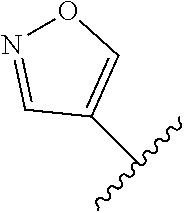 |
18 |
 |
| 19 |
 |
20 |
 |
| 21 |
 |
22 |
 |
| 23 |
 |
24 |
 |
| 25 |
 |
26 |
 |
| 27 |
 |
28 |
 |
| 29 |
 |
30 |
 |
| 31 |
 |
||
| TABLE 2 |
| Representative Z Structures |
| No. | Structure | No. | Structure |
| 1 |
 |
2 |
 |
| 3 |
 |
4 |
 |
| 5 |
 |
6 |
 |
| 7 |
 |
8 |
 |
| 9 |
 |
10 |
 |
| 11 |
 |
12 |
 |
| 13 |
 |
14 |
 |
| 15 |
 |
16 |
 |
| 17 |
 |
18 |
 |
| 19 |
 |
20 |
 |
| 21 |
 |
22 |
 |
| 23 |
 |
24 |
 |
| 25 |
 |
26 |
 |
| 27 |
 |
28 |
 |
| 29 |
 |
30 |
 |
| 31 |
 |
32 |
 |
| 33 |
 |
34 |
 |
| 35 |
 |
36 |
 |
| 37 |
 |
38 |
 |
| 39 |
 |
40 |
 |
| 41 |
 |
42 |
 |
| 43 |
 |
44 |
 |
| 45 |
 |
46 |
 |
| 47 |
 |
48 |
 |
| 49 |
 |
50 |
 |
| 51 |
 |
52 |
 |
| 53 |
 |
54 |
 |
| 55 |
 |
56 |
 |
| 57 |
 |
58 |
 |
| 59 |
 |
60 |
 |
| 61 |
 |
62 |
 |
| 63 |
 |
64 |
 |
| 65 |
 |
66 |
 |
| 67 |
 |
68 |
 |
| 69 |
 |
70 |
 |
| 71 |
 |
72 |
 |
| 73 |
 |
74 |
 |
| 75 |
 |
76 |
 |
| 77 |
 |
78 |
 |
| 79 |
 |
80 |
 |
| 81 |
 |
82 |
 |
| 83 |
 |
84 |
 |
| 85 |
 |
86 |
 |
| 87 |
 |
88 |
 |
| 89 |
 |
90 |
 |
| 91 |
 |
92 |
 |
| 93 |
 |
94 |
 |
| 95 |
 |
96 |
 |
| 97 |
 |
98 |
 |
| 99 |
 |
100 |
 |
| 101 |
 |
102 |
 |
| 103 |
 |
104 |
 |
| 105 |
 |
106 |
 |
| 107 |
 |
108 |
 |
| 109 |
 |
110 |
 |
| 111 |
 |
112 |
 |
| 113 |
 |
114 |
 |
| 115 |
 |
116 |
 |
| 117 |
 |
118 |
 |
| 119 |
 |
120 |
 |
| 121 |
 |
122 |
 |
| 123 |
 |
124 |
 |
| 125 |
 |
126 |
 |
| 127 |
 |
128 |
 |
| 129 |
 |
130 |
 |
| 131 |
 |
132 |
 |
| 133 |
 |
134 |
 |
| 135 |
 |
||
| TABLE 3 |
| Representative Z Structures |
| No. | Structure | No. | Structure |
| 1 |
 |
2 |
 |
| 3 |
 |
4 |
 |
| 5 |
 |
6 |
 |
| 7 |
 |
8 |
 |
| 9 |
 |
10 |
 |
| 11 |
 |
12 |
 |
| 13 |
 |
14 |
 |
| 15 |
 |
16 |
 |
| 17 |
 |
18 |
 |
| 19 |
 |
20 |
 |
| 21 |
 |
22 |
 |
| 23 |
 |
24 |
 |
| 25 |
 |
26 |
 |
| 27 |
 |
28 |
 |
| 29 |
 |
30 |
 |
| 31 |
 |
32 |
 |
| 33 |
 |
34 |
 |
| 35 |
 |
36 |
 |
| 37 |
 |
38 |
 |
| 39 |
 |
40 |
 |
| 41 |
 |
42 |
 |
| 43 |
 |
44 |
 |
| 45 |
 |
46 | H |
| 47 | Methyl | 48 | Ethyl |
| 49 | —CH2OC(O)Methyl | 50 | —CH2OC(O)Ethyl |
| 51 | —CH2OC(O)Phenyl | 52 | —CH2CH2OC(O)Phenyl |
Preferred compounds according to the invention and their enantiomers and pharmaceutically acceptable salts thereof are represented by Formula (II) and Formula (III),

wherein the preferred substituent combinations RD, N+/RF/RG, and Z are as defined in Table 4, and Y− is a pharmaceutically acceptable anion as defined above. The compounds can be made according to the methods generally described below.
| TABLE 4 |
| Preferred Combinations of RD, N+/RF/RG, and |
| Z Substituents accordng to Formulas (II) and (III). |
| Combination | |||
| Number | RD | N+/RF/RG | Z |
| 1 | H |
 |
 |
| 2 | CH3 |
 |
 |
| 3 | CH2CH3 |
 |
 |
| 4 | (CH2)2CH3 |
 |
 |
| 5 | H |
 |
 |
| 6 | CH3 |
 |
 |
| 7 | CH2CH3 |
 |
 |
| 8 | (CH2)2CH3 |
 |
 |
| 9 | H |
 |
 |
| 10 | CH3 |
 |
 |
| 11 | CH2CH3 |
 |
 |
| 12 | (CH2)2CH3 |
 |
 |
| 13 | H |
 |
 |
| 14 | CH3 |
 |
 |
| 15 | CH2CH3 |
 |
 |
| 16 | (CH2)2CH3 |
 |
 |
| 17 | H |
 |
 |
| 18 | CH3 |
 |
 |
| 19 | CH2CH3 |
 |
 |
| 20 | (CH2)2CH3 |
 |
 |
| 21 | H |
 |
 |
| 22 | CH3 |
 |
 |
| 23 | CH2CH3 |
 |
 |
| 24 | (CH2)2CH3 |
 |
 |
| 25 | H |
 |
 |
| 26 | CH3 |
 |
 |
| 27 | CH2CH3 |
 |
 |
| 28 | (CH2)2CH3 |
 |
 |
| 29 | H |
 |
 |
| 30 | CH3 |
 |
 |
| 31 | CH2CH3 |
 |
 |
| 32 | (CH2)2CH3 |
 |
 |
| 33 | H |
 |
 |
| 34 | CH3 |
 |
 |
| 35 | CH2CH3 |
 |
 |
| 36 | (CH2)2CH3 |
 |
 |
| 37 | H |
 |
 |
| 38 | CH3 |
 |
 |
| 39 | CH2CH3 |
 |
 |
| 40 | (CH2)2CH3 |
 |
 |
| 41 | H |
 |
 |
| 42 | CH3 |
 |
 |
| 43 | CH2CH3 |
 |
 |
| 44 | (CH2)2CH3 |
 |
 |
| 45 | H |
 |
 |
| 46 | CH3 |
 |
 |
| 47 | CH2CH3 |
 |
 |
| 48 | (CH2)2CH3 |
 |
 |
| 49 | H |
 |
 |
| 50 | CH3 |
 |
 |
| 51 | CH2CH3 |
 |
 |
| 52 | (CH2)2CH3 |
 |
 |
| 53 | H |
 |
 |
| 54 | CH3 |
 |
 |
| 55 | CH2CH3 |
 |
 |
| 56 | (CH2)2CH3 |
 |
 |
| 57 | H |
 |
 |
| 58 | CH3 |
 |
 |
| 59 | CH2CH3 |
 |
 |
| 60 | (CH2)2CH3 |
 |
 |
| 61 | H |
 |
 |
| 62 | CH3 |
 |
 |
| 63 | CH2CH3 |
 |
 |
| 64 | (CH2)2CH3 |
 |
 |
| 65 | H |
 |
 |
| 66 | CH3 |
 |
 |
| 67 | CH2CH3 |
 |
 |
| 68 | (CH2)2CH3 |
 |
 |
| 69 | H |
 |
 |
| 70 | CH3 |
 |
 |
| 71 | CH2CH3 |
 |
 |
| 72 | (CH2)2CH3 |
 |
 |
| 73 | H |
 |
 |
| 74 | CH3 |
 |
 |
| 75 | CH2CH3 |
 |
 |
| 76 | (CH2)2CH3 |
 |
 |
| 77 | H |
 |
 |
| 78 | CH3 |
 |
 |
| 79 | CH2CH3 |
 |
 |
| 80 | (CH2)2CH3 |
 |
 |
| 81 | H |
 |
 |
| 82 | CH3 |
 |
 |
| 83 | CH2CH3 |
 |
 |
| 84 | (CH2)2CH3 |
 |
 |
| 85 | H |
 |
 |
| 86 | CH3 |
 |
 |
| 87 | CH2CH3 |
 |
 |
| 88 | (CH2)2CH3 |
 |
 |
| 89 | H |
 |
 |
| 90 | CH3 |
 |
 |
| 91 | CH2CH3 |
 |
 |
| 92 | (CH2)2CH3 |
 |
 |
| 93 | H |
 |
 |
| 94 | CH3 |
 |
 |
| 95 | CH2CH3 |
 |
 |
| 96 | (CH2)2CH3 |
 |
 |
| 97 | H |
 |
 |
| 98 | CH3 |
 |
 |
| 99 | CH2CH3 |
 |
 |
| 100 | (CH2)2CH3 |
 |
 |
| 101 | H |
 |
 |
| 102 | CH3 |
 |
 |
| 103 | CH2CH3 |
 |
 |
| 104 | (CH2)2CH3 |
 |
 |
| 105 | H |
 |
 |
| 106 | CH3 |
 |
 |
| 107 | CH2CH3 |
 |
 |
| 108 | (CH2)2CH3 |
 |
 |
| 109 | H |
 |
 |
| 110 | CH3 |
 |
 |
| 111 | CH2CH3 |
 |
 |
| 112 | (CH2)2CH3 |
 |
 |
| 113 | H |
 |
 |
| 114 | CH3 |
 |
 |
| 115 | CH2CH3 |
 |
 |
| 116 | (CH2)2CH3 |
 |
 |
| 117 | H |
 |
 |
| 118 | CH3 |
 |
 |
| 119 | CH2CH3 |
 |
 |
| 120 | (CH2)2CH3 |
 |
 |
| 121 | H |
 |
 |
| 122 | CH3 |
 |
 |
| 123 | CH2CH3 |
 |
 |
| 124 | (CH2)2CH3 |
 |
 |
Each preferred embodiment described herein can be taken in combination with one, any or all other preferred embodiments, as though presented herein in every permutation.
Compositions of the invention can comprise racemic mixtures, pure enantiomers, or an excess of one enantiomer over the other. For example, a composition can comprise an enantiomeric excess of at least 5, 10, 20, 30, 40, 50, 60, 70, 80 or 90%. In one embodiment, the enantiomeric excess is at least 95%.
The compounds of the invention include all enantiomers which may be defined, in terms of absolute stereochemistry, as (R)- or (S)-, as well as their racemic and optically pure forms, and is not limited to those described herein in any of their pharmaceutically acceptable forms, including enantiomers, salts, solvates, polymorphs, solvatomorphs, hydrates, anhydrous and other crystalline forms and combinations thereof. Likewise, all tautomeric forms are intended to be included.
Preferably, a pharmaceutical composition comprises a compound of the invention as an R enantiomer in substantially pure form; or, a pharmaceutical composition comprises a compound of the invention as an S enantiomer in substantially pure form; or, a pharmaceutical composition comprises a compound of the invention as enantiomeric mixtures which contain an excess of the R enantiomer or an excess of the S enantiomer. It is particularly preferred that the pharmaceutical composition contains a compound of the invention which is a substantially pure optical isomer. For the avoidance of doubt, a compound of the invention can, if desired, be used in the form of solvates.
Synthesis
Compounds having Formula (I) can be prepared using methods analogous to the following general synthetic schemes:

and,

Additional Biologically Active Agents and Exogenous Large Pore Channel Agonists
As described above, the compound or composition of the invention can be administered with a biologically active agent. For example, one or more additional biologically active agents, including those typically used to treat neurogenic inflammation, may be used in combination with a compound or composition of the invention described herein. The biologically active agents include, but are not limited to, TRP1A receptor agonists, TRPV1-4 receptor agonists, TRPM8 agonists, ASIC agonists, P2X receptor agonists, acetaminophen, NSAIDs, glucocorticoids, narcotics, tricyclic antidepressants, amine transporter inhibitors, anticonvulsants, anti-proliferative and immune modulatory agents, an antibody or antibody fragment, an antibiotic, a polynucleotide, a polypeptide, a protein, an anti-cancer agent, a growth factor, and a vaccine.
TRPV1 agonists that can be employed in the methods, kits and compositions of the invention include, but are not limited to, any that activates TRPV1 receptors on nociceptors and allows for entry of at least one inhibitor of voltage-gated ion channels (for example, a compound of the invention). A suitable TRPV1 agonist is capsaicin or another capsaicinoids, which are members of the vanilloid family of molecules. Naturally occurring capsaicinoids are capsaicin itself, dihydrocapsaicin, nordihydrocapsaicin, homodihydrocapsaicin, homocapsaicin, and nonivamide. Other suitable capsaicinoids and capsaicinoid analogs and derivatives for use in the compositions and methods of the present invention include naturally occurring and synthetic capsaicin derivatives and analogs including, e.g., vanilloids (e.g., N-vanillyl-alkanedienamides, N-vanillyl-alkanedienyls, and N-vanillyl-cis-monounsaturated alkenamides), capsiate, dihydrocapsiate, nordihydrocapsiate and other capsinoids, capsiconiate, dihydrocapsiconiate and other coniferyl esters, capsiconinoid, resiniferatoxin, tinyatoxin, civamide, N-phenylmethylalkenamide capsaicin derivatives, olvanil, N-[(4-(2-aminoethoxy)-3-methoxyphenyl)methyl]-9Z-octa-decanamide, N-oleyl-homovanillamide, triprenyl phenols (e.g., scutigeral), gingerols, piperines, shogaols, guaiacol, eugenol, zingerone, nuvanil, NE-19550, NE-21610, and NE-28345. Additional capsaicinoids, their structures, and methods of their manufacture are described in U.S. Pat. Nos. 7,446,226 and 7,429,673, which are hereby incorporated by reference.
Additional suitable TRPV1 agonists include but are not limited to eugenol, arvanil (N-arachidonoylvanillamine), anandamide, 2-aminoethoxydiphenyl borate (2APB), AM404, resiniferatoxin, phorbol 12-phenylacetate 13-acetate 20-homovanillate (PPAHV), olvanil (NE 19550), OLDA (N-oleoyldopamine), N-arachidonyldopamine (NADA), 6′-iodoresiniferatoxin (6′-IRTX), C18 N-acylethanolamines, lipoxygenase derivatives such as 12-hydroperoxyeicosatetraenoic acid, inhibitor cysteine knot (ICK) peptides (vanillotoxins), piperine, MSK195 (N-[2-(3,4-d imethylbenzyl)-3-(pivaloyloxy)propyl]-2-[4-(2-aminoethoxy)-3-methoxyphenyl]acetamide), JYL79 (N-[2-(3,4-dimethylbenzyl)-3-(pivaloyloxy)propyl]-N′-(4-hydroxy-3-methoxybenzyl)thiourea), hydroxy-alpha-sanshool, 2-aminoethoxydiphenyl borate, 10-shogaol, oleylgingerol, oleylshogaol, and SU200 (N-(4-tert-butylbenzyl)-N′-(4-hydroxy-3-methoxybenzyl)thiourea). Still other TRPV1 agonists include amylocaine, articaine, benzocaine, bupivacaine, carbocaine, carticaine, chloroprocaine, cyclomethycaine, dibucaine (cinchocaine), dimethocaine (larocaine), etidocaine, hexylcaine, levobupivacaine, lidocaine, mepivacaine, meprylcaine (oracaine), metabutoxycaine, piperocaine, prilocaine, procaine (novacaine), proparacaine, propoxycaine, risocaine, ropivacaine, tetracaine (amethocaine), and trimecaine.
Suitable TRPV2-4 agonists include, but are not limited to, are 2-APB, cannabinol, diphenylboronic anhydride, insulin-like growth factor 1, lysophosphatidylcholine, lysophosphatidylinositol, probenecid, Δ9-tetrahydrocannabinol, vanillin, eugenol, cinnamaldehyde, camphor, carvacrol, thymol, citral, farnesyl diphosphate, tetrahydrocannabivarin, incensole acetate, diphenylboronic anhydride, 6-tert-butyl-m-cresol, dihydrocarveocarveol, borneol, (−)-menthol, GSK1016790A, 4α-PDH, 5,6-epoxyeicosatrienoic acid, 4α-PDD, bisandrographolide, citric acid, phorbol 12-myristate 13-acetate and RN1747.
Suitable TRPM8 agonists include, but are not limited to, are menthol, icilin, eucalyptus, linalool, geraniol, hydroxy-citronellal, WS-3, WS-23, Frescolat MGA, Frescolat ML, PMD 38, CPS125, Coolact P, M8-Ag, AITC, cryosim-3 and Cooling Agent 10.
Suitable ASIC agonists include, but are not limited to, chlorophenylguanidine hydrochloride, GMQ hydrochloride, tetrahydropapaveroline (THP), reticulin, polyamine agmatine, lysophosphatidylcholine, arachidonic acid and neuropeptide SF.
Other biologically active agents which can be employed in the methods, compositions, and kits of the invention include any that activates TRP1A receptors on nociceptors or pruriceptors and allows for entry of at least one inhibitor of voltage-gated ion channels. Suitable TRP1A agonists include but are not limited to cinnamaldehyde, allyl-isothiocynanate (mustard oil), diallyl disulfide, icilin, cinnamon oil, wintergreen oil, clove oil, acrolein, hydroxy-alpha-sanshool, 2-aminoethoxydiphenyl borate, 4-hydroxynonenal, methyl p-hydroxybenzoate, and 3′-carbamoylbiphenyl-3-yl cyclohexylcarbamate (URB597).
P2X agonists that can be employed in the methods, compositions, and kits of the invention include any that activates P2X receptors on nociceptors or pruriceptors and allows for entry of at least one inhibitor of voltage-gated ion channels. Suitable P2X agonists include but are not limited to ATP, α,β-methylene ATP, 2-methylthio-ATP, 2′ and 3′-O-(4-benzoylbenzoyl)-ATP, and ATP5′-O-(3-thiotriphosphate).
Other biologically active agents that can be used in combination with the compounds of the invention include NSAIDs, glucocorticoids, narcotics, tricyclic antidepressants, amine transporter inhibitors, anticonvulsants, anti-proliferative and immune modulatory agents, an antibody or antibody fragment, an antibiotic, a polynucleotide, a polypeptide, a protein, an anti-cancer agent, a growth factor, and a vaccine.
Non-steroidal anti-inflammatory drugs (NSAIDs) that can be administered to a patient (e.g., a human) suffering from neurogenic inflammation in combination with a composition of the invention include, but are not limited to, acetylsalicylic acid, amoxiprin, benorylate, benorilate, choline magnesium salicylate, diflunisal, ethenzamide, faislamine, methyl salicylate, magnesium salicylate, salicyl salicylate, salicylamide, diclofenac, aceclofenac, acemethacin, alclofenac, bromfenac, etodolac, indometacin, nabumetone, oxametacin, proglumetacin, sulindac, tolmetin, ibuprofen, alminoprofen, benoxaprofen, carprofen, dexibuprofen, dexketoprofen, fenbufen, fenoprofen, flunoxaprofen, flurbiprofen, ibuproxam, indoprofen, ketoprofen, ketorolac, loxoprofen, naproxen, oxaprozin, pirprofen, suprofen, tiaprofenic acid, mefenamic acid, flufenamic acid, meclofenamic acid, tolfenamic acid, phenylbutazone, ampyrone, azapropazone, clofezone, kebuzone, metamizole, mofebutazone, oxyphenbutazone, phenazone, sulfinpyrazone, piroxicam, droxicam, lornoxicam, meloxicam, tenoxicam, and the COX-2 inhibitors celecoxib, etoricoxib, lumiracoxib, parecoxib, rofecoxib, valdecoxib, and pharmaceutically acceptable salts thereof.
Glucocorticoids that can be administered to a patient (e.g., a human) suffering from neurogenic inflammation in combination with a composition of the invention include, but are not limited to, hydrocortisone, cortisone acetate, prednisone, prednisolone, methylprednisolone, dexamethasone, betamethasone, triamcinolone, beclometasone, fludrocortisone acetate, deoxycorticosterone acetate, aldosterone, and pharmaceutically acceptable salts thereof.
Narcotics that can be administered to a patient (e.g., a human) suffering from neurogenic inflammation in combination with a composition of the invention include, but are not limited, to tramadol, hydrocodone, oxycodone, morphine, and pharmaceutically acceptable salts thereof.
Antiproliferative and immune modulatory agents that can be administered to a patient (e.g., a human) suffering from neurogenic inflammation in combination with a composition of the invention include, but are not limited to, alkylating agents, platinum agents, antimetabolites, topoisomerase inhibitors, dihydrofolate reductase inhibitors, antitumor antibiotics, antimitotic agents, aromatase inhibitors, thymidylate synthase inhibitors, DNA antagonists, farnesyltransferase inhibitors, pump inhibitors, histone acetyltransferase inhibitors, metalloproteinase inhibitors, ribonucleoside reductase inhibitors, TNF-alpha agonists, TNF-alpha antagonists or scavengers, interleukin 1 (IL-1) antagonists or scavengers, endothelin A receptor antagonists, retinoic acid receptor agonists, hormonal agents, antihormonal agents, photodynamic agents, and tyrosine kinase inhibitors.
The biologically active agents can be administered prior to, concurrent with, or following administration of a composition of the invention, using any formulation, dosing, or administration known in the art that is therapeutically effective.
Formulation of Compositions
The administration of the compounds of the invention may be by any suitable means that results in the reduction of perceived pain sensation at the target region. The compounds of the invention may be contained in any appropriate amount in any suitable carrier substance, and are generally present in amounts totaling 1-99% by weight of the total weight of the composition. The composition may be provided in a dosage form that is suitable for oral, parenteral (e.g., intravenous, intramuscular), rectal, cutaneous, subcutaneous, topical, transdermal, sublingual, nasal, vaginal, intrathecal, epidural, or ocular administration, or by injection, inhalation, or direct contact with the nasal or oral mucosa.
Thus, the composition may be in the form of, e.g., tablets, capsules, pills, powders, granulates, suspensions, emulsions, solutions, gels including hydrogels, pastes, ointments, creams, plasters, drenches, osmotic delivery devices, suppositories, enemas, injectables, implants, sprays, or aerosols. The compositions may be formulated according to conventional pharmaceutical practice (see, e.g., Remington: The Science and Practice of Pharmacy, 22nd edition, 2013, ed. L. V. Allen, Pharmaceutical Press, Philadelphia, and Encyclopedia of Pharmaceutical Technology, 4th Edition, ed. J. Swarbrick, 2013, CRC Press, New York).
Each compound may be formulated in a variety of ways that are known in the art. For example, a compound of the invention and a biologically active agent as defined herein may be formulated together or separately. Desirably, a compound of the invention and a biologically active agent are formulated together for their simultaneous or near simultaneous administration. In another embodiment, two or more biologically active agents may be formulated together with a compound of the invention, or separately. Other examples include, but are not limited to, two or more compounds of the invention formulated together, wherein the compounds are formulated together with or without one or more biologically active agents.
The individually or separately formulated agents can be packaged together as a kit. Non-limiting examples include but are not limited to kits that contain, e.g., two pills, a pill and a powder, a suppository and a liquid in a vial, two topical creams, etc. The kit can include optional components that aid in the administration of the unit dose to patients, such as vials for reconstituting powder forms, syringes for injection, customized IV delivery systems, inhalers, etc. Additionally, the unit dose kit can contain instructions for preparation and administration of the compositions.
The kit may be manufactured as a single use unit dose for one patient, multiple uses for a particular patient (at a constant dose or in which the individual compounds may vary in potency as therapy progresses); or the kit may contain multiple doses suitable for administration to multiple patients (“bulk packaging”). The kit components may be assembled in cartons, blister packs, bottles, tubes, and the like.
Controlled Release Formulations
Each compound of the invention, alone or in combination with one or more of the biologically active agents as described herein, can be formulated for controlled release (e.g., sustained or measured) administration, as described in U.S. Patent Application Publication Nos. 2003/0152637 and 2005/0025765, each incorporated herein by reference. For example, a compound of the invention, alone or in combination with one or more of the biologically active agents as described herein, can be incorporated into a capsule or tablet that is administered to the patient.
Any pharmaceutically acceptable vehicle or formulation suitable for local application and/or injection into a site to be treated (e.g., a painful surgical incision, wound, or joint), that is able to provide a sustained release of compound of the invention, alone or in combination with one or more of the biologically active agents as described herein, may be employed to provide for prolonged elimination or alleviation of inflammation, as needed. Controlled release formulations known in the art include specially coated pellets, polymer formulations or matrices for surgical insertion or as sustained release microparticles, e.g., microspheres or microcapsules, for implantation, insertion, infusion or injection, wherein the slow release of the active medicament is brought about through sustained or controlled diffusion out of the matrix and/or selective breakdown of the coating of the preparation or selective breakdown of a polymer matrix. Other formulations or vehicles for controlled, sustained or immediate delivery of an agent to a preferred localized site in a patient include, e.g., suspensions, emulsions, gels, liposomes and any other suitable art known delivery vehicle or formulation acceptable for subcutaneous or intramuscular administration.
A wide variety of biocompatible materials may be utilized as a controlled release carrier to provide the controlled release of a compound of the invention, alone or in combination with one or more biologically active agents, as described herein. Any pharmaceutically acceptable biocompatible polymer known to those skilled in the art may be utilized. It is preferred that the biocompatible controlled release material degrade in vivo within about one year, preferably within about 3 months, more preferably within about two months. More preferably, the controlled release material will degrade significantly within one to three months, with at least 50% of the material degrading into non-toxic residues, which are removed by the body, and 100% of the compound of the invention being released within a time period within about two weeks, preferably within about 2 days to about 7 days. A degradable controlled release material should preferably degrade by hydrolysis, either by surface erosion or bulk erosion, so that release is not only sustained but also provides desirable release rates. However, the pharmacokinetic release profile of these formulations may be first order, zero order, bi- or multi-phasic, to provide the desired reversible local anti-nociceptive effect over the desired time period.
Suitable biocompatible polymers can be utilized as the controlled release material. The polymeric material may comprise biocompatible, biodegradable polymers, and, in certain preferred embodiments, is preferably a copolymer of lactic and glycolic acid. Preferred controlled release materials which are useful in the formulations of the invention include the polyanhydrides, polyesters, co-polymers of lactic acid and glycolic acid (preferably wherein the weight ratio of lactic acid to glycolic acid is no more than 4:1 i.e., 80% or less lactic acid to 20% or more glycolic acid by weight) and polyorthoesters containing a catalyst or degradation enhancing compound, for example, containing at least 1% by weight anhydride catalyst such as maleic anhydride. Examples of polyesters include polylactic acid, polyglycolic acid and polylactic acid-polyglycolic acid copolymers. Other useful polymers include protein polymers such as collagen, gelatin, fibrin and fibrinogen and polysaccharides such as hyaluronic acid.
The polymeric material may be prepared by any method known to those skilled in the art. For example, where the polymeric material is comprised of a copolymer of lactic and glycolic acid, this copolymer may be prepared by the procedure set forth in U.S. Pat. No. 4,293,539, incorporated herein by reference. Alternatively, copolymers of lactic and glycolic acid may be prepared by any other procedure known to those skilled in the art. Other useful polymers include polylactides, polyglycolides, polyanhydrides, polyorthoesters, polycaprolactones, polyphosphazenes, polyphosphoesters, polysaccharides, proteinaceous polymers, soluble derivatives of polysaccharides, soluble derivatives of proteinaceous polymers, polypeptides, polyesters, and polyorthoesters or mixtures or blends of any of these.
Pharmaceutically acceptable polyanhydrides which are useful in the present invention have a water-labile anhydride linkage. The rate of drug release can be controlled by the particular polyanhydride polymer utilized and its molecular weight. The polysaccharides may be poly-1,4-glucans, e.g., starch glycogen, amylose, amylopectin, and mixtures thereof. The biodegradable hydrophilic or hydrophobic polymer may be a water-soluble derivative of a poly-1,4-glucan, including hydrolyzed amylopectin, derivatives of hydrolyzed amylopectin such as hydroxyethyl starch (HES), hydroxyethyl amylose, dialdehyde starch, and the like. The polyanhydride polymer may be branched or linear.
Examples of polymers which are useful in the present invention include (in addition to homopolymers and copolymers of poly(lactic acid) and/or poly(glycolic acid)) poly[bis(p-carboxyphenoxy) propane anhydride] (PCPP), poly[bis(p-carboxy)methane anhydride] (PCPM), polyanhydrides of oligomerized unsaturated aliphatic acids, polyanhydride polymers prepared from amino acids which are modified to include an additional carboxylic acid, aromatic polyanhydride compositions, and co-polymers of polyanhydrides with other substances, such as fatty acid terminated polyanhydrides, e.g., polyanhydrides polymerized from monomers of dimers and/or trimers of unsaturated fatty acids or unsaturated aliphatic acids. Polyanhydrides may be prepared in accordance with the methods set forth in U.S. Pat. No. 4,757,128, incorporated herein by reference. Polyorthoester polymers may be prepared, e.g., as set forth in U.S. Pat. No. 4,070,347, incorporated herein by reference. Polyphosphoesters may be prepared and used as set forth in U.S. Pat. Nos. 6,008,318, 6,153,212, 5,952,451, 6,051,576, 6,103,255, 5,176,907 and 5,194,581, each of which is incorporated herein by reference.
Proteinaceous polymers may also be used. Proteinaceous polymers and their soluble derivatives include gelation biodegradable synthetic polypeptides, elastin, alkylated collagen, alkylated elastin, and the like. Biodegradable synthetic polypeptides include poly-(N-hydroxyalkyl)-L-asparagine, poly-(N-hydroxyalkyl)-L-glutamine, copolymers of N-hydroxyalkyl-L-asparagine and N-hydroxyalkyl-L-glutamine with other amino acids. Suggested amino acids include L-alanine, L-lysine, L-phenylalanine, L-valine, L-tyrosine, and the like.
In additional embodiments, the controlled release material, which in effect acts as a carrier for a compound of the invention, alone or in combination with one or more biologically active agents as described herein, can further include a bioadhesive polymer such as pectins (polygalacturonic acid), mucopolysaccharides (hyaluronic acid, mucin) or non-toxic lectins or the polymer itself may be bioadhesive, e.g., polyanhydride or polysaccharides such as chitosan.
In embodiments where the biodegradable polymer comprises a gel, one such useful polymer is a thermally gelling polymer, e.g., polyethylene oxide, polypropylene oxide (PEO-PPO) block copolymer such as PLURONIC™ F127 from BASF Wyandotte. In such cases, the local anesthetic formulation may be injected via syringe as a free-flowing liquid, which gels rapidly above 30° C. (e.g., when injected into a patient). The gel system then releases a steady dose of a compound of the invention, alone or in combination with one or more biologically active agents as described herein, at the site of administration.
Dosage Forms for Oral Use
Formulations for oral use include tablets containing the active ingredient(s) in a mixture with non-toxic pharmaceutically acceptable excipients. These excipients may be, for example, inert diluents or fillers (e.g., sucrose, sorbitol, sugar, mannitol, microcrystalline cellulose, starches including potato starch, calcium carbonate, sodium chloride, lactose, calcium phosphate, calcium sulfate, or sodium phosphate); granulating and disintegrating agents (e.g., cellulose derivatives including microcrystalline cellulose, starches including potato starch, croscarmellose sodium, alginates, or alginic acid); binding agents (e.g., sucrose, glucose, sorbitol, acacia, alginic acid, sodium alginate, gelatin, starch, pregelatinized starch, microcrystalline cellulose, magnesium aluminum silicate, carboxymethylcellulose sodium, methylcellulose, hydroxypropyl methylcellulose, ethylcellulose, polyvinylpyrrolidone, or polyethylene glycol); and lubricating agents, glidants, and antiadhesives (e.g., magnesium stearate, zinc stearate, stearic acid, silicas, hydrogenated vegetable oils, or talc). Other pharmaceutically acceptable excipients can be colorants, flavoring agents, plasticizers, humectants, buffering agents, taste masking agents (such as hydroxypropyl methylcellulose, hydroxypropyl cellulose) and the like.
One or more compounds of the invention and one or more biologically active agents, as defined herein, may be mixed together in a tablet, capsule, or other vehicle, or may be partitioned. In one example, a compound of the invention is contained on the inside of the tablet, and the biologically active agent is on the outside of the tablet, such that a substantial portion of the biologically active agent is released prior to the release of the compound of the invention.
Formulations for oral use may also be provided as chewable tablets, or as hard gelatin capsules wherein the active ingredient is mixed with an inert solid diluent (e.g., potato starch, lactose, microcrystalline cellulose, calcium carbonate, calcium phosphate or kaolin), or as soft gelatin capsules wherein the active ingredient is mixed with water or an oil medium, for example, peanut oil, liquid paraffin, or olive oil. Powders, granulates, and pellets may be prepared using the ingredients mentioned above under tablets and capsules in a conventional manner using, e.g., a mixer, a fluid bed apparatus or a spray drying equipment.
Formulations for oral administration to the mouth may also be provided as a mouthwash, an oral spray, oral rinse solution, or oral ointment, or oral gel.
Dissolution or diffusion controlled release can be achieved by appropriate coating of a tablet, capsule, pellet, or granulate formulation of compounds, or by incorporating the compound into an appropriate matrix. A controlled release coating may include one or more of the coating substances mentioned above and/or, e.g., shellac, beeswax, glycowax, castor wax, carnauba wax, stearyl alcohol, glyceryl monostearate, glyceryl distearate, glycerol palmitostearate, ethylcellulose, acrylic resins, dl-polylactic acid, cellulose acetate butyrate, polyvinyl chloride, polyvinyl acetate, vinyl pyrrolidone, polyethylene, polymethacrylate, methylmethacrylate, 2-hydroxymethacrylate, methacrylate hydrogels, 1,3 butylene glycol, ethylene glycol methacrylate, and/or polyethylene glycols. In a controlled release matrix formulation, the matrix material may also include, e.g., hydrated methylcellulose, carnauba wax and stearyl alcohol, carbopol 934, silicone, glyceryl tristearate, methyl acrylate-methyl methacrylate, polyvinyl chloride, polyethylene, and/or halogenated fluorocarbon.
The liquid forms in which the compounds and compositions of the present invention can be incorporated for administration orally include aqueous solutions, suitably flavored syrups, aqueous or oil suspensions, and flavored emulsions with edible oils such as cottonseed oil, sesame oil, coconut oil, or peanut oil, as well as elixirs and similar pharmaceutical vehicles.
Generally, when administered to a human, the oral dosage of any of the compounds of the combination of the invention will depend on the nature of the compound, and can readily be determined by one skilled in the art. Typically, such dosage is normally about 0.001 mg to 2000 mg per day, desirably about 1 mg to 1000 mg per day, and more desirably about 5 mg to 500 mg per day. Dosages up to 200 mg per day may be necessary.
Administration of each drug in a combination therapy, as described herein, can, independently, be one to four times daily for one day to one year, and may even be for the life of the patient. Chronic, long-term administration will be indicated in many cases.
Parenteral Formulations
Formulations suitable for parenteral administration (e.g., by injection), include aqueous or non-aqueous, isotonic, pyrogen-free, sterile liquids (e.g., solutions, suspensions), in which the compound is dissolved, suspended, or otherwise provided (e.g., in a liposome or other microparticulate). Such liquids may additional contain other pharmaceutically acceptable ingredients, such as anti-oxidants, buffers, preservatives, stabilizers, bacteriostats, suspending agents, thickening agents, and solutes which render the formulation isotonic with the blood (or other relevant bodily fluid) of the intended recipient. Examples of excipients include, for example, water, alcohols, polyols, glycerol, vegetable oils, and the like. Examples of suitable isotonic carriers for use in such formulations include Sodium Chloride Injection, Ringer's Solution, or Lactated Ringer's Injection. Typically, the concentration of the compound in the liquid is from about 1 ng/ml to about 10 μg/ml, for example from about 10 ng/ml to about 1 μg/ml. The formulations may be presented in unit-dose or multi-dose sealed containers, for example, ampoules and vials, and may be stored in a freeze-dried (lyophilised) condition requiring only the addition of the sterile liquid carrier, for example water for injections, immediately prior to use. Extemporaneous injection solutions and suspensions may be prepared from sterile powders, granules, and tablets.
Topical Formulations
The compositions of the invention, alone or in combination with one or more of the biologically active agents described herein, can also be adapted for topical use with a topical vehicle containing from between 0.0001% and 25% (w/w) or more of active ingredient(s).
In a preferred combination, the active ingredients are preferably each from between 0.0001% to 10% (w/w), more preferably from between 0.0005% to 4% (w/w) active agent. The topical formulation, including but not limited to a cream, gel, or ointment, can be applied one to four times daily, or as needed. Performing the methods described herein, the topical vehicle containing the composition of the invention, or a combination therapy containing a composition of the invention is preferably applied to the site of inflammation on the patient. For example, a cream may be applied to the hands of a patient suffering from arthritic fingers.
The compositions can be formulated using any dermatologically acceptable carrier. Exemplary carriers include a solid carrier, such as alumina, clay, microcrystalline cellulose, silica, or talc; and/or a liquid carrier, such as an alcohol, a glycol, or a water-alcohol/glycol blend. The therapeutic agents may also be administered in liposomal formulations that allow therapeutic agents to enter the skin. Such liposomal formulations are described in U.S. Pat. Nos. 5,169,637; 5,000,958; 5,049,388; 4,975,282; 5,194,266; 5,023,087; 5,688,525; 5,874,104; 5,409,704; 5,552,155; 5,356,633; 5,032,582; 4,994,213; 8,822,537, and PCT Publication No. WO 96/40061. Examples of other appropriate vehicles are described in U.S. Pat. Nos. 4,877,805, 8,822,537, and EP Publication No. 0586106A1. Suitable vehicles of the invention may also include mineral oil, petrolatum, polydecene, stearic acid, isopropyl myristate, polyoxyl 40 stearate, stearyl alcohol, or vegetable oil.
The composition can further include a skin penetrating enhancer, such as those described in “Percutaneous Penetration enhancers”, (eds. Smith E W and Maibach H I. CRC Press 1995). Exemplary skin penetrating enhancers include alkyl (N,N-disubstituted amino alkanoate) esters, such as dodecyl 2-(N,N dimethylamino) propionate (DDAIP), which is described in U.S. Pat. Nos. 6,083,996 and 6,118,020, which are both incorporated herein by reference; a water-dispersible acid polymer, such as a polyacrylic acid polymer, a carbomer (e.g., CARBOPOL™ or CARBOPOL 940P™, available from B. F. Goodrich Company (Akron, Ohio)), copolymers of polyacrylic acid (e.g., PEMULEN™ from B. F. Goodrich Company or Polycarbophil™ from A. H. Robbins, Richmond, Va.; a polysaccharide gum, such as agar gum, alginate, carrageenan gum, ghatti gum, karaya gum, kadaya gum, rhamsan gum, xanthan gum, and galactomannan gum (e.g., guar gum, carob gum, and locust bean gum), as well as other gums known in the art (see for instance, Industrial Gums: Polysaccharides & Their Derivatives, Whistler R. L., BeMiller J. N. (eds.), 3rd Ed. Academic Press (1992) and Davidson, R. L., Handbook of Water-Soluble Gums & Resins, McGraw-Hill, Inc., N.Y. (1980)); or combinations thereof.
Other suitable polymeric skin penetrating enhancers are cellulose derivatives, such as ethyl cellulose, methyl cellulose, hydroxypropyl cellulose. Additionally, known transdermal penetrating enhancers can also be added, if desired. Illustrative are dimethyl sulfoxide (DMSO) and dimethyl acetamide (DMA), 2-pyrrolidone, N,N-diethyl-m-toluamide (DEET), 1-dodecylazacycloheptane-2-one (Azone™, a registered trademark of Nelson Research), N,N-dimethylformamide, N-methyl-2-pyrrolidone, calcium thioglycolate and other enhancers such as dioxolanes, cyclic ketones, and their derivatives and so on.
Also illustrative are a group of biodegradable absorption enhancers which are alkyl N,N-2-(disubstituted amino) alkanoates as described in U.S. Pat. Nos. 4,980,378 and 5,082,866, which are both incorporated herein by reference, including: tetradecyl (N,N-dimethylamino) acetate, dodecyl (N,N-dimethylamino) acetate, decyl (N,N-dimethylamino) acetate, octyl (N,N-dimethylamino) acetate, and dodecyl (N,N-diethylamino) acetate.
Particularly preferred skin penetrating enhancers include isopropyl myristate; isopropyl palmitate; dimethyl sulfoxide; decyl methyl sulfoxide; dimethylalanine amide of a medium chain fatty acid; dodecyl 2-(N,N-dimethylamino) propionate or salts thereof, such as its organic (e.g., hydrochloric, hydrobromic, sulfuric, phosphoric, and nitric acid addition salts) and inorganic salts (e.g., acetic, benzoic, salicylic, glycolic, succinic, nicotinic, tartaric, maleic, malic, pamoic, methanesulfonic, cyclohexanesulfamic, picric, and lactic acid addition salts), as described in U.S. Pat. No. 6,118,020; and alkyl 2-(N,N-disubstituted amino)-alkanoates, as described in U.S. Pat. Nos. 4,980,378 and 5,082,866.
The skin penetrating enhancer in this composition by weight would be in the range of 0.5% to 10% (w/w). The most preferred range would be between 1.0% and 5% (w/w). In another embodiment, the skin penetrating enhancer comprises between 0.5%-1%, 1%-2%, 2%-3%, 3%-4%, or 4%-5%, (w/w) of the composition.
The compositions can be provided in any useful form. For example, the compositions of the invention may be formulated as solutions, emulsions (including microemulsions), suspensions, creams, ointments, foams, lotions, gels, powders, or other typical solid, semi-solid, or liquid compositions (e.g., topical sprays) used for application to the skin or other tissues where the compositions may be used. Such compositions may contain other ingredients typically used in such products, such as colorants, fragrances, thickeners (e.g., xanthan gum, a fatty acid, a fatty acid salt or ester, a fatty alcohol, a modified cellulose, a modified mineral material, KRISGEL 100™, or a synthetic polymer), antimicrobials, solvents, surfactants, detergents, gelling agents, antioxidants, fillers, dyestuffs, viscosity-controlling agents, preservatives, humectants, emollients (e.g., natural or synthetic oils, hydrocarbon oils, waxes, or silicones), hydration agents, chelating agents, demulcents, solubilizing excipients, adjuvants, dispersants, skin penetrating enhancers, plasticizing agents, preservatives, stabilizers, demulsifiers, wetting agents, sunscreens, emulsifiers, moisturizers, astringents, deodorants, and optionally including anesthetics, anti-itch actives, botanical extracts, conditioning agents, darkening or lightening agents, glitter, humectants, mica, minerals, polyphenols, silicones or derivatives thereof, sunblocks, vitamins, and phytomedicinals.
The compositions can also include other like ingredients to provide additional benefits and improve the feel and/or appearance of the topical formulation. Specific classes of additives commonly use in these formulations include: isopropyl myristate, sorbic acid NF powder, polyethylene glycol, phosphatidylcholine (including mixtures of phosphatidylcholine, such as phospholipon G), KRISGEL 100™ distilled water, sodium hydroxide, decyl methyl sulfoxide (as a skin penetrating enhancer), menthol crystals, lavender oil, butylated hydroxytoluene, ethyl diglycol reagent, and 95% percent (190 proof) ethanol.
Formulations for Ophthalmic Administration
The compounds of the invention can also be formulated with an ophthalmically acceptable carrier in sufficient concentration so as to deliver an effective amount of the active compound or compounds to the optic nerve site of the eye. Preferably, the ophthalmic, therapeutic solutions contain one or more of the active compounds in a concentration range of approximately 0.0001% to approximately 5% (weight by volume) and more preferably approximately 0.0005% to approximately 0.1% (weight by volume).
An ophthalmically acceptable carrier does not cause significant irritation to the eye and does not abrogate the pharmacological activity and properties of the charged sodium channel blockers.
Ophthalmically acceptable carriers are generally sterile, essentially free of foreign particles, and generally have a pH in the range of 5-8. Preferably, the pH is as close to the pH of tear fluid (7.4) as possible. Ophthalmically acceptable carriers are, for example, sterile isotonic solutions such as isotonic sodium chloride or boric acid solutions. Such carriers are typically aqueous solutions contain sodium chloride or boric acid. Also useful are phosphate buffered saline (PBS) solutions.
Various preservatives may be used in the ophthalmic preparation. Preferred preservatives include, but are not limited to, benzalkonium potassium, chlorobutanol, thimerosal, phenylmercuric acetate, and phenylmercuric nitrate. Likewise, various preferred vehicles may be used in such ophthalmic preparation. These vehicles include, but are not limited to, polyvinyl alcohol, povidone, hydroxypropyl methyl cellulose, poloxamers, carboxymethyl cellulose and hydroxyethyl cellulose.
Tonicity adjustors may be added as needed or convenient. They include, but are not limited to, salts, particularly sodium chloride, potassium chloride, etc., mannitol and glycerin, or any other suitable ophthalmically acceptable tonicity adjustor.
Various buffers and means for adjusting pH may be used so long as the resulting preparation is ophthalmically acceptable. Accordingly, buffers include but are not limited to, acetate buffers, citrate buffers, phosphate buffers, and borate buffers. Acids or bases may be used to adjust the pH of these formulations as needed. Ophthalmically acceptable antioxidants can also be include. Antioxidants include but are not limited to sodium metabisulfite, sodium thiosulfate, acetylcysteine, butylated hydroxyanisole, and butylated hydroxytoluene.
Formulations for Nasal and Inhalation Administration
The pharmaceutical compositions of the invention can be formulated for nasal or intranasal administration. Formulations suitable for nasal administration, when the carrier is a solid, include a coarse powder having a particle size, for example, in the range of approximately 20 to 500 microns which is administered by rapid inhalation through the nasal passage. When the carrier is a liquid, for example, a nasal spray or as nasal drops, one or more of the formulations can be admixed in an aqueous or oily solution and inhaled or sprayed into the nasal passage.
For administration by inhalation, the active ingredient can be conveniently delivered in the form of an aerosol spray presentation from pressurized packs or a nebulizer, with the use of a suitable propellant, e.g., dichlorodifluoromethane, trichlorofluoromethane, dichlorotetrafluoroethane, carbon dioxide or other suitable gas. In the case of a pressurized aerosol the dosage unit can be determined by providing a valve to deliver a metered amount, Capsules and cartridges of, for example, gelatin for use in an inhaler or insufflator can be formulated containing a powder mix of the compound and a suitable powder base such as lactose or starch.
Dry powder compositions for topical delivery to the lung by inhalation may, for example, be presented in capsules and cartridges of, for example, gelatin or blisters of, for example, laminated aluminum foil, for use in an inhaler or insufflator. Powder blend formulations generally contain a powder mix for inhalation of the compound of the invention and a suitable powder base (carrier/diluent/excipient substance) such as mono-, di or ploy-saccharides (e.g. lactose or starch). Use of lactose is preferred. In one embodiment, each capsule or cartridge may contain between about 2 ug to about 100 mg of the compound of formula (I) optionally in combination with another therapeutically active ingredient. In a preferred embodiment, each capsule or cartridge may contain between about 10 ug to about 50 mg of the compound of formula (I) optionally in combination with another therapeutically active ingredient. In another embodiment, each capsule or cartridge may contain between about 20 ug to about 10 mg of the compound of formula (I) optionally in combination with another therapeutically active ingredient. Alternatively, the compound of the invention may be delivered without excipients.
Suitably, the packaging/medicament dispenser is of a type selected from the group consisting of a reservoir dry powder inhaler (RDPI), a single dose inhaler (e.g., capsule or blister inhaler), a multi-dose dry powder inhaler (MDPI), and a metered dose inhaler (MDI).
Solutions or suspensions for use in a pressurized container, pump, spray, atomizer, or nebulizer can be formulated to contain an aqueous medium, ethanol, aqueous ethanol, or a suitable alternative agent for dispersing, solubilizing, or extending release of the active ingredient(s); a propellant as solvent; and/or a surfactant, such as sorbitan trioleate, oleic acid, or an oligolactic acid.
Compositions formulated for nasal or inhalation administration may include one or more taste-masking agents such as flavoring agents, sweeteners, and other strategies, such as sucrose, dextrose, and lactose, carboxylic acids, menthol, amino acids or amino acid derivatives such as arginine, lysine, and monosodium glutamate, and/or synthetic flavor oils and flavoring aromatics and/or natural oils, extracts from plants, leaves, flowers, fruits, etc. and combinations thereof. These may include cinnamon oils, oil of wintergreen, peppermint oils, clover oil, bay oil, anise oil, eucalyptus, vanilla, citrus oil such as lemon oil, orange oil, grape and grapefruit oil, fruit essences including apple, peach, pear, strawberry, raspberry, cherry, plum, pineapple, apricot, etc. Additional sweeteners include sucrose, dextrose, aspartame, acesulfame-K, sucralose and saccharin, organic acids (by non-limiting example citric acid and aspartic acid). Such flavors may be present at from about 0.05 to about 4 percent by weight, and may be present at lower or higher amounts as a factor of one or more of potency of the effect on flavor, solubility of the flavorant, effects of the flavorant on solubility or other physicochemical or pharmacokinetic properties of other formulation components, or other factors.
Indications
The compounds, compositions, methods, and kits of the invention can be used to treat pain, cough or itch associated with any of a number of conditions, including trigeminal trophic syndrome, erythromelalgia, back and neck pain, lower back pain, cancer pain, gynecological and labor pain, abdominal wall pain, chronic abdominal wall pain, fibromyalgia, allergic rhinitis, arthritis, rheumatoid arthritis, osteoarthritis, rheumatological pains, orthopedic pains, acute and post herpetic neuralgia and other neuropathic pains (including peripheral neuropathy), sickle cell crises, muscle pain, vulvodynia, rectal pain, Levator ani syndrome, proctalgia fugax, peri-anal pain, hemorrhoid pain, stomach pain, ulcers, inflammatory bowel disease, irritable bowel disease, irritable bowel syndrome, oral mucositis, esophagitis, interstitial cystitis, urethritis and other urological pains, dental pain, burn pain, headaches, ophthalmic irritation, conjunctivitis (e.g., allergic conjunctivitis), eye redness, dry eye, dry eye syndrome (chronic ocular pain), complex regional pain syndrome, acute postoperative pain, postoperative pain, post-surgical ocular pain, and procedural pain (i.e., pain associated with injections, draining an abscess, surgery, dental procedures, ophthalmic procedures, ophthalmic irritation, conjunctivitis (e.g., allergic conjunctivitis), eye redness, dry eye, arthroscopies and use of other medical instrumentation, cosmetic surgical procedures, dermatological procedures, setting fractures, biopsies, and the like).
Since a subclass of nociceptors mediate itch sensation, the compounds, compositions, methods, and kits of the invention can also be used to treat itch in patients with conditions like pruritus (including, but not limited to, brachioradial, chronic idiopathic, genital/anal, notalgia paresthetica, and scalp), allergic dermatitis, atopic dermatitis, contact dermatitis, poison ivy, infections, parasites, insect bites, pregnancy, metabolic disorders, liver or renal failure, drug reactions, allergic reactions, eczema, hand eczema, genital and anal itch, hemorrhoid itch, and cancer.
Since a subclass of nociceptors can initiate aberrant cough reflexes, the compounds, compositions, methods, and kits of the invention can also be used to treat cough in patients with conditions like asthma, COPD, asthma-COPD overlap syndrome (ACOS), interstitial pulmonary fibrosis (IPF), idiopathic pulmonary fibrosis, post viral cough, post-infection cough, chronic idiopathic cough and lung cancer.
The compounds, compositions, methods, and kits of the invention can also be used to treat neurogenic inflammation and neurogenic inflammatory disorders. Inflammation is a complex set of responses to harmful stimuli that results in localized redness, swelling, and pain. Inflammation can be innate or adaptive, the latter driven by antigens and is mediated by immune cells (immune-mediated inflammation). Neurogenic inflammation results from the efferent functions of pain-sensing neurons (nociceptors), wherein neuropeptides and other chemicals that are pro-inflammatory mediators are released from the peripheral terminals of the nociceptors when they are activated. This release process is mediated by calcium influx and exocytosis of peptide containing vesicles, and the pro-inflammatory neuropeptides include substance P, neurokinin A and B (collectively known as tachykinins), calcitonin gene-related peptide (CGRP), and vasoactive intestinal polypeptide (VIP).
The release of peripheral terminal chemicals stimulate a variety of inflammatory responses. First, the release of substance P can result in an increase in capillary permeability such that plasma proteins leak from the intravascular compartment into the extracellular space (plasma extravasation), causing edema. This can be detected as a wheal (a firm, elevated swelling of the skin) which is one component of a triad of inflammatory responses—wheal, red spot, and flare—known as the Lewis triple response. Second, the release of CGRP causes vasodilation, leading to increased blood flow. This can be detected as a flare, which is another component of the Lewis triple response.
Substance P also has a pro-inflammatory action on immune cells (e.g. macrophages, T-cells, mast cells, and dendritic cells) via their neurokinin-1 (NK1) receptor. This effect has been documented in allergic rhinitis, gastritis, and colitis, and represents an interface between the neurogenic and immune-mediated components of inflammation. Substance P released from one nociceptor may also act on NK1 receptors on neighboring nociceptors to sensitize or activate them, causing a spread of activation and afferent/efferent function. These efferent functions of nociceptors can be triggered by: 1) Direct activation of a nociceptor terminal by a peripheral adequate stimulus applied to the terminal (e.g. a pinch); 2) Indirect antidromic activation of a non-stimulated nociceptor terminal by the axon reflex, wherein action potential input from one terminal of a nociceptor, upon reaching a converging axonal branch point in the periphery, results in an action potential traveling from the branch point down to the peripheral terminal of a non-stimulated terminal; and 3) Activation as a result of activity in nociceptor central terminals in the CNS traveling to the periphery (e.g., primary afferent depolarization of central terminals produced by GABA can be sufficient to initiate action potentials traveling the “wrong way”).
Genomic analysis of lung resident ILC2 cells has revealed expression of receptors for several neuropeptides released by sensory neurons, including SP, CGRP and VIP, providing an opportunity for nociceptors to directly communicate with these cells. In particular, VIP is found to be expressed in NaV1.8+ nodose ganglion neurons, including lung afferents in OVA-exposed mice. Cultured nodose ganglion neurons stimulated with capsaicin or IL5 also released VIP while BALF from OVA-exposed mice contained elevated VIP compared to vehicle-challenged mice (Talbot et al., Neuron. 2015 Jul. 15; 87(2): 341-354). These data indicate that VIP is released in the inflamed lung and can be blocked by silencing neurons with charged sodium channel blockers of the present invention. In addition, when CD4+ T cells cultured under TH2 skewing conditions were exposed to recombinant mouse VIP, the transcript levels of IL-13 and IL-5 increased, suggesting that VIP contributes to the competence of TH2 cells to transcribe these type II regulatory cytokines.
Immune mediator release from immune cells can also activate nociceptors. Mast cells are found close to primary nociceptive neurons and contribute to nociceptor sensitization in a number of contexts. Injection of the secretagogue compound 48/80 promotes degranulation of mast cells in the dura and leads to excitation of meningeal nociceptors. Mast cell degranulation also contributes to the rapid onset of nerve growth factor-induced thermal hyperalgesia. Macrophages contribute to nociceptor sensitization by releasing several soluble mediators. Expression of the chemokine macrophage inflammatory protein-1α (MIP-1α) and its receptors CCR1 and CCR5 is increased in macrophages and Schwann cells after partial ligation of the sciatic nerve and contributes to the development of neuropathic pain. Lymphocytes contribute to the sensitization of peripheral nociceptors. T cells infiltrate the sciatic nerve and dorsal root ganglion (DRG) after nerve injury. Hyperalgesia and allodynia induced by nerve injury are markedly attenuated or abrogated in rodents lacking T cells and the immunosuppressant rapamycin attenuates neuropathic pain in rats, partly owing to an effect on T cells. Among the subsets of T cells, type 1 and 2 helper T cells (TH1 and TH2 cells) have been shown to have different roles in neuropathic pain. TH1 cells facilitate neuropathic pain behavior by releasing proinflammatory cytokines (IL-2 and interferon-γ (IFNγ)), whereas TH2 cells inhibit it by releasing anti-inflammatory cytokines (IL-4, IL-10 and IL-13). The complement system also has a role in inflammatory hyperalgesia and neuropathic pain. C5a, an anaphylatoxin, is an important effector of the complement cascade and upon binding to C5aR1 receptors on neutrophils it becomes a potent neutrophil attractant (Ren & Dubner, Nat. Med. 16:1267-1276 (2010)).
Bacterial infections have been shown to directly activate nociceptors, and that the immune response mediated through TLR2, MyD88, T cells, B cells, and neutrophils and monocytes is not necessary for Staphylococcus aureus-induced pain in mice (Chiu et al., Nature 501:52-57 (2013)). Mechanical and thermal hyperalgesia in mice is correlated with live bacterial load rather than tissue swelling or immune activation. Bacteria induce calcium flux and action potentials in nociceptor neurons, in part via bacterial N-formylated peptides and the pore-forming toxin α-haemolysin, through distinct mechanisms. Specific ablation of Nav1.8-lineage neurons, which include nociceptors, abrogated pain during bacterial infection, but concurrently increased local immune infiltration and lymphadenopathy of the draining lymph node. Thus, bacterial pathogens produce pain by directly activating sensory neurons that modulate inflammation, an unsuspected role for the nervous system in host-pathogen interactions. Data from Talbot et al., (Neuron. 2015 Jul. 15; 87(2): 341-354.) have also suggested that nociceptors are activated during exposure to allergens in sensitized animals.
In certain disorders, neurogenic inflammation contributes to the peripheral inflammation elicited by tissue injury, autoimmune disease, infection, and exposure to irritants in soft tissue, skin, the respiratory system, joints, the urogenital and GI tract, the liver, and the brain. Neurogenic inflammatory disorders include, but are not limited to, allergic inflammation, inflammatory bowel disease, interstitial cystitis, atopic dermatitis, asthma, conjunctivitis, arthritis, colitis, contact dermatitis, diabetes, eczema, cystitis, gastritis, migraine headache, psoriasis, rhinitis, rosacea, sunburn, pancreatitis, chronic cough, chronic rhinosinusistis, traumatic brain injury, polymicrobial sepsis, tendinopathies, chronic urticaria, rheumatic disease, acute lung injury, exposure to irritants, inhalation of irritants, pollutants, or chemical warfare agents, as described herein.
Assessment of Pain, Cough, Itch, and Neurogenic Inflammation
In order to measure the efficacy of any of the compounds, compositions, methods, and kits of the invention in the treatment of pain associated with musculoskeletal, immunoinflammatory and neuropathic disorders, a measurement index may be used. Indices that are useful include a visual analog scale (VAS), a Likert scale, categorical pain scales, descriptors, the Lequesne index, the WOMAC index, and the AUSCAN index, each of which is well known in the art. Such indices may be used to measure pain, itch, function, stiffness, or other variables.
A visual analog scale (VAS) provides a measure of a one-dimensional quantity. A VAS generally utilizes a representation of distance, such as a picture of a line with hash marks drawn at regular distance intervals, e.g., ten 1-cm intervals. For example, a patient can be asked to rank a sensation of pain or itch by choosing the spot on the line that best corresponds to the sensation of pain or itch, where one end of the line corresponds to “no pain” (score of 0 cm) or “no itch” and the other end of the line corresponds to “unbearable pain” or “unbearable itch” (score of 10 cm). This procedure provides a simple and rapid approach to obtaining quantitative information about how the patient is experiencing pain or itch. VAS scales and their use are described, e.g., in U.S. Pat. Nos. 6,709,406 and 6,432,937.
A Likert scale similarly provides a measure of a one-dimensional quantity. Generally, a Likert scale has discrete integer values ranging from a low value (e.g., 0, meaning no pain) to a high value (e.g., 7, meaning extreme pain). A patient experiencing pain is asked to choose a number between the low value and the high value to represent the degree of pain experienced. Likert scales and their use are described, e.g., in U.S. Pat. Nos. 6,623,040 and 6,766,319.
The Lequesne index and the Western Ontario and McMaster Universities (WOMAC) osteoarthritis index assess pain, function, and stiffness in the knee and hip of OA patients using self-administered questionnaires. Both knee and hip are encompassed by the WOMAC, whereas there is one Lequesne questionnaire for the knee and a separate one for the hip. These questionnaires are useful because they contain more information content in comparison with VAS or Likert. Both the WOMAC index and the Lequesne index questionnaires have been extensively validated in OA, including in surgical settings (e.g., knee and hip arthroplasty). Their metric characteristics do not differ significantly.
The AUSCAN (Australian-Canadian hand arthritis) index employs a valid, reliable, and responsive patient self-reported questionnaire. In one instance, this questionnaire contains 15 questions within three dimensions (Pain, 5 questions; Stiffness, 1 question; and Physical function, 9 questions). An AUSCAN index may utilize, e.g., a Likert or a VAS scale.
Indices that are useful in the methods, compositions, and kits of the invention for the measurement of pain include the Pain Descriptor Scale (PDS), the Visual Analog Scale (VAS), the Verbal Descriptor Scales (VDS), the Numeric Pain Intensity Scale (NPIS), the Neuropathic Pain Scale (NPS), the Neuropathic Pain Symptom Inventory (NPSI), the Present Pain Inventory (PPI), the Geriatric Pain Measure (GPM), the McGill Pain Questionnaire (MPQ), mean pain intensity (Descriptor Differential Scale), numeric pain scale (NPS) global evaluation score (GES) the Short-Form McGill Pain Questionnaire, the Minnesota Multiphasic Personality Inventory, the Pain Profile and Multidimensional Pain Inventory, the Child Heath Questionnaire, and the Child Assessment Questionnaire.
Itch can be measured by subjective measures (VAS, Lickert, descriptors). Another approach is to measure scratch which is an objective correlate of itch using a vibration transducer or movement-sensitive meters.
Cough can be measured by standard questionnaires like the Leicester Cough Questionnaire as well as validated objective instruments to measure cough frequency (e.g. VitaloJAK).
The following examples are intended to illustrate the invention and are not intended to limit it.
General Abbreviation Definitions
- ACN acetonitrile
- aq. aqueous
- ° C. degrees Celsius
- δ chemical shift (ppm)
- DCM dichloromethane
- DMSO dimethyl sulfoxide
- ESI electrospray ionization
- Et2O diethyl ether
- EtOAc ethyl acetate
- h hour
- MeOH methanol
- mHz megahertz
- min min
- ml milliliter
- MS mass spectrometry
- m/z mass to charge ratio
- NMR nuclear magnetic resonance
- RT room temperature
- TLC thin layer chromatography
- UV ultraviolet light

A stirred suspension of methyl 3-amino-4-methylthiophene-2-carboxylate (5 g, 29.20 mmol) in water (50.0 mL) was cooled to 0° C. and 2-bromoacetyl bromide (12 mL, 137.74 mmol) was added drop wise. The resulting mixture was allowed to stir at RT for 16 h as progress of the reaction was monitored by TLC (10% EtOAc in petroleum ether, visualization by UV). The reaction mixture was cooled to 0° C. and the pH was adjusted to 9.0 with saturated Na2CO3 solution (aq., 100.0 mL). The precipitated solid was filtered and washed with water (2×40 mL) and petroleum ether (3×50 mL), respectively. The resulting solid was dried under reduced pressure to afford methyl 3-(2-bromoacetamido)-4-methylthiophene-2-carboxylate (7.8 g). 1H NMR (400 MHz, CHLOROFORM-d) δ ppm 9.43 (br s, 1H), 7.17 (s, 1H), 4.04 (s, 2H), 3.89 (s, 3H), 2.20 (s, 3H).
To a stirred solution of methyl 3-(2-bromoacetamido)-4-methylthiophene-2-carboxylate (5 g, 17.11 mmol) in ACN (50 mL) was added azepane (1.6974 g, 17.11 mmol) and K2CO3 (4.7306 g, 34.22 mmol). The resulting reaction mixture was stirred at RT for 16 h as progress of the reaction was monitored by TLC (70% EtOAc in petroleum ether, visualization by UV). The mixture was diluted with water (50 mL) and extracted with EtOAc (2×250 mL). The combined organic extracts were dried over anhydrous sodium sulphate, filtered and concentrated under reduced pressure to afford methyl 3-(2-(azepan-1-yl) acetamido)-4-methylthiophene-2-carboxylate (5 g). MS (ESI): m/z 311.16 [M+H+]. 1H NMR (400 MHz, CHLOROFORM-d) δ ppm 10.05 (br s, 1H), 7.13 (d, J=0.95 Hz, 1H), 3.85 (s, 3H), 3.32 (s, 2H), 2.65-2.94 (m, 4H), 2.19 (s, 3H), 1.39-1.93 (m, 8H).
To a stirred solution of methyl 3-(2-(azepan-1-yl) acetamide)-4-methylthiophene-2-carboxylate (2 g, 6.44 mmol) in ACN (5 mL) was added benzyl bromide (0.9 mL, 7.57 mmol). The resulting mixture was stirred at 80° C. for 16 h in a sealed tube and progress of the reaction was monitored by TLC (5% MeOH in DCM, visualization by UV). The reaction was cooled to RT and concentrated under reduced pressure. The crude product was triturated with a 1:1 mixture of EtOAc:Et2O (3×50 mL) to afford 1-benzyl-1-(2-((2-(methoxycarbonyl)-4-methylthiophen-3-yl)amino)-2-oxoethyl) azepan-1-ium bromide (1.1 g). MS (ESI): m/z 401.1 [M]+. 1H NMR (400 MHz, DMSO-d6) δ ppm 10.50 (s, 1H), 7.61-7.77 (m, 3H), 7.46-7.61 (m, 3H), 4.88 (s, 2H), 4.12 (s, 2H), 3.67-3.90 (m, 5H), 3.47-3.63 (m, 2H), 2.14 (s, 3H), 1.96 (br s, 4H), 1.66 (br s, 4H).
Additional representative examples of the invention which were synthesized from the appropriately substituted 2-bromo-N-(thiophen-3-yl)acetamide, azacycle and alkyl halide.
| Compound | Structure | MS (ESI): m/z |
| A |
 |
373.2 |
| B |
 |
387.2 |
| C |
 |
429.2 |
| D |
 |
415.2 |
| E |
 |
429.2 |
| F |
 |
401.2 |
| G |
 |
415.2 |
| H |
 |
357.2 |
| I |
 |
443.2 |
Representative compounds of the invention were synthesized according to the described methods and tested for the ability to inhibit voltage-gated sodium channels.
Cell Culture
NaV1.7 was expressed upon induction with tetracycline. Cells were cultured in DMEM containing 10% dialyzed Fetal Bovine Serum (VWR, Radnor, Pa.), 1% Glutamax (VWR, Radnor, Pa.), 1% Penicillin-Streptomycin (VWR, Radnor, Pa.), 100 mg/L Hygromycin (Thermo Fisher Scientific, Waltham, Mass. and 5 mg/L Blasticidin (Alfa Aesar, Haverhill, Mass.). Cells were grown and maintained at 37° C. in a humidified environment containing 10% CO2 in air. Cells were detached from the culture flask for passage and harvested using 0.05% Trypsin-EDTA (Thermo Fisher Scientific, Waltham, Mass.). To induce NaV1.7, cells were induced with tetracycline (0.1-1 μg/mL, IBI Scientific, Peosta, Iowa) the day before recording and plated onto 24-well plates. Cells were washed with DPBS (VWR, Radnor, Pa.), trypsinized and then triturated five times in 10 mL of growth media to break apart cell aggregates. For one 24-well plate, 2 mL of cell suspension was mixed with 23 mL of fresh growth media and 0.1-1 μg/mL tetracycline added. 1 ml of mixed media with cells was then added to each well of a 24-well plate, with a 12 mm coverslip already placed in the bottom of the well. Cells were then incubated in 37° C. and 10% CO2 overnight.
Patch Clamp Solutions & Drugs
The intracellular solution contained the following (in mM) CsCl 135, NaCl 10, EGTA 10, HEPES 10, MgCl2 2, adjusted to pH 7.2 with CsOH. The external solution was a normal Ringer solution containing (in mM) NaCl 155, HEPES 10, glucose 10, KCl 3.5, CaCl2) 1.5, MgCl2 1 adjusted to pH 7.4 with NaOH. CsCl is from Alfa Aesar, Haverhill, Mass. All other chemicals are from Sigma-Aldrich, St. Louis, Mo. In order to test the degree of internal block by test compounds the compounds were dissolved in internal solution at the indicated test concentration. In control experiments the internal solution did not contain any compound. In order to test the degree of external block by test compounds the compounds were dissolved in external solution at the indicated test concentration.
Whole Cell Patch Clamp Protocol
18-24 hours after cells were induced with tetracycline, coverslips were placed into a chamber filled with Normal Ringer solution at room temperature and the chamber placed on a microscope. Pipettes were pulled from borosilicate glass on a P97 puller (Sutter Instrument, Novato, Calif.) and polished with a MF-830 Microforge (Narishige International USA, Inc, Amityville, N.Y.) to have a resistance of 1.5-2.5 MΩ when filled with CsCl internal solution at room temperature. Healthy cells (those that are round and translucent with no visible blemishes) were chosen for seal formation. A seal was formed between the pipette and the cell, and a brief pulse of suction was used to “break in” and establish the whole-cell configuration. The membrane potential was held at −100 mV before the voltage protocol began. Only cells with series resistance between 1.5-5 MΩ were retained for analysis. The voltage protocol was as follows: Cells were held at −100 mV for 12 ms followed by a hyperpolarizing step to −105 mV for 12 ms to monitor the leak. Cells were then stepped back to −100 mV for 40 ms. Cells were then depolarized to −20 mV for 10 ms and then returned to −100 mV for 26 ms.
Internal Block by Test Compounds
Once the recording was started, the voltage protocol was run at 30 second intervals for 5 minutes to get a stable baseline. This was followed by four 30-second periods of 5 Hz stimulation of the same voltage protocol separated by 1 minute of rest which was then followed by 0.33 Hz stimulation after the last train. Currents were recorded using PatchMaster software with Heka EPC10 (HEKA Electronics, Lambrecht, Germany). Only cells with inward current amplitudes at −20 mV between 400 pA and 4 nA were accepted. In addition, cells having leak currents greater than 10% of their current amplitudes were discarded.
Data Analysis: Internal Block
The data was plotted using the Patchmaster software (HEKA Electronics, Lambrecht, Germany) and analyzed by plotting the minimum current during the voltage step to −20 mV (peak inward current) as a function of time. In order to determine the degree of rundown over the course of an experiment, the average peak inward current amplitude (2-3 points) before 5 Hz stimulation was designated as the baseline (Ibaseline). The average peak inward current during the last 2 second of the last 5 Hz train was measured (Itest). The control fraction current remaining was calculated by dividing Itest by Ibaseline. On each recording day three cells were tested with control internal solution and the average fraction of current remaining calculated (Ctrl fraction current).
To determine the % block produced by test compounds applied internally the following was done. The average peak inward current amplitude (2-3 points) before 5 Hz stimulation was designated as 0% block (I0%block). To correct for the current change under control conditions, I0%block was multiplied by the average Ctrl fraction current remaining to get the corrected 0% block current. The average peak inward current during the last 2 seconds of the last 5 Hz train was designated as the unblocked current (Iunblocked). The % block was calculated using the following equation: (1−Iunblocked(I0%block*Ctrl fraction current remaining)×100).
1-benzyl-1-(2-((2-(methoxycarbonyl)-4-methylthiophen-3-yl)amino)-2-oxoethyl) azepan-1-ium bromide (Compound-31) was tested for intracellular inhibition of NaV 1.7. The compound had a Nav1.7 intracellular inhibition in the range of >95% at a test concentration of 3 μM.
Representative examples of the invention were tested for intracellular inhibition of NaV 1.7. Activity Range is % inhibition at 1 “++++” (>90%), “+++” 90-70%, “++” (70-40%) or “+” (<40%). The results are presented below.
| Nav1.7 | Nav1.7 | Nav1.7 | |||
| Com- | Intracellular | Com- | Intracellular | Com- | Intracellular |
| pound | Inhibition | pound | Inhibition | pound | Inhibition |
| 31 | +++ | C | ++++ | F | +++ |
| A | ++ | D | ++++ | G | ++ |
| B | ++ | E | +++ | H | ++ |
External Block by Test Compounds
Once the recording was started, the voltage protocol was run at 30 second intervals for 5 minutes to get a stable baseline. This is followed by 5 Hz stimulation of the same voltage protocol run until the end of experiment. The test compound is added during the 5 Hz stimulation train making sure to wait until the cell shows stable current rundown rate before addition of the compound. The test compound is added for 5 minutes before washing out with normal Ringer's solution. Currents were recorded using PatchMaster software with Heka EPC10 (HEKA Electronics, Lambrecht, Germany). Only cells with inward current amplitudes at −20 mV between 400 pA and 4 nA were accepted. In addition, cells having leak currents greater than 10% of their current amplitudes were discarded.
Data Analysis: External Block
The data was plotted using the Patchmaster software (HEKA Electronics, Lambrecht, Germany) and analyzed by plotting the minimum current during the voltage step to −20 mV (peak inward current) as a function of time. To determine the % block produced by test compounds applied externally the following was done. After the stable current rundown rate was established during the 5 Hz stimulation train, the Raterundown was calculated by dividing the change in peak current amplitude by time. The average peak inward current amplitude (2-3 seconds) before addition of compound was used to determine 0% block (I0%block). To correct for the rundown, I0%block is subtracted by the (Raterundown*5 min) to get the corrected 0% block current. The average peak inward current during the last 2-3 seconds of the 5 minutes of compound application time before washing is the unblocked current (Iunblocked). The % block was then calculated using the following equation: Fraction current block=1−Iunblocked/(I0%block−Raterundown*5 min).
1-benzyl-1-(2-((2-(methoxycarbonyl)-4-methylthiophen-3-yl)amino)-2-oxoethyl) azepan-1-ium bromide (Compound-31) was tested for extracellular inhibition of NaV 1.7. The compound had a Nav1.7 extracellular inhibition in the range of <40% at a test concentration of 3 μM. Compound D was also tested for extracellular inhibition of NaV 1.7. The compound had a Nav1.7 extracellular inhibition in the range of <40% at a test concentration of 1 μM.
The PAMPA assay (pION, Inc., Woburn Mass.) was used to determine the ability of compounds of the invention to cross an artificial lipid membrane by passive diffusion. Test compounds were dissolved in DMSO (10 mM) and diluted 200-fold in buffer (pION Inc., pH 7.4) to provide 50 uM stock solutions. Buffer (150 μL) was added to a UV blank plate and stock solutions (150 μL) were transferred to a UV reference plate. The blank and reference spectrum were read using a spectrophotometer. Stock solutions (200 μL) were added to the donor plate of the PAMPA sandwich plate and an accept plate painted with GIT lipid (pION Inc, 5 μL) was placed on top. Buffer (200 μL) was added to the acceptor plate and the PAMPA sandwich plate was incubated for 4 hours. Aliquots (150 μL) from the acceptor plate were added to a UV plate and read as acceptor spectrum. Aliquots (150 μL) of the donor solutions were added to a UV analysis plate and read as donor spectrum. The permeability coefficient of test compounds was calculated using PAMPA Explorer™ software (version 3.5.0.4) based on the AUC of the reference plate, the donor plate, and the acceptor plate.
The PAMPA permeability results (10−6 cm/s) of 1-benzyl-1-(2-((2-(methoxycarbonyl)-4-methylthiophen-3-yl)amino)-2-oxoethyl)azepan-1-ium bromide (Compound-31) was 0.4 10−6 cm/s.
The PAMPA permeability results (10−6 cm/s) of representative compounds are reported as “+” (<0.1 10−6 cm/s), “++” (0.1-2.0 10−6 cm/s), “+++” (2.0-10.010−6 cm/s) or “++++” (>10.0 10−6 cm/s).
| Com- | PAMPA | Com- | PAMPA | Com- | PAMPA | ||
| pound | (10−6 cm/s) | pound | (10−6 cm/s) | pound | (10−6 cm/s) | ||
| 31 | ++ | C | + | F | + | ||
| A | + | D | + | G | + | ||
| B | ++ | E | ++ | H | + | ||
The patent and scientific literature referred to herein establishes the knowledge that is available to those with skill in the art. All United States patents and published or unpublished United States patent applications cited herein are incorporated by reference. All published foreign patents and patent applications cited herein are hereby incorporated by reference. All other published references, documents, manuscripts and scientific literature cited herein are hereby incorporated by reference.
While this invention has been particularly shown and described with references to preferred embodiments thereof, it will be understood by those skilled in the art that various changes in form and details may be made therein without departing from the scope of the invention encompassed by the appended claims. It will also be understood that none of the embodiments described herein are mutually exclusive and may be combined in various ways without departing from the scope of the invention encompassed by the appended claims.
Claims (13)
1. A compound represented by Formula (I)

wherein:
Y− is a pharmaceutically acceptable anion;
RA is C1-4 alkyl, and RB is CO2RT;
RT is H or C1-4 alkyl;
X1 is —NRZC(O)—;
RZ is H;
each of RD and RE is independently selected from H and substituted or unsubstituted C1-C4 alkyl; or RD and RE together with the carbon to which they are attached form a substituted or unsubstituted C3-C6 cycloalkyl;
RF and RG together with the N+ to which they are attached form an optionally substituted heterocyclic ring having zero, one or more nitrogen atoms in addition to the N+; and
RH is a substituted or unsubstituted aryl, or a substituted or unsubstituted heteroaryl.
2. The compound of claim 1 , wherein Y− is bromide, chloride, or iodide.
3. The compound of claim 1 , wherein RH is a C6-10 aryl or a C5-10 heteroaryl, each optionally substituted with C1-6 alkyl, C3-C6 cycloalkyl, heterocyclyl, phenyl, substituted phenyl, heteroaryl, or substituted heteroaryl.
4. The compound of claim 1 , wherein RH is a C6-10 aryl or a 5- to 10-membered heteroaryl, each optionally substituted with a substituted or unsubstituted C1-C6 alkyl.
5. The compound of claim 1 , wherein RA is CH3, and RB is selected from —CO2CH3 and —C(O)OCH2CH3.
6. The compound of claim 1 , wherein RD is selected from hydrogen and ethyl, and RE is hydrogen.
7. The compound of claim 1 , wherein RD is selected from hydrogen and ethyl, and RE is a C1-C4 alkyl.
8. The compound of claim 1 , wherein RD and RE are taken together with the carbon to which they are attached to form a C3-C6 cycloalkyl.
9. The compound of claim 1 , wherein RF and RG together with the N+ to which they are attached form a substituted or unsubstituted five, six, seven, or eight-membered heterocyclic ring.
10. The compound of claim 1 , wherein the compound is selected from the Table below:


11. The compound of claim 10 , wherein Y− is Br− or Cl−.
12. A pharmaceutical composition comprising the compound of claim 1 or a pharmaceutically acceptable salt thereof, and a pharmaceutically acceptable excipient.
13. The composition of claim 12 , wherein said composition is formulated for oral, intravenous, intramuscular, rectal, cutaneous, subcutaneous, topical, transdermal, sublingual, nasal, inhalation, vaginal, intrathecal, epidural, or ocular administration.
Priority Applications (3)
| Application Number | Priority Date | Filing Date | Title |
|---|---|---|---|
| US16/815,325 US10842798B1 (en) | 2019-11-06 | 2020-03-11 | Charged ion channel blockers and methods for use |
| US17/098,678 US20210128578A1 (en) | 2019-11-06 | 2020-11-16 | Charged ion channel blockers and methods for use |
| US18/242,203 US20240277727A1 (en) | 2019-11-06 | 2023-09-05 | Charged ion channel blockers and methods for use |
Applications Claiming Priority (2)
| Application Number | Priority Date | Filing Date | Title |
|---|---|---|---|
| US201962931444P | 2019-11-06 | 2019-11-06 | |
| US16/815,325 US10842798B1 (en) | 2019-11-06 | 2020-03-11 | Charged ion channel blockers and methods for use |
Related Child Applications (1)
| Application Number | Title | Priority Date | Filing Date |
|---|---|---|---|
| US17/098,678 Continuation US20210128578A1 (en) | 2019-11-06 | 2020-11-16 | Charged ion channel blockers and methods for use |
Publications (1)
| Publication Number | Publication Date |
|---|---|
| US10842798B1 true US10842798B1 (en) | 2020-11-24 |
Family
ID=73462106
Family Applications (3)
| Application Number | Title | Priority Date | Filing Date |
|---|---|---|---|
| US16/815,325 Active US10842798B1 (en) | 2019-11-06 | 2020-03-11 | Charged ion channel blockers and methods for use |
| US17/098,678 Abandoned US20210128578A1 (en) | 2019-11-06 | 2020-11-16 | Charged ion channel blockers and methods for use |
| US18/242,203 Abandoned US20240277727A1 (en) | 2019-11-06 | 2023-09-05 | Charged ion channel blockers and methods for use |
Family Applications After (2)
| Application Number | Title | Priority Date | Filing Date |
|---|---|---|---|
| US17/098,678 Abandoned US20210128578A1 (en) | 2019-11-06 | 2020-11-16 | Charged ion channel blockers and methods for use |
| US18/242,203 Abandoned US20240277727A1 (en) | 2019-11-06 | 2023-09-05 | Charged ion channel blockers and methods for use |
Country Status (11)
| Country | Link |
|---|---|
| US (3) | US10842798B1 (en) |
| EP (1) | EP4054559A4 (en) |
| JP (1) | JP7628539B2 (en) |
| KR (1) | KR102890953B1 (en) |
| CN (1) | CN114828845A (en) |
| AU (1) | AU2020380118A1 (en) |
| BR (1) | BR112022008575A2 (en) |
| CA (1) | CA3155586A1 (en) |
| IL (1) | IL292505A (en) |
| MX (1) | MX2022005335A (en) |
| WO (1) | WO2021091585A1 (en) |
Cited By (8)
| Publication number | Priority date | Publication date | Assignee | Title |
|---|---|---|---|---|
| US20210128578A1 (en) * | 2019-11-06 | 2021-05-06 | Nocion Therapeutics, Inc. | Charged ion channel blockers and methods for use |
| US11332446B2 (en) | 2020-03-11 | 2022-05-17 | Nocion Therapeutics, Inc. | Charged ion channel blockers and methods for use |
| US11512058B2 (en) | 2019-03-11 | 2022-11-29 | Nocion Therapeutics, Inc. | Charged ion channel blockers and methods for use |
| US11603355B2 (en) | 2019-03-11 | 2023-03-14 | Nocion Therapeutics, Inc. | Charged ion channel blockers and methods for use |
| US11643404B2 (en) | 2019-03-11 | 2023-05-09 | Nocion Therapeutics, Inc. | Ester substituted ion channel blockers and methods for use |
| US11696912B2 (en) | 2019-11-06 | 2023-07-11 | Nocion Therapeutics, Inc. | Charged ion channel blockers and methods for use |
| US12162851B2 (en) | 2020-03-11 | 2024-12-10 | Nocion Therapeutics, Inc. | Charged ion channel blockers and methods for use |
| WO2025093589A1 (en) * | 2023-11-02 | 2025-05-08 | Chiesi Farmaceutici S.P.A. | Heteroaryl amide derivatives as sodium channel inhibitors |
Families Citing this family (3)
| Publication number | Priority date | Publication date | Assignee | Title |
|---|---|---|---|---|
| EP4519247A4 (en) * | 2022-05-03 | 2025-11-12 | Nocion Therapeutics Inc | Compositions and methods for treatment of inflammatory bowel disease |
| WO2024037564A1 (en) * | 2022-08-16 | 2024-02-22 | 四川大学 | Phenothiazine compound and use thereof |
| TW202527922A (en) * | 2023-11-02 | 2025-07-16 | 義大利商吉斯藥品公司 | Heteroaryl ester derivatives as sodium channel inhibitors |
Citations (181)
| Publication number | Priority date | Publication date | Assignee | Title |
|---|---|---|---|---|
| DE150423C (en) | ||||
| DE151036C (en) | ||||
| US1889645A (en) | 1930-12-22 | 1932-11-29 | Winthrop Chem Co Inc | Beta-dimethylaminoethyl ester of para-butylamino-benzoic acid |
| US2441498A (en) | 1943-07-15 | 1948-05-11 | Astra Apotekarnes Kem Fab | Alkyl glycinanilides |
| GB692332A (en) | 1950-07-18 | 1953-06-03 | Geigy Ag J R | Improvements relating to quaternary ammonium compounds, and their uses |
| US2689248A (en) | 1950-06-17 | 1954-09-14 | Sterling Drug Inc | Tertiary-aminoalkyl 4-amino-2-alkoxybenzoates and their synth esis |
| CH311607A (en) | 1952-02-25 | 1955-11-30 | Cilag Ag | Process for the production of a new basic substituted fatty acid (2-halogen-6-methyl-anilide). |
| CH311611A (en) | 1952-02-25 | 1955-11-30 | Cilag Ag | Process for the production of a new basic substituted fatty acid (2-halogen-6-methyl-anilide). |
| CH311614A (en) | 1952-02-25 | 1955-11-30 | Cilag Ag | Process for the production of a new basic substituted fatty acid (2-halogen-6-methyl-anilide). |
| CH311609A (en) | 1952-02-25 | 1955-11-30 | Cilag Ag | Process for the production of a new basic substituted fatty acid (2-halogen-6-methyl-anilide). |
| CH311606A (en) | 1952-02-25 | 1955-11-30 | Cilag Ag | Process for the production of a new basic substituted fatty acid (2-halogen-6-methyl-anilide). |
| CH311615A (en) | 1952-02-25 | 1955-11-30 | Cilag Ag | Process for the production of a new basic substituted fatty acid (2-halogen-6-methyl-anilide). |
| CH311613A (en) | 1952-02-25 | 1955-11-30 | Cilag Ag | Process for the production of a new basic substituted fatty acid (2-halogen-6-methyl-anilide). |
| CH311608A (en) | 1952-02-25 | 1955-11-30 | Cilag Ag | Process for the production of a new basic substituted fatty acid (2-halogen-6-methyl-anilide). |
| CH311610A (en) | 1952-02-25 | 1955-11-30 | Cilag Ag | Process for the production of a new basic substituted fatty acid (2-halogen-6-methyl-anilide). |
| CH311612A (en) | 1952-02-25 | 1955-11-30 | Cilag Ag | Process for the production of a new basic substituted fatty acid (2-halogen-6-methyl-anilide). |
| GB751522A (en) | 1953-03-16 | 1956-06-27 | Roche Products Ltd | Novel derivatives of úÝ-hydroxy-aniline and the manufacture thereof |
| US2759975A (en) | 1952-05-28 | 1956-08-21 | Gen Aniline & Film Corp | Mixed alkyl-benzyl-alkylol quaternary ammonium salts |
| GB756538A (en) | 1953-12-24 | 1956-09-05 | Bayer Ag | Alkylation of aromatic amines |
| US2774770A (en) | 1951-09-20 | 1956-12-18 | Smith Kline French Lab | Sulfur-containing amines |
| US2783230A (en) | 1953-03-16 | 1957-02-26 | Hoffmann La Roche | Derivatives of meta hydroxy aniline |
| US2799679A (en) | 1955-04-28 | 1957-07-16 | Bofors Ab | Process of preparing amides of heterocyclic carboxylic acids |
| US2955111A (en) | 1957-01-28 | 1960-10-04 | Bofors Ab | Synthesis of n-alkyl-piperidine and n-alkyl-pyrrolidine-alpha-carboxylic acid amides |
| GB895601A (en) | 1957-11-20 | 1962-05-02 | Sterling Drug Inc | N[n-(monocarbocyclic aryl) carbamyl-lower-alkyl] amines and their preparation |
| GB901377A (en) | 1959-01-29 | 1962-07-18 | Bayer Ag | The preparation of organic isocyanates |
| US3049546A (en) | 1959-03-05 | 1962-08-14 | Geigy Chem Corp | Process for the decarbalkoxylation of alkyl esters of unsaturated, nitrogencontaining carboxylic acids |
| US3080327A (en) | 1959-11-20 | 1963-03-05 | T & H Smith Ltd | Quaternary salts as denaturants for organic substances |
| US3160662A (en) | 1957-06-26 | 1964-12-08 | Astra Apotekarnes Kem Fab | Lower alkylaminoacyl amide anesthetics |
| US3177252A (en) | 1961-07-25 | 1965-04-06 | Ile De France | Ortho alkoxy and alkylthio-polysubstituted-n-tertiaryamino-alkyl benzamides |
| US3264309A (en) | 1959-08-24 | 1966-08-02 | Sterling Drug Inc | N' [nu-(monocarbocyclic aryl) carbamyllower-alkyl]-1, 5-iminocycloalkanes, -iminocycloalkenes and related compounds |
| US3519631A (en) | 1965-08-18 | 1970-07-07 | Boehringer Sohn Ingelheim | Quaternary derivatives of 1,2,3,4-tetra-hydro-9-amino-acridine |
| GB1221061A (en) | 1967-01-18 | 1971-02-03 | May & Baker Ltd | Quaternary ammonium derivatives, their use as anthelmintics and methods for their preparation |
| US3574216A (en) | 1968-04-12 | 1971-04-06 | American Home Prod | Quaternary 3-pyridinium-2-quinolones |
| US3773939A (en) | 1971-11-24 | 1973-11-20 | Janssen Pharmaceutica Nv | N-arallyl-n'-aralkyl piperazine pharmaceutical compositions |
| US3812147A (en) | 1970-12-22 | 1974-05-21 | Astra Pharma Prod | Acylxylidide local anaesthetics |
| US3900481A (en) | 1974-04-01 | 1975-08-19 | Riker Laboratories Inc | Derivatives of pyrrolidine and piperidine |
| US3931195A (en) | 1971-03-03 | 1976-01-06 | Mead Johnson & Company | Substituted piperidines |
| CA982148A (en) | 1971-07-28 | 1976-01-20 | Astra Pharmaceutical Products Inc. | 2-amino-2',6'-propionoxylidide |
| US4005038A (en) | 1974-04-15 | 1977-01-25 | Peerless Paint And Varnish Corporation | Paint composition containing denatonium benzoate or lignocaine benzyl octanoate with a latex resin binder for application over old paint films to prevent ingestion of poisons therefrom |
| US4069309A (en) | 1972-09-19 | 1978-01-17 | Avon Products, Inc. | Cationic skin substantive sunscreen composition and method |
| US4070347A (en) | 1976-08-16 | 1978-01-24 | Alza Corporation | Poly(orthoester) co- and homopolymers and poly(orthocarbonate) co- and homopolymers having carbonyloxy functionality |
| US4222766A (en) | 1975-12-23 | 1980-09-16 | Ciba-Geigy Corporation | Quaternary ammonioalkanecarboxylic acid anilides as plant growth influencing agents |
| US4233055A (en) | 1975-12-23 | 1980-11-11 | Ciba-Geigy Corporation | Quaternary ammonioalkanecarboxylic acid anilides as plant growth influencing agents |
| US4293539A (en) | 1979-09-12 | 1981-10-06 | Eli Lilly And Company | Controlled release formulations and method of treatment |
| US4360465A (en) | 1979-04-14 | 1982-11-23 | Basf Aktiengesellschaft | N-Allyl pyrrolidinium salt of α-aminoacetanilides |
| WO1985000599A1 (en) | 1983-08-01 | 1985-02-14 | A/S Apothekernes Laboratorium For Specialpraeparat | L-N-n-PROPYLPIPECOLIC ACID-2,6-XYLIDIDE AND METHOD FOR PREPARING THE SAME |
| US4564629A (en) | 1977-02-04 | 1986-01-14 | Ciba-Geigy Corporation | Fungicidal compositions |
| US4757128A (en) | 1986-08-01 | 1988-07-12 | Massachusetts Institute Of Technology | High molecular weight polyanhydride and preparation thereof |
| GB2212814A (en) | 1987-11-24 | 1989-08-02 | Glaxo Group Ltd | Aversive agents for liquid hydrocarbons |
| US4877805A (en) | 1985-07-26 | 1989-10-31 | Kligman Albert M | Methods for treatment of sundamaged human skin with retinoids |
| US4975282A (en) | 1985-06-26 | 1990-12-04 | The Liposome Company, Inc. | Multilamellar liposomes having improved trapping efficiencies |
| US4980378A (en) | 1988-06-01 | 1990-12-25 | Odontex, Inc. | Biodegradable absorption enhancers |
| US4994213A (en) | 1988-05-17 | 1991-02-19 | Liposome Technology, Inc. | Method of preparing lipid structures |
| US5000958A (en) | 1983-08-01 | 1991-03-19 | The Liposome Company, Inc. | Enhancement of pharmaceutical activity |
| US5023087A (en) | 1986-02-10 | 1991-06-11 | Liposome Technology, Inc. | Efficient method for preparation of prolonged release liposome-based drug delivery system |
| US5032582A (en) | 1987-02-27 | 1991-07-16 | Liposome Technology, Inc. | Method for treating fungal infections with amphotericin B/cholesterol sulfate composition |
| US5049388A (en) | 1986-11-06 | 1991-09-17 | Research Development Foundation | Small particle aerosol liposome and liposome-drug combinations for medical use |
| US5082866A (en) | 1988-06-01 | 1992-01-21 | Odontex, Inc. | Biodegradable absorption enhancers |
| US5169637A (en) | 1983-03-24 | 1992-12-08 | The Liposome Company, Inc. | Stable plurilamellar vesicles |
| US5176907A (en) | 1991-08-13 | 1993-01-05 | The Johns Hopkins University School Of Medicine | Biocompatible and biodegradable poly (phosphoester-urethanes) |
| US5194581A (en) | 1989-03-09 | 1993-03-16 | Leong Kam W | Biodegradable poly(phosphoesters) |
| US5194266A (en) | 1989-08-08 | 1993-03-16 | Liposome Technology, Inc. | Amphotericin B/cholesterol sulfate composition and method |
| EP0586106A1 (en) | 1992-08-06 | 1994-03-09 | JOHNSON & JOHNSON CONSUMER PRODUCTS, INC. | Skin care compositions containing imidazoles and retinoids |
| US5356633A (en) | 1989-10-20 | 1994-10-18 | Liposome Technology, Inc. | Method of treatment of inflamed tissues |
| US5409704A (en) | 1985-06-26 | 1995-04-25 | The Liposome Company, Inc. | Liposomes comprising aminoglycoside phosphates and methods of production and use |
| US5409805A (en) | 1993-07-29 | 1995-04-25 | Konica Corporation | Solid processing agent for silver halide photographic light-sensitive materials |
| US5480971A (en) | 1993-06-17 | 1996-01-02 | Houghten Pharmaceuticals, Inc. | Peralkylated oligopeptide mixtures |
| US5552155A (en) | 1992-12-04 | 1996-09-03 | The Liposome Company, Inc. | Fusogenic lipsomes and methods for making and using same |
| WO1996040061A1 (en) | 1995-06-07 | 1996-12-19 | Nexstar Pharmaceuticals, Inc. | Method for encapsulating pharmaceutical materials |
| US5591317A (en) | 1994-02-16 | 1997-01-07 | Pitts, Jr.; M. Michael | Electrostatic device for water treatment |
| US5688525A (en) | 1991-04-19 | 1997-11-18 | Nexstar Pharmaceuticals, Inc. | Pharmaceutical formulation and process |
| RU2105554C1 (en) | 1997-06-24 | 1998-02-27 | Всероссийский научный центр по безопасности биологически активных веществ | N-(2,4,6-trimethylphenylcarbamoylmethyl)-n-allylmorpholinium bromide showing antiischemic and antiarrhythmic effects at ischemic heart disease and a method of its synthesis |
| US5747470A (en) | 1995-06-07 | 1998-05-05 | Gen-Probe Incorporated | Method for inhibiting cellular proliferation using antisense oligonucleotides to gp130 mRNA |
| WO1998024428A1 (en) | 1996-12-02 | 1998-06-11 | Brigham & Women's Hospital, Inc. | Long-acting local anesthetics |
| US5783683A (en) | 1995-01-10 | 1998-07-21 | Genta Inc. | Antisense oligonucleotides which reduce expression of the FGFRI gene |
| WO1998037896A1 (en) | 1997-02-26 | 1998-09-03 | Mayo Foundation For Medical Education And Research | Treatment of eosinophil-associated pathologies, such as bronchial asthma, with synergistic combinations of glucocorticoids and a local anesthetics |
| US5874104A (en) | 1986-08-21 | 1999-02-23 | Nexstar Pharmaceuticals, Inc. | Treatment of systemic fungal infections with phospholipid particles encapsulating polyene antibiotics |
| WO1999011252A2 (en) | 1997-09-03 | 1999-03-11 | Nortran Pharmaceuticals, Inc. | N,n-bis (phenylcarbamoylmethyl) dimethylammonium chloride and derivatives in the treatment of pain |
| US5883228A (en) | 1995-01-06 | 1999-03-16 | The Rockefeller University | Functionally active regions of signal transducer and activator of transcription |
| US5891919A (en) | 1997-09-19 | 1999-04-06 | Burlington Bio-Medical & Scientific Corp. | Denatonium capsaicinate and methods of producing the same |
| US5952451A (en) | 1997-06-27 | 1999-09-14 | Guilford Pharmaceuticals Inc. | Solution polymerization of high molecular weight poly(phosphoesters) in toluene |
| WO1999063985A1 (en) | 1998-06-09 | 1999-12-16 | Nortran Pharmaceuticals, Inc. | Compositions and methods for treatment of cough |
| US6008318A (en) | 1997-06-18 | 1999-12-28 | Guilford Pharmaceuticals Inc. | Two-stage solution polymerization of high molecular weight poly(phosphoesters) |
| US6051576A (en) | 1994-01-28 | 2000-04-18 | University Of Kentucky Research Foundation | Means to achieve sustained release of synergistic drugs by conjugation |
| JP2000143635A (en) | 1998-06-10 | 2000-05-26 | Takeda Chem Ind Ltd | Arterialization inhibitor |
| US6083996A (en) | 1997-11-05 | 2000-07-04 | Nexmed Holdings, Inc. | Topical compositions for NSAI drug delivery |
| US6103255A (en) | 1999-04-16 | 2000-08-15 | Rutgers, The State University | Porous polymer scaffolds for tissue engineering |
| US6118020A (en) | 1999-05-19 | 2000-09-12 | Nexmed Holdings, Inc. | Crystalline salts of dodecyl 2-(N,N-dimethylamino)-propionate |
| US6140351A (en) | 1997-12-19 | 2000-10-31 | Berlex Laboratories, Inc. | Ortho-anthranilamide derivatives as anti-coagulants |
| US6153212A (en) | 1998-10-02 | 2000-11-28 | Guilford Pharmaceuticals Inc. | Biodegradable terephthalate polyester-poly (phosphonate) compositions, articles, and methods of using the same |
| US6207290B1 (en) | 1998-04-07 | 2001-03-27 | Burlington Bio-Medical & Scientific Corp. | Antifoulant compositions and methods of treating wood |
| WO2001044218A1 (en) | 1999-12-15 | 2001-06-21 | Ucb Farchim S.A. | Quaternary salts of n-substituted cyclic or acyclic amines as pharmaceuticals |
| WO2001044192A1 (en) | 1999-12-15 | 2001-06-21 | Ucb Farchim S.A. | Cyclic quaternary ammonium compounds |
| WO2001045678A2 (en) | 1999-12-21 | 2001-06-28 | Id Pharma Gmbh | Medicament, a method for its production and the use thereof |
| US6355637B1 (en) | 1999-10-01 | 2002-03-12 | Advanced Medicine, Inc. | Local anesthetic compounds |
| WO2002026712A2 (en) | 2000-09-29 | 2002-04-04 | Millennium Pharmaceuticals, Inc. | Quaternary amines and related inhibitors of factor xa |
| US6413961B1 (en) | 1995-12-12 | 2002-07-02 | Omeros Medical Systems, Inc. | Irrigation solution and method for inhibition of pain and inflammation |
| US6432937B1 (en) | 1996-12-20 | 2002-08-13 | Astra Aktiebolag | Treatment for joint inflammation |
| US20030068276A1 (en) | 2001-09-17 | 2003-04-10 | Lyn Hughes | Dosage forms |
| DE10039449A1 (en) | 2000-08-11 | 2003-07-24 | Id Pharma Gmbh I Ins | Pharmaceutical composition, useful for the treatment or prevention of hyperalgesia, comprises an infusion solution of local anesthetic adjusted to alkaline pH |
| US20030152637A1 (en) | 2001-01-25 | 2003-08-14 | Mark Chasin | Local anesthetic, and method of use |
| US6623040B1 (en) | 1997-09-03 | 2003-09-23 | Recot, Inc. | Method for determining forced choice consumer preferences by hedonic testing |
| WO2004012757A2 (en) | 2002-08-02 | 2004-02-12 | Universite Libre De Bruxelles | Apolipoprotein l-i for the treatment or diagnosis of prypanosomaldiseases |
| US6709406B2 (en) | 1996-01-02 | 2004-03-23 | Cefar Matcher Ab | Measurement of pain |
| US6766319B1 (en) | 2000-10-31 | 2004-07-20 | Robert J. Might | Method and apparatus for gathering and evaluating information |
| US20040146590A1 (en) | 2001-03-22 | 2004-07-29 | Iadarola Michael J | Molecular neurochirurgie for pain control administering locally capsaicin or resinferatoxin |
| US20040220187A1 (en) | 2003-04-22 | 2004-11-04 | Pharmacia Corporation | Compositions of a cyclooxygenase-2 selective inhibitor and a sodium ion channel blocker for the treatment of pain, inflammation or inflammation mediated disorders |
| US6825190B2 (en) | 2001-06-15 | 2004-11-30 | Vertex Pharmaceuticals Incorporated | Protein kinase inhibitors and uses thereof |
| WO2004110423A1 (en) | 2003-06-19 | 2004-12-23 | Fernando Bouffard Fita | Anesthetic composition for topical administration comprising lidocaine, prilocaine and tetracaine |
| US20040266870A1 (en) | 2001-09-28 | 2004-12-30 | Marcello Allegretti | Quaternary ammonium salts of omega-aminoalkylamides of r-2-aryl-propionic acids and pharmaceutical compositions containing them |
| US20050009016A1 (en) | 2000-05-04 | 2005-01-13 | Moskowitz David W. | Tgfbeta-rII promoter polymorphisms |
| US20050025765A1 (en) | 2003-07-30 | 2005-02-03 | Depuy Spine, Inc. | Trans-capsular administration of high specificity cytokine inhibitors into orthopedic joints |
| WO2005014849A2 (en) | 2003-07-03 | 2005-02-17 | Euro-Celtique, S.A. | Genes associated with responses to neuropathic pain |
| US6884782B2 (en) | 2000-11-08 | 2005-04-26 | Amgen Inc. | STAT modulators |
| US20050090557A1 (en) | 2003-04-10 | 2005-04-28 | Naweed Muhammad | Methods and compositions for administration of TRPV1 agonists |
| US20050142596A1 (en) | 2003-11-14 | 2005-06-30 | Krolewski Andrzej S. | Methods of diagnosing renal and cardiovascular disease |
| US20050152957A1 (en) | 2001-05-07 | 2005-07-14 | Corium International | Compositions and delivery systems for administration of a local anesthetic agent |
| RU2258700C1 (en) | 2004-06-28 | 2005-08-20 | Государственное образовательное учреждение высшего профессионального образования "Мордовский государственный университет им. Н.П. Огарева" | Quaternary ammonium derivative of lidocaine eliciting anti-arrhythmic activity and method for its preparing |
| WO2005089206A2 (en) | 2004-03-13 | 2005-09-29 | Irm Llc | Modulators of ion channel trpa1 |
| US20050233398A1 (en) | 2004-04-20 | 2005-10-20 | Chu Victor P | Lidocaine analogs and methods of making and using same |
| WO2005117981A1 (en) | 2004-06-02 | 2005-12-15 | Sri International | Formulations comprising a capsaicinoid a local anesthetic and/or an antipruritic agent for the treatment of pain |
| US20050277680A1 (en) | 2003-12-11 | 2005-12-15 | Board Of Regents, The University Of Texas System | Compounds for treatment of cell proliferative diseases |
| WO2006010587A1 (en) | 2004-07-24 | 2006-02-02 | Laboratorios Del Dr. Esteve, S.A. | Use of compounds active on the sigma receptor for the treatment of mechanical allodynia |
| US20060036098A1 (en) | 2002-11-01 | 2006-02-16 | Yuntae Kim | Carbonylamino-benzimidazole derivatives as androgen receptor modulators |
| US20060062739A1 (en) | 2004-09-20 | 2006-03-23 | Thomas Hofmann | Inhalable lidocaine formulation for treatment of asthma and for reducing the need for corticosteroids in asthmatic patients |
| US20060106020A1 (en) | 2004-04-28 | 2006-05-18 | Rodgers James D | Tetracyclic inhibitors of Janus kinases |
| WO2006065722A2 (en) | 2004-12-16 | 2006-06-22 | Advanced Inhalation Research, Inc. | Compositions and methods for pulmonary conditions |
| US20060183906A1 (en) | 2004-12-22 | 2006-08-17 | Rodgers James D | Pyrrolo[2,3-b]pyridin-4-yl-amines and pyrrolo[2,3-b]pyrimidin-4-yl-amines as janus kinase inhibitors |
| WO2006133588A1 (en) | 2005-06-13 | 2006-12-21 | Oncalis Ag | ARYL UREA COMPOUNDS AS β-SECRETASE INHIBITORS |
| US7166590B2 (en) | 1997-07-08 | 2007-01-23 | Ono Pharmaceutical Co., Ltd. | Amino acid derivatives |
| US20070135461A1 (en) | 2005-12-13 | 2007-06-14 | Rodgers James D | Heteroaryl substituted pyrrolo[2,3-b]pyridines and pyrrolo[2,3-b]pyrimidines as janus kinase inhibitors |
| US20070149469A1 (en) | 2003-10-02 | 2007-06-28 | Christian Korherr | Medical use of tbk-1 or of inhibitors thereof |
| US20070149506A1 (en) | 2005-09-22 | 2007-06-28 | Arvanitis Argyrios G | Azepine inhibitors of Janus kinases |
| WO2007071055A1 (en) | 2005-12-21 | 2007-06-28 | Painceptor Pharma Corporation | Compositions and methods for modulating gated ion channels |
| CN101156851A (en) | 2007-09-27 | 2008-04-09 | 刘全胜 | Nicardipine hydrochloride dispersion piece and method for making same |
| WO2008063603A2 (en) | 2006-11-20 | 2008-05-29 | President And Fellows Of Harvard College | Methods, compositions, and kits for treating pain and pruritis |
| US20080188500A1 (en) | 2006-12-22 | 2008-08-07 | Incyte Corporation | Substituted heterocycles as janus kinase inhibitors |
| WO2008096143A1 (en) | 2007-02-07 | 2008-08-14 | Argenta Discovery Ltd | Napadisylate salt of a muscarinic m3 antagonist |
| US20080207718A1 (en) | 2005-09-02 | 2008-08-28 | Rohan Beckwith | Use of Fused Imidazole Derivatives to Mediate Ccr3 Related Conditions |
| US7429673B2 (en) | 2004-07-30 | 2008-09-30 | Indena S.P.A. | TRPV1 agonists, formulations containing them and uses thereof |
| US7446226B2 (en) | 2003-09-12 | 2008-11-04 | Aximed As | Capsaicin derivates and the production and use thereof |
| US20080312212A1 (en) | 2005-12-22 | 2008-12-18 | Novartis Ag | Organic Compounds |
| CN101347427A (en) | 2008-09-22 | 2009-01-21 | 北京理工大学 | A compound of sartan compound or its pharmaceutically acceptable salt and calcium channel blocker or pharmaceutically acceptable salt |
| US20090054485A1 (en) | 2000-06-23 | 2009-02-26 | Gleich Gerald J | Method of treating neutrophil-related diseases with topical anesthetics |
| US20090060898A1 (en) | 2005-10-12 | 2009-03-05 | Idera Pharmaceuticals, Inc. | Immune regulatory oligonucleotide (IRO) compounds to modulate toll-like receptor based immune response |
| US20090162333A1 (en) | 2006-05-30 | 2009-06-25 | Universite Libre De Bruxelles | Pharmaceutical composition comprising apolipoproteins for the treatment of human diseases |
| CA2717042A1 (en) | 2008-03-11 | 2009-09-17 | The General Hospital Corporation | Methods, compositions, and kits for treating pain and pruritis |
| US20090270478A1 (en) | 2000-10-06 | 2009-10-29 | Cardiome Pharma Corp. | Ion channel modulating activity ii |
| US20090306429A1 (en) | 2004-12-06 | 2009-12-10 | Henk Pluim | Preparation of a quaternary ammonium hydroxide and use thereof for the preparation of a quaternary ammonium salt |
| WO2010017996A1 (en) | 2008-08-14 | 2010-02-18 | Klaus Strackharn | Use of low-dose local anaesthetic or derivatives thereof for therapy of chronic pain, especially migraine |
| US20100098685A1 (en) | 2008-10-06 | 2010-04-22 | Idera Pharmaceuticals, Inc. | Use of Inhibitors of Toll-Like Receptors in the Prevention and Treatment of Hypercholesterolemia and Hyperlipidemia and Diseases Related Thereto |
| US7705004B2 (en) | 2007-08-17 | 2010-04-27 | Portola Pharmaceuticals, Inc. | Protein kinase inhibitors |
| US20100113416A1 (en) | 2008-10-02 | 2010-05-06 | Friedman Paul A | Janus kinase inhibitors for treatment of dry eye and other eye related diseases |
| US20100120781A1 (en) | 2004-12-29 | 2010-05-13 | University Of Southern California | Novel Compounds for Treatment of Cancer and Disorders Associated with Angiogenesis Function |
| WO2011006073A1 (en) | 2009-07-10 | 2011-01-13 | President And Fellows Of Harvard College | Permanently charged sodium and calcium channel blockers as anti-inflammatory agents |
| WO2011133474A2 (en) | 2010-04-18 | 2011-10-27 | Beth Israel Deaconess Medical Center | Methods of predicting predisposition to or risk of kidney disease |
| US20120022142A1 (en) | 2009-03-27 | 2012-01-26 | Merck Sharp & Dohme Corp. | RNA Interference Mediated Inhibition of Signal Transducer and Activator of Transcription 1 (STAT1) Gene Expression Using Short Interfering Nucleic Acid (siNA) |
| WO2012030912A1 (en) | 2010-09-01 | 2012-03-08 | Ambit Biosciences Corporation | 7-cyclylquinazoline derivatives and methods of use thereof |
| US8138339B2 (en) | 2008-04-16 | 2012-03-20 | Portola Pharmaceuticals, Inc. | Inhibitors of protein kinases |
| US8143412B2 (en) | 2008-07-08 | 2012-03-27 | Board Of Regents, The University Of Texas System | Inhibitors of proliferation and activation of signal transducer and activator of transcription (STATs) |
| US20120195902A1 (en) | 2010-04-13 | 2012-08-02 | Beth Israel Deaconess Medical Center, Inc. | Compositions and methods for treating renal disease |
| US8258144B2 (en) | 2008-04-22 | 2012-09-04 | Portola Pharmaceuticals, Inc. | Inhibitors of protein kinases |
| US20130165427A1 (en) | 2008-05-14 | 2013-06-27 | Hydra Biosciences, Inc. | Compounds and compositions for treating chemical warfare agent-induced injuries |
| WO2014025761A1 (en) | 2012-08-07 | 2014-02-13 | Children's Medical Center Corporation | Methods to treat neurodegenerative diseases |
| US8652497B2 (en) | 2001-08-06 | 2014-02-18 | Purdue Pharma L.P. | Pharmaceutical formulation containing irritant |
| US8741934B2 (en) | 2007-03-23 | 2014-06-03 | Pfizer Limited | Inhibitors of ion channels |
| US8822537B2 (en) | 2012-09-27 | 2014-09-02 | Achelios Therapeutics, Inc. | Topical ketoprofen composition |
| US8841309B2 (en) | 2012-09-24 | 2014-09-23 | Boehringer Ingelheim International Gmbh | Substituted pyrazines and their use in the treatment of disease |
| US20150087552A1 (en) | 2012-02-29 | 2015-03-26 | D.E. Shaw Research, Llc | Methods for screening voltage-gated proteins |
| LV15002B (en) | 2013-10-29 | 2015-07-20 | Latvijas Organiskās Sintēzes Institūts | Heterocycle ā substituted [(2-carboxy or methoxycarbonyl) phenylcarbamoylmethyl (or trimethyl ē n)] pyridine & imacrine or isoquinol & imacrine brom ī di k ā Hydroxycarbonsk ā a new ligand class of the HF receptor (HCA2) |
| CN105566148A (en) | 2014-10-14 | 2016-05-11 | 沈阳中化农药化工研发有限公司 | Quaternary ammonium salt compound and application thereof |
| US9388137B2 (en) | 2011-10-31 | 2016-07-12 | Purdue Pharma L.P. | Quaternized amines as sodium channel blockers |
| US20160258083A1 (en) | 2015-03-04 | 2016-09-08 | The Procter & Gamble Company | Fibrous Elements, Fibrous Structures and Products Comprising a Deterrent Agent and Methods for Making Same |
| US9511067B2 (en) | 2011-02-02 | 2016-12-06 | Vertex Pharmaceuticals Incorporated | Substituted spiro[piperidine-4,1'-pyrrolo[1,2-a]pyrazine]s as modulators of ion channels |
| WO2017024037A1 (en) | 2015-08-03 | 2017-02-09 | President And Fellows Of Harvard College | Charged ion channel blockers and methods for use |
| US20180133170A1 (en) | 2007-06-22 | 2018-05-17 | Hydra Biosciences, Inc. | Methods and compositions for treating disorders |
| US20180303945A1 (en) | 2017-04-20 | 2018-10-25 | Novartis Ag | Sustained release delivery systems comprising traceless linkers |
| WO2018214980A1 (en) | 2017-05-26 | 2018-11-29 | 中国医学科学院药物研究所 | Aromatic amide as kv2.1 inhibitor and preparation method, pharmaceutical composition, and use thereof |
| US20190185416A1 (en) | 2016-08-11 | 2019-06-20 | Julius-Maximilians-Universitaet Wuerzburg | Production of bitter principle derivatives |
| US20190374489A1 (en) | 2018-06-11 | 2019-12-12 | Aardvark Therapeutics Inc. | Oral Pharmaceutical Formulation for Weight Loss, Diabetes and Related Disorders |
| US10525143B2 (en) | 2015-06-24 | 2020-01-07 | Jenkem Technology Co., Ltd. (Tianjin) | Conjugate of polyethylene glycol and anesthetic, and preparation method thereof |
Family Cites Families (5)
| Publication number | Priority date | Publication date | Assignee | Title |
|---|---|---|---|---|
| DE10040901A1 (en) * | 2000-08-18 | 2002-03-14 | Boehringer Ingelheim Pharma | New phenyl- and phenylalkyl-substituted ethanolamines and ethylenediamines |
| CA2591940A1 (en) * | 2004-12-23 | 2006-06-29 | Chiesi Farmaceutici S.P.A. | Azole derivatives with antimuscarinic activity |
| GB0516313D0 (en) * | 2005-08-08 | 2005-09-14 | Argenta Discovery Ltd | Azole derivatives and their uses |
| ES2596215T3 (en) * | 2011-10-24 | 2017-01-05 | Asana Biosciences, Llc | Cyclohexylamines |
| BR112022008575A2 (en) * | 2019-11-06 | 2022-08-09 | Nocion Therapeutics Inc | LOADED ION CHANNEL BLOCKERS AND METHODS FOR USE |
-
2020
- 2020-03-11 BR BR112022008575A patent/BR112022008575A2/en not_active Application Discontinuation
- 2020-03-11 JP JP2022526009A patent/JP7628539B2/en active Active
- 2020-03-11 US US16/815,325 patent/US10842798B1/en active Active
- 2020-03-11 KR KR1020227019002A patent/KR102890953B1/en active Active
- 2020-03-11 WO PCT/US2020/021978 patent/WO2021091585A1/en not_active Ceased
- 2020-03-11 EP EP20883755.9A patent/EP4054559A4/en active Pending
- 2020-03-11 AU AU2020380118A patent/AU2020380118A1/en active Pending
- 2020-03-11 CN CN202080086037.4A patent/CN114828845A/en active Pending
- 2020-03-11 MX MX2022005335A patent/MX2022005335A/en unknown
- 2020-03-11 IL IL292505A patent/IL292505A/en unknown
- 2020-03-11 CA CA3155586A patent/CA3155586A1/en active Pending
- 2020-11-16 US US17/098,678 patent/US20210128578A1/en not_active Abandoned
-
2023
- 2023-09-05 US US18/242,203 patent/US20240277727A1/en not_active Abandoned
Patent Citations (200)
| Publication number | Priority date | Publication date | Assignee | Title |
|---|---|---|---|---|
| DE151036C (en) | ||||
| DE150423C (en) | ||||
| US1889645A (en) | 1930-12-22 | 1932-11-29 | Winthrop Chem Co Inc | Beta-dimethylaminoethyl ester of para-butylamino-benzoic acid |
| US2441498A (en) | 1943-07-15 | 1948-05-11 | Astra Apotekarnes Kem Fab | Alkyl glycinanilides |
| US2689248A (en) | 1950-06-17 | 1954-09-14 | Sterling Drug Inc | Tertiary-aminoalkyl 4-amino-2-alkoxybenzoates and their synth esis |
| GB692332A (en) | 1950-07-18 | 1953-06-03 | Geigy Ag J R | Improvements relating to quaternary ammonium compounds, and their uses |
| US2774770A (en) | 1951-09-20 | 1956-12-18 | Smith Kline French Lab | Sulfur-containing amines |
| CH311613A (en) | 1952-02-25 | 1955-11-30 | Cilag Ag | Process for the production of a new basic substituted fatty acid (2-halogen-6-methyl-anilide). |
| CH311611A (en) | 1952-02-25 | 1955-11-30 | Cilag Ag | Process for the production of a new basic substituted fatty acid (2-halogen-6-methyl-anilide). |
| CH311609A (en) | 1952-02-25 | 1955-11-30 | Cilag Ag | Process for the production of a new basic substituted fatty acid (2-halogen-6-methyl-anilide). |
| CH311606A (en) | 1952-02-25 | 1955-11-30 | Cilag Ag | Process for the production of a new basic substituted fatty acid (2-halogen-6-methyl-anilide). |
| CH311615A (en) | 1952-02-25 | 1955-11-30 | Cilag Ag | Process for the production of a new basic substituted fatty acid (2-halogen-6-methyl-anilide). |
| CH311607A (en) | 1952-02-25 | 1955-11-30 | Cilag Ag | Process for the production of a new basic substituted fatty acid (2-halogen-6-methyl-anilide). |
| CH311608A (en) | 1952-02-25 | 1955-11-30 | Cilag Ag | Process for the production of a new basic substituted fatty acid (2-halogen-6-methyl-anilide). |
| CH311610A (en) | 1952-02-25 | 1955-11-30 | Cilag Ag | Process for the production of a new basic substituted fatty acid (2-halogen-6-methyl-anilide). |
| CH311612A (en) | 1952-02-25 | 1955-11-30 | Cilag Ag | Process for the production of a new basic substituted fatty acid (2-halogen-6-methyl-anilide). |
| CH311614A (en) | 1952-02-25 | 1955-11-30 | Cilag Ag | Process for the production of a new basic substituted fatty acid (2-halogen-6-methyl-anilide). |
| US2759975A (en) | 1952-05-28 | 1956-08-21 | Gen Aniline & Film Corp | Mixed alkyl-benzyl-alkylol quaternary ammonium salts |
| US2783230A (en) | 1953-03-16 | 1957-02-26 | Hoffmann La Roche | Derivatives of meta hydroxy aniline |
| GB751522A (en) | 1953-03-16 | 1956-06-27 | Roche Products Ltd | Novel derivatives of úÝ-hydroxy-aniline and the manufacture thereof |
| GB756538A (en) | 1953-12-24 | 1956-09-05 | Bayer Ag | Alkylation of aromatic amines |
| US2799679A (en) | 1955-04-28 | 1957-07-16 | Bofors Ab | Process of preparing amides of heterocyclic carboxylic acids |
| US2955111A (en) | 1957-01-28 | 1960-10-04 | Bofors Ab | Synthesis of n-alkyl-piperidine and n-alkyl-pyrrolidine-alpha-carboxylic acid amides |
| US3160662A (en) | 1957-06-26 | 1964-12-08 | Astra Apotekarnes Kem Fab | Lower alkylaminoacyl amide anesthetics |
| GB895601A (en) | 1957-11-20 | 1962-05-02 | Sterling Drug Inc | N[n-(monocarbocyclic aryl) carbamyl-lower-alkyl] amines and their preparation |
| GB901377A (en) | 1959-01-29 | 1962-07-18 | Bayer Ag | The preparation of organic isocyanates |
| US3049546A (en) | 1959-03-05 | 1962-08-14 | Geigy Chem Corp | Process for the decarbalkoxylation of alkyl esters of unsaturated, nitrogencontaining carboxylic acids |
| US3264309A (en) | 1959-08-24 | 1966-08-02 | Sterling Drug Inc | N' [nu-(monocarbocyclic aryl) carbamyllower-alkyl]-1, 5-iminocycloalkanes, -iminocycloalkenes and related compounds |
| US3080327A (en) | 1959-11-20 | 1963-03-05 | T & H Smith Ltd | Quaternary salts as denaturants for organic substances |
| US3177252A (en) | 1961-07-25 | 1965-04-06 | Ile De France | Ortho alkoxy and alkylthio-polysubstituted-n-tertiaryamino-alkyl benzamides |
| US3519631A (en) | 1965-08-18 | 1970-07-07 | Boehringer Sohn Ingelheim | Quaternary derivatives of 1,2,3,4-tetra-hydro-9-amino-acridine |
| GB1221061A (en) | 1967-01-18 | 1971-02-03 | May & Baker Ltd | Quaternary ammonium derivatives, their use as anthelmintics and methods for their preparation |
| US3574216A (en) | 1968-04-12 | 1971-04-06 | American Home Prod | Quaternary 3-pyridinium-2-quinolones |
| US3812147A (en) | 1970-12-22 | 1974-05-21 | Astra Pharma Prod | Acylxylidide local anaesthetics |
| US3931195A (en) | 1971-03-03 | 1976-01-06 | Mead Johnson & Company | Substituted piperidines |
| CA982148A (en) | 1971-07-28 | 1976-01-20 | Astra Pharmaceutical Products Inc. | 2-amino-2',6'-propionoxylidide |
| US3773939A (en) | 1971-11-24 | 1973-11-20 | Janssen Pharmaceutica Nv | N-arallyl-n'-aralkyl piperazine pharmaceutical compositions |
| US4069309A (en) | 1972-09-19 | 1978-01-17 | Avon Products, Inc. | Cationic skin substantive sunscreen composition and method |
| US3900481A (en) | 1974-04-01 | 1975-08-19 | Riker Laboratories Inc | Derivatives of pyrrolidine and piperidine |
| US4005038A (en) | 1974-04-15 | 1977-01-25 | Peerless Paint And Varnish Corporation | Paint composition containing denatonium benzoate or lignocaine benzyl octanoate with a latex resin binder for application over old paint films to prevent ingestion of poisons therefrom |
| US4233055A (en) | 1975-12-23 | 1980-11-11 | Ciba-Geigy Corporation | Quaternary ammonioalkanecarboxylic acid anilides as plant growth influencing agents |
| US4222766A (en) | 1975-12-23 | 1980-09-16 | Ciba-Geigy Corporation | Quaternary ammonioalkanecarboxylic acid anilides as plant growth influencing agents |
| US4070347A (en) | 1976-08-16 | 1978-01-24 | Alza Corporation | Poly(orthoester) co- and homopolymers and poly(orthocarbonate) co- and homopolymers having carbonyloxy functionality |
| US4564629A (en) | 1977-02-04 | 1986-01-14 | Ciba-Geigy Corporation | Fungicidal compositions |
| US4360465A (en) | 1979-04-14 | 1982-11-23 | Basf Aktiengesellschaft | N-Allyl pyrrolidinium salt of α-aminoacetanilides |
| US4293539A (en) | 1979-09-12 | 1981-10-06 | Eli Lilly And Company | Controlled release formulations and method of treatment |
| US5169637A (en) | 1983-03-24 | 1992-12-08 | The Liposome Company, Inc. | Stable plurilamellar vesicles |
| US5000958A (en) | 1983-08-01 | 1991-03-19 | The Liposome Company, Inc. | Enhancement of pharmaceutical activity |
| WO1985000599A1 (en) | 1983-08-01 | 1985-02-14 | A/S Apothekernes Laboratorium For Specialpraeparat | L-N-n-PROPYLPIPECOLIC ACID-2,6-XYLIDIDE AND METHOD FOR PREPARING THE SAME |
| US4975282A (en) | 1985-06-26 | 1990-12-04 | The Liposome Company, Inc. | Multilamellar liposomes having improved trapping efficiencies |
| US5409704A (en) | 1985-06-26 | 1995-04-25 | The Liposome Company, Inc. | Liposomes comprising aminoglycoside phosphates and methods of production and use |
| US4877805A (en) | 1985-07-26 | 1989-10-31 | Kligman Albert M | Methods for treatment of sundamaged human skin with retinoids |
| US5023087A (en) | 1986-02-10 | 1991-06-11 | Liposome Technology, Inc. | Efficient method for preparation of prolonged release liposome-based drug delivery system |
| US4757128A (en) | 1986-08-01 | 1988-07-12 | Massachusetts Institute Of Technology | High molecular weight polyanhydride and preparation thereof |
| US5874104A (en) | 1986-08-21 | 1999-02-23 | Nexstar Pharmaceuticals, Inc. | Treatment of systemic fungal infections with phospholipid particles encapsulating polyene antibiotics |
| US5049388A (en) | 1986-11-06 | 1991-09-17 | Research Development Foundation | Small particle aerosol liposome and liposome-drug combinations for medical use |
| US5032582A (en) | 1987-02-27 | 1991-07-16 | Liposome Technology, Inc. | Method for treating fungal infections with amphotericin B/cholesterol sulfate composition |
| GB2212814A (en) | 1987-11-24 | 1989-08-02 | Glaxo Group Ltd | Aversive agents for liquid hydrocarbons |
| US4994213A (en) | 1988-05-17 | 1991-02-19 | Liposome Technology, Inc. | Method of preparing lipid structures |
| US5082866A (en) | 1988-06-01 | 1992-01-21 | Odontex, Inc. | Biodegradable absorption enhancers |
| US4980378A (en) | 1988-06-01 | 1990-12-25 | Odontex, Inc. | Biodegradable absorption enhancers |
| US5194581A (en) | 1989-03-09 | 1993-03-16 | Leong Kam W | Biodegradable poly(phosphoesters) |
| US5194266A (en) | 1989-08-08 | 1993-03-16 | Liposome Technology, Inc. | Amphotericin B/cholesterol sulfate composition and method |
| US5356633A (en) | 1989-10-20 | 1994-10-18 | Liposome Technology, Inc. | Method of treatment of inflamed tissues |
| US5688525A (en) | 1991-04-19 | 1997-11-18 | Nexstar Pharmaceuticals, Inc. | Pharmaceutical formulation and process |
| US5176907A (en) | 1991-08-13 | 1993-01-05 | The Johns Hopkins University School Of Medicine | Biocompatible and biodegradable poly (phosphoester-urethanes) |
| EP0586106A1 (en) | 1992-08-06 | 1994-03-09 | JOHNSON & JOHNSON CONSUMER PRODUCTS, INC. | Skin care compositions containing imidazoles and retinoids |
| US5552155A (en) | 1992-12-04 | 1996-09-03 | The Liposome Company, Inc. | Fusogenic lipsomes and methods for making and using same |
| US5480971A (en) | 1993-06-17 | 1996-01-02 | Houghten Pharmaceuticals, Inc. | Peralkylated oligopeptide mixtures |
| US5409805A (en) | 1993-07-29 | 1995-04-25 | Konica Corporation | Solid processing agent for silver halide photographic light-sensitive materials |
| US6051576A (en) | 1994-01-28 | 2000-04-18 | University Of Kentucky Research Foundation | Means to achieve sustained release of synergistic drugs by conjugation |
| US5591317A (en) | 1994-02-16 | 1997-01-07 | Pitts, Jr.; M. Michael | Electrostatic device for water treatment |
| US5883228A (en) | 1995-01-06 | 1999-03-16 | The Rockefeller University | Functionally active regions of signal transducer and activator of transcription |
| US5783683A (en) | 1995-01-10 | 1998-07-21 | Genta Inc. | Antisense oligonucleotides which reduce expression of the FGFRI gene |
| WO1996040061A1 (en) | 1995-06-07 | 1996-12-19 | Nexstar Pharmaceuticals, Inc. | Method for encapsulating pharmaceutical materials |
| US5747470A (en) | 1995-06-07 | 1998-05-05 | Gen-Probe Incorporated | Method for inhibiting cellular proliferation using antisense oligonucleotides to gp130 mRNA |
| US20030105126A1 (en) | 1995-12-12 | 2003-06-05 | Omeros Medical Systems, Inc. | Irrigation solution and method for inhibition of pain, inflammation, spasm and restenosis |
| US6413961B1 (en) | 1995-12-12 | 2002-07-02 | Omeros Medical Systems, Inc. | Irrigation solution and method for inhibition of pain and inflammation |
| US6709406B2 (en) | 1996-01-02 | 2004-03-23 | Cefar Matcher Ab | Measurement of pain |
| WO1998024428A1 (en) | 1996-12-02 | 1998-06-11 | Brigham & Women's Hospital, Inc. | Long-acting local anesthetics |
| US6432937B1 (en) | 1996-12-20 | 2002-08-13 | Astra Aktiebolag | Treatment for joint inflammation |
| WO1998037896A1 (en) | 1997-02-26 | 1998-09-03 | Mayo Foundation For Medical Education And Research | Treatment of eosinophil-associated pathologies, such as bronchial asthma, with synergistic combinations of glucocorticoids and a local anesthetics |
| US6008318A (en) | 1997-06-18 | 1999-12-28 | Guilford Pharmaceuticals Inc. | Two-stage solution polymerization of high molecular weight poly(phosphoesters) |
| RU2105554C1 (en) | 1997-06-24 | 1998-02-27 | Всероссийский научный центр по безопасности биологически активных веществ | N-(2,4,6-trimethylphenylcarbamoylmethyl)-n-allylmorpholinium bromide showing antiischemic and antiarrhythmic effects at ischemic heart disease and a method of its synthesis |
| US5952451A (en) | 1997-06-27 | 1999-09-14 | Guilford Pharmaceuticals Inc. | Solution polymerization of high molecular weight poly(phosphoesters) in toluene |
| US7166590B2 (en) | 1997-07-08 | 2007-01-23 | Ono Pharmaceutical Co., Ltd. | Amino acid derivatives |
| US6623040B1 (en) | 1997-09-03 | 2003-09-23 | Recot, Inc. | Method for determining forced choice consumer preferences by hedonic testing |
| WO1999011252A2 (en) | 1997-09-03 | 1999-03-11 | Nortran Pharmaceuticals, Inc. | N,n-bis (phenylcarbamoylmethyl) dimethylammonium chloride and derivatives in the treatment of pain |
| US5891919A (en) | 1997-09-19 | 1999-04-06 | Burlington Bio-Medical & Scientific Corp. | Denatonium capsaicinate and methods of producing the same |
| US6083996A (en) | 1997-11-05 | 2000-07-04 | Nexmed Holdings, Inc. | Topical compositions for NSAI drug delivery |
| US6140351A (en) | 1997-12-19 | 2000-10-31 | Berlex Laboratories, Inc. | Ortho-anthranilamide derivatives as anti-coagulants |
| US6207290B1 (en) | 1998-04-07 | 2001-03-27 | Burlington Bio-Medical & Scientific Corp. | Antifoulant compositions and methods of treating wood |
| WO1999063985A1 (en) | 1998-06-09 | 1999-12-16 | Nortran Pharmaceuticals, Inc. | Compositions and methods for treatment of cough |
| US6362197B1 (en) | 1998-06-09 | 2002-03-26 | Cardiome Pharma Corp. | Compositions and method for treatment of cough |
| JP2000143635A (en) | 1998-06-10 | 2000-05-26 | Takeda Chem Ind Ltd | Arterialization inhibitor |
| US6153212A (en) | 1998-10-02 | 2000-11-28 | Guilford Pharmaceuticals Inc. | Biodegradable terephthalate polyester-poly (phosphonate) compositions, articles, and methods of using the same |
| US6103255A (en) | 1999-04-16 | 2000-08-15 | Rutgers, The State University | Porous polymer scaffolds for tissue engineering |
| US6118020A (en) | 1999-05-19 | 2000-09-12 | Nexmed Holdings, Inc. | Crystalline salts of dodecyl 2-(N,N-dimethylamino)-propionate |
| US6355637B1 (en) | 1999-10-01 | 2002-03-12 | Advanced Medicine, Inc. | Local anesthetic compounds |
| WO2001044192A1 (en) | 1999-12-15 | 2001-06-21 | Ucb Farchim S.A. | Cyclic quaternary ammonium compounds |
| WO2001044218A1 (en) | 1999-12-15 | 2001-06-21 | Ucb Farchim S.A. | Quaternary salts of n-substituted cyclic or acyclic amines as pharmaceuticals |
| US20030166629A1 (en) | 1999-12-15 | 2003-09-04 | Choi Lewis Siu Leung | Cyclic quaternary ammonium compounds |
| WO2001045678A2 (en) | 1999-12-21 | 2001-06-28 | Id Pharma Gmbh | Medicament, a method for its production and the use thereof |
| US20050009016A1 (en) | 2000-05-04 | 2005-01-13 | Moskowitz David W. | Tgfbeta-rII promoter polymorphisms |
| US20090054485A1 (en) | 2000-06-23 | 2009-02-26 | Gleich Gerald J | Method of treating neutrophil-related diseases with topical anesthetics |
| DE10039449A1 (en) | 2000-08-11 | 2003-07-24 | Id Pharma Gmbh I Ins | Pharmaceutical composition, useful for the treatment or prevention of hyperalgesia, comprises an infusion solution of local anesthetic adjusted to alkaline pH |
| WO2002026712A2 (en) | 2000-09-29 | 2002-04-04 | Millennium Pharmaceuticals, Inc. | Quaternary amines and related inhibitors of factor xa |
| US20090270478A1 (en) | 2000-10-06 | 2009-10-29 | Cardiome Pharma Corp. | Ion channel modulating activity ii |
| US6766319B1 (en) | 2000-10-31 | 2004-07-20 | Robert J. Might | Method and apparatus for gathering and evaluating information |
| US6884782B2 (en) | 2000-11-08 | 2005-04-26 | Amgen Inc. | STAT modulators |
| US20030152637A1 (en) | 2001-01-25 | 2003-08-14 | Mark Chasin | Local anesthetic, and method of use |
| US20040146590A1 (en) | 2001-03-22 | 2004-07-29 | Iadarola Michael J | Molecular neurochirurgie for pain control administering locally capsaicin or resinferatoxin |
| US20050152957A1 (en) | 2001-05-07 | 2005-07-14 | Corium International | Compositions and delivery systems for administration of a local anesthetic agent |
| US6825190B2 (en) | 2001-06-15 | 2004-11-30 | Vertex Pharmaceuticals Incorporated | Protein kinase inhibitors and uses thereof |
| US8652497B2 (en) | 2001-08-06 | 2014-02-18 | Purdue Pharma L.P. | Pharmaceutical formulation containing irritant |
| US20030068276A1 (en) | 2001-09-17 | 2003-04-10 | Lyn Hughes | Dosage forms |
| US20040266870A1 (en) | 2001-09-28 | 2004-12-30 | Marcello Allegretti | Quaternary ammonium salts of omega-aminoalkylamides of r-2-aryl-propionic acids and pharmaceutical compositions containing them |
| WO2004012757A2 (en) | 2002-08-02 | 2004-02-12 | Universite Libre De Bruxelles | Apolipoprotein l-i for the treatment or diagnosis of prypanosomaldiseases |
| US20060036098A1 (en) | 2002-11-01 | 2006-02-16 | Yuntae Kim | Carbonylamino-benzimidazole derivatives as androgen receptor modulators |
| US20050090557A1 (en) | 2003-04-10 | 2005-04-28 | Naweed Muhammad | Methods and compositions for administration of TRPV1 agonists |
| US8273390B2 (en) | 2003-04-10 | 2012-09-25 | Neurogesx, Inc. | Methods and compositions for administration of TRPV1 agonists |
| US20040220187A1 (en) | 2003-04-22 | 2004-11-04 | Pharmacia Corporation | Compositions of a cyclooxygenase-2 selective inhibitor and a sodium ion channel blocker for the treatment of pain, inflammation or inflammation mediated disorders |
| WO2004110423A1 (en) | 2003-06-19 | 2004-12-23 | Fernando Bouffard Fita | Anesthetic composition for topical administration comprising lidocaine, prilocaine and tetracaine |
| WO2005014849A2 (en) | 2003-07-03 | 2005-02-17 | Euro-Celtique, S.A. | Genes associated with responses to neuropathic pain |
| US20050025765A1 (en) | 2003-07-30 | 2005-02-03 | Depuy Spine, Inc. | Trans-capsular administration of high specificity cytokine inhibitors into orthopedic joints |
| US7446226B2 (en) | 2003-09-12 | 2008-11-04 | Aximed As | Capsaicin derivates and the production and use thereof |
| US20070149469A1 (en) | 2003-10-02 | 2007-06-28 | Christian Korherr | Medical use of tbk-1 or of inhibitors thereof |
| US20050142596A1 (en) | 2003-11-14 | 2005-06-30 | Krolewski Andrzej S. | Methods of diagnosing renal and cardiovascular disease |
| US20050277680A1 (en) | 2003-12-11 | 2005-12-15 | Board Of Regents, The University Of Texas System | Compounds for treatment of cell proliferative diseases |
| WO2005089206A2 (en) | 2004-03-13 | 2005-09-29 | Irm Llc | Modulators of ion channel trpa1 |
| US20050233398A1 (en) | 2004-04-20 | 2005-10-20 | Chu Victor P | Lidocaine analogs and methods of making and using same |
| US20060106020A1 (en) | 2004-04-28 | 2006-05-18 | Rodgers James D | Tetracyclic inhibitors of Janus kinases |
| US20060100272A1 (en) | 2004-06-02 | 2006-05-11 | Sri International | Formulations for the treatment of pain |
| WO2005117981A1 (en) | 2004-06-02 | 2005-12-15 | Sri International | Formulations comprising a capsaicinoid a local anesthetic and/or an antipruritic agent for the treatment of pain |
| RU2258700C1 (en) | 2004-06-28 | 2005-08-20 | Государственное образовательное учреждение высшего профессионального образования "Мордовский государственный университет им. Н.П. Огарева" | Quaternary ammonium derivative of lidocaine eliciting anti-arrhythmic activity and method for its preparing |
| WO2006010587A1 (en) | 2004-07-24 | 2006-02-02 | Laboratorios Del Dr. Esteve, S.A. | Use of compounds active on the sigma receptor for the treatment of mechanical allodynia |
| US7429673B2 (en) | 2004-07-30 | 2008-09-30 | Indena S.P.A. | TRPV1 agonists, formulations containing them and uses thereof |
| US20060062739A1 (en) | 2004-09-20 | 2006-03-23 | Thomas Hofmann | Inhalable lidocaine formulation for treatment of asthma and for reducing the need for corticosteroids in asthmatic patients |
| US20090306429A1 (en) | 2004-12-06 | 2009-12-10 | Henk Pluim | Preparation of a quaternary ammonium hydroxide and use thereof for the preparation of a quaternary ammonium salt |
| US20060134008A1 (en) | 2004-12-16 | 2006-06-22 | Daniel Deaver | Compositions and methods for pulmonary conditions |
| WO2006065722A2 (en) | 2004-12-16 | 2006-06-22 | Advanced Inhalation Research, Inc. | Compositions and methods for pulmonary conditions |
| US20060183906A1 (en) | 2004-12-22 | 2006-08-17 | Rodgers James D | Pyrrolo[2,3-b]pyridin-4-yl-amines and pyrrolo[2,3-b]pyrimidin-4-yl-amines as janus kinase inhibitors |
| US20100120781A1 (en) | 2004-12-29 | 2010-05-13 | University Of Southern California | Novel Compounds for Treatment of Cancer and Disorders Associated with Angiogenesis Function |
| WO2006133588A1 (en) | 2005-06-13 | 2006-12-21 | Oncalis Ag | ARYL UREA COMPOUNDS AS β-SECRETASE INHIBITORS |
| US20080207718A1 (en) | 2005-09-02 | 2008-08-28 | Rohan Beckwith | Use of Fused Imidazole Derivatives to Mediate Ccr3 Related Conditions |
| US20070149506A1 (en) | 2005-09-22 | 2007-06-28 | Arvanitis Argyrios G | Azepine inhibitors of Janus kinases |
| US20090060898A1 (en) | 2005-10-12 | 2009-03-05 | Idera Pharmaceuticals, Inc. | Immune regulatory oligonucleotide (IRO) compounds to modulate toll-like receptor based immune response |
| US20070135461A1 (en) | 2005-12-13 | 2007-06-14 | Rodgers James D | Heteroaryl substituted pyrrolo[2,3-b]pyridines and pyrrolo[2,3-b]pyrimidines as janus kinase inhibitors |
| US20070197509A1 (en) | 2005-12-21 | 2007-08-23 | Painceptor Pharma Corporation | Compositions and methods for modulating gated ion channels |
| WO2007071055A1 (en) | 2005-12-21 | 2007-06-28 | Painceptor Pharma Corporation | Compositions and methods for modulating gated ion channels |
| US20080312212A1 (en) | 2005-12-22 | 2008-12-18 | Novartis Ag | Organic Compounds |
| US20090162333A1 (en) | 2006-05-30 | 2009-06-25 | Universite Libre De Bruxelles | Pharmaceutical composition comprising apolipoproteins for the treatment of human diseases |
| WO2008063603A2 (en) | 2006-11-20 | 2008-05-29 | President And Fellows Of Harvard College | Methods, compositions, and kits for treating pain and pruritis |
| US10179116B2 (en) | 2006-11-20 | 2019-01-15 | President And Fellows Of Harvard College | Methods, compositions, and kits for treating pain and pruritis |
| US20170319517A1 (en) | 2006-11-20 | 2017-11-09 | President And Fellows Of Harvard College | Methods, compositions, and kits for treating pain and pruritis |
| US9603817B2 (en) | 2006-11-20 | 2017-03-28 | President And Fellows Of Harvard College | Methods, compositions, and kits for treating pain and pruritis |
| US20100099772A1 (en) | 2006-11-20 | 2010-04-22 | Bean Bruce P | Methods, compositions, and kits for treating pain and pruritis |
| US20150087714A1 (en) | 2006-11-20 | 2015-03-26 | President And Fellows Of Harvard College | Methods, compositions, and kits for treating pain and pruritis |
| US20080188500A1 (en) | 2006-12-22 | 2008-08-07 | Incyte Corporation | Substituted heterocycles as janus kinase inhibitors |
| WO2008096143A1 (en) | 2007-02-07 | 2008-08-14 | Argenta Discovery Ltd | Napadisylate salt of a muscarinic m3 antagonist |
| US8741934B2 (en) | 2007-03-23 | 2014-06-03 | Pfizer Limited | Inhibitors of ion channels |
| US20180133170A1 (en) | 2007-06-22 | 2018-05-17 | Hydra Biosciences, Inc. | Methods and compositions for treating disorders |
| US7705004B2 (en) | 2007-08-17 | 2010-04-27 | Portola Pharmaceuticals, Inc. | Protein kinase inhibitors |
| CN101156851A (en) | 2007-09-27 | 2008-04-09 | 刘全胜 | Nicardipine hydrochloride dispersion piece and method for making same |
| CA2717042A1 (en) | 2008-03-11 | 2009-09-17 | The General Hospital Corporation | Methods, compositions, and kits for treating pain and pruritis |
| WO2009114139A2 (en) | 2008-03-11 | 2009-09-17 | President And Fellows Of Harvard College | Methods, compositions, and kits for treating pain and pruritis |
| US20110086818A1 (en) | 2008-03-11 | 2011-04-14 | Presidents And Fellows Of Harvard College | Methods, compositions, and kits for treating pain and pruritus |
| US20120129867A1 (en) | 2008-04-16 | 2012-05-24 | Portola Pharmaceuticals, Inc. | Inhibitors of protein kinases |
| US8138339B2 (en) | 2008-04-16 | 2012-03-20 | Portola Pharmaceuticals, Inc. | Inhibitors of protein kinases |
| US8258144B2 (en) | 2008-04-22 | 2012-09-04 | Portola Pharmaceuticals, Inc. | Inhibitors of protein kinases |
| US20130165427A1 (en) | 2008-05-14 | 2013-06-27 | Hydra Biosciences, Inc. | Compounds and compositions for treating chemical warfare agent-induced injuries |
| US8143412B2 (en) | 2008-07-08 | 2012-03-27 | Board Of Regents, The University Of Texas System | Inhibitors of proliferation and activation of signal transducer and activator of transcription (STATs) |
| WO2010017996A1 (en) | 2008-08-14 | 2010-02-18 | Klaus Strackharn | Use of low-dose local anaesthetic or derivatives thereof for therapy of chronic pain, especially migraine |
| CN101347427A (en) | 2008-09-22 | 2009-01-21 | 北京理工大学 | A compound of sartan compound or its pharmaceutically acceptable salt and calcium channel blocker or pharmaceutically acceptable salt |
| US20100113416A1 (en) | 2008-10-02 | 2010-05-06 | Friedman Paul A | Janus kinase inhibitors for treatment of dry eye and other eye related diseases |
| US20100098685A1 (en) | 2008-10-06 | 2010-04-22 | Idera Pharmaceuticals, Inc. | Use of Inhibitors of Toll-Like Receptors in the Prevention and Treatment of Hypercholesterolemia and Hyperlipidemia and Diseases Related Thereto |
| US20120022142A1 (en) | 2009-03-27 | 2012-01-26 | Merck Sharp & Dohme Corp. | RNA Interference Mediated Inhibition of Signal Transducer and Activator of Transcription 1 (STAT1) Gene Expression Using Short Interfering Nucleic Acid (siNA) |
| US20190216747A1 (en) | 2009-07-10 | 2019-07-18 | Clifford J. Woolf | Permanently charged sodium and calcium channel blockers as anti-inflammatory agents |
| WO2011006073A1 (en) | 2009-07-10 | 2011-01-13 | President And Fellows Of Harvard College | Permanently charged sodium and calcium channel blockers as anti-inflammatory agents |
| US20120172429A1 (en) | 2009-07-10 | 2012-07-05 | Woolf Clifford J | Permanently charged sodium and calcium channel blockers as anti- inflammatory agents |
| US20120195902A1 (en) | 2010-04-13 | 2012-08-02 | Beth Israel Deaconess Medical Center, Inc. | Compositions and methods for treating renal disease |
| WO2011133474A2 (en) | 2010-04-18 | 2011-10-27 | Beth Israel Deaconess Medical Center | Methods of predicting predisposition to or risk of kidney disease |
| WO2012030912A1 (en) | 2010-09-01 | 2012-03-08 | Ambit Biosciences Corporation | 7-cyclylquinazoline derivatives and methods of use thereof |
| US9511067B2 (en) | 2011-02-02 | 2016-12-06 | Vertex Pharmaceuticals Incorporated | Substituted spiro[piperidine-4,1'-pyrrolo[1,2-a]pyrazine]s as modulators of ion channels |
| WO2012162394A2 (en) | 2011-05-23 | 2012-11-29 | Beth Israel Deaconess Medical Center, Inc. | Compositions and methods for treating renal disease |
| US9388137B2 (en) | 2011-10-31 | 2016-07-12 | Purdue Pharma L.P. | Quaternized amines as sodium channel blockers |
| US20150087552A1 (en) | 2012-02-29 | 2015-03-26 | D.E. Shaw Research, Llc | Methods for screening voltage-gated proteins |
| WO2014025761A1 (en) | 2012-08-07 | 2014-02-13 | Children's Medical Center Corporation | Methods to treat neurodegenerative diseases |
| US8841309B2 (en) | 2012-09-24 | 2014-09-23 | Boehringer Ingelheim International Gmbh | Substituted pyrazines and their use in the treatment of disease |
| US8822537B2 (en) | 2012-09-27 | 2014-09-02 | Achelios Therapeutics, Inc. | Topical ketoprofen composition |
| LV15002B (en) | 2013-10-29 | 2015-07-20 | Latvijas Organiskās Sintēzes Institūts | Heterocycle ā substituted [(2-carboxy or methoxycarbonyl) phenylcarbamoylmethyl (or trimethyl ē n)] pyridine & imacrine or isoquinol & imacrine brom ī di k ā Hydroxycarbonsk ā a new ligand class of the HF receptor (HCA2) |
| CN105566148A (en) | 2014-10-14 | 2016-05-11 | 沈阳中化农药化工研发有限公司 | Quaternary ammonium salt compound and application thereof |
| US20160258083A1 (en) | 2015-03-04 | 2016-09-08 | The Procter & Gamble Company | Fibrous Elements, Fibrous Structures and Products Comprising a Deterrent Agent and Methods for Making Same |
| US10525143B2 (en) | 2015-06-24 | 2020-01-07 | Jenkem Technology Co., Ltd. (Tianjin) | Conjugate of polyethylene glycol and anesthetic, and preparation method thereof |
| US20180237392A1 (en) | 2015-08-03 | 2018-08-23 | President And Fellows Of Harvard College | Charged ion channel blockers and methods for use |
| WO2017024037A1 (en) | 2015-08-03 | 2017-02-09 | President And Fellows Of Harvard College | Charged ion channel blockers and methods for use |
| US20190185416A1 (en) | 2016-08-11 | 2019-06-20 | Julius-Maximilians-Universitaet Wuerzburg | Production of bitter principle derivatives |
| US20180303945A1 (en) | 2017-04-20 | 2018-10-25 | Novartis Ag | Sustained release delivery systems comprising traceless linkers |
| WO2018214980A1 (en) | 2017-05-26 | 2018-11-29 | 中国医学科学院药物研究所 | Aromatic amide as kv2.1 inhibitor and preparation method, pharmaceutical composition, and use thereof |
| US20190374489A1 (en) | 2018-06-11 | 2019-12-12 | Aardvark Therapeutics Inc. | Oral Pharmaceutical Formulation for Weight Loss, Diabetes and Related Disorders |
Non-Patent Citations (73)
| Title |
|---|
| Bachor, Remigiusz et al., "Facile synthesis of deuterium-labeled denatonium cation and its application in the quantitative analysis of Bitrex by liquid chromotography-mass spectrometry", Analytical and Bioanalytical Chemistry, vol. 407, No. 21, 2015, 6557-6661. |
| Binshtok, A. M., et al., "Co-application of Lidocaine and the Permanently Charged Sodium Channel Blocker QX-314 Produces a Long-lasting Nociceptive Blockade in Rodents," Anesthesiology, 111(1): 127-137 (2009). |
| Blair, et al., "Quaternary quinidine derivatives as a toll to study: block of human potassium channels," Biophys J., 66 (2): A143 (1994). |
| Cahalan, M. D., et al., "Interactions Between Quaternary Lidocaine, The Sodium Channel Gates, and Tetrodotoxin," Biophys. J., 27: 39-56 (1979). |
| CAPLUS Accession No. 1957: 25658 for CH311606, "Basically substituted fatty acid 2-halo-6-methylanilides," Cilag AG, 1956. |
| CAPLUS Accession No. 1957: 25659 for CH311607, "Basically substituted fatty acid 2-halo-6-methylanilides," Cilag AG, 1956. |
| CAPLUS Accession No. 1957: 25660 for CH311608, "Basically substituted fatty acid 2-halo-6-methylanilides," Cilag AG, 1956. |
| CAPLUS Accession No. 1957: 25661 for CH311609, "Basically substituted fatty acid 2-halo-6-methylanilides," Cilag AG, 1956. |
| CAPLUS Accession No. 1957: 25662 for CH311610, "Basically substituted fatty acid 2-halo-6-methylanilides," Cilag AG, 1956. |
| CAPLUS Accession No. 1957: 25663 for CH311611, "Basically substituted fatty acid 2-halo-6-methylanilides," Cilag AG, 1956. |
| CAPLUS Accession No. 1957: 25664 for CH311612, "Basically substituted fatty acid 2-halo-6-methylanilides," Cilag AG, 1956. |
| CAPLUS Accession No. 1957: 25665 for CH311613, "Basically substituted fatty acid 2-halo-6-methylanilides," Cilag AG, 1956. |
| CAPLUS Accession No. 1957: 25666 for CH311614, "Basically substituted fatty acid 2-halo-6-methylanilides," Cilag AG, 1956. |
| CAPLUS Accession No. 1957: 25667 for CH311615, "Basically substituted fatty acid 2-halo-6-methylanilides," Cilag AG, 1956. |
| CAPLUS Accession No. 1960:118311, Abstract of Nikitskaya et al., "Bicyclic systems based on 2,6-lutidine. III. N-Derivatives of 3,9-oxazabicyclo[3.3.1]nonane," Zhurnal Obshchei Khimii, 30: 171-82 (1960). |
| CAPLUS Accession No. 1960:50209, Abstract of Kudryashova et al., "Arylamides of dialkylaminoacetic acids," Zhurnal Obshchei Khimii, 29: 1240-4, 1959. |
| CAPLUS Accession No. 1965:488540, Abstract of Dahlbom et al., "Quaternary derivatives of aminoacylanilines. II. N, N-Bis(arylcarbamoylalkyl)ammonium salts, a class of new compounds with antiarrhythmic activity," Acta Pharm. Suecica, 2(3): 219-26 (1965). |
| CAPLUS Accession No. 1968:12899, Abstract of Kornet, "Synthesis of 1-methylpyrazolidine and some of its derivatives," Journal of Pharmaceutical Sciences, 56(8): 963-6 (1967). |
| CAPLUS Accession No. 1971:418154, Abstract of Ross et al., "Formation of a piperidinium derivative from N-(5′- chloropentyl)-N-methylaminoaceto-2,6-xylidide in relation to the sustained local anesthetic action on the sciatic nerve of the guinea pig in vivo," Nature (London), New Biology, 230(17): 274-5 (1971). |
| CAPLUS Accession No. 1971:86121, Abstract of Ross et al., "Formation of a quaternary derivative in mouse brain after administration of N-(5′-chloropentyl)-N-methylaminoaceto-2,6-xylidide," European Journal of Pharmacology, 13(1): 46-50 (1970). |
| CAPLUS Accession No. 1972:496963, Abstract of Ross et al., "Cyclization of three N-ω-haloalkyl-N-methylaminoaceto-2,6-xylidide derivatives in relation to their local anesthetic effect in vitro and in vivo," Journal of Pharmacology and Experimental Therapeutics, 182(2): 351-61 (1972). |
| CAPLUS Accession No. 1975:526218, Abstract of Ross, "Pharmacokinetics of haloalkylamines. Cyclization and distribution in blood in vitro and in vivo," Journal of Pharmacy and Pharmacology, 27(5): 322-8 (1975). |
| CAPLUS Accession No. 1992: 485235 for DD298726, "Preparation of morpholinioalkanecarboxylate fungicides," Berlin Bio Zentralanstalt, 1992. |
| CAPLUS Accession No. 1992: 485236 for DD298727, "Preparation of morpholinocarboxylic acid anilide derivatives as microbicides," Berlin Bio Zentralanstalt, 1992. |
| CAPLUS Accession No. 1992: 545294 for DD298723, "Preparation of piperidiniocarboxylic acid anilides as microbicides," Berlin Bio Zentralanstalt, 1992. |
| CAPLUS No. 2003: 55334, Dumitrascu, et al., "Synthesis and Structure of Some New 2-[(Arylcarbamoyl)Methyl]-Phthalazinium Iodides," Revista de Chimie, vol. 53, No. 11, pp. 736-742 (Year: 2002). |
| Clark, R. J. et al., "Derivatives of 3:4-Xylidine and Related Compounds as Inhibitors of Influenza Virus: Relationships Between Chemical Structure and Biological Activity", British Journal of Pharmacology, 13, 1958, 424-35. |
| Cole, Bridget M., et al., U.S. Appl. No. 16/675,982, filed Mar. 11, 2019. |
| Cole, Bridget M., et al., U.S. Appl. No. 16/676,043, filed Mar. 11, 2019. |
| Cole, Bridget M., et al., U.S. Appl. No. 16/676,073, filed Mar. 11, 2019. |
| Cole, Bridget M., et al., U.S. Appl. No. 16/815,426, filed Mar. 11, 2019. |
| Cole, Bridget M., et al., U.S. Appl. No. 16/815,803, filed Mar. 11, 2019. |
| Cole, Bridget M., et al., U.S. Appl. No. 16/815,868, filed Mar. 11, 2019. |
| Cole, Bridget M., et al., U.S. Appl. No. 16/815,962, filed Mar. 11, 2019. |
| Cole, Bridget M., et al., U.S. Appl. No. 16/816,018, filed Mar. 11, 2019. |
| Flood, European Journal of Medicinal Chemistry 138 (2017) 38e50. * |
| Huang, L.-Y., M., et al., "Local Anesthetics QX 572 and Benzocaine Act at Separate Sites on the Batrachotoxin-activated Sodium Channel," J. Gen. Physiol. 77: 137-153 (1981). |
| Longobardo, M., et al., "Effects of a quaternary bupivacaine derivative on delayed rectifer K+ currents," British Journal of Pharmacology, 130: 391-401 (2000). |
| Machine Translation for CH311608, https://patents.google.com/patent/CH311608A/en?oq=ch311608. |
| Machine Translation for CH311611, https://patents.google.com/patent/CH311611A/en?oq=ch311611. |
| Machine Translation for CH311612, https://patents.google.com/patent/CH311612A/en?oq=ch311612. |
| Machine Translation for CH311613, https://patents.google.com/patent/CH311613A/en?oq=ch311613. |
| Machine Translation for CH311614, https://patents.google.com/patent/CH311614A/en?oq=ch311614. |
| Machine Translation for CH311615, https://patents.google.com/patent/CH311615A/en?oq=ch311615. |
| Machine Translation for DD298723, https://patents.google.com/patent/DD298723A5/en?oq=dd298723. |
| Machine Translation for DD298726, https://patents.google.com/patent/DD298726A5/en?oq=dd298726. |
| Machine Translation for DD298727, https://patents.google.com/patent/DD298727A5/en?oq=dd298727. |
| Nanya, Nihon Yakurigaku Zasshi, "[On The Antispasmodic Action of New Compounds With an Aminoacylamino Side Chain]," 59: 113-122 (1963). Aminoacylamino. |
| Neilsen, A. B., et al., "Assessment of the combined approach of N-alkylation and salt formation to enhance aqueous solubility of tertiary amines using bupivacaine as a model drug," European Journal of Pharmaceutical Sciences, 24: 85-93 (2005). |
| Neilsen, A. B., et al., "Bioreversible quaternary N-acyloxymethyl derivatives of the tertiary amines bupivacaine and lidocaine—synthesis, aqueous solubility and stability in buffer, human plasma and simulated intestinal fluid," European Journal of Pharmaceutical Sciences, 24: 433-440 (2005). |
| PubChem, SID: 104085346, Available Date: Jan. 20, 2011 [retrieved on Apr. 23, 2020). Retrieved from the Internet: <URL: https://pubchem.ncbi.nlm.nih.gov/substance/104085346/version/1>. |
| PUBCHEM, Substance Record for SID 228125502, Available Date: Feb. 12, 2015 (retrieved on Jun. 10, 2020). Retrieved from the Internet: <URL: https://pubchem.ncbi.nlm.nih.gov/substance/228125502>. |
| PUBCHEM, Substance Record for SID 235286248, Available Date: Feb. 13, 2015 [retrieved on Jun. 9, 2020]. Retrieved from the Internet: <URL: https:I/pubchem.ncbi.nlm.nih.gov/substance/235286248>. |
| PUBCHEM, Substance Record for SID 40659598, Available Date: Dec. 5, 2007 [retrieved on Jun. 10, 2020]. Retrieved from the Internet: <URL: https://pubchem.ncbi.nlm.nih.gov/substance/40659598>. |
| PUBCHEM-CID: 197869 Create Date: Jun. 24, 2005 (Jun. 24, 2005). [retrieved on Apr. 27, 2020]. Retrieved from the Internet <URL: https://pubchem.ncbi.nlm.nih.gov/compound/197869>. |
| PUBCHEM-CID: 70002324 Create Date: Dec. 1, 2012 (Dec. 1, 2012). [retrieved on Apr. 27, 2020]. Retrieved from the Internet <URL: https://pubchem.ncbi.nlm.nih.gov/compound/70002324#section=Structures>. |
| PubChem-CID-12331232, Create Date: Feb. 7, 2007 (Feb. 7, 2007). p. 2, Fig. [retrieved on May 11, 2020]. Retrieved from the Internet <URL: https://pubchem.ncbi.nlm.nih.gov/compound/12331232>. |
| PubChem-CID-16243207, Create Date: Jul. 30, 2007 (Jul. 30, 2007), p. 2, Fig. [retrieved on May 11, 2020]. Retrieved from the Internet <URL: https://pubchem.ncbi.nlm.nih.gov/compound/16243207>. |
| PubChem-CID-45047601, Create Date: Mar. 29, 2010 (Mar. 29, 2010), p. 2, Fig. [retrieved on May 11, 2020]. Retrieved from the Internet <URL: https://pubchem.ncbi.nlm.nih.gov/compound/45047601>. |
| PubChem-CID-60143938, Create Date: Aug. 27, 2012 (Aug. 27, 2012), pg. 2, Fig. [retrieved on May 11, 2020]. Retrieved from the Internet <URL: https://pubchem.ncbi.nlm.nih.gov/compound/60143938>. |
| PubChem-CID-8717762, Create Date: Jul. 30, 2006 (Jul. 30, 2006), pg. 2, Fig. [retrieved on May 14, 2020]. Retrieved from the Internet <URL: https://pubchem.ncbi.nlm.nih.gov/compound/8717762>. |
| Qu, Proc. Natl. Acad. Sci. USA vol. 92, pp. 11839-11843, Dec. 1995. * |
| Rehwald, Matthias et al., "Synthese Von Hetaryl-Pyridiniumsalzen Und Kondensierten 3-Amino-pyrid-2-onen", Journal Prak. Chem. vol. 342, No. 4, 2000, 371-378. |
| Ross, S. B., et al., "Cyclization of Three N-ω-Haloalkyl-N-Methylaminoaceto- 2,6-Xylidide Derivatives in Relation to Their Local Anesthetic Effect In Vitro and In Vivo," J. of Pharm. & Exp. Therapeutics (1972), vol. 182 (2), pp. 351-361. |
| Salat, Kinga et al., "Transient Receptor Potential Channels-Emerging Novel Drug Targets for the Treatment of Pain", Current Medicinal Chemistry, 2013, vol. 20, 1409-1436. |
| Saroli, Alfred, "Structure-Activity Relationship of a Bitter Compound: Denatonium Chloride", Naturwissenschaften, vol. 71, No. 8, 1984, 428-429. |
| Saroli, Alfred, et al., "Structure-Activity Relationship of Bitter Compounds Related to Denatonium Chloride and Dipeptide Methyl Esters", Zeitschrift fuer Lebensmittel-Untersuchung, vol. 182, No. 2, 1986, 118-120. |
| Senda, et al., Pharmaceutica Acta Helvetiae, 38: 470-473 (1963). |
| Strichartz, G. R., "The Inhibition of Sodium Currents in Myelinated Nerve by Quaternary Derivatives of Lidocaine," The Journal of General Physiology, 62: 37-57 (1973). |
| Sunami, Proc. Natl. Acad. Sci. USA vol. 94, pp. 14126-14131, Dec. 1997. * |
| Wang, G. K., et al., "N-Butyl Tetracaine as a Neurolytic Agent for Ultralong Sciatic Nerve Block," Anesthesiology, 85: 1386-94 (1996). |
| Wang, G. K., et al., "Quaternary Ammonium Derivative of Lidocaine as a Long-acting Local Anesthetic," Anesthesiology, 83: 1293-1301 (1995). |
| Zhao, Y., et al., "The Quaternary Lidocaine Derivative QX-314 Produces Long-Lasting Intravenous Regional Anesthesia in Rats," PLoS ONE 9(6): e99704 (2014). |
Cited By (11)
| Publication number | Priority date | Publication date | Assignee | Title |
|---|---|---|---|---|
| US11512058B2 (en) | 2019-03-11 | 2022-11-29 | Nocion Therapeutics, Inc. | Charged ion channel blockers and methods for use |
| US11603355B2 (en) | 2019-03-11 | 2023-03-14 | Nocion Therapeutics, Inc. | Charged ion channel blockers and methods for use |
| US11643404B2 (en) | 2019-03-11 | 2023-05-09 | Nocion Therapeutics, Inc. | Ester substituted ion channel blockers and methods for use |
| US12195428B2 (en) | 2019-03-11 | 2025-01-14 | Nocion Therapeutics, Inc. | Charged ion channel blockers and methods for use |
| US20210128578A1 (en) * | 2019-11-06 | 2021-05-06 | Nocion Therapeutics, Inc. | Charged ion channel blockers and methods for use |
| US11696912B2 (en) | 2019-11-06 | 2023-07-11 | Nocion Therapeutics, Inc. | Charged ion channel blockers and methods for use |
| US20240277727A1 (en) * | 2019-11-06 | 2024-08-22 | Nocion Therapeutics, Inc. | Charged ion channel blockers and methods for use |
| US12303496B2 (en) | 2019-11-06 | 2025-05-20 | Nocion Therapeutics, Inc. | Charged ion channel blockers and methods for use |
| US11332446B2 (en) | 2020-03-11 | 2022-05-17 | Nocion Therapeutics, Inc. | Charged ion channel blockers and methods for use |
| US12162851B2 (en) | 2020-03-11 | 2024-12-10 | Nocion Therapeutics, Inc. | Charged ion channel blockers and methods for use |
| WO2025093589A1 (en) * | 2023-11-02 | 2025-05-08 | Chiesi Farmaceutici S.P.A. | Heteroaryl amide derivatives as sodium channel inhibitors |
Also Published As
| Publication number | Publication date |
|---|---|
| CN114828845A (en) | 2022-07-29 |
| JP2023500891A (en) | 2023-01-11 |
| KR20220123381A (en) | 2022-09-06 |
| MX2022005335A (en) | 2022-08-17 |
| KR102890953B1 (en) | 2025-11-24 |
| CA3155586A1 (en) | 2021-05-14 |
| JP7628539B2 (en) | 2025-02-10 |
| US20240277727A1 (en) | 2024-08-22 |
| US20210128578A1 (en) | 2021-05-06 |
| EP4054559A1 (en) | 2022-09-14 |
| WO2021091585A1 (en) | 2021-05-14 |
| IL292505A (en) | 2022-06-01 |
| AU2020380118A1 (en) | 2022-05-19 |
| EP4054559A4 (en) | 2023-11-29 |
| BR112022008575A2 (en) | 2022-08-09 |
Similar Documents
| Publication | Publication Date | Title |
|---|---|---|
| US12195428B2 (en) | Charged ion channel blockers and methods for use | |
| US10842798B1 (en) | Charged ion channel blockers and methods for use | |
| US12303496B2 (en) | Charged ion channel blockers and methods for use | |
| US11512058B2 (en) | Charged ion channel blockers and methods for use | |
| US11618761B2 (en) | Phosphonium ion channel blockers and methods for use | |
| US20250270189A1 (en) | Ester Substituted Ion Channel Blockers and Methods for Use | |
| US10925865B2 (en) | Charged ion channel blockers and methods for use | |
| US11701370B2 (en) | Phosphonium ion channel blockers and methods for use | |
| US10780083B1 (en) | Charged ion channel blockers and methods for use |
Legal Events
| Date | Code | Title | Description |
|---|---|---|---|
| FEPP | Fee payment procedure |
Free format text: ENTITY STATUS SET TO UNDISCOUNTED (ORIGINAL EVENT CODE: BIG.); ENTITY STATUS OF PATENT OWNER: SMALL ENTITY |
|
| FEPP | Fee payment procedure |
Free format text: ENTITY STATUS SET TO SMALL (ORIGINAL EVENT CODE: SMAL); ENTITY STATUS OF PATENT OWNER: SMALL ENTITY |
|
| STCF | Information on status: patent grant |
Free format text: PATENTED CASE |
|
| MAFP | Maintenance fee payment |
Free format text: PAYMENT OF MAINTENANCE FEE, 4TH YR, SMALL ENTITY (ORIGINAL EVENT CODE: M2551); ENTITY STATUS OF PATENT OWNER: SMALL ENTITY Year of fee payment: 4 |