US10424746B2 - Pt- or Pd-carbene complexes for use in organic light emitting diodes - Google Patents
Pt- or Pd-carbene complexes for use in organic light emitting diodes Download PDFInfo
- Publication number
- US10424746B2 US10424746B2 US15/526,787 US201515526787A US10424746B2 US 10424746 B2 US10424746 B2 US 10424746B2 US 201515526787 A US201515526787 A US 201515526787A US 10424746 B2 US10424746 B2 US 10424746B2
- Authority
- US
- United States
- Prior art keywords
- group
- substituted
- optionally
- alkyl
- interrupted
- Prior art date
- Legal status (The legal status is an assumption and is not a legal conclusion. Google has not performed a legal analysis and makes no representation as to the accuracy of the status listed.)
- Active
Links
- XDRDUASMLAORCD-UHFFFAOYSA-N CC.CCC1=C(C)C=CC=C1 Chemical compound CC.CCC1=C(C)C=CC=C1 XDRDUASMLAORCD-UHFFFAOYSA-N 0.000 description 26
- 0 [1*]/N1=C(\[3*])N([2*])C2(C3=C([4*])C([5*])=C([6*])C([7*])=C3N3C=CN([10*])C32)/N([1*])=C(/[3*])N([2*])C12C1=C([4*])C([5*])=C([6*])C([7*])=C1N1C=CN([10*])C12.[1*]N1=C([3*])N([2*])C12C1=C([4*])C([5*])=C([6*])C([7*])=C1N1C=CN([10*])C12 Chemical compound [1*]/N1=C(\[3*])N([2*])C2(C3=C([4*])C([5*])=C([6*])C([7*])=C3N3C=CN([10*])C32)/N([1*])=C(/[3*])N([2*])C12C1=C([4*])C([5*])=C([6*])C([7*])=C1N1C=CN([10*])C12.[1*]N1=C([3*])N([2*])C12C1=C([4*])C([5*])=C([6*])C([7*])=C1N1C=CN([10*])C12 0.000 description 20
- JRALPYUIUNURLD-XFUGJFOESA-N C/C=C(C)\C(C)=[Y]/C Chemical compound C/C=C(C)\C(C)=[Y]/C JRALPYUIUNURLD-XFUGJFOESA-N 0.000 description 14
- YUWFEBAXEOLKSG-UHFFFAOYSA-N CC1=C(C)C(C)=C(C)C(C)=C1C Chemical compound CC1=C(C)C(C)=C(C)C(C)=C1C YUWFEBAXEOLKSG-UHFFFAOYSA-N 0.000 description 10
- ACZDZCRQHVWGEF-UHFFFAOYSA-N CCC(C)(C)C(C)(C)C(C)(C)C Chemical compound CCC(C)(C)C(C)(C)C(C)(C)C ACZDZCRQHVWGEF-UHFFFAOYSA-N 0.000 description 10
- NNPPMTNAJDCUHE-UHFFFAOYSA-N CC(C)C Chemical compound CC(C)C NNPPMTNAJDCUHE-UHFFFAOYSA-N 0.000 description 6
- HYFLWBNQFMXCPA-UHFFFAOYSA-N CCC1=C(C)C=CC=C1 Chemical compound CCC1=C(C)C=CC=C1 HYFLWBNQFMXCPA-UHFFFAOYSA-N 0.000 description 6
- MMZYCBHLNZVROM-UHFFFAOYSA-N CC1=C(F)C=CC=C1 Chemical compound CC1=C(F)C=CC=C1 MMZYCBHLNZVROM-UHFFFAOYSA-N 0.000 description 3
- VJYXZJGDFJJDGF-UHFFFAOYSA-N CC1=CC=CC(C(F)(F)F)=C1 Chemical compound CC1=CC=CC(C(F)(F)F)=C1 VJYXZJGDFJJDGF-UHFFFAOYSA-N 0.000 description 3
- DEZJYHJBQFIQFO-CWINEUBQSA-N C/C1=N(\C2=CC=CC=C2)C2(C3=CC=CC=C3N3C4=C(C=CC=C4)N(C4=CC=CC=C4)C32)N(C2=CC=CC=C2)/C(C)=N(/C2=CC=CC=C2)C2(C3=CC=CC=C3N3C4=C(C=CC=C4)N(C4=CC=CC=C4)C32)N1C1=CC=CC=C1.C1=CC=C(N2C3=C(C=CC=C3)N3C4=CC=CC=C4C4(C23)N(C2=CC=CC=C2)C=N4C2=CC=CC=C2)C=C1.C1=CC=C(N2C3=C(C=CC=C3)N3C4=CC=CC=C4[Pt]4(C23)N(C2=CC=CC=C2)/C=N(/C2=CC=CC=C2)[Pt]2(C3=CC=CC=C3N3C5=C(C=CC=C5)N(C5=CC=CC=C5)C32)N(C2=CC=CC=C2)/C=N\4C2=CC=CC=C2)C=C1.CC1=N(C2=CC=CC=C2)C2(C3=CC=CC=C3N3C4=C(C=CC=C4)N(C4=CC=CC=C4)C32)N1C1=CC=CC=C1.CN1C=CN2C3=C4OC5=C(C=CC=C5)C4=CC=C3C3(C12)N(C1=CC=CC=C1)C=N3C1=CC=CC=C1.CN1C=CN2C3=C4OC5=C(C=CC=C5)C4=CC=C3[Pt]3(C12)N(C1=CC=CC=C1)/C=N(/C1=CC=CC=C1)[Pt]1(C2=CC=C4C5=C(C=CC=C5)OC4=C2N2C=CN(C)C21)N(C1=CC=CC=C1)/C=N\3C1=CC=CC=C1.N#C/C1=N(\C2=CC=CC=C2)C2(C3=CC=CC=C3N3C4=C(C=CC=C4)N(C4=CC=CC=C4)C32)N(C2=CC=CC=C2)/C(C#N)=N(/C2=CC=CC=C2)C2(C3=CC=CC=C3N3C4=C(C=CC=C4)N(C4=CC=CC=C4)C32)N1C1=CC=CC=C1.N#CC1=N(C2=CC=CC=C2)C2(C3=CC=CC=C3N3C4=C(C=CC=C4)N(C4=CC=CC=C4)C32)N1C1=CC=CC=C1 Chemical compound C/C1=N(\C2=CC=CC=C2)C2(C3=CC=CC=C3N3C4=C(C=CC=C4)N(C4=CC=CC=C4)C32)N(C2=CC=CC=C2)/C(C)=N(/C2=CC=CC=C2)C2(C3=CC=CC=C3N3C4=C(C=CC=C4)N(C4=CC=CC=C4)C32)N1C1=CC=CC=C1.C1=CC=C(N2C3=C(C=CC=C3)N3C4=CC=CC=C4C4(C23)N(C2=CC=CC=C2)C=N4C2=CC=CC=C2)C=C1.C1=CC=C(N2C3=C(C=CC=C3)N3C4=CC=CC=C4[Pt]4(C23)N(C2=CC=CC=C2)/C=N(/C2=CC=CC=C2)[Pt]2(C3=CC=CC=C3N3C5=C(C=CC=C5)N(C5=CC=CC=C5)C32)N(C2=CC=CC=C2)/C=N\4C2=CC=CC=C2)C=C1.CC1=N(C2=CC=CC=C2)C2(C3=CC=CC=C3N3C4=C(C=CC=C4)N(C4=CC=CC=C4)C32)N1C1=CC=CC=C1.CN1C=CN2C3=C4OC5=C(C=CC=C5)C4=CC=C3C3(C12)N(C1=CC=CC=C1)C=N3C1=CC=CC=C1.CN1C=CN2C3=C4OC5=C(C=CC=C5)C4=CC=C3[Pt]3(C12)N(C1=CC=CC=C1)/C=N(/C1=CC=CC=C1)[Pt]1(C2=CC=C4C5=C(C=CC=C5)OC4=C2N2C=CN(C)C21)N(C1=CC=CC=C1)/C=N\3C1=CC=CC=C1.N#C/C1=N(\C2=CC=CC=C2)C2(C3=CC=CC=C3N3C4=C(C=CC=C4)N(C4=CC=CC=C4)C32)N(C2=CC=CC=C2)/C(C#N)=N(/C2=CC=CC=C2)C2(C3=CC=CC=C3N3C4=C(C=CC=C4)N(C4=CC=CC=C4)C32)N1C1=CC=CC=C1.N#CC1=N(C2=CC=CC=C2)C2(C3=CC=CC=C3N3C4=C(C=CC=C4)N(C4=CC=CC=C4)C32)N1C1=CC=CC=C1 DEZJYHJBQFIQFO-CWINEUBQSA-N 0.000 description 2
- LTEREIPNJSCEHH-UHFFFAOYSA-N C1=CC2=CC=C3C(C4=C/C5=C(\C=C/4)OC4=C5C=C(C5=C6/C=C\C7=CC=CC8=CC=C(C=C5)C6=C87)C=C4)=CC=C4/C=C\C(=C1)C2=C43 Chemical compound C1=CC2=CC=C3C(C4=C/C5=C(\C=C/4)OC4=C5C=C(C5=C6/C=C\C7=CC=CC8=CC=C(C=C5)C6=C87)C=C4)=CC=C4/C=C\C(=C1)C2=C43 LTEREIPNJSCEHH-UHFFFAOYSA-N 0.000 description 2
- CMBKBKPJDKCVLJ-ATYGOCMDSA-N C1=CC=C(/C2=N(\C3=CC=CC=C3)C3(C4=CC=CC=C4N4C5=C(C=CC=C5)N(C5=CC=CC=C5)C43)N(C3=CC=CC=C3)/C(C3=CC=CC=C3)=N(/C3=CC=CC=C3)C3(C4=CC=CC=C4N4C5=C(C=CC=C5)N(C5=CC=CC=C5)C43)N2C2=CC=CC=C2)C=C1.C1=CC=C(C2=N(C3=CC=CC=C3)C3(C4=CC=CC=C4N4C5=C(C=CC=C5)N(C5=CC=CC=C5)C43)N2C2=CC=CC=C2)C=C1.C1=CC=C(N2C3=C(C=CC=C3)N3C4=CC=CC=C4C4(C23)N(C2=CC=CC=C2)C2=N(C=CS2)C2(C3=CC=CC=C3N3C5=C(C=CC=C5)N(C5=CC=CC=C5)C32)N(C2=CC=CC=C2)C2=N4C=CS2)C=C1.C1=CC=C(N2C3=C(C=CC=C3)N3C4=CC=CC=C4C4(C23)N(C2=CC=CC=C2)C2=N(CCS2)C2(C3=CC=CC=C3N3C5=C(C=CC=C5)N(C5=CC=CC=C5)C32)N(C2=CC=CC=C2)C2=N4CCS2)C=C1.C1=CC=C(N2C3=C(C=CC=C3)N3C4=CC=CC=C4C4(C23)N(C2=CC=CC=C2)C2=N4C=CS2)C=C1.C1=CC=C(N2C3=C(C=CC=C3)N3C4=CC=CC=C4C4(C23)N(C2=CC=CC=C2)C2=N4CCS2)C=C1.CC(C)N1/C=N(/C2=CC=CC=C2)C2(C3=CC=CC=C3N3C4=C(C=CC=C4)N(C4=CC=CC=C4)C32)N(C(C)C)/C=N(/C2=CC=CC=C2)C12C1=CC=CC=C1N1C3=C(C=CC=C3)N(C3=CC=CC=C3)C12.CC(C)N1C=N(C2=CC=CC=C2)C12C1=CC=CC=C1N1C3=C(C=CC=C3)N(C3=CC=CC=C3)C12 Chemical compound C1=CC=C(/C2=N(\C3=CC=CC=C3)C3(C4=CC=CC=C4N4C5=C(C=CC=C5)N(C5=CC=CC=C5)C43)N(C3=CC=CC=C3)/C(C3=CC=CC=C3)=N(/C3=CC=CC=C3)C3(C4=CC=CC=C4N4C5=C(C=CC=C5)N(C5=CC=CC=C5)C43)N2C2=CC=CC=C2)C=C1.C1=CC=C(C2=N(C3=CC=CC=C3)C3(C4=CC=CC=C4N4C5=C(C=CC=C5)N(C5=CC=CC=C5)C43)N2C2=CC=CC=C2)C=C1.C1=CC=C(N2C3=C(C=CC=C3)N3C4=CC=CC=C4C4(C23)N(C2=CC=CC=C2)C2=N(C=CS2)C2(C3=CC=CC=C3N3C5=C(C=CC=C5)N(C5=CC=CC=C5)C32)N(C2=CC=CC=C2)C2=N4C=CS2)C=C1.C1=CC=C(N2C3=C(C=CC=C3)N3C4=CC=CC=C4C4(C23)N(C2=CC=CC=C2)C2=N(CCS2)C2(C3=CC=CC=C3N3C5=C(C=CC=C5)N(C5=CC=CC=C5)C32)N(C2=CC=CC=C2)C2=N4CCS2)C=C1.C1=CC=C(N2C3=C(C=CC=C3)N3C4=CC=CC=C4C4(C23)N(C2=CC=CC=C2)C2=N4C=CS2)C=C1.C1=CC=C(N2C3=C(C=CC=C3)N3C4=CC=CC=C4C4(C23)N(C2=CC=CC=C2)C2=N4CCS2)C=C1.CC(C)N1/C=N(/C2=CC=CC=C2)C2(C3=CC=CC=C3N3C4=C(C=CC=C4)N(C4=CC=CC=C4)C32)N(C(C)C)/C=N(/C2=CC=CC=C2)C12C1=CC=CC=C1N1C3=C(C=CC=C3)N(C3=CC=CC=C3)C12.CC(C)N1C=N(C2=CC=CC=C2)C12C1=CC=CC=C1N1C3=C(C=CC=C3)N(C3=CC=CC=C3)C12 CMBKBKPJDKCVLJ-ATYGOCMDSA-N 0.000 description 2
- DHDHJYNTEFLIHY-UHFFFAOYSA-N C1=CC=C(C2=CC=NC3=C4N=CC=C(C5=CC=CC=C5)C4=CC=C23)C=C1 Chemical compound C1=CC=C(C2=CC=NC3=C4N=CC=C(C5=CC=CC=C5)C4=CC=C23)C=C1 DHDHJYNTEFLIHY-UHFFFAOYSA-N 0.000 description 2
- WCXKTQVEKDHQIY-UHFFFAOYSA-N C1=CN=CC(C2=CC(C3=CC=CC(C4=CC(C5=CN=CC=C5)=CC(C5=CC=CN=C5)=C4)=C3)=CC(C3=CN=CC=C3)=C2)=C1 Chemical compound C1=CN=CC(C2=CC(C3=CC=CC(C4=CC(C5=CN=CC=C5)=CC(C5=CC=CN=C5)=C4)=C3)=CC(C3=CN=CC=C3)=C2)=C1 WCXKTQVEKDHQIY-UHFFFAOYSA-N 0.000 description 2
- QZYHIOPPLUPUJF-UHFFFAOYSA-N CC1=CC([N+](=O)[O-])=CC=C1 Chemical compound CC1=CC([N+](=O)[O-])=CC=C1 QZYHIOPPLUPUJF-UHFFFAOYSA-N 0.000 description 2
- VCZNNAKNUVJVGX-UHFFFAOYSA-N CC1=CC=C(C#N)C=C1 Chemical compound CC1=CC=C(C#N)C=C1 VCZNNAKNUVJVGX-UHFFFAOYSA-N 0.000 description 2
- GWHJZXXIDMPWGX-UHFFFAOYSA-N CC1=CC=C(C)C(C)=C1 Chemical compound CC1=CC=C(C)C(C)=C1 GWHJZXXIDMPWGX-UHFFFAOYSA-N 0.000 description 2
- URLKBWYHVLBVBO-UHFFFAOYSA-N CC1=CC=C(C)C=C1 Chemical compound CC1=CC=C(C)C=C1 URLKBWYHVLBVBO-UHFFFAOYSA-N 0.000 description 2
- NPDACUSDTOMAMK-UHFFFAOYSA-N CC1=CC=C(Cl)C=C1 Chemical compound CC1=CC=C(Cl)C=C1 NPDACUSDTOMAMK-UHFFFAOYSA-N 0.000 description 2
- ITQTTZVARXURQS-UHFFFAOYSA-N CC1=CC=CN=C1 Chemical compound CC1=CC=CN=C1 ITQTTZVARXURQS-UHFFFAOYSA-N 0.000 description 2
- WCXXISMIJBRDQK-UHFFFAOYSA-N CCCCSC Chemical compound CCCCSC WCXXISMIJBRDQK-UHFFFAOYSA-N 0.000 description 2
- WSWPHHNIHLTAHB-UHFFFAOYSA-N CCOC1=CC=C(C)C=C1 Chemical compound CCOC1=CC=C(C)C=C1 WSWPHHNIHLTAHB-UHFFFAOYSA-N 0.000 description 2
- CHLICZRVGGXEOD-UHFFFAOYSA-N COC1=CC=C(C)C=C1 Chemical compound COC1=CC=C(C)C=C1 CHLICZRVGGXEOD-UHFFFAOYSA-N 0.000 description 2
- OSIGJGFTADMDOB-UHFFFAOYSA-N COC1=CC=CC(C)=C1 Chemical compound COC1=CC=CC(C)=C1 OSIGJGFTADMDOB-UHFFFAOYSA-N 0.000 description 2
- YJOGCMRDEUBRJD-ARJAWSKDSA-N C/C=C\SC Chemical compound C/C=C\SC YJOGCMRDEUBRJD-ARJAWSKDSA-N 0.000 description 1
- ONHLBBAAZWUCJT-UHFFFAOYSA-N C1=CC(C2=CC=CC(C3=CC4=C(C=C3)C3=C(C=CC=C3)C3=C4C=CC=C3)=C2)=CC(C2=CC3=C(C=C2)C2=C(C=CC=C2)C2=C3C=CC=C2)=C1.C1=CC(C2=CC=CC3=C2OC2=C3C=CC=C2)=CC(C2=CC3=C(C=C2)C2=C(C=CC=C2)C2=C3C=CC=C2)=C1.C1=CC(C2=CC=CC3=C2SC2=C3C=CC=C2)=CC(C2=CC3=C(C=C2)C2=C(C=CC=C2)C2=C3C=CC=C2)=C1.C1=CC=C2C(=C1)C=C(C1=CC(C3=CC=C4C=C(C5=CC=C6C=CC=CC6=C5)C=CC4=C3)=CC=C1)C1=CC=CC=C21 Chemical compound C1=CC(C2=CC=CC(C3=CC4=C(C=C3)C3=C(C=CC=C3)C3=C4C=CC=C3)=C2)=CC(C2=CC3=C(C=C2)C2=C(C=CC=C2)C2=C3C=CC=C2)=C1.C1=CC(C2=CC=CC3=C2OC2=C3C=CC=C2)=CC(C2=CC3=C(C=C2)C2=C(C=CC=C2)C2=C3C=CC=C2)=C1.C1=CC(C2=CC=CC3=C2SC2=C3C=CC=C2)=CC(C2=CC3=C(C=C2)C2=C(C=CC=C2)C2=C3C=CC=C2)=C1.C1=CC=C2C(=C1)C=C(C1=CC(C3=CC=C4C=C(C5=CC=C6C=CC=CC6=C5)C=CC4=C3)=CC=C1)C1=CC=CC=C21 ONHLBBAAZWUCJT-UHFFFAOYSA-N 0.000 description 1
- RXYIYJFRADYERM-UHFFFAOYSA-N C1=CC(C2=CC=CC(C3=CC=CC4=C3SC3=C4C=CC=C3)=C2)=CC(C2=CC=CC3=C2SC2=C3C=CC=C2)=C1.C1=CC(C2=CC=CC3=C2SC2=C3C=CC=C2)=NC(C2=CC=CC3=C2SC2=C3C=CC=C2)=C1.C1=CC2=C(C=C1)N(C1=CC3=C(C=C1)OC1=C3/C=C(N3C4=C(C=CC=C4)C4=C3C=CC=C4)\C=C/1)C1=C2C=CC=C1.C1=CC2=C(C=C1)N(C1=CC3=C(C=C1)SC1=C3/C=C(N3C4=C(C=CC=C4)C4=C3C=CC=C4)\C=C/1)C1=C2C=CC=C1.C1=CC=C(C2=NC(C3=CC=CC=C3)=NC(N3C4=C(C=CC=C4)C4=CC=C5C6=C(C=CC=C6)N(C6=CC=CC=C6)C5=C43)=N2)C=C1 Chemical compound C1=CC(C2=CC=CC(C3=CC=CC4=C3SC3=C4C=CC=C3)=C2)=CC(C2=CC=CC3=C2SC2=C3C=CC=C2)=C1.C1=CC(C2=CC=CC3=C2SC2=C3C=CC=C2)=NC(C2=CC=CC3=C2SC2=C3C=CC=C2)=C1.C1=CC2=C(C=C1)N(C1=CC3=C(C=C1)OC1=C3/C=C(N3C4=C(C=CC=C4)C4=C3C=CC=C4)\C=C/1)C1=C2C=CC=C1.C1=CC2=C(C=C1)N(C1=CC3=C(C=C1)SC1=C3/C=C(N3C4=C(C=CC=C4)C4=C3C=CC=C4)\C=C/1)C1=C2C=CC=C1.C1=CC=C(C2=NC(C3=CC=CC=C3)=NC(N3C4=C(C=CC=C4)C4=CC=C5C6=C(C=CC=C6)N(C6=CC=CC=C6)C5=C43)=N2)C=C1 RXYIYJFRADYERM-UHFFFAOYSA-N 0.000 description 1
- NSXJEEMTGWMJPY-UHFFFAOYSA-N C1=CC(C2=CC=CC(N3C4=C(C=CC=C4)C4=C3C=CC=C4)=C2)=CC(N2C3=C(C=CC=C3)C3=C2C=CC=C3)=C1 Chemical compound C1=CC(C2=CC=CC(N3C4=C(C=CC=C4)C4=C3C=CC=C4)=C2)=CC(N2C3=C(C=CC=C3)C3=C2C=CC=C3)=C1 NSXJEEMTGWMJPY-UHFFFAOYSA-N 0.000 description 1
- PCCJKYNRVBQKLW-XVQUJCLDSA-N C1=CC(C2=CC=CC(N3C4=C(C=CC=C4)C4=C3C=CC=C4)=C2)=CC(N2C3=C(C=CC=C3)C3=C2C=CC=C3)=C1.C1=CC=C(N2C3=C(C=C(N4C5=C(C=CC=C5)C5=C4C=CC=C5)C=C3)[Si](C3=CC=CC=C3)(C3=CC=CC=C3)C3=C2C=CC(N2C4=C(C=CC=C4)C4=C2C=CC=C4)=C3)C=C1.CC1=CC=C(N2C3=C(C=C(N4C5=C(C=CC=C5)C5=C4C=CC=C5)C=C3)[Si](C3=CC=CC=C3)(C3=CC=CC=C3)C3=C2C=CC(N2C4=C(C=CC=C4)C4=C2C=CC=C4)=C3)C=C1.CN1C2=C(C=C(N3C4=C(C=CC=C4)C4=C3C=CC=C4)C=C2)[Si](C2=CC=CC=C2)(C2=CC=CC=C2)C2=C1C=CC(N1C3=C(C=CC=C3)C3=C1C=CC=C3)=C2.[3H]1C2=C(C=C(N3C4=C(C=CC=C4)C4=C3C=CC=C4)C=C2)C2=C1/C=C\C([Si]1(C3=CC=CC=C3)C3=CC=CC=C3OC3=C1C=CC=C3)=C/2.[3H]1C2=C(C=C([Si](C3=CC=CC=C3)(C3=CC=CC=C3)C3=CC=CC=C3)C=C2)C2=C1/C=C\C([Si](C1=CC=CC=C1)(C1=CC=CC=C1)C1=CC=CC=C1)=C/2 Chemical compound C1=CC(C2=CC=CC(N3C4=C(C=CC=C4)C4=C3C=CC=C4)=C2)=CC(N2C3=C(C=CC=C3)C3=C2C=CC=C3)=C1.C1=CC=C(N2C3=C(C=C(N4C5=C(C=CC=C5)C5=C4C=CC=C5)C=C3)[Si](C3=CC=CC=C3)(C3=CC=CC=C3)C3=C2C=CC(N2C4=C(C=CC=C4)C4=C2C=CC=C4)=C3)C=C1.CC1=CC=C(N2C3=C(C=C(N4C5=C(C=CC=C5)C5=C4C=CC=C5)C=C3)[Si](C3=CC=CC=C3)(C3=CC=CC=C3)C3=C2C=CC(N2C4=C(C=CC=C4)C4=C2C=CC=C4)=C3)C=C1.CN1C2=C(C=C(N3C4=C(C=CC=C4)C4=C3C=CC=C4)C=C2)[Si](C2=CC=CC=C2)(C2=CC=CC=C2)C2=C1C=CC(N1C3=C(C=CC=C3)C3=C1C=CC=C3)=C2.[3H]1C2=C(C=C(N3C4=C(C=CC=C4)C4=C3C=CC=C4)C=C2)C2=C1/C=C\C([Si]1(C3=CC=CC=C3)C3=CC=CC=C3OC3=C1C=CC=C3)=C/2.[3H]1C2=C(C=C([Si](C3=CC=CC=C3)(C3=CC=CC=C3)C3=CC=CC=C3)C=C2)C2=C1/C=C\C([Si](C1=CC=CC=C1)(C1=CC=CC=C1)C1=CC=CC=C1)=C/2 PCCJKYNRVBQKLW-XVQUJCLDSA-N 0.000 description 1
- YXJCRGWJZPUOJK-UHFFFAOYSA-N C1=CC(C2=CC=CC3=C2CC2=C3C=CC=C2)=CC(C2=CC3=C4C=CC=CC4=C4C=CC=CC4=C3C=C2)=C1 Chemical compound C1=CC(C2=CC=CC3=C2CC2=C3C=CC=C2)=CC(C2=CC3=C4C=CC=CC4=C4C=CC=CC4=C3C=C2)=C1 YXJCRGWJZPUOJK-UHFFFAOYSA-N 0.000 description 1
- ZRFQNRAKOSHGSP-UHFFFAOYSA-N C1=CC(N2C3=C(C=CC=C3)C3=C2C=CC=C3)=CC(N2C3=C(C=CC=C3)C3=C2C=CC=C3)=C1.C1=CC2=C(C=C1)N(C1=CC=C(C3=CC=C(N4C5=C(C=CC=C5)C5=C4/C=C\C=C/5)C=C3)C=C1)C1=C2C=CC=C1.C1=CC=C(C2=NC(C3=CC=CC=C3)=NC(N3C4=C(C=CC=C4)C4=CC=C5C6=C(C=CC=C6)[SH](C6=CC=CC=C6)C5=C43)=N2)C=C1.CC1(C)C2=C(C=CC=C2)C2=CC=C3C4=C(C=CC=C4)N(C4=NC(C5=CC=CC=C5)=NC(C5=CC=CC=C5)=N4)C3=C21.O=C(C1=CC=C2C(=C1)C1(C3=C2C=CC=C3)C2=C(C=CC=C2)C2=C1C=CC=C2)C1=CC2=C(C=C1)C1=C(C=CC=C1)C21C2=C(C=CC=C2)C2=C1C=CC=C2 Chemical compound C1=CC(N2C3=C(C=CC=C3)C3=C2C=CC=C3)=CC(N2C3=C(C=CC=C3)C3=C2C=CC=C3)=C1.C1=CC2=C(C=C1)N(C1=CC=C(C3=CC=C(N4C5=C(C=CC=C5)C5=C4/C=C\C=C/5)C=C3)C=C1)C1=C2C=CC=C1.C1=CC=C(C2=NC(C3=CC=CC=C3)=NC(N3C4=C(C=CC=C4)C4=CC=C5C6=C(C=CC=C6)[SH](C6=CC=CC=C6)C5=C43)=N2)C=C1.CC1(C)C2=C(C=CC=C2)C2=CC=C3C4=C(C=CC=C4)N(C4=NC(C5=CC=CC=C5)=NC(C5=CC=CC=C5)=N4)C3=C21.O=C(C1=CC=C2C(=C1)C1(C3=C2C=CC=C3)C2=C(C=CC=C2)C2=C1C=CC=C2)C1=CC2=C(C=C1)C1=C(C=CC=C1)C21C2=C(C=CC=C2)C2=C1C=CC=C2 ZRFQNRAKOSHGSP-UHFFFAOYSA-N 0.000 description 1
- RPRNIOWLJFVZRG-UHFFFAOYSA-N C1=CC2=C(C=C1)C1=C(/C=C\C=C/1)C2.C1=CC2=C(C=C1)C1=C(C2)C2=C(C=C1)C1=C(/C=C\C=C/1)C2.C1=CC2=C(C=C1)C1=C(C=CC3=C1C1=C(/C=C\C=C/1)C3)C2.C1=CC2=C(C=C1)C1=C(C=CC3=C1CC1=C3/C=C\C=C/1)C2.C1=CC2=C(C=C1)C1=CC3=C(C=C1C2)C1=C(/C=C\C=C/1)C3.C1=CC2=C(C=C1)C1=CC3=C(C=C1C2)CC1=C3/C=C\C=C/1.C1=CC2=C3C=CC=CC3=C3C=CC=CC3=C2C=C1 Chemical compound C1=CC2=C(C=C1)C1=C(/C=C\C=C/1)C2.C1=CC2=C(C=C1)C1=C(C2)C2=C(C=C1)C1=C(/C=C\C=C/1)C2.C1=CC2=C(C=C1)C1=C(C=CC3=C1C1=C(/C=C\C=C/1)C3)C2.C1=CC2=C(C=C1)C1=C(C=CC3=C1CC1=C3/C=C\C=C/1)C2.C1=CC2=C(C=C1)C1=CC3=C(C=C1C2)C1=C(/C=C\C=C/1)C3.C1=CC2=C(C=C1)C1=CC3=C(C=C1C2)CC1=C3/C=C\C=C/1.C1=CC2=C3C=CC=CC3=C3C=CC=CC3=C2C=C1 RPRNIOWLJFVZRG-UHFFFAOYSA-N 0.000 description 1
- FCYHLWUKNVLXJV-UHFFFAOYSA-N C1=CC2=C(C=C1)N(C1=CC3=C(C=C1)OC1=C3/C=C(N3C4=C(C=CC=C4)C4=C3C=CC=C4)\C=C/1)C1=C2C=CC=C1 Chemical compound C1=CC2=C(C=C1)N(C1=CC3=C(C=C1)OC1=C3/C=C(N3C4=C(C=CC=C4)C4=C3C=CC=C4)\C=C/1)C1=C2C=CC=C1 FCYHLWUKNVLXJV-UHFFFAOYSA-N 0.000 description 1
- IAOWUWUFDLFEHT-UHFFFAOYSA-N C1=CC2=C(C=C1)N(C1=CC3=C(C=C1)SC1=C3/C=C(N3C4=C(C=CC=C4)C4=C3C=CC=C4)\C=C/1)C1=C2C=CC=C1.C1=CC2=C(C=C1)N(C1=CC3=C(C=C1)SC1=C3/C=C(N3C4=C(C=CC=C4)C4=C3C=CC=C4)\C=C/1)C1=C2C=CC=C1 Chemical compound C1=CC2=C(C=C1)N(C1=CC3=C(C=C1)SC1=C3/C=C(N3C4=C(C=CC=C4)C4=C3C=CC=C4)\C=C/1)C1=C2C=CC=C1.C1=CC2=C(C=C1)N(C1=CC3=C(C=C1)SC1=C3/C=C(N3C4=C(C=CC=C4)C4=C3C=CC=C4)\C=C/1)C1=C2C=CC=C1 IAOWUWUFDLFEHT-UHFFFAOYSA-N 0.000 description 1
- VFUDMQLBKNMONU-UHFFFAOYSA-N C1=CC2=C(C=C1)N(C1=CC=C(C3=CC=C(N4C5=C(C=CC=C5)C5=C4C=CC=C5)C=C3)C=C1)C1=C2C=CC=C1 Chemical compound C1=CC2=C(C=C1)N(C1=CC=C(C3=CC=C(N4C5=C(C=CC=C5)C5=C4C=CC=C5)C=C3)C=C1)C1=C2C=CC=C1 VFUDMQLBKNMONU-UHFFFAOYSA-N 0.000 description 1
- VFXWKMLKPLEFPX-UHFFFAOYSA-N C1=CC2=CC=CN3=C2C(=C1)OC3.CC.CC Chemical compound C1=CC2=CC=CN3=C2C(=C1)OC3.CC.CC VFXWKMLKPLEFPX-UHFFFAOYSA-N 0.000 description 1
- GXKWIFXBAPXZGX-UHFFFAOYSA-N C1=CC=C(C2=CC=C(C3=CC=C(N(C4=CC=C(C5=CC=CC=C5)C=C4)C4=CC=C(C5=CC=C(N(C6=CC=C(C7=CC=CC=C7)C=C6)C6=CC=C(C7=CC=CC=C7)C=C6)C=C5)C=C4)C=C3)C=C2)C=C1.C1=CC=C(C2=CC=C(C3=CC=C(N(C4=CC=CC=C4)C4=CC=C(C5=CC=C(N(C6=CC=C(C7=CC=CC=C7)C=C6)C6=CC=C(C7=CC=CC=C7)C=C6)C=C5)C=C4)C=C3)C=C2)C=C1.C1=CC=C(C2=CC=C(N(C3=CC=C(C4=CC=CC=C4)C=C3)C3=CC=C(C4=CC=C(N(C5=CC=C(C6=CC=CC=C6)C=C5)C5=CC=C(C6=CC=CC=C6)C=C5)C=C4)C=C3)C=C2)C=C1 Chemical compound C1=CC=C(C2=CC=C(C3=CC=C(N(C4=CC=C(C5=CC=CC=C5)C=C4)C4=CC=C(C5=CC=C(N(C6=CC=C(C7=CC=CC=C7)C=C6)C6=CC=C(C7=CC=CC=C7)C=C6)C=C5)C=C4)C=C3)C=C2)C=C1.C1=CC=C(C2=CC=C(C3=CC=C(N(C4=CC=CC=C4)C4=CC=C(C5=CC=C(N(C6=CC=C(C7=CC=CC=C7)C=C6)C6=CC=C(C7=CC=CC=C7)C=C6)C=C5)C=C4)C=C3)C=C2)C=C1.C1=CC=C(C2=CC=C(N(C3=CC=C(C4=CC=CC=C4)C=C3)C3=CC=C(C4=CC=C(N(C5=CC=C(C6=CC=CC=C6)C=C5)C5=CC=C(C6=CC=CC=C6)C=C5)C=C4)C=C3)C=C2)C=C1 GXKWIFXBAPXZGX-UHFFFAOYSA-N 0.000 description 1
- KIMRYTVZKDZNCP-UHFFFAOYSA-N C1=CC=C(C2=CC=C(C3=CC=C(N(C4=CC=CC=C4)C4=CC=C(C5=CC=C(N(C6=CC=C(C7=CC=CC=C7)C=C6)C6=CC=C(C7=CC=CC=C7)C=C6)C=C5)C=C4)C=C3)C=C2)C=C1.C1=CC=C(N(C2=CC=C(C3=CC=C(N(C4=CC=CC=C4)C4=CC(C5=CC6=C(C=C5)C5=C(C=CC=C5)C5=C6C=CC=C5)=CC=C4)C=C3)C=C2)C2=CC=CC(C3=CC=C4C(=C3)C3=C(C=CC=C3)C3=C4C=CC=C3)=C2)C=C1.C1=CC=C(N(C2=CC=C(C3=CC=C(N(C4=CC=CC=C4)C4=CC5=C(C=C4)C4=C(C=CC=C4)C4=C5C=CC=C4)C=C3)C=C2)C2=CC=C3C(=C2)C2=C(C=CC=C2)C2=C3C=CC=C2)C=C1 Chemical compound C1=CC=C(C2=CC=C(C3=CC=C(N(C4=CC=CC=C4)C4=CC=C(C5=CC=C(N(C6=CC=C(C7=CC=CC=C7)C=C6)C6=CC=C(C7=CC=CC=C7)C=C6)C=C5)C=C4)C=C3)C=C2)C=C1.C1=CC=C(N(C2=CC=C(C3=CC=C(N(C4=CC=CC=C4)C4=CC(C5=CC6=C(C=C5)C5=C(C=CC=C5)C5=C6C=CC=C5)=CC=C4)C=C3)C=C2)C2=CC=CC(C3=CC=C4C(=C3)C3=C(C=CC=C3)C3=C4C=CC=C3)=C2)C=C1.C1=CC=C(N(C2=CC=C(C3=CC=C(N(C4=CC=CC=C4)C4=CC5=C(C=C4)C4=C(C=CC=C4)C4=C5C=CC=C4)C=C3)C=C2)C2=CC=C3C(=C2)C2=C(C=CC=C2)C2=C3C=CC=C2)C=C1 KIMRYTVZKDZNCP-UHFFFAOYSA-N 0.000 description 1
- DGCZHYMZKWHMJS-UHFFFAOYSA-N C1=CC=C(C2=CC=C(N(C3=CC=C(C4=CC=CC=C4)C=C3)C3=CC=C(C4(C5=CC=C(N(C6=CC=C(C7=CC=CC=C7)C=C6)C6=CC=C(C7=CC=CC=C7)C=C6)C=C5)C5=C(C=CC=C5)C5=C4C=CC=C5)C=C3)C=C2)C=C1.C1=CC=C(C2=CC=C(N(C3=CC=C(C4=CC=CC=C4)C=C3)C3=CC=C(C4=CC=C(N(C5=CC=C(C6=CC=CC=C6)C=C5)C5=C6C=CC=CC6=CC=C5)C=C4)C=C3)C=C2)C=C1.C1=CC=C(C2=CC=C(N(C3=CC=CC=C3)C3=CC=C(C4(C5=CC=C(N(C6=CC=CC=C6)C6=CC=C(C7=CC=CC=C7)C=C6)C=C5)CCCCC4)C=C3)C=C2)C=C1 Chemical compound C1=CC=C(C2=CC=C(N(C3=CC=C(C4=CC=CC=C4)C=C3)C3=CC=C(C4(C5=CC=C(N(C6=CC=C(C7=CC=CC=C7)C=C6)C6=CC=C(C7=CC=CC=C7)C=C6)C=C5)C5=C(C=CC=C5)C5=C4C=CC=C5)C=C3)C=C2)C=C1.C1=CC=C(C2=CC=C(N(C3=CC=C(C4=CC=CC=C4)C=C3)C3=CC=C(C4=CC=C(N(C5=CC=C(C6=CC=CC=C6)C=C5)C5=C6C=CC=CC6=CC=C5)C=C4)C=C3)C=C2)C=C1.C1=CC=C(C2=CC=C(N(C3=CC=CC=C3)C3=CC=C(C4(C5=CC=C(N(C6=CC=CC=C6)C6=CC=C(C7=CC=CC=C7)C=C6)C=C5)CCCCC4)C=C3)C=C2)C=C1 DGCZHYMZKWHMJS-UHFFFAOYSA-N 0.000 description 1
- XEAZVQKJRKUCFA-UHFFFAOYSA-N C1=CC=C(C2=CC=C(N(C3=CC=C(C4=CC=CC=C4)C=C3)C3=CC=C(C4=CC5=C(C=C4)N(C4=CC=C(C6=CC=CC=C6)C=C4)C4=C5C=CC=C4)C=C3)C=C2)C=C1.C1=CC=C(N(C2=CC=CC=C2)C2=CC=C(C3=CC=C(N(C4=CC=CC=C4)C4=CC=C(C5=CC=C(C6=CC=C(N(C7=CC=CC=C7)C7=CC=C(C8=CC=C(N(C9=CC=CC=C9)C9=CC=CC=C9)C=C8)C=C7)C=C6)C=C5)C=C4)C=C3)C=C2)C=C1.C1=CC=C(N(C2=CC=CC=C2)C2=CC=C(C3=CC=C(N(C4=CC=CC=C4)C4=CC=C(C5=CC=C(N(C6=CC=CC=C6)C6=CC=C(C7=CC=C(N(C8=CC=CC=C8)C8=CC=CC=C8)C=C7)C=C6)C=C5)C=C4)C=C3)C=C2)C=C1 Chemical compound C1=CC=C(C2=CC=C(N(C3=CC=C(C4=CC=CC=C4)C=C3)C3=CC=C(C4=CC5=C(C=C4)N(C4=CC=C(C6=CC=CC=C6)C=C4)C4=C5C=CC=C4)C=C3)C=C2)C=C1.C1=CC=C(N(C2=CC=CC=C2)C2=CC=C(C3=CC=C(N(C4=CC=CC=C4)C4=CC=C(C5=CC=C(C6=CC=C(N(C7=CC=CC=C7)C7=CC=C(C8=CC=C(N(C9=CC=CC=C9)C9=CC=CC=C9)C=C8)C=C7)C=C6)C=C5)C=C4)C=C3)C=C2)C=C1.C1=CC=C(N(C2=CC=CC=C2)C2=CC=C(C3=CC=C(N(C4=CC=CC=C4)C4=CC=C(C5=CC=C(N(C6=CC=CC=C6)C6=CC=C(C7=CC=C(N(C8=CC=CC=C8)C8=CC=CC=C8)C=C7)C=C6)C=C5)C=C4)C=C3)C=C2)C=C1 XEAZVQKJRKUCFA-UHFFFAOYSA-N 0.000 description 1
- AZLONVAUUPEURC-UHFFFAOYSA-N C1=CC=C(C2=CC=C(N(C3=CC=C(C4=CC=CC=C4)C=C3)C3=CC=C(C4=CC5=C(C=C4)N(C4=CC=CC=C4)C4=C5C=CC=C4)C=C3)C=C2)C=C1 Chemical compound C1=CC=C(C2=CC=C(N(C3=CC=C(C4=CC=CC=C4)C=C3)C3=CC=C(C4=CC5=C(C=C4)N(C4=CC=CC=C4)C4=C5C=CC=C4)C=C3)C=C2)C=C1 AZLONVAUUPEURC-UHFFFAOYSA-N 0.000 description 1
- WXAIEIRYBSKHDP-UHFFFAOYSA-N C1=CC=C(C2=CC=C(N(C3=CC=C(C4=CC=CC=C4)C=C3)C3=CC=C(C4=CC=C(N(C5=CC=C(C6=CC=CC=C6)C=C5)C5=CC=C(C6=CC=CC=C6)C=C5)C=C4)C=C3)C=C2)C=C1 Chemical compound C1=CC=C(C2=CC=C(N(C3=CC=C(C4=CC=CC=C4)C=C3)C3=CC=C(C4=CC=C(N(C5=CC=C(C6=CC=CC=C6)C=C5)C5=CC=C(C6=CC=CC=C6)C=C5)C=C4)C=C3)C=C2)C=C1 WXAIEIRYBSKHDP-UHFFFAOYSA-N 0.000 description 1
- ZLAMDEFSWLXTGC-UHFFFAOYSA-N C1=CC=C(C2=CC=C(N(C3=CC=C(C4=CC=CC=C4)C=C3)C3=CC=C(C4=CC=C(N(C5=CC=C(C6=CC=CC=C6)C=C5)C5=CC=C(C6=CC=CC=C6)C=C5)C=C4)C=C3)C=C2)C=C1.C1=CC=C(N2C3=C(C=CC=C3)C3=C2C=CC(C2=CC4=C(C=C2)N(C2=CC=CC=C2)C2=C4/C=C(C4=CC5=C(C=C4)N(C4=CC=CC=C4)C4=C5C=CC=C4)\C=C/2)=C3)C=C1 Chemical compound C1=CC=C(C2=CC=C(N(C3=CC=C(C4=CC=CC=C4)C=C3)C3=CC=C(C4=CC=C(N(C5=CC=C(C6=CC=CC=C6)C=C5)C5=CC=C(C6=CC=CC=C6)C=C5)C=C4)C=C3)C=C2)C=C1.C1=CC=C(N2C3=C(C=CC=C3)C3=C2C=CC(C2=CC4=C(C=C2)N(C2=CC=CC=C2)C2=C4/C=C(C4=CC5=C(C=C4)N(C4=CC=CC=C4)C4=C5C=CC=C4)\C=C/2)=C3)C=C1 ZLAMDEFSWLXTGC-UHFFFAOYSA-N 0.000 description 1
- WOZVHFYHMKZDHK-UHFFFAOYSA-N C1=CC=C(C2=CC=C(N(C3=CC=CC=C3)C3=CC=C(C4=CC=C(N(C5=CC=CC=C5)C5=CC=C(C6=CC=C(N(C7=CC=CC=C7)C7=CC=C(C8=CC=C(N(C9=CC=CC=C9)C9=CC=C(C%10=CC=CC=C%10)C=C9)C=C8)C=C7)C=C6)C=C5)C=C4)C=C3)C=C2)C=C1.C1=CC=C(N(C2=CC=CC=C2)C2=CC=C(C3=CC=C(N(C4=CC=CC=C4)C4=CC=C(C5(C6=CC=C(N(C7=CC=CC=C7)C7=CC=C(C8=CC=C(N(C9=CC=CC=C9)C9=CC=CC=C9)C=C8)C=C7)C=C6)C6=C(C=CC=C6)C6=C5C=CC=C6)C=C4)C=C3)C=C2)C=C1.C1=CC=C(N(C2=CC=CC=C2)C2=CC=C(C3=CC=C(N(C4=CC=CC=C4)C4=CC=C(C5=CC=C(N(C6=CC=CC=C6)C6=CC=CC=C6)C=C5)C=C4)C=C3)C=C2)C=C1 Chemical compound C1=CC=C(C2=CC=C(N(C3=CC=CC=C3)C3=CC=C(C4=CC=C(N(C5=CC=CC=C5)C5=CC=C(C6=CC=C(N(C7=CC=CC=C7)C7=CC=C(C8=CC=C(N(C9=CC=CC=C9)C9=CC=C(C%10=CC=CC=C%10)C=C9)C=C8)C=C7)C=C6)C=C5)C=C4)C=C3)C=C2)C=C1.C1=CC=C(N(C2=CC=CC=C2)C2=CC=C(C3=CC=C(N(C4=CC=CC=C4)C4=CC=C(C5(C6=CC=C(N(C7=CC=CC=C7)C7=CC=C(C8=CC=C(N(C9=CC=CC=C9)C9=CC=CC=C9)C=C8)C=C7)C=C6)C6=C(C=CC=C6)C6=C5C=CC=C6)C=C4)C=C3)C=C2)C=C1.C1=CC=C(N(C2=CC=CC=C2)C2=CC=C(C3=CC=C(N(C4=CC=CC=C4)C4=CC=C(C5=CC=C(N(C6=CC=CC=C6)C6=CC=CC=C6)C=C5)C=C4)C=C3)C=C2)C=C1 WOZVHFYHMKZDHK-UHFFFAOYSA-N 0.000 description 1
- XSXWNBGBWOURGP-UHFFFAOYSA-N C1=CC=C(C2=CC=CC=C2C2=CC3=C(C=C2)N(C2=C/C4=C(\C=C/2)OC2=C4C=C(N4C5=C(C=C(C6=C(C7=NC=CC=C7)C=CC=C6)C=C5)C5=C4C=CC(C4=C(C6=NC=CC=C6)C=CC=C4)=C5)C=C2)C2=C3C=C(C3=CC=CC=C3C3=CC=CC=N3)C=C2)N=C1 Chemical compound C1=CC=C(C2=CC=CC=C2C2=CC3=C(C=C2)N(C2=C/C4=C(\C=C/2)OC2=C4C=C(N4C5=C(C=C(C6=C(C7=NC=CC=C7)C=CC=C6)C=C5)C5=C4C=CC(C4=C(C6=NC=CC=C6)C=CC=C4)=C5)C=C2)C2=C3C=C(C3=CC=CC=C3C3=CC=CC=N3)C=C2)N=C1 XSXWNBGBWOURGP-UHFFFAOYSA-N 0.000 description 1
- SCBQASHPRZSHFA-UHFFFAOYSA-N C1=CC=C(C2=CC=NC3=C4/N=C\C=C(\C5=CC=CC=C5)C4=CC=C23)C=C1.CC1=NC2=C3/N=C(C)\C=C(\C4=CC=CC=C4)C3=CC=C2C(C2=CC=CC=C2)=C1 Chemical compound C1=CC=C(C2=CC=NC3=C4/N=C\C=C(\C5=CC=CC=C5)C4=CC=C23)C=C1.CC1=NC2=C3/N=C(C)\C=C(\C4=CC=CC=C4)C3=CC=C2C(C2=CC=CC=C2)=C1 SCBQASHPRZSHFA-UHFFFAOYSA-N 0.000 description 1
- NUFJJAMIMARDJL-HSAIRUOISA-N C1=CC=C(N2C3=C(C=CC=C3)C3=C2C=CC(C2=CC=C(N4C5=CC=C(C6=CC7=C(C=C6)N(C6=CC=CC=C6)C6=C7C=CC=C6)C=C5C5=C4C=CC=C5)C=C2)=C3)C=C1.C1=CC=C(N2C3=CC=C(C4=CC5=C(C=C4)N(C4=CC=CC=C4)C4=C5C=CC=C4)C=C3C3=C2C=CC(C2=CC4=C(C=C2)N(C2=CC=CC=C2)C2=C4C=CC=C2)=C3)C=C1.[2H]C1=C([2H])C(C)=C([2H])C(N2C3=CC=C(C4=CC5=C(C=C4)N(C4=CC=CC=C4)C4=C5C=CC=C4)C=C3C3=C2C=CC(C2=CC4=C(C=C2)N(C2=CC=CC=C2)C2=C4C=CC=C2)=C3)=C1[2H] Chemical compound C1=CC=C(N2C3=C(C=CC=C3)C3=C2C=CC(C2=CC=C(N4C5=CC=C(C6=CC7=C(C=C6)N(C6=CC=CC=C6)C6=C7C=CC=C6)C=C5C5=C4C=CC=C5)C=C2)=C3)C=C1.C1=CC=C(N2C3=CC=C(C4=CC5=C(C=C4)N(C4=CC=CC=C4)C4=C5C=CC=C4)C=C3C3=C2C=CC(C2=CC4=C(C=C2)N(C2=CC=CC=C2)C2=C4C=CC=C2)=C3)C=C1.[2H]C1=C([2H])C(C)=C([2H])C(N2C3=CC=C(C4=CC5=C(C=C4)N(C4=CC=CC=C4)C4=C5C=CC=C4)C=C3C3=C2C=CC(C2=CC4=C(C=C2)N(C2=CC=CC=C2)C2=C4C=CC=C2)=C3)=C1[2H] NUFJJAMIMARDJL-HSAIRUOISA-N 0.000 description 1
- RDLVZAVIJYIHHA-UHFFFAOYSA-N C1=CC=C(N2C3=C(C=CC=C3)N(C3=CC=CC=C3)[Si]23N(C2=CC=CC=C2)C2C=CC=CC2N3C2=CC=CC=C2)C=C1 Chemical compound C1=CC=C(N2C3=C(C=CC=C3)N(C3=CC=CC=C3)[Si]23N(C2=CC=CC=C2)C2C=CC=CC2N3C2=CC=CC=C2)C=C1 RDLVZAVIJYIHHA-UHFFFAOYSA-N 0.000 description 1
- IIBIMTHLGUGVJF-UHFFFAOYSA-N C1=CC=C(N2C3=C(C=CC=C3)N3C4=CC=CC=C4[Ir]C23)C=C1 Chemical compound C1=CC=C(N2C3=C(C=CC=C3)N3C4=CC=CC=C4[Ir]C23)C=C1 IIBIMTHLGUGVJF-UHFFFAOYSA-N 0.000 description 1
- NLFLHRRDMNQYKR-UHFFFAOYSA-N C1=CC=C(N2C3=C(N=CC=C3)C3=C2/C=C\C(C2=C\C4=C(/C=C\2)OC2=C4C=C(N4C5=C(C=C(C6=C(C7=NC=CC=C7)C=CC=C6)C=C5)C5=C4C=CC=N5)C=C2)=C/3)C=C1 Chemical compound C1=CC=C(N2C3=C(N=CC=C3)C3=C2/C=C\C(C2=C\C4=C(/C=C\2)OC2=C4C=C(N4C5=C(C=C(C6=C(C7=NC=CC=C7)C=CC=C6)C=C5)C5=C4C=CC=N5)C=C2)=C/3)C=C1 NLFLHRRDMNQYKR-UHFFFAOYSA-N 0.000 description 1
- ZBEKJKXQAFPMBT-UHFFFAOYSA-N C1=CC=C(N2C3=C(N=CC=C3)N3C4=CC=CC=C4[Ir]C23)C=C1 Chemical compound C1=CC=C(N2C3=C(N=CC=C3)N3C4=CC=CC=C4[Ir]C23)C=C1 ZBEKJKXQAFPMBT-UHFFFAOYSA-N 0.000 description 1
- RKZJGINOCUGKNF-FDPUGDJUSA-N C1=CC=C(N2C3=CC=C(C4=CC=CC(N5C6=C(C=CC=C6)C6=C5C=CC=C6)=C4)C=C3C3=C2C=CC=C3)C=C1.[3H]1C2=C(C=C(C3=C/C4=C(\C=C/3)N(C3=CC=CC=C3)C3=C4C=CC=C3)C=C2)C2=C1/C=C\C(N1C3=C(C=CC=C3)C3=C1C=CC=C3)=C/2.[3H]1C2=C(C=C(C3=CC(N4C5=C(C=CC=C5)C5=C4C=CC=C5)=CC=C3)C=C2)C2=C1/C=C\C(C1=CC3=C([3H]C4=C3/C=C(C3=CC(N5C6=C(C=CC=C6)C6=C5C=CC=C6)=CC=C3)\C=C/4)C=C1)=C/2.[3H]1C2=C(C=CC=C2)C2=C1C=CC(C1=CC3=C(C=C1)N(C1=CC=CC(N4C5=C(C=CC=C5)C5=C4C=CC(C4=CC6=C([3H]C7=C6C=CC=C7)C=C4)=C5)=C1)C1=C3C=CC=C1)=C2.[3H]1C2=CC=C(C3=CC(N4C5=C(C=CC=C5)C5=C4C=CC=C5)=CC(N4C5=C(C=CC=C5)C5=C4C=CC=C5)=C3)C=C2C2=C1C=CC=C2 Chemical compound C1=CC=C(N2C3=CC=C(C4=CC=CC(N5C6=C(C=CC=C6)C6=C5C=CC=C6)=C4)C=C3C3=C2C=CC=C3)C=C1.[3H]1C2=C(C=C(C3=C/C4=C(\C=C/3)N(C3=CC=CC=C3)C3=C4C=CC=C3)C=C2)C2=C1/C=C\C(N1C3=C(C=CC=C3)C3=C1C=CC=C3)=C/2.[3H]1C2=C(C=C(C3=CC(N4C5=C(C=CC=C5)C5=C4C=CC=C5)=CC=C3)C=C2)C2=C1/C=C\C(C1=CC3=C([3H]C4=C3/C=C(C3=CC(N5C6=C(C=CC=C6)C6=C5C=CC=C6)=CC=C3)\C=C/4)C=C1)=C/2.[3H]1C2=C(C=CC=C2)C2=C1C=CC(C1=CC3=C(C=C1)N(C1=CC=CC(N4C5=C(C=CC=C5)C5=C4C=CC(C4=CC6=C([3H]C7=C6C=CC=C7)C=C4)=C5)=C1)C1=C3C=CC=C1)=C2.[3H]1C2=CC=C(C3=CC(N4C5=C(C=CC=C5)C5=C4C=CC=C5)=CC(N4C5=C(C=CC=C5)C5=C4C=CC=C5)=C3)C=C2C2=C1C=CC=C2 RKZJGINOCUGKNF-FDPUGDJUSA-N 0.000 description 1
- AFSVGONTHWBDIT-UHFFFAOYSA-N C1=CC=C([Si](C2=CC=CC=C2)(C2=CC=CC=C2)/C2=C/C=C\C3=C2OC2=C3C=C(N3C4=C(C=CC=C4)C4=C3C=CC=C4)C=C2)C=C1.C1=CC=C([Si](C2=CC=CC=C2)(C2=CC=CC=C2)C2=CC3=C(C=C2)OC2=CC=C(N4C5=C(C=CC=C5)C5=C4C=CC=C5)C=C23)C=C1.C[Si](C)(C1=CC2=C(C=C1)OC1=CC=C(N3C4=C(C=CC=C4)C4=C3C=CC=C4)C=C12)C1=CC2=C(C=C1)OC1=CC=C(N3C4=C(C=CC=C4)C4=C3C=CC=C4)C=C12 Chemical compound C1=CC=C([Si](C2=CC=CC=C2)(C2=CC=CC=C2)/C2=C/C=C\C3=C2OC2=C3C=C(N3C4=C(C=CC=C4)C4=C3C=CC=C4)C=C2)C=C1.C1=CC=C([Si](C2=CC=CC=C2)(C2=CC=CC=C2)C2=CC3=C(C=C2)OC2=CC=C(N4C5=C(C=CC=C5)C5=C4C=CC=C5)C=C23)C=C1.C[Si](C)(C1=CC2=C(C=C1)OC1=CC=C(N3C4=C(C=CC=C4)C4=C3C=CC=C4)C=C12)C1=CC2=C(C=C1)OC1=CC=C(N3C4=C(C=CC=C4)C4=C3C=CC=C4)C=C12 AFSVGONTHWBDIT-UHFFFAOYSA-N 0.000 description 1
- KTSUFSUECURQTC-LIENAMCASA-N C1=CC=C([Si](C2=CC=CC=C2)(C2=CC=CC=C2)/C2=C/C=C\C3=C2OC2=C3C=C(N3C4=C(C=CC=C4)C4=C3C=CC=C4)C=C2)C=C1.C[Si](C)(/C1=C/C(N2C3=C(C=CC=C3)C3=C2C=CC=C3)=C\C2=C1[3H]C1=C2C=CC=C1)C1=C2\[3H]C3=C(C=CC=C3)\C2=C/C(N2C3=C(C=CC=C3)C3C=CC=CC32)=C\1.[3H]1C2=C(C=CC=C2)C2=C1/C([Si](C1=CC=CC=C1)(C1=CC=CC=C1)C1=C3\[3H]C4=C(C=CC=C4)\C3=C/C(N3C4=C(C=CC=C4)C4C=CC=CC43)=C\1)=C\C(N1C3=C(C=CC=C3)C3=C1C=CC=C3)=C/2.[3H]1C2=C(C=CC=C2)C2=C1/C([Si](C1=CC=CC=C1)(C1=CC=CC=C1)C1=CC=CC=C1)=C\C(N1C3=C(C=CC=C3)C3=C1C=CC=C3)=C/2.[3H]1C2=CC=C(C3=CC(C4=CC5=C([3H]C6=C5/C=C(N5C7=C(C=CC=C7)C7=C5C=CC=C7)\C=C/6)C=C4)=CC(N4C5=C(C=CC=C5)C5=C4C=CC=C5)=C3)C=C2C2=C1C=CC(N1C3=C(C=CC=C3)C3=C1C=CC=C3)=C2 Chemical compound C1=CC=C([Si](C2=CC=CC=C2)(C2=CC=CC=C2)/C2=C/C=C\C3=C2OC2=C3C=C(N3C4=C(C=CC=C4)C4=C3C=CC=C4)C=C2)C=C1.C[Si](C)(/C1=C/C(N2C3=C(C=CC=C3)C3=C2C=CC=C3)=C\C2=C1[3H]C1=C2C=CC=C1)C1=C2\[3H]C3=C(C=CC=C3)\C2=C/C(N2C3=C(C=CC=C3)C3C=CC=CC32)=C\1.[3H]1C2=C(C=CC=C2)C2=C1/C([Si](C1=CC=CC=C1)(C1=CC=CC=C1)C1=C3\[3H]C4=C(C=CC=C4)\C3=C/C(N3C4=C(C=CC=C4)C4C=CC=CC43)=C\1)=C\C(N1C3=C(C=CC=C3)C3=C1C=CC=C3)=C/2.[3H]1C2=C(C=CC=C2)C2=C1/C([Si](C1=CC=CC=C1)(C1=CC=CC=C1)C1=CC=CC=C1)=C\C(N1C3=C(C=CC=C3)C3=C1C=CC=C3)=C/2.[3H]1C2=CC=C(C3=CC(C4=CC5=C([3H]C6=C5/C=C(N5C7=C(C=CC=C7)C7=C5C=CC=C7)\C=C/6)C=C4)=CC(N4C5=C(C=CC=C5)C5=C4C=CC=C5)=C3)C=C2C2=C1C=CC(N1C3=C(C=CC=C3)C3=C1C=CC=C3)=C2 KTSUFSUECURQTC-LIENAMCASA-N 0.000 description 1
- YZHWGDPAWRRXHB-UHFFFAOYSA-N C1=CC=NC=C1.C1=CC=NC=C1.C1=CC=NC=C1.C1=CC=NC=C1.CC1=CC(C)=CC(CC2=CC(C)=CC(C)=C2)=C1 Chemical compound C1=CC=NC=C1.C1=CC=NC=C1.C1=CC=NC=C1.C1=CC=NC=C1.CC1=CC(C)=CC(CC2=CC(C)=CC(C)=C2)=C1 YZHWGDPAWRRXHB-UHFFFAOYSA-N 0.000 description 1
- MZQBVJFNYFOMNX-UHFFFAOYSA-N CC(C)C.CC1=C(C#N)C=CS1.CC1=C(F)C=CC=C1.CC1=CC(C(F)(F)F)=CC=C1.CC1=CC(C)=CC(C)=C1.CC1=CC(Cl)=CC(Cl)=C1.CC1=CC([N+](=O)[O-])=CC=C1.CC1=CC=C(C(C)C)C=C1.CC1=CC=C(C)C(C)=C1.CC1=CC=C(C)C=C1.CC1=CC=C(C)C=C1.CC1=CC=C(C)C=C1.CC1=CC=C(C)C=C1.CC1=CC=C(C)C=C1.CC1=CC=C(C)C=C1.COC1=CC=CC(C)=C1 Chemical compound CC(C)C.CC1=C(C#N)C=CS1.CC1=C(F)C=CC=C1.CC1=CC(C(F)(F)F)=CC=C1.CC1=CC(C)=CC(C)=C1.CC1=CC(Cl)=CC(Cl)=C1.CC1=CC([N+](=O)[O-])=CC=C1.CC1=CC=C(C(C)C)C=C1.CC1=CC=C(C)C(C)=C1.CC1=CC=C(C)C=C1.CC1=CC=C(C)C=C1.CC1=CC=C(C)C=C1.CC1=CC=C(C)C=C1.CC1=CC=C(C)C=C1.CC1=CC=C(C)C=C1.COC1=CC=CC(C)=C1 MZQBVJFNYFOMNX-UHFFFAOYSA-N 0.000 description 1
- JKIUDXFVJHMFDM-UHFFFAOYSA-N CC.CC.CC.CC.CC.CC.CC.CC.CN1C2=C(C=CC=C2)C2=C1/C=C\C=C/2.CN1C2=CC=CC=C2C2=C1C=CC=C2.CN1C2=CC=CC=C2C2=C1C=CC=C2 Chemical compound CC.CC.CC.CC.CC.CC.CC.CC.CN1C2=C(C=CC=C2)C2=C1/C=C\C=C/2.CN1C2=CC=CC=C2C2=C1C=CC=C2.CN1C2=CC=CC=C2C2=C1C=CC=C2 JKIUDXFVJHMFDM-UHFFFAOYSA-N 0.000 description 1
- QIHQWIAXCSASJY-UHFFFAOYSA-N CC1=C(C#N)C=CS1 Chemical compound CC1=C(C#N)C=CS1 QIHQWIAXCSASJY-UHFFFAOYSA-N 0.000 description 1
- AUHZEENZYGFFBQ-UHFFFAOYSA-N CC1=CC(C)=CC(C)=C1 Chemical compound CC1=CC(C)=CC(C)=C1 AUHZEENZYGFFBQ-UHFFFAOYSA-N 0.000 description 1
- KTRARHPXEVBIBI-ADVOZMOWSA-N CC1=CC(C)=CC(N2C3=N(CCCS3)C23C2=CC=CC=C2N2C4=C(C=CC=C4)N(C4=CC=CC=C4)C23)=C1.CC1=CC(C)=CC(N2C3=N(CCCS3)C3(C4=CC=CC=C4N4C5=C(C=CC=C5)N(C5=CC=CC=C5)C43)N(C3=CC(C)=CC(C)=C3)C3=N(CCCN3)C23C2=CC=CC=C2N2C4=C(C=CC=C4)N(C4=CC=CC=C4)C23)=C1.N#C/N1=C(\OC2=CC=CC=C2)N(C2=CC=CC=C2)C2(C3=CC=CC=C3N3C4=C(C=CC=C4)N(C4=CC=CC=C4)C32)/N(C#N)=C(/OC2=CC=CC=C2)N(C2=CC=CC=C2)C12C1=CC=CC=C1N1C3=C(C=CC=C3)N(C3=CC=CC=C3)C12.N#CN1C(OC2=CC=CC=C2)=N(C2=CC=CC=C2)C12C1=CC=CC=C1N1C3=C(C=CC=C3)N(C3=CC=CC=C3)C12 Chemical compound CC1=CC(C)=CC(N2C3=N(CCCS3)C23C2=CC=CC=C2N2C4=C(C=CC=C4)N(C4=CC=CC=C4)C23)=C1.CC1=CC(C)=CC(N2C3=N(CCCS3)C3(C4=CC=CC=C4N4C5=C(C=CC=C5)N(C5=CC=CC=C5)C43)N(C3=CC(C)=CC(C)=C3)C3=N(CCCN3)C23C2=CC=CC=C2N2C4=C(C=CC=C4)N(C4=CC=CC=C4)C23)=C1.N#C/N1=C(\OC2=CC=CC=C2)N(C2=CC=CC=C2)C2(C3=CC=CC=C3N3C4=C(C=CC=C4)N(C4=CC=CC=C4)C32)/N(C#N)=C(/OC2=CC=CC=C2)N(C2=CC=CC=C2)C12C1=CC=CC=C1N1C3=C(C=CC=C3)N(C3=CC=CC=C3)C12.N#CN1C(OC2=CC=CC=C2)=N(C2=CC=CC=C2)C12C1=CC=CC=C1N1C3=C(C=CC=C3)N(C3=CC=CC=C3)C12 KTRARHPXEVBIBI-ADVOZMOWSA-N 0.000 description 1
- NYSIJIYKZDMQBX-ADVOZMOWSA-N CC1=CC(C)=CC(N2C3=N(CCCS3)C23C2=CC=CC=C2N2C4=C(C=CC=C4)N(C4=CC=CC=C4)C23)=C1.CC1=CC(C)=CC(N2C3=N(CCCS3)C3(C4=CC=CC=C4N4C5=C(C=CC=C5)N(C5=CC=CC=C5)C43)N(C3=CC(C)=CC(C)=C3)C3=N(CCCS3)C23C2=CC=CC=C2N2C4=C(C=CC=C4)N(C4=CC=CC=C4)C23)=C1.N#C/N1=C(\OC2=CC=CC=C2)N(C2=CC=CC=C2)C2(C3=CC=CC=C3N3C4=C(C=CC=C4)N(C4=CC=CC=C4)C32)/N(C#N)=C(/OC2=CC=CC=C2)N(C2=CC=CC=C2)C12C1=CC=CC=C1N1C3=C(C=CC=C3)N(C3=CC=CC=C3)C12.N#CN1C(OC2=CC=CC=C2)=N(C2=CC=CC=C2)C12C1=CC=CC=C1N1C3=C(C=CC=C3)N(C3=CC=CC=C3)C12 Chemical compound CC1=CC(C)=CC(N2C3=N(CCCS3)C23C2=CC=CC=C2N2C4=C(C=CC=C4)N(C4=CC=CC=C4)C23)=C1.CC1=CC(C)=CC(N2C3=N(CCCS3)C3(C4=CC=CC=C4N4C5=C(C=CC=C5)N(C5=CC=CC=C5)C43)N(C3=CC(C)=CC(C)=C3)C3=N(CCCS3)C23C2=CC=CC=C2N2C4=C(C=CC=C4)N(C4=CC=CC=C4)C23)=C1.N#C/N1=C(\OC2=CC=CC=C2)N(C2=CC=CC=C2)C2(C3=CC=CC=C3N3C4=C(C=CC=C4)N(C4=CC=CC=C4)C32)/N(C#N)=C(/OC2=CC=CC=C2)N(C2=CC=CC=C2)C12C1=CC=CC=C1N1C3=C(C=CC=C3)N(C3=CC=CC=C3)C12.N#CN1C(OC2=CC=CC=C2)=N(C2=CC=CC=C2)C12C1=CC=CC=C1N1C3=C(C=CC=C3)N(C3=CC=CC=C3)C12 NYSIJIYKZDMQBX-ADVOZMOWSA-N 0.000 description 1
- RYMMNSVHOKXTNN-UHFFFAOYSA-N CC1=CC(Cl)=CC(Cl)=C1 Chemical compound CC1=CC(Cl)=CC(Cl)=C1 RYMMNSVHOKXTNN-UHFFFAOYSA-N 0.000 description 1
- HTHRVFCKOHUTDR-UHFFFAOYSA-N CC1=CC(N2C3=C(C=CC=C3)C3=C2C=CC(C)=C3)=CC=C1.CC1=CC2=C(C=C1)N(C1=CC=CC=C1)C1=C2C=C(C2=CC3=C(C=C2)N(C2=CC=CC=C2)C2=C3C=CC=C2)C=C1.CC1=CC2=C(C=C1)N(C1=CC=CC=C1)C1=C2C=CC=C1 Chemical compound CC1=CC(N2C3=C(C=CC=C3)C3=C2C=CC(C)=C3)=CC=C1.CC1=CC2=C(C=C1)N(C1=CC=CC=C1)C1=C2C=C(C2=CC3=C(C=C2)N(C2=CC=CC=C2)C2=C3C=CC=C2)C=C1.CC1=CC2=C(C=C1)N(C1=CC=CC=C1)C1=C2C=CC=C1 HTHRVFCKOHUTDR-UHFFFAOYSA-N 0.000 description 1
- VYHKBDVTDPZQKP-UHFFFAOYSA-N CC1=CC(N2C3=C(C=NC=C3)C3=C2C=CN=C3)=CC=C1C1=CC=C(N2C3=C(C=NC=C3)C3=C2C=CN=C3)C=C1C Chemical compound CC1=CC(N2C3=C(C=NC=C3)C3=C2C=CN=C3)=CC=C1C1=CC=C(N2C3=C(C=NC=C3)C3=C2C=CN=C3)C=C1C VYHKBDVTDPZQKP-UHFFFAOYSA-N 0.000 description 1
- HFPZCAJZSCWRBC-UHFFFAOYSA-N CC1=CC=C(C(C)C)C=C1 Chemical compound CC1=CC=C(C(C)C)C=C1 HFPZCAJZSCWRBC-UHFFFAOYSA-N 0.000 description 1
- WRWPPGUCZBJXKX-UHFFFAOYSA-N CC1=CC=C(F)C=C1 Chemical compound CC1=CC=C(F)C=C1 WRWPPGUCZBJXKX-UHFFFAOYSA-N 0.000 description 1
- VMPLMOXGWULJTH-UHFFFAOYSA-N CC1=CC=C(N(C2=CC=C(C)C=C2)C2=CC3=C(C=C2)C2=C(C=C(N(C4=CC=C(C)C=C4)C4=CC=C(C)C=C4)C=C2)C32C3=C(C=CC(N(C4=CC=C(C)C=C4)C4=CC=C(C)C=C4)=C3)C3=C2/C=C(N(C2=CC=C(C)C=C2)C2=CC=C(C)C=C2)\C=C/3)C=C1 Chemical compound CC1=CC=C(N(C2=CC=C(C)C=C2)C2=CC3=C(C=C2)C2=C(C=C(N(C4=CC=C(C)C=C4)C4=CC=C(C)C=C4)C=C2)C32C3=C(C=CC(N(C4=CC=C(C)C=C4)C4=CC=C(C)C=C4)=C3)C3=C2/C=C(N(C2=CC=C(C)C=C2)C2=CC=C(C)C=C2)\C=C/3)C=C1 VMPLMOXGWULJTH-UHFFFAOYSA-N 0.000 description 1
- IVSZLXZYQVIEFR-UHFFFAOYSA-N CC1=CC=CC(C)=C1 Chemical compound CC1=CC=CC(C)=C1 IVSZLXZYQVIEFR-UHFFFAOYSA-N 0.000 description 1
- AFZKEAVBKSJTFL-UHFFFAOYSA-N CC1=CC=CC=C1.CC1=CC=NC=C1.CC1=CN=CC=C1 Chemical compound CC1=CC=CC=C1.CC1=CC=NC=C1.CC1=CN=CC=C1 AFZKEAVBKSJTFL-UHFFFAOYSA-N 0.000 description 1
- NJSVXZUJHKXXLY-UHFFFAOYSA-N CC1=CC=CN=C1.CC1=CN=C(C)C=C1 Chemical compound CC1=CC=CN=C1.CC1=CN=C(C)C=C1 NJSVXZUJHKXXLY-UHFFFAOYSA-N 0.000 description 1
- VXLYOURCUVQYLN-UHFFFAOYSA-N CC1=CN=C(Cl)C=C1 Chemical compound CC1=CN=C(Cl)C=C1 VXLYOURCUVQYLN-UHFFFAOYSA-N 0.000 description 1
- BJJODZDZPCWXDB-UHFFFAOYSA-M CC1=N2C3=C(C=CC=C3C=C1)C[Al]2OC1=CC=C(C2=CC=CC=C2)C=C1 Chemical compound CC1=N2C3=C(C=CC=C3C=C1)C[Al]2OC1=CC=C(C2=CC=CC=C2)C=C1 BJJODZDZPCWXDB-UHFFFAOYSA-M 0.000 description 1
- ZOASGOXWEHUTKZ-UHFFFAOYSA-N CCCSC Chemical compound CCCSC ZOASGOXWEHUTKZ-UHFFFAOYSA-N 0.000 description 1
- YLOZYZPAMMDGKS-LWWKWTBISA-N C[Si](C)(C1=CC2=C([3H]C3=C2C=C(N2C4=C(C=CC=C4)C4=C2C=CC=C4)C=C3)C=C1)C1=C/C2=C([3H]C3=C2C=C(N2C4=C(C=CC=C4)C4=C2C=CC=C4)C=C3)/C=C\1.C[Si](C)(O[Si](C)(C)C1=CC2=C([3H]C3=C2C=C(N2C4=C(C=CC=C4)C4=C2C=CC=C4)C=C3)C=C1)C1=CC2=C([3H]C3=C2C=C(N2C4=C(C=CC=C4)C4=C2C=CC=C4)C=C3)C=C1.[3H]1C2=C(C=C(N3C4=C(C=CC=C4)C4=C3C=CC=C4)C=C2)C2=C1/C(N1C3=C(C=CC=C3)C3=C1C=CC=C3)=C\C=C/2.[3H]1C2=C(C=C(N3C4=C(C=CC=C4)C4=C3C=CC=C4)C=C2)C2=C1/C=C\C([Si](C1=CC=CC=C1)(C1=CC=CC=C1)C1=CC=CC=C1)=C/2.[3H]1C2=C(C=C(N3C4=C(C=CC=C4)C4=C3C=CC=C4)C=C2)C2=C1C=CC([Si](C1=CC=CC=C1)(C1=CC=CC=C1)C1=C/C3=C([3H]C4=C3C=C(N3C5=C(C=CC=C5)C5=C3C=CC=C5)C=C4)/C=C\1)=C2 Chemical compound C[Si](C)(C1=CC2=C([3H]C3=C2C=C(N2C4=C(C=CC=C4)C4=C2C=CC=C4)C=C3)C=C1)C1=C/C2=C([3H]C3=C2C=C(N2C4=C(C=CC=C4)C4=C2C=CC=C4)C=C3)/C=C\1.C[Si](C)(O[Si](C)(C)C1=CC2=C([3H]C3=C2C=C(N2C4=C(C=CC=C4)C4=C2C=CC=C4)C=C3)C=C1)C1=CC2=C([3H]C3=C2C=C(N2C4=C(C=CC=C4)C4=C2C=CC=C4)C=C3)C=C1.[3H]1C2=C(C=C(N3C4=C(C=CC=C4)C4=C3C=CC=C4)C=C2)C2=C1/C(N1C3=C(C=CC=C3)C3=C1C=CC=C3)=C\C=C/2.[3H]1C2=C(C=C(N3C4=C(C=CC=C4)C4=C3C=CC=C4)C=C2)C2=C1/C=C\C([Si](C1=CC=CC=C1)(C1=CC=CC=C1)C1=CC=CC=C1)=C/2.[3H]1C2=C(C=C(N3C4=C(C=CC=C4)C4=C3C=CC=C4)C=C2)C2=C1C=CC([Si](C1=CC=CC=C1)(C1=CC=CC=C1)C1=C/C3=C([3H]C4=C3C=C(N3C5=C(C=CC=C5)C5=C3C=CC=C5)C=C4)/C=C\1)=C2 YLOZYZPAMMDGKS-LWWKWTBISA-N 0.000 description 1
- UJCPTROBYCTVAK-XEAVMBTGSA-N [3H]1C2=C(C=C(C3=C/C=C4C(=C/3)/C3=C(C=CC=C3)[Y]/4C3=CC=CC=C3)C=C2)C2=C1/C=C\C(C1=C\C3=C(/C=C\1)[3H](C1=CC=CC=C1)C1=C3C=CC=C1)=C/2.[3H]1C2=C(C=CC=C2)C2=C1/C=C\C(C1=C\C3=C([3H]C4=C3C=C(C3=C/C=C5\[Y]C6=C(C=CC=C6)\C5=C\3)C=C4)\C=C/1)=C/2.[3H]1C2=CC=C(N3C4=C(C=C(C5=CC=CC=C5C5=NC=CC=C5)C=C4)C4=C3C=CC(C3=C(C5=CC=CC=N5)C=CC=C3)=C4)C=C2C2=C1/C=C\C(N1C3=C(C=C(C4=C(C5=CC=CC=N5)C=CC=C4)C=C3)C3=C1C=CC(C1=C(C4=CC=CC=N4)C=CC=C1)=C3)=C/2.[3H]1C2=CC=C(N3C4=C(C=CC=C4)C4=C3C=CC(C3=CC=CC=C3C3=NC=CC=C3)=C4)C=C2C2=C1/C=C\C(N1C3=C(C=CC=C3)C3=C1C=CC(C1=C(C4=CC=CC=N4)C=CC=C1)=C3)=C/2.[3H]1C2=CC=C(N3C4=C(C=CC=C4)C4=C3C=CC=C4)C=C2C2=C1/C=C\C(N1C3=C(C=CC=C3)C3=C1C=CC=C3)=C/2 Chemical compound [3H]1C2=C(C=C(C3=C/C=C4C(=C/3)/C3=C(C=CC=C3)[Y]/4C3=CC=CC=C3)C=C2)C2=C1/C=C\C(C1=C\C3=C(/C=C\1)[3H](C1=CC=CC=C1)C1=C3C=CC=C1)=C/2.[3H]1C2=C(C=CC=C2)C2=C1/C=C\C(C1=C\C3=C([3H]C4=C3C=C(C3=C/C=C5\[Y]C6=C(C=CC=C6)\C5=C\3)C=C4)\C=C/1)=C/2.[3H]1C2=CC=C(N3C4=C(C=C(C5=CC=CC=C5C5=NC=CC=C5)C=C4)C4=C3C=CC(C3=C(C5=CC=CC=N5)C=CC=C3)=C4)C=C2C2=C1/C=C\C(N1C3=C(C=C(C4=C(C5=CC=CC=N5)C=CC=C4)C=C3)C3=C1C=CC(C1=C(C4=CC=CC=N4)C=CC=C1)=C3)=C/2.[3H]1C2=CC=C(N3C4=C(C=CC=C4)C4=C3C=CC(C3=CC=CC=C3C3=NC=CC=C3)=C4)C=C2C2=C1/C=C\C(N1C3=C(C=CC=C3)C3=C1C=CC(C1=C(C4=CC=CC=N4)C=CC=C1)=C3)=C/2.[3H]1C2=CC=C(N3C4=C(C=CC=C4)C4=C3C=CC=C4)C=C2C2=C1/C=C\C(N1C3=C(C=CC=C3)C3=C1C=CC=C3)=C/2 UJCPTROBYCTVAK-XEAVMBTGSA-N 0.000 description 1
- YGJNHMSRDGFMCB-GARGCMGNSA-N [3H]1C2=C(C=C(C3=C/C=C4\[3H]C5=C(C=C(N6C7=C(C=CC=C7)C7=C6C=CC=C7)C=C5)\C4=C\3)C=C2)C2=C1/C=C\C(C1=C\C3=C([3H]C4=C3C=C(N3C5=C(C=CC=C5)C5=C3C=CC=C5)C=C4)\C=C/1)=C/2.[3H]1C2=C(C=C(C3=CC=CC(C4=CC5=C([3H]C6=C5C=C(N5C7=C(C=CC=C7)C7=C5C=CC=C7)C=C6)C=C4)=C3)C=C2)C2=C1C=CC(N1C3=C(C=CC=C3)C3=C1C=CC=C3)=C2.[3H]1C2=C(C=C(N3C4=C(C=CC=C4)C4=C3C=CC=C4)C=C2)C2=C1/C=C\C(C1=C\C3=C([3H]C4=C3C=C(N3C5=C(C=CC=C5)C5=C3C=CC=C5)C=C4)\C=C/1)=C/2.[3H]1C2=CC=C(C3=CC(N4C5=C(C=CC=C5)C5=C4C=CC=C5)=CC(N4C5=C(C=CC=C5)C5=C4C=CC=C5)=C3)C=C2C2=C1/C=C\C(N1C3=C(C=CC=C3)C3=C1C=CC=C3)=C/2 Chemical compound [3H]1C2=C(C=C(C3=C/C=C4\[3H]C5=C(C=C(N6C7=C(C=CC=C7)C7=C6C=CC=C7)C=C5)\C4=C\3)C=C2)C2=C1/C=C\C(C1=C\C3=C([3H]C4=C3C=C(N3C5=C(C=CC=C5)C5=C3C=CC=C5)C=C4)\C=C/1)=C/2.[3H]1C2=C(C=C(C3=CC=CC(C4=CC5=C([3H]C6=C5C=C(N5C7=C(C=CC=C7)C7=C5C=CC=C7)C=C6)C=C4)=C3)C=C2)C2=C1C=CC(N1C3=C(C=CC=C3)C3=C1C=CC=C3)=C2.[3H]1C2=C(C=C(N3C4=C(C=CC=C4)C4=C3C=CC=C4)C=C2)C2=C1/C=C\C(C1=C\C3=C([3H]C4=C3C=C(N3C5=C(C=CC=C5)C5=C3C=CC=C5)C=C4)\C=C/1)=C/2.[3H]1C2=CC=C(C3=CC(N4C5=C(C=CC=C5)C5=C4C=CC=C5)=CC(N4C5=C(C=CC=C5)C5=C4C=CC=C5)=C3)C=C2C2=C1/C=C\C(N1C3=C(C=CC=C3)C3=C1C=CC=C3)=C/2 YGJNHMSRDGFMCB-GARGCMGNSA-N 0.000 description 1
- UKBGJMQCSOHRAK-ZLIFMGKLSA-N [3H]1C2=CC=C(C3=CC(C4=CC5=C([3H]C6=C5C=CC=C6)C=C4)=CC(N4C5=C(C=CC=C5)C5=C4C=CC=C5)=C3)C=C2C2=C1C=CC(N1C3=C(C=CC=C3)C3=C1C=CC=C3)=C2.[3H]1C2=CC=C(C3=CC(C4=CC5=C([3H]C6=C5C=CC=C6)C=C4)=CC=C3)C=C2C2=C1C=CC(N1C3=C(C=CC=C3)C3=C1C=CC=C3)=C2.[3H]1C2=CC=C(C3=CC=CC(C4=CC(N5C6=C(C=CC=C6)C6=C5C=CC=C6)=CC=C4)=C3)C=C2C2=C1/C=C\C(N1C3=C(C=CC=C3)C3=C1C=CC=C3)=C/2.[3H]1C2=CC=C(C3=CC=CC(N4C5=C(C=CC=C5)C5=C4C=CC=C5)=C3)C=C2C2=C1/C=C\C(N1C3=C(C=CC=C3)C3=C1C=CC=C3)=C/2 Chemical compound [3H]1C2=CC=C(C3=CC(C4=CC5=C([3H]C6=C5C=CC=C6)C=C4)=CC(N4C5=C(C=CC=C5)C5=C4C=CC=C5)=C3)C=C2C2=C1C=CC(N1C3=C(C=CC=C3)C3=C1C=CC=C3)=C2.[3H]1C2=CC=C(C3=CC(C4=CC5=C([3H]C6=C5C=CC=C6)C=C4)=CC=C3)C=C2C2=C1C=CC(N1C3=C(C=CC=C3)C3=C1C=CC=C3)=C2.[3H]1C2=CC=C(C3=CC=CC(C4=CC(N5C6=C(C=CC=C6)C6=C5C=CC=C6)=CC=C4)=C3)C=C2C2=C1/C=C\C(N1C3=C(C=CC=C3)C3=C1C=CC=C3)=C/2.[3H]1C2=CC=C(C3=CC=CC(N4C5=C(C=CC=C5)C5=C4C=CC=C5)=C3)C=C2C2=C1/C=C\C(N1C3=C(C=CC=C3)C3=C1C=CC=C3)=C/2 UKBGJMQCSOHRAK-ZLIFMGKLSA-N 0.000 description 1
- FQHFBFXXYOQXMN-UHFFFAOYSA-M [Li]1OC2=CC=CC3=CC=CN1=C32 Chemical compound [Li]1OC2=CC=CC3=CC=CN1=C32 FQHFBFXXYOQXMN-UHFFFAOYSA-M 0.000 description 1
Images


Classifications
-
- C—CHEMISTRY; METALLURGY
- C07—ORGANIC CHEMISTRY
- C07F—ACYCLIC, CARBOCYCLIC OR HETEROCYCLIC COMPOUNDS CONTAINING ELEMENTS OTHER THAN CARBON, HYDROGEN, HALOGEN, OXYGEN, NITROGEN, SULFUR, SELENIUM OR TELLURIUM
- C07F15/00—Compounds containing elements of Groups 8, 9, 10 or 18 of the Periodic Table
- C07F15/0006—Compounds containing elements of Groups 8, 9, 10 or 18 of the Periodic Table compounds of the platinum group
- C07F15/0086—Platinum compounds
-
- H01L51/0087—
-
- C—CHEMISTRY; METALLURGY
- C07—ORGANIC CHEMISTRY
- C07F—ACYCLIC, CARBOCYCLIC OR HETEROCYCLIC COMPOUNDS CONTAINING ELEMENTS OTHER THAN CARBON, HYDROGEN, HALOGEN, OXYGEN, NITROGEN, SULFUR, SELENIUM OR TELLURIUM
- C07F15/00—Compounds containing elements of Groups 8, 9, 10 or 18 of the Periodic Table
- C07F15/0006—Compounds containing elements of Groups 8, 9, 10 or 18 of the Periodic Table compounds of the platinum group
- C07F15/006—Palladium compounds
-
- C—CHEMISTRY; METALLURGY
- C09—DYES; PAINTS; POLISHES; NATURAL RESINS; ADHESIVES; COMPOSITIONS NOT OTHERWISE PROVIDED FOR; APPLICATIONS OF MATERIALS NOT OTHERWISE PROVIDED FOR
- C09K—MATERIALS FOR MISCELLANEOUS APPLICATIONS, NOT PROVIDED FOR ELSEWHERE
- C09K11/00—Luminescent materials, e.g. electroluminescent or chemiluminescent
- C09K11/06—Luminescent materials, e.g. electroluminescent or chemiluminescent containing organic luminescent materials
-
- H01L51/0071—
-
- H01L51/0072—
-
- H01L51/0084—
-
- H—ELECTRICITY
- H10—SEMICONDUCTOR DEVICES; ELECTRIC SOLID-STATE DEVICES NOT OTHERWISE PROVIDED FOR
- H10K—ORGANIC ELECTRIC SOLID-STATE DEVICES
- H10K50/00—Organic light-emitting devices
- H10K50/10—OLEDs or polymer light-emitting diodes [PLED]
- H10K50/11—OLEDs or polymer light-emitting diodes [PLED] characterised by the electroluminescent [EL] layers
- H10K50/12—OLEDs or polymer light-emitting diodes [PLED] characterised by the electroluminescent [EL] layers comprising dopants
-
- H—ELECTRICITY
- H10—SEMICONDUCTOR DEVICES; ELECTRIC SOLID-STATE DEVICES NOT OTHERWISE PROVIDED FOR
- H10K—ORGANIC ELECTRIC SOLID-STATE DEVICES
- H10K85/00—Organic materials used in the body or electrodes of devices covered by this subclass
- H10K85/30—Coordination compounds
- H10K85/341—Transition metal complexes, e.g. Ru(II)polypyridine complexes
-
- H—ELECTRICITY
- H10—SEMICONDUCTOR DEVICES; ELECTRIC SOLID-STATE DEVICES NOT OTHERWISE PROVIDED FOR
- H10K—ORGANIC ELECTRIC SOLID-STATE DEVICES
- H10K85/00—Organic materials used in the body or electrodes of devices covered by this subclass
- H10K85/30—Coordination compounds
- H10K85/341—Transition metal complexes, e.g. Ru(II)polypyridine complexes
- H10K85/346—Transition metal complexes, e.g. Ru(II)polypyridine complexes comprising platinum
-
- H—ELECTRICITY
- H10—SEMICONDUCTOR DEVICES; ELECTRIC SOLID-STATE DEVICES NOT OTHERWISE PROVIDED FOR
- H10K—ORGANIC ELECTRIC SOLID-STATE DEVICES
- H10K85/00—Organic materials used in the body or electrodes of devices covered by this subclass
- H10K85/60—Organic compounds having low molecular weight
- H10K85/649—Aromatic compounds comprising a hetero atom
- H10K85/657—Polycyclic condensed heteroaromatic hydrocarbons
-
- H—ELECTRICITY
- H10—SEMICONDUCTOR DEVICES; ELECTRIC SOLID-STATE DEVICES NOT OTHERWISE PROVIDED FOR
- H10K—ORGANIC ELECTRIC SOLID-STATE DEVICES
- H10K85/00—Organic materials used in the body or electrodes of devices covered by this subclass
- H10K85/60—Organic compounds having low molecular weight
- H10K85/649—Aromatic compounds comprising a hetero atom
- H10K85/657—Polycyclic condensed heteroaromatic hydrocarbons
- H10K85/6572—Polycyclic condensed heteroaromatic hydrocarbons comprising only nitrogen in the heteroaromatic polycondensed ring system, e.g. phenanthroline or carbazole
-
- C—CHEMISTRY; METALLURGY
- C09—DYES; PAINTS; POLISHES; NATURAL RESINS; ADHESIVES; COMPOSITIONS NOT OTHERWISE PROVIDED FOR; APPLICATIONS OF MATERIALS NOT OTHERWISE PROVIDED FOR
- C09K—MATERIALS FOR MISCELLANEOUS APPLICATIONS, NOT PROVIDED FOR ELSEWHERE
- C09K2211/00—Chemical nature of organic luminescent or tenebrescent compounds
- C09K2211/10—Non-macromolecular compounds
- C09K2211/1003—Carbocyclic compounds
- C09K2211/1007—Non-condensed systems
-
- C—CHEMISTRY; METALLURGY
- C09—DYES; PAINTS; POLISHES; NATURAL RESINS; ADHESIVES; COMPOSITIONS NOT OTHERWISE PROVIDED FOR; APPLICATIONS OF MATERIALS NOT OTHERWISE PROVIDED FOR
- C09K—MATERIALS FOR MISCELLANEOUS APPLICATIONS, NOT PROVIDED FOR ELSEWHERE
- C09K2211/00—Chemical nature of organic luminescent or tenebrescent compounds
- C09K2211/10—Non-macromolecular compounds
- C09K2211/1018—Heterocyclic compounds
- C09K2211/1025—Heterocyclic compounds characterised by ligands
- C09K2211/1029—Heterocyclic compounds characterised by ligands containing one nitrogen atom as the heteroatom
- C09K2211/1037—Heterocyclic compounds characterised by ligands containing one nitrogen atom as the heteroatom with sulfur
-
- C—CHEMISTRY; METALLURGY
- C09—DYES; PAINTS; POLISHES; NATURAL RESINS; ADHESIVES; COMPOSITIONS NOT OTHERWISE PROVIDED FOR; APPLICATIONS OF MATERIALS NOT OTHERWISE PROVIDED FOR
- C09K—MATERIALS FOR MISCELLANEOUS APPLICATIONS, NOT PROVIDED FOR ELSEWHERE
- C09K2211/00—Chemical nature of organic luminescent or tenebrescent compounds
- C09K2211/10—Non-macromolecular compounds
- C09K2211/1018—Heterocyclic compounds
- C09K2211/1025—Heterocyclic compounds characterised by ligands
- C09K2211/1044—Heterocyclic compounds characterised by ligands containing two nitrogen atoms as heteroatoms
-
- C—CHEMISTRY; METALLURGY
- C09—DYES; PAINTS; POLISHES; NATURAL RESINS; ADHESIVES; COMPOSITIONS NOT OTHERWISE PROVIDED FOR; APPLICATIONS OF MATERIALS NOT OTHERWISE PROVIDED FOR
- C09K—MATERIALS FOR MISCELLANEOUS APPLICATIONS, NOT PROVIDED FOR ELSEWHERE
- C09K2211/00—Chemical nature of organic luminescent or tenebrescent compounds
- C09K2211/10—Non-macromolecular compounds
- C09K2211/1018—Heterocyclic compounds
- C09K2211/1025—Heterocyclic compounds characterised by ligands
- C09K2211/1088—Heterocyclic compounds characterised by ligands containing oxygen as the only heteroatom
-
- C—CHEMISTRY; METALLURGY
- C09—DYES; PAINTS; POLISHES; NATURAL RESINS; ADHESIVES; COMPOSITIONS NOT OTHERWISE PROVIDED FOR; APPLICATIONS OF MATERIALS NOT OTHERWISE PROVIDED FOR
- C09K—MATERIALS FOR MISCELLANEOUS APPLICATIONS, NOT PROVIDED FOR ELSEWHERE
- C09K2211/00—Chemical nature of organic luminescent or tenebrescent compounds
- C09K2211/18—Metal complexes
- C09K2211/185—Metal complexes of the platinum group, i.e. Os, Ir, Pt, Ru, Rh or Pd
-
- H01L51/0073—
-
- H01L51/5016—
-
- H—ELECTRICITY
- H10—SEMICONDUCTOR DEVICES; ELECTRIC SOLID-STATE DEVICES NOT OTHERWISE PROVIDED FOR
- H10K—ORGANIC ELECTRIC SOLID-STATE DEVICES
- H10K2101/00—Properties of the organic materials covered by group H10K85/00
- H10K2101/10—Triplet emission
-
- H—ELECTRICITY
- H10—SEMICONDUCTOR DEVICES; ELECTRIC SOLID-STATE DEVICES NOT OTHERWISE PROVIDED FOR
- H10K—ORGANIC ELECTRIC SOLID-STATE DEVICES
- H10K50/00—Organic light-emitting devices
- H10K50/10—OLEDs or polymer light-emitting diodes [PLED]
- H10K50/11—OLEDs or polymer light-emitting diodes [PLED] characterised by the electroluminescent [EL] layers
-
- H—ELECTRICITY
- H10—SEMICONDUCTOR DEVICES; ELECTRIC SOLID-STATE DEVICES NOT OTHERWISE PROVIDED FOR
- H10K—ORGANIC ELECTRIC SOLID-STATE DEVICES
- H10K85/00—Organic materials used in the body or electrodes of devices covered by this subclass
- H10K85/60—Organic compounds having low molecular weight
- H10K85/649—Aromatic compounds comprising a hetero atom
- H10K85/657—Polycyclic condensed heteroaromatic hydrocarbons
- H10K85/6574—Polycyclic condensed heteroaromatic hydrocarbons comprising only oxygen in the heteroaromatic polycondensed ring system, e.g. cumarine dyes
Definitions
- the present invention relates to Pt- or Pd-carbene complexes, to organic light-emitting diodes (OLEDs) comprising at least one such Pt- or Pd-carbene complex, to light-emitting layers comprising at least one such Pt- or Pd-carbene complex, a device, for example stationary or mobile visual display units or illumination means, comprising a corresponding OLED, and to the use of the inventive Pt- or Pd-carbene complexes in OLEDs, for example as emitters, matrix materials, charge transport materials and/or charge blockers.
- OLEDs organic light-emitting diodes
- OLEDs Organic light-emitting diodes
- OLEDs exploit the propensity of materials to emit light when they are excited by electrical current.
- OLEDs are of particular interest as an alternative to cathode ray tubes and liquid-crystal displays for production of flat visual display units.
- devices comprising OLEDs are suitable especially for mobile applications, for example for applications in cellphones, smartphones, digital cameras, mp3 players, laptops, etc.
- white OLEDs give great advantages over the illumination technologies known to date, especially a particularly high efficiency.
- the prior art proposes numerous materials which emit light on excitation by electrical current.
- WO 2006/056418 A2 discloses the use of “unsymmetrical” transition metal-carbene complexes comprising one aromatic ligand and one aliphatic ligand connected with an imidazole ring in organic light-emitting diodes.
- the imidazole ring may comprise further aromatic or non-aromatic rings fused to the imidazole ring. All complexes shown in the examples in WO2006/056418A2 emit light in the purple to blue region of the electromagnetic spectrum.
- WO 2006/67074 A1 discloses electroluminescent metal complexes with nucleophilic carbene ligands.
- WO 2014/012972 relates to dinuclear metal-carbene complexes comprising a central atom selected from platinum and palladium, where both metal atoms are cyclometallated to the same aromatic group, to OLEDs (Organic Light-Emitting Diodes) which comprise such complexes, to a device selected from the group consisting of illuminating elements, stationary visual display units and mobile visual display units comprising such an OLED, to the use of such a metal-carbene complex in OLEDs, for example as emitter, matrix material, charge transport material and/or charge or exciton blocker.
- OLEDs Organic Light-Emitting Diodes
- phosphorescent emissive molecules One important application for phosphorescent emissive molecules is a full color display. Indus-try standards for such a display call for pixels adapted to emit the particular colors: saturated red, green and blue pixels. The color may be measured using CIE coordinates, which are well-known to a person skilled in the art.
- M, A 1 , A 2 , R 1 , R 2 , R 3 , R 4 , R 5 , R 6 , R 7 and R 10 are each defined as follows:
- M is Pt or Pd, preferably Pt
- a 1 is N or CR 8 , preferably CR 8 ,
- a 2 is N or CR 9 , preferably CR 9 ,
- C 1 -C 18 alkyl group which can optionally be substituted by at least one substituent E
- a C 3 -C 12 cycloalkyl group which can optionally be substituted by at least one substituent E
- a heterocycloalkyl group comprising 3 to 6 ring atoms, interrupted by at least one of O, S and NR 65 and/or substituted by at least one substituent E
- a C 6 -C 14 aryl group which can optionally be substituted by at least one substituent G
- a heteroaryl group comprising 5 to 11 ring atoms, which can optionally be substituted by at least one substituent G, interrupted by at least one of O, S, N and NR 65
- a C 1 -C 18 haloalkyl group such as CF 3 ; or CN;
- R 1 and R 2 are independently of each other a C 1 -C 12 alkyl group, which can optionally be substituted by at least one substituent E; a C 3 -C 6 cycloalkyl group, which can optionally be substituted by at least one substituent E; a C 6 -C 14 aryl group, which can optionally be substituted by one or two substituents G; a heteroaryl group comprising 5 to 11 ring atoms, which can optionally be substituted by one or two substituents G, interrupted by at least one of O, S, N and NR 65 ; a C 1 -C 18 haloalkyl group such as CF 3 ; or CN;
- R 1 and R 2 are independently of each other a C 1 -C 8 alkyl group, which can optionally be substituted by at least one substituent E; a phenyl group, which can optionally be substituted by one or two substituents G; a heteroaryl group comprising 5 to 11 ring atoms, which can optionally be substituted by one or two substituents G, interrupted by at least one of O, S, N and NR 65 ; or CN;
- R 1 and R 2 are independently of each other a C 1 -C 6 alkyl group; a phenyl group, which can optionally be substituted by one or two substituents G; a heteroaryl group comprising 5 to 6 ring atoms, which can optionally be substituted by one or two substituents G, interrupted by at least one of O, S, N and NR 65 ; or CN;
- a C 1 -C 18 alkyl group which can optionally be substituted by at least one substituent E and/or interrupted by D
- a C 3 -C 12 cycloalkyl group which can optionally be substituted by at least one substituent E
- a heterocycloalkyl group comprising 3 to 6 ring atoms, interrupted by at least one of O, S and NR 65 and/or substituted by at least one substituent E
- a C 6 -C 14 aryl group which can optionally be substituted by at least one substituent G
- a —O—C 6 -C 14 aryl group which can optionally be substituted by at least one substituent G
- a heteroaryl group comprising 5 to 11 ring atoms, which can optionally be substituted by at least one substituent G, interrupted by at least one of O, S, N and NR 65
- a halogen atom especially F or Cl
- a C 1 -C 18 haloalkyl group such as CF
- R 1 and R 3 or R 2 and R 3 together form a group of formula
- X′ is present in the position of R 3 and is selected from O, S, NR 75 and CR 73 R 74 ;
- R f , R g , R h , R i , R j and R k are independently of each other H, a C 1 -C 5 alkyl group, a fluoroC 1 -C 4 alkyl group, or a C 3 -C 6 cycloalkyl group; preferably H, a C 1 -C 5 alkyl group, C 3 -C 6 cycloalkyl group; more preferably H, or a C 1 -C 5 alkyl group;
- n 0 or 1
- the group of formula (III) comprises 0, 1 or 2 double bonds, preferably 0-1; in the case that 1 or 2 double bonds are present in the group of formula (III), the carbon atoms connected with the double bonds are each substituted by only one residue R f , R j and/or—in the case that n is 1—R h ;
- R 3 is hydrogen; a C 1 -C 12 alkyl group, which can optionally be substituted by at least one substituent E and/or interrupted by D; a C 3 -C 6 cycloalkyl group, which can optionally be substituted by at least one substituent E; a C 6 -C 14 aryl group, which can optionally be substituted by one or two substituents G; a —O—C 6 -C 14 aryl group, which can optionally be substituted by one or two substituents G; a heteroaryl group comprising 5 to 11 ring atoms, which can optionally be substituted by one or two substituents G, interrupted by at least one of O, S, N and NR 65 ; a halogen atom, especially F or Cl; a C 1 -C 18 haloalkyl group such as CF 3 ; or CN;
- R 1 and R 3 or R 2 and R 3 together form a group of formula
- X′ is present in the position of R 3 and is selected from O and S;
- n 0 or 1
- R f , R g , R h , R i , R j and R k are independently of each other H, a C 1 -C 5 alkyl group, C 3 -C 6 cycloalkyl group; more preferably H, or a C 1 -C 5 alkyl group;
- R 3 is hydrogen; a C 1 -C 8 alkyl group, which can optionally be substituted by at least one substituent E; a —S—C 1 -C 8 alkyl group, which can optionally be substituted by at least one substituent E; a —O—C 1 -C 8 alkyl group, which can optionally be substituted by at least one substituent E; a phenyl group, which can optionally be substituted by one or two substituents G; a —O-phenyl group, which can optionally be substituted by one or two substituents G; a heteroaryl group comprising 5 to 11 ring atoms, which can optionally be substituted by one or two substituents G, interrupted by at least one of O, S, N and NR 65 ; or CN;
- R 1 and R 3 or R 2 and R 3 together form a group of formula
- X′ is present in the position of R 3 and is S;
- n 0 or 1
- R f , R g , R h , R i , R j and R k are independently of each other H, or a C 1 -C 5 alkyl group;
- R 3 is hydrogen; a C 1 -C 5 alkyl group; a —S—C 1 -C 5 alkyl group; a —O—C 1 -C 5 alkyl group; a phenyl group, which can optionally be substituted by one or two substituents G; a —O-phenyl group, which can optionally be substituted by one or two substituents G; a heteroaryl group comprising 5 to 6 ring atoms, which can optionally be substituted by one or two substituents G, interrupted by at least one of O, S, N and NR 65 ; or CN;
- a C 1 -C 18 alkyl group which can optionally be substituted by at least one substituent E and/or interrupted by D
- a C 3 -C 12 cycloalkyl group which can optionally be substituted by at least one substituent E
- a heterocycloalkyl group comprising 3 to 6 ring atoms, interrupted by at least one of O, S and NR 65 and/or substituted by at least one substituent E
- a C 6 -C 14 aryl group which can optionally be substituted by at least one substituent G
- a —NR 65 —C 6 -C 14 aryl group preferably a —N(C 6 -C 14 aryl) 2 group, which can optionally be substituted by at least one substituent G
- a heteroaryl group comprising 5 to 11 ring atoms, which can optionally be substituted by at least one substituent G, interrupted by at least one of O, S, N and NR 65 ;
- X is O, S, NR 75 or CR 73 R 74 ;
- R′′′ is C 1 -C 8 alkyl and a is 0, 1 or 2;
- R 5 and R 6 are independently of each other hydrogen; a C 1 -C 12 alkyl group, which can optionally be substituted by E and/or interrupted by D; a C 3 -C 12 cycloalkyl group, which can optionally be substituted by E; a C 6 -C 10 aryl group, which can optionally be substituted by at least one substituent G; or
- X is O or S;
- R′′′ is C 1 -C 8 alkyl and a is 0, 1 or 2;
- R 5 and R 6 are independently of each other hydrogen; a C 1 -C 8 alkyl group, which can optionally be substituted by at least one substituent E and/or interrupted by D; or one of R 5 and R 6 is a C 3 -C 6 cycloalkyl group, which can optionally be substituted by at least one substituent E; or one of R 5 and R 6 is a phenyl group, which can optionally be substituted by one or two groups G; or
- X is O or S
- R 5 and R 6 are independently of each other hydrogen; a C 1 -C 8 alkyl group, which can optionally be substituted by at least one substituent E; or a C 3 -C 6 cycloalkyl group, which can optionally be substituted by at least one substituent E; or a phenyl group, which can optionally be substituted by one or two groups G;
- a C 1 -C 18 alkyl group which can optionally be substituted by at least one substituent E and/or interrupted by D
- a C 3 -C 12 cycloalkyl group which can optionally be substituted by at least one substituent E
- a heterocycloalkyl group comprising 3 to 6 ring atoms, interrupted by at least one of O, S and NR 65 and/or substituted by at least one substituent E
- a C 6 -C 14 aryl group which can optionally be substituted by at least one substituent G
- a heteroaryl group comprising 5 to 11 ring atoms, which can optionally be substituted by at least one substituent G, interrupted by at least one of O, S, N and NR 65 a halogen atom, especially F or Cl
- a C 1 -C 18 haloalkyl group such as CF 3 ; CN; or SiR 80 R 81 R 82 ;
- R 4 , R 7 are independently of each other hydrogen; or a C 1 -C 12 alkyl group, which can optionally be substituted by E and/or interrupted by D, preferably a CH 2 —C 1 -C 7 alkyl group, which can optionally be substituted by E and/or interrupted by D;
- R 4 , R 7 are hydrogen
- X is O, S, NR 75 or CR 73 R 74 ;
- R′′′ is C 1 -C 8 alkyl and a is 0, 1 or 2;
- R 6 and R 7 together form a group of formula
- X is O or S;
- R′′′ is C 1 -C 8 alkyl and a is 0, 1 or 2;
- R 6 and R 7 together form a group of formula
- X is O or S
- a C 1 -C 18 alkyl group which can optionally be substituted by at least one substituent E and/or interrupted by D
- a C 3 -C 12 cycloalkyl group which can optionally be substituted by at least one substituent E
- a heterocycloalkyl group comprising 3 to 6 ring atoms, interrupted by at least one of O, S and NR 65 and/or substituted by at least one substituent E
- a C 6 -C 14 aryl group which can optionally be substituted by at least one substituent G
- a —O—C 6 -C 14 aryl group which can optionally be substituted by at least one substituent G
- a heteroaryl group comprising 5 to 11 ring atoms, which can optionally be substituted by at least one substituent G, interrupted by at least one of O, S, N and NR 65
- a halogen atom especially F or Cl
- a C 1 -C 18 haloalkyl group which can optionally be
- Y is N or CR n ;
- Z is N or CR o ;
- R l , R m , R n and R o are independently of each other H, a C 1 -C 5 alkyl group, a fluoroC 1 -C 4 alkyl group, or a C 3 -C 6 cycloalkyl group; preferably H, a C 1 -C 5 alkyl group, C 3 -C 6 cycloalkyl group; more preferably H, or a C 1 -C 5 alkyl group;
- R 8 , R 9 are independently of each other hydrogen; a C 1 -C 12 alkyl group, which can optionally be substituted by E and/or interrupted by D; or a phenyl group, which can optionally be substituted by at least one substituent G; or
- Y is N or CR n ;
- Z is N or CR o ;
- R l , R m , R n and R o are independently of each other H, a C 1 -C 5 alkyl group, C 3 -C 6 cycloalkyl group; more preferably H, a C 1 -C 5 alkyl group; or an unsubstituted phenyl group; or
- Y is N or CR n ;
- Z is N or CR o ;
- R l , R m , R n and R o are independently of each other H, a C 1 -C 5 alkyl group, C 3 -C 6 cycloalkyl group; most preferably, R 8 , R 9 are hydrogen; methyl; ethyl; an unsubstituted phenyl group; or a phenyl group, which is substituted by one or two substituents G; or
- Y is N or CR n ;
- Z is N or CR o ;
- R l , R m , R n and R o are independently of each other H, or a C 1 -C 5 alkyl group;
- a C 1 -C 18 alkyl group which can optionally be substituted by at least one substituent E; a C 3 -C 12 cycloalkyl group, which can optionally be substituted by at least one substituent E; a heterocycloalkyl group comprising 3 to 6 ring atoms, interrupted by at least one of O, S and NR 65 and/or substituted by at least one substituent E; a C 6 -C 14 aryl group, which can optionally be substituted by at least one substituent G; a heteroaryl group comprising 5 to 11 ring atoms, which can optionally be substituted by at least one substituent G, interrupted by at least one of O, S, N and NR 65 ;
- R 10 is a C 1 -C 12 alkyl group, which can optionally be substituted by E; a C 3 -C 12 cycloalkyl group, which can optionally be substituted by E;
- R a and R e are independently of each other hydrogen H, a C 1 -C 5 alkyl group, a fluoroC 1 -C 4 alkyl group, or a C 3 -C 6 cycloalkyl group; preferably H, a C 1 -C 5 alkyl group, C 3 -C 6 cycloalkyl group; more preferably H, or a C 1 -C 5 alkyl group;
- R c , R b and R d are independently of each other hydrogen; a C 1 -C 18 alkyl group, which can optionally be substituted by E and/or interrupted by D; a C 3 -C 12 cycloalkyl group, which can optionally be substituted by G; a C 6 -C 14 aryl group, which can optionally be substituted by G; or a heteroaryl group comprising 3 to 30 ring atoms, which is interrupted by at least one of O, S, N or NR 65 and which can optionally be substituted by G; C 1 -C 5 haloalkyl such as CF 3 ; or SiR 80 R 81 R 82 ; preferably R c , R b and R d are independently of each other H, a C 1 -C 5 alkyl group, C 3 -C 6 cycloalkyl group; more preferably H, or a C 1 -C 5 alkyl group;
- R c and R b together form a group of formula
- X is O, S, NR 75 or CR 73 R 74 ;
- R′′′ is C 1 -C 8 alkyl and a is 0, 1 or 2, preferably 0 or 1, more preferably 0;
- R 10 is a C 1 -C 8 alkyl group, which can optionally be substituted by E; a C 3 -C 6 cycloalkyl group, which can optionally be substituted by E;
- R a and R e are independently of each other H, a C 1 -C 5 alkyl group, C 3 -C 6 cycloalkyl group; preferably H, or a C 1 -C 5 alkyl group, more preferably H;
- R c , R b and R d are independently of each other H, a C 1 -C 5 alkyl group, C 3 -C 6 cycloalkyl group; preferably H, or a C 1 -C 5 alkyl group;
- R c and R b together form a group of formula
- X is O or S;
- R′′′ is C 1 -C 8 alkyl and a is 0, 1 or 2, preferably 0 or 1, more preferably 0;
- D is —CO—, —COO—, —S—, —SO—, —SO 2 —, —O—, —NR 65 —, —SiR 70 R 71 —, —POR 72 —, —CR 63 ⁇ CR 64 —, or —C ⁇ C; preferably —O—, —S— or —NR 65 —; more preferably —S—, or —O—;
- E is —OR 69 , —SR 69 , —NR 65 R 66 , —COR 68 , —COOR 67 , —CONR 65 R 66 , —CN, halogen, or a C 1 -C 18 alkyl group, which can optionally be substituted by at least one substituent E and/or interrupted by D; preferably, E is C 1 -C 8 alkyl, C 1 -C 8 alkoxy, CN, halogen, preferably F, or C 1 -C 8 haloalkyl, such as CF 3 ; more preferably E is C 1 -C 8 alkyl, C 1 -C 8 alkoxy, or C 1 -C 8 haloalkyl, such as CF 3 ; more preferably, E is —OR 69 , CF 3 , C 1 -C 8 alkyl or F; most preferably CF 3 , C 1 -C 8 alkyl or F;
- G is E; or an unsubstituted C 6 -C 14 aryl group; a C 6 -C 14 aryl group, which is substituted by F, C 18 alkyl, or C 1 -C 18 alkyl, which is substituted by F and/or interrupted by O; an unsubstituted heteroaryl group comprising 5 to 11 ring atoms, interrupted by at least one of O, S, N and NR 65 ; or a heteroaryl group comprising 5 to 11 ring atoms, interrupted by at least one of O, S, N and NR 65 , which is substituted by F, unsubstituted C 1 -C 18 alkyl, SiR 80 R 81 R 82 , or C 1 -C 18 alkyl which is substituted by F and/or interrupted by O; preferably, G is a C 1 -C 8 alkyl group, or a group of formula
- R a and R e are independently of each other H, a C 1 -C 5 alkyl group, a fluoroC 1 -C 4 alkyl group, or a C 3 -C 6 cycloalkyl group, preferably R a and R e are independently of each other H, a C 1 -C 5 alkyl group, C 3 -C 6 cycloalkyl group; more preferably, R a and R e are independently of each other H, or a C 1 -C 5 alkyl group;
- R c , R b and R d are independently of each other hydrogen; a C 1 -C 18 alkyl group, which can optionally be substituted by E and/or interrupted by D; a C 3 -C 12 cycloalkyl group, which can optionally be substituted by G; a heterocycloalkyl radical comprising 3 to 10 ring atoms which is interrupted by at least one of O, S and NR 65 and/or substituted by E; a C 6 -C 24 aryl group, which can optionally be substituted by G; or a heteroaryl group, comprising 3 to 30 ring atoms, which is interrupted by at least one of O, S, N or NR 65 and which can optionally be substituted by G; a halogen atom, especially F or Cl; C 1 -C 8 haloalkyl such as CF 3 ; CN; or SiR 80 R 81 R 82 , preferably R c , R b and R d are independently of each other H,
- R c and R b together form a group of formula
- X is O, S, NR 75 or CR 73 R 74 ;
- R′′′ is C 1 -C 8 alkyl and a is 0, 1 or 2, preferably 0 or 1, more preferably 0; more preferably, G is —OR 69 , CF 3 or C 1 -C 8 alkyl; most preferably, G is CF 3 or C 1 -C 8 alkyl; even more preferably, G is C 1 -C 8 alkyl;
- R 63 and R 64 are independently of each other H; unsubstituted C 6 -C 14 aryl; C 6 -C 18 aryl which is substituted by C 1 -C 18 alkyl, or C 1 -C 18 alkoxy; unsubstituted C 1 -C 18 alkyl; or C 1 -C 18 alkyl which is interrupted by —O—; preferably unsubstituted C 6 -C 18 aryl; C 6 -C 1 aryl which is substituted by C 1 -C 18 alkyl, or C 1 -C 18 alkoxy; unsubstituted C 1 -C 18 alkyl; or C 1 -C 18 alkyl which is interrupted by —O—; preferably, R 63 and R 64 are independently of each other a phenyl group, which can optionally be substituted by one or two C 1 -C 8 alkyl groups; an unsubstituted C 1 -C 18 alkyl group; or a C 1
- R 65 and R 66 are independently of each other H, an unsubstituted C 6 -C 18 aryl group; a C 6 -C 18 aryl group which is substituted by C 1 -C 18 alkyl, or C 1 -C 18 alkoxy; an unsubstituted C 1 -C 18 alkyl group; or a C 1 -C 18 alkyl group, which is interrupted by —O—; or R 65 and R 66 together form a five or six membered ring; preferably, R 65 and R 66 are independently of each other a phenyl group, which can optionally be substituted by one or two C 1 -C 8 alkyl groups; an unsubstituted C 1 -C 18 alkyl group; or a C 1 -C 18 alkyl group, which is interrupted by —O—;
- R 67 is H, an unsubstituted C 6 -C 18 aryl group; a C 6 -C 18 aryl group, which is substituted by C 1 -C 18 alkyl, or C 1 -C 18 alkoxy; an unsubstituted C 1 -C 18 alkyl group; or a C 1 -C 18 alkyl group, which is interrupted by —O—; preferably an unsubstituted C 6 -C 18 aryl group; a C 6 -C 18 aryl group, which is substituted by C 1 -C 18 alkyl, or C 1 -C 18 alkoxy; an unsubstituted C 1 -C 18 alkyl group; or a C 1 -C 18 alkyl group, which is interrupted by —O—; preferably, R 67 is a phenyl group, which can optionally be substituted by one or two C 1 -C 8 alkyl groups; an unsubstituted C 1 -C 18
- R 68 is H; an unsubstituted C 6 -C 18 aryl group; a C 6 -C 18 aryl group, which is substituted by C 1 -C 18 alkyl, or C 1 -C 18 alkoxy; an unsubstituted C 1 -C 18 alkyl group; or a C 1 -C 18 alkyl group, which is interrupted by —O—; preferably, R 68 is a phenyl group, which can optionally be substituted by one or two C 1 -C 8 alkyl groups; an unsubstituted C 1 -C 18 alkyl group; or a C 1 -C 18 alkyl group, which is interrupted by —O—;
- R 69 is H, an unsubstituted C 6 -C 18 aryl; a C 6 -C 18 aryl, which is substituted by C 1 -C 18 alkyl, or C 1 -C 18 alkoxy; an unsubstituted C 1 -C 18 alkyl group; or a C 1 -C 18 alkyl group, which is interrupted by —O—; preferably, R 69 is a phenyl group, which can optionally be substituted by one or two C 1 -C 8 alkyl groups; an unsubstituted C 1 -C 18 alkyl group; or a C 1 -C 18 alkyl group, which is interrupted by —O—;
- R 70 and R 71 are independently of each other an unsubstituted C 1 -C 18 alkyl group; an unsubstituted C 6 -C 18 aryl group; or a C 6 -C 18 aryl group, which is substituted by C 1 -C 18 alkyl; preferably, R 70 and R 71 are independently of each other a phenyl group, which can optionally be substituted by one or two C 1 -C 8 alkyl groups; or an unsubstituted C 1 -C 18 alkyl group;
- R 72 is an unsubstituted C 1 -C 18 alkyl group; an unsubstituted C 6 -C 18 aryl group, or a C 6 -C 18 aryl group, which is substituted by C 1 -C 18 alkyl; preferably, R 72 is a phenyl group, which can optionally be substituted by one or two C 1 -C 8 alkyl groups; or an unsubstituted C 1 -C 18 alkyl group;
- R 73 and R 74 are independently of each other H; unsubstituted C 6 -C 18 aryl; C 6 -C 18 aryl which is substituted by C 1 -C 18 alkyl, or C 1 -C 18 alkoxy; unsubstituted C 1 -C 18 alkyl; or C 1 -C 18 alkyl which is interrupted by —O—; preferably, R 73 and R 74 are independently of each other a phenyl group, which can optionally be substituted by one or two C 1 -C 8 alkyl groups; an unsubstituted C 18 alkyl group; or a C 1 -C 18 alkyl group, which is interrupted by —O—;
- R 75 is a C 6 -C 18 aryl group; a C 6 -C 18 aryl which is substituted by C 1 -C 18 alkyl, or C 1 -C 18 alkoxy; a C 1 -C 18 alkyl group; or a C 1 -C 18 alkyl group, which is interrupted by —O—; preferably, R 75 is a phenyl group, which can optionally be substituted by one or two C 1 -C 8 alkyl groups; an unsubstituted C 1 -C 18 alkyl group; or a C 1 -C 18 alkyl group, which is interrupted by —O—;
- R 80 , R 81 and R 82 are independently of each other a C 1 -C 25 alkyl group, which can optionally be interrupted by O; a C 6 -C 14 aryl group, which can optionally be substituted by C 1 -C 18 alkyl; or a heteroaryl group comprising 5 to 11 ring atoms, which can optionally be substituted by C 1 -C 18 alkyl; preferably, R 80 , R 81 and R 82 are independently of each other a phenyl group, which can optionally be substituted by one or two C 1 -C 8 alkyl groups; an unsubstituted C 1 -C 18 alkyl group; or a C 1 -C 18 alkyl group, which is interrupted by —O—.
- the inventive Pt- and Pd-carbene complexes mentioned above emit light in the green to red area, especially in the green to orange region of the visible electromagnetic spectrum ( ⁇ max of 520 to 630 nm). It has been further found by the inventors of the present application that the Pt- and Pd-carbene complexes according to the present invention show a short lifetime of the luminescence (to) of the respective Pt- and Pd-carbene complexes, especially Pt-carbene complexes, of the present invention.
- ⁇ 0 ⁇ v /QY
- Pt- and Pd-carbene complexes may spend less time in the excited state, thereby de-creasing the possibility for photochemical reactions, or quenching to occur. Therefore, these compounds may provide devices with improved stability and/or also improved device efficiency.
- inventive Pt- and Pd-carbene complexes may provide reduced color-shift of the emission with increasing doping concentration of the compounds in a host material.
- Organic electronic devices comprising the Pt- and Pd-carbene complex according to the present invention further show a high efficiency, low voltage and/or improved lifetime/stability.
- the inventive Pt- and Pd-carbene complexes are particularly suitable as emitter materials with an emission in the green to red region of the visible electromagnetic spectrum with a ⁇ max of 520 to 630 nm. This enables for example the production of white OLEDs, or full-color displays.
- any colour can be expressed by the chromaticity coordinates x and y on the CIE chromaticity diagram.
- the boundaries of this horseshoe-shaped diagram are the plots of monochromatic light, called spectrum loci, and all the colours in the visible spectrum fall within or on the boundary of this diagram.
- the arc near the centre of the diagram is called the Planckian locus, which is the plot of the coordinates of black body radiation at the temperatures from 1000 K to 20000 K, described as CCT.
- the correlated colour temperature is the temperature of a blackbody radiator that has a colour that most closely matches the emission from a nonblackbody radiator.
- the Pt- and Pd-carbene complexes of the present invention preferably emit red to green light ( ⁇ max of 520 to 630 nm) with a FWHM (full width at half maximum) of 30 nm to 100 nm, more preferably of 40 nm to 75 nm.
- the triplet decay time (to) of the Pt- and Pd-carbene complexes of the present invention is 0.5 to 10 micro seconds, preferably 0.5 to 5 micro seconds.
- the Pt- and Pd-carbene complex according to the present invention is—at room temperature (i.e. at 25° C.)—a phosphorescent emitter.
- the phosphosphorescent emitters according to the present invention emit preferably from triplet excited states. Phosphorescence may be preceded by a transition from a triplet excited state to an intermediate non-triplet state from which the emissive decay occurs.
- organic molecules coordinated to lanthanide elements often phosphoresce from excited states localized on the lanthanide metal. However, such materials do not phosphoresce directly from a triplet excited state but instead emit from an atomic excited state centered on the lanthanide metal ion.
- the europium diketonate complexes illustrate one group of these types of species.
- the absolute photoluminescence quantum yield of the Pt- and Pd-carbene complexes of the present invention is in general at least 50%, preferably at least 70%, e.g. 50 to 100%, preferably 70 to 100%.
- a variety of representations are used to depict the bonding in metal-carbenes, including those in which a curved line is used to indicate partial multiple bonding between the carbene carbon and the adjacent heteroatom(s):
- C-M a metal-carbene bond
- the complexes of formula (I) and (II) are cyclometallated complexes:
- R 10 is a C 6 -C 14 aryl group, or a heteroaryl group comprising 5 to 11 ring atoms, which groups are suitable for cyclometallation with M
- the cyclometallation in the complexes of formula (I) and (II) may occur at R 10 instead of the cyclometallation position as shown above.
- Such cyclometallation isomers of the complexes of formula (I) and (II) of the present invention are covered by the complexes shown in formula (I) and (II) of the present invention, i.e. the expression “Complex of the general formula (I) or (II)” mentioned in the claims and specification of the present invention means “Complex of the general formula (I) or (II) and cyclometallation isomers thereof”.
- a C 1 -C 18 alkyl group which can optionally be substituted by at least one substituent E and/or interrupted by D; preferably a C 1 -C 12 alkyl group, which can optionally be substituted by at least one substituent E and/or interrupted by D; more preferably a C 1 -C 8 alkyl group, which can optionally be substituted by at least one substituent E and/or interrupted by D; most preferably a C 1 -C 8 alkyl group, which can optionally be substituted by at least one substituent E; even more preferably an unsubstituted C 1 -C 8 alkyl group; further even more preferably an unsubstituted C 1 -C 5 alkyl group, e.g. methyl, ethyl, propyl, iso-propyl, sec-butyl, iso-butyl, or neopentyl.
- the alkyl groups may be linear or branched.
- a C 3 -C 12 cycloalkyl group which can optionally be substituted by at least one substituent E: preferably a C 3 -C 12 cycloalkyl group, which can optionally be substituted by at least one substituent E; more preferably a C 3 -C 6 cycloalkyl group, which can optionally be substituted by at least one substituent E; most preferably an unsubstituted C 3 -C 6 cycloalkyl group, e.g. cyclohexyl or cyclopentyl.
- a heterocycloalkyl group comprising 3 to 6 ring atoms, interrupted by at least one of O, S and NR 65 and/or substituted by at least one substituent E: preferably an unsubstituted heterocycloalkyl group comprising 3 to 6 ring atoms, interrupted by at least one of O, S and NR 65 , e.g. heterocycloalkyl groups based on pyrrolidine, tetrahydrothiophene, tetrahydrofurane, tetrahydropyrane, tetrahydrothiopyrane, piperidine, dioxane, e.g. 1,4-dioxane or morpholine and derivatives thereof substituted by at least one substituent E.
- a C 6 -C 14 aryl group, which can optionally be substituted by at least one substituent G preferably a C 6 -C 14 aryl group, which can optionally be substituted by one or two groups G; more preferably a phenyl group, which can optionally be substituted by one or two groups G.
- a halogen atom preferably F or Cl, more preferably F.
- a C 1 -C 18 haloalkyl group preferably a fluoroC 1 -C 4 alkyl group, more preferably CF 3 .
- the alkyl groups may be linear or branched.
- one or more hydrogen atoms may be substituted by deuterium atoms.
- the residues R 1 and R 2 in the Pt- and Pd-carbene complexes according to the present invention are independently of each other a C 1 -C 18 alkyl group, which can optionally be substituted by at least one substituent E; a C 3 -C 12 cycloalkyl group, which can optionally be substituted by at least one substituent E; a heterocycloalkyl group comprising 3 to 6 ring atoms, interrupted by at least one of O, S and NR 65 and/or substituted by at least one substituent E; a C 6 -C 14 aryl group, which can optionally be substituted by at least one substituent G; a heteroaryl group comprising 5 to 11 ring atoms, which can optionally be substituted by at least one substituent G, interrupted by at least one of O, S, N and NR 65 ; a C 1 -C 18 haloalkyl group such as CF 3 ; or CN;
- R 1 and R 2 are independently of each other a C 1 -C 12 alkyl group, which can optionally be substituted by at least one substituent E; a C 3 -C 6 cycloalkyl group, which can optionally be substituted by at least one substituent E; a C 6 -C 14 aryl group, which can optionally be substituted by one or two substituents G; a heteroaryl group comprising 5 to 11 ring atoms, which can optionally be substituted by one or two substituents G, interrupted by at least one of O, S, N and NR 65 ; a C 1 -C 18 haloalkyl group such as CF 3 ; or CN;
- R 1 and R 2 are independently of each other a C 1 -C 8 alkyl group, which can optionally be substituted by at least one substituent E; a phenyl group, which can optionally be substituted by one or two substituents G; a heteroaryl group comprising 5 to 11 ring atoms, which can optionally be substituted by one or two substituents G, interrupted by at least one of O, S, N and NR 65 ; or CN;
- R 1 and R 2 are independently of each other a C 1 -C 5 alkyl group; a phenyl group, which can optionally be substituted by one or two substituents G; a heteroaryl group comprising 5 to 6 ring atoms, which can optionally be substituted by one or two substituents G, interrupted by at least one of O, S, N and NR 65 ; or CN.
- R 1 and R 2 are independently of each other are independently of each other a C 1 -C 5 alkyl group; a phenyl group, which can optionally be substituted by one or two substituents selected from CH 3 , C 2 H 5 , C 3 H 7 , CF 3 , OCH 3 , OC 2 H 5 , F, Cl and CN; a heteroaryl group comprising 5 to 6 ring atoms, which can optionally be substituted by one or two substituents selected from CH 3 , C 2 H 5 , C 3 H 7 , CF 3 , OCH 3 , OC 2 H 5 , F, Cl and CN, interrupted by at least one of S, N and NR 65 ; or CN; even more preferably CH 3 ,
- the residue R 3 in the Pt- and Pd-carbene complexes according to the present invention is hydrogen; a C 1 -C 18 alkyl group, which can optionally be substituted by at least one substituent E and/or interrupted by D; a C 3 -C 12 cycloalkyl group, which can optionally be substituted by at least one substituent E; a heterocycloalkyl group comprising 3 to 6 ring atoms, interrupted by at least one of O, S and NR 65 and/or substituted by at least one substituent E; a C 6 -C 14 aryl group, which can optionally be substituted by at least one substituent G; a —O—C 6 -C 14 aryl group, which can optionally be substituted by at least one substituent G; a heteroaryl group comprising 5 to 11 ring atoms, which can optionally be substituted by at least one substituent G, interrupted by at least one of O, S, N and NR 65 ; a halogen atom,
- R 1 and R 3 or R 2 and R 3 together form a group of formula
- X′ is present in the position of R 3 and is selected from O, S, NR 75 and CR 73 R 74 ;
- R f , R g , R h , R i , R j and R k are independently of each other H, a C 1 -C 5 alkyl group, a fluoroC 1 -C 4 alkyl group, or a C 3 -C 6 cycloalkyl group; preferably H, a C 1 -C 5 alkyl group, C 3 -C 6 cycloalkyl group; more preferably H, or a C 1 -C 5 alkyl group;
- n 0 or 1
- the group of formula (III) comprises 0, 1 or 2 double bonds, preferably 0 or 1; in the case that 1 or 2 double bonds are present in the group of formula (III), the carbon atoms connected with the double bonds are each substituted by only one residue R f , R j and/or—in the case that n is 1—R h ;
- R 3 is hydrogen; a C 1 -C 12 alkyl group, which can optionally be substituted by at least one substituent E and/or interrupted by D; a C 3 -C 6 cycloalkyl group, which can optionally be substituted by at least one substituent E; a C 6 -C 14 aryl group, which can optionally be substituted by one or two substituents G; a —O—C 6 -C 14 aryl group, which can optionally be substituted by one or two substituents G; a heteroaryl group comprising 5 to 11 ring atoms, which can optionally be substituted by one or two substituents G, interrupted by at least one of O, S, N and NR 65 ; a halogen atom, especially F or Cl; a C 1 -C 18 haloalkyl group such as CF 3 ; or CN;
- R 1 and R 3 or R 2 and R 3 together form a group of formula
- X′ is present in the position of R 3 and is selected from O and S;
- n 0 or 1
- R f , R g , R h , R i , R j and R k are independently of each other H, a C 1 -C 5 alkyl group, C 3 -C 6 cycloalkyl group; more preferably H, or a C 1 -C 5 alkyl group;
- R 3 is hydrogen; a C 1 -C 8 alkyl group, which can optionally be substituted by at least one substituent E; a —S—C 1 -C 8 alkyl group, which can optionally be substituted by at least one substituent E; a —O—C 1 -C 8 alkyl group, which can optionally be substituted by at least one substituent E; a phenyl group, which can optionally be substituted by one or two substituents G; a —O-phenyl group, which can optionally be substituted by one or two substituents G; a heteroaryl group comprising 5 to 11 ring atoms, which can optionally be substituted by one or two substituents G, interrupted by at least one of O, S, N and NR 65 ; or CN;
- R 1 and R 3 or R 2 and R 3 together form a group of formula
- X′ is present in the position of R 3 and is S;
- n 0 or 1
- R f , R g , R h , R i , R j and R k are independently of each other H, or a C 1 -C 5 alkyl group;
- R 3 is hydrogen; a C 1 -C 5 alkyl group; a —S—C 1 -C 5 alkyl group; a —O—C 1 -C 5 alkyl group; a phenyl group, which can optionally be substituted by one or two substituents G; a —O-phenyl group, which can optionally be substituted by one or two substituents G; a heteroaryl group comprising 5 to 6 ring atoms, which can optionally be substituted by one or two substituents G, interrupted by at least one of O, S, N and NR 65 ; or CN.
- R 3 is hydrogen, —CH 3 , —C 2 H 5 , CN, —S—CH 3 , Ph,
- the residues R 5 and R 6 in the Pt- and Pd-carbene complexes according to the present invention are independently of each other hydrogen; a C 1 -C 18 alkyl group, which can optionally be substituted by at least one substituent E and/or interrupted by D; a C 3 -C 12 cycloalkyl group, which can optionally be substituted by at least one substituent E; a heterocycloalkyl group comprising 3 to 6 ring atoms, interrupted by at least one of O, S and NR 65 and/or substituted by at least one substituent E; a C 6 -C 14 aryl group, which can optionally be substituted by at least one substituent G; a —NR 65 —C 6 -C 14 aryl group, preferably a —N(C 6 -C 14 aryl) 2 group, which can optionally be substituted by at least one substituent G; a heteroaryl group comprising 5 to 11 ring atoms, which can optionally be substituted by at
- X is O, S, NR 75 or CR 73 R 74 ;
- R′′′ is C 1 -C 8 alkyl and a is 0, 1 or 2;
- R 5 and R 6 are independently of each other hydrogen; a C 1 -C 12 alkyl group, which can optionally be substituted by E and/or interrupted by D; a C 3 -C 12 cycloalkyl group, which can optionally be substituted by E; a C 6 -C 10 aryl group, which can optionally be substituted by at least one substituent G; or
- X is O or S;
- R′′′ is C 1 -C 8 alkyl and a is 0, 1 or 2;
- R 5 and R 6 are independently of each other hydrogen; a C 1 -C 8 alkyl group, which can optionally be substituted by at least one substituent E and/or interrupted by D; or one of R 5 and R 6 is a C 3 -C 6 cycloalkyl group, which can optionally be substituted by at least one substituent E; or one of R 5 and R 6 is a phenyl group, which can optionally be substituted by one or two groups G; or
- X is O or S
- R 5 and R 6 are independently of each other hydrogen; a C 1 -C 8 alkyl group, which can optionally be substituted by at least one substituent E; or a C 3 -C 6 cycloalkyl group, which can optionally be substituted by at least one substituent E; or a phenyl group, which can optionally be substituted by one or two groups G.
- the residues R 4 and R 7 in the Pt- and Pd-carbene complexes according to the present invention are independently of each other hydrogen; a C 1 -C 18 alkyl group, which can optionally be substituted by at least one substituent E and/or interrupted by D; a C 3 -C 12 cycloalkyl group, which can optionally be substituted by at least one substituent E; a heterocycloalkyl group comprising 3 to 6 ring atoms, interrupted by at least one of O, S and NR 65 and/or substituted by at least one substituent E; a C 6 -C 14 aryl group, which can optionally be substituted by at least one substituent G; a heteroaryl group comprising 5 to 11 ring atoms, which can optionally be substituted by at least one substituent G, interrupted by at least one of O, S, N and NR 65 a halogen atom, especially F or Cl; a C 1 -C 18 haloalkyl group such as CF 3
- R 4 , R 7 are independently of each other hydrogen; or a C 1 -C 12 alkyl group, which can optionally be substituted by E and/or interrupted by D, preferably a CH 2 —C 1 -C 7 alkyl group, which can optionally be substituted by E and/or interrupted by D;
- R 4 , R 7 are hydrogen
- X is O, S, NR 75 or CR 73 R 74 ;
- R′′′ is C 1 -C 8 alkyl and a is 0, 1 or 2;
- R 6 and R 7 together form a group of formula
- X is O or S;
- R′′′ is C 1 -C 8 alkyl and a is 0, 1 or 2;
- R 6 and R 7 together form a group of formula
- the residues R 8 and R 9 in the Pt- and Pd-carbene complexes according to the present invention are independently of each other hydrogen; a C 1 -C 18 alkyl group, which can optionally be substituted by at least one substituent E and/or interrupted by D; a C 3 -C 12 cycloalkyl group, which can optionally be substituted by at least one substituent E; a heterocycloalkyl group comprising 3 to 6 ring atoms, interrupted by at least one of O, S and NR 65 and/or substituted by at least one substituent E; a C 6 -C 14 aryl group, which can optionally be substituted by at least one substituent G; a —O—C 6 -C 14 aryl group, which can optionally be substituted by at least one substituent G; a heteroaryl group comprising 5 to 11 ring atoms, which can optionally be substituted by at least one substituent G, interrupted by at least one of O, S, N and NR 65 ;
- Y is N or CR n ;
- Z is N or CR o ;
- R l , R m , R n and R o are independently of each other H, a C 1 -C 5 alkyl group, a fluoroC 1 -C 4 alkyl group, or a C 3 -C 6 cycloalkyl group; preferably H, a C 1 -C 5 alkyl group, C 3 -C 6 cycloalkyl group; more preferably H, or a C 1 -C 5 alkyl group;
- R 8 , R 9 are independently of each other hydrogen; a C 1 -C 12 alkyl group, which can optionally be substituted by E and/or interrupted by D; or a phenyl group, which can optionally be substituted by at least one substituent G; or
- Y is N or CR n ;
- Z is N or CR o ;
- R l , R m , R n and R o are independently of each other H, a C 1 -C 5 alkyl group, C 3 -C 6 cycloalkyl group; more preferably H, a C 1 -C 5 alkyl group; or an unsubstituted phenyl group; or a phenyl group, which is substituted by one or two substituents G; or
- Y is N or CR n ;
- Z is N or CR o ;
- R l , R m , R n and R o are independently of each other H, a C 1 -C 5 alkyl group, C 3 -C 6 cycloalkyl group; most preferably, R 8 , R 9 are hydrogen; methyl; ethyl; an unsubstituted phenyl group; or a phenyl group, which is substituted by one or two substituents G; or
- Y is N or CR n ;
- Z is N or CR o ;
- R l , R m , R n and R o are independently of each other H, or a C 1 -C 5 alkyl group.
- the residue R 10 in the Pt- and Pd-carbene complexes according to the present invention is a C 1 -C 18 alkyl group, which can optionally be substituted by at least one substituent E; a C 3 -C 12 cycloalkyl group, which can optionally be substituted by at least one substituent E; a heterocycloalkyl group comprising 3 to 6 ring atoms, interrupted by at least one of O, S and NR 65 and/or substituted by at least one substituent E; a C 6 -C 14 aryl group, which can optionally be substituted by at least one substituent G; a heteroaryl group comprising 5 to 11 ring atoms, which can optionally be substituted by at least one substituent G, interrupted by at least one of O, S, N and NR 65 ;
- R 10 is a C 1 -C 12 alkyl group, which can optionally be substituted by E; a C 3 -C 12 cycloalkyl group, which can optionally be substituted by E;
- R a and R e are independently of each other hydrogen H, a C 1 -C 5 alkyl group, a fluoroC 1 -C 4 alkyl group, or a C 3 -C 6 cycloalkyl group; preferably H, a C 1 -C 5 alkyl group, C 3 -C 6 cycloalkyl group; more preferably H, or a C 1 -C 5 alkyl group;
- R c , R b and R d are independently of each other hydrogen; a C 1 -C 18 alkyl group, which can optionally be substituted by E and/or interrupted by D; a C 3 -C 12 cycloalkyl group, which can optionally be substituted by G; a C 6 -C 14 aryl group, which can optionally be substituted by G; or a heteroaryl group, comprising 3 to 30 ring atoms, which is interrupted by at least one of O, S and NR 65 and which can optionally be substituted by G; C 1 -C 8 haloalkyl such as CF 3 ; or SiR 89 R 81 R 82 , preferably R c , R b and R d are independently of each other H, a C 1 -C 5 alkyl group, C 3 -C 6 cycloalkyl group; more preferably H, or a C 1 -C 5 alkyl group;
- R c and R b together form a group of formula
- X is O, S, NR 75 or CR 73 R 74 ;
- R′′′ is C 1 -C 8 alkyl and a is 0, 1 or 2, preferably 0 or 1, more preferably 0;
- R 10 is a C 1 -C 8 alkyl group, which can optionally be substituted by E; a C 3 -C 6 cycloalkyl group, which can optionally be substituted by E;
- R a and R e are independently of each other H, a C 1 -C 5 alkyl group, C 3 -C 6 cycloalkyl group; preferably H, or a C 1 -C 5 alkyl group, more preferably H;
- R c , R b and R d are independently of each other H, a C 1 -C 5 alkyl group, C 3 -C 6 cycloalkyl group; preferably H, or a C 1 -C 5 alkyl group;
- R c and R b together form a group of formula
- D is —CO—, —COO—, —S—, —SO—, —SO 2 —, —O—, —NR 65 —, —SiR 79 R 71 —, —POR 72 —, —CR 63 ⁇ CR 64 —, or —C ⁇ C; preferably —O—, —S— or —NR 65 —; more preferably —S—, or —O—.
- E is —OR 69 , —SR 69 , —NR 65 R 66 , —COR 68 , —COOR 67 , —CONR 65 R 66 , —CN, halogen, or a C 1 -C 18 alkyl group, which can optionally be substituted by at least one substituent E and/or interrupted by D; preferably, E is C 1 -C 8 alkyl, C 1 -C 8 alkoxy, CN, halogen, preferably F, or C 1 -C 8 haloalkyl, such as CF 3 ; more preferably E is C 1 -C 8 alkyl, C 1 -C 8 alkoxy, or C 1 -C 8 haloalkyl, such as CF 3 ; more preferably, E is —OR 69 , CF 3 , C 1 -C 8 alkyl or F; most preferably CF 3 , C 1 -C 8 alkyl or F.
- G is E; or an unsubstituted C 6 -C 14 aryl group; a C 6 -C 14 aryl group, which is substituted by F, C 1 -C 18 alkyl, or C 1 -C 18 alkyl, which is substituted by F and/or interrupted by O; an unsubstituted heteroaryl group comprising 5 to 11 ring atoms, interrupted by at least one of O, S, N and NR 65 ; or
- a heteroaryl group comprising 5 to 11 ring atoms, interrupted by at least one of O, S, N and NR 65 , which is substituted by F, unsubstituted C 1 -C 18 alkyl, SiR 80 R 81 R 82 , or C 1 -C 18 alkyl which is substituted by F and/or interrupted by O; preferably, G is a C 1 -C 8 alkyl group, or a group of formula
- R a and R e are independently of each other H, a C 1 -C 5 alkyl group, a fluoroC 1 -C 4 alkyl group, or a C 3 -C 6 cycloalkyl group, preferably R a and R e are independently of each other H, a C 1 -C 5 alkyl group, C 3 -C 6 cycloalkyl group; more preferably, R a and R e are independently of each other H, or a C 1 -C 5 alkyl group;
- R c , R b and R d are independently of each other hydrogen; a C 1 -C 18 alkyl group, which can optionally be substituted by E and/or interrupted by D; a C 3 -C 12 cycloalkyl group, which can optionally be substituted by G; a heterocycloalkyl radical comprising 3 to 10 ring atoms which is interrupted by at least one of O, S and NR 65 and/or substituted by E; a C 6 -C 24 aryl group, which can optionally be substituted by G; or a heteroaryl group, comprising 3 to 30 ring atoms, which is interrupted by at least one of O, S, N and NR 65 and which can optionally be substituted by G; a halogen atom, especially F or Cl; C 1 -C 8 haloalkyl such as CF 3 ; CN; or SiR 80 R 81 R 82 ; preferably R c , R b and R d are independently of each other H,
- R c and R b together form a group of formula
- X is O, S, NR 75 or CR 73 R 74 ;
- R′′′ is C 1 -C 8 alkyl and a is 0, 1 or 2, preferably 0 or 1, more preferably 0; more preferably, G is —OR 69 , CF 3 or C 1 -C 8 alkyl; most preferably, G is CF 3 or C 1 -C 8 alkyl; even more preferably, G is C 1 -C 8 alkyl.
- R 63 and R 64 are independently of each other H; unsubstituted C 6 -C 18 aryl; C 6 -C 18 aryl which is substituted by C 1 -C 18 alkyl, or C 1 -C 18 alkoxy; unsubstituted C 1 -C 18 alkyl; or C 1 -C 18 alkyl which is interrupted by —O—; preferably unsubstituted C 6 -C 18 aryl; C 6 -C 18 aryl which is substituted by C 1 -C 18 alkyl, or C 1 -C 18 alkoxy; unsubstituted C 1 -C 18 alkyl; or C 1 -C 18 alkyl which is interrupted by —O—; preferably, R 63 and R 64 are independently of each other a phenyl group, which can optionally be substituted by one or two C 1 -C 8 alkyl groups; an unsubstituted C 1 -C 18 alkyl group; or a C 1
- R 65 and R 66 are independently of each other H, an unsubstituted C 6 -C 18 aryl group; a C 6 -C 18 aryl group which is substituted by C 1 -C 18 alkyl, or C 1 -C 18 alkoxy; an unsubstituted C 1 -C 18 alkyl group; or a C 1 -C 18 alkyl group, which is interrupted by —O—; or R 65 and R 66 together form a five or six membered ring; preferably, R 65 and R 66 are independently of each other a phenyl group, which can optionally be substituted by one or two C 1 -C 8 alkyl groups; an unsubstituted C 1 -C 18 alkyl group; or a C 1 -C 18 alkyl group, which is interrupted by —O—.
- R 67 is H, an unsubstituted C 6 -C 18 aryl group; a C 6 -C 18 aryl group, which is substituted by C 1 -C 18 alkyl, or C 1 -C 18 alkoxy; an unsubstituted C 1 -C 18 alkyl group; or a C 1 -C 18 alkyl group, which is interrupted by —O—; preferably an unsubstituted C 6 -C 18 aryl group; a C 6 -C 18 aryl group, which is substituted by C 1 -C 18 alkyl, or C 1 -C 18 alkoxy; an unsubstituted C 1 -C 18 alkyl group; or a C 1 -C 18 alkyl group, which is interrupted by —O—; preferably, R 67 is a phenyl group, which can optionally be substituted by one or two C 1 -C 8 alkyl groups; an unsubstituted C 1 -C 18
- R 68 is H; an unsubstituted C 6 -C 18 aryl group; a C 6 -C 18 aryl group, which is substituted by C 1 -C 18 alkyl, or C 1 -C 18 alkoxy; an unsubstituted C 1 -C 18 alkyl group; or a C 1 -C 18 alkyl group, which is interrupted by —O—; preferably, R 68 is a phenyl group, which can optionally be substituted by one or two C 1 -C 8 alkyl groups; an unsubstituted C 1 -C 18 alkyl group; or a C 1 -C 18 alkyl group, which is interrupted by —O—.
- R 69 is H, an unsubstituted C 6 -C 18 aryl; a C 6 -C 18 aryl, which is substituted by C 1 -C 18 alkyl, or C 1 -C 18 alkoxy; an unsubstituted C 1 -C 18 alkyl group; or a C 1 -C 18 alkyl group, which is interrupted by —O—; preferably, R 69 is a phenyl group, which can optionally be substituted by one or two C 1 -C 8 alkyl groups; an unsubstituted C 1 -C 18 alkyl group; or a C 1 -C 18 alkyl group, which is interrupted by —O—.
- R 70 and R 71 are independently of each other an unsubstituted C 1 -C 18 alkyl group; an unsubstituted C 6 -C 18 aryl group; or a C 6 -C 18 aryl group, which is substituted by C 1 -C 18 alkyl; preferably, R 70 and R 71 are independently of each other a phenyl group, which can optionally be substituted by one or two C 1 -C 8 alkyl groups; or an unsubstituted C 1 -C 18 alkyl group.
- R 72 is an unsubstituted C 1 -C 18 alkyl group; an unsubstituted C 6 -C 18 aryl group, or a C 6 -C 18 aryl group, which is substituted by C 1 -C 18 alkyl; preferably, R 72 is a phenyl group, which can optionally be substituted by one or two C 1 -C 8 alkyl groups; or an unsubstituted C 1 -C 18 alkyl group;
- R 73 and R 74 are independently of each other H; unsubstituted C 6 -C 18 aryl; C 6 -C 18 aryl which is substituted by C 1 -C 18 alkyl, or C 1 -C 18 alkoxy; unsubstituted C 1 -C 18 alkyl; or C 1 -C 18 alkyl which is interrupted by —O—; preferably, R 73 and R 74 are independently of each other a phenyl group, which can optionally be substituted by one or two C 1 -C 8 alkyl groups; an unsubstituted C 1 -C 18 alkyl group; or a C 1 -C 18 alkyl group, which is interrupted by —O—.
- R 75 is a C 6 -C 18 aryl group; a C 6 -C 18 aryl which is substituted by C 1 -C 18 alkyl, or C 1 -C 18 alkoxy; a C 1 -C 18 alkyl group; or a C 1 -C 18 alkyl group, which is interrupted by —O—; preferably, R 75 is a phenyl group, which can optionally be substituted by one or two C 1 -C 8 alkyl groups; an unsubstituted C 1 -C 18 alkyl group; or a C 1 -C 18 alkyl group, which is interrupted by —O—.
- R 80 , R 81 and R 82 are independently of each other a C 1 -C 25 alkyl group, which can optionally be interrupted by O; a C 6 -C 14 aryl group, which can optionally be substituted by C 1 -C 18 alkyl; or a heteroaryl group comprising 5 to 11 ring atoms, which can optionally be substituted by C 1 -C 18 alkyl; preferably, R 80 , R 81 and R 82 are independently of each other a phenyl group, which can optionally be substituted by one or two C 1 -C 8 alkyl groups; an unsubstituted C 1 -C 18 alkyl group; or a C 1 -C 18 alkyl group, which is interrupted by —O—.
- a 1 and A 2 are each defined as follows:
- M is Pt
- a 1 is CR 8 ;
- a 2 is CR 9 .
- the Pt- or Pd-carbene complexes according to the present invention are selected from structures (Ia) and (IIa):
- M is Pt or Pd, preferably Pt
- ⁇ are independently of each other a C 1 -C 5 alkyl group; a phenyl group, which can optionally be substituted by one or two substituents G; a heteroaryl group comprising 5 to 6 ring atoms, which can optionally be substituted by one or two substituents G, interrupted by at least one of O, S, N and NR 65 ; or CN;
- R 5 or R 6 is a phenyl group, which can optionally be substituted by one or two groups G;
- R 6 is hydrogen; a C 1 -C 5 alkyl group; or a C 3 -C 6 cycloalkyl group;
- R 6 is hydrogen; a C 1 -C 5 alkyl group
- C 1 -C 5 alkyl group which can optionally be substituted by E and/or interrupted by D, preferably a CH 2 —C 1 -C 7 alkyl group, which can optionally be substituted by E and/or interrupted by D;
- R 7 is hydrogen
- Y is N or CR n ;
- Z is N or CR o ;
- R l , R m , R n and R o are independently of each other H, or a C 1 -C 5 alkyl group;
- R a and R e are independently of each other H, a C 1 -C 5 alkyl group, C 3 -C 6 cycloalkyl group; preferably H, or a C 1 -C 5 alkyl group;
- R c , R b and R d are independently of each other H, a C 1 -C 5 alkyl group, C 3 -C 6 cycloalkyl group; preferably H, or a C 1 -C 5 alkyl group;
- R c and R b together form a group of formula
- X is O or S;
- R′′′ is C 1 -C 8 alkyl and a is 0, 1 or 2, preferably 0 or 1, more preferably 0;
- D is —S— or —O—
- E is —OR 69 , CF 3 , C 1 -C 8 alkyl or F; most preferably CF 3 , C 1 -C 8 alkyl or F;
- G is —OR 69 , CF 3 or C 1 -C 8 alkyl; preferably, G is CF 3 or C 1 -C 8 alkyl; more preferably, G is C 1 -C 8 alkyl;
- R 65 is a phenyl group, which can optionally be substituted by one or two C 1 -C 8 alkyl groups; an unsubstituted C 1 -C 18 alkyl group; or a C 1 -C 18 alkyl group, which is interrupted by —O—;
- R 69 is a phenyl group, which can optionally be substituted by one or two C 1 -C 8 alkyl groups; an unsubstituted C 1 -C 18 alkyl group; or a C 1 -C 18 alkyl group, which is interrupted by —O—.
- Pt- or Pd-carbene complexes are the following complexes (Iaa), (Iab), (Iac), (Iad), (Iae), (Iaf), (Iag), (Iah), (Iai), (Iaj), (IIaa), (IIab), (IIac), (IIad), (IIae), (IIaf), (IIag), (IIah), (IIai) and (IIaj); wherein M is Pt or Pd, preferably Pt:
- inventive Pt- or Pd-carbene complexes of formula (I) or (II) are preferably used in an OLED, preferably as an emitter, matrix material, charge transport material, especially hole transport material, and/or charge blocker, more preferably as an emitter.
- the Pt- and Pd-complexes of formula (I) and formula (II) of the present invention are preferably phosphorescence emitter showing emission of light by phosphorescence. However, this does not exclude that the phosphorescence emitter additionally shows emission of light by fluorescence.
- the phosphorescence emitter show phosphorescence emission from triplet excited states, preferably at the operating temperatures of the OLED. Generally, the operating temperatures of the OLED are ⁇ 40 to +90° C. Phosphorescence may be preceded by a transition from a triplet excited state to an intermediate non-triplet state from which the emissive decay occurs.
- the present invention further relates to a process for preparing Pt- or Pd-carbene complexes of formula (I) and (II) according to the present invention comprising the steps
- a 1 is N or CR 8 , preferably CR 8 ,
- a 2 is N or CR 9 , preferably CR 9 ,
- a C 1 -C 18 alkyl group which can optionally be substituted by at least one substituent E and/or interrupted by D
- a C 3 -C 12 cycloalkyl group which can optionally be substituted by at least one substituent E
- a heterocycloalkyl group comprising 3 to 6 ring atoms, interrupted by at least one of O, S and NR 65 and/or substituted by at least one substituent E
- a C 6 -C 14 aryl group which can optionally be substituted by at least one substituent G
- a —NR 65 —C 6 -C 14 aryl group preferably a —N(C 6 -C 14 aryl) 2 group, which can optionally be substituted by at least one substituent G
- a heteroaryl group comprising 5 to 11 ring atoms, which can optionally be substituted by at least one substituent G, interrupted by at least one of O, S, N and NR 65 ;
- X is O, S, NR 75 or CR 73 R 74 ;
- R′′′ is C 1 -C 8 alkyl and a is 0, 1 or 2;
- a C 1 -C 18 alkyl group which can optionally be substituted by at least one substituent E and/or interrupted by D
- a C 3 -C 12 cycloalkyl group which can optionally be substituted by at least one substituent E
- a heterocycloalkyl group comprising 3 to 6 ring atoms, interrupted by at least one of O, S and NR 65 and/or substituted by at least one substituent E
- a C 6 -C 14 aryl group which can optionally be substituted by at least one substituent G
- a heteroaryl group comprising 5 to 11 ring atoms, which can optionally be substituted by at least one substituent G, interrupted by at least one of O, S, N and NR 65 a halogen atom, especially F or Cl
- a C 1 -C 18 haloalkyl group such as CF 3 ; CN; or SiR 80 R 81 R 82 ;
- X is O, S, NR 75 or CR 73 R 74 ;
- R′′′ is C 1 -C 8 alkyl and a is 0, 1 or 2;
- a C 1 -C 18 alkyl group which can optionally be substituted by at least one substituent E and/or interrupted by D
- a C 3 -C 12 cycloalkyl group which can optionally be substituted by at least one substituent E
- a heterocycloalkyl group comprising 3 to 6 ring atoms, interrupted by at least one of O, S and NR 65 and/or substituted by at least one substituent E
- a C 6 -C 14 aryl group which can optionally be substituted by at least one substituent G
- a —O—C 6 -C 14 aryl group which can optionally be substituted by at least one substituent G
- a heteroaryl group comprising 5 to 11 ring atoms, which can optionally be substituted by at least one substituent G, interrupted by at least one of O, S, N and NR 65
- a halogen atom especially F or Cl
- a C 1 -C 18 haloalkyl group which can optionally be
- Y is N or CR n ;
- Z is N or CR o ;
- R l , R m , R n and R o are independently of each other H, a C 1 -C 5 alkyl group, a fluoroC 1 -C 4 alkyl group, or a C 3 -C 6 cycloalkyl group; preferably H, a C 1 -C 5 alkyl group, C 3 -C 6 cycloalkyl group; more preferably H, or a C 1 -C 5 alkyl group;
- a C 1 -C 18 alkyl group which can optionally be substituted by at least one substituent E; a C 3 -C 12 cycloalkyl group, which can optionally be substituted by at least one substituent E; a heterocycloalkyl group comprising 3 to 6 ring atoms, interrupted by at least one of O, S and NR 65 and/or substituted by at least one substituent E; a C 6 -C 14 aryl group, which can optionally be substituted by at least one substituent G; a heteroaryl group comprising 5 to 11 ring atoms, which can optionally be substituted by at least one substituent G, interrupted by at least one of O, S, N and NR 65 ;
- D is —CO—, —COO—, —S—, —SO—, —SO 2 —, —O—, —NR 65 —, —SiR 70 R 71 —, —POR 72 —, —CR 63 ⁇ CR 64 —, or —C ⁇ C;
- E is —OR 69 , —SR 69 , —NR 65 R 66 , —COR 68 , —COOR 67 , —CONR 65 R 66 , —CN, halogen, or a C 1 -C 18 alkyl group, which can optionally be substituted by at least one substituent E and/or interrupted by D;
- G is E; or an unsubstituted C 6 -C 14 aryl group; a C 6 -C 14 aryl group, which is substituted by F, C 1 -C 18 alkyl, or C 1 -C 18 alkyl, which is substituted by F and/or interrupted by O; an unsubstituted heteroaryl group comprising 5 to 11 ring atoms, interrupted by at least one of O, S, N and NR 65 ; or a heteroaryl group comprising 5 to 11 ring atoms, interrupted by at least one of O, S, N and NR 65 , which is substituted by F,
- R 63 and R 64 are independently of each other H; unsubstituted C 6 -C 18 aryl; C 6 -C 18 aryl which is substituted by C 1 -C 18 alkyl, or C 1 -C 18 alkoxy; unsubstituted C 1 -C 18 alkyl; or C 1 -C 18 alkyl which is interrupted by —O—; preferably unsubstituted C 6 -C 18 aryl; C 6 -C 18 aryl which is substituted by C 1 -C 18 alkyl, or C 1 -C 18 alkoxy; unsubstituted C 1 -C 18 alkyl; or C 1 -C 18 alkyl which is interrupted by —O—;
- R 65 and R 66 are independently of each other H, an unsubstituted C 6 -C 18 aryl group; a C 6 -C 18 aryl group which is substituted by C 1 -C 18 alkyl, or C 1 -C 18 alkoxy; an unsubstituted C 1 -C 18 alkyl group; or a C 1 -C 18 alkyl group, which is interrupted by —O—; or R 65 and R 66 together form a five or six membered ring;
- R 67 is H, an unsubstituted C 6 -C 18 aryl group; a C 6 -C 18 aryl group, which is substituted by C 1 -C 18 alkyl, or C 1 -C 18 alkoxy; an unsubstituted C 1 -C 18 alkyl group; or a C 1 -C 18 alkyl group, which is interrupted by —O—; preferably an unsubstituted C 6 -C 18 aryl group; a C 6 -C 18 aryl group, which is substituted by C 1 -C 18 alkyl, or C 1 -C 18 alkoxy; an unsubstituted C 1 -C 18 alkyl group; or a C 1 -C 18 alkyl group, which is interrupted by —O—;
- R 68 is H; an unsubstituted C 6 -C 18 aryl group; a C 6 -C 18 aryl group, which is substituted by C 1 -C 18 alkyl, or C 1 -C 18 alkoxy; an unsubstituted C 1 -C 18 alkyl group; or a C 1 -C 18 alkyl group, which is interrupted by —O—;
- R 69 is H, an unsubstituted C 6 -C 18 aryl; a C 6 -C 18 aryl, which is substituted by C 1 -C 18 alkyl, or C 1 -C 18 alkoxy; an unsubstituted C 1 -C 18 alkyl group; or a C 1 -C 18 alkyl group, which is interrupted by —O—;
- R 70 and R 71 are independently of each other an unsubstituted C 1 -C 18 alkyl group; an unsubstituted C 6 -C 18 aryl group; or a C 6 -C 18 aryl group, which is substituted by C 1 -C 18 alkyl;
- R 72 is an unsubstituted C 1 -C 18 alkyl group; an unsubstituted C 6 -C 18 aryl group, or a C 6 -C 18 aryl group, which is substituted by C 1 -C 18 alkyl;
- R 73 and R 74 are independently of each other H; unsubstituted C 6 -C 18 aryl; C 6 -C 18 aryl which is substituted by C 1 -C 18 alkyl, or C 1 -C 18 alkoxy; unsubstituted C 1 -C 18 alkyl; or C 1 -C 18 alkyl which is interrupted by —O—;
- R 75 is a C 6 -C 18 aryl group; a C 6 -C 18 aryl which is substituted by C 1 -C 18 alkyl, or C 1 -C 18 alkoxy; a C 1 -C 18 alkyl group; or a C 1 -C 18 alkyl group, which is interrupted by —O—; preferably, R 75 is a phenyl group, which can optionally be substituted by one or two C 1 -C 8 alkyl groups; an unsubstituted
- R 80 , R 81 and R 82 are independently of each other a C 1 -C 25 alkyl group, which can optionally be interrupted by O; a C 6 -C 14 aryl group, which can optionally be substituted by C 1 -C 18 alkyl; or a heteroaryl group comprising 5 to 11 ring atoms, which can optionally be substituted by C 1 -C 18 alkyl; and
- X ⁇ is halide, preferably chloride, bromide or iodide, more preferably chloride or iodide, BF 4 ⁇ , PF 6 ⁇ , SbF 6 ⁇ , ClO 4 ⁇ ,
- step (ii) contacting the product obtained in step (i) with a compound of formula (VII)
- C 1 -C 18 alkyl group which can optionally be substituted by at least one substituent E
- a C 3 -C 12 cycloalkyl group which can optionally be substituted by at least one substituent E
- a heterocycloalkyl group comprising 3 to 6 ring atoms, interrupted by at least one of O, S and NR 65 and/or substituted by at least one substituent E
- a C 6 -C 14 aryl group which can optionally be substituted by at least one substituent G
- a heteroaryl group comprising 5 to 11 ring atoms, which can optionally be substituted by at least one substituent G, interrupted by at least one of O, S, N and NR 65
- a C 1 -C 18 haloalkyl group such as CF 3 ; or CN;
- a C 1 -C 18 alkyl group which can optionally be substituted by at least one substituent E and/or interrupted by D
- a C 3 -C 12 cycloalkyl group which can optionally be substituted by at least one substituent E
- a heterocycloalkyl group comprising 3 to 6 ring atoms, interrupted by at least one of O, S and NR 65 and/or substituted by at least one substituent E
- a C 6 -C 14 aryl group which can optionally be substituted by at least one substituent G
- a —O—C 6 -C 14 aryl group which can optionally be substituted by at least one substituent G
- a heteroaryl group comprising 5 to 11 ring atoms, which can optionally be substituted by at least one substituent G, interrupted by at least one of O, S, N and NR 65
- a halogen atom especially F or Cl
- a C 1 -C 18 haloalkyl group such as CF
- R 1 and R 3 or R 2 and R 3 together form a group of formula
- X′ is present in the position of R 3 and is selected from O, S, NR 75 and CR 73 R 74 ;
- R f , R g , R h , R i , R j and R k are independently of each other H, a C 1 -C 5 alkyl group, a fluoroC 1 -C 4 alkyl group, or a C 3 -C 6 cycloalkyl group; preferably H, a C 1 -C 5 alkyl group, C 3 -C 6 cycloalkyl group; more preferably H, or a C 1 -C 5 alkyl group;
- n 0 or 1
- the group of formula (III) comprises 0, 1 or 2 double bonds, preferably 0 or 1; in the case that 1 or 2 double bonds are present in the group of formula (III), the carbon atoms connected with the double bonds are each substituted by only one residue R f , R j and/or—in the case that n is 1—R h ;
- M′ tert.-butoxide and M′hexamethyldisilazide M′HMDS
- M′ tert.-butoxide and M′hexamethyldisilazide
- Suitable imidazolium salts of formula (IV) are obtained by processes known in the art, for example starting from commercially available imidazolines.
- Suitable compounds of formula (VII) are commercially available or are obtained by processes known in the art.
- Preferred residues and groups R 1 , R 2 , R 3 , R 4 , R 5 , R 6 , R 7 , A 1 and A 2 of the imidazolimium salts (IV) and the compounds of formula (VII) are the residues R 1 , R 2 , R 3 , R 4 , R 5 , R 6 , R 7 , A 1 and A 2 mentioned above.
- the molar ratio of the compounds of formula (IV) to the Pt salt or Pd salt is for example 1 to 2 to 2 to 1, preferably 1 to 1.5 to 1.5 to 1, more preferably 1 to 1.2 to 1.2 to 1.
- the molar ratio of the compounds of formula (IV) to the Ag salt is for example 1 to 2 to 2 to 1.
- step (i) is effected generally at a temperature of 0 to 150° C., preferably 10 to 120° C., more preferably 20° C. to 120° C.
- Suitable solvents are known to those skilled in the art, for example ethers, cyclic ethers, ketones, polar solvents, preferably dioxane, butanone, ethoxyethanol, dimethylformamide (DMF) or mixtures thereof.
- the reaction time in step (i) depends on the desired Pt- or Pd-carbene complex and is generally 1 to 80 hours, preferably 2 to 70 hours, more preferably 10 to 60 hours.
- step (ii) is carried out subsequently to step (i) after removal of the solvent at the end of the reaction in step (i). No further work-up of the product obtained in step (i) is necessary.
- the molar ratio of the compound of formula (IV) to the compound of formula (VII) is for example 1 to 0.75 to 1 to 10, preferably 1 to 1 to 1 to 8, more preferably 1 to 1 to 1 to 6.
- the molar ratio of the compound of formula (IV) to the base is for example 1 to 1 to 1 to 10, preferably 1 to 1 to 1 to 8, more preferably 1 to 1 to 1 to 6.
- step (ii) is effected generally at a temperature of 0 to 150° C., preferably 10 to 120° C., more preferably 20° C. to 120° C.
- Suitable solvents are known to those skilled in the art, for example ethers, cyclic ethers, ketones, polar solvents, preferably dimethylformamide (DMF), dioxane, butanone, ethoxyethanol or mixtures thereof.
- DMF dimethylformamide
- the reaction time in step (ii) depends on the desired Pt- or Pd-carbene complex and is generally 1 to 60 hours, preferably 2 to 50 hours, more preferably 5 to 40 hours.
- the resulting Pt- or Pd-carbene complex can be worked up by methods known to those skilled in the art.
- the reaction solvent is removed, preferably in vacuo, the resulting residues are optionally washed, for example with water, and then purified by column chromatography with dichloromethane, isohexane or a mixture of dichloromethane and isohexane, and dried.
- the Pt- or Pd-carbene complexes of formula (I) or (II) according to the present invention are preferably employed in an organic electronic device, preferably in an organic light emitting diode (OLED).
- OLED organic light emitting diode
- the inventive Pt- or Pd-carbene complexes of formula (I) or (II) are used in the OLED preferably as an emitter, matrix material, charge transport material, especially hole transport material, and/or charge blocker, more preferably as an emitter and/or hole transport material, most preferably as emitter.
- the Pt- or Pd-carbene complexes of formula (I) or (II) are employed as emitter material, preferably as emitter material in the light-emitting layer of an OLED.
- Suitable OLEDs are known in the art and the preferred structures of suitable OLEDs are described below.
- the present invention therefore further relates to an organic light emitting diode comprising a Pt- or Pd-carbene complexes of formula (I) or (II) according to the present invention.
- the present invention relates to a light-emitting layer comprising a Pt- or Pd-carbene complexes of formula (I) or (II) according to the present invention, preferably as emitter material.
- the light-emitting layer comprises the complex of formula (I) or (II) as emitter material together with at least one host material.
- the present invention further relates to an OLED comprising the inventive light-emitting layer.
- Organic light-emitting diodes are in principle formed from a plurality of layers, e.g.:
- the OLED does not comprise all of the layers mentioned; for example, an OLED comprising layers (a) (anode), (e) (light-emitting layer) and (i) (cathode) is likewise suitable, in which case the functions of layers (c) (hole-transport layer) and (g) (electron-transport layer) are assumed by the adjoining layers.
- OLEDs comprising layers (a), (c), (e), (g) and (i) or (a), (c), (e) and (i) or layers (a), (e), (g) and (i) are likewise suitable.
- the individual layers among the aforementioned layers of the OLED may in turn be formed from two or more layers.
- the hole-transport layer may be formed from one layer, into which holes are injected from the electrode, and a layer which transports the holes away from the hole-injecting layer into the light-emitting layer.
- the electron-transport layer may likewise consist of a plurality of layers, for example of a layer in which electrons are injected through the electrode and a layer which receives electrons from the electron-injecting layer and transports them into the light-emitting layer.
- These layers mentioned are each selected according to factors such as energy level, thermal resistance and charge carrier mobility, and also energy difference of the layers mentioned with the organic layers or the metal electrodes.
- the person skilled in the art is capable of selecting the construction of the OLEDs such that it is matched optimally to the inventive Pt- or Pd-carbene complexes, preferably used as emitter substances in accordance with the invention.
- the HOMO (highest occupied molecular orbital) of the hole-transport layer should be aligned to the work function of the anode
- the LUMO (lowest unoccupied molecular orbital) of the electron-transport layer should be aligned to the work function of the cathode.
- Suitable materials for the aforementioned layers are known to those skilled in the art and are specified, for example, in H. Meng, N. Herron, Organic Small Molecule Materials for Organic Light - Emitting Devices in Organic Light - Emitting Materials and Devices , eds: Z. Li, H. Meng, Taylor & Francis, 2007, Chapter 3, pages 295 to 411.
- the layers (b) to (h) have been surface-treated in order to increase the efficiency of charge carrier transport.
- the selection of the materials for each of the layers mentioned is preferably determined by obtaining an OLED having a high efficiency.
- inventive Pt- or Pd-carbene complexes are preferably used as emitter molecules in the light-emitting layer (e).
- the inventive Pt- or Pd-carbene complexes may in addition to use as emitter molecules in the light-emitting layer (e) or instead of use in the light-emitting layer also be used as a matrix material in the light-emitting layer (e), charge transport material in the hole-transport layer (c) or in the electron-transport layer (g) and/or as a charge blocker, preference being given to use as a charge transport material in the hole-transport layer (c) (hole transport material).
- the light-emitting layer preferably comprises at least one phosphorescent emitter. Phosphorescent emitter are preferred because of the higher luminescent efficiencies associated with such materials.
- the light-emitting layer preferably also comprises at least one host material. Preferably, the host material is capable of transporting electrons and/or holes, doped with an emitting material that may trap electrons, holes, and/or excitons, such that excitons relax from the emissive material via a photoemissive mechanism.
- organic electronic devices, preferably OLEDs having—compared with the organic electronic devices known in the art—a high color purity in the green to red region of the visible electromagnetic spectrum, a high efficiency, low voltage and/or improved lifetime/stability.
- the emitter in the OLED of the present invention is therefore preferably a phosphorescent emitter emitting light in the green to red region of the visible electromagnetic spectrum (“phosphorescent emitter”).
- phosphorescent emitter refers to a green to red phosphorescent emitter usually having an emission maximum ( ⁇ max ), which is located at 520 nm to 630 nm.
- Suitable phosphorescent green emitters are known in the prior art, for example in Baldo et al., Applied Physics Letters, vol. 75, No. 1, 5 Jul. 1999, 4-6, US 2011/0227049 A1, US 2014/0203268 A1, US 2013/0341609, US 2013/0181190, US 2013/0119354, WO 2012/053627 A1, and WO 2013/112557.
- the inventive Pt- and Pd-carbene complexes of formula (I) or (II) are used as emitter.
- the light-emitting layer (e) preferably comprises at least one Pt- and Pd-carbene complex of formula (I) or (II) as emitter material. Suitable and preferred inventive Pt- and Pd-carbene complexes of formula (I) or (II) are mentioned above. It is also possible that the light-emitting layer comprises in addition to at least one inventive Pt- and Pd-carbene complex of formula (I) or (II) one or more further emitters.
- the light-emitting layer preferably comprises beside at least one emitter material (suitable emitter materials are mentioned above), preferably at least one Pt- and Pd-carbene complex of formula (I) or (II) according to the present invention, at least one host material.
- Suitable host materials are known by a person skilled in the art. Preferred host materials are mentioned below.
- the triplet energy of the host material has to be (about 0.2 eV) larger than the triplet energy of the phosphorescent emitter (preferably the Pt- and Pd-carbene complex of formula (I) or (II) according to the present invention) used.
- the triplet energy of the phosphorescent emitter preferably the Pt- and Pd-carbene complex of formula (I) or (II) according to the present invention.
- Suitable host materials for phosphorescent green to red emitters are, for example, described in EP2363398A1, WO2008031743, WO2008065975, WO2010145991, WO2010047707, US20090283757, US20090322217, US20100001638, WO2010002850, US20100060154, US20100060155, US20100076201, US20100096981, US20100156957, US2011186825, US2011198574, US20110210316, US2011215714, US2011284835, and WO2012045710.
- the host material may be a compound having hole-transporting property and/or an organic compound having electron-transporting property.
- the host material is an organic compound or organometallic compound having hole-transporting property.
- the host compound may be a mixture of an organic compound or organometallic compound having hole-transporting property and an organic compound or organometallic compound having electron-transporting property.
- any organic compound or organometallic compound having hole-transporting property or having electron-transporting property and sufficient triplet energy can be used as host in the light-emitting layer.
- CBP 4, 4′-di(carbazolyl)biphenyl
- mCP 1,3-bis(carbazolyl)benzene
- TCzB 1,3,5-tris(N-carbazolyl)benzene
- organometallic compounds which can be used for the host material include iridium carbene complexes.
- Suitable iridium carbene complexes are, for example, iridium carbene complexes as described in WO2005/019373A2, WO2006/056418 A2, WO2007/115970, WO2007/115981, WO2008/000727, WO2012/121936A2, US2012/0305894A1, and WO2012/172482A1.
- suitable iridium carbene complexes are Ir(DPBIC) 3 with the formula:
- Suitable host materials are compounds of formula (X) as described below.
- the compounds of formula (X) are described in WO2010079051 (in particular pages on 19 to 26 and in tables on pages 27 to 34, pages 35 to 37 and pages 42 to 43).
- Also preferred as host compounds in the OLED and in the light-emitting layer of the present invention are the compounds mentioned in WO2012/130709; WO2013/050401; WO2014/009317; WO2014/044722; and the non-published European Patent Application EP13191100.0.
- Further preferred host materials are binary host systems as described in WO 2011/136755; the hosts described in WO 2013/022419 and WO 2013/112557; triphenylene derivatives for example as described in WO 2010/028151, WO 2010/002850, WO 2010/0056669, US 20100244004, US 20110177641, US 2011022749, WO 2011/109042, and WO 2011137157; azaborinine compounds for example as described in WO 2011/143563; bicarbazole compounds for example as described in WO 2012/023947; carbazolephenyl-pyridine, -pyrimidine and triazine compounds for example as described in WO 2012/108879; biscarbazolephenyl-pyridine, -pyrimidine and triazine compounds for example as described in WO 2012/108881; dibenzoquinoxaline compounds for example as described in US 20110210316; triazole derivatives for example as described in US 20110285276 and US 20120025697;
- Especially suitable host materials are for example host materials described in WO 2013/112557 having the following general formula:
- R 1 , R 2 , R 3 , R 4 , R 5 , and R 6 may be the same or different fluorine atom, chlorine atom, a deuterium atom, a cyano group, a trifluoromethyl group, a nitro group, linear or branched C 1 -C 6 alkyl group, C 5 -C 10 cyclo-alkyl group, linear or branched C 1 -C 6 alkoxy group, C 5 -C 10 cyclo-alkoxy group, substituted or unsubstituted aromatic hydrocarbon group, substituted or unsubstituted aromatic heterocyclic group, substituted or unsubstituted condensed polycyclic aromatic group,
- r1, r4, r5 is 0, 1, 2, 3, or 4,
- r2, r3, r6 is 0, 1, 2 or 3,
- n 0 or 1
- Ar 1 , Ar 2 , and Ar 3 may be the same or different, substituted or unsubstituted aromatic hydrocarbon group, substituted or unsubstituted aromatic heterocyclic group, substituted or unsubstituted condensed polycyclic aromatic group, deuterium substituted aromatic hydrocarbon group, deuterium substituted aromatic heterocyclic group, or deuterium substituted condensed polycyclic aromatic group.
- substitution groups can be any non-carbon or carbon-containing functional group, such as, an aromatic hydrocarbon group, an aromatic heterocyclic group or a polycyclic aromatic group.
- the substitution group on the aromatic ring structure of Ar 1 , A 2 , or Ar 3 can be
- host materials which may be employed together with the host material mentioned before are host materials containing at least one of the following groups in the molecule:
- X 1 to X 8 is selected from C or N; and wherein Z 1 and Z 2 is S or O.
- the groups mentioned above may be unsubstituted or substituted by an unfused substituent independently selected from the group consisting of C n H 2n+1 , OC n H 2n+1 , OAr 1 , N(C n H 2n+1 ) 2 , N(Ar 1 )(Ar 2 ), CH ⁇ CH—C n H 2n+1 , C ⁇ CHC n H 2n+1 , A1, Ar 1 —Ar 2 , C n H 2n ⁇ Ar1 , wherein n is 1, 2, 3, 4, 5, 6, 7, 8, 9, or 10, and wherein Ar 1 and Ar 2 are independently selected from the group consisting of benzene, biphenyl, naphthalene, triphenylene, carbazole, and heteroaromatic analogs thereof.
- Further suitable host compounds are compounds comprising a triphenylene containing benzo-fused thiophene.
- a combination of benzo-fused thiophenes and triphenylene as hosts in OLEDs may be beneficial. Therefore combining these two moieties in one molecule may offer improved charge balance which may improve device performance in terms of lifetime, efficiency and low voltage.
- Different chemical linkage of the two moieties can be used to tune the properties of the resulting compound to make it the most appropriate for a particular phosphorescent emitter, device architecture, and/or fabrication process. For example, m-phenylene linkage is expected to result in higher triplet energy and higher solubility whereas -phenylene linkage is expected to result in lower triplet energy and lower solubility.
- benzo-fused furans are also suitable host materials.
- benzo-fused furans include benzofuran and dibenzofuran. Therefore, a material containing both triphenylene and benzofuran may be advantageously used as host material in OLEDs. A compound containing both of these two groups may offer improved electron stabilization which may improve device stability and efficiency with low voltage.
- the properties of the triphenylene containing benzofuran compounds may be tuned as necessary by using different chemical linkages to link the triphenylene and the benzofuran.
- Benzo-fused furans are benzofurans and dibenzofurans.
- Benzo-fused thiophenes are benzothiophenes and dibenzothiophenes.
- the benzo-fused thiophene and benzo-fused furans mentioned above may be unsubstituted or substituted for example by one or more unfused substituents independently selected from the group consisting of C n H 2n+1 , OC n H 2n+1 , OAr 1 , N(C n H 2n+1 ) 2 , N(Ar 1 )(Ar 2 ), CH ⁇ CH—C n H 2n+1 , C ⁇ CHC n H 2n+1 , A 1 , Ar 1 -Ar 2 , C n H 2n ⁇ Ar1 , wherein n is 1, 2, 3, 4, 5, 6, 7, 8, 9, or 10, and wherein Ar 1 and Ar 2 are independently selected from the group consisting of benzene, biphenyl, naphthalene, triphenylene, carbazole, and heteroaromatic analogs thereof.
- substituents of the compounds described above are unfused such that the substituents are not fused to the triphenylene, benzo-fused furan or benzo-fused thiophene moieties of the compound.
- the substituents may optionally be inter-fused (i.e. fused to each other).
- benzo-fused thiophene and benzo-fused furans mentioned above are for example described in WO 2013/112557 and in WO 2009/021126.
- organic compounds which can be used for the host material include compounds such as
- Z 3 is O or S and p is 0 or 1, such as
- the host compound can be one compound or it can be a mixture of two or more compounds. Suitable mixtures are for example the binary hosts systems as described in WO 2011/136755 And WO 2013/112557.
- carbazole derivatives for example 4,4′-bis(carbazol-9-yl)-2,2′-dimethylbiphenyl (CDBP), 4,4′-bis(carbazol-9-yl)biphenyl (CBP), 1,3-bis(N-carbazolyl)benzene (mCP), and the host materials specified in the following applications: WO2008/034758, WO2009/003919.
- WO2007108459 H-1 to H-37
- H-20 to H-22 and H-32 to H-37 most preferably H-20, H-32, H-36, H-37
- WO2008035571 A1 Host 1 to Host 6
- JP2010135467 compounds 1 to 46 and Host-1 to Host-39 and Host-43
- WO2009008100 compounds No. 1 to No. 67 preferably No. 3, No. 4, No. 7 to No. 12, No. 55, No. 59, No. 63 to No. 67, more preferably No. 4, No. 8 to No. 12, No.
- one or more compounds of the general formula (A) specified hereinafter are used as host material.
- X is NR, S, O or PR
- R is aryl, heteroaryl, alkyl, cycloalkyl, or heterocycloalkyl
- a 200 is —NR 206 R 207 , —P(O)R 208 R 209 , —PR 210 R 211 , —S(O) 2 R 212 , —S(O)R 213 , —SR 214 , or —OR 215 ;
- R 221 , R 222 and R 223 are independently of each other aryl, heteroaryl, alkyl, cycloalkyl, or heterocycloalkyl, wherein at least on of the groups R 221 , R 222 , or R 223 is aryl, or heteroaryl;
- R 224 and R 225 are independently of each other alkyl, cycloalkyl, heterocycloalkyl, aryl, heteroaryl, a group A 1 , or a group having donor, or acceptor characteristics;
- n2 and m1 are independently of each other 0, 1, 2, or 3;
- R 206 , R 207 form together with the nitrogen atom a cyclic residue having 3 to 10 ring atoms, which can be unsubstituted, or which can be substituted with one, or more substituents selected from alkyl, cycloalkyl, heterocycloalkyl, aryl, heteroaryl and a group having donor, or acceptor characteristics; and/or which can be annulated with one, or more further cyclic residues having 3 to 10 ring atoms, wherein the annulated residues can be unsubstituted, or can be substituted with one, or more substituents selected from alkyl, cycloalkyl, heterocycloalkyl, aryl, heteroaryl and a group having donor, or acceptor characteristics; and
- R 208 , R 209 , R 210 , R 211 , R 212 , R 213 , R 214 and R 215 are independently of each other aryl, heteroaryl, alkyl, cycloalkyl, or heterocycloalkyl.
- Additional host materials on basis of dibenzofurane are, for example, described in US 2009066226, EP1 885 818 B1, EP 1 970 976, EP 1 998 388 and EP 2 034 538. Examples of particularly preferred host materials are shown below:
- T is O, or S, preferably O. If T occurs more than one time in a molecule, all groups T have the same meaning.
- the light-emitting layer (e) comprises the emitter in an amount of 2 to 40% by weight, preferably 5 to 35% by weight, more preferably 5 to 20% by weight and the host compound in an amount of 60 to 98% by weight, preferably 65 to 95% by weight, more preferably 80 to 95% by weight, where the amount of the phosphorescent emitter and the host compound adds up to a total of 100% by weight.
- the emitter may be one emitter or a combination of two ore more emitters.
- the host may be one host or a combination of two or more hosts.
- the anode is an electrode which provides positive charge carriers. It may be composed, for example, of materials which comprise a metal, a mixture of different metals, a metal alloy, a metal oxide or a mixture of different metal oxides. Alternatively, the anode may be a conductive polymer. Suitable metals comprise the metals of groups 11, 4, 5 and 6 of the Periodic Table of the Elements, and also the transition metals of groups 8 to 10. When the anode is to be transparent, mixed metal oxides of groups 12, 13 and 14 of the Periodic Table of the Elements are generally used, for example indium tin oxide (ITO). It is likewise possible that the anode (a) comprises an organic material, for example polyaniline, as described, for example, in Nature, Vol.
- Preferred anode materials include conductive metal oxides, such as indium tin oxide (ITO) and indium zinc oxide (IZO), aluminum zinc oxide (AlZnO), and metals.
- Anode (and substrate) may be sufficiently transparent to create a bottom-emitting device.
- a preferred transparent substrate and anode combination is commercially available ITO (anode) deposited on glass or plastic (substrate).
- a reflective anode may be preferred for some top-emitting devices, to increase the amount of light emitted from the top of the device. At least either the anode or the cathode should be at least partly transparent in order to be able to emit the light formed. Other anode materials and structures may be used.
- injection layers are comprised of a material that may improve the injection of charge carriers from one layer, such as an electrode or a charge generating layer, into an adjacent organic layer. Injection layers may also perform a charge transport function.
- the hole injection layer may be any layer that improves the injection of holes from anode into an adjacent organic layer.
- a hole injection layer may comprise a solution deposited material, such as a spin-coated polymer, or it may be a vapor deposited small molecule material, such as, for example, CuPc or MTDATA.
- Polymeric hole-injection materials can be used such as poly(N-vinylcarbazole) (PVK), polythiophenes, polypyrrole, polyaniline, self-doping polymers, such as, for example, sulfonated poly(thiophene-3-[2[(2-methoxyethoxy)ethoxy]-2,5-diyl) (Plexcore® OC Conducting Inks commercially available from Plextronics), and copolymers such as poly(3,4-ethylenedioxythiophene)/poly(4-styrenesulfonate) also called PEDOT/PSS. Further suitable hole injection materials are mentioned in US 2013/0181190, especially in table 3, and US 20130119354, especially in table 4.
- hole transport material Either hole-transporting molecules or polymers may be used as the hole transport material.
- Suitable hole transport materials for layer (c) of the inventive OLED are disclosed, for example, in Kirk-Othmer Encyclopedia of Chemical Technology, 4th Edition, Vol. 18, pages 837 to 860, 1996, US20070278938, US2008/0106190, US2011/0163302 (triarylamines with (di)benzothiophen/(di)benzofuran; Nan-Xing Hu et al. Synth. Met.
- Customarily used hole-transporting molecules are selected from the group consisting of
- polymeric hole-injection materials can be used such as poly(N-vinylcarbazole) (PVK), polythiophenes, polypyrrole, polyaniline, self-doping polymers, such as, for example, sulfonated poly(thiophene-3-[2[(2-methoxyethoxy)ethoxy]-2,5-diyl) (Plexcore® OC Conducting Inks commercially available from Plextronics), and copolymers such as poly(3,4-ethylenedioxythiophene)/poly(4-styrenesulfonate) also called PEDOT/PSS.
- PVK poly(N-vinylcarbazole)
- polythiophenes polypyrrole
- polyaniline polyaniline
- self-doping polymers such as, for example, sulfonated poly(thiophene-3-[2[(2-methoxyethoxy)ethoxy]-2,5-diy
- Suitable carbene complexes are, for example, carbene complexes as described in WO2005/019373A2, WO2006/056418 A2, WO2007/115970, WO2007/115981, WO2008/000727, WO2012/121936A2, US2012/0305894A1, and WO2012/172482A1.
- One example of a suitable carbene complex is Ir(DPBIC) 3 (HTM-1).
- HTM-2 Another example of a suitable carbene complex is Ir(ABIC) 3 (HTM-2).
- the formulae of (HTM-1) and (HTM-2) are mentioned above.
- the hole-transporting layer may also be electronically doped in order to improve the transport properties of the materials used, in order firstly to make the layer thicknesses more generous (avoidance of pinholes/short circuits) and in order secondly to minimize the operating voltage of the device.
- Electronic doping is known to those skilled in the art and is disclosed, for example, in W. Gao, A. Kahn, J. Appl. Phys., Vol. 94, 2003, 359 (p-doped organic layers); A. G. Werner, F. Li, K. Harada, M. Pfeiffer, T. Fritz, K. Leo, Appl. Phys. Lett., Vol. 82, No.
- mixtures may, for example, be the following mixtures: mixtures of the abovementioned hole transport materials with at least one metal oxide, for example MoO 2 , MoO 3 , WO x , ReO 3 and/or V 2 O 5 , preferably MoO 3 and/or ReO 3 , more preferably MoO 3 , or mixtures comprising the aforementioned hole transport materials and one or more compounds selected from 7,7,8,8-tetracyanoquinodimethane (TCNQ), 2,3,5,6-tetrafluoro-7,7,8,8-tetracyanoquinodimethane (F 4 -TCNQ), 2,5-bis(2-hydroxyethoxy)-7,7,8,8-tetracyanoquinodimethane, bis(tetra-n-butylammonium)tetracyanodiphenoquinodimethane, 2,5-dimethyl-7,7,8,8-tetracyanoquinodimethane, tetracyanoethylene, 11,11,12
- Blocking layers may be used to reduce the number of charge carriers (electrons or holes) and/or excitons that leave the emissive layer.
- An electron/exciton blocking layer (d) may be disposed between the emitting layer (e) and the hole transport layer (c), to block electrons from emitting layer (e) in the direction of hole transport layer (c).
- Blocking layers may also be used to block excitons from diffusing out of the emissive layer.
- Suitable metal complexes for use as electron/exciton blocker material are, for example, carbene complexes as described in WO2005/019373A2, WO2006/056418 A2, WO2007/115970, WO2007/115981, WO2008/000727, WO2012/121936A2, US2012/0305894A1, and WO2012/172482A1.
- Explicit reference is made here to the disclosure of the WO applications cited, and these disclosures shall be considered to be incorporated into the content of the present application.
- One example of a suitable carbene complex is compound HTM-1.
- Another example of a suitable carbene complex is compound HTM-2.
- the formulae of (HTM-1) and (HTM-2) are mentioned above.
- electron/exciton blocker materials are the compounds mentioned in WO2012/130709; WO2013/050401; WO2014/009317; WO2014/044722; and the non-published European Patent Application EP13191100.0.
- Blocking layers may be used to reduce the number of charge carriers (electrons or holes) and/or excitons that leave the emissive layer.
- the hole blocking layer may be disposed between the emitting layer (e) and electron transport layer (g), to block holes from leaving layer (e) in the direction of electron transport layer (g).
- Blocking layers may also be used to block excitons from diffusing out of the emissive layer.
- Suitable hole/exciton blocking materials are, in principle, the host compounds mentioned above. The same preferences apply as for the host material.
- Suitable hole/exciton blocker materials are therefore for example the materials containing both triphenylene and benzo-fused furans or benzo-fused thiophenes as mentioned above concerning suitable host materials.
- X is NR, S, O or PR
- R is aryl, heteroaryl, alkyl, cycloalkyl, or heterocycloalkyl
- a 200 is —NR 206 R 207 , —P(O)R 208 R 209 , —S(O) 2 R 212 , —S(O)R 213 , —SR 214 , or —OR 215 ;
- R 221 , R 222 and R 223 are independently of each other aryl, heteroaryl, alkyl, cycloalkyl, or heterocycloalkyl, wherein at least on of the groups R 221 , R 222 , or R 223 is aryl, or heteroaryl;
- R 224 and R 225 are independently of each other alkyl, cycloalkyl, heterocycloalkyl, aryl, heteroaryl, a group A 200 , or a group having donor, or acceptor characteristics;
- n2 and m2 are independently of each other 0, 1, 2, or 3;
- R 206 and R 207 form together with the nitrogen atom a cyclic residue having 3 to 10 ring atoms, which can be unsubstituted, or which can be substituted with one, or more substituents selected from alkyl, cycloalkyl, heterocycloalkyl, aryl, heteroaryl and a group having donor, or acceptor characteristics; and/or which can be annulated with one, or more further cyclic residues having 3 to 10 ring atoms, wherein the annulated residues can be unsubstituted, or can be substituted with one, or more substituents selected from alkyl, cycloalkyl, heterocycloalkyl, aryl, heteroaryl and a group having donor, or acceptor characteristics; and
- R 208 , R 209 , R 210 , R 211 , R 212 , R 213 , R 214 and R 215 are independently of each other aryl, heteroaryl, alkyl, cycloalkyl, or heterocycloalkyl.
- bathocuprine compounds such as:
- metal-8-hydroxy-quinolates such as:
- hole/exciton blocker materials are for example
- Electron transport layer may include a material capable of transporting electrons. Electron transport layer may be intrinsic (undoped), or doped. Doping may be used to enhance conductivity.
- dibenzofuran compounds A-1 to A-36 and B-1 to B-22 described in WO2011/157790 are preferred, wherein dibenzofuran compound
- At least one material is electron-conducting.
- at least one phenanthroline compound is used, preferably BCP, or at least one pyridine compound according to the formula (VIII) below, preferably a compound of the formula (Villa) below.
- alkaline earth metal or alkali metal hydroxyquinolate complexes for example Liq, are used. Suitable alkaline earth metal or alkali metal hydroxyquinolate complexes are specified below (formula VII). Reference is made to WO2011/157779.
- the electron-transporting layer may also be electronically doped in order to improve the transport properties of the materials used, in order firstly to make the layer thicknesses more generous (avoidance of pinholes/short circuits) and in order secondly to minimize the operating voltage of the device.
- Electronic doping is known to those skilled in the art and is disclosed, for example, in W. Gao, A. Kahn, J. Appl. Phys., Vol. 94, No. 1, 1 Jul. 2003 (p-doped organic layers); A. G. Werner, F. Li, K. Harada, M. Pfeiffer, T. Fritz, K. Leo, Appl. Phys. Lett., Vol. 82, No. 25, 23 Jun.
- n-Doping is achieved by the addition of reducing materials.
- mixtures may, for example, be mixtures of the abovementioned electron transport materials with alkali/alkaline earth metals or alkali/alkaline earth metal salts, for example Li, Cs, Ca, Sr, Cs 2 CO 3 , with alkali metal complexes, for example 8-hydroxyquinolatolithium (Liq), and with Y, Ce, Sm, Gd, Tb, Er, Tm, Yb, Li 3 N, R b 2 CO 3 , dipotassium phthalate, W(hpp) 4 from EP1786050, or with compounds described in EP1837926B1, EP1837927, EP2246862, WO2010132236 and DE102010004453.
- alkali/alkaline earth metal salts for example Li, Cs, Ca, Sr, Cs 2 CO 3
- alkali metal complexes for example 8-hydroxyquinolatolithium (Liq)
- the electron-transporting layer comprises at least one compound of the general formula (VII)
- R 32 and R 33 are each independently F, C 1 -C 8 -alkyl, or C 6 -C 14 -aryl, which is optionally substituted by one or more C 1 -C 8 -alkyl groups, or
- R 32 and/or R 33 substituents together form a fused benzene ring which is optionally substituted by one or more C 1 -C 8 -alkyl groups;
- a and b are each independently 0, or 1, 2 or 3,
- M′ is an alkaline metal atom or alkaline earth metal atom
- p is 1 when M 1 is an alkali metal atom, p is 2 when M 1 is an earth alkali metal atom.
- Q is an 8-hydroxyquinolate ligand or an 8-hydroxyquinolate derivative.
- the electron-transporting layer comprises at least one compound of the formula (VIII),
- R 34 , R 35 , R 36 , R 37 , R 34′ , R 35′ , R 36′ and R 37′ are each independently H, C 1 -C 18 -alkyl, C 1 -C 18 -alkyl which is substituted by E and/or interrupted by D, C 6 -C 24 -aryl, C 6 -C 24 -aryl which is substituted by G, C 2 -C 20 -heteroaryl or C 2 -C 20 -heteroaryl which is substituted by G,
- Q is an arylene or heteroarylene group, each of which is optionally substituted by G;
- D is —CO—; —COO—; —S—; —SO—; —SO 2 —; —O—; —NR 40 —; —SiR 45 R 46 ; —POR 47 —; —CR 38 ⁇ CR 39 —; or —C ⁇ C—;
- E is —OR 44 ; —SR 44 ; —NR 40 R 41 ; —COR 43 ; —COOR 42 ; —CONR 49 R 41 ; —CN; or F;
- G is E, C 1 -C 18 -alkyl, C 1 -C 18 -alkyl which is interrupted by D, C 1 -C 18 -perfluoroalkyl, C 1 -C 18 -alkoxy, or C 1 -C 18 -alkoxy which is substituted by E and/or interrupted by D,
- R 38 and R 39 are each independently H, C 6 -C 18 -aryl; C 6 -C 18 -aryl which is substituted by C 1 -C 18 -alkyl or C 1 -C 18 -alkoxy; C 1 -C 18 -alkyl; or C 1 -C 18 -alkyl which is interrupted by —O—;
- R 40 and R 41 are each independently C 6 -C 18 -aryl; C 6 -C 18 -aryl which is substituted by C 1 -C 18 -alkyl or C 1 -C 18 -alkoxy; C 1 -C 18 -alkyl; or C 1 -C 18 -alkyl which is interrupted by —O—; or
- R 40 and R 41 together form a 6-membered ring
- R 42 and R 43 are each independently C 6 -C 18 -aryl; C 6 -C 18 -aryl which is substituted by C 1 -C 18 -alkyl or C 1 -C 18 -alkoxy; C 1 -C 18 -alkyl; or C 1 -C 18 -alkyl which is interrupted by —O—,
- R 44 is C 6 -C 18 -aryl; C 6 -C 18 -aryl which is substituted by C 1 -C 18 -alkyl or C 1 -C 18 -alkoxy; C 1 -C 18 -alkyl; or C 1 -C 18 -alkyl which is interrupted by —O—,
- R 45 and R 46 are each independently C 1 -C 18 -alkyl, C 6 -C 18 -aryl or C 6 -C 18 -aryl which is substituted by C 1 -C 18 -alkyl,
- R 47 is C 1 -C 18 -alkyl, C 6 -C 18 -aryl or C 6 -C 18 -aryl which is substituted by C 1 -C 18 -alkyl.
- Preferred compounds of the formula (VIII) are compounds of the formula (Villa)
- R 48 is H or C 1 -C 18 -alkyl
- R 48′ is H, C 1 -C 18 -alkyl or
- the electron-transporting layer comprises a compound Liq and a compound ETM-2.
- the electron-transporting layer comprises the compound of the formula (VII) in an amount of 99 to 1% by weight, preferably 75 to 25% by weight, more preferably about 50% by weight, where the amount of the compounds of the formulae (VII) and the amount of the compounds of the formulae (VIII) adds up to a total of 100% by weight.
- the electron-transporting layer comprises Liq in an amount of 99 to 1% by weight, preferably 75 to 25% by weight, more preferably about 50% by weight, where the amount of Liq and the amount of the dibenzofuran compound(s), especially ETM-1, adds up to a total of 100% by weight.
- the electron-transporting layer comprises at least one phenanthroline derivative and/or pyridine derivative.
- the electron-transporting layer comprises at least one phenanthroline derivative and/or pyridine derivative and at least one alkali metal hydroxyquinolate complex.
- the electron-transporting layer comprises at least one of the dibenzofuran compounds A-1 to A-36 and B-1 to B-22 described in WO2011/157790, especially ETM-1.
- the electron-transporting layer comprises a compound described in WO2012/111462, WO2012/147397, WO2012014621, such as, for example, a compound of formula
- the electron injection layer may be any layer that improves the injection of electrons into an adjacent organic layer.
- Lithium-comprising organometallic compounds such as 8-hydroxyquinolatolithium (Liq), CsF, NaF, KF, Cs 2 CO 3 or LiF may be applied between the electron transport layer (g) and the cathode (i) as an electron injection layer (h) in order to reduce the operating voltage.
- the cathode (i) is an electrode which serves to introduce electrons or negative charge carriers.
- the cathode may be any metal or nonmetal which has a lower work function than the anode. Suitable materials for the cathode are selected from the group consisting of alkali metals of group 1, for example Li, Cs, alkaline earth metals of group 2, metals of group 12 of the Periodic Table of the Elements, comprising the rare earth metals and the lanthanides and actinides. In addition, metals such as aluminum, indium, calcium, barium, samarium and magnesium, and combinations thereof, may be used.
- the different layers if present, have the following thicknesses:
- the different layers in the inventive OLED if present, have the following thicknesses:
- the inventive OLED can be produced by methods known to those skilled in the art.
- the OLED is produced by successive vapor deposition of the individual layers onto a suitable substrate.
- Suitable substrates are, for example, glass, inorganic materials such as ITO or IZO or polymer films.
- customary techniques may be used, such as thermal evaporation, chemical vapor deposition (CVD), physical vapor deposition (PVD) and others.
- the organic layers may be coated from solutions or dispersions in suitable solvents, in which case coating techniques known to those skilled in the art are employed. Suitable coating techniques are, for example, spin-coating, the casting method, the Langmuir-Blodgett (“LB”) method, the inkjet printing method, dip-coating, letterpress printing, screen printing, doctor blade printing, slit-coating, roller printing, reverse roller printing, offset lithography printing, flexographic printing, web printing, spray coating, coating by a brush or pad printing, and the like.
- spin-coating the casting method
- the Langmuir-Blodgett (“LB”) method the inkjet printing method
- dip-coating letterpress printing
- screen printing screen printing
- doctor blade printing slit-coating
- roller printing reverse roller printing
- offset lithography printing flexographic printing
- web printing web printing
- spray coating coating by a brush or pad printing, and the like.
- the coating can be obtained using a solution prepared by dissolving the composition in a concentration of 0.0001 to 90% by weight in a suitable organic solvent such as benzene, toluene, xylene, tetrahydrofuran, methyltetrahydrofuran, N,N-dimethylformamide, acetone, acetonitrile, anisole, dichloromethane, dimethyl sulfoxide, water and mixtures thereof.
- a suitable organic solvent such as benzene, toluene, xylene, tetrahydrofuran, methyltetrahydrofuran, N,N-dimethylformamide, acetone, acetonitrile, anisole, dichloromethane, dimethyl sulfoxide, water and mixtures thereof.
- the layers of the OLED are all produced by the same coating method. Furthermore, it is likewise possible to conduct two or more different coating methods to produce the layers of the OLED.
- the inventive OLEDs can be used in all devices in which electroluminescence is useful. Suitable devices are preferably selected from stationary and mobile visual display units and illumination units. Further suitable devices are devices such as keyboards; items of clothing; furniture; and wallpaper.
- the present invention therefore also relates to a device selected from the group consisting of stationary visual display units; mobile visual display units; illumination units; keyboards; items of clothing; furniture; and wallpaper comprising an inventive OLED or an inventive light-emitting layer.
- Stationary visual display units are, for example, visual display units of computers, televisions, visual display units in printers, kitchen appliances and advertising panels, illuminations and information panels.
- Mobile visual display units are, for example, visual display units in smartphones, tablet computers, cellphones, laptops, digital cameras, mp-3 players, vehicles, and destination displays on buses and trains.
- inventive Pt- and Pd-carbene complexes can additionally be used in OLEDs with inverse structure.
- the inventive complexes are in turn preferably used in the light-emitting layer.
- the structure of inverse OLEDs and the materials typically used therein are known to those skilled in the art.
- the present invention further provides a white OLED comprising at least one inventive Pt- or Pd-carbene complex.
- the inventive Pt- or Pd-carbene complex is used as emitter material in the white OLED.
- Preferred embodiments of the inventive Pt- and Pd-carbene complexes have been specified above. Suitable structures of white OLEDs and suitable components are known by a person skilled in the art.
- the OLED In order to obtain white light, the OLED must generate light which colors the entire visible range of the spectrum.
- organic emitters normally emit only in a limited portion of the visible spectrum i.e. are colored.
- White light can be generated by the combination of different emitters. Typically, red, green and blue emitters are combined.
- the prior art also discloses other methods for formation of white OLEDs, for example the triplet harvesting approach. Suitable structures for white OLEDs or methods for formation of white OLEDs are known to those skilled in the art.
- a white OLED In one embodiment of a white OLED, several dyes are layered one on top of another in the light-emitting layer of an OLED and hence combined (layered device). This can be achieved by mixing all dyes or by direct series connection of different-colored layers.
- layered OLED and suitable embodiments are known to those skilled in the art.
- a white OLED In a further embodiment of a white OLED, several different-colored OLEDs are stacked one on top of another (stacked device). For the stacking of two OLEDs, what is called a charge generation layer (CG layer) is used. This CG layer may be formed, for example, from one electrically n-doped and one electrically p-doped transport layer.
- CG layer charge generation layer
- This expression “stacked OLED” and suitable embodiments are known to those skilled in the art.
- the two concepts mentioned for white light generation can also be combined.
- a single-color OLED for example blue
- a multicolor layered OLED for example red-green
- the inventive Pt- or Pd-carbene complex can be used in any of the layers mentioned above in white OLEDs. In a preferred embodiment, it is used in one or more or all light-emitting layer(s) of the OLED(s), in which case the structure of the invention metal carbene complex is varied as a function of the use of the complex. Suitable and preferred components for the further layers of the light OLED(s) or materials suitable as matrix material in the light-emitting layer(s) and preferred matrix materials are likewise specified above.
- the present invention relates to the use of the complex of formula (I) or (II) according to the present invention as emitter material.
- Preferred complexes of formula (I) or (II) according to the present invention are mentioned above.
- N,N-diphenylformamidine (661 mg, 3.2 mmol) and potassium tert-butanolate (360 mg, 3.2 mmol) are added, and the resulting mixture is stirred at RT for 48 h and another 6 h at 100° C.
- the vola-tiles are removed under reduced pressure.
- the residue is taken up in water, and the solid is filtered off and purified by column chromatography (ethyl acetate/isohexane 5:2) The isolated product is washed with isohexane and dried under vacuum. Yield: 112 mg (0.09 mmol, 22%).
- Neat film: ⁇ max 589 nm, CIE: (0.55; 0.47).
- FIG. 1 a the crystal structure of complex (Iaa) ist shown.
- N,N-diphenylformamidine (1.26 g, 6.4 mmol) and potassium tert-butanolate (718 mg, 6.4 mmol) are added, and the resulting mixture is stirred at RT for 48 h and another 20 h at 100° C.
- the vola-tiles are removed under reduced pressure.
- the residue is taken up in water, and the solid is filtered off and purified by column chromatography (dichloromethane/isohexane 1:1)
- the isolated product is dried under vacuum. Yield: 299 mg (0.2 mmol, 28%).
- Neat film: ⁇ max 618 nm, CIE: (0.60; 0.38).
- the ITO substrate used as the anode is cleaned first with commercial detergents for LCD production (Deconex® 20NS, and 25ORGAN-ACID® neutralizing agent) and then in an acetone/isopropanol mixture in an ultrasound bath. To eliminate possible organic residues, the substrate is exposed to a continuous ozone flow in an ozone oven for a further 25 minutes. This treatment also improves the hole injection properties of the ITO. Next, the hole injection layer AJ20-1000 from Plexcore is spun on from solution.
- HBL hole blocking layer
- ETL electron transport layer
- KF is applied by vapor deposition with a thickness of 4 nm and finally a 100 nm-thick Al electrode. All components are adhesive-bonded to a glass lid in an inert nitrogen atmosphere.
- FIG. 2 the EL (electroluminescence) spectrum of device 2 is shown (y-axis: intensity in arbitrary units; x-axis: wavelength in nm).
Landscapes
- Chemical & Material Sciences (AREA)
- Engineering & Computer Science (AREA)
- Materials Engineering (AREA)
- Organic Chemistry (AREA)
- Crystallography & Structural Chemistry (AREA)
- Inorganic Chemistry (AREA)
- Physics & Mathematics (AREA)
- Spectroscopy & Molecular Physics (AREA)
- Optics & Photonics (AREA)
- Nitrogen Condensed Heterocyclic Rings (AREA)
- Electroluminescent Light Sources (AREA)
- Plural Heterocyclic Compounds (AREA)
Abstract
Description


wherein X is O, S, NR75 or CR73R74; R′″ is C1-C8alkyl and a is 0, 1 or 2;

wherein X is O or S; R′″ is C1-C8alkyl and a is 0, 1 or 2;

wherein X is O or S;

wherein X is O, S, NR75 or CR73R74; R′″ is C1-C8alkyl and a is 0, 1 or 2;

wherein X is O or S; R′″ is C1-C8alkyl and a is 0, 1 or 2;

wherein X is O or S;


wherein X is O, S, NR75 or CR73R74; R′″ is C1-C8alkyl and a is 0, 1 or 2, preferably 0 or 1, more preferably 0;


wherein X is O or S; R′″ is C1-C8alkyl and a is 0, 1 or 2, preferably 0 or 1, more preferably 0;


wherein X is O, S, NR75 or CR73R74; R′″ is C1-C8alkyl and a is 0, 1 or 2, preferably 0 or 1, more preferably 0; more preferably, G is —OR69, CF3 or C1-C8alkyl; most preferably, G is CF3 or C1-C8alkyl; even more preferably, G is C1-C8alkyl;
τ0=τv/QY

In the figures and structures herein, a metal-carbene bond is depicted as C-M, as, for example,


—O-Ph,


are shown in the following table:
| R1 | R2 | R3 | ||
| 1 | | Ph | H | |
| 2 | Ph | Ph | —Ph | |
| 3 | Ph | Ph | —CN | |
| 4 |
 |
 |
—Ph | |
| 5 |
 |
 |
| 6 | —CH3 |
 |
 |
| 7 | —CN | —Ph | —O—Ph |
| 8 | —CN |
 |
—S—CH3 |
| 9 | —CN |
 |
—S—CH3 |
| 10 |
 |
—Ph |
 |
| 11 |
 |
 |
—S—CH3 |
| 12 |
 |
 |
—H |
| 13 |
 |
 |
—H |
| 14 |
 |
 |
—H |
| 15 |
 |
 |
—CH3 |
| 16 | —CH3 |
 |
 |
| 17 |
 |
 |
—H |
| 18 |
 |
 |
—H |
| 19 |
 |
 |
—H |
| 20 |
 |
 |
—H |
| 21 | —Ph | —Ph | —CH3 |
| 22 | —CH3 | —Ph | —C2H5 |
| 23 | —CH3 | —Ph | —H |
| 24 |
 |
—Ph | —H |
| 25 |
 |
 |
—H |
| 26 |
 |
 |
—Ph |
| 27 | —Ph |
 |
| 28 | —Ph |
 |
| 29 | —Ph |
 |

wherein X is O, S, NR75 or CR73R74; R′″ is C1-C8alkyl and a is 0, 1 or 2;

wherein X is O or S; R′″ is C1-C8alkyl and a is 0, 1 or 2;

wherein X is O or S;

wherein X is O, S, NR75 or CR73R74; R′″ is C1-C8alkyl and a is 0, 1 or 2;

wherein X is O or S; R′″ is C1-C8alkyl and a is 0, 1 or 2;

wherein X is O or S.


wherein X is O, S, NR75 or CR73R74; R′″ is C1-C8alkyl and a is 0, 1 or 2, preferably 0 or 1, more preferably 0;


wherein X is O or S; R′″ is C1-C8alkyl and a is 0, 1 or 2, preferably 0 or 1, more preferably 0.


wherein X is O, S, NR75 or CR73R74; R′″ is C1-C8alkyl and a is 0, 1 or 2, preferably 0 or 1, more preferably 0; more preferably, G is —OR69, CF3 or C1-C8alkyl; most preferably, G is CF3 or C1-C8alkyl; even more preferably, G is C1-C8alkyl.


wherein X is O or S.


wherein X is O or S; R′″ is C1-C8alkyl and a is 0, 1 or 2, preferably 0 or 1, more preferably 0;


wherein X is O, S, NR75 or CR73R74; R′″ is C1-C8alkyl and a is 0, 1 or 2;

wherein X is O, S, NR75 or CR73R74; R′″ is C1-C8alkyl and a is 0, 1 or 2;


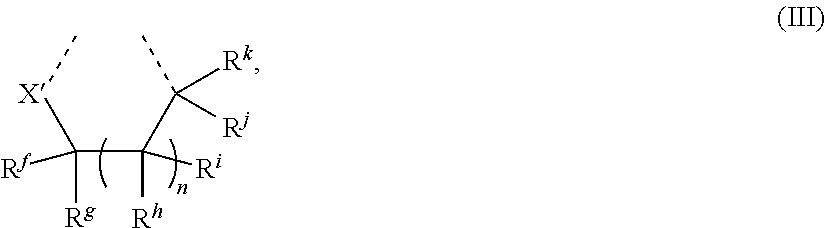

and Ir(ABIC)3 with the formula:


wherein Z3 is O or S and p is 0 or 1, such as


constitute the hole transport layer.

(4-phenyl-N-(4-phenylphenyl)-N-[4-[4-(N-[4-(4-phenyl-phenyl)phenyl]anilino)phenyl]phenyl]aniline),

(4-phenyl-N-(4-phenylphenyl)-N-[4-[4-(4-phenyl-N-(4-phenylphenyl)anilino)phenyl]phenyl]aniline),

(4-phenyl-N-[4-(9-phenylcarbazole-3-yl)phenyl]-N-(4-phenylphenyl)aniline),

(1,1′,3,3′-tetraphenylspiro[1,3,2-benzodiazasilole-2,2′-3a,7a-dihydro-1,3,2-benzodiazasilole]),

(N2,N2,N2′,N2′,N7,N7,N7′,N7′-octakis(p-tolyl)-9,9′-spirobi[fluorene]-2,2′,7,7′-tetramine), 4,4′-bis[N-(1-naphthyl)-N-phenylamino]biphenyl (α-NPD), N,N′-diphenyl-N,N′-bis(3-methylphenyl)-[1,1-biphenyl]-4,4′-diamine (TPD), 1,1-bis[(di-4-tolylamino)phenyl]cyclohexane (TAPC), N,N′-bis(4-methylphenyl)-N,N′-bis(4-ethylphenyl)-[1,1′-(3,3′-dimethyl)biphenyl]-4,4′-diamine (ETPD), tetrakis(3-methylphenyl)-N,N,N′,N′-2,5-phenylenediamine (PDA), α-phenyl-4-N,N-diphenylaminostyrene (TPS), p-(diethylamino)benzaldehyde diphenylhydrazone (DEH), triphenylamine (TPA), bis[4-(N,N-diethylamino)2-methylphenyl](4-methylphenyl)methane (MPMP), 1-phenyl-3-[p-(diethylamino)styryl]5-[p-(diethylamino)phenyl]pyrazoline (PPR or DEASP), 1,2-trans-bis(9H-carbazol9-yl)-cyclobutane (DCZB), N,N,N′,N′-tetrakis(4-methylphenyl)-(1,1′-biphenyl)-4,4′-diamine (TTB), fluorine compounds such as 2,2′,7,7′-tetra(N,N-di-tolypamino9,9-spirobifluorene (spiro-TTB), N,N′-bis(naphthalen-1-yl)-N,N′-bis(phenyl)9,9-spirobifluorene (spiro-NPB) and 9,9-bis(4-(N,N-bis-biphenyl-4-yl-amino)phenyl-9Hfluorene, benzidine compounds such as N,N′-bis(naphthalen-1-yl)-N,N′-bis(phenyl)benzidine and porphyrin compounds such as copper phthalocyanines. In addition, polymeric hole-injection materials can be used such as poly(N-vinylcarbazole) (PVK), polythiophenes, polypyrrole, polyaniline, self-doping polymers, such as, for example, sulfonated poly(thiophene-3-[2[(2-methoxyethoxy)ethoxy]-2,5-diyl) (Plexcore® OC Conducting Inks commercially available from Plextronics), and copolymers such as poly(3,4-ethylenedioxythiophene)/poly(4-styrenesulfonate) also called PEDOT/PSS.


Electron Transport Layer (g)


(A-10; =ETM-1) is most preferred.


which may be present as a single species, or in other forms such as LigQg in which g is an integer, for example Li6Q6. Q is an 8-hydroxyquinolate ligand or an 8-hydroxyquinolate derivative.


is most preferred.

US2012/0261654, such as, for example, a compound of formula

and WO2012/115034, such as for example, such as, for example, a compound of formula


or compound

(90% by wt.) is applied by spin coating with a thickness of 40 nm, the latter compounds functioning as matrix materials.
| Example | Host | HBL | ETL | γmax | CIE(x;y) |
| |
Host-2 | BPhen (40 nm) | 568 nm | 0.46;0.53 | |
| |
Host-1 | Host-1 | ETM-1: Liq (1:1, 35 nm) | 566 nm | 0.45;0.54 |
 |
|||||
Claims (16)


Applications Claiming Priority (4)
| Application Number | Priority Date | Filing Date | Title |
|---|---|---|---|
| EP14193650.0 | 2014-11-18 | ||
| EP14193650 | 2014-11-18 | ||
| EP14193650 | 2014-11-18 | ||
| PCT/EP2015/076940 WO2016079169A1 (en) | 2014-11-18 | 2015-11-18 | Pt- or pd-carbene complexes for use in organic light emitting diodes |
Publications (2)
| Publication Number | Publication Date |
|---|---|
| US20170365803A1 US20170365803A1 (en) | 2017-12-21 |
| US10424746B2 true US10424746B2 (en) | 2019-09-24 |
Family
ID=51900345
Family Applications (1)
| Application Number | Title | Priority Date | Filing Date |
|---|---|---|---|
| US15/526,787 Active US10424746B2 (en) | 2014-11-18 | 2015-11-18 | Pt- or Pd-carbene complexes for use in organic light emitting diodes |
Country Status (4)
| Country | Link |
|---|---|
| US (1) | US10424746B2 (en) |
| KR (1) | KR102512938B1 (en) |
| CN (1) | CN107074895B (en) |
| WO (1) | WO2016079169A1 (en) |
Cited By (2)
| Publication number | Priority date | Publication date | Assignee | Title |
|---|---|---|---|---|
| US20200136064A1 (en) * | 2004-11-25 | 2020-04-30 | Udc Ireland Limited | Use of transition metal carbene complexes in organic light-emitting diodes (oleds) |
| US20240324441A1 (en) * | 2021-05-31 | 2024-09-26 | Versitech Limited | Dinuclear platinum (ii) red emitters for oled applications |
Families Citing this family (15)
| Publication number | Priority date | Publication date | Assignee | Title |
|---|---|---|---|---|
| US11548905B2 (en) | 2016-12-15 | 2023-01-10 | Universal Display Corporation | Organic electroluminescent materials and devices |
| JP7459065B2 (en) | 2018-09-12 | 2024-04-01 | メルク パテント ゲーエムベーハー | Materials for organic electroluminescent devices |
| TWI826522B (en) | 2018-09-12 | 2023-12-21 | 德商麥克專利有限公司 | Electroluminescent devices |
| TW202030902A (en) | 2018-09-12 | 2020-08-16 | 德商麥克專利有限公司 | Electroluminescent devices |
| US12116378B2 (en) | 2018-12-04 | 2024-10-15 | The University Of Hong Kong | Transition metal luminescent complexes and methods of use |
| US20220127286A1 (en) | 2019-03-04 | 2022-04-28 | Merck Patent Gmbh | Ligands for nano-sized materials |
| KR102769410B1 (en) | 2019-04-11 | 2025-02-17 | 메르크 파텐트 게엠베하 | Materials for organic electroluminescent devices |
| CN114641482A (en) | 2019-11-04 | 2022-06-17 | 默克专利有限公司 | Material for organic electroluminescent device |
| TW202134252A (en) | 2019-11-12 | 2021-09-16 | 德商麥克專利有限公司 | Materials for organic electroluminescent devices |
| TW202136181A (en) | 2019-12-04 | 2021-10-01 | 德商麥克專利有限公司 | Materials for organic electroluminescent devices |
| CN115052865A (en) | 2020-01-29 | 2022-09-13 | 默克专利有限公司 | Benzimidazole Derivatives |
| WO2021191058A1 (en) | 2020-03-23 | 2021-09-30 | Merck Patent Gmbh | Materials for organic electroluminescent devices |
| CN112916210B (en) * | 2021-03-22 | 2022-06-24 | 广西科技大学 | Application method of novel triphenylamine olefin compound in zinc oxide ore flotation |
| US20240083931A1 (en) * | 2022-08-15 | 2024-03-14 | The University Of Hong Kong | Dinuclear platinum(ii) emitters for red and/or near-infrared oleds |
| KR20250110873A (en) | 2022-11-17 | 2025-07-21 | 메르크 파텐트 게엠베하 | Materials for organic electroluminescent devices |
Citations (11)
| Publication number | Priority date | Publication date | Assignee | Title |
|---|---|---|---|---|
| US20050260445A1 (en) * | 2004-05-18 | 2005-11-24 | Robert Walters | OLEDs utilizing macrocyclic ligand systems |
| WO2006056418A2 (en) | 2004-11-25 | 2006-06-01 | Basf Aktiengesellschaft | Use of transition metal carbene complexes in organic light-emitting diodes (oleds) |
| WO2006067074A1 (en) | 2004-12-23 | 2006-06-29 | Ciba Specialty Chemicals Holding Inc. | Electroluminescent metal complexes with nucleophilic carbene ligands |
| US20100213824A1 (en) * | 2007-05-21 | 2010-08-26 | Osram Opto Semiconductors Gmbh | Phosphorescent Metal Complex Compound Radiation Emitting Component Comprising a Phosphorescent Metal Complex Compound and Method for Production of a Phosphorescent Metal Complex Compound |
| US20100320449A1 (en) * | 2007-09-28 | 2010-12-23 | Osram Opto Semiconductors Gmbh | Organic Radiation-Emitting Component |
| US20110234089A1 (en) | 2008-11-28 | 2011-09-29 | Zhaomin Hou | Novel compound and use thereof |
| WO2012053627A1 (en) | 2010-10-22 | 2012-04-26 | Semiconductor Energy Laboratory Co., Ltd. | Organometallic complex, light-emitting element, light-emitting device, electronic device and lighting device |
| US20130341609A1 (en) | 2011-05-27 | 2013-12-26 | Universal Display Corporation | High efficiency yellow light emitters for oled devices |
| WO2014012972A1 (en) | 2012-07-19 | 2014-01-23 | Basf Se | Dinuclear metal complexes comprising carbene ligands and the use thereof in oleds |
| WO2014024131A1 (en) | 2012-08-09 | 2014-02-13 | Basf Se | Transition metal complexes with carbene ligands and use thereof in oleds |
| US20140203268A1 (en) | 2009-03-23 | 2014-07-24 | Universal Display Corporation | Heteroleptic iridium complex |
Family Cites Families (136)
| Publication number | Priority date | Publication date | Assignee | Title |
|---|---|---|---|---|
| JP3924648B2 (en) | 1999-11-02 | 2007-06-06 | ソニー株式会社 | Organic electroluminescence device |
| DE10338550A1 (en) | 2003-08-19 | 2005-03-31 | Basf Ag | Transition metal complexes with carbene ligands as emitters for organic light-emitting diodes (OLEDs) |
| US8231983B2 (en) | 2005-04-18 | 2012-07-31 | Konica Minolta Holdings Inc. | Organic electroluminescent device, display and illuminating device |
| KR101425423B1 (en) | 2005-05-30 | 2014-08-01 | 시바 홀딩 인크 | Electroluminescent device |
| KR20140028143A (en) | 2005-09-12 | 2014-03-07 | 가부시키가이샤 한도오따이 에네루기 켄큐쇼 | Quinoxaline derivative, and light emitting element, light emitting device, and electronic appliance using the same |
| EP1786050B1 (en) | 2005-11-10 | 2010-06-23 | Novaled AG | Doped organic semiconductor material |
| JP5181676B2 (en) | 2006-01-05 | 2013-04-10 | コニカミノルタホールディングス株式会社 | Organic electroluminescence element, display device and lighting device |
| EP1998387B1 (en) | 2006-03-17 | 2015-04-22 | Konica Minolta Holdings, Inc. | Organic electroluminescent device, display and illuminating device |
| US20070215889A1 (en) | 2006-03-20 | 2007-09-20 | Semiconductor Energy Laboratory Co., Ltd. | Aromatic amine compound, and light-emitting element, light-emitting device, and electronic appliance using the aromatic amine compound |
| ATE394800T1 (en) | 2006-03-21 | 2008-05-15 | Novaled Ag | HETEROCYCLIC RADICAL OR DIRADICAL, THEIR DIMERS, OLIGOMERS, POLYMERS, DISPIR COMPOUNDS AND POLYCYCLES, THEIR USE, ORGANIC SEMICONDUCTIVE MATERIAL AND ELECTRONIC COMPONENT |
| EP1837927A1 (en) | 2006-03-22 | 2007-09-26 | Novaled AG | Use of heterocyclic radicals for doping of organic semiconductors |
| US8920942B2 (en) | 2006-03-23 | 2014-12-30 | Konica Minolta Holdings, Inc. | Organic electroluminescent element, display device and illuminating device |
| US20070224446A1 (en) | 2006-03-24 | 2007-09-27 | Idemitsu Kosan Co., Ltd. | Material for organic electroluminescence device and organic electroluminescence device using the same |
| JP5463668B2 (en) | 2006-03-30 | 2014-04-09 | コニカミノルタ株式会社 | Organic electroluminescence element, lighting device and display device |
| EP2007781B1 (en) | 2006-04-04 | 2012-09-12 | Basf Se | Transition metal complexes comprising one noncarbene ligand and one or two carbene ligands and their use in oleds |
| CN101460515B (en) | 2006-04-05 | 2013-05-15 | 巴斯夫欧洲公司 | Heteroleptic transition metal-carbene complexes and their use in organic light-emitting diodes (OLEDs) |
| JP5055818B2 (en) | 2006-04-19 | 2012-10-24 | コニカミノルタホールディングス株式会社 | ORGANIC ELECTROLUMINESCENT ELEMENT MATERIAL, ORGANIC ELECTROLUMINESCENT ELEMENT, DISPLAY DEVICE AND LIGHTING DEVICE |
| EP2639231B1 (en) | 2006-04-26 | 2019-02-06 | Idemitsu Kosan Co., Ltd. | Aromatic amine derivative, and organic electroluminescence element using the same |
| US8563145B2 (en) | 2006-06-02 | 2013-10-22 | Idemitsu Kosan Co., Ltd. | Material containing two or three dibenzofuran groups, dibenzothiophene groups, or a combination thereof, which is operable for organic electroluminescence elements, and organic electroluminescence elements using the material |
| KR20090024300A (en) | 2006-06-26 | 2009-03-06 | 바스프 에스이 | Use in OLD of a transition metal-carbene complex that does not include any metal cyclization with bicarbenes |
| JP2008021687A (en) | 2006-07-10 | 2008-01-31 | Mitsubishi Chemicals Corp | Organic electroluminescent element material, organic electroluminescent element composition, and organic electroluminescent element |
| JP5139297B2 (en) | 2006-08-23 | 2013-02-06 | 出光興産株式会社 | Aromatic amine derivatives and organic electroluminescence devices using them |
| JP5444715B2 (en) | 2006-09-08 | 2014-03-19 | コニカミノルタ株式会社 | Organic electroluminescence element, lighting device and display device |
| JP2008066569A (en) | 2006-09-08 | 2008-03-21 | Konica Minolta Holdings Inc | Organic electroluminescence element, lighting device and display device |
| WO2008029652A1 (en) | 2006-09-08 | 2008-03-13 | Konica Minolta Holdings, Inc. | Organic electroluminescent device, illuminating device and display |
| CN102977032B (en) | 2006-09-14 | 2017-01-11 | Udc 爱尔兰有限责任公司 | Heterocyclic bridged biphenyls and their use in OLEDs |
| WO2008035571A1 (en) | 2006-09-20 | 2008-03-27 | Konica Minolta Holdings, Inc. | Organic electroluminescence element |
| US8241764B2 (en) | 2006-09-21 | 2012-08-14 | Basf Aktiengesellschaft | OLED display with extended lifetime |
| JP5589251B2 (en) | 2006-09-21 | 2014-09-17 | コニカミノルタ株式会社 | Organic electroluminescence element material |
| JP5011908B2 (en) | 2006-09-26 | 2012-08-29 | コニカミノルタホールディングス株式会社 | Organic electroluminescence element, display device and lighting device |
| EP1905768B1 (en) | 2006-09-29 | 2014-03-05 | Semiconductor Energy Laboratory Co., Ltd. | Quinoxaline derivative, and light-emitting device, electronic device using the quinoxaline derivative |
| JP5063992B2 (en) | 2006-11-20 | 2012-10-31 | ケミプロ化成株式会社 | Novel di (pyridylphenyl) derivative, electron transport material comprising the same, and organic electroluminescence device including the same |
| WO2008065975A1 (en) | 2006-11-30 | 2008-06-05 | Semiconductor Energy Laboratory Co., Ltd. | Light-emitting device |
| EP2437326A3 (en) | 2006-12-13 | 2013-11-13 | Konica Minolta Holdings, Inc. | Organic electroluminescent element, display device and lighting device |
| JP5381103B2 (en) | 2007-01-23 | 2014-01-08 | コニカミノルタ株式会社 | Manufacturing method of organic electroluminescence element, organic electroluminescence element obtained by the manufacturing method, display device and lighting device |
| JP2008207520A (en) | 2007-02-28 | 2008-09-11 | Konica Minolta Holdings Inc | Organic thin film, organic thin film manufacturing method, electronic device, organic electroluminescence element, display device and lighting device |
| DE102007012794B3 (en) | 2007-03-16 | 2008-06-19 | Novaled Ag | Pyrido [3,2-h] quinazolines and / or their 5,6-dihydro derivatives, their method of preparation and doped organic semiconductor material containing them |
| EP3076451B1 (en) | 2007-04-30 | 2019-03-06 | Novaled GmbH | Oxocarbon, pseudo oxocarbon and radial compounds and their use |
| JP5564942B2 (en) | 2007-05-16 | 2014-08-06 | コニカミノルタ株式会社 | Organic electroluminescence element, display device and lighting device |
| JP5359869B2 (en) | 2007-05-30 | 2013-12-04 | コニカミノルタ株式会社 | ORGANIC ELECTROLUMINESCENT ELEMENT, METHOD FOR PRODUCING ORGANIC ELECTROLUMINESCENT ELEMENT, DISPLAY DEVICE AND LIGHTING DEVICE |
| JP5540701B2 (en) | 2007-06-21 | 2014-07-02 | コニカミノルタ株式会社 | Organic electroluminescence element material |
| US8697255B2 (en) | 2007-07-05 | 2014-04-15 | Basf Se | Organic light-emitting diodes comprising at least one disilyl compound selected from disilylcarbazoles, disilyldibenzofurans, disilyldibenzothiophenes, disilyldibenzopholes, disilyldibenzothiophene S-oxides and disilyldibenzothiophene S,S-dioxides |
| CN101878552B (en) | 2007-07-05 | 2015-07-15 | 巴斯夫欧洲公司 | Organic light-emitting diodes containing carbene transition metal complex emitters and at least one compound selected from disilylcarbazoles, disilyldibenzofurans, disilyldibenzothiophenes, disilyldibenzophospholes, disilyldibenzothiophene s-oxides a |
| US8114530B2 (en) | 2007-07-10 | 2012-02-14 | Idemitsu Kosan Co., Ltd. | Material for organic electroluminescence device and organic electroluminescence device utilizing the same |
| JP5194596B2 (en) | 2007-07-11 | 2013-05-08 | コニカミノルタホールディングス株式会社 | Organic electroluminescence element, display device and lighting device |
| CN101827834B (en) | 2007-08-08 | 2015-11-25 | 通用显示公司 | Benzo-fused thiophene or benzo-fused furan compounds containing benzo[9,10]phenanthrene |
| JP5186843B2 (en) | 2007-08-30 | 2013-04-24 | コニカミノルタホールディングス株式会社 | Organic electroluminescence element, lighting device and display device |
| JP2009114370A (en) | 2007-11-08 | 2009-05-28 | Konica Minolta Holdings Inc | ORGANIC ELECTROLUMINESCENT ELEMENT MATERIAL, ORGANIC ELECTROLUMINESCENT ELEMENT AND DISPLAY DEVICE, LIGHTING DEVICE |
| JP5691170B2 (en) | 2007-11-08 | 2015-04-01 | コニカミノルタ株式会社 | Method for manufacturing organic electroluminescence element |
| JP5458890B2 (en) | 2007-11-08 | 2014-04-02 | コニカミノルタ株式会社 | Organic electroluminescence element, display device and lighting device |
| JP5593696B2 (en) | 2007-11-08 | 2014-09-24 | コニカミノルタ株式会社 | Method for manufacturing organic electroluminescence device |
| JP2009114369A (en) | 2007-11-08 | 2009-05-28 | Konica Minolta Holdings Inc | ORGANIC ELECTROLUMINESCENT MATERIAL, ORGANIC ELECTROLUMINESCENT ELEMENT, DISPLAY DEVICE AND LIGHTING DEVICE |
| WO2009060779A1 (en) | 2007-11-08 | 2009-05-14 | Konica Minolta Holdings, Inc. | Organic electroluminescent device material, organic electroluminescent device, display device and illuminating device |
| JPWO2009063757A1 (en) | 2007-11-14 | 2011-03-31 | コニカミノルタホールディングス株式会社 | ORGANIC ELECTROLUMINESCENT ELEMENT MATERIAL, ORGANIC ELECTROLUMINESCENT ELEMENT, METHOD FOR PRODUCING ORGANIC ELECTROLUMINESCENT ELEMENT, DISPLAY DEVICE AND LIGHTING DEVICE |
| JP2009135183A (en) | 2007-11-29 | 2009-06-18 | Konica Minolta Holdings Inc | Organic electroluminescence element, display, and lighting device |
| JP5574598B2 (en) | 2007-12-03 | 2014-08-20 | 株式会社半導体エネルギー研究所 | Quinoxaline derivative, and light-emitting element, light-emitting device, and electronic device using quinoxaline derivative |
| US20090153034A1 (en) | 2007-12-13 | 2009-06-18 | Universal Display Corporation | Carbazole-containing materials in phosphorescent light emittinig diodes |
| US8221905B2 (en) | 2007-12-28 | 2012-07-17 | Universal Display Corporation | Carbazole-containing materials in phosphorescent light emitting diodes |
| WO2009084413A1 (en) | 2007-12-28 | 2009-07-09 | Konica Minolta Holdings, Inc. | Organic electroluminescent device and method for manufacturing organic electroluminescent device |
| JP5549053B2 (en) | 2008-01-18 | 2014-07-16 | コニカミノルタ株式会社 | ORGANIC ELECTROLUMINESCENT ELEMENT MATERIAL, ORGANIC ELECTROLUMINESCENT ELEMENT, METHOD FOR PRODUCING ORGANIC ELECTROLUMINESCENT ELEMENT, DISPLAY DEVICE AND LIGHTING DEVICE |
| JP2009182298A (en) | 2008-02-01 | 2009-08-13 | Konica Minolta Holdings Inc | Organic electroluminescence element, lighting device and display device |
| JP5381719B2 (en) | 2008-02-20 | 2014-01-08 | コニカミノルタ株式会社 | White light emitting organic electroluminescence device |
| JP2009267255A (en) | 2008-04-28 | 2009-11-12 | Idemitsu Kosan Co Ltd | Material for organic electroluminescent element and organic electroluminescent element using the material |
| US8057712B2 (en) | 2008-04-29 | 2011-11-15 | Novaled Ag | Radialene compounds and their use |
| EP2479234B1 (en) | 2008-05-13 | 2017-06-21 | Konica Minolta Holdings, Inc. | Organic electroluminescent element, display device and lighting device |
| KR20140069342A (en) | 2008-05-16 | 2014-06-09 | 가부시키가이샤 한도오따이 에네루기 켄큐쇼 | Light-emitting element and electronic device |
| WO2009157498A1 (en) | 2008-06-25 | 2009-12-30 | Semiconductor Energy Laboratory Co., Ltd. | Organometallic complex, and lighting apparatus, and electronic device using the organometallic complex |
| KR20160140980A (en) | 2008-06-30 | 2016-12-07 | 유니버셜 디스플레이 코포레이션 | Hole transport materials having a sulfer-containing group |
| KR101676501B1 (en) | 2008-06-30 | 2016-11-15 | 유니버셜 디스플레이 코포레이션 | Hole transport materials containing triphenylene |
| US20110084601A1 (en) | 2008-07-01 | 2011-04-14 | Konica Minolta Holdings, Inc. | White light emission organic electroluminescent element, illuminating device and display |
| JP2010021336A (en) | 2008-07-10 | 2010-01-28 | Konica Minolta Holdings Inc | Organic electroluminescence device, illuminator, and display device |
| WO2010004877A1 (en) | 2008-07-10 | 2010-01-14 | コニカミノルタホールディングス株式会社 | Organic electroluminescent element, display device and illuminating device |
| JP5338184B2 (en) | 2008-08-06 | 2013-11-13 | コニカミノルタ株式会社 | Organic electroluminescence element, display device, lighting device |
| WO2010027583A1 (en) | 2008-09-03 | 2010-03-11 | Universal Display Corporation | Phosphorescent materials |
| KR101549878B1 (en) | 2008-09-05 | 2015-09-03 | 가부시키가이샤 한도오따이 에네루기 켄큐쇼 | Organic semiconductor material and light-emitting element, light-emitting device, lighting system, and electronic device using the same |
| JP5479759B2 (en) | 2008-09-05 | 2014-04-23 | 株式会社半導体エネルギー研究所 | Benzoxazole derivatives, materials for light-emitting elements, light-emitting elements, light-emitting devices, and electronic devices |
| ATE517088T1 (en) | 2008-09-19 | 2011-08-15 | Semiconductor Energy Lab | CARBAZOLE DERIVATIVE AND PRODUCTION METHOD THEREOF |
| KR101929837B1 (en) | 2008-10-07 | 2018-12-18 | 유디씨 아일랜드 리미티드 | Siloles substituted with condensed ring systems and use thereof in organic electronics |
| WO2010044342A1 (en) | 2008-10-15 | 2010-04-22 | コニカミノルタホールディングス株式会社 | Organic el element, organic el element manufacturing method, white organic el element, display device, and illumination device |
| US8283055B2 (en) | 2008-10-17 | 2012-10-09 | Semiconductor Energy Laboratory Co., Ltd. | Material for light-emitting element, light-emitting element, light-emitting device, electronic device, and lighting device |
| ES2370120T3 (en) | 2008-10-23 | 2011-12-12 | Novaled Ag | RADIALENE COMPOUND AND ITS USE. |
| KR101597855B1 (en) | 2008-10-23 | 2016-02-25 | 유니버셜 디스플레이 코포레이션 | Organic light emitting device and materials for use in same |
| JP5493333B2 (en) | 2008-11-05 | 2014-05-14 | コニカミノルタ株式会社 | ORGANIC ELECTROLUMINESCENT ELEMENT, WHITE ORGANIC ELECTROLUMINESCENT ELEMENT, DISPLAY DEVICE AND LIGHTING DEVICE |
| KR101919207B1 (en) | 2008-11-11 | 2018-11-15 | 유니버셜 디스플레이 코포레이션 | Phosphorescent emitters |
| JP5707665B2 (en) | 2008-12-03 | 2015-04-30 | コニカミノルタ株式会社 | ORGANIC ELECTROLUMINESCENCE ELEMENT, LIGHTING DEVICE AND DISPLAY DEVICE HAVING THE ELEMENT |
| WO2010067746A1 (en) | 2008-12-08 | 2010-06-17 | コニカミノルタホールディングス株式会社 | Organic electroluminescence element, display device and illumination device |
| US20100156957A1 (en) | 2008-12-19 | 2010-06-24 | Semiconductor Energy Laboratory Co., Ltd. | Organic compound, anthracene derivative, and light-emitting elements, light-emitting devices, electronic devices, and lighting devices using the anthracene derivative |
| CN102341403B (en) | 2009-01-07 | 2014-12-03 | 巴斯夫欧洲公司 | Silyl- and heteroatom-substituted compounds selected from carbazoles, dibenzofurans, dibenzothiophenes and dibenzophospholes, and use thereof in organic electronics |
| JP5810529B2 (en) | 2009-01-09 | 2015-11-11 | コニカミノルタ株式会社 | Organic electroluminescence element, display device and lighting device |
| JP5472121B2 (en) | 2009-01-28 | 2014-04-16 | コニカミノルタ株式会社 | ORGANIC ELECTROLUMINESCENT ELEMENT, DISPLAY DEVICE AND LIGHTING DEVICE, AND METHOD FOR PRODUCING ORGANIC ELECTROLUMINESCENT ELEMENT |
| EP2395573B1 (en) | 2009-02-06 | 2019-02-27 | Konica Minolta Holdings, Inc. | Organic electroluminescent element, and illumination device and display device each comprising the element |
| JP5765223B2 (en) | 2009-02-18 | 2015-08-19 | コニカミノルタ株式会社 | MANUFACTURING METHOD FOR ORGANIC ELECTROLUMINESCENT ELEMENT, AND LIGHTING DEVICE AND DISPLAY DEVICE PROVIDED WITH ORGANIC ELECTROLUMINESCENT ELEMENT |
| KR101705213B1 (en) | 2009-02-26 | 2017-02-09 | 노발레드 게엠베하 | Quinone compounds as dopants in organic electronics |
| EP2246862A1 (en) | 2009-04-27 | 2010-11-03 | Novaled AG | Organic electronic device comprising an organic semiconducting material |
| US8603642B2 (en) | 2009-05-13 | 2013-12-10 | Global Oled Technology Llc | Internal connector for organic electronic devices |
| WO2010145991A1 (en) | 2009-06-18 | 2010-12-23 | Basf Se | Phenanthroazole compounds as hole transporting materials for electro luminescent devices |
| JP5040970B2 (en) | 2009-07-24 | 2012-10-03 | 富士通株式会社 | System control server, storage system, setting method and setting program |
| EP2662369B1 (en) | 2009-12-23 | 2015-09-23 | Semiconductor Energy Laboratory Co., Ltd. | Benzimidazol-2-yl-phenyl compound, light-emitting element, light-emitting device, electronic device, and lighting device |
| DE102010004453A1 (en) | 2010-01-12 | 2011-07-14 | Novaled AG, 01307 | Organic light emitting component has connection units formed with p-doped and n-doped hole transport layers and n-type and p-type dot layers formed with organic n-dopant and p-dopant materials respectively |
| US8288187B2 (en) | 2010-01-20 | 2012-10-16 | Universal Display Corporation | Electroluminescent devices for lighting applications |
| TWI415846B (en) | 2010-03-01 | 2013-11-21 | Semiconductor Energy Lab | Heterocyclic compound, light-emitting element, light-emitting device, electronic device, and lighting device |
| EP2366753B1 (en) | 2010-03-02 | 2015-06-17 | Semiconductor Energy Laboratory Co., Ltd. | Light-Emitting Element and Lighting Device |
| US9175211B2 (en) | 2010-03-03 | 2015-11-03 | Universal Display Corporation | Phosphorescent materials |
| US8968887B2 (en) | 2010-04-28 | 2015-03-03 | Universal Display Corporation | Triphenylene-benzofuran/benzothiophene/benzoselenophene compounds with substituents joining to form fused rings |
| WO2011136755A1 (en) | 2010-04-28 | 2011-11-03 | Universal Display Corporation | Depositing premixed materials |
| US9073948B2 (en) | 2010-05-14 | 2015-07-07 | Universal Display Corporation | Azaborine compounds as host materials and dopants for PHOLEDs |
| TWI492944B (en) | 2010-05-21 | 2015-07-21 | Semiconductor Energy Lab | Triazole derivative, and light-emitting element, light-emitting device, electronic device and lighting device using the triazole derivative |
| WO2011157779A1 (en) | 2010-06-18 | 2011-12-22 | Basf Se | Organic electronic devices comprising a layer of a pyridine compound and a 8-hydroxyquinolinolato earth alkaline metal, or alkali metal complex |
| JP5990515B2 (en) | 2010-06-18 | 2016-09-14 | ビーエーエスエフ ソシエタス・ヨーロピアBasf Se | Organic electronic device comprising a layer of a dibenzofuran compound and an 8-hydroxyquinolinolato alkaline earth metal complex or an 8-hydroxyquinolinolato alkali metal complex |
| WO2012014621A1 (en) | 2010-07-29 | 2012-02-02 | コニカミノルタホールディングス株式会社 | Transparent conductive film and organic electroluminescent element |
| DE112011102597B4 (en) | 2010-08-02 | 2018-04-26 | Semiconductor Energy Laboratory Co., Ltd. | Triazole derivative, heterocyclic compound, and use in light-emitting elements, light-emitting devices, electronic devices, and lighting devices |
| ES2386564B1 (en) | 2010-08-06 | 2013-04-26 | Telefónica, S.A. | METHOD FOR MANAGING PRESENCE INFORMATION. |
| US9954180B2 (en) | 2010-08-20 | 2018-04-24 | Universal Display Corporation | Bicarbazole compounds for OLEDs |
| JP5815341B2 (en) | 2010-09-09 | 2015-11-17 | 株式会社半導体エネルギー研究所 | Heterocyclic compounds |
| CN107266398A (en) | 2010-10-07 | 2017-10-20 | Udc 爱尔兰有限责任公司 | Phenanthro- [9,10 b] furans for electronic application |
| KR101950363B1 (en) | 2010-10-29 | 2019-02-20 | 가부시키가이샤 한도오따이 에네루기 켄큐쇼 | Phenanthrene compound, light-emitting element, light-emitting device, electronic device, and lighting device |
| TWI520952B (en) | 2010-11-18 | 2016-02-11 | 半導體能源研究所股份有限公司 | Oxadiazole derivative, and light-emitting element, light-emitting device, electronic device, and lighting device using the oxadiazole derivative |
| JP5872861B2 (en) | 2010-11-30 | 2016-03-01 | 株式会社半導体エネルギー研究所 | Carbazole compounds |
| KR101910030B1 (en) | 2010-11-30 | 2018-10-19 | 가부시키가이샤 한도오따이 에네루기 켄큐쇼 | Benzoxazole derivative, light-emitting element, light-emitting device, electronic device, and lighting device |
| WO2012105310A1 (en) | 2011-02-02 | 2012-08-09 | コニカミノルタホールディングス株式会社 | Organic electroluminescence element and illumination device |
| US20130306962A1 (en) | 2011-02-11 | 2013-11-21 | Universal Display Corporation | Organic light emitting device and materials for use in same |
| KR20140043043A (en) | 2011-02-11 | 2014-04-08 | 유니버셜 디스플레이 코포레이션 | Organic light emitting device and materials for use in same |
| US9368735B2 (en) | 2011-02-15 | 2016-06-14 | Konica Minolta, Inc. | Organic electroluminescence element and illumination device |
| JP5839027B2 (en) | 2011-02-22 | 2016-01-06 | コニカミノルタ株式会社 | ORGANIC ELECTROLUMINESCENCE ELEMENT, ITS MANUFACTURING METHOD, LIGHTING DEVICE, AND DISPLAY DEVICE |
| US8883322B2 (en) | 2011-03-08 | 2014-11-11 | Universal Display Corporation | Pyridyl carbene phosphorescent emitters |
| EP3034508B1 (en) | 2011-03-25 | 2019-12-04 | UDC Ireland Limited | 4h-imidazo[1,2-a]imidazoles for electronic applications |
| JP5821951B2 (en) | 2011-04-26 | 2015-11-24 | コニカミノルタ株式会社 | ORGANIC ELECTROLUMINESCENT ELEMENT AND LIGHTING DEVICE |
| KR20120135363A (en) | 2011-06-01 | 2012-12-13 | 엘지디스플레이 주식회사 | Blue phosphorescent compound and organic electroluminescence device using the same |
| WO2012172482A1 (en) | 2011-06-14 | 2012-12-20 | Basf Se | Metal complexes comprising azabenzimidazole carbene ligands and the use thereof in oleds |
| WO2013022419A1 (en) | 2011-08-05 | 2013-02-14 | Universal Display Corporation | Phosphorescent organic light emitting devices combined with hole transport material having high operating stability |
| CN103906786B (en) | 2011-10-04 | 2017-06-09 | 巴斯夫欧洲公司 | Polymer based on benzo diketone |
| US9193745B2 (en) | 2011-11-15 | 2015-11-24 | Universal Display Corporation | Heteroleptic iridium complex |
| US10211413B2 (en) | 2012-01-17 | 2019-02-19 | Universal Display Corporation | Organic electroluminescent materials and devices |
| WO2013112557A1 (en) | 2012-01-26 | 2013-08-01 | Universal Display Corporation | Phosphorescent organic light emitting devices having a hole transporting cohost material in the emissive region |
| EP3232485A1 (en) | 2012-07-10 | 2017-10-18 | UDC Ireland Limited | Benzimidazo[1,2-a]benzimidazole derivatives for electronic applications |
| US10249827B2 (en) | 2012-09-20 | 2019-04-02 | Udc Ireland Limited | Azadibenzofurans for electronic applications |
-
2015
- 2015-11-18 KR KR1020177006545A patent/KR102512938B1/en active Active
- 2015-11-18 US US15/526,787 patent/US10424746B2/en active Active
- 2015-11-18 WO PCT/EP2015/076940 patent/WO2016079169A1/en not_active Ceased
- 2015-11-18 CN CN201580056202.0A patent/CN107074895B/en active Active
Patent Citations (13)
| Publication number | Priority date | Publication date | Assignee | Title |
|---|---|---|---|---|
| US20050260445A1 (en) * | 2004-05-18 | 2005-11-24 | Robert Walters | OLEDs utilizing macrocyclic ligand systems |
| WO2006056418A2 (en) | 2004-11-25 | 2006-06-01 | Basf Aktiengesellschaft | Use of transition metal carbene complexes in organic light-emitting diodes (oleds) |
| CN101065389A (en) | 2004-11-25 | 2007-10-31 | 巴斯福股份公司 | Use of transition metal carbene complexes in organic light-emitting diodes (OLEDS) |
| WO2006067074A1 (en) | 2004-12-23 | 2006-06-29 | Ciba Specialty Chemicals Holding Inc. | Electroluminescent metal complexes with nucleophilic carbene ligands |
| US20100213824A1 (en) * | 2007-05-21 | 2010-08-26 | Osram Opto Semiconductors Gmbh | Phosphorescent Metal Complex Compound Radiation Emitting Component Comprising a Phosphorescent Metal Complex Compound and Method for Production of a Phosphorescent Metal Complex Compound |
| US20100320449A1 (en) * | 2007-09-28 | 2010-12-23 | Osram Opto Semiconductors Gmbh | Organic Radiation-Emitting Component |
| US20110234089A1 (en) | 2008-11-28 | 2011-09-29 | Zhaomin Hou | Novel compound and use thereof |
| CN102227438A (en) | 2008-11-28 | 2011-10-26 | 独立行政法人理化学研究所 | Novel compound and utilization of same |
| US20140203268A1 (en) | 2009-03-23 | 2014-07-24 | Universal Display Corporation | Heteroleptic iridium complex |
| WO2012053627A1 (en) | 2010-10-22 | 2012-04-26 | Semiconductor Energy Laboratory Co., Ltd. | Organometallic complex, light-emitting element, light-emitting device, electronic device and lighting device |
| US20130341609A1 (en) | 2011-05-27 | 2013-12-26 | Universal Display Corporation | High efficiency yellow light emitters for oled devices |
| WO2014012972A1 (en) | 2012-07-19 | 2014-01-23 | Basf Se | Dinuclear metal complexes comprising carbene ligands and the use thereof in oleds |
| WO2014024131A1 (en) | 2012-08-09 | 2014-02-13 | Basf Se | Transition metal complexes with carbene ligands and use thereof in oleds |
Non-Patent Citations (4)
| Title |
|---|
| A. Tronnier, "Phosphorescent C∧C* Cyclometalated Ptll Dibenzofurangl-NHC Complexes-AN Auxiliary Ligand Study," Eur. J. Inorg. Chem., 2014, 256-264. |
| Baldo et al., "Very high-efficiency green organic light-emitting devices based on electrophosphorescence," Appl. Phys. Lett., vol. 75, No. 1, 4-6 (1999). |
| Japanese Office Action dated Oct. 31, 2018 in JP Application No. 201580056202, 8 pages. |
| Y. Unger, "Green-Blue Emitters: NHC-Based Cyclometalated [Pt(C∧C*)(acac)] Complexes," Angew. Chem. Int. Ed., 2010-11-29, 10214-10216. |
Cited By (4)
| Publication number | Priority date | Publication date | Assignee | Title |
|---|---|---|---|---|
| US20200136064A1 (en) * | 2004-11-25 | 2020-04-30 | Udc Ireland Limited | Use of transition metal carbene complexes in organic light-emitting diodes (oleds) |
| US11980086B2 (en) * | 2004-11-25 | 2024-05-07 | Udc Ireland Limited | Use of transition metal carbene complexes in organic light-emitting diodes (OLEDs) |
| US20240324441A1 (en) * | 2021-05-31 | 2024-09-26 | Versitech Limited | Dinuclear platinum (ii) red emitters for oled applications |
| US12545698B2 (en) * | 2021-05-31 | 2026-02-10 | Versitech Limited | Dinuclear platinum (II) red emitters for OLED applications |
Also Published As
| Publication number | Publication date |
|---|---|
| KR20170084011A (en) | 2017-07-19 |
| KR102512938B1 (en) | 2023-03-23 |
| CN107074895B (en) | 2020-03-17 |
| CN107074895A (en) | 2017-08-18 |
| US20170365803A1 (en) | 2017-12-21 |
| WO2016079169A1 (en) | 2016-05-26 |
Similar Documents
| Publication | Publication Date | Title |
|---|---|---|
| US10424746B2 (en) | Pt- or Pd-carbene complexes for use in organic light emitting diodes | |
| US10370396B2 (en) | Metal complexes, comprising carbene ligands having an O-substituted non-cyclometallated aryl group and their use in organic light emitting diodes | |
| US11605790B2 (en) | Monosubstituted diazabenzimidazole carbene metal complexes for use in organic light emitting diodes | |
| JP6726221B2 (en) | Transition metal complexes with carbene ligands and their use in OLEDs | |
| US10490754B2 (en) | Transition metal complexes with tripodal ligands and the use thereof in OLEDs | |
| US8241764B2 (en) | OLED display with extended lifetime | |
| US10128448B2 (en) | Transition metal complexes with carbene ligands and the use thereof in OLEDs | |
| US9203037B2 (en) | Organic electronic devices comprising a layer of a dibenzofurane compound and a 8-hydroxypquinolinolato earth alkaline metal, or alkali metal complex | |
| CN105993083B (en) | Efficient OLED device with extremely short decay time | |
| EP3126368B1 (en) | Silyl-benzimidazolo[1,2-a]benzimidazole as host for organic light emitting diodes | |
| US10374172B2 (en) | Azabenzimidazole carbene complexes as efficiency booster in OLEDs | |
| CN102089896A (en) | Deuterated transition metal complex and use thereof in organic light-emitting diodes V | |
| CN102089403A (en) | Novel transition metal complex and use thereof in organic light-emitting diodes - III | |
| US20110309344A1 (en) | Organic electronic devices comprising a layer of a pyridine compound and a 8-hydroxypquinolinolato earth alkaline metal, or alkali metal complex | |
| CN102119205A (en) | Novel transition metal complexes and use thereof in organic light-emitting diodes -IV |
Legal Events
| Date | Code | Title | Description |
|---|---|---|---|
| STPP | Information on status: patent application and granting procedure in general |
Free format text: DOCKETED NEW CASE - READY FOR EXAMINATION |
|
| STPP | Information on status: patent application and granting procedure in general |
Free format text: NOTICE OF ALLOWANCE MAILED -- APPLICATION RECEIVED IN OFFICE OF PUBLICATIONS |
|
| AS | Assignment |
Owner name: UDC IRELAND LIMITED, IRELAND Free format text: ASSIGNMENT OF ASSIGNORS INTEREST;ASSIGNOR:BASF SE;REEL/FRAME:049059/0062 Effective date: 20160628 |
|
| STPP | Information on status: patent application and granting procedure in general |
Free format text: PUBLICATIONS -- ISSUE FEE PAYMENT VERIFIED |
|
| STCF | Information on status: patent grant |
Free format text: PATENTED CASE |
|
| MAFP | Maintenance fee payment |
Free format text: PAYMENT OF MAINTENANCE FEE, 4TH YEAR, LARGE ENTITY (ORIGINAL EVENT CODE: M1551); ENTITY STATUS OF PATENT OWNER: LARGE ENTITY Year of fee payment: 4 |