US10254508B2 - Converter device and image capturing apparatus - Google Patents
Converter device and image capturing apparatus Download PDFInfo
- Publication number
- US10254508B2 US10254508B2 US15/360,740 US201615360740A US10254508B2 US 10254508 B2 US10254508 B2 US 10254508B2 US 201615360740 A US201615360740 A US 201615360740A US 10254508 B2 US10254508 B2 US 10254508B2
- Authority
- US
- United States
- Prior art keywords
- image
- represented
- optical system
- lens
- reimaging
- Prior art date
- Legal status (The legal status is an assumption and is not a legal conclusion. Google has not performed a legal analysis and makes no representation as to the accuracy of the status listed.)
- Active, expires
Links
Images




Classifications
-
- G—PHYSICS
- G02—OPTICS
- G02B—OPTICAL ELEMENTS, SYSTEMS OR APPARATUS
- G02B13/00—Optical objectives specially designed for the purposes specified below
- G02B13/001—Miniaturised objectives for electronic devices, e.g. portable telephones, webcams, PDAs, small digital cameras
- G02B13/0015—Miniaturised objectives for electronic devices, e.g. portable telephones, webcams, PDAs, small digital cameras characterised by the lens design
- G02B13/002—Miniaturised objectives for electronic devices, e.g. portable telephones, webcams, PDAs, small digital cameras characterised by the lens design having at least one aspherical surface
- G02B13/0045—Miniaturised objectives for electronic devices, e.g. portable telephones, webcams, PDAs, small digital cameras characterised by the lens design having at least one aspherical surface having five or more lenses
-
- G—PHYSICS
- G02—OPTICS
- G02B—OPTICAL ELEMENTS, SYSTEMS OR APPARATUS
- G02B7/00—Mountings, adjusting means, or light-tight connections, for optical elements
- G02B7/02—Mountings, adjusting means, or light-tight connections, for optical elements for lenses
- G02B7/14—Mountings, adjusting means, or light-tight connections, for optical elements for lenses adapted to interchange lenses
-
- G—PHYSICS
- G02—OPTICS
- G02B—OPTICAL ELEMENTS, SYSTEMS OR APPARATUS
- G02B13/00—Optical objectives specially designed for the purposes specified below
- G02B13/16—Optical objectives specially designed for the purposes specified below for use in conjunction with image converters or intensifiers, or for use with projectors, e.g. objectives for projection TV
-
- G—PHYSICS
- G02—OPTICS
- G02B—OPTICAL ELEMENTS, SYSTEMS OR APPARATUS
- G02B15/00—Optical objectives with means for varying the magnification
- G02B15/02—Optical objectives with means for varying the magnification by changing, adding, or subtracting a part of the objective, e.g. convertible objective
- G02B15/04—Optical objectives with means for varying the magnification by changing, adding, or subtracting a part of the objective, e.g. convertible objective by changing a part
- G02B15/08—Optical objectives with means for varying the magnification by changing, adding, or subtracting a part of the objective, e.g. convertible objective by changing a part by changing the rear part
-
- G—PHYSICS
- G02—OPTICS
- G02B—OPTICAL ELEMENTS, SYSTEMS OR APPARATUS
- G02B15/00—Optical objectives with means for varying the magnification
- G02B15/02—Optical objectives with means for varying the magnification by changing, adding, or subtracting a part of the objective, e.g. convertible objective
- G02B15/10—Optical objectives with means for varying the magnification by changing, adding, or subtracting a part of the objective, e.g. convertible objective by adding a part, e.g. close-up attachment
-
- H—ELECTRICITY
- H04—ELECTRIC COMMUNICATION TECHNIQUE
- H04N—PICTORIAL COMMUNICATION, e.g. TELEVISION
- H04N23/00—Cameras or camera modules comprising electronic image sensors; Control thereof
- H04N23/60—Control of cameras or camera modules
- H04N23/69—Control of means for changing angle of the field of view, e.g. optical zoom objectives or electronic zooming
-
- H04N5/2254—
-
- H04N5/23296—
-
- H—ELECTRICITY
- H04—ELECTRIC COMMUNICATION TECHNIQUE
- H04N—PICTORIAL COMMUNICATION, e.g. TELEVISION
- H04N23/00—Cameras or camera modules comprising electronic image sensors; Control thereof
- H04N23/60—Control of cameras or camera modules
- H04N23/67—Focus control based on electronic image sensor signals
- H04N23/673—Focus control based on electronic image sensor signals based on contrast or high frequency components of image signals, e.g. hill climbing method
Definitions
- a lens component having negative refractive power and a lens component having positive refractive power are arranged in order from the object side.
- the focal length of the interchangeable lens is extended by making axial light flux be afocal with the lens component having negative refractive power and by converging the light flux with the lens component having positive refractive power.
- the teleconverter is directed to extending the focal length while keeping optical performance, by arranging the lens component having negative refractive power at a position where the height of an axial ray becomes high.
- the teleconverter discussed in Japanese Patent Application Laid-Open No. 2015-102734 is arranged on the image side of an imaging lens that has a long focal length and has a relatively long back focus.
- the teleconverter can be arranged on the object side comparatively, which makes it possible to arrange the lens component having negative refractive power at a position where the height of an axial ray becomes high. As a result, the focal length of the imaging lens can be readily extended.
- the attachment position of the teleconverter is moved toward the image side, as compared with the case where the teleconverter is attached to the imaging lens having a long back focus.
- the lens component having negative refractive power is arranged at a position where the height of an axial ray is low, which makes it difficult to sufficiently extend the focal length of the imaging lens.
- the back focus typically tends to be short in interchangeable lenses having wide field angles, so that it is often difficult to extend the focal lengths of those interchangeable lenses by attaching converter device between such an interchangeable lens and a camera body.
- mirrorless cameras have no quick return mirrors, so that the back focus to be required is shorter as compared with single-lens reflex cameras. Consequently, interchangeable lenses for mirrorless cameras can be readily downsized as compared with interchangeable lenses for single-lens cameras. Meanwhile, from the viewpoint of space, in the interchangeable lenses for mirrorless cameras, it is often difficult to extend the focal length of those interchangeable lenses by attaching a converter device.
- conventional converter devices are unsuitable for the interchangeable lenses having relatively wide field angles or the interchangeable lenses for mirrorless cameras.
- the conventional converter devices have difficulty sufficiently extending the focal lengths of those interchangeable lenses.
- a converter device to be attached between a lens device, which is attachable to and detachable from an image capturing apparatus, and the image capturing apparatus includes a reimaging optical system configured to reimage a primary image formed by the lens device on an image plane as a secondary image, wherein, given that an imaging magnification of the reimaging optical system is represented as ⁇ c, a distance on an optical axis from a lens surface nearest to an object side in the reimaging optical system to the primary image is represented as Objc, and a distance on the optical axis from the lens surface nearest to the object side in the reimaging optical system to the secondary image is represented as Tdc, the following condition expressions are satisfied: ⁇ 5.00 ⁇ c ⁇ 0.55; and ⁇ 0.20 ⁇ Objc/Tdc ⁇ 0.50.
- FIGS. 1A and 1B are cross sectional views of an interchangeable lens A at a wide-angle end and a telephoto end, respectively.
- FIGS. 2A and 2B illustrate aberration diagrams of the interchangeable lens A at the wide-angle end and the telephoto end, respectively.
- FIGS. 3A and 3B are cross sectional views of an interchangeable lens B at a wide-angle end and a telephoto end, respectively.
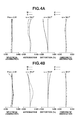
- FIGS. 4A and 4B illustrate aberration diagrams of the interchangeable lens B at the wide-angle end and the telephoto end, respectively.
- FIG. 5 is a cross sectional view of a converter device according to a first exemplary embodiment.
- FIG. 6 illustrates aberration diagrams of the converter device according to the first exemplary embodiment.
- FIGS. 7A and 7B are cross sectional views at a wide-angle end and a telephoto end, respectively, when the converter device according to the first exemplary embodiment is attached to the interchangeable lens A.
- FIGS. 8A and 8B illustrate aberration diagrams at the wide-angle end and the telephoto end, respectively, when the converter device according to the first exemplary embodiment is attached to the interchangeable lens A.
- FIGS. 9A and 9B are cross sectional views at a wide-angle end and a telephoto end, respectively, when the converter device according to the first exemplary embodiment is attached to the interchangeable lens B.
- FIGS. 10A and 10B illustrate aberration diagrams at the wide-angle end and the telephoto end, respectively, when the converter device according to the first exemplary embodiment is attached to the interchangeable lens B.
- FIG. 11 is a cross sectional view of a converter device according to a second exemplary embodiment.
- FIG. 12 illustrates aberration diagrams of the converter device according to the second exemplary embodiment.
- FIGS. 13A and 13B are cross sectional views at a wide-angle end and a telephoto end, respectively, when the converter device according to the second exemplary embodiment is attached to the interchangeable lens A.
- FIGS. 14A and 14B illustrate aberration diagrams at the wide-angle end and the telephoto end, respectively, when the converter device according to the second exemplary embodiment is attached to the interchangeable lens A.
- FIGS. 15A and 15B are cross sectional views at a wide-angle end and a telephoto end, respectively, when the converter device according to the second exemplary embodiment is attached to the interchangeable lens B.
- FIGS. 16A and 16B illustrate aberration diagrams at the wide-angle end and the telephoto end, respectively, when the converter device according to the second exemplary embodiment is attached to the interchangeable lens B.
- FIG. 17 is a cross sectional view of a converter device according to a third exemplary embodiment.
- FIG. 18 illustrates aberration diagrams of the converter device according to the third exemplary embodiment.
- FIGS. 19A and 19B are cross sectional views at a wide-angle end and a telephoto end, respectively, when the converter device according to the third exemplary embodiment is attached to the interchangeable lens A.
- FIGS. 20A and 20B illustrate aberration diagrams at the wide-angle end and the telephoto end, respectively, when the converter device according to the third exemplary embodiment is attached to the interchangeable lens A.
- FIGS. 21A and 21B are cross sectional views at a wide-angle end and a telephoto end, respectively, when the converter device according to the third exemplary embodiment is attached to the interchangeable lens B.
- FIG. 23 is a cross sectional view of a converter device according to a fourth exemplary embodiment.
- FIG. 24 illustrates aberration diagrams of the converter device according to the fourth exemplary embodiment.
- FIGS. 25A and 25B are cross sectional views at a wide-angle end and a telephoto end, respectively, when the converter device according to the fourth exemplary embodiment is attached to the interchangeable lens A.
- FIGS. 26A and 26B illustrate aberration diagrams at the wide-angle end and the telephoto end, respectively, when the converter device according to the fourth exemplary embodiment is attached to the interchangeable lens A.
- FIGS. 27A and 27B are cross sectional views at a wide-angle end and a telephoto end, respectively, when the converter device according to the fourth exemplary embodiment is attached to the interchangeable lens B.
- FIGS. 28A and 28B illustrate aberration diagrams at the wide-angle end and the telephoto end, respectively, when the converter device according to the fourth exemplary embodiment is attached to the interchangeable lens B.
- FIGS. 29A and 29B are schematic diagrams of an image capturing system when a converter device is detached and attached, respectively.
- converter devices and image capturing apparatuses according to exemplary embodiments of the invention will be described in detail based on the accompanying drawings.
- the converter devices according to the exemplary embodiments of the present invention are each attached between an interchangeable lens, which is attachable to and detachable from the image capturing apparatus (camera body), and the camera body.
- the converter devices according to the exemplary embodiments of the present invention each have a reimaging optical system CL for reimaging a primary image formed by an imaging optical system MS included in the interchangeable lens on an imaging plane to form a secondary image.
- a reimaging optical system CL for reimaging a primary image formed by an imaging optical system MS included in the interchangeable lens on an imaging plane to form a secondary image.
- Japanese Patent Application Laid-Open No. 2004-46022 and Japanese Patent Application Laid-Open No. 2002-131637 each discuss a relay optical system of a reimaging type for imaging light flux having passed through an imaging optical system, in which the height of an axial ray becomes relatively high, on a small image capturing element.
- the relay optical systems are systems that cause the imaging optical system corresponding to the size of an image capturing element A to correspond to an image capturing element B smaller than the image capturing element A.
- light of a marginal area fails to be imaged on the image capturing element.
- Causing the light emitted from the imaging optical system to be imaged on the image capturing element B via the relay optical system makes it possible to perform an imaging operation with no light of the marginal area being vignetted.
- the light of the marginal area is vignetted when the camera body including the image capturing element B, and the interchangeable lens only are combined.
- the converter devices according to the exemplary embodiments of the present invention are applicable to an image capturing system capable of performing an imaging operation with no light in a marginal area being vignetted even in the case where only an interchangeable lens and a camera body are combined.
- the imaging system is capable of imaging a subject image in the marginal area regardless of presence or absence of the converter device, and is further capable of achieving increase in imaging magnifications and expansion of imaging functions by using the converter device.
- the converter devices according to the exemplary embodiments of the present invention can be applied to the system capable of imaging with no light in the marginal area being vignetted in the state where the interchangeable lens is attached to the camera body CB with no converter device intervening.
- the converter device can be attached between the camera body CB and the interchangeable lens, and a subject image can be imaged on an imaging plane with no light in the marginal area being vignetted also in the state where the converter device is attached therebetween.
- the converter device can be downsized.
- FIGS. 1A and 1B are each a lens cross sectional view of an optical system of an interchangeable lens A to which the converter device according to an exemplary embodiment of the present invention can be attached.
- FIGS. 1A and 1B are lens cross sectional views at a wide-angle end and a telephoto end, respectively.
- FIGS. 2A and 2B illustrate aberration diagrams of the optical system of the interchangeable lens A at the wide-angle end and the telephoto end, respectively.
- FIGS. 3A and 3B are each a lens cross sectional view of an optical system of an interchangeable lens B to which the converter device according to an exemplary embodiment of the present invention can be attached.
- FIGS. 3A and 3B are lens cross sectional views at a wide-angle end and a telephoto end, respectively.
- FIGS. 4A and 4B illustrate aberration diagrams of the optical system of the interchangeable lens B at the wide-angle end and the telephoto end, respectively.
- FIG. 5 is a cross sectional view of a converter device according to a first exemplary embodiment.
- FIG. 6 illustrates aberration diagrams of only the converter device according to the first exemplary embodiment.
- the aberration diagrams of only the converter device denote the aberration diagrams in the case where an image is formed by only the converter device with respect to a subject of an infinite object. The same applies to the following aberration diagrams.
- FIGS. 7A and 7B are lens cross sectional views at a wide-angle end and a telephoto end, respectively, when the converter device according to the first exemplary embodiment is attached to the interchangeable lens A.
- FIGS. 8A and 8B illustrate aberration diagrams at the wide-angle end and the telephoto end, respectively, when the converter device according to the first exemplary embodiment is attached to the interchangeable lens A.
- FIGS. 9A and 9B are lens cross sectional views at a wide-angle end and a telephoto end, respectively, when the converter device according to the first exemplary embodiment is attached to the interchangeable lens B.
- FIGS. 10A and 10B illustrate aberration diagrams at the wide-angle end and the telephoto end, respectively, when the converter device according to the first exemplary embodiment is attached to the interchangeable lens B.
- FIG. 11 is a cross sectional view of a converter device according to a second exemplary embodiment.
- FIG. 12 illustrates aberration diagrams of only the converter device according to the second exemplary embodiment.
- FIGS. 13A and 13B are lens cross sectional views at a wide-angle end and a telephoto end, respectively, when the converter device according to the second exemplary embodiment is attached to the interchangeable lens A.
- FIGS. 14A and 14B illustrate aberration diagrams at the wide-angle end and the telephoto end, respectively, when the converter device according to the second exemplary embodiment is attached to the interchangeable lens A.
- FIGS. 16A and 16B are lens cross sectional views at a wide-angle end and a telephoto end, respectively, when the converter device according to the second exemplary embodiment is attached to the interchangeable lens B.
- FIGS. 16A and 16B illustrate aberration diagrams at the wide-angle end and the telephoto end, respectively, when the converter device according to the second exemplary embodiment is attached to the interchangeable lens B.
- FIG. 17 is a cross sectional view of a converter device according to a third exemplary embodiment.
- FIG. 18 illustrates aberration diagrams of only the converter device according to the third exemplary embodiment.
- FIGS. 19A and 19B are lens cross sectional views at a wide-angle end and a telephoto end, respectively, when the converter device according to the third exemplary embodiment is attached to the interchangeable lens A.
- FIGS. 20A and 20B illustrate aberration diagrams at the wide-angle end and the telephoto end, respectively, when the converter device according to the third exemplary embodiment is attached to the interchangeable lens A.
- FIGS. 19A and 19B are lens cross sectional views at a wide-angle end and a telephoto end, respectively, when the converter device according to the third exemplary embodiment is attached to the interchangeable lens A.
- FIGS. 20A and 20B illustrate aberration diagrams at the wide-angle end and the telephoto end, respectively, when the converter device according to the third exemplary embodiment is attached to the interchangeable lens A.
- FIGS. 21A and 21B are lens cross sectional views at a wide-angle end and a telephoto end, respectively, when the converter device according to the third exemplary embodiment is attached to the interchangeable lens B.
- FIGS. 22A and 22B illustrate aberration diagrams at the wide-angle end and the telephoto end, respectively, when the converter device according to the third exemplary embodiment is attached to the interchangeable lens B.
- FIG. 23 is a cross sectional view of a converter device according to a fourth exemplary embodiment.
- FIG. 24 illustrates aberration diagrams of only the converter device according to the fourth exemplary embodiment.
- FIGS. 25A and 25B are lens cross sectional views at a wide-angle end and a telephoto end, respectively, when the converter device according to the fourth exemplary embodiment is attached to the interchangeable lens A.
- FIGS. 26A and 26B illustrate aberration diagrams at the wide-angle end and the telephoto end, respectively, when the converter device according to the fourth exemplary embodiment is attached to the interchangeable lens A.
- FIGS. 25A and 25B are lens cross sectional views at a wide-angle end and a telephoto end, respectively, when the converter device according to the fourth exemplary embodiment is attached to the interchangeable lens A.
- FIGS. 26A and 26B illustrate aberration diagrams at the wide-angle end and the telephoto end, respectively, when the converter device according to the fourth exemplary embodiment is attached to the interchangeable lens A.
- FIGS. 28A and 28B are lens cross sectional views at a wide-angle end and a telephoto end, respectively, when the converter device according to the fourth exemplary embodiment is attached to the interchangeable lens B.
- FIGS. 28A and 28B illustrate aberration diagrams at the wide-angle end and the telephoto end, respectively, when the converter device according to the fourth exemplary embodiment is attached to the interchangeable lens B.
- the left side is the object side (front side), and the right side is the image side (rear side).
- IP denotes an image plane.
- the image plane IP corresponds to a solid-state image capturing element (photoelectric conversion element) such as a charge coupled device (CCD) sensor or a complementary metal oxide semiconductor (CMOS) sensor for receiving an image formed by the reimaging optical system.
- the image plane IP corresponds to a film plane.
- the imaging plane of the secondary image formed by the reimaging optical system is located on the image plane IP.
- Fno denotes an F-number
- spherical aberrations with respect to a d line wavelength 587.6 nm
- a g line wavelength 435.8 nm
- S denotes a sagittal image plane
- M denotes a meridional image plane
- the distortion diagrams each indicate a d line
- the chromatic aberration diagrams each illustrate a chromatic aberration with respect to a g line.
- the sign of co denotes an imaging half angle of view.
- the imaging magnification of the reimaging optical system is represented as ⁇ c
- the distance on the optical axis from the lens surface nearest to the object side in the reimaging optical system to the primary image is represented as Objc
- the distance on the optical axis from the lens surface nearest to the object side in the reimaging optical system to the secondary image is represented as Tdc
- the reimaging optical system of each exemplary embodiment satisfies the following condition expressions. ⁇ 5.00 ⁇ c ⁇ 0.55 (1) ⁇ 0.20 ⁇ Objc/Tdc ⁇ 0.50 (2)
- the sign of Objc is positive when the primary image is located on the image side more than the lens surface nearest to the object side in the reimaging optical system.
- the imaging magnification becomes a negative value because the primary image is reversed by the reimaging optical system, and reimaged on the imaging plane as the secondary image.
- an off-axis ray is vignetted when the converter device is attached therebetween.
- increasing the effective diameter of the interchangeable lens in advance to avoid the off-axis ray from being vignetted is not desirable because this leads to increase in size of the interchangeable lens.
- the reimaging optical system is configured so that the imaging magnification of the reimaging optical system becomes high. This avoids the off-axis ray from being vignetted when the converter device is attached without leading to increase in the size of the interchangeable lens.
- the converter device according to an exemplary embodiment of the present invention also achieves increase in imaging magnifications and expansion of imaging functions.
- the imaging magnification ⁇ c of the reimaging optical system becomes high and exceeds the lower limit in the condition expression (1), it becomes difficult to sufficiently correct the axial chromatic aberration generated in the reimaging optical system, which is not desirable.
- the imaging magnification ⁇ c of the reimaging optical system becomes low and exceeds the upper limit in the condition expression (1), vignetting of marginal rays occurs, which is not desirable. Also, this leads to increase in the size of the interchangeable lens to avoid vignetting of the marginal rays, which is not desirable.
- the condition expression (2) is a condition expression that defines the ratio between the distance Objc on the optical axis from the lens surface nearest to the object side in the reimaging optical system to the primary image, and the distance Tdc on the optical axis from the lens surface nearest to the object side in the reimaging optical system to the secondary image.
- the ratio exceeds the lower limit of the condition expression (2), and the primary image is located at a position apart from the lens surface nearest to the object side in the reimaging optical system to the object side, the entire length of the converter device increases, which is not desirable.
- the angle between the optical axis and the principal ray of the most off axis passing through the surface nearest to the object side in the reimaging optical system to form the image of the maximum image height on a positive side is represented as ⁇ ′
- the angle between the optical axis and the principal ray of the most off axis passing through the surface nearest to the image side in the reimaging optical system to form the image of the maximum image height on the positive side is represented as ⁇ ′′.
- the positive side denotes the area on the upper side than the optical axis of the reimaging optical system when the ray incident in the reimaging optical system is imaged on the imaging plane in a case where the subject is arranged on the left side of the imaging optical system and the image plane exists on the right side of the reimaging optical system.
- the angle of the principal ray inclined in the clockwise direction with respect to the optical axis is represented with a positive sign
- the angle of the principal ray inclined in the counterclockwise direction with respect to the optical axis is represented with a negative sign.
- the ray indicated by the arrow A corresponds to the principal ray of the most off axis passing through the surface nearest to the object side in the reimaging optical system to form the image of the maximum image height on the positive side.
- the ray indicated by the arrow B corresponds to the principal ray of the most off axis passing through the surface nearest to the image side in the reimaging optical system to form the image of the maximum image height on the positive side.
- the angle ⁇ ′ is represented with the positive sign
- angle ⁇ ′′ is represented with the negative sign.
- the converter device needs to reverse the light flux having passed through the primary imaging plane PIP to reimage the reversed light flux on the secondary imaging plane, so that the entire length of the reimaging optical system is likely to increase. To shorten the entire length of the reimaging optical system, it is important to cause the primary imaging plane PIP to come close to the secondary imaging plane.
- the condition expression (3) is a condition expression defining the angle ⁇ ′ between the optical axis and the principal ray of the most off axis passing through the surface nearest to the object side in the reimaging optical system to form the image of the maximum image height on the positive side.
- the condition expression (3) is an expression that sets the incident angle of the principal ray to increase the overlapped range of both angles. When the incident angle exceeds the upper limit or the lower limit of the condition expression (3), the marginal area of the image becomes dark, which is not desirable.
- the condition expression (4) is a condition expression defining the angle ⁇ ′′ between the optical axis and the principal ray of the most off axis passing through the surface nearest to the image side in the reimaging optical system to form the image of the maximum image height on the positive side.
- the reimaging optical system needs to reverse the primary image to image the reversed primary image as the secondary image.
- the angle of the light flux to be emitted on the image side be large as much as possible, downsizing of the reimaging optical system and improvement of performance of the reimaging optical system can be achieved at the same time.
- the incident angle of the ray to the image capturing element is too large, shading and coloring occur in the marginal area of the image.
- the condition expression (5) is a condition expression that defines the angle ⁇ ′ and the angle ⁇ ′′.
- Hmax the maximum image height in the state where the interchangeable lens is attached via the converter device
- Ear the effective diameter of the lens surface nearest to the image side of the converter device
- the effective diameter Ear of the lens surface nearest to the image side of the converter device becomes small with respect to the maximum image height and exceeds the lower limit of the condition expression (6), the incident angle to the image plane of an off-axis ray becomes large, so that shading and coloring are liable to occur, which is not desirable.
- the effective diameter Ear of the lens surface nearest to the image side of the converter device becomes large with respect to the maximum image height and exceeds the upper limit of the condition expression (6), the diameter of the converter device increases in size, which is not desirable.
- the converter device according to an exemplary embodiment of the present invention When the converter device according to an exemplary embodiment of the present invention is attached to an image capturing apparatus, a subject image is reversed as compared with the case where no converter device is attached.
- the reversed image formed by reversing the image formed by the reimaging optical system be displayed on a display unit in an image capturing apparatus that has the display unit including a liquid crystal display and the like for displaying a captured image and an electronic view finder including an eyepiece lens for observing the image displayed on the display unit.
- the lens surface nearest to the object side in the reimaging optical system exists at a position separated by 15 mm to the object side from the imaging plane of the primary image formed by the imaging optical system.
- the reimaging optical system of the first exemplary embodiment is an optical system with an imaging magnification of ⁇ 1.40 times and an F-number of 4.00.
- the lens surface nearest to the object side in the reimaging optical system exists at a position separated by 30 mm to the object side from the imaging plane of the primary image formed by the imaging optical system.
- the reimaging optical system of the second exemplary embodiment is an optical system with an imaging magnification of ⁇ 2.00 times and an F-number of 5.66.
- the lens surface nearest to the object side in the reimaging optical system exists at a position separated by 38 mm to the object side from the imaging plane of the primary image formed by the imaging optical system.
- the reimaging optical system of the third exemplary embodiment is an optical system with an imaging magnification of ⁇ 1.00 times and an F-number of 2.80.
- the converter device according to the third exemplary embodiment has an imaging magnification of ⁇ 1.00 times, and has no function to extend the focal length of the interchangeable lens.
- the converter device according to the third exemplary embodiment has an image stabilization lens unit IS as illustrated in FIG. 17 and is capable of performing an image shake correction.
- the converter device may be configured to perform wobbling motion in autofocus of a contrast system (contrast autofocus (AF)) by finely driving the image stabilization lens unit IS in the optical axis direction.
- the wobbling motion is a motion performed to determine in which direction of the infinity side and the closer side the focusing position exists in the contrast AF.
- the lens surface nearest to the object side of the reimaging optical system exists at a position separated by mm to the image side from the imaging plane of the primary image formed by the imaging optical system.
- the reimaging optical system of the fourth exemplary embodiment is an optical system with an imaging magnification of ⁇ 1.40 times and an F-number of 4.00.
- lens data of the optical systems included in the converter devices according to the first to fourth exemplary embodiments of the present invention and lens data of the imaging optical system of each of the interchangeable lenses A and B to which the converter device according to an exemplary embodiment of the present invention is attached will be illustrated.
- i denotes an order of the optical surface from the object side.
- ri denotes a curvature radius of an optical surface of i-th (i-th surface)
- di denotes a distance between an i-th surface and an i+1-th surface
- ndi and ⁇ di denotes a refractive index and an Abbe number of the material of the optical member A of i-th with respect to a d line, respectively.
- r is a paraxial curvature radius.
- e-Z denotes “10 ⁇ z ”.
- back focus indicates, by an air-converted length, a distance from the surface nearest to the image side to the image plane in the imaging optical system or the optical system included in the converter device.
Landscapes
- Physics & Mathematics (AREA)
- General Physics & Mathematics (AREA)
- Optics & Photonics (AREA)
- Engineering & Computer Science (AREA)
- Multimedia (AREA)
- Signal Processing (AREA)
- Lenses (AREA)
Applications Claiming Priority (2)
| Application Number | Priority Date | Filing Date | Title |
|---|---|---|---|
| JP2015-234311 | 2015-11-30 | ||
| JP2015234311A JP6602186B2 (ja) | 2015-11-30 | 2015-11-30 | コンバータ装置及び撮像装置 |
Publications (2)
| Publication Number | Publication Date |
|---|---|
| US20170153414A1 US20170153414A1 (en) | 2017-06-01 |
| US10254508B2 true US10254508B2 (en) | 2019-04-09 |
Family
ID=57460367
Family Applications (1)
| Application Number | Title | Priority Date | Filing Date |
|---|---|---|---|
| US15/360,740 Active 2036-12-03 US10254508B2 (en) | 2015-11-30 | 2016-11-23 | Converter device and image capturing apparatus |
Country Status (4)
| Country | Link |
|---|---|
| US (1) | US10254508B2 (enExample) |
| EP (1) | EP3173837B1 (enExample) |
| JP (1) | JP6602186B2 (enExample) |
| CN (1) | CN106814440B (enExample) |
Cited By (1)
| Publication number | Priority date | Publication date | Assignee | Title |
|---|---|---|---|---|
| US20200271904A1 (en) * | 2019-02-27 | 2020-08-27 | Canon Kabushiki Kaisha | Converter lens, interchangeable lens, and image capturing apparatus |
Families Citing this family (7)
| Publication number | Priority date | Publication date | Assignee | Title |
|---|---|---|---|---|
| WO2019124081A1 (ja) * | 2017-12-19 | 2019-06-27 | パナソニックIpマネジメント株式会社 | 投写レンズ系及び画像投写装置 |
| JP7159499B2 (ja) * | 2019-02-27 | 2022-10-24 | キヤノン株式会社 | コンバーターレンズ、交換レンズ、及び撮像装置 |
| CN113296252B (zh) * | 2021-05-24 | 2022-10-28 | 江西凤凰光学科技有限公司 | 一种变焦镜头 |
| JP7776345B2 (ja) | 2022-02-18 | 2025-11-26 | 富士フイルム株式会社 | ズームレンズ、投写型表示装置、および撮像装置 |
| JP7871572B2 (ja) * | 2022-03-31 | 2026-06-09 | ソニーグループ株式会社 | コンバータレンズ、および撮像装置 |
| JP7218469B2 (ja) * | 2022-07-06 | 2023-02-06 | キヤノン株式会社 | コンバーターレンズ、交換レンズ、及び撮像装置 |
| CN115145009B (zh) * | 2022-09-02 | 2022-11-22 | 浙江大华技术股份有限公司 | 一种镜头及摄像装置 |
Citations (8)
| Publication number | Priority date | Publication date | Assignee | Title |
|---|---|---|---|---|
| JP2002131637A (ja) | 2000-10-30 | 2002-05-09 | Nikon Corp | リレー光学系 |
| US6556354B1 (en) * | 1998-11-18 | 2003-04-29 | Thomson-Csf | Optical adapter for mounting camera lenses on a video camera |
| JP2004046022A (ja) | 2002-07-16 | 2004-02-12 | Nikon Corp | 防振機能を備えたリレー光学系 |
| US20040196570A1 (en) | 2003-04-04 | 2004-10-07 | Ryuji Nurishi | Anamorphic converter |
| JP2004309895A (ja) | 2003-04-09 | 2004-11-04 | Canon Inc | アナモフィックコンバーター |
| JP2008139404A (ja) | 2006-11-30 | 2008-06-19 | Kowa Co | 望遠撮影装置 |
| EP2312341A2 (en) | 2009-10-06 | 2011-04-20 | Canon Kabushiki Kaisha | Rear attachment lens and imaging optical system including the same |
| JP2015102734A (ja) | 2013-11-26 | 2015-06-04 | 株式会社ニコン | リアコンバータレンズ、光学装置、リアコンバータレンズの製造方法 |
Family Cites Families (2)
| Publication number | Priority date | Publication date | Assignee | Title |
|---|---|---|---|---|
| JPS63205626A (ja) * | 1987-02-20 | 1988-08-25 | Minolta Camera Co Ltd | リレ−レンズ系 |
| DE60308191T2 (de) * | 2002-07-22 | 2007-08-23 | Panavision Inc., Woodland Hills | Zoom mit ultrahohem vergrösserungsverhältnis |
-
2015
- 2015-11-30 JP JP2015234311A patent/JP6602186B2/ja active Active
-
2016
- 2016-11-23 US US15/360,740 patent/US10254508B2/en active Active
- 2016-11-28 CN CN201611086223.XA patent/CN106814440B/zh active Active
- 2016-11-30 EP EP16201436.9A patent/EP3173837B1/en active Active
Patent Citations (9)
| Publication number | Priority date | Publication date | Assignee | Title |
|---|---|---|---|---|
| US6556354B1 (en) * | 1998-11-18 | 2003-04-29 | Thomson-Csf | Optical adapter for mounting camera lenses on a video camera |
| JP2002131637A (ja) | 2000-10-30 | 2002-05-09 | Nikon Corp | リレー光学系 |
| JP2004046022A (ja) | 2002-07-16 | 2004-02-12 | Nikon Corp | 防振機能を備えたリレー光学系 |
| US20040196570A1 (en) | 2003-04-04 | 2004-10-07 | Ryuji Nurishi | Anamorphic converter |
| JP2004309895A (ja) | 2003-04-09 | 2004-11-04 | Canon Inc | アナモフィックコンバーター |
| JP2008139404A (ja) | 2006-11-30 | 2008-06-19 | Kowa Co | 望遠撮影装置 |
| EP2312341A2 (en) | 2009-10-06 | 2011-04-20 | Canon Kabushiki Kaisha | Rear attachment lens and imaging optical system including the same |
| CN102033303A (zh) | 2009-10-06 | 2011-04-27 | 佳能株式会社 | 后附加透镜、成像光学系统和图像拾取装置 |
| JP2015102734A (ja) | 2013-11-26 | 2015-06-04 | 株式会社ニコン | リアコンバータレンズ、光学装置、リアコンバータレンズの製造方法 |
Cited By (2)
| Publication number | Priority date | Publication date | Assignee | Title |
|---|---|---|---|---|
| US20200271904A1 (en) * | 2019-02-27 | 2020-08-27 | Canon Kabushiki Kaisha | Converter lens, interchangeable lens, and image capturing apparatus |
| US11586022B2 (en) * | 2019-02-27 | 2023-02-21 | Canon Kabushiki Kaisha | Converter lens, interchangeable lens, and image capturing apparatus |
Also Published As
| Publication number | Publication date |
|---|---|
| EP3173837B1 (en) | 2024-03-27 |
| JP6602186B2 (ja) | 2019-11-06 |
| CN106814440A (zh) | 2017-06-09 |
| CN106814440B (zh) | 2019-03-01 |
| US20170153414A1 (en) | 2017-06-01 |
| JP2017102227A (ja) | 2017-06-08 |
| EP3173837A1 (en) | 2017-05-31 |
Similar Documents
| Publication | Publication Date | Title |
|---|---|---|
| US20170153414A1 (en) | Converter device and image capturing apparatus | |
| US8456751B2 (en) | Optical system having fisheye zoom lens and optical apparatus having the optical system | |
| US10073252B2 (en) | Optical system and image pickup apparatus including the same | |
| US9684155B2 (en) | Optical system and image pickup apparatus including the same | |
| US9253382B2 (en) | Zoom lens and image pickup apparatus | |
| CN102033297B (zh) | 光学系统和包括光学系统的光学装置 | |
| JP5656895B2 (ja) | ズームレンズ及びそれを有する撮像装置 | |
| JP5111056B2 (ja) | 光学系及びそれを有する撮像装置 | |
| JP6667297B2 (ja) | 光学系及びそれを有する撮像装置 | |
| US7471462B2 (en) | Zoom lens and image pickup apparatus having the same | |
| US9897788B2 (en) | Optical system, image pickup apparatus, and optical device | |
| US9151932B2 (en) | Reflective type telephoto lens and photographing apparatus including the same | |
| US10025075B2 (en) | Zoom lens and image pickup apparatus including the same | |
| US8958007B2 (en) | Zoom lens and image pickup apparatus having the same | |
| US20170336600A1 (en) | Variable magnification optical system and image pickup apparatus | |
| JP2015040982A (ja) | ズームレンズ及びそれを有する撮像装置 | |
| JP7684987B2 (ja) | 光学レンズ、レンズモジュール、及び端末 | |
| US10495861B2 (en) | Zoom lens and image pickup apparatus | |
| US20070047103A1 (en) | Zoom lens and image pickup apparatus including the same | |
| US8873157B2 (en) | Inner-focus zoom lens system | |
| JP2020091436A (ja) | ズームレンズ及びそれを有する撮像装置 | |
| JP6289131B2 (ja) | ズームレンズ及びそれを有する撮像装置 | |
| US9261683B2 (en) | Zoom lens, imaging optical apparatus, and digital device | |
| JP5344589B2 (ja) | ズームレンズ及びそれを有する撮像装置 | |
| JP2018180209A (ja) | 光学系及びそれを有する撮像装置 |
Legal Events
| Date | Code | Title | Description |
|---|---|---|---|
| AS | Assignment |
Owner name: CANON KABUSHIKI KAISHA, JAPAN Free format text: ASSIGNMENT OF ASSIGNORS INTEREST;ASSIGNOR:SUGITA, SHIGENOBU;REEL/FRAME:041608/0473 Effective date: 20161216 |
|
| STCF | Information on status: patent grant |
Free format text: PATENTED CASE |
|
| MAFP | Maintenance fee payment |
Free format text: PAYMENT OF MAINTENANCE FEE, 4TH YEAR, LARGE ENTITY (ORIGINAL EVENT CODE: M1551); ENTITY STATUS OF PATENT OWNER: LARGE ENTITY Year of fee payment: 4 |