US10071030B2 - Carrier comprising non-neutralised tocopheryl phosphate - Google Patents
Carrier comprising non-neutralised tocopheryl phosphate Download PDFInfo
- Publication number
- US10071030B2 US10071030B2 US13/577,124 US201113577124A US10071030B2 US 10071030 B2 US10071030 B2 US 10071030B2 US 201113577124 A US201113577124 A US 201113577124A US 10071030 B2 US10071030 B2 US 10071030B2
- Authority
- US
- United States
- Prior art keywords
- carrier
- phosphate
- tocopheryl
- oil
- formulation
- Prior art date
- Legal status (The legal status is an assumption and is not a legal conclusion. Google has not performed a legal analysis and makes no representation as to the accuracy of the status listed.)
- Active
Links
- 0 [1*]C1=C2CCC(C)(CCcc(C)CCcc(C)CCcc(C)C[H])OC2=C([3*])C([2*])=C1O Chemical compound [1*]C1=C2CCC(C)(CCcc(C)CCcc(C)CCcc(C)C[H])OC2=C([3*])C([2*])=C1O 0.000 description 1
Images



Classifications
-
- A—HUMAN NECESSITIES
- A61—MEDICAL OR VETERINARY SCIENCE; HYGIENE
- A61K—PREPARATIONS FOR MEDICAL, DENTAL OR TOILETRY PURPOSES
- A61K8/00—Cosmetics or similar toiletry preparations
- A61K8/18—Cosmetics or similar toiletry preparations characterised by the composition
- A61K8/19—Cosmetics or similar toiletry preparations characterised by the composition containing inorganic ingredients
- A61K8/23—Sulfur; Selenium; Tellurium; Compounds thereof
-
- A—HUMAN NECESSITIES
- A23—FOODS OR FOODSTUFFS; TREATMENT THEREOF, NOT COVERED BY OTHER CLASSES
- A23L—FOODS, FOODSTUFFS OR NON-ALCOHOLIC BEVERAGES, NOT OTHERWISE PROVIDED FOR; PREPARATION OR TREATMENT THEREOF
- A23L33/00—Modifying nutritive qualities of foods; Dietetic products; Preparation or treatment thereof
- A23L33/10—Modifying nutritive qualities of foods; Dietetic products; Preparation or treatment thereof using additives
-
- A—HUMAN NECESSITIES
- A23—FOODS OR FOODSTUFFS; TREATMENT THEREOF, NOT COVERED BY OTHER CLASSES
- A23L—FOODS, FOODSTUFFS OR NON-ALCOHOLIC BEVERAGES, NOT OTHERWISE PROVIDED FOR; PREPARATION OR TREATMENT THEREOF
- A23L33/00—Modifying nutritive qualities of foods; Dietetic products; Preparation or treatment thereof
- A23L33/10—Modifying nutritive qualities of foods; Dietetic products; Preparation or treatment thereof using additives
- A23L33/105—Plant extracts, their artificial duplicates or their derivatives
-
- A—HUMAN NECESSITIES
- A23—FOODS OR FOODSTUFFS; TREATMENT THEREOF, NOT COVERED BY OTHER CLASSES
- A23L—FOODS, FOODSTUFFS OR NON-ALCOHOLIC BEVERAGES, NOT OTHERWISE PROVIDED FOR; PREPARATION OR TREATMENT THEREOF
- A23L33/00—Modifying nutritive qualities of foods; Dietetic products; Preparation or treatment thereof
- A23L33/10—Modifying nutritive qualities of foods; Dietetic products; Preparation or treatment thereof using additives
- A23L33/16—Inorganic salts, minerals or trace elements
-
- A—HUMAN NECESSITIES
- A61—MEDICAL OR VETERINARY SCIENCE; HYGIENE
- A61K—PREPARATIONS FOR MEDICAL, DENTAL OR TOILETRY PURPOSES
- A61K8/00—Cosmetics or similar toiletry preparations
- A61K8/18—Cosmetics or similar toiletry preparations characterised by the composition
- A61K8/30—Cosmetics or similar toiletry preparations characterised by the composition containing organic compounds
- A61K8/33—Cosmetics or similar toiletry preparations characterised by the composition containing organic compounds containing oxygen
- A61K8/34—Alcohols
- A61K8/347—Phenols
-
- A—HUMAN NECESSITIES
- A61—MEDICAL OR VETERINARY SCIENCE; HYGIENE
- A61K—PREPARATIONS FOR MEDICAL, DENTAL OR TOILETRY PURPOSES
- A61K8/00—Cosmetics or similar toiletry preparations
- A61K8/18—Cosmetics or similar toiletry preparations characterised by the composition
- A61K8/30—Cosmetics or similar toiletry preparations characterised by the composition containing organic compounds
- A61K8/33—Cosmetics or similar toiletry preparations characterised by the composition containing organic compounds containing oxygen
- A61K8/36—Carboxylic acids; Salts or anhydrides thereof
- A61K8/361—Carboxylic acids having more than seven carbon atoms in an unbroken chain; Salts or anhydrides thereof
-
- A—HUMAN NECESSITIES
- A61—MEDICAL OR VETERINARY SCIENCE; HYGIENE
- A61K—PREPARATIONS FOR MEDICAL, DENTAL OR TOILETRY PURPOSES
- A61K8/00—Cosmetics or similar toiletry preparations
- A61K8/18—Cosmetics or similar toiletry preparations characterised by the composition
- A61K8/30—Cosmetics or similar toiletry preparations characterised by the composition containing organic compounds
- A61K8/67—Vitamins
- A61K8/678—Tocopherol, i.e. vitamin E
-
- A—HUMAN NECESSITIES
- A61—MEDICAL OR VETERINARY SCIENCE; HYGIENE
- A61K—PREPARATIONS FOR MEDICAL, DENTAL OR TOILETRY PURPOSES
- A61K8/00—Cosmetics or similar toiletry preparations
- A61K8/18—Cosmetics or similar toiletry preparations characterised by the composition
- A61K8/92—Oils, fats or waxes; Derivatives thereof, e.g. hydrogenation products thereof
- A61K8/922—Oils, fats or waxes; Derivatives thereof, e.g. hydrogenation products thereof of vegetable origin
-
- A—HUMAN NECESSITIES
- A61—MEDICAL OR VETERINARY SCIENCE; HYGIENE
- A61P—SPECIFIC THERAPEUTIC ACTIVITY OF CHEMICAL COMPOUNDS OR MEDICINAL PREPARATIONS
- A61P3/00—Drugs for disorders of the metabolism
- A61P3/02—Nutrients, e.g. vitamins, minerals
-
- A—HUMAN NECESSITIES
- A61—MEDICAL OR VETERINARY SCIENCE; HYGIENE
- A61Q—SPECIFIC USE OF COSMETICS OR SIMILAR TOILETRY PREPARATIONS
- A61Q19/00—Preparations for care of the skin
-
- A—HUMAN NECESSITIES
- A61—MEDICAL OR VETERINARY SCIENCE; HYGIENE
- A61K—PREPARATIONS FOR MEDICAL, DENTAL OR TOILETRY PURPOSES
- A61K2800/00—Properties of cosmetic compositions or active ingredients thereof or formulation aids used therein and process related aspects
- A61K2800/80—Process related aspects concerning the preparation of the cosmetic composition or the storage or application thereof
- A61K2800/92—Oral administration
Definitions
- the invention relates to a carrier for the delivery of nutraceutical and cosmeceutical actives comprising a hydrophobic vehicle.
- the carrier of the present invention is suitable for enteral or parenteral administration of the nutraceutical and cosmeceutical actives.
- the levels of essential nutrients that are required to maintain good health vary considerably depending on factors such as age and gender. Other relevant factors are size and metabolic rate.
- the control of adequate nutrient levels is further complicated by interactions between components of the diet that may alter the efficiency of absorption or utilisation of a particular nutrient.
- the body also has stores of certain nutrients so that some variation in the daily intake of such nutrients can be accommodated.
- anaemia can be caused by a deficiency of iron or by a deficiency in vitamin B 12 and folic acid.
- An iron deficiency can cause defective proliferation and maturation of red cells, while deficiencies in vitamin B 12 and folic acid may result in a failure of red blood cells to mature, resulting in anaemia.
- scurvy which is caused by a deficiency of vitamin C. Scurvy can cause tiredness, muscle weakness, joint and muscle aches, a rash on the legs and bleeding gums
- Supplementing a diet with particular vitamins and nutrients could prevent some conditions from developing or may provide significant health benefits.
- calcium supplements may prevent osteoporosis, while folate may be taken by women before and during pregnancy to minimise the risk of neural tube disorders in infants.
- omega-3 fatty acid supplements can lower levels of heart disease and stroke as well as having anti inflammatory and brain/memory function benefits, while lycopene supplements may be able to reduce the risk of prostate cancer in Caucasian males.
- Vitamin D deficiency in humans, and correlations have been drawn between this deficiency and poor bone health (among others).
- Selenium is an essential element for humans and animals. In the body selenium helps prevent damage by free radicals (i.e. acts as an antioxidant). It also has varied applications and uses in animal feed. For example, selenium may be utilised in specialised feeds for horses to aid in muscle problems (tying up) that may be due to a wide range of causes, which include exercise in excess of training level, respiratory infections, lack of dietary selenium/vitamin E, electrolytes & minerals.
- Carotenoids such as lutein and zeaxanthin have antioxidant functions in maintaining eye health.
- carotenoids have been found to improve and protect the macular region by increasing the density of macular pigment, which absorbs harmful blue light and reduces oxidative damage.
- High dietary intake of carotenoids such as lutein and zeaxanthin may also protect against macular degeneration.
- Beta-Carotene is a carotenoid which, in addition to the eye health properties indicated above, is also an antioxidant and boosts the immune system in humans and animals. It has been found that supplementing cattle with antioxidants such as beta-carotene, vitamin E, selenium may reduce somatic cell counts and improve the health of cattle with mastitis infections. It has also been found that when beta-carotene supplements are used, vitamin E supplements are also necessary, as the beta-carotene appears to reduce the level of vitamin E in the blood (body).
- nutraceutical actives may be poorly bioavailable due to their hydrophobicity (i.e. poorly water solubility).
- Nutraceutical actives that are not readily bioavailable need to be administered in large amounts in order to ensure that a sufficient amount of the vitamin and/or nutrient is absorbed. This can increase the cost of the dose of a nutraceutical active quite dramatically, particularly if the nutraceutical active is difficult to isolate or expensive to purchase. It may also mean that multiple and/or large capsules need to be administered. Accordingly, there is a need for improved or alternative active compositions having improved bioavailability.
- a carrier comprising non-neutralised tocopheryl phosphate and a hydrophobic vehicle is suitable for delivery of nutraceutical and cosmeceutical actives.
- a first aspect of the present relates to a carrier for the delivery of a nutraceutical or cosmeceutical active comprising non-neutralised tocopheryl phosphate and a hydrophobic vehicle.
- the present invention provides a carrier for the delivery of a nutraceutical or cosmeceutical active comprising non-neutralised tocopheryl phosphate and a hydrophobic vehicle, wherein the non-neutralised tocopheryl phosphate comprises a mixture of mono-(tocopheryl)phosphate and di-(tocopheryl)phosphate.
- the pH of the non-neutralised tocopheryl phosphate may be in the range of about 2 to about 4, or about 2 to about 3.
- the pH of the non-neutralised tocopheryl phosphate is about 2 or about 3.
- the non-neutralised tocopheryl phosphate may comprise compounds selected from the group consisting of mono-(tocopheryl)phosphate, mono-(tocopheryl)phosphate monosodium salt, mono-(tocopheryl)phosphate disodium salt, di-(tocopheryl)phosphate, di-(tocopheryl)phosphate monosodium salt, or a mixture thereof.
- the non-neutralised tocopheryl phosphate of the carrier composition comprises a mixture of a mono-(tocopheryl)phosphate to a di-(tocopheryl)phosphate
- the ratio may be at least 2:1, within the range of about 4:1 to about 1:4, or within the range of about 6:4 to about 8:2. In preferred embodiments the ratio is about 6:4 or about 8:2.
- the carrier may comprise non-neutralised tocopheryl phosphate from about 0.01% w/w up to about 40% w/w, from about 0.1% w/w up to about 5% w/w, from about 0.01% w/w up to about 5% w/w, from about 0.1% w/w up to about 2.5% w/w, from about 10% w/w up to about 30% w/w, or about 1% w/w, about 2% w/w, about 10% w/w or about 20% w/w of the total concentration of the carrier.
- the ratio (w/w) of non-neutralised tocopheryl phosphate to active may be from about 0.1:1 to about 100:1, from about 0.1:1 to about 5:1, from about 1:1 to about 5:1, from about 10:1 to about 60:1, or from about 30:1 to about 50:1. In some embodiments the ratio may be about 1:1, about 5:1, about 10:1, about 25:1 or about 40:1.
- the hydrophobic vehicle may be an oil or a wax.
- the oil may be an edible oil such as a vegetable oil or a polyunsaturated oil containing polyunsaturated fatty acids, an essential or therapeutically-active oil, silicone oils, or an organic liquid (emollient).
- the wax is beeswax.
- the carrier may comprise a hydrophobic vehicle in an amount of at least about 80.0% w/w, at least about 90.5% w/w, at least about 99.0% w/w, or at least about 99.5% w/w, of the total concentration of the carrier.
- the hydrophobic vehicle is present in an amount of about 80.0% w/w, about 90.5% w/w, or about 99.5% w/w, of the total concentration of the carrier.
- the carrier of the present invention is most suitable for enteral or parenteral administration of the nutraceutical or cosmeceutical active.
- a second aspect of the present invention provides a formulation comprising the carrier and a nutraceutical or cosmeceutical active.
- the formulation may be for topical, enteral or parental administration. Epicutaneus, oral and transdermal administration is preferred.
- the nutraceutical and/or cosmeceutical active may be selected from the group consisting of vitamins, minerals, amino acids, herbs or other botanicals, metabolites, electrolytes, antioxidants, enzymes, organ tissues, gland extracts and prebiotics.
- the nutraceutical active is selected from the group consisting of CoQ 10 (ubiquinone), ubiquinol, omega-3 (DHA or EPA), lycopene, resveratrol, vitamin E, vitamin D, and carotenoids such as beta-carotene, lutein and zeaxanthin, and selenium such as sodium selenite.
- the carrier may be prepared by a variety of techniques.
- a third aspect of the present invention provides a method for preparing the carrier.
- the method comprises the step of combining the components of the carrier, in suitable quantities, with stirring, until complete homogenisation is achieved.
- the method comprises the step of mixing the non-neutralised tocopheryl phosphate with the hydrophobic vehicle.
- the method comprises the further step of adding the active to the mixture, to the desired concentration, with gentle mixing.
- the formulation may be desirable for the formulation to comprise additional acceptable agents to form dry food compositions or drenches so as to make the formulation palatable or sufficiently acceptable or agreeable to the palate.
- additional acceptable agents to form dry food compositions or drenches so as to make the formulation palatable or sufficiently acceptable or agreeable to the palate.
- dry food compositions comprised of solid material such as grains or rice and other nutritional requirements; or sugar syrups such as honey or molasses.
- the present invention relates to a carrier for the delivery of nutraceutical and cosmeceutical actives which comprises non-neutralised tocopheryl phosphate and a hydrophobic vehicle wherein the non-neutralised tocopheryl phosphate comprises a mixture of mono-(tocopheryl)phosphate and di-(tocopheryl)phosphate.
- the carrier of the present invention is suitable for topical, enteral or parenteral administration of the nutraceutical and cosmeceutical actives to a subject.
- subject refers to any animal, in particular mammals such as humans, domestic pets, livestock and other farmed animals.
- the carrier of the present invention comprises non-neutralised tocopheryl phosphate.
- Vitamin E exists in eight different forms, namely four tocopherols and four tocotrienols.
- Relevant to the present invention are the four tocopherols, which have a chroman ring with a hydroxyl group that can donate a hydrogen atom to reduce free radicals and a hydrophobic side chain which allows for penetration into biological membranes.
- Such derivatives of Vitamin E may be classified as “hydroxy chromans”.
- the four tocopherols and four tocotrienols occur in alpha, beta, gamma and delta forms, determined by the number and location of methyl groups on the chroman ring.
- the tocopherol and tocotrienol forms of Vitamin E are shown by Formula (I):
- non-neutralised tocopheryl phosphate this is by way of example only. It is to be appreciated that non-neutralised tocotrienyl phosphate may similarly be used in a carrier of the invention.
- tocopheryl phosphate refers to any one of the tocopherols, as shown above, where a phosphate group (PO 4 ) is covalently bonded via the oxygen of the hydroxyl group of tocopherol or tocotrienol.
- Tocopherol in the alpha, beta, gamma or delta form of tocopherol or a combination thereof may be phosphorylated by reaction with P 4 O 10 .
- the non-neutralised tocopheryl phosphate is the crude phosphorylation reaction product obtained prior to the neutralisation step.
- the crude phosphorylation reaction product was previously regarded as being unstable and insufficiently pure for therapeutic use.
- the crude phosphorylation reaction product can be used, and together with a hydrophobic vehicle may be used as a carrier for the delivery of nutraceutical or cosmeceutical actives and improve the bioavailability of the nutraceutical or cosmeceutical active formulated with the carrier.
- the inventor has also observed results that show that an oral dosage of non-neutralised tocopheryl phosphate per se or with hydrophobic vehicle (i.e. the carrier) causes particularly elevated levels of vitamin E in the blood.
- non-neutralised tocopheryl phosphate As the non-neutralised tocopheryl phosphate is obtained before neutralisation, it has a pH of less than about 4 compared to “neutralized” tocopheryl phosphate which has a pH closer to neutral, usually in the range of above 5 to about 7.
- the pH of the non-neutralised tocopheryl phosphate is in the range of about 2 to about 4 or about 2 to about 3.
- the pH of the non-neutralised tocopheryl phosphate is about 2 or 3.
- tocopheryl phosphate can used without having to be neutralised and/or purified to separate the tocopheryl phosphate products
- the preparation of this component of the carrier i.e. the non-neutralised tocopheryl phosphate
- This crude phosphorylation reaction product may comprise a number of components including both mono- and di-phosphorylated tocopheryl phosphate.
- the non-neutralised tocopheryl phosphate may comprise compounds selected from the group consisting of mono-(tocopheryl)phosphate, mono-(tocopheryl)phosphate monosodium salt, mono-(tocopheryl)phosphate disodium salt, di-(tocopheryl)phosphate, di-(tocopheryl) phosphate monosodium salt, or a mixture thereof.
- the non-neutralised tocopheryl phosphate of the carrier composition contains a mixture of a mono-phosphate ester and a di-phosphate ester, for example a mono-(tocopheryl)phosphate and di-(tocopheryl)phosphate (which may be referred to as “TPM” herein), the ratio may be at least 2:1, within the range of about 4:1 to about 1:4, or within the range of about 6:4 to about 8:2. In one embodiment, the ratio may be about 6:4 or about 8:2.
- the carrier may comprise non-neutralised tocopheryl phosphate from about 0.01% w/w up to about 40% w/w, from about 0.1% w/w up to about 5% w/w, from about 0.01% w/w up to about 5% w/w, from about 0.1% w/w up to about 2.5% w/w, from about 10% w/w up to about 30% w/w, or about 1% w/w, about 2% w/w, about 10% w/w or about 20% w/w, of the total concentration of the carrier.
- the non-neutralized tocopheryl phosphate may be measured as a ratio to the active. This ratio is influenced by how the active formulates i.e. how much of the non-neutralised tocopheryl phosphate is required, and the delivery mode, for example a large volume may be required for the oral feed of a large animal.
- the ratio (w/w) of non-neutralised tocopheryl phosphate to active may be from about 0.1:1 to about 100:1, from about 0.1:1 to about 5:1, from about 1:1 to about 5:1, from about 10:1 to about 60:1, or from about 30:1 to about 50:1. In some embodiments the ratio may be about 1:1, about 5:1, about 10:1, about 25:1, or about 40:1.
- the carrier of the present invention also comprises a hydrophobic vehicle.
- hydrophobic vehicles which are most suitable include, but are not limited to, oils and waxes.
- Suitable oil-based hydrophobic vehicles include any oil that is suitable for therapeutic use, such as for example, any edible oil.
- the oil-based hydrophobic vehicles may be natural or synthetic.
- the oil-based hydrophobic vehicles must also be compatible with non-neutralised tocopheryl phosphate, and the active formulated with the carrier.
- Preferred oil-based hydrophobic vehicles suitable for use in the carrier of the present invention include vegetable, fruit, seed, grain or nut oils or the like. These oils may be saturated or unsaturated. These oils may also be winterised or non-winterised. Examples of suitable oils include canola oil, coconut oil, corn oil, cottonseed oil, olive oil, Olea europaea (Olive) leaf extract, palm oil, peanut oil, rapeseed oil, safflower oil, sesame oil, soybean oil, sunflower oil, almond oil, cashew oil, hazelnut oil, macadamia oil, Macadamia integrifolia ( Macadamia ) seed oil, mongongo nut oil, pecan oil, pine nut oil, pistachio oil, walnut oil, bottle gourd oil, buffalo gourd oil, pumpkin seed oil, watermelon seed oil, acai oil, blackcurrant seed oil, borage seed oil, evening primrose oil ( Oenothera biennis oil), amaranth oil,
- Suitable hydrophobic vehicles may also include cetearyl alcohol, cetearyl glucoside, cetearyl olivate, cocoyl proline, dicapryl ether, glycerin, glyceryl linoleate, glyceryl oleate, lactic acid, lecithin, pomegranite sterols, resveratrol and vitamin D3.
- Suitable hydrophobic vehicles may also include polyunsaturated oils containing polyunsaturated fatty acids.
- the unsaturated fatty acids are selected from the group of omega-3 and omega-6 fatty acids.
- examples of such polyunsaturated fatty acids are linoleic and linolenic acid, gamma-linoleic acid (GLA), eicosapentaenoic acid (EPA) and docosahexaenoic acid (DHA).
- GLA gamma-linoleic acid
- EPA eicosapentaenoic acid
- DHA docosahexaenoic acid
- mixtures of fatty acids or medium chain triglycerides should not be used.
- hydrophobic vehicles Another class of hydrophobic vehicles is essential oils, which may also be considered therapeutically-active oils if they contain active biologically occurring molecules and, exert a therapeutic effect on administration.
- vehicles that additionally possess therapeutically beneficial properties may be referred to as “therapeutically-active vehicle”.
- a formulation is made using a therapeutically active vehicle, then the formulation will include non-neutralised tocopheryl phosphate, at least one nutraceutical or cosmeceutical active as well as the therapeutically active vehicle.
- therapeutically active vehicles include essential oils such as rosehip oil, which contain retinoids and is known to reduce acne and post-acne scars, and tea tree oil, which possess antibacterial, antifungal and antiviral properties.
- Another class of therapeutically-active oils includes liquid hydrophobic plant derived oils, which are known to possess therapeutic benefits when applied topically.
- Silicone oils also may be used and may be particularly desirable due to their known skin protective and occlusive properties.
- Suitable silicone oils include non-volatile silicones, such as polyalkyl siloxanes, polyaryl siloxanes, polyalkylaryl siloxanes and polyether siloxane copolymers, polydimethylsiloxanes (dimethicones) and poly(dimethylsiloxane)(diphenyl-siloxane) copolymers. Silicone oils may also considered therapeutically-active oil due to their barrier retaining and protective properties.
- Hydrophobic liquids selected from the family of organic liquids described as “emollients” is another class of hydrophobic vehicles. Emollients possess a softening or soothing effect, especially when applied to body areas, such as the skin and mucosal surfaces. Examples of suitable emollients include isopropyl myristate, isopropyl palmitate, isopropyl isostearate, diisopropyl adipate, diisopropyl dimerate, maleated soybean oil, octyl palmitate, cetyl lactate, cetyl ricinoleate, tocopheryl acetate, cetyl acetate, tocopheryl linoleate, wheat germ glycerides, arachidyl propionate, myristyl lactate, decyl oleate, propylene glycol ricinoleate, isopropyl lanolate, pentaerythrityl tetrastearate, neopen
- Suitable hydrophobic vehicles also include pharmaceutically acceptable waxes.
- An example of a suitable wax is beeswax.
- the carrier may comprise a hydrophobic vehicle in an amount of at least about 60.0% w/w, at least about 80.0% w/w, at least about 90.5% w/w, at least about 99.0% w/w, or at least about 99.5% w/w, of the total concentration of the carrier.
- the hydrophobic vehicle is present in an amount of about 80.0% w/w, about 90.5% w/w, or about 99.5% w/w, of the total concentration of the carrier.
- Routes of administration can broadly be divided into a three categories by effect, namely, “topical” where the desired effect is local, so the substance is applied directly where its action is desired, “enteral” where the desired effect is systemic (non-local) so the substance is given via the digestive tract, and “parenteral” where the desired effect is systemic, so the substance is given by routes other than the digestive tract.
- the carrier of the present invention is suitable for topical, enteral or parenteral administration of the nutraceutical and cosmeceutical actives.
- topical routes of administration having a local effect include epicutaneous (onto the skin) and intravitreal (onto the eye).
- enteral routes of administration having a systemic (non-local) effect include any form of administration that involves any part of the gastrointestinal tract, such as oral (into the mouth), intranasal (into the nose), rectal (into the rectum), and vaginal (into the vagina).
- Oral administration includes buccal administration (absorbed through the cheek near the gumline) and sublingual administration (under the tongue).
- parenteral routes of administration by injection, infusion or diffusion having a systemic effect include intravenous (into a vein), intraarterial (into an artery), intramuscular (into a muscle), intracardiac (into the heart), subcutaneous (under the skin), percutaneous (via needle-puncture into the skin), intradermal (into the skin itself), intrathecal (into the spinal canal), intraperitoneal (infusion or injection into the peritoneum), intravesical infusion (infusion into the urinary bladder), epidural (injection or infusion into the epidural space), transdermal or transcutaneous (diffusion through the intact skin), transmucosal (diffusion through a mucous membrane), insufflation (diffusion through the nose), inhalational (diffusion through the mouth), sublingual (under the tongue), and buccal (absorbed through cheek near gumline).
- intravenous into a vein
- intraarterial into an artery
- intramuscular into a muscle
- Epicutaneus, oral and transdermal administration is preferred.
- Nutraceutical or cosmeceutical actives may be formulated with a carrier of the present invention.
- Nutraceutical actives are typically products that are enriched in nutrients to permit the nutraceutical active to be provided at a concentration that is much higher than that which can be provided by diet alone.
- the nutraceutical and/or cosmeceutical active may be selected from the group consisting of vitamins, minerals, amino acids, herbs or other botanicals, metabolites, electrolytes, anti oxidants, enzymes, organ tissues, gland extracts and prebiotics.
- nutraceutical actives are those that would be suitable for formulation with non-neutralised tocopheryl phosphate and a hydrophobic vehicle. Poorly bioavailable nutraceutical actives that are poorly water-soluble and/or hydrophobic or water soluble and/or hydrophilic will be suitable for formulation with a carrier of the present invention.
- Suitable nutraceutical actives include, but are not limited to fatty acids, fruit and vegetable extracts, vitamins, phospholipids, certain proteoglycans, certain amino acids, carotenoids, various food additives, various phytonutrients including phytosterols, certain antioxidants, plant oils, fish and marine animal oils, algae oils and essential elements.
- the nutraceutical active may be a fat-soluble vitamin.
- suitable fat-soluble vitamins include vitamin D (D2, D3 and their derivatives), vitamin E ( ⁇ , ⁇ , ⁇ , ⁇ -tocopherols, or ⁇ , ⁇ , ⁇ , ⁇ -tocotrienols), vitamin A (retinol, retinal, retinoic acid), vitamin K (K 1 , K 2 , K 3 and their derivatives). It is to be noted that if the nutraceutical active is vitamin E, the unphosphorylated form of vitamin E is used.
- the nutraceutical active may also be a phospholipid.
- the phospholipid may be phosphatidyl and the proteoglycans may be chondroitin.
- the nutraceutical active could also be coenzyme Q 10 (or ubiquinone), ubiquinol or resveratrol; a carotenoid, which may be selected from ⁇ , ⁇ , or ⁇ -carotene, lycopene, lutein, zeaxanthin and astaxanthin; a phytonutrient, which may be selected from lycopene, lutein and seaxanthin; an unsaturated fatty acid, which may be linoleic acid, conjugated linoleic acid, linolenic acid, omega-3 fatty acids including but not limited to docosahexaenoic acid (DHA) and eicosapentaeonic acid (EPA) and their glycerol-esters.
- DHA docosahexaenoic acid
- EPA eicosapentaeonic acid
- the nutraceutical active may also be a phytoestrogen, such as a phytosterol.
- Suitable phytosterols may be selected from 3-sitosterol, campesterol and stigmasterol, isoflavones, stilbenes, lignans and coumestans and others.
- Suitable isoflavones may be selected from genistein and daidseln.
- a suitable stilbene may be trans-resveratrol.
- a suitable lignan may be mataresinol.
- a suitable coumestan may be selected from coumostrol.
- the nutraceutical active may also be a bioactive peptide, such as casein-phosphopeptide (CPP) and other calcium-binding peptides.
- CPP casein-phosphopeptide
- the nutraceutical active may also be a micronutrient, such as a trace element or an essential element.
- the trace element may be iron cobalt, chromium, copper, iodine, manganese, selenium, zinc or molybdenum or a salt thereof.
- the trace element is selenium
- the selenium may be provided in the form of a salt, such as sodium selenite.
- the nutraceutical active is selected from the group consisting of CoQ 10 (ubiquinone), ubiquinol, omega-3 (DHA or EPA), lycopene, resveratrol, vitamin E, vitamin D, and caratenoids such as beta-carotene, lutein, zeaxanthin and sodium selenite.
- Cosmeceutical actives are cosmetic products with biologically active ingredients purporting to have medical or drug-like benefits. Cosmeceutical actives generally improve the skin's appearance by providing ingredients necessary for healthy skin.
- Suitable cosmeceutical actives are those that would be suitable for formulation with non-neutralised tocopheryl phosphate and a hydrophobic vehicle. In some circumstances hydrophilic actives may be able to be used. However, it is likely that cosmeceutical actives that are poorly water-soluble and/or hydrophobic, and thus have poor bioavailability, will be most suitable for formulation with a carrier of the present invention.
- nutraceutical actives described above may also be useful as cosmeceutical actives to provide therapeutically beneficial effects to the body, internally for well-being and externally such as on the skin. Accordingly, suitable cosmeceutical actives may be selected from the group of nutraceutical actives defined above.
- the cosmeceutical active may preferably be selected from the group consisting of Aloe vera, Ascorbyl palmitate (Vitamin C), Beta carotene (Vitamin A), Beta glucan, Bisabolol, Camellia thea (green tea) extract, Capric/Caprylic triglycerides, Centella asiatica (Gotu cola) Extract, Cetearyl olivate, Chlorophyll, Citrus sinensis (orange) oil, Cocoyl proline, Dicapryl ether, Disodium lauriminodipropionate tocopheryl phosphates (Vitamin E phosphates), Glycerin, Glyceryl linoleate (Omega 6 fatty acids Vitamin F), Glyceryl oleate, Glycyrrhiza glabra (Licorice) Root Extract, Hamamelis virgiana (Witch hazel) extract, Lactic acid
- nutraceutical or cosmeceutical actives described above are included within the scope of the present invention.
- cosmeceutically or cosmeceutically acceptable derivatives includes, but is not limited to, nutraceutically or cosmeceutically acceptable salts, esters, salts of such esters, ethers, or any other derivative including prodrugs and metabolites, which upon administration to a subject in need is capable of providing, directly or indirectly, a biologically active compound as otherwise described herein.
- the term “nutraceutically or cosmeceutically acceptable salt” refers to those salts which are, within the scope of sound medical judgment, suitable for use in contact with the tissues of humans and lower animals without undue toxicity, irritation, allergic response and the like, and are commensurate with a reasonable benefit/risk ratio.
- Nutraceutically or cosmeceutically acceptable salts are well known in the art. For example, S. M. Berge, et al. describe acceptable salts in detail in J. Pharmaceutical Sciences, 66:1-19, 1977.
- nutraceutically or cosmeceutically acceptable nontoxic acid addition salts are salts of an amino group formed with inorganic acids such as hydrochloric acid, hydrobromic acid, phosphoric acid, sulfuric acid and perchloric acid or with organic acids such as acetic acid, oxalic acid, maleic acid, tartaric acid, citric acid, succinic acid, or malonic acid or by using other methods used in the art such as ion exchange.
- nutraceutically or cosmeceutically acceptable salts include adipate, alginate, ascorbate, aspartate, benzenesulfonate, benzoate, bisulfate, borate, butyrate, camphorate, camphorsulfonate, citrate, cyclopentanepropionate, digluconate, dodecylsulfate, ethanesulfonate, formate, fumarate, glucoheptonate, glycerophosphate, gluconate, hernisulfate, heptanoate, hexanoate, hydroiodide, 2-hydroxy-ethanesulfonate, lactobionate, lactate, laurate, lauryl sulfate, malate, maleate, malonate, methanesulfonate, 2-naphthalenesulfonate, nicotinate, nitrate, oleate, oxalate, palmitate, pa
- alkali or alkaline earth metal salts include sodium, lithium, potassium, calcium, magnesium, and the like.
- Further nutraceutically or cosmeceutically acceptable salts include, when appropriate, nontoxic ammonium, quaternary ammonium, and amine cations formed using counterions such as halide, hydroxide, carboxylate, sulfate, phosphate, nitrate, loweralkyl sulfonate, and aryl sulfonate.
- ester refers to esters which are hydrolysed in vivo and include those that break down readily in the human body to leave the parent compound or a salt thereof.
- Suitable ester groups include, for example, those derived from nutraceutically or cosmeceutically acceptable aliphatic carboxylic acids, particularly alkanoic, alkenoic, cycloalkanoic and alkanedioic acids, in which each alkyl or alkenyl moiety advantageously has not more than 6 carbon atoms.
- Examples of particular esters include formates, acetates, propionates, butyrates, acrylates and ethylsuccinates.
- prodrugs refers to those prodrugs of the biologically active compounds which are, within the scope of sound medical judgment, suitable for use in contact with the tissues of a subject with undue toxicity, irritation, allergic response, and the like, commensurate with a reasonable benefit/risk ratio, and effective for their intended use, as well as the zwitterionic forms, where possible, of the compounds of the invention.
- prodrug refers to compounds that are rapidly transformed in vivo to yield the parent compound of the above formula, for example by hydrolysis in blood. A thorough discussion is provided in T. Higuchi and V. Stella, Pro-drugs as Novel Delivery Systems, Vol. 14 of the A.C.S. Symposium Series, and in Edward B. Roche, ed., Bioreversible Carriers in Drug Design, American Pharmaceutical Association and Pergamon Press, 1987.
- nutraceutical actives and/or cosmeceutical actives described above may be formulated with a carrier of the present invention to permit the simultaneous delivery of multiple nutraceutical actives in a single formulation. It therefore should be noted that, as used in the present specification, the singular forms “a”, “an” and “the” include plural aspects unless the context clearly dictates otherwise.
- nutraceutical active or a “cosmeceutical active” includes a single nutraceutical active, a single cosmeceutical active, two or more nutraceutical actives; two or more cosmeceutical actives; one or more nutraceutical actives and one or more cosmeceutical actives; and so forth for other features of the invention.
- the amount of nutraceutical or cosmeceutical active should be sufficient to provide a therapeutic effect or an amount suitable to permit a subject (e.g. human or animal) to obtain their recommended daily dosage of the nutraceutical active in an appropriate amount of dosages per day.
- the actual amount of the nutraceutical active will also depend on the particular nutraceutical active being used.
- the amount of nutraceutical or cosmeceutical active used in the formulation may also be expressed as a ratio of the amount of non-neutralised tocopheryl phosphate to the amount of the nutraceutical or cosmeceutical active.
- the non-neutralized tocopheryl phosphate may be measured as a ratio to the active. This ratio is influenced by how the active formulates i.e. how much of the non-neutralised tocopheryl phosphate is required, and the delivery mode, for example a large volume may be required for the oral feed of a large animal.
- the ratio (w/w) of non-neutralised tocopheryl phosphate to active may be from about 0.1:1 to about 100:1, from about 0.1:1 to about 5:1, from about 1:1 to about 5:1, from about 10:1 to about 60:1 or from about 30:1 to about 50:1. In some embodiments the ratio may be about 1:1, about 5:1, about 10:1, about 25:1 or about 40:1.
- the ratio of non-neutralised tocopheryl phosphate to vitamin D3 may be within the range of about 1:1 to about 60:1, about 1:1 to about 40:1, or less than 40:1, or between about 1:1 and about 20:1, between about 1:1 and about 10:1, or between about 1:1 and about 5:1.
- Coenzyme Q 10 (or CoQ 10 )
- CoQ 10 also known as ubiquinone is a naturally occurring coenzyme found in aerobic organisms. The primary role is a vital intermediate of the electron transport system in the mitochondria, acting as an anti-oxidant by scavenging free radicals, and as a stabiliser of cell membrane structure. Adequate amounts of CoQ 10 are necessary for cellular respiration and ATP production, and therefore CoQ 10 functions as an intercellular antioxidant.
- CoQ 10 plays an essential role in the production of energy in heart cells, and helps to maintain a healthy cardiovascular system. Clinical studies have shown that there is a correlation between cardiovascular disease and low tissue levels of CoQ 10 . Natural levels of CoQ 10 decline as we age, and can also decline if we are taking certain medications, such as statins to lower the cholesterol levels in people with or at risk of cardiovascular disease. There is therefore a benefit associated with restoring the levels of CoQ 10 in the body.
- CoQ 10 is an extremely water insoluble nutraceutical active, and is therefore poorly absorbed from dietary sources (i.e. only about 5 to 10% of the CoQ 10 is bioavailable).
- the CoQ 10 used to prepare nutraceutical products is typically very expensive as CoQ 10 is readily degraded due to its light and oxygen sensitivity. Production of CoQ 10 is therefore quite laborious and requires nitrogen blanketing procedures to ensure that the stability and/or activity of CoQ 10 is maintained.
- the oral bioavailability of these products is low due to the low water solubility of CoQ 10 used in these formulations. It is therefore necessary to use excesses of CoQ 10 in order to ensure that sufficient amounts of CoQ 10 are delivered.
- Alternative approaches to the delivery of CoQ 10 use nanotechnology to improve the bioavailability of CoQ 10 , however, such approaches also add to the cost.
- Omega-3 polyunsaturated fatty acids are essential fatty acids which must be obtained via dietary sources since they cannot be manufactured by the body. Omega-3 fatty acids are most often found in fish oil, but may also be manufactured commercially. Long chain omega-3 fatty acids include DHA and EPA. DHA is widely believed to provide healthy brain development, particularly in young children, can support fetal and maternal development and enhance skin and eye function.
- omega-3 supplementation in human conditions including cardiovascular disease, rheumatoid arthritis, and high blood pressure.
- Deficiency of omega-3 may contribute to the development of psychiatric disorders including depression, bipolar disorder, schizophrenia, dementia, dyslexia and postpartum psychiatric disorders.
- Omega-3 has extremely low water solubility and thus the oral bioavailability of omega-3 is quite low. Approximately 1-3 g of Omega-3 is recommended in order to allow adequate intake given the low bioavailability and problems associated with formulation of Omega-3. Accordingly, administration of Omega-3 must either be via very large single dose capsules or via multiple capsules (3-6 capsules, depending on the brand and/or formulation). Another problem associated with the administration of omega-3 is the fish aftertaste, which can be very undesirable for people to take. There is therefore a need for an improved formulation for the delivery of CoQ 10 .
- Selenium is an essential element for humans and animals. In the body selenium helps prevent damage by free radicals (i.e. acts as an antioxidant). It also has varied applications and uses in animal stockfeed, i.e. For example, selenium may be utilised in specialised feeds for horses to aid in muscle problems (tying up) that may be due to a wide range of causes, which include i.e. exercise in excess of training level, respiratory infections, lack of dietary selenium/vitamin E, electrolytes & minerals.
- Carotenoids such as lutein and zeaxanthin have antioxidant functions in maintaining eye health.
- carotenoids have been found to improve and protect the macular region by increasing the density of macular pigment, which absorbs harmful blue light and reduces oxidative damage.
- High dietary intake of carotenoids such as lutein and zeaxanthin may also protect against macular degeneration.
- Beta-carotene is a carotenoid which, in addition to the eye health properties indicated above, it is also an antioxidant and boosts the immune system in humans and animals. It has been found that supplementing cattle with antioxidants such as beta-carotene, vitamin E, selenium may reduce somatic cell counts and improve the health of cattle with mastitis infections. It has also been found that indicate when beta-carotene supplements are used, vitamin E supplements are also necessary, as the beta-carotene appears to reduce the level of vitamin E in the blood (body).
- compositions comprising the carrier may be prepared into any suitable dosage form for enteral or parenteral administration and/or for delivery of nutraceutical or cosmeceutical actives.
- Suitable dosage forms for enteral administration would include but not be limited to capsules, tablets, pills, or specialty tablets such as buccal, sublingual, chewable tablets or orally-disintegrating tablets.
- Another example of a suitable dosage form would be edible thin films.
- suitable dosage forms for enteral administration include liquid solutions or suspensions.
- Suitable liquid solution or suspension dosage forms may be in the form of a drink, such as sports drinks containing electrolytes (e.g. gatorade), or syrup and elixirs.
- Other suitable liquid solution or suspension dosage forms include nasal delivery solutions and oral suspensions.
- liquid solutions or suspensions in the form of a “drench” may be suitable for use with large animals such as cows.
- the dosage form for enteral administration may also be a powder or solid crystal, which can be either dissolved or suspended in a liquid before administration.
- the powder may be consumed directly or added to a food or drink product for consumption.
- the formulation may be added directly to the dry feed or in pelleted form.
- the dosage form may include injection.
- the dosage form for enteral administration may be a food to which the composition is added before the food is consumed.
- the food product may for example be a bar such as a health bar, a cereal, bread such as a fortified bread, a cookie, a spread such as butter, a dairy product such cheese or milk, or any other suitable food product.
- additives with sufficient flavour to disguise the bad taste may be added to the dosage form (e.g. masking agents).
- suitable dosage forms for parenteral administration include but are not limited to injectables (i.e. solutions, suspensions, emulsions, and dry powders for reconstitution), intramammary infusions, intravaginal delivery systems, and implants.
- injectables i.e. solutions, suspensions, emulsions, and dry powders for reconstitution
- intramammary infusions intravaginal delivery systems, and implants.
- a carrier of the present invention may be prepared by a variety of techniques.
- One method of preparing the carrier involves combining the components of the carrier, in suitable quantities, with stirring, until complete homogenisation is achieved. In this method, it may also be desirable that the non-neutralised tocopheryl phosphate is added to the hydrophobic vehicle and warmed to a temperature of 80° C. or less. Heating however may not always be necessary or desirable.
- the active may be added to the mixture described above when it is being warmed, to the desired concentration, with gentle mixing. Alternately the mixture may be cooled prior to addition of the active, particularly when the active is heat labile.
- a carrier or a formulation which comprises the carrier and an active, can optionally further comprise one or more excipients.
- excipients A person skilled in the art of the invention would appreciate suitable excipients which could be included in the carrier of the invention. The choice and amount of excipients will depend on the intended use of the carrier, mode of administration and/or dosage form.
- Suitable excipients include additional solvents such as water, thickeners or gelling agents, surfactants, buffers, emollients, sweeteners, disintegrators, flavours, colours, fragrances, electrolytes, appearance modifiers, film foaming polymers and the like.
- suitable sweeteners include sucrose, lactose, glucose, aspartame or saccharin.
- Suitable disintegrators include corn starch, methylcellulose, polyvinylpyrrolidone, xanthan gum, bentonite, alginic acid or agar.
- Suitable flavours include peppermint oil, oil of wintergreen, cherry, orange or raspberry flavouring.
- Suitable preservatives include sodium benzoate, methylparaben, propylparaben, and sodium bisulphite.
- any excipients which have been approved for use in nutraceutical and cosmeceutical products by the regulatory bodies may be employed in the compositions of the present invention.
- the carrier of the present invention comprises non-neutralised tocopheryl phosphate and a hydrophobic vehicle, and is particularly suitable for formulation with a nutraceutical or cosmeceutical active.
- the improvement provided by the formulation of the present invention may be considered to be an improvement in acute delivery of an active to a subject, for a nutraceutical active, a single delivery of the formulation provides a more rapid intake of the nutraceutical active and thus allows rapid replenishment of the subject's stores of the nutraceutical active.
- a nutraceutical active for cosmeceutical actives, an increased therapeutically beneficial effect can be obtained with a lesser amount of the formulation.
- FIG. 1 is a graph showing the plasma CoQ 10 concentration (ng/ml) measured in rats treated with nutraceutical compositions over a 24 hour period.
- FIG. 2 is a graph showing the plasma omega-3 concentration (ng/ml) measured in rats treated with nutraceutical compositions over a 24 hour period.
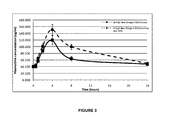
- FIG. 3 is a graph showing the plasma omega-3 concentration (ng/ml) measured in rats treated with nutraceutical compositions over a 24 hour period.
- FIG. 4 is a graph showing the plasma omega-3 concentration (ng/ml) measured in rats treated with nutraceutical compositions over a 24 hour period.
- the inventor(s) investigated the oral delivery of compositions comprising the nutraceutical CoQ 10 where supplementation was a single dose measured over 24 hours.
- the present example is an in vivo study in which rats are used to examine the bioavailability of various CoQ 10 compositions.
- the ⁇ -tocopherol used in the present study was obtained from ADM, Australia.
- the non-neutralised ⁇ -tocopheryl phosphate was prepared from the ⁇ -tocopherol starting material by Phosphagenics.
- the neutralised ⁇ -tocopheryl phosphate was prepared by Phosphagenics for use in the preparation of formulation 1c.
- the CoQ 10 used in the present study was obtained from Pure Bulk CAS#303-98-0.
- the CoQ 10 powder was bright orange in colour.
- the canola oil used in the present study was obtained from Cargill Health and Nutrition.
- the formulations 1a to 1c have been designed to deliver 5 mg CoQ 10 in each dose.
- Formulation 1a 1b 1c Amount of CoQ 10 5 mg 0.5 ml of a 10/mg/ml 0.5 ml of a 10/mg/ml stock formulation stock formulation Amount of — 0.5 ml of a 10/mg/ml — non-neutralised stock formulation ⁇ -TP Amount of — — 0.5 ml of a 10/mg/ml neutralised ⁇ -TP stock formulation Amount of — 0.5 ml delivered 0.5 ml delivered Canola Oil per rat per rat
- Formulation 1a is a powder preparation which was provided to the animals in capsule form.
- the capsules were prepared by packing empty capsule shells with 5 mg of powdered CoQ 10 .
- Formulation 1b is a liquid preparation which was provided to the animals in liquid form. A 10 mg/ml solution of non-neutralised ⁇ -tocopheryl phosphate in Canola oil was prepared, to which was added 10 mg of CoQ 10 per ml of the non-neutralised ⁇ -tocopheryl phosphate in Canola mixture at 40° C. with gentle stirring until the powders were dissolved.
- Formulation 1c is a liquid preparation which was provided to the animals in liquid form.
- the formulation was first prepared by a 10 mg/ml solution of neutralised ⁇ -tocopheryl phosphate in Canola oil was prepared, to which was added 10 mg of CoQ 10 per ml of the neutralised ⁇ -tocopheryl phosphate in Canola mixture at 40° C. with gentle stirring until the powders were dissolved.
- Rats weighing no more than 400 g were obtained, housed (2-3 rats per box) and were fed ad libitum. The rats were acclimatised for a minimum of 7 days and then randomised into groups for treatment with each of the 3 formulations described above. Formulations 1a and 1c were each administered to treatment groups having nine rats each. Formulation 1b was administered to a treatment group having ten rats.
- the rats were pre-bled with tail bleeding to establish CoQ 10 levels at time zero values before a treatment dose was delivered.
- each rat in their respective treatment group was given a dose of treatment orally either in capsule form or liquid form.
- blood samples were collected at various time points: 0.5 hr, 1 hr, 2 hr, 4 hr, 8 hr, and 24 hr (1 day). Over the period of blood collection the rats were administered a single dose of treatment.
- Basal CoQ 10 levels in the Sprague-Dawley rats used were seen to be on average between 100-150 ng/ml.
- the results shown for supplementation are subtracted values and therefore indicate the basal values for each treatment as zero ng/ml.
- the graph shown in FIG. 1 shows the improvement in bioavailability obtained when the CoQ 10 formulation includes non-neutralised ⁇ -tocopheryl phosphate and an oil carrier (i.e. formulation 1b), when compared to formulations containing CoQ 10 alone (formulation 1a) and CoQ 10 and neutralised/purified ⁇ -tocopheryl phosphate in canola oil (formulation 1c).
- formulation 1b oil carrier
- formulation 1c canola oil
- formulation 1b provided the best improvement in bioavailability of CoQ 10 .
- Supplementation using formulation 1a (the powdered form of CoQ 10 alone in capsules) provided a peak plasma level of CoQ 10 approximately 4 hrs-post dosing.
- Formulation 1b (non-neutralised ⁇ -TP and CoQ 10 in canola oil) had significantly higher overall concentration of CoQ 10 in the plasma compared to formulation 1a (CoQ 10 alone in capsules) during the entire 24 hour period post-dosing.
- Formulation 1c (neutralised ⁇ -TP and CoQ 10 in canola oil) performed less well than formulation 1b (non-neutralised ⁇ -TP and CoQ 10 in canola oil).
- Formulation 1b provides a significant increase in the peak plasma CoQ 10 concentrations, over a 24 hour period following a single dose of the formulation.
- the present example we investigated the oral delivery of new formulations of the nutraceutical omega-3 over following a single does of supplementation over a 24 hour period.
- the present study is an in vivo study in which rats are used to examine the bioavailability of various omega 3 formulations compared with the non-neutralised alpha-tocopheryl phosphate.
- the ⁇ -tocopherol used in the present study was obtained from ADM, Australia.
- the non-neutralised ⁇ -tocopheryl phosphate was prepared from the ⁇ -tocopheryl starting material by Phosphagenics.
- the neutralised ⁇ -tocopheryl phosphate was prepared by Phosphagenics for use in the preparation of formulation 2d.
- the omega-3 used in the present study was obtained from Croda, and contains a minimum omega-3 content of 600 mg/g, a minimum EPA content of 60 mg/g and a minimum DHA content of 500 mg/g.
- the canola oil used in the present study was obtained from Cargill Health and Nutrition.
- DHA low omega-3
- Formulation 2a included omega-3 alone
- formulations 2b to 2c included non-neutralised ⁇ -tocopheryl phosphate having an omega-3: non-neutralised ⁇ -tocopheryl phosphate ratio varying from 1:0.1 to 1:0.5.
- Formulation 2d included neutralised ⁇ -tocopheryl phosphate.
- Formulation 2e included omega-3 alone, while formulation 2f included non-neutralised ⁇ -tocopheryl phosphate.
- the ratio of omega-3:TPM in formulation 2d was 1:0.1.
- Formulation 2a 2b 2c 2d 2e 2f Amount of 44.3 mg/ml 44.3 mg/ml 44.3 mg/ml 44.3 mg/ml 132.9 mg/ml 132.9 mg/ml 132.9 mg/ml omega-3 Amount of — 4.4 mg/ml 22.2 mg/ml — — 13.3 mg/ml non- neutralised ⁇ -TP Amount of — — — 22.2 mg/ml — — neutralised ⁇ -TP Amount of 0.5 ml 0.5 ml 0.5 ml 0.5 ml 0.5 ml 0.5 ml Canola Oil delivered delivered delivered delivered delivered delivered delivered delivered delivered delivered delivered delivered per rat per rat per rat per rat per rat per rat per rat per rat per rat per rat per rat per rat per rat per rat
- Omega-3 stocks were made in canola oil, i. Low (44.3 mg/ml) & ii. High 132.9 mg/ml these were simply added will gentle mixing at 40° C. and then these were subdivided into smaller aliquots ( ⁇ 20 ml each).
- the low omega-3 dose was divided into 4 ⁇ 20 ml lots for formulations:
- the high omega-3 dose was divided into 2 ⁇ 20 ml lots for formulations:
- Formulation 2a and 2e is a liquid preparation which was provided to the animals as a liquid.
- the formulation was prepared by adding omega-3 to Canola oil to a concentration of 44.3 mg/ml for formulation 2a and 132.9 mg/ml for formulation 2e and each of these formulations were mixed gently at 40° C.
- Formulation 2b, 2c and 2f is a liquid preparation which was provided to the animals in liquid form.
- the formulation was prepared by adding omega-3 to Canola oil to a concentration of 44.3 mg/ml for formulations 2b and 2c and a concentration of 132.9 mg/ml for formulation 2f.
- To each of these formulations was added non-neutralised ⁇ -tocopherol phosphate.
- the non-neutralised ⁇ -tocopherol phosphate was added to formulation 2b to a concentration of 4.4 mg/ml, to formulation 2c to a concentration of 22.2 mg/ml and to formulation 2f to a concentration of 13.3 mg/ml.
- Each of these formulations was gently mixed at 40° C.
- Formulation 2d is a liquid preparation which was provided to the animals in liquid form.
- the formulation was prepared by adding omega-3 to Canola oil to a concentration of 44.3 mg/ml.
- Neutralised ⁇ -tocopherol phosphate was added to this formulation to a concentration of 22.2 mg/ml.
- the formulation was gently mixed at 40° C.
- mice Male Sprague-Dawley rats weighing between 200-300 g were obtained from the ARC, Perth Australia and were housed 2-3 rats per cage and were fed ad libitum. The rats were acclimatised for a minimum of 7 days before the experiments were conducted. The rats were then randomised and set-up into the following treatment groups (7-10 rats/group). Formulations 2a, 2c and 2e were each administered to treatment groups having nine rats each. Formulation 2b, 2d and 2f were each administered to treatment groups having seven, ten and eight rats, respectively.
- Basal plasma concentration of DHA averaged 40 ⁇ g/ml and peaked at approximately 4 hr following dosing then decreased to just above basal levels by 24 hr post dosing.
- omega-3 (DHA) concentration appeared to follow a dose-dependant relationship increasing with the increase in the amount of non-neutralised ⁇ -tocopheryl phosphate content or higher non-neutralised ⁇ -tocopheryl phosphate ratio compared to the omega-3 (DHA) alone dose, as shown in FIG. 2 .
- FIG. 3 shows that even when a higher dose of omega-3 (DHA) is administered to the rats, formulation 2f showed a significant increase in the level of DHA detected in the blood over the first 24 hours following a single dose (particularly between 4-8 hr time-points).
- DHA omega-3
- FIG. 4 shows the difference between formulations 2c and 2d, which contain neutralised and purified tocopheryl phosphate (2d) and non-neutralised tocopheryl phosphate (2c).
- concentration of omega-3 in formulations 2c and 2d was the same as was the concentration of tocopheryl phosphate used in the final formulations in each case.
- both formulations 2c and 2d appear to be more effective than omega-3 alone, formulation 2c, which contains the non-neutralised tocopheryl phosphate was better at improving the bioavailability of omega-3 in the plasma.
- the non-neutralised tocopheryl phosphate therefore appears to be significantly more effective than the neutralised and purified tocopheryl phosphate in delivery of the omega-3 and provides improved bioavailability of omega-3 over a 24 hour period.
- DHA plasma concentration followed a dose-dependent increase with increasing levels of non-neutralised tocopheryl phosphate.
- omega-3 alone HED 1 g
- plasma DHA levels exhibited a 50% increase in peak levels (60 ⁇ g/ml) when the rats were dosed with formulation 2b.
- a 75% increase in peak levels (70 ⁇ g/ml) was observed when the rats are dosed with formulation 2c, while an 80% increase in peak levels (90 ⁇ g/ml) was observed when the rats are dosed with formulation 2f, compared to baseline levels.
- the neutralised and purified tocopheryl phosphate formulation 2d increased DHA plasma levels (compared to formulation 2a which contained omega-3 alone), the non-neutralised tocopheryl phosphate formulation 2c, was more effective in improving the bioavailability of DHA.
- the high dose of omega-3 alone (HED 3 g) plasma DHA levels increased 200% (120 ⁇ g/ml) by 4 hr post dosing with formulation 2e, whilst adding non-neutralised tocopheryl phosphate to the formulation (formulation 2f) increased DHA levels to 275% (150 ⁇ g/ml).
- the formulation was prepared by combining the TPM with the oil first with stirring, at about 70 degrees Celsius. The mixture was then cooled to below 40 degrees Celsius and the beta-carotene added, with stirring, followed by addition of the sodium selenite.
- the formulation was a light to dark orange/brown liquid (depending on amount of ⁇ carotene used) with no visible particulate matter or aqueous phase.
Landscapes
- Health & Medical Sciences (AREA)
- Life Sciences & Earth Sciences (AREA)
- Animal Behavior & Ethology (AREA)
- Veterinary Medicine (AREA)
- Chemical & Material Sciences (AREA)
- Public Health (AREA)
- General Health & Medical Sciences (AREA)
- Epidemiology (AREA)
- Birds (AREA)
- Nutrition Science (AREA)
- Engineering & Computer Science (AREA)
- Polymers & Plastics (AREA)
- Food Science & Technology (AREA)
- Mycology (AREA)
- Inorganic Chemistry (AREA)
- Emergency Medicine (AREA)
- Dermatology (AREA)
- Botany (AREA)
- Oil, Petroleum & Natural Gas (AREA)
- Obesity (AREA)
- Diabetes (AREA)
- Hematology (AREA)
- Bioinformatics & Cheminformatics (AREA)
- Chemical Kinetics & Catalysis (AREA)
- General Chemical & Material Sciences (AREA)
- Medicinal Chemistry (AREA)
- Nuclear Medicine, Radiotherapy & Molecular Imaging (AREA)
- Organic Chemistry (AREA)
- Pharmacology & Pharmacy (AREA)
- Pharmaceuticals Containing Other Organic And Inorganic Compounds (AREA)
- Medicinal Preparation (AREA)
- Acyclic And Carbocyclic Compounds In Medicinal Compositions (AREA)
Abstract
Description
| (I) |
 |
| R1 | R2 | R3 | ||
| α-tocopherol | CH3 | CH3 | CH3 | |
| α-tocotrienol | CH3 | CH3 | CH3 | |
| β-tocopherol | CH3 | H | CH3 | |
| β-tocotrienol | CH3 | H | CH3 | |
| γ-tocopherol | H | CH3 | CH3 | |
| γ-tocotrienol | H | CH3 | CH3 | |
| δ-tocopherol | H | H | CH3 | |
| δ-tocotrienol | H | H | CH3 | |
| |
1a | 1b | 1c |
| Amount of CoQ10 | 5 mg | 0.5 ml of a 10/mg/ml | 0.5 ml of a 10/mg/ml |
| stock formulation | stock formulation | ||
| Amount of | — | 0.5 ml of a 10/mg/ml | — |
| non-neutralised | stock formulation | ||
| α-TP | |||
| Amount of | — | — | 0.5 ml of a 10/mg/ml |
| neutralised α-TP | stock formulation | ||
| Amount of | — | 0.5 ml delivered | 0.5 ml delivered |
| Canola Oil | per rat | per rat | |
| | ||
| | |
2c | 2d |
| 2e | 2f | |
| Amount of | 44.3 mg/ml | 44.3 mg/ml | 44.3 mg/ml | 44.3 mg/ml | 132.9 mg/ml | 132.9 mg/ml |
| omega-3 | ||||||
| Amount of | — | 4.4 mg/ml | 22.2 mg/ml | — | — | 13.3 mg/ml |
| non- | ||||||
| neutralised | ||||||
| α-TP | ||||||
| Amount of | — | — | — | 22.2 mg/ml | — | — |
| neutralised | ||||||
| α-TP | ||||||
| Amount of | 0.5 ml | 0.5 ml | 0.5 ml | 0.5 ml | 0.5 ml | 0.5 ml |
| Canola Oil | delivered | delivered | delivered | delivered | delivered | delivered |
| per rat | per rat | per rat | per rat | per rat | per rat | |
| Amount | Component |
| 1% WW (1-2%) | Non neutralised α-tocopheryl phosphate mixture |
| (prepared as in example 1) | |
| 0.1% w/w (0.1-0.2%) | β carotene |
| 0.02% w/w | |
| To | |
| 100% | Olive Oil |
Claims (18)
Applications Claiming Priority (3)
| Application Number | Priority Date | Filing Date | Title |
|---|---|---|---|
| AU2010900463A AU2010900463A0 (en) | 2010-02-05 | Composition | |
| AU2010900463 | 2010-02-05 | ||
| PCT/AU2011/000112 WO2011094814A1 (en) | 2010-02-05 | 2011-02-04 | Carrier comprising non-neutralised tocopheryl phosphate |
Publications (2)
| Publication Number | Publication Date |
|---|---|
| US20120321604A1 US20120321604A1 (en) | 2012-12-20 |
| US10071030B2 true US10071030B2 (en) | 2018-09-11 |
Family
ID=44354814
Family Applications (1)
| Application Number | Title | Priority Date | Filing Date |
|---|---|---|---|
| US13/577,124 Active US10071030B2 (en) | 2010-02-05 | 2011-02-04 | Carrier comprising non-neutralised tocopheryl phosphate |
Country Status (6)
| Country | Link |
|---|---|
| US (1) | US10071030B2 (en) |
| EP (1) | EP2531047B1 (en) |
| AU (1) | AU2011213557B2 (en) |
| ES (1) | ES2999020T3 (en) |
| TW (1) | TW201141522A (en) |
| WO (1) | WO2011094814A1 (en) |
Families Citing this family (10)
| Publication number | Priority date | Publication date | Assignee | Title |
|---|---|---|---|---|
| US9168216B2 (en) | 2005-06-17 | 2015-10-27 | Vital Health Sciences Pty. Ltd. | Carrier comprising one or more di and/or mono-(electron transfer agent) phosphate derivatives or complexes thereof |
| EP2531047B1 (en) | 2010-02-05 | 2024-11-13 | Phosphagenics Limited | Carrier comprising non-neutralised tocopheryl phosphate |
| ES2829386T3 (en) | 2010-03-30 | 2021-05-31 | Phosphagenics Ltd | Transdermal administration patch |
| WO2012122586A1 (en) * | 2011-03-15 | 2012-09-20 | Phosphagenics Limited | New composition |
| ES2655215T3 (en) * | 2012-08-23 | 2018-02-19 | Mylan Laboratories Ltd. | Improvement of the injectable formulation of daptomycin |
| MX383940B (en) | 2015-12-09 | 2025-03-14 | Phosphagenics Ltd | Pharmaceutical formulation |
| MX2019006596A (en) * | 2016-12-09 | 2019-10-14 | Avecho Biotechnology Ltd | A method for improving performance parameters of an animal. |
| IL267006B2 (en) | 2016-12-21 | 2024-11-01 | Phosphagenics Ltd | A process for the phosphorylation of compound alcohol by P4O10 at high temperatures, and its products |
| JP7564620B2 (en) * | 2017-03-09 | 2024-10-09 | コーセプト セラピューティクス, インコーポレイテッド | Use of glucocorticoid receptor modulators in the treatment of catecholamine-secreting tumors. |
| WO2022155656A1 (en) | 2021-01-13 | 2022-07-21 | Rodan & Fields, Llc | Cosmetic compositions |
Citations (292)
| Publication number | Priority date | Publication date | Assignee | Title |
|---|---|---|---|---|
| US2407823A (en) | 1946-09-17 | Antihemorrhagic esters and methods | ||
| US2457932A (en) | 1949-01-04 | Salts of tocopheryl phosphoric | ||
| US2667479A (en) | 1951-01-30 | 1954-01-26 | Merck & Co Inc | Benzimidazole phosphate |
| GB778142A (en) | 1953-11-20 | 1957-07-03 | Leo Ab | High-molecular weight derivatives of hydroxyl group-containing steroids and a method of producing them |
| US2913477A (en) | 1957-03-22 | 1959-11-17 | Merck & Co Inc | Antihemorrhagic compounds and processes for preparing the same |
| US3127434A (en) | 1959-10-20 | 1964-03-31 | Hoffmann La Roche | Dihydrovitamin k monophosphate compounds and preparation thereof |
| US3212901A (en) | 1961-06-07 | 1965-10-19 | Eastman Kodak Co | Stabilized tocopherol concentrates and process for preparing the same |
| GB1121683A (en) | 1964-09-15 | 1968-07-31 | Gen Aniline & Film Corp | The production of phosphate esters |
| US3607765A (en) | 1968-11-29 | 1971-09-21 | Colgate Polmolive Co | Detergent softener compositions |
| JPS5022535A (en) | 1973-06-27 | 1975-03-11 | ||
| JPS5239013A (en) | 1975-09-23 | 1977-03-26 | Shintaro Yamada | Forced draft diesel engine |
| JPS5315381A (en) | 1976-07-26 | 1978-02-13 | Eisai Co Ltd | Cynthesis of alpha-tocopherol |
| US4075333A (en) | 1975-02-14 | 1978-02-21 | Hoffmann-La Roche, Inc. | Stable injectable vitamin compositions |
| US4141938A (en) | 1976-10-07 | 1979-02-27 | Hoechst Aktiengesellschaft | Production of acid orthophosphoric acid ester mixtures |
| US4299906A (en) | 1979-06-01 | 1981-11-10 | American Hoechst Corporation | Light-sensitive color proofing film with surfactant in a light-sensitive coating |
| SU925961A1 (en) | 1980-08-15 | 1982-05-07 | Московский ордена Трудового Красного Знамени технологический институт пищевой промышленности | Process for producing higher fatty acid phosphorilated glycerides |
| US4369172A (en) | 1981-12-18 | 1983-01-18 | Forest Laboratories Inc. | Prolonged release therapeutic compositions based on hydroxypropylmethylcellulose |
| JPS58180410A (en) | 1982-04-16 | 1983-10-21 | Shiseido Co Ltd | Cosmetic |
| JPS5944375A (en) | 1982-09-06 | 1984-03-12 | Senjiyu Seiyaku Kk | Stable aqueous solution of alpha-tocopherol phosphoric ester |
| US4444755A (en) | 1978-01-23 | 1984-04-24 | Efamol Limited | Treatment for skin disorders |
| JPS59157091A (en) | 1983-02-25 | 1984-09-06 | Sanyo Chem Ind Ltd | Production of phosphoric acid ester |
| JPS60197621A (en) | 1984-03-19 | 1985-10-07 | Hohnen Oil Co Ltd | Hypocholesterolemic |
| EP0171009A2 (en) | 1984-08-02 | 1986-02-12 | HENKEL CORPORATION (a Delaware corp.) | Purification of tocopherols by extraction |
| JPS6186940A (en) | 1984-10-02 | 1986-05-02 | Kao Corp | Oil in water type emulsion composition |
| JPS6191137A (en) | 1984-10-11 | 1986-05-09 | Kao Corp | External drug composition |
| US4603142A (en) | 1984-06-01 | 1986-07-29 | Wisconsin Alumni Research Foundation | Cholesterol lowering method of use |
| JPS61176535A (en) | 1985-01-31 | 1986-08-08 | Morishita Jintan Kk | Enteric drug preparation |
| JPS61233631A (en) | 1985-04-09 | 1986-10-17 | Kao Corp | Transcutaneous absorption agent |
| US4654373A (en) | 1982-03-19 | 1987-03-31 | Italfarmaco S.A. | Pharmaceutical formulations containing coenzyme Q10 suitable for topic administration |
| US4684520A (en) | 1984-04-09 | 1987-08-04 | Seuref A.G. | Pharmaceutical compositions having cerebral antianoxic and metabolic activities |
| JPS62195393A (en) | 1986-02-21 | 1987-08-28 | Yakult Honsha Co Ltd | Novel camptothecin derivative and production thereof |
| JPS6393791A (en) | 1986-10-08 | 1988-04-25 | Nippon Shokubai Kagaku Kogyo Co Ltd | Phosphoric ester and preparation thereof |
| JPS63139972A (en) | 1986-12-02 | 1988-06-11 | Shiseido Co Ltd | Antioxidant |
| EP0324387A2 (en) | 1988-01-11 | 1989-07-19 | Takeda Chemical Industries, Ltd. | Composition for treatment of ischemic disorder in organs |
| JPH01228920A (en) | 1988-03-09 | 1989-09-12 | Kuraray Co Ltd | Absorbefacient |
| US4874883A (en) | 1987-01-30 | 1989-10-17 | Henkel Kommanditgesellschaft Auf Aktien | Process for the production and isolation of monoalkyl phosphoric acid esters |
| EP0338429A2 (en) | 1988-04-22 | 1989-10-25 | BASF Aktiengesellschaft | Process for the preparation of d-alpha-tocopherol from natural starting products |
| JPH01274830A (en) | 1988-04-28 | 1989-11-02 | Asahi Denka Kogyo Kk | Safe lipid composition having high surface activity |
| GB2227662A (en) | 1989-02-01 | 1990-08-08 | Squibb & Sons Inc | Lowering serum cholesterol using a HMG CoA reductase inhibitor and a squalene synthetase inhibitor |
| US4952495A (en) | 1987-06-08 | 1990-08-28 | Eastman Kodak Company | Hydrolyzable compounds which release electron transfer agents and analytical use of same |
| US4977282A (en) | 1984-04-17 | 1990-12-11 | Henkel Corporation | Production of d-alpha-tocopherol from natural plant sources |
| JPH0372426A (en) | 1989-05-18 | 1991-03-27 | Teikoku Seiyaku Kk | Aspirin-containing ointment composition for therapy of neuralgia |
| JPH03120230A (en) | 1989-10-04 | 1991-05-22 | Nippon Mining Co Ltd | Percutaneous absorbefacient of drug active ingredient and percutaneous absorption type pharmaceutical |
| EP0430336A2 (en) | 1989-11-22 | 1991-06-05 | ZAMBON GROUP S.p.A. | Process for the preparation of 4-O-phosphates of dopamine and dopamine derivatives |
| EP0430045A2 (en) | 1989-11-21 | 1991-06-05 | Senju Pharmaceutical Co., Ltd. | Ascorbic acid tocopheryl phosphate diesters for inhibition of Maillard's reaction |
| EP0436911A2 (en) | 1990-01-05 | 1991-07-17 | Eisai Co., Ltd. | Novel vitamin E derivatives and process for the production thereof |
| US5041434A (en) | 1991-08-17 | 1991-08-20 | Virginia Lubkin | Drugs for topical application of sex steroids in the treatment of dry eye syndrome, and methods of preparation and application |
| US5053222A (en) | 1989-06-07 | 1991-10-01 | Shiseido Company Ltd. | Hair cosmetic composition |
| WO1991017987A1 (en) | 1990-05-21 | 1991-11-28 | Smith Kline & French Laboratories Limited | Phenol and pyridinol derivatives as pharmaceuticals |
| US5091848A (en) | 1987-04-10 | 1992-02-25 | Hitachi, Ltd. | Vector processor for merging vector elements in ascending order merging operation or descending order merging operation |
| WO1992003122A1 (en) | 1990-08-24 | 1992-03-05 | Gregor Cevc | Preparation for application of active substances in the form of minimum-sized droplets |
| US5094848A (en) | 1989-06-30 | 1992-03-10 | Neorx Corporation | Cleavable diphosphate and amidated diphosphate linkers |
| WO1992007544A1 (en) | 1990-10-26 | 1992-05-14 | Shiseido Co., Ltd. | External preparation for skin |
| US5114957A (en) | 1990-05-08 | 1992-05-19 | Biodor U.S. Holding | Tocopherol-based antiviral agents and method of using same |
| WO1992008459A1 (en) | 1990-11-16 | 1992-05-29 | Kabi Pharmacia Ab | Topical compositions for transdermal delivery of produg derivatives of morphine |
| JPH04208209A (en) | 1990-11-30 | 1992-07-29 | Showa Denko Kk | Cosmetic |
| WO1992015289A1 (en) | 1991-02-27 | 1992-09-17 | Noven Pharmaceuticals, Inc. | Compositions and methods for topical administration of pharmaceutically active agents |
| JPH04270212A (en) | 1991-02-26 | 1992-09-25 | Shiseido Co Ltd | Skin external agent |
| US5173304A (en) | 1989-08-17 | 1992-12-22 | Dolorgiet Beteiligungs Gmbh | Agents for the treatment of severe pain and preparation of said agents |
| JPH05946A (en) | 1991-06-27 | 1993-01-08 | Nichiban Co Ltd | Transdermal preparation containing ketotifuene |
| WO1993002661A1 (en) | 1991-08-01 | 1993-02-18 | Lvmh Recherche | Use of a tocopherol phosphate or one of its derivatives, for the preparation of cosmetic or pharmaceutical compositions and compositions so obtained |
| WO1993009768A1 (en) | 1991-11-11 | 1993-05-27 | Hisamitsu Pharmaceutical Co., Inc. | Fomentation containing ketorolac |
| JPH05132700A (en) | 1991-11-13 | 1993-05-28 | Sunstar Inc | Foamable detergent |
| JPH05201858A (en) | 1992-01-29 | 1993-08-10 | Ss Pharmaceut Co Ltd | Solid pharmaceutical preparation |
| WO1993015731A1 (en) | 1992-02-14 | 1993-08-19 | Robert Lamb | Phosphate derivatives of vitamin e to protect cells from effects of aging and injury |
| EP0565007A1 (en) | 1992-04-10 | 1993-10-13 | Senju Pharmaceutical Co., Ltd. | Bath agent |
| WO1993024131A1 (en) | 1992-05-29 | 1993-12-09 | Procter & Gamble Pharmaceuticals, Inc. | Phosponocarboxylate compounds for treating abnormal calcium and phosphate metabolism |
| EP0574255A1 (en) | 1992-06-11 | 1993-12-15 | INDENA S.p.A. | New derivatives of non-steroidal anti-inflammatory, analgesic and/or antipyretic substances, their use and pharmaceutical formulations containing them |
| JPH0648962A (en) | 1991-10-24 | 1994-02-22 | Kazutoshi Morimoto | Composition for percutaneous absorption pharmaceutical preparation |
| JPH0678214A (en) | 1991-10-31 | 1994-03-18 | Nec Corp | D2 standard video adjusting device |
| NZ244549A (en) | 1991-10-02 | 1994-07-26 | Merrell Dow Pharma | Tocopherol containing a phosphonium group, and pharmaceutical compositions |
| US5334378A (en) | 1992-04-02 | 1994-08-02 | Rohto Pharmaceutical Co., Ltd. | Pharmaceutical formulation in the form of aqueous suspension |
| EP0617963A1 (en) | 1993-03-31 | 1994-10-05 | Senju Pharmaceutical Co., Ltd. | Lipid metabolism improving medicinal composition |
| US5374645A (en) | 1990-01-22 | 1994-12-20 | Ciba-Geigy Corporation | Transdermal administation of ionic pharmaceutically active agents via aqueous isopropanol |
| JPH0711291A (en) | 1993-06-24 | 1995-01-13 | Kao Corp | Liquid detergent composition |
| US5387579A (en) | 1990-01-31 | 1995-02-07 | Lvmh Recherche | Use of α-tocopherol phosphate or a derivative thereof for preparing cosmetic, dermatological or pharmaceutical compositions, and compositions thereby obtained |
| EP0641790A1 (en) | 1993-09-03 | 1995-03-08 | Scotia Holdings Plc | Tocopherols |
| EP0643969A2 (en) | 1993-09-10 | 1995-03-22 | Senju Pharmaceutical Co., Ltd. | Pharmaceutical composition for renal disorder and a dialysis solution for extracorporeal hemodialysis |
| EP0650721A1 (en) | 1993-07-01 | 1995-05-03 | Hanmi Pharm. Ind. Co., Ltd. | Cyclosporin soft capsule |
| EP0661053A1 (en) | 1993-12-29 | 1995-07-05 | Senju Pharmaceutical Co., Ltd. | Use of tocopherol ascorbic adic phosphates for hemorrhoidal diseases |
| JPH07207298A (en) | 1994-01-21 | 1995-08-08 | Nippon Oil & Fats Co Ltd | Detergent composition |
| US5446070A (en) | 1991-02-27 | 1995-08-29 | Nover Pharmaceuticals, Inc. | Compositions and methods for topical administration of pharmaceutically active agents |
| EP0669132A1 (en) | 1994-02-23 | 1995-08-30 | van der Kraaij, Antonius Marinus Maria | Pharmaceutical composition of vitamin E and acetylsalicylate for treatment and prevention of atherosclerosis |
| EP0669437A1 (en) | 1992-12-24 | 1995-08-30 | General Motors Corporation | Vehicle closure latch and ratchet therefor |
| EP0674904A1 (en) | 1994-03-29 | 1995-10-04 | Senju Pharmaceutical Co., Ltd. | Use of phosphoric acid diester compounds for suppressing hepatic metastases of tumors |
| JPH07278587A (en) | 1994-04-06 | 1995-10-24 | Kao Corp | Cleaning composition |
| EP0679399A1 (en) | 1994-04-22 | 1995-11-02 | Senju Pharmaceutical Co., Ltd. | Phosphate diesters for treatment of epidermis proliferative diseases |
| EP0680760A1 (en) | 1994-04-05 | 1995-11-08 | Senju Pharmaceutical Co., Ltd. | Topical antipruritic composition containing a phosphonic acid diester compound |
| EP0681840A1 (en) | 1994-05-10 | 1995-11-15 | Senju Pharmaceutical Co., Ltd. | Use of phosphate diester for the treatment of retinal diseases |
| WO1995031217A1 (en) | 1994-05-16 | 1995-11-23 | Dumex-Alpharma A/S | Tocopherol compositions for delivery of biologically active agents |
| EP0684043A1 (en) | 1994-04-28 | 1995-11-29 | Senju Pharmaceutical Co., Ltd. | Therapeutic composition for corneal impairment containing a phosphonic acid diester compound |
| JPH07316170A (en) | 1994-05-24 | 1995-12-05 | Kao Corp | Method for producing phosphoric acid monoester |
| US5474891A (en) | 1991-10-30 | 1995-12-12 | Thomas Jefferson University | Plasma-based platelet concentrate preparations with additive |
| WO1995034303A1 (en) | 1994-06-13 | 1995-12-21 | Arcturus Pharmaceutical Corporation | Method for the treatment, prevention or minimization of hair loss |
| EP0699440A1 (en) | 1994-08-05 | 1996-03-06 | Senju Pharmaceutical Co., Ltd. | Use of a ascorbyl tocopheryl phosphate for the manufacture of a medicament for the treatment of pancreatitis |
| JPH0873338A (en) | 1994-09-02 | 1996-03-19 | Noevir Co Ltd | Skin external preparation |
| WO1996017852A1 (en) | 1994-12-09 | 1996-06-13 | Kao Corporation | Process for the preparation of phosophoric monoester |
| WO1996020715A1 (en) | 1994-12-30 | 1996-07-11 | Perstorp Ab | The use of inositoltrisphosphate for the preparing of medicaments |
| WO1996021440A1 (en) | 1995-01-09 | 1996-07-18 | Alpha-Therapeutics, Inc. | Methods for increasing the bioavailability of biological active agents |
| JPH08193089A (en) | 1995-01-11 | 1996-07-30 | Kao Corp | Method for producing phosphate ester |
| JPH08231564A (en) | 1995-02-28 | 1996-09-10 | Nippon Shokubai Co Ltd | Phosphoric acid ester, its production and phosphoric acid ester polymer |
| US5554781A (en) | 1994-03-30 | 1996-09-10 | Reierson; Robert L. | Monoalkyl phosphonic acid ester production process |
| WO1996029336A1 (en) | 1995-03-13 | 1996-09-26 | Medical Research Council | Chemical compounds |
| US5570504A (en) | 1991-12-31 | 1996-11-05 | Tessera, Inc. | Multi-Layer circuit construction method and structure |
| JPH08311085A (en) | 1995-05-17 | 1996-11-26 | Kao Corp | Process for producing branched dimerized alkyl phosphate basic amino acid salt |
| JPH08311489A (en) | 1995-05-19 | 1996-11-26 | Nippon Oil & Fats Co Ltd | Detergent composition |
| WO1996037196A1 (en) | 1995-05-24 | 1996-11-28 | University Of Maryland At Baltimore | Oral dosage composition for intestinal delivery and method of use of the same |
| US5583105A (en) | 1994-11-21 | 1996-12-10 | Biogal Gyogyszerguar Rt | Oral pharmaceutical preparation |
| JPH08325594A (en) | 1995-05-31 | 1996-12-10 | Nippon Oil & Fats Co Ltd | Detergent composition |
| US5589504A (en) | 1994-07-26 | 1996-12-31 | Cornell Research Foundation, Inc. | Treatment of newborn jaundice |
| WO1997002803A1 (en) | 1995-07-12 | 1997-01-30 | Shiseido Co., Ltd. | External skin preparation |
| JPH0944375A (en) | 1995-07-26 | 1997-02-14 | Hitachi Ltd | Automatic test item selection method of test program |
| US5607921A (en) | 1994-01-31 | 1997-03-04 | L'oreal | Stabilized cosmetic or dermatological composition containing several precursors of the same active agent in order to maximize its release, and use thereof |
| WO1997014705A1 (en) | 1995-10-17 | 1997-04-24 | Showa Denko K.K. | High-purity tocopherol phosphates, process for the preparation thereof, method for analysis thereof, and cosmetics |
| US5643597A (en) | 1991-08-01 | 1997-07-01 | Lvmh Recherche | Use of a tocopherol phosphate or one of its derivatives for the preparation of cosmetic or pharmaceutical compositions and compositions so obtained |
| US5656672A (en) | 1993-12-30 | 1997-08-12 | L'oreal | Water-in-oil emulsion containing retinol its use |
| WO1997035591A2 (en) | 1996-03-27 | 1997-10-02 | Inspire Pharmaceuticals, Inc. | Method of treating ciliary dyskinesia with uridine triphosphates and related compounds |
| JPH09309813A (en) | 1996-05-22 | 1997-12-02 | Nonogawa Shoji Kk | Preparation for external use for skin |
| JPH1045783A (en) | 1996-07-29 | 1998-02-17 | Showa Denko Kk | Production of hydroxychromanic acid derivative phosphoric ester |
| EP0826365A2 (en) | 1996-08-26 | 1998-03-04 | Senju Pharmaceutical Co., Ltd. | Tocopheryl ascorbyl phosphate-cyclodextrin clathrate and a topical dermal composition containing said clathrate |
| US5741518A (en) | 1992-08-03 | 1998-04-21 | L'oreal | Composition composed of an aqueous dispersion of stabilized vesicles of nonionic amphiphilic lipids |
| US5759526A (en) | 1995-11-22 | 1998-06-02 | L'oreal | Composition comprising an aqueous dispersion of lipid vesicles encapsulating a UV screening agent with acidic functionality, and usess in topical application |
| EP0845216A1 (en) | 1996-11-27 | 1998-06-03 | Showa Denko Kabushiki Kaisha | A composition for administration to animals containing a tocopheryl phosphate |
| US5776915A (en) | 1997-08-12 | 1998-07-07 | Clarion Pharmaceuticals Inc. | Phosphocholines of retinoids |
| US5780504A (en) | 1995-06-07 | 1998-07-14 | Avon Products, Inc. | Topical alkyl-2-O-L-ascorbyl-phosphates |
| US5804216A (en) | 1995-02-23 | 1998-09-08 | L'oreal | Acidic composition based on lipid vesicles and its use in topical application |
| US5804168A (en) | 1997-01-29 | 1998-09-08 | Murad; Howard | Pharmaceutical compositions and methods for protecting and treating sun damaged skin |
| JPH10509451A (en) | 1994-11-16 | 1998-09-14 | ワーナー−ランバート・カンパニー | Acne treatment wound healing composition containing a mixture of pyruvate, antioxidant and fatty acid |
| US5807845A (en) | 1996-07-31 | 1998-09-15 | Senju Pharmaceutical Co., Ltd. | Therapeutic drug for acne vulgaris |
| US5807542A (en) | 1993-11-27 | 1998-09-15 | Knoll Aktiengesellschaft | Chemical compositions for inhibiting nitrosation reaction in toiletries and cosmetics |
| EP0699437B1 (en) | 1994-08-25 | 1998-12-16 | Prospa B.V. | Pharmaceutical preparations containing polyunsaturated fatty acids, their esters or salts, together with antioxidant vitamins or provitamins |
| JPH1143436A (en) | 1997-07-25 | 1999-02-16 | Showa Denko Kk | Medicine for preventing/treating periphery blood stream disorder |
| US5885595A (en) | 1996-05-13 | 1999-03-23 | Elizabeth Arden Co., Division Of Conopco, Inc. | Cosmetic composition with a retinol fatty acid ester |
| US5906811A (en) | 1997-06-27 | 1999-05-25 | Thione International, Inc. | Intra-oral antioxidant preparations |
| US5916915A (en) | 1997-06-04 | 1999-06-29 | Pacific Corporation | Water-in-stable L-ascorbic acid derivative and a method for preparation thereof, and a skin-whitening cosmetic composition containing the same |
| WO1999035242A1 (en) | 1998-01-12 | 1999-07-15 | Betagene, Inc. | Media for neuroendocrine cells |
| US5928631A (en) | 1997-06-09 | 1999-07-27 | The Procter & Gamble Company | Methods for controlling environmental odors on the body using compositions comprising uncomplexed cyclodextrins |
| JPH11199465A (en) | 1998-01-07 | 1999-07-27 | Nonogawa Shoji Kk | Skin preparation for external use |
| JPH11199424A (en) | 1997-12-26 | 1999-07-27 | Nonogawa Shoji Kk | Skin preparation for external use |
| US5952361A (en) | 1992-08-21 | 1999-09-14 | Dias Nahoum; Cesar Roberto | Compositions |
| US5952373A (en) | 1994-12-13 | 1999-09-14 | Beiersdorf Ag | Agents acting against hyperreactive and hypoactive, deficient skin conditions and manifest dermatitides |
| FR2777179A1 (en) | 1998-04-09 | 1999-10-15 | Lvmh Rech | COSMETIC OR DERMATOLOGICAL COMPOSITIONS COMPRISING A VEHICLE BASED ON A HYDROPHOBIC LIQUID |
| US5981474A (en) | 1992-10-14 | 1999-11-09 | University Technology Corporation | Solubilization of pharmaceutical substances in an organic solvent and preparation of pharmaceutical powders using the same |
| US5985856A (en) | 1997-12-31 | 1999-11-16 | University Of Kansas | Water soluble prodrugs of secondary and tertiary amine containing drugs and methods of making thereof |
| WO1999058555A2 (en) | 1998-05-08 | 1999-11-18 | Vyrex Corporation | Water-soluble pro-drugs of 2,6-diisopropylphenol analogues |
| EP0965328A1 (en) | 1997-01-29 | 1999-12-22 | Kao Corporation | Cosmetic |
| US6022867A (en) | 1996-11-27 | 2000-02-08 | Showa Denko Kabushiki Kaisha | Method of administering vitamin E to animals and compositions containing tocopheryl phosphates and salts thereof for animals |
| WO2000008033A1 (en) | 1998-08-07 | 2000-02-17 | The University Of Kansas | Water soluble prodrugs of hindered alcohols or phenols |
| US6028105A (en) | 1989-04-06 | 2000-02-22 | Nigra; Thomas P. | Topical drug delivery composition and method |
| WO2000016772A1 (en) | 1998-09-23 | 2000-03-30 | Research Development Foundation | Tocopherols, tocotrienols, other chroman and side chain derivatives and uses thereof |
| US6048891A (en) | 1998-12-17 | 2000-04-11 | Loma Linda University Medical Center | Use of γ-tocopherol and its oxidative metabolite LLU-α in the treatment of natriuretic disease |
| EP1000541A1 (en) | 1998-11-05 | 2000-05-17 | Bausch & Lomb Surgical, Inc. | Defined serumfree medical solution for ophthalmology |
| WO2000030620A1 (en) | 1998-11-25 | 2000-06-02 | Maria Rosa Gasco | Solid lipidic nanospheres suitable to a fast internalization into cells |
| WO2000043380A1 (en) | 1999-01-25 | 2000-07-27 | Swig Pty. Ltd. | Recovery of chroman derivatives |
| US6096326A (en) | 1997-08-15 | 2000-08-01 | Scandinavian-American Import/Export Corporation | Skin care compositions and use |
| EP1023897A2 (en) | 1999-01-26 | 2000-08-02 | Showa Denko Kabushiki Kaisha | Dermal agent |
| WO2000044237A2 (en) | 1999-01-29 | 2000-08-03 | Brandeis University | Hyper-absorption of vitamin e dispersed in milks |
| WO2000044375A1 (en) | 1999-01-29 | 2000-08-03 | Mars Uk Limited | Antioxidant compositions and methods for companion animals |
| WO2000053728A2 (en) | 1999-03-10 | 2000-09-14 | Magforce Applications Gmbh | Method for cultivating cancer cells from human tissue and device for preparing tissue samples |
| US6121249A (en) | 1998-07-01 | 2000-09-19 | Donald L. Weissman | Treatment and prevention of cardiovascular diseases with help of aspirin, antioxidants, niacin, and certain B vitamins |
| WO2000057876A1 (en) | 1999-03-26 | 2000-10-05 | Lipogenics, Inc. | Novel antioxidant formulations and methods for using them |
| WO2000059475A1 (en) | 1999-04-06 | 2000-10-12 | Lipocine, Inc. | Compositions and methods for improved delivery of ionizable hydrophobic therapeutic agents |
| US6143770A (en) | 1991-11-22 | 2000-11-07 | Lipogenics, Inc. | Tocotrienols and tocotrienol-like compounds and methods for their use |
| EP1053749A1 (en) | 1998-02-03 | 2000-11-22 | Senju Pharmaceutical Co., Ltd. | Preventives and remedies for neuron digeneration-associated diseaseas |
| WO2000069865A1 (en) | 1999-05-14 | 2000-11-23 | Swig Pty Ltd | Improved process for phosphorylation and compounds produced by this process |
| WO2000071094A1 (en) | 1999-05-21 | 2000-11-30 | Amway Corporation | Ascorbic acid derivative composition for increasing cell renewal rate |
| WO2000071125A2 (en) | 1999-05-21 | 2000-11-30 | Lts Lohmann Therapie-Systeme Ag | Pharmaceutical preparation containing the active substance diamorphine and its utilization in a method for treating opiate addiction |
| WO2000074684A1 (en) | 1999-06-04 | 2000-12-14 | The General Hospital Corporation | Pharmaceutical formulations for treating postmenopausal and perimenopausal women, and their use |
| WO2001013901A2 (en) | 1999-08-20 | 2001-03-01 | Ferrosan A/S | A pharmaceutical delivery system for vitamin c and vitamin e and use of a combination of vitamin c and e for preventing or treating conditions involving oxidative stress |
| WO2001019372A1 (en) | 1999-09-16 | 2001-03-22 | Pharmacia Italia S.P.A. | Formulations for parenteral use of estramustine phosphate and amino acids |
| WO2001022937A1 (en) | 1999-09-27 | 2001-04-05 | Sonus Pharmaceuticals, Inc. | Compositions of tocol-soluble therapeutics |
| US6231885B1 (en) | 1997-09-17 | 2001-05-15 | Permatec Technologie Ag | Composition for controlled and sustained transdermal administration |
| WO2001035883A1 (en) | 1999-11-19 | 2001-05-25 | Xel Herbaceuticals | Transdermal delivery system for alkaloids of aconitum species |
| WO2001035998A1 (en) | 1999-11-12 | 2001-05-25 | Pharmaderm Laboratories, Ltd. | Compositions for transdermal and transmucosal administration of therapeutic agents |
| US6248779B1 (en) | 1995-04-21 | 2001-06-19 | Sekisui Kagaku Kogyo Kabushiki Kaisha | External preparations for treating dermatoses |
| US6248758B1 (en) | 1997-03-13 | 2001-06-19 | Hexal Ag | Pharmaceutical antacid |
| JP2001169731A (en) | 1999-12-17 | 2001-06-26 | Showa Denko Kk | Lipid metabolism improving agent for animal |
| WO2001046204A1 (en) | 1999-12-22 | 2001-06-28 | Merck Frosst Canada & Co. | Aromatic phosphonates as protein tyrosine phosphatase 1b (ptp-1b) inhibitors |
| US20010006659A1 (en) | 1998-04-13 | 2001-07-05 | Kenzo Koike | Cosmetic composition |
| WO2001054674A1 (en) | 2000-01-26 | 2001-08-02 | F.T. Holdings S.A. | Patch for local and transdermal administration of active ingredients containing anionic or electron-attracting groups |
| WO2001058889A1 (en) | 2000-02-11 | 2001-08-16 | Research Development Foundation | Tocopherols, tocotrienols, other chroman and side chain derivatives and uses thereof |
| JP2001247585A (en) | 2000-03-03 | 2001-09-11 | Nof Corp | Tocopherol derivative, intermediate for the same, method of producing the same, and application for the same |
| WO2001072300A1 (en) | 2000-03-24 | 2001-10-04 | Baker Norton Pharmaceuticals, Inc. | Uses of metal salts to stabilize taxane-based compositions |
| US20010044462A1 (en) | 2000-03-02 | 2001-11-22 | Oklahoma Medical Research Foundation. | Desmethyl tocopherols for protecting cardiovascular tissue |
| WO2002002385A1 (en) | 2000-07-04 | 2002-01-10 | Rbs Netkom Gmbh | System for acquiring, transmitting and outputting travel data |
| WO2002013810A1 (en) | 2000-08-15 | 2002-02-21 | Vyrex Corporation | Water-soluble prodrugs of propofol for treatment of migraine |
| JP2002080475A (en) | 2000-09-05 | 2002-03-19 | Jiro Takada | Tocotrienol derivative and method for producing the same |
| US6361800B1 (en) | 2000-04-13 | 2002-03-26 | Cooper Concepts, Inc. | Multi-vitamin and mineral supplement |
| JP2002088091A (en) | 2000-08-29 | 2002-03-27 | Pacific Corp | Tocopherol derivative and method for manufacturing the same |
| WO2002026238A1 (en) | 2000-09-26 | 2002-04-04 | Vital Health Sciences Pty Ltd. | Phosphate derivative supplements |
| US6384043B1 (en) | 1993-02-01 | 2002-05-07 | Gholam A. Peyman | Methods of alleviating pain sensations of the denuded eye with opioid analgesics |
| WO2002036736A2 (en) | 2000-11-02 | 2002-05-10 | The Regents Of The University Of California | Alpha-tocopherol transfer protein knockout animals |
| CA2426852A1 (en) | 2000-11-14 | 2002-05-23 | Vital Health Sciences Pty Ltd | Formulation containing phosphate derivatives of electron transfer agents |
| WO2002039996A2 (en) | 2000-11-16 | 2002-05-23 | Pharmacia & Up John Company | Combined therapy against tumors comprising estramustine phosphate and lhrh agonists or antagonists |
| WO2002040034A1 (en) | 2000-11-14 | 2002-05-23 | Vital Health Sciences Pty Ltd. | Complexes of phosphate derivatives |
| US6423742B1 (en) | 1999-09-02 | 2002-07-23 | Drake Larson | Compositions for reducing vascular plaque formation and methods of using same |
| US6444220B2 (en) | 2000-03-16 | 2002-09-03 | Teresa S. Wiley | Method and compositions for changing the contour of skin |
| US6444234B1 (en) | 1998-07-07 | 2002-09-03 | Kenneth B Kirby | Compositions for rapid and non-irritating transdermal delivery of pharmaceutically active agents and methods for formulating such compositions and delivery thereof |
| US20020127198A1 (en) | 1999-08-24 | 2002-09-12 | Rothbard Jonathan B. | Compositions and methods for enhancing drug delivery across and into epithelial tissues |
| US20020132845A1 (en) | 2000-12-15 | 2002-09-19 | Miller Guy Michael | Compositions and methods for the prevention and treatment of tissue ischemia |
| US20020131994A1 (en) | 2001-01-10 | 2002-09-19 | Schur Henry B. | Non-irritating formulation for the transdermal delivery of substances |
| US20020151467A1 (en) | 2000-12-21 | 2002-10-17 | Leung Frank K. | Methods and compositions for oral insulin delivery |
| US6485950B1 (en) | 2000-07-14 | 2002-11-26 | Council Of Scientific And Industrial Research | Isozyme of autoclavable superoxide dismutase (SOD), a process for the identification and extraction of the SOD in cosmetic, food and pharmaceutical compositions |
| WO2002096217A1 (en) | 2001-05-26 | 2002-12-05 | Lg Life Sciences Ltd | Feed additive composition for animals comprising polyethoxylated alpha tocopherol ester derivatives |
| EP1264595A1 (en) | 2001-06-05 | 2002-12-11 | Pacific Corporation | Use of tocopherol derivatives for stabilizing nano-sized emulsion particles containing lecithin and their external application to the skin |
| WO2003011303A1 (en) | 2001-07-27 | 2003-02-13 | Vital Health Sciences Pty Ltd | Dermal therapy using phosphate derivatives of electron transfer agents |
| WO2003013550A1 (en) | 2001-08-06 | 2003-02-20 | Vital Health Sciences Pty Ltd. | Micronutrient phosphates as dietary and health supplements |
| US20030035812A1 (en) | 2000-02-29 | 2003-02-20 | Shinobu Ito | Immune enhancement compositions and use thereof |
| WO2003024430A1 (en) | 2001-09-21 | 2003-03-27 | Egalet A/S | Morphine polymer release system |
| WO2003024429A1 (en) | 2001-09-21 | 2003-03-27 | Egalet A/S | Polymer release system |
| WO2003026673A1 (en) | 2001-09-26 | 2003-04-03 | Vital Health Sciences Pty Ltd. | Modulation of vitamin storage |
| JP2003128531A (en) | 2001-10-17 | 2003-05-08 | Nonogawa Shoji Kk | Dermal external agent |
| WO2003039461A2 (en) | 2001-11-05 | 2003-05-15 | Research Development Foundation | Tocopherols, tocotrienols, other chroman and side chain derivatives and uses thereof |
| WO2003043570A2 (en) | 2001-11-15 | 2003-05-30 | Galileo Laboratories, Inc. | Formulations and methods for treatment or amelioration of inflammatory conditions |
| US20030109575A1 (en) | 1997-01-07 | 2003-06-12 | Sonus Pharmaceuticals, Inc. | Emulsion vehicle for poorly soluble drugs |
| US6579995B1 (en) | 1999-05-14 | 2003-06-17 | Vital Health Sciences Pty Ltd | Process for phosphorylation and compounds produced by this process |
| WO2003049774A1 (en) | 2001-12-13 | 2003-06-19 | Vital Health Sciences Pty Ltd | Transdermal transport of compounds |
| JP2003171313A (en) | 2001-09-28 | 2003-06-20 | Otsuka Pharmaceut Co Ltd | Medicinal composition |
| WO2003053407A1 (en) | 2001-12-19 | 2003-07-03 | Research Development Foundation | Liposomal delivery of vitamin e based compounds |
| WO2003068209A1 (en) | 2002-02-14 | 2003-08-21 | Sonus Pharmaceuticals, Inc. | Metformin salts of lipophilic acids |
| US20030157326A1 (en) | 2001-04-27 | 2003-08-21 | Verion Inc. | Microcapsule matrix microspheres, absorption-enhancing pharmaceutical compositions and methods |
| US6641847B1 (en) | 1999-06-01 | 2003-11-04 | Ocean Spray Cranberries, Inc. | Cranberry seed oil extract and compositions containing components thereof |
| US20030206972A1 (en) | 2000-10-13 | 2003-11-06 | Babish John G. | Compositions containing carotenoids and tocotrienols and having synergistic antioxidant effect |
| WO2003097714A1 (en) | 2002-05-20 | 2003-11-27 | Ranbaxy Laboratories Limited | Fat binding using inter-polymer complex of glucosamine and polyacrylic acid |
| WO2003101480A1 (en) | 2002-05-31 | 2003-12-11 | Perricone Nicholas V | Topical drug delivery using phosphatidylcholine |
| WO2004014432A1 (en) | 2002-08-09 | 2004-02-19 | Vital Health Sciences Pty Ltd | Carrier |
| US20040052745A1 (en) | 2000-07-13 | 2004-03-18 | Pascale Bernard | Long-lasting make-up kit and method |
| US20040067890A1 (en) | 2002-10-04 | 2004-04-08 | Gupta Shyam K. | Ascorbic acid salts of organic bases with enhanced bioavailability for synergictic anti-aging and skin protective cosmetic compositions |
| US6727280B2 (en) | 1997-01-07 | 2004-04-27 | Sonus Pharmaceuticals, Inc. | Method for treating colorectal carcinoma using a taxane/tocopherol formulation |
| US20040102385A1 (en) | 2002-11-26 | 2004-05-27 | Children's Hospital Research Center At Oakland | Tocopherol and tocotrienol anti-obesity medicaments |
| US20040131569A1 (en) | 2002-12-19 | 2004-07-08 | Schneider Louise M. | Increasing skin cell renewal with water-soluble vitamin E |
| WO2004060315A2 (en) | 2002-12-31 | 2004-07-22 | Perricone Nicholas V | Stable topical drug delivery compositions |
| US6770672B1 (en) | 1998-09-23 | 2004-08-03 | Research Development Foundation | Tocopherols, tocotrienols, other chroman and side chain derivatives and uses thereof |
| WO2004064831A1 (en) | 2003-01-17 | 2004-08-05 | Vital Health Sciences Pty Ltd | Compounds having anti-proliferative properties |
| US20040167081A1 (en) | 1996-04-25 | 2004-08-26 | Abbruzzese Bonnie Chandler | Method for the prevention and treatment of cachexia and anorexia |
| US20040204343A1 (en) | 2003-04-11 | 2004-10-14 | Robert Fishman | Alcohol-free transdermal insulin composition and processes for manufacture and use thereof |
| EP1470817A1 (en) | 2002-01-31 | 2004-10-27 | Kansai Technology Licensing Organization Co., Ltd. | Compositions for preventing human cancer and method of preventing human cancer |
| WO2004091636A1 (en) | 2003-04-15 | 2004-10-28 | Vital Health Sciences Pty Ltd | Phosphate derivatives of pharmaceutical products |
| WO2004092187A1 (en) | 2003-04-15 | 2004-10-28 | Vital Health Sciences Pty Ltd | Phosphate derivatives |
| WO2004092186A1 (en) | 2003-04-15 | 2004-10-28 | Vital Health Sciences Pty Ltd | Phosphates of secondary alcohols |
| US20040241225A1 (en) | 2001-09-26 | 2004-12-02 | West Simon Michael | Modulation of vitamin storage |
| WO2005023282A1 (en) | 2003-09-03 | 2005-03-17 | Ltt Bio-Pharma Co., Ltd. | Nanoparticle containing physiologically active protein or peptide, process for producing the same and external preparation comprising the nanoparticle |
| CN1600297A (en) | 2003-09-23 | 2005-03-30 | 中国医学科学院药物研究所 | Loratadine paster of penetrating skin |
| US6887648B2 (en) | 2001-05-11 | 2005-05-03 | Shipley Company, L.L.C. | Antireflective coating compositions |
| US20050134664A1 (en) | 2003-12-19 | 2005-06-23 | Pavlin Mark S. | Jet printing inks containing polymerized fatty acid-based polyamides |
| US20050142174A1 (en) | 2002-01-09 | 2005-06-30 | Roehm Gmbh & Co. Kg | Adhesive and binding agent for dermal or transdermal treatment systems |
| WO2005084678A1 (en) | 2004-03-03 | 2005-09-15 | Vital Health Sciences Pty Ltd | Alkaloid formulations |
| US20050220733A1 (en) | 2002-05-09 | 2005-10-06 | Showa Denko K.K. | Skin whitening external preparation |
| WO2006012692A1 (en) | 2004-08-03 | 2006-02-09 | Vital Health Sciences Pty Ltd | Carrier for enteral administration |
| WO2006041506A2 (en) | 2004-09-29 | 2006-04-20 | Isp Investments Inc. | Solubilizing agents for active or functional organic compounds |
| US20060120979A1 (en) | 2004-12-02 | 2006-06-08 | Joel Rubin | Skin care composition comprising hydroquinone and a substantially anhydrous base |
| JP2006143660A (en) | 2004-11-19 | 2006-06-08 | Nippon Menaade Keshohin Kk | Collagen synthesis promoter and skin external preparation |
| US7074825B2 (en) | 2002-03-07 | 2006-07-11 | Huanbiao Mo | Composition and method for treating cancer |
| WO2006092024A1 (en) | 2005-03-03 | 2006-09-08 | Vital Health Sciences Pty Ltd | Compounds having anti-cancer properties |
| WO2006092025A1 (en) | 2005-03-03 | 2006-09-08 | Vital Health Sciences Pty Ltd | Compounds having lipid lowering properties |
| US20060228395A1 (en) | 2005-04-11 | 2006-10-12 | Robert Lamb | Vitamin E phosphate/phosphatidylcholine liposomes to protect from or ameliorate cell damage |
| WO2006133506A1 (en) | 2005-06-17 | 2006-12-21 | Vital Health Sciences Pty Ltd | A carrier comprising one or more di and/or mono-(electron transfer agent) phosphate derivatives or complexes thereof |
| US7179486B1 (en) | 1997-04-01 | 2007-02-20 | Nostrum Pharmaceuticals, Inc. | Process for preparing sustained release tablets |
| RU2296743C2 (en) | 2002-10-30 | 2007-04-10 | Родиа Полиамид Интермедиэйтс | Adipic acid production process |
| EP1783209A1 (en) | 2004-06-29 | 2007-05-09 | Japan Science and Technology Agency | Selective culture method and separation method for small hepatocytes with the use of hyaluronic acid |
| US20070110739A1 (en) | 2005-11-11 | 2007-05-17 | Logsdon Lawrence M | Wipe away pain |
| US20070141133A1 (en) | 2005-12-19 | 2007-06-21 | Industrial Technology Research Institute | Glutathione based delivery system |
| WO2007070981A1 (en) | 2005-12-23 | 2007-06-28 | Vital Health Sciences Pty Ltd | Compounds having cytokine modulating properties |
| WO2007075883A2 (en) | 2005-12-21 | 2007-07-05 | Shire Pharmaceuticals, Inc. | Transdermal delivery of meptazinol |
| RU2302857C2 (en) | 2001-09-04 | 2007-07-20 | Тромсдорф ГмбХ унд Ко.КГ Арцнаймиттель | Method and plaster for preventing and/or treating the cases of finger-nail dysfunction and/or growth disorders |
| WO2008034178A1 (en) | 2006-09-21 | 2008-03-27 | Salvatore Iemma | Topical depilating composition |
| US20080233178A1 (en) | 2004-02-23 | 2008-09-25 | Euro-Celtique S.A. | Abuse Resistant Opioid Transdermal Delivery Device Containing Opioid Antagonist Microspheres |
| US20080254073A1 (en) | 2005-07-22 | 2008-10-16 | Iksu Parmaceutical Co., Ltd. | Transdermal Patch Comprising Paroxetine |
| US20080299100A1 (en) | 2004-01-22 | 2008-12-04 | University Of Miami | Topical Co-Enzyme Q10 Formulations and Methods of Use |
| JP4208209B2 (en) | 1998-06-22 | 2009-01-14 | フジノン株式会社 | Collimator lens and optical scanning device using the same |
| US20090104258A1 (en) * | 2007-09-26 | 2009-04-23 | Lvmh Recherche | Use of tocopheryl phosphate as an agent for preventing or slowing down the appearance of the effects of skin ageing |
| JP4270212B2 (en) | 2005-03-29 | 2009-05-27 | セイコーエプソン株式会社 | Substrate spacing adjusting device, substrate spacing adjusting method, and liquid crystal display manufacturing method |
| US20090239827A1 (en) | 2005-03-03 | 2009-09-24 | Esra Ogru | Compounds having lipid lowering properties |
| US20090274677A1 (en) * | 2008-05-02 | 2009-11-05 | Elliot James Isaacs | Antioxidant for use in cosmetic, medicated and pharmaceutical preparations |
| RU2373957C2 (en) | 2006-10-13 | 2009-11-27 | Александр Метталинович Тишин | Therapeutic and diagnostic drug and biologically active substance carrier and application thereof for making drugs and method of regulated controlled drug or biologically active substance delivery with regulated desorption |
| WO2009146443A1 (en) | 2008-05-30 | 2009-12-03 | Orient Pharma Co., Ltd. | Compositions and methods for the transdermal delivery of pharmaceutical compounds |
| US20090319191A1 (en) | 2008-06-24 | 2009-12-24 | Rivas Ariel L | Method for diagnosis of an infectious disease stage and determination of treatment |
| US20090325974A1 (en) | 2006-05-18 | 2009-12-31 | Hans-Michael Eggenweiler | 1,5-diphenylpyrazoles ii as hsp90 inhibitors |
| US20090325953A1 (en) | 2008-06-13 | 2009-12-31 | Sahoo Soumya P | P38 kinase inhibiting agents |
| US7648710B2 (en) | 2001-06-06 | 2010-01-19 | Vital Health Sciences Pty Ltd. | Formulation containing phosphate derivatives of electron transfer agents |
| WO2011094814A1 (en) | 2010-02-05 | 2011-08-11 | Phosphagenics Limited | Carrier comprising non-neutralised tocopheryl phosphate |
| US20120202780A1 (en) | 2009-12-23 | 2012-08-09 | Paul David Gavin | Carrier composition |
| CN102079756B (en) | 2010-12-27 | 2012-09-12 | 锦州惠发天合化学有限公司 | Method for synthesizing perfluoroalkyl polyoxyethenyl phosphate fluorosurfactant |
| US20120283233A1 (en) | 2010-02-05 | 2012-11-08 | Paul David Gavin | Carrier composition |
| JP5132700B2 (en) | 2010-02-22 | 2013-01-30 | 三菱電機株式会社 | Hand dryer |
| WO2013066400A1 (en) | 2011-11-04 | 2013-05-10 | E. I. Du Pont De Nemours And Company | Fluorophosphate surfactants |
| JP5201858B2 (en) | 2007-03-26 | 2013-06-05 | 花王株式会社 | Method for producing fats and oils with reduced free fatty acids |
| US8652511B2 (en) | 2010-03-30 | 2014-02-18 | Phosphagenics Limited | Transdermal delivery patch |
| US20140255509A1 (en) | 2011-03-15 | 2014-09-11 | Phosphagenics Limited | Composition |
| JP6048962B2 (en) | 2013-03-22 | 2016-12-21 | サミー株式会社 | Bullet ball machine |
| JP6056699B2 (en) | 2013-07-30 | 2017-01-11 | 株式会社オートネットワーク技術研究所 | Wire harness and connector |
| JP6078214B2 (en) | 2014-10-07 | 2017-02-08 | ダエドン セラミック ルーフタイルズ カンパニー,リミテッドDAEDONG Ceramic Rooftiles Co.,Ltd. | Tile that can prevent backflow |
-
2011
- 2011-02-04 EP EP11739274.6A patent/EP2531047B1/en active Active
- 2011-02-04 ES ES11739274T patent/ES2999020T3/en active Active
- 2011-02-04 WO PCT/AU2011/000112 patent/WO2011094814A1/en not_active Ceased
- 2011-02-04 AU AU2011213557A patent/AU2011213557B2/en active Active
- 2011-02-04 US US13/577,124 patent/US10071030B2/en active Active
- 2011-02-08 TW TW100104121A patent/TW201141522A/en unknown
Patent Citations (347)
| Publication number | Priority date | Publication date | Assignee | Title |
|---|---|---|---|---|
| US2407823A (en) | 1946-09-17 | Antihemorrhagic esters and methods | ||
| US2457932A (en) | 1949-01-04 | Salts of tocopheryl phosphoric | ||
| US2667479A (en) | 1951-01-30 | 1954-01-26 | Merck & Co Inc | Benzimidazole phosphate |
| GB778142A (en) | 1953-11-20 | 1957-07-03 | Leo Ab | High-molecular weight derivatives of hydroxyl group-containing steroids and a method of producing them |
| US2913477A (en) | 1957-03-22 | 1959-11-17 | Merck & Co Inc | Antihemorrhagic compounds and processes for preparing the same |
| US3127434A (en) | 1959-10-20 | 1964-03-31 | Hoffmann La Roche | Dihydrovitamin k monophosphate compounds and preparation thereof |
| US3212901A (en) | 1961-06-07 | 1965-10-19 | Eastman Kodak Co | Stabilized tocopherol concentrates and process for preparing the same |
| GB1121683A (en) | 1964-09-15 | 1968-07-31 | Gen Aniline & Film Corp | The production of phosphate esters |
| US3607765A (en) | 1968-11-29 | 1971-09-21 | Colgate Polmolive Co | Detergent softener compositions |
| JPS5022535A (en) | 1973-06-27 | 1975-03-11 | ||
| US4075333A (en) | 1975-02-14 | 1978-02-21 | Hoffmann-La Roche, Inc. | Stable injectable vitamin compositions |
| JPS5239013A (en) | 1975-09-23 | 1977-03-26 | Shintaro Yamada | Forced draft diesel engine |
| JPS5315381A (en) | 1976-07-26 | 1978-02-13 | Eisai Co Ltd | Cynthesis of alpha-tocopherol |
| US4141938A (en) | 1976-10-07 | 1979-02-27 | Hoechst Aktiengesellschaft | Production of acid orthophosphoric acid ester mixtures |
| US4444755A (en) | 1978-01-23 | 1984-04-24 | Efamol Limited | Treatment for skin disorders |
| US4299906A (en) | 1979-06-01 | 1981-11-10 | American Hoechst Corporation | Light-sensitive color proofing film with surfactant in a light-sensitive coating |
| SU925961A1 (en) | 1980-08-15 | 1982-05-07 | Московский ордена Трудового Красного Знамени технологический институт пищевой промышленности | Process for producing higher fatty acid phosphorilated glycerides |
| US4369172A (en) | 1981-12-18 | 1983-01-18 | Forest Laboratories Inc. | Prolonged release therapeutic compositions based on hydroxypropylmethylcellulose |
| US4654373A (en) | 1982-03-19 | 1987-03-31 | Italfarmaco S.A. | Pharmaceutical formulations containing coenzyme Q10 suitable for topic administration |
| JPS58180410A (en) | 1982-04-16 | 1983-10-21 | Shiseido Co Ltd | Cosmetic |
| JPS5944375A (en) | 1982-09-06 | 1984-03-12 | Senjiyu Seiyaku Kk | Stable aqueous solution of alpha-tocopherol phosphoric ester |
| JPS59157091A (en) | 1983-02-25 | 1984-09-06 | Sanyo Chem Ind Ltd | Production of phosphoric acid ester |
| JPS60197621A (en) | 1984-03-19 | 1985-10-07 | Hohnen Oil Co Ltd | Hypocholesterolemic |
| US4684520A (en) | 1984-04-09 | 1987-08-04 | Seuref A.G. | Pharmaceutical compositions having cerebral antianoxic and metabolic activities |
| US4977282A (en) | 1984-04-17 | 1990-12-11 | Henkel Corporation | Production of d-alpha-tocopherol from natural plant sources |
| US4603142A (en) | 1984-06-01 | 1986-07-29 | Wisconsin Alumni Research Foundation | Cholesterol lowering method of use |
| EP0171009A2 (en) | 1984-08-02 | 1986-02-12 | HENKEL CORPORATION (a Delaware corp.) | Purification of tocopherols by extraction |
| JPS6186940A (en) | 1984-10-02 | 1986-05-02 | Kao Corp | Oil in water type emulsion composition |
| US4686211A (en) | 1984-10-11 | 1987-08-11 | Kao Corporation | Medical composition for external application |
| JPS6191137A (en) | 1984-10-11 | 1986-05-09 | Kao Corp | External drug composition |
| JPS61176535A (en) | 1985-01-31 | 1986-08-08 | Morishita Jintan Kk | Enteric drug preparation |
| JPS61233631A (en) | 1985-04-09 | 1986-10-17 | Kao Corp | Transcutaneous absorption agent |
| JPS62195393A (en) | 1986-02-21 | 1987-08-28 | Yakult Honsha Co Ltd | Novel camptothecin derivative and production thereof |
| JPS6393791A (en) | 1986-10-08 | 1988-04-25 | Nippon Shokubai Kagaku Kogyo Co Ltd | Phosphoric ester and preparation thereof |
| CA1337992C (en) | 1986-12-02 | 1996-01-23 | Keiko Suetsugu | Antioxidant |
| JPS63139972A (en) | 1986-12-02 | 1988-06-11 | Shiseido Co Ltd | Antioxidant |
| US4874883A (en) | 1987-01-30 | 1989-10-17 | Henkel Kommanditgesellschaft Auf Aktien | Process for the production and isolation of monoalkyl phosphoric acid esters |
| US5091848A (en) | 1987-04-10 | 1992-02-25 | Hitachi, Ltd. | Vector processor for merging vector elements in ascending order merging operation or descending order merging operation |
| US4952495A (en) | 1987-06-08 | 1990-08-28 | Eastman Kodak Company | Hydrolyzable compounds which release electron transfer agents and analytical use of same |
| EP0324387A2 (en) | 1988-01-11 | 1989-07-19 | Takeda Chemical Industries, Ltd. | Composition for treatment of ischemic disorder in organs |
| JPH01228920A (en) | 1988-03-09 | 1989-09-12 | Kuraray Co Ltd | Absorbefacient |
| EP0338429A2 (en) | 1988-04-22 | 1989-10-25 | BASF Aktiengesellschaft | Process for the preparation of d-alpha-tocopherol from natural starting products |
| JPH01274830A (en) | 1988-04-28 | 1989-11-02 | Asahi Denka Kogyo Kk | Safe lipid composition having high surface activity |
| GB2227662A (en) | 1989-02-01 | 1990-08-08 | Squibb & Sons Inc | Lowering serum cholesterol using a HMG CoA reductase inhibitor and a squalene synthetase inhibitor |
| US6028105A (en) | 1989-04-06 | 2000-02-22 | Nigra; Thomas P. | Topical drug delivery composition and method |
| JPH0372426A (en) | 1989-05-18 | 1991-03-27 | Teikoku Seiyaku Kk | Aspirin-containing ointment composition for therapy of neuralgia |
| US5053222A (en) | 1989-06-07 | 1991-10-01 | Shiseido Company Ltd. | Hair cosmetic composition |
| US5094848A (en) | 1989-06-30 | 1992-03-10 | Neorx Corporation | Cleavable diphosphate and amidated diphosphate linkers |
| US5173304A (en) | 1989-08-17 | 1992-12-22 | Dolorgiet Beteiligungs Gmbh | Agents for the treatment of severe pain and preparation of said agents |
| JPH03120230A (en) | 1989-10-04 | 1991-05-22 | Nippon Mining Co Ltd | Percutaneous absorbefacient of drug active ingredient and percutaneous absorption type pharmaceutical |
| EP0430045A2 (en) | 1989-11-21 | 1991-06-05 | Senju Pharmaceutical Co., Ltd. | Ascorbic acid tocopheryl phosphate diesters for inhibition of Maillard's reaction |
| EP0430336A2 (en) | 1989-11-22 | 1991-06-05 | ZAMBON GROUP S.p.A. | Process for the preparation of 4-O-phosphates of dopamine and dopamine derivatives |
| US5138084A (en) | 1989-11-22 | 1992-08-11 | Simes Societa Italiana Medicinali E Sintetici S.P.A. | Process for the preparation of 4-o-phosphates of dopamine and dopamine derivatives |
| EP0436911A2 (en) | 1990-01-05 | 1991-07-17 | Eisai Co., Ltd. | Novel vitamin E derivatives and process for the production thereof |
| US5374645A (en) | 1990-01-22 | 1994-12-20 | Ciba-Geigy Corporation | Transdermal administation of ionic pharmaceutically active agents via aqueous isopropanol |
| US5387579A (en) | 1990-01-31 | 1995-02-07 | Lvmh Recherche | Use of α-tocopherol phosphate or a derivative thereof for preparing cosmetic, dermatological or pharmaceutical compositions, and compositions thereby obtained |
| US5656618A (en) | 1990-01-31 | 1997-08-12 | Lvmh Recherche | Use of an α-tocopherol phosphate or a derivative thereof for preparing cosmetic, dermatological or pharmaceutical compositions, and compositions thereby obtained |
| US5114957A (en) | 1990-05-08 | 1992-05-19 | Biodor U.S. Holding | Tocopherol-based antiviral agents and method of using same |
| WO1991017987A1 (en) | 1990-05-21 | 1991-11-28 | Smith Kline & French Laboratories Limited | Phenol and pyridinol derivatives as pharmaceuticals |
| WO1992003122A1 (en) | 1990-08-24 | 1992-03-05 | Gregor Cevc | Preparation for application of active substances in the form of minimum-sized droplets |
| WO1992007544A1 (en) | 1990-10-26 | 1992-05-14 | Shiseido Co., Ltd. | External preparation for skin |
| US5908846A (en) | 1990-11-16 | 1999-06-01 | Pharmacia & Upjohn Ab | Topical compositions for transdermal delivery of prodrug derivatives of morphine |
| WO1992008459A1 (en) | 1990-11-16 | 1992-05-29 | Kabi Pharmacia Ab | Topical compositions for transdermal delivery of produg derivatives of morphine |
| JPH04208209A (en) | 1990-11-30 | 1992-07-29 | Showa Denko Kk | Cosmetic |
| JPH04270212A (en) | 1991-02-26 | 1992-09-25 | Shiseido Co Ltd | Skin external agent |
| WO1992015289A1 (en) | 1991-02-27 | 1992-09-17 | Noven Pharmaceuticals, Inc. | Compositions and methods for topical administration of pharmaceutically active agents |
| US5446070A (en) | 1991-02-27 | 1995-08-29 | Nover Pharmaceuticals, Inc. | Compositions and methods for topical administration of pharmaceutically active agents |
| JPH05946A (en) | 1991-06-27 | 1993-01-08 | Nichiban Co Ltd | Transdermal preparation containing ketotifuene |
| US5603949A (en) | 1991-08-01 | 1997-02-18 | Lvmh Recherche | Use of a tocopherol phosphate or one of its derivatives, for the preparation of cosmetic or pharmaceutical compositions and compositions so obtained |
| US5643597A (en) | 1991-08-01 | 1997-07-01 | Lvmh Recherche | Use of a tocopherol phosphate or one of its derivatives for the preparation of cosmetic or pharmaceutical compositions and compositions so obtained |
| WO1993002661A1 (en) | 1991-08-01 | 1993-02-18 | Lvmh Recherche | Use of a tocopherol phosphate or one of its derivatives, for the preparation of cosmetic or pharmaceutical compositions and compositions so obtained |
| US5041434A (en) | 1991-08-17 | 1991-08-20 | Virginia Lubkin | Drugs for topical application of sex steroids in the treatment of dry eye syndrome, and methods of preparation and application |
| NZ244549A (en) | 1991-10-02 | 1994-07-26 | Merrell Dow Pharma | Tocopherol containing a phosphonium group, and pharmaceutical compositions |
| JPH0648962A (en) | 1991-10-24 | 1994-02-22 | Kazutoshi Morimoto | Composition for percutaneous absorption pharmaceutical preparation |
| US5474891A (en) | 1991-10-30 | 1995-12-12 | Thomas Jefferson University | Plasma-based platelet concentrate preparations with additive |
| JPH0678214A (en) | 1991-10-31 | 1994-03-18 | Nec Corp | D2 standard video adjusting device |
| EP0612521A1 (en) | 1991-11-11 | 1994-08-31 | Hisamitsu Pharmaceutical Co., Inc. | Fomentation containing ketorolac |
| WO1993009768A1 (en) | 1991-11-11 | 1993-05-27 | Hisamitsu Pharmaceutical Co., Inc. | Fomentation containing ketorolac |
| JPH05132700A (en) | 1991-11-13 | 1993-05-28 | Sunstar Inc | Foamable detergent |
| US6143770A (en) | 1991-11-22 | 2000-11-07 | Lipogenics, Inc. | Tocotrienols and tocotrienol-like compounds and methods for their use |
| US5570504A (en) | 1991-12-31 | 1996-11-05 | Tessera, Inc. | Multi-Layer circuit construction method and structure |
| JPH05201858A (en) | 1992-01-29 | 1993-08-10 | Ss Pharmaceut Co Ltd | Solid pharmaceutical preparation |
| WO1993015731A1 (en) | 1992-02-14 | 1993-08-19 | Robert Lamb | Phosphate derivatives of vitamin e to protect cells from effects of aging and injury |
| US5334378A (en) | 1992-04-02 | 1994-08-02 | Rohto Pharmaceutical Co., Ltd. | Pharmaceutical formulation in the form of aqueous suspension |
| EP0565007A1 (en) | 1992-04-10 | 1993-10-13 | Senju Pharmaceutical Co., Ltd. | Bath agent |
| WO1993024131A1 (en) | 1992-05-29 | 1993-12-09 | Procter & Gamble Pharmaceuticals, Inc. | Phosponocarboxylate compounds for treating abnormal calcium and phosphate metabolism |
| EP0574255A1 (en) | 1992-06-11 | 1993-12-15 | INDENA S.p.A. | New derivatives of non-steroidal anti-inflammatory, analgesic and/or antipyretic substances, their use and pharmaceutical formulations containing them |
| JPH0656699A (en) | 1992-06-11 | 1994-03-01 | Indena Spa | New non-steroid-type substance having anti-inflammatory, analgesic and/ or antipyretic action and pharmaceutical composition containing them |
| US5741518A (en) | 1992-08-03 | 1998-04-21 | L'oreal | Composition composed of an aqueous dispersion of stabilized vesicles of nonionic amphiphilic lipids |
| US5952361A (en) | 1992-08-21 | 1999-09-14 | Dias Nahoum; Cesar Roberto | Compositions |
| US5981474A (en) | 1992-10-14 | 1999-11-09 | University Technology Corporation | Solubilization of pharmaceutical substances in an organic solvent and preparation of pharmaceutical powders using the same |
| EP0669437A1 (en) | 1992-12-24 | 1995-08-30 | General Motors Corporation | Vehicle closure latch and ratchet therefor |
| US6384043B1 (en) | 1993-02-01 | 2002-05-07 | Gholam A. Peyman | Methods of alleviating pain sensations of the denuded eye with opioid analgesics |
| US5474991A (en) | 1993-03-31 | 1995-12-12 | Senju Pharmaceutical Co., Ltd. | Lipid metabolism improving medicinal composition |
| EP0617963A1 (en) | 1993-03-31 | 1994-10-05 | Senju Pharmaceutical Co., Ltd. | Lipid metabolism improving medicinal composition |
| JPH0711291A (en) | 1993-06-24 | 1995-01-13 | Kao Corp | Liquid detergent composition |
| EP0650721A1 (en) | 1993-07-01 | 1995-05-03 | Hanmi Pharm. Ind. Co., Ltd. | Cyclosporin soft capsule |
| EP0641790A1 (en) | 1993-09-03 | 1995-03-08 | Scotia Holdings Plc | Tocopherols |
| EP0643969A2 (en) | 1993-09-10 | 1995-03-22 | Senju Pharmaceutical Co., Ltd. | Pharmaceutical composition for renal disorder and a dialysis solution for extracorporeal hemodialysis |
| US5807542A (en) | 1993-11-27 | 1998-09-15 | Knoll Aktiengesellschaft | Chemical compositions for inhibiting nitrosation reaction in toiletries and cosmetics |
| EP0661053A1 (en) | 1993-12-29 | 1995-07-05 | Senju Pharmaceutical Co., Ltd. | Use of tocopherol ascorbic adic phosphates for hemorrhoidal diseases |
| US5656672A (en) | 1993-12-30 | 1997-08-12 | L'oreal | Water-in-oil emulsion containing retinol its use |
| JPH07207298A (en) | 1994-01-21 | 1995-08-08 | Nippon Oil & Fats Co Ltd | Detergent composition |
| US5607921A (en) | 1994-01-31 | 1997-03-04 | L'oreal | Stabilized cosmetic or dermatological composition containing several precursors of the same active agent in order to maximize its release, and use thereof |
| EP0669132A1 (en) | 1994-02-23 | 1995-08-30 | van der Kraaij, Antonius Marinus Maria | Pharmaceutical composition of vitamin E and acetylsalicylate for treatment and prevention of atherosclerosis |
| EP0674904A1 (en) | 1994-03-29 | 1995-10-04 | Senju Pharmaceutical Co., Ltd. | Use of phosphoric acid diester compounds for suppressing hepatic metastases of tumors |
| US5554781A (en) | 1994-03-30 | 1996-09-10 | Reierson; Robert L. | Monoalkyl phosphonic acid ester production process |
| EP0680760A1 (en) | 1994-04-05 | 1995-11-08 | Senju Pharmaceutical Co., Ltd. | Topical antipruritic composition containing a phosphonic acid diester compound |
| JPH07278587A (en) | 1994-04-06 | 1995-10-24 | Kao Corp | Cleaning composition |
| EP0679399A1 (en) | 1994-04-22 | 1995-11-02 | Senju Pharmaceutical Co., Ltd. | Phosphate diesters for treatment of epidermis proliferative diseases |
| EP0684043A1 (en) | 1994-04-28 | 1995-11-29 | Senju Pharmaceutical Co., Ltd. | Therapeutic composition for corneal impairment containing a phosphonic acid diester compound |
| EP0681840A1 (en) | 1994-05-10 | 1995-11-15 | Senju Pharmaceutical Co., Ltd. | Use of phosphate diester for the treatment of retinal diseases |
| WO1995031217A1 (en) | 1994-05-16 | 1995-11-23 | Dumex-Alpharma A/S | Tocopherol compositions for delivery of biologically active agents |
| JPH07316170A (en) | 1994-05-24 | 1995-12-05 | Kao Corp | Method for producing phosphoric acid monoester |
| WO1995034303A1 (en) | 1994-06-13 | 1995-12-21 | Arcturus Pharmaceutical Corporation | Method for the treatment, prevention or minimization of hair loss |
| US5589504A (en) | 1994-07-26 | 1996-12-31 | Cornell Research Foundation, Inc. | Treatment of newborn jaundice |
| EP0699440A1 (en) | 1994-08-05 | 1996-03-06 | Senju Pharmaceutical Co., Ltd. | Use of a ascorbyl tocopheryl phosphate for the manufacture of a medicament for the treatment of pancreatitis |
| EP0699437B1 (en) | 1994-08-25 | 1998-12-16 | Prospa B.V. | Pharmaceutical preparations containing polyunsaturated fatty acids, their esters or salts, together with antioxidant vitamins or provitamins |
| JPH0873338A (en) | 1994-09-02 | 1996-03-19 | Noevir Co Ltd | Skin external preparation |
| JPH10509451A (en) | 1994-11-16 | 1998-09-14 | ワーナー−ランバート・カンパニー | Acne treatment wound healing composition containing a mixture of pyruvate, antioxidant and fatty acid |
| US5583105A (en) | 1994-11-21 | 1996-12-10 | Biogal Gyogyszerguar Rt | Oral pharmaceutical preparation |
| WO1996017852A1 (en) | 1994-12-09 | 1996-06-13 | Kao Corporation | Process for the preparation of phosophoric monoester |
| US5952373A (en) | 1994-12-13 | 1999-09-14 | Beiersdorf Ag | Agents acting against hyperreactive and hypoactive, deficient skin conditions and manifest dermatitides |
| JPH10511677A (en) | 1994-12-30 | 1998-11-10 | ペルストルプ アーベー | Use of inositol triphosphate for drug preparation. |
| WO1996020715A1 (en) | 1994-12-30 | 1996-07-11 | Perstorp Ab | The use of inositoltrisphosphate for the preparing of medicaments |
| WO1996021440A1 (en) | 1995-01-09 | 1996-07-18 | Alpha-Therapeutics, Inc. | Methods for increasing the bioavailability of biological active agents |
| JPH08193089A (en) | 1995-01-11 | 1996-07-30 | Kao Corp | Method for producing phosphate ester |
| US5804216A (en) | 1995-02-23 | 1998-09-08 | L'oreal | Acidic composition based on lipid vesicles and its use in topical application |
| JPH08231564A (en) | 1995-02-28 | 1996-09-10 | Nippon Shokubai Co Ltd | Phosphoric acid ester, its production and phosphoric acid ester polymer |
| JPH11506419A (en) | 1995-03-13 | 1999-06-08 | メディカル・リサーチ・カウンシル | Chemical compound |
| WO1996029336A1 (en) | 1995-03-13 | 1996-09-26 | Medical Research Council | Chemical compounds |
| US6248779B1 (en) | 1995-04-21 | 2001-06-19 | Sekisui Kagaku Kogyo Kabushiki Kaisha | External preparations for treating dermatoses |
| JPH08311085A (en) | 1995-05-17 | 1996-11-26 | Kao Corp | Process for producing branched dimerized alkyl phosphate basic amino acid salt |
| JPH08311489A (en) | 1995-05-19 | 1996-11-26 | Nippon Oil & Fats Co Ltd | Detergent composition |
| WO1996037196A1 (en) | 1995-05-24 | 1996-11-28 | University Of Maryland At Baltimore | Oral dosage composition for intestinal delivery and method of use of the same |
| JPH08325594A (en) | 1995-05-31 | 1996-12-10 | Nippon Oil & Fats Co Ltd | Detergent composition |
| US5780504A (en) | 1995-06-07 | 1998-07-14 | Avon Products, Inc. | Topical alkyl-2-O-L-ascorbyl-phosphates |
| WO1997002803A1 (en) | 1995-07-12 | 1997-01-30 | Shiseido Co., Ltd. | External skin preparation |
| JPH0944375A (en) | 1995-07-26 | 1997-02-14 | Hitachi Ltd | Automatic test item selection method of test program |
| WO1997014705A1 (en) | 1995-10-17 | 1997-04-24 | Showa Denko K.K. | High-purity tocopherol phosphates, process for the preparation thereof, method for analysis thereof, and cosmetics |
| US6046181A (en) | 1995-10-17 | 2000-04-04 | Showa Denko K.K. | Highly purified tocopheryl phosphate, process for producing the same, analytical method therefor and cosmetic |
| US5965750A (en) | 1995-10-17 | 1999-10-12 | Showa Denko K.K. | High- purity tocopherol phosphates, process for the preparation thereof, methods for analysis thereof, and cosmetics |
| US5759526A (en) | 1995-11-22 | 1998-06-02 | L'oreal | Composition comprising an aqueous dispersion of lipid vesicles encapsulating a UV screening agent with acidic functionality, and usess in topical application |
| WO1997035591A2 (en) | 1996-03-27 | 1997-10-02 | Inspire Pharmaceuticals, Inc. | Method of treating ciliary dyskinesia with uridine triphosphates and related compounds |
| US20040167081A1 (en) | 1996-04-25 | 2004-08-26 | Abbruzzese Bonnie Chandler | Method for the prevention and treatment of cachexia and anorexia |
| US5885595A (en) | 1996-05-13 | 1999-03-23 | Elizabeth Arden Co., Division Of Conopco, Inc. | Cosmetic composition with a retinol fatty acid ester |
| JPH09309813A (en) | 1996-05-22 | 1997-12-02 | Nonogawa Shoji Kk | Preparation for external use for skin |
| JPH1045783A (en) | 1996-07-29 | 1998-02-17 | Showa Denko Kk | Production of hydroxychromanic acid derivative phosphoric ester |
| US5807845A (en) | 1996-07-31 | 1998-09-15 | Senju Pharmaceutical Co., Ltd. | Therapeutic drug for acne vulgaris |
| EP0826365A2 (en) | 1996-08-26 | 1998-03-04 | Senju Pharmaceutical Co., Ltd. | Tocopheryl ascorbyl phosphate-cyclodextrin clathrate and a topical dermal composition containing said clathrate |
| JPH10155429A (en) | 1996-11-27 | 1998-06-16 | Showa Denko Kk | Vitamin E supply method to animal and animal tocopherol phosphate or salt composition thereof |
| EP0845216A1 (en) | 1996-11-27 | 1998-06-03 | Showa Denko Kabushiki Kaisha | A composition for administration to animals containing a tocopheryl phosphate |
| US6022867A (en) | 1996-11-27 | 2000-02-08 | Showa Denko Kabushiki Kaisha | Method of administering vitamin E to animals and compositions containing tocopheryl phosphates and salts thereof for animals |
| US6727280B2 (en) | 1997-01-07 | 2004-04-27 | Sonus Pharmaceuticals, Inc. | Method for treating colorectal carcinoma using a taxane/tocopherol formulation |
| US20030109575A1 (en) | 1997-01-07 | 2003-06-12 | Sonus Pharmaceuticals, Inc. | Emulsion vehicle for poorly soluble drugs |
| EP0965328A1 (en) | 1997-01-29 | 1999-12-22 | Kao Corporation | Cosmetic |
| US5804168A (en) | 1997-01-29 | 1998-09-08 | Murad; Howard | Pharmaceutical compositions and methods for protecting and treating sun damaged skin |
| US6248758B1 (en) | 1997-03-13 | 2001-06-19 | Hexal Ag | Pharmaceutical antacid |
| US7179486B1 (en) | 1997-04-01 | 2007-02-20 | Nostrum Pharmaceuticals, Inc. | Process for preparing sustained release tablets |
| US5916915A (en) | 1997-06-04 | 1999-06-29 | Pacific Corporation | Water-in-stable L-ascorbic acid derivative and a method for preparation thereof, and a skin-whitening cosmetic composition containing the same |
| US5928631A (en) | 1997-06-09 | 1999-07-27 | The Procter & Gamble Company | Methods for controlling environmental odors on the body using compositions comprising uncomplexed cyclodextrins |
| US5906811A (en) | 1997-06-27 | 1999-05-25 | Thione International, Inc. | Intra-oral antioxidant preparations |
| JPH1143436A (en) | 1997-07-25 | 1999-02-16 | Showa Denko Kk | Medicine for preventing/treating periphery blood stream disorder |
| US5776915A (en) | 1997-08-12 | 1998-07-07 | Clarion Pharmaceuticals Inc. | Phosphocholines of retinoids |
| US6096326A (en) | 1997-08-15 | 2000-08-01 | Scandinavian-American Import/Export Corporation | Skin care compositions and use |
| US6231885B1 (en) | 1997-09-17 | 2001-05-15 | Permatec Technologie Ag | Composition for controlled and sustained transdermal administration |
| JPH11199424A (en) | 1997-12-26 | 1999-07-27 | Nonogawa Shoji Kk | Skin preparation for external use |
| US5985856A (en) | 1997-12-31 | 1999-11-16 | University Of Kansas | Water soluble prodrugs of secondary and tertiary amine containing drugs and methods of making thereof |
| JPH11199465A (en) | 1998-01-07 | 1999-07-27 | Nonogawa Shoji Kk | Skin preparation for external use |
| WO1999035242A1 (en) | 1998-01-12 | 1999-07-15 | Betagene, Inc. | Media for neuroendocrine cells |
| EP1053749A1 (en) | 1998-02-03 | 2000-11-22 | Senju Pharmaceutical Co., Ltd. | Preventives and remedies for neuron digeneration-associated diseaseas |
| FR2777179A1 (en) | 1998-04-09 | 1999-10-15 | Lvmh Rech | COSMETIC OR DERMATOLOGICAL COMPOSITIONS COMPRISING A VEHICLE BASED ON A HYDROPHOBIC LIQUID |
| US20010006659A1 (en) | 1998-04-13 | 2001-07-05 | Kenzo Koike | Cosmetic composition |
| WO1999058555A2 (en) | 1998-05-08 | 1999-11-18 | Vyrex Corporation | Water-soluble pro-drugs of 2,6-diisopropylphenol analogues |
| JP4208209B2 (en) | 1998-06-22 | 2009-01-14 | フジノン株式会社 | Collimator lens and optical scanning device using the same |
| US6121249A (en) | 1998-07-01 | 2000-09-19 | Donald L. Weissman | Treatment and prevention of cardiovascular diseases with help of aspirin, antioxidants, niacin, and certain B vitamins |
| US6444234B1 (en) | 1998-07-07 | 2002-09-03 | Kenneth B Kirby | Compositions for rapid and non-irritating transdermal delivery of pharmaceutically active agents and methods for formulating such compositions and delivery thereof |
| WO2000008033A1 (en) | 1998-08-07 | 2000-02-17 | The University Of Kansas | Water soluble prodrugs of hindered alcohols or phenols |
| WO2000016772A1 (en) | 1998-09-23 | 2000-03-30 | Research Development Foundation | Tocopherols, tocotrienols, other chroman and side chain derivatives and uses thereof |
| US6770672B1 (en) | 1998-09-23 | 2004-08-03 | Research Development Foundation | Tocopherols, tocotrienols, other chroman and side chain derivatives and uses thereof |
| US20040097431A1 (en) | 1998-09-23 | 2004-05-20 | Research Development Foundation | Tocopherols, tocotrienols, other chroman and side chain derivatives and uses thereof |
| US20040235938A1 (en) | 1998-09-23 | 2004-11-25 | Research Development Foundation | Tocopherols, tocotrienols, other chroman and side chain derivatives and uses thereof |
| US6703384B2 (en) | 1998-09-23 | 2004-03-09 | Research Development Foundation | Tocopherols, tocotrienols, other chroman and side chain derivatives and uses thereof |
| US6645998B2 (en) | 1998-09-23 | 2003-11-11 | Research Development Foundation | Tocopherols, tocotrienols, other chroman and side chain derivatives and uses thereof |
| US6417223B1 (en) | 1998-09-23 | 2002-07-09 | Research Development Foundation | Tocopherols, tocotrienols, other chroman and side chain derivatives and uses therof |
| EP1000541A1 (en) | 1998-11-05 | 2000-05-17 | Bausch & Lomb Surgical, Inc. | Defined serumfree medical solution for ophthalmology |
| JP2000198701A (en) | 1998-11-05 | 2000-07-18 | Bausch & Lomb Surgical Inc | Prescribed serum-free medical solution for ophthalmology and treatment method using the same |
| WO2000030620A1 (en) | 1998-11-25 | 2000-06-02 | Maria Rosa Gasco | Solid lipidic nanospheres suitable to a fast internalization into cells |
| US6048891A (en) | 1998-12-17 | 2000-04-11 | Loma Linda University Medical Center | Use of γ-tocopherol and its oxidative metabolite LLU-α in the treatment of natriuretic disease |
| US6403811B1 (en) | 1999-01-25 | 2002-06-11 | Swig Pty Ltd | Recovery of chroman derivatives |
| WO2000043380A1 (en) | 1999-01-25 | 2000-07-27 | Swig Pty. Ltd. | Recovery of chroman derivatives |
| EP1023897A2 (en) | 1999-01-26 | 2000-08-02 | Showa Denko Kabushiki Kaisha | Dermal agent |
| WO2000044375A1 (en) | 1999-01-29 | 2000-08-03 | Mars Uk Limited | Antioxidant compositions and methods for companion animals |
| WO2000044237A2 (en) | 1999-01-29 | 2000-08-03 | Brandeis University | Hyper-absorption of vitamin e dispersed in milks |
| US6503545B1 (en) | 1999-01-29 | 2003-01-07 | Brandeis University | Hyper-absorption of vitamin E combined with milk protein |
| WO2000053728A2 (en) | 1999-03-10 | 2000-09-14 | Magforce Applications Gmbh | Method for cultivating cancer cells from human tissue and device for preparing tissue samples |
| WO2000057876A1 (en) | 1999-03-26 | 2000-10-05 | Lipogenics, Inc. | Novel antioxidant formulations and methods for using them |
| WO2000059475A1 (en) | 1999-04-06 | 2000-10-12 | Lipocine, Inc. | Compositions and methods for improved delivery of ionizable hydrophobic therapeutic agents |
| US6579995B1 (en) | 1999-05-14 | 2003-06-17 | Vital Health Sciences Pty Ltd | Process for phosphorylation and compounds produced by this process |
| WO2000069865A1 (en) | 1999-05-14 | 2000-11-23 | Swig Pty Ltd | Improved process for phosphorylation and compounds produced by this process |
| US6184247B1 (en) | 1999-05-21 | 2001-02-06 | Amway Corporation | Method of increasing cell renewal rate |
| WO2000071125A2 (en) | 1999-05-21 | 2000-11-30 | Lts Lohmann Therapie-Systeme Ag | Pharmaceutical preparation containing the active substance diamorphine and its utilization in a method for treating opiate addiction |
| WO2000071094A1 (en) | 1999-05-21 | 2000-11-30 | Amway Corporation | Ascorbic acid derivative composition for increasing cell renewal rate |
| US6641847B1 (en) | 1999-06-01 | 2003-11-04 | Ocean Spray Cranberries, Inc. | Cranberry seed oil extract and compositions containing components thereof |
| WO2000074684A1 (en) | 1999-06-04 | 2000-12-14 | The General Hospital Corporation | Pharmaceutical formulations for treating postmenopausal and perimenopausal women, and their use |
| WO2001013901A2 (en) | 1999-08-20 | 2001-03-01 | Ferrosan A/S | A pharmaceutical delivery system for vitamin c and vitamin e and use of a combination of vitamin c and e for preventing or treating conditions involving oxidative stress |
| US20020127198A1 (en) | 1999-08-24 | 2002-09-12 | Rothbard Jonathan B. | Compositions and methods for enhancing drug delivery across and into epithelial tissues |
| US6423742B1 (en) | 1999-09-02 | 2002-07-23 | Drake Larson | Compositions for reducing vascular plaque formation and methods of using same |
| WO2001019372A1 (en) | 1999-09-16 | 2001-03-22 | Pharmacia Italia S.P.A. | Formulations for parenteral use of estramustine phosphate and amino acids |
| US6479540B1 (en) | 1999-09-27 | 2002-11-12 | Sonus Pharmaceuticals, Inc. | Compositions of tocol-soluble therapeutics |
| WO2001022937A1 (en) | 1999-09-27 | 2001-04-05 | Sonus Pharmaceuticals, Inc. | Compositions of tocol-soluble therapeutics |
| WO2001035998A1 (en) | 1999-11-12 | 2001-05-25 | Pharmaderm Laboratories, Ltd. | Compositions for transdermal and transmucosal administration of therapeutic agents |
| WO2001035883A1 (en) | 1999-11-19 | 2001-05-25 | Xel Herbaceuticals | Transdermal delivery system for alkaloids of aconitum species |
| JP2001169731A (en) | 1999-12-17 | 2001-06-26 | Showa Denko Kk | Lipid metabolism improving agent for animal |
| WO2001046204A1 (en) | 1999-12-22 | 2001-06-28 | Merck Frosst Canada & Co. | Aromatic phosphonates as protein tyrosine phosphatase 1b (ptp-1b) inhibitors |
| WO2001054674A1 (en) | 2000-01-26 | 2001-08-02 | F.T. Holdings S.A. | Patch for local and transdermal administration of active ingredients containing anionic or electron-attracting groups |
| WO2001058889A1 (en) | 2000-02-11 | 2001-08-16 | Research Development Foundation | Tocopherols, tocotrienols, other chroman and side chain derivatives and uses thereof |
| US20030035812A1 (en) | 2000-02-29 | 2003-02-20 | Shinobu Ito | Immune enhancement compositions and use thereof |
| US20010044462A1 (en) | 2000-03-02 | 2001-11-22 | Oklahoma Medical Research Foundation. | Desmethyl tocopherols for protecting cardiovascular tissue |
| JP2001247585A (en) | 2000-03-03 | 2001-09-11 | Nof Corp | Tocopherol derivative, intermediate for the same, method of producing the same, and application for the same |
| US6444220B2 (en) | 2000-03-16 | 2002-09-03 | Teresa S. Wiley | Method and compositions for changing the contour of skin |
| WO2001072300A1 (en) | 2000-03-24 | 2001-10-04 | Baker Norton Pharmaceuticals, Inc. | Uses of metal salts to stabilize taxane-based compositions |
| US6361800B1 (en) | 2000-04-13 | 2002-03-26 | Cooper Concepts, Inc. | Multi-vitamin and mineral supplement |
| WO2002002385A1 (en) | 2000-07-04 | 2002-01-10 | Rbs Netkom Gmbh | System for acquiring, transmitting and outputting travel data |
| US20040052745A1 (en) | 2000-07-13 | 2004-03-18 | Pascale Bernard | Long-lasting make-up kit and method |
| US6485950B1 (en) | 2000-07-14 | 2002-11-26 | Council Of Scientific And Industrial Research | Isozyme of autoclavable superoxide dismutase (SOD), a process for the identification and extraction of the SOD in cosmetic, food and pharmaceutical compositions |
| WO2002013810A1 (en) | 2000-08-15 | 2002-02-21 | Vyrex Corporation | Water-soluble prodrugs of propofol for treatment of migraine |
| JP2002088091A (en) | 2000-08-29 | 2002-03-27 | Pacific Corp | Tocopherol derivative and method for manufacturing the same |
| US20020045765A1 (en) | 2000-08-29 | 2002-04-18 | Kil Joong Kim | Tocopherol derivatives and method for preparation thereof |
| JP2002080475A (en) | 2000-09-05 | 2002-03-19 | Jiro Takada | Tocotrienol derivative and method for producing the same |
| US6599933B2 (en) | 2000-09-05 | 2003-07-29 | Jiro Takata | Tocotrienol derivative, process for producing the same and γ-CEHC delivering agent |
| WO2002026238A1 (en) | 2000-09-26 | 2002-04-04 | Vital Health Sciences Pty Ltd. | Phosphate derivative supplements |
| US20030206972A1 (en) | 2000-10-13 | 2003-11-06 | Babish John G. | Compositions containing carotenoids and tocotrienols and having synergistic antioxidant effect |
| WO2002036736A2 (en) | 2000-11-02 | 2002-05-10 | The Regents Of The University Of California | Alpha-tocopherol transfer protein knockout animals |
| US20100076094A1 (en) | 2000-11-14 | 2010-03-25 | Simon Michael West | Formulation containing phosphate derivatives of electron transfer agents |
| CA2426852A1 (en) | 2000-11-14 | 2002-05-23 | Vital Health Sciences Pty Ltd | Formulation containing phosphate derivatives of electron transfer agents |
| US20100261670A1 (en) | 2000-11-14 | 2010-10-14 | Simon Michael West | Complexes of phosphate derivatives |
| WO2002040034A1 (en) | 2000-11-14 | 2002-05-23 | Vital Health Sciences Pty Ltd. | Complexes of phosphate derivatives |
| US20040052754A1 (en) | 2000-11-14 | 2004-03-18 | West Simon Michael | Complexes of phosphate derivatives |
| CA2426885A1 (en) | 2000-11-14 | 2002-05-23 | Vital Health Sciences Pty Ltd | Complexes of phosphate derivatives |
| WO2002040033A1 (en) | 2000-11-14 | 2002-05-23 | Vital Health Sciences Pty Ltd | Formulation containing phosphate derivatives of electron transfer agents |
| US20040097472A1 (en) | 2000-11-14 | 2004-05-20 | West Simon Michael | Complexes of phosphate derivatives |
| US20100222305A1 (en) | 2000-11-14 | 2010-09-02 | Simon Michael West | Complexes of phosphate derivatives |
| WO2002039996A2 (en) | 2000-11-16 | 2002-05-23 | Pharmacia & Up John Company | Combined therapy against tumors comprising estramustine phosphate and lhrh agonists or antagonists |
| US20020132845A1 (en) | 2000-12-15 | 2002-09-19 | Miller Guy Michael | Compositions and methods for the prevention and treatment of tissue ischemia |
| US20020151467A1 (en) | 2000-12-21 | 2002-10-17 | Leung Frank K. | Methods and compositions for oral insulin delivery |
| US20020131994A1 (en) | 2001-01-10 | 2002-09-19 | Schur Henry B. | Non-irritating formulation for the transdermal delivery of substances |
| US20030157326A1 (en) | 2001-04-27 | 2003-08-21 | Verion Inc. | Microcapsule matrix microspheres, absorption-enhancing pharmaceutical compositions and methods |
| US6887648B2 (en) | 2001-05-11 | 2005-05-03 | Shipley Company, L.L.C. | Antireflective coating compositions |
| WO2002096217A1 (en) | 2001-05-26 | 2002-12-05 | Lg Life Sciences Ltd | Feed additive composition for animals comprising polyethoxylated alpha tocopherol ester derivatives |
| EP1264595A1 (en) | 2001-06-05 | 2002-12-11 | Pacific Corporation | Use of tocopherol derivatives for stabilizing nano-sized emulsion particles containing lecithin and their external application to the skin |
| US7648710B2 (en) | 2001-06-06 | 2010-01-19 | Vital Health Sciences Pty Ltd. | Formulation containing phosphate derivatives of electron transfer agents |
| WO2003011303A1 (en) | 2001-07-27 | 2003-02-13 | Vital Health Sciences Pty Ltd | Dermal therapy using phosphate derivatives of electron transfer agents |
| US20040253318A1 (en) | 2001-07-27 | 2004-12-16 | West Simon Michael | Dermal therapy using phosphate derivatives of electron transfer agents |
| WO2003013550A1 (en) | 2001-08-06 | 2003-02-20 | Vital Health Sciences Pty Ltd. | Micronutrient phosphates as dietary and health supplements |
| US20050009787A1 (en) | 2001-08-06 | 2005-01-13 | West Simon Michael | Micronutrient phosphates as dietary and health supplements |
| US20090186856A1 (en) | 2001-08-06 | 2009-07-23 | Vital Health Sciences Pty. Ltd. | Micronutrient phosphates as dietary and health supplements |
| RU2302857C2 (en) | 2001-09-04 | 2007-07-20 | Тромсдорф ГмбХ унд Ко.КГ Арцнаймиттель | Method and plaster for preventing and/or treating the cases of finger-nail dysfunction and/or growth disorders |
| US20040234602A1 (en) | 2001-09-21 | 2004-11-25 | Gina Fischer | Polymer release system |
| WO2003024430A1 (en) | 2001-09-21 | 2003-03-27 | Egalet A/S | Morphine polymer release system |
| WO2003024429A1 (en) | 2001-09-21 | 2003-03-27 | Egalet A/S | Polymer release system |
| US20040241225A1 (en) | 2001-09-26 | 2004-12-02 | West Simon Michael | Modulation of vitamin storage |
| WO2003026673A1 (en) | 2001-09-26 | 2003-04-03 | Vital Health Sciences Pty Ltd. | Modulation of vitamin storage |
| JP2003171313A (en) | 2001-09-28 | 2003-06-20 | Otsuka Pharmaceut Co Ltd | Medicinal composition |
| JP2003128531A (en) | 2001-10-17 | 2003-05-08 | Nonogawa Shoji Kk | Dermal external agent |
| WO2003039461A2 (en) | 2001-11-05 | 2003-05-15 | Research Development Foundation | Tocopherols, tocotrienols, other chroman and side chain derivatives and uses thereof |
| WO2003043570A2 (en) | 2001-11-15 | 2003-05-30 | Galileo Laboratories, Inc. | Formulations and methods for treatment or amelioration of inflammatory conditions |
| WO2003049774A1 (en) | 2001-12-13 | 2003-06-19 | Vital Health Sciences Pty Ltd | Transdermal transport of compounds |
| US20050089495A1 (en) | 2001-12-13 | 2005-04-28 | West Simon M. | Transdermal transport of compounds |
| WO2003053407A1 (en) | 2001-12-19 | 2003-07-03 | Research Development Foundation | Liposomal delivery of vitamin e based compounds |
| US20050142174A1 (en) | 2002-01-09 | 2005-06-30 | Roehm Gmbh & Co. Kg | Adhesive and binding agent for dermal or transdermal treatment systems |
| EP1470817A1 (en) | 2002-01-31 | 2004-10-27 | Kansai Technology Licensing Organization Co., Ltd. | Compositions for preventing human cancer and method of preventing human cancer |
| US20030220301A1 (en) | 2002-02-14 | 2003-11-27 | Sonus Pharmaceuticals, Inc. | Metformin salts of lipophilic acids |
| WO2003068209A1 (en) | 2002-02-14 | 2003-08-21 | Sonus Pharmaceuticals, Inc. | Metformin salts of lipophilic acids |
| US7074825B2 (en) | 2002-03-07 | 2006-07-11 | Huanbiao Mo | Composition and method for treating cancer |
| US20050220733A1 (en) | 2002-05-09 | 2005-10-06 | Showa Denko K.K. | Skin whitening external preparation |
| WO2003097714A1 (en) | 2002-05-20 | 2003-11-27 | Ranbaxy Laboratories Limited | Fat binding using inter-polymer complex of glucosamine and polyacrylic acid |
| WO2003101480A1 (en) | 2002-05-31 | 2003-12-11 | Perricone Nicholas V | Topical drug delivery using phosphatidylcholine |
| WO2004014432A1 (en) | 2002-08-09 | 2004-02-19 | Vital Health Sciences Pty Ltd | Carrier |
| US20060257459A1 (en) | 2002-08-09 | 2006-11-16 | West Simon M | Carrier |
| US20040067890A1 (en) | 2002-10-04 | 2004-04-08 | Gupta Shyam K. | Ascorbic acid salts of organic bases with enhanced bioavailability for synergictic anti-aging and skin protective cosmetic compositions |
| RU2296743C2 (en) | 2002-10-30 | 2007-04-10 | Родиа Полиамид Интермедиэйтс | Adipic acid production process |
| US20040102385A1 (en) | 2002-11-26 | 2004-05-27 | Children's Hospital Research Center At Oakland | Tocopherol and tocotrienol anti-obesity medicaments |
| US20040131569A1 (en) | 2002-12-19 | 2004-07-08 | Schneider Louise M. | Increasing skin cell renewal with water-soluble vitamin E |
| WO2004060315A2 (en) | 2002-12-31 | 2004-07-22 | Perricone Nicholas V | Stable topical drug delivery compositions |
| US20060241085A1 (en) | 2003-01-17 | 2006-10-26 | West Simon M | Compounds having anti-proliferative properties |
| US20110003774A1 (en) | 2003-01-17 | 2011-01-06 | Vital Health Sciences Pty. Ltd. | Compounds having anti-proliferative properties |
| WO2004064831A1 (en) | 2003-01-17 | 2004-08-05 | Vital Health Sciences Pty Ltd | Compounds having anti-proliferative properties |
| US20040204343A1 (en) | 2003-04-11 | 2004-10-14 | Robert Fishman | Alcohol-free transdermal insulin composition and processes for manufacture and use thereof |
| WO2004092187A1 (en) | 2003-04-15 | 2004-10-28 | Vital Health Sciences Pty Ltd | Phosphate derivatives |
| WO2004091636A1 (en) | 2003-04-15 | 2004-10-28 | Vital Health Sciences Pty Ltd | Phosphate derivatives of pharmaceutical products |
| WO2004092186A1 (en) | 2003-04-15 | 2004-10-28 | Vital Health Sciences Pty Ltd | Phosphates of secondary alcohols |
| US20060281715A1 (en) | 2003-04-15 | 2006-12-14 | West Simon M | Phosphates of secondary alcohols |
| US20070042999A1 (en) | 2003-04-15 | 2007-02-22 | West Simon M | Phosphate derivatives of pharmaceutical products |
| US20070135390A1 (en) | 2003-04-15 | 2007-06-14 | West Micheal S | Phosphate derivatives |
| WO2005023282A1 (en) | 2003-09-03 | 2005-03-17 | Ltt Bio-Pharma Co., Ltd. | Nanoparticle containing physiologically active protein or peptide, process for producing the same and external preparation comprising the nanoparticle |
| CN1600297A (en) | 2003-09-23 | 2005-03-30 | 中国医学科学院药物研究所 | Loratadine paster of penetrating skin |
| US20050134664A1 (en) | 2003-12-19 | 2005-06-23 | Pavlin Mark S. | Jet printing inks containing polymerized fatty acid-based polyamides |
| US20080299100A1 (en) | 2004-01-22 | 2008-12-04 | University Of Miami | Topical Co-Enzyme Q10 Formulations and Methods of Use |
| US20080233178A1 (en) | 2004-02-23 | 2008-09-25 | Euro-Celtique S.A. | Abuse Resistant Opioid Transdermal Delivery Device Containing Opioid Antagonist Microspheres |
| US20060281716A1 (en) | 2004-03-03 | 2006-12-14 | West Simon M | Alkaloid formulations |
| US20100209459A1 (en) | 2004-03-03 | 2010-08-19 | Simon Michael West | Alkaloid formulations |
| WO2005084678A1 (en) | 2004-03-03 | 2005-09-15 | Vital Health Sciences Pty Ltd | Alkaloid formulations |
| EP1783209A1 (en) | 2004-06-29 | 2007-05-09 | Japan Science and Technology Agency | Selective culture method and separation method for small hepatocytes with the use of hyaluronic acid |
| US20090004166A1 (en) * | 2004-08-03 | 2009-01-01 | Simon Michael West | Carrier For Enternal Administration |
| WO2006012692A1 (en) | 2004-08-03 | 2006-02-09 | Vital Health Sciences Pty Ltd | Carrier for enteral administration |
| WO2006041506A2 (en) | 2004-09-29 | 2006-04-20 | Isp Investments Inc. | Solubilizing agents for active or functional organic compounds |
| JP2006143660A (en) | 2004-11-19 | 2006-06-08 | Nippon Menaade Keshohin Kk | Collagen synthesis promoter and skin external preparation |
| US20060120979A1 (en) | 2004-12-02 | 2006-06-08 | Joel Rubin | Skin care composition comprising hydroquinone and a substantially anhydrous base |
| WO2006092024A1 (en) | 2005-03-03 | 2006-09-08 | Vital Health Sciences Pty Ltd | Compounds having anti-cancer properties |
| US20090239827A1 (en) | 2005-03-03 | 2009-09-24 | Esra Ogru | Compounds having lipid lowering properties |
| US20090233881A1 (en) | 2005-03-03 | 2009-09-17 | Vital Health Sciences Pty. Ltd | Compounds having anti-cancer properties |
| WO2006092025A1 (en) | 2005-03-03 | 2006-09-08 | Vital Health Sciences Pty Ltd | Compounds having lipid lowering properties |
| JP4270212B2 (en) | 2005-03-29 | 2009-05-27 | セイコーエプソン株式会社 | Substrate spacing adjusting device, substrate spacing adjusting method, and liquid crystal display manufacturing method |
| US20060228395A1 (en) | 2005-04-11 | 2006-10-12 | Robert Lamb | Vitamin E phosphate/phosphatidylcholine liposomes to protect from or ameliorate cell damage |
| US20090036354A1 (en) * | 2005-06-17 | 2009-02-05 | Paul Gavin | Carrier comprising one or more di and/or mono-(electron transfer agent) phosphate derivatives or complexes thereof |
| WO2006133506A1 (en) | 2005-06-17 | 2006-12-21 | Vital Health Sciences Pty Ltd | A carrier comprising one or more di and/or mono-(electron transfer agent) phosphate derivatives or complexes thereof |
| US20080254073A1 (en) | 2005-07-22 | 2008-10-16 | Iksu Parmaceutical Co., Ltd. | Transdermal Patch Comprising Paroxetine |
| US20070110739A1 (en) | 2005-11-11 | 2007-05-17 | Logsdon Lawrence M | Wipe away pain |
| US20070141133A1 (en) | 2005-12-19 | 2007-06-21 | Industrial Technology Research Institute | Glutathione based delivery system |
| WO2007075883A2 (en) | 2005-12-21 | 2007-07-05 | Shire Pharmaceuticals, Inc. | Transdermal delivery of meptazinol |
| US20070224253A1 (en) | 2005-12-21 | 2007-09-27 | Shire Pharmaceuticals Inc. | Transdermal Delivery of Meptazinol |
| US20090005348A1 (en) * | 2005-12-23 | 2009-01-01 | Vital Health Sciences Pty Ltd | Compounds Having Cytokine Modulating Properties |
| WO2007070981A1 (en) | 2005-12-23 | 2007-06-28 | Vital Health Sciences Pty Ltd | Compounds having cytokine modulating properties |
| US20090325974A1 (en) | 2006-05-18 | 2009-12-31 | Hans-Michael Eggenweiler | 1,5-diphenylpyrazoles ii as hsp90 inhibitors |
| WO2008034178A1 (en) | 2006-09-21 | 2008-03-27 | Salvatore Iemma | Topical depilating composition |
| RU2373957C2 (en) | 2006-10-13 | 2009-11-27 | Александр Метталинович Тишин | Therapeutic and diagnostic drug and biologically active substance carrier and application thereof for making drugs and method of regulated controlled drug or biologically active substance delivery with regulated desorption |
| JP5201858B2 (en) | 2007-03-26 | 2013-06-05 | 花王株式会社 | Method for producing fats and oils with reduced free fatty acids |
| US20090104258A1 (en) * | 2007-09-26 | 2009-04-23 | Lvmh Recherche | Use of tocopheryl phosphate as an agent for preventing or slowing down the appearance of the effects of skin ageing |
| US20090274677A1 (en) * | 2008-05-02 | 2009-11-05 | Elliot James Isaacs | Antioxidant for use in cosmetic, medicated and pharmaceutical preparations |
| WO2009146443A1 (en) | 2008-05-30 | 2009-12-03 | Orient Pharma Co., Ltd. | Compositions and methods for the transdermal delivery of pharmaceutical compounds |
| US20090325953A1 (en) | 2008-06-13 | 2009-12-31 | Sahoo Soumya P | P38 kinase inhibiting agents |
| US20090319191A1 (en) | 2008-06-24 | 2009-12-24 | Rivas Ariel L | Method for diagnosis of an infectious disease stage and determination of treatment |
| US20120202780A1 (en) | 2009-12-23 | 2012-08-09 | Paul David Gavin | Carrier composition |
| US20120283233A1 (en) | 2010-02-05 | 2012-11-08 | Paul David Gavin | Carrier composition |
| WO2011094814A1 (en) | 2010-02-05 | 2011-08-11 | Phosphagenics Limited | Carrier comprising non-neutralised tocopheryl phosphate |
| JP5132700B2 (en) | 2010-02-22 | 2013-01-30 | 三菱電機株式会社 | Hand dryer |
| US8652511B2 (en) | 2010-03-30 | 2014-02-18 | Phosphagenics Limited | Transdermal delivery patch |
| US20150148431A1 (en) | 2010-03-30 | 2015-05-28 | Phosphagenics Limited | Transdermal delivery patch |
| US20160184436A1 (en) | 2010-03-30 | 2016-06-30 | Phosphagenics Limited | Transdermal delivery patch |
| CN102079756B (en) | 2010-12-27 | 2012-09-12 | 锦州惠发天合化学有限公司 | Method for synthesizing perfluoroalkyl polyoxyethenyl phosphate fluorosurfactant |
| US20170112863A1 (en) | 2011-03-15 | 2017-04-27 | Phosphagenics Limited | New composition |
| US20140255509A1 (en) | 2011-03-15 | 2014-09-11 | Phosphagenics Limited | Composition |
| WO2013066400A1 (en) | 2011-11-04 | 2013-05-10 | E. I. Du Pont De Nemours And Company | Fluorophosphate surfactants |
| JP6048962B2 (en) | 2013-03-22 | 2016-12-21 | サミー株式会社 | Bullet ball machine |
| JP6056699B2 (en) | 2013-07-30 | 2017-01-11 | 株式会社オートネットワーク技術研究所 | Wire harness and connector |
| JP6078214B2 (en) | 2014-10-07 | 2017-02-08 | ダエドン セラミック ルーフタイルズ カンパニー,リミテッドDAEDONG Ceramic Rooftiles Co.,Ltd. | Tile that can prevent backflow |
Non-Patent Citations (223)
| Title |
|---|
| Aberg, F. et al., "Distribution and redox state of ubiquinones in rat and human tissues," Arch. Biochem. Biophys. (1992) 295(2):230-234. |
| Advantages of Liposomal Delivery Systems for Anthracyclines, Semin. Oncol., 2004, 6 Suppl 13, 5-15. |
| Almeida, M.E.M. et al., "Evaluation of soybean oil deodorization distillate for Vitamin E recovery," Arq. Biol. Tecnol. (1994) 37(4):1003-1011. |
| Anslyn, E.V. et al., Modern Physical Organic Chemistry. Chapter 3: Solutions and Non-Covalent Binding Forces. University Science Books. (2006) see p. 146. |
| Barrett, C.W. et al., "The effect of particle size and vehicle on the percutaneous absorption of fluocinolone acetonide," Brit. J. Dermatol. (1965) 77:576-578. |
| Barry ("Novel mechanisms and devices to enable successful transdermal drug delivery." Sciences, 2001; 14:101-114). |
| Bikerman, J.J ., "Mechanical destruction of young and old foam films," J. Phys. Chem. (1952) 56:164-165. |
| Block, L.H., "Chapter 44: Medicated Topicals," in Remington: The Science and Practice of Pharmacy, 20th edition, Edited by Alfonso R. Gennaro, Baltimore, MD, Lippincott, Williams & Wilkins (2000) 836-857. |
| Blom, J.H. et al., "Reproductive success of female rainbow trout (Oncorhynchus mykiss) in response to graded dietary ascorbyl monophosphate levels," Biol. of Reproduction (1995) 52:1073-1080. |
| Blum, A. et al., "Clinical and inflammatory effects of dietary L-arginine in patients with intractable angina pectoris," Amer. J. Cardiol. (1999) 1488-1489. |
| Brandt, M., "Steroid hormone biosynthesis," (2002) printed from http://www.rose_hulman.edu/˜brandt/Chem430/Steroids.pdf on Nov. 20, 2010 (7 pages). |
| Cevc, G. "Transdermal drug delivery of insulin with ultradeformable carriers," Clin. Pharmacokinet. (2003) 42(5):461-474. |
| Cevc, G. et al., "Ultraflexible vesicles, transfersomes, have an extremely low pore penetration resistance and transport therapeutic amounts of insulin across the intact mammalian skin," Biochim. Biophys. Acta (1998) 1368:201-215. |
| Chae, B. J. et al. ‘Effects of incremental levels of alpha-tocopherol acetate on performance, nutrient digestibility and meat quality of commercial broilers’, Asian Australasian Journal of Animal Sciences. 2006, vol. 19, No. 2, pp. 203-208. |
| Chae, B. J. et al. 'Effects of incremental levels of alpha-tocopherol acetate on performance, nutrient digestibility and meat quality of commercial broilers', Asian Australasian Journal of Animal Sciences. 2006, vol. 19, No. 2, pp. 203-208. |
| De Wolfe, F.A. et al., "Ligand-binding proteins: their potential for application in systems for controlled delivery and uptake of ligands," Pharmacol. Rev. (2000) 52(2):207-236. |
| Devaraj, S. et al., "Alpha tocopherol supplementation decreases serum C-reactive protein and monocyte interleukin-6 levels in normal volunteers and type 2 diabetic patients," Free Radic. Biol. Med. (2000) 29(8):790-792. |
| Devaraj, S. et al., "Modulation of monocyte-macrophage function with alpha-tocopherol: implications for atherosclerosis," Nat. Rev. (2002) 60(1):8-14. |
| Devaraj, S. et la., "Alpha tocopherol decreases CD36 expression in human monocyte-derived macrophages," J. Lipid Res. (2001) 42:521-527. |
| Dolfi, S. C. et al., "Inhibitory Effects of Different Forms of Tocopherols, Tocopherol Phosphates, and Tocopherol Quinones on Growth of Colon Cancer Cells," Journal of Agricultural and Food Chemistry, 2013, vol. 61, No. 36, pp. 8533-8540. |
| Ernster, L. et al., "Biochemical, physiological and medical aspects of ubiquinone function," Biochim. Biophys. Acta (1995) 1271:195-204. |
| Fracalossi, D.M. et al., "Oscars, Astronotus ocellatus, have a dietary requirement for vitamin C," J. Nutrition (1998) 128:1745-1751. |
| Frei, B. et al., "Ubiquinol-10 is an effective lipid-soluble antioxidant at physiological concentrations," Proc. Natl. Acad. Sci. (1990) 87:4879-4883. |
| Gann, P.H. et al., "Lower prostate cancer risk in men with elevated plasma lycopene levels: results of a prospective analysis," Cancer Res. (1999) 59(6):1225-1230. |
| Gavin, P. et al., "Transdermal delivery of various molecules in vivo using alpha-tocopheryl phosphate," Drug Delivery Technology (2008) 8(9):34-41. |
| Ghayour-Mobarhan, M. et al., ‘α-Tocopheryl Phosphate as a Bioactive Derivative of Vitamin E: A Review of the Literature’, Journal of Dietary Supplements. 2014, vol. 12, No. 4, pp. 359-372. |
| Ghayour-Mobarhan, M. et al., 'α-Tocopheryl Phosphate as a Bioactive Derivative of Vitamin E: A Review of the Literature', Journal of Dietary Supplements. 2014, vol. 12, No. 4, pp. 359-372. |
| Gianello et al. Alpha-tocopheryl phosphate: a novel, natural form of vitamin E. Free Radical Biology & Medicine. 2005;39:970-976. * |
| Gianello, R. et al., "Subchronic oral toxicity study of mixed tocopheryl phosphates in rats," Int'l J. Toxicol. (2007) 26:475-490. |
| Gianello, R. et al., "α-tocopheryl phosphate: a novel, natural form of vitamin E," Free Radical Biol. Med. (2005) 39:970-976. |
| Godin, B. et al., "Ethosomes: new prospects in transdermal delivery," Crit. Rev. Thera. Drug Car. Syst. (2003) 20(1):63-102. |
| Goff et al., "Prevention of cardiovascular disease in persons with Type 2 diabetes mellitus: current knowledge and rationale for the action to control cardiovascular risk in diabetes (ACCORD) trial," Am. J. Cardiol. (2007) 99(suppl):4i-20i. |
| Griffin, E. et al., "A link between diabetes and atherosclerosis: glucose regulates expression of CD36 at the level of translation," Nature Med. (2001) 7(7):840-846. |
| Guo, J. et al., "Transdermal delivery of insulin in mice by using Lecithin vesicles as a carrier," Drug Del. (2000) 7:113-116. |
| Guthrie et al., "VIIth Asian Conference of Nutrition: Lipid Symposium Proceedings," Journal of Nutrition, 1997, vol. 127, pp. 544s-548s. |
| Heron-Milhavet, L. et al., "Muscle-specific overexpression of CD36 reverses the insulin resistance and diabetes of MKR mice," Endocrinology (2004) 145:4667-4676. |
| Iimura, N. et al., "Complex formation between cationic surfactantsand insoluble drugs," Bull. Chem. Soc. Jpn. (1999) 72:2417-2422. |
| Imada, I. et al., "Photochemical Reaction of Ubiquinone. IV. Coenzymatic activity of ubiquinone and related compounds," Chem. Pharm. Bull. (1965) 13:136-142. |
| International Preliminary Report on Patentability for Application No. PCT/AU2011/000112 dated Jun. 6, 2012 (15 pages). |
| International Search Report and Written Opinion for Application No. PCT/AU2011/000112 dated Feb. 25, 2011 (8 pages). |
| International Search Report for Application No. PCT/AU2017/051363 dated Jan. 25, 2018(8 pages). |
| International Search Report for Application No. PCT/AU2017/051381 dated Feb. 13, 2018 (7 pages). |
| International Specialty Products,"A Product Guide. Performance enhancing Products for Pharmaceuticals," (2005) 20 pages [retrieved on Jul. 27, 2010 from http://web.archieve.org/web/20060623233652/http://abstracts.aapspharmaceutica.com/ExpoAAPS06/Data/EC/Event/Exhibitors/309/4ecb9a3a-65d0-4c69-a762-c60e099922ee.pdf, published on Jun. 23, 2006 as per Wayback Machine]. |
| Isoda, K. et al., "Metformin inhibits proinflammatory responses and nuclear factor-κB in human vascular wall cells," Arterioscler. Thromb. Vasc. Biol. (2006) 26:611-617. |
| Jiang, Q. et al., "γ-tocopherol induces apoptosis in androgen-responsive LNCaP prostate cancer cells via caspase-dependent and independent mechanisms," Annals of the New York Academy of Sciences, 2004, vol. 103, pp. 399-400. |
| Jiang, Q. et al., "γ-tocopherol, the major form of vitamin E in the U.S. diet, deserves more attention," Am. J. Clin. Nutri. (2001) 74(6):714-722. |
| Kagan, V. et al., "Antioxidant effects of ubiquinones in microsomes and mitochondria are mediated by tocopherol recycling," Biochem. Biophys. Res. Commun. (1990) 169(3):851-857. |
| Karrer, V.P. et al., "d,l-alpha-tocopherol-phosphorsaure-ester," Zurich, Chemisches Institut der Universitat (1933) p. 1137-1138, in German. |
| King, M.J. et al., "Transdermal delivery of insulin from a novel biphasic lipid system in diabetic rats," Diab. Tech. Therap. (2002) 4(4):479-488. |
| Knowler, W.C. et al., "Preventing Non-insulin-dependent diabetes," Diabetes (1995) 44:483-488. |
| Koh, "Antioxidants in a carotenoid-rich edible oil," Journal of Japan Mibyou System Association, 2003, vol. 9, No. 1, pp. 12-13. |
| Langsjoen, P.H. et al., "Overview of the use of CoQ10 in cardiovascular diseases," Biofactors (1999) 9:273-284. |
| Lass, A. et al., "Electron transport-linked ubiquinone-dependent recycling of α-tocopherol inhibits autooxidation of mitochondrial membranes," Arch. Biochem. Biophys. (1998) 352(2):229-236. |
| Lee, C-F. et al., "Attenuation of UV-induced apoptosis by coenzyme Q10 in human cells harboring large-scale deltion of mitochontrial DNA," Ann. N.Y. Acad. Sci. (2005) 1042:429-438. |
| Lei, B. et al.,. Progress in alpha-tocopherol preparation technology, Xiandai Huagong (1997) 17(7):13-15. |
| Li et al ("Effect of HPMC and Carbopol on the release and floating properties of gastric floating drug delivery system using factorial design." International Journal of Pharmaceutics, 2003; 253:13-22.). |
| Libinaki, R. et al., "Evaluation of the safety of mixed tocopheryl phosphates (MTP)-a formulation of α-tocopheryl phosphate plus α-di-tocopheryl phosphate," Food Chem. Toxicol. (2006) 44(7):916-932. |
| Libinaki, R. et al., "Evaluation of the safety of mixed tocopheryl phosphates (MTP)—a formulation of α-tocopheryl phosphate plus α-di-tocopheryl phosphate," Food Chem. Toxicol. (2006) 44(7):916-932. |
| Little, P.J. et al., "Phosphorylated troglitazone activates PPARγ and inhibits vascular smooth muscle cell proliferation and proteoglycan synthesis," J. Cardiovasc. Pharmacol. (2008) 51(3):274-279. |
| Madhavi et al., "Enhanced transdermal drug penetration of curcumin via ethosomes," Malaysian Journal of Pharmaceutical Sciences (2013) 11(1):49-58. |
| Magnusson et al., "Terpenes and ethanol enhance the transdermal permeation of the tripeptide thyrotropin releasing hormone in human epidermis," International Journal of Pharmaceutics 157, 1997, 113-121. |
| Maguire, J.J. et al., "Succinate-ubiquinone reductase linked recycling of alpha-tocopherol in reconstituted systems and mitochondria: requirement for reduced ubiquinone," Arch. Biochem. Biophys. (1992) 292(1):47-53. |
| Maugard et al., "Synthesis of Water-Soluble Retinol Derivatives by Enzymatic Method," Biotechnol. Prog., 2002, vol. 18, pp. 424-428. |
| Mellors, A. et al., "The inhibition of mitochondrial peroxidation by ubiquinone and ubiquinol," J. Biol. Chem. (1966) 241(19):4353-4356. |
| Merck Index, The, "Fludarabine to Fludeoxyglucose F18" pages, Thirteenth Edition, Whitehouse Station, NJ (2001) pp. 729-730. |
| Merck Index, The, "α-estradiol" Thirteenth Edition, Whitehouse Station, NJ (2001) p. 660. |
| Min, J. et al., "Effect of apoptosis induced by different vitamin E homologous analogues in human hepatoma cells (HepG2)," J. Hygiene Res. China (2003) 32(4):343-345. |
| Miyamoto, S. et al., "Synthesis of a novel phosphate ester of a vitamin E derivative and its antioxidative activity," Biosci. Biotech. Biochem. (1998) 62(12):2463-2466. |
| Morgan, T.M. et al., "Enhanced transdermal delivery of sex hormones in swine with a novel topical aerosol," J. Pharm. Sci. (1998) 87(10):1219-1225. |
| Morgan, T.M. et al., "Transdermal delivery of estradiol in postmenopausal women with a novel topical aerosol," J. Pharm. Sci. (1998) 87(10):1226-1228. |
| Mortensen, S.A., "Perspectives on therapy of cardiovascular diseases with coenzyme Q10 (ubiquinone)," Clin. Investig. (1993) 71(Supp1.8):S116-S123. |
| Mottu, F. et al., "Organic solvents for pharmaceutical parenterals and embolic liquids: a review of toxicity data," PDA Journal of Pharm. Sci. Tech. (2000) 54(6):456-469. |
| Mukherjee, S. et al., "Cardioprotection with α-tocopheryl phosphate: amelioration of myocardial ischemia reperfusion injury is linked with its ability to generate a survival signal through Akt activation," Biochim. Biophys. Acta (2008) 1782:498-503. |
| Munteanu et al., "Modulation of cell proliferation and gene expression by-tocopheryl phosphates: relevance to atherosclerosis and inflamation" Biochemical and Biophysical Research Communications, 2004, vol. 318, pp. 311-316. |
| Munteanu et al., "Modulation of cell proliferation and gene expression by—tocopheryl phosphates: relevance to atherosclerosis and inflamation" Biochemical and Biophysical Research Communications, 2004, vol. 318, pp. 311-316. |
| Munteanu, A. et al., "Modulation of cell proliferation and gene expression by alpha-tocopheryl phosphates: relevance to atherosclerosis and inflammation," Biochem. Biophys. Res. Comm. (2004) 318(1):311-316. |
| Nakayama, S. et al., "Protective effects of a stable, water-soluble vitamin E on photodamage induced by UVB irradiation in cultured mouse skin," Photomedicine and Photobiology (1998) 20:99-100. |
| Negis, Y. et al., "Molecular mechanism of alpha-tocopheryl-phospate transport across the cell membrane," Biochem. Biophys. Res. Comm. (2007) 359:348-353. |
| Negis, Y. et al., "On the existence of cellular tocopheryl phosphate, its synthesis, degradation and cellular roles: a hypothesis," IUBMB Life (2005) 57(1):23-25. |
| Negis, Y. et al., "The effect of tocopheryl phosphates on atherosclerosis progression in rabbits fed with a high cholesterol diet," Arch. Biochem. Biophys. (2006) 450:63-66. |
| Octoplus, "Formulation Development of Poorly Soluble Drugs" (www.octoplus.nl) (1999) 2 pages (downloaded Nov. 2008). |
| Ogru, E. et al., "Vitamin E phosphate: an endogenous form of vitamin E," Medimond S.r.l. (2003) 127-132. |
| Ostrenga, J. et al., "Significance of vehicle composition I: Relationship between topical vehicle composition, skin penetrability, and clinical efficacy," J. Pharm. Sci. (1971) 60(8):1175-1179. |
| Owens, D.R. et al., "Alternative routes of insulin delivery," Diabet. Med. (2003) 20:886-898. |
| Parker et al., "Neonatal vitamin K administration and childhood cancer in the North of England: retrospective case-control study," BMJ (1998) 316:189-193. |
| Pastori et al., "Lycopene in association with α-tocopherol inhibits at physiological concentrations proliferation of prostate carcinoma cells," Biochemical and Biophysical Research Communications, 1998, vol. 250, pp. 582-585. |
| Potts, R.O. et al., "Predicting skin permeability," Pharm. Res. (1992) 9(5):663-669. |
| Puratchikody, A. et al., "Reverse phase-high performance liquid chromatographic determination of atorvastatin calcium in solid dosage forms," Pharma. Review (2003) 1(2):79-80, 83-STN File CA, Abstract 139:399976 only. |
| Puratchikody, A. et al., "Reverse phase—high performance liquid chromatographic determination of atorvastatin calcium in solid dosage forms," Pharma. Review (2003) 1(2):79-80, 83—STN File CA, Abstract 139:399976 only. |
| Reference. What are normal pH levels for the human stomach. Reference. 2016;1-5. * |
| Rerek, M.E. et al., "Disodium lauriminodipropionate tocopheryl phosphates: a potent new anti-inflammatory," Cosmetics & Toiletries magazine (2003) 118(7):63-67. |
| Rezk, B.M. et al., "The extraordinary antioxidant activity of vitamin E phosphate," Biochim. Biophys. Acta (2004) 1683:16-21. |
| Ricciarelli, R. et al., "Vitamin E reduces the uptake of oxidized LDL by inhibiting CD36 scavenger receptor expression in cultured aortic smooth muscle cells," Circulation (2000) 102:82-87. |
| Rosenson et al., "Hypertriglyceridemia is associated with an elevated blood viscosity Rosenson: triglycerides and blood viscosity", Atherosclerosis, 2002, vol. 161, Issue 2, pp. 433-439. |
| Saikinnno (1991) 149-155, 195-198. |
| Saishinn (1984) 137-147, 190-201. |
| Schwenke, D.C. et al., "α-tocopherol protects against diet induced atherosclerosis in New Zealand white rabbits," J. Lipid Res. (2002) 43:1927-1938. |
| Sevast'Ianov, V.I. et al., "Transdermal delivery of insulin," Meditsinskaia Tekhnika (2003) 2:21-24. |
| Seyama, Y. et al., "Comparative effects of Vitamin K2 and estradiol on experiemental arteriosclerosis with diabetes mellitus," Int. J. Vitam. Nutr. Res. (2000) 70(6):301-304, Abstract only. |
| Sharma H. et al., "An excerpt from the medical textbook Contemporary Ayurverda," Edinburgh: Churchill Livingston, 1998, 6 pages, Retrieved from Internet on Nov. 1, 2012 <URL: http://www.bsherman.net/freeradicals.htm>. |
| Singh, R.B. et al., "Randomized double-blind placebo-controlled trial of coenzyme Q10 in patients with acute myocardial infarction," Cardiov. Drugs Ther. (1998) 12:347-353. |
| Sinha, V.R. et al., "Coating polymers for colon specific drug delivery: A comparative in vitro evaluation," Acta. Pharm., 2003, vol. 53, pp. 41-47. |
| Squillante et al, European Journal of Pharmaceutics and Biopharmaceutics 46 (1998) 265-271. |
| Stedman's Medical Dictionary, "Tocopherol," "Tocotrienol," and "Vitamin K1", 22nd Edition, Williams & Wilkins Co. (1972) p. 1303 and 1400. |
| Suzuki, T. et al., "The solution behavior and the association structure of long-chain monoalkyl phosphates," Chem. Soc. Japan (1986) 633-640, with English abstract. |
| Teupser, D. et al., "Alpha-tocopherol down-regulates scavenger receptor activity in macrophages," Atherosclerosis (1999) 144:109-115. |
| Traber, M.G. et al., "Human plasma vitamin E kinetics demonstrates rapid recycling of plasma RRR-alpha-tocophero," Proc. Natl. Acad. Sci. USA (1994) 91:10005-10008. |
| Trommer et al., "Overcoming the Stratum Comeum: The Modulation of Skin Penetration," Skin Pharmacol Physiol, 2006, 19:106-121. |
| U.S. Appl. No. 15/218,719, filed Jul. 25, 2016, Gavin et al. |
| U.S. Appl. No. 15/261,455, filed Sep. 9, 2009, Gavin et al. |
| United States Office Action for U.S. Appl. No. 09/979,436 dated Apr. 4, 2002 (6 pages). |
| United States Office Action for U.S. Appl. No. 09/979,436 dated Sep. 23, 2002 (6 pages). |
| United States Office Action for U.S. Appl. No. 10/416,774 dated Apr. 15, 2009 (14 pages). |
| United States Office Action for U.S. Appl. No. 10/416,774 dated Feb. 17, 2009 (15 pages). |
| United States Office Action for U.S. Appl. No. 10/416,774 dated Jun. 11, 2008 (15 pages). |
| United States Office Action for U.S. Appl. No. 10/416,774 dated Sep. 6, 2007 (9 pages). |
| United States Office Action for U.S. Appl. No. 10/416,775 dated Dec. 17, 2008 (6 pages). |
| United States Office Action for U.S. Appl. No. 10/416,775 dated Jul. 12, 2007 (11 pages). |
| United States Office Action for U.S. Appl. No. 10/416,775 dated Jun. 12, 2006 (10 pages). |
| United States Office Action for U.S. Appl. No. 10/416,775 dated Nov. 2, 2005 (10 pages). |
| United States Office Action for U.S. Appl. No. 10/462,480 dated Dec. 1, 2006 (10 pages). |
| United States Office Action for U.S. Appl. No. 10/462,480 dated Feb. 20, 2009 (17 pages). |
| United States Office Action for U.S. Appl. No. 10/462,480 dated Nov. 1, 2007 (10 pages). |
| United States Office Action for U.S. Appl. No. 10/485,196 dated Jul. 23, 2009 (9 pages). |
| United States Office Action for U.S. Appl. No. 10/485,196 dated May 29, 2008 (23 pages). |
| United States Office Action for U.S. Appl. No. 10/486,142 dated Mar. 18, 2008 (12 pages). |
| United States Office Action for U.S. Appl. No. 10/487,743 dated Dec. 2, 2005 (22 pages). |
| United States Office Action for U.S. Appl. No. 10/487,743 dated Jul. 27, 2006 (23 pages). |
| United States Office Action for U.S. Appl. No. 10/498,684 dated Jun. 23, 2009 (19 pages). |
| United States Office Action for U.S. Appl. No. 10/498,684 dated Oct. 2, 2008 (21 pages). |
| United States Office Action for U.S. Appl. No. 10/524,090 dated Mar. 12, 2008 (12 pages). |
| United States Office Action for U.S. Appl. No. 10/542,511 dated Aug. 8, 2007 (19 pages). |
| United States Office Action for U.S. Appl. No. 10/542,511 dated Feb. 5, 2009 (23 pages). |
| United States Office Action for U.S. Appl. No. 10/542,511 dated Mar. 31, 2008 (20 pages). |
| United States Office Action for U.S. Appl. No. 10/551,200 dated Jan. 28, 2009 (11 pages). |
| United States Office Action for U.S. Appl. No. 10/551,201 dated Jan. 24, 2008 (6 pages). |
| United States Office Action for U.S. Appl. No. 10/551,203 dated Apr. 11, 2008 (11 pages). |
| United States Office Action for U.S. Appl. No. 10/551,203 dated Dec. 19, 2008 (13 pages). |
| United States Office Action for U.S. Appl. No. 10/551,203 dated Dec. 6, 2006 (13 pages). |
| United States Office Action for U.S. Appl. No. 10/551,203 dated Jul. 21, 2009 (21 pages). |
| United States Office Action for U.S. Appl. No. 10/551,203 dated Sep. 7, 2007 (13 pages). |
| United States Patent Office Action for U.S. Appl. No. 10/416,774 dated Dec. 18, 2009 (11 pages). |
| United States Patent Office Action for U.S. Appl. No. 10/462,480 dated Nov. 27, 2009 (9 pages). |
| United States Patent Office Action for U.S. Appl. No. 10/485,196 dated Jan. 25, 2010 (8 pages). |
| United States Patent Office Action for U.S. Appl. No. 10/485,196 dated Oct. 29, 2010 (13 pages). |
| United States Patent Office Action for U.S. Appl. No. 10/498,684 dated Jul. 7, 2010 (21 pages). |
| United States Patent Office Action for U.S. Appl. No. 10/524,090 dated Mar. 3, 2010 (18 pages). |
| United States Patent Office Action for U.S. Appl. No. 10/524,090 dated Nov. 23, 2010 (19 pages). |
| United States Patent Office Action for U.S. Appl. No. 10/542,511 dated Jan. 12, 2010 (13 pages). |
| United States Patent Office Action for U.S. Appl. No. 11/572,864 dated Jun. 20, 2014 (11 pages). |
| United States Patent Office Action for U.S. Appl. No. 11/572,864 dated Mar. 15, 2012 (15 pages). |
| United States Patent Office Action for U.S. Appl. No. 11/572,864 dated Nov. 8, 2012 (16 pages). |
| United States Patent Office Action for U.S. Appl. No. 11/572,864 dated Sep. 16, 2013 (10 pages). |
| United States Patent Office Action for U.S. Appl. No. 11/817,439 dated Jul. 29, 2011 (2 pages). |
| United States Patent Office Action for U.S. Appl. No. 11/817,439 dated May 11, 2011 (11 pages). |
| United States Patent Office Action for U.S. Appl. No. 11/817,439 dated Nov. 24, 2010 (15 pages). |
| United States Patent Office Action for U.S. Appl. No. 11/817,439 dated Nov. 7, 2012 (10 pages). |
| United States Patent Office Action for U.S. Appl. No. 11/817,453 dated Aug. 2, 2010 (10 pages). |
| United States Patent Office Action for U.S. Appl. No. 11/817,453 dated Feb. 21, 2014 (13 pages). |
| United States Patent Office Action for U.S. Appl. No. 11/817,453 dated Mar. 9, 2011 (12 pages). |
| United States Patent Office Action for U.S. Appl. No. 11/817,453 dated Oct. 13, 2011 (14 pages). |
| United States Patent Office Action for U.S. Appl. No. 11/817,453 dated Oct. 9, 2009 (11 pages). |
| United States Patent Office Action for U.S. Appl. No. 11/917,831 dated Jan. 19, 2011 (10 pages). |
| United States Patent Office Action for U.S. Appl. No. 11/917,831 dated Oct. 24, 2011 (11 pages). |
| United States Patent Office Action for U.S. Appl. No. 11/917,831 dated Oct. 3, 2014 (9 pages). |
| United States Patent Office Action for U.S. Appl. No. 12/158,932 dated Aug. 19, 2010 (15 pages). |
| United States Patent Office Action for U.S. Appl. No. 12/212,803 dated Mar. 12, 2010 (13 pages). |
| United States Patent Office Action for U.S. Appl. No. 12/628,443 dated Aug. 5, 2011 (8 pages). |
| United States Patent Office Action for U.S. Appl. No. 12/628,443 dated Feb. 18, 2011 (15 pages). |
| United States Patent Office Action for U.S. Appl. No. 12/690,735 dated Aug. 2, 2012 (9 pages). |
| United States Patent Office Action for U.S. Appl. No. 12/690,735 dated Sep. 27, 2011 (15 pages). |
| United States Patent Office Action for U.S. Appl. No. 12/768,307 dated Oct. 6, 2011 (13 pages). |
| United States Patent Office Action for U.S. Appl. No. 12/782,438 dated Aug. 30, 2012 (14 pages). |
| United States Patent Office Action for U.S. Appl. No. 12/782,560 dated May 24, 2012 (22 pages). |
| United States Patent Office Action for U.S. Appl. No. 12/782,560 dated Sep. 1, 2011 (18 pages). |
| United States Patent Office Action for U.S. Appl. No. 12/782,564 dated May 24, 2012 (25 pages). |
| United States Patent Office Action for U.S. Appl. No. 12/782,564 dated Sep. 1, 2011 (20 pages). |
| United States Patent Office Action for U.S. Appl. No. 12/834,553 dated Apr. 14, 2011 (13 pages). |
| United States Patent Office Action for U.S. Appl. No. 12/834,553 dated Oct. 7, 2011 (11 pages). |
| United States Patent Office Action for U.S. Appl. No. 13/501,494 dated Apr. 21, 2014 (19 pages). |
| United States Patent Office Action for U.S. Appl. No. 13/501,494 dated Dec. 18, 2012 (13 pages). |
| United States Patent Office Action for U.S. Appl. No. 13/501,494 dated Jan. 26, 2016 (20 pages). |
| United States Patent Office Action for U.S. Appl. No. 13/501,494 dated Nov. 18, 2014 (16 pages). |
| United States Patent Office Action for U.S. Appl. No. 13/501,498 dated Dec. 4, 2015 (10 pages). |
| United States Patent Office Action for U.S. Appl. No. 13/501,498 dated Feb. 21, 2013 (12 pages). |
| United States Patent Office Action for U.S. Appl. No. 13/501,498 dated Jun. 9, 2016 (14 pages). |
| United States Patent Office Action for U.S. Appl. No. 13/501,498 dated Nov. 21, 2014 (9 pages). |
| United States Patent Office Action for U.S. Appl. No. 13/501,499 dated Sep. 25, 2013 (12 pages). |
| United States Patent Office Action for U.S. Appl. No. 13/501,500 dated Dec. 17, 2012 (14 pages). |
| United States Patent Office Action for U.S. Appl. No. 13/683,698 dated Apr. 24, 2013 (18 pages). |
| United States Patent Office Action for U.S. Appl. No. 13/683,698 dated Jun. 20, 2014 (17 pages). |
| United States Patent Office Action for U.S. Appl. No. 13/683,698 dated Sep. 1, 2015 (19 pages). |
| United States Patent Office Action for U.S. Appl. No. 14/004,973 dated Apr. 13, 2016 (13 pages). |
| United States Patent Office Action for U.S. Appl. No. 14/004,973 dated Apr. 9, 2015 (12 pages). |
| United States Patent Office Action for U.S. Appl. No. 14/004,973 dated Oct. 20, 2015 (14 pages). |
| United States Patent Office Action for U.S. Appl. No. 14/086,738 dated May 22, 2014 (14 pages). |
| United States Patent Office Action for U.S. Appl. No. 14/550,514 dated Apr. 23, 2015 (13 pages). |
| United States Patent Office Action for U.S. Appl. No. 15/065,510 dated Dec. 12, 2016 (14 pages). |
| United States Patent Office Action for U.S. Appl. No. 15/218,719 dated Sep. 25, 2017 (12 pages). |
| United States Patent Office Action for U.S. Appl. No. 15/261,455 dated Feb. 27, 2017 (12 pages). |
| United States Patent Office Action for U.S. Appl. No. 15/261,455 dated Mar. 22, 2018 (6 pages). |
| United States Patent Office Action for U.S. Appl. No. 15/261,455 dated Sep. 6, 2017 (10 pages). |
| United States Patent Office Action for U.S. Appl. No. 15/400,356 dated Feb. 22, 2018 (12 pages). |
| United States Patent Office Action for U.S. Appl. No. 15/400,356 dated Oct. 19, 2017 (12 pages). |
| United States Patent Office Advisory Action for U.S. Appl. No. 10/542,511 dated May 25, 2010 (3 pages). |
| United States Patent Office Final Rejection for U.S. Appl. No. 13/501,494 dated Aug. 22, 2013 (13 pages). |
| United States Patent Office Final Rejection for U.S. Appl. No. 13/501,498 dated Apr. 8, 2015 (16 pages). |
| United States Patent Office Final Rejection for U.S. Appl. No. 13/501,498 dated Nov. 14, 2013 (10 pages). |
| United States Patent Office Final Rejection for U.S. Appl. No. 13/683,698 dated Jan. 29, 2015 (17 pages). |
| United States Patent Office Final Rejection for U.S. Appl. No. 13/683,698 dated Nov. 14, 2013 (15 pages). |
| United States Patent Office Notice of Allowance for U.S. Appl. No. 10/485,196 dated Apr. 14, 2011 (7 pages). |
| United States Patent Office Notice of Allowance for U.S. Appl. No. 11/917,831 dated Jul. 8, 2015 (7 pages). |
| United States Patent Office Notice of Allowance for U.S. Appl. No. 12/628,443 dated Jan. 12, 2012 (7 pages). |
| United States Patent Office Notice of Allowance for U.S. Appl. No. 13/501,500 dated Aug. 21, 2013 (11 pages). |
| United States Patent Office Notice of Allowance for U.S. Appl. No. 14/004,973 dated Sep. 28, 2016 (5 pages). |
| United States Patent Office Notice of Allowance for U.S. Appl. No. 14/550,514 dated Dec. 10, 2015 (6 pages). |
| Visarius, T. et al., "Inhibition of human prostate cancer cell proliferation: vitamin E and lycopene targeted pathways regulating cell cycle progression," FASEB J. (2004) 18(8):C103. |
| Walters et al., "The effects of surfactants on penetration across the skin," Inter. J. Cosmetic Sci. (1993) 15:260-270. |
| Williams, A.C. et al., "Penetration enhancers," Advanced Drug Delivery Reviews (2004) 56(5):603-618. |
| Younis et al., "The prevention of type 2 diabetes mellitus: recent advances," Q.J. Med. (2004) 97:451-455. |
| Zia et al., Pharmaceutical Research, vol. 8, No. 4, 1991. |
| Zingg, J.-M. et al., ‘α-Tocopheryl phosphate—An active lipid mediator?’, Molecular Nutrition and Food Research. 2010, vol. 54, pp. 679-692. |
| Zingg, J.-M. et al., 'α-Tocopheryl phosphate-An active lipid mediator?', Molecular Nutrition and Food Research. 2010, vol. 54, pp. 679-692. |
Also Published As
| Publication number | Publication date |
|---|---|
| WO2011094814A1 (en) | 2011-08-11 |
| AU2011213557A1 (en) | 2012-08-23 |
| EP2531047A1 (en) | 2012-12-12 |
| US20120321604A1 (en) | 2012-12-20 |
| TW201141522A (en) | 2011-12-01 |
| EP2531047A4 (en) | 2014-03-19 |
| ES2999020T3 (en) | 2025-02-24 |
| AU2011213557B2 (en) | 2015-05-07 |
| EP2531047C0 (en) | 2024-11-13 |
| EP2531047B1 (en) | 2024-11-13 |
Similar Documents
| Publication | Publication Date | Title |
|---|---|---|
| US10071030B2 (en) | Carrier comprising non-neutralised tocopheryl phosphate | |
| US8197851B2 (en) | Carotenoid composition and method for preparation thereof | |
| US20170189446A1 (en) | Emulsion of Carotenoids and Ocular Antioxidants | |
| CN101854816B (en) | Powder composition | |
| EP2696839A1 (en) | Oil-in-water emulsions comprising a polyunsaturated fatty acid and methods of making the same | |
| JP5286086B2 (en) | Composition containing reduced coenzyme Q10 and lysolecithin | |
| JP2002536306A (en) | Lecithin compressed preparation | |
| JP2021177782A (en) | Oil-in-water emulsified composition, and foods and beverages containing the same. | |
| JPWO2006035900A1 (en) | Coenzyme Q10-containing emulsion composition | |
| JP2005535617A (en) | Use of taurine to treat alopecia | |
| CN101854815B (en) | Powder composition | |
| WO2008007728A1 (en) | Oral preparation in the form enclosed in lipid membrane structure, and fatigue-ameliorating agent comprising coenzyme a as active ingredient | |
| US20080199547A1 (en) | Berry Oils and Products | |
| US11490644B2 (en) | Co-Q10, krill oil and vitamin D | |
| JP5878590B2 (en) | Container drink | |
| HK1179124B (en) | Carrier comprising non-neutralised tocopheryl phosphate | |
| HK1179124A (en) | Carrier comprising non-neutralised tocopheryl phosphate | |
| EP4418865B1 (en) | Liquid composition containing a combination of vitamins a, d, e and k in a liquid matrix | |
| HK40110670A (en) | Liquid composition containing a combination of vitamins a, d, e and k in a liquid matrix | |
| EP3936120A1 (en) | Hydrogen-generating compositions and kits | |
| JPWO2008075649A1 (en) | Food and drink for promoting hair growth, quasi-drug, pharmaceutical composition and method for promoting hair growth |
Legal Events
| Date | Code | Title | Description |
|---|---|---|---|
| AS | Assignment |
Owner name: PHOSPHAGENICS LIMITED, AUSTRALIA Free format text: ASSIGNMENT OF ASSIGNORS INTEREST;ASSIGNOR:LIBINAKI, ROKSAN;REEL/FRAME:028722/0021 Effective date: 20120712 |
|
| STCF | Information on status: patent grant |
Free format text: PATENTED CASE |
|
| AS | Assignment |
Owner name: ORGAN TRANSPORT PTY LTD, AUSTRALIA Free format text: AGREEMENT;ASSIGNOR:SABCO LLC, MARLIN ALFORD SUCCESSORS, ROBERT DOWBEN SUCCESSORS;REEL/FRAME:058964/0145 Effective date: 20211018 |
|
| MAFP | Maintenance fee payment |
Free format text: PAYMENT OF MAINTENANCE FEE, 4TH YEAR, LARGE ENTITY (ORIGINAL EVENT CODE: M1551); ENTITY STATUS OF PATENT OWNER: LARGE ENTITY Year of fee payment: 4 |
|
| MAFP | Maintenance fee payment |
Free format text: PAYMENT OF MAINTENANCE FEE, 8TH YEAR, LARGE ENTITY (ORIGINAL EVENT CODE: M1552); ENTITY STATUS OF PATENT OWNER: LARGE ENTITY Year of fee payment: 8 |