RU2836282C1 - Method of processing apatite using sulfuric acid technology - Google Patents
Method of processing apatite using sulfuric acid technology Download PDFInfo
- Publication number
- RU2836282C1 RU2836282C1 RU2023131557A RU2023131557A RU2836282C1 RU 2836282 C1 RU2836282 C1 RU 2836282C1 RU 2023131557 A RU2023131557 A RU 2023131557A RU 2023131557 A RU2023131557 A RU 2023131557A RU 2836282 C1 RU2836282 C1 RU 2836282C1
- Authority
- RU
- Russia
- Prior art keywords
- sulfuric acid
- phosphogypsum
- solution
- apatite
- ree
- Prior art date
Links
- QAOWNCQODCNURD-UHFFFAOYSA-N Sulfuric acid Chemical compound OS(O)(=O)=O QAOWNCQODCNURD-UHFFFAOYSA-N 0.000 title claims abstract description 104
- 238000000034 method Methods 0.000 title claims abstract description 43
- 229910052586 apatite Inorganic materials 0.000 title claims abstract description 25
- VSIIXMUUUJUKCM-UHFFFAOYSA-D pentacalcium;fluoride;triphosphate Chemical compound [F-].[Ca+2].[Ca+2].[Ca+2].[Ca+2].[Ca+2].[O-]P([O-])([O-])=O.[O-]P([O-])([O-])=O.[O-]P([O-])([O-])=O VSIIXMUUUJUKCM-UHFFFAOYSA-D 0.000 title claims abstract description 25
- 238000005516 engineering process Methods 0.000 title abstract description 9
- PASHVRUKOFIRIK-UHFFFAOYSA-L calcium sulfate dihydrate Chemical compound O.O.[Ca+2].[O-]S([O-])(=O)=O PASHVRUKOFIRIK-UHFFFAOYSA-L 0.000 claims abstract description 79
- 229910052761 rare earth metal Inorganic materials 0.000 claims abstract description 52
- 238000005406 washing Methods 0.000 claims abstract description 18
- XLYOFNOQVPJJNP-UHFFFAOYSA-N water Substances O XLYOFNOQVPJJNP-UHFFFAOYSA-N 0.000 claims abstract description 17
- 238000000605 extraction Methods 0.000 claims abstract description 13
- BRPQOXSCLDDYGP-UHFFFAOYSA-N calcium oxide Chemical compound [O-2].[Ca+2] BRPQOXSCLDDYGP-UHFFFAOYSA-N 0.000 claims abstract description 9
- 239000000292 calcium oxide Substances 0.000 claims abstract description 9
- ODINCKMPIJJUCX-UHFFFAOYSA-N calcium oxide Inorganic materials [Ca]=O ODINCKMPIJJUCX-UHFFFAOYSA-N 0.000 claims abstract description 9
- 239000000706 filtrate Substances 0.000 claims abstract description 8
- YXJYBPXSEKMEEJ-UHFFFAOYSA-N phosphoric acid;sulfuric acid Chemical compound OP(O)(O)=O.OS(O)(=O)=O YXJYBPXSEKMEEJ-UHFFFAOYSA-N 0.000 claims abstract description 5
- 235000008733 Citrus aurantifolia Nutrition 0.000 claims abstract description 4
- 235000011941 Tilia x europaea Nutrition 0.000 claims abstract description 4
- 239000004571 lime Substances 0.000 claims abstract description 4
- 239000008267 milk Substances 0.000 claims abstract description 4
- 210000004080 milk Anatomy 0.000 claims abstract description 4
- 235000013336 milk Nutrition 0.000 claims abstract description 4
- 238000007664 blowing Methods 0.000 claims abstract description 3
- PVBQYTCFVWZSJK-UHFFFAOYSA-O (2-carboxyethylamino)-trimethylazanium Chemical compound C[N+](C)(C)NCCC(O)=O PVBQYTCFVWZSJK-UHFFFAOYSA-O 0.000 claims description 36
- OSGAYBCDTDRGGQ-UHFFFAOYSA-L calcium sulfate Chemical compound [Ca+2].[O-]S([O-])(=O)=O OSGAYBCDTDRGGQ-UHFFFAOYSA-L 0.000 claims description 12
- 239000002244 precipitate Substances 0.000 claims description 8
- ZSLUVFAKFWKJRC-IGMARMGPSA-N 232Th Chemical compound [232Th] ZSLUVFAKFWKJRC-IGMARMGPSA-N 0.000 claims description 7
- XEEYBQQBJWHFJM-UHFFFAOYSA-N Iron Chemical compound [Fe] XEEYBQQBJWHFJM-UHFFFAOYSA-N 0.000 claims description 7
- 229910052776 Thorium Inorganic materials 0.000 claims description 7
- 230000005587 bubbling Effects 0.000 claims description 5
- 238000001914 filtration Methods 0.000 claims description 5
- 229910019142 PO4 Inorganic materials 0.000 claims description 4
- 229910052782 aluminium Inorganic materials 0.000 claims description 3
- XAGFODPZIPBFFR-UHFFFAOYSA-N aluminium Chemical compound [Al] XAGFODPZIPBFFR-UHFFFAOYSA-N 0.000 claims description 3
- 238000010438 heat treatment Methods 0.000 claims description 3
- 229910052742 iron Inorganic materials 0.000 claims description 3
- 150000003013 phosphoric acid derivatives Chemical class 0.000 claims description 3
- 235000011010 calcium phosphates Nutrition 0.000 claims description 2
- 239000003337 fertilizer Substances 0.000 abstract description 7
- OAICVXFJPJFONN-UHFFFAOYSA-N Phosphorus Chemical compound [P] OAICVXFJPJFONN-UHFFFAOYSA-N 0.000 abstract description 5
- 229910052698 phosphorus Inorganic materials 0.000 abstract description 5
- 239000011574 phosphorus Substances 0.000 abstract description 5
- 238000000746 purification Methods 0.000 abstract description 5
- 239000000126 substance Substances 0.000 abstract 1
- 239000000243 solution Substances 0.000 description 55
- NBIIXXVUZAFLBC-UHFFFAOYSA-N Phosphoric acid Chemical compound OP(O)(O)=O NBIIXXVUZAFLBC-UHFFFAOYSA-N 0.000 description 24
- 235000011007 phosphoric acid Nutrition 0.000 description 13
- 229910000147 aluminium phosphate Inorganic materials 0.000 description 12
- 229910052731 fluorine Inorganic materials 0.000 description 10
- 239000011737 fluorine Substances 0.000 description 10
- YCKRFDGAMUMZLT-UHFFFAOYSA-N Fluorine atom Chemical compound [F] YCKRFDGAMUMZLT-UHFFFAOYSA-N 0.000 description 9
- 238000004519 manufacturing process Methods 0.000 description 9
- 239000007864 aqueous solution Substances 0.000 description 8
- 238000001179 sorption measurement Methods 0.000 description 8
- 239000012535 impurity Substances 0.000 description 7
- KRHYYFGTRYWZRS-UHFFFAOYSA-N Fluorane Chemical compound F KRHYYFGTRYWZRS-UHFFFAOYSA-N 0.000 description 4
- KRHYYFGTRYWZRS-UHFFFAOYSA-M Fluoride anion Chemical compound [F-] KRHYYFGTRYWZRS-UHFFFAOYSA-M 0.000 description 4
- 239000012141 concentrate Substances 0.000 description 4
- 238000001556 precipitation Methods 0.000 description 4
- -1 rare earth fluorides Chemical class 0.000 description 4
- 230000015572 biosynthetic process Effects 0.000 description 3
- 238000010276 construction Methods 0.000 description 3
- 239000011521 glass Substances 0.000 description 3
- 239000012071 phase Substances 0.000 description 3
- 239000000047 product Substances 0.000 description 3
- VTYYLEPIZMXCLO-UHFFFAOYSA-L Calcium carbonate Chemical compound [Ca+2].[O-]C([O-])=O VTYYLEPIZMXCLO-UHFFFAOYSA-L 0.000 description 2
- 239000006227 byproduct Substances 0.000 description 2
- 238000002425 crystallisation Methods 0.000 description 2
- 230000008025 crystallization Effects 0.000 description 2
- 230000007423 decrease Effects 0.000 description 2
- 238000003795 desorption Methods 0.000 description 2
- 239000010440 gypsum Substances 0.000 description 2
- 229910052602 gypsum Inorganic materials 0.000 description 2
- 229910052500 inorganic mineral Inorganic materials 0.000 description 2
- 239000007791 liquid phase Substances 0.000 description 2
- 239000011707 mineral Substances 0.000 description 2
- NBIIXXVUZAFLBC-UHFFFAOYSA-K phosphate Chemical compound [O-]P([O-])([O-])=O NBIIXXVUZAFLBC-UHFFFAOYSA-K 0.000 description 2
- 235000021317 phosphate Nutrition 0.000 description 2
- 239000011347 resin Substances 0.000 description 2
- 229920005989 resin Polymers 0.000 description 2
- 238000000926 separation method Methods 0.000 description 2
- 239000002699 waste material Substances 0.000 description 2
- VHUUQVKOLVNVRT-UHFFFAOYSA-N Ammonium hydroxide Chemical compound [NH4+].[OH-] VHUUQVKOLVNVRT-UHFFFAOYSA-N 0.000 description 1
- 229910003638 H2SiF6 Inorganic materials 0.000 description 1
- 229910004883 Na2SiF6 Inorganic materials 0.000 description 1
- PMZURENOXWZQFD-UHFFFAOYSA-L Sodium Sulfate Chemical compound [Na+].[Na+].[O-]S([O-])(=O)=O PMZURENOXWZQFD-UHFFFAOYSA-L 0.000 description 1
- QAOWNCQODCNURD-UHFFFAOYSA-L Sulfate Chemical compound [O-]S([O-])(=O)=O QAOWNCQODCNURD-UHFFFAOYSA-L 0.000 description 1
- YUWBVKYVJWNVLE-UHFFFAOYSA-N [N].[P] Chemical compound [N].[P] YUWBVKYVJWNVLE-UHFFFAOYSA-N 0.000 description 1
- 239000002253 acid Substances 0.000 description 1
- 238000000184 acid digestion Methods 0.000 description 1
- 239000000908 ammonium hydroxide Substances 0.000 description 1
- BFNBIHQBYMNNAN-UHFFFAOYSA-N ammonium sulfate Chemical compound N.N.OS(O)(=O)=O BFNBIHQBYMNNAN-UHFFFAOYSA-N 0.000 description 1
- 229910052921 ammonium sulfate Inorganic materials 0.000 description 1
- 235000011130 ammonium sulphate Nutrition 0.000 description 1
- 239000008346 aqueous phase Substances 0.000 description 1
- 229910000019 calcium carbonate Inorganic materials 0.000 description 1
- WUKWITHWXAAZEY-UHFFFAOYSA-L calcium difluoride Chemical compound [F-].[F-].[Ca+2] WUKWITHWXAAZEY-UHFFFAOYSA-L 0.000 description 1
- 229910001634 calcium fluoride Inorganic materials 0.000 description 1
- 125000005588 carbonic acid salt group Chemical group 0.000 description 1
- 150000001768 cations Chemical class 0.000 description 1
- 239000013078 crystal Substances 0.000 description 1
- 230000006378 damage Effects 0.000 description 1
- 230000003247 decreasing effect Effects 0.000 description 1
- 238000010586 diagram Methods 0.000 description 1
- 230000029087 digestion Effects 0.000 description 1
- 230000007613 environmental effect Effects 0.000 description 1
- 238000002474 experimental method Methods 0.000 description 1
- 229910001385 heavy metal Inorganic materials 0.000 description 1
- 230000007062 hydrolysis Effects 0.000 description 1
- 238000006460 hydrolysis reaction Methods 0.000 description 1
- 238000009434 installation Methods 0.000 description 1
- 229910052747 lanthanoid Inorganic materials 0.000 description 1
- 150000002602 lanthanoids Chemical class 0.000 description 1
- 238000002386 leaching Methods 0.000 description 1
- 239000007788 liquid Substances 0.000 description 1
- 239000000203 mixture Substances 0.000 description 1
- 239000012452 mother liquor Substances 0.000 description 1
- 238000006386 neutralization reaction Methods 0.000 description 1
- 239000010452 phosphate Substances 0.000 description 1
- 150000003016 phosphoric acids Chemical class 0.000 description 1
- 159000000000 sodium salts Chemical class 0.000 description 1
- 229910052938 sodium sulfate Inorganic materials 0.000 description 1
- 235000011152 sodium sulphate Nutrition 0.000 description 1
- 239000007787 solid Substances 0.000 description 1
- 239000002594 sorbent Substances 0.000 description 1
- 238000003756 stirring Methods 0.000 description 1
- ZEFWRWWINDLIIV-UHFFFAOYSA-N tetrafluorosilane;dihydrofluoride Chemical compound F.F.F[Si](F)(F)F ZEFWRWWINDLIIV-UHFFFAOYSA-N 0.000 description 1
- IPIGTJPBWJEROO-UHFFFAOYSA-B thorium(4+);tetraphosphate Chemical class [Th+4].[Th+4].[Th+4].[O-]P([O-])([O-])=O.[O-]P([O-])([O-])=O.[O-]P([O-])([O-])=O.[O-]P([O-])([O-])=O IPIGTJPBWJEROO-UHFFFAOYSA-B 0.000 description 1
- 229910052727 yttrium Inorganic materials 0.000 description 1
- VWQVUPCCIRVNHF-UHFFFAOYSA-N yttrium atom Chemical compound [Y] VWQVUPCCIRVNHF-UHFFFAOYSA-N 0.000 description 1
Images


Abstract
Description
Предлагаемое техническое решение относится к технологии фосфорсодержащих удобрений, конкретнее к технологии переработки апатита. На большинстве предприятий РФ апатит перерабатывают по сернокислотной технологии. При этом образуется побочный продукт производства фосфорной кислоты - фосфогипс, ответственный за создание экологического неблагополучия в прилегающих территориях вследствие воздушного переноса фтора в виде фторида кальция и фтористоводородной кислоты. Фосфогипс содержит также примеси тяжелых металлов и торий. Все предлагаемые методы основаны на переработке, очистке фосфогипса как продукта основной технологической цепочки и выводимого с территории завода минеральных удобрений. Эти методы предполагают строительство нового завода, который должен перерабатывать текущий или «лежалой» фосфогипс. Большинство известных из литературы технических решений по переработке фосфогипса можно разбить на несколько направлений. Одно из направлений -полное разрушение кристаллической решетки фосфогипса за счет термического воздействия и химического воздействия солями угольной кислоты с получением карбоната кальция, сульфата натрия и концентрата редкоземельных элементов [Колокольников В.А. Титов В.М. Шатов А.А. Способ комплексной переработки фосфогипса. Патент РФ. 2 258 036. От 09.06.2004 Олейник И.Л, Жадовский И.Т, Герасев С.А, Литвинова Т.Е. Способ комплексной переработки фосфогипса. Патент РФ. 2 763 074.От_16.06.2021]. Недостаток этих решений заключается в многоступенчатости, повышенных затратах и малой ликвидности получаемых продуктов. Большинство методов очистки фосфогипса основано на обработке его раствором серной кислоты с получением маточного раствора, содержащего примеси фторид- и фосфат- ионов, редкоземельных элементов и тория. Способы переработки такого раствора существенно различаются в разных патентах. В патенте [Дмитриев А.О. Яковлева Е.Ю. Шемякин B.C. Мартынов А.И Способ извлечения редкоземельных элементов из фосфогипса. Патент РФ. 2 109 686. От 01.02.1996] в полученный раствор предлагается ввозить фтор-ион добавлением фтористоводородной кислоты до концентрации 2-5 г/дм3 HF при 30-85°С с выводом смеси фторидов РЗЭ. Недостаток предложения заключается в том, что фторид-ион необходимо удалять из гипса, а не вводить его в систему. Кроме того, осложняется последующая переработка фторидов РЗЭ в связи с трудностью перевода в раствор РЗЭ. В нескольких патентах предлагается пропускать раствор серной кислоты через слой фосфогипса с последующим извлечением РЗЭ. Но в этом случае фосфогипс плохо очищается или совсем не очищается от примесей фтора, фосфора, тория. В патенте [Локшин Э.П, Тареева О.А, Калинников В.Т. Способ переработки фосфогипса. 2487083.От 16.04.2012] изложен метод, основанный на пропускании раствора серной кислоты через слой фосфогипса при Ж:Т=1,5-2,0 с извлечением РЗЭ и получением двух порций. Концентрация серной кислоты в растворе 3-6 мас. %. Первую порцию нейтрализуют до рН раствора, равного 6-8, из второй порции раствора извлекают РЗЭ сорбцией на катионите. Недостаток метода-применение сорбционной технологии, с невысокой емкостью сорбента, длительностью процесса, периодичностью операций и, в целом, экономически затратной технологией. Во многих патентах предлагается извлекать редкоземельные элементы из растворов выщелачивания сорбцией [Локшин Э.П. Тареева О.А, Ким В., Ефимов Ю.С, Костинец А.М. Способ переработки фосфогипса. 2551292. Oт 03.03.2014]. Однако в технологии РЗЭ уже давно с сорбционные процессы экономически невыгодны даже для разделения дорогих и иттриевых элементов, а извлечение РЗЭ сорбцией из разбавленных растворов(1-3 г/дм3) заведомо убыточно. Не выдерживает критики и применение 20-30% растворов серной кислоты для обработки фосфогипса и кристаллизация сульфатов РЗЭ [Локшин Э.П., Вершков А.В., Вершкова Ю.А., Маслобоев В.А. Способ извлечения лантаноидов из фосфогипса. Патент РФ. 2167105. От 05.01.2000. Локшин Э.П, Гришин Н.Н, Сергиенко В.С.,Тареева О.А, Калинников В.Т. Способ переработки фосфогипса, содержащего соединения фосфора и лантаноиды. Патент РФ. 2337879. От 06.06.2007]. Как утилизировать такие концентрированные растворы не ясно. Процесс кристаллизации относится к наиболее затратным, трудоемким и трудно автоматизированным процессам. Наименее затратным представляется способ, изложенный в патенте [Локшин Э.П, Тареева О.А, Калинников В.Т. Способ переработки фосфогипса для производства концентрата редкоземельных элементов и гипса. Патент РФ. 2458999. От 28.04.2011]. Переработка фосфогипса заключается в обработке лежалого или текущего фосфогипса раствором серной кислоты концентрацией 1-5 масс. % с последующим извлечением РЗЭ сорбцией сульфокатионитом с десорбцией РЗЭ раствором сульфата аммония. Недостаток этого технического решения заключается в необходимости строительства нового промышленного объекта с объемом переработки, превышающей в 1,5-2 раза объем переработки апатита материнским предприятием, т.к. на 1 т апатита образуется 1,6 т фосфогипса. Кроме того, использование сорбционного процесса для извлечения РЗЭ из разбавленных растворов экономически не выгодно. Например, при переработке 1 мл.т фосфогипса будет образовываться 140-150 м3 в час растворов, содержащих 1-2 г/дм3 РЗЭ. Для переработки такого потока растворов, учитывая медленную кинетику и необходимость нескольких операций: собственно сорбция, промывка смолы, десорбция РЗЭ, промывка смолы и образования большого количества промежуточных сбросных растворов, потребуется громоздкое оборудование, требующее финансовых вложений, таких или больше, чем строительство нового предприятия по переработке апатита. Выделение РЗЭ по рассматриваемой технологии экономически не выгодно. Наиболее близким к предлагаемому автором решению относиться техническое решение, существующее на отечественных предприятиях. После вскрытия серной кислотой образовавшаяся пульпа передается на промывку водой на карусельный или ленточный фильтр. При такой водной промывке практически не происходит очистки фосфогипса от фтор-ионов, примесей тория и РЗЭ. С целью уменьшения издержек и создания экономически выгодного процесса автором предлагается следующее техническое решение. Предлагаемое техническое решение основывается на попытке предложить такой технологический процесс, который характеризовался бы минимальными затратами и позволил бы получать экологически чистый продукт, то есть, очищенный фосфогипс и, по возможности, выделить ценные компоненты, например, РЗ концентрат. Авторами предлагается решение, основанное на использовании существующих технологических процессов, которые имеются в технологической цепочке получения удобрений. На существующих предприятиях пульпу от вскрытия апатита серной кислотой и содержащей фосфогипс и фосфорную кислоту передают на операцию промывки водой для удаления фосфорной кислоты. Промывку осуществляют противотоком на 4-6 ступенях карусельного фильтра [Кочетков А.В., Щеголева Н.В., Коротковский С.А., Талалай В.В., Васильев Ю.Э., Шашков И.Г. Условия получения фосфогипса как отхода - побочного продукта производства азотно-фосфорных удобрений //. Интернет-журнал «Транспортные сооружения», 2019 № 2, стр. 1-10. https://t-s.today/PDF/0lSATS219.pdf (доступ свободный). Загл. с экрана. Яз. рус, англ. DOI: 10.15862/01SATS219]. Промытый фосфогипс удаляют с предприятия и складируют. Все имеющиеся в литературе технические решения относятся к переработке такого фосфогипса. Относительно небольшие изменения дают возможность упростить решение основной задачи и получить с одной стороны очищенной фосфогипс, с другой стороны выделить те же РЗЭ и даже увеличить производительность процесса в целом. Поставленная цель достигается тем, что в способе переработки апатита вскрытием серной кислотой, включающем многоступенчатую промывку фосфогипса водой, вместо водного раствора на стадии промывки фосфогипса предлагается использовать раствор, содержащий 20-40 г/дм3 серной кислоты при температуре 70-90°С с барботажем воздухом или острым паром. Промывку осуществляют на 3-5 ступенях в режиме противотока при соотношении Т:Ж=1:1. В процессе промывки фосфогипс очищается от примесей фтора, фосфора РЗЭ и тория, но содержит захваченную серную кислоту. Из полученного фосфатно-сернокислого раствора извлекают РЗЭ, а фильтрат направляют в голову вскрытия апатита серной кислотой. Для извлечения РЗЭ из фосфатно-сернокислого раствора последний обрабатывают эквивалентным количеством апатита для связывания серной кислоты и добавляют оксид кальция до рН 6-7 с образованием осадка сульфата кальция и фосфатов РЗЭ, железа, алюминия и тория, который отделяют фильтрацией и направляют на извлечение редкоземельных элементов.The proposed technical solution relates to the technology of phosphorus-containing fertilizers, more specifically to the technology of apatite processing. At most enterprises in the Russian Federation, apatite is processed using sulfuric acid technology. In this case, a by-product of phosphoric acid production is formed - phosphogypsum, which is responsible for the creation of environmental problems in adjacent areas due to the air transfer of fluorine in the form of calcium fluoride and hydrofluoric acid. Phosphogypsum also contains impurities of heavy metals and thorium. All proposed methods are based on the processing, purification of phosphogypsum as a product of the main technological chain and mineral fertilizers removed from the territory of the plant. These methods involve the construction of a new plant that should process current or "stale" phosphogypsum. Most of the technical solutions for phosphogypsum processing known from the literature can be divided into several areas. One of the directions is the complete destruction of the phosphogypsum crystal lattice due to thermal exposure and chemical exposure to carbonic acid salts to obtain calcium carbonate, sodium sulfate and a concentrate of rare earth elements [Kolokolnikov V.A. Titov V.M. Shatov A.A. Method for the comprehensive processing of phosphogypsum. Russian Federation Patent. 2 258 036. Dated 06/09/2004 Oleynik I.L., Zhadovsky I.T., Gerasev S.A., Litvinova T.E. Method for the comprehensive processing of phosphogypsum. Russian Federation Patent. 2 763 074. Dated 06/16/2021]. The disadvantage of these solutions is their multi-stage nature, increased costs and low liquidity of the resulting products. Most methods of purifying phosphogypsum are based on its treatment with a sulfuric acid solution to obtain a mother liquor containing impurities of fluoride and phosphate ions, rare earth elements, and thorium. The methods for processing such a solution differ significantly in different patents. In the patent [Dmitriev A.O., Yakovleva E.Yu., Shemyakin V.S., Martynov A.I. Method for extracting rare earth elements from phosphogypsum. Russian Federation Patent. 2 109 686. From 01.02.1996], it is proposed to introduce fluoride ion into the resulting solution by adding hydrofluoric acid to a concentration of 2-5 g/ dm3 HF at 30-85°C with the removal of a mixture of rare earth fluorides. The disadvantage of the proposal is that the fluoride ion must be removed from the gypsum, rather than introduced into the system. In addition, subsequent processing of REE fluorides is complicated by the difficulty of converting REE into solution. Several patents propose passing a sulfuric acid solution through a phosphogypsum layer with subsequent extraction of REE. But in this case, phosphogypsum is poorly purified or not purified at all from impurities of fluorine, phosphorus, and thorium. The patent [Lokshin E.P., Tareeva O.A., Kalinnikov V.T. Method for processing phosphogypsum. 2487083. From 16.04.2012] describes a method based on passing a sulfuric acid solution through a phosphogypsum layer at L:S = 1.5-2.0 with the extraction of REE and obtaining two portions. The concentration of sulfuric acid in the solution is 3-6 wt.%. The first portion is neutralized to a solution pH of 6-8, and REE are extracted from the second portion of the solution by sorption on a cation exchanger. The disadvantage of the method is the use of sorption technology, with a low sorbent capacity, long process duration, periodicity of operations and, in general, an economically expensive technology. Many patents propose to extract rare earth elements from leaching solutions by sorption [Lokshin E.P., Tareeva O.A., Kim V., Efimov Yu.S., Kostinets A.M. Method for processing phosphogypsum. 2551292. From 03.03.2014]. However, in REE technology, sorption processes have long been economically unprofitable even for separating expensive and yttrium elements, and the extraction of REE by sorption from dilute solutions (1-3 g / dm 3 ) is obviously unprofitable. The use of 20-30% sulfuric acid solutions for processing phosphogypsum and crystallization of rare earth sulfates also does not stand up to criticism [Lokshin E.P., Vershkov A.V., Vershkova Yu.A., Masloboev V.A. Method for extracting lanthanides from phosphogypsum. Russian Federation Patent. 2167105. From 05.01.2000. Lokshin E.P., Grishin N.N., Sergienko V.S., Tareeva O.A., Kalinnikov V.T. Method for processing phosphogypsum containing phosphorus compounds and lanthanides. Russian Federation Patent. 2337879. From 06.06.2007]. It is not clear how to utilize such concentrated solutions. The crystallization process is one of the most costly, labor-intensive and difficult to automate processes. The least expensive method is described in the patent [Lokshin E.P., Tareeva O.A., Kalinnikov V.T. Method of processing phosphogypsum for producing rare earth element concentrate and gypsum. Russian Federation Patent. 2458999. From 28.04.2011]. Processing of phosphogypsum consists of treating stale or flowing phosphogypsum with a sulfuric acid solution of 1-5 wt. %, followed by extraction of REE by sorption with a sulfocationite with desorption of REE by an ammonium sulfate solution. The disadvantage of this technical solution is the need to build a new industrial facility with a processing volume 1.5-2 times exceeding the volume of apatite processed by the parent company, since 1.6 tons of phosphogypsum are formed per 1 ton of apatite. In addition, the use of the sorption process for extracting REE from dilute solutions is not economically viable. For example, when processing 1 mlt of phosphogypsum, 140-150 m3 per hour of solutions containing 1-2 g/ dm3 of REE will be formed. To process such a flow of solutions, given the slow kinetics and the need for several operations: sorption itself, resin washing, REE desorption, resin washing and the formation of a large number of intermediate waste solutions, bulky equipment will be required, requiring financial investments equal to or greater than the construction of a new apatite processing plant. The separation of REE using the technology under consideration is not economically viable. The closest to the solution proposed by the author is the technical solution existing at domestic enterprises. After opening with sulfuric acid, the resulting pulp is transferred to a carousel or belt filter for washing with water. With such water washing, phosphogypsum is practically not purified from fluorine ions, thorium impurities and REE. In order to reduce costs and create an economically advantageous process, the author proposes the following technical solution. The proposed technical solution is based on an attempt to propose a technological process that would be characterized by minimal costs and would allow obtaining an environmentally friendly product, i.e., purified phosphogypsum and, if possible, extracting valuable components, such as RP concentrate. The authors propose a solution based on the use of existing technological processes that are present in the technological chain of fertilizer production. At existing enterprises, the pulp from the opening of apatite with sulfuric acid and containing phosphogypsum and phosphoric acid is transferred to the operation of washing with water to remove phosphoric acid. Washing is carried out countercurrently on 4-6 stages of a carousel filter [Kochetkov A.V., Shchegoleva N.V., Korotkovsky S.A., Talalay V.V., Vasiliev Yu.E., Shashkov I.G. Conditions for obtaining phosphogypsum as a waste - a by-product of nitrogen-phosphorus fertilizer production //. Online magazine "Transport structures", 2019 No. 2, pp. 1-10. https://ts.today/PDF/0lSATS219.pdf (free access). Title. from the screen. Language. Russian, English. DOI: 10.15862/01SATS219]. The washed phosphogypsum is removed from the enterprise and stored. All technical solutions available in the literature relate to the processing of such phosphogypsum. Relatively small changes make it possible to simplify the solution of the main problem and obtain, on the one hand, purified phosphogypsum, on the other hand, isolate the same REE and even increase the productivity of the process as a whole. The stated objective is achieved by the fact that in the method of processing apatite by sulfuric acid digestion, including multi-stage washing of phosphogypsum with water, instead of an aqueous solution at the stage of phosphogypsum washing, it is proposed to use a solution containing 20-40 g / dm 3 of sulfuric acid at a temperature of 70-90 ° C with bubbling with air or live steam. Washing is carried out at 3-5 stages in the counter-current mode at a ratio of S: L = 1: 1. During the washing process, phosphogypsum is purified from impurities of fluorine, phosphorus, REE and thorium, but contains captured sulfuric acid. REE are extracted from the resulting phosphate-sulfuric acid solution, and the filtrate is sent to the head of the apatite digestion with sulfuric acid. To extract REE from a phosphate-sulfuric acid solution, the latter is treated with an equivalent amount of apatite to bind sulfuric acid and calcium oxide is added to pH 6-7 to form a precipitate of calcium sulfate and phosphates of REE, iron, aluminum and thorium, which is separated by filtration and sent for the extraction of rare earth elements.
На следующих 2-4 ступенях фосфогипс промывают водой для удаления серной кислоты при соотношении Т:Ж=1:1 и температуре 70-90°С, полученный водный раствор укрепляют по серной кислоте до 20-40 г/дм3 и этим раствором обрабатывают фосфогипс при нагревании и барботаже. После промывки фосфогипса (первая стадия) из полученного раствора добавлением апатита нейтрализуют серную кислоту, введением оксида кальция выделяют фильтрацией концентрат РЗЭ, а полученный фосфор-содержащий раствор добавляют в начала процесса переработки апатита. На последней стадии после удаления серной кислоты водой, остаточные количества серной кислоты нейтрализуют в стехиометрическом соотношении, обрабатывая фосфогипс раствором известкового молока, содержащим эквивалентное количество оксида кальция по соотношению к количеству оставшейся серной кислоты. На практике процесс поводят в реакторе, поддерживая рН=6-7 при соотношении фосфогипс: раствор известкового молока 1:1. После фильтрации водный раствор корректируют, при необходимости, и направляют на промывку фосфогипса от серной кислоты.In the next 2-4 stages, phosphogypsum is washed with water to remove sulfuric acid at a solid:liquid ratio of 1:1 and a temperature of 70-90°C, the resulting aqueous solution is fortified with sulfuric acid to 20-40 g/ dm3 , and phosphogypsum is processed with this solution by heating and bubbling. After washing the phosphogypsum (the first stage), sulfuric acid is neutralized from the resulting solution by adding apatite, the REE concentrate is isolated by filtration by introducing calcium oxide, and the resulting phosphorus-containing solution is added to the beginning of the apatite processing process. In the last stage, after removing sulfuric acid with water, the residual amounts of sulfuric acid are neutralized in a stoichiometric ratio by treating phosphogypsum with a lime milk solution containing an equivalent amount of calcium oxide in relation to the amount of remaining sulfuric acid. In practice, the process is carried out in a reactor, maintaining pH=6-7 with a ratio of phosphogypsum: lime milk solution of 1:1. After filtration, the aqueous solution is adjusted, if necessary, and sent to wash the phosphogypsum from sulfuric acid.
Пример 1Example 1
Для экспериментов использовали фосфогипс производства предприятия «Воскресенские минеральные удобрения». Фосфогипс обрабатывали раствором серной кислоты различной концентрации при температуре 75°С в течение 1 часа. Результаты представлены в табл. 1. Содержание редкоземельных элементов в фосфогипсе 0,4%масс. Как видно из полученных результатов, при увеличении концентрации серной кислоты возрастает степень извлечения редкоземельных элементов из фосфогипса. Рекомендованная концентрация серной кислоты в промывном объясняется тем, что при уменьшении концентрации менее 20 г/дм3 уменьшается степень извлечения, а повышение концентрации более 40 г/дм3 приводит к чрезмерному образование вторичного сульфата кальция, что нежелательно, в целом, для технологического процесса.Phosphogypsum produced by the Voskresensk Mineral Fertilizers enterprise was used for the experiments. Phosphogypsum was treated with a sulfuric acid solution of various concentrations at a temperature of 75°C for 1 hour. The results are presented in Table 1. The content of rare earth elements in phosphogypsum is 0.4% by weight. As can be seen from the results obtained, with an increase in the concentration of sulfuric acid, the degree of extraction of rare earth elements from phosphogypsum increases. The recommended concentration of sulfuric acid in the wash is explained by the fact that with a decrease in concentration below 20 g / dm 3 the degree of extraction decreases, and an increase in concentration above 40 g / dm 3 leads to excessive formation of secondary calcium sulfate, which is undesirable, in general, for the technological process.
Пример 2Example 2
Фосфогипс обрабатывали в течение одного часа раствором серной кислоты концентрацией 20 г/дм3 при различной температуре и барботажем с продувкой воздухом. Результаты представлены в табл. 2. Как видно из результатов табл. 2, при повышении температуры увеличивается извлечение фтора из осадка фосфогипса в водный раствор и в газовую фазу. При обработке с повышенной температурой часть фтора удаляется в газовую и жидкую фазу в форме HF или H2SiF6 с гидролизом и образованием солей натрия, например, Na2SiF6.Phosphogypsum was treated for one hour with a sulfuric acid solution of 20 g/ dm3 concentration at different temperatures and bubbling with air blowing. The results are presented in Table 2. As can be seen from the results in Table 2, with an increase in temperature, the extraction of fluorine from the phosphogypsum precipitate into the aqueous solution and into the gas phase increases. When treated at elevated temperatures, part of the fluorine is removed into the gas and liquid phase in the form of HF or H2SiF6 with hydrolysis and the formation of sodium salts, for example, Na2SiF6 .
Повышение температуры более 90°С не приводит к существенному увеличение извлечение фторид-иона. Кроме того, повышение температуры более 90°С нежелательно из экономических соображений.Increasing the temperature above 90°C does not result in a significant increase in fluoride ion extraction. In addition, increasing the temperature above 90°C is undesirable for economic reasons.
Пример 3Example 3
Так как на первую стадию обработки подается фосфогипс со значительным количеством водного раствора, содержащего фосфорную кислоту, возникает проблема, связанная с возможностью осаждения РЗЭ и выводом их вместе с фосфогипсом. Фосфогипс обрабатывали раствором серной кислоты концентрации 20 г/дм3. Кроме того, в раствор вводили фосфорную кислота в различной концентрации. Температура обработки 80°С. Результаты представлены на табл.3. Как видно из результатов табл. 3, осадки РЗЭ не образуются. Since phosphogypsum is fed to the first stage of processing with a significant amount of an aqueous solution containing phosphoric acid, a problem arises related to the possibility of REE precipitation and their removal together with phosphogypsum. Phosphogypsum was processed with a sulfuric acid solution of 20 g/dm 3 concentration. In addition, phosphoric acid was introduced into the solution in various concentrations. The processing temperature was 80°C. The results are presented in Table 3. As can be seen from the results in Table 3, REE precipitation does not form.
Пример 4Example 4
После обработки фосфогипса сернокислым раствором в реальных условиях, приближенных к промышленным условиям, получается раствор, содержащий РЗЭ, примеси Fe+3, Al3, Th+4 и серной кислоты до 20-40 г/дм3. В полученном растворе нейтрализовали серную кислоту введением апатита. Как видно из полученных результатов (табл. 4), при введении апатита серная кислота нейтрализуется вплоть до концентрации 0,03 моль/дм3. Далее возможны два варианта. По первому варианту в пульпу вводят оксид кальция для осаждения РЗЭ до рН=6-7 и отфильтровывают.After processing phosphogypsum with a sulfuric acid solution under real conditions close to industrial conditions, a solution is obtained containing REE, impurities of Fe +3 , Al 3 , Th +4 and sulfuric acid up to 20-40 g/dm 3 . In the resulting solution, sulfuric acid was neutralized by adding apatite. As can be seen from the results (Table 4), when adding apatite, sulfuric acid is neutralized down to a concentration of 0.03 mol/dm 3 . Then two options are possible. According to the first option, calcium oxide is added to the pulp to precipitate REE to pH = 6-7 and filtered.
Получают осадок, содержащий сульфат кальция от нейтрализации серной кислоты, сульфат кальция от осаждения РЗЭ и осадки фосфатов РЗЭ, железа, алюминия и тория. Полученный сульфатный кек, содержащий 5-6% РЗЭ, направляют на переработку с извлечением РЗЭ известными методами, а фильтрат, содержащий фосфорную кислоту, направляют в основное производство. Во втором варианте отделят осадок сульфата кальция после введения апатита фильтрацией и из фильтрата выделяют осаждением оксидом кальция фосфаты РЗЭ и примесей. Полученный осадок содержит 10-20% РЗЭ и перерабатывается известными методами, а фильтрат направляют в основное производство.A precipitate containing calcium sulfate from the neutralization of sulfuric acid, calcium sulfate from the precipitation of REE, and precipitates of REE, iron, aluminum, and thorium phosphates are obtained. The resulting sulfate cake containing 5-6% REE is sent for processing with the extraction of REE by known methods, and the filtrate containing phosphoric acid is sent to the main production. In the second variant, the calcium sulfate precipitate is separated after the introduction of apatite by filtration, and REE and impurity phosphates are isolated from the filtrate by precipitation with calcium oxide. The resulting precipitate contains 10-20% REE and is processed by known methods, and the filtrate is sent to the main production.
Пример 5Example 5
Моделировали процесс промывки фосфогипса водой на реальном производстве. Фосфогипс отделяли от раствора фосфорной кислоты и полученный фосфогипс, содержащий значительное количество фосфорной кислоты в жидкой фазе, обрабатывали несколько раз чистым раствором серной кислоты с концентрацией 21 г/дм3 при температуре 81°С и при соотношении Т:Ж=1:1. Результаты, представленные в табл. 5, показывают, что при промывке раствором серной кислоты из фазы фосфогипса удаляется фосфорная кислота, причем для полного удаления достаточно 3-4 ступени.The process of washing phosphogypsum with water was simulated in a real production. Phosphogypsum was separated from the phosphoric acid solution and the resulting phosphogypsum, containing a significant amount of phosphoric acid in the liquid phase, was treated several times with a pure sulfuric acid solution with a concentration of 21 g/ dm3 at a temperature of 81°C and a S:L ratio of 1:1. The results presented in Table 5 show that phosphoric acid is removed from the phosphogypsum phase when washed with a sulfuric acid solution, and 3-4 stages are sufficient for complete removal.
Пример 6Example 6
Моделировали процесс промывки фосфогипса водой для удаления остаточной серной кислоты. Фосфогипс с захваченной серной кислотой промывали водой последовательной обработкой одной фракции фосфогипса водой при соотношении Т:Ж=1:1. Результаты представлены на фиг. 1. Видно, что достаточно 3-4- ступени для удаления серной кислоты.The process of washing phosphogypsum with water to remove residual sulfuric acid was simulated. Phosphogypsum with captured sulfuric acid was washed with water by sequentially treating one fraction of phosphogypsum with water at a ratio of S:L=1:1. The results are shown in Fig. 1. It is evident that 3-4 stages are sufficient to remove sulfuric acid.
Рекомендованное соотношение фосфогипса и промывного раствора, равное 1:1, объясняется тем, что такое соотношение выдерживается на реальном промышленном предприятии переработки апатита, что дает возможность использовать имеющееся оборудование и сохранить существующий баланс по воде. Пример 7.The recommended ratio of phosphogypsum to wash solution equal to 1:1 is explained by the fact that such a ratio is maintained at a real industrial apatite processing plant, which makes it possible to use the existing equipment and maintain the existing water balance. Example 7.
Моделирование очистки текущего фосфогипса раствором серной кислотыModeling of purification of flowing phosphogypsum with sulfuric acid solution
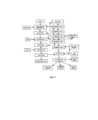
Фосфогипс вводили в 1 ступень, раствор кислоты в 4-ю. Содержание РЗЭ в фосфогипсе 0,4%масс. Противоточный процесс проводили на четырех ступенях (в четырех стаканах), в первую ступень (стакан) ввозили фосфогипс с таким количеством захваченной фосфорной кислоты, которое реально существует на действующем производстве. Фосфогипс и водные растворы контактировали при перемешивании в течение 20 минут при нагревании до 75-80°С и барботировали воздух. После такой обработки пульпу фильтровали на водоструйном насосе под вакуумом и фильтрат переносили из четвертой ступени в третью, затем во вторую, из второй - в первую, а фосфогипс, наоборот, из первой во вторую, затем в третью и четвертую. Таким образом, водным раствором, содержащем практически одно и тоже введенное количество серной кислоты, фосфогипс обрабатывали в противотоке. Концентрация фосфорной кислоты уменьшалась от первой ступени до четвертой. Процесс проводили в обычных стеклянных стаканах. Водную фазу и фосфогипс анализировали на содержание серной и фосфорной кислот, редкоземельных элементов и фтора. Результаты представлены в табл. 6. Видно, что происходит не только смыв фосфорной кислоты из фосфогипса, но также й очистка от фтора и от части редкоземельных элементов. Раствор от промывки, содержащий 1,6 г/дм3 РЗЭ, обрабатывается апатитом для нейтрализации серной кислоты и добавлением оксида кальция или гидроксида аммония осаждаются РЗЭ. После отделения осадка, фильтрат направляют на операцию вскрытия апатита завода-производителя удобрений или ту часть установки по вскрытию апатита, в которую в настоящее время поступает водный раствор от промывки фосфогипса водой. Соотношение фаз поддерживали такой же, как и в действующем производстве, т.е. фосфогипс: промывной раствор=1:1. Предлагаемый барботаж воздухом или горячим паром позволяет увеличить извлечение фтора в атмосферу, откуда он удаляется на фильтрах для очистки от фтора. На фиг. 2 и фиг. 3 приведена принципиальная технологическая схема и последовательность операций при очистке фосфогипса. Предлагаемое техническое решение позволяет существенно сократить затраты на очистку текущего фосфогипса и извлечение РЗЭ. Возможен также вариант переработки «лежалого фосфогипса» с передачей фосфат-содержащего раствора на основное предприятие и строительство установки по очистке «лежалого» фосфогипса.Phosphogypsum was introduced into
Claims (3)
Publications (1)
| Publication Number | Publication Date |
|---|---|
| RU2836282C1 true RU2836282C1 (en) | 2025-03-12 |
Family
ID=
Citations (5)
| Publication number | Priority date | Publication date | Assignee | Title |
|---|---|---|---|---|
| RU2008254C1 (en) * | 1990-12-29 | 1994-02-28 | Уральский Научно-Исследовательский Химический Институт Научно-Производственного Объединения "Кристалл" | Process of preparing extractive phosphoric acid and apparatus for preparation the same |
| RU2225892C1 (en) * | 2002-07-23 | 2004-03-20 | Институт химии и технологии редких элементов и минерального сырья им. И.В.Тананаева Кольского научного центра РАН | Method of recovering rare-earth minerals from phosphogypsum |
| RU2492255C1 (en) * | 2012-06-14 | 2013-09-10 | Общество с ограниченной ответственностью Минерал "Нано-Технология" | Method of extracting rare-earth metals (rem) from phosphogypsum |
| RU2525877C2 (en) * | 2012-12-18 | 2014-08-20 | Александр Васильевич Вальков | Method of processing phosphogypsum |
| CN108112248A (en) * | 2015-05-20 | 2018-06-01 | 费林有限责任公司 | Method for Composite Treatment of Phosphogypsum |
Patent Citations (5)
| Publication number | Priority date | Publication date | Assignee | Title |
|---|---|---|---|---|
| RU2008254C1 (en) * | 1990-12-29 | 1994-02-28 | Уральский Научно-Исследовательский Химический Институт Научно-Производственного Объединения "Кристалл" | Process of preparing extractive phosphoric acid and apparatus for preparation the same |
| RU2225892C1 (en) * | 2002-07-23 | 2004-03-20 | Институт химии и технологии редких элементов и минерального сырья им. И.В.Тананаева Кольского научного центра РАН | Method of recovering rare-earth minerals from phosphogypsum |
| RU2492255C1 (en) * | 2012-06-14 | 2013-09-10 | Общество с ограниченной ответственностью Минерал "Нано-Технология" | Method of extracting rare-earth metals (rem) from phosphogypsum |
| RU2525877C2 (en) * | 2012-12-18 | 2014-08-20 | Александр Васильевич Вальков | Method of processing phosphogypsum |
| CN108112248A (en) * | 2015-05-20 | 2018-06-01 | 费林有限责任公司 | Method for Composite Treatment of Phosphogypsum |
Non-Patent Citations (1)
| Title |
|---|
| КОЧЕТКОВ А.В. и др., Условия получения фосфогипса как отхода - побочного продукта производства азотно-фосфорных удобрений, Транспортные сооружения, 2019, т. 6, cc. 1-10. * |
Similar Documents
| Publication | Publication Date | Title |
|---|---|---|
| RU2416654C1 (en) | Procedure for extraction of rare earth elements from phospho-gypsum | |
| AU2019310188B2 (en) | Caustic conversion process | |
| CN109795995B (en) | A kind of method for efficient impurity removal by hydrochloric acid method wet-process phosphoric acid | |
| RU2543160C2 (en) | Method of sulphuric acid decomposition of rem-containing phosphate raw material | |
| RU2546739C2 (en) | Method of purifying working leaching solutions from phosphates and fluorides | |
| US4012491A (en) | Phosphate process | |
| US9156716B2 (en) | Method for purification of spent sulfuric acid from titanium dioxide rutile industry | |
| CN118026118A (en) | Method for preparing disodium hydrogen phosphate or sodium dihydrogen phosphate with raffinate acid and producing sodium sulfate as a by-product | |
| RU2739409C1 (en) | Method of extracting rare-earth elements from phosphogypsum | |
| CN113355538A (en) | Terbium oxide extraction process for treating ion ore by combining hydrochloric acid and organic extractant | |
| CN116730304B (en) | Purification production line of high-purity phosphoric acid | |
| KR102865764B1 (en) | Method, product and system for cogenerating ferric phosphate through nitrophosphate fertilizer device | |
| RU2104938C1 (en) | Method for extraction of rare-earth elements of phosphogypsum | |
| CN118108197A (en) | Treatment method for purifying phosphoric acid raffinate | |
| RU2525877C2 (en) | Method of processing phosphogypsum | |
| RU2037548C1 (en) | Method to produce scandium fluoride product from solutions or pulps of complex salt composition | |
| RU2458863C1 (en) | Method of extracting rare-earth concentrate from apatite | |
| RU2145571C1 (en) | Method of preparing phosphoric acid | |
| RU2233239C1 (en) | Method for treatment of wet-process phosphoric acid | |
| RU2315709C1 (en) | Method of production of purified phosphoric acid | |
| RU2851299C1 (en) | Method for comprehensive processing of phosphogypsum | |
| CN118598089A (en) | Method for preparing disodium hydrogen phosphate or sodium dihydrogen phosphate with raffinate acid and producing sodium sulfate as a by-product | |
| RU2337060C1 (en) | Method of organic extragent reduction | |
| RU2080291C1 (en) | Method for producing potassium sulfate | |
| RU2103387C1 (en) | Method of recovering zinc from zinc-containing waste |