RU2239373C1 - Method for detecting indications for carrying out surgical correction in disorders of regional hemodynamics in case of reconstructive operations upon inferior limbs' arteries - Google Patents
Method for detecting indications for carrying out surgical correction in disorders of regional hemodynamics in case of reconstructive operations upon inferior limbs' arteries Download PDFInfo
- Publication number
- RU2239373C1 RU2239373C1 RU2004107554/14A RU2004107554A RU2239373C1 RU 2239373 C1 RU2239373 C1 RU 2239373C1 RU 2004107554/14 A RU2004107554/14 A RU 2004107554/14A RU 2004107554 A RU2004107554 A RU 2004107554A RU 2239373 C1 RU2239373 C1 RU 2239373C1
- Authority
- RU
- Russia
- Prior art keywords
- artery
- arteries
- regional
- blood flow
- revascularization
- Prior art date
Links
- 210000001367 artery Anatomy 0.000 title claims abstract description 52
- 238000000034 method Methods 0.000 title claims abstract description 31
- 230000000004 hemodynamic effect Effects 0.000 title claims abstract description 29
- 238000012937 correction Methods 0.000 title claims abstract description 14
- 230000000250 revascularization Effects 0.000 claims abstract description 12
- 238000001356 surgical procedure Methods 0.000 claims abstract description 12
- 230000000747 cardiac effect Effects 0.000 claims abstract description 9
- 238000011835 investigation Methods 0.000 claims abstract 2
- 230000017531 blood circulation Effects 0.000 claims description 38
- 210000003141 lower extremity Anatomy 0.000 claims description 29
- 230000036772 blood pressure Effects 0.000 claims description 25
- 210000003414 extremity Anatomy 0.000 claims description 17
- 230000004872 arterial blood pressure Effects 0.000 abstract description 5
- 239000003814 drug Substances 0.000 abstract description 4
- 230000000694 effects Effects 0.000 abstract description 2
- 238000001514 detection method Methods 0.000 abstract 1
- 238000012544 monitoring process Methods 0.000 abstract 1
- 239000000126 substance Substances 0.000 abstract 1
- 230000002792 vascular Effects 0.000 description 18
- 230000036581 peripheral resistance Effects 0.000 description 12
- 201000001320 Atherosclerosis Diseases 0.000 description 9
- 238000005259 measurement Methods 0.000 description 8
- 230000002980 postoperative effect Effects 0.000 description 7
- 230000003872 anastomosis Effects 0.000 description 6
- 208000037265 diseases, disorders, signs and symptoms Diseases 0.000 description 6
- 210000003090 iliac artery Anatomy 0.000 description 6
- 210000000689 upper leg Anatomy 0.000 description 6
- 238000003745 diagnosis Methods 0.000 description 5
- 230000002093 peripheral effect Effects 0.000 description 5
- 230000009885 systemic effect Effects 0.000 description 5
- 238000007631 vascular surgery Methods 0.000 description 5
- 208000030831 Peripheral arterial occlusive disease Diseases 0.000 description 4
- 238000002266 amputation Methods 0.000 description 4
- 238000004458 analytical method Methods 0.000 description 4
- 230000003143 atherosclerotic effect Effects 0.000 description 4
- 201000010099 disease Diseases 0.000 description 4
- 230000010412 perfusion Effects 0.000 description 4
- 229920003023 plastic Polymers 0.000 description 4
- 239000004033 plastic Substances 0.000 description 4
- 210000001519 tissue Anatomy 0.000 description 4
- 238000002604 ultrasonography Methods 0.000 description 4
- 238000011161 development Methods 0.000 description 3
- 210000001105 femoral artery Anatomy 0.000 description 3
- 208000011580 syndromic disease Diseases 0.000 description 3
- 206010022562 Intermittent claudication Diseases 0.000 description 2
- 208000007536 Thrombosis Diseases 0.000 description 2
- 210000003484 anatomy Anatomy 0.000 description 2
- 238000002583 angiography Methods 0.000 description 2
- 210000003423 ankle Anatomy 0.000 description 2
- 210000000709 aorta Anatomy 0.000 description 2
- 239000008280 blood Substances 0.000 description 2
- 210000004369 blood Anatomy 0.000 description 2
- 230000002089 crippling effect Effects 0.000 description 2
- 230000003247 decreasing effect Effects 0.000 description 2
- 208000035475 disorder Diseases 0.000 description 2
- 230000002349 favourable effect Effects 0.000 description 2
- 230000036541 health Effects 0.000 description 2
- 208000021156 intermittent vascular claudication Diseases 0.000 description 2
- 230000003902 lesion Effects 0.000 description 2
- 201000002818 limb ischemia Diseases 0.000 description 2
- 230000001575 pathological effect Effects 0.000 description 2
- 230000008569 process Effects 0.000 description 2
- 230000001225 therapeutic effect Effects 0.000 description 2
- 239000013598 vector Substances 0.000 description 2
- 241000531891 Alburnus alburnus Species 0.000 description 1
- 206010002329 Aneurysm Diseases 0.000 description 1
- 206010062542 Arterial insufficiency Diseases 0.000 description 1
- 208000000575 Arteriosclerosis Obliterans Diseases 0.000 description 1
- 206010003226 Arteriovenous fistula Diseases 0.000 description 1
- 206010061688 Barotrauma Diseases 0.000 description 1
- 206010016717 Fistula Diseases 0.000 description 1
- 208000002847 Surgical Wound Diseases 0.000 description 1
- 230000009471 action Effects 0.000 description 1
- 230000008321 arterial blood flow Effects 0.000 description 1
- 230000036770 blood supply Effects 0.000 description 1
- 210000004204 blood vessel Anatomy 0.000 description 1
- 210000002302 brachial artery Anatomy 0.000 description 1
- 238000004364 calculation method Methods 0.000 description 1
- 238000012512 characterization method Methods 0.000 description 1
- 230000002301 combined effect Effects 0.000 description 1
- 230000000052 comparative effect Effects 0.000 description 1
- 239000000470 constituent Substances 0.000 description 1
- 238000013461 design Methods 0.000 description 1
- 230000003205 diastolic effect Effects 0.000 description 1
- 238000013171 endarterectomy Methods 0.000 description 1
- 210000003038 endothelium Anatomy 0.000 description 1
- 230000003890 fistula Effects 0.000 description 1
- 238000002347 injection Methods 0.000 description 1
- 239000007924 injection Substances 0.000 description 1
- 238000001361 intraarterial administration Methods 0.000 description 1
- 208000028867 ischemia Diseases 0.000 description 1
- 210000002414 leg Anatomy 0.000 description 1
- 239000007788 liquid Substances 0.000 description 1
- 230000008338 local blood flow Effects 0.000 description 1
- 230000004807 localization Effects 0.000 description 1
- 230000007774 longterm Effects 0.000 description 1
- 230000000877 morphologic effect Effects 0.000 description 1
- 230000008520 organization Effects 0.000 description 1
- 230000007119 pathological manifestation Effects 0.000 description 1
- 230000036513 peripheral conductance Effects 0.000 description 1
- 238000005381 potential energy Methods 0.000 description 1
- 230000002028 premature Effects 0.000 description 1
- 230000002250 progressing effect Effects 0.000 description 1
- 230000035755 proliferation Effects 0.000 description 1
- 238000002278 reconstructive surgery Methods 0.000 description 1
- 238000000518 rheometry Methods 0.000 description 1
- 239000000523 sample Substances 0.000 description 1
- 239000000243 solution Substances 0.000 description 1
- 238000011477 surgical intervention Methods 0.000 description 1
- 238000012360 testing method Methods 0.000 description 1
- 230000009466 transformation Effects 0.000 description 1
- 230000001131 transforming effect Effects 0.000 description 1
- 210000001364 upper extremity Anatomy 0.000 description 1
Images
Landscapes
- Measuring Pulse, Heart Rate, Blood Pressure Or Blood Flow (AREA)
Abstract
Description
Изобретение относится к медицине, точнее к сосудистой хирургии, и может найти применение при операциях по прямой реваскуляризации конечностей.The invention relates to medicine, more specifically to vascular surgery, and may find application in operations for direct revascularization of the limbs.
Атеросклероз, по данным Всемирной Организации Здравоохранения за последние 5 лет, продолжает оставаться главной причиной смерти среди взрослого населения планеты. Одним из наиболее частых и опасных проявлений атеросклероза является облитерирующий атеросклероз сосудов нижних конечностей. Почти 40% пациентов, перенесших ампутацию по поводу терминальных стадий заболевания, погибает в первый год жизни после калечащей операции. Поэтому все более актуальной становится проблема улучшения качества реконструктивных операций на магистральных артериях конечностей как главного метода лечения этого заболевания на стадиях выраженных манифестаций патологических проявлений и осложнений. Атеросклероз - это постоянно прогрессирующее заболевание, по мере развития которого лечебные мероприятия неизбежно переходят от разряда консервативных методов лечения к хирургическим. Оперативное лечение, помимо реальных непосредственных опасностей для жизни и здоровья пациента, имеет ограниченную по срокам эффективность. Так, все шунты, используемые при операциях по прямой реваскуляризации конечностей, в лучшем случае функционируют от 5 до 10 лет. Нередко "жизнь" сосудистых конструкций бывает значительно короче. Причиной этого, как правило, является развитие облитераций в зоне дистальных анастомозов либо пластик. Конструкция тромбируется, ишемия конечности возвращается, порой в более выраженных проявлениях, что ведет к необходимости выполнения ампутаций. В основе этих явлений, по всей видимости, лежат особенности анатомического устройства сосудистого русла конечности, характеристика применяемых в ходе операции сосудистых конструкций и, наконец, то, что отражает влияние перечисленных выше факторов - состояние регионарной гемодинамики. Для ее изучения существует несколько методов и способов.Atherosclerosis, according to the World Health Organization over the past 5 years, continues to be the main cause of death among the adult population of the planet. One of the most frequent and dangerous manifestations of atherosclerosis is arteriosclerosis obliterans of the vessels of the lower extremities. Almost 40% of patients who underwent amputation about the terminal stages of the disease die in the first year of life after crippling surgery. Therefore, the problem of improving the quality of reconstructive operations on the main arteries of the limbs as the main method of treating this disease at the stages of pronounced manifestations of pathological manifestations and complications becomes more and more urgent. Atherosclerosis is a constantly progressing disease, with the development of which therapeutic measures inevitably pass from the category of conservative treatment methods to surgical ones. Surgical treatment, in addition to real immediate dangers to the life and health of the patient, has a limited effectiveness in terms. So, all shunts used in operations on direct revascularization of the limbs, at best, function from 5 to 10 years. Often the "life" of vascular structures is much shorter. The reason for this, as a rule, is the development of obliteration in the area of distal anastomoses or plastic. The design is thrombosed, limb ischemia returns, sometimes in more pronounced manifestations, which leads to the need to perform amputations. Apparently, these phenomena are based on the features of the anatomical structure of the vascular bed of the limb, the characteristics of the vascular structures used during the operation, and, finally, that reflects the influence of the above factors - the state of regional hemodynamics. To study it, there are several methods and techniques.
Известна ультразвуковая допплерография артерий нижних конечностей, при которой датчиком лоцируют исследуемую артерию, определяют с достаточной степенью погрешности диаметр артерии и линейную скорость кровотока. Погрешности обусловлены несовершенством датчиков, а также субъективным фактором - индивидуальным умением исследователя под правильным углом ставить датчик в проекции сосуда. После фиксирования на экране кривой потока крови расчитывают соотношение кривизны анакроты и катакроты полученного графика. По мнению врачей функциональной диагностики, полученные результаты отражают периферическое сопротивление.Known ultrasound dopplerography of the arteries of the lower extremities, in which the investigated artery is located with a sensor, the diameter of the artery and the linear velocity of blood flow are determined with a sufficient degree of error. Errors are due to imperfection of the sensors, as well as a subjective factor - the individual ability of the researcher to put the sensor in the projection of the vessel at the right angle. After fixing the curve of the blood flow on the screen, the ratio of the curvature of the anacrot to the catacrot of the obtained graph is calculated. According to doctors of functional diagnostics, the results obtained reflect peripheral resistance.
Необходимо заметить, что помимо указанных выше погрешностей метода, существует ряд физических факторов, которые объективно не могут быть учтены данным методом. Это влияние внутриартериального рельефа, резистивность артериального русла и артериальное давление на входе в магистраль.It should be noted that in addition to the above errors of the method, there are a number of physical factors that objectively cannot be taken into account by this method. This is the effect of the intra-arterial relief, the resistance of the arterial bed and blood pressure at the entrance to the highway.
Кроме того, известен метод интраоперационной флоуметрии. В качестве недостатков метода следует отметить косвенность характеристик периферического сопротивления, которое субъективно оценивают по результатам объемного кровотока, рассчитанного с использованием приблизительных данных диаметра артерии и линейной скорости кровотока по ней. Диаметр артерии принимают приблизительно равным шкале набора датчиков, интервал между которыми равен 2 мм. Размер, условно принимаемый за диаметр артерии, кроме того, приблизительно отражает лишь наружный диаметр артерии, но никак не внутренний, который может иметь значительную индивидуальную вариабельность. Измеренная величина линейной скорости кровотока в значительной мере зависит от толщины и плотности артериальной стенки, а также от угла между направлениями датчика и артерии, который, в свою очередь, часто определяется анатомическими особенностями операционной раны и локализацией в ней сосуда.In addition, the known method of intraoperative flowmetry. The disadvantages of the method are the indirect characteristics of peripheral resistance, which are subjectively evaluated based on the results of volumetric blood flow calculated using approximate data on the diameter of the artery and linear velocity of blood flow through it. The diameter of the artery is taken approximately equal to the scale of the set of sensors, the interval between which is 2 mm. The size, conventionally taken as the diameter of the artery, in addition, approximately reflects only the outer diameter of the artery, but not the internal one, which can have significant individual variability. The measured value of the linear blood flow velocity largely depends on the thickness and density of the arterial wall, as well as on the angle between the directions of the sensor and the artery, which, in turn, is often determined by the anatomical features of the surgical wound and the location of the vessel in it.
Таким образом, существующие методы лишь косвенно отражают различные факторы нарушений регионарной гемодинамики, не давая объективной, цифровой, интегральной оценки, что не позволяет своевременно скорректировать план операции и затрудняет определение тактики послеоперационного ведения больных с облитерирующим атеросклерозом.Thus, existing methods only indirectly reflect various factors of regional hemodynamic disturbances, without giving an objective, digital, integrated assessment, which does not allow timely adjustment of the plan of operations and makes it difficult to determine the tactics of postoperative management of patients with obliterating atherosclerosis.
Наиболее близким к предлагаемому является способ изучения регионарной гемодинамики при облитерирующих заболеваниях нижних конечностей [С.В. Иванов, В.Э. Кудряшов, Ю.В. Белов. Сравнительная информативность допплерографических показателей скорости кровотока и давления в оценке степени ишемии нижних конечностей. - Хирургия. - 1995. - № 6. - С.11-13]. Он заключается в том, что больным проводят допплерографическую оценку линейной скорости кровотока, объемный кровоток, а также с помощью аппарата Рива-Роччи и ультразвукового датчика неинвазивно определяют регионарное артериальное давление (на дистальных артериях нижних конечностей) и артериальное давление на плече, принимая его за системное. Анализируя полученные данные, интерпритируют их следующим образом: градиент (перепад, разность) регионарного артериального давления (АД) на различных сегментах характеризует уровень сопротивления артериального русла конечности, а соотношение величин регионарного артериального давления и системного АД, называемое плечелодыжечным индексом, отражает степень тяжести периферической артериальной недостаточности. Величина объемного кровотока в конечности также косвенно характеризует уровень сопротивления артериального русла. Линейная скорость кровотока отражает прежде всего локальную морфологическую ситуацию в сосудистом русле в месте измерения. На основе анализа этих данных авторы делают вывод о состоянии регионарной гемодинамики и при значениях плечелодыжечного индекса ниже 0,5 ставят показания к оперативному лечению.Closest to the proposed is a method for studying regional hemodynamics in obliterating diseases of the lower extremities [S.V. Ivanov, V.E. Kudryashov, Yu.V. Belov. Comparative informativeness of dopplerographic indicators of blood flow velocity and pressure in assessing the degree of lower limb ischemia. - Surgery. - 1995. - No. 6. - S.11-13]. It consists in the fact that patients undergo a dopplerographic assessment of the linear blood flow velocity, volumetric blood flow, and regional blood pressure (on the distal arteries of the lower extremities) and blood pressure on the shoulder are non-invasively determined using the Riva-Rocci apparatus and an ultrasound probe, taking it as the systemic . Analyzing the data obtained, they interpret it as follows: the gradient (differential, difference) of regional blood pressure (BP) in different segments characterizes the level of resistance of the arterial bed of the limb, and the ratio of regional blood pressure and systemic blood pressure, called the ankle-ankle index, reflects the severity of peripheral arterial insufficiency. The volumetric blood flow in the limb also indirectly characterizes the level of resistance of the arterial bed. The linear velocity of blood flow primarily reflects the local morphological situation in the vascular bed at the measurement site. Based on the analysis of these data, the authors conclude about the state of regional hemodynamics and, with values of the ankle-ankle index below 0.5, give indications for surgical treatment.
Этот способ явился первым, объективно отражающим в цифровой форме состояние крообращения нижних конечностей, тем не менее он не лишен серьезных недостатков.This method was the first, objectively reflecting in digital form the state of blood circulation of the lower extremities, nevertheless it is not without serious flaws.
Во-первых, величина объемного кровотока по сосуду является расчетной величиной, в основе которой лежат округленные данные о диаметре артерии, а также данные о линейной скорости кровотока, зависящие от внутрисосудистого рельефа проксимальнее, дистальнее и в месте измерения.First, the volumetric blood flow in the vessel is a calculated value, which is based on rounded data on the diameter of the artery, as well as data on the linear velocity of blood flow, depending on the intravascular relief proximal, distal and at the measurement site.
Во-вторых, определение градиента артериального давления не совсем корректно, так как за системное берется АД на плечевой артерии (не всегда артериальное русло верхних конечностей достоверно отражает системное давление: атеросклероз, удаленность от аортального кольца, анатомические особенности в строении магистральных сосудов конкретного индивидума), кроме того, артериальное давление у "входа" в сосудистое русло нижней конечности необязательно должно соответствовать системному АД по причинам наличия атеросклеротических и иных (аневризматическая трансформация, патологическая извитость артерий) препятствий на пути кровотока от аортального кольца до конечности, а также самой длины этого пути.Secondly, the determination of the blood pressure gradient is not entirely correct, since the arterial pressure on the brachial artery is taken (the arterial bed of the upper extremities does not always accurately reflect the systemic pressure: atherosclerosis, distance from the aortic ring, anatomical features in the structure of the main vessels of a particular individual), in addition, the blood pressure at the "entrance" to the vascular bed of the lower limb does not have to correspond to systemic blood pressure for reasons of atherosclerotic and other (aneurysm zmaticheskaya transformation pathological tortuosity of the arteries) obstacles to the blood flow path from the annulus to the extremity, and the length of the path itself.
В-третьих, способ, объективно отражая состояние кровоснабжения тканей конечности и перфузионную достаточность магистрального артериального кровотока (перфузионное давление в магистральных артериях, его соотношение с системным АД, количественную характеристику притока крови к тканям нижних конечностей в виде объемного кровотока), позволяет принять решение о необходимости оперативной коррекции перфузии тканей, но не дает возможности объективно оценить периферическое сопротивление в артериальном русле нижних конечностей после операции, что затрудняет определение хирургической тактики послеоперационного лечения пациента. Эта тактика определяет в первую очередь показания к дополнительной реваскуляризации нижнего (II) этажа артериального русла конечности, наложению аутовенозной фистулы дистальнее искусственной сосудистой конструкции, поясничной симпатэктомии. Именно эти дополнительные вмешательства, сделанные своевременно, обеспечивают адекватное кровообращение в конечности, значительное удлинение продолжительности "жизни" конструкции.Thirdly, the method, objectively reflecting the state of blood supply to limb tissues and the perfusion sufficiency of the main arterial blood flow (perfusion pressure in the main arteries, its relationship with systemic blood pressure, quantitative characterization of blood flow to the tissues of the lower extremities in the form of volumetric blood flow), allows you to decide on the need surgical correction of tissue perfusion, but it does not make it possible to objectively assess peripheral resistance in the arterial bed of the lower extremities after opera tion, which makes it difficult to determine the surgical tactics of postoperative treatment of the patient. This tactic primarily determines indications for additional revascularization of the lower (II) floor of the arterial bed of the limb, the application of an autovenous fistula distal to the artificial vascular structure, and lumbar sympathectomy. It is these additional interventions that are done in a timely manner that provide adequate blood circulation in the limbs, a significant extension of the duration of the "life" of the structure.
Таким образом, способ-прототип не дает возможности определять показания к проведению дополнительных операций, направленных на нормализацию не только перфузии тканей, но и на создание оптимальных гемодинамических условий функционирования созданных ранее сосудистых конструкций, которые, как правило, и обеспечивают их долголетнюю адекватную работу, улучшают качество жизни пациента, предотвращают необходимость калечащей операции. На наш взгляд, рассмотренный способ не позволяет достоверно спрогнозировать развитие атеросклеротического процесса с учетом изменившихся в ходе операции гемодинамических условий и не может лежать в основе определения тактики лечения больных в послеоперационном периоде.Thus, the prototype method makes it impossible to determine the indications for additional operations aimed at normalizing not only perfusion of tissues, but also on creating optimal hemodynamic conditions for the functioning of previously created vascular structures, which, as a rule, ensure their long-term adequate work, improve patient's quality of life, prevent the need for crippling surgery. In our opinion, the considered method does not allow to reliably predict the development of the atherosclerotic process, taking into account the hemodynamic conditions that changed during the operation, and cannot be the basis for determining the tactics of treating patients in the postoperative period.
Таким образом, недостатками способа-прототипа являются неточность в оценке локального периферического сосудистого сопротивления у больных облитерирующим атеросклерозом сосудов нижних конечностей, отсутствие возможности диагностики гемодинамических нарушений в артериальном русле интраоперационно, когда еще можно своевременно оценить и при необходимости скорректировать выполненную операцию. Он практически не позволяет определить послеоперационную тактику ведения больного.Thus, the disadvantages of the prototype method are the inaccuracy in the assessment of local peripheral vascular resistance in patients with atherosclerosis obliterans of the lower extremities, the inability to diagnose hemodynamic disorders in the arterial bed intraoperatively, when it is still possible to evaluate and, if necessary, correct the operation performed. It practically does not allow to determine the postoperative tactics of patient management.
Технический результат настоящего изобретения состоит в повышении точности диагностики нарушений регионарной гемодинамики за счет измерения АД непосредственно в исследуемой артерии после реваскуляризации конечности одновременно с записью ЭКГ. Этот результат достигается тем, что артериальное давление регистрируют после выполнения реваскуляризации непосредственно в исследуемой артерии инвазивно при свободном кровотоке и после пережатия ее дистальнее места исследования, регистрируют в том и другом случаях барограммы, определяют площади под их кривыми за один сердечный цикл, находят разность их значений и, если она более -1,0 кПа×с, считают хирургическую коррекцию регионарной гемодинамики целесообразной.The technical result of the present invention is to improve the accuracy of diagnosis of regional hemodynamic disorders by measuring blood pressure directly in the artery under study after revascularization of the limb simultaneously with ECG recording. This result is achieved by the fact that blood pressure is recorded after performing revascularization directly in the studied artery invasively with free blood flow and after clamping it distal to the study site, barograms are recorded in both cases, the areas under their curves are determined for one cardiac cycle, their difference is found and if it is more than -1.0 kPa × s, surgical correction of regional hemodynamics is considered appropriate.
Регистрация АД непосредственно в исследуемой артерии после реваскуляризации конечности характеризует объективную картину, сложившуюся после запуска кровотока по вновь созданному в ходе операции пути, что позволяет своевременно скорректировать операционный план и определить тактику послеоперационного ведения больного практически на интраоперационном этапе.Registration of blood pressure directly in the studied artery after revascularization of the limb characterizes the objective picture that developed after starting the blood flow along the path newly created during the operation, which allows you to timely adjust the operating plan and determine the tactics of postoperative management of the patient almost at the intraoperative stage.
Кровь как жидкость подчиняется законам механики и гидродинамики. В соответствии с этими законами Fп=fк+Fп/сопр., где Fп - сила, обусловленная потенциальной энергией кровотока, Fк - сила кинетической энергии, Fп/сопр. - сила, затраченная на преодоление силы интегрального сопротивления кровотоку и равная -Fc (сила интегрального сопротивления кровотоку). Знак "минус" обусловен тем, что векторы Fп/сопр. и Fc разнонаправлены. Таким образом, подставив в формулу вместо силы, затраченной на преодоление силы интегрального сопротивления кровотоку (Fп/сопр.), саму силу интегрального сопротивления кровотоку Fc с учетом знака "минус", определяющего направление вектора ее действия, получим Fп=Fк-Fc. Преобразуя последнюю формулу, получим, что Fc=Fк-Fп. Для исключения погрешностей, связанных с измерением диаметра артерии в месте измерения, а также унификации и удобства использования полученных результатов, оптимальнее определять не силу сопротивления, а показатель, названный нами индексом интегрального регионарного периферического сопротивления сосудистого русла кровотоку (Исопр.): Исопр.=Fсопр.×t/s, где s - площадь артерии, t - время сердечного цикла (R-R) в секунду. Поскольку F/s=АД (давление), получаем Исопр.=АДк×t-Адп×t, где АДк - артериальное давление в артерии при свободном ее просвете, в потоке движущейся крови, а АДп - артериальное давление в артерии при пережатом ее просвете, дистальнее места исследования. Произведение АД на время сердечного цикла является площадью под кривой барограммы и отражает работу сил за время сердечного цикла.Blood as a liquid obeys the laws of mechanics and hydrodynamics. In accordance with these laws, Fp = fk + Fp / sr., Where Fp is the force due to the potential energy of the blood flow, Fk is the force of kinetic energy, Fp / sr. - the force spent to overcome the force of integral resistance to blood flow and equal to -Fc (force of integral resistance to blood flow). The minus sign is due to the fact that the vectors Fп / compare. and Fc are multidirectional. Thus, substituting in the formula instead of the force expended to overcome the force of integral resistance to blood flow (Fп / compare), the force of integral resistance to blood flow Fc, taking into account the minus sign, which determines the direction of its action vector, we obtain Fп = Fк-Fc. Transforming the last formula, we obtain that Fc = Fk-Fp. To exclude errors associated with measuring the diameter of the artery at the measurement site, as well as to unify and ease the use of the results, it is more optimal to determine not the resistance force, but the indicator, which we called the index of the integral regional peripheral resistance of the vascular bed to the blood flow (Ex.): Isopr. = Fav . × t / s, where s is the area of the artery, t is the time of the cardiac cycle (RR) per second. Since F / s = HELL (pressure), we obtain Isopr. = ADK × t-Adp × t, where ADK is the arterial pressure in the artery with its free lumen in the flow of moving blood, and ADP is the arterial blood pressure in the artery distal to the study site. The product of blood pressure during the cardiac cycle is the area under the barogram curve and reflects the work of forces during the cardiac cycle.
Таким образом, инвазивная регистрация АД в артерии (в области анастомоза) при свободном кровотоке и после ее пережатия дает возможность определить Исопр., характеризующий степень нарушения регионарной гемодинамики. Причем определение Исопр. проксимальнее и дистальнее места хирургической операции на артериальном русле пациента позволяет по разнице его значений на входе и выходе созданной во время операции конструкции оценивать гемодинамические характеристики самой искусственной конструкции (аутовенозного шунта, синтетического протеза, участка пластики артерии), что очень важно в прогностическом плане, так как дает возможность выбора оптимального для конкретного больного и конкретной анатомической ситуации варианта хирургического лечения.Thus, the invasive registration of blood pressure in the artery (in the area of the anastomosis) with free blood flow and after its clamping makes it possible to determine Isopr., Characterizing the degree of violation of regional hemodynamics. Moreover, the definition of Isopr. proximal and distal to the surgical site on the patient’s arterial bed, it is possible to evaluate the hemodynamic characteristics of the artificial structure itself (autovenous shunt, synthetic prosthesis, section of artery plastic) by the difference in its values at the input and output of the structure created during the operation, which is very important in the prognostic plan, so as it makes it possible to choose the option of surgical treatment that is optimal for a particular patient and a specific anatomical situation.
Определение абсолютных значений артериального давления и его составляющих (систолическое, диастолическое, среднее), а также их оценка известны в медицине давно. Полученные данные позволяли косвенно судить о состоянии периферического артериального русла и о кровообращении в нем. Исопр. - наиболее важный для реконструктивной сосудистой хирургии объективный показатель, который в численной форме отражает периферическое сопротивление. Сопротивление периферического артериального русла обусловлено множеством составляющих компонентов: анатомическими особенностями (наличием и выраженностью перитоков и коллатералей), емкостью сосудистого русла, локализацией и выраженностью атеросклеротического поражения артерий, условиями гемодинамики (давлением на входе в артериальное русло нижних конечностей, соотношением фаз анте- и ретроградных потоков крови по сосудам), реологией и т.д. Используя Исопр., можно не учитывать роль каждого из этих составляющих факторов, условившись определять интегральное регионарное периферическое сопротивление дистальнее места измерения. На наш взгляд, это наиболее приемлемое решение для нужд медицины, так как фактическая роль каждого конкретного составляющего фактора сопротивления не имеет практической значимости, в то время как значение их совокупного влияния на гемодинамику трудно переоценить. Кроме того, определение индекса сопротивления, а не силы сопротивления на одном и том же участке артерии позволяет свести к минимуму погрешности, связанные с учетом диаметра артерии, измерение которого в реальных условиях всегда является приблизительным. Таким образом, нами разработан способ определения достаточно объективного показателя, отражающего сопротивление периферического русла.The determination of the absolute values of blood pressure and its components (systolic, diastolic, average), as well as their assessment have been known in medicine for a long time. The data obtained made it possible to indirectly judge the state of the peripheral arterial bed and blood circulation in it. Isopr. - the most important objective indicator for reconstructive vascular surgery, which in numerical form reflects peripheral resistance. The resistance of the peripheral arterial bed is caused by many components: anatomical features (the presence and severity of perithexes and collaterals), the capacity of the vascular bed, localization and severity of atherosclerotic lesions of the arteries, hemodynamic conditions (pressure at the entrance to the arterial bed of the lower extremities, the ratio of the phases of the anti- and retrograde flows blood vessels), rheology, etc. Using Isopr., It is possible not to take into account the role of each of these constituent factors, agreeing to determine the integral regional peripheral resistance distal to the measurement site. In our opinion, this is the most acceptable solution for the needs of medicine, since the actual role of each specific component of the resistance factor does not have practical significance, while the value of their combined effect on hemodynamics is difficult to overestimate. In addition, the determination of the resistance index, and not the resistance force on the same section of the artery, allows to minimize errors associated with the diameter of the artery, the measurement of which in real conditions is always approximate. Thus, we have developed a method for determining a fairly objective indicator that reflects the resistance of the peripheral channel.
В предварительных исследованиях мы проводили измерения Исопр. ангиографированным пациентам, т.е. людям с известной анатомией артериального русла нижних конечностей. Разбив пациентов по группам, мы получили показатели индекса интегрального сопротивления для различных участков артериального бассейна нижних конечностей при нормальном русле и при атеросклеротическом поражении периферических артерий. Нами были изучены также возможности коррекции Исопр. таким больным путем создания у них артериовенозных фистул дистальнее искусственных сосудистых конструкций, а также дистальных дополнительных шунтирований и эндартерэктомий с пластиками артерий, и проследить длительность их функционирования. Все это позволило нам определить значения Исопр., при которых необходима хирургическая коррекция. Опытным путем удалось показать, что значение Исопр. более -1,0 кПа×с предполагает, на наш взгляд, локальную баротравму сосудистой стенки, вызывающую избыточную пролиферацию эндотелия, а также неудовлетворительные условия локального кровотока, приводящие к преждевременному патологическому внутрисосудистому тромбозу, что требует гемодинамической хирургической коррекции. При значениях Исопр. менее -1,0 кПа×с дополнительная хирургическая коррекция гемодинамики в исследуемом бассейне не требуется.In preliminary studies, we measured Isopr. angiographed patients, i.e. people with known anatomy of the arterial bed of the lower extremities. By dividing the patients into groups, we obtained indicators of the integral resistance index for various sections of the arterial basin of the lower extremities with a normal course and with atherosclerotic lesions of the peripheral arteries. We have also studied the possibilities of correction Isopr. by such a patient by creating arteriovenous fistulas distal to artificial vascular structures, as well as distal additional bypass grafts and endarterectomies with artery plastics, and to track the duration of their functioning. All this allowed us to determine the values of Isopr. For which surgical correction is necessary. Empirically it was possible to show that the meaning of Isopr. more than -1.0 kPa × s suggests, in our opinion, a local barotrauma of the vascular wall, causing excessive proliferation of the endothelium, as well as unsatisfactory conditions of local blood flow, leading to premature pathological intravascular thrombosis, which requires hemodynamic surgical correction. At the values of Isopr. less than -1.0 kPa × s additional surgical correction of hemodynamics in the studied pool is not required.
Сущность способа заключаются в следующем.The essence of the method are as follows.
После стандартной подготовки больного в условиях операционной, на этапе завершения реваскуляризации и запуска кровотока по обновленному пути, в интересуемой зоне вмешательства параллельно записывают кривую артериального давления и ЭКГ, затем пережимают артерию и записывают проксимальнее параллельно антеградное артериальное давление одновременно с ЭКГ. Для записи кривых в артерии пункционно вводят инъекционные иглы (20G 1 11/4"), соединенные системой для измерения инвазивного артериального давления со следящей аппаратурой.After standard preparation of the patient in the operating room, at the stage of completing revascularization and starting blood flow along the updated path, the blood pressure curve and ECG are recorded in parallel in the area of interest, then the artery is clamped and the antegrade blood pressure is recorded proximal in parallel with the ECG. In order to record the curves, injection needles (20G 1 11/4 ") connected by a system for measuring invasive blood pressure with a follow-up equipment are punctured in the arteries.
Запись кривых и ЭКГ производят параллельно. С экрана монитора производится видеозапись, затем с видеопленки путем видеозахвата видеобластером производят компьютерный анализ полученных данных: с помощью программы "Тонус" (Zapisnyh@MTU-ru) методом трапеций вычисляют площадь под кривыми барограмм за один сердечный цикл. Из полученных данных во время измерения при проходимой артерии вычитают полученные расчетные данные при пережатой артерии. Результатом является показатель, который, как выше сказано, мы решили назвать индекс интегрального регионарного периферического сопротивления сосудистого русла кровотоку.Curves and ECG are recorded in parallel. A video is recorded from the monitor screen, then a video analysis is performed from the video film by video capture by a video blaster: using the Tonus program (Zapisnyh @ MTU-ru), the area under the barogram curves for one cardiac cycle is calculated using the trapezoidal method. From the obtained data during the measurement with a passable artery, the obtained calculated data is subtracted from the clamped artery. The result is an indicator, which, as mentioned above, we decided to name the index of the integral regional peripheral resistance of the vascular bed to the blood flow.
Наличие индекса интегрального регионарного периферического сопротивления сосудистого русла кровотоку более -1,0 кПа×с, что показано нами опытным путем, требует гемодинамической хирургической коррекции. Если показатель индекса менее -1,0 кПа×с, дополнительная хирургическая коррекция гемодинамики в исследуемом бассейне артериального русла не требуется.The presence of an index of integral regional peripheral resistance of the vascular bed to blood flow of more than -1.0 kPa × s, which we have shown experimentally, requires hemodynamic surgical correction. If the index index is less than -1.0 kPa × s, additional surgical correction of hemodynamics in the studied basin of the arterial bed is not required.
Кроме того, если провести исследования индекса сопротивления проксимальнее и дистальнее места хирургической операции на артериальном русле пациента, то можно, сравнив их, оценить гемодинамические характеристики самой искусственной конструкции (шунта, протеза, участка пластики артерии).In addition, if we study the resistance index proximal and distal to the surgical site on the patient’s arterial bed, then we can compare them to evaluate the hemodynamic characteristics of the artificial structure itself (shunt, prosthesis, section of artery plastic).
Сущность способа поясняется примерами.The essence of the method is illustrated by examples.
Пример 1.Example 1
Больной А., 64 года, поступил в отделение сосудистой хирургии Ленинградской областной клинической больницы 14.05.2001 г. с диагнозом: Облитерирующий атеросклероз сосудов нижних конечностей II б ст. Окклюзия общих и наружных подвздошных артерий с 2-х сторон. Синдром Лериша. Окклюзия бедренно-подколенного сегмента справа. Из анамнеза: больным себя считал около 2-х лет до госпитализации, когда стал отмечать перемежающуюся хромоту при ходьбе на дистанцию 300 метров. Около 2-х месяцев до госпитализации максимальная дистанция ходьбы снизилась до 70 м.Patient A., 64 years old, was admitted to the Department of Vascular Surgery of the Leningrad Regional Clinical Hospital on 05/14/2001 with a diagnosis of Obliterating atherosclerosis of the vessels of the lower extremities II b. Occlusion of the common and external iliac arteries from 2 sides. Lerish's syndrome. Occlusion of the femoral-popliteal segment on the right. From the anamnesis: he considered himself sick about 2 years before hospitalization, when he began to notice intermittent claudication when walking at a distance of 300 meters. About 2 months before hospitalization, the maximum walking distance decreased to 70 m.
При поступлении в отделение больному выполнили ультразвуковую допплерографию артерий нижних конечностей и ангиографию аорты и артерий нижних конечностей. Выявлена окклюзия общих и наружных подвздошных артерий с 2-х сторон. Синдром Лериша. Окклюзия поверхостной бедренной артерии справа от устья до н/3 правого бедра. Плечелодыжечные индексы: справа - 0,34; слева - 0,42. Окончательный диагноз: Облитерирующий атеросклероз сосудов нижних конечностей II б ст. Окклюзия общих и наружных подвздошных артерий с 2-х сторон. Синдром Лериша. Окклюзия бедренно-подколенного сегмента справа.Upon admission to the department, the patient underwent ultrasound dopplerography of the arteries of the lower extremities and angiography of the aorta and arteries of the lower extremities. Occlusion of the common and external iliac arteries from 2 sides was revealed. Lerish's syndrome. Occlusion of the superficial femoral artery to the right of the mouth to n / 3 of the right thigh. Shoulder ankle indices: right - 0.34; to the left - 0.42. The final diagnosis: Obliterating atherosclerosis of the vessels of the lower extremities II b. Occlusion of the common and external iliac arteries from 2 sides. Lerish's syndrome. Occlusion of the femoral-popliteal segment on the right.
Больному предложено оперативное лечение.The patient was offered surgical treatment.
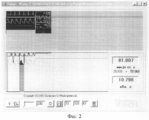
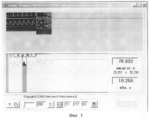
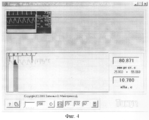
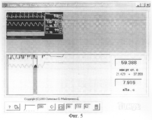
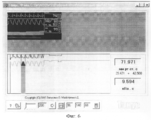
28.05.2001 г. больному выполнено оперативное лечение: аортобедренное бифуркационное шунтирование протезом "Север", 20:10:10. После наложения анатомозов и запуска кровотока по шунту протез в зоне дистального анастомоза был пунктирован иглой (20G 1 11/4"), соединенной с системой для измерения инвазивного артериального давления и следящей аппаратурой, затем были записаны кривые давлений через иглу (20G 1 11/4") в бранше протеза при проходимых дистальных артериях бедра сначала справа одновременно с ЭКГ. Затем все артерии в зоне анастомоза пережали дистальнее анастамоза и записали кривые артериального давления в бранше протеза параллельно с ЭКГ. После этого повторили записи в описанном выше порядке на левом бедре. С экрана монитора произвели видеозапись, затем с видеопленки путем видеозахвата видеобластером произвели компьютерный анализ полученных данных: с помощью программы "Тонус" (Zapisnyh@MTU-ru) методом трапеций вычислили площадь под кривыми барограмм за один сердечный цикл. Они были равны слева 9,448 кПа×с при проходимом русле (фиг. 1) и 10,798 кПа×с (фиг. 2) при пережатых артериях, справа 10,255 кПа×с (фиг. 3) и 10,78 кПа×с (фиг. 4) соответственно. Из полученных данных во время измерения при проходимой артерии вычли полученные расчетные данные при пережатой артерии. Результатом явился показатель, который мы называем индекс интегрального регионарного периферического сопротивления сосудистого русла кровотоку (Исопр.), он был равен -0,525 кПа×с для правого бедра, и -1,35 кПа×с для левого бедра.On May 28, 2001, the patient underwent surgical treatment: aortic femoral bifurcation bypass grafting with the prosthesis "North", 20:10:10. After applying anatomoses and starting blood flow through a shunt, the prosthesis in the area of the distal anastomosis was punctured with a needle (20G 1 11/4 ") connected to the invasive blood pressure measuring system and tracking equipment, then pressure curves through the needle were recorded (20G 1 11/4 ") in the jaw of the prosthesis with passable distal femoral arteries, first on the right simultaneously with the ECG. Then, all arteries in the anastomosis zone were squeezed distal to the anastamosis and the blood pressure curves in the prosthesis branch were recorded in parallel with the ECG. After that, the recordings were repeated in the order described above on the left thigh. A video was recorded from the monitor screen, then a video analysis was performed from the video tape by video capture by a video blaster: using the Tonus program (Zapisnyh @ MTU-ru), the area under the barogram curves for one cardiac cycle was calculated using the trapezoidal method. They were equal on the left to 9.448 kPa × s with the passage channel (Fig. 1) and 10.798 kPa × s (Fig. 2) with constricted arteries, to the right 10.255 kPa × s (Fig. 3) and 10.78 kPa × s (Fig. 4) respectively. From the obtained data during the measurement with a passable artery, the calculated data obtained for a clamped artery were subtracted. The result was an indicator, which we call the index of integral regional peripheral resistance of the vascular bed to blood flow (Isopr.), It was -0.525 kPa × s for the right thigh, and -1.35 kPa × s for the left thigh.
Наличие Исопр. менее -1,0 кПа×с предполагает благоприятные гемодинамические условия в артериальном русле нижней конечности и не требует коррекции. Наличие индекса более -1,0 кПа×с указывает на целесообразность дополнительной коррегирующей гемодинамику в конечности операции, в данном случае бедренно-подколенное шунтирование справа. Больной, довольный результатом лечения, от предложенной дополнительной операции категорически отказался.Availability Isopr. less than -1.0 kPa × s suggests favorable hemodynamic conditions in the arterial bed of the lower limb and does not require correction. The presence of an index of more than -1.0 kPa × s indicates the feasibility of additional corrective hemodynamics in the limb of the operation, in this case, the femoral-popliteal bypass grafting on the right. The patient, pleased with the result of treatment, categorically refused the proposed additional operation.
15.01.2004 года пациент был доставлен в Ленинградскую областную больницу по экстренным показаниям с клиникой тромбоза правой бранши аортобедренного бифуркационного протеза, ишемия правой нижней конечности III А ст. (по Савельеву). Восстановить кровоток в правой ноге не удалось. 15.01.2004 произведена экстренная операция - ампутация правого бедра на уровне верхней/средней трети. Несмотря на такой безрадостный исход, случай продемонстрировал правильность наших расчетов и справедливость выбранной нами, но отвергнутой пациентом тактики послеоперационного лечения в 2001 году.On January 15, 2004, the patient was taken to the Leningrad Regional Hospital according to emergency indications with a clinic of thrombosis of the right branch of the aorto-femoral bifurcation prosthesis, ischemia of the right lower limb, III A st. (according to Savelyev). It was not possible to restore blood flow in the right leg. On January 15, 2004, an emergency operation was performed - amputation of the right thigh at the level of the upper / middle third. Despite such a bleak outcome, the case demonstrated the correctness of our calculations and the fairness of the postoperative treatment tactics we chose, but rejected by the patient, in 2001.
Пример 2.Example 2
Больной П., 56 лет, поступил в отделение сосудистой хирургии Ленинградской областной клинической больницы 08.01.2002 г. с диагнозом: Облитерирующий атеросклероз сосудов нижних конечностей II б ст. Окклюзия общей подвздошной артерии слева. Из анамнеза: больным себя считает около 4-х лет до госпитализации, когда стал отмечать перемежающуюся хромоту при ходьбе на дистанцию 500 метров. Около 2-х месяцев до госпитализации максимальная дистанция ходьбы снизилась до 50 м.Patient P., 56 years old, was admitted to the Department of Vascular Surgery of the Leningrad Regional Clinical Hospital on 08.01.2002 with a diagnosis of Obliterating atherosclerosis of the vessels of the lower extremities II b. Occlusion of the common iliac artery on the left. From the anamnesis: he considers himself ill about 4 years before hospitalization, when he began to notice intermittent claudication when walking at a distance of 500 meters. About 2 months before hospitalization, the maximum walking distance decreased to 50 m.
При поступлении в отделение больному выполнили ультразвуковую допплерографию артерий нижних конечностей и ангиографию аорты и нижних конечностей. Выявлена окклюзия общей подвздошной артерии слева. Плечелодыжечные индексы: справа - 0,93; слева - 0,36. Окончательный диагноз: Облитерирующий атеросклероз сосудов нижних конечностей II б ст. Окклюзия общей подвздошной артерии слева. Больному предложено оперативное лечение. 16.01.2002 г. больному выполнено оперативное лечение: аортобедренное монолатеральное шунтирование слева протезом "Север", диаметр 10 мм. После наложения анатомозов и запуска кровотока по шунту протез в зоне дистального анастомоза был пунктирован иглой (20G 1 11/4"), соединенной с системой для измерения инвазивного артериального давления и следящей аппаратурой, затем были записаны кривые давлений через иглу (20G 1 11/4") в бранше протеза, глубокой и поверхостной артериях левого бедра одновременно с ЭКГ. Затем все артерии - общую бедренную, поверхостную и глубокую артерии бедра в зоне анастомоза пережали дистальнее анастамоза и записали кривую артериального давления в протезе параллельно с ЭКГ. С экрана монитора произвели видеозапись, затем с видеопленки путем видеозахвата видеобластером произвели компьютерный анализ полученных данных: с помощью программы "Тонус" (Zapisnyh@MTU-ru) методом трапеций вычислили площадь под кривыми барограмм за один сердечный цикл. Они были равны 7,916 кПа×с (фиг. 5) при проходимом русле и 9,594 кПа×с (фиг. 6) при пережатых артериях. Из полученных данных во время измерения при проходимой артерии вычли полученные расчетные данные при пережатой артерии. Результатом явился показатель, который мы называем индекс интегрального регионарного периферического сопротивления сосудистого русла кровотоку, он был равен -1,678 кПа×с.Upon admission to the department, the patient underwent ultrasound dopplerography of the arteries of the lower extremities and angiography of the aorta and lower extremities. Occlusion of the common iliac artery on the left was revealed. Shoulder ankle indices: on the right - 0.93; to the left - 0.36. The final diagnosis: Obliterating atherosclerosis of the vessels of the lower extremities II b. Occlusion of the common iliac artery on the left. The patient was offered surgical treatment. On January 16, 2002, the patient underwent surgical treatment: aortic femoral monolateral shunting on the left with the North prosthesis, diameter 10 mm. After applying anatomoses and starting blood flow through a shunt, the prosthesis in the area of the distal anastomosis was punctured with a needle (20G 1 11/4 ") connected to the invasive blood pressure measuring system and tracking equipment, then pressure curves through the needle were recorded (20G 1 11/4 ") in the jaw of the prosthesis, deep and superficial arteries of the left thigh simultaneously with the ECG. Then, all arteries — the common femoral, superficial, and deep femoral arteries in the anastomotic zone — were distal to the anastamosis and recorded the arterial pressure curve in the prosthesis in parallel with the ECG. A video was recorded from the monitor screen, then a video analysis was performed from the video tape by video capture by a video blaster: using the Tonus program (Zapisnyh @ MTU-ru), the area under the barogram curves for one cardiac cycle was calculated using the trapezoidal method. They were equal to 7.916 kPa × s (Fig. 5) with a passable channel and 9.594 kPa × s (Fig. 6) with constricted arteries. From the obtained data during the measurement with a passable artery, the calculated data obtained for a clamped artery were subtracted. The result was an indicator that we call the index of integral regional peripheral resistance of the vascular bed to blood flow, it was -1.678 kPa × s.
Наличие индекса интегрального регионарного периферического сопротивления сосудистого русла кровотоку менее -1,0 кПа×с предполагает благоприятные гемодинамические условия в артериальном русле нижней конечности и не требует коррекции. Наблюдения за больным в течение 2-х лет показали правильность наших выводов и принятой в отношении данного пациента тактики ведения в послеоперационном периоде.The presence of an index of integral regional peripheral resistance of the vascular bed to blood flow of less than -1.0 kPa × s suggests favorable hemodynamic conditions in the arterial bed of the lower limb and does not require correction. Observations of the patient for 2 years showed the correctness of our conclusions and the management tactics adopted in relation to this patient in the postoperative period.
Эффективность предложенного способа подтверждается следующими клиническими данными. Данным способом обследовано 22 пациента. Все страдали облитерирующим атеросклерозом сосудов нижних конечностей. У 8 больных, при исследовании барограмм описанным способом, выявлено, что индекс интегрального регионарного периферического сопротивления сосудистого русла кровотоку в месте дистального анастомоза был от 0 до -1.0 кПа×с, а у 14 пациентов был менее -1.0 кПа×с. Лечебные мероприятия у 7 пациентов первой группы (дополнительные оперативные вмешательства на артериях нижних конечностей) привели, по данным наших наблюдений, к положительным результатам. Один пациент от повторной дополнительной реконструктивной операции на артериях нижних конечностей отказался. Его судьба рассмотрена в примере № 2.The effectiveness of the proposed method is confirmed by the following clinical data. This method examined 22 patients. All suffered from atherosclerosis obliterans of the vessels of the lower extremities. In 8 patients, when studying barograms in the described way, it was revealed that the index of integral regional peripheral resistance of the vascular bed to the blood flow at the site of the distal anastomosis was from 0 to -1.0 kPa × s, and in 14 patients it was less than -1.0 kPa × s. According to our observations, therapeutic measures in 7 patients of the first group (additional surgical interventions on the arteries of the lower extremities) led to positive results. One patient refused repeated additional reconstructive surgery on the arteries of the lower extremities. His fate is considered in example No. 2.
Предложенный способ по сравнению с известными имеет ряд преимуществ.The proposed method in comparison with the known has several advantages.
1. Впервые дает возможность однозначного определения хирургической тактики лечения больных облитерирующим атерсклерозом сосудов нижних конечностей после реконструктивных операций на магистральных артериях, в то время как способ-прототип, являясь в значительной мере субъективным, практически не отражает многих факторов, определяющих гемодинамические процессы в артериальном русле конечностей.1. For the first time, it makes it possible to unambiguously determine the surgical tactics of treating patients with atherosclerosis obliterans of lower limb vessels after reconstructive operations on the main arteries, while the prototype method, which is largely subjective, practically does not reflect many factors that determine hemodynamic processes in the arterial bed of the limbs .
2. Дает возможность объективно оценивать гемодинамические характеристики самих сосудистых конструкций, созданных во время прямой реваскуляризации конечности, что позволяет обеспечивать своевременную коррекцию хода операции.2. It makes it possible to objectively evaluate the hemodynamic characteristics of the vascular structures themselves created during direct limb revascularization, which allows for timely correction of the course of the operation.
3. На основе интегральной оценки гемодинамики в артериальном русле после реконструктивных операций дает возможность четко определять показания к проведению дальнейших корригирующих гемодинамику операций, что позволяет максимально долго сохранять функционирующими артериальные конструкции и соответственно сохранять конечности, отдаляя необходимость ампутаций, приводящих у 40% пациентов к смерти в первый год жизни.3. Based on an integrated assessment of hemodynamics in the arterial bed after reconstructive operations, it makes it possible to clearly determine the indications for further hemodynamic corrective operations, which allows arterial structures to function as long as possible and, accordingly, to maintain limbs, delaying the need for amputations that lead to death in 40% of patients first year of life.
Способ разработан авторами Майстренко Дмитрием Николаевичем и Майстренко Алексеем Дмитриевичем и прошел клиническую апробацию в отделении сосудистой хирургии Ленинградской областной клинической больницы у 22 больных с положительным результатом.The method was developed by the authors Maistrenko Dmitry Nikolaevich and Maistrenko Alexei Dmitrievich and underwent clinical testing in the Department of Vascular Surgery of the Leningrad Regional Clinical Hospital in 22 patients with a positive result.
Claims (1)
Priority Applications (1)
| Application Number | Priority Date | Filing Date | Title |
|---|---|---|---|
| RU2004107554/14A RU2239373C1 (en) | 2004-03-16 | 2004-03-16 | Method for detecting indications for carrying out surgical correction in disorders of regional hemodynamics in case of reconstructive operations upon inferior limbs' arteries |
Applications Claiming Priority (1)
| Application Number | Priority Date | Filing Date | Title |
|---|---|---|---|
| RU2004107554/14A RU2239373C1 (en) | 2004-03-16 | 2004-03-16 | Method for detecting indications for carrying out surgical correction in disorders of regional hemodynamics in case of reconstructive operations upon inferior limbs' arteries |
Publications (1)
| Publication Number | Publication Date |
|---|---|
| RU2239373C1 true RU2239373C1 (en) | 2004-11-10 |
Family
ID=34311425
Family Applications (1)
| Application Number | Title | Priority Date | Filing Date |
|---|---|---|---|
| RU2004107554/14A RU2239373C1 (en) | 2004-03-16 | 2004-03-16 | Method for detecting indications for carrying out surgical correction in disorders of regional hemodynamics in case of reconstructive operations upon inferior limbs' arteries |
Country Status (1)
| Country | Link |
|---|---|
| RU (1) | RU2239373C1 (en) |
Cited By (3)
| Publication number | Priority date | Publication date | Assignee | Title |
|---|---|---|---|---|
| RU2270609C1 (en) * | 2005-02-02 | 2006-02-27 | Дмитрий Николаевич Майстренко | Method for detecting indications for correcting disorders of regional hemodynamics after reconstructive operations upon inferior limbs' arteries |
| RU2281036C1 (en) * | 2005-01-31 | 2006-08-10 | ГОУ ВПО Красноярская государственная медицинская академия Министерства здравоохранения РФ | Method od evaluation of functional vascular reserve of lower extremities' artery |
| RU2353929C2 (en) * | 2004-11-15 | 2009-04-27 | Государственное учреждение Российский научный центр "Восстановительная травматология и ортопедия" им. акад. Г.А. Илизарова | Method of organism estimation for limb re-extension |
Citations (3)
| Publication number | Priority date | Publication date | Assignee | Title |
|---|---|---|---|---|
| RU2179824C1 (en) * | 2000-12-29 | 2002-02-27 | Чудинов Георгий Викторович | Surgical method for treating lower extremity ischemia disease in the cases of occluding injuries of femoropopliteal segment |
| RU2195165C1 (en) * | 2001-04-09 | 2002-12-27 | Северный государственный медицинский университет | Method for evaluating efficiency of lumbar sympathectomy in patients with chronic ischemia of inferior limbs |
| RU2198583C1 (en) * | 2001-05-22 | 2003-02-20 | Ленинградская областная клиническая больница | Method for diagnosing the cases of disturbed regional hemodynamics when performing direct extremity revascularization |
-
2004
- 2004-03-16 RU RU2004107554/14A patent/RU2239373C1/en not_active IP Right Cessation
Patent Citations (3)
| Publication number | Priority date | Publication date | Assignee | Title |
|---|---|---|---|---|
| RU2179824C1 (en) * | 2000-12-29 | 2002-02-27 | Чудинов Георгий Викторович | Surgical method for treating lower extremity ischemia disease in the cases of occluding injuries of femoropopliteal segment |
| RU2195165C1 (en) * | 2001-04-09 | 2002-12-27 | Северный государственный медицинский университет | Method for evaluating efficiency of lumbar sympathectomy in patients with chronic ischemia of inferior limbs |
| RU2198583C1 (en) * | 2001-05-22 | 2003-02-20 | Ленинградская областная клиническая больница | Method for diagnosing the cases of disturbed regional hemodynamics when performing direct extremity revascularization |
Non-Patent Citations (1)
| Title |
|---|
| Иванов С.В., Кудряшов В.Э, Белов Ю.В. Сравнительная информативность доплерографических показателей скорости кровотока и давления в оценке степени ишемии нижних конечностей. Хирургия. 1995, №6, с.11-13. * |
Cited By (3)
| Publication number | Priority date | Publication date | Assignee | Title |
|---|---|---|---|---|
| RU2353929C2 (en) * | 2004-11-15 | 2009-04-27 | Государственное учреждение Российский научный центр "Восстановительная травматология и ортопедия" им. акад. Г.А. Илизарова | Method of organism estimation for limb re-extension |
| RU2281036C1 (en) * | 2005-01-31 | 2006-08-10 | ГОУ ВПО Красноярская государственная медицинская академия Министерства здравоохранения РФ | Method od evaluation of functional vascular reserve of lower extremities' artery |
| RU2270609C1 (en) * | 2005-02-02 | 2006-02-27 | Дмитрий Николаевич Майстренко | Method for detecting indications for correcting disorders of regional hemodynamics after reconstructive operations upon inferior limbs' arteries |
Similar Documents
| Publication | Publication Date | Title |
|---|---|---|
| US7727157B2 (en) | Non-invasive measurement of suprasystolic signals | |
| CA2422801C (en) | Non-invasive measurement of suprasystolic signals | |
| AU2003302882B2 (en) | System for determining endothelial dependent vasoactivity | |
| Bandyk | Postoperative surveillance of infrainguinal bypass | |
| Begelman et al. | Noninvasive diagnostic strategies for peripheral arterial disease | |
| Breslau et al. | Assessment of aortoiliac disease using hemodynamic measures | |
| RU2239373C1 (en) | Method for detecting indications for carrying out surgical correction in disorders of regional hemodynamics in case of reconstructive operations upon inferior limbs' arteries | |
| EP3911228A1 (en) | A method to quantify the hemodynamic and vascular properties in vivo from arterial waveform measurements | |
| Ward et al. | Some aspects of ultrasound in the diagnosis and assessment of aortoiliac disease | |
| RU2270609C1 (en) | Method for detecting indications for correcting disorders of regional hemodynamics after reconstructive operations upon inferior limbs' arteries | |
| RU2284755C1 (en) | Non-invasive method for producing portal hypertension diagnosis | |
| RU2198583C1 (en) | Method for diagnosing the cases of disturbed regional hemodynamics when performing direct extremity revascularization | |
| Aukland et al. | Spectral analysis of Doppler ultrasound: its clinical application in lower limb ischaemia | |
| Collins et al. | Vascular assessment | |
| SU1667840A1 (en) | Method for determining functional state of blood vessel wall | |
| RU2576082C1 (en) | Method of determining femoral-tibial reconstruction operation after shunting operations | |
| RU2361527C1 (en) | Method of treating obliterating atheroslerosis of vessels of lower limbs | |
| RU2215479C2 (en) | Method for predicting function of microcirculatory pathway in inferior limbs at their chronic arterial deficiency | |
| RU2440018C1 (en) | Diagnostic technique for arterial endothelial dysfunction | |
| RU2266711C2 (en) | Method for diagnosing functional completeness of vascular anastomosis after performing surgical interventions | |
| Szymił et al. | Pulse wave shape analysis of the cardiovascular system using high signal resolution | |
| RU2774360C2 (en) | Method for determining peripheral resistance | |
| RU2311133C1 (en) | Method for predicting autoregulation of cerebral vessels | |
| RU2281686C2 (en) | Method for predicting the state of arterial pathway due to computed sphygmography | |
| Brophy | Noninvasive vascular examination |
Legal Events
| Date | Code | Title | Description |
|---|---|---|---|
| MM4A | The patent is invalid due to non-payment of fees |
Effective date: 20060317 |