JP7328126B2 - Production simulation device and production simulation method - Google Patents
Production simulation device and production simulation method Download PDFInfo
- Publication number
- JP7328126B2 JP7328126B2 JP2019209009A JP2019209009A JP7328126B2 JP 7328126 B2 JP7328126 B2 JP 7328126B2 JP 2019209009 A JP2019209009 A JP 2019209009A JP 2019209009 A JP2019209009 A JP 2019209009A JP 7328126 B2 JP7328126 B2 JP 7328126B2
- Authority
- JP
- Japan
- Prior art keywords
- production
- simulation
- sub
- information
- models
- Prior art date
- Legal status (The legal status is an assumption and is not a legal conclusion. Google has not performed a legal analysis and makes no representation as to the accuracy of the status listed.)
- Active
Links
Images




Classifications
-
- G—PHYSICS
- G06—COMPUTING OR CALCULATING; COUNTING
- G06Q—INFORMATION AND COMMUNICATION TECHNOLOGY [ICT] SPECIALLY ADAPTED FOR ADMINISTRATIVE, COMMERCIAL, FINANCIAL, MANAGERIAL OR SUPERVISORY PURPOSES; SYSTEMS OR METHODS SPECIALLY ADAPTED FOR ADMINISTRATIVE, COMMERCIAL, FINANCIAL, MANAGERIAL OR SUPERVISORY PURPOSES, NOT OTHERWISE PROVIDED FOR
- G06Q10/00—Administration; Management
- G06Q10/06—Resources, workflows, human or project management; Enterprise or organisation planning; Enterprise or organisation modelling
- G06Q10/063—Operations research, analysis or management
-
- G—PHYSICS
- G06—COMPUTING OR CALCULATING; COUNTING
- G06Q—INFORMATION AND COMMUNICATION TECHNOLOGY [ICT] SPECIALLY ADAPTED FOR ADMINISTRATIVE, COMMERCIAL, FINANCIAL, MANAGERIAL OR SUPERVISORY PURPOSES; SYSTEMS OR METHODS SPECIALLY ADAPTED FOR ADMINISTRATIVE, COMMERCIAL, FINANCIAL, MANAGERIAL OR SUPERVISORY PURPOSES, NOT OTHERWISE PROVIDED FOR
- G06Q10/00—Administration; Management
- G06Q10/06—Resources, workflows, human or project management; Enterprise or organisation planning; Enterprise or organisation modelling
- G06Q10/063—Operations research, analysis or management
- G06Q10/0637—Strategic management or analysis, e.g. setting a goal or target of an organisation; Planning actions based on goals; Analysis or evaluation of effectiveness of goals
- G06Q10/06375—Prediction of business process outcome or impact based on a proposed change
-
- G—PHYSICS
- G05—CONTROLLING; REGULATING
- G05B—CONTROL OR REGULATING SYSTEMS IN GENERAL; FUNCTIONAL ELEMENTS OF SUCH SYSTEMS; MONITORING OR TESTING ARRANGEMENTS FOR SUCH SYSTEMS OR ELEMENTS
- G05B15/00—Systems controlled by a computer
- G05B15/02—Systems controlled by a computer electric
-
- G—PHYSICS
- G05—CONTROLLING; REGULATING
- G05B—CONTROL OR REGULATING SYSTEMS IN GENERAL; FUNCTIONAL ELEMENTS OF SUCH SYSTEMS; MONITORING OR TESTING ARRANGEMENTS FOR SUCH SYSTEMS OR ELEMENTS
- G05B17/00—Systems involving the use of models or simulators of said systems
- G05B17/02—Systems involving the use of models or simulators of said systems electric
-
- G—PHYSICS
- G05—CONTROLLING; REGULATING
- G05B—CONTROL OR REGULATING SYSTEMS IN GENERAL; FUNCTIONAL ELEMENTS OF SUCH SYSTEMS; MONITORING OR TESTING ARRANGEMENTS FOR SUCH SYSTEMS OR ELEMENTS
- G05B19/00—Program-control systems
- G05B19/02—Program-control systems electric
- G05B19/418—Total factory control, i.e. centrally controlling a plurality of machines, e.g. direct or distributed numerical control [DNC], flexible manufacturing systems [FMS], integrated manufacturing systems [IMS] or computer integrated manufacturing [CIM]
- G05B19/41885—Total factory control, i.e. centrally controlling a plurality of machines, e.g. direct or distributed numerical control [DNC], flexible manufacturing systems [FMS], integrated manufacturing systems [IMS] or computer integrated manufacturing [CIM] characterised by modeling, simulation of the manufacturing system
-
- Y—GENERAL TAGGING OF NEW TECHNOLOGICAL DEVELOPMENTS; GENERAL TAGGING OF CROSS-SECTIONAL TECHNOLOGIES SPANNING OVER SEVERAL SECTIONS OF THE IPC; TECHNICAL SUBJECTS COVERED BY FORMER USPC CROSS-REFERENCE ART COLLECTIONS [XRACs] AND DIGESTS
- Y02—TECHNOLOGIES OR APPLICATIONS FOR MITIGATION OR ADAPTATION AGAINST CLIMATE CHANGE
- Y02P—CLIMATE CHANGE MITIGATION TECHNOLOGIES IN THE PRODUCTION OR PROCESSING OF GOODS
- Y02P90/00—Enabling technologies with a potential contribution to greenhouse gas [GHG] emissions mitigation
- Y02P90/02—Total factory control, e.g. smart factories, flexible manufacturing systems [FMS] or integrated manufacturing systems [IMS]
Landscapes
- Engineering & Computer Science (AREA)
- Business, Economics & Management (AREA)
- Human Resources & Organizations (AREA)
- General Physics & Mathematics (AREA)
- Economics (AREA)
- Entrepreneurship & Innovation (AREA)
- Strategic Management (AREA)
- Physics & Mathematics (AREA)
- Quality & Reliability (AREA)
- Educational Administration (AREA)
- Tourism & Hospitality (AREA)
- Operations Research (AREA)
- Development Economics (AREA)
- Marketing (AREA)
- General Business, Economics & Management (AREA)
- Game Theory and Decision Science (AREA)
- Theoretical Computer Science (AREA)
- Automation & Control Theory (AREA)
- General Engineering & Computer Science (AREA)
- Manufacturing & Machinery (AREA)
- General Factory Administration (AREA)
- Management, Administration, Business Operations System, And Electronic Commerce (AREA)
Description
本発明は、生産シミュレーションに関する。 The present invention relates to production simulation.
生産シミュレーションは、工場などにおける将来の生産進捗を推定する方法であり、生産計画立案や生産トラブル発生時の対策立案などに有用である。生産シミュレーションは、各品目の各工程における処理時間や必要な生産リソース(設備、作業者など)を定義する工程情報、生産リソースの数や将来の稼働時間などを定義する生産リソース情報、各工程におけるモノの着工順序や利用生産リソースなどを決定する生産制御ルール情報が必要となる。 Production simulation is a method of estimating future production progress in a factory or the like, and is useful for production planning and countermeasures against production troubles. Production simulation includes process information that defines the processing time and required production resources (equipment, workers, etc.) in each process for each item, production resource information that defines the number of production resources and future operating hours, etc. Production control rule information that determines the order in which things are started and production resources to be used is required.
ここで、生産シミュレーションを有効に活用するためには生産シミュレーションの高精度化が重要であり、生産シミュレーションの高精度化のためには、上述の各情報の高精度化が重要である。例えば、シミュレーションに用いる工程時間と実際の工程時間に乖離がある場合、生産実績に対するシミュレーションの誤差が大きくなる。 Here, in order to effectively utilize the production simulation, it is important to improve the precision of the production simulation, and to improve the precision of the production simulation, it is important to improve the precision of each of the above-mentioned information. For example, if there is a discrepancy between the process time used in the simulation and the actual process time, the error in the simulation with respect to the actual production results increases.
しかし、特に多品種生産などにおいては、人手によって全ての情報を正確に定義することは困難である。これに対して、過去の生産実績データから各種情報を定義する方法がある。例えば、文献1のように、生産実績データから、設備台数や工程時間の基準データを作成する方法がある。
However, it is difficult to define all information accurately by hand, especially in multi-variety production. On the other hand, there is a method of defining various information from past production performance data. For example, as in
文献1は、生産実績データから設備台数や工程時間などの情報を作成し、それを用いて生産シミュレーションを実行する方法であるが、生産シミュレーションを生産計画立案などに利用することを想定すると、各情報を作成するだけでは不十分であり、それらの情報を用いたシミュレーション自体の誤差を評価する必要がある。そして、誤差が大きい場合には、誤差要因を特定し、その要因を解決するための対策をとる必要がある。
ここで、生産シミュレーションは、上記の工程時間情報、生産リソース情報、生産制御ルール情報などが複雑に絡み合うという特徴を有する。例えば、ある工程群における工程時間が実態と乖離していると、その工程群の後工程へのモノの到着時刻が実態と乖離する。そして、仮に後工程における着工順序がモノの到着順序によって決まる場合、モノの到着時刻の乖離は着工順序の乖離に繋がる。 Here, the production simulation is characterized in that the process time information, the production resource information, the production control rule information, and the like are intricately intertwined. For example, if the process time in a certain process group diverges from the actual situation, the arrival time of the product to the subsequent process of the process group diverges from the actual situation. If the order of work start in the post-process is determined by the order of arrival of the goods, the difference in the arrival time of the goods leads to the deviation of the work start order.
このように、生産シミュレーションでは、ある工程における誤差が他の工程へ伝播する性質を持っており、この性質が生産シミュレーションの誤差要因特定を困難にしている。以上より、生産シミュレーションの精度向上のために、シミュレーション誤差の主要因を特定することが重要である。 In this way, production simulation has the property that an error in a certain process propagates to other processes, and this property makes it difficult to identify error factors in production simulation. From the above, it is important to identify the main causes of simulation errors in order to improve the accuracy of production simulation.
上記課題を解決するために、本開示の一態様は、生産ラインにおける工程の進捗を推定する生産シミュレーション装置であって、1以上のプロセッサと、1以上の記憶装置と、を含み、前記1以上の記憶装置は、生産ジョブの工程それぞれの実績開始時刻および実績完了時刻の情報を含む生産実績情報と、工程それぞれの工程時間、前記工程それぞれへの割付可能な生産リソース群、前記生産リソース群それぞれの各生産リソースの稼働時間、前記生産ラインの生産制御ルール、の情報を含む、シミュレーションモデルを格納し、前記1以上のプロセッサは、前記生産実績情報及び前記シミュレーションモデルを用いてシミュレーションを実行し、前記生産実績情報と前記シミュレーションの結果を比較することでシミュレーション誤差を算出する。 In order to solve the above problems, one aspect of the present disclosure is a production simulation device for estimating the progress of a process in a production line, comprising: one or more processors; one or more storage devices; The storage device stores actual production information including actual start time and actual completion time information for each process of a production job, process time for each process, a production resource group that can be allocated to each process, and each of the production resource groups. store a simulation model including information on the operating time of each production resource and production control rules of the production line, and the one or more processors execute a simulation using the production performance information and the simulation model, A simulation error is calculated by comparing the actual production information and the result of the simulation.
本開示の一態様により、精度の高い生産シミュレーションを実現することができる。 According to one aspect of the present disclosure, highly accurate production simulation can be realized.
以下、添付図面を参照して実施形態を説明する。本実施形態は本発明を実現するための一例に過ぎず、本発明の技術的範囲を限定するものではないことに注意すべきである。 Embodiments will be described below with reference to the accompanying drawings. It should be noted that this embodiment is merely an example for realizing the present invention and does not limit the technical scope of the present invention.
生産シミュレーションを生産計画立案などに用いる際には、生産シミュレーションの精度向上が重要である。これに対して、各工程の処理時間などのシミュレーションに必要な情報を生産実績データから導出する方法があるが、導出した情報を用いたシミュレーションでは誤差が大きい場合、誤差要因を特定し、その要因を解決するための対策を取る必要がある。 When using the production simulation for production planning, etc., it is important to improve the accuracy of the production simulation. On the other hand, there is a method of deriving information necessary for simulation, such as the processing time of each process, from actual production data. measures must be taken to resolve the
生産シミュレーションは、工程情報、生産リソース情報、生産制御ルール情報などが複雑に絡み合い、ある工程における誤差が他の工程へ伝播する性質を持つ。このような性質を持つ生産シミュレーションにおいて、誤差の主要因を特定することが求められる。以下に説明するシステムは生産実績とシミュレーション結果を比較することでシミュレーション誤差を算出する。これにより、誤差要因を特定し、精度の高い生産シミュレーションを実現することができる。これにより、生産シミュレーションを用いて立案して生産計画の実現可能性や最適性を向上することができる。 In production simulation, process information, production resource information, production control rule information, etc. are intricately intertwined, and errors in one process propagate to other processes. In production simulations with such properties, it is necessary to identify the main causes of errors. The system described below calculates the simulation error by comparing actual production and simulation results. This makes it possible to identify error factors and realize highly accurate production simulation. As a result, it is possible to improve the feasibility and optimality of the production plan by using the production simulation.
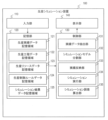
図1Aは、生産シミュレーション装置100の機能ブロック図である。図示するように、生産シミュレーション装置100は、入力部110、記憶部120、制御部130、表示部140を備える。
FIG. 1A is a functional block diagram of the
入力部110は、生産シミュレーション装置100外からの各種情報の入力を受け付ける。表示部140は、記憶部の情報を画面に表示する。記憶部120は、生産実績データ記憶領域121、生産工程データ記憶領域122、生産リソースデータ記憶領域123、生産制御ルールデータ記憶領域124、シミュレーション結果データ記憶領域125を備える。
The
生産実績データ記憶領域121は、生産工程における過去の処理実績を特定する情報を記憶する。生産工程データ記憶領域122は、各工程の工程時間などの情報を特定する情報を記憶する。生産リソースデータ記憶領域123は、設備や作業者などの生産リソースの稼働時間を特定する情報を記憶する。生産制御ルールデータ記憶領域124は、着工順序ルールなどの生産制御ルールを特定する情報を記憶する。シミュレーション結果データ記憶領域125は、シミュレーション結果を特定する情報を記憶する。
The production performance
制御部130は、実績データ抽出部131、シミュレーションモデル分割部132、実績反映部133、シミュレーション実行部134、シミュレーション誤差算出部135を備える。
The
図1Bは、生産シミュレーション装置100のハードウェアおよびソフトウェア構成例を示す。図1Bの例において、生産シミュレーション装置100は、一つの計算機で構成されている。生産シミュレーション装置100は、プロセッサ310、メモリ320、補助記憶装置330、およびネットワーク(NW)インタフェース340、I/Oインタフェース345、入力デバイス351、および出力デバイス352を含む。上記構成要素は、バスによって互いに接続されている。メモリ320、補助記憶装置330又はこれらの組み合わせは非一過性の記憶媒体を含む記憶装置であり、また、記憶部120に対応し得る。
FIG. 1B shows an example hardware and software configuration of the
メモリ320は、例えば半導体メモリから構成され、主にプログラムやデータを保持するために利用される。メモリ320が格納しているプログラムは、不図示のオペレーティングシステムに加え、実績データ抽出プログラム321、シミュレーションモデル分割プログラム322、実績反映プログラム323、シミュレーション実行プログラム324、シミュレーション誤差算出プログラム325、ユーザインタフェースプログラム326を含む。
The
プロセッサ310は、メモリ320に格納されているプログラムに従って、様々な処理を実行する。プロセッサ310がプログラムに従って動作することで、様々な機能部が実現される。例えば、プロセッサ310は、上記プログラムそれぞれに従って、制御部130、具体的には、実績データ抽出部131、シミュレーションモデル分割部132、実績反映部133、シミュレーション実行部134、シミュレーション誤差算出部135として機能する。プロセッサ310は、ユーザインタフェースプログラム326に従って動作して、入力部110および表示部140として機能する。
Processor 310 executes various processes according to programs stored in
補助記憶装置330は、例えばハードディスクドライブやソリッドステートドライブなどの大容量の記憶装置から構成され、プログラムやデータを長期間保持するために利用される。補助記憶装置330は、生産実績データテーブル210、生産工程データテーブル220、設備データテーブル230、作業者データテーブル240、着工順序ルールモデルデータテーブル250、設備割付ルールデータテーブル260、作業者割付ルールデータテーブル270、シミュレーション結果データテーブル280を格納している。 The auxiliary storage device 330 is composed of a large-capacity storage device such as a hard disk drive or solid state drive, and is used to store programs and data for a long period of time. The auxiliary storage device 330 includes a production performance data table 210, a production process data table 220, an equipment data table 230, a worker data table 240, a work start order rule model data table 250, an equipment allocation rule data table 260, and a worker allocation rule data table. 270, a simulation result data table 280 is stored.
生産実績データテーブル210は、生産実績データ記憶領域121に格納されている情報の例である。生産工程データテーブル220は、生産工程データ記憶領域122に格納されている情報の例である。設備データテーブル230および作業者データテーブル240は、生産リソースデータ記憶領域123に格納されている情報の例である。
The actual production data table 210 is an example of information stored in the actual production
着工順序ルールモデルデータテーブル250、設備割付ルールデータテーブル260、作業者割付ルールデータテーブル270は、生産制御ルールデータ記憶領域124に格納されている情報の例である。シミュレーション結果データテーブル280は、シミュレーション結果データ記憶領域125に格納されている情報の例である。
The construction order rule model data table 250 , equipment allocation rule data table 260 , and worker allocation rule data table 270 are examples of information stored in the production control rule
説明の便宜上、プログラム321~326がメモリ320に格納され、テーブル210、220、230、240、250、260、270、280が補助記憶装置330に格納されているが、生産シミュレーション装置100のデータの格納場所は限定されない。例えば、補助記憶装置330に格納されたプログラムおよびデータが起動時または必要時にメモリ320にロードされ、プログラムをプロセッサ310が実行することにより、生産シミュレーション装置100の各種処理が実行される。したがって、以下において機能部、プログラム、プロセッサ310または生産シミュレーション装置100による処理の主語は、入れ替え可能である。
For convenience of explanation, the
ネットワークインタフェース340は、ネットワークとの接続のためのインタフェースである。生産シミュレーション装置100は、ネットワークインタフェース340を介して、システム内の他の装置と通信を行う。入力デバイス351は、ユーザが指示や情報などを入力するためのハードウェアデバイスであり、例えば、キーボードおよびポインティングデバイスを含む。出力デバイス352は、入出力用の各種画像を示すハードウェアデバイスであり、例えば表示デバイスである。
A
生産シミュレーション装置100は1以上のプロセッサおよび1以上の記憶装置を含む。各プロセッサは、単一または複数の演算ユニットまたは処理コアを含むことができる。プロセッサは、例えば、中央処理装置、マイクロプロセッサ、マイクロコンピュータ、マイクロコントローラ、デジタル信号プロセッサ、ステートマシン、ロジック回路、グラフィック処理装置、チップオンシステム、および/または制御指示に基づき信号を操作する任意の装置として実装できる。
生産シミュレーション装置100の機能は複数の計算機を含む計算機システムによる分散処理により実装されてもよい。複数の計算機は、互いにネットワークを介して通信することで、協調して処理を実行する。
The functions of the
図2は、生産実績データテーブル210の構成例を示す。生産実績データテーブル210は、ジョブID欄211、品目ID欄212、程番欄213、工程ID欄214、開始時刻欄215、完了時刻欄216、設備欄ID217、作業者ID欄218、属性情報欄219を有する。生産実績データテーブル210の各行は、ジョブIDおよび程番によって同定される。
FIG. 2 shows a configuration example of the actual production data table 210. As shown in FIG. The actual production data table 210 includes a
ジョブID欄211は、各生産ジョブ(単にジョブとも呼ぶ)を同定する情報を格納する。ジョブは、生産工程における処理対象を表す。品目ID欄212は、当該ジョブの品目を特定する情報を格納する。程番欄213は、当該品目が処理されるべき工程の順番を特定する情報を格納する。工程ID欄214は、当該品目の当該程番の工程を特定する情報を格納する。
The
尚、本実施形態では、工程IDは品目IDと程番の組合せに対して一意であり、品目IDと程番の組合せは工程IDに対して一意であるとする。また、各ジョブにおける各工程をタスクと呼ぶこととする。つまり、生産実績データテーブル210における1行が1タスクに相当する。 In this embodiment, the process ID is unique for the combination of the item ID and the process number, and the combination of the item ID and the process number is unique for the process ID. Each step in each job is called a task. That is, one row in the actual production data table 210 corresponds to one task.
開始時刻欄215および完了時刻欄216はそれぞれ、当該工程の実績開始時刻および実績完了時刻の情報を格納する。設備ID欄217および作業者ID欄218はそれぞれ、当該ジョブの当該工程を処理した設備および作業者を特定する情報を格納する。属性情報欄219は、当該ジョブおよび当該工程に関する属性情報、例えば、当該ジョブの品種名、大きさ、納期や、当該ジョブの当該工程の完了要求時刻等、を格納する。
図3は、生産工程データテーブル220の構成例を示す。生産工程データテーブル220は、工程ID欄221、工程時間欄222、1つまたは複数の割付可能設備ID欄223、1つまたは複数の割付可能作業者ID欄224を有する。
The
FIG. 3 shows a configuration example of the production process data table 220. As shown in FIG. The production process data table 220 has a
生産工程データテーブル220の各行は、工程IDによって特定される。工程ID欄221は、工程を同定する情報を格納する。工程時間欄222は、当該工程の処理に要する時間を示す情報を格納する。割付可能設備ID欄223および割付可能作業者ID欄224はそれぞれ、当該工程を処理可能な設備および作業者を同定する情報を格納する。
Each row of the production process data table 220 is identified by a process ID. The
図4は、設備データテーブル230の構成例を示す。設備データテーブル230は、設備ID欄231、稼働開始時刻欄232、稼働終了時刻欄233を有する。設備ID欄231は、設備を同定する情報を格納する。稼働開始時刻欄232および稼働終了時刻欄233はそれぞれ、当該設備が稼働開始および稼働終了する時刻を格納する。
FIG. 4 shows a configuration example of the facility data table 230. As shown in FIG. The facility data table 230 has a
図5は、作業者データテーブル240の構成例を示す。作業者データテーブル240は、作業者ID欄241、稼働開始時刻欄242、稼働終了時刻欄243を有する。作業者ID欄241は、作業者を同定する情報を格納する。稼働開始時刻欄242および稼働終了時刻欄243はそれぞれ、当該作業者が稼働開始および稼働終了する時刻を格納する。
FIG. 5 shows a configuration example of the worker data table 240. As shown in FIG. The worker data table 240 has a
図6、図7、図8に示すような着工順序ルールデータテーブル、設備割付ルールデータテーブル、作業者割付ルールデータテーブルを記憶する。 A construction order rule data table, an equipment allocation rule data table, and a worker allocation rule data table as shown in FIGS. 6, 7 and 8 are stored.
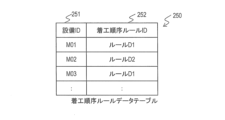
図6は、着工順序ルールモデルデータテーブル250の構成例を示す。着工順序ルールモデルデータテーブル250は、設備ID欄251、着工順序ルールID欄252を有する。設備ID欄251は、設備を同定する情報を格納する。着工順序ルールID欄252は、当該設備における着工順序ルールを同定する情報を格納する。着工順序ルールは、ある設備における処理を待っているジョブの中から、次に処理するジョブを決定する際のルールであり、代表的なルールとしては、先入先出、納期順などがある。
FIG. 6 shows a configuration example of the construction order rule model data table 250. As shown in FIG. The construction order rule model data table 250 has an
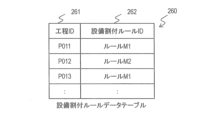
図7は、設備割付ルールデータテーブル260の構成例を示す。設備割付ルールデータテーブル260は、工程ID欄261、設備割付ルールID欄262を有する。工程ID欄261は、工程を同定する情報を格納する。設備割付ルールID欄262は、当該工程における設備割付ルールを同定する情報を格納する。設備割付ルールは、生産工程データテーブル220上で一つの工程に対して複数の割付可能設備が定義されている場合に、当該工程に該当する各タスクに対してどの設備を割り当てるかを決定するルールである。
FIG. 7 shows a configuration example of the equipment allocation rule data table 260. As shown in FIG. The equipment allocation rule data table 260 has a
図8は、作業者割付ルールデータテーブル270の構成例を示す。作業者割付ルールデータテーブル270は、工程ID欄271、作業者割付ルールID欄272を有する。工程ID欄271は、工程を同定する情報を格納する。作業者割付ルールID欄272は、当該工程における作業者割付ルールを同定する情報を格納する。作業者割付ルールは、生産工程データテーブル220上で一つの工程に対して複数の割付可能作業者が定義されている場合に、当該工程に該当する各タスクに対してどの作業者を割り当てるかを決定するルールである。
FIG. 8 shows a configuration example of the worker assignment rule data table 270. As shown in FIG. The worker assignment rule data table 270 has a
図9は、シミュレーション結果データテーブル280の構成例を示す。シミュレーション結果データテーブル280は、シミュレーションモデルID欄281、シミュレーション誤差欄282を有する。シミュレーションモデルID欄281は、シミュレーションモデルを同定する情報を格納する。シミュレーション誤差欄282は、当該シミュレーションモデルによるシミュレーションの誤差を示す情報を格納する。
FIG. 9 shows a configuration example of the simulation result data table 280. As shown in FIG. The simulation result data table 280 has a simulation
図10に制御部130における一連の処理フローチャート示す。以下、本フローチャートに沿って、本実施形態の処理について説明する。
FIG. 10 shows a series of processing flowcharts in the
ステップS100~S200は、実績データ抽出部131による処理である。まず、ステップS100において、実績データ抽出部131は、入力部110を通してユーザにより入力された、シミュレーション期間の開始時刻および終了時刻を取得する。シミュレーション期間の開始時刻および終了時刻をそれぞれ、tsおよびtfとする。
Steps S100 to S200 are processes by the performance
次に、ステップS200において、実績データ抽出部131は、当該シミュレーション期間中に処理されたジョブ群の生産実績データを生産実績データテーブル210から抽出する。以降、本処理によって抽出された生産実績データを、対象実績データと呼ぶこととする。
Next, in step S<b>200 , the actual production
ステップS300は、シミュレーション実行部134およびシミュレーション誤差算出部135の処理である。シミュレーション実行部134は、記憶部120が格納する情報と前述の対象実績データを用いて、シミュレーション期間ts~tfのシミュレーションを実行する。シミュレーション誤差算出部135は、シミュレーション結果と対象実績データの比較によりシミュレーション誤差を算出する。以降、期間ts~tfのシミュレーションのためのシミュレーションモデルを、全体シミュレーションモデルMwholeと呼ぶ。
Step S<b>300 is processing of the
シミュレーションを実行する際には、シミュレーション開始時刻tsにおける生産ラインの状態(以下、初期状態と呼ぶ)を特定する必要がある。ここで、生産ラインの状態は、工程の処理を待っているジョブ群の情報や、工程の処理中のジョブ群および割り当てられている設備や作業者の情報などを表す。これらの情報は、前述の対象実績データから特定することが可能である。また、シミュレーションを実行する際には、シミュレーション期間ts~tfに生産ラインに投入されるジョブとその投入時刻の情報が必要である。これらの情報も、前述の対象実績データから特定することが可能である。 When executing the simulation, it is necessary to specify the state of the production line (hereinafter referred to as the initial state) at the simulation start time ts . Here, the status of the production line represents information on a job group waiting to be processed in a process, information on a job group in process, and information on assigned equipment and workers. These pieces of information can be identified from the aforementioned target performance data. Further, when executing the simulation, information on the jobs to be input to the production line during the simulation period t s to t f and their input times is required. These pieces of information can also be identified from the aforementioned target performance data.
また、本実施形態では、以下の式1によりシミュレーション誤差Eを算出する。
Further, in this embodiment, the simulation error E is calculated by the following

ここで、Ntaskは当該シミュレーションにおける総タスク数を表す。tact kおよびtsim kはそれぞれ、k番目のタスクの実績およびシミュレーションにおける完了時刻を表す。以降、全体シミュレーションの誤差をEwholeと呼ぶ。 Here, N task represents the total number of tasks in the simulation. t act k and t sim k represent the actual and simulated completion times of the kth task, respectively. Hereinafter, the error of the whole simulation will be called Ewhole .
ステップS400~S500はシミュレーションモデル分割部132による処理である。本実施形態では、シミュレーションモデル分割部132は、全体シミュレーションモデルを時間視点と生産リソース視点の2段階で分割し、複数のサブモデルを得る。
Steps S400 to S500 are processing by the simulation
以下、時間視点のモデル分割処理について述べる。まず、ステップS400において、シミュレーションモデル分割部132は、シミュレーションモデルの時間視点分割数NTを、入力部を通して取得する。次に、ステップS500において、シミュレーションモデル分割部132は、シミュレーション期間ts~tfをNT個に等分割する。
The time-view model division processing will be described below. First, in step S400, the simulation
尚、分割の方法を限定するものではない。ここで、分割された各期間の開始時刻および終了時刻をそれぞれ、ts iおよびtf i(i=1、2、・・・、NT)とし、期間ts i~tf iのシミュレーションをするためのモデルをサブモデルMiとする。このような分割により、各サブモデルは、全体シミュレーションの一部のタスクのみを対象とすることになる。 Note that the division method is not limited. Here , the start time and end time of each divided period are t s i and t f i (i=1, 2, . Let the model for doing is submodel M i . Such a division ensures that each sub-model only covers some tasks of the overall simulation.
具体的には、サブモデルMiは、対象実績データ上で期間ts i~tf iに処理されたタスクのみを対象とする。また、シミュレーション開始時刻ts iにおける生産ラインの初期状態の情報や、期間ts i~tf iに生産ラインに投入されるジョブとその投入時刻の情報は、対象実績データから特定することが可能である。そのため、各サブモデルのシミュレーションは、それぞれ独立に実行することができ、シミュレーション誤差の大きいサブモデルを特定することができる。 Specifically, the submodel M i targets only the tasks processed during the period t s i to t f i on the target performance data. Information on the initial state of the production line at the simulation start time t s i , and information on jobs to be submitted to the production line during the period t s i to t f i and their input time can be specified from the target performance data. It is possible. Therefore, each sub-model can be simulated independently, and a sub-model with a large simulation error can be identified.
次に、生産リソース視点の分割処理について述べる。本処理では、前述の時間視点モデル分割によって得られた各サブモデルを、さらに生産リソース視点で複数のサブモデルに分割する。サブモデルMiをリソース視点で分割することで得られるシミュレーションモデルをサブモデルMi,j呼ぶこととする(j=1、2、・・・、NR i、NR iは分割数)。 Next, division processing from the viewpoint of production resources will be described. In this process, each sub-model obtained by the above-described time-view model division is further divided into a plurality of sub-models from the production resource viewpoint. A simulation model obtained by dividing the sub-model M i from a resource viewpoint is called a sub-model M i,j (j=1, 2, . . . , N R i , N R i being the number of divisions).
ここで、分割に際しては、シミュレーションモデル分割部132は、複数のサブモデル間で互いに生産リソースの共有が発生しない様に分割する。本実施形態では、工程データ基準分割と、生産実績データ基準分割の2つの分割方法について述べる。
Here, when dividing, the simulation
工程データ基準分割において、シミュレーションモデル分割部132は、まず、サブモデルMiが対象とするタスク群から、本サブモデルが対象とする工程群を得る。次に、シミュレーションモデル分割部132は、当該工程群を複数のサブ工程群に分割する。その際、任意の工程Xと、工程Xとは異なるサブ工程群に属する任意の工程Yが、割付可能設備・作業者を共有しない様にサブ工程群を定義する。そして、j番目のサブ工程群を対象とするシミュレーションモデルをサブモデルMi,jとする。
In the process data-based division, the simulation
生産実績データ基準分割において、シミュレーションモデル分割部132は、サブモデルMiが対象とするタスク群を複数のサブタスク群に分割する。その際、任意のタスクXの生産実績データ上の設備・作業者が、タスクXとは異なるサブタスク群に属する任意のタスクYの生産実績データ上の設備・作業者と異なる様に、サブタスク群を定義する。そして、j番目のサブタスク群を対象とするシミュレーションモデルをサブモデルMi,jとする。
In the production performance data-based division, the simulation
上記の分割により、各サブモデルMi,jのシミュレーションはそれぞれ独立に実行することができ、シミュレーション誤差の大きいサブモデルを特定することができる。尚、工程データ基準分割と生産実績データ基準分割の2つの方法は、利用者による入力によって切り替えてもよいし、2つの方法を自動でそれぞれ実行してもよく、それらの利用態様を特に限定するものではない。 By the division described above, the simulation of each sub-model M i,j can be executed independently, and a sub-model with a large simulation error can be specified. The two methods of process data-based division and production performance data-based division may be switched by user input, or the two methods may be automatically executed, respectively, and their usage modes are particularly limited. not a thing
ステップS600は、シミュレーション実行部134およびシミュレーション誤差算出部135の処理である。ステップS600では、シミュレーション実行部134は、前述の時間視点の分割による各サブモデルMi及び生産リソース視点の分割による各サブモデルMi,jのシミュレーションを実行する。
Step S<b>600 is processing of the
サブモデルにおいて前段の工程が存在しない工程または前段のタスクが存在しないタスクに対しては、実績データに従ってジョブが投入される。生産実績データ基準分割のサブモデルの間において、生産リソース(設備及び作業者)が共有されないように、必要に応じて生産リソース(設備及び作業者)の割付ルールが調整される。 Jobs are submitted according to performance data for processes that do not have preceding processes or tasks that do not have preceding tasks in the submodel. Allocation rules for production resources (equipment and workers) are adjusted as necessary so that the production resources (equipment and workers) are not shared among the submodels of the production performance data-based division.
シミュレーション誤差算出部135は、式1により各サブモデルの誤差Ei、Ei,jを算出し、算出結果をシミュレーション結果データテーブル280に格納する。
The simulation error calculator 135 calculates the errors E i and E i,j of each
ステップS700は、実績反映部133の処理である。本処理は、各サブモデルの工程時間や生産制御ルールなどの要素に対して、生産実績データテーブル210から抽出した情報を反映して、新たなサブモデル群を生成する。本実施形態では、工程時間、着工順序ルール、設備割付ルール、作業者割付ルールについて、実績反映の方法例について述べる。実績情報を反映する要素は、例えば、設計によりまたはユーザ指定に従って決定されてよい。
Step S<b>700 is processing of the
工程時間については、実績反映部133は、生産実績データの工程開始時刻~工程完了時刻の時間を各タスクの工程時間として算出し、シミュレーションモデルに反映する。つまり、実績反映部133は、新たに生成されるサブモデルにおいて、生産工程データテーブル220に定義された工程時間情報は用いず、上記方法により算出した各タスクの工程時間を用いる。
As for the process time, the
着工順序ルールについては、実績反映部133は、生産実績データテーブル210から、各設備における各タスクの処理順序を取得し、これをシミュレーションモデルに反映する。つまり、実績反映部133は、新たに生成されるサブモデルにおいては、ある設備の処理待ちタスク群の中から次に処理するタスクを選択する際に、着工順序ルールモデルデータテーブル250に定義されたルールは用いず、処理を待っているタスク群の中から上記の実績処理順序が最も早いタスクを選択する。
As for the production start order rule, the
設備割付ルールについては、実績反映部133は、生産実績データテーブル210から、各タスクの割付設備を取得し、これをシミュレーションモデルに反映する。つまり、実績反映部133は、新たに生成されるサブモデルにおいては、あるタスクの割付設備を選択する際に、設備割付ルールデータテーブル260に定義されたルールは用いず、当該タスクの実績割付設備を選択する。作業者割付ルールについては、設備割付ルールと同様である。
As for the facility allocation rule, the
ステップS700の処理は、各サブモデルの工程時間、着工順序ルール、設備割付ルール、作業者割付ルールそれぞれに対して、実績を反映する場合と反映しない場合を切り替えて新たなサブモデル群を作成する。以降、サブモデルMi,jに実績情報を反映することで新たに作成されたサブモデルを、サブモデルMa,b,c,d i,jと呼ぶ。ここでa、b、c、dはそれぞれ、工程時間、着工順序ルール、設備割付ルール、作業者割付ルールに実績を反映するかしないかを表す0または1であり、1は実績を反映することを意味する。 In the process of step S700, a new group of sub-models is created by switching between reflection and non-reflection of results for each of the process time, construction order rule, equipment allocation rule, and worker allocation rule of each sub-model. . Hereinafter, sub-models newly created by reflecting performance information in sub-models M i,j are referred to as sub-models M a,b,c,d i,j . Here, a, b, c, and d are respectively 0 or 1 indicating whether or not to reflect the results in the process time, construction order rule, equipment allocation rule, and worker allocation rule, and 1 indicates that the actual results are reflected. means
例えば、M1,0,0,0 i,jはサブモデルMi,jにおいて工程時間のみに実績を反映したモデルを表しており、M0,0,0,0 i,jはMi,jと同義である。上記によって得られる複数のサブモデルMa,b,c,d i,jの誤差を比較することで、誤差への大きい要素を特定することができる。例えば、M1,1,1,1 i,jの誤差に対してM0,1,1,1 i,jの誤差が大きい場合、Mi,jにおける誤差の主要因の1つが工程時間にあると解釈することができる。 For example, M 1,0,0,0 i,j represents a model in which actual results are reflected only in process time in submodel M i,j , and M 0,0,0,0 i,j represents M i, Synonymous with j . By comparing the errors of a plurality of sub-models M a,b,c,d i,j obtained by the above, it is possible to identify a large factor to the error. For example, if the error in M 0,1,1,1 i,j is larger than the error in M 1,1,1,1 i,j , then one of the main sources of error in M i,j is the process time. It can be interpreted that there is
ステップS8000は、シミュレーション実行部134およびシミュレーション誤差算出部135の処理である。ステップS800では、シミュレーション実行部134は、前述の各サブモデルMa,b,c,d
i,jのシミュレーションを実行する。シミュレーション誤差算出部135は、式1により各サブモデルMa,b,c,d
i,jの誤差Ea,b,c,d
i,jを算出し、算出結果をシミュレーション結果データテーブル280に格納する。
Step S 8000 is processing of
尚、時間視点における全体シミュレーションモデルの分割および/または生産リソース視点における全体シミュレーションモデルの分割を省略してもよい。実績情報を全体シミュレーションモデルに反映して、新たな全体シミュレーションモデルを生成してもよく、時間視点のサブモデルMiに反映して、新たなサブモデルを生成してもよい。 Note that the division of the overall simulation model from the time perspective and/or the division of the overall simulation model from the production resource perspective may be omitted. The performance information may be reflected in the overall simulation model to generate a new overall simulation model, or may be reflected in the time-view sub-model M i to generate a new sub-model.
全体シミュレーションモデルまたはサブモデルに対して実績情報を反映することによる新たな全体シミュレーションモデルまたは新たなサブモデルの生成を省略してもよい。特定の種類のサブモデルに対するS600またはS700の処理を省略してもよい。例えば、工程データ基準分割のサブモデルに対するS600の処理を省略し、S700及び8000の処理を実行してもよい。 Generation of a new overall simulation model or new sub-model by reflecting performance information on the overall simulation model or sub-model may be omitted. The processing of S600 or S700 may be omitted for certain types of sub-models. For example, the process of S600 may be omitted for the process data-based division submodel, and the processes of S700 and S8000 may be executed.
上述のように、生産実績とシミュレーション結果の誤差を算出することで、誤差要因を特定し、精度の高い生産シミュレーションを実現することができる。これにより、生産シミュレーションを用いて立案して生産計画の実現可能性や最適性を向上することができる。また、時間視点分割、生産リソース視点分割、生産実績反映のように、シミュレーション期間におけるシミュレーションにおいて推定可能な情報の一部に代えて、生産実績を使用することで、誤差への影響が大きい要素をより容易に特定することが可能となる。 As described above, by calculating the error between the actual production and the simulation result, it is possible to identify the error factor and realize highly accurate production simulation. As a result, it is possible to improve the feasibility and optimality of the production plan by using the production simulation. In addition, by using production results instead of part of the information that can be estimated in the simulation during the simulation period, such as time perspective division, production resource division, and production performance reflection, elements that have a large effect on errors can be eliminated. It becomes possible to specify more easily.
また、時間視点分割及び生産リソース視点分割のように、生産シミュレーションモデルを互いに独立にシミュレーションを実行可能な複数のサブモデルに分割し、サブモデルごとにシミュレーション誤差を評価することで、誤差の大きいサブモデルを特定できる。全体須ミュレーションモデルまたはサブモデルにおける工程時間や生産制御ルールなどのモデル要素に対して、生産実績データから抽出した情報を反映することで、新たなモデル群を生成し、生産実績情報を反映する場合としない場合の誤差を比較することで、誤差への影響が大きいモデル要素を特定できる。 In addition, by dividing the production simulation model into multiple sub-models that can execute simulations independently of each other, and evaluating the simulation error for each sub-model, as in the division of the time perspective and the division of the production resource perspective, sub-models with large errors can be model can be identified. By reflecting information extracted from production performance data to model elements such as process time and production control rules in the overall simulation model or sub-model, a new model group is generated and the production performance information is reflected. By comparing the error with and without, we can identify the model elements that have the most impact on the error.
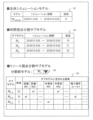
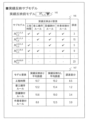
図11A、図11Bに、表示部140による記憶部120の情報の表示画面の例を示す。図11A、図11Bは、それぞれ、一つの表示画面の部分を示す。図11Aに示す様に、表示部140が表示する画面は例えば、全体シミュレーション結果表示領域141、時間視点分割サブモデルシミュレーション結果表示領域142、分割前モデル選択領域143、生産リソース視点分割サブモデルシミュレーション結果表示領域144を備える。図11Bに示すように、画面は例えば、さらに、実績反映前モデル選択領域145、実績反映サブモデルシミュレーション結果表示領域146、モデル要素別評価結果表示領域147を備える。
11A and 11B show examples of display screens of the information in the
全体シミュレーション結果表示領域141には、全体シミュレーションモデルMwholeのシミュレーション結果を表示する。時間視点分割サブモデルシミュレーション結果表示領域142には、時間視点で分割した各サブモデルMiのシミュレーション結果を表示する。生産リソース視点分割サブモデルシミュレーション結果表示領域144には、分割前モデル選択領域143において選択されたサブモデルMiを生産リソース視点で分割したサブモデルMi,jのシミュレーション結果を表示する。
The overall simulation
実績反映サブモデルシミュレーション結果表示領域146には、実績反映前モデル選択領域145において選択されたサブモデルMi,jに、実績情報を反映したサブモデルMa,b,c,d
i,jのシミュレーション結果を表示する。モデル要素別評価結果表示領域には、工程時間などの各モデル要素のシミュレーション誤差への影響度合いを表す情報を表示する。
In the result reflection sub-model simulation
例えば図11Bに示す例では、サブモデルMi,jの各モデル要素に実績を反映する場合としない場合の誤差の比較結果を表示している。ここで、例えば図11Bのモデル要素別評価結果表示領域147の「工程時間」行の「実績反映あり平均誤差」と「実績反映なし平均誤差」はそれぞれ、以下の式2と式3により算出される値である。
For example, in the example shown in FIG. 11B, the result of comparison of errors between the case where actual performance is reflected in each model element of submodel M i,j and the case where actual performance is not reflected is displayed. Here, for example, the “average error with performance reflection” and “average error without performance reflection” in the “process time” row of the evaluation


つまり、実績反映あり(なし)平均誤差は、対象のモデル要素に対して実績情報を反映した(しない)全てのサブモデルの誤差の平均値を表す。この2つの平均誤差値の比較は、サブモデルMi,jの誤差に対して大きな影響を与えている要素を特定する際に有用である。 That is, the average error with (without) performance reflection represents the average value of errors of all sub-models in which performance information is (is not) reflected for the target model element. Comparing these two mean error values is useful in identifying the factors that contribute significantly to the error of submodel M i,j .
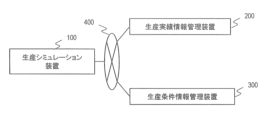
図12は、本実施形態に係る生産シミュレーションシステムの概略図である。図示するように、生産シミュレーションシステムは、生産シミュレーション装置100、生産実績情報管理装置200、生産条件情報管理装置300を備え、これらはネットワーク400を介して情報の送受信ができる。生産実績情報管理装置200は、生産シミュレーション装置100に対して、生産実績データを送信する。また、生産条件情報管理装置300は、生産シミュレーション装置100に対して、工程データ、生産リソースデータ、生産制御ルールデータなどを送信する。
FIG. 12 is a schematic diagram of a production simulation system according to this embodiment. As illustrated, the production simulation system includes a
なお、本発明は上記した実施形態に限定されるものではなく、様々な変形例が含まれる。例えば、上記した実施形態は本発明を分かりやすく説明するために詳細に説明したものであり、必ずしも説明したすべての構成を備えるものに限定されるものではない。また、ある実施形態の構成の一部を他の実施形態の構成に置き換えることが可能であり、また、ある実施形態の構成に他の実施形態の構成を加えることも可能である。また、各実施形態の構成の一部について、他の構成の追加・削除・置換をすることが可能である。 In addition, the present invention is not limited to the above-described embodiments, and includes various modifications. For example, the above embodiments have been described in detail for easy understanding of the present invention, and are not necessarily limited to those having all the described configurations. Also, part of the configuration of one embodiment can be replaced with the configuration of another embodiment, and the configuration of another embodiment can be added to the configuration of one embodiment. Moreover, it is possible to add, delete, or replace a part of the configuration of each embodiment with another configuration.
また、上記の各構成・機能・処理部等は、それらの一部または全部を、例えば集積回路で設計する等によりハードウェアで実現してもよい。また、上記の各構成、機能等は、プロセッサがそれぞれの機能を実現するプログラムを解釈し、実行することによりソフトウェアで実現してもよい。各機能を実現するプログラム、テーブル、ファイル等の情報は、メモリや、ハードディスク、SSD(Solid State Drive)等の記録装置、または、ICカード、SDカード等の記録媒体に置くことができる。また、制御線や情報線は説明上必要と考えられるものを示しており、製品上必ずしもすべての制御線や情報線を示しているとは限らない。実際には殆どすべての構成が相互に接続されていると考えてもよい。 Further, each of the configurations, functions, processing units, etc. described above may be implemented by hardware, for example, by designing a part or all of them using an integrated circuit. Moreover, each of the above configurations, functions, etc. may be realized by software by a processor interpreting and executing a program for realizing each function. Information such as programs, tables, and files that implement each function can be stored in a recording device such as a memory, a hard disk, an SSD (Solid State Drive), or a recording medium such as an IC card or SD card. In addition, the control lines and information lines indicate those considered necessary for explanation, and not all control lines and information lines are necessarily indicated on the product. In fact, it may be considered that almost all configurations are interconnected.
100 生産シミュレーション装置、110 入力部、120 記憶部、121 生産実績データ記憶領域、122 生産工程データ記憶領域、123 生産リソースデータ記憶領域、124 生産制御ルールデータ記憶領域、125 シミュレーション結果データ記憶領域、130 制御部、131 実績データ抽出部、132 シミュレーションモデル分割部、133 実績反映部、134 シミュレーション実行部、135 シミュレーション誤差算出部、140 表示部、141 全体シミュレーション結果表示領域、142 時間視点分割サブモデルシミュレーション結果表示領域、143 分割前モデル選択領域、144 生産リソース視点分割サブモデルシミュレーション結果表示領域、145 実績反映前モデル選択領域、146 実績反映サブモデルシミュレーション結果表示領域、147 モデル要素別評価結果表示領域、200 生産実績情報管理装置、210 生産実績データテーブル、220 生産工程データテーブル、230 設備データテーブル、240 作業者データテーブル、250 着工順序ルールモデルデータテーブル、260 設備割付ルールデータテーブル、270 作業者割付ルールデータテーブル、280 シミュレーション結果データテーブル、300 生産条件情報管理装置、310 プロセッサ、320 メモリ、321 実績データ抽出プログラム、322 シミュレーションモデル分割プログラム、323 実績反映プログラム、324 シミュレーション実行プログラム、325 シミュレーション誤差算出プログラム、326 ユーザインタフェースプログラム、330 補助記憶装置、340 ネットワークインタフェース、345 I/Oインタフェース、351 入力デバイス、352 出力デバイス、400 ネットワーク
100
Claims (7)
1以上のプロセッサと、
1以上の記憶装置と、を含み、
前記1以上の記憶装置は、
生産ジョブの工程それぞれの実績開始時刻および実績完了時刻の情報を含む生産実績情報と、
工程それぞれの工程時間、前記工程それぞれへの割付可能な生産リソース群、前記生産リソース群それぞれの各生産リソースの稼働時間、前記生産ラインの生産制御ルール、の情報を含む、シミュレーションモデルと、を格納し、
前記1以上のプロセッサは、
前記シミュレーションモデルを互いに独立に実行可能な複数のサブモデルに分割し、
前記生産実績情報及び前記複数のサブモデルそれぞれを用いてシミュレーションを実行し、
前記生産実績情報と前記複数のサブモデルそれぞれによるシミュレーションの結果を比較することでシミュレーション誤差を算出し、
前記生産ジョブの工程は、タスクを構成し、
前記複数のサブモデルは、複数のサブタスク群それぞれを対象とし、
前記複数のサブタスク群における任意のタスクの前記生産実績情報における生産リソースは、前記任意のタスクと異なるサブタスク群の任意のタスクの前記生産実績情報における生産リソースと異なる、生産シミュレーション装置。 A production simulation device for estimating the progress of a process in a production line,
one or more processors;
one or more storage devices,
The one or more storage devices are
production performance information including actual start time and actual completion time information for each step of the production job;
A simulation model including information on the process time of each process, a production resource group that can be assigned to each of the processes, the operating time of each production resource in each of the production resource groups, and the production control rules of the production line is stored. death,
The one or more processors
dividing the simulation model into a plurality of sub-models that can be executed independently of each other;
Execute a simulation using each of the production performance information and the plurality of sub-models ,
calculating a simulation error by comparing the actual production information and the results of simulations by each of the plurality of sub-models ;
the steps of the production job constitute tasks,
The plurality of sub-models target each of a plurality of sub-task groups,
A production simulation apparatus, wherein a production resource in the production performance information of an arbitrary task in the plurality of subtask groups is different from a production resource in the production performance information of an arbitrary task in a subtask group different from the arbitrary task.
1以上のプロセッサと、 one or more processors;
1以上の記憶装置と、を含み、 one or more storage devices,
前記1以上の記憶装置は、 The one or more storage devices are
生産ジョブの工程それぞれの実績開始時刻および実績完了時刻の情報を含む生産実績情報と、 production performance information including actual start time and actual completion time information for each step of the production job;
工程それぞれの工程時間、前記工程それぞれへの割付可能な生産リソース群、前記生産リソース群それぞれの各生産リソースの稼働時間、前記生産ラインの生産制御ルール、の情報を含む、シミュレーションモデルと、を格納し、 A simulation model including information on the process time of each process, a production resource group that can be assigned to each of the processes, the operating time of each production resource in each of the production resource groups, and the production control rules of the production line is stored. death,
前記1以上のプロセッサは、 The one or more processors
前記シミュレーションモデルを互いに独立に実行可能な複数のサブモデルに分割し、 dividing the simulation model into a plurality of sub-models that can be executed independently of each other;
前記生産実績情報及び前記複数のサブモデルそれぞれを用いてシミュレーションを実行し、 Execute a simulation using each of the production performance information and the plurality of sub-models,
前記生産実績情報と前記複数のサブモデルそれぞれによるシミュレーションの結果を比較することでシミュレーション誤差を算出し、 calculating a simulation error by comparing the actual production information and the results of simulations by each of the plurality of sub-models;
前記複数のサブモデルは、複数のサブ工程群それぞれを対象とし、 The plurality of sub-models target each of a plurality of sub-process groups,
前記複数のサブ工程群における任意の工程の前記シミュレーションモデルにける割付可能な生産リソースは、前記任意の工程と異なるサブ工程群の任意の工程の前記シミュレーションモデルにおける割付可能な生産リソースと異なる、生産シミュレーション装置。 an allocatable production resource in the simulation model for an arbitrary process in the plurality of sub-process groups is different from an allocatable production resource in the simulation model for an arbitrary process in a sub-process group different from the arbitrary process; simulation equipment.
前記1以上のプロセッサは、前記シミュレーションにおいて、推定可能な情報の一部に代えて、前記生産実績情報から抽出した情報を使用する、生産シミュレーション装置。 The production simulation apparatus, wherein the one or more processors use information extracted from the actual production information in place of part of the information that can be estimated in the simulation.
前記1以上のプロセッサは、 The one or more processors
前記複数のサブモデルにおける工程時間、割付可能な生産リソース群、前記割付可能な生産リソースの稼働時間、生産制御ルールの少なくとも一部に対して、前記生産実績情報から抽出した情報を反映することで新たな複数のサブモデルを生成し、 By reflecting the information extracted from the production result information in at least part of the process time, the allocatable production resource group, the allocatable production resource operating time, and the production control rule in the plurality of sub-models. generate new sub-models,
前記生産実績情報と前記新たな複数のサブモデルそれぞれのシミュレーション結果とを比較することでシミュレーション誤差を算出する、生産シミュレーション装置。 A production simulation device that calculates a simulation error by comparing the actual production information with simulation results of each of the plurality of new sub-models.
前記1以上のプロセッサは、前記シミュレーション誤差を表示する、生産シミュレーション装置。 A production simulation device, wherein the one or more processors display the simulation error.
前記装置は、 The device comprises:
生産ジョブの工程それぞれの実績開始時刻および実績完了時刻の情報を含む生産実績情報と、 production performance information including actual start time and actual completion time information for each step of the production job;
工程それぞれの工程時間、前記工程それぞれへの割付可能な生産リソース群、前記生産リソース群それぞれの各生産リソースの稼働時間、前記生産ラインの生産制御ルール、の情報を含む、シミュレーションモデルと、を格納し、 A simulation model including information on the process time of each process, a production resource group that can be assigned to each of the processes, the operating time of each production resource in each of the production resource groups, and the production control rules of the production line is stored. death,
前記生産シミュレーション方法は、 The production simulation method includes:
前記装置が、前記シミュレーションモデルを互いに独立に実行可能な複数のサブモデルに分割し、 the apparatus dividing the simulation model into a plurality of sub-models that can be executed independently of each other;
前記装置が、前記生産実績情報及び前記複数のサブモデルそれぞれを用いてシミュレーションを実行し、 The device executes a simulation using the production performance information and each of the plurality of sub-models,
前記装置が、前記生産実績情報と前記複数のサブモデルそれぞれによるシミュレーションの結果を比較することでシミュレーション誤差を算出し、 The device calculates a simulation error by comparing the actual production information and the results of simulation by each of the plurality of sub-models;
前記生産ジョブの工程は、タスクを構成し、 the steps of the production job constitute tasks,
前記複数のサブモデルは、複数のサブタスク群それぞれを対象とし、 The plurality of sub-models target each of a plurality of sub-task groups,
前記複数のサブタスク群における任意のタスクの前記生産実績情報における生産リソースは、前記任意のタスクと異なるサブタスク群の任意のタスクの前記生産実績情報における生産リソースと異なる、生産シミュレーション方法。 The production simulation method, wherein a production resource in the production performance information of an arbitrary task in the plurality of subtask groups is different from a production resource in the production performance information of an arbitrary task in a subtask group different from the arbitrary task.
前記装置は、 The device comprises:
生産ジョブの工程それぞれの実績開始時刻および実績完了時刻の情報を含む生産実績情報と、 production performance information including actual start time and actual completion time information for each step of the production job;
工程それぞれの工程時間、前記工程それぞれへの割付可能な生産リソース群、前記生産リソース群それぞれの各生産リソースの稼働時間、前記生産ラインの生産制御ルール、の情報を含む、シミュレーションモデルと、を格納し、 A simulation model including information on the process time of each process, a production resource group that can be assigned to each of the processes, the operating time of each production resource in each of the production resource groups, and the production control rules of the production line is stored. death,
前記生産シミュレーション方法は、 The production simulation method includes:
前記装置が、前記シミュレーションモデルを互いに独立に実行可能な複数のサブモデルに分割し、 the apparatus dividing the simulation model into a plurality of sub-models that can be executed independently of each other;
前記装置が、前記生産実績情報及び前記複数のサブモデルそれぞれを用いてシミュレーションを実行し、 The device executes a simulation using the production performance information and each of the plurality of sub-models,
前記装置が、前記生産実績情報と前記複数のサブモデルそれぞれによるシミュレーションの結果を比較することでシミュレーション誤差を算出し、 The device calculates a simulation error by comparing the actual production information and the results of simulation by each of the plurality of sub-models;
前記複数のサブモデルは、複数のサブ工程群それぞれを対象とし、 The plurality of sub-models target each of a plurality of sub-process groups,
前記複数のサブ工程群における任意の工程の前記シミュレーションモデルにける割付可能な生産リソースは、前記任意の工程と異なるサブ工程群の任意の工程の前記シミュレーションモデルにおける割付可能な生産リソースと異なる、生産シミュレーション方法。 an allocatable production resource in the simulation model for an arbitrary process in the plurality of sub-process groups is different from an allocatable production resource in the simulation model for an arbitrary process in a sub-process group different from the arbitrary process; simulation method.
Priority Applications (4)
| Application Number | Priority Date | Filing Date | Title |
|---|---|---|---|
| JP2019209009A JP7328126B2 (en) | 2019-11-19 | 2019-11-19 | Production simulation device and production simulation method |
| CN202080070316.1A CN114503140B (en) | 2019-11-19 | 2020-09-01 | Production simulation device |
| US17/770,796 US20220383212A1 (en) | 2019-11-19 | 2020-09-01 | Production simulation device |
| PCT/JP2020/033155 WO2021100284A1 (en) | 2019-11-19 | 2020-09-01 | Production simulation device |
Applications Claiming Priority (1)
| Application Number | Priority Date | Filing Date | Title |
|---|---|---|---|
| JP2019209009A JP7328126B2 (en) | 2019-11-19 | 2019-11-19 | Production simulation device and production simulation method |
Publications (3)
| Publication Number | Publication Date |
|---|---|
| JP2021082006A JP2021082006A (en) | 2021-05-27 |
| JP2021082006A5 JP2021082006A5 (en) | 2022-04-22 |
| JP7328126B2 true JP7328126B2 (en) | 2023-08-16 |
Family
ID=75965261
Family Applications (1)
| Application Number | Title | Priority Date | Filing Date |
|---|---|---|---|
| JP2019209009A Active JP7328126B2 (en) | 2019-11-19 | 2019-11-19 | Production simulation device and production simulation method |
Country Status (4)
| Country | Link |
|---|---|
| US (1) | US20220383212A1 (en) |
| JP (1) | JP7328126B2 (en) |
| CN (1) | CN114503140B (en) |
| WO (1) | WO2021100284A1 (en) |
Cited By (1)
| Publication number | Priority date | Publication date | Assignee | Title |
|---|---|---|---|---|
| JPWO2023157889A1 (en) * | 2022-02-15 | 2023-08-24 |
Families Citing this family (4)
| Publication number | Priority date | Publication date | Assignee | Title |
|---|---|---|---|---|
| WO2022239813A1 (en) | 2021-05-13 | 2022-11-17 | セントラル硝子株式会社 | Electrolyte for non-aqueous sodium ion battery, non-aqueous sodium ion battery, and method for producing non-aqueous sodium ion battery |
| JP2023074664A (en) * | 2021-11-18 | 2023-05-30 | パナソニックIpマネジメント株式会社 | Production control apparatus, production control method, and program |
| CN117472520A (en) * | 2022-07-19 | 2024-01-30 | 阿里巴巴(中国)有限公司 | Batch data calculation system and related methods |
| US20250094230A1 (en) * | 2023-09-18 | 2025-03-20 | Nice Ltd. | System and method for intelligent resource schedule adjustment |
Citations (3)
| Publication number | Priority date | Publication date | Assignee | Title |
|---|---|---|---|---|
| JP2009294952A (en) | 2008-06-05 | 2009-12-17 | Sekisui Chem Co Ltd | Production planning system and method |
| JP2013120397A (en) | 2011-12-06 | 2013-06-17 | Hitachi Ltd | Method, device, and program for constructing simulation model for manufacturing line |
| JP2018005715A (en) | 2016-07-06 | 2018-01-11 | Jfeスチール株式会社 | Abnormal state diagnostic method of manufacturing process and abnormal state diagnostic device |
Family Cites Families (13)
| Publication number | Priority date | Publication date | Assignee | Title |
|---|---|---|---|---|
| JP4847030B2 (en) * | 2005-03-08 | 2011-12-28 | 株式会社日立製作所 | Ordering system and ordering method |
| JP2011257803A (en) * | 2010-06-04 | 2011-12-22 | Sharp Corp | Production management system and production management method |
| JP5478545B2 (en) * | 2011-04-04 | 2014-04-23 | 株式会社日立製作所 | Worker placement support device |
| JP5688864B2 (en) * | 2013-09-03 | 2015-03-25 | 株式会社レクサー・リサーチ | Production system simulation apparatus, production system simulation method, and production system simulation program |
| JP6287650B2 (en) * | 2014-07-10 | 2018-03-07 | 富士通株式会社 | Simulation method and simulation program |
| US20170286572A1 (en) * | 2016-03-31 | 2017-10-05 | General Electric Company | Digital twin of twinned physical system |
| JP6945369B2 (en) * | 2017-07-18 | 2021-10-06 | 株式会社日立製作所 | Progress / operation monitoring system |
| CN107563089A (en) * | 2017-09-15 | 2018-01-09 | 中建海峡建设发展有限公司 | The method and computing device of PC components generation task list based on BIM |
| US20190087544A1 (en) * | 2017-09-21 | 2019-03-21 | General Electric Company | Surgery Digital Twin |
| US10853223B2 (en) * | 2018-01-19 | 2020-12-01 | Arm Limited | Simulation of transactions |
| DE102018205872A1 (en) * | 2018-04-18 | 2019-10-24 | Robert Bosch Gmbh | Method for generating a digital twin of a physical object |
| US10684936B2 (en) * | 2018-05-31 | 2020-06-16 | The Mathworks, Inc. | Observer for simulation test and verification |
| WO2020117221A1 (en) * | 2018-12-05 | 2020-06-11 | Siemens Aktiengesellschaft | Improved factory scheduling system and method |
-
2019
- 2019-11-19 JP JP2019209009A patent/JP7328126B2/en active Active
-
2020
- 2020-09-01 US US17/770,796 patent/US20220383212A1/en not_active Abandoned
- 2020-09-01 WO PCT/JP2020/033155 patent/WO2021100284A1/en not_active Ceased
- 2020-09-01 CN CN202080070316.1A patent/CN114503140B/en active Active
Patent Citations (3)
| Publication number | Priority date | Publication date | Assignee | Title |
|---|---|---|---|---|
| JP2009294952A (en) | 2008-06-05 | 2009-12-17 | Sekisui Chem Co Ltd | Production planning system and method |
| JP2013120397A (en) | 2011-12-06 | 2013-06-17 | Hitachi Ltd | Method, device, and program for constructing simulation model for manufacturing line |
| JP2018005715A (en) | 2016-07-06 | 2018-01-11 | Jfeスチール株式会社 | Abnormal state diagnostic method of manufacturing process and abnormal state diagnostic device |
Cited By (2)
| Publication number | Priority date | Publication date | Assignee | Title |
|---|---|---|---|---|
| JPWO2023157889A1 (en) * | 2022-02-15 | 2023-08-24 | ||
| JP7780620B2 (en) | 2022-02-15 | 2025-12-04 | 株式会社安川電機 | Production system and production method |
Also Published As
| Publication number | Publication date |
|---|---|
| CN114503140B (en) | 2025-07-11 |
| US20220383212A1 (en) | 2022-12-01 |
| WO2021100284A1 (en) | 2021-05-27 |
| JP2021082006A (en) | 2021-05-27 |
| CN114503140A (en) | 2022-05-13 |
Similar Documents
| Publication | Publication Date | Title |
|---|---|---|
| CN114503140B (en) | Production simulation device | |
| US11703836B2 (en) | Line configuration planning device | |
| US9600792B2 (en) | Method and apparatus for generating an engineering workflow | |
| US20200202232A1 (en) | Production record data analyzer | |
| US12429856B2 (en) | Factory plan device, factory plan system, and factory plan method | |
| JP2010250674A (en) | Working hour estimation device, method, and program | |
| JP6094593B2 (en) | Information system construction device, information system construction method, and information system construction program | |
| JP7526035B2 (en) | Production process improvement support device and production process improvement support method | |
| US12140934B2 (en) | Distributed production planning and instruction apparatus and distributed production planning and instruction system | |
| JP2019021014A (en) | System and method for monitoring progress/operation | |
| JP4211006B2 (en) | Progress management device | |
| US8024158B2 (en) | Management system and management method of CAD data used for a structural analysis | |
| JP6668494B2 (en) | Data analysis device and data analysis method | |
| US10114916B1 (en) | Method and system to accelerate visualization of waveform data | |
| JP6747596B1 (en) | Work management device and work management method | |
| JP2021089591A (en) | Project management system, project management method, and program | |
| AU2016202814A1 (en) | Systems and methods for managing cpu usage during qualitatively assessment of task data | |
| JP5678729B2 (en) | Information processing apparatus, work importance calculation method, and work importance calculation program | |
| JP2020013189A (en) | Project support system, project support device, and project support method | |
| JP5139563B2 (en) | Software development man-hour estimation device | |
| US12608242B2 (en) | Management computer, management computing system, management computing program, and management computing method | |
| US20240013111A1 (en) | Automation support device and automation support method | |
| JP6087474B2 (en) | Development information generator | |
| US12591224B2 (en) | Control rule generating device, result reflecting device and control rule generating system | |
| JP6515686B2 (en) | Parallel computer system, maintenance device, maintenance method, and maintenance program |
Legal Events
| Date | Code | Title | Description |
|---|---|---|---|
| A521 | Request for written amendment filed |
Free format text: JAPANESE INTERMEDIATE CODE: A523 Effective date: 20220414 |
|
| A621 | Written request for application examination |
Free format text: JAPANESE INTERMEDIATE CODE: A621 Effective date: 20220414 |
|
| A131 | Notification of reasons for refusal |
Free format text: JAPANESE INTERMEDIATE CODE: A131 Effective date: 20230509 |
|
| A521 | Request for written amendment filed |
Free format text: JAPANESE INTERMEDIATE CODE: A523 Effective date: 20230704 |
|
| TRDD | Decision of grant or rejection written | ||
| A01 | Written decision to grant a patent or to grant a registration (utility model) |
Free format text: JAPANESE INTERMEDIATE CODE: A01 Effective date: 20230801 |
|
| A61 | First payment of annual fees (during grant procedure) |
Free format text: JAPANESE INTERMEDIATE CODE: A61 Effective date: 20230803 |
|
| R150 | Certificate of patent or registration of utility model |
Ref document number: 7328126 Country of ref document: JP Free format text: JAPANESE INTERMEDIATE CODE: R150 |