JP6991857B2 - Treatment of cancer with TLR9 agonists with checkpoint inhibitors - Google Patents
Treatment of cancer with TLR9 agonists with checkpoint inhibitors Download PDFInfo
- Publication number
- JP6991857B2 JP6991857B2 JP2017519544A JP2017519544A JP6991857B2 JP 6991857 B2 JP6991857 B2 JP 6991857B2 JP 2017519544 A JP2017519544 A JP 2017519544A JP 2017519544 A JP2017519544 A JP 2017519544A JP 6991857 B2 JP6991857 B2 JP 6991857B2
- Authority
- JP
- Japan
- Prior art keywords
- cancer
- inhibitor
- immune checkpoint
- cell
- lymphoma
- Prior art date
- Legal status (The legal status is an assumption and is not a legal conclusion. Google has not performed a legal analysis and makes no representation as to the accuracy of the status listed.)
- Expired - Fee Related
Links
Images


Classifications
-
- A—HUMAN NECESSITIES
- A61—MEDICAL OR VETERINARY SCIENCE; HYGIENE
- A61K—PREPARATIONS FOR MEDICAL, DENTAL OR TOILETRY PURPOSES
- A61K31/00—Medicinal preparations containing organic active ingredients
- A61K31/70—Carbohydrates; Sugars; Derivatives thereof
- A61K31/7088—Compounds having three or more nucleosides or nucleotides
- A61K31/7115—Nucleic acids or oligonucleotides having modified bases, i.e. other than adenine, guanine, cytosine, uracil or thymine
-
- A—HUMAN NECESSITIES
- A61—MEDICAL OR VETERINARY SCIENCE; HYGIENE
- A61K—PREPARATIONS FOR MEDICAL, DENTAL OR TOILETRY PURPOSES
- A61K39/00—Medicinal preparations containing antigens or antibodies
- A61K39/39—Medicinal preparations containing antigens or antibodies characterised by the immunostimulating additives, e.g. chemical adjuvants
-
- A—HUMAN NECESSITIES
- A61—MEDICAL OR VETERINARY SCIENCE; HYGIENE
- A61K—PREPARATIONS FOR MEDICAL, DENTAL OR TOILETRY PURPOSES
- A61K45/00—Medicinal preparations containing active ingredients not provided for in groups A61K31/00 - A61K41/00
- A61K45/06—Mixtures of active ingredients without chemical characterisation, e.g. antiphlogistics and cardiaca
-
- A—HUMAN NECESSITIES
- A61—MEDICAL OR VETERINARY SCIENCE; HYGIENE
- A61K—PREPARATIONS FOR MEDICAL, DENTAL OR TOILETRY PURPOSES
- A61K9/00—Medicinal preparations characterised by special physical form
- A61K9/0012—Galenical forms characterised by the site of application
- A61K9/0019—Injectable compositions; Intramuscular, intravenous, arterial, subcutaneous administration; Compositions to be administered through the skin in an invasive manner
-
- A—HUMAN NECESSITIES
- A61—MEDICAL OR VETERINARY SCIENCE; HYGIENE
- A61P—SPECIFIC THERAPEUTIC ACTIVITY OF CHEMICAL COMPOUNDS OR MEDICINAL PREPARATIONS
- A61P35/00—Antineoplastic agents
-
- A—HUMAN NECESSITIES
- A61—MEDICAL OR VETERINARY SCIENCE; HYGIENE
- A61P—SPECIFIC THERAPEUTIC ACTIVITY OF CHEMICAL COMPOUNDS OR MEDICINAL PREPARATIONS
- A61P35/00—Antineoplastic agents
- A61P35/02—Antineoplastic agents specific for leukemia
-
- A—HUMAN NECESSITIES
- A61—MEDICAL OR VETERINARY SCIENCE; HYGIENE
- A61P—SPECIFIC THERAPEUTIC ACTIVITY OF CHEMICAL COMPOUNDS OR MEDICINAL PREPARATIONS
- A61P35/00—Antineoplastic agents
- A61P35/04—Antineoplastic agents specific for metastasis
-
- A—HUMAN NECESSITIES
- A61—MEDICAL OR VETERINARY SCIENCE; HYGIENE
- A61P—SPECIFIC THERAPEUTIC ACTIVITY OF CHEMICAL COMPOUNDS OR MEDICINAL PREPARATIONS
- A61P43/00—Drugs for specific purposes, not provided for in groups A61P1/00-A61P41/00
-
- A—HUMAN NECESSITIES
- A61—MEDICAL OR VETERINARY SCIENCE; HYGIENE
- A61K—PREPARATIONS FOR MEDICAL, DENTAL OR TOILETRY PURPOSES
- A61K39/00—Medicinal preparations containing antigens or antibodies
- A61K2039/54—Medicinal preparations containing antigens or antibodies characterised by the route of administration
-
- A—HUMAN NECESSITIES
- A61—MEDICAL OR VETERINARY SCIENCE; HYGIENE
- A61K—PREPARATIONS FOR MEDICAL, DENTAL OR TOILETRY PURPOSES
- A61K39/00—Medicinal preparations containing antigens or antibodies
- A61K2039/555—Medicinal preparations containing antigens or antibodies characterised by a specific combination antigen/adjuvant
- A61K2039/55511—Organic adjuvants
- A61K2039/55561—CpG containing adjuvants; Oligonucleotide containing adjuvants
Landscapes
- Health & Medical Sciences (AREA)
- Life Sciences & Earth Sciences (AREA)
- Chemical & Material Sciences (AREA)
- Animal Behavior & Ethology (AREA)
- Veterinary Medicine (AREA)
- Medicinal Chemistry (AREA)
- Public Health (AREA)
- General Health & Medical Sciences (AREA)
- Pharmacology & Pharmacy (AREA)
- Epidemiology (AREA)
- Chemical Kinetics & Catalysis (AREA)
- General Chemical & Material Sciences (AREA)
- Organic Chemistry (AREA)
- Nuclear Medicine, Radiotherapy & Molecular Imaging (AREA)
- Dermatology (AREA)
- Biochemistry (AREA)
- Molecular Biology (AREA)
- Oncology (AREA)
- Microbiology (AREA)
- Mycology (AREA)
- Immunology (AREA)
- Hematology (AREA)
- Engineering & Computer Science (AREA)
- Bioinformatics & Cheminformatics (AREA)
- Medicines That Contain Protein Lipid Enzymes And Other Medicines (AREA)
- Pharmaceuticals Containing Other Organic And Inorganic Compounds (AREA)
- Medicines Containing Antibodies Or Antigens For Use As Internal Diagnostic Agents (AREA)
- Medicinal Preparation (AREA)
Description
関連出願
本出願は2014年10月10日出願の米国仮出願第62/062,274号及び2015年9月15日出願の米国仮出願第62/218,934号の優先権を主張する。上記出願(複数可)の全ての教示は参照により本明細書に援用される。
技術分野
本発明は概括的には腫瘍学の分野に関し、より詳細には、がんの治療における免疫療法の使用に関する。
Related Applications This application claims the priority of US Provisional Application Nos. 62/062,274 filed October 10, 2014 and US Provisional Application Nos. 62/218,934 filed September 15, 2015. All teachings of the above application (s) are incorporated herein by reference.
Technical Fields The present invention relates generally to the field of oncology and, more particularly to, the use of immunotherapy in the treatment of cancer.
トール様受容体(TLR)は免疫系の多くの細胞上に存在し、自然免疫応答に関与することが明らかになっている(Hornung、V. et al.(2002)J.Immunol.168:4531-4537)。脊椎動物において、このファミリーは、細菌、真菌、寄生虫、及びウイルス由来の病原体関連分子パターンを認識することが知られている、TLR1~TLR11と呼ばれる11種のタンパク質から構成される(Poltorak, A. et al. (1998) Science 282:2085-2088; Underhill, D.M., et al. (1999) Nature 401:811-815; Hayashi, F. et. al (2001) Nature 410:1099-1103; Zhang, D. et al. (2004) Science 303:1522-1526; Meier, A. et al. (2003) Cell. Microbiol. 5:561-570; Campos, M.A. et al. (2001) J. Immunol. 167: 416-423; Hoebe, K. et al. (2003) Nature 424: 743-748; Lund, J. (2003) J. Exp. Med. 198:513-520; Heil, F. et al. (2004) Science 303:1526-1529; Diebold, S.S., et al. (2004) Science 303:1529-1531; Hornung, V. et al. (2004) J. Immunol. 173:5935-5943); DeNardo, (2015) Cytokine 74: 181-189。 Toll-like receptors (TLRs) are present on many cells of the immune system and have been shown to be involved in the innate immune response (Hornung, V. et al. (2002) J. Immunol. 168: 4531. -4537). In vertebrates, this family consists of 11 proteins called TLR1 to TLR11, known to recognize pathogen-associated molecular patterns derived from bacteria, fungi, parasites, and viruses (Poltrak, A). Et al. (1998) Science 282: 2085-2088; Underhill, D.M., et al. (1999) Nature 401: 811-815; Hayashi, F. et. Al (2001) Nature 410: 1099-1103. Zhang, D. et al. (2004) Science 303: 1522-1526; Meier, A. et al. (2003) Cell. Microbiol. 5: 561-570; Campos, MA et al. (2001). J. Immunol. 167: 416-423; Hoebe, K. et al. (2003) Nature 424: 743-748; Lund, J. (2003) J. Exp. Med. 198: 513-520; Heil, F. et al. et al. (2004) Science 303: 1526-1259; Diebold, S.S., et al. (2004) Science 303: 1529-1531; Hornung, V. et al. (2004) J. Immunol. 173: 5935. -5943); DeNardo, (2015) Cytokine 74: 181-189.
TLRは、脊椎動物が外来分子を認識し、且つこれらに対する免疫応答を開始する重要な手段であり、また、自然免疫応答と適応免疫応答とを連結する手段も提供する(Akira, S. et al. (2001) Nature Immunol. 2:675-680; Medzhitov, R. (2001) Nature Rev. Immunol. 1:135-145)。いくつかのTLRは細胞表面上に位置し、細胞外病原体を検知してこれらに対する応答を開始し、他のTLRは細胞内に位置し、細胞内病原体を検知してこれらに対する応答を開始する。 TLRs are important means by which vertebrates recognize foreign molecules and initiate immune responses to them, and also provide a means of linking innate and adaptive immune responses (Akira, S. et al). (2001) Nature Rev. Immunol. 2: 675-680; Medzhitov, R. (2001) Nature Rev. Immunol. 1: 135-145). Some TLRs are located on the cell surface and detect extracellular pathogens and initiate a response to them, while other TLRs are located intracellularly and detect intracellular pathogens and initiate a response to them.
TLR9は細菌DNA及び合成オリゴヌクレオチド中の非メチル化CpGモチーフを認識することが知られている。(Hemmi, H. et al. (2000) Nature 408:740-745)。天然起源のTLR9のアゴニストは抗腫瘍活性(例えば、腫瘍増殖及び血管新生)を生み出し、有効な抗がん応答(例えば、抗白血病)をもたらすことが明らかになっている(Smith, J.B. and Wickstrom, E. (1998) J. Natl. Cancer Inst. 90:1146-1154)。 TLR9 is known to recognize unmethylated CpG motifs in bacterial DNA and synthetic oligonucleotides. (Hemmi, H. et al. (2000) Nature 408: 740-745). Agonists of naturally occurring TLR9 have been shown to produce antitumor activity (eg, tumor growth and angiogenesis), resulting in an effective anticancer response (eg, antileukemia) (Smis, JB. and Wickstrom, E. (1998) J. Natl. Cancer Inst. 90: 1146-1154).
がん免疫療法の最も興味を抱かせる展望の1つは、より長期にわたり持続するがん制御の可能性である。活性化された免疫細胞は、がん細胞の固有のタンパク質マーカー、または抗原の恒久的な記憶を保持する。がんが再発すると免疫細胞が再活性化する。しかしながら、免疫系にがん細胞を無視させ、それによってがん免疫療法の有効性を制限する多くの因子が確認されている(Marabelle et al. (2013) J Clin Invest, 123(6):2447-2463; Mellman et al (2011) Nature 480(7378):480-489)。詳細には、免疫系は多数の分子ブレーキまたはチェックポイントを有し、これらは自己免疫寛容の維持及び末梢組織の損傷を最小限に抑えるための免疫系応答の程度の調節を担う、免疫系における内因性阻害経路として機能する。また、腫瘍組織はチェックポイント系を利用して、宿主免疫応答の有効性を低下させ、結果として免疫系を阻害し腫瘍を増殖させることが明らかになっている(例えば、Pardoll, 2012, Nature Reviews Cancer 12:252-64; Nirschl & Drake, 2013, Clin Cancer Res 19:4917-24を参照のこと。)。 One of the most intriguing prospects for cancer immunotherapy is the potential for longer-lasting cancer control. Activated immune cells retain a cancer cell's unique protein marker, or permanent memory of the antigen. When the cancer recurs, immune cells are reactivated. However, many factors have been identified that cause the immune system to ignore cancer cells and thereby limit the effectiveness of cancer immunotherapy (Marabelle et al. (2013) J Clin Invest, 123 (6): 2447. -2463; Mellman et al (2011) Nature 480 (7378): 480-489). In particular, the immune system has a number of molecular brakes or checkpoints, which are responsible for maintaining autoimmune tolerance and regulating the degree of immune system response to minimize damage to peripheral tissues. It functions as an endogenous inhibition pathway. Tumor tissues have also been shown to utilize a checkpoint system to reduce the effectiveness of the host immune response, resulting in inhibition of the immune system and tumor growth (eg, Pardall, 2012, Nature Reviews). Cancer 12: 252-64; Nirschl & Drake, 2013, Clin Cancer Res 19: 4917-24).
したがって、免疫系の関与を維持し、腫瘍細胞に対する免疫調節療法の有効性を向上させる治療法が必要とされている。 Therefore, there is a need for treatments that maintain the involvement of the immune system and improve the effectiveness of immunomodulatory therapy for tumor cells.
本発明は、がん患者に1種または複数種のTLR9アゴニストと1種または複数種のチェックポイント阻害剤とを同時投与することを含む、がんに対する免疫応答の誘導方法を提供する。上記1種または複数種のTLR9アゴニストは、上記患者に腫瘍内(i.t.)投与によって投与されることが好ましい。上記1種または複数種のTLR9アゴニストはイムノマー(immunomer)であることが好ましい。 The present invention provides a method of inducing an immune response against cancer, comprising co-administering one or more TLR9 agonists with one or more checkpoint inhibitors to a cancer patient. The one or more TLR9 agonists are preferably administered to the patient by intratumoral (it) administration. The one or more TLR9 agonists are preferably immunomers.
本明細書では、特定の実施形態において、患者に1種または複数種のTLR9アゴニストと1種または複数種のチェックポイント阻害剤とを同時投与することを含む、それを必要とする個体におけるがんの治療方法が開示される。いくつかの実施形態において、上記1種または複数種のTLR9アゴニストは腫瘍内投与される。いくつかの実施形態において、上記TLR9アゴニストはイムノマーである。いくつかの実施形態において、上記イムノマーは表IIから選択される化合物である。いくつかの実施形態において、上記免疫チェックポイント阻害剤は、プログラム死リガンド1(PD-L1であり、B7-H1、CD274としても知られる)、プログラム死1(PD-1)、CTLA-4、PD-L2(B7-DC、CD273)、LAG3、TIM3,2B4、A2aR、B7H1、B7H3、B7H4、BTLA、CD2、CD27、CD28、CD30、CD40、CD70、CD80、CD86、CD137、CD160、CD226、CD276、DR3、GAL9、GITR、HAVCR2、HVEM、IDO1、IDO2、ICOS(誘導性T細胞共刺激因子)、KIR、LAIR1、LIGHT、MARCO(コラーゲン構造を有するマクロファージ受容体)、PS(ホスファチジルセリン)、OX-40、SLAM、TIGHT、VISTA、VTCN1の阻害剤、またはそれらの任意の組み合わせである。いくつかの実施形態において、免疫チェックポイント阻害剤はIDO1、CTLA4、PD-1、LAG3、PD-L1、TIM3の阻害剤、またはそれらの組み合わせである。いくつかの実施形態において、免疫チェックポイント阻害剤はPD-L1の阻害剤である。いくつかの実施形態において、免疫チェックポイント阻害剤はPD-1の阻害剤である。いくつかの実施形態において、免疫チェックポイント阻害剤はCTLA-4の阻害剤である。いくつかの実施形態において、免疫チェックポイント阻害剤はLAG3の阻害剤である。いくつかの実施形態において、免疫チェックポイント阻害剤はTIM3の阻害剤である。いくつかの実施形態において、免疫チェックポイント阻害剤はIDO1の阻害剤である。いくつかの実施形態において、上記1種または複数種のチェックポイント阻害剤は任意の適切な経路によって投与される。いくつかの実施形態において、上記1種または複数種のチェックポイント阻害剤の上記投与経路は、非経口、粘膜送達、経口、舌下、経皮、局所、吸入、鼻腔内、エアロゾル、腫瘍内、眼内、気管内、直腸内、胃内、膣内、遺伝子銃による、皮膚パッチまたは点眼剤もしくはうがい薬の形態である。いくつかの実施形態において、上記1種または複数種のTLR9アゴニストと1種または複数種のチェックポイント阻害剤とはそれぞれ薬学的に有効な量で投与される。いくつかの実施形態において、上記がんは固形腫瘍である。 As used herein, in certain embodiments, cancer in an individual in need thereof comprises co-administering the patient with one or more TLR9 agonists and one or more checkpoint inhibitors. The treatment method of is disclosed. In some embodiments, the one or more TLR9 agonists described above are administered intratumorally. In some embodiments, the TLR9 agonist is an immunomer. In some embodiments, the immunomer is a compound selected from Table II. In some embodiments, the immune checkpoint inhibitors are programmed death ligand 1 (PD-L1, also known as B7-H1, CD274), programmed death 1 (PD-1), CTLA-4, PD-L2 (B7-DC, CD273), LAG3, TIM3,2B4, A2aR, B7H1, B7H3, B7H4, BTLA, CD2, CD27, CD28, CD30, CD40, CD70, CD80, CD86, CD137, CD160, CD226, CD276 , DR3, GAL9, GITR, HAVCR2, HVEM, IDO1, IDO2, ICOS (Inducible T Cell Costimulator), KIR, LAIR1, LIGHT, MARCO (Macrophage Receptor with Collagen Structure), PS (Phosphatidylserine), OX -40, SLAM, TIGHT, VISTA, VTCN1 inhibitors, or any combination thereof. In some embodiments, the immune checkpoint inhibitor is an inhibitor of IDO1, CTLA4, PD-1, LAG3, PD-L1, TIM3, or a combination thereof. In some embodiments, the immune checkpoint inhibitor is an inhibitor of PD-L1. In some embodiments, the immune checkpoint inhibitor is an inhibitor of PD-1. In some embodiments, the immune checkpoint inhibitor is an inhibitor of CTLA-4. In some embodiments, the immune checkpoint inhibitor is an inhibitor of LAG3. In some embodiments, the immune checkpoint inhibitor is an inhibitor of TIM3. In some embodiments, the immune checkpoint inhibitor is an inhibitor of IDO1. In some embodiments, the one or more checkpoint inhibitors described above are administered by any suitable route. In some embodiments, the routes of administration of the one or more checkpoint inhibitors are parenteral, mucosal delivery, oral, sublingual, transdermal, topical, inhalation, intranasal, aerosol, intratumoral, Intraocular, intratracheal, rectal, gastric, vaginal, in the form of skin patches or eye drops or mouthwashes with a genetic gun. In some embodiments, the one or more TLR9 agonists and the one or more checkpoint inhibitors are administered in pharmaceutically effective amounts, respectively. In some embodiments, the cancer is a solid tumor.
いくつかの実施形態において、上記がんは血液がんである。いくつかの実施形態において、上記血液がんは、白血病、リンパ腫、骨髄腫、非ホジキンリンパ腫、ホジキンリンパ腫、またはB細胞悪性腫瘍である。いくつかの実施形態において、血液がんはB細胞悪性腫瘍である。いくつかの実施形態において、上記B細胞悪性腫瘍は、濾胞性リンパ腫(FL)、びまん性大細胞型B細胞リンパ腫(DLBCL)、マントル細胞リンパ腫(MCL)、ワルデンシュトレーム型マクログロブリン血症、多発性骨髄腫、節外性辺縁帯B細胞リンパ腫、節性辺縁帯B細胞リンパ腫、バーキットリンパ腫、非バーキット高悪性度B細胞リンパ腫、原発性縦隔B細胞リンパ腫(PMBL)、免疫芽球性大細胞リンパ腫、前駆Bリンパ芽球性リンパ腫、B細胞前リンパ球性白血病、リンパ形質細胞性リンパ腫、脾辺縁帯リンパ腫、形質細胞性骨髄腫、形質細胞腫、縦隔(胸腺)大細胞性B細胞リンパ腫、血管内大細胞型B細胞リンパ腫、原発性滲出性リンパ腫、またはリンパ腫様肉芽腫症である。いくつかの実施形態において、B細胞悪性腫瘍はびまん性大細胞型B細胞リンパ腫(DLBCL)である。いくつかの実施形態において、DLBCLは活性化B細胞びまん性大細胞型B細胞リンパ腫(ABC-DLBCL)である。いくつかの実施形態において、B細胞悪性腫瘍は、慢性リンパ球性白血病(CLL)、小リンパ球性リンパ腫(SLL)、B細胞前リンパ球性白血病(B-PLL)、非CLL/SLLリンパ腫、マントル細胞リンパ腫、多発性骨髄腫、ワルデンシュトレーム型マクログロブリン血症、またはそれらの組み合わせである。いくつかの実施形態において、B細胞悪性腫瘍は再発または難治性B細胞悪性腫瘍である。いくつかの実施形態において、上記再発または難治性B細胞悪性腫瘍はびまん性大細胞型B細胞リンパ腫(DLBCL)である。いくつかの実施形態において、再発または難治性DLBCLは活性化B細胞びまん性大細胞型B細胞リンパ腫(ABC-DLBCL)である。いくつかの実施形態において、再発または難治性B細胞悪性腫瘍は、慢性リンパ球性白血病(CLL)、小リンパ球性リンパ腫(SLL)、B細胞前リンパ球性白血病(B-PLL)、非CLL/SLLリンパ腫、マントル細胞リンパ腫、多発性骨髄腫、ワルデンシュトレーム型マクログロブリン血症、またはそれらの組み合わせである。いくつかの実施形態において、B細胞悪性腫瘍は転移したB細胞悪性腫瘍である。いくつかの実施形態において、上記転移したB細胞悪性腫瘍は、びまん性大細胞型B細胞リンパ腫(DLBCL)、慢性リンパ球性白血病(CLL)、小リンパ球性リンパ腫(SLL)、B細胞前リンパ球性白血病(B-PLL)、非CLL/SLLリンパ腫、マントル細胞リンパ腫、多発性骨髄腫、ワルデンシュトレーム型マクログロブリン血症、またはそれらの組み合わせである。いくつかの実施形態において、上記がんは肉腫または癌腫である。いくつかの実施形態において、上記がんは、肛門がん、虫垂がん、胆管がん(すなわち、胆管腺癌)、膀胱がん、乳がん、子宮頸がん、結腸がん、原発不明がん(CUP)、食道がん、眼のがん、卵管がん、胃腸がん、腎臓がん、肝臓がん、肺がん、髄芽細胞腫、黒色腫、口腔がん、卵巣がん、膵臓がん、副甲状腺疾患、陰茎がん、下垂体腫瘍、前立腺がん、直腸がん、皮膚がん、胃がん、精巣がん、咽喉がん、甲状腺がん、子宮がん、膣がん、または外陰がんから選択される。いくつかの実施形態において、上記がんは、膀胱がん、乳がん、結腸がん、胃腸がん、腎臓がん、肺がん、卵巣がん、膵臓がん、前立腺がん、近位または遠位胆管がん、及び黒色腫から選択される。いくつかの実施形態において、上記がんは乳がんである。いくつかの実施形態において、上記乳がんは、非浸潤性乳管癌、非浸潤性小葉癌、浸潤性(invasive)または浸潤性(infiltrating)乳管癌、浸潤性(invasive)または浸潤性(infiltrating)小葉癌、炎症性乳がん、トリプルネガティブ乳がん、乳頭のパジェット病、葉状腫瘍、血管肉腫または浸潤性乳癌である。いくつかの実施形態において、上記がんは結腸がんである。いくつかの実施形態において、上記結腸がんは、腺癌、胃腸カルチノイド腫瘍、胃腸間質腫瘍、原発性大腸リンパ腫、平滑筋肉腫、黒色腫、扁平上皮癌、粘液腺癌、またはシグネット環細胞腺癌である。いくつかの実施形態において、上記がんは再発または難治性のがんである。いくつかの実施形態において、上記再発または難治性のがんは、膀胱がん、乳がん、結腸がん、胃腸がん、腎臓がん、肺がん、卵巣がん、膵臓がん、前立腺がん、近位または遠位胆管がん、及び黒色腫から選択される。いくつかの実施形態において、上記がんは転移がんである。いくつかの実施形態において、上記転移性がんは、膀胱がん、乳がん、結腸がん、胃腸がん、腎臓がん、肺がん、卵巣がん、膵臓がん、前立腺がん、近位または遠位胆管がん、及び黒色腫から選択される。 In some embodiments, the cancer is a blood cancer. In some embodiments, the hematological carcinoma is a leukemia, lymphoma, myeloma, non-Hodgkin's lymphoma, Hodgkin's lymphoma, or B-cell malignant tumor. In some embodiments, the hematological malignancies are B cell malignancies. In some embodiments, the B-cell malignant tumors are follicular lymphoma (FL), diffuse large B-cell lymphoma (DLBCL), mantle cell lymphoma (MCL), Waldenstreme-type macroglobulinemia, Multiple myeloma, extranodal marginal zone B-cell lymphoma, nodal marginal zone B-cell lymphoma, barkit lymphoma, non-barkit high-grade B-cell lymphoma, primary mediastinal B-cell lymphoma (PMBL), immunity Large blastic lymphoma, precursor B lymphoblastic lymphoma, preB-cell lymphocytic leukemia, lymphoplasmic cell lymphoma, splenic marginal zone lymphoma, plasmacytoid myeloma, plasmacytoma, mediastinal (chest) Large-cell B-cell lymphoma, intravascular large-cell B-cell lymphoma, primary exudative lymphoma, or lymphoma-like granulomatosis. In some embodiments, the B-cell malignancy is diffuse large B-cell lymphoma (DLBCL). In some embodiments, DLBCL is activated B-cell diffuse large B-cell lymphoma (ABC-DLBCL). In some embodiments, the B-cell malignant tumors are chronic lymphocytic leukemia (CLL), small lymphocytic lymphoma (SLL), preB-cell prelymphocytic leukemia (B-PLL), non-CLL / SLL lymphoma, Mantle cell lymphoma, multiple myeloma, Waldenstrem type macroglobulinemia, or a combination thereof. In some embodiments, the B cell malignancies are relapsed or refractory B cell malignancies. In some embodiments, the relapsed or refractory B-cell malignancy is diffuse large B-cell lymphoma (DLBCL). In some embodiments, the relapsed or refractory DLBCL is activated B-cell diffuse large B-cell lymphoma (ABC-DLBCL). In some embodiments, relapsed or refractory B-cell malignant tumors are chronic lymphocytic leukemia (CLL), small lymphocytic lymphoma (SLL), pre-B-cell lymphocytic leukemia (B-PLL), non-CLL. / SLL lymphoma, mantle cell lymphoma, multiple myeloma, Waldenstrem type macroglobulinemia, or a combination thereof. In some embodiments, the B cell malignancies are metastatic B cell malignancies. In some embodiments, the metastasized B-cell malignant tumor is diffuse large-cell B-cell lymphoma (DLBCL), chronic lymphocytic leukemia (CLL), small lymphocytic lymphoma (SLL), pre-B-cell lymphoma. Hematological leukemia (B-PLL), non-CLL / SLL lymphoma, mantle cell lymphoma, multiple myeloma, Waldenstrem type macroglobulinemia, or a combination thereof. In some embodiments, the cancer is a sarcoma or carcinoma. In some embodiments, the cancers are anal cancer, pyogenic cancer, bile duct cancer (ie, bile duct adenocarcinoma), bladder cancer, breast cancer, cervical cancer, colon cancer, cancer of unknown primary origin. (CUP), esophageal cancer, eye cancer, oviduct cancer, gastrointestinal cancer, kidney cancer, liver cancer, lung cancer, medullary blastoma, melanoma, oral cancer, ovarian cancer, pancreas Cancer, parathyroid disease, penis cancer, pituitary tumor, prostate cancer, rectal cancer, skin cancer, gastric cancer, testis cancer, throat cancer, thyroid cancer, uterine cancer, vaginal cancer, or scrotum Selected from cancer. In some embodiments, the cancers are bladder cancer, breast cancer, colon cancer, gastrointestinal cancer, kidney cancer, lung cancer, ovarian cancer, pancreatic cancer, prostate cancer, proximal or distal bile duct. Selected from cancer and melanoma. In some embodiments, the cancer is breast cancer. In some embodiments, the breast cancer is non-invasive ductal carcinoma in situ, non-invasive lobular carcinoma, invasive or infiltrating breast cancer, invasive or infiltrating. Lobular carcinoma, inflammatory breast cancer, triple negative breast cancer, papillary Paget's disease, phyllodes tumor, angiosarcoma or invasive breast cancer. In some embodiments, the cancer is colon cancer. In some embodiments, the colon cancer is adenocarcinoma, gastrointestinal carcinoid tumor, gastrointestinal stromal tumor, primary colon lymphoma, leiomyosarcoma, melanoma, squamous cell carcinoma, mucinous adenocarcinoma, or signet ring cell adenocarcinoma. I have cancer. In some embodiments, the cancer is a relapsed or refractory cancer. In some embodiments, the relapsed or refractory cancers are bladder cancer, breast cancer, colon cancer, gastrointestinal cancer, kidney cancer, lung cancer, ovarian cancer, pancreatic cancer, prostate cancer, and near-term cancer. Selected from position or distal bladder cancer, and melanoma. In some embodiments, the cancer is a metastatic cancer. In some embodiments, the metastatic cancer is bladder cancer, breast cancer, colon cancer, gastrointestinal cancer, kidney cancer, lung cancer, ovarian cancer, pancreatic cancer, prostate cancer, proximal or distant. It is selected from bile duct cancer and melanoma.
いくつかの実施形態において、上記免疫チェックポイント阻害剤は抗体である。いくつかの実施形態において、免疫チェックポイント阻害剤はモノクローナル抗体である。 In some embodiments, the immune checkpoint inhibitor is an antibody. In some embodiments, the immune checkpoint inhibitor is a monoclonal antibody.
いくつかの実施形態において、がんの治療のための免疫チェックポイント阻害剤治療及びTLR9アゴニストの腫瘍内投与を含む併用は、更なる抗がん剤の投与を更に含む。いくつかの実施形態において、上記更なる抗がん剤は化学療法剤または放射線療法の中から選択される。いくつかの実施形態において、上記化学療法剤は、クロラムブシル、イホスファミド、ドキソルビシン、メサラジン、サリドマイド、レナリドマイド、テムシロリムス、エベロリムス、フルダラビン、フォスタマチニブ、パクリタキセル、ドセタキセル、オファツムマブ、リツキシマブ、デキサメタゾン、プレドニゾン、CAL-101、イブリツモマブ、トシツモマブ、ボルテゾミブ、ペントスタチン、エンドスタチン、またはそれらの組み合わせの中から選択される。 In some embodiments, a combination comprising immune checkpoint inhibitor therapy for the treatment of cancer and intratumoral administration of a TLR9 agonist further comprises administration of an additional anti-cancer agent. In some embodiments, the additional anti-cancer agent is selected from chemotherapeutic agents or radiation therapies. In some embodiments, the chemotherapeutic agents include chlorambucil, iposfamide, doxorubicin, mesalazine, salidomide, renalidemide, temsirolimus, everolimus, fludarabine, fostamatinib, paclitaxel, docetaxel, ofatumumab, rituximab, rituximab, rituximab, rituximab. , Tocitsumomab, voltezomib, pentostatin, endostatin, or a combination thereof.
本発明の前述の及び他の目的、特徴及び利点は、添付の図面に図解される、本発明の好ましい実施形態の、以下のより詳細な説明から明らかになろう。なお、上記図面においては、同様の参照文字は異なる投影図を通じて同一の部材を指す。これらの図面は必ずしも一定の縮尺で描かれてはおらず、それよりも本発明の原理を説明することに重点が置かれている。 The aforementioned and other objects, features and advantages of the invention will become apparent from the following more detailed description of preferred embodiments of the invention illustrated in the accompanying drawings. In the above drawings, similar reference characters refer to the same member through different projection views. These drawings are not necessarily drawn to a constant scale, but rather the emphasis is on explaining the principles of the invention.
本発明は、概括的には腫瘍学の分野に関し、より詳細にはがんの治療または予防における免疫療法の使用に関する。本発明は、1種または複数種のTLR9アゴニストと1種または複数種のチェックポイント阻害剤との同時投与を提供することが好ましい。これらの薬剤は、腫瘍関連抗原(TAA)などの疾患関連抗原に対する免疫応答を誘導または増強し、且つ治療の全体的な有効性を高めるために用いることができる。 The present invention relates generally to the field of oncology and more particularly to the use of immunotherapy in the treatment or prevention of cancer. The present invention preferably provides co-administration of one or more TLR9 agonists and one or more checkpoint inhibitors. These agents can be used to induce or enhance an immune response against disease-related antigens such as tumor-related antigens (TAAs) and to enhance the overall efficacy of treatment.
特定の理論に拘束されるものではないが、トール様受容体(TLR)は、侵入する病原体に対する身体の防御の第一線である自然免疫系、ならびにがん細胞を含む損傷を受けたまたは機能不全の細胞において中心的役割を果たすと考えられている。TLR9アゴニストの腫瘍内投与は強力な抗腫瘍活性を有することが明らかになってはいるが、TLR9アゴニスト単独療法の将来性にもかかわらず、結果として生じる免疫応答は、TLR9アゴニストの有効性を低下させる、免疫チェックポイントを始めとする免疫系抑制経路を誘導した。したがって、併用療法が必要と思われる。 Without being bound by any particular theory, Toll-like receptors (TLRs) are damaged or functional, including the innate immune system, which is the body's first line of defense against invading pathogens, as well as cancer cells. It is thought to play a central role in defective cells. Although intratumoral administration of TLR9 agonists has been shown to have potent antitumor activity, the resulting immune response reduces the effectiveness of TLR9 agonists, despite the potential of TLR9 agonist monotherapy. Induced immune system inhibitory pathways, including immune checkpoints. Therefore, combination therapy may be necessary.
自然免疫系はまた、標的病原体または組織に対する高度に特異的な免疫応答を組織化する適応免疫系の活性化にも関与する。しかしながら、がん細胞は免疫系によって認識されることを回避するために制御性チェックポイント経路を悪用し、それによって腫瘍を免疫攻撃から遮蔽することができる。 The innate immune system is also involved in the activation of the adaptive immune system, which organizes a highly specific immune response against target pathogens or tissues. However, cancer cells can exploit regulatory checkpoint pathways to avoid being recognized by the immune system, thereby shielding tumors from immune attack.
現在、チェックポイント阻害剤は、これらの免疫チェックポイントを遮断し、それによって免疫系が腫瘍細胞を認識できるようにし、持続的な免疫療法の応答を可能にするように設計されている。チェックポイント阻害剤による単独療法はいくつかの有望な結果を示してはいるが、これらの結果はPD-L1陽性の患者においてのみ示されている。また、単独療法としてのチェックポイント阻害剤の使用に対する潜在的な欠点は、自己免疫毒性の発生である。 Currently, checkpoint inhibitors are designed to block these immune checkpoints, thereby allowing the immune system to recognize tumor cells and enable a sustained immunotherapy response. Although monotherapy with checkpoint inhibitors has shown some promising results, these results have been shown only in PD-L1 positive patients. Also, a potential drawback to the use of checkpoint inhibitors as monotherapy is the development of autoimmune toxicity.
TLR9アゴニストの腫瘍内投与により、免疫チェックポイント遺伝子発現の調節によって示されるように、治療を受ける腫瘍及び遠隔腫瘍の両方において腫瘍微小環境が変化する。この状況においては、腫瘍内へのTLR9アゴニストの投与は腫瘍浸潤性リンパ球(TIL)を増加させ、注入を受けた腫瘍のみならず全身的に、チェックポイント阻害剤の抗がん活性を増強させ得る。したがって、TLR9アゴニストの腫瘍内投与は、1種または複数種のチェックポイント阻害剤との併用に対して腫瘍微小環境を感作することができる。 Intratumoral administration of TLR9 agonists alters the tumor microenvironment in both treated and distant tumors, as indicated by the regulation of immune checkpoint gene expression. In this situation, intratumoral administration of TLR9 agonists increases tumor-infiltrating lymphocytes (TILs) and enhances the anticancer activity of checkpoint inhibitors not only in the infused tumor but systemically. obtain. Therefore, intratumoral administration of TLR9 agonists can sensitize the tumor microenvironment for use with one or more checkpoint inhibitors.
本明細書に引用される全ての刊行物は本技術分野の技術水準を反映し、その全体が参照により本明細書に援用される。これらの参照文献の教示と本明細書の教示との間の如何なる不一致も、後者を優先することにより解決されるものとする。 All publications cited herein reflect the state of the art in the art and are incorporated herein by reference in their entirety. Any discrepancy between the teachings of these references and the teachings herein shall be resolved by prioritizing the latter.
定義
用語「2’-置換ヌクレオシド」または「2’-置換アラビノシド」は一般に、ペントースまたはアラビノース部分の2’位のヒドロキシル基が置換されて2’-置換または2’-O-置換リボヌクレオシドが生じたヌクレオシドまたはアラビノヌクレオシドを含む。特定の実施形態において、かかる置換は、1~6の飽和または不飽和炭素原子を含む低級ヒドロカルビル基、ハロゲン原子または6~10の炭素原子を有するアリール基によるものであり、かかるヒドロカルビルまたはアリール基は、無置換であってもよく、または、例えば、ハロ、ヒドロキシ、トリフルオロメチル、シアノ、ニトロ、アシル、アシルオキシ、アルコキシ、カルボキシル、カルボアルコキシ、もしくはアミノ基で置換されていてもよい。2’-O-置換リボヌクレオシドまたは2’-O-置換アラビノシドの例としては、限定はされないが、2’-アミノ、2’-フルオロ、2’-アリル、2’-O-アルキル及び2’-プロパルギルリボヌクレオシドまたはアラビノシド、2’-O-メチルリボヌクレオシドまたは2’-O-メチルアラビノシドならびに2’-O-メトキシエトキシリボヌクレオシドまたは2’-O-メトキシエトキシアラビノシドが挙げられる。
The definition term "2'-substituted nucleoside" or "2'-substituted arabinoside" generally replaces the hydroxyl group at the 2'position of the pentose or arabinose moiety to give a 2'-substituted or 2'-O-substituted ribonucleoside. Includes nucleosides or arabinonucleosides. In certain embodiments, such substitution is due to a lower alkoxylobi group containing 1-6 saturated or unsaturated carbon atoms, a halogen atom or an aryl group having 6-10 carbon atoms, such hydroxycarbyl or aryl group. , May be unsubstituted, or may be substituted with, for example, halo, hydroxy, trifluoromethyl, cyano, nitro, acyl, acyloxy, alkoxy, carboxyl, carboalkoxy, or amino groups. Examples of 2'-O-substituted ribonucleosides or 2'-O-substituted arabinosides are, but are not limited to, 2'-amino, 2'-fluoro, 2'-allyl, 2'-O-alkyl and 2'. -Propargyl ribonucleoside or arabinoside, 2'-O-methylribonucleoside or 2'-O-methyl nucleoside and 2'-O-methoxyethoxyribonucleoside or 2'-O-methoxyethoxyethoxyarabinoside.
用語「3’」とは、方向性に関して用いられる場合、一般に、ポリヌクレオチドまたはオリゴヌクレオチド3’中の領域または位置であって、同一のポリヌクレオチドまたはオリゴヌクレオチド中の別の領域または位置からの(当該オリゴヌクレオチドの3’位に向かう)上記領域または位置をいう。 The term "3'", when used with respect to orientation, is generally a region or position within a polynucleotide or oligonucleotide 3'and from another region or position within the same polynucleotide or oligonucleotide. Refers to the above region or position (toward the 3'position of the oligonucleotide).
用語「5’」とは、方向性に関して用いられる場合、一般に、ポリヌクレオチドまたはオリゴヌクレオチド5’中の領域または位置であって、同一のポリヌクレオチドまたはオリゴヌクレオチド中の別の領域または位置からの(当該オリゴヌクレオチドの5’位に向かう)上記領域または位置をいう。 The term "5'", when used with respect to orientation, is generally a region or position within a polynucleotide or oligonucleotide 5'and from another region or position within the same polynucleotide or oligonucleotide. Refers to the above region or position (toward the 5'position of the oligonucleotide).
用語「約」とは、一般に、厳密な数が臨界的でないことを意味する。したがって、オリゴヌクレオチド中のヌクレオシド残基の数は臨界的ではなく、1もしくは2少ないヌクレオシド残基、または1~数個の更なるヌクレオシド残基を有するオリゴヌクレオチドは、上記の各実施形態の等価物であることが企図される。 The term "about" generally means that the exact number is not critical. Therefore, the number of nucleoside residues in the oligonucleotide is not critical, and oligonucleotides with one or two fewer nucleoside residues, or one to several additional nucleoside residues are equivalents of each of the above embodiments. Is intended to be.
用語「アジュバント」とは、一般に、ワクチンまたは抗原などの免疫原性薬剤に添加される場合に、当該混合物に暴露した際に、受容者である宿主における当該薬剤に対する免疫応答を高めるまたは増強する物質をいう。 The term "adjuvant" is generally a substance that, when added to an immunogenic agent such as a vaccine or antigen, enhances or enhances the immune response of the recipient host to the agent when exposed to the mixture. To say.
本発明で用いるための抗体としては、モノクローナル抗体、合成抗体、ポリクローナル抗体、多重特異性抗体、ヒト抗体、ヒト化抗体、キメラ抗体、単鎖Fv(scFv)(二重特異性scFvを含む)、単鎖抗体、Fabフラグメント、F(ab’)フラグメント、ジスルフィド結合Fv(sdFv)、及び上記のいずれかのエピトープ結合フラグメントが挙げられるが、これらに限定はされない。特に、本発明で用いるための抗体としては、免疫グロブリン分子及び免疫グロブリン分子の免疫学的に活性な部分、すなわち、上記免疫チェックポイント分子に免疫特異的に結合する、免疫チェックポイント分子に対する結合部位を含む分子が挙げられる。本発明で用いるための免疫グロブリン分子は、任意の型{例えば、IgG、IgE、IgM、IgD、IgA及びIgY)、綱{例えばIgG1、IgG2、IgG3、IgG4、IgA1及びIgA2)または亜綱の免疫グロブリン分子であってよい。本発明で用いるための抗体はIgGであることが好ましく、IgG1であることがより好ましい。本明細書に開示される方法での使用に好適な免疫チェックポイント分子に対する抗体は、鳥類及び哺乳動物{例えば、ヒト、ネズミ、ロバ、ヒツジ、ウサギ、ヤギ、モルモット、ラクダ、ウマ、サメまたはニワトリ)を含む任意の動物を起源とするものであってよい。上記抗体はヒトまたはヒト化モノクローナル抗体であることが好ましい。本明細書では、「ヒト」抗体は、ヒト免疫グロブリンのアミノ酸配列を有する抗体を包含し、ヒト免疫グロブリンライブラリから、またはヒト遺伝子由来の抗体を発現するマウスもしくは他の動物から単離された抗体を包含する。本明細書に開示される方法での使用に好適な免疫チェックポイント分子に対する抗体は、単一特異性、二重特異性、三重特異性であってよく、またはこれを超える多重特異性の抗体であってよい。多重特異性抗体は、ポリペプチドの異なるエピトープに免疫特異的に結合することができ、またはポリペプチドならびに、異種ポリペプチドまたは固体支持体物質などの異種エピトープの両方に免疫特異的に結合することができる。 Antibodies to be used in the present invention include monoclonal antibodies, synthetic antibodies, polyclonal antibodies, multispecific antibodies, human antibodies, humanized antibodies, chimeric antibodies, single chain Fv (scFv) (including bispecific scFv), and the like. Examples include, but are not limited to, single chain antibodies, Fab fragments, F (ab') fragments, disulfide-bound Fv (sdFv), and any of the above epitope-bound fragments. In particular, the antibody to be used in the present invention includes an immunoglobulin molecule and an immunologically active portion of the immunoglobulin molecule, that is, a binding site for an immune checkpoint molecule that immunospecifically binds to the immune checkpoint molecule. Molecules containing. The immunoglobulin molecule for use in the present invention is immunized with any type {eg IgG, IgE, IgM, IgD, IgA and IgY), class {eg IgG1, IgG2, IgG3, IgG4, IgA1 and IgA2) or subclass. It may be a globulin molecule. The antibody for use in the present invention is preferably IgG, more preferably IgG1. Antibodies to immune checkpoint molecules suitable for use in the methods disclosed herein include birds and mammals {eg, humans, rats, donkeys, sheep, rabbits, goats, guinea pigs, camels, horses, sharks or chickens. ) May be of any animal origin. The antibody is preferably a human or humanized monoclonal antibody. As used herein, a "human" antibody includes an antibody having the amino acid sequence of a human immunoglobulin and is an antibody isolated from a human immunoglobulin library or from a mouse or other animal expressing an antibody derived from a human gene. Including. Antibodies to immune checkpoint molecules suitable for use in the methods disclosed herein may be unispecific, bispecific, trispecific, or more multispecific. It may be there. Multispecific antibodies can immunospecifically bind to different epitopes of a polypeptide, or can immunospecifically bind to both polypeptides and heterologous epitopes such as heterologous polypeptides or solid support materials. can.
用語「アゴニスト」とは、一般に、細胞の受容体に結合して応答を誘導する物質をいう。かかる応答は、受容体によって媒介される活性の増加であってよい。アゴニストは多くの場合、リガンドなどの天然起源の物質の作用を模倣する。 The term "agonist" generally refers to a substance that binds to a cell's receptor and induces a response. Such a response may be an increase in receptor-mediated activity. Agonists often mimic the action of naturally occurring substances such as ligands.
用語「アンタゴニスト」または「阻害剤」とは、一般に、受容体に結合することができるが、結合の際に生物学的応答を生じさせない物質をいう。上記アンタゴニストまたは阻害剤は、アゴニストによって媒介される応答を遮断、阻害、または減弱することができ、受容体との結合に関してアゴニストと競争となる場合がある。かかるアンタゴニストまたは阻害活性は可逆的または不可逆的であってよい。 The term "antagonist" or "inhibitor" generally refers to a substance that can bind to a receptor but does not produce a biological response upon binding. The antagonist or inhibitor can block, inhibit, or attenuate the agonist-mediated response and may compete with the agonist for binding to the receptor. Such antagonist or inhibitory activity may be reversible or irreversible.
用語「抗原」とは、一般に、抗体によってまたはT細胞抗原受容体によって認識され、これらが選択的に結合する物質をいう。抗原としては、ペプチド、タンパク質、ヌクレオシド、ヌクレオチド及びそれらの組み合わせを挙げることができるが、これらに限定はされない。抗原は天然のものまたは合成によるものであってよく、一般に当該抗原に特異的な免疫応答を誘導する。 The term "antigen" generally refers to a substance that is recognized by an antibody or by a T cell antigen receptor and to which they selectively bind. Antigens include, but are not limited to, peptides, proteins, nucleosides, nucleotides and combinations thereof. The antigen may be natural or synthetic and generally induces an immune response specific to the antigen.
用語「がん」とは、限定はされないが、一般に、異常なもしくは制御されない細胞増殖及び/または分裂によって引き起こされる任意の悪性増殖あるいは腫瘍をいう。がんはヒト及び/または動物に起こり得るものであり、任意且つ全ての組織において発生し得る。がんを有する患者の本発明による治療としては、上記異常なもしくは制御されない細胞増殖及び/または分裂に影響を与えるような、本発明に係る化合物、医薬製剤またはワクチンの投与を挙げることができる。 The term "cancer" generally refers to any malignant growth or tumor caused by abnormal or uncontrolled cell proliferation and / or division, without limitation. Cancer can occur in humans and / or animals and can occur in any and all tissues. Treatment of patients with cancer according to the invention may include administration of compounds, pharmaceutical formulations or vaccines according to the invention that affect the abnormal or uncontrolled cell proliferation and / or division described above.
用語「担体」とは、一般に、任意の賦形剤、希釈剤、充填剤、塩、緩衝剤、安定剤、可溶化剤、油分、脂質、脂質含有ベシクル、ミクロスフェア、リポソームによるカプセル化、または医薬製剤に用いるための本技術分野で周知の他の物質を包含する。上記担体、賦形剤、または希釈剤の特性は、特定の適用に対する投与経路に依存することが理解されよう。これらの物質を含有する薬学的に許容される製剤の調製は、例えば、Remington’s Pharmaceutical Sciences, 18th Edition, ed. A. Gennaro, Mack Publishing Co., Easton, PA, 1990に記載される。 The term "carrier" generally refers to any excipient, diluent, filler, salt, buffer, stabilizer, solubilizer, oil, lipid, lipid-containing vesicle, microsphere, liposome encapsulation, or Includes other substances well known in the art for use in pharmaceutical formulations. It will be appreciated that the properties of the carrier, excipient, or diluent will depend on the route of administration for the particular application. Preparations of pharmaceutically acceptable formulations containing these substances are described, for example, in Remington's Pharmaceutical Sciences, 18th Edition, ed. A. Gennaro, Mac Publishing Co., Ltd. , Easton, PA, 1990.
用語「薬学的に許容される」または「生理学的に許容される」とは、一般に、本発明に係る化合物の有効性を妨害せず、且つ細胞、細胞培養物、組織、または生物体などの生物学的系に適合する物質をいう。上記生物学的系は脊椎動物などの生きた生物であることが好ましい。 The term "pharmaceutically acceptable" or "physiologically acceptable" generally refers to cells, cell cultures, tissues, organisms, etc. that do not interfere with the efficacy of the compounds according to the invention. A substance that is compatible with a biological system. The biological system is preferably a living organism such as a vertebrate.
用語「同時投与」、「同時投与すること」または「同時投与される」とは、一般に、時間的に十分に近接した、少なくとも2種の異なる治療薬の投与をいう。かかる投与は同時の投与、ならびに数秒から数日離れた、時間的に間隔を置いた順序を含む任意の順序で行うことができる。かかる投与はまた、1種の薬剤及び/または独立に他の薬剤の単回を超える投与を包含し得る。上記薬剤の投与は同一または異なる経路によることができる。 The terms "co-administration", "co-administration" or "co-administration" generally refer to the administration of at least two different therapeutic agents in close enough time. Such administrations can be simultaneous, as well as any sequence, including temporally spaced sequences separated by seconds to days. Such administration may also include more than a single dose of one drug and / or independently of another drug. Administration of the above agents can be by the same or different routes.
用語「高める」または「高めること」とは、効力または持続期間のいずれかにおいて所望の効果を増加または延長させることを意味する。例として、治療薬の効果を「高めること」とは、効力または持続時間のいずれかにおいて、疾患、障害または疾病の治療に際しての治療薬の効果を増加または延長させる能力をいう。本明細書では、「高める有効量」とは、疾患、障害または疾病の治療における治療薬の効果を高めるために適当な量をいう。患者に用いられる場合、当該の使用に有効な量は、疾患、障害または疾病の重篤度及び経過、以前の治療、患者の健康状態及び薬物に対する応答、ならびに治療に当たる医師の判断に依存する。 The term "enhancing" or "enhancing" means increasing or prolonging a desired effect, either in potency or duration. By way of example, "enhancing" the efficacy of a therapeutic agent refers to the ability to increase or prolong the effectiveness of the therapeutic agent in treating a disease, disorder or disease, either in efficacy or duration. As used herein, the term "enhancing effective amount" means an amount appropriate for enhancing the efficacy of a therapeutic agent in the treatment of a disease, disorder or disease. When used on a patient, the effective amount for such use depends on the severity and course of the disease, disorder or illness, previous treatment, the patient's health and response to the drug, and the judgment of the treating physician.
用語「有効量」とは、一般に、有益な結果などの所望の生物学的効果に影響を与えるために十分な量をいう。したがって、「有効量」は、それが投与されている文脈に依存する。有効量は1回または複数回の予防的または治療的投与で投与することができる。 The term "effective amount" generally refers to an amount sufficient to affect a desired biological effect, such as a beneficial result. Therefore, the "effective amount" depends on the context in which it is administered. Effective doses can be administered in one or more prophylactic or therapeutic doses.
用語「~との併用で」とは、一般に、疾患または疾病の治療に有用な第1の薬剤及び別の薬剤を投与することを意味する。 The term "in combination with" generally means administering a first agent and another agent useful in the treatment of a disease or illness.
用語「個体」、「患者」または「対象」は同義で用いられ、一般にヒトなどの哺乳動物をいう。哺乳動物としては、一般に、ヒト、非ヒト霊長類、ラット、マウス、ネコ、イヌ、ウマ、ウシ、ブタ、ヒツジ及びウサギが挙げられるが、これらに限定はされない。 The terms "individual", "patient" or "subject" are used interchangeably and generally refer to mammals such as humans. Mammals generally include, but are not limited to, humans, non-human primates, rats, mice, cats, dogs, horses, cows, pigs, sheep and rabbits.
用語「キナーゼ阻害剤」とは、一般に、細胞内のリン酸化依存性の細胞シグナル伝達経路及び/または増殖経路に拮抗するまたはこれらを阻害する分子をいう。キナーゼ阻害剤は天然起源または合成によるものであってよく、経口治療薬として投与される可能性を有する低分子を包含する。キナーゼ阻害剤は、標的キナーゼ分子の活性化を迅速且つ特異的に阻害する能力を有する。プロテインキナーゼは魅力的な薬物標的であり、その理由の一部は、プロテインキナーゼが多様なシグナル伝達経路及び増殖経路を制御し、且つ多くの異なるタンパク質を含むからである。このように、これらは、がん、心臓血管疾患、炎症性障害、糖尿病、黄斑変性症及び神経学的障害を含む、キナーゼシグナル伝達が関与する疾患の治療において大きな可能性を秘めている。キナーゼ阻害剤の例としては、ソラフェニブ(ネクサバール(登録商標))、スーテント(登録商標)、ダサチニブ、ザクティマ(商標)、タイケルブ(商標)、イブルチニブ(イムブルビカ(登録商標))、及びSTI571が挙げられる。 The term "kinase inhibitor" generally refers to a molecule that antagonizes or inhibits intracellular phosphorylation-dependent cell signaling and / or proliferation pathways. Kinase inhibitors may be of natural origin or synthetic and include small molecules that may be administered as oral therapeutic agents. Kinase inhibitors have the ability to rapidly and specifically inhibit the activation of target kinase molecules. Protein kinases are attractive drug targets, in part because protein kinases control a variety of signaling and growth pathways and contain many different proteins. Thus, they have great potential in the treatment of diseases involving kinase signaling, including cancer, cardiovascular disease, inflammatory disorders, diabetes, macular degeneration and neurological disorders. Examples of kinase inhibitors include sorafenib (Nexavar®), Sutent®, dasatinib, Zactima®, Tykerb®, ibrutinib (Ibrutinib®), and STI571.
用語「直線型合成」とは、一般に、オリゴヌクレオチドの一方の末端で開始し、他方の末端に直線的に進行する合成をいう。直線型合成により、(長さ、塩基組成及び/または組み込まれる化学修飾の観点から)同一または非同一である単量体単位をオリゴヌクレオチドに組み込むことができる。 The term "linear synthesis" generally refers to synthesis that begins at one end of an oligonucleotide and proceeds linearly to the other end. Linear synthesis allows the integration of monomeric units that are identical or non-identical (in terms of length, base composition and / or chemical modification incorporated) into the oligonucleotide.
用語「修飾ヌクレオシド」は、一般に、修飾複素環塩基、修飾糖部分、またはそれらの任意の組み合わせを含むヌクレオシドである。いくつかの実施形態において、上記修飾ヌクレオシドは、本明細書に記載の非天然ピリミジンまたはプリンヌクレオシドである。本発明の目的に対しては、修飾ヌクレオシド、ピリミジンもしくはプリン類似体または非天然起源のピリミジンもしくはプリンは同義で用いることができ、非天然起源の塩基及び/または非天然起源の糖部分を含むヌクレオシドをいう。本発明の目的に対しては、塩基は、それがグアニン、シトシン、アデニン、チミンまたはウラシルでない場合には、非天然であると見なされる。 The term "modified nucleoside" is generally a nucleoside containing a modified heterocyclic base, a modified sugar moiety, or any combination thereof. In some embodiments, the modified nucleoside is the unnatural pyrimidine or purine nucleoside described herein. For the purposes of the present invention, modified nucleosides, pyrimidines or purine analogs or non-naturally occurring pyrimidines or purines can be used interchangeably and contain non-naturally occurring bases and / or non-naturally occurring sugar moieties. To say. For the purposes of the present invention, a base is considered unnatural if it is not guanine, cytosine, adenine, thymine or uracil.
用語「リンカー」とは、一般に、糖、塩基、または骨格を介して共有結合または非共有結合によってオリゴヌクレオチドに結合することができる任意の部分をいう。上記リンカーは、2以上のヌクレオシドを結合するために用いることができ、またはオリゴヌクレオチド中の5’及び/または3’末端ヌクレオチドに結合することができる。本発明の特定の実施形態において、かかるリンカーは非ヌクレオチドリンカーであってよい。 The term "linker" generally refers to any moiety that can be covalently or non-covalently attached to an oligonucleotide via a sugar, base, or backbone. The linker can be used to bind two or more nucleosides, or can bind to 5'and / or 3'terminal nucleotides in oligonucleotides. In certain embodiments of the invention, such linkers may be non-nucleotide linkers.
用語「非ヌクレオチドリンカー」とは、一般に、共有結合または非共有結合によってオリゴヌクレオチドに結合することができる、ヌクレオシド結合以外の化学的部分をいう。かかる非ヌクレオチドリンカーは、長さが約2オングストローム~約200オングストロームであることが好ましく、シスまたはトランスのいずれかの配置であってよい。 The term "non-nucleotide linker" generally refers to a chemical moiety other than a nucleoside bond that can be attached to an oligonucleotide by covalent or non-covalent binding. Such non-nucleotide linkers are preferably about 2 angstroms to about 200 angstroms in length and may be in either cis or trans configuration.
用語「ヌクレオシド結合」とは、一般に、隣接するヌクレオシド間のリン原子及び荷電した、または中性の基(例えば、ホスホジエステル、ホスホロチオエートもしくはホスホロジチオエート)から構成される、2のヌクレオシドをそれらの糖(例えば、3’-3’、2’-3’、2’-5’、3’-5’)を介して結合させる化学結合をいう。 The term "nucleoside bond" generally refers to two nucleosides composed of a phosphorus atom between adjacent nucleosides and a charged or neutral group (eg, a phosphodiester, phosphorothioate or phosphorodithioate). A chemical bond that binds via a sugar (for example, 3'-3', 2'-3', 2'-5', 3'-5').
用語「オリゴヌクレオチド」とは、複数の結合したヌクレオシド単位から形成されるポリヌクレオシドをいう。上記ヌクレオシド単位は、ウイルス、細菌、細胞デブリ、siRNAまたはミクロRNAの一部であってもよく、またはこれらの一部とされてもよい。かかるオリゴヌクレオチドはまた、ゲノムまたはcDNAを含む既存の核酸源から得ることもできるが、好ましくは合成法によって生成される。好ましい実施形態において、各ヌクレオシド単位は、複素環塩基及びペントフラノシル、トレハロース、アラビノース、2’-デオキシ-2’-置換ヌクレオシド、2’-デオキシ-2’-置換アラビノース、2’-O-置換アラビノースまたはヘキソース糖基を含む。上記ヌクレオシド残基は、多数の既知のヌクレオシド間結合のいずれかによって互いに結合することができる。かかるヌクレオシド間結合としては、限定されないが、ホスホジエステル、ホスホロチオエート、ホスホロジチオエート、アルキルホスホネート、アルキルホスホノチオエート、ホスホトリエステル、ホスホロアミデート、シロキサン、カルボネート、カルボアルコキシ、アセトアミデート、カルバメート、モルホリノ、ボラノ、チオエーテル、架橋ホスホロアミデート、架橋メチレンホスホネート、架橋ホスホロチオエート、及びスルホンヌクレオシド間結合が挙げられる。用語「オリゴヌクレオチドに基づく化合物」はまた、1種または複数種の立体特異的ヌクレオシド間結合(例えば、(Rp)-または(Sp)-ホスホロチオエート、アルキルホスホネート、またはホスホトリエステル結合)を有するポリヌクレオシドも包含する。本明細書では、用語「オリゴヌクレオチド」及び「ジヌクレオチド」は、上記ヌクレオシド間結合がリン酸基を含むか否かにかかわらず、いずれかのかかるヌクレオシド間結合を有するポリヌクレオシド及びジヌクレオシドを含むことを明示的に意図する。特定の好ましい実施形態において、これらのヌクレオシド間結合は、ホスホジエステル結合、ホスホロチオエート結合またはホスホロジチオエート結合、またはそれらの組み合わせであってよい。 The term "oligonucleotide" refers to a polynucleoside formed from multiple bound nucleoside units. The nucleoside unit may be part of, or be part of, a virus, bacterium, cellular debris, siRNA or microRNA. Such oligonucleotides can also be obtained from existing nucleic acid sources, including genomes or cDNAs, but are preferably produced by synthetic methods. In a preferred embodiment, each nucleoside unit is a heterocyclic base and pentoflanosyl, trehalose, arabinose, 2'-deoxy-2'-substituted nucleosides, 2'-deoxy-2'-substituted arabinose, 2'-O-substituted. Contains arabinose or hexose glycosyl. The nucleoside residues can be attached to each other by any of a number of known internucleoside bonds. Such nucleoside bonds include, but are not limited to, phosphodiesters, phosphorothioates, phosphorodithioates, alkylphosphonates, alkylphosphonothioates, phosphotriesters, phosphoramidates, siloxanes, carbonates, carboalkoxys, acetamidates, carbamates. , Morphorino, borano, thioether, cross-linked phosphoramidate, cross-linked methylene phosphonate, cross-linked phosphorothioate, and sulfone nucleoside bond. The term "oligonucleotide-based compound" also has one or more sterically specific internucleoside bonds (eg, (R p )-or ( Sp ) -phosphorothioate, alkylphosphonate, or phosphotriester bonds). Also includes polynucleosides. As used herein, the terms "oligonucleotide" and "dinucleotide" include polynucleosides and nucleosides having any such nucleoside linkage, whether or not the nucleoside linkage contains a phosphate group. Explicitly intend that. In certain preferred embodiments, these nucleoside bonds may be phosphodiester bonds, phosphorothioate or phosphorodithioate bonds, or a combination thereof.
用語「ペプチド」とは、一般に、当該ペプチドがハプテンであるか否かにかかわらず、生物学的応答、例えば抗体産生またはサイトカイン活性に影響を及ぼすために十分な長さ及び組成のポリペプチドをいう。用語「ペプチド」は、(天然起源であるか非天然起源であるか否かにかかわらず)修飾アミノ酸を含んでもよく、かかる修飾としては、リン酸化、グリコシル化、ペグ化、脂質化及びメチル化が挙げられるが、これらに限定はされない。 The term "peptide" generally refers to a polypeptide of sufficient length and composition to affect a biological response, eg, antibody production or cytokine activity, whether or not the peptide is a hapten. .. The term "peptide" may include modified amino acids (whether of natural or non-natural origin), such modifications as phosphorylation, glycosylation, pegation, lipidation and methylation. However, it is not limited to these.
用語「治療」とは、一般に、症状の緩和、または疾患の進行の遅延もしくは寛解を含み得る、有益なあるいは所望の結果を得ることを意図する取り組みをいう。 The term "treatment" generally refers to an effort intended to obtain beneficial or desired results that may include relief of symptoms or delay or remission of disease progression.
本明細書では、特定の実施形態において、患者に1種または複数種のTLR9アゴニストと1種または複数種のチェックポイント阻害剤とを同時投与することを含む、それを必要とする個体におけるがんの治療方法が開示される。いくつかの実施形態において、上記1種または複数種のTLR9アゴニストは腫瘍内投与される。いくつかの実施形態において、上記TLR9アゴニストはイムノマーである。いくつかの実施形態において、上記イムノマーは表IIから選択される化合物である。いくつかの実施形態において、上記免疫チェックポイント阻害剤は、プログラム死リガンド1(PD-L1であり、B7-H1、CD274としても知られる)、プログラム死1(PD-1)、CTLA-4、PD-L2(B7-DC、CD273)、LAG3、TIM3,2B4、A2aR、B7H1、B7H3、B7H4、BTLA、CD2、CD27、CD28、CD30、CD40、CD70、CD80、CD86、CD137、CD160、CD226、CD276、DR3、GAL9、GITR、HAVCR2、HVEM、IDO1、IDO2、ICOS(誘導性T細胞共刺激因子)、KIR、LAIR1、LIGHT、MARCO(コラーゲン構造を有するマクロファージ受容体)、PS(ホスファチジルセリン)、OX-40、SLAM、TIGHT、VISTA、VTCN1の阻害剤、またはそれらの任意の組み合わせである。いくつかの実施形態において、免疫チェックポイント阻害剤は、IDO1、CTLA4、PD-1、LAG3、PD-L1、TIM3の阻害剤、またはそれらの組み合わせである。いくつかの実施形態において、免疫チェックポイント阻害剤はPD-L1の阻害剤である。いくつかの実施形態において、免疫チェックポイント阻害剤はPD-1の阻害剤である。いくつかの実施形態において、免疫チェックポイント阻害剤はCTLA-4の阻害剤である。いくつかの実施形態において、免疫チェックポイント阻害剤はLAG3の阻害剤である。いくつかの実施形態において、免疫チェックポイント阻害剤はTIM3の阻害剤である。いくつかの実施形態において、免疫チェックポイント阻害剤はIDO1の阻害剤である。いくつかの実施形態において、上記1種または複数種のチェックポイント阻害剤は任意の適切な経路によって投与される。いくつかの実施形態において、上記1種または複数種のチェックポイント阻害剤の上記投与経路は、非経口、粘膜送達、経口、舌下、経皮、局所、吸入、鼻腔内、エアロゾル、腫瘍内、眼内、気管内、直腸内、胃内、膣内、遺伝子銃による、皮膚パッチまたは点眼剤もしくはうがい薬の形態である。いくつかの実施形態において、上記1種または複数種のTLR9アゴニストと1種または複数種のチェックポイント阻害剤とはそれぞれ薬学的に有効な量で投与される。いくつかの実施形態において、上記がんは固形腫瘍である。いくつかの実施形態において、上記がんは血液がんである。 As used herein, in certain embodiments, cancer in an individual in need thereof comprises co-administering the patient with one or more TLR9 agonists and one or more checkpoint inhibitors. The treatment method of is disclosed. In some embodiments, the one or more TLR9 agonists described above are administered intratumorally. In some embodiments, the TLR9 agonist is an immunomer. In some embodiments, the immunomer is a compound selected from Table II. In some embodiments, the immune checkpoint inhibitors are programmed death ligand 1 (PD-L1, also known as B7-H1, CD274), programmed death 1 (PD-1), CTLA-4, PD-L2 (B7-DC, CD273), LAG3, TIM3,2B4, A2aR, B7H1, B7H3, B7H4, BTLA, CD2, CD27, CD28, CD30, CD40, CD70, CD80, CD86, CD137, CD160, CD226, CD276 , DR3, GAL9, GITR, HAVCR2, HVEM, IDO1, IDO2, ICOS (Inducible T Cell Costimulator), KIR, LAIR1, LIGHT, MARCO (Macrophage Receptor with Collagen Structure), PS (Phosphatidylserine), OX -40, SLAM, TIGHT, VISTA, VTCN1 inhibitors, or any combination thereof. In some embodiments, the immune checkpoint inhibitor is an inhibitor of IDO1, CTLA4, PD-1, LAG3, PD-L1, TIM3, or a combination thereof. In some embodiments, the immune checkpoint inhibitor is an inhibitor of PD-L1. In some embodiments, the immune checkpoint inhibitor is an inhibitor of PD-1. In some embodiments, the immune checkpoint inhibitor is an inhibitor of CTLA-4. In some embodiments, the immune checkpoint inhibitor is an inhibitor of LAG3. In some embodiments, the immune checkpoint inhibitor is an inhibitor of TIM3. In some embodiments, the immune checkpoint inhibitor is an inhibitor of IDO1. In some embodiments, the one or more checkpoint inhibitors described above are administered by any suitable route. In some embodiments, the routes of administration of the one or more checkpoint inhibitors are parenteral, mucosal delivery, oral, sublingual, transdermal, topical, inhalation, intranasal, aerosol, intratumoral, Intraocular, intratracheal, rectal, gastric, vaginal, in the form of skin patches or eye drops or mouthwashes with a genetic gun. In some embodiments, the one or more TLR9 agonists and the one or more checkpoint inhibitors are administered in pharmaceutically effective amounts, respectively. In some embodiments, the cancer is a solid tumor. In some embodiments, the cancer is a blood cancer.
本明細書では、特定の実施形態において、患者に1種または複数種のTLR9アゴニストと1種または複数種のチェックポイント阻害剤とを同時投与することを含む、それを必要とする個体における固形腫瘍の治療方法が開示される。いくつかの実施形態において、上記1種または複数種のTLR9アゴニストは腫瘍内投与される。いくつかの実施形態において、上記TLR9アゴニストはイムノマーである。いくつかの実施形態において、上記イムノマーは表IIから選択される化合物である。いくつかの実施形態において、上記免疫チェックポイント阻害剤は、プログラム死リガンド1(PD-L1であり、B7-H1、CD274としても知られる)、プログラム死1(PD-1)、CTLA-4、PD-L2(B7-DC、CD273)、LAG3、TIM3,2B4、A2aR、B7H1、B7H3、B7H4、BTLA、CD2、CD27、CD28、CD30、CD40、CD70、CD80、CD86、CD137、CD160、CD226、CD276、DR3、GAL9、GITR、HAVCR2、HVEM、IDO1、IDO2、ICOS(誘導性T細胞共刺激因子)、KIR、LAIR1、LIGHT、MARCO(コラーゲン構造を有するマクロファージ受容体)、PS(ホスファチジルセリン)、OX-40、SLAM、TIGHT、VISTA、VTCN1の阻害剤、またはそれらの任意の組み合わせである。いくつかの実施形態において、免疫チェックポイント阻害剤は、IDO1、CTLA4、PD-1、LAG3、PD-L1、TIM3の阻害剤、またはそれらの組み合わせである。いくつかの実施形態において、免疫チェックポイント阻害剤はPD-L1の阻害剤である。いくつかの実施形態において、免疫チェックポイント阻害剤はPD-1の阻害剤である。いくつかの実施形態において、免疫チェックポイント阻害剤はCTLA-4の阻害剤である。いくつかの実施形態において、免疫チェックポイント阻害剤はLAG3の阻害剤である。いくつかの実施形態において、免疫チェックポイント阻害剤はTIM3の阻害剤である。いくつかの実施形態において、免疫チェックポイント阻害剤はIDO1の阻害剤である。いくつかの実施形態において、上記1種または複数種のチェックポイント阻害剤は任意の適切な経路によって投与される。いくつかの実施形態において、上記1種または複数種のチェックポイント阻害剤の上記投与経路は、非経口、粘膜送達、経口、舌下、経皮、局所、吸入、鼻腔内、エアロゾル、腫瘍内、眼内、気管内、直腸内、胃内、膣内、遺伝子銃による、皮膚パッチまたは点眼剤もしくはうがい薬の形態である。いくつかの実施形態において、上記1種または複数種のTLR9アゴニストと1種または複数種のチェックポイント阻害剤とはそれぞれ薬学的に有効な量で投与される。いくつかの実施形態において、上記固形腫瘍は肉腫または癌腫である。いくつかの実施形態において、固形腫瘍は肉腫である。いくつかの実施形態において、固形腫瘍は癌腫である。 As used herein, in certain embodiments, a solid tumor in an individual in need thereof comprises co-administering the patient with one or more TLR9 agonists and one or more checkpoint inhibitors. The treatment method of is disclosed. In some embodiments, the one or more TLR9 agonists described above are administered intratumorally. In some embodiments, the TLR9 agonist is an immunomer. In some embodiments, the immunomer is a compound selected from Table II. In some embodiments, the immune checkpoint inhibitors are programmed death ligand 1 (PD-L1, also known as B7-H1, CD274), programmed death 1 (PD-1), CTLA-4, PD-L2 (B7-DC, CD273), LAG3, TIM3,2B4, A2aR, B7H1, B7H3, B7H4, BTLA, CD2, CD27, CD28, CD30, CD40, CD70, CD80, CD86, CD137, CD160, CD226, CD276 , DR3, GAL9, GITR, HAVCR2, HVEM, IDO1, IDO2, ICOS (Inducible T Cell Costimulator), KIR, LAIR1, LIGHT, MARCO (Macrophage Receptor with Collagen Structure), PS (Phosphatidylserine), OX -40, SLAM, TIGHT, VISTA, VTCN1 inhibitors, or any combination thereof. In some embodiments, the immune checkpoint inhibitor is an inhibitor of IDO1, CTLA4, PD-1, LAG3, PD-L1, TIM3, or a combination thereof. In some embodiments, the immune checkpoint inhibitor is an inhibitor of PD-L1. In some embodiments, the immune checkpoint inhibitor is an inhibitor of PD-1. In some embodiments, the immune checkpoint inhibitor is an inhibitor of CTLA-4. In some embodiments, the immune checkpoint inhibitor is an inhibitor of LAG3. In some embodiments, the immune checkpoint inhibitor is an inhibitor of TIM3. In some embodiments, the immune checkpoint inhibitor is an inhibitor of IDO1. In some embodiments, the one or more checkpoint inhibitors described above are administered by any suitable route. In some embodiments, the routes of administration of the one or more checkpoint inhibitors are parenteral, mucosal delivery, oral, sublingual, transdermal, topical, inhalation, intranasal, aerosol, intratumoral, Intraocular, intratracheal, rectal, gastric, vaginal, in the form of skin patches or eye drops or mouthwashes with a genetic gun. In some embodiments, the one or more TLR9 agonists and the one or more checkpoint inhibitors are administered in pharmaceutically effective amounts, respectively. In some embodiments, the solid tumor is a sarcoma or carcinoma. In some embodiments, the solid tumor is a sarcoma. In some embodiments, the solid tumor is a carcinoma.
いくつかの実施形態において、上記固形腫瘍は再発または難治性の固形腫瘍である。いくつかの実施形態において、上記再発または難治性の固形腫瘍は肉腫または癌腫である。いくつかの実施形態において、再発または難治性の固形腫瘍は肉腫である。いくつかの実施形態において、再発または難治性の固形腫瘍は癌腫である。 In some embodiments, the solid tumor is a relapsed or refractory solid tumor. In some embodiments, the relapsed or refractory solid tumor is a sarcoma or carcinoma. In some embodiments, the relapsed or refractory solid tumor is a sarcoma. In some embodiments, the relapsed or refractory solid tumor is a carcinoma.
いくつかの実施形態において、上記固形腫瘍は転移固形腫瘍である。いくつかの実施形態において、上記転移固形腫瘍は肉腫または癌腫である。いくつかの実施形態において、転移固形腫瘍は肉腫である。いくつかの実施形態において、転移固形腫瘍は癌腫である。 In some embodiments, the solid tumor is a metastatic solid tumor. In some embodiments, the metastatic solid tumor is a sarcoma or carcinoma. In some embodiments, the metastatic solid tumor is a sarcoma. In some embodiments, the metastatic solid tumor is a carcinoma.
いくつかの実施形態において、上記肉腫は、胞巣状横紋筋肉腫、胞巣状軟部肉腫、エナメル上皮腫、血管肉腫、軟骨肉腫、脊索腫、軟組織の明細胞肉腫、脱分化脂肪肉腫、類線維腫、線維形成性小円形細胞腫瘍、胎児性横紋筋肉腫、類上皮線維肉腫、類上皮血管内皮腫、類上皮肉腫、感覚神経芽細胞腫、ユーイング肉腫、腎外性ラブドイド腫瘍、骨外性粘液様軟骨肉腫、骨外性骨肉腫、線維肉腫、巨細胞腫、血管周囲細胞腫、乳児線維肉腫、炎症性筋線維芽細胞腫瘍、カポジ肉腫、骨の平滑筋肉腫、脂肪肉腫、骨の脂肪肉腫、悪性線維性組織球腫(MFH)、骨の悪性線維性組織球腫(MFH)、悪性間葉腫、悪性末梢神経鞘腫、間葉系軟骨肉腫、粘液線維肉腫、粘液様脂肪肉腫、粘液炎症性線維芽細胞肉腫、血管周囲類上皮細胞腫瘍、骨肉腫、傍骨性骨肉腫、血管周囲類上皮細胞腫瘍、骨膜性骨肉腫、多形性脂肪肉腫、多形性横紋筋肉腫、PNET/骨外性ユーイング腫瘍、横紋筋肉腫、円形細胞脂肪肉腫、小細胞骨肉腫、孤在性線維性腫瘍、滑膜肉腫、末梢血管拡張型骨肉腫から選択される。 In some embodiments, the sarcoma is follicular sarcoma, follicular soft sarcoma, enamel epithelioma, angiosarcoma, chondrosarcoma, spondyloma, soft tissue clear cell sarcoma, dedifferentiated liposarcoma, etc. Fibroma, fibrogenic small round cell tumor, fetal rhizome myoma, epithelial fibrosarcoma, epithelial vascular endothelial tumor, epithelial sarcoma, sensory neuroblastoma, Ewing sarcoma, extrarenal labdoid tumor, extraosseous Mucocytic chondrosarcoma, extraosseous sarcoma, fibrosarcoma, giant cell tumor, perivascular cell tumor, infant fibrosarcoma, inflammatory myofibroblast tumor, capo-sarcoma, smooth bone myoma, liposarcoma, bone Fat sarcoma, malignant fibrous histiosarcoma (MFH), malignant fibrous histosarcoma of bone (MFH), malignant mesenchyma, malignant peripheral nerve sarcoma, mesenchymal chondrosarcoma, mucoid fibrosarcoma, mucous-like liposarcoma , Mucous inflammatory fibroblast sarcoma, perivascular epithelial sarcoma, osteosarcoma, parabone sarcoma, perivascular epithelial sarcoma, osteosarcoma, polyliposarcoma, polymorphic rhombic sarcoma , PNET / extraosseous Ewing sarcoma, rhizome myoma, round cell liposarcoma, small cell osteosarcoma, solitary fibrous tumor, synovial sarcoma, peripheral vasodilator sarcoma.
いくつかの実施形態において、上記癌腫は、腺癌、扁平上皮癌、腺扁平上皮癌、未分化癌、大細胞癌、または小細胞癌から選択される。いくつかの実施形態において、癌腫は、肛門がん、虫垂がん、胆管がん(すなわち、胆管細胞癌)、膀胱がん、乳がん、子宮頸がん、結腸がん、原発不明がん(CUP)、食道がん、眼のがん、卵管がん、胃腸がん、腎臓がん、肝臓がん、肺がん、髄芽細胞腫、黒色腫、口腔がん、卵巣がん、膵臓がん、副甲状腺疾患、陰茎がん、下垂体腫瘍、前立腺がん、直腸がん、皮膚がん、胃がん、精巣がん、咽喉がん、甲状腺がん、子宮がん、膣がん、または外陰がんから選択される。いくつかの実施形態において、癌腫は乳がんである。いくつかの実施形態において、上記乳がんは浸潤性乳管癌、非浸潤性乳管癌、浸潤性小葉癌、または非浸潤性小葉癌である。いくつかの実施形態において、癌腫は膵臓がんである。いくつかの実施形態において、上記膵臓がんは腺癌、または膵島細胞癌である。いくつかの実施形態において、癌腫は大腸(結腸)がんである。いくつかの実施形態において、上記大腸がんは腺癌である。いくつかの実施形態において、上記固形腫瘍は結腸ポリープである。いくつかの実施形態において、上記結腸ポリープは家族性大腸腺腫症と関連する。いくつかの実施形態において、癌腫は膀胱がんである。いくつかの実施形態において、上記膀胱がんは移行上皮膀胱がん、扁平上皮膀胱がん、または腺癌である。いくつかの実施形態において、膀胱がんは泌尿生殖器がんに包含される。いくつかの実施形態において、上記泌尿生殖器がんはまた、腎臓がん、前立腺がん、及び生殖器官に関連するがんを包含する。いくつかの実施形態において、癌腫は肺がんである。いくつかの実施形態において、上記肺がんは非小細胞肺がんである。いくつかの実施形態において、上記非小細胞肺がんは腺癌、扁平上皮肺癌、または大細胞肺癌である。いくつかの実施形態において、肺がんは小細胞肺がんである。いくつかの実施形態において、癌腫は前立腺がんである。いくつかの実施形態において、上記前立腺がんは腺癌または小細胞癌である。いくつかの実施形態において、癌腫は卵巣がんである。いくつかの実施形態において、上記卵巣がんは上皮性卵巣がんである。いくつかの実施形態において、癌腫は胆管がんである。いくつかの実施形態において、上記胆管がんは近位胆管癌または遠位胆管癌である。 In some embodiments, the carcinoma is selected from adenocarcinoma, squamous cell carcinoma, adenosquamous carcinoma, undifferentiated carcinoma, large cell carcinoma, or small cell carcinoma. In some embodiments, the oncoma is anal cancer, pituitary cancer, bile duct cancer (ie, bile duct cell cancer), bladder cancer, breast cancer, cervical cancer, colon cancer, cancer of unknown primary (CUP). ), Esophageal cancer, eye cancer, oviduct cancer, gastrointestinal cancer, kidney cancer, liver cancer, lung cancer, medullary cell tumor, melanoma, oral cancer, ovarian cancer, pancreatic cancer, Parathyroid disease, penis cancer, pituitary tumor, prostate cancer, rectal cancer, skin cancer, gastric cancer, testis cancer, throat cancer, thyroid cancer, uterine cancer, vaginal cancer, or genital cancer Is selected from. In some embodiments, the carcinoma is breast cancer. In some embodiments, the breast cancer is invasive ductal carcinoma, non-invasive ductal carcinoma, invasive lobular carcinoma, or non-invasive lobular carcinoma. In some embodiments, the carcinoma is pancreatic cancer. In some embodiments, the pancreatic cancer is adenocarcinoma, or islet cell carcinoma. In some embodiments, the carcinoma is colorectal (colon) cancer. In some embodiments, the colorectal cancer is adenocarcinoma. In some embodiments, the solid tumor is a colon polyp. In some embodiments, the colon polyps are associated with familial adenomatous polyposis. In some embodiments, the carcinoma is bladder cancer. In some embodiments, the bladder cancer is transitional epithelial bladder cancer, squamous epithelial bladder cancer, or adenocarcinoma. In some embodiments, bladder cancer is included in genitourinary cancer. In some embodiments, the genitourinary cancer also includes kidney cancer, prostate cancer, and cancers associated with the reproductive organs. In some embodiments, the carcinoma is lung cancer. In some embodiments, the lung cancer is non-small cell lung cancer. In some embodiments, the non-small cell lung cancer is adenocarcinoma, squamous cell lung cancer, or large cell lung cancer. In some embodiments, lung cancer is small cell lung cancer. In some embodiments, the carcinoma is prostate cancer. In some embodiments, the prostate cancer is adenocarcinoma or small cell carcinoma. In some embodiments, the carcinoma is ovarian cancer. In some embodiments, the ovarian cancer is epithelial ovarian cancer. In some embodiments, the carcinoma is bile duct cancer. In some embodiments, the bile duct cancer is proximal bile duct cancer or distal bile duct cancer.
いくつかの実施形態において、上記固形腫瘍は、胞巣状軟部肉腫、膀胱がん、乳がん、大腸(結腸)がん、ユーイング骨肉腫、消化器がん、頭頸部がん、腎臓がん、平滑筋肉腫、肺がん、黒色腫、骨肉腫、卵巣がん、膵臓がん、前立腺がん、近位または遠位胆管がん、及び神経芽細胞腫から選択される。いくつかの実施形態において、固形腫瘍は前立腺がんである。いくつかの実施形態において、固形腫瘍は乳がんである。いくつかの実施形態において、固形腫瘍は肺がんである。いくつかの実施形態において、固形腫瘍は大腸(結腸)がんである。いくつかの実施形態において、固形腫瘍は消化器がんである。いくつかの実施形態において、固形腫瘍は黒色腫である。いくつかの実施形態において、固形腫瘍は肺がんである。いくつかの実施形態において、固形腫瘍は腎臓がんである。いくつかの実施形態において、固形腫瘍は頭頸部がんである。いくつかの実施形態において、固形腫瘍は近位または遠位胆管がんである。いくつかの実施形態において、固形腫瘍は胞巣状軟部肉腫である。いくつかの実施形態において、固形腫瘍はユーイング骨肉腫である。いくつかの実施形態において、固形腫瘍は膀胱がんである。いくつかの実施形態において、固形腫瘍は卵巣がんである。いくつかの実施形態において、固形腫瘍は平滑筋肉腫である。いくつかの実施形態において、固形腫瘍は骨肉腫である。いくつかの実施形態において、固形腫瘍は神経芽細胞腫である。 In some embodiments, the solid tumors are follicular soft sarcoma, bladder cancer, breast cancer, colon cancer, Ewing osteosarcoma, gastrointestinal cancer, head and neck cancer, kidney cancer, smoothing. It is selected from myoma, lung cancer, melanoma, osteosarcoma, ovarian cancer, pancreatic cancer, prostate cancer, proximal or distal bile duct cancer, and neuroblastoma. In some embodiments, the solid tumor is prostate cancer. In some embodiments, the solid tumor is breast cancer. In some embodiments, the solid tumor is lung cancer. In some embodiments, the solid tumor is colon cancer. In some embodiments, the solid tumor is a gastrointestinal cancer. In some embodiments, the solid tumor is melanoma. In some embodiments, the solid tumor is lung cancer. In some embodiments, the solid tumor is kidney cancer. In some embodiments, the solid tumor is head and neck cancer. In some embodiments, the solid tumor is a proximal or distal bile duct cancer. In some embodiments, the solid tumor is alveolar soft part sarcoma. In some embodiments, the solid tumor is Ewing osteosarcoma. In some embodiments, the solid tumor is bladder cancer. In some embodiments, the solid tumor is ovarian cancer. In some embodiments, the solid tumor is a leiomyosarcoma. In some embodiments, the solid tumor is osteosarcoma. In some embodiments, the solid tumor is a neuroblastoma.
いくつかの実施形態において、上記乳がんは、非浸潤性乳管癌(乳管内癌)、非浸潤性小葉癌、浸潤性(invasive)(または浸潤性(infiltrating))乳管癌、浸潤性(invasive)(または浸潤性(infiltrating))小葉癌、炎症性乳がん、トリプルネガティブ乳がん、乳頭のパジェット病、葉状腫瘍、血管肉腫または浸潤性乳癌である。いくつかの実施形態において、浸潤性乳癌は更に下位の型に分類される。いくつかの実施形態において、上記下位の型としては、腺様嚢胞(または腺嚢)癌、低悪性度腺癌、髄様癌、粘液性(または粘液)癌、乳頭癌、管状癌、化生性癌、微小乳頭癌または混合癌が挙げられる。 In some embodiments, the breast cancer is ductal carcinoma in situ (in situ), ductal carcinoma in situ, invasive (or infiltrating) breast cancer, invasive. ) (Or infiltrating) Lobular carcinoma, inflammatory breast cancer, triple negative breast cancer, Papillary Paget's disease, phyllodes tumor, angiosarcoma or invasive breast cancer. In some embodiments, invasive breast cancer is further classified into a lower type. In some embodiments, the subtypes described above include adenocarcinoma (or adenocarcinoma), low-grade adenocarcinoma, medullary carcinoma, mucinous (or mucous) cancer, papillary carcinoma, tubular cancer, and biogenic. Cancer, micropapillary cancer or mixed cancer can be mentioned.
いくつかの実施形態において、上記乳がんは、ステージまたは腫瘍細胞が乳房組織内及び身体の他の部分にどの程度まで広がっているかに基づいて分類される。いくつかの実施形態において、5段階の乳がんのステージ、ステージ0~IVがある。いくつかの実施形態において、ステージ0の乳がんとは、非浸潤性乳がんまたは、がん細胞もしくは異常な非がん性細胞が原発部位から外に飛び出した形跡がない乳がんをいう。いくつかの実施形態において、ステージIの乳がんとは、がん細胞が周囲の組織に浸潤している浸潤性乳がんをいう。いくつかの実施形態において、ステージIはステージIA及びIBに下位分類され、ここで、ステージIAは腫瘍が2cmまでの大きさで、がん細胞の拡散を伴わないことを表わす。ステージIBは、腫瘍が乳房中に存在しないが、リンパ節内に0.2mm~2mmのがん細胞の小塊を有することを表わす。いくつかの実施形態において、ステージIIの乳がんは更にステージIIA及びステージIIBに細分化される。いくつかの実施形態において、ステージIIAは、乳房中のみに2cm~5cmの腫瘍があるか、または腫瘍が乳房中に存在しないが、腋窩リンパ節中に2mm~2cmのがんがあることを表わす。いくつかの実施形態において、ステージIIBは、乳房中のみの5cmよりも大きな腫瘍、または腋窩リンパ節中の0.2mm~2mmの小さな腫瘍の存在を伴う乳房中の2cm~5cmの腫瘍を表わす。いくつかの実施形態において、ステージIIIの乳がんは更にテージIIIA、IIIB及びIIICに細分化される。いくつかの実施形態において、ステージIIIAは、乳房中に腫瘍または5cmより大きな腫瘍がなく、4~9の腋窩リンパ節中に小さな腫瘍があるまたは腋窩リンパ節中に大きさが0.2mm~2mmの小さな腫瘍があることを表わす。いくつかの実施形態において、ステージIIIBは、9までの腋窩リンパ節中の腫瘍の存在を伴う、胸壁または乳房の皮膚中へ広がり、腫脹もしくは潰瘍を引き起こす腫瘍を表わす。いくつかの実施形態において、炎症性乳がんもステージIIIBと見なされる。いくつかの実施形態において、ステージIIICは、腫瘍または胸壁もしくは乳房の皮膚中へ広がった腫瘍がなく、10以上の腋窩リンパ節中に腫瘍が存在することを表わす。いくつかの実施形態において、ステージIVの乳がんとは、リンパ節及び身体の他の部分に転移した浸潤性乳がんをいう。
In some embodiments, the breast cancers are classified based on the extent to which the stage or tumor cells have spread within the breast tissue and other parts of the body. In some embodiments, there are five stages of breast cancer, stages 0-IV. In some embodiments,
いくつかの実施形態において、上記結腸がんは大腸がんである。本明細書では及び全体を通して、結腸がんは大腸がんと同義で用いられる。いくつかの実施形態において、大腸(結腸)がんは直腸がんをいう。いくつかの実施形態において、上記結腸がんは、腺癌、消化管カルチノイド腫瘍、消化管間質腫瘍、原発性大腸リンパ腫、平滑筋肉腫、黒色腫、または扁平上皮癌である。いくつかの実施形態において、腺癌は粘液腺癌またはシグネット環細胞腺癌である。 In some embodiments, the colon cancer is colorectal cancer. Colon cancer is used interchangeably herein and throughout. In some embodiments, colorectal cancer refers to rectal cancer. In some embodiments, the colon cancer is an adenocarcinoma, a gastrointestinal carcinoid tumor, a gastrointestinal stromal tumor, a primary colorectal lymphoma, a leiomyosarcoma, a melanoma, or a squamous cell carcinoma. In some embodiments, the adenocarcinoma is a mucinous adenocarcinoma or a signet ring cell adenocarcinoma.
いくつかの実施形態において、上記結腸がんは、ステージまたは当該のがんが結腸及び直腸の壁を通してどの程度まで広がっているかに基づいて分類される。いくつかの実施形態において、5段階の結腸がんのステージ、ステージ0~IVがある。いくつかの実施形態において、ステージ0の結腸がんとは、非常に初期の段階のがんをいう。いくつかの実施形態において、ステージIの結腸がんとは、当該のがんが結腸の最内層を越えて第2及び第3の層に広がっており、且つ結腸の内壁に影響を及ぼす場合をいう。いくつかの実施形態において、ステージIIの結腸がんとは、当該の腫瘍が筋肉壁を貫通しているが、未だリンパ節に広がっていない場合をいう。いくつかの実施形態において、ステージIIIの結腸がんとは、当該の腫瘍が結腸から1または複数のリンパ節に転移している場合をいう。いくつかの実施形態において、ステージIVの結腸がんとは、当該の腫瘍が身体の他の部分に転移している場合をいう。いくつかの実施形態において、直腸がんにはステージ0及びステージIとして分類される2段階のステージがある。いくつかの実施形態において、ステージ0の直腸がんとは、当該の腫瘍が直腸の内層上にのみ位置する場合をいう。いくつかの実施形態において、ステージIとは、当該の腫瘍が直腸の内層を通って進行しているが、未だ筋肉壁を越えていない場合をいう。
In some embodiments, the colon cancer is classified based on the stage or how far the cancer has spread through the walls of the colon and rectum. In some embodiments, there are five stages of colon cancer, stages 0-IV. In some embodiments,
いくつかの実施形態において、がんの治療のための、免疫チェックポイント阻害剤治療とTLR9アゴニストの腫瘍内投与とを含む併用は、更なる抗がん剤を投与することを更に含む。いくつかの実施形態において、上記更なる抗がん剤は化学療法剤または放射線療法の中から選択される。いくつかの実施形態において、上記化学療法剤は、クロラムブシル、イホスファミド、ドキソルビシン、メサラジン、サリドマイド、レナリドマイド、テムシロリムス、エベロリムス、フルダラビン、フォスタマチニブ、パクリタキセル、ドセタキセル、オファツムマブ、リツキシマブ、デキサメタゾン、プレドニゾン、CAL-101、イブリツモマブ、トシツモマブ、ボルテゾミブ、ペントスタチン、エンドスタチン、またはそれらの組み合わせの中から選択される。 In some embodiments, a combination comprising immune checkpoint inhibitor therapy and intratumoral administration of a TLR9 agonist for the treatment of cancer further comprises administering additional anti-cancer agents. In some embodiments, the additional anti-cancer agent is selected from chemotherapeutic agents or radiation therapies. In some embodiments, the chemotherapeutic agents include chlorambucil, iposfamide, doxorubicin, mesalazine, salidomide, renalidemide, temsirolimus, everolimus, fludarabine, fostamatinib, paclitaxel, docetaxel, ofatumumab, rituximab, rituximab, rituximab, rituximab. , Tocitsumomab, voltezomib, pentostatin, endostatin, or a combination thereof.
本明細書では、特定の実施形態において、患者に1種または複数種のTLR9アゴニストと1種または複数種のチェックポイント阻害剤とを同時投与することを含む、それを必要とする個体における血液がんの治療方法が開示される。いくつかの実施形態において、上記1種または複数種のTLR9アゴニストは腫瘍内投与される。いくつかの実施形態において、上記TLR9アゴニストはイムノマーである。いくつかの実施形態において、上記イムノマーは表IIから選択される化合物である。いくつかの実施形態において、上記免疫チェックポイント阻害剤は、プログラム死リガンド1(PD-L1であり、B7-H1、CD274としても知られる)、プログラム死1(PD-1)、CTLA-4、PD-L2(B7-DC、CD273)、LAG3、TIM3,2B4、A2aR、B7H1、B7H3、B7H4、BTLA、CD2、CD27、CD28、CD30、CD40、CD70、CD80、CD86、CD137、CD160、CD226、CD276、DR3、GAL9、GITR、HAVCR2、HVEM、IDO1、IDO2、ICOS(誘導性T細胞共刺激因子)、KIR、LAIR1、LIGHT、MARCO(コラーゲン構造を有するマクロファージ受容体)、PS(ホスファチジルセリン)、OX-40、SLAM、TIGHT、VISTA、VTCN1の阻害剤、またはそれらの任意の組み合わせである。いくつかの実施形態において、免疫チェックポイント阻害剤は、IDO1、CTLA4、PD-1、LAG3、PD-L1、TIM3の阻害剤、またはそれらの組み合わせである。いくつかの実施形態において、免疫チェックポイント阻害剤はPD-L1の阻害剤である。いくつかの実施形態において、免疫チェックポイント阻害剤はPD-1の阻害剤である。いくつかの実施形態において、免疫チェックポイント阻害剤はCTLA-4の阻害剤である。いくつかの実施形態において、免疫チェックポイント阻害剤はLAG3の阻害剤である。いくつかの実施形態において、免疫チェックポイント阻害剤はTIM3の阻害剤である。いくつかの実施形態において、上記1種または複数種のチェックポイント阻害剤は任意の適切な経路によって投与される。いくつかの実施形態において、上記1種または複数種のチェックポイント阻害剤の上記投与経路は、非経口、粘膜送達、経口、舌下、経皮、局所、吸入、鼻腔内、エアロゾル、腫瘍内、眼内、気管内、直腸内、胃内、膣内、遺伝子銃による、皮膚パッチまたは点眼剤もしくはうがい薬の形態である。いくつかの実施形態において、上記1種または複数種のTLR9アゴニストと1種または複数種のチェックポイント阻害剤とはそれぞれ薬学的に有効な量で投与される。いくつかの実施形態において、免疫チェックポイント阻害剤はIDO1の阻害剤である。 As used herein, in certain embodiments, the blood in an individual in need thereof comprises co-administering the patient with one or more TLR9 agonists and one or more checkpoint inhibitors. The treatment method is disclosed. In some embodiments, the one or more TLR9 agonists described above are administered intratumorally. In some embodiments, the TLR9 agonist is an immunomer. In some embodiments, the immunomer is a compound selected from Table II. In some embodiments, the immune checkpoint inhibitors are programmed death ligand 1 (PD-L1, also known as B7-H1, CD274), programmed death 1 (PD-1), CTLA-4, PD-L2 (B7-DC, CD273), LAG3, TIM3,2B4, A2aR, B7H1, B7H3, B7H4, BTLA, CD2, CD27, CD28, CD30, CD40, CD70, CD80, CD86, CD137, CD160, CD226, CD276 , DR3, GAL9, GITR, HAVCR2, HVEM, IDO1, IDO2, ICOS (Inducible T Cell Costimulator), KIR, LAIR1, LIGHT, MARCO (Macrophage Receptor with Collagen Structure), PS (Phosphatidylserine), OX -40, SLAM, TIGHT, VISTA, VTCN1 inhibitors, or any combination thereof. In some embodiments, the immune checkpoint inhibitor is an inhibitor of IDO1, CTLA4, PD-1, LAG3, PD-L1, TIM3, or a combination thereof. In some embodiments, the immune checkpoint inhibitor is an inhibitor of PD-L1. In some embodiments, the immune checkpoint inhibitor is an inhibitor of PD-1. In some embodiments, the immune checkpoint inhibitor is an inhibitor of CTLA-4. In some embodiments, the immune checkpoint inhibitor is an inhibitor of LAG3. In some embodiments, the immune checkpoint inhibitor is an inhibitor of TIM3. In some embodiments, the one or more checkpoint inhibitors described above are administered by any suitable route. In some embodiments, the routes of administration of the one or more checkpoint inhibitors are parenteral, mucosal delivery, oral, sublingual, transdermal, topical, inhalation, intranasal, aerosol, intratumoral, Intraocular, intratracheal, rectal, gastric, vaginal, in the form of skin patches or eye drops or mouthwashes with a genetic gun. In some embodiments, the one or more TLR9 agonists and the one or more checkpoint inhibitors are administered in pharmaceutically effective amounts, respectively. In some embodiments, the immune checkpoint inhibitor is an inhibitor of IDO1.
いくつかの実施形態において、上記血液がんは、白血病、リンパ腫、骨髄腫、非ホジキンリンパ腫、ホジキンリンパ腫、T細胞悪性腫瘍、またはB細胞悪性腫瘍である。 In some embodiments, the hematological malignancies are leukemia, lymphoma, myeloma, non-Hodgkin's lymphoma, Hodgkin's lymphoma, T-cell malignancies, or B-cell malignancies.
いくつかの実施形態において、上記血液がんはT細胞悪性腫瘍である。いくつかの実施形態において、上記T細胞悪性腫瘍は、末梢性T細胞リンパ腫-非特定型(PTCL-NOS)、未分化大細胞リンパ腫、血管免疫芽球性リンパ腫、皮膚T細胞リンパ腫、成人T細胞白血病/リンパ腫(ATLL)、芽球性NK細胞リンパ腫、腸管症型T細胞リンパ腫、肝脾ガンマ-デルタT細胞リンパ腫、リンパ芽球性リンパ腫、鼻NK/T細胞リンパ腫、または治療関連T細胞リンパ腫である。 In some embodiments, the hematological malignancies are T cell malignancies. In some embodiments, the T-cell malignant tumor is peripheral T-cell lymphoma-non-specific (PTCL-NOS), undifferentiated large cell lymphoma, vascular immunoblastic lymphoma, cutaneous T-cell lymphoma, adult T-cells. In leukemia / lymphoma (ATLL), blastic NK cell lymphoma, enteropathic T-cell lymphoma, hepatic splenic gamma-delta T-cell lymphoma, lymphoblastic lymphoma, nasal NK / T-cell lymphoma, or treatment-related T-cell lymphoma be.
いくつかの実施形態において、上記血液がんはB細胞増殖性障害である。いくつかの実施形態において、上記がんは、慢性リンパ球性白血病(CLL)、小リンパ球性リンパ腫(SLL)、高リスクCLL、または非CLL/SLLリンパ腫である。いくつかの実施形態において、上記がんは、濾胞性リンパ腫(FL)、びまん性大細胞型B細胞リンパ腫(DLBCL)、マントル細胞リンパ腫(MCL)、ワルデンシュトレーム型マクログロブリン血症、多発性骨髄腫、節外性辺縁帯B細胞リンパ腫、節性辺縁帯B細胞リンパ腫、バーキットリンパ腫、非バーキット高悪性度B細胞リンパ腫、原発性縦隔B細胞リンパ腫(PMBL)、免疫芽球性大細胞リンパ腫、前駆Bリンパ芽球性リンパ腫、B細胞前リンパ球性白血病、リンパ形質細胞性リンパ腫、脾辺縁帯リンパ腫、形質細胞性骨髄腫、形質細胞腫、縦隔(胸腺)大細胞性B細胞リンパ腫、血管内大細胞型B細胞リンパ腫、原発性滲出性リンパ腫、またはリンパ腫様肉芽腫症である。いくつかの実施形態において、DLBCLは更に下位型に分割される。すなわち、活性化B細胞びまん性大細胞型B細胞リンパ腫(ABC-DLBCL)、胚中心びまん性大細胞型B細胞リンパ腫(GCB DLBCL)、及びダブルヒット(DH)DLBCLである。いくつかの実施形態において、ABC-DLBCLはCD79B変異を特徴とする。いくつかの実施形態において、ABC-DLBCLはCD79A変異を特徴とする。いくつかの実施形態において、上記ABC-DLBCLはMyD88、A20における変異、またはそれらの組み合わせを特徴とする。いくつかの実施形態において、上記がんは、急性または慢性骨髄性(または骨髄球性)白血病、骨髄異形成症候群、または急性リンパ芽球性白血病である。 In some embodiments, the blood cancer is a B cell proliferative disorder. In some embodiments, the cancer is chronic lymphocytic leukemia (CLL), small lymphocytic lymphoma (SLL), high-risk CLL, or non-CLL / SLL lymphoma. In some embodiments, the cancer is follicular lymphoma (FL), diffuse large B-cell lymphoma (DLBCL), mantle cell lymphoma (MCL), Waldenstreme-type macroglobulinemia, multiple. Myeloma, extranodal marginal zone B-cell lymphoma, nodal marginal zone B-cell lymphoma, barkit lymphoma, non-barkit high-grade B-cell lymphoma, primary mediastinal B-cell lymphoma (PMBL), immunoblasts Large cell lymphoma, precursor B lymphoblastic lymphoma, preB cell lymphocytic leukemia, lymphoplasmic cell lymphoma, splenic marginal zone lymphoma, plasmacytoid myeloma, plasmacytoma, mediastinal (chest) large cell Sexual B-cell lymphoma, intravascular large-cell B-cell lymphoma, primary exudative lymphoma, or lymphoma-like granulomatosis. In some embodiments, DLBCL is further subdivided into subtypes. That is, activated B-cell diffuse large B-cell lymphoma (ABC-DLBCL), germinal center diffuse large B-cell lymphoma (GCB DLBCL), and double-hit (DH) DLBCL. In some embodiments, ABC-DLBCL is characterized by a CD79B mutation. In some embodiments, ABC-DLBCL is characterized by a CD79A mutation. In some embodiments, the ABC-DLBCL is characterized by mutations in MyD88, A20, or combinations thereof. In some embodiments, the cancer is acute or chronic myelogenous (or myelocytic) leukemia, myelodysplastic syndrome, or acute lymphoblastic leukemia.
いくつかの実施形態において、上記がんはびまん性大細胞型B細胞リンパ腫(DLBCL)である。いくつかの実施形態において、上記がんは活性化B細胞びまん性大細胞型B細胞リンパ腫(ABC-DLBCL)である。いくつかの実施形態において、上記がんは濾胞性リンパ腫(FL)である。いくつかの実施形態において、上記がんは多発性骨髄腫である。いくつかの実施形態において、上記がんは慢性リンパ球性白血病(CLL)である。いくつかの実施形態において、上記がんは小リンパ球性リンパ腫(SLL)である。いくつかの実施形態において、上記がんは非CLL/SLLリンパ腫である。いくつかの実施形態において、上記がんは高リスクCLLまたは高リスクSLLである。 In some embodiments, the cancer is diffuse large B-cell lymphoma (DLBCL). In some embodiments, the cancer is activated B-cell diffuse large B-cell lymphoma (ABC-DLBCL). In some embodiments, the cancer is follicular lymphoma (FL). In some embodiments, the cancer is multiple myeloma. In some embodiments, the cancer is chronic lymphocytic leukemia (CLL). In some embodiments, the cancer is small lymphocytic lymphoma (SLL). In some embodiments, the cancer is a non-CLL / SLL lymphoma. In some embodiments, the cancer is high-risk CLL or high-risk SLL.
いくつかの実施形態において、上記血液がんは、白血病、リンパ腫、骨髄腫、非ホジキンリンパ腫、ホジキンリンパ腫、T細胞悪性腫瘍、またはB細胞悪性腫瘍である。いくつかの実施形態において、血液がんはB細胞悪性腫瘍である。いくつかの実施形態において、上記B細胞悪性腫瘍は、慢性リンパ球性白血病(CLL)、小リンパ球性リンパ腫(SLL)、高リスクCLL、非CLL/SLLリンパ腫、濾胞性リンパ腫(FL)、びまん性大細胞型B細胞リンパ腫(DLBCL)、マントル細胞リンパ腫(MCL)、ワルデンシュトレーム型マクログロブリン血症、多発性骨髄腫、節外性辺縁帯B細胞リンパ腫、節性辺縁帯B細胞リンパ腫、バーキットリンパ腫、非バーキット高悪性度B細胞リンパ腫、原発性縦隔B細胞リンパ腫(PMBL)、免疫芽球性大細胞リンパ腫、前駆Bリンパ芽球性リンパ腫、B細胞前リンパ球性白血病、リンパ形質細胞性リンパ腫、脾辺縁帯リンパ腫、形質細胞性骨髄腫、形質細胞腫、縦隔(胸腺)大細胞性B細胞リンパ腫、血管内大細胞型B細胞リンパ腫、原発性滲出性リンパ腫、またはリンパ腫様肉芽腫症である。いくつかの実施形態において、上記血液がんはCLLである。いくつかの実施形態において、上記血液がんはSLLである。いくつかの実施形態において、上記血液がんはDLBCLである。いくつかの実施形態において、上記血液がんはマントル細胞リンパ腫である。いくつかの実施形態において、上記血液がんはFLである。いくつかの実施形態において、上記血液がんはワルデンシュトレーム型マクログロブリン血症である。いくつかの実施形態において、上記血液がんは多発性骨髄腫である。いくつかの実施形態において、上記血液がんはバーキットリンパ腫である。 In some embodiments, the hematological malignancies are leukemia, lymphoma, myeloma, non-Hodgkin's lymphoma, Hodgkin's lymphoma, T-cell malignancies, or B-cell malignancies. In some embodiments, the hematological malignancies are B cell malignancies. In some embodiments, the B-cell malignant tumors are chronic lymphocytic leukemia (CLL), small lymphocytic lymphoma (SLL), high-risk CLL, non-CLL / SLL lymphoma, follicular lymphoma (FL), diffuse. Large cell type B cell lymphoma (DLBCL), mantle cell lymphoma (MCL), Waldenstrem type macroglobulinemia, multiple myeloma, extranodal marginal zone B cell lymphoma, nodal marginal zone B cell Lymphoma, Berkitt lymphoma, non-Berkitt high-grade B-cell lymphoma, primary mediastinal B-cell lymphoma (PMBL), immunoblastic large cell lymphoma, precursor B lymphoblastic lymphoma, pre-B-cell lymphocytic leukemia , Lymphomalytic lymphoma, Splenic marginal zone lymphoma, Plasmacytoid myeloma, Plasmacytoma, Medial (chest gland) large cell B-cell lymphoma, Intravascular large cell B-cell lymphoma, Primary exudative lymphoma, Or lymphoma-like granulomatosis. In some embodiments, the blood cancer is CLL. In some embodiments, the blood cancer is SLL. In some embodiments, the blood cancer is DLBCL. In some embodiments, the blood cancer is mantle cell lymphoma. In some embodiments, the blood cancer is FL. In some embodiments, the blood cancer is Waldenström macroglobulinemia. In some embodiments, the blood cancer is multiple myeloma. In some embodiments, the blood cancer is Burkitt lymphoma.
本明細書では、特定の実施形態において、チェックポイント阻害剤の抗腫瘍活性の増強方法であって、患者に1種または複数種のTLR9アゴニストと上記チェックポイント阻害剤とを同時投与することを含む上記方法が開示される。この態様の特定の実施形態において、上記TLR9アゴニストは、上記がん患者に、上記チェックポイント阻害剤が該患者に投与される前に腫瘍内投与によって投与される。好ましい実施形態において、上記TLR9アゴニストはイムノマーである。いくつかの実施形態において、上記イムノマーは表IIから選択される化合物である。いくつかの実施形態において、上記免疫チェックポイント阻害剤は、プログラム死リガンド1(PD-L1であり、B7-H1、CD274としても知られる)、プログラム死1(PD-1)、CTLA-4、PD-L2(B7-DC、CD273)、LAG3、TIM3,2B4、A2aR、B7H1、B7H3、B7H4、BTLA、CD2、CD27、CD28、CD30、CD40、CD70、CD80、CD86、CD137、CD160、CD226、CD276、DR3、GAL9、GITR、HAVCR2、HVEM、IDO1、IDO2、ICOS(誘導性T細胞共刺激因子)、KIR、LAIR1、LIGHT、MARCO(コラーゲン構造を有するマクロファージ受容体)、PS(ホスファチジルセリン)、OX-40、SLAM、TIGHT、VISTA、VTCN1の阻害剤、またはそれらの任意の組み合わせである。いくつかの実施形態において、上記免疫チェックポイント阻害剤はIDO1、CTLA4、PD-1、LAG3、PD-L1、TIM3の阻害剤、またはそれらの組み合わせである。いくつかの実施形態において、上記免疫チェックポイント阻害剤はPD-L1の阻害剤である。いくつかの実施形態において、上記免疫チェックポイント阻害剤はPD-1の阻害剤である。いくつかの実施形態において、上記免疫チェックポイント阻害剤はCTLA-4の阻害剤である。いくつかの実施形態において、上記免疫チェックポイント阻害剤はLAG3の阻害剤である。いくつかの実施形態において、上記免疫チェックポイント阻害剤はTIM3の阻害剤である。いくつかの実施形態において、上記免疫チェックポイント阻害剤はIDO1の阻害剤である。いくつかの実施形態において、上記1種または複数種のチェックポイント阻害剤は任意の適切な経路によって投与される。いくつかの実施形態において、上記1種または複数種のチェックポイント阻害剤の上記投与経路は、非経口、粘膜送達、経口、舌下、経皮、局所、吸入、鼻腔内、エアロゾル、腫瘍内、眼内、気管内、直腸内、胃内、膣内、遺伝子銃による、皮膚パッチまたは点眼剤もしくはうがい薬の形態である。いくつかの実施形態において、上記1種または複数種のTLR9アゴニストと1種または複数種のチェックポイント阻害剤とはそれぞれ薬学的に有効な量で投与される。いくつかの実施形態において、上記がんは固形腫瘍である。いくつかの実施形態において、上記がんは血液がんである。 As used herein, in a particular embodiment, a method of enhancing the antitumor activity of a checkpoint inhibitor comprising co-administering a patient with one or more TLR9 agonists and the checkpoint inhibitor. The above method is disclosed. In certain embodiments of this embodiment, the TLR9 agonist is administered to the cancer patient by intratumoral administration prior to administration of the checkpoint inhibitor to the patient. In a preferred embodiment, the TLR9 agonist is an immunomer. In some embodiments, the immunomer is a compound selected from Table II. In some embodiments, the immune checkpoint inhibitors are programmed death ligand 1 (PD-L1, also known as B7-H1, CD274), programmed death 1 (PD-1), CTLA-4, PD-L2 (B7-DC, CD273), LAG3, TIM3,2B4, A2aR, B7H1, B7H3, B7H4, BTLA, CD2, CD27, CD28, CD30, CD40, CD70, CD80, CD86, CD137, CD160, CD226, CD276 , DR3, GAL9, GITR, HAVCR2, HVEM, IDO1, IDO2, ICOS (Inducible T Cell Costimulator), KIR, LAIR1, LIGHT, MARCO (Macrophage Receptor with Collagen Structure), PS (Phosphatidylserine), OX -40, SLAM, TIGHT, VISTA, VTCN1 inhibitors, or any combination thereof. In some embodiments, the immune checkpoint inhibitor is an inhibitor of IDO1, CTLA4, PD-1, LAG3, PD-L1, TIM3, or a combination thereof. In some embodiments, the immune checkpoint inhibitor is an inhibitor of PD-L1. In some embodiments, the immune checkpoint inhibitor is an inhibitor of PD-1. In some embodiments, the immune checkpoint inhibitor is an inhibitor of CTLA-4. In some embodiments, the immune checkpoint inhibitor is an inhibitor of LAG3. In some embodiments, the immune checkpoint inhibitor is an inhibitor of TIM3. In some embodiments, the immune checkpoint inhibitor is an inhibitor of IDO1. In some embodiments, the one or more checkpoint inhibitors described above are administered by any suitable route. In some embodiments, the routes of administration of the one or more checkpoint inhibitors are parenteral, mucosal delivery, oral, sublingual, transdermal, topical, inhalation, intranasal, aerosol, intratumoral, Intraocular, intratracheal, rectal, gastric, vaginal, in the form of skin patches or eye drops or mouthwashes with a genetic gun. In some embodiments, the one or more TLR9 agonists and the one or more checkpoint inhibitors are administered in pharmaceutically effective amounts, respectively. In some embodiments, the cancer is a solid tumor. In some embodiments, the cancer is a blood cancer.
本明細書では、特定の実施形態において、チェックポイント阻害剤に対して既に非応答性であるか、または耐性となったがんにおける該チェックポイント阻害剤の抗腫瘍活性の増加または復元方法であって、患者に1種または複数種のTLR9アゴニストと上記チェックポイント阻害剤とを同時投与することを含む上記方法が開示される。この態様の特定の実施形態において、上記TLR9アゴニストは、上記がん患者に対して、上記チェックポイント阻害剤が該患者に投与される前に腫瘍内投与によって投与される。いくつかの実施形態において、上記TLR9アゴニストはイムノマーである。いくつかの実施形態において、上記イムノマーは表IIから選択される化合物である。いくつかの実施形態において、上記免疫チェックポイント阻害剤は、プログラム死リガンド1(PD-L1であり、B7-H1、CD274としても知られる)、プログラム死1(PD-1)、CTLA-4、PD-L2(B7-DC、CD273)、LAG3、TIM3,2B4、A2aR、B7H1、B7H3、B7H4、BTLA、CD2、CD27、CD28、CD30、CD40、CD70、CD80、CD86、CD137、CD160、CD226、CD276、DR3、GAL9、GITR、HAVCR2、HVEM、IDO1、IDO2、ICOS(誘導性T細胞共刺激因子)、KIR、LAIR1、LIGHT、MARCO(コラーゲン構造を有するマクロファージ受容体)、PS(ホスファチジルセリン)、OX-40、SLAM、TIGHT、VISTA、VTCN1の阻害剤、またはそれらの任意の組み合わせである。いくつかの実施形態において、上記免疫チェックポイント阻害剤は、IDO1、CTLA4、PD-1、LAG3、PD-L1、TIM3の阻害剤、またはそれらの組み合わせである。いくつかの実施形態において、上記免疫チェックポイント阻害剤はPD-L1の阻害剤である。いくつかの実施形態において、上記免疫チェックポイント阻害剤はPD-1の阻害剤である。いくつかの実施形態において、上記免疫チェックポイント阻害剤はCTLA-4の阻害剤である。いくつかの実施形態において、上記免疫チェックポイント阻害剤はLAG3の阻害剤である。いくつかの実施形態において、上記免疫チェックポイント阻害剤はTIM3の阻害剤である。いくつかの実施形態において、上記免疫チェックポイント阻害剤はIDO1の阻害剤である。いくつかの実施形態において、上記1種または複数種のチェックポイント阻害剤は任意の適切な経路によって投与される。いくつかの実施形態において、上記1種または複数種のチェックポイント阻害剤の上記投与経路は、非経口、粘膜送達、経口、舌下、経皮、局所、吸入、鼻腔内、エアロゾル、腫瘍内、眼内、気管内、直腸内、胃内、膣内、遺伝子銃による、皮膚パッチまたは点眼剤もしくはうがい薬の形態である。いくつかの実施形態において、上記1種または複数種のTLR9アゴニストと上記1種または複数種のチェックポイント阻害剤とはそれぞれ薬学的に有効な量で投与される。いくつかの実施形態において、上記がんは固形腫瘍である。いくつかの実施形態において、上記がんは血液がんである。 Here, in a particular embodiment, a method of increasing or restoring the antitumor activity of a checkpoint inhibitor in a cancer that is already non-responsive or resistant to the checkpoint inhibitor. Discloses the above method comprising co-administering one or more TLR9 agonists with the checkpoint inhibitor to a patient. In certain embodiments of this embodiment, the TLR9 agonist is administered to the cancer patient by intratumoral administration prior to administration of the checkpoint inhibitor to the patient. In some embodiments, the TLR9 agonist is an immunomer. In some embodiments, the immunomer is a compound selected from Table II. In some embodiments, the immune checkpoint inhibitors are programmed death ligand 1 (PD-L1, also known as B7-H1, CD274), programmed death 1 (PD-1), CTLA-4, PD-L2 (B7-DC, CD273), LAG3, TIM3,2B4, A2aR, B7H1, B7H3, B7H4, BTLA, CD2, CD27, CD28, CD30, CD40, CD70, CD80, CD86, CD137, CD160, CD226, CD276 , DR3, GAL9, GITR, HAVCR2, HVEM, IDO1, IDO2, ICOS (Inducible T Cell Costimulator), KIR, LAIR1, LIGHT, MARCO (Macrophage Receptor with Collagen Structure), PS (Phosphatidylserine), OX -40, SLAM, TIGHT, VISTA, VTCN1 inhibitors, or any combination thereof. In some embodiments, the immune checkpoint inhibitor is an inhibitor of IDO1, CTLA4, PD-1, LAG3, PD-L1, TIM3, or a combination thereof. In some embodiments, the immune checkpoint inhibitor is an inhibitor of PD-L1. In some embodiments, the immune checkpoint inhibitor is an inhibitor of PD-1. In some embodiments, the immune checkpoint inhibitor is an inhibitor of CTLA-4. In some embodiments, the immune checkpoint inhibitor is an inhibitor of LAG3. In some embodiments, the immune checkpoint inhibitor is an inhibitor of TIM3. In some embodiments, the immune checkpoint inhibitor is an inhibitor of IDO1. In some embodiments, the one or more checkpoint inhibitors described above are administered by any suitable route. In some embodiments, the routes of administration of the one or more checkpoint inhibitors are parenteral, mucosal delivery, oral, sublingual, transdermal, topical, inhalation, intranasal, aerosol, intratumoral, Intraocular, intratracheal, rectal, gastric, vaginal, in the form of skin patches or eye drops or mouthwashes with a genetic gun. In some embodiments, the one or more TLR9 agonists and the one or more checkpoint inhibitors are administered in pharmaceutically effective amounts, respectively. In some embodiments, the cancer is a solid tumor. In some embodiments, the cancer is a blood cancer.
本明細書のいずれかの方法におけるいくつかの実施形態において、上記がんは、非ホジキンリンパ腫、B細胞リンパ腫、B細胞白血病、T細胞リンパ腫、T細胞白血病、急性リンパ球性白血病、慢性リンパ球性白血病、バーキットリンパ腫、ホジキンリンパ腫、毛状細胞白血病、急性骨髄球性白血病、慢性骨髄球性白血病、多発性骨髄腫、神経膠腫、ワルデンシュトレーム型マクログロブリン血症、癌腫、黒色腫、肉腫、神経膠腫、皮膚がん、口腔がん、消化管がん、結腸がん、胃がん、気道がん(pulmonary tract cancer)、肺がん、乳がん、卵巣がん、前立腺がん、子宮がん、子宮内膜がん、子宮頚がん、膀胱がん、膵臓がん、骨がん、肝臓がん、胆嚢がん、腎臓がん及び精巣がんからなる群より選択される。いくつかの実施形態において、上記がんはリンパ腫、結腸癌、または黒色腫である。いくつかの実施形態において、上記がんは黒色腫である。いくつかの実施形態において、上記がんはリンパ腫である。いくつかの実施形態において、上記がんは結腸癌である。 In some embodiments in any of the methods herein, the cancer is a non-Hodgkin's lymphoma, a B-cell lymphoma, a B-cell leukemia, a T-cell lymphoma, a T-cell leukemia, an acute lymphocytic leukemia, a chronic lymphocyte. Sexual leukemia, Berkit lymphoma, Hodgkin lymphoma, hair cell leukemia, acute myelocytic leukemia, chronic myelocytic leukemia, multiple myeloma, glioma, Waldenstrem type macroglobulinemia, cancer, melanoma , Sarcoma, glioma, skin cancer, oral cancer, gastrointestinal cancer, colon cancer, gastric cancer, airway cancer (plumony tract cancer), lung cancer, breast cancer, ovarian cancer, prostate cancer, uterine cancer , Endometrial cancer, cervical cancer, bladder cancer, pancreatic cancer, bone cancer, liver cancer, bile sac cancer, kidney cancer and testicular cancer. In some embodiments, the cancer is lymphoma, colon cancer, or melanoma. In some embodiments, the cancer is melanoma. In some embodiments, the cancer is lymphoma. In some embodiments, the cancer is colon cancer.
本明細書では、用語「TLR9アゴニスト」とは、一般に、CpGジヌクレオチドモチーフを含む免疫賦活性オリゴヌクレオチド化合物をいい、TLR9によって媒介される免疫刺激を高めるまたは誘導することができる。いくつかの実施形態において、上記CpGジヌクレオチドは、CpG、C*pG、CpG*、及びC*pG*からなる群より選択され、但し、Cは2’-デオキシシチジンであり、C*はその類似体であり、Gは2’-デオキシグアノシンであり、G*はその類似体であり、pは、ホスホジエステル、ホスホロチオエート、及びホスホロジチオエートからなる群より選択されるヌクレオシド間結合である。好ましい実施形態において、C*は、2’-デオキシチミジン、アラビノシチジン、2’-デオキシチミジン、2’-デオキシ-2’-置換アラビノシチジン、2’-O-置換アラビノシチジン、2’-デオキシ-5-ヒドロキシシチジン、2’-デオキシ-N4-アルキル-シチジン、2’-デオキシ-4-チオウリジンからなる群より選択される。好ましい実施形態において、G*は、2’デオキシ-7-デアザグアノシン、2’-デオキシ-6-チオグアノシン、アラビノグアノシン、2’-デオキシ-2’置換-アラビノグアノシン、2’-O-置換-アラビノグアノシン、2’-デオキシイノシンである。特定の好ましい実施形態において、上記免疫賦活性ジヌクレオチドは、C*pG、CpG*、及びC*pG*からなる群より選択される。 As used herein, the term "TLR9 agonist" generally refers to an immunostimulatory oligonucleotide compound containing a CpG dinucleotide motif, which can enhance or induce TLR9-mediated immune stimulation. In some embodiments, the CpG dinucleotide is selected from the group consisting of CpG, C * pG, CpG * , and C * pG * , where C is 2'-deoxycytidine and C * is such. Similar, G is 2'-deoxyguanosine, G * is its analog, and p is an internucleoside bond selected from the group consisting of phosphodiesters, phosphorothioates, and phosphorodithioates. In a preferred embodiment, C * is 2'-deoxythymidine, arabinocytidine, 2'-deoxythymidine, 2'-deoxy-2'-substituted arabinocytidine, 2'-O-substituted arabinocytidine, 2'. It is selected from the group consisting of -deoxy-5-hydroxycytidine, 2'-deoxy-N4-alkyl-cytidine, and 2'-deoxy-4-thiouridine. In a preferred embodiment, G * is 2'deoxy-7-deazaguanosine, 2'-deoxy-6-thioguanosine, arabinoguanosine, 2'-deoxy-2'substituted-arabinoguanosine, 2'-O. -Substitution-arabinoguanosine, 2'-deoxyinosine. In certain preferred embodiments, the immunostimulatory dinucleotide is selected from the group consisting of C * pG, CpG * , and C * pG * .
本明細書では、イムノマーとは、当該イムノマーが2以上のアクセス可能な5’末端を有するように、少なくとも2の、3’末端によって互いに結合したオリゴヌクレオチドを含む化合物であって、上記オリゴヌクレオチドの少なくとも1は免疫賦活性オリゴヌクレオチドである上記化合物をいう。上記構成成分オリゴヌクレオチドの3’末端における結合は他のオリゴヌクレオチドの結合とは独立であり、直接5’、3’もしくは2’のヒドロキシル基を介するか、または間接的に、非ヌクレオチドリンカーもしくは、ヌクレオシドであって該ヌクレオシドの2’もしくは3’ヒドロキシルの位置を利用する上記ヌクレオシドを介する。結合はまた、3’末端ヌクレオチドの官能化された糖または核酸塩基を利用してもよい。用語「アクセス可能な5’末端」とは、イムノマーを認識してこれらに結合し、免疫系を刺激する因子が当該イムノマーにアクセスするように、当該オリゴヌクレオチドの5’末端が十分にアクセス可能であることを意味する。任意選択で、5’のOHは、ホスフェート、ホスホロチオエート、もしくはホスホロジチオエート部分、芳香族もしくは脂肪族リンカー、コレステロール、またはアクセス可能であることを妨げない別の物質に結合することができる。 As used herein, an immunomer is a compound comprising at least two oligonucleotides bound to each other by 3'ends such that the immunomer has two or more accessible 5'ends, the above oligonucleotide. At least 1 refers to the above compound which is an immunostimulatory oligonucleotide. The binding at the 3'end of the constituent oligonucleotide is independent of the binding of other oligonucleotides, directly via the 5', 3'or 2'hydroxyl group, or indirectly via a non-nucleotide linker or The nucleoside is mediated by the above nucleoside, which utilizes the position of the 2'or 3'hydroxyl of the nucleoside. Binding may also utilize functionalized sugars or nucleobases of 3'end nucleotides. The term "accessible 5'end" means that the 5'end of the oligonucleotide is sufficiently accessible so that factors that recognize and bind to them and stimulate the immune system access the immunomer. It means that there is. Optionally, the 5'OH can be attached to a phosphate, phosphorothioate, or phosphorodithioate moiety, aromatic or aliphatic linker, cholesterol, or another substance that does not preclude accessibility.
本明細書では、免疫賦活性オリゴヌクレオチドは、CpGジヌクレオチドモチーフを含み、TLR9媒介免疫応答を増強または誘導することが可能であるオリゴデオキシリボヌクレオチドである。いくつかの実施形態において、上記CpGジヌクレオチドは、CpG、C*pG、CpG*、及びC*pG*からなる群より選択され、但し、Cは2’-デオキシシチジンであり、C*はその類似体であり、Gは2’-デオキシグアノシンであり、G*ははその類似体であり、pは、ホスホジエステル、ホスホロチオエート、及びホスホロジチオエートからなる群より選択されるヌクレオシド間結合である。好ましい実施形態において、C*は、2’-デオキシチミジン、アラビノシチジン、2’-デオキシチミジン、2’-デオキシ-2’-置換アラビノシチジン、2’-O-置換アラビノシチジン、2’-デオキシ-5-ヒドロキシシチジン、2’-デオキシ-N4-アルキル-シチジン、2’-デオキシ-4-チオウリジンからなる群より選択される。好ましい実施形態において、G*は、2’デオキシ-7-デアザグアノシン、2’-デオキシ-6-チオグアノシン、アラビノグアノシン、2’-デオキシ-2’置換-アラビノグアノシン、2’-O-置換-アラビノグアノシン、2’-デオキシイノシンである。特定の好ましい実施形態において、上記免疫賦活性ジヌクレオチドは、C*pG、CpG*、及びC*pG*からなる群より選択される。 As used herein, the immunostimulatory oligonucleotide is an oligonucleotide containing a CpG dinucleotide motif and capable of enhancing or inducing a TLR9-mediated immune response. In some embodiments, the CpG dinucleotide is selected from the group consisting of CpG, C * pG, CpG * , and C * pG * , where C is 2'-deoxycytidine and C * is such. Similar, G is 2'-deoxyguanosine, G * is its analog, and p is an internucleoside bond selected from the group consisting of phosphodiesters, phosphorothioates, and phosphorodithioates. .. In a preferred embodiment, C * is 2'-deoxythymidine, arabinocytidine, 2'-deoxythymidine, 2'-deoxy-2'-substituted arabinocytidine, 2'-O-substituted arabinocytidine, 2'. It is selected from the group consisting of -deoxy-5-hydroxycytidine, 2'-deoxy-N4-alkyl-cytidine, and 2'-deoxy-4-thiouridine. In a preferred embodiment, G * is 2'deoxy-7-deazaguanosine, 2'-deoxy-6-thioguanosine, arabinoguanosine, 2'-deoxy-2'substituted-arabinoguanosine, 2'-O. -Substitution-arabinoguanosine, 2'-deoxyinosine. In certain preferred embodiments, the immunostimulatory dinucleotide is selected from the group consisting of C * pG, CpG * , and C * pG * .
いくつかの実施形態において、上記イムノマーは、同一であってもまたは異なっていてもよい2以上の免疫賦活性オリゴヌクレオチドを含む。それぞれのかかる免疫賦活性オリゴヌクレオチドは少なくとも1のアクセス可能な5’末端を有することが好ましい。 In some embodiments, the immunomer comprises two or more immunostimulatory oligonucleotides that may be the same or different. Each such immunostimulatory oligonucleotide preferably has at least one accessible 5'end.
いくつかの実施形態において、上記イムノマーの上記オリゴヌクレオチドは、それぞれ独立に、約3~約35のヌクレオシド残基、好ましくは約4~約30のヌクレオシド残基、より好ましくは約4~約20のヌクレオシド残基を有する。いくつかの実施形態において、上記オリゴヌクレオチドは、約5~約18、または約5~約14のヌクレオシド残基を有する。本明細書では、用語「約」とは、厳密な数が臨界的でないことを意味する。したがって、上記オリゴヌクレオチド中のヌクレオシド残基の数は臨界的ではなく、1もしくは2少ないヌクレオシド残基、または1~数個の更なるヌクレオシド残基を有するオリゴヌクレオチドは、上記の各実施形態の均等物であることが企図される。いくつかの実施形態において、1種または複数種の上記オリゴヌクレオチドは11のヌクレオチドを有する。 In some embodiments, the oligonucleotides of the immunomer each independently have about 3 to about 35 nucleoside residues, preferably about 4 to about 30 nucleoside residues, more preferably about 4 to about 20. It has a nucleoside residue. In some embodiments, the oligonucleotide has about 5 to about 18, or about 5 to about 14 nucleoside residues. As used herein, the term "about" means that the exact number is not critical. Therefore, the number of nucleoside residues in the above-mentioned oligonucleotide is not critical, and an oligonucleotide having one or two fewer nucleoside residues, or one to several additional nucleoside residues is equivalent to each of the above embodiments. It is intended to be a thing. In some embodiments, one or more of the above oligonucleotides has 11 nucleotides.
本発明の特定の実施態様において、上記イムノマーは、2のオリゴヌクレオチドであって、該オリゴヌクレオチドの3’末端において、ヌクレオチド結合、もしくは非ヌクレオチドリンカーによって、または非ヌクレオチドリンカーもしくはヌクレオチド結合を介して、官能化された糖もしくは官能化された核酸塩基によって共有結合された上記オリゴヌクレオチドを含む。非限定的な例として、上記リンカーは3’-ヒドロキシルに結合してもよい。かかる実施形態において、上記リンカーは官能基を含み、該官能基は、例えば、ホスホジエステル、ホスホロチオエート、ホスホロジチオエート、メチルホスホネートのようなホスフェート系結合によって、または非ホスフェート系結合によって3’-ヒドロキシルに結合する。上記リボヌクレオチドに関する結合の可能な部位を下記の式Iに示し、式中、Bは複素環塩基を表し、Pを指す矢印はリンに対する任意の結合を示す。

いくつかの実施形態において、上記非ヌクレオチドリンカーは、低分子、高分子またはポリペプチド、抗体、脂質、抗原、アレルゲン、及びオリゴ糖を含む、但しこれらに限定されない生体分子である。いくつかの他の実施形態において、非ヌクレオチドリンカーは低分子である。本発明の目的に対しては、低分子は1,000Da未満の分子量を有する有機部分である。いくつかの実施形態において、上記低分子は750Da未満の分子量を有する。 In some embodiments, the non-nucleotide linker is a biomolecule including, but not limited to, small molecules, macromolecules or polypeptides, antibodies, lipids, antigens, allergens, and oligosaccharides. In some other embodiments, the non-nucleotide linker is a small molecule. For the purposes of the present invention, small molecules are organic moieties having a molecular weight of less than 1,000 Da. In some embodiments, the small molecule has a molecular weight of less than 750 Da.
いくつかの実施形態において、上記低分子は、脂肪族または芳香族炭化水素であって、それらのいずれかが、任意選択で、オリゴリボヌクレオチドに結合するかまたはそれらに付加するかのいずれかの直鎖中に、ヒドロキシ、アミノ、チオール、チオエーテル、エーテル、アミド、チオアミド、エステル、尿素、またはチオ尿素を含む、但しこれらに限定されない1または複数の官能基を含んでもよい上記炭化水素である。上記低分子は環式または非環式であってよい。低分子リンカーの例としては、アミノ酸、炭水化物、シクロデキストリン、アダマンタン、コレステロール、ハプテン及び抗生物質が挙げられるが、これらに限定はされない。但し、上記非ヌクレオチドリンカーを表わす目的のためには、用語「低分子」はヌクレオシドを包含することを意図しない。 In some embodiments, the small molecule is an aliphatic or aromatic hydrocarbon, either of which optionally binds to or attaches to an oligoribonucleotide. The above-mentioned hydrocarbon may contain one or more functional groups including, but not limited to, hydroxy, amino, thiol, thioether, ether, amide, thioamide, ester, urea, or thiourea in a straight chain. The small molecule may be cyclic or acyclic. Examples of small molecule linkers include, but are not limited to, amino acids, carbohydrates, cyclodextrins, adamantanes, cholesterol, haptens and antibiotics. However, for the purposes of representing the non-nucleotide linker, the term "small molecule" is not intended to include nucleosides.
いくつかの実施形態において、上記非ヌクレオチドリンカーはアルキルリンカーまたはアミノリンカーである。上記アルキルリンカーは、分枝または非分枝、環式または非環式、置換または非置換、飽和または不飽和、キラル、アキラルまたはラセミ混合物であってよい。アルキルリンカーは約2~約18の炭素原子を有することができる。いくつかの実施形態において、かかるアルキルリンカーは約3~約9の炭素原子を有する。いくつかのアルキルリンカーは、1または複数の、ヒドロキシ、アミノ、チオール、チオエーテル、エーテル、アミド、チオアミド、エステル、尿素、及びチオエーテルを含む、但しこれらに限定されない官能基を含む。かかるアルキルリンカーとしては、1,2プロパンジオール、1,2,3プロパントリオール、1,3プロパンジオール、トリエチレングリコールヘキサエチレングリコール、ポリエチレングリコールリンカー(例えば、[-O-CH2-CH2-]n(n=1~9))、メチルリンカー(methyl linkers)、エチルリンカー(ethyl linkers)、プロピルリンカー(propyl linkers)、ブチルリンカー(buthyl linkers)またはヘキシルリンカー(hexyl linkers)を挙げることができるが、これらに限定はされない。いくつかの実施形態において、かかるアルキルリンカーはペプチドまたはアミノ酸を含むことができる。 In some embodiments, the non-nucleotide linker is an alkyl linker or an amino linker. The alkyl linker may be branched or unbranched, cyclic or acyclic, substituted or unsaturated, saturated or unsaturated, chiral, achiral or racemic mixture. Alkyl linkers can have from about 2 to about 18 carbon atoms. In some embodiments, such alkyl linkers have from about 3 to about 9 carbon atoms. Some alkyl linkers include functional groups including, but not limited to, hydroxy, amino, thiol, thioether, ether, amide, thioamide, ester, urea, and thioether. Examples of such an alkyl linker include 1,2 propanediol, 1,2,3 propanetriol, 1,3 propanediol, triethylene glycol hexaethylene glycol, and a polyethylene glycol linker (for example, [-O-CH2-CH2-] n (for example). n = 1-9)), methyllinkers, ethyllinkers, propyllinkers, butyllinkers or hexyllinkers, which may be mentioned. Not limited to. In some embodiments, such alkyl linkers can include peptides or amino acids.
いくつかの実施形態において、上記非ヌクレオチドリンカーとしては表Iに掲載するリンカーを挙げることができるが、これらに限定はされない。
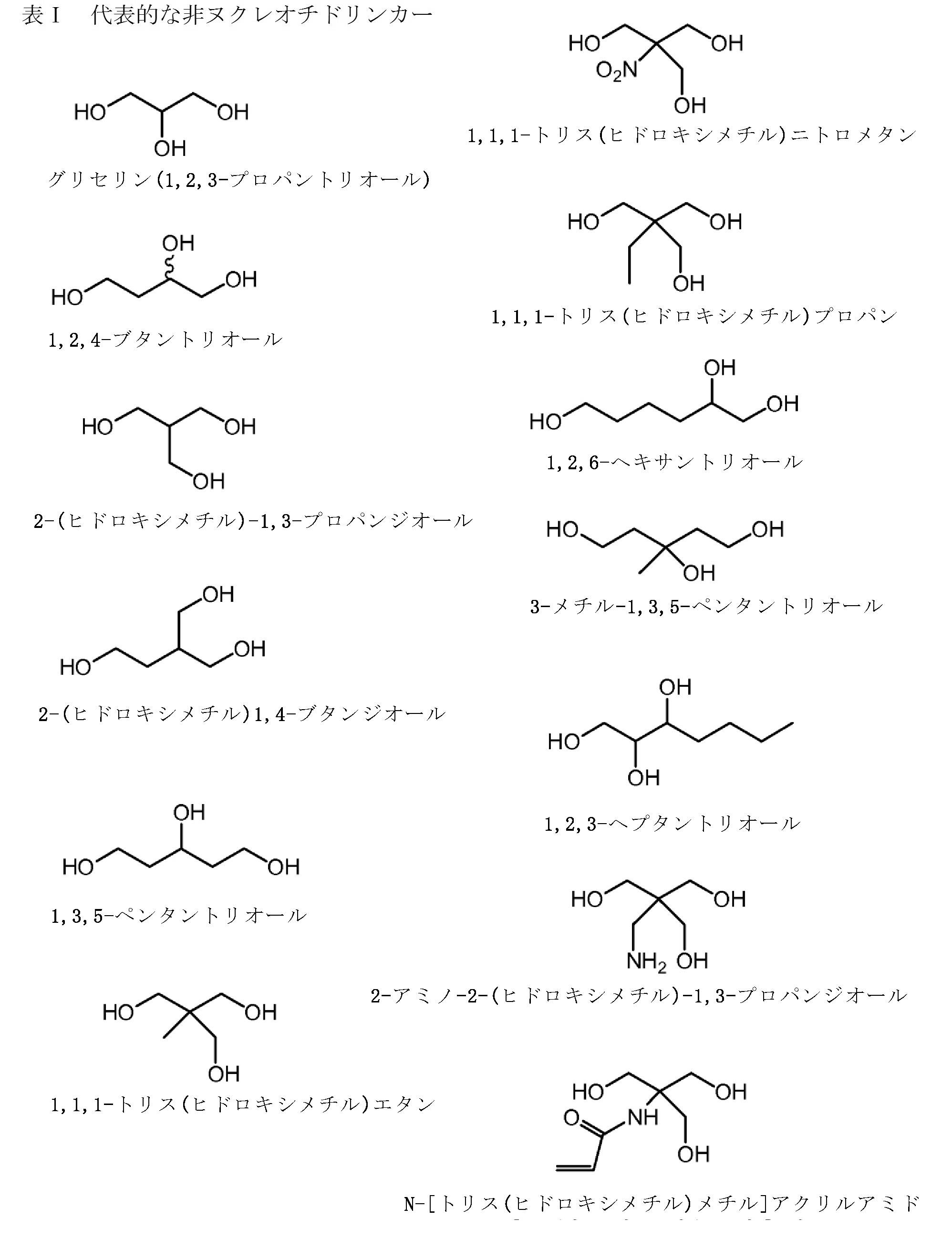
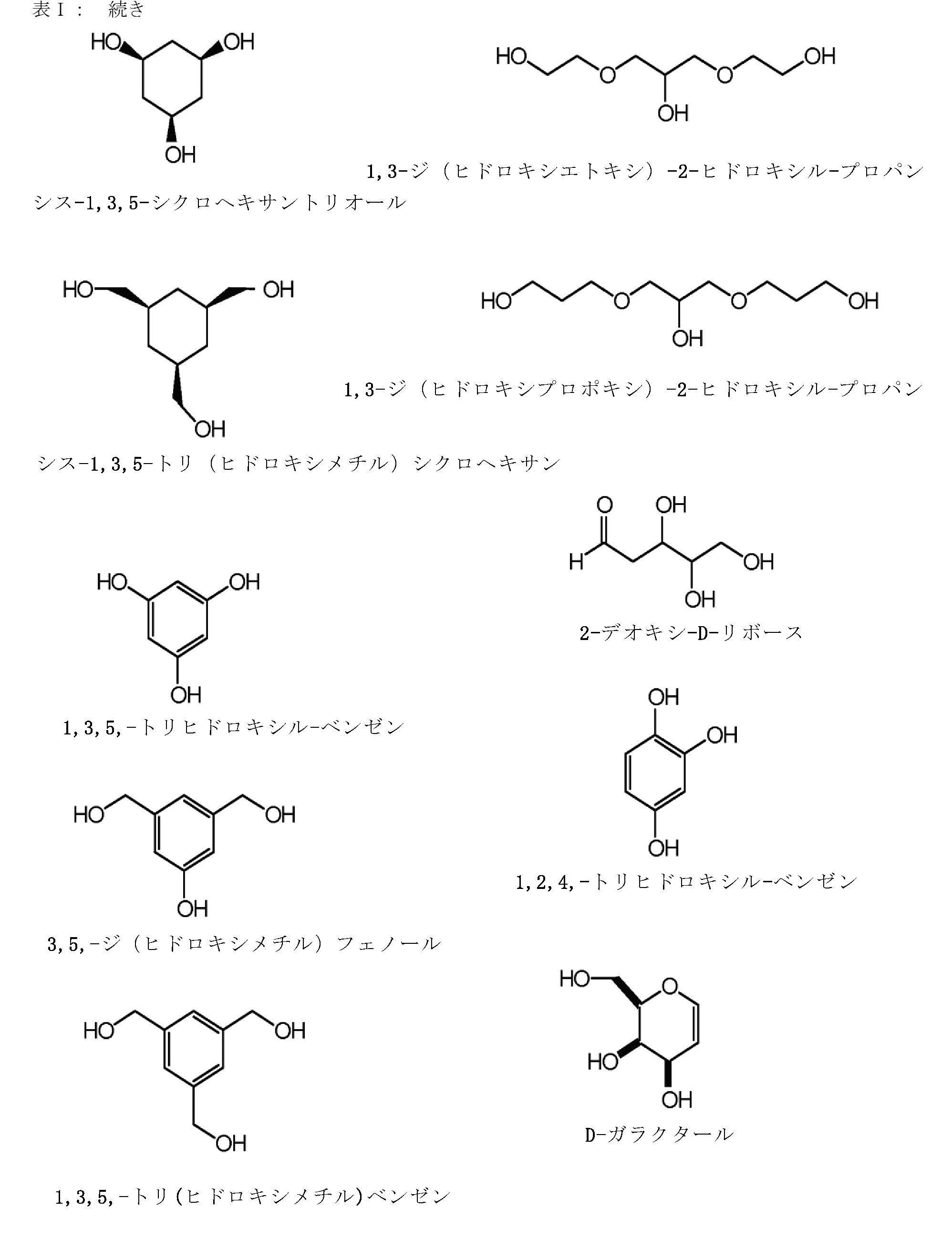
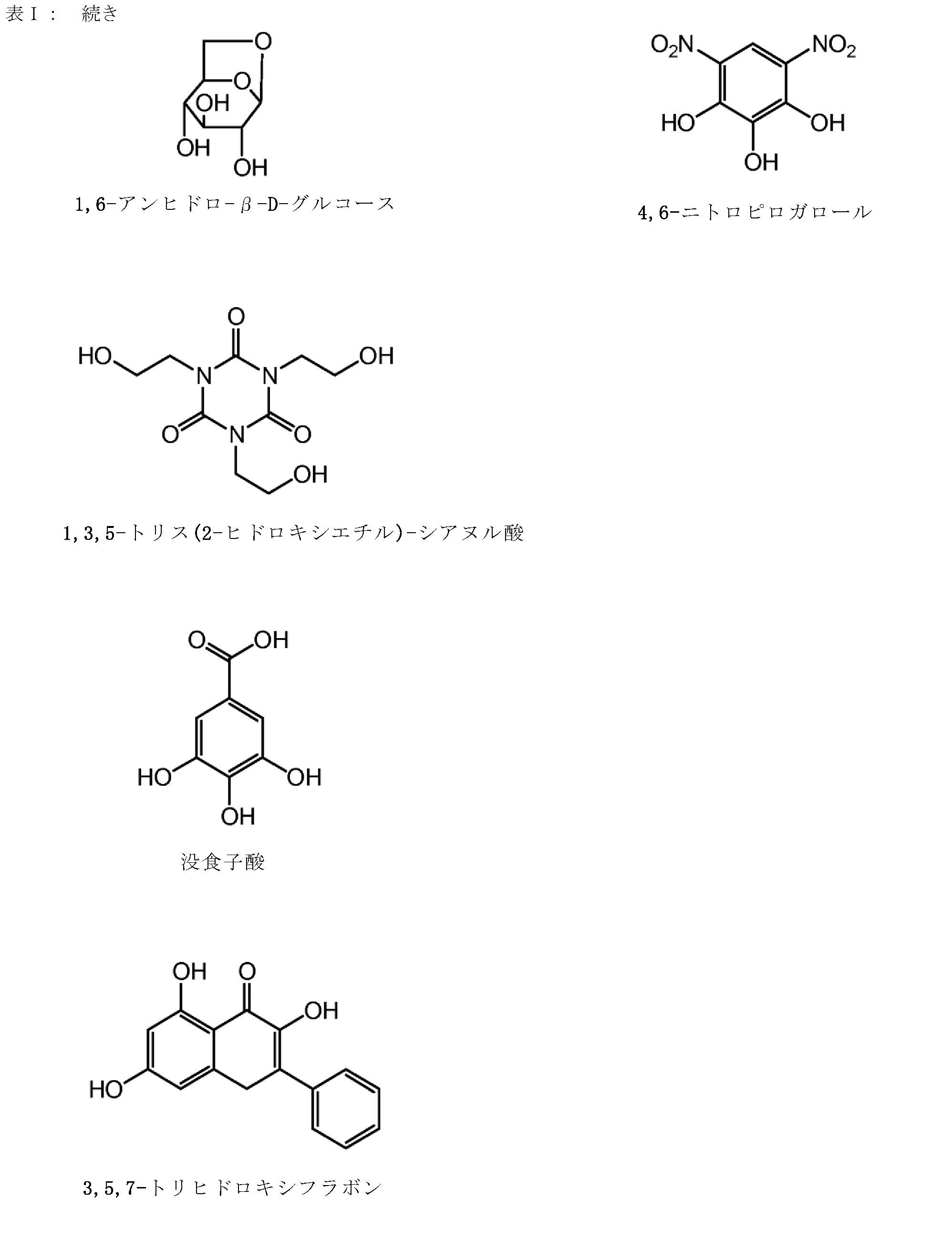
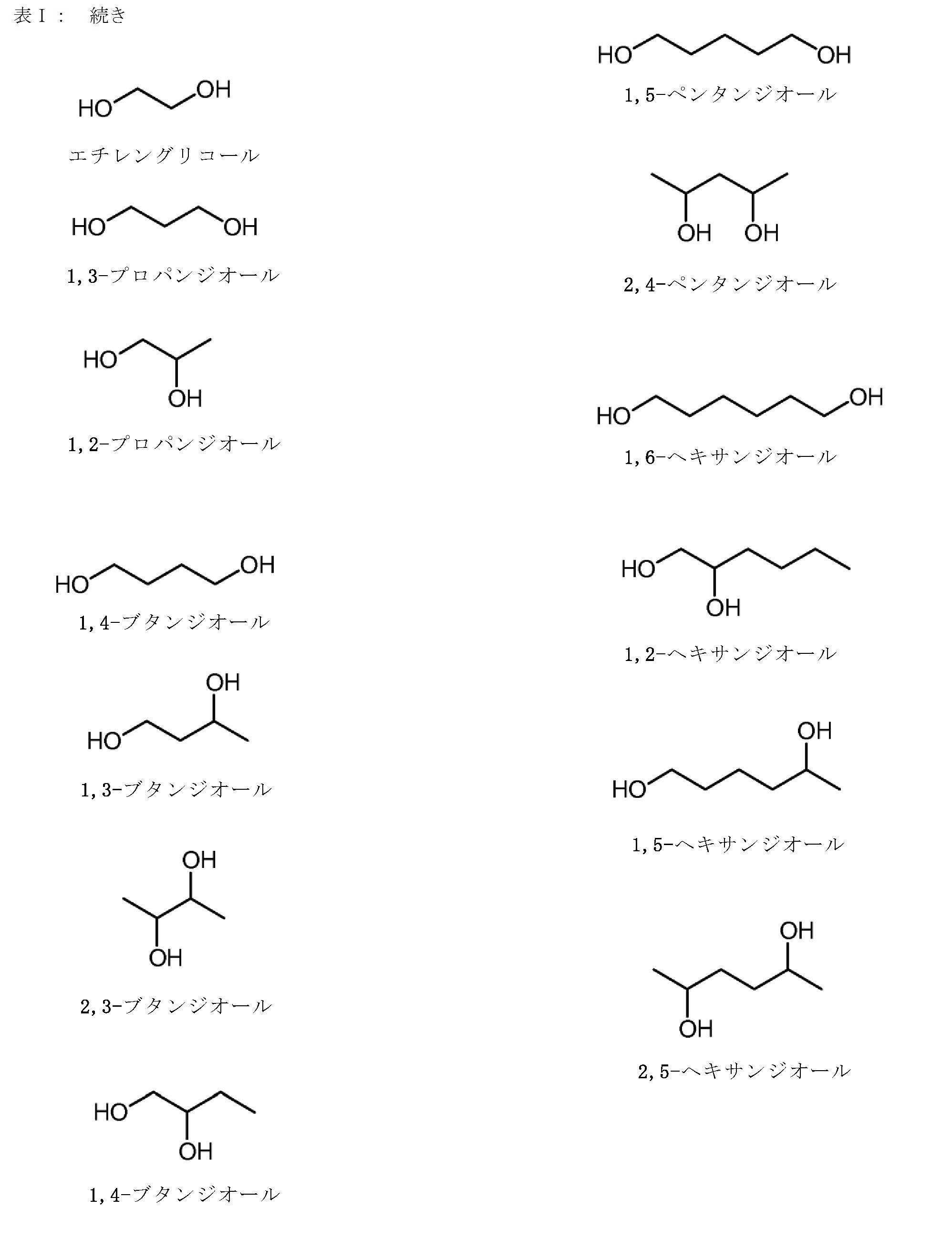

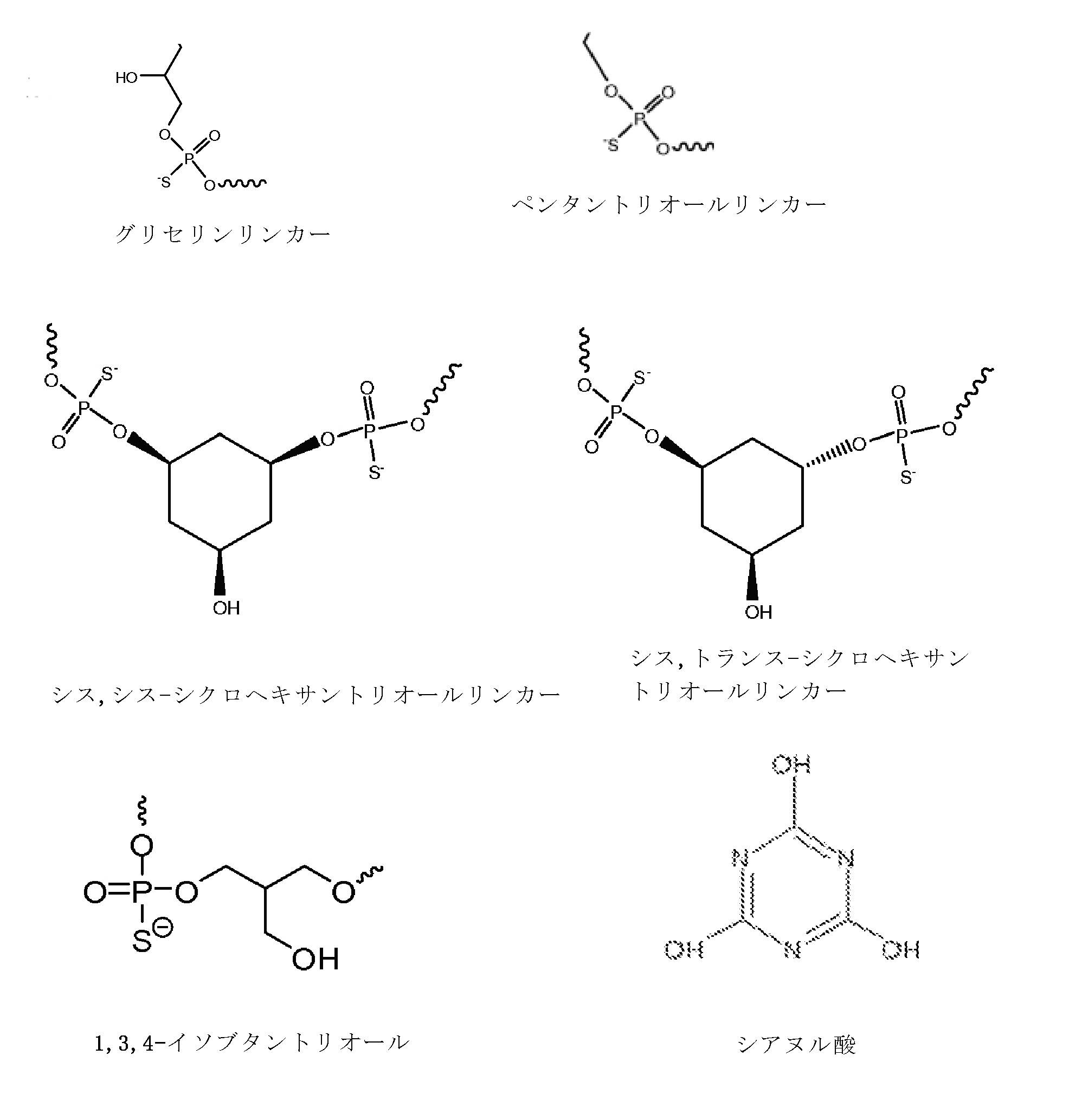
上記イムノマーのオリゴヌクレオチドとしては、独立に、天然起源のヌクレオシド、修飾ヌクレオシド、またはそれらの混合物を挙げることができる。イムノマーのオリゴヌクレオチドはまた、独立に、ハイブリッド及びキメラオリゴヌクレオチドから選択することもできる。「キメラオリゴヌクレオチド」とは、2種以上のヌクレオシド間結合を有するオリゴヌクレオチドである。かかるキメラオリゴヌクレオチドの1つの好ましい例は、ホスホロチオエート領域、ホスホジエステル領域またはホスホロジチオエート領域及びアルキルホスホネート結合またはアルキルホスホノチオエート結合などの非イオン性結合を含むキメラオリゴヌクレオチドである(例えば、Pedersonら、米国特許第5,635,377号及び第5,366,878号を参照のこと。)。 The oligonucleotide oligonucleotides can independently include naturally occurring nucleosides, modified nucleosides, or mixtures thereof. Immunomer oligonucleotides can also be independently selected from hybrid and chimeric oligonucleotides. A "chimeric oligonucleotide" is an oligonucleotide having two or more nucleoside linkages. One preferred example of such a chimeric oligonucleotide is a chimeric oligonucleotide containing a phosphorothioate region, a phosphodiester region or a phosphorodithioate region and a nonionic bond such as an alkylphosphonate bond or an alkylphosphonothioate bond (eg, Pederson). Et al., US Pat. Nos. 5,635,377 and 5,366,878.).
「ハイブリッドオリゴヌクレオチド」とは、2種類以上のヌクレオシドを有するオリゴヌクレオチドである。かかるハイブリッドオリゴヌクレオチドの1つの好ましい例は、リボヌクレオチド領域または2’-置換リボヌクレオチド領域、及びデオキシリボヌクレオチド領域を含む(例えば、Metelev及びAgrawal、米国特許第5,652,355号、第6,346,614号及び第6,143,881号を参照のこと。)。 A "hybrid oligonucleotide" is an oligonucleotide having two or more kinds of nucleosides. One preferred example of such hybrid oligonucleotides comprises a ribonucleotide region or a 2'-substituted ribonucleotide region, and a deoxyribonucleotide region (eg, Metelev and Agrawal, US Pat. Nos. 5,652,355, 6,346). , 614 and 6,143,881.).
図1及び図2に概略図として描かれ、更に実施例に記載されるように、上記イムノマーは自動合成装置及びホスホルアミダイト手法を用いて簡便に合成することができる。いくつかの実施形態において、イムノマーは、直線型合成手法によって合成される(図1を参照のこと)。本明細書では、用語「直線型合成」とは、当該イムノマーの一方の末端で開始し、他方の末端へと直線的に進行する合成をいう。直線型合成は、イムノマーに、(長さ、塩基組成及び/または組み込まれる化学修飾の観点で)同一または非同一のいずれかの単量体単位を取り込むことを可能にする。 As shown in FIGS. 1 and 2 as schematic views and further described in Examples, the immunomer can be easily synthesized using an automated synthesizer and a phosphoramidite method. In some embodiments, the immunomer is synthesized by a linear synthesis technique (see Figure 1). As used herein, the term "linear synthesis" refers to synthesis that begins at one end of the immunomer and proceeds linearly to the other end. Linear synthesis allows the immunomer to incorporate either identical or non-identical monomeric units (in terms of length, base composition and / or chemical modification incorporated).
これに代わる1つの合成様式としては例えば「並列型合成」があり、該並列型合成においては、合成が中央のリンカー部分から外向きに進行する(図2を参照のこと)。米国特許第5,912,332号に記載されるように、固体支持体に結合したリンカーを並列型合成に用いることができる。あるいは、普遍的な固体支持体(リン酸が結合した制御された細孔のガラス支持体などを用いることができる。 One alternative synthetic mode is, for example, "parallel synthesis", in which synthesis proceeds outward from the central linker moiety (see FIG. 2). Linkers attached to solid supports can be used for parallel synthesis as described in US Pat. No. 5,912,332. Alternatively, a universal solid support (such as a glass support with controlled pores to which phosphoric acid is bound) can be used.
イムノマーの並列型合成は直線型合成に対していくつかの利点を有する。すなわち、(1)並列型合成は同一の単量体単位の組み込みを可能にし、(2)直線型合成とは異なり、両方(または全て)の単量体単位が同時に合成され、それによって合成に必要な合成ステップの数及び時間が単量体単位の合成ステップの数及び時間と同一であり、(3)合成ステップの削減が、最終的なイムノマー生成物の純度及び収率を向上させる。 Parallel synthesis of immunomers has several advantages over linear synthesis. That is, (1) parallel synthesis allows the incorporation of the same monomeric unit, and (2) unlike linear synthesis, both (or all) monomeric units are synthesized simultaneously, thereby resulting in synthesis. The number and time of synthesis steps required is the same as the number and time of synthesis steps per monomer unit, and (3) reduction of synthesis steps improves the purity and yield of the final immunomer product.
修飾ヌクレオシドを取り込む場合には、直線型合成または並列型合成プロトコルのいずれかによる合成の最後に、イムノマーを濃アンモニア溶液で、またはホスホルアミダイト供給業者によって推奨されるようにして簡便に脱保護することができる。生成物であるイムノマーは、好ましくは、逆相HPLCによって精製され、脱トリチル化、脱塩及び透析される。 When incorporating modified nucleosides, the immunomer is conveniently deprotected with a concentrated ammonia solution or as recommended by the phosphoramidite supplier at the end of synthesis by either linear or parallel synthesis protocols. be able to. The product immunomer is preferably purified by reverse phase HPLC and detritylated, desalted and dialyzed.
表IIは代表的なイムノマーを示す。別段の記載がない限り、全てのヌクレオチド間結合はホスホロチオエートである。

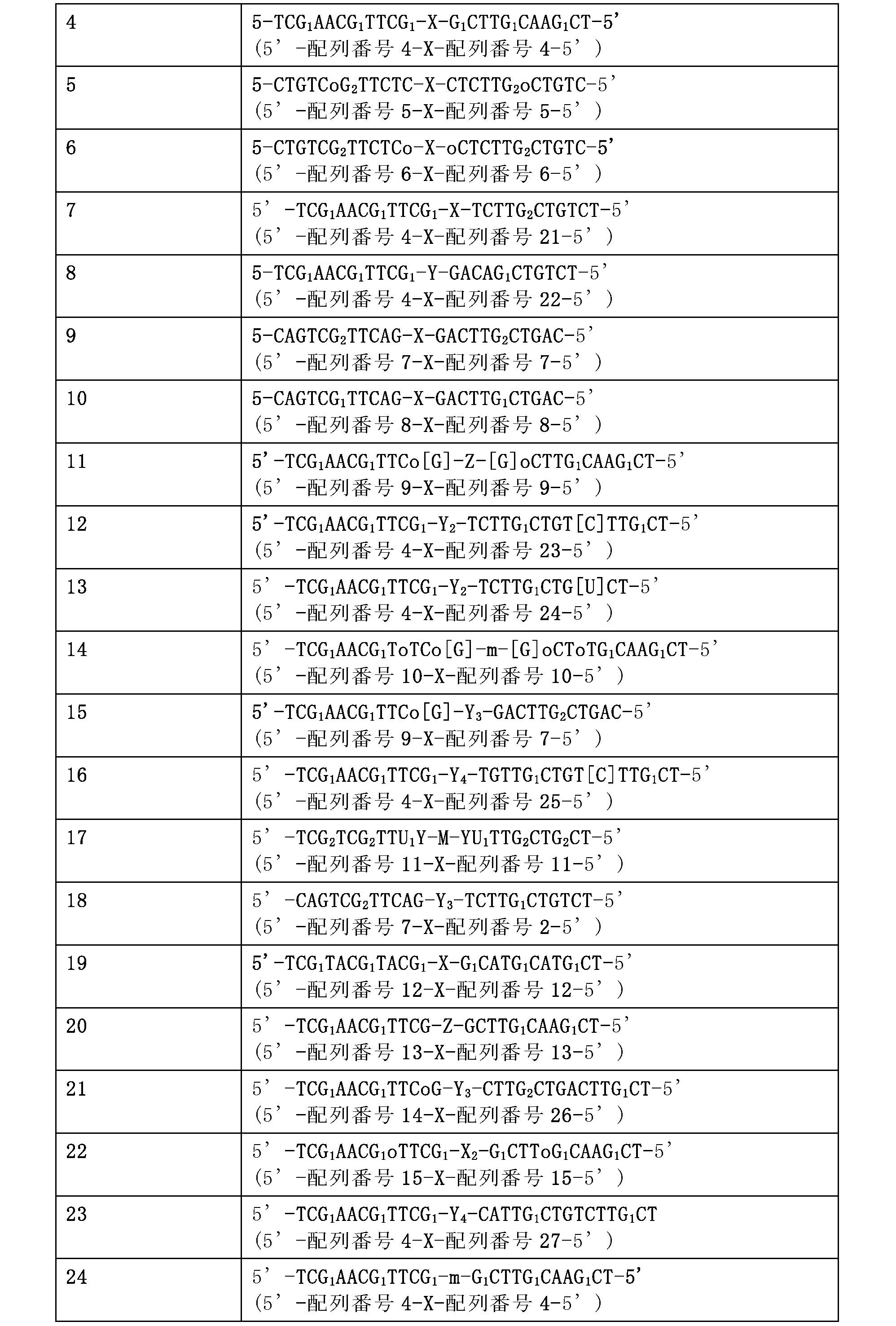
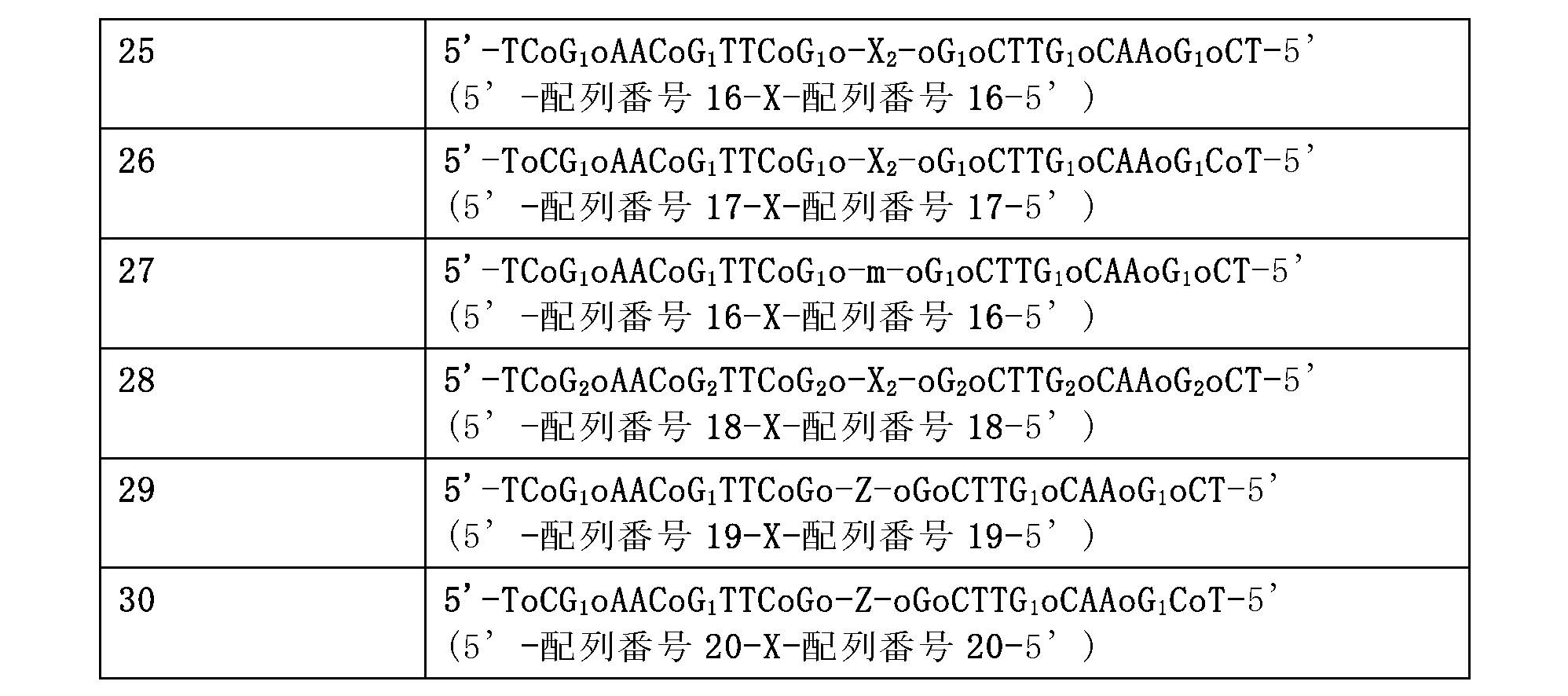
免疫チェックポイントとは、自己免疫寛容の維持及び末梢組織の損傷を最小限に抑えるための免疫系応答の程度の調節を担う、免疫系における阻害経路をいう。免疫応答の誘導は、病原体(例えば、細菌、ウイルスまたは真菌)による感染によるもの、または合成免疫アゴニスト(例えば、TLR9アゴニスト)の投与によるもののいずれであっても、免疫チェックポイントを上方制御する。しかしながら、腫瘍細胞も免疫系チェックポイントを活性化して、腫瘍組織に対する免疫応答の有効性を低下させることが明らかになっている。代表的なチェックポイント分子としては、細胞傷害性Tリンパ球抗原4(CTLA4であり、CD152としても知られる)、プログラム細胞死タンパク質1(PD-1であり、CD279としても知られる)、プログラム細胞死1リガンド1(PD-L1であり、CD274としても知られる)、リンパ球活性化遺伝子-3(LAG-3;CD223)、B7-H3、B7-H4、キラー免疫グロブリン受容体(KIR)、腫瘍壊死因子受容体スーパーファミリー メンバー4(TNFRSF4であり、OX40及びCD134としても知られる)及びそのリガンドOX40L(CD252)、インドールアミン2,3-ジオキシゲナーゼ1(IDO-1)、インドールアミン2,3-ジオキシゲナーゼ2(IDO-2)、癌胎児性抗原関連細胞接着分子1(CEACAM1)、B及びTリンパ球アテニュエータ(BTLAであり、CD272としても知られる)、ならびにT細胞膜タンパク質3(TIM3)が挙げられるが、これらに限定はされない。好ましい実施形態において、上記チェックポイントは、CTLA4、IDO-1、PD-L1またはPD-1である。好ましい実施形態において、チェックポイントはCTLA4である。好ましい実施形態において、チェックポイントはPD-L1である。好ましい実施形態において、チェックポイントはIDO-1である。好ましい実施形態において、チェックポイントはPD-1である。
Immune checkpoints are pathways of inhibition in the immune system that are responsible for maintaining autoimmune tolerance and regulating the degree of immune system response to minimize damage to peripheral tissues. Induction of the immune response upregulates the immune checkpoint, whether by infection with a pathogen (eg, a bacterium, virus or fungus) or by administration of a synthetic immunoagonist (eg, a TLR9 agonist). However, tumor cells have also been shown to activate immune system checkpoints, reducing the effectiveness of the immune response against tumor tissue. Typical checkpoint molecules include cytotoxic T lymphocyte antigen 4 (CTLA4, also known as CD152), programmed cell death protein 1 (PD-1, also known as CD279), and programmed cells.
本明細書に開示される方法での使用に対して、任意の好適な免疫チェックポイント阻害剤が企図される。本明細書では、「免疫チェックポイント阻害剤」とは、当該免疫チェックポイント分子の活性を阻害する任意の調節剤をいう。免疫チェックポイント阻害剤としては、免疫チェックポイント分子結合タンパク質、低分子阻害剤、抗体、抗体誘導体(Fabフラグメント及びscFvを含む)、抗体-薬物複合体、アンチセンスオリゴヌクレオチド、siRNA、アプタマー、ペプチド及びペプチド模倣物が挙げられるが、これらに限定はされない。免疫チェックポイント分子の発現及び/または活性を低下させる阻害性核酸もまた、本明細書に開示される方法において用いることができる。一実施形態は、標的遺伝子の発現の妨害または阻害のための低分子抑制性RNA(siRNA)である。PD-1、PD-L1及びPD-L2をコードする核酸配列は、GENBANK(登録商標)受入番号NM_005018、AF344424、NP_079515、及びNP_054862に開示される。 Any suitable immune checkpoint inhibitor is contemplated for use in the methods disclosed herein. As used herein, the term "immune checkpoint inhibitor" refers to any regulator that inhibits the activity of the immune checkpoint molecule. Immune checkpoint inhibitors include immune checkpoint molecular binding proteins, small molecule inhibitors, antibodies, antibody derivatives (including Fab fragments and scFv), antibody-drug complexes, antisense oligonucleotides, siRNAs, aptamers, peptides and Examples include, but are not limited to, peptide mimetics. Inhibitor nucleic acids that reduce the expression and / or activity of immune checkpoint molecules can also be used in the methods disclosed herein. One embodiment is a small molecule inhibitory RNA (siRNA) for interfering with or inhibiting the expression of a target gene. Nucleic acid sequences encoding PD-1, PD-L1 and PD-L2 are disclosed in GENBANK® Accession Numbers NM_005018, AF344424, NP_079515, and NP_054862.
一実施形態において、上記免疫チェックポイント阻害剤は、1種または複数種の免疫チェックポイントタンパク質の発現または活性を低下させる。別の実施形態において、免疫チェックポイント阻害剤は、1種または複数種の免疫チェックポイントタンパク質とそれらのリガンドとの間の相互作用を低下させる。 In one embodiment, the immune checkpoint inhibitor reduces the expression or activity of one or more immune checkpoint proteins. In another embodiment, the immune checkpoint inhibitor reduces the interaction between one or more immune checkpoint proteins and their ligands.
いくつかの実施形態において、上記免疫チェックポイント阻害剤はPD-L1の阻害剤である。いくつかの実施形態において、免疫チェックポイント阻害剤はPD-L1に対する抗体である。いくつかの実施形態において、免疫チェックポイント阻害剤はPD-L1に対するモノクローナル抗体である。他のまたは更なる実施形態において、免疫チェックポイント阻害剤はPD-L1に対するヒトまたはヒト化抗体である。一実施形態において、免疫チェックポイント阻害剤は、PD-L1などの1種または複数種の免疫チェックポイントタンパク質の発現または活性を低下させる。別の実施形態において、免疫チェックポイント阻害剤はPD-1とPD-L1との間の相互作用を低下させる。代表的な免疫チェックポイント阻害剤としては、抗体(例えば、抗PD-L1抗体)、RNAi分子(例えば、抗PD-L1 RNAi)、アンチセンス分子(例えば、抗PD-L1アンチセンスRNA)、優性阻害タンパク質(例えば、優性阻害PD-L1タンパク質)、及び低分子阻害剤が挙げられる。抗体としては、モノクローナル抗体、ヒト化抗体、脱免疫化抗体、及びIg融合タンパク質が挙げられる。代表的な抗PD-L1抗体としてはクローンEH12が挙げられる。PD-L1に対する代表的な抗体としては、ジェネンテック社のMPDL3280A(RG7446)、BioXcell社の抗マウスPD-L1抗体クローン10F.9G2(カタログ番号BE0101)、ブリストル・マイヤーズスクイブ社の抗PD-L1モノクローナル抗体MDX-1105(BMS-936559)及びBMS-935559、MSB0010718C、マウス抗PD-L1クローン29E.2A3、ならびにアストラゼネカ社のMEDI4736が挙げられる。いくつかの実施形態において、上記抗PD-L1抗体は、以下の特許公開(参照により本明細書に援用される)、WO2013079174、CN101104640、WO2010036959、WO2013056716、WO2007005874、WO2010089411、WO2010077634、WO2004004771、WO2006133396、WO201309906、US20140294898、WO2013181634またはWO2012145493のいずれかに開示される抗PD-L1抗体である。 In some embodiments, the immune checkpoint inhibitor is an inhibitor of PD-L1. In some embodiments, the immune checkpoint inhibitor is an antibody against PD-L1. In some embodiments, the immune checkpoint inhibitor is a monoclonal antibody against PD-L1. In other or further embodiments, the immune checkpoint inhibitor is a human or humanized antibody against PD-L1. In one embodiment, the immune checkpoint inhibitor reduces the expression or activity of one or more immune checkpoint proteins, such as PD-L1. In another embodiment, the immune checkpoint inhibitor reduces the interaction between PD-1 and PD-L1. Typical immune checkpoint inhibitors include antibodies (eg, anti-PD-L1 antibodies), RNAi molecules (eg, anti-PD-L1 RNAi), antisense molecules (eg, anti-PD-L1 antisense RNA), and dominant. Inhibitor proteins (eg, dominantly inhibitory PD-L1 protein), and small molecule inhibitors can be mentioned. Antibodies include monoclonal antibodies, humanized antibodies, deimmunized antibodies, and Ig fusion proteins. A typical anti-PD-L1 antibody is clone EH12. Typical antibodies against PD-L1 include Genentech's MPDL3280A (RG7446) and BioXcell's anti-mouse PD-L1 antibody clone 10F. 9G2 (catalog number BE0101), Bristol Myers Squibb anti-PD-L1 monoclonal antibody MDX-1105 (BMS-936559) and BMS-935559, MSB0010718C, mouse anti-PD-L1 clone 29E. Examples include 2A3 and AstraZeneca's MEDI4736. In some embodiments, the anti-PD-L1 antibody is described in the following patent publication (incorporated herein by reference), WO20130779174, CN101104640, WO2010036959, WO2013056716, WO2007005874, WO201089411, WO20100077634, WO2004004771, WO2006133396, WO2013139906. , US201102494898, WO2013181634 or WO2012145493 is an anti-PD-L1 antibody disclosed in.
いくつかの実施形態において、上記PD-L1阻害剤はPD-L1発現の核酸阻害剤である。いくつかの実施形態において、PD-L1阻害剤は、以下の特許公開(参照により本明細書に援用される)、WO2011127180またはWO2011000841の1に開示される。いくつかの実施形態において、PD-L1阻害剤はラパマイシンである。 In some embodiments, the PD-L1 inhibitor is a nucleic acid inhibitor of PD-L1 expression. In some embodiments, the PD-L1 inhibitor is disclosed in 1 of WO2011127180 or WO2011100841, the following patent publication (incorporated herein by reference). In some embodiments, the PD-L1 inhibitor is rapamycin.
いくつかの実施形態において、上記免疫チェックポイント阻害剤はPD-L2の阻害剤である。いくつかの実施形態において、免疫チェックポイント阻害剤はPD-L2に対する抗体である。いくつかの実施形態において、免疫チェックポイント阻害剤はPD-L2に対するモノクローナル抗体である。他のまたは更なる実施形態において、免疫チェックポイント阻害剤はPD-L2に対するヒトまたはヒト化抗体である。いくつかの実施形態において、免疫チェックポイント阻害剤は、PD-L2などの1種または複数種の免疫チェックポイントタンパク質の発現または活性を低下させる。他の実施形態において、免疫チェックポイント阻害剤は、PD-1とPD-L2との間の相互作用を低下させる。代表的な免疫チェックポイント阻害剤としては、抗体(例えば、抗PD-L2抗体)、RNAi分子(例えば、抗PD-L2 RNAi)、アンチセンス分子(例えば、抗PD-L2アンチセンスRNA)、優性阻害タンパク質(例えば、優性阻害PD-L2タンパク質)、及び低分子阻害剤が挙げられる。抗体としては、モノクローナル抗体、ヒト化抗体、脱免疫化抗体、及びIg融合タンパク質が挙げられる。 In some embodiments, the immune checkpoint inhibitor is an inhibitor of PD-L2. In some embodiments, the immune checkpoint inhibitor is an antibody against PD-L2. In some embodiments, the immune checkpoint inhibitor is a monoclonal antibody against PD-L2. In other or further embodiments, the immune checkpoint inhibitor is a human or humanized antibody against PD-L2. In some embodiments, the immune checkpoint inhibitor reduces the expression or activity of one or more immune checkpoint proteins, such as PD-L2. In other embodiments, immune checkpoint inhibitors reduce the interaction between PD-1 and PD-L2. Typical immune checkpoint inhibitors include antibodies (eg, anti-PD-L2 antibody), RNAi molecules (eg, anti-PD-L2 RNAi), antisense molecules (eg, anti-PD-L2 antisense RNA), and dominant. Inhibitor proteins (eg, dominantly inhibitory PD-L2 protein), and small molecule inhibitors can be mentioned. Antibodies include monoclonal antibodies, humanized antibodies, deimmunized antibodies, and Ig fusion proteins.
いくつかの実施形態において、上記PD-L2阻害剤はグラクソスミスクライン社のAMP-224(アンプリニューン社)である。いくつかの実施形態において、PD-L2阻害剤はrHIgM12B7である。 In some embodiments, the PD-L2 inhibitor is GlaxoSmithKline's AMP-224 (Amplinune). In some embodiments, the PD-L2 inhibitor is rHIgM12B7.
いくつかの実施形態において、上記免疫チェックポイント阻害剤はPD-L1の阻害剤である。いくつかの実施形態において、免疫チェックポイント阻害剤はPD-1に対する抗体である。いくつかの実施形態において、免疫チェックポイント阻害剤はPD-1に対するモノクローナル抗体である。他のまたは更なる実施形態において、免疫チェックポイント阻害剤はPD-1に対するヒトまたはヒト化抗体である。例えば、米国特許第7,029,674号、第6,808,710号、または米国特許出願第20050250106号及び第20050159351号に開示されるPD-1の生物学的活性(またはその配位子)の阻害剤は、本明細書に提供される方法において用いることができる。PD-1に対する代表的な抗体としては、BioXcell社の抗マウスPD-1抗体クローンJ43(カタログ番号BE0033-2)、BioXcell社の抗マウスPD-1抗体クローンRMP1-14(カタログ番号BE0146)、マウス抗PD-1抗体クローンEH12、メルク社のMK-3475抗マウスPD-1抗体(キートルーダ、ペンブロリズマブ、ランブロリズマブ)、及びANB011として知られるアナプティスバイオ社の抗PD-1抗体、抗体MDX-1 106(ONO-4538)、ブリストル・マイヤーズスクイブ社のヒトIgG4モノクローナル抗体ニボルマブ(オプジーボ(登録商標)、BMS-936558、MDX1106)、アストラゼネカ社のAMP-514、及びAMP-224、ならびにCureTech Ltd.のピディリズマブ(CT-011)が挙げられる。 In some embodiments, the immune checkpoint inhibitor is an inhibitor of PD-L1. In some embodiments, the immune checkpoint inhibitor is an antibody against PD-1. In some embodiments, the immune checkpoint inhibitor is a monoclonal antibody against PD-1. In other or further embodiments, the immune checkpoint inhibitor is a human or humanized antibody against PD-1. For example, the biological activity (or ligand thereof) of PD-1 disclosed in US Pat. Nos. 7,029,674, 6,808,710, or US Patent Applications 20050250106 and 20050159351. Inhibitors can be used in the methods provided herein. Typical antibodies against PD-1 include BioXcell's anti-mouse PD-1 antibody clone J43 (catalog number BE0033-2), BioXcell's anti-mouse PD-1 antibody clone RMP1-14 (catalog number BE0146), and mice. Anti-PD-1 antibody clone EH12, Merck's MK-3475 anti-mouse PD-1 antibody (Keitruda, Pembrolizumab, Rambrolizumab), and Anaptis Bio's anti-PD-1 antibody, antibody MDX-1 106, known as ANB011. (ONO-4538), Bristol Myers Squibb Human IgG4 Monoclonal Antibody Nivormab (Opdivo®, BMS-936558, MDX1106), AstraZeneca AMP-514 and AMP-224, and CureTech Ltd. Pidilizumab (CT-011) can be mentioned.
更なる代表的な抗PD-1抗体及びそれらの使用方法が、Goldberg et al, Blood 1 10(1): 186-192 (2007)、Thompson et al, Clin. Cancer Res. 13(6): 1757-1761 (2007)、及びKormanら、国際出願第PCT/JP2006/309606号(公開第WO2006/121168A1号)によって記載されており、これらのそれぞれは、明示的に参照により本明細書に援用される。いくつかの実施形態において、上記抗PD-1抗体は、以下の特許公開(参照により本明細書に援用される)、WO014557、WO2011110604、WO2008156712、US2012023752、WO2011110621、WO2004072286、WO2004056875、WO20100036959、WO2010029434、WO201213548、WO2002078731、WO2012145493、WO2010089411、WO2001014557、WO2013022091、WO2013019906、WO2003011911、US20140294898、及びWO2010001617のいずれかに開示される抗PD-1抗体である。
Further representative anti-PD-1 antibodies and their use methods are described in Goldberg et al,
いくつかの実施形態において、上記PD-1阻害剤はWO200914335(参照により本明細書に援用される)に開示されるPD-1結合タンパク質である。 In some embodiments, the PD-1 inhibitor is a PD-1 binding protein disclosed in WO 200941335 (incorporated herein by reference).
いくつかの実施形態において、上記PD-1阻害剤はWO2013132317(参照により本明細書に援用される)に開示されるPD-1のペプチド模倣体阻害剤である。 In some embodiments, the PD-1 inhibitor is a peptide mimetic inhibitor of PD-1 disclosed in WO2013132317 (incorporated herein by reference).
いくつかの実施形態において、上記PD-1阻害剤はBioXCell社(ニューハンプシャー州ウエストレバノン)の抗マウスPD-1 mAb:クローンJ43である。 In some embodiments, the PD-1 inhibitor is BioXCell, an anti-mouse PD-1 mAb: clone J43 from BioXCell, West Lebanon, Hampshire.
いくつかの実施形態において、上記PD-1阻害剤は、PD-L1タンパク質、PD-L2タンパク質、またはフラグメント、ならびに特定の悪性腫瘍の治療に対する治験において試験された抗体MDX-1 106(ONO-4538)(Brahmer et al., J Clin Oncol. 2010 28(19): 3167-75, Epub 2010 Jun. 1)である。他の遮断抗体は、上記のPD-1とPD-L1/PD-L2との間の公知の相互作用のドメインに基づいて、当業者が容易に識別及び調製することができる。例えば、PD-1またはPD-L1/PD-L2のIgV領域(またはこの領域の一部)に相当するペプチドを、当技術分野で周知の方法を用いて、遮断抗体を発生させるための抗原として用いることができる。 In some embodiments, the PD-1 inhibitor is a PD-L1 protein, PD-L2 protein, or fragment, as well as the antibody MDX-1 106 (ONO-4538) tested in clinical trials for the treatment of specific malignancies. ) (Brahmer et al., J Clin Oncol. 2010 28 (19): 3167-75, Epub 2010 Jun. 1). Other blocking antibodies can be readily identified and prepared by those of skill in the art based on the domain of known interactions between PD-1 and PD-L1 / PD-L2 described above. For example, a peptide corresponding to the IgV region (or a part of this region) of PD-1 or PD-L1 / PD-L2 can be used as an antigen for generating a blocking antibody by using a method well known in the art. Can be used.
いくつかの実施形態において、上記免疫チェックポイント阻害剤はIDO1の阻害剤である。いくつかの実施形態において、免疫チェックポイント阻害剤はIDO1に対する低分子である。代表的なIDO1に対する低分子としては、インサイト社のINCB024360(

いくつかの実施形態において、上記免疫チェックポイント阻害剤はCTLA-4の阻害剤である。いくつかの実施形態において、免疫チェックポイント阻害剤はCTLA-4に対する抗体である。いくつかの実施形態において、免疫チェックポイント阻害剤はCTLA-4に対するモノクローナル抗体である。他のまたは更なる実施形態において、免疫チェックポイント阻害剤はCTLA-4に対するヒトまたはヒト化抗体である。一実施形態において、上記抗CTLA-4抗体は、抗原提示細胞上に発現されたCD80(B7-1)及び/またはCD86(B7-2)に対するCTLA-4の結合を遮断する。代表的なCTLA-4に対する抗体としては、ブリストル・マイヤーズスクイブ社の抗CTLA-4抗体イピリムマブ(ヤーボイ(登録商標)としても知られる、MDX-010、BMS-734016及びMDX-101)、ミリポア社の抗CTLA4抗体、クローン9H10、ファイザー社のトレメリムマブ(CP-675,206、チシリムマブ)、及びアブカム社の抗CTLA4抗体クローンBNI3が挙げられる。 In some embodiments, the immune checkpoint inhibitor is an inhibitor of CTLA-4. In some embodiments, the immune checkpoint inhibitor is an antibody against CTLA-4. In some embodiments, the immune checkpoint inhibitor is a monoclonal antibody against CTLA-4. In other or further embodiments, the immune checkpoint inhibitor is a human or humanized antibody against CTLA-4. In one embodiment, the anti-CTLA-4 antibody blocks CTLA-4 binding to CD80 (B7-1) and / or CD86 (B7-2) expressed on antigen-presenting cells. Typical CTLA-4 antibodies include Bristol Myers Squibb's anti-CTLA-4 antibody ipilimumab (MDX-010, BMS-734016 and MDX-101, also known as Yervoy®), Millipore. Examples include anti-CTLA4 antibody, clone 9H10, Pfizer's tremelimumab (CP-675,206, ticilimumab), and Abcum's anti-CTLA4 antibody clone BNI3.
いくつかの実施形態において、上記抗CTLA-4抗体は、以下の特許公開(参照により本明細書に援用される)、WO2001014424、WO2004035607、US2005/0201994、EP1212422B1、WO2003086459、WO2012120125、WO2000037504、WO2009100140、WO200609649、WO2005092380、WO2007123737、WO2006029219、WO20100979597、WO200612168、及びWO1997020574のいずれかに開示される抗CTLA-4抗体である。更なるCTLA-4抗体が、米国特許第5,811,097号、第5,855,887号、第6,051,227号、及び第6,984,720号、PCT公開第WO01/14424号及び第WO00/37504号、ならびに米国公開第2002/0039581号及び第2002/086014号、及び/または米国特許第5,977,318号、第6,682,736号、第7,109,003号、及び第7,132,281号(参照により本明細書に援用される)に記載される。いくつかの実施形態において、上記抗CTLA-4抗体は、例えば、WO98/42752、米国特許第6,682,736号及び第6,207,156号、Hurwitz et al, Proc. Natl. Acad. Sci. USA, 95(17): 10067-10071 (1998); Camacho et al, J. Clin. Oncol., 22(145): Abstract No. 2505 (2004) (antibody CP-675206); Mokyr et al, Cancer Res., 58:5301-5304 (1998)(参照により本明細書に援用される)に記載される抗CTLA-4抗体である。 In some embodiments, the anti-CTLA-4 antibody is described in the following patent publication (incorporated herein by reference), WO2001014424, WO200403507, US2005 / 0201994, EP1212422B1, WO2003086459, WO2012120125, WO2000037504, WO2009100140, WO200609649. , WO2005092380, WO2007123737, WO2006029219, WO2010979597, WO20061621168, and WO19970201774 are anti-CTLA-4 antibodies disclosed. Additional CTLA-4 antibodies are available in US Pat. Nos. 5,811,097, 5,855,887, 6,051,227, and 6,984,720, PCT Publication No. WO01 / 14424. And WO 00/37504, and US Publications 2002/0039581 and 2002/086014, and / or US Pat. Nos. 5,977,318, 6,682,736, 7,109,003. , And Nos. 7,132,281 (incorporated herein by reference). In some embodiments, the anti-CTLA-4 antibody is described, for example, in WO98 / 42752, US Pat. Nos. 6,682,736 and 6,207,156, Hurwitz et al, Proc. Natl. Acad. Sci. USA, 95 (17): 10067-10071 (1998); Camacho et al, J. Mol. Clin. Oncol. , 22 (145): Abstract No. 2505 (2004) (antibody CP-675206); Mokyr et al, Cancer Res. , 58: 5301-5304 (1998), which is incorporated herein by reference.
いくつかの実施形態において、上記CTLA-4阻害剤はWO1996040915に開示されるCTLA-4リガンドである。 In some embodiments, the CTLA-4 inhibitor is a CTLA-4 ligand disclosed in WO1996040915.
いくつかの実施形態において、上記CTLA-4阻害剤はCTLA-4発現の核酸阻害剤である。例えば、抗CTLA4 RNAi分子は、Mello及びFireによりPCT公開第WO1999/032619号及び第WO2001/029058号、米国公開第2003/0051263号、第2003/0055020号、第2003/0056235号、2004/265839、2005/0100913、2006/0024798、2008/0050342、2008/0081373、2008/0248576、及び2008/055443;及び/または米国特許第6,506,559号、第7,282,564号、第7,538,095号、ならびに第7,560,438号(参照により本明細書に援用される)に記載される分子の形態をとっていてもよい。いくつかの例において、上記抗CTLA4 RNAi分子は、Tuschlにより欧州特許第EP1309726号(参照により本明細書に援用される)に記載される二本鎖RNAi分子の形態をとる。いくつかの例において、抗CTLA4 RNAi分子は、Tuschlにより米国特許第7,056,704号及び第7,078,196号(参照により本明細書に援用される)に記載される二本鎖RNAi分子の形態をとる。いくつかの実施形態において、CTLA4阻害剤はPCT公開第WO2004081021号に記載されるアプタマーである。 In some embodiments, the CTLA-4 inhibitor is a nucleic acid inhibitor that expresses CTLA-4. For example, anti-CTLA4 RNAi molecules are described by Cello and Fire on PCT Publications WO1999 / 032619 and WO2001 / 029058, US Publications 2003/0051263, 2003/0055020, 2003/0056235, 2004/265839, 2005/0100913, 2006/0024798, 2008/0050342, 2008/0081373, 2008/02485476, and 2008/055443; and / or US Pat. Nos. 6,506,559, 7,282,564, 7,538. , 095, and 7,560,438 (incorporated herein by reference) may be in the form of molecules. In some examples, the anti-CTLA4 RNAi molecule takes the form of a double-stranded RNAi molecule described by Tuschl in European Patent EP 1309726 (incorporated herein by reference). In some examples, the anti-CTLA4 RNAi molecule is described by Tuschl in US Pat. Nos. 7,056,704 and 7,078,196 (incorporated herein by reference). It takes the form of a molecule. In some embodiments, the CTLA4 inhibitor is an aptamer described in PCT Publication No. WO2004081021.
また、本発明の抗CTLA4 RNAi分子は、Crookeにより米国特許第5,898,031号、第6,107,094号、第7,432,249号、及び第7,432,250号、ならびに欧州出願第EP0928290号(参照により本明細書に援用される)に記載されるRNA分子の形態をとっていてもよい。 Also, the anti-CTLA4 RNAi molecule of the present invention is described by US Pat. Nos. 5,898,031, 6,107,094, 7,432,249, and 7,432,250, as well as Europe. It may be in the form of an RNA molecule described in application EP0928290 (incorporated herein by reference).
いくつかの実施形態において、上記免疫チェックポイント阻害剤はLAG3(CD223)の阻害剤である。いくつかの実施形態において、免疫チェックポイント阻害剤はLAG3に対する抗体である。いくつかの実施形態において、免疫チェックポイント阻害剤はLAG3に対するモノクローナル抗体である。他のまたは更なる実施形態において、免疫チェックポイント阻害剤はLAG3に対するヒトまたはヒト化抗体である。更なる実施形態において、上記LAG3に対する抗体は、LAG3の主要組織適合遺伝子複合体(MHC)分類II分子との相互作用を遮断する。代表的なLAG3に対する抗体としては、eBioscience社の抗Lag-3抗体クローンeBioC9B7W(C9B7W)、LifeSpan Biosciences社の抗Lag3抗体LS-B2237、Immutep社のIMP321(ImmuFact)、抗Lag3抗体BMS-986016、及びLAG-3キメラ抗体A9H12が挙げられる。いくつかの実施形態において、上記抗LAG3抗体は、以下の特許公開(参照により本明細書に援用される)、WO2010019570、WO2008132601、またはWO2004078928のいずれかに開示される抗LAG3抗体である。 In some embodiments, the immune checkpoint inhibitor is an inhibitor of LAG3 (CD223). In some embodiments, the immune checkpoint inhibitor is an antibody against LAG3. In some embodiments, the immune checkpoint inhibitor is a monoclonal antibody against LAG3. In other or further embodiments, the immune checkpoint inhibitor is a human or humanized antibody against LAG3. In a further embodiment, the antibody against LAG3 blocks the interaction of LAG3 with a major histocompatibility complex (MHC) classification II molecule. Typical antibodies against LAG3 include eBioscience's anti-Lag-3 antibody clone eBioC9B7W (C9B7W), LifeSpan Biosciences' anti-Lag3 antibody LS-B2237, Immutep's IMP321 and anti-LA, and anti-LAG3. LAG-3 chimeric antibody A9H12 can be mentioned. In some embodiments, the anti-LAG3 antibody is an anti-LAG3 antibody disclosed in any of the following patent publications (incorporated herein by reference), WO2010019570, WO2008132601, or WO20040778928.
いくつかの実施形態において、上記免疫チェックポイント阻害剤はTIM3(HAVCR2としても知られる)に対する抗体である。いくつかの実施形態において、免疫チェックポイント阻害剤はTIM3に対するモノクローナル抗体である。他のまたは更なる実施形態において、免疫チェックポイント阻害剤はTIM3に対するヒトまたはヒト化抗体である。更なる実施形態において、TIM3に対する抗体はTIM3のガレクチン-9(Gal9)との相互作用を遮断する。いくつかの実施形態において、上記抗TIM3抗体は、以下の特許公開(参照により本明細書に援用される)、WO2013006490、WO201155607、WO2011159877、またはWO200117057のいずれかに開示される抗TIM3抗体である。別の実施形態において、TIM3阻害剤はWO2009052623に開示されるTIM3阻害剤である。 In some embodiments, the immune checkpoint inhibitor is an antibody against TIM3 (also known as HAVCR2). In some embodiments, the immune checkpoint inhibitor is a monoclonal antibody against TIM3. In other or further embodiments, the immune checkpoint inhibitor is a human or humanized antibody against TIM3. In a further embodiment, the antibody against TIM3 blocks the interaction of TIM3 with galectin-9 (Gal9). In some embodiments, the anti-TIM3 antibody is an anti-TIM3 antibody disclosed in any of the following patent publications (incorporated herein by reference), WO2013006490, WO201155607, WO20111598777, or WO200117057. In another embodiment, the TIM3 inhibitor is a TIM3 inhibitor disclosed in WO2009052623.
いくつかの実施形態において、上記免疫チェックポイント阻害剤はB7-H3に対する抗体である。一実施形態において、免疫チェックポイント阻害剤はMGA271である。 In some embodiments, the immune checkpoint inhibitor is an antibody against B7-H3. In one embodiment, the immune checkpoint inhibitor is MGA271.
いくつかの実施形態において、上記免疫チェックポイント阻害剤はMRに対する抗体である。一実施形態において、免疫チェックポイント阻害剤はリリルマブ(IPH2101)である。いくつかの実施形態において、MRに対する抗体はKIRのHLAとの相互作用を遮断する。 In some embodiments, the immune checkpoint inhibitor is an antibody against MR. In one embodiment, the immune checkpoint inhibitor is lilylumab (IPH2101). In some embodiments, the antibody against MR blocks the interaction of KIR with HLA.
いくつかの実施形態において、上記免疫チェックポイント阻害剤は、CD137(4-1BBまたはTNFRSF9としても知られる)に対する抗体である。一実施形態において、免疫チェックポイント阻害剤は、ウレルマブ(BMS-663513、ブリストル・マイヤーズスクイブ社)、PF-05082566(抗4-1BB、PF-2566、ファイザー社)、またはXmAb-5592(Xencor社)である。一実施形態において、抗CD137抗体は、米国出願公開第2005/0095244号に開示される抗体、発行済み米国特許第7,288,638号に開示される抗体(20H4.9-IgG4[10C7もしくはBMS-663513]または20H4.9-IgG1[BMS-663031]など)、発行済み米国特許第6,887,673号に開示される抗体[4E9またはBMS-554271]、発行済み米国特許第7,214,493号に開示される抗体、発行済み米国特許第6,303,121号に開示される抗体、発行済み米国特許第6,569,997号に開示される抗体、発行済み米国特許第6,905,685号に開示される抗体、発行済み米国特許第6,355,476号に開示される抗体、発行済み米国特許第6,362,325号に開示される抗体[1D8もしくはBMS-469492、3H3もしくはBMS-469497、または3E1]、発行済み米国特許第6,974,863号に開示される抗体(53A2など)、あるいは発行済み米国特許第6,210,669号に開示される抗体(1D8、3B8、または3E1など)である。更なる実施形態において、免疫チェックポイント阻害剤は、WO2014036412に開示されるものである。別の実施形態において、CD137に対する抗体はCD137のCD137Lとの相互作用を遮断する。 In some embodiments, the immune checkpoint inhibitor is an antibody against CD137 (also known as 4-1BB or TNFRSF9). In one embodiment, the immune checkpoint inhibitor is urelmab (BMS-663513, Bristol Myers Squibb), PF-05082566 (anti-4-1BB, PF-2566, Pfizer), or XmAb-5592 (Xencor). Is. In one embodiment, the anti-CD137 antibody is an antibody disclosed in US Application Publication No. 2005/0095244, an antibody disclosed in Published US Pat. No. 7,288,638 (20H4.9-IgG4 [10C7 or BMS). -663513] or 20H4.9-IgG1 [BMS-663031], etc.), the antibody disclosed in Issued US Pat. No. 6,887,673 [4E9 or BMS-554271], Issued US Pat. No. 7,214, The antibody disclosed in 493, the antibody disclosed in Issued US Pat. No. 6,303,121, the antibody disclosed in Issued US Pat. No. 6,569,997, the issued US Pat. No. 6,905. , 685, Issued US Pat. No. 6,355,476, Issued US Pat. No. 6,362,325 [1D8 or BMS-469492, 3H3] Alternatively, BMS-469497, or 3E1], the antibody disclosed in Issued US Pat. No. 6,974,863 (such as 53A2), or the antibody disclosed in Issued US Pat. No. 6,210,669 (1D8, 3B8, or 3E1 etc.). In a further embodiment, the immune checkpoint inhibitor is disclosed in WO20144036412. In another embodiment, the antibody against CD137 blocks the interaction of CD137 with CD137L.
いくつかの実施形態において、上記免疫チェックポイント阻害剤はPSに対する抗体である。一実施形態において、上記免疫チェックポイント阻害剤はバビツキシマブである。 In some embodiments, the immune checkpoint inhibitor is an antibody against PS. In one embodiment, the immune checkpoint inhibitor is bavituximab.
いくつかの実施形態において、上記免疫チェックポイント阻害剤はCD52に対する抗体である。一実施形態において、上記免疫チェックポイント阻害剤はアレムツズマブである。 In some embodiments, the immune checkpoint inhibitor is an antibody against CD52. In one embodiment, the immune checkpoint inhibitor is alemtuzumab.
いくつかの実施形態において、上記免疫チェックポイント阻害剤はCD30に対する抗体である。一実施形態において、上記免疫チェックポイント阻害剤はブレンツキシマブ・ベドチンである。別の実施形態において、CD30に対する抗体はCD30のCD30Lとの相互作用を遮断する。 In some embodiments, the immune checkpoint inhibitor is an antibody against CD30. In one embodiment, the immune checkpoint inhibitor is brentuximab vedotin. In another embodiment, the antibody against CD30 blocks the interaction of CD30 with CD30L.
いくつかの実施形態において、上記免疫チェックポイント阻害剤はCD33に対する抗体である。一実施形態において、上記免疫チェックポイント阻害剤はゲムツズマブ・オゾガマイシンである。 In some embodiments, the immune checkpoint inhibitor is an antibody against CD33. In one embodiment, the immune checkpoint inhibitor is gemtuzumab ozogamicin.
いくつかの実施形態において、上記免疫チェックポイント阻害剤はCD20に対する抗体である。一実施形態において、上記免疫チェックポイント阻害剤はイブリツモマブ・チウセタンである。別の実施形態において、上記免疫チェックポイント阻害剤はオファツムマブである。別の実施形態において、上記免疫チェックポイント阻害剤はリツキシマブである。別の実施形態において、上記免疫チェックポイント阻害剤はトシツモマブである。 In some embodiments, the immune checkpoint inhibitor is an antibody against CD20. In one embodiment, the immune checkpoint inhibitor is ibritumomab tiusetan. In another embodiment, the immune checkpoint inhibitor is ofatumumab. In another embodiment, the immune checkpoint inhibitor is rituximab. In another embodiment, the immune checkpoint inhibitor is tositumomab.
いくつかの実施形態において、上記免疫チェックポイント阻害剤はCD27(TNFRSF7としても知られる)に対する抗体である。一実施形態において、免疫チェックポイント阻害剤はCDX-1127(Celldex Therapeutics社)である。別の実施形態において、CD27に対する抗体はCD27のCD70との相互作用を遮断する。 In some embodiments, the immune checkpoint inhibitor is an antibody against CD27 (also known as TNFRSF7). In one embodiment, the immune checkpoint inhibitor is CDX-1127 (Celldex Therapeutics). In another embodiment, the antibody against CD27 blocks the interaction of CD27 with CD70.
いくつかの実施形態において、上記免疫チェックポイント阻害剤はOX40(TNFRSF4またはCD134としても知られる)に対する抗体である。一実施形態において、免疫チェックポイント阻害剤は抗OX40マウスIgGである。別の実施形態において、OX40に対する抗体は、OX40のOX40Lとの相互作用を遮断する。 In some embodiments, the immune checkpoint inhibitor is an antibody against OX40 (also known as TNFRSF4 or CD134). In one embodiment, the immune checkpoint inhibitor is anti-OX40 mouse IgG. In another embodiment, the antibody against OX40 blocks the interaction of OX40 with OX40L.
いくつかの実施形態において、上記免疫チェックポイント阻害剤はグルココルチコイド誘導腫瘍壊死因子受容体(GITR)に対する抗体である。一実施形態において、免疫チェックポイント阻害剤はTRX518(GITR社)である。別の実施形態において、GITRに対する抗体はGITRのGITRLとの相互作用を遮断する。 In some embodiments, the immune checkpoint inhibitor is an antibody against a glucocorticoid-induced tumor necrosis factor receptor (GITR). In one embodiment, the immune checkpoint inhibitor is TRX518 (GITR). In another embodiment, the antibody against GITR blocks the interaction of GITR with GITRL.
いくつかの実施形態において、上記免疫チェックポイント阻害剤は誘導性T細胞共刺激分子(ICOSであり、CD278としても知られる)に対する抗体である。一実施形態において、免疫チェックポイント阻害剤はMEDI570(MedImmune,LLC)またはAMG557(アムジェン社)である。別の実施形態において、ICOSに対する抗体は、ICOSのICOSL及び/またはB7-H2との相互作用を遮断する。 In some embodiments, the immune checkpoint inhibitor is an antibody against an inducible T cell co-stimulator (ICOS, also known as CD278). In one embodiment, the immune checkpoint inhibitor is MEDI570 (MedImmune, LLC) or AMG557 (Amgen). In another embodiment, the antibody against ICOS blocks the interaction of ICOS with ICOSL and / or B7-H2.
いくつかの実施形態において、上記免疫チェックポイント阻害剤は、BTLA(CD272)、CD160、2B4、LAIR1、TIGHT、LIGHT、DR3、CD226、CD2、またはSLAMに対する阻害剤である。本明細書の他所に記載されるように、免疫チェックポイント阻害剤は、1種または複数種の、結合タンパク質、免疫チェックポイント分子に結合する抗体(またはそのフラグメントもしくは変異体)、上記免疫チェックポイント分子の発現を下方制御する核酸、または免疫チェックポイント分子に結合する任意の他の分子(すなわち、有機低分子、ペプチド模倣物、アプタマーなど)であってよい。いくつかの例において、BTLAの阻害剤(CD272)はHVEMである。いくつかの例において、CD160の阻害剤はHVEMである。いくつかの例において、2B4の阻害剤はCD48である。いくつかの例において、LAIR1の阻害剤はコラーゲンである。いくつかの例において、TIGHTの阻害剤は、CD112、CD113、またはCD155である。いくつかの例において、CD28の阻害剤はCD80またはCD86である。いくつかの例において、LIGHTの阻害剤はHVEMである。いくつかの例において、DR3の阻害剤はTL1Aである。いくつかの例において、CD226の阻害剤はCD155またはCD112である。いくつかの例において、CD2の阻害剤はCD48またはCD58である。いくつかの例において、SLAMは自己阻害性であり、SLAMの阻害剤はSLAMである。 In some embodiments, the immune checkpoint inhibitor is an inhibitor against BTLA (CD272), CD160, 2B4, LAIR1, TIGHT, LIGHT, DR3, CD226, CD2, or SLAM. As described elsewhere herein, immune checkpoint inhibitors are one or more binding proteins, antibodies that bind to immune checkpoint molecules (or fragments or variants thereof), and the immune checkpoints described above. It may be a nucleic acid that downregulates the expression of the molecule, or any other molecule that binds to an immune checkpoint molecule (ie, organic small molecule, peptide mimic, aptamer, etc.). In some examples, the inhibitor of BTLA (CD272) is HVEM. In some examples, the inhibitor of CD160 is HVEM. In some examples, the inhibitor of 2B4 is CD48. In some examples, the inhibitor of LAIR1 is collagen. In some examples, the inhibitor of TIGHT is CD112, CD113, or CD155. In some examples, the inhibitor of CD28 is CD80 or CD86. In some examples, the inhibitor of LIGHT is HVEM. In some examples, the inhibitor of DR3 is TL1A. In some examples, the inhibitor of CD226 is CD155 or CD112. In some examples, the inhibitor of CD2 is CD48 or CD58. In some examples, SLAM is self-inhibiting and the inhibitor of SLAM is SLAM.
好ましい実施形態において、上記チェックポイント阻害剤は、CTLA4、PD-L1、IDO1もしくPD-1の阻害剤またはそれらの組み合わせである。好ましい実施形態において、チェックポイント阻害剤はCTLA4の阻害剤である。好ましい実施形態において、チェックポイント阻害剤はIDO-1の阻害剤である。好ましい実施形態において、チェックポイント阻害剤はPD-1の阻害剤である。 In a preferred embodiment, the checkpoint inhibitor is an inhibitor of CTLA4, PD-L1, IDO1 or PD-1 or a combination thereof. In a preferred embodiment, the checkpoint inhibitor is an inhibitor of CTLA4. In a preferred embodiment, the checkpoint inhibitor is an inhibitor of IDO-1. In a preferred embodiment, the checkpoint inhibitor is an inhibitor of PD-1.
本発明に係る方法のいずれかにおいて、上記1種または複数種のTLR9アゴニスト及び/または上記1種または複数種のチェックポイント阻害剤は、薬学的に許容される担体または希釈剤中に、薬学的に有効な量を患者に送達するために十分な量で含まれる。 In any of the methods according to the invention, the one or more TLR9 agonists and / or the one or more checkpoint inhibitors are pharmaceutically acceptable in a pharmaceutically acceptable carrier or diluent. Is included in an amount sufficient to deliver an effective amount to the patient.
本発明に係る方法のいずれかにおいて、上記1種または複数種のTLR9アゴニスト及び/または1種または複数種のチェックポイント阻害剤の同時投与は、当該疾患の症状または代替マーカーを低減するために有効な投薬量で且つかかる期間、公知の手順を用いて行うことができる。薬学的に有効な量の1種または複数種の本発明の治療用組成物を、単一の治療エピソードとして、個体に対して同時にまたは逐次的に投与することが望ましい場合がある。 In any of the methods according to the invention, co-administration of one or more TLR9 agonists and / or one or more checkpoint inhibitors is effective in reducing the symptoms or alternative markers of the disease. It can be carried out at a reasonable dosage and for such a period using known procedures. It may be desirable to administer a pharmaceutically effective amount of one or more therapeutic compositions of the invention to an individual simultaneously or sequentially as a single therapeutic episode.
本発明に係るいずれかの方法において、上記1種または複数種のTLR9アゴニスト及び/または1種または複数種のチェックポイント阻害剤は更に、該TLR9アゴニストまたはチェックポイント阻害剤の効果を消失させることのない、当該疾患もしくは疾病の予防または治療に有用な任意の他の薬剤と同時投与、または併用で投与することができる。本発明に係るいずれかの方法において、疾患または疾病の予防または治療に有用な薬剤としては、ワクチン、抗原、抗体、細胞傷害性薬剤、化学療法剤、アレルゲン、抗生物質、アンチセンスオリゴヌクレオチド、TLRアゴニスト、キナーゼ阻害剤、ペプチド、タンパク質、遺伝子療法ベクター、免疫応答の特異性もしくは大きさを増強するためのDNAワクチン及び/またはアジュバント、あるいはサイトカイン、ケモカイン、タンパク質リガンド、トランス活性化因子、ペプチド及び修飾アミノ酸を含むペプチドなどの共刺激分子が挙げられるが、これらに限定はされない。例えば、がんの予防及び/または治療において、化学療法剤またはモノクローナル抗体を、TLR9アゴニストもしくはチェックポイント阻害剤と同時投与、または併用で投与してもよいことが企図される。好ましい化学療法剤としては、限定はされないが、ゲムシタビン メトトレキサート、ビンクリスチン、アドリアマイシン、シスプラチン、非糖含有クロロエチルニトロソ尿素、5-フルオロウラシル、マイトマイシンC、ブレオマイシン、ドキソルビシン、ダカルバジン、タキソール(登録商標)、フラジリン、メグラミンGLA、バルルビシン、カルマステイン及びポリフェルポザン(poliferposan)、MMI270、BAY 12-9566、RASファメシルトランスフェラーゼ(famesyl transferase)阻害剤、ファメシルトランスフェラーゼ(famesyl transferase)阻害剤、MMP、MTA/LY231514、LY264618/ロメテキソール(Lometexol)、グラモレック、CI-994、TNP-470、ハイカムチン/トポテカン、PKC412、バルスポダール/PSC833、ノバントロン(登録商標)/ミトロキサントロン、メタレット/スラミン、バスチマスタット、E7070、BCH-4556、CS-682、9-AC、AG3340、AG3433、インセル/VX-710、VX-853、ZD0101、ISI641、ODN 698、TA 2516/マリマスタット、BB2516/マリマスタット、CDP 845、D2163、PD183805、DX8951f、レモナールDP 2202、FK 317、イマチニブメシレート/グリベック(登録商標)、ピシバニール/OK-432、AD 32/バルルビシン、メタストロン(登録商標)/ストロンチウム誘導体、テモダール/テモゾロミド、エバセト/リポソーム化ドキソルビシン、イエウタキサン/プラクリタキセル(Placlitaxel)、タキソール(登録商標)/パクリタキセル、ゼローダ/カペシタビン、フルツロン/ドキシフルリジン、シクロパックス/経口パクリタキセル、経口タキソイド、SPU-077/シスプラチン、HMR 1275/フラボピリドール、CP-358(774)/EGFR、CP-609(754)/RAS癌遺伝子阻害剤、BMS-182751/経口白金剤、UFT(商標)(テガフール/ウラシル)、エルガミゾール(登録商標)/レバミゾール、エニルウラシル/776C85/5FU増強剤、カンプト/レバミゾール、カンプトサール(登録商標)/イリノテカン、Tumodex/Ralitrexed、ロイスタチン(登録商標)/クラドリビン、パクセクス(Paxex)/パクリタキセル、ドキシル(登録商標)/リポソーム化ドキソルビシン、ケリックス/リポソーム化ドキソルビシン、フルダラ(登録商標)/フルダラビン、ファルモルビシン/エピルビシン、デポサイト(登録商標)、ZD1839、LU 79553/ビス-ナフタルイミド、LU 103793/ドラスタイン、カエティクス(Caetyx)/リポソーム化ドキソルビシン、ゲムザール(登録商標)/ゲムシタビン、ZD 0473/アノルメッド(Anormed)(登録商標)、YM 116、ヨウ素シード、CDK4及びCDK2阻害剤、PARP阻害剤、D4809/デキシフォサミド(Dexifosamide)、イフェス(Ifex)/メスネクス(MESNEX)(登録商標)/イホスファミド、ビューモン(VUMON)(登録商標)/テニポシド、パラプラチン(登録商標)/カルボプラチン、プランチノール(Plantinol)/シスプラチン、ベプシド/エトポシド、ZD 9331、タキソテール(登録商標)/ドセタキセル、グアニンアラビノシドのプロドラッグ、タキサン類似体、ニトロソ尿素、メルファラン及びシクロホスファミドなどのアルキル化剤、アミノグルテチミド、アスパラギナーゼ、ブスルファン、カルボプラチン、クロランブシル、シタラビンHCl、ダクチノマイシン、ダウノルビシンHCl、エストラムスチンリン酸エステルナトリウム、エトポシド(VP16-213)、フロクスウリジン、フルオロウラシル(5-FU)、フルタミド、ヒドロキシ尿素(ヒドロキシカルバミド)、イホスファミド、インターフェロンアルファ-2a、アルファ-2b、酢酸ロイプロリド(LHRH-放出因子類似体)、ロムスチン(CCNU)、メクロレタミンHCl(ナイトロジェンマスタード)、メルカプトプリン、メスナ、ミトタン(o.p’-DDD)、ミトキサントロンHCl、オクトレオチド、プリカマイシン、プロカルバジンHCl、ストレプトゾシン、クエン酸タモキシフェン、チオグアニン、チオテパ、硫酸ビンブラスチン、アムサクリン(m-AMSA)、アザシチジン、エリスロポエチン、ヘキサメチルメラミン(HMM)、インターロイキン2、ミトグアゾン(メチル-GAG、メチルグリオキサールビス-グアニルヒドラゾン、MGBG)、ペントスタチン(2’デオキシコホルマイシン)、セムスチン(メチル-CCNU)、テニポシド(VM-26)ならびに硫酸ビンデシンが挙げられる。好ましいモノクローナル抗体としては、パノレックス(Panorex)(登録商標)(グラクソ・ウエルカム社)、リツキサン(登録商標)(アイデック/ジェネンテック/ホフマン・ラロシュ社)、マイロターグ(登録商標)(ワイス社)、キャンパス(Campath)(登録商標)(ミレニアム社)、ゼヴァリン(登録商標)(アイデック社及びシェーリングAG)、ベキサー(Bexxar)(登録商標)(Corixa/GSK社)、エルビタックス(登録商標)(イムクローン/BMS社)、アバスチン(登録商標)(ジェネンテック社) ハーセプチン(登録商標)(ジェネンテック/ホフマン・ラロシュ社)、タルセバ(登録商標)(OSIファーマスーティカルス/ジェネンテック社)が挙げられるが、これらに限定はされない。
In any of the methods according to the invention, the one or more TLR9 agonists and / or one or more checkpoint inhibitors further eliminate the effect of the TLR9 agonist or checkpoint inhibitor. It can be co-administered or combined with any other agent useful for the prevention or treatment of the disease or disease. In any of the methods according to the invention, the agents useful for the prevention or treatment of the disease or disease include vaccines, antigens, antibodies, cytotoxic agents, chemotherapeutic agents, allergens, antibiotics, antisense oligonucleotides, TLRs. A agonists, kinase inhibitors, peptides, proteins, gene therapy vectors, DNA vaccines and / or adjuvants to enhance the specificity or size of immune responses, or cytokines, chemokines, protein ligands, transactivators, peptides and modifications. Examples include, but are not limited to, cytokines such as peptides containing amino acids. For example, it is contemplated that chemotherapeutic agents or monoclonal antibodies may be co-administered or combined with TLR9 agonists or checkpoint inhibitors in the prevention and / or treatment of cancer. Preferred chemotherapeutic agents include, but are not limited to, gemcitabine methotrexate, bincristin, adriamycin, cisplatin, non-sugar-containing chloroethylnitrosolea, 5-fluorouracil, mitomycin C, bleomycin, doxorubicin, dacarbazine, taxol®, frazirin, Meglamin GLA, valrubicin, calmastain and polyferposan, MMI270, BAY 12-9566, RAS famesyl transferase inhibitor, famesyl transferase (famesil transferase) inhibitor, famesyl transferase (famesil transferase) inhibitor, famesyl transferase (famesil transferase) (Lometexol), Gramorec, CI-994, TNP-470, Hycamtin / Topotecan, PKC412, Balspodal / PSC833, Novantron® / Mitroxantron, Metallet / Slamin, Baschimasat, E7070, BCH-4556, CS- 682, 9-AC, AG3340, AG3433, Insel / VX-710, VX-853, ZD0101, ISI641, ODN 698, TA 2516 / Marimastert, BB2516 / Marimastert, CDP845, D2163, PD183805, DX8951f, Lemonal DP 2202 , FK 317, Imatinib Mecilate / Gleevec®, Pisibanil / OK-432, AD 32 / Barrubicin, Metastron® / Strontium Derivatives, Temodar / Temozoromid, Evacet / Liposomal Doxorubicin, Yeutaxane / Paclitaxel ( Placlitaxel), Taxol® / Paclitaxel, Xeloda / Capecitabine, Fluturon / Doxorubicin, Cyclopax / Oral Paclitaxel, Oral Taxoid, SPU-077 / Sysplatin, HMR 1275 / Flavopyridol, CP-358 (774) / EGFR, CP-609 (754) / RAS cancer gene inhibitor, BMS-182751 / oral platinum agent, UFT ™ (Tegafur / uracil), ergamizol® / levamisol, enyluracil / 776C85 / 5FU enhancer, campto / Revamisol, Camptosar® / Irino Tecan, Tumodex / Ralitrexed, Leostatin® / Cladribin, Paxex / Paclitaxel, Doxil® / Lipidized doxorubicin, Kelix / Lipidase doxorubicin, Fludara® / Fludarabin, Falmorubicin / Epirubicin, Depot Site®, ZD1839, LU 79553 / Bis-naphthalimide, LU 103793 / Drasterin, Caetix / Lipylated doxorubicin, Gemzar® / Gemcitabine, ZD 0473 / Anormed® , YM 116, iodine seeds, CDK4 and CDK2 inhibitors, PARP inhibitors, D4809 / Dexifosamide, Ifes / Mesnex (registered trademark) / ifosfamide, Buemon (registered trademark) / teniposide , Paraplatin® / Carboplatin, Plantinol / Sisplatin, Bepside / Etoposide, ZD 9331, Taxotere® / Docetaxel, Guanin arabinoside prodrugs, Taxan analogs, Nitrosourea, Melfaran and Alkylating agents such as cyclophosfamide, aminoglutetimide, asparaginase, busulfan, carboplatin, chlorambusyl, citarabin HCl, dactinomycin, dounorubicin HCl, estramstin phosphate sodium, etoposide (VP16-213), flox Uridine, fluorouracil (5-FU), flutamide, hydroxyurea (hydroxycarbamide), ifosfamide, interferon alpha-2a, alpha-2b, leuprolide acetate (LHRH-releasing factor analog), romustin (CCNU), mechloretamine HCl (nitrogen) Mustard), mercaptopurine, mesna, mitotan (o. p'-DDD), mitoxantrone HCl, octreotide, plicamycin, procarbazine HCl, streptozosine, tamoxyphene citrate, thioguanine, thiotepa, vinblastine sulfate, amsacrine (m-AMSA), azacitidine, erythropoetin, hexamethylmelamine (HMM) ,
以下の実施例は本発明の特定の好ましい実施形態を更に説明することを意図するものであり、如何なる形においても本発明の範囲を限定することを意図するものではない。 The following examples are intended to further illustrate certain preferred embodiments of the invention and are not intended to limit the scope of the invention in any way.
実施例1:イムノマーの合成
本発明に係る化学物質は、自動DNA合成装置(OligoPilot II、AKTA、(アマシャム)及び/またはExpedite 8909(アプライドバイオシステム))を用いて、図1及び2に概略を示した直線型合成または並列型合成手順に従って、1μmol~0.1mMの規模で合成した。
Example 1: Synthesis of Immunomers The chemicals according to the present invention are outlined in FIGS. 1 and 2 using an automated DNA synthesizer (OligoPilot II, AKTA, (Amersham) and / or Experte 8909 (Applied Biosystem)). According to the linear synthesis or parallel synthesis procedure shown, synthesis was performed on a scale of 1 μmol to 0.1 mM.
5’-DMT dA、dG、dC及びTホスホルアミダイトは、プロリゴ社(コロラド州ボルダー)から購入した。5’-DMT 7-デアザ-dG及びaraGホスホルアミダイトはケムジェンズ社(マサチューセッツ州ウィルミントン)から入手した。ジDMT-グリセリンリンカー固体支持体はケムジェンズ社から入手した。1-(2’-デオキシ-β-D-リボフラノシル)-2-オキソ-7-デアザ-8-メチル-プリンアミダイトはグレンリサーチ社(バージニア州スターリング)から入手し、2’-O-メチルリボヌクレオシドアミダイトはプロメガ社(カリフォルニア州オビスポ)から入手した。本発明に係る全ての化合物はホスホロチオエート骨格修飾物であった。 5'-DMT dA, dG, dC and T phosphoramidite were purchased from Prorigo, Boulder, Colorado. 5'-DMT 7-Daza-dG and araG phosphoramidite were obtained from Chemgens, Inc. (Wilmington, Mass.). The diDMT-glycerin linker solid support was obtained from Chemgens. 1- (2'-deoxy-β-D-ribonucleoside) -2-oxo-7-deaza-8-methyl-purine amidite is obtained from Glen Research, Inc. (Sterling, VA), 2'-O-methylribonucleoside. Amidite was obtained from Promega (Obispo, Calif.). All the compounds according to the present invention were phosphorothioate skeletal modifications.
全てのヌクレオシドホスホルアミダイトは31P及び1H NMRスペクトルによってキャラクタライズした。修飾ヌクレオシドは、供給業者によって推奨された標準的なカップリングサイクルを用いて特定の部位に組み込んだ。合成後、濃水酸化アンモニウムを用いて化合物を脱保護し、逆相HPLC、脱トリチル化、続いて透析により精製した。ナトリウム塩の形態の精製した化合物を使用前に凍結乾燥した。純度はCGE及びMALDI-TOF MSによって調べた。内毒素レベルはLAL試験によって測定し、1.0EU/mg未満であった。 All nucleoside phosphoramidite were characterized by 31 P and 1 H NMR spectra. Modified nucleosides were incorporated into specific sites using the standard coupling cycle recommended by the supplier. After synthesis, the compound was deprotected with concentrated ammonium hydroxide and purified by reverse phase HPLC, detritylation, and then dialysis. Purified compounds in the form of sodium salts were lyophilized prior to use. Purity was examined by CGE and MALDI-TOF MS. Endotoxin levels were less than 1.0 EU / mg as measured by the LAL test.
実施例2:A20リンパ腫モデルにおける皮下投与と比較したTLR9アゴニストの腫瘍内注入
BALB/cマウス(n=10)の右側腹部に、3×106のA20細胞を皮下注入により移植した。8日目に、2.5mg/kgのIMO-4の腫瘍内(i.t.)または皮下(s.c.)注入のいずれかによって治療を開始した。8日目、10日目、12日目及び14日目にIMO-4を与えた。プラセボ(PBS)対照及びIMO-4により治療した腫瘍を有するマウス由来の試料を、腫瘍移植後21日目に採取した。図3A及び3Bに示すように、腫瘍内投与したIMO-4は強力な抗腫瘍活性及びCD3+ TILの浸潤を誘導した。腫瘍内投与したIMO-4はまた、皮下投与と比較して、腫瘍チェックポイント発現を調節し、それによって1種または複数種のチェックポイント阻害剤との併用に対して腫瘍微小環境を感作した(データは示さず)。
Example 2: Intratumoral injection of TLR9 agonist compared to subcutaneous administration in
実施例3:A20リンパ腫モデルにおけるTLR9アゴニストの腫瘍内注入
BALB/cマウス(n=10)の左右の側腹部に、3×106のCT26細胞を皮下注入により移植した。8日目に、2.5mg/kgのIMO-4を用いた左側腹部における腫瘍内注入によって治療を開始した。8日目、10日目、12日目及び14日目にIMO-4を与えた。プラセボ(PBS)対照及びIMO-4により治療した腫瘍を有するマウス由来の試料を、腫瘍移植後21日目に採取した。図4に示すように、腫瘍内投与したIMO-4は治療した腫瘍小結節及び遠隔腫瘍小結節の両方において強力な抗腫瘍活性を誘導した。腫瘍内投与したIMO-4はまた、腫瘍チェックポイント発現を調節し、それによって1種または複数種のチェックポイント阻害剤との併用に対して腫瘍微小環境を感作した(データは示さず)。
Example 3: Intratumoral injection of TLR9 agonist in
実施例4:CT26結腸癌モデルにおけるTLR9アゴニストの腫瘍内注入
BALB/cマウス(n=9)の左右の側腹部に、2×106のCT26細胞を皮下注入により移植した。7日目に、2.5mg/kgのIMO-4を用いた左側腹部における腫瘍内注入によって治療を開始した。7日目、9日目、11日目、13日目及び15日目にIMO-4を与えた。プラセボ(PBS)対照及びIMO-4により治療した腫瘍を有するマウス由来の試料を、腫瘍移植後27日目に採取した。図5に示すように、腫瘍内投与したIMO-4は治療した腫瘍小結節及び遠隔腫瘍小結節の両方において強力な抗腫瘍活性を誘導した。腫瘍内投与したIMO-4はまた、腫瘍チェックポイント発現を調節し、それによって1種または複数種のチェックポイント阻害剤との併用に対して腫瘍微小環境を感作した(データは示さず)。
Example 4: Intratumoral injection of TLR9 agonist in CT26
実施例5:B16黒色腫モデルにおけるTLR9アゴニストの腫瘍内注入
BALB/cマウス(n=9)の左右の側腹部に、1×106のB16細胞を皮下注入により移植した。7日目に、2.5mg/kgのIMO-4を用いた左側腹部における腫瘍内注入によって治療を開始した。7日目、9日目、11日目、13日目及び15日目にIMO-4を与えた。プラセボ(PBS)対照及びIMO-4により治療した腫瘍を有するマウス由来の試料を、腫瘍移植後の22日目に採取した。図6に示すように、腫瘍内投与したIMO-4は治療した腫瘍小結節及び遠隔腫瘍小結節の両方において強力な抗腫瘍活性を誘導した。腫瘍内投与したIMO-4はまた、腫瘍チェックポイント発現を調節し、それによって1種または複数種のチェックポイント阻害剤との併用に対して腫瘍微小環境を感作した(データは示さず)。
Example 5: Intratumoral injection of TLR9 agonist in
実施例6:治療した腫瘍及び肺転移に対するTLR9アゴニストとチェックポイント阻害剤との併用療法
BALB/cマウス(n=9)の右側腹部に、2×107のCT26細胞を皮下注入により移植した。次いで、肺転移を生じさせるために、マウスに3×106のCT26細胞を静脈内注入した。治療を5日目に開始した。2.5mg/kgのIMO-4を右側腹部のCT26固形腫瘍に腫瘍内投与し、10mg/kgの抗CTLA-4 mAbを腹腔内(i.p.)注入によって投与した。5日目、6日目、8日目及び9日目に、IMO-4または抗CTLA4 mAbのいずれかを単独で与えるか、またはこれらを同時投与した。PBS対照、IMO-4、抗CTLA-4 mAb、またはIMO-4及び抗CTLA-4 mAbで治療した、腫瘍を有するマウスの肺及び脾臓由来のT細胞を採取した。図7~9は、IMO-4及び抗CTLA-4 mAbの直接治療した腫瘍及び全身性肺転移に対する効果を示す。
Example 6: Combination Therapy of TLR9 Agonist and Checkpoint Inhibitor for Treated Tumors and
図7及び8に示すように、IMO-4と抗CTLA4 mAbとの併用療法は、IMO-4または抗CTLA4 mAb単独に対して腫瘍増殖の阻害を向上させた。図9に示すように、全身性肺転移部位中に存在するβ-galに対する細胞傷害性T細胞は、いずれかの単独療法のみと比較して劇的に増加した(p<0.01)。 As shown in FIGS. 7 and 8, the combination therapy of IMO-4 and anti-CTLA4 mAb improved the inhibition of tumor growth compared to IMO-4 or anti-CTLA4 mAb alone. As shown in FIG. 9, cytotoxic T cells for β-gal present in the site of systemic lung metastases were dramatically increased compared to either monotherapy alone (p <0.01).
実施例7:治療した腫瘍及び遠隔腫瘍に対するTLR9アゴニストとチェックポイント阻害剤との併用療法
BALB/cマウス(群当たりn=8)の右側腹部(腫瘍1)及び左側腹部(腫瘍2)に、1×107のマウス結腸癌CT26細胞を皮下注入により移植した。腫瘍容積が200~300mm3に達した7日目に治療を開始した。7日目、8日目、11日目及び12日目に計4回、2.5mg/kgのIMO-4(100μlのPBS中に50μg)を右側の腫瘍小結節に腫瘍内注入し、抗PD-1 mAb(10mg/kg、200μg/マウス)を腹腔内注入によって、単独で投与するかまたは同時投与するかのいずれかを行った。腫瘍結節を14日目に採取した。
Example 7: Combination therapy of TLR9 agonist and checkpoint inhibitor for treated tumor and
図10に示すように、IMO-4に加えて抗PD-1 mAbを単一の腫瘍に腫瘍内注入すると、局所腫瘍(図10A)及び遠隔腫瘍(図10B)の両方に対して強力な抗腫瘍効果を生じる。図11は、IMO-4が腫瘍組織中へのTリンパ球の浸潤を増加させることを示す。PBS(ビヒクル)を注入したマウス由来の正常組織に隣接する腫瘍組織中にはCD3+細胞は僅かにしか存在しない一方で、IMO-4または抗PD-1 mAbで治療したマウス由来の腫瘍組織には多数のCD+3細胞が存在する。但し、IMO-4とCTLA-4 mAbとの併用治療を受けたマウス由来の腫瘍中に最も多くのCD3+細胞が存在する。 As shown in FIG. 10, intratumoral injection of anti-PD-1 mAb in addition to IMO-4 into a single tumor provides potent anti-tumor against both local and distant tumors (FIG. 10B). Produces a tumor effect. FIG. 11 shows that IMO-4 increases the infiltration of T lymphocytes into tumor tissue. There are few CD3 + cells in the tumor tissue adjacent to the normal tissue derived from mice injected with PBS (vehicle), while the tumor tissue derived from mice treated with IMO-4 or anti-PD-1 mAb has a small amount of CD3 + cells. There are a large number of CD + 3 cells. However, the most CD3 + cells are present in tumors derived from mice treated with the combination of IMO-4 and CTLA-4 mAb.
実施例8:治療した腫瘍及び全身性肺転移に対するTLR9アゴニストとチェックポイント阻害剤との併用療法
BALB/cマウスの右側腹部に、1×107のB16.F10細胞を皮下注入により移植した。次いで、肺転移を生じさせるために、マウスに2×106のB16.F10細胞を静脈内注入した。5日目に治療を開始した。5mg/kgのIMO-4を右側腹部のB16固形腫瘍に腫瘍内投与し、15mg/kgの抗PD-1 mAbを腹腔内(i.p.)注入によって投与した。5日目、6日目、7日目、8日目、及び9日目に、IMO-4または抗PD-1 mAbのいずれかを単独で与えるか、またはこれらを同時投与した。対照、IMO-4、抗PD-1 mAb、またはIMO-4及び抗PD-1 mAbで治療した、腫瘍を有するマウス由来の試料を採取した。図12及び13は、IMO-4及び抗PD-1 mAbの直接治療した腫瘍及び全身性肺転移に対する効果を示す。
Example 8: Combination Therapy of TLR9 Agonist and Checkpoint Inhibitor for Treated Tumors and Systemic Lung Metastases In the right abdomen of BALB / c mice, 1 × 10⁷ B16. F10 cells were transplanted by subcutaneous injection. Then, in order to cause lung metastasis, 2 × 10⁶ B16. F10 cells were injected intravenously. Treatment was started on the 5th day. 5 mg / kg IMO-4 was intratumorally administered to a B16 solid tumor in the right abdomen, and 15 mg / kg anti-PD-1 mAb was administered by intraperitoneal (ip) infusion. On
実施例9:治療した腫瘍及び全身性肺転移に対するTLR9アゴニストとチェックポイント阻害剤との併用療法
BALB/cマウスの右側腹部に、1×107のCT26細胞を皮下注入により移植した。次いで、肺転移を生じさせるために、マウスに3×106のCT26細胞を静脈内注入した。4日目に治療を開始した。2.5mg/kgのIMO-4を右側腹部の固形腫瘍に腫瘍内投与し、75mg/kgの抗IDO1阻害剤を経口投与(p.o.)した。4日目、5日目、7日目、及び8日目に、IMO-4またはIDO1阻害剤のいずれかを単独で与えるか、またはこれらを同時投与した。抗IDO1は2回投与した。対照、IMO-4、抗IDO1阻害剤、またはIMO-4及び抗IDO1阻害剤で治療した、腫瘍を有するマウス由来の試料を採取した。図14~17は、IMO-4及び抗IDO1阻害剤の直接治療した腫瘍及び全身性肺転移に対する効果を示す。
Example 9: Combination Therapy of TLR9 Agonist and Checkpoint Inhibitor for Treated Tumors and
本発明は以下の態様を包含する。
項1
1種または複数種のTLR9アゴニストと1種または複数種のチェックポイント阻害剤との同時投与を含み、前記1種または複数種のTLR9アゴニストが腫瘍内投与される、患者のがんの治療方法。
項2
前記1種または複数種のTLR9アゴニストと前記1種または複数種のチェックポイント阻害剤とがそれぞれ薬学上有効な量で投与される、項1に記載の方法。
項3
前記1種または複数種のTLR9アゴニストが、前記1種または複数種のチェックポイント阻害剤が前記患者に投与される前に投与される、項2に記載の方法。
項4
前記TLR9アゴニストがイムノマーである、項1に記載の方法。
項5
前記1種または複数種のチェックポイント阻害剤が、CTLA4、PD-1、PD-L1、LAG3、B7-H3、B7-H4、KIR、OX40、IgG、IDO-1、IDO-2、CEACAM1、TNFRSF4、BTLA、OX40L、及びTIM3からなる群より選択される免疫チェックポイントまたはそれらの組み合わせを標的とする、項1に記載の方法。
項6
前記1種または複数種のチェックポイント阻害剤が、CTLA-4、IDO-1、PD-L1、及びPD-1からなる群より選択される免疫チェックポイントまたはそれらの組み合わせを標的とする、項5に記載の方法。
項7
前記イムノマーが、5’-TCTGACG 1 TTCT-X-TCTTG 1 CAGTCT-5’、5’-TCTGTCG 1 TTCT-X-TCTTG 1 CTGTCT-5’、5-TCG 1 TCG 1 TTCTG-X-GTCTTG 1 CTG 1 CT-5’、5-TCG 1 AACG 1 TTCG 1 -X-G 1 CTTG 1 CAAG 1 CT-5’、5-CTGTCoG 2 TTCTC-X-CTCTTG 2 oCTGTC-5’、5-CTGTCG 2 TTCTCo-X-oCTCTTG 2 CTGTC-5’、5’-TCG 1 AACG 1 TTCG 1 -X-TCTTG 2 CTGTCT-5’、5-TCG 1 AACG 1 TTCG 1 -Y-GACAG 1 CTGTCT-5’、5-CAGTCG 2 TTCAG-X-GACTTG 2 CTGAC-5’、5-CAGTCG 1 TTCAG-X-GACTTG 1 CTGAC-5’、5’-TCG 1 AACG 1 TTCo[G]-Z-[G]oCTTG 1 CAAG 1 CT-5’、5’-TCG 1 AACG 1 TTCG 1 -Y 2 -TCTTG 1 CTGT[C]TTG 1 CT-5’、5’-TCG 1 AACG 1 TTCG 1 -Y 2 -TCTTG 1 CTG[U]CT-5’、5’-TCG 1 AACG 1 ToTCo[G]-m-[G]oCToTG 1 CAAG 1 CT-5’、5’-TCG 1 AACG 1 TTCo[G]-Y 3 -GACTTG 2 CTGAC-5’、5’-TCG 1 AACG 1 TTCG 1 -Y 4 -TGTTG 1 CTGT[C]TTG 1 CT-5’、5’-TCG 2 TCG 2 TTU 1 Y-M-YU 1 TTG 2 CTG 2 CT-5’、及び5’-CAGTCG 2 TTCAG-Y 3 -TCTTG 1 CTGTCT-5’からなる群より選択され、但し、G 1 は2’-デオキシ-7-デアザグアノシンであり、G 2 は2’-デオキシ-アラビノグアノシンであり、[G]/[C]/[U]は2’-O-メチルリボヌクレオチドであり、U 1 は2’-デオキシ-Uであり、oはホスホジエステル結合であり、Xはグリセリンリンカーであり、YはC3-リンカーであり、mはシス,トランス-1,3,5-シクロヘキサントリオールリンカーであり、Y 2 は1,3-プロパンジオールリンカーであり、Y 3 は1,4-ブタンジオールリンカーであり、Y 4 は1,5-ペンタンジオールリンカーであり、Zは1,3,5-ペンタントリオールリンカーであり、Mはシス,シス-1,3,5-シクロヘキサントリオールリンカーである、項4に記載の方法。
項8
前記イムノマーが配列5-TCG 1 AACG 1 TTCG 1 -X-G 1 CTTG 1 CAAG 1 CT-5を含み、但し、G 1 は2’-デオキシ-7-デアザグアノシンであり、Xはグリセリンリンカーである、項7に記載の方法。
項9
がんが、非ホジキンリンパ腫、B細胞リンパ腫、B細胞白血病、T細胞リンパ腫、T細胞白血病、急性リンパ球性白血病、慢性リンパ球性白血病、バーキットリンパ腫、ホジキンリンパ腫、毛状細胞白血病、急性骨髄球性白血病、慢性骨髄球性白血病、多発性骨髄腫、神経膠腫、ワルデンシュトレーム型マクログロブリン血症、癌腫、黒色腫、肉腫、神経膠腫、皮膚がん、口腔がん、消化管がん、結腸がん、胃がん、気道がん(pulmonary tract cancer)、肺がん、乳がん、卵巣がん、前立腺がん、子宮がん、子宮内膜がん、子宮頚がん、膀胱がん、膵臓がん、骨がん、肝臓がん、胆嚢がん、腎臓がん及び精巣がんからなる群より選択される、項1に記載の方法。
項10
前記がんが黒色腫である、項9に記載の方法。
項11
1種または複数種のTLR9アゴニスト、IDO1のチェックポイント阻害剤、及び1種または複数種の更なるチェックポイント阻害剤の同時投与を含み、前記1種または複数種のTLR9アゴニストが腫瘍内投与される、患者のがんの治療方法。
項12
前記1種または複数種のTLR9アゴニストと前記1種または複数種のチェックポイント阻害剤とがそれぞれ薬学上有効な量で投与される、項11に記載の方法。
項13
前記1種または複数種のTLR9アゴニストが、前記IDO1のチェックポイント阻害剤及び前記1種または複数種の更なるチェックポイント阻害剤が前記患者に投与される前に投与される、項12に記載の方法。
項14
前記TLR9アゴニストがイムノマーである、項11に記載の方法。
項15
前記1種または複数種の更なるチェックポイント阻害剤が、CTLA4、PD-1、PD-L1、LAG3、B7-H3、B7-H4、KIR、OX40、IgG、IDO-2、CEACAM1、TNFRSF4、BTLA、OX40L、及びTIM3からなる群より選択される免疫チェックポイントまたはそれらの組み合わせを標的とする、項11に記載の方法。
項16
前記1種または複数種のチェックポイント阻害剤が、CTLA-4、IDO-1、PD-L1、及びPD-1からなる群より選択される免疫チェックポイントまたはそれらの組み合わせを標的とする、項15に記載の方法。
項17
前記イムノマーが、5’-TCTGACG 1 TTCT-X-TCTTG 1 CAGTCT-5’、5’-TCTGTCG 1 TTCT-X-TCTTG 1 CTGTCT-5’、5-TCG 1 TCG 1 TTCTG-X-GTCTTG 1 CTG 1 CT-5’、5-TCG 1 AACG 1 TTCG 1 -X-G 1 CTTG 1 CAAG 1 CT-5’、5-CTGTCoG 2 TTCTC-X-CTCTTG 2 oCTGTC-5’、5-CTGTCG 2 TTCTCo-X-oCTCTTG 2 CTGTC-5’、5’-TCG 1 AACG 1 TTCG 1 -X-TCTTG 2 CTGTCT-5’、5-TCG 1 AACG 1 TTCG 1 -Y-GACAG 1 CTGTCT-5’、5-CAGTCG 2 TTCAG-X-GACTTG 2 CTGAC-5’、5-CAGTCG 1 TTCAG-X-GACTTG 1 CTGAC-5’、5’-TCG 1 AACG 1 TTCo[G]-Z-[G]oCTTG 1 CAAG 1 CT-5’、5’-TCG 1 AACG 1 TTCG 1 -Y 2 -TCTTG 1 CTGT[C]TTG 1 CT-5’、5’-TCG 1 AACG 1 TTCG 1 -Y 2 -TCTTG 1 CTG[U]CT-5’、5’-TCG 1 AACG 1 ToTCo[G]-m-[G]oCToTG 1 CAAG 1 CT-5’、5’-TCG 1 AACG 1 TTCo[G]-Y 3 -GACTTG 2 CTGAC-5’、5’-TCG 1 AACG 1 TTCG 1 -Y 4 -TGTTG 1 CTGT[C]TTG 1 CT-5’、5’-TCG 2 TCG 2 TTU 1 Y-M-YU 1 TTG 2 CTG 2 CT-5’、及び5’-CAGTCG 2 TTCAG-Y 3 -TCTTG 1 CTGTCT-5’からなる群より選択され、但し、G 1 は2’-デオキシ-7-デアザグアノシンであり、G 2 は2’-デオキシ-アラビノグアノシンであり、[G]/[C]/[U]は2’-O-メチルリボヌクレオチドであり、U 1 は2’-デオキシ-Uであり、oはホスホジエステル結合であり、Xはグリセリンリンカーであり、YはC3-リンカーであり、mはシス,トランス-1,3,5-シクロヘキサントリオールリンカーであり、Y 2 は1,3-プロパンジオールリンカーであり、Y 3 は1,4-ブタンジオールリンカーであり、Y 4 は1,5-ペンタンジオールリンカーであり、Zは1,3,5-ペンタントリオールリンカーであり、Mはシス,シス-1,3,5-シクロヘキサントリオールリンカーである、項14に記載の方法。
項18
前記イムノマーが配列5-TCG 1 AACG 1 TTCG 1 -X-G 1 CTTG 1 CAAG 1 CT-5を含み、但し、G 1 は2’-デオキシ-7-デアザグアノシンであり、Xはグリセリンリンカーである、項17に記載の方法。
項19
がんが、非ホジキンリンパ腫、B細胞リンパ腫、B細胞白血病、T細胞リンパ腫、T細胞白血病、急性リンパ球性白血病、慢性リンパ球性白血病、バーキットリンパ腫、ホジキンリンパ腫、毛状細胞白血病、急性骨髄球性白血病、慢性骨髄球性白血病、多発性骨髄腫、神経膠腫、ワルデンシュトレーム型マクログロブリン血症、癌腫、黒色腫、肉腫、神経膠腫、皮膚がん、口腔がん、消化管がん、結腸がん、胃がん、気道がん(pulmonary tract cancer)、肺がん、乳がん、卵巣がん、前立腺がん、子宮がん、子宮内膜がん、子宮頚がん、膀胱がん、膵臓がん、骨がん、肝臓がん、胆嚢がん、腎臓がん及び精巣がんからなる群より選択される、項11に記載の方法。
項20
前記がんの治療が更なる抗がん剤を投与することを含む、項1に記載の方法。
項21
前記更なる抗がん剤が、化学療法剤または放射線療法の中から選択される、項20に記載の方法。
項22
前記化学療法剤が、クロラムブシル、イホスファミド、ドキソルビシン、メサラジン、サリドマイド、レナリドマイド、テムシロリムス、エベロリムス、フルダラビン、フォスタマチニブ、パクリタキセル、ドセタキセル、オファツムマブ、リツキシマブ、デキサメタゾン、プレドニゾン、CAL-101、イブリツモマブ、トシツモマブ、ボルテゾミブ、ペントスタチン、エンドスタチン、またはそれらの組み合わせの中から選択される、項21に記載の方法。
項23
前記がんの治療が更なる抗がん剤を投与することを更に含む、項11に記載の方法。
項24
前記更なる抗がん剤が、化学療法剤または放射線療法の中から選択される、項23に記載の方法。
項25
前記化学療法剤が、クロラムブシル、イホスファミド、ドキソルビシン、メサラジン、サリドマイド、レナリドマイド、テムシロリムス、エベロリムス、フルダラビン、フォスタマチニブ、パクリタキセル、ドセタキセル、オファツムマブ、リツキシマブ、デキサメタゾン、プレドニゾン、CAL-101、イブリツモマブ、トシツモマブ、ボルテゾミブ、ペントスタチン、エンドスタチン、またはそれらの組み合わせの中から選択される、項24に記載の方法。
等価物
上述の発明は、明確さ及び理解を目的としてある程度詳細に記載してきたが、本開示を読めば、本発明及び添付の特許請求の範囲の真の範囲から逸脱することなく、形態及び詳細において、種々の変更がなされ得ることが当業者によって認識されよう。
The present invention includes the following aspects.
A method for treating a patient's cancer, which comprises co-administration of one or more TLR9 agonists and one or more checkpoint inhibitors, wherein the one or more TLR9 agonists are intratumorally administered.
The one or more checkpoint inhibitors are CTLA4, PD-1, PD-L1, LAG3, B7-H3, B7-H4, KIR, OX40, IgG, IDO-1, IDO-2, CEACAM1, TNFRSF4. The method of
Item 6
The immunomers are 5'-TCTGACG 1 TTCT-X-TCTG 1 CAGTCT-5', 5'-TCTGTCG 1 TTCT-X-TCTG 1 CTGTCT-5', 5-TCG 1 TCG 1 TTCTG-X - GTCTTG 1 CT-5', 5-TCG 1 AACG 1 TTCG 1 -X-G 1 CTTG 1 CAAG 1 CT-5', 5-CTGTCoG 2 TTCTC-X-CTCTTG 2 oCTGTC-5', 5-CTGTCG 2 TTCTCo-X- oCTCTTG 2 CTGTC-5', 5'-TCG 1 AACG 1 TTCG 1 -X-TCTG 2 CTGTCT-5', 5-TCG 1 AACG 1 TTCG 1 -Y-GACAG 1 CTGTCT-5', 5- CAGTCG 2 X-GACTTG 2 CTGAC-5', 5-CAGTCG 1 TTCAG-X-GACTTG 1 CTGAC-5', 5'-TCG 1 AACG 1 TTCo [G] -Z- [G] oCTTG 1 CAAG 1 CT-5', 5'-TCG 1 AACG 1 TTCG 1 - Y 2 - TCTG 1 CTGT [C] TTG 1 CT-5', 5'-TCG 1 AACG 1 TTCG 1 - Y 2 - TCTG 1 CTG [U] CT-5', 5'-TCG 1 AAGG 1 ToTCo [G] -m- [G] oCToTG 1 CAAG 1 CT-5', 5'-TCG 1 AACG 1 TTCo [G] -Y 3 - GACTTG 2 CTGAC-5', 5' -TCG 1 AACG 1 TTCG 1 - Y 4 -TGTTG 1 CTGT [C] TTG 1 CT-5', 5'-TCG 2 TCG 2 TTU 1 Y-M-YU 1 TTG 2 CTG 2 CT-5', and 5 Selected from the group consisting of' - CAGTCG 2 TTCAG-Y 3 - TCTTG 1 CTGTCT-5', where G 1 is 2'-deoxy-7-deazaguanosine and G 2 is 2'-deoxy-arabino . It is guanosine, [G] / [C] / [U] is 2'-O-methylribonucleotide, U 1 is 2'-deoxy-U, o is a phosphodiester bond, and X is glycerin. Linker, Y is C3-linker, m is cis, trans-1,3,5-cyclohexanetri All linkers, Y 2 is a 1,3-propanediol linker, Y 3 is a 1,4-butanediol linker, Y 4 is a 1,5-pentanediol linker, and Z is 1,3.
The immunomer comprises the sequence 5-TCG 1 AACG 1 TTCG 1 -X-G 1 CTTG 1 CAAG 1 CT-5, where G 1 is 2'-deoxy-7-deazaguanosine and X is a glycerin linker.
Cancers include non-Hodgkin lymphoma, B-cell lymphoma, B-cell leukemia, T-cell lymphoma, T-cell leukemia, acute lymphocytic leukemia, chronic lymphocytic leukemia, Berkit lymphoma, Hodgkin lymphoma, hairy cell leukemia, acute bone marrow. Spheroid leukemia, chronic myelocytic leukemia, multiple myeloma, glioma, Waldenstrem type macroglobulinemia, cancer, melanoma, sarcoma, glioma, skin cancer, oral cancer, gastrointestinal tract Cancer, colon cancer, stomach cancer, airway cancer (plumony trac cancer), lung cancer, breast cancer, ovarian cancer, prostate cancer, uterine cancer, endometrial cancer, cervical cancer, bladder cancer,
Item 10
The one or more TLR9 agonists are administered intratumorally, including the simultaneous administration of one or more TLR9 agonists, an IDO1 checkpoint inhibitor, and one or more additional checkpoint inhibitors. , How to treat a patient's cancer.
Item 12
Item 12. The method according to
Item 13
Item 12. wherein the one or more TLR9 agonists are administered before the checkpoint inhibitor of IDO1 and the further checkpoint inhibitor of the one or more are administered to the patient. Method.
Item 10. The method of
The one or more additional checkpoint inhibitors are CTLA4, PD-1, PD-L1, LAG3, B7-H3, B7-H4, KIR, OX40, IgG, IDO-2, CEACAM1, TNFRSF4, BTLA.
Item 16
Item 17
The immunomers are 5'-TCTGACG 1 TTCT-X-TCTG 1 CAGTCT-5', 5'-TCTGTCG 1 TTCT-X-TCTG 1 CTGTCT-5', 5-TCG 1 TCG 1 TTCTG-X - GTCTTG 1 CT-5', 5-TCG 1 AACG 1 TTCG 1 -X-G 1 CTTG 1 CAAG 1 CT-5', 5-CTGTCoG 2 TTCTC-X-CTCTTG 2 oCTGTC-5', 5-CTGTCG 2 TTCTCo-X- oCTCTTG 2 CTGTC-5', 5'-TCG 1 AACG 1 TTCG 1 -X-TCTG 2 CTGTCT-5', 5-TCG 1 AACG 1 TTCG 1 -Y-GACAG 1 CTGTCT-5', 5- CAGTCG 2 X-GACTTG 2 CTGAC-5', 5-CAGTCG 1 TTCAG-X-GACTTG 1 CTGAC-5', 5'-TCG 1 AACG 1 TTCo [G] -Z- [G] oCTTG 1 CAAG 1 CT-5', 5'-TCG 1 AACG 1 TTCG 1 - Y 2 - TCTG 1 CTGT [C] TTG 1 CT-5', 5'-TCG 1 AACG 1 TTCG 1 - Y 2 - TCTG 1 CTG [U] CT-5', 5'-TCG 1 AAGG 1 ToTCo [G] -m- [G] oCToTG 1 CAAG 1 CT-5', 5'-TCG 1 AACG 1 TTCo [G] -Y 3 - GACTTG 2 CTGAC-5', 5' -TCG 1 AACG 1 TTCG 1 - Y 4 -TGTTG 1 CTGT [C] TTG 1 CT-5', 5'-TCG 2 TCG 2 TTU 1 Y-M-YU 1 TTG 2 CTG 2 CT-5', and 5 Selected from the group consisting of' - CAGTCG 2 TTCAG-Y 3 - TCTTG 1 CTGTCT-5', where G 1 is 2'-deoxy-7-deazaguanosine and G 2 is 2'-deoxy-arabino . It is guanosine, [G] / [C] / [U] is 2'-O-methylribonucleotide, U 1 is 2'-deoxy-U, o is a phosphodiester bond, and X is glycerin. Linker, Y is C3-linker, m is cis, trans-1,3,5-cyclohexanetri All linkers, Y 2 is a 1,3-propanediol linker, Y 3 is a 1,4-butanediol linker, Y 4 is a 1,5-pentanediol linker, and Z is 1,3. Item 12. The method according to
Item 18
The immunomer comprises the sequence 5-TCG 1 AACG 1 TTCG 1 -X-G 1 CTTG 1 CAAG 1 CT-5, where G 1 is 2'-deoxy-7-deazaguanosine and X is a glycerin linker. Item 17. The method according to Item 17.
Item 19
Cancers include non-Hodgkin lymphoma, B-cell lymphoma, B-cell leukemia, T-cell lymphoma, T-cell leukemia, acute lymphocytic leukemia, chronic lymphocytic leukemia, Berkit lymphoma, Hodgkin lymphoma, hairy cell leukemia, acute bone marrow. Spheroid leukemia, chronic myelocytic leukemia, multiple myeloma, glioma, Waldenstrem type macroglobulinemia, cancer, melanoma, sarcoma, glioma, skin cancer, oral cancer, gastrointestinal tract Cancer, colon cancer, stomach cancer, airway cancer (plumony trac cancer), lung cancer, breast cancer, ovarian cancer, prostate cancer, uterine cancer, endometrial cancer, cervical cancer, bladder cancer, pancreas Item 10. The method according to
Item 20
Item 21
20. The method of item 20, wherein the further anti-cancer agent is selected from chemotherapeutic agents or radiotherapy.
Item 22
The chemotherapeutic agents include chlorambucil, ifosfamide, doxorubicin, mesalazine, salidomide, renalidemide, temsirolimus, everolimus, fludarabine, fostamatinib, paclitaxel, docetaxel, ofatumumab, rituximab, dexamethasone, rituximab, dexemab. 21, Endostatin, or a combination thereof, according to Item 21.
Item 23
Item 12. The method of
Item 24
23. The method of item 23, wherein the further anti-cancer agent is selected from chemotherapeutic agents or radiotherapy.
Item 25
The chemotherapeutic agents include chlorambucil, ifosfamide, doxorubicin, mesalazine, salidomide, renalidemide, temsirolimus, everolimus, fludarabine, fostamatinib, paclitaxel, docetaxel, ofatumumab, rituximab, dexamethasone, rituximab, dexemab. , Endostatin, or a combination thereof, according to Item 24.
Equivalents The inventions described above have been described in some detail for the purpose of clarity and understanding, but reading the present disclosure will not deviate from the true scope of the present invention and the appended claims. It will be appreciated by those skilled in the art that various changes can be made in.
Claims (11)
前記TLR9アゴニストが、下記構造:
5’-TCG1AACG1TTCG1-X-G1CTTG1CAAG1CT-5’
(式中、G1は2’-デオキシ-7-デアザグアノシンであり、Xはグリセリンリンカーである)
を有し、
抗CTLA-4モノクローナル抗体、抗PD-1モノクローナル抗体、及びそれらの組み合わせからなる群より選択される1種以上の免疫チェックポイント阻害剤と共投与され、
前記TLR9アゴニストが腫瘍内投与される、組成物。 A therapeutic composition for metastatic cancer comprising a TLR9 agonist.
The TLR9 agonist has the following structure:
5'-TCG 1 AAGG 1 TTCG 1 -X-G 1 CTTG 1 CAAG 1 CT-5'
(In the formula, G 1 is 2'-deoxy-7-deazaguanosine and X is a glycerin linker).
Have ,
Co-administered with one or more immune checkpoint inhibitors selected from the group consisting of anti- CTLA-4 monoclonal antibody, anti-PD-1 monoclonal antibody , and combinations thereof.
A composition in which the TLR9 agonist is administered intratumorally.
Priority Applications (1)
| Application Number | Priority Date | Filing Date | Title |
|---|---|---|---|
| JP2021149233A JP2022000437A (en) | 2014-10-10 | 2021-09-14 | Treatment of cancer using tlr9 agonist with checkpoint inhibitors |
Applications Claiming Priority (5)
| Application Number | Priority Date | Filing Date | Title |
|---|---|---|---|
| US201462062274P | 2014-10-10 | 2014-10-10 | |
| US62/062,274 | 2014-10-10 | ||
| US201562218934P | 2015-09-15 | 2015-09-15 | |
| US62/218,934 | 2015-09-15 | ||
| PCT/US2015/054899 WO2016057898A1 (en) | 2014-10-10 | 2015-10-09 | Treatment of cancer using tlr9 agonist with checkpoint inhibitors |
Related Child Applications (1)
| Application Number | Title | Priority Date | Filing Date |
|---|---|---|---|
| JP2021149233A Division JP2022000437A (en) | 2014-10-10 | 2021-09-14 | Treatment of cancer using tlr9 agonist with checkpoint inhibitors |
Publications (3)
| Publication Number | Publication Date |
|---|---|
| JP2017531664A JP2017531664A (en) | 2017-10-26 |
| JP2017531664A5 JP2017531664A5 (en) | 2018-11-15 |
| JP6991857B2 true JP6991857B2 (en) | 2022-01-13 |
Family
ID=55653841
Family Applications (2)
| Application Number | Title | Priority Date | Filing Date |
|---|---|---|---|
| JP2017519544A Expired - Fee Related JP6991857B2 (en) | 2014-10-10 | 2015-10-09 | Treatment of cancer with TLR9 agonists with checkpoint inhibitors |
| JP2021149233A Pending JP2022000437A (en) | 2014-10-10 | 2021-09-14 | Treatment of cancer using tlr9 agonist with checkpoint inhibitors |
Family Applications After (1)
| Application Number | Title | Priority Date | Filing Date |
|---|---|---|---|
| JP2021149233A Pending JP2022000437A (en) | 2014-10-10 | 2021-09-14 | Treatment of cancer using tlr9 agonist with checkpoint inhibitors |
Country Status (11)
| Country | Link |
|---|---|
| US (3) | US20160101128A1 (en) |
| EP (2) | EP3204040B1 (en) |
| JP (2) | JP6991857B2 (en) |
| KR (1) | KR20170072244A (en) |
| CN (2) | CN106999574B (en) |
| AU (2) | AU2015330731B2 (en) |
| CA (1) | CA2964155A1 (en) |
| ES (1) | ES2908056T3 (en) |
| IL (1) | IL251669B2 (en) |
| MX (2) | MX391478B (en) |
| WO (1) | WO2016057898A1 (en) |
Families Citing this family (38)
| Publication number | Priority date | Publication date | Assignee | Title |
|---|---|---|---|---|
| MX380504B (en) | 2010-06-03 | 2025-03-12 | Pharmacyclics Llc | THE USE OF BRUTON TYROSINE KINASE (BTK) INHIBITORS. |
| HK1206073A1 (en) | 2012-07-24 | 2015-12-31 | 药品循环有限责任公司 | Mutations associated with resistance to inhibitors of bruton's tyrosine kinase (btk) |
| CA2889182A1 (en) | 2012-10-26 | 2014-05-01 | The University Of Chicago | Synergistic combination of immunologic inhibitors for the treatment of cancer |
| CA2919268C (en) | 2013-07-25 | 2023-09-05 | Exicure, Inc. | Spherical nucleic acid-based constructs as immunostimulatory agents for prophylactic and therapeutic use |
| WO2016095115A1 (en) * | 2014-12-17 | 2016-06-23 | Qualcomm Incorporated | Handover using dual active connections |
| WO2016138278A2 (en) | 2015-02-27 | 2016-09-01 | Idera Pharmaceuticals, Inc. | Compositions for inhibiting checkpoint gene expression and uses thereof |
| EP3292152A1 (en) | 2015-05-07 | 2018-03-14 | Agenus Inc. | Anti-ox40 antibodies and methods of use thereof |
| EP3302501B1 (en) * | 2015-05-29 | 2021-09-22 | Merck Sharp & Dohme Corp. | Combination of a pd-1 antagonist and cpg-c type oligonucleotide for treating cancer |
| USD805004S1 (en) | 2015-07-01 | 2017-12-12 | Amigo Mobility International, Inc. | Brake release handle |
| MX383464B (en) | 2015-07-13 | 2025-03-14 | Cytomx Therapeutics Inc | ANTI-PD-1 ANTIBODIES, ACTIVATABLE ANTI-PD-1 ANTIBODIES, AND METHODS OF USING THE SAME. |
| WO2017096179A1 (en) | 2015-12-02 | 2017-06-08 | Agenus Inc. | Antibodies and methods of use thereof |
| WO2017193084A1 (en) * | 2016-05-06 | 2017-11-09 | Exicure, Inc. | Tlr9-targeted spherical nucleic acids having potent antitumor activity |
| KR102543118B1 (en) | 2016-05-27 | 2023-06-14 | 아게누스 인코포레이티드 | Anti-tim-3 antibodies and methods of use thereof |
| WO2018039629A2 (en) | 2016-08-25 | 2018-03-01 | Northwestern University | Micellar spherical nucleic acids from thermoresponsive, traceless templates |
| KR102557336B1 (en) | 2016-09-13 | 2023-07-18 | 노쓰 캐롤라이나 스테이트 유니버시티 | Platelet Compositions and Methods of Delivery of Therapeutic Agents |
| US10463686B2 (en) | 2016-09-15 | 2019-11-05 | Idera Pharmaceuticals, Inc. | Immune modulation with TLR9 agonists for cancer treatment |
| CA3039582A1 (en) * | 2016-10-07 | 2018-04-12 | Abraxis Bioscience, Llc | Methods of treating biliary tract cancer |
| KR20230133934A (en) | 2016-10-11 | 2023-09-19 | 아게누스 인코포레이티드 | Anti-lag-3 antibodies and methods of use thereof |
| CA3041340A1 (en) | 2016-11-09 | 2018-05-17 | Agenus Inc. | Anti-ox40 antibodies, anti-gitr antibodies, and methods of use thereof |
| TW201834697A (en) | 2017-02-28 | 2018-10-01 | 美商梅爾莎納醫療公司 | Combination therapies of her2-targeted antibody-drug conjugates |
| SG11201907891XA (en) | 2017-03-23 | 2019-09-27 | QBiotics Pty Ltd | Combination therapy for the treatment or prevention of tumours |
| WO2018201090A1 (en) | 2017-04-28 | 2018-11-01 | Exicure, Inc. | Synthesis of spherical nucleic acids using lipophilic moieties |
| CN109893654B (en) * | 2017-12-11 | 2021-07-27 | 江苏恒瑞医药股份有限公司 | Methods of treating tumors with VEGFR inhibitors |
| EP3823669A1 (en) * | 2017-12-18 | 2021-05-26 | Debiopharm International SA | Combination of an agonist anti-pd-1 antibody with a gnrh agonist or antagonist to treat cancer |
| TW202011959A (en) | 2018-04-14 | 2020-04-01 | 美商戴納瓦克斯技術公司 | Combinations including a cpg-c type oligonucleotide and a histone deacetylase inhibitor for treating cancer |
| EP3566718A1 (en) | 2018-05-07 | 2019-11-13 | Universitätsmedizin der Johannes Gutenberg-Universität Mainz | A pharmazeutical combination (treg depleting agent, checkpoint inhibitor, tlr9 agonist) for use in the treatment of cancer |
| ES3041303T3 (en) * | 2018-09-07 | 2025-11-11 | Massachusetts Gen Hospital | Compositions and methods for immune checkpoint inhibition |
| WO2020063858A1 (en) * | 2018-09-29 | 2020-04-02 | 江苏恒瑞医药股份有限公司 | Use of combination of tlr agonist and immune checkpoint inhibitor in preparation of drugs for treating tumors |
| CA3116733A1 (en) * | 2018-10-18 | 2020-04-23 | Idera Pharmaceuticals, Inc. | Tlr9 modulators for treating cancer |
| WO2020128893A1 (en) * | 2018-12-21 | 2020-06-25 | Pfizer Inc. | Combination treatments of cancer comprising a tlr agonist |
| CN111057762B (en) * | 2019-11-28 | 2022-11-08 | 中国人民解放军陆军军医大学第一附属医院 | Application of detection gene in preparation of preparation for detecting sensitivity of esophageal squamous carcinoma to cisplatin |
| EP3991755B1 (en) * | 2020-07-03 | 2024-08-21 | Lemonex Inc. | Rna and nucleic acid carrier including same |
| DE112021004970T5 (en) * | 2020-09-22 | 2023-07-06 | Trisalus Life Sciences, Inc. | CANCER THERAPY USING TOLL-LIKE RECEPTOR AGONISTS |
| US11898147B2 (en) * | 2021-09-06 | 2024-02-13 | National Health Research Institutes | CpG-oligodeoxynucleotide compounds in combination with immune modulators for cancer immunotherapy |
| MX2024010916A (en) | 2022-03-07 | 2024-09-17 | Mersana Therapeutics Inc | Antibody drug conjugates comprising sting agonists, combinations and methods of use. |
| WO2026157844A1 (en) * | 2025-01-26 | 2026-07-30 | 华普生物技术(河北)股份有限公司 | Pharmaceutical composition comprising tlr agonist combination, combination formulation, pharmaceutical use, and therapeutic method |
| WO2026157845A1 (en) * | 2025-01-26 | 2026-07-30 | 华普生物技术(河北)股份有限公司 | Pharmaceutical composition containing tlr agonist and multiple antibodies, combined formulation, pharmaceutical use, and method of treatment |
| WO2026163208A1 (en) | 2025-02-03 | 2026-08-06 | Utt Urine Topical Treatment Ltd | Drug delivery systems and articles for treating conditions and diseases of the patient's body cavities |
Citations (3)
| Publication number | Priority date | Publication date | Assignee | Title |
|---|---|---|---|---|
| JP2010512421A (en) | 2006-12-12 | 2010-04-22 | イデラ ファーマシューティカルズ インコーポレイテッド | Synthetic agonist of TLR9 |
| JP2010535242A (en) | 2007-08-01 | 2010-11-18 | イデラ ファーマシューティカルズ インコーポレイテッド | Novel synthetic agonist of TLR9 |
| US20130142815A1 (en) | 2010-02-09 | 2013-06-06 | Georiga Health Sciences Univ. Research Inst., Inc. | Alpha-methyl-tryptophan as an inhibitor of indoleamine dioxygenase |
Family Cites Families (100)
| Publication number | Priority date | Publication date | Assignee | Title |
|---|---|---|---|---|
| US3512676A (en) * | 1967-08-07 | 1970-05-19 | Wsr Inc | Container end structure |
| US6355476B1 (en) | 1988-11-07 | 2002-03-12 | Advanced Research And Technologyinc | Nucleic acid encoding MIP-1α Lymphokine |
| US6362325B1 (en) | 1988-11-07 | 2002-03-26 | Advanced Research And Technology Institute, Inc. | Murine 4-1BB gene |
| US6303121B1 (en) | 1992-07-30 | 2001-10-16 | Advanced Research And Technology | Method of using human receptor protein 4-1BB |
| US5149797A (en) | 1990-02-15 | 1992-09-22 | The Worcester Foundation For Experimental Biology | Method of site-specific alteration of rna and production of encoded polypeptides |
| US5851795A (en) | 1991-06-27 | 1998-12-22 | Bristol-Myers Squibb Company | Soluble CTLA4 molecules and uses thereof |
| TW244371B (en) | 1992-07-23 | 1995-04-01 | Tri Clover Inc | |
| US6346614B1 (en) | 1992-07-23 | 2002-02-12 | Hybridon, Inc. | Hybrid oligonucleotide phosphorothioates |
| US5652355A (en) | 1992-07-23 | 1997-07-29 | Worcester Foundation For Experimental Biology | Hybrid oligonucleotide phosphorothioates |
| US6084067A (en) | 1993-07-26 | 2000-07-04 | Dana-Farber Cancer Institute | CTLA4/CD28 ligands and uses therefor |
| US6051227A (en) | 1995-07-25 | 2000-04-18 | The Regents Of The University Of California, Office Of Technology Transfer | Blockade of T lymphocyte down-regulation associated with CTLA-4 signaling |
| US5811097A (en) | 1995-07-25 | 1998-09-22 | The Regents Of The University Of California | Blockade of T lymphocyte down-regulation associated with CTLA-4 signaling |
| US5855887A (en) | 1995-07-25 | 1999-01-05 | The Regents Of The University Of California | Blockade of lymphocyte down-regulation associated with CTLA-4 signaling |
| US5898031A (en) | 1996-06-06 | 1999-04-27 | Isis Pharmaceuticals, Inc. | Oligoribonucleotides for cleaving RNA |
| US5912332A (en) | 1996-07-26 | 1999-06-15 | Hybridon, Inc. | Affinity-based purification of oligonucleotides using soluble multimeric oligonucleotides |
| US6113881A (en) | 1996-09-20 | 2000-09-05 | Helene Curtis, Inc. | Hair styling mousse compositions comprising carboxylated polyurethane resins |
| IL129138A0 (en) | 1996-10-11 | 2000-02-17 | Bristol Myers Squibb Co | Methods and compositions for immunomodulation |
| EP0970128A1 (en) | 1997-03-21 | 2000-01-12 | Brigham And Women's Hospital | Immunotherapeutic ctla-4 binding peptides |
| US6506559B1 (en) | 1997-12-23 | 2003-01-14 | Carnegie Institute Of Washington | Genetic inhibition by double-stranded RNA |
| ES2706547T3 (en) | 1998-12-23 | 2019-03-29 | Pfizer | Human monoclonal antibodies for CTLA-4 |
| US6682736B1 (en) | 1998-12-23 | 2004-01-27 | Abgenix, Inc. | Human monoclonal antibodies to CTLA-4 |
| US7109003B2 (en) | 1998-12-23 | 2006-09-19 | Abgenix, Inc. | Methods for expressing and recovering human monoclonal antibodies to CTLA-4 |
| FR2795937B1 (en) | 1999-07-09 | 2001-09-14 | Air Liquide | ONLINE CRUISING MACHINE |
| ES2539411T3 (en) | 1999-08-23 | 2015-06-30 | Dana-Farber Cancer Institute, Inc. | PD-1, receiver for B7-4 and its use |
| US7605238B2 (en) | 1999-08-24 | 2009-10-20 | Medarex, Inc. | Human CTLA-4 antibodies and their uses |
| NZ517202A (en) | 1999-08-24 | 2004-05-28 | Medarex Inc | Human CTLA-4 antibodies and their uses |
| US20040214783A1 (en) * | 2002-05-08 | 2004-10-28 | Terman David S. | Compositions and methods for treatment of neoplastic disease |
| DE19941311C1 (en) | 1999-08-31 | 2001-06-07 | Cryoelectra Ges Fuer Kryoelek | Band filter |
| EP1235842A4 (en) | 1999-10-15 | 2003-04-23 | Univ Massachusetts | GENESIS OF THE RNA INTERFERENCE PATH AS AID OF TARGETED GENTIAN INTERFERENCE |
| AU2001233027A1 (en) | 2000-01-27 | 2001-08-07 | Genetics Institute, Llc | Antibodies against ctla4 (cd152), conjugates comprising same, and uses thereof |
| KR20080023768A (en) | 2000-03-30 | 2008-03-14 | 화이트헤드 인스티튜트 포 바이오메디칼 리서치 | RNA sequence specific mediator of RNA interference |
| CN100523215C (en) | 2000-12-01 | 2009-08-05 | 马普科技促进协会 | Small RNA molecules mediating RNA interference |
| AR036993A1 (en) | 2001-04-02 | 2004-10-20 | Wyeth Corp | USE OF AGENTS THAT MODULATE THE INTERACTION BETWEEN PD-1 AND ITS LINKS IN THE SUBMODULATION OF IMMUNOLOGICAL ANSWERS |
| ATE524495T1 (en) | 2001-07-31 | 2011-09-15 | Ono Pharmaceutical Co | PD-1 SPECIFIC SUBSTANCE |
| NZ536420A (en) | 2002-04-12 | 2008-04-30 | Medarex Inc | Methods of treatment using CTLA-4 antibodies |
| DE60334303D1 (en) | 2002-07-03 | 2010-11-04 | Tasuku Honjo | IMMUNO-POTENTIAL COMPOSITIONS |
| JP2006500921A (en) | 2002-07-30 | 2006-01-12 | ブリストル−マイヤーズ スクイブ カンパニー | Humanized antibody against human 4-1BB |
| KR100944575B1 (en) | 2002-10-17 | 2010-02-25 | 젠맵 에이/에스 | Human monoclonal antibodies against CD20 |
| US8039443B2 (en) | 2002-11-21 | 2011-10-18 | Archemix Corporation | Stabilized aptamers to platelet derived growth factor and their use as oncology therapeutics |
| ES2367430T3 (en) | 2002-12-23 | 2011-11-03 | Wyeth Llc | ANTIBODIES AGAINST PD-1 AND ITS USES. |
| US7563869B2 (en) | 2003-01-23 | 2009-07-21 | Ono Pharmaceutical Co., Ltd. | Substance specific to human PD-1 |
| US20060240024A1 (en) | 2003-02-28 | 2006-10-26 | The Johns Hopkins University | T cell regulation |
| EP1601681A4 (en) | 2003-03-12 | 2006-11-29 | Univ Duke | OLIGOMERIAN MIMETICS |
| US20050250106A1 (en) | 2003-04-24 | 2005-11-10 | David Epstein | Gene knock-down by intracellular expression of aptamers |
| MXPA06000619A (en) * | 2003-07-15 | 2006-04-11 | Hybridon Inc | Synergistic stimulation of the immune system using immunostimulatory oligonucleotides and/or immunomer compounds in conjunction with cytokines and/or chemotherapeutic agents or radiation therapy. |
| CN100482673C (en) * | 2003-07-15 | 2009-04-29 | 艾德拉药物股份有限公司 | Synergistic stimulation of the immune system using immunostimulatory oligonucleotides and/or immunomer compounds in combination with cytokines and/or chemotherapeutic agents or radiation therapy |
| US7288638B2 (en) | 2003-10-10 | 2007-10-30 | Bristol-Myers Squibb Company | Fully human antibodies against human 4-1BB |
| KR100845354B1 (en) | 2004-03-26 | 2008-07-09 | 화이자 프로덕츠 인코포레이티드 | Use of anti-CTLA-4 antibody |
| BRPI0512110A (en) * | 2004-06-15 | 2007-10-23 | Idera Pharmaceutical Inc | immunostimulatory oligonucleotide multimers |
| WO2006009649A2 (en) | 2004-06-18 | 2006-01-26 | The Regents Of The University Of California | Brassica indehiscent1 sequences |
| US8239749B2 (en) | 2004-06-25 | 2012-08-07 | Apple Inc. | Procedurally expressing graphic objects for web pages |
| WO2006029219A2 (en) | 2004-09-08 | 2006-03-16 | Ohio State University Research Foundation | Human monoclonal anti-ctla4 antibodies in cancer treatment |
| EP3530736A3 (en) | 2005-05-09 | 2019-11-06 | ONO Pharmaceutical Co., Ltd. | Human monoclonal antibodies to programmed death 1 (pd-1) and methods for treating cancer using anti-pd-1 antibodies alone or in combination with other immunotherapeutics |
| DK1907000T4 (en) | 2005-06-08 | 2020-03-30 | The President And Fellows Of Harvard College | Methods and compositions for treating persistent HIV infections by inhibiting the pathway of programmed cell death 1 (PD-1). |
| KR101704734B1 (en) | 2005-07-01 | 2017-02-09 | 이. 알. 스퀴부 앤드 선즈, 엘.엘.씨. | Human monoclonal antibodies to programmed death ligand 1(pd-l1) |
| WO2007008463A2 (en) * | 2005-07-07 | 2007-01-18 | Coley Pharmaceutical Group, Inc. | Anti-ctla-4 antibody and cpg-motif-containing synthetic oligodeoxynucleotide combination therapy for cancer treatment |
| AU2006306521B2 (en) * | 2005-10-21 | 2011-12-22 | Medical College Of Georgia Research Institute, Inc. | The induction of indoleamine 2,3-dioxygenase in dendritic cells by TLR ligands and uses thereof |
| ES2377884T3 (en) * | 2005-11-04 | 2012-04-02 | Novartis Vaccines And Diagnostics S.R.L. | Flu vaccines that include combinations of particulate adjuvants and immunopotentiators |
| EP1962909A4 (en) * | 2005-12-20 | 2012-04-18 | Idera Pharmaceuticals Inc | Immunostimulatory activity of palindromic immune modulatory oligonucleotides (imo tm) contiaining different lengths of palindromic segments |
| WO2007123737A2 (en) | 2006-03-30 | 2007-11-01 | University Of California | Methods and compositions for localized secretion of anti-ctla-4 antibodies |
| US20080031887A1 (en) * | 2006-06-30 | 2008-02-07 | Joseph Lustgarten | Conjugates for inducing targeted immune responses and methods of making and using same |
| CN101104640A (en) | 2006-07-10 | 2008-01-16 | 苏州大学 | Preparation and application of anti-human PD-L1 monoclonal antibody |
| JP2008066402A (en) | 2006-09-05 | 2008-03-21 | Fujifilm Corp | Imaging device and imaging apparatus |
| US20100055111A1 (en) * | 2007-02-14 | 2010-03-04 | Med. College Of Georgia Research Institute, Inc. | Indoleamine 2,3-dioxygenase, pd-1/pd-l pathways, and ctla4 pathways in the activation of regulatory t cells |
| EP1987839A1 (en) | 2007-04-30 | 2008-11-05 | I.N.S.E.R.M. Institut National de la Sante et de la Recherche Medicale | Cytotoxic anti-LAG-3 monoclonal antibody and its use in the treatment or prevention of organ transplant rejection and autoimmune disease |
| PT2170959E (en) | 2007-06-18 | 2014-01-07 | Merck Sharp & Dohme | ANTIBODIES FOR THE PD-1 PROGRAMMED DEATH HUMAN RECEPTOR |
| KR20090010580A (en) | 2007-07-24 | 2009-01-30 | 조용식 | Set apparatus, collecting sheet and sealing sheet for pet excrement |
| US9416165B2 (en) | 2007-10-26 | 2016-08-16 | The Regents Of The University Of California | Methods of inhibiting viral replication and improving T cell function employing soluble Tim-3 inhibitors |
| US20120129870A1 (en) | 2007-12-17 | 2012-05-24 | Wenying Chai | Piperazinyl derivatives useful as modulators of the neuropeptide y2 receptor |
| WO2009100140A1 (en) | 2008-02-04 | 2009-08-13 | Medarex, Inc. | Anti-clta-4 antibodies with reduced blocking of binding of ctla-4 to b7 and uses thereof |
| GB2457346B (en) | 2008-02-12 | 2012-03-28 | Scott Cutters Uk Ltd | Cutting tools |
| US8460886B2 (en) | 2008-07-04 | 2013-06-11 | Ono Pharmaceutical Co., Ltd. | Use of an efficacy marker for optimizing therapeutic efficacy of an anti-human PD-1 antibody on cancers |
| AR072999A1 (en) | 2008-08-11 | 2010-10-06 | Medarex Inc | HUMAN ANTIBODIES THAT JOIN GEN 3 OF LYMPHOCYTARY ACTIVATION (LAG-3) AND THE USES OF THESE |
| AU2009290543B2 (en) | 2008-09-12 | 2015-09-03 | Oxford University Innovation Limited | PD-1 specific antibodies and uses thereof |
| WO2010036959A2 (en) | 2008-09-26 | 2010-04-01 | Dana-Farber Cancer Institute | Human anti-pd-1, pd-l1, and pd-l2 antibodies and uses therefor |
| MX356367B (en) | 2008-12-09 | 2018-05-25 | Genentech Inc | Anti-pd-l1 antibodies and their use to enhance t-cell function. |
| WO2010089411A2 (en) | 2009-02-09 | 2010-08-12 | Universite De La Mediterranee | Pd-1 antibodies and pd-l1 antibodies and uses thereof |
| US8605955B2 (en) | 2009-06-29 | 2013-12-10 | DigitalOptics Corporation Europe Limited | Methods and apparatuses for half-face detection |
| JP5409275B2 (en) | 2009-11-06 | 2014-02-05 | アズビル株式会社 | Supervisory control system |
| TW201134488A (en) | 2010-03-11 | 2011-10-16 | Ucb Pharma Sa | PD-1 antibodies |
| CN102892786B (en) | 2010-03-11 | 2016-03-16 | Ucb医药有限公司 | Pd-1 antibody |
| EP3578657B1 (en) | 2010-04-06 | 2024-03-20 | Alnylam Pharmaceuticals, Inc. | Compositions and methods for inhibiting expression of cd274/pd-l1 gene |
| US9115402B2 (en) * | 2010-05-14 | 2015-08-25 | Dana-Farber Cancer Institute, Inc. | Compositions and methods of identifying tumor specific neoantigens |
| US9163087B2 (en) | 2010-06-18 | 2015-10-20 | The Brigham And Women's Hospital, Inc. | Bi-specific antibodies against TIM-3 and PD-1 for immunotherapy in chronic immune conditions |
| FR2963448A1 (en) | 2010-07-29 | 2012-02-03 | Sagem Defense Securite | METHOD AND SYSTEM FOR ANALYSIS OF FLIGHT DATA RECORDED DURING THE FLIGHT OF AN AIRCRAFT. |
| GB201103955D0 (en) | 2011-03-09 | 2011-04-20 | Antitope Ltd | Antibodies |
| CA2833636A1 (en) | 2011-04-20 | 2012-10-26 | Amplimmune, Inc. | Antibodies and other molecules that bind b7-h1 and pd-1 |
| WO2013006490A2 (en) | 2011-07-01 | 2013-01-10 | Cellerant Therapeutics, Inc. | Antibodies that specifically bind to tim3 |
| US20130018499A1 (en) | 2011-07-12 | 2013-01-17 | The Boeing Company | Producibility analysis during engineering design of composite parts |
| BR112014002353B1 (en) | 2011-08-01 | 2022-09-27 | Genentech, Inc | USES OF PD-1 AXIS BINDING ANTAGONISTS AND MEK INHIBITORS, PHARMACEUTICAL COMPOSITIONS, AND KIT |
| WO2013022091A1 (en) | 2011-08-11 | 2013-02-14 | 小野薬品工業株式会社 | Therapeutic agent for autoimmune diseases comprising pd-1 agonist |
| ES2918580T3 (en) | 2011-10-17 | 2022-07-19 | Io Biotech Aps | PD-L1-based immunotherapy |
| BR112014012819B1 (en) | 2011-11-28 | 2022-08-16 | Merck Patent Gmbh | ANTI-PD-L1 ANTIBODY OR ANTIGEN BINDING FRAGMENT AND COMPOSITION |
| WO2013132317A1 (en) | 2012-03-07 | 2013-09-12 | Aurigene Discovery Technologies Limited | Peptidomimetic compounds as immunomodulators |
| US9175082B2 (en) | 2012-05-31 | 2015-11-03 | Sorrento Therapeutics, Inc. | Antigen binding proteins that bind PD-L1 |
| EA201590451A1 (en) | 2012-08-30 | 2016-05-31 | Эмджен Инк. | METHOD OF TREATING MELANOMA WITH THE USE OF VIRUS HERPES VIRUS AND INHIBITOR IMMUNE CONTROL POINT |
| WO2014047085A2 (en) * | 2012-09-20 | 2014-03-27 | Rongfu Wang | Prostate-specific tumor antigen and uses thereof |
| US9308236B2 (en) | 2013-03-15 | 2016-04-12 | Bristol-Myers Squibb Company | Macrocyclic inhibitors of the PD-1/PD-L1 and CD80(B7-1)/PD-L1 protein/protein interactions |
| EP3302501B1 (en) * | 2015-05-29 | 2021-09-22 | Merck Sharp & Dohme Corp. | Combination of a pd-1 antagonist and cpg-c type oligonucleotide for treating cancer |
| KR102779525B1 (en) | 2015-05-29 | 2025-03-12 | 다이나박스 테크놀로지 코퍼레이션 | Intrapulmonary administration of polynucleotide Toll-like receptor 9 agonists for the treatment of lung cancer |
-
2015
- 2015-10-09 CA CA2964155A patent/CA2964155A1/en not_active Abandoned
- 2015-10-09 ES ES15848691T patent/ES2908056T3/en active Active
- 2015-10-09 EP EP15848691.0A patent/EP3204040B1/en active Active
- 2015-10-09 CN CN201580067702.4A patent/CN106999574B/en not_active Expired - Fee Related
- 2015-10-09 WO PCT/US2015/054899 patent/WO2016057898A1/en not_active Ceased
- 2015-10-09 MX MX2017004708A patent/MX391478B/en unknown
- 2015-10-09 AU AU2015330731A patent/AU2015330731B2/en not_active Ceased
- 2015-10-09 JP JP2017519544A patent/JP6991857B2/en not_active Expired - Fee Related
- 2015-10-09 IL IL251669A patent/IL251669B2/en unknown
- 2015-10-09 EP EP21212650.2A patent/EP4029508A1/en not_active Withdrawn
- 2015-10-09 KR KR1020177012557A patent/KR20170072244A/en not_active Ceased
- 2015-10-09 US US14/879,573 patent/US20160101128A1/en not_active Abandoned
- 2015-10-09 CN CN202210493223.0A patent/CN115040532A/en active Pending
-
2017
- 2017-04-10 MX MX2022004374A patent/MX2022004374A/en unknown
- 2017-06-06 US US15/615,405 patent/US20170274004A1/en not_active Abandoned
-
2019
- 2019-12-13 US US16/714,127 patent/US20200101102A1/en not_active Abandoned
-
2020
- 2020-10-09 AU AU2020250293A patent/AU2020250293A1/en not_active Abandoned
-
2021
- 2021-09-14 JP JP2021149233A patent/JP2022000437A/en active Pending
Patent Citations (3)
| Publication number | Priority date | Publication date | Assignee | Title |
|---|---|---|---|---|
| JP2010512421A (en) | 2006-12-12 | 2010-04-22 | イデラ ファーマシューティカルズ インコーポレイテッド | Synthetic agonist of TLR9 |
| JP2010535242A (en) | 2007-08-01 | 2010-11-18 | イデラ ファーマシューティカルズ インコーポレイテッド | Novel synthetic agonist of TLR9 |
| US20130142815A1 (en) | 2010-02-09 | 2013-06-06 | Georiga Health Sciences Univ. Research Inst., Inc. | Alpha-methyl-tryptophan as an inhibitor of indoleamine dioxygenase |
Non-Patent Citations (2)
| Title |
|---|
| Cancer Res., (2012), 72, [8 Suppl.], Abstract:LB-139, [online], 2012, [Retrieved on 2019-APR-02], Retrieved from the internet:<URL: http://cancerres.aacrjournals.org.content/72/8_Supplement/LB-139><DOI:10.1158/1538-7445.AM2012-LB-139> |
| History of Change for Study:NCT02254772, [online], 2014-OCT-01, ClinicalTrials.gov archive, NCT ID:NCT02254772 [Retrieved on 2019-JUL-11], Retrieved from the internet:<URL: https://clinicaltrials.gov/ct2/history/NCT02254772?A=1&B=1&C=merged> |
Also Published As
| Publication number | Publication date |
|---|---|
| KR20170072244A (en) | 2017-06-26 |
| AU2015330731A1 (en) | 2017-05-04 |
| EP3204040B1 (en) | 2021-12-08 |
| US20200101102A1 (en) | 2020-04-02 |
| JP2022000437A (en) | 2022-01-04 |
| AU2015330731B2 (en) | 2020-07-09 |
| JP2017531664A (en) | 2017-10-26 |
| CN106999574B (en) | 2022-05-24 |
| EP4029508A1 (en) | 2022-07-20 |
| IL251669B2 (en) | 2023-02-01 |
| CN106999574A (en) | 2017-08-01 |
| AU2020250293A1 (en) | 2021-01-14 |
| IL251669A0 (en) | 2017-06-29 |
| CN115040532A (en) | 2022-09-13 |
| ES2908056T3 (en) | 2022-04-27 |
| US20170274004A1 (en) | 2017-09-28 |
| MX2022004374A (en) | 2022-06-02 |
| WO2016057898A1 (en) | 2016-04-14 |
| EP3204040A4 (en) | 2018-04-11 |
| MX391478B (en) | 2025-03-21 |
| MX2017004708A (en) | 2017-10-12 |
| IL251669B (en) | 2022-10-01 |
| US20160101128A1 (en) | 2016-04-14 |
| CA2964155A1 (en) | 2016-04-14 |
| EP3204040A1 (en) | 2017-08-16 |
Similar Documents
| Publication | Publication Date | Title |
|---|---|---|
| JP2022000437A (en) | Treatment of cancer using tlr9 agonist with checkpoint inhibitors | |
| US20230374503A1 (en) | Combination | |
| JP6893608B2 (en) | Combination of PD-1 antagonist and CpG-C type oligonucleotide for the treatment of cancer | |
| JP6885867B2 (en) | Combination tumor immunotherapy | |
| WO2018192505A1 (en) | Immunomodulatory polynucleotides and uses thereof | |
| AU2001270134A1 (en) | Methods for enhancing antibody-induced cell lysis and treating cancer | |
| EP1296714A2 (en) | Methods for enhancing antibody-induced cell lysis and treating cancer | |
| HK1242199B (en) | Treatment of cancer using tlr9 agonist with checkpoint inhibitors | |
| HK1238287A1 (en) | Combination | |
| HK1238287B (en) | Combination |
Legal Events
| Date | Code | Title | Description |
|---|---|---|---|
| A521 | Request for written amendment filed |
Free format text: JAPANESE INTERMEDIATE CODE: A523 Effective date: 20181002 |
|
| A621 | Written request for application examination |
Free format text: JAPANESE INTERMEDIATE CODE: A621 Effective date: 20181002 |
|
| A131 | Notification of reasons for refusal |
Free format text: JAPANESE INTERMEDIATE CODE: A131 Effective date: 20190723 |
|
| A601 | Written request for extension of time |
Free format text: JAPANESE INTERMEDIATE CODE: A601 Effective date: 20191021 |
|
| A521 | Request for written amendment filed |
Free format text: JAPANESE INTERMEDIATE CODE: A523 Effective date: 20191211 |
|
| A131 | Notification of reasons for refusal |
Free format text: JAPANESE INTERMEDIATE CODE: A131 Effective date: 20200526 |
|
| A601 | Written request for extension of time |
Free format text: JAPANESE INTERMEDIATE CODE: A601 Effective date: 20200825 |
|
| A521 | Request for written amendment filed |
Free format text: JAPANESE INTERMEDIATE CODE: A523 Effective date: 20201023 |
|
| A131 | Notification of reasons for refusal |
Free format text: JAPANESE INTERMEDIATE CODE: A131 Effective date: 20210119 |
|
| A521 | Request for written amendment filed |
Free format text: JAPANESE INTERMEDIATE CODE: A523 Effective date: 20210419 |
|
| A02 | Decision of refusal |
Free format text: JAPANESE INTERMEDIATE CODE: A02 Effective date: 20210518 |
|
| A521 | Request for written amendment filed |
Free format text: JAPANESE INTERMEDIATE CODE: A523 Effective date: 20210914 |
|
| C60 | Trial request (containing other claim documents, opposition documents) |
Free format text: JAPANESE INTERMEDIATE CODE: C60 Effective date: 20210914 |
|
| A521 | Request for written amendment filed |
Free format text: JAPANESE INTERMEDIATE CODE: A821 Effective date: 20210914 |
|
| A911 | Transfer to examiner for re-examination before appeal (zenchi) |
Free format text: JAPANESE INTERMEDIATE CODE: A911 Effective date: 20211015 |
|
| C21 | Notice of transfer of a case for reconsideration by examiners before appeal proceedings |
Free format text: JAPANESE INTERMEDIATE CODE: C21 Effective date: 20211019 |
|
| TRDD | Decision of grant or rejection written | ||
| A01 | Written decision to grant a patent or to grant a registration (utility model) |
Free format text: JAPANESE INTERMEDIATE CODE: A01 Effective date: 20211109 |
|
| A61 | First payment of annual fees (during grant procedure) |
Free format text: JAPANESE INTERMEDIATE CODE: A61 Effective date: 20211208 |
|
| R150 | Certificate of patent or registration of utility model |
Ref document number: 6991857 Country of ref document: JP Free format text: JAPANESE INTERMEDIATE CODE: R150 |
|
| LAPS | Cancellation because of no payment of annual fees |