JP6889812B2 - How to calculate the human body's tolerance for sugar alcohols and functional sugars - Google Patents
How to calculate the human body's tolerance for sugar alcohols and functional sugars Download PDFInfo
- Publication number
- JP6889812B2 JP6889812B2 JP2020558452A JP2020558452A JP6889812B2 JP 6889812 B2 JP6889812 B2 JP 6889812B2 JP 2020558452 A JP2020558452 A JP 2020558452A JP 2020558452 A JP2020558452 A JP 2020558452A JP 6889812 B2 JP6889812 B2 JP 6889812B2
- Authority
- JP
- Japan
- Prior art keywords
- rats
- xylitol
- group
- human body
- dose
- Prior art date
- Legal status (The legal status is an assumption and is not a legal conclusion. Google has not performed a legal analysis and makes no representation as to the accuracy of the status listed.)
- Active
Links
Images



Classifications
-
- A—HUMAN NECESSITIES
- A61—MEDICAL OR VETERINARY SCIENCE; HYGIENE
- A61K—PREPARATIONS FOR MEDICAL, DENTAL OR TOILETRY PURPOSES
- A61K49/00—Preparations for testing in vivo
- A61K49/0004—Screening or testing of compounds for diagnosis of disorders, assessment of conditions, e.g. renal clearance, gastric emptying, testing for diabetes, allergy, rheuma, pancreas functions
-
- G—PHYSICS
- G16—INFORMATION AND COMMUNICATION TECHNOLOGY [ICT] SPECIALLY ADAPTED FOR SPECIFIC APPLICATION FIELDS
- G16H—HEALTHCARE INFORMATICS, i.e. INFORMATION AND COMMUNICATION TECHNOLOGY [ICT] SPECIALLY ADAPTED FOR THE HANDLING OR PROCESSING OF MEDICAL OR HEALTHCARE DATA
- G16H50/00—ICT specially adapted for medical diagnosis, medical simulation or medical data mining; ICT specially adapted for detecting, monitoring or modelling epidemics or pandemics
- G16H50/30—ICT specially adapted for medical diagnosis, medical simulation or medical data mining; ICT specially adapted for detecting, monitoring or modelling epidemics or pandemics for calculating health indices; for individual health risk assessment
Landscapes
- Health & Medical Sciences (AREA)
- Engineering & Computer Science (AREA)
- Public Health (AREA)
- Epidemiology (AREA)
- Biomedical Technology (AREA)
- Medical Informatics (AREA)
- Pathology (AREA)
- General Health & Medical Sciences (AREA)
- Gastroenterology & Hepatology (AREA)
- Veterinary Medicine (AREA)
- Toxicology (AREA)
- Life Sciences & Earth Sciences (AREA)
- Animal Behavior & Ethology (AREA)
- Rheumatology (AREA)
- Endocrinology (AREA)
- Urology & Nephrology (AREA)
- Data Mining & Analysis (AREA)
- Databases & Information Systems (AREA)
- Diabetes (AREA)
- Primary Health Care (AREA)
- Acyclic And Carbocyclic Compounds In Medicinal Compositions (AREA)
- Investigating Or Analysing Biological Materials (AREA)
- Medicinal Preparation (AREA)
Description
本発明は、糖アルコール応用の技術分野に属し、特に糖アルコールおよび機能性糖に対する人体の許容量の算出方法に関する。 The present invention belongs to the technical field of sugar alcohol application, and particularly relates to a method for calculating the permissible amount of sugar alcohol and functional sugar in the human body.
糖アルコールが人体に非常にやさしいことが知られているが、過剰に摂取すると人体に一定の悪影響を及ぼし、たとえば、毎日糖アルコールを過剰に摂取すると下痢等の状況を引き起こす。糖アルコールが胃酵素によって分解されず、腸に直接入るので、小腸で分子構造が糖と異なるため、吸収時間がグルコースよりも遅く、短期間で大量に摂取すると腸音や下痢等の状況を引き起こし、また、いくつかの企業によれば、キシリトールの1日摂取量は50g以下、麦芽糖アルコールの場合は100g以下、L−アラビノースの場合は120g以下、ソルビトールの場合は50g以下であることが好ましく、しかしながら、それを証明するための関連実験方法や実験データがなく、用量についての規定も広すぎ、製品への糖アルコールの添加量に対して有意な指導意義がない。 It is known that sugar alcohol is very gentle to the human body, but excessive intake has a certain adverse effect on the human body. For example, excessive daily intake of sugar alcohol causes diarrhea and the like. Since sugar alcohol is not decomposed by gastric enzymes and enters the intestine directly, the molecular structure is different from that of sugar in the small intestine, so the absorption time is slower than glucose, and if taken in large amounts in a short period of time, it causes situations such as intestinal noise and diarrhea. According to some companies, the daily intake of xylitol is preferably 50 g or less, maltose alcohol is 100 g or less, L-arabinose is 120 g or less, and sorbitol is 50 g or less. However, there is no related experimental method or experimental data to prove it, the regulation on the dose is too broad, and there is no significant guidance on the amount of sugar alcohol added to the product.
本発明が解決しようとする技術的課題は、動物実験の方式で糖アルコールおよび機能性糖に対する人体の許容量の正確な範囲を得る、糖アルコールおよび機能性糖に対する人体の許容量の算出方法を提供することである。 The technical problem to be solved by the present invention is a method for calculating the human body's tolerance for sugar alcohols and functional sugars, which obtains an accurate range of the human body's tolerances for sugar alcohols and functional sugars by the method of animal experiments. To provide.
本発明は以下のように実現され、糖アルコールおよび機能性糖に対する人体の許容量の算出方法を提供し、
200gのラットを実験動物対象として、各群にそれぞれ10匹の番号付きのラットがあるように、6つの実験群と1つの対照群に分け、6つの実験群のラットに、異なる用量のキシリトールを毎日胃内投与し、各群内の10匹のラットの胃内投与量が同じであり、対照群の10匹のラットに、同じ用量の蔗糖または生理食塩水を毎日胃内投与し、すべての実験用ラットに、十分な飲用水および通常の飼料を毎日供給し、各群のラットの肛門で排泄物があるかどうかを毎晩観察し、排泄物があると該ラットが下痢をしたことを示し、下痢が発生したラットの数と番号を統計するステップ1と、
ステップ1を14日間継続するステップ2と、
最終日(14日目)のラットの下痢の状況に基づいて各群のラットの腸切片図およびジアミンオキシダーゼ含有量の結果と組み合わせて、該群内のすべてのラットが下痢をしない最大用量群からキシリトールに対する該群ラットの最大許容量Nを得るステップ3と、
実験動物と人の薬物用量の換算式である「70kgの人体の用量R=200gのラットの最大許容量N×K」(ここで、Kは、70kgの人と200gのラットの間の換算係数であり、56.0であり、キシリトールに対するラットの最大許容量Nと該キシリトールに対する人体の許容量Rの単位は両方ともにg/dである)により、キシリトールに対する200gのラットの最大許容量Nを変換して該キシリトールに対する人体の許容量Rを得るステップ4と、または、
ステップ1のキシリトールをL−アラビノースで置き換え、上記ステップ1〜ステップ4を繰り返して、L−アラビノースに対する70kgの人体の許容量を得るか、または、
ステップ1のキシリトールをソルビトールで置き換え、ステップ1〜ステップ4を繰り返して、ソルビトールに対する70kgの人体の許容量を得るステップ5とを含む。
The present invention has been realized as follows, and provides a method for calculating the allowance of the human body for sugar alcohols and functional sugars.
We divided 200 g of rats into 6 experimental groups and 1 control group so that each group had 10 numbered rats, and 6 experimental group rats were given different doses of xylitol. Administered intragastrically daily, 10 rats in each group had the same intragastric dose, and 10 rats in the control group received the same dose of sucrose or physiological saline daily intragastrically and all. The experimental rats were fed daily with sufficient drinking water and regular feed, and nightly observations were made in the anus of each group of rats for excretion, indicating that the rats had diarrhea.
From the maximum dose group in which all rats in the group do not have diarrhea, combined with the intestinal section charts of the rats in each group and the results of diamine oxidase content based on the condition of diarrhea in the rats on the last day (day 14).
"Maximum permissible amount N × K for 70 kg human body dose R = 200 g rat" (where K is a conversion coefficient between 70 kg human and 200 g rat), which is a conversion formula for the drug dose between laboratory animals and humans. The maximum permissible amount N of rats for xylitol and the maximum permissible amount R of the human body for xylitol are both g / d), so that the maximum permissible amount N of 200 g of rats for xylitol is increased to 56.0.
Replace xylitol in
This includes
従来技術に比べて、本発明の糖アルコールおよび機能性糖に対する人体の許容量の算出方法は、最も一般的なキシリトール、L−アラビノース、ソルビトールを実験材料として使用し、動物実験における200gのWistarラットを実験対象とし、動物実験における人と動物の薬物用量の換算と組み合わせて、糖アルコールおよび機能性糖に対する人体の許容量の算出方法を確立し、それにより、糖アルコールおよび機能性糖に対する人体の許容量の正確な範囲を得ることができる。 Compared with the prior art, the method for calculating the human body's tolerance for sugar alcohols and functional sugars of the present invention uses the most common xylitol, L-arabinose, and sorbitol as experimental materials, and 200 g of Wistar rats in animal experiments. In combination with the conversion of human and animal drug doses in animal experiments, we established a method for calculating the human body's tolerance for sugar alcohols and functional sugars, thereby establishing a method for calculating the human body's tolerance for sugar alcohols and functional sugars. An accurate range of tolerances can be obtained.
本発明が解決しようとする技術的課題、技術案および有益な効果をより明瞭にするために、以下、図面および実施例を参照しながら本発明をより詳細に説明する。ここで記述された特定の実施例は本発明を解釈するためのものに過ぎず、本発明を限定するものではないことを理解すべきである。 In order to clarify the technical problem, the technical proposal and the beneficial effect to be solved by the present invention, the present invention will be described in more detail below with reference to the drawings and examples. It should be understood that the particular examples described herein are merely for the interpretation of the present invention and are not intended to limit the present invention.
本発明に係る糖アルコールおよび機能性糖に対する人体の許容量の算出方法の好ましい実施例は、以下のステップを含む。 Preferred examples of the method for calculating the permissible amount of the human body for sugar alcohols and functional sugars according to the present invention include the following steps.
ステップ1:200gのラットを実験動物対象として、各群にそれぞれ10匹の番号付きのラットがあるように、6つの実験群と1つの対照群に分け、6つの実験群のラットに、異なる用量のキシリトールを毎日胃内投与し、それぞれ用量(1)実験群、用量(2)実験群、用量(3)実験群、用量(4)実験群、用量(5)実験群および用量(6)実験群とし、各群内の10匹のラットの胃内投与量が同じであり、対照群の10匹のラットに、同じ用量の蔗糖または生理食塩水を毎日胃内投与し、すべての実験用ラットに、十分な飲用水および通常の飼料を毎日供給し、各群のラットの肛門で排泄物があるかどうかを毎晩観察し、排泄物があると該ラットが下痢をしたことを示し、下痢が発生したラットの数と番号を統計する。 Step 1: Take 200 g of rats as experimental animals and divide them into 6 experimental groups and 1 control group so that each group has 10 numbered rats, and give different doses to the rats in the 6 experimental groups. Xylitol is administered intragastrically daily, and dose (1) experimental group, dose (2) experimental group, dose (3) experimental group, dose (4) experimental group, dose (5) experimental group and dose (6) experiment, respectively. In groups, 10 rats in each group had the same intragastric dose, and 10 rats in the control group received the same dose of citrus or physiological saline daily intragastrically and all experimental rats. With sufficient drinking water and regular feed daily, the rats in each group were observed for excrement in the anus every night, and the presence of excrement indicated that the rat had diarrhea. Statistics on the number and number of rats that have developed.
ステップ2:ステップ1を14日間継続する。
Step 2: Continue
ステップ3:最終日(14日目)のラットの下痢の状況に基づいて、各群のラットの腸切片図およびジアミンオキシダーゼ含有量の結果と組み合わせて、該群内のすべてのラットが下痢をしない最大用量群から該群ラットのキシリトールに対する最大許容量Nを得る。 Step 3: Based on the condition of rat diarrhea on the last day (day 14), in combination with the intestinal section chart of the rats in each group and the results of diamine oxidase content, all rats in the group do not have diarrhea. The maximum tolerated dose N for xylitol of the rats in the group is obtained from the maximum dose group.
ラットの腸切片およびジアミンオキシダーゼの結果から、観察して発見された下痢ラットでは、正常の許容量を超えることによりラットの腸胃に損傷が確実に発生したことが認められるため、最終日(14日目)に下痢の状況が存在するラットの腸切片図およびジアミンオキシダーゼ含有量は、対照群および下痢の状況が存在しないラットとは有意差があり、従って、最終日に該群内のすべてのラットに下痢の状況が存在しない最大用量群を最大許容量とすることができる。 From the results of the intestinal section of the rat and the diamine oxidase, it was confirmed that the diarrhea rat found by observation had definitely caused damage to the intestinal stomach of the rat by exceeding the normal permissible amount. Intestinal section diagrams and diamine oxidase content of rats with diarrhea status in the eye) were significantly different from the control group and rats without diarrhea status, and therefore all rats in the group on the final day. The maximum tolerated dose can be the maximum dose group in which there is no diarrhea situation.
ステップ4:次に、実験動物と人の薬物用量の換算式である70kgの人体の用量R=200gのラットの最大許容量N×K(ここで、Kは、70kgの人と200gのラットの間の換算係数であり、56.0であり、キシリトールに対するラットの最大許容量Nと該キシリトールに対する人体の許容量Rの単位は両方ともにg/dである)により、キシリトールに対する200gのラットの最大許容量Nを変換して該キシリトールに対する人体の許容量Rを得る。または、
ステップ5:ステップ1のキシリトールをL−アラビノースで置き換え、前記ステップ1〜ステップ4を繰り返して、L−アラビノースに対する70kgの人体の許容量を得る。または、
ステップ1のキシリトールをソルビトールで置き換え、ステップ1〜ステップ4を繰り返して、ソルビトールに対する70kgの人体の許容量を得る。
Step 4: Next, the maximum permissible amount N × K of 70 kg human body dose R = 200 g rat, which is a conversion formula of experimental animal and human drug dose (where K is 70 kg human and 200 g rat). It is a conversion factor between 56.0, and the unit of the maximum allowable amount N of the rat for xylitol and the allowable amount R of the human body for the xylitol are both g / d), so that the maximum of 200 g of the rat for xylitol is the maximum. The permissible amount N is converted to obtain the human body's permissible amount R for the xylitol. Or
Step 5: The xylitol of
The xylitol of
具体的に実施する際に、先ず、従来のデータに記載の特定の糖アルコールまたは機能性糖に対する人体の最大許容量を基準値とし、キシリトールを例とすると、従来の企業声明によれば、人体のキシリトールの1日摂取量が50g以下であることが好ましいため、50gをキシリトールの基準値として設定し、これを基準として上下変動したものを実験範囲の推定値とし、実験動物と人の薬物用量の換算式により換算して、200gのラットのキシリトールの1日実験用量を得て、次に、該1日実験用量に基づきグループ分けをして実験し、実験結果を毎日統計した。実験を14日間継続した。実験結果および検証結果を統合的に検討し、キシリトールに対する200gのラットの最大許容量Nを得た。その後、該最大許容量Nに基づいて、実験動物と人の薬物用量の換算式により換算して最適なキシリトールに対する人体の最大許容量Rを得た。 When specifically implementing, first, the maximum permissible amount of the human body for a specific sugar alcohol or functional sugar described in the conventional data is used as a reference value, and taking xylitol as an example, according to the conventional corporate statement, the human body Since it is preferable that the daily intake of xylitol is 50 g or less, 50 g is set as a reference value for xylitol, and the value that fluctuates up and down based on this is used as an estimated value in the experimental range, and the drug doses of experimental animals and humans are used. A daily experimental dose of 200 g of rat xylitol was obtained by conversion according to the above conversion formula, and then the experiments were grouped based on the daily experimental dose, and the experimental results were statistic daily. The experiment was continued for 14 days. The experimental results and the verification results were comprehensively examined to obtain a maximum permissible amount N of 200 g of rats for xylitol. Then, based on the maximum permissible amount N, the maximum permissible amount R of the human body for xylitol was obtained by converting by the conversion formula of the drug doses of experimental animals and humans.
同様に、L−アラビノースに対する人体の最大許容量およびソルビトールに対する人体の最大許容量を得ることができる。 Similarly, the maximum human tolerance for L-arabinose and the maximum human tolerance for sorbitol can be obtained.
具体的には、50gをキシリトールの基準値として設定し、該基準値に基づいて、キシリトールに対する人体の実験範囲の推定値について、それぞれ20g/d、30g/d、40g/d、50g/d、60g/d、70g/dで、計6つの群を設置した。実験動物と人の薬物用量の換算式により換算したところ、キシリトールに対する200gのラットの1日実験用量は、対応してそれぞれ0.36g/d、0.54g/d、0.71g/d、0.89g/d、1.07g/d、1.25g/dという計6つの群であり、それぞれ実験を行った。 Specifically, 50 g is set as a reference value for xylitol, and based on the reference value, the estimated values of the experimental range of the human body for xylitol are 20 g / d, 30 g / d, 40 g / d, 50 g / d, respectively. A total of 6 groups were set up at 60 g / d and 70 g / d. When converted by the conversion formula for the drug doses of laboratory animals and humans, the daily experimental doses of 200 g rats for xylitol corresponded to 0.36 g / d, 0.54 g / d, 0.71 g / d, and 0, respectively. Experiments were conducted on a total of 6 groups of .89 g / d, 1.07 g / d, and 1.25 g / d.
同様に、L−アラビノースに対する人体の推定値について、それぞれ70g/d、80g/d、90g/d、100g/d、110g/d、120g/dという計6つの群を実験範囲とし、実験動物と人の薬物用量の換算式により換算したところ、L−アラビノースに対する200gのラットの1日実験用量は、対応してそれぞれ1.25g/d、1.43g/d、1.61g/d、1.79g/d、1.96g/d、2.14g/dという計6つの群であり、それぞれ実験を行った。 Similarly, regarding the estimated values of the human body for L-arabinose, a total of 6 groups of 70 g / d, 80 g / d, 90 g / d, 100 g / d, 110 g / d, and 120 g / d were set as the experimental range, and the experimental animals and the experimental animals were used. When converted by the human drug dose conversion formula, the daily experimental doses of 200 g of rats for L-arabinose corresponded to 1.25 g / d, 1.43 g / d, 1.61 g / d, and 1. Experiments were conducted on a total of 6 groups of 79 g / d, 1.96 g / d, and 2.14 g / d.
同様に、ソルビトールに対する人体の推定値について、それぞれ5g/d、10g/d、15g/d、20g/d、25g/d、30g/dという計6つの群を実験範囲とし、実験動物と人の薬物用量の換算式により換算したところ、ソルビトールに対する200gのラットの1日実験用量は、対応してそれぞれ0.09g/d、0.18g/d、0.27g/d、0.36g/d、0.45g/d、0.54g/dという計6つの群であり、それぞれ実験を行った。 Similarly, for the estimated values of the human body for sorbitol, a total of 6 groups of 5 g / d, 10 g / d, 15 g / d, 20 g / d, 25 g / d, and 30 g / d were set as the experimental range, and the experimental animals and humans When converted by the drug dose conversion formula, the daily experimental doses of 200 g of rats to sorbitol corresponded to 0.09 g / d, 0.18 g / d, 0.27 g / d, 0.36 g / d, respectively. Experiments were conducted on a total of 6 groups of 0.45 g / d and 0.54 g / d.
対照群の200gのラットの実験用量は0.5g/d蔗糖溶液であった。 The experimental dose of 200 g of rats in the control group was 0.5 g / d sucrose solution.
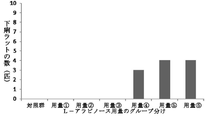
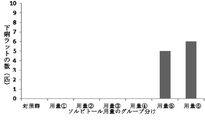
図1〜図6は、実験期間中、糖アルコールおよび機能性糖に対する200gのラットの下痢の状況の統計であり、各種の糖アルコールまたは機能性糖に対しては、実験用ラットは理論的に糖アルコールまたは機能性糖の最大許容量閾値があるため、飼育過程で以下の3つのケースが発生する可能性があり、
(1)、実験期間中に下痢の状況が発生しなかった。
(2)、最初に下痢が発生し、後では下痢の状況がなくなるまで改善した(ラットが耐性を発生した)。
(3)、実験期間中に下痢の状況がずっと存在した。
1 to 6 are statistics of the diarrhea situation of 200 g of rats against sugar alcohols and functional sugars during the experimental period, and for various sugar alcohols or functional sugars, the experimental rats are theoretically Due to the maximum permissible threshold for sugar alcohols or functional sugars, the following three cases may occur during the breeding process:
(1) No diarrhea occurred during the experiment.
(2) Diarrhea first developed and later improved until the diarrhea condition disappeared (rats developed tolerance).
(3) The diarrhea situation was present throughout the experiment.
従って、最大許容量は、以上に準じて分けられる。ケース(1)、ケース(2)は許容範囲内であると見なされ、ケース(3)は許容範囲内ではないと見なされ、ケース(2)の最大用量は、該糖アルコールまたは機能性糖の最大許容量と見なされる。 Therefore, the maximum permissible amount is divided according to the above. Cases (1) and (2) are considered to be acceptable, case (3) is considered not to be acceptable, and the maximum dose of case (2) is of the sugar alcohol or functional sugar. Considered maximum allowance.
図1及び図2に示すように、ラットでキシリトール許容量実験を行う場合、最大糖許容量は用量(3)であり、すなわち、ラットの胃内投与量は0.71g/dであり、実験動物と人の薬物用の量換算式により換算したところ、キシリトールに対する人体の最大許容量は0.71*56.0=40g/dであった。従来から知られるように人体のキシリトール1日摂取量が好ましくは50g以下であることに対して、本発明の方法により得られるキシリトールに対する人体の最大許容量40gはより具体的で正確になり、且つ根拠があった。 As shown in FIGS. 1 and 2, when performing a xylitol tolerance experiment in rats, the maximum sugar tolerance is dose (3), that is, the intragastric dose in rats is 0.71 g / d, and the experiment. When converted by the amount conversion formula for animal and human drugs, the maximum permissible amount of xylitol in the human body was 0.71 * 56.0 = 40 g / d. As is conventionally known, the daily intake of xylitol in the human body is preferably 50 g or less, whereas the maximum permissible amount of 40 g in the human body for xylitol obtained by the method of the present invention is more specific and accurate, and There was a basis.
図3及び図4に示すように、ラットでL−アラビノース許容量実験を行う場合、最大糖許容量は用量(3)であり、すなわち、ラットの胃内投与量は1.61g/dであり、実験動物と人の薬物用量の換算式により換算したところ、キシリトールに対する人体の最大許容量は1.61*56.0=90g/dであった。 As shown in FIGS. 3 and 4, when conducting an L-arabinose tolerance experiment in rats, the maximum sugar tolerance is dose (3), that is, the intragastric dose in rats is 1.61 g / d. The maximum permissible amount of xylitol in the human body was 1.61 * 56.0 = 90 g / d when converted by the conversion formula for the drug doses of experimental animals and humans.
図5及び図6に示すように、ラットでソルビトール許容量実験を行う場合、最大糖許容量は用量(4)であり、すなわち、ラットの胃内投与量は0.36g/dであり、実験動物と人の薬物用量の換算式により換算したところ、キシリトールに対する人体の最大許容量は0.36*56.0=20g/dであった。 As shown in FIGS. 5 and 6, when performing a sorbitol allowance experiment in rats, the maximum sugar allowance is the dose (4), that is, the intragastric dose of the rat is 0.36 g / d, and the experiment. When converted by the conversion formula of the drug dose between animals and humans, the maximum permissible amount of the human body for xylitol was 0.36 * 56.0 = 20 g / d.
以上の内容は本発明の好ましい実施例に過ぎず、本発明を限定するものではなく、本発明の精神と原則を逸脱せずに行われた修正、同等置換および改良等は、いずれも本発明の保護範囲内に含まれるべきである。 The above contents are merely preferable examples of the present invention, do not limit the present invention, and any modifications, equivalent substitutions, improvements, etc. made without departing from the spirit and principles of the present invention are the present invention. Should be included within the scope of protection of.
Claims (1)
200gのラットを実験動物対象として、各群にそれぞれ10匹の番号付きのラットがあるように、6つの実験群と1つの対照群に分け、6つの実験群のラットに、異なる用量のキシリトールを毎日胃内投与し、各群内の10匹のラットの胃内投与量が同じであり、対照群の10匹のラットに、同じ用量の蔗糖または生理食塩水を毎日胃内投与し、すべての実験用ラットに、十分な飲用水および通常の飼料を毎日供給し、各群のラットの肛門で排泄物があるかどうかを毎晩観察し、排泄物があると該ラットが下痢をしたことを示し、下痢が発生したラットの数と番号を統計するステップ1と、
ステップ1を14日間継続するステップ2と、
最終日(14日目)のラットの下痢の状況に基づいて、各群のラットの腸切片図およびジアミンオキシダーゼ含有量の結果と組み合わせて、該群内のすべてのラットが下痢をしない最大用量群からキシリトールに対する該群ラットの最大許容量Nを得るステップ3と、
実験動物と人の薬物用量の換算式である70kgの人体の用量R=200gのラットの最大許容量N×K(ここで、Kは、70kgの人と200gのラットの間の換算係数であり、56.0であり、キシリトールに対するラットの最大許容量Nと該キシリトールに対する人体の許容量Rの単位は両方ともにg/dである)により、キシリトールに対する200gのラットの最大許容量Nを変換して該キシリトールに対する人体の許容量Rを得るステップ4と、または、
ステップ1のキシリトールをL−アラビノースで置き換え、前記ステップ1〜ステップ4を繰り返して、L−アラビノースに対する70kgの人体の許容量を得るか、または、
ステップ1のキシリトールをソルビトールで置き換え、ステップ1〜ステップ4を繰り返して、ソルビトールに対する70kgの人体の許容量を得るステップ5とを含む、
ことを特徴とする糖アルコールおよび機能性糖に対する人体の許容量の算出方法。 A method for calculating the human body's tolerance for sugar alcohols and functional sugars.
We divided 200 g of rats into 6 experimental groups and 1 control group so that each group had 10 numbered rats, and 6 experimental group rats were given different doses of xylitol. Administered intragastrically daily, 10 rats in each group had the same intragastric dose, and 10 rats in the control group received the same dose of sucrose or physiological saline daily intragastrically and all. The experimental rats were fed daily with sufficient drinking water and regular feed, and nightly observations were made in the anus of each group of rats for excretion, indicating that the rats had diarrhea. Step 1 to stat the number and number of rats with diarrhea,
Step 2 which continues step 1 for 14 days and
Maximum dose group in which all rats in the group do not have diarrhea, combined with intestinal section diagrams and diamine oxidase content results of the rats in each group, based on the condition of diarrhea in the rats on the last day (day 14). To obtain the maximum permissible amount N of the group rats for xylitol from step 3 and
Maximum permissible amount N × K of 70 kg human body dose R = 200 g rat, which is a conversion formula for experimental animal and human drug dose (where K is a conversion coefficient between 70 kg human and 200 g rat). , 56.0, and the unit of the maximum rat allowance N for xylitol and the human allowance R for the xylitol are both g / d), so that the maximum allowance N for 200 g of rats for xylitol is converted. In step 4 to obtain the human body's permissible amount R for the xylitol, or
The xylitol of step 1 is replaced with L-arabinose, and steps 1 to 4 are repeated to obtain a human body allowance of 70 kg for L-arabinose, or
Including step 5 in which the xylitol of step 1 is replaced with sorbitol and steps 1 to 4 are repeated to obtain a human body allowance of 70 kg for sorbitol.
A method for calculating the allowance of the human body for sugar alcohols and functional sugars.
Applications Claiming Priority (3)
| Application Number | Priority Date | Filing Date | Title |
|---|---|---|---|
| CN201811422592.0 | 2018-11-23 | ||
| CN201811422592.0A CN109493974A (en) | 2018-11-23 | 2018-11-23 | A method of human body is calculated to sugar alcohol and functional sugar dosis tolerata |
| PCT/CN2019/120304 WO2020103941A1 (en) | 2018-11-23 | 2019-11-22 | Method for calculating tolerance dose of human body to sugar alcohol and functional sugar |
Publications (2)
| Publication Number | Publication Date |
|---|---|
| JP2021514067A JP2021514067A (en) | 2021-06-03 |
| JP6889812B2 true JP6889812B2 (en) | 2021-06-18 |
Family
ID=65696685
Family Applications (1)
| Application Number | Title | Priority Date | Filing Date |
|---|---|---|---|
| JP2020558452A Active JP6889812B2 (en) | 2018-11-23 | 2019-11-22 | How to calculate the human body's tolerance for sugar alcohols and functional sugars |
Country Status (5)
| Country | Link |
|---|---|
| US (1) | US20210379204A1 (en) |
| EP (1) | EP3799072B1 (en) |
| JP (1) | JP6889812B2 (en) |
| CN (1) | CN109493974A (en) |
| WO (1) | WO2020103941A1 (en) |
Families Citing this family (3)
| Publication number | Priority date | Publication date | Assignee | Title |
|---|---|---|---|---|
| CN109493974A (en) * | 2018-11-23 | 2019-03-19 | 浙江华康药业股份有限公司 | A method of human body is calculated to sugar alcohol and functional sugar dosis tolerata |
| CN110619958A (en) * | 2019-10-21 | 2019-12-27 | 浙江华康药业股份有限公司 | Method for calculating tolerance of human body to sugar alcohol and functional sugar |
| CN112568438B (en) | 2020-12-07 | 2022-07-05 | 浙江华康药业股份有限公司 | Sweet taste liquid for preventing and relieving sugar alcohol intolerance of intestinal tract and preparation method and application thereof |
Family Cites Families (11)
| Publication number | Priority date | Publication date | Assignee | Title |
|---|---|---|---|---|
| KR100239879B1 (en) * | 1997-11-05 | 2000-02-01 | 김상조 | Herbal medicine for preventing and treating liver cancer |
| JP2004049093A (en) * | 2002-07-18 | 2004-02-19 | Meiji Milk Prod Co Ltd | Food composition and pharmaceuticals with increased intestinal butyric acid |
| US20040067255A1 (en) * | 2002-10-07 | 2004-04-08 | Chaplin David J. | Method of administering split doses of a vascular targeting agent |
| CN1651018B (en) * | 2004-12-01 | 2010-08-25 | 贵州益佰制药股份有限公司 | Preparation method of medicinal composition for treating upper respiration duct infection |
| US20070060639A1 (en) * | 2005-09-09 | 2007-03-15 | University Of Kentucky | Compositions and methods for intranasal delivery of tricyclic cannabinoids |
| JP4894044B2 (en) * | 2007-03-28 | 2012-03-07 | 長崎県公立大学法人 | Intestinal environment improving composition, sweetening composition and functional food |
| CN101356972B (en) * | 2007-07-30 | 2013-06-12 | 石药集团中奇制药技术(石家庄)有限公司 | Anti-fatigue anti-hypoxia sports health food |
| WO2012016384A1 (en) * | 2010-08-05 | 2012-02-09 | Xie Chen | Anti-fatigue composition of plant material and preparation method, use and products thereof |
| CN103484524A (en) * | 2013-09-26 | 2014-01-01 | 邱思锋 | Pharmacodynamic and toxicologic test methods for honeysuckle and aster immunoenhancer |
| CN109493974A (en) * | 2018-11-23 | 2019-03-19 | 浙江华康药业股份有限公司 | A method of human body is calculated to sugar alcohol and functional sugar dosis tolerata |
| CN110619958A (en) * | 2019-10-21 | 2019-12-27 | 浙江华康药业股份有限公司 | Method for calculating tolerance of human body to sugar alcohol and functional sugar |
-
2018
- 2018-11-23 CN CN201811422592.0A patent/CN109493974A/en active Pending
-
2019
- 2019-11-22 EP EP19886727.7A patent/EP3799072B1/en active Active
- 2019-11-22 WO PCT/CN2019/120304 patent/WO2020103941A1/en not_active Ceased
- 2019-11-22 JP JP2020558452A patent/JP6889812B2/en active Active
- 2019-11-22 US US17/286,006 patent/US20210379204A1/en not_active Abandoned
Also Published As
| Publication number | Publication date |
|---|---|
| JP2021514067A (en) | 2021-06-03 |
| EP3799072A1 (en) | 2021-03-31 |
| CN109493974A (en) | 2019-03-19 |
| EP3799072A4 (en) | 2021-10-13 |
| WO2020103941A1 (en) | 2020-05-28 |
| EP3799072B1 (en) | 2022-05-04 |
| US20210379204A1 (en) | 2021-12-09 |
Similar Documents
| Publication | Publication Date | Title |
|---|---|---|
| JP2021514067A (en) | How to calculate the human body's tolerance for sugar alcohols and functional sugars | |
| JP2021504420A5 (en) | ||
| Yue et al. | The role of probiotics, prebiotics, synbiotics, and postbiotics in livestock and poultry gut health: A review | |
| RU2007110813A (en) | FOOD COMPOSITION, INCLUDING IMMUNOGLOBULINS AND OLIGOSACCHARIDES | |
| JP2010532347A5 (en) | ||
| AU2018260616B2 (en) | Treating and preventing kidney damage | |
| JP2020178685A (en) | Composition for preventing, treating or suppressing intestinal disorders | |
| CN108289904B (en) | Beneficial effects of cloverleaf on gut flora and animal health | |
| CN106924229B (en) | Application of Phloretin in Preparation of Medicine for Treating Chicken Necrotic Enteritis | |
| CN108836956B (en) | Application of licochalcone A in preparation of medicine for treating necrotic enteritis of chicken | |
| EP2296677A1 (en) | Pro biotic foodstuff and/or drinking water adjunct and use thereof | |
| CN110237138A (en) | Application of Xianglian Pills extract in the preparation of medicines for treating intestinal flora disorders | |
| CN109758483A (en) | Preparation method of mouse chronic atrophic gastritis model | |
| EP1357917A2 (en) | Use of carbohydrates for eliminating intestinal infections in animals | |
| CN110619958A (en) | Method for calculating tolerance of human body to sugar alcohol and functional sugar | |
| AT506877B1 (en) | PROBIOTIC FEED AND / OR DRINKING WATER SUPPLEMENT AND USE | |
| KR20140065125A (en) | Composition for inhibiting activity of amylase containing chitooligosaccharide | |
| CN1256350C (en) | A water- and oil-soluble O-chitosan derivative and its preparation and application | |
| CN1857399A (en) | Composition for preventing and treating stomatosis and its preparing method | |
| CN103432234A (en) | Traditional Chinese medicine composition used for preventing and treating bird flu and newcastle disease of poultry, and preparation method thereof | |
| JP2005060327A (en) | Immunostimulating composition | |
| CN103006919A (en) | Oral liquid for treating toothache and preparation method thereof | |
| CN101468030A (en) | Soluble powder for treating digestive system infection of livestock and poultry | |
| CN102247390A (en) | Medicine for treating bacterial air sacculitis in livestock and preparation method thereof | |
| US20170014443A1 (en) | Compositions and methods for treating gastrointestinal disorders for humans and animal husbandry |
Legal Events
| Date | Code | Title | Description |
|---|---|---|---|
| A621 | Written request for application examination |
Free format text: JAPANESE INTERMEDIATE CODE: A621 Effective date: 20201015 |
|
| A871 | Explanation of circumstances concerning accelerated examination |
Free format text: JAPANESE INTERMEDIATE CODE: A871 Effective date: 20201228 |
|
| A975 | Report on accelerated examination |
Free format text: JAPANESE INTERMEDIATE CODE: A971005 Effective date: 20210331 |
|
| TRDD | Decision of grant or rejection written | ||
| A01 | Written decision to grant a patent or to grant a registration (utility model) |
Free format text: JAPANESE INTERMEDIATE CODE: A01 Effective date: 20210427 |
|
| A61 | First payment of annual fees (during grant procedure) |
Free format text: JAPANESE INTERMEDIATE CODE: A61 Effective date: 20210521 |
|
| R150 | Certificate of patent or registration of utility model |
Ref document number: 6889812 Country of ref document: JP Free format text: JAPANESE INTERMEDIATE CODE: R150 |
|
| R250 | Receipt of annual fees |
Free format text: JAPANESE INTERMEDIATE CODE: R250 |
|
| R250 | Receipt of annual fees |
Free format text: JAPANESE INTERMEDIATE CODE: R250 |