JP6849552B2 - Coffee food - Google Patents
Coffee food Download PDFInfo
- Publication number
- JP6849552B2 JP6849552B2 JP2017147209A JP2017147209A JP6849552B2 JP 6849552 B2 JP6849552 B2 JP 6849552B2 JP 2017147209 A JP2017147209 A JP 2017147209A JP 2017147209 A JP2017147209 A JP 2017147209A JP 6849552 B2 JP6849552 B2 JP 6849552B2
- Authority
- JP
- Japan
- Prior art keywords
- coffee
- oil
- food
- beans
- product
- Prior art date
- Legal status (The legal status is an assumption and is not a legal conclusion. Google has not performed a legal analysis and makes no representation as to the accuracy of the status listed.)
- Active
Links
Images


Landscapes
- Confectionery (AREA)
- Tea And Coffee (AREA)
Description
本発明は、手軽にコーヒーの香りや味を楽しむことのできる、コーヒーを用いた食品に関するものである。 The present invention relates to a coffee-based food in which the aroma and taste of coffee can be easily enjoyed.
一般に、コーヒーは飲料として多くのユーザーに飲用されている。例えば、ドリップコーヒーの場合、コーヒーの生豆を焙煎したものを粉砕することで得られたコーヒー豆粉砕物に、湯を加水することで、抽出を行う。そのため、コーヒーを楽しむためには、コーヒーを抽出するための設備や、抽出のための時間がかかるのが通常である。しかしながら、いつでも手軽にコーヒーの味や香りを楽しむことに対する消費者のニーズは高い。
そこで、手軽に楽しむための製品として、缶入りのコーヒー等が販売されている。缶やペットボトルに入ったコーヒーであれば、手軽に持ち運ぶことができるという利点がある。しかしながら、缶入り等のコーヒー飲料は、一般に形状が大きく、鞄等に入れて持ち運ぶことはできるが、衣服のポケット等に入れて気軽に携帯できるといったものではない。
In general, coffee is consumed by many users as a beverage. For example, in the case of drip coffee, extraction is performed by adding hot water to a crushed coffee bean obtained by crushing roasted green coffee beans. Therefore, in order to enjoy coffee, it usually takes time to extract coffee and equipment for extracting coffee. However, there is a high consumer need to easily enjoy the taste and aroma of coffee at any time.
Therefore, canned coffee and the like are sold as products for easy enjoyment. Coffee in cans or PET bottles has the advantage of being easily portable. However, coffee beverages such as cans are generally large in shape and can be carried in a bag or the like, but they are not easily carried in a pocket of clothes or the like.
また、コーヒーを気軽に楽しむことのできる食品を製造するとしても、コーヒー飲料の抽出液は、香気成分の揮散が早く、味も劣化しやすいという問題がある。
固体物の有効成分の持続性を高める方法として、脂質粉状体及び溶融油脂を用いたコーティング粉末の製造方法が知られている(特許文献1を参照)。これは、常温で固体状の芯物質に、融点40℃以上の脂質粉状体を付着させて、次いで融点40℃以上の溶融油脂を添加して被覆するものである。
しかしながら、上記特許文献1に開示されたコーティング粉末の製造方法は、あくまでも食品へのコーティングを施すための粉末に関する技術であり、コーヒーを用いた食品の味や香りの保存性を高めるものではない。また、上記特許文献1では、溶融油脂に香味物質を含有せしめる方法が開示されているが、コーヒー食品の製造においては、溶融油脂に香味物質を含有せしめることは、コーヒー本来の香気成分が阻害されてしまいかねず、適当ではない。
Further, even if a food product that allows coffee to be enjoyed easily is produced, there is a problem that the extract of a coffee beverage has a problem that the aroma component volatilizes quickly and the taste is easily deteriorated.
As a method for enhancing the sustainability of the active ingredient of a solid substance, a method for producing a coating powder using a lipid powder or molten fat is known (see Patent Document 1). In this method, a lipid powder having a melting point of 40 ° C. or higher is attached to a core substance that is solid at room temperature, and then molten oil / fat having a melting point of 40 ° C. or higher is added to coat the core material.
However, the method for producing a coating powder disclosed in
かかる状況に鑑みて、本発明は、香気成分の保持性及び口どけを高めつつ、手軽にコーヒーの味や香りを楽しむことができるコーヒー食品を提供することを目的とする。 In view of such a situation, an object of the present invention is to provide a coffee food product in which the taste and aroma of coffee can be easily enjoyed while enhancing the retention and melting of aroma components.
本発明者らは、鋭意検討した結果、コーヒーの香り及び味を含んだ物質と硬化油を混合し、固形化することで、香気成分や味覚成分の保持性が高められるとの知見を得た。 As a result of diligent studies, the present inventors have found that the retention of aroma components and taste components can be enhanced by mixing and solidifying a substance containing the aroma and taste of coffee with hydrogenated oil. ..
すなわち、本発明のコーヒー食品は、コーヒー豆の焙煎後の香気成分を含むコーヒー由来の微粉砕物と、硬化油とが、混練され固形化されたことにより、コーヒーの香りの保存性が高められる。
香気成分を含むコーヒー由来の微粉砕物と硬化油が混練されることにより、微粉砕物が硬化油でコーティングされ、コーヒーの香気成分を物質内に閉じ込めることが可能である。また、混練された後、固形化されることにより、より安定して、香気成分を物質内に閉じ込めることができ、香りの保存性が高められる。そして、コーヒー食品を食べると、口の中で溶けることにより、硬化油によるコーティングが剥がれ、物質中の香気成分が揮散し、味覚成分が放出されるのである。本発明のコーヒー食品は、固形化する際に、成型用の型を用いて、板状、ブロック状又は粒状等、あらゆる形に成型することができる。
That is, in the coffee food of the present invention, the coffee-derived finely pulverized product containing the aroma component after roasting coffee beans and the hydrogenated oil are kneaded and solidified to enhance the preservation of the coffee scent. Be done.
By kneading the finely pulverized coffee-derived product containing the aroma component and the hydrogenated oil, the finely pulverized product is coated with the hydrogenated oil, and the aroma component of coffee can be trapped in the substance. In addition, after kneading, the substance is solidified, so that the aroma component can be more stably trapped in the substance, and the preservation of the aroma is enhanced. When coffee food is eaten, it melts in the mouth, the coating with hydrogenated oil is peeled off, the aroma component in the substance is volatilized, and the taste component is released. When the coffee food of the present invention is solidified, it can be molded into any shape such as a plate shape, a block shape or a granular shape by using a molding mold.
本発明のコーヒー食品は、微粉砕物と硬化油とが混練される際に、コーヒーオイルを更に加えて混練させることが好ましい。コーヒーオイルには、豊かな香気成分が含まれているからである。また、コーヒーオイルが混練されることにより、コーヒー食品を食べる際に、口どけが良くなるという効果がある。 In the coffee food of the present invention, when the finely ground product and the hydrogenated oil are kneaded, it is preferable that the coffee oil is further added and kneaded. This is because coffee oil contains a rich aroma component. In addition, the kneading of coffee oil has the effect of improving the melting of the mouth when eating coffee foods.
本発明のコーヒー食品は、コーヒーオイルの含有量が調製され、口どけ度合い、又は、カフェイン含有量を調整することができる。コーヒーオイルを含有させることで、常温で溶けない程度で、口どけ度合いのよいコーヒー食品とすることができる。また、脱カフェイン処理が施されたコーヒー豆を用いて、コーヒーオイルを搾油することで、カフェイン含有量を低減あるいはカフェインレスにすることができ、例えば、妊婦などカフェイン摂取を避けたい消費者のニーズに合致したコーヒー食品を提供することができる。 In the coffee food of the present invention, the content of coffee oil is prepared, and the degree of melting in the mouth or the content of caffeine can be adjusted. By containing coffee oil, it is possible to obtain a coffee food having a good degree of melting in the mouth without melting at room temperature. In addition, by squeezing coffee oil using coffee beans that have been decaffeinated, the caffeine content can be reduced or caffeine-less. For example, pregnant women want to avoid caffeine intake. It is possible to provide coffee foods that meet the needs of consumers.
本発明のコーヒー食品において、コーヒーオイルの含有量は、10%以下の範囲で調製することが好ましい。上記範囲の含有量とされることで、常温で溶けず、しかも口に入れた際、コーヒーの風味や口どけの優れたコーヒー食品とすることができる。10%より含有させると常温で固形状態を維持することは困難である。また、コーヒーオイルの含有量が1%以上5%以下、特に2%付近の場合には、コーヒー食品の保形性、なめらかな口どけ、コーヒー風味、及び、後味の雑味に関する4つの評価が何れも高い優れたコーヒー食品とすることができる。 In the coffee food of the present invention, the content of coffee oil is preferably adjusted in the range of 10% or less. When the content is in the above range, it does not melt at room temperature, and when it is put in the mouth, it can be a coffee food having an excellent coffee flavor and melting in the mouth. If it is contained at 10% or more, it is difficult to maintain a solid state at room temperature. In addition, when the content of coffee oil is 1% or more and 5% or less, especially around 2%, four evaluations are made regarding the shape retention of coffee foods, smooth melting in the mouth, coffee flavor, and miscellaneous aftertaste. Both can be high and excellent coffee foods.
本発明のコーヒー食品において、硬化油は、無香料、かつ、融点が30℃以上の植物性油脂であることが好ましい。植物性の油脂は、香気成分が少なく、コーヒー本来の味を充分に生かすことができるからである。また、常温で溶けないようにすべく、融点が30℃以上の植物性油脂を用いる。 In the coffee food of the present invention, the hydrogenated oil is preferably a vegetable oil having a melting point of 30 ° C. or higher and being unscented. This is because vegetable fats and oils have a small amount of aroma components and can fully utilize the original taste of coffee. In addition, vegetable oils and fats having a melting point of 30 ° C. or higher are used so that they do not melt at room temperature.
本発明のコーヒー食品において、硬化油は、食品全体の20〜30重量%の範囲で含有される。また、コーヒー由来の微粉砕物の1〜3倍の硬化油を用いる。 In the coffee food of the present invention, the hydrogenated oil is contained in the range of 20 to 30% by weight of the whole food. Also, use 1 to 3 times as much hydrogenated oil as the finely ground coffee-derived product.
本発明のコーヒー食品は、糖類と、粉乳と、乳化剤とが、更に含まれたことが好ましい。糖類が含まれることにより、コーヒー食品を、菓子としても楽しむことができるからである。また、粉乳が含まれることで、クリーミーな味わいを実現することができる。粉乳の種類としては、脱脂粉乳、全脂粉乳又はクリーム粉乳を好適に用いることができる。乳化剤が含まれることにより、混合物の成分を均一にすることができる。乳化剤としては、レシチンが好適に用いられる。 The coffee food of the present invention preferably further contains sugars, milk powder, and an emulsifier. This is because coffee foods can be enjoyed as confectionery because they contain sugars. In addition, the inclusion of milk powder makes it possible to achieve a creamy taste. As the type of milk powder, skim milk powder, full-fat milk powder or cream milk powder can be preferably used. By including the emulsifier, the components of the mixture can be made uniform. As the emulsifier, lecithin is preferably used.
本発明のコーヒー食品は、上記混練され固形化された食品形状の表面上に、糖類がコーティングされたことでもよい。糖類でコーティングすることにより、手で把持した際に溶けにくく、携帯性に優れた食品とすることが可能である。 The coffee food of the present invention may have sugars coated on the surface of the kneaded and solidified food shape. By coating with sugar, it is difficult to dissolve when grasped by hand, and it is possible to make a food with excellent portability.
本発明のコーヒー食品の製造方法は、下記ステップを備える。
1)コーヒー焙煎豆を粉砕する粉砕ステップ
2)粉砕された微粉砕物と硬化油とを混練する混練ステップ
3)混練し得られた液状物を成型して固形化する固形化ステップ
The method for producing coffee foods of the present invention includes the following steps.
1) Crushing step of crushing roasted coffee beans 2) Kneading step of kneading crushed finely crushed product and hydrogenated oil 3) Solidification step of molding and solidifying the liquid material obtained by kneading
ここで、液状物とは、液体物だけではなく、液体物と固体物の混合物を広く含む意味で用いており、ペースト状物、半固体状物などを含む。 Here, the liquid substance is used in the sense of broadly including not only a liquid substance but also a mixture of a liquid substance and a solid substance, and includes a paste-like substance, a semi-solid substance, and the like.
本発明のコーヒー食品の製造方法において、粉砕ステップでは、コーヒー焙煎豆を粒径100〜1000μmの範囲に粉砕し、混練ステップでは、上記ステップにより得た粉砕物と硬化油とを混練し、コーヒー焙煎豆を粒径10〜100μmの範囲に微粉砕することが好ましい。
コーヒー焙煎豆を微粉砕することにより、コーヒー食品を口に入れた際の滑らかな口どけが実現される。
In the method for producing coffee food of the present invention, in the crushing step, roasted coffee beans are crushed to a particle size range of 100 to 1000 μm, and in the kneading step, the crushed product obtained in the above step and the cured oil are kneaded to make coffee. It is preferable to finely grind the roasted beans into a particle size range of 10 to 100 μm.
By finely pulverizing the roasted coffee beans, a smooth melting in the mouth when the coffee food is put into the mouth is realized.
本発明のコーヒー食品の製造方法における混練ステップでは、1%以上5%以下コーヒーオイルを更に加えて混練させることが好ましい。コーヒーオイルの含有量が1%以上5%以下、特に2%付近の場合には、コーヒー食品の保形性、なめらかな口どけ、コーヒー風味、及び、後味の雑味に関する4つの評価が何れも高い優れたコーヒー食品を作製できる。 In the kneading step in the method for producing coffee foods of the present invention, it is preferable to further add 1% or more and 5% or less of coffee oil for kneading. When the coffee oil content is 1% or more and 5% or less, especially around 2%, all four evaluations regarding the shape retention, smooth mouthfeel, coffee flavor, and aftertaste miscellaneous taste of coffee foods are evaluated. High and excellent coffee food can be produced.
本発明のコーヒー食品によれば、いつでもどこでも手軽にコーヒーの味や香りを楽しむことができるといった効果がある。 According to the coffee food of the present invention, there is an effect that the taste and aroma of coffee can be easily enjoyed anytime and anywhere.
以下、本発明の実施形態の一例を、図面を参照しながら詳細に説明していく。なお、本発明の範囲は、以下の実施例や図示例に限定されるものではなく、幾多の変更及び変形が可能である。 Hereinafter, an example of the embodiment of the present invention will be described in detail with reference to the drawings. The scope of the present invention is not limited to the following examples and illustrated examples, and many modifications and modifications can be made.
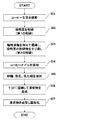
図1は、実施例1のコーヒー食品の製造フロー図を示している。図1に示すように、まず、コーヒー生豆を焙煎する(S01)。次に、焙煎されたコーヒー豆を粉砕する(第1の粉砕:S02)。コーヒー豆粉砕物に、植物油脂を加えて混練し、焙煎豆の粉砕物をロールミルですり潰す(第2の粉砕:S03)。これにより、コーヒー豆粉砕物は、さらに微粉砕される。次に、コーヒーオイルを添加する(S04)。砂糖、粉乳、乳化剤を添加する(S05)。なお、上記とは異なり、第1の粉砕がなされたコーヒー豆粉砕物に、植物油脂、コーヒーオイル、砂糖、粉乳及び乳化剤を添加した上で、第2の粉砕を行ってもよい。
その後、十分に混練して液状物を生成する(S06)。生成された液状物を金型に流し込み、冷却して成型し固形化する(S07)。
FIG. 1 shows a production flow chart of the coffee food of Example 1. As shown in FIG. 1, first, green coffee beans are roasted (S01). Next, the roasted coffee beans are crushed (first crushing: S02). Vegetable oil and fat are added to the crushed coffee beans and kneaded, and the crushed roasted beans are mashed with a roll mill (second crushing: S03). As a result, the ground coffee beans are further finely ground. Next, coffee oil is added (S04). Add sugar, milk powder and emulsifier (S05). In addition, unlike the above, vegetable oil, coffee oil, sugar, powdered milk and an emulsifier may be added to the first crushed coffee bean crushed product, and then the second crushing may be performed.
Then, it is sufficiently kneaded to produce a liquid substance (S06). The generated liquid material is poured into a mold, cooled, molded, and solidified (S07).
図2は、コーヒーオイルの製造説明図を示している。図2に示すように、まず、コーヒー生豆を焙煎する。焙煎されたコーヒー豆を圧搾して、コーヒーオイルを搾油する。搾油によって発生した残渣物は、搾油残渣となる。なお、搾油に用いる焙煎豆は、コーヒー豆粉砕物の作製に用いるものと同一のものであってもよい。 FIG. 2 shows a production explanatory diagram of coffee oil. As shown in FIG. 2, first, green coffee beans are roasted. Squeeze the roasted coffee beans to squeeze the coffee oil. The residue generated by oil extraction becomes the oil extraction residue. The roasted beans used for oil extraction may be the same as those used for producing crushed coffee beans.
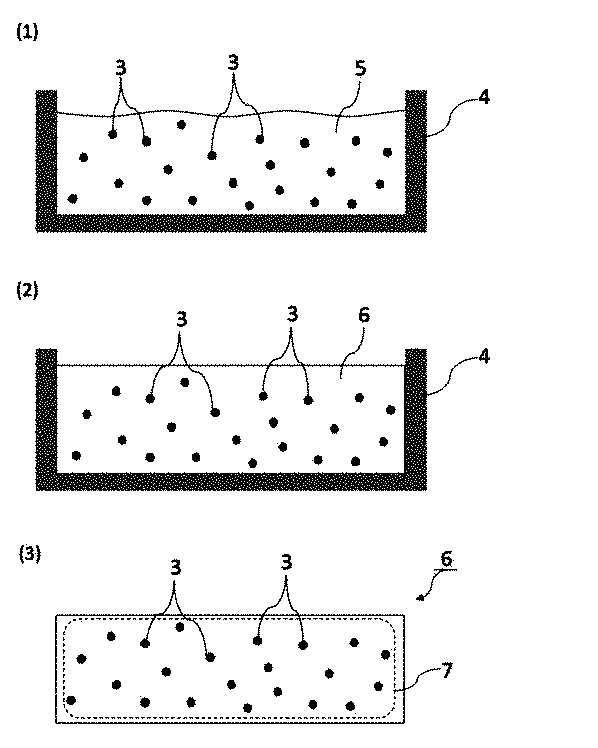
図4は、実施例1のコーヒー食品の成型イメージ図であり、(1)は金型に流し込み冷却前の状態、(2)は金型に流し込み冷却後の状態、(3)は金型から取り出した状態を示している。なお、図4(1)及び(2)に示す金型4はいずれも断面形状を示しており、成型後のコーヒー食品は板状のものとなる。
図4(1)に示すように、金型4には、ペースト状物5が流し込まれている。ペースト状物5は、微粉砕されたコーヒー豆粉砕物、植物油脂、コーヒーオイル、砂糖、粉乳及び乳化剤が混練されたものである。ペースト状物5を金型4に流し込み、冷凍機により、冷却を行う。なお、ペースト状物5には、多くの香気成分3が含有されている。
図4(2)に示すように、冷却後の状態においては、図4(1)に示したペースト状物5は、金型4により成型され、固形化されたコーヒー食品6となっている。図4(3)に示すコーヒー食品6は、金型から取り出した状態を示している。コーヒー食品6は、板状であるから、手で容易に割って食べることが可能であり、いつでもコーヒーの味や香りを楽しむことができる。また、本実施例では、砂糖が混練されているが、他の甘味料を用いたり、或は、甘味料を含まない無糖の食品としてもよい。
コーヒー食品6には、多くの香気成分3が含有された状態となっており、破線7で示すように、香気成分3がコーヒー食品6の内部に閉じ込められ、外部へ放出されにくい構造となっている。
FIG. 4 is a molding image diagram of the coffee food of Example 1, (1) is a state before pouring into a mold and cooling, (2) is a state after pouring into a mold and cooling, and (3) is taken out from the mold. Shows the state. The mold 4 shown in FIGS. 4 (1) and 4 (2) has a cross-sectional shape, and the coffee food after molding has a plate shape.
As shown in FIG. 4 (1), the paste-
As shown in FIG. 4 (2), in the state after cooling, the paste-
The
ここで、香気成分3がコーヒー食品6に閉じ込められる構造について、図3を参照しながら説明する。図3は、コーヒー食品の粒子のイメージ図を示している。図3に示すように、粒子1は、コーヒー豆粉砕物2、コーヒーオイル3及び植物性油脂4から成る。コーヒー豆粉砕物2は、多孔質であり、多数の孔2aが形成されている。そして、コーヒー豆粉砕物2がコーヒーオイル3と混合されたことにより、内部にコーヒーオイル3が含まれた状態となっている。また、コーヒー豆粉砕物2とコーヒーオイル3は、あたかも植物性油脂4によってコーティングされたような状態となっており、コーヒーオイル3やコーヒー豆粉砕物2に含まれる香気成分の揮散や、コーヒー豆粉砕物2に含まれる味覚成分の放出を防ぐ構造となっている。
コーヒー豆粉砕物2は、脱カフェイン処理が施されたコーヒー豆を用いて作製されたものでもよく、健康に配慮したコーヒー食品とすることができる。
コーヒー食品を食べると、口の中で溶けることにより、植物性油脂4によるコーティングが剥がれ、コーヒーオイル3及びコーヒー豆粉砕物2中の香気成分が揮散し、コーヒー豆粉砕物2中の味覚成分が放出される。これにより、コーヒーの味や香りを充分に楽しむことができる。
Here, the structure in which the
The crushed
When coffee food is eaten, the coating of vegetable oil 4 is peeled off by melting in the mouth, the aroma components in the
(コーヒー食品の官能評価試験)
原料に対するコーヒーオイルの配合割合を変化させた際のコーヒー食品の品質について、官能評価試験により定量的に評価した。
官能評価試験用のサンプルは、図1に示す工程に基づき作製した。まず、深炒りに焙煎したコロンビア産アラビカ種コーヒー豆を粉砕し、このコーヒー豆粉砕物15gに植物油脂15g〜30gを加えて混練し、さらなる粉砕を実施した。そして、コーヒーオイルを、植物油脂の量とコーヒーオイルの量が合計で30gになるように調整し添加して、さらに砂糖40g、粉乳15g、乳化剤0.3gを加えて室温で十分に混練した。この混成物を成型型に流し込み、5℃で24時間冷却し固形化させてサンプルを作製した。官能評価試験用サンプルとして、コーヒーオイルの添加量が0g、1g、2g、5g、10g、11g、15gと異なる7種類、すなわち、コーヒーオイルの含有量が0%、1%、2%、5%、10%、11%、15%と異なる7種類を作製した。
官能評価試験はQDA(Quantitative Descriptive Analysis)法と呼ばれる手法を用いた。QDA法とは、まずパネルが感じる味覚特徴を具体的な言葉として表現し、パネル間で合意が得られた味覚特徴についてその強度を数値化していく官能評価の一手法である。
官能評価のパネルは、コーヒーの製造・開発業務に1年以上従事し、かつ、一般的な食品の官能評価の経験が豊富な者を集め、さらにそこから基本5味(甘味、酸味、塩味、苦味及びうま味の識別テスト、焙煎コーヒー抽出液の産地や焙煎度合の判別テストにより選定した。最終的に13名(男性7名、女性6名)がパネルに選定された。
(Sensory evaluation test for coffee food)
The quality of coffee food when the mixing ratio of coffee oil to the raw material was changed was quantitatively evaluated by a sensory evaluation test.
The sample for the sensory evaluation test was prepared based on the process shown in FIG. First, deep roasted Colombian Arabica coffee beans were crushed, and 15 g to 30 g of vegetable oil was added to 15 g of the crushed coffee beans and kneaded, and further crushing was carried out. Then, coffee oil was adjusted and added so that the total amount of vegetable oil and coffee oil was 30 g, and further 40 g of sugar, 15 g of milk powder and 0.3 g of emulsifier were added and kneaded sufficiently at room temperature. This hybrid was poured into a mold and cooled at 5 ° C. for 24 hours to solidify to prepare a sample. As a sample for sensory evaluation test, 7 types of coffee oil added are different from 0g, 1g, 2g, 5g, 10g, 11g and 15g, that is, the coffee oil content is 0%, 1%, 2% and 5%. Seven types different from 10%, 11% and 15% were prepared.
The sensory evaluation test used a method called the QDA (Quantitative Descriptive Analysis) method. The QDA method is a sensory evaluation method in which the taste characteristics felt by the panel are first expressed as concrete words, and the intensity of the taste characteristics agreed upon by the panels is quantified.
The sensory evaluation panel gathers people who have been engaged in coffee manufacturing and development work for over a year and have abundant experience in sensory evaluation of general foods, and from there, the basic 5 flavors (sweetness, sourness, saltiness, etc.) It was selected by a bitterness and umami identification test and a test to determine the origin and degree of roasting of roasted coffee extract. Finally, 13 people (7 men and 6 women) were selected for the panel.
官能評価試験に当たっては、パネル間での評価指標を統一するため、まず、評価用語の定義と基準について明確にした上で行った。下記表1は、官能評価項目とその定義を示したものである。各定義の欄に示される各記号については、“◎”は3点、“○”は2点、“△”は1点、“×”は0点の意味を持つ。 In the sensory evaluation test, in order to unify the evaluation indexes among the panels, first, the definitions and criteria of the evaluation terms were clarified. Table 1 below shows the sensory evaluation items and their definitions. For each symbol shown in each definition column, "◎" means 3 points, "○" means 2 points, "Δ" means 1 point, and "x" means 0 points.
選定されたパネルは、コーヒーオイルの配合割合を段階的に調整したコーヒー食品サンプル、すなわち、コーヒーオイルの含有量が0%、1%、2%、5%、10%、11%、15%と異なる7種類の官能評価試験用サンプルを試食しながら、サンプル群の特徴を具体的な言葉として描写する、いわゆる“言葉出し”を行うとともに、抽出された言葉の意味をパネル間で確認した。特に顕著な差があると認められた「保形性」、「なめらかな口どけ」、「コーヒー風味」、「後味の雑味」の4項目を評価項目とし、各評価項目について上記表1の通りに評価尺度を含めた定義を行い、パネル間で共有した。その後、実際に評価するいくつかの官能評価試験用サンプルを用いて評価の練習を行うとともに、パネル間で評価尺度のすり合わせ(キャリブレーション)を実施した。
以上を実施後、官能評価試験用サンプルを用いた官能評価を実施した。パネル全員の結果を集計後に平均値を算出し、最終的なスコアを決定した。
The selected panel was a coffee food sample in which the blending ratio of coffee oil was adjusted stepwise, that is, the coffee oil content was 0%, 1%, 2%, 5%, 10%, 11%, 15%. While tasting seven different types of samples for sensory evaluation test, so-called "wording" was performed to describe the characteristics of the sample group as concrete words, and the meanings of the extracted words were confirmed between the panels. The four items of "shape retention", "smooth mouthfeel", "coffee flavor", and "miscellaneous aftertaste", which were found to have particularly remarkable differences, were set as evaluation items, and each evaluation item was shown in Table 1 above. The definition including the evaluation scale was made according to the street and shared among the panels. After that, the evaluation was practiced using some samples for the sensory evaluation test to be actually evaluated, and the evaluation scales were adjusted (calibrated) between the panels.
After carrying out the above, a sensory evaluation was carried out using a sample for a sensory evaluation test. After totaling the results of all the panels, the average value was calculated and the final score was determined.
下記表2は、コーヒーオイルの含有量が0%、1%、2%、5%、10%、11%、15%と異なる7種類の官能評価試験用サンプルの官能評価試験の結果について記したものである。なお、表中の“◎”、“○”、“△”及び“×”の各記号の意味は、上述した表1に示した通りである。 Table 2 below shows the results of sensory evaluation tests of seven types of sensory evaluation test samples with different coffee oil contents of 0%, 1%, 2%, 5%, 10%, 11%, and 15%. It is a thing. The meanings of the symbols “⊚”, “○”, “Δ” and “×” in the table are as shown in Table 1 described above.
上記表2に示すように、コーヒーオイル含有量が0%の場合は、コーヒー風味及び後味の雑味が弱いとの評価が得られた。コーヒーオイル含有量が1%の場合は、コーヒー風味が強いとの評価が得られたが、含有量が2%の方が1%の場合と比べてコーヒー風味となめらかな口どけの点からより優れているとの評価が得られた。コーヒーオイル含有量が5%の場合は、保形性及びなめらかな口どけがやや低下し、後味の雑味がやや強いとの評価が得られた。コーヒーオイル含有量が10%の場合は、保形性が低下し、後味の雑味が強いとの評価が得られた。
なお、コーヒーオイル含有量を11%以上にすると、常温で静置した際、官能評価に適した形状を保つことが不可能となったため、なめらかな口どけ、コーヒー風味及び後味の雑味についての評価を実施していない。
以上の結果から、コーヒーオイル含有量は10%以下の範囲が好ましく、コーヒーの風味やなめらかな口どけに優れていた。また、コーヒーオイル含有量1〜5%、特に2%付近の場合が、各品質の評価が高く、効果の高い優れた配合割合であると考えられた。
As shown in Table 2 above, when the coffee oil content was 0%, it was evaluated that the coffee flavor and the aftertaste were weak. When the coffee oil content was 1%, it was evaluated that the coffee flavor was strong, but when the content was 2%, it was more coffee-flavored and smoother than when it was 1%. It was evaluated as excellent. When the coffee oil content was 5%, the shape retention and smooth melting in the mouth were slightly lowered, and it was evaluated that the aftertaste was slightly strong. When the coffee oil content was 10%, the shape-retaining property was lowered, and it was evaluated that the aftertaste had a strong miscellaneous taste.
When the coffee oil content was 11% or more, it became impossible to maintain a shape suitable for sensory evaluation when the coffee was allowed to stand at room temperature. No evaluation has been carried out.
From the above results, the coffee oil content was preferably in the range of 10% or less, and was excellent in coffee flavor and smooth melting in the mouth. Further, when the coffee oil content was 1 to 5%, particularly around 2%, each quality was highly evaluated, and it was considered that the blending ratio was highly effective.
本発明は、コーヒーを用いた食品として有用である。 The present invention is useful as a food product using coffee.
1 粒子
2 コーヒー豆粉砕物
2a 孔
3 コーヒーオイル
4 植物性油脂
5 ペースト状物
6 コーヒー食品
7 破線
1
Claims (8)
粉砕された微粉砕物と、前記コーヒー豆から搾油されたコーヒーオイルと、硬化油とを混練する混練ステップと、
混練し得られた液状物を成型して固形化し、前記硬化油で前記微粉砕物及び前記コーヒーオイルをコーティングする固形化ステップ、
を備え、
前記コーヒーオイルは食品全体中の含有量が1重量%以上5重量%以下であり、前記硬化油で前記微粉砕物及び前記コーヒーオイルがコーティングされることにより、コーヒーの香気成分を物質内に閉じ込めコーヒーの香りの保存性及び口どけが高められたことを特徴とするコーヒー食品の製造方法。 A crushing step to crush coffee roasted beans,
A kneading step of kneading the crushed finely pulverized product , the coffee oil squeezed from the coffee beans, and the hydrogenated oil.
A solidification step in which the liquid material obtained by kneading is molded and solidified, and the finely ground product and the coffee oil are coated with the hydrogenated oil.
Equipped with a,
The content of the coffee oil in the whole food is 1% by weight or more and 5% by weight or less, and the finely ground product and the coffee oil are coated with the cured oil to confine the aroma component of coffee in the substance. A method for producing coffee food, which is characterized in that the aroma of coffee is preserved and the melting in the mouth is enhanced.
前記混練ステップでは、上記ステップにより得た粉砕物と硬化油と前記コーヒーオイルとを混練し、前記コーヒー焙煎豆を粒径10〜100μmの範囲に微粉砕する、
ことを特徴とする請求項7に記載のコーヒー食品の製造方法。
In the crushing step, the roasted coffee beans are crushed to a particle size range of 100 to 1000 μm.
In the kneading step, the pulverized product obtained in the above step, the hydrogenated oil, and the coffee oil are kneaded, and the roasted coffee beans are finely pulverized in a particle size range of 10 to 100 μm.
The method for producing a coffee food product according to claim 7.
Priority Applications (1)
| Application Number | Priority Date | Filing Date | Title |
|---|---|---|---|
| JP2017147209A JP6849552B2 (en) | 2017-07-28 | 2017-07-28 | Coffee food |
Applications Claiming Priority (1)
| Application Number | Priority Date | Filing Date | Title |
|---|---|---|---|
| JP2017147209A JP6849552B2 (en) | 2017-07-28 | 2017-07-28 | Coffee food |
Publications (2)
| Publication Number | Publication Date |
|---|---|
| JP2019024400A JP2019024400A (en) | 2019-02-21 |
| JP6849552B2 true JP6849552B2 (en) | 2021-03-24 |
Family
ID=65476506
Family Applications (1)
| Application Number | Title | Priority Date | Filing Date |
|---|---|---|---|
| JP2017147209A Active JP6849552B2 (en) | 2017-07-28 | 2017-07-28 | Coffee food |
Country Status (1)
| Country | Link |
|---|---|
| JP (1) | JP6849552B2 (en) |
Cited By (1)
| Publication number | Priority date | Publication date | Assignee | Title |
|---|---|---|---|---|
| JP2025073029A (en) * | 2023-10-25 | 2025-05-12 | ユーシーシー上島珈琲株式会社 | Coffee food product |
Families Citing this family (2)
| Publication number | Priority date | Publication date | Assignee | Title |
|---|---|---|---|---|
| JP2025086112A (en) * | 2023-11-27 | 2025-06-06 | サントリーホールディングス株式会社 | Coffee-flavored chocolate composition |
| JP2025086118A (en) * | 2023-11-27 | 2025-06-06 | サントリーホールディングス株式会社 | Coffee-flavored chocolate composition |
Family Cites Families (6)
| Publication number | Priority date | Publication date | Assignee | Title |
|---|---|---|---|---|
| US2557294A (en) * | 1949-04-13 | 1951-06-19 | Kellogg Helen Louise | Coffee extract enriched with extra flavor |
| JPS55131349A (en) * | 1979-04-02 | 1980-10-13 | Yunikafue:Kk | Coffee paste and its preparation |
| JPS57166938A (en) * | 1981-04-08 | 1982-10-14 | Hiroo Morio | Pasty coffee composition |
| JPH04207150A (en) * | 1990-11-30 | 1992-07-29 | Ajinomoto Co Inc | Coffee whitener |
| CA2090169A1 (en) * | 1992-03-12 | 1993-09-13 | Jerome F. Trumbetas | Colloidal roasted coffee as aromatizer |
| JP5814658B2 (en) * | 2011-06-30 | 2015-11-17 | サントリー食品インターナショナル株式会社 | Coffee oil production method |
-
2017
- 2017-07-28 JP JP2017147209A patent/JP6849552B2/en active Active
Cited By (1)
| Publication number | Priority date | Publication date | Assignee | Title |
|---|---|---|---|---|
| JP2025073029A (en) * | 2023-10-25 | 2025-05-12 | ユーシーシー上島珈琲株式会社 | Coffee food product |
Also Published As
| Publication number | Publication date |
|---|---|
| JP2019024400A (en) | 2019-02-21 |
Similar Documents
| Publication | Publication Date | Title |
|---|---|---|
| CN108244327B (en) | Chocolate composition, coating, preparation method of chocolate composition and coating-hanging frozen beverage | |
| JP7079284B2 (en) | Chocolate, how to make chocolate, and how to improve the flavor of chocolate containing matcha | |
| JP6598429B2 (en) | Ice grain group for cold liquid food with ice and method for producing the same, container with ice grain group, and cold liquid food with ice | |
| JP2019024400A (en) | Coffee food | |
| JP6458203B1 (en) | Coffee flavoring agent | |
| WO2013029193A1 (en) | Cocoa composition, process and product | |
| JP5506435B2 (en) | Roasted beans, method for producing the same, and beverage | |
| KR102407321B1 (en) | Method for Making Flavored Coffee, and a Flavored Coffee Powder made with the method, and a Flavored Coffee made with the method | |
| JP2609180B2 (en) | Chocolate and chocolate sweets | |
| KR102164937B1 (en) | Method for manufacturing air coffee | |
| JP6637106B2 (en) | Powder composition | |
| NL1013269C2 (en) | Solid sweet product used as a snack comprises fat, sweetener and coffee | |
| JP6418675B2 (en) | Regular coffee bag for café au lait and method for making café au lait | |
| WO2021078420A1 (en) | Beverage preparation element and method for preparing a hot beverage | |
| JP6159001B1 (en) | Chip-like oily food-containing frozen dessert and method for producing the same | |
| EP2721931B1 (en) | Device for preparing a beverage containing cocoa and/or coffee | |
| JP6482450B2 (en) | Containerized coffee beverage and method for producing the same | |
| JP2824133B2 (en) | Making ice cream | |
| JP7564934B1 (en) | Coffee composition for extraction, its method of manufacture, and method of manufacture of coffee beverage | |
| JP2004329189A (en) | Chocolate of coffee or tea | |
| JP2025073029A (en) | Coffee food product | |
| JPH0436149A (en) | Preparation of oleaginous cake | |
| JPH11113495A (en) | White chocolate | |
| WO2025115500A1 (en) | Coffee-flavored chocolate composition | |
| JP6415767B2 (en) | Containerized coffee beverage and method for producing the same |
Legal Events
| Date | Code | Title | Description |
|---|---|---|---|
| A621 | Written request for application examination |
Free format text: JAPANESE INTERMEDIATE CODE: A621 Effective date: 20190621 |
|
| A977 | Report on retrieval |
Free format text: JAPANESE INTERMEDIATE CODE: A971007 Effective date: 20200630 |
|
| A131 | Notification of reasons for refusal |
Free format text: JAPANESE INTERMEDIATE CODE: A131 Effective date: 20200713 |
|
| A521 | Request for written amendment filed |
Free format text: JAPANESE INTERMEDIATE CODE: A523 Effective date: 20200910 |
|
| TRDD | Decision of grant or rejection written | ||
| A01 | Written decision to grant a patent or to grant a registration (utility model) |
Free format text: JAPANESE INTERMEDIATE CODE: A01 Effective date: 20210302 |
|
| A61 | First payment of annual fees (during grant procedure) |
Free format text: JAPANESE INTERMEDIATE CODE: A61 Effective date: 20210304 |
|
| R150 | Certificate of patent or registration of utility model |
Ref document number: 6849552 Country of ref document: JP Free format text: JAPANESE INTERMEDIATE CODE: R150 |
|
| R250 | Receipt of annual fees |
Free format text: JAPANESE INTERMEDIATE CODE: R250 |