JP5259191B2 - Gas barrier film - Google Patents
Gas barrier film Download PDFInfo
- Publication number
- JP5259191B2 JP5259191B2 JP2007545766A JP2007545766A JP5259191B2 JP 5259191 B2 JP5259191 B2 JP 5259191B2 JP 2007545766 A JP2007545766 A JP 2007545766A JP 2007545766 A JP2007545766 A JP 2007545766A JP 5259191 B2 JP5259191 B2 JP 5259191B2
- Authority
- JP
- Japan
- Prior art keywords
- film
- gas barrier
- layer
- barrier film
- polyurethane resin
- Prior art date
- Legal status (The legal status is an assumption and is not a legal conclusion. Google has not performed a legal analysis and makes no representation as to the accuracy of the status listed.)
- Expired - Fee Related
Links
Classifications
-
- B—PERFORMING OPERATIONS; TRANSPORTING
- B32—LAYERED PRODUCTS
- B32B—LAYERED PRODUCTS, i.e. PRODUCTS BUILT-UP OF STRATA OF FLAT OR NON-FLAT, e.g. CELLULAR OR HONEYCOMB, FORM
- B32B15/00—Layered products comprising a layer of metal
- B32B15/04—Layered products comprising a layer of metal comprising metal as the main or only constituent of a layer, which is next to another layer of the same or of a different material
- B32B15/08—Layered products comprising a layer of metal comprising metal as the main or only constituent of a layer, which is next to another layer of the same or of a different material of synthetic resin
- B32B15/095—Layered products comprising a layer of metal comprising metal as the main or only constituent of a layer, which is next to another layer of the same or of a different material of synthetic resin comprising polyurethanes
-
- B—PERFORMING OPERATIONS; TRANSPORTING
- B32—LAYERED PRODUCTS
- B32B—LAYERED PRODUCTS, i.e. PRODUCTS BUILT-UP OF STRATA OF FLAT OR NON-FLAT, e.g. CELLULAR OR HONEYCOMB, FORM
- B32B27/00—Layered products comprising a layer of synthetic resin
- B32B27/36—Layered products comprising a layer of synthetic resin comprising polyesters
-
- B—PERFORMING OPERATIONS; TRANSPORTING
- B32—LAYERED PRODUCTS
- B32B—LAYERED PRODUCTS, i.e. PRODUCTS BUILT-UP OF STRATA OF FLAT OR NON-FLAT, e.g. CELLULAR OR HONEYCOMB, FORM
- B32B27/00—Layered products comprising a layer of synthetic resin
- B32B27/40—Layered products comprising a layer of synthetic resin comprising polyurethanes
-
- B—PERFORMING OPERATIONS; TRANSPORTING
- B32—LAYERED PRODUCTS
- B32B—LAYERED PRODUCTS, i.e. PRODUCTS BUILT-UP OF STRATA OF FLAT OR NON-FLAT, e.g. CELLULAR OR HONEYCOMB, FORM
- B32B9/00—Layered products comprising a layer of a particular substance not covered by groups B32B11/00 - B32B29/00
-
- Y—GENERAL TAGGING OF NEW TECHNOLOGICAL DEVELOPMENTS; GENERAL TAGGING OF CROSS-SECTIONAL TECHNOLOGIES SPANNING OVER SEVERAL SECTIONS OF THE IPC; TECHNICAL SUBJECTS COVERED BY FORMER USPC CROSS-REFERENCE ART COLLECTIONS [XRACs] AND DIGESTS
- Y10—TECHNICAL SUBJECTS COVERED BY FORMER USPC
- Y10T—TECHNICAL SUBJECTS COVERED BY FORMER US CLASSIFICATION
- Y10T428/00—Stock material or miscellaneous articles
- Y10T428/26—Web or sheet containing structurally defined element or component, the element or component having a specified physical dimension
- Y10T428/266—Web or sheet containing structurally defined element or component, the element or component having a specified physical dimension of base or substrate
-
- Y—GENERAL TAGGING OF NEW TECHNOLOGICAL DEVELOPMENTS; GENERAL TAGGING OF CROSS-SECTIONAL TECHNOLOGIES SPANNING OVER SEVERAL SECTIONS OF THE IPC; TECHNICAL SUBJECTS COVERED BY FORMER USPC CROSS-REFERENCE ART COLLECTIONS [XRACs] AND DIGESTS
- Y10—TECHNICAL SUBJECTS COVERED BY FORMER USPC
- Y10T—TECHNICAL SUBJECTS COVERED BY FORMER US CLASSIFICATION
- Y10T428/00—Stock material or miscellaneous articles
- Y10T428/26—Web or sheet containing structurally defined element or component, the element or component having a specified physical dimension
- Y10T428/269—Web or sheet containing structurally defined element or component, the element or component having a specified physical dimension including synthetic resin or polymer layer or component
-
- Y—GENERAL TAGGING OF NEW TECHNOLOGICAL DEVELOPMENTS; GENERAL TAGGING OF CROSS-SECTIONAL TECHNOLOGIES SPANNING OVER SEVERAL SECTIONS OF THE IPC; TECHNICAL SUBJECTS COVERED BY FORMER USPC CROSS-REFERENCE ART COLLECTIONS [XRACs] AND DIGESTS
- Y10—TECHNICAL SUBJECTS COVERED BY FORMER USPC
- Y10T—TECHNICAL SUBJECTS COVERED BY FORMER US CLASSIFICATION
- Y10T428/00—Stock material or miscellaneous articles
- Y10T428/27—Web or sheet containing structurally defined element or component, the element or component having a specified weight per unit area [e.g., gms/sq cm, lbs/sq ft, etc.]
- Y10T428/273—Web or sheet containing structurally defined element or component, the element or component having a specified weight per unit area [e.g., gms/sq cm, lbs/sq ft, etc.] of coating
-
- Y—GENERAL TAGGING OF NEW TECHNOLOGICAL DEVELOPMENTS; GENERAL TAGGING OF CROSS-SECTIONAL TECHNOLOGIES SPANNING OVER SEVERAL SECTIONS OF THE IPC; TECHNICAL SUBJECTS COVERED BY FORMER USPC CROSS-REFERENCE ART COLLECTIONS [XRACs] AND DIGESTS
- Y10—TECHNICAL SUBJECTS COVERED BY FORMER USPC
- Y10T—TECHNICAL SUBJECTS COVERED BY FORMER US CLASSIFICATION
- Y10T428/00—Stock material or miscellaneous articles
- Y10T428/31504—Composite [nonstructural laminate]
- Y10T428/31551—Of polyamidoester [polyurethane, polyisocyanate, polycarbamate, etc.]
-
- Y—GENERAL TAGGING OF NEW TECHNOLOGICAL DEVELOPMENTS; GENERAL TAGGING OF CROSS-SECTIONAL TECHNOLOGIES SPANNING OVER SEVERAL SECTIONS OF THE IPC; TECHNICAL SUBJECTS COVERED BY FORMER USPC CROSS-REFERENCE ART COLLECTIONS [XRACs] AND DIGESTS
- Y10—TECHNICAL SUBJECTS COVERED BY FORMER USPC
- Y10T—TECHNICAL SUBJECTS COVERED BY FORMER US CLASSIFICATION
- Y10T428/00—Stock material or miscellaneous articles
- Y10T428/31504—Composite [nonstructural laminate]
- Y10T428/31551—Of polyamidoester [polyurethane, polyisocyanate, polycarbamate, etc.]
- Y10T428/31565—Next to polyester [polyethylene terephthalate, etc.]
-
- Y—GENERAL TAGGING OF NEW TECHNOLOGICAL DEVELOPMENTS; GENERAL TAGGING OF CROSS-SECTIONAL TECHNOLOGIES SPANNING OVER SEVERAL SECTIONS OF THE IPC; TECHNICAL SUBJECTS COVERED BY FORMER USPC CROSS-REFERENCE ART COLLECTIONS [XRACs] AND DIGESTS
- Y10—TECHNICAL SUBJECTS COVERED BY FORMER USPC
- Y10T—TECHNICAL SUBJECTS COVERED BY FORMER US CLASSIFICATION
- Y10T428/00—Stock material or miscellaneous articles
- Y10T428/31504—Composite [nonstructural laminate]
- Y10T428/31551—Of polyamidoester [polyurethane, polyisocyanate, polycarbamate, etc.]
- Y10T428/31605—Next to free metal
-
- Y—GENERAL TAGGING OF NEW TECHNOLOGICAL DEVELOPMENTS; GENERAL TAGGING OF CROSS-SECTIONAL TECHNOLOGIES SPANNING OVER SEVERAL SECTIONS OF THE IPC; TECHNICAL SUBJECTS COVERED BY FORMER USPC CROSS-REFERENCE ART COLLECTIONS [XRACs] AND DIGESTS
- Y10—TECHNICAL SUBJECTS COVERED BY FORMER USPC
- Y10T—TECHNICAL SUBJECTS COVERED BY FORMER US CLASSIFICATION
- Y10T428/00—Stock material or miscellaneous articles
- Y10T428/31504—Composite [nonstructural laminate]
- Y10T428/31551—Of polyamidoester [polyurethane, polyisocyanate, polycarbamate, etc.]
- Y10T428/31609—Particulate metal or metal compound-containing
-
- Y—GENERAL TAGGING OF NEW TECHNOLOGICAL DEVELOPMENTS; GENERAL TAGGING OF CROSS-SECTIONAL TECHNOLOGIES SPANNING OVER SEVERAL SECTIONS OF THE IPC; TECHNICAL SUBJECTS COVERED BY FORMER USPC CROSS-REFERENCE ART COLLECTIONS [XRACs] AND DIGESTS
- Y10—TECHNICAL SUBJECTS COVERED BY FORMER USPC
- Y10T—TECHNICAL SUBJECTS COVERED BY FORMER US CLASSIFICATION
- Y10T428/00—Stock material or miscellaneous articles
- Y10T428/31504—Composite [nonstructural laminate]
- Y10T428/31652—Of asbestos
- Y10T428/31663—As siloxane, silicone or silane
Landscapes
- Laminated Bodies (AREA)
- Wrappers (AREA)
- Coating Of Shaped Articles Made Of Macromolecular Substances (AREA)
- Physical Vapour Deposition (AREA)
Description
本発明は、酸素遮断性および水蒸気遮断性に優れたガスバリア性フィルムに関するものであり、特に食品、医薬品および電子部品等の包装材料や工業材料に好適に用いられるガスバリア性フィルムに関するものである。 The present invention relates to a gas barrier film having excellent oxygen barrier properties and water vapor barrier properties, and particularly to a gas barrier film suitably used for packaging materials and industrial materials such as foods, pharmaceuticals and electronic parts.
ガスバリア性フィルムおよびそれを用いた包装材料は、既によく知られている。例えば、ガスバリア性を有する材料として、アルミニウム箔が知られている。このアルミニウム箔は、単独ではピンホールが空きやすく、特殊な用途を除いては使用できないため、殆どラミネートフィルムの中間層として使用されている。しかしながら、近年、環境問題等もあり包装材料には薄膜化やラミネートの簡素化による減量化が強く要求されているため、包装材料にアルミ箔を使用しない傾向にある。また、アルミ箔を使用したラミネートフィルムは不透明であるため包装材料として用いた場合は内容物が見えず、確実にヒートシールされたか否かを判断することも難しい。 Gas barrier films and packaging materials using the same are already well known. For example, an aluminum foil is known as a material having gas barrier properties. This aluminum foil is easily used as an intermediate layer of a laminate film because it can easily be used for pinholes alone and cannot be used except for special applications. However, in recent years, due to environmental problems and the like, packaging materials are strongly demanded to be reduced in thickness by thinning and simplification of laminates, so that aluminum foil tends not to be used for packaging materials. Moreover, since the laminate film using aluminum foil is opaque, when it is used as a packaging material, the contents cannot be seen, and it is difficult to determine whether it has been reliably heat-sealed.
また、ポリエステル系樹脂フィルムやポリアミド系樹脂フィルム等の熱可塑性樹脂フィルムは、強度、透明性および成形性に優れていることから、包装材料として幅広い用途に使用されている。しかしながら、これらの熱可塑性樹脂フィルムは、酸素や水蒸気等のガス透過性が大きいため、一般食品、レトルト処理食品および医薬品等の製品の包装に使用した場合、長期間の保存により製品に変質・劣化を生じさせることがある。 In addition, thermoplastic resin films such as polyester resin films and polyamide resin films are excellent in strength, transparency, and moldability, and thus are used in a wide range of applications as packaging materials. However, these thermoplastic resin films have large gas permeability such as oxygen and water vapor, so when used for packaging products such as general foods, retort-treated foods and pharmaceuticals, they will be altered and deteriorated by long-term storage. May occur.
そこで従来、ガスバリア性が要求される包装材料等には、ポリオレフィン系樹脂フィルム、ポリアミド系樹脂フィルム、およびポリエチレンテレフタレート等のポリエステル系樹脂フィルムに、ポリ塩化ビニリデン(以下、PVDC)のエマルジョン等をコーティングした熱可塑性樹脂フィルムが多く用いられてきた。コーティングによりPVDC層が形成された熱可塑性樹脂フィルムは、低湿度下だけでなく高湿度下においても高い酸素バリア性を示す上、水蒸気に対するバリア性も高い。しかしながら、このPVDCがコーティングされた熱可塑性樹脂フィルムは、廃棄物処理の際の焼却時に、PVDC中の塩素に起因する塩素ガスの発生並びにダイオキシン発生の恐れを有している。そのため環境並びに人体に多大な悪影響を与える恐れを有することから、他の材料への移行が強く望まれている。 Therefore, conventionally, for packaging materials that require gas barrier properties, polyolefin resin films, polyamide resin films, and polyester resin films such as polyethylene terephthalate are coated with an emulsion of polyvinylidene chloride (hereinafter, PVDC). Many thermoplastic resin films have been used. The thermoplastic resin film in which the PVDC layer is formed by coating exhibits a high oxygen barrier property not only under a low humidity but also under a high humidity, and also has a high barrier property against water vapor. However, this thermoplastic resin film coated with PVDC has a risk of generation of chlorine gas and dioxin due to chlorine in PVDC at the time of incineration during waste treatment. Therefore, since there is a possibility of having a great adverse effect on the environment and the human body, the transition to other materials is strongly desired.
塩素を有しないガスバリア性の材料として、ポリビニルアルコール(以下、PVA)フィルム、およびPVAやエチレン−ビニルアルコール共重合体(以下、EVOH)を熱可塑性樹脂フィルムにコーティングしたコートフィルムが最も良く知られている。PVAやEVOHは、酸素ガスバリア性が乾燥環境下では大変優れている。しかし、そのバリア性能は、湿度依存性が非常に大きく高湿度条件下ではバリア性が大きく損なわれること、水蒸気バリア性がないこと、および熱水中で容易に溶解してしまうこと等の問題点を有している。 As a gas barrier material not containing chlorine, a polyvinyl alcohol (hereinafter referred to as PVA) film and a coated film obtained by coating a thermoplastic resin film with PVA or ethylene-vinyl alcohol copolymer (hereinafter referred to as EVOH) are best known. Yes. PVA and EVOH have an excellent oxygen gas barrier property in a dry environment. However, the barrier performance is very dependent on humidity, and the barrier properties are greatly impaired under high humidity conditions, there is no water vapor barrier property, and it is easily dissolved in hot water. have.
このような問題に対して、PVAやEVOHの高湿度下でのガスバリア性の低下を改善したポリマーとして、PVAとポリアクリル酸またはポリメタクリル酸の部分中和物を含む樹脂組成物が提案されている(特許文献1)。また、PVA、ポリイタコン酸を主成分とするビニルポリマーおよび金属化合物を含む組成物も提案されている(特許文献2)
また、ポリエステル系樹脂フィルム等の熱可塑性樹脂フィルムの一方の面に、真空蒸着法等の物理気相成長法を用いて、例えば、アルミニウム等の金属蒸着膜や酸化アルミニウム、酸化珪素等の無機酸化物の蒸着膜を設けた蒸着フィルムなども提案されている(特許文献3〜5)。しかし、そのガスバリア性は、基材である熱可塑性樹脂フィルムの表面粗さや熱収縮性等に大きく依存し、不安定であり、また不十分なものであった。In response to such problems, a resin composition containing a partially neutralized product of PVA and polyacrylic acid or polymethacrylic acid has been proposed as a polymer that has improved the degradation of gas barrier properties under high humidity such as PVA and EVOH. (Patent Document 1). Further, a composition containing a vinyl polymer mainly composed of PVA and polyitaconic acid and a metal compound has been proposed (Patent Document 2).
In addition, on one surface of a thermoplastic resin film such as a polyester-based resin film, a physical vapor deposition method such as a vacuum vapor deposition method is used, for example, a metal vapor deposition film such as aluminum or an inorganic oxide such as aluminum oxide or silicon oxide. A vapor deposition film provided with a vapor deposition film of an object has also been proposed (Patent Documents 3 to 5). However, the gas barrier properties depended largely on the surface roughness, heat shrinkability, etc. of the thermoplastic resin film as the base material, and were unstable and insufficient.
上記のような欠点を補うための技術として、熱可塑性樹脂フィルム上にポリウレタン系重合体の層を設け、その上に金属または金属酸化物の被覆層を形成したガスバリア性フィルムが提案されている(特許文献6)。
しかしながら、前記の特許文献1と特許文献2の提案は、いずれもエステル結合により架橋させることにより高湿度下でのバリア性向上を図ったものである。これらの方法ではエステル化を十分に進行させてフィルムのガスバリア性を高めるためには、高温に加熱して反応させることが必要であり、生産性に問題がある。 However, both of the proposals in Patent Document 1 and Patent Document 2 are intended to improve barrier properties under high humidity by crosslinking with an ester bond. In these methods, in order to sufficiently advance the esterification and increase the gas barrier property of the film, it is necessary to react by heating to a high temperature, and there is a problem in productivity.
また、前記の特許文献3〜6の提案では、非常に高いガスバリア性が要求される包装用途あるいは工業材料用途に使用するためには、いずれもガスバリア性はなお不十分である。 In addition, in the proposals of Patent Documents 3 to 6, the gas barrier properties are still insufficient for use in packaging applications or industrial material applications that require very high gas barrier properties.
そこで本発明の目的は、このような従来技術の背景に鑑み、ハロゲンによる環境汚染の恐れもなく、かつ、酸素および水蒸気などのガスバリア性に優れ、生産性に優れたガスバリア性フィルムを提供することにある。 Accordingly, in view of the background of such conventional technology, an object of the present invention is to provide a gas barrier film that is free from environmental pollution due to halogen, has excellent gas barrier properties such as oxygen and water vapor, and has excellent productivity. It is in.
本発明は、かかる課題を解決するために、次のような構成を採用するものである。
(i)本発明のガスバリア性フィルムは、ポリエステル系樹脂フィルムの少なくとも片面に、ポリウレタン系樹脂層および無機物層がポリエステル系樹脂フィルム側からこの順に配されたガスバリア性フィルムであって、前記ポリウレタン系樹脂層を構成するポリウレタン系樹脂が下記(1)式および/または下記(2)式で示される骨格を含有する樹脂であり、かつ前記ポリウレタン系樹脂層が塗布によって形成され、前記ポリウレタン系樹脂層と無機物層との間に金属アンカー蒸着層が配され、全光線透過率が89.8%以上、ヘイズが2.2%以下、酸素透過率0.17cc/(m 2 ・day・atm)以下、水蒸気透過率0.33g/(m 2 ・day)以下であるものである。
The present invention employs the following configuration in order to solve such a problem.
(I) The gas barrier film of the present invention is a gas barrier film in which a polyurethane resin layer and an inorganic layer are arranged in this order from the polyester resin film side on at least one surface of the polyester resin film, and the polyurethane resin The polyurethane resin constituting the layer is a resin containing a skeleton represented by the following formula (1) and / or the following (2) formula, and the polyurethane resin layer is formed by coating: A metal anchor vapor deposition layer is disposed between the inorganic layer , the total light transmittance is 89.8% or more, the haze is 2.2% or less, the oxygen transmittance is 0.17 cc / (m 2 · day · atm) or less, The water vapor transmission rate is 0.33 g / (m 2 · day) or less .
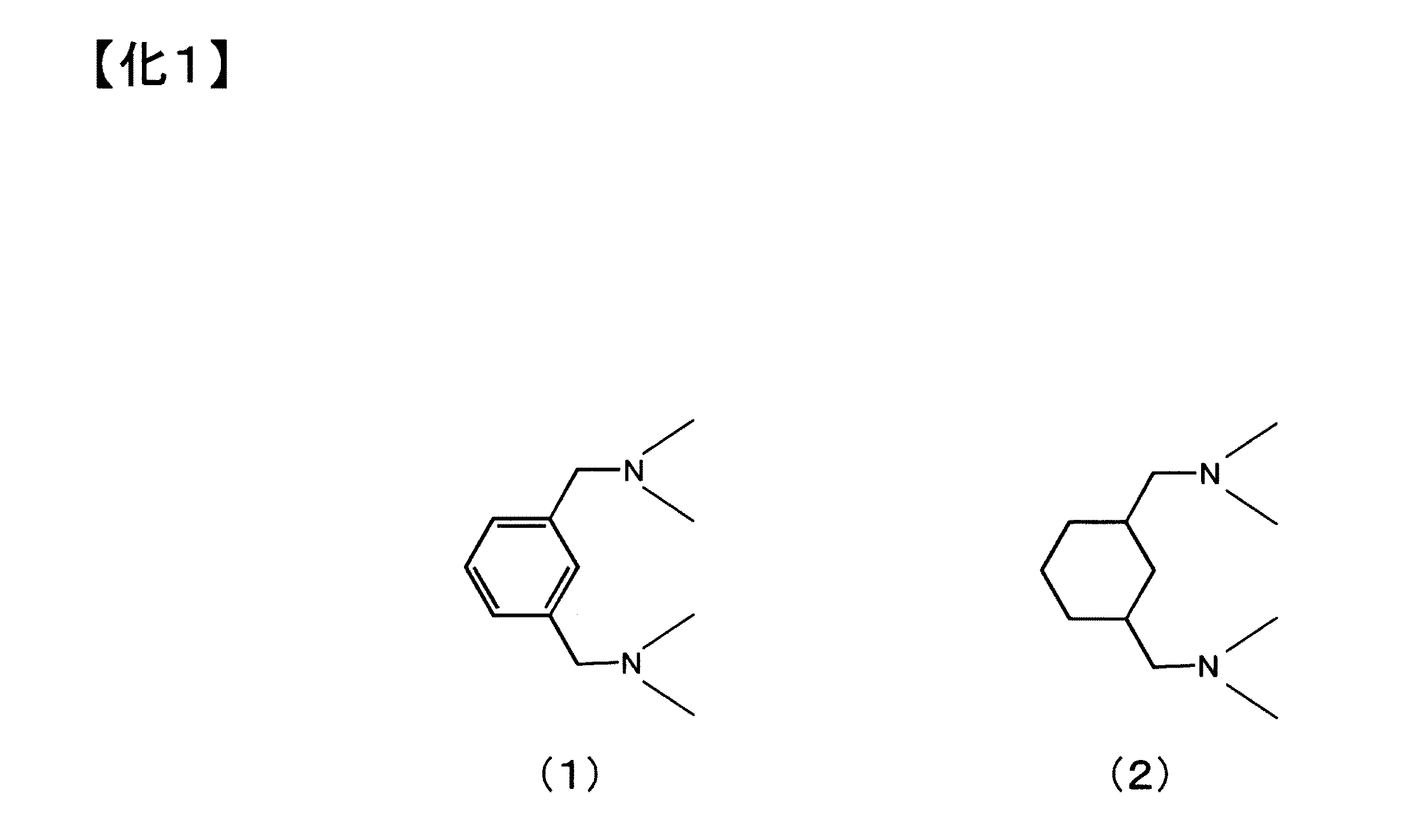
(ii)本発明のガスバリア性フィルムの好ましい態様によれば、前記(i)のガスバリア性フィルムにおいて、前記ポリエステル系樹脂フィルムを構成するポリエステル系樹脂が、ポリエチレンテレフタレート、ポリエチレンナフタレート、またはポリ乳酸のいずれかである。
(iii)本発明のガスバリア性フィルムの好ましい態様によれば、前記(i)〜(ii)のいずれかのガスバリア性フィルムにおいて、前記ポリウレタン系樹脂層の塗布量が0.01〜2.0g/m2の範囲である。
(iv)本発明のガスバリア性フィルムの好ましい態様によれば、前記(i)〜(iii)のいずれかのガスバリア性フィルムにおいて、前記金属アンカー蒸着層の蒸着量が5〜1000ng/cm2の範囲である。
(v)本発明のガスバリア性フィルムの好ましい態様によれば、前記(i)〜(iv)のいずれかのガスバリア性フィルムにおいて、前記金属アンカー蒸着層を構成する金属が銅である。
(vi)本発明のガスバリア性フィルムの好ましい態様によれば、前記(i)〜(v)のいずれかのガスバリア性フィルムにおいて、前記無機物層を構成する無機物が無機酸化物である。
(vii)本発明のガスバリア性フィルムの好ましい態様によれば、前記(vi)のガスバリア性フィルムにおいて、無機物層を構成する無機酸化物が酸化アルミニウム、酸化珪素および酸化窒化珪素からなる群から選択された少なくとも1種の無機酸化物である。
(Ii) According to a preferred embodiment of the gas barrier film of the present invention, in the gas barrier film of (i), the polyester resin constituting the polyester resin film is made of polyethylene terephthalate, polyethylene naphthalate, or polylactic acid. Either.
(Iii) According to a preferred aspect of the gas barrier film of the present invention, in the gas barrier film of any one of (i) to (ii), the coating amount of the polyurethane resin layer is 0.01 to 2.0 g / it is in the range of m 2.
(Iv) According to a preferred aspect of the gas barrier film of the present invention, in the gas barrier film of any one of (i) to (iii), the deposition amount of the metal anchor deposition layer is in the range of 5 to 1000 ng / cm 2 . It is.
(V) According to a preferred aspect of the gas barrier film of the present invention, in the gas barrier film of any one of (i) to (iv), the metal constituting the metal anchor vapor deposition layer is copper.
(Vi) According to a preferred aspect of the gas barrier film of the present invention, in the gas barrier film of any one of (i) to (v), the inorganic substance constituting the inorganic layer is an inorganic oxide.
(Vii) According to a preferred embodiment of the gas barrier film of the present invention, in the gas barrier film of ( vi ), the inorganic oxide constituting the inorganic layer is selected from the group consisting of aluminum oxide, silicon oxide and silicon oxynitride. And at least one inorganic oxide.
本発明によれば、塩素等のハロゲンを含まないというだけでなく、従来より提案されている金属蒸着フィルムあるいは金属酸化物蒸着フィルムよりも優れた酸素バリア性および水蒸気バリア性を有するガスバリア性フィルムが得られる。また、ガスバリア層形成時に高温での熱処理を必要とせず、生産性にも優れたガスバリア性フィルムが得られる。 According to the present invention, there is provided a gas barrier film having not only a halogen such as chlorine but also an oxygen barrier property and a water vapor barrier property which is superior to a conventionally proposed metal vapor deposition film or metal oxide vapor deposition film. can get. In addition, a gas barrier film excellent in productivity can be obtained without requiring heat treatment at a high temperature when forming the gas barrier layer.
さらに、本発明の好ましい態様によれば、透明であるため内容物を視認することができ、電子レンジを利用した調理にも対応することができるガスバリア性フィルムが得られる。 Furthermore, according to the preferable aspect of this invention, since it is transparent, the contents can be visually recognized and the gas barrier film which can respond also to the cooking using a microwave oven is obtained.
本発明者らは、前記課題、すなわちハロゲンによる環境汚染の恐れもなく、かつ、酸素および水蒸気などのガスバリア性に優れた、さらには生産適性に優れたガスバリア性フィルムについて鋭意検討した。その結果、本発明者らは、基材である熱可塑性樹脂フィルムと特定ポリマーから形成される樹脂層と無機物層を組み合わせることにより、ノンハロゲンで、しかも、高いガスバリア性を示し、かつ、フィルム生産適性にも優れたガスバリア性フィルムが得られることを見出した。 The inventors of the present invention have intensively studied the above-mentioned problem, that is, a gas barrier film that is excellent in gas barrier properties such as oxygen and water vapor and excellent in production suitability, without fear of environmental pollution by halogen. As a result, the present inventors combine non-halogen, high gas barrier properties, and suitability for film production by combining a thermoplastic resin film as a base material, a resin layer formed from a specific polymer, and an inorganic layer. It was also found that an excellent gas barrier film can be obtained.
本発明のガスバリア性フィルムは、ポリエステル系樹脂フィルムの少なくとも片面に、ポリウレタン系樹脂層および無機物層がポリエステル系樹脂フィルム側からこの順に形成されたものであって、前記ポリウレタン系樹脂層を構成するポリウレタン系樹脂が下記(1)式および/または下記(2)式で示される骨格を含有する樹脂であり、かつ前記ポリウレタン系樹脂層が塗布によって形成され、前記ポリウレタン系樹脂層と無機物層との間に金属アンカー蒸着層が配されたものとすることにより、従来よりも高いガスバリア性が得られるものである。 The gas barrier film of the present invention is a polyurethane in which a polyurethane resin layer and an inorganic layer are formed on at least one surface of a polyester resin film in this order from the polyester resin film side, and constitutes the polyurethane resin layer. A resin containing a skeleton represented by the following formula (1) and / or the following (2) formula , and the polyurethane resin layer is formed by coating, and the polyurethane resin layer is formed between the inorganic resin layer and the polyurethane resin layer: By providing a metal anchor deposition layer on the surface , a higher gas barrier property can be obtained than before.
一般に無機物層は、ガスバリア性を有するが、ピンホールやクラック等の欠陥を有するため、そのガスバリア性能は不十分であることが多い。また、基材であるポリエステル系樹脂フィルムの表面粗さ、熱収縮性および表面弾性等は、前記の欠陥部位の数と相関する。すなわち、基材であるポリエステル系樹脂フィルムの表面粗さ、熱収縮性および表面弾性等はガスバリア性を決定する因子として重要な要素であると考えられる。本発明においては、ポリエステル系樹脂フィルム上に、上記の特定の分子構造を含有するポリウレタン系樹脂層を形成することにより、基材であるポリエステル系樹脂フィルムの被蒸着面が平滑化され、熱寸法安定性が増す作用によりガスバリア性が格段に向上する。
以下、本発明のガスバリア性フィルムについて詳細に説明する。In general, the inorganic layer has a gas barrier property, but since it has defects such as pinholes and cracks, the gas barrier performance is often insufficient. In addition, the surface roughness, heat shrinkability, surface elasticity, and the like of the polyester-based resin film as the base material correlate with the number of the defect sites. That is, it is considered that the surface roughness, heat shrinkability, surface elasticity, and the like of the polyester resin film as the base material are important factors as factors determining the gas barrier property. In the present invention, by forming a polyurethane-based resin layer containing the specific molecular structure on the polyester-based resin film, the vapor-deposited surface of the polyester-based resin film as the base material is smoothed, and the thermal dimensions The gas barrier property is remarkably improved by the action of increasing the stability.
Hereinafter, the gas barrier film of the present invention will be described in detail.
本発明において基材として用いられるポリエステル系樹脂フィルムを構成するポリエステル系樹脂としては、ポリエチレンテレフタレート、ポリエチレンナフタレートおよびポリ乳酸などのポリエステル系フィルムが挙げられる。 Examples of the polyester resin constituting the polyester resin film used as the substrate in the present invention include polyester films such as polyethylene terephthalate, polyethylene naphthalate, and polylactic acid.
本発明で用いられるポリエステル系樹脂フィルムを構成するポリエステル系樹脂は、その構成単位の80モル%以上がエチレンテレフタレートであるポリエチレンテレフタレートや、その構成単位の80モル%以上がエチレンナフタレートであるポリエチレンナフタレートや、その構成単位の80モル%以上がポリ乳酸であるポリ乳酸フィルム等で代表されるが、特に限定されない。また、ポリエステル系樹脂は共重合体であっても良く、共重合成分としては、例えば、プロピレングリコール、ジエチレングリコール、ネオペンチルグリコール、シクロヘキサンジメタノール等のジオール成分、イソフタル酸、アジピン酸、アゼライン酸、セバシン酸およびそのエステル形成性誘導体のジカルボン酸成分などを使用することができる。 The polyester resin constituting the polyester resin film used in the present invention includes polyethylene terephthalate in which 80 mol% or more of the structural unit is ethylene terephthalate, or polyethylene naphthalate in which 80 mol% or more of the structural unit is ethylene naphthalate. Although it is represented by a phthalate or a polylactic acid film in which 80 mol% or more of the structural unit is polylactic acid, it is not particularly limited. The polyester resin may be a copolymer. Examples of the copolymer component include diol components such as propylene glycol, diethylene glycol, neopentyl glycol, and cyclohexane dimethanol, isophthalic acid, adipic acid, azelaic acid, and sebacin. The dicarboxylic acid component of an acid and its ester-forming derivative can be used.
また、ポリエステル系樹脂フィルムには、必要に応じて、例えば、帯電防止剤、紫外線吸収剤、安定剤、酸化防止剤、可塑剤、滑剤、充填剤等の添加剤を、本発明の効果を損なわない範囲内で添加することができる。 In addition, the polyester-based resin film may be added with additives such as an antistatic agent, an ultraviolet absorber, a stabilizer, an antioxidant, a plasticizer, a lubricant, and a filler, if necessary, to impair the effects of the present invention. It can be added within the range.
蒸着等により無機物層が設けられたフィルムのガスバリア性は、基材であるポリエステル系樹脂フィルムの熱寸法安定性に影響されるため、ポリエステル系樹脂フィルムは二軸方向に延伸されたフィルムであることが好ましい。また、ポリエステル系樹脂フィルムには、必要に応じて、例えば、コロナ放電やプラズマ放電等の放電処理、あるいは酸処理等の表面処理を行ってもよい。 Since the gas barrier property of a film provided with an inorganic layer by vapor deposition or the like is affected by the thermal dimensional stability of a polyester resin film as a base material, the polyester resin film is a film stretched biaxially. Is preferred. Moreover, you may perform surface treatments, such as discharge processing, such as a corona discharge and a plasma discharge, or an acid treatment, for example, as needed to a polyester-type resin film.
ポリエステル系樹脂フィルムの厚さは、無機物層を形成する時の安定性やコスト等の理由から、好ましくは1〜100μmの範囲であり、より好ましくは5〜50μmの範囲であり、特に好ましくは10〜30μm程度が実用的である。
本発明において用いられるポリウレタン系樹脂は、下記(1)式および/または下記(2)式に示される骨格を構造中に含有するものであり、脂環族化合物および芳香族化合物のいずれであっても良い。The thickness of the polyester resin film is preferably in the range of 1 to 100 μm, more preferably in the range of 5 to 50 μm, and particularly preferably 10 for reasons such as stability and cost when forming the inorganic layer. About 30 μm is practical.
The polyurethane-based resin used in the present invention contains a skeleton represented by the following formula (1) and / or the following formula (2) in the structure, and is either an alicyclic compound or an aromatic compound. Also good.
上記(1)式に示される骨格を構造中に含むポリウレタン系樹脂は、芳香環同士の間にπ電子相互作用を生じ得る。また、電気陰性度の高い窒素原子を含むことからポリマー鎖間に水素結合をも形成し得る。一方、上記(2)式に示される骨格を構造中に含むポリウレタン系樹脂も、電気陰性度の高い窒素原子を含むことからポリマー鎖間に水素結合を形成し得る。さらに上記(1)式および上記(2)式に示される骨格は、比較的分子鎖が固い構造であり、該構造を含むポリウレタン系樹脂は、そのガラス転移温度が高く、熱寸法安定性に優れていれる。 The polyurethane resin containing a skeleton represented by the above formula (1) in the structure can cause π-electron interaction between aromatic rings. Moreover, since a nitrogen atom with high electronegativity is contained, a hydrogen bond can be formed between polymer chains. On the other hand, the polyurethane-based resin including the skeleton represented by the above formula (2) in the structure can also form a hydrogen bond between the polymer chains because it contains a nitrogen atom having a high electronegativity. Furthermore, the skeleton represented by the above formulas (1) and (2) has a structure with a relatively hard molecular chain, and the polyurethane resin containing the structure has a high glass transition temperature and excellent thermal dimensional stability. I can.
上記(1)式および上記(2)式に示される骨格を構造中に含有するポリウレタン系樹脂には、前記のような特徴が見られ、これらは次のような観点から本発明において好ましい特徴である。 The polyurethane resin containing in its structure the skeleton represented by the above formula (1) and the above formula (2) has the above-mentioned characteristics, and these are preferable characteristics in the present invention from the following viewpoints. is there.
ポリエステル系樹脂フィルム上に、ポリウレタン系樹脂層、金属アンカー蒸着層および無機物層をこの順に形成したフィルムのガスバリア性を決定する因子としては、無機物層が形成される面、すなわちポリウレタン系樹脂層の表面粗さ、熱寸法安定性および結晶化度等が挙げられる。これらの因子は、ポリウレタン系樹脂層を形成するポリマー構造に起因することが多い。例えば、熱寸法安定性や結晶化度は、ポリマーの凝集力および骨格構造に起因する。すなわち、構造中に水素結合、π電子相互作用あるいは静電的相互作用等の分子間相互作用可能な官能基、芳香環あるいは原子を含むポリマー鎖同士は、相互作用力を駆動力として強く凝集しようとする。その結果、凝集エネルギー密度と配向性は高まり、熱寸法安定性や結晶化度は向上する。 As a factor that determines the gas barrier property of a film in which a polyurethane resin layer , a metal anchor vapor deposition layer, and an inorganic layer are formed in this order on a polyester resin film, the surface on which the inorganic layer is formed, that is, the surface of the polyurethane resin layer Examples include roughness, thermal dimensional stability, and crystallinity. These factors are often attributed to the polymer structure that forms the polyurethane resin layer. For example, thermal dimensional stability and crystallinity are due to the cohesive strength and skeletal structure of the polymer. That is, polymer chains containing functional groups capable of intermolecular interaction such as hydrogen bonding, π-electron interaction, or electrostatic interaction, aromatic rings, or atoms in the structure will strongly aggregate using the interaction force as a driving force. And As a result, the cohesive energy density and orientation are increased, and the thermal dimensional stability and crystallinity are improved.
このような理由からポリウレタン系樹脂としては、上記(1)式および/または上記(2)式に示される骨格をその構造中に含有する脂環族化合物および香族化合物が好ましい。 For these reasons, the polyurethane resin is preferably an alicyclic compound or aromatic compound containing in its structure a skeleton represented by the above formula (1) and / or the above formula (2).
ポリウレタン系樹脂は、一般的には、ジイソシアネート成分とジオール成分とのウレタン化反応から得られ、上記(1)式および上記(2)式に示される骨格構造は、ジイソシアネート成分あるいはジオール成分の少なくともいずれか一方に含まれていれば良く、その両方に含まれていても良い。さらに、アミン成分により鎖伸長反応あるいは架橋反応を行い得られたものを使用することができる。 The polyurethane-based resin is generally obtained from a urethanization reaction of a diisocyanate component and a diol component, and the skeleton structure represented by the above formula (1) and the above formula (2) is at least either a diisocyanate component or a diol component. As long as it is included in either one, it may be included in both. Furthermore, what was obtained by performing chain | strand extension reaction or crosslinking reaction with an amine component can be used.
ジイソシアネート成分には、芳香族ジイソシアネート、芳香脂肪族ジイソシアネート、脂環族ジイソシアネートおよび脂肪族ジイソシアネート等が含まれる。 Examples of the diisocyanate component include aromatic diisocyanates, araliphatic diisocyanates, alicyclic diisocyanates, and aliphatic diisocyanates.
芳香族ジイソシアネートとしては、例えば、m−またはp−フェニレンジイソシアネート、4,4′−ジフェニルジイソシアネート、1,5−ナフタレンジイソシアネート(NDI)、4,4′−、2,4′−又は2,2′−ジフェニルメタンジイソシアネート(MDI)、2,4−または2,6−トリレンジイソシアネート(TDI)、および4,4′−ジフェニルエーテルジイソシアネート等が例示される。 Aromatic diisocyanates include, for example, m- or p-phenylene diisocyanate, 4,4'-diphenyl diisocyanate, 1,5-naphthalene diisocyanate (NDI), 4,4'-, 2,4'- or 2,2 '. -Diphenylmethane diisocyanate (MDI), 2,4- or 2,6-tolylene diisocyanate (TDI), 4,4'-diphenyl ether diisocyanate and the like are exemplified.
芳香脂肪族ジイソシアネートとしては、例えば、1,3−または1,4−キシリレンジイソシアネート(XDI)や、1,3−または1,4−テトラメチルキシリレンジイソシアネート(TMXDI)等が例示される。 Examples of the araliphatic diisocyanate include 1,3- or 1,4-xylylene diisocyanate (XDI), 1,3- or 1,4-tetramethylxylylene diisocyanate (TMXDI), and the like.
脂環族ジイソシアネートとしては、例えば、1,4−シクロヘキサンジイソシアネート、1,3−シクロヘキサンジイソシアネート、3−イソシアネートメチル−3,5,5−トリメチルシクロヘキシルイソシアネート(イソホロンジイソシアネート;IPDI)、4,4′−、2,4′−または2,2′−ジシクロヘキシルメタンジイソシアネート(水添MDI)、メチル−2,4−シクロヘキサンジイソシアネート、メチル−2,6−シクロヘキサンジイソシアネート、および1,3−または1,4−ビス(イソシアネートメチル)シクロヘキサン(水添XDI)等が例示される。 Examples of the alicyclic diisocyanate include 1,4-cyclohexane diisocyanate, 1,3-cyclohexane diisocyanate, 3-isocyanate methyl-3,5,5-trimethylcyclohexyl isocyanate (isophorone diisocyanate; IPDI), 4,4'-, 2,4'- or 2,2'-dicyclohexylmethane diisocyanate (hydrogenated MDI), methyl-2,4-cyclohexane diisocyanate, methyl-2,6-cyclohexane diisocyanate, and 1,3- or 1,4-bis ( Illustrative examples include isocyanate methyl) cyclohexane (hydrogenated XDI).
脂肪族ジイソシアネートとしては、例えば、トリメチレンジイソシアネート、テトラメチレンジイソシアネート、ヘキサメチレンジイソシアネート(HDI)、ペンタメチレンジイソシアネート、1,2−プロピレンジイソシアネート、1,2−、2,3−または1,3−ブチレンジイソシアネート、および2,4,4−または2,2,4−トリメチルヘキサメチレンジイソシアネート等が例示される。 Examples of the aliphatic diisocyanate include trimethylene diisocyanate, tetramethylene diisocyanate, hexamethylene diisocyanate (HDI), pentamethylene diisocyanate, 1,2-propylene diisocyanate, 1,2-, 2,3- or 1,3-butylene diisocyanate. And 2,4,4- or 2,2,4-trimethylhexamethylene diisocyanate and the like.
これらのジイソシアネート成分のうち、前述の理由から、上記(1)式および上記(2)式に示される骨格構造を含有する芳香族ジイソシアネートとしては、XDIおよびTMXDI等が好ましく、脂環族ジイソシアネートとしては、水添XDIが好ましい。 Among these diisocyanate components, XDI and TMXDI are preferred as the aromatic diisocyanate containing the skeleton structure represented by the above formula (1) and the above formula (2) for the above-mentioned reasons. As the alicyclic diisocyanate, Hydrogenated XDI is preferred.
これらのジイソシアネート成分は、単独でまたは二種以上組み合わせて使用することができる。さらに、必要に応じて、3官能以上のポリイソシアネートを併用することもできる。 These diisocyanate components can be used alone or in combination of two or more. Furthermore, if necessary, trifunctional or higher polyisocyanate can be used in combination.
ジオール成分には、低分子量のジオールからオリゴマーまで幅広いジオールが含まれる。ジオール成分としては、例えば、C2−12アルキレングリコール(例えば、エチレングリコール、1,3−または1,2−プロピレングリコール、1,4−、1,3−または1,2−ブタンジオール、1,5−ペンタンジオール、3−メチル−1,5−ペンタンジオール、2,4−ジエチル−1,5−ペンタンジオール、2,2,4−トリメチルペンタン−1,3−ジオール、1,6−ヘキサンジオール、ネオペンチルグリコール、1,5−または1,7−ヘプタンジオール、1,8−オクタンジオール、1,9−ノナンジオール、1,10−デカンジオール、1,11−ウンデカンジオールおよび1,12−ドデカンジオール等)、ポリオキシC2−4アルキレングリコールなどのポリエーテルジオール(例えば、ジエチレングリコール、トリエチレングリコール、テトラエチレングリコール、ペンタエチレングリコール、ヘキサエチレングリコール、ヘプタエチレングリコール、ジプロピレングリコール、トリプロピレングリコール、テトラプロピレングリコール、ペンタプロピレングリコール、ヘキサプロピレングリコール、ヘプタプロピレングリコール、ジブチレングリコール、トリブチレングリコールおよびテトラブチレングリコール等)、芳香族ジオール(例えば、ビスフェノールA、ビスヒドロキシエチルテレフタレート、カテコール、レゾルシン、ハイドロキノンおよび1,3−または1,4−キシリレンジオールもしくはそれらの混合物等)、脂環族ジオール(例えば、水添ビスフェノールA、水添キシリレンジオール、シクロヘキサンジオールおよびシクロヘキサンジメタノール等)等が例示される。 The diol component includes a wide range of diols from low molecular weight diols to oligomers. Examples of the diol component include C2-12 alkylene glycol (for example, ethylene glycol, 1,3- or 1,2-propylene glycol, 1,4-, 1,3- or 1,2-butanediol, 1,5 -Pentanediol, 3-methyl-1,5-pentanediol, 2,4-diethyl-1,5-pentanediol, 2,2,4-trimethylpentane-1,3-diol, 1,6-hexanediol, Neopentyl glycol, 1,5- or 1,7-heptanediol, 1,8-octanediol, 1,9-nonanediol, 1,10-decanediol, 1,11-undecanediol and 1,12-dodecanediol Etc.), polyether diols such as polyoxy C2-4 alkylene glycol (for example, diethylene glycol) Triethylene glycol, tetraethylene glycol, pentaethylene glycol, hexaethylene glycol, heptaethylene glycol, dipropylene glycol, tripropylene glycol, tetrapropylene glycol, pentapropylene glycol, hexapropylene glycol, heptapropylene glycol, dibutylene glycol, tributylene Glycol, tetrabutylene glycol, etc.), aromatic diols (eg, bisphenol A, bishydroxyethyl terephthalate, catechol, resorcin, hydroquinone and 1,3- or 1,4-xylylenediol or mixtures thereof), alicyclic Diols (eg, hydrogenated bisphenol A, hydrogenated xylylene diol, cyclohexane diol and cyclo Cyclohexanedicarboxylic methanol, etc.) and the like.
これらのジオール成分のうち、上記(1)式および上記(2)式に示される骨格構造を含有するジオール成分としては、芳香族ジオールとしては1,3−または1,4−キシリレンジオールが、また脂環族ジオールとしては水添キシリレンジオールが例示される。 Among these diol components, as the diol component containing the skeleton structure represented by the above formula (1) and the above formula (2), 1,3- or 1,4-xylylenediol as the aromatic diol, Examples of the alicyclic diol include hydrogenated xylylene diol.
これらのジオール成分は、単独でまたは二種以上組み合わせて使用することができる。さらに、必要に応じて、3官能以上のポリオールを併用することもできる。 These diol components can be used alone or in combination of two or more. Furthermore, if necessary, a tri- or higher functional polyol can be used in combination.
また必要に応じて、鎖伸長剤や架橋剤としてジアミン成分を使用することができる。ジアミンとしては、例えば、ヒドラジン、脂肪族ジアミン(例えば、エチレンジアミン、トリメチレンジアミン、テトラメチレンジアミン、ペンタメチレンジアミン、ヘキサメチレンジアミン、2,2,4−トリメチルヘキサメチレンジアミン、2,4,4−トリメチルヘキサメチレンジアミンおよびオクタメチレンジアミン等)、芳香族アミン(例えば、m−またはp−フェニレンジアミン、1,3−または1,4−キシリレンジアミンもしくはその混合物等)、脂環族ジアミン[例えば、水添キシリレンジアミン、ビス(4−アミノシクロヘキシル)メタン、イソホロンジアミンおよびビス(4−アミノ−3−メチルシクロヘキシル)メタン等]が挙げられ、その他、2−ヒドラジノエタノール、2−[(2−アミノエチル)アミノ]エタノール等の水酸基を持つジアミン等も挙げられる。 Moreover, a diamine component can be used as a chain extender or a crosslinking agent as needed. Examples of the diamine include hydrazine and aliphatic diamines (for example, ethylenediamine, trimethylenediamine, tetramethylenediamine, pentamethylenediamine, hexamethylenediamine, 2,2,4-trimethylhexamethylenediamine, 2,4,4-trimethyl). Hexamethylenediamine and octamethylenediamine, etc.), aromatic amines (eg m- or p-phenylenediamine, 1,3- or 1,4-xylylenediamine or mixtures thereof), alicyclic diamines [eg water Added xylylenediamine, bis (4-aminocyclohexyl) methane, isophoronediamine and bis (4-amino-3-methylcyclohexyl) methane, etc.], and others, 2-hydrazinoethanol, 2-[(2-amino Ethyl) amino] Diamine having a hydroxyl group of Nord and the like can be used as well.
これらのジアミン成分のうち、配向性、熱寸法安定性および結晶化度の観点から、通常、炭素数8以下の低分子量ジアミン成分、好ましくは炭素数6以下のジアミン、特に、ヒドラジン、エチレンジアミン、テトラメチレンジアミン、ペンタメチレンジアミン、ヘキサメチレンジアミン、2−ヒドラジノエタノール、および2−[(2−アミノエチル)アミノ]エタノール等が使用される。これらのジアミン成分は、単独でまたは2種以上組み合わせて使用できる。さらに、必要に応じて、3官能以上のポリアミン成分を併用することもできる。 Among these diamine components, from the viewpoints of orientation, thermal dimensional stability, and crystallinity, the low molecular weight diamine component having 8 or less carbon atoms, preferably a diamine having 6 or less carbon atoms, particularly hydrazine, ethylenediamine, tetra Methylenediamine, pentamethylenediamine, hexamethylenediamine, 2-hydrazinoethanol, 2-[(2-aminoethyl) amino] ethanol and the like are used. These diamine components can be used alone or in combination of two or more. Furthermore, if necessary, a triamine or higher polyamine component can be used in combination.
前記の原料を用いて合成されるポリウレタン系樹脂の数平均分子量は、好ましくは800〜1,000,000、より好ましくは800〜200,000、さらに好ましくは800〜100,000程度の範囲から選択することができる。分子量を800以上にすることにより、ポリウレタン系樹脂により形成される塗膜は十分な強度を発現する。また、ポリエステル系樹脂フィルムにコーティングする場合、ポリウレタン系樹脂自身が凝集力を有しているため成膜が容易になる。一方、分子量を1,000,000以下にすることにより、溶剤中でもポリウレタン系樹脂の樹脂粘度が低く抑えられ、ポリエステル系樹脂フィルムへのコーティングなどの際の作業性が良好なものとなる。 The number average molecular weight of the polyurethane-based resin synthesized using the above raw materials is preferably selected from the range of about 800 to 1,000,000, more preferably 800 to 200,000, still more preferably about 800 to 100,000. can do. By setting the molecular weight to 800 or more, the coating film formed from the polyurethane resin exhibits sufficient strength. Further, when coating on a polyester resin film, the polyurethane resin itself has cohesive force, so that film formation is facilitated. On the other hand, by setting the molecular weight to 1,000,000 or less, the resin viscosity of the polyurethane-based resin can be kept low even in a solvent, and the workability at the time of coating on the polyester-based resin film becomes good.
ポリウレタン系樹脂層は、ポリエステル系樹脂フィルム上にポリウレタン系樹脂をコーティングにより形成することができる。本発明のポリウレタン系樹脂層を形成するためのコーティング液のための溶剤としては、例えば、トルエン、キシレン、酢酸エチル、酢酸ブチル、アセトン、メチルエチルケトン、メチルイソブチルケトン、テトラヒドロフラン、ジメチルホルムアミド、ジメチルアセトアミド、メタノール、エタノールおよび水等を例示することができる。該コーティング液の性状としてはエマルジョン型および溶解型のいずれでも良い。 The polyurethane resin layer can be formed by coating a polyurethane resin on a polyester resin film. Examples of the solvent for the coating liquid for forming the polyurethane resin layer of the present invention include toluene, xylene, ethyl acetate, butyl acetate, acetone, methyl ethyl ketone, methyl isobutyl ketone, tetrahydrofuran, dimethylformamide, dimethylacetamide, and methanol. Ethanol and water can be exemplified. The properties of the coating liquid may be either emulsion type or dissolution type.
本発明で用いられるコーティング液には、その特性を損なわない限りにおいて、熱安定剤、酸化防止剤、強化剤、顔料、劣化防止剤、耐候剤、難燃剤、可塑剤、離型剤および滑剤などを添加してもよい。 In the coating liquid used in the present invention, a heat stabilizer, an antioxidant, a reinforcing agent, a pigment, a deterioration preventing agent, a weathering agent, a flame retardant, a plasticizer, a release agent, a lubricant, etc. May be added.
熱安定剤、酸化防止剤および劣化防止剤としては、例えば、ヒンダードフェノール類、リン化合物、ヒンダードアミン類、硫黄化合物、銅化合物およびアルカリ金属のハロゲン化物あるいはこれらの混合物が挙げられる。 Examples of the heat stabilizer, antioxidant and deterioration inhibitor include hindered phenols, phosphorus compounds, hindered amines, sulfur compounds, copper compounds and alkali metal halides or mixtures thereof.
また、強化剤としては、例えば、クレー、タルク、炭酸カルシウム、炭酸亜鉛、ワラストナイト、シリカ、アルミナ、酸化マグネシウム、珪酸カルシウム、アルミン酸ナトリウム、アルミノ珪酸ナトリウム、珪酸マグネシウム、ガラスバルーン、カーボンブラック、酸化亜鉛、ゼオライト、ハイドロタルサイト、金属繊維、金属ウィスカー、セラミックウィスカー、チタン酸カリウムウィスカー、窒化ホウ素、グラファイト、ガラス繊維および炭素繊維などが挙げられる。 Examples of the reinforcing agent include clay, talc, calcium carbonate, zinc carbonate, wollastonite, silica, alumina, magnesium oxide, calcium silicate, sodium aluminate, sodium aluminosilicate, magnesium silicate, glass balloon, carbon black, Examples include zinc oxide, zeolite, hydrotalcite, metal fiber, metal whisker, ceramic whisker, potassium titanate whisker, boron nitride, graphite, glass fiber, and carbon fiber.
本発明で用いられるコーティング液には、無機層状化合物を混合してもよい。無機層状化合物の好ましい例としては、モンモリロナイト、バイデライト、サポナイト、ヘクトライト、ソーコナイト、バーミキュライト、フッ素雲母、白雲母、パラゴナイト、金雲母、黒雲母、レピドライト、マーガライト、クリントナイトおよびアナンダイト等を例示することができ、膨潤性フッ素雲母またはモンモリロナイトが特に好ましく用いられる。 An inorganic layered compound may be mixed in the coating solution used in the present invention. Preferable examples of the inorganic layered compound include montmorillonite, beidellite, saponite, hectorite, saconite, vermiculite, fluoric mica, muscovite, paragonite, phlogopite, biotite, lepidrite, margarite, clintonite, and anandite. Swellable fluorine mica or montmorillonite is particularly preferably used.
これらの無機層状化合物は、天然に産するものであっても、人工的に合成あるいは変性されたものであっても良く、また、それらをオニウム塩などの有機物で処理したものであっても良い。 These inorganic layered compounds may be naturally occurring, artificially synthesized or modified, and those treated with an organic substance such as an onium salt. .
ポリウレタン系樹脂層をポリエステル系樹脂フィルム上に形成する方法は特に制限されるものではなく、ポリエステル系樹脂フィルムを製膜する工程内でポリウレタン系樹脂を塗工するインラインコーティング法であっても、製膜後のフィルムに後加工としてポリウレタン系樹脂を塗工するオフラインコーティング法であっても良い。またコーティングの手法としては、ポリエステル系樹脂フィルムに応じた種々の方法を適用することができる。例えば、ロールコーティング法、ディップコーティング法、バーコーティング法、ダイコーティング法およびグラビアロールコーティング法等や、これらを組み合わせた方法を利用することができる。なかでも、グラビアロールコーティング法は、コーティング層形成組成物の安定性を増す理由で好ましい方法である。 The method for forming the polyurethane resin layer on the polyester resin film is not particularly limited, and even if it is an in-line coating method in which the polyurethane resin is applied in the process of forming the polyester resin film, An off-line coating method may be used in which a polyurethane-based resin is applied to the film after film formation as post-processing. As a coating method, various methods according to the polyester resin film can be applied. For example, a roll coating method, a dip coating method, a bar coating method, a die coating method, a gravure roll coating method, or a combination of these methods can be used. Among these, the gravure roll coating method is a preferable method for increasing the stability of the coating layer forming composition.
ポリウレタン系樹脂層の塗布量は、好ましくは0.01〜2g/m2の範囲であり、より好ましくは0.01〜1g/m2の範囲である。ポリウレタン系樹脂層の塗布量が0.01g/m2未満の場合には、比較的薄い樹脂膜を形成可能なインラインコーティング法においても、膜切れやはじきなどの欠陥を生じ易くなり、均一な樹脂膜を形成しにくくなる。その結果、樹脂層上に無機酸化物層を形成しても十分なガスバリア性が発現しないことがある。一方、ポリウレタン系樹脂層の塗布量が5g/m2より大きい場合、十分に溶剤を蒸発させるためにコーティング時の乾燥条件が高温・長時間になることがある。その結果、フィルムにカール等の変形を生じやすくなる。さらに製造コストが高くなることもある。The coating amount of the polyurethane resin layer is preferably in the range of 0.01 to 2 g / m 2 , more preferably in the range of 0.01 to 1 g / m 2 . When the coating amount of the polyurethane resin layer is less than 0.01 g / m 2 , defects such as film breakage and repellency are likely to occur even in an in-line coating method capable of forming a relatively thin resin film, and a uniform resin It becomes difficult to form a film. As a result, even if an inorganic oxide layer is formed on the resin layer, sufficient gas barrier properties may not be exhibited. On the other hand, when the coating amount of the polyurethane resin layer is larger than 5 g / m 2 , the drying conditions during coating may be high temperature and long time in order to sufficiently evaporate the solvent. As a result, the film tends to be deformed such as curl. Further, the manufacturing cost may be increased.
本発明において、コーティングによりポリエステル系樹脂フィルム上にポリウレタン系樹脂層を形成して積層する場合において、コーティング液に使用する溶剤にもよるが、コーティング層を好ましくは70℃以上、より好ましくは90℃以上の温度で乾燥させることが好ましい。乾燥温度が70℃より低い場合には、塗膜の乾燥が不十分となることがある。その結果、十分なガスバリア性を有するフィルムが得られないことがある。また、フィルム中に残留溶剤を含むことがあるため、包装材料、特に食品包装用材料としての使用には相応しくないことがある。また、乾燥のための熱処理時間は、乾燥温度と同様、短過ぎると乾燥が不十分なものとなるため、通常1秒以上、好ましくは3秒以上が好ましい。 In the present invention, when a polyurethane resin layer is formed and laminated on a polyester resin film by coating, the coating layer is preferably 70 ° C. or higher, more preferably 90 ° C., depending on the solvent used in the coating liquid. It is preferable to dry at the above temperature. When the drying temperature is lower than 70 ° C., the coating film may be insufficiently dried. As a result, a film having sufficient gas barrier properties may not be obtained. In addition, since the film may contain a residual solvent, it may not be suitable for use as a packaging material, particularly a food packaging material. Further, the heat treatment time for drying is, as with the drying temperature, insufficient drying when it is too short, and is usually 1 second or longer, preferably 3 seconds or longer.
本発明においてポリウレタン系樹脂層上に金属アンカー蒸着層を介して形成される無機物層を構成する無機物としては、金属、無機酸化物を例示することができる。さらに、無機酸化物としては金属酸化物および金属窒化酸化物等を例示することができる。また、無機物層は、蒸着法やスパッタリング法、イオンプレーティング法、プラズマ気相成長法(CVD)等で形成することができる。ただし、生産性を考慮すれば、現時点では真空蒸着法が最も優れている。真空蒸着法による真空蒸着装置の加熱手段としては、電子線加熱方式、抵抗加熱方式および誘導加熱方式が好ましい。 In the present invention, metals and inorganic oxides can be exemplified as the inorganic material constituting the inorganic material layer formed on the polyurethane resin layer via the metal anchor vapor deposition layer . Furthermore, examples of inorganic oxides include metal oxides and metal nitride oxides. The inorganic layer can be formed by vapor deposition, sputtering, ion plating, plasma vapor deposition (CVD), or the like. However, in view of productivity, the vacuum deposition method is the best at present. As the heating means of the vacuum deposition apparatus by the vacuum deposition method, an electron beam heating method, a resistance heating method and an induction heating method are preferable.
本発明においては、無機物層とポリウレタン系樹脂層との間に金属アンカー蒸着層を設ける。金属アンカー蒸着層は、グロー放電下で放電電極のカソード金属をプラスチックフィルム上にスパッタし、かつプラスチックフィルム表面の活性化を同時に行う方法で形成される。その際、圧力範囲は10−1〜10−4Torr、電源周波数はDC〜50MHz、電源電圧は50〜10kV、放電電流密度は1〜400mA・min/m2、および放電雰囲気の放電ガスの種類は酸素、窒素、アルゴン、二酸化炭素、水蒸気及びこれらを含む混合気体のように適宜選択することが好ましい。このように形成した金属蒸着アンカー層は基材フィルムと無機物層との密着力、特に耐水密着力を向上させる。金属アンカー蒸着層を形成する金属としては、アルミニウム、クロム、鉄、ニッケル、銅、亜鉛、銀、インジウム、錫およびこれらの酸化物により形成される。特に、基材フィルムとの密着力向上効果、コストおよび生産効率の点などから銅が好ましく用いられる。また、この金属アンカー蒸着層は金属の窒化物など放電ガスとの生成物を目的が損なわれない範囲で含むことができる。 In the present invention, Keru set the metal anchor deposited layer between the inorganic layer and the polyurethane resin layer. The metal anchor deposition layer is formed by a method in which the cathode metal of the discharge electrode is sputtered onto the plastic film under glow discharge and the plastic film surface is simultaneously activated. At that time, the pressure range is 10 −1 to 10 −4 Torr, the power source frequency is DC to 50 MHz, the power source voltage is 50 to 10 kV, the discharge current density is 1 to 400 mA · min / m 2 , and the type of discharge gas in the discharge atmosphere. Is preferably selected as appropriate, such as oxygen, nitrogen, argon, carbon dioxide, water vapor, and a mixed gas containing these. The metal-deposited anchor layer thus formed improves the adhesion between the base film and the inorganic layer, particularly the water-resistant adhesion. As a metal which forms a metal anchor vapor deposition layer, it forms with aluminum, chromium, iron, nickel, copper, zinc, silver, indium, tin, and these oxides. In particular, copper is preferably used from the standpoint of improving the adhesion with the base film, cost, and production efficiency. Moreover, this metal anchor vapor deposition layer can contain the product with discharge gas, such as a metal nitride, in the range which does not impair the objective.
本発明において金属アンカー蒸着層の蒸着量は5〜1000ng/cm2の範囲が好ましい。蒸着量が5ng/cm2未満の場合は、密着力の向上効果が不十分になることがある。一方、蒸着量が1000ng/cm2を越える場合には処理速度が低下するために生産性が低下することがある。In the present invention, the deposition amount of the metal anchor deposition layer is preferably in the range of 5 to 1000 ng / cm 2 . When the deposition amount is less than 5 ng / cm 2, the effect of improving the adhesion may be insufficient. On the other hand, when the deposition amount exceeds 1000 ng / cm 2 , the processing speed decreases, and thus productivity may decrease.
本発明において無機物層を構成する金属としては、アルミニウム、珪素、チタン、ジルコニウム、錫、マグネシウムなどを例示することができる。特に、ガスバリア性、コストおよび生産効率の点などから、アルミニウムが好ましい。 In the present invention, examples of the metal constituting the inorganic layer include aluminum, silicon, titanium, zirconium, tin, and magnesium. In particular, aluminum is preferable from the viewpoints of gas barrier properties, cost, and production efficiency.
本発明において無機物層を構成する金属酸化物としては、酸化アルミニウム、酸化マグネシウム、酸化チタン、酸化錫、酸化インジウム合金および酸化珪素等を例示することができ、また金属窒化酸化物としては、酸化窒化珪素等を例示することができる。特に、ガスバリア性および生産効率の点などから、酸化アルミニウム、酸化珪素および酸化窒化珪素などの無機酸化物が好ましく用いられる。 Examples of the metal oxide constituting the inorganic layer in the present invention include aluminum oxide, magnesium oxide, titanium oxide, tin oxide, indium oxide alloy, and silicon oxide. The metal nitride oxide includes oxynitride. Silicon and the like can be exemplified. In particular, inorganic oxides such as aluminum oxide, silicon oxide, and silicon oxynitride are preferably used in terms of gas barrier properties and production efficiency.
無機物層の膜厚は、用いられる無機物の種類や構成により適宜選択されるが、一般的には2〜300nmの範囲であることが好ましく、より好ましくは3〜100nmの範囲であり、さらに好ましくは5〜50nmの範囲である。膜厚が300nmを超えると、そのフレキシビリティ(柔軟)性が低下するので、製膜後(後加工工程等において)の折り曲げ、引っ張りなどの外力で、薄膜に亀裂やピンホール等を生じることがある。その結果、ガスバリア性が損なわれることがある。これは、特に無機物層を金属酸化物で構成した場合に顕著である。また、無機物層の形成スピードが低下するため、生産性を著しく低下させることがある。一方、2nm未満の膜厚では、均一な膜が得られにくく、さらには膜厚が十分でないことがあり、ガスバリア性が十分でないことがある。 The film thickness of the inorganic layer is appropriately selected depending on the type and configuration of the inorganic substance used, but generally it is preferably in the range of 2 to 300 nm, more preferably in the range of 3 to 100 nm, and still more preferably. The range is 5 to 50 nm. When the film thickness exceeds 300 nm, its flexibility (flexibility) decreases, so that cracks, pinholes, etc. may occur in the thin film due to external forces such as bending and pulling after film formation (in post-processing steps, etc.). is there. As a result, gas barrier properties may be impaired. This is particularly noticeable when the inorganic layer is made of a metal oxide. Moreover, since the formation speed of an inorganic layer falls, productivity may be reduced remarkably. On the other hand, when the film thickness is less than 2 nm, it is difficult to obtain a uniform film, and the film thickness may not be sufficient, and the gas barrier property may not be sufficient.
本発明では、さらに、無機物層上に様々な特性を付与する目的で、他の樹脂層を形成することができる。例えば、無機物層は硬いために、印刷やラミネートなど後加工時の屈曲等によりクラックやピンホールが発生し、ガスバリア性が著しく低下するという問題がある。ガスバリア性が低下することを防ぐためには、無機物層上に樹脂層を形成する方法が有用である。また、無機物層上に樹脂層を形成することにより耐ボイル性、耐レトルト性および印刷適性等を付与することが可能である。このように無機物層を有するフィルムに種々の特性を付与するためには、無機物層上に樹脂層を形成する方法が有効である。これらの目的のために無機物層上に樹脂層を形成するために用いられる樹脂は、付与したい特性に応じて適宜選択すれば良く、様々な樹脂を用いることができる。樹脂層の形成に用いる樹脂組成物としては、アクリル系樹脂、ポリウレタン系樹脂、ポリエステル系樹脂およびポリ酢酸ビニル系樹脂等を例示することでき、それらはそれぞれ共重合体であっても良く、付与したい特性に応じて適宜選択することができる。 In the present invention, another resin layer can be formed on the inorganic layer for the purpose of imparting various characteristics. For example, since the inorganic layer is hard, there is a problem that cracks and pinholes are generated by bending during post-processing such as printing and laminating, and the gas barrier property is remarkably lowered. In order to prevent the gas barrier property from being lowered, a method of forming a resin layer on the inorganic layer is useful. Further, by forming a resin layer on the inorganic layer, it is possible to impart boil resistance, retort resistance, printability, and the like. Thus, in order to impart various properties to a film having an inorganic layer, a method of forming a resin layer on the inorganic layer is effective. The resin used for forming the resin layer on the inorganic layer for these purposes may be appropriately selected depending on the properties to be imparted, and various resins can be used. Examples of the resin composition used for forming the resin layer include acrylic resins, polyurethane resins, polyester resins, and polyvinyl acetate resins, which may each be a copolymer and desired to be provided. It can be appropriately selected according to the characteristics.
また、無機物で形成された薄膜層は、ガスバリア性を有するが、ピンホールやクラック等の欠陥を有するため、そのガスバリア性能は不完全であることが多い。そのため、無機物層上にガスバリア性を有する他の樹脂層を設けることにより、その微小欠陥を充填すると同時に、樹脂が有するガスバリア性が同時に作用することによりガスバリア性を一層向上させることができる。 Moreover, although the thin film layer formed with an inorganic substance has gas barrier property, since it has defects, such as a pinhole and a crack, the gas barrier performance is often incomplete. Therefore, by providing another resin layer having a gas barrier property on the inorganic layer, the gas barrier property can be further improved by simultaneously filling the minute defects and simultaneously acting the gas barrier property of the resin.
本発明において、無機物層上に積層するガスバリア性を有する樹脂としては、厚み10μmの膜にした場合、温度23℃、湿度0%における酸素透過率(単位:cc/(m2・day・atm) )および温度40℃、湿度90%における水蒸気透過率(単位:g/(m2・day) )の少なくとも一方が10以下であるである樹脂を挙げることができる。ガスバリア性を有する樹脂層を積層する方法としては、ウェットコーティング法を好適に用いることができる。例えば、ロールコーティング法、ディップコーティング法、バーコーティング法、ダイコーティング法およびグラビアロールコーティング法等や、これらを組み合わせた方法を利用することができる。ウェットコーティング法に用いられるガスバリア性を有する樹脂塗料としては、水溶性塗料および水分散性塗料および有機溶剤系塗料のいずれでも良く、また、ガスバリア性樹脂としてはポリビニルアルコールやエチレンビニルアルコール共重合体、MXD−ナイロンなど公知の樹脂を用いることができる。In the present invention, as the gas barrier resin laminated on the inorganic layer, in the case of a film having a thickness of 10 μm, oxygen permeability at a temperature of 23 ° C. and a humidity of 0% (unit: cc / (m 2 · day · atm) ) And a water vapor transmission rate (unit: g / (m 2 · day)) at a temperature of 40 ° C. and a humidity of 90% can be 10 or less. As a method for laminating a resin layer having gas barrier properties, a wet coating method can be suitably used. For example, a roll coating method, a dip coating method, a bar coating method, a die coating method, a gravure roll coating method, or a combination of these methods can be used. As the resin coating having gas barrier properties used in the wet coating method, any of water-soluble paints, water-dispersible paints and organic solvent-based paints may be used, and as the gas barrier resin, polyvinyl alcohol or ethylene vinyl alcohol copolymer, Known resins such as MXD-nylon can be used.
本発明のガスバリア性フィルムは、食品、医薬品および電子部品等の包装材料や工業材料に好適に用いられる。特に、食品および医薬品の包装材料には、内容物の変質を防ぐために、酸素透過率や水蒸気透過率の小さいフィルムが好適に用いられることから、本発明のガスバリア性フィルムは有用である。 The gas barrier film of the present invention is suitably used for packaging materials and industrial materials such as foods, pharmaceuticals and electronic parts. In particular, the film of the present invention is useful for food and pharmaceutical packaging materials because a film having a low oxygen transmission rate or water vapor transmission rate is suitably used in order to prevent alteration of the contents.
次に、実施例を挙げて、具体的に本発明のガスバリア性フィルムについて説明する。実施例中で「部」とは、特に注釈のない限り「重量部」であることを意味する。 Next, an Example is given and the gas-barrier film of this invention is demonstrated concretely. In the examples, “parts” means “parts by weight” unless otherwise noted.
<特性の評価方法>
本発明で用いた特性の評価方法は、下記のとおりである。<Evaluation method of characteristics>
The characteristic evaluation method used in the present invention is as follows.
(1)酸素透過率
温度23℃、湿度0%RHの条件で、米国、モコン(MOCON)社製の酸素透過率測定装置(機種名、“オキシトラン”(登録商標)(“OXTRAN ”2/20))を使用して、JIS K7126(2000年版)に記載のB法(等圧法)に基づいて測定した。1つのサンプルから2枚の試験片を切り出し、各々の試験片について測定を1回ずつ行い、2つの測定値の平均値をそのサンプルの酸素透過率の値とした。(1) Oxygen permeability Under the conditions of a temperature of 23 ° C. and a humidity of 0% RH, an oxygen permeability measuring device (model name, “Oxytran” (registered trademark) (“OXTRAN”) 2/20 manufactured by MOCON, USA )), And measured based on the B method (isobaric method) described in JIS K7126 (2000 version). Two test pieces were cut out from one sample, and each test piece was measured once, and the average value of the two measured values was used as the oxygen permeability value of the sample.
(2)水蒸気透過率
温度40℃、湿度90%RHの条件で、米国、モコン(MOCON)社製の水蒸気透過率透過率測定装置(機種名、“パ−マトラン”(登録商標)W3/31)を使用してJIS K7129(2000年版)に記載のB法(赤外センサー法)に基づいて測定した。1つのサンプルから2枚の試験片を切り出し、各々の試験片について測定を1回ずつ行い、2つの測定値の平均値をそのサンプルの酸素透過率の値とした。(2) Water vapor transmission rate Under the conditions of a temperature of 40 ° C. and a humidity of 90% RH, a water vapor transmission rate measurement device (model name, “Permatran” (registered trademark) W3 / 31, manufactured by MOCON, USA) ) Was measured based on the B method (infrared sensor method) described in JIS K7129 (2000 edition). Two test pieces were cut out from one sample, and each test piece was measured once, and the average value of the two measured values was used as the oxygen permeability value of the sample.
(3)アンカー蒸着層の蒸着量
1つのサンプルから2枚の4cm角の試験片を切り出した。この試験片を希硝酸に溶解した後、蒸留水25mlで定容した。この定容液について加熱原子吸光法により金属の蒸着量を定量した。2枚の試験片で行った測定結果の平均値をそのサンプルのアンカー蒸着層の蒸着量とした。(3) Deposition amount of anchor vapor deposition layer Two 4 cm square test pieces were cut out from one sample. After this test piece was dissolved in dilute nitric acid, the volume was fixed with 25 ml of distilled water. With respect to this constant volume solution, the amount of deposited metal was quantified by a heated atomic absorption method. The average value of the measurement results obtained with the two test pieces was used as the deposition amount of the anchor deposition layer of the sample.
(4)無機物層の厚み
透過型電子顕微鏡(日立製作所製H−7100FA型)にて試験片の断面写真を撮り、写真上で厚みを実測し、写真倍率で割り返し、実際の厚みを求めた。1つのサンプルから2枚の試験片を切り出し、各々の試験片について測定を2箇所ずつ行い、得られた4つの測定値の平均値をそのサンプルの無機物層の厚みとした。(4) Thickness of inorganic layer A cross-sectional photograph of the test piece was taken with a transmission electron microscope (H-7100FA type manufactured by Hitachi, Ltd.), the thickness was measured on the photograph, and it was divided by the photographic magnification to obtain the actual thickness. . Two test pieces were cut out from one sample, each test piece was measured at two locations, and the average of the four measured values obtained was taken as the thickness of the inorganic layer of the sample.
(5)全光線透過率
直読式ヘイズメーター(スガ試験機製 HGM−20P)を用いてJIS K 7361(1997年版)の方法に基づいて測定した。1つのサンプルから3枚の試験片を切り出し、各々の試験片について測定を行い、その結果の平均値をそのサンプルの全光線透過率とした。(5) Total light transmittance It measured based on the method of JIS K 7361 (1997 version) using the direct reading type haze meter (HGM-20P by Suga Test Instruments). Three test pieces were cut out from one sample, each test piece was measured, and the average value of the results was taken as the total light transmittance of the sample.
(6)へイズ
直読式ヘイズメーター(スガ試験機製 HGM−20P)を用いてJIS K 7361(1997年版)の方法に基づいて測定した。1つのサンプルから3枚の試験片を切り出し、各々の試験片について測定を行い、その結果の平均値をそのサンプルのヘイズとした。(6) Haze Measured based on the method of JIS K 7361 (1997 version) using a direct reading haze meter (HGM-20P manufactured by Suga Test Instruments Co., Ltd.). Three test pieces were cut out from one sample, each test piece was measured, and the average value of the results was taken as the haze of the sample.
(7)耐水密着力
東洋モートン株式会社製ドライラミネート用接着剤 AD−503 20部、東洋モートン株式会社製硬化剤 CAT−10 1部、および酢酸エチル 20部を量りとり、30分間攪拌して固形分濃度19重量%のドライラミネート用接着剤溶液を調整した。
この接着剤溶液を得られたガスバリア性フィルムの蒸着層面にワイヤーバーで塗布し、80℃で45秒間乾燥して3.5μmの接着剤層を形成した。次に接着剤層に、シーラントフィルムとして東レフィルム加工株式会社製無延伸ポリプロピレンフィルム ZK93Kをコロナ処理面が接着剤層と向かい合うように重ね、ハンドローラを用いて貼り合わせた。このラミネートフィルムを40℃に加熱したオーブン内で2日間エージングして密着強度測定用の積層フィルムを得た。
得られた積層フィルムから、幅15mm(TD方向)長さ200mm(MD方向)の短冊状サンプルを切り出した。短冊状サンプルの一方の短辺で基材フィルムを、他方の短辺でシーラントフィルムを把持し、引っ張り試験機を用いて引っ張り速度300mm/分、T型剥離(剥離面角度:90°)で引っぱり、基材フィルムおよびシーラントフィルム間の密着強度を測定した。その際、剥離口には水を付着させながら測定を行い、耐水密着力の評価とした。なお、測定は2つのサンプルについて行い、2つの測定値の平均値を密着強度の値とした。(7) Water-resistant adhesion strength Weighing 20 parts of AD-503 Adhesive for Dry Lamination manufactured by Toyo Morton Co., Ltd., 1 part of Curing Agent CAT-10 manufactured by Toyo Morton Co., Ltd., and 20 parts of ethyl acetate and stirring for 30 minutes to form a solid An adhesive solution for dry lamination having a concentration of 19% by weight was prepared.
This adhesive solution was applied to the vapor deposition layer surface of the obtained gas barrier film with a wire bar and dried at 80 ° C. for 45 seconds to form a 3.5 μm adhesive layer. Next, unstretched polypropylene film ZK93K manufactured by Toray Film Processing Co., Ltd. as a sealant film was laminated on the adhesive layer so that the corona-treated surface faced the adhesive layer, and was bonded using a hand roller. This laminate film was aged in an oven heated to 40 ° C. for 2 days to obtain a laminate film for measuring adhesion strength.
A strip-shaped sample having a width of 15 mm (TD direction) and a length of 200 mm (MD direction) was cut out from the obtained laminated film. Hold the base film on one short side of the strip-shaped sample and the sealant film on the other short side, and pull it at a pulling speed of 300 mm / min and T-type peeling (peeling surface angle: 90 °) using a tensile tester. The adhesion strength between the substrate film and the sealant film was measured. At that time, the measurement was performed while water was attached to the peeling port, and the water-resistant adhesion was evaluated. The measurement was performed on two samples, and the average value of the two measured values was used as the adhesion strength value.
(参考例1’)
1,3−キシリレンジイソシアネート429.1部、ジメチロールプロピオン酸35.4部、エチレングリコール61.5部および溶剤としてアセトニトリル140部を混合し、窒素雰囲気下で70℃の温度で3時間反応させ、カルボン酸基含有ポリウレタンプレポリマー溶液を得た。次いで、このカルボン酸基含有ポリウレタンプレポリマー溶液を50℃の温度で、トリエチルアミン24.0部で中和させた。このポリウレタンプレポリマー溶液267.9部を、750部の水にホモディスパーにより分散させ、2−[(2−アミノエチル)アミノ]エタノール35.7部で鎖伸長反応を行い、アセトニトリルを留去することにより、固形分25重量%で前記(1)式に示される骨格構造を含有するポリウレタン系樹脂1の水分散体を得た。このようにして得られたポリウレタン系樹脂1の水分散体(10部)に希釈溶媒として水35部およびメタノール5部を添加し、30分間攪拌することにより固形分濃度5%のコーティング液1を得た。
( Reference Example 1 ' )
429.1 parts of 1,3-xylylene diisocyanate, 35.4 parts of dimethylolpropionic acid, 61.5 parts of ethylene glycol and 140 parts of acetonitrile as a solvent were mixed and reacted at a temperature of 70 ° C. for 3 hours in a nitrogen atmosphere. A carboxylic acid group-containing polyurethane prepolymer solution was obtained. The carboxylic acid group-containing polyurethane prepolymer solution was then neutralized with 24.0 parts of triethylamine at a temperature of 50 ° C. 267.9 parts of this polyurethane prepolymer solution is dispersed in 750 parts of water with a homodisper and subjected to chain extension reaction with 35.7 parts of 2-[(2-aminoethyl) amino] ethanol to distill off acetonitrile. As a result, an aqueous dispersion of polyurethane-based resin 1 containing a skeleton structure represented by the formula (1) at a solid content of 25% by weight was obtained. 35 parts of water and 5 parts of methanol were added as dilution solvents to the aqueous dispersion (10 parts) of the polyurethane resin 1 obtained in this way, and the mixture was stirred for 30 minutes to obtain a coating liquid 1 having a solid content concentration of 5%. Obtained.
次に、一方の面がコロナ放電処理された厚さ12μmの二軸延伸ポリエチレンテレフタレートフィルム(東レ株式会社製“ルミラー”(登録商標)12T705)のコロナ放電処理面側にコーティング液1を、乾燥後の塗布量が0.2g/m2となるようにワイヤーバーを用いて塗布し、120℃の温度で20秒間乾燥してコーティングフィルム1を得た。Next, the coating liquid 1 is dried on the corona discharge treatment side of a 12 μm thick biaxially stretched polyethylene terephthalate film (“Lumirror” (registered trademark) 12T705 manufactured by Toray Industries, Inc.) whose one surface has been subjected to corona discharge treatment. A coating film 1 was obtained by applying using a wire bar so that the amount of coating was 0.2 g / m 2 and drying at 120 ° C. for 20 seconds.
次に、蒸着用キャリアフィルムとしての厚さ12μmの二軸延伸ポリエチレンテレフタレートフィルム(東レ株式会社製“ルミラー”(登録商標)12T705)のフィルムロールに、A4サイズにカットしたコーティングフィルム1をポリウレタン樹脂層面が外側を向くように複数枚貼りつけた。次いで、巻き取り式の真空蒸着装置を使用して、そのポリウレタン樹脂層面に、1Paのプラズマ雰囲気においてイオン化させた酸素ガスを99.9%銅からなるターゲットにスパッタリングすることにより、平均厚み10ng/cm2の銅蒸着層を形成した。次いで、5×10−4torrにてルツボから溶融・蒸気化するアルミニウムを蒸着させ、表面抵抗1.5Ω、厚み20nmのアルミ蒸着層を形成した。最後に、A4サイズのフィルムを蒸着用キャリアフィルムから剥がしてガスバリア性フィルム1を得た。Next, a polyurethane resin layer surface is coated with a coating film 1 cut to A4 size on a film roll of a biaxially stretched polyethylene terephthalate film ("Lumirror" (registered trademark) 12T705 manufactured by Toray Industries, Inc.) having a thickness of 12 μm as a carrier film for vapor deposition. A plurality of sheets were pasted so that faced the outside. Next, an average thickness of 10 ng / cm is obtained by sputtering oxygen gas ionized in a plasma atmosphere of 1 Pa onto a target made of 99.9% copper on the surface of the polyurethane resin layer using a winding type vacuum deposition apparatus. Two copper deposition layers were formed. Next, aluminum that was melted and vaporized from the crucible was vapor-deposited at 5 × 10 −4 torr to form an aluminum vapor deposition layer having a surface resistance of 1.5Ω and a thickness of 20 nm. Finally, the A4 size film was peeled off from the vapor deposition carrier film to obtain a gas barrier film 1.
(参考例2)
1,4−ビス(イソシアネートメチル)シクロヘキサン439.1部、ジメチロールプロピオン酸35.4部、エチレングリコール61.5部および溶剤としてアセトニトリル140部を混合し、窒素雰囲気下で70℃の温度で3時間反応させ、カルボン酸基含有ポリウレタンプレポリマー溶液を得た。次いで、このカルボン酸基含有ポリウレタンプレポリマー溶液を50℃の温度で、トリエチルアミン24.0部で中和させた。このポリウレタンプレポリマー溶液267.9部を、750部の水にホモディスパーにより分散させ、2−[(2−アミノエチル)アミノ]エタノール35.7部で鎖伸長反応を行い、アセトニトリルを留去することにより、固形分25重量%で前記(2)式に示される骨格構造を含有するポリウレタン系樹脂2の水分散体を得た。このようにして得られたポリウレタン系樹脂2の水分散体(10部)に希釈溶媒として水35部およびメタノール5部を添加し、30分間攪拌することにより固形分濃度5%のコーティング液2を得た。
( Reference Example 2)
439.1 parts of 1,4-bis (isocyanatomethyl) cyclohexane, 35.4 parts of dimethylolpropionic acid, 61.5 parts of ethylene glycol and 140 parts of acetonitrile as a solvent were mixed, and the mixture was mixed at a temperature of 70 ° C. under a nitrogen atmosphere. It was made to react for a time and the carboxylic acid group containing polyurethane prepolymer solution was obtained. The carboxylic acid group-containing polyurethane prepolymer solution was then neutralized with 24.0 parts of triethylamine at a temperature of 50 ° C. 267.9 parts of this polyurethane prepolymer solution is dispersed in 750 parts of water with a homodisper and subjected to chain extension reaction with 35.7 parts of 2-[(2-aminoethyl) amino] ethanol to distill off acetonitrile. As a result, an aqueous dispersion of polyurethane resin 2 containing a skeleton structure represented by the formula (2) at a solid content of 25% by weight was obtained. 35 parts of water and 5 parts of methanol were added as dilution solvents to the aqueous dispersion (10 parts) of the polyurethane resin 2 obtained in this way, and the coating liquid 2 having a solid content concentration of 5% was obtained by stirring for 30 minutes. Obtained.
次に、一方の面がコロナ放電処理された厚さ12μmの二軸延伸ポリエチレンテレフタレートフィルム(東レ株式会社製“ルミラー”(登録商標)12T705)の処理面側にコーティング液2を、乾燥後の塗布量が0.2g/m2となるようにワイヤーバーを用いて塗布し、120℃の温度で20秒間乾燥してコーティングフィルム2を得た。Next, the coating liquid 2 is applied to the treated surface side of a 12 μm-thick biaxially stretched polyethylene terephthalate film (“Lumirror” (registered trademark) 12T705 manufactured by Toray Industries, Inc.) whose one surface has been subjected to corona discharge treatment. It apply | coated using the wire bar so that the quantity might be set to 0.2 g / m < 2 >, and it dried for 20 second at the temperature of 120 degreeC, and obtained the coating film 2. FIG.
次に、蒸着用キャリアフィルムとしての厚さ12μmの二軸延伸ポリエチレンテレフタレートフィルム(東レ株式会社製“ルミラー”(登録商標)12T705)のフィルムロールに、A4サイズにカットしたコーティングフィルム2をポリウレタン樹脂層面が外側を向くように複数枚貼りつけた。次いで、実施例1に記載の方法と同様にして銅蒸着層とアルミ蒸着層を形成してガスバリア性フィルム2を得た。 Next, the surface of the polyurethane resin layer is coated with a coating film 2 cut to A4 size on a film roll of a biaxially stretched polyethylene terephthalate film ("Lumirror" (registered trademark) 12T705, manufactured by Toray Industries, Inc.) as a carrier film for vapor deposition. A plurality of sheets were pasted so that faced the outside. Subsequently, the gas barrier film 2 was obtained by forming a copper vapor deposition layer and an aluminum vapor deposition layer in the same manner as described in Example 1.
(参考例3)
ポリエチレンテレフタレート樹脂ペレットを押出機の口金から押し出し、静電密着法を併用しつつ冷却ドラム上にキャストし、無定形ポリエステルシートを得た。上記の無定形ポリエステルシートを90℃の温度で縦方向に3.4倍延伸した後、実施例1に記載の方法で調製したコーティング液1をワイヤーバー方式で無定形ポリエステルフィルムシートの片面に塗布し、更に110℃の温度で横方向に2.9倍延伸し、228℃の温度で熱処理して塗布量が0.1g/m2で、厚さ40μmのコーティングポリエステルフィルム3を得た。次に、蒸着用キャリアフィルムとしての厚さ12μmの二軸延伸ポリエチレンテレフタレートフィルム(東レ株式会社製“ルミラー”(登録商標)12T705)のフィルムロールに、A4サイズにカットしたコーティングフィルム3をポリウレタン樹脂層面が外側を向くように複数枚貼りつけた。次いで、参考例1’に記載の方法と同様にして銅蒸着層とアルミ蒸着層を形成してガスバリア性フィルム3を得た。
( Reference Example 3)
Polyethylene terephthalate resin pellets were extruded from a die of an extruder and cast on a cooling drum while using an electrostatic adhesion method to obtain an amorphous polyester sheet. The amorphous polyester sheet is stretched 3.4 times in the longitudinal direction at a temperature of 90 ° C., and then the coating liquid 1 prepared by the method described in Example 1 is applied to one side of the amorphous polyester film sheet by the wire bar method. The coated polyester film 3 having a coating amount of 0.1 g / m 2 and a thickness of 40 μm was obtained by further stretching 2.9 times in the transverse direction at a temperature of 110 ° C. and heat treating at a temperature of 228 ° C. Next, the surface of the polyurethane resin layer is coated with a coating film 3 cut into A4 size on a film roll of a biaxially stretched polyethylene terephthalate film ("Lumirror" (registered trademark) 12T705 manufactured by Toray Industries, Inc.) as a carrier film for vapor deposition. A plurality of sheets were pasted so that faced the outside. Subsequently, the gas barrier film 3 was obtained by forming a copper vapor deposition layer and an aluminum vapor deposition layer in the same manner as described in Reference Example 1 ′ .
(参考例4)
一方の面がコロナ放電処理された厚さ12μmの二軸延伸ポリエチレンテレフタレートフィルム(東レ株式会社製“ルミラー”(登録商標)12T705)を、一方の面がコロナ放電処理された厚さ12μmの二軸延伸ポリエチレンナフタレートフィルムに替える以外は、実施例1と同様の方法でコーティングフィルム4を得た。次に、蒸着用キャリアフィルムとしての厚さ12μmの二軸延伸ポリエチレンテレフタレートフィルム(東レ株式会社製“ルミラー”(登録商標)12T705)のフィルムロールに、A4サイズにカットしたコーティングフィルム4をポリウレタン樹脂層面が外側を向くように複数枚貼りつけた。次いで、参考例1’に記載の方法と同様にして銅蒸着層とアルミ蒸着層を形成してガスバリア性フィルム4を得た。
( Reference Example 4)
A biaxially stretched polyethylene terephthalate film (“Lumirror” (registered trademark) 12T705 manufactured by Toray Industries, Inc.) having a thickness of 12 μm whose one surface is subjected to corona discharge treatment, and a biaxial layer having a thickness of 12 μm whose one surface is subjected to corona discharge treatment. A coating film 4 was obtained in the same manner as in Example 1 except that the stretched polyethylene naphthalate film was used. Next, a polyurethane resin layer surface is coated with a coating film 4 cut to A4 size on a film roll of a biaxially stretched polyethylene terephthalate film ("Lumirror" (registered trademark) 12T705 manufactured by Toray Industries, Inc.) having a thickness of 12 μm as a carrier film for vapor deposition. A plurality of sheets were pasted so that faced the outside. Subsequently, the gas barrier film 4 was obtained by forming a copper vapor deposition layer and an aluminum vapor deposition layer in the same manner as described in Reference Example 1 ′ .
(参考例5)
一方の面がコロナ放電処理された厚さ12μmの二軸延伸ポリエチレンテレフタレートフィルム(東レ株式会社製“ルミラー”(登録商標)12T705)を、一方の面がコロナ放電処理された厚さ15μmの延伸ポリ乳酸フィルムに替える以外は実施例1と同様の方法でコーティングフィルム5を得た。次に、蒸着用キャリアフィルムとしての厚さ12μmの二軸延伸ポリエチレンテレフタレートフィルム(東レ株式会社製“ルミラー”(登録商標)12T705)のフィルムロールに、A4サイズにカットしたコーティングフィルム5をポリウレタン樹脂層面が外側を向くように複数枚貼りつけた。次いで、参考例1’に記載の方法と同様にして銅蒸着層とアルミ蒸着層を形成してガスバリア性フィルム5を得た。
( Reference Example 5)
12 μm thick biaxially stretched polyethylene terephthalate film (“Lumirror” (registered trademark) 12T705 manufactured by Toray Industries, Inc.) with one surface treated with corona discharge, and 15 μm thick stretched poly with one surface treated with corona discharge A coating film 5 was obtained in the same manner as in Example 1 except that the lactic acid film was replaced. Next, a polyurethane resin layer surface is coated with a coating film 5 cut to A4 size on a film roll of a biaxially stretched polyethylene terephthalate film ("Lumirror" (registered trademark) 12T705 manufactured by Toray Industries, Inc.) as a carrier film for vapor deposition. A plurality of sheets were pasted so that faced the outside. Subsequently, the gas barrier film 5 was obtained by forming a copper vapor deposition layer and an aluminum vapor deposition layer in the same manner as described in Reference Example 1 ′ .
(参考例1)
参考例1’に記載の方法と同様にしてコーティングフィルム1を得た。次に、蒸着用キャリアフィルムとしての厚さ12μmの二軸延伸ポリエチレンテレフタレートフィルム(東レ株式会社製“ルミラー”(登録商標)12T705)のフィルムロールに、A4サイズにカットしたコーティングフィルム1をポリウレタン樹脂層面が外側を向くように複数枚貼りつけた。次いで、巻き取り式の真空蒸着装置を使用して、そのポリウレタン樹脂層面に、1Paのプラズマ雰囲気、5×10⁻⁴torrにてルツボから溶融・蒸気化する純度99.9%アルミニウムに対して純度99.9%の酸素ガスを導入しながら、フィルム上に膜厚15nmの酸化アルミニウム層を形成した。最後に、A4サイズのフィルムを蒸着用キャリアフィルムから剥がしてガスバリア性フィルム6を得た。得られたガスバリア性フィルム6について密着力の評価を行った結果、50g/15mmの耐水密着力であった。
(Reference Example 1)
A coating film 1 was obtained in the same manner as described in Reference Example 1 ′ . Next, a polyurethane resin layer surface is coated with a coating film 1 cut to A4 size on a film roll of a biaxially stretched polyethylene terephthalate film ("Lumirror" (registered trademark) 12T705 manufactured by Toray Industries, Inc.) having a thickness of 12 μm as a carrier film for vapor deposition. A plurality of sheets were pasted so that faced the outside. Next, using a wind-up type vacuum deposition apparatus, the polyurethane resin layer surface is purified with a purity of 99.9% aluminum which is melted and vaporized from a crucible in a plasma atmosphere of 1 Pa at 5 × 10 −4 torr. An aluminum oxide layer having a thickness of 15 nm was formed on the film while introducing 99.9% oxygen gas. Finally, the A4 size film was peeled from the vapor deposition carrier film to obtain a gas barrier film 6. As a result of evaluating the adhesive strength of the obtained gas barrier film 6, the water-resistant adhesive strength was 50 g / 15 mm.
(実施例6)
参考例1’に記載の方法と同様にしてコーティングフィルム1を得た。次に、蒸着用キャリアフィルムとしての厚さ12μmの二軸延伸ポリエチレンテレフタレートフィルム(東レ株式会社製“ルミラー”(登録商標)12T705)のフィルムロールに、A4サイズにカットしたコーティングフィルム1をポリウレタン樹脂層面が外側を向くように複数枚貼りつけた。次いで、巻き取り式の真空蒸着装置を使用して、そのポリウレタン樹脂層面に、1Paのプラズマ雰囲気においてイオン化させた酸素ガスを99.9%銅からなるターゲットにスパッタリングすることにより、平均厚み10ng/cm2の銅蒸着層を形成した。次いで、1Paのプラズマ雰囲気、5×10−4torrにてルツボから溶融・蒸気化する純度99.9%アルミニウムに対して純度99.9%の酸素ガスを導入しながら、銅蒸着層上に膜厚15nmの酸化アルミニウム層を形成した。最後に、A4サイズのフィルムを蒸着用キャリアフィルムから剥がしてガスバリア性フィルム7を得た。得られたガスバリア性フィルム7について密着力の評価を行った結果、400g/15mmの耐水密着力であった。
(Example 6)
A coating film 1 was obtained in the same manner as described in Reference Example 1 ′ . Next, a polyurethane resin layer surface is coated with a coating film 1 cut to A4 size on a film roll of a biaxially stretched polyethylene terephthalate film ("Lumirror" (registered trademark) 12T705 manufactured by Toray Industries, Inc.) having a thickness of 12 μm as a carrier film for vapor deposition. A plurality of sheets were pasted so that faced the outside. Next, an average thickness of 10 ng / cm is obtained by sputtering oxygen gas ionized in a plasma atmosphere of 1 Pa onto a target made of 99.9% copper on the surface of the polyurethane resin layer using a winding type vacuum deposition apparatus. Two copper deposition layers were formed. Next, while introducing oxygen gas having a purity of 99.9% to 99.9% purity aluminum that is melted and vaporized from the crucible in a 1 Pa plasma atmosphere at 5 × 10 −4 torr, a film is formed on the copper deposition layer. An aluminum oxide layer having a thickness of 15 nm was formed. Finally, the A4 size film was peeled off from the vapor deposition carrier film to obtain a gas barrier film 7. As a result of evaluating the adhesive strength of the obtained gas barrier film 7, the water-resistant adhesive strength was 400 g / 15 mm.
(参考例7)
参考例2に記載の方法と同様にしてコーティングフィルム2を得た。次に、蒸着用キャリアフィルムとしての厚さ12μmの二軸延伸ポリエチレンテレフタレートフィルム(東レ株式会社製“ルミラー”(登録商標)12T705)のフィルムロールに、A4サイズにカットしたコーティングフィルム2をポリウレタン樹脂層面が外側を向くように複数枚貼りつけた。次いで、実施例6に記載の方法と同様にして銅蒸着層と酸化アルミニウム層を形成してガスバリア性フィルム8を得た。
( Reference Example 7)
A coating film 2 was obtained in the same manner as described in Reference Example 2. Next, the surface of the polyurethane resin layer is coated with a coating film 2 cut to A4 size on a film roll of a biaxially stretched polyethylene terephthalate film ("Lumirror" (registered trademark) 12T705, manufactured by Toray Industries, Inc.) as a carrier film for vapor deposition. A plurality of sheets were pasted so that faced the outside. Subsequently, the vapor barrier film 8 was obtained by forming a copper vapor deposition layer and an aluminum oxide layer in the same manner as described in Example 6.
(実施例8)
参考例3に記載の方法と同様にしてコーティングフィルム3を得た。次に、蒸着用キャリアフィルムとしての厚さ12μmの二軸延伸ポリエチレンテレフタレートフィルム(東レ株式会社製“ルミラー”(登録商標)12T705)のフィルムロールに、A4サイズにカットしたコーティングフィルム3をポリウレタン樹脂層面が外側を向くように複数枚貼りつけた。次いで、実施例6に記載の方法と同様にして銅蒸着層と酸化アルミニウム層を形成してガスバリア性フィルム9を得た。
(Example 8)
A coating film 3 was obtained in the same manner as described in Reference Example 3. Next, the surface of the polyurethane resin layer is coated with a coating film 3 cut into A4 size on a film roll of a biaxially stretched polyethylene terephthalate film ("Lumirror" (registered trademark) 12T705 manufactured by Toray Industries, Inc.) as a carrier film for vapor deposition. A plurality of sheets were pasted so that faced the outside. Subsequently, the vapor barrier film 9 was obtained by forming a copper vapor deposition layer and an aluminum oxide layer in the same manner as described in Example 6.
(比較例1)
コーティングフィルム1の替わりに、一方の面がコロナ放電処理された厚さ12μmの二軸延伸ポリエチレンテレフタレートフィルム(東レ株式会社製“ルミラー”(登録商標)12T705)を用意した(フィルムAとする)。蒸着用キャリアフィルムとしての厚さ12μmの二軸延伸ポリエチレンテレフタレートフィルム(東レ株式会社製“ルミラー”(登録商標)12T705)のフィルムロールに、A4サイズにカットしたフィルムAを複数枚貼りつけた。次いで、参考例1’に記載の方法と同様にして銅蒸着層とアルミ蒸着層を形成してガスバリア性フィルム10を得た。
(Comparative Example 1)
Instead of the coating film 1, a 12 μm thick biaxially stretched polyethylene terephthalate film (“Lumirror” (registered trademark) 12T705 manufactured by Toray Industries, Inc.) having one surface subjected to corona discharge treatment was prepared (referred to as film A). A plurality of films A cut to A4 size were attached to a film roll of a biaxially stretched polyethylene terephthalate film ("Lumirror" (registered trademark) 12T705 manufactured by Toray Industries, Inc.) having a thickness of 12 µm as a carrier film for vapor deposition. Subsequently, the gas barrier film 10 was obtained by forming a copper vapor deposition layer and an aluminum vapor deposition layer in the same manner as described in Reference Example 1 ′ .
(比較例2)
前記(1)式および前記(2)式に示される骨格構造を含まないポリウレタン系樹脂の水分散体である固形分30重量%の大日本インキ化学工業株式会社製“ハイドラン”(登録商標)AP−30F (10部)に、希釈溶媒として水44部およびメタノール6部を添加し、30分間攪拌することにより固形分濃度5%のコーティング液3を得た。次に一方の面がコロナ放電処理された厚さ12μmの二軸延伸ポリエチレンテレフタレートフィルム(東レ株式会社製“ルミラー”(登録商標)12T705)の処理面側にコーティング液3を、乾燥後の塗布量が0.2g/m2となるようにワイヤーバーを用いて塗布し、120℃の温度で20秒間乾燥してコーティングフィルム6を得た。次に、蒸着用キャリアフィルムとしての厚さ12μmの二軸延伸ポリエチレンテレフタレートフィルム(東レ株式会社製“ルミラー”(登録商標)12T705)のフィルムロールに、A4サイズにカットしたコーティングフィルム6をポリウレタン樹脂層面が外側を向くように複数枚貼りつけた。次いで、参考例1’に記載の方法と同様にして銅蒸着層とアルミ蒸着層を形成してガスバリア性フィルム11を得た。
(Comparative Example 2)
“Hydran” (registered trademark) AP manufactured by Dainippon Ink & Chemicals, Inc., having a solid content of 30% by weight, which is an aqueous dispersion of a polyurethane-based resin not containing the skeleton structure represented by the formulas (1) and (2) To -30F (10 parts), 44 parts of water and 6 parts of methanol were added as diluent solvents, and stirred for 30 minutes to obtain a coating solution 3 having a solid content concentration of 5%. Next, the coating liquid 3 is applied to the treated surface side of a 12 μm thick biaxially stretched polyethylene terephthalate film (“Lumirror” (registered trademark) 12T705 manufactured by Toray Industries, Inc.) whose one surface has been subjected to corona discharge treatment. Was applied using a wire bar so as to be 0.2 g / m 2 and dried at 120 ° C. for 20 seconds to obtain a coating film 6. Next, a polyurethane resin layer surface is coated with a coating film 6 cut to A4 size on a film roll of a biaxially stretched polyethylene terephthalate film ("Lumirror" (registered trademark) 12T705 manufactured by Toray Industries, Inc.) having a thickness of 12 μm as a carrier film for vapor deposition. A plurality of sheets were pasted so that faced the outside. Subsequently, the gas barrier film 11 was obtained by forming a copper vapor deposition layer and an aluminum vapor deposition layer in the same manner as described in Reference Example 1 ′ .
(比較例3)
前記(1)式および前記(2)式に示される骨格構造を含まないポリウレタン樹脂の水分散体である固形分30重量%の三井化学ポリウレタン株式会社製“タケラック”(登録商標)W−6010 (10部)に、希釈溶媒として水44部およびメタノール6部を添加し、30分間攪拌することで固形分濃度5%のコーティング液4を得た。次に、一方の面がコロナ放電処理された厚さ12μmの二軸延伸ポリエチレンテレフタレートフィルム(東レ株式会社製“ルミラー”(登録商標)12T705)の処理面側にコーティング液4を、乾燥後の塗布量が0.2g/m2となるようにワイヤーバーを用いて塗布し、120℃で20秒間乾燥してコーティングフィルム7を得た。次に、蒸着用キャリアフィルムとしての厚さ12μmの二軸延伸ポリエチレンテレフタレートフィルム(東レ株式会社製“ルミラー”(登録商標)12T705)のフィルムロールに、A4サイズにカットしたコーティングフィルム7をポリウレタン樹脂層面が外側を向くように複数枚貼りつけた。次いで、参考例1’に記載の方法と同様にして銅蒸着層とアルミ蒸着層を形成してガスバリア性フィルム12を得た。
(Comparative Example 3)
“Takelac” (registered trademark) W-6010 manufactured by Mitsui Chemicals Polyurethanes Co., Ltd. having a solid content of 30% by weight, which is an aqueous dispersion of a polyurethane resin not containing the skeleton structure represented by the formula (1) and the formula (2). 10 parts), 44 parts of water and 6 parts of methanol were added as diluent solvents, and stirred for 30 minutes to obtain a coating solution 4 having a solid content concentration of 5%. Next, the coating liquid 4 is applied to the treated surface side of a 12 μm thick biaxially stretched polyethylene terephthalate film (“Lumirror” (registered trademark) 12T705 manufactured by Toray Industries, Inc.) whose one surface has been subjected to corona discharge treatment. It apply | coated using the wire bar so that the quantity might be set to 0.2 g / m < 2 >, and it dried at 120 degreeC for 20 second, and obtained the coating film 7. FIG. Next, a polyurethane resin layer surface is coated with a coating film 7 cut to A4 size on a film roll of a biaxially stretched polyethylene terephthalate film ("Lumirror" (registered trademark) 12T705 manufactured by Toray Industries, Inc.) as a carrier film for vapor deposition. A plurality of sheets were pasted so that faced the outside. Subsequently, the gas barrier film 12 was obtained by forming a copper vapor deposition layer and an aluminum vapor deposition layer in the same manner as described in Reference Example 1 ′ .
(比較例4)
ポリエチレンテレフタレート樹脂ペレットを押出機の口金から押し出し、静電密着法を併用しつつ冷却ドラム上にキャストし、無定形ポリエステルシートを得た。上記の無定形ポリエステルシートを90℃の温度で縦方向に3.4倍延伸した後、更に110℃の温度で横方向に2.9倍延伸し、228℃の温度で熱処理して厚さ40μmの2軸延伸ポリエステルフィルムを得た(フィルムBとする)。次に、蒸着用キャリアフィルムとしての厚さ12μmの二軸延伸ポリエチレンテレフタレートフィルム(東レ株式会社製“ルミラー”(登録商標)12T705)のフィルムロールに、A4サイズにカットしたフィルムBを複数枚貼りつけた。次いで、参考例1’に記載の方法と同様にして銅蒸着層とアルミ蒸着層を形成してガスバリア性フィルム13を得た。
(Comparative Example 4)
Polyethylene terephthalate resin pellets were extruded from a die of an extruder and cast on a cooling drum while using an electrostatic adhesion method to obtain an amorphous polyester sheet. The amorphous polyester sheet is stretched 3.4 times in the machine direction at a temperature of 90 ° C., then 2.9 times in the transverse direction at a temperature of 110 ° C., and heat-treated at a temperature of 228 ° C. to obtain a thickness of 40 μm. Obtained a biaxially stretched polyester film (referred to as film B). Next, a plurality of films B cut to A4 size are attached to a film roll of a 12 μm thick biaxially stretched polyethylene terephthalate film (“Lumirror” (registered trademark) 12T705 manufactured by Toray Industries, Inc.) as a carrier film for vapor deposition. It was. Subsequently, the gas barrier film 13 was obtained by forming a copper vapor deposition layer and an aluminum vapor deposition layer in the same manner as described in Reference Example 1 ′ .
(比較例5)
一方の面がコロナ放電処理された厚さ12μmの二軸延伸ポリエチレンテレフタレートフィルム(東レ株式会社製“ルミラー”(登録商標)12T705)に替えて、一方の面がコロナ放電処理された厚さ12μmの二軸延伸ポリエチレンナフタレートフィルムを使用した以外は、比較例1に記載の方法と同様ガスバリア性フィルム14を得た。(Comparative Example 5)
Instead of a 12 μm thick biaxially stretched polyethylene terephthalate film (“Lumirror” (registered trademark) 12T705 manufactured by Toray Industries, Inc.) whose one surface has been subjected to corona discharge treatment, one surface has a thickness of 12 μm which has been subjected to corona discharge treatment. A gas barrier film 14 was obtained in the same manner as described in Comparative Example 1 except that a biaxially stretched polyethylene naphthalate film was used.
(比較例6)
一方の面がコロナ放電処理された厚さ12μmの二軸延伸ポリエチレンテレフタレートフィルム(東レ株式会社製“ルミラー”(登録商標)12T705)に替えて、一方の面がコロナ放電処理された厚さ15μmの延伸ポリ乳酸フィルムを使用した以外は、比較例1に記載の方法と同様にしてガスバリア性フィルム15を得た。(Comparative Example 6)
Instead of a biaxially stretched polyethylene terephthalate film (“Lumirror” (registered trademark) 12T705 manufactured by Toray Industries, Inc.) having a thickness of 12 μm whose one surface has been subjected to corona discharge treatment, a thickness of 15 μm whose corona discharge treatment has been performed on one surface. A gas barrier film 15 was obtained in the same manner as described in Comparative Example 1 except that a stretched polylactic acid film was used.
(比較例7)
コーティングフィルム1の替わりに、一方の面がコロナ放電処理された厚さ12μmの二軸延伸ポリエチレンテレフタレートフィルム(東レ株式会社製“ルミラー”(登録商標)12T705)を使用した以外は、実施例6に記載の方法と同様にしてガスバリア性フィルム16を得た。
(Comparative Example 7)
Example 6 except that instead of the coating film 1, a biaxially stretched polyethylene terephthalate film having a thickness of 12 μm and having one surface subjected to corona discharge treatment (“Lumirror” (registered trademark) 12T705 manufactured by Toray Industries, Inc.) was used. A gas barrier film 16 was obtained in the same manner as described.
(比較例8)
ポリエチレンテレフタレート樹脂ペレットを押出機の口金から押し出し、静電密着法を併用しつつ冷却ドラム上にキャストし、無定形ポリエステルシートを得た。上記の無定形ポリエステルシートを90℃の温度で縦方向に3.4倍延伸した後、更に110℃の温度で横方向に2.9倍延伸し、228℃の温度で熱処理して厚さ40μmの2軸延伸ポリエステルフィルムを得た(フィルムCとする)。次に、蒸着用キャリアフィルムとしての厚さ12μmの二軸延伸ポリエチレンテレフタレートフィルム(東レ株式会社製“ルミラー”(登録商標)12T705)のフィルムロールに、A4サイズにカットしたフィルムCを複数枚貼りつけた。次いで、実施例6に記載の方法と同様の方法にして銅蒸着層とアルミ蒸着層を形成してガスバリア性フィルム17を得た。
(Comparative Example 8)
Polyethylene terephthalate resin pellets were extruded from a die of an extruder and cast on a cooling drum while using an electrostatic adhesion method to obtain an amorphous polyester sheet. The amorphous polyester sheet is stretched 3.4 times in the machine direction at a temperature of 90 ° C., then 2.9 times in the transverse direction at a temperature of 110 ° C., and heat-treated at a temperature of 228 ° C. to obtain a thickness of 40 μm. Obtained a biaxially stretched polyester film (referred to as film C). Next, a plurality of films C cut into A4 size are attached to a film roll of a 12 μm thick biaxially stretched polyethylene terephthalate film (“Lumirror” (registered trademark) 12T705 manufactured by Toray Industries, Inc.) as a carrier film for vapor deposition. It was. Subsequently, the gas barrier film 17 was obtained by forming a copper vapor deposition layer and an aluminum vapor deposition layer in the same manner as described in Example 6 .
(比較例9)
コーティングフィルム1の替わりに、コーティングフィルム6を使用した以外は、実施例6に記載の方法と同様にしてガスバリア性フィルム18を得た。
(Comparative Example 9)
A gas barrier film 18 was obtained in the same manner as in Example 6 except that the coating film 6 was used instead of the coating film 1.
(比較例10)
コーティングフィルム1の替わりに、コーティングフィルム7を使用した以外は、実施例6に記載の方法と同様にしてガスバリア性フィルム19を得た。
(Comparative Example 10)
A gas barrier film 19 was obtained in the same manner as described in Example 6 except that the coating film 7 was used instead of the coating film 1.
アルミニウム蒸着層を設けた参考例1’、参考例2〜5および比較例1〜6の結果を表1、2に示す。また、酸化アルミニウム蒸着層を設けた参考例1、7、実施例6、8および比較例7〜10の結果を表3,4に示す。 Tables 1 and 2 show the results of Reference Example 1 ′, Reference Examples 2 to 5 and Comparative Examples 1 to 6 provided with an aluminum vapor deposition layer. Tables 3 and 4 show the results of Reference Examples 1 and 7, Examples 6 and 8 and Comparative Examples 7 to 10 provided with an aluminum oxide vapor deposition layer.
上記の各実施例と各比較例と各参考例との比較から、下記のことが分かる
(参考例1’、参考例2〜3と比較例1〜4の比較)
ガスバリア性フィルム1(参考例1’)、ガスバリア性フィルム2(参考例2)およびガスバリア性フィルム3(参考例3)は、前記(1)式または前記(2)式に示される骨格構造を含有するポリウレタン系樹脂層を設け、さらにアルミ蒸着層を形成したものである。ガスバリア性フィルム10(比較例1)およびガスバリア性フィルム13(比較例4)は、ポリウレタン系樹脂層を設けず、アルミ蒸着層を形成したものである。ガスバリア性フィルム11(比較例2)およびガスバリア性フィルム12(比較例3)は、前記(1)式および前記(2)式に示される骨格構造を含有しないポリウレタン系樹脂層を設け、さらにアルミ蒸着層を形成したものである。前記(1)式または前記(2)式に示される骨格構造を含有するポリウレタン系樹脂層を設けたガスバリア性フィルム1〜3はガスバリア性フィルム10〜13と比較して、酸素バリア性および水蒸気バリア性のどちらも優れていることがわかる。
また、ガスバリア性フィルム1(参考例1’)、ガスバリア性フィルム2(参考例2)は、ポリウレタン系樹脂層をオフラインコーティング法により形成したものである。ガスバリア性フィルム3(実施例3)は、ポリウレタン系樹脂層をインラインコーティング法により形成したものである。ガスバリア性フィルム1〜3とガスバリア性フィルム10,13とを比較すると、ポリウレタン系樹脂層を形成する手段としては、オフラインコーティング法あるいはインラインコーティング法のいずれの手法であっても、ガスバリア性フィルムの酸素バリア性および水蒸気バリア性を向上できることがわかる。
The following can be understood from the comparison between each of the above Examples, each Comparative Example, and each Reference Example (Comparison between Reference Example 1 ′, Reference Examples 2 to 3 and Comparative Examples 1 to 4).
The gas barrier film 1 ( Reference Example 1 ′ ), the gas barrier film 2 ( Reference Example 2), and the gas barrier film 3 ( Reference Example 3) contain the skeleton structure represented by the formula (1) or the formula (2). A polyurethane-based resin layer is provided, and an aluminum vapor deposition layer is further formed. The gas barrier film 10 (Comparative Example 1) and the gas barrier film 13 (Comparative Example 4) are obtained by forming an aluminum vapor deposition layer without providing a polyurethane resin layer. The gas barrier film 11 (Comparative Example 2) and the gas barrier film 12 (Comparative Example 3) are provided with a polyurethane-based resin layer that does not contain the skeleton structure represented by the formula (1) and the formula (2), and further aluminum deposition A layer is formed. The gas barrier films 1 to 3 provided with the polyurethane resin layer containing the skeleton structure represented by the formula (1) or the formula (2) are oxygen barrier and water vapor barriers as compared with the gas barrier films 10 to 13. It can be seen that both sexes are excellent.
The gas barrier film 1 ( Reference Example 1 ′ ) and the gas barrier film 2 ( Reference Example 2) are obtained by forming a polyurethane resin layer by an off-line coating method. The gas barrier film 3 (Example 3) is obtained by forming a polyurethane resin layer by an in-line coating method. When the gas barrier films 1 to 3 and the gas barrier films 10 and 13 are compared, as a means for forming the polyurethane-based resin layer, any of the offline coating method and the in-line coating method can be used. It can be seen that the barrier property and the water vapor barrier property can be improved.
(参考例4〜5と比較例5〜6との比較)
ガスバリア性フィルム4(参考例4)およびガスバリア性フィルム5(参考例5)は、基材フィルムとしてポリエチレンナフタレートあるいはポリ乳酸で構成されたフィルムを用い、前記(1)式または前記(2)式に示される骨格構造を含有するポリウレタン系樹脂層を設け、さらにアルミ蒸着層を形成したものである。ガスバリア性フィルム14(比較例5)およびガスバリア性フィルム15(比較例6)は、基材フィルムとしてポリエチレンナフタレートあるいはポリ乳酸で構成されたフィルムを用い、ポリウレタン系樹脂層を設けず、アルミ蒸着層を形成したものである。ガスバリア性フィルム4,5はガスバリア性フィルム5,6と比較して、酸素バリア性および水蒸気バリア性のどちらも優れていることがわかる。従って、本発明はポリエチレンテレフタレートフィルムに限らず、その他のポリエステル系フィルムにも適用可能な技術であることがわかる。
(Comparison between Reference Examples 4-5 and Comparative Examples 5-6)
As the gas barrier film 4 ( Reference Example 4) and the gas barrier film 5 ( Reference Example 5), a film composed of polyethylene naphthalate or polylactic acid is used as a base film, and the formula (1) or the formula (2) A polyurethane-based resin layer containing the skeleton structure shown in FIG. 2 is provided, and an aluminum vapor deposition layer is further formed. As the gas barrier film 14 (Comparative Example 5) and the gas barrier film 15 (Comparative Example 6), a film made of polyethylene naphthalate or polylactic acid is used as a base film, and a polyurethane-based resin layer is not provided. Is formed. It can be seen that the gas barrier films 4 and 5 are superior to the gas barrier films 5 and 6 in both oxygen barrier properties and water vapor barrier properties. Therefore, it turns out that this invention is a technique applicable not only to a polyethylene terephthalate film but to other polyester-type films.
(参考例6、8、実施例7、9と比較例7〜10との比較)
ガスバリア性フィルム6(参考例1)、ガスバリア性フィルム7(実施例6)、ガスバリア性フィルム8(参考例7)およびガスバリア性フィルム9(実施例8)は前記(1)式または前記(2)式に示される骨格構造を含有するポリウレタン系樹脂層を設け、さらに酸化アルミニウム蒸着層を形成したものである。ガスバリア性フィルム16(比較例7)およびガスバリア性フィルム17(比較例8)は、ポリウレタン系樹脂層を設けず、酸化アルミニウム蒸着層を形成したものである。前記(1)式または前記(2)式に示される骨格構造を含有するポリウレタン系樹脂層を設けたガスバリア性フィルム6〜9は、ガスバリア性フィルム16,17と比較して、酸素バリア性および水蒸気バリア性のいずれも優れていることがわかる。
また、酸化アルミニウム蒸着層を形成したフィルムは高い全光線透過率と低いヘイズを示し、透明性に優れたガスバリア性フィルムである。
さらに、ガスバリア性フィルム6(参考例1)およびガスバリア性フィルム7(実施例6)の比較から、アンカー蒸着層の有無に関わらず、前記(1)式または前記(2)式に示される骨格構造を含有するポリウレタン系樹脂層を設けたガスバリア性フィルムは高い酸素および水蒸気バリア性を示す。ただし、アンカー蒸着層を形成した方が、ポリウレタン系樹脂層と酸化アルミニウム層との間の耐水密着力が向上する。
(Comparison between Reference Examples 6 and 8, Examples 7 and 9 and Comparative Examples 7 to 10)
The gas barrier film 6 (Reference Example 1), the gas barrier film 7 (Example 6), the gas barrier film 8 ( Reference Example 7), and the gas barrier film 9 (Example 8) are the above formula (1) or the above (2). A polyurethane-based resin layer containing a skeleton structure represented by the formula is provided, and an aluminum oxide vapor deposition layer is further formed. The gas barrier film 16 (Comparative Example 7) and the gas barrier film 17 (Comparative Example 8) are obtained by forming an aluminum oxide vapor deposition layer without providing a polyurethane resin layer. Compared with the gas barrier films 16 and 17, the gas barrier films 6 to 9 provided with the polyurethane resin layer containing the skeleton structure represented by the formula (1) or the formula (2) are oxygen barrier properties and water vapor. It can be seen that both barrier properties are excellent.
Moreover, the film in which the aluminum oxide vapor deposition layer was formed shows a high total light transmittance and a low haze, and is a gas barrier film excellent in transparency.
Furthermore, from the comparison of the gas barrier film 6 (Reference Example 1) and the gas barrier film 7 (Example 6), the skeletal structure represented by the formula (1) or the formula (2) regardless of the presence or absence of the anchor vapor deposition layer. A gas barrier film provided with a polyurethane-based resin layer containing a high oxygen and water vapor barrier property. However, the formation of the anchor vapor deposition layer improves the water-resistant adhesion between the polyurethane resin layer and the aluminum oxide layer.
上記の各実施例と比較例と参考例の結果から明らかなように、本発明のガスバリア性フィルムは、前記(1)式または(2)式に示される骨格構造を含むポリウレタン系樹脂による樹脂層を設けていないガスバリア性フィルムのいずれよりも、酸素および水蒸気に対するバリア性が高いガスバリア性フィルムである。 As is clear from the results of the above Examples, Comparative Examples, and Reference Examples , the gas barrier film of the present invention is a resin layer made of a polyurethane resin containing a skeleton structure represented by the formula (1) or (2). It is a gas barrier film that has a higher barrier property against oxygen and water vapor than any of the gas barrier films that are not provided.
本発明のガスバリア性フィルムは、食品包装用等として使用するガスバリア性フィルムとして使用するなど、各種包装用バリアフィルムに応用することができ有用である。 The gas barrier film of the present invention is useful because it can be applied to various barrier films for packaging, such as a gas barrier film used for food packaging.
Claims (7)
ポリエステル系樹脂フィルムの少なくとも片面に、ポリウレタン系樹脂層および無機物層がポリエステル系樹脂フィルムからこの順に配されたガスバリア性フィルムであって、前記ポリウレタン系樹脂層を構成するポリウレタン系樹脂が下記(1)式および/または下記(2)式で示される骨格を含有する樹脂であり、かつ前記ポリウレタン系樹脂層が塗布によって形成され、前記ポリウレタン系樹脂層と無機物層との間に金属アンカー蒸着層が配され、全光線透過率が89.8%以上、ヘイズが2.2%以下、酸素透過率0.17cc/(m2・day・atm)以下、水蒸気透過率0.33g/(m2・day)以下であるガスバリア性フィルム。
A gas barrier film in which a polyurethane resin layer and an inorganic layer are arranged in this order from a polyester resin film on at least one surface of the polyester resin film, and the polyurethane resin constituting the polyurethane resin layer is the following (1) And / or the polyurethane resin layer is formed by coating, and a metal anchor vapor deposition layer is disposed between the polyurethane resin layer and the inorganic layer. The total light transmittance is 89.8% or more, the haze is 2.2% or less, the oxygen transmittance is 0.17 cc / (m 2 · day · atm) or less, and the water vapor transmission rate is 0.33 g / (m 2 · day ) Gas barrier film that is:
Priority Applications (1)
| Application Number | Priority Date | Filing Date | Title |
|---|---|---|---|
| JP2007545766A JP5259191B2 (en) | 2006-09-22 | 2007-08-31 | Gas barrier film |
Applications Claiming Priority (4)
| Application Number | Priority Date | Filing Date | Title |
|---|---|---|---|
| JP2006257775 | 2006-09-22 | ||
| JP2006257775 | 2006-09-22 | ||
| PCT/JP2007/066968 WO2008035557A1 (en) | 2006-09-22 | 2007-08-31 | Gas barrier film |
| JP2007545766A JP5259191B2 (en) | 2006-09-22 | 2007-08-31 | Gas barrier film |
Publications (2)
| Publication Number | Publication Date |
|---|---|
| JPWO2008035557A1 JPWO2008035557A1 (en) | 2010-01-28 |
| JP5259191B2 true JP5259191B2 (en) | 2013-08-07 |
Family
ID=39200384
Family Applications (1)
| Application Number | Title | Priority Date | Filing Date |
|---|---|---|---|
| JP2007545766A Expired - Fee Related JP5259191B2 (en) | 2006-09-22 | 2007-08-31 | Gas barrier film |
Country Status (6)
| Country | Link |
|---|---|
| US (2) | US8252421B2 (en) |
| EP (1) | EP2065178B1 (en) |
| JP (1) | JP5259191B2 (en) |
| KR (1) | KR101448321B1 (en) |
| CN (1) | CN101516614B (en) |
| WO (1) | WO2008035557A1 (en) |
Families Citing this family (38)
| Publication number | Priority date | Publication date | Assignee | Title |
|---|---|---|---|---|
| WO2007111076A1 (en) * | 2006-03-24 | 2007-10-04 | Konica Minolta Medical & Graphic, Inc. | Transparent barrier sheet and method for producing transparent barrier sheet |
| JP5040491B2 (en) * | 2007-07-13 | 2012-10-03 | 東レ株式会社 | Gas barrier film |
| EP2222459A4 (en) | 2007-12-10 | 2012-12-05 | Toray Plastics America Inc | HIGH-LOCKING BIAXIALLY ORIENTED POLYMILIC ACID FILM |
| JP5298656B2 (en) * | 2008-06-18 | 2013-09-25 | 凸版印刷株式会社 | Strong adhesion gas barrier film |
| JP2010006935A (en) * | 2008-06-26 | 2010-01-14 | Toyobo Co Ltd | Coating film and vapor-deposited film |
| US9314999B2 (en) | 2008-08-15 | 2016-04-19 | Toray Plastics (America), Inc. | Biaxially oriented polylactic acid film with high barrier |
| EP2332724B1 (en) * | 2008-10-01 | 2014-05-07 | Toray Industries, Inc. | Gas barrier film |
| JP5375255B2 (en) * | 2009-03-27 | 2013-12-25 | 東レ株式会社 | Deposition film and gas barrier film |
| EP2411224B1 (en) * | 2009-03-27 | 2017-06-21 | Toray Plastics (America) , Inc. | Biaxially oriented metallized polylactic acid film with high metal adhesion and high barrier properties |
| US9150004B2 (en) | 2009-06-19 | 2015-10-06 | Toray Plastics (America), Inc. | Biaxially oriented polylactic acid film with improved heat seal properties |
| WO2010151872A1 (en) * | 2009-06-26 | 2010-12-29 | Toray Plastics (America) , Inc. | Biaxially oriented polylactic acid film with improved moisture barrier |
| WO2011038248A1 (en) * | 2009-09-25 | 2011-03-31 | Toray Plastics (America), Inc. | Multi-layer high moisture barrier polylactic acid film |
| WO2011041568A1 (en) * | 2009-10-02 | 2011-04-07 | Toray Plastics (America) Inc. | Biodegradable composite barrier film |
| JP2011104996A (en) * | 2009-10-22 | 2011-06-02 | Toyobo Co Ltd | Coating film and vapor deposition film |
| JP2011131902A (en) * | 2009-12-23 | 2011-07-07 | Taoka Chem Co Ltd | Packaging material for 2-cyanoacrylate adhesive |
| WO2011103452A1 (en) | 2010-02-19 | 2011-08-25 | Toray Plastics (America) , Inc. | Multi-layer high moisture barrier polylactic acid film |
| JP4772165B1 (en) * | 2010-03-23 | 2011-09-14 | 尾池工業株式会社 | Gas barrier film manufacturing method and gas barrier film |
| JP4799698B1 (en) * | 2010-03-23 | 2011-10-26 | 尾池工業株式会社 | Gas barrier film manufacturing method and gas barrier film |
| JP4799699B1 (en) * | 2010-03-23 | 2011-10-26 | 尾池工業株式会社 | Gas barrier film manufacturing method and gas barrier film |
| JP4799700B1 (en) * | 2010-03-23 | 2011-10-26 | 尾池工業株式会社 | Method for producing gas barrier film having hot water resistance and gas barrier film having hot water resistance |
| US9492962B2 (en) | 2010-03-31 | 2016-11-15 | Toray Plastics (America), Inc. | Biaxially oriented polylactic acid film with reduced noise level and improved moisture barrier |
| US9238324B2 (en) | 2010-03-31 | 2016-01-19 | Toray Plastics (Amercia), Inc. | Biaxially oriented polylactic acid film with reduced noise level |
| KR101712177B1 (en) * | 2010-06-29 | 2017-03-07 | 코오롱인더스트리 주식회사 | Shrink Films and Manufacturing method thereof |
| WO2012039259A1 (en) * | 2010-09-22 | 2012-03-29 | 三井化学株式会社 | Polyurethane resin composition, polyurethane dispersion, anchor coat film for vapor deposition, and anchor-coated vapor deposition film |
| JP5351204B2 (en) * | 2011-04-05 | 2013-11-27 | 尾池工業株式会社 | Method for producing gas barrier film having hot water resistance and gas barrier film having hot water resistance |
| US20130034689A1 (en) * | 2011-08-05 | 2013-02-07 | Andrew Tye Hunt | Inorganic Nanocoating Primed Organic Film |
| US20130330531A1 (en) * | 2012-06-06 | 2013-12-12 | Cheil Industries, Inc. | Barrier stacks and methods of making the same |
| KR102196648B1 (en) * | 2013-01-11 | 2020-12-30 | 도레이 카부시키가이샤 | Gas barrier film |
| WO2014208463A1 (en) * | 2013-06-27 | 2014-12-31 | 東レ株式会社 | Sheet, inorganic-substance-laminated sheet and electronic device using same |
| CN105934338B (en) * | 2014-01-27 | 2017-11-17 | 东丽株式会社 | Gas barrier film |
| BR112016023563A2 (en) * | 2014-04-10 | 2017-08-15 | Nanopack Inc | barrier film, method for forming a barrier film and article |
| JP6537266B2 (en) * | 2014-12-24 | 2019-07-03 | ユニチカ株式会社 | Laminate |
| SG11201707057YA (en) | 2015-03-11 | 2017-09-28 | Mitsui Chemicals Inc | Laminate, food packaging material, and method for producing laminate |
| CN108337916A (en) * | 2015-06-16 | 2018-07-27 | 3M创新有限公司 | Obstruct membrane, evacuated insulation panel and the moisture barrier bag for using Obstruct membrane, evacuated insulation panel |
| DK178929B9 (en) * | 2015-12-15 | 2017-06-26 | Radiometer Medical Aps | A Bag Containing a Reference Fluid |
| JP2020500747A (en) * | 2016-12-09 | 2020-01-16 | ビーミス カンパニー インコーポレイテッド | Packaging film with alternating individual layers of glass and plastic |
| US10882289B2 (en) | 2017-08-14 | 2021-01-05 | Engineered Materials, Inc. | Barrier film substrate, method of making same, and use thereof |
| JPWO2022158445A1 (en) * | 2021-01-22 | 2022-07-28 |
Family Cites Families (18)
| Publication number | Priority date | Publication date | Assignee | Title |
|---|---|---|---|---|
| JPH08269689A (en) | 1995-03-31 | 1996-10-15 | Toyo Metaraijingu Kk | Vapor-deposited plastic film and manufacturing method thereof |
| JPH09106926A (en) | 1995-10-09 | 1997-04-22 | Diafoil Co Ltd | Metalized polyester film capacitor |
| JPH11157008A (en) | 1997-11-28 | 1999-06-15 | Toyo Metallizing Co Ltd | Aluminum evaporated polyester film and its manufacturing method |
| JPH11322982A (en) | 1998-05-14 | 1999-11-26 | Dainippon Printing Co Ltd | Transparent barrier film |
| JP2000177052A (en) * | 1998-12-11 | 2000-06-27 | Toyo Metallizing Co Ltd | Metallized polyurethane film |
| US6166849A (en) * | 1998-12-15 | 2000-12-26 | Ppg Industries Ohio, Inc. | Aromatic glycidyl amine-based epoxy edge seals for electrooptic devices |
| JP2000185374A (en) | 1998-12-22 | 2000-07-04 | Mitsubishi Chem Mkv Co | PVC resin material and exterior insulation for resin thermistor |
| JP2001010003A (en) | 1999-06-28 | 2001-01-16 | Tohcello Co Ltd | Gas barrier film |
| JP4524463B2 (en) | 1999-07-27 | 2010-08-18 | 三井化学株式会社 | Gas barrier polyurethane resin and gas barrier film containing the same |
| KR100923609B1 (en) * | 2001-09-05 | 2009-10-23 | 미츠비시 가스 가가쿠 가부시키가이샤 | Adhesives and laminate films for gas barrier laminates |
| US6866949B2 (en) * | 2002-03-08 | 2005-03-15 | Dai Nippon Printing Co., Ltd. | Substrate film, gas barrier film, and display using the same |
| JP2004035833A (en) | 2002-07-05 | 2004-02-05 | Toyo Ink Mfg Co Ltd | Gas barrier film and method for producing the film |
| JP4200972B2 (en) * | 2002-11-22 | 2008-12-24 | 凸版印刷株式会社 | Gas barrier laminated film |
| JP2004231730A (en) * | 2003-01-29 | 2004-08-19 | Mitsubishi Gas Chem Co Inc | Gas barrier coating film |
| JP4402412B2 (en) * | 2003-09-25 | 2010-01-20 | 大日本印刷株式会社 | Laminate and packaging bag using the same |
| JP4344673B2 (en) * | 2003-10-15 | 2009-10-14 | フタムラ化学株式会社 | Gas barrier film |
| WO2005092607A1 (en) * | 2004-03-25 | 2005-10-06 | Mitsubishi Plastics, Inc. | Laminates with gas-barrier property |
| EP1801161A4 (en) | 2004-10-12 | 2008-05-21 | Toray Industries | Gas barrier resin composition and gas barrier film |
-
2007
- 2007-08-31 KR KR1020097005782A patent/KR101448321B1/en not_active Expired - Fee Related
- 2007-08-31 EP EP20070806445 patent/EP2065178B1/en not_active Not-in-force
- 2007-08-31 WO PCT/JP2007/066968 patent/WO2008035557A1/en not_active Ceased
- 2007-08-31 JP JP2007545766A patent/JP5259191B2/en not_active Expired - Fee Related
- 2007-08-31 US US12/442,166 patent/US8252421B2/en not_active Expired - Fee Related
- 2007-08-31 CN CN200780034806.0A patent/CN101516614B/en not_active Expired - Fee Related
-
2012
- 2012-07-25 US US13/557,811 patent/US8449982B2/en not_active Expired - Fee Related
Also Published As
| Publication number | Publication date |
|---|---|
| KR101448321B1 (en) | 2014-10-07 |
| JPWO2008035557A1 (en) | 2010-01-28 |
| US8252421B2 (en) | 2012-08-28 |
| EP2065178A1 (en) | 2009-06-03 |
| EP2065178B1 (en) | 2014-06-25 |
| US20090263654A1 (en) | 2009-10-22 |
| KR20090054450A (en) | 2009-05-29 |
| US8449982B2 (en) | 2013-05-28 |
| EP2065178A4 (en) | 2009-09-23 |
| CN101516614B (en) | 2014-01-15 |
| CN101516614A (en) | 2009-08-26 |
| WO2008035557A1 (en) | 2008-03-27 |
| US20120288708A1 (en) | 2012-11-15 |
Similar Documents
| Publication | Publication Date | Title |
|---|---|---|
| KR101448321B1 (en) | Gas barrier film | |
| EP2011641B1 (en) | Gas barrier film | |
| JP5540704B2 (en) | Gas barrier film | |
| JP6927336B2 (en) | Gas barrier laminated film and its manufacturing method | |
| JP6962364B2 (en) | Laminated film | |
| JP6631098B2 (en) | Laminated film | |
| CN103237659A (en) | Laminate film | |
| JPWO2018159248A1 (en) | Laminated film | |
| JP5625346B2 (en) | Biaxially oriented polyester film for vapor deposition | |
| JP2010131756A (en) | Gas barrier film | |
| JP7355019B2 (en) | laminated film | |
| JP2001058383A (en) | Resin-coated polyester film and method for producing the same | |
| JP7218577B2 (en) | laminated film | |
| JP5040491B2 (en) | Gas barrier film | |
| JP7231004B2 (en) | laminate laminate | |
| JP2017177544A (en) | Gas barrier aluminum vapor-deposited film | |
| JP2017177590A (en) | Laminated film | |
| JP7279759B2 (en) | Laminate film, laminate and package | |
| JPWO2008120600A1 (en) | Gas barrier film | |
| WO2022176630A1 (en) | Layered film | |
| JP2018167505A (en) | Laminated film | |
| JP2012045934A (en) | Gas barrier film |
Legal Events
| Date | Code | Title | Description |
|---|---|---|---|
| A621 | Written request for application examination |
Free format text: JAPANESE INTERMEDIATE CODE: A621 Effective date: 20100823 |
|
| A131 | Notification of reasons for refusal |
Free format text: JAPANESE INTERMEDIATE CODE: A131 Effective date: 20111206 |
|
| A521 | Request for written amendment filed |
Free format text: JAPANESE INTERMEDIATE CODE: A523 Effective date: 20120206 |
|
| A02 | Decision of refusal |
Free format text: JAPANESE INTERMEDIATE CODE: A02 Effective date: 20120612 |
|
| A521 | Request for written amendment filed |
Free format text: JAPANESE INTERMEDIATE CODE: A523 Effective date: 20130124 |
|
| A521 | Request for written amendment filed |
Free format text: JAPANESE INTERMEDIATE CODE: A523 Effective date: 20130319 |
|
| A61 | First payment of annual fees (during grant procedure) |
Free format text: JAPANESE INTERMEDIATE CODE: A61 Effective date: 20130424 |
|
| FPAY | Renewal fee payment (event date is renewal date of database) |
Free format text: PAYMENT UNTIL: 20160502 Year of fee payment: 3 |
|
| R151 | Written notification of patent or utility model registration |
Ref document number: 5259191 Country of ref document: JP Free format text: JAPANESE INTERMEDIATE CODE: R151 |
|
| LAPS | Cancellation because of no payment of annual fees |