JP4635593B2 - Laminated steel sheet for large cans with excellent scratch resistance and sliding properties, and large can bodies using the same - Google Patents
Laminated steel sheet for large cans with excellent scratch resistance and sliding properties, and large can bodies using the same Download PDFInfo
- Publication number
- JP4635593B2 JP4635593B2 JP2004362590A JP2004362590A JP4635593B2 JP 4635593 B2 JP4635593 B2 JP 4635593B2 JP 2004362590 A JP2004362590 A JP 2004362590A JP 2004362590 A JP2004362590 A JP 2004362590A JP 4635593 B2 JP4635593 B2 JP 4635593B2
- Authority
- JP
- Japan
- Prior art keywords
- steel sheet
- cans
- laminated steel
- slipperiness
- scratch resistance
- Prior art date
- Legal status (The legal status is an assumption and is not a legal conclusion. Google has not performed a legal analysis and makes no representation as to the accuracy of the status listed.)
- Expired - Lifetime
Links
Landscapes
- Containers Having Bodies Formed In One Piece (AREA)
- Wrappers (AREA)
- Laminated Bodies (AREA)
Description
本発明は、例えば、18リットル缶、ペール缶などの大型缶種に適した、優れた耐疵付き性を有し、かつ滑り性にも優れたラミネート鋼板およびそれを用いた缶体に関する。 The present invention relates to a laminated steel sheet suitable for large-sized cans such as 18-liter cans and pail cans and having excellent scratch resistance and excellent sliding properties, and a can body using the same.
近年、缶分野においては、塗装缶からラミネート缶への転換が進んでいる。ラミネート化へ転換が進む社会的な背景としては、環境問題が重要視されていくなかで、製造プロセスや商品においても、低環境負荷型であることが望まれている為である。即ち、ラミネート缶は、その製造プロセスや商品において、塗装缶よりも環境負荷が著しく低いのである。具体的には、塗装プロセスにおいては、塗料の塗布や乾燥工程は必須であり、これに付随して、廃液や排ガス処理の問題が生じる。一方、ラミネートプロセスは、鋼板上に樹脂を溶融圧着する方式であるので、廃液や排ガス処理の問題は発生しない。更に、内容物が食品である場合は樹脂の成分も問題となる。即ち、一般的にエポキシ樹脂が用いられる塗装缶においてはビスフェノールAなどの環境ホルモンを完全にフリーにすることが困難であるが、ラミネート缶においては、ポリエステルやポリオレフィンが用いられる為、その心配がない。ラミネート化への転換が、飲料缶、食缶分野において先行しているのは、このような事情も大きな要因になっていると思われる。 In recent years, in the can field, the transition from paint cans to laminate cans is progressing. The social background of the transition to laminating is that environmental issues are becoming more important, and manufacturing processes and products are also expected to be of low environmental impact. In other words, the environmental impact of the laminated can is significantly lower than that of the coated can in the manufacturing process and products. Specifically, in the coating process, coating and drying processes are essential, and accompanying this, problems of waste liquid and exhaust gas treatment occur. On the other hand, since the laminating process is a method in which a resin is melt-pressed on a steel plate, there is no problem of waste liquid or exhaust gas treatment. Furthermore, when the content is food, the resin component also becomes a problem. That is, it is difficult to completely eliminate environmental hormones such as bisphenol A in paint cans that generally use epoxy resin, but there is no concern for laminate cans because polyester and polyolefin are used. . Such a situation seems to be a major factor that the transition to laminating has preceded the beverage can and food can fields.
このような背景のもと、ラミネート化への転換の流れは、今後益々加速していくものと考えられる。しかし、未だラミネート化への転換が遅い缶種もある。例えば、18リットル缶やペール缶などの大型缶種である。これは、これらの缶種に固有の問題が存在し、その為、従来のラミネート鋼板(飲食缶用)を単純に適用することができないからである。 Against this background, the flow of conversion to lamination is expected to accelerate further in the future. However, some cans still have a slow transition to laminating. For example, large cans such as 18 liter cans and pail cans. This is because there are problems inherent to these types of cans, so that conventional laminated steel sheets (for food and beverage cans) cannot simply be applied.
大型缶種固有の問題として、主要なものは、製造ラインでの滑り性や、缶同士の接触による表面の疵付き性が挙げられる。これらの問題は、大型缶の重量が飲料缶や食缶に比較して、非常に重いことに起因する。 Major problems specific to large-sized cans include slippage in the production line and surface wrinkling due to contact between cans. These problems are caused by the fact that the weight of large cans is very heavy compared to beverage cans and food cans.
一般的に、滑り性は、重量物ほど悪くなる。これは、摩擦力が摩擦係数と重量の積で表せる為である。従って、例え摩擦係数が同じてあっても重量が大きくなるにつれて滑り性は悪化する。飲料缶や食缶においては缶重量が小さいことで問題にならなかった滑り性も、大型缶においては深刻な問題となる。例えば、ライン内での自動搬送において、滑り性が悪いと缶が突っかかり、流れを止めたり、突っかかることで缶が変形したりして、生産性や品質が著しく悪化する。 In general, the slipperiness becomes worse as a heavy object. This is because the friction force can be expressed by the product of the friction coefficient and the weight. Therefore, even if the friction coefficient is the same, the slipperiness deteriorates as the weight increases. The slipperiness that has not been a problem due to the small weight of beverage cans and food cans is also a serious problem with large cans. For example, in automatic conveyance within a line, if the slipperiness is poor, the can is stuck, and the flow is stopped, or the can is deformed by the bump and the productivity and quality are remarkably deteriorated.
また、大型缶は搬送時に数缶をまとめて結束させ搬送させるのが一般的である。これら結束された缶は、缶同士が互いに接触している状態にあるため、トラックなどによる搬送の際、密着部が擦れ合って疵付くという問題(以下、アブレージョンと称す)が生じる。缶同士の擦れ合いは、言わば摩擦現象であるから、この問題も缶重量が大きいほど深刻となる。 In general, large cans are transported by bundling several cans together during transportation. Since these bundled cans are in contact with each other, there is a problem (hereinafter referred to as abrasion) that the close contact portions rub against each other when transported by a truck or the like. Since the friction between the cans is a friction phenomenon, this problem becomes more serious as the weight of the can increases.
このように、大型缶種においては、飲料缶や食缶で用いられるラミネート鋼板を単純に適用しても解決が図れない大型缶固有の問題が存在する。 As described above, in the large can type, there is a problem unique to the large can that cannot be solved even by simply applying the laminated steel plate used in the beverage can and the food can.
本発明は上記実情に鑑みなされたものであって、滑り性やアブレージョン問題を解決し、耐疵付き性、滑り性に優れた大型缶用ラミネート鋼板およびそれを用いた大型缶体を提供することを目的とする。 The present invention has been made in view of the above circumstances, and provides a laminated steel sheet for large cans that solves slipperiness and abrasion problems and is excellent in scratch resistance and slipperiness, and a large can body using the same. With the goal.
本発明者らは、上記の課題を解決すべく、鋭意研究を重ねた。その結果、面配向係数が高いほど表面の摩擦係数が低くなる、面配向係数が高いほど疵付きにくいという新たな知見を得た。そして得られた知見に基づき、具体的な樹脂種、面配向係数の範囲、フィルム厚を見出した。 The inventors of the present invention have made extensive studies to solve the above problems. As a result, a new finding was obtained that the higher the plane orientation coefficient, the lower the friction coefficient of the surface, and the higher the plane orientation coefficient, the harder it is to scratch. And based on the obtained knowledge, the specific resin kind, the range of the plane orientation coefficient, and the film thickness were found.
本発明は、以上の知見に基いてなされたものであり、その要旨は以下の通りである。
[1]鋼板の少なくとも缶外面となる面に、ポリエステル樹脂からなる延伸フィルムをラミネ−トしたラミネート鋼板であって、前記ポリエステル樹脂は、ジカルボン酸成分とジオール成分からなり、前記ジカルボン酸成分はテレフタル酸、またはイソフタル酸であり、
前記ジオール成分はエチレングリコールからなり、さらに、エチレンテレフタレートからなる繰り返し単位がモル%比率で85%以上であり、かつ、ラミネート鋼板のポリエステル樹脂層における鋼板と接していない樹脂層の最表層側の面配向係数が0.05以上0.09以下であることを特徴とする耐疵付き性、滑り性に優れた大型缶用ラミネート鋼板。
[2]上記[1]において、前記ポリエステル樹脂層の厚さが7μm以上30μm以下であることを特徴とする耐疵付き性、滑り性に優れた大型缶用ラミネート鋼板。
[3]上記[1]または[2]に記載のラミネート鋼板を使用したことを特徴とする大型缶体。
The present invention has been made based on the above findings, and the gist thereof is as follows.
[1] A laminated steel sheet obtained by laminating a stretched film made of a polyester resin on at least the outer surface of the steel sheet, wherein the polyester resin is composed of a dicarboxylic acid component and a diol component, and the dicarboxylic acid component is terephthalic Acid, or isophthalic acid,
The diol component is composed of ethylene glycol, and further, the repeating unit composed of ethylene terephthalate is 85% or more by mole percentage, and the surface on the outermost layer side of the resin layer not in contact with the steel sheet in the polyester resin layer of the laminated steel sheet A laminated steel sheet for large-sized cans having excellent anti-wrinkle properties and slipperiness, characterized by having an orientation coefficient of 0.05 to 0.09.
[2] A laminated steel sheet for a large can excellent in wrinkle resistance and slipperiness, wherein the polyester resin layer has a thickness of 7 μm to 30 μm in [1].
[3] A large can comprising the laminated steel sheet according to [1] or [2].
本発明によれば、耐疵付き性、滑り性に優れた大型缶用ラミネート鋼板を得ることができる。本発明の大型缶用ラミネート鋼板を大型缶用鋼板として用いた場合、大型缶固有の課題であった滑り性や耐疵付き性の問題を解決される。さらに、従来の塗装缶からラミネート缶への転換が可能となり、廃液や排ガス処理の問題が無い、より環境に優しいプロセスでの製造が可能となり、産業上有益といえる。 ADVANTAGE OF THE INVENTION According to this invention, the laminated steel plate for large cans which was excellent in the scratch resistance and slipperiness can be obtained. When the laminated steel sheet for large cans of the present invention is used as a steel sheet for large cans, the problems of slipperiness and scratch resistance, which are problems inherent to large cans, are solved. Furthermore, it is possible to switch from a conventional paint can to a laminate can, and it is possible to manufacture in a more environmentally friendly process without the problem of waste liquid and exhaust gas treatment, which is industrially beneficial.
本発明のラミネ−ト鋼板は、樹脂の成分と樹脂層における面配向係数を0.05以上0.09以下と規定したことを、さらには樹脂層の厚さを7μm以上30μm以下に規定したこと特徴とする。そして、このような特徴を有することにより、優れた耐疵付き性、滑り性が得られる。 The laminated steel sheet of the present invention is characterized in that the resin component and the plane orientation coefficient in the resin layer are defined as 0.05 or more and 0.09 or less, and the thickness of the resin layer is defined as 7 μm or more and 30 μm or less. And by having such a characteristic, the outstanding scuff resistance and slipperiness are obtained.
以下に、本発明を詳細に説明する。 The present invention is described in detail below.
本発明が解決しようとしている課題は、滑り性、耐アブレージョン性であるが、これら2つの特性は、摩擦現象に起因するという点で共通する。摩擦力を低減するには缶重量を低減する方法と摩擦係数を低減する方法が考えられるが、缶重量の大幅な低減は現実的ではない。そこで、まず、摩擦係数を下げることが摩擦力を低減し滑り性、耐アブレージョン性の向上に対して有効であると考えた。 The problems to be solved by the present invention are slipperiness and abrasion resistance, but these two characteristics are common in that they are caused by a friction phenomenon. In order to reduce the frictional force, a method of reducing the weight of the can and a method of reducing the coefficient of friction can be considered, but a significant reduction in the weight of the can is not realistic. Therefore, first, it was considered that lowering the friction coefficient is effective for reducing the frictional force and improving the slipperiness and abrasion resistance.
摩擦係数を下げる手段としては、表面の形状(接触面積等に影響)を制御する手段と、表面の性状を変える手段が考えられる。発明者らは、まず前者の方法に取り組んだ。 As means for reducing the coefficient of friction, means for controlling the shape of the surface (which affects the contact area and the like) and means for changing the surface properties can be considered. The inventors first worked on the former method.
まず、下地鋼板の粗さを変化させ、摩擦係数に変化があるかを調査した。その結果、現実的な範囲では、有効に摩擦係数を変化させることができなかった。次に、樹脂フィルム中に滑材を分散させ、摩擦係数を低下させる手法を試みた。結果、飲料缶等に用いられている通常の滑材濃度よりも高い濃度を大型缶に添加しても、加工性は阻害されるが、有効に摩擦力を低減させることはできなかった。滑材の添加により、表面形状は大きく変化するが、この手法によって有効に摩擦力を低減させることができなかった。 First, the roughness of the base steel plate was changed to investigate whether there was a change in the friction coefficient. As a result, the friction coefficient could not be effectively changed within a practical range. Next, an attempt was made to reduce the friction coefficient by dispersing the lubricant in the resin film. As a result, even when a concentration higher than the normal lubricant concentration used in beverage cans and the like was added to the large can, the workability was impaired, but the frictional force could not be reduced effectively. Although the surface shape is greatly changed by the addition of the lubricant, the frictional force cannot be effectively reduced by this method.
次に、表面性状を変化させる検討を行った。まず、表面エネルギーを減少させることで、樹脂種やワックスを様々に変化させて、調査を行った。しかし、滑り性が有効に改善される結果とはならなかった。表面エネルギーを減少させ、エネルギー的には滑りやすくしたとしても滑り性が有効に改善されないことから、滑り性に対しては想定していなかったメカニズムが関与している可能性があると考えられる。 Next, investigations were made to change the surface properties. First, by reducing the surface energy, various types of resin and wax were changed and investigated. However, the slipperiness was not effectively improved. Even if the surface energy is decreased and the energy is made slippery, the slipperiness is not effectively improved. Therefore, it is considered that a mechanism that was not assumed for the slippery may be involved.
そこで、一連の試験結果を整理した結果、無延伸系よりも延伸系、オレフィン系よりもポリエステル系、厚膜厚よりも薄膜厚の樹脂が、滑り性は良好になる傾向があることがわかった。そして、これらの因子が滑り性に影響を与えるメカニズムを考察する内に、発明者らは新しいモデルを考えるに到った。 即ち、無延伸、オレフィン、厚膜厚に共通する因子として、柔らかく塑性変形しやすいという特性がある。逆に、延伸、ポリエステル、薄膜厚に共通する因子としては、硬く弾性に富む特性を持つと考えられる。つまり、飲料缶や食缶と比較して非常に重たい大型缶が、滑る際、あるいはこすれ合う際には、局部的に塑性変形が起こっており、局部的に塑性変形が起こる場合、その部分においては変形抵抗が生じ、滑り性を阻害すると考えられる。これに対して、硬く弾性に富む表面を持つものでは、変形に到らず、弾き易い為、滑リ易いと考えられる。 Therefore, as a result of arranging a series of test results, it was found that a stretched resin rather than a non-stretched system, a polyester system rather than an olefin type, and a resin having a thin film thickness rather than a thick film, tends to have better sliding properties. . And while considering the mechanism by which these factors affect slipperiness, the inventors came up with a new model. That is, as a factor common to non-stretching, olefin, and thick film thickness, there is a characteristic that it is soft and easily deformed. Conversely, as a factor common to stretching, polyester, and thin film thickness, it is considered to have a hard and elastic property. In other words, when a large can that is very heavy compared to a beverage can or a food can slides or rubs, plastic deformation occurs locally, and if plastic deformation occurs locally, Is considered to cause deformation resistance and hinder slipperiness. On the other hand, it is considered that a material having a hard and elastic surface does not cause deformation and is easy to play, so that it is easy to slide.
延伸フィルムは、ラミネートフィルム状態では、配向結晶部と非晶部から構成される。一般に、結晶部は弾性的で塑性変形しにくいが、非晶部は塑性的で、塑性変形し易い性質を持つ。熱圧着方式のラミネート法では延伸フィルムを圧着する場合、この配向結晶を融解させながらラミネートすることとなる。そして、ラミネート後に結晶量が多ければ、塑性変形しにくく、弾性に富む樹脂層を有するラミネート鋼板となり、結晶量が少なければ柔らかく塑性変形しやすい樹脂層を持つラミネート鋼板となる。滑り性のメカニズムが上述の通りするのであるとすれば、結晶量を多く残存させる事が望ましいといえる。以上の考察を基に調査を行った結果、結晶量を多く残存させるすなわち延伸フィルムの配向結晶を多く残存させることで滑り性の改善が図れることが判明した。 The stretched film is composed of an oriented crystal part and an amorphous part in a laminated film state. In general, the crystal part is elastic and hardly plastically deformed, but the amorphous part is plastic and has the property of being easily plastically deformed. In the thermocompression laminating method, when a stretched film is pressure-bonded, the oriented crystal is laminated while being melted. If the amount of crystals after lamination is large, it becomes a laminated steel plate having a resin layer that is hardly plastically deformed and rich in elasticity, and if the amount of crystals is small, it becomes a laminated steel plate having a resin layer that is soft and easily plastically deformed. If the sliding mechanism is as described above, it can be said that it is desirable to leave a large amount of crystals. As a result of the investigation based on the above considerations, it was found that the slipperiness can be improved by leaving a large amount of crystals, that is, by leaving many oriented crystals of the stretched film.
また、アブレージョン問題に対しては、滑り性の他に、疵付き性も影響してくる。樹脂が疵つくのは、疵部において樹脂層が削れるか塑性変形するからであり、削れにくく塑性変形しにくい樹脂層とするには、硬くて弾性に富む樹脂層が望ましいと考えられる。即ち、滑り性改善の方法と同様の手法でアブレージョン問題解決が図れることになる。 In addition to the slipperiness, the tackiness also affects the abrasion problem. The resin sticks because the resin layer is scraped or plastically deformed at the heel portion, and it is considered that a hard and elastic resin layer is desirable for making the resin layer hard to scrape and hardly plastically deform. That is, the abrasion problem can be solved by the same method as the method for improving the slipperiness.
以上から、ラミネート鋼板のポリエステル樹脂層における面配向係数を規定するに至り、本発明において、ラミネート鋼板のポリエステル樹脂層における面配向係数は0.05以上0.09以下とする。 From the above, the plane orientation coefficient in the polyester resin layer of the laminated steel sheet is specified. In the present invention, the plane orientation coefficient in the polyester resin layer of the laminated steel sheet is set to 0.05 or more and 0.09 or less.
上述の通り、滑り性や耐疵付き性に最も影響を及ぼすのは表層付近の結晶量であり、面配向係数は0.05未満では、滑り性、疵つき性が悪化する。一方で、塑性変形しにくい結晶を樹脂層に多く残存させることは、ラミネートフィルムの密着力にも影響を及ぼす。即ち、残存結晶量を多く残す条件でラミネートすると、鋼板との界面における樹脂の溶融が十分ではなく、十分な密着性が確保できない。その為、配向結晶量の上限を規定する必要があり、樹脂層と鋼板との密着性の観点から面配向係数は0.09以下とする。 As described above, the amount of crystals in the vicinity of the surface layer has the most influence on slipperiness and scratch resistance, and when the plane orientation coefficient is less than 0.05, the slipperiness and tackiness deteriorate. On the other hand, leaving many crystals that are difficult to plastically deform in the resin layer also affects the adhesion of the laminate film. That is, if the lamination is performed under a condition that leaves a large amount of residual crystals, the resin does not melt sufficiently at the interface with the steel sheet, and sufficient adhesion cannot be ensured. Therefore, it is necessary to define the upper limit of the amount of oriented crystals, and the plane orientation coefficient is 0.09 or less from the viewpoint of adhesion between the resin layer and the steel plate.
以上より、本発明において、面配向係数は0.05以上0.09とする。これは本発明において最も重要な要件である。さらに、本発明においては面配向係数を上記範囲内とし、良好な滑り性や耐疵付き性を得るために、樹脂種、フィルム厚をも規定した。以下に詳細に説明する。 From the above, in the present invention, the plane orientation coefficient is 0.05 or more and 0.09. This is the most important requirement in the present invention. Furthermore, in the present invention, in order to obtain the plane orientation coefficient within the above range and to obtain good slipping and scratch resistance, the resin type and the film thickness are also defined. This will be described in detail below.
鋼板の少なくとも缶外面となる面に、ラミネ−トするフィルムはポリエステル樹脂からなる延伸フィルムであり、ポリエステル樹脂は、ジカルボン酸成分とジオール成分からなり、前記ジカルボン酸成分はテレフタル酸、またはイソフタル酸であり、前記ジオール成分はエチレングリコールからなる。また、エチレンテレフタレートからなる繰り返し単位がモル%比率で85%以上とする。これは、滑り性、耐疵付き性がよく、本特許の目的を満たすための必要条件である。 The film to be laminated on at least the outer surface of the steel plate is a stretched film made of a polyester resin, the polyester resin is made of a dicarboxylic acid component and a diol component, and the dicarboxylic acid component is made of terephthalic acid or isophthalic acid. And the diol component comprises ethylene glycol. Moreover, the repeating unit consisting of ethylene terephthalate is 85% or more in terms of a mol% ratio. This is a necessary condition for satisfying the purpose of this patent.
ポリエステル樹脂はジカルボン酸成分とジオール成分を縮重合して得られる樹脂であり、ポリエチレンテレフタレ−ト−ポリエチレンイソフタレ−ト共重合体、及びポリエチレンテレフタレ−トに相当する。 The polyester resin is a resin obtained by condensation polymerization of a dicarboxylic acid component and a diol component, and corresponds to a polyethylene terephthalate-polyethylene isophthalate copolymer and a polyethylene terephthalate.
ジカルボン酸成分としては、テレフタル酸、またはイソフタル酸であり、ジオール成分はエチレングリコールである。 The dicarboxylic acid component is terephthalic acid or isophthalic acid, and the diol component is ethylene glycol.
さらに、エチレンテレフタレートからなる繰り返し単位がモル%比率で85%以上とする。85%未満では樹脂の製膜が困難となりコストが増大するため、好ましくない。 Furthermore, the repeating unit consisting of ethylene terephthalate is 85% or more in terms of a mole percentage. If it is less than 85%, it is not preferable because it becomes difficult to form a resin film and the cost increases.
ポリエステル樹脂層の厚さは7μm以上30μm以下が好ましい。7μmを下回るとフィルムの生産コストが高くなる。30μmを超えると耐疵つき性が悪化する場合がある。また、高コストとなる。尚、膜厚はその他の要求性能に応じて適宜選択することが可能である。 The thickness of the polyester resin layer is preferably 7 μm or more and 30 μm or less. If it is less than 7 μm, the production cost of the film becomes high. If it exceeds 30 μm, the scratch resistance may deteriorate. In addition, the cost is high. The film thickness can be appropriately selected according to other required performance.
上記により得られたポリエステル樹脂を、例えば、熱(溶融)圧着により、鋼板にラミネ−トすることにより本発明のラミネ−ト鋼板が得られる。ここで、鋼板としてはティンフリースチール、錫めっき鋼板、ニッケル錫めっき鋼板など、従来用いられていためっき鋼板及び相当品が適用できる。 The laminated steel sheet of the present invention is obtained by laminating the polyester resin obtained as described above to a steel sheet by, for example, thermal (melting) pressure bonding. Here, as the steel plate, conventionally used plated steel plate and equivalent products such as tin-free steel, tin-plated steel plate and nickel-tin plated steel plate can be applied.
このように本発明は、大型缶に適用可能な具体的な樹脂種、面配向係数の範囲、フィルム厚を規定しているため、大型缶へのラミネート化を可能とする。そして、本発明のラミネ−ト鋼板は、18リットル缶やペール缶等の大型缶用に用いることで最大の効果を発揮し、大型缶種に対して最適といえる。しかし、本発明のラミネ−ト鋼板の用途としては上記大型缶種に限定されず、滑り性、耐疵付き性を問題とする缶に対しても有効である。 As described above, the present invention defines a specific resin type, a range of the plane orientation coefficient, and a film thickness that can be applied to a large can, and thus can be laminated to a large can. The laminated steel sheet of the present invention exhibits the maximum effect when used for large cans such as 18 liter cans and pail cans, and can be said to be optimal for large can types. However, the use of the laminated steel sheet of the present invention is not limited to the above-mentioned large can types, but is effective for cans that have problems of slipperiness and scratch resistance.
「ラミネート鋼板の作製」
下地金属板(鋼板)として厚さ0.32mmのT4CA、TFSを用い、表1に示す樹脂を熱圧着によるフィルムラミネート法を用いてラミネ−トしラミネート鋼板を作製した。樹脂層の厚みは5μm以上33μm以下とした。次いで、得られたラミネート鋼板に対し、面配向係数を測定し、静止摩擦係数、耐疵つき性および密着性を評価した。結果を表1に併せて示す。なお、面配向係数、静止摩擦係数、耐疵つき性および密着性の測定方法及び評価方法を以下に示す通りである。
「面配向係数の測定」
アッベ屈折計を用い、光源はナトリウム/D線、中間液はヨウ化メチレン、温度は25℃の条件で屈折率を測定して、フィルム面の縦方向の屈折率Nx、フィルム面の横方向の屈折率Ny、フィルムの厚み方向の屈折率Nzを求め、下式から面配向係数Nsを算出した。
"Production of laminated steel sheet"
Using T4CA and TFS with a thickness of 0.32 mm as the base metal plate (steel plate), the resin shown in Table 1 was laminated using a film laminating method by thermocompression bonding to produce a laminated steel plate. The thickness of the resin layer was 5 μm or more and 33 μm or less. Subsequently, the plane orientation coefficient was measured with respect to the obtained laminated steel sheet, and the static friction coefficient, the scratch resistance and the adhesion were evaluated. The results are also shown in Table 1. In addition, the measuring method and evaluation method of a plane orientation coefficient, a static friction coefficient, wrinkle resistance, and adhesiveness are as showing below.
"Measurement of plane orientation coefficient"
Using an Abbe refractometer, the refractive index was measured under the conditions of a sodium / D line for the light source, methylene iodide for the intermediate solution, and a temperature of 25 ° C. The refractive index Ny and the refractive index Nz in the thickness direction of the film were determined, and the plane orientation coefficient Ns was calculated from the following formula.
面配向係数(Ns)=(Nx+Ny)/2−Nz
「静止摩擦係数」
静止摩擦係数の測定は、新東科学株式会社製、静摩擦係数測定機 Heidon TYPE10を用いて測定した。供試材を水平な試験台に固定し、その表面に鏡面仕上げを施した滑子を静置した。試験台を徐々に傾斜させ、滑子がサンプル表面を滑り出すときの傾斜角を測定し、そのtanθを静摩擦係数として求めた。1供試材に付き、30回の測定を行い、その平均値が0.160以下であるものを○、越えるものを×とした。静止摩擦係数は、実ライン搬送時の滑り性と良好な相関があることがわかっている。
「耐疵つき性評価」
「JIS K5600-5-4」、「ISO/DIS 15184」に定められる手法に従って疵つき性の評価を行った。鉛筆硬度が2H以上のものを○、H未満のものを×とした。
「密着性評価」
各種ラミネート鋼板を打ち抜き金型を用いて、120mm×15mmの長方形に打ち抜いた。次に、長辺の端から30mmの位置までを1:1塩酸に浸漬しこの部分の鋼板のみを溶解した。この様に調整されたサンプルを用いて、引張り試験機にてフィルムの剥離強度を測定し、その最大値が10N/15mm以上であれば○、未満であれば×とした。
Planar orientation coefficient (Ns) = (Nx + Ny) / 2−Nz
"Static friction coefficient"
The static friction coefficient was measured using a static friction coefficient measuring machine Heidon TYPE10 manufactured by Shinto Kagaku Co., Ltd. The specimen was fixed on a horizontal test bench, and a slider with a mirror finish on the surface was allowed to stand. The test table was gradually tilted, the tilt angle when the slider started to slide on the sample surface was measured, and the tan θ was determined as the static friction coefficient. One sample was measured 30 times, and the average value was 0.160 or less. It has been found that the coefficient of static friction has a good correlation with the slipperiness during actual line conveyance.
"Scratch resistance evaluation"
The tackiness was evaluated according to the methods defined in “JIS K5600-5-4” and “ISO / DIS 15184”. A pencil hardness of 2H or more was rated as ○, and a pencil hardness of less than H was marked as ×.
"Adhesion evaluation"
Various laminated steel plates were punched into a 120 mm × 15 mm rectangle using a punching die. Next, from the end of the long side to the position of 30 mm, it was immersed in 1: 1 hydrochloric acid to dissolve only this portion of the steel plate. Using the sample adjusted in this manner, the peel strength of the film was measured with a tensile tester.
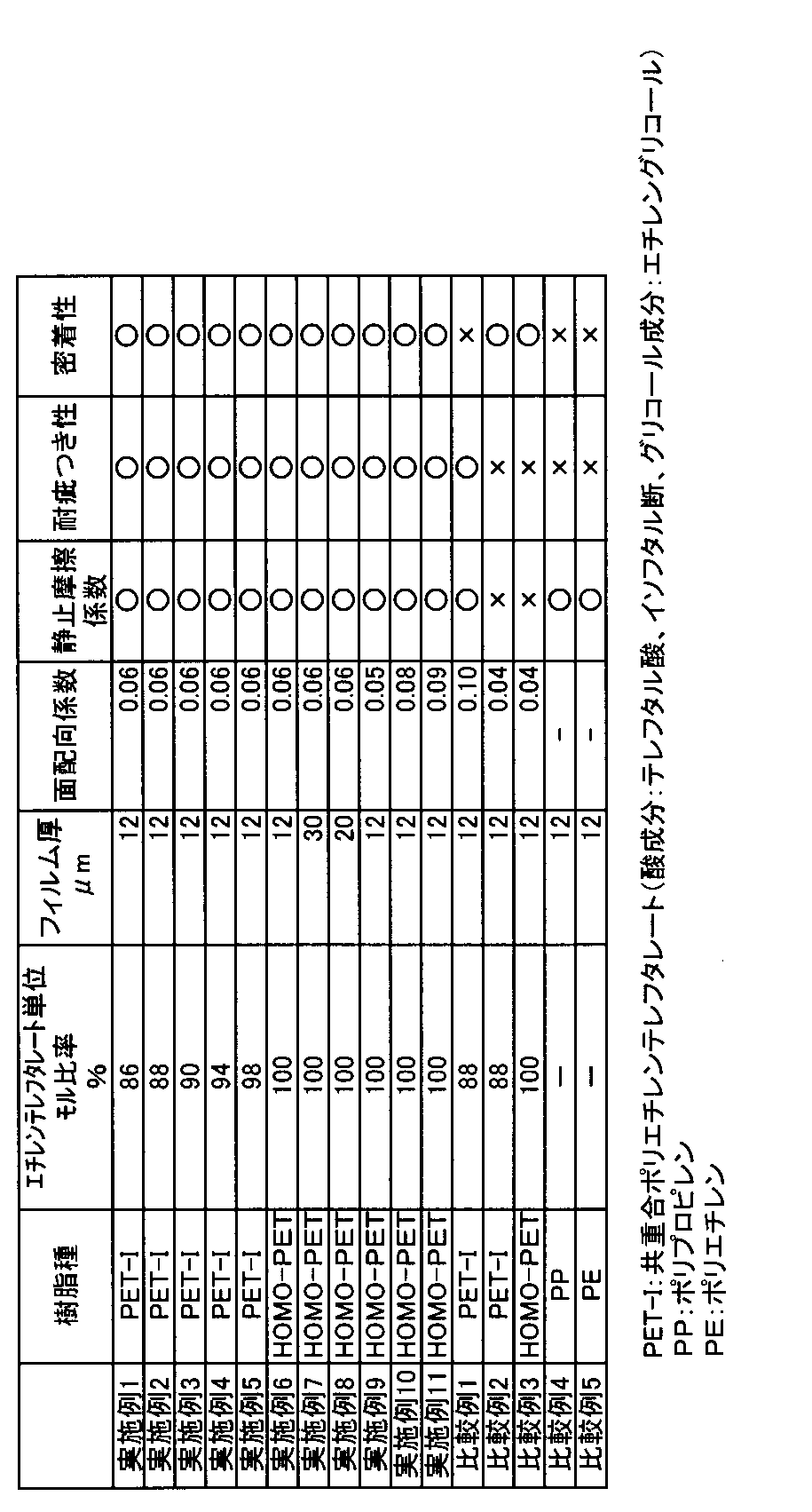
表1より、本発明例である実施例1〜11は、静止摩擦係数、耐疵つき性および密着性のいずれも優れていることがわかる。 From Table 1, it can be seen that Examples 1 to 11, which are examples of the present invention, are excellent in static coefficient of friction, scratch resistance and adhesion.
一方、面配向係数が本発明範囲外で高い比較例1は、密着性が劣っている。面配向係数が本発明範囲外で低い比較例2,3は、静止摩擦係数、耐疵つき性が劣っている。樹脂成分が本発明範囲外である比較例4、5は耐疵つき性および密着性が劣っている。 On the other hand, Comparative Example 1 having a high plane orientation coefficient outside the scope of the present invention has poor adhesion. Comparative Examples 2 and 3 having a low plane orientation coefficient outside the scope of the present invention are inferior in static friction coefficient and scratch resistance. Comparative Examples 4 and 5 in which the resin component is outside the range of the present invention are inferior in wrinkle resistance and adhesion.
耐疵付き性、滑り性に優れることから、缶用途を中心に広範な分野で適用できる。 Since it has excellent scratch resistance and slipperiness, it can be applied in a wide range of fields, mainly for can applications.
Claims (3)
ジカルボン酸成分とジオール成分からなり、
前記ジカルボン酸成分はテレフタル酸、またはイソフタル酸であり、
前記ジオール成分はエチレングリコールからなり、
さらに、エチレンテレフタレートからなる繰り返し単位がモル%比率で85%以上であり、
かつ、ラミネート鋼板のポリエステル樹脂層における鋼板と接していない樹脂層の最表層側の面配向係数が0.05以上0.09以下であることを特徴とする耐疵付き性、滑り性に優れた大型缶用ラミネート鋼板。 A laminated steel sheet obtained by laminating a stretched film made of a polyester resin on at least the outer surface of the steel sheet, wherein the polyester resin is
It consists of a dicarboxylic acid component and a diol component,
The dicarboxylic acid component is terephthalic acid or isophthalic acid,
The diol component consists of ethylene glycol,
Furthermore, the repeating unit consisting of ethylene terephthalate is 85% or more in terms of mole%,
In addition, the laminate for a large-sized can excellent in wrinkle resistance and slipperiness, characterized in that the surface orientation coefficient on the outermost layer side of the resin layer not in contact with the steel sheet in the polyester resin layer of the laminated steel sheet is 0.05 to 0.09. steel sheet.
Priority Applications (1)
| Application Number | Priority Date | Filing Date | Title |
|---|---|---|---|
| JP2004362590A JP4635593B2 (en) | 2004-12-15 | 2004-12-15 | Laminated steel sheet for large cans with excellent scratch resistance and sliding properties, and large can bodies using the same |
Applications Claiming Priority (1)
| Application Number | Priority Date | Filing Date | Title |
|---|---|---|---|
| JP2004362590A JP4635593B2 (en) | 2004-12-15 | 2004-12-15 | Laminated steel sheet for large cans with excellent scratch resistance and sliding properties, and large can bodies using the same |
Publications (2)
| Publication Number | Publication Date |
|---|---|
| JP2006168122A JP2006168122A (en) | 2006-06-29 |
| JP4635593B2 true JP4635593B2 (en) | 2011-02-23 |
Family
ID=36669372
Family Applications (1)
| Application Number | Title | Priority Date | Filing Date |
|---|---|---|---|
| JP2004362590A Expired - Lifetime JP4635593B2 (en) | 2004-12-15 | 2004-12-15 | Laminated steel sheet for large cans with excellent scratch resistance and sliding properties, and large can bodies using the same |
Country Status (1)
| Country | Link |
|---|---|
| JP (1) | JP4635593B2 (en) |
Families Citing this family (1)
| Publication number | Priority date | Publication date | Assignee | Title |
|---|---|---|---|---|
| CN111511545B (en) * | 2017-12-15 | 2022-09-20 | 杰富意钢铁株式会社 | Resin-coated metal plate for container |
Family Cites Families (6)
| Publication number | Priority date | Publication date | Assignee | Title |
|---|---|---|---|---|
| JP2515581B2 (en) * | 1988-09-07 | 1996-07-10 | 東洋鋼鈑株式会社 | Polyester resin coated metal plate for ironing can |
| JP2943183B2 (en) * | 1989-11-07 | 1999-08-30 | 三菱化学ポリエステルフィルム株式会社 | Laminated molding |
| JP2532002B2 (en) * | 1990-12-26 | 1996-09-11 | 東洋鋼鈑株式会社 | Resin coated metal plate for thin-walled deep drawing |
| TW362067B (en) * | 1996-04-10 | 1999-06-21 | Toyo Kohan Co Ltd | Metal sheet with highly workable polyterephthalic acid ethyl hydroxide ester resin coating |
| JP4345189B2 (en) * | 1999-05-31 | 2009-10-14 | Jfeスチール株式会社 | Laminated steel sheet for general cans |
| JP2002166513A (en) * | 2000-11-29 | 2002-06-11 | Mitsubishi Polyester Film Copp | Laminated polyester film for heat lamination of metal plate |
-
2004
- 2004-12-15 JP JP2004362590A patent/JP4635593B2/en not_active Expired - Lifetime
Also Published As
| Publication number | Publication date |
|---|---|
| JP2006168122A (en) | 2006-06-29 |
Similar Documents
| Publication | Publication Date | Title |
|---|---|---|
| TW574308B (en) | Biaxially oriented laminated polyester film and hard coat laminated film | |
| JPWO2003074611A1 (en) | Polyester film and gas barrier polyester film | |
| JP2960613B2 (en) | Polyester film for metal plate lamination processing | |
| JP4597127B2 (en) | Laminated polyester film and method for producing the same | |
| JP6838667B2 (en) | Biaxially oriented polyamide film and polyamide film mill roll | |
| CN102802937B (en) | Composite Al material for drawn and ironed can | |
| JP2006168122A (en) | Laminated steel sheet with excellent scratch resistance and sliding property and can body using the same | |
| JP3262031B2 (en) | Laminate and container using the same | |
| JP3876178B2 (en) | Easy-adhesive polyester film for optics | |
| JP3876177B2 (en) | Easy-adhesive polyester film for optics | |
| JP2010221413A (en) | Film for squeezing and ironing can coating | |
| JPWO1999012998A1 (en) | Polyester film | |
| JP4631583B2 (en) | Laminated polyester film for lamination and polyester resin laminated metal sheet | |
| JPH0542643A (en) | Film for metal laminate | |
| JP3780111B2 (en) | Film laminated steel sheet for 2-piece cans with excellent processing adhesion and corrosion resistance | |
| JPH06320669A (en) | Resin-coated metal plate for thin and deeply drawn can | |
| JP3041164B2 (en) | Composite resin-coated metal sheet and method for producing the same | |
| JP4090794B2 (en) | Resin-laminated metal plate with excellent flavor | |
| JP2004285342A (en) | Metal plate laminating polyester-based film | |
| JP2004216891A (en) | Polyester film for sticking metal plate | |
| JP4894988B2 (en) | Metal plate coating film | |
| JP2007253453A (en) | Resin-coated metal plate for containers | |
| JP2004285343A (en) | Metal plate laminating polyester-based film | |
| JP2004068063A (en) | Polyester resin coated tin alloy plated steel sheet | |
| JP2009013243A (en) | Film for covering drawn ironed can |
Legal Events
| Date | Code | Title | Description |
|---|---|---|---|
| RD01 | Notification of change of attorney |
Free format text: JAPANESE INTERMEDIATE CODE: A7421 Effective date: 20060921 |
|
| A621 | Written request for application examination |
Free format text: JAPANESE INTERMEDIATE CODE: A621 Effective date: 20070927 |
|
| A977 | Report on retrieval |
Free format text: JAPANESE INTERMEDIATE CODE: A971007 Effective date: 20100126 |
|
| A131 | Notification of reasons for refusal |
Free format text: JAPANESE INTERMEDIATE CODE: A131 Effective date: 20100323 |
|
| A521 | Request for written amendment filed |
Free format text: JAPANESE INTERMEDIATE CODE: A523 Effective date: 20100520 |
|
| TRDD | Decision of grant or rejection written | ||
| A01 | Written decision to grant a patent or to grant a registration (utility model) |
Free format text: JAPANESE INTERMEDIATE CODE: A01 Effective date: 20101026 |
|
| A01 | Written decision to grant a patent or to grant a registration (utility model) |
Free format text: JAPANESE INTERMEDIATE CODE: A01 |
|
| A61 | First payment of annual fees (during grant procedure) |
Free format text: JAPANESE INTERMEDIATE CODE: A61 Effective date: 20101108 |
|
| FPAY | Renewal fee payment (event date is renewal date of database) |
Free format text: PAYMENT UNTIL: 20131203 Year of fee payment: 3 |
|
| R150 | Certificate of patent or registration of utility model |
Ref document number: 4635593 Country of ref document: JP Free format text: JAPANESE INTERMEDIATE CODE: R150 Free format text: JAPANESE INTERMEDIATE CODE: R150 |
|
| R250 | Receipt of annual fees |
Free format text: JAPANESE INTERMEDIATE CODE: R250 |
|
| R250 | Receipt of annual fees |
Free format text: JAPANESE INTERMEDIATE CODE: R250 |
|
| R250 | Receipt of annual fees |
Free format text: JAPANESE INTERMEDIATE CODE: R250 |
|
| R250 | Receipt of annual fees |
Free format text: JAPANESE INTERMEDIATE CODE: R250 |
|
| R250 | Receipt of annual fees |
Free format text: JAPANESE INTERMEDIATE CODE: R250 |
|
| EXPY | Cancellation because of completion of term |