JP4635161B2 - Magnesia spinel refractory and method for producing the same - Google Patents
Magnesia spinel refractory and method for producing the same Download PDFInfo
- Publication number
- JP4635161B2 JP4635161B2 JP2000001359A JP2000001359A JP4635161B2 JP 4635161 B2 JP4635161 B2 JP 4635161B2 JP 2000001359 A JP2000001359 A JP 2000001359A JP 2000001359 A JP2000001359 A JP 2000001359A JP 4635161 B2 JP4635161 B2 JP 4635161B2
- Authority
- JP
- Japan
- Prior art keywords
- magnesia
- powder
- alumina
- granulated powder
- spinel
- Prior art date
- Legal status (The legal status is an assumption and is not a legal conclusion. Google has not performed a legal analysis and makes no representation as to the accuracy of the status listed.)
- Expired - Lifetime
Links
Images

Classifications
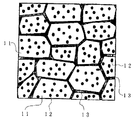
-
- C—CHEMISTRY; METALLURGY
- C04—CEMENTS; CONCRETE; ARTIFICIAL STONE; CERAMICS; REFRACTORIES
- C04B—LIME, MAGNESIA; SLAG; CEMENTS; COMPOSITIONS THEREOF, e.g. MORTARS, CONCRETE OR LIKE BUILDING MATERIALS; ARTIFICIAL STONE; CERAMICS; REFRACTORIES; TREATMENT OF NATURAL STONE
- C04B35/00—Shaped ceramic products characterised by their composition; Ceramics compositions; Processing powders of inorganic compounds preparatory to the manufacturing of ceramic products
- C04B35/01—Shaped ceramic products characterised by their composition; Ceramics compositions; Processing powders of inorganic compounds preparatory to the manufacturing of ceramic products based on oxide ceramics
- C04B35/03—Shaped ceramic products characterised by their composition; Ceramics compositions; Processing powders of inorganic compounds preparatory to the manufacturing of ceramic products based on oxide ceramics based on magnesium oxide, calcium oxide or oxide mixtures derived from dolomite
- C04B35/04—Shaped ceramic products characterised by their composition; Ceramics compositions; Processing powders of inorganic compounds preparatory to the manufacturing of ceramic products based on oxide ceramics based on magnesium oxide, calcium oxide or oxide mixtures derived from dolomite based on magnesium oxide
- C04B35/043—Refractories from grain sized mixtures
-
- C—CHEMISTRY; METALLURGY
- C04—CEMENTS; CONCRETE; ARTIFICIAL STONE; CERAMICS; REFRACTORIES
- C04B—LIME, MAGNESIA; SLAG; CEMENTS; COMPOSITIONS THEREOF, e.g. MORTARS, CONCRETE OR LIKE BUILDING MATERIALS; ARTIFICIAL STONE; CERAMICS; REFRACTORIES; TREATMENT OF NATURAL STONE
- C04B35/00—Shaped ceramic products characterised by their composition; Ceramics compositions; Processing powders of inorganic compounds preparatory to the manufacturing of ceramic products
- C04B35/01—Shaped ceramic products characterised by their composition; Ceramics compositions; Processing powders of inorganic compounds preparatory to the manufacturing of ceramic products based on oxide ceramics
- C04B35/03—Shaped ceramic products characterised by their composition; Ceramics compositions; Processing powders of inorganic compounds preparatory to the manufacturing of ceramic products based on oxide ceramics based on magnesium oxide, calcium oxide or oxide mixtures derived from dolomite
- C04B35/04—Shaped ceramic products characterised by their composition; Ceramics compositions; Processing powders of inorganic compounds preparatory to the manufacturing of ceramic products based on oxide ceramics based on magnesium oxide, calcium oxide or oxide mixtures derived from dolomite based on magnesium oxide
- C04B35/053—Fine ceramics
-
- B—PERFORMING OPERATIONS; TRANSPORTING
- B22—CASTING; POWDER METALLURGY
- B22D—CASTING OF METALS; CASTING OF OTHER SUBSTANCES BY THE SAME PROCESSES OR DEVICES
- B22D41/00—Casting melt-holding vessels, e.g. ladles, tundishes, cups or the like
- B22D41/02—Linings
-
- B—PERFORMING OPERATIONS; TRANSPORTING
- B22—CASTING; POWDER METALLURGY
- B22D—CASTING OF METALS; CASTING OF OTHER SUBSTANCES BY THE SAME PROCESSES OR DEVICES
- B22D41/00—Casting melt-holding vessels, e.g. ladles, tundishes, cups or the like
- B22D41/50—Pouring-nozzles
- B22D41/52—Manufacturing or repairing thereof
- B22D41/54—Manufacturing or repairing thereof characterised by the materials used therefor
Landscapes
- Engineering & Computer Science (AREA)
- Chemical & Material Sciences (AREA)
- Ceramic Engineering (AREA)
- Manufacturing & Machinery (AREA)
- Mechanical Engineering (AREA)
- Materials Engineering (AREA)
- Structural Engineering (AREA)
- Organic Chemistry (AREA)
- Compositions Of Oxide Ceramics (AREA)
- Ceramic Products (AREA)
- Press-Shaping Or Shaping Using Conveyers (AREA)
- Measuring Temperature Or Quantity Of Heat (AREA)
Description
【0001】
【発明の属する技術分野】
本発明は、鉄鋼製錬や非鉄金属製錬等の高温冶金炉やセメントロータリーキルン等に使用する耐食性及び耐スラグ浸透性を向上させたマグネシア・スピネル質耐火物や、保護管又はるつぼ等に関するものである。
【0002】
【従来の技術】
従来、電融マグネシアクリンカーを骨材とし、マトリックス部全体に対し5〜40重量%のアルミナ成分を含有するスピネル固溶相からなるマグネシア質超高温耐火物が開示されており(例えば、特開平4−55360号公報参照)、また特開平5−117019号公報には、鉄鋼製錬や非鉄金属製錬等の高温冶金炉やセメントロータリーキルン等においては、耐火物としてマグネシア・クロミア質もしくはマグネシア・スピネル質等の塩基性耐火煉瓦(一種のセラミックス)が主に用いられ、このうちマグネシア・スピネル質耐火煉瓦は、一般にマグネシア(MgO)クリンカーとスピネル(MgO・Al2 O3 )クリンカーとの2種の原料をマグネシアクリンカー50〜90重量%とスピネルクリンカー10〜50重量%を配合して製造されることが開示されている。
【0003】
【発明が解決しようとする課題】
しかしながら、前述の如き従来のマグネシア・スピネル質耐火物は、マグネシアクリンカー粉とスピネルクリンカー粉とを混合して成形・焼成した場合には、マグネシアの結晶であるペリクレースの結晶粒界におけるスピネル相の生成が不十分であり、緻密でかつ強固な組織を有するものが得られない。またマグネシアクリンカー粉とスピリルクリンカー粉のそれぞれにつき粗粒(粒径1〜3mm程度)、中粒(粒径250μm〜1mm程度)、微粒(粒径250μm以下)を混合して成形、焼成するため、耐火物の見掛気孔率が10%程度以上となり、緻密な組織が得られない。したがって、溶融スラグや溶融セメントによる侵食を容易に受けたり、構造的スポーリングや摩耗によって損耗し易いという欠点を有している。
【0004】
そこで、本発明者等は、鉄鋼製錬や非鉄金属製錬等の高温冶金炉やセメントロータリーキルン等に使用するマグネシア・スピネル質耐火物における上記の欠点について種々検討するなか、原料の少なくとも一部を、特にスプレードライヤー法にて造粒した造粒粉とすることにより、また成形手段を、特に静水圧プレス法で行うことにより耐スポーリング性が向上すると共に、耐食性及び耐スラグ浸透性が大幅に向上したものが得られることを見出し、ここに本発明をなすに至った。したがって、本発明が解決しようとする課題は、耐食性及び耐スラグ浸透性が大幅に向上したマグネシア・スピネル質耐火物を提供することにある。
【0005】
【課題を解決するための手段】
本発明の上記課題は、以下の発明によって達成される。
【0006】
本願請求項1に記載の発明は、スプレードライヤー法を用いて、マグネシア微粒粉及びアルミナ微粒粉をそれぞれ造粒した後、これらを用いてマグネシア粉末とアルミナ造粒粉とからなる混合物、アルミナ粉末とマグネシア造粒粉とからなる混合物、あるいは、マグネシア造粒粉とアルミナ造粒粉とからなる混合物のいずれかの混合物を製造し、このいずれかを静水圧プレス法で成形した後、焼成することを特徴とするマグネシア・スピネル質耐火物の製造方法において、前記マグネシア・スピネル質耐火物のマグネシアとアルミナの割合は、マグネシア80〜95重量%とアルミナ5〜20重量%の範囲で用い、前記マグネシア微粒粉及びアルミナ微粒粉の粒径は、それぞれ粒径0.1〜5μmのものを用い、またマグネシア造粒粉とアルミナ造粒粉の粒径は、それぞれ粒径10〜150μmのものを用いることを特徴とするマグネシア・スピネル質耐火物の製造方法である。
【0007】
本発明の請求項1に記載のマグネシア・スピネル質耐火物の製造方法は、スプレードライヤー法を用いて、マグネシア微粒粉及びアルミナ微粒粉をそれぞれ造粒した後、これらを用いてマグネシア粉末とアルミナ造粒粉とからなる混合物、アルミナ粉末とマグネシア造粒粉とからなる混合物、あるいは、マグネシア造粒粉とアルミナ造粒粉とからなる混合物のいずれかの混合物を製造し、このいずれかを静水圧プレス法で成形した後、焼成することを特徴とするマグネシア・スピネル質耐火物の製造方法において、前記マグネシア・スピネル質耐火物のマグネシアとアルミナの割合は、マグネシア80〜95重量%とアルミナ5〜20重量%の範囲で用い、前記マグネシア微粒粉及びアルミナ微粒粉の粒径は、それぞれ粒径0.1〜5μmのものを用い、またマグネシア造粒粉とアルミナ造粒粉の粒径は、それぞれ粒径10〜150μmのものを用いることにより、閉気孔を有するペリクレースとMgO・Al2 O3 を成分とするスピネルの緻密かつ強固な結合組織が得られ、耐スポーリング性が向上すると共に、優れた耐食性及び耐スラグ浸透性が大幅に向上したものが得られる。スプレードライヤー法を用いることにより、耐スポーリング性が向上すると共に、耐食性及び耐スラグ浸透性が大幅に向上したマグネシア・スピネル質耐火物が得られる。更に、成形手段として、静水圧プレス法を用いることにより、いっそう耐食性及び耐スラグ浸透性が大幅に向上したマグネシア・スピネル質耐火物が得られる。
【0008】
本発明の製造方法で得られたマグネシア・スピネル質耐火物は、粒径10〜150μmのマグネシア造粒粉と粒径0.1〜5μmのアルミナ粉を混合し、成形した後、焼成して得られた、ペリクレースとスピネルの緻密かつ強固な結合組織を有することにより、耐スポーリング性が向上すると共に、耐食性及び耐スラグ浸透性が、よりいっそう大幅に向上したものが得られる。また本発明の製造方法で得られた耐火物からなる保護管やるつぼも、同様に、よりいっそう優れた耐食性及び耐スラグ浸透性が大幅に向上したものが得られる。更に本発明の製造方法で得られたマグネシア・スピネル質耐火物において、マグネシア造粒粉形成用のマグネシア粉又はアルミナ造粒粉形成用のアルミナ粉の粒径が0.1〜5μmであることにより、耐火物は、もっとも優れた耐食性及び耐スラグ浸透性を有する。
【0009】
造粒粉の形成方法として、スプレードライヤー法を用いて得られたものであるとき、耐スポーリング性が向上すると共に、もっとも優れた耐食性及び耐スラグ浸透性が得られる。また成形手段として、静水圧プレス法を用いて得られたものであるとき、もっとも優れた耐食性及び耐スラグ浸透性が得られる。また焼成体がマグネシアとアルミナの混合物から得られるマグネシア・スピネル質の焼成体は、保護管又はるつぼとしてそれぞれ用いるのに適している。更に本発明の製造方法で得られたマグネシア・スピネル質耐火物は、銅製錬炉に好ましく用いられるばかりでなく銅製錬炉スラグに用いる保護管又はるつぼとして使用することができる。
【0010】
本発明のマグネシア・スピネル質耐火物の製造方法は、スプレードライヤー法を用いて、マグネシア微粒粉及びアルミナ微粒粉をそれぞれ造粒した後、これらを用いてマグネシア粉末とアルミナ造粒粉とからなる混合物、アルミナ粉末とマグネシア造粒粉とからなる混合物、マグネシア粉末とアルミナ粉末とを混合して得られた造粒粉、あるいは、マグネシア造粒粉とアルミナ造粒粉とを混合した造粒粉のいずれかを製造し、このいずれかを静水圧プレス法で成形した後、焼成することを特徴とするものであり、これによりペリクレース結晶の内部に微細な閉気孔が分散することにより、耐スポーリング性が向上すると共に、耐食性及び耐スラグ浸透性が大幅に向上する。
【0011】
【発明の実施の形態】
以下に、本発明について更に詳しく説明するが、本発明は、これに限定されるものではない。本発明では、マグネシア・スピネル質耐火物(又はセラミックス)の原料として、マグネシアとアルミナを主として用いるが、この際、粒径0.1〜5μmのマグネシアを造粒して粒径10〜150μmのマグネシア造粒粉を形成する。このマグネシア造粒粉の形成方法としては、スプレードライヤーを用いて造粒するのが好ましく、これにより球状で粒度分布がシャープな(揃った粒子)造粒粉が得られるため流動性がよい。また中空状の球状粒子が得られるので、これを焼成した場合に閉気孔となり耐スポーリング性が向上する。またスラリー状の液体原料から直接造粒粉が連続、かつ多量に得られるので工程が簡単でありかつ経済的である。
【0012】
マグネシア造粒粉の粒径が10μm未満では、ペリクレースとスピネルの緻密かつ強固な結合組織を得ることができないので、十分な耐食性及び耐スラグ浸透性が得られない。またマグネシア造粒粉の粒径が150μmを越えると気孔率が上昇して十分な耐食性及び耐スラグ浸透性を有するものが得られない。しかもこの際、マグネシア造粒粉を形成するマグネシア粉は、粒径0.1〜5μmがよく、0.1μm未満であったり5μmを越えると緻密な組織の造粒粉が形成されない。
【0013】
またアルミナ造粒粉は、粒径10〜150μmであり、マグネシア造粒粉と同様にスプレードライヤーを用いて造粒するのが好ましい。アルミナの造粒粉の粒径は、10μm未満では、ペリクレースとスピネルの緻密かつ強固な結合組織を得ることができないので、十分な耐食性及び耐スラグ浸透性が得られない。またアルミナ造粒粉の粒径が150μmを越えると気孔率が上昇して十分な耐食性及び耐スラグ浸透性を有するものが得られない。しかもこの際アルミナ造粒粉を形成するアルミナ粉は、粒径0.1〜5μmがよく、0.1μm未満であったり5μmを越えると緻密な組織の造粒粉が形成されない。
【0014】
更に、本発明に用いられる造粒粉形成用マグネシア粉及びアルミナ粉又は造粒粉と混合されるマグネシア粉末及びアルミナ粉末としては,それぞれマグネシア粉末が粒径0.1〜5μm、好ましくは0.5〜5μm、更に好ましくは1〜2μmであり、アルミナ粉末は粒径0.1〜5μm、好ましくは0.5〜5μm、好ましくは1〜2μmのものが用いられる。マグネシア粉末の粒径が0.1μm未満では、混合の際に偏在しやすく、また粒径が5μmを越えると焼成の際、アルミナとの反応性が悪化する。アルミナ粉末の粒径が0.1μm未満では、マグネシア粉末と同様に混合の際に偏在しやすく、また該粒径が5μmを越えると焼成の際、マグネシアとの反応性が悪化する。
【0015】
本発明に用いられるマグネシア粉末の粒径が0.5μm〜5μmの範囲において、混合の際に偏在したり、アルミナとの反応性が悪化することがない。またアルミナ粉末の粒径が0.5μm〜5μmの範囲において、混合の際に偏在したり、アルミナとの反応性が悪化することがない。更にマグネシア粉末の粒径が1μm〜2μmの範囲において、混合の際に偏在したり、アルミナとの反応性が悪化することがなくもっとも好ましい。またアルミナ粉末の粒径が1μm〜2μmの範囲において、混合の際に偏在したり、アルミナとの反応性が悪化することがほとんどない。
【0016】
本発明において、マグネシア粉末又はアルミナ粉末並びにマグネシア造粒粉又はアルミナ造粒粉から耐火製品を製造する際、3通りの組合せで用いることができる。この組合せは、請求項1に記載した如く、マグネシア粉末とアルミナ造粒粉とからなる混合物、アルミナ粉末とマグネシア造粒粉とからなる混合物、マグネシア造粒粉とアルミナ造粒粉とを混合した造粒粉である。
【0017】
本発明のマグネシア・スピネル質耐火物の製造において、マグネシアとアルミナとを用いる割合は、マグネシア80〜95重量%とアルミナ5〜20重量%の範囲で用いることが好ましい。特に粒径0.1〜5μmのマグネシア粉と粒径0.1〜5μmのアルミナ粉を混合して得られた粒径10〜150μmの造粒粉を成形する際の、マグネシアとアルミナとの混合割合は、マグネシア80〜95重量%とアルミナ5〜20重量%が好ましい。
【0018】
本発明において、マグネシア粉とアルミナ粉とを混合した後、造粒して得られた造粒粉の粒径は、10〜150μmであり、この範囲で得られたマグネシア・スピネル質耐火物は、耐食性及び耐スラグ浸透性が大幅に向上したものが得られる。なお、本発明において、マグネシア粉からマグネシア造粒粉を製造する際、アルミナ粉からアルミナ造粒粉を製造する際にも、結合剤を加えて混合した後、造粒してもよいことは言うまでもない。
【0019】
図1は、本発明の耐火物の結晶組織の部分拡大した略図である。図1において、本発明の耐火物は、ペリクレース(MgO)11中に閉気孔12が分散しており、これにより耐スポーリング性が向上する。このペリクレースの大きさは、粒径10μm〜100μmで、粒子の大きさが揃っている。また閉気孔は、孔径1μm〜5μmである。またこのペリクレース11からなる無数の結晶の間に緻密かつ強固なスピネル相13が形成されており、このペリクレース11とスピネル13とは、強固に結合している。その結果、耐食性及び耐スラグ浸透性が大幅に向上したものが得られる。
【0020】
本発明のマグネシア・スピネル質耐火物において、その製造方法は、特に限定されるものではないが、前記第1項のマグネシア・スピネル質耐火物の製造方法を一例として挙げると、スプレードライヤー法を用いて、マグネシア微粒粉及びアルミナ微粒粉をそれぞれ造粒した後、これらを用いてマグネシア粉末とアルミナ造粒粉とからなる混合物、アルミナ粉末とマグネシア造粒粉とからなる混合物、マグネシア粉末とアルミナ粉末とを混合して得られた造粒粉、あるいは、マグネシア造粒粉とアルミナ造粒粉とを混合した造粒粉のいずれかを製造し、このいずれかを静水圧プレス法で成形した後、焼成することを特徴とするもので、更に詳しくはマグネシア造粒粉とアルミナ粉とを所望により結合剤を添加して混合し、成形する。ついで得られた成形体をこの技術分野において周知の焼成手段(温度1600℃〜1700℃で10〜15時間)で焼成する。これによりペリクレースとスピネルの緻密かつ強固な結合組織を有するマグネシア・スピネル質耐火物が得られる。
【0021】
本発明の製造方法において、原料の粉砕及び造粒は、この技術分野において周知慣用されている方法を用いて行うが、造粒は、スプレードライヤーを用いて行うのが好ましい。スプレードライヤー法による造粒は、例えば、マグネシアやアルミナ等の原材料を一般的な方法で1.5μm程度まで粉砕した後、バインダーを加え、アルコールや水等でスラリー状とし、更に稀釈剤等でスラリーの液性(粘度等)を調整した後、スプレードライヤー(熱風中にスラリーを噴霧)に供給することにより球形の乾燥粒子を得る方法である。
【0022】
また成形手段としては、静水圧プレス法を用いることが好ましい。この静水圧プレス法は、静水圧を利用して成形体全体に均一な圧力を負荷して成形する方法で、具体的には、液体を満たした容器中に粉末を充填したゴム型を設置し、その液体を加圧することで液体の静水圧によりゴム型内の粉体に高圧をかけることによりなされる。この方法は、金型を使用する一軸成形と比較すると無限多軸加圧となり均一な成形体が得られる。
【0023】
本発明におけるマグネシアとアルミナの混合物を焼成して得られる耐火物は、保護管、るつぼ、銅製錬炉又は銅製錬炉スラグに用いる保護管あるいはるつぼを形成する場合にも前述のごとき優れた耐食性、耐スラグ浸透性を有するものが得られる。
【0024】
【作用】
本発明において、原料として、マグネシア粉末とアルミナ造粒粉とからなる混合物、アルミナ粉末とマグネシア造粒粉とからなる混合物、マグネシア造粒粉とアルミナ造粒粉とからなる混合物、マグネシア粉末とアルミナ粉末との混合物から得た造粒粉のいずれかを成形した後、焼成すると、ペリクレース結晶の内部に微細な閉気孔が分散することにより、耐スポーリング性が向上する。またペリクレース粒界に生成されるスピネルによりペリクレースとスピネルの緻密かつ強固な結合組織が形成され、その結果、耐食性及び耐スラグ浸透性が大幅に向上したものが得られる。また造粒手段としてスプレードライヤーを用いることにより粒径の揃った粒子が容易に得られる。特に粒径0.1〜5μmの造粒粉形成用マグネシア粉又はアルミナ粉を用い、かつ造粒をスプレードライヤー法で行うことにより、より優れた耐食性及び耐スラグ浸透性が得られる。更に成形手段として静水圧プレス法を用いることにより強度に優れ耐久性に優れたものが得られる。
【0025】
【実施例】
以下に、本発明の実施例を挙げて更に詳しく説明するが、本発明は、これに限定されるものではない。
【0026】
〔実施例1〕本発明のマグネシア・スピネル質耐火物を以下のようにして製造した。マグネシアの造粒粉は、平均粒径1.5μmのマグネシア粉末とバインダー(メチルセルロース)とアルコールとで分散物を形成し、これをスプレードライヤーで噴霧して平均粒径60μmの造粒粉を形成した。ついで、この造粒粉90重量%と平均粒径1.5μmのアルミナ粉末10重量%とを混合した後、静水圧プレス法により圧力1.5tf/cm2 下で21×13×5cmに成形した。得られた成形体を温度1650℃で12時間焼成した。この焼成体の見掛気孔率は、3.7%であった。得られた耐火煉瓦を試料1という。
【0027】
〔実施例2〕造粒粉形成用マグネシア粉末に代えてアルミナ粉末を用い、実施例1と同様にして、造粒粉を製造し、平均粒径60μmのアルミナ造粒粉を得た。ついで、このアルミナ造粒粉10重量%と実施例1で得られた平均粒径60μmのマグネシア造粒粉90重量%とを混合した後、実施例1と同様にして耐火煉瓦を製造した。この耐火煉瓦の見掛気孔率は3.8%であった。得られた耐火煉瓦を試料2という。
【0028】
〔実施例3〕平均粒径1.5μmのマグネシア粉末90重量%と実施例1に記載の平均粒径1.5μmのアルミナ粉末10重量%とを混合した後、実施例1と同様にして造粒粉を製造し、平均粒径60μmの造粒粉を得た。ついで、この造粒粉を用いて、実施例1と同様にして耐火煉瓦を製造した。この耐火煉瓦の見掛気孔率は3.5%であった。得られた耐火煉瓦を試料3という。
【0029】
〔実施例4〕造粒粉形成用の平均粒径1.5μmのマグネシア粉に代えて粒径0.1〜0.3μmのマグネシア粉末を用い、実施例1と同様にして、平均粒径60μmの造粒粉を得た。ついで、この造粒粉90重量%と粒径0.1〜0.3μmのアルミナ粉末10重量%とを混合して、実施例1と同様にして耐火煉瓦を製造した。この耐火煉瓦の見掛気孔率は3.3%であった。得られた耐火煉瓦を試料4という。
【0030】
実施例1〜4で得られた耐火煉瓦の試料1〜4について、以下の侵食試験装置を用いて試験した。
【0031】
図2は、本発明に用いられる侵食試験装置であり、図2において、侵食試験装置1は、本体内部が断熱煉瓦2に覆われ、更に本発明の試験用耐火煉瓦3が配置されている。試験用耐火煉瓦3は、容器状に3a,3b,3c,3dの如く配置され、その底部に銅製錬転炉スラグ(以下、単にスラグという。)が充填されている。また上部は、耐火煉瓦8で覆われ、内部は、ガス供給口6とガス排出口7とで連通している。この侵食試験装置1は、左右に傾転される構造を有し、水平位置と傾転位置とが繰り返される。
【0032】
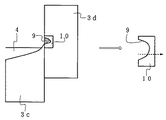
侵食試験は、CaO−Fe2 O3 −Cu2 Oを主成分とするスラグを使用して市販のマグネシア・スピネル質耐火物と実施例1〜4で製造したマグネシア・スピネル質耐火物とを用いて1230℃で300時間の侵食試験を行った。またこの試験は、耐火物のスラグによる侵食を促進するために侵食試験装置1を揺動させて実施した。その結果、側壁部分に使用した試験煉瓦は、図3に示す如く、切断片10において、侵食部(斜線部分)9が侵食により損耗した。以下に得られた結果を示す。
【0033】
【表1】
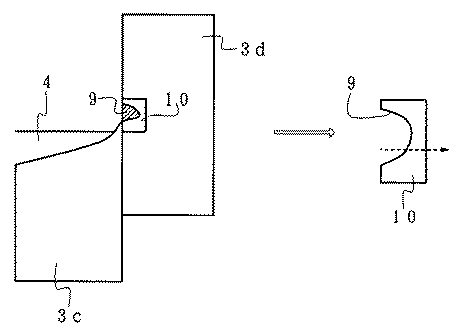
表1の実施例1に示されるように、市販の耐火煉瓦では、侵食部の切断断面積が6.2cm2 であり、また矢印方向への浸透は、10mm以上であったが、本発明の耐火煉瓦では、侵食部の切断断面積が2.4cm2 であり、また矢印方向への浸透は、2mm以下であった。このような結果から、本発明のマグネシア・スピネル質耐火物は、市販のそれに比較してスラグに対する耐食性に優れると共に、構造スポーリングの原因ともなる煉瓦へのスラグ浸透に対しても優れた耐浸透性を有することがわかる。
【0035】
〔実施例5〕
(1)保護管
市販のマグネシア粉とスピネル粉とを配合して作製した外径21mm×内径15mm×長さ70mmの保護管(先端の閉じた管状体)と本発明の実施例1乃至実施例4で用いた各マグネシア粉とアルミナ粉の混合物を使用して作製した同形状の保護管を比較と本発明のそれぞれの試験片1乃至4とした。試験は電気炉を使用してCaO−Fe2 O3 −Cu2 Oを主成分とする160gの銅製錬転炉スラグをマグネシア質容器内で1230℃で溶解し、その溶体中に試験片の先端が約2cm入るような状態で5日間保持した。その後、試験片の外径を測定し溶体による侵食程度の違いを判定した。また各試験片を切断した断面についてEPMA分析でスラグ成分であるFe,Ca,Cuを検出し、保護管へのスラグ成分の浸透距離を求めた。
【0036】
【表2】
表2から明らかなように、本発明の保護管は、耐食性、耐浸透性に優れていることがわかる。なお、マグネシア粉末とアルミナ造粒粉を用いた場合にも、得られた保護管は、耐食性、耐スラグ浸透性に優れている。
【0038】
(2)るつぼ
市販のマグネシア粉とスピネル粉とを配合して作製した外径21mm×内径15mm×長さ100mmのるつぼと本発明の実施例1乃至実施例4で用いた各マグネシア粉とアルミナ粉の混合物を使用して作製した同形状のるつぼを比較と本発明のそれぞれの試験片5乃至8とした。試験は電気炉を使用してCaO−Fe2 O3 −Cu2 Oを主成分とする50gの銅製錬転炉スラグを試験片内に入れ、1230℃でスラグを溶解させた状態で10日間保持した。その後、試験片を電気炉から取り出して観察し、スラグ成分がるつぼの外側まで浸透した試験片を×、浸透していない試験片を〇で示した。
【0039】
【表3】
表3から明らかなように、本発明のるつぼは、耐浸透性に優れていることがわかる。なお、マグネシア粉末とアルミナ造粒粉を用いた場合にも得られたるつぼは、耐食性、耐スラグ浸透性に優れている。
【0041】
〔実施例6〕
銅製錬炉用煉瓦
市販のマグネシア粉(平均粒径1.5μm)とスピネル粉(平均粒径1.5μm)とを配合して作製した21cm×13cm×5cmの銅製錬炉用煉瓦と実施例4で作製した耐火煉瓦を、比較を試験片9とし、本発明を試験片10とした。これらの試験片9、10を、図2の侵食試験装置を用い、実施例1と同様に侵食試験を行った。比較の試験片9では、断面積が5.0cm2 、浸透長が8mmであるのに対して、本発明の試験片10では、それぞれ2.4cm2 、2mmであり、煉瓦への浸透に対して優れた耐浸透性を有するものである。
【0042】
〔実施例7〕
銅製錬炉スラグ用の保護管
市販のマグネシア粉(平均粒径1.5μm)とスピネル粉(平均粒径1.5μm)とを配合して作製した外径21mm×内径15mm×長さ70mmの保護管(先端の閉じた管状体)と本発明の実施例2で用いた各マグネシア粉とアルミナ粉の混合物を使用して作製した同形状の保護管を、比較を試験片11とし、本発明を試験片12とした。試験は実施例5の保護管と同様にして行い、保護管へのスラグ成分の浸透距離を求めた。比較の試験片11では、最大外径減少長が1.5mmであり、浸透長が1.4mmであるのに対して、本発明では、それぞれ0.6mm、0.4mmであり、耐食性、耐浸透性に優れていることがわかる。
【0043】
〔実施例8〕
銅製錬炉スラグ用のるつぼ
市販のマグネシア粉(平均粒径1.5μm)とスピネル粉(平均粒径1.5μm)とを配合して作製した外径21mm×内径15mm×長さ100mmのるつぼと本発明の実施例3で用いた各マグネシア粉とアルミナ粉の混合物を使用して作製した同形状のるつぼを、比較を試験片13とし、本発明を試験片14とした。試験は実施例5のるつぼと同様にして行い、その後、試験片を電気炉から取り出して観察したところ、比較の試験片13では、スラグ成分がるつぼの外側まで浸透しているのに対して本発明の試験片14ではスラグ成分がるつぼの外側まで浸透していない点で優れていることがわかった。
【0044】
【発明の効果】
本発明の請求項1に記載のマグネシア・スピネル質耐火物の製造方法は、スプレードライヤー法を用いて、マグネシア微粒粉及びアルミナ微粒粉をそれぞれ造粒した後、これらを用いてマグネシア粉末とアルミナ造粒粉とからなる混合物、アルミナ粉末とマグネシア造粒粉とからなる混合物、あるいは、マグネシア造粒粉とアルミナ造粒粉とからなる混合物のいずれかの混合物を製造し、このいずれかを静水圧プレス法で成形した後、焼成することを特徴とするマグネシア・スピネル質耐火物の製造方法において、前記マグネシア・スピネル質耐火物のマグネシアとアルミナの割合は、マグネシア80〜95重量%とアルミナ5〜20重量%の範囲で用い、前記マグネシア微粒粉及びアルミナ微粒粉の粒径は、それぞれ粒径0.1〜5μmのものを用い、またマグネシア造粒粉とアルミナ造粒粉の粒径は、それぞれ粒径10〜150μmのものを用いることにより、閉気孔を有するペリクレースとMgO・Al2 O3 を成分とするスピネルの緻密かつ強固な結合組織が得られ、耐スポーリング性が向上すると共に、優れた耐食性及び耐スラグ浸透性が大幅に向上したものが得られる。スプレードライヤー法を用いることにより、耐スポーリング性が向上すると共に、耐食性及び耐スラグ浸透性が大幅に向上したマグネシア・スピネル質耐火物が得られる。更に、成形手段として、静水圧プレス法を用いることにより、いっそう耐食性及び耐スラグ浸透性が大幅に向上したマグネシア・スピネル質耐火物が得られる。
【0045】
本発明の製造方法で得られたマグネシア・スピネル質耐火物は、粒径10〜150μmのマグネシア造粒粉と粒径0.1〜5μmのアルミナ粉を混合し、成形した後、焼成して得られた、ペリクレースとスピネルの緻密かつ強固な結合組織を有することにより、耐スポーリング性が向上すると共に、耐食性及び耐スラグ浸透性が、よりいっそう大幅に向上したものが得られる。また本発明の製造方法で得られた耐火物において、マグネシア造粒粉形成用のマグネシア粉又はアルミナ造粒粉形成用のアルミナ粉の粒径が0.1〜5μmであることにより、耐火物は、もっとも優れた耐食性及び耐スラグ浸透性を有する。
【0046】
本発明の製造方法において、造粒粉の形成方法として、スプレードライヤー法を用いて得られたものであるとき、耐スポーリング性が向上すると共に、もっとも優れた耐食性及び耐スラグ浸透性が得られる。また本発明の製造方法において、成形手段として、静水圧プレス法を用いて得られたものであるとき、もっとも優れた耐食性及び耐スラグ浸透性が得られる。また焼成体が本発明ので得られたマグネシアとアルミナの混合物から得られるマグネシア・スピネル質の焼成体は、保護管又はるつぼとしてそれぞれ用いるのに適している。更に本発明の製造方法で得られたマグネシア・スピネル質耐火物は、銅製錬炉に好ましく用いられるばかりでなく銅製錬炉スラグに用いる保護管又はるつぼとして使用することができる。
【0047】
また本発明において、造粒粉の形成方法として、スプレードライヤー法を用いることにより、粒径の揃った粒子が容易に得られる。その結果、もっとも優れた耐食性及び耐スラグ浸透性が得られる。更に本発明において、マグネシア・スピネル質耐火物の製造において、成形手段として、静水圧プレス法を用いることにより、得られた耐火物は、いっそう優れた耐食性及び耐スラグ浸透性を有する。
【図面の簡単な説明】
【図1】本発明の耐火物の拡大した結晶組織を示す略図である。
【図2】本発明に用いられる侵食試験装置を示す断面略図である。
【図3】侵食部を示す部分断面図である。
【符号の説明】
1 侵食試験装置 7 ガス排出口
2、8 耐火煉瓦 9 侵食部
3、3a、3b、3c、3d 10 切断片(試験用試料)
本発明の耐火煉瓦 11 ペリクレース
4 スラグ 12 閉気孔
5 ヒーター 13 スピネル
6 ガス供給口[0001]
BACKGROUND OF THE INVENTION
The present invention relates to a magnesia-spinel refractory with improved corrosion resistance and slag penetration resistance, a protective tube, a crucible, etc. used in high-temperature metallurgical furnaces such as steel smelting and non-ferrous metal smelting and cement rotary kilns. is there.
[0002]
[Prior art]
Conventionally, there has been disclosed a magnesia ultra-high temperature refractory composed of a spinel solid solution phase containing 5-40% by weight of an alumina component based on an electrofused magnesia clinker as an aggregate (for example, Japanese Patent Laid-Open No. Hei 4). JP-A-5-55360), and Japanese Patent Laid-Open No. 5-117019 discloses magnesia / chromia or magnesia / spinel as refractories in high-temperature metallurgical furnaces such as steel smelting and non-ferrous metal smelting and cement rotary kilns. Basic refractory bricks (a kind of ceramics) such as magnesia and spinel refractory bricks are generally used for magnesia (MgO) clinker and spinel (MgO · Al2OThree) It is disclosed that two kinds of raw materials with clinker are prepared by blending 50 to 90% by weight of magnesia clinker and 10 to 50% by weight of spinel clinker.
[0003]
[Problems to be solved by the invention]
However, the conventional magnesia-spinel refractories as described above, when magnesia clinker powder and spinel clinker powder are mixed and formed and fired, the formation of spinel phase at the grain boundary of periclase, which is a magnesia crystal. Is insufficient, and a dense and strong structure cannot be obtained. Also, for each of magnesia clinker powder and spiryl clinker powder, coarse particles (particle size of about 1 to 3 mm), medium particles (particle size of about 250 μm to 1 mm), and fine particles (particle size of 250 μm or less) are mixed and molded and fired. The apparent porosity of the refractory is about 10% or more, and a dense structure cannot be obtained. Therefore, it has the disadvantage that it is easily eroded by molten slag and molten cement and is easily worn by structural spalling and wear.
[0004]
Accordingly, the present inventors have studied at least a part of the raw materials while variously examining the above-mentioned drawbacks in magnesia-spinel refractories used in high-temperature metallurgical furnaces such as steel smelting and non-ferrous metal smelting and cement rotary kilns. In particular, by using a granulated powder granulated by the spray dryer method, and by performing the molding means by the hydrostatic press method in particular, the spalling resistance is improved, and the corrosion resistance and slag penetration resistance are greatly improved. It has been found that an improved product can be obtained, and the present invention has been made here. Therefore, the problem to be solved by the present invention is to provide a magnesia-spinel refractory material having greatly improved corrosion resistance and slag penetration resistance.
[0005]
[Means for Solving the Problems]
The above-described problems of the present invention are as follows:InventionAchieved by:
[0006]
The invention according to
[0007]
According to
[0008]
The present inventionObtained by the manufacturing methodThe magnesia-spinel refractory is a mixture of magnesia granulated powder having a particle size of 10 to 150 μm and alumina powder having a particle size of 0.1 to 5 μm. By having a strong connective structure, spalling resistance is improved, and corrosion resistance and slag penetration resistance are further greatly improved. AlsoProtective tube and crucible made of refractory obtained by the production method of the present inventionIn the same manner, a material having much better corrosion resistance and slag penetration resistance can be obtained. Further, according to the present inventionMagnesia spinel refractories obtained by the manufacturing methodTherefore, the refractory has the most excellent corrosion resistance and slag penetration resistance because the particle size of magnesia powder for forming magnesia granulated powder or alumina powder for forming alumina granulated powder is 0.1 to 5 μm. YouThe
[0009]
ConstructionWhen the powder is formed by using a spray dryer method, the spalling resistance is improved and the most excellent corrosion resistance and slag penetration resistance are obtained. Further, when the molding means is obtained by using an isostatic pressing method, the most excellent corrosion resistance and slag penetration resistance can be obtained. Further, magnesia-spinel fired bodies obtained from a mixture of magnesia and alumina are suitable for use as protective tubes or crucibles, respectively. Furthermore, the present inventionObtained by the manufacturing methodThe magnesia-spinel refractory can be used not only for a copper smelting furnace but also as a protective tube or a crucible used for a copper smelting furnace slag.
[0010]
The method for producing a magnesia-spinel refractory according to the present invention is a mixture comprising a magnesia powder and an alumina granulated powder after granulating magnesia fine powder and alumina fine powder using a spray dryer method. Any of a mixture comprising alumina powder and magnesia granulated powder, granulated powder obtained by mixing magnesia powder and alumina powder, or granulated powder obtained by mixing magnesia granulated powder and alumina granulated powder This is characterized in that either one of these is molded by an isostatic pressing method and then fired. By this, fine closed pores are dispersed inside the periclase crystal, thereby being resistant to spalling. And the corrosion resistance and slag penetration resistance are greatly improved.
[0011]
DETAILED DESCRIPTION OF THE INVENTION
Hereinafter, the present invention will be described in more detail, but the present invention is not limited thereto. In the present invention, magnesia and alumina are mainly used as raw materials for magnesia / spinel refractories (or ceramics). At this time, magnesia having a particle size of 0.1 to 5 μm is granulated to produce magnesia having a particle size of 10 to 150 μm. Form granulated powder. As a method for forming this magnesia granulated powder, it is preferable to granulate using a spray dryer, and since this gives a granulated powder having a spherical shape and a sharp particle size distribution (uniform particles), the fluidity is good. Further, since hollow spherical particles are obtained, when this is fired, closed pores are formed and the spalling resistance is improved. Further, since the granulated powder is obtained directly and in a large amount directly from the slurry-like liquid raw material, the process is simple and economical.
[0012]
If the particle size of the magnesia granulated powder is less than 10 μm, a dense and strong connective structure of periclase and spinel cannot be obtained, so that sufficient corrosion resistance and slag penetration resistance cannot be obtained. On the other hand, when the particle size of the magnesia granulated powder exceeds 150 μm, the porosity increases, and a product having sufficient corrosion resistance and slag penetration resistance cannot be obtained. Moreover, in this case, the magnesia powder forming the magnesia granulated powder preferably has a particle size of 0.1 to 5 μm, and if it is less than 0.1 μm or exceeds 5 μm, a granulated powder having a dense structure is not formed.
[0013]
The alumina granulated powder has a particle size of 10 to 150 μm and is preferably granulated using a spray dryer in the same manner as the magnesia granulated powder. If the particle size of the granulated alumina powder is less than 10 μm, a dense and strong connective structure of periclase and spinel cannot be obtained, so that sufficient corrosion resistance and slag penetration resistance cannot be obtained. On the other hand, if the particle diameter of the alumina granulated powder exceeds 150 μm, the porosity increases, and a product having sufficient corrosion resistance and slag penetration resistance cannot be obtained. Moreover, the alumina powder forming the alumina granulated powder at this time has a particle size of 0.1 to 5 μm, and if it is less than 0.1 μm or exceeds 5 μm, the granulated powder having a dense structure is not formed.
[0014]
Further, as the magnesia powder and the alumina powder or the magnesia powder mixed with the granulated powder used in the present invention, the magnesia powder has a particle size of 0.1 to 5 μm, preferably 0.5. The alumina powder having a particle size of 0.1 to 5 μm, preferably 0.5 to 5 μm, preferably 1 to 2 μm is used. If the particle size of the magnesia powder is less than 0.1 μm, it tends to be unevenly distributed during mixing, and if the particle size exceeds 5 μm, the reactivity with alumina deteriorates during firing. If the particle size of the alumina powder is less than 0.1 μm, it is likely to be unevenly distributed during mixing as in the case of the magnesia powder, and if the particle size exceeds 5 μm, the reactivity with magnesia deteriorates during firing.
[0015]
When the particle size of the magnesia powder used in the present invention is in the range of 0.5 μm to 5 μm, it is not unevenly distributed during mixing and the reactivity with alumina does not deteriorate. Moreover, when the particle diameter of the alumina powder is in the range of 0.5 μm to 5 μm, it is not unevenly distributed during mixing and the reactivity with alumina does not deteriorate. Furthermore, when the particle diameter of the magnesia powder is in the range of 1 μm to 2 μm, it is most preferable that it is not unevenly distributed during mixing or the reactivity with alumina is not deteriorated. Moreover, when the particle diameter of the alumina powder is in the range of 1 μm to 2 μm, it is hardly unevenly distributed at the time of mixing and the reactivity with alumina hardly deteriorates.
[0016]
In this invention, when manufacturing a refractory product from a magnesia powder or an alumina powder and a magnesia granulated powder or an alumina granulated powder, it can use in three types of combinations. As described in
[0017]
In the production of the magnesia-spinel refractory according to the present invention, the ratio of using magnesia and alumina is preferably in the range of 80 to 95% by weight of magnesia and 5 to 20% by weight of alumina. In particular, mixing magnesia and alumina when forming granulated powder having a particle size of 10 to 150 μm obtained by mixing magnesia powder having a particle size of 0.1 to 5 μm and alumina powder having a particle size of 0.1 to 5 μm The proportion is preferably 80 to 95% by weight of magnesia and 5 to 20% by weight of alumina.
[0018]
In the present invention, the particle size of the granulated powder obtained by granulating after mixing magnesia powder and alumina powder is 10 to 150 μm, and the magnesia-spinel refractory obtained in this range is A material with significantly improved corrosion resistance and slag penetration resistance is obtained. In the present invention, when producing magnesia granulated powder from magnesia powder, when producing alumina granulated powder from alumina powder, it goes without saying that it may be granulated after adding and mixing a binder. Yes.
[0019]
FIG. 1 is a partially enlarged schematic view of the crystal structure of the refractory according to the present invention. In FIG. 1, the refractory of the present invention has closed pores 12 dispersed in periclase (MgO) 11, thereby improving the spalling resistance. The size of this periclase is 10 μm to 100 μm in particle size, and the particle size is uniform. The closed pores have a pore diameter of 1 μm to 5 μm. A dense and strong spinel phase 13 is formed between countless crystals of the periclase 11, and the periclase 11 and the spinel 13 are firmly bonded. As a result, a material with significantly improved corrosion resistance and slag penetration resistance is obtained.
[0020]
In the magnesia-spinel refractory of the present invention, its production method is not particularly limited, but the production method of the magnesia-spinel refractory in the
[0021]
The present inventionManufacturing methodIn this method, the raw material is pulverized and granulated using a method well known and commonly used in this technical field, and the granulation is preferably performed using a spray dryer. For granulation by the spray dryer method, for example, raw materials such as magnesia and alumina are pulverized to about 1.5 μm by a general method, a binder is added, and the slurry is made into a slurry with alcohol or water, and further slurried with a diluent or the like. After adjusting the liquid property (viscosity etc.) of this, it supplies to a spray dryer (spraying a slurry in hot air), and obtains the spherical dry particle.
[0022]
Moreover, it is preferable to use a hydrostatic pressure press method as a shaping | molding means. This hydrostatic press method is a method in which a uniform pressure is applied to the entire molded body using the hydrostatic pressure, and specifically, a rubber mold filled with powder is installed in a container filled with liquid. This is done by applying high pressure to the powder in the rubber mold by hydrostatic pressure of the liquid by pressurizing the liquid. This method is infinite multiaxial pressing compared to uniaxial molding using a mold, and a uniform molded body can be obtained.
[0023]
The refractory obtained by firing the mixture of magnesia and alumina in the present invention has excellent corrosion resistance as described above even when forming a protective tube, a crucible, a copper smelting furnace or a protective tube or crucible used for a copper smelting furnace slag, What has slag penetration resistance is obtained.
[0024]
[Action]
In the present invention, as a raw material, a mixture composed of magnesia powder and alumina granulated powder, a mixture composed of alumina powder and magnesia granulated powder, a mixture composed of magnesia granulated powder and alumina granulated powder, magnesia powder and alumina powder When one of the granulated powders obtained from the mixture is molded and then fired, fine closed pores are dispersed inside the periclase crystal, thereby improving the spalling resistance. In addition, a dense and strong connective structure of periclase and spinel is formed by the spinel generated at the periclase grain boundary, and as a result, one having greatly improved corrosion resistance and slag penetration resistance is obtained. Further, particles having a uniform particle diameter can be easily obtained by using a spray dryer as a granulating means. More excellent corrosion resistance and slag penetration resistance can be obtained by using granulated powder forming magnesia powder or alumina powder having a particle size of 0.1 to 5 μm and performing granulation by a spray dryer method. Further, by using an isostatic pressing method as a forming means, a material having excellent strength and durability can be obtained.
[0025]
【Example】
Hereinafter, the present invention will be described in more detail with reference to examples, but the present invention is not limited thereto.
[0026]
[Example 1] A magnesia-spinel refractory according to the present invention was produced as follows. The granulated powder of magnesia formed a dispersion of magnesia powder having an average particle size of 1.5 μm, a binder (methylcellulose) and alcohol, and sprayed with a spray dryer to form a granulated powder having an average particle size of 60 μm. . Next, 90% by weight of the granulated powder and 10% by weight of alumina powder having an average particle size of 1.5 μm were mixed, and then the pressure was 1.5 tf / cm by a hydrostatic press method.2Molded under 21 × 13 × 5 cm. The obtained molded body was fired at a temperature of 1650 ° C. for 12 hours. The apparent porosity of this fired body was 3.7%. The obtained refractory brick is referred to as
[0027]
[Example 2] Alumina powder was used in place of the magnesia powder for forming granulated powder, and granulated powder was produced in the same manner as in Example 1 to obtain alumina granulated powder having an average particle diameter of 60 µm. Subsequently, 10% by weight of the alumina granulated powder and 90% by weight of magnesia granulated powder having an average particle diameter of 60 μm obtained in Example 1 were mixed, and then a refractory brick was produced in the same manner as in Example 1. The apparent porosity of this refractory brick was 3.8%. The obtained refractory brick is referred to as
[0028]
[Example 3] 90% by weight of magnesia powder having an average particle diameter of 1.5 μm and 10% by weight of alumina powder having an average particle diameter of 1.5 μm described in Example 1 were mixed, and the same procedure as in Example 1 was performed. Granules were produced to obtain granulated powder having an average particle size of 60 μm. Then, using this granulated powder, a refractory brick was produced in the same manner as in Example 1. The apparent porosity of this refractory brick was 3.5%. The obtained refractory brick is referred to as
[0029]
[Example 4] An magnesia powder having a particle size of 0.1 to 0.3 µm was used instead of a magnesia powder having an average particle size of 1.5 µm for forming a granulated powder, and an average particle size of 60 µm was used in the same manner as in Example 1. Of granulated powder was obtained. Next, 90% by weight of the granulated powder and 10% by weight of alumina powder having a particle size of 0.1 to 0.3 μm were mixed to produce a refractory brick in the same manner as in Example 1. The apparent porosity of this refractory brick was 3.3%. The obtained refractory brick is referred to as Sample 4.
[0030]
[0031]
FIG. 2 shows an erosion test apparatus used in the present invention. In FIG. 2, the
[0032]
The erosion test is CaO-Fe2OThree-Cu2Using a commercially available magnesia-spinel refractory and a magnesia-spinel refractory produced in Examples 1 to 4 using slag containing O as a main component, an erosion test was conducted at 1230 ° C. for 300 hours. In addition, this test was performed by swinging the
[0033]
[Table 1]
As shown in Example 1 of Table 1, in a commercially available refractory brick, the cut cross-sectional area of the eroded portion is 6.2 cm.2Further, the penetration in the direction of the arrow was 10 mm or more, but in the refractory brick of the present invention, the cut cross-sectional area of the eroded portion is 2.4 cm.2Further, the penetration in the direction of the arrow was 2 mm or less. From these results, the magnesia-spinel refractory of the present invention is superior in corrosion resistance to slag as compared to commercially available products, and also excellent in resistance to penetration of slag into bricks that cause structural spalling. It turns out that it has sex.
[0035]
Example 5
(1) Protection tube
A protective tube (tubular body with a closed tip) having an outer diameter of 21 mm, an inner diameter of 15 mm, and a length of 70 mm, prepared by blending commercially available magnesia powder and spinel powder, and each used in Examples 1 to 4 of the present invention The protective tube of the same shape produced using the mixture of magnesia powder and alumina powder was made into each
[0036]
[Table 2]
As is apparent from Table 2, the protective tube of the present invention is excellent in corrosion resistance and penetration resistance. Even when magnesia powder and alumina granulated powder are used, the obtained protective tube is excellent in corrosion resistance and slag penetration resistance.
[0038]
(2) Crucible
A crucible having an outer diameter of 21 mm, an inner diameter of 15 mm and a length of 100 mm prepared by blending commercially available magnesia powder and spinel powder and a mixture of each magnesia powder and alumina powder used in Examples 1 to 4 of the present invention are used. The crucibles of the same shape made as above were used as the comparative and
[0039]
[Table 3]
As can be seen from Table 3, the crucible of the present invention is excellent in penetration resistance. In addition, the crucible obtained also when using magnesia powder and alumina granulated powder is excellent in corrosion resistance and slag penetration resistance.
[0041]
Example 6
Brick for copper smelting furnace
21 cm × 13 cm × 5 cm copper smelting furnace brick prepared by mixing commercially available magnesia powder (average particle size 1.5 μm) and spinel powder (average particle size 1.5 μm) and the refractory brick produced in Example 4 Is a test piece 9, and the present invention is a
[0042]
Example 7
Protective tube for copper smelting furnace slag
A protective tube (a tubular body with a closed tip) having an outer diameter of 21 mm, an inner diameter of 15 mm, and a length of 70 mm, prepared by blending commercially available magnesia powder (average particle diameter 1.5 μm) and spinel powder (average particle diameter 1.5 μm) ) And a protective tube having the same shape prepared by using a mixture of each magnesia powder and alumina powder used in Example 2 of the present invention was referred to as a test piece 11 and the present invention was referred to as a test piece 12. The test was performed in the same manner as the protective tube of Example 5, and the penetration distance of the slag component into the protective tube was determined. In the test piece 11 for comparison, the maximum outer diameter reduction length is 1.5 mm and the penetration length is 1.4 mm, whereas in the present invention, it is 0.6 mm and 0.4 mm, respectively. It turns out that it is excellent in permeability.
[0043]
Example 8
Crucible for copper smelting furnace slag
In Example 3 of the present invention, a crucible having an outer diameter of 21 mm, an inner diameter of 15 mm, and a length of 100 mm was prepared by blending commercially available magnesia powder (average particle diameter 1.5 μm) and spinel powder (average particle diameter 1.5 μm). The crucible of the same shape produced using the mixture of each used magnesia powder and alumina powder was used as a test piece 13 for comparison, and the present invention was used as test piece 14. The test was carried out in the same manner as the crucible of Example 5, and then the test piece was taken out from the electric furnace and observed. It turned out that the test piece 14 of the invention is excellent in that the slag component does not penetrate to the outside of the crucible.
[0044]
【The invention's effect】
The magnesia-spinel refractory according to
[0045]
The present inventionObtained by the manufacturing methodThe magnesia-spinel refractory is a mixture of magnesia granulated powder having a particle size of 10 to 150 μm and alumina powder having a particle size of 0.1 to 5 μm. By having a strong connective structure, spalling resistance is improved, and corrosion resistance and slag penetration resistance are further greatly improved. The present inventionObtained by manufacturing methodIn the refractory, the particle size of the magnesia powder for forming the magnesia granulated powder or the alumina powder for forming the alumina granulated powder is 0.1 to 5 μm, so that the refractory has the most excellent corrosion resistance and slag penetration resistance. Have
[0046]
The present inventionManufacturing methodIn the method, the spalling resistance is improved and the most excellent corrosion resistance and slag permeation resistance are obtained when the granulated powder is obtained by using a spray dryer method. The present inventionProduction methodIn the method, the most excellent corrosion resistance and slag penetration resistance can be obtained when the molding means is obtained by using an isostatic pressing method. In addition, the fired body of the present inventionObtained inThe sintered body of magnesia spinel obtained from a mixture of magnesia and alumina is suitable for use as a protective tube or a crucible, respectively. Further, according to the present inventionObtained by manufacturing methodThe magnesia-spinel refractory can be used not only for a copper smelting furnace but also as a protective tube or a crucible used for a copper smelting furnace slag.
[0047]
Moreover, in this invention, the particle | grains with a uniform particle diameter are easily obtained by using the spray dryer method as a formation method of granulated powder. As a result, the most excellent corrosion resistance and slag penetration resistance can be obtained. Furthermore, in the present invention, in the production of magnesia-spinel refractory, the refractory obtained by using an isostatic pressing method as a forming means has more excellent corrosion resistance and slag penetration resistance.
[Brief description of the drawings]
FIG. 1 is a schematic diagram showing an enlarged crystal structure of a refractory according to the present invention.
FIG. 2 is a schematic sectional view showing an erosion test apparatus used in the present invention.
FIG. 3 is a partial cross-sectional view showing an eroded portion.
[Explanation of symbols]
1 Erosion test equipment 7 Gas outlet
2, 8 Fire brick 9 Erosion part
3, 3a, 3b, 3c,
Refractory brick of the present invention 11 Periclase
4 Slag 12 Closed pore
5 Heater 13 Spinel
6 Gas supply port
Claims (1)
Priority Applications (7)
| Application Number | Priority Date | Filing Date | Title |
|---|---|---|---|
| JP2000001359A JP4635161B2 (en) | 1999-01-29 | 2000-01-07 | Magnesia spinel refractory and method for producing the same |
| CA002297347A CA2297347C (en) | 1999-01-29 | 2000-01-27 | Magnesia-spinel refractory and method of producing the same |
| KR10-2000-0004369A KR100375779B1 (en) | 1999-01-29 | 2000-01-28 | Magnesia-spinel refractory and method of producing the same |
| FI20000177A FI122532B (en) | 1999-01-29 | 2000-01-28 | Refractory magnesium oxide spinel material and process for making the same |
| US09/493,017 US6239051B1 (en) | 1999-01-29 | 2000-01-28 | Magnesia-spinel refractory and method of producing the same |
| AU13623/00A AU756800B2 (en) | 1999-01-29 | 2000-01-28 | Magnesia-spinel refractory and method of producing the same |
| IDP20000067D ID24690A (en) | 1999-01-29 | 2000-01-31 | MAGNESIA-SPINEL FIRE HANDLING AND METHODS TO PRODUCE IT |
Applications Claiming Priority (3)
| Application Number | Priority Date | Filing Date | Title |
|---|---|---|---|
| JP11-23203 | 1999-01-29 | ||
| JP2320399 | 1999-01-29 | ||
| JP2000001359A JP4635161B2 (en) | 1999-01-29 | 2000-01-07 | Magnesia spinel refractory and method for producing the same |
Related Child Applications (1)
| Application Number | Title | Priority Date | Filing Date |
|---|---|---|---|
| JP2010206987A Division JP2010280566A (en) | 1999-01-29 | 2010-09-15 | Magnesia spinel refractory |
Publications (2)
| Publication Number | Publication Date |
|---|---|
| JP2000281429A JP2000281429A (en) | 2000-10-10 |
| JP4635161B2 true JP4635161B2 (en) | 2011-02-16 |
Family
ID=26360528
Family Applications (1)
| Application Number | Title | Priority Date | Filing Date |
|---|---|---|---|
| JP2000001359A Expired - Lifetime JP4635161B2 (en) | 1999-01-29 | 2000-01-07 | Magnesia spinel refractory and method for producing the same |
Country Status (7)
| Country | Link |
|---|---|
| US (1) | US6239051B1 (en) |
| JP (1) | JP4635161B2 (en) |
| KR (1) | KR100375779B1 (en) |
| AU (1) | AU756800B2 (en) |
| CA (1) | CA2297347C (en) |
| FI (1) | FI122532B (en) |
| ID (1) | ID24690A (en) |
Families Citing this family (5)
| Publication number | Priority date | Publication date | Assignee | Title |
|---|---|---|---|---|
| JP4538779B2 (en) * | 2003-03-03 | 2010-09-08 | 株式会社ヨータイ | Magnesia-alumina clinker and refractory obtained using the same |
| JP5569455B2 (en) * | 2010-04-08 | 2014-08-13 | 株式会社デンソー | Temperature sensor and manufacturing method thereof |
| JP7277712B2 (en) * | 2019-02-18 | 2023-05-19 | 品川リフラクトリーズ株式会社 | Magnesia-spinel refractory bricks |
| CN112707719A (en) * | 2021-02-04 | 2021-04-27 | 北京金隅通达耐火技术有限公司 | Method for preparing periclase-spinel composite material by coating process |
| CN116747926B (en) * | 2023-06-28 | 2026-04-21 | 北京航空材料研究院股份有限公司 | An internally woven carbon fiber reinforced molding crucible |
Family Cites Families (6)
| Publication number | Priority date | Publication date | Assignee | Title |
|---|---|---|---|---|
| US3342616A (en) * | 1965-09-20 | 1967-09-19 | Corhart Refractories Co | Refractory with periclase-based stabilized solid solution |
| US4126479A (en) * | 1977-09-15 | 1978-11-21 | Kaiser Aluminum & Chemical Corporation | Magnesium aluminate spinel bond for refractory brick |
| DE3532228A1 (en) * | 1984-10-02 | 1986-04-17 | Toshiba Ceramics Co., Ltd., Tokio/Tokyo | FIREPROOF COMPOSITION |
| US4703022A (en) * | 1984-10-30 | 1987-10-27 | Consolidated Ceramic Products, Inc. | Alumina and MgO preheatable insulating refractory liners and methods of use thereof |
| DE4305170C1 (en) * | 1993-02-19 | 1994-07-28 | Daimler Benz Ag | Spinel containing magnesium and aluminum, as well as processes for its synthesis and use |
| JPH08268752A (en) * | 1995-03-28 | 1996-10-15 | Taimei Kagaku Kogyo Kk | Alumina-magnesia composite oxide, method for producing the same, and fine powder of alumina-magnesia composite oxide |
-
2000
- 2000-01-07 JP JP2000001359A patent/JP4635161B2/en not_active Expired - Lifetime
- 2000-01-27 CA CA002297347A patent/CA2297347C/en not_active Expired - Fee Related
- 2000-01-28 FI FI20000177A patent/FI122532B/en not_active IP Right Cessation
- 2000-01-28 AU AU13623/00A patent/AU756800B2/en not_active Ceased
- 2000-01-28 KR KR10-2000-0004369A patent/KR100375779B1/en not_active Expired - Fee Related
- 2000-01-28 US US09/493,017 patent/US6239051B1/en not_active Expired - Lifetime
- 2000-01-31 ID IDP20000067D patent/ID24690A/en unknown
Also Published As
| Publication number | Publication date |
|---|---|
| ID24690A (en) | 2000-08-03 |
| CA2297347C (en) | 2005-06-28 |
| FI20000177A0 (en) | 2000-01-28 |
| FI20000177L (en) | 2000-07-29 |
| US6239051B1 (en) | 2001-05-29 |
| CA2297347A1 (en) | 2000-07-29 |
| KR100375779B1 (en) | 2003-03-15 |
| FI122532B (en) | 2012-03-15 |
| KR20000076559A (en) | 2000-12-26 |
| AU1362300A (en) | 2000-08-03 |
| JP2000281429A (en) | 2000-10-10 |
| AU756800B2 (en) | 2003-01-23 |
Similar Documents
| Publication | Publication Date | Title |
|---|---|---|
| US10259750B2 (en) | Hydraulic binder system based on aluminum oxide | |
| KR20130093608A (en) | Chromium oxide refractory material | |
| US4152166A (en) | Zircon-containing compositions and ceramic bodies formed from such compositions | |
| RU2020100219A (en) | A method for producing porous sintered magnesia, a charge for producing a coarse-ceramic refractory product with a granular material of sintered magnesia, products of this kind, as well as methods for their production, lining of an industrial furnace and an industrial furnace | |
| EP0006775B1 (en) | Gas-permeable refractory elements | |
| JP4023916B2 (en) | Alumina cement, alumina cement composition, amorphous refractory, and spraying method using the same | |
| JP4635161B2 (en) | Magnesia spinel refractory and method for producing the same | |
| JP2010280566A (en) | Magnesia spinel refractory | |
| CA2152298A1 (en) | Magnesia-titania refractory and method for manufacturing the same | |
| KR20160064163A (en) | Refractory product with a SiAlON matrix | |
| CN112897994A (en) | Preparation method of corundum spinel complex phase material | |
| JP2002234776A (en) | Monolithic refractory composition for molten steel ladle | |
| AU648386B2 (en) | Improvements in the manufacture of shaped refractory objects | |
| JPH0794343B2 (en) | Magnesia clinker and method for producing the same | |
| JPH09301766A (en) | Porous spinel clinker and its production | |
| CN111132950B (en) | Refractory batch, method for producing an unshaped refractory ceramic product from the batch and unshaped refractory ceramic product obtained by the method | |
| JP2000263013A (en) | Utilization of residual aluminum ash and castable refractory with alumina spinel | |
| JP2000016874A (en) | Quick-setting agent for refractories and spraying method using the same | |
| Zawrah et al. | High alumina castables reinforced with SiC | |
| JP3143666B2 (en) | Refractory materials for steelmaking furnaces | |
| JPH11157917A (en) | Method for producing magnesia-chrome refractory | |
| JP2000191364A (en) | Magnesia chrome refractories | |
| RU2348592C2 (en) | Periclase - spinelled refractory material | |
| JPS608989B2 (en) | Refractories for blast furnaces | |
| JP2025040203A (en) | Manufacturing method of magnesia-spinel bricks |
Legal Events
| Date | Code | Title | Description |
|---|---|---|---|
| A621 | Written request for application examination |
Free format text: JAPANESE INTERMEDIATE CODE: A621 Effective date: 20040329 |
|
| A977 | Report on retrieval |
Free format text: JAPANESE INTERMEDIATE CODE: A971007 Effective date: 20060913 |
|
| A131 | Notification of reasons for refusal |
Free format text: JAPANESE INTERMEDIATE CODE: A131 Effective date: 20061012 |
|
| A521 | Request for written amendment filed |
Free format text: JAPANESE INTERMEDIATE CODE: A523 Effective date: 20061211 |
|
| A02 | Decision of refusal |
Free format text: JAPANESE INTERMEDIATE CODE: A02 Effective date: 20070523 |
|
| A521 | Request for written amendment filed |
Free format text: JAPANESE INTERMEDIATE CODE: A523 Effective date: 20070717 |
|
| A911 | Transfer to examiner for re-examination before appeal (zenchi) |
Free format text: JAPANESE INTERMEDIATE CODE: A911 Effective date: 20070808 |
|
| A912 | Re-examination (zenchi) completed and case transferred to appeal board |
Free format text: JAPANESE INTERMEDIATE CODE: A912 Effective date: 20070831 |
|
| A521 | Request for written amendment filed |
Free format text: JAPANESE INTERMEDIATE CODE: A523 Effective date: 20100915 |
|
| A01 | Written decision to grant a patent or to grant a registration (utility model) |
Free format text: JAPANESE INTERMEDIATE CODE: A01 |
|
| A61 | First payment of annual fees (during grant procedure) |
Free format text: JAPANESE INTERMEDIATE CODE: A61 Effective date: 20101025 |
|
| FPAY | Renewal fee payment (event date is renewal date of database) |
Free format text: PAYMENT UNTIL: 20131203 Year of fee payment: 3 |
|
| R150 | Certificate of patent or registration of utility model |
Ref document number: 4635161 Country of ref document: JP Free format text: JAPANESE INTERMEDIATE CODE: R150 Free format text: JAPANESE INTERMEDIATE CODE: R150 |
|
| EXPY | Cancellation because of completion of term |