JP2025513402A - Use of Vehicle UWB Systems - Google Patents
Use of Vehicle UWB Systems Download PDFInfo
- Publication number
- JP2025513402A JP2025513402A JP2024561954A JP2024561954A JP2025513402A JP 2025513402 A JP2025513402 A JP 2025513402A JP 2024561954 A JP2024561954 A JP 2024561954A JP 2024561954 A JP2024561954 A JP 2024561954A JP 2025513402 A JP2025513402 A JP 2025513402A
- Authority
- JP
- Japan
- Prior art keywords
- uwb
- identifier
- frame
- time
- sensor
- Prior art date
- Legal status (The legal status is an assumption and is not a legal conclusion. Google has not performed a legal analysis and makes no representation as to the accuracy of the status listed.)
- Pending
Links
Images



Classifications
-
- G—PHYSICS
- G01—MEASURING; TESTING
- G01S—RADIO DIRECTION-FINDING; RADIO NAVIGATION; DETERMINING DISTANCE OR VELOCITY BY USE OF RADIO WAVES; LOCATING OR PRESENCE-DETECTING BY USE OF THE REFLECTION OR RERADIATION OF RADIO WAVES; ANALOGOUS ARRANGEMENTS USING OTHER WAVES
- G01S13/00—Systems using the reflection or reradiation of radio waves, e.g. radar systems; Analogous systems using reflection or reradiation of waves whose nature or wavelength is irrelevant or unspecified
- G01S13/02—Systems using reflection of radio waves, e.g. primary radar systems; Analogous systems
- G01S13/0209—Systems with very large relative bandwidth, i.e. larger than 10 %, e.g. baseband, pulse, carrier-free, ultrawideband
-
- G—PHYSICS
- G01—MEASURING; TESTING
- G01S—RADIO DIRECTION-FINDING; RADIO NAVIGATION; DETERMINING DISTANCE OR VELOCITY BY USE OF RADIO WAVES; LOCATING OR PRESENCE-DETECTING BY USE OF THE REFLECTION OR RERADIATION OF RADIO WAVES; ANALOGOUS ARRANGEMENTS USING OTHER WAVES
- G01S13/00—Systems using the reflection or reradiation of radio waves, e.g. radar systems; Analogous systems using reflection or reradiation of waves whose nature or wavelength is irrelevant or unspecified
- G01S13/74—Systems using reradiation of radio waves, e.g. secondary radar systems; Analogous systems
-
- G—PHYSICS
- G01—MEASURING; TESTING
- G01S—RADIO DIRECTION-FINDING; RADIO NAVIGATION; DETERMINING DISTANCE OR VELOCITY BY USE OF RADIO WAVES; LOCATING OR PRESENCE-DETECTING BY USE OF THE REFLECTION OR RERADIATION OF RADIO WAVES; ANALOGOUS ARRANGEMENTS USING OTHER WAVES
- G01S13/00—Systems using the reflection or reradiation of radio waves, e.g. radar systems; Analogous systems using reflection or reradiation of waves whose nature or wavelength is irrelevant or unspecified
- G01S13/74—Systems using reradiation of radio waves, e.g. secondary radar systems; Analogous systems
- G01S13/76—Systems using reradiation of radio waves, e.g. secondary radar systems; Analogous systems wherein pulse-type signals are transmitted
- G01S13/765—Systems using reradiation of radio waves, e.g. secondary radar systems; Analogous systems wherein pulse-type signals are transmitted with exchange of information between interrogator and responder
-
- G—PHYSICS
- G01—MEASURING; TESTING
- G01S—RADIO DIRECTION-FINDING; RADIO NAVIGATION; DETERMINING DISTANCE OR VELOCITY BY USE OF RADIO WAVES; LOCATING OR PRESENCE-DETECTING BY USE OF THE REFLECTION OR RERADIATION OF RADIO WAVES; ANALOGOUS ARRANGEMENTS USING OTHER WAVES
- G01S13/00—Systems using the reflection or reradiation of radio waves, e.g. radar systems; Analogous systems using reflection or reradiation of waves whose nature or wavelength is irrelevant or unspecified
- G01S13/88—Radar or analogous systems specially adapted for specific applications
- G01S13/93—Radar or analogous systems specially adapted for specific applications for anti-collision purposes
- G01S13/931—Radar or analogous systems specially adapted for specific applications for anti-collision purposes of land vehicles
-
- G—PHYSICS
- G01—MEASURING; TESTING
- G01S—RADIO DIRECTION-FINDING; RADIO NAVIGATION; DETERMINING DISTANCE OR VELOCITY BY USE OF RADIO WAVES; LOCATING OR PRESENCE-DETECTING BY USE OF THE REFLECTION OR RERADIATION OF RADIO WAVES; ANALOGOUS ARRANGEMENTS USING OTHER WAVES
- G01S5/00—Position-fixing by co-ordinating two or more direction or position line determinations; Position-fixing by co-ordinating two or more distance determinations
- G01S5/02—Position-fixing by co-ordinating two or more direction or position line determinations; Position-fixing by co-ordinating two or more distance determinations using radio waves
- G01S5/0284—Relative positioning
- G01S5/0289—Relative positioning of multiple transceivers, e.g. in ad hoc networks
-
- G—PHYSICS
- G01—MEASURING; TESTING
- G01S—RADIO DIRECTION-FINDING; RADIO NAVIGATION; DETERMINING DISTANCE OR VELOCITY BY USE OF RADIO WAVES; LOCATING OR PRESENCE-DETECTING BY USE OF THE REFLECTION OR RERADIATION OF RADIO WAVES; ANALOGOUS ARRANGEMENTS USING OTHER WAVES
- G01S13/00—Systems using the reflection or reradiation of radio waves, e.g. radar systems; Analogous systems using reflection or reradiation of waves whose nature or wavelength is irrelevant or unspecified
- G01S13/88—Radar or analogous systems specially adapted for specific applications
- G01S13/93—Radar or analogous systems specially adapted for specific applications for anti-collision purposes
- G01S13/931—Radar or analogous systems specially adapted for specific applications for anti-collision purposes of land vehicles
- G01S2013/9329—Radar or analogous systems specially adapted for specific applications for anti-collision purposes of land vehicles cooperating with reflectors or transponders
Landscapes
- Engineering & Computer Science (AREA)
- Radar, Positioning & Navigation (AREA)
- Remote Sensing (AREA)
- Physics & Mathematics (AREA)
- General Physics & Mathematics (AREA)
- Computer Networks & Wireless Communication (AREA)
- Electromagnetism (AREA)
- Radar Systems Or Details Thereof (AREA)
- Mobile Radio Communication Systems (AREA)
- Position Fixing By Use Of Radio Waves (AREA)
Abstract
ビークルUWBシステムの使用
1つ又は複数のUWBセンサを備え且つ登録された1つ又は複数の識別子を有するビークルUWBシステムの使用の方法が提供される。その方法は、1つ又は複数の位置特定を周期的に含む。1つ又は複数の位置特定には、それぞれの識別子の各々について、1つ又は複数のUWBセンサによるそれぞれの識別子の少なくとも1つのそれぞれの位置特定が含まれる。1つ以上の位置特定は時間的に離れている。その方法は、複数のレーダー測定を周期的に含む。複数のレーダー測定は、少なくとも1つのそれぞれのUWBセンサに関し、複数のそれぞれのレーダー測定を含む。それぞれのレーダー測定の数は、各識別子に関し、1つ又は複数のUWBセンサによる識別子の少なくとも1つのそれぞれの位置特定の数よりも多い。その方法は、ビークルUWBシステムの利用を改善する。
Use of a Vehicle UWB System There is provided a method of use of a vehicle UWB system comprising one or more UWB sensors and having one or more registered identifiers. The method includes periodically one or more location determinations. The one or more location determinations include, for each respective identifier, at least one respective location determination of the respective identifiers by the one or more UWB sensors. The one or more location determinations are spaced apart in time. The method includes periodically a plurality of radar measurements. The plurality of radar measurements includes a plurality of respective radar measurements for the at least one respective UWB sensor. The number of respective radar measurements is greater than the number of at least one respective location determinations of the identifiers by the one or more UWB sensors for each identifier. The method improves utilization of the vehicle UWB system.
Description
本開示は、ビークルUWBシステム(UWBはUltra-Wide Bandの略)の使用に関する。 This disclosure relates to the use of vehicular UWB systems (UWB stands for Ultra-Wide Band).
技術的背景
現在、一部のビークルには、ビークルに設置された1つ又は複数のUWBセンサを含むUWBシステムが搭載されている。UWBシステムは1つ又は複数の識別子を登録し、UWBシステムはその後1つ又は複数のUWBセンサで1つ又は複数の識別子の位置を特定することができる。しかし、UWBシステムの使用は一般的にこの位置特定機能に限られている。
Technical Background Currently, some vehicles are equipped with UWB systems that include one or more UWB sensors installed on the vehicle. The UWB system registers one or more identifiers, which the UWB system can then locate with the one or more UWB sensors. However, the use of UWB systems is generally limited to this location function.
このため、改良されたビークルUWBシステムが必要とされている。 Therefore, there is a need for improved vehicular UWB systems.
概要
この目的のために、ビークルUWBシステムの使用の方法が提供され、そのシステムは1つ又は複数のUWBセンサを含み、登録された1つ又は複数の識別子を有する。この方法を以下では「使用の方法」又は単に「方法」と呼ぶ。その方法は、定期的な1つ又は複数の位置の特定を含む。1つ又は複数の位置特定には、それぞれの識別子の各々について、1つ又は複数のUWBセンサによるそれぞれの識別子の少なくとも1つのそれぞれの位置特定が含まれる。1つ又は複数の位置特定は、時間的に離れている。その方法は、定期的な複数のレーダー測定を含む。複数のレーダー測定は、少なくとも1つのそれぞれのUWBセンサについて、複数のそれぞれのレーダー測定を含む。それぞれのレーダー測定の数は、各識別子について、1つ又は複数のUWBセンサによる識別子の少なくとも1つのそれぞれの位置特定の数よりも多い。
To this end, there is provided a method of use of a vehicular UWB system, the system including one or more UWB sensors and having one or more registered identifiers, the method being referred to hereinafter as the "method of use" or simply the "method". The method includes periodic one or more location determinations. The one or more location determinations include, for each respective identifier, at least one respective location determination of the respective identifiers by the one or more UWB sensors. The one or more location determinations are spaced apart in time. The method includes periodic multiple radar measurements. The multiple radar measurements include, for the at least one respective UWB sensor, a multiple of the respective radar measurements. The number of the respective radar measurements is greater than the number of the at least one respective location determination of the identifiers by the one or more UWB sensors for each identifier.
1つ又は複数のUWBセンサによるそれぞれの識別子のそれぞれの位置特定の各々は、それぞれの識別子と1つ又は複数のUWBセンサとの間のフレームの送信を各々が含むUWB交換を含んでいてもよい。複数のレーダー測定は、それぞれのUWBセンサのそれぞれのレーダー測定の各々について、UWB交換の間のそれぞれのUWBセンサとそれぞれの識別子との間のフレームの送信から時間的に分離された、それぞれのUWBセンサによるフレームの放出を含んでいてもよい。 Each of the localizations of each of the respective identifiers by the one or more UWB sensors may include a UWB exchange, each including a transmission of a frame between the respective identifier and the one or more UWB sensors. The multiple radar measurements may include, for each of the respective radar measurements of the respective UWB sensors, an emission of a frame by the respective UWB sensor that is separated in time from the transmission of a frame between the respective UWB sensor and the respective identifier during the UWB exchange.
1つ又は複数のUWBセンサによるそれぞれの識別子のそれぞれの位置の各々は、タイムスロットのシリーズを含む時間インターバル内で実施されうる。1又は複数の識別子は、優先識別子を含んでいてもよい。各レーダー測定のフレームは、優先識別子のタイムスロットのうちの1つ内で発せられうる。 Each of the respective locations of the respective identifiers by the one or more UWB sensors may be performed within a time interval that includes a series of time slots. The one or more identifiers may include a priority identifier. Each radar measurement frame may be emitted within one of the time slots of the priority identifier.
優先識別子と1つ又は複数のUWBセンサとの間のUWB交換のフレームの送信は、第1グループに属するシリーズのスロット内で実施されうる。そのシリーズは、第1グループの外側に1つ又は複数のスロットの第2グループを含みうる。レーダー測定の少なくとも1つのフレームは、第2グループの1つ又は複数のスロットのうちの1つ内で発せられうる。 The transmission of frames of the UWB exchange between the priority identifier and the one or more UWB sensors may be performed within a series of slots belonging to a first group. The series may include a second group of one or more slots outside the first group. At least one frame of the radar measurement may be emitted within one of the one or more slots of the second group.
UWB交換のうちの1つの各フレームは、それぞれのタイムスロットの開始時に送信されうる。UWBセンサのレーダー測定の各フレームは、それぞれのタイムスロットの終わりに発せられうる。各UWBセンサについて、UWBセンサがレーダー測定のフレームを発するそれぞれのタイムスロットは、1つ又は複数の識別子のうちの1つとUWBセンサとの間でUWB交換のフレームが送信されるそれぞれのタイムスロットと異なりうる。 Each frame of one of the UWB exchanges may be transmitted at the beginning of a respective time slot. Each frame of the radar measurement of the UWB sensor may be emitted at the end of a respective time slot. For each UWB sensor, each time slot in which the UWB sensor emits a frame of the radar measurement may be different from each time slot in which a frame of the UWB exchange is transmitted between one of the one or more identifiers and the UWB sensor.
レーダー測定のフレームは、UWB交換の送信されるフレームと直交して発せられうる。 The radar measurement frames can be emitted orthogonal to the transmitted frames of the UWB exchange.
1つ又は複数のUWBセンサによるそれぞれの識別子のそれぞれの位置の各々は、シリーズの開始及び終了のスロットにおける識別子から各UWBセンサへのフレームの送信、及び、各UWBセンサについて、シリーズの途中のそれぞれのスロットにおけるUWBセンサからそれぞれの識別子へのフレームの送信、を含みうる。 Each respective location of a respective identifier by one or more UWB sensors may include transmitting a frame from the identifier to each UWB sensor in the beginning and ending slots of the series, and, for each UWB sensor, transmitting a frame from the UWB sensor to the respective identifier in each slot midway through the series.
1つ又は複数のUWBセンサを含み且つ登録された1つ又は複数の識別子を有するビークルUWBシステムによって実施される、使用の方法によるシステムの使用に関する、スケジューリング法も提供される。この方法を以下では「スケジューリング法」と呼ぶ。そのスケジューリング法は、1つ又は複数の位置特定及び複数のレーダー測定の計画を含む。 There is also provided a scheduling method for system usage according to a method of usage implemented by a vehicular UWB system including one or more UWB sensors and having one or more registered identifiers, the method being referred to hereinafter as the "scheduling method." The scheduling method includes planning one or more localizations and multiple radar measurements.
スケジューリング法は、レーダー測定のフレームの放出の及びUWB交換のうちの1つのフレームの送信の、所定のタイムスロットにおける少なくとも1つのスケジューリングの検知を含みうる。またスケジューリング法は、所定のタイムスロットにおいて検知された少なくとも1つのスケジューリングの各々について、UWB交換のうちの1つのフレームの送信に関するレーダー測定のフレームの放出のスケジューリングの時間的シフトを含みうる。 The scheduling method may include detecting at least one scheduling in a given time slot for the emission of a frame of the radar measurement and for the transmission of one of the frames of the UWB exchange. The scheduling method may also include, for each of the at least one scheduling detected in the given time slot, a time shift of the scheduling of the emission of the frame of the radar measurement with respect to the transmission of one of the frames of the UWB exchange.
ビークルUWBシステムも提供される。UWBシステムは、1つ又は複数のUWBセンサを含む。システムは、使用の方法に従って使用されるように、及び/又は、スケジューリング法を実行するように構成される。 A vehicular UWB system is also provided. The UWB system includes one or more UWB sensors. The system is configured to be used according to a method of use and/or to perform a scheduling method.
ビークルUWBシステム用のUWBセンサも提供される。UWBセンサは、使用の方法によるシステムの使用のために及び/又はスケジューリング法を実行するように構成される。 A UWB sensor for a vehicular UWB system is also provided. The UWB sensor is configured for use of the system according to the method of use and/or to perform a scheduling method.
コンピュータプログラムも提供される。コンピュータプログラムは、前記プログラムがプロセッサによって実行される場合に、使用の方法の及び/又はスケジューリング法の実行のためのプログラムコード命令を含む。 A computer program is also provided, the computer program comprising program code instructions for the execution of the method of use and/or the scheduling method when said program is executed by a processor.
非限定的な例を、以下の図面を参照して説明する:
詳細な説明
1つ又は複数のUWBセンサを含み且つ登録された1つ又は複数の識別子を有するビークルUWBシステムの使用の方法が提供される。この方法を以下では「使用の方法」又は単に「方法」と呼ぶ。その方法は、定期的に実行される複数のアクションを含む。それらのアクションは1つ又は複数の位置特定を含む。1つ又は複数の位置特定は、それぞれの識別子の各々について、1つ又は複数のUWBセンサによるそれぞれの識別子の少なくとも1つのそれぞれの位置特定を含む。1つ又は複数の位置特定は時間的に離れている。それらのアクションはまた、複数のレーダー測定を含む。複数のレーダー測定は、少なくとも1つのそれぞれのUWBセンサについて、複数のそれぞれのレーダー測定を含む。それぞれのレーダー測定の(期間あたりの)数は、各識別子について、1つ又は複数のUWBセンサによる識別子の少なくとも1つのそれぞれの位置特定の(期間あたりの)数よりも(厳密には)多い。
DETAILED DESCRIPTION There is provided a method of use of a vehicular UWB system including one or more UWB sensors and having one or more registered identifiers, hereinafter referred to as the "method of use" or simply the "method". The method includes a number of actions that are periodically performed. The actions include one or more location determinations. The one or more location determinations include, for each respective identifier, at least one respective location determination of the respective identifier by one or more UWB sensors. The one or more location determinations are spaced apart in time. The actions also include a number of radar measurements. The multiple radar measurements include, for at least one respective UWB sensor. The number of respective radar measurements (per time period) is (strictly) greater than the number of at least one respective location determination of the identifier by one or more UWB sensors (per time period) for each identifier.
UWBは、例えばIEEE802.15.4によって規定されるものの、通信プロトコルを指しうる。 UWB can refer to a communications protocol, such as that defined by IEEE 802.15.4.
使用の方法の前に実行されうるケジューリング法も提供される。そのスケジューリング法は、1つ又は複数の位置特定及び複数のレーダー測定の計画を含みうる。スケジューリング法は、使用の方法の実行前に一度実行されてもよく、使用の方法は、スケジューリング法によって定められる計画に従って、定期的に、複数の期間にわたって、1つ又は複数の位置特定及び複数のレーダー測定を行うことを含んでもよい。或いは、スケジューリング法は、使用の方法の実行中に複数回、例えば所定回数の期間が経過するたびに又は特定のイベント(例えば新しい識別子の検知)の後に、実行されてもよい。スケジューリング法の新たな実行の各々は、1つ又は複数の位置特定及び複数のレーダー測定を再計画してもよく、スケジューリング法の各実行後、使用の方法は、スケジューリング法の新たな実行によって定められる計画に従って、1つ又は複数の位置特定及び複数のレーダー測定を含んでもよい。 A scheduling method is also provided that may be performed prior to the method of use. The scheduling method may include planning one or more localizations and multiple radar measurements. The scheduling method may be performed once prior to the execution of the method of use, and the method of use may include performing one or more localizations and multiple radar measurements periodically over multiple time periods according to the plan defined by the scheduling method. Alternatively, the scheduling method may be performed multiple times during the execution of the method of use, for example after each predetermined number of time periods or after a specific event (e.g. detection of a new identifier). Each new execution of the scheduling method may re-schedule the one or more localizations and multiple radar measurements, and after each execution of the scheduling method, the method of use may include one or more localizations and multiple radar measurements according to the plan defined by the new execution of the scheduling method.
その方法によって、ビークルUWBシステムの改良された使用を可能にする。 The method enables improved use of vehicular UWB systems.
具体的には、その方法により、1つ又は複数のUWB位置特定及び複数のレーダー測定を並行して、定期的に実施することが可能になる。これは、1つ又は複数のUWB位置特定と複数のレーダー測定とが同じ時間インターバル(又は「期間」)で実施されること、及びこの間隔が時間経過とともに繰り返されることを意味する。したがって、「並行して」とは、繰り返されるこの時間インターバルにおいて、使用の方法が1つ又は複数のUWB位置特定と複数のレーダー測定の両方を可能にすることを意味する。 Specifically, the method allows one or more UWB location determinations and multiple radar measurements to be performed periodically in parallel. This means that the one or more UWB location determinations and multiple radar measurements are performed in the same time interval (or "period"), and that this interval is repeated over time. Thus, "in parallel" means that the method of use allows both one or more UWB location determinations and multiple radar measurements in this repeated time interval.
さらに、その方法では、1つ又は複数の所定のセンサを、その位置測定を行うのとレーダー測定を行うのとの両方に使用することができる。具体的には、少なくとも1つのUWBセンサは、位置特定の各々と、複数のそれぞれのレーダー測定との両方に関与する。言い換えれば、レーダー測定を行うそれぞれのUWBセンサの各々は、1つ又は複数の位置特定にも関与しているため、二重の機能を有する。これにより、システムにおけるUWBセンサの数を最適化することができ、所望のレーダー測定を実行するために1つ又は複数の追加のUWBセンサを使用することを回避する。言い換えれば、その方法によって、すでに存在するUWBセンサを、それらの最初のUWB位置特定機能に加えてレーダー機能として利用することが可能になる。 Furthermore, the method allows one or more given sensors to be used both to perform the localization and to perform radar measurements. In particular, at least one UWB sensor is involved in both the localization and the multiple respective radar measurements. In other words, each UWB sensor performing radar measurements has a dual function since it is also involved in one or more localizations. This allows the number of UWB sensors in the system to be optimized, avoiding the use of one or more additional UWB sensors to perform the desired radar measurements. In other words, the method allows already existing UWB sensors to be utilized as radar functions in addition to their initial UWB localization functions.
さらに、その方法は、精細で正確なレーダー測定を可能にする。具体的には、各期間において、少なくとも1つのそれぞれのUWBセンサに関し、レーダー測定の数は、各識別子の少なくとも1つの位置特定の数よりも厳密に大きい。このより多い回数の1期間あたりのレーダー測定は、つまりこのより高いサンプリング周波数は、比較的高いレーダー測定精度を保証する。具体的には、比較的高いサンプリング周波数により、比較的精細なレーダー検知が可能となり、例えば動き及び/又は小さな動きを正確に検知することが可能となる。 Furthermore, the method allows for fine and accurate radar measurements. In particular, in each time period, for at least one respective UWB sensor, the number of radar measurements is strictly greater than the number of at least one localization of each identifier. This greater number of radar measurements per time period, and therefore this higher sampling frequency, ensures a relatively high radar measurement accuracy. In particular, the relatively high sampling frequency allows for a relatively fine radar detection, e.g. making it possible to accurately detect movements and/or small movements.
その方法は、1つ又は複数の位置特定の及び/又は複数のレーダー測定の1つ又は複数の使用を含みうる。例えば、ある使用は、子供がビークルに置き去りにされるなど、ビークルでの異常事態を検知することができる。この目的のために、その方法は、例えばビークルが閉鎖された後の、ビークル内における(子供の呼吸に伴う)胸部の動きの検知、及び、アラームを作動させることを含みうる。他の例では、その使用はジェスチャー検知でありうる。例えば、UWBセンサは、ビークルの後部バンパーに配置されてもよく、その方法は、ビークルのトランクを開けるための足の動き(例えば、キックに似た足の動き)のビークルの後部バンパーに配置されたUWBセンサによる検知と、足の動きの検知後にトランクを開けることとを含んでもよい。 The method may include one or more uses of one or more localization and/or radar measurements. For example, one use may detect an abnormal event in the vehicle, such as a child being left behind in the vehicle. To this end, the method may include detecting chest movement (associated with a child breathing) within the vehicle, for example after the vehicle is closed, and activating an alarm. In another example, the use may be gesture detection. For example, a UWB sensor may be located in the rear bumper of the vehicle, and the method may include detecting a foot movement (e.g. a foot movement similar to a kick) to open the trunk of the vehicle by the UWB sensor located in the rear bumper of the vehicle, and opening the trunk after detecting the foot movement.
各識別子について及び各期間について、UWBセンサ当たりのレーダー測定の数は、各識別子の位置特定の数に厳密に等しいか、それよりも多い。レーダー測定の回数は、例えば、少なくとも1つの位置特定の回数の少なくとも2倍としてもよい。各レーダー測定は、UWBセンサによるフレームの送信を含んでもよく、フレーム送信の周波数は、最小周波数よりも大きくてもよく、例えば1Hz、10Hz又は100Hzよりも大きくてもよい。 For each identifier and for each time period, the number of radar measurements per UWB sensor is strictly equal to or greater than the number of location fixes for each identifier. The number of radar measurements may, for example, be at least twice the number of at least one location fix. Each radar measurement may include the transmission of a frame by the UWB sensor, and the frequency of the frame transmission may be greater than a minimum frequency, for example greater than 1 Hz, 10 Hz or 100 Hz.
識別子の位置特定は、UWBシステムに対するそれぞれの識別子の相対位置の決定を含んでもよい。例えば、位置特定は、各UWBセンサについて、識別子とUWBセンサとの間のそれぞれの距離測定を含んでいてもよい。距離測定は、1つ又は複数のUWB交換を含んでいてもよく、各UWB交換は、識別子とUWBセンサとの間の(例えば、識別子からUWBセンサへの及び/又はUWBセンサから識別子への)送信フレームを含む。そして、それぞれの距離測定に基づいて、UWBシステムに対する識別子の相対位置の決定を含みうる。 Locating the identifiers may include determining a relative position of each identifier with respect to the UWB system. For example, the location may include, for each UWB sensor, a respective distance measurement between the identifier and the UWB sensor. The distance measurements may include one or more UWB exchanges, each UWB exchange including a transmission frame between the identifier and the UWB sensor (e.g., from the identifier to the UWB sensor and/or from the UWB sensor to the identifier). And based on the respective distance measurements, the location may include determining a relative position of the identifier with respect to the UWB system.
UWBセンサによるレーダー測定は、UWBセンサによるフレームの放出の位相を含みうる。レーダー測定のフレームの放出は、100マイクロ秒~520マイクロ秒の間の継続時間を有しうる。レーダー測定は、聞き取りフェーズを含むこともありうる。聞き取りフェーズは、放出フェーズと同時に(或いは直後に)開始されてもよい。このフェーズの間、レーダー測定は、UWBセンサの周囲に位置する1つ又は複数の物体によって反射されて放出されたレーダー測定のフレームに対応する戻り信号の検知を、含んでいてもよい。具体的には、放出されたフレームは1つ又は複数の物体から反射して、したがってUWBセンサに向かって戻り、当該UWBセンサはその後それを戻り信号(レーダーエコーとも呼ばれる)として検知しうる。そしてレーダー測定は、放出されたフレーム及び戻り信号に基づいて、1つ又は複数の物体の存在の検知及び/又は1つ又は複数の物体の位置及び/又は速度の決定を含んでいてもよい。 The radar measurement by the UWB sensor may include a phase of emission of a frame by the UWB sensor. The emission of a frame of the radar measurement may have a duration between 100 microseconds and 520 microseconds. The radar measurement may also include a listening phase. The listening phase may start simultaneously with (or immediately after) the emission phase. During this phase, the radar measurement may include detection of return signals corresponding to the emitted frames of the radar measurement reflected by one or more objects located around the UWB sensor. In particular, the emitted frames may be reflected from one or more objects and thus returned towards the UWB sensor, which may then detect them as return signals (also called radar echoes). The radar measurement may then include detection of the presence of one or more objects and/or determination of the position and/or velocity of one or more objects based on the emitted frames and return signals.
1つ又は複数の位置特定は時間的に離れている。これは、いつでも、1つの位置特定のみが実施されることを意味する。例えば、1つ又は複数の位置特定を次々と連続して実施しうる。言い換えれば、各位置特定は、それぞれの時間インターバル内で実施されてもよく、各位置特定のそれぞれの時間インターバルは、時間的に区別されてもよい。連続する2つの時間インターバルは互いに直接的に続きうる(すなわち、ある位置特定の終点が次の位置特定の始点に対応しうる)又は実際にある継続時間だけ離れていることもありうる。 The one or more localizations are separated in time. This means that at any time, only one localization is performed. For example, one or more localizations may be performed consecutively, one after the other. In other words, each localization may be performed within a respective time interval, and each time interval of each localization may be distinct in time. Two consecutive time intervals may follow each other directly (i.e., the end of one localization may correspond to the start of the next localization) or may actually be separated by a duration.
定期的とは、所定の時間インターバルにおいて、その方法が、1つ又は複数の位置特定と複数のレーダー測定の両方を含み、その方法が、この所定の時間インターバルの一定間隔で、1つ又は複数の位置特定と複数のレーダー測定を繰り返すことを意味する。その期間は、位置特定及び複数のレーダー測定が実施されるこの所定の時間インターバルの継続時間を表す。 Periodically means that in a given time interval, the method includes both one or more localizations and multiple radar measurements, and the method repeats one or more localizations and multiple radar measurements at regular intervals of the given time interval. The period represents the duration of the given time interval during which the localizations and multiple radar measurements are performed.
UWBシステムは、その方法に関与する1つ又は複数の識別子以外の1つ又は複数の識別子を登録しておいてもよい。その方法は、1つ又は複数の他の識別子がビークルの範囲内にないことを検知しうるのであり、したがって、それらを位置特定しないことを決めうる。 The UWB system may register one or more identifiers other than the one or more identifiers involved in the method. The method may detect that the other identifier or identifiers are not within range of the vehicle and may therefore decide not to locate them.
1つ又は複数の識別子の各識別子について、期間ごとの識別子の少なくとも1つのそれぞれの位置特定の数は、識別子に依存し得る。例えば、その方法は、少なくとも1つのそれぞれの位置特定の開始前に、期間ごとの少なくとも1つのそれぞれの位置特定の数を決定するような識別子との交換を含んでいてもよい。その交換は、識別子からUWBシステムへの、識別子の周波数情報の送信と、UWBシステムによる、周波数情報に応じた1期間あたりの少なくとも1つのそれぞれの位置特定の数の計算とを含んでいてもよい。周波数情報は、識別子に固有の頻度又は継続時間でありうる。 For each identifier of the one or more identifiers, the number of at least one respective location determination of the identifier per time period may depend on the identifier. For example, the method may include an exchange with the identifier prior to initiation of the at least one respective location determination to determine the number of at least one respective location determination per time period. The exchange may include transmission of frequency information of the identifier from the identifier to the UWB system and calculation by the UWB system of the number of at least one respective location determination per time period as a function of the frequency information. The frequency information may be a frequency or duration specific to the identifier.
「識別子」という用語は、ビークルによって識別可能な移動体を指定し例えば、その位置特定は、ビークルの1つ又は複数の(特定の)動作を許可するか又はしない。例えば、識別子はビークルをオープンにすること及び/又はビークルのエンジンを始動することに用いられてもよい。例えば、その方法は、識別子がビークルに近接している位置している場合にビークルをオープンにすること、又は識別子がビークルにある場合にエンジンをオンにすることを含んでいてもよい。その方法は、識別子として、1つ又は複数のキー及び/又は携帯電話などの1つ又は複数のスマートデバイスに関与してもよい。 The term "identifier" designates a moving object identifiable by the vehicle, for example, the location of which allows or does not allow one or more (specific) actions of the vehicle. For example, the identifier may be used to open the vehicle and/or start the engine of the vehicle. For example, the method may include opening the vehicle if the identifier is located in proximity to the vehicle or turning on the engine if the identifier is in the vehicle. The method may involve one or more keys and/or one or more smart devices, such as a mobile phone, as identifiers.
レーダー測定の各フレームの放出は、UWB交換中のフレームの送信から時間的に分離されてもよい。したがって、レーダー測定中のフレームの放出は、UWB交換中のフレームの送信とインターリーブ(interleaved)されうる。 The emission of each frame of the radar measurement may be separated in time from the transmission of frames during the UWB exchange. Thus, the emission of frames during the radar measurement may be interleaved with the transmission of frames during the UWB exchange.
例えば、スケジューリング法は、各レーダー測定中のフレームの放出が、各位置特定のUWB交換中のフレームの送信とインターリーブされるように、1つ又は複数の位置特定及び複数のレーダー測定の計画を含んでいてもよい。「インターリーブされる」とは、フレーム送信が計画される時間インターバルとは異なる時間インターバルで(全く重複することなく)フレームの放出が計画されうることを意味する。 For example, the scheduling method may include planning one or more location determinations and multiple radar measurements such that emission of frames during each radar measurement is interleaved with the transmission of frames during each location determination UWB exchange. By "interleaved" it is meant that emission of frames may be scheduled in time intervals that are different (without any overlap) from the time intervals in which frame transmissions are scheduled.
そのプランニングは、ある継続時間、例えば1つの期間に等しい継続時間又はその期間の数倍に相当する継続時間、行われてもよい。そのプランニングは、この継続時間において、1つ又は複数の位置特定の各々及び複数のレーダー測定の各々について、位置特定又はレーダー測定が実施されるそれぞれの時間インターバルの決定を含んでいてもよい。例えば、そのプランニングは、各位置特定に関するそれぞれの時間インターバルの決定及びその後の各レーダー測定に関する1つ又は複数の位置特定のそれぞれの時間インターバルに応じたそれぞれの時間インターバルの決定を含んでいてもよく、又は逆に、そのプランニングは、各レーダー測定に関するそれぞれの時間インターバルの決定及びその後の各位置特定に関するレーダー測定のそれぞれの時間インターバルに応じたそれぞれの時間インターバルの決定を含んでいてもよい。 The planning may be performed for a certain duration, for example a duration equal to a period or a duration corresponding to a multiple of the period. The planning may include, during this duration, for each of the one or more localizations and each of the multiple radar measurements, a determination of a respective time interval in which the localization or radar measurement is performed. For example, the planning may include a determination of a respective time interval for each localization and then a determination of the respective time interval depending on the respective time interval of the one or more localizations for each radar measurement, or conversely, the planning may include a determination of a respective time interval for each radar measurement and then a determination of the respective time interval depending on the respective time interval of the radar measurement for each localization.
そのプランニングが行われる継続時間は、まだ経過していない時間に、すなわちプランニングが実行される時間に関してこれから経過する継続時間に、対応しうる。その継続時間の長さは、設定されてもよいし、例えばビークルの環境に応じて、変わってもよい。 The duration for which the planning is performed may correspond to a time that has not yet elapsed, i.e. a duration that is yet to elapse with respect to the time at which the planning is performed. The length of the duration may be set or may vary, for example depending on the vehicle's environment.
各UWB交換は、識別子と1つ又は複数のUWBセンサとの間のフレームの送信で構成されてもよい。1つ又は複数の位置特定のプランニングは、各位置特定について、その位置特定のUWB交換の各々のフレーム送信の各々に関する時間的位置の決定を含んでいてもよい。UWB交換のフレームの送信は、60マイクロ秒~137マイクロ秒の継続時間を有していてもよい。 Each UWB exchange may consist of a transmission of a frame between the identifier and one or more UWB sensors. Planning one or more location determinations may include, for each location determination, a determination of a time position for each frame transmission of each UWB exchange for that location determination. A frame transmission of a UWB exchange may have a duration between 60 microseconds and 137 microseconds.
フレーム送信の時間的位置の決定は、フレームの送信が開始及び終了する時間の決定を含んでいてもよい。その開始と終了との間の時間は、送信継続時間に等しくてもよい。伝送継続時間は、フレームの長さ及び伝送速度に依存しうる。その開始及び終了の位置は、フレームの長さ及び/又は伝送速度に依存しうる。 Determining the time location of a frame transmission may include determining the time when the transmission of the frame starts and ends. The time between the start and end may be equal to the transmission duration. The transmission duration may depend on the length and transmission rate of the frame. The start and end locations may depend on the length and/or transmission rate of the frame.
複数のレーダー測定のプランニングは、各レーダー測定について、レーダー測定に関する時間的位置の決定を含んでいてもよい。時間的位置は、レーダー測定に関し、位置特定のフレーム送信に関しての決定方法と同等の方法で決定されてもよい。レーダー測定に関する時間的位置の決定は、例えば、フレームの放出が開始する及び終了する時間の決定を含んでいてもよく、開始と終了との間の時間は、フレームの長さ及び放出速度に依存し得る放出継続時間に等しい。各レーダー測定の時間的位置は、他のレーダー測定の時間的位置と、位置特定のフレーム送信がプランニングされる時間的位置とは異なりうる。 Planning multiple radar measurements may include, for each radar measurement, determining a time position for the radar measurement. The time position may be determined for the radar measurement in a manner equivalent to that for the location-specific frame transmission. Determining the time position for the radar measurement may include, for example, determining the time when the emission of the frame starts and ends, the time between the start and end being equal to the emission duration, which may depend on the length of the frame and the emission speed. The time position of each radar measurement may be different from the time positions of other radar measurements and from the time positions for which the location-specific frame transmission is planned.
したがって各レーダー測定中、UWBセンサによるフレームの放出は、他のレーダー測定の他のフレーム送信/放出から及び各位置特定のUWB交換から時間的に分離されうる。これにより、レーダー測定と位置特定との間の衝突を避けることが可能になる。衝突を回避することで、レーダー測定及び/又は位置特定が誤っていたり、実行できなかったりするリスクを減らすことが可能になる。したがってフレーム放出/送信の時間的分離は、UWBシステムのその使用及び実行における精度を向上させる。 Thus, during each radar measurement, the emission of a frame by the UWB sensor can be separated in time from other frame transmissions/emissions of other radar measurements and from each localization UWB exchange. This makes it possible to avoid collisions between the radar measurement and the localization. Avoiding collisions makes it possible to reduce the risk of an incorrect or infeasible radar measurement and/or localization. The separation in time of frame emission/transmissions therefore improves the accuracy of the UWB system in its use and execution.
各位置特定について、位置特定が実施されるそれぞれの時間インターバルは、タイムスロットのシリーズで構成されうる。そのタイムスロットのシリーズは、実質的に等しい継続時間を有していてもよい。各スロットは、例えば、1ミリ秒以上及び/又は2ミリ秒以下の継続時間を有しうる。スロットの継続時間は、その位置特定において関係する識別子に依存しうる。 For each location determination, each time interval during which the location determination is performed may consist of a series of time slots. The series of time slots may have substantially equal duration. Each slot may have a duration of, for example, 1 millisecond or more and/or 2 milliseconds or less. The duration of a slot may depend on the identifier involved in the location determination.
シリーズにおけるタイムスロットの数は、UWBシステムにおけるUWBセンサの数に依存し得る。タイムスロットの数は、UWBシステムの及び/又は1つ又は複数の識別子の定数に依存することもある。その定数は、そのシリーズの開始及び終了におけるスロットの数を表しうる。例えば、タイムスロットのシリーズの数は、システムにおけるUWBセンサの数と定数の合計以上でありうる。UWBシステムは、各々UWBシステムに関して構成された所定のシリーズの番号を含んでいてもよく、タイムスロットの数は、所定のシリーズの番号のうちの1つに、例えば所定のシリーズの番号のうち最も近く且つ合計以上の番号に、対応してもよい。 The number of time slots in a series may depend on the number of UWB sensors in the UWB system. The number of time slots may also depend on a constant of the UWB system and/or one or more identifiers. The constant may represent the number of slots at the beginning and end of the series. For example, the number of series of time slots may be equal to or greater than the sum of the number of UWB sensors in the system and the constant. The UWB system may include a number of predefined series configured for each UWB system, and the number of time slots may correspond to one of the numbers of the predefined series, e.g., the number closest to and equal to or greater than the sum of the numbers of the predefined series.
1つ又は複数の識別子は、優先識別子、すなわち所定の識別子又はUWBシステムにおいてそのように指定された識別子、を含みうる。1つ又は複数の識別子が複数の識別子を含む場合、識別子は優先識別子と1つ又は複数の二次識別子とを含んでもよい。優先識別子は、1つ又は複数の二次識別子に対し、位置特定における優先操作を有してもよい。例えば、優先識別子に関与する位置特定のプランニングは、1つ又は複数の二次識別子を含む位置特定のプランニングよりも優先されてもよい。プランニングは、優先識別子に関与する位置特定が計画されているのと同時に位置特定が計画されている場合に、1つ又は複数の二次識別子のうちの1つに関与する位置特定のプランニングをキャンセルすることを含んでいてもよい。 The one or more identifiers may include a preferred identifier, i.e., a predefined identifier or an identifier designated as such in the UWB system. If the one or more identifiers include multiple identifiers, the identifiers may include a preferred identifier and one or more secondary identifiers. The preferred identifier may have priority handling in location determination over one or more secondary identifiers. For example, location determination planning involving the preferred identifier may be prioritized over location determination planning involving one or more secondary identifiers. The planning may include canceling location determination planning involving one of the one or more secondary identifiers if location determination is planned at the same time that location determination involving the preferred identifier is planned.
プランニングは、各識別子について、1つの期間に対応するそれぞれのセッションにおいて、識別子に関与する位置特定のうち1つ又は複数の位置特定を計画することを含んでもよい。セッションは、例えば96ミリ秒の1倍、2倍、3倍、又は10倍など、所定の時間の倍数に相当する継続時間を有してもよい。各セッションは複数ブロックに分けられてもよい。各ブロックは、複数の時間インターバルに分割されてもよく、識別子に関与する位置特定は、これらの時間インターバルのうちの1つ内で実行されてもよい。時間インターバルの各々は、タイムスロットのシリーズに分けられてもよい。したがって、各識別子について、プランニングは、その識別子に対するそれぞれのスロットのシリーズに基づいていてもよい。優先識別子のスロットのそれぞれのシリーズは、1つ又は複数の二次識別子のスロットとそれぞれのシリーズとは異なってもよい。使用の方法及び/又はスケジューリング法は、各タイムスロットのシリーズの数、各ブロックにおける時間インターバルの数、及び/又は各識別子に関するセッションごとのブロックの数の決定を含んでいてもよい。 The planning may include planning, for each identifier, one or more of the location determinations involving the identifier in a respective session corresponding to a period of time. The session may have a duration corresponding to a multiple of a predetermined time, for example 1, 2, 3 or 10 times 96 milliseconds. Each session may be divided into blocks. Each block may be divided into a number of time intervals, and the location determination involving the identifier may be performed within one of these time intervals. Each of the time intervals may be divided into a series of time slots. Thus, for each identifier, the planning may be based on the respective series of slots for that identifier. Each series of slots of a priority identifier may be different from the respective series of slots of one or more secondary identifiers. The method of use and/or the scheduling method may include determining the number of series of each time slot, the number of time intervals in each block, and/or the number of blocks per session for each identifier.
プランニングは、優先識別子のそれぞれのシリーズのうちの1つのタイムスロットのうちの1つの範囲内で各レーダー測定をプランニングすることを含んでいてもよい。タイムスロットのうちの1つの範囲内でのレーダー測定のプランニングは、スロット内でのフレームの放出の開始時間の決定と、放出の終了がスロットの終了前に起こるようにすることとを含んでもよい。つまり、スロットの終了前に放出が終了するように放出の開始時間が決定される。したがって、各レーダー測定のフレームは、優先識別子のタイムスロットのうちの1つの範囲内で発せられてもよい。 The planning may include planning each radar measurement within one of the time slots of one of the respective series of priority identifiers. Planning the radar measurement within one of the time slots may include determining a start time of emission of a frame within the slot, such that the end of the emission occurs before the end of the slot. That is, the start time of the emission is determined such that the emission ends before the end of the slot. Thus, the frames of each radar measurement may be emitted within one of the time slots of the priority identifiers.
各識別子について、識別子と1つ又は複数のUWBセンサとの間のUWB交換のフレームの送信は、識別子のセッションのタイムスロットのシリーズ内で実施されうる。優先識別子に関し、例えば、識別子と1つ又は複数のUWBセンサとの間のUWB交換のフレームの送信は、優先識別子のセッションのタイムスロットのシリーズ内で行われてもよい。例えば、各送信はそれぞれのタイムスロットで行われうる。フレーム送信のうちの1つが実施されるそのタイムスロットのシリーズは、第1グループを形成してもよい。また、そのシリーズは、第1グループ以外で1つ又は複数のタイムスロットの第2グループを含んでもよい。例えば、各位置特定のUWB交換のフレーム送信の数は、タイムスロットのシリーズの数よりも厳密に少なくてもよく、この場合、第2グループに属する1つ又は複数のスロットの数は、各タイムスロットのシリーズの数と位置特定のUWB交換のフレーム送信の数との間の差に等しくてもよい。そのため、タイムスロットの使用は最適化される。 For each identifier, the transmission of frames of the UWB exchange between the identifier and one or more UWB sensors may be performed within a series of time slots of the session of the identifier. For a preferred identifier, for example, the transmission of frames of the UWB exchange between the identifier and one or more UWB sensors may be performed within a series of time slots of the session of the preferred identifier. For example, each transmission may be performed in a respective time slot. The series of time slots in which one of the frame transmissions is performed may form a first group. The series may also include a second group of one or more time slots outside the first group. For example, the number of frame transmissions of each location-specific UWB exchange may be strictly less than the number of series of time slots, in which case the number of one or more slots belonging to the second group may be equal to the difference between the number of series of each time slot and the number of frame transmissions of the location-specific UWB exchange. Thus, the use of the time slots is optimized.
各位置特定のUWB交換のフレーム送信の数は、以下の式において、切り上げ数が0以上である場合、タイムスロットのシリーズの数よりも厳密には少なくてもよい:
(4+N+X)*K*C=T
NはUWBシステムにおけるUWBセンサの数、Kはタイムスロットの継続時間、Cはブロックごとの時間インターバルの数、Xは切り上げ数、及びTは所定時間(例えば96ミリ秒)である。
The number of frame transmissions of each location specific UWB exchange may be strictly less than the number of series of time slots, provided that the rounded up number is equal to or greater than 0 in the following formula:
(4+N+X)*K*C=T
N is the number of UWB sensors in the UWB system, K is the duration of a time slot, C is the number of time intervals per block, X is the rounding up number, and T is a predetermined time (eg, 96 milliseconds).
複数のレーダー測定のプランニングは、少なくとも1つのレーダー測定について、第2グループに属する1つ又は複数のタイムスロットのうちの1つの範囲内でレーダー測定をプランニングすることを含み得る。したがって、レーダー測定のフレームは各々、第2グループに属する1つ又は複数のタイムスロットのうちの1つの範囲内(第2グループのそれぞれのスロットにおける各々)で発せられてもよい。レーダー測定のプランニングは、第2グループの1つ又は複数のタイムスロットのうちの1つの選択と、選択されたスロット内のフレームの放出の開始時間の決定とを含んでいてもよい。スロットが選択されるかどうかは、その複数のうちの他のレーダー測定に依存しうる。例えば、プランニングは、各レーダー測定を第2グループのそれぞれのスロットに割り当ててもよい。 The planning of the plurality of radar measurements may include, for at least one radar measurement, planning the radar measurement within one of the one or more time slots belonging to the second group. Thus, each frame of the radar measurement may be emitted within one of the one or more time slots belonging to the second group (each in a respective slot of the second group). The planning of the radar measurement may include selecting one of the one or more time slots of the second group and determining a start time of emission of the frame in the selected slot. Whether a slot is selected may depend on other radar measurements of the plurality. For example, the planning may assign each radar measurement to a respective slot of the second group.
UWB交換のうちの1つの各フレームは、それぞれのタイムスロットの開始において送信されうる。例えば、各位置特定のプランニングは、位置特定の各フレーム送信に関し、送信が実行されるそれぞれのタイムスロットの開始と実質的に同時となるような送信開始時間の決定を含んでもよい。 Each frame of one of the UWB exchanges may be transmitted at the beginning of a respective time slot. For example, planning each location determination may include determining a transmission start time for each location determination frame transmission to be substantially coincident with the beginning of the respective time slot in which the transmission is to be performed.
UWBセンサのレーダー測定の各フレームは、それぞれのタイムスロットの終わりに発せられうる。例えば、各レーダー測定のプランニングは、放出の終了が、放出が実施されるそれぞれのタイムスロットの終了に実質的に対応するように、フレームの放出の開始時間の決定を含んでいてもよい。 Each frame of a radar measurement of the UWB sensor may be emitted at the end of a respective time slot. For example, planning each radar measurement may include determining the start time of emission of the frame such that the end of the emission substantially corresponds to the end of the respective time slot in which the emission is performed.
各UWBセンサについて、UWBセンサがレーダー測定のフレームを発するそれぞれの時間スロットは、1つ又は複数の識別子のうちの1つとUWBセンサとの間のUWB交換のフレームが送信されるそれぞれのスロットと異なりうる。異なるスロットにおける放出は、UWBセンサが、UWB交換とレーダー測定との間で構成を変更する時間を有することを可能にする。UWB交換とレーダー測定との間の時間は、所定の時間より大きくてもよい(例えば1ミリ秒より大きくてもよい)。UWB交換のフレームの送信後、UWBセンサは、レーダー測定のフレームを送信してリターン信号を受信するように設定を変更してもよい。したがって、その方法は、各UWBセンサについて、UWB交換のフレームの送信とレーダー測定のフレームの放出(及びその逆)との間の時間が、この構成変更を行うのに必要な時間よりも短くなるリスクを低減する。そのため、UWBシステムの、特にUWBセンサの、利用の向上に貢献する。 For each UWB sensor, the respective time slot in which the UWB sensor emits a frame of radar measurement may be different from the respective slot in which a frame of a UWB exchange between one of the one or more identifiers and the UWB sensor is transmitted. Emission in different slots allows the UWB sensor to have time to change its configuration between the UWB exchange and the radar measurement. The time between the UWB exchange and the radar measurement may be greater than a predetermined time (e.g., greater than 1 millisecond). After transmitting the frame of the UWB exchange, the UWB sensor may change its configuration to transmit a frame of radar measurement and receive a return signal. The method thus reduces the risk that for each UWB sensor, the time between the transmission of a frame of the UWB exchange and the emission of a frame of radar measurement (and vice versa) is shorter than the time required to make this configuration change. This contributes to an improved utilization of the UWB system, and in particular of the UWB sensor.
さらに、それぞれのスロットの開始におけるUWB交換のフレームの送信及びそれぞれのスロットの終了におけるレーダー測定のフレームの放出は、少なくとも1つのタイムスロットに等しい(又はそれよりも大きな)継続時間の間隔を可能にし、これにより、継続時間がUWBセンサの構成を変更するのに必要な時間よりも短くなるリスクが低減されるのを可能にする。 Furthermore, the transmission of a UWB exchange frame at the start of each slot and the emission of a radar measurement frame at the end of each slot allows for an interval of duration equal to (or greater than) at least one time slot, thereby allowing the risk of the duration being shorter than the time required to change the configuration of the UWB sensor to be reduced.
レーダー測定のフレームは、UWB交換の送信フレームと直交して発せられうる。代替的又は追加的に、各UWBセンサによって発せられるフレームは、他のUWBセンサの各々によって発せられるフレームと直交していてもよい。その直交性は、任意の直交性に基づくフレーム放出/送信方法によって得られうるものであり、フレーム放出/送信との干渉を避けるようになる。例えば、フレームは、フレームの直交性パラメータを含む第1セグメント(例えば、同期セグメント)を含んでもよい。そのパラメータはフレームをデコードするに使用されうる。直交性はまた、UWB交換とレーダー測定のフレーム間のノイズが低減されることを可能にする。 The frames of the radar measurements may be emitted orthogonally with the transmitted frames of the UWB exchange. Alternatively or additionally, the frames emitted by each UWB sensor may be orthogonal with the frames emitted by each of the other UWB sensors. The orthogonality may be obtained by any orthogonality-based frame emission/transmission method to avoid interference with the frame emission/transmission. For example, the frame may include a first segment (e.g., a synchronization segment) that includes an orthogonality parameter of the frame. The parameter may be used to decode the frame. The orthogonality also allows noise between the frames of the UWB exchange and the radar measurements to be reduced.
スケジューリング法は、レーダー測定のフレームの放出の及びUWB交換のうちの1つのフレームの送信の所定のタイムスロットにおける少なくとも1つのスケジューリングの検知を含んでいてもよい。この目的のため、その方法は、1つ又は複数の距離測定の及び複数のレーダー測定のプランニングの分析を含んでいてもよい。例えば、その検知は、放出の開始時間が送信の開始と終了との間に予想されるという判定、及び/又は、放出の終了が送信の開始と終了との間に予想されるとの判定を含んでいてもよい。所与のタイムスロットにおいて検知された少なくとも1つのスケジューリングの各々について、スケジューリング法は、UWB交換のうちの1つのフレームの送信に関するレーダー測定のフレームの放出のスケジューリングの時間的シフトを含んでいてもよい。時間的シフトは、放出が送信の前又は後にスケジュールされるようにシフト継続時間の計算を含んでもよい。例えば、その放出は時間t1に開始するようプランニングされてもよく、そのシフトは、時間的シフトΔtの計算と、時間t2=t1+Δtにおける放出の開始に関する新たなプランニングとを含んでもよい。その時間的シフトは、レーダー測定の放出されたフレームとUWB交換の送信されたフレームとの間の衝突を避けることを可能にし、このことはUWBシステムの利用を改善する。 The scheduling method may include detection of at least one scheduling in a given time slot of the emission of a frame of the radar measurement and of the transmission of one of the frames of the UWB exchange. For this purpose, the method may include an analysis of the planning of one or more distance measurements and of multiple radar measurements. For example, the detection may include a determination that the start time of the emission is expected between the start and end of the transmission and/or a determination that the end of the emission is expected between the start and end of the transmission. For each of the at least one scheduling detected in a given time slot, the scheduling method may include a time shift of the scheduling of the emission of the frame of the radar measurement with respect to the transmission of one of the frames of the UWB exchange. The time shift may include a calculation of a shift duration so that the emission is scheduled before or after the transmission. For example, the emission may be planned to start at time t1, and the shift may include a calculation of a time shift Δt and a new planning for the start of the emission at time t2=t1+Δt. The time shift makes it possible to avoid collisions between the emitted frames of the radar measurement and the transmitted frames of the UWB exchange, which improves the utilization of the UWB system.
ビークルUWBシステム用のUWBセンサも提供される。UWBセンサは、使用の方法に従ってシステムの使用に関して及び/又はスケジューリング法を実行するように構成される。 A UWB sensor for a vehicular UWB system is also provided. The UWB sensor is configured to perform a method of use and/or a scheduling method with respect to the use of the system according to the method of use.
UWBセンサは、位置特定及びレーダー測定の両方を実行するように構成されてもよく、及び/又はそうするようにプログラムされてもよい。UWBセンサは、UWB交換のフレームを送信するように及び/又はレーダー測定のフレームを放出するように1つ又は複数のコマンド(例えばUWBシステムから受信される)を受信するように構成されうる。UWBセンサは、レーダー測定のフレームの放出後、UWB交換のフレームを送信する前に構成を変更するように、又は、UWB交換のフレームの送信後、レーダー測定のフレームを放出するように構成されてもよい。UWBセンサは、例えば1ミリ秒未満で、この変更を行うように構成されてもよい。 The UWB sensor may be configured and/or programmed to perform both localization and radar measurements. The UWB sensor may be configured to receive one or more commands (e.g., received from the UWB system) to transmit a frame of UWB exchange and/or to emit a frame of radar measurements. The UWB sensor may be configured to change its configuration after emitting the frame of radar measurements and before transmitting the frame of UWB exchange, or to emit the frame of radar measurements after transmitting the frame of UWB exchange. The UWB sensor may be configured to make this change, for example, in less than 1 millisecond.
ビークルUWBシステムも提供される。UWBシステムは、1つ又は複数のUWBセンサを含む。そのシステムは、その使用の方法に従って使用されるように、及び/又は、スケジューリング法を実行するように構成される。UWBシステムは、プランニングの後、プランニングの実行フェーズにおいて、プランニングに応じて1つ又は複数のコマンドを各UWBセンサに送信するように構成されてもよい。1つ又は複数のコマンドは、UWB交換のフレームを送信する要求及び/又はレーダー測定のフレームを放出する要求を含んでいてもよい。 A vehicular UWB system is also provided. The UWB system includes one or more UWB sensors. The system is configured to be used according to the method of use and/or to execute the scheduling method. The UWB system may be configured to transmit one or more commands to each UWB sensor in response to the planning, after planning, during an execution phase of the planning. The one or more commands may include a request to transmit a frame of a UWB exchange and/or a request to emit a frame of a radar measurement.
コンピュータプログラムも提供される。コンピュータプログラムは、前記プログラムがプロセッサによって実行される場合に、その使用の方法及び/又はスケジューリング法の実行のためのプログラムコード命令を含む。コンピュータプログラムは、メモリに格納されてもよい。UWBシステムは、プロセッサ及び/又はメモリを含みうる。 A computer program is also provided. The computer program comprises program code instructions for execution of the method of use and/or the scheduling method when said program is executed by a processor. The computer program may be stored in a memory. The UWB system may include the processor and/or the memory.
次に、図1~図10を参照して例が示される。 An example is shown next with reference to Figures 1 to 10.
[図1]は複数の位置特定のプランニングの一例を示す。図1は、各識別子101、102、103について、それぞれのブロック111、112、113を示す。各ブロックは例えば288ミリ秒続いてもよい。それぞれのブロック111、112、113の各々は、18つの時間インターバル104を含む。各時間インターバルは例えば16ミリ秒続いてもよい。各識別子について、その使用の方法は、1つ又は複数のUWBセンサによる識別子の位置特定121、122、123を含む。位置特定121には識別子101が、位置特定122には識別子102が、位置特定123には識別子103が関与する。各位置特定はアクティブRF部分(RFはRadio-Frequencyの頭文字)を含む。アクティブRF部分は、その位置特定がUWB交換を含む時間インターバルのセグメントに対応する。図中、アクティブ部分FT131は識別子101に関与する位置特定に対応し、アクティブ部分FT132は識別子102に関与する位置特定に対応し、アクティブ部分FT133は識別子103に関与する位置特定に対応する。その図は、示されていない他の識別子に関与する位置特定に対応する他のアクティブ部分FT134も示す。
FIG. 1 shows an example of planning multiple location determinations. FIG. 1 shows a
[図2]は、タイムスロットのシリーズを含む時間インターバル内で実施される位置特定の一例を示す。その図は、識別子のセッション201を示す。そのセッションは、例えば3つのブロック202、203、204を含んでもよく、各々が例えば6つの時間インターバルを含む。使用の方法は、3つのブロックの各々に関するそれぞれの位置特定を含む。各ブロックについて、位置特定は、ブロックの6つの時間インターバルのうちの1つ(ブロック202に関する時間インターバル205、ブロック203に関する時間インターバル206、ブロック204に関する時間インターバル207)の範囲内で実行される。
Figure 2 shows an example of location determination performed within a time interval comprising a series of time slots. The figure shows a session of
次に、間隔205内で実施される位置特定について、より詳細に説明する。他の位置特定は同様に実施されうる。時間インターバル205は、タイムスロットのシリーズ210、211、212、213、214、215、216、217を含む。位置特定において関係する識別子は、優先識別子であってもよいし、二次識別子であってもよい。インターバル205内で実行される位置特定は、識別子と1つ又は複数のUWBセンサとの間のUWB交換を含む。各UWB交換は、識別子と1つ又は複数のUWBセンサとの間のフレームの送信を含む。識別子と1つ又は複数のUWBセンサとの間のUWB交換のフレームの送信は、第1グループに属するシリーズのスロット内で行われる。第1グループは、タイムスロット210、211、212、214、215及び216を含む。フレーム220の送信はスロット210で行われ、フレーム221の送信はスロット211で行われ、フレーム222の送信はスロット212で行われる。フレーム220、221及び222は、その識別子から1つ又は複数の識別子の各々に送られる。タイムスロット214において、1つ又は複数の識別子の各々は、その識別子に対するフレームのそれぞれの送信を実施する。次に、フレーム225の送信がスロット215で行われ、フレーム226の送信がスロット216で行われる。フレーム225及び226は、その識別子から1つ又は複数の識別子の各々に送信される。フレーム220、221、222、225は、タイムスロット210、211、212、215の開始において送信される。また、そのシリーズは、第1グループ以外に、1つ又は複数のスロット213、217の第2グループを含む。レーダー測定の少なくとも1つのフレームは、第2グループ217の1つ又は複数のスロットのうちの1つの範囲内で発せられてもよい。
The localization performed within the
[図3]は、複数のレーダー測定のプランニングの第1例を示す。図3は、識別子のセッション230を、特にこのセッションのブロック229を示す。ブロック229は18つの時間インターバルを含む。この第1例において、その方法は複数のレーダー測定を含む。複数のレーダー測定には、2つのUWBセンサ231、232(「CPD1」及び「CPD2」)について、複数のそれぞれのレーダー測定が含まれる。それぞれのレーダー測定の数は、各識別子について、1つ又は複数のUWBセンサによる識別子の少なくとも1つのそれぞれの位置特定234の数よりも多い。その図は、優先識別子のセッション230を、特に優先識別子に関与する位置特定234が実行される時間インターバルのタイムスロットのシリーズ233を、示す。レーダー測定231’、232’は、優先識別子のシリーズ233のタイムスロット内で実行される。各レーダー測定は、第2グループ217に属する1つ又は複数のスロットのうちの1つの範囲内でのフレームの放出を含む。UWBセンサ231はフレーム231’を発し、UWBセンサ232はフレーム232’を発する。フレーム231’及びフレーム232’は、第2グループに属するスロット217のうちの1つの範囲内で発せられる。2つのレーダー測定間の継続時間235は、位置特定234の時間インターバルの継続時間に、すなわちこの例では16ミリ秒に、実質的に等しい。UWBセンサ231、232の各々のレーダー測定のフレーム231’、232’は、スロット217のうちの1つの終わりで発せられる。フレーム236の送信とフレーム231’の放出との間の時間は1ミリ秒より大きい。
FIG. 3 shows a first example of the planning of a plurality of radar measurements. FIG. 3 shows a
[図4]は、複数のレーダー測定のプランニングの第2例を示す。図4は、識別子のセッション230も、特に18つの時間インターバルを含むこのセッションのブロック229も、示す。この第2例において、UWBセンサの各々について、UWBセンサがレーダー測定のフレームを発するそれぞれのタイムスロットは、1つ又は複数の識別子のうちの1つとUWBセンサとの間でUWB交換のフレームが送信されるそれぞれのタイムスロットと異なる。その図は、この例において、位置特定234の時間インターバルにおいて、セッション230の識別子と2つのUWBセンサ231、232との間のUWB交換を示す。その図は、位置特定234の間のUWBセンサ232に関するフレーム送信/放出242及びUWBセンサ231に関するフレーム送信/放出241を詳細に示す。
Figure 4 shows a second example of the planning of multiple radar measurements. Figure 4 also shows a session of
位置特定234は、インターバルのスロットのシリーズの開始における、セッション230の識別子から2つのUWBセンサ231、232の各々へのスロット(「0」及び「1」)におけるフレーム236の2つの送信を含む。フレームは識別子から各UWBセンサに送信され、その図は各UWBセンサ241、242によって受信されたフレーム236を示す。各UWBセンサについて、位置特定234は、UWBセンサから識別子へのフレームの送信を、シリーズの途中のそれぞれのスロットにおいて含む。この位置特定は、スロット「2」における識別子に対するUWBセンサ241からのフレーム237の第1送信と、スロット「3」における識別子に対するUWBセンサ242からのフレーム238の第2送信とを含む。そしてその位置特定は、セッション230の識別子から2つのUWBセンサ241、242の各々への、シリーズの終わり(「Nresp+2」及び「Nresp+3」)におけるスロットでの、フレーム239の2回の送信を含む。UWBセンサ231は、スロット「3」においてフレーム243を発する。
フレーム236、237、238及び239の各々は、それが送信されるそれぞれのスロット(「0」、「1」、「2」、「3」、「Nresp+2」、「Nresp+3」)の開始において送信され、フレーム243、244の各々は、それが発せられるそれぞれのスロット(「3」、「4」)の終了において発せられる。UWBセンサ241は、スロット「3」におけるレーダー測定のフレーム243を発する。したがって、UWBセンサ241は、UWBセンサ231が関与するUWB交換のフレームが送信されるスロット「0」、「1」、「2」、「Nresp+2」、「Nresp+3」とは異なるスロットでフレーム243を発する。同様に、UWBセンサ242については、後者はスロット「4」でレーダー測定のフレーム244を発し、このスロット「4」は、UWBセンサ232に関与するUWB交換のフレームが送信されるスロット「0」、「1」、「3」、「Nresp+2」、「Nresp+3」とは異なる。UWBセンサ231に関し、識別子へのフレーム237の送信とレーダー測定のフレーム243の放出との間の継続時間時間は1ミリ秒以上である。この継続時間により、UWBセンサ231は、UWB交換とレーダー測定との間で構成を変更することが可能になる。同様に、UWBセンサ232に関し、識別子へのフレーム238の送信とレーダー測定のフレーム244の放出との間の継続時間は1ミリ秒より大きく、これにより、UWBセンサ232は、UWB交換とレーダー測定との間に構成を変更することが可能になる。
Each of
[図5]は、複数のレーダー測定のプランニングの第3例を示す。その図は、セッションにおける各識別子のそれぞれの位置特定のプランニングを示す。特に、その図は3つの識別子301、302、303のセッションを示す。各識別子301、302、303について、その図は、各々が18つの時間インターバルを含む識別子のセッションの1つのブロック301’、302’、303’を示す。位置特定311は、この例では優先識別子である識別子301に関与し、識別子301のセッションのブロック301’の第1時間インターバルにおいて実行される。位置特定312は識別子302に関与し、識別子302のセッションのブロック302’の第3時間インターバルで実行される。位置特定313は、識別子303に関与し、識別子303のセッションのブロック303’の最後から2番目の時間インターバルで実行される。その図は、各位置特定のアクティブRF部分340も示す。その図は、UWBセンサ320(「CPD1」)及びUWBセンサ321(「CPD2」)についてプランニングされた複数のレーダー測定も示す。
5 shows a third example of planning of multiple radar measurements. The figure shows the planning of the respective localization of each identifier in a session. In particular, the figure shows sessions of three
スケジューリング法は、レーダー測定のフレームのそれぞれの放出の、及び、UWB交換のうちの1つのフレームの送信の、所定のタイムスロットにおける少なくとも1つのスケジューリングの検知を含む。所与のタイムスロットにおいて検知された少なくとも1つのスケジューリングの各々について、スケジューリング法は、UWB交換のうちの1つのフレームの送信に関するレーダー測定のフレームの放出のスケジューリングの時間的シフトを含む。例えば、そのスケジューリング法は、UWBセンサ320によるレーダー測定321が、位置特定344と同じ時間に関して及びUWBセンサ320に関与するUWB交換によって既に使用されているタイムスロットに関してプランニングされているかの検知を含む。そしてそのスケジューリング法は、UWBセンサ320によって使用されていない別のタイムスロット(例えば、第2グループのタイムスロット又は別のセンサに関与するUWB交換によって使用されるスロット)へのレーダー測定321のシフト321’を含んでいてもよい。或いは、そのスケジューリング法は、例えばレーダー測定321をそれが位置特定344の前に実施されるように早められることによって達成される、位置特定344以外でのレーダー測定321のシフト321’を含んでいてもよい。そのスケジューリング法は、レーダー測定331が341と同じ時間に関してスケジューリングされるのを防ぐ(測定331が遅延される)ように、レーダー測定332が342と同じ時間にスケジューリングされるのを防ぐ(測定332が早められる又は遅延される)ように、測定333が343と同じ時間にスケジューリングされるのを防ぐ(測定333が、第2グループのタイムスロットに又はセンサ330が関与しないUWB交換によって使用されるスロットに早められる)ように、レーダー測定334が345と同じ時間にスケジューリングされるのを防ぐ(測定334が、第2グループのタイムスロット又はセンサ330に関与しないUWB交換によって使用されるスロットに早められる)ように、レーダー測定335が346と同じ時間にスケジューリングされるのを防ぐ(測定335が第2グループのタイムスロット又はセンサ330が関与しないUWB交換によって使用されるスロットに早められる)ように、及びレーダー測定321が347と同じ時間にスケジューリングされるのを防ぐ(測定335が第2グループのタイムスロットに又はセンサ320が関与しないUWB交換によって使用されるスロットに早められる)ように、類似のステップを含む。
The scheduling method includes detecting at least one scheduling in a given time slot for each emission of a frame of the radar measurement and for the transmission of a frame of one of the UWB exchanges. For each of the at least one scheduling detected in a given time slot, the scheduling method includes a time shift of the scheduling of the emission of the frame of the radar measurement with respect to the transmission of a frame of the UWB exchange. For example, the scheduling method includes detecting whether a
[図6]は、スケジューリング法に従ってプランニングされた位置特定及びレーダー測定に基づくビークルの使用の一例を示す。 [Figure 6] shows an example of vehicle usage based on localization and radar measurements planned according to the scheduling method.
ビークルが運転されている間/ビークルのエンジンが作動している間、その使用は識別子の運転室における位置特定S10を含む。運転室における識別子の安定位置S20の後、その使用は運転室における識別子の配置の再評価S11を含む。次に、その使用は、運転室における識別子の位置の変更S21を含み、そして運転室における識別子の新しい位置特定S10を含む。エンジンが停止した後、その使用は、運転室における識別子の安定した位置S20、運転室における識別子の配置の再評価S11、そして運転室における識別子の位置の変更S21、それに続く運転室における識別子の新しい位置特定S10を再び含む。ドア閉鎖時には、その使用は、CPD/LPDバッファメモリへの書き込みS15を含む。また、その使用は、識別子が外側で位置特定されたS22後に、全ての識別子の外側位置特定S15を含む。また、その使用は、ビークルの外側の全ての識別子の位置特定S23と同時的に、閉鎖後のアクティブCPD/LPD時間S17を含む。閉鎖時において、その使用は、閉鎖後にビークルに残っているかもしれない乗員の不在を確認するような1つ又は複数のレーダー測定を含んでもよい。 While the vehicle is being driven/the vehicle's engine is running, the use includes locating the identifier in the cab S10. After a stable position of the identifier in the cab S20, the use includes re-evaluating the placement of the identifier in the cab S11. Then, the use includes changing the position of the identifier in the cab S21 and a new location of the identifier in the cab S10. After the engine is shut down, the use includes again a stable position of the identifier in the cab S20, re-evaluating the placement of the identifier in the cab S11 and changing the position of the identifier in the cab S21 followed by a new location of the identifier in the cab S10. At door closure, the use includes writing to the CPD/LPD buffer memory S15. Also, the use includes locating all identifiers outside S15 after the identifiers are located outside S22. Also, the use includes locating all identifiers outside the vehicle S23 and simultaneously active CPD/LPD time after closure S17. At the time of closure, the use may include one or more radar measurements to confirm the absence of any occupants that may remain in the vehicle after closure.
[図7]は、1つ又は複数のUWBセンサによる識別子の位置特定の一例を示す。位置特定は、識別子400からUWBセンサ401、402、403の各々への2つの第1タイムスロットにおけるフレームの2回の送信410を含む。そして位置特定は、連続的に及びそれぞれのタイムスロットにおいて、UWBセンサの各々によるフレーム(401に関してはフレーム412、402に関してはフレーム413、403に関してはフレーム414)の送信を含む。次に位置特定は、識別子400からUWBセンサ401、402、403の各々への、2つの最後のタイムスロットにおけるフレームの2回の送信415を含む。
[Figure 7] shows an example of locating an identifier by one or more UWB sensors. The locating includes two
[図8]は、識別子の各タイムスロットのシリーズの数の決定の一例を示す。その決定は、例えばテーブル500を使用した、規格の適用に基づいてもよい。その決定は、識別子のタイムスロット継続時間501の決定を含む。例えば、識別子はその継続期間をUWBシステムに伝えてもよい。テーブル500は、UWBシステム用に構成された一連の番号502を含む。その決定は、シリーズ502に基づく時間インターバルごとのタイムスロットの数の決定を含む。タイムスロットの数は、システムにおけるUWBセンサの数の及び定数(例えば4)の和と等しいか又はそれよりも大きく且つ最も近い所定のシリーズの数に対応する。テーブル500はまた、タイムスロット継続時間の及びシリーズごとのタイムスロットの数の関数としての、ブロックごとの時間インターバルの数を含む。例えば、このテーブル500において、1ミリ秒のタイムスロット継続時間且つシリーズごとに12つのタイムスロットについて、ブロックごとのタイムスロットの数は8となる。その決定は、タイムスロット継続時間に応じて及び時間インターバルごとのタイムスロットの数に応じて、ブロックごとの時間インターバルの数の決定を含んでいてもよい。 8 shows an example of determining the number of series of each time slot of an identifier. The determination may be based on application of a standard, for example using table 500. The determination includes the determination of the time slot duration 501 of the identifier. For example, the identifier may convey its duration to the UWB system. Table 500 includes a series of numbers 502 configured for the UWB system. The determination includes the determination of the number of time slots per time interval based on series 502. The number of time slots corresponds to the number of a given series that is equal to or greater than the sum of the number of UWB sensors in the system and a constant (for example 4) and is closest to the number of series. Table 500 also includes the number of time intervals per block as a function of the time slot duration and the number of time slots per series. For example, in this table 500, for a time slot duration of 1 millisecond and 12 time slots per series, the number of time slots per block is 8. The determination may include the determination of the number of time intervals per block depending on the time slot duration and depending on the number of time slots per time interval.
[図9]は、フレーム601、602、603の3つの例を示す。各例は、第1セグメント「SYNC」及び「SFD」及びマーカー604を含む。マーカー604の後、各例は、第1例についてはセグメント「PHR」及び「PSDU」を含む第2セグメントを含み、第3例についてはセグメント「STS」を含み、第2例についてはセグメント「PHR」及び「PSDU」が後に続くセグメント「STS」を含む。第1例601は、識別子とUWBセンサとの間のUWB交換中に送信されるフレームであってもよい。第3例603は、レーダー測定の放出されたフレームであってもよい。 [Figure 9] shows three examples of frames 601, 602, 603. Each example includes a first segment "SYNC" and "SFD" and a marker 604. After the marker 604, each example includes a second segment including segments "PHR" and "PSDU" for the first example, a segment "STS" for the third example, and a segment "STS" followed by segments "PHR" and "PSDU" for the second example. The first example 601 may be a frame transmitted during a UWB exchange between an identifier and a UWB sensor. The third example 603 may be an emitted frame of a radar measurement.
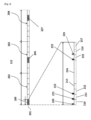
[図10]は、ビークル700のUWBシステム710の一例を示す。UWBシステムは、ビークルの前部において、ビークルの後部において、或いはビークルの運転室において配置された複数のUWBセンサ720を含む。その図は識別子730も示す。位置特定は、識別子730と各UWBセンサ720との間のUWB交換740を含む。
[Figure 10] shows an example of a
Claims (12)
・ 1つ又は複数の位置特定であって、前記1つ又は複数の位置特定は、それぞれの識別子の各々に関し、前記1つ又は複数のUWBセンサによる前記それぞれの識別子の少なくとも1つのそれぞれの位置特定を含み、前記1つ又は複数の位置特定は時間的に分離されている、1つ又は複数の位置特定と、
・ 複数のレーダー測定であって、前記複数のレーダー測定は、少なくとも1つのそれぞれのUWBセンサに関し、複数のそれぞれのレーダー測定を含み、それぞれのレーダー測定の数は、各識別子に関し、前記1つ又は複数のUWBセンサによる前記識別子の少なくとも1つのそれぞれの位置特定の数よりも多い、複数のレーダー測定と、
を周期的に含む方法。 1. A method of using a vehicular UWB system comprising one or more UWB sensors and having one or more registered identifiers, comprising:
one or more location determinations, the one or more location determinations comprising, for each respective identifier, a respective location determination of at least one of the respective identifiers by the one or more UWB sensors, the one or more location determinations being separated in time;
a plurality of radar measurements, the plurality of radar measurements comprising a plurality of respective radar measurements for at least one respective UWB sensor, the number of the respective radar measurements being greater for each identifier than the number of at least one respective localization of the identifier by the one or more UWB sensors;
A method that periodically includes
・ 前記1つ又は複数の識別子は優先識別子を含み、各レーダー測定の前記フレームは、前記優先識別子の前記タイムスロットのうちの1つの範囲内で発せられる、
請求項2に記載の方法。 each respective localization of a respective identifier by said one or more UWB sensors is performed within a time interval comprising a series of time slots;
the one or more identifiers include a priority identifier, and the frame of each radar measurement is emitted within one of the time slots of the priority identifier;
The method of claim 2.
・ 各UWBセンサに関し、前記UWBセンサがレーダー測定のフレームを放出する前記それぞれのタイムスロットは、前記1つ又は複数の識別子のうちの1つと前記UWBセンサとの間でUWB交換のフレームが送信される前記それぞれのタイムスロットと異なる、
請求項3又は4に記載の方法。 each frame of one of the UWB exchanges is transmitted at the start of a respective timeslot and each frame of the radar measurement of the UWB sensor is emitted at the end of a respective timeslot;
for each UWB sensor, the respective timeslot in which it emits frames of radar measurements is different from the respective timeslot in which frames of UWB exchanges are transmitted between one of the one or more identifiers and the UWB sensor;
The method according to claim 3 or 4.
・ 前記シリーズの開始及び終了における、スロットでの、前記識別子から各UWBセンサへのフレームの送信と、
・ 各 UWB センサに関する、前記シリーズの途中での、それぞれのスロットにおける、前記UWB センサから前記それぞれの識別子へのフレームの送信と、
を含む、請求項2~6のいずれか一項に記載の方法。 Each respective localization of a respective identifier by the one or more UWB sensors comprises:
the transmission of a frame from said identifier to each UWB sensor in a slot at the beginning and end of said series;
for each UWB sensor, the transmission of a frame from said UWB sensor to said respective identifier in each slot during said series;
The method according to any one of claims 2 to 6, comprising:
・ 前記レーダー測定のフレームの放出の及び前記UWB交換のうちの1つのフレームの送信の、与えられたタイムスロットにおける、少なくとも1つのスケジューリングの検知と、
・ 与えられたタイムスロットにおいて検知される前記少なくとも1つのスケジューリングの各々に関し、前記UWB交換のうちの前記1つの前記フレームの前記送信に関する前記レーダー測定の前記フレームの前記放出の前記スケジューリングの時間的シフトと、
を含む、請求項8に記載のスケジューリング法。 The method comprises:
- detection of at least one of the scheduling of the emission of a frame of said radar measurement and of the transmission of a frame of one of said UWB exchanges in a given timeslot;
a time shift of the scheduling of the emission of the frames of the radar measurements with respect to the transmission of the frames of the one of the UWB exchanges for each of the at least one scheduling detected in a given timeslot;
The scheduling method of claim 8 , comprising:
A computer program comprising program code instructions for the execution of the method according to any one of claims 1 to 7 and/or according to claim 8 or 9, when said program is executed by a processor.
Applications Claiming Priority (3)
| Application Number | Priority Date | Filing Date | Title |
|---|---|---|---|
| FR2203733A FR3134943B1 (en) | 2022-04-21 | 2022-04-21 | Use of vehicle UWB system |
| FR2203733 | 2022-04-21 | ||
| PCT/EP2023/057716 WO2023202839A1 (en) | 2022-04-21 | 2023-03-24 | Method for using a uwb system of a vehicle |
Publications (1)
| Publication Number | Publication Date |
|---|---|
| JP2025513402A true JP2025513402A (en) | 2025-04-24 |
Family
ID=84887246
Family Applications (1)
| Application Number | Title | Priority Date | Filing Date |
|---|---|---|---|
| JP2024561954A Pending JP2025513402A (en) | 2022-04-21 | 2023-03-24 | Use of Vehicle UWB Systems |
Country Status (5)
| Country | Link |
|---|---|
| EP (1) | EP4511678A1 (en) |
| JP (1) | JP2025513402A (en) |
| CN (1) | CN119072639A (en) |
| FR (1) | FR3134943B1 (en) |
| WO (1) | WO2023202839A1 (en) |
Families Citing this family (3)
| Publication number | Priority date | Publication date | Assignee | Title |
|---|---|---|---|---|
| WO2025195622A1 (en) * | 2024-03-22 | 2025-09-25 | Huf Hülsbeck & Fürst Gmbh & Co. Kg | Method for operating a uwb network, and device comprising a uwb network |
| DE102024108326A1 (en) * | 2024-03-22 | 2025-09-25 | Huf Hülsbeck & Fürst Gmbh & Co. Kg | Method for operating a UWB network and device comprising a UWB network |
| CN119729403A (en) * | 2025-02-26 | 2025-03-28 | 杭州优智联科技有限公司 | UWB-based hybrid scheduling method, device, equipment and medium |
Citations (4)
| Publication number | Priority date | Publication date | Assignee | Title |
|---|---|---|---|---|
| JP2017538875A (en) * | 2014-09-24 | 2017-12-28 | ヴァレオ、コンフォート、アンド、ドライビング、アシスタンスValeo Comfort And Driving Assistance | Device for controlling the locking / unlocking and / or starting of a vehicle |
| JP2021136457A (en) * | 2020-02-21 | 2021-09-13 | 株式会社デンソー | On-vehicle device, vehicle system, and terminal connection management method |
| JP7008868B1 (en) * | 2020-09-18 | 2022-01-25 | 三菱電機株式会社 | Wireless devices, wireless control methods, control circuits and storage media |
| US20220067402A1 (en) * | 2020-09-02 | 2022-03-03 | Hyundai Motor Company | Communication system of vehicle for detecting obstacle and control method thereof |
Family Cites Families (2)
| Publication number | Priority date | Publication date | Assignee | Title |
|---|---|---|---|---|
| US10486646B2 (en) * | 2017-09-29 | 2019-11-26 | Apple Inc. | Mobile device for communicating and ranging with access control system for automatic functionality |
| KR102806811B1 (en) * | 2019-12-18 | 2025-05-13 | 삼성전자 주식회사 | Electronic device and method for controlling access using wireless communication |
-
2022
- 2022-04-21 FR FR2203733A patent/FR3134943B1/en active Active
-
2023
- 2023-03-24 WO PCT/EP2023/057716 patent/WO2023202839A1/en not_active Ceased
- 2023-03-24 JP JP2024561954A patent/JP2025513402A/en active Pending
- 2023-03-24 CN CN202380034802.1A patent/CN119072639A/en active Pending
- 2023-03-24 EP EP23713911.8A patent/EP4511678A1/en active Pending
Patent Citations (4)
| Publication number | Priority date | Publication date | Assignee | Title |
|---|---|---|---|---|
| JP2017538875A (en) * | 2014-09-24 | 2017-12-28 | ヴァレオ、コンフォート、アンド、ドライビング、アシスタンスValeo Comfort And Driving Assistance | Device for controlling the locking / unlocking and / or starting of a vehicle |
| JP2021136457A (en) * | 2020-02-21 | 2021-09-13 | 株式会社デンソー | On-vehicle device, vehicle system, and terminal connection management method |
| US20220067402A1 (en) * | 2020-09-02 | 2022-03-03 | Hyundai Motor Company | Communication system of vehicle for detecting obstacle and control method thereof |
| JP7008868B1 (en) * | 2020-09-18 | 2022-01-25 | 三菱電機株式会社 | Wireless devices, wireless control methods, control circuits and storage media |
Also Published As
| Publication number | Publication date |
|---|---|
| FR3134943A1 (en) | 2023-10-27 |
| WO2023202839A1 (en) | 2023-10-26 |
| FR3134943B1 (en) | 2024-08-09 |
| CN119072639A (en) | 2024-12-03 |
| EP4511678A1 (en) | 2025-02-26 |
Similar Documents
| Publication | Publication Date | Title |
|---|---|---|
| JP2025513402A (en) | Use of Vehicle UWB Systems | |
| US10573104B2 (en) | Ultra-wideband based vehicle access system and communication protocol for localization of a target device | |
| WO2020212599A1 (en) | Ultra-wideband location systems and methods | |
| US8203910B2 (en) | Autonomous ultrasonic indoor location system, apparatus and method | |
| JP4814324B2 (en) | Device, method and protocol for concealed UWB ranging | |
| US9020359B2 (en) | Mobile terminal capable of localization, localization server and method for localizing the mobile terminal using the localization server | |
| US20220349984A1 (en) | Low power radar in radio communication terminal | |
| US10313033B2 (en) | Key location system | |
| US11579238B2 (en) | Localization and communication systems and methods | |
| WO2012170046A1 (en) | Hybrid positioning mechanism for wireless communication devices | |
| WO2021086525A1 (en) | Systems, devices, and methods for synchronization | |
| EP3918360B1 (en) | A spatial sensor synchronization system using a time-division multiple access communication system | |
| US20120095673A1 (en) | Apparatus and method for providing driving information for vehicles based on high speed movement long distance impuse radio ultra wideband | |
| EP2027485A1 (en) | Position recognition method and system | |
| US20250180733A1 (en) | Occupant position estimating device and occupant position estimating method | |
| US20230384410A1 (en) | Method for determining a distance between two objects with the involvement of a third object | |
| JP2007187632A (en) | Radar system | |
| KR20150090433A (en) | Locating system and method thereof | |
| JP7104991B2 (en) | Method and apparatus for vehicle-to-vehicle communication by radar system | |
| JP2023515510A (en) | Target detection method and radar device | |
| CN118215060A (en) | Method for operating a data frame exchange communication device | |
| KR20190092687A (en) | Method and apparatus for measuring distance | |
| RU2225677C2 (en) | Method for synchronizing shipboard sonars | |
| JP2005148025A (en) | Strength deployment information system and enemy locating system | |
| KR20110061923A (en) | Position Recognition Method of Mobile Robot |
Legal Events
| Date | Code | Title | Description |
|---|---|---|---|
| A621 | Written request for application examination |
Free format text: JAPANESE INTERMEDIATE CODE: A621 Effective date: 20241210 |
|
| A521 | Request for written amendment filed |
Free format text: JAPANESE INTERMEDIATE CODE: A523 Effective date: 20250214 |
|
| A977 | Report on retrieval |
Free format text: JAPANESE INTERMEDIATE CODE: A971007 Effective date: 20251022 |
|
| A131 | Notification of reasons for refusal |
Free format text: JAPANESE INTERMEDIATE CODE: A131 Effective date: 20251028 |
|
| A521 | Request for written amendment filed |
Free format text: JAPANESE INTERMEDIATE CODE: A523 Effective date: 20260127 |