JP2022520249A - Methods and catalysts for producing 1,3-butadiene from ethanol - Google Patents
Methods and catalysts for producing 1,3-butadiene from ethanol Download PDFInfo
- Publication number
- JP2022520249A JP2022520249A JP2021547202A JP2021547202A JP2022520249A JP 2022520249 A JP2022520249 A JP 2022520249A JP 2021547202 A JP2021547202 A JP 2021547202A JP 2021547202 A JP2021547202 A JP 2021547202A JP 2022520249 A JP2022520249 A JP 2022520249A
- Authority
- JP
- Japan
- Prior art keywords
- catalyst
- component
- metal
- butadiene
- core
- Prior art date
- Legal status (The legal status is an assumption and is not a legal conclusion. Google has not performed a legal analysis and makes no representation as to the accuracy of the status listed.)
- Granted
Links
Images


Classifications
-
- B—PERFORMING OPERATIONS; TRANSPORTING
- B01—PHYSICAL OR CHEMICAL PROCESSES OR APPARATUS IN GENERAL
- B01J—CHEMICAL OR PHYSICAL PROCESSES, e.g. CATALYSIS OR COLLOID CHEMISTRY; THEIR RELEVANT APPARATUS
- B01J35/00—Catalysts, in general, characterised by their form or physical properties
- B01J35/30—Catalysts, in general, characterised by their form or physical properties characterised by their physical properties
- B01J35/396—Distribution of the active metal ingredient
- B01J35/397—Egg shell like
-
- B—PERFORMING OPERATIONS; TRANSPORTING
- B01—PHYSICAL OR CHEMICAL PROCESSES OR APPARATUS IN GENERAL
- B01J—CHEMICAL OR PHYSICAL PROCESSES, e.g. CATALYSIS OR COLLOID CHEMISTRY; THEIR RELEVANT APPARATUS
- B01J23/00—Catalysts comprising metals or metal oxides or hydroxides, not provided for in group B01J21/00
- B01J23/70—Catalysts comprising metals or metal oxides or hydroxides, not provided for in group B01J21/00 of the iron group metals or copper
- B01J23/76—Catalysts comprising metals or metal oxides or hydroxides, not provided for in group B01J21/00 of the iron group metals or copper combined with metals, oxides or hydroxides provided for in groups B01J23/02 - B01J23/36
- B01J23/78—Catalysts comprising metals or metal oxides or hydroxides, not provided for in group B01J21/00 of the iron group metals or copper combined with metals, oxides or hydroxides provided for in groups B01J23/02 - B01J23/36 with alkali- or alkaline earth metals
-
- B—PERFORMING OPERATIONS; TRANSPORTING
- B01—PHYSICAL OR CHEMICAL PROCESSES OR APPARATUS IN GENERAL
- B01J—CHEMICAL OR PHYSICAL PROCESSES, e.g. CATALYSIS OR COLLOID CHEMISTRY; THEIR RELEVANT APPARATUS
- B01J21/00—Catalysts comprising the elements, oxides, or hydroxides of magnesium, boron, aluminium, carbon, silicon, titanium, zirconium, or hafnium
- B01J21/06—Silicon, titanium, zirconium or hafnium; Oxides or hydroxides thereof
- B01J21/08—Silica
-
- B—PERFORMING OPERATIONS; TRANSPORTING
- B01—PHYSICAL OR CHEMICAL PROCESSES OR APPARATUS IN GENERAL
- B01J—CHEMICAL OR PHYSICAL PROCESSES, e.g. CATALYSIS OR COLLOID CHEMISTRY; THEIR RELEVANT APPARATUS
- B01J21/00—Catalysts comprising the elements, oxides, or hydroxides of magnesium, boron, aluminium, carbon, silicon, titanium, zirconium, or hafnium
- B01J21/10—Magnesium; Oxides or hydroxides thereof
-
- B—PERFORMING OPERATIONS; TRANSPORTING
- B01—PHYSICAL OR CHEMICAL PROCESSES OR APPARATUS IN GENERAL
- B01J—CHEMICAL OR PHYSICAL PROCESSES, e.g. CATALYSIS OR COLLOID CHEMISTRY; THEIR RELEVANT APPARATUS
- B01J23/00—Catalysts comprising metals or metal oxides or hydroxides, not provided for in group B01J21/00
- B01J23/002—Mixed oxides other than spinels, e.g. perovskite
-
- B—PERFORMING OPERATIONS; TRANSPORTING
- B01—PHYSICAL OR CHEMICAL PROCESSES OR APPARATUS IN GENERAL
- B01J—CHEMICAL OR PHYSICAL PROCESSES, e.g. CATALYSIS OR COLLOID CHEMISTRY; THEIR RELEVANT APPARATUS
- B01J23/00—Catalysts comprising metals or metal oxides or hydroxides, not provided for in group B01J21/00
- B01J23/02—Catalysts comprising metals or metal oxides or hydroxides, not provided for in group B01J21/00 of the alkali- or alkaline earth metals or beryllium
-
- B—PERFORMING OPERATIONS; TRANSPORTING
- B01—PHYSICAL OR CHEMICAL PROCESSES OR APPARATUS IN GENERAL
- B01J—CHEMICAL OR PHYSICAL PROCESSES, e.g. CATALYSIS OR COLLOID CHEMISTRY; THEIR RELEVANT APPARATUS
- B01J27/00—Catalysts comprising the elements or compounds of halogens, sulfur, selenium, tellurium, phosphorus or nitrogen; Catalysts comprising carbon compounds
- B01J27/20—Carbon compounds
- B01J27/232—Carbonates
- B01J27/236—Hydroxy carbonates
-
- B—PERFORMING OPERATIONS; TRANSPORTING
- B01—PHYSICAL OR CHEMICAL PROCESSES OR APPARATUS IN GENERAL
- B01J—CHEMICAL OR PHYSICAL PROCESSES, e.g. CATALYSIS OR COLLOID CHEMISTRY; THEIR RELEVANT APPARATUS
- B01J29/00—Catalysts comprising molecular sieves
- B01J29/04—Catalysts comprising molecular sieves having base-exchange properties, e.g. crystalline zeolites
- B01J29/06—Crystalline aluminosilicate zeolites; Isomorphous compounds thereof
- B01J29/40—Crystalline aluminosilicate zeolites; Isomorphous compounds thereof of the pentasil type, e.g. types ZSM-5, ZSM-8 or ZSM-11, as exemplified by patent documents US3702886, GB1334243 and US3709979, respectively
-
- B—PERFORMING OPERATIONS; TRANSPORTING
- B01—PHYSICAL OR CHEMICAL PROCESSES OR APPARATUS IN GENERAL
- B01J—CHEMICAL OR PHYSICAL PROCESSES, e.g. CATALYSIS OR COLLOID CHEMISTRY; THEIR RELEVANT APPARATUS
- B01J35/00—Catalysts, in general, characterised by their form or physical properties
- B01J35/19—Catalysts containing parts with different compositions
-
- B—PERFORMING OPERATIONS; TRANSPORTING
- B01—PHYSICAL OR CHEMICAL PROCESSES OR APPARATUS IN GENERAL
- B01J—CHEMICAL OR PHYSICAL PROCESSES, e.g. CATALYSIS OR COLLOID CHEMISTRY; THEIR RELEVANT APPARATUS
- B01J35/00—Catalysts, in general, characterised by their form or physical properties
- B01J35/50—Catalysts, in general, characterised by their form or physical properties characterised by their shape or configuration
- B01J35/51—Spheres
- B01J35/53—Spheres with a core-shell structure
-
- B—PERFORMING OPERATIONS; TRANSPORTING
- B01—PHYSICAL OR CHEMICAL PROCESSES OR APPARATUS IN GENERAL
- B01J—CHEMICAL OR PHYSICAL PROCESSES, e.g. CATALYSIS OR COLLOID CHEMISTRY; THEIR RELEVANT APPARATUS
- B01J35/00—Catalysts, in general, characterised by their form or physical properties
- B01J35/70—Catalysts, in general, characterised by their form or physical properties characterised by their crystalline properties, e.g. semi-crystalline
-
- B—PERFORMING OPERATIONS; TRANSPORTING
- B01—PHYSICAL OR CHEMICAL PROCESSES OR APPARATUS IN GENERAL
- B01J—CHEMICAL OR PHYSICAL PROCESSES, e.g. CATALYSIS OR COLLOID CHEMISTRY; THEIR RELEVANT APPARATUS
- B01J35/00—Catalysts, in general, characterised by their form or physical properties
- B01J35/70—Catalysts, in general, characterised by their form or physical properties characterised by their crystalline properties, e.g. semi-crystalline
- B01J35/73—Catalysts, in general, characterised by their form or physical properties characterised by their crystalline properties, e.g. semi-crystalline having a two-dimensional [2D] layered crystalline structure, e.g. layered double hydroxide [LDH]
-
- B—PERFORMING OPERATIONS; TRANSPORTING
- B01—PHYSICAL OR CHEMICAL PROCESSES OR APPARATUS IN GENERAL
- B01J—CHEMICAL OR PHYSICAL PROCESSES, e.g. CATALYSIS OR COLLOID CHEMISTRY; THEIR RELEVANT APPARATUS
- B01J37/00—Processes, in general, for preparing catalysts; Processes, in general, for activation of catalysts
- B01J37/02—Impregnation, coating or precipitation
- B01J37/03—Precipitation; Co-precipitation
- B01J37/031—Precipitation
- B01J37/035—Precipitation on carriers
-
- B—PERFORMING OPERATIONS; TRANSPORTING
- B01—PHYSICAL OR CHEMICAL PROCESSES OR APPARATUS IN GENERAL
- B01J—CHEMICAL OR PHYSICAL PROCESSES, e.g. CATALYSIS OR COLLOID CHEMISTRY; THEIR RELEVANT APPARATUS
- B01J37/00—Processes, in general, for preparing catalysts; Processes, in general, for activation of catalysts
- B01J37/34—Irradiation by, or application of, electric, magnetic or wave energy, e.g. ultrasonic waves ; Ionic sputtering; Flame or plasma spraying; Particle radiation
- B01J37/341—Irradiation by, or application of, electric, magnetic or wave energy, e.g. ultrasonic waves ; Ionic sputtering; Flame or plasma spraying; Particle radiation making use of electric or magnetic fields, wave energy or particle radiation
- B01J37/343—Irradiation by, or application of, electric, magnetic or wave energy, e.g. ultrasonic waves ; Ionic sputtering; Flame or plasma spraying; Particle radiation making use of electric or magnetic fields, wave energy or particle radiation of ultrasonic wave energy
-
- C—CHEMISTRY; METALLURGY
- C07—ORGANIC CHEMISTRY
- C07C—ACYCLIC OR CARBOCYCLIC COMPOUNDS
- C07C1/00—Preparation of hydrocarbons from one or more compounds, none of them being a hydrocarbon
- C07C1/20—Preparation of hydrocarbons from one or more compounds, none of them being a hydrocarbon starting from organic compounds containing only oxygen atoms as heteroatoms
- C07C1/24—Preparation of hydrocarbons from one or more compounds, none of them being a hydrocarbon starting from organic compounds containing only oxygen atoms as heteroatoms by elimination of water
-
- B—PERFORMING OPERATIONS; TRANSPORTING
- B01—PHYSICAL OR CHEMICAL PROCESSES OR APPARATUS IN GENERAL
- B01J—CHEMICAL OR PHYSICAL PROCESSES, e.g. CATALYSIS OR COLLOID CHEMISTRY; THEIR RELEVANT APPARATUS
- B01J2235/00—Indexing scheme associated with group B01J35/00, related to the analysis techniques used to determine the catalysts form or properties
- B01J2235/15—X-ray diffraction
-
- B—PERFORMING OPERATIONS; TRANSPORTING
- B01—PHYSICAL OR CHEMICAL PROCESSES OR APPARATUS IN GENERAL
- B01J—CHEMICAL OR PHYSICAL PROCESSES, e.g. CATALYSIS OR COLLOID CHEMISTRY; THEIR RELEVANT APPARATUS
- B01J2235/00—Indexing scheme associated with group B01J35/00, related to the analysis techniques used to determine the catalysts form or properties
- B01J2235/30—Scanning electron microscopy; Transmission electron microscopy
-
- B—PERFORMING OPERATIONS; TRANSPORTING
- B01—PHYSICAL OR CHEMICAL PROCESSES OR APPARATUS IN GENERAL
- B01J—CHEMICAL OR PHYSICAL PROCESSES, e.g. CATALYSIS OR COLLOID CHEMISTRY; THEIR RELEVANT APPARATUS
- B01J2523/00—Constitutive chemical elements of heterogeneous catalysts
-
- B—PERFORMING OPERATIONS; TRANSPORTING
- B01—PHYSICAL OR CHEMICAL PROCESSES OR APPARATUS IN GENERAL
- B01J—CHEMICAL OR PHYSICAL PROCESSES, e.g. CATALYSIS OR COLLOID CHEMISTRY; THEIR RELEVANT APPARATUS
- B01J37/00—Processes, in general, for preparing catalysts; Processes, in general, for activation of catalysts
- B01J37/08—Heat treatment
- B01J37/10—Heat treatment in the presence of water, e.g. steam
-
- C—CHEMISTRY; METALLURGY
- C07—ORGANIC CHEMISTRY
- C07C—ACYCLIC OR CARBOCYCLIC COMPOUNDS
- C07C2521/00—Catalysts comprising the elements, oxides or hydroxides of magnesium, boron, aluminium, carbon, silicon, titanium, zirconium or hafnium
- C07C2521/06—Silicon, titanium, zirconium or hafnium; Oxides or hydroxides thereof
-
- C—CHEMISTRY; METALLURGY
- C07—ORGANIC CHEMISTRY
- C07C—ACYCLIC OR CARBOCYCLIC COMPOUNDS
- C07C2521/00—Catalysts comprising the elements, oxides or hydroxides of magnesium, boron, aluminium, carbon, silicon, titanium, zirconium or hafnium
- C07C2521/06—Silicon, titanium, zirconium or hafnium; Oxides or hydroxides thereof
- C07C2521/08—Silica
-
- C—CHEMISTRY; METALLURGY
- C07—ORGANIC CHEMISTRY
- C07C—ACYCLIC OR CARBOCYCLIC COMPOUNDS
- C07C2521/00—Catalysts comprising the elements, oxides or hydroxides of magnesium, boron, aluminium, carbon, silicon, titanium, zirconium or hafnium
- C07C2521/10—Magnesium; Oxides or hydroxides thereof
-
- C—CHEMISTRY; METALLURGY
- C07—ORGANIC CHEMISTRY
- C07C—ACYCLIC OR CARBOCYCLIC COMPOUNDS
- C07C2523/00—Catalysts comprising metals or metal oxides or hydroxides, not provided for in group C07C2521/00
- C07C2523/02—Catalysts comprising metals or metal oxides or hydroxides, not provided for in group C07C2521/00 of the alkali- or alkaline earth metals or beryllium
-
- C—CHEMISTRY; METALLURGY
- C07—ORGANIC CHEMISTRY
- C07C—ACYCLIC OR CARBOCYCLIC COMPOUNDS
- C07C2523/00—Catalysts comprising metals or metal oxides or hydroxides, not provided for in group C07C2521/00
- C07C2523/70—Catalysts comprising metals or metal oxides or hydroxides, not provided for in group C07C2521/00 of the iron group metals or copper
- C07C2523/72—Copper
-
- C—CHEMISTRY; METALLURGY
- C07—ORGANIC CHEMISTRY
- C07C—ACYCLIC OR CARBOCYCLIC COMPOUNDS
- C07C2523/00—Catalysts comprising metals or metal oxides or hydroxides, not provided for in group C07C2521/00
- C07C2523/70—Catalysts comprising metals or metal oxides or hydroxides, not provided for in group C07C2521/00 of the iron group metals or copper
- C07C2523/74—Iron group metals
- C07C2523/755—Nickel
-
- C—CHEMISTRY; METALLURGY
- C07—ORGANIC CHEMISTRY
- C07C—ACYCLIC OR CARBOCYCLIC COMPOUNDS
- C07C2523/00—Catalysts comprising metals or metal oxides or hydroxides, not provided for in group C07C2521/00
- C07C2523/70—Catalysts comprising metals or metal oxides or hydroxides, not provided for in group C07C2521/00 of the iron group metals or copper
- C07C2523/76—Catalysts comprising metals or metal oxides or hydroxides, not provided for in group C07C2521/00 of the iron group metals or copper combined with metals, oxides or hydroxides provided for in groups C07C2523/02 - C07C2523/36
- C07C2523/78—Catalysts comprising metals or metal oxides or hydroxides, not provided for in group C07C2521/00 of the iron group metals or copper combined with metals, oxides or hydroxides provided for in groups C07C2523/02 - C07C2523/36 with alkali- or alkaline earth metals or beryllium
-
- C—CHEMISTRY; METALLURGY
- C07—ORGANIC CHEMISTRY
- C07C—ACYCLIC OR CARBOCYCLIC COMPOUNDS
- C07C2529/00—Catalysts comprising molecular sieves
- C07C2529/04—Catalysts comprising molecular sieves having base-exchange properties, e.g. crystalline zeolites, pillared clays
- C07C2529/06—Crystalline aluminosilicate zeolites; Isomorphous compounds thereof
- C07C2529/40—Crystalline aluminosilicate zeolites; Isomorphous compounds thereof of the pentasil type, e.g. types ZSM-5, ZSM-8 or ZSM-11
-
- C—CHEMISTRY; METALLURGY
- C07—ORGANIC CHEMISTRY
- C07C—ACYCLIC OR CARBOCYCLIC COMPOUNDS
- C07C2529/00—Catalysts comprising molecular sieves
- C07C2529/04—Catalysts comprising molecular sieves having base-exchange properties, e.g. crystalline zeolites, pillared clays
- C07C2529/06—Crystalline aluminosilicate zeolites; Isomorphous compounds thereof
- C07C2529/40—Crystalline aluminosilicate zeolites; Isomorphous compounds thereof of the pentasil type, e.g. types ZSM-5, ZSM-8 or ZSM-11
- C07C2529/42—Crystalline aluminosilicate zeolites; Isomorphous compounds thereof of the pentasil type, e.g. types ZSM-5, ZSM-8 or ZSM-11 containing iron group metals, noble metals or copper
- C07C2529/46—Iron group metals or copper
-
- Y—GENERAL TAGGING OF NEW TECHNOLOGICAL DEVELOPMENTS; GENERAL TAGGING OF CROSS-SECTIONAL TECHNOLOGIES SPANNING OVER SEVERAL SECTIONS OF THE IPC; TECHNICAL SUBJECTS COVERED BY FORMER USPC CROSS-REFERENCE ART COLLECTIONS [XRACs] AND DIGESTS
- Y02—TECHNOLOGIES OR APPLICATIONS FOR MITIGATION OR ADAPTATION AGAINST CLIMATE CHANGE
- Y02P—CLIMATE CHANGE MITIGATION TECHNOLOGIES IN THE PRODUCTION OR PROCESSING OF GOODS
- Y02P30/00—Technologies relating to oil refining and petrochemical industry
- Y02P30/20—Technologies relating to oil refining and petrochemical industry using bio-feedstock
Landscapes
- Chemical & Material Sciences (AREA)
- Organic Chemistry (AREA)
- Engineering & Computer Science (AREA)
- Materials Engineering (AREA)
- Chemical Kinetics & Catalysis (AREA)
- Physics & Mathematics (AREA)
- Crystallography & Structural Chemistry (AREA)
- Optics & Photonics (AREA)
- Health & Medical Sciences (AREA)
- Plasma & Fusion (AREA)
- Toxicology (AREA)
- Catalysts (AREA)
- Organic Low-Molecular-Weight Compounds And Preparation Thereof (AREA)
- Low-Molecular Organic Synthesis Reactions Using Catalysts (AREA)
Abstract
本発明は、ゼオライト、二酸化ケイ素、酸化アルミニウム、又はこれらの何れかの組み合わせから成るリストより選択される成分Aと、混合金属酸化物を含む成分Bcatとを含む、エタノールを1,3-ブタジエンに変換するための触媒、ゼオライト、二酸化ケイ素、酸化アルミニウム、又はこれらの何れかの組み合わせから成るリストより選択される成分Aと、層状複水酸化物(LDH)を含む成分Bpreとを含む、エタノールを1,3-ブタジエンに変換するための触媒を製造するための、触媒前駆体、さらには、前記触媒が用いられる、エタノールを1,3-ブタジエンに変換するための方法、に関する。 The present invention comprises 1,3-butadiene of ethanol comprising a component A selected from the list consisting of zeolite, silicon dioxide, aluminum oxide, or a combination thereof, and a component B cat containing a mixed metal oxide. Containing component A selected from the list consisting of a catalyst for conversion to, zeolite, silicon dioxide, aluminum oxide, or a combination thereof, and component B pre containing a layered double hydroxide (LDH). The present invention relates to a catalyst precursor for producing a catalyst for converting ethanol to 1,3-butadiene, and further to a method for converting ethanol to 1,3-butadiene in which the catalyst is used.
Description
本発明は、エタノールを1,3-ブタジエンに変換するための、成分A及び成分Bcatを含む触媒、並びにそのような触媒を製造するための、成分A及び成分Bpreを含む触媒前駆体に関する。さらに本発明は、エタノールから1,3-ブタジエンを製造するための方法、並びにエタノールを1,3-ブタジエンに変換するための前記触媒の使用にも関する。 The present invention relates to a catalyst containing component A and component B cat for converting ethanol to 1,3-butadiene, and a catalyst precursor containing component A and component B pre for producing such a catalyst. .. The invention also relates to a method for producing 1,3-butadiene from ethanol and the use of the catalyst for converting ethanol to 1,3-butadiene.
ブタジエンは、ブタジエンゴム、ブタジエン-ニトリルゴム、ブタジエン-スチレンゴム、及び同種のものなどの合成ゴムの製造におけるモノマーとして用いられることから、ブタジエンに対する需要は高い。現在、世界で製造されているブタジエンの大半は、スチームクラッカーからのエチレン製造の副生物として製造されている。 Butadiene is in high demand for butadiene because it is used as a monomer in the production of synthetic rubbers such as butadiene rubber, butadiene-nitrile rubber, butadiene-styrene rubber, and the like. Currently, most of the butadiene produced in the world is produced as a by-product of ethylene production from steam crackers.
2つの主要な工業的プロセスの1つでは、ブタジエンは、石油熱分解の生成物から抽出される。第二の方法では、ブタジエンは、精製ガス及びケーシングヘッドガス中に含まれているn-ブタン及びブチレンの接触脱水素によって得られ、この方法は1工程又は2工程で行われる。しかし、石油価格が上昇していることから、石油以外の供給原料からブタジエンを製造する代替法が、ますます関心を集めてきている。 In one of the two major industrial processes, butadiene is extracted from the products of petroleum pyrolysis. In the second method, butadiene is obtained by catalytic dehydrogenation of n-butane and butylene contained in the purified gas and casing head gas, which method is carried out in one or two steps. However, with rising oil prices, alternatives to producing butadiene from non-oil feedstocks are gaining increasing interest.
最も可能性のある非石油供給原料の1つは、エタノールである。エタノールの1,3-ブタジエンへの接触変換は公知である。1920年代から1960年代初期にかけては、エタノールは、一工程プロセスにより、400~450℃で1,3-ブタジエン、水素、及び水に変換されていた。 One of the most potential non-petroleum sources is ethanol. Contact conversion of ethanol to 1,3-butadiene is known. From the 1920s to the early 1960s, ethanol was converted to 1,3-butadiene, hydrogen, and water at 400-450 ° C. by a one-step process.
しかし、エタノールを1,3-ブタジエンに変換する機構は、極めて複雑である。この複雑さの主たる理由は、エタノールの1,3-ブタジエンへの変換経路が、複数の反応工程を含み、それには、同時に発生する酸反応、塩基反応、及び酸化還元反応が含まれることである。 However, the mechanism for converting ethanol to 1,3-butadiene is extremely complex. The main reason for this complexity is that the route of ethanol conversion to 1,3-butadiene involves multiple reaction steps, including simultaneous acid, base and redox reactions. ..
エタノールの1,3-ブタジエンへの変換の主経路は、5つの重要な反応工程、すなわち、エタノールの脱水素、アセトアルデヒドのアルドール縮合、アセトアルドールの脱水、メールワイン-ポンドルフ-バーレー(MPV)還元、及びクロチルアルコールの脱水、から成る。これらの反応経路において、触媒の酸性と塩基性との間のバランスは、触媒活性、さらには所望される1,3-ブタジエン生成物の選択性及び収率を向上させるための重要な成功因子である。 The main pathways for the conversion of ethanol to 1,3-butadiene are five important reaction steps: dehydrogenation of ethanol, aldol condensation of acetaldehyde, dehydration of acetaldehyde, merwine-pondolph-burley (MPV) reduction, And dehydration of crotyl alcohol. In these reaction pathways, the balance between the acidity and basicity of the catalyst is an important success factor for improving catalytic activity as well as selectivity and yield of the desired 1,3-butadiene product. be.
したがって、向上されたターンオーバー数、選択性、及び収率を有する、エタノールを1,3-ブタジエンに変換するための改善された方法及び触媒、さらには前記反応に対する向上された活性及び選択性を有する、エタノールを1,3-ブタジエンに変換するための触媒を見出すことが依然として求められている。 Therefore, with improved turnover numbers, selectivity, and yield, improved methods and catalysts for converting ethanol to 1,3-butadiene, as well as improved activity and selectivity for said reactions. There is still a need to find a catalyst for converting ethanol to 1,3-butadiene.
したがって、本発明の目的は、穏和な条件下でエタノールの1,3-ブタジエンへの変換を触媒し、高い触媒活性、高い収率、及び高い選択性を有する触媒を提供することである。エタノールから1,3-ブタジエンを製造するための、向上された選択性及び収率を有する方法を提供することも、本発明の目的である。 Therefore, it is an object of the present invention to catalyze the conversion of ethanol to 1,3-butadiene under mild conditions to provide a catalyst with high catalytic activity, high yield and high selectivity. It is also an object of the present invention to provide a method with improved selectivity and yield for producing 1,3-butadiene from ethanol.
上述の目的は、成分A及び成分Bcatの特定の組み合わせを有する触媒によって達成される。 The above objectives are achieved with a catalyst having a particular combination of component A and component B cat .
したがって、本発明は、ゼオライト、二酸化ケイ素、酸化アルミニウム、又はこれらの何れかの組み合わせから成るリストより選択される成分A、及び層状複水酸化物(LDH)を含んでいる成分Bpreを含む、エタノールを1,3-ブタジエンに変換するための触媒を製造するための触媒前駆体を提供する。 Accordingly, the present invention comprises a component A selected from the list consisting of zeolite, silicon dioxide, aluminum oxide, or a combination thereof, and a component B pre containing layered double hydroxide (LDH). Provided is a catalyst precursor for producing a catalyst for converting ethanol to 1,3-butadiene.
さらに、本発明は、ゼオライト、二酸化ケイ素、酸化アルミニウム、又はこれらの何れかの組み合わせから成るリストより選択される成分A、及び混合金属酸化物を含んでいる成分Bcatを含む、エタノールを1,3-ブタジエンに変換するための触媒を提供する。 Further, the present invention comprises ethanol 1, which comprises a component A selected from the list consisting of zeolite, silicon dioxide, aluminum oxide, or a combination thereof, and a component B cat containing a mixed metal oxide. A catalyst for converting to 3-butadiene is provided.
さらに、本発明はまた、ゼオライト、二酸化ケイ素、酸化アルミニウム、又はこれらの何れかの組み合わせから成るリストより選択される成分A、及び混合金属酸化物を含む成分Bcatを含んでいる触媒を、エタノール流に接触させることを含む、1,3-ブタジエンを製造するための方法も提供する。 Further, the present invention also uses ethanol as a catalyst containing a component A selected from the list consisting of zeolite, silicon dioxide, aluminum oxide, or a combination thereof, and a component B cat containing a mixed metal oxide. Also provided are methods for producing 1,3-butadiene, including contacting with a stream.
そして、本発明は、ゼオライト、二酸化ケイ素、酸化アルミニウム、又はこれらの何れかの組み合わせから成るリストより選択される成分A、及び層状複水酸化物(LDH)を含む成分Bpreを含んでいる、エタノールを1,3-ブタジエンに変換するための触媒の製造のための触媒前駆体の使用、並びにゼオライト、二酸化ケイ素、酸化アルミニウム、又はこれらの何れかの組み合わせから成るリストより選択される成分A、及び混合金属酸化物を含む成分Bcatを含んでいる、エタノールを1,3-ブタジエンに変換するための触媒の使用、を提供する。 And the present invention includes a component A selected from a list consisting of zeolite, silicon dioxide, aluminum oxide, or a combination thereof, and a component B pre containing a layered double hydroxide (LDH). Ingredient A, selected from the list consisting of zeolites, silicon dioxide, aluminum oxide, or a combination thereof, as well as the use of catalyst precursors for the production of catalysts for the conversion of ethanol to 1,3-butadiene. And the use of a catalyst for converting ethanol to 1,3-butadiene, which contains the component Bcat , which contains a mixed metal oxide.
定義
層状複水酸化物(LDH)は、基本層に2種類の金属カチオンを有し、層間ドメインがアニオン種を含有する、合成物又は天然の二次元ナノ構造層状物質の種類である。層状複水酸化物(LDH)の一般的な分子の記述は、化学式(I)で与えられ:
[Mz+
(1-x)M’y+
x(OH)2]a+An-
a/n・bH2O (I)
式中、
M及びM’は、電荷を有する金属カチオンであり、MはM’と異なっており:
zは、1又は2であり;
yは、3又は4であり;
An-は、層間アニオンであり、n>0、好ましくはn=1~5であり;
0<x<0.9であり、
b=0~10であり、
aは、a=z(1-x)+xy-2であり、0よりも大きい。
Definition Layered Double Hydroxide (LDH) is a type of synthetic or natural two-dimensional nanostructured layered material having two types of metal cations in the base layer and an anionic species in the interlayer domain. A general molecular description of layered double hydroxides (LDH) is given by formula (I):
[M z + (1-x) M'y + x (OH) 2 ] a + A n- a / n · bH 2 O (I)
During the ceremony
M and M'are charged metal cations and M is different from M':
z is 1 or 2;
y is 3 or 4;
An - is an interlayer anion, n> 0, preferably n = 1-5;
0 <x <0.9,
b = 0 to 10 and
a is a = z (1-x) + xy-2, which is larger than 0.
混合金属酸化物とは、少なくとも2種類以上の金属の混合物の酸化形態、少なくとも2種類以上の金属酸化物の混合物、又はこれらの組み合わせを意味し、いかなる物理的特性、化学的特性、又は製造方法にも限定されない。LDO(層状複酸化物)は、混合金属酸化物の1つの好ましい実施形態である。 Mixed metal oxide means an oxidized form of a mixture of at least two or more metals, a mixture of at least two or more metal oxides, or a combination thereof, any physical, chemical, or manufacturing method. Not limited to. LDOs (Layered Duplex Oxides) are one preferred embodiment of mixed metal oxides.
層状複酸化物(LDO)は、層状複水酸化物(LDH)から誘導され、層状複水酸化物(LDH)は、熱処理されて、層間水分子、アニオン、及びヒドロキシル基が除去される。その結果、層状複水酸化物(LDH)の構造が少なくとも部分的に崩壊して、層状複酸化物(LDO)が形成される。 The layered double hydroxide (LDO) is derived from the layered double hydroxide (LDH), and the layered double hydroxide (LDH) is heat treated to remove interlayer water molecules, anions, and hydroxyl groups. As a result, the structure of the layered double hydroxide (LDH) is at least partially disintegrated to form the layered double hydroxide (LDO).
触媒活性は、[g1,3-BDgcat -1時間-1]の単位を有し、1時間に製造された1,3-ブタジエン重量の触媒重量に対する比を示す。 Catalytic activity has a unit of [g 1,3-BD g cat -1 hour -1 ] and indicates the ratio of 1,3-butadiene weight produced per hour to the catalyst weight.
本明細書で用いられる場合、毎時重量空間速度(WHSV)は、1時間あたり、触媒の単位重量あたりの供給流重量として定義される。 As used herein, weight space velocity per hour (WHSV) is defined as feed stream weight per unit weight of catalyst per hour.
流通時間の用語は、触媒がエタノール供給流と接触している時間の長さを示す。 The term run time refers to the length of time that the catalyst is in contact with the ethanol feed stream.
ゼオライトの用語は、本明細書で用いられる場合、各々が4つのO原子から成る連結された四面体のフレームワークを特徴とする構造を有する結晶物質を示す。このフレームワークは、チャネル及びケージの形態の開放キャビティを有し、それは通常、一般的には交換可能であるH2O分子及びフレームワーク外カチオンで占められている。 Zeolites terminology, as used herein, refers to crystalline material having a structure characterized by a linked tetrahedral framework, each consisting of four O atoms. The framework has open cavities in the form of channels and cages, which are usually occupied by H2O molecules and framework cations that are generally interchangeable.
本発明の記載
本発明は、触媒前駆体、触媒、及び前記触媒を用いたエタノールからの1,3-ブタジエンの製造方法、並びにエタノールから1,3-ブタジエンを製造するための前記触媒の使用、及び前記触媒を製造するための前記触媒前駆体の使用を提供する。
Description of the Invention The present invention relates to a catalyst precursor, a catalyst, and a method for producing 1,3-butadiene from ethanol using the catalyst, and the use of the catalyst for producing 1,3-butadiene from ethanol. And the use of the catalyst precursor for producing the catalyst.
A.触媒前駆体
本発明は、エタノールを1,3-ブタジエンに変換するための触媒を製造するための、
i)ゼオライト、二酸化ケイ素、酸化アルミニウム、又はこれらの何れかの組み合わせから成るリストより選択される成分A;及び
ii)層状複水酸化物(LDH)を含む成分Bpre
を含む触媒前駆体を提供する。
A. Catalyst precursors The present invention is used to produce catalysts for converting ethanol to 1,3-butadiene.
i) Component A selected from the list consisting of zeolite, silicon dioxide, aluminum oxide, or a combination thereof; and ii) Component B pre containing layered double hydroxides (LDH).
Provided is a catalyst precursor containing.
触媒前駆体の成分Bpre
実施形態では、成分Bpreは、少なくとも70重量%のLDH、好ましくは少なくとも80重量%のLDH、より好ましくは少なくとも90重量%のLDHを含む。好ましい実施形態では、成分Bpreは、層状複水酸化物(LDH)から成る。
Catalyst precursor component B pre
In embodiments, the component B pre comprises at least 70% by weight LDH, preferably at least 80% by weight LDH, more preferably at least 90% by weight LDH. In a preferred embodiment, the component B pre consists of layered double hydroxides (LDH).
好ましくは、成分Aの成分Bpreに対する重量比は、1:0.1~1:5、より好ましくは1:0.2~1:5、さらにより好ましくは1:0.3~1:5の範囲内である。成分Aの成分Bpreに対する重量比は、触媒前駆体の酸-塩基性のバランスを保つものであり、その結果、本発明に従う触媒前駆体から誘導される触媒を用いたエタノールの1,3-ブタジエンへの変換の収率及び選択性が向上する。 Preferably, the weight ratio of component A to component B pre is 1: 0.1 to 1: 5, more preferably 1: 0.2 to 1: 5, and even more preferably 1: 0.3 to 1: 5. Is within the range of. The weight ratio of component A to component B pre maintains the acid-basic balance of the catalyst precursor, and as a result, 1,3- of ethanol with the catalyst derived from the catalyst precursor according to the present invention. The yield and selectivity of conversion to butadiene is improved.
好ましい実施形態では、LDHは、第一の金属DM及び第二の金属TMを含む。第一の金属DMは、少なくとも1つの一価金属カチオン、少なくとも1つの二価金属カチオン、又はこれらの組み合わせである。好ましくは、第一の金属DMは、少なくとも1つの二価金属カチオンである。さらに、第二の金属TMは、少なくとも1つの三価金属カチオン、少なくとも1つの四価金属カチオン、又はこれらの組み合わせである。好ましくは、第二の金属TMは、少なくとも1つの三価金属カチオンである。 In a preferred embodiment, LDH comprises a first metal DM and a second metal TM. The first metal DM is at least one monovalent metal cation, at least one divalent metal cation, or a combination thereof. Preferably, the first metal DM is at least one divalent metal cation. Further, the second metal TM is at least one trivalent metal cation, at least one tetravalent metal cation, or a combination thereof. Preferably, the second metal TM is at least one trivalent metal cation.
1つの実施形態では、LDHは、層間アニオンをさらに含む。層間アニオンは、CO3 2-、OH-、F-、Cl-、Br-、I-、SO4 2-、NO3 -、及びPO4 3-から成るリストより選択される。好ましい実施形態では、層間アニオンは、CO3 2-及びNO3 -から成るリストより選択される。第一の最も好ましい実施形態では、間アニオンは、CO3 2-である。第二の最も好ましい実施形態では、間アニオンは、NO3 -である。 In one embodiment, LDH further comprises an interlayer anion. Interlayer anions are selected from the list consisting of CO 3 2- , OH-, F- , Cl- , Br-, I-, SO 4 2- , NO 3- , and PO 4 3- . In a preferred embodiment, the interlayer anion is selected from the list consisting of CO 3 2- and NO 3- . In the first and most preferred embodiment, the interanion is CO 32-2 . In the second most preferred embodiment, the interanion is NO 3- .
好ましくは、第一の金属DMの第二の金属TMに対するモル比は、1:1~10:1、より好ましくは2:1~7:1、最も好ましくは2:1~5:1の範囲内である。 Preferably, the molar ratio of the first metal DM to the second metal TM is in the range of 1: 1 to 10: 1, more preferably 2: 1 to 7: 1, and most preferably 2: 1 to 5: 1. Inside.
好ましい実施形態では、第一の金属DMは、Li、Ca、Mg、Zn、Fe、Co、Cu、Ni、及びこれらの組み合わせから成るリストより選択され、好ましくは、Ca、Mg、Zn、Cu、Ni、及びこれらの組み合わせから成るリストより選択され、より好ましくは、Mg、Cu、Ni、Zn、及びこれらの組み合わせから成るリストより選択される。第一の最も好ましい実施形態では、第一の金属DMは、Mgを含み、好ましくはMgから成る。第二の最も好ましい実施形態では、第一の金属DMは、Mg、Cu、及びNiの組み合わせを含み、好ましくはMg、Cu、及びNiの組み合わせから成る。 In a preferred embodiment, the first metal DM is selected from a list consisting of Li, Ca, Mg, Zn, Fe, Co, Cu, Ni, and combinations thereof, preferably Ca, Mg, Zn, Cu, It is selected from the list of Ni and combinations thereof, and more preferably selected from the list of Mg, Cu, Ni, Zn, and combinations thereof. In the first most preferred embodiment, the first metal DM comprises Mg, preferably composed of Mg. In the second most preferred embodiment, the first metal DM comprises a combination of Mg, Cu, and Ni, preferably composed of a combination of Mg, Cu, and Ni.
第一の金属DMがMg、Cu、及びNiの組み合わせを含み、好ましくはMg、Cu、及びNiの組み合わせから成る実施形態では、Mg:Cu:Niのモル比が、1~5:0.01~3:0.01~3、好ましくは1.5~4.5:0.02~2.5:0.02~2.5、より好ましくは1.8~4:0.02~1.5:0.02~1.5の範囲内であることが好ましい。 In an embodiment in which the first metal DM comprises a combination of Mg, Cu, and Ni, preferably a combination of Mg, Cu, and Ni, the molar ratio of Mg: Cu: Ni is 1-5: 0.01. ~ 3: 0.01 to 3, preferably 1.5 to 4.5: 0.02 to 2.5: 0.02 to 2.5, more preferably 1.8 to 4: 0.02 to 1. 5: It is preferably in the range of 0.02 to 1.5.
好ましい実施形態では、第二の金属TMは、Al、Ga、In、Y、Fe、Co、Mn、Cr、Ti、V、La、Sn、Zr、及びこれらの組み合わせから成るリストより選択され、好ましくは、Al、Ga、In、Fe、Co、Sn、Zr、及びこれらの組み合わせから成るリストより選択され、より好ましくは、Al、Zr、及びこれらの組み合わせから成るリストより選択される。第一の最も好ましい実施形態では、第二の金属TMは、Alを含み、好ましくはAlから成る。第二の最も好ましい実施形態では、第二の金属TMは、Al及びZrの組み合わせを含み、好ましくはAl及びZrの組み合わせから成る。 In a preferred embodiment, the second metal TM is selected from a list consisting of Al, Ga, In, Y, Fe, Co, Mn, Cr, Ti, V, La, Sn, Zr, and combinations thereof, which is preferred. Is selected from a list of Al, Ga, In, Fe, Co, Sn, Zr, and combinations thereof, more preferably from a list of Al, Zr, and combinations thereof. In the first most preferred embodiment, the second metal TM comprises Al, preferably composed of Al. In the second most preferred embodiment, the second metal TM comprises a combination of Al and Zr, preferably composed of a combination of Al and Zr.
第二の金属TMがAl及びZrの組み合わせを含み、好ましくはAl及びZrの組み合わせから成る実施形態では、Al:Zrのモル比は、0.05~1.5:0.02~1.5、好ましくは0.1~1.2:0.05~1.5、より好ましくは0.25~1.15:0.05~1.15の範囲内である。 In an embodiment in which the second metal TM comprises a combination of Al and Zr, preferably a combination of Al and Zr, the molar ratio of Al: Zr is 0.05 to 1.5: 0.02 to 1.5. It is preferably in the range of 0.1 to 1.2: 0.05 to 1.5, and more preferably 0.25 to 1.15: 0.05 to 1.15.
1つの具体的な実施形態では、第一の金属DMは、Mgを含み、好ましくはMgから成り、第二の金属TMは、Al及びZrを含み、好ましくはAl及びZrから成る。 In one specific embodiment, the first metal DM contains Mg, preferably composed of Mg, and the second metal TM contains Al and Zr, preferably composed of Al and Zr.
別の具体的な実施形態では、第一の金属DMは、Mg、Cu、及びNiを含み、好ましくはMg、Cu、及びNiから成り、第二の金属TMは、Alを含み、好ましくはAlから成る。 In another specific embodiment, the first metal DM comprises Mg, Cu, and Ni, preferably composed of Mg, Cu, and Ni, and the second metal TM comprises Al, preferably Al. Consists of.
第一の金属DM及び第二の金属TMは、異なる金属カチオンから選択されることが好ましい。 The first metal DM and the second metal TM are preferably selected from different metal cations.
別の選択肢としての好ましい実施形態では、成分Bpreは、層状複水酸化物(LDH)の面上に堆積した活性金属をさらに含む。例えば、堆積が成されたLDHは、LDHに対して活性金属を含浸させることによって得ることができる。活性金属は、Li、Ca、Zn、Fe、Co、Cu、Ni、Ga、In、Y、Fe、Co、Mn、Cr、Ti、V、La、Sn、Zr、及びこれらの組み合わせから成るリストより選択されてよく、好ましくは、Cu、Ni、Zr、及びこれらの組み合わせから成るリストより選択されてよい。 In a preferred embodiment as another option, the component B pre further comprises an active metal deposited on the surface of layered double hydroxides (LDH). For example, the deposited LDH can be obtained by impregnating LDH with an active metal. The active metal is from a list consisting of Li, Ca, Zn, Fe, Co, Cu, Ni, Ga, In, Y, Fe, Co, Mn, Cr, Ti, V, La, Sn, Zr, and combinations thereof. It may be selected, preferably selected from a list of Cu, Ni, Zr, and combinations thereof.
触媒前駆体の成分A
成分Aは、ゼオライト、二酸化ケイ素、酸化アルミニウム、及びこれらの組み合わせから成るリストより選択される。1つの好ましい実施形態では、成分Aは、ゼオライト、二酸化ケイ素、及び酸化アルミニウムから成るリストより選択される。別の好ましい実施形態では、成分Aは、ゼオライト、二酸化ケイ素、及びこれらの組み合わせから成るリストより選択される。第一の最も好ましい実施形態では、成分Aは、好ましくは少なくとも80重量%、より好ましくは少なくとも90重量%の二酸化ケイ素を含み、さらにより好ましくは二酸化ケイ素から成る。第二の最も好ましい実施形態では、成分Aは、好ましくは少なくとも80重量%、より好ましくは少なくとも90重量%のゼオライトを含み、さらにより好ましくはゼオライトから成る。
Catalyst precursor component A
Component A is selected from a list consisting of zeolite, silicon dioxide, aluminum oxide, and combinations thereof. In one preferred embodiment, component A is selected from a list consisting of zeolite, silicon dioxide, and aluminum oxide. In another preferred embodiment, component A is selected from a list consisting of zeolites, silicon dioxide, and combinations thereof. In the first and most preferred embodiment, component A preferably comprises at least 80% by weight, more preferably at least 90% by weight of silicon dioxide, even more preferably composed of silicon dioxide. In the second most preferred embodiment, component A preferably comprises at least 80% by weight, more preferably at least 90% by weight of zeolite, even more preferably composed of zeolite.
触媒前駆体の成分Aの二酸化ケイ素(SiO2)
成分Aが二酸化ケイ素を含む場合、本発明に従うSiO2は、いかなる形状、サイズ(径)、及び純度を有していてもよい。好ましい実施形態では、二酸化ケイ素は、75重量%超のSiO2、好ましくは85重量%超のSiO2、より好ましくは95重量%超のSiO2、最も好ましくは98重量%超のSiO2を含む。
Silicon dioxide (SiO 2 ) of component A of the catalyst precursor
When the component A contains silicon dioxide, SiO 2 according to the present invention may have any shape, size (diameter), and purity. In a preferred embodiment, the silicon dioxide comprises more than 75% by weight SiO 2 , preferably more than 85% by weight SiO 2 , more preferably more than 95% by weight SiO 2 , and most preferably more than 98% by weight SiO 2 . ..
好ましくは、二酸化ケイ素は、球形状を有する。SiO2球は、本技術分野で公知のいかなる方法によって製造されてもよい。例えば、SiO2球は、本技術分野において公知であるように、エタノールを溶媒として、臭化セチルトリメチルアンモニウムを界面活性剤ポロゲンとして用いたテトラエチルオルソシリケート(TEOS)のアンモニア触媒による加水分解及び縮合を含む改変ストーバー法によって製造することができる。 Preferably, the silicon dioxide has a spherical shape. The SiO 2 spheres may be manufactured by any method known in the art. For example, SiO 2 spheres are hydrolyzed and condensed with an ammonia catalyst of tetraethyl orthosilicate (TEOS) using ethanol as a solvent and cetyltrimethylammonium bromide as a surfactant pologne, as is known in the art. It can be manufactured by the modified Stöber process including.
好ましくは、SiO2球は、平均径が100~1000nm、好ましくは200~600nm、より好ましくは300~550nmであるSiO2球である。 Preferably, the SiO 2 sphere is a SiO 2 sphere having an average diameter of 100 to 1000 nm, preferably 200 to 600 nm, and more preferably 300 to 550 nm.
触媒前駆体の成分Aのゼオライト
好ましくは、本発明の触媒前駆体の成分Aのゼオライトは、ZSM-5、X型ゼオライト、Y型ゼオライト、USYゼオライト、ベータゼオライト、MCM-22、フェリエライト、チャバザイト、及びこれらの組み合わせから成るリストより選択され、より好ましくは、ZSM-5、X型ゼオライト、Y型ゼオライト、USYゼオライト、及びこれらの組み合わせから成るリストより選択される。
Zeolite of component A of the catalyst precursor Preferably, the zeolite of the component A of the catalyst precursor of the present invention is ZSM-5, X-type zeolite, Y-type zeolite, USY zeolite, beta zeolite, MCM-22, ferrierite, chabazite. , And a list of combinations thereof, more preferably ZSM-5, X-type zeolite, Y-type zeolite, USY zeolite, and a list of combinations thereof.
好ましくは、ゼオライトは、少なくとも100nm、好ましくは少なくとも300nm、より好ましくは少なくとも500nmの平均径を有する粒子として存在する。 Preferably, the zeolite is present as particles having an average diameter of at least 100 nm, preferably at least 300 nm, more preferably at least 500 nm.
本発明の好ましい実施形態では、ゼオライトのシリカ対アルミナ(Si:Al)モル比は、1:1~5000:1、好ましくは15:1~2000:1、より好ましくは40:1~1500:1、最も好ましくは250:1~1300:1である。 In a preferred embodiment of the invention, the silica to alumina (Si: Al) molar ratio of the zeolite is 1: 1 to 5000: 1, preferably 15: 1 to 2000: 1, and more preferably 40: 1 to 1500: 1. Most preferably, it is 250: 1 to 1300: 1.
触媒前駆体の成分Aの酸化アルミニウム
酸化アルミニウムは、アルミニウム及び酸素を含む化学化合物である。好ましくは、本発明で用いられる場合の酸化アルミニウムは、酸化アルミニウム(III)(Al2O3)を含み、好ましくは酸化アルミニウム(III)から成る。
Aluminum oxide of component A of the catalyst precursor Aluminum oxide is a chemical compound containing aluminum and oxygen. Preferably, the aluminum oxide as used in the present invention contains aluminum oxide (III) (Al 2 O 3 ) and is preferably composed of aluminum oxide (III).
本発明に従う酸化アルミニウムは、いかなる形状、サイズ(径)、及び純度を有していてもよい。好ましい実施形態では、酸化アルミニウムは、75重量%超のAl2O3、好ましくは85重量%超のAl2O3、より好ましくは95重量%超のAl2O3、最も好ましくは98重量%超のAl2O3を含む。 Aluminum oxide according to the present invention may have any shape, size (diameter), and purity. In a preferred embodiment, the aluminum oxide is Al 2 O 3 greater than 75% by weight, preferably Al 2 O 3 greater than 85% by weight, more preferably Al 2 O 3 greater than 95% by weight, most preferably 98% by weight. Contains super Al 2 O 3 .
好ましくは、本発明に従う酸化アルミニウムは、球形状を有するAl2O3を含み、好ましくは球形状を有するAl2O3から成る。 Preferably, the aluminum oxide according to the present invention contains Al 2 O 3 having a spherical shape, and preferably consists of Al 2 O 3 having a spherical shape.
本発明のさらなる好ましい実施形態では、本発明の酸化アルミニウムは、Al2O3球である。Al2O3球は、本技術分野で公知のいかなる方法によって製造されてもよい。 In a further preferred embodiment of the invention , the aluminum oxide of the invention is Al2O3 spheres. Al 2 O 3 spheres may be produced by any method known in the art.
触媒前駆体の構造
本発明に従う触媒前駆体は、成分A及び成分Bpreを含み、成分A及び成分Bpreは、いくつかの方法で構造的に組み合わされていてよい。例えば、成分Aは、成分Bpreと物理的に混合されていてよく、又は成分Aは、成分Bpreに担持されていてもよい。
Structure of Catalyst Precursor A catalyst precursor according to the present invention comprises component A and component B pre , which may be structurally combined in several ways . For example, component A may be physically mixed with component B pre , or component A may be supported on component B pre .
本発明の好ましい実施形態では、触媒前駆体は、コアシェル構造を有し、この場合、コアシェル構造とは、一方の成分(コア)が、他方の成分(シェル)によって実質的に又は完全に封入されていることを意味する。別の選択肢としての説明では、コアシェル構造は、1つの成分(シェル)が、別の成分(コア)の外側境界部分を実質的に又は完全に覆っている構造として定義される。好ましくは、本発明において、コアシェル構造は、コアの外面部分の少なくとも10%、より好ましくは少なくとも20%、さらにより好ましくは少なくとも30%がシェルで覆われているコアを有する。 In a preferred embodiment of the invention, the catalyst precursor has a core-shell structure, where the core-shell structure is such that one component (core) is substantially or completely encapsulated by the other component (shell). It means that it is. In another alternative description, a core-shell structure is defined as a structure in which one component (shell) substantially or completely covers the outer boundary portion of another component (core). Preferably, in the present invention, the core-shell structure has a core in which at least 10%, more preferably at least 20%, even more preferably at least 30% of the outer surface portion of the core is covered with a shell.
本発明の触媒前駆体の好ましい実施形態によると、コアは、成分Aを含み、好ましくは成分Aから成り、シェルは、成分Bpreを含み、好ましくは成分Bpreから成る。本発明の別の好ましい実施形態では、コアは、成分Aから成る。本発明のさらに別の好ましい実施形態では、シェルは、成分Bpreから成る。 According to a preferred embodiment of the catalyst precursor of the present invention, the core comprises component A, preferably composed of component A, and the shell comprises component B pre , preferably composed of component B pre . In another preferred embodiment of the invention, the core consists of component A. In yet another preferred embodiment of the invention, the shell consists of component B pre .
好ましくは、本発明の触媒前駆体は、透過型電子顕微鏡(TEM)によって測定される一次粒子サイズ(平均径)が200~3000nm、好ましくは300~2500nm、より好ましくは400~2000nmである粒子として存在する。 Preferably, the catalyst precursor of the present invention is a particle having a primary particle size (average diameter) of 200 to 3000 nm, preferably 300 to 2500 nm, more preferably 400 to 2000 nm, as measured by a transmission electron microscope (TEM). exist.
B.触媒
本発明は、エタノールを1,3-ブタジエンに変換するための、
i)ゼオライト、二酸化ケイ素、酸化アルミニウム、又はこれらの何れかの組み合わせから成るリストより選択される成分A;及び
ii)混合金属酸化物を含む成分Bcat
を含む触媒を提供する。
B. Catalyst In the present invention, for converting ethanol to 1,3-butadiene,
i) Component A selected from the list consisting of zeolite, silicon dioxide, aluminum oxide, or any combination thereof; and ii) Component B cat containing mixed metal oxides.
To provide a catalyst containing.
触媒の成分Bcat
好ましい実施形態では、成分Bcatは、少なくとも70重量%の混合金属酸化物、好ましくは少なくとも80重量%の混合金属酸化物、より好ましくは少なくとも90重量%の混合金属酸化物を含む。より好ましい実施形態では、成分Bcatは、混合金属酸化物から成る。最も好ましい実施形態では、混合金属酸化物は、層状複酸化物(LDO)である。
Catalyst component B cat
In a preferred embodiment, the component Bcat comprises at least 70% by weight of the mixed metal oxide, preferably at least 80% by weight of the mixed metal oxide, more preferably at least 90% by weight of the mixed metal oxide. In a more preferred embodiment, the component Bcat consists of a mixed metal oxide. In the most preferred embodiment, the mixed metal oxide is a layered compound oxide (LDO).
好ましくは、成分Aの成分Bcatに対する重量比は、1:0.05~1:2.5、より好ましくは1:0.1~1:2.5、さらにより好ましくは1:0.15~1:2.5の範囲内である。成分Aの成分Bcatに対する重量比は、触媒の酸性-塩基性のバランスを保つものであり、その結果、本発明の触媒を用いたエタノールの1,3-ブタジエンへの変換の収率及び選択性が向上する。 Preferably, the weight ratio of component A to component B cat is 1: 0.05 to 1: 2.5, more preferably 1: 0.1 to 1: 2.5, and even more preferably 1: 0.15. It is within the range of ~ 1: 2.5. The weight ratio of component A to component B cat maintains the acid-basic balance of the catalyst, and as a result, the yield and selection of the conversion of ethanol to 1,3-butadiene using the catalyst of the present invention. Sex improves.
好ましい実施形態では、混合金属酸化物がLDOを含む場合、好ましくはLDOから成る場合、LDOは、第一の金属DM及び第二の金属TMを含む。第一の金属DMは、少なくとも1つの一価金属カチオン、少なくとも1つの二価金属カチオン、又はこれらの組み合わせである。好ましくは、第一の金属DMは、少なくとも1つの二価金属カチオンである。さらに、第二の金属TMは、少なくとも1つの三価金属カチオン、少なくとも1つの四価金属カチオン、又はこれらの組み合わせである。好ましくは、第二の金属TMは、少なくとも1つの三価金属カチオンである。 In a preferred embodiment, when the mixed metal oxide comprises an LDO, preferably consists of an LDO, the LDO comprises a first metal DM and a second metal TM. The first metal DM is at least one monovalent metal cation, at least one divalent metal cation, or a combination thereof. Preferably, the first metal DM is at least one divalent metal cation. Further, the second metal TM is at least one trivalent metal cation, at least one tetravalent metal cation, or a combination thereof. Preferably, the second metal TM is at least one trivalent metal cation.
好ましくは、第一の金属DMの第二の金属TMに対するモル比は、1:1~10:1、より好ましくは2:1~7:1、最も好ましくは2:1~5:1の範囲内である。好ましい実施形態では、LDOは、触媒のLDOが誘導される触媒前駆体のLDHと同じ第一の金属DMの第二の金属DMに対するモル比を有する。 Preferably, the molar ratio of the first metal DM to the second metal TM is in the range of 1: 1 to 10: 1, more preferably 2: 1 to 7: 1, and most preferably 2: 1 to 5: 1. Inside. In a preferred embodiment, the LDO has a molar ratio of the first metal DM to the second metal DM, which is the same as the LDH of the catalyst precursor in which the LDO of the catalyst is induced.
好ましい実施形態では、第一の金属DMは、Li、Ca、Mg、Zn、Fe、Co、Cu、及びNi、並びにこれらの組み合わせから成るリストより選択され、好ましくは、Ca、Mg、Zn、Cu、Ni、及びこれらの組み合わせから成るリストより選択され、より好ましくは、Mg、Cu、Ni、Zn、及びこれらの組み合わせから成るリストより選択される。第一の最も好ましい実施形態では、第一の金属DMは、Mgを含み、好ましくはMgから成る。第二の最も好ましい実施形態では、第一の金属DMは、Mg、Cu、及びNiの組み合わせを含み、好ましくはMg、Cu、及びNiの組み合わせから成る。 In a preferred embodiment, the first metal DM is selected from a list consisting of Li, Ca, Mg, Zn, Fe, Co, Cu, and Ni, and combinations thereof, preferably Ca, Mg, Zn, Cu. , Ni, and a list of combinations thereof, more preferably selected from a list of Mg, Cu, Ni, Zn, and combinations thereof. In the first most preferred embodiment, the first metal DM comprises Mg, preferably composed of Mg. In the second most preferred embodiment, the first metal DM comprises a combination of Mg, Cu, and Ni, preferably composed of a combination of Mg, Cu, and Ni.
第一の金属DMがMg、Cu、及びNiの組み合わせを含み、好ましくはMg、Cu、及びNiの組み合わせから成る実施形態では、Mg:Cu:Niのモル比が、1~5:0.01~3:0.01~3、好ましくは1.5~4.5:0.02~2.5:0.02~2.5、より好ましくは1.8~4:0.02~1.5:0.02~1.5の範囲内であることが好ましい。 In an embodiment in which the first metal DM comprises a combination of Mg, Cu, and Ni, preferably a combination of Mg, Cu, and Ni, the molar ratio of Mg: Cu: Ni is 1-5: 0.01. ~ 3: 0.01 to 3, preferably 1.5 to 4.5: 0.02 to 2.5: 0.02 to 2.5, more preferably 1.8 to 4: 0.02 to 1. 5: It is preferably in the range of 0.02 to 1.5.
好ましい実施形態では、第二の金属TMは、Al、Ga、In、Y、Fe、Co、Mn、Cr、Ti、V、La、Sn、Zr、及びこれらの組み合わせから成るリストより選択され、好ましくは、Al、Ga、In、Fe、Co、Sn、Zr、及びこれらの組み合わせから成るリストより選択され、より好ましくは、Al、Zr、及びこれらの組み合わせから成るリストより選択される。第一の最も好ましい実施形態では、第二の金属TMは、Alを含み、好ましくはAlから成る。第二の最も好ましい実施形態では、第二の金属TMは、Al及びZrの組み合わせを含み、好ましくはAl及びZrの組み合わせから成る。 In a preferred embodiment, the second metal TM is selected from a list consisting of Al, Ga, In, Y, Fe, Co, Mn, Cr, Ti, V, La, Sn, Zr, and combinations thereof, which is preferred. Is selected from a list of Al, Ga, In, Fe, Co, Sn, Zr, and combinations thereof, more preferably from a list of Al, Zr, and combinations thereof. In the first most preferred embodiment, the second metal TM comprises Al, preferably composed of Al. In the second most preferred embodiment, the second metal TM comprises a combination of Al and Zr, preferably composed of a combination of Al and Zr.
第二の金属TMがAl及びZrの組み合わせを含み、好ましくはAl及びZrの組み合わせから成る実施形態では、Al:Zrのモル比は、0.05~1.5:0.02~1.5、好ましくは0.1~1.2:0.05~1.5、より好ましくは0.25~1.15:0.05~1.15の範囲内である。 In an embodiment in which the second metal TM comprises a combination of Al and Zr, preferably a combination of Al and Zr, the molar ratio of Al: Zr is 0.05 to 1.5: 0.02 to 1.5. It is preferably in the range of 0.1 to 1.2: 0.05 to 1.5, and more preferably 0.25 to 1.15: 0.05 to 1.15.
1つの具体的な実施形態では、第一の金属DMは、Mgを含み、好ましくはMgから成り、第二の金属TMは、Al及びZrを含み、好ましくはAl及びZrから成る。 In one specific embodiment, the first metal DM contains Mg, preferably composed of Mg, and the second metal TM contains Al and Zr, preferably composed of Al and Zr.
別の具体的な実施形態では、第一の金属DMは、Mg、Cu、及びNiを含み、好ましくはMg、Cu、及びNiから成り、第二の金属TMは、Alを含み、好ましくはAlから成る。 In another specific embodiment, the first metal DM comprises Mg, Cu, and Ni, preferably composed of Mg, Cu, and Ni, and the second metal TM comprises Al, preferably Al. Consists of.
第一の金属DM及び第二の金属TMは、異なる金属カチオンから選択されることが好ましい。 The first metal DM and the second metal TM are preferably selected from different metal cations.
別の選択肢としての好ましい実施形態では、成分Bcatは、層状複水酸化物(LDO)の面上に堆積した活性金属をさらに含む。例えば、堆積が成されたLDOは、LDOに対して活性金属を含浸させることによって得ることができる。活性金属は、Li、Ca、Zn、Fe、Co、Cu、Ni、Ga、In、Y、Fe、Co、Mn、Cr、Ti、V、La、Sn、Zr、及びこれらの組み合わせから成るリストより選択され、好ましくは、Cu、Ni、Zr、及びこれらの組み合わせから成るリストより選択される。 In a preferred embodiment as another option, the component B cat further comprises an active metal deposited on the surface of a layered double hydroxide (LDO). For example, a deposited LDO can be obtained by impregnating the LDO with an active metal. The active metal is from a list consisting of Li, Ca, Zn, Fe, Co, Cu, Ni, Ga, In, Y, Fe, Co, Mn, Cr, Ti, V, La, Sn, Zr, and combinations thereof. It is selected, preferably selected from a list consisting of Cu, Ni, Zr, and combinations thereof.
好ましい実施形態では、触媒のLDOは、触媒のLDOが誘導される触媒前駆体のLDHで見られるのと同じ第一の金属DMと第二の金属TMとの組み合わせを有する。 In a preferred embodiment, the catalytic LDO has the same combination of first metal DM and second metal TM found in the catalytic precursor LDH in which the catalytic LDO is induced.
触媒の成分A
成分Aは、ゼオライト、二酸化ケイ素、酸化アルミニウム、及びこれらの組み合わせから成るリストより選択される。1つの好ましい実施形態では、成分Aは、ゼオライト、二酸化ケイ素、及び酸化アルミニウムから成るリストより選択される。別の好ましい実施形態では、成分Aは、ゼオライト、二酸化ケイ素、及びこれらの組み合わせから成るリストより選択される。第一の最も好ましい実施形態では、成分Aは、好ましくは少なくとも80重量%、より好ましくは少なくとも90重量%の二酸化ケイ素を含み、さらにより好ましくは二酸化ケイ素から成る。第二の最も好ましい実施形態では、成分Aは、好ましくは少なくとも80重量%、より好ましくは少なくとも90重量%のゼオライトを含み、さらにより好ましくはゼオライトから成る。好ましくは、触媒の成分Aは、触媒前駆体の成分Aと同一である。
Catalyst component A
Component A is selected from a list consisting of zeolite, silicon dioxide, aluminum oxide, and combinations thereof. In one preferred embodiment, component A is selected from a list consisting of zeolite, silicon dioxide, and aluminum oxide. In another preferred embodiment, component A is selected from a list consisting of zeolites, silicon dioxide, and combinations thereof. In the first and most preferred embodiment, component A preferably comprises at least 80% by weight, more preferably at least 90% by weight of silicon dioxide, even more preferably composed of silicon dioxide. In the second most preferred embodiment, component A preferably comprises at least 80% by weight, more preferably at least 90% by weight of zeolite, even more preferably composed of zeolite. Preferably, the catalyst component A is the same as the catalyst precursor component A.
触媒の成分Aの二酸化ケイ素(SiO2)
成分Aが二酸化ケイ素を含む場合、本発明に従うSiO2は、いかなる形状、サイズ(径)、及び純度を有していてもよい。好ましい実施形態では、二酸化ケイ素は、75重量%超のSiO2、好ましくは85重量%超のSiO2、より好ましくは95重量%超のSiO2、最も好ましくは98重量%超のSiO2を含む。
Silicon dioxide (SiO 2 ) of catalyst component A
When the component A contains silicon dioxide, SiO 2 according to the present invention may have any shape, size (diameter), and purity. In a preferred embodiment, the silicon dioxide comprises more than 75% by weight SiO 2 , preferably more than 85% by weight SiO 2 , more preferably more than 95% by weight SiO 2 , and most preferably more than 98% by weight SiO 2 . ..
好ましくは、二酸化ケイ素は、球形状を有する。SiO2球は、本技術分野で公知のいかなる方法によって製造されてもよい。例えば、SiO2球は、本技術分野において公知であるように、エタノールを溶媒として、臭化セチルトリメチルアンモニウムを界面活性剤ポロゲンとして用いたテトラエチルオルソシリケート(TEOS)のアンモニア触媒による加水分解及び縮合を含む改変ストーバー法によって製造することができる。 Preferably, the silicon dioxide has a spherical shape. The SiO 2 spheres may be manufactured by any method known in the art. For example, SiO 2 spheres are hydrolyzed and condensed with an ammonia catalyst of tetraethyl orthosilicate (TEOS) using ethanol as a solvent and cetyltrimethylammonium bromide as a surfactant pologne, as is known in the art. It can be manufactured by the modified Stöber process including.
好ましくは、SiO2球は、平均径が100~1000nm、好ましくは200~600nm、より好ましくは300~550nmであるSiO2球である。 Preferably, the SiO 2 sphere is a SiO 2 sphere having an average diameter of 100 to 1000 nm, preferably 200 to 600 nm, and more preferably 300 to 550 nm.
触媒の成分Aのゼオライト
好ましくは、本発明の触媒の成分Aのゼオライトは、ZSM-5、X型ゼオライト、Y型ゼオライト、USYゼオライト、ベータゼオライト、MCM-22、フェリエライト、チャバザイト、及びこれらの組み合わせから成るリストより選択され、より好ましくは、ZSM-5、X型ゼオライト、Y型ゼオライト、USYゼオライト、及びこれらの組み合わせから成るリストより選択される。
Zeolite of component A of the catalyst Preferably, the zeolite of component A of the catalyst of the present invention is ZSM-5, X-type zeolite, Y-type zeolite, USY zeolite, beta zeolite, MCM-22, ferrierite, chabazite, and these. It is selected from a list of combinations, more preferably ZSM-5, X-type zeolites, Y-type zeolites, USY zeolites, and a list of combinations thereof.
好ましくは、ゼオライトは、少なくとも100nm、好ましくは少なくとも300nm、より好ましくは少なくとも500nmの平均径を有する粒子として存在する。 Preferably, the zeolite is present as particles having an average diameter of at least 100 nm, preferably at least 300 nm, more preferably at least 500 nm.
本発明の好ましい実施形態では、ゼオライトのシリカ対アルミナ(Si:Al)モル比は、1:1~5000:1、好ましくは15:1:1~2000:1、より好ましくは40:1~1500:1、最も好ましくは250:1~1300:1である。 In a preferred embodiment of the invention, the silica to alumina (Si: Al) molar ratio of the zeolite is 1: 1 to 5000: 1, preferably 15: 1: 1 to 2000: 1, more preferably 40: 1 to 1500. 1, most preferably 250: 1 to 1300: 1.
触媒の成分Aの酸化アルミニウム
酸化アルミニウムは、アルミニウム及び酸素を含む化学化合物である。好ましくは、本発明で用いられる場合の酸化アルミニウムは、酸化アルミニウム(III)(Al2O3)を含み、好ましくは酸化アルミニウム(III)から成る。
Aluminum oxide of component A of the catalyst Aluminum oxide is a chemical compound containing aluminum and oxygen. Preferably, the aluminum oxide as used in the present invention contains aluminum oxide (III) (Al 2 O 3 ) and is preferably composed of aluminum oxide (III).
本発明に従う酸化アルミニウムは、いかなる形状、サイズ(径)、及び純度を有していてもよい。好ましい実施形態では、酸化アルミニウムは、75重量%超のAl2O3、好ましくは85重量%超のAl2O3、より好ましくは95重量%超のAl2O3、最も好ましくは98重量%超のAl2O3を含む。 Aluminum oxide according to the present invention may have any shape, size (diameter), and purity. In a preferred embodiment, the aluminum oxide is Al 2 O 3 greater than 75% by weight, preferably Al 2 O 3 greater than 85% by weight, more preferably Al 2 O 3 greater than 95% by weight, most preferably 98% by weight. Contains super Al 2 O 3 .
好ましくは、本発明に従う酸化アルミニウムは、球形状を有するAl2O3を含み、好ましくは球形状を有するAl2O3から成る。 Preferably, the aluminum oxide according to the present invention contains Al 2 O 3 having a spherical shape, and preferably consists of Al 2 O 3 having a spherical shape.
本発明のさらなる好ましい実施形態では、本発明の酸化アルミニウムは、Al2O3球である。Al2O3球は、本技術分野で公知のいかなる方法によって製造されてもよい。 In a further preferred embodiment of the invention , the aluminum oxide of the invention is Al2O3 spheres. Al 2 O 3 spheres may be produced by any method known in the art.
触媒の構造
本発明に従う触媒は、成分A及び成分Bcatを含み、成分A及び成分Bcatは、いくつかの方法で構造的に組み合わされていてよい。例えば、成分Aは、成分Bcatと物理的に混合されていてよく、又は成分Aは、成分Bcatに担持されていてもよい。
Catalyst Structure A catalyst according to the invention comprises component A and component B cat , which may be structurally combined in several ways . For example, component A may be physically mixed with component B cat , or component A may be supported on component B cat .
本発明の好ましい実施形態では、触媒は、コアシェル構造を有し、この場合、コアシェル構造とは、一方の成分(コア)が、他方の成分(シェル)によって封入されていることを意味する。別の選択肢としての説明では、コアシェル構造は、1つの成分(シェル)が、別の成分(コア)の外側境界部分を実質的に又は完全に覆っている構造として定義される。好ましくは、本発明において、コアシェル構造は、コアの外面部分の少なくとも10%、より好ましくは少なくとも20%、さらにより好ましくは数30%がシェルで覆われているコアを有する。 In a preferred embodiment of the invention, the catalyst has a core-shell structure, where the core-shell structure means that one component (core) is encapsulated by the other component (shell). In another alternative description, a core-shell structure is defined as a structure in which one component (shell) substantially or completely covers the outer boundary portion of another component (core). Preferably, in the present invention, the core-shell structure has a core in which at least 10%, more preferably at least 20%, even more preferably several 30% of the outer surface portion of the core is covered with a shell.
本発明の触媒の好ましい実施形態によると、コアは、成分Aを含み、好ましくは成分Aから成り、シェルは、成分Bcatを含み、好ましくは成分Bcatから成る。本発明の別の好ましい実施形態では、コアは、成分Aから成る。本発明のさらに別の好ましい実施形態では、シェルは、成分Bcatから成る。 According to a preferred embodiment of the catalyst of the present invention, the core comprises component A, preferably composed of component A, and the shell comprises component B cat , preferably composed of component B cat . In another preferred embodiment of the invention, the core consists of component A. In yet another preferred embodiment of the invention, the shell consists of component B cat .
好ましくは、本発明の触媒は、透過型電子顕微鏡(TEM)によって測定される一次粒子サイズ(平均径)が200~3000nm、好ましくは300~2500nm、より好ましくは400~2000nmである粒子として存在する。 Preferably, the catalyst of the present invention exists as particles having a primary particle size (average diameter) of 200 to 3000 nm, preferably 300 to 2500 nm, more preferably 400 to 2000 nm, as measured by a transmission electron microscope (TEM). ..
C.触媒前駆体の製造
本発明の触媒前駆体は、共沈法によって製造して、好ましいコアシェル構造を形成することができる。共沈法は:
a)成分Aを、i)アニオン塩を含む溶液、ii)成分Bpreの金属イオンを、好ましくは金属イオンDM及びTMを含有する金属前駆体水溶液、並びにiii)塩基と接触させることによって懸濁液を調製する工程、
b)工程a)から得られた懸濁液から固体化合物をろ取し、この固体化合物を脱イオン水で洗浄してウェットケーキを得る工程、並びに
c)工程b)から得られた固体化合物のウェットケーキを乾燥する工程、
を含む。
C. Production of Catalyst Precursor The catalyst precursor of the present invention can be produced by the coprecipitation method to form a preferable core-shell structure. The coprecipitation method is:
a) Component A is suspended by contacting i) a solution containing an anionic salt, ii) a metal ion of component B pre , preferably an aqueous solution of a metal precursor containing metal ion DM and TM, and iii) a base. The process of preparing the liquid,
b) The solid compound was collected by filtration from the suspension obtained from step a), and the solid compound was washed with deionized water to obtain a wet cake, and c) the solid compound obtained from step b). The process of drying a wet cake,
including.
例えば、コアが成分Aを含み、シェルが成分Bpreを含むコアシェル構造を得るためには、以下のプロセスが用いられ得る。成分Aが、超音波処理を用いて、脱イオン水中に粉末として分散される。続いて、アニオン塩、Na2CO3が、さらなる超音波処理の下で添加される。次に、成分Bpreの金属イオンDM及びTMを含有する金属前駆体水溶液が、脱イオン水と成分AとNa2CO3との混合物に、激しい撹拌下、NaOHの添加によって混合物のpHを10に維持しながら、およそ25℃の温度で添加される。次に、得られた懸濁液は、真空ろ過を用いてろ過され、得られた固体化合物は、pH7が達成されるまで脱イオン水で洗浄される。この場合、固体化合物はウェットケーキの形態で存在することになる。固体化合物のウェットケーキは、続いて、少なくとも80℃の温度で加熱しながら一晩乾燥されて、コアシェル構造を有する本発明に従う触媒前駆体の乾燥粉末が得られる。 For example, the following process can be used to obtain a core-shell structure in which the core contains component A and the shell contains component B pre . Component A is dispersed as a powder in deionized water using sonication. Subsequently, an anionic salt, Na 2 CO 3 , is added under further sonication. Next, the aqueous metal precursor solution containing the metal ion DM and TM of the component B pre was added to the mixture of deionized water, the component A and Na 2 CO 3 under vigorous stirring to bring the pH of the mixture to 10. Is added at a temperature of approximately 25 ° C. while maintaining. The resulting suspension is then filtered using vacuum filtration and the resulting solid compound is washed with deionized water until pH 7 is achieved. In this case, the solid compound will be present in the form of a wet cake. The solid compound wet cake is subsequently dried overnight with heating at a temperature of at least 80 ° C. to give a dry powder of the catalyst precursor according to the invention with a core-shell structure.
D.触媒の製造
本発明に従う触媒のコアシェル構造は、均一共沈法を含む方法によって製造することができる。好ましい実施形態では、LDHは、成分A上に析出される。したがって、本発明に従う触媒を製造するための方法の第一の工程は、本発明に従う触媒前駆体の製造を含み得る。
D. Production of Catalyst The core-shell structure of the catalyst according to the present invention can be produced by a method including a uniform coprecipitation method. In a preferred embodiment, LDH is deposited on component A. Therefore, the first step of the method for producing a catalyst according to the present invention may include the production of a catalyst precursor according to the present invention.
したがって、好ましくは、本発明に従う触媒は、触媒前駆体の製造及び追加のか焼工程によって製造されることが好ましい。したがって、触媒の成分Bcatに見られる混合金属酸化物、好ましくはLDOは、好ましくは、触媒前駆体の成分Bpreで見られるLDHをか焼することによって得られる。 Therefore, it is preferable that the catalyst according to the present invention is produced by the production of a catalyst precursor and an additional baking step. Therefore, the mixed metal oxide found in the catalyst component B cat , preferably the LDO, is preferably obtained by burning the LDH found in the catalyst precursor component B pre .
したがって、触媒の製造方法は、本発明で述べる触媒前駆体のための工程a)~工程c)を含む共沈法を含むが、成分Bpreは、触媒では成分Bcatであり、さらに、工程c)の後に実施されることが好ましいか焼工程d)を含む。 Therefore, the method for producing a catalyst includes a co-precipitation method including steps a) to c) for the catalyst precursor described in the present invention, but the component B pre is a component B cat in the catalyst, and further, a step. It is preferable to carry out after c), or the baking step d) is included.
好ましい実施形態では、触媒の製造方法のか焼工程d)は、300~700℃、好ましくは400~600℃、より好ましくは450~550℃の温度で実施される。 In a preferred embodiment, the baking step d) of the catalyst production method is carried out at a temperature of 300 to 700 ° C., preferably 400 to 600 ° C., more preferably 450 to 550 ° C.
本発明のさらにより好ましい実施形態では、触媒の製造方法のか焼工程d)は、少なくとも1時間、好ましくは少なくとも2時間、より好ましくは少なくとも3時間にわたって実施される。好ましくは、か焼工程d)は、1~6時間、より好ましくは2~5.5時間にわたって実施される。 In an even more preferred embodiment of the present invention, the baking step d) of the catalyst production method is carried out for at least 1 hour, preferably at least 2 hours, more preferably at least 3 hours. Preferably, the calcination step d) is carried out over 1 to 6 hours, more preferably 2 to 5.5 hours.
最も好ましくは、か焼工程d)は、450~550℃の温度で、少なくとも2時間にわたって実施される。 Most preferably, the calcination step d) is carried out at a temperature of 450 to 550 ° C. for at least 2 hours.
本発明に従う触媒のコアシェル構造は、走査型電子顕微鏡(SEM)、透過型電子顕微鏡(TEM)、及びX線粉末回折(XRD)によって裏付けることができる。 The core-shell structure of the catalyst according to the present invention can be supported by scanning electron microscopy (SEM), transmission electron microscopy (TEM), and X-ray powder diffraction (XRD).
本発明の触媒のコアシェル構造は、連続的に露出した活性成分の層から構成されていることが見出された。 It has been found that the core-shell structure of the catalyst of the present invention is composed of a layer of continuously exposed active ingredients.
実施形態では、本発明に従う触媒の製造方法は、さらに、触媒粉末を市販の反応器に適する形態に成形する工程e)を含む。工程e)は、工程d)の前又は後に実施されてよい。好ましくは、工程e)は工程d)の前、及び工程c)の後に実施される。 In an embodiment, the method for producing a catalyst according to the present invention further comprises a step e) of molding the catalyst powder into a form suitable for a commercially available reactor. Step e) may be performed before or after step d). Preferably, step e) is performed before step d) and after step c).
市販の反応器に適する形態としては、ペレット、押出し物、球、及び同種のものが挙げられ得る。触媒の成形を促進するために、充分なバインダー材料が、エタノール変換触媒組成物にさらに添加されてもよい。特定の形状の触媒を提供することによって、その使用を容易とすることができる。 Suitable forms for commercial reactors may include pellets, extrudes, spheres, and the like. Sufficient binder material may be further added to the ethanol conversion catalyst composition to facilitate the formation of the catalyst. By providing a catalyst of a particular shape, its use can be facilitated.
実施形態では、本発明に従う触媒は、比表面積が少なくとも50m2/g、好ましくは少なくとも100m2/g、より好ましくは少なくとも150m2/g、さらにより好ましくは少なくとも200m2/gである粒子である。好ましくは、本発明に従う触媒の比表面積は、700m2/g未満、より好ましくは600m2/g未満、最も好ましくは500m2/g未満である。比表面積は、ブルナウアー-エメット-テラー(BET)表面積分析法を用いて、か焼後に測定される。 In embodiments, the catalyst according to the invention is a particle having a specific surface area of at least 50 m 2 / g, preferably at least 100 m 2 / g, more preferably at least 150 m 2 / g, even more preferably at least 200 m 2 / g. .. Preferably, the specific surface area of the catalyst according to the present invention is less than 700 m 2 / g, more preferably less than 600 m 2 / g, and most preferably less than 500 m 2 / g. Specific surface area is measured after calcination using the Brunauer-Emmett-Teller (BET) surface area analysis method.
本発明の特に好ましい実施形態では、触媒は、コアシェル構造を有し、コアは、成分Aを含み、好ましくは成分Aから成り、シェルは、成分Bcatを含み、好ましくは成分Bcatから成り、触媒の比表面積は、少なくとも50m2/g及び700m2/g未満であり、比表面積は、か焼の後に測定されることが好ましい。 In a particularly preferred embodiment of the invention, the catalyst has a core-shell structure, the core comprising component A, preferably composed of component A, and the shell comprising component B cat , preferably composed of component B cat . The specific surface area of the catalyst is at least less than 50 m 2 / g and 700 m 2 / g, and the specific surface area is preferably measured after calcination.
好ましい実施形態では、コアシェルエタノール変換触媒のシェル厚は、5nm超、好ましくは10nm超、より好ましくは20nm超であり、厚さは、か焼の後に測定されることが好ましい。 In a preferred embodiment, the shell thickness of the core-shell ethanol conversion catalyst is greater than 5 nm, preferably greater than 10 nm, more preferably greater than 20 nm, and the thickness is preferably measured after calcination.
E.エタノールの1,3-ブタジエンへの変換
1,3-ブタジエンを製造する方法は、エタノール流を本発明に従う触媒と接触させることを含み、この方法は、広い範囲の操作条件下での操作が可能である。しかし、特定の範囲の操作条件では、より良好な1,3-ブタジエンの製造効率という結果を得ることができる。
E. Conversion of Ethanol to 1,3-Butadiene The method for producing 1,3-butadiene involves contacting an ethanol stream with a catalyst according to the invention, which method can be operated under a wide range of operating conditions. Is. However, under certain operating conditions, better results of 1,3-butadiene production efficiency can be obtained.
好ましい実施形態では、この方法は、250~500℃の範囲内、好ましくは300~500℃の範囲内、より好ましくは320~450℃の範囲内の温度で行われる。 In a preferred embodiment, the method is carried out at a temperature in the range of 250-500 ° C, preferably in the range of 300-500 ° C, more preferably in the range of 320-450 ° C.
別の好ましい実施形態では、エタノールから1,3-ブタジエンを製造するための方法は、大気圧で行われる。 In another preferred embodiment, the method for producing 1,3-butadiene from ethanol is carried out at atmospheric pressure.
望ましい収率の生成物1,3-ブタジエンを得るために必要とされる接触時間は、操作温度、操作圧力、及び触媒活性などのいくつかの因子に応じて異なる。 The contact time required to obtain the desired yield of product 1,3-butadiene depends on several factors such as operating temperature, operating pressure, and catalytic activity.
好ましい実施形態では、方法は、0.1~40時間-1の範囲内、好ましくは0.3~20時間-1の範囲内、より好ましくは0.5~10時間-1の範囲内の毎時重量空間速度(WHSV)で行われる。 In a preferred embodiment, the method is in the range of 0.1-40 hours -1 , preferably in the range of 0.3-20 hours -1 , more preferably in the range of 0.5-10 hours -1 per hour. It is done at weight space velocity (WHSV).
方法は、バッチ式で又は連続的に行われてよい。商業的スケールの場合、方法は、固定床を用いて連続的に操作されることが有利である。特に好ましくは、方法は、一工程プロセスで及び/又は単一ステージ反応器で、連続的に行われる。 The method may be batch or continuous. For commercial scale, it is advantageous for the method to be operated continuously with a fixed floor. Particularly preferably, the method is carried out continuously in a one-step process and / or in a single stage reactor.
1,3-ブタジエンを製造するための方法で用いられる触媒の触媒活性は、好ましくは、少なくとも0.1g1,3-BDgcat -1時間-1、より好ましくは少なくとも0.2g1,3-BDgcat -1時間-1、最も好ましくは少なくとも0.3g1,3-BDgcat -1時間-1である。さらに、1,3-ブタジエンを製造するための方法で用いられる触媒の触媒活性は、好ましくは、10g1,3-BDgcat -1時間-1以下である。 The catalytic activity of the catalyst used in the method for producing 1,3-butadiene is preferably at least 0.1 g 1,3-BD g cat -1 hour -1 , more preferably at least 0.2 g 1,3 . -BD g cat -1 hour -1 , most preferably at least 0.3 g 1,3-BD g cat -1 hour -1 . Further, the catalytic activity of the catalyst used in the method for producing 1,3-butadiene is preferably 10 g 1,3-BD g cat -1 hour -1 or less.
1,3-ブタジエンを製造するための方法で得られる生成物流は、好ましくは少なくとも12重量%の1,3-ブタジエン、より好ましくは少なくとも15重量%の1,3-ブタジエン、最も好ましくは少なくとも20重量%の1,3-ブタジエンを含む。さらに、1,3-ブタジエンを製造するための方法で得られる生成物流は、好ましくは95重量%以下の1,3-ブタジエンを含み得る。 The resulting stream obtained by the method for producing 1,3-butadiene is preferably at least 12% by weight 1,3-butadiene, more preferably at least 15% by weight 1,3-butadiene, most preferably at least 20. Contains% by weight 1,3-butadiene. Further, the product stream obtained by the method for producing 1,3-butadiene may preferably contain less than 95% by weight of 1,3-butadiene.
1,3-ブタジエンを製造するための方法で得られる生成物流は、好ましくは20重量%以下のエチレンを、より好ましくは15重量%以下のエチレンを含む。さらに、1,3-ブタジエンを製造するための方法で得られる生成物流は、好ましくは少なくとも0.1重量%のエチレンを含み得る。 The product stream obtained by the method for producing 1,3-butadiene contains preferably 20% by weight or less of ethylene, more preferably 15% by weight or less of ethylene. In addition, the product stream obtained by the method for producing 1,3-butadiene may preferably contain at least 0.1% by weight of ethylene.
特に好ましい実施形態では、エタノールを1,3-ブタジエンに変換する方法は、320~400℃、大気圧、及びWHSV 1.55時間-1である反応条件下でエタノール供給流を本発明に従う触媒と接触させることによって行われる。 In a particularly preferred embodiment, the method of converting ethanol to 1,3-butadiene is to use an ethanol feed stream as a catalyst according to the invention under reaction conditions of 320-400 ° C., atmospheric pressure, and WHSV 1.55 hours -1 . It is done by contacting.
本発明の方法に従うエタノール供給流は、いかなる純度のものであってもよい。好ましい実施形態では、エタノール供給流は、75重量%超のエタノール、好ましくは85重量%超のエタノール、より好ましくは95重量%超のエタノール、最も好ましくは98重量%超のエタノールを含む。 The ethanol feed stream according to the method of the present invention may be of any purity. In a preferred embodiment, the ethanol feed stream comprises more than 75% by weight ethanol, preferably more than 85% by weight ethanol, more preferably more than 95% by weight ethanol, most preferably more than 98% by weight ethanol.
本発明の触媒を、考察した操作条件下でエタノール供給流と接触させた後、いくつかの有毒な物質及びコークスが触媒面上に堆積する場合がある。これは、通常、触媒の活性に影響を与えて、経時で次第に活性を低下させる。使用済み触媒に対して適切な再生を実施して、その活性の少なくとも一部を回復させることができる。 After contacting the catalyst of the invention with the ethanol feed stream under the operating conditions considered, some toxic substances and coke may deposit on the catalyst surface. This usually affects the activity of the catalyst and gradually decreases in activity over time. Appropriate regeneration of the used catalyst can be carried out to restore at least a portion of its activity.
図1は、純SiO2及びコアシェルSiO2-Mg3Al-CO3 LDHのXRDパターンを示す。この画像から、コアシェルSiO2-Mg3Al-CO3 LDHサンプルが、良好に合成されたことを示すことができ、なぜなら、2θ=11.50、22.90、34.74、39.13、46.28、60.46、及び61.80でのシャープで強い(003)、(006)、(009)、(015)、(018)、(110)、及び(113)の反射であるMg3Al-CO3 LDHに特徴的なピークを観察することができるからである。SiO2は、2θ=22.6に見出すことができる。 FIG. 1 shows the XRD patterns of pure SiO 2 and core shell SiO 2 -Mg 3 Al-CO 3 LDH. From this image it can be shown that the core-shell SiO 2 -Mg 3 Al-CO 3 LDH samples were well synthesized, because 2θ = 11.50, 22.90, 34.74, 39.13, Mg which is a sharp and strong reflection of (003), (006), (009), (015), (018), (110), and (113) at 46.28, 60.46, and 61.80. This is because the peak characteristic of 3 Al-CO 3 LDH can be observed. SiO 2 can be found at 2θ = 22.6.
図4は、SiO2球をコアとするコアシェルSiO2-Mg3Al-LDHのSEM画像及びTEM画像を示し、図2に示されるシリカ球コアの上にLDHシェルが形成されていることが示されている。 FIG. 4 shows an SEM image and a TEM image of a core shell SiO 2 -Mg 3 Al-LDH having a SiO 2 sphere as a core, and shows that an LDH shell is formed on the silica sphere core shown in FIG. Has been done.
図5は、ゼオライトZAをコアとするコアシェルゼオライトZA-Mg3Al-LDHのSEM画像及びTEM画像を示し、図3に示されるゼオライトZAコアの上にLDHシェルが形成されていることが示されている。 FIG. 5 shows SEM and TEM images of the core-shell zeolite ZA-Mg 3 Al-LDH with zeolite ZA as the core, showing that the LDH shell is formed on the zeolite ZA core shown in FIG. ing.
測定方法
a)X線粉末回折(XRD)
サンプルのX線粉末回折(XRD)パターンは、モノクロメータ及びλ=0.15405nmのCu-Kα放射線により、X線粉末回折計(Rikagu TTRAX III)を用いて識別した。2シータは、3°/分のスキャンスピード及び0.02°のスキャンステップにより、5°~80°の範囲とした。
Measurement method a) X-ray powder diffraction (XRD)
X-ray powder diffraction (XRD) patterns of the sample were identified using a X-ray powder diffractometer (Rikagu TTRAX III) with a monochromator and Cu-Kα radiation at λ = 0.15405 nm. The 2-seater was in the range of 5 ° to 80 ° with a scan speed of 3 ° / min and a scan step of 0.02 °.
b)走査型電子顕微鏡分析(SEM)
走査型電子顕微鏡(SEM)分析は、JEOL JSM 6610走査型電子顕微鏡で実施した。粒子を水に分散し、清浄なシリカウェハ上にキャストした。やはりこの分析機器で行ったエネルギー分散型X線分析(EDX)を用いて、サンプル表面上の構成要素の相対量を特定した。
b) Scanning electron microscope analysis (SEM)
Scanning electron microscope (SEM) analysis was performed with a JEOL JSM 6610 scanning electron microscope. The particles were dispersed in water and cast onto a clean silica wafer. Energy dispersive X-ray analysis (EDX), also performed with this analytical instrument, was used to identify the relative quantities of components on the sample surface.
c)透過型電子顕微鏡分析(TEM)
透過型電子顕微鏡(TEM)分析は、JEOL 2100 Plus顕微鏡により、加速電圧200kVで実施した。粒子を、超音波処理を用いて水又はエタノールに分散し、続いて炭素膜でコーティングした銅グリッド上にキャストし、乾燥させた。
c) Transmission electron microscopy analysis (TEM)
Transmission electron microscope (TEM) analysis was performed with a JEOL 2100 Plus microscope at an acceleration voltage of 200 kV. The particles were dispersed in water or ethanol using sonication, then cast on a carbon film coated copper grid and dried.
d)ガスクロマトグラフィ(GC)
気体生成物は、HP-PLOT Al2O3カラム(50m×0.32mm ID及び膜厚20μm)を用い、水素炎イオン化検出器(FID)を備えたガスクロマトグラフィ(Agilent Technologies 6890 Network GCシステム)で分析して、炭化水素ガスの特定を行った。GCの操作条件は以下のように設定した:
初期温度:40℃(10分間の保持時間)
ランプ1:
昇温速度:10℃/分
最終温度:120℃で10分間の保持時間
ランプ2:
昇温速度:5℃/分
最終温度:180℃(10分間の保持時間)
d) Gas chromatography (GC)
The gas product was prepared by gas chromatography (Agilent Technologies 6890 Network GC system) equipped with a hydrogen flame ionization detector (FID) using an HP-PLOT Al 2 O 3 column (50 m × 0.32 mm ID and
Initial temperature: 40 ° C (holding time for 10 minutes)
Lamp 1:
Temperature rise rate: 10 ° C / min Final temperature: Holding time at 120 ° C for 10 minutes Lamp 2:
Temperature rise rate: 5 ° C / min Final temperature: 180 ° C (holding time for 10 minutes)
e)ガスクロマトグラフィ-質量分析、飛行時間型(GC-TOF)
液体生成物は、飛行時間型の質量分析計を備えたガスクロマトグラフィ(GC×GC-TOF/MS)、Agilent 7890を用いて分析した。キャリアガスとしてヘリウムを用い、冷却システムには窒素を用いた。条件は以下のように設定した:
初期温度:40℃(2分間の保持時間)
昇温速度:2.5℃/分
最終温度:250℃(5分間の保持時間)
スプリット比:1:25
e) Gas chromatography-mass spectrometry, time-of-flight (GC-TOF)
Liquid products were analyzed using gas chromatography (GC x GC-TOF / MS) with a time-of-flight mass spectrometer, Agilent 7890. Helium was used as the carrier gas and nitrogen was used as the cooling system. The conditions were set as follows:
Initial temperature: 40 ° C (holding time for 2 minutes)
Temperature rise rate: 2.5 ° C / min Final temperature: 250 ° C (holding time for 5 minutes)
Split ratio: 1:25
実験項
物質
ZAは、Si:Al比が250~700のZSM-5ゼオライトである。
ZBは、Si:Al比が800~1300のZSM-5ゼオライトである。
Experimental substance ZA is a ZSM-5 zeolite having a Si: Al ratio of 250 to 700.
ZB is a ZSM-5 zeolite having a Si: Al ratio of 800 to 1300.
比較例1(CE1):Mg3Al-CO3 LDH(化学式:Mg0.75Al0.25(OH)2(CO3)0.125)
Mg3Al-CO3 LDHは、1.575molのMg(NO3)2・6H2O及び0.525molのAl(NO3)3・9H2Oを含有する700mlの金属前駆体水溶液を、700mlの0.315mol Na2CO3溶液に添加することによって合成した。得られた溶液のpHを、激しく撹拌しながら4M NaOHを滴下することによってpH10に制御した。続いて、得られた溶液を、およそ25℃の温度で3時間にわたってエージングした。エージング後、析出した固体化合物を溶液からろ取し、ろ液のpHが7に到達するまで脱イオン水で洗浄した。その後、固体化合物のウェットケーキを、オーブン中110℃で一晩乾燥した。比較例1は、コアがなく、Mg3Al-CO3 LDHのシェルのみを有する例を表している。
Comparative Example 1 (CE1): Mg 3 Al-CO 3 LDH (Chemical formula: Mg 0.75 Al 0.25 (OH) 2 (CO 3 ) 0.125 )
Mg 3 Al-CO 3 LDH is 700 ml of an aqueous metal precursor solution containing 1.575 mol of Mg (NO 3 ) 2.6H 2 O and 0.525 mol of Al (NO 3 ) 3.9 H 2 O. Was synthesized by adding to a 0.315 mol Na 2 CO 3 solution. The pH of the obtained solution was controlled to
比較例2(CE2):Cu0.5Ni0.2Mg2.3Al-CO3 LDH(化学式:Cu0.125Ni0.05Mg0.575Al0.25(OH)2(CO3)0.125)
Cu0.5Ni0.2Mg2.3Al-CO3 LDHは、1.208molのMg(NO3)2・6H2O、0.2625molのCu(NO3)2・6H2O、0.105molのNi(NO3)2・6H2O、及び0.525molのAl(NO3)3・9H2Oを含有する700mlの金属前駆体水溶液を、700mlの0.315mol Na2CO3溶液に添加することによって合成した。得られた溶液のpHを、激しく撹拌しながら4M NaOHを滴下することによってpH10に制御した。続いて、得られた溶液を、およそ25℃の温度で3時間にわたってエージングした。エージング後、析出した固体化合物を溶液からろ取し、ろ液のpHが7に到達するまで脱イオン水で洗浄した。その後、固体化合物のウェットケーキを、オーブン中80℃で一晩乾燥した。比較例2は、コアがなく、Cu0.5Ni0.2Mg2.3Al-CO3 LDHのシェルのみを有する例を表している。
Comparative Example 2 (CE2): Cu 0.5 Ni 0.2 Mg 2.3 Al-CO 3 LDH (Chemical formula: Cu 0.125 Ni 0.05 Mg 0.575 Al 0.25 (OH) 2 (CO 3 ) ) 0.125 )
Cu 0.5 Ni 0.2 Mg 2.3 Al-CO 3 LDH is 1.208 mol Mg (NO 3 ) 2.6H 2 O, 0.2625 mol Cu (NO 3 ) 2.6H 2 O, 0 .105 mol of metal precursor aqueous solution containing 105 mol of Ni (NO 3 ) 2.6H 2 O and 0.525 mol of Al ( NO 3 ) 3.9 H 2 O in 700 ml of 0.315 mol Na 2 CO 3 solution. Was synthesized by adding to. The pH of the obtained solution was controlled to
発明例1(IE1):コア SiO2 - シェル Mg3Al-CO3 LDH(化学式:Mg0.75Al0.25(OH)2(CO3)0.125)
粒径500nmの球形状シリカを、IE1の合成のためのコアとして用いた。IE1は、以下で説明する通りの共沈法によって合成した:球形状のシリカ5gを、30分間の超音波処理を用いて1000mlの脱イオン水に分散した。続いて、27mmolのNa2CO3を添加し、さらに5分間にわたって超音波処理した。次に、81mmolのMg(NO3)2・6H2O及び27mmolのAl(NO3)3・9H2Oを含有する1000mlの金属前駆体水溶液を、脱イオン水、シリカ、及びNa2CO3の混合物に激しく撹拌しながら添加し、懸濁液を得た。この懸濁液のpHを、1M NaOHを滴下することによってpH10に制御した。およそ25℃の温度で撹拌しながら120分間エージングした後、得られた固体化合物を、真空ろ過を用いて懸濁液からろ取し、ろ液のpHが7に到達するまで脱イオン水を用いて洗浄した。その後、固体化合物のウェットケーキを、オーブン中110℃で一晩乾燥した。
Invention Example 1 (IE1): Core SiO 2 -shell Mg 3 Al-CO 3 LDH (Chemical formula: Mg 0.75 Al 0.25 (OH) 2 (CO 3 ) 0.125 )
Spherical silica with a particle size of 500 nm was used as the core for the synthesis of IE1. IE1 was synthesized by the coprecipitation method as described below: 5 g of spherical silica was dispersed in 1000 ml of deionized water using sonication for 30 minutes. Subsequently, 27 mmol of Na 2 CO 3 was added and sonicated for an additional 5 minutes. Next, a 1000 ml aqueous metal precursor solution containing 81 mmol Mg (NO 3 ) 2.6H 2 O and 27 mmol Al (NO 3 ) 3.9H 2 O was added to deionized water, silica, and Na 2 CO 3 . Was added to the mixture of the above with vigorous stirring to obtain a suspension. The pH of this suspension was controlled to
発明例2(IE2):コア ゼオライトZA - シェル Mg3Al-CO3 LDH(化学式:Mg0.75Al0.25(OH)2(CO3)0.125)
IE2も、共沈法を用いて合成した:5gのゼオライトZAを、30分間の超音波処理を用いて1000mlの脱イオン水に分散した。続いて、27mmolのNa2CO3を添加し、さらに5分間にわたって超音波処理した。次に、81mmolのMg(NO3)2・6H2O及び27mmolのAl(NO3)3・9H2Oを含有する1000mlの金属前駆体水溶液を、脱イオン水、ゼオライトZA、及びNa2CO3の混合物に激しく撹拌しながら添加し、懸濁液を得た。この懸濁液のpHを、1M NaOHを滴下することによってpH10に制御した。およそ25℃の温度で撹拌しながら120分間エージングした後、得られた固体化合物を、真空ろ過を用いて懸濁液からろ取し、ろ液のpHが7に到達するまで脱イオン水を用いて洗浄した。その後、固体化合物のウェットケーキを、オーブン中110℃で一晩乾燥した。
Invention Example 2 (IE2): Core Zeolite ZA-Shell Mg 3 Al-CO 3 LDH (Chemical formula: Mg 0.75 Al 0.25 (OH) 2 (CO 3 ) 0.125 )
IE2 was also synthesized using the coprecipitation method: 5 g of zeolite ZA was dispersed in 1000 ml of deionized water using 30 minutes of sonication. Subsequently, 27 mmol of Na 2 CO 3 was added and sonicated for an additional 5 minutes. Next, 1000 ml of an aqueous metal precursor solution containing 81 mmol of Mg (NO 3 ) 2.6H 2 O and 27 mmol of Al (NO 3 ) 3.9H 2 O was added to deionized water, zeolite ZA, and Na 2 CO. It was added to the mixture of No. 3 with vigorous stirring to obtain a suspension. The pH of this suspension was controlled to
発明例3(IE3):コア SiO2 - シェル Mg3Al0.9Zr0.1-CO3 LDH(化学式:Mg0.75Al0.225Zr0.025(OH)2(CO3)0.125)
粒径500nmの球形状シリカを、IE3の合成のためのコアとして用いた。IE3も、やはり共沈法によって合成した:球形状のシリカ5gを、30分間の超音波処理を用いて1000mlの脱イオン水に分散した。続いて、27mmolのNa2CO3を添加し、さらに5分間にわたって超音波処理した。次に、81mmolのMg(NO3)2・6H2O、24.3mmolのAl(NO3)3・9H2O、及び2.7mmolのZrN2O7・9H2Oを含有する1000mlの金属前駆体水溶液を、脱イオン水、シリカ、及びNa2CO3の混合物に激しく撹拌しながら添加し、懸濁液を得た。この懸濁液のpHを、1M NaOHを滴下することによってpH10に制御した。およそ25℃の温度で撹拌しながら120分間エージングした後、得られた固体化合物を、真空ろ過を用いて懸濁液からろ取し、ろ液のpHが7に到達するまで脱イオン水を用いて洗浄した。その後、固体化合物のウェットケーキを、オーブン中80℃で一晩乾燥した。
Invention Example 3 (IE3): Core SiO 2 -shell Mg 3 Al 0.9 Zr 0.1 -CO 3 LDH (Chemical formula: Mg 0.75 Al 0.225 Zr 0.025 (OH) 2 (CO 3 ) 0 .125 )
Spherical silica with a particle size of 500 nm was used as the core for the synthesis of IE3. IE3 was also synthesized by the coprecipitation method: 5 g of spherical silica was dispersed in 1000 ml of deionized water using sonication for 30 minutes. Subsequently, 27 mmol of Na 2 CO 3 was added and sonicated for an additional 5 minutes. Next, 1000 ml of metal containing 81 mmol Mg (NO 3 ) 2.6H 2 O, 24.3 mmol Al (NO 3 ) 3.9H 2 O, and 2.7 mmol ZrN 2 O 7.9 H 2 O. Aqueous precursor solution was added to a mixture of deionized water, silica and Na 2 CO 3 with vigorous stirring to give a suspension. The pH of this suspension was controlled to
発明例4(IE4):コア ゼオライトZB - シェル Cu0.5Ni0.2Mg2.3Al-CO3 LDH(化学式:Cu0.125Ni0.05Mg0.575Al0.25(OH)2(CO3)0.125)
IE4も、共沈法によって合成した:5gのゼオライトZBを、30分間の超音波処理を用いて1000mlの脱イオン水に分散した。続いて、27mmolのNa2CO3、及びさらに5分間にわたって超音波処理した。次に、13.5mmolのCu(NO3)2・6H2O、5.4mmolのNi(NO3)2・6H2O、62.1mmolのMg(NO3)2・6H2O、及び27mmolのAl(NO3)3・9H2Oを含有する1000mlの金属前駆体水溶液を、脱イオン水、ゼオライトZB、及びNa2CO3の混合物に激しく撹拌しながら添加し、懸濁液を得た。この懸濁液のpHを、1M NaOHを滴下することによってpH10に制御した。およそ25℃の温度で撹拌しながら120分間エージングした後、得られた固体化合物を、真空ろ過を用いて懸濁液からろ取し、ろ液のpHが7に到達するまで脱イオン水を用いて洗浄した。その後、固体化合物のウェットケーキを、オーブン中80℃で一晩乾燥した。
Invention Example 4 (IE4): Core Zeolite ZB-Shell Cu 0.5 Ni 0.2 Mg 2.3 Al-CO 3 LDH (Chemical formula: Cu 0.125 Ni 0.05 Mg 0.575 Al 0.25 (OH) ) 2 (CO 3 ) 0.125 )
IE4 was also synthesized by the coprecipitation method: 5 g of Zeolite ZB was dispersed in 1000 ml of deionized water using 30 minutes of sonication. Subsequently, 27 mmol of Na 2 CO 3 was sonicated for an additional 5 minutes. Next, 13.5 mmol Cu (NO 3 ) 2.6H 2 O, 5.4 mmol Ni (NO 3 ) 2.6H 2 O , 62.1 mmol Mg ( NO 3 ) 2.6H 2 O, and 27 mmol. Al (NO 3 ) 3.9H 2 O-containing 1000 ml metal precursor aqueous solution was added to a mixture of deionized water, zeolite ZB, and Na 2 CO 3 with vigorous stirring to obtain a suspension. .. The pH of this suspension was controlled to
エタノールの1,3-ブタジエンへの変換
CE1~CE2、及びIE1~IE4で製造した触媒前駆体を、500℃の温度でか焼して、触媒前駆体のLDHをLDOに変換し、続いて350℃での温度の大気圧下、1.55時間-1の毎時重量空間速度(WHSV)でエタノール供給流と接触させた。反応は3時間(流通時間)行った。得られた生成物は、液体生成物と気体生成物とに分割した。液体生成物は、飛行時間型の質量分析計を備えたガスクロマトグラフィ(GC×GC-TOF/MS)を用いて分析した。気体生成物は、HP-PLOT Al2O3カラム(50m×0.32mm ID及び膜厚20μm)を用い、水素炎イオン化検出器(FID)を備えたガスクロマトグラフィ(Agilent Technologies 6890 Network GCシステム)で分析して、炭化水素ガスの特定を行った。
Conversion of Ethanol to 1,3-butadiene The catalyst precursors produced in CE1 to CE2 and IE1 to IE4 were calcined at a temperature of 500 ° C. to convert the LDH of the catalyst precursor to LDO, followed by 350. It was contacted with an ethanol feed stream at a weight space velocity (WHSV) of 1.55 hours -1 per hour under atmospheric pressure at a temperature of ° C. The reaction was carried out for 3 hours (distribution time). The resulting product was split into a liquid product and a gas product. Liquid products were analyzed using gas chromatography (GC x GC-TOF / MS) equipped with a time-of-flight mass spectrometer. The gas product was prepared by gas chromatography (Agilent Technologies 6890 Network GC system) equipped with a hydrogen flame ionization detector (FID) using an HP-PLOT Al 2 O 3 column (50 m × 0.32 mm ID and
流通時間3時間でのエタノールの1,3-ブタジエンへの変換反応の結果を、表1に示す。
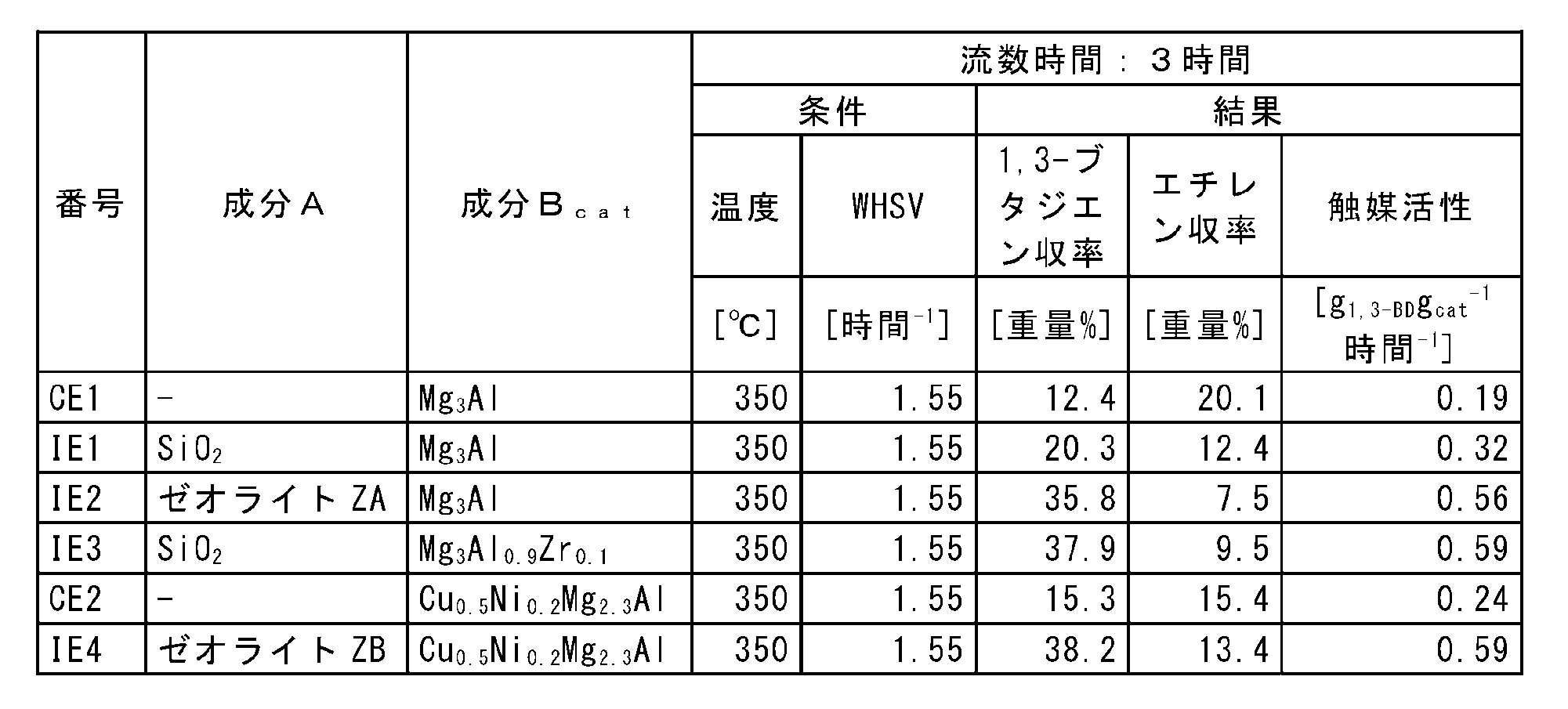
表1において、1,3-ブタジエンの収率%及び反応実施後の触媒活性が、触媒性能を示す上での重要なパラメータである。 In Table 1, the yield% of 1,3-butadiene and the catalytic activity after the reaction are carried out are important parameters for showing the catalytic performance.
CE1の触媒は、Mg及びAlから成っており、成分Aは含有していない(すなわち、コアなし)。この触媒は、エタノールを1,3-ブタジエンへ少なくとも変換はするが、1,3-ブタジエンの収率及び触媒活性が、CE2及びIE1~IE4と比較して、CE1では最も低いことが分かる。したがって、CE1の触媒組成物は、残りのすべての例CE2及びIE1~IE4に対するベースラインとして用いる。CE2の触媒は、CE1の触媒と比較して向上された性能を有する。CE2のLDHは、Mg及びAlと共にCu及びNiを含む。さらに、CE2の触媒は、成分Aは含有していない(すなわち、コアなし)。1,3-ブタジエンの収率及び触媒活性は、CE1と比較して僅かに上昇している。 The catalyst of CE1 consists of Mg and Al and does not contain component A (ie, no core). It can be seen that this catalyst at least converts ethanol to 1,3-butadiene, but the yield and catalytic activity of 1,3-butadiene is the lowest in CE1 compared to CE2 and IE1-IE4. Therefore, the catalyst composition of CE1 is used as a baseline for all the remaining examples CE2 and IE1-IE4. The CE2 catalyst has improved performance compared to the CE1 catalyst. LDH of CE2 contains Cu and Ni as well as Mg and Al. In addition, the CE2 catalyst does not contain component A (ie, no core). The yield and catalytic activity of 1,3-butadiene are slightly higher than that of CE1.
IE1~IE4に従う本発明の触媒は、成分A及び成分Bcatの両方を含む。これらの1,3-ブタジエンの収率及び触媒活性は、CE1及びCE2と比較して大きく上昇していることが分かる。 The catalyst of the present invention according to IE1 to IE4 contains both component A and component B cat . It can be seen that the yield and catalytic activity of these 1,3-butadienes are significantly increased as compared with CE1 and CE2.
Claims (15)
ii)混合金属酸化物を含む成分Bcat
を含む、エタノールを1,3-ブタジエンに変換するための触媒。 i) Component A selected from the list consisting of zeolite, silicon dioxide, aluminum oxide, or any combination thereof; and ii) Component B cat containing mixed metal oxides.
A catalyst for converting ethanol to 1,3-butadiene, including.
ii)層状複水酸化物(LDH)を含む成分Bpre
を含む、エタノールを1,3-ブタジエンに変換するための触媒を製造するための触媒前駆体。 i) Component A selected from the list consisting of zeolite, silicon dioxide, aluminum oxide, or a combination thereof; and ii) Component B pre containing layered double hydroxides (LDH).
A catalyst precursor for producing a catalyst for converting ethanol to 1,3-butadiene, including.
Applications Claiming Priority (3)
| Application Number | Priority Date | Filing Date | Title |
|---|---|---|---|
| EP19156924.3 | 2019-02-13 | ||
| EP19156924.3A EP3695900A1 (en) | 2019-02-13 | 2019-02-13 | Method and catalyst for the production of 1,3-butadiene from ethanol |
| PCT/EP2020/053340 WO2020165097A1 (en) | 2019-02-13 | 2020-02-10 | Method and catalyst for the production of 1, 3-butadiene from ethanol |
Publications (2)
| Publication Number | Publication Date |
|---|---|
| JP2022520249A true JP2022520249A (en) | 2022-03-29 |
| JP7518085B2 JP7518085B2 (en) | 2024-07-17 |
Family
ID=65686664
Family Applications (1)
| Application Number | Title | Priority Date | Filing Date |
|---|---|---|---|
| JP2021547202A Active JP7518085B2 (en) | 2019-02-13 | 2020-02-10 | Process and catalyst for producing 1,3-butadiene from ethanol |
Country Status (6)
| Country | Link |
|---|---|
| US (1) | US11969714B2 (en) |
| EP (1) | EP3695900A1 (en) |
| JP (1) | JP7518085B2 (en) |
| CN (1) | CN113557085B (en) |
| TW (1) | TW202041281A (en) |
| WO (1) | WO2020165097A1 (en) |
Cited By (1)
| Publication number | Priority date | Publication date | Assignee | Title |
|---|---|---|---|---|
| JP2024048691A (en) * | 2022-09-28 | 2024-04-09 | 積水化学工業株式会社 | Catalyst and method for producing butadiene |
Families Citing this family (3)
| Publication number | Priority date | Publication date | Assignee | Title |
|---|---|---|---|---|
| CN117229114B (en) * | 2022-06-08 | 2026-07-31 | 中国石油化工股份有限公司 | Method for preparing olefin by alcohol dehydration |
| JP2026503313A (en) * | 2023-01-30 | 2026-01-28 | ペトローリアム ナショナル バーハド (ペトロナス) | Catalyst and related reaction process for producing wax - Patents.com |
| EP4414069A1 (en) * | 2023-02-08 | 2024-08-14 | Oxford University Innovation Limited | Core-shell materials |
Citations (4)
| Publication number | Priority date | Publication date | Assignee | Title |
|---|---|---|---|---|
| WO2013125389A1 (en) * | 2012-02-20 | 2013-08-29 | 株式会社ダイセル | Method for producing 1,3-butadiene |
| JP2018504352A (en) * | 2015-01-06 | 2018-02-15 | エスシージー ケミカルズ カンパニー,リミテッド | SiO2-layered double hydroxide microspheres and method for producing the same |
| JP2018515339A (en) * | 2015-05-08 | 2018-06-14 | ザ・サイアム・セメント・パブリック・カンパニー・リミテッド | Catalyst for the production of 1,3-butadiene from ethanol |
| JP2018526313A (en) * | 2015-07-16 | 2018-09-13 | エスシージー ケミカルズ カンパニー,リミテッド | Inorganic porous framework-layered double hydroxide core-shell material |
Family Cites Families (9)
| Publication number | Priority date | Publication date | Assignee | Title |
|---|---|---|---|---|
| WO2009026510A1 (en) * | 2007-08-22 | 2009-02-26 | E. I. Du Pont De Nemours And Company | Catalytic conversion of ethanol to a 1-butanol-containing reaction product using a thermally decomposed hydrotalcite catalyst |
| EP2712673A1 (en) * | 2012-09-28 | 2014-04-02 | LANXESS Deutschland GmbH | Method for manufacturing 1,3-butadiene |
| JP6017386B2 (en) * | 2013-08-09 | 2016-11-02 | 株式会社ダイセル | Synthesis of butadiene from ethanol using metal-added SiO2-MgO catalyst prepared by hydrothermal synthesis |
| JP2015168644A (en) * | 2014-03-06 | 2015-09-28 | 株式会社ダイセル | IMPROVEMENT OF PREPARATION CONDITIONS OF METAL-ADDED MgO-SiO2 CATALYST EFFECTIVE FOR BUTADIENE SYNTHESIS FROM ETHANOL |
| GB201512452D0 (en) * | 2015-07-16 | 2015-08-19 | Scg Chemicals Co Ltd | Inorganic porous framework -layered double hydroxide core-shell materials as catalyst supports in ethylene polymerisation |
| BR112018003036B1 (en) * | 2015-08-19 | 2021-11-09 | Rescurve, Llc | METHOD FOR PRODUCING A HIGHER ALCOHOL |
| CN105413695B (en) * | 2015-12-22 | 2018-09-25 | 中国科学院山西煤炭化学研究所 | A kind of ethanol condensed catalyst and preparation method and application for preparing 1,3- butadiene |
| CN105854859A (en) * | 2016-04-27 | 2016-08-17 | 上海工程技术大学 | Efficient bifunctional catalyst as well as preparation and application thereof |
| US10179323B2 (en) * | 2016-06-07 | 2019-01-15 | Fina Technology, Inc. | Metal oxide catalyst systems for conversion of ethanol to butadiene |
-
2019
- 2019-02-13 EP EP19156924.3A patent/EP3695900A1/en not_active Withdrawn
-
2020
- 2020-02-10 JP JP2021547202A patent/JP7518085B2/en active Active
- 2020-02-10 CN CN202080019580.2A patent/CN113557085B/en not_active Expired - Fee Related
- 2020-02-10 WO PCT/EP2020/053340 patent/WO2020165097A1/en not_active Ceased
- 2020-02-10 US US17/430,889 patent/US11969714B2/en active Active
- 2020-02-12 TW TW109104369A patent/TW202041281A/en unknown
Patent Citations (4)
| Publication number | Priority date | Publication date | Assignee | Title |
|---|---|---|---|---|
| WO2013125389A1 (en) * | 2012-02-20 | 2013-08-29 | 株式会社ダイセル | Method for producing 1,3-butadiene |
| JP2018504352A (en) * | 2015-01-06 | 2018-02-15 | エスシージー ケミカルズ カンパニー,リミテッド | SiO2-layered double hydroxide microspheres and method for producing the same |
| JP2018515339A (en) * | 2015-05-08 | 2018-06-14 | ザ・サイアム・セメント・パブリック・カンパニー・リミテッド | Catalyst for the production of 1,3-butadiene from ethanol |
| JP2018526313A (en) * | 2015-07-16 | 2018-09-13 | エスシージー ケミカルズ カンパニー,リミテッド | Inorganic porous framework-layered double hydroxide core-shell material |
Cited By (1)
| Publication number | Priority date | Publication date | Assignee | Title |
|---|---|---|---|---|
| JP2024048691A (en) * | 2022-09-28 | 2024-04-09 | 積水化学工業株式会社 | Catalyst and method for producing butadiene |
Also Published As
| Publication number | Publication date |
|---|---|
| JP7518085B2 (en) | 2024-07-17 |
| CN113557085B (en) | 2024-10-01 |
| WO2020165097A1 (en) | 2020-08-20 |
| EP3695900A1 (en) | 2020-08-19 |
| CN113557085A (en) | 2021-10-26 |
| TW202041281A (en) | 2020-11-16 |
| US20220080397A1 (en) | 2022-03-17 |
| US11969714B2 (en) | 2024-04-30 |
| BR112021015931A2 (en) | 2021-10-05 |
Similar Documents
| Publication | Publication Date | Title |
|---|---|---|
| JP7518085B2 (en) | Process and catalyst for producing 1,3-butadiene from ethanol | |
| NL193144C (en) | MFI type zeolitic material, process for charging a spent catalyst and process for preparing the zeolitic material. | |
| CN105347359B (en) | A kind of duct includes the synthesis and its application of the zeolite molecular sieve of solid acid | |
| TWI408006B (en) | Zeolite catalyst and method of preparing and use of zeolite catalyst | |
| JP6053366B2 (en) | Zeolite catalyst, method for producing zeolite catalyst, and method for producing lower olefin | |
| CN111250152B (en) | A kind of encapsulation method of Ni@ZSM-5 bifunctional catalyst | |
| KR20190023054A (en) | Preparation of ZSM-5-based catalyst; use in ethylbenzene dealkylation process | |
| CN113546674B (en) | Catalytic cracking catalyst, preparation method and application thereof, and catalytic cracking method | |
| CN112547118B (en) | Isomerization combined catalyst and hydroisomerization method | |
| JP7702426B2 (en) | Modified beta zeolite, catalytic cracking catalyst, and method for producing and using the same | |
| JP2018526313A (en) | Inorganic porous framework-layered double hydroxide core-shell material | |
| WO2015121411A1 (en) | Dehydration-hydrolysis processes and catalysts therefor | |
| CN102814194A (en) | Catalyst containing modified silicoaluminophosphate molecular sieve | |
| CN102049313A (en) | Preparation method of load catalyst | |
| CN108285151B (en) | Ce isomorphous substituted LTL molecular sieve and preparation method thereof | |
| CN103663485B (en) | A kind of P-Si-IM-5 molecular sieve and the preparation and application of catalyst thereof | |
| CN114425419B (en) | Catalytic cracking catalyst for hydrogenating LCO to produce more olefins and aromatics and its preparation method and application | |
| CN111018645A (en) | Method for preparing low-carbon olefin by using oxygen-containing compound | |
| CA2969359C (en) | Catalyst and preparation method thereof, and method for preparing isobutylene by applying the same | |
| JP2005504166A (en) | Use of zeolite ITQ-21 in the catalytic cracking of organic compounds | |
| NL2021397B1 (en) | A process for preparing a hierarchical zeolite catalyst for aromatization of C5-C9 alkane | |
| JP6778554B2 (en) | Highly crystalline chabazite type zeolite and its manufacturing method | |
| BR112021015931B1 (en) | CATALYST FOR THE CONVERSION OF ETHANOL TO 1,3-BUTADIENE, CATALYST PRECURSOR, PROCESS FOR THE PRODUCTION OF 1,3-BUTADIENE, USE OF A CATALYST AND USE OF A CATALYST PRECURSOR | |
| RU2585289C1 (en) | Methane aromatisation catalyst, method for production thereof and method of converting methane to produce aromatic hydrocarbons | |
| JP2021528237A (en) | Bifunctional catalyst for producing olefins from syngas |
Legal Events
| Date | Code | Title | Description |
|---|---|---|---|
| A621 | Written request for application examination |
Free format text: JAPANESE INTERMEDIATE CODE: A621 Effective date: 20230206 |
|
| A977 | Report on retrieval |
Free format text: JAPANESE INTERMEDIATE CODE: A971007 Effective date: 20231006 |
|
| A131 | Notification of reasons for refusal |
Free format text: JAPANESE INTERMEDIATE CODE: A131 Effective date: 20231031 |
|
| A601 | Written request for extension of time |
Free format text: JAPANESE INTERMEDIATE CODE: A601 Effective date: 20240130 |
|
| A521 | Request for written amendment filed |
Free format text: JAPANESE INTERMEDIATE CODE: A523 Effective date: 20240410 |
|
| TRDD | Decision of grant or rejection written | ||
| A01 | Written decision to grant a patent or to grant a registration (utility model) |
Free format text: JAPANESE INTERMEDIATE CODE: A01 Effective date: 20240604 |
|
| A61 | First payment of annual fees (during grant procedure) |
Free format text: JAPANESE INTERMEDIATE CODE: A61 Effective date: 20240704 |
|
| R150 | Certificate of patent or registration of utility model |
Ref document number: 7518085 Country of ref document: JP Free format text: JAPANESE INTERMEDIATE CODE: R150 |