JP2020052925A - Automobile operation management system - Google Patents
Automobile operation management system Download PDFInfo
- Publication number
- JP2020052925A JP2020052925A JP2018184152A JP2018184152A JP2020052925A JP 2020052925 A JP2020052925 A JP 2020052925A JP 2018184152 A JP2018184152 A JP 2018184152A JP 2018184152 A JP2018184152 A JP 2018184152A JP 2020052925 A JP2020052925 A JP 2020052925A
- Authority
- JP
- Japan
- Prior art keywords
- user
- vehicle
- operation management
- driver
- reserved
- Prior art date
- Legal status (The legal status is an assumption and is not a legal conclusion. Google has not performed a legal analysis and makes no representation as to the accuracy of the status listed.)
- Granted
Links
- 230000010365 information processing Effects 0.000 claims description 11
- 230000007717 exclusion Effects 0.000 claims description 9
- 238000000034 method Methods 0.000 description 15
- 230000008569 process Effects 0.000 description 12
- 230000006870 function Effects 0.000 description 6
- 230000008901 benefit Effects 0.000 description 4
- 238000012790 confirmation Methods 0.000 description 3
- 238000012549 training Methods 0.000 description 3
- 238000004891 communication Methods 0.000 description 2
- 230000010006 flight Effects 0.000 description 2
- 238000012545 processing Methods 0.000 description 2
- 125000002066 L-histidyl group Chemical group [H]N1C([H])=NC(C([H])([H])[C@](C(=O)[*])([H])N([H])[H])=C1[H] 0.000 description 1
- 208000034819 Mobility Limitation Diseases 0.000 description 1
- 235000002595 Solanum tuberosum Nutrition 0.000 description 1
- 244000061456 Solanum tuberosum Species 0.000 description 1
- 230000032683 aging Effects 0.000 description 1
- 238000013473 artificial intelligence Methods 0.000 description 1
- 230000008859 change Effects 0.000 description 1
- 238000006243 chemical reaction Methods 0.000 description 1
- 230000007423 decrease Effects 0.000 description 1
- 238000010586 diagram Methods 0.000 description 1
- 230000000694 effects Effects 0.000 description 1
- 238000009434 installation Methods 0.000 description 1
- 230000033001 locomotion Effects 0.000 description 1
- 238000012423 maintenance Methods 0.000 description 1
- 238000012986 modification Methods 0.000 description 1
- 230000004048 modification Effects 0.000 description 1
- 230000001737 promoting effect Effects 0.000 description 1
- 230000004044 response Effects 0.000 description 1
- 230000001360 synchronised effect Effects 0.000 description 1
Images

Landscapes
- Management, Administration, Business Operations System, And Electronic Commerce (AREA)
- Traffic Control Systems (AREA)
Abstract
Description
本発明は、自動車運行管理システムに関するものである。 The present invention relates to a vehicle operation management system.
最近では、カーシェアリングの一種として、ドライバーが保有する自動車を運行用車両として使用して、このドライバーによる運行用車両の運転によって、不特定多数のユーザを対象にした運行サービスを行うことが増加している。このようなサービスを広い地域範囲に渡って行う場合は、運行に用いる運行用車両が多数用意されるのが一般的である。 Recently, as one type of car sharing, the use of a vehicle owned by a driver as an operation vehicle and the operation of the operation vehicle by the driver to provide an operation service for an unspecified number of users have increased. ing. When such a service is provided over a wide area, a large number of operation vehicles used for the operation are generally prepared.
特許文献1には、多数の運行用車両の中から、乗車要求に応じた適切な運行用車両を選択する手法が提案されている。特許文献2には、運行用車両の選択に際して、サービス提供者の利益あるいは利用者の満足度を向上させる手法が提案されている。
ところで、地方では、高齢化、人口減少等、多くの問題を抱えており、交通空白地域においては、交通弱者は、通院や買い物等になくてはならない移動が奪われている。このため、交通空白地域の人々に必要不可欠な交通手段として、住民が保有する自動車を運行用車両として利用し、また自動車を保有するドライバーを運行用車両の運転者として利用した運行を行う有償運送が着目されている。このような有償運送は、交通空白地域に、単に、必要不可欠な交通手段を提供するだけでなく、豊かな地域の維持、創造を通じて地域の活性化を図る可能性を秘めており、その有効な活用が望まれている。 By the way, in rural areas, there are many problems such as aging and population decline, and in the traffic-free areas, the vulnerable traffic is deprived of indispensable movements for going to hospitals and shopping. For this reason, paid transportation is an indispensable means of transportation for people in areas with no traffic, in which vehicles owned by residents are used as operation vehicles and drivers who own vehicles are used as drivers of operation vehicles. Is attracting attention. Such paid transportation has the potential to not only provide indispensable means of transportation to traffic-free areas, but also to revitalize the area through the maintenance and creation of rich areas. Utilization is desired.
上記空白地域での有償運送においては、その基本的な運行サービスとして、定時定路運行を行うことが考えられる。この定時定路運行は、路線バスの運行に対応したもので、決められた路線を決められた時間に走行する運行となる。そして、交通の便をより一層向上させるために、定時定路運行の他に、住民の希望によって運行時間、出発地、目的地さらには経由地等を自由に選択できるデマンド運行(タクシー運行に対応)を行うことも考えられる。 In paid transportation in the above-mentioned blank area, it is conceivable to perform regular scheduled operation as a basic operation service. This fixed-time fixed-route operation corresponds to the operation of a route bus, and is an operation of traveling on a determined route at a determined time. In order to further improve transportation convenience, in addition to regular fixed-route operation, demand operation (such as taxi operation) that allows the user to freely select the operation time, departure place, destination, and transit point according to the wishes of the residents ) Is also conceivable.
ところで、デマンド運行は、ユーザの要望に応じたきめ細かい運行が可能となるので、ユーザにとっては利便性が高くなる。この一方、デマンド運行は、定時定路運行に比して、運行負荷が相対的に大きいものになるのが通常である。すなわち、デマンド運行は、定時定路運行に比して、例えばドライバーへの報酬が高額になったり、運行用車両の利用人数が少なくてその有効活用という点で劣るものとなる。また、デマンド運行は、乗車予約した者のみが乗車することが多いことから、乗り合いを前提とする定時定路運行に比して、住民同士の親睦(交流)を深めるという点でも劣るものとなる。 By the way, the demand operation enables a detailed operation according to the user's request, so that the convenience is enhanced for the user. On the other hand, a demand operation usually has a relatively large operation load as compared to a regular timed road operation. In other words, the demand operation is inferior to the regular operation on a regular road, for example, in that the reward to the driver is high, and the number of people using the operation vehicle is small and the vehicle is effectively used. In addition, the demand service is also inferior in terms of deepening friendship (exchange) between residents, as compared to regular scheduled operation on the premise of sharing, since only those who reserved a board often board. .
本発明は以上のような事情を勘案してなされたもので、その目的は、所定地域内での運行システムについて、運行負荷を低減できるようにしつつ住民同士の親睦を深めることのできるようにした自動車運行管理システムを提供することにある。 The present invention has been made in view of the above circumstances, and an object of the present invention is to make it possible to deepen friendship between inhabitants while reducing the operation load for an operation system in a predetermined area. An object of the present invention is to provide an automobile operation management system.
前記目的を達成するため、本発明にあっては次のような解決手法を採択してある。すなわち、請求項1に記載のように、
所定地域内に居住する多数のユーザに対して、運行用車両を用いて運行サービスを行うための自動車運行管理システムであって、
運行管理者によって管理され、情報処理装置からなる運行管理装置と、
前記運行管理装置に対して通信可能とされ、ユーザに保持される情報処理装置からなるユーザ端末と、
を有し、
前記運行管理装置は、ユーザに関する情報を登録するユーザ登録機能と、ユーザからの乗車予約を受け付ける予約受付機能と、を有し、
前記ユーザ登録に際して、多数のユーザの中から相乗りの仲間を登録する仲間登録を含むようにされ、
前記運行管理装置は、乗車予約を受け付けたときに、乗車予約したユーザについて仲間登録されているユーザのユーザ端末に対して、相乗りを促すための問い合わせを行う相乗り受付機能を有している、
ようにしてある。
In order to achieve the above object, the present invention adopts the following solution. That is, as described in
An automobile operation management system for performing an operation service using an operation vehicle for a large number of users living in a predetermined area,
An operation management device that is managed by an operation manager and includes an information processing device;
A user terminal configured to be communicable with the operation management device and configured by an information processing device held by a user;
Has,
The operation management device has a user registration function of registering information about the user, and a reservation receiving function of receiving a boarding reservation from the user,
At the time of the user registration, to include a fellow registration to register a fellow rider from a large number of users,
The operation management device has a carpool reception function of, when receiving a boarding reservation, making an inquiry for prompting a carpooling to a user terminal of a user registered as a friend with respect to the user who made the boarding reservation,
It is like that.
上記解決手法によれば、あるユーザが乗車予約した運行について、相乗りを積極的に行わせるようにして、運行負荷を低減させる上で好ましいものとなる。また、相乗りするユーザは、乗車予約したユーザがあらかじめ仲間として登録されている者なので、親しい者同士の乗り合いとなり、車中での会話も弾んで、運行途中での楽しみが増加すると共に親睦をより深めることができ、地域活性化の上でも好ましいものとなる。 According to the above-mentioned solution method, it is preferable to reduce the operation load by positively performing the sharing for the operation for which a certain user has reserved a boarding. In addition, since the users who share the ride are those who have registered the ride reservation in advance as friends, they will share rides with each other, play conversations in the car, increase fun during the operation and increase friendship. It can be deepened, which is preferable for regional revitalization.
上記解決手法を前提とした好ましい態様は、請求項2以下に記載のとおりである。すなわち、
運行サービスとして定時定路運行とデマンド運行とが行われるようにされて、前記運行管理装置は、前記定時定路運行と前記デマンド運行とのうち該デマンド運行について乗車予約されたときにのみ、相乗りを促すための問い合わせを行う、ようにしてある(請求項2対応)。この場合、乗り合いが基本とされる定時定路運行について、不必要に相乗りの勧誘を行うことを防止できる。また、乗車予約したユーザのみでは多くの乗車人数を期待できないデマンド運行について、相乗りを積極的に行わせるようにすることができる。
Preferred embodiments based on the above solution are as described in
Scheduled regular road operation and demand operation are performed as an operation service, and the operation management device performs the carpooling only when a boarding reservation is made for the demand operation of the regular scheduled road operation and the demand operation. Inquiry for prompting is made (corresponding to claim 2). In this case, it is possible to prevent unnecessarily soliciting a shared ride on a regular fixed-route operation based on sharing. In addition, it is possible to positively perform carpooling for a demand operation in which a large number of passengers cannot be expected only by a user who has reserved a ride.
前記運行管理装置は、相乗りを促すための問い合わせを行う際に、乗車予約された運行に関する情報をも報知するようにされ、
前記報知される乗車予約された運行に関する情報として、少なくとも走行経路と運行時間に関する情報とが含まれる、
ようにしてある(請求項3対応)。この場合、乗車予約された運行内容を報知して、相乗りするか否かの判断を適切に行わせる上で好ましいものとなる。
The operation management device, when making an inquiry to encourage car sharing, it is configured to also notify information about the operation reserved for boarding,
As the information on the operation for which the reserved ride is notified, at least information on the traveling route and the operation time is included.
(Corresponding to claim 3). In this case, it is preferable to notify the operation contents reserved for boarding and appropriately determine whether or not to share the vehicle.
前記運行管理装置に対して通信可能とされ、運行用車両を運転するドライバーに保持される情報処理装置からなるドライバー端末をさらに有し、
前記運行管理装置は、前記乗車予約された運行に関する情報と該乗車予約された運行に乗車するユーザに関する情報とを、該乗車予約された運行の運転を担当するドライバーの前記ドライバー端末に報知する、
ようにしてある(請求項4対応)。この場合、乗車予約された運行の運転を担当するドライバーは、乗客情報を含む運行の詳細について事前に十分に把握することができ、運行を適切に行う上で好ましいものとなる。
The device further includes a driver terminal configured to be capable of communicating with the operation management device and including an information processing device held by a driver driving the operation vehicle,
The operation management device notifies the driver terminal of the driver in charge of driving of the reserved operation, information on the reserved operation and information on a user who gets on the reserved operation,
(Corresponding to claim 4). In this case, the driver in charge of driving the reserved operation can fully understand the details of the operation including the passenger information in advance, which is preferable for performing the operation appropriately.
前記運行管理装置に対して通信可能とされ、運行用車両に搭載された情報処理装置からなる車載端末をさらに有し、
前記運行管理装置は、前記乗車予約された運行に関する情報と該乗車予約された運行に乗車するユーザに関する情報とを、該乗車予約された運行に使用される運行用車両の前記車載端末に報知する、
ようにしてある(請求項5対応)。この場合、運行を担当するドライバーは、運行用車両からも運行に関する詳細情報を知得することができ、運行を間違いなく適切に行う上で好ましいものとなる。
The vehicle further comprises an in-vehicle terminal configured to be capable of communicating with the operation management device and including an information processing device mounted on the operation vehicle,
The operation management device notifies the in-vehicle terminal of an operation vehicle used for the reserved operation of information on the reserved operation and information on a user who gets on the reserved operation. ,
(Corresponding to claim 5). In this case, the driver in charge of the operation can obtain detailed information on the operation from the operation vehicle, which is preferable for surely performing the operation properly.
前記運行管理装置は、乗車予約したユーザについて仲間登録されているユーザから相乗りの希望がなかったときに、仲間登録されている以外のユーザに対して相乗りを促すための問い合わせを行う、ようにしてある(請求項6対応)。この場合、相乗りする者をより確実に確保する上で好ましいものとなる。 The operation management device, when there is no request for sharing from a user registered as a friend for a user who has made a reservation for boarding, performs an inquiry to prompt a user other than the registered member to share a ride. (Corresponding to claim 6). In this case, it is preferable in order to ensure the number of riders more reliably.
前記ユーザ登録に際して、多数のユーザの中から相乗りを希望しない相乗り不可のユーザを登録するユーザ除外登録を含むようにされ、
前記運行管理装置は、乗車予約したユーザについてユーザ除外登録されているユーザに対しては、相乗りを促すための問い合わせを行わない、
ようにしてある(請求項7対応)。この場合、乗車予約したユーザの意に沿わない者が相乗り者となってしまう事態を防止することができる。
At the time of the user registration, it is configured to include a user exclusion registration for registering a non-sharing user who does not want to share from a large number of users,
The operation management device does not make an inquiry for encouraging a ride-sharing for a user who has been registered for user exclusion for a user who has reserved a ride,
(Corresponding to claim 7). In this case, it is possible to prevent a situation in which a person who does not follow the intention of the user who has reserved a ride becomes a shared rider.
前記運行管理装置は、乗車予約したユーザが相乗りを許可していることを条件として、相乗りを促すための問い合わせを行う、ようにしてある(請求項8対応)。この場合、乗車予約したユーザが相乗りを希望しない状況のときに、不用意に相乗りさせてしまう事態を防止することができる。 The operation management device is configured to make an inquiry for encouraging sharing, on condition that the user who has reserved the sharing has permitted sharing. In this case, it is possible to prevent a situation in which the user who has reserved a ride does not want to share a ride, so that the user may inadvertently share the ride.
本発明によれば、所定地域内での運行システムについて、運行負荷を低減できるようにしつつ住民同士の親睦を深めることができる。 ADVANTAGE OF THE INVENTION According to this invention, about the operation system in a predetermined area, while making it possible to reduce an operation load, the friendship between residents can be deepened.
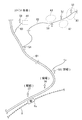
図1は、定時定路運行が行われる路線例を示すものである。図中、D1は、片道1車線(往復で2車線)の道路である。この道路D1は、鉄道路線Rにおける所定の駅Raを通るもので、この地域ではメインの道路となっている。駅Raの周辺が、この地域で唯一の繁華街となっており、役場、学校等の公的施設の他、病院や歯医者等の医療施設、スーパマーケット、コンビニエンスストア、カラオケ店等々の商業施設や娯楽施設が存在している。 FIG. 1 shows an example of a route on which a regular scheduled operation is performed. In the figure, D1 is a one-way lane (two-way round trip). This road D1 passes through a predetermined station Ra on the railway line R, and is a main road in this area. The area around the station Ra is the only downtown area in this area. In addition to public facilities such as government offices and schools, medical facilities such as hospitals and dentists, supermarkets, convenience stores, karaoke shops and other commercial facilities, Entertainment facilities exist.
道路D1に対しては、駅Raから離れた位置において、道路D2、D3が連なっている。道路D2、D3は、往復で1車線の対面通行用とされたローカルな道路となっている。この道路D2、D3沿いの地域は、山間部にあって、周囲の殆どが山や丘となる辺鄙な地域となっている。 The roads D2 and D3 are connected to the road D1 at a position away from the station Ra. The roads D2 and D3 are local roads for one-way, two-way traffic. The area along the roads D2 and D3 is in a mountainous area, and is a remote area where most of the surrounding area is a mountain or a hill.
道路D2のうち、道路D1から遠く離れた位置において、複数の集落A1〜A3が存在している。集落A1〜A3は、駅Raから10km以上離れた離村となっている、道路D3は、行き止まりとなっていて、行き止まりの位置には、集落A1〜A3の住民等が集うイベント会場(広場)A4とされている。 On the road D2, a plurality of settlements A1 to A3 exist at positions far from the road D1. The settlements A1 to A3 are remote villages at least 10 km away from the station Ra. The road D3 is a dead end. At the dead end, an event venue (square) A4 where residents of the settlements A1 to A3 gather. It has been.
集落A1〜A3に居住する住民の総数は、数百名程度であるが、高齢者の割合が大きいものであり、自動車の運転をできない者も多数存在する状況となっている。そして、道路D2(つまり集落A1〜A3の住民)においては、路線バスの運行はされていないものである。 Although the total number of inhabitants living in the settlements A1 to A3 is about several hundreds, the ratio of elderly people is large, and there are many people who cannot drive cars. The route bus is not operated on the road D2 (that is, the residents of the settlements A1 to A3).
集落A1〜A3の住民の交通の便を図るために、住民同士の協力によって、定時定路運行とデマンド運行とを行うこととなっている。定時定路運行は、定時に決まった路線を走行するものである.定時定路運行の停留所が、S1〜S7として示される。停留所S1は、出発点となるもので、集落A1の住民用である。停留所S2は、集落A2の住民用である。停留所S3は、集落A3の住民用である。 In order to facilitate the transportation of the residents of the settlements A1 to A3, the regular scheduled operation and the demand operation are to be performed in cooperation with the residents. On-time fixed-route operation is to run on a fixed route at a fixed time. Stops of regular scheduled operation are indicated as S1 to S7. The stop S1 is a departure point and is for residents of the settlement A1. Stop S2 is for residents of settlement A2. Stop S3 is for residents of settlement A3.
停留所S4は、道路D2がメインの道路D1と交差する位置に設定されている。停留所S5は、小学校や中学校のある位置付近に設定されている。停留所S6は、役場付近の位置に設定されている。停留所S7は、定時定路運行の終点で、駅Ra付近に設定されている。このように、定時定路運行の路線は、停留所S1から、S2、S3、S4、S5、S6を経て、終点のS7へ到達する経路とされる。帰りの便は、上記とは逆の経路をたどることになる。なお、定時定路運行の運行便数は、例えば、往復共に、例えば朝2便、昼1便、夕方2便とされている。なお、同一時間に出発する定時定路運行で使用する運行用車両の台数は、1台に限らず、乗車希望者が多いときは複数台となる場合もある(同一便で複数台の運行用車両が稼働される場合あり)。 The stop S4 is set at a position where the road D2 intersects with the main road D1. The stop S5 is set near a position where an elementary school or a junior high school is located. The stop S6 is set at a position near the government office. The stop S7 is set near the station Ra at the end point of the regular scheduled operation. In this way, the fixed-time fixed-route operation route is a route that reaches the end point S7 from the stop S1 via S2, S3, S4, S5, and S6. The return flight will follow the reverse route. It should be noted that the number of regular scheduled service operations is, for example, two flights in the morning, one flight in the daytime, and two flights in the evening for both round trips. In addition, the number of operating vehicles used on a regular scheduled route departure at the same time is not limited to one, and may be plural when there are a large number of passengers who wish to ride (a plurality of operating vehicles for the same flight) The vehicle may be operated).
定時定路運行の変形として、臨時運行(臨時便)が適宜行われる。この臨時運行は、例えば、イベント会場A4で催し物(例えば盆踊り、花火大会、芋煮会等)が開催されるときにのみ行われる。この臨時運行の経路は、停留所S1から、S2、S3、S4を経て、停留所S8へ至る経路とされる(復路はこの逆)。臨時運行は、イベント開催日に、あらかじめ設定された定時に停留所S1を出発する便とされる。 As a modification of the regular scheduled operation, an extraordinary operation (extra service) is appropriately performed. This temporary operation is performed only when, for example, an event (for example, a Bon dance, a fireworks display, a potato party, etc.) is held at the event site A4. The temporary operation route is a route from the stop S1 to the stop S8 via S2, S3, S4 (the reverse route is the reverse). The temporary operation is a flight that departs from the stop S1 at a preset time on the event date.
臨時運行を含む定時定路運行とデマンド運行とを行う運行用車両は、集落A1〜A3の住民が保有する自家用自動車を利用する他、自治体や企業からの補助や寄付等で管理を任された専用車両が用いられる。運行用車両の台数は、少なくとも2台以上とされ、好ましくは10台以上が用意される。 The operation vehicles that perform regular scheduled operation including temporary operation and demand operation use private cars owned by the residents of the settlements A1 to A3, and were managed by subsidies or donations from local governments and companies. A dedicated vehicle is used. The number of operating vehicles is at least two or more, and preferably ten or more.
運行用車両の運転を行うドライバーは、集落A1〜A3の住民から選ばれた者とされる。ドライバーとして選択されるには、あらかじめ事前講習(例えば半日〜1日程度の講習)を受けた者であることを条件とされる。すなわち、講習内容としては、例えば、安全運転に関する知識と実技の講習、乗客(特に高齢者や幼児)に対する運行用車両への乗り降りの補助の仕方に関する講習、ドライバーに要求される運行管理に関する知識や取扱い方等についての講習等がある。講習を修了したドライバーは、運行用車両の運転者として、登録される(ドライバーの登録の点については後述する)。 The driver driving the operation vehicle is selected from the residents of the settlements A1 to A3. In order to be selected as a driver, the driver must be a person who has undergone a preliminary training (for example, a training of about half a day to one day). That is, as the contents of the course, for example, a course on knowledge and practical skills on safe driving, a course on how to assist passengers (especially elderly people and infants) to get on and off the operation vehicle, knowledge on operation management required by the driver, There are courses on how to handle etc. The driver who has completed the training is registered as a driver of the operating vehicle (the registration of the driver will be described later).
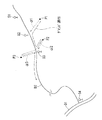
図2は、デマンド運行が行われた場合の一例を示すものである。図中P1は、デマンド運行を乗車予約した乗客(ユーザ)の住居であり、P2、P3は、この乗車予約されたデマンド運行(の運行用車両)に相乗りを希望した乗客(ユーザ)の住居である。デマンド運行は、乗客の希望に応じた出発地と目的地と経路とを自由に選択できる。図2では、乗車予約した乗客P1の自宅(付近)を出発地として、乗客P2の自宅付近、乗客P3の自宅付近を経由して、停留所S4方向に向かう場合が示される。 FIG. 2 shows an example of a case where a demand operation is performed. In the figure, P1 is a residence of a passenger (user) who has made a reservation for a demand operation, and P2 and P3 are residences of a passenger (user) who wishes to share a vehicle with (the operation vehicle of) the demand operation whose reservation has been made. is there. In demand operation, a departure place, a destination, and a route can be freely selected according to a passenger's request. FIG. 2 shows a case where the home (nearby) of the passenger P1 who has made a reservation for a ride is headed toward the stop S4 via the vicinity of the home of the passenger P2 and the vicinity of the home of the passenger P3.
乗客P1の最寄りの停留所はS2であり、乗客P1の自宅から停留所S2までの徒歩での移動経路α1が破線で示される。同様に、乗客P2の最寄りの停留所はS3であり、乗客P2の自宅から停留所S3までの徒歩での移動経路α2が破線で示される。乗客P3の最寄りの停留所もS3であり、乗客P3の自宅から停留所S3までの徒歩での移動経路α3が破線で示される。 The nearest stop of the passenger P1 is S2, and the traveling route α1 of the passenger P1 from his / her home to the stop S2 is indicated by a broken line. Similarly, the nearest stop of the passenger P2 is S3, and the traveling route α2 from the home of the passenger P2 to the stop S3 on foot is indicated by a broken line. The nearest stop of the passenger P3 is also S3, and the traveling route α3 from the home of the passenger P3 to the stop S3 by foot is indicated by a broken line.
乗客P1〜P3にとって、最寄りの停留所までの移動時間あるいは移動距離が長い場合は、停留所までの歩行が大変となる。このため、停留所までの歩行を避けるためにデマンド運行を要求する可能性がある。また、デマンド運行を要求する場合としては、大きな(重い)荷物を携帯しているとき、どの停留所からも遠い場所へ移動するとき、乗客が車椅子や松葉杖を使用する歩行困難な場合等が考えられる。デマンド運行を利用するときの料金は、定時定路運行を利用するときの料金よりも割高となるが、停留所までの移動時間や移動距離を考慮して、定時定路運行を利用するか、デマンド運行を利用するか判断されることになる。なお、デマンド運行の出発地は、デマンド運行を行うことが許容(許可)される範囲内であれば、例えば駅Ra付近であったり、適宜の停留所(例えばS5やS6)付近である等、適宜選択できる。 If the traveling time or traveling distance to the nearest stop is long for the passengers P1 to P3, it is difficult to walk to the stop. Therefore, there is a possibility that demand operation is required to avoid walking to the stop. Further, the demand operation may be requested when carrying large (heavy) luggage, when moving to a place far from any stop, or when a passenger has difficulty walking using a wheelchair or crutches. . The fee for using the demand service is higher than the fee for using the regular fixed-route operation.However, taking into account the travel time and travel distance to the stop, use the fixed-time It will be decided whether to use the service. Note that the departure place of the demand operation is within a range in which the demand operation is permitted (permitted), for example, near the station Ra or near an appropriate stop (for example, S5 or S6). You can choose.
ここで、定時定路運行あるいはデマンド運行を利用するときの料金体系の一例について説明する。まず、定時定路運行を利用するときは、利用距離に応じた金額のみで、単位距離あたりの料金がE1(E1×利用距離)とされる。これに対して、デマンド運行を当初に乗車予約した乗客P1の利用料金は、利用距離に応じた金額が上記料金E1よりも若干割高な料金E2とされると共に、定額の基本料金EB2が別途徴収される(合計料金は、EB2+E2×利用距離)。さらに、デマンド運行に相乗りを希望した乗客P2、P3の利用料金は、上記E2のみとされる(基本料金EB2が不要)。このように、定時定路運行を利用する場合がもっとも安価であり、デマンド運行を当初に乗車予約した場合の料金がもっとも高価であり、デマンド運行に相乗りする場合の料金が中間の料金となる。勿論、上記した料金は一例であって、適宜設定できるものである。なお、当初にデマンド運行の乗車予約を行ったユーザについては、相乗り者が増えるほど、料金が安価になるような料金体系を採用することにより、相乗りを積極的に促す上で好ましいものとなる。 Here, an example of a fee system when a fixed time fixed route operation or a demand operation is used will be described. First, when using the fixed-time fixed-route operation, the fee per unit distance is set to E1 (E1 × use distance) with only the amount corresponding to the use distance. On the other hand, the use fee of the passenger P1 who originally made a reservation for demand service is set as the fee E2, which is slightly higher than the above-mentioned fee E1, in accordance with the use distance, and a fixed basic fee EB2 is separately collected. (The total charge is EB2 + E2 × use distance). Further, the usage fee of the passengers P2 and P3 who wished to share the vehicle for demand operation is only E2 (the basic fee EB2 is unnecessary). As described above, the time when the regular operation is used is the cheapest, the fee when the demand operation is initially reserved for boarding is the most expensive, and the fee when sharing the demand operation is an intermediate fee. Of course, the above-mentioned fee is an example and can be set as appropriate. It should be noted that a user who initially made a reservation for a demand-operated ride is preferable in that a ride system is adopted in which the fare is reduced as the number of riders increases, thereby actively promoting ride-sharing.
デマンド運行に相乗りする場合、当初にデマンド運行を予約した乗客の行き先が、相乗りを希望する乗客の行き先とほぼ同一方向であれば、相乗りするメリットがある。例えば、当初にデマンド運行を予約した乗客の行き先が、例えば停留所S6付近であるときに、相乗りを希望した乗客が希望する行き先が停留所S7付近(S6よりも遠方)やS5付近(S6よりも近場)であるときは、相乗りする利点があるということになる。この一方、デマンド運行を当初に予約した乗客の行き先と、相乗りを考えている乗客が希望する行き先とが例えば反対方向であったり、途中で大きく方向が変わる場合は、相乗りされる可能性が極めて低いものとなる。 When sharing a demand service, if the destination of the passenger who originally reserved the demand service is almost the same direction as the destination of the passenger who wishes to share the ride, there is an advantage of sharing the ride. For example, when the destination of the passenger who originally reserved the demand operation is, for example, near the stop S6, the destination desired by the passenger who wishes to share the vehicle is near the stop S7 (farther than S6) or near S5 (closer than S6). ), There is an advantage of sharing. On the other hand, if the destination of the passenger who originally booked the demand service and the destination that the passenger who is considering sharing wants are in the opposite direction, for example, or when the direction changes significantly on the way, the possibility of sharing is extremely high. It will be low.
次に、定時定路運行とデマンド運行との管理を行う管理システムの一例について、図3を参照しつつ説明する。 Next, an example of a management system that manages regular scheduled operation and demand operation will be described with reference to FIG.
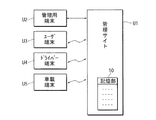
まず、U1は、全体の管理を行う管理サイト(情報処理装置としてのサーバ装置)であり、CPU、通信手段、大容量の記憶手段(メモリ等)10等を有している。この管理サイトU1には、管理端末U2、ユーザ端末U3、ドライバー端末U4および車載端末U5がそれぞれ通信可能として接続されている。なお、管理サイトU1と管理用端U2とが、実質的に運行管理装置を構成するものである。また、各端末U2〜U5には、管理サイトU1との間で各種情報の授受を行うためのアプリケーションソフトがあらかじめインストールされている。 First, U1 is a management site (server device as an information processing device) that performs overall management, and includes a CPU, a communication unit, a large-capacity storage unit (such as a memory) 10, and the like. A management terminal U2, a user terminal U3, a driver terminal U4, and an in-vehicle terminal U5 are communicably connected to the management site U1. The management site U1 and the management terminal U2 substantially constitute an operation management device. Further, application software for exchanging various information with the management site U1 is installed in each of the terminals U2 to U5 in advance.
各端末U2〜U4は、それぞれ情報処理装置を利用して構成されて、通信部の他に、表示画面(出力部)や操作部(入力部)を有している。管理用端末U2は、主として管理サイトU1の操作を行うもので、運行管理のための入出力作業が多くなるため、高性能のパーソナルコンピュータを利用して構成するのが好ましい。この管理用端末U2は、例えば役場に1台のみ設置することもできるが、集落A1〜A3にも設定する等、複数台用意することができる(ただし、ある1台の管理用端末U2が使用されているときは、他の管理用端末U2が使用できない設定とするのが好ましい)。 Each of the terminals U2 to U4 is configured using an information processing device, and has a display screen (output unit) and an operation unit (input unit) in addition to the communication unit. The management terminal U2 mainly operates the management site U1 and requires a large number of input / output operations for operation management. Therefore, the management terminal U2 is preferably configured using a high-performance personal computer. For example, only one management terminal U2 can be installed in the government office, but a plurality of management terminals U2 can be prepared by setting them in the settlements A1 to A3 (however, one management terminal U2 is used). When the setting is performed, it is preferable that the setting is such that the other management terminal U2 cannot be used.)
一方、ユーザ端末U3やドライバー端末U4は、パーソナルコンピュータを利用する他、スマートフォンやタブレット型のパソコンを利用することができる。車載端末U5は、図4に示すように表示画面20を有して、後述するように管理サイトU1(管理用端末U2を操作する管理者)と運行用車両を運転するドライバーとの間での各種の情報交換を行うものである。そして、運行用車両の位置情報が、管理サイトU1へ自動的に送信されるものとなっている。なお、ユーザ端末U3については、スマートフォン等の情報処理装置に代えて、電話等によって管理用端末U2(の管理者)とやりとりできるものとすることもできる(コンピュータ関係の機器類を扱うのが苦手な高齢者等への対応)。特に、ユーザ端末U3、ドライバー端末U4、車載端末U5については、管理サイトU1に対して無線でもって通信可能なものを用いるのが好ましい。
On the other hand, the user terminal U3 and the driver terminal U4 can use not only a personal computer but also a smartphone or a tablet-type personal computer. The in-vehicle terminal U5 has a
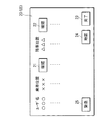
図4は、車載端末U5の一部を構成する表示画面20での表示例を示すものである。図4では、定時定路運行とデマンド運行とも実質的に同様な表示態様とされる。表示画面20に表示される内容としては、ユーザ名(乗客名)、乗車位置および降車位置が表示される。乗客が複数名の場合は、同様の表示が下列に表示される。乗客名の表示は、乗車位置が近い順にから遅い順に、上方から下方へ表示される。なお、乗車位置と降車位置との名称は、定時定路運行の場合は停留所名となるが、デマンド運行の場合は、乗客の要望に応じた乗車位置と降車位置とを示す特有の地名表示とされる。
FIG. 4 shows a display example on the
表示画面20は、タッチパネル式とされている。ある乗客○○○が乗車位置で乗車すると、ドライバーは表示画面20中の乗車確認スイッチ21をタッチ操作する。これにより、ある乗客○○○が乗車したことの情報が、管理サイトU1に送信されて、記憶される。同様に、ある乗客○○○が降車位置で降車すると、ドライバーは表示画面20中の降車確認スイッチ22をタッチ操作する。これにより、ある乗客○○○が降車したことの情報が、管理サイトU1に送信されて、記憶される。他のユーザの乗車、降車についても同様のことが行われる。
The
全てのユーザが降車した際に、ドライバーは、表示画面20中に表示されている完了スイッチ23をタッチ操作する。これにより、運行が完了したことの報告情報が、管理サイトU1に送信されて、記憶される。表示画面20中に表示されている地図表示を要求するスイッチ24をタッチ操作すると、走行経路が表示される。この走行経路の表示は、特にデマンド運行の際に必要となる可能性が高いもので、例えば図2に示すような地図表示が行われて、走行経路が図2中一点鎖線で示すような態様でもってでもって表示される(走行経路は、ナビゲーション装置で行われる案内経路表示のように、色分け表示とするのが好ましい)。
When all the users get off, the driver touches the
表示画面20中に表示される緊急スイッチ25をタッチ操作すると、管理サイトU1を介して、管理用端末U2(を操作している管理者)に対して、緊急事態の発生を知らせる旨の報知が行われる。これによりドライバーと管理者との間で、緊急事態に対応するための情報交換が行われる。
When the
次に、管理サイトU1と管理用端末U2とによって行われる運行管理の制御例について、図5以下のフローチャートを参照しつつ説明する。 Next, a control example of operation management performed by the management site U1 and the management terminal U2 will be described with reference to flowcharts in FIG.
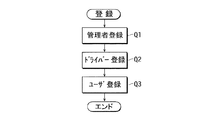
まず、図5は、各種の登録を行う場合が示される。すなわち、Q1において、管理用端末U2を操作して、管理者の登録が行われる。管理者は、例えば役場の職員や、集落A1〜A3の住民の中から推薦等によって選択されるが、極力多人数を登録しておくのが好ましい。管理者登録に際しては、例えば、氏名、住所、年齢、性別、電話番号等とされる。なお、管理者となる前提としてあらかじめ講習を受講して、本システムの取扱を十分に理解した者とされる。また、管理者については、管理用端末U2がむやみに操作されないように、あらかじめIDとパスワードが各管理者に割り当てられて、IDとパスワードとを入力しない限り、管理用端末U2を操作できないようにされる。 First, FIG. 5 shows a case where various types of registration are performed. That is, in Q1, the management terminal U2 is operated to register the administrator. The administrator is selected by, for example, recommendation from the staff of the government office or the residents of the villages A1 to A3, but it is preferable to register as many people as possible. At the time of manager registration, for example, the name, address, age, gender, telephone number, and the like are set. In addition, it is assumed that a person who has attended a course in advance and fully understands the handling of this system is assumed to be an administrator. In addition, for the manager, an ID and a password are assigned to each manager in advance so that the management terminal U2 is not operated unnecessarily, and the management terminal U2 cannot be operated unless the ID and the password are input. Is done.
Q2では、管理用端末U2を操作して、運行用車両を運転するドライバーの登録が行われる。この登録は、例えば、氏名、住所、年齢、性別、電話番号、運転する運行用車両の種別、乗車定員、運転免許証の有効期限、講習の受講日等が登録される。この登録に際しては、さらに、個々のドライバーの要望に応じて、担当できる運行が、定時定路運行のみであるか、デマンド運行のみであるか、定時定路運行とデマンド運行との両方の運行が可能であるかの登録も行われ、さらに種々の要望事項も登録される。 In Q2, the driver who drives the operating vehicle is operated by operating the management terminal U2. In this registration, for example, a name, an address, an age, a gender, a telephone number, a type of a driving vehicle to be driven, a riding capacity, an expiration date of a driver's license, a date of attending a class, and the like are registered. At the time of this registration, furthermore, according to the request of each driver, the operation that can be in charge is only the regular scheduled operation, the demand operation only, or both the regular scheduled operation and the demand operation. Registration of the possibility is also performed, and various requests are also registered.
ドライバー登録されるドライバーの種々の要望事項としては、例えば、次のようなものとすることができる。すなわち、運転担当可能な運転地域の限定、運転拘束時間の限定(例えば40分以内等)。乗客の居住する地域の限定(例えば普段付き合いのない集落Aの住民が乗客となる場合は運転不可とする)、乗客の年齢や性別の限定、乗客に乗降の補助等が必要な障害が有る場合の限定(ドライバーが体力的に乗客の補助を行うことが難しい場合)等の場合に、運転担当不可であるという登録内容とすることもできる。このようなドライバーの要望事項を登録しておくことは、条件が合えばドライバーになり得るということで、ドライバーを十分に確保する上で好ましいものとなる。 Various demands of the driver to be registered as a driver can be, for example, as follows. That is, the limitation of the driving area in which the driver can take charge and the limitation of the driving restraint time (for example, within 40 minutes). Limitation of the area where the passengers live (for example, if a resident of Village A, who is not usually associated, becomes a passenger, driving is prohibited), age and gender of the passengers are limited, and passengers need assistance in getting on and off (In the case where it is difficult for the driver to physically assist the passenger) or the like, the registration content that the driver cannot be in charge can be made. It is preferable to register such driver's requirements in order to sufficiently secure the driver because the driver can become a driver if the conditions are met.
上述したドライバー登録の内容は、要望事項をも含めて、例えばドライバー端末U4で入力することにより、ドライバー端末U4から管理サイトU1に送信されて、管理サイトU1の記憶手段10に記憶される(データベース化)。なお、ドライバー登録の内容は、電話、FAXあるいは紙によって要望事項を受け取って、管理者が管理用端末U2を操作して入力することもできる。
The contents of the driver registration described above, including the requested items, are transmitted from the driver terminal U4 to the management site U1 by being input at the driver terminal U4, and are stored in the
Q3では、管理用端末U2を操作して、ユーザの登録が行われる。この登録は、運行用車両を利用する乗客となる予定者の登録である(利用者の会員登録ともいえる)。この登録は、例えば、氏名、住所、年齢、性別、電話番号、自宅からの最寄りの停留所名、最寄りの停留所までの移動時間および移動距離等とされる。 In Q3, the user is registered by operating the management terminal U2. This registration is a registration of a person who will be a passenger using the operation vehicle (it can also be called a user member registration). This registration includes, for example, name, address, age, gender, telephone number, name of the nearest stop from home, travel time and travel distance to the nearest stop, and the like.
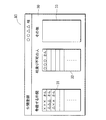
ユーザ登録に際しては、さらに、デマンド運行を乗車予約する際に、相乗り者として希望するユーザを、仲間として仲間登録することが含まれる。具体的には、図11に示すように、ユーザ端末U3を操作して、その表示画面30に表示される仲間登録欄31に、相乗り者になって欲しいユーザ(仲間)が入力される。また、表示画面30に表示される除外欄(相乗り不可のユーザを入力する欄)32には、相乗り者として希望しないユーザ(非仲間)が入力される。その他、自由欄33には、相乗りに関する希望事項を自由に入力できるようになっている。
The user registration further includes registering a user who wants to be a rider as a friend when making a reservation for demand operation. Specifically, as shown in FIG. 11, the user (friend) who wants to be a shared rider is input into the
仲間登録欄31は、デマンド運行を乗車予約した際に、親しい仲間が極力同乗できるようにするためのもので、仲間が同乗することにより、車中での会話も弾んで、親睦を深めることができる。また、運行用車両の利用人数を極力増やして、運行負荷を低減させる上でも好ましいものとなる。そして、除外欄32に特定のユーザを登録しておくことにより、意に沿わない人が同乗してしまうことを確実に阻止することができる。
The
上述したユーザ登録の内容は、例えばユーザ端末U3で入力することにより、ユーザ端末U3から管理サイトU1に送信されて、管理サイトU1の記憶手段10に記憶される(データベース化)。なお、ユーザ登録の内容は、電話、FAXあるいは紙によって要望事項を受け取って、管理者が管理用端末U2を操作して入力することもできる。
The contents of the user registration described above are transmitted from the user terminal U3 to the management site U1 by, for example, being input at the user terminal U3, and stored in the
図6は、運行用車両の運転担当が可能なドライバーを登録する処理を示す。すなわち、例えば、翌月の1ヶ月分の各日について、運転担当が可能な日と時間帯が、例えばドライバー端末U4を介してあるいは管理用端末U2を操作して、管理サイトU1に登録される(記憶手段10への記憶)。運転担当可能な日や時間帯は、変更取消が可能である。なお、運転担当可能な日と時間帯の登録は、電話やFAXあるいは紙形式でも可能であり、この場合は、管理者が、管理用端末U2を利用してドライバー登録を行うことになる。 FIG. 6 shows a process of registering a driver who can be in charge of driving an operation vehicle. That is, for example, for each day of the following month, the day and time zone in which the driver can be in charge are registered in the management site U1 via the driver terminal U4 or by operating the management terminal U2 ( Storage in storage means 10). It is possible to cancel the change on the day and time when the driver can be in charge. Note that the day and time zone in which the driver can be in charge can be registered by telephone, FAX, or paper format. In this case, the administrator performs driver registration using the management terminal U2.
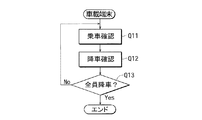
図7は、車載端末U5での操作に対応した管理サイトU1での運行状況の処理内容を示す。すなわち、図4に示すスイッチ21が操作されることにより、Q11において乗車の確認が行われる。図4に示すスイッチ22が操作されることにより、Q12において降車の確認が行われる。そして、図4に示すスイッチ23が操作されることにより、Q13において、乗客全員が降車した運行完了であることが確認される。この図7の処理によって、運行している運行用車両の状況を把握することができる(この運行状況は、管理用端末U2を操作して、その表示画面でもっていつでも確認することができる)。
FIG. 7 shows the processing content of the operation status at the management site U1 corresponding to the operation at the vehicle-mounted terminal U5. That is, when the
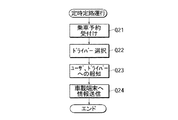
図8は、定時定路運行を行うための処理を示すものである。まず、Q21において、ユーザからの乗車予約の受付が行われる。受付内容は、少なくとも、乗車を希望する日と、定時定路運行の便名と、乗車場所と、降車場所とを含むものとされる。なお、乗車予約は、ユーザ端末U3を利用して行われることを想定しているが、この他、電話や紙での乗車予約も受付可能とされる(この場合は、管理者が、管理用端末U2を用いて、乗車予約の内容を管理サイトU1に入力することになる)。勿論、乗車予約された内容は、管理サイトU1の記憶手段10に記憶される。なお、乗車予約は、例えば、利用する定時定路運行の前日の午後5時まで等、受付期限を設定しておくのが好ましい。 FIG. 8 shows a process for performing a regular scheduled road operation. First, in Q21, a ride reservation from a user is accepted. The contents of the reception include at least the day on which the user wants to get on, the flight number of the regular scheduled operation, the boarding location, and the getting off location. It is assumed that the ride reservation is made using the user terminal U3, but it is also possible to accept a ride reservation by telephone or paper (in this case, the administrator Using the terminal U2, the content of the boarding reservation is input to the management site U1). Of course, the content of the reserved ride is stored in the storage means 10 of the management site U1. In addition, it is preferable to set a deadline for accepting the ride reservation, for example, until 5:00 pm on the day before the regular scheduled route operation to be used.
Q22では、乗車予約が行われた定時定路運行での運転を担当するドライバーの選択が行われる。ドライバーの選択に際しては、記憶手段10に記憶(登録)されているドライバーの中から、運転担当することが可能なドライバー(図11で定時定路運行可否の欄で「○」を入力したドライバー)の中から1名を選択することにより行うこととなる。なお、ドライバーの選択は、運転担当が可能なドライバーの中から順番に自動的に選択することもでき、また管理者が管理用端末U2を利用して、手動操作によって選択することもできる。なお、ドライバー登録の際に、個々のドライバーが使用する運行用車両が登録されているので、ドライバーの選択に伴って使用される運行用車両が自動的に決定される。 In Q22, the driver who is in charge of driving on the fixed-time fixed-route operation for which the boarding reservation has been made is selected. When selecting a driver, a driver who can be in charge of driving from among the drivers stored (registered) in the storage means 10 (a driver who inputs "O" in the column of availability of regular road operation in FIG. 11). Is performed by selecting one person from the list. The driver can be automatically selected in order from among the drivers who can be in charge of driving, or can be manually selected by the administrator using the management terminal U2. In addition, at the time of driver registration, since the operation vehicle used by each driver is registered, the operation vehicle used according to the selection of the driver is automatically determined.
Q23では、乗車予約した乗客(乗客予定者)に対して予約受付を完了した旨の報知が行われる。また、運転担当として選択されたドライバーに対して、運転担当として選択されたことと、乗車予約された内容とが報知される。この各報知は、ユーザ端末U3、ドライバー端末U4に対して行うようにしてある。なお、確認のために、選択されたドライバーから、運転担当を了解した旨の返信を受け取るような処理を行うこともできる(ドライバーと運行用車両を確実に確保して、定時定路運行が確実に行われるようにする)。 In Q23, a notification is sent to the passenger (scheduled passenger) who has made a reservation to the effect that the reservation reception has been completed. Further, the driver selected as the driver is notified of the selection as the driver and the details of the reserved ride. Each notification is made to the user terminal U3 and the driver terminal U4. For confirmation, it is also possible to perform a process to receive a reply from the selected driver that he / she has consented to the driver in charge. To be done).
Q24では、車載端末U5に対して、乗車予約された内容(特に乗客名とその乗車位置と降車位置とに関する情報)が報知される(この報知に基づいて、図4に示すような表示が行われる)。なお、運転担当するドライバーの氏名をも、車載端末U5に報知することもできる(運転担当者の氏名を、図4の表示画面20の表示させることもできる)。
In Q24, the details of the boarding reservation (particularly, information on the passenger name, the boarding position, and the getting off position) are notified to the on-vehicle terminal U5 (based on the notification, a display as shown in FIG. 4 is performed). Is done). Note that the name of the driver in charge of driving can also be notified to the in-vehicle terminal U5 (the name of the driver can also be displayed on the
図9は、デマンド運行を行うための処理を示すものである。まず、Q31において、ユーザからのデマンド運行についての乗車予約が受け付けられる。受付内容は、少なくとも、乗車を希望する日と、乗車場所(出発地点)と、乗車時間と、降車場所(降車地点)とを含むものとされる。乗車予約の際に、相乗りを希望(許可)するか否かの情報を含めることができる。すなわち、デマンド運行を乗車予約したユーザが、例えば家族でもって一緒に移動したいとき、プライバシーの観点から同乗者が居ないことを希望するとき、さらには目的地に早く到着したいときは、乗車予約の際に、「相乗り不可」の情報を含めることができる。なお、「相乗り不可」の情報がない限り、「相乗り許可」と自動的に判断することができる。 FIG. 9 shows a process for performing a demand operation. First, in Q31, a ride reservation for a demand operation from a user is accepted. The content of the reception includes at least the date on which the user wants to get on, the boarding place (departure point), the boarding time, and the getting off place (getting off point). At the time of boarding reservation, information as to whether or not a ride is desired (permitted) can be included. In other words, when a user who has reserved a demand service, for example, wants to travel together with his family, wants to have no passengers from the viewpoint of privacy, or wants to arrive at the destination earlier, At this time, information of “sharing is impossible” can be included. In addition, as long as there is no information of “sharing impossible”, it is possible to automatically determine that “sharing is permitted”.
なお、乗車予約は、ユーザ端末U3を利用して行われることを想定しているが、この他、電話や紙での乗車予約も受付可能とされる(この場合は、管理者が、管理用端末U2を用いて、乗車予約の内容を管理サイトU1へ入力することになる)。勿論、乗車予約された内容は、管理サイトU1の記憶手段10に記憶される。なお、乗車予約は、例えば、前日の午後5時まで等、受付期限を設定しておくこともできるが、病気や事故の発生等の緊急時に迅速にデマンド運行を行えるように、受付期限は設けない設定とするのが好ましい。 It is assumed that the ride reservation is made using the user terminal U3, but it is also possible to accept a ride reservation by telephone or paper (in this case, the administrator Using the terminal U2, the content of the boarding reservation is input to the management site U1). Of course, the content of the reserved ride is stored in the storage means 10 of the management site U1. A ride deadline can be set for the ride reservation, for example, until 5:00 pm on the previous day. However, a deadline is set so that demand operation can be performed promptly in an emergency such as when an illness or accident occurs. It is preferable to have no setting.
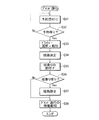
Q32では、デマンド運行の乗車予約を受け付けたか否かが判別される。このQ32の判別でNOのときは、リターンされる(デマンド運行なし)。Q32の判別でYESのときは、Q33において、乗車予約された内容(特に乗車位置と降車位置)とに基づいて、デマンド運行での走行経路が決定される。Q33の後、Q34において、相乗りの受付処理が行われる。このQ34の処理については、後述する。この後、Q35において、相乗りの乗客が存在するか否かが判別される。このQ35の判別でYESのときは、Q36において、相乗りの乗客が希望する乗車位置と降車位置とに応じて、Q33で決定された走行経路が修正される。 In Q32, it is determined whether or not the demand reservation has been accepted. If the determination in Q32 is NO, the process returns (no demand operation). If the determination in Q32 is YES, in Q33, the travel route in the demand operation is determined based on the details of the boarding reservation (particularly the boarding position and the getting off position). After Q33, a sharing process is performed in Q34. The process of Q34 will be described later. Thereafter, in Q35, it is determined whether there is a shared passenger. If the determination in Q35 is YES, in Q36, the traveling route determined in Q33 is corrected according to the boarding position and the getting-off position desired by the shared passenger.
Q36の後、あるいはQ35の判別でNOのときはそれぞれ、Q37において、運転を担当するドライバーの選択が行われる。このドライバーの選択に際しては、管理サイトU1に記憶されているドライバー登録のデータベースの内容を照合して、運転担当可能なドライバーが選択される。このドライバー選択に際しては、ドライバー登録されたときのドライバーからの各種要望に対応して行われる。例えば、走行経路が、運転担当可能な地域から大きくはずれているドライバーは除外され、走行時間がドライバー登録されている運転拘束時間よりも長くなるドライバーは除外される等のことが行われる。なお、運転担当可能なドライバーが複数存在する場合は、順番にドライバーを選択することもできる。 After Q36 or when NO is determined in Q35, a driver in charge of driving is selected in Q37. When selecting this driver, the contents of the driver registration database stored in the management site U1 are collated, and a driver capable of in charge of driving is selected. This driver selection is performed in response to various requests from the driver at the time of driver registration. For example, a driver whose traveling route deviates significantly from the area where the driver can take charge is excluded, and a driver whose traveling time is longer than the driving constraint time registered as a driver is excluded. If there are a plurality of drivers who can be in charge of driving, the drivers can be selected in order.
ドライバー選択の際には、管理用端末U2を操作する管理者が、走行経路や走行時間を考慮して、また乗車予約された乗客に関する情報を考慮して、管理サイトU1に記憶されているドライバー登録の内容を呼び出して(管理用端末U2の表示画面にドライバー登録されている要望事項を表示させて)、ドライバーの選択を行うことができる。また、管理サイトU1において、走行経路、走行時間および乗客に関する情報を、ドライバー登録されているドライバーの要望と照合して、運転担当可能なドライバーを自動選択することもできる(例えば人工知能の利用)。管理サイトU1からは、選択されたドライバーのドライバー端末U4に対して、ドライバーとして選択されたことと、運行内容、乗客情報等が報知(送信)される。 At the time of driver selection, the administrator operating the management terminal U2 takes the driver stored in the management site U1 into consideration in consideration of the travel route and travel time, and in consideration of information on the passengers who have been reserved for boarding. By calling up the contents of the registration (displaying the request registered in the driver on the display screen of the management terminal U2), the driver can be selected. Further, in the management site U1, the information on the travel route, the travel time, and the passenger can be checked against the driver's registered driver's request, and a driver who can be in charge of driving can be automatically selected (for example, use of artificial intelligence). . From the management site U1, the driver terminal U4 of the selected driver is notified (transmitted) that the driver has been selected as the driver, the operation details, the passenger information, and the like.
Q37の後、Q38において、乗車予約されたデマンド運行に関する情報、例えばデマンド運行での走行経路に関する情報、各乗客に関する情報、乗車位置と降車位置に関する情報が、ユーザ端末U3、ドライバー端末U4、車載端末U5に対して報知(送信)される。なお、使用する運行用車両は、選択されたドライバーに応じて自動的に決定される。 After Q37, in Q38, the information on the demand operation reserved for boarding, for example, the information on the traveling route in the demand operation, the information on each passenger, the information on the boarding position and the getting off position are stored in the user terminal U3, the driver terminal U4, the on-board terminal. It is notified (transmitted) to U5. The operating vehicle to be used is automatically determined according to the selected driver.
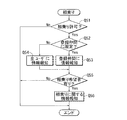
図10は、図9のQ34における相乗りの受付処理を示す。なお、この受付処理の際には、乗車予約した者が相乗りを許可するか否かや、相乗りを登録されている仲間に限定するか否かの情報を含むように行われる。なお、乗車予約の際に相乗りについて特に限定がない場合は、全てのユーザが相乗りの可能性のある者とされる。 FIG. 10 shows the sharing reception process in Q34 of FIG. It should be noted that this reception process is performed so as to include information as to whether or not the rider who has reserved a ride is permitted to share a ride, and whether or not to limit the ride to registered friends. If there is no particular limitation on the sharing when making a reservation for a ride, all users are considered to have a possibility of sharing.
以上のことを前提として、まずQ51において、デマンド運行を当初に乗車予約した乗客(ユーザ)が、相乗りを許可しているか否かが判別される。このQ51の判別でYESのときは、Q52において、乗車予約したユーザが、相乗りを登録されている仲間に限定することを希望しているか否かが判別される。このQ53の判別でYESのときは、図11に示すように仲間登録欄31に仲間として登録されているユーザ(のユーザ端末U3)に対してのみ、相乗りを希望するか否かの問い合わせが行われる。
On the premise of the above, first, in Q51, it is determined whether or not the passenger (user) who originally reserved the demand operation for riding is permitted to share the vehicle. If the determination in Q51 is YES, in Q52, it is determined whether or not the user who has made a reservation for boarding wants to limit the sharing to registered friends. If the determination in Q53 is YES, as shown in FIG. 11, only the user (user terminal U3) registered as a friend in the
上記Q52の判別でNOのときは、Q54において、全てのユーザ(のユーザ端末U3)に対して、相乗りを希望するか否かの問い合わせが行われる(相乗りの受付)。なお、図11に示すように、除外欄32において、相乗り不可の人として登録されているユーザが存在するときは、除外欄32に登録されているユーザを除外した残りのユーザに対して、相乗りを希望するか否かの問い合わせが行われる。
If the determination in Q52 is NO, in Q54, (user terminal U3 of) all the users are inquired as to whether or not they want to share a car (acceptance of sharing). As shown in FIG. 11, when there is a user registered as a person who cannot be shared in the
相乗りの受付(問い合わせ)は、管理用端末U2を操作することにより、デマンド運行の日、時間、乗車位置(出発地)、降車位置(目的地)の他、乗車位置から降車位置までの走行経路を、ユーザ端末U3に対して報知することにより行われる。そして、この報知された情報に基づいて、相乗り希望者から相乗りの乗車予約を受け付けることになる。相乗り希望者は、少なくとも希望する乗車位置と降車位置とを指定して、相乗りの乗車予約を行うことになる(相乗りの乗車予約は運行管理装置U1に記憶される)。 The reception (inquiry) of the sharing is performed by operating the management terminal U2, and in addition to the demand operation day, time, boarding position (departure place), getting off position (destination), and the traveling route from the boarding position to the getting off position. Is notified to the user terminal U3. Then, based on the notified information, a ride-sharing reservation is received from a ride-sharing applicant. The ride-sharing applicant makes a ride-sharing reservation by specifying at least the desired boarding position and getting-off position (the riding-sharing reservation is stored in the operation management device U1).
上記Q53後あるいはQ54の後はそれぞれ、Q55において、相乗り希望者が存在するか否かが判別される。すなわち、上記Q53あるいはQ54での問い合わせに対する返信内容から、相乗りすることを希望する者が存在するか否かが判別されることになる。このQ55の判別でYESのときは、相乗りに関する情報が、乗車予約したユーザと相乗りするユーザの全員(のユーザ端末U3)に対して行われる。この相乗りに関する情報は、走行経路や運行時間の情報および乗客となる全てのユーザ名、各ユーザの乗車位置と降車位置等が含まれる。また、この相乗りに関する情報は、運転担当するドライバー(のドライバー端末U4)や使用する運行用車両(の車載端末U5)に対しても行われる。なお、Q56の処理は、図9のQ38の処理に対応しているが、報知を確実に行うために、重複して情報報知するようになっているが、Q56の処理を無くしてもよい(図9のQ38での報知のみとする)。 After Q53 or Q54, it is determined in Q55 whether or not there is a carpool applicant. That is, it is determined from the reply contents to the inquiry in Q53 or Q54 whether or not there is a person who wishes to share the vehicle. If the determination in Q55 is YES, the information on sharing is performed for all users (user terminals U3) of the user who has made a reservation and the sharing. The information related to this sharing includes information on a traveling route and operation time, names of all users who are passengers, a boarding position and a drop-off position of each user, and the like. In addition, the information regarding the sharing is also provided to the driver in charge of driving (the driver terminal U4) and the operating vehicle to be used (the in-vehicle terminal U5). Note that the process of Q56 corresponds to the process of Q38 in FIG. 9; however, in order to surely perform the notification, the information is redundantly notified, but the process of Q56 may be eliminated ( Only the notification in Q38 of FIG. 9).
以上実施形態について説明したが、本発明は、実施形態に限定されるものではなく、特許請求の範囲の記載された範囲において適宜の変更が可能である。
(1)相乗りに関する仲間登録の際には、ユーザ個人を特定する内容に限らず、例えば居住地域で特定したり、性別で特定したり、年齢で特定する等、適宜の内容で特定することもできる。また、相乗りを希望しない除外欄32に登録するユーザも、ユーザ個人を特定する内容に限らず、例えば居住地域で特定したり、性別で特定したり、年齢で特定する等適宜の内容で特定することもできる。
、
(2)定時定路運行やデマンド運行の他に、複数の停留所を所定順序で走行するが、出発時間が特定されない定路運行を行うものであってもよい。また、定時定路運行の往路便で使用した運行用車両(およびドライバー)を、そのまま復路便用の運行用車両として利用することもできるが、往路便と復路便との運行用車両(およびドライバー)を相違させることもできる。
(3)運行管理装置U1は、自動化という点では、他の端末U2〜U5と情報の授受を自動的に行えるように設定するのが好ましいが(例えばある情報が入力されたときに、これに対応した出力情報を他の端末U2〜U5に対して自動的に行う)、管理用端末U2を積極的に利用することにより、運行管理装置U1を極力簡単化して、設置コスト低減等を図ることもできる。
(4)車載端末は、そのディスプレイを運行用車両のインストルメントパネル上に配設する一方、その操作部を例えばコンソールボックスあるいはその付近に設けたコマンダスイッチとして構成することもできる(コマンダスイッチによって、表示画面上のカーソルの移動や選択を行う等)。また、ドライバー端末と車載端末とを共通(兼用)とすることもでき、この場合ドライバー端末を運行用車両に設置される態様とすることができ、また車載端末を運行用車両から外部に持ち出すことのできる態様とすることもできる。さらに、ドライバー端末と車載端末とを別途設ける場合、ドライバー端末と車載端末とを同期させて、管理サイトU1からの情報をドライバー端末と車載端末とで同じように確認できるようにすることもできる。
(5)フローチャートに示すステップあるいはステップ群は、その機能内容に手段(あるいは機能)の名称を付した表現でもって、例えば管理サイトUU1の有する手段(あるいは機能)として表現することができる。勿論、本発明の目的は、明記されたものに限らず、実質的に好ましいあるいは利点として表現されたものを提供することをも暗黙的に含むものである。
Although the embodiments have been described above, the present invention is not limited to the embodiments, and appropriate changes can be made within the scope described in the claims.
(1) When registering a fellow rider, the content is not limited to specifying the individual user, but may be specified by appropriate content, such as specifying in the residential area, specifying by gender, or specifying by age. it can. Also, the user who registers in the
,
(2) In addition to the fixed-time fixed-route operation and the demand operation, the vehicle may travel at a plurality of stops in a predetermined order, but may perform a fixed-route operation with no specified departure time. Also, the operation vehicle (and driver) used on the outbound flight of the regular scheduled operation can be used as it is as the operation vehicle for the return flight, but the operation vehicle (and driver) for the outbound flight and the return flight can be used. ) Can be different.
(3) From the viewpoint of automation, it is preferable that the operation management device U1 is set so that it can automatically exchange information with the other terminals U2 to U5 (for example, when certain information is input, The corresponding output information is automatically output to the other terminals U2 to U5), and by actively using the management terminal U2, the operation management device U1 is simplified as much as possible to reduce installation costs and the like. Can also.
(4) The in-vehicle terminal may have its display arranged on the instrument panel of the operating vehicle, and its operation unit may be configured as, for example, a console box or a commander switch provided near the console box. Move and select the cursor on the display screen, etc.). In addition, the driver terminal and the in-vehicle terminal can be shared (shared). In this case, the driver terminal can be installed in the operation vehicle, and the in-vehicle terminal can be taken out of the operation vehicle. It is also possible to adopt a mode in which Further, when the driver terminal and the in-vehicle terminal are separately provided, the driver terminal and the in-vehicle terminal can be synchronized with each other so that the information from the management site U1 can be similarly confirmed by the driver terminal and the in-vehicle terminal.
(5) The steps or groups of steps shown in the flowchart can be expressed as means (or functions) of the management site UU1 by expressing the function contents with the names of the means (or functions). Of course, the objects of the present invention are not limited to those explicitly stated, but also implicitly include providing what is substantially preferred or expressed as advantages.
本発明は、過疎地において交通の確保を行うことができる。 The present invention can secure traffic in depopulated areas.
U1:管理サイト(運行管理装置)
U2:管理用端末(運行管理装置)
U3:ユーザ端末
U4:ドライバー端末
U5:車載端末
A1〜A3:集落
A4:イベント広場
D1〜D3:道路
R:鉄道
Ra:駅
S1〜S7:停留所(定時定路運行用)
S8:停留所(臨時の定時定路運行用)
P1〜P3:デマンド運行を希望する乗客の自宅
α1〜α3:自宅から最寄りの停留所までの移動経路
U1: Management site (operation management device)
U2: Management terminal (operation management device)
U3: User terminal U4: Driver terminal U5: In-vehicle terminals A1 to A3: Village A4: Event square D1 to D3: Road R: Railway Ra: Stations S1 to S7: Stop (for regular scheduled operation)
S8: Stop (for temporary scheduled regular route operation)
P1 to P3: Passenger's homes α1 to α3 wishing to operate on demand α1 to α3: Travel route from home to the nearest stop
Claims (8)
運行管理者によって管理され、情報処理装置からなる運行管理装置と、
前記運行管理装置に対して通信可能とされ、ユーザに保持される情報処理装置からなるユーザ端末と、
を有し、
前記運行管理装置は、ユーザに関する情報を登録するユーザ登録機能と、ユーザからの乗車予約を受け付ける予約受付機能と、を有し、
前記ユーザ登録に際して、多数のユーザの中から相乗りの仲間を登録する仲間登録を含むようにされ、
前記運行管理装置は、乗車予約を受け付けたときに、乗車予約したユーザについて仲間登録されているユーザのユーザ端末に対して、相乗りを促すための問い合わせを行う相乗り受付機能を有している、
ことを特徴とする自動車運行管理システム。 An automobile operation management system for performing an operation service using an operation vehicle for a large number of users living in a predetermined area,
An operation management device that is managed by an operation manager and includes an information processing device;
A user terminal configured to be communicable with the operation management device and configured by an information processing device held by a user;
Has,
The operation management device has a user registration function of registering information about the user, and a reservation receiving function of receiving a boarding reservation from the user,
At the time of the user registration, to include a fellow registration to register a fellow rider from a large number of users,
The operation management device has a carpool reception function of, when receiving a boarding reservation, making an inquiry for prompting a carpooling to a user terminal of a user registered as a friend with respect to the user who made the boarding reservation,
An automobile operation management system characterized by the following.
運行サービスとして定時定路運行とデマンド運行とが行われるようにされて、前記運行管理装置は、前記定時定路運行と前記デマンド運行とのうち該デマンド運行について乗車予約されたときにのみ、相乗りを促すための問い合わせを行う、ことを特徴とする自動車運行管理システム。 In claim 1,
Scheduled regular road operation and demand operation are performed as an operation service, and the operation management device performs the carpooling only when a boarding reservation is made for the demand operation of the regular scheduled road operation and the demand operation. A car operation management system, wherein an inquiry for prompting the user is made.
前記運行管理装置は、相乗りを促すための問い合わせを行う際に、乗車予約された運行に関する情報をも報知するようにされ、
前記報知される乗車予約された運行に関する情報として、少なくとも走行経路と運行時間に関する情報とが含まれる、
ことを特徴とする自動車運行管理システム。 In claim 1 or claim 2,
The operation management device, when making an inquiry to encourage car sharing, it is configured to also notify information about the operation reserved for boarding,
As the information on the operation for which the reserved ride is notified, at least information on the traveling route and the operation time is included.
An automobile operation management system characterized by the following.
前記運行管理装置に対して通信可能とされ、運行用車両を運転するドライバーに保持される情報処理装置からなるドライバー端末をさらに有し、
前記運行管理装置は、前記乗車予約された運行に関する情報と該乗車予約された運行に乗車するユーザに関する情報とを、該乗車予約された運行の運転を担当するドライバーの前記ドライバー端末に報知する、 In any one of claims 1 to 3,
The device further includes a driver terminal configured to be capable of communicating with the operation management device and including an information processing device held by a driver driving the operation vehicle,
The operation management device notifies the driver terminal of the driver in charge of driving of the reserved operation, information on the reserved operation and information on a user who gets on the reserved operation,
前記運行管理装置に対して通信可能とされ、運行用車両に搭載された情報処理装置からなる車載端末をさらに有し、
前記運行管理装置は、前記乗車予約された運行に関する情報と該乗車予約された運行に乗車するユーザに関する情報とを、該乗車予約された運行に使用される運行用車両の前記車載端末に報知する、
ことを特徴とする自動車運行管理システム。 In any one of claims 1 to 4,
The vehicle further comprises an in-vehicle terminal configured to be capable of communicating with the operation management device and including an information processing device mounted on the operation vehicle,
The operation management device notifies the in-vehicle terminal of an operation vehicle used for the reserved operation of information on the reserved operation and information on a user who gets on the reserved operation. ,
An automobile operation management system characterized by the following.
前記運行管理装置は、乗車予約したユーザについて仲間登録されているユーザから相乗りの希望がなかったときに、仲間登録されている以外のユーザに対して相乗りを促すための問い合わせを行う、ことを特徴とする自動車運行管理システム。 In any one of claims 1 to 5,
The operation management device is characterized in that when there is no request for sharing from a user registered as a friend for a user who has reserved a ride, an inquiry is made to encourage a user other than a registered friend to share a ride. Car operation management system.
前記ユーザ登録に際して、多数のユーザの中から相乗りを希望しない相乗り不可のユーザを登録するユーザ除外登録を含むようにされ、
前記運行管理装置は、乗車予約したユーザについてユーザ除外登録されているユーザに対しては、相乗りを促すための問い合わせを行わない、
ことを特徴とする自動車運行管理システム。 In claim 6,
At the time of the user registration, it is configured to include a user exclusion registration for registering a non-sharing user who does not want to share from a large number of users,
The operation management device does not make an inquiry for encouraging a ride-sharing for a user who has been registered for user exclusion for a user who has reserved a ride,
An automobile operation management system characterized by the following.
前記運行管理装置は、乗車予約したユーザが相乗りを許可していることを条件として、相乗りを促すための問い合わせを行う、ことを特徴とする自動車運行管理システム。 Claim 1 In any one of claim 7,
The vehicle operation management system according to claim 1, wherein the operation management device makes an inquiry for encouraging vehicle sharing on condition that the user who has reserved the vehicle sharing permits the vehicle sharing.
Priority Applications (1)
| Application Number | Priority Date | Filing Date | Title |
|---|---|---|---|
| JP2018184152A JP7093516B2 (en) | 2018-09-28 | 2018-09-28 | Car operation management system |
Applications Claiming Priority (1)
| Application Number | Priority Date | Filing Date | Title |
|---|---|---|---|
| JP2018184152A JP7093516B2 (en) | 2018-09-28 | 2018-09-28 | Car operation management system |
Publications (2)
| Publication Number | Publication Date |
|---|---|
| JP2020052925A true JP2020052925A (en) | 2020-04-02 |
| JP7093516B2 JP7093516B2 (en) | 2022-06-30 |
Family
ID=69997398
Family Applications (1)
| Application Number | Title | Priority Date | Filing Date |
|---|---|---|---|
| JP2018184152A Active JP7093516B2 (en) | 2018-09-28 | 2018-09-28 | Car operation management system |
Country Status (1)
| Country | Link |
|---|---|
| JP (1) | JP7093516B2 (en) |
Cited By (1)
| Publication number | Priority date | Publication date | Assignee | Title |
|---|---|---|---|---|
| JP2022117858A (en) * | 2021-02-01 | 2022-08-12 | オムロン株式会社 | Ride-sharing support system, ride-sharing support method, and ride-sharing support program |
Citations (5)
| Publication number | Priority date | Publication date | Assignee | Title |
|---|---|---|---|---|
| JP2004227490A (en) * | 2003-01-27 | 2004-08-12 | Kyocera Communication Systems Co Ltd | Community management system and method thereof |
| JP2012215921A (en) * | 2011-03-31 | 2012-11-08 | Japan Research Institute Ltd | Car station load distribution system |
| US20140082069A1 (en) * | 2012-09-17 | 2014-03-20 | Apple Inc. | Automated coordination of ride sharing between members of social group |
| JP2016162438A (en) * | 2015-03-02 | 2016-09-05 | 利彦 桃坂 | Elderly transportation assist system through car sharing |
| JP2016191992A (en) * | 2015-03-30 | 2016-11-10 | 株式会社エディラインソリューションズ | Taxi reservation system, taxi reservation device, and taxi reservation method |
-
2018
- 2018-09-28 JP JP2018184152A patent/JP7093516B2/en active Active
Patent Citations (5)
| Publication number | Priority date | Publication date | Assignee | Title |
|---|---|---|---|---|
| JP2004227490A (en) * | 2003-01-27 | 2004-08-12 | Kyocera Communication Systems Co Ltd | Community management system and method thereof |
| JP2012215921A (en) * | 2011-03-31 | 2012-11-08 | Japan Research Institute Ltd | Car station load distribution system |
| US20140082069A1 (en) * | 2012-09-17 | 2014-03-20 | Apple Inc. | Automated coordination of ride sharing between members of social group |
| JP2016162438A (en) * | 2015-03-02 | 2016-09-05 | 利彦 桃坂 | Elderly transportation assist system through car sharing |
| JP2016191992A (en) * | 2015-03-30 | 2016-11-10 | 株式会社エディラインソリューションズ | Taxi reservation system, taxi reservation device, and taxi reservation method |
Cited By (2)
| Publication number | Priority date | Publication date | Assignee | Title |
|---|---|---|---|---|
| JP2022117858A (en) * | 2021-02-01 | 2022-08-12 | オムロン株式会社 | Ride-sharing support system, ride-sharing support method, and ride-sharing support program |
| JP7631845B2 (en) | 2021-02-01 | 2025-02-19 | オムロン株式会社 | Shared vehicle support system, shared vehicle support method, and shared vehicle support program |
Also Published As
| Publication number | Publication date |
|---|---|
| JP7093516B2 (en) | 2022-06-30 |
Similar Documents
| Publication | Publication Date | Title |
|---|---|---|
| RU2717114C2 (en) | System for control of group trips on vehicle (embodiments) and method of control of group trips on vehicle | |
| CN110998616B (en) | Information providing method and information providing device | |
| JP2017182137A (en) | Control method for demand type operation management system and demand type operation management system | |
| KR20120047899A (en) | On-demand bus service scheduling system and method using service history | |
| CN110853240A (en) | Information processing device, riding vehicle adjusting method, and storage medium | |
| JP7093515B2 (en) | Car operation management system | |
| JP7037766B2 (en) | Car operation management system | |
| CN112262418A (en) | Vehicle management system and vehicle management method | |
| JP7216903B2 (en) | Vehicle operation management system | |
| JP2012048308A (en) | Car sharing system, destination registration method in on-vehicle unit, on-vehicle unit and vehicle reservation server | |
| JP7048432B2 (en) | Shared car management system | |
| JP2020052925A (en) | Automobile operation management system | |
| JP7097002B2 (en) | Operation management device used in vehicle operation management system and vehicle operation management system | |
| JP2020052926A (en) | Automobile operation management system | |
| Chowdhury et al. | Campus ride: An environment-friendly ride sharing platform for academic institutions | |
| JP7348591B2 (en) | Monitoring support method, monitoring management device | |
| JP7212863B2 (en) | SUPPORT SYSTEM AND SUPPORT METHOD USING CAR SHARING SERVICE | |
| JP7768055B2 (en) | Information processing device and information processing system | |
| JP2021063656A (en) | Route information service system, route information service method, route information service program | |
| JP7169536B2 (en) | Automobile traffic control system and traffic control device used in the car traffic control system | |
| JP7448376B2 (en) | Vehicle sharing support system and vehicle sharing support method | |
| JP7367987B2 (en) | Programs and information processing equipment | |
| JP7198425B2 (en) | Automobile traffic control system and traffic control device used in the car traffic control system | |
| JP2016162438A (en) | Elderly transportation assist system through car sharing | |
| JP7801929B2 (en) | Information processing device, information processing method, and program |
Legal Events
| Date | Code | Title | Description |
|---|---|---|---|
| A621 | Written request for application examination |
Free format text: JAPANESE INTERMEDIATE CODE: A621 Effective date: 20210720 |
|
| A131 | Notification of reasons for refusal |
Free format text: JAPANESE INTERMEDIATE CODE: A131 Effective date: 20220114 |
|
| A601 | Written request for extension of time |
Free format text: JAPANESE INTERMEDIATE CODE: A601 Effective date: 20220315 |
|
| A521 | Request for written amendment filed |
Free format text: JAPANESE INTERMEDIATE CODE: A523 Effective date: 20220506 |
|
| TRDD | Decision of grant or rejection written | ||
| A01 | Written decision to grant a patent or to grant a registration (utility model) |
Free format text: JAPANESE INTERMEDIATE CODE: A01 Effective date: 20220520 |
|
| A61 | First payment of annual fees (during grant procedure) |
Free format text: JAPANESE INTERMEDIATE CODE: A61 Effective date: 20220602 |
|
| R150 | Certificate of patent or registration of utility model |
Ref document number: 7093516 Country of ref document: JP Free format text: JAPANESE INTERMEDIATE CODE: R150 |