JP2015073743A - Price rail - Google Patents
Price rail Download PDFInfo
- Publication number
- JP2015073743A JP2015073743A JP2013212134A JP2013212134A JP2015073743A JP 2015073743 A JP2015073743 A JP 2015073743A JP 2013212134 A JP2013212134 A JP 2013212134A JP 2013212134 A JP2013212134 A JP 2013212134A JP 2015073743 A JP2015073743 A JP 2015073743A
- Authority
- JP
- Japan
- Prior art keywords
- mass
- vinyl aromatic
- aromatic hydrocarbon
- resin
- block copolymer
- Prior art date
- Legal status (The legal status is an assumption and is not a legal conclusion. Google has not performed a legal analysis and makes no representation as to the accuracy of the status listed.)
- Granted
Links
Landscapes
- Display Racks (AREA)
- Compositions Of Macromolecular Compounds (AREA)
- Graft Or Block Polymers (AREA)
Abstract
Description
本発明は、プライスレールに関する。 The present invention relates to a price rail.
従来から、プライスレールはスーパー,ドラッグストア,ホームセンター等の商品価格を表示するアイテムとして使用され、商品陳列の向上に寄与してきた。プライスレールの材質はポリエチレンテレフタレート樹脂(PET)、ポリスチレン系樹脂(HIPS)、塩化ビニル樹脂(PVC)等が使用されているが、PETの場合は比重の大きさが、HIPSの場合は切断時のひび割れの発生が、PVCの場合は廃棄物焼却時での有害物質の排出が、それぞれ問題となっている。そのため、これまでプライスレールの成形方法である異形押出に関して種々の提案がなされている。 Conventionally, price rails have been used as items for displaying product prices in supermarkets, drug stores, home centers, etc., and have contributed to the improvement of product display. The material of the price rail is polyethylene terephthalate resin (PET), polystyrene resin (HIPS), vinyl chloride resin (PVC), etc., but in the case of PET, the specific gravity is large. In the case of PVC where cracking occurs, the discharge of harmful substances during waste incineration has become a problem. For this reason, various proposals have been made regarding profile extrusion, which is a price rail molding method.
特許文献1には、耐熱性、耐衝撃性及び押出成形性に優れた異形押出成形品を目的として、芳香族ビニル系共重合体とグラフト共重合体及び塩化ビニル系樹脂からなる組成物を使用することが提案されている。 Patent Document 1 uses a composition comprising an aromatic vinyl copolymer, a graft copolymer, and a vinyl chloride resin for the purpose of a modified extrusion molded article having excellent heat resistance, impact resistance and extrusion moldability. It has been proposed to do.
特許文献2には、透明性、剛性、耐衝撃性のバランスに優れ、且つ切断性に優れた透明マガジンレ−ルを目的として、ビニル芳香族炭化水素と共役ジエンのブロック共重合体樹脂と、(b)ポリスチレン、ビニル芳香族炭化水素−(メタ)アクリル酸エステル共重合体樹脂から選ばれた1種以上とを含有してなる樹脂組成物を使用することが提案されている。 Patent Document 2 discloses a block copolymer resin of a vinyl aromatic hydrocarbon and a conjugated diene, for the purpose of a transparent magazine rail having an excellent balance of transparency, rigidity, and impact resistance, and an excellent cutting property. (B) It has been proposed to use a resin composition containing at least one selected from polystyrene and vinyl aromatic hydrocarbon- (meth) acrylic acid ester copolymer resins.
特許文献3には、耐衝撃性等の強度が高く、透明性や外観に優れ、表面硬度が硬く、優れた切断性を有する異形押出成形品を目的として、特定のゴム変性芳香族ビニル系共重合樹脂を必須成分とする樹脂組成物を使用することが提案されている。 In Patent Document 3, a specific rubber-modified aromatic vinyl-based copolymer is used for the purpose of a profile extrusion molded article having high strength such as impact resistance, excellent transparency and appearance, high surface hardness, and excellent cutting properties. It has been proposed to use a resin composition containing a polymerized resin as an essential component.
特許文献4には、溶融時にコシがあり、メヤニの発生が少なく、サイジングダイスでの滑性も良好な異形押出成形に優れた脂肪族ポリエステル樹脂組成物が提案されている。 Patent Document 4 proposes an aliphatic polyester resin composition excellent in profile extrusion molding that is stiff at the time of melting, has little generation of cracks, and has good lubricity with a sizing die.
しかしながら、特許文献1〜4に記載の異形押出成形品をプライスレールとして使用する場合でも、剛性、表面硬さ、表面平滑性、切断性、耐熱性及び透明性が十分とはいえず、これらの特性の改善が求められている。 However, even when the profile-extruded product described in Patent Documents 1 to 4 is used as a price rail, it cannot be said that rigidity, surface hardness, surface smoothness, cutting property, heat resistance and transparency are sufficient. There is a need for improved properties.
本発明は、上記の従来技術が有する課題に鑑みてなされたものであり、実用上十分な透明性、表面硬さ、表面平滑性、切断性、耐熱性を有し、かつ剛性が良好なプライスレールの提供を目的とする。 The present invention has been made in view of the above-mentioned problems of the prior art, and has a practically sufficient transparency, surface hardness, surface smoothness, cutting property, heat resistance, and good rigidity. The purpose is to provide rails.
本発明者らは、上述した従来技術の課題を解決するために鋭意検討した結果、表面層が少なくとも1種の熱可塑性樹脂で、中間層が特定のブロック共重合体及び/又はその水添物を使用することにより、上述した各種特性について、実用上十分に良好なプライスレールが得られることを見出し、本発明を完成するに至った。 As a result of intensive studies to solve the above-described problems of the prior art, the present inventors have found that the surface layer is at least one thermoplastic resin and the intermediate layer is a specific block copolymer and / or hydrogenated product thereof. As a result, it has been found that a practically satisfactory price rail can be obtained for the various characteristics described above, and the present invention has been completed.
すなわち、本発明は下記のとおりである。
[1]
少なくとも1種の熱可塑性樹脂を含む表面層と、
65〜95質量%のビニル芳香族炭化水素と5〜35質量%の共役ジエンとからなるブロック共重合体及び/又はその水添物(I)を20〜100質量%含み、前記表面層と接する中間層と、
を備え、
前記ブロック共重合体及び/又はその水添物(I)が、ビニル芳香族炭化水素を主体とする重合体ブロックAと、共役ジエンを主体とする重合体ブロックBと、を有し、
前記中間層の25℃における貯蔵弾性率(E’)が、0.2×10⁹〜2.0×10⁹Paである、プライスレール。
[2]
前記中間層が、さらにゴム変性ビニル芳香族炭化水素重合体(II)を0.1〜50質量%含む、[1]に記載のプライスレール。
[3]
前記中間層が、さらに非ゴム変性ビニル芳香族炭化水素重合体(III)を3〜80質量%含む、[1]又は[2]に記載のプライスレール。
[4]
前記ブロック共重合体及び/又はその水添物(I)の、ビニル芳香族炭化水素のブロック率が60〜100%である、[1]乃至[3]のいずれかに記載のプライスレール。
[5]
前記ブロック共重合体及び/又はその水添物(I)が、前記重合体ブロックBを20〜45質量%有する、[1]乃至[4]のいずれかに記載のプライスレール。
[6]
前記中間層のビカット軟化温度が75〜100℃の範囲である、[1]乃至[5]のいずれかに記載のプライスレール。
[7]
前記ブロック共重合体及び/又はその水添物(I)中の、ビニル芳香族炭化水素のブロック率が65〜98質量%である、[1]乃至[6]のいずれかに記載のプライスレール。
[8]
前記熱可塑性樹脂がAS樹脂、ABS樹脂、PMMA樹脂、スチレン−ブタジエン−メチルメタクリレート三元共重合体樹脂(MBS樹脂)、ポリエステル系樹脂、ポリカーボネート系樹脂、ポリフェニレンエーテル系樹脂から選ばれる少なくとも1種である、[1]乃至[7]のいずれかに記載のプライスレール。
[9]
前記中間層の25℃の貯蔵弾性率(E’)が0.3×10⁹〜1.9×10⁹Paの範囲である、[1]乃至[8]のいずれかに記載のプライスレール。
[10]
前記中間層のビカット軟化温度が77〜97℃の範囲である、[1]乃至[9]のいずれかに記載のプライスレール。
That is, the present invention is as follows.
[1]
A surface layer comprising at least one thermoplastic resin;
It contains 20 to 100% by mass of a block copolymer comprising 65 to 95% by mass of vinyl aromatic hydrocarbon and 5 to 35% by mass of conjugated diene and / or its hydrogenated product (I), and is in contact with the surface layer. The middle layer,
With
The block copolymer and / or its hydrogenated product (I) has a polymer block A mainly composed of vinyl aromatic hydrocarbons and a polymer block B mainly composed of conjugated dienes,
The storage modulus at 25 ° C. of the intermediate layer (E ') is a 0.2 × 10 9 ~2.0 × 10 9 Pa, price rails.
[2]
The price rail according to [1], wherein the intermediate layer further contains 0.1 to 50% by mass of a rubber-modified vinyl aromatic hydrocarbon polymer (II).
[3]
The price rail according to [1] or [2], wherein the intermediate layer further contains 3 to 80% by mass of a non-rubber-modified vinyl aromatic hydrocarbon polymer (III).
[4]
The price rail according to any one of [1] to [3], wherein the block copolymer and / or its hydrogenated product (I) has a vinyl aromatic hydrocarbon block ratio of 60 to 100%.
[5]
The price rail according to any one of [1] to [4], wherein the block copolymer and / or the hydrogenated product (I) thereof has 20 to 45% by mass of the polymer block B.
[6]
The price rail according to any one of [1] to [5], wherein a Vicat softening temperature of the intermediate layer is in a range of 75 to 100 ° C.
[7]
The price rail according to any one of [1] to [6], wherein the block ratio of the vinyl aromatic hydrocarbon in the block copolymer and / or the hydrogenated product (I) thereof is 65 to 98% by mass. .
[8]
The thermoplastic resin is at least one selected from AS resin, ABS resin, PMMA resin, styrene-butadiene-methyl methacrylate terpolymer resin (MBS resin), polyester resin, polycarbonate resin, and polyphenylene ether resin. The price rail according to any one of [1] to [7].
[9]
The price rail according to any one of [1] to [8], wherein the storage elastic modulus (E ′) at 25 ° C. of the intermediate layer is in the range of 0.3 × 10 9 to 1.9 × 10 9 Pa.
[10]
The price rail according to any one of [1] to [9], wherein a Vicat softening temperature of the intermediate layer is in a range of 77 to 97 ° C.
本発明のプライスレールは、実用上十分な透明性、表面硬さ、表面平滑性、切断性、耐熱性を有し、かつ剛性が良好である。 The price rail of the present invention has practically sufficient transparency, surface hardness, surface smoothness, cutting property, heat resistance, and good rigidity.
以下、本発明を実施するための形態(以下、「本実施形態」ともいう。)について詳細に説明する。なお、本発明は、本実施形態に限定されるものではなく、その要旨の範囲内で種々変形して実施することができる。 Hereinafter, a mode for carrying out the present invention (hereinafter also referred to as “the present embodiment”) will be described in detail. In addition, this invention is not limited to this embodiment, It can implement in various deformation | transformation within the range of the summary.
[プライスレール]
本実施形態に係るプライスレールは、少なくとも1種の熱可塑性樹脂を含む表面層と、65〜95質量%のビニル芳香族炭化水素と5〜35質量%の共役ジエンとからなるブロック共重合体及び/又はその水添物(I)を20〜100質量%含み、前記表面層と接する中間層と、を備える。さらに、本実施形態に係るプライスレールにおいて、前記ブロック共重合体及び/又はその水添物(I)が、ビニル芳香族炭化水素を主体とする重合体ブロックAと、共役ジエンを主体とする重合体ブロックBと、を有し、前記中間層の25℃における貯蔵弾性率(E’)が、0.2×109〜2.0×109Paである。このように構成されているため、本実施形態に係るプライスレールは、実用上十分な透明性、表面硬さ、表面平滑性、切断性、耐熱性を有し、かつ良好な剛性を発揮する。
[Price Rail]
The price rail according to the present embodiment is a block copolymer comprising a surface layer containing at least one thermoplastic resin, 65 to 95% by mass of vinyl aromatic hydrocarbon and 5 to 35% by mass of conjugated diene, and And / or an intermediate layer containing 20 to 100% by mass of the hydrogenated product (I) and in contact with the surface layer. Further, in the price rail according to the present embodiment, the block copolymer and / or the hydrogenated product (I) thereof is a polymer block A mainly composed of vinyl aromatic hydrocarbons and a polymer block A mainly composed of conjugated dienes. The storage elastic modulus (E ′) at 25 ° C. of the intermediate layer is 0.2 × 10 9 to 2.0 × 10 9 Pa. Because of such a configuration, the price rail according to the present embodiment has practically sufficient transparency, surface hardness, surface smoothness, cutting property, heat resistance, and exhibits good rigidity.
先ず、本実施形態のプライスレールを構成する材料について説明する。 First, the material which comprises the price rail of this embodiment is demonstrated.
(表面層)
本実施形態に用いる表面層は、少なくとも1種の熱可塑性樹脂を含む。表面層に使用する熱可塑性樹脂としては、特に限定されるものではなく、例えば、「2010年版 プラスチック成形材料商取引便覧(改訂26版);化学工業日報社」に記載の「II.熱可塑性樹脂」等を採用することができる。表面層に使用する好ましい熱可塑性樹脂としては、アクリロニトリル−スチレン共重合体樹脂(以下、本明細書では単に「AS樹脂」ともいう)、アクリロニトリル−ブタジエン−スチレン共重合体樹脂(以下、本明細書では単に「ABS樹脂」ともいう)、アクリル系樹脂(以下、本明細書では単に「PMMA樹脂」ともいう)、スチレン−ブタジエン−メチルメタクリレート三元共重合体樹脂(以下、本明細書では単に「MBS樹脂」ともいう)、ポリエステル系樹脂、ポリカーボネート系樹脂及びポリフェニレンエーテル系樹脂である。熱可塑性樹脂は、少なくとも1種を用いてもよく、2種以上を混合して使用してもよい。
(Surface layer)
The surface layer used in the present embodiment includes at least one thermoplastic resin. The thermoplastic resin used for the surface layer is not particularly limited. For example, “II. Thermoplastic resin” described in “2010 edition Plastic molding material commerce manual (Revised 26th edition); Etc. can be adopted. Preferred thermoplastic resins for use in the surface layer include acrylonitrile-styrene copolymer resin (hereinafter also referred to simply as “AS resin”), acrylonitrile-butadiene-styrene copolymer resin (hereinafter referred to as “this specification”). Then, it is also simply referred to as “ABS resin”), acrylic resin (hereinafter also referred to simply as “PMMA resin”), styrene-butadiene-methyl methacrylate terpolymer resin (hereinafter referred to simply as “PMMA resin”). Also referred to as “MBS resin”), polyester resin, polycarbonate resin, and polyphenylene ether resin. As the thermoplastic resin, at least one kind may be used, or two or more kinds may be mixed and used.
上記AS樹脂としては、以下に限定されないが、例えば、アクリロニトリル10〜50質量%、スチレン50〜90質量%のモノマー構成を有する樹脂であることが好ましい。上記AS樹脂の製造方法としては、特に限定されるものではなく、例えば、アクリロニトリルとスチレンの乳化重合、懸濁重合及び連続塊状重合等が挙げられる。 Although it is not limited to the following as said AS resin, For example, it is preferable that it is resin which has a monomer structure of 10-50 mass% of acrylonitrile, and 50-90 mass% of styrene. The method for producing the AS resin is not particularly limited, and examples thereof include emulsion polymerization, suspension polymerization and continuous bulk polymerization of acrylonitrile and styrene.
上記ABS樹脂としては、以下に限定されないが、例えば、アクリロニトリル10〜20質量%、ブタジエン40〜70質量%、スチレン20〜40質量%のモノマー構成を有する樹脂であることが好ましい。上記ABS樹脂の製造方法としては、特に限定されるものではなく、例えば、(1)ブタジエンをまず乳化重合し、ポリブタジエンゴムラテックスとし、このラテックスの存在下にスチレンとアクリロニトリルを乳化させてグラフト重合させる方法、(2)ポリブタジエン固形ゴムを使用し、これをアクリロニトリルとスチレンに溶解した状態で重合させ、ゴム相が転相してゴム粒子が形成した後に水中に分散させてグラフト重合を完結する塊状/懸濁重合させる方法等が挙げられる。 Although it is not limited to the following as said ABS resin, For example, it is preferable that it is resin which has a monomer structure of 10-20 mass% of acrylonitrile, 40-70 mass% of butadiene, and 20-40 mass% of styrene. The method for producing the ABS resin is not particularly limited. For example, (1) butadiene is first emulsion-polymerized to form a polybutadiene rubber latex, and styrene and acrylonitrile are emulsified in the presence of the latex to be graft-polymerized. Method, (2) A polybutadiene solid rubber is used, polymerized in a state of being dissolved in acrylonitrile and styrene, and the rubber phase is phase-inverted to form rubber particles, which are then dispersed in water to complete graft polymerization. Examples include suspension polymerization.
上記PMMA樹脂としては、以下に限定されないが、例えば、メチルメタクリレートを80質量%以上含む透明な重合体等が挙げられ、メチルメタクリレート単一重合体の他に、メチルメタクリレートと、メチルアクリレート、エチルアクリレート又はブチルアクリレート等を1〜20質量%含む共重合体であってもよい。 Examples of the PMMA resin include, but are not limited to, for example, a transparent polymer containing 80% by mass or more of methyl methacrylate, and in addition to a methyl methacrylate single polymer, methyl methacrylate and methyl acrylate, ethyl acrylate or A copolymer containing 1 to 20% by mass of butyl acrylate or the like may be used.
また、上記PMMA樹脂には、アクリルエラストマーを含むことができるが、積層フィルム(表面層)の白化を効果的に防止する観点から、アクリルエラストマーを含むPMMA樹脂の使用量を調整することが好ましい。上記アクリルエラストマーを含む場合、好ましい配合比率としては70〜100質量部のメチルメタクリレートを80質量%以上含む透明な重合体に対して0〜30質量部である。市販されている、多層粒子の形をしたアクリルエラストマーを含む「耐衝撃性」PMMAとよばれるグレードのPMMA樹脂を用いることができる。 The PMMA resin can contain an acrylic elastomer, but it is preferable to adjust the amount of the PMMA resin containing the acrylic elastomer from the viewpoint of effectively preventing whitening of the laminated film (surface layer). When the said acrylic elastomer is included, it is 0-30 mass parts with respect to the transparent polymer which contains 80-100 mass% or more of 70-100 mass parts methyl methacrylate as a preferable mixture ratio. A commercially available grade of PMMA resin called “impact resistant” PMMA containing acrylic elastomer in the form of multilayer particles can be used.
上記スチレン−ブタジエン−メチルメタクリレート三元共重合体樹脂(MBS樹脂)としては、以下に限定されないが、例えば、メタクリル酸メチルとブタジエンとスチレンを原料とした共重合体であり、ゴム層であるブタジエンとスチレンの共重合体(SBR)をコアとし、メタクリル酸メチルとスチレンの共重合体(MS)をシェルとしたコアシェル型の熱可塑性樹脂を用いることができる。ブタジエンとスチレンの共重合体(SBR)以外の、ポリブタジエン系ゴムやポリアクリル酸エステル系ゴム等をコアとしたMBS樹脂を用いてもよい。MBS樹脂における、ゴム層であるゴム状重合体の好ましい含有量は5〜30質量%である。 The styrene-butadiene-methyl methacrylate terpolymer resin (MBS resin) is not limited to the following, but is, for example, a copolymer of methyl methacrylate, butadiene and styrene as raw materials, and butadiene which is a rubber layer. A core-shell type thermoplastic resin having a copolymer of styrene and styrene (SBR) as a core and a copolymer of methyl methacrylate and styrene (MS) as a shell can be used. Other than butadiene and styrene copolymer (SBR), an MBS resin having a polybutadiene rubber or polyacrylate rubber as a core may be used. The preferable content of the rubber-like polymer as the rubber layer in the MBS resin is 5 to 30% by mass.
上記ポリエステル系樹脂としては、以下に限定されないが、例えば、構成単位がエステル結合の繰り返しによって結合されている線状ポリマーを挙げることができる。ポリエステル系樹脂の具体例としては、以下に限定されないが、アジピン酸、セバシン酸、テレフタル酸、イソフタル酸、p,p'−ジカルボキシジフェニル、2,6−ナフタリンジカルボン酸などの二塩基酸又はこれらの誘導体と、エチレングリコール、プロピレングリコール、1,4−ブタンジオール、1,6−ヘキサンジオール、1,4−シクロヘキサンジオール、p−キシレングリコール、ビスフェノールAなどのグリコール(またはジオール)との縮重合体、ピバロラクトン、β−プロピオラクトン、ε−カプロラクトン等の開環重合体等が挙げられる。 Examples of the polyester resin include, but are not limited to, linear polymers in which structural units are bonded by repeating ester bonds. Specific examples of the polyester resin include, but are not limited to, dibasic acids such as adipic acid, sebacic acid, terephthalic acid, isophthalic acid, p, p′-dicarboxydiphenyl, 2,6-naphthalene dicarboxylic acid, or the like. And polycondensation polymers of ethylene glycol, propylene glycol, 1,4-butanediol, 1,6-hexanediol, 1,4-cyclohexanediol, p-xylene glycol, bisphenol A, and other glycols (or diols) , Ring-opening polymers such as pivalolactone, β-propiolactone, and ε-caprolactone.
上記ポリカーボネート系樹脂としては、以下に限定されないが、構成単位が炭酸エステル結合の繰り返しによって結合されている線状ポリマーを挙げることができる。ポリカーボオネート系樹脂の具体例としては、以下に限定されないが、4,4'−ジヒドロキシジフェニルアルカン、4,4'−ジヒドロキシジフェニルスルフィド等のジヒドロキシ化合物とホスゲンの反応によって得られる重合体、及び前記ジヒドロキシ化合物とジフェニルカーボネートとのエステル交換反応によって得られる重合体等が挙げられ、より具体的には、ポリ−4,4'−ジオキシジフェニル−2,2'−プロパンカーボネート等が挙げられる。 Although not limited to the following as said polycarbonate-type resin, the linear polymer by which the structural unit is couple | bonded by the repetition of the carbonate ester bond can be mentioned. Specific examples of the polycarbonate resin include, but are not limited to, a polymer obtained by reacting a dihydroxy compound such as 4,4′-dihydroxydiphenylalkane and 4,4′-dihydroxydiphenyl sulfide with phosgene, and Examples include a polymer obtained by a transesterification reaction between a dihydroxy compound and diphenyl carbonate, and more specifically, poly-4,4′-dioxydiphenyl-2,2′-propane carbonate and the like.
上記ポリフェニレンエーテル系樹脂としては、以下に限定されないが、例えば、構成単位がポリ(2,6−ジメチル−1,4−フェニレン)エーテル、ポリ(2−メチル−6−エチル−1,4−フェニレン)エーテル、ポリ(2,6−ジエチル−1,4−フェニレン)エーテル、ポリ(2−メチル−6−n−プロピル−1,4−フェニレン)エーテル、ポリ(2,6−ジ−n−プロピル−フェニレン)エーテル、ポリ(2−メチル−6−n−ブチル−1,4−フェニレン)エーテル、ポリ(2−メチル−6−イソブチル−1,4−フェニレン)エーテル、ポリ(2−メチル−4−クロル−フェニレン)エーテル、ポリ(2−メチル−6−ヒドロキシエチル−1,4−フェニレン)エーテル、ポリ(2−メチル−6−クロロエチル−1,4−フェニレン)エーテル等のホモ重合体等が挙げられ、好ましくは、ポリ(2,6−ジメチル−1,4−フェニレン)エーテルである。前記構成単位中にアルキル3置換フェノール、例えば、2,3,6−トリメチルフェノールを一部に含有する共重合体であってもよく、公知の他のフェニレンエーテルユニットを部分構造として含んでいてもよい。公知の他のフェニレンエーテルユニットとしては、以下に限定されないが、例えば、2−(ジアルキルアミノメチル)−6−メチルフェニレンエーテルユニット、及び2−(N−アルキル−N−フェニルアミノメチル)−6−メチルフェニレンエーテルユニット等が挙げられる。また、上述したポリフェニレンエーテル系樹脂にスチレン系化合物として、以下に限定されないが、例えば、スチレン、α−メチルスチレン、クロロスチレン、ビニルトルエン等がグラフト化されたグラフト共重合体でもよい。 Examples of the polyphenylene ether resin include, but are not limited to, poly (2,6-dimethyl-1,4-phenylene) ether and poly (2-methyl-6-ethyl-1,4-phenylene). ) Ether, poly (2,6-diethyl-1,4-phenylene) ether, poly (2-methyl-6-n-propyl-1,4-phenylene) ether, poly (2,6-di-n-propyl) -Phenylene) ether, poly (2-methyl-6-n-butyl-1,4-phenylene) ether, poly (2-methyl-6-isobutyl-1,4-phenylene) ether, poly (2-methyl-4) -Chloro-phenylene) ether, poly (2-methyl-6-hydroxyethyl-1,4-phenylene) ether, poly (2-methyl-6-chloroethyl-1,4-phenyl) Ylene) homopolymer such as ether and the like, preferably, poly (2,6-dimethyl-1,4-phenylene) ether. The structural unit may be a copolymer partially containing an alkyl trisubstituted phenol, for example, 2,3,6-trimethylphenol, and may contain other known phenylene ether units as a partial structure. Good. Examples of other known phenylene ether units include, but are not limited to, 2- (dialkylaminomethyl) -6-methylphenylene ether units and 2- (N-alkyl-N-phenylaminomethyl) -6- A methyl phenylene ether unit etc. are mentioned. Moreover, although it does not limit to the following as a styrene type compound to the polyphenylene ether-type resin mentioned above, For example, the graft copolymer by which styrene, (alpha) -methylstyrene, chlorostyrene, vinyltoluene, etc. were grafted may be sufficient.
表面層を構成する組成物を製造する方法については、特に限定されるものではなく、公知の方法を利用できる。例えば、オープンロール、バンバリーミキサー、単軸スクリュー押出機、2軸スクリュー押出機、コニーダ、多軸スクリュー押出機等の一般的な混和機を用いた溶融混練方法、各成分を溶解又は分散混合後、溶剤を加熱除去する方法等が適用できる。特に、押出機による溶融混練法が、生産性、良混練性の観点から好ましい。 It does not specifically limit about the method of manufacturing the composition which comprises a surface layer, A well-known method can be utilized. For example, a melt kneading method using a general mixer such as an open roll, a Banbury mixer, a single screw extruder, a twin screw extruder, a kneader, a multi-screw extruder, etc., after dissolving or dispersing and mixing each component, A method of removing the solvent by heating can be applied. In particular, a melt kneading method using an extruder is preferable from the viewpoints of productivity and good kneading properties.
(中間層)
本実施形態のプライスレールを構成する中間層は、65質量%以上95質量%以下のビニル芳香族炭化水素と5質量%以上35質量%以下の共役ジエンとからなるブロック共重合体及び/又はその水添物(I)(以下、成分(I)と記載する場合がある。)を20質量%以上100質量%以下含む。成分(I)の含有量が、上記範囲にあることにより、良好な切断性と透明性を確保することができる。プライスレール中の成分(I)の含有量は、切断性と透明性の観点から、30質量%以上95質量%以下であることが好ましく、より好ましくは40質量%以上90質量%以下である。
(Middle layer)
The intermediate layer constituting the price rail of the present embodiment is a block copolymer comprising 65% by mass or more and 95% by mass or less vinyl aromatic hydrocarbon and 5% by mass or more and 35% by mass or less conjugated diene and / or its 20% by mass or more and 100% by mass or less of hydrogenated product (I) (hereinafter may be referred to as component (I)). When the content of the component (I) is in the above range, good cutting properties and transparency can be ensured. The content of the component (I) in the price rail is preferably 30% by mass or more and 95% by mass or less, more preferably 40% by mass or more and 90% by mass or less, from the viewpoint of cutting property and transparency.
<ブロック共重合体及び/又はその水添物(I)>
本実施形態のプライスレールに含まれる成分(I)は、少なくとも1個のビニル芳香族炭化水素を主体とする重合体ブロックAと、少なくとも1個の共役ジエンを主体とする重合体ブロックBとを有する。
<Block copolymer and / or hydrogenated product thereof (I)>
The component (I) contained in the price rail of the present embodiment comprises a polymer block A mainly composed of at least one vinyl aromatic hydrocarbon and a polymer block B mainly composed of at least one conjugated diene. Have.
〔ビニル芳香族炭化水素を主体とする重合体ブロックA〕
前記ビニル芳香族炭化水素を主体とする重合体ブロックAとは、ビニル芳香族炭化水素を50質量%以上含有するビニル芳香族炭化水素と共役ジエンとの共重合体ブロック、又はビニル芳香族炭化水素単独の重合体ブロックを示す。
[Polymer block A mainly composed of vinyl aromatic hydrocarbons]
The polymer block A mainly composed of vinyl aromatic hydrocarbon is a copolymer block of vinyl aromatic hydrocarbon and conjugated diene containing 50% by mass or more of vinyl aromatic hydrocarbon, or vinyl aromatic hydrocarbon A single polymer block is shown.
〔共役ジエンを主体とする重合体ブロックB〕
前記共役ジエンを主体とする重合体ブロックBとは、共役ジエン化合物を、50質量%を超える量で含有する共役ジエン化合物とビニル芳香族炭化水素との共重合体ブロック、又は共役ジエン化合物単独の重合体ブロックを示す。
[Polymer block B mainly composed of conjugated diene]
The polymer block B mainly composed of the conjugated diene is a copolymer block of a conjugated diene compound and a vinyl aromatic hydrocarbon containing a conjugated diene compound in an amount exceeding 50% by mass, or a conjugated diene compound alone. A polymer block is shown.
本実施形態のプライスレールに用いる成分(I)は、表面硬さ、切断性の観点から、成分(I)中に重合体ブロックBを20質量%以上45質量%以下含有することが好ましく、より好ましくは20質量%以上40質量%以下であり、さらに好ましくは20質量%以上35質量%以下である。 Component (I) used in the price rail of this embodiment preferably contains 20% by mass or more and 45% by mass or less of polymer block B in component (I) from the viewpoints of surface hardness and cutting ability. Preferably they are 20 mass% or more and 40 mass% or less, More preferably, they are 20 mass% or more and 35 mass% or less.
〔ブロック共重合体及び/又はその水添物(I)の構造〕
前記ビニル芳香族炭化水素を主体とする重合体ブロックA、前記共役ジエン化合物を主体とする重合体ブロックB中に、ビニル芳香族炭化水素と共役ジエンのランダム共重合体ブロックが存在する場合、当該ランダム共重合体中のビニル芳香族炭化水素は、ランダム共重合体ブロック中に均一に分布していても、テーパー(漸減)状に分布していてもよい。また、ランダム共重合体ブロックは、ビニル芳香族炭化水素が均一に分布している部分及び/又はテーパー状に分布している部分が複数個共存していてもよい。前記ブロック共重合体及び/又はその水添物(I)が、複数個の重合体ブロックA(又はB)を有している場合には、それらは分子量、組成、種類等が互いに異なるものであってもよい。
[Structure of block copolymer and / or hydrogenated product (I) thereof]
In the polymer block A mainly composed of the vinyl aromatic hydrocarbon and the polymer block B mainly composed of the conjugated diene compound, when a random copolymer block of vinyl aromatic hydrocarbon and conjugated diene exists, The vinyl aromatic hydrocarbon in the random copolymer may be distributed uniformly in the random copolymer block or may be distributed in a taper (gradual decrease). In addition, the random copolymer block may include a plurality of portions where the vinyl aromatic hydrocarbons are uniformly distributed and / or a portion where the portions are distributed in a tapered shape. When the block copolymer and / or hydrogenated product (I) thereof has a plurality of polymer blocks A (or B), they are different in molecular weight, composition, type and the like. There may be.
前記ブロック共重合体及び/又はその水添物(I)のポリマー構造としては、例えば、下記(a)〜(c)のような線状ブロック共重合体が挙げられる。
A−(B−A)n・・・(a)
A−(B−A)n−B・・・(b)
B−(A−B)n+1・・・(c)
Examples of the polymer structure of the block copolymer and / or the hydrogenated product (I) thereof include linear block copolymers such as the following (a) to (c).
A- (BA) n (a)
A- (BA) n -B (b)
B- (A-B) n + 1 (c)
前記式(a)〜(c)中、Aはビニル芳香族炭化水素を主体とする重合体ブロックであり、Bは共役ジエンを主体とする重合体ブロックである。AブロックとBブロックとの境界は必ずしも明瞭に区別される必要はない。nは1以上の整数であり、一般的には1〜5である。 In the formulas (a) to (c), A is a polymer block mainly composed of a vinyl aromatic hydrocarbon, and B is a polymer block mainly composed of a conjugated diene. The boundary between the A block and the B block does not necessarily have to be clearly distinguished. n is an integer greater than or equal to 1, and is generally 1-5.
また、ブロック共重合体及び/又はその水添物(I)のポリマー構造としては、上記線状ブロック共重合体の他、下記式(d)〜(g)のようなラジアルブロック共重合体が挙げられる。
[(A−B)k]m−X・・・(d)
[(A−B)k−A]m−X・・・(e)
[(B−A)k]m−X・・・(f)
[(B−A)k−B]m−X・・・(g)
Moreover, as a polymer structure of a block copolymer and / or its hydrogenated product (I), in addition to the linear block copolymer, a radial block copolymer represented by the following formulas (d) to (g) may be used. Can be mentioned.
[(A−B) k ] m −X (d)
[(A−B) k −A] m −X (e)
[(BA) k ] m -X (f)
[(B−A) k −B] m −X (g)
ここで、式(d)〜(g)中、A、Bは前記(a)〜(c)と同義であり、kは1以上の整数であり、mは3以上の整数であり、一般的には3〜5である。なお、mが1の重合体や、mが2の重合体が含まれていてもよい。Xは、例えば四塩化ケイ素、四塩化スズ等のカップリング剤の残基又は多官能有機リチウム化合物等の開始剤の残基を示す。 Here, in the formulas (d) to (g), A and B have the same meanings as the above (a) to (c), k is an integer of 1 or more, and m is an integer of 3 or more. Is 3-5. In addition, the polymer whose m is 1 and the polymer whose m is 2 may be contained. X represents a residue of a coupling agent such as silicon tetrachloride or tin tetrachloride or a residue of an initiator such as a polyfunctional organolithium compound.
前記ブロック共重合体及び/又はその水添物(I)を構成するビニル芳香族炭化水素としては、以下に限定されるものではないが、例えば、スチレン、o−メチルスチレン、p−メチルスチレン、p−tert−ブチルスチレン、1,3−ジメチルスチレン、α−メチルスチレン、ビニルナフタレン、ビニルアントラセン、1,1−ジフェニルエチレン等が挙げられる。特に、反応性が良好で、高強度となる傾向にあるため、スチレンが好ましい。これらは、1種のみを用いてもよく、2種以上を混合使用してもよい。 The vinyl aromatic hydrocarbon constituting the block copolymer and / or the hydrogenated product (I) thereof is not limited to the following, but examples thereof include styrene, o-methylstyrene, p-methylstyrene, Examples thereof include p-tert-butylstyrene, 1,3-dimethylstyrene, α-methylstyrene, vinylnaphthalene, vinylanthracene, 1,1-diphenylethylene and the like. In particular, styrene is preferable because it has good reactivity and tends to have high strength. These may use only 1 type and may mix and use 2 or more types.
前記ブロック共重合体及び/又はその水添物(I)を構成する共役ジエン化合物とは、1対の共役二重結合を有するジオレフィンであり、以下に限定されるものではないが、例えば、1,3−ブタジエン、2−メチル−1,3−ブタジエン(イソプレン)、2,3−ジメチル−1,3−ブタジエン、1,3−ペンタジエン、1,3−ヘキサジエン等が挙げられる。特に、1,3−ブタジエン、イソプレンが好ましい。これらは、1種のみを用いてもよく、2種以上を混合使用してもよい。 The conjugated diene compound constituting the block copolymer and / or the hydrogenated product (I) thereof is a diolefin having a pair of conjugated double bonds, and is not limited to the following. Examples include 1,3-butadiene, 2-methyl-1,3-butadiene (isoprene), 2,3-dimethyl-1,3-butadiene, 1,3-pentadiene, 1,3-hexadiene, and the like. In particular, 1,3-butadiene and isoprene are preferable. These may use only 1 type and may mix and use 2 or more types.
上記共役ジエン化合物として1,3−ブタジエンとイソプレンを併用する場合、1,3−ブタジエンとイソプレンの全質量に対してイソプレンの割合は10質量%以上であることが好ましく、25質量%以上であることがより好ましく、40質量%以上であることがさらに好ましい。1,3−ブタジエンとイソプレンの全質量に対して、イソプレンが10質量%以上である場合、高温での成形加工時のゲルの発生が効果的に抑制される傾向にあるため、外観特性や機械的強度のバランス性能の良好なブロック共重合体及び/又はその水添物(I)や、これを含有する本実施形態のプライスレールの成形材料としての樹脂組成物が得られる傾向にある。 When 1,3-butadiene and isoprene are used in combination as the conjugated diene compound, the proportion of isoprene is preferably 10% by mass or more and 25% by mass or more with respect to the total mass of 1,3-butadiene and isoprene. More preferably, it is more preferably 40% by mass or more. When the amount of isoprene is 10% by mass or more with respect to the total mass of 1,3-butadiene and isoprene, the generation of gels during molding at high temperatures tends to be effectively suppressed. There is a tendency to obtain a block copolymer and / or a hydrogenated product (I) thereof having a good balance of mechanical strength and a resin composition as a molding material for the price rail of this embodiment containing the block copolymer.
前記ブロック共重合体及び/又はその水添物(I)におけるビニル芳香族炭化水素の含有量は65質量%以上95質量%以下であり、好ましくは68質量%以上90質量%以下であり、より好ましくは70質量%以上85質量%以下の範囲である。また、前記ブロック共重合体及び/又はその水添物(I)における共役ジエン化合物の含有量は5質量%以上35質量%以下であり、好ましくは10質量%以上32質量%以下であり、より好ましくは15質量%以上30質量%以下の範囲である。前記ブロック共重合体及び/又はその水添物(I)におけるビニル芳香族炭化水素の含有量が65質量%以上95質量%以下で共役ジエン含有量が5質量%以上35質量%以下の範囲にあると、剛性、表面硬さと耐熱性のバランス性能が良好なプライスレールが得られる。 The vinyl aromatic hydrocarbon content in the block copolymer and / or hydrogenated product (I) thereof is 65% by mass or more and 95% by mass or less, preferably 68% by mass or more and 90% by mass or less. Preferably it is the range of 70 mass% or more and 85 mass% or less. Further, the content of the conjugated diene compound in the block copolymer and / or the hydrogenated product (I) thereof is 5% by mass or more and 35% by mass or less, preferably 10% by mass or more and 32% by mass or less. Preferably it is the range of 15 mass% or more and 30 mass% or less. The vinyl aromatic hydrocarbon content in the block copolymer and / or its hydrogenated product (I) is in the range of 65 to 95% by mass and the conjugated diene content in the range of 5 to 35% by mass. If it exists, a price rail with good balance performance of rigidity, surface hardness, and heat resistance can be obtained.
前記ブロック共重合体及び/又はその水添物(I)中のビニル芳香族炭化水素重合体ブロックの好ましいブロック率は60%以上100%以下であり、より好ましくは65%以上98%以下であり、さらに好ましくは70%以上98%以下の範囲である。ビニル芳香族炭化水素重合体ブロックのブロック率が60%以上であると、本実施形態のプライスレールの成形材料としてのブロック共重合体及び/又はその水添物、その樹脂組成物、及びこれらを用いたプライスレールにおいて、より優れた表面平滑性と表面硬さが得られる傾向にある。前記ビニル芳香族炭化水素重合体ブロックのブロック率は、四酸化オスミウムを触媒として、ジ・ターシャリーブチルハイドロパーオキサイドによりブロック共重合体及び/又は、その水添物を酸化分解する方法〔I.M.KOLTHOFF,et al.,J.Polym.Sci.1,429(1946)に記載の方法〕により得たビニル芳香族炭化水素重合体ブロック成分(但し、平均重合度が約30以下のビニル芳香族炭化水素重合体成分は除かれている)を定量し、ブロック共重合体または水添物(I)のビニル芳香族炭化水素重合体ブロック成分の質量%(α)とブロック共重合体または水添物(I)の全ビニル芳香族炭化水素の質量%(β)とから、下記式を用いて求められる。
[数1]
ブロック率(%)=100×α/β
The block ratio of the vinyl aromatic hydrocarbon polymer block in the block copolymer and / or hydrogenated product (I) thereof is preferably 60% or more and 100% or less, more preferably 65% or more and 98% or less. More preferably, it is in the range of 70% to 98%. When the block ratio of the vinyl aromatic hydrocarbon polymer block is 60% or more, the block copolymer as a molding material of the price rail of this embodiment and / or its hydrogenated product, its resin composition, and these The price rail used tends to provide better surface smoothness and surface hardness. The block ratio of the vinyl aromatic hydrocarbon polymer block is determined by a method of oxidatively decomposing a block copolymer and / or a hydrogenated product thereof with di-tertiary butyl hydroperoxide using osmium tetroxide as a catalyst [I. M.M. KOLTHOFF, et al. , J .; Polym. Sci. 1,429 (1946)] is determined by quantifying the vinyl aromatic hydrocarbon polymer block component (excluding vinyl aromatic hydrocarbon polymer components having an average degree of polymerization of about 30 or less). The mass% (α) of the vinyl aromatic hydrocarbon polymer block component of the block copolymer or hydrogenated product (I) and the mass of the total vinyl aromatic hydrocarbon of the block copolymer or hydrogenated product (I) % (Β) is obtained using the following formula.
[Equation 1]
Block ratio (%) = 100 × α / β
ビニル芳香族炭化水素重合体ブロックのブロック率は、成分(I)の製造時において、少なくとも一部のビニル芳香族炭化水素と共役ジエン化合物とが共重合する工程におけるビニル芳香族炭化水素と共役ジエン化合物の質量、質量比、重合反応性比等を調整することにより制御できる。具体的な方法としては、(イ)ビニル芳香族炭化水素と共役ジエンとの混合物を連続的に重合系に供給して重合する、及び/又は、(ロ)極性化合物若しくはランダム化剤を使用してビニル芳香族炭化水素と共役ジエン化合物を共重合する、等の方法が挙げられる。 The block ratio of the vinyl aromatic hydrocarbon polymer block is such that at least a part of the vinyl aromatic hydrocarbon and the conjugated diene compound are copolymerized during the production of component (I). It can be controlled by adjusting the mass, mass ratio, polymerization reactivity ratio, etc. of the compound. Specifically, (a) a mixture of a vinyl aromatic hydrocarbon and a conjugated diene is continuously supplied to the polymerization system for polymerization, and / or (b) a polar compound or a randomizing agent is used. And a method of copolymerizing a vinyl aromatic hydrocarbon and a conjugated diene compound.
ブロック共重合体及び/又はその水添物(I)の数平均分子量(Mn)は、1万以上30万以下の範囲が好ましく、2万以上20万以下の範囲がより好ましい。前記(Mn)を1万以上30万以下とする場合、プライスレールの中間層として成形加工性に優れる傾向にある。前記数平均分子量(Mn)は、ゲルパーミエーションクロマトグラフィー(GPC)を用いて求めることができる。すなわち、GPC用の単分散ポリスチレンをGPC測定して、そのピークカウント数と単分散ポリスチレンの分子量との検量線を作成し、常法(例えば「ゲルクロマトグラフィー<基礎編>講談社発行」)に従って算出することができる。 The number average molecular weight (Mn) of the block copolymer and / or hydrogenated product (I) thereof is preferably in the range of 10,000 to 300,000, and more preferably in the range of 20,000 to 200,000. When the (Mn) is 10,000 or more and 300,000 or less, it tends to be excellent in moldability as an intermediate layer of the price rail. The number average molecular weight (Mn) can be determined using gel permeation chromatography (GPC). That is, GPC measurement of monodisperse polystyrene for GPC is performed, a calibration curve is created between the peak count number and the molecular weight of the monodisperse polystyrene, and calculation is performed according to a conventional method (for example, “Gel Chromatography <Basics> Issued by Kodansha”) can do.
〔ブロック共重合体及び/又はその水添物(I)の製造方法〕
前記ブロック共重合体及び/又はその水添物(I)は、基本的には、従来公知の方法を適用して合成できる。ブロック共重合体は、特に限定されるものではないが、例えば、特公昭36−19286号公報、特公昭43−17979号公報、特公昭48−2423号公報、特公昭49−36957号公報、特公昭57−49567号公報、特公昭58−11446号公報等に開示されているように、炭化水素溶剤中で有機リチウム化合物等のアニオン開始剤を用いて、共役ジエン化合物とビニル芳香族炭化水素をブロック共重合する方法により合成することができ、水添物は、後述するように、ブロック共重合体に対して水添処理を施すことにより作製できる。なお、ブロック共重合体及び/又はその水添物(I)を作製する際、ブロック共重合体及び/又はその水添物(I)を構成する重合体ブロックA、重合体ブロックB、及びビニル芳香族炭化水素含有量について、上述した条件に従うものとする。また、ブロック共重合体及び/又はその水添物(I)の製造工程においては、目的とする要求特性に応じて後述する所定の添加剤を添加することができる。
[Method for Producing Block Copolymer and / or Hydrogenated Compound (I)]
The block copolymer and / or hydrogenated product (I) thereof can be basically synthesized by applying a conventionally known method. The block copolymer is not particularly limited, and examples thereof include Japanese Patent Publication No. 36-19286, Japanese Patent Publication No. 43-17879, Japanese Patent Publication No. 48-2423, Japanese Patent Publication No. 49-36957, As disclosed in JP-B-57-49567 and JP-B-58-11446, etc., a conjugated diene compound and a vinyl aromatic hydrocarbon are obtained by using an anionic initiator such as an organic lithium compound in a hydrocarbon solvent. It can be synthesized by a method of block copolymerization, and the hydrogenated product can be produced by subjecting the block copolymer to hydrogenation treatment, as will be described later. In preparing the block copolymer and / or hydrogenated product (I) thereof, the polymer block A, polymer block B, and vinyl constituting the block copolymer and / or hydrogenated product (I) thereof. The aromatic hydrocarbon content is subject to the conditions described above. Further, in the production process of the block copolymer and / or the hydrogenated product (I) thereof, a predetermined additive described later can be added according to the desired required characteristics.
ブロック共重合体(I)を重合する工程においては、上述したように炭化水素溶媒を用いる。炭化水素溶媒としては、特に限定されるものではないが、例えば、ブタン、ペンタン、ヘキサン、イソペンタン、ヘプタン、オクタン等の脂肪族炭化水素;シクロペンタン、メチルシクロペンタン、シクロヘキサン、メチルシクロヘキサン、エチルシクロヘキサン等の脂環式炭化水素;ベンゼン、トルエン、エチルベンゼン、キシレン等の芳香族炭化水素等が使用できる。これらは、1種のみを用いてもよく、2種以上を混合使用してもよい。 In the step of polymerizing the block copolymer (I), a hydrocarbon solvent is used as described above. The hydrocarbon solvent is not particularly limited. For example, aliphatic hydrocarbons such as butane, pentane, hexane, isopentane, heptane, octane; cyclopentane, methylcyclopentane, cyclohexane, methylcyclohexane, ethylcyclohexane, etc. Aromatic hydrocarbons such as benzene, toluene, ethylbenzene, and xylene can be used. These may use only 1 type and may mix and use 2 or more types.
ブロック共重合体(I)を重合する工程においては、上述したようにアニオン開始剤を用いる。アニオン開始剤としては、特に限定されるものではないが、例えば、有機リチウム化合物として、分子中に一個以上のリチウム原子が結合した有機モノリチウム化合物、有機ジリチウム化合物、有機ポリリチウム化合物等が適用できる。具体的には、エチルリチウム、n−プロピルリチウム、イソプロピルリチウム、n−ブチルリチウム、sec−ブチルリチウム、tert−ブチルリチウム、ヘキサメチレンジリチウム、ブタジエニルジリチウム、イソプレニルジリチウム等が挙げられる。これらは、1種のみを用いてもよく、2種以上を混合使用してもよい。 In the step of polymerizing the block copolymer (I), an anionic initiator is used as described above. The anion initiator is not particularly limited. For example, as an organic lithium compound, an organic monolithium compound, an organic dilithium compound, an organic polylithium compound, or the like in which one or more lithium atoms are bonded in the molecule can be applied. . Specific examples include ethyl lithium, n-propyl lithium, isopropyl lithium, n-butyl lithium, sec-butyl lithium, tert-butyl lithium, hexamethylene dilithium, butadienyl dilithium, and isoprenyl dilithium. . These may use only 1 type and may mix and use 2 or more types.
ブロック共重合体(I)を重合する工程においては、重合速度の調整、重合した共役ジエン部のミクロ構造(シス、トランス、ビニルの比率)の変更、共役ジエンとビニル芳香族炭化水素の反応比の調整等の目的で、極性化合物やランダム化剤を使用することができる。極性化合物やランダム化剤としては、特に限定されるものではないが、例えば、テトラヒドロフラン、ジエチレングリコールジメチルエーテル、ジエチレングリコールジブチルエーテル等のエーテル類;トリエチルアミン、テトラメチルエチレンジアミン等のアミン類;チオエーテル類;ホスフィン類;ホスホルアミド類;アルキルベンゼンスルホン酸塩;カリウムやナトリウムのアルコキシド等が挙げられる。 In the step of polymerizing the block copolymer (I), the polymerization rate is adjusted, the microstructure (cis, trans, vinyl ratio) of the polymerized conjugated diene part is changed, and the reaction ratio between the conjugated diene and the vinyl aromatic hydrocarbon A polar compound or a randomizing agent can be used for the purpose of adjustment. Although it does not specifically limit as a polar compound or a randomizing agent, For example, Ethers, such as tetrahydrofuran, diethylene glycol dimethyl ether, diethylene glycol dibutyl ether; Amines, such as triethylamine and tetramethylethylenediamine; Thioethers; Phosphines; Phosphoramide Alkylbenzene sulfonates; potassium and sodium alkoxides, and the like.
ブロック共重合体(I)の重合温度条件は、以下に限定されないが、一般的には−10℃以上150℃以下の範囲であり、好ましくは40℃以上120℃以下の範囲である。 The polymerization temperature condition of the block copolymer (I) is not limited to the following, but is generally in the range of −10 ° C. to 150 ° C., and preferably in the range of 40 ° C. to 120 ° C.
重合に要する時間は、条件によって異なるが、一般的には48時間以内で行うことができ、特に良好な条件を選定することにより1〜10時間で行うことができる。 The time required for polymerization varies depending on the conditions, but in general, it can be carried out within 48 hours, and can be carried out in 1 to 10 hours by selecting particularly good conditions.
また、重合を行う際の系の雰囲気は、以下に限定されないが、例えば、窒素ガス等の不活性ガスにより置換した状態とすることが好ましい。 Moreover, the atmosphere of the system at the time of carrying out the polymerization is not limited to the following, but for example, it is preferable that the atmosphere is substituted with an inert gas such as nitrogen gas.
重合を行う際の圧力は、上記重合温度範囲において、モノマー及び溶媒を液層に維持するのに充分な圧力の範囲であればよく、特に限定されるものではない。 The pressure at the time of carrying out the polymerization is not particularly limited as long as it is in a range sufficient to maintain the monomer and solvent in the liquid layer within the above polymerization temperature range.
また、重合系内に触媒及びリビングポリマーを不活性化させるような不純物、例えば、水、酸素、炭酸ガス等が混入しないよう留意することが好ましい。 In addition, it is preferable to take care not to mix impurities that inactivate the catalyst and living polymer, such as water, oxygen, and carbon dioxide, into the polymerization system.
次に、ブロック共重合体の水添物(I)の製造方法について説明する。ブロック共重合体の水添物(I)は、上述のようにして得られたブロック共重合体に対して、所定の水添触媒を用いて、水素添加(以下、「水添」とも略される。)を行うことにより得られる。 Next, a method for producing the hydrogenated product (I) of the block copolymer will be described. The block copolymer hydrogenated product (I) is hydrogenated (hereinafter also referred to as “hydrogenated”) to the block copolymer obtained as described above using a predetermined hydrogenation catalyst. Is obtained by performing
水素添加において用いる水添触媒としては、特に限定されるものではなく、従来公知の触媒、例えば、(1)Ni、Pt、Pd、Ru等の金属をカーボン、シリカ、アルミナ、ケイソウ土等に担持させた担持型不均一系水添触媒、(2)Ni、Co、Fe、Cr等の有機酸塩又はアセチルアセトン塩等の遷移金属塩と有機アルミニウム等の還元剤とを用いる、いわゆるチーグラー型水添触媒、(3)Ti、Ru、Rh、Zr等の有機金属化合物等の、いわゆる有機金属錯体等の均一系水添触媒等を適用できる。具体的には、特公昭42−8704号公報、特公昭43−6636号公報、特公昭63−4841号公報、特公平1−37970号公報、特公平1−53851号公報、特公平2−9041号公報に開示されている水添触媒を適用できる。 The hydrogenation catalyst used in the hydrogenation is not particularly limited, and conventionally known catalysts, for example, (1) metals such as Ni, Pt, Pd, and Ru are supported on carbon, silica, alumina, diatomaceous earth, and the like. Supported so-called heterogeneous hydrogenation catalyst, (2) so-called Ziegler-type hydrogenation using an organic acid salt such as Ni, Co, Fe, Cr, or a transition metal salt such as acetylacetone salt and a reducing agent such as organic aluminum A catalyst, (3) a homogeneous hydrogenation catalyst such as a so-called organometallic complex, such as an organometallic compound such as Ti, Ru, Rh, or Zr, can be applied. Specifically, JP-B-42-8704, JP-B-43-6636, JP-B-63-4841, JP-B-1-37970, JP-B-1-53851, JP-B-2-9041 Can be applied.
水添触媒の好ましい例としては、チタノセン化合物と還元性有機金属化合物との混合物が挙げられる。チタノセン化合物としては、特に限定されるものではないが、例えば、特開平8−109219号公報に記載された化合物が使用でき、具体的には、ビスシクロペンタジエニルチタンジクロライド、モノペンタメチルシクロペンタジエニルチタントリクロライド等の(置換)シクロペンタジエニル骨格、インデニル骨格若しくはフルオレニル骨格を有する配位子を少なくとも1つ以上もつ化合物が挙げられる。また、還元性有機金属化合物としては、特に限定されるものではないが、例えば、有機リチウム等の有機アルカリ金属化合物、有機マグネシウム化合物、有機アルミニウム化合物、有機ホウ素化合物、有機亜鉛化合物等が挙げられる。 Preferable examples of the hydrogenation catalyst include a mixture of a titanocene compound and a reducing organometallic compound. The titanocene compound is not particularly limited, but for example, compounds described in JP-A-8-109219 can be used. Specifically, biscyclopentadienyl titanium dichloride, monopentamethylcyclopenta Examples thereof include compounds having at least one ligand having a (substituted) cyclopentadienyl skeleton, an indenyl skeleton, or a fluorenyl skeleton, such as dienyl titanium trichloride. The reducing organometallic compound is not particularly limited, and examples thereof include organic alkali metal compounds such as organic lithium, organic magnesium compounds, organic aluminum compounds, organic boron compounds, and organic zinc compounds.
ブロック共重合体に対して水添反応を実施する際の温度条件は、以下に限定されないが、0℃以上200℃以下の範囲とすることが好ましく、30℃以上150℃以下の範囲とすることがより好ましい。 The temperature conditions for carrying out the hydrogenation reaction on the block copolymer are not limited to the following, but are preferably in the range of 0 ° C. or higher and 200 ° C. or lower, and in the range of 30 ° C. or higher and 150 ° C. or lower. Is more preferable.
水添反応に使用される水素の圧力は、以下に限定されないが、0.1MPa以上15MPa以下が好ましく、0.2MPa以上10MPa以下がより好ましく、0.3MPa以上5MPa以下がさらに好ましい。 The pressure of hydrogen used in the hydrogenation reaction is not limited to the following, but is preferably 0.1 MPa or more and 15 MPa or less, more preferably 0.2 MPa or more and 10 MPa or less, and further preferably 0.3 MPa or more and 5 MPa or less.
また、水添反応時間は、以下に限定されないが、3分以上10時間以下が好ましく、10分以上5時間以下がより好ましい。 Moreover, although hydrogenation reaction time is not limited to the following, 3 minutes or more and 10 hours or less are preferable, and 10 minutes or more and 5 hours or less are more preferable.
水添反応は、以下に限定されないが、バッチプロセス、連続プロセスによって行うことができ、これらを単独で行ってもよく、組み合わせてもよい。 Although hydrogenation reaction is not limited to the following, it can be performed by a batch process or a continuous process, and these may be performed alone or in combination.
<ゴム変性ビニル芳香族炭化水素重合体(II)>
本実施形態のプライスレールを構成する中間層は、切断性と透明性の観点から、ゴム変性ビニル芳香族炭化水素(II)(以下、成分(II)と記載する場合がある。)を、さらに含むことが好ましい。中間層中の成分(II)の含有量は0.1質量%以上50質量%以下であることが好ましく、より好ましくは0.5質量%以上40質量%以下であり、さらに好ましくは1質量%以上30質量%以下である。ゴム変性ビニル芳香族炭化水素重合体(II)は、ビニル芳香族炭化水素と、ビニル芳香族炭化水素と共重合可能なモノマーと、ビニル芳香族炭化水素と共重合可能なエラストマーとの混合物を、重合したものである。ゴム変性ビニル芳香族炭化水素重合体(II)は、剛性、滑性の改良剤として利用できる。
<Rubber-modified vinyl aromatic hydrocarbon polymer (II)>
The intermediate layer constituting the price rail of the present embodiment further includes rubber-modified vinyl aromatic hydrocarbon (II) (hereinafter sometimes referred to as component (II)) from the viewpoints of cutability and transparency. It is preferable to include. The content of component (II) in the intermediate layer is preferably 0.1% by mass or more and 50% by mass or less, more preferably 0.5% by mass or more and 40% by mass or less, and further preferably 1% by mass. The content is 30% by mass or less. The rubber-modified vinyl aromatic hydrocarbon polymer (II) is a mixture of a vinyl aromatic hydrocarbon, a monomer copolymerizable with the vinyl aromatic hydrocarbon, and an elastomer copolymerizable with the vinyl aromatic hydrocarbon. It is a polymerized one. The rubber-modified vinyl aromatic hydrocarbon polymer (II) can be used as an agent for improving rigidity and lubricity.
〔ゴム変性ビニル芳香族炭化水素重合体(II)の製造方法〕
前記ゴム変性ビニル芳香族炭化水素重合体(II)は、ビニル芳香族炭化水素と、ビニル芳香族炭化水素と共重合可能なモノマーと、ビニル芳香族炭化水素と共重合可能なエラストマーとの混合物を、所定の重合方法により重合することにより製造できる。前記混合物の重合方法としては、以下に限定されないが、懸濁重合、乳化重合、塊状重合、塊状−懸濁重合等が挙げられる。
[Method for producing rubber-modified vinyl aromatic hydrocarbon polymer (II)]
The rubber-modified vinyl aromatic hydrocarbon polymer (II) comprises a mixture of a vinyl aromatic hydrocarbon, a monomer copolymerizable with the vinyl aromatic hydrocarbon, and an elastomer copolymerizable with the vinyl aromatic hydrocarbon. It can be produced by polymerization by a predetermined polymerization method. Examples of the polymerization method of the mixture include, but are not limited to, suspension polymerization, emulsion polymerization, bulk polymerization, and bulk-suspension polymerization.
前記ビニル芳香族炭化水素としては、特に限定されるものではないが、例えば、スチレン、α−メチルスチレン、ビニルナフタレン等が挙げられる。 The vinyl aromatic hydrocarbon is not particularly limited, and examples thereof include styrene, α-methylstyrene, vinyl naphthalene, and the like.
前記ビニル芳香族炭化水素と共重合可能なモノマーとしては、特に限定されるものではないが、例えば、アクリロニトリル、メタクリロニトリル、アクリル酸エステル、メタクリル酸エステル、無水マレイン酸等が挙げられる。 The monomer copolymerizable with the vinyl aromatic hydrocarbon is not particularly limited, and examples thereof include acrylonitrile, methacrylonitrile, acrylic acid ester, methacrylic acid ester, and maleic anhydride.
前記ビニル芳香族炭化水素と共重合可能なエラストマーとしては、特に限定されるものではないが、例えば、天然ゴム、合成イソプレンゴム、ブタジエンゴム、スチレン−ブタジエンゴム、ハイスチレンゴム等が挙げられる。 The elastomer copolymerizable with the vinyl aromatic hydrocarbon is not particularly limited, and examples thereof include natural rubber, synthetic isoprene rubber, butadiene rubber, styrene-butadiene rubber, and high styrene rubber.
前記ビニル芳香族炭化水素と当該ビニル芳香族炭化水素と共重合可能なエラストマーを重合する場合には、ビニル芳香族炭化水素100質量部に対して、ビニル芳香族炭化水素と共重合可能なエラストマー3〜50質量部を上記ビニル芳香族炭化水素と共重合可能なモノマーに溶解して、あるいはラテックス状として、乳化重合、塊状重合、塊状−懸濁重合等に供することが好ましい。 When polymerizing the vinyl aromatic hydrocarbon and an elastomer copolymerizable with the vinyl aromatic hydrocarbon, the elastomer 3 copolymerizable with the vinyl aromatic hydrocarbon is used with respect to 100 parts by mass of the vinyl aromatic hydrocarbon. It is preferable to dissolve ˜50 parts by mass in a monomer copolymerizable with the vinyl aromatic hydrocarbon, or in the form of a latex, for emulsion polymerization, bulk polymerization, bulk-suspension polymerization or the like.
前記ビニル芳香族炭化水素としてスチレンを用いる場合、ゴム変性スチレン系重合体としては、耐衝撃性ゴム変性スチレン系重合体(HIPS)が特に好ましい。 When styrene is used as the vinyl aromatic hydrocarbon, the rubber-modified styrene polymer is particularly preferably an impact-resistant rubber-modified styrene polymer (HIPS).
ゴム変性ビニル芳香族炭化水素重合体(II)としては、重量平均分子量が、一般に50000〜500000の重合体を使用できる。重量平均分子量は、例えば、GPC装置(HLC8220GPC;東ソー(株)製)を用い、溶媒としてテトラヒドロフランを用い、カラム温度35℃で測定することができる。数平均分子量は、重量平均分子量と数平均分子量が既知の市販の標準ポリスチレンを用いて作成した検量線から求めることができる。 As the rubber-modified vinyl aromatic hydrocarbon polymer (II), a polymer having a weight average molecular weight of generally 50,000 to 500,000 can be used. The weight average molecular weight can be measured, for example, using a GPC apparatus (HLC8220GPC; manufactured by Tosoh Corporation), using tetrahydrofuran as a solvent, and a column temperature of 35 ° C. The number average molecular weight can be determined from a calibration curve prepared using a commercially available standard polystyrene having a known weight average molecular weight and number average molecular weight.
<非ゴム変性ビニル芳香族炭化水素重合体(III)>
本実施形態のプライスレールを構成する中間層は、切断性と透明性の観点から、非ゴム変性ビニル芳香族炭化水素(III)(以下、成分(III)と記載する場合がある。)を、さらに含むことが好ましい。中間層中の成分(III)の含有量は3質量%以上80質量%以下であることが好ましく、より好ましくは5質量%以上70質量%以下、さらに好ましくは10質量%以上60質量%以下である。非ゴム変性ビニル芳香族炭化水素重合体(III)は、ビニル芳香族炭化水素又はこれと共重合可能なモノマーとを重合したものである。非ゴム変性ビニル芳香族炭化水素重合体(III)は、剛性、滑性改良剤として利用できる。
<Non-rubber-modified vinyl aromatic hydrocarbon polymer (III)>
The intermediate layer constituting the price rail of this embodiment is made of non-rubber-modified vinyl aromatic hydrocarbon (III) (hereinafter may be referred to as component (III)) from the viewpoints of cutability and transparency. Furthermore, it is preferable to include. The content of component (III) in the intermediate layer is preferably 3% by mass or more and 80% by mass or less, more preferably 5% by mass or more and 70% by mass or less, and further preferably 10% by mass or more and 60% by mass or less. is there. The non-rubber-modified vinyl aromatic hydrocarbon polymer (III) is obtained by polymerizing a vinyl aromatic hydrocarbon or a monomer copolymerizable therewith. The non-rubber-modified vinyl aromatic hydrocarbon polymer (III) can be used as a rigidity and lubricity improving agent.
〔非ゴム変性ビニル芳香族炭化水素重合体(III)の製造方法〕
非ゴム変性ビニル芳香族炭化水素重合体(III)は、ビニル芳香族炭化水素を重合する方法や、ビニル芳香族炭化水素と、これと共重合可能なモノマーとを、重合する方法によって製造できる。
[Method for producing non-rubber-modified vinyl aromatic hydrocarbon polymer (III)]
The non-rubber-modified vinyl aromatic hydrocarbon polymer (III) can be produced by a method of polymerizing a vinyl aromatic hydrocarbon or a method of polymerizing a vinyl aromatic hydrocarbon and a monomer copolymerizable therewith.
前記ビニル芳香族系炭化水素とは、特に限定されるものではないが、例えば、主としてスチレン系の単量体をいう。具体的にはスチレン、α−アルキル置換スチレン、例えばα−メチルスチレン類、核アルキル置換スチレン類、核ハロゲン置換スチレン類等が挙げられる。 The vinyl aromatic hydrocarbon is not particularly limited, but mainly refers to, for example, a styrene monomer. Specific examples include styrene and α-alkyl-substituted styrenes such as α-methylstyrenes, nuclear alkyl-substituted styrenes, and nuclear halogen-substituted styrenes.
前記ビニル芳香族炭化水素と共重合可能なモノマーとしては、特に限定されるものではないが、例えば、脂肪族不飽和カルボン酸、脂肪族不飽和カルボン酸無水物及び脂肪族不飽和カルボン酸エステルからなる群より選ばれる少なくとも1種の脂肪族不飽和カルボン酸又はその誘導体、アクリロニトリル、無水マレイン酸等が挙げられる。 The monomer copolymerizable with the vinyl aromatic hydrocarbon is not particularly limited, and examples thereof include aliphatic unsaturated carboxylic acid, aliphatic unsaturated carboxylic acid anhydride and aliphatic unsaturated carboxylic acid ester. And at least one aliphatic unsaturated carboxylic acid or derivative thereof selected from the group consisting of acrylonitrile and maleic anhydride.
非ゴム変性ビニル芳香族炭化水素重合体(III)としては、特に限定されるものではないが、例えば、ポリスチレン、スチレン−α−メチルスチレン共重合体、スチレン−脂肪族不飽和カルボン酸エステル共重合体、アクリロニトリル−スチレン共重合体、スチレン−無水マレイン酸共重合体等が挙げられる。特に好ましいビニル芳香族炭化水素重合体としては、ポリスチレンが挙げられ、シンジオタクチック構造を有するポリスチレン、アイソタクチックを有するポリスチレンも含む。これらのビニル芳香族炭化水素重合体の重量平均分子量は、一般に50000〜500000の重合体であるものを用いることができる。また、これらの非ゴム変性ビニル芳香族炭化水素重合体は単独で使用してもよく、2種以上を併用してもよい。 The non-rubber-modified vinyl aromatic hydrocarbon polymer (III) is not particularly limited. For example, polystyrene, styrene-α-methylstyrene copolymer, styrene-aliphatic unsaturated carboxylic acid ester copolymer Examples thereof include styrene, acrylonitrile-styrene copolymer, and styrene-maleic anhydride copolymer. Particularly preferred vinyl aromatic hydrocarbon polymers include polystyrene, including polystyrene having a syndiotactic structure and polystyrene having an isotactic structure. Those vinyl aromatic hydrocarbon polymers having a weight average molecular weight of generally 50,000 to 500,000 can be used. These non-rubber-modified vinyl aromatic hydrocarbon polymers may be used alone or in combination of two or more.
中間層を構成する組成物を製造する方法については、特に限定されるものではなく、公知の方法を適用できる。例えば、オープンロール、バンバリーミキサー、単軸スクリュー押出機、2軸スクリュー押出機、コニーダ、多軸スクリュー押出機等の一般的な混和機を用いた溶融混練方法、各成分を溶解又は分散混合後、溶剤を加熱除去する方法等が適用できる。特に、押出機による溶融混練法が、生産性、良混練性の観点から好ましい。 It does not specifically limit about the method of manufacturing the composition which comprises an intermediate | middle layer, A well-known method is applicable. For example, a melt kneading method using a general mixer such as an open roll, a Banbury mixer, a single screw extruder, a twin screw extruder, a kneader, a multi-screw extruder, etc., after dissolving or dispersing and mixing each component, A method of removing the solvent by heating can be applied. In particular, a melt kneading method using an extruder is preferable from the viewpoints of productivity and good kneading properties.
溶融混練温度は、特に限定されないが、必要に応じて使用するビニル芳香族炭化水素系重合体の軟化温度、溶融粘度、ブロック共重合体の熱劣化等を考慮して、100℃以上350℃以下が好ましく、150℃以上350℃以下がより好ましく、180℃以上330℃以下がさらに好ましい。 The melt kneading temperature is not particularly limited, but it is 100 ° C. or higher and 350 ° C. or lower in consideration of the softening temperature of the vinyl aromatic hydrocarbon polymer used, if necessary, the melt viscosity, the thermal deterioration of the block copolymer, and the like. Is preferable, 150 to 350 ° C. is more preferable, and 180 to 330 ° C. is more preferable.
溶融混練時間(又は溶融混練工程の平均滞留時間)は、特に限定されないが、混練度合い(分散性)や生産性、ブロック共重合体、ビニル芳香族炭化水素系重合体等の劣化等を考慮して、0.2分以上60分以下が好ましく、0.5分以上30分以下がより好ましく、1分以上20分以下がさらに好ましい。 The melt-kneading time (or the average residence time of the melt-kneading process) is not particularly limited, but considering the degree of kneading (dispersibility), productivity, deterioration of the block copolymer, vinyl aromatic hydrocarbon polymer, etc. The time is preferably 0.2 to 60 minutes, more preferably 0.5 to 30 minutes, and still more preferably 1 to 20 minutes.
<中間層の組成>
本実施形態の中間層は、目的に応じて種々の添加剤を含有してもよい。好適な添加剤としては、以下に限定されるものではないが、例えば、クマロン−インデン樹脂、テルペン樹脂、オイル等の軟化剤、可塑剤が挙げられる。また、各種の安定剤、顔料、ブロッキング防止剤、帯電防止剤等も添加できる。なお、ブロッキング防止剤、帯電防止剤としては、特に限定されるものではないが、例えば脂肪酸アマイド、エチレンビス・ステアロアミド、ソルビタンモノステアレート、脂肪酸アルコールの飽和脂肪酸エステル、ペンタエリストール脂肪酸エステル等が挙げられる。これらは、中間層を構成する材料を100質量%としたとき、一般的に0.01質量%以上5質量%以下、好ましくは0.05質量%以上3質量%以下の範囲で用いられる。
<Composition of intermediate layer>
The intermediate layer of this embodiment may contain various additives depending on the purpose. Suitable additives include, but are not limited to, softeners such as coumarone-indene resins, terpene resins, oils, and plasticizers. Various stabilizers, pigments, antiblocking agents, antistatic agents and the like can also be added. The antiblocking agent and antistatic agent are not particularly limited, and examples include fatty acid amide, ethylene bis-stearamide, sorbitan monostearate, saturated fatty acid ester of fatty acid alcohol, pentaerythritol fatty acid ester, and the like. It is done. These are generally used in the range of 0.01% by mass to 5% by mass, preferably 0.05% by mass to 3% by mass, when the material constituting the intermediate layer is 100% by mass.
<中間層の物性>
本実施形態に用いる中間層の25℃の貯蔵弾性率(E’)は0.2×10⁹以上2.0×10⁹Pa以下であり、好ましくは0.3×10⁹以上1.9×10⁹Pa以下であり、より好ましくは0.4×10⁹以上1.8×10⁹Pa以下である。中間層の25℃の貯蔵弾性率(E’)が0.2×10⁹以上2.0×10⁹Pa以下の範囲であると、剛性に優れる。
<Physical properties of the intermediate layer>
The storage elastic modulus (E ′) at 25 ° C. of the intermediate layer used in this embodiment is 0.2 × 10 9 or more and 2.0 × 10 9 Pa or less, preferably 0.3 × 10 9 or more and 1.9 ×. 10 9 Pa or less, more preferably 0.4 × 10 9 or more and 1.8 × 10 9 Pa or less. When the storage elastic modulus (E ′) at 25 ° C. of the intermediate layer is in the range of 0.2 × 10 9 to 2.0 × 10 9 Pa, the rigidity is excellent.
中間層の25℃の貯蔵弾性率(E’)の調整は、前記ブロック共重合体及び/又はその水添物(I)、前記ゴム変性ビニル芳香族炭化水素重合体(II)及び前記非ゴム変性ビニル芳香族炭化水素重合体(III)の25℃の貯蔵弾性率(E’)を測定しておき、それぞれの配合比率を制御することで調整できる。 The storage elastic modulus (E ′) of the intermediate layer at 25 ° C. is adjusted by adjusting the block copolymer and / or its hydrogenated product (I), the rubber-modified vinyl aromatic hydrocarbon polymer (II) and the non-rubber. It can be adjusted by measuring the storage elastic modulus (E ′) at 25 ° C. of the modified vinyl aromatic hydrocarbon polymer (III) and controlling the blending ratio of each.
前記ブロック共重合体及び/又はその水添物(I)の25℃での貯蔵弾性率(E’)は、(1)ブロック共重合体又はその水添物(I)中のビニル芳香族炭化水素単位と共役ジエン単位との含有比率、及び(2)ブロック共重合体又はその水添物(I)中の、ビニル芳香族炭化水素単位の含有量が60質量%以下であるビニル芳香族炭化水素と共役ジエンからなる共重合体部量を調整することで制御できる。 The storage elastic modulus (E ′) at 25 ° C. of the block copolymer and / or the hydrogenated product (I) thereof is as follows: (1) vinyl aromatic carbonization in the block copolymer or the hydrogenated product (I) Content ratio of hydrogen units and conjugated diene units, and (2) vinyl aromatic carbonization in which the content of vinyl aromatic hydrocarbon units in the block copolymer or its hydrogenated product (I) is 60% by mass or less It can be controlled by adjusting the amount of the copolymer part composed of hydrogen and conjugated diene.
前記(1)の含有比率に関しては、ビニル芳香族炭化水素単位の含有量が増すほど25℃での貯蔵弾性率(E’)は高くなる傾向にあり、減少すると25℃での貯蔵弾性率(E’)は低くなる傾向にある。 Regarding the content ratio of (1), the storage elastic modulus (E ′) at 25 ° C. tends to increase as the content of vinyl aromatic hydrocarbon units increases, and the storage elastic modulus ( E ′) tends to be low.
前記(2)の共重合体部量は、例えば、ビニル芳香族炭化水素を単独重合させ、重合完結後、ビニル芳香族炭化水素と共役ジエンの混合物を連続的に仕込むことで制御することができ、前記ビニル芳香族炭化水素単位の含有量が60質量%以下である共重合体部は、良切断性を発現させるソフト成分として機能する。 The amount of the copolymer (2) can be controlled by, for example, homopolymerizing a vinyl aromatic hydrocarbon and continuously charging a mixture of the vinyl aromatic hydrocarbon and the conjugated diene after completion of the polymerization. The copolymer part having a content of the vinyl aromatic hydrocarbon unit of 60% by mass or less functions as a soft component that exhibits good cutting ability.
前記ブロック共重合体及び/又はその水添物(I)中の、ビニル芳香族炭化水素含有量が60質量%以下であるビニル芳香族炭化水素と共役ジエンからなる共重合体部量が多いほど25℃での貯蔵弾性率(E’)は低くなる傾向にあり、少なくなると25℃での貯蔵弾性率(E’)は高くなる傾向にある。 The block copolymer and / or its hydrogenated product (I) has a larger amount of copolymer part composed of vinyl aromatic hydrocarbon and conjugated diene having a vinyl aromatic hydrocarbon content of 60% by mass or less. The storage elastic modulus (E ′) at 25 ° C. tends to be low, and the storage elastic modulus (E ′) at 25 ° C. tends to be high when it decreases.
前記ゴム変性ビニル芳香族炭化水素重合体(II)の25℃の貯蔵弾性率(E’)は、ビニル芳香族炭化水素と共重合可能なエラストマーとの混合物中のビニル芳香族炭化水素とエラストマーの比率を制御することで調整できる。前記ビニル芳香族炭化水素の含有量を多くすることで25℃の貯蔵弾性率(E’)は高くなる傾向にあり、逆に少なくすることで低くなる傾向にある。 The rubber-modified vinyl aromatic hydrocarbon polymer (II) has a storage modulus (E ′) at 25 ° C. of the vinyl aromatic hydrocarbon and the elastomer in the mixture of the vinyl aromatic hydrocarbon and the copolymerizable elastomer. It can be adjusted by controlling the ratio. Increasing the vinyl aromatic hydrocarbon content tends to increase the storage elastic modulus (E ′) at 25 ° C., and conversely tends to decrease it by decreasing the content.
前記非ゴム変性ビニル芳香族炭化水素重合体(III)の25℃の貯蔵弾性率(E’)は、ビニル芳香族炭化水素と共重合可能なモノマーのビニル芳香族炭化水素と共重合可能なモノマーの比率を制御することで調整できる。例えば、スチレン−脂肪族不飽和カルボン酸エステル共重合体の場合、前記ビニル芳香族炭化水素の含有量を多くすることで25℃の貯蔵弾性率(E’)は高くなる傾向にあり、少なくすることで低くなる傾向にある。 The storage elastic modulus (E ′) at 25 ° C. of the non-rubber-modified vinyl aromatic hydrocarbon polymer (III) is a monomer copolymerizable with vinyl aromatic hydrocarbon. It can be adjusted by controlling the ratio. For example, in the case of a styrene-aliphatic unsaturated carboxylic acid ester copolymer, the storage elastic modulus (E ′) at 25 ° C. tends to be increased and decreased by increasing the content of the vinyl aromatic hydrocarbon. It tends to be lower.
本実施形態に用いる中間層のビカット軟化温度は75℃以上100℃以下が好ましく、より好ましくは77℃以上97℃以下、さらに好ましくは79℃以上95℃以下である。中間層のビカット軟化温度が75℃以上100℃以下の範囲であると耐熱性に優れる。中間層のビカット軟化温度は、前記ブロック共重合体及び/又はその水添物(I)、前記ゴム変性ビニル芳香族炭化水素重合体(II)及び前記非ゴム変性ビニル芳香族炭化水素重合体(III)のビカット軟化温度を測定しておき、それぞれの配合比率を制御することで調整できる。 The Vicat softening temperature of the intermediate layer used in this embodiment is preferably 75 ° C. or higher and 100 ° C. or lower, more preferably 77 ° C. or higher and 97 ° C. or lower, and further preferably 79 ° C. or higher and 95 ° C. or lower. If the Vicat softening temperature of the intermediate layer is in the range of 75 ° C to 100 ° C, the heat resistance is excellent. The Vicat softening temperature of the intermediate layer is such that the block copolymer and / or its hydrogenated product (I), the rubber-modified vinyl aromatic hydrocarbon polymer (II) and the non-rubber-modified vinyl aromatic hydrocarbon polymer ( It can be adjusted by measuring the vicat softening temperature of III) and controlling the respective blending ratios.
前記ブロック共重合体及び/又はその水添物(I)のビカット軟化温度は、前記ブロック共重合体及び/又はその水添物(I)の(1)ビニル芳香族炭化水素単独重合体部量(高Tgハード部として機能する)及び(2)ビニル芳香族炭化水素単位の含有量が80質量%以上であるビニル芳香族炭化水素と共役ジエンからなる共重合体部(低Tgハード部として機能する)のビニル芳香族炭化水素単位の含有量と当該共重合体部量を調整することにより制御できる。 The Vicat softening temperature of the block copolymer and / or its hydrogenated product (I) is the amount of (1) vinyl aromatic hydrocarbon homopolymer part of the block copolymer and / or its hydrogenated product (I). (Functions as a high Tg hard part) and (2) a copolymer part composed of a vinyl aromatic hydrocarbon having a vinyl aromatic hydrocarbon unit content of 80% by mass or more and a conjugated diene (functions as a low Tg hard part) It can be controlled by adjusting the content of the vinyl aromatic hydrocarbon unit and the amount of the copolymer part.
前記(1)は、ビニル芳香族炭化水素単独重合体部量が多いほどビカット軟化温度は高くなる傾向にあり、逆に少なくするとビカット軟化温度は低くなる傾向にある。前記(2)は、ビニル芳香族炭化水素単位の含有量が80質量%以上であるビニル芳香族炭化水素と共役ジエンからなる共重合体部の、ビニル芳香族炭化水素単位の含有量を高くすることによってビカット軟化温度は高くなる傾向にあり、逆に少なくするとビカット軟化温度は低くなる傾向にある。 In (1), the Vicat softening temperature tends to increase as the amount of the vinyl aromatic hydrocarbon homopolymer increases, whereas the Vicat softening temperature tends to decrease as the amount decreases. The above (2) increases the content of vinyl aromatic hydrocarbon units in a copolymer part composed of a vinyl aromatic hydrocarbon and a conjugated diene having a vinyl aromatic hydrocarbon unit content of 80% by mass or more. As a result, the Vicat softening temperature tends to increase, and conversely, if it is decreased, the Vicat softening temperature tends to decrease.
[プライスレールの構成]
本実施形態のプライスレールは、表面層と当該表面層と接する中間層を有する少なくとも2層構成のものであれば、積層構成は特に限定されるものではない。なお、本実施形態において、上記の「接する」とは、表面層と中間層が直接接している態様のみでなく、後述する接着層を介して表面層と中間層が間接的に接している態様も含む。
[Configuration of price rail]
As long as the price rail of the present embodiment has at least a two-layer structure having a surface layer and an intermediate layer in contact with the surface layer, the stacked structure is not particularly limited. In the present embodiment, the above-mentioned “in contact” is not only an aspect in which the surface layer and the intermediate layer are in direct contact, but also an aspect in which the surface layer and the intermediate layer are in indirect contact via an adhesive layer described later. Including.
本実施形態における積層構成としては、表面層/中間層からなる2種構成のプライスレールである場合、表面層と中間層の厚さ比は、表面層/中間層/表面層として、1/2/1〜1/20/1であることが好ましく、1/4/1〜1/15/1であることがより好ましい。 In the case of a price rail having a two-layer structure composed of a surface layer / intermediate layer, the thickness ratio between the surface layer and the intermediate layer is 1/2 as the surface layer / intermediate layer / surface layer. / 1 to 1/20/1 is preferable, and 1/4/1 to 1/15/1 is more preferable.
本実施形態における積層構成は、表面層と中間層との間に接着層を有する少なくとも3層構成であってもよく、接着層の厚さは表面層の厚さの5〜100%の厚さであることが接着効果及び透明性の点から好ましい。接着層としては、以下に限定されないが、表面層と中間層の混合物を含む層とすることができる。 The laminated structure in the present embodiment may be at least a three-layer structure having an adhesive layer between the surface layer and the intermediate layer, and the thickness of the adhesive layer is 5 to 100% of the thickness of the surface layer. It is preferable from the viewpoint of the adhesive effect and transparency. The adhesive layer is not limited to the following, but may be a layer containing a mixture of a surface layer and an intermediate layer.
本実施形態におけるより好ましい層構成としては、表面層/中間層/表面層の2種3層であり、表層/中間層/裏層という構成となっていてもよく、この場合、表層と裏層に用いられる表面層は同一であっても、異なっていてもよい。また、表面層と中間層との間に接着層を有する少なくとも3層構成の場合は表面層/接着層/中間層/接着層/表面層の3種5層であり、この場合、表層/接着層/中間層/接着層/裏層という構成となっていてもよく、表層と裏層に用いられる表面層は同一であっても、異なっていてもよい。 A more preferable layer configuration in the present embodiment is a surface layer / intermediate layer / surface layer of two types and three layers, which may be a surface layer / intermediate layer / back layer. In this case, the surface layer and the back layer The surface layers used in the above may be the same or different. In the case of at least three layers having an adhesive layer between the surface layer and the intermediate layer, the surface layer / adhesive layer / intermediate layer / adhesive layer / surface layer has three types and five layers. Layer / intermediate layer / adhesive layer / back layer may be used, and the surface layer and the surface layer used for the back layer may be the same or different.
[プライスレールの製造方法]
本実施形態のプライスレールの製造方法に関しては、以下に限定されないが、例えば、中間層、表面層を構成する材料を、プライスレール形状の異形ダイスを備えた押出機を用いて、共押出しすることによって製造することができる。
[Price rail manufacturing method]
The price rail manufacturing method of the present embodiment is not limited to the following, but, for example, the materials constituting the intermediate layer and the surface layer are co-extruded using an extruder having a price rail-shaped die. Can be manufactured by.
中間層、表面層の溶融混合手段としては、特に限定されず、公知の手段が挙げられる。例えば、単軸押出機や2軸押出機の様な連続混練機の他、ミルロール、バンバリーミキサー、加圧ニーダー等のバッチ式混練機が好適に使用できる。一般的なプライスレール成形は、プライスレール形状の金型を押出機先端に取り付けた押出機に材料を供給し、溶融押出し、冷却、切断する方法で、溶融押出温度は、表面層が180℃以上280℃以下、中間層が180℃以上230℃以下であることが好ましい。金型を含む押出機の温度を180℃以上とすると、樹脂組成物の流動性がより良好となる傾向にあり、得られるプライスレール表面の荒れや表面凹凸等の外観不良の発生をより効果的に防止できる傾向にある。プライスレールの製造に使用する押出機は、通常の溶融押出しに用いられる所定の単軸押出機又は二軸押出機等が使用できる。 The melt mixing means for the intermediate layer and the surface layer is not particularly limited, and examples thereof include known means. For example, a batch kneader such as a mill roll, a Banbury mixer, and a pressure kneader can be suitably used in addition to a continuous kneader such as a single screw extruder or a twin screw extruder. General price rail molding is a method in which a material is supplied to an extruder having a price rail mold attached to the tip of the extruder, melt extruded, cooled and cut. The melt extrusion temperature is 180 ° C or higher for the surface layer. The temperature is preferably 280 ° C. or lower and the intermediate layer is 180 ° C. or higher and 230 ° C. or lower. When the temperature of the extruder including the mold is set to 180 ° C. or higher, the fluidity of the resin composition tends to be better, and it is more effective to cause appearance defects such as rough surface of the resulting price rail and surface unevenness. There is a tendency to prevent it. As the extruder used for manufacturing the price rail, a predetermined single-screw extruder or a twin-screw extruder used for ordinary melt extrusion can be used.
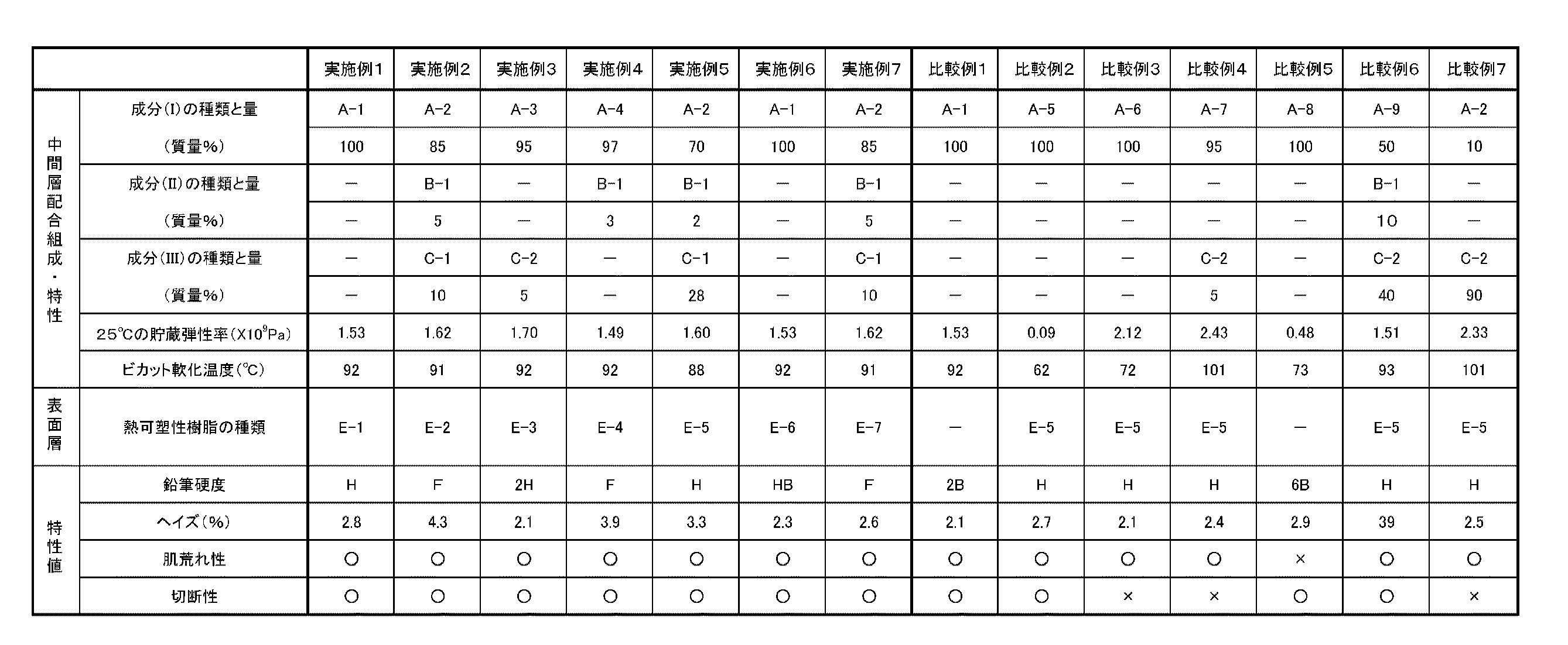
以下、本実施形態を実施例及び比較例によりさらに詳細に説明する。本実施形態は、後述する実施例により限定されるものではない。なお、本実施例において用いられる測定方法及び評価方法は以下のとおりである。 Hereinafter, the present embodiment will be described in more detail with reference to examples and comparative examples. This embodiment is not limited by the Example mentioned later. In addition, the measuring method and evaluation method used in a present Example are as follows.
(1)スチレン含有量、ブタジエン含有量
ブロック共重合体等のスチレン含有量は、核磁気共鳴装置(装置名:ECA500;日本電子株式会社製)で測定した。また、ブタジエン含有量については、ブロック共重合体又はその水添物を100質量%とし、ブロック共重合体又はその水添物と上記のようにして測定されたスチレン含有量との差から求めた。
(1) Styrene content, butadiene content Styrene content such as block copolymers was measured with a nuclear magnetic resonance apparatus (device name: ECA500; manufactured by JEOL Ltd.). The butadiene content was determined from the difference between the block copolymer or the hydrogenated product and the styrene content measured as described above, with the block copolymer or the hydrogenated product being 100% by mass. .
(2)ブロック率
水添前のブロック共重合体を、四酸化オスミウムを触媒としてターシャリーブチルハイドロパーオキサイドにより酸化分解する方法(I.M.KOLTHOFF,etal.,J.Polym.Sci.1,429(1946)に記載の方法)で得たビニル芳香族炭化水素重合体ブロック成分(但し、平均重合度が約30以下のビニル芳香族炭化水素重合体成分は除かれている)を用いて、次の式から求めた。
ブロック率(%)=(ブロック共重合体中のビニル芳香族炭化水素重合体ブロック成分の質量/ブロック共重合体中の全ビニル芳香族炭化水素の質量)×100
(2) Block ratio A method of oxidatively decomposing a block copolymer before hydrogenation with tertiary butyl hydroperoxide using osmium tetroxide as a catalyst (IM KOLTHOFF, et al., J. Polym. Sci. 1, 429 (method described in 1946)) using a vinyl aromatic hydrocarbon polymer block component (however, a vinyl aromatic hydrocarbon polymer component having an average degree of polymerization of about 30 or less is excluded), It was calculated from the following formula.
Block ratio (%) = (mass of vinyl aromatic hydrocarbon polymer block component in block copolymer / mass of total vinyl aromatic hydrocarbon in block copolymer) × 100
(3)重合体ブロックBの含有量
水添前のブロック共重合体を重合する際に次の式の仕込み量から求めた。
重合体ブロックBの含有量(質量%)=(ブロック共重合体中の共役ジエン含有率が50質量%を超えるビニル芳香族炭化水素と共役ジエンとの混合物の質量)/(ブロック共重合体中の全ビニル芳香族炭化水素と全共役ジエンの質量)×100
(3) Content of polymer block B When polymerizing the block copolymer before hydrogenation, it calculated | required from the preparation amount of the following formula.
Content of polymer block B (mass%) = (mass of mixture of vinyl aromatic hydrocarbon and conjugated diene in which the conjugated diene content in the block copolymer exceeds 50 mass%) / (in the block copolymer) Of all vinyl aromatic hydrocarbons and all conjugated dienes) x 100
(4)25℃の貯蔵弾性率(E’)(剛性の目安)
(株)レオロジ製粘弾性測定解析装置DVE−V4を用い、振動周波数35Hz、昇温速度3℃/minの条件で、後述する実施例及び比較例で製造した表面層及び裏面層に相当する厚さ2mmの試験片を用い、温度−50℃〜150℃の範囲を測定して求めた。
(4) Storage elastic modulus (E ′) at 25 ° C. (standard stiffness)
Thickness corresponding to the surface layer and the back surface layer manufactured in Examples and Comparative Examples described later under the conditions of a vibration frequency of 35 Hz and a temperature increase rate of 3 ° C./min using a rheology viscoelasticity measurement / analysis apparatus DVE-V4. Using a test piece having a thickness of 2 mm, a temperature range of −50 ° C. to 150 ° C. was measured.
(5)鉛筆硬度(表面硬さの目安)
後述する実施例、比較例における積層シートを試験片として、1999年度版JISK5600−5−4法に準拠して測定した。
(5) Pencil hardness (standard surface hardness)
It measured based on 1999 version JISK5600-5-4 method by using the lamination sheet in the Example and comparative example which are mentioned later as a test piece.
(6)ヘイズ(透明性の目安)
後述する実施例、比較例における積層シートを試験片として、2000年度版 JIS K7136に準拠して測定した。
(6) Haze (a measure of transparency)
It measured based on 2000 version JISK7136 by using the lamination sheet in the Example and comparative example which are mentioned later as a test piece.
(7)ビカット軟化温度(耐熱性の目安)
後述する実施例、比較例における積層シートを試験片として、1999年度版JISK7206−A法に準拠して測定した。
(7) Vicat softening temperature (standard of heat resistance)
It measured based on the 1999 version JISK7206-A method for the laminated sheet in the Example and comparative example which are mentioned later as a test piece.
(8)肌荒れ度(表面平滑性の目安)
後述する実施例、比較例における積層シートを試験片として、紫外線分光光度計(島津製作所)UV−2100)を用いて、波長700nmの透過率を測定した。得られた透過率から、以下の基準に基づいて肌荒れ度を評価した。
○:透過率が90%以上
×:透過率が90%未満
(8) Degree of rough skin (standard for surface smoothness)
The transmittance | permeability of wavelength 700nm was measured using the ultraviolet-ray spectrophotometer (Shimadzu Corporation UV-2100) by using the lamination sheet in the Example and comparative example which are mentioned later as a test piece. From the obtained transmittance, skin roughness was evaluated based on the following criteria.
○: Transmittance is 90% or more ×: Transmittance is less than 90%
(9)切断性
後述する実施例、比較例における積層シートを用いて、縦(MD方向)5cm、横(TD方向)10cmの試験片を作成し、室温下で押切り式ペーパーカッター(DAHLE社)によって裁断した。その際の切断面の状態を目視で観察した。すなわち、以下の基準に基づいて切断性を評価した。
○:ひび割れが発生していない
×:ひび割れが認められる
(9) Cutting property Using laminate sheets in Examples and Comparative Examples described later, a test piece having a length (MD direction) of 5 cm and a width (TD direction) of 10 cm was prepared, and a press-cut paper cutter (DAHLE Co., Ltd.) at room temperature. ). The state of the cut surface at that time was visually observed. That is, cutting performance was evaluated based on the following criteria.
○: No cracks occurred ×: Cracks are observed
(10)水添率
ブロック共重合体水添物を用い,核磁気共鳴装置(装置名:DPX−400;ドイツ国、BRUKER社製)で測定した。
(10) Hydrogenation rate Using a block copolymer hydrogenated product, the hydrogenation rate was measured with a nuclear magnetic resonance apparatus (device name: DPX-400; manufactured by BRUKER, Germany).
<実施例1〜7、比較例1〜7>
各例の中間層に用いる成分(I)として、下記表1に示すA−1〜A−9を準備した。
<Examples 1-7, Comparative Examples 1-7>
As component (I) used for the intermediate layer of each example, A-1 to A-9 shown in Table 1 below were prepared.
<A−1の製造>
攪拌機付きオートクレーブを用い、窒素ガス雰囲気下でスチレン38.5質量部を含むシクロヘキサン溶液にn−ブチルリチウムを0.07質量部、テトラメチルエチレンジアミンを0.03質量部添加し、75℃で40分間重合した。次にスチレン2質量部と1,3−ブタジエン21質量部を含むシクロヘキサン溶液を30分間連続的に添加して75℃で重合した後、5分間保持した。次にスチレン38.5質量部を含むシクロヘキサン溶液を添加して75℃で40分間重合した。その後メタノールを添加し、次に安定剤として2−〔1−(2−ヒドロキシ−3,5−ジ−t−ペンチルフェニル)エチル〕−4,6−ジ−t−ペンチルフェニルアクリレートとオクタデシル−3−(3,5−ジ−t−ブチル−4−ヒドロキシフェニル)プロピオネートをブロック共重合体100質量部に対して各々0.3質量部添加した後、脱溶媒してブロック共重合体A−1を得た。
<Production of A-1>
Using an autoclave with a stirrer, 0.07 parts by mass of n-butyllithium and 0.03 parts by mass of tetramethylethylenediamine are added to a cyclohexane solution containing 38.5 parts by mass of styrene under a nitrogen gas atmosphere, and the mixture is added at 75 ° C. for 40 minutes. Polymerized. Next, a cyclohexane solution containing 2 parts by mass of styrene and 21 parts by mass of 1,3-butadiene was continuously added for 30 minutes, polymerized at 75 ° C., and held for 5 minutes. Next, a cyclohexane solution containing 38.5 parts by mass of styrene was added and polymerized at 75 ° C. for 40 minutes. Methanol is then added, followed by 2- [1- (2-hydroxy-3,5-di-t-pentylphenyl) ethyl] -4,6-di-t-pentylphenyl acrylate and octadecyl-3 as stabilizers. After adding 0.3 parts by mass of-(3,5-di-t-butyl-4-hydroxyphenyl) propionate to 100 parts by mass of the block copolymer, the solvent was removed and the block copolymer A-1 was removed. Got.
<A−2〜A−9の製造>
ブロック共重合体A−2〜A−3及びA−5〜A−9については、表1に示したスチレン含有量及びブタジエン含有量としたことを除き、スチレンとブタジエンの添加速度や重合温度等の条件はA−1と同様にして調製した。なお、ブロック共重合体A−4については、上記の要領で重合を終了した後、ブロック共重合体の溶液に対して、水添触媒をブロック共重合体100質量部当たりチタンとして100ppm添加し、水素圧0.7MPa、温度65℃で水添反応を行った。その後メタノールを添加し、次に安定剤としてオクタデシル−3−(3,5−ジ−t−ブチル−4−ヒドロキシフェニル)プロピオネートをブロック共重合体100質量部に対して0.3質量部添加した後、脱溶媒してブロック共重合体水添物を得た。ブロック共重合体A−4の水添率は、水添率が62%になるように水素量で調整した。
<Manufacture of A-2 to A-9>
For the block copolymers A-2 to A-3 and A-5 to A-9, except for the styrene content and the butadiene content shown in Table 1, the addition rate of styrene and butadiene, the polymerization temperature, etc. The conditions were prepared in the same manner as A-1. In addition, about block copolymer A-4, after complete | finishing superposition | polymerization in said way, with respect to the solution of a block copolymer, 100 ppm is added as a titanium per 100 mass parts block copolymer, Hydrogenation reaction was performed at a hydrogen pressure of 0.7 MPa and a temperature of 65 ° C. Thereafter, methanol was added, and then 0.3 parts by mass of octadecyl-3- (3,5-di-t-butyl-4-hydroxyphenyl) propionate as a stabilizer was added to 100 parts by mass of the block copolymer. Thereafter, the solvent was removed to obtain a hydrogenated block copolymer. The hydrogenation rate of the block copolymer A-4 was adjusted by the amount of hydrogen so that the hydrogenation rate was 62%.
各例の中間層に用いる成分(II)、成分(III)として、下記表2に示すB−1、C−1、C−2を準備した。なお、表2における「MFR(G)」は、G条件(温度200℃、加重5kg)で測定したことを示す。 B-1, C-1, and C-2 shown in Table 2 below were prepared as the component (II) and the component (III) used in the intermediate layer of each example. In Table 2, “MFR (G)” indicates that measurement was performed under G condition (temperature 200 ° C., weight 5 kg).
<C−1の製造>
撹拌器付き10Lオートクレーブにスチレンとアクリル酸n−ブチルを5kg添加し、同時にエチルベンゼン0.3kgと、MFRを調整するための1,1−ビス(t−ブチルパーオキシ)シクロヘキサンを所定量仕込み、110〜150℃で2〜10時間重合後、ベント押出機で未反応スチレン、アクリル酸n−ブチル、エチルベンゼンを回収して製造した。
<Manufacture of C-1>
5 kg of styrene and n-butyl acrylate are added to a 10 L autoclave with a stirrer, and at the same time, 0.3 kg of ethylbenzene and a predetermined amount of 1,1-bis (t-butylperoxy) cyclohexane for adjusting MFR are charged, and 110 After polymerization at ˜150 ° C. for 2 to 10 hours, unreacted styrene, n-butyl acrylate and ethylbenzene were recovered and produced with a vent extruder.
各例の表面層に用いる熱可塑性樹脂として、表3に示すE−1〜E−7を準備した。 E-1 to E-7 shown in Table 3 were prepared as thermoplastic resins used for the surface layer of each example.
中間層として表1、2に示した成分(I)〜(III)を、表面層として表3に示した熱可塑性樹脂を、それぞれ表4に示す量を使用して各例の樹脂組成物を調製した。得られた樹脂組成物を用いて、押出量を、中間層/表面層=9/1の割合にて、中間層の樹脂温度200〜210℃、表面層の樹脂温度210〜260℃の範囲で設定された押出機で溶融し、口金にて合流させ、2種3層(積層比(表面層/中間層/表面層)=0.5/9/0.5)にて押出し、キャストロールで冷却し、厚さ1mmの積層シートを得た。このようにして得られた各例の積層シートを用いて、特性の評価を行った。その結果を表4に併せて示す。 Using the components (I) to (III) shown in Tables 1 and 2 as the intermediate layer, the thermoplastic resin shown in Table 3 as the surface layer, and the amounts shown in Table 4, respectively, the resin compositions of each example Prepared. Using the obtained resin composition, the amount of extrusion is in the range of intermediate layer / surface layer = 9/1, with the resin temperature of the intermediate layer being 200 to 210 ° C. and the resin temperature of the surface layer being 210 to 260 ° C. Melted with a set extruder, merged with a die, extruded with two types and three layers (lamination ratio (surface layer / intermediate layer / surface layer) = 0.5 / 9 / 0.5), and with a cast roll It cooled and the laminated sheet of thickness 1mm was obtained. Using the laminated sheet of each example obtained in this way, the characteristics were evaluated. The results are also shown in Table 4.
表4に示すように、実施例1〜7においては、いずれもプライスレールとして実用上十分な実用上十分な透明性、表面硬さ、表面平滑性、切断性、耐熱性を有し、かつ良好な剛性を発揮することがわかった。このように、実施例1〜7のいずれもが成形物表面の荒れ及び成形後のプライスレール切断時のひび割れの問題を生じないことがわかった。一方、比較例1においては、表面硬度が劣る結果であった。比較例2においては、剛性と耐熱性が劣る結果であった。比較例3においては、耐熱性が劣り、成形後のプライスレール切断時にひび割れが認められた。比較例4及び7においては成形後のプライスレール切断時にひび割れが認められた。比較例5においては、耐熱性及び表面硬度が劣り、成形物表面の荒れの発生が認められた。比較例6においては、透明性が劣る結果であった。 As shown in Table 4, in Examples 1 to 7, all have practically sufficient transparency as a price rail, surface hardness, surface smoothness, cutting property, heat resistance, and good It has been found that it exhibits excellent rigidity. Thus, it turned out that any of Examples 1-7 does not produce the problem of the surface of a molded article, and the crack at the time of the price rail cutting | disconnection after shaping | molding. On the other hand, in Comparative Example 1, the surface hardness was inferior. In Comparative Example 2, the rigidity and heat resistance were poor. In Comparative Example 3, the heat resistance was inferior, and cracks were observed when the price rail was cut after molding. In Comparative Examples 4 and 7, cracks were observed when the price rail was cut after molding. In Comparative Example 5, the heat resistance and surface hardness were inferior, and the surface of the molded product was found to be rough. In Comparative Example 6, the transparency was inferior.
本発明のプライスレールは、成形性と外観性に優れる特徴から、スーパー,ドラッグストア,ホームセンター等の各種小売店舗の商品価格を表示するアイテムとして、産業上の利用可能性を有している。 The price rail of the present invention has industrial applicability as an item for displaying the product price of various retail stores such as supermarkets, drug stores, home centers and the like because of its excellent formability and appearance.
Claims (10)
65〜95質量%のビニル芳香族炭化水素と5〜35質量%の共役ジエンとからなるブロック共重合体及び/又はその水添物(I)を20〜100質量%含み、前記表面層と接する中間層と、
を備え、
前記ブロック共重合体及び/又はその水添物(I)が、ビニル芳香族炭化水素を主体とする重合体ブロックAと、共役ジエンを主体とする重合体ブロックBと、を有し、
前記中間層の25℃における貯蔵弾性率(E’)が、0.2×10⁹〜2.0×10⁹Paである、プライスレール。 A surface layer comprising at least one thermoplastic resin;
It contains 20 to 100% by mass of a block copolymer comprising 65 to 95% by mass of vinyl aromatic hydrocarbon and 5 to 35% by mass of conjugated diene and / or its hydrogenated product (I), and is in contact with the surface layer. The middle layer,
With
The block copolymer and / or its hydrogenated product (I) has a polymer block A mainly composed of vinyl aromatic hydrocarbons and a polymer block B mainly composed of conjugated dienes,
The storage modulus at 25 ° C. of the intermediate layer (E ') is a 0.2 × 10 9 ~2.0 × 10 9 Pa, price rails.
Priority Applications (1)
| Application Number | Priority Date | Filing Date | Title |
|---|---|---|---|
| JP2013212134A JP6193082B2 (en) | 2013-10-09 | 2013-10-09 | Price rail |
Applications Claiming Priority (1)
| Application Number | Priority Date | Filing Date | Title |
|---|---|---|---|
| JP2013212134A JP6193082B2 (en) | 2013-10-09 | 2013-10-09 | Price rail |
Publications (2)
| Publication Number | Publication Date |
|---|---|
| JP2015073743A true JP2015073743A (en) | 2015-04-20 |
| JP6193082B2 JP6193082B2 (en) | 2017-09-06 |
Family
ID=52999070
Family Applications (1)
| Application Number | Title | Priority Date | Filing Date |
|---|---|---|---|
| JP2013212134A Expired - Fee Related JP6193082B2 (en) | 2013-10-09 | 2013-10-09 | Price rail |
Country Status (1)
| Country | Link |
|---|---|
| JP (1) | JP6193082B2 (en) |
Citations (10)
| Publication number | Priority date | Publication date | Assignee | Title |
|---|---|---|---|---|
| JPS59124815A (en) * | 1982-12-30 | 1984-07-19 | Asahi Chem Ind Co Ltd | Novel molding method |
| JPH0812847A (en) * | 1994-06-29 | 1996-01-16 | Asahi Chem Ind Co Ltd | Transparent magazine rail |
| JP2004074687A (en) * | 2002-08-21 | 2004-03-11 | Mitsubishi Plastics Ind Ltd | Heat shrinkable laminated film |
| JP2006323339A (en) * | 2005-04-20 | 2006-11-30 | Gunze Ltd | Shrink label |
| JP2008274215A (en) * | 2006-11-14 | 2008-11-13 | Asahi Kasei Chemicals Corp | Styrenic resin sheet |
| JP2009114308A (en) * | 2007-11-06 | 2009-05-28 | Asahi Kasei Chemicals Corp | Process for producing block copolymer composition or hydrogenated product thereof |
| JP2009178347A (en) * | 2008-01-31 | 2009-08-13 | Fuji Electric Retail Systems Co Ltd | Merchandise display shelf of showcase |
| JP2013186276A (en) * | 2012-03-07 | 2013-09-19 | Kiosei Ltd | Commodity information display |
| JP2013212138A (en) * | 2012-03-30 | 2013-10-17 | Newgin Co Ltd | Game machine |
| JP5668121B1 (en) * | 2013-10-09 | 2015-02-12 | 旭化成ケミカルズ株式会社 | Price rail |
-
2013
- 2013-10-09 JP JP2013212134A patent/JP6193082B2/en not_active Expired - Fee Related
Patent Citations (10)
| Publication number | Priority date | Publication date | Assignee | Title |
|---|---|---|---|---|
| JPS59124815A (en) * | 1982-12-30 | 1984-07-19 | Asahi Chem Ind Co Ltd | Novel molding method |
| JPH0812847A (en) * | 1994-06-29 | 1996-01-16 | Asahi Chem Ind Co Ltd | Transparent magazine rail |
| JP2004074687A (en) * | 2002-08-21 | 2004-03-11 | Mitsubishi Plastics Ind Ltd | Heat shrinkable laminated film |
| JP2006323339A (en) * | 2005-04-20 | 2006-11-30 | Gunze Ltd | Shrink label |
| JP2008274215A (en) * | 2006-11-14 | 2008-11-13 | Asahi Kasei Chemicals Corp | Styrenic resin sheet |
| JP2009114308A (en) * | 2007-11-06 | 2009-05-28 | Asahi Kasei Chemicals Corp | Process for producing block copolymer composition or hydrogenated product thereof |
| JP2009178347A (en) * | 2008-01-31 | 2009-08-13 | Fuji Electric Retail Systems Co Ltd | Merchandise display shelf of showcase |
| JP2013186276A (en) * | 2012-03-07 | 2013-09-19 | Kiosei Ltd | Commodity information display |
| JP2013212138A (en) * | 2012-03-30 | 2013-10-17 | Newgin Co Ltd | Game machine |
| JP5668121B1 (en) * | 2013-10-09 | 2015-02-12 | 旭化成ケミカルズ株式会社 | Price rail |
Also Published As
| Publication number | Publication date |
|---|---|
| JP6193082B2 (en) | 2017-09-06 |
Similar Documents
| Publication | Publication Date | Title |
|---|---|---|
| JP4838254B2 (en) | Process for producing block copolymer and heat-shrinkable film | |
| JP2009191187A (en) | Vinyl aromatic hydrocarbon resin sheet | |
| JP5046469B2 (en) | Block copolymer composition | |
| JP4651539B2 (en) | Carrier tape sheet | |
| JP2005105032A (en) | Heat-shrinkable film comprising a polymer composition | |
| JP5295068B2 (en) | Heat shrinkable laminated film | |
| JP6239848B2 (en) | Heat shrink laminate film | |
| JP6193082B2 (en) | Price rail | |
| JP5668121B1 (en) | Price rail | |
| JP5133289B2 (en) | Heat shrinkable film | |
| JP3617562B2 (en) | Transparent resin composition | |
| JP5594826B2 (en) | Block copolymer for plastic cardboard, resin composition for plastic cardboard, and plastic cardboard | |
| JP2013193432A (en) | Hollow plate | |
| JP2006213852A (en) | Resin composition | |
| JP4274645B2 (en) | Multilayer resin sheet and multilayer resin molded body | |
| JP3975037B2 (en) | Multilayer resin sheet | |
| JP6027378B2 (en) | Laminated sheet and film | |
| JP5235094B2 (en) | Modified block copolymer and composition thereof | |
| JP2007038586A (en) | Heat shrinkable laminated film | |
| JP5543805B2 (en) | Resin composition excellent in aqueous ink printability | |
| JP2007008984A (en) | Hydrogenated block copolymer, hydrogenated block copolymer composition and heat shrinkable film thereof | |
| JP5959391B2 (en) | Laminated sheet and film | |
| JP5057752B2 (en) | Heat shrinkable film | |
| JP2011089029A (en) | Modified block copolymer, composition thereof and method for producing the same | |
| JP2014193940A (en) | Thermoplastic resin composition, thermoplastic sheet and film |
Legal Events
| Date | Code | Title | Description |
|---|---|---|---|
| A711 | Notification of change in applicant |
Free format text: JAPANESE INTERMEDIATE CODE: A712 Effective date: 20160401 |
|
| A521 | Request for written amendment filed |
Free format text: JAPANESE INTERMEDIATE CODE: A523 Effective date: 20160523 |
|
| A621 | Written request for application examination |
Free format text: JAPANESE INTERMEDIATE CODE: A621 Effective date: 20160906 |
|
| A131 | Notification of reasons for refusal |
Free format text: JAPANESE INTERMEDIATE CODE: A131 Effective date: 20170518 |
|
| A977 | Report on retrieval |
Free format text: JAPANESE INTERMEDIATE CODE: A971007 Effective date: 20170519 |
|
| A521 | Request for written amendment filed |
Free format text: JAPANESE INTERMEDIATE CODE: A523 Effective date: 20170707 |
|
| TRDD | Decision of grant or rejection written | ||
| A01 | Written decision to grant a patent or to grant a registration (utility model) |
Free format text: JAPANESE INTERMEDIATE CODE: A01 Effective date: 20170721 |
|
| A61 | First payment of annual fees (during grant procedure) |
Free format text: JAPANESE INTERMEDIATE CODE: A61 Effective date: 20170809 |
|
| R150 | Certificate of patent or registration of utility model |
Ref document number: 6193082 Country of ref document: JP Free format text: JAPANESE INTERMEDIATE CODE: R150 |
|
| S531 | Written request for registration of change of domicile |
Free format text: JAPANESE INTERMEDIATE CODE: R313531 |
|
| R350 | Written notification of registration of transfer |
Free format text: JAPANESE INTERMEDIATE CODE: R350 |
|
| LAPS | Cancellation because of no payment of annual fees |