JP2005296920A - Coated cloth which provides anti-fogging properties - Google Patents
Coated cloth which provides anti-fogging properties Download PDFInfo
- Publication number
- JP2005296920A JP2005296920A JP2004268426A JP2004268426A JP2005296920A JP 2005296920 A JP2005296920 A JP 2005296920A JP 2004268426 A JP2004268426 A JP 2004268426A JP 2004268426 A JP2004268426 A JP 2004268426A JP 2005296920 A JP2005296920 A JP 2005296920A
- Authority
- JP
- Japan
- Prior art keywords
- cloth
- acrylic
- antifogging
- glass
- fogging
- Prior art date
- Legal status (The legal status is an assumption and is not a legal conclusion. Google has not performed a legal analysis and makes no representation as to the accuracy of the status listed.)
- Pending
Links
- 239000004744 fabric Substances 0.000 title claims abstract description 77
- 239000003795 chemical substances by application Substances 0.000 claims abstract description 44
- NIXOWILDQLNWCW-UHFFFAOYSA-N acrylic acid group Chemical group C(C=C)(=O)O NIXOWILDQLNWCW-UHFFFAOYSA-N 0.000 claims abstract description 35
- 239000003094 microcapsule Substances 0.000 claims abstract description 14
- 239000011521 glass Substances 0.000 abstract description 25
- XLYOFNOQVPJJNP-UHFFFAOYSA-N water Substances O XLYOFNOQVPJJNP-UHFFFAOYSA-N 0.000 abstract description 25
- 239000004033 plastic Substances 0.000 abstract description 18
- 229920003023 plastic Polymers 0.000 abstract description 18
- 238000005406 washing Methods 0.000 abstract description 3
- 238000002791 soaking Methods 0.000 abstract 1
- 239000004094 surface-active agent Substances 0.000 description 14
- -1 etc.) Substances 0.000 description 10
- 239000000243 solution Substances 0.000 description 9
- VYPSYNLAJGMNEJ-UHFFFAOYSA-N Silicium dioxide Chemical compound O=[Si]=O VYPSYNLAJGMNEJ-UHFFFAOYSA-N 0.000 description 8
- 229920000728 polyester Polymers 0.000 description 8
- 238000000034 method Methods 0.000 description 6
- 239000011230 binding agent Substances 0.000 description 5
- 239000004677 Nylon Substances 0.000 description 4
- 229920000297 Rayon Polymers 0.000 description 4
- 238000010521 absorption reaction Methods 0.000 description 4
- 238000001035 drying Methods 0.000 description 4
- 238000011156 evaluation Methods 0.000 description 4
- 238000002156 mixing Methods 0.000 description 4
- 229920001778 nylon Polymers 0.000 description 4
- 229920001296 polysiloxane Polymers 0.000 description 4
- 239000002964 rayon Substances 0.000 description 4
- 239000000126 substance Substances 0.000 description 4
- 229920000742 Cotton Polymers 0.000 description 3
- 239000003945 anionic surfactant Substances 0.000 description 3
- 230000000052 comparative effect Effects 0.000 description 3
- 238000001816 cooling Methods 0.000 description 3
- 239000006185 dispersion Substances 0.000 description 3
- 230000000694 effects Effects 0.000 description 3
- 150000002148 esters Chemical class 0.000 description 3
- 239000000377 silicon dioxide Substances 0.000 description 3
- RTZKZFJDLAIYFH-UHFFFAOYSA-N Diethyl ether Chemical compound CCOCC RTZKZFJDLAIYFH-UHFFFAOYSA-N 0.000 description 2
- 229910019142 PO4 Inorganic materials 0.000 description 2
- 125000005210 alkyl ammonium group Chemical group 0.000 description 2
- 239000011248 coating agent Substances 0.000 description 2
- 238000000576 coating method Methods 0.000 description 2
- 238000007598 dipping method Methods 0.000 description 2
- XMBWDFGMSWQBCA-UHFFFAOYSA-N hydrogen iodide Chemical compound I XMBWDFGMSWQBCA-UHFFFAOYSA-N 0.000 description 2
- 239000007788 liquid Substances 0.000 description 2
- 239000000463 material Substances 0.000 description 2
- 239000000203 mixture Substances 0.000 description 2
- 239000010452 phosphate Substances 0.000 description 2
- 229920005989 resin Polymers 0.000 description 2
- 239000011347 resin Substances 0.000 description 2
- FSYKKLYZXJSNPZ-UHFFFAOYSA-N sarcosine Chemical compound C[NH2+]CC([O-])=O FSYKKLYZXJSNPZ-UHFFFAOYSA-N 0.000 description 2
- 239000011550 stock solution Substances 0.000 description 2
- 150000005846 sugar alcohols Polymers 0.000 description 2
- KWIUHFFTVRNATP-UHFFFAOYSA-N Betaine Natural products C[N+](C)(C)CC([O-])=O KWIUHFFTVRNATP-UHFFFAOYSA-N 0.000 description 1
- JOYRKODLDBILNP-UHFFFAOYSA-N Ethyl urethane Chemical compound CCOC(N)=O JOYRKODLDBILNP-UHFFFAOYSA-N 0.000 description 1
- YCKRFDGAMUMZLT-UHFFFAOYSA-N Fluorine atom Chemical compound [F] YCKRFDGAMUMZLT-UHFFFAOYSA-N 0.000 description 1
- 108010010803 Gelatin Proteins 0.000 description 1
- DGAQECJNVWCQMB-PUAWFVPOSA-M Ilexoside XXIX Chemical compound C[C@@H]1CC[C@@]2(CC[C@@]3(C(=CC[C@H]4[C@]3(CC[C@@H]5[C@@]4(CC[C@@H](C5(C)C)OS(=O)(=O)[O-])C)C)[C@@H]2[C@]1(C)O)C)C(=O)O[C@H]6[C@@H]([C@H]([C@@H]([C@H](O6)CO)O)O)O.[Na+] DGAQECJNVWCQMB-PUAWFVPOSA-M 0.000 description 1
- 229920000877 Melamine resin Polymers 0.000 description 1
- 239000004640 Melamine resin Substances 0.000 description 1
- 229920001410 Microfiber Polymers 0.000 description 1
- KWIUHFFTVRNATP-UHFFFAOYSA-O N,N,N-trimethylglycinium Chemical compound C[N+](C)(C)CC(O)=O KWIUHFFTVRNATP-UHFFFAOYSA-O 0.000 description 1
- 229920002396 Polyurea Polymers 0.000 description 1
- 108010077895 Sarcosine Proteins 0.000 description 1
- 229920001807 Urea-formaldehyde Polymers 0.000 description 1
- 239000013543 active substance Substances 0.000 description 1
- 125000000217 alkyl group Chemical group 0.000 description 1
- 150000001412 amines Chemical class 0.000 description 1
- 150000001413 amino acids Chemical class 0.000 description 1
- 229960003237 betaine Drugs 0.000 description 1
- 239000002775 capsule Substances 0.000 description 1
- 239000003093 cationic surfactant Substances 0.000 description 1
- 230000007547 defect Effects 0.000 description 1
- 235000014113 dietary fatty acids Nutrition 0.000 description 1
- GPLRAVKSCUXZTP-UHFFFAOYSA-N diglycerol Chemical compound OCC(O)COCC(O)CO GPLRAVKSCUXZTP-UHFFFAOYSA-N 0.000 description 1
- 239000004205 dimethyl polysiloxane Substances 0.000 description 1
- 239000000194 fatty acid Substances 0.000 description 1
- 229930195729 fatty acid Natural products 0.000 description 1
- 239000000835 fiber Substances 0.000 description 1
- 239000005357 flat glass Substances 0.000 description 1
- 229910052731 fluorine Inorganic materials 0.000 description 1
- 239000011737 fluorine Substances 0.000 description 1
- 229920000159 gelatin Polymers 0.000 description 1
- 239000008273 gelatin Substances 0.000 description 1
- 235000019322 gelatine Nutrition 0.000 description 1
- 235000011852 gelatine desserts Nutrition 0.000 description 1
- 230000005484 gravity Effects 0.000 description 1
- 238000010438 heat treatment Methods 0.000 description 1
- 239000002736 nonionic surfactant Substances 0.000 description 1
- 239000004745 nonwoven fabric Substances 0.000 description 1
- 239000011368 organic material Substances 0.000 description 1
- NFHFRUOZVGFOOS-UHFFFAOYSA-N palladium;triphenylphosphane Chemical compound [Pd].C1=CC=CC=C1P(C=1C=CC=CC=1)C1=CC=CC=C1.C1=CC=CC=C1P(C=1C=CC=CC=1)C1=CC=CC=C1.C1=CC=CC=C1P(C=1C=CC=CC=1)C1=CC=CC=C1.C1=CC=CC=C1P(C=1C=CC=CC=1)C1=CC=CC=C1 NFHFRUOZVGFOOS-UHFFFAOYSA-N 0.000 description 1
- 125000005010 perfluoroalkyl group Chemical group 0.000 description 1
- 239000012466 permeate Substances 0.000 description 1
- NBIIXXVUZAFLBC-UHFFFAOYSA-K phosphate Chemical compound [O-]P([O-])([O-])=O NBIIXXVUZAFLBC-UHFFFAOYSA-K 0.000 description 1
- 229920000435 poly(dimethylsiloxane) Polymers 0.000 description 1
- 229940051841 polyoxyethylene ether Drugs 0.000 description 1
- 229920000056 polyoxyethylene ether Polymers 0.000 description 1
- 239000011148 porous material Substances 0.000 description 1
- 150000003242 quaternary ammonium salts Chemical class 0.000 description 1
- 150000003839 salts Chemical class 0.000 description 1
- 229940043230 sarcosine Drugs 0.000 description 1
- 229920002050 silicone resin Polymers 0.000 description 1
- 229910052708 sodium Inorganic materials 0.000 description 1
- 239000011734 sodium Substances 0.000 description 1
- BDHFUVZGWQCTTF-UHFFFAOYSA-M sulfonate Chemical compound [O-]S(=O)=O BDHFUVZGWQCTTF-UHFFFAOYSA-M 0.000 description 1
- 150000008054 sulfonate salts Chemical class 0.000 description 1
- 229920002803 thermoplastic polyurethane Polymers 0.000 description 1
- 238000009736 wetting Methods 0.000 description 1
- 239000002759 woven fabric Substances 0.000 description 1
- 239000002888 zwitterionic surfactant Substances 0.000 description 1
Images
Landscapes
- Coating Apparatus (AREA)
- Surface Treatment Of Glass (AREA)
Abstract
Description
本発明は、ガラスおよびプラスチック等からなる透明体に防曇性を付与したい場合に、簡単にかつ確実に防曇性を付与できる防曇剤塗布布に関する。 The present invention relates to an antifogging agent-coated cloth that can easily and reliably impart antifogging properties to a transparent body made of glass, plastic, or the like.
ガラスおよびプラスチックなどに防曇性を付与する方法としては、従来より種々の方法があった。
例えば、防曇剤をガラスまたはプラスチック等に、あるいは布につけて拭き上げる方法では、その都度防曇剤を使用しなければならず、手間がかかる上、より多くの時間を要するという問題があった。
There have been various methods for imparting antifogging properties to glass and plastics.
For example, in the method of wiping the antifogging agent on glass or plastic or on a cloth, the antifogging agent has to be used every time, and there is a problem that it takes time and more time is required. .
また、マイクロカプセルなどに防曇剤を封入させ布に固着させ、曇ったガラスまたはプラスチックなどを拭き上げる方法では上記の欠陥は省けるものの、予め布を十分水などで湿らした状態にして拭き上げたり、またはガラスやプラスチックが水滴が垂れるほど十分に曇った状態で拭き上げ、布に十分に水分が行き渡らないと防曇性が発現しないといった問題があった。
この場合、布としてはタオルなどの織布、編布、不織布や単糸デニール0.7以下の極細繊維を含む布が一般的に用いられていた。(例えば、特許文献1、特許文献2参照。)
In addition, the above-mentioned defects can be eliminated with a method of wiping away cloudy glass or plastic by enclosing an anti-fogging agent in a microcapsule, etc., and wiping the cloth in a state moistened with water in advance. Alternatively, there is a problem that the glass or plastic is wiped off in a sufficiently cloudy state so that water drops hang down, and the antifogging property is not exhibited unless moisture is sufficiently distributed to the cloth.
In this case, as a fabric, a woven fabric such as a towel, a knitted fabric, a non-woven fabric, or a fabric containing ultrafine fibers having a single yarn denier of 0.7 or less has been generally used. (For example, see
一方、曇ったガラスやプラスチックなどの水分を拭き取り、一時的に曇りをとる布の材質としては、綿、PVAスポンジなど、吸水性が良好な素材が使われるのが一般的である。なぜなら、曇ったガラスを吸水性の悪い布で拭くと、次のような課題が生じていたためである。
・ガラスやプラスチック表面に多数の水滴が残る
・ガラスやプラスチック表面を拭いている際に、布に吸水されなかった水滴が重力方向に垂れる
・水滴が残る為、ガラスやプラスチックの表面が乾燥した後に水滴跡が生じる
・ A lot of water droplets remain on the glass or plastic surface. ・ When the glass or plastic surface is wiped, the water droplets that have not been absorbed by the cloth drip in the direction of gravity. ・ Because the water droplets remain, the glass or plastic surface has dried. Water drops are generated
本発明は、上記問題を解決するためになされたもので、本発明の課題は、ガラスおよびプラスチックなどに対して布を予め水に濡らさず、またはガラスやプラスチックがうっすら曇った状態でも拭き上げることにより、防曇性を発現することである。 The present invention has been made to solve the above-mentioned problems, and the object of the present invention is to wipe the cloth even when glass or plastic is slightly cloudy without pre-wetting the cloth with glass or plastic. Thus, the anti-fogging property is exhibited.
上記目的を達成するために請求項1記載の発明によれば、アクリル布に防曇剤を含浸させることで、より簡易に防曇性の発現を可能とした。この理由としてはアクリル布が他の布に比べて吸水性が低く、曇りによって生じた水分が布にしみこまず、水分とまじりあった防曇液がガラスやプラスチックなどの表面にコートされやすいためと考えられる。 In order to achieve the above object, according to the first aspect of the present invention, the antifogging property can be expressed more easily by impregnating the acrylic cloth with the antifogging agent. The reason for this is that acrylic cloth has a lower water absorption than other cloths, and moisture generated by cloudiness does not permeate the cloth, and the antifogging liquid mixed with moisture is easily coated on the surface of glass or plastic. Conceivable.
また、請求項2記載の発明によれば、アクリル布に防曇剤を封入あるいは含浸したマイクロカプセルを固着させたことで、より簡易に防曇性の発現を可能にするとともに繰返しの使用及び洗濯に対する耐久性が優れた防曇剤塗布布を提供できる。この理由としては上述したアクリル布が他の布に比べて吸水性が低いことによる効果と、マイクロカプセルに防曇剤を封入あるいは含浸させることで防曇剤塗布布が水分と接触しても防曇剤の放出がゆるやかに進むためである。
According to the second aspect of the present invention, the microcapsules in which the antifogging agent is encapsulated or impregnated in the acrylic cloth are fixed, thereby enabling easy expression of the antifogging property and repeated use and washing. The anti-fogging agent-coated cloth having excellent durability against the above can be provided. This is because the acrylic cloth described above has lower water absorption than other cloths, and the anti-fogging agent-coated cloth is prevented from coming into contact with moisture by enclosing or impregnating the anti-fogging agent in the microcapsules. This is because the release of the clouding agent proceeds slowly.
本発明によれば、アクリル布に防曇剤を含浸させる事により、ガラスおよびプラスチックなどに対して予め水に濡らさず、またはガラスやプラスチックがうっすら曇った状態でも拭き上げることにより、防曇性を発現するという効果がある。 According to the present invention, by impregnating an acrylic cloth with an antifogging agent, the glass and plastic are not preliminarily wetted with water, or even when the glass or plastic is slightly cloudy, the antifogging property is improved. It has the effect of manifesting.
また、アクリル布に防曇剤を封入あるいは含浸したマイクロカプセルが固着していることにより、上述した効果に加え、繰返しの使用及び洗濯に対する耐久性が向上するという効果がある。 Further, since the microcapsules in which the antifogging agent is sealed or impregnated in the acrylic cloth are fixed, in addition to the effects described above, there is an effect that durability against repeated use and washing is improved.
本発明の防曇性を付与する塗布布は、アクリル布に防曇剤を含浸してなる。防曇剤としては、ガラスやプラスチックの表面の接触角を下げるものであれば特に限定はなく、例えば非イオン系界面活性剤(エーテル型界面活性剤、多価アルコール型界面活性剤、エステル型界面活性剤、多価アルコールエステル型界面活性剤、アルカノールアミド型界面活性剤など)、アニオン系界面活性剤(脂肪酸塩、硫酸エステル塩、スルホン酸塩、リン酸エステル塩など)、カチオン系界面活性剤(第4級アンモニウム塩型界面活性剤、アミン塩型界面活性剤など)、両性イオン系界面活性剤(アミノ酸型界面活性剤、ベタイン型界面活性剤、アミンオキシド型界面活性剤など)に例示される一般的な界面活性剤のほか、シリコーン系界面活性剤(ポリエーテル変性シリコーン、アルキル・ポリエーテル変性シリコーンなど)、あるいはフッ素系界面活性剤(パーフルオロアルキルスルホン酸塩、パーフルオロアルキルカルボン酸塩、パーフルオロアルキルエチレンオキサイド付加物、パーフルオロアルキルトリメチルアンモニウム塩、パーフルオロアルキルアミノスルホン酸塩、パーフルオロアルキル基含有オリゴマー、パーフルオロアルケニルオキシベンゼンスルホン酸塩、パーフルオロアルケニルオキシベンゼンスルホニルサルコシンナトリウム、パーフルオロアルケニルポリオキシエチレンエーテル、パーフルオロアルケニルオキシベンゼンスルホンアルキルアンモニウムヨージド、パーフルオロアルケニルオキシベンズアミドアルキルアンモニウムヨージド、パーフルオロアルケニルオキシアラルキルベタイン、パーフルオロアルケニルオキシアラルキルホスホン酸、ジグリセリンテトラキスなど)から選ばれる少なくとも1種類以上の界面活性剤を用いることが出来る。
また、アクリル布とはアクリル単体もしくはアクリルを含む2種以上の繊維から構成されている布を示す。布全体に対するアクリルの含有量は、好ましくは50%以上、より好ましくは80%以上である。
The coated fabric imparting antifogging properties of the present invention is formed by impregnating an acrylic fabric with an antifogging agent. The antifogging agent is not particularly limited as long as it reduces the contact angle of the surface of glass or plastic. For example, nonionic surfactants (ether type surfactants, polyhydric alcohol type surfactants, ester type interfaces) Active agent, polyhydric alcohol ester type surfactant, alkanolamide type surfactant, etc.), anionic surfactant (fatty acid salt, sulfate ester salt, sulfonate salt, phosphate ester salt etc.), cationic surfactant (Quaternary ammonium salt type surfactants, amine salt type surfactants, etc.), zwitterionic surfactants (amino acid type surfactants, betaine type surfactants, amine oxide type surfactants, etc.) In addition to general surfactants, silicone surfactants (polyether-modified silicones, alkyl polyether-modified silicones, etc.), Or fluorine-based surfactant (perfluoroalkyl sulfonate, perfluoroalkyl carboxylate, perfluoroalkyl ethylene oxide adduct, perfluoroalkyltrimethylammonium salt, perfluoroalkylaminosulfonate, containing perfluoroalkyl group Oligomer, perfluoroalkenyloxybenzene sulfonate, sodium perfluoroalkenyloxybenzenesulfonyl sarcosine, perfluoroalkenyl polyoxyethylene ether, perfluoroalkenyloxybenzenesulfone alkylammonium iodide, perfluoroalkenyloxybenzamide alkylammonium iodide, Fluoroalkenyloxyaralkylbetaine, perfluoroalkenyloxyaralkylphosphine Phosphate, at least one or more surfactants can be used selected from diglycerol tetrakis etc.).
Moreover, an acrylic cloth shows the cloth comprised from 2 or more types of fibers containing an acrylic simple substance or an acrylic. The acrylic content in the entire fabric is preferably 50% or more, more preferably 80% or more.
アクリル布に含浸する防曇剤の量としては、アクリル布に対して重量比で好ましくは1%から30%、より好ましくは10%〜20%である。 The amount of the antifogging agent impregnated into the acrylic cloth is preferably 1% to 30%, more preferably 10% to 20% by weight with respect to the acrylic cloth.
防曇剤を封入あるいは含浸したマイクロカプセルとは、シリカなどの無機多孔質体に上記のような防曇剤を含浸させたり、ゼラチン、尿素樹脂、メラミン樹脂、ウレタン樹脂、ポリウレア樹脂などの有機材料を単体でまたは複合させてカプセル被膜体として上述のような防曇剤を封入させたものである。 A microcapsule encapsulated or impregnated with an antifogging agent is an organic material such as gelatin, urea resin, melamine resin, urethane resin, or polyurea resin impregnated with an inorganic porous material such as silica or the like. Is used alone or in combination to encapsulate the above antifogging agent as a capsule coating.
上述のマイクロカプセルをアクリル布に固着させる方法としては、アクリル系、ウレタン系、エステル系などのバインダーあるいはシリコーン樹脂を用いる。バインダーとしては、例えば、大日本インキ化学工業株式会社の「IMPRANIL DLS DISPERSION」などがある。 As a method for fixing the microcapsules to the acrylic cloth, an acrylic, urethane, ester, or other binder or silicone resin is used. Examples of the binder include “IMPRANIL DLS DISPERSION” manufactured by Dainippon Ink and Chemicals, Inc.
アクリル布へのマイクロカプセルの固着をさらに強固にするために、アクリル布へ防曇剤、マイクロカプセルおよびバインダーを含浸させた後、加熱乾燥を行うことが好ましい。加熱乾燥温度は、アクリル布、防曇剤およびバインダーの耐熱性、さらには処理時間に依存するが、120℃の温度で短時間加熱乾燥することがよい。 In order to further strengthen the fixation of the microcapsules to the acrylic cloth, it is preferable to impregnate the acrylic cloth with the antifogging agent, the microcapsules and the binder, and then heat drying. The heat drying temperature depends on the heat resistance of the acrylic cloth, the antifogging agent and the binder, and further the treatment time, but it is preferable to heat dry at a temperature of 120 ° C. for a short time.
(実施例1)
アニオン系界面活性剤(三洋化成工業株式会社 商品名「サンデット ET」)10重量部と水90重量部を均一に混合してなる溶液に100%アクリルからなる布を浸漬させ引き上げた後、120℃で10分間乾燥させることにより水分を除去して防曇剤塗布布を作製した。また、100%アクリル布を用いずに、90%アクリル+10%ポリエステルを用いて同様に防曇剤塗布布を作製した。比較例として、100%ポリエステル布、100%ナイロン、20%ナイロン+80%ポリエステル、100%レーヨン、55%レーヨン+45%ポリエステル、100%綿布、それぞれに上述の方法にて防曇剤溶液に浸漬させた防曇剤塗布布を作製した。
(Example 1)
An anionic surfactant (Sanyo Kasei Kogyo Co., Ltd., trade name “Sandet ET”) 10 parts by weight and 90 parts by weight of water are uniformly mixed, and a cloth made of 100% acrylic is dipped and pulled up. For 10 minutes to remove the moisture and produce an antifogging agent-coated cloth. Further, an antifogging agent-coated cloth was similarly produced using 90% acrylic + 10% polyester without using a 100% acrylic cloth. As a comparative example, 100% polyester cloth, 100% nylon, 20% nylon + 80% polyester, 100% rayon, 55% rayon + 45% polyester, 100% cotton cloth were each immersed in an antifogging agent solution by the above-described method. An antifogging agent-coated cloth was prepared.
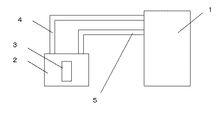
防曇性を評価する装置として、ガラス表面を10℃に制御する水槽を周辺温度25℃、周辺湿度28%に制御できる試験室内に置いた。防曇評価装置を図1に示す。
上述の水槽のガラス表面に鏡試験片(100mm×200mm、厚み2mm)を貼りつけ、貼付け3分後に上述の布を乾いた状態のまま、鏡表面を3往復拭き、さらに2分後、10分後にガラス表面の防曇性能を確認したところ、本発明のアクリル含有の布が良好な防曇性を示した。結果を表1に示す。
As an apparatus for evaluating the antifogging property, a water tank for controlling the glass surface to 10 ° C. was placed in a test chamber capable of controlling the ambient temperature to 25 ° C. and the ambient humidity to 28%. An antifogging evaluation apparatus is shown in FIG.
A mirror test piece (100 mm × 200 mm,
(実施例2)
アニオン系界面活性剤(三洋化成工業株式会社 商品名「サンデット ET」)10重量部と水90重量部を均一に混合してなる溶液を作成した。
(Example 2)
A solution was prepared by uniformly mixing 10 parts by weight of an anionic surfactant (Sanyo Chemical Industries, Ltd., trade name “Sandet ET”) and 90 parts by weight of water.
そして、上記溶液100重量部にシリカよりなるマイクロカプセル(鈴木油脂工業株式会社 商品名「ゴッドボール E−6C」)2.5重量部を入れ、30分間真空状態にし、防曇剤を含浸させたマイクロカプセルが分散された液を得た。 Then, 2.5 parts by weight of microcapsules (Suzuki Yushi Kogyo Co., Ltd., “Godball E-6C”) made of silica were put into 100 parts by weight of the above solution, and the mixture was evacuated for 30 minutes and impregnated with an antifogging agent. A liquid in which microcapsules were dispersed was obtained.
さらに、上記溶液28.4重量部にバインダー(大日本インキ化学工業株式会社の「IMPRANIL DLS DISPERSION」)10重量部と水112重量部を均一に混合してなる溶液に100%アクリルからなる布を浸漬させ引き上げた後、120℃で10分間乾燥させることにより水分を除去して防曇剤塗布布を作製した。また、100%アクリル布を用いずに、90%アクリル+10%ポリエステルを用いて同様に防曇剤塗布布を作製した。比較例として、100%ポリエステル布、100%ナイロン、20%ナイロン+80%ポリエステル、100%レーヨン、55%レーヨン+45%ポリエステル、100%綿布、それぞれに上述の方法にて防曇剤溶液に浸漬させた防曇剤塗布布を作製した。 Furthermore, a cloth made of 100% acrylic was added to a solution obtained by uniformly mixing 10 parts by weight of binder (“IMPRANIL DLS DISPERSION” from Dainippon Ink & Chemicals, Inc.) and 112 parts by weight of water with 28.4 parts by weight of the above solution. After dipping and pulling up, the fabric was dried at 120 ° C. for 10 minutes to remove moisture and produce an antifogging agent-coated cloth. Further, an antifogging agent-coated cloth was similarly produced using 90% acrylic + 10% polyester without using a 100% acrylic cloth. As a comparative example, 100% polyester cloth, 100% nylon, 20% nylon + 80% polyester, 100% rayon, 55% rayon + 45% polyester, 100% cotton cloth were each immersed in an antifogging agent solution by the method described above. An antifogging agent-coated cloth was prepared.
防曇性を評価する装置として、ガラス表面が10℃の水槽を周辺温度25℃、周辺湿度28%に制御できる試験室内に置いた。
上述の水槽のガラス表面に鏡試験片(100mm×200mm、厚み2mm)を貼りつけ、貼付け3分後に上述の布を乾いた状態のまま、鏡表面を3往復拭き、さらに2分後にガラス表面の防曇性能を確認したところ、本発明のアクリル含有の布が良好な防曇性を示した。
さらに、JIS L−1042に従い繰り返し洗濯し、防曇性能の持続性を上記の評価方法において確認したところ、本発明のアクリル含有の布が良好な防曇性を示した。
結果を表2に示す。
As a device for evaluating the antifogging property, a water bath having a glass surface of 10 ° C. was placed in a test chamber in which the ambient temperature was 25 ° C. and the ambient humidity was 28%.
A mirror test piece (100 mm × 200 mm,
Furthermore, when the laundry was repeatedly washed according to JIS L-1042 and the durability of the antifogging performance was confirmed by the above evaluation method, the acrylic-containing cloth of the present invention showed good antifogging properties.
The results are shown in Table 2.
シリコーン系界面活性剤20重量部と水80重量部を均一に混合してなる溶液を作成した。
A solution was prepared by uniformly mixing 20 parts by weight of a silicone-based surfactant and 80 parts by weight of water.
そして、上記溶液100重量部にシリカよりなるマイクロカプセル(鈴木油脂工業株式会社 商品名「ゴッドボール E−6C」)1重量部を入れ、30分間真空状態にし、マイクロカプセル分散防曇剤原液を得た。 Then, 1 part by weight of microcapsules (Suzuki Yushi Kogyo Co., Ltd., trade name “Godball E-6C”) made of silica is put into 100 parts by weight of the above solution, and the mixture is evacuated for 30 minutes to obtain a microcapsule-dispersed antifogging agent stock solution. It was.
さらに、マイクロカプセル分散防曇剤原液5重量部にポリジメチルシロキサンを分子中に含有する樹脂0.1重量部と水94.9重量部を均一に混合してなる溶液を作成し、100%アクリルからなる布を浸漬させ引き上げた後、120℃で30分間乾燥させることにより水分を除去して防曇剤塗布布を作製した。比較例として、80℃で30分間加熱乾燥、常温乾燥させることにより水分を除去した防曇剤塗布布も作製した。 Further, a solution prepared by uniformly mixing 0.1 part by weight of a resin containing polydimethylsiloxane in the molecule and 94.9 parts by weight of water with 5 parts by weight of a microcapsule dispersion antifogging agent stock solution was prepared, and 100% acrylic After dipping and pulling up the cloth which consists of, water | moisture content was removed by making it dry at 120 degreeC for 30 minutes, and the anti-fogging agent application | coating cloth was produced. As a comparative example, an antifogging agent-coated cloth from which moisture was removed by drying by heating at 80 ° C. for 30 minutes and drying at room temperature was also produced.
防曇性は実施例2と同様に確認した。また実施例2と同様にJIS L−1042に従い繰り返し洗濯し、防曇性能の持続性を上記実施例2と同様の評価方法にて確認したところ、本発明の120℃で加熱乾燥したアクリル布が良好な防曇性を示した。結果を表3に示す。 The antifogging property was confirmed in the same manner as in Example 2. In addition, when repeatedly washed according to JIS L-1042 as in Example 2 and the durability of the anti-fogging performance was confirmed by the same evaluation method as in Example 2, the acrylic cloth heated and dried at 120 ° C. of the present invention was found. Good antifogging property was exhibited. The results are shown in Table 3.
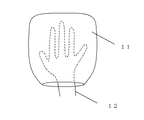
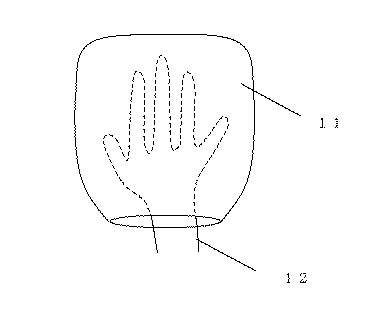
本発明によって得られた、防曇性を付与する塗布布の一例として、図2に示す手袋状塗布布を例示する。アクリル布は、片面にパイル糸が多数立設したものを用い、パイル糸を表面に向け、手袋状に縫製した。塗布布表面にパイル糸を多数立設することによって、塗布布の表面により多くアクリル糸が露出することから、より多くの防曇剤成分を塗布布表面に保持することが可能となる。そのため長期間にわたってガラスおよびプラスチック等に防曇性を付与することが可能になる。さらには塗布布を手袋状にすることによって、防曇剤成分が豊富に付着している面を常におもて面として使用することから、防曇性能をより確実に付与することが可能となる。 A glove-like coated cloth shown in FIG. 2 is illustrated as an example of a coated cloth imparting antifogging properties obtained by the present invention. As the acrylic cloth, one having a large number of pile yarns erected on one side was used, and the pile yarns were directed to the surface and sewed into a glove shape. By setting up a large number of pile yarns on the surface of the coated fabric, more acrylic yarn is exposed on the surface of the coated fabric, so that more antifogging agent component can be held on the coated fabric surface. Therefore, it becomes possible to impart antifogging properties to glass and plastics over a long period of time. Furthermore, by making the coated cloth into a glove-like shape, the surface on which the antifogging agent component is abundantly adhered is always used as the front surface, so that it is possible to more reliably impart antifogging performance. .
本発明の防曇塗布布は、浴室はもちろんのこと、家庭や公共に設置される鏡、窓ガラス、車の鏡、窓等の曇り除去による視認性確保の為に好適に使用することができるものである。 The anti-fogging coated cloth of the present invention can be suitably used for ensuring visibility by removing fogging of mirrors, window glasses, car mirrors, windows, etc. installed not only in the bathroom but also in the home and public. Is.
1…冷却装置
2…水槽
3…ガラス試験片
4…配管(冷却装置から水槽へ)
5…配管(水槽から冷却装置へ)
11…手袋上塗布布
12…手
DESCRIPTION OF
5 ... Piping (from water tank to cooling device)
11 ... Gloves on cloth 12 ... Hand
Claims (2)
An anti-fogging agent-coated cloth, wherein a microcapsule in which an anti-fogging agent is sealed or impregnated is fixed to an acrylic cloth.
Priority Applications (1)
| Application Number | Priority Date | Filing Date | Title |
|---|---|---|---|
| JP2004268426A JP2005296920A (en) | 2004-03-16 | 2004-09-15 | Coated cloth which provides anti-fogging properties |
Applications Claiming Priority (2)
| Application Number | Priority Date | Filing Date | Title |
|---|---|---|---|
| JP2004074099 | 2004-03-16 | ||
| JP2004268426A JP2005296920A (en) | 2004-03-16 | 2004-09-15 | Coated cloth which provides anti-fogging properties |
Publications (1)
| Publication Number | Publication Date |
|---|---|
| JP2005296920A true JP2005296920A (en) | 2005-10-27 |
Family
ID=35329108
Family Applications (1)
| Application Number | Title | Priority Date | Filing Date |
|---|---|---|---|
| JP2004268426A Pending JP2005296920A (en) | 2004-03-16 | 2004-09-15 | Coated cloth which provides anti-fogging properties |
Country Status (1)
| Country | Link |
|---|---|
| JP (1) | JP2005296920A (en) |
Cited By (2)
| Publication number | Priority date | Publication date | Assignee | Title |
|---|---|---|---|---|
| WO2016012711A1 (en) | 2014-07-21 | 2016-01-28 | Satisloh Ag | Fibrous support comprising particles containing a partially water-soluble active agent, particles, and methods for producing said particles |
| CN117511504A (en) * | 2024-01-04 | 2024-02-06 | 荷塘探索国际健康科技发展(北京)有限公司 | Medical antifogging agent, preparation method and antifogging mirror cloth prepared from medical antifogging agent |
-
2004
- 2004-09-15 JP JP2004268426A patent/JP2005296920A/en active Pending
Cited By (4)
| Publication number | Priority date | Publication date | Assignee | Title |
|---|---|---|---|---|
| WO2016012711A1 (en) | 2014-07-21 | 2016-01-28 | Satisloh Ag | Fibrous support comprising particles containing a partially water-soluble active agent, particles, and methods for producing said particles |
| US10449128B2 (en) | 2014-07-21 | 2019-10-22 | Satisloh | Fibrous support comprising particles containing a partially water-soluble active agent, particles, and methods for producing said particles |
| CN117511504A (en) * | 2024-01-04 | 2024-02-06 | 荷塘探索国际健康科技发展(北京)有限公司 | Medical antifogging agent, preparation method and antifogging mirror cloth prepared from medical antifogging agent |
| CN117511504B (en) * | 2024-01-04 | 2024-03-26 | 荷塘探索国际健康科技发展(北京)有限公司 | Medical antifogging agent, preparation method and antifogging mirror cloth prepared from medical antifogging agent |
Similar Documents
| Publication | Publication Date | Title |
|---|---|---|
| ES2387824T3 (en) | New cleaning method | |
| KR100847712B1 (en) | Defoam wipe | |
| WO2009088137A1 (en) | Functional sheet for delivering laundry actives in low-temperature water | |
| CN1415034A (en) | Wipes with controlled-release antimicrobials | |
| JP2016074868A (en) | Hydrophilic film-forming liquid chemical and hydrophilic film forming method | |
| KR950012686B1 (en) | How to Modify the Surface of Solid Synthetic Polymers | |
| JP5367479B2 (en) | Interior fabric | |
| ES2401433T3 (en) | Article and method | |
| JP2013185292A (en) | Antibacterial processing agent for fiber, method for producing the same and method for producing antibacterial fiber | |
| ES2250202T3 (en) | USE OF SOFTENING COMPOSITIONS OF FABRICS. | |
| CN109440443B (en) | A kind of preparation method of superhydrophobic fabric | |
| ES2250198T3 (en) | EMPLOYMENT OF FABRIC SOFTENING COMPOSITIONS. | |
| TW201424780A (en) | Deodorant antibacterial composition and deodorant antibacterial fabric | |
| ES2864732T3 (en) | A dry, washable and reusable surface cleaning substrate loaded with a cleaning composition | |
| JP3561767B2 (en) | Synthetic fiber product and method for producing the same | |
| AU759985B2 (en) | Cleaning wipers and cleaning material | |
| JP2001247791A (en) | Coating composition for imparting hydrophilicity | |
| JP3631966B2 (en) | Anti-fogging agent coated cloth | |
| JP2008044970A (en) | Foaming type cleaning tool and method for foaming type cleaning | |
| JP4233021B2 (en) | Surface treatment method for glass articles | |
| CN111394060B (en) | Dry-wet dual-purpose anti-fog towel and preparation method thereof | |
| JPH09157635A (en) | Anti-dim agent | |
| JP2000265162A (en) | Bathroom components | |
| JPH04108185A (en) | Washing-resistant anti-bacterial treatment of textile structure | |
| JP5008359B2 (en) | Non-woven fabric supporting photocatalyst |