JP2005291081A - Method, apparatus and program for creating prediction model for fuel consumption or CO2 emissions - Google Patents
Method, apparatus and program for creating prediction model for fuel consumption or CO2 emissions Download PDFInfo
- Publication number
- JP2005291081A JP2005291081A JP2004106611A JP2004106611A JP2005291081A JP 2005291081 A JP2005291081 A JP 2005291081A JP 2004106611 A JP2004106611 A JP 2004106611A JP 2004106611 A JP2004106611 A JP 2004106611A JP 2005291081 A JP2005291081 A JP 2005291081A
- Authority
- JP
- Japan
- Prior art keywords
- data
- model
- fuel consumption
- prediction model
- time
- Prior art date
- Legal status (The legal status is an assumption and is not a legal conclusion. Google has not performed a legal analysis and makes no representation as to the accuracy of the status listed.)
- Granted
Links
Images


Landscapes
- Combined Controls Of Internal Combustion Engines (AREA)
Abstract
【課題】実際に自動車を走行させることなく、限定された実験で得られたデータから各種走行パターンや車種における燃料消費量やCO2排出量のデータを正確に推定できる予測モデルを作成する。
【解決手段】走行試験設備2での自動車走行試験により計測システム3で得られた計測データ14Aのうち、少なくとも各時点における当該自動車の動きに関係した成分を含むデータ(第1のモデル入力データ)および当該時点での動きの変化に関係した成分を含むデータ(第2のモデル入力データ)からなるモデル入力値と、燃料消費量またはCO2排出量を示すモデル出力データからなるモデル出力値との組から時系列データ14Bを複数生成し、これら時系列データ14Bに基づき新たな入力値から所望の出力値として燃料消費量またはCO2排出量を推定する予測モデル14Cを作成する。
【選択図】 図1
Kind Code: A1 A prediction model capable of accurately estimating data of fuel consumption and CO2 emission in various driving patterns and vehicle types from data obtained by limited experiments without actually driving a vehicle.
Data including at least a component related to the movement of the vehicle at each time point (first model input data) among measurement data 14A obtained by a measurement system 3 by a vehicle running test in a running test facility 2 And a combination of a model input value composed of data (second model input data) including a component related to a change in motion at the time point and a model output value composed of model output data indicating fuel consumption or CO2 emission A plurality of time-series data 14B are generated from the data, and a prediction model 14C for estimating the fuel consumption amount or the CO2 emission amount as a desired output value from a new input value based on the time-series data 14B is created.
[Selection] Figure 1
Description
本発明は、物理量の推定技術に関し、特に自動車の燃料消費量またはCO2排出量を推定する予測モデルの作成技術に関するものである The present invention relates to a technology for estimating a physical quantity, and more particularly to a technology for creating a prediction model for estimating fuel consumption or CO2 emission of an automobile.
近年、地球温暖化への取り組みが緊急の課題となっている中で、例えば道路計画の策定においては、地理的な面での利便性ばかりではなく、交通流の改善によるCO2排出量の削減によって得られる地球温暖化防止対策への役割が大きなウエイトを占めるようになってきている。また、交通政策や車両の技術改善等、種々の対策により走行時の燃料消費量の抑制を実現することは、個々のユーザーの経済性に大きくプラスするのみならず、省エネルギー政策や地球温暖化対策にも多大な効果が得られる。 In recent years, efforts to combat global warming have become an urgent issue. For example, in road planning, not only is it convenient in terms of geographical features, but also by reducing CO2 emissions by improving traffic flow. The role of global warming prevention measures that can be obtained has become a major weight. In addition, reducing fuel consumption during driving through various measures such as transportation policies and vehicle technology not only greatly increases the economics of individual users, but also contributes to energy saving policies and measures against global warming. In addition, a great effect can be obtained.
道路計画においては、道路の広さ、カーブ、勾配、信号停止等のさまざまな要素により自動車の燃料消費量やCO2排出量が大きく変わることから、道路計画における費用対効果の面も十分考慮してプランニングが行われる必要がある。
したがって、このような道路計画のプランニングの際、高速道や市街地、地方都市、渋滞路など種々の走行条件および道路計画により交通の流れが変化した場合について、各車種の燃料消費量やCO2排出量の傾向を予め得ておく必要がある。
In road planning, the fuel consumption and CO2 emissions of automobiles vary greatly depending on various factors such as road width, curves, slopes, and signal stops. Planning needs to be done.
Therefore, when planning such a road plan, the fuel consumption and CO2 emissions of each vehicle type when the traffic flow changes due to various driving conditions such as expressways, urban areas, local cities, and congested roads, and road plans. It is necessary to obtain the tendency in advance.
一方、自動車メーカーでは、これまで例えば10・15モード燃費試験法で測定された燃費値を向上させることに車両の技術開発での努力を傾注してきた。これに対して、真にユーザーの利益にかなう車両として、ユーザーの使い方に応じて最も燃費に優れた車両を提供するという考え方もある。そのためには各種の走行条件における燃費性能を正しく推定評価して車両開発に反映できるツールが必要とされる。 On the other hand, automakers have so far focused their efforts on the technical development of vehicles to improve the fuel efficiency measured by, for example, the 10.15 mode fuel efficiency test method. On the other hand, as a vehicle that truly benefits the user, there is also an idea of providing a vehicle with the best fuel consumption according to the usage of the user. For this purpose, a tool that can correctly estimate and evaluate the fuel efficiency under various driving conditions and reflect it in vehicle development is required.
なお、出願人は、本明細書に記載した先行技術文献情報で特定される先行技術文献以外には、本発明に関連する先行技術文献を出願時までに発見するには至らなかった。
ここで、異なる走行条件や車種ごとに燃料消費量やCO2排出量を得る方法として、実際に自動車を走行させて、あるいはシャシダイナモメータなどを用いて実験走行させることにより実測する方法が考えられる。
しかしながら、あらゆる車種のあらゆる走行パターンについての燃料消費量やCO2排出量のデータを得ることは現実的には不可能であるという問題点があった。
Here, as a method for obtaining the fuel consumption amount and the CO2 emission amount for each of different driving conditions and vehicle types, a method of actually measuring the vehicle by actually driving the vehicle or using a chassis dynamometer or the like can be considered.
However, there is a problem that it is practically impossible to obtain fuel consumption data and CO2 emission data for every travel pattern of every vehicle type.
例えば、一車種について、高速道や市街地、地方都市、渋滞路など種々の走行条件における燃料消費量CO2排出量などのデータを克明に調査したとしても、あらゆる車種や走行パターンのデータをそこから得ることは技術的に困難である。ましてや、すべての車種による広範な走行データを実際にシャシダイナモメータ上で走行して収集しようとすれば、膨大な実験工数、人員、費用が必要となるなど、この種のデータ取りを行うことを考えると、現実的には極めて困難である。したがって、任意の道路計画についてその総量抑制効果を推定することは困難であり、自動車の省エネルギー施策、地球温暖化対策を進める上で大きな障害となっていた。 For example, even if data such as fuel consumption CO2 emissions under various driving conditions such as highways, urban areas, local cities, and congested roads are scrutinized for one vehicle type, data on all vehicle types and driving patterns can be obtained from it. That is technically difficult. Moreover, if you want to collect and collect a wide range of driving data for all vehicle models by actually running on the chassis dynamometer, you will need to collect this kind of data, such as enormous number of experiment man-hours, personnel, and expenses. Considering it is extremely difficult in practice. Therefore, it is difficult to estimate the effect of suppressing the total amount of any road plan, which has been a major obstacle in promoting automobile energy saving measures and global warming measures.
また、自動車メーカーで、すべて実験によって車両の性能評価を行うのでは、実験量が膨大となることから、開発期間や人員等の面で費用が増加するという問題点もある。したがって、自動車メーカーからユーザーの使い方に応じて最も燃費に優れた車両を提供することは困難であった。 In addition, if a vehicle manufacturer evaluates the performance of a vehicle by all experiments, the amount of experiment becomes enormous, which increases the cost in terms of development period and personnel. Therefore, it has been difficult to provide a vehicle with the highest fuel efficiency according to the usage of the user from the automobile manufacturer.
本発明はこのような課題を解決するためのものであり、実際に自動車を走行させることなく、限定された実験で得られたデータから各種走行パターンや車種における燃料消費量やCO2排出量のデータを正確に推定できる燃料消費量またはCO2排出量の予測モデル作成方法、装置、およびプログラムを提供することを目的としている。 The present invention is to solve such problems, and data on fuel consumption and CO2 emissions in various driving patterns and vehicle types from data obtained by limited experiments without actually driving the automobile. It is an object of the present invention to provide a method, an apparatus, and a program for creating a prediction model of a fuel consumption amount or a CO2 emission amount that can accurately estimate the fuel consumption amount.
このような目的を達成するために、本発明にかかる予測モデル作成方法は、自動車の燃料消費量またはCO2排出量を推定する予測モデルの作成方法であって、走行試験設備での自動車走行試験により得られた計測データのうち、少なくとも各時点における当該自動車の動きに関係した成分を含む第1のモデル入力データおよび当該時点における動きに必要な出力に関係した成分を含む第2のモデル入力データからなるモデル入力値と、これらモデル入力値に対応する燃料消費量またはCO2排出量を示すモデル出力データからなるモデル出力値との組から時系列データを複数生成する時系列データ生成ステップと、これら時系列データに基づき新たな入力値から所望の出力値を推定する予測モデルを作成するモデル作成ステップとを備えるものである。 In order to achieve such an object, a prediction model creation method according to the present invention is a method for creating a prediction model for estimating fuel consumption or CO2 emission of an automobile, and is based on an automobile running test in a running test facility. Of the obtained measurement data, from at least first model input data including a component related to the movement of the vehicle at each time point and second model input data including a component related to an output necessary for the movement at the time point A time-series data generation step for generating a plurality of time-series data from a set of model input values and model output values composed of model output data indicating fuel consumption or CO2 emission corresponding to these model input values; A model creation step of creating a prediction model for estimating a desired output value from a new input value based on series data Than it is.
この際、第1のモデル入力データとしては、計測データのうち自動車の速度を示すデータを用いてもよく、第2のモデル入力データとしては、計測データのうち自動車の駆動力、車両出力、または加速度のいずれか1つを示すデータを用いてもよい。 At this time, as the first model input data, data indicating the speed of the automobile among the measurement data may be used, and as the second model input data, the driving force of the automobile, the vehicle output, or the measurement data may be used. Data indicating any one of the accelerations may be used.
また、燃料消費量またはCO2排出量に対して無駄時間および一次遅れ補正処理を行う一次遅れ補正ステップをさらに備え、時系列データ生成ステップで、モデル出力データとして、一次遅れ補正ステップで得られた無駄時間および一次遅れ補正処理後の燃料消費量またはCO2排出量を用いるようにしてもよい。 The apparatus further includes a primary delay correction step for performing a dead time and primary delay correction process on the fuel consumption amount or the CO2 emission amount, and the waste time obtained in the primary delay correction step as model output data in the time series data generation step. You may make it use the fuel consumption or CO2 discharge | emission amount after time and a primary delay correction process.
また、第1または第2のモデル入力データを時間的にシフトさせて得られた第3のモデル入力データを出力する時間シフト補正ステップをさらに備え、時系列データ生成ステップで、モデル入力値として、第1および第2のデータに加えて時間シフト補正ステップで得られた第3のデータを用いるようにしてもよい。 Further, the method further includes a time shift correction step for outputting the third model input data obtained by shifting the first or second model input data with respect to time, and as the model input value in the time series data generation step, In addition to the first and second data, the third data obtained in the time shift correction step may be used.
モデル作成ステップの具体例としては、予測モデルとして、各時系列データのモデル入力値を所望の出力許容誤差に応じて量子化して得られた入力空間内の各部分区間ごとに、当該部分区間を示すデータと当該部分区間を代表するモデル出力値とからなる事例データを有する事例ベースを作成し、事例データのモデル出力値として、当該部分区間に属するモデル入力値を持つ1つ以上の時系列データに含まれるモデル出力値を代表する値を用いるようにしてもよい。 As a specific example of the model creation step, as a prediction model, for each partial section in the input space obtained by quantizing the model input value of each time series data according to a desired output tolerance, the partial section is One or more time-series data having a model input value belonging to the partial section as a model output value of the case data is created as a model output value of the case data by creating a case base having case data including the indicated data and a model output value representing the partial section A value representative of the model output value included in may be used.
また、本発明にかかる予測モデル作成装置は、自動車の燃料消費量またはCO2排出量を推定する予測モデルの作成装置であって、走行試験設備での自動車走行試験により得られた計測データのうち、少なくとも各時点における当該自動車の動きに関係した成分を含む第1のモデル入力データおよび当該時点における当該自動車の動きに必要な出力に関係した成分を含む第2のモデル入力データからなるモデル入力値と、これらモデル入力値に対応する燃料消費量またはCO2排出量を示すモデル出力データからなるモデル出力値との組から時系列データを複数生成する時系列データ生成手段と、これら時系列データに基づき新たな入力値から所望の出力値を推定する予測モデルを作成するモデル作成手段とを備えるものである。 The prediction model creation device according to the present invention is a prediction model creation device for estimating fuel consumption or CO2 emission of a vehicle, and among measurement data obtained by a vehicle travel test in a travel test facility, A model input value including at least first model input data including a component related to the movement of the vehicle at each time point and second model input data including a component related to an output necessary for the movement of the vehicle at the time point; , Time-series data generating means for generating a plurality of time-series data from a set of model output values including model output data indicating fuel consumption or CO2 emission corresponding to these model input values, and new based on these time-series data And a model creating means for creating a prediction model for estimating a desired output value from various input values.
また、本発明にかかるプログラムは、コンピュータで、上記したいずれかの予測モデル作成方法の各ステップを実行させることにより、新たな入力値から所望の出力値を推定する予測モデルを作成するようにしたものである。 Further, the program according to the present invention creates a prediction model that estimates a desired output value from a new input value by causing a computer to execute each step of any one of the prediction model creation methods described above. Is.
本発明によれば、実際に自動車を走行させることなく、限定された実験で得られたデータから各種走行パターンや車種における燃料消費量やCO2排出量のデータを正確に推定できる予測モデルを容易に作成できる。
したがって、いくつかの典型的な車種によって、例えば排出ガス試験で適用される走行モードについて各瞬間の燃料消費量データやCO2排出量のデータを計測し、本実施の形態にかかる予測モデルに入力することにより、同じ車の高速道走行や、市街地走行、渋滞時の走行においても、そのときの燃費やCO2の総排出量を、実験を行うことなく正確に推定することができる。これにより、国や自治体における道路計画、交通施策等に活用できるだけでなく、車両開発メーカーでの開発の促進に大いに役立つ。
According to the present invention, it is possible to easily provide a prediction model that can accurately estimate data on fuel consumption and CO2 emission in various driving patterns and vehicle types from data obtained by limited experiments without actually driving the automobile. Can be created.
Therefore, fuel consumption data and CO2 emission data at each moment are measured and input to the prediction model according to the present embodiment for some typical vehicle types, for example, for driving modes applied in the exhaust gas test. As a result, even when the same vehicle is traveling on a highway, traveling in an urban area, or traveling in a traffic jam, the fuel efficiency and total CO2 emission at that time can be accurately estimated without performing an experiment. As a result, it can be used not only for road planning and traffic measures in the national and local governments, but also for the promotion of development at vehicle development manufacturers.
次に、本発明の実施の形態について図面を参照して説明する。
[第1の実施の形態]
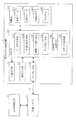
まず、図1を参照して、本発明の第1の実施の形態にかかる予測モデル作成装置について説明する。図1は本発明の第1の実施の形態にかかる予測モデル作成装置の構成を示すブロック図である。
この予測モデル作成装置1は、全体として入力データを演算処理するパーソナルコンピュータなどの情報処理装置からなり、画面表示部11、操作入力部12、データインターフェース部(以下、データI/F部という)13、記憶部14、および制御部15が設けられている。
Next, embodiments of the present invention will be described with reference to the drawings.
[First Embodiment]
First, with reference to FIG. 1, the prediction model creation apparatus concerning the 1st Embodiment of this invention is demonstrated. FIG. 1 is a block diagram showing a configuration of a prediction model creation apparatus according to the first embodiment of the present invention.
The prediction
本実施の形態にかかる予測モデル作成装置1は、走行試験設備2での自動車走行試験により計測システム3で得られた計測データ4のうち、少なくとも各時点における当該自動車の動きに関係した成分を含むデータ(第1のモデル入力データ)および当該時点での動きの変化(動きに必要な出力)に関係した成分を含むデータ(第2のモデル入力データ)からなるモデル入力値と、燃料消費量またはCO2排出量を示すモデル出力データからなるモデル出力値との組から時系列データを複数生成し、これら時系列データに基づき新たな入力値から所望の出力値として燃料消費量またはCO2排出量を推定する予測モデルを作成するようにしたものである。
The prediction
[予測モデル作成装置の構成]
次に、予測モデル作成装置1を構成する各部について説明する。
画面表示部11は、LCDやCRTなどの画面表示装置からなり、制御部15からの制御に基づき各種情報を画面表示する装置である。
操作入力部12は、キーボードやマウスなどの操作入力装置からなり、オペレータの操作を検出して制御部15へ出力する装置である。
データI/F部13は、LANなどの通信回線やCD−ROMなどの記録媒体と制御部15と間で計測データ4などの各種データを入出力する回路部である。
[Configuration of prediction model creation device]
Next, each part which comprises the prediction
The
The
The data I /
記憶部14は、ハードディスクやメモリなどの記憶装置からなり、制御部15での処理動作に用いるデータやプログラムを記憶する装置である。処理動作に用いるデータとしては、例えば、データI/F部13から取り込んだ計測データ14A、制御部15で予測モデルを作成するため計測データ14Aから生成した時系列データ14B、および制御部15で作成した予測モデル14Cなどがある。またプログラムとしては、例えば制御部15での予測モデル作成処理を実現するためのプログラム14Dなどがある。なお、プログラム14Dは、データI/F部13を介して通信回線や記録媒体から予め取り込まれ記憶部14に格納される。
The
計測データ14Aは、走行試験設備2での自動車走行試験により計測システム3で得られた計測データ4であり、自動車走行試験での当該車両の走行状態を示す。計測データ14Aの代表的なものとしては、自動車の駆動力、車速、加速度、車両出力、燃料消費量、およびCO2排出量などがある。
時系列データ14Bは、予測モデル14Cの作成に用いられるモデル入力値とモデル出力値との組からなり、計測データ14Aに基づき制御部15で生成される。
予測モデル14Cは、与えられた入力値から対応する出力値を推定して出力するモデルであり、時系列データ14Bに基づき制御部15で作成される。
The
The
The
制御部15は、CPUなどのマイクロプロセッサとその周辺回路を有し、記憶部14からプログラム14Dを読み込んで実行することにより、上記ハードウェアとプログラム14Dとを協働させて各種機能手段を実現する機能部である。
機能手段としては、データ取得手段15A、一次遅れ補正手段15B、時間シフト補正手段15C、データ加工手段15D、時系列データ生成手段15E、およびモデル作成手段15Fがある。
The
As functional means, there are data acquisition means 15A, first-order lag correction means 15B, time shift correction means 15C, data processing means 15D, time series data generation means 15E, and model creation means 15F.
データ取得手段15Aは、データI/F部13を介して計測データ4を取り込んで記憶部14へ計測データ14Aとして格納する機能手段である。
一次遅れ補正手段15Bは、計測データ14Aに含まれる無駄時間および一次遅れを補正する機能手段である。例えば、計測システム3で燃料消費量やCO2排出量を計測する際、エンジンからセンサまでの計測配管の長さなどによりデータ値の変化に時間的遅延が生じ、車速などのようにほとんど遅延なく計測されるデータと計測タイミングにズレが生ずる。一次遅れ補正手段15Bでは、後述する微分方程式を用いて上記ズレを補正する。
The
The primary
時間シフト補正手段15Cは、任意のモデル入力データを時間軸上でシフトさせ、モデル入力値として用いる新たなモデル入力データ(第3のモデル入力データ)を生成する機能手段である。
データ加工手段15Dは、予測モデルの推定精度を向上させるため、モデル入力値やモデル出力値として用いる計測データ14Aを加工する機能手段である。ここでの加工処理としては、例えば後述する移動平均補正などがある。
The time
The
時系列データ生成手段15Eは、計測データ14Aや、一次遅れ補正手段15B、時間シフト補正手段15C、データ加工手段15Dで得られたデータに基づき、モデル入力値とこれに対応するモデル出力値との組から、予測モデル14Cの作成に用いる時系列データ14Bを生成する機能手段である。
モデル作成手段15Fは、時系列データ14Bに基づいて、与えられた入力値から対応する出力値を推定して出力する所望の予測モデル14Cを作成する機能手段である。
The time series data generation means 15E is based on the
The
[計測データ]
次に、図2を参照して、計測データ14Aについて説明する。図2は計測データ例である。
走行試験設備2は、例えばシャシダイナモメータなどのように、平坦な道路に相当するドラム、自動車の慣性質量に相当する回転慣性質量を与えるフライホイール、制御装置の指令により種々の走行抵抗を実現する動力吸収装置などを備え、ドラム上で車両を実験走行させる設備である。そして、この走行試験設備2を用いて、自動車を各種走行モードに基づき実験走行させることにより、その自動車の走行状態を示す計測データ4を計測システム3で計測する。
[Measurement data]
Next, the
The traveling
走行モードとは、排出ガス試験などで規定されている自動車の走行パターンである。例えば、10モードはゴーストップの多い市街地を擬似した走行パターンを持つ走行モードであり、10・15モードは上記10モードに高速道路やバイパスを含めた走行パターンを持つ走行モードである。このほか、新たな走行モードとしてCDモードやEDモードなどもある。 The driving mode is a driving pattern of an automobile defined by an exhaust gas test or the like. For example, the 10 mode is a travel mode having a travel pattern simulating an urban area with many go-stops, and the 10.15 mode is a travel mode having a travel pattern including a highway and a bypass in the 10 mode. In addition, there are a CD mode and an ED mode as new driving modes.
計測システム3では、走行試験設備2から自動車の車速、駆動力、車両出力、加速度、燃料消費量、およびCO2排出量などの計測データ4を計測し、これがデータI/F部13を介して取り込まれ、図2に示すような計測データ14Aとして記憶部14へ格納される。
このうち、車速、駆動力、車両出力、加速度などのデータは車両の走行条件を示すモデル入力データであり、予測モデル14Cのモデル入力値として用いられ、任意の走行条件から推定したい燃料消費量やCO2排出量などのモデル出力データは、予測モデル14Cのモデル出力値として用いられる。
また、モデル入力値については、車速、駆動力、車両出力、加速度などのデータすべて用いる必要はなく、例えばこれらのうちいずれか2つを組み合わせて用いてもよい。
In the
Among these, data such as vehicle speed, driving force, vehicle output, and acceleration are model input data indicating vehicle driving conditions, and are used as model input values for the
Further, it is not necessary to use all data such as vehicle speed, driving force, vehicle output, and acceleration for the model input value. For example, any two of them may be used in combination.
モデル入力データのうち、車速Vは、任意の時点(計測タイミング)における単位時間あたりに車両が走行した距離であり、図2の例では単位として時速[km/h]が用いられている。
駆動力Tは、例えば、エンジンやタイヤの駆動力[N]×速度[km/h]で表され、車両出力Pは、例えば、エンジンやタイヤのトルク[N・m]×回転数[rpm]で表される。また加速度Aは、任意の時点における単位時間あたりに変化した車両速度の変化量であり、図2の例では単位として重力加速度[G]が用いられている。
Of the model input data, the vehicle speed V is a distance traveled by the vehicle per unit time at an arbitrary time point (measurement timing), and in the example of FIG. 2, speed [km / h] is used as a unit.
The driving force T is expressed by, for example, engine or tire driving force [N] × speed [km / h], and the vehicle output P is, for example, engine or tire torque [N · m] × rotational speed [rpm]. It is represented by Further, the acceleration A is a change amount of the vehicle speed that changes per unit time at an arbitrary time point. In the example of FIG. 2, gravity acceleration [G] is used as a unit.
また、モデル出力データのうち、燃料消費量は、任意の時点における単位時間あたりに車両で消費された燃料の量であり、図2の例では単位として[cc/sec]が用いられている。
CO2排出量は、任意の時点における単位時間あたり単位出力あたりに車両から排出ガスとして排出されたCO2(二酸化炭素)の量であり、例えば単位として[g/sec]が用いられる。
In the model output data, the fuel consumption is the amount of fuel consumed by the vehicle per unit time at an arbitrary time, and [cc / sec] is used as the unit in the example of FIG.
The CO2 emission amount is the amount of CO2 (carbon dioxide) emitted as exhaust gas from the vehicle per unit output per unit time at an arbitrary time, and for example, [g / sec] is used as a unit.
[予測モデルと時系列データ]
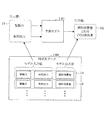
次に、図3を参照して、予測モデル14Cと時系列データ14Bについて説明する。図3は予測モデルと時系列データを示す説明図である。
一般に、予測モデルとは、推定条件を示すモデル入力値と所望のモデル出力値との因果関係や推論過程をモデル化したものをいう。本実施の形態で扱う予測モデル14Cは、図3に示すように、得られたモデル入力値51、例えば自動車の駆動力や車両出力の値が与えられた際、そのモデル入力値51に対応するモデル出力値52、例えば燃料消費量やCO2排出量を出力する。
[Prediction model and time series data]
Next, the
In general, a prediction model is a model obtained by modeling a causal relationship or an inference process between a model input value indicating an estimation condition and a desired model output value. As shown in FIG. 3, the
このような予測モデル14Cを作成するには、自動車の実際の振る舞いを示す時系列データ14Bが必要となる。時系列データ14Bは、予め得られたモデル入力値51とモデル出力値52との組み合わせからなる複数の組53で構成される。これら組53のモデル入力値51とモデル出力値52は、走行試験設備2において実際の車両で各種走行モード試験を行うことにより、計測システム3で当該車両の走行状態を示す計測データ4として計測され、記憶部14へ計測データ14Aとして格納される。また、必要に応じて、制御部15の一次遅れ補正手段15Bやデータ加工手段15Dにより計測データ14Aを補正処理したものを組53のモデル入力値51とモデル出力値52として用いる。
In order to create such a
また、予測モデル14Cの構成としては、因果関係や推論過程が物理法則を用いた数式で表現される数式モデルでもよく、因果関係や推論過程が数式で明らかにされていないブラックボックス予測モデルでもよい。
このうち、ブラックボックス予測モデルとしては、事例ベース、ファジー推論ベース、さらにはニューラルネットワークなどを用いたモデルがある。特に、事例ベース推論モデルは、位相(Topology)の概念に基づき、システムの入出力関係の連続性が成り立つ一般的な対象に適用可能な公知のモデリング技術である(例えば、特開平11−372898号公報など参照)。
The configuration of the
Among these, as black box prediction models, there are models using case bases, fuzzy inference bases, and neural networks. In particular, the case-based reasoning model is a well-known modeling technique that can be applied to a general object in which the continuity of the input / output relationship of the system is established based on the concept of topology (for example, JP-A-11-372898). (See publications).
一般的なモデリング技術では、モデルの次数やネットワーク構造などのモデルパラメータを同定する必要があるが、事例ベース推論モデルによれば、所望の出力許容誤差を指定することで入力空間の位相を同定している。すなわち、事例ベース推論モデルは、各時系列データのモデル入力値を所望の出力許容誤差に応じて量子化して得られた入力空間内の各部分区間ごとに事例データを有する予測モデルであり、各事例データは、当該部分区間を示すデータと、当該部分区間に属するモデル入力値を持つ1つ以上の時系列データに含まれるモデル出力値を代表する代表値とからなる。 In general modeling techniques, it is necessary to identify model parameters such as model order and network structure, but the case-based reasoning model identifies the phase of the input space by specifying the desired output tolerance. ing. That is, the case-based reasoning model is a prediction model having case data for each partial section in the input space obtained by quantizing the model input value of each time series data according to a desired output tolerance, The case data includes data indicating the partial section and representative values representing model output values included in one or more time-series data having model input values belonging to the partial section.
したがって、各時系列データは上記のようにして同定された入力空間内の各部分区間に事例データとして蓄えられ、出力推定時にはそのモデル入力値に対応する部分区間の事例データの代表値が推定結果となる。また、この際、上記モデル入力値と予め蓄積されている事例データとの入力空間内における位相距離(類似度)により、その推定出力値の信頼性を示すことができる。 Therefore, each time series data is stored as case data in each partial section in the input space identified as described above, and at the time of output estimation, the representative value of the case data of the partial section corresponding to the model input value is the estimation result. It becomes. At this time, the reliability of the estimated output value can be shown by the phase distance (similarity) in the input space between the model input value and the case data stored in advance.
[予測モデル作成装置の動作]
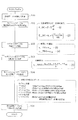
次に、図4を参照して、本実施の形態にかかる予測モデル作成装置の動作について説明する。図4は本実施の形態にかかる予測モデル作成処理を示すフローチャートである。
制御部15は、画面表示部11に表示した処理メニューに対する操作入力部12からの予測モデル作成指示に応じて、記憶部14からプログラム14Dを読み込んで実行することにより、図4の予測モデル作成処理を開始する。
ここでは、モデル入力値として、駆動力Tの移動平均値T_MA2、出力Pの移動平均値P_MA2、および車両出力Pの時間シフト補正値の移動平均値P_MA2_TS1,P_MA2_T10を用い、モデル出力値として、燃料消費量Fの一次遅れ補正値の移動平均値F_MA2_DCを用いる場合について説明する。
[Operation of prediction model creation device]
Next, the operation of the prediction model creation device according to the present embodiment will be described with reference to FIG. FIG. 4 is a flowchart showing a prediction model creation process according to the present embodiment.
The
Here, the moving average value T_MA2 of the driving force T, the moving average value P_MA2 of the output P, and the moving average values P_MA2_TS1 and P_MA2_T10 of the time shift correction value of the vehicle output P are used as model input values, and the fuel is used as the model output value. The case where the moving average value F_MA2_DC of the primary delay correction value of the consumption amount F is used will be described.
まず、制御部15は、データ取得手段15Aで、データI/F部13を介して計測システム3から計測データ4を取り込み、記憶部14へ計測データ14Aとして格納する(ステップ100)。この計測データ14Aの取り込みステップについては、予測モデル作成処理に先立って予め記憶部14へ格納しておいてもよい。
First, the
次に、制御部15は、一次遅れ補正手段15Bで、記憶部14の計測データ14Aからモデル出力データとして用いる燃料消費量Fを読み出して、無駄時間および一次遅れ補正処理を行う(ステップ101)。以下、無駄時間および一次遅れ補正処理を単に一次遅れ補正処理という。この一次遅れ補正処理は、図4の式(1)に示されているように、任意の計測タイミングに計測されたモデル出力データFに微分成分dF/dtと一次遅れ時定数Tとの積を加算することにより一次遅れ補正されたモデル出力データF_DCを算出する。
Next, the
この一次遅れ補正処理の具体例として、図4の式(2)では、モデル出力データFiの計測タイミングtiに対して、tiより3ステップ前のti−3に得られたモデル出力データFi−3と、tiより3ステップ後のti+3に得られたモデル出力データFi+3とからtiにおける微分成分を算出している。そして、その微分成分と時定数Tとの積をFiに加算することにより、tiにおける一次遅れ補正されたモデル出力データFi_DCを得ている。 As a specific example of the first-order lag correction process, in the equation (2) of FIG. 4, the model output data Fi-3 obtained at ti-3 three steps before ti with respect to the measurement timing ti of the model output data Fi. The differential component at ti is calculated from the model output data Fi + 3 obtained at ti + 3 after 3 steps from ti. Then, by adding the product of the differential component and the time constant T to Fi, model output data Fi_DC corrected for the first-order lag at ti is obtained.
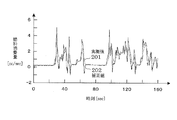
図5に一次遅れ補正の有無による燃料消費量Fの違いを示す。図5において、横軸は燃料消費量Fの計測タイミングtiを示す時刻であり、縦軸は燃料消費量Fである。一次遅れ補正を行った補正値202のほうが、実測値201に比較して敏感に変化しており、一次遅れが補正されていることがわかる。
なお、CO2排出量を推定する予測モデルを作成する場合には、計測データ14Aのうち燃料消費量Fに代えてCO2排出量が用いられる。
FIG. 5 shows the difference in the fuel consumption F depending on whether or not the first-order lag correction is performed. In FIG. 5, the horizontal axis represents the time indicating the measurement timing ti of the fuel consumption F, and the vertical axis represents the fuel consumption F. The
When creating a prediction model for estimating the CO2 emission amount, the CO2 emission amount is used in place of the fuel consumption amount F in the
また、制御部15は、時間シフト補正手段15Cで、記憶部14の計測データ14Aからモデル入力データとして用いる車両出力Pを読み出して、時間シフト補正処理を行う(ステップ102)。
この時間シフト補正処理の具体例として、図4の式(3)では、モデル入力データxiの計測タイミングtiに対して、tiより1ステップ前の計測タイミングti−1に得られたモデル入力データxi−1をtiへ時間シフトさせることにより、tiにおける時間シフト補正されたモデル入力データxi_TS1を得ている。同じく図4の式(4)では、tiより10ステップ前の計測タイミングti−10に得られたモデル入力データxi−10をtiへ時間シフトさせることにより、tiにおける時間シフト補正されたモデル入力データxi_TS10を得ている。
Further, the
As a specific example of this time shift correction processing, in the equation (3) in FIG. 4, the model input data xi obtained at the measurement timing ti-1 one step before ti with respect to the measurement timing ti of the model input data xi. By shifting the time −1 to ti, the model input data xi_TS1 corrected for time shift at ti is obtained. Similarly, in the equation (4) of FIG. 4, the model input data xi-10 obtained at the measurement timing ti-10 10 steps before ti is time-shifted to ti, so that the time-shift corrected model input data at ti. xi_TS10 is obtained.
次に、制御部15は、データ加工手段15Dで、記憶部14の計測データ14Aから読み出した駆動力Tおよび車両出力Pと、一次遅れ補正手段15Bにより得られた燃料消費量F_DCと、時間シフト補正手段15Cにより得られた車両出力P_TS1,P_TS10について、移動平均化処理を行う(ステップ103)。
この移動平均化処理の具体例として、図4の式(5)では、データxiの計測タイミングtiに対して、前後2ステップ内に得られた5つのデータxi−2〜xi+2の平均値を求めることにより、tiにおける移動平均化されたデータxi_MA2を得ている。これにより、T_MA2、P_MA2、F_MA2_DC、P_MA2_TS1、およびP_MA2_TS10が生成される。
Next, the
As a specific example of this moving averaging process, in equation (5) in FIG. 4, the average value of the five data xi−2 to xi + 2 obtained within two steps before and after the measurement timing ti of the data xi is obtained. Thus, moving averaged data xi_MA2 at ti is obtained. Thereby, T_MA2, P_MA2, F_MA2_DC, P_MA2_TS1, and P_MA2_TS10 are generated.
そして、制御部15は、時系列データ生成手段15Eで、モデル入力値として用いる各モデル入力データ、すなわちT_MA2、P_MA2、P_MA2_TS1、およびP_MA2_TS10と、モデル出力値として用いるモデル出力データF_MA2_DCとを、それぞれの計測タイミングtiごとに組み合わせて個々の時系列データ14Bを生成し、記憶部14へ格納する(ステップ104)。
Then, the
続いて、制御部15は、モデル作成手段15Fで、記憶部14から履歴時系列データ14Bを読み出し、所定のアルゴリズムを用いて、与えられた入力値から対応する出力値を推定して出力する予測モデル14Cを作成し(ステップ105)、得られた予測モデル14Cを記憶部14へ格納して、一連の予測モデル作成処理を終了する。
Subsequently, the
予測モデル作成のアルゴリズムとしては、その推論モデルに応じたものが用いられる。例えば、数式モデルでは、モデル入力値として用いられる各モデル入力データを入力変数とし、モデル出力値として用いられるモデル出力データを出力変数とする線形関数あるいは非線形関数の解を、各時系列データに基づき導出する公知のアルゴリズムが用いられる。
また、ブラックボックス予測モデルのうちニューラルネットワークを用いたモデルでは、各時系列データを学習させる過程を繰り返し実行するものとなり、ファジー推論ベースを用いたモデルでは、各時系列データから個々のルールを生成させる過程を繰り返し実行するものとなる。
As an algorithm for creating a prediction model, an algorithm corresponding to the inference model is used. For example, in a mathematical model, each model input data used as a model input value is an input variable, and a solution of a linear function or nonlinear function using the model output data used as a model output value as an output variable is based on each time series data. A known algorithm for deriving is used.
In addition, in the black box prediction model using a neural network, the process of learning each time series data is repeatedly executed. In the model using a fuzzy inference base, individual rules are generated from each time series data. This process is repeatedly executed.
ブラックボックス予測モデルのうち事例ベースを用いたモデルでは、次のようなアルゴリズムとなる。まず、モデル入力値として用いられる各モデル入力データからなる入力空間を格子状に分割し、メッシュと呼ばれる複数の部分区間を設ける。この際、各メッシュに属するモデル入力値を持つ各時系列データのモデル出力値のばらつき幅が、与えられた出力誤差の許容幅以下となるようメッシュの大きさを決定する。そして、各メッシュごとに、そのメッシュに属するモデル入力値を持つ各時系列データのモデル出力値から、例えば平均値を求めることによりその代表値を算出する。そして、各メッシュについて、その入力空間を示すデータ、例えば当該メッシュの中央座標を示す各入力変数の値と上記代表値との組から事例データを生成し、これら事例データを予測モデルとすればよい。 Among the black box prediction models, the model using the case base has the following algorithm. First, an input space made up of model input data used as model input values is divided into a grid, and a plurality of partial sections called meshes are provided. At this time, the size of the mesh is determined so that the variation width of the model output value of each time-series data having the model input value belonging to each mesh is equal to or less than the allowable width of the given output error. Then, for each mesh, the representative value is calculated by, for example, obtaining an average value from the model output value of each time series data having the model input value belonging to that mesh. Then, for each mesh, data indicating the input space, for example, case data is generated from a combination of the value of each input variable indicating the central coordinates of the mesh and the representative value, and the case data may be used as a prediction model. .
[推定結果]
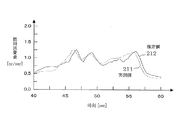
次に、図6を参照して、作成された予測モデルの推定結果について説明する。図6は本実施の形態にかかる予測モデル作成装置1で作成した予測モデル14Cの推定結果を示すグラフである。
ここでは、図4で述べたように、予測モデル14Cのモデル入力値として、駆動力T_MA2と、車両出力P_MA2と、時間シフト処理した車両出力P_MA2_TS1および車両出力P_MA2_TS10とを用い、モデル出力値として、一次遅れ補正処理した燃料消費量Fi_MA2_DCを用いた。図6の場合、実測値211と推定値212の相関値として、0.9787と極めて高い値が得られ、高精度で推定できる予測モデルを実現できた。なお、図6の推定値212は、一次遅れを含む実測値211と比較するため、予測モデル14Cで得られたモデル出力値をさらに一次遅れ逆補正したものである。この逆補正については、図4の微分方程式(2)をオイラー法などにより数値的に解けばよい。
[Estimation results]
Next, the estimation result of the created prediction model will be described with reference to FIG. FIG. 6 is a graph showing an estimation result of the
Here, as described in FIG. 4, the driving force T_MA2, the vehicle output P_MA2, the time-shifted vehicle output P_MA2_TS1 and the vehicle output P_MA2_TS10 are used as model input values of the
上記例では、モデル入力値としては、駆動力Tと車両出力P(駆動力×速度と同等)を元にしたものを用いたが、これらモデル入力値の組み合わせとして、いずれか一方に車速すなわち各時点における当該自動車の動きに関係した成分(動きを示す成分)を含むモデル入力データ(第1のモデル入力データ)を用い、他方に駆動力T、車両出力P、あるいは加速度Aなど、当該時点における動きの変化(動きに必要な出力)に関係した成分(動きの変化を示す成分)を含むモデル入力データ(第2のモデル入力データ)を用いて、それぞれ予測モデルを作成した。
その結果、車速Vと駆動力Tとを元にしたモデル入力値の場合には、0.9658という高い相関値が得られ、車速Vと加速度Aを元にしたモデル入力値の場合には、0.9605という高い相関値が得られた。また、車両出力Pに代えて計測データ14Aの駆動力Tと車速Vの積を用い、この積T×Vと車速Vを元にしたモデル入力値の場合には、0.9661という高い相関値が得られた。
In the above example, the model input value based on the driving force T and the vehicle output P (equivalent to driving force × speed) is used, but as a combination of these model input values, the vehicle speed, Using model input data (first model input data) including a component related to the movement of the vehicle at the time (a component indicating movement), the driving force T, vehicle output P, acceleration A, etc. Predictive models were created using model input data (second model input data) including components (components indicating changes in motion) related to changes in motion (output necessary for motion).
As a result, in the case of the model input value based on the vehicle speed V and the driving force T, a high correlation value of 0.9658 is obtained, and in the case of the model input value based on the vehicle speed V and the acceleration A, A high correlation value of 0.9605 was obtained. Further, instead of the vehicle output P, the product of the driving force T and the vehicle speed V of the
このように、本実施の形態では、走行試験設備2での自動車走行試験により計測システム3で得られた計測データ4のうち、少なくとも各時点における当該自動車の動きに関係した成分を含むデータ(第1のモデル入力データ)および当該時点での動きの変化に関係した成分を含むデータ(第2のモデル入力データ)からなるモデル入力値と、燃料消費量またはCO2排出量を示すモデル出力データからなるモデル出力値との組から時系列データを複数生成し、これら時系列データに基づき新たな入力値から所望の出力値として燃料消費量またはCO2排出量を推定する予測モデルを作成するようにしたので、実際に自動車を走行させることなく、限定された実験で得られたデータから各種走行パターンや車種における燃料消費量やCO2排出量のデータを正確に推定できる予測モデルを容易に作成できる。
As described above, in the present embodiment, among the
したがって、いくつかの典型的な車種によって、例えば排出ガス試験で適用される走行モードについて各瞬間の燃料消費量データやCO2排出量のデータを計測し、本実施の形態にかかる予測モデルに入力することにより、同じ車の高速道走行や、市街地走行、渋滞時の走行においても、そのときの燃費やCO2の総排出量を、実験を行うことなく正確に推定することができる。これにより、国や自治体における道路計画、交通施策等に活用できるだけでなく、車両開発メーカーでの開発の促進に大いに役立つ。 Therefore, fuel consumption data and CO2 emission data at each moment are measured and input to the prediction model according to the present embodiment for some typical vehicle types, for example, for driving modes applied in the exhaust gas test. As a result, even when the same vehicle is traveling on a highway, traveling in an urban area, or traveling in a traffic jam, the fuel efficiency and total CO2 emission at that time can be accurately estimated without performing an experiment. As a result, it can be used not only for road planning and traffic measures in the national and local governments, but also for the promotion of development at vehicle development manufacturers.
[第2の実施の形態]
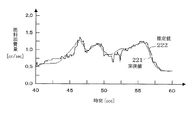
次に、図7を参照して、本発明の第2の実施の形態にかかる予測モデル作成装置について説明する。図7は本発明の第2の実施の形態にかかる予測モデル作成装置で得られた推定結果を示すグラフであり、横軸は燃料消費量Fの計測タイミングtiを示す時刻であり、縦軸は燃料消費量Fである。
前述した第1の実施の形態では、燃料消費量Fに対して一次遅れ補正手段15Bで一次遅れ補正および移動平均処理を行った燃料消費量F_MA2_DCをモデル出力データとして用いた場合について説明した。本実施の形態では、一次遅れ補正をせず移動平均処理だけを行った燃料消費F_MA2を用いたものである。なお、予測モデル作成装置の構成やモデル入力値については第1の実施の形態と同じものを用いた。
[Second Embodiment]
Next, with reference to FIG. 7, the prediction model creation apparatus concerning the 2nd Embodiment of this invention is demonstrated. FIG. 7 is a graph showing an estimation result obtained by the prediction model creating apparatus according to the second embodiment of the present invention, where the horizontal axis is the time indicating the measurement timing ti of the fuel consumption F, and the vertical axis is the vertical axis. The fuel consumption amount F.
In the first embodiment described above, the case where the fuel consumption amount F_MA2_DC obtained by performing the first-order lag correction and the moving average process on the fuel consumption amount F by the first-order lag correction means 15B has been described as model output data. In the present embodiment, fuel consumption F_MA2 is used in which only the moving average process is performed without correcting the first order delay. In addition, about the structure and model input value of a prediction model production apparatus, the same thing as 1st Embodiment was used.
この結果、図7に示されているように、モデル出力データについて一次遅れ補正しない場合でも、実測値221とほぼ同様に推移する推定値222が得られ、予測モデルによりある程度一次遅れに対応していることがわかる。
なお、この推定値222には、高周波成分が多く含まれており、一次遅れ補正処理を行った燃料消費量F_MA2_DCを用いた図6の実測値211のほうが、実測値211と同様に安定して推移しており、一次遅れ補正処理による効果が得られている。
As a result, as shown in FIG. 7, even when the first order lag correction is not performed on the model output data, an estimated
Note that the estimated
[第3の実施の形態]
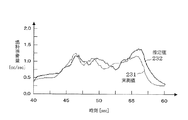
次に、図8を参照して、本発明の第3の実施の形態にかかる予測モデル作成装置について説明する。図8は本発明の第3の実施の形態にかかる予測モデル作成装置で得られた推定結果を示すグラフであり、横軸は燃料消費量Fの計測タイミングtiを示す時刻であり、縦軸は燃料消費量Fである。
前述した第1の実施の形態では、計測データ14Aから得られた駆動力Tと車両出力Pに加えて、車両出力Pを時間シフト処理して得られたデータ(第3のモデル入力データ)として、車両出力P_MA2_TS1と車両出力P_MA2_TS10とを用いた場合について説明した。本実施の形態では、時間シフト処理して得られた車両出力P_MA2_TS1と車両出力P_MA2_TS10とを用いず、移動平均処理した駆動力T_MA2と車両出力P_MA2とをモデル入力値として用いたものである。なお、予測モデル作成装置の構成やモデル出力値については第1の実施の形態と同じものを用いた。
[Third Embodiment]
Next, with reference to FIG. 8, the prediction model creation apparatus concerning the 3rd Embodiment of this invention is demonstrated. FIG. 8 is a graph showing an estimation result obtained by the prediction model creating apparatus according to the third embodiment of the present invention, where the horizontal axis is the time indicating the measurement timing ti of the fuel consumption F, and the vertical axis is the vertical axis. The fuel consumption amount F.
In the first embodiment described above, in addition to the driving force T and the vehicle output P obtained from the
この結果、図8に示されているように、モデル入力データとして時間シフト処理したものを用いない場合でも、実測値231とほぼ同様に推移する推定値232が得られ、両者の相関値として0.9463という高い値が得られた。これは、第1の実施の形態の場合の相関値0.9787より低いものの、ある程度満足できる推定精度である。また、本実施の形態によれば、モデル作成に用いるモデル入力データの種類数を削減でき、時間シフト処理だけでなくモデル作成処理に要する時間を大幅に削減できる。なお、図8の推定値232は、一次遅れを含む実測値231と比較するため、予測モデル14Cで得られたモデル出力値をさらに一次遅れ逆補正したものである。この逆補正については、図4の微分方程式(2)をオイラー法などにより数値的に解けばよい。
As a result, as shown in FIG. 8, even when the time-shifted data is not used as the model input data, an estimated value 232 that changes in substantially the same manner as the actual measured
なお、以上では、一次遅れ補正処理として、図4の式(2)に示したように、計測タイミングtiの前後3ステップに得られた2つのデータを用いる場合を例として説明したが、これに限定されるものではなく、一次遅れ補正処理として好適な他のステップのデータを用いればよい。
また、時間シフト処理として、図4の式(3),(4)に示したように、計測タイミングtiの10ステップ前、および1ステップ前のデータを用いる場合を例として説明したが、これに限定されるものではなく、時間シフト処理として好適な他のステップのデータを用いればよい。
In the above description, the case where two data obtained in three steps before and after the measurement timing ti are used as an example of the first-order lag correction processing as shown in the equation (2) in FIG. It is not limited, and data of other steps suitable for the first-order lag correction process may be used.
Further, as the time shift process, as shown in the equations (3) and (4) of FIG. 4, the case where data before and 10 steps before the measurement timing ti is used has been described as an example. It is not limited, and data of other steps suitable for the time shift process may be used.
また、移動平均処理として、図4の式(5)に示したように、計測タイミングtiの前後2ステップ内に得られた5つのデータを用いる場合を例として説明したが、これに限定されるものではなく、移動平均処理として好適な他のステップのデータを用いればよい。
また、モデル入力値として、車両出力Pを異なるシフト量で時間シフト処理した2つのデータ(第3のモデル入力データ)を加えた場合を例として説明したが、時間シフト補正の対象となるモデル入力データは、車両出力Pに限定されるものではなく他のモデル入力データに対して時間シフト補正を行い、得られたデータをモデル入力値として用いてもよい。また、時間シフト補正して新たに得るモデル入力データの数は、2つに限定されるものではなく、1つだけでもよく3つ以上でもよい。
Further, as the moving average process, as shown in the equation (5) of FIG. 4, the case where five data obtained in two steps before and after the measurement timing ti are used has been described as an example, but the present invention is limited to this. Instead of this, data of other steps suitable for moving average processing may be used.
In addition, the case where two data (third model input data) obtained by time-shifting the vehicle output P with different shift amounts has been described as an example of the model input value. However, the model input to be subjected to time shift correction is described. The data is not limited to the vehicle output P, and time shift correction may be performed on other model input data, and the obtained data may be used as a model input value. Further, the number of model input data newly obtained by time shift correction is not limited to two, but may be one or three or more.
また、以上では、少なくとも各時点における当該自動車の動きに関係した成分を含むデータ(第1のモデル入力データ)として車速Vを用い、当該時点での動きの変化に関係した成分を含むデータ(第2のモデル入力データ)として、駆動力T、車両出力P、および加速度Aのうちのいずれかを用いた場合を例として説明したが、これに加えて他のデータをモデル入力値として用いてもよい。例えば、駆動力T、車両出力P、および加速度Aのうちモデル入力値として採用していないものをさらに組み合わせてもよい。 Further, in the above, the vehicle speed V is used as data (first model input data) including at least a component related to the movement of the vehicle at each time point, and data including the component related to the change in movement at the time point (first As an example, the case where any one of the driving force T, the vehicle output P, and the acceleration A is used as the model input data (2) is described. However, in addition to this, other data may be used as the model input value. Good. For example, driving force T, vehicle output P, and acceleration A that are not adopted as model input values may be further combined.
また、モデル入力値として、エンジンの熱効率に影響するデータを追加してもよい。エンジンの熱効率に影響するデータとしては、例えば、冷却水温度、エアコン作動情報、外気温度などがある。このようなエンジンの熱効率に影響するデータをモデル入力値として加えることにより、これら条件が作用した場合の燃料消費量やCO2排出量を精度よく推定できる。 Moreover, you may add the data which influences the thermal efficiency of an engine as a model input value. Examples of data affecting the thermal efficiency of the engine include cooling water temperature, air conditioner operation information, and outside air temperature. By adding such data that affects the thermal efficiency of the engine as model input values, it is possible to accurately estimate the fuel consumption and CO2 emission when these conditions are applied.
[推定結果と実測値との比較]
次に、図9〜14を参照して、前述した第2の実施の形態にかかる予測モデル作成装置で作成した予測モデルの推定結果と実測値との比較について説明する。以下では、CD34モードで実験走行して得られた計測データに基づき予測モデルを作成し、その予測モデルで推定した燃料消費量と、実際に車両を走行させて得られた燃料消費量とを比較する。なお、予測モデル作成用のモデル入力データとしては、車両出力、駆動力、加速度、速度を用いた。この際、各モデル入力データは、前後2ステップ内に得られた5つのデータを移動平均化処理して用いた。また、一次遅れ補正処理や時間シフト処理は実施していない。
[Comparison between estimated results and actual values]
Next, with reference to FIGS. 9 to 14, the comparison between the estimation result of the prediction model created by the prediction model creation device according to the second embodiment described above and the actual measurement value will be described. In the following, a prediction model is created based on measurement data obtained by experimental driving in the CD34 mode, and the fuel consumption estimated by the prediction model is compared with the fuel consumption obtained by actually driving the vehicle. To do. Note that vehicle output, driving force, acceleration, and speed were used as model input data for creating a prediction model. At this time, each model input data was used by moving and averaging five data obtained in two steps before and after. Further, the first-order lag correction process and the time shift process are not performed.
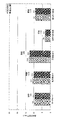
まず、図9について説明する。図9は、各種走行モードの全区間における燃料消費量の平均値について実測値と推定結果とを比較したグラフであり、横軸に走行モード、縦軸に燃料消費量をとったものである。いずれの走行モードにおいても実測値との誤差が0.7km/l(7.0%)以下と小さく、良好な推定結果が得られていることがわかる。 First, FIG. 9 will be described. FIG. 9 is a graph in which measured values and estimation results are compared with respect to the average value of fuel consumption in all sections in various travel modes, with the horizontal axis representing the travel mode and the vertical axis representing the fuel consumption. It can be seen that in any of the travel modes, the error from the measured value is as small as 0.7 km / l (7.0%) or less, and a good estimation result is obtained.
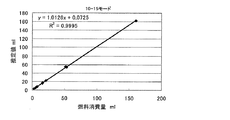
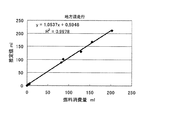
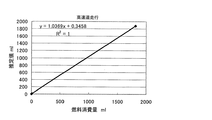
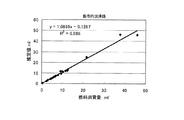
次に、図10〜14について説明する。図9では、各走行モードにおける燃料消費量の平均値について比較したが、図10〜14では、各走行モードのうちの一部の区間、ここでは車速が低速から高速を経て低速に戻る1つのピーク区間について燃料消費量を比較した。図10〜14は、それぞれ10−15モード、地方道走行、高速道走行、都市内渋滞路、および都市内一般道に関するグラフであり、横軸に実測した燃料消費量、縦軸に推定した燃料消費量をとったものである。 Next, FIGS. 10 to 14 will be described. In FIG. 9, the average value of the fuel consumption in each driving mode is compared. In FIGS. 10 to 14, a part of each driving mode, in which the vehicle speed returns from low speed to high speed to low speed. The fuel consumption was compared for the peak section. FIGS. 10 to 14 are graphs relating to 10-15 mode, traveling on a local road, traveling on a highway, a congested road in a city, and a general road in a city, and the fuel consumption measured on the horizontal axis and the fuel estimated on the vertical axis. It is a consumption.
いずれの走行モードにおいても、実測値と推定値との相関係数R2=0.98以上となり、両者の相関が極めて高いことがわかる。また、両者の関係が直線で表現でき、この傾きを補正すれば極めて高い推定値が得られる。 In any driving mode, the correlation coefficient R2 between the measured value and the estimated value is 0.98 or more, and it can be seen that the correlation between the two is extremely high. Further, the relationship between the two can be expressed by a straight line, and if this inclination is corrected, an extremely high estimated value can be obtained.
このように、本実施の形態によれば、実験走行で得られた計測データから作成した推定モデルに基づき、実際に走行して得られる計測値を極めて高い精度で推定できる。特に、その推定結果については、図9に示すような全区間にわたる推定、さらには図10〜14に示すような一部区間における推定のいずれについても高い精度が得られていることがわかる。
また、1種類の走行モードの実験走行で得られた計測データから推定モデルを作成した場合でも、他の走行モードについて高い精度で推定することが可能であり、推定モデルを作成するのに必要な計測データが少なくて済み、モデル作成のための作業負担を大幅に削減できる。
Thus, according to the present embodiment, it is possible to estimate a measurement value obtained by actual traveling with extremely high accuracy based on an estimation model created from measurement data obtained by experimental traveling. In particular, with regard to the estimation result, it can be seen that high accuracy is obtained for all of the estimations as shown in FIG. 9 and the estimations in the partial intervals as shown in FIGS.
In addition, even when an estimation model is created from measurement data obtained in an experiment run in one type of travel mode, it is possible to estimate with high accuracy for other travel modes, which is necessary for creating an estimation model. Less measurement data is required, and the workload for model creation can be greatly reduced.
1…予測モデル作成装置、11…画像表示部、12…操作入力部、13…データI/F部、14…記憶部、14A…計測データ、14B…時系列データ、14C…予測モデル、14D…プログラム、15…制御部、15A…データ取得手段、15B…一次遅れ補正手段、15C…時間シフト補正手段、15D…データ加工手段、15E…時系列データ生成手段、15F…モデル作成手段、2…走行試験設備、3…計測システム、4…計測データ。
DESCRIPTION OF
Claims (8)
走行試験設備での自動車走行試験により得られた計測データのうち、少なくとも各時点における当該自動車の動きに関係した成分を含む第1のモデル入力データおよび当該時点における当該自動車の動きに必要な出力に関係した成分を含む第2のモデル入力データからなるモデル入力値と、これらモデル入力値に対応する燃料消費量またはCO2排出量を示すモデル出力データからなるモデル出力値との組から時系列データを複数生成する時系列データ生成ステップと、
これら時系列データに基づき新たな入力値から所望の出力値を推定する予測モデルを作成するモデル作成ステップとを備えることを特徴とする燃料消費量またはCO2排出量の予測モデル作成方法。 A method for creating a prediction model for estimating fuel consumption or CO2 emissions of an automobile,
Of the measurement data obtained by the automobile running test at the running test facility, the first model input data including at least a component related to the movement of the automobile at each time point and the output necessary for the movement of the automobile at the time point Time series data is obtained from a set of model input values composed of second model input data including related components and model output values composed of model output data indicating fuel consumption or CO2 emission corresponding to these model input values. Multiple time series data generation steps;
A model creation step for creating a prediction model for estimating a desired output value from a new input value based on these time series data, and a prediction model creation method for a fuel consumption amount or CO2 emission amount.
前記第1のモデル入力データは、前記計測データのうち前記自動車の速度を示すデータからなることを特徴とする燃料消費量またはCO2排出量の予測モデル作成方法。 In the fuel consumption amount or CO2 emission prediction model creation method according to claim 1,
Said 1st model input data consists of data which shows the speed of the said motor vehicle among the said measurement data, The prediction model creation method of the fuel consumption or CO2 emission amount characterized by the above-mentioned.
前記第2のモデル入力データは、前記計測データのうち前記自動車の駆動力、車両出力、または加速度のいずれか1つを示すデータからなることを特徴とする燃料消費量またはCO2排出量の予測モデル作成方法。 In the fuel consumption amount or CO2 emission prediction model creation method according to claim 1,
The second model input data includes data indicating any one of the driving force, vehicle output, or acceleration of the automobile among the measurement data, and a prediction model of fuel consumption or CO2 emission How to make.
前記計測データの燃料消費量またはCO2排出量に対して無駄時間および一次遅れ補正処理を行う一次遅れ補正ステップをさらに備え、
前記時系列データ生成ステップは、前記モデル出力データとして、前記一次遅れ補正ステップで得られた無駄時間および一次遅れ補正処理後の燃料消費量またはCO2排出量を用いることを特徴とする燃料消費量またはCO2排出量の予測モデル作成方法。 In the fuel consumption amount or CO2 emission prediction model creation method according to claim 1,
A primary delay correction step of performing dead time and primary delay correction processing on the fuel consumption amount or CO2 emission amount of the measurement data;
In the time series data generation step, the dead time obtained in the primary delay correction step and the fuel consumption amount or CO2 emission amount after the primary delay correction process are used as the model output data. A method for creating a prediction model for CO2 emissions.
前記第1または第2のモデル入力データを時間的にシフトさせて得られた第3のモデル入力データを出力する時間シフト補正ステップをさらに備え、
前記時系列データ生成ステップは、前記モデル入力値として、前記第1および第2のデータに加えて前記時間シフト補正ステップで得られた前記第3のデータを用いることを特徴とする燃料消費量またはCO2排出量の予測モデル作成方法。 In the fuel consumption amount or CO2 emission prediction model creation method according to claim 1,
A time shift correction step of outputting third model input data obtained by shifting the first or second model input data with respect to time;
The time series data generation step uses the third data obtained in the time shift correction step in addition to the first and second data as the model input value. A method for creating a prediction model for CO2 emissions.
前記モデル作成ステップは、前記予測モデルとして、前記各時系列データのモデルモデル入力値を所望の出力許容誤差に応じて量子化して得られた入力空間内の各部分区間ごとに、当該部分区間を示すデータと当該部分区間を代表するモデル出力値とからなる事例データを有する事例ベースを作成し、
前記事例データのモデル出力値は、当該部分区間に属するモデル入力値を持つ1つ以上の時系列データに含まれるモデル出力値を代表する値からなることを特徴とする燃料消費量またはCO2排出量の予測モデル作成方法。 In the fuel consumption amount or CO2 emission prediction model creation method according to claim 1,
The model creating step includes, as the prediction model, for each partial section in the input space obtained by quantizing the model model input value of each time series data according to a desired output tolerance, for each partial section. Create a case base with case data consisting of the data shown and the model output value representing the subsection,
The model output value of the case data is composed of a value representative of the model output value included in one or more time-series data having model input values belonging to the partial section. How to create a prediction model.
走行試験設備での自動車走行試験により得られた計測データのうち、少なくとも各時点における当該自動車の動きに関係した成分を含む第1のモデル入力データおよび当該時点における当該自動車の動きに必要な出力に関係した成分を含む第2のモデル入力データからなるモデル入力値と、これらモデル入力値に対応する燃料消費量またはCO2排出量を示すモデル出力データからなるモデル出力値との組から時系列データを複数生成する時系列データ生成手段と、
これら時系列データに基づき新たな入力値から所望の出力値を推定する予測モデルを作成するモデル作成手段とを備えることを特徴とする燃料消費量またはCO2排出量の予測モデル作成装置。 An apparatus for creating a prediction model for estimating fuel consumption or CO2 emission of an automobile,
Of the measurement data obtained by the automobile running test at the running test facility, the first model input data including at least a component related to the movement of the automobile at each time point and the output necessary for the movement of the automobile at the time point Time series data is obtained from a set of model input values composed of second model input data including related components and model output values composed of model output data indicating fuel consumption or CO2 emission corresponding to these model input values. A plurality of time-series data generating means for generating;
A fuel consumption amount or CO2 emission amount prediction model creation device, comprising: a model creation means for creating a prediction model for estimating a desired output value from a new input value based on these time series data.
The program which produces the prediction model which estimates a desired output value from a new input value by performing each step of the prediction model preparation method in any one of Claims 1-6 with a computer.
Priority Applications (1)
| Application Number | Priority Date | Filing Date | Title |
|---|---|---|---|
| JP2004106611A JP4318299B2 (en) | 2004-03-31 | 2004-03-31 | Method and apparatus for creating prediction model for fuel consumption or CO2 emissions |
Applications Claiming Priority (1)
| Application Number | Priority Date | Filing Date | Title |
|---|---|---|---|
| JP2004106611A JP4318299B2 (en) | 2004-03-31 | 2004-03-31 | Method and apparatus for creating prediction model for fuel consumption or CO2 emissions |
Publications (2)
| Publication Number | Publication Date |
|---|---|
| JP2005291081A true JP2005291081A (en) | 2005-10-20 |
| JP4318299B2 JP4318299B2 (en) | 2009-08-19 |
Family
ID=35324299
Family Applications (1)
| Application Number | Title | Priority Date | Filing Date |
|---|---|---|---|
| JP2004106611A Expired - Fee Related JP4318299B2 (en) | 2004-03-31 | 2004-03-31 | Method and apparatus for creating prediction model for fuel consumption or CO2 emissions |
Country Status (1)
| Country | Link |
|---|---|
| JP (1) | JP4318299B2 (en) |
Cited By (16)
| Publication number | Priority date | Publication date | Assignee | Title |
|---|---|---|---|---|
| JP2008026261A (en) * | 2006-07-25 | 2008-02-07 | Railway Technical Res Inst | Vehicle running simulation device |
| JP2010044755A (en) * | 2008-07-18 | 2010-02-25 | Mizuho Information & Research Institute Inc | Support system, method and program for assessing environmental load |
| JP2010151021A (en) * | 2008-12-25 | 2010-07-08 | Toyota Motor Corp | Diagnostic device of vehicle |
| JP2011022935A (en) * | 2009-07-17 | 2011-02-03 | Mizuho Information & Research Institute Inc | Environmental load evaluation support system, environmental load evaluation support method, and environmental load evaluation support program |
| JP2013137023A (en) * | 2013-01-17 | 2013-07-11 | Mizuho Information & Research Institute Inc | Environmental load evaluation support system, environmental load evaluation support method, and environmental load evaluation support program |
| KR20160148669A (en) * | 2014-04-30 | 2016-12-26 | 아베엘 리스트 게엠베하 | System for assessing and/or optimising the operating behaviour of a vehicle |
| JP2017120258A (en) * | 2015-12-30 | 2017-07-06 | インターナショナル・ビジネス・マシーンズ・コーポレーションInternational Business Machines Corporation | Apparatus, method and computer program for waveform analysis for optimizing performance of machine |
| CN109948237A (en) * | 2019-03-15 | 2019-06-28 | 中国汽车技术研究中心有限公司 | A method for predicting single-vehicle emissions |
| CN114841467A (en) * | 2022-06-06 | 2022-08-02 | 成都岷山绿氢能源有限公司 | Prediction method of CO2 emission in petroleum refining and chemical industry based on time series |
| WO2023008547A1 (en) * | 2021-07-30 | 2023-02-02 | 株式会社堀場製作所 | Vehicle element response learning method, vehicle element response calculation method, vehicle element response learning system, and vehicle element response learning program |
| JP2023063233A (en) * | 2021-10-22 | 2023-05-09 | 中汽研汽車検験中心(天津)有限公司 | Prediction method and device for energy consumption of car air conditioner based on work condition identification |
| CN116167202A (en) * | 2022-12-12 | 2023-05-26 | 中国华能集团清洁能源技术研究院有限公司 | A Retrieval Method of Satellite Remote Sensing Carbon Dioxide Emissions Based on Multi-source Data |
| JP7318076B1 (en) | 2022-03-28 | 2023-07-31 | 中汽研汽車検験中心(天津)有限公司 | Evaluating the impact of switching working conditions on vehicle fuel consumption |
| CN117730242A (en) * | 2021-07-30 | 2024-03-19 | 株式会社堀场制作所 | Vehicle component response learning method, vehicle component response calculation method, vehicle component response learning system and vehicle component response learning program |
| JP2024112529A (en) * | 2023-02-08 | 2024-08-21 | いすゞ自動車株式会社 | Estimation device and estimation method |
| WO2025051308A3 (en) * | 2023-12-14 | 2025-05-08 | 中国公路工程咨询集团有限公司 | Road-traffic carbon emission prediction method and apparatus based on deep learning |
Families Citing this family (1)
| Publication number | Priority date | Publication date | Assignee | Title |
|---|---|---|---|---|
| US12623792B2 (en) | 2024-02-01 | 2026-05-12 | General Electric Company | System and method for tracking aircraft fuel usage and emissions |
Citations (7)
| Publication number | Priority date | Publication date | Assignee | Title |
|---|---|---|---|---|
| JP2000248991A (en) * | 1999-02-25 | 2000-09-12 | Robert Bosch Gmbh | Method and apparatus for determining a characteristic quantity of an internal combustion engine |
| JP2000297690A (en) * | 1999-04-14 | 2000-10-24 | Nissan Motor Co Ltd | Engine fuel supply control device |
| JP2001188602A (en) * | 1999-12-28 | 2001-07-10 | Yamatake Corp | Exhaust gas control system |
| JP2002206456A (en) * | 2001-01-12 | 2002-07-26 | Toyota Motor Corp | Method and system for adapting engine control parameters |
| JP2003242182A (en) * | 2002-02-20 | 2003-08-29 | Mazda Motor Corp | Simulation method and program for automobile braking device, and computer-readable recording medium recording the program |
| JP2003328732A (en) * | 2002-05-15 | 2003-11-19 | Caterpillar Inc | NOx EMISSION CONTROL SYSTEM USING VIRTUAL SENSOR |
| JP2004019478A (en) * | 2002-06-12 | 2004-01-22 | Daihatsu Motor Co Ltd | Rotation speed control method of internal combustion engine |
-
2004
- 2004-03-31 JP JP2004106611A patent/JP4318299B2/en not_active Expired - Fee Related
Patent Citations (7)
| Publication number | Priority date | Publication date | Assignee | Title |
|---|---|---|---|---|
| JP2000248991A (en) * | 1999-02-25 | 2000-09-12 | Robert Bosch Gmbh | Method and apparatus for determining a characteristic quantity of an internal combustion engine |
| JP2000297690A (en) * | 1999-04-14 | 2000-10-24 | Nissan Motor Co Ltd | Engine fuel supply control device |
| JP2001188602A (en) * | 1999-12-28 | 2001-07-10 | Yamatake Corp | Exhaust gas control system |
| JP2002206456A (en) * | 2001-01-12 | 2002-07-26 | Toyota Motor Corp | Method and system for adapting engine control parameters |
| JP2003242182A (en) * | 2002-02-20 | 2003-08-29 | Mazda Motor Corp | Simulation method and program for automobile braking device, and computer-readable recording medium recording the program |
| JP2003328732A (en) * | 2002-05-15 | 2003-11-19 | Caterpillar Inc | NOx EMISSION CONTROL SYSTEM USING VIRTUAL SENSOR |
| JP2004019478A (en) * | 2002-06-12 | 2004-01-22 | Daihatsu Motor Co Ltd | Rotation speed control method of internal combustion engine |
Cited By (27)
| Publication number | Priority date | Publication date | Assignee | Title |
|---|---|---|---|---|
| JP2008026261A (en) * | 2006-07-25 | 2008-02-07 | Railway Technical Res Inst | Vehicle running simulation device |
| JP2010044755A (en) * | 2008-07-18 | 2010-02-25 | Mizuho Information & Research Institute Inc | Support system, method and program for assessing environmental load |
| JP2013076712A (en) * | 2008-07-18 | 2013-04-25 | Mizuho Information & Research Institute Inc | System, method and program for environmental load evaluation support |
| JP2010151021A (en) * | 2008-12-25 | 2010-07-08 | Toyota Motor Corp | Diagnostic device of vehicle |
| JP2011022935A (en) * | 2009-07-17 | 2011-02-03 | Mizuho Information & Research Institute Inc | Environmental load evaluation support system, environmental load evaluation support method, and environmental load evaluation support program |
| JP2013137023A (en) * | 2013-01-17 | 2013-07-11 | Mizuho Information & Research Institute Inc | Environmental load evaluation support system, environmental load evaluation support method, and environmental load evaluation support program |
| KR102329665B1 (en) | 2014-04-30 | 2021-11-22 | 아베엘 리스트 게엠베하 | System for assessing and/or optimising the operating behaviour of a vehicle |
| KR20160148669A (en) * | 2014-04-30 | 2016-12-26 | 아베엘 리스트 게엠베하 | System for assessing and/or optimising the operating behaviour of a vehicle |
| JP2017515116A (en) * | 2014-04-30 | 2017-06-08 | アーファオエル・リスト・ゲーエムベーハー | Vehicle motion behavior determination and / or optimization system |
| US10583792B2 (en) | 2014-04-30 | 2020-03-10 | Avl List Gmbh | System for evaluating and/or optimizing the operating behavior of a vehicle |
| JP2017120258A (en) * | 2015-12-30 | 2017-07-06 | インターナショナル・ビジネス・マシーンズ・コーポレーションInternational Business Machines Corporation | Apparatus, method and computer program for waveform analysis for optimizing performance of machine |
| US10837398B2 (en) | 2015-12-30 | 2020-11-17 | International Business Machines Corporation | Waveform analytics for optimizing performance of a machine |
| CN109948237B (en) * | 2019-03-15 | 2023-06-02 | 中国汽车技术研究中心有限公司 | A method for predicting single-vehicle emissions |
| CN109948237A (en) * | 2019-03-15 | 2019-06-28 | 中国汽车技术研究中心有限公司 | A method for predicting single-vehicle emissions |
| WO2023008547A1 (en) * | 2021-07-30 | 2023-02-02 | 株式会社堀場製作所 | Vehicle element response learning method, vehicle element response calculation method, vehicle element response learning system, and vehicle element response learning program |
| CN117730242A (en) * | 2021-07-30 | 2024-03-19 | 株式会社堀场制作所 | Vehicle component response learning method, vehicle component response calculation method, vehicle component response learning system and vehicle component response learning program |
| EP4379344A4 (en) * | 2021-07-30 | 2025-10-01 | Horiba Ltd | Vehicle element response learning method, vehicle element response calculation method, vehicle element response learning system, and vehicle element response learning program |
| US20250093235A1 (en) * | 2021-07-30 | 2025-03-20 | Horiba, Ltd. | Vehicle element response learning method, vehicle element response calculation method, vehicle element response learning system, and vehicle element response learning program |
| JP7565667B2 (en) | 2021-10-22 | 2024-10-11 | 中汽研汽車検験中心(天津)有限公司 | Method and device for predicting energy consumption of a vehicle air conditioner based on work condition identification |
| JP2023063233A (en) * | 2021-10-22 | 2023-05-09 | 中汽研汽車検験中心(天津)有限公司 | Prediction method and device for energy consumption of car air conditioner based on work condition identification |
| JP7318076B1 (en) | 2022-03-28 | 2023-07-31 | 中汽研汽車検験中心(天津)有限公司 | Evaluating the impact of switching working conditions on vehicle fuel consumption |
| JP2023145303A (en) * | 2022-03-28 | 2023-10-11 | 中汽研汽車検験中心(天津)有限公司 | How to evaluate the impact of switching work conditions on vehicle fuel consumption |
| CN114841467A (en) * | 2022-06-06 | 2022-08-02 | 成都岷山绿氢能源有限公司 | Prediction method of CO2 emission in petroleum refining and chemical industry based on time series |
| CN116167202A (en) * | 2022-12-12 | 2023-05-26 | 中国华能集团清洁能源技术研究院有限公司 | A Retrieval Method of Satellite Remote Sensing Carbon Dioxide Emissions Based on Multi-source Data |
| JP7552755B2 (en) | 2023-02-08 | 2024-09-18 | いすゞ自動車株式会社 | Estimation device and estimation method |
| JP2024112529A (en) * | 2023-02-08 | 2024-08-21 | いすゞ自動車株式会社 | Estimation device and estimation method |
| WO2025051308A3 (en) * | 2023-12-14 | 2025-05-08 | 中国公路工程咨询集团有限公司 | Road-traffic carbon emission prediction method and apparatus based on deep learning |
Also Published As
| Publication number | Publication date |
|---|---|
| JP4318299B2 (en) | 2009-08-19 |
Similar Documents
| Publication | Publication Date | Title |
|---|---|---|
| JP4318299B2 (en) | Method and apparatus for creating prediction model for fuel consumption or CO2 emissions | |
| Mamarikas et al. | Traffic impacts on energy consumption of electric and conventional vehicles | |
| Thibault et al. | A unified approach for electric vehicles range maximization via eco-routing, eco-driving, and energy consumption prediction | |
| US20130046466A1 (en) | Selecting a Route to Optimize Fuel Efficiency for a Given Vehicle and a Given Driver | |
| US11675937B2 (en) | Method for simulation-based analysis of a motor vehicle | |
| US20130046526A1 (en) | Selecting a Vehicle to Optimize Fuel Efficiency for a Given Route and a Given Driver | |
| Rakha et al. | Virginia tech comprehensive power-based fuel consumption model: model development and testing | |
| US10583792B2 (en) | System for evaluating and/or optimizing the operating behavior of a vehicle | |
| US8886418B2 (en) | Fuel optimization display | |
| CN104999901A (en) | Design systems and methods for hybrid vehicles with a high degree of hybridization | |
| US11199419B2 (en) | Method for reducing exhaust gas emissions of a drive system of a vehicle including an internal combustion engine | |
| EP3859192A1 (en) | Device, method and machine learning system for determining a state of a transmission for a vehicle | |
| CN109578155A (en) | Consider the method that actual use determines the indicator about ambulant pollution property | |
| US20140107912A1 (en) | Factor cost time series to optimize drivers and vehicles: method and apparatus | |
| Sun et al. | A parallel supervision system for vehicle CO 2 emissions based on OBD-independent information | |
| Bakhit et al. | Impact of acceleration aggressiveness on fuel consumption using comprehensive power-based fuel consumption model | |
| JP5461718B2 (en) | Environmental impact assessment support system, environmental impact assessment support method, and environmental impact assessment support program | |
| JP5185221B2 (en) | Environmental impact assessment support system, environmental impact assessment support method, and environmental impact assessment support program | |
| JP4956078B2 (en) | Vehicle running simulation device | |
| Asher et al. | The effect of hill planning and route type identification prediction signal quality on hybrid vehicle fuel economy | |
| Holden et al. | Route Energy Prediction (RouteE) Powertrain Validation Report | |
| WO2019034233A1 (en) | System and method for vehicle modelling and simulation | |
| Anida et al. | Driving cycle analysis for fuel economy and emissions in Kuala Terengganu during peak time | |
| Wu et al. | What new energy vehicles bring to society: analyzing based on mathematical modeling | |
| Khoudari | From Microscopic to Macroscopic Scales: Traffic Waves and Sparse Control |
Legal Events
| Date | Code | Title | Description |
|---|---|---|---|
| RD01 | Notification of change of attorney |
Free format text: JAPANESE INTERMEDIATE CODE: A7426 Effective date: 20040604 |
|
| A621 | Written request for application examination |
Free format text: JAPANESE INTERMEDIATE CODE: A621 Effective date: 20070111 |
|
| A977 | Report on retrieval |
Free format text: JAPANESE INTERMEDIATE CODE: A971007 Effective date: 20090108 |
|
| A131 | Notification of reasons for refusal |
Free format text: JAPANESE INTERMEDIATE CODE: A131 Effective date: 20090113 |
|
| A521 | Written amendment |
Free format text: JAPANESE INTERMEDIATE CODE: A523 Effective date: 20090312 |
|
| TRDD | Decision of grant or rejection written | ||
| A01 | Written decision to grant a patent or to grant a registration (utility model) |
Free format text: JAPANESE INTERMEDIATE CODE: A01 Effective date: 20090519 |
|
| A01 | Written decision to grant a patent or to grant a registration (utility model) |
Free format text: JAPANESE INTERMEDIATE CODE: A01 |
|
| A61 | First payment of annual fees (during grant procedure) |
Free format text: JAPANESE INTERMEDIATE CODE: A61 Effective date: 20090525 |
|
| FPAY | Renewal fee payment (event date is renewal date of database) |
Free format text: PAYMENT UNTIL: 20120605 Year of fee payment: 3 |
|
| R150 | Certificate of patent or registration of utility model |
Ref document number: 4318299 Country of ref document: JP Free format text: JAPANESE INTERMEDIATE CODE: R150 Free format text: JAPANESE INTERMEDIATE CODE: R150 |
|
| FPAY | Renewal fee payment (event date is renewal date of database) |
Free format text: PAYMENT UNTIL: 20120605 Year of fee payment: 3 |
|
| FPAY | Renewal fee payment (event date is renewal date of database) |
Free format text: PAYMENT UNTIL: 20130605 Year of fee payment: 4 |
|
| R250 | Receipt of annual fees |
Free format text: JAPANESE INTERMEDIATE CODE: R250 |
|
| FPAY | Renewal fee payment (event date is renewal date of database) |
Free format text: PAYMENT UNTIL: 20130605 Year of fee payment: 4 |
|
| R250 | Receipt of annual fees |
Free format text: JAPANESE INTERMEDIATE CODE: R250 |
|
| R250 | Receipt of annual fees |
Free format text: JAPANESE INTERMEDIATE CODE: R250 |
|
| R250 | Receipt of annual fees |
Free format text: JAPANESE INTERMEDIATE CODE: R250 |
|
| R250 | Receipt of annual fees |
Free format text: JAPANESE INTERMEDIATE CODE: R250 |
|
| S111 | Request for change of ownership or part of ownership |
Free format text: JAPANESE INTERMEDIATE CODE: R313115 |
|
| R360 | Written notification for declining of transfer of rights |
Free format text: JAPANESE INTERMEDIATE CODE: R360 |
|
| R360 | Written notification for declining of transfer of rights |
Free format text: JAPANESE INTERMEDIATE CODE: R360 |
|
| R371 | Transfer withdrawn |
Free format text: JAPANESE INTERMEDIATE CODE: R371 |
|
| S111 | Request for change of ownership or part of ownership |
Free format text: JAPANESE INTERMEDIATE CODE: R313115 |
|
| R350 | Written notification of registration of transfer |
Free format text: JAPANESE INTERMEDIATE CODE: R350 |
|
| R250 | Receipt of annual fees |
Free format text: JAPANESE INTERMEDIATE CODE: R250 |
|
| R250 | Receipt of annual fees |
Free format text: JAPANESE INTERMEDIATE CODE: R250 |
|
| S531 | Written request for registration of change of domicile |
Free format text: JAPANESE INTERMEDIATE CODE: R313532 |
|
| R350 | Written notification of registration of transfer |
Free format text: JAPANESE INTERMEDIATE CODE: R350 |
|
| R250 | Receipt of annual fees |
Free format text: JAPANESE INTERMEDIATE CODE: R250 |
|
| R250 | Receipt of annual fees |
Free format text: JAPANESE INTERMEDIATE CODE: R250 |
|
| LAPS | Cancellation because of no payment of annual fees |